EP0352678A2 - Method for separating and recovering proteins present in fluids by means of a rotary column - Google Patents
Method for separating and recovering proteins present in fluids by means of a rotary column Download PDFInfo
- Publication number
- EP0352678A2 EP0352678A2 EP89113526A EP89113526A EP0352678A2 EP 0352678 A2 EP0352678 A2 EP 0352678A2 EP 89113526 A EP89113526 A EP 89113526A EP 89113526 A EP89113526 A EP 89113526A EP 0352678 A2 EP0352678 A2 EP 0352678A2
- Authority
- EP
- European Patent Office
- Prior art keywords
- carrier
- column
- protein
- fluid
- lactoferrin
- Prior art date
- Legal status (The legal status is an assumption and is not a legal conclusion. Google has not performed a legal analysis and makes no representation as to the accuracy of the status listed.)
- Granted
Links
Images
Classifications
-
- C—CHEMISTRY; METALLURGY
- C07—ORGANIC CHEMISTRY
- C07K—PEPTIDES
- C07K1/00—General methods for the preparation of peptides, i.e. processes for the organic chemical preparation of peptides or proteins of any length
- C07K1/14—Extraction; Separation; Purification
- C07K1/16—Extraction; Separation; Purification by chromatography
-
- C—CHEMISTRY; METALLURGY
- C07—ORGANIC CHEMISTRY
- C07K—PEPTIDES
- C07K1/00—General methods for the preparation of peptides, i.e. processes for the organic chemical preparation of peptides or proteins of any length
- C07K1/14—Extraction; Separation; Purification
- C07K1/16—Extraction; Separation; Purification by chromatography
- C07K1/22—Affinity chromatography or related techniques based upon selective absorption processes
-
- C—CHEMISTRY; METALLURGY
- C07—ORGANIC CHEMISTRY
- C07K—PEPTIDES
- C07K14/00—Peptides having more than 20 amino acids; Gastrins; Somatostatins; Melanotropins; Derivatives thereof
- C07K14/195—Peptides having more than 20 amino acids; Gastrins; Somatostatins; Melanotropins; Derivatives thereof from bacteria
- C07K14/235—Peptides having more than 20 amino acids; Gastrins; Somatostatins; Melanotropins; Derivatives thereof from bacteria from Bordetella (G)
-
- C—CHEMISTRY; METALLURGY
- C07—ORGANIC CHEMISTRY
- C07K—PEPTIDES
- C07K14/00—Peptides having more than 20 amino acids; Gastrins; Somatostatins; Melanotropins; Derivatives thereof
- C07K14/435—Peptides having more than 20 amino acids; Gastrins; Somatostatins; Melanotropins; Derivatives thereof from animals; from humans
- C07K14/79—Transferrins, e.g. lactoferrins, ovotransferrins
Definitions
- This invention relates to a method for efficiently separating and recovering useful proteins present in various fluids and, in particular, useful proteins present in very small amounts.
- packed-bed columns have the disadvantage that, when a large volume of fluid is passed through a packed-bed column, as in cases where it is desired to separate and purify very small amounts of physiologically active proteins present in milk, the adsorption efficiency is rapidly reduced owing, for example, to densification of the carrier.
- it is necessary to decrease the volume of fluid passed through the column.
- this is disadvantageous from a practical point of view in that the passage time becomes too long to be suitable for the treatment of large volumes of fluid.
- a rotary column reactor for activating an immobilized enzyme efficiently has recently been developed (Japanese Patent Publication No. 43228/'81).
- This reactor consists of a rotaty column having an immobilized enzyme placed therein and a housing for enclosing the rotary column, and is intended to achieve efficiently the purpose of activating the immobilized enzyme placed therein and washing it after its use. It has been utterly unknown that this reactor can serve to recover very small amounts of useful proteins present in various fluids.
- the present inventors have made an intensive study of the method of efficiently separating and recovering very small amounts of useful proteins present in various fluids, and have found that the desired protein can be effectively adsorbed, washed and eluted by using an affinity gel carrier, fluidizing the carrier and bringing the fluid into contact with the carrier in a state of tubulent flow.
- the present invention has been completed on the basis of this finding.
- a method for separating and recovering a specific protein (or proteins) from a protein-containing fluid by means of an affinity gel carrier which comprises the steps of charging the affinity gel carrier into a rotaty column; passing the protein-containing fluid through the column by way of orifices while rotating the column to fluidize the carrier, whereby the fluid comes into contact with the carrier in a state of turbulent flow and the protein contained therein becomes adsorbed on the carrier; washing the column by passing a washing liquid through the column being rotated; and eluting the desired protein from the washed column by passing an eluent through the column being rotated.
- the efficiency of contact between an affinity gel carrier and a protein-containing fluid can be greatly enhanced under mild conditions.
- the protein can be effectively recovered by treating the fluid on a large scale.
- the protein present in the fluid can be advantageously recovered without causing any significant damage to the carrier used to adsorb the protein thereon.
- the protein-containing fluids which can be used as feed fluids in the method of the present invention include, for example, skim milk, milk, whey, blood, microbial cultures, and animal or plant cell cultures; reconstituted fluids obtained by drying the foregoing fluids, as by spray drying, freeze-drying or the like, and then dissolving the residue in water or a suitable buffer solution; and biological crude extracts prepared from animal or plant tissues according to conventional procedure and containing a desired protein.
- protein as used herein comprehends a wide variety of biologically active proteins including lactoferrin ontained in skim milk and milk, various enzymes (such as polynucleotide phosphorylate) present in blood platelets, lymphocytes and microbial cells, human ⁇ -interferon, and various antibodies, as well as protein complexes composed of two or more proteins.
- the carriers which can be used in the method of the present invention to adsorb specifically such a protein present in the feed fluid include gel carriers (such as agarose, cellulose, silica, chitosan, acrylamide and other polymeric substances) having immobilized thereon a specific antigen or antibody, heparin, lectin, protein A or protein G; the foregoing gel carriers having sulfate or other reactive groups introduced thereinto; and the like.
- the only requirement for the gel carrier is that it has thereon a substance or reactive group possessing an affinity for the desired protein.
- affinity gel carriers there may be used.
- the rotary column (hereinafter referred to briefly as the column) used in the present invention can be any rotatable column that is equipped with a column rotating means for fluidizing the carrier contained in the column through the rotary motion of the column, and a fluid feeding mechanism which permits a feed fluid, comprising a protein-containing fluid, to be supplied to the column through orifices and brought into contact with the fluidized carrier.
- the feed fluid is always brought into contact with the carrier in a state of turbulent flow. Since this markedly promotes the reaction between them, it becomes possible to effect efficient adsorption of the protein on the carrier and carry out washing and elution procedures with a small volume of liquid.
- it would be difficult to effect satisfactory adsorption because the binding reaction of the protein with the reactive groups of the carrier surface due to its affinity for the protein does not proceed to a full extent.
- the method of the present invention makes it possible to supply a larger volume of feed fluid to the column at a higher flow rate while securing satisfactory contact between the feed fluid and the carrier, owing to the fact that the carrier is fluidized by the rotary motion of the column and the feed fluid is introduced into the column through orifices. Moreover, since the carrier is not fluidized mechanically, no damage is caused to the carrier.
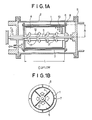
- the column reactor includes a rotaty column comprising a carrier container section (or inner cylinder) 1 and an outer cylinder 2.
- the carrier container section 1 is divided by a plurality of partition plates 4 having openings 13 of appropriate size.
- the particle diameter of the carrier may be in the range of 10 ⁇ m to 7 mm and preferably in the range of 30 ⁇ m to 1 mm. If the particle diameter is smaller than 10 ⁇ m, the meshes of the carrier container section need to be reduced to a smaller size, which makes it difficult to disperse the feed fluid uniformly. On the other hand, if the particle diameter is larger than 7 mm, the effective surface area of the gel carrier becomes too small to be suitable for efficient recovery of proteins. Prior to use, the aforesaid gel carriers should preferably be pretreated so as to have a more or less uniform particle diameter distribution.
- the hollow shaft 3 having orifices 11 communicating the carrier container section of the rotary column is preferably covered with a metal, cloth or nylon net 12 of appropriate mesh size.
- the mesh size is determined according to the particle diameter of the carrier. For example, when the carrier has a particle diameter of 150 ⁇ m, a net having a size of less than 100 mesh is used so that the carrier may not pass through the meshes of the net.
- the carrier container section is divided by partition plates 4 having openings 13 of appropriate size, along the hollow shaft 3 having the orifices 11.
- V0 volume of the carrier container section of the rotaty columns
- the volume, V1, of the carrier charged into the rotary column should be in the range of V0/200 ⁇ V1 ⁇ V0 and preferably in the range of 0.1 V0 ⁇ V1 ⁇ 0.75 V0. If the volume, V1, of the carrier is less than 1/200 V0, the volumes of the liquids used for washing and elution become large relative to the volume of the gel carrier, reducing the efficiency of recovery of the protein.
- the column lenght, L (cm), is preferably in the range of L ⁇ (105V0) 1/3 . If L is shorter than (105V0) 1/3 , the distribution of the fluid effluent from the orifices becomes non-uniform, making it difficult to agitate the feed fluid effectively.
- the rotational speed, r, of the inner cylinder of the rotaty column should be in the range of 1 rpm ⁇ r ⁇ 1,000 rpm and preferably in the range of 5 rpm ⁇ r ⁇ 100 rpm.
- the actual rotational speed may be suitably determined according to the affinity of the carrier for the desired protein, the diameter of the carrier container section, and the like, so that the carrier can be fluidized without hindrance and brought into close contact with the protein-containing feed fluid being passed therethrough.
- the rotational speed, r, of the inner cylinder of the rotary column is greater than 1,000 rpm, the fluidization of the carrier is hindered owing to the centrifugal force resulting from the rotation and, therefore, no efficient contact between the feed fluid and the carrier is effected.
- the flow rate, V s (liters/hr), of the feed fluid being passed through the rotary column is preferably in the range of V s ⁇ 102V0 (liters/hr). If V s is greater than 100V0 (liters/hr), the efficiency of contact between the feed fluid (or protein-containing fluid) and the carrier is reduced and, therefore, the recovery of the protein from the feed fluid cannot be achieved efficiently. On the other hand, if the flow rate, V s , is too low, the time required for the passage of the feed fluid is unduly prolonged, resulting in reduced efficiency. Moreover, the efficiency of contact between the feed fluid and the carrier is also reduced because the pressure change caused by the orifices is slight. Accordingly, the flow rate should be determined with due consideration for the rotational speed of the inner cylinder, the length of the column, the state of flow of the carrier, and the like.
- the feed fluid can be brought into contact with the carrier in a state of turbulent flow.
- passage of the feed fluid may be carried out either in a circulating manner or in a single-pass manner.
- the total passage time, T (hr) is governed by the concentration of the protein to be recovered, the flow rate, V s (liters/hr), of the fluid, and the adsorption capacity of the carrier.
- the passage time preferably satisfies the following condition: where C (g/liter) is the concentration in the feed fluid of the protein to be recovered, and q (g/liter of gel) is the saturated adsorption capacity of the carrier which is estimated by passing an excess of protein-containing fluid through the carrier.
- the passage of the feed fluid should be carried out within the above-defined time limit until the desired recovery is achieved.
- a suitable washing liquid is used according to the characteristics of adsorption of the protein.
- various washing liquids for use in conventional affinity chromatography including water, suitable aqueous salt solutions (such as aqueous sodium chloride solutions) and suitable buffer solution (such as a 0.01M phosphate buffer solution containing 0.2M NaCl).
- the amount of washing liquid used at a time, V wash (liters), should preferably be in the range of V1 ⁇ V wash ⁇ 100V1.
- the carrier may be washed one or more times either in a circulating manner or in a single-pass manner.
- the desired protein adsorbed on the carrier can be eluted by passing through the rotary column a conventional eluent containing a substance which can break or weaken the bond between the desired protein and the reactive groups of the carrier.
- a conventional eluent containing a substance which can break or weaken the bond between the desired protein and the reactive groups of the carrier there may be used various eluents including, for example, suitable aqueous salt solutions (such as aqueous sodium chloride solutions) and suitable buffer solutions (such as phosphate buffer solutions useful for the above-described washing purpose).
- suitable aqueous salt solutions such as aqueous sodium chloride solutions
- suitable buffer solutions such as phosphate buffer solutions useful for the above-described washing purpose.
- the eluent should be prepared according to the elution pattern of the desired protein, for example, so as to have a higher ionic strength than the washing liquid.
- the desired protein can be isolated according to any of well-known fractional elution techniques.
- the amount of eluent used, V out (liters), should be in the range of V1 ⁇ V out ⁇ 100V1, and the eluent may be passed through the rotary column either in a circulating manner or in a single-pass manner.
- the desired protein present in the eluate may be recovered in the form of a solid material or the like according to any conventional technique.
- a rotary column having an inner cylinder volume of 5 liters, an outer cylinder capacity of 20 liters and a column length of 265 cm was charged with 800 cc of sulfonated Cellulofine as a carrier gel.
- This carrier gel has a maximum lactoferrin adsorption of 3.0 mg/ml of gel.
- the lactoferrin so recovered had a purity of 95%.
- Example 2 A rotary column similar to that used in Example 1 was charged with a carrier gel having monoclonal anti-lactoferrin antibody immobilized thereon. While this rotary column was being rotated at a speed of 18 rpm, 50 liters of the same skim milk as used in Example 1 was passed therethrough once at a flow rate of 180 liters per hour.
- the antibody-immobilizing carrier gel used in this example has a maximum lactoferrin adsorption of 2.5 g/ml of gel.
- the carrier gel having lactoferrin adsorbed thereon was washed twice with 20-liter portions of a 0.5M aqueous sodium chloride solution, and three times with 20-liter portions of PBS.
- the lactoferrin so recovered had a purity of 98%.
- a rotary column having an inner cylinder volume of 500 ml, an outer cylinder capacity of 600 ml and a column length of 130 cm was charged with 200 ml of sulfonated chitosan beads [having a maximum F-HA (a protein from Bordetella pertussis (strain Tohama, phase I) adsorption of 8 mg/ml of gel] as a carrier gel.
- This carrier gel was soaked in a 0.01M phosphate buffer solution containing 0.2M sodium chloride (pH 8.0; with a specific conductivity of about 17.5 ms/cm) and equilibrated therewith in the column. Thereafter, the buffer solution was discharged from the column.
- the recovery of the F-HA obtained by elution was 91.4%, and its degree of purification (i.e., the ratio of the specific activity of the purified F-HA fraction to the specific activity of the supernatant) was 32.
- a rotary column having an inner cylinder volume of 500 ml, an outer cylinder capacity of 600 ml and a column length of 130 cm was charged with 200 ml of heparin-sepharose [having a maximum HBs antigen (derived from hepatitis B virus) adsorption of 8 mg/ml of gel] as a carrier gel.
- This carrier gel was equilibrated with a 0.027M McIlvaine buffer solution (pH 7.2) containing 0.05M sodium chloride.
- the recovery of the HBs antigen obtained by elution was 94.2%, based on its content in the serum.
- the degree of purification of the recovered protein i.e., the ratio of the amount of antigen to the total amount of protein was as high as 14.3.
Landscapes
- Chemical & Material Sciences (AREA)
- Organic Chemistry (AREA)
- Health & Medical Sciences (AREA)
- Life Sciences & Earth Sciences (AREA)
- Proteomics, Peptides & Aminoacids (AREA)
- Molecular Biology (AREA)
- Biochemistry (AREA)
- Biophysics (AREA)
- General Health & Medical Sciences (AREA)
- Genetics & Genomics (AREA)
- Medicinal Chemistry (AREA)
- Gastroenterology & Hepatology (AREA)
- Analytical Chemistry (AREA)
- Zoology (AREA)
- Toxicology (AREA)
- Peptides Or Proteins (AREA)
- Treatment Of Liquids With Adsorbents In General (AREA)
- Preparation Of Compounds By Using Micro-Organisms (AREA)
Abstract
Description
- This invention relates to a method for efficiently separating and recovering useful proteins present in various fluids and, in particular, useful proteins present in very small amounts.
- Conventionally, in order to separate and purify proteins by means of a so-called affinity gel carrier, the use of a packed-bed column has been common in laboratory practice and in small-scale industrial production.
- However, packed-bed columns have the disadvantage that, when a large volume of fluid is passed through a packed-bed column, as in cases where it is desired to separate and purify very small amounts of physiologically active proteins present in milk, the adsorption efficiency is rapidly reduced owing, for example, to densification of the carrier. In order to keep the adsorption efficiency satisfactorily high, it is necessary to decrease the volume of fluid passed through the column. However, this is disadvantageous from a practical point of view in that the passage time becomes too long to be suitable for the treatment of large volumes of fluid.
- There has also been proposed a method for effecting the adsorption reaction by passing a fluid through a fluidized-bed column in so-called batchwise operation. However, since this method involves long-time mechanical agitation, the carrier is very liable to damage.
- In order to prevent the carrier from being damaged, an attempt has been made to fluidize the carrier by the action of an upflow. However, since this requires a high sedimentation rate of the carrier, it becomes necessary to enlarge the particle diameter of the carrier or enhance the density of the carrier. Thus, this method had the disadvantage that the type of carrier usable therein is limited.
- Meanwhile, a rotary column reactor for activating an immobilized enzyme efficiently has recently been developed (Japanese Patent Publication No. 43228/'81). This reactor consists of a rotaty column having an immobilized enzyme placed therein and a housing for enclosing the rotary column, and is intended to achieve efficiently the purpose of activating the immobilized enzyme placed therein and washing it after its use. It has been utterly unknown that this reactor can serve to recover very small amounts of useful proteins present in various fluids.
- The present inventors have made an intensive study of the method of efficiently separating and recovering very small amounts of useful proteins present in various fluids, and have found that the desired protein can be effectively adsorbed, washed and eluted by using an affinity gel carrier, fluidizing the carrier and bringing the fluid into contact with the carrier in a state of tubulent flow. The present invention has been completed on the basis of this finding.
- According to the present invention, there is provided a method for separating and recovering a specific protein (or proteins) from a protein-containing fluid by means of an affinity gel carrier, which comprises the steps of charging the affinity gel carrier into a rotaty column; passing the protein-containing fluid through the column by way of orifices while rotating the column to fluidize the carrier, whereby the fluid comes into contact with the carrier in a state of turbulent flow and the protein contained therein becomes adsorbed on the carrier; washing the column by passing a washing liquid through the column being rotated; and eluting the desired protein from the washed column by passing an eluent through the column being rotated.
- According to the method of the present invention, the efficiency of contact between an affinity gel carrier and a protein-containing fluid can be greatly enhanced under mild conditions. Thus, even when the content of a useful protein in the fluid is very low, the protein can be effectively recovered by treating the fluid on a large scale. Moreover, the protein present in the fluid can be advantageously recovered without causing any significant damage to the carrier used to adsorb the protein thereon.
-
- Fig. 1 is a schematic illustration of an exemplary rotary column reactor suitable for carrying out the method of the present invention. In this figure, (A) is a schematic sectional side elevation view of the reactor and (B) is a schematic sectional front elevation view of the rotary column. The reactor of Fig. 1 consists of an inner cylinder (or carrier container section) 1, an
outer cylinder 2, ahollow shaft 3, partition plates 4, acarrier 5, a gasket 6, through-bolts 7, nuts 8, clamps 9, a stream of fluid 10, orifices 11, anet 12 andopenings 13. - The protein-containing fluids which can be used as feed fluids in the method of the present invention include, for example, skim milk, milk, whey, blood, microbial cultures, and animal or plant cell cultures; reconstituted fluids obtained by drying the foregoing fluids, as by spray drying, freeze-drying or the like, and then dissolving the residue in water or a suitable buffer solution; and biological crude extracts prepared from animal or plant tissues according to conventional procedure and containing a desired protein.
- The term "protein" as used herein comprehends a wide variety of biologically active proteins including lactoferrin ontained in skim milk and milk, various enzymes (such as polynucleotide phosphorylate) present in blood platelets, lymphocytes and microbial cells, human β-interferon, and various antibodies, as well as protein complexes composed of two or more proteins.
- The carriers which can be used in the method of the present invention to adsorb specifically such a protein present in the feed fluid include gel carriers (such as agarose, cellulose, silica, chitosan, acrylamide and other polymeric substances) having immobilized thereon a specific antigen or antibody, heparin, lectin, protein A or protein G; the foregoing gel carriers having sulfate or other reactive groups introduced thereinto; and the like. The only requirement for the gel carrier is that it has thereon a substance or reactive group possessing an affinity for the desired protein. Thus, there may be used any of various well-known gel carriers that are being used as affinity gel carriers.
- The rotary column (hereinafter referred to briefly as the column) used in the present invention can be any rotatable column that is equipped with a column rotating means for fluidizing the carrier contained in the column through the rotary motion of the column, and a fluid feeding mechanism which permits a feed fluid, comprising a protein-containing fluid, to be supplied to the column through orifices and brought into contact with the fluidized carrier.
- By using a column having the above-described construction, the feed fluid is always brought into contact with the carrier in a state of turbulent flow. Since this markedly promotes the reaction between them, it becomes possible to effect efficient adsorption of the protein on the carrier and carry out washing and elution procedures with a small volume of liquid. Generally, when it is desired to adsorb a desired protein on an affinity gel carrier, it is necessary to supply a small volume of feed fluid to the column at a low flow rate so as to increase the chance of contact between the feed fluid and the carrier surface. Otherwise, it would be difficult to effect satisfactory adsorption because the binding reaction of the protein with the reactive groups of the carrier surface due to its affinity for the protein does not proceed to a full extent. In contrast, the method of the present invention makes it possible to supply a larger volume of feed fluid to the column at a higher flow rate while securing satisfactory contact between the feed fluid and the carrier, owing to the fact that the carrier is fluidized by the rotary motion of the column and the feed fluid is introduced into the column through orifices. Moreover, since the carrier is not fluidized mechanically, no damage is caused to the carrier.
- An examplary rotary column reactor which can be used in the present invention is illustrated in Fig. 1. Specifically, the column reactor includes a rotaty column comprising a carrier container section (or inner cylinder) 1 and an
outer cylinder 2. Along ahollow shaft 3 having a plurality of orifices 11, the carrier container section 1 is divided by a plurality of partition plates 4 havingopenings 13 of appropriate size. - In addition, the conventional rotary column described in Japanese Patent Publication No. 43228/'81 can also be used in the method of the present invention.
- Now, the conditions required in the method of the present invention are more fully discussed hereinbelow.
- The particle diameter of the carrier may be in the range of 10 µm to 7 mm and preferably in the range of 30 µm to 1 mm. If the particle diameter is smaller than 10 µm, the meshes of the carrier container section need to be reduced to a smaller size, which makes it difficult to disperse the feed fluid uniformly. On the other hand, if the particle diameter is larger than 7 mm, the effective surface area of the gel carrier becomes too small to be suitable for efficient recovery of proteins. Prior to use, the aforesaid gel carriers should preferably be pretreated so as to have a more or less uniform particle diameter distribution.
- The
hollow shaft 3 having orifices 11 communicating the carrier container section of the rotary column is preferably covered with a metal, cloth ornylon net 12 of appropriate mesh size. In this case, the mesh size is determined according to the particle diameter of the carrier. For example, when the carrier has a particle diameter of 150 µm, a net having a size of less than 100 mesh is used so that the carrier may not pass through the meshes of the net. - The carrier container section is divided by partition plates 4 having
openings 13 of appropriate size, along thehollow shaft 3 having the orifices 11. When the volume of the carrier container section of the rotaty columns is represented by V₀ (liters), the volume, V₁, of the carrier charged into the rotary column should be in the range of V₀/200 ≦ V₁ ≦ V₀ and preferably in the range of 0.1 V₀ ≦ V₁ ≦ 0.75 V₀. If the volume, V₁, of the carrier is less than 1/200 V₀, the volumes of the liquids used for washing and elution become large relative to the volume of the gel carrier, reducing the efficiency of recovery of the protein. - The column lenght, L (cm), is preferably in the range of L ≧ (10⁵V₀)1/3. If L is shorter than (10⁵V₀)1/3, the distribution of the fluid effluent from the orifices becomes non-uniform, making it difficult to agitate the feed fluid effectively.
- In order to carry out efficiently the steps of causing the protein present in the feed fluid to become adsorbed on the carrier placed in the rotaty column having the above-described construction, washing the carrier, and recovering the protein by elution, the rotational speed, r, of the inner cylinder of the rotaty column should be in the range of 1 rpm ≦ r ≦ 1,000 rpm and preferably in the range of 5 rpm ≦ r ≦ 100 rpm. The actual rotational speed may be suitably determined according to the affinity of the carrier for the desired protein, the diameter of the carrier container section, and the like, so that the carrier can be fluidized without hindrance and brought into close contact with the protein-containing feed fluid being passed therethrough. If the rotational speed, r, of the inner cylinder of the rotary column is greater than 1,000 rpm, the fluidization of the carrier is hindered owing to the centrifugal force resulting from the rotation and, therefore, no efficient contact between the feed fluid and the carrier is effected.
- The flow rate, Vs (liters/hr), of the feed fluid being passed through the rotary column is preferably in the range of Vs ≦ 10²V₀ (liters/hr). If Vs is greater than 100V₀ (liters/hr), the efficiency of contact between the feed fluid (or protein-containing fluid) and the carrier is reduced and, therefore, the recovery of the protein from the feed fluid cannot be achieved efficiently. On the other hand, if the flow rate, Vs, is too low, the time required for the passage of the feed fluid is unduly prolonged, resulting in reduced efficiency. Moreover, the efficiency of contact between the feed fluid and the carrier is also reduced because the pressure change caused by the orifices is slight. Accordingly, the flow rate should be determined with due consideration for the rotational speed of the inner cylinder, the length of the column, the state of flow of the carrier, and the like.
- Under the above-described conditions, the feed fluid can be brought into contact with the carrier in a state of turbulent flow.
- It is to be understood that the passage of the feed fluid may be carried out either in a circulating manner or in a single-pass manner.
- Where the feed fluid is passed through the rotaty column in a circulating manner, the total passage time, T (hr), is governed by the concentration of the protein to be recovered, the flow rate, Vs (liters/hr), of the fluid, and the adsorption capacity of the carrier. The passage time preferably satisfies the following condition:

- If the aforesaid condition is not satisfied, i.e.,

- In the method of the present invention, even a very small amount of protein present in a fluid can be efficiently adsorbed on a carrier by passing the fluid through the rotaty column under the above-described conditions and other properly-determined conditions such as temperature.
- When the feed fluid is passed through the rotaty column in the above-described manner, the desired protein present in the feed fluid is adsorbed on the carrier. Then, the carrier having the protein adsorbed thereon is washed within the rotaty column in the same manner as described above for the adsorption procedure. For this purpose, a suitable washing liquid is used according to the characteristics of adsorption of the protein. For example, there may be used various washing liquids for use in conventional affinity chromatography, including water, suitable aqueous salt solutions (such as aqueous sodium chloride solutions) and suitable buffer solution (such as a 0.01M phosphate buffer solution containing 0.2M NaCl). The amount of washing liquid used at a time, Vwash (liters), should preferably be in the range of V₁ ≦ Vwash < 100V₁. The carrier may be washed one or more times either in a circulating manner or in a single-pass manner.
- After washing, the desired protein adsorbed on the carrier can be eluted by passing through the rotary column a conventional eluent containing a substance which can break or weaken the bond between the desired protein and the reactive groups of the carrier. For this purpose, there may be used various eluents including, for example, suitable aqueous salt solutions (such as aqueous sodium chloride solutions) and suitable buffer solutions (such as phosphate buffer solutions useful for the above-described washing purpose). Generally, the eluent should be prepared according to the elution pattern of the desired protein, for example, so as to have a higher ionic strength than the washing liquid. If one or more proteins, in addition to the desired protein, are adsorbed on the carrier, the desired protein can be isolated according to any of well-known fractional elution techniques. The amount of eluent used, Vout (liters), should be in the range of V₁ ≦ Vout < 100V₁, and the eluent may be passed through the rotary column either in a circulating manner or in a single-pass manner.
- It is to be noted in this connection that, by using the eluent in an amount of not greater than 100V₁, more than about 95% of the desired protein adsorbed on the carrier can be eluted.
- If necessary, the desired protein present in the eluate may be recovered in the form of a solid material or the like according to any conventional technique.
- The present invention is further illustrated by the following examples.
- A rotary column having an inner cylinder volume of 5 liters, an outer cylinder capacity of 20 liters and a column length of 265 cm was charged with 800 cc of sulfonated Cellulofine as a carrier gel. This carrier gel has a maximum lactoferrin adsorption of 3.0 mg/ml of gel.
- While this rotary column was being rotated at a speed of 18 rpm, 100 liters of skim milk was passed therethrough once at a flow rate of 180 liters per hour.
- Then, the above carrier gel having lactoferrin adsorbed thereon was washed four times with 20-liter portions of a 0.3M aqueous sodium chloride solution.
- After washing, 20 liters of a 1M aqueous sodium chloride solution was circulated through the rotary column. Thus, the lactoferrin adsorbed on the carrier gel was recovered in a yield of 2.16 g.
- The lactoferrin so recovered had a purity of 95%.
- A rotary column similar to that used in Example 1 was charged with a carrier gel having monoclonal anti-lactoferrin antibody immobilized thereon. While this rotary column was being rotated at a speed of 18 rpm, 50 liters of the same skim milk as used in Example 1 was passed therethrough once at a flow rate of 180 liters per hour.
- The antibody-immobilizing carrier gel used in this example has a maximum lactoferrin adsorption of 2.5 g/ml of gel.
- Then, the carrier gel having lactoferrin adsorbed thereon was washed twice with 20-liter portions of a 0.5M aqueous sodium chloride solution, and three times with 20-liter portions of PBS.
- After washing, 20 liters of a 0.2M acetate buffer solution (pH 3.7) was circulated through the column. Thus, the lactoferrin adsorbed on the carrier gel was recovered in a yield of 1.85 g (2.3 mg/ml of gel).
- The lactoferrin so recovered had a purity of 98%.
- A rotary column having an inner cylinder volume of 500 ml, an outer cylinder capacity of 600 ml and a column length of 130 cm was charged with 200 ml of sulfonated chitosan beads [having a maximum F-HA (a protein from Bordetella pertussis (strain Tohama, phase I) adsorption of 8 mg/ml of gel] as a carrier gel. This carrier gel was soaked in a 0.01M phosphate buffer solution containing 0.2M sodium chloride (pH 8.0; with a specific conductivity of about 17.5 ms/cm) and equilibrated therewith in the column. Thereafter, the buffer solution was discharged from the column.
- On the other hand, 8 liters of the supernatant (with an F-HA content of 0.02%) of a culture obtained by cultivating the Bordetella Pertussis (strain Tohama, phase 1) in a fermenter was diluted so as to give a specific conductivity of about 17.5 ms/cm and a pH of 8.0. While the above rotary column was being rotated at a speed of 18 rpm, the diluted supernatant was circulated therethrough at a flow rate of 30 liters per hour for a period of 30 minutes.
- Thereafter, the diluted supernatant was discharged from the column and the carrier gel was washed twice with 5-liter portions of the aforesaid buffer solution.
- Then, 600 ml of a phosphate buffer solution (pH 7.6) containing 1.5M sodium chloride was passed through the column to elute the F-HA adsorbed on the carrier gel.
- The recovery of the F-HA obtained by elution was 91.4%, and its degree of purification (i.e., the ratio of the specific activity of the purified F-HA fraction to the specific activity of the supernatant) was 32.
- A rotary column having an inner cylinder volume of 500 ml, an outer cylinder capacity of 600 ml and a column length of 130 cm was charged with 200 ml of heparin-sepharose [having a maximum HBs antigen (derived from hepatitis B virus) adsorption of 8 mg/ml of gel] as a carrier gel. This carrier gel was equilibrated with a 0.027M McIlvaine buffer solution (pH 7.2) containing 0.05M sodium chloride.
- On the other hand, 80 ml of human blood serum positive to a test for HBs antigen derived from hepatitis B virus was diluted with the aforesaid buffer solution to a volume of 600 ml. While the above rotary column was being rotated, the diluted serum was circulated therethrough at a flow rate of 30 liters per hour for a period of 30 minutes.
- Thereafter, the carrier gel was thoroughly washed with 20-liter portions of the aforesaid buffer solution Then, 600 ml of 0.027M McIlvaine buffer solution (pH 7.2) containing 0.6M sodium chloride was passed through the column to elute the HBs antigen adsorbed on the carrier gel.
- The recovery of the HBs antigen obtained by elution was 94.2%, based on its content in the serum.
- The degree of purification of the recovered protein (i.e., the ratio of the amount of antigen to the total amount of protein) was as high as 14.3.
- Although the invention has been described with preferred embodiments, it is to be understood that variations and modifications may be resorted to as will be apparent to those skilled in the art. Such variations and modifications are to be considered within the purview and the scope of the claims appended hereto.
Claims (7)
L ≧ (10⁵V₀)1/3
where V₀ (liters) is the volume of the carrier container section of the column.
1 rpm ≦ r ≦ 1,000 rpm
Vs ≦ 10²V₀ (liters/hr)

Applications Claiming Priority (2)
| Application Number | Priority Date | Filing Date | Title |
|---|---|---|---|
| JP187400/88 | 1988-07-27 | ||
| JP18740088 | 1988-07-27 |
Publications (3)
| Publication Number | Publication Date |
|---|---|
| EP0352678A2 true EP0352678A2 (en) | 1990-01-31 |
| EP0352678A3 EP0352678A3 (en) | 1991-08-07 |
| EP0352678B1 EP0352678B1 (en) | 1995-08-16 |
Family
ID=16205363
Family Applications (1)
| Application Number | Title | Priority Date | Filing Date |
|---|---|---|---|
| EP89113526A Expired - Lifetime EP0352678B1 (en) | 1988-07-27 | 1989-07-22 | Method for separating and recovering proteins present in fluids by means of a rotary column |
Country Status (5)
| Country | Link |
|---|---|
| US (1) | US5087369A (en) |
| EP (1) | EP0352678B1 (en) |
| JP (1) | JP2562968B2 (en) |
| DE (1) | DE68923835T2 (en) |
| NZ (1) | NZ230031A (en) |
Cited By (3)
| Publication number | Priority date | Publication date | Assignee | Title |
|---|---|---|---|---|
| WO1993013676A1 (en) * | 1992-01-15 | 1993-07-22 | Campina Melkunie B.V. | Process for isolating lactoferrin and lactoperoxidase from milk and milk products, and products obtained by such process |
| WO1995022258A3 (en) * | 1994-02-16 | 1995-11-16 | Gene Pharming Europ Bv | Isolation of lactoferrin from milk |
| EP2873329A1 (en) * | 2013-11-15 | 2015-05-20 | Univerzita Palackeho | Process of whey protein separation from milk medium and apparatus for its implementation |
Families Citing this family (14)
| Publication number | Priority date | Publication date | Assignee | Title |
|---|---|---|---|---|
| US5443734A (en) * | 1990-03-05 | 1995-08-22 | Applied Separations, Inc. | Programmable solid phase extraction and elution device |
| JP3035833B2 (en) * | 1991-01-21 | 2000-04-24 | 雪印乳業株式会社 | Method for producing sialic acids-containing composition |
| US5272075A (en) * | 1991-09-04 | 1993-12-21 | Large Scale Biology Corporation | System for solid phase reactions |
| US5273656A (en) * | 1991-09-04 | 1993-12-28 | Large Scale Biology Corporation | System for solid phase reactions |
| US5186824A (en) * | 1991-09-04 | 1993-02-16 | Large Scale Biology Corporation | System for solid phase reactions |
| US5906747A (en) * | 1995-11-13 | 1999-05-25 | Biosepra Inc. | Separation of molecules from dilute solutions using composite chromatography media having high dynamic sorptive capacity at high flow rates |
| DE19617775A1 (en) * | 1996-05-03 | 1997-11-06 | Sartorius Gmbh | Selective filtration unit |
| WO1998046991A1 (en) * | 1997-04-15 | 1998-10-22 | Hideyuki Nishizawa | Solid-liquid countercurrent extraction continuously separating apparatus |
| JP2000042303A (en) * | 1998-07-30 | 2000-02-15 | Takenori Tanimura | Multistage liquid-solid extractor |
| JP4871748B2 (en) * | 2007-01-29 | 2012-02-08 | 小島プレス工業株式会社 | Hose clamp holding structure |
| US7919589B2 (en) | 2007-07-10 | 2011-04-05 | Glanbia Nutritionals (Ireland), Ltd. | Method for removing endotoxin from proteins |
| DE102010003223B4 (en) | 2010-03-24 | 2014-09-18 | Albert-Ludwigs-Universität Freiburg | Device for insertion into a rotor of a centrifuge, centrifuge and method for fluidic coupling of cavities |
| JP5737671B2 (en) * | 2010-11-16 | 2015-06-17 | 国立大学法人九州工業大学 | Waste water treatment equipment containing metal ions |
| DE102013203684A1 (en) | 2013-03-05 | 2014-09-25 | Robert Bosch Gmbh | Method and device for fluidically coupling cavities in a centrifuge |
Family Cites Families (14)
| Publication number | Priority date | Publication date | Assignee | Title |
|---|---|---|---|---|
| US4072667A (en) * | 1971-12-22 | 1978-02-07 | Hitachi, Ltd. | Process for recovering microbial cellular proteins |
| US4156681A (en) * | 1974-03-28 | 1979-05-29 | Plasmesco Ag | Process for isolating albumin from blood |
| US4116948A (en) * | 1975-03-24 | 1978-09-26 | Hellmut Mittenzwei | Process for removal of inorganic salts from peptide/salt-containing substances |
| JPS6031521B2 (en) * | 1975-07-16 | 1985-07-23 | 洋三 椛沢 | Material extraction and separation equipment |
| US4190530A (en) * | 1978-04-03 | 1980-02-26 | E. I. Du Pont De Nemours And Company | Centrifugal method and apparatus for processing fluid materials |
| JPS5537130A (en) * | 1978-09-06 | 1980-03-15 | Snow Brand Milk Prod Co Ltd | Active reactor comprising rotating column with immobilized enzyme |
| JPS5643228A (en) * | 1979-09-19 | 1981-04-21 | Mitsui Toatsu Chem Inc | Prevention of color development of aromatic compound having hydroxyl group |
| US4422941A (en) * | 1980-09-08 | 1983-12-27 | University Of Pittsburgh | Apparatus for liquid-solid column centrifugation chromatography and method |
| US4663163A (en) * | 1983-02-14 | 1987-05-05 | Hou Kenneth C | Modified polysaccharide supports |
| US4675113A (en) * | 1984-11-28 | 1987-06-23 | University Patents, Inc. | Affinity chromatography using dried calcium alginate-magnetite separation media in a magnetically stabilized fluidized bed |
| JPS61145200A (en) * | 1984-12-19 | 1986-07-02 | Snow Brand Milk Prod Co Ltd | Separation and purification of bovine lactoferrin |
| BE901672A (en) * | 1985-02-07 | 1985-08-07 | Oleofina Sa | Milk protein purificn. - by adsorption on acidic polysaccharide gel |
| US4741998A (en) * | 1985-06-05 | 1988-05-03 | The University Of Virginia Alumni Patents Foundation | Monoclonal antibody to MHS-5: a new probe for sexual assault analyses |
| IE61701B1 (en) * | 1986-07-17 | 1994-11-30 | Morinaga Milk Industry Co Ltd | Process for producing bovine lactoferrin in high purity |
-
1989
- 1989-07-21 NZ NZ230031A patent/NZ230031A/en unknown
- 1989-07-22 DE DE68923835T patent/DE68923835T2/en not_active Expired - Fee Related
- 1989-07-22 EP EP89113526A patent/EP0352678B1/en not_active Expired - Lifetime
- 1989-07-27 JP JP1194620A patent/JP2562968B2/en not_active Expired - Fee Related
-
1991
- 1991-01-22 US US07/643,988 patent/US5087369A/en not_active Expired - Fee Related
Non-Patent Citations (1)
| Title |
|---|
| JOURNAL OF DAIRY SCIENCE, vol. 70, 1987, pages 752-759; H. KAWAKAMI et al.: "One-step isolation of lactoferrin using immobilized monoclonal antidbodies" * |
Cited By (4)
| Publication number | Priority date | Publication date | Assignee | Title |
|---|---|---|---|---|
| WO1993013676A1 (en) * | 1992-01-15 | 1993-07-22 | Campina Melkunie B.V. | Process for isolating lactoferrin and lactoperoxidase from milk and milk products, and products obtained by such process |
| WO1995022258A3 (en) * | 1994-02-16 | 1995-11-16 | Gene Pharming Europ Bv | Isolation of lactoferrin from milk |
| EP2873329A1 (en) * | 2013-11-15 | 2015-05-20 | Univerzita Palackeho | Process of whey protein separation from milk medium and apparatus for its implementation |
| CZ305371B6 (en) * | 2013-11-15 | 2015-08-19 | Univerzita Palackého | Separation process of whey proteins from milk medium and apparatus for making the same |
Also Published As
| Publication number | Publication date |
|---|---|
| JP2562968B2 (en) | 1996-12-11 |
| DE68923835D1 (en) | 1995-09-21 |
| DE68923835T2 (en) | 1996-04-04 |
| EP0352678A3 (en) | 1991-08-07 |
| JPH02138295A (en) | 1990-05-28 |
| US5087369A (en) | 1992-02-11 |
| EP0352678B1 (en) | 1995-08-16 |
| NZ230031A (en) | 1991-10-25 |
Similar Documents
| Publication | Publication Date | Title |
|---|---|---|
| US5087369A (en) | Fluidized bed separation and recovery of proteins from fluids in a rotary column | |
| Chase | Affinity separations utilising immobilised monoclonal antibodies—a new tool for the biochemical engineer | |
| CA1188612A (en) | Recovery | |
| Porath | Fractionation of polypeptides and proteins on dextran gels | |
| US4579661A (en) | Process in the purification of biologically active substances | |
| KR930003665B1 (en) | Method for Purifying Erythropoietin | |
| JPS6356501A (en) | Cellulose gel having biochemical affinity and production thereof | |
| Kümel et al. | Improved method for the cyanogen bromide activation of agarose beads | |
| CA1252744A (en) | Ultrapurification of factor ix and other vitamin k- dependent proteins | |
| US3558433A (en) | Process for purification of chymopapain | |
| Safařik | Magnetic biospecific affinity adsorbents for lysozyme isolation | |
| US5525500A (en) | Chromatographic process for the copurification of chondroitinase I and II proteins from Proteus vulgaris | |
| US4510248A (en) | Process for concentrating and purifying human urinary kallikrein | |
| US4318990A (en) | Separation of proteases from fluids | |
| Tsamadis et al. | Downstream processing of diagnostic enzymes: Optimised protocols for the simultaneous separation and purification of lactate dehydrogenase and pyruvate kinase from rabbit muscle | |
| JPH0439380B2 (en) | ||
| Bailon et al. | Affinity Purification Methods. V1. A Novel and Rapid Isolation Procedure For Lysozymes | |
| JP2007238479A (en) | Method for elution of organic substance adsorbed on hydroxyapatite and method for purification of organic substance using said elution method | |
| SU1175965A1 (en) | Method of separating urokinase from biologucal sources | |
| Ochoa | Cell Membranes as Adsorbents in Affinity Chromatography | |
| Inooka | Ion Exchange Dish as a Tool for Cell Separation Based on Cell Surface Charge | |
| Nagata et al. | Affinity chromatography of Streptomyces erythreus trypsin-like enzyme on Japanese quail ovomucoid | |
| JPS63226290A (en) | Method for recovery and purification of useful substance and apparatus therefor | |
| Burden et al. | Batch Purification of Proteins | |
| Hofstee | amount of protein bound was determined from the absorbance (A280)) of |
Legal Events
| Date | Code | Title | Description |
|---|---|---|---|
| PUAI | Public reference made under article 153(3) epc to a published international application that has entered the european phase |
Free format text: ORIGINAL CODE: 0009012 |
|
| AK | Designated contracting states |
Kind code of ref document: A2 Designated state(s): BE DE FR GB IT |
|
| 17P | Request for examination filed |
Effective date: 19910102 |
|
| PUAL | Search report despatched |
Free format text: ORIGINAL CODE: 0009013 |
|
| AK | Designated contracting states |
Kind code of ref document: A3 Designated state(s): BE DE FR GB IT |
|
| 17Q | First examination report despatched |
Effective date: 19930805 |
|
| RAP1 | Party data changed (applicant data changed or rights of an application transferred) |
Owner name: SNOW BRAND MILK PRODUCTS CO., LTD. |
|
| GRAA | (expected) grant |
Free format text: ORIGINAL CODE: 0009210 |
|
| AK | Designated contracting states |
Kind code of ref document: B1 Designated state(s): BE DE FR GB IT |
|
| REF | Corresponds to: |
Ref document number: 68923835 Country of ref document: DE Date of ref document: 19950921 |
|
| ET | Fr: translation filed | ||
| ITF | It: translation for a ep patent filed | ||
| PLBE | No opposition filed within time limit |
Free format text: ORIGINAL CODE: 0009261 |
|
| STAA | Information on the status of an ep patent application or granted ep patent |
Free format text: STATUS: NO OPPOSITION FILED WITHIN TIME LIMIT |
|
| 26N | No opposition filed | ||
| PGFP | Annual fee paid to national office [announced via postgrant information from national office to epo] |
Ref country code: FR Payment date: 19990630 Year of fee payment: 11 |
|
| PGFP | Annual fee paid to national office [announced via postgrant information from national office to epo] |
Ref country code: BE Payment date: 19990702 Year of fee payment: 11 |
|
| PGFP | Annual fee paid to national office [announced via postgrant information from national office to epo] |
Ref country code: GB Payment date: 19990712 Year of fee payment: 11 |
|
| PGFP | Annual fee paid to national office [announced via postgrant information from national office to epo] |
Ref country code: DE Payment date: 19990917 Year of fee payment: 11 |
|
| PG25 | Lapsed in a contracting state [announced via postgrant information from national office to epo] |
Ref country code: GB Free format text: LAPSE BECAUSE OF NON-PAYMENT OF DUE FEES Effective date: 20000722 |
|
| PG25 | Lapsed in a contracting state [announced via postgrant information from national office to epo] |
Ref country code: BE Free format text: LAPSE BECAUSE OF NON-PAYMENT OF DUE FEES Effective date: 20000731 |
|
| BERE | Be: lapsed |
Owner name: SNOW BRAND MILK PRODUCTS CO. LTD Effective date: 20000731 |
|
| GBPC | Gb: european patent ceased through non-payment of renewal fee |
Effective date: 20000722 |
|
| PG25 | Lapsed in a contracting state [announced via postgrant information from national office to epo] |
Ref country code: FR Free format text: LAPSE BECAUSE OF NON-PAYMENT OF DUE FEES Effective date: 20010330 |
|
| REG | Reference to a national code |
Ref country code: FR Ref legal event code: ST |
|
| PG25 | Lapsed in a contracting state [announced via postgrant information from national office to epo] |
Ref country code: DE Free format text: LAPSE BECAUSE OF NON-PAYMENT OF DUE FEES Effective date: 20010501 |
|
| PG25 | Lapsed in a contracting state [announced via postgrant information from national office to epo] |
Ref country code: IT Free format text: LAPSE BECAUSE OF NON-PAYMENT OF DUE FEES;WARNING: LAPSES OF ITALIAN PATENTS WITH EFFECTIVE DATE BEFORE 2007 MAY HAVE OCCURRED AT ANY TIME BEFORE 2007. THE CORRECT EFFECTIVE DATE MAY BE DIFFERENT FROM THE ONE RECORDED. Effective date: 20050722 |