EP0346983A2 - A process for the fermentative preparation of organic acids - Google Patents
A process for the fermentative preparation of organic acids Download PDFInfo
- Publication number
- EP0346983A2 EP0346983A2 EP89201495A EP89201495A EP0346983A2 EP 0346983 A2 EP0346983 A2 EP 0346983A2 EP 89201495 A EP89201495 A EP 89201495A EP 89201495 A EP89201495 A EP 89201495A EP 0346983 A2 EP0346983 A2 EP 0346983A2
- Authority
- EP
- European Patent Office
- Prior art keywords
- lactic acid
- xoh
- reaction vessel
- reaction mixture
- subjecting
- Prior art date
- Legal status (The legal status is an assumption and is not a legal conclusion. Google has not performed a legal analysis and makes no representation as to the accuracy of the status listed.)
- Granted
Links
Images

Classifications
-
- B—PERFORMING OPERATIONS; TRANSPORTING
- B01—PHYSICAL OR CHEMICAL PROCESSES OR APPARATUS IN GENERAL
- B01D—SEPARATION
- B01D61/00—Processes of separation using semi-permeable membranes, e.g. dialysis, osmosis or ultrafiltration; Apparatus, accessories or auxiliary operations specially adapted therefor
- B01D61/58—Multistep processes
-
- B—PERFORMING OPERATIONS; TRANSPORTING
- B01—PHYSICAL OR CHEMICAL PROCESSES OR APPARATUS IN GENERAL
- B01D—SEPARATION
- B01D61/00—Processes of separation using semi-permeable membranes, e.g. dialysis, osmosis or ultrafiltration; Apparatus, accessories or auxiliary operations specially adapted therefor
- B01D61/42—Electrodialysis; Electro-osmosis ; Electro-ultrafiltration; Membrane capacitive deionization
- B01D61/422—Electrodialysis
-
- B—PERFORMING OPERATIONS; TRANSPORTING
- B01—PHYSICAL OR CHEMICAL PROCESSES OR APPARATUS IN GENERAL
- B01D—SEPARATION
- B01D61/00—Processes of separation using semi-permeable membranes, e.g. dialysis, osmosis or ultrafiltration; Apparatus, accessories or auxiliary operations specially adapted therefor
- B01D61/42—Electrodialysis; Electro-osmosis ; Electro-ultrafiltration; Membrane capacitive deionization
- B01D61/44—Ion-selective electrodialysis
- B01D61/445—Ion-selective electrodialysis with bipolar membranes; Water splitting
-
- C—CHEMISTRY; METALLURGY
- C12—BIOCHEMISTRY; BEER; SPIRITS; WINE; VINEGAR; MICROBIOLOGY; ENZYMOLOGY; MUTATION OR GENETIC ENGINEERING
- C12M—APPARATUS FOR ENZYMOLOGY OR MICROBIOLOGY; APPARATUS FOR CULTURING MICROORGANISMS FOR PRODUCING BIOMASS, FOR GROWING CELLS OR FOR OBTAINING FERMENTATION OR METABOLIC PRODUCTS, i.e. BIOREACTORS OR FERMENTERS
- C12M47/00—Means for after-treatment of the produced biomass or of the fermentation or metabolic products, e.g. storage of biomass
- C12M47/10—Separation or concentration of fermentation products
-
- C—CHEMISTRY; METALLURGY
- C12—BIOCHEMISTRY; BEER; SPIRITS; WINE; VINEGAR; MICROBIOLOGY; ENZYMOLOGY; MUTATION OR GENETIC ENGINEERING
- C12N—MICROORGANISMS OR ENZYMES; COMPOSITIONS THEREOF; PROPAGATING, PRESERVING, OR MAINTAINING MICROORGANISMS; MUTATION OR GENETIC ENGINEERING; CULTURE MEDIA
- C12N1/00—Microorganisms; Compositions thereof; Processes of propagating, maintaining or preserving microorganisms or compositions thereof; Processes of preparing or isolating a composition containing a microorganism; Culture media therefor
- C12N1/20—Bacteria; Culture media therefor
- C12N1/205—Bacterial isolates
-
- C—CHEMISTRY; METALLURGY
- C12—BIOCHEMISTRY; BEER; SPIRITS; WINE; VINEGAR; MICROBIOLOGY; ENZYMOLOGY; MUTATION OR GENETIC ENGINEERING
- C12P—FERMENTATION OR ENZYME-USING PROCESSES TO SYNTHESISE A DESIRED CHEMICAL COMPOUND OR COMPOSITION OR TO SEPARATE OPTICAL ISOMERS FROM A RACEMIC MIXTURE
- C12P7/00—Preparation of oxygen-containing organic compounds
- C12P7/40—Preparation of oxygen-containing organic compounds containing a carboxyl group including Peroxycarboxylic acids
- C12P7/56—Lactic acid
-
- B—PERFORMING OPERATIONS; TRANSPORTING
- B01—PHYSICAL OR CHEMICAL PROCESSES OR APPARATUS IN GENERAL
- B01D—SEPARATION
- B01D61/00—Processes of separation using semi-permeable membranes, e.g. dialysis, osmosis or ultrafiltration; Apparatus, accessories or auxiliary operations specially adapted therefor
- B01D61/14—Ultrafiltration; Microfiltration
- B01D61/145—Ultrafiltration
-
- C—CHEMISTRY; METALLURGY
- C12—BIOCHEMISTRY; BEER; SPIRITS; WINE; VINEGAR; MICROBIOLOGY; ENZYMOLOGY; MUTATION OR GENETIC ENGINEERING
- C12R—INDEXING SCHEME ASSOCIATED WITH SUBCLASSES C12C - C12Q, RELATING TO MICROORGANISMS
- C12R2001/00—Microorganisms ; Processes using microorganisms
- C12R2001/01—Bacteria or Actinomycetales ; using bacteria or Actinomycetales
- C12R2001/07—Bacillus
-
- Y—GENERAL TAGGING OF NEW TECHNOLOGICAL DEVELOPMENTS; GENERAL TAGGING OF CROSS-SECTIONAL TECHNOLOGIES SPANNING OVER SEVERAL SECTIONS OF THE IPC; TECHNICAL SUBJECTS COVERED BY FORMER USPC CROSS-REFERENCE ART COLLECTIONS [XRACs] AND DIGESTS
- Y10—TECHNICAL SUBJECTS COVERED BY FORMER USPC
- Y10S—TECHNICAL SUBJECTS COVERED BY FORMER USPC CROSS-REFERENCE ART COLLECTIONS [XRACs] AND DIGESTS
- Y10S435/00—Chemistry: molecular biology and microbiology
- Y10S435/8215—Microorganisms
- Y10S435/822—Microorganisms using bacteria or actinomycetales
- Y10S435/832—Bacillus
-
- Y—GENERAL TAGGING OF NEW TECHNOLOGICAL DEVELOPMENTS; GENERAL TAGGING OF CROSS-SECTIONAL TECHNOLOGIES SPANNING OVER SEVERAL SECTIONS OF THE IPC; TECHNICAL SUBJECTS COVERED BY FORMER USPC CROSS-REFERENCE ART COLLECTIONS [XRACs] AND DIGESTS
- Y10—TECHNICAL SUBJECTS COVERED BY FORMER USPC
- Y10S—TECHNICAL SUBJECTS COVERED BY FORMER USPC CROSS-REFERENCE ART COLLECTIONS [XRACs] AND DIGESTS
- Y10S435/00—Chemistry: molecular biology and microbiology
- Y10S435/8215—Microorganisms
- Y10S435/822—Microorganisms using bacteria or actinomycetales
- Y10S435/853—Lactobacillus
- Y10S435/856—Lactobacillus casei
Definitions
- the invention relates to a process for the fermentative preparation of lactic acid, by allowing a sterilized growth medium to be continuously fermented in a reaction vessel by a culture of bacteria which form lactic acid, keeping the pH of the reaction mixture at 3 to 9 with an aqueous solution of XOH (where X is NH4 or a metal whose hydroxide and whose salt of lactic acid are watersoluble), subjecting the fermented reaction mixture to an ultrafiltration, recycling the retentate to the reaction vessel, and concentrating the permeate by subjecting it in a two- or three compartment cell to an electrodialysis wherein bipolar membranes are used, in which process the salt formed is decomposed into the lactic acid and XOH, where XOH has the above mentioned meaning.
- the current level in the electrodialysis apparatus is controlled by measuring the pH in the fermenter (see European Patent Application 230,021, column 3, lines 31-33: "Der Fermentor (2) kann mit für pH-Elektrode easierrüstet spur, für die die Strom43 in der Elektrodialyse-Einheit (4) xxcum"). As a result of this, it is possible to remove the lactic acid formed at the same rate from the fermentation liquid as that at which it is formed in the fermenter.
- Another disadvantage is related to the increase in the electrical resistance as a consequence of the adherence of bacteria to the membrane which may be that high after 30-100 h that the preparation has to be interrupted.
- This disadvantage can be solved by microfiltration of the fermentation liquid, in which process the retentate containing the biomass is recycled to the fermenter while the permeate is electrodialyzed.
- the volume of the reaction vessel requires only to be small because the volumetric production rate which can be achieved with a cell recycling is large. Said high rate is a consequence of the high biomass concentration in the reaction vessel and the large throughput rate of the medium.
- Bipolar membranes are composed of a number of layers of specially formulated, electively permeable membranes. At the interface of the membranes, water molecules are decomposed into hydroxyl ions and hydrogen ions, as indicated in Figure 1.
- bipolar membranes Water diffuses out of the surrounding aqueous solution into the membrane interface. Under the influence of electrical direct current, vigorous dissociation of water into H+ and OH ⁇ ions takes place. Electrodialysis using bipolar membranes makes it possible to extract the acids from salts of organic acids and to concentrate them without introducing foreign anions into the system.
- the bipolar membrane therefore provides, for example, the possibility of replacing Na+ cations and/or K+ cations by H+ ions in an organic salt. In such a replacement of Na+ and/or K+ by H+ ions, NaOH and/or KOH is frequently produced as a by-product.
- the hydroxyl and hydrogen ions move in opposite directions through the bipolar membranes.
- the hydrogen ions combine with the electronegative part of dissolved salts to form acids.
- the hydroxyl ions combine with the electropositive ions to form bases.
- Ions migrate through the monopolar membranes to the acidic and basic zones which are situated close to the bipolar membranes.
- Figure 2 illustrates the operation of such a three-compartment cell diagrammatically.
- Such a three-compartment cell operates, in general, with a potential difference of 1.5-2.5 V/cell and 700 to 1000 A/m2 of membrane surface area.
- the thermally stable organic acid obtained has a concentration of approximately 30% by weight.
- membranes are used therein of the type which is also used for sea water desalination, for example polyamide or cellulose acetate.
- the pressure in reverse osmosis is 40 to 60 bar.
- Fermentation medium is continuously introduced into the reaction vessel CSTR through inlet pipe 1.
- the flow rate is so adjusted, for example, that the product which is fed through pipe 2 to the ultrafiltration apparatus UF contains approximately 6% by weight of salt of the organic acid concerned, which, in the case of potassium lactate, corresponds to 0.66 N lactic acid ions.
- the reaction medium is split into retentate, which is fed back through pipe 9 into CSTR, and permeate which is passed through pipe 3 into the reverse osmosis apparatus RO in which the pressure which is exerted on the permeate forces the solvent present in the permeate through a semipermeable membrane against the osmotic pressure; as a result of the filtration action, on the one hand, a more concentrated permeate is obtained and, on the other hand, the solvent is obtained.
- the abovementioned lactic acid ions would concentrated, for example, to 1.32 N.
- the concentrated salt flows through pipe 4 and H2O through pipe 5 into the electrodialysis apparatus in which the salt is decomposed into XOH and organic acid.
- the CSTR was filled with sterilized medium of the following composition: 6% by weight of glucose, 2.5% by weight of yeast extract, 0.05% by weight of (NH4)2SO4, 0.03% by weight of MgSO4, 0.02% by weight of KH2PO4, 0.02% by weight of K2HPO4.
- the reactor had a working volume of 5 l and was inoculated with 100 ml of Bacillus coagulans culture DSM 2311 which had been precultured on nutrient broth in a shaking flask at 45°C. The fermentation was carried out batchwise for 24 hours under aerobic conditions.
- the continuous anaerobic fermentation was then started.
- the production medium had the following composition: 6.6% by weight of glucose, 0.1% by weight of yeast extract, 0.1% by weight of diammonium phosphate.
- the pH was adjusted to 6.0 with ammonium hydroxide.
- the temperature was adjusted to 50°C.
- the ultrafiltration unit used was a biopilot Carbosep PSV 3 R (SFEC) having M6 membranes with a total surface area of 0.1 m2. A pressure of 2.2 bar was employed at the inlet and 1.8 bar at the outlet of the module.
- the RO was a tubular system fitted with organic membranes of type APC 99 (PCI) having a surface area of 0.85 m2. A pressure of 60 bar was employed at 35°C.
- the electrodialysis stack contained 8 cells (3 compartments) made up of anion-selective, cation-selective and bipolar membranes (Aquatech) having a total surface area of 0.10 m2.
- the voltage used was 25 V at a current density of 100 mA/cm2.
- the unconverted salt solution from the electrodialysis stack was recycled to the RO.
- the hydroxide solution produced in the electrodialysis stack was conveyed to the hydroxide vessel and reused for neutralization in the fermenter.
- the lactate concentration in the fermenter was 0.63 N.
- the volumetric productivity of the fermenter was 60 g/(1.h) at the dilution rate used of 1 h ⁇ 1.
- the biomass concentration was approx. 40 g/l (dry weight).
- the yield for converting glucose into lactic acid was 95%.
- the ammonium lactate solution was concentrated to 1.2 N.
- the product flow from the ED stack was 0.85 l/h and contained 36% lactic acid.
- the electrical efficiency was 85%.
- Example I The experiment of Example I was carried out with a defined medium as product medium having the following composition: glucose : 6.6% by weight diammonium phosphate : 0.2% by weight KH2PO4 : 0.1% by weight K2HPO4 : 0.1% by weight MgSO4 : 0.1% by weight biotin : 0.15 ⁇ g/l thiamin : 75 ⁇ g/l folic acid : 15 ⁇ g/l niacin : 1 mg/l arginine : 5 mg/l asparagine : 100 mg/l cysteine : 3 mg/l glutamine : 20 mg/l histidine : 3 mg/l methionine : 10 mg/l proline : 15 mg/l serine : 20 mg/l
- the conditions were identical to those of Example I. The results were identical to Example I.
Landscapes
- Engineering & Computer Science (AREA)
- Chemical & Material Sciences (AREA)
- Life Sciences & Earth Sciences (AREA)
- Health & Medical Sciences (AREA)
- Organic Chemistry (AREA)
- Wood Science & Technology (AREA)
- Biotechnology (AREA)
- Zoology (AREA)
- Water Supply & Treatment (AREA)
- Bioinformatics & Cheminformatics (AREA)
- Chemical Kinetics & Catalysis (AREA)
- Genetics & Genomics (AREA)
- Biochemistry (AREA)
- General Engineering & Computer Science (AREA)
- General Health & Medical Sciences (AREA)
- Microbiology (AREA)
- Urology & Nephrology (AREA)
- Biomedical Technology (AREA)
- Sustainable Development (AREA)
- General Chemical & Material Sciences (AREA)
- Medicinal Chemistry (AREA)
- Tropical Medicine & Parasitology (AREA)
- Virology (AREA)
- Preparation Of Compounds By Using Micro-Organisms (AREA)
- Organic Low-Molecular-Weight Compounds And Preparation Thereof (AREA)
- Micro-Organisms Or Cultivation Processes Thereof (AREA)
- Separation Using Semi-Permeable Membranes (AREA)
Abstract
Description
- The invention relates to a process for the fermentative preparation of lactic acid, by allowing a sterilized growth medium to be continuously fermented in a reaction vessel by a culture of bacteria which form lactic acid, keeping the pH of the reaction mixture at 3 to 9 with an aqueous solution of XOH (where X is NH₄ or a metal whose hydroxide and whose salt of lactic acid are watersoluble), subjecting the fermented reaction mixture to an ultrafiltration, recycling the retentate to the reaction vessel, and concentrating the permeate by subjecting it in a two- or three compartment cell to an electrodialysis wherein bipolar membranes are used, in which process the salt formed is decomposed into the lactic acid and XOH, where XOH has the above mentioned meaning.
- In Chem. Ing. Tech, 59, 952-954 (1987) a process is disclosed for continuously fermenting glucose to prepare lactic acid in a fermentation apparatus and extracting the lactic acid formed by using electrodialysis. In this known procedure, a strain of Lactobacillus casei is used as a lactic acid-forming microorganism which ferments glucose to form lactic acid in a concentrated aqueous glucose solution in the presence of yeast extract and inorganic salts. The fermentation medium is recycled through an electrodialysis apparatus. The current level in the electrodialysis apparatus is controlled by measuring the pH in the fermenter (see European Patent Application 230,021, column 3, lines 31-33: "Der Fermentor (2) kann mit einer pH-Elektrode ausgerüstet sein, durch die die Stromstärke in der Elektrodialyse-Einheit (4) gesteuert wird"). As a result of this, it is possible to remove the lactic acid formed at the same rate from the fermentation liquid as that at which it is formed in the fermenter. It is remarkable that even without special measures, the system is not contaminated with foreign microorganisms; it appears to be possible, however, to attribute this to the fact that the electrodialysis system selectively inactivates contaminating microorganisms because their growth rate is low in comparison with that of the lactic acid-forming microorga nisms.
- As disadvantages of this known system, mention is made of the loss of approximately 7% of the lactic acid produced by diffusion through the cation-exchanging membrane into the sulphuric acid solution of the anode recirculation. A portion of said lactic acid is oxidized to pyruvic acid and diffuses towards the acid compartment so that the product flow contains approx. 5.2 mg of pyruvic acid per gram of lactic acid.
- Another disadvantage is related to the increase in the electrical resistance as a consequence of the adherence of bacteria to the membrane which may be that high after 30-100 h that the preparation has to be interrupted. This disadvantage can be solved by microfiltration of the fermentation liquid, in which process the retentate containing the biomass is recycled to the fermenter while the permeate is electrodialyzed.
- An attempt had already been made earlier to carry out the purely fermentative part of the lactic acid preparation continuously by E. Ohleyer, H.W. Blanch and C.R. Wilke, "Continuous production of lactic acid in a cell recycle reactor", Applied Biochem. Biotechnol. 11, 317-332 (1985) on a laboratory scale. In this improved method, the pH of the fermentation liquid is held at the required value with NH₄OH. Since ammonium lactate is soluble in water, the fermentation medium can be subjected to an ultrafiltration, in which process the retentate containing the biomass can be recycled again to the reaction vessel while the permeate is obtained directly. By proceeding in this manner, the volume of the reaction vessel requires only to be small because the volumetric production rate which can be achieved with a cell recycling is large. Said high rate is a consequence of the high biomass concentration in the reaction vessel and the large throughput rate of the medium.
- Further Chem. Ing. Tech. 61, 428-429 (1989) reports about a lecture by Dr. Ing. Srinivasan Sridhar at the Dechema collquium of February 2, 1988 in Frankfurt/M. Said lecture related to the electrodialysis of sodium sulfate, alternatively ammonium malate by using bipolar membranes. At the tests performed a permeate of an ultrafiltration was subjected to a concentration step i.c. an electrodialysis, alternatively a reverse osmosis and subsequently the permeate was supplied to an electrodialysis cell wherein bipolar membranes are used.
- Although bipolar membranes are described in the above publications in Chem. Ing. Tech. 59 and 61, herebelow a further description of said membranes is given.
- Bipolar membranes are composed of a number of layers of specially formulated, electively permeable membranes. At the interface of the membranes, water molecules are decomposed into hydroxyl ions and hydrogen ions, as indicated in Figure 1.
- Water diffuses out of the surrounding aqueous solution into the membrane interface. Under the influence of electrical direct current, vigorous dissociation of water into H⁺ and OH⁻ ions takes place. Electrodialysis using bipolar membranes makes it possible to extract the acids from salts of organic acids and to concentrate them without introducing foreign anions into the system. The bipolar membrane therefore provides, for example, the possibility of replacing Na⁺ cations and/or K⁺ cations by H⁺ ions in an organic salt. In such a replacement of Na⁺ and/or K⁺ by H⁺ ions, NaOH and/or KOH is frequently produced as a by-product.
- In such a cell, there is a bipolar membrane between the anode and an anion-selective monopolar membrane, and furthermore a bipolar membrane between the cathode and a cation-selective monopolar membrane, while the salt inlet and outlet is situated between the said monopolar membranes.
- The hydroxyl and hydrogen ions move in opposite directions through the bipolar membranes. At the cation-selective side of the bipolar membranes, the hydrogen ions combine with the electronegative part of dissolved salts to form acids. At the anion-selective side, the hydroxyl ions combine with the electropositive ions to form bases.
- Ions migrate through the monopolar membranes to the acidic and basic zones which are situated close to the bipolar membranes.
- Figure 2 illustrates the operation of such a three-compartment cell diagrammatically.
- Such a three-compartment cell operates, in general, with a potential difference of 1.5-2.5 V/cell and 700 to 1000 A/m² of membrane surface area.
- The thermally stable organic acid obtained has a concentration of approximately 30% by weight.
- Additional advantages are furthermore that, during the electrodialysis, the fermentation liquid does not have to be sugar-free, while the base and the residual growth substances can be recycled, as a result of which, in particular, the consumption of hydroxide solution can be very small.
- In relation to the reverse osmosis apparatus, it is pointed out that membranes are used therein of the type which is also used for sea water desalination, for example polyamide or cellulose acetate. The pressure in reverse osmosis is 40 to 60 bar.
- As observed already at the discussion of Chem. Ing. Tech. 59, 952-954, a disadvantage of the standard media used for this type of fermentations is, that it absolutely required that the media contain any yeast extract and maize culture water if bacteria of the genus Lactobacillus are used.
- Surprisingly, it was found now, that in the above process, in case bacilli of the genus Bacillus, particularly Bacillus coagulans, are used as fermenting microorganisms instead of the lactobacilli generally used, the growth media used in the fermentive preparation of lactic acid do not need to contain any yeast extract and maize culture water.
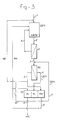
- The process according to the invention is explained with respect to the process diagram of Figure 3.
- Fermentation medium is continuously introduced into the reaction vessel CSTR through inlet pipe 1. The flow rate is so adjusted, for example, that the product which is fed through
pipe 2 to the ultrafiltration apparatus UF contains approximately 6% by weight of salt of the organic acid concerned, which, in the case of potassium lactate, corresponds to 0.66 N lactic acid ions. - In the ultrafiltration apparatus, the reaction medium is split into retentate, which is fed back through pipe 9 into CSTR, and permeate which is passed through pipe 3 into the reverse osmosis apparatus RO in which the pressure which is exerted on the permeate forces the solvent present in the permeate through a semipermeable membrane against the osmotic pressure; as a result of the filtration action, on the one hand, a more concentrated permeate is obtained and, on the other hand, the solvent is obtained. The abovementioned lactic acid ions would concentrated, for example, to 1.32 N. Then the concentrated salt flows through pipe 4 and H₂O through
pipe 5 into the electrodialysis apparatus in which the salt is decomposed into XOH and organic acid. Throughpipe 5, H₂O returns to the inlet pipe 1. In the abovementioned case of lactic acid, the concentration would then increase to 4 N; this would be removed through pipe 6. Dilute salt of the organic acid is fed back through pipe 7 into the RO apparatus and XOH is fed back through pipe 8 into CSTR. - If the concentration of the ingredient accumulated in flow 7 becomes too great, a portion of said flow can be passed into the H₂O flow of
pipe 5 throughpipe 10 in which a shut-off valve is fitted. - The lactic acid production below was carried out with the system shown in Figure 3.
- The CSTR was filled with sterilized medium of the following composition:
6% by weight of glucose, 2.5% by weight of yeast extract, 0.05% by weight of (NH₄)₂SO₄, 0.03% by weight of MgSO₄, 0.02% by weight of KH₂PO₄, 0.02% by weight of K₂HPO₄. - The reactor had a working volume of 5 l and was inoculated with 100 ml of Bacillus coagulans culture DSM 2311 which had been precultured on nutrient broth in a shaking flask at 45°C. The fermentation was carried out batchwise for 24 hours under aerobic conditions.
- The continuous anaerobic fermentation was then started. The production medium had the following composition:
6.6% by weight of glucose, 0.1% by weight of yeast extract, 0.1% by weight of diammonium phosphate. - The pH was adjusted to 6.0 with ammonium hydroxide. The temperature was adjusted to 50°C.
- The ultrafiltration unit used was a biopilot Carbosep PSV 3 R (SFEC) having M6 membranes with a total surface area of 0.1 m². A pressure of 2.2 bar was employed at the inlet and 1.8 bar at the outlet of the module. The RO was a tubular system fitted with organic membranes of type APC 99 (PCI) having a surface area of 0.85 m². A pressure of 60 bar was employed at 35°C.
- The electrodialysis stack contained 8 cells (3 compartments) made up of anion-selective, cation-selective and bipolar membranes (Aquatech) having a total surface area of 0.10 m². The voltage used was 25 V at a current density of 100 mA/cm².
- The unconverted salt solution from the electrodialysis stack was recycled to the RO. The hydroxide solution produced in the electrodialysis stack was conveyed to the hydroxide vessel and reused for neutralization in the fermenter.
- In the steady state the following results were obtained:
The lactate concentration in the fermenter was 0.63 N. The volumetric productivity of the fermenter was 60 g/(1.h) at the dilution rate used of 1 h⁻1. The biomass concentration was approx. 40 g/l (dry weight). The yield for converting glucose into lactic acid was 95%. - In the RO module, the ammonium lactate solution was concentrated to 1.2 N. The product flow from the ED stack was 0.85 l/h and contained 36% lactic acid. The electrical efficiency was 85%.
- The experiment of Example I was carried out with a defined medium as product medium having the following composition:
glucose : 6.6% by weight diammonium phosphate : 0.2% by weight KH₂PO₄ : 0.1% by weight K₂HPO₄ : 0.1% by weight MgSO₄ : 0.1% by weight biotin : 0.15 µg/l thiamin : 75 µg/l folic acid : 15 µg/l niacin : 1 mg/l arginine : 5 mg/l asparagine : 100 mg/l cysteine : 3 mg/l glutamine : 20 mg/l histidine : 3 mg/l methionine : 10 mg/l proline : 15 mg/l serine : 20 mg/l
Claims (2)
Priority Applications (1)
| Application Number | Priority Date | Filing Date | Title |
|---|---|---|---|
| AT89201495T ATE102653T1 (en) | 1988-06-14 | 1989-06-08 | PRODUCTION OF ORGANIC ACIDS BY FERMENTATION. |
Applications Claiming Priority (2)
| Application Number | Priority Date | Filing Date | Title |
|---|---|---|---|
| NL8801516A NL8801516A (en) | 1988-06-14 | 1988-06-14 | PROCESS FOR THE FERMENTATIVE PREPARATION OF ORGANIC ACIDS. |
| NL8801516 | 1988-06-14 |
Publications (3)
| Publication Number | Publication Date |
|---|---|
| EP0346983A2 true EP0346983A2 (en) | 1989-12-20 |
| EP0346983A3 EP0346983A3 (en) | 1990-01-03 |
| EP0346983B1 EP0346983B1 (en) | 1994-03-09 |
Family
ID=19852458
Family Applications (1)
| Application Number | Title | Priority Date | Filing Date |
|---|---|---|---|
| EP89201495A Expired - Lifetime EP0346983B1 (en) | 1988-06-14 | 1989-06-08 | A process for the fermentative preparation of organic acids |
Country Status (7)
| Country | Link |
|---|---|
| US (1) | US5002881A (en) |
| EP (1) | EP0346983B1 (en) |
| JP (1) | JPH0327291A (en) |
| AT (1) | ATE102653T1 (en) |
| DE (1) | DE68913595T2 (en) |
| ES (1) | ES2061940T3 (en) |
| NL (1) | NL8801516A (en) |
Cited By (12)
| Publication number | Priority date | Publication date | Assignee | Title |
|---|---|---|---|---|
| FR2686897A1 (en) * | 1992-02-05 | 1993-08-06 | Sonertec | Process for the continuous manufacture of organic acids |
| EP0657542A1 (en) * | 1993-12-08 | 1995-06-14 | MUSASHINO CHEMICAL LABORATORY Ltd. | Method for fermentative production of lactic acid |
| WO1995033696A1 (en) * | 1994-06-08 | 1995-12-14 | Fraunhofer-Gesellschaft zur Förderung der angewandten Forschung e.V. | Method of purifying waste water from dairies |
| WO1997029203A1 (en) * | 1996-02-09 | 1997-08-14 | Gkss-Forschungszentrum Geesthacht Gmbh | Process for separating organic acids from a fermentation medium |
| DE19700044C1 (en) * | 1996-09-17 | 1998-02-05 | Fraunhofer Ges Forschung | Two stage, monopolar and bipolar electrodialysis process achieving reduced energy consumption |
| US5746920A (en) * | 1994-06-08 | 1998-05-05 | Fraunhofer-Gesellschaft Zur Foerder Der Angewandten Forschung E.V. | Process for purifying dairy wastewater |
| US6280985B1 (en) * | 1999-10-18 | 2001-08-28 | Roquette Freres | Process for the separation and purification of lactic acid from a fermentation medium |
| WO2003095659A1 (en) * | 2002-05-14 | 2003-11-20 | Purac Biochem B.V. | Method for the production of lactic acid or a salt thereof by simultaneous saccharification and fermentation of starch |
| EP1953234A1 (en) * | 2007-01-31 | 2008-08-06 | Galactic S.A. | Method of producing lactic acid by fermenting a self-sufficient medium based on raw sugarcane juice. |
| US8492127B2 (en) | 2010-05-20 | 2013-07-23 | Shanghai Jiao Tong University | Bacillus coagulans strains and their applications in L-lactic acid production |
| EP3093269A1 (en) | 2015-05-11 | 2016-11-16 | Technische Universitat Bergakademie Freiberg | Electrodialytic preparation of phosphoric acid and device |
| DE102016212242A1 (en) | 2016-07-05 | 2018-01-11 | Technische Universität Bergakademie Freiberg | Process for the production of phosphoric acid from phosphorus-containing primary and secondary raw materials |
Families Citing this family (22)
| Publication number | Priority date | Publication date | Assignee | Title |
|---|---|---|---|---|
| US5464760A (en) * | 1990-04-04 | 1995-11-07 | University Of Chicago | Fermentation and recovery process for lactic acid production |
| US5681728A (en) * | 1995-06-07 | 1997-10-28 | Chronopol, Inc. | Method and apparatus for the recovery and purification of organic acids |
| BR9605262A (en) * | 1995-10-27 | 1998-07-21 | Shimadzu Corp | Method for the production of lactic acid with high optical purity using bacillus strains |
| WO1998028433A1 (en) | 1996-12-23 | 1998-07-02 | Lactascan Aps | Fermentative production and isolation of lactic acid |
| US6716435B1 (en) * | 1997-04-18 | 2004-04-06 | Ganeden Biotech, Inc. | Absorbent product containing absorbent structure and Bacillus coagulans |
| JP3144354B2 (en) | 1997-08-26 | 2001-03-12 | 株式会社デンソー | Airbag |
| US6187570B1 (en) | 1998-05-26 | 2001-02-13 | The Electrosynthesis Company, Inc. | Electrodialysis methods for purification and recovery of gluconic acid derivatives |
| US6902917B1 (en) | 1999-08-03 | 2005-06-07 | Archer-Daniels-Midland Company | Process for recovery of organic acids from fermentration broths |
| DE19952961A1 (en) | 1999-11-03 | 2001-05-10 | Basf Ag | Process for the purification of amino acid solutions by electrodialysis |
| WO2001092555A1 (en) * | 2000-05-30 | 2001-12-06 | Lactascan Aps | Method for producing lactic acid |
| US6509179B1 (en) | 2000-10-12 | 2003-01-21 | Barbara I. Veldhuis-Stribos | Continuous process for preparing lactic acid |
| US20030161815A1 (en) * | 2002-02-12 | 2003-08-28 | Intercytex Limited | Cell delivery system |
| CA2505409C (en) * | 2002-11-14 | 2017-04-04 | Intercytex Limited | Cultivation of hair inductive cells |
| US7083955B2 (en) * | 2003-01-13 | 2006-08-01 | Purac Biochem Bv | Preparation of lactic acid from a pentose-containing substrate |
| AT504206B8 (en) * | 2006-12-19 | 2008-09-15 | Gruene Bioraffinerie At Gmbh | METHOD FOR TREATING A STAFF CURRENT |
| US20090142459A1 (en) * | 2007-12-03 | 2009-06-04 | Batchelder Bruce T | Process for demineralizing whey and product therefrom |
| CN101407350B (en) * | 2008-10-13 | 2010-09-15 | 中国科学院过程工程研究所 | Treatment method of separation waste liquid in the production of lysine by fermentation method |
| CN101392273B (en) * | 2008-11-10 | 2013-02-06 | 南京工业大学 | A clean production process of lactic acid |
| CN101492409A (en) * | 2009-02-26 | 2009-07-29 | 江苏赛奥生化有限公司 | Novel process for tryptophane zymotechnics clean production |
| EP2609989A1 (en) * | 2010-08-19 | 2013-07-03 | Companhia Refinadora da Amazônia | Method for obtaining lactic acid with a high degree of purity from fermentative liquor |
| WO2013022334A1 (en) * | 2011-08-08 | 2013-02-14 | Soo Keng Lee | Process for the production of organic acids from an integration of solar or fuel cell with electrodialysis system |
| AU2016288656B2 (en) | 2015-06-29 | 2019-06-20 | Chulalongkorn University | Process for producing lactic acid or its salts from fermentation using thermotolerance bacillus bacteria |
Family Cites Families (1)
| Publication number | Priority date | Publication date | Assignee | Title |
|---|---|---|---|---|
| FR2555200B1 (en) * | 1983-11-23 | 1986-07-25 | Centre Nat Rech Scient | PROCESS FOR THE PREPARATION OF LACTIC ACID BY FERMENTATION OF LACTOSERUM AND PLANT FOR THE CONTINUOUS IMPLEMENTATION OF THIS PROCESS |
-
1988
- 1988-06-14 NL NL8801516A patent/NL8801516A/en not_active Application Discontinuation
-
1989
- 1989-06-08 EP EP89201495A patent/EP0346983B1/en not_active Expired - Lifetime
- 1989-06-08 ES ES89201495T patent/ES2061940T3/en not_active Expired - Lifetime
- 1989-06-08 DE DE68913595T patent/DE68913595T2/en not_active Expired - Fee Related
- 1989-06-08 AT AT89201495T patent/ATE102653T1/en not_active IP Right Cessation
- 1989-06-13 US US07/365,842 patent/US5002881A/en not_active Expired - Fee Related
- 1989-06-14 JP JP1152026A patent/JPH0327291A/en active Pending
Cited By (19)
| Publication number | Priority date | Publication date | Assignee | Title |
|---|---|---|---|---|
| FR2686897A1 (en) * | 1992-02-05 | 1993-08-06 | Sonertec | Process for the continuous manufacture of organic acids |
| EP0657542A1 (en) * | 1993-12-08 | 1995-06-14 | MUSASHINO CHEMICAL LABORATORY Ltd. | Method for fermentative production of lactic acid |
| WO1995033696A1 (en) * | 1994-06-08 | 1995-12-14 | Fraunhofer-Gesellschaft zur Förderung der angewandten Forschung e.V. | Method of purifying waste water from dairies |
| US5746920A (en) * | 1994-06-08 | 1998-05-05 | Fraunhofer-Gesellschaft Zur Foerder Der Angewandten Forschung E.V. | Process for purifying dairy wastewater |
| AU696254B2 (en) * | 1994-06-08 | 1998-09-03 | Fraunhofer-Gesellschaft Zur Forderung Der Angewandten Forschung E.V. | Process for purifying dairy wastewater |
| WO1997029203A1 (en) * | 1996-02-09 | 1997-08-14 | Gkss-Forschungszentrum Geesthacht Gmbh | Process for separating organic acids from a fermentation medium |
| DE19700044C1 (en) * | 1996-09-17 | 1998-02-05 | Fraunhofer Ges Forschung | Two stage, monopolar and bipolar electrodialysis process achieving reduced energy consumption |
| US6280985B1 (en) * | 1999-10-18 | 2001-08-28 | Roquette Freres | Process for the separation and purification of lactic acid from a fermentation medium |
| WO2003095659A1 (en) * | 2002-05-14 | 2003-11-20 | Purac Biochem B.V. | Method for the production of lactic acid or a salt thereof by simultaneous saccharification and fermentation of starch |
| CN1316031C (en) * | 2002-05-14 | 2007-05-16 | 普拉克生化公司 | Method for the production of lactic acid or a salt thereof by simultaneous saccharification and fermentation of starch |
| US8119376B2 (en) | 2002-05-14 | 2012-02-21 | Purac Biochem B.V. | Method for the production of lactic acid or a salt thereof by simultaneous saccharification and fermentation of starch |
| EP1953234A1 (en) * | 2007-01-31 | 2008-08-06 | Galactic S.A. | Method of producing lactic acid by fermenting a self-sufficient medium based on raw sugarcane juice. |
| WO2008095786A1 (en) * | 2007-01-31 | 2008-08-14 | Galactic S.A. | Method for producing lactic acid by the fermentation of a self-sufficient medium containing green cane juice |
| AU2008213026B2 (en) * | 2007-01-31 | 2013-09-19 | Galactic S.A. | Method for producing lactic acid by the fermentation of a self-sufficient medium containing green cane juice |
| US8492127B2 (en) | 2010-05-20 | 2013-07-23 | Shanghai Jiao Tong University | Bacillus coagulans strains and their applications in L-lactic acid production |
| EP3093269A1 (en) | 2015-05-11 | 2016-11-16 | Technische Universitat Bergakademie Freiberg | Electrodialytic preparation of phosphoric acid and device |
| DE102015208690A1 (en) | 2015-05-11 | 2016-11-17 | Technische Universität Bergakademie Freiberg | Electrodialytic production of phosphoric acid and device |
| DE102016212242A1 (en) | 2016-07-05 | 2018-01-11 | Technische Universität Bergakademie Freiberg | Process for the production of phosphoric acid from phosphorus-containing primary and secondary raw materials |
| DE102016212242B4 (en) | 2016-07-05 | 2019-02-07 | Technische Universität Bergakademie Freiberg | Process for the production of phosphoric acid from phosphorus-containing primary and secondary raw materials |
Also Published As
| Publication number | Publication date |
|---|---|
| JPH0327291A (en) | 1991-02-05 |
| US5002881A (en) | 1991-03-26 |
| EP0346983B1 (en) | 1994-03-09 |
| ATE102653T1 (en) | 1994-03-15 |
| DE68913595T2 (en) | 1994-06-16 |
| NL8801516A (en) | 1990-01-02 |
| ES2061940T3 (en) | 1994-12-16 |
| DE68913595D1 (en) | 1994-04-14 |
| EP0346983A3 (en) | 1990-01-03 |
Similar Documents
| Publication | Publication Date | Title |
|---|---|---|
| EP0346983B1 (en) | A process for the fermentative preparation of organic acids | |
| EP0389103B1 (en) | A process for the production and purification of succinic acid | |
| US4885247A (en) | Recovery and purification of lactate salts from whole fermentation broth by electrodialysis | |
| US5746920A (en) | Process for purifying dairy wastewater | |
| US5814498A (en) | Process for the recovery of organic acids and ammonia from their salts | |
| EP0393818A1 (en) | Process for production and purification of lactic acid | |
| AU726685B2 (en) | Fermentative production and isolation of lactic acid | |
| CN101215583B (en) | A method for preparing succinic acid by coupling fermentation and membrane separation unit | |
| YAO et al. | Lactic acid production in electrodialysis culture | |
| AU696254B2 (en) | Process for purifying dairy wastewater | |
| Ohleyer et al. | Continuous production of lactic acid from glucose and lactose in a cell-recycle reactor | |
| JP2005333886A (en) | Method for producing succinic acid by microorganism | |
| Takaya et al. | Characterization of membrane bioreactor for dry wine production | |
| CA2735909C (en) | Process for controlling the ph and level of target ions of a liquid composition | |
| CN115678925A (en) | Preparation method of calcium propionate | |
| WO1994013826A1 (en) | Improved pre-treatment process for lactic acid production | |
| US4845033A (en) | Process for a continuous fermentative production of low aliphatic alcohols or organic solvents | |
| EP0717111B1 (en) | Microbial process for the preparation of dihydroxyacetone with recirculation of biomass | |
| Hoffmann et al. | Ethanol production by coupled enzyme fermentation and continuous saccharification of cellulose, using membrane cell-recycling systems | |
| Puzanov | Continuous production of lactic acid in a membrane bioreactor | |
| EP0725847A4 (en) | A process for the production of water-soluble salts of carboxylic and amino acids | |
| Domakyaara Hilary et al. | Continuous culture systems involving Zymomonas mobilisand a hollow fiberfilter module | |
| CZ389497A3 (en) | Process of continuous preparation of lactic acid with biomass recycling |
Legal Events
| Date | Code | Title | Description |
|---|---|---|---|
| PUAI | Public reference made under article 153(3) epc to a published international application that has entered the european phase |
Free format text: ORIGINAL CODE: 0009012 |
|
| PUAL | Search report despatched |
Free format text: ORIGINAL CODE: 0009013 |
|
| AK | Designated contracting states |
Kind code of ref document: A2 Designated state(s): AT BE CH DE ES FR GB GR IT LI LU NL SE |
|
| AK | Designated contracting states |
Kind code of ref document: A3 Designated state(s): AT BE CH DE ES FR GB GR IT LI LU NL SE |
|
| RIN1 | Information on inventor provided before grant (corrected) |
Inventor name: KOERTS, KEES C/O COOP. VER. SUIKER UNIE U.A. Inventor name: MEYER, PIETER D C/O COOP. VER. SUIKER UNIE U.A. Inventor name: JONKER, RONALD Inventor name: VAN NISPEN, JOANNES GERARDUS MARIA |
|
| 17P | Request for examination filed |
Effective date: 19900607 |
|
| 17Q | First examination report despatched |
Effective date: 19920813 |
|
| ITF | It: translation for a ep patent filed | ||
| GRAA | (expected) grant |
Free format text: ORIGINAL CODE: 0009210 |
|
| AK | Designated contracting states |
Kind code of ref document: B1 Designated state(s): AT BE CH DE ES FR GB GR IT LI LU NL SE |
|
| REF | Corresponds to: |
Ref document number: 102653 Country of ref document: AT Date of ref document: 19940315 Kind code of ref document: T |
|
| REF | Corresponds to: |
Ref document number: 68913595 Country of ref document: DE Date of ref document: 19940414 |
|
| ET | Fr: translation filed | ||
| EPTA | Lu: last paid annual fee | ||
| REG | Reference to a national code |
Ref country code: GR Ref legal event code: FG4A Free format text: 3011951 |
|
| REG | Reference to a national code |
Ref country code: ES Ref legal event code: FG2A Ref document number: 2061940 Country of ref document: ES Kind code of ref document: T3 |
|
| PLBI | Opposition filed |
Free format text: ORIGINAL CODE: 0009260 |
|
| EAL | Se: european patent in force in sweden |
Ref document number: 89201495.2 |
|
| 26 | Opposition filed |
Opponent name: PURAC BIOCHEM Effective date: 19941206 |
|
| NLR1 | Nl: opposition has been filed with the epo |
Opponent name: PURAC BIOCHEM. |
|
| PGFP | Annual fee paid to national office [announced via postgrant information from national office to epo] |
Ref country code: GB Payment date: 19960531 Year of fee payment: 8 |
|
| PGFP | Annual fee paid to national office [announced via postgrant information from national office to epo] |
Ref country code: SE Payment date: 19960603 Year of fee payment: 8 |
|
| PGFP | Annual fee paid to national office [announced via postgrant information from national office to epo] |
Ref country code: FR Payment date: 19960604 Year of fee payment: 8 |
|
| PGFP | Annual fee paid to national office [announced via postgrant information from national office to epo] |
Ref country code: GR Payment date: 19960612 Year of fee payment: 8 Ref country code: BE Payment date: 19960612 Year of fee payment: 8 Ref country code: AT Payment date: 19960612 Year of fee payment: 8 |
|
| PGFP | Annual fee paid to national office [announced via postgrant information from national office to epo] |
Ref country code: ES Payment date: 19960628 Year of fee payment: 8 |
|
| PGFP | Annual fee paid to national office [announced via postgrant information from national office to epo] |
Ref country code: NL Payment date: 19960630 Year of fee payment: 8 |
|
| PGFP | Annual fee paid to national office [announced via postgrant information from national office to epo] |
Ref country code: LU Payment date: 19960701 Year of fee payment: 8 |
|
| PGFP | Annual fee paid to national office [announced via postgrant information from national office to epo] |
Ref country code: DE Payment date: 19960718 Year of fee payment: 8 Ref country code: CH Payment date: 19960718 Year of fee payment: 8 |
|
| PG25 | Lapsed in a contracting state [announced via postgrant information from national office to epo] |
Ref country code: LU Free format text: LAPSE BECAUSE OF NON-PAYMENT OF DUE FEES Effective date: 19970608 Ref country code: GB Free format text: LAPSE BECAUSE OF NON-PAYMENT OF DUE FEES Effective date: 19970608 Ref country code: AT Effective date: 19970608 |
|
| PG25 | Lapsed in a contracting state [announced via postgrant information from national office to epo] |
Ref country code: SE Effective date: 19970609 Ref country code: ES Free format text: LAPSE BECAUSE OF NON-PAYMENT OF DUE FEES Effective date: 19970609 |
|
| PG25 | Lapsed in a contracting state [announced via postgrant information from national office to epo] |
Ref country code: LI Free format text: LAPSE BECAUSE OF NON-PAYMENT OF DUE FEES Effective date: 19970630 Ref country code: GR Free format text: LAPSE BECAUSE OF NON-PAYMENT OF DUE FEES Effective date: 19970630 Ref country code: CH Free format text: LAPSE BECAUSE OF NON-PAYMENT OF DUE FEES Effective date: 19970630 Ref country code: BE Effective date: 19970630 |
|
| BERE | Be: lapsed |
Owner name: COOPERATIEVE VERENIGING SUIKER UNIE U.A. Effective date: 19970630 |
|
| PG25 | Lapsed in a contracting state [announced via postgrant information from national office to epo] |
Ref country code: NL Effective date: 19980101 |
|
| GBPC | Gb: european patent ceased through non-payment of renewal fee |
Effective date: 19970608 |
|
| REG | Reference to a national code |
Ref country code: CH Ref legal event code: PL |
|
| PG25 | Lapsed in a contracting state [announced via postgrant information from national office to epo] |
Ref country code: FR Free format text: LAPSE BECAUSE OF NON-PAYMENT OF DUE FEES Effective date: 19980227 |
|
| EUG | Se: european patent has lapsed |
Ref document number: 89201495.2 |
|
| NLV4 | Nl: lapsed or anulled due to non-payment of the annual fee |
Effective date: 19980101 |
|
| PG25 | Lapsed in a contracting state [announced via postgrant information from national office to epo] |
Ref country code: DE Free format text: LAPSE BECAUSE OF NON-PAYMENT OF DUE FEES Effective date: 19980303 |
|
| PLBO | Opposition rejected |
Free format text: ORIGINAL CODE: EPIDOS REJO |
|
| REG | Reference to a national code |
Ref country code: FR Ref legal event code: ST |
|
| REG | Reference to a national code |
Ref country code: FR Ref legal event code: ST |
|
| PLBN | Opposition rejected |
Free format text: ORIGINAL CODE: 0009273 |
|
| STAA | Information on the status of an ep patent application or granted ep patent |
Free format text: STATUS: OPPOSITION REJECTED |
|
| 27O | Opposition rejected |
Effective date: 19980416 |
|
| REG | Reference to a national code |
Ref country code: ES Ref legal event code: FD2A Effective date: 20000503 |
|
| PG25 | Lapsed in a contracting state [announced via postgrant information from national office to epo] |
Ref country code: IT Free format text: LAPSE BECAUSE OF NON-PAYMENT OF DUE FEES;WARNING: LAPSES OF ITALIAN PATENTS WITH EFFECTIVE DATE BEFORE 2007 MAY HAVE OCCURRED AT ANY TIME BEFORE 2007. THE CORRECT EFFECTIVE DATE MAY BE DIFFERENT FROM THE ONE RECORDED. Effective date: 20050608 |