EP0341808B2 - Process for coloring hair with aminoalkyl or aminohydroxyalkyl catechol compositions - Google Patents
Process for coloring hair with aminoalkyl or aminohydroxyalkyl catechol compositions Download PDFInfo
- Publication number
- EP0341808B2 EP0341808B2 EP89301919A EP89301919A EP0341808B2 EP 0341808 B2 EP0341808 B2 EP 0341808B2 EP 89301919 A EP89301919 A EP 89301919A EP 89301919 A EP89301919 A EP 89301919A EP 0341808 B2 EP0341808 B2 EP 0341808B2
- Authority
- EP
- European Patent Office
- Prior art keywords
- hair
- composition
- catechol
- nhr
- aminohydroxyalkyl
- Prior art date
- Legal status (The legal status is an assumption and is not a legal conclusion. Google has not performed a legal analysis and makes no representation as to the accuracy of the status listed.)
- Expired - Lifetime
Links
- 210000004209 hair Anatomy 0.000 title claims abstract description 73
- 238000000034 method Methods 0.000 title claims abstract description 45
- 125000004103 aminoalkyl group Chemical group 0.000 title claims abstract description 8
- 238000004040 coloring Methods 0.000 title claims abstract description 8
- 239000000203 mixture Substances 0.000 title claims description 70
- YCIMNLLNPGFGHC-UHFFFAOYSA-N catechol Chemical compound OC1=CC=CC=C1O YCIMNLLNPGFGHC-UHFFFAOYSA-N 0.000 title claims description 22
- 229910021645 metal ion Inorganic materials 0.000 claims abstract description 20
- 150000003839 salts Chemical class 0.000 claims description 36
- 229910052751 metal Inorganic materials 0.000 claims description 27
- 239000002184 metal Substances 0.000 claims description 27
- 230000001590 oxidative effect Effects 0.000 claims description 26
- 239000007800 oxidant agent Substances 0.000 claims description 24
- VYFYYTLLBUKUHU-UHFFFAOYSA-N dopamine Chemical compound NCCC1=CC=C(O)C(O)=C1 VYFYYTLLBUKUHU-UHFFFAOYSA-N 0.000 claims description 20
- MHAJPDPJQMAIIY-UHFFFAOYSA-N Hydrogen peroxide Chemical group OO MHAJPDPJQMAIIY-UHFFFAOYSA-N 0.000 claims description 15
- 239000000243 solution Substances 0.000 claims description 15
- -1 catechol compound Chemical class 0.000 claims description 14
- 238000011282 treatment Methods 0.000 claims description 12
- 125000000217 alkyl group Chemical group 0.000 claims description 9
- XEEYBQQBJWHFJM-UHFFFAOYSA-N Iron Chemical compound [Fe] XEEYBQQBJWHFJM-UHFFFAOYSA-N 0.000 claims description 8
- 229910052739 hydrogen Inorganic materials 0.000 claims description 8
- UCTWMZQNUQWSLP-VIFPVBQESA-N (R)-adrenaline Chemical compound CNC[C@H](O)C1=CC=C(O)C(O)=C1 UCTWMZQNUQWSLP-VIFPVBQESA-N 0.000 claims description 7
- 229930182837 (R)-adrenaline Natural products 0.000 claims description 7
- 229960005139 epinephrine Drugs 0.000 claims description 7
- JRKICGRDRMAZLK-UHFFFAOYSA-L peroxydisulfate Chemical compound [O-]S(=O)(=O)OOS([O-])(=O)=O JRKICGRDRMAZLK-UHFFFAOYSA-L 0.000 claims description 7
- XLYOFNOQVPJJNP-UHFFFAOYSA-N water Substances O XLYOFNOQVPJJNP-UHFFFAOYSA-N 0.000 claims description 7
- KHIWWQKSHDUIBK-UHFFFAOYSA-N periodic acid Chemical compound OI(=O)(=O)=O KHIWWQKSHDUIBK-UHFFFAOYSA-N 0.000 claims description 6
- 239000010936 titanium Substances 0.000 claims description 6
- JCXJVPUVTGWSNB-UHFFFAOYSA-N Nitrogen dioxide Chemical compound O=[N]=O JCXJVPUVTGWSNB-UHFFFAOYSA-N 0.000 claims description 5
- 238000006243 chemical reaction Methods 0.000 claims description 5
- 239000000463 material Substances 0.000 claims description 5
- PXHVJJICTQNCMI-UHFFFAOYSA-N Nickel Chemical compound [Ni] PXHVJJICTQNCMI-UHFFFAOYSA-N 0.000 claims description 4
- 125000003545 alkoxy group Chemical group 0.000 claims description 4
- 239000007864 aqueous solution Substances 0.000 claims description 4
- 125000003178 carboxy group Chemical group [H]OC(*)=O 0.000 claims description 4
- MRUAUOIMASANKQ-UHFFFAOYSA-N cocamidopropyl betaine Chemical compound CCCCCCCCCCCC(=O)NCCC[N+](C)(C)CC([O-])=O MRUAUOIMASANKQ-UHFFFAOYSA-N 0.000 claims description 4
- 229940073507 cocamidopropyl betaine Drugs 0.000 claims description 4
- ICIWUVCWSCSTAQ-UHFFFAOYSA-M iodate Chemical compound [O-]I(=O)=O ICIWUVCWSCSTAQ-UHFFFAOYSA-M 0.000 claims description 4
- 239000011133 lead Substances 0.000 claims description 4
- 239000011572 manganese Substances 0.000 claims description 4
- ARUVKPQLZAKDPS-UHFFFAOYSA-L copper(II) sulfate Chemical compound [Cu+2].[O-][S+2]([O-])([O-])[O-] ARUVKPQLZAKDPS-UHFFFAOYSA-L 0.000 claims description 3
- 229910052742 iron Inorganic materials 0.000 claims description 3
- 125000002924 primary amino group Chemical group [H]N([H])* 0.000 claims description 3
- 229910052719 titanium Inorganic materials 0.000 claims description 3
- RYGMFSIKBFXOCR-UHFFFAOYSA-N Copper Chemical compound [Cu] RYGMFSIKBFXOCR-UHFFFAOYSA-N 0.000 claims description 2
- PWHULOQIROXLJO-UHFFFAOYSA-N Manganese Chemical compound [Mn] PWHULOQIROXLJO-UHFFFAOYSA-N 0.000 claims description 2
- RTAQQCXQSZGOHL-UHFFFAOYSA-N Titanium Chemical compound [Ti] RTAQQCXQSZGOHL-UHFFFAOYSA-N 0.000 claims description 2
- HCHKCACWOHOZIP-UHFFFAOYSA-N Zinc Chemical compound [Zn] HCHKCACWOHOZIP-UHFFFAOYSA-N 0.000 claims description 2
- 125000004183 alkoxy alkyl group Chemical group 0.000 claims description 2
- 125000003118 aryl group Chemical group 0.000 claims description 2
- 229910052799 carbon Inorganic materials 0.000 claims description 2
- 150000001721 carbon Chemical group 0.000 claims description 2
- 229910017052 cobalt Inorganic materials 0.000 claims description 2
- 239000010941 cobalt Substances 0.000 claims description 2
- GUTLYIVDDKVIGB-UHFFFAOYSA-N cobalt atom Chemical compound [Co] GUTLYIVDDKVIGB-UHFFFAOYSA-N 0.000 claims description 2
- 239000010949 copper Substances 0.000 claims description 2
- 229910052802 copper Inorganic materials 0.000 claims description 2
- 229910052736 halogen Inorganic materials 0.000 claims description 2
- 150000002367 halogens Chemical class 0.000 claims description 2
- 229910052748 manganese Inorganic materials 0.000 claims description 2
- 229910052759 nickel Inorganic materials 0.000 claims description 2
- 239000003755 preservative agent Substances 0.000 claims description 2
- 229910052709 silver Inorganic materials 0.000 claims description 2
- 239000004332 silver Substances 0.000 claims description 2
- 229910052725 zinc Inorganic materials 0.000 claims description 2
- 239000011701 zinc Substances 0.000 claims description 2
- TWRXJAOTZQYOKJ-UHFFFAOYSA-L Magnesium chloride Chemical compound [Mg+2].[Cl-].[Cl-] TWRXJAOTZQYOKJ-UHFFFAOYSA-L 0.000 claims 6
- YIXJRHPUWRPCBB-UHFFFAOYSA-N magnesium nitrate Chemical compound [Mg+2].[O-][N+]([O-])=O.[O-][N+]([O-])=O YIXJRHPUWRPCBB-UHFFFAOYSA-N 0.000 claims 6
- JPMIIZHYYWMHDT-UHFFFAOYSA-N octhilinone Chemical compound CCCCCCCCN1SC=CC1=O JPMIIZHYYWMHDT-UHFFFAOYSA-N 0.000 claims 6
- 229940100555 2-methyl-4-isothiazolin-3-one Drugs 0.000 claims 3
- 229940100484 5-chloro-2-methyl-4-isothiazolin-3-one Drugs 0.000 claims 3
- ZGTMUACCHSMWAC-UHFFFAOYSA-L EDTA disodium salt (anhydrous) Chemical compound [Na+].[Na+].OC(=O)CN(CC([O-])=O)CCN(CC(O)=O)CC([O-])=O ZGTMUACCHSMWAC-UHFFFAOYSA-L 0.000 claims 3
- GLVPUAWFPNGKHO-UHFFFAOYSA-L N.[Fe+2].[O-]S([O-])(=O)=O Chemical compound N.[Fe+2].[O-]S([O-])(=O)=O GLVPUAWFPNGKHO-UHFFFAOYSA-L 0.000 claims 3
- XSQUKJJJFZCRTK-UHFFFAOYSA-N Urea Natural products NC(N)=O XSQUKJJJFZCRTK-UHFFFAOYSA-N 0.000 claims 3
- DHNRXBZYEKSXIM-UHFFFAOYSA-N chloromethylisothiazolinone Chemical compound CN1SC(Cl)=CC1=O DHNRXBZYEKSXIM-UHFFFAOYSA-N 0.000 claims 3
- 229910001629 magnesium chloride Inorganic materials 0.000 claims 3
- BEGLCMHJXHIJLR-UHFFFAOYSA-N methylisothiazolinone Chemical compound CN1SC=CC1=O BEGLCMHJXHIJLR-UHFFFAOYSA-N 0.000 claims 3
- 239000002304 perfume Substances 0.000 claims 3
- SVTBMSDMJJWYQN-UHFFFAOYSA-N 2-methylpentane-2,4-diol Chemical compound CC(O)CC(C)(C)O SVTBMSDMJJWYQN-UHFFFAOYSA-N 0.000 claims 2
- RQJDUEKERVZLLU-UHFFFAOYSA-N 4-Hydroxybenzylamine Chemical compound NCC1=CC=C(O)C=C1 RQJDUEKERVZLLU-UHFFFAOYSA-N 0.000 claims 2
- CIWBSHSKHKDKBQ-JLAZNSOCSA-N Ascorbic acid Chemical compound OC[C@H](O)[C@H]1OC(=O)C(O)=C1O CIWBSHSKHKDKBQ-JLAZNSOCSA-N 0.000 claims 2
- FAPWRFPIFSIZLT-UHFFFAOYSA-M Sodium chloride Chemical compound [Na+].[Cl-] FAPWRFPIFSIZLT-UHFFFAOYSA-M 0.000 claims 2
- 239000008367 deionised water Substances 0.000 claims 2
- 229910021641 deionized water Inorganic materials 0.000 claims 2
- 229960002337 magnesium chloride Drugs 0.000 claims 2
- HBNDBUATLJAUQM-UHFFFAOYSA-L magnesium;dodecyl sulfate Chemical compound [Mg+2].CCCCCCCCCCCCOS([O-])(=O)=O.CCCCCCCCCCCCOS([O-])(=O)=O HBNDBUATLJAUQM-UHFFFAOYSA-L 0.000 claims 2
- UMGDCJDMYOKAJW-UHFFFAOYSA-N thiourea Chemical compound NC(N)=S UMGDCJDMYOKAJW-UHFFFAOYSA-N 0.000 claims 2
- NLXLAEXVIDQMFP-UHFFFAOYSA-N Ammonium chloride Substances [NH4+].[Cl-] NLXLAEXVIDQMFP-UHFFFAOYSA-N 0.000 claims 1
- VHUUQVKOLVNVRT-UHFFFAOYSA-N Ammonium hydroxide Chemical compound [NH4+].[OH-] VHUUQVKOLVNVRT-UHFFFAOYSA-N 0.000 claims 1
- ZAKOWWREFLAJOT-CEFNRUSXSA-N D-alpha-tocopherylacetate Chemical compound CC(=O)OC1=C(C)C(C)=C2O[C@@](CCC[C@H](C)CCC[C@H](C)CCCC(C)C)(C)CCC2=C1C ZAKOWWREFLAJOT-CEFNRUSXSA-N 0.000 claims 1
- FYYHWMGAXLPEAU-UHFFFAOYSA-N Magnesium Chemical compound [Mg] FYYHWMGAXLPEAU-UHFFFAOYSA-N 0.000 claims 1
- DBMJMQXJHONAFJ-UHFFFAOYSA-M Sodium laurylsulphate Chemical compound [Na+].CCCCCCCCCCCCOS([O-])(=O)=O DBMJMQXJHONAFJ-UHFFFAOYSA-M 0.000 claims 1
- 239000004141 Sodium laurylsulphate Substances 0.000 claims 1
- 235000011114 ammonium hydroxide Nutrition 0.000 claims 1
- 229960005070 ascorbic acid Drugs 0.000 claims 1
- 235000010323 ascorbic acid Nutrition 0.000 claims 1
- 239000011668 ascorbic acid Substances 0.000 claims 1
- 239000004202 carbamide Substances 0.000 claims 1
- ZAKOWWREFLAJOT-UHFFFAOYSA-N d-alpha-Tocopheryl acetate Natural products CC(=O)OC1=C(C)C(C)=C2OC(CCCC(C)CCCC(C)CCCC(C)C)(C)CCC2=C1C ZAKOWWREFLAJOT-UHFFFAOYSA-N 0.000 claims 1
- 229940051250 hexylene glycol Drugs 0.000 claims 1
- 229910052749 magnesium Inorganic materials 0.000 claims 1
- 239000011777 magnesium Substances 0.000 claims 1
- 229940091250 magnesium supplement Drugs 0.000 claims 1
- 230000002335 preservative effect Effects 0.000 claims 1
- 239000011780 sodium chloride Substances 0.000 claims 1
- 235000019333 sodium laurylsulphate Nutrition 0.000 claims 1
- 229940042585 tocopherol acetate Drugs 0.000 claims 1
- 150000005206 1,2-dihydroxybenzenes Chemical class 0.000 abstract description 15
- 150000001875 compounds Chemical class 0.000 description 24
- 239000000118 hair dye Substances 0.000 description 16
- 239000000975 dye Substances 0.000 description 14
- 238000004043 dyeing Methods 0.000 description 13
- OFSAJYZMIPNPHE-UHFFFAOYSA-N N-acetyldopamine Chemical compound CC(=O)NCCC1=CC=C(O)C(O)=C1 OFSAJYZMIPNPHE-UHFFFAOYSA-N 0.000 description 9
- 229960003638 dopamine Drugs 0.000 description 8
- 239000003086 colorant Substances 0.000 description 7
- UCMIRNVEIXFBKS-UHFFFAOYSA-N beta-alanine Chemical compound NCCC(O)=O UCMIRNVEIXFBKS-UHFFFAOYSA-N 0.000 description 6
- 239000003795 chemical substances by application Substances 0.000 description 6
- JPVYNHNXODAKFH-UHFFFAOYSA-N Cu2+ Chemical compound [Cu+2] JPVYNHNXODAKFH-UHFFFAOYSA-N 0.000 description 5
- 210000003128 head Anatomy 0.000 description 5
- 229910052708 sodium Inorganic materials 0.000 description 5
- 239000011734 sodium Substances 0.000 description 5
- WTDRDQBEARUVNC-LURJTMIESA-N L-DOPA Chemical compound OC(=O)[C@@H](N)CC1=CC=C(O)C(O)=C1 WTDRDQBEARUVNC-LURJTMIESA-N 0.000 description 4
- XUMBMVFBXHLACL-UHFFFAOYSA-N Melanin Chemical compound O=C1C(=O)C(C2=CNC3=C(C(C(=O)C4=C32)=O)C)=C2C4=CNC2=C1C XUMBMVFBXHLACL-UHFFFAOYSA-N 0.000 description 4
- 239000002671 adjuvant Substances 0.000 description 4
- 239000012141 concentrate Substances 0.000 description 4
- QTBSBXVTEAMEQO-UHFFFAOYSA-M Acetate Chemical compound CC([O-])=O QTBSBXVTEAMEQO-UHFFFAOYSA-M 0.000 description 3
- UHOVQNZJYSORNB-UHFFFAOYSA-N Benzene Chemical compound C1=CC=CC=C1 UHOVQNZJYSORNB-UHFFFAOYSA-N 0.000 description 3
- 229910002651 NO3 Inorganic materials 0.000 description 3
- NHNBFGGVMKEFGY-UHFFFAOYSA-N Nitrate Chemical compound [O-][N+]([O-])=O NHNBFGGVMKEFGY-UHFFFAOYSA-N 0.000 description 3
- 239000012670 alkaline solution Substances 0.000 description 3
- 229940000635 beta-alanine Drugs 0.000 description 3
- 230000015572 biosynthetic process Effects 0.000 description 3
- 239000007795 chemical reaction product Substances 0.000 description 3
- 238000009472 formulation Methods 0.000 description 3
- 229910052700 potassium Inorganic materials 0.000 description 3
- 238000002203 pretreatment Methods 0.000 description 3
- HZAXFHJVJLSVMW-UHFFFAOYSA-N 2-Aminoethan-1-ol Chemical compound NCCO HZAXFHJVJLSVMW-UHFFFAOYSA-N 0.000 description 2
- 239000004342 Benzoyl peroxide Substances 0.000 description 2
- OMPJBNCRMGITSC-UHFFFAOYSA-N Benzoylperoxide Chemical compound C=1C=CC=CC=1C(=O)OOC(=O)C1=CC=CC=C1 OMPJBNCRMGITSC-UHFFFAOYSA-N 0.000 description 2
- KRKNYBCHXYNGOX-UHFFFAOYSA-K Citrate Chemical compound [O-]C(=O)CC(O)(CC([O-])=O)C([O-])=O KRKNYBCHXYNGOX-UHFFFAOYSA-K 0.000 description 2
- DGAQECJNVWCQMB-PUAWFVPOSA-M Ilexoside XXIX Chemical compound C[C@@H]1CC[C@@]2(CC[C@@]3(C(=CC[C@H]4[C@]3(CC[C@@H]5[C@@]4(CC[C@@H](C5(C)C)OS(=O)(=O)[O-])C)C)[C@@H]2[C@]1(C)O)C)C(=O)O[C@H]6[C@@H]([C@H]([C@@H]([C@H](O6)CO)O)O)O.[Na+] DGAQECJNVWCQMB-PUAWFVPOSA-M 0.000 description 2
- KFZMGEQAYNKOFK-UHFFFAOYSA-N Isopropanol Chemical compound CC(C)O KFZMGEQAYNKOFK-UHFFFAOYSA-N 0.000 description 2
- JVTAAEKCZFNVCJ-UHFFFAOYSA-M Lactate Chemical compound CC(O)C([O-])=O JVTAAEKCZFNVCJ-UHFFFAOYSA-M 0.000 description 2
- 150000001413 amino acids Chemical class 0.000 description 2
- 150000001450 anions Chemical class 0.000 description 2
- 239000002585 base Substances 0.000 description 2
- 235000019400 benzoyl peroxide Nutrition 0.000 description 2
- 238000004061 bleaching Methods 0.000 description 2
- 239000003153 chemical reaction reagent Substances 0.000 description 2
- 230000007812 deficiency Effects 0.000 description 2
- 150000002500 ions Chemical class 0.000 description 2
- 230000003647 oxidation Effects 0.000 description 2
- 238000007254 oxidation reaction Methods 0.000 description 2
- 150000002978 peroxides Chemical class 0.000 description 2
- XAEFZNCEHLXOMS-UHFFFAOYSA-M potassium benzoate Chemical compound [K+].[O-]C(=O)C1=CC=CC=C1 XAEFZNCEHLXOMS-UHFFFAOYSA-M 0.000 description 2
- 239000012266 salt solution Substances 0.000 description 2
- 210000004761 scalp Anatomy 0.000 description 2
- 239000002453 shampoo Substances 0.000 description 2
- 239000000126 substance Substances 0.000 description 2
- AQLJVWUFPCUVLO-UHFFFAOYSA-N urea hydrogen peroxide Chemical compound OO.NC(N)=O AQLJVWUFPCUVLO-UHFFFAOYSA-N 0.000 description 2
- QCDWFXQBSFUVSP-UHFFFAOYSA-N 2-phenoxyethanol Chemical compound OCCOC1=CC=CC=C1 QCDWFXQBSFUVSP-UHFFFAOYSA-N 0.000 description 1
- YFMPSMITLLBENU-UHFFFAOYSA-N 3,4-dihydroxybenzylamine Chemical compound NCC1=CC=C(O)C(O)=C1 YFMPSMITLLBENU-UHFFFAOYSA-N 0.000 description 1
- LSNNMFCWUKXFEE-UHFFFAOYSA-M Bisulfite Chemical compound OS([O-])=O LSNNMFCWUKXFEE-UHFFFAOYSA-M 0.000 description 1
- VEXZGXHMUGYJMC-UHFFFAOYSA-M Chloride anion Chemical compound [Cl-] VEXZGXHMUGYJMC-UHFFFAOYSA-M 0.000 description 1
- FEWJPZIEWOKRBE-JCYAYHJZSA-N Dextrotartaric acid Chemical compound OC(=O)[C@H](O)[C@@H](O)C(O)=O FEWJPZIEWOKRBE-JCYAYHJZSA-N 0.000 description 1
- WTDRDQBEARUVNC-UHFFFAOYSA-N L-Dopa Natural products OC(=O)C(N)CC1=CC=C(O)C(O)=C1 WTDRDQBEARUVNC-UHFFFAOYSA-N 0.000 description 1
- 208000002193 Pain Diseases 0.000 description 1
- BQCADISMDOOEFD-UHFFFAOYSA-N Silver Chemical compound [Ag] BQCADISMDOOEFD-UHFFFAOYSA-N 0.000 description 1
- QAOWNCQODCNURD-UHFFFAOYSA-L Sulfate Chemical compound [O-]S([O-])(=O)=O QAOWNCQODCNURD-UHFFFAOYSA-L 0.000 description 1
- 239000002253 acid Substances 0.000 description 1
- 150000007513 acids Chemical class 0.000 description 1
- 229910052783 alkali metal Inorganic materials 0.000 description 1
- 150000001340 alkali metals Chemical class 0.000 description 1
- 229910052784 alkaline earth metal Inorganic materials 0.000 description 1
- 150000001342 alkaline earth metals Chemical class 0.000 description 1
- 150000001408 amides Chemical class 0.000 description 1
- 125000000129 anionic group Chemical group 0.000 description 1
- 229910052788 barium Inorganic materials 0.000 description 1
- 239000007853 buffer solution Substances 0.000 description 1
- 229910052791 calcium Inorganic materials 0.000 description 1
- 125000004432 carbon atom Chemical group C* 0.000 description 1
- 230000003197 catalytic effect Effects 0.000 description 1
- 235000019642 color hue Nutrition 0.000 description 1
- 229910000365 copper sulfate Inorganic materials 0.000 description 1
- ORTQZVOHEJQUHG-UHFFFAOYSA-L copper(II) chloride Chemical compound Cl[Cu]Cl ORTQZVOHEJQUHG-UHFFFAOYSA-L 0.000 description 1
- 229910000366 copper(II) sulfate Inorganic materials 0.000 description 1
- 239000003599 detergent Substances 0.000 description 1
- MHUWZNTUIIFHAS-CLFAGFIQSA-N dioleoyl phosphatidic acid Chemical compound CCCCCCCC\C=C/CCCCCCCC(=O)OCC(COP(O)(O)=O)OC(=O)CCCCCCC\C=C/CCCCCCCC MHUWZNTUIIFHAS-CLFAGFIQSA-N 0.000 description 1
- 238000009967 direct dyeing Methods 0.000 description 1
- 239000000839 emulsion Substances 0.000 description 1
- 239000003623 enhancer Substances 0.000 description 1
- 239000003205 fragrance Substances 0.000 description 1
- 230000037308 hair color Effects 0.000 description 1
- 238000011065 in-situ storage Methods 0.000 description 1
- 238000006919 indolization reaction Methods 0.000 description 1
- BAUYGSIQEAFULO-UHFFFAOYSA-L iron(2+) sulfate (anhydrous) Chemical compound [Fe+2].[O-]S([O-])(=O)=O BAUYGSIQEAFULO-UHFFFAOYSA-L 0.000 description 1
- 229910000359 iron(II) sulfate Inorganic materials 0.000 description 1
- 229960004502 levodopa Drugs 0.000 description 1
- 229910052744 lithium Inorganic materials 0.000 description 1
- 150000002739 metals Chemical class 0.000 description 1
- 238000012986 modification Methods 0.000 description 1
- 230000004048 modification Effects 0.000 description 1
- 239000003607 modifier Substances 0.000 description 1
- LGQLOGILCSXPEA-UHFFFAOYSA-L nickel sulfate Chemical compound [Ni+2].[O-]S([O-])(=O)=O LGQLOGILCSXPEA-UHFFFAOYSA-L 0.000 description 1
- 229910000363 nickel(II) sulfate Inorganic materials 0.000 description 1
- 150000005181 nitrobenzenes Chemical class 0.000 description 1
- SFLSHLFXELFNJZ-UHFFFAOYSA-N noradrenaline Chemical compound NCC(O)C1=CC=C(O)C(O)=C1 SFLSHLFXELFNJZ-UHFFFAOYSA-N 0.000 description 1
- 230000036407 pain Effects 0.000 description 1
- 230000035515 penetration Effects 0.000 description 1
- VLTRZXGMWDSKGL-UHFFFAOYSA-M perchlorate Inorganic materials [O-]Cl(=O)(=O)=O VLTRZXGMWDSKGL-UHFFFAOYSA-M 0.000 description 1
- VLTRZXGMWDSKGL-UHFFFAOYSA-N perchloric acid Chemical compound OCl(=O)(=O)=O VLTRZXGMWDSKGL-UHFFFAOYSA-N 0.000 description 1
- 229960005323 phenoxyethanol Drugs 0.000 description 1
- WVDDGKGOMKODPV-ZQBYOMGUSA-N phenyl(114C)methanol Chemical compound O[14CH2]C1=CC=CC=C1 WVDDGKGOMKODPV-ZQBYOMGUSA-N 0.000 description 1
- 150000004986 phenylenediamines Chemical class 0.000 description 1
- 230000019612 pigmentation Effects 0.000 description 1
- 238000002360 preparation method Methods 0.000 description 1
- 230000000135 prohibitive effect Effects 0.000 description 1
- 238000009738 saturating Methods 0.000 description 1
- 238000002791 soaking Methods 0.000 description 1
- 238000010186 staining Methods 0.000 description 1
- 239000010902 straw Substances 0.000 description 1
- 229940095064 tartrate Drugs 0.000 description 1
- NWONKYPBYAMBJT-UHFFFAOYSA-L zinc sulfate Chemical compound [Zn+2].[O-]S([O-])(=O)=O NWONKYPBYAMBJT-UHFFFAOYSA-L 0.000 description 1
- 229910000368 zinc sulfate Inorganic materials 0.000 description 1
- 239000011686 zinc sulphate Substances 0.000 description 1
Classifications
-
- A—HUMAN NECESSITIES
- A61—MEDICAL OR VETERINARY SCIENCE; HYGIENE
- A61K—PREPARATIONS FOR MEDICAL, DENTAL OR TOILETRY PURPOSES
- A61K8/00—Cosmetics or similar toiletry preparations
- A61K8/18—Cosmetics or similar toiletry preparations characterised by the composition
- A61K8/30—Cosmetics or similar toiletry preparations characterised by the composition containing organic compounds
- A61K8/40—Cosmetics or similar toiletry preparations characterised by the composition containing organic compounds containing nitrogen
- A61K8/41—Amines
-
- A—HUMAN NECESSITIES
- A61—MEDICAL OR VETERINARY SCIENCE; HYGIENE
- A61K—PREPARATIONS FOR MEDICAL, DENTAL OR TOILETRY PURPOSES
- A61K8/00—Cosmetics or similar toiletry preparations
- A61K8/18—Cosmetics or similar toiletry preparations characterised by the composition
- A61K8/19—Cosmetics or similar toiletry preparations characterised by the composition containing inorganic ingredients
- A61K8/20—Halogens; Compounds thereof
-
- A—HUMAN NECESSITIES
- A61—MEDICAL OR VETERINARY SCIENCE; HYGIENE
- A61K—PREPARATIONS FOR MEDICAL, DENTAL OR TOILETRY PURPOSES
- A61K8/00—Cosmetics or similar toiletry preparations
- A61K8/18—Cosmetics or similar toiletry preparations characterised by the composition
- A61K8/19—Cosmetics or similar toiletry preparations characterised by the composition containing inorganic ingredients
- A61K8/22—Peroxides; Oxygen; Ozone
-
- A—HUMAN NECESSITIES
- A61—MEDICAL OR VETERINARY SCIENCE; HYGIENE
- A61Q—SPECIFIC USE OF COSMETICS OR SIMILAR TOILETRY PREPARATIONS
- A61Q5/00—Preparations for care of the hair
- A61Q5/06—Preparations for styling the hair, e.g. by temporary shaping or colouring
- A61Q5/065—Preparations for temporary colouring the hair, e.g. direct dyes
Definitions
- This invention relates to an improved process for dyeing hair on the human scalp or head that utilizes certain aminoalkyl or aminohydroxy alkyl catechols as the essentially sole chromogenic agent with or without color modifiers such as phenylenediamines, nitrobenzenes or similarly used direct dyeing agents common in the art of coloring the hair. More particularly, the invention relates to the use of certain metal ions as catalytic agents for an efficient in situ conversion of said chromogenic agent to melanin-like, durable dyes, whereby certain deficiencies in the procedures previously reported are markedly reduced.
- aminoalkyl- or aminohydroxyalkyl catechols that are useful for the purposes of this invention are more particularly described by the following formula II wherein
- R 7 is alkyl, it is preferably, a lower alkyl radical having from 1 to 4 or 6 carbon atoms.
- U.S. patent 4,453,941 to Jacobs relates to a process for producing pigmentation in hair or on skin. This process involves treating hair with a reaction product of, for example, N-acetyldopamine and an omega amino acid.
- a reaction product of, for example, N-acetyldopamine and an omega amino acid In column 3 beginning at 47, the patentee describes a process wherein lengths of gray human hair were soaked with a 0.1 M copper chloride solution. The hair is then rinsed and soaked at 25°C with a mixture of 0.01 M N-acetyldopamine and 0.1 M beta-alanine. The hair is said to assume a golden blond color.
- This disclosure is different from the present invention in several significant respects. In the first place, the N-acetyldopamine employed is not a compound that falls within the definition of the formula I compounds that are useful for the purposes of the present invention.
- N-acetyldopamines are known to undergo indolization reactions very poorly which limits their ability to give melanin-like materials. As a result, under most dyeing conditions, they produce only low intensity dyeouts of light shades.
- Japanese patent 50130443 teaches a three step process for coloring hair involving:
- Patent abstracts of Japan vol 10, no. 71 (C-334)[2128] dated 20th March 1986 discloses a hair dressing emulsion including dopa.
- the composition of the subject invention however does not include this compound.
- DE-A-2 028 818 discloses a method for dyeing human hair wherein the human hair is treated with a pre-treatment preparation comprising an aqueous solution of various specific ions said ions being present in particular concentrations. Subsequently the hair is treated with a dye composition comprising an oxidation dye base and an oxidation formulation.
- the specified oxidative dyeing system is very different from the dyeing system used in the subject invention.
- the process of the present invention in its broader aspects as given in claim 1 visualizes that the metal ion and the formula I compound may be applied to the hair either concurrently or sequentially. However, in the preferred mode of practicing the process of this invention these will be applied sequentially, the metal ion being applied to the hair first.
- this sequential treatment also includes the case wherein the metal ion pre-treated hair is dyed with a composition containing both the formula I compound and another metal ion (e.g.. those demonstrated in Examples 13, 15, 16 and 18).
- any compound falling within formula I above would be useful in the practice of the present invention.
- Dopamine 3,4-dihydroxyphenylethylamine
- epinephrine 3,4-dihydroxybenzylamine
- 2-hydroxy-2-(3,4-dihydroxyphenyl)ethylamine i.e.
- the formula I compound will usually be applied to the hair from a hair dye composition containing the same.
- This hair dye composition will ordinarily take the form of an aqueous composition containing the formula I compound in a concentration sufficient to impart the desired color to the metal ion treated hair.
- it will be present in said hair dye composition at a concentration in the range of from 0.1% to 5% by weight based on the total weight of said composition with the preferred range being from 1% to 2% on the same weight basis.
- the formula I compound may be applied to hair over a wide range of pH, e.g. from 4 to 10. However, exceptionally good results are obtained with a pH range of 5 to 9, with the preferred range being from 5 to 7.
- an oxidant composition is prepared which will be mixed with the hair dye composition containing the aminoalkyl- or aminohydroxyalkyl catechols just before use to form a hair dye composition now containing the oxidant as well as the aminoalkyl- or aminohydroxyalkyl catechols.
- Any of a variety of oxidants may be employed for the purposes of the present invention. By way of example, mention may be made of the following: hydrogen peroxide, persulfate (Na or K salt), percarbonates (Ba, Na, or K salts), and periodate (Na or K salts).
- the oxidant is selected from the group consisting of a peroxide (e.g. H 2 O 2 ,benzoyl peroxide, or urea peroxide), an iodate (i.e. IO 3 ), a persulfate, a periodate or combinations thereof.
- a peroxide e.g. H 2 O 2 ,benzoyl peroxide, or urea peroxide
- an iodate i.e. IO 3
- a persulfate e.g. Na, K, Li
- alkaline earth metal e.g. Ca, Ba, Ti
- the concentration of the oxidant contained in the hair dye composition may vary somewhat. Generally the oxidant will be present in said composition at a concentration in the range of from 0.05% to 3% by weight based in the total weight of of the hair dye composition with the preferred range being from 1% to 2% on the same weight basis.
- the hair dye composition used in the practice of this invention may also contain a variety of adjuvants commonly used in the hair dye art to facilitate the dyeing of the hair or that will improve the organoleptic qualities of the composition.
- adjuvants commonly used in the hair dye art to facilitate the dyeing of the hair or that will improve the organoleptic qualities of the composition.
- dye penetration enhancers such as phenoxyethanol, benzyl alcohol, isopropanol and others, can be successfully employed.
- the term "hair dye composition” refers both to the simple formula I compound compositions and to the simple formula I compound compositions to which have been added the oxidant compositions. Accordingly, the final composition employed in practicing the process of this invention may also contain the adjuvants present in the simple aminoalkyl- or aminohydroxyalkyl catechols composition or the adjuvants contained in both the simple aminoalkyl- or aminohydroxyalkyl catechols composition and in the oxidant system.
- anionic moieties of these salts may be exemplified by such anions as sulfate, lactate, tartrate, acetate, citrate, nitrate and chloride. Again, this listing is not exhaustive of those anions of the metal salts employable in this invention.
- salts which may be used in the pre-treatment of hair according to the present invention the following salts may be mentioned CuSO 4 , Ti(lactate) 2 , Fe(NO 2 ) 3 , FeSO 4 , K 3 Fe(CN) 6 , Pb(acetate) 2 , Cu(II) (Citrate), ZnSO 4 , NiSO 4 , Co(acetate) 2 , Ag(Nitrate), Mn(nitrate) 2 , and Mn(Cl) 2 .
- the salts used in accordance with the present invention will ordinarily be applied to the hair from a composition containing the same which will usually be an aqueous composition.
- concentration of the metal salt contained in this composition will vary somewhat, but generally will fall into the range of from 0.001% to 2% by weight based on the total weight of the metal salt composition, with the preferred range being from 0.01% to 1% on the same weight basis.
- a convenient way of applying the metal salt is from a shampoo composition.
- the metal salt composition in addition to detergents will also contain the adjuvants found in shampoo compositions. These include such items as amides, fafty acids, cocamidopropyl betaine, fragrance, preservatives, etc.
- the hair on the human head is contacted with a metal salt containing composition as described above.
- the metal salt concentration will be in the range from .001% to 5%.
- This composition is allowed to remain in contact with the hair for a period of from 1 minute to 45 minutes; preferably from 5 minutes to 15 minutes.
- the hair can then be shampooed.
- This process will ordinarily be carried out at room temperatures although elevated temperatures may be employed, such as those which can be achieved with commercial hair dryers.
- the hair is contacted with a solution of the formula I compound (e.g. .05% to 2% solution).
- the pH of this composition may vary but typically it will be in the range of from 5 to 7.
- the length or duration of application may vary somewhat depending on the results desired. Usually, however, this will be in the range of from 5 to 15 to 30 minutes.
- Dyeing may be accomplished at any of a variety of temperatures. Preferably temperatures will be close to room temperatures (e.g. from 20°C to 35°C). However, under some circumstances it may be advantageous to carry out this procedure at an elevated temperature, for example that achieved with commercial hair dryers.
- the formula I compound solution may be mixed, for example, with 0.1 to 3% of an oxidant such as peroxide (e.g. hydrogen peroxide, benzoyl peroxide, or urea peroxide), persulfate (as the sodium or potassium salt), or a perhalite (e.g. periodate, perchlorate, or perborate) immediately prior to application to hair previously treated with a metal salt.
- an oxidant such as peroxide (e.g. hydrogen peroxide, benzoyl peroxide, or urea peroxide), persulfate (as the sodium or potassium salt), or a perhalite (e.g. periodate, perchlorate, or perborate) immediately prior to application to hair previously treated with a metal salt.
- peroxide e.g. hydrogen peroxide, benzoyl peroxide, or urea peroxide
- persulfate as the sodium or potassium salt
- a perhalite e.g. periodate, per
- the hair dye composition employed contains both an aminoalkyl- or aminohydroxyalkyl catechol and an oxidant this will generally be prepared first prior to the application to the hair.
- a dye concentrate containing an aminoalkyl- or aminohydroxyalkyl catechol will be mixed with an oxidizing composition containing one or more oxidants to obtain the hair colorant formulation.
- the dye concentrate employed will contain an aminoalkyl- or aminohydroxyalkyl catechols in the concentration range of from 0.1% to 5% by weight based on the total weight of the dye concentrate with the preferred concentration following in the range of from 1% to 2% on the same bases.
- the oxidizing composition will contain the oxidant component or components in a concentration in the range of from 1% to 6% by weight based on the total weight. In this case the preferred concentration range is from 1% to 2% by weight based on the total weight of the oxidizing composition.
- To prepare the hair colorant formulation i.e. the composition containing both an aminoalkyl- or aminohydroxyalkyl catechol and one or more oxidants, from 0.5 to 2 parts by weight of the oxidizing composition per part of dye concentrate will be mixed with each other just prior to use.
- the colors obtained on hair from the exposure of metal salt pre-treated hair to an aminoalkyl- or aminohydroxyalkyl catechol composition with or without an oxidant range from light to brown to black. It is sometimes advantageous to lighten the dark dyeouts to a golden brown or a dark brown.
- an oxidizing agent such as an aqueous H 2 O 2 solution in which the concentration of the H 2 O 2 in said solution is in the range of 0.1% to 6% by weight based on the total weight of the aqueous composition and having an alkaline pH (e.g., pH 9 has been found to be quite suitable).
- the hair is quickly lightened by saturating said aminoalkyl- or aminohydroxyalkyl catechols dyed metal salt treated hair with this oxidizing solution for 5 minutes to 10 minutes and then rinsing the hair.
- Solution A is made up by dissolving 2% dopamine (wt/wt) (i.e. 3,4-dihydroxyphenyethylamine) at pH 7 in buffered water containing 1% (wt/wt) of iodate (IO 3 , either the sodium or potassium salt).
- a metal-salt solution is made by dissolving 0.04 M copper sulfate in a solution of 1% monoethanolamine (vol/vol) in water and then treating blended grey hair in this solution for 5 minutes. The hair is then rinsed with water and patted dry. Next the hair swatch is treated in solution A for 15 minutes to give a of dark brown dyeout with yellow hues.
- the prior art which does not use a metal ion requires 45 to 90 minutes to obtain dark grey to black dyeouts.
- compositions are set out in Table I. These compositions were used in procedures which were substantially similar to that described above, except that the reagents and other parameters used were those listed in the table.
- Table II sets forth another set of reagents.
- the metal-salt solutions were applied for about five minutes.
- the aminoalkyl- or aminohydroxyalkyl catechols were applied for about 10 minutes.
- the resultant colors are given in the tables.
- TABLE III The Hair Dyed as per Examples in Table II was Lightened By Treating the Dyed Swatches with 3% H 2 O 2 At pH9 (monoethanolamine buffered) For 5 Minutes. All Tresses were Originally Composed of Natural Blended Gray Hairs The Results Are Given in Table III Metal-Ion/Substituted Catechol Combination; pH Dyeout Color Before Bleaching Dyeout color After Bleaching Ex.
Landscapes
- Health & Medical Sciences (AREA)
- Life Sciences & Earth Sciences (AREA)
- Animal Behavior & Ethology (AREA)
- General Health & Medical Sciences (AREA)
- Public Health (AREA)
- Veterinary Medicine (AREA)
- Birds (AREA)
- Epidemiology (AREA)
- Chemical & Material Sciences (AREA)
- Inorganic Chemistry (AREA)
- Emergency Medicine (AREA)
- Cosmetics (AREA)
- Coloring (AREA)
Abstract
Description
- This invention relates to an improved process for dyeing hair on the human scalp or head that utilizes certain aminoalkyl or aminohydroxy alkyl catechols as the essentially sole chromogenic agent with or without color modifiers such as phenylenediamines, nitrobenzenes or similarly used direct dyeing agents common in the art of coloring the hair. More particularly, the invention relates to the use of certain metal ions as catalytic agents for an efficient in situ conversion of said chromogenic agent to melanin-like, durable dyes, whereby certain deficiencies in the procedures previously reported are markedly reduced.
- The amino alkyl- or amino hydroxyalkyl catechols that are useful for the purposes of this invention are described by the following formula I

- (a) R1 and R2 are radicals selected from the group consisting of H, OH, alkyl, alkoxy, alkoxyalkyl, NO2, COOH and carbalkoxy;
- (b) R3 is selected from the group consisting of H, OH, alkyl, alkoxy, alkyoxyalkyl, NO2, COOH, carbalkoxy and NH2;
- (c) R4 is selected from the group consisting of H,-CH2-NHR5, CHOHNHR5, CH(alkyl)NHR5, CH(NHR2)NHR5, -CH(NO2)NHR5, - CH(alkoxy)NHR5, -CH(aryl)NHR5; -CH(aryloxy)NHR5, and -CH(halogen)NHR5;
- (d) R5 is selected from the group consisting of H, alkyl and aryl, and
- The aminoalkyl- or aminohydroxyalkyl catechols that are useful for the purposes of this invention are more particularly described by the following formula II

- (1) R6 is H or OH;
- (2) R7 is H or alkyl; and
- (3) n is 0 or 1.
- When R7 is alkyl, it is preferably, a lower alkyl radical having from 1 to 4 or 6 carbon atoms.
- Some literature exists on the possible use of aminoalkylcatechols particularly dopa, as coloring agents for the hair. Typically, an alkaline solution of DOPA is applied to the hair and after 45 to 90 minutes, a dark brown or black (color) is obtained. The characteristics claimed for such treatments are a natural feel and permanent coloring. There are, however, deficiencies in the practical use of this procedure in that alkaline solutions of aminoalkylcatechol are very unstable, requiring them to be prepared freshly before use. Additionally, the dyeout time is too long and severe staining of the skin occurs.
- It has now been found that if the hair is treated with a metal salt supplying functional metal ions, satisfactory dyeouts with hair dye compositions containing a compound of formula I above can be obtained in a much shorter period of time than that obtained with the prior art processes. Furthermore, it has been found that this treatment can be accomplished at ambient temperatures (e.g. 20° -35°) which can be readily tolerated by the human scalp and does not require the use of H2O2 as is characteristic of somewhat related processes. In addition, a variety of color hues can be obtained ranging from black to medium or golden brown by suitable modifications in the hair dye composition. Although the precise mechanism of color formation is not known, there is reason to believe that in the presence of metal ions both the binding of the aminoalkyl- or aminohydroxyalkyl catechols to the hair and its subsequent conversion to melanin like durable dyes are favored, thereby the dyeing process is significantly improved.
- A procedure which has been suggested in the prior art for hair dyeing involves the use of an aminoalkyl catechol in a non-alkaline solution containing an oxidizing system. This is exemplified by EP 161073A of 1984 which claims a process of dyeing hair with, e.g., dopamine in a combination containing iodate and a persulfate or periodate. It is said to dye hair pleasing shades of brown and black. However, this requires a treatment that takes over 60 minutes.
- Soviet Union Patent 566,895 (Fu.Prod.Res.Inst., 1985) describes the use of epinephrine to dye furs dark brown to black. According to this procedure, furs, as distinguished from human hair on the head, are first treated with a metal salt at 1% to 3% weight/weight or a mixture of metal salts for 3 to 6 hours. This is followed by soaking the treated furs from 3 to 6 hours in a bath containing 20% H2O2 and epinephrine. It is obviously prohibitive to dye human hair on the head using such treatment conditions. Moreover, this patent teaches that H2O2 must be used as a second step and it is implied that the coloring process itself would be inoperative without the second step.
- It was surprising to discover that application of compound I to metal-ion pretreated hair gave a natural looking dyeout in a very short time. In addition, no harsh oxidizing agents such as hydrogen peroxide are required as has been taught in the prior art.
- U.S. patent 4,453,941 to Jacobs relates to a process for producing pigmentation in hair or on skin. This process involves treating hair with a reaction product of, for example, N-acetyldopamine and an omega amino acid. In column 3 beginning at 47, the patentee describes a process wherein lengths of gray human hair were soaked with a 0.1 M copper chloride solution. The hair is then rinsed and soaked at 25°C with a mixture of 0.01 M N-acetyldopamine and 0.1 M beta-alanine. The hair is said to assume a golden blond color. This disclosure is different from the present invention in several significant respects. In the first place, the N-acetyldopamine employed is not a compound that falls within the definition of the formula I compounds that are useful for the purposes of the present invention.
- Indeed, N-acetyldopamines are known to undergo indolization reactions very poorly which limits their ability to give melanin-like materials. As a result, under most dyeing conditions, they produce only low intensity dyeouts of light shades.
- Moreover, the Jacobs patent requires, as a matter of necessity, the inclusion of an amino acid such as beta-alanine in the treatment composition. As a matter of fact, Jacobs goes to great pains to point out that his coloring agent is a reaction product of the N-acetyldopamine and the beta-alanine, this is clearly quite different from the case of the present invention wherein there is no necessity that the compound I components be reacted with a second compound to generate the color producing agent.
- Japanese patent 50130443 teaches a three step process for coloring hair involving:
- (a) contacting the hair with a bisulfite solution;
- (b) treating the hair with a solution containing Cu+2 or Fe+2 ions; and
- (c) applying a combination of dopamine and a polyhydroxybenzene.
- Much as in the case with the Jacobs patent, this process relies on the combination of complex reaction products, e.g. dopamine and a polyhydroxy benzene. This is clearly quite different from the present invention, which involves using a compound I material as the color forming agent.
- Chemical Abstracts, vol 90, 1979; abstract no. 109799b, discloses hair dyes comprising dopa. The composition of the subject patent does not include this compound.
- Patent abstracts of Japan vol 10, no. 71 (C-334)[2128] dated 20th March 1986 discloses a hair dressing emulsion including dopa. The composition of the subject invention however does not include this compound.
- Chemical Abstracts, vol 90, 1979 no. 92263x discloses hair dyes comprising dopa. The particular hair dye disclosed also requires essential presence of a pre-treatment agent.
- DE-A-2 028 818 discloses a method for dyeing human hair wherein the human hair is treated with a pre-treatment preparation comprising an aqueous solution of various specific ions said ions being present in particular concentrations. Subsequently the hair is treated with a dye composition comprising an oxidation dye base and an oxidation formulation. The specified oxidative dyeing system is very different from the dyeing system used in the subject invention.
- The process of the present invention in its broader aspects as given in claim 1 visualizes that the metal ion and the formula I compound may be applied to the hair either concurrently or sequentially. However, in the preferred mode of practicing the process of this invention these will be applied sequentially, the metal ion being applied to the hair first.
- To simplify the description of this invention, emphasis will be placed hereinafter on the preferred sequential treatment process. As will be described in more detail below, this sequential treatment also includes the case wherein the metal ion pre-treated hair is dyed with a composition containing both the formula I compound and another metal ion (e.g.. those demonstrated in Examples 13, 15, 16 and 18).
- As indicated previously, any compound falling within formula I above would be useful in the practice of the present invention. By way of more specific exemplification of such compounds, the following may be mentioned: 3,4-dihydroxyphenylethylamine (Dopamine); epinephrine; 3,4-dihydroxybenzylamine; 2-hydroxy-2-(3,4-dihydroxyphenyl)ethylamine, i.e.

- The formula I compound will usually be applied to the hair from a hair dye composition containing the same. This hair dye composition will ordinarily take the form of an aqueous composition containing the formula I compound in a concentration sufficient to impart the desired color to the metal ion treated hair. Generally, it will be present in said hair dye composition at a concentration in the range of from 0.1% to 5% by weight based on the total weight of said composition with the preferred range being from 1% to 2% on the same weight basis.
- One of the advantages of the present invention is that the formula I compound may be applied to hair over a wide range of pH, e.g. from 4 to 10. However, exceptionally good results are obtained with a pH range of 5 to 9, with the preferred range being from 5 to 7.
- It has been found to be advantageous, although not necessary, to also include an oxidant in the composition used in coloring the metal ion treated hair. When this is the case, an oxidant composition is prepared which will be mixed with the hair dye composition containing the aminoalkyl- or aminohydroxyalkyl catechols just before use to form a hair dye composition now containing the oxidant as well as the aminoalkyl- or aminohydroxyalkyl catechols. Any of a variety of oxidants may be employed for the purposes of the present invention. By way of example, mention may be made of the following: hydrogen peroxide, persulfate (Na or K salt), percarbonates (Ba, Na, or K salts), and periodate (Na or K salts).
- However, optimum results are obtained when the oxidant is selected from the group consisting of a peroxide (e.g. H2O2,benzoyl peroxide, or urea peroxide), an iodate (i.e. IO3), a persulfate, a periodate or combinations thereof. The persulfate or the periodate will usually take the form of their respective alkali metal (e.g. Na, K, Li) or alkaline earth metal (e.g. Ca, Ba, Ti) salts.
- The oxidant serves to accelerate even further the rate of the color formation beyond the rapid increase already caused by treating the hair with a metal-ion.
- The concentration of the oxidant contained in the hair dye composition (i.e. the composition formed by mixing the aminoalkyl- or aminohydroxyalkyl catechols composition with the oxidant system) may vary somewhat. Generally the oxidant will be present in said composition at a concentration in the range of from 0.05% to 3% by weight based in the total weight of of the hair dye composition with the preferred range being from 1% to 2% on the same weight basis.
- The hair dye composition used in the practice of this invention, aside from the formula I compounds may also contain a variety of adjuvants commonly used in the hair dye art to facilitate the dyeing of the hair or that will improve the organoleptic qualities of the composition. For example, dye penetration enhancers, such as phenoxyethanol, benzyl alcohol, isopropanol and others, can be successfully employed.
- As used herein the term "hair dye composition" refers both to the simple formula I compound compositions and to the simple formula I compound compositions to which have been added the oxidant compositions. Accordingly, the final composition employed in practicing the process of this invention may also contain the adjuvants present in the simple aminoalkyl- or aminohydroxyalkyl catechols composition or the adjuvants contained in both the simple aminoalkyl- or aminohydroxyalkyl catechols composition and in the oxidant system.
- As indicated above it is a feature of the present invention to contact the hair on the head of a subject with at least one metal salt that provides functioning metal ions prior to subjecting said hair to the hair dyeing operation with a composition containing a formula I compound. As used herein the term "functioning metal ions" means any metal ion which accelerates the formation of melanin-like materials from the aminoalkyl- or aminohydroxyalkyl catechols. Salts of any of a variety of metals, which are preferably water soluble, may be employed for this purpose. By way of example of the metallic moieties of the salts that may be used in accordance with the present process the following may be mentioned: copper (e.g. Cu+2), titanium (e.g. Ti+2) , zinc (e.g. Zn+2), iron (e.g. Fe+2 and Fe+3) nickel (e.g. Ni+2), cobalt (e.g. Co+2), lead (e.g. Pb+2), silver (e.g. Ag+1) and manganese (e.g. Mn+2). All of these metal ions given by way of illustration are capable of assisting the conversion of formula I compounds to melanin-like materials. However, this list is not exhaustive of the metal salts that can be employed herein and is not intended to exclude or limit the scope of such metal ions that are useful in this hair coloring process.
- The anionic moieties of these salts may be exemplified by such anions as sulfate, lactate, tartrate, acetate, citrate, nitrate and chloride. Again, this listing is not exhaustive of those anions of the metal salts employable in this invention. By way of illustration of specific salts which may be used in the pre-treatment of hair according to the present invention the following salts may be mentioned CuSO4, Ti(lactate)2, Fe(NO2)3, FeSO4, K3Fe(CN)6, Pb(acetate)2, Cu(II) (Citrate), ZnSO4, NiSO4, Co(acetate)2, Ag(Nitrate), Mn(nitrate)2, and Mn(Cl)2.
- The salts used in accordance with the present invention will ordinarily be applied to the hair from a composition containing the same which will usually be an aqueous composition. The concentration of the metal salt contained in this composition will vary somewhat, but generally will fall into the range of from 0.001% to 2% by weight based on the total weight of the metal salt composition, with the preferred range being from 0.01% to 1% on the same weight basis. A convenient way of applying the metal salt is from a shampoo composition. In this event the metal salt composition in addition to detergents will also contain the adjuvants found in shampoo compositions. These include such items as amides, fafty acids, cocamidopropyl betaine, fragrance, preservatives, etc.
- In carrying out the process of the present invention the hair on the human head is contacted with a metal salt containing composition as described above. Typically the metal salt concentration will be in the range from .001% to 5%. This composition is allowed to remain in contact with the hair for a period of from 1 minute to 45 minutes; preferably from 5 minutes to 15 minutes. The hair can then be shampooed. This process will ordinarily be carried out at room temperatures although elevated temperatures may be employed, such as those which can be achieved with commercial hair dryers.
- Following the treatment with the aforesaid metal salts the hair is contacted with a solution of the formula I compound (e.g. .05% to 2% solution). The pH of this composition may vary but typically it will be in the range of from 5 to 7. The length or duration of application may vary somewhat depending on the results desired. Usually, however, this will be in the range of from 5 to 15 to 30 minutes.
- Dyeing may be accomplished at any of a variety of temperatures. Preferably temperatures will be close to room temperatures (e.g. from 20°C to 35°C). However, under some circumstances it may be advantageous to carry out this procedure at an elevated temperature, for example that achieved with commercial hair dryers.
- In some cases, it may be desirable to mix the metal salt with a formula I compound and use this mixture to treat hair that has been previously treated with a metal salt. Thus, for example, an Fe++ salt may be mixed with epinephrine to form a solution having a pH from 5 to 7. This composition may be used to dye hair that has been previously treated with a Cu++ or Fe+3 salt. Treatment of the latter kind for a period of 20 to 30 minutes gives a medium golden brown dyeout.
- The significant advantage to this method is the lack of any added oxidant or potential oxidant such as IO3, or persulfate. Thus, whereas it is desirable to use an oxidant in the presence of a metal-salt already applied to the hair, in certain instances the aminoalkyl- or aminohydroxyalkyl catechols conversion to a melanin does not require such oxidant and the combination of metal-salts suffice.
- Alternatively the formula I compound solution may be mixed, for example, with 0.1 to 3% of an oxidant such as peroxide (e.g. hydrogen peroxide, benzoyl peroxide, or urea peroxide), persulfate (as the sodium or potassium salt), or a perhalite (e.g. periodate, perchlorate, or perborate) immediately prior to application to hair previously treated with a metal salt. This gives a light medium brown dyeout typically in less than 20 minutes. As in the other procedure, the dyeout is preferably performed at room temperatures (i.e. 20°C to 35°C). Although in some cases this may be done at elevated temperatures as, for example, that achieved with a commercial hair dryer.
- When the hair dye composition employed contains both an aminoalkyl- or aminohydroxyalkyl catechol and an oxidant this will generally be prepared first prior to the application to the hair. In this case a dye concentrate containing an aminoalkyl- or aminohydroxyalkyl catechol will be mixed with an oxidizing composition containing one or more oxidants to obtain the hair colorant formulation. The dye concentrate employed will contain an aminoalkyl- or aminohydroxyalkyl catechols in the concentration range of from 0.1% to 5% by weight based on the total weight of the dye concentrate with the preferred concentration following in the range of from 1% to 2% on the same bases. The oxidizing composition, on the other hand, will contain the oxidant component or components in a concentration in the range of from 1% to 6% by weight based on the total weight. In this case the preferred concentration range is from 1% to 2% by weight based on the total weight of the oxidizing composition. To prepare the hair colorant formulation, i.e. the composition containing both an aminoalkyl- or aminohydroxyalkyl catechol and one or more oxidants, from 0.5 to 2 parts by weight of the oxidizing composition per part of dye concentrate will be mixed with each other just prior to use.
- The colors obtained on hair from the exposure of metal salt pre-treated hair to an aminoalkyl- or aminohydroxyalkyl catechol composition with or without an oxidant range from light to brown to black. It is sometimes advantageous to lighten the dark dyeouts to a golden brown or a dark brown. This may be accomplished, in accordance with the present invention, by a post-treatment of the hair dyed as described above with an oxidizing agent, such as an aqueous H2O2 solution in which the concentration of the H2O2 in said solution is in the range of 0.1% to 6% by weight based on the total weight of the aqueous composition and having an alkaline pH (e.g., pH 9 has been found to be quite suitable). The hair is quickly lightened by saturating said aminoalkyl- or aminohydroxyalkyl catechols dyed metal salt treated hair with this oxidizing solution for 5 minutes to 10 minutes and then rinsing the hair.
- The following example sets forth a general procedure for dyeing hair with a process of metal-salt embrocation and the sequential treatment with an aminoalkyl- or aminohydroxyalkyl catechol. Following this example is Table 1 which details various metal-salt, aminoalkyl- or aminohydroxyalkyl catechols and buffer solutions found to be useful. Next listed is Table II which further exemplifies the breadth of dyeout colors achievable.
- Solution A is made up by dissolving 2% dopamine (wt/wt) (i.e. 3,4-dihydroxyphenyethylamine) at pH 7 in buffered water containing 1% (wt/wt) of iodate (IO3, either the sodium or potassium salt). Next a metal-salt solution is made by dissolving 0.04 M copper sulfate in a solution of 1% monoethanolamine (vol/vol) in water and then treating blended grey hair in this solution for 5 minutes. The hair is then rinsed with water and patted dry. Next the hair swatch is treated in solution A for 15 minutes to give a of dark brown dyeout with yellow hues. The prior art which does not use a metal ion requires 45 to 90 minutes to obtain dark grey to black dyeouts.
- Other useful compositions are set out in Table I. These compositions were used in procedures which were substantially similar to that described above, except that the reagents and other parameters used were those listed in the table.
- Table II sets forth another set of reagents. The metal-salt solutions were applied for about five minutes. The aminoalkyl- or aminohydroxyalkyl catechols were applied for about 10 minutes. The resultant colors are given in the tables.


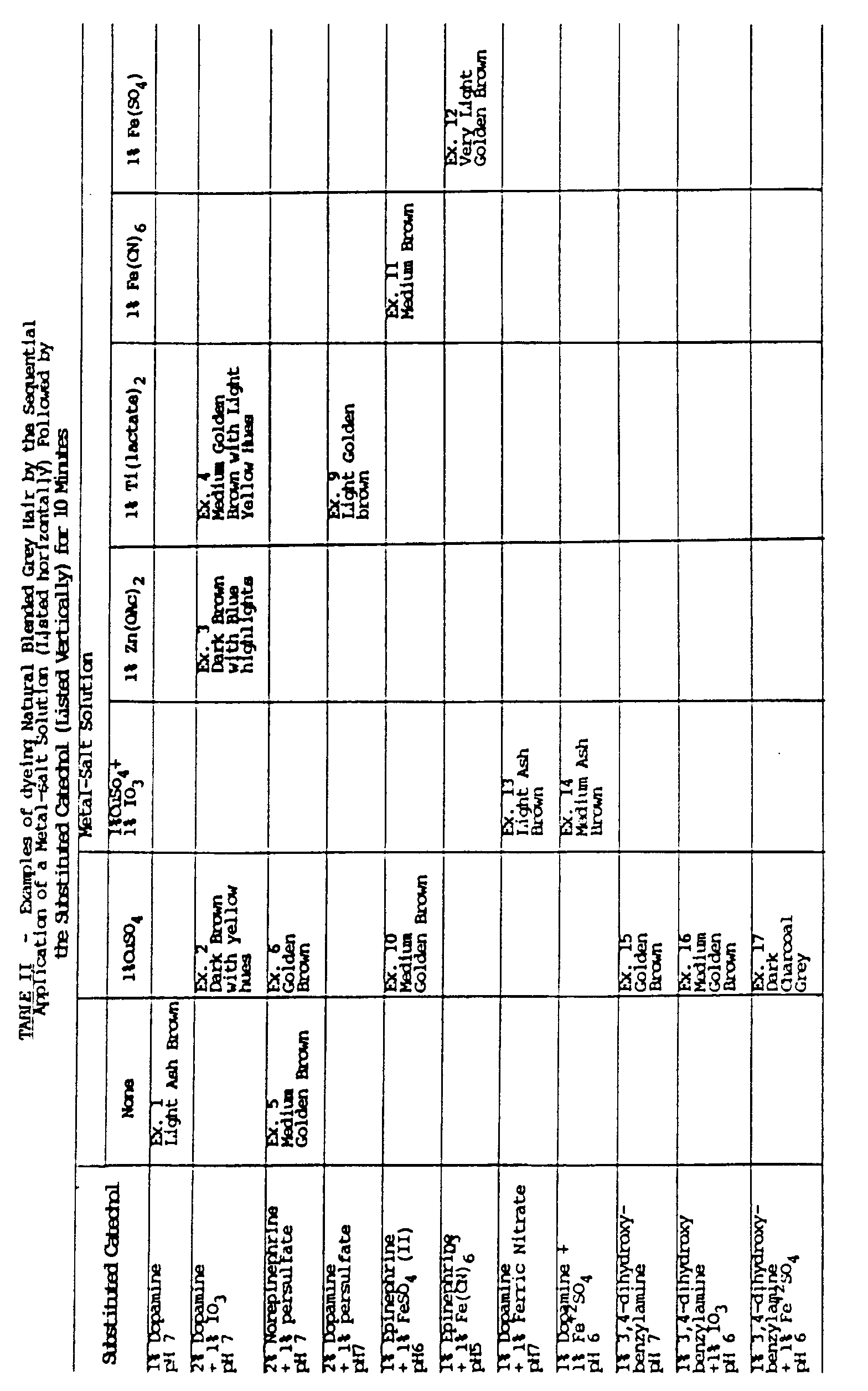
TABLE III The Hair Dyed as per Examples in Table II Was Lightened By Treating the Dyed Swatches with 3% H2O2 At pH9 (monoethanolamine buffered) For 5 Minutes.
All Tresses were Originally Composed of Natural Blended Gray Hairs
The Results Are Given in Table IIIMetal-Ion/Substituted Catechol Combination; pH Dyeout Color Before Bleaching Dyeout color After Bleaching Ex. 18 Dark Brown with Yellow Hues Light Golden Brown Cu+2 pretreatment/1% Dopamine + 1% IO3 at pH 7 Ex. 19 Medium Golden Brown Light Golden Brown Ti+2 pretreatment/1% Dopamine + 1% IO at pH 7 Ex. 20 Dark Brown with Blue Highlights Light Golden Brown Zn+2 pretreatment/1% Dopamine + 1% IO3 at pH7 Ex. 21 Medium Brown Straw Colored Fe(CN)6 -3 pretreatment/1% Epinephrine + 1% Fe+2 at pH 6 Ex. 22 Dark Golden Brown Lustrous Golden Brown Fe+2 pretreatment/1% Epinephrine + 1% Fe(CN)6 -3 at pH 6
Claims (12)
- A process for coloring hair on a live human head which comprises treating said hair with only one melanin-like material-forming composition consisting of one or more metal salts capable of assisting the conversion of a catechol compound to a melanin-like material and at least one aminoalkyl or aminohydroxyalkyl-catechol having the formula I set out below
 (a) R1 and R2 are radicals selected from the group consisting of H, OH, alkyl, alkoxy, alkoxyalkyl, NO2, COOH and carbalkoxy;(b) R3 is selected from the group consisting of H, OH, alkyl, alkoxy, alkyoxyalkyl, NO2, COOH, carbalkoxy and NH2;(c) R4 is selected from the group consisting of H,-CH2-NHR5, CHOHNHR5, CH(alkyl)NHR5, CH-(NHR2)NHR5, -CH(NO2)NHR5, - CH(alkoxy)NHR5, -CH(aryl)NHR5; -CH(aryloxy)NHR5, and -CH(halogen)NHR5;(d) R5 is selected from the group consisting of H, alkyl and aryl, andwherein at least one of R3 and R4 is an amino containing group bonded to a ring carbon atom of the said formula I through a bridging group, and further provided that the process does not include treatment with the following compositions 〈①〉, 〈②〉 and 〈③〉.①
% w/w Sodium lauryl sulphate 40.00 Cocamidopropyl betaine 10.00 Iron (II) ammonium sulphate 1.00 Copper sulphate 0.20 Thiourea 0.10 Disodium edetate 0.10 Perfume 0.50 Sodium chloride 9.50 * Kathon C.G. (preservative) 0.10 Water to 100.00% * Kathon C.G. is an aqueous solution of 5-chloro-2-methyl-4-isothiazolin-3-one, 2-methyl-4-isothiazolin-3-one, magnesium chloride and magnesium nitrate. ②% w/w Magnesium lauryl sulphate 40.00 Cocamidopropyl betaine 10.00 * Kathon C.G. 0.10 Disodium edetate 0.30 Iron (II) ammonium sulphate 1.00 Ascorbic acid 0.10 Urea 0.10 Ammonia solution (0.28% solution) 0.75 Hexylene glycol 2.30 Perfume q.s. Deionized water to 100.00% * Kathon C.G. is an aqueous solution of 5-chloro-2-methyl-4-isothiazolin-3-one, 2-methyl-4-isothiazolin-3-one, magnesium chloride and magnesium nitrate. ③% w/w Magnesium lauryl sulphate 40.00 Cocamidopropyl betaine 5.00 * Kathon C.G. 0.10 Disodium edetate 0.30 Iron (II) ammonium sulphate 1.00 Vitamin E acetate 0.10 Magnesium chloride 0.5 Perfume q.s. Deionized water to 100.00% * Kathon C.G. is an aqueous solution of 5-chloro-2-methyl-4-isothiazolin-3-one, 2-methyl-4-isothiazolin-3-one, magnesium chlorido and magnesium nitrate. - The process according to claim 1 wherein said metal salt and said aminoalkyl or aminohydroxyalkyl catechol are applied concurrently.
- The process according to claim 1 wherein said metal salt and said aminoalkyl or aminohydroxyalkyl-catechol are applied sequentially.
- The process according to claim 3 in which said metal salt is first applied to the hair to form a metal ion deposit on the hair which is followed by an application of the aminoalkyl or aminohydroxyalkyl-catechol.
- The process according to claim 4 wherein said composition containing said aminoalkyl or aminohydroxyalkyl catechol also contains a metal salt.
- The process according to claim 5 wherein said metal salt is selected from the group consisting of an iodate, a persulfate, a periodate and combination thereof.
- The process according to any preceding claim including the step of post-treating hair colored in accordance therewith with an aqueous composition of hydrogen peroxide.
- A process according to claim 4 where said metal salt is present in said first composition in the concentration of from 0.001% to 2% by weight based on the total weight of said first composition and said aminohydroxy or aminohydroxyalkyl-catechol is present in said second composition in the concentration in the range of from 0.05% to 2% by weight based on the total weight of said second composition.
- The process according to claim 8 wherein said second composition also contains an oxidant at a concentration in the range of from 0.05% to 3% by weight based on the total weight of said second composition.
- The process according to any preceding claim wherein said catechol is selected from the group consisting of: epinephrine, 3,4-dihydroxy phenylethylamine, 2-hydroxy-(3,4-dihydroxyphenyl)-ethylamine,3,4-hydroxybenzyl-amine, and mixtures thereof.
- The process of claim 4 wherein the metallic moiety in the metal salt is at least one of copper, titanium, zinc, iron, nickel, cobalt, lead, silver and manganese.
- The process according to any one of preceding claims 1-9 and 11 wherein the catechol compound is of the formula:

Applications Claiming Priority (2)
| Application Number | Priority Date | Filing Date | Title |
|---|---|---|---|
| US07/193,694 US4904274A (en) | 1988-05-12 | 1988-05-12 | Coloring hair with aminoalkyl-or aminohydroxyalkyl-catechols |
| US193694 | 1998-11-17 |
Publications (3)
| Publication Number | Publication Date |
|---|---|
| EP0341808A1 EP0341808A1 (en) | 1989-11-15 |
| EP0341808B1 EP0341808B1 (en) | 1994-06-22 |
| EP0341808B2 true EP0341808B2 (en) | 1996-12-18 |
Family
ID=22714645
Family Applications (1)
| Application Number | Title | Priority Date | Filing Date |
|---|---|---|---|
| EP89301919A Expired - Lifetime EP0341808B2 (en) | 1988-05-12 | 1989-02-27 | Process for coloring hair with aminoalkyl or aminohydroxyalkyl catechol compositions |
Country Status (9)
| Country | Link |
|---|---|
| US (1) | US4904274A (en) |
| EP (1) | EP0341808B2 (en) |
| JP (1) | JPH01290618A (en) |
| KR (1) | KR950005117B1 (en) |
| AT (1) | ATE107500T1 (en) |
| CA (1) | CA1325772C (en) |
| DE (1) | DE68916319T3 (en) |
| ES (1) | ES2056202T3 (en) |
| MY (1) | MY104950A (en) |
Families Citing this family (21)
| Publication number | Priority date | Publication date | Assignee | Title |
|---|---|---|---|---|
| US4940318A (en) * | 1988-11-03 | 1990-07-10 | Itek Corporation | Gradient membrane deformable mirror having replaceable actuators |
| US5042987A (en) * | 1990-09-11 | 1991-08-27 | Clairol, Inc. | Method for reducing scalp staining in hair dyeing processes involving a metal ion pretreatment step |
| CA2049826A1 (en) * | 1990-09-11 | 1992-03-12 | Keith C. Brown | Method for reducing scalp staining |
| US5273550A (en) * | 1991-09-26 | 1993-12-28 | Clairol Incorporated | Process and kit for dyeing hair |
| US5628799A (en) * | 1991-09-26 | 1997-05-13 | Clairol Incorporated | Hair dying methods and kits which contain a dopa species, reactive direct dye, and a ferricyanide oxidant |
| US5441542A (en) * | 1991-09-26 | 1995-08-15 | Clairol Incorporated | Process and kit for post-oxidative treatment of permanently dyed hair |
| US5279618A (en) * | 1991-09-26 | 1994-01-18 | Clairol Incorporated | Process and kit for dyeing hair |
| US5368610A (en) * | 1993-04-20 | 1994-11-29 | Clairol Incorporated | Use of metal salts and chelates together with chlorites as oxidants in hair coloring |
| US5584889A (en) * | 1993-12-27 | 1996-12-17 | Clairol Incorporated | Oxidative hair dyeing process with dihydroxybenzenes and aminoethanethiols |
| EP0664114B1 (en) * | 1993-12-27 | 2003-04-02 | Clairol Incorporated | Process and kit for dyeing hair with catechols and a persulfate oxidizing agent |
| DE4429343A1 (en) * | 1994-08-18 | 1996-02-22 | Henkel Kgaa | Hair Dye |
| US5792220A (en) * | 1997-05-16 | 1998-08-11 | Bristol-Myers Squibb Company | Dyeing hair with melanin procursors in the presence of iodate and peroxide |
| CA2659998C (en) * | 2006-08-10 | 2013-10-01 | Combe Incorporated | A catalyzed air oxidation haircolor |
| GB0911493D0 (en) | 2009-07-02 | 2009-08-12 | Univ Leeds | Catalysed dye systems |
| US8366791B1 (en) * | 2011-09-02 | 2013-02-05 | Warner Babcock Institute | Formulation and method for hair dyeing |
| US8828100B1 (en) * | 2013-10-14 | 2014-09-09 | John C. Warner | Formulation and processes for hair coloring |
| US9522102B2 (en) * | 2013-10-14 | 2016-12-20 | Warner Babcock Institute For Green Chemistry, Llc | Formulation and processes for hair coloring |
| EP2873412A1 (en) | 2013-11-13 | 2015-05-20 | Unilever PLC | A hair colour composition and method of colouring hair |
| CN109846742A (en) * | 2019-02-12 | 2019-06-07 | 西南医科大学 | A kind of multicolor non-toxic hair dye and its preparation method and hair dyeing method |
| CN114099359A (en) * | 2021-12-02 | 2022-03-01 | 台州学院 | dopamine-Fe 2+ colorful hair dye and hair dyeing method |
| WO2025006080A1 (en) * | 2023-06-27 | 2025-01-02 | Edulis Labs Inc. | System and methods for modifying surface properties of keratin-containing surfaces |
Family Cites Families (3)
| Publication number | Priority date | Publication date | Assignee | Title |
|---|---|---|---|---|
| DE2028818A1 (en) * | 1969-06-11 | 1970-12-17 | The Gillette Co,, Boston, Mass. (V.St.A,) | Process for coloring human hair |
| US4453941A (en) * | 1980-12-29 | 1984-06-12 | Board Of Overseers Of Goshen College | Composition and process for producing pigmentation in hair or skin |
| JPH0372836A (en) * | 1989-08-12 | 1991-03-28 | Izumi Giken Kk | Noodle preparation cutter |
-
1988
- 1988-05-12 US US07/193,694 patent/US4904274A/en not_active Expired - Lifetime
- 1988-07-26 CA CA000573005A patent/CA1325772C/en not_active Expired - Fee Related
-
1989
- 1989-02-21 MY MYPI89000211A patent/MY104950A/en unknown
- 1989-02-27 ES ES89301919T patent/ES2056202T3/en not_active Expired - Lifetime
- 1989-02-27 AT AT89301919T patent/ATE107500T1/en not_active IP Right Cessation
- 1989-02-27 EP EP89301919A patent/EP0341808B2/en not_active Expired - Lifetime
- 1989-02-27 DE DE68916319T patent/DE68916319T3/en not_active Expired - Fee Related
- 1989-03-06 JP JP1052186A patent/JPH01290618A/en active Pending
- 1989-05-11 KR KR1019890006359A patent/KR950005117B1/en not_active Expired - Fee Related
Also Published As
| Publication number | Publication date |
|---|---|
| DE68916319D1 (en) | 1994-07-28 |
| JPH01290618A (en) | 1989-11-22 |
| KR890016960A (en) | 1989-12-14 |
| CA1325772C (en) | 1994-01-04 |
| EP0341808B1 (en) | 1994-06-22 |
| DE68916319T3 (en) | 1997-05-22 |
| KR950005117B1 (en) | 1995-05-18 |
| ATE107500T1 (en) | 1994-07-15 |
| EP0341808A1 (en) | 1989-11-15 |
| ES2056202T3 (en) | 1994-10-01 |
| US4904274A (en) | 1990-02-27 |
| DE68916319T2 (en) | 1995-01-05 |
| MY104950A (en) | 1994-07-30 |
Similar Documents
| Publication | Publication Date | Title |
|---|---|---|
| EP0341808B1 (en) | Process for coloring hair with aminoalkyl or aminohydroxyalkyl catechol compositions | |
| KR890000189B1 (en) | Hair dyeing and hair dyeing equipment | |
| US5173085A (en) | Hair dyeing process and compositons package | |
| DE68905963T2 (en) | METHOD FOR COLORING KERATINE FIBERS BASED ON 5,6-DIHYDROXYINDOL OR AN INDOLDER DERIVATIVE AND AT LEAST ONE RARE EARTH SALT AND PREPARATIONS THEREOF. | |
| US5006127A (en) | Agent for the oxidative dyeing of hair, method for the preparation of the agent and use of the agent | |
| US4453941A (en) | Composition and process for producing pigmentation in hair or skin | |
| JPH0325404B2 (en) | ||
| JP2595078B2 (en) | Hair dye composition and kit for hair dye | |
| US4776856A (en) | Process and means for oxidized dyeing of hair using a manganese dioxide catalyst | |
| US4390341A (en) | Composition and process for producing pigmentation in hair or skin | |
| CA2082542C (en) | Oxidative hair coloring compositions and process for dyeing human keratinous fibers | |
| US5540738A (en) | Oxidative hair coloring composition and process for dyeing human keratinous fibers | |
| AU2014337395B2 (en) | Formulation and processes for hair coloring | |
| JP2855205B2 (en) | Use of N-substituted-5,6-dihydroxyindoles as hair coloring agents | |
| US5346509A (en) | Process for dyeing hair by the sequential treatment of hair with metal ion-containing composition and with a dye composition containing 5,6-dihydroxyindole-2-carboxylic acid and certain derivatives thereof | |
| JP7444602B2 (en) | How to dye hair | |
| JP3012112B2 (en) | Coloring / perming agent and coloring / perming method | |
| JPH04312514A (en) | Hair dyeing agent | |
| JPS6226212A (en) | Hair dye | |
| JPH0479322B2 (en) | ||
| EP1501471B1 (en) | Use of alpha-dialdehydes in the presence of an ammonium salt of a brönsted acid for dyeing keratin fibres | |
| JPH03178924A (en) | Dye coupler | |
| DE1083505B (en) | Methods and means for coloring hair |
Legal Events
| Date | Code | Title | Description |
|---|---|---|---|
| PUAI | Public reference made under article 153(3) epc to a published international application that has entered the european phase |
Free format text: ORIGINAL CODE: 0009012 |
|
| AK | Designated contracting states |
Kind code of ref document: A1 Designated state(s): AT BE CH DE ES FR GB GR IT LI LU NL SE |
|
| 17P | Request for examination filed |
Effective date: 19891102 |
|
| 17Q | First examination report despatched |
Effective date: 19910527 |
|
| RAP1 | Party data changed (applicant data changed or rights of an application transferred) |
Owner name: BRISTOL-MYERS SQUIBB COMPANY |
|
| GRAA | (expected) grant |
Free format text: ORIGINAL CODE: 0009210 |
|
| AK | Designated contracting states |
Kind code of ref document: B1 Designated state(s): AT BE CH DE ES FR GB GR IT LI LU NL SE |
|
| PG25 | Lapsed in a contracting state [announced via postgrant information from national office to epo] |
Ref country code: NL Effective date: 19940622 Ref country code: LI Effective date: 19940622 Ref country code: GR Free format text: LAPSE BECAUSE OF FAILURE TO SUBMIT A TRANSLATION OF THE DESCRIPTION OR TO PAY THE FEE WITHIN THE PRESCRIBED TIME-LIMIT Effective date: 19940622 Ref country code: CH Effective date: 19940622 Ref country code: BE Effective date: 19940622 Ref country code: AT Effective date: 19940622 |
|
| REF | Corresponds to: |
Ref document number: 107500 Country of ref document: AT Date of ref document: 19940715 Kind code of ref document: T |
|
| REF | Corresponds to: |
Ref document number: 68916319 Country of ref document: DE Date of ref document: 19940728 |
|
| ITF | It: translation for a ep patent filed | ||
| REG | Reference to a national code |
Ref country code: CH Ref legal event code: PL |
|
| REG | Reference to a national code |
Ref country code: ES Ref legal event code: FG2A Ref document number: 2056202 Country of ref document: ES Kind code of ref document: T3 |
|
| ET | Fr: translation filed | ||
| NLV1 | Nl: lapsed or annulled due to failure to fulfill the requirements of art. 29p and 29m of the patents act | ||
| EAL | Se: european patent in force in sweden |
Ref document number: 89301919.0 |
|
| PG25 | Lapsed in a contracting state [announced via postgrant information from national office to epo] |
Ref country code: LU Free format text: LAPSE BECAUSE OF NON-PAYMENT OF DUE FEES Effective date: 19950228 |
|
| PGFP | Annual fee paid to national office [announced via postgrant information from national office to epo] |
Ref country code: ES Payment date: 19950228 Year of fee payment: 7 |
|
| PLBI | Opposition filed |
Free format text: ORIGINAL CODE: 0009260 |
|
| 26 | Opposition filed |
Opponent name: WELLA AG Effective date: 19950316 |
|
| PG25 | Lapsed in a contracting state [announced via postgrant information from national office to epo] |
Ref country code: ES Free format text: LAPSE BECAUSE OF THE APPLICANT RENOUNCES Effective date: 19960228 |
|
| PLAW | Interlocutory decision in opposition |
Free format text: ORIGINAL CODE: EPIDOS IDOP |
|
| PLAW | Interlocutory decision in opposition |
Free format text: ORIGINAL CODE: EPIDOS IDOP |
|
| PUAH | Patent maintained in amended form |
Free format text: ORIGINAL CODE: 0009272 |
|
| STAA | Information on the status of an ep patent application or granted ep patent |
Free format text: STATUS: PATENT MAINTAINED AS AMENDED |
|
| 27A | Patent maintained in amended form |
Effective date: 19961218 |
|
| AK | Designated contracting states |
Kind code of ref document: B2 Designated state(s): AT BE CH DE ES FR GB GR IT LI LU NL SE |
|
| REG | Reference to a national code |
Ref country code: CH Ref legal event code: AEN Free format text: AUFRECHTERHALTUNG DES PATENTES IN GEAENDERTER FORM |
|
| ITF | It: translation for a ep patent filed | ||
| ET3 | Fr: translation filed ** decision concerning opposition | ||
| REG | Reference to a national code |
Ref country code: ES Ref legal event code: FD2A Effective date: 19991007 |
|
| REG | Reference to a national code |
Ref country code: GB Ref legal event code: IF02 |
|
| REG | Reference to a national code |
Ref country code: GB Ref legal event code: 732E |
|
| REG | Reference to a national code |
Ref country code: FR Ref legal event code: TP |
|
| PGFP | Annual fee paid to national office [announced via postgrant information from national office to epo] |
Ref country code: GB Payment date: 20050110 Year of fee payment: 17 |
|
| PGFP | Annual fee paid to national office [announced via postgrant information from national office to epo] |
Ref country code: FR Payment date: 20050202 Year of fee payment: 17 |
|
| PGFP | Annual fee paid to national office [announced via postgrant information from national office to epo] |
Ref country code: SE Payment date: 20050203 Year of fee payment: 17 |
|
| PGFP | Annual fee paid to national office [announced via postgrant information from national office to epo] |
Ref country code: DE Payment date: 20050228 Year of fee payment: 17 |
|
| PG25 | Lapsed in a contracting state [announced via postgrant information from national office to epo] |
Ref country code: GB Free format text: LAPSE BECAUSE OF NON-PAYMENT OF DUE FEES Effective date: 20060227 |
|
| PG25 | Lapsed in a contracting state [announced via postgrant information from national office to epo] |
Ref country code: SE Free format text: LAPSE BECAUSE OF NON-PAYMENT OF DUE FEES Effective date: 20060228 |
|
| PGFP | Annual fee paid to national office [announced via postgrant information from national office to epo] |
Ref country code: IT Payment date: 20060228 Year of fee payment: 18 |
|
| PG25 | Lapsed in a contracting state [announced via postgrant information from national office to epo] |
Ref country code: DE Free format text: LAPSE BECAUSE OF NON-PAYMENT OF DUE FEES Effective date: 20060901 |
|
| EUG | Se: european patent has lapsed | ||
| GBPC | Gb: european patent ceased through non-payment of renewal fee |
Effective date: 20060227 |
|
| REG | Reference to a national code |
Ref country code: FR Ref legal event code: ST Effective date: 20061031 |
|
| PG25 | Lapsed in a contracting state [announced via postgrant information from national office to epo] |
Ref country code: FR Free format text: LAPSE BECAUSE OF NON-PAYMENT OF DUE FEES Effective date: 20060228 |
|
| PG25 | Lapsed in a contracting state [announced via postgrant information from national office to epo] |
Ref country code: IT Free format text: LAPSE BECAUSE OF NON-PAYMENT OF DUE FEES Effective date: 20070227 |