EP0341775A2 - Verfahren zur Herstellung eines Mikroorganismus, Verwendung dieses Mikroorganismus zur Herstellung eines Heteropolysaccharids sowie dafür brauchbare Mikroorganismen - Google Patents
Verfahren zur Herstellung eines Mikroorganismus, Verwendung dieses Mikroorganismus zur Herstellung eines Heteropolysaccharids sowie dafür brauchbare Mikroorganismen Download PDFInfo
- Publication number
- EP0341775A2 EP0341775A2 EP89201131A EP89201131A EP0341775A2 EP 0341775 A2 EP0341775 A2 EP 0341775A2 EP 89201131 A EP89201131 A EP 89201131A EP 89201131 A EP89201131 A EP 89201131A EP 0341775 A2 EP0341775 A2 EP 0341775A2
- Authority
- EP
- European Patent Office
- Prior art keywords
- glucose
- organism
- micro
- uptake
- substrate
- Prior art date
- Legal status (The legal status is an assumption and is not a legal conclusion. Google has not performed a legal analysis and makes no representation as to the accuracy of the status listed.)
- Granted
Links
Images
Classifications
-
- C—CHEMISTRY; METALLURGY
- C12—BIOCHEMISTRY; BEER; SPIRITS; WINE; VINEGAR; MICROBIOLOGY; ENZYMOLOGY; MUTATION OR GENETIC ENGINEERING
- C12N—MICROORGANISMS OR ENZYMES; COMPOSITIONS THEREOF; PROPAGATING, PRESERVING, OR MAINTAINING MICROORGANISMS; MUTATION OR GENETIC ENGINEERING; CULTURE MEDIA
- C12N1/00—Microorganisms; Compositions thereof; Processes of propagating, maintaining or preserving microorganisms or compositions thereof; Processes of preparing or isolating a composition containing a microorganism; Culture media therefor
-
- C—CHEMISTRY; METALLURGY
- C12—BIOCHEMISTRY; BEER; SPIRITS; WINE; VINEGAR; MICROBIOLOGY; ENZYMOLOGY; MUTATION OR GENETIC ENGINEERING
- C12P—FERMENTATION OR ENZYME-USING PROCESSES TO SYNTHESISE A DESIRED CHEMICAL COMPOUND OR COMPOSITION OR TO SEPARATE OPTICAL ISOMERS FROM A RACEMIC MIXTURE
- C12P19/00—Preparation of compounds containing saccharide radicals
- C12P19/04—Polysaccharides, i.e. compounds containing more than five saccharide radicals attached to each other by glycosidic bonds
Definitions
- the present invention relates to a process for preparing a heteropolysaccharide by cultivating a bacterium, to bacteria having the characteristic of increased heteropolysaccharide production, also to a method of producing such bacteria.
- a heteropolysaccharide in particular, a succinoglucan
- a carbohydrate source to fermentation by certain micro-organisms such as Pseudomonas sp. NCIB 11592 as described in EP-A-0040445 (K 1480 EPC). That specification gives a full description of the use of heteropolysaccharides as a viscosifier for aqueous solutions used in oil recovery.
- micro-organism NCIB 11883 as described by Linton et al (1987)(this and other references by author and year are hereinafter defined), and in EP-A-0138255 (K 1924 EPC), has been isolated; it appears to produce polysaccharide at a considerably faster rate than NCIB 11592. Further, the productivity in terms of viscosifying power as expressed by the dilution factor of the culture broth, is considerably higher in strain NCIB 11883 than in Pseudomonas sp. NCIB 11592.
- Agrobacterium radiobacter NCIB 11883 the recently-isolated aerobic bacterium of industrial importance, is unable to metabolise glucose using the indirect, oxidative route since it produces a non-functional, apoenzyme form of glucose dehydrogenase that lacks the PQQ (pyrroloquinoline quinone) co-factor (Linton et al , 1986; Cornish et al , 1987).
- PQQ pyrroloquinoline quinone
- the present invention is based on the specific discovery of a micro-organism which produces heteropolysaccharide from glucose at a faster rate even than NCIB 11883, by derivation from that known organism, and to a general procedure for obtaining organisms which, by comparison with parent organisms from which they are derived, exhibit improved polysaccharide or other extra-cellular material production.
- a process according to the present invention derives a second micro-organism from a first micro-organism, each micro-organism having the capability of producing an extra-cellular product when grown in the presence of a carbon-containing substrate, and the substrate uptake system of the first micro-organism being limiting for the production of the extra-cellular product, the process comprising the steps of growing the first micro-organism under substrate limitation, and isolating the second micro-organism in which the substrate uptake system is at least partially derepressed.
- the extra-cellular product is, for example, a heteropolysaccharide, e.g.
- a heteropolysaccharide comprising glucose and, for each 7 moles of glucose, 0.9-1.2 moles of galactose, and 0.65 to 1.1 moles of pyruvate, together with succinate and acetate in molar proportions (based on 7 moles of glucose) between 0 and 2, and the carbon substrate may be glucose.
- the present invention follows investigation of the mechanism via which A. radiobacter takes up glucose directly during growth in glucose-limited continuous culture.
- 6-chloro-6-deoxy-D-glucose and 6-deoxy-D-glucose variably decreased the binding of glucose to both GBP1 and GBP2, whereas those which differed at C-4 (e.g. D-galactose) were only effective with GBP2.
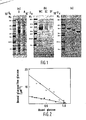
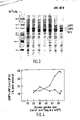
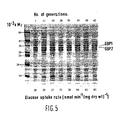
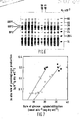
- the rate of glucose uptake and the concentration of the glucose-binding proteins increased in parallel during prolonged growth under glucose-limitation due to the emergence of new strains, identified herein as AR18 and AR9, in which the synthesis of GBP1 or GBP2, but not both, was respectively further derepressed.
- A. radiobacter synthesises two distinct periplasmic binding proteins which are involved in glucose transport and which are maximally derepressed during growth under glucose limitation.
- a strain corresponding closely to strain AR18 has also been produced during growth of NCIB 11883 in a galactose-limited continuous culture at similar low dilution rate.
- AR18 contains an increased effective concentration of GBP1 and provides increased heteropolysaccharide (specifically, succinoglucan) production with respect to NCIB 11883, e.g. when grown with glucose as the carbon source, either in ammonia-limited continuous culture at low dilution rate or in batch culture on ammonia exhaustion.
- the invention therefore specifically provides Agrobacterium radiobacter NCIB 40018 and its use for preparing a heteropolysaccharide.
- Glucose uptake by strain AR18 was significantly less repressed during ammonia limitation than when growing either the original parent strain or strain AR9, under the same conditions, and this was reflexted both in its relatively high concentration of GBP1 and in its significantly higher rate of succinoglucan synthesis.
- AR18 contains up to 30% GBP1, as a percentage of the total cell protein; the GBP1 content of the parent organism is about 5%. These are values under glucose limitation. GBP2, apparently the second glucose uptake-limiting binding protein in NCIB 11883, has effectively been repressed in AR18.
- the extra-cellular product of a micro-organism modified in accordance with the invention may comprise a succinoglucan heteropolysaccharide comprising glucose and, for each 7 moles of glucose, 0.9-1.2 moles of galactose, and 0.65 to 1.1 moles of pyruvate, together with succinate and acetate in molar proportions (based on 7 moles of glucose) between 0 and 2.
- succinoglucan heteropolysaccharides are described in EP-A-0040445.
- the micro-organism is grown in aqueous nutrient medium by aerobic cultivation.
- the procedure may suitably be carried out as a batch-process, a fed-batch process with or without fill and draw or as a continuous process. From productivity considerations, a continuous process or a fill and draw process is preferred.
- the organism is grown in the absence of yeast extract in a chemically-defined medium. More preferably the process is carried out under non-carbon source nutrient limitation conditions, e.g. nitrogen limitation or exhaustion.
- non-carbon source nutrient limitation conditions e.g. nitrogen limitation or exhaustion.
- the use of a chemically defined medium is advantageous since, for a given productivity or for a given final cell concentration, it eppears to be easier to handle a nitrogen source such as sodium glutamate, ammonium or nitrate salts than to handle complex nitrogen sources such as yeast extract or distillers' dried solubles.
- the nitrogen source is preferably selected from the group consisting of sodium glutamate, ammonium sulphate and sodium nitrate.
- the present invention further relates to the heteropolysaccharide as prepared by the process as described above, and to the use of the heteropolysaccharide as viscosity modifier in an aqueous solution.
- the present invention also relates to an aqueous system whenever thickened by the present heteropolysaccharide.
- the aqueous system belongs to the group consisting of completion fluids, work-over fluids, stimulation fluids and drilling fluids. Stimulation fluids are used for, e.g. hydraulic fracturing and acid fracturing.
- Most completion, work-over, drilling and stimulation fluids contain at least one other additive, e.g. salts (such as may be present in all brines), fluid loss additives, clay stabilisers, acids, bases, surfactants etc.
- the aqueous systems to be thickened can however also be a printing ink or even a French dressing.
- a drilling fluid comprising water and 0.06-1.5% by weight of the above heteropolysaccharide is a further preferred embodiment of the present invention.
- the present invention also encompasses a method of treating a well comprising the introduction into the well of an aqueous medium comprising water and 0.05-1.5% by weight of the above heteropolysaccharide.
- the aqueous medium is suitably a brine and may contain additives as desired.
- the present invention further provides the use in enhanced oil recovery (EOR) of an aqueous solution comprising the above heteropolysaccharide.
- EOR enhanced oil recovery
- Use in EOR can be for displacing a fluid through a well and/or a permeable subsurface formation communicating with the well, in mobility control as mobility buffer, e.g. in surfactant micellar flooding, use in profile control, to reduce water production, to reduce water/oil ratio etc.
- the present invention provides the ability to amplify known production rates of extra-cellular material.
- the ability to identify and drepress a limiting factor gives rise to the option of isolating the gene for an essentially non-limiting, but normally-repressed substrate-binding protein, or of a part of the genome associated with its synthesis, and cloning it into a suitable host via which the desired product can be made.
- Organism and growth conditions are provided.
- the organism was grown in an LH Series 500 chemostat of 2 1 working volume at a steady-state biomass density of 2.1 g dry wt 1 ⁇ 1.
- Cell suspensions were prepared using 20mM HEPES buffer, pH 7.0, as described by Cornish et al ., 1987.
- Rates of glucose uptake were determined by measuring the incorporation of D-[U-14C]glucose into whole cells over a period of 60s. Assays were carried out in an open-topped Rank oxygen electrode vessel containing 1ml 20mM HEPES/KOH buffer, pH 7.0, and 1mg dry wt cells. The contents of the vessel were maintained at 30°C and mixed continuously using a magnetic stirrer. Assays were started by adding D-[U-14C]glucose [2mCi mmol ⁇ 1 (74 MBq mmol ⁇ 1; 0.5 uCi (18.5 KB1)] to give a final concentration of 250 uM.
- A. radiobacter to accumulate glucose was determined by incubating cell suspensions (1 mg dry wt ml ⁇ 1) with D-[U-14C]glucose [84 mCi mmol ⁇ 1 (3.2 Gbq mmol ⁇ 1); 20 M initial concentration). Samples (100 ul) of the suspension were withdrawn 10s after adding the glucose and the cells were collected on nitrocellulose filters (0.45 um pore size) using vacuum filtration. The filters were washed immediately using 3ml buffer and immersed in 20ml boiling water. Aqueous extracts prepared from four filters were pooled, lyophilized and the residue dissolved in 2ml water.
- the glucose content of the cells was determined using liquid scintillation counting following separation of [14C]glucose from other labelled metabolites present in the extracts using paper chromatography. Samples of the filtrate plus washings were also counted in order to determine the extracellular concentration of glucose at the time of sampling.
- the substrate specificity of the transport system was investigated by determining the extent to which unlabelled glucose analogues (10mM) reduced the rate of uptake of [14C]glucose (250 uM). Cell suspensions were incubated with analogues for 5s prior to addition of [14C]glucose. Where indicated, carbonyl cyanide p-trifluoromethoxyphenylhydrazone (FCCP) (2 ul of a 10mM stock solution in dimethylformamide) was added to the cell suspension 10s before the glucose; uptake was not affected by the presence of the solvent alone.
- FCCP carbonyl cyanide p-trifluoromethoxyphenylhydrazone
- THis was done essentially as described by Neu and Heppel (1965) except that plasmolysed cells were shocked using ice-cold 20mM bis -Tris buffer, pH 6.8, instead of distilled water.
- the protein content of the effluent was monitored at 280nm.
- the column was calibrated using a mixture of the following proteins (M r values given in parentheses): bovine albumin, 132000 (dimer) and 66000 (monomer); egg albumin, 45000; carbonic anhydrase, 29000; and horse-heart cytochrome c, 12400).
- Discontinuous electrophoresis of proteins was carried out using 12% (w/v) acrylamide gels according to the method of Laemmli (1970).
- Whole cells of A. radiobacter were boiled for 4 min in dissolving buffer (Laemmli, 1970) and a volume containing 20 g protein was loaded into each gel track.
- the gels were stained for protein with Kenacid Blue R (Weber & Osborn, 1975), then destained and scanned at 633nm using an LKB laser densitometer linked to a recording integrator.
- alpha -lactalbumin 14200
- trypsin inhibitor 20100
- trypsinogen 24000
- carbonic anhydrase 29000
- glyceraldehyde-3-phosphate dehydrogenase 36000
- egg albumin 45000
- bovine albumin 66000
- the module was rotated at 10 rev min ⁇ 1 for 30h (by which time equilibrium had been attained) and samples (50 ul) were taken in triplicate from each chamber and counted in 3ml Fisofluor 2 (Fisons Ltd.). The data were analyzed according to the method of Scatchard (1949).
- the capacity of glucose analogues to reduce the extent of binding of D-[U-14C]glucose to pure proteins was determined by modifying the assay procedure as follows.
- One chamber of each cell contained 0.5 nmol pure protein in 0.3 ml bis-Tris, pH 6.8, and the other chamber was loaded with 0.3 ml of buffer containing 3 nmol D-[U-14C]glucose [85 mCi mmol ⁇ 1 (3.2 GBq mmol ⁇ 1)] plus 120 nmol of an unlabelled glucose analogue.
- the quantity of [14C]glucose that bound to the proteins in the presence and absence of unlabelled glucose analogues was determined after 30h incubation.
- 6-Phosphogluconate dehydrogenase activity was assayed as using the method of Beardsmore et al . (1982).
- D-[U-14C]Glucose [270mCi mmol ⁇ 1 (10 GBq mmol ⁇ 1)] and L-[35S]methionine [> 800 Ci mmol ⁇ 1 (30 TBq mmol ⁇ 1)] was purchased from Amersham.
- Glucose analogues were obtained from Sigma.
- Other reagents were purchased from Fisons Ltd. and were of the highest grade available.
- the uptake rate decreased abruptly to a value of approximately 40 nmol min ⁇ 1 (mg dry wt) ⁇ 1 and probably reflected the rate at which glucose was further metabolised rather than the potential activity of the transport system per se .
- Glucose uptake rates did not increase when cell suspensions were pre-incubated with respiratory substrates (e.g. 10mM ethanol or 10mM glycerol) prior to the addition of [14C]glucose, indicating that the oxidation of endogenous substrate (Cornish et al ., 1987) provided sufficient energy to support the maximum rate of glucose transport.
- respiratory substrates e.g. 10mM ethanol or 10mM glycerol
- the assay system used to measure the rate of glucose uptake undoubtedly underestimated the actual rate of transport since some of the [14C]glucose taken up by the cells would have been oxidized to 14CO2. This was confirmed by immediately immersing the filters in scintillant (see Henderson, 1986), rather than allowing them to dry under the infra-red lamp; under these conditions the observed rate of glucose uptake was increased by 25%.
- Glucose transport was strongly inhibited by the uncoupling agent FCCP (approximately 95% inhibition at 20 M). Unmodified glucose accounted for 70% of the total radioactivity recovered when cells were incubated with [14C]glucose for 10s before being washed rapidly and extracted in boiling water, and an accumulation ratio ([glucose] in /[glucose] out ) of 2000-6000 was estimated by assuming an intracellular volume of 1-3 ul mg dry wt ⁇ 1.
- FCCP was a powerful inhibitor of glucose transport in A. radiobacter was therefore perfectly compatible with the possibility that a periplasmic binding protein was involved, since an aerobic organism of this type probably depends largely on oxidative phosphorylation rather than substrate-level phosphorylation to produce ATP. In order to confirm the involvement of a binding protein system it was decided to investigate whether A. radiobacter did indeed contain periplasmic, glucose-binding proteins during growth under glucose limitation.
- Competitive binding assays revealed that GBP1 and GBP2 also differed in their capacity to discriminate betwen certain glucose analogues (Table 1).
- 2-Deoxy-D-glucose reduced the rate of glucose uptake to a relatively small extent with both strains but had no effect on the binding of glucose to GBP1 or GBP2 in vitro , thus suggesting either that the organism may possess and additional, low-activity glucose uptake system that is as yet uncharacterized or that there are slight differences between binding and tranposrt effects.
- radiobacter strains AR9 and AR18 were stored in 20% (v/v) glycerol at -70°C.
- Cell suspensions were prepared from glucose-limited cultures using 20mM HEPES/KOH buffer, pH 7.0 as described above. Samples from ammonia- and potassium-limited cultures were diluted by an appropriate factor using 20mM HEPES, pH 7.0, before the initial centrifugation to facilitate separation of the cells from the highly viscous succinoglucan exopolysaccharide present in the supernatant. Succinoglucan was precipitated using propan-2-ol (4 vol. propan-2-ol:1 vol. supernatant), collected using a glass rod, and then dried to constant weight at 100°C.
- the rates of glucose uptake and respiration by suspensions of A. radiobacter strain AR18 were measured as described previously (Cornish et al., 1987; and above). Assays were started by adding D-glucose to give a final concentration of 250 M and the rate of glucose uptake was varied using appropriate concentrations (0-1.5mM) of 6-chloro-6-deoxy-D-glucose to inhibit the glucose transport system. Rates of glucose uptake and respiration were measured respectively over the first 1 min and 2 min after adding glucose.
- Rates of glucose utilization and succinoglucan production by cell suspensions were measured as described above except that incubations were started by adding D-[U-14C]glucose [0.5 mCi mmol ⁇ 14 (18.5 MBq mmol ⁇ 1; 2.25 Ci (0.083 MBq) to give a final concentration of 1 mM and measurements were carried out over a period of 12 min in the presence and absence of 6-chloro-6-deoxy-D-glucose (0-2mM). Flux control coefficients were determined by plotting the normalized rates of glucose uptake, respiration and succinoglucan production versus the inhibitor concentration using the method of Walter et al (1987).
- Cell-free extracts were prepared as described previously (Cornish et al., 1987). The following enzymes were assayed at 30°C using modifications of established procedures (given in parentheses): hexokinase, phosphoglucomutase, phosphofructokinase and UDP-glucose pyrophosphorylase (Bergmeyer, Methods of Enzymatic Analysis Vol.
- A. radiobacter strain AR9 produced succinoglucan at the same rate as the parent organism during ammonia-limited growth, and the glucose uptake systems of the two strains were both substantially repressed (Table 3).
- the glucose uptake system of strain AR18 was repressed much less strongly and this strain produced succinoglucan at a significantly higher rate than either the parent organism or strain AR9.
- radiobacter strain AR18 also produced succinoglucan at significantly higher rates than either strain AR9 or the parent organism during batch culture experiments in which glucose was used as the carbon source (Table 4), but the three strains produced succinoglucan at similar rates when glucose was replaced by sucrose. These results therefore further supported the view that an enzyme involved specifically with glucose uptake or metabolism had becom de-repressed in strain AR18 relative to the other strains, thereby enabling it to convert glucose into succinoglucan at a higher rate.
- the rate at which this strain produced succinoglucan decreased slowly from 0.20 to 0.16 gh ⁇ 1 (g dry wt) ⁇ 1 during the first 30 generations of ammonia-limited growth, then more rapidly to a value of 0.07 g h ⁇ 1 (g dry wt) ⁇ 1 over the next 16 generations, but thereafter remained constant.
- This decay in the rate of succinoglucan production was not due to the emergence of mutants that had completely lost the capacity to produce exopolysaccharide (e.g.
- [14C]glucose bound Analogue GBP1 GBP2 (% control value) none (control) 100 100 alpha -1-0-methyl-D-glucose 99 104 3-0-methyl-D-glucose 100 103 2-deoxy-D-glucose 96 98 D-fucose 31 99 D-galactose 2 99 6-deoxy-D-glucose 51 0 6-chloro-6-deoxy-D-glucose 0 60 D-xylose 72 2 D-glucose 4 4 4
- Glucose uptake rate Addition to assay strain AR18 strain AR9 (% control value) none (control) 100 100 alpha -1-0-methyl-D-glucose 111 99 3-0-methyl-D-glucose 111 99 2-deoxy-D-glucose 93 71 D-fucose 18 68 D-galactose 8 75 6-deoxy-D-glucose 27 11 6-chloro-6-deoxy-D-glucose 8 33 D-xylose 64 ND D-glucose 4 4
- strains AR9 and AR18 refer to individual experiments.
- Strain glucose uptake rate in situ rate of succinoglucan production [nmol min ⁇ 1 (mg dry wt) ⁇ 1] [g h ⁇ 1 (g dry wt) ⁇ 1] % Parent 10 ⁇ 1 (3) 0.21 ⁇ 0.01 (3) 100 AR9 14 ⁇ 1 (4) 0.20 ⁇ 0.01 (5) 97 AR9 12 (2) 0.21 ⁇ 0.02 (4) 102 AR18 19 ⁇ 1 (3) 0.29 ⁇ 0.01 (4) 141 AR18 21 ⁇ 1 (3) 0.31 ⁇ 0.02 (4) 150 AR18 19 (1) 0.29 ⁇ 0.02 (3) 141
- succinoglucan by various strains of A. radiobacter during batch culture with glucose or sucrose as carbon source.
- the cultures were harvested 24 hours after inoculation and the rates of succinoglucan production were determined as described in the Methods.
Landscapes
- Chemical & Material Sciences (AREA)
- Organic Chemistry (AREA)
- Engineering & Computer Science (AREA)
- Life Sciences & Earth Sciences (AREA)
- Health & Medical Sciences (AREA)
- Zoology (AREA)
- Wood Science & Technology (AREA)
- Genetics & Genomics (AREA)
- Bioinformatics & Cheminformatics (AREA)
- Biotechnology (AREA)
- General Health & Medical Sciences (AREA)
- Biochemistry (AREA)
- General Engineering & Computer Science (AREA)
- Microbiology (AREA)
- Chemical Kinetics & Catalysis (AREA)
- General Chemical & Material Sciences (AREA)
- Medicinal Chemistry (AREA)
- Tropical Medicine & Parasitology (AREA)
- Virology (AREA)
- Biomedical Technology (AREA)
- Preparation Of Compounds By Using Micro-Organisms (AREA)
- Polysaccharides And Polysaccharide Derivatives (AREA)
- Micro-Organisms Or Cultivation Processes Thereof (AREA)
Priority Applications (1)
| Application Number | Priority Date | Filing Date | Title |
|---|---|---|---|
| AT89201131T ATE98677T1 (de) | 1988-05-13 | 1989-05-02 | Verfahren zur herstellung eines mikroorganismus, verwendung dieses mikroorganismus zur herstellung eines heteropolysaccharids sowie dafuer brauchbare mikroorganismen. |
Applications Claiming Priority (2)
| Application Number | Priority Date | Filing Date | Title |
|---|---|---|---|
| GB888811365A GB8811365D0 (en) | 1988-05-13 | 1988-05-13 | Process for preparing heteropolysaccharide & microorganisms for use in such process |
| GB8811365 | 1988-05-13 |
Publications (3)
| Publication Number | Publication Date |
|---|---|
| EP0341775A2 true EP0341775A2 (de) | 1989-11-15 |
| EP0341775A3 EP0341775A3 (en) | 1990-11-07 |
| EP0341775B1 EP0341775B1 (de) | 1993-12-15 |
Family
ID=10636855
Family Applications (1)
| Application Number | Title | Priority Date | Filing Date |
|---|---|---|---|
| EP89201131A Expired - Lifetime EP0341775B1 (de) | 1988-05-13 | 1989-05-02 | Verfahren zur Herstellung eines Mikroorganismus, Verwendung dieses Mikroorganismus zur Herstellung eines Heteropolysaccharids sowie dafür brauchbare Mikroorganismen |
Country Status (6)
| Country | Link |
|---|---|
| US (1) | US5125099A (de) |
| EP (1) | EP0341775B1 (de) |
| JP (1) | JPH0279968A (de) |
| AT (1) | ATE98677T1 (de) |
| DE (1) | DE68911367T2 (de) |
| GB (1) | GB8811365D0 (de) |
Families Citing this family (2)
| Publication number | Priority date | Publication date | Assignee | Title |
|---|---|---|---|---|
| DE4110549C1 (de) * | 1991-03-30 | 1992-12-03 | Gesellschaft Fuer Biotechnologische Forschung Mbh (Gbf), 3300 Braunschweig, De | |
| CN114605564B (zh) * | 2020-12-09 | 2023-02-10 | 常州恩德莱生物工程有限公司 | 杂聚寡糖及其在提高植物抗病性中的应用 |
Family Cites Families (6)
| Publication number | Priority date | Publication date | Assignee | Title |
|---|---|---|---|---|
| DE226011C (de) * | ||||
| GB1567606A (en) * | 1976-08-24 | 1980-05-21 | Secr Defence | Glycerokinases |
| US4275163A (en) * | 1978-11-20 | 1981-06-23 | The United States Of America As Represented By The Secretary Of The Army | Cellulase-producing microorganism |
| US4332899A (en) * | 1980-08-13 | 1982-06-01 | Massachusetts Institute Of Technology | Process for producing maltase |
| US4355103A (en) * | 1981-01-23 | 1982-10-19 | Miles Laboratories, Inc. | Novel strain of Bacillus licheniformis useful in the production of glucose isomerase and method of screening Bacillus mutants for ability to produce glucose isomerase in the absence of xylose |
| GB8325445D0 (en) * | 1983-09-22 | 1983-10-26 | Shell Int Research | Preparing succinoglucan type of heteropolysaccharide |
-
1988
- 1988-05-13 GB GB888811365A patent/GB8811365D0/en active Pending
-
1989
- 1989-05-02 DE DE89201131T patent/DE68911367T2/de not_active Expired - Fee Related
- 1989-05-02 EP EP89201131A patent/EP0341775B1/de not_active Expired - Lifetime
- 1989-05-02 AT AT89201131T patent/ATE98677T1/de active
- 1989-05-11 JP JP1116245A patent/JPH0279968A/ja active Pending
- 1989-05-12 US US07/350,978 patent/US5125099A/en not_active Expired - Fee Related
Also Published As
| Publication number | Publication date |
|---|---|
| EP0341775B1 (de) | 1993-12-15 |
| US5125099A (en) | 1992-06-23 |
| DE68911367T2 (de) | 1994-04-14 |
| JPH0279968A (ja) | 1990-03-20 |
| GB8811365D0 (en) | 1988-06-15 |
| DE68911367D1 (de) | 1994-01-27 |
| EP0341775A3 (en) | 1990-11-07 |
| ATE98677T1 (de) | 1994-01-15 |
Similar Documents
| Publication | Publication Date | Title |
|---|---|---|
| Cannon et al. | Biogenesis of bacterial cellulose | |
| Küenzi et al. | Regulation of carbohydrate composition of Saccharomyces cerevisiae under growth limitation | |
| Harada et al. | Growth and β-glucan 10C3K production by a mutant of Alcaligenes faecalis var. myxogenes in defined medium | |
| EP1895007B1 (de) | DNA-Segmente und Verfahren zur Steigerung der Polysaccharidproduktion | |
| Snyder et al. | Studies on a beta-fructosidase (inulinase) produced by Saccharomyces fragilis | |
| Duffus et al. | Yeast cell-wall glucans | |
| Sharpe et al. | Some slime-forming heterofermentative species of the genus Lactobacillus | |
| Hempfling | Repression of oxidative phosphorylation in Escherichia coli B by growth in glucose and other carbohydrates | |
| Haasum et al. | Growth and glucoamylase production by the thermophilic fungus Thermomyces lanuginosus in a synthetic medium | |
| CA1329161C (en) | Process for the preparation of difructose dianhydride iii | |
| Zevenhuizen | Levels of trehalose and glycogen in Arthrobacter globiformis under conditions of nutrient starvation and osmotic stress | |
| Vandamme et al. | Dynamics and regulation of sucrose phosphorylase formation in Leuconostoc mesenteroides fermentations | |
| EP0341775B1 (de) | Verfahren zur Herstellung eines Mikroorganismus, Verwendung dieses Mikroorganismus zur Herstellung eines Heteropolysaccharids sowie dafür brauchbare Mikroorganismen | |
| Cornish et al. | Binding-protein-dependent glucose transport by Agrobacterium radiobacter grown in glucose-limited continuous culture | |
| Eller et al. | STUDIES ON BACTERIAL UTILIZATION OF URONIC ACIDS IV: Alginolytic and Mannuronic Acid Oxidizing Isolates | |
| Bdolah et al. | Uridine diphosphate D-glucose dehydrogenase of Aerobacter aerogenes | |
| CN118291356A (zh) | 一种提高乳酸菌直投式发酵剂活性的方法 | |
| Stambuk et al. | A dependable method for the synthesis of [14C] trehalose | |
| US5401659A (en) | Biologically pure culture of bacillus ATCC 55294 that produces an endoglycanase | |
| JPS62130695A (ja) | ガラクトオリゴ糖の製造法 | |
| Yokota et al. | Derepressed Syntheses of Speculation Marker Enzymes in a Bacillus Species Mutant | |
| JP2779073B2 (ja) | 選択発酵法 | |
| Brown | Stimulation of dextranase production by oxidized dextran | |
| CA1297057C (en) | Method for the production of ribavirin using high ribose donor concentrations | |
| JPH04365473A (ja) | クリプトコッカス・ラウレンティdsm2762 |
Legal Events
| Date | Code | Title | Description |
|---|---|---|---|
| PUAI | Public reference made under article 153(3) epc to a published international application that has entered the european phase |
Free format text: ORIGINAL CODE: 0009012 |
|
| AK | Designated contracting states |
Kind code of ref document: A2 Designated state(s): AT BE CH DE FR GB IT LI NL SE |
|
| PUAL | Search report despatched |
Free format text: ORIGINAL CODE: 0009013 |
|
| AK | Designated contracting states |
Kind code of ref document: A3 Designated state(s): AT BE CH DE FR GB IT LI NL SE |
|
| 17P | Request for examination filed |
Effective date: 19901231 |
|
| 17Q | First examination report despatched |
Effective date: 19921211 |
|
| GRAA | (expected) grant |
Free format text: ORIGINAL CODE: 0009210 |
|
| AK | Designated contracting states |
Kind code of ref document: B1 Designated state(s): AT BE CH DE FR GB IT LI NL SE |
|
| PG25 | Lapsed in a contracting state [announced via postgrant information from national office to epo] |
Ref country code: IT Free format text: LAPSE BECAUSE OF FAILURE TO SUBMIT A TRANSLATION OF THE DESCRIPTION OR TO PAY THE FEE WITHIN THE PRESCRIBED TIME-LIMIT;WARNING: LAPSES OF ITALIAN PATENTS WITH EFFECTIVE DATE BEFORE 2007 MAY HAVE OCCURRED AT ANY TIME BEFORE 2007. THE CORRECT EFFECTIVE DATE MAY BE DIFFERENT FROM THE ONE RECORDED. Effective date: 19931215 Ref country code: SE Effective date: 19931215 Ref country code: CH Effective date: 19931215 Ref country code: LI Effective date: 19931215 |
|
| REF | Corresponds to: |
Ref document number: 98677 Country of ref document: AT Date of ref document: 19940115 Kind code of ref document: T |
|
| REF | Corresponds to: |
Ref document number: 68911367 Country of ref document: DE Date of ref document: 19940127 |
|
| ET | Fr: translation filed | ||
| REG | Reference to a national code |
Ref country code: CH Ref legal event code: PL |
|
| PLBE | No opposition filed within time limit |
Free format text: ORIGINAL CODE: 0009261 |
|
| STAA | Information on the status of an ep patent application or granted ep patent |
Free format text: STATUS: NO OPPOSITION FILED WITHIN TIME LIMIT |
|
| 26N | No opposition filed | ||
| PGFP | Annual fee paid to national office [announced via postgrant information from national office to epo] |
Ref country code: FR Payment date: 19970324 Year of fee payment: 9 |
|
| PGFP | Annual fee paid to national office [announced via postgrant information from national office to epo] |
Ref country code: AT Payment date: 19970422 Year of fee payment: 9 |
|
| PGFP | Annual fee paid to national office [announced via postgrant information from national office to epo] |
Ref country code: GB Payment date: 19970424 Year of fee payment: 9 |
|
| PGFP | Annual fee paid to national office [announced via postgrant information from national office to epo] |
Ref country code: NL Payment date: 19970527 Year of fee payment: 9 |
|
| PGFP | Annual fee paid to national office [announced via postgrant information from national office to epo] |
Ref country code: DE Payment date: 19970609 Year of fee payment: 9 |
|
| PGFP | Annual fee paid to national office [announced via postgrant information from national office to epo] |
Ref country code: BE Payment date: 19970618 Year of fee payment: 9 |
|
| PG25 | Lapsed in a contracting state [announced via postgrant information from national office to epo] |
Ref country code: AT Free format text: LAPSE BECAUSE OF NON-PAYMENT OF DUE FEES Effective date: 19980502 Ref country code: GB Free format text: LAPSE BECAUSE OF NON-PAYMENT OF DUE FEES Effective date: 19980502 |
|
| PG25 | Lapsed in a contracting state [announced via postgrant information from national office to epo] |
Ref country code: FR Free format text: LAPSE BECAUSE OF NON-PAYMENT OF DUE FEES Effective date: 19980531 Ref country code: BE Free format text: LAPSE BECAUSE OF NON-PAYMENT OF DUE FEES Effective date: 19980531 |
|
| BERE | Be: lapsed |
Owner name: SHELL INTERNATIONALE RESEARCH MAATSCHAPPIJ B.V. Effective date: 19980531 |
|
| PG25 | Lapsed in a contracting state [announced via postgrant information from national office to epo] |
Ref country code: NL Free format text: LAPSE BECAUSE OF NON-PAYMENT OF DUE FEES Effective date: 19981201 |
|
| GBPC | Gb: european patent ceased through non-payment of renewal fee |
Effective date: 19980502 |
|
| NLV4 | Nl: lapsed or anulled due to non-payment of the annual fee |
Effective date: 19981201 |
|
| PG25 | Lapsed in a contracting state [announced via postgrant information from national office to epo] |
Ref country code: DE Free format text: LAPSE BECAUSE OF NON-PAYMENT OF DUE FEES Effective date: 19990302 |
|
| REG | Reference to a national code |
Ref country code: FR Ref legal event code: ST |