EP0332930A2 - Process for the synthesis of 1-cyclopropyl-quinolone-carboxylic acids and their derivatives - Google Patents
Process for the synthesis of 1-cyclopropyl-quinolone-carboxylic acids and their derivatives Download PDFInfo
- Publication number
- EP0332930A2 EP0332930A2 EP89103546A EP89103546A EP0332930A2 EP 0332930 A2 EP0332930 A2 EP 0332930A2 EP 89103546 A EP89103546 A EP 89103546A EP 89103546 A EP89103546 A EP 89103546A EP 0332930 A2 EP0332930 A2 EP 0332930A2
- Authority
- EP
- European Patent Office
- Prior art keywords
- alkyl
- formula
- hydrogen
- halogen
- acid derivatives
- Prior art date
- Legal status (The legal status is an assumption and is not a legal conclusion. Google has not performed a legal analysis and makes no representation as to the accuracy of the status listed.)
- Withdrawn
Links
- 0 CC(CC1)C1N(C=C1*)c(nc(C)c(C)c2*)c2C1=O Chemical compound CC(CC1)C1N(C=C1*)c(nc(C)c(C)c2*)c2C1=O 0.000 description 2
Classifications
-
- C—CHEMISTRY; METALLURGY
- C07—ORGANIC CHEMISTRY
- C07D—HETEROCYCLIC COMPOUNDS
- C07D215/00—Heterocyclic compounds containing quinoline or hydrogenated quinoline ring systems
- C07D215/02—Heterocyclic compounds containing quinoline or hydrogenated quinoline ring systems having no bond between the ring nitrogen atom and a non-ring member or having only hydrogen atoms or carbon atoms directly attached to the ring nitrogen atom
- C07D215/16—Heterocyclic compounds containing quinoline or hydrogenated quinoline ring systems having no bond between the ring nitrogen atom and a non-ring member or having only hydrogen atoms or carbon atoms directly attached to the ring nitrogen atom with hetero atoms or with carbon atoms having three bonds to hetero atoms with at the most one bond to halogen, e.g. ester or nitrile radicals, directly attached to ring carbon atoms
- C07D215/48—Carbon atoms having three bonds to hetero atoms with at the most one bond to halogen
- C07D215/54—Carbon atoms having three bonds to hetero atoms with at the most one bond to halogen attached in position 3
- C07D215/56—Carbon atoms having three bonds to hetero atoms with at the most one bond to halogen attached in position 3 with oxygen atoms in position 4
-
- A—HUMAN NECESSITIES
- A61—MEDICAL OR VETERINARY SCIENCE; HYGIENE
- A61P—SPECIFIC THERAPEUTIC ACTIVITY OF CHEMICAL COMPOUNDS OR MEDICINAL PREPARATIONS
- A61P31/00—Antiinfectives, i.e. antibiotics, antiseptics, chemotherapeutics
- A61P31/04—Antibacterial agents
Definitions
- the invention relates to new intermediates for 1-cyclopropylquinolonecarboxylic acids and a process for the preparation of cyclopropylquinolonecarboxylic acids using these intermediates.
- Amine-substituted 4-quinolone-3-3-carboxylic acids in the 7-position are known for their good antibacterial action.
- the 1-cyclopropyl compounds in particular stand out from this group due to their high level of activity.
- the process according to the invention now makes it possible to produce the 1-cyclopropyl-quinolonecarboxylic acids or their derivatives which are valuable on account of the excellent action.
- the invention relates to a process for the preparation of quinolonecarboxylic acid derivatives of the formula (I) in the R2 represents hydrogen, C1-C3-alkyl or halogen, X1 is hydrogen, C1-C3-alkyl, halogen or NR8R9, wherein R8 and R9 together with the nitrogen atom to which they are attached form a 5- or 6-membered ring which, as ring members, also forms the atoms or groups NR10 or O can contain and which can be optionally substituted one to two times by C1-C3-alkyl, hydroxy, methoxy or NR11R12, wherein R10 represents hydrogen, C1-C3-alkyl, acetyl or t-butoxycarbonyl, R11 represents hydrogen or C1-C3-alkyl,
- R2 represents hydrogen or halogen
- X1 is halogen or NR8R9, wherein R8 and R9 together with the nitrogen atom to which they are attached form a 5- or 6-membered ring which, as ring members, also forms the atoms or groups NR10 or O can contain and which can be optionally substituted one to two times by C1-C3-alkyl, hydroxy, methoxy or NR11R12, wherein R10 represents hydrogen, C1-C3-alkyl, acetyl or t-butoxycarbonyl, R11 represents hydrogen or C1-C3-alkyl, R12 is hydrogen, C1-C3-alkyl, acetyl or t-butoxycarbonyl, X2 represents fluorine, X3 is hydrogen, nitro or halogen, A represents nitrogen or a radical C-X4, where X4 represents hydrogen, halogen
- R2 represents hydrogen, fluorine or chlorine
- X1 is chlorine, fluorine or NR8R9, wherein R8 and R9 together with the nitrogen atom to which they are attached form a 5- or 6-membered ring which, as ring members, also forms the group NR10 may contain and which may optionally be substituted once or twice by methyl, hydroxy, methoxy or NR11R12, wherein R10 represents hydrogen, methyl, acetyl or t-butoxycarbonyl, R11 represents hydrogen or methyl, R12 denotes hydrogen, acetyl or tert-butoxycarbonyl, X2 represents fluorine, X3 means hydrogen or nitro, A stands for C-X4, where X4 represents hydrogen, methyl, fluorine or chlorine and Y represents an ester group COOR5,
- the compounds of formula IV are also the subject of the invention.
- the quinolonecarboxylic acid derivatives I can be converted into the antibacterially active quinolonecarboxylic acids in a known manner, in an acidic or alkaline manner.
- Examples include: 7-chloro-6-fluoro-4-hydroxy-3-quinolinecarboxylic acid methyl ester, 6,7-difluoro-4-hydroxy-3-quinolinecarboxylic acid ethyl ester, 6,7-difluoro-4-hydroxy-3-quinolinecarboxylic acid methyl ester, 6,7,8-trifluoro-4-hydroxy-3-quinolinecarboxylic acid ethyl ester, 8-chloro-6,7-difluoro-4-hydroxy-3-quinolinecarboxylic acid ethyl ester, 7-chloro-4-hydroxy-8-methyl-3-quinolinecarboxylic acid ethyl ester, 7-chloro-6-fluoro-4-hydroxy-8-methyl-3-quinolinecarboxylic acid ethyl ester, 6-fluoro-4-hydroxy-7-methyl-3-quinolinecarboxylic acid ethyl ester, 6,7-dichloro-4-hydroxy-3-quinolinecarboxylic acid
- Examples include: 1-chloro-1-methoxy-cyclopropane, 1-bromo-1-methoxy-cyclopropane, 1-bromo-1-ethoxycyclopropane, 1-bromo-1-methyl-mercapto-cyclopropane.
- substitution reactions II + III ⁇ IV are carried out in a temperature range from 20 to 120 ° C., preferably 60 to 100 ° C.
- Inorganic and organic bases can be used as acid binders for this reaction.
- examples include: 1,4-diazabicyclo [2.2.2] octane, 1,8-diazabicyclo [5.4.0] -undec-7-ene, 1,5-diazabicyclo [4.3.0] non-5-ene, pyridine, dimethylbenzylamine, potassium tert-butylate , Potassium carbonate, sodium hydrogen carbonate, sodium hydride.
- the reaction can be carried out at normal pressure, but also at elevated pressure. Generally one works at pressures between about 1 and about 100 bar, preferably between 1 and 10 bar.
- the temperature range is between 0 and 100 ° C, preferably between 0 and 80 ° C.
Landscapes
- Chemical & Material Sciences (AREA)
- Organic Chemistry (AREA)
- Health & Medical Sciences (AREA)
- Chemical Kinetics & Catalysis (AREA)
- Life Sciences & Earth Sciences (AREA)
- General Chemical & Material Sciences (AREA)
- Medicinal Chemistry (AREA)
- Nuclear Medicine, Radiotherapy & Molecular Imaging (AREA)
- Communicable Diseases (AREA)
- Pharmacology & Pharmacy (AREA)
- Oncology (AREA)
- Animal Behavior & Ethology (AREA)
- General Health & Medical Sciences (AREA)
- Public Health (AREA)
- Veterinary Medicine (AREA)
- Pharmaceuticals Containing Other Organic And Inorganic Compounds (AREA)
- Plural Heterocyclic Compounds (AREA)
- Quinoline Compounds (AREA)
- Nitrogen Condensed Heterocyclic Rings (AREA)
Abstract
Description
Die Erfindung betrifft neue Zwischenprodukte für 1-Cyclopropylchinoloncarbonsäuren und ein Verfahren zur Herstellung von Cyclopropylchinoloncarbonsäuren unter Verwendung dieser Zwischenprodukte.The invention relates to new intermediates for 1-cyclopropylquinolonecarboxylic acids and a process for the preparation of cyclopropylquinolonecarboxylic acids using these intermediates.
In 7-Stellung aminsubstituierte 4-Chinolon-3-3-carbonsäuren sind für ihre gute antibakterielle Wirkung bekannt. Aus dieser Gruppe ragen insbesondere die 1-Cyclopropyl-Verbindungen aufgrund ihres hohen Wirkniveaus heraus.Amine-substituted 4-quinolone-3-3-carboxylic acids in the 7-position are known for their good antibacterial action. The 1-cyclopropyl compounds in particular stand out from this group due to their high level of activity.
Beispielhaft für dieser Klasse sei die 1-Cyclopropyl-6-fluor-1,4-dihydro-7-(1-piperazinyl)-4-oxo-3-chinolincarbonsäure (Ciprofloxacin) erwähnt.An example of this class is 1-cyclopropyl-6-fluoro-1,4-dihydro-7- (1-piperazinyl) -4-oxo-3-quinolinecarboxylic acid (ciprofloxacin).
Das erfindungsgemäße Verfahren erlaubt es nun, die aufgrund der excellenten Wirkung wertvollen 1-Cyclopropyl-chinoloncarbonsäuren bzw. deren Derivate herzustellen. Die Erfindung betrifft ein Verfahren zur Darstellung von Chinoloncarbonsäurederivaten der Formel (I)

R² für Wasserstoff, C₁-C₃-Alkyl oder Halogen steht,
X¹ Wasserstoff, C₁-C₃-Alkyl, Halogen oder NR⁸R⁹ bedeutet, wobei
R⁸ und R⁹ gemeinsam mit dem Stickstoffatom, an das sie gebunden sind, einen 5- oder 6-gliedrigen Ring bilden, der als Ringglieder zusätzlich die Atome bzw. die Gruppen
R¹⁰ für Wasserstoff, C₁-C₃-Alkyl, Acetyl oder t-Butoxycarbonyl steht,
R¹¹ für Wasserstoff oder C₁-C₃-Alkyl steht,
R¹² Wasserstoff, C₁-C₃-Alkyl, Acetyl oder t-Butoxycarbonyl bedeutet,
X² und X³ gleich oder verschieden sein können und für Wasserstoff, Nitro oder Halogen stehen,
A für Stickstoff oder einen Rest C-X⁴ steht, wobei
X⁴ für Wasserstoff, C₁-C₃-Alkyl, Alkoxy mit 1 bis 3 Kohlenstoffatomen, Alkylmercapto mit 1 bis 3 Kohlenstoffatomen, Halogen, Nitro, Cyano oder Alkoxycarbonyl mit bis zu 3 Kohlenstoffatomen im Alkoholteil steht und
Y eine Nitrilgruppe, eine Estergruppe COOR⁵ oder eine Säureamidgruppe CONR⁶R⁷ darstellt, wobei R⁵ für C₁-C₃-Alkyl steht und R⁶ und R⁷ gleich oder verschieden sein können und für Wasserstoff oder C₁-C₃-Alkyl stehen und R⁶gegebenenfalls substituiertes Phenyl sein kann,
dadurch gekennzeichnet, daß man in einem ersten Schritt Chinoloncarbonsäurederivate der Formel (II)

X¹, X², X³, A und Y die oben angegebene Bedeutung haben mit Cyclopropanderivaten der Formel (III)
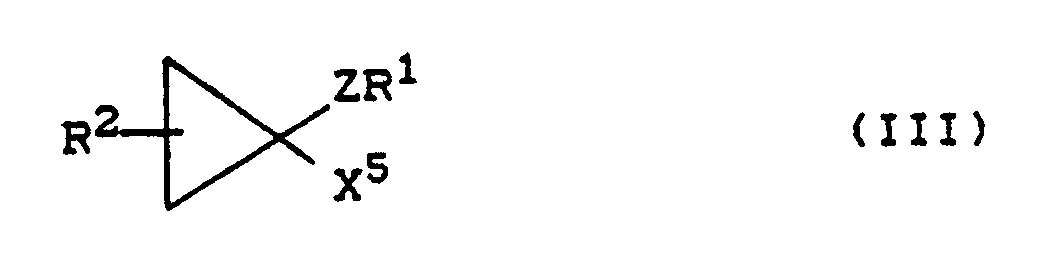
X⁵ für Halogen steht,
R¹ Alkyl mit 1 bis 3 Kohlenstoffatomen bedeutet,
R² die oben angegebene Bedeutung hat und
Z Sauerstoff oder Schwefel bedeutet
under HX⁵-Abspaltung zu 1-Cyclopropylchinoloncarbonsäurederivaten der Formel (IV) nach folgenden Schema

die darauf

R² represents hydrogen, C₁-C₃-alkyl or halogen,
X¹ is hydrogen, C₁-C₃-alkyl, halogen or NR⁸R⁹, wherein
R⁸ and R⁹ together with the nitrogen atom to which they are attached form a 5- or 6-membered ring which, as ring members, also forms the atoms or groups
R¹⁰ represents hydrogen, C₁-C₃-alkyl, acetyl or t-butoxycarbonyl,
R¹¹ represents hydrogen or C₁-C₃-alkyl,
R¹² is hydrogen, C₁-C₃-alkyl, acetyl or t-butoxycarbonyl,
X² and X³ can be the same or different and represent hydrogen, nitro or halogen,
A represents nitrogen or a radical C-X⁴, where
X⁴ represents hydrogen, C₁-C₃-alkyl, alkoxy with 1 to 3 carbon atoms, alkyl mercapto with 1 to 3 carbon atoms, halogen, nitro, cyano or alkoxycarbonyl with up to 3 carbon atoms in the alcohol part and
Y represents a nitrile group, an ester group COOR⁵ or an acid amide group CONR⁶R⁷, where R⁵ represents C₁-C₃-alkyl and R⁶ and R⁷ can be identical or different and represent hydrogen or C₁-C₃-alkyl and R⁶ can be substituted phenyl,
characterized in that in a first step quinolonecarboxylic acid derivatives of the formula (II)
X¹, X², X³, A and Y have the meaning given above with cyclopropane derivatives of the formula (III)
X⁵ represents halogen,
R¹ is alkyl having 1 to 3 carbon atoms,
R² has the meaning given above and
Z means oxygen or sulfur
under HX⁵ elimination to 1-cyclopropylquinolonecarboxylic acid derivatives of the formula (IV) according to the following scheme
the one on it
Bevorzugt ist das Verfahren zur Darstellung von Chinoloncarbonsäurederivaten der Formel (I)

R² für Wasserstoff oder Halogen steht,
X¹ Halogen oder NR⁸R⁹ bedeutet, wobei
R⁸ und R⁹ gemeinsam mit dem Stickstoffatom, an das sie gebunden sind, einen 5- oder 6-gliedrigen Ring bilden, der als Ringglieder zusätzlich die Atome bzw. die Gruppen
R¹⁰ für Wasserstoff, C₁-C₃-Alkyl, Acetyl oder t-Butoxycarbonyl steht,
R¹¹ für Wasserstoff oder C₁-C₃-Alkyl steht,
R¹²Wasserstoff, C₁-C₃-Alkyl, Acetyl oder t-Butoxycarbonyl bedeutet,
X² für Fluor steht,
X³ Wasserstoff, Nitro oder Halogen bedeutet,
A für Stickstoff oder einen Rest C-X⁴ steht, wobei X⁴ für Wasserstoff, Halogen oder Nitro steht und
Y eine Nitrilgruppe oder eine Estergruppe COOR⁵ darstellt, wobei
R⁵ für C₁-C₃-Alkyl steht,
dadurch gekennzeichnet, daß man in einem ersten Schritt Chinoloncarbonsäurederivate der Formel (II)

X¹, X², X³, A und Y die oben angegebene Bedeutung haben mit Cyclopropanderivaten der formel (III)

X⁵ für Chlor oder Brom steht,
R¹ Alkyl mit 1 bis 3 Kohlenstoffatomen bedeutet,
R² die oben angegebene Bedeutung hat und
Z Sauerstoff oder Schwefel bedeutet under HX⁵-Abspaltung nach folgendem Schema


R² für Wasserstoff, Fluor oder Chlor steht,
X¹ Chlor, Fluor oder NR⁸R⁹ bedeutet, wobei
R⁸ und R⁹ gemeinsam mit dem Stickstoffatom, an das sie gebunden sind, einen 5- oder 6-gliedrigen Ring bilden, der als Ringglieder zusätzlich die Gruppe

R¹⁰ für Wasserstoff, Methyl, Acetyl oder t-Butoxycarbonyl steht,
R¹¹ für Wasserstoff oder Methyl steht,
R¹² Wasserstoff, Acetyl oder tert.-Butoxycarbonyl bedeutet,
X² für Fluor steht,
X³ Waserstoff oder Nitro bedeutet,
A für C-X⁴ steht, wobei
X⁴ für Wasserstoff, Methyl, Fluor oder Chlor steht und
Y eine Estergruppe COOR⁵ darstellt, wobei R⁵ für Methyl oder Ethyl steht,
dadurch gekennzeichnet, daß man in einem ersten Schritt Chinoloncarbonsäurederivate der Formel (II)

X¹, X², X³, A und Y die oben angegebene Bedeutung haben mit Cyclopropanderivaten der Formel (III)

X⁵ für Brom steht,
R¹ Ethyl bedeutet,
R² die oben angegebene Bedeutung hat und
Z Sauerstoff oder Schwefel bedeutet unter HX⁵-Abspaltung nach folgendem Schema


R² represents hydrogen or halogen,
X¹ is halogen or NR⁸R⁹, wherein
R⁸ and R⁹ together with the nitrogen atom to which they are attached form a 5- or 6-membered ring which, as ring members, also forms the atoms or groups
R¹⁰ represents hydrogen, C₁-C₃-alkyl, acetyl or t-butoxycarbonyl,
R¹¹ represents hydrogen or C₁-C₃-alkyl,
R¹² is hydrogen, C₁-C₃-alkyl, acetyl or t-butoxycarbonyl,
X² represents fluorine,
X³ is hydrogen, nitro or halogen,
A represents nitrogen or a radical C-X⁴, where X⁴ represents hydrogen, halogen or nitro and
Y represents a nitrile group or an ester group COOR⁵, wherein
R⁵ represents C₁-C₃-alkyl,
characterized in that in a first step quinolonecarboxylic acid derivatives of the formula (II)
X¹, X², X³, A and Y have the meaning given above with cyclopropane derivatives of the formula (III)
X⁵ represents chlorine or bromine,
R¹ is alkyl having 1 to 3 carbon atoms,
R² has the meaning given above and
Z means oxygen or sulfur under HX⁵-elimination according to the following scheme
R² represents hydrogen, fluorine or chlorine,
X¹ is chlorine, fluorine or NR⁸R⁹, wherein
R⁸ and R⁹ together with the nitrogen atom to which they are attached form a 5- or 6-membered ring which, as ring members, also forms the group
R¹⁰ represents hydrogen, methyl, acetyl or t-butoxycarbonyl,
R¹¹ represents hydrogen or methyl,
R¹² denotes hydrogen, acetyl or tert-butoxycarbonyl,
X² represents fluorine,
X³ means hydrogen or nitro,
A stands for C-X⁴, where
X⁴ represents hydrogen, methyl, fluorine or chlorine and
Y represents an ester group COOR⁵, where R⁵ represents methyl or ethyl,
characterized in that in a first step quinolonecarboxylic acid derivatives of the formula (II)
X¹, X², X³, A and Y have the meaning given above with cyclopropane derivatives of the formula (III)
X⁵ represents bromine,
R¹ is ethyl,
R² has the meaning given above and
Z means oxygen or sulfur with elimination of HX⁵ according to the following scheme
Die Verbindungen der Formel IV sind ebenfalls Gegenstand der Erfindung.The compounds of formula IV are also the subject of the invention.
Die Chinoloncarbonsäurederivate I können auf bekannte Weise sauer oder alkalisch in die antibakteriell wirksamen Chinoloncarbonsäuren umgewandelt werden.The quinolonecarboxylic acid derivatives I can be converted into the antibacterially active quinolonecarboxylic acids in a known manner, in an acidic or alkaline manner.
Verwendet man beispielsweise 7-Chlor-6-fluor-1,4-dihydro-4-oxo-3-chinoloncarbonsäureethylester und 1-Brom-1-ethoxy-cyclopropan als Ausgangsstoffe, so kann der Reaktionsablauf durch folgendes Formelschema wiedergegeben werden:

7-Chlor-6-fluor-4-hydroxy-3-chinolincarbonsäuremethylester,
6,7-Difluor-4-hydroxy-3-chinolincarbonsäureethylester,
6,7-Difluor-4-hydroxy-3-chinolincarbonsäuremethylester,
6,7,8-Trifluor-4-hydroxy-3-chinolincarbonsäureethylester,
8-Chlor-6,7-difluor-4-hydroxy-3-chinolincarbonsäureethylester,
7-Chlor-4-hydroxy-8-methyl-3-chinolincarbonsäureethylester,
7-Chlor-6-fluor-4-hydroxy-8-methyl-3-chinolincarbonsäureethylester,
6-Fluor-4-hydroxy-7-methyl-3-chinolincarbonsäureethylester,
6,7-Dichlor-4-hydroxy-3-chinolincarbonsäureethylester.If, for example, 7-chloro-6-fluoro-1,4-dihydro-4-oxo-3-quinolonecarboxylic acid ethyl ester and 1-bromo-1-ethoxy-cyclopropane are used as starting materials, the course of the reaction can be represented by the following formula:
7-chloro-6-fluoro-4-hydroxy-3-quinolinecarboxylic acid methyl ester,
6,7-difluoro-4-hydroxy-3-quinolinecarboxylic acid ethyl ester,
6,7-difluoro-4-hydroxy-3-quinolinecarboxylic acid methyl ester,
6,7,8-trifluoro-4-hydroxy-3-quinolinecarboxylic acid ethyl ester,
8-chloro-6,7-difluoro-4-hydroxy-3-quinolinecarboxylic acid ethyl ester,
7-chloro-4-hydroxy-8-methyl-3-quinolinecarboxylic acid ethyl ester,
7-chloro-6-fluoro-4-hydroxy-8-methyl-3-quinolinecarboxylic acid ethyl ester,
6-fluoro-4-hydroxy-7-methyl-3-quinolinecarboxylic acid ethyl ester,
6,7-dichloro-4-hydroxy-3-quinolinecarboxylic acid ethyl ester.
Die als Ausgangsstoffe verwendeten Cyclopropanderivate der Formel III sind bekannt (J. Org. Chem. 1985, 3255; Recl. Trav. Chim, Pays-Bas 100, 184 (1981).The cyclopropane derivatives of the formula III used as starting materials are known (J. Org. Chem. 1985 , 3255; Recl. Trav. Chim, Pays-Bas 100 , 184 (1981).
Als Beispiele seien genannt:
1-Chlor-1-methoxy-cyclopropan, 1-Brom-1-methoxy-cyclopropan, 1-Brom-1-ethoxycyclopropan, 1-Brom-1-methyl-mercapto-cyclopropan.Examples include:
1-chloro-1-methoxy-cyclopropane, 1-bromo-1-methoxy-cyclopropane, 1-bromo-1-ethoxycyclopropane, 1-bromo-1-methyl-mercapto-cyclopropane.
Die Substitutionsreaktionen II + III → IV werden in einem Temperaturbereich von 20 bis 120°C, bevorzugt 60 bis 100°C durchgeführt.The substitution reactions II + III → IV are carried out in a temperature range from 20 to 120 ° C., preferably 60 to 100 ° C.
Als Verdünnungsmittel für diese Reaktion können beispielsweise verwendet werden: Dimethylformamid, N-Methylpyrrolidon, Tetramethylharnstoff, Dimethylacetamid.The following can be used as diluents for this reaction: dimethylformamide, N-methylpyrrolidone, tetramethylurea, dimethylacetamide.
Für diese Reaktion können als Säurebinder anorganische und organische Basen Verwendung finden. Beispielhaft seien genannt:
1,4-Diazabicyclo[2.2.2]octan, 1,8-Diazabicyclo[5.4.0]-undec-7-en, 1,5-Diazabicyclo[4.3.0]non-5-en, Pyridin, Dimethylbenzylamin, Kaliumtertiärbutylat, Kaliumcarbonat, Natriumhydrogencarbonat, Natriumhydrid.Inorganic and organic bases can be used as acid binders for this reaction. Examples include:
1,4-diazabicyclo [2.2.2] octane, 1,8-diazabicyclo [5.4.0] -undec-7-ene, 1,5-diazabicyclo [4.3.0] non-5-ene, pyridine, dimethylbenzylamine, potassium tert-butylate , Potassium carbonate, sodium hydrogen carbonate, sodium hydride.
Die Umsetzung kann bei Normaldruck, aber auch bei erhöhtem Druck durchgeführt werden. Im allgemeinen arbeitet man bei Drucken zwischen etwa 1 und etwa 100 bar, vorzugsweise zwischen 1 und 10 bar.The reaction can be carried out at normal pressure, but also at elevated pressure. Generally one works at pressures between about 1 and about 100 bar, preferably between 1 and 10 bar.
Als Reduktionsmittel für den Reduktionsschritt IV → I finden im Fall Z = O beispielsweise Verwendung: Natriumcyanoborhydrid, Natriumborhydrid, Lithiumaluminiumhydrid und bevorzugt ein 1:1 Gemisch aus Natriumborhydrid und Bortrifluorid-Diethylether-Komplex. Im Fall von Z = S finden bekannte Entschwefelungsreagenzien wie z.B. Raney-Nickel Verwendung. Die Reaktion kann z.B. in einem Verdünnungsmittel wie Tetrahydrofuran oder Dioxan durchgeführt werden.In the case of Z = O, the following are used as reducing agents for the reduction step IV → I: sodium cyanoborohydride, sodium borohydride, lithium aluminum hydride and preferably a 1: 1 mixture of sodium borohydride and boron trifluoride-diethyl ether complex. In the case of Z = S, known desulfurization reagents such as e.g. Raney nickel use. The reaction can e.g. be carried out in a diluent such as tetrahydrofuran or dioxane.
Der Temperaturbereich liegt zwischen 0 und 100°C, bevorzugt zwischen 0 und 80°C.The temperature range is between 0 and 100 ° C, preferably between 0 and 80 ° C.
Das folgende Beispiel erläutert die Erfindung.The following example illustrates the invention.

2,7 g (0,01 mol) 7-Chlor-6-fluor-4-hydroxy-3-chinolincarbonsäureethylester, 2,97 g (0,03 mol) Kaliumcarbonat und 4,95 g (0,03 mol) 1-Brom-1-ethoxy-cyclopropan werden in 100 ml N-Methylpyrrolidon 8 Stunden auf 80°C erhitzt. Anschließend entfernt man alles Flüchtige im Hochvakuum. Der Rückstand wird in Wasser aufgenommen und mit Methylenchlorid extrahiert. Die organische Phase wird über Natriumsulfat getrocknet und eingeengt. Den Rückstand reinigt man durch Chromatographie an Kieselgel mit Methylenchlorid/Methanol 99/1 als Laufmittel.2.7 g (0.01 mol) of 7-chloro-6-fluoro-4-hydroxy-3-quinolinecarboxylic acid ethyl ester, 2.97 g (0.03 mol) of potassium carbonate and 4.95 g (0.03 mol) of 1- Bromine-1-ethoxy-cyclopropane are heated in 80 ml of N-methylpyrrolidone at 80 ° C. for 8 hours. Then you remove everything volatile in a high vacuum. The residue is taken up in water and extracted with methylene chloride. The organic phase is dried over sodium sulfate and concentrated. The residue is purified by chromatography on silica gel using methylene chloride / methanol 99/1 as the eluent.
Zur Reduktion stellt man eine Mischung 0,76 g (0,02 mol) Natriumborhydrid und 2,83 g (0,02 mol) Bortrifluorid-Diethylether-Komplex in 50 ml absolutem Tetrahydrofuran unter Eiskühlung her. Man fügt den 7-Chlor-1-(1-ethoxy-cyclopropyl)-6-fluor-1,4-dihydro-4-oxo-3-chinolincarbonsäureethylester zu und erhitzt 1,5 Stunden unter Rückfluß. Danach engt man das Reaktionsgemisch ein und kristallisiert den Rückstand aus Glykolmonomethylether um. Man erhält 1,86 g (60 %) der Titelverbindung mit dem Schmelzpunkt 219-221°C.For the reduction, a mixture of 0.76 g (0.02 mol) of sodium borohydride and 2.83 g (0.02 mol) of boron trifluoride-diethyl ether complex in 50 ml of absolute tetrahydrofuran is prepared with ice cooling. The 7-chloro-1- (1-ethoxy-cyclopropyl) -6-fluoro-1,4-dihydro-4-oxo-3-quinolinecarboxylic acid ethyl ester is added and the mixture is heated under reflux for 1.5 hours. The reaction mixture is then concentrated and the residue is recrystallized from glycol monomethyl ether. 1.86 g (60%) of the title compound with a melting point of 219-221 ° C. are obtained.
Claims (8)

R² für Wasserstoff, C₁-C₃-Alkyl oder Halogen steht,
X¹ Wasserstoff, C₁-C₃-Alkyl, Halogen oder NR⁸R⁹ bedeutet, wobei
R⁸ und R⁹ gemeinsam mit dem Stickstoffatom, an das sie gebunden sind, einen 5- oder 6-gliedrigen Ring bilden, der als Ringglieder zusätzlich die Atome bzw. die Gruppen

durch C₁-C₃-Alkyl, Hydroxy, Methoxy oder NR¹¹R¹² substituiert sein kann, wobei
R¹⁰ für Wasserstoff, C₁-C₃-Alkyl, C₁-C₃-Acyl, insbesondere Acetyl oder t-Butoxycarbonyl steht,
R¹¹ für Wasserstoff oder C₁-C₃-Alkyl steht,
R¹² Wasserstoff, Acetyl, C₁-C₃-Alkyl oder t-Butoxycarbonyl bedeutet,
X² und X³ gleich oder verschieden sein können und für Wasserstoff, Nitro oder Halogen stehen,
A für Stickstoff oder einen Rest C-X⁴ steht, wobei
X⁴ für Wasserstoff, C₁-C₃-Alkyl, Alkoxy mit 1 bis 3 Kohlenstoffatomen, Alkylmercapto mit 1 bis 3 Kohlenstoffatomen, Halogen, Nitro, Cyano oder Alkoxycarbonyl mit bis zu 3 Kohlenstoffatomen im Alkoholteil steht und
Y eine Nitrilgruppe, eine Estergruppe COOR⁵ oder eine Säureamidgruppe CONR⁶R⁷ darstellt, wobei R⁵ für C₁-C₃-Alkyl steht und R⁶ und R⁷ gleich oder verschieden sein können und für Wasserstoff oder C₁-C³-Alkyl stehen und R⁶ gegebenenfalls substituiertes Phenyl sein kann,
dadurch gekennzeichnet, daß man in einem ersten Schritt Chinoloncarbonsäurederivate der Formel (II)

X¹, X², X³, A und Y die oben angegebene Bedeutung haben
mit Cyclopropanderivaten der Formel (III)
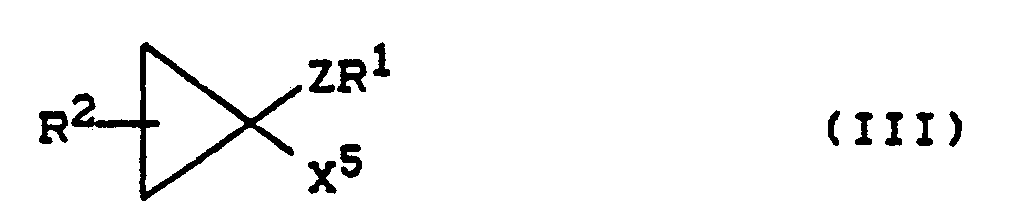
X⁵ für Halogen steht,
R¹ C₁-C₃-Alkyl bedeutet und
R² die oben angegebene Bedeutung hat und
Z für Sauerstoff oder Schwefel steht,
unter HX⁵-Abspaltung zu 1-Cyclopropylchinoloncarbonsäurederivaten der Formel (IV) nach folgendem Schema umsetzt

X¹, X², X³, A, R², R¹ und Y die oben angegebene Bedeutung haben,
die daraufhin durch reduktive Entfernung des Restes ZR¹ in die 1-Cyclopropylchinoloncarbonsäurederivate der Formel (I) überführt werden.1. Process for the preparation of quinolonecarboxylic acid derivatives of the formula (I)
R² represents hydrogen, C₁-C₃-alkyl or halogen,
X¹ is hydrogen, C₁-C₃-alkyl, halogen or NR⁸R⁹, wherein
R⁸ and R⁹ together with the nitrogen atom to which they are attached form a 5- or 6-membered ring which, as ring members, also forms the atoms or groups
can be substituted by C₁-C₃-alkyl, hydroxy, methoxy or NR¹¹R¹², wherein
R¹⁰ represents hydrogen, C₁-C₃-alkyl, C₁-C₃-acyl, especially acetyl or t-butoxycarbonyl,
R¹¹ represents hydrogen or C₁-C₃-alkyl,
R¹² is hydrogen, acetyl, C₁-C₃-alkyl or t-butoxycarbonyl,
X² and X³ can be the same or different and represent hydrogen, nitro or halogen,
A represents nitrogen or a radical C-X⁴, where
X⁴ represents hydrogen, C₁-C₃-alkyl, alkoxy with 1 to 3 carbon atoms, alkyl mercapto with 1 to 3 carbon atoms, halogen, nitro, cyano or alkoxycarbonyl with up to 3 carbon atoms in the alcohol part and
Y represents a nitrile group, an ester group COOR⁵ or an acid amide group CONR⁶R⁷, where R⁵ represents C₁-C₃-alkyl and R⁶ and R⁷ can be identical or different and represent hydrogen or C₁-C³-alkyl and R⁶ can be optionally substituted phenyl,
characterized in that in a first step quinolonecarboxylic acid derivatives of the formula (II)
X¹, X², X³, A and Y have the meaning given above
with cyclopropane derivatives of the formula (III)
X⁵ represents halogen,
R¹ is C₁-C₃-alkyl and
R² has the meaning given above and
Z represents oxygen or sulfur,
with HX⁵ elimination to 1-cyclopropylquinolonecarboxylic acid derivatives of the formula (IV) according to the following scheme
X¹, X², X³, A, R², R¹ and Y have the meaning given above,
which are then converted into the 1-cyclopropylquinolonecarboxylic acid derivatives of the formula (I) by reductive removal of the ZR 1 radical.

X¹, X², X³, A, R¹, R², Z und Y die in Anspruch 1 angegebene Bedeutung haben.7. Compounds of formula IV
X¹, X², X³, A, R¹, R², Z and Y have the meaning given in claim 1.
Applications Claiming Priority (2)
| Application Number | Priority Date | Filing Date | Title |
|---|---|---|---|
| DE3808118 | 1988-03-11 | ||
| DE3808118A DE3808118A1 (en) | 1988-03-11 | 1988-03-11 | METHOD FOR PRODUCING 1-CYCLOPROPYL-QUINOLON CARBONIC ACIDS AND THEIR DERIVATIVES |
Publications (1)
| Publication Number | Publication Date |
|---|---|
| EP0332930A2 true EP0332930A2 (en) | 1989-09-20 |
Family
ID=6349471
Family Applications (1)
| Application Number | Title | Priority Date | Filing Date |
|---|---|---|---|
| EP89103546A Withdrawn EP0332930A2 (en) | 1988-03-11 | 1989-03-01 | Process for the synthesis of 1-cyclopropyl-quinolone-carboxylic acids and their derivatives |
Country Status (8)
| Country | Link |
|---|---|
| EP (1) | EP0332930A2 (en) |
| JP (1) | JPH01268679A (en) |
| KR (1) | KR890014489A (en) |
| CN (1) | CN1037335A (en) |
| DE (1) | DE3808118A1 (en) |
| FI (1) | FI891123L (en) |
| IL (1) | IL89535A0 (en) |
| PT (1) | PT89956A (en) |
Cited By (10)
| Publication number | Priority date | Publication date | Assignee | Title |
|---|---|---|---|---|
| WO1995002573A3 (en) * | 1993-07-13 | 1995-03-09 | Eva Somfai | New method for n-cyclopropylation of aromatic amines, as well as compounds and compositions obtained |
| US7495103B2 (en) | 2004-06-24 | 2009-02-24 | Vertex Pharmaceuticals Incorporated | Modulators of ATP-binding cassette transporters |
| US8354427B2 (en) | 2004-06-24 | 2013-01-15 | Vertex Pharmaceutical Incorporated | Modulators of ATP-binding cassette transporters |
| US8410274B2 (en) | 2005-12-28 | 2013-04-02 | Vertex Pharmaceuticals | Solid forms of N-[2,4-bis(1,1-dimethylethyl)-5-hydroxyphenyl]-1,4-dihydro-4-oxoquinoline-3-carboxamide |
| US8802700B2 (en) | 2010-12-10 | 2014-08-12 | Vertex Pharmaceuticals Incorporated | Modulators of ATP-Binding Cassette transporters |
| US9701639B2 (en) | 2014-10-07 | 2017-07-11 | Vertex Pharmaceuticals Incorporated | Co-crystals of modulators of cystic fibrosis transmembrane conductance regulator |
| US9751839B2 (en) | 2009-03-20 | 2017-09-05 | Vertex Pharmaceuticals Incorporated | Process for making modulators of cystic fibrosis transmembrane conductance regulator |
| US10272046B2 (en) | 2012-02-27 | 2019-04-30 | Vertex Pharmaceuticals Incorporated | Pharmaceutical composition and administrations thereof |
| US10646481B2 (en) | 2008-08-13 | 2020-05-12 | Vertex Pharmaceuticals Incorporated | Pharmaceutical composition and administrations thereof |
| US12458635B2 (en) | 2008-08-13 | 2025-11-04 | Vertex Pharmaceuticals Incorporated | Pharmaceutical composition and administrations thereof |
Families Citing this family (6)
| Publication number | Priority date | Publication date | Assignee | Title |
|---|---|---|---|---|
| NZ505362A (en) * | 1997-12-22 | 2004-12-24 | Upjohn Co | 4-hydroxyquinoline-3-carboxamides and -hydrazides useful as antiviral agents |
| CN1305849C (en) * | 2004-12-29 | 2007-03-21 | 江苏正大天晴药业股份有限公司 | Method for preparing 3-methylamino piperidine and its salt |
| CN100457737C (en) * | 2005-04-05 | 2009-02-04 | 中国人民解放军军事医学科学院毒物药物研究所 | Quinolyl amide derivative and its prepn process and use |
| KR101419554B1 (en) | 2006-03-13 | 2014-07-17 | 교린 세이야꾸 가부시키 가이샤 | Aminoquinolones as GSK3 inhibitors |
| BRPI1008974A2 (en) | 2009-03-11 | 2017-06-06 | Kyorin Seiyaku Kk | compound, pharmaceutical composition, and method for treating, preventing or ameliorating a gsk-3 mediated disease |
| CN107602465A (en) * | 2016-07-12 | 2018-01-19 | 重庆大学 | A kind of carbostyril derivative and its application |
-
1988
- 1988-03-11 DE DE3808118A patent/DE3808118A1/en not_active Withdrawn
-
1989
- 1989-03-01 EP EP89103546A patent/EP0332930A2/en not_active Withdrawn
- 1989-03-02 JP JP1048691A patent/JPH01268679A/en active Pending
- 1989-03-08 IL IL89535A patent/IL89535A0/en unknown
- 1989-03-09 PT PT89956A patent/PT89956A/en not_active Application Discontinuation
- 1989-03-09 FI FI891123A patent/FI891123L/en not_active Application Discontinuation
- 1989-03-10 KR KR1019890002952A patent/KR890014489A/en not_active Abandoned
- 1989-03-11 CN CN89103162A patent/CN1037335A/en active Pending
Cited By (28)
| Publication number | Priority date | Publication date | Assignee | Title |
|---|---|---|---|---|
| WO1995002573A3 (en) * | 1993-07-13 | 1995-03-09 | Eva Somfai | New method for n-cyclopropylation of aromatic amines, as well as compounds and compositions obtained |
| US10662192B2 (en) | 2004-06-24 | 2020-05-26 | Vertex Pharmaceuticals Incorporated | Modulators of ATP-binding cassette transporters |
| US7495103B2 (en) | 2004-06-24 | 2009-02-24 | Vertex Pharmaceuticals Incorporated | Modulators of ATP-binding cassette transporters |
| US8324242B2 (en) | 2004-06-24 | 2012-12-04 | Vertex Pharmaceutical Incorporated | Modulators of ATP-binding cassette transporters |
| US8354427B2 (en) | 2004-06-24 | 2013-01-15 | Vertex Pharmaceutical Incorporated | Modulators of ATP-binding cassette transporters |
| US9090619B2 (en) | 2004-06-24 | 2015-07-28 | Vertex Pharmaceuticals Incorporated | Modulators of ATP-binding cassette transporters |
| US8614327B2 (en) | 2004-06-24 | 2013-12-24 | Vertex Pharmaceuticals Incorporated | Modulators of ATP-binding cassette transporters |
| US8629162B2 (en) | 2004-06-24 | 2014-01-14 | Vertex Pharmaceuticals Incorporated | Modulators of ATP-binding cassette transporters |
| US8741925B2 (en) | 2004-06-24 | 2014-06-03 | Vertex Pharmaceuticals Incorporated | Modulators of ATP-binding cassette transporters |
| US8101767B2 (en) | 2004-06-24 | 2012-01-24 | Vertex Pharmaceuticals Incorporated | Modulators of ATP-binding cassette transporters |
| US8829204B2 (en) | 2004-06-24 | 2014-09-09 | Vertex Pharmaceuticals Incorporated | Modulators of ATP-binding cassette transporters |
| US9670163B2 (en) | 2005-12-28 | 2017-06-06 | Vertex Pharmaceuticals Incorporated | Solid forms of N-[2,4-bis(1,1-dimethylethyl)-5-hydroxyphenyl]-1,4-dihydro-4-oxoquinoline-3-carboxamide |
| US11291662B2 (en) | 2005-12-28 | 2022-04-05 | Vertex Pharmaceuticals Incorporated | Solid forms of n-[2,4-bis(1,1-dimethylethyl)-5-hydroxyphenyl]-1,4-dihydro-4-oxoquinoline-3-carboxamide |
| US8754224B2 (en) | 2005-12-28 | 2014-06-17 | Vertex Pharmaceuticals Incorporated | Solid forms of N-[2,4-bis(1,1-dimethylethyl)-5-hydroxyphenyl]-1,4-dihydro-4-oxoquinoline-3-carboxamide |
| US10537565B2 (en) | 2005-12-28 | 2020-01-21 | Vertex Pharmaceuticals Incorporated | Solid forms of N-[2,4-bis(1,1-dimethylethyl)-5-hydroxyphenyl]-1,4-dihydro-4-oxoquinoline-3-carboxamide |
| US8410274B2 (en) | 2005-12-28 | 2013-04-02 | Vertex Pharmaceuticals | Solid forms of N-[2,4-bis(1,1-dimethylethyl)-5-hydroxyphenyl]-1,4-dihydro-4-oxoquinoline-3-carboxamide |
| US9139530B2 (en) | 2005-12-28 | 2015-09-22 | Vertex Pharmaceuticals Incorporated | Solid forms of N-[2,4-bis(1,1-dimethylethyl)-5-hydroxyphenyl]-1,4-dihydro-4-oxoquinoline-3-carboxamide |
| US9931334B2 (en) | 2005-12-28 | 2018-04-03 | Vertex Pharmaceuticals Incorporated | Solid forms of N[2,4-bis(1,1-dimethylethyl)-5-hydroxyphenyl]-1,4-dihydro-4-oxoquinoline-3-carboxamide |
| US10646481B2 (en) | 2008-08-13 | 2020-05-12 | Vertex Pharmaceuticals Incorporated | Pharmaceutical composition and administrations thereof |
| US11564916B2 (en) | 2008-08-13 | 2023-01-31 | Vertex Pharmaceuticals Incorporated | Pharmaceutical composition and administrations thereof |
| US12458635B2 (en) | 2008-08-13 | 2025-11-04 | Vertex Pharmaceuticals Incorporated | Pharmaceutical composition and administrations thereof |
| US9751839B2 (en) | 2009-03-20 | 2017-09-05 | Vertex Pharmaceuticals Incorporated | Process for making modulators of cystic fibrosis transmembrane conductance regulator |
| US8802700B2 (en) | 2010-12-10 | 2014-08-12 | Vertex Pharmaceuticals Incorporated | Modulators of ATP-Binding Cassette transporters |
| US10272046B2 (en) | 2012-02-27 | 2019-04-30 | Vertex Pharmaceuticals Incorporated | Pharmaceutical composition and administrations thereof |
| US11752106B2 (en) | 2012-02-27 | 2023-09-12 | Vertex Pharmaceuticals Incorporated | Pharmaceutical composition and administrations thereof |
| US11147770B2 (en) | 2012-02-27 | 2021-10-19 | Vertex Pharmaceuticals Incorporated | Pharmaceutical composition and administrations thereof |
| US12214083B2 (en) | 2012-02-27 | 2025-02-04 | Vertex Pharmaceuticals Incorporated | Pharmaceutical composition and administrations thereof |
| US9701639B2 (en) | 2014-10-07 | 2017-07-11 | Vertex Pharmaceuticals Incorporated | Co-crystals of modulators of cystic fibrosis transmembrane conductance regulator |
Also Published As
| Publication number | Publication date |
|---|---|
| PT89956A (en) | 1989-11-10 |
| JPH01268679A (en) | 1989-10-26 |
| CN1037335A (en) | 1989-11-22 |
| KR890014489A (en) | 1989-10-24 |
| FI891123A7 (en) | 1989-09-12 |
| FI891123A0 (en) | 1989-03-09 |
| DE3808118A1 (en) | 1989-09-21 |
| FI891123L (en) | 1989-09-12 |
| IL89535A0 (en) | 1989-09-10 |
Similar Documents
| Publication | Publication Date | Title |
|---|---|---|
| DE69213720T2 (en) | METHOD FOR PRODUCING IMIDAZO (4,5-c) CHINOLIN-4-AMINES | |
| EP0332930A2 (en) | Process for the synthesis of 1-cyclopropyl-quinolone-carboxylic acids and their derivatives | |
| DE60312701T2 (en) | Preparation of 1H-imidazo-4,5-quinoline-4-amines via novel 1H-imidazo-4,5-quinoline-4-cyano and 1H-imidazo-4,5-quinoline-4-carboxamidointermediates | |
| DE69937076T2 (en) | Intermediates for the preparation of imidazo-pyridine derivatives | |
| DE69628466T2 (en) | Intermediate compounds for the preparation of new pyridonecarboxylic acid derivatives or their salts | |
| DE60308040T2 (en) | Preparation of 1H-imidazo-4,5-C] quinoline-4-amines Ber 1H-imidazo-4,5-C] quinoline-4-phthalimide intermediates | |
| EP0039482B1 (en) | Perylene-3,4,9,10-tetracarboxylic acid monoanhydride-monoimides, process for their preparation and their use | |
| DE3049963C2 (en) | 3-ß-Amino-nortropan derivatives and process for their preparation | |
| DE3036390A1 (en) | Antiinflammatory intermediate 7H-pyrrolo-(2,3-D)-pyrimidine derivs. - prepd. by dealkylation of 7-phenyl:ethyl derivs. by reaction with hydrochloric, phosphoric or poly:phosphoric acid | |
| EP0332033A2 (en) | N-cyclopropyl anilines and their use in processes for the synthesis of 1-cyclopropyl-quinolone-carboxylic acids and their derivatives | |
| DD244553A5 (en) | PROCESS FOR THE PREPARATION OF 5,6-DIFLUOR-NAPHTHYRIDINES AND 5,6,8-TRIFLUOROCHINOLINES | |
| DE4230804A1 (en) | 7-isoindolinyl quinolone and naphthyridone derivatives | |
| EP0176846A2 (en) | 3-Amino-2-benzoyl-acrylic-acid derivatives and process for their preparation | |
| EP1034173A2 (en) | Method for producing 8-methoxy-quinoline carboxylic acids | |
| DE2809720C2 (en) | ||
| EP0401623B1 (en) | Process for the preparation of 7-(3-amino- and 3-aminomethyl-1-pyrrolidinyl)-3-quinolinonecarboxylic and -naphthyridinonecarboxylic acids | |
| DD269848A5 (en) | PROCESS FOR THE PREPARATION OF CHINOLIN CARBOXYLIC ACID | |
| EP0414020B1 (en) | Process for the preparation of clausenamide and neoclausenamide and their derivatives | |
| EP0607826A1 (en) | Fluoro-Trifluoromethylbenzoic acid derivatives | |
| DE69818988T2 (en) | 9,10-DIAZATRYCLO [4.2.11 2,5] DECAN- AND 9,10-DIAZATRICYCLO [3.3.1.1 2,6] DECANDERIVE WITH ANALGETIC EFFECT | |
| EP0705828A1 (en) | Quinolone- and naphthyridone carboxylic acid derivatives as antibacterial agents | |
| DE2706752A1 (en) | IMPROVEMENTS TO OR RELATING TO ORGANIC COMPOUNDS | |
| DE2628469C3 (en) | Process for the preparation of γ-amino alcohols | |
| AT397385B (en) | METHOD FOR PRODUCING CHINOLINE CARBONIC ACID DERIVATIVES | |
| WO2000026193A1 (en) | Method for producing 4- [(2',5'- diamino-6'- halopyrimidine- 4'-yl)amino]- cyclopent- 2-enylmethanols |
Legal Events
| Date | Code | Title | Description |
|---|---|---|---|
| PUAI | Public reference made under article 153(3) epc to a published international application that has entered the european phase |
Free format text: ORIGINAL CODE: 0009012 |
|
| 17P | Request for examination filed |
Effective date: 19890301 |
|
| AK | Designated contracting states |
Kind code of ref document: A2 Designated state(s): AT BE CH DE ES FR GB GR IT LI NL SE |
|
| STAA | Information on the status of an ep patent application or granted ep patent |
Free format text: STATUS: THE APPLICATION HAS BEEN WITHDRAWN |
|
| 18W | Application withdrawn |
Withdrawal date: 19900117 |
|
| R18W | Application withdrawn (corrected) |
Effective date: 19900117 |