EP0324982B1 - Inclusion complex of nicardipine or its hydrochloride with beta-cyclodextrin, a process for preparing the same and a sustained release pharmaceutical preparation containing the same - Google Patents
Inclusion complex of nicardipine or its hydrochloride with beta-cyclodextrin, a process for preparing the same and a sustained release pharmaceutical preparation containing the same Download PDFInfo
- Publication number
- EP0324982B1 EP0324982B1 EP88121797A EP88121797A EP0324982B1 EP 0324982 B1 EP0324982 B1 EP 0324982B1 EP 88121797 A EP88121797 A EP 88121797A EP 88121797 A EP88121797 A EP 88121797A EP 0324982 B1 EP0324982 B1 EP 0324982B1
- Authority
- EP
- European Patent Office
- Prior art keywords
- nicardipine
- beta
- cyclodextrin
- hydrochloride
- inclusion complex
- Prior art date
- Legal status (The legal status is an assumption and is not a legal conclusion. Google has not performed a legal analysis and makes no representation as to the accuracy of the status listed.)
- Expired - Lifetime
Links
Images


Classifications
-
- B—PERFORMING OPERATIONS; TRANSPORTING
- B82—NANOTECHNOLOGY
- B82Y—SPECIFIC USES OR APPLICATIONS OF NANOSTRUCTURES; MEASUREMENT OR ANALYSIS OF NANOSTRUCTURES; MANUFACTURE OR TREATMENT OF NANOSTRUCTURES
- B82Y5/00—Nanobiotechnology or nanomedicine, e.g. protein engineering or drug delivery
-
- A—HUMAN NECESSITIES
- A61—MEDICAL OR VETERINARY SCIENCE; HYGIENE
- A61K—PREPARATIONS FOR MEDICAL, DENTAL OR TOILETRY PURPOSES
- A61K31/00—Medicinal preparations containing organic active ingredients
- A61K31/33—Heterocyclic compounds
- A61K31/395—Heterocyclic compounds having nitrogen as a ring hetero atom, e.g. guanethidine or rifamycins
- A61K31/435—Heterocyclic compounds having nitrogen as a ring hetero atom, e.g. guanethidine or rifamycins having six-membered rings with one nitrogen as the only ring hetero atom
- A61K31/44—Non condensed pyridines; Hydrogenated derivatives thereof
-
- A—HUMAN NECESSITIES
- A61—MEDICAL OR VETERINARY SCIENCE; HYGIENE
- A61K—PREPARATIONS FOR MEDICAL, DENTAL OR TOILETRY PURPOSES
- A61K47/00—Medicinal preparations characterised by the non-active ingredients used, e.g. carriers or inert additives; Targeting or modifying agents chemically bound to the active ingredient
- A61K47/50—Medicinal preparations characterised by the non-active ingredients used, e.g. carriers or inert additives; Targeting or modifying agents chemically bound to the active ingredient the non-active ingredient being chemically bound to the active ingredient, e.g. polymer-drug conjugates
- A61K47/69—Medicinal preparations characterised by the non-active ingredients used, e.g. carriers or inert additives; Targeting or modifying agents chemically bound to the active ingredient the non-active ingredient being chemically bound to the active ingredient, e.g. polymer-drug conjugates the conjugate being characterised by physical or galenical forms, e.g. emulsion, particle, inclusion complex, stent or kit
- A61K47/6949—Medicinal preparations characterised by the non-active ingredients used, e.g. carriers or inert additives; Targeting or modifying agents chemically bound to the active ingredient the non-active ingredient being chemically bound to the active ingredient, e.g. polymer-drug conjugates the conjugate being characterised by physical or galenical forms, e.g. emulsion, particle, inclusion complex, stent or kit inclusion complexes, e.g. clathrates, cavitates or fullerenes
- A61K47/6951—Medicinal preparations characterised by the non-active ingredients used, e.g. carriers or inert additives; Targeting or modifying agents chemically bound to the active ingredient the non-active ingredient being chemically bound to the active ingredient, e.g. polymer-drug conjugates the conjugate being characterised by physical or galenical forms, e.g. emulsion, particle, inclusion complex, stent or kit inclusion complexes, e.g. clathrates, cavitates or fullerenes using cyclodextrin
-
- A—HUMAN NECESSITIES
- A61—MEDICAL OR VETERINARY SCIENCE; HYGIENE
- A61P—SPECIFIC THERAPEUTIC ACTIVITY OF CHEMICAL COMPOUNDS OR MEDICINAL PREPARATIONS
- A61P9/00—Drugs for disorders of the cardiovascular system
- A61P9/08—Vasodilators for multiple indications
-
- A—HUMAN NECESSITIES
- A61—MEDICAL OR VETERINARY SCIENCE; HYGIENE
- A61P—SPECIFIC THERAPEUTIC ACTIVITY OF CHEMICAL COMPOUNDS OR MEDICINAL PREPARATIONS
- A61P9/00—Drugs for disorders of the cardiovascular system
- A61P9/10—Drugs for disorders of the cardiovascular system for treating ischaemic or atherosclerotic diseases, e.g. antianginal drugs, coronary vasodilators, drugs for myocardial infarction, retinopathy, cerebrovascula insufficiency, renal arteriosclerosis
-
- A—HUMAN NECESSITIES
- A61—MEDICAL OR VETERINARY SCIENCE; HYGIENE
- A61P—SPECIFIC THERAPEUTIC ACTIVITY OF CHEMICAL COMPOUNDS OR MEDICINAL PREPARATIONS
- A61P9/00—Drugs for disorders of the cardiovascular system
- A61P9/12—Antihypertensives
-
- C—CHEMISTRY; METALLURGY
- C08—ORGANIC MACROMOLECULAR COMPOUNDS; THEIR PREPARATION OR CHEMICAL WORKING-UP; COMPOSITIONS BASED THEREON
- C08B—POLYSACCHARIDES; DERIVATIVES THEREOF
- C08B37/00—Preparation of polysaccharides not provided for in groups C08B1/00 - C08B35/00; Derivatives thereof
- C08B37/0006—Homoglycans, i.e. polysaccharides having a main chain consisting of one single sugar, e.g. colominic acid
- C08B37/0009—Homoglycans, i.e. polysaccharides having a main chain consisting of one single sugar, e.g. colominic acid alpha-D-Glucans, e.g. polydextrose, alternan, glycogen; (alpha-1,4)(alpha-1,6)-D-Glucans; (alpha-1,3)(alpha-1,4)-D-Glucans, e.g. isolichenan or nigeran; (alpha-1,4)-D-Glucans; (alpha-1,3)-D-Glucans, e.g. pseudonigeran; Derivatives thereof
- C08B37/0012—Cyclodextrin [CD], e.g. cycle with 6 units (alpha), with 7 units (beta) and with 8 units (gamma), large-ring cyclodextrin or cycloamylose with 9 units or more; Derivatives thereof
- C08B37/0015—Inclusion compounds, i.e. host-guest compounds, e.g. polyrotaxanes
Definitions
- the present invention belongs to the field of pharmaceutical industry and relates to a novel inclusion complex of nicardipine or its hydrochloride with beta-cyclodextrin, to a process for preparing the same and to a sustained release pharmaceutical preparations containing the same.
- Nicardipine is in the form of its hydrochloride salt a valuable substance having cerebrovascular-vasodilatory as well as coronary-vasodilatory activity.
- nicardipine or its hydrochloride By the conversion of nicardipine or its hydrochloride to the inclusion complex with beta-cyclodextrin, its aqueous solubility as well as the rate and extent of its dissolution within the range of greater pH values, such as the one existing e.g. in intestinal tract, is increased.
- Nicardipine is the generic name for 2-(N-benzyl-N-methylamino)-ethyl methyl 2,6-dimethyl-4-(m-nitrophenyl)-1,4-dihydropyridine-3,5-dicarboxylate of the formula Nicardipine was disclosed for the first time in DE patent 24 07 115 as a substance having valuable cerebrovascular-vasodilatory and coronary-vasodilatory properties. Nicardipine in the form of its hydrochloride salt is used in the therapy of cerebral insufficiency and as an antihypertensive agent.
- nifedipine has a very poor water solubility, which makes the preparation of suitable pharmaceutical preparations difficult.
- 1,4-dihydropyridine-3,5-dicarboxylic acid derivatives described thereafter their poor water solubility is characteristic as well.
- 1,4-dihydropyridine-3,5-dicarboxylic acid derivatives which were described in DE patent 24 07 115, where nicardipine was described for the first time, can form water soluble salts with mineral acids, wherein they differ from related substances described in earlier literature.
- Nicardipine and related compounds described in DE patent 24 07 115 as having low toxicity as well as salts of these compounds are known to be suitable for liquid pharmaceutical preparations (especially injections) owing to their water solubility. Yet the water solubility of nicardipine and its hydrochloride as well as that of their sustained release preparations is still unsatisfactory.
- nicardipine hydrochloride is good at low pH values, whereas it is very poor at higher pH values. Therefore nicardipine hydrochloride is likely to be absorbed only in the stomach and in the upper part of the intestinal tract.
- Cyclodextrins form inclusion complexes with other molecules of suitable size and polarity (J. Pharm. Sci. 64 , 1585, 1975. Cyclodextrins are cyclic compounds, consisting of 6, 7 or 8 glucopyranose units linked together by alpha-1,4-glycosidic bonds.
- the EP-A-0251459 describes solid, controlled release pharmaceutical compositions comprising an active ingredient incorporated in a matrix comprising a first substance selected from a water soluble polydextrose and a water soluble cyclodextrin in a second substance selected from a C12-C36 fatty alcohol and a polyalkylene glycol.
- the first substance is a cyclodextrin, especially a beta-cyclodextrin
- the second substance is a C14-C22 fatty alcohol, especially stearyl alcohol, cetyl alcohol, cetostearyl alcohol or myristyl alcohol.
- the matrix may also contain a cellulose ether, especially a hydroxyalkylcellulose or a carboxyalkylcellulose.
- the preferred active ingredient to be incorporated in the matrix is a water insoluble drug, which is a drug that dissolves in water (pH 5) at 20°C to a concentration of less than 1,0 mg/ml, preferably less than 0,5 mg/ml.
- a water insoluble drug which is a drug that dissolves in water (pH 5) at 20°C to a concentration of less than 1,0 mg/ml, preferably less than 0,5 mg/ml.
- active ingredients that may be incorporated in the composition there are, among others, cited vasodilators, such as nicardipine.
- the object of the present invention is to convert nicardipine or its hydrochloride to a form having a substantially increased rate and extent of dissolution within the range of greater pH values, such as it exists e.g. in the intestinal tract.
- Such a property makes possible the preparation and the use of a sustained release pharmaceutical form, whenever it is necessary to ensure the dissolution of nicardipine hydrochloride also in the intestinal juice.
- This object is achieved by bonding nicardipine or its hydrochloride into the structure of the cyclodextrin molecule, whereby a new inclusion complex with an increased water solubility is formed as a yellowish microcrystallinic product.
- cyclodextrins there can be used alpha-cyclodextrin, beta-cyclodextrin and gamma-cyclodextrin, preferably beta-cyclodextrin.
- the complex may be prepared by methods known for the preparation of inclusion complexes with cyclodextrins, which were described by M. Kurozumi et al., Chem. Pharm. Bull. 23(12), 3062-3068 (1975).
- the process for preparing the inclusion complex of nicardipine or its hydrochloride with beta-cyclodextrin is performed by reacting nicardipine or its hydrochloride with beta-cyclodextrin in a molar ratio of the components of about 1:1 under stirring at a temperature from room temperature to the boiling point of the reaction mixture in an aqueous or ethanolic medium, cooling the reaction mixture and isolating the desired complex.
- the admissible deviation from the 1:1 molar ratio is ⁇ 10 % at the most, i.e. the molar ratio can be 1:0.9 to 1.1.
- the invention also relates to sustained release pharmaceutical preparations, comprising a therapeutically effective amount of the inclusion complex of nicardipine or its hydrochloride with beta-cyclodextrin together with a pharmaceutically acceptable carrier and other common excipients.
- Sustained release pharmaceutical compositions are preferably formulated in forms suitable for oral application, such as tablets, capsules etc. At formulating it should be taken into consideration that the content of nicardipine or its hydrochloride in the complex is in the range from 14 to 18 % or from 25 to 31 %, respectively.
- the resulting complex is administered orally, the cyclodextrin acting merely as a solubilizing agent and not altering the therapeutic behaviour of the active substance in any way.
- Oral sustained release pharmaceutical preparations are prepared by incorporating the inclusion complex of nicardipine hydrochloride with beta-cyclodextrin into a hydrophilic matrix, across which the active substance passes in a controlled way by diffusion and slow erosion of the matrix.
- sodium alginate type Manucol®, Kelco Company
- high-molecular celluloses such as methyl cellulose, hydroxypropyl cellulose or hydroxypropyl methylcellulose of various viscosity grades, such as hydroxypropyl methylcellulose having a viscosity of 4 Pa ⁇ s
- Methodhocel® E4M The Dow Chemical Co.
- the tablets may also contain other ingredients, which are used for the manufacture of tablets or capsules, such as from 1 to 5 % of glycerol ditripalmitostearate (Precirol Ato 5, Gattefossee Comp.) as a pharmaceutically acceptable inert fatty substance, acting as a sustained release lubricant, or other lubricants, such as magnesium stearate or stearic acid, solubility improving surfactants, such as sodium lauryl sulfate (Texapon® K 12), binders and fillers.
- Polyvinylpyrrolidone is contained in tablets and capsules in an amount from 5.0 to 6.5 % by weight.
- Sustained release tablets and capsules are prepared using the inclusion complex of nicardipine hydrochloride with beta-cyclodextrin containing 25 % of nicardipine hydrochloride.
- the pharmaceutical preparation for oral administration contains a dosis of 60 mg of nicardipine hydrochloride together with other carriers and excipients.
- Beta-cyclodextrin (3.609 g; 3 mmoles, water content about 6 %) was suspended under stirring in distilled water (150 ml). Nicardipine hydrochloride (1.548 g; 3 mmoles) was added and the resulting mixture was stirred at room temperature for two days.
- the nearly clear solution was kept in refrigerator (at a temperature of 4 °C) for 2 hours and the separated precipitate was then filtered off.
- the clear solution was evaporated in vacuo to a dry product, which was then dried at a pressure of 400 mbar and at a temperature of 100°C to constant weight.
- the product contained 1.36 % of water (determined according to Karl-Fischer) and 31 % of pure nicardipine in the complex as shown by HPLC at 350 nm (column: RP-18; 10 »m; 150x4 mm; eluent: CH3OH:CH3CN:0.05 M sodium acetate 800:200:300; flow rate 2 ml/min).
- Nicardipine (1.5 g; 3.13 mmoles; as an oily base) was dissolved in 96 % ethanol (60 ml) and the solution was heated to a temperature of 50 °C.
- beta-cyclodextrin (5 g; 4.15 mmoles; water content 6%) in distilled water (120 ml) was added dropwise.
- the clear solution which subsequently became cloudy, was stirred for another half an hour at room temperature and then the reaction mixture was cooled in a freezer. After two to three hours a pale yellow product separated, which was filtered off and dried at first at a pressure of 400 mbar and a temperature of 40 °C and then at the same pressure and at a temperature of 80 °C.
- HPLC determination of nicardipine (base) content in the complex at 350 nm showed a value of 15.5 %.
- nicardipine hydrochloride 1.5 mg/ml * 54.8 mg/ml nicardipine (base) ** 16.9 mg/ml * nicardipine hydrochloride is a crystalline substance ** nicardipine (base) is an oily substance
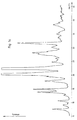
- NC.HCl powder X-ray diffraction patterns of nicardipine hydrochloride
- beta-cyclodextrin beta-cyclodextrin
- NC.HCl + beta-CD a physical mixture of nicardipine hydrochloride and beta-cyclodextrin
- Fig. 1 a, b, c, d
- the powder X-ray diffraction pattern of the inclusion complex of nicardipine hydrochloride with beta-cyclodextrin essentially differs from that of nicardipine hydrochloride as well as from that of beta-cyclodextrin, giving proof of the individuality of the inclusion complex of nicardipine hydrochloride with beta-cyclodextrin and of the formation of a new compound, respectively.
- d spacings between the lattice planes having maximum intensity (I), which for pure substances are already sufficient as a "fingerprint".
- the resemblance between the powder pattern of beta-cyclodextrin and that of the inclusion complex of nicardipine hydrochloride with beta-cyclodextrin is in that they both show the strongest lines for the spacings between the lattice planes in the ranges from 4.5 to 5.0 and from 6.5 to 7.0. They do not, however, coincide either with respect to the spacings between the lattice planes or with respect to intensity.
- the differential scanning calorimety also shows the individuality of nicardipine hydrochloride, of beta-cyclodextrin, of a physical mixture of nicardipine hydrochloride with beta-cyclodextrin and of the inclusion complex of nicardipine hydrochloride with beta-cyclodextrin as shown in Fig. 2 (a, b, c, d).
- Nicardipine hydrochloride melts at 160 °C, its thermal decomposition beginning at about 200 °C.
- Beta-cyclodextrin contains combined water, which begins to separate off the sample already at about 40 °C.
- beta-cyclodextrin The dehydratation of beta-cyclodextrin is completed at about 100 °C.
- Anhydrous beta-cyclodextrin is stable up to 270 °C, when thermal decomposition starts, which becomes intensive at 300 °C.
- the behaviour of the inclusion complex of nicardipine hydrochloride with beta-cyclodextrin at the thermoanalytical assay is quite different. After the initial slight loss of weight at temperatures below 150 °C, which can be attributed to the adsorbed moisture, the substance is stable up to about 220 °C, when thermal decomposition sets in.
- nicardipine hydrochloride and the inclusion complex of nicardipine hydrochloride with beta-cyclodextrin lie in that the complex does not show the melting point of nicardipine hydrochloride at 160 °C and that the inclusion complex of nicardipine hydrochloride with beta-cyclodextrin is more stable as demonstrated by the onset of decomposition, which for the inclusion complex of nicardipine hydrochloride with beta-cyclodextrin is shifted for about 20 °C towards higher temperatures.
- the DSC scans of nicardipine hydrochloride, beta-cyclodextrin, the physical mixture of nicardipine hydrochloride and beta-cyclodextrin and of the inclusion complex of nicardipine hydrochloride with beta-cyclodextrin clearly indicate the formation of the inclusion complex of nicardipine hydrochloride with beta-cyclodextrin.
- the differential scanning calorimetry measurements are in accordance with the powder X-ray diffraction patterns.
- nicardipine hydrochloride 40 g of nicardipine hydrochloride or the equivalent amount of 161 mg of the inclusion complex of nicardipine with beta-cyclodextrin were used.
- the dissolution tests were performed in artificial gastric juice of pH 1.2 and in artificial intestinal juices of pH 6.0, 6.5 and 7.4 at the temperature of 37°C ⁇ 0.5 °C.
- the volume of the artificial biological fluids was 1000 ml.
- the rotation speed of the paddle mixer was 100 rpm.
- NC.HCl nicardipine hydrochloride
- NC.HCl-beta-CD inclusion complex of nicardipine hydrochloride with beta-cyclodextrin
- NC-beta-CD inclusion complex of nicardipine with beta-cyclodextrin
- LD50 acute toxicities
- Nicardipine hydrochloride was administered in the following doses:
- the volume of the administered suspension was in mice 0.2 to 0.4 ml/20 g of body weight and in rats 0.8 to 2.4 ml/200 g of body weight.
- nicardipine hydrochloride with beta-cyclodextrin was administered in the following doses:
- the volume of the administered suspension was in mice 0.6 ml/20 g of body weight and in rats 1.2 to 4.4 ml/200 g of body weight.
- the animals were left without food for 18 hours before the administration. After the administration the animals were put under observation and the symptoms of poisoning or behaviour changes were recorded for another 15 days. During the tests the animals were given food and water ad libitum .
- nicardipine hydrochloride About 30 minutes after the administration of nicardipine hydrochloride, dyspnoea and paresis were observed in both animal species. The surviving animals recovered after 24 hours.
- LD50 acute toxicity
- nicardipine hydrochloride in rats after p.o. administration animal species sex dosis mg/kg body weight No. of animals in the group % of perished animals LD50 mg/kg* after 15 days (P ⁇ 0.05 %) after 24 hrs after 15 days rats
- LD50 acute toxicity of the inclusion complex of nicardipine hydrochloride with beta-cyclodextrin in mice and rats after p.o. administration animal species sex dosis mg/kg body weight No. of animals in the group % of perished animals LD50 mg/kg* after 15 days (P ⁇ 0.05 %) after 24 hrs after 15 days mice
- the nicardipine hydrochloride release rate from sustained release tablets was determined by the rotating basket method on Apparatus 1 according to USP XXI.
- the tests were performed in artificial gastric juice, pH 1.2 (time 1.5 hours) as well as in artificial intestinal juice, pH 6.0 (up to 7 hours) at the temperature of 37 °C ⁇ 0.5 °C.
- the volume of artificial biological fluids was 1000 ml.
- the rotation speed of the basket was 100 rpm.
- the times of sampling in the artificial gastric juice were 0.5, 1 and 1.5 hours after the start of the test and in the artificial intestinal juice 0.5, 1.5, 3.5 and 5.5 hours after the start of the test.
- a sustained release tablet was used, the composition of which is shown in Example 9 and which contains 240 mg of the inclusion complex of nicardipine hydrochloride with beta-cyclodextrin, corresponding to 60 mg of nicardipine hydrochloride.
- nicardipine hydrochloride content in the test solutions was determined quantitatively by spectrophotometric analysis, i.e. by measuring the absorption of the sample and of a standard nicardipine hydrochloride solution of known concentration at the wave length of 354 nm.
- Table 5 shows the temporal course of nicardipine hydrochloride release from a sustained release tablet in artificial biological fluids at the temperature of 37 °C ⁇ 0.5 °C.
- t(h) % of releae mean value 1 2 3 4 artificial gastric juice, pH 1.2 0.5 9.3 9.1 9.5 9.7 9.4 1 16.4 16.5 16.8 17.2 16.7 1.5 21.9 21.8 22.0 22.6 22.1 artificial intestinal juice, pH 6.0 2 25.8 25.5 25.9 25.6 25.6 3 36.8 36.2 34.4 35.2 35.2 5 66.8 65.8 66.0 65.6 65.6 7 86.4 85.4 87.3 86.5 86.5
- Plasma Blood plasma was quickly separated and kept at -18 °C until the analysis of plasma concentrations by means of HPLC (High Performance Liquid Chromatography) method was performed.
- Eluent: n-hexane:methanol:THF 320:20:25 (V/V/V), flow rate: 1.5 ml/min, UV detection at 350 nm.
- nicardipine hydrochloride 20.0 mg microcrystalline cellulose (AVICEL PH 101) 45.0 mg lactose 65.6 mg corn starch 11.0 mg polyvinylpyrrolidone 2.0 mg talc 4.5 mg magnesium stearate 1.2 mg silica (Aerosil 200) 0.8 mg TABLE 6 sustained release tablet 1 x 1 tablet immediate release tablet 3 x 1 tablet (every 8 hrs)
- C max 42.5 ⁇ 21.0 (ng.h/ml) 22.4 ⁇ 12.0 (ng/ml) t max 3.29 ⁇ 0.49 (h) 0.83 ⁇ 0.55 (h)
- AUC area under the plasma concentration-time curves (mean value ⁇ standard deviation)
- C max maximum plasma concentrations t
- Tablets containing 60 mg of nicardipine hydrochloride in the inclusion complex with beta-cyclodextrin Ingredients mg/tablet % Inclusion complex of nicardipine hydrochloride with beta-cyclodextrin (containing 25 % of the active substance in the complex) 240.0 mg 32.2 % sodium alginate (Manucol®) 300.0 mg 40.3 % microcrystalline cellulose (AVICEL® PH 101) 138.5 mg 18.7 % polyvinylpyrrolidone 48.0 mg 6.4 % stearic acid 15.3 mg 2.0 % magnesium stearate 3.2 mg 0.4 % 745.0 mg
- the dry granulate was then passed through a screen having a mesh size of 0.75 mm, 0.153 kg of stearic acid and 0.032 kg of magnesium stearate were added thereto and the mix was homogeneously blended.
- the granulate was tableted on a rotary tablet press and there were obtained tablets having a weight of 745.0 mg and a diameter of 13 mm.
- Example 9 The procedure of Example 9 was followed, except that 0.075 kg of microcrystalline cellulose were replaced by 0.075 kg (1.0 %) of glycerol ditripalmitostearate (Precirol Ato 5).
- Example 9 The procedure of Example 9 was followed, except that 0.037 kg of microcrystalline cellulose were replaced by 0.037 kg (0.5 %) of sodium lauryl sulphate (Texapon K 12).
- Example 9 The procedure of Example 9 was followed except that the granulate was filled into capsules.
- Example 13 The procedure of Example 13 was followed except that the granulate was filled into capsules.
Landscapes
- Health & Medical Sciences (AREA)
- Chemical & Material Sciences (AREA)
- Engineering & Computer Science (AREA)
- Life Sciences & Earth Sciences (AREA)
- Medicinal Chemistry (AREA)
- General Health & Medical Sciences (AREA)
- Pharmacology & Pharmacy (AREA)
- Bioinformatics & Cheminformatics (AREA)
- Veterinary Medicine (AREA)
- Animal Behavior & Ethology (AREA)
- Public Health (AREA)
- Organic Chemistry (AREA)
- Chemical Kinetics & Catalysis (AREA)
- Molecular Biology (AREA)
- Nanotechnology (AREA)
- Epidemiology (AREA)
- General Chemical & Material Sciences (AREA)
- Heart & Thoracic Surgery (AREA)
- Cardiology (AREA)
- Nuclear Medicine, Radiotherapy & Molecular Imaging (AREA)
- Biochemistry (AREA)
- Medical Informatics (AREA)
- Materials Engineering (AREA)
- Polymers & Plastics (AREA)
- Biophysics (AREA)
- Biotechnology (AREA)
- General Engineering & Computer Science (AREA)
- Crystallography & Structural Chemistry (AREA)
- Vascular Medicine (AREA)
- Urology & Nephrology (AREA)
- Pharmaceuticals Containing Other Organic And Inorganic Compounds (AREA)
- Medicinal Preparation (AREA)
- Hydrogenated Pyridines (AREA)
- Organic Low-Molecular-Weight Compounds And Preparation Thereof (AREA)
Description
- The present invention belongs to the field of pharmaceutical industry and relates to a novel inclusion complex of nicardipine or its hydrochloride with beta-cyclodextrin, to a process for preparing the same and to a sustained release pharmaceutical preparations containing the same.
- Nicardipine is in the form of its hydrochloride salt a valuable substance having cerebrovascular-vasodilatory as well as coronary-vasodilatory activity.
- By the conversion of nicardipine or its hydrochloride to the inclusion complex with beta-cyclodextrin, its aqueous solubility as well as the rate and extent of its dissolution within the range of greater pH values, such as the one existing e.g. in intestinal tract, is increased.
- Because of the poor solubility of nicardipine or its hydrochloride in biological fluids having a pH of 5 to 8, there exists a constant need for the conversion of nicardipine or its hydrochloride to a form having improved solubility in the intestinal juice with a pH of 5 to 8. The increased rate and extent of dissolution make possible the preparation of a sustained release pharmaceutical form whenever it is necessary to ensure the dissolution of nicardipine or its hydrochloride also in the intestinal juice.
- Nicardipine is the generic name for 2-(N-benzyl-N-methylamino)-
ethyl methyl 2,6-dimethyl-4-(m-nitrophenyl)-1,4-dihydropyridine-3,5-dicarboxylate of the formula
Nicardipine was disclosed for the first time inDE patent 24 07 115 as a substance having valuable cerebrovascular-vasodilatory and coronary-vasodilatory properties. Nicardipine in the form of its hydrochloride salt is used in the therapy of cerebral insufficiency and as an antihypertensive agent. - Numerous derivatives of 1,4-dihydro-pyridine-3,5-dicarboxylic acid are known from literature sources (Chem. Ber.20, 1338-1343 (1887) and J. Am. Chem. Soc. 71, 4003-4007 (1949)).The use of these compounds for therapeutical purposes was described for the first time in US patent 3,644,627 for dimethyl 4-(o-nitrophenyl)-2,6-dimethyl-1,4-dihydropyridine-3,5-dicarboxylate, which is known under the generic name nifedipine and has coronary-vasodilatory properties.
- It is known that nifedipine has a very poor water solubility, which makes the preparation of suitable pharmaceutical preparations difficult. For numerous other 1,4-dihydropyridine-3,5-dicarboxylic acid derivatives described thereafter, their poor water solubility is characteristic as well.
- It is known that 1,4-dihydropyridine-3,5-dicarboxylic acid derivatives, which were described in
DE patent 24 07 115, where nicardipine was described for the first time, can form water soluble salts with mineral acids, wherein they differ from related substances described in earlier literature. Nicardipine and related compounds described inDE patent 24 07 115 as having low toxicity as well as salts of these compounds are known to be suitable for liquid pharmaceutical preparations (especially injections) owing to their water solubility. Yet the water solubility of nicardipine and its hydrochloride as well as that of their sustained release preparations is still unsatisfactory. Furthermore, it is known that the solubility of nicardipine hydrochloride is good at low pH values, whereas it is very poor at higher pH values. Therefore nicardipine hydrochloride is likely to be absorbed only in the stomach and in the upper part of the intestinal tract. - There are well-known difficulties encountered when preparing pharmaceutical formulations from therapeutically active substances having poor water solubility as well as other problems, e.g. dissolution difficulties , i.e. a poor rate of release and hence a poor or variable bioavailability.
- To overcome these difficulties, with substances having a very poor water solubility there has been used complexing with cyclodextrins although the complexes are not always efficient.
- It is known that cyclodextrins form inclusion complexes with other molecules of suitable size and polarity (J. Pharm. Sci. 64, 1585, 1975. Cyclodextrins are cyclic compounds, consisting of 6, 7 or 8 glucopyranose units linked together by alpha-1,4-glycosidic bonds. They are characterized by a cylindric structure and a special arrangement of hydroxyl groups, whereby the outer surface of the ring formed by cyclodextrin is hydrophilic, ensuring water solubility, whereas the inner surface is lipophilic, which permits other molecules, known as "guest molecules" or parts thereof, which are less polar than water (hydrophobic molecules) and are of suitable dimensions, to penetrate the lipophilic cavity of the inner part of the cylindric cyclodextrin molecule, forming thereby the inclusion complex.
- The EP-A-0251459 describes solid, controlled release pharmaceutical compositions comprising an active ingredient incorporated in a matrix comprising a first substance selected from a water soluble polydextrose and a water soluble cyclodextrin in a second substance selected from a C₁₂-C₃₆ fatty alcohol and a polyalkylene glycol.
- Preferably the first substance is a cyclodextrin, especially a beta-cyclodextrin, whilst the second substance is a C₁₄-C₂₂ fatty alcohol, especially stearyl alcohol, cetyl alcohol, cetostearyl alcohol or myristyl alcohol. The matrix may also contain a cellulose ether, especially a hydroxyalkylcellulose or a carboxyalkylcellulose.
- The preferred active ingredient to be incorporated in the matrix is a water insoluble drug, which is a drug that dissolves in water (pH 5) at 20°C to a concentration of less than 1,0 mg/ml, preferably less than 0,5 mg/ml. As possible active ingredients that may be incorporated in the composition there are, among others, cited vasodilators, such as nicardipine.
- The object of the present invention is to convert nicardipine or its hydrochloride to a form having a substantially increased rate and extent of dissolution within the range of greater pH values, such as it exists e.g. in the intestinal tract.
- Such a property makes possible the preparation and the use of a sustained release pharmaceutical form, whenever it is necessary to ensure the dissolution of nicardipine hydrochloride also in the intestinal juice.
- This object is achieved by bonding nicardipine or its hydrochloride into the structure of the cyclodextrin molecule, whereby a new inclusion complex with an increased water solubility is formed as a yellowish microcrystallinic product.
- From among different cyclodextrins there can be used alpha-cyclodextrin, beta-cyclodextrin and gamma-cyclodextrin, preferably beta-cyclodextrin. The complex may be prepared by methods known for the preparation of inclusion complexes with cyclodextrins, which were described by M. Kurozumi et al., Chem. Pharm. Bull. 23(12), 3062-3068 (1975).
- The process for preparing the inclusion complex of nicardipine or its hydrochloride with beta-cyclodextrin is performed by reacting nicardipine or its hydrochloride with beta-cyclodextrin in a molar ratio of the components of about 1:1 under stirring at a temperature from room temperature to the boiling point of the reaction mixture in an aqueous or ethanolic medium, cooling the reaction mixture and isolating the desired complex.
- The admissible deviation from the 1:1 molar ratio is ± 10 % at the most, i.e. the molar ratio can be 1:0.9 to 1.1.
- The invention also relates to sustained release pharmaceutical preparations, comprising a therapeutically effective amount of the inclusion complex of nicardipine or its hydrochloride with beta-cyclodextrin together with a pharmaceutically acceptable carrier and other common excipients.
- Sustained release pharmaceutical compositions are preferably formulated in forms suitable for oral application, such as tablets, capsules etc. At formulating it should be taken into consideration that the content of nicardipine or its hydrochloride in the complex is in the range from 14 to 18 % or from 25 to 31 %, respectively.
- The resulting complex is administered orally, the cyclodextrin acting merely as a solubilizing agent and not altering the therapeutic behaviour of the active substance in any way.
- Oral sustained release pharmaceutical preparations (tablets, capsules) are prepared by incorporating the inclusion complex of nicardipine hydrochloride with beta-cyclodextrin into a hydrophilic matrix, across which the active substance passes in a controlled way by diffusion and slow erosion of the matrix.
- For the preparation of the matrix there are used sodium alginate (type Manucol®, Kelco Company), which is present in pharmaceutical preparations in an amount from 40 to 56 % by weight, or high-molecular celluloses, such as methyl cellulose, hydroxypropyl cellulose or hydroxypropyl methylcellulose of various viscosity grades, such as hydroxypropyl methylcellulose having a viscosity of 4 Pa·s (Methocel® E4M, The Dow Chemical Co.), which is present in pharmaceutical preparations in an amount from 10 to 30 % by weight.
- The tablets may also contain other ingredients, which are used for the manufacture of tablets or capsules, such as from 1 to 5 % of glycerol ditripalmitostearate (Precirol Ato 5, Gattefossee Comp.) as a pharmaceutically acceptable inert fatty substance, acting as a sustained release lubricant, or other lubricants, such as magnesium stearate or stearic acid, solubility improving surfactants, such as sodium lauryl sulfate (Texapon® K 12),
binders and fillers. Polyvinylpyrrolidone is contained in tablets and capsules in an amount from 5.0 to 6.5 % by weight. - Sustained release tablets and capsules are prepared using the inclusion complex of nicardipine hydrochloride with beta-cyclodextrin containing 25 % of nicardipine hydrochloride.
- Thus, the pharmaceutical preparation for oral administration contains a dosis of 60 mg of nicardipine hydrochloride together with other carriers and excipients.
- The invention is illustrated in more detail by the following Examples.
- Beta-cyclodextrin (3.609 g; 3 mmoles, water content about 6 %) was suspended under stirring in distilled water (150 ml). Nicardipine hydrochloride (1.548 g; 3 mmoles) was added and the resulting mixture was stirred at room temperature for two days.
- The nearly clear solution was kept in refrigerator (at a temperature of 4 °C) for 2 hours and the separated precipitate was then filtered off. The clear solution was evaporated in vacuo to a dry product, which was then dried at a pressure of 400 mbar and at a temperature of 100°C to constant weight.
- Thus, there were obtained 4.593 g (93 %) of a yellow microcrystalline product, m.p. 240-245°C.
- The product contained 1.36 % of water (determined according to Karl-Fischer) and 31 % of pure nicardipine in the complex as shown by HPLC at 350 nm (column: RP-18; 10 »m; 150x4 mm; eluent: CH₃OH:CH₃CN:0.05 M sodium acetate 800:200:300;
flow rate 2 ml/min). - Nicardipine (1.5 g; 3.13 mmoles; as an oily base) was dissolved in 96 % ethanol (60 ml) and the solution was heated to a temperature of 50 °C. At the same temperature beta-cyclodextrin (5 g; 4.15 mmoles;
water content 6%) in distilled water (120 ml) was added dropwise. The clear solution, which subsequently became cloudy, was stirred for another half an hour at room temperature and then the reaction mixture was cooled in a freezer. After two to three hours a pale yellow product separated, which was filtered off and dried at first at a pressure of 400 mbar and a temperature of 40 °C and then at the same pressure and at a temperature of 80 °C. - 2 g of the obtained product were suspended in 40 ml of distilled water and the suspension was stirred at room temperature for 12 hours. Then the suspension was cooled to a temperature of 4 °C, the undissolved part was filtered off and the clear solution was evaporated in vacuo to a dry powdery product.
- Thus, there were obtained 1.9 g (29.2 %) of a yellow microcrystalline product, m.p. 250°C (with decomposition).
- HPLC determination of nicardipine (base) content in the complex at 350 nm showed a value of 15.5 %.
- The concentrations of the dissolved nicardipine and its hydrochloride resp. at room temperature were determined in clear filtrates of the saturated solutions by liquid chromatography using the external standard method.
non-complexed complexed nicardipine hydrochloride 1.5 mg/ml * 54.8 mg/ml nicardipine (base) ** 16.9 mg/ml * nicardipine hydrochloride is a crystalline substance ** nicardipine (base) is an oily substance - The comparison of the powder X-ray diffraction patterns of nicardipine hydrochloride (NC.HCl), beta-cyclodextrin (beta-CD), a physical mixture of nicardipine hydrochloride and beta-cyclodextrin (NC.HCl + beta-CD) and of the inclusion complex of nicardipine hydrochloride with beta-cyclodextrin (NC.HCl-beta-CD) is shown in Fig. 1 (a, b, c, d) and in the Table. The powder X-ray diffraction pattern of the inclusion complex of nicardipine hydrochloride with beta-cyclodextrin essentially differs from that of nicardipine hydrochloride as well as from that of beta-cyclodextrin, giving proof of the individuality of the inclusion complex of nicardipine hydrochloride with beta-cyclodextrin and of the formation of a new compound, respectively. When representing powder X-ray diffraction patterns, there are often cited three spacings (d) between the lattice planes having maximum intensity (I), which for pure substances are already sufficient as a "fingerprint". These spacings are:
NC.HCl beta-CD NC.HCl-beta-CD d(10⁻⁷mm) I d(10⁻⁷mm) I d(10⁻⁷mm) I 3.958 7245 6.874 3811 4.878 1753 4.374 2825 7.009 2873 4.66 1637 2.835 1230 4.868 2587 4.764 1567 - The resemblance between the powder pattern of beta-cyclodextrin and that of the inclusion complex of nicardipine hydrochloride with beta-cyclodextrin is in that they both show the strongest lines for the spacings between the lattice planes in the ranges from 4.5 to 5.0 and from 6.5 to 7.0. They do not, however, coincide either with respect to the spacings between the lattice planes or with respect to intensity. This resemblance can be explained by the probable resemblance of the crystalline structures of beta-cyclodextrin and of the inclusion complex of nicardipine hydrochloride with beta-cyclodextrin, which is comprehensible since the beta-cyclodextrin molecule retains the fundamental characteristics of its structure also in the complex. The powder X-ray diffraction pattern of the physical mixture of nicardipine hydrochloride and beta-cyclodextrin shows the characteristics of both components and is completely different from that of the inclusion complex of nicardipine hydrochloride with beta-cyclodextrin.
- Similarly to the powder X-ray diffraction patterns the differential scanning calorimety also shows the individuality of nicardipine hydrochloride, of beta-cyclodextrin, of a physical mixture of nicardipine hydrochloride with beta-cyclodextrin and of the inclusion complex of nicardipine hydrochloride with beta-cyclodextrin as shown in Fig. 2 (a, b, c, d). Nicardipine hydrochloride melts at 160 °C, its thermal decomposition beginning at about 200 °C. Beta-cyclodextrin contains combined water, which begins to separate off the sample already at about 40 °C. The dehydratation of beta-cyclodextrin is completed at about 100 °C. Anhydrous beta-cyclodextrin is stable up to 270 °C, when thermal decomposition starts, which becomes intensive at 300 °C. The behaviour of the inclusion complex of nicardipine hydrochloride with beta-cyclodextrin at the thermoanalytical assay is quite different. After the initial slight loss of weight at temperatures below 150 °C, which can be attributed to the adsorbed moisture, the substance is stable up to about 220 °C, when thermal decomposition sets in. The essential differences between nicardipine hydrochloride and the inclusion complex of nicardipine hydrochloride with beta-cyclodextrin lie in that the complex does not show the melting point of nicardipine hydrochloride at 160 °C and that the inclusion complex of nicardipine hydrochloride with beta-cyclodextrin is more stable as demonstrated by the onset of decomposition, which for the inclusion complex of nicardipine hydrochloride with beta-cyclodextrin is shifted for about 20 °C towards higher temperatures. The DSC scans of nicardipine hydrochloride, beta-cyclodextrin, the physical mixture of nicardipine hydrochloride and beta-cyclodextrin and of the inclusion complex of nicardipine hydrochloride with beta-cyclodextrin clearly indicate the formation of the inclusion complex of nicardipine hydrochloride with beta-cyclodextrin. Thus, the differential scanning calorimetry measurements are in accordance with the powder X-ray diffraction patterns.
- In order to demonstrate the influence of the inclusion of nicardipine or its hydrochloride into the inclusion complex with beta-cyclodextrin upon the dissolution rate, the comparative dissolution rates of nicardipine and its hydrochloride as well as of its inclusion complex with beta-cyclodextrin in artificial biological fluids of different pH values were determined by Paddle Method on
Apparatus 2 according to USP XXI (United States Pharmacopoeia Conv. 1243 to 1244 (1985)). - 40 g of nicardipine hydrochloride or the equivalent amount of 161 mg of the inclusion complex of nicardipine with beta-cyclodextrin were used.
- The dissolution tests were performed in artificial gastric juice of pH 1.2 and in artificial intestinal juices of pH 6.0, 6.5 and 7.4 at the temperature of 37°C ± 0.5 °C. The volume of the artificial biological fluids was 1000 ml.The rotation speed of the paddle mixer was 100 rpm. The quantities of the dissolved nicardipine hydrochloride in the test samples were determined spectrophotometrically (λmax= 240 nm).
TABLE 1 Dissolution characteristics of the complexed and the non-complexed nicardipine and nicardipine hydrochloride in artifical biological fluids of different pH values. t(min.) % dissolutiona) NC.HCl NC.HCl-beta-CD NC-beta-CD gastric juice, pH 1.2 10 93.5 95.2 100.2 30 100.2 100.1 102.0 intestinal juice, pH 6.0 10 50.2 99.7 81.0 30 58.7 100.1 85.3 intestinal juice, pH 6.5 10 35.5 81.1 51.5 30 39.0 85.0 55.9 intestinal juice, pH 7.4 10 1.0 13.7 14.0 30 1.3 15.6 16.4 Legend:
a) The results represent the mean value of three tests.
NC.HCl = nicardipine hydrochloride
NC.HCl-beta-CD = inclusion complex of nicardipine hydrochloride with beta-cyclodextrin
NC-beta-CD = inclusion complex of nicardipine with beta-cyclodextrin - From the Table 1 it is evident that in gastric juice nicardipine hydrochloride dissolves quickly and completely. A difference in the dissolution rate and extent may be observed in intestinal juice of different pH values (simulation along the intestinal tract). By the complexation of the active ingredient the dissolution rate and extent in artificial intestinal juice are essentially increased. We believe that the increase in the dissolution rate is due to the increase of the water-solubility, the decrease of the crystallinity and the increase of the wettability of the complexed nicardipine hydrochloride.
- In toxicological tests acute toxicities (LD₅₀) of nicardipine hydrochloride and of its inclusion complex with beta-cyclodextrin were determined in mice and rats. The complex contained 26.8 % of nicardipine hydrochloride.
- Albino laboratory mice weighing 18 to 24 g and rats weighing 180 to 240 g of both sexes were used. Nicardipine hydrochloride was administered in the following doses:
- mice: 1500, 3000, 4000, 5000 and 6000 mg/kg;
- rats: 2000, 2500, 3000, 3500, 4000, 5000 and 6000 mg/kg.
- The volume of the administered suspension was in mice 0.2 to 0.4 ml/20 g of body weight and in rats 0.8 to 2.4 ml/200 g of body weight.
- The inclusion complex of nicardipine hydrochloride with beta-cyclodextrin was administered in the following doses:
- mice: 18500 mg/kg of body weight, corresponding to
4958 mg of nicardipine/kg of body weight; - rats: 5000 mg/kg of body weight, corresponding to
1340 mg of nicardipine/kg of body weight,
11100 mg/kg of body weight, corresponding to
2975 mg of nicardipine/kg of body weight,
18500 mg/kg of body weight, corresponding to
4958 mg of nicardipine/kg of body weight. - The volume of the administered suspension was in mice 0.6 ml/20 g of body weight and in rats 1.2 to 4.4 ml/200 g of body weight. The animals were left without food for 18 hours before the administration. After the administration the animals were put under observation and the symptoms of poisoning or behaviour changes were recorded for another 15 days. During the tests the animals were given food and water ad libitum.
- The results were statistically evaluated according to the Litchfield-Wilcoxon method (J. Pharmacol. Exp. Therap. 96, 99 (1949)).
- About 30 minutes after the administration of nicardipine hydrochloride, dyspnoea and paresis were observed in both animal species. The surviving animals recovered after 24 hours.
- After the administration of the inclusion complex of nicardipine hydrochloride with beta-cyclodextrin, dyspnoea, paresis and tremor were observed in mice, while paresis and dyspnoea were observed in rats. The animals recovered after 24 hours.
- The mortality results are shown in Tables 2, 3 and 4.
TABLE 2 Acute toxicity (LD₅₀) of nicardipine hydrochloride in mice after p.o. administration animal species sex dosis mg/kg body weight No. of animals in the group % of perished animals LD₅₀ mg/kg* after 15 days (P<0.05 %) after 24 hrs after 15 days mice M 1500 10 0 0 3756 (2815-5012) 3000 10 30 40 5000 10 40 70 6000 10 90 100 F 1500 10 20 20 3639 (2637-5022) 3000 10 40 40 4000 10 30 50 5000 10 40 70 6000 10 90 90 * calculated according to the Litchfield-Wilcoxon method -
TABLE 3 Acute toxicity (LD₅₀) of nicardipine hydrochloride in rats after p.o. administration animal species sex dosis mg/kg body weight No. of animals in the group % of perished animals LD₅₀ mg/kg* after 15 days (P<0.05 %) after 24 hrs after 15 days rats M 2000 10 40 40 2900 (1635-5143) 2500 10 40 40 3500 10 60 60 5000 10 80 80 F 3000 10 0 0 4791 (4206-5458) 4000 10 10 20 5000 9 44.4 66.6 6000 10 80 80 * calculated according to Litchfield-Wilcoxon method -
TABLE 4 Acute toxicity (LD₅₀) of the inclusion complex of nicardipine hydrochloride with beta-cyclodextrin in mice and rats after p.o. administration animal species sex dosis mg/kg body weight No. of animals in the group % of perished animals LD₅₀ mg/kg* after 15 days (P<0.05 %) after 24 hrs after 15 days mice M 18500 10 100 100 < 18500 F 18500 10 100 100 < 18500 rats F 5000 10 10 10 > 11100, <18500 11100 6 33.3 33.3 18500 6 100 100 * calculated according to Litchfield-Wilcoxon method -
- 1 LD₅₀ of nicardipine hydrochloride in mice (M) after p.o. administration is 3756 (2815-5012) mg/kg of body weight.
- 2 LD₅₀ of nicardipine hydrochloride in mice (F) after p.o. administration is 3639 (2637-5022) mg/kg of body weight.
- 3 LD₅₀ of nicardipine hydrochloride in rats (M) after p.o. administration is 2900 (1635-5143) mg/kg of body weight.
- 4 LD₅₀ of nicardipine hydrochloride in rats (F) after p.o. administration is 4791 (4206-5458) mg/kg of body weight.
- 5 LD₅₀ of the inclusion complex of nicardipine hydrochloride with beta-cyclodextrin in mice (M and F) after p.o. administration is < 18500 mg/kg of body weight (<4958 mg nicardipine hydrochloride/kg of body weight).
- 6 LD₅₀ of the inclusion complex of nicardipine hydrochloride with beta-cyclodextrine in rats (F) after p.o. administration is > 1110 mg and < 18500 mg (> 2975 mg and < 4958 mg nicardipine hydrochloride/kg of body weight).
- From the obtained LD₅₀ values it can be concluded that there is no statistically significant difference in the toxicity of nicardipine hydrochloride and its complex with beta-cyclodextrin, respectively. From
DE patent 24 07 115 it is already known that nicardipine and its hydrochloride possess a low toxicity. - The nicardipine hydrochloride release rate from sustained release tablets was determined by the rotating basket method on Apparatus 1 according to USP XXI.
- The tests were performed in artificial gastric juice, pH 1.2 (time 1.5 hours) as well as in artificial intestinal juice, pH 6.0 (up to 7 hours) at the temperature of 37 °C ± 0.5 °C.
- The volume of artificial biological fluids was 1000 ml. The rotation speed of the basket was 100 rpm. The times of sampling in the artificial gastric juice were 0.5, 1 and 1.5 hours after the start of the test and in the artificial intestinal juice 0.5, 1.5, 3.5 and 5.5 hours after the start of the test.
- A sustained release tablet was used, the composition of which is shown in Example 9 and which contains 240 mg of the inclusion complex of nicardipine hydrochloride with beta-cyclodextrin, corresponding to 60 mg of nicardipine hydrochloride.
- The nicardipine hydrochloride content in the test solutions was determined quantitatively by spectrophotometric analysis, i.e. by measuring the absorption of the sample and of a standard nicardipine hydrochloride solution of known concentration at the wave length of 354 nm.
- Table 5 shows the temporal course of nicardipine hydrochloride release from a sustained release tablet in artificial biological fluids at the temperature of 37 °C ± 0.5 °C.
TABLE 5 t(h) % of releae mean value 1 2 3 4 artificial gastric juice, pH 1.2 0.5 9.3 9.1 9.5 9.7 9.4 1 16.4 16.5 16.8 17.2 16.7 1.5 21.9 21.8 22.0 22.6 22.1 artificial intestinal juice, pH 6.0 2 25.8 25.5 25.9 25.6 25.6 3 36.8 36.2 34.4 35.2 35.2 5 66.8 65.8 66.0 65.6 65.6 7 86.4 85.4 87.3 86.5 86.5 - The results show that about 20 % of nicardipine hydrochloride is released already during the stay in stomach, while the rest of the dosis is released in the intestinal juice.
- Sustained release tablets containing 240 mg of the inclusion complex of nicardipine hydrochloride with beta-cyclodextrin, corresponding to 60 mg of nicardipine hydrochloride, were tested in vivo in comparison with the immediate release form (tablet) containing 20 mg of nicardipine hydrochloride. Both preparations were administered every 8 hours to 7 healthy male persons. Blood samples were taken from every person 0.5, 1. 1.5, 2, 2.5, 3, 3.5, 4, 6, 8, 12, and 24 hours after the administration of the sustained release tablets and 20 min., 40 min., 1 h, 1
h 20 min., 1h 40 min., 2, 3, 4, 6, 8, and 12 hours after the administration of the immediate release form (tablet). Blood plasma was quickly separated and kept at -18 °C until the analysis of plasma concentrations by means of HPLC (High Performance Liquid Chromatography) method was performed.
Column: Lichrosorb Si-60, 5 »m,length 150 mm, width 4.5 mm.
Eluent: n-hexane:methanol:THF = 320:20:25 (V/V/V),
flow rate: 1.5 ml/min, UV detection at 350 nm. - To 3 ml of plasma there were added 50 »l of an aqueous solution of the internal standard (containing 10 mg/l of 1,4-dihydro-2,6-dimethyl-4-(3-nitrophenyl)-3,5-pyridine-(2-methoxyethyl)-dicarboxylate) and 5 ml of a 20 % (V/V) solution of ethyl acetate in toluene. The resulting solution was then shaken for 1 minute, centrifugated for 5 minutes at 350 rpm, the supernatant organic phase was separated and transferred to a conical flask. The solvent was evaporated in a vacuum dryer. The walls of the flask were washed with 0.5 ml of chloroform. The solvent was again evaporated in vacuo and the walls of the flask were washed with some chloroform. The solvent was again evaporated in vacuo. The thus obtained dry extract was dissolved in 60 »l of a 1:1 (V/V) mixture of hexane:chloroform and chromatographed, using the internal standard and a calibration curve.
- The results are shown in Table 6 and in Fig. 3.
- The ingredients of the reference immediate relase tablet containing nicardipine hydrochloride are as follows:
nicardipine hydrochloride 20.0 mg microcrystalline cellulose (AVICEL PH 101) 45.0 mg lactose 65.6 mg corn starch 11.0 mg polyvinylpyrrolidone 2.0 mg talc 4.5 mg magnesium stearate 1.2 mg silica (Aerosil 200) 0.8 mg TABLE 6 sustained release tablet 1 x 1 tablet immediate release tablet 3 x 1 tablet (every 8 hrs) AUC 207.1 ± 79.5 (ng.h/ml) 105.5 ± 65.8 (ng.h/ml) Cmax 42.5 ± 21.0 (ng.h/ml) 22.4 ± 12.0 (ng/ml) tmax 3.29 ± 0.49 (h) 0.83 ± 0.55 (h) Relative bioavailability 196.3 % 100 % AUC = area under the plasma concentration-time curves (mean value ± standard deviation)
Cmax = maximum plasma concentrations
tmax = time necessary to reach the maximum plasma concentrations - It is known that in the preparation of sustained release galenic forms of an active compound, usually a decrease in bioavailability connected with the effect of sustained release cannot be avoided, particularly when the active compound is poorly soluble, so that sometimes the constant effective concentration of the active component in blood cannot be obtained.
- C. Thuillez et al., Br. J. Clin. Pharmac. (1984), 18, 837-847 describe the decrease of relative bioavailability after the application of sustained release capsules containing nicardipine in testing on humans if compared with ordinary formulation.
- The finding that the relative bioavailability of the present sustained release formulation of nicardipine is almost twice as high as that of an immediate release tablet is really surprising and unexpected.
- From Table 6 and Fig. 3 it is evident that the relative bioavailability of a sustained release tablet of nicardipine hydrochloride is almost twice as high as that of the immediate release form (tablet).
- Oral sustained release pharmaceutical preparations of nicardipine hydrochloride
- Tablets containing 60 mg of nicardipine hydrochloride in the inclusion complex with beta-cyclodextrin
Ingredients mg/tablet % Inclusion complex of nicardipine hydrochloride with beta-cyclodextrin (containing 25 % of the active substance in the complex) 240.0 mg 32.2 % sodium alginate (Manucol®) 300.0 mg 40.3 % microcrystalline cellulose (AVICEL® PH 101) 138.5 mg 18.7 % polyvinylpyrrolidone 48.0 mg 6.4 % stearic acid 15.3 mg 2.0 % magnesium stearate 3.2 mg 0.4 % 745.0 mg - 2.400 kg of the inclusion complex of nicardipine hydrochloride with beta-cyclodextrin, 3.000 kg of sodium alginate and 1.385 kg of microcrystalline cellulose were passed through an oscillatory screen having a mesh size of 0.5 mm into a granulator (Loedige) and the mixture was granulated with a solution of 0.480 kg of polyvinylpyrrolidone in 1.000 kg of ethanol. The moist granulate was passed through a screen having a mesh size of 2.5 mm and the granulate was dried (Glatt WSG-15 dryer) for half an hour at an air inlet temperature of 60 ° to 70 °C. The dry granulate was then passed through a screen having a mesh size of 0.75 mm, 0.153 kg of stearic acid and 0.032 kg of magnesium stearate were added thereto and the mix was homogeneously blended. The granulate was tableted on a rotary tablet press and there were obtained tablets having a weight of 745.0 mg and a diameter of 13 mm.
- The procedure of Example 9 was followed, except that 0.075 kg of microcrystalline cellulose were replaced by 0.075 kg (1.0 %) of glycerol ditripalmitostearate (Precirol Ato 5).
- The procedure of Example 9 was followed, except that 0.037 kg of microcrystalline cellulose were replaced by 0.037 kg (0.5 %) of sodium lauryl sulphate (Texapon K 12).
-
Ingredients mg/capsule % Inclusion complex of nicardipine hydrochloride with beta-cyclodextrin (containing 25 % of the active substance in the complex) 240.0 mg 38.10 % sodium alginate 350.0 mg 55.50 % polyvinylpyrrolidone 37.0 mg 5.90 % magnesium stearate 3.0 mg 0.50 % 630.0 mg - The procedure of Example 9 was followed except that the granulate was filled into capsules.
-
Ingredients mg/tablet % Inclusion complex of nicardipine hydrochlordie with beta-cyclodextrin 240.0 mg 50.0 % hydroxypropyl methylcellulose (Methocel® E4M, premium) 70.0 mg 14.6 % microcrystalline cellulose (Avicel® PH 101) 147.8 mg 30.8 % glycerol ditripalmitostearate (Precirol Ato 5) 15.0 mg 3.1 % silica (Aerosil ® 200) 4.8 mg 1.0 % magnesium stearate 2.4 mg 0.5 % 480.0 mg - 4.800 kg of the inclusion complex of nicardipine hydrochloride with beta-cyclodextrin, 1.400 kg of hydroxypropyl methylcellulose and 2.950 kg of microcrystalline cellulose were passed through an oscillatory screen having a mesh size of 0.5 mm into a blender (Collette type) and the mixture was blended for 10 minutes. 0.300 kg of glycerol ditripalmitostearate, 0.096 kg of silica and 0.049 kg of magnesium stearate were added and the mix was blended homogeneously. The resulting granulate was tableted on a rotary tablet press and there were obtained tablets having a weight of 480 mg and a diameter of 11 mm.
-
Ingredients mg/capsule % Inclusion complex of nicardipine hydrochloride with beta-cyclodextrin 240.0 mg 72.3 % hydroxypropyl methylcellulose (Methocel® E4M, premium) 80.0 mg 24.1 % glycerol ditripalmitostearate (Precirol Ato 5) 10.0 mg 3.0 % magnesium stearate 2.0 mg 0.6 % 332.0 mg - The procedure of Example 13 was followed except that the granulate was filled into capsules.
Claims (8)
- The inclusion complex of nicardipine or its hydrochloride with beta-cyclodextrin, wherein the molar ratio of nicardipine or its hydrochloride and beta-cyclodextrin is 1:0.9-1.1.
- The inclusion complex according to claim 1, wherein the molar ratio of nicardipine or its hydrochloride and beta-cyclodextrin is about 1:1.
- A process for the preparation of the inclusion complex of nicardipine or its hydrochloride with beta-cyclodextrin, according to claims 1 or 2, characterized in that nicardipine or its hydrochloride is admixed with beta-cyclodextrin in a molar ratio of the components of 1:0.9-1.1 and about 1:1, respectively, under stirring at a temperature from about room temperature to the boiling point of the reaction mixture in an aqueous or ethanolic medium, the reaction mixture is cooled to 0° to 5°C and the desired complex is isolated.
- A sustained release pharmaceutical preparation for oral administration having cerebrovascular-vasodilatory and coronary-vasodilatory activity, containing as the active ingredient a therapeutically effective amount of the inclusion complex of nicardipine or its hydrochloride with beta-cyclodextrin in admixture with a pharmaceutically acceptable carrier for said inclusion complex.
- Sustained release pharmaceutical preparations for oral administration containing 30 to 80 % by weight of the inclusion complex of nicardipine or its hydrochloride with beta-cyclodextrin according to claims 1 to 2 as the therapeutically active agent, 40 to 56 % by weight of sodium alginate or 10 to 30 % by weight of hydroxypropyl methylcellulose as the pharmaceutically acceptable hydrophilic matrix and, optionally, 1 to 5 % by weight of glycerol ditripalmitostearate as the pharmaceutically acceptable inert fatty substance and from 5.0 to 6.5 % by weight of polyvinylpyrrolidone or 0.1 to 3 % by weight of sodium lauryl sulphate as well as other common pharmaceutically acceptable excipients.
- Sustained release pharmaceutical preparations for oral administration according to claim 5, characterized in that the inclusion complex of nicardipine hydrochloride with beta-cyclodextrin contains 25 to 31 % by weight of the active agent.
- Sustained release pharmaceutical preparations for oral administration according to claim 5, characterized in that the inclusion complex of nicardipine hydrochloride with beta-cyclodextrin contains a dosage unit of 60 mg of the active agent.
- Sustained release pharmaceutical preparations according to any of the preceding claims 5 to 7, characterized in that they are formulated in forms suitable for oral application, such as tablets or capsules.
Applications Claiming Priority (2)
| Application Number | Priority Date | Filing Date | Title |
|---|---|---|---|
| YU82/88 | 1988-01-18 | ||
| YU8288A YU45837B (en) | 1988-01-18 | 1988-01-18 | PROCEDURE FOR PREPARATION OF THE NEW NICARDIPINE INCLUSION COMPLEX OZ. ITS HYDROCHLORIDE WITH BETA-CYCLODEXTRIN |
Publications (2)
| Publication Number | Publication Date |
|---|---|
| EP0324982A1 EP0324982A1 (en) | 1989-07-26 |
| EP0324982B1 true EP0324982B1 (en) | 1995-08-30 |
Family
ID=25548253
Family Applications (1)
| Application Number | Title | Priority Date | Filing Date |
|---|---|---|---|
| EP88121797A Expired - Lifetime EP0324982B1 (en) | 1988-01-18 | 1988-12-28 | Inclusion complex of nicardipine or its hydrochloride with beta-cyclodextrin, a process for preparing the same and a sustained release pharmaceutical preparation containing the same |
Country Status (6)
| Country | Link |
|---|---|
| US (1) | US5079237A (en) |
| EP (1) | EP0324982B1 (en) |
| JP (1) | JPH0780849B2 (en) |
| DE (1) | DE3854387T2 (en) |
| SI (1) | SI8810082A8 (en) |
| YU (1) | YU45837B (en) |
Families Citing this family (16)
| Publication number | Priority date | Publication date | Assignee | Title |
|---|---|---|---|---|
| US5198226A (en) * | 1986-01-30 | 1993-03-30 | Syntex (U.S.A.) Inc. | Long acting nicardipine hydrochloride formulation |
| US4940556A (en) * | 1986-01-30 | 1990-07-10 | Syntex (U.S.A.) Inc. | Method of preparing long acting formulation |
| US5206025A (en) * | 1989-05-24 | 1993-04-27 | Rhone-Poulenc Sante | Porous pharmaceutical form and its preparation |
| TW282399B (en) * | 1990-05-25 | 1996-08-01 | Takeda Pharm Industry Co Ltd | |
| ATE135214T1 (en) * | 1992-02-17 | 1996-03-15 | Siegfried Ag Pharma | DOSAGE FORMS WITH EXTENDED RELEASE |
| IL104192A (en) * | 1992-02-17 | 1998-01-04 | Siegfried Ag Pharma | Pharmaceutical dosage forms having prolonged release rate of zero order of the active ingredient |
| AT399718B (en) * | 1992-04-16 | 1995-07-25 | Lek Tovarna Farmacevtskih | INCLUSION COMPLEXES OF OPTICALLY ACTIVE AND RACEMIC 1,4-DIHYDROPYRIDINES WITH METHYL-BETA-CYCLODEXTRIN OR OTHER CYCLODEXTRINE DERIVATIVES, A METHOD FOR THE PRODUCTION OF OPTICALLY ACTIVE DIHYDROPYRIDE-DOMETHYL-DOMETHYL-DOMETHYL-DOMETHYL POWERS |
| US7060498B1 (en) | 2001-11-28 | 2006-06-13 | Genta Salus Llc | Polycationic water soluble copolymer and method for transferring polyanionic macromolecules across biological barriers |
| US7157446B2 (en) * | 2003-05-02 | 2007-01-02 | Bristol Myers Squibb Company | Complex of ras-farnesyltransferase inhibitor, a cyclodextrin, and ethanol |
| BRPI0600636A (en) * | 2006-02-03 | 2007-10-30 | Univ Minas Gerais | process for formulations of angiotensin converting enzyme inhibitors and product |
| WO2007121483A2 (en) * | 2006-04-18 | 2007-10-25 | Ekr Therapeutics, Inc. | Pre-mixed, ready-to-use iv bolus compositions and methods of use |
| KR100900928B1 (en) * | 2007-06-05 | 2009-06-08 | 연세대학교 산학협력단 | CARCM1H1 gene that increases plant stress resistance and transgenic plants into which the gene is introduced |
| KR100877188B1 (en) * | 2007-06-29 | 2009-01-07 | 한국원자력연구원 | Manufacturing method of cosmetic composition for whitening derived from natural products by proton beam treatment |
| ES2332168B1 (en) * | 2008-04-30 | 2010-10-27 | Consejo Superior De Investigaciones Cientificas (Csic) (75%) | PSEUDOPOLIMORFICA FORM OF NICARDIPINE HYDROCLORIDE, PROCEDURE FOR PREPARATION AND FORMULATION CONTAINING IT. |
| JP5552400B2 (en) * | 2010-09-07 | 2014-07-16 | 東亜薬品株式会社 | Granules masking bitterness and unpleasant taste of herbal medicines and intraoral quick disintegrating tablets |
| CA2837232A1 (en) * | 2011-06-03 | 2012-12-06 | Ratiopharm Gmbh | Pharmaceutical composition comprising dapagliflozin and cyclodextrin |
Family Cites Families (20)
| Publication number | Priority date | Publication date | Assignee | Title |
|---|---|---|---|---|
| GB1455502A (en) * | 1973-02-20 | 1976-11-10 | Yamanouchi Pharma Co Ltd | 1,4-dihydropyridine derivatives |
| JPS5486607A (en) * | 1977-12-23 | 1979-07-10 | Yoshinobu Nakai | Solid pharmaceutical composition |
| HU176215B (en) * | 1978-01-27 | 1981-01-28 | Chinoin Gyogyszer Es Vegyeszet | Process for preparing a cyclodextrin-indomethacin inclusion complex with a ratio of at about 2:1 |
| JPS5948810B2 (en) * | 1980-03-22 | 1984-11-29 | 山之内製薬株式会社 | Composition for nicardipine long-acting preparation |
| JPS5634618A (en) * | 1979-08-30 | 1981-04-06 | Ota Seiyaku Kk | Production of flurbiprofen preparation |
| AU558787B2 (en) * | 1981-01-23 | 1987-02-12 | Wellcome Foundation Limited, The | Inclusion complexes of cyclodextrins and cardiac clycosides |
| JPS58116414A (en) * | 1981-12-23 | 1983-07-11 | Yamanouchi Pharmaceut Co Ltd | Composition for pharmaceutical of prolonged release containing nicardipine and preparation thereof |
| US4383992A (en) * | 1982-02-08 | 1983-05-17 | Lipari John M | Water-soluble steroid compounds |
| JPS58213712A (en) * | 1982-06-07 | 1983-12-12 | Nikken Kagaku Kk | Pp-1466-containing pharmaceutical preparation having prolonged effect |
| JPS5920230A (en) * | 1982-07-19 | 1984-02-01 | チバ−ガイギ−・アクチエンゲゼルシヤフト | Drug containing piruprophen |
| JPS59152320A (en) * | 1983-02-17 | 1984-08-31 | Takeda Chem Ind Ltd | Aqueous pharmaceutical preparation |
| DE3329517A1 (en) * | 1983-08-16 | 1985-02-28 | Hoechst Ag, 6230 Frankfurt | INCLUDING COMPOUND OF N, N-DIMETHYL-2-CHLORINE-5- (3-METHYL-2- (PHENYLIMINO) -4-THIAZOLIN-4-YL) PHENYLSULFONAMIDE, METHOD FOR THE PRODUCTION THEREOF AND PHARMACEUTICAL PREPARATIONS |
| US4727064A (en) * | 1984-04-25 | 1988-02-23 | The United States Of America As Represented By The Department Of Health And Human Services | Pharmaceutical preparations containing cyclodextrin derivatives |
| JPS60246313A (en) * | 1984-05-22 | 1985-12-06 | Yamanouchi Pharmaceut Co Ltd | Injection of nicardipine hydrochloride and its preparation |
| JPS61191623A (en) * | 1985-02-20 | 1986-08-26 | Green Cross Corp:The | Easily absorbable medicinal composition |
| HU199444B (en) * | 1985-09-10 | 1990-02-28 | Chinoin Gyogyszer Es Vegyeszet | Process for producing 7-isopropoxy-isoflavone-cyclodextrene inclusion complex and pharmaceutical compositions therefrom |
| GB8613688D0 (en) * | 1986-06-05 | 1986-07-09 | Euro Celtique Sa | Pharmaceutical composition |
| YU43290B (en) * | 1986-11-13 | 1989-06-30 | Lek Tovarna Farmacevtskih | Process for preparing inclusioned complex of ibuproxane with beta-cyclodextrine |
| JPH0819004B2 (en) * | 1986-12-26 | 1996-02-28 | 日清製粉株式会社 | Sustained-release pharmaceutical preparation |
| JP2603240B2 (en) * | 1987-03-09 | 1997-04-23 | バイエル薬品株式会社 | Dihydropyridine-hydroxypropylcyclodextrin inclusion complex |
-
1988
- 1988-01-18 SI SI8810082A patent/SI8810082A8/en unknown
- 1988-01-18 YU YU8288A patent/YU45837B/en unknown
- 1988-12-28 EP EP88121797A patent/EP0324982B1/en not_active Expired - Lifetime
- 1988-12-28 DE DE3854387T patent/DE3854387T2/en not_active Expired - Fee Related
-
1989
- 1989-01-17 JP JP1006075A patent/JPH0780849B2/en not_active Expired - Lifetime
- 1989-01-18 US US07/298,151 patent/US5079237A/en not_active Expired - Fee Related
Also Published As
| Publication number | Publication date |
|---|---|
| JPH0780849B2 (en) | 1995-08-30 |
| EP0324982A1 (en) | 1989-07-26 |
| SI8810082A8 (en) | 1995-12-31 |
| YU45837B (en) | 1992-07-20 |
| YU8288A (en) | 1989-12-31 |
| JPH02705A (en) | 1990-01-05 |
| US5079237A (en) | 1992-01-07 |
| DE3854387T2 (en) | 1996-04-11 |
| DE3854387D1 (en) | 1995-10-05 |
Similar Documents
| Publication | Publication Date | Title |
|---|---|---|
| US5079237A (en) | Inclusion complex of nicardipine or its hydrochloride with beta-cyclodextrin and a sustained release pharmaceutical preparation containing the same | |
| CA1316109C (en) | Sustained release drug preparation | |
| CA1228815A (en) | Fast release solid preparation of dihydropyridine a compound | |
| WO2007038315A2 (en) | Capsule formulation of pirfenidone and pharmaceutically acceptable excipients | |
| EP1208086A1 (en) | Benzamide formulation with histone deacetylase inhibitor activity | |
| EP0422497B1 (en) | Inclusion complexes with silybinin, their preparation and pharmaceutical compositions containing them | |
| US4952565A (en) | Inclusion complex of ibuproxam with beta-cyclodextrin, a process for preparing the same and a pharmaceutical preparation containing the same | |
| KR20210128939A (en) | Solid dispersion comprising niclosamide with increased oral bioavailability and preparation method thereof | |
| AT399718B (en) | INCLUSION COMPLEXES OF OPTICALLY ACTIVE AND RACEMIC 1,4-DIHYDROPYRIDINES WITH METHYL-BETA-CYCLODEXTRIN OR OTHER CYCLODEXTRINE DERIVATIVES, A METHOD FOR THE PRODUCTION OF OPTICALLY ACTIVE DIHYDROPYRIDE-DOMETHYL-DOMETHYL-DOMETHYL-DOMETHYL POWERS | |
| JPH08231409A (en) | Preparation of flavono-lignan compounding,compounding of this kind,drug containing said compounding and preparation of said drug | |
| KR101823071B1 (en) | Process for preparing telmisartan-containing tablets | |
| US6828334B2 (en) | Fenofibrate-cyclodextrin inclusion complexes and their pharmaceutical composition | |
| EP1109806B1 (en) | Complexes of paroxetine, with cyclodextrins or cyclodextrin derivates | |
| EP0689844A1 (en) | Complexes of vinpocetine formed with cyclodextrins, process for their preparation and pharmaceutical compositions containing them | |
| JP2603240B2 (en) | Dihydropyridine-hydroxypropylcyclodextrin inclusion complex | |
| KR100479367B1 (en) | Composition comprising itraconazole for oral administration | |
| JPS62120344A (en) | 4-biphenylylacetic ester-cyclodextrin clathrate | |
| SK278519B6 (en) | Water soluble inclusive complex of silybinine together with cyclodextrine, preparation method thereof and pharmaceutical composition contaning that complex | |
| US7001886B2 (en) | Hot melt method for preparing diphenhydramine tannate | |
| CN118388421A (en) | Curcumin derivative, preparation method and application | |
| CN113893356A (en) | Dabigatran etexilate mesylate inclusion compound, preparation method and application |
Legal Events
| Date | Code | Title | Description |
|---|---|---|---|
| PUAI | Public reference made under article 153(3) epc to a published international application that has entered the european phase |
Free format text: ORIGINAL CODE: 0009012 |
|
| AK | Designated contracting states |
Kind code of ref document: A1 Designated state(s): CH DE FR GB IT LI NL |
|
| 17P | Request for examination filed |
Effective date: 19890919 |
|
| 17Q | First examination report despatched |
Effective date: 19901128 |
|
| RAP1 | Party data changed (applicant data changed or rights of an application transferred) |
Owner name: LEK, TOVARNA FARMACEVTSKIH IN KEMICNIH IZDELKOV, D |
|
| GRAA | (expected) grant |
Free format text: ORIGINAL CODE: 0009210 |
|
| AK | Designated contracting states |
Kind code of ref document: B1 Designated state(s): CH DE FR GB IT LI NL |
|
| REF | Corresponds to: |
Ref document number: 3854387 Country of ref document: DE Date of ref document: 19951005 |
|
| ITF | It: translation for a ep patent filed | ||
| PGFP | Annual fee paid to national office [announced via postgrant information from national office to epo] |
Ref country code: CH Payment date: 19951201 Year of fee payment: 8 |
|
| PG25 | Lapsed in a contracting state [announced via postgrant information from national office to epo] |
Ref country code: GB Effective date: 19951228 |
|
| PGFP | Annual fee paid to national office [announced via postgrant information from national office to epo] |
Ref country code: NL Payment date: 19951230 Year of fee payment: 8 |
|
| ET | Fr: translation filed | ||
| PGFP | Annual fee paid to national office [announced via postgrant information from national office to epo] |
Ref country code: DE Payment date: 19960228 Year of fee payment: 8 |
|
| PLBE | No opposition filed within time limit |
Free format text: ORIGINAL CODE: 0009261 |
|
| STAA | Information on the status of an ep patent application or granted ep patent |
Free format text: STATUS: NO OPPOSITION FILED WITHIN TIME LIMIT |
|
| 26N | No opposition filed | ||
| GBPC | Gb: european patent ceased through non-payment of renewal fee |
Effective date: 19951228 |
|
| PG25 | Lapsed in a contracting state [announced via postgrant information from national office to epo] |
Ref country code: FR Effective date: 19960830 |
|
| REG | Reference to a national code |
Ref country code: FR Ref legal event code: ST |
|
| PG25 | Lapsed in a contracting state [announced via postgrant information from national office to epo] |
Ref country code: LI Effective date: 19961231 Ref country code: CH Effective date: 19961231 |
|
| PG25 | Lapsed in a contracting state [announced via postgrant information from national office to epo] |
Ref country code: NL Effective date: 19970701 |
|
| REG | Reference to a national code |
Ref country code: CH Ref legal event code: PL |
|
| NLV4 | Nl: lapsed or anulled due to non-payment of the annual fee |
Effective date: 19970701 |
|
| PG25 | Lapsed in a contracting state [announced via postgrant information from national office to epo] |
Ref country code: DE Effective date: 19970902 |
|
| PG25 | Lapsed in a contracting state [announced via postgrant information from national office to epo] |
Ref country code: IT Free format text: LAPSE BECAUSE OF NON-PAYMENT OF DUE FEES;WARNING: LAPSES OF ITALIAN PATENTS WITH EFFECTIVE DATE BEFORE 2007 MAY HAVE OCCURRED AT ANY TIME BEFORE 2007. THE CORRECT EFFECTIVE DATE MAY BE DIFFERENT FROM THE ONE RECORDED. Effective date: 20051228 |