EP0308476B1 - Bisphenylalkylpiperazine derivatives, a method of their preparation and a pharmaceutical preparation - Google Patents
Bisphenylalkylpiperazine derivatives, a method of their preparation and a pharmaceutical preparation Download PDFInfo
- Publication number
- EP0308476B1 EP0308476B1 EP88903427A EP88903427A EP0308476B1 EP 0308476 B1 EP0308476 B1 EP 0308476B1 EP 88903427 A EP88903427 A EP 88903427A EP 88903427 A EP88903427 A EP 88903427A EP 0308476 B1 EP0308476 B1 EP 0308476B1
- Authority
- EP
- European Patent Office
- Prior art keywords
- hydrogen
- carbon atoms
- alkyl
- halogen
- pyridyl
- Prior art date
- Legal status (The legal status is an assumption and is not a legal conclusion. Google has not performed a legal analysis and makes no representation as to the accuracy of the status listed.)
- Expired - Lifetime
Links
Classifications
-
- C—CHEMISTRY; METALLURGY
- C07—ORGANIC CHEMISTRY
- C07D—HETEROCYCLIC COMPOUNDS
- C07D401/00—Heterocyclic compounds containing two or more hetero rings, having nitrogen atoms as the only ring hetero atoms, at least one ring being a six-membered ring with only one nitrogen atom
- C07D401/02—Heterocyclic compounds containing two or more hetero rings, having nitrogen atoms as the only ring hetero atoms, at least one ring being a six-membered ring with only one nitrogen atom containing two hetero rings
- C07D401/04—Heterocyclic compounds containing two or more hetero rings, having nitrogen atoms as the only ring hetero atoms, at least one ring being a six-membered ring with only one nitrogen atom containing two hetero rings directly linked by a ring-member-to-ring-member bond
-
- C—CHEMISTRY; METALLURGY
- C07—ORGANIC CHEMISTRY
- C07D—HETEROCYCLIC COMPOUNDS
- C07D213/00—Heterocyclic compounds containing six-membered rings, not condensed with other rings, with one nitrogen atom as the only ring hetero atom and three or more double bonds between ring members or between ring members and non-ring members
- C07D213/02—Heterocyclic compounds containing six-membered rings, not condensed with other rings, with one nitrogen atom as the only ring hetero atom and three or more double bonds between ring members or between ring members and non-ring members having three double bonds between ring members or between ring members and non-ring members
- C07D213/04—Heterocyclic compounds containing six-membered rings, not condensed with other rings, with one nitrogen atom as the only ring hetero atom and three or more double bonds between ring members or between ring members and non-ring members having three double bonds between ring members or between ring members and non-ring members having no bond between the ring nitrogen atom and a non-ring member or having only hydrogen or carbon atoms directly attached to the ring nitrogen atom
- C07D213/60—Heterocyclic compounds containing six-membered rings, not condensed with other rings, with one nitrogen atom as the only ring hetero atom and three or more double bonds between ring members or between ring members and non-ring members having three double bonds between ring members or between ring members and non-ring members having no bond between the ring nitrogen atom and a non-ring member or having only hydrogen or carbon atoms directly attached to the ring nitrogen atom with hetero atoms or with carbon atoms having three bonds to hetero atoms with at the most one bond to halogen, e.g. ester or nitrile radicals, directly attached to ring carbon atoms
- C07D213/78—Carbon atoms having three bonds to hetero atoms, with at the most one bond to halogen, e.g. ester or nitrile radicals
- C07D213/79—Acids; Esters
- C07D213/80—Acids; Esters in position 3
-
- A—HUMAN NECESSITIES
- A61—MEDICAL OR VETERINARY SCIENCE; HYGIENE
- A61P—SPECIFIC THERAPEUTIC ACTIVITY OF CHEMICAL COMPOUNDS OR MEDICINAL PREPARATIONS
- A61P25/00—Drugs for disorders of the nervous system
-
- A—HUMAN NECESSITIES
- A61—MEDICAL OR VETERINARY SCIENCE; HYGIENE
- A61P—SPECIFIC THERAPEUTIC ACTIVITY OF CHEMICAL COMPOUNDS OR MEDICINAL PREPARATIONS
- A61P25/00—Drugs for disorders of the nervous system
- A61P25/18—Antipsychotics, i.e. neuroleptics; Drugs for mania or schizophrenia
-
- A—HUMAN NECESSITIES
- A61—MEDICAL OR VETERINARY SCIENCE; HYGIENE
- A61P—SPECIFIC THERAPEUTIC ACTIVITY OF CHEMICAL COMPOUNDS OR MEDICINAL PREPARATIONS
- A61P25/00—Drugs for disorders of the nervous system
- A61P25/20—Hypnotics; Sedatives
-
- A—HUMAN NECESSITIES
- A61—MEDICAL OR VETERINARY SCIENCE; HYGIENE
- A61P—SPECIFIC THERAPEUTIC ACTIVITY OF CHEMICAL COMPOUNDS OR MEDICINAL PREPARATIONS
- A61P25/00—Drugs for disorders of the nervous system
- A61P25/24—Antidepressants
-
- A—HUMAN NECESSITIES
- A61—MEDICAL OR VETERINARY SCIENCE; HYGIENE
- A61P—SPECIFIC THERAPEUTIC ACTIVITY OF CHEMICAL COMPOUNDS OR MEDICINAL PREPARATIONS
- A61P25/00—Drugs for disorders of the nervous system
- A61P25/26—Psychostimulants, e.g. nicotine, cocaine
-
- C—CHEMISTRY; METALLURGY
- C07—ORGANIC CHEMISTRY
- C07D—HETEROCYCLIC COMPOUNDS
- C07D213/00—Heterocyclic compounds containing six-membered rings, not condensed with other rings, with one nitrogen atom as the only ring hetero atom and three or more double bonds between ring members or between ring members and non-ring members
- C07D213/02—Heterocyclic compounds containing six-membered rings, not condensed with other rings, with one nitrogen atom as the only ring hetero atom and three or more double bonds between ring members or between ring members and non-ring members having three double bonds between ring members or between ring members and non-ring members
- C07D213/04—Heterocyclic compounds containing six-membered rings, not condensed with other rings, with one nitrogen atom as the only ring hetero atom and three or more double bonds between ring members or between ring members and non-ring members having three double bonds between ring members or between ring members and non-ring members having no bond between the ring nitrogen atom and a non-ring member or having only hydrogen or carbon atoms directly attached to the ring nitrogen atom
- C07D213/60—Heterocyclic compounds containing six-membered rings, not condensed with other rings, with one nitrogen atom as the only ring hetero atom and three or more double bonds between ring members or between ring members and non-ring members having three double bonds between ring members or between ring members and non-ring members having no bond between the ring nitrogen atom and a non-ring member or having only hydrogen or carbon atoms directly attached to the ring nitrogen atom with hetero atoms or with carbon atoms having three bonds to hetero atoms with at the most one bond to halogen, e.g. ester or nitrile radicals, directly attached to ring carbon atoms
- C07D213/72—Nitrogen atoms
-
- C—CHEMISTRY; METALLURGY
- C07—ORGANIC CHEMISTRY
- C07D—HETEROCYCLIC COMPOUNDS
- C07D213/00—Heterocyclic compounds containing six-membered rings, not condensed with other rings, with one nitrogen atom as the only ring hetero atom and three or more double bonds between ring members or between ring members and non-ring members
- C07D213/02—Heterocyclic compounds containing six-membered rings, not condensed with other rings, with one nitrogen atom as the only ring hetero atom and three or more double bonds between ring members or between ring members and non-ring members having three double bonds between ring members or between ring members and non-ring members
- C07D213/04—Heterocyclic compounds containing six-membered rings, not condensed with other rings, with one nitrogen atom as the only ring hetero atom and three or more double bonds between ring members or between ring members and non-ring members having three double bonds between ring members or between ring members and non-ring members having no bond between the ring nitrogen atom and a non-ring member or having only hydrogen or carbon atoms directly attached to the ring nitrogen atom
- C07D213/60—Heterocyclic compounds containing six-membered rings, not condensed with other rings, with one nitrogen atom as the only ring hetero atom and three or more double bonds between ring members or between ring members and non-ring members having three double bonds between ring members or between ring members and non-ring members having no bond between the ring nitrogen atom and a non-ring member or having only hydrogen or carbon atoms directly attached to the ring nitrogen atom with hetero atoms or with carbon atoms having three bonds to hetero atoms with at the most one bond to halogen, e.g. ester or nitrile radicals, directly attached to ring carbon atoms
- C07D213/78—Carbon atoms having three bonds to hetero atoms, with at the most one bond to halogen, e.g. ester or nitrile radicals
- C07D213/81—Amides; Imides
- C07D213/82—Amides; Imides in position 3
-
- C—CHEMISTRY; METALLURGY
- C07—ORGANIC CHEMISTRY
- C07D—HETEROCYCLIC COMPOUNDS
- C07D213/00—Heterocyclic compounds containing six-membered rings, not condensed with other rings, with one nitrogen atom as the only ring hetero atom and three or more double bonds between ring members or between ring members and non-ring members
- C07D213/02—Heterocyclic compounds containing six-membered rings, not condensed with other rings, with one nitrogen atom as the only ring hetero atom and three or more double bonds between ring members or between ring members and non-ring members having three double bonds between ring members or between ring members and non-ring members
- C07D213/04—Heterocyclic compounds containing six-membered rings, not condensed with other rings, with one nitrogen atom as the only ring hetero atom and three or more double bonds between ring members or between ring members and non-ring members having three double bonds between ring members or between ring members and non-ring members having no bond between the ring nitrogen atom and a non-ring member or having only hydrogen or carbon atoms directly attached to the ring nitrogen atom
- C07D213/60—Heterocyclic compounds containing six-membered rings, not condensed with other rings, with one nitrogen atom as the only ring hetero atom and three or more double bonds between ring members or between ring members and non-ring members having three double bonds between ring members or between ring members and non-ring members having no bond between the ring nitrogen atom and a non-ring member or having only hydrogen or carbon atoms directly attached to the ring nitrogen atom with hetero atoms or with carbon atoms having three bonds to hetero atoms with at the most one bond to halogen, e.g. ester or nitrile radicals, directly attached to ring carbon atoms
- C07D213/78—Carbon atoms having three bonds to hetero atoms, with at the most one bond to halogen, e.g. ester or nitrile radicals
- C07D213/84—Nitriles
- C07D213/85—Nitriles in position 3
-
- C—CHEMISTRY; METALLURGY
- C07—ORGANIC CHEMISTRY
- C07D—HETEROCYCLIC COMPOUNDS
- C07D239/00—Heterocyclic compounds containing 1,3-diazine or hydrogenated 1,3-diazine rings
- C07D239/02—Heterocyclic compounds containing 1,3-diazine or hydrogenated 1,3-diazine rings not condensed with other rings
- C07D239/24—Heterocyclic compounds containing 1,3-diazine or hydrogenated 1,3-diazine rings not condensed with other rings having three or more double bonds between ring members or between ring members and non-ring members
- C07D239/28—Heterocyclic compounds containing 1,3-diazine or hydrogenated 1,3-diazine rings not condensed with other rings having three or more double bonds between ring members or between ring members and non-ring members with hetero atoms or with carbon atoms having three bonds to hetero atoms with at the most one bond to halogen, directly attached to ring carbon atoms
- C07D239/32—One oxygen, sulfur or nitrogen atom
- C07D239/42—One nitrogen atom
-
- C—CHEMISTRY; METALLURGY
- C07—ORGANIC CHEMISTRY
- C07D—HETEROCYCLIC COMPOUNDS
- C07D401/00—Heterocyclic compounds containing two or more hetero rings, having nitrogen atoms as the only ring hetero atoms, at least one ring being a six-membered ring with only one nitrogen atom
- C07D401/02—Heterocyclic compounds containing two or more hetero rings, having nitrogen atoms as the only ring hetero atoms, at least one ring being a six-membered ring with only one nitrogen atom containing two hetero rings
- C07D401/06—Heterocyclic compounds containing two or more hetero rings, having nitrogen atoms as the only ring hetero atoms, at least one ring being a six-membered ring with only one nitrogen atom containing two hetero rings linked by a carbon chain containing only aliphatic carbon atoms
Definitions
- Antipsychotic drugs in current use produce a range of troublesome extrapyramidal movement disorders (e.g. acute dystonic reactions and tardive dyskinesia) and are poor in ameliorating the negative symptoms (e.g. restricted or blunted emotional arousal) of schizophrenia.
- the main disadvantage of the antidepressants is that they fail to alleviate depression in 30 to 40 % of patients.
- Anxiolytics are commonly associated with addictive properties.
- Azaperone a neuroleptic drug of the butyrophenone series
- Buspirone is an anxiolytic. The anxiolytic effect is thought to be mediated via effects on the 5HT-receptors.
- Pyridyl- and pyrimidyl-piperazines substituted in the 4-position of the piperazine ring with a highly lipophilic diphenyl-butyl group have unexpectedly been found to exhibit pharmacological properties superior to compounds known in the art.
- novel compounds having the general formula (I). wherein R7 and R2 are the same or different and selected from hydrogen and halogen; R3 and R4 are the same or different and selected from hydrogen and alkyl having 1 to 5 carbon atoms; n is 2 or 3; A is selected from the following pyrimidyl- or pyridyl-groups: wherein R5 is selected from hydrogen, alkyl having 1 to 5 carbon atoms or halogen; R6 and R7 are the same or different and selected from hydrogen, halogen, alkyl having 1 to 5 carbon atoms, electron donor groups selected from alkoxy having 1 to 5 carbon atoms, or hydroxy, electron acceptor groups selected from cyano, nitro, trifluoromethyl, COOR8, CONR9R10 or CO-B; wherein R8 is hydrogen or alkyl having 1 to 5 carbon atoms; R9 and R10 are the same or different and selected from hydrogen, alkyl having 1 to 5 carbon atoms, and cycloal
- R11 is selected from hydrogen or alkyl having 1 to 5 carbon atoms, and the pharmacologically active salts thereof; and when used in the foregoing definitions the term alkyl is meant to include straight and branched hydrocarbon groups; the term alkoxy is meant to include straight or branched alkoxy groups; the term halogen is meant to include fluoro, chloro and bromo.
- one of R1 and R2 is different from hydrogen and when one or both of R1 and R2 are halogen fluoro is preferred.
- R3 and R4 hydrogen or methyl are preferred, especially hydrogen.
- R5 hydrogen, methyl or halogen, especially fluoro, is preferred.
- R6 hydrogen, methyl, alkoxy, amide, nitro, trifluoromethyl, halogen or cyano is preferred.
- R7 is hydrogen, methyl, alkoxy, nitro, halogen, cyano or an amide group.
- the compounds of formula (I) have basic properties and, consequently, they may be converted to their therapeutically active acid addition salts by treatment with appropriated acids; e.g. inorganic acids such as hydrochloric, hydrobromic, sulfuric, nitric and phosphoric acid, or organic acids such as acetic, propanoic, glycolic, lactic, malonic, oxalic, succinic, fumaric, tartaric, citric and pamoic acid.
- acids e.g. inorganic acids such as hydrochloric, hydrobromic, sulfuric, nitric and phosphoric acid
- organic acids such as acetic, propanoic, glycolic, lactic, malonic, oxalic, succinic, fumaric, tartaric, citric and pamoic acid.
- salt form can be converted into the free base form by treatment with alkali.
- the compounds of formula (I) and their pharmaceutically acceptable salts have valuable pharmacological properties, making them useful for the treatment of mental disorders such as psychoses, depression and anxiety. Stress and anxiety in animals can also be treated.
- this site in the brain is usually assumed to be the region where the neuroleptic drugs produce their extrapyramidal side-effects.
- inhibition of amphetamine induced hypermotility in rodents measures the limbic effect whereas it is generally accepted that the ability of neuroleptics to induce catalepsy in rodents correlates well with the risk of extrapyramidal side-effects.
- the compounds of the present invention show neuroleptic properties since they affect amphetamine-induced hypermotility, but show weak or no cataleptogenlc activity. They show a high affinity for D2 and 5-HT2 receptors in the brain.
- a high 5HT2-receptor binding affinity may indicate antidepressant properties, since many antidepressants (e.g. amitriptyline) are potent 5HT2-blockers.
- a high 5HT2-receptor binding affinity also suggests anxiolytic properties.
- Effective quantities of any of the foregoing pharmacologically active compounds of formula (I) may be administered to a human being or an animal for therapeutic purposes according to usual routes of administration and in usual forms, such as orally in solutions, emulsions, suspensions, pills, tablets and capsules, in pharmaceutically acceptable carriers and parenterally in the form of sterile solutions.
- the carrier of excipient may be a sterile, parenterally acceptable liquid, e.g. water, or a parenterally acceptable oil, e.g. arachidic oil.
- unit dosages are usually from 2 milligrams upwards, preferably 10, 25 or 50 milligrams or even higher depending on the condition to be treated and the age and weight of the patients as well as the response to the medication.
- the unit dose may be from 0.1 to 100 milligrams, preferably from 10 to 50 milligrams. Daily dosages should preferably range from 10 milligrams to 200 milligrams. The exact individual dosages as well as daily dosages will, of course, be determined according to standard medical principles under the direction of a physician or veterinarian.
- the compounds having the general formula (I) may be prepared by conventional methods.
- a compound of formula (II), wherein R1 and R2 are as previously defined and Y is a suitable leaving group such as halogen and alkyl- or arylsulfonate is reacted with a compound of formula (III) wherein R3, R4, A and n are as defined previously.
- the reactions may be carried out using standard N-alkylating procedures.
- a compound of formula (IV), wherein R1, R2, R3, R4 and n are as previously defined is reacted with a compound of formula (V), (VI), (VII) or (VIII), wherein R5, R6 and R7 are as previously defined and Z is a leaving group, e.g. halogen.
- This example illustrates the potency of compounds of formula (I) and their pharmaceutically active salts for treatment of mental disorders.
- Test 1 Antagonism of amphetamine-induced hypermotility in mice
- mice Female NMRI-mice, weighing about 25 g are divided into groups of 4 animals and placed in macrolon cages. The cages are placed on recording arenas in nine sound attenuated boxes with constant light and ventilation. After a familiarization period of 90 minutes the mice are brought up from the cages and treated in the following way; one control group receives saline i.p., one control group receives d-amphetamine sulphate, 2 mg/kg i.p. and test animals are treated s.c. with three different doses of the test compound and immediately thereafter with d-amphetamine 2 mg/kg i.p.. Immediately after the administration the macrolon cages with the mice are put back into the test boxes and a computerized equipment records the locomotor activity in the cages for 90 minutes.
- the ED50-value (mg/kg) is calculated from the dose-response curve by means of linear regression.
- the ED50-value represents a dose of test compound reducing the motility to the midpoint between amphetamine and saline controls.
- the binding assay is carried out essentially as described by Leysen et al., (Mol. Pharmacol. 21 , 301-14, 1982) using 3H-spiroperidol as ligand.
- the binding assay is carried out essentially as described by Leysen et al., (Mol. Pharmacol. 21 , 301-14, 1982) using 3H-ketanserine as ligand.
- TABLE 3 Affinity to 5HT2-receptors Compound Ki (nM) 3:1 5.8 1:6 2.1 1:15 1.3
- Example of a suitable capsule formulation Per capsule, mg Active ingredient, as salt 10 Lactose 250 Starch 120 Magnesium stearate 5 Total 385
- the amount of lactose used may be reduced.
- Solutions for parenteral applications by injection can be prepared in an aqueous solution of a water-soluble pharmaceutically acceptable salt of the active substance preferably in a concentration of from about 0.5 % to about 5 % by weight. These solutions may also contain stabilizing agents and/or buffering agents and may conveniently be provided in various dosage unit ampoules.
Landscapes
- Chemical & Material Sciences (AREA)
- Organic Chemistry (AREA)
- Health & Medical Sciences (AREA)
- Engineering & Computer Science (AREA)
- Bioinformatics & Cheminformatics (AREA)
- Nuclear Medicine, Radiotherapy & Molecular Imaging (AREA)
- Animal Behavior & Ethology (AREA)
- Neurosurgery (AREA)
- Biomedical Technology (AREA)
- Chemical Kinetics & Catalysis (AREA)
- General Chemical & Material Sciences (AREA)
- Medicinal Chemistry (AREA)
- Veterinary Medicine (AREA)
- Public Health (AREA)
- Pharmacology & Pharmacy (AREA)
- Life Sciences & Earth Sciences (AREA)
- Neurology (AREA)
- General Health & Medical Sciences (AREA)
- Psychiatry (AREA)
- Pain & Pain Management (AREA)
- Anesthesiology (AREA)
- Pharmaceuticals Containing Other Organic And Inorganic Compounds (AREA)
- Pyridine Compounds (AREA)
- Plural Heterocyclic Compounds (AREA)
- Hydrogenated Pyridines (AREA)
- Low-Molecular Organic Synthesis Reactions Using Catalysts (AREA)
- Nitrogen Condensed Heterocyclic Rings (AREA)
Abstract
Description
- There is an urgent need for novel drugs in the treatment of mental disorders which are more effective and which have fewer side effects than the drugs in clinical use today. Antipsychotic drugs in current use produce a range of troublesome extrapyramidal movement disorders (e.g. acute dystonic reactions and tardive dyskinesia) and are poor in ameliorating the negative symptoms (e.g. restricted or blunted emotional arousal) of schizophrenia. The main disadvantage of the antidepressants is that they fail to alleviate depression in 30 to 40 % of patients. Anxiolytics are commonly associated with addictive properties.
- Various pyridyl- and pyrimidyl-piperazine derivatives pharmacologically active in the central nervous system are known in the art. Some representative examples can be mentioned. Azaperone, a neuroleptic drug of the butyrophenone series, is a sedative for pigs. Buspirone is an anxiolytic. The anxiolytic effect is thought to be mediated via effects on the 5HT-receptors.

- Compounds structurally similar to the present compounds are disclosed in DE-A 3507983. This document discloses compounds which differ from the compounds according to the present invention essentially by the presence of an OH-group instead of an H substituent on the diphenyl bearing carbon atom of the present compounds. It is, however, very clear from this document that the by far most preferred and only tested compound is MJ 14802. This compound differs from the present compounds not only as regards the OH substituent but also in that it carries only one phenyl ring, whereas our compounds carry two phenyl rings. Additionally, it is known and published by Largent et al in the European Journal of Pharmacology, 1055, 1988, pages 345-347 that MJ 14802 has essentially no affinity to 5HT₂ receptors, whereas our compounds are distinguished by a high 5 HT₂ receptor binding affinity.
- Pyridyl- and pyrimidyl-piperazines substituted in the 4-position of the piperazine ring with a highly lipophilic diphenyl-butyl group have unexpectedly been found to exhibit pharmacological properties superior to compounds known in the art.
- According to the invention there are provided novel compounds having the general formula (I).

wherein R₇ and R₂ are the same or different and selected from hydrogen and halogen;
R₃ and R₄ are the same or different and selected from hydrogen and alkyl having 1 to 5 carbon atoms;
n is 2 or 3;
A is selected from the following pyrimidyl- or pyridyl-groups:
wherein R₅ is selected from hydrogen, alkyl having 1 to 5 carbon atoms or halogen; R₆ and R₇ are the same or different and selected from hydrogen, halogen, alkyl having 1 to 5 carbon atoms, electron donor groups selected from alkoxy having 1 to 5 carbon atoms, or hydroxy, electron acceptor groups selected from cyano, nitro, trifluoromethyl, COOR₈, CONR₉R₁₀ or CO-B; wherein R₈ is hydrogen or alkyl having 1 to 5 carbon atoms; R₉ and R₁₀ are the same or different and selected from hydrogen, alkyl having 1 to 5 carbon atoms, and cycloalkyl having 3 to 8 carbon atoms:
B is selected from
wherein m is 1, 2, 3 or 4.
R₁₁ is selected from hydrogen or alkyl having 1 to 5 carbon atoms, and the pharmacologically active salts thereof;
and when used in the foregoing definitions the term alkyl is meant to include straight and branched hydrocarbon groups;
the term alkoxy is meant to include straight or branched alkoxy groups;
the term halogen is meant to include fluoro, chloro and bromo. - It is preferred that one of R₁ and R₂ is different from hydrogen and when one or both of R₁ and R₂ are halogen fluoro is preferred.
- As regards R₃ and R₄ hydrogen or methyl are preferred, especially hydrogen.
- As regards R₅ hydrogen, methyl or halogen, especially fluoro, is preferred.
- As regards R₆ hydrogen, methyl, alkoxy, amide, nitro, trifluoromethyl, halogen or cyano is preferred.
- It is preferred that R₇ is hydrogen, methyl, alkoxy, nitro, halogen, cyano or an amide group.
- Compounds wherein A is 2-substituted pyridyl are of special interest, especially those carrying an methoxy, amide, cyano or hydrogen substituent in the 3-position.
- The compounds of formula (I) have basic properties and, consequently, they may be converted to their therapeutically active acid addition salts by treatment with appropriated acids; e.g. inorganic acids such as hydrochloric, hydrobromic, sulfuric, nitric and phosphoric acid, or organic acids such as acetic, propanoic, glycolic, lactic, malonic, oxalic, succinic, fumaric, tartaric, citric and pamoic acid.
- Conversely, the salt form can be converted into the free base form by treatment with alkali.
- The compounds of formula (I) and their pharmaceutically acceptable salts have valuable pharmacological properties, making them useful for the treatment of mental disorders such as psychoses, depression and anxiety. Stress and anxiety in animals can also be treated.
- It has been assumed that the antipsychotic actions of neuroleptic drugs are inextricably linked to their ability to produce extrapyramidal side-effects, possibly by an action at a common site. This assumption is now being questioned since antipsychotic drugs nowadays exist with a reduced potential to produce these side-effects. Thus, it is thought that the two main actions of classical neuroleptic drugs, i.e. antipsychotic action and ability to produce extrapyramidal syndromes, are mediated by actions at different sites in the brain. The neuroleptic drugs may produce their therapeutic antipsychotic effects by an action on the mesolimbic system. On the other hand, since the main function of the nigrostriatal dopaminergic pathway is the control of motor performance, this site in the brain is usually assumed to be the region where the neuroleptic drugs produce their extrapyramidal side-effects. Experimentally, inhibition of amphetamine induced hypermotility in rodents measures the limbic effect whereas it is generally accepted that the ability of neuroleptics to induce catalepsy in rodents correlates well with the risk of extrapyramidal side-effects.
- The compounds of the present invention show neuroleptic properties since they affect amphetamine-induced hypermotility, but show weak or no cataleptogenlc activity. They show a high affinity for D₂ and 5-HT₂ receptors in the brain. A high 5HT₂-receptor binding affinity may indicate antidepressant properties, since many antidepressants (e.g. amitriptyline) are potent 5HT₂-blockers. A high 5HT₂-receptor binding affinity also suggests anxiolytic properties. A novel anxiolytic, ritanserine, labels preferentially the 5-HT₂ binding site.
- Effective quantities of any of the foregoing pharmacologically active compounds of formula (I) may be administered to a human being or an animal for therapeutic purposes according to usual routes of administration and in usual forms, such as orally in solutions, emulsions, suspensions, pills, tablets and capsules, in pharmaceutically acceptable carriers and parenterally in the form of sterile solutions. For the parenteral administration of the active substance the carrier of excipient may be a sterile, parenterally acceptable liquid, e.g. water, or a parenterally acceptable oil, e.g. arachidic oil.
- Although very small quantities of the active materials of the present invention are effective when minor therapy is involved or in the cases of administration to subjects having a relatively low body weight, unit dosages are usually from 2 milligrams upwards, preferably 10, 25 or 50 milligrams or even higher depending on the condition to be treated and the age and weight of the patients as well as the response to the medication.
- The unit dose may be from 0.1 to 100 milligrams, preferably from 10 to 50 milligrams. Daily dosages should preferably range from 10 milligrams to 200 milligrams. The exact individual dosages as well as daily dosages will, of course, be determined according to standard medical principles under the direction of a physician or veterinarian.
- The compounds having the general formula (I) may be prepared by conventional methods.
-

- A compound of formula (II), wherein R₁ and R₂ are as previously defined and Y is a suitable leaving group such as halogen and alkyl- or arylsulfonate is reacted with a compound of formula (III) wherein R₃, R₄, A and n are as defined previously. The reactions may be carried out using standard N-alkylating procedures.
-

- A compound of formula (IV), wherein R₁, R₂, R₃, R₄ and n are as previously defined is reacted with a compound of formula (V), (VI), (VII) or (VIII), wherein R₅, R₆ and R₇ are as previously defined and Z is a leaving group, e.g. halogen.
- The following examples are intended to illustrate the invention, the compounds named are of particular interest for our intended purposes. These compounds have been designated by a number code, a:b, where a means the number of the example, wherein the preparation of the compound in question is described, and b refers to the order of the compounds prepared according to that example. Thus, compound 1:2 means the second compound prepared according to Example 1.
- The structures of the compound are confirmed by NMR, masspectra and elementary analysis. When melting points are given, these are uncorrected.
- 19.8 g (0.06 mole) of 1-[4,4-bis(p-fluorophenyl)butyl]piperazine and 2.96 g (0.02 mole) of 2,5-dichloropyridine were heated together with 2 ml of toluene at 130°C (temperature of oil bath) for 20 h.
- After cooling the reaction mixture was partitioned between ligroin and MeOH/H₂O (3:1). The MeOH/H₂O phase was extracted an additional time with ligroin and the collected ligroin phases were dried with Na₂SO₄. Evaporation of the solvents yielded crude free base, which was dissolved in ether and the hydrochloride was precipitated with excess HCl in EtOH. Recrystallization from EtOAc/EtOH yielded 4.3 g (42 %) of the title compound (1:1), m.p. 173-6°C.
- Using essentially the same procedure the following compounds were prepared (isolated as the free bases or as the corresponding salts) from the corresponding starting materials.
- 1:2
- 4-[4,4-bis(p-fluorophenyl)butyl]-1-(6-methyl-2-pyridyl)-piperazine oxalate, m.p. 172-4°C.
- 1:3
- 4-[4,4-bis(p-fluorophenyl)butyl]-1-(6-methoxy-2-pyridyl)-piperazine fumarate, m.p. 175-7°C.
- 1:4
- 4-[4,4-bis(p-fluorophenyl)butyl]1-(3-trifluoro-methyl-2-pyridyl)-piperazine, monohydrochloride isopropanol, m.p. 94-95°C (sintered)
- 1:5
- 4-[4,4-bis(p-fluorophenyl)butyl]-1-(5-trifluoro-methyl-2-pyridyl)-piperazine monohydrochloride, m.p. 197-9°C
- 1:6
- 4-[4,4-bis(p-fluorophenyl)butyl]-1-(3-carbamoyl-2-pyridyl)piperazine dihydrochloride, m.p. 208-10°C
- 1:7
- 4-[4,4-bis(p-fluorophenyl)butyl]-1-(5-carbamoyl-2-pyridyl)-piperazine dihydrochloride, m.p. 250°C
- 1:8
- 4-[4,4-bis(p-fluorophenyl)butyl]-1-[3-(N-methyl-carbamoyl)-2-pyridyl]-piperazine dihydrochloride d. 185°C
- 1:9
- 4-[4,4-bis(p-fluorophenyl)butyl]-1-[3-(N,N-dimethyl-carbamoyl)-2-pyridyl]-piperazine fumarate m.p. 182-3°C
- 1:10
- 4-[4,4-bis(p-fluorophenyl)butyl]-1-(3-morpholino-carbonyl-2-pyridyl)-piperazine oxalate m.p. 183-5°C
- 1:11
- 4-[4,4-bis(p-fluorophenyl)butyl]-1-(3-pyrrolidino-carbonyl-2-pyridyl)-piperazine fumarate m.p. 194-5°C
- 1:12
- 4-[4,4-bis(p-fluorophenyl)butyl]-1-(3-cyano-2-pyridyl)piperazine oxalate m.p. 180-1°C
- 1:13
- 4-[4,4-bis(p-fluorophenyl)butyl]-1-(3-nitro-2-pyridyl)-piperazine monohydrochloride, m.p. 147-8°C
- 1:14
- 4-[4,4-bis(p-fluorophenyl)butyl]-1-(5-nitro-2-pyridyl)-piperazine hydrochloride m.p. 214-6°C
- 1:15
- 4-[4,4-bis(p-fluorophenyl)butyl]-1-(2-pyridyl)-(1,4-diazacycloheptane) x 2.5 oxalate m.p. 115-8°C
- 1:16
- 4-[4,4-bis(p-fluorophenyl)butyl]-1-(2-pyridyl)-trans-2,5-dimethylpiperazine oxalate m.p. 141-2°C
- 1:17
- 4-[4,4-bis(p-fluorophenyl)butyl]-1-[2-(methyl-pyridine-5-carboxylate)-yl]piperazine dihydrochloride ethanol m.p. 153°C (sintered)
- 1:18
- 4-[4,4-bis(p-fluorophenyl)butyl]-1-(4-pyridyl)-piperazine difumarate m.p. 191-2°C
- 1:19
- 4-[4,4-bis(p-fluorophenyl)butyl]-1-(3-methyl-2-pyridyl piperazine dihydrochloride hemi-isopropanol m.p. 207-9°C
- 1:20
- 4-[4,4-bis(p-fluorophenyl)butyl]-1-(3-methoxy-2-pyridyl)-piperazine oxalate d. 187-8°C
- 1:21
- 4-[4,4-bis(p-fluorophenyl)butyl]-1-(6-chloro-2-pyridyl)-piperazine hydrochloride m.p. 172-3°C
- 1:22
- 4-[4,4-bis(p-fluorophenyl)butyl]-1-(3-chloro-2-pyridyl)-piperazine fumarate m.p. 145-6°C
- 1:23
- 4-[4,4-bis(p-fluorophenyl)butyl]-1-(3-carboxy-2-pyridyl)-piperazine dihydrochloride ethanol m.p. 185°C (sinters) m.p. 210°C
- 1:24
- 4-[4,4-bis(p-fluorophenyl)butyl]-1-[3-(4-methyl-piperidinocarbonyl)-2-pyridyl]-piperazine fumarate m.p. 191-2°C
- 1:25
- 4-[4,4-bis(p-fluorophenyl)butyl]-1-(3-carbamyl-2-pyridyl)-1,4-diazacycloheptane dihydrochloride hemihydrate m.p. 176-79°C (sintered)
- 1:26
- 4-[4,4-bis(p-fluorophenyl)butyl]-1-(3-trifluoromethyl-6-chloro-2-pyridyl)-piperazine hydrochloride m.p. 141-2°C
- 1:27
- 4-[4,4-bis(3,4-difluorophenyl)butyl]-1-(2-pyridyl)-piperazine dihydrochloride, hydrate m.p. 169-70°C
- 1:28
- 4-[4,4-bis(p-fluorophenyl)butyl]-1-(3-hydroxy-2-pyridyl)-piperazine
- 1:29
- 4-[4,4-bis(p-fluorophenyl)butyl]-1-(3-pyridyl)-piperazine
- 1:30
- 4-[4,4-bis(p-fluorophenyl)butyl]-1-(3-carbamoyl-6-methyl-2-pyridyl)-piperazine
- 1:31
- 4-[4,4-bis(p-fluorophenyl)butyl]-1-(3-carbamoyl-6-chloro-2-pyridyl)-piperazine
- 1:32
- 4-[4,4-bis(p-fluorophenyl)butyl]-1-(4-methyl-2-pyridyl)-piperazine
- 1:33
- 4-[4,4-bis(p-fluorophenyl)butyl]-1-(3-ethoxy-2-pyridyl)-piperazine
- 1:34
- 4-[4,4-bis(p-fluorophenyl)butyl]-1-(3-propoxy-2-pyridyl)-piperazine
- 1:35
- 4-[4,4-bis(p-fluorophenyl)butyl]-1-(3-isopropoxy-2-pyridyl)-piperazine
- 1:36
- 4-[4,4-bis(p-fluorophenyl)butyl]-1-(3-cyclohexoxy-2-pyridyl)-piperazine
- 8.3 g (0.025 mole) of 1-[4,4-bis(p-fluorophenyl)butyl]-piperazine and 3.1 g (0.027 mole) of 2-chloropyrimidin were heated in 5 ml DMF at 150°C until TLC showed the disappearance of the starting piperazine derivative. After cooling EtOAc (50 ml) and EtOH (enough to get a clear solution) were added. Ether was added, whereby the desired product crystallized. Recrystallization from EtOH, EtOAc + ether yielded 7.3 g (65 %) of the title compound (2:1), m.p. 195-97°C.
- 3.3 g (0.01 mole) of 1-chloro-4,4-bis(p-fluorophenyl)butane, 3.3 g (0.02 mole) of 1-(2-pyridyl)-piperazine and 0.05 g of KI were refluxed in 15 ml of toluene for 48 h. After cooling and addition of ether (30 ml) 1-(2-pyridyl)-piperazine hydrochloride precipitated and was filtered off. After subsequent washing several times with H₂O the organic layer was dried with K₂CO₃. Evaporation of the solvent yielded the crude base. This was dissolved in ether and HCl in EtOH was added to precipitate the hydrochloride. Recrystallization from EtOAc/EtOH yielded 3.2 g (67 %) of the title compound (2:1), m.p. 224-27°C.
- Using essentially the same procedure the following compounds are prepared (isolated as the free bases or as the corresponding salts) from the corresponding starting materials.
- 3:2
- 4-[4,4-bis(p-fluorophenyl)butyl]-1-(5-fluoro-2-pyrimidyl)-piperazine
- This example illustrates the potency of compounds of formula (I) and their pharmaceutically active salts for treatment of mental disorders.
- A low dose (2 mg/kg) of d-amphetamine administered to mice induced pronounced locomotor activity.
- Female NMRI-mice, weighing about 25 g are divided into groups of 4 animals and placed in macrolon cages. The cages are placed on recording arenas in nine sound attenuated boxes with constant light and ventilation. After a familiarization period of 90 minutes the mice are brought up from the cages and treated in the following way; one control group receives saline i.p., one control group receives d-amphetamine sulphate, 2 mg/kg i.p. and test animals are treated s.c. with three different doses of the test compound and immediately thereafter with d-amphetamine 2 mg/kg i.p.. Immediately after the administration the macrolon cages with the mice are put back into the test boxes and a computerized equipment records the locomotor activity in the cages for 90 minutes.
- For each test compound 4 cages are treated with saline, 4 cages with only d-amphetamine and 6 cages/dose test compound + d-amphetamine. This is the total of three different experiments.
- For each treatment group the mean number of counts during 90 minutes following the administration is calculated.
- The ED₅₀-value (mg/kg) is calculated from the dose-response curve by means of linear regression. The ED₅₀-value represents a dose of test compound reducing the motility to the midpoint between amphetamine and saline controls.
- The binding assay is carried out essentially as described by Leysen et al., (Mol. Pharmacol. 21, 301-14, 1982) using ³H-spiroperidol as ligand.
- The binding assay is carried out essentially as described by Leysen et al., (Mol. Pharmacol. 21, 301-14, 1982) using ³H-ketanserine as ligand.
TABLE 1 Antagonism of amphetamine induced hypermotility in mice Compound ED₅₀ mg/kg s.c. 3:1 0.1 1:6 0.3 TABLE 2 Affinity to D₂-receptors Compound Ki (nM) 3:1 60 1:6 30 1:15 25 TABLE 3 Affinity to 5HT₂-receptors Compound Ki (nM) 3:1 5.8 1:6 2.1 1:15 1.3 - The compounds listed in table 1,2 and 3 are given to exemplify the useful pharmacological activities of compounds within the scope of formula (I).
- The following formulations are representative for all of the pharmacologically active compounds of this invention. Example of a suitable capsule formulation:
Per capsule, mg Active ingredient, as salt 10 Lactose 250 Starch 120 Magnesium stearate 5 Total 385 - In case of higher amounts of active ingredient, the amount of lactose used may be reduced.
-
Per tablet, mg Active ingredient, as salt 10 Potato starch 90 Colloidal Silica 10 Talc 20 Magnesium stearate 2 5 % aqueous solution of gelatin 25 Total 157 - Solutions for parenteral applications by injection can be prepared in an aqueous solution of a water-soluble pharmaceutically acceptable salt of the active substance preferably in a concentration of from about 0.5 % to about 5 % by weight. These solutions may also contain stabilizing agents and/or buffering agents and may conveniently be provided in various dosage unit ampoules.
Claims (10)
- Compounds having the general formula (I)

R₃ and R₄ are the same or different and selected from hydrogen and alkyl having 1 to 5 carbon atoms
n is 2 or 3;
A is selected from the following pyrimidyl- or pyridyl-groups:
B is selected from
R₁₁ is selected from hydrogen or alkyl having 1 to 5 carbon atoms,
and the pharmacologically active salts thereof. - Compounds according to claim 1 wherein one of R₁ and R₂ is halogen, preferably fluoro.
- Compounds according to claim 1 or 2, wherein R₃ and R₄ are hydrogen or methyl, preferably hydrogen.
- Compounds according to claim 1, 2 or 3, wherein A is
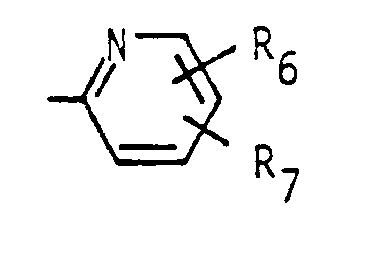
- Compounds according to claim 4, wherein R₆ is hydrogen, methyl, trifluoromethyl, alkoxy having 1 to 5 carbon atoms, amide, nitro or cyano and R₇ is hydrogen, methyl, methoxy, nitro, halogen, cyano or an amide group.
- Compounds according to claim 5, wherein R₆ is hydrogen, methyl, or trifluoromethyl and R₇ is alkoxy having 1 to 5 carbon atoms, nitro, halogen, cyano or an amide group and R₇ is situated in the 3-position.
- Compounds according to claim 6, wherein R₆ is hydrogen and R₇ is hydrogen, cyano, nitro, alkoxy having 1 to 5 carbon atoms or an amide substituent.
- Compounds according to claim 7 wherein R₇ is an amide, hydrogen, cyano or methoxy substituent.
- A method of preparing compounds having the general formula (I)

R₃ and R₄ are the same or different and selected from hydrogen and alkyl having 1 to 5 carbon atoms:
n is 2 or 3;
A is selected from the following pyrimidyl or pyridyl groups:
B is selected from
R₁₁ is selected from hydrogen or alkyl having 1 to 5 carbon atoms and the pharmacologically active salts thereof, wherein a compound having the general formula (II)


- Pharmaceutical compositions containing as an active ingredient one or more of the compounds having the general formula (I), preferably together with a pharmaceutically acceptable carrier and, if desired, other pharmacologically active agents.
Priority Applications (1)
| Application Number | Priority Date | Filing Date | Title |
|---|---|---|---|
| AT88903427T ATE85334T1 (en) | 1987-04-02 | 1988-03-25 | BISPHENYLALKYLPIPERAZINE DERIVATIVES, METHOD OF MANUFACTURE AND DRUG PREPARATION. |
Applications Claiming Priority (2)
| Application Number | Priority Date | Filing Date | Title |
|---|---|---|---|
| SE8701375A SE8701375D0 (en) | 1987-04-02 | 1987-04-02 | NOVEL PYRIDYL AND PYRIMIDYL DERIVATIVES |
| SE8701375 | 1987-04-02 |
Publications (2)
| Publication Number | Publication Date |
|---|---|
| EP0308476A1 EP0308476A1 (en) | 1989-03-29 |
| EP0308476B1 true EP0308476B1 (en) | 1993-02-03 |
Family
ID=20368077
Family Applications (1)
| Application Number | Title | Priority Date | Filing Date |
|---|---|---|---|
| EP88903427A Expired - Lifetime EP0308476B1 (en) | 1987-04-02 | 1988-03-25 | Bisphenylalkylpiperazine derivatives, a method of their preparation and a pharmaceutical preparation |
Country Status (18)
| Country | Link |
|---|---|
| US (1) | US4937245A (en) |
| EP (1) | EP0308476B1 (en) |
| JP (1) | JPH0819104B2 (en) |
| KR (1) | KR920003062B1 (en) |
| AT (1) | ATE85334T1 (en) |
| AU (1) | AU611147B2 (en) |
| CA (1) | CA1321997C (en) |
| DE (1) | DE3878111T2 (en) |
| DK (1) | DK161313C (en) |
| ES (1) | ES2006619A6 (en) |
| FI (1) | FI92320C (en) |
| HU (1) | HU201051B (en) |
| IE (1) | IE61165B1 (en) |
| IL (1) | IL85932A (en) |
| NO (1) | NO172640C (en) |
| NZ (1) | NZ224005A (en) |
| SE (1) | SE8701375D0 (en) |
| WO (1) | WO1988007528A1 (en) |
Families Citing this family (13)
| Publication number | Priority date | Publication date | Assignee | Title |
|---|---|---|---|---|
| SE8701375D0 (en) * | 1987-04-02 | 1987-04-02 | Leo Ab | NOVEL PYRIDYL AND PYRIMIDYL DERIVATIVES |
| US5219855A (en) * | 1988-01-29 | 1993-06-15 | Mitsubishi Kasei Corporation | Anxiolytic drug |
| JP2664238B2 (en) * | 1989-03-01 | 1997-10-15 | 日清製粉株式会社 | Nicotinic acid or its ester derivatives |
| US4994460A (en) * | 1989-06-01 | 1991-02-19 | Bristol-Myers Squibb Co. | Agents for treatment of brain ischemia |
| SE9201239D0 (en) * | 1992-04-21 | 1992-04-21 | Kabi Pharmacia Ab | AGENTS FOR TREATING SUBSTANCE ABUSE DISORDERS |
| EP0580465A1 (en) * | 1992-06-25 | 1994-01-26 | Sanofi | New therapeutic use of heterocyclic piperazines as 5-HT3 agonists and new derivatives |
| JPH0665203A (en) * | 1992-06-25 | 1994-03-08 | Elf Sanofi | Heterocyclic derivative of piperazine |
| SE9201956D0 (en) * | 1992-06-25 | 1992-06-25 | Kabi Pharmacia Ab | NOVEL NICOTINICACID ESTERS |
| SE9202265D0 (en) * | 1992-07-31 | 1992-07-31 | Kabi Pharmacia Ab | NOVEL- PYRIDYL AND PYRIMIDYLPIPERAZINE DERIVATIVES |
| DK139593D0 (en) * | 1993-12-16 | 1993-12-16 | Lundbeck & Co As H | COMPOUNDS |
| AU744539B2 (en) | 1997-10-27 | 2002-02-28 | Neurosearch A/S | Heteroaryl diazacycloalkanes as cholinergic ligands at nicotinic acetylcholine receptors |
| US6632823B1 (en) * | 1997-12-22 | 2003-10-14 | Merck & Co., Inc. | Substituted pyridine compounds useful as modulators of acetylcholine receptors |
| WO2000061556A1 (en) | 1999-04-09 | 2000-10-19 | Meiji Seika Kaisha, Ltd. | Nitrogen-containing heterocyclic compounds and benamide compounds and drugs containing the same |
Family Cites Families (10)
| Publication number | Priority date | Publication date | Assignee | Title |
|---|---|---|---|---|
| US2958694A (en) * | 1959-06-22 | 1960-11-01 | Janssen Paul Adriaan Jan | 1-(aroylalkyl)-4-(2'-pyridyl) piperazines |
| US2979508A (en) * | 1959-10-12 | 1961-04-11 | Paul A J Janssen | Heterocyclic derivatives of 1-phenyl-omega-(piperazine) alkanols |
| US2985657A (en) * | 1959-10-12 | 1961-05-23 | Paul A J Janssen | 1-(aroylalkyl)-4-heterocyclylpiperazines |
| JPS6081167A (en) * | 1983-10-11 | 1985-05-09 | Sumitomo Chem Co Ltd | Phenylacetone derivative and production thereof |
| US4605655A (en) * | 1984-03-06 | 1986-08-12 | Bristol-Myers Company | Antipsychotic 1-fluorophenylbutyl-4-(2-pyrimidinyl)piperazine derivatives |
| JPS6175A (en) * | 1984-03-06 | 1986-01-06 | ブリストル−マイア−ズ コムパニ− | Antipsychotic 1-fluorophenylbutyl-4-(2-pyrimidinyl) piperazine derivative |
| GB8603120D0 (en) * | 1986-02-07 | 1986-03-12 | Pfizer Ltd | Anti-dysrhythmia agents |
| JPS63146872A (en) * | 1986-07-08 | 1988-06-18 | Yoshitomi Pharmaceut Ind Ltd | Pyrimidinylpiperazine compound |
| US4766215A (en) * | 1987-02-27 | 1988-08-23 | American Home Products Corporation | Histamine H1 -receptor antagonists |
| SE8701375D0 (en) * | 1987-04-02 | 1987-04-02 | Leo Ab | NOVEL PYRIDYL AND PYRIMIDYL DERIVATIVES |
-
1987
- 1987-04-02 SE SE8701375A patent/SE8701375D0/en unknown
-
1988
- 1988-03-23 IE IE86988A patent/IE61165B1/en not_active IP Right Cessation
- 1988-03-24 NZ NZ224005A patent/NZ224005A/en unknown
- 1988-03-25 WO PCT/SE1988/000144 patent/WO1988007528A1/en not_active Ceased
- 1988-03-25 AT AT88903427T patent/ATE85334T1/en not_active IP Right Cessation
- 1988-03-25 HU HU882510A patent/HU201051B/en not_active IP Right Cessation
- 1988-03-25 JP JP63503107A patent/JPH0819104B2/en not_active Expired - Fee Related
- 1988-03-25 US US07/282,130 patent/US4937245A/en not_active Expired - Lifetime
- 1988-03-25 EP EP88903427A patent/EP0308476B1/en not_active Expired - Lifetime
- 1988-03-25 DE DE8888903427T patent/DE3878111T2/en not_active Expired - Fee Related
- 1988-03-25 AU AU15796/88A patent/AU611147B2/en not_active Ceased
- 1988-03-30 ES ES8800998A patent/ES2006619A6/en not_active Expired
- 1988-03-30 IL IL85932A patent/IL85932A/en not_active IP Right Cessation
- 1988-03-31 CA CA000563050A patent/CA1321997C/en not_active Expired - Fee Related
- 1988-04-02 KR KR1019880003734A patent/KR920003062B1/en not_active Expired
- 1988-11-30 FI FI885560A patent/FI92320C/en not_active IP Right Cessation
- 1988-12-01 DK DK671588A patent/DK161313C/en not_active IP Right Cessation
- 1988-12-02 NO NO885386A patent/NO172640C/en unknown
Non-Patent Citations (2)
| Title |
|---|
| European Journal of Pharmacology, vol. 155, 1988, pp. 345-347 * |
| Pharmazeutische Chemie, E. Schröder et al., Georg Thieme Verlag, 1982 * |
Also Published As
| Publication number | Publication date |
|---|---|
| IE61165B1 (en) | 1994-10-05 |
| DK161313B (en) | 1991-06-24 |
| CA1321997C (en) | 1993-09-07 |
| WO1988007528A1 (en) | 1988-10-06 |
| DE3878111D1 (en) | 1993-03-18 |
| AU611147B2 (en) | 1991-06-06 |
| FI92320C (en) | 1994-10-25 |
| JPH01502832A (en) | 1989-09-28 |
| HU201051B (en) | 1990-09-28 |
| FI885560A0 (en) | 1988-11-30 |
| SE8701375D0 (en) | 1987-04-02 |
| KR880012586A (en) | 1988-11-28 |
| NO885386L (en) | 1988-12-02 |
| KR920003062B1 (en) | 1992-04-13 |
| IL85932A (en) | 1993-05-13 |
| NZ224005A (en) | 1991-03-26 |
| IL85932A0 (en) | 1988-09-30 |
| FI885560A7 (en) | 1988-11-30 |
| FI92320B (en) | 1994-07-15 |
| DK671588A (en) | 1988-12-01 |
| AU1579688A (en) | 1988-11-02 |
| NO885386D0 (en) | 1988-12-02 |
| HUT50325A (en) | 1990-01-29 |
| DK161313C (en) | 1991-12-30 |
| NO172640C (en) | 1993-08-18 |
| DE3878111T2 (en) | 1993-07-01 |
| EP0308476A1 (en) | 1989-03-29 |
| NO172640B (en) | 1993-05-10 |
| ATE85334T1 (en) | 1993-02-15 |
| ES2006619A6 (en) | 1989-05-01 |
| DK671588D0 (en) | 1988-12-01 |
| IE880869L (en) | 1988-10-02 |
| JPH0819104B2 (en) | 1996-02-28 |
| US4937245A (en) | 1990-06-26 |
Similar Documents
| Publication | Publication Date | Title |
|---|---|---|
| US4937245A (en) | Bisphenylalkylpiperazine derivatives, a method of their preparation and a pharmaceutical preparation | |
| EP0361271B1 (en) | Pyridyl- and pyrimidyl derivatives | |
| EP0462638A1 (en) | Pyridinylpiperazine derivatives | |
| EP1120410B1 (en) | Nicotinic acid esters useful as CNS agents and having affinity for 5-HT receptors | |
| EP0652867B1 (en) | Novel pyridyl- and pyrimidylpiperazine derivatives |
Legal Events
| Date | Code | Title | Description |
|---|---|---|---|
| PUAI | Public reference made under article 153(3) epc to a published international application that has entered the european phase |
Free format text: ORIGINAL CODE: 0009012 |
|
| 17P | Request for examination filed |
Effective date: 19881116 |
|
| AK | Designated contracting states |
Kind code of ref document: A1 Designated state(s): AT BE CH DE FR GB IT LI LU NL SE |
|
| 17Q | First examination report despatched |
Effective date: 19901017 |
|
| RAP1 | Party data changed (applicant data changed or rights of an application transferred) |
Owner name: KABI PHARMACIA AB |
|
| GRAA | (expected) grant |
Free format text: ORIGINAL CODE: 0009210 |
|
| AK | Designated contracting states |
Kind code of ref document: B1 Designated state(s): AT BE CH DE FR GB IT LI LU NL SE |
|
| REF | Corresponds to: |
Ref document number: 85334 Country of ref document: AT Date of ref document: 19930215 Kind code of ref document: T |
|
| REF | Corresponds to: |
Ref document number: 3878111 Country of ref document: DE Date of ref document: 19930318 |
|
| ITF | It: translation for a ep patent filed | ||
| ET | Fr: translation filed | ||
| PLBE | No opposition filed within time limit |
Free format text: ORIGINAL CODE: 0009261 |
|
| STAA | Information on the status of an ep patent application or granted ep patent |
Free format text: STATUS: NO OPPOSITION FILED WITHIN TIME LIMIT |
|
| 26N | No opposition filed | ||
| EPTA | Lu: last paid annual fee | ||
| EAL | Se: european patent in force in sweden |
Ref document number: 88903427.8 |
|
| REG | Reference to a national code |
Ref country code: GB Ref legal event code: 732E |
|
| REG | Reference to a national code |
Ref country code: GB Ref legal event code: IF02 |
|
| REG | Reference to a national code |
Ref country code: CH Ref legal event code: PUE Owner name: KABI PHARMACIA AB TRANSFER- PHARMACIA AKTIEBOLAG * Ref country code: CH Ref legal event code: PFA Free format text: PHARMACIA & UPJOHN AKTIEBOLAG TRANSFER- PHARMACIA AKTIEBOLAG * PHARMACIA AKTIEBOLAG TRANSFER- PHARMACIA & UPJOHN AKTIEBOLAG |
|
| REG | Reference to a national code |
Ref country code: GB Ref legal event code: 732E |
|
| NLS | Nl: assignments of ep-patents |
Owner name: BIOVITRUM AB |
|
| NLT1 | Nl: modifications of names registered in virtue of documents presented to the patent office pursuant to art. 16 a, paragraph 1 |
Owner name: PHARMACIA AKTIEBOLAG |
|
| BECA | Be: change of holder's address |
Free format text: 20020418 *BIOVITRUM A.B.:S-112 76 STOCKHOLM |
|
| BECH | Be: change of holder |
Free format text: 20020418 *BIOVITRUM A.B.:S-112 76 STOCKHOLM |
|
| BECN | Be: change of holder's name |
Effective date: 20020418 |
|
| REG | Reference to a national code |
Ref country code: FR Ref legal event code: TP Ref country code: FR Ref legal event code: CD |
|
| REG | Reference to a national code |
Ref country code: FR Ref legal event code: TP |
|
| PGFP | Annual fee paid to national office [announced via postgrant information from national office to epo] |
Ref country code: LU Payment date: 20041220 Year of fee payment: 18 |
|
| PGFP | Annual fee paid to national office [announced via postgrant information from national office to epo] |
Ref country code: GB Payment date: 20050207 Year of fee payment: 18 Ref country code: AT Payment date: 20050207 Year of fee payment: 18 |
|
| PGFP | Annual fee paid to national office [announced via postgrant information from national office to epo] |
Ref country code: NL Payment date: 20050209 Year of fee payment: 18 |
|
| PGFP | Annual fee paid to national office [announced via postgrant information from national office to epo] |
Ref country code: FR Payment date: 20050302 Year of fee payment: 18 |
|
| PGFP | Annual fee paid to national office [announced via postgrant information from national office to epo] |
Ref country code: SE Payment date: 20050303 Year of fee payment: 18 |
|
| PGFP | Annual fee paid to national office [announced via postgrant information from national office to epo] |
Ref country code: CH Payment date: 20050317 Year of fee payment: 18 |
|
| PGFP | Annual fee paid to national office [announced via postgrant information from national office to epo] |
Ref country code: DE Payment date: 20050331 Year of fee payment: 18 |
|
| PGFP | Annual fee paid to national office [announced via postgrant information from national office to epo] |
Ref country code: BE Payment date: 20050412 Year of fee payment: 18 |
|
| PG25 | Lapsed in a contracting state [announced via postgrant information from national office to epo] |
Ref country code: GB Free format text: LAPSE BECAUSE OF NON-PAYMENT OF DUE FEES Effective date: 20060325 Ref country code: AT Free format text: LAPSE BECAUSE OF NON-PAYMENT OF DUE FEES Effective date: 20060325 |
|
| PG25 | Lapsed in a contracting state [announced via postgrant information from national office to epo] |
Ref country code: SE Free format text: LAPSE BECAUSE OF NON-PAYMENT OF DUE FEES Effective date: 20060326 |
|
| PG25 | Lapsed in a contracting state [announced via postgrant information from national office to epo] |
Ref country code: LI Free format text: LAPSE BECAUSE OF NON-PAYMENT OF DUE FEES Effective date: 20060331 Ref country code: CH Free format text: LAPSE BECAUSE OF NON-PAYMENT OF DUE FEES Effective date: 20060331 Ref country code: BE Free format text: LAPSE BECAUSE OF NON-PAYMENT OF DUE FEES Effective date: 20060331 |
|
| PGFP | Annual fee paid to national office [announced via postgrant information from national office to epo] |
Ref country code: IT Payment date: 20060331 Year of fee payment: 19 |
|
| PG25 | Lapsed in a contracting state [announced via postgrant information from national office to epo] |
Ref country code: NL Free format text: LAPSE BECAUSE OF NON-PAYMENT OF DUE FEES Effective date: 20061001 |
|
| PG25 | Lapsed in a contracting state [announced via postgrant information from national office to epo] |
Ref country code: DE Free format text: LAPSE BECAUSE OF NON-PAYMENT OF DUE FEES Effective date: 20061003 |
|
| REG | Reference to a national code |
Ref country code: CH Ref legal event code: PL |
|
| EUG | Se: european patent has lapsed | ||
| GBPC | Gb: european patent ceased through non-payment of renewal fee |
Effective date: 20060325 |
|
| NLV4 | Nl: lapsed or anulled due to non-payment of the annual fee |
Effective date: 20061001 |
|
| REG | Reference to a national code |
Ref country code: FR Ref legal event code: ST Effective date: 20061130 |
|
| BERE | Be: lapsed |
Owner name: *BIOVITRUM A.B. Effective date: 20060331 |
|
| PG25 | Lapsed in a contracting state [announced via postgrant information from national office to epo] |
Ref country code: FR Free format text: LAPSE BECAUSE OF NON-PAYMENT OF DUE FEES Effective date: 20060331 |
|
| PG25 | Lapsed in a contracting state [announced via postgrant information from national office to epo] |
Ref country code: LU Free format text: LAPSE BECAUSE OF NON-PAYMENT OF DUE FEES Effective date: 20060325 |
|
| PG25 | Lapsed in a contracting state [announced via postgrant information from national office to epo] |
Ref country code: IT Free format text: LAPSE BECAUSE OF NON-PAYMENT OF DUE FEES Effective date: 20070325 |