EP0300062B1 - Novel androst-4-ene-3,17-dione derivatives and process for their preparation - Google Patents
Novel androst-4-ene-3,17-dione derivatives and process for their preparation Download PDFInfo
- Publication number
- EP0300062B1 EP0300062B1 EP88901462A EP88901462A EP0300062B1 EP 0300062 B1 EP0300062 B1 EP 0300062B1 EP 88901462 A EP88901462 A EP 88901462A EP 88901462 A EP88901462 A EP 88901462A EP 0300062 B1 EP0300062 B1 EP 0300062B1
- Authority
- EP
- European Patent Office
- Prior art keywords
- ene
- dione
- androst
- compound
- 14alpha
- Prior art date
- Legal status (The legal status is an assumption and is not a legal conclusion. Google has not performed a legal analysis and makes no representation as to the accuracy of the status listed.)
- Expired
Links
- AEMFNILZOJDQLW-QAGGRKNESA-N androst-4-ene-3,17-dione Chemical class O=C1CC[C@]2(C)[C@H]3CC[C@](C)(C(CC4)=O)[C@@H]4[C@@H]3CCC2=C1 AEMFNILZOJDQLW-QAGGRKNESA-N 0.000 title claims abstract description 14
- 238000000034 method Methods 0.000 title claims description 7
- 238000002360 preparation method Methods 0.000 title description 4
- AEMFNILZOJDQLW-UHFFFAOYSA-N androstenedione Natural products O=C1CCC2(C)C3CCC(C)(C(CC4)=O)C4C3CCC2=C1 AEMFNILZOJDQLW-UHFFFAOYSA-N 0.000 claims abstract description 7
- BTTWKVFKBPAFDK-UHFFFAOYSA-N (9beta,10alpha)-Androst-4-ene-3,17-dione Natural products OC1CCC2(C)C3CCC(C)(C(CC4)O)C4C3CCC2=C1 BTTWKVFKBPAFDK-UHFFFAOYSA-N 0.000 claims abstract description 6
- UKVVNEHFNYKGMX-KIVPVIKRSA-N (8r,9s,10r,13s,14r)-14-hydroxy-10,13-dimethyl-2,7,8,9,11,12,15,16-octahydro-1h-cyclopenta[a]phenanthrene-3,6,17-trione Chemical compound O=C1CC[C@]2(C)[C@H]3CC[C@](C)(C(CC4)=O)[C@]4(O)[C@@H]3CC(=O)C2=C1 UKVVNEHFNYKGMX-KIVPVIKRSA-N 0.000 claims abstract description 5
- 241001019659 Acremonium <Plectosphaerellaceae> Species 0.000 claims abstract description 4
- 150000001875 compounds Chemical class 0.000 claims description 46
- 206010006187 Breast cancer Diseases 0.000 claims description 6
- 208000026310 Breast neoplasm Diseases 0.000 claims description 6
- 244000005700 microbiome Species 0.000 claims description 6
- 239000003814 drug Substances 0.000 claims description 2
- 239000003966 growth inhibitor Substances 0.000 claims 1
- 241000228417 Sarocladium strictum Species 0.000 abstract description 2
- -1 isobutyryl Chemical group 0.000 abstract description 2
- OSVMTWJCGUFAOD-KZQROQTASA-N formestane Chemical compound O=C1CC[C@]2(C)[C@H]3CC[C@](C)(C(CC4)=O)[C@@H]4[C@@H]3CCC2=C1O OSVMTWJCGUFAOD-KZQROQTASA-N 0.000 abstract 2
- UDHAKZRCGHAPAZ-NFBMXZEVSA-N (6r,8r,9s,10r,13s,14r)-6,14-dihydroxy-10,13-dimethyl-1,2,6,7,8,9,11,12,15,16-decahydrocyclopenta[a]phenanthrene-3,17-dione Chemical compound O=C1CC[C@]2(C)[C@H]3CC[C@](C)(C(CC4)=O)[C@]4(O)[C@@H]3C[C@@H](O)C2=C1 UDHAKZRCGHAPAZ-NFBMXZEVSA-N 0.000 abstract 1
- YQTCQNIPQMJNTI-UHFFFAOYSA-N 2,2-dimethylpropan-1-one Chemical group CC(C)(C)[C]=O YQTCQNIPQMJNTI-UHFFFAOYSA-N 0.000 abstract 1
- MESHAHUSFQBSNL-BPRDAKSVSA-N O[C@@]12CCC([C@@]1(C)CC[C@@H]1[C@]3(CCC(C=C3[C@@H](C[C@@H]21)OC(C(C)(C)C)=O)=O)C)=O Chemical compound O[C@@]12CCC([C@@]1(C)CC[C@@H]1[C@]3(CCC(C=C3[C@@H](C[C@@H]21)OC(C(C)(C)C)=O)=O)C)=O MESHAHUSFQBSNL-BPRDAKSVSA-N 0.000 abstract 1
- IQFUOVVYVZVYPA-YNGAPGBGSA-N [(6r,8r,9s,10r,13s,14r)-14-hydroxy-10,13-dimethyl-3,17-dioxo-1,2,6,7,8,9,11,12,15,16-decahydrocyclopenta[a]phenanthren-6-yl] acetate Chemical compound C1CC(=O)C=C2[C@H](OC(=O)C)C[C@H]3[C@]4(O)CCC(=O)[C@@]4(C)CC[C@@H]3[C@]21C IQFUOVVYVZVYPA-YNGAPGBGSA-N 0.000 abstract 1
- 125000002777 acetyl group Chemical group [H]C([H])([H])C(*)=O 0.000 abstract 1
- 150000008065 acid anhydrides Chemical class 0.000 abstract 1
- 238000012258 culturing Methods 0.000 abstract 1
- 125000001501 propionyl group Chemical group O=C([*])C([H])([H])C([H])([H])[H] 0.000 abstract 1
- OKKJLVBELUTLKV-UHFFFAOYSA-N Methanol Chemical compound OC OKKJLVBELUTLKV-UHFFFAOYSA-N 0.000 description 12
- HEDRZPFGACZZDS-UHFFFAOYSA-N Chloroform Chemical compound ClC(Cl)Cl HEDRZPFGACZZDS-UHFFFAOYSA-N 0.000 description 10
- 210000004027 cell Anatomy 0.000 description 9
- 230000002401 inhibitory effect Effects 0.000 description 9
- 230000000694 effects Effects 0.000 description 8
- 239000000126 substance Substances 0.000 description 7
- NKANXQFJJICGDU-QPLCGJKRSA-N Tamoxifen Chemical compound C=1C=CC=CC=1C(/CC)=C(C=1C=CC(OCCN(C)C)=CC=1)/C1=CC=CC=C1 NKANXQFJJICGDU-QPLCGJKRSA-N 0.000 description 6
- 238000000862 absorption spectrum Methods 0.000 description 6
- 150000001443 androstenes Chemical class 0.000 description 6
- 230000004071 biological effect Effects 0.000 description 6
- 239000000758 substrate Substances 0.000 description 6
- 238000006243 chemical reaction Methods 0.000 description 5
- 230000012010 growth Effects 0.000 description 5
- 239000002609 medium Substances 0.000 description 5
- 239000000243 solution Substances 0.000 description 5
- 102000004190 Enzymes Human genes 0.000 description 4
- 108090000790 Enzymes Proteins 0.000 description 4
- NUJOXMJBOLGQSY-UHFFFAOYSA-N manganese dioxide Chemical compound O=[Mn]=O NUJOXMJBOLGQSY-UHFFFAOYSA-N 0.000 description 4
- 210000002826 placenta Anatomy 0.000 description 4
- WFDIJRYMOXRFFG-UHFFFAOYSA-N Acetic anhydride Chemical compound CC(=O)OC(C)=O WFDIJRYMOXRFFG-UHFFFAOYSA-N 0.000 description 3
- 102000014654 Aromatase Human genes 0.000 description 3
- 108010078554 Aromatase Proteins 0.000 description 3
- XEKOWRVHYACXOJ-UHFFFAOYSA-N Ethyl acetate Chemical compound CCOC(C)=O XEKOWRVHYACXOJ-UHFFFAOYSA-N 0.000 description 3
- ZMXDDKWLCZADIW-UHFFFAOYSA-N N,N-Dimethylformamide Chemical compound CN(C)C=O ZMXDDKWLCZADIW-UHFFFAOYSA-N 0.000 description 3
- 239000003098 androgen Substances 0.000 description 3
- 239000002246 antineoplastic agent Substances 0.000 description 3
- 229940041181 antineoplastic drug Drugs 0.000 description 3
- 238000001819 mass spectrum Methods 0.000 description 3
- 239000002904 solvent Substances 0.000 description 3
- 229960001603 tamoxifen Drugs 0.000 description 3
- RTZKZFJDLAIYFH-UHFFFAOYSA-N Diethyl ether Chemical compound CCOCC RTZKZFJDLAIYFH-UHFFFAOYSA-N 0.000 description 2
- 241000233866 Fungi Species 0.000 description 2
- 238000005481 NMR spectroscopy Methods 0.000 description 2
- JUJWROOIHBZHMG-UHFFFAOYSA-N Pyridine Chemical compound C1=CC=NC=C1 JUJWROOIHBZHMG-UHFFFAOYSA-N 0.000 description 2
- VYPSYNLAJGMNEJ-UHFFFAOYSA-N Silicium dioxide Chemical compound O=[Si]=O VYPSYNLAJGMNEJ-UHFFFAOYSA-N 0.000 description 2
- QKIKTQGMXNLZGO-CTXVPKADSA-N [(8R,9S,10R,13S,14S)-10,13-dimethyl-3,17-dioxo-2,6,7,8,9,11,12,14,15,16-decahydro-1H-cyclopenta[a]phenanthren-15-yl] acetate Chemical compound C(C)(=O)OC1[C@@H]2[C@](C(C1)=O)(C)CC[C@H]1[C@H]2CCC2=CC(CC[C@]12C)=O QKIKTQGMXNLZGO-CTXVPKADSA-N 0.000 description 2
- 238000001460 carbon-13 nuclear magnetic resonance spectrum Methods 0.000 description 2
- 238000004587 chromatography analysis Methods 0.000 description 2
- 239000012156 elution solvent Substances 0.000 description 2
- 238000000855 fermentation Methods 0.000 description 2
- 230000004151 fermentation Effects 0.000 description 2
- 239000001963 growth medium Substances 0.000 description 2
- 239000007788 liquid Substances 0.000 description 2
- 239000000741 silica gel Substances 0.000 description 2
- 229910002027 silica gel Inorganic materials 0.000 description 2
- PGZVFRAEAAXREB-UHFFFAOYSA-N 2,2-dimethylpropanoyl 2,2-dimethylpropanoate Chemical compound CC(C)(C)C(=O)OC(=O)C(C)(C)C PGZVFRAEAAXREB-UHFFFAOYSA-N 0.000 description 1
- PJMNEPMSGCRSRC-IEVKOWOJSA-N 4-androstene-3,6,17-trione Chemical compound O=C1CC[C@]2(C)[C@H]3CC[C@](C)(C(CC4)=O)[C@@H]4[C@@H]3CC(=O)C2=C1 PJMNEPMSGCRSRC-IEVKOWOJSA-N 0.000 description 1
- WVAMBAWFDOYFOD-DQXCSHPPSA-N 6beta-hydroxyandrost-4-ene-3,17-dione Chemical compound O=C1CC[C@]2(C)[C@H]3CC[C@](C)(C(CC4)=O)[C@@H]4[C@@H]3C[C@@H](O)C2=C1 WVAMBAWFDOYFOD-DQXCSHPPSA-N 0.000 description 1
- 241000283690 Bos taurus Species 0.000 description 1
- 239000006145 Eagle's minimal essential medium Substances 0.000 description 1
- 240000005384 Rhizopus oryzae Species 0.000 description 1
- 235000013752 Rhizopus oryzae Nutrition 0.000 description 1
- PMZURENOXWZQFD-UHFFFAOYSA-L Sodium Sulfate Chemical compound [Na+].[Na+].[O-]S([O-])(=O)=O PMZURENOXWZQFD-UHFFFAOYSA-L 0.000 description 1
- 102000004142 Trypsin Human genes 0.000 description 1
- 108090000631 Trypsin Proteins 0.000 description 1
- GOPYZMJAIPBUGX-UHFFFAOYSA-N [O-2].[O-2].[Mn+4] Chemical class [O-2].[O-2].[Mn+4] GOPYZMJAIPBUGX-UHFFFAOYSA-N 0.000 description 1
- 125000002252 acyl group Chemical group 0.000 description 1
- 229960005471 androstenedione Drugs 0.000 description 1
- 239000007864 aqueous solution Substances 0.000 description 1
- 244000309464 bull Species 0.000 description 1
- 239000003054 catalyst Substances 0.000 description 1
- 230000010261 cell growth Effects 0.000 description 1
- 229940011871 estrogen Drugs 0.000 description 1
- 239000000262 estrogen Substances 0.000 description 1
- 239000012259 ether extract Substances 0.000 description 1
- 230000001605 fetal effect Effects 0.000 description 1
- 239000000706 filtrate Substances 0.000 description 1
- 238000001914 filtration Methods 0.000 description 1
- 125000000524 functional group Chemical group 0.000 description 1
- 238000000338 in vitro Methods 0.000 description 1
- LSACYLWPPQLVSM-UHFFFAOYSA-N isobutyric acid anhydride Chemical compound CC(C)C(=O)OC(=O)C(C)C LSACYLWPPQLVSM-UHFFFAOYSA-N 0.000 description 1
- 238000005259 measurement Methods 0.000 description 1
- 239000000203 mixture Substances 0.000 description 1
- 230000008520 organization Effects 0.000 description 1
- 230000003647 oxidation Effects 0.000 description 1
- 238000007254 oxidation reaction Methods 0.000 description 1
- 239000000047 product Substances 0.000 description 1
- WYVAMUWZEOHJOQ-UHFFFAOYSA-N propionic anhydride Chemical compound CCC(=O)OC(=O)CC WYVAMUWZEOHJOQ-UHFFFAOYSA-N 0.000 description 1
- 238000000425 proton nuclear magnetic resonance spectrum Methods 0.000 description 1
- UMJSCPRVCHMLSP-UHFFFAOYSA-N pyridine Natural products COC1=CC=CN=C1 UMJSCPRVCHMLSP-UHFFFAOYSA-N 0.000 description 1
- 239000011541 reaction mixture Substances 0.000 description 1
- 238000000926 separation method Methods 0.000 description 1
- 210000002966 serum Anatomy 0.000 description 1
- 239000007787 solid Substances 0.000 description 1
- 238000001228 spectrum Methods 0.000 description 1
- 239000006228 supernatant Substances 0.000 description 1
- 230000002195 synergetic effect Effects 0.000 description 1
- 239000012588 trypsin Substances 0.000 description 1
- XLYOFNOQVPJJNP-UHFFFAOYSA-N water Substances O XLYOFNOQVPJJNP-UHFFFAOYSA-N 0.000 description 1
Images








Classifications
-
- C—CHEMISTRY; METALLURGY
- C07—ORGANIC CHEMISTRY
- C07J—STEROIDS
- C07J1/00—Normal steroids containing carbon, hydrogen, halogen or oxygen, not substituted in position 17 beta by a carbon atom, e.g. estrane, androstane
- C07J1/0003—Androstane derivatives
- C07J1/0011—Androstane derivatives substituted in position 17 by a keto group
-
- C—CHEMISTRY; METALLURGY
- C12—BIOCHEMISTRY; BEER; SPIRITS; WINE; VINEGAR; MICROBIOLOGY; ENZYMOLOGY; MUTATION OR GENETIC ENGINEERING
- C12P—FERMENTATION OR ENZYME-USING PROCESSES TO SYNTHESISE A DESIRED CHEMICAL COMPOUND OR COMPOSITION OR TO SEPARATE OPTICAL ISOMERS FROM A RACEMIC MIXTURE
- C12P33/00—Preparation of steroids
- C12P33/06—Hydroxylating
Definitions
- This invention relates to androstene derivatives having biological activities such as inhibiting activity against estrogen-synthesizing enzyme (aromatase) derived from human placenta. These compounds are expected to be used in the field of medicine.
- estrogen-synthesizing enzyme aromatase
- the present inventors have researched the action of microorganisms belonging to Acremonium sp ., e.g. a strain of mold fungi, in a substrate of androst-4-ene-3,17-dione which is a known androgen.
- this invention as a result, it has been found that two types of novel androstene derivatives are produced.
- the present inventors have further subjected one of the derivatives produced above to a reaction in the presence of a specific catalyst. Consequently, it has been found that another androstene derivative having similar biological activities can be obtained. It has also been found that the specific functional group of the same derivative used for the reaction can be substituted with the acyl group to give new derivatives having similar biological activities.
- Representative examples of these derivatives have the following chemical names.
- Androst-4-ene-3,17-dione-6 ⁇ -acetoxy-14 ⁇ -ol (the 4th compound of this invention described in claim 5) Androst-4-ene-3, 17-dione-6 ⁇ -propionyloxy-14 ⁇ -ol (the 5th compound of this invention described in claim 6) Androst-4-ene-3,17-dione-6 ⁇ -isobutyryloxy-14 ⁇ -ol (the 6th compound of this invention described in claim 7) Androst-4-ene-3,17-dione-6 ⁇ -trimethylacetoxy-14 ⁇ -ol (the 7th compound of this invention described in claim 8)
- the present invention also provides a method for preparing an androst-4-en-3,17-dione derivative represented by the formula (VI): characterised in that at least one of Y and Z is OH and the other is H or OH and in that a microorganism belonging to Acremonium sp. is brought into contact with androst-4-ene-3,17-dione to prepare the derivative.
- formula (VI) characterised in that at least one of Y and Z is OH and the other is H or OH and in that a microorganism belonging to Acremonium sp. is brought into contact with androst-4-ene-3,17-dione to prepare the derivative.
- Figures 1 - 3 relate to the 1st compound of this invention.
- Figure 1 illustrates an ultraviolet (UV) absorption spectrum.
- Figure 2 is a EI mass spectrum.
- Figure 3 shows an infrared (IR) absorption spectrum.
- Figures 4 - 8 relate to the 2nd compound of this invention.
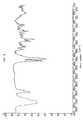
- Figure 4 illustrates an IR absorption spectrum.
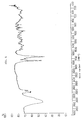
- Figure 5 show a proton nuclear magnetic resonance (NMR) spectrum.
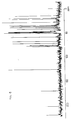
- Figure 6 illustrates a 13C-NMR spectrum.
- Figure 7 illustrates the growth-inhibiting activity of the 2nd compound against human mammary cancel cells (MCF-7).
- Figure 8 illustrates the activity when tamoxifen is used in combination with the 2nd compound.
- Figures 9 - 15 relate to the 3rd compound of this invention.
- Figure 9 shows an UV absorption spectrum.
- Figure 10 shows an EI mass spectrum.
- Figure 11 shows an IR absorption spectrum.
- Figure 12 shows a proton NMR spectrum.
- Figure 13 shows a 13C-NMR spectrum.
- Figure 14 illustrates the growth-inhibiting activity of the 3rd compound against human mammary cancer cells (MCF-7).
- Figure 15 illustrates the activity when tamoxifen is used in combination with the 3rd compound.
- Figure 16 shows an EI mass spectrum of androst-4-ene-3, 17-dione-6- ⁇ -acetoxy-14 ⁇ -ol which is the 4th compound of this invention.
- Figure 17 shows an IR absorption spectrum of the same compound.
- This invention is to provide a novel androst-4-ene-3,17-dione derivative having biological activities, and will hereinafter be illustrated in detail by way of examples.
- Acremonium strictum NN106 (Deposit No. FERM P-9143) which is a strain of mold fungi was inoculated on 100 ml of the culture medium composition indicated in Table 1 in a Erlenmeyer flask having a volume of 500 ml. The culture was incubated and shaken simultaneously at 24°C for 48 hours in a incubator with a rotary shaker.
- a crude fraction thus obtained was dissolved in chloroform (or methanol) and divided into further fractions with a high performance liquid chromatograph (manufactured by Senshu Science Co.).
- a compound in a further divided fraction was identified as androst-4-ene-3,17-dione-6 ⁇ ,11 ⁇ -diol (the 2nd compound of this invention) by its below described physiological and chemical properties.
- Another compound contained in a fraction which elutes later, for example, at 45 minutes as compared to 23 minutes for the above 2nd compound was identified as androst-4-ene-3,17-dione-6 ⁇ ,14 ⁇ -diol (the 3rd compound of this invention).
- a novel compound androst-4-ene-3,17-dione-6 ⁇ ,11 ⁇ -diol which is the 2nd compound of this invention is represented by the chemical formula (II):
- the compound is identified by the following physicochemical properties.
- a novel compound androst-4-ene-3,17-dione-6 ⁇ ,14 ⁇ -diol which is the 3rd compound of this invention is represented by the chemical formula (III):
- the compound is identified by the following physicochemical properties.
- the crude fraction was dissolved in a small amount of chloroform (or methanol) and divided into further fractions with a high performance liquid chromatograph (manufactured by Senshu Science Co.).
- the compound is identified by the following physicochemical properties.
- Androst-4-ene-3,17-dione-6 ⁇ ,14 ⁇ -diol is dissolved in a solvent such as pyridine.
- Acetic anhydride, propionic anhydride, isobutyric anhydride or trimethylacetic anhydride is added to the solution and thoroughly stirred for several hours at room temperature. Then water is added to the reaction mixture.
- the resultant aqueous solution is extracted with ether.
- the ether extract is dehydrated with anhydrous sodium sulfate and concentrated.
- the 6-acyl derivatives of androst-4-ene-3,17-dione-6 ⁇ ,14 ⁇ -diol are obtained as desired products in the yield of about 96%.
- the above obtained androstene derivatives of this invention have a biologically inhibiting effect on the activity of human placenta-derived estrogen-synthesizing enzyme (aromatase).
- aromatase human placenta-derived estrogen-synthesizing enzyme
- aromatase was, extracted from human placenta and purified.
- test compounds at the concentration of 20 ⁇ M was examined by measuring the enzyme activity in the substrate of [1 ⁇ ,2 ⁇ -3H]androstene-dione.
- MCF-7 Growth-inhibiting activity against human mammary cancer cells
- Eagle's minimum essential medium containing 5% of bovine fetal serum was placed in a laboratory dish having a diameter of 2 cm.
- Human mammary cancer cells (MCF-7) had previously been cultured in a similar medium and 1 x 10⁴ cells were inoculated on this medium.
- the inoculated medium was cultured at 37°C, for 2 days in 5% CO2 atmosphere and then exchanged with another medium containing test compounds. The exchange was carried out thereafter every two days with other medium containing the test compounds. Trypsin treatment was time-dependently conducted during the test period and a number of cells were counted under a microscope to measure the growth of cells.
- Androgen activity although which is comparatively weak, have been found on the 2nd compound of this invention, that is, androst-4-ene-3,17-dione-6 ⁇ ,11 ⁇ -diol of claim 3.
Landscapes
- Chemical & Material Sciences (AREA)
- Organic Chemistry (AREA)
- Health & Medical Sciences (AREA)
- General Health & Medical Sciences (AREA)
- Life Sciences & Earth Sciences (AREA)
- Engineering & Computer Science (AREA)
- Zoology (AREA)
- Wood Science & Technology (AREA)
- General Chemical & Material Sciences (AREA)
- Microbiology (AREA)
- Chemical Kinetics & Catalysis (AREA)
- Biotechnology (AREA)
- Biochemistry (AREA)
- Bioinformatics & Cheminformatics (AREA)
- General Engineering & Computer Science (AREA)
- Genetics & Genomics (AREA)
- Steroid Compounds (AREA)
- Pharmaceuticals Containing Other Organic And Inorganic Compounds (AREA)
- Preparation Of Compounds By Using Micro-Organisms (AREA)
Abstract
Description
- This invention relates to androstene derivatives having biological activities such as inhibiting activity against estrogen-synthesizing enzyme (aromatase) derived from human placenta. These compounds are expected to be used in the field of medicine.
- In addition, it has been found that a part of the derivatives of this invention has also growth-inhibiting activity against human mammary cancer cells (MCF-7). Therefore these compounds are also expected to be utilized as anticancer drugs.
- A variety of androstene derivatives has already been found to date and many of them have been known to exhibit various biological activities. However, the androstene derivative of this invention is a novel compound, and hence the biological activities thereof have of course been unknown.
- For example, K Tori et al. Tetrahedron Lett. 13 1657 (1968) discloses 6β acetoxyandrost-4-ene-3,17-dione in a study of the distorted conformation of some 6β-substituted Δ⁴-3-Ketosteroids.
- H. Sekihara et al. J. Steroid Biochem 14, 327 (1981) discloses 6β hydroxyandrost-4-ene-3,17-dione which is useful as an amplifier of the kaliuretic action of aldosterone. This derivative is also disclosed by J. A. Gustafsson et al. Acta Endocrin. 65, 84 (1970) as a product of the conversion of testosterone in rat liver microsomes.
- Furthermore, a method for the preparation of 6β acetoxyandrost-4-ene-3,17-dione, 6β hydroxyandrost-4-ene-3,17-dione and androst-4-ene-3,6,17-trione by the oxidation of steroid compounds with manganese dioxide is described in US-A-2,786,855. The 6β-hydroxy derivative may also be prepared by the bioconversion of 9β, 10α-androst-4-ene-3,17-dione using Rhizopus arrhizus CBS 127.08 as described by J. Favero et al in Bull. Soc. Chim Fr. 1979 p56-60.
- The present inventors have researched the action of microorganisms belonging to Acremonium sp., e.g. a strain of mold fungi, in a substrate of androst-4-ene-3,17-dione which is a known androgen. In this invention, as a result, it has been found that two types of novel androstene derivatives are produced.
- The present inventors have further subjected one of the derivatives produced above to a reaction in the presence of a specific catalyst. Consequently, it has been found that another androstene derivative having similar biological activities can be obtained. It has also been found that the specific functional group of the same derivative used for the reaction can be substituted with the acyl group to give new derivatives having similar biological activities.
- The present invention provides an androst-4-ene-3,17-dione derivative represented by the formula (I):

wherein X is =O or αHβOR, Y and Z are H or αOH, and where R is -H, -COCH₃, -COCH₂CH₃, -COCH(CH₃)₂, or -COC(CH₃)₃ with the proviso that when X is =O, αHβOH or αHβOCOCH₃, at least one of Y and Z is OH.
Representative examples of these derivatives have the following chemical names. - Androst-4-ene-3,6,17-trione-14α-ol (the ist compound of this invention described in claim 2)
- Androst-4-ene-3,17-dione-6β, 11α-diol (the 2nd compound of this invention described in claim 3)
- Androst-4-ene-3,17-dione-6β,14α-diol (the 3rd compound of this invention described in claim 4)
- Androst-4-ene-3,17-dione-6β-acetoxy-14α-ol (the 4th compound of this invention described in claim 5) Androst-4-ene-3, 17-dione-6β-propionyloxy-14α-ol (the 5th compound of this invention described in claim 6) Androst-4-ene-3,17-dione-6β-isobutyryloxy-14α-ol (the 6th compound of this invention described in claim 7) Androst-4-ene-3,17-dione-6β-trimethylacetoxy-14α-ol (the 7th compound of this invention described in claim 8)
- The present invention also provides a method for preparing an androst-4-en-3,17-dione derivative represented by the formula (VI):

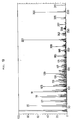
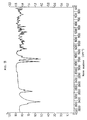
characterised in that at least one of Y and Z is OH and the other is H or OH and in that a microorganism belonging to Acremonium sp. is brought into contact with androst-4-ene-3,17-dione to prepare the derivative. - Figures 1 - 3 relate to the 1st compound of this invention. Figure 1 illustrates an ultraviolet (UV) absorption spectrum. Figure 2 is a EI mass spectrum. Figure 3 shows an infrared (IR) absorption spectrum.
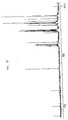
- Figures 4 - 8 relate to the 2nd compound of this invention. Figure 4 illustrates an IR absorption spectrum. Figure 5 show a proton nuclear magnetic resonance (NMR) spectrum. Figure 6 illustrates a 13C-NMR spectrum.
- Figure 7 illustrates the growth-inhibiting activity of the 2nd compound against human mammary cancel cells (MCF-7). Figure 8 illustrates the activity when tamoxifen is used in combination with the 2nd compound.
- Figures 9 - 15 relate to the 3rd compound of this invention. Figure 9 shows an UV absorption spectrum. Figure 10 shows an EI mass spectrum. Figure 11 shows an IR absorption spectrum. Figure 12 shows a proton NMR spectrum. Figure 13 shows a 13C-NMR spectrum.
- Figure 14 illustrates the growth-inhibiting activity of the 3rd compound against human mammary cancer cells (MCF-7). Figure 15 illustrates the activity when tamoxifen is used in combination with the 3rd compound.
- Figure 16 shows an EI mass spectrum of androst-4-ene-3, 17-dione-6-β-acetoxy-14α-ol which is the 4th compound of this invention. Figure 17 shows an IR absorption spectrum of the same compound.
- This invention is to provide a novel androst-4-ene-3,17-dione derivative having biological activities, and will hereinafter be illustrated in detail by way of examples.
- Acremonium strictum NN106 (Deposit No. FERM P-9143) which is a strain of mold fungi was inoculated on 100 ml of the culture medium composition indicated in Table 1 in a Erlenmeyer flask having a volume of 500 ml. The culture was incubated and shaken simultaneously at 24°C for 48 hours in a incubator with a rotary shaker.
- The above strain was deposited as FERM P-9143 in Fermentation Research Institute of the Agency of Industrial Science and Technology on January 21, 1987.

- As a substrate androst-4-ene-3,17-dione was dissolved in dimethylformamide in advance so as to obtain a substrate concentration of 50 mg/ml.
- After terminating the shaking of the culture, 2 ml of the above substrate solution was added to the culture medium in the Erlenmeyer flask, and then a further cultivation was carried out for 24 - 48 hours under the same conditions as above.
- After completing the reaction, solid matters and cells were removed from the resultant culture solution by filtration or centrifugal separation. The resultant supernatant was extracted three times, each time using one third of its volume of ethyl acetate. The solvent was removed from the extracted solution with a rotary evaporator.
- A crude fraction thus obtained was dissolved in chloroform (or methanol) and divided into further fractions with a high performance liquid chromatograph (manufactured by Senshu Science Co.). A silica gel column (20 mm diameter x 300 mm length) and a elution solvent (chloroform:methanol = 98:2) were used in the chromatography.
- A compound in a further divided fraction was identified as androst-4-ene-3,17-dione-6β,11α-diol (the 2nd compound of this invention) by its below described physiological and chemical properties. Another compound contained in a fraction which elutes later, for example, at 45 minutes as compared to 23 minutes for the above 2nd compound was identified as androst-4-ene-3,17-dione-6β,14α-diol (the 3rd compound of this invention).
- A novel compound androst-4-ene-3,17-dione-6β,11α-diol which is the 2nd compound of this invention is represented by the chemical formula (II):

- The compound is identified by the following physicochemical properties.

- A novel compound androst-4-ene-3,17-dione-6β,14α-diol which is the 3rd compound of this invention is represented by the chemical formula (III):

- The compound is identified by the following physicochemical properties.

- In a solution of 100 mg of androst-4-ene-3,17-dione-6β,14α-diol obtained above in 4.8 ml of chloroform, 600 mg of activated manganese dioxide was added and reacted for several hours at room temperature. After completing the reaction, manganese dioxide was filtered and thoroughly washed. The solvent was removed from the filtrate with a rotary evaporator to obtain a crude fraction.
- The crude fraction was dissolved in a small amount of chloroform (or methanol) and divided into further fractions with a high performance liquid chromatograph (manufactured by Senshu Science Co.). A silica gel column (20 mm diameter x 300 mm) and a elution solvent (chloroform:methanol = 98:2) were used in the chromatography. Thus androst-4-ene-3,6,17-trione-14α-ol was eluted to obtain the yield of 40 mg.
- The compound is represented by the chemical formula (IV):

- The compound is identified by the following physicochemical properties.

- Androst-4-ene-3,17-dione-6β,14α-diol is dissolved in a solvent such as pyridine. Acetic anhydride, propionic anhydride, isobutyric anhydride or trimethylacetic anhydride is added to the solution and thoroughly stirred for several hours at room temperature. Then water is added to the reaction mixture. The resultant aqueous solution is extracted with ether. The ether extract is dehydrated with anhydrous sodium sulfate and concentrated. The 6-acyl derivatives of androst-4-ene-3,17-dione-6β,14α-diol are obtained as desired products in the yield of about 96%.
- These derivatives are novel compounds and represented by the chemical formula (V):

wherein
- Physiological and chemical properties of these compounds are illustrated in Table 2.

- The above obtained androstene derivatives of this invention have a biologically inhibiting effect on the activity of human placenta-derived estrogen-synthesizing enzyme (aromatase). Thus these derivatives are expected to be utilized in the medical field with particular application to anticancer drugs.
- Therefore the inventors have examined the activity of these compounds.
- According to the method of E.A. Thompson [J. Biol. Chem., 249, 5364-5372 (1974)], aromatase was, extracted from human placenta and purified.
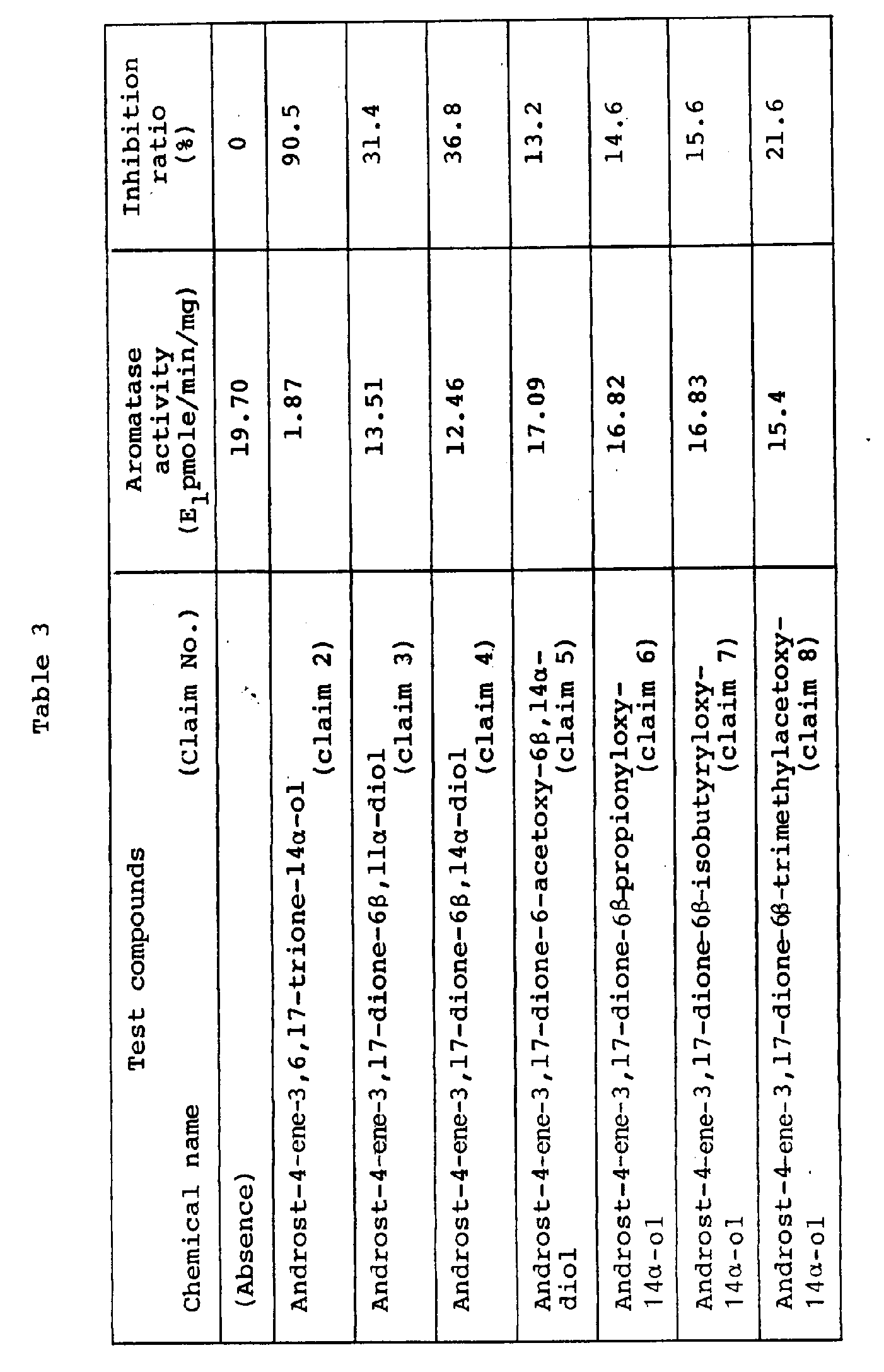
- The inhibiting effect of test compounds at the concentration of 20 µM was examined by measuring the enzyme activity in the substrate of [1β,2β-3H]androstene-dione.
- The results are illustrated in Table 3.
- Growth-inhibiting activity against human mammary cancer cells (MCF-7) has been found in vitro on the 2nd and 3rd compounds of this invention described in
claim 3 andclaim 4 respectively. The test results will be illustrated below. - Eagle's minimum essential medium containing 5% of bovine fetal serum was placed in a laboratory dish having a diameter of 2 cm. Human mammary cancer cells (MCF-7) had previously been cultured in a similar medium and 1 x 10⁴ cells were inoculated on this medium. The inoculated medium was cultured at 37°C, for 2 days in 5% CO₂ atmosphere and then exchanged with another medium containing test compounds. The exchange was carried out thereafter every two days with other medium containing the test compounds. Trypsin treatment was time-dependently conducted during the test period and a number of cells were counted under a microscope to measure the growth of cells.
- The results are illustrated in Figure 7 (the 2nd compound of this invention) and Figure 14 (the 3rd compound of this invention)
- The synergistic effects of these compounds with commercially available tamoxifen (Trade Mark; Nolvatex) which is a anticancer drug were also examined. The effects have been found as illustrated in Figure 8 and Figure 15.
- Androgen activity, although which is comparatively weak, have been found on the 2nd compound of this invention, that is, androst-4-ene-3,17-dione-6β,11α-diol of
claim 3. - Reference to microorganisms deposited pursuant to Regulation 13 bis.
- Deposit Organization:
- Fermentation Research Institute of the Agency of Industrial Science and Technology
- Adress:
- 1-3, Higashi-1-chome, Tsukuba-shi, Ibaraki-ken, JAPAN
- Deposit No.:
- FERM P-9143
- Date of Deposit:
- January 21, 1987
Claims (11)


Priority Applications (1)
| Application Number | Priority Date | Filing Date | Title |
|---|---|---|---|
| AT88901462T ATE78825T1 (en) | 1987-02-06 | 1988-02-05 | NEW ANDROST-4-EN-3,17-DIONE DERIVATIVES AND METHODS OF PRODUCTION. |
Applications Claiming Priority (8)
| Application Number | Priority Date | Filing Date | Title |
|---|---|---|---|
| JP62024594A JPS63192794A (en) | 1987-02-06 | 1987-02-06 | 14alpha-hydroxy-4-androsterone-3,6,17-trione |
| JP62024599A JPS63192797A (en) | 1987-02-06 | 1987-02-06 | 6beta,14alpha-dihydroxy-delta4-androstene-3,17-dione derivative |
| JP62024598A JPS63192796A (en) | 1987-02-06 | 1987-02-06 | 6beta,14alpha-dihydroxy-4-androstene-3,17-dione |
| JP62024595A JPS63192795A (en) | 1987-02-06 | 1987-02-06 | 6beta,11alpha-dihydroxy-4-androstene-3,17-dione |
| JP24598/87 | 1987-02-06 | ||
| JP24599/87 | 1987-02-06 | ||
| JP24595/87 | 1987-02-06 | ||
| JP24594/87 | 1987-02-06 |
Publications (3)
| Publication Number | Publication Date |
|---|---|
| EP0300062A1 EP0300062A1 (en) | 1989-01-25 |
| EP0300062A4 EP0300062A4 (en) | 1989-03-21 |
| EP0300062B1 true EP0300062B1 (en) | 1992-07-29 |
Family
ID=27458173
Family Applications (1)
| Application Number | Title | Priority Date | Filing Date |
|---|---|---|---|
| EP88901462A Expired EP0300062B1 (en) | 1987-02-06 | 1988-02-05 | Novel androst-4-ene-3,17-dione derivatives and process for their preparation |
Country Status (5)
| Country | Link |
|---|---|
| US (2) | US4975368A (en) |
| EP (1) | EP0300062B1 (en) |
| AT (1) | ATE78825T1 (en) |
| DE (1) | DE3873200T2 (en) |
| WO (1) | WO1988005781A1 (en) |
Families Citing this family (8)
| Publication number | Priority date | Publication date | Assignee | Title |
|---|---|---|---|---|
| JPH0643439B2 (en) * | 1989-02-07 | 1994-06-08 | 雪印乳業株式会社 | Method for oxidation of 6β-hydroxyl group of 6β, 14α-dihydroxy-4-androstene-3,17-dione by light |
| JP2602456B2 (en) * | 1990-04-12 | 1997-04-23 | 雪印乳業株式会社 | Endometriosis treatment |
| DE4129005A1 (en) * | 1991-08-28 | 1993-03-04 | Schering Ag | METHOD FOR PRODUCING 14 (ALPHA) -HYDROXY-4-ANDROSTEN-3,17-DION |
| JPH06225793A (en) * | 1992-11-27 | 1994-08-16 | Nippon Kayaku Co Ltd | New production of 6beta,14alpha-dihydroxy-4-androstene3,17-dione |
| EP0626388A3 (en) * | 1993-05-28 | 1996-06-19 | Nippon Kayaku Kk | 14alpha-hydroxy-4-androstene-3,6,17-trione hydrate crystal and process for producing same. |
| US8084446B2 (en) | 2005-04-26 | 2011-12-27 | Eric Marchewitz | Use of DHEA derivatives for enhancing physical performance |
| CA2794565C (en) * | 2010-04-08 | 2018-08-21 | Emory University | Substituted androst-4-ene diones |
| CN106990186B (en) * | 2017-05-22 | 2019-05-21 | 成都欣捷高新技术开发股份有限公司 | The efficient liquid-phase chromatography method of derivative detection steroidal compounds A ring double bond isomer |
Family Cites Families (2)
| Publication number | Priority date | Publication date | Assignee | Title |
|---|---|---|---|---|
| US2786855A (en) * | 1953-01-31 | 1957-03-26 | Syntex Sa | Oxidation of delta4-3, 6-dihydroxy steroids to delta4-3-keto-6-hydroxy steroids |
| JPS58179498A (en) * | 1982-04-13 | 1983-10-20 | Dainippon Ink & Chem Inc | Preparation of 11alpha-hydroxylated androstane compound by microorganism |
-
1988
- 1988-02-05 AT AT88901462T patent/ATE78825T1/en not_active IP Right Cessation
- 1988-02-05 DE DE8888901462T patent/DE3873200T2/en not_active Expired - Fee Related
- 1988-02-05 WO PCT/JP1988/000114 patent/WO1988005781A1/en not_active Ceased
- 1988-02-05 EP EP88901462A patent/EP0300062B1/en not_active Expired
- 1988-09-26 US US07/279,596 patent/US4975368A/en not_active Expired - Fee Related
-
1990
- 1990-07-23 US US07/555,691 patent/US5079377A/en not_active Expired - Fee Related
Also Published As
| Publication number | Publication date |
|---|---|
| DE3873200T2 (en) | 1993-02-25 |
| EP0300062A4 (en) | 1989-03-21 |
| US5079377A (en) | 1992-01-07 |
| ATE78825T1 (en) | 1992-08-15 |
| WO1988005781A1 (en) | 1988-08-11 |
| US4975368A (en) | 1990-12-04 |
| EP0300062A1 (en) | 1989-01-25 |
| DE3873200D1 (en) | 1992-09-03 |
Similar Documents
| Publication | Publication Date | Title |
|---|---|---|
| Peterson et al. | Microbiological transformations of steroids. 1 I. Introduction of oxygen at carbon-11 of progesterone | |
| US4975368A (en) | Novel androst-4-ene-3,17-dione derivatives and method for preparing same | |
| Dodson et al. | Microbiological transformations. IV. The oxidation of dehydroisoandrosterone at C-7 | |
| CH618704A5 (en) | ||
| US3909357A (en) | process for the conversion of A-Series into C-Series digitalis glycosides | |
| EP0301102B1 (en) | NOVEL 7$g(b)-HYDROXY-4-PREGNENE-3,20-DIONE DERIVATIVES AND PROCESS FOR THEIR PREPARATION | |
| US2888384A (en) | Process for the production of 10-hydroxy-19-nortestosterone by rhizopus | |
| US3179674A (en) | 15-oxygenated estrones and estradiols | |
| Vorbrodt et al. | Microbial degradation of 2α, 3α-dihydroxy-5α-cholestan-6-one by Mycobacterium vaccae | |
| US3115444A (en) | Process for microbial hydroxylation of steroids containing aromatic alpha-rings | |
| JP2623285B2 (en) | Method for producing 2 (3-hydroxy-1,3,5 (10) -estrien-17-yl) propionic acid | |
| EP0013405B1 (en) | Process for the preparation of 19-hydroxy steroids of the androstane and pregnane series | |
| US20020035260A1 (en) | 4-aza-steroids | |
| CN108707553A (en) | It is capable of bacterial strain and its application of Efficient Conversion 4AD specificity synthesis keto lactone clonorchis and ADD | |
| Jirsa et al. | Bacterial oxidation of cholic acid by Arthrobacter sp | |
| US5164302A (en) | Method for preparing 7β-hydroxy-4-pregnene-3,20-dione derivatives | |
| US3442917A (en) | 2beta,3beta,14alpha - 22beta,25 - penta hydroxy - 5beta - cholest- 7-en-6-one and process for the production thereof | |
| DE2450106C2 (en) | Novel 1α-hydroxysteroids, processes for their preparation and pharmaceuticals containing them | |
| JPH0132236B2 (en) | ||
| EP0377009B1 (en) | 1$g(b),15$g(a)-DIHYDROXY-1$g(a)-METHYL-5$g(a)-ANDROSTAN-3,17-DIONE, ITS PREPARATION AND USE | |
| JPH06225793A (en) | New production of 6beta,14alpha-dihydroxy-4-androstene3,17-dione | |
| DE1768203C3 (en) | Process for the production of 3 ß, 11 ß-hydroxy-5 a, 6 a-epoxysteroids by microbiological means | |
| Howe et al. | Microbial modification of diosgenin and hecogenin | |
| JPS63192796A (en) | 6beta,14alpha-dihydroxy-4-androstene-3,17-dione | |
| Regerat et al. | Microbiological conversions of solamargine |
Legal Events
| Date | Code | Title | Description |
|---|---|---|---|
| PUAI | Public reference made under article 153(3) epc to a published international application that has entered the european phase |
Free format text: ORIGINAL CODE: 0009012 |
|
| AK | Designated contracting states |
Kind code of ref document: A1 Designated state(s): AT BE CH DE FR GB LI NL SE |
|
| 17P | Request for examination filed |
Effective date: 19890202 |
|
| A4 | Supplementary search report drawn up and despatched |
Effective date: 19890321 |
|
| 17Q | First examination report despatched |
Effective date: 19901123 |
|
| GRAA | (expected) grant |
Free format text: ORIGINAL CODE: 0009210 |
|
| AK | Designated contracting states |
Kind code of ref document: B1 Designated state(s): AT BE CH DE FR GB LI NL SE |
|
| REF | Corresponds to: |
Ref document number: 78825 Country of ref document: AT Date of ref document: 19920815 Kind code of ref document: T |
|
| REF | Corresponds to: |
Ref document number: 3873200 Country of ref document: DE Date of ref document: 19920903 |
|
| ET | Fr: translation filed | ||
| PLBE | No opposition filed within time limit |
Free format text: ORIGINAL CODE: 0009261 |
|
| STAA | Information on the status of an ep patent application or granted ep patent |
Free format text: STATUS: NO OPPOSITION FILED WITHIN TIME LIMIT |
|
| 26N | No opposition filed | ||
| EAL | Se: european patent in force in sweden |
Ref document number: 88901462.7 |
|
| PGFP | Annual fee paid to national office [announced via postgrant information from national office to epo] |
Ref country code: BE Payment date: 19970211 Year of fee payment: 10 |
|
| PGFP | Annual fee paid to national office [announced via postgrant information from national office to epo] |
Ref country code: SE Payment date: 19970217 Year of fee payment: 10 |
|
| PGFP | Annual fee paid to national office [announced via postgrant information from national office to epo] |
Ref country code: AT Payment date: 19970224 Year of fee payment: 10 |
|
| PGFP | Annual fee paid to national office [announced via postgrant information from national office to epo] |
Ref country code: NL Payment date: 19970228 Year of fee payment: 10 |
|
| PGFP | Annual fee paid to national office [announced via postgrant information from national office to epo] |
Ref country code: CH Payment date: 19970603 Year of fee payment: 10 |
|
| PGFP | Annual fee paid to national office [announced via postgrant information from national office to epo] |
Ref country code: FR Payment date: 19980126 Year of fee payment: 11 |
|
| PG25 | Lapsed in a contracting state [announced via postgrant information from national office to epo] |
Ref country code: AT Free format text: LAPSE BECAUSE OF NON-PAYMENT OF DUE FEES Effective date: 19980205 |
|
| PG25 | Lapsed in a contracting state [announced via postgrant information from national office to epo] |
Ref country code: SE Free format text: LAPSE BECAUSE OF NON-PAYMENT OF DUE FEES Effective date: 19980206 |
|
| PGFP | Annual fee paid to national office [announced via postgrant information from national office to epo] |
Ref country code: DE Payment date: 19980225 Year of fee payment: 11 |
|
| PG25 | Lapsed in a contracting state [announced via postgrant information from national office to epo] |
Ref country code: LI Free format text: LAPSE BECAUSE OF NON-PAYMENT OF DUE FEES Effective date: 19980228 Ref country code: CH Free format text: LAPSE BECAUSE OF NON-PAYMENT OF DUE FEES Effective date: 19980228 Ref country code: BE Free format text: LAPSE BECAUSE OF NON-PAYMENT OF DUE FEES Effective date: 19980228 |
|
| BERE | Be: lapsed |
Owner name: SNOW BRAND MILK PRODUCTS & CO. LTD Effective date: 19980228 |
|
| PG25 | Lapsed in a contracting state [announced via postgrant information from national office to epo] |
Ref country code: NL Free format text: LAPSE BECAUSE OF NON-PAYMENT OF DUE FEES Effective date: 19980901 |
|
| REG | Reference to a national code |
Ref country code: CH Ref legal event code: PL |
|
| EUG | Se: european patent has lapsed |
Ref document number: 88901462.7 |
|
| NLV4 | Nl: lapsed or anulled due to non-payment of the annual fee |
Effective date: 19980901 |
|
| PGFP | Annual fee paid to national office [announced via postgrant information from national office to epo] |
Ref country code: GB Payment date: 19990126 Year of fee payment: 12 |
|
| PG25 | Lapsed in a contracting state [announced via postgrant information from national office to epo] |
Ref country code: FR Free format text: LAPSE BECAUSE OF NON-PAYMENT OF DUE FEES Effective date: 19991029 |
|
| PG25 | Lapsed in a contracting state [announced via postgrant information from national office to epo] |
Ref country code: DE Free format text: LAPSE BECAUSE OF NON-PAYMENT OF DUE FEES Effective date: 19991201 |
|
| REG | Reference to a national code |
Ref country code: FR Ref legal event code: ST |
|
| PG25 | Lapsed in a contracting state [announced via postgrant information from national office to epo] |
Ref country code: GB Free format text: LAPSE BECAUSE OF NON-PAYMENT OF DUE FEES Effective date: 20000205 |
|
| GBPC | Gb: european patent ceased through non-payment of renewal fee |
Effective date: 20000205 |