EP0300038B1 - Microporous asymmetric polyfluorocarbon membranes - Google Patents
Microporous asymmetric polyfluorocarbon membranes Download PDFInfo
- Publication number
- EP0300038B1 EP0300038B1 EP88906491A EP88906491A EP0300038B1 EP 0300038 B1 EP0300038 B1 EP 0300038B1 EP 88906491 A EP88906491 A EP 88906491A EP 88906491 A EP88906491 A EP 88906491A EP 0300038 B1 EP0300038 B1 EP 0300038B1
- Authority
- EP
- European Patent Office
- Prior art keywords
- sheets
- recited
- pore
- membrane
- polyfluorocarbon
- Prior art date
- Legal status (The legal status is an assumption and is not a legal conclusion. Google has not performed a legal analysis and makes no representation as to the accuracy of the status listed.)
- Expired - Lifetime
Links
Images
Classifications
-
- B—PERFORMING OPERATIONS; TRANSPORTING
- B01—PHYSICAL OR CHEMICAL PROCESSES OR APPARATUS IN GENERAL
- B01D—SEPARATION
- B01D71/00—Semi-permeable membranes for separation processes or apparatus characterised by the material; Manufacturing processes specially adapted therefor
- B01D71/06—Organic material
- B01D71/30—Polyalkenyl halides
- B01D71/32—Polyalkenyl halides containing fluorine atoms
- B01D71/36—Polytetrafluoroethylene
-
- B—PERFORMING OPERATIONS; TRANSPORTING
- B01—PHYSICAL OR CHEMICAL PROCESSES OR APPARATUS IN GENERAL
- B01D—SEPARATION
- B01D67/00—Processes specially adapted for manufacturing semi-permeable membranes for separation processes or apparatus
- B01D67/0002—Organic membrane manufacture
- B01D67/0023—Organic membrane manufacture by inducing porosity into non porous precursor membranes
- B01D67/003—Organic membrane manufacture by inducing porosity into non porous precursor membranes by selective elimination of components, e.g. by leaching
-
- B—PERFORMING OPERATIONS; TRANSPORTING
- B01—PHYSICAL OR CHEMICAL PROCESSES OR APPARATUS IN GENERAL
- B01D—SEPARATION
- B01D69/00—Semi-permeable membranes for separation processes or apparatus characterised by their form, structure or properties; Manufacturing processes specially adapted therefor
- B01D69/02—Semi-permeable membranes for separation processes or apparatus characterised by their form, structure or properties; Manufacturing processes specially adapted therefor characterised by their properties
-
- B—PERFORMING OPERATIONS; TRANSPORTING
- B01—PHYSICAL OR CHEMICAL PROCESSES OR APPARATUS IN GENERAL
- B01D—SEPARATION
- B01D69/00—Semi-permeable membranes for separation processes or apparatus characterised by their form, structure or properties; Manufacturing processes specially adapted therefor
- B01D69/12—Composite membranes; Ultra-thin membranes
-
- B—PERFORMING OPERATIONS; TRANSPORTING
- B01—PHYSICAL OR CHEMICAL PROCESSES OR APPARATUS IN GENERAL
- B01D—SEPARATION
- B01D71/00—Semi-permeable membranes for separation processes or apparatus characterised by the material; Manufacturing processes specially adapted therefor
- B01D71/06—Organic material
- B01D71/30—Polyalkenyl halides
- B01D71/32—Polyalkenyl halides containing fluorine atoms
-
- B—PERFORMING OPERATIONS; TRANSPORTING
- B01—PHYSICAL OR CHEMICAL PROCESSES OR APPARATUS IN GENERAL
- B01D—SEPARATION
- B01D2325/00—Details relating to properties of membranes
- B01D2325/02—Details relating to pores or porosity of the membranes
- B01D2325/022—Asymmetric membranes
Definitions
- This invention relates to novel microporous polyfluorocarbon membranes. More particularly, this invention relates to novel multilayer microporous polyfluorocarbon membranes, such as polytetrafluoroethylene membranes, which are asymmetric in pore size, i.e., which have an increasing gradation in average pore diameter from one surface of the membrane to the other. These membranes are particularly useful as microfilters, and especially as the filtration components of microfiltration cartridges, which can be used to remove fine particle size contaminants, including bacteria --particles having diameters as small as about 0.001 ⁇ m --from fluids such as those encountered in the electronics and pharmaceutical industries. This invention also relates to a novel process for preparing these microporous asymmetric polyfluorocarbon membranes.
- novel multilayer microporous polyfluorocarbon membranes such as polytetrafluoroethylene membranes, which are asymmetric in pore size, i.e., which have an increasing gradation in average pore diameter from one surface of the membrane to
- Porous polyfluorocarbon membranes or films particularly ones fabricated in whole or in part from polytetrafluoroethylene, have been known for twenty-five years or more.
- Such membranes or films are usually prepared by either of two general methods:
- porous polyfluorocarbon membranes or films made by the first of these methods, incorporation and subsequent removal of a particulate solid are capable only of coarse filtration, i.e., removal from liquids of particulate matter having average particle diameters of not less than about 1 ⁇ m, and in general also have inadequate strength, flux and dirt holding capacity to be useful in microfiltration applications.
- such membranes are used as coarse filters, or as separators or diaphragms in batteries and electrolytic cells.
- porous polyfluorocarbon membranes or films having polymer nodes interconnected by fibrils have been used for microfiltration, such membranes are not without problems, some of which are attributable to their method of preparation.
- the membrane can itself be a major source of contamination because of its loosely bound fibrils and nodes. Also, it is difficult to control the processes by which such membranes are typically fabricated so that pore size will be correlated consistently with performance requirements.
- EP-A-245863 which forms part of the state of the art according to Art. 54(3) and (4), and discloses a bilayer ultrafiltration membrane in which a polymer solution is used to cast a very thin skin layer upon a preformed microsporous membrane. Prior to performing the casting step the pore surface of the microporous membrane is treated with a liquid protecting agent to minimize or prevent the polymer solvent employed in the subsequent coating step from attacking the surface.
- Another object of this invention is to provide novel microporous asymmetric polyfluorocarbon membranes, such as polytetrafluoroethylene membranes, whose unique pore structure, high porosity, high strength, high flux, low particle shedding and superior dirt holding capacity make them particularly useful as microfilters, and especially as the filtration components of microfiltration cartridges, which can be used to remove fine particle size contaminants from fluids such as those encountered in the electronics and pharmaceutical industries.
- novel microporous asymmetric polyfluorocarbon membranes such as polytetrafluoroethylene membranes, whose unique pore structure, high porosity, high strength, high flux, low particle shedding and superior dirt holding capacity make them particularly useful as microfilters, and especially as the filtration components of microfiltration cartridges, which can be used to remove fine particle size contaminants from fluids such as those encountered in the electronics and pharmaceutical industries.
- a further object of this invention is to provide a novel process for preparing these microporous polyfluorocarbon membranes.
- novel microporous polyfluorocarbon membranes of this invention are prepared by a variant of the first general method outlined above, incorporation and subsequent removal of a particulate solid, in which the following exceptions are practiced:
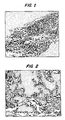
- FIG. 1 is a photomicrograph (5,000 x magnification) of a cross-section of a single microporous polytetrafluoroethylene sheet or film made from polytetrafluoroethylene powder of 0.2 ⁇ m average particle diameter admixed with 0.075 ⁇ m average particle diameter calcium carbonate pore-forming filler in accordance with the teachings of this invention.
- FIG. 2 is a photomicrograph (1,000 x magnification) of a cross-section of an asymmetric microporous polytetrafluoroethylene membrane prepared in accordance with the teachings of this invention.
- fluorocarbon homopolymers and copolymers which can be used to make the novel microporous polyfluorocarbon membranes of this invention are polymers of fluoro (including perfluoro) and chlorofluoro lower alkenes containing 2 to 4 carbon atoms, inclusive, which can be otherwise unsubstituted or substituted with one or more non-interfering substituents, e.g., lower alkoxy groups.
- Such polymers include polytetrafluoroethylene, polytrifluoroethylene, tetrafluoroethylene/hexafluoropropylene copolymers, poly(fluoroethylene/ethylene) and poly(fluoroethylene/propylene) copolymers, polychlorotrifluoroethylene, poly(chlorotrifluoroethylene/ ethylene) copolymers, polyfluoro-lower alkoxyethylenes, polyvinyl fluoride, polyvinylidene fluoride, and the like.
- any leachable or otherwise removable particulate, solid, pore forming filler whose average particle diameter falls within the aforementioned ranges can be employed in practicing this invention.
- a number of types of removable fillers are disclosed in the above-listed prior art patents which relate to the first general method of preparing porous polyfluorocarbon membranes or films outlined above; see particularly U.S. Patent No. 3,556,161 to Roberts at from column 2, line 28 to column 4, line 45. Particulate calcium carbonate is especially preferred when practicing this invention.
- Methods of reducing removable fillers to the necessary fine particle size for use in practicing this invention include both mechanical and chemical procedures, such as:
- Polyfluorocarbon polymer powders are available commercially in the form of aggregates or agglomerates made up of sub-micron size spherical colloidal particles, i.e., particles having individual diameters within the aforementioned ranges -- not more than 0.3 ⁇ m, e.g., from 0.1 ⁇ m to 0.3 ⁇ m, and preferably from 0.1 ⁇ m to 0.2 ⁇ m.
- These aggregates or agglomerates typically have an average diameter of about 500 ⁇ m or more, and must be broken up into discrete powder particles whose average diameters fall within the aforementioned ranges before being used in practicing this invention.
- the pore former can also form aggregates or agglomerates many times greater in size than the average diameter of the individual filler particles, and in such a case must also be broken up into discrete filler particles before use.
- Such aggregates can be broken up in any convenient manner to give the requisite individual small particles.
- a high shear homogenizer whose generator rotates at ultra high speed to create a cutting, ripping and demolishing action can be used for this purpose, together with a mixing liquid capable of wetting the surface of the particles and of later being removed by evaporation, extraction or any other convenient method at a temperature below the decomposition temperature of the fluorocarbon polymer.
- Such mixing liquids include hydrocarbon oils such as kerosene, solvent naphtha, white oil and Isopar H hydrocarbon oil (Exxon Chemical Co.), aromatic hydrocarbons such as toluene and xylene, alcohols, ketones, esters, silicone oils, fluorocarbon oils, organic fluorosurfactants, e.g., Zonyl® FSN fluoroalkyl poly(ethyleneoxy)ethanol nonionic surfactant (duPont), and polymers such as polyisobutylene or polyisoprene, unsaturated monomers, or monomer-polymer syrups in solution in one of the above-mentioned hydrocarbon oils, aromatic hydrocarbons, alcohols or ketones, as well as mixtures of these mixing liquids.
- the mass ratio of mixing liquid to solid can range from about 2:1 to about 50:1, and preferably from about 6:1 to about 8:1.
- the mixing liquid also serves as a lubricant for the fluorocarbon polymer particles during subsequent processing.
- the amount of pore forming filler employed in admixture with powdered fluorocarbon polymer can range from 60% to 90% by weight, based on the total weight of these two materials.
- the amount of pore forming filler used will range from about 75% to about 85% by weight, on the same basis, to give optimum combinations of flux, retention and strength in the finished asymmetric membranes.
- the method used to prepare individual sheets or films from mixtures of the above-described powdered fluorocarbon polymers and pore forming fillers can be, as indicated above, any method known in the art for this purpose.
- One such method involves first forming a slurry of fine powder particles of the fluorocarbon polymer and pore forming filler in a mixing liquid, then filtering this slurry to remove the majority of the mixing liquid, e.g., all but from about 10% to about 25%, and preferably from about 15% to about 20%, of this liquid, and obtain a wetted filter cake.
- This filter cake can then be treated in any convenient fashion, e.g., it can be pressed (molded) or paste extruded (using, e.g., an extruder with a reduction ratio below about 50:1), to make a preform whose thickness, although not critical, will usually range from about 0.03 to about 0.25 inch (0.76 mm to 6.35 mm), and preferably from about 0.03 to about 0.10 inch (0.76 mm to 2.54 mm).
- the preform is fed to the nip of a pair of calender rolls set to reduce the preform's thickness to from about 10 to about 25 mils (254 to 635 ⁇ m), and preferably from about 10 to about 15 mils (254 to 381 ⁇ m).
- the resulting sheet is usually folded over upon itself and calendered again. Calendering, folding, and, if desired, turning the folded sheet to a certain extent, e.g., through 45-90 degrees before recalendering, can be repeated from 2 to 10 times or more to increase uniformity in the thus-formed sheet or film.
- the nip of the calender rolls is then adjusted downward, usually to below about 3 mil (76 ⁇ m), and the sheet or film is calendered under a pressure of from about 200 to about 3000 1b (1.38 MPa to 20.68 MPa)., with the calender rolls heated to permit a temperature of from about 100-130°F (38 to 54°C) to be maintained, to a thickness which will generally range from about 2 to about 8 mils (51 to 203 ⁇ m).
- the sheets or films can be laid up with each sheet stacked in the direction in which it was last calendered, or with each succeeding sheet or film stacked at any angle, e.g., 45° or 90°, to the proceeding sheet(s) or film(s).
- the composite stack of sheets or films is then laminated into an integral composite membrane by application of heat and pressure, e.g., using heated calender rolls, and can also be dried, i.e., have the mixing liquid (lubricant) driven off, during lamination.
- the amount of mixing liquid (lubricant) in the sheets or films prior to lamination should be between about 5% and about 50% by weight, and preferably between about 10% and about 15% by weight, of the total weight of the stack of sheets.
- the laminating pressure should be between about 100 psi and about 10,000 psi (689 kPa to 68.9 MPa), and preferably from about 1,000 psi to about 3,000 psi (6.89 MPa to 20.68 MPa), with temperatures of from about 70°F to about 250°F (21°C to 121°C) and preferably from about 100°F to about 115°F (38°C to 46°C), being employed during lamination.
- Such laminating conditions will be correlated to provide asymmetric membranes which, once they have been sintered and the pore formers removed, will have an increasing gradation in average pore diameter from one surface to the other and will exhibit high porosity, high strength, high flux, low particle shedding and superior dirt holding capacity.
- Such membranes will have average pore diameters on their small pore sides ranging from about 0.01 ⁇ m to about 1.0 ⁇ m, and preferably from about 0.1 ⁇ m to about 0.5 ⁇ m, and average pore diameters on their large pore sides ranging from about 1 ⁇ m to about 10 ⁇ m, and preferably from about 2 ⁇ m to about 5 ⁇ m.
- the films in the stack before lamination are too dry, i.e., if they contain an inadequate amount of lubricant, or if the laminating temperatures and pressures employed are not high enough, the individual sheets or films will not bind together. If, on the other hand, the temperatures and pressures employed are too high, the pore forming filler particles in each sheet or film will be mixed together with those in adjacent sheets or films, and an asymmetric pore structure will not be achieved.
- the thus-obtained precursor membranes can then be oven-dried to remove any remaining lubricant, sintered (in a separate step, or simply by increasing the temperature in the laminating step or in the drying oven, or by sintering the membranes directly without passing through a drying stage), and then contacted with a material which will dissolve out the pore forming filler, heated to remove the filler, etc., each of these steps also being conducted in conventional fashion.
- drying to drive off any remaining lubricant can be carried out at temperatures ranging from about 140°C to about 195°C, and preferably at from about 145°C, and sintering can be effected at temperatures ranging from about 335°C to about 360°C, and preferably at 340°C to about 345°C.
- the preferred pore forming filler calcium carbonate
- aqueous acid e.g., hydrochloric acid.
- Sodium chloride if used as the pore former, can be removed simply by immersing the precursor membrane in hot water.
- novel microporous asymmetric polyfluorocarbon membranes of this invention by virtue of the low resistance to fluid flow provided by their very thin control section (the layer or layers of the membrane having the smallest average pore diameters), exhibit higher flux than do conventional stretched porous polyfluorocarbon membranes or films having polymer nodes interconnected by fibrils. While the larger pores found in the other layers of our novel composite membranes offer still lower resistance to fluid flow, these other layers provide strength to the composite structure and, when positioned upstream of the control section, operate as a prefilter to remove contaminants which otherwise could plug the control section. Serial filtration accomplished in this fashion prolongs the useful life of the control section, and thus increases both the dirt holding capacity and the throughput of the filtration medium.
- the thus-calendered sheet was dried for forty minute at 300°F (149°C) in a forced air oven, then sintered for 2 minutes at 650°F (343°C) in an infra red oven, and then immersed for 1 hour at room temperature (about 25°C) in an aqueous 0.3 M hydrochloric acid solution to leach out the calcium carbonate pore former.
- each of the thus-obtained preforms was calendered in the manner described in Example I above and, after calendering, each sheet was rewetted with sufficient Isopar H hydrocarbon oil to give a lubricant content of approximately 15% by weight in the sheet.
- the rewetted sheet obtained from slurry B was laid on top of the rewetted sheet obtained from slurry A, and the resulting composite was fed to a pair of calender rolls whose nip was set at 0.003 inch (76.2 ⁇ m). The calendered composite was then dried, sintered and leached in the manner described in Example I above.
- the resulting asymmetric microsporous polytetrafluoroethylene membrane had an average pore size on one side of 0.1 ⁇ m, an average pore size on the opposite side of 2.0 - 3.0 ⁇ m, was 130 ⁇ m thick, had a methanol flux of 0.40 ml/cm2/min/psi (580 m3/m2/min/Pa), and retained 97% of the particles from a 0.142 micron polystyrene latex.
- Table I Slurry Ppt'd. CaCO3, av. part.diam.0.075 ⁇ m
- Example II A calendered sheet obtained as described in Example I (before drying, sintering and leaching) is substituted for the sheet obtained from Slurry A in Example II.
- the sheet of Example I and the sheet obtained from Slurry B are then subjected to the remainder of the procedure of Example II, beginning with the rewetting step, to give an asymmetric microporous polytetrafluoroethylene membrane suitable for use as a microfilter.
- Example II The procedure of Example II is repeated in every detail, except that precipitated calcium carbonate having an average particle diameter of 0.01 ⁇ m is substituted for the precipitated calcium carbonate used in Slurry A and precipitated calcium carbonate having an average particle diameter of 5 ⁇ m is substituted for the precipitated calcium carbonate used in Slurry B.
- An asymmetric microporous polytetrafluoroethylene membrane suitable for use as a microfilter is obtained.
Landscapes
- Chemical & Material Sciences (AREA)
- Chemical Kinetics & Catalysis (AREA)
- Engineering & Computer Science (AREA)
- Manufacturing & Machinery (AREA)
- Separation Using Semi-Permeable Membranes (AREA)
- Manufacture Of Porous Articles, And Recovery And Treatment Of Waste Products (AREA)
- Compositions Of Macromolecular Compounds (AREA)
- Laminated Bodies (AREA)
- Polyoxymethylene Polymers And Polymers With Carbon-To-Carbon Bonds (AREA)
- Materials For Medical Uses (AREA)
Abstract
Description
- This invention relates to novel microporous polyfluorocarbon membranes. More particularly, this invention relates to novel multilayer microporous polyfluorocarbon membranes, such as polytetrafluoroethylene membranes, which are asymmetric in pore size, i.e., which have an increasing gradation in average pore diameter from one surface of the membrane to the other. These membranes are particularly useful as microfilters, and especially as the filtration components of microfiltration cartridges, which can be used to remove fine particle size contaminants, including bacteria --particles having diameters as small as about 0.001 µm --from fluids such as those encountered in the electronics and pharmaceutical industries. This invention also relates to a novel process for preparing these microporous asymmetric polyfluorocarbon membranes.
- Porous polyfluorocarbon membranes or films, particularly ones fabricated in whole or in part from polytetrafluoroethylene, have been known for twenty-five years or more. Such membranes or films are usually prepared by either of two general methods:
- 1. Incorporating a particulate, solid, pore forming filler removable by leaching, heating, etc. into a mass of powdered fluorocarbon polymer; shaping the resulting mixture into a preform, calendering the thus-obtained preform to reduce its thickness and form it into a self-sustaining sheet or film, with or without doubling over or cross-lapping the sheet or film between passes through the calender rolls; subjecting the calendered sheet or film to heat to dry the sheet or film and sinter the fluorocarbon polymer particles, and removing the particulate filler; see, for example, U.S. Patents Nos. 3,281,511 to Goldsmith; 3,518,332 to Sklarchuk et al; 3,556,161 to Roberts; 3,661,645 to Strier et al; 3,773,878 to Jahnke; 3,859,402 to Bintliff et al; 3,864,124 to Breton et al; 3,890,417 to Vallance; 4,003,818 to Juillard et al; 4,196,070 to Chao et al; 4,250,002; 4,297,196 and 4,498,961 to Lazarz et al; 4,292,146 and 4,342,636 to Chang et al and 4,380,521 to Moreno et al, and British Patents Nos. 943,624 to Doulton & Co. Limited and 1,081,046 to Imperial Chemical Industries Limited. US-A-4170540 describes a monolayer polytetrafluoroethylene membrane.
- 2. Forming a porous fluorocarbon polymer membrane or film having nodes interconnected by fibrils using processes which involve, for example, stretching a preformed fluorocarbon polymer sheet, or extensively mixing and then biaxially calendering a putty-like mass containing fluorocarbon polymer; see, for example, U.S. Patents Nos. 3,953,566 and 4,187,390 to Gore; 4,049,589 to Sakane; 4,089,758 to McAloon and 4,153,661 to Ree et al.
- Commercially available porous polyfluorocarbon membranes or films made by the first of these methods, incorporation and subsequent removal of a particulate solid, are capable only of coarse filtration, i.e., removal from liquids of particulate matter having average particle diameters of not less than about 1 µm, and in general also have inadequate strength, flux and dirt holding capacity to be useful in microfiltration applications. Hence, such membranes are used as coarse filters, or as separators or diaphragms in batteries and electrolytic cells.
- Although porous polyfluorocarbon membranes or films having polymer nodes interconnected by fibrils have been used for microfiltration, such membranes are not without problems, some of which are attributable to their method of preparation. The membrane can itself be a major source of contamination because of its loosely bound fibrils and nodes. Also, it is difficult to control the processes by which such membranes are typically fabricated so that pore size will be correlated consistently with performance requirements.
- There is thus a need for chemically and physiologically inert microsporous polyfluorocarbon membranes whose pore structures render them particularly suitable for microfiltration applications.
- EP-A-245863, which forms part of the state of the art according to Art. 54(3) and (4), and discloses a bilayer ultrafiltration membrane in which a polymer solution is used to cast a very thin skin layer upon a preformed microsporous membrane. Prior to performing the casting step the pore surface of the microporous membrane is treated with a liquid protecting agent to minimize or prevent the polymer solvent employed in the subsequent coating step from attacking the surface.
- It is an object of this invention to provide novel microporous polyfluorocarbon membranes.
- It is also an object of this invention to provide novel microporous asymmetric polyfluorocarbon membranes useful as filtration means.
- Another object of this invention is to provide novel microporous asymmetric polyfluorocarbon membranes, such as polytetrafluoroethylene membranes, whose unique pore structure, high porosity, high strength, high flux, low particle shedding and superior dirt holding capacity make them particularly useful as microfilters, and especially as the filtration components of microfiltration cartridges, which can be used to remove fine particle size contaminants from fluids such as those encountered in the electronics and pharmaceutical industries.
- A further object of this invention is to provide a novel process for preparing these microporous polyfluorocarbon membranes.
- These and other objects, as well as the nature, scope and utilization of the invention, will become readily apparent to those skilled in the art from the following description, the drawings and the appended claims.
- The novel microporous polyfluorocarbon membranes of this invention are prepared by a variant of the first general method outlined above, incorporation and subsequent removal of a particulate solid, in which the following exceptions are practiced:
- 1. The powdered fluorocarbon polymer used has an average individual particle diameter (i.e., the average diameter of individual particles in the unaggregated or unagglomerated state) of not more than 0.3 µm, e.g., from 0.1 µm to 0.3 µm, and preferably from 0.1 µm to 0.2 µm.
- 2. Similarly, the leachable or otherwise removable particulate, solid, pore forming filler used has an average individual particle diameter of not more than 20 µm, e.g., from 0.01 µm to 20 µm, and preferably from 0.075 µm to 10 µm.
- 3. Two or more self-sustaining calendered sheets or films are first prepared in conventional fashion from polyfluorocarbon powders whose average particle diameters fall within the aforementioned ranges for this component, admixed with a leachable or otherwise removable pore forming filler whose average particle diameter likewise falls within the aforementioned ranges for this component. In further contrast to conventional practice the filler used in each such sheet or film will have a different average particle diameter, within the aforementioned ranges, from the filler(s) used in the other sheet(s) or film(s). Hence, each such sheet or film will, once the pore former is removed, have a different average pore diameter. These calendered sheets or films are then laid up together, with a small pore former-containing sheet or film on one side and progressively larger pore former-containing sheet(s) or film(s) laid on top of it to give an increasing gradation in average pore diameter from one surface of the ultimately-obtained membrane to the other, to form a composite. This composite is then laminated into an integral membrane by application of heat and pressure, sintered, and the filler removed, again in conventional fashion, to give an asymmetric microporous polyfluorocarbon membrane.
- FIG. 1 is a photomicrograph (5,000 x magnification) of a cross-section of a single microporous polytetrafluoroethylene sheet or film made from polytetrafluoroethylene powder of 0.2 µm average particle diameter admixed with 0.075 µm average particle diameter calcium carbonate pore-forming filler in accordance with the teachings of this invention.
- FIG. 2 is a photomicrograph (1,000 x magnification) of a cross-section of an asymmetric microporous polytetrafluoroethylene membrane prepared in accordance with the teachings of this invention.
- Included among the fluorocarbon homopolymers and copolymers which can be used to make the novel microporous polyfluorocarbon membranes of this invention are polymers of fluoro (including perfluoro) and chlorofluoro lower alkenes containing 2 to 4 carbon atoms, inclusive, which can be otherwise unsubstituted or substituted with one or more non-interfering substituents, e.g., lower alkoxy groups. Such polymers include polytetrafluoroethylene, polytrifluoroethylene, tetrafluoroethylene/hexafluoropropylene copolymers, poly(fluoroethylene/ethylene) and poly(fluoroethylene/propylene) copolymers, polychlorotrifluoroethylene, poly(chlorotrifluoroethylene/ ethylene) copolymers, polyfluoro-lower alkoxyethylenes, polyvinyl fluoride, polyvinylidene fluoride, and the like.
- Any leachable or otherwise removable particulate, solid, pore forming filler whose average particle diameter falls within the aforementioned ranges can be employed in practicing this invention. A number of types of removable fillers are disclosed in the above-listed prior art patents which relate to the first general method of preparing porous polyfluorocarbon membranes or films outlined above; see particularly U.S. Patent No. 3,556,161 to Roberts at from column 2, line 28 to column 4, line 45. Particulate calcium carbonate is especially preferred when practicing this invention.
- Methods of reducing removable fillers to the necessary fine particle size for use in practicing this invention include both mechanical and chemical procedures, such as:
- mechanical grinding using any of a number of types of grinders, e.g., an air impact pulverizer (jet mill), to produce fine powders; ordinarily the feed material being ground should have an average particle size of below about 50 µm to obtain the best results;
- using an aerosol generator, nebulizer or spray drier to produce small droplets of a solution of, e.g., an inorganic salt; evaporation of the solvent from these droplets generates small crystals or particles;
- precipitation by adding a component that will react with the original solute in a solution to form an insoluble substance; for example, substantially uniform, very fine calcium carbonate particles can be obtained by adding a boiling solution of calcium chloride to a boiling solution of sodium carbonate;
- salting out or recrystallization, in which the solubility of a solute in a solution is sharply reduced by adding a non-solvent for the solute to the solution; for example, fine sodium chloride particles can be produced by adding methanol to an aqueous sodium chloride solution.
- The last two of the above-listed particle size reduction methods require careful selection and control of process conditions - types and amounts of chemicals used, concentrations, temperature, pH, mixing rate, etc.
- in ways well known to those skilled in the art, to produce pore forming filler particles whose average diameter falls within the aforementioned ranges. The crystalline particles obtained using these methods in a carefully controlled manner attain thermodynamic equilibrium with the solutions from which they are precipitated, recrystallized or salted out while they are very small, and stop growing at that point. Conventional crystal-growing processes produce crystals too large to be used in practicing this invention.
- Polyfluorocarbon polymer powders are available commercially in the form of aggregates or agglomerates made up of sub-micron size spherical colloidal particles, i.e., particles having individual diameters within the aforementioned ranges -- not more than 0.3 µm, e.g., from 0.1 µm to 0.3 µm, and preferably from 0.1 µm to 0.2 µm. These aggregates or agglomerates typically have an average diameter of about 500 µm or more, and must be broken up into discrete powder particles whose average diameters fall within the aforementioned ranges before being used in practicing this invention. The pore former can also form aggregates or agglomerates many times greater in size than the average diameter of the individual filler particles, and in such a case must also be broken up into discrete filler particles before use.
- Such aggregates can be broken up in any convenient manner to give the requisite individual small particles. Thus, for example, a high shear homogenizer whose generator rotates at ultra high speed to create a cutting, ripping and demolishing action can be used for this purpose, together with a mixing liquid capable of wetting the surface of the particles and of later being removed by evaporation, extraction or any other convenient method at a temperature below the decomposition temperature of the fluorocarbon polymer. Such mixing liquids include hydrocarbon oils such as kerosene, solvent naphtha, white oil and Isopar H hydrocarbon oil (Exxon Chemical Co.), aromatic hydrocarbons such as toluene and xylene, alcohols, ketones, esters, silicone oils, fluorocarbon oils, organic fluorosurfactants, e.g., Zonyl® FSN fluoroalkyl poly(ethyleneoxy)ethanol nonionic surfactant (duPont), and polymers such as polyisobutylene or polyisoprene, unsaturated monomers, or monomer-polymer syrups in solution in one of the above-mentioned hydrocarbon oils, aromatic hydrocarbons, alcohols or ketones, as well as mixtures of these mixing liquids. The mass ratio of mixing liquid to solid can range from about 2:1 to about 50:1, and preferably from about 6:1 to about 8:1. The mixing liquid also serves as a lubricant for the fluorocarbon polymer particles during subsequent processing.
- Operating the high shear homogenizer at about 20,000 rpm for about 3-5 minutes has been found adequate to break up polyfluorocarbon polymer and pore forming filler aggregates and give a slurry of fine powder particles in the mixing liquid. Longer or shorter times at higher or lower speeds can, of course, be used where necessary.
- The amount of pore forming filler employed in admixture with powdered fluorocarbon polymer can range from 60% to 90% by weight, based on the total weight of these two materials. Preferably, the amount of pore forming filler used will range from about 75% to about 85% by weight, on the same basis, to give optimum combinations of flux, retention and strength in the finished asymmetric membranes.
- The method used to prepare individual sheets or films from mixtures of the above-described powdered fluorocarbon polymers and pore forming fillers can be, as indicated above, any method known in the art for this purpose.
- One such method involves first forming a slurry of fine powder particles of the fluorocarbon polymer and pore forming filler in a mixing liquid, then filtering this slurry to remove the majority of the mixing liquid, e.g., all but from about 10% to about 25%, and preferably from about 15% to about 20%, of this liquid, and obtain a wetted filter cake.
- This filter cake can then be treated in any convenient fashion, e.g., it can be pressed (molded) or paste extruded (using, e.g., an extruder with a reduction ratio below about 50:1), to make a preform whose thickness, although not critical, will usually range from about 0.03 to about 0.25 inch (0.76 mm to 6.35 mm), and preferably from about 0.03 to about 0.10 inch (0.76 mm to 2.54 mm).
- The preform is fed to the nip of a pair of calender rolls set to reduce the preform's thickness to from about 10 to about 25 mils (254 to 635 µm), and preferably from about 10 to about 15 mils (254 to 381 µm). The resulting sheet is usually folded over upon itself and calendered again. Calendering, folding, and, if desired, turning the folded sheet to a certain extent, e.g., through 45-90 degrees before recalendering, can be repeated from 2 to 10 times or more to increase uniformity in the thus-formed sheet or film. The nip of the calender rolls is then adjusted downward, usually to below about 3 mil (76 µm), and the sheet or film is calendered under a pressure of from about 200 to about 3000 1b (1.38 MPa to 20.68 MPa)., with the calender rolls heated to permit a temperature of from about 100-130°F (38 to 54°C) to be maintained, to a thickness which will generally range from about 2 to about 8 mils (51 to 203 µm).
- Sheets or films whose average pore diameter, once the pore forming filler is removed, ranges from about 0.01 µm to about 10 µm, and preferably from about 0.1 µm to about 5 µm, will be fabricated as precursors of the novel microporous asymmetric membranes of this invention.
- Two or more, e.g., up to as many as seven, of the thus-prepared calendered sheets or films made from the same or different fluorocarbon polymers, each containing sufficient mixing liquid (lubricant) to facilitate binding and lamination of the sheets or films to each other, and a pore forming filler of different average particle diameter from the filler used in the others, are then laid up together, with a small pore former-containing sheet or film on one side and progressively larger pore former-containing sheet(s) or film(s) laid on top of it, to form a composite of such sheets or films. The sheets or films can be laid up with each sheet stacked in the direction in which it was last calendered, or with each succeeding sheet or film stacked at any angle, e.g., 45° or 90°, to the proceeding sheet(s) or film(s). The composite stack of sheets or films is then laminated into an integral composite membrane by application of heat and pressure, e.g., using heated calender rolls, and can also be dried, i.e., have the mixing liquid (lubricant) driven off, during lamination. The amount of mixing liquid (lubricant) in the sheets or films prior to lamination should be between about 5% and about 50% by weight, and preferably between about 10% and about 15% by weight, of the total weight of the stack of sheets. The laminating pressure should be between about 100 psi and about 10,000 psi (689 kPa to 68.9 MPa), and preferably from about 1,000 psi to about 3,000 psi (6.89 MPa to 20.68 MPa), with temperatures of from about 70°F to about 250°F (21°C to 121°C) and preferably from about 100°F to about 115°F (38°C to 46°C), being employed during lamination.
- These laminating conditions will be correlated to provide asymmetric membranes which, once they have been sintered and the pore formers removed, will have an increasing gradation in average pore diameter from one surface to the other and will exhibit high porosity, high strength, high flux, low particle shedding and superior dirt holding capacity. Such membranes will have average pore diameters on their small pore sides ranging from about 0.01 µm to about 1.0 µm, and preferably from about 0.1 µm to about 0.5 µm, and average pore diameters on their large pore sides ranging from about 1 µm to about 10 µm, and preferably from about 2 µm to about 5 µm.
- If the films in the stack before lamination are too dry, i.e., if they contain an inadequate amount of lubricant, or if the laminating temperatures and pressures employed are not high enough, the individual sheets or films will not bind together. If, on the other hand, the temperatures and pressures employed are too high, the pore forming filler particles in each sheet or film will be mixed together with those in adjacent sheets or films, and an asymmetric pore structure will not be achieved. Correlation of these conditions, however, is well within the skill of the art and can easily be accomplished by examining photomicrographs of cross-sections of microporous asymmetric membranes whose pore former-containing precursors were formed under particular conditions of temperature, pressure and lubricant content; see, e.g., FIG. 2, to determine asymmetric pore structure, and by measuring the performance characteristics of such microporous membranes.
- The thus-obtained precursor membranes can then be oven-dried to remove any remaining lubricant, sintered (in a separate step, or simply by increasing the temperature in the laminating step or in the drying oven, or by sintering the membranes directly without passing through a drying stage), and then contacted with a material which will dissolve out the pore forming filler, heated to remove the filler, etc., each of these steps also being conducted in conventional fashion. Thus, for example, drying to drive off any remaining lubricant can be carried out at temperatures ranging from about 140°C to about 195°C, and preferably at from about 145°C, and sintering can be effected at temperatures ranging from about 335°C to about 360°C, and preferably at 340°C to about 345°C.
- The preferred pore forming filler, calcium carbonate, can be leached from the sintered precursor membrane by treatment with aqueous acid, e.g., hydrochloric acid. Sodium chloride, if used as the pore former, can be removed simply by immersing the precursor membrane in hot water.
- The novel microporous asymmetric polyfluorocarbon membranes of this invention, by virtue of the low resistance to fluid flow provided by their very thin control section (the layer or layers of the membrane having the smallest average pore diameters), exhibit higher flux than do conventional stretched porous polyfluorocarbon membranes or films having polymer nodes interconnected by fibrils. While the larger pores found in the other layers of our novel composite membranes offer still lower resistance to fluid flow, these other layers provide strength to the composite structure and, when positioned upstream of the control section, operate as a prefilter to remove contaminants which otherwise could plug the control section. Serial filtration accomplished in this fashion prolongs the useful life of the control section, and thus increases both the dirt holding capacity and the throughput of the filtration medium.
- The method by which these novel membranes are made places no large stresses on the sheets or films used to prepare them -- in marked contrast to the stretching methods used to make conventional fibril - containing membranes. Consequently, less debris to slough off and contaminate a user's filtration system is found in these novel membranes than in stretched membranes.
- Forty grams of precipitated calcium carbonate having an average particle diameter of 0.075 µm, 10 grams of polytetrafluoroethylene powder having an average particle diameter of 0.2 µm and 500 ml of Isopar H hydrocarbon oil were blended for four minutes in a high shear homogenizer operated at 20,000 rpm.
- Next the slurry was filtered to make a 0.2 inch (5.1 mm) thick preform containing 20% by weight of the hydrocarbon oil, and this preform was calendered using the following procedure:
- the preform was fed to a pair of calender rolls whose nip was set at 0.02 inch (0.51 mm), the resulting sheet was folded once upon itself, rotated 90 degrees and refed to the calender rolls (nip set at 0.02 inch (0.51 mm));
- the refed sheet was folded once upon itself, rotated 90 degrees and fed again to the calender rolls (nip still set at 0.02 inch (0.51 mm));
- the twice refed sheet was fed to the calender rolls with the nip set at 0.01 inch (0.25 mm), then calendered again with the nip of the rolls set at 0.003 inch (76.2 µm).
- The thus-calendered sheet was dried for forty minute at 300°F (149°C) in a forced air oven, then sintered for 2 minutes at 650°F (343°C) in an infra red oven, and then immersed for 1 hour at room temperature (about 25°C) in an aqueous 0.3 M hydrochloric acid solution to leach out the calcium carbonate pore former. The resulting microporous polytetrafluoroethylene membrane, whose cross-section is shown in FIG. 1, was 75 µm thick, had a porosity of 77% and a methanol flux of 0.66 ml/cm²/min/psi (957 m³/m²/min/Pa), and retained 99% of the particles from a 0.142 micron polystyrene latex.
- The amounts of precipitated calcium carbonate and polytetrafluoroethylene (PTFE) powder listed in Table I below were separately blended with 500 ml portions of Isopar H hydrocarbon oil for four minutes in a high shear homogenizer operated at 20,000 rpm., and each of the resulting slurries was filtered to make an 0.2 inch (5.08 mm) thick preform containing 20% by weight of the hydrocarbon oil.
- Each of the thus-obtained preforms was calendered in the manner described in Example I above and, after calendering, each sheet was rewetted with sufficient Isopar H hydrocarbon oil to give a lubricant content of approximately 15% by weight in the sheet.
- The rewetted sheet obtained from slurry B was laid on top of the rewetted sheet obtained from slurry A, and the resulting composite was fed to a pair of calender rolls whose nip was set at 0.003 inch (76.2 µm). The calendered composite was then dried, sintered and leached in the manner described in Example I above.
- The resulting asymmetric microsporous polytetrafluoroethylene membrane had an average pore size on one side of 0.1 µm, an average pore size on the opposite side of 2.0 - 3.0 µm, was 130 µm thick, had a methanol flux of 0.40 ml/cm²/min/psi (580 m³/m²/min/Pa), and retained 97% of the particles from a 0.142 micron polystyrene latex.
Table I Slurry Ppt'd. CaCO₃, av. part.diam.0.075 µm Ppt'd. CaCO₃, av. part.diam. 3.0 µm PTFE, av.part. diam.0.2 µm A 37.5 g. - 12.5 g. B - 45.0 g. 5.0 g. - A calendered sheet obtained as described in Example I (before drying, sintering and leaching) is substituted for the sheet obtained from Slurry A in Example II. The sheet of Example I and the sheet obtained from Slurry B are then subjected to the remainder of the procedure of Example II, beginning with the rewetting step, to give an asymmetric microporous polytetrafluoroethylene membrane suitable for use as a microfilter.
- The procedure of Example II is repeated in every detail, except that precipitated calcium carbonate having an average particle diameter of 0.01 µm is substituted for the precipitated calcium carbonate used in Slurry A and precipitated calcium carbonate having an average particle diameter of 5 µm is substituted for the precipitated calcium carbonate used in Slurry B. An asymmetric microporous polytetrafluoroethylene membrane suitable for use as a microfilter is obtained.
- The procedure of Example IV is repeated in every detail except for the following:
- polytetrafluoroethylene powder having an average particle diameter of 0.1 µm is used in both slurries;
- a calendered sheet obtained as described in Example I (before drying, sintering and leaching) is rewetted with sufficient Isopar H hydrocarbon oil to give a lubricant content of approximately 15% by weight in the sheet and then laid on top of the rewetted sheet obtained from Slurry A, which in turn is laid on top of the rewetted sheet obtained from Slurry B.
- The above discussion of this invention is directed primarily to preferred embodiments and practices thereof. It will be readily apparent to those skilled in the art that further changes and modifications in the actual implementation of the concepts described herein can be made without departing from the spirit and scope of the invention as defined by the following claims.
Claims (16)
- A microporous polyfluorocarbon membrane characterised in that it is an asymmetric, integral, composite membrane made up of two or more self-sustaining calendered sheets of microporous fluorocarbon polymer each such sheet having a different average pore size.
- A membrane as recited in claim 1 having a small pore-containing microporous fluorocarbon polymer sheet as one surface thereof and a larger pore-containing sheet or sheets laminated on top of said small pore-containing sheet to give an increasing gradation in average pore diameter from one surface of said membrane to the other.
- A membrane as recited in claim 2 having an average pore diameter on one surface of from 0.01 µm to 1.0 µm and an average pore diameter on the opposite surface of from 1 µm to 10 µm.
- A membrane as recited in claim 2 having from two to seven microporous fluorocarbon polymer sheets laminated together.
- A membrane as recited in claim 3 having an average pore diameter on one surface of from 0.1 µm to 0.5 µm and an average pore diameter on the opposite surface of from 2 µm to 5 µm.
- A membranae as recited in claim 5 having two microporous fluorocarbon polymer sheets laminated together.
- A membrane as recited in any one of claims 1 to 6 in which the fluorocarbon polymer is polytetrafluoroethylene.
- A process for the preparation of a microporous, asymmetric, composite polyfluorocarbon membrane made up of two or more sheets of microporous fluorocarbon polymer having different average pore sizes which comprises:(1) preparing two or more self-sustaining, calendered polyfluorocarbon polymer sheets from polyfluorocarbon polymer powder having an average individual particle diameter of not more than 0.3 µm, each of such sheets containing pore forming filler of a different average individual particle diameter from the pore forming filler in the other sheet or sheets, the filler having, in each case, an average individual particle diameter of not more than 20 µm, and the sheets containing a sufficient amount of a lubricant to facilitate lamination of the sheets to each other,(2) laying up the sheets together, with a small pore forming filler-containing sheet on one side and a progressively larger, pore forming filler-containing sheet or sheets laid on top of said small pore forming filler-containing sheet, to form a composite,(3) laminating the composite into an integral membrane by application of heat and pressure thereto,(4) sintering the laminated composite, and(5) removing pore forming filler therefrom.
- A process as recited in claim 8 in which the polyfluorocarbon polymer powder has an average individual particle diameter of from 0.1 µm to 0.3 µm.
- A process as recited in claim 8 in which the pore forming filler has an average individual particle diameter of from 0.01 µm to 20 µm.
- A process as recited in claim 8 in which the polyfluorocarbon polymer powder has an average individual particle diameter of from 0.1 µm to 0.2 µm and the pore forming filler has an average individual particle diameter of from 0.075 µm to 10 µm.
- A process as recited in any one of claims 8 to 11 in which the pore forming filler is present in an amount of from 60% to 90% by weight, based on the total weight of the pore forming filler and the polyfluorocarbon polymer.
- A process as recited in claim 8 in which from two to seven self-sustaining, calendered polyfluorocarbon polymer sheets are laminated together.
- A process as recited in claim 11 in which two self-sustaining, calendered polyfluorocarbon polymer sheets are laminated together.
- A process as recited in claim 8 in which the lubricant is present in an amount of from 5% to 50% by weight, based on the total weight of the sheets.
- A process as recited in any one of claims 8 to 15 in which the fluorocarbon polymer is polytetrafluoroethylene.
Priority Applications (1)
| Application Number | Priority Date | Filing Date | Title |
|---|---|---|---|
| AT88906491T ATE92362T1 (en) | 1987-02-05 | 1988-02-02 | MICROPOROUS ASYMMETRIC POLYFLUOROCARBON MEMBRANE. |
Applications Claiming Priority (2)
| Application Number | Priority Date | Filing Date | Title |
|---|---|---|---|
| US07/010,947 US4863604A (en) | 1987-02-05 | 1987-02-05 | Microporous asymmetric polyfluorocarbon membranes |
| US10947 | 2008-01-31 |
Publications (3)
| Publication Number | Publication Date |
|---|---|
| EP0300038A1 EP0300038A1 (en) | 1989-01-25 |
| EP0300038A4 EP0300038A4 (en) | 1990-01-08 |
| EP0300038B1 true EP0300038B1 (en) | 1993-08-04 |
Family
ID=21748168
Family Applications (1)
| Application Number | Title | Priority Date | Filing Date |
|---|---|---|---|
| EP88906491A Expired - Lifetime EP0300038B1 (en) | 1987-02-05 | 1988-02-02 | Microporous asymmetric polyfluorocarbon membranes |
Country Status (11)
| Country | Link |
|---|---|
| US (1) | US4863604A (en) |
| EP (1) | EP0300038B1 (en) |
| JP (1) | JPH01502166A (en) |
| KR (1) | KR890700380A (en) |
| AT (1) | ATE92362T1 (en) |
| CA (1) | CA1333469C (en) |
| DE (1) | DE3882841T2 (en) |
| DK (1) | DK557088D0 (en) |
| FI (1) | FI884574L (en) |
| NO (1) | NO174329C (en) |
| WO (1) | WO1988005687A1 (en) |
Families Citing this family (48)
| Publication number | Priority date | Publication date | Assignee | Title |
|---|---|---|---|---|
| US5094895A (en) * | 1989-04-28 | 1992-03-10 | Branca Phillip A | Composite, porous diaphragm |
| PL288122A1 (en) * | 1989-12-07 | 1991-08-26 | Daikin Ind Ltd | Method of obtaining a multilayer porous polyterafluoroethylene membrane and partially sintered miltilayer polytetrafluoroethylene product |
| US5225131A (en) * | 1989-12-07 | 1993-07-06 | Daikin Industries, Ltd. | Process for producing multilayer polytetrafluoroethylene porous membrane and semisintered polytetrafluoroethylene multilayer structure |
| US5154827A (en) * | 1990-01-22 | 1992-10-13 | Parker-Nannifin Corporation | Laminated microporous fluorocarbon membrane and fluorocarbon filter cartridge using same |
| US5207915A (en) * | 1990-02-23 | 1993-05-04 | Minnesota Mining And Manufacturing Company | Separation method using controlled pore composite polytetrafluoroethylene article |
| US5147539A (en) * | 1990-02-23 | 1992-09-15 | Minnesota Mining And Manufacturing Company | Controlled pore composite polytetrafluoroethylene article |
| US5071610A (en) * | 1990-02-23 | 1991-12-10 | Minnesota Mining And Manufacturing Company | Method of making a controlled pore composite polytetrafluoroethylene |
| US5275738A (en) * | 1992-06-10 | 1994-01-04 | Pall Corporation | Filter device for acids and process for filtering inorganic acids |
| US5433859A (en) * | 1993-07-12 | 1995-07-18 | Pall Corporation | Supported microporous filtration membrane and method of using same |
| WO1995002447A1 (en) * | 1993-07-16 | 1995-01-26 | E.I. Du Pont De Nemours And Company | Asymmetric membranes of polytetrafluoroethylene and their preparation |
| USRE37307E1 (en) | 1994-11-14 | 2001-08-07 | W. L. Gore & Associates, Inc. | Ultra-thin integral composite membrane |
| US6054230A (en) * | 1994-12-07 | 2000-04-25 | Japan Gore-Tex, Inc. | Ion exchange and electrode assembly for an electrochemical cell |
| US6235377B1 (en) * | 1995-09-05 | 2001-05-22 | Bio Med Sciences, Inc. | Microporous membrane with a stratified pore structure created in situ and process |
| US5981614A (en) * | 1996-09-13 | 1999-11-09 | Adiletta; Joseph G. | Hydrophobic-oleophobic fluoropolymer compositions |
| US6635384B2 (en) * | 1998-03-06 | 2003-10-21 | Gore Enterprise Holdings, Inc. | Solid electrolyte composite for electrochemical reaction apparatus |
| US6103172A (en) * | 1998-04-07 | 2000-08-15 | Pall Corporation | Method of preparaing a porous polytetrafluoroethylene membranne |
| US6015499A (en) * | 1998-04-17 | 2000-01-18 | Parker-Hannifin Corporation | Membrane-like filter element for chemical mechanical polishing slurries |
| US6260709B1 (en) | 1998-11-09 | 2001-07-17 | Parker-Hannifin Corporation | Membrane filter element for chemical-mechanical polishing slurries |
| CN2361642Y (en) * | 1999-02-02 | 2000-02-02 | 王国诚 | Multi-layer permeable film diaphragm for electrolytic bath |
| US6358893B1 (en) | 2000-06-20 | 2002-03-19 | Stoner, Inc. | Aerosol composition containing silicone-based fluid and improved spray system |
| KR100409017B1 (en) * | 2000-06-23 | 2003-12-06 | 주식회사 엘지화학 | Multi-component composite membrane and method for preparing the same |
| US6596112B1 (en) * | 2000-10-20 | 2003-07-22 | Pall Corporation | Laminates of asymmetric membranes |
| AU2001291212A1 (en) * | 2000-10-20 | 2002-05-06 | Usf Filtration And Separations Group Inc. | Laminates of asymmetric membranes |
| US6770086B1 (en) * | 2000-11-02 | 2004-08-03 | Scimed Life Systems, Inc. | Stent covering formed of porous polytetraflouroethylene |
| US6613203B1 (en) | 2001-09-10 | 2003-09-02 | Gore Enterprise Holdings | Ion conducting membrane having high hardness and dimensional stability |
| WO2003053855A2 (en) * | 2001-10-30 | 2003-07-03 | University Of Delaware | Rapid high-throughput screen for detecting biological species in ballast water |
| US8895139B2 (en) * | 2003-03-27 | 2014-11-25 | Robert Roberts | Isotropic nano crystallites of polytetrafluoroethylene (PTFE) resin and products thereof that are biaxially planar oriented and form stable |
| US20050003216A1 (en) * | 2003-06-30 | 2005-01-06 | Jean-Marc Frances | Microparticle containing silicone release coatings having improved anti-block and release properties |
| TWM253540U (en) * | 2004-02-27 | 2004-12-21 | Hsin Lung Accessories Co Ltd | Seat retaining structure for bicycle |
| US20060292324A1 (en) * | 2004-03-26 | 2006-12-28 | Robert Roberts | Uniaxially and biaxially-oriented polytetrafluoroethylene structures |
| US8758887B2 (en) * | 2004-12-22 | 2014-06-24 | Entegris, Inc. | Multilayer porous membrane and process |
| US9795897B2 (en) * | 2006-11-08 | 2017-10-24 | Donaldson Company, Inc. | Systems, articles, and methods for removing water from hydrocarbon fluids |
| US20090250390A1 (en) * | 2007-01-24 | 2009-10-08 | Wix Filtration Corp Llc | Filter |
| JP5220369B2 (en) * | 2007-09-04 | 2013-06-26 | 富士フイルム株式会社 | Crystalline polymer microporous membrane, method for producing the same, and filter for filtration |
| WO2009152481A1 (en) * | 2008-06-12 | 2009-12-17 | Avery Dennison Corporation | Material and method for producing the same |
| US9790343B2 (en) | 2008-06-12 | 2017-10-17 | Avery Dennison Corporation | Porous material and method for producing the same |
| CN104107589B (en) | 2008-12-09 | 2017-09-12 | 纳幕尔杜邦公司 | Filter for selectively removing bulky grain from particulate slurry |
| US9944044B2 (en) | 2010-05-06 | 2018-04-17 | W. L. Gore & Associates, Inc. | Contamination resistant air permeable fabric laminate and garments made therefrom |
| JP6039673B2 (en) | 2011-09-23 | 2016-12-07 | ダブリュ.エル.ゴア アンド アソシエイツ,インコーポレイティドW.L. Gore & Associates, Incorporated | Surface-modified fluoropolymer membrane and method for producing the same |
| ES2909735T3 (en) | 2012-08-21 | 2022-05-10 | Vertera Inc | Method for manufacturing porous articles |
| US9573339B2 (en) | 2013-01-18 | 2017-02-21 | W. L. Gore & Associates, Inc. | Low gloss, air permeable, abrasion resistant, printable laminate containing an asymmetric membrane and articles made therefrom |
| US9498922B2 (en) | 2014-06-26 | 2016-11-22 | Vertera, Inc. | Apparatus and process for producing porous devices |
| US9517593B2 (en) | 2014-06-26 | 2016-12-13 | Vertera, Inc. | Apparatus and process for producing porous devices |
| US9504550B2 (en) | 2014-06-26 | 2016-11-29 | Vertera, Inc. | Porous devices and processes for producing same |
| US9085665B1 (en) | 2014-12-31 | 2015-07-21 | Vertera, Inc. | Method for producing porous material |
| US9073014B1 (en) * | 2014-10-01 | 2015-07-07 | Kuwait Institute For Scientific Research | Nanocomposite mixed-matrix membrane |
| USD815281S1 (en) | 2015-06-23 | 2018-04-10 | Vertera, Inc. | Cervical interbody fusion device |
| CN117861465B (en) * | 2022-12-19 | 2025-03-07 | 飞潮(上海)新材料股份有限公司 | Polytetrafluoroethylene membrane with gradient pore structure and preparation method thereof |
Citations (1)
| Publication number | Priority date | Publication date | Assignee | Title |
|---|---|---|---|---|
| EP0245863A2 (en) * | 1986-05-16 | 1987-11-19 | Millipore Corporation | Composite ultrafiltration membranes |
Family Cites Families (8)
| Publication number | Priority date | Publication date | Assignee | Title |
|---|---|---|---|---|
| US3342911A (en) * | 1962-10-29 | 1967-09-19 | Funahashi Takaji | Process for producing composite porous material |
| US3930886A (en) * | 1971-11-11 | 1976-01-06 | Leesona Corporation | Porous fluoro-carbon polymer matrices |
| JPS5522504B2 (en) * | 1972-12-05 | 1980-06-17 | ||
| US4234535A (en) * | 1976-04-29 | 1980-11-18 | Sumitomo Electric Industries, Ltd. | Process for producing porous polytetrafluoroethylene tubings |
| JPS603842B2 (en) * | 1976-09-03 | 1985-01-31 | 住友電気工業株式会社 | Asymmetric pore diameter thin film material and its manufacturing method |
| US4170540A (en) * | 1978-03-31 | 1979-10-09 | Hooker Chemicals & Plastics Corp. | Method for forming microporous membrane materials |
| US4478898A (en) * | 1982-06-04 | 1984-10-23 | Junkosha Co., Ltd. | Laminated porous polytetrafluoroethylene tube and its process of manufacture |
| DE3305854C1 (en) * | 1983-02-19 | 1984-09-06 | Schott Glaswerke, 6500 Mainz | Process for the production of porous sintered glass with a large open pore volume |
-
1987
- 1987-02-05 US US07/010,947 patent/US4863604A/en not_active Expired - Fee Related
-
1988
- 1988-02-02 WO PCT/US1988/000237 patent/WO1988005687A1/en not_active Ceased
- 1988-02-02 AT AT88906491T patent/ATE92362T1/en not_active IP Right Cessation
- 1988-02-02 EP EP88906491A patent/EP0300038B1/en not_active Expired - Lifetime
- 1988-02-02 FI FI884574A patent/FI884574L/en not_active Application Discontinuation
- 1988-02-02 JP JP63501760A patent/JPH01502166A/en active Pending
- 1988-02-02 DE DE88906491T patent/DE3882841T2/en not_active Expired - Fee Related
- 1988-02-03 CA CA000558032A patent/CA1333469C/en not_active Expired - Fee Related
- 1988-10-05 KR KR1019880701232A patent/KR890700380A/en not_active Withdrawn
- 1988-10-05 DK DK557088A patent/DK557088D0/en not_active Application Discontinuation
- 1988-10-05 NO NO884437A patent/NO174329C/en unknown
Patent Citations (1)
| Publication number | Priority date | Publication date | Assignee | Title |
|---|---|---|---|---|
| EP0245863A2 (en) * | 1986-05-16 | 1987-11-19 | Millipore Corporation | Composite ultrafiltration membranes |
Also Published As
| Publication number | Publication date |
|---|---|
| KR890700380A (en) | 1989-04-24 |
| DK557088A (en) | 1988-10-05 |
| NO174329C (en) | 1994-04-20 |
| US4863604A (en) | 1989-09-05 |
| EP0300038A4 (en) | 1990-01-08 |
| CA1333469C (en) | 1994-12-13 |
| DE3882841T2 (en) | 1993-11-18 |
| NO884437D0 (en) | 1988-10-05 |
| NO884437L (en) | 1988-12-02 |
| ATE92362T1 (en) | 1993-08-15 |
| FI884574A0 (en) | 1988-10-05 |
| DK557088D0 (en) | 1988-10-05 |
| FI884574A7 (en) | 1988-10-05 |
| DE3882841D1 (en) | 1993-09-09 |
| FI884574L (en) | 1988-10-05 |
| NO174329B (en) | 1994-01-10 |
| JPH01502166A (en) | 1989-08-03 |
| EP0300038A1 (en) | 1989-01-25 |
| WO1988005687A1 (en) | 1988-08-11 |
Similar Documents
| Publication | Publication Date | Title |
|---|---|---|
| US4863604A (en) | Microporous asymmetric polyfluorocarbon membranes | |
| US5154827A (en) | Laminated microporous fluorocarbon membrane and fluorocarbon filter cartridge using same | |
| EP0516121B1 (en) | Process for producing porous polytetrafluoroethylene film | |
| JP3580790B2 (en) | Asymmetric porous polytetrafluoroethylene membrane and method for producing the same | |
| EP0005536B2 (en) | Process for preparing polyamide membrane filter media and products thereof | |
| EP0594007B1 (en) | Composite microporous membranes | |
| CA2031827C (en) | Process for producing multilayer polytetrafluoroethylene porous membrane | |
| EP1464381B1 (en) | Asymmetric porous polytetrafluoroethylene membrane for a filter | |
| JP2584628B2 (en) | Composite ultra-low film | |
| JP3099416B2 (en) | Method for producing polytetrafluoroethylene porous membrane with asymmetric pore size | |
| EP0437721B1 (en) | Process for producing multilayer polytetrafluoroethylene porous membrane and semisintered polytetrafluoroethylene multilayer structure | |
| EP4035763B1 (en) | Polytetrafluoroethylene porous film having high strength and small pore diameter | |
| GB2078604A (en) | Thermoplastic resin porous membrane | |
| US20070172640A1 (en) | Porous film and method for preparation thereof | |
| TW201922883A (en) | Fluororesin porous film and preparation method thereof | |
| JP2961629B2 (en) | Manufacturing method of microfiltration membrane | |
| JPS61293830A (en) | Manufacture of polytetrafluoroethylene porous film | |
| JPH078927B2 (en) | Method for producing polytetrafluoroethylene multilayer porous membrane | |
| KR20200020460A (en) | Porous fluorine resin film | |
| JPH02196835A (en) | Preparation of microporous, halogenated polymer film excellent in strength characteristics | |
| JPH0694186B2 (en) | Polytetrafluoroethylene multi-layer semi-baked product | |
| Lefebvre et al. | Permeability parameters of a novel polyamide membrane | |
| JP2000070939A (en) | Fresh water method | |
| JPH09302122A (en) | Method for producing polytetrafluoroethylene porous membrane | |
| JPS5824162B2 (en) | membrane composition |
Legal Events
| Date | Code | Title | Description |
|---|---|---|---|
| PUAI | Public reference made under article 153(3) epc to a published international application that has entered the european phase |
Free format text: ORIGINAL CODE: 0009012 |
|
| 17P | Request for examination filed |
Effective date: 19881011 |
|
| AK | Designated contracting states |
Kind code of ref document: A1 Designated state(s): AT BE CH DE FR GB IT LI LU NL SE |
|
| A4 | Supplementary search report drawn up and despatched |
Effective date: 19900108 |
|
| 17Q | First examination report despatched |
Effective date: 19911212 |
|
| GRAA | (expected) grant |
Free format text: ORIGINAL CODE: 0009210 |
|
| AK | Designated contracting states |
Kind code of ref document: B1 Designated state(s): AT BE CH DE FR GB IT LI LU NL SE |
|
| PG25 | Lapsed in a contracting state [announced via postgrant information from national office to epo] |
Ref country code: IT Free format text: LAPSE BECAUSE OF FAILURE TO SUBMIT A TRANSLATION OF THE DESCRIPTION OR TO PAY THE FEE WITHIN THE PRESCRIBED TIME-LIMIT;WARNING: LAPSES OF ITALIAN PATENTS WITH EFFECTIVE DATE BEFORE 2007 MAY HAVE OCCURRED AT ANY TIME BEFORE 2007. THE CORRECT EFFECTIVE DATE MAY BE DIFFERENT FROM THE ONE RECORDED. Effective date: 19930804 Ref country code: NL Effective date: 19930804 Ref country code: AT Effective date: 19930804 Ref country code: BE Effective date: 19930804 Ref country code: LI Effective date: 19930804 Ref country code: CH Effective date: 19930804 Ref country code: SE Effective date: 19930804 |
|
| REF | Corresponds to: |
Ref document number: 92362 Country of ref document: AT Date of ref document: 19930815 Kind code of ref document: T |
|
| ET | Fr: translation filed | ||
| REF | Corresponds to: |
Ref document number: 3882841 Country of ref document: DE Date of ref document: 19930909 |
|
| REG | Reference to a national code |
Ref country code: CH Ref legal event code: PL |
|
| NLV1 | Nl: lapsed or annulled due to failure to fulfill the requirements of art. 29p and 29m of the patents act | ||
| PG25 | Lapsed in a contracting state [announced via postgrant information from national office to epo] |
Ref country code: LU Free format text: LAPSE BECAUSE OF NON-PAYMENT OF DUE FEES Effective date: 19940228 |
|
| PLBE | No opposition filed within time limit |
Free format text: ORIGINAL CODE: 0009261 |
|
| STAA | Information on the status of an ep patent application or granted ep patent |
Free format text: STATUS: NO OPPOSITION FILED WITHIN TIME LIMIT |
|
| 26N | No opposition filed | ||
| PGFP | Annual fee paid to national office [announced via postgrant information from national office to epo] |
Ref country code: FR Payment date: 19950113 Year of fee payment: 8 |
|
| PGFP | Annual fee paid to national office [announced via postgrant information from national office to epo] |
Ref country code: DE Payment date: 19950119 Year of fee payment: 8 Ref country code: GB Payment date: 19950119 Year of fee payment: 8 |
|
| PG25 | Lapsed in a contracting state [announced via postgrant information from national office to epo] |
Ref country code: GB Effective date: 19960202 |
|
| GBPC | Gb: european patent ceased through non-payment of renewal fee |
Effective date: 19960202 |
|
| PG25 | Lapsed in a contracting state [announced via postgrant information from national office to epo] |
Ref country code: FR Effective date: 19961031 |
|
| PG25 | Lapsed in a contracting state [announced via postgrant information from national office to epo] |
Ref country code: DE Effective date: 19961101 |
|
| REG | Reference to a national code |
Ref country code: FR Ref legal event code: ST |