EP0297066B1 - Novel fibrinolytic enzymes - Google Patents
Novel fibrinolytic enzymes Download PDFInfo
- Publication number
- EP0297066B1 EP0297066B1 EP88850207A EP88850207A EP0297066B1 EP 0297066 B1 EP0297066 B1 EP 0297066B1 EP 88850207 A EP88850207 A EP 88850207A EP 88850207 A EP88850207 A EP 88850207A EP 0297066 B1 EP0297066 B1 EP 0297066B1
- Authority
- EP
- European Patent Office
- Prior art keywords
- plasminogen activator
- dna
- fibrinolytically active
- domain
- modified
- Prior art date
- Legal status (The legal status is an assumption and is not a legal conclusion. Google has not performed a legal analysis and makes no representation as to the accuracy of the status listed.)
- Expired - Lifetime
Links
- 230000003480 fibrinolytic effect Effects 0.000 title description 8
- 102000004190 Enzymes Human genes 0.000 title description 6
- 108090000790 Enzymes Proteins 0.000 title description 6
- 239000003527 fibrinolytic agent Substances 0.000 title description 5
- 102000001938 Plasminogen Activators Human genes 0.000 claims abstract description 41
- 108010001014 Plasminogen Activators Proteins 0.000 claims abstract description 41
- 229940127126 plasminogen activator Drugs 0.000 claims abstract description 41
- 238000000034 method Methods 0.000 claims abstract description 27
- 108091028043 Nucleic acid sequence Proteins 0.000 claims abstract description 22
- 230000004048 modification Effects 0.000 claims abstract description 22
- 238000012986 modification Methods 0.000 claims abstract description 22
- 239000013598 vector Substances 0.000 claims abstract description 21
- 239000013604 expression vector Substances 0.000 claims abstract description 16
- 125000000539 amino acid group Chemical group 0.000 claims abstract description 14
- 208000007536 Thrombosis Diseases 0.000 claims abstract description 9
- 230000008569 process Effects 0.000 claims abstract description 9
- 239000002773 nucleotide Substances 0.000 claims abstract description 8
- 125000003729 nucleotide group Chemical group 0.000 claims abstract description 8
- 238000011282 treatment Methods 0.000 claims abstract description 8
- 239000003102 growth factor Substances 0.000 claims abstract description 6
- 239000008194 pharmaceutical composition Substances 0.000 claims abstract description 6
- 210000004027 cell Anatomy 0.000 claims description 59
- 230000014509 gene expression Effects 0.000 claims description 24
- 101000801481 Homo sapiens Tissue-type plasminogen activator Proteins 0.000 claims description 21
- 230000013595 glycosylation Effects 0.000 claims description 10
- 238000006206 glycosylation reaction Methods 0.000 claims description 10
- 108020004999 messenger RNA Proteins 0.000 claims description 8
- 238000012545 processing Methods 0.000 claims description 8
- 239000000203 mixture Substances 0.000 claims description 7
- 125000003588 lysine group Chemical group [H]N([H])C([H])([H])C([H])([H])C([H])([H])C([H])([H])C([H])(N([H])[H])C(*)=O 0.000 claims description 6
- 125000000613 asparagine group Chemical group N[C@@H](CC(N)=O)C(=O)* 0.000 claims description 4
- 230000008859 change Effects 0.000 claims description 4
- 238000004113 cell culture Methods 0.000 claims description 3
- 125000002987 valine group Chemical group [H]N([H])C([H])(C(*)=O)C([H])(C([H])([H])[H])C([H])([H])[H] 0.000 claims description 3
- 102000003839 Human Proteins Human genes 0.000 claims description 2
- 108090000144 Human Proteins Proteins 0.000 claims description 2
- 238000012258 culturing Methods 0.000 claims description 2
- 239000003937 drug carrier Substances 0.000 claims description 2
- 125000000404 glutamine group Chemical group N[C@@H](CCC(N)=O)C(=O)* 0.000 claims description 2
- 210000004962 mammalian cell Anatomy 0.000 claims description 2
- 238000007911 parenteral administration Methods 0.000 claims description 2
- 230000001131 transforming effect Effects 0.000 claims description 2
- 238000004519 manufacturing process Methods 0.000 abstract description 12
- 238000012217 deletion Methods 0.000 abstract description 3
- 230000037430 deletion Effects 0.000 abstract description 3
- 108090000373 Tissue Plasminogen Activator Proteins 0.000 description 109
- 102000003978 Tissue Plasminogen Activator Human genes 0.000 description 102
- 229960000187 tissue plasminogen activator Drugs 0.000 description 101
- 239000012634 fragment Substances 0.000 description 42
- 108020004414 DNA Proteins 0.000 description 26
- 239000002299 complementary DNA Substances 0.000 description 24
- 239000013612 plasmid Substances 0.000 description 22
- KZSNJWFQEVHDMF-UHFFFAOYSA-N Valine Natural products CC(C)C(N)C(O)=O KZSNJWFQEVHDMF-UHFFFAOYSA-N 0.000 description 16
- 102000047823 human PLAT Human genes 0.000 description 14
- 108090000623 proteins and genes Proteins 0.000 description 13
- 150000001875 compounds Chemical class 0.000 description 11
- 108010054576 Deoxyribonuclease EcoRI Proteins 0.000 description 10
- 241000588724 Escherichia coli Species 0.000 description 9
- 102000009123 Fibrin Human genes 0.000 description 9
- 108010073385 Fibrin Proteins 0.000 description 9
- BWGVNKXGVNDBDI-UHFFFAOYSA-N Fibrin monomer Chemical compound CNC(=O)CNC(=O)CN BWGVNKXGVNDBDI-UHFFFAOYSA-N 0.000 description 9
- 238000003776 cleavage reaction Methods 0.000 description 9
- 229950003499 fibrin Drugs 0.000 description 9
- 230000007017 scission Effects 0.000 description 9
- 239000003112 inhibitor Substances 0.000 description 8
- 108010076504 Protein Sorting Signals Proteins 0.000 description 7
- 125000003275 alpha amino acid group Chemical group 0.000 description 7
- 230000008488 polyadenylation Effects 0.000 description 7
- 102000053602 DNA Human genes 0.000 description 6
- 238000011143 downstream manufacturing Methods 0.000 description 6
- 201000001441 melanoma Diseases 0.000 description 6
- 241000388186 Deltapapillomavirus 4 Species 0.000 description 5
- FBOZXECLQNJBKD-ZDUSSCGKSA-N L-methotrexate Chemical compound C=1N=C2N=C(N)N=C(N)C2=NC=1CN(C)C1=CC=C(C(=O)N[C@@H](CCC(O)=O)C(O)=O)C=C1 FBOZXECLQNJBKD-ZDUSSCGKSA-N 0.000 description 5
- 108091034117 Oligonucleotide Proteins 0.000 description 5
- 102000013566 Plasminogen Human genes 0.000 description 5
- 108010051456 Plasminogen Proteins 0.000 description 5
- 108020004511 Recombinant DNA Proteins 0.000 description 5
- 238000010276 construction Methods 0.000 description 5
- 229940088598 enzyme Drugs 0.000 description 5
- 230000002779 inactivation Effects 0.000 description 5
- 229960000485 methotrexate Drugs 0.000 description 5
- 238000002360 preparation method Methods 0.000 description 5
- 108091008146 restriction endonucleases Proteins 0.000 description 5
- 239000000243 solution Substances 0.000 description 5
- 230000002537 thrombolytic effect Effects 0.000 description 5
- 238000001890 transfection Methods 0.000 description 5
- 229920000936 Agarose Polymers 0.000 description 4
- 238000002965 ELISA Methods 0.000 description 4
- 230000004988 N-glycosylation Effects 0.000 description 4
- 108010022394 Threonine synthase Proteins 0.000 description 4
- 239000011543 agarose gel Substances 0.000 description 4
- 230000003321 amplification Effects 0.000 description 4
- 238000006243 chemical reaction Methods 0.000 description 4
- 210000004978 chinese hamster ovary cell Anatomy 0.000 description 4
- 102000004419 dihydrofolate reductase Human genes 0.000 description 4
- 210000004185 liver Anatomy 0.000 description 4
- 239000002609 medium Substances 0.000 description 4
- 238000003199 nucleic acid amplification method Methods 0.000 description 4
- YBYRMVIVWMBXKQ-UHFFFAOYSA-N phenylmethanesulfonyl fluoride Chemical compound FS(=O)(=O)CC1=CC=CC=C1 YBYRMVIVWMBXKQ-UHFFFAOYSA-N 0.000 description 4
- 229940012957 plasmin Drugs 0.000 description 4
- 125000003607 serino group Chemical group [H]N([H])[C@]([H])(C(=O)[*])C(O[H])([H])[H] 0.000 description 4
- 238000002741 site-directed mutagenesis Methods 0.000 description 4
- 239000004474 valine Substances 0.000 description 4
- 108091032973 (ribonucleotides)n+m Proteins 0.000 description 3
- 241000282693 Cercopithecidae Species 0.000 description 3
- 108091026890 Coding region Proteins 0.000 description 3
- 102000012410 DNA Ligases Human genes 0.000 description 3
- 108010061982 DNA Ligases Proteins 0.000 description 3
- LFQSCWFLJHTTHZ-UHFFFAOYSA-N Ethanol Chemical compound CCO LFQSCWFLJHTTHZ-UHFFFAOYSA-N 0.000 description 3
- DHMQDGOQFOQNFH-UHFFFAOYSA-N Glycine Chemical compound NCC(O)=O DHMQDGOQFOQNFH-UHFFFAOYSA-N 0.000 description 3
- KZSNJWFQEVHDMF-BYPYZUCNSA-N L-valine Chemical compound CC(C)[C@H](N)C(O)=O KZSNJWFQEVHDMF-BYPYZUCNSA-N 0.000 description 3
- ZMXDDKWLCZADIW-UHFFFAOYSA-N N,N-Dimethylformamide Chemical compound CN(C)C=O ZMXDDKWLCZADIW-UHFFFAOYSA-N 0.000 description 3
- 125000000729 N-terminal amino-acid group Chemical group 0.000 description 3
- 102000012479 Serine Proteases Human genes 0.000 description 3
- 108010022999 Serine Proteases Proteins 0.000 description 3
- 229930006000 Sucrose Natural products 0.000 description 3
- CZMRCDWAGMRECN-UGDNZRGBSA-N Sucrose Chemical compound O[C@H]1[C@H](O)[C@@H](CO)O[C@@]1(CO)O[C@@H]1[C@H](O)[C@@H](O)[C@H](O)[C@@H](CO)O1 CZMRCDWAGMRECN-UGDNZRGBSA-N 0.000 description 3
- 239000012190 activator Substances 0.000 description 3
- 239000000427 antigen Substances 0.000 description 3
- 102000036639 antigens Human genes 0.000 description 3
- 108091007433 antigens Proteins 0.000 description 3
- 210000004369 blood Anatomy 0.000 description 3
- 239000008280 blood Substances 0.000 description 3
- 229940042399 direct acting antivirals protease inhibitors Drugs 0.000 description 3
- 230000000694 effects Effects 0.000 description 3
- 230000004927 fusion Effects 0.000 description 3
- 238000009396 hybridization Methods 0.000 description 3
- 238000001727 in vivo Methods 0.000 description 3
- 238000001990 intravenous administration Methods 0.000 description 3
- 239000000137 peptide hydrolase inhibitor Substances 0.000 description 3
- 108090000765 processed proteins & peptides Proteins 0.000 description 3
- 235000018102 proteins Nutrition 0.000 description 3
- 102000004169 proteins and genes Human genes 0.000 description 3
- 210000002966 serum Anatomy 0.000 description 3
- 239000005720 sucrose Substances 0.000 description 3
- 238000003786 synthesis reaction Methods 0.000 description 3
- 208000019553 vascular disease Diseases 0.000 description 3
- 238000005406 washing Methods 0.000 description 3
- QKNYBSVHEMOAJP-UHFFFAOYSA-N 2-amino-2-(hydroxymethyl)propane-1,3-diol;hydron;chloride Chemical compound Cl.OCC(N)(CO)CO QKNYBSVHEMOAJP-UHFFFAOYSA-N 0.000 description 2
- 108010075254 C-Peptide Proteins 0.000 description 2
- 241000699800 Cricetinae Species 0.000 description 2
- 102000004594 DNA Polymerase I Human genes 0.000 description 2
- 108010017826 DNA Polymerase I Proteins 0.000 description 2
- 239000003298 DNA probe Substances 0.000 description 2
- 229920002307 Dextran Polymers 0.000 description 2
- 238000012286 ELISA Assay Methods 0.000 description 2
- ZHNUHDYFZUAESO-UHFFFAOYSA-N Formamide Chemical compound NC=O ZHNUHDYFZUAESO-UHFFFAOYSA-N 0.000 description 2
- 239000004471 Glycine Substances 0.000 description 2
- 229930193140 Neomycin Natural products 0.000 description 2
- 108091092724 Noncoding DNA Proteins 0.000 description 2
- 102000035195 Peptidases Human genes 0.000 description 2
- 108091005804 Peptidases Proteins 0.000 description 2
- ISWSIDIOOBJBQZ-UHFFFAOYSA-N Phenol Chemical compound OC1=CC=CC=C1 ISWSIDIOOBJBQZ-UHFFFAOYSA-N 0.000 description 2
- 239000004365 Protease Substances 0.000 description 2
- MTCFGRXMJLQNBG-UHFFFAOYSA-N Serine Natural products OCC(N)C(O)=O MTCFGRXMJLQNBG-UHFFFAOYSA-N 0.000 description 2
- 108020004682 Single-Stranded DNA Proteins 0.000 description 2
- 241000700605 Viruses Species 0.000 description 2
- 229940024606 amino acid Drugs 0.000 description 2
- 235000001014 amino acid Nutrition 0.000 description 2
- 230000015572 biosynthetic process Effects 0.000 description 2
- 239000000872 buffer Substances 0.000 description 2
- 244000309466 calf Species 0.000 description 2
- 238000005119 centrifugation Methods 0.000 description 2
- MUCZHBLJLSDCSD-UHFFFAOYSA-N diisopropyl fluorophosphate Chemical compound CC(C)OP(F)(=O)OC(C)C MUCZHBLJLSDCSD-UHFFFAOYSA-N 0.000 description 2
- 238000001962 electrophoresis Methods 0.000 description 2
- 239000003623 enhancer Substances 0.000 description 2
- 230000002255 enzymatic effect Effects 0.000 description 2
- 229960005051 fluostigmine Drugs 0.000 description 2
- ZDXPYRJPNDTMRX-UHFFFAOYSA-N glutamine Natural products OC(=O)C(N)CCC(N)=O ZDXPYRJPNDTMRX-UHFFFAOYSA-N 0.000 description 2
- 210000005260 human cell Anatomy 0.000 description 2
- 238000001802 infusion Methods 0.000 description 2
- KWGKDLIKAYFUFQ-UHFFFAOYSA-M lithium chloride Chemical compound [Li+].[Cl-] KWGKDLIKAYFUFQ-UHFFFAOYSA-M 0.000 description 2
- 239000003550 marker Substances 0.000 description 2
- 229960004927 neomycin Drugs 0.000 description 2
- 239000002777 nucleoside Substances 0.000 description 2
- 125000003835 nucleoside group Chemical group 0.000 description 2
- 238000002264 polyacrylamide gel electrophoresis Methods 0.000 description 2
- 229920001184 polypeptide Polymers 0.000 description 2
- 102000004196 processed proteins & peptides Human genes 0.000 description 2
- 238000000746 purification Methods 0.000 description 2
- 230000010076 replication Effects 0.000 description 2
- 230000003362 replicative effect Effects 0.000 description 2
- 238000012163 sequencing technique Methods 0.000 description 2
- UQDJGEHQDNVPGU-UHFFFAOYSA-N serine phosphoethanolamine Chemical compound [NH3+]CCOP([O-])(=O)OCC([NH3+])C([O-])=O UQDJGEHQDNVPGU-UHFFFAOYSA-N 0.000 description 2
- 230000010473 stable expression Effects 0.000 description 2
- UCSJYZPVAKXKNQ-HZYVHMACSA-N streptomycin Chemical compound CN[C@H]1[C@H](O)[C@@H](O)[C@H](CO)O[C@H]1O[C@@H]1[C@](C=O)(O)[C@H](C)O[C@H]1O[C@@H]1[C@@H](NC(N)=N)[C@H](O)[C@@H](NC(N)=N)[C@H](O)[C@H]1O UCSJYZPVAKXKNQ-HZYVHMACSA-N 0.000 description 2
- 239000000758 substrate Substances 0.000 description 2
- 230000010474 transient expression Effects 0.000 description 2
- 238000011144 upstream manufacturing Methods 0.000 description 2
- 230000003612 virological effect Effects 0.000 description 2
- DIGQNXIGRZPYDK-WKSCXVIASA-N (2R)-6-amino-2-[[2-[[(2S)-2-[[2-[[(2R)-2-[[(2S)-2-[[(2R,3S)-2-[[2-[[(2S)-2-[[2-[[(2S)-2-[[(2S)-2-[[(2R)-2-[[(2S,3S)-2-[[(2R)-2-[[(2S)-2-[[(2S)-2-[[(2S)-2-[[2-[[(2S)-2-[[(2R)-2-[[2-[[2-[[2-[(2-amino-1-hydroxyethylidene)amino]-3-carboxy-1-hydroxypropylidene]amino]-1-hydroxy-3-sulfanylpropylidene]amino]-1-hydroxyethylidene]amino]-1-hydroxy-3-sulfanylpropylidene]amino]-1,3-dihydroxypropylidene]amino]-1-hydroxyethylidene]amino]-1-hydroxypropylidene]amino]-1,3-dihydroxypropylidene]amino]-1,3-dihydroxypropylidene]amino]-1-hydroxy-3-sulfanylpropylidene]amino]-1,3-dihydroxybutylidene]amino]-1-hydroxy-3-sulfanylpropylidene]amino]-1-hydroxypropylidene]amino]-1,3-dihydroxypropylidene]amino]-1-hydroxyethylidene]amino]-1,5-dihydroxy-5-iminopentylidene]amino]-1-hydroxy-3-sulfanylpropylidene]amino]-1,3-dihydroxybutylidene]amino]-1-hydroxy-3-sulfanylpropylidene]amino]-1,3-dihydroxypropylidene]amino]-1-hydroxyethylidene]amino]-1-hydroxy-3-sulfanylpropylidene]amino]-1-hydroxyethylidene]amino]hexanoic acid Chemical compound C[C@@H]([C@@H](C(=N[C@@H](CS)C(=N[C@@H](C)C(=N[C@@H](CO)C(=NCC(=N[C@@H](CCC(=N)O)C(=NC(CS)C(=N[C@H]([C@H](C)O)C(=N[C@H](CS)C(=N[C@H](CO)C(=NCC(=N[C@H](CS)C(=NCC(=N[C@H](CCCCN)C(=O)O)O)O)O)O)O)O)O)O)O)O)O)O)O)N=C([C@H](CS)N=C([C@H](CO)N=C([C@H](CO)N=C([C@H](C)N=C(CN=C([C@H](CO)N=C([C@H](CS)N=C(CN=C(C(CS)N=C(C(CC(=O)O)N=C(CN)O)O)O)O)O)O)O)O)O)O)O)O DIGQNXIGRZPYDK-WKSCXVIASA-N 0.000 description 1
- SUNMBRGCANLOEG-UHFFFAOYSA-N 1,3-dichloroacetone Chemical class ClCC(=O)CCl SUNMBRGCANLOEG-UHFFFAOYSA-N 0.000 description 1
- JKMHFZQWWAIEOD-UHFFFAOYSA-N 2-[4-(2-hydroxyethyl)piperazin-1-yl]ethanesulfonic acid Chemical compound OCC[NH+]1CCN(CCS([O-])(=O)=O)CC1 JKMHFZQWWAIEOD-UHFFFAOYSA-N 0.000 description 1
- OPIFSICVWOWJMJ-AEOCFKNESA-N 5-bromo-4-chloro-3-indolyl beta-D-galactoside Chemical compound O[C@@H]1[C@@H](O)[C@@H](O)[C@@H](CO)O[C@H]1OC1=CNC2=CC=C(Br)C(Cl)=C12 OPIFSICVWOWJMJ-AEOCFKNESA-N 0.000 description 1
- 229920001817 Agar Polymers 0.000 description 1
- 206010003178 Arterial thrombosis Diseases 0.000 description 1
- 108010077805 Bacterial Proteins Proteins 0.000 description 1
- 102000015081 Blood Coagulation Factors Human genes 0.000 description 1
- 108010039209 Blood Coagulation Factors Proteins 0.000 description 1
- 241000701822 Bovine papillomavirus Species 0.000 description 1
- 208000024172 Cardiovascular disease Diseases 0.000 description 1
- 101100007328 Cocos nucifera COS-1 gene Proteins 0.000 description 1
- 108091035707 Consensus sequence Proteins 0.000 description 1
- 108020003215 DNA Probes Proteins 0.000 description 1
- 102000016928 DNA-directed DNA polymerase Human genes 0.000 description 1
- 108010014303 DNA-directed DNA polymerase Proteins 0.000 description 1
- 206010051055 Deep vein thrombosis Diseases 0.000 description 1
- 229940117937 Dihydrofolate reductase inhibitor Drugs 0.000 description 1
- 239000006145 Eagle's minimal essential medium Substances 0.000 description 1
- 102000010911 Enzyme Precursors Human genes 0.000 description 1
- 108010062466 Enzyme Precursors Proteins 0.000 description 1
- 108700024394 Exon Proteins 0.000 description 1
- 108010014172 Factor V Proteins 0.000 description 1
- 108010054218 Factor VIII Proteins 0.000 description 1
- 102000001690 Factor VIII Human genes 0.000 description 1
- 108010049003 Fibrinogen Proteins 0.000 description 1
- 102000008946 Fibrinogen Human genes 0.000 description 1
- 101710196208 Fibrinolytic enzyme Proteins 0.000 description 1
- 108700028146 Genetic Enhancer Elements Proteins 0.000 description 1
- BCCRXDTUTZHDEU-VKHMYHEASA-N Gly-Ser Chemical compound NCC(=O)N[C@@H](CO)C(O)=O BCCRXDTUTZHDEU-VKHMYHEASA-N 0.000 description 1
- 241000238631 Hexapoda Species 0.000 description 1
- 206010061216 Infarction Diseases 0.000 description 1
- QNAYBMKLOCPYGJ-REOHCLBHSA-N L-alanine Chemical compound C[C@H](N)C(O)=O QNAYBMKLOCPYGJ-REOHCLBHSA-N 0.000 description 1
- AGPKZVBTJJNPAG-WHFBIAKZSA-N L-isoleucine Chemical compound CC[C@H](C)[C@H](N)C(O)=O AGPKZVBTJJNPAG-WHFBIAKZSA-N 0.000 description 1
- YQAIUOWPSUOINN-IUCAKERBSA-N Lys-Val Chemical compound CC(C)[C@@H](C(O)=O)NC(=O)[C@@H](N)CCCCN YQAIUOWPSUOINN-IUCAKERBSA-N 0.000 description 1
- KDXKERNSBIXSRK-UHFFFAOYSA-N Lysine Natural products NCCCCC(N)C(O)=O KDXKERNSBIXSRK-UHFFFAOYSA-N 0.000 description 1
- 102000003792 Metallothionein Human genes 0.000 description 1
- 108090000157 Metallothionein Proteins 0.000 description 1
- 241000713333 Mouse mammary tumor virus Species 0.000 description 1
- 241000283973 Oryctolagus cuniculus Species 0.000 description 1
- 241001631646 Papillomaviridae Species 0.000 description 1
- 229930182555 Penicillin Natural products 0.000 description 1
- JGSARLDLIJGVTE-MBNYWOFBSA-N Penicillin G Chemical compound N([C@H]1[C@H]2SC([C@@H](N2C1=O)C(O)=O)(C)C)C(=O)CC1=CC=CC=C1 JGSARLDLIJGVTE-MBNYWOFBSA-N 0.000 description 1
- 241000577979 Peromyscus spicilegus Species 0.000 description 1
- 108010077971 Plasminogen Inactivators Proteins 0.000 description 1
- 102000010752 Plasminogen Inactivators Human genes 0.000 description 1
- 108010021757 Polynucleotide 5'-Hydroxyl-Kinase Proteins 0.000 description 1
- 102000008422 Polynucleotide 5'-hydroxyl-kinase Human genes 0.000 description 1
- AWJGUZSYVIVZGP-YUMQZZPRSA-N Pro-Val Chemical compound CC(C)[C@@H](C(O)=O)NC(=O)[C@@H]1CCCN1 AWJGUZSYVIVZGP-YUMQZZPRSA-N 0.000 description 1
- 208000010378 Pulmonary Embolism Diseases 0.000 description 1
- 108020004412 RNA 3' Polyadenylation Signals Proteins 0.000 description 1
- 102000007056 Recombinant Fusion Proteins Human genes 0.000 description 1
- 108010008281 Recombinant Fusion Proteins Proteins 0.000 description 1
- 108020005091 Replication Origin Proteins 0.000 description 1
- 240000004808 Saccharomyces cerevisiae Species 0.000 description 1
- 206010039491 Sarcoma Diseases 0.000 description 1
- 238000012300 Sequence Analysis Methods 0.000 description 1
- 108010023197 Streptokinase Proteins 0.000 description 1
- 208000006011 Stroke Diseases 0.000 description 1
- 241000746181 Therates Species 0.000 description 1
- 102000003990 Urokinase-type plasminogen activator Human genes 0.000 description 1
- 108090000435 Urokinase-type plasminogen activator Proteins 0.000 description 1
- 206010047249 Venous thrombosis Diseases 0.000 description 1
- JLCPHMBAVCMARE-UHFFFAOYSA-N [3-[[3-[[3-[[3-[[3-[[3-[[3-[[3-[[3-[[3-[[3-[[5-(2-amino-6-oxo-1H-purin-9-yl)-3-[[3-[[3-[[3-[[3-[[3-[[5-(2-amino-6-oxo-1H-purin-9-yl)-3-[[5-(2-amino-6-oxo-1H-purin-9-yl)-3-hydroxyoxolan-2-yl]methoxy-hydroxyphosphoryl]oxyoxolan-2-yl]methoxy-hydroxyphosphoryl]oxy-5-(5-methyl-2,4-dioxopyrimidin-1-yl)oxolan-2-yl]methoxy-hydroxyphosphoryl]oxy-5-(6-aminopurin-9-yl)oxolan-2-yl]methoxy-hydroxyphosphoryl]oxy-5-(6-aminopurin-9-yl)oxolan-2-yl]methoxy-hydroxyphosphoryl]oxy-5-(6-aminopurin-9-yl)oxolan-2-yl]methoxy-hydroxyphosphoryl]oxy-5-(6-aminopurin-9-yl)oxolan-2-yl]methoxy-hydroxyphosphoryl]oxyoxolan-2-yl]methoxy-hydroxyphosphoryl]oxy-5-(5-methyl-2,4-dioxopyrimidin-1-yl)oxolan-2-yl]methoxy-hydroxyphosphoryl]oxy-5-(4-amino-2-oxopyrimidin-1-yl)oxolan-2-yl]methoxy-hydroxyphosphoryl]oxy-5-(5-methyl-2,4-dioxopyrimidin-1-yl)oxolan-2-yl]methoxy-hydroxyphosphoryl]oxy-5-(5-methyl-2,4-dioxopyrimidin-1-yl)oxolan-2-yl]methoxy-hydroxyphosphoryl]oxy-5-(6-aminopurin-9-yl)oxolan-2-yl]methoxy-hydroxyphosphoryl]oxy-5-(6-aminopurin-9-yl)oxolan-2-yl]methoxy-hydroxyphosphoryl]oxy-5-(4-amino-2-oxopyrimidin-1-yl)oxolan-2-yl]methoxy-hydroxyphosphoryl]oxy-5-(4-amino-2-oxopyrimidin-1-yl)oxolan-2-yl]methoxy-hydroxyphosphoryl]oxy-5-(4-amino-2-oxopyrimidin-1-yl)oxolan-2-yl]methoxy-hydroxyphosphoryl]oxy-5-(6-aminopurin-9-yl)oxolan-2-yl]methoxy-hydroxyphosphoryl]oxy-5-(4-amino-2-oxopyrimidin-1-yl)oxolan-2-yl]methyl [5-(6-aminopurin-9-yl)-2-(hydroxymethyl)oxolan-3-yl] hydrogen phosphate Polymers Cc1cn(C2CC(OP(O)(=O)OCC3OC(CC3OP(O)(=O)OCC3OC(CC3O)n3cnc4c3nc(N)[nH]c4=O)n3cnc4c3nc(N)[nH]c4=O)C(COP(O)(=O)OC3CC(OC3COP(O)(=O)OC3CC(OC3COP(O)(=O)OC3CC(OC3COP(O)(=O)OC3CC(OC3COP(O)(=O)OC3CC(OC3COP(O)(=O)OC3CC(OC3COP(O)(=O)OC3CC(OC3COP(O)(=O)OC3CC(OC3COP(O)(=O)OC3CC(OC3COP(O)(=O)OC3CC(OC3COP(O)(=O)OC3CC(OC3COP(O)(=O)OC3CC(OC3COP(O)(=O)OC3CC(OC3COP(O)(=O)OC3CC(OC3COP(O)(=O)OC3CC(OC3COP(O)(=O)OC3CC(OC3COP(O)(=O)OC3CC(OC3CO)n3cnc4c(N)ncnc34)n3ccc(N)nc3=O)n3cnc4c(N)ncnc34)n3ccc(N)nc3=O)n3ccc(N)nc3=O)n3ccc(N)nc3=O)n3cnc4c(N)ncnc34)n3cnc4c(N)ncnc34)n3cc(C)c(=O)[nH]c3=O)n3cc(C)c(=O)[nH]c3=O)n3ccc(N)nc3=O)n3cc(C)c(=O)[nH]c3=O)n3cnc4c3nc(N)[nH]c4=O)n3cnc4c(N)ncnc34)n3cnc4c(N)ncnc34)n3cnc4c(N)ncnc34)n3cnc4c(N)ncnc34)O2)c(=O)[nH]c1=O JLCPHMBAVCMARE-UHFFFAOYSA-N 0.000 description 1
- 239000002253 acid Substances 0.000 description 1
- 150000007513 acids Chemical class 0.000 description 1
- 230000004913 activation Effects 0.000 description 1
- 230000001154 acute effect Effects 0.000 description 1
- 239000008272 agar Substances 0.000 description 1
- 238000000246 agarose gel electrophoresis Methods 0.000 description 1
- 235000004279 alanine Nutrition 0.000 description 1
- 238000003277 amino acid sequence analysis Methods 0.000 description 1
- 150000001413 amino acids Chemical class 0.000 description 1
- 229960000723 ampicillin Drugs 0.000 description 1
- AVKUERGKIZMTKX-NJBDSQKTSA-N ampicillin Chemical compound C1([C@@H](N)C(=O)N[C@H]2[C@H]3SC([C@@H](N3C2=O)C(O)=O)(C)C)=CC=CC=C1 AVKUERGKIZMTKX-NJBDSQKTSA-N 0.000 description 1
- 238000000137 annealing Methods 0.000 description 1
- 239000003146 anticoagulant agent Substances 0.000 description 1
- 230000000890 antigenic effect Effects 0.000 description 1
- 239000007864 aqueous solution Substances 0.000 description 1
- 210000001367 artery Anatomy 0.000 description 1
- 238000000376 autoradiography Methods 0.000 description 1
- 230000001580 bacterial effect Effects 0.000 description 1
- 239000003114 blood coagulation factor Substances 0.000 description 1
- 210000004204 blood vessel Anatomy 0.000 description 1
- 230000037396 body weight Effects 0.000 description 1
- 239000001506 calcium phosphate Substances 0.000 description 1
- 229910000389 calcium phosphate Inorganic materials 0.000 description 1
- 235000011010 calcium phosphates Nutrition 0.000 description 1
- 239000001913 cellulose Substances 0.000 description 1
- 229920002678 cellulose Polymers 0.000 description 1
- 238000012512 characterization method Methods 0.000 description 1
- 238000007385 chemical modification Methods 0.000 description 1
- 239000003795 chemical substances by application Substances 0.000 description 1
- 238000004587 chromatography analysis Methods 0.000 description 1
- 239000013611 chromosomal DNA Substances 0.000 description 1
- 238000010367 cloning Methods 0.000 description 1
- 230000000295 complement effect Effects 0.000 description 1
- 230000009918 complex formation Effects 0.000 description 1
- 230000001276 controlling effect Effects 0.000 description 1
- 230000009089 cytolysis Effects 0.000 description 1
- 230000002950 deficient Effects 0.000 description 1
- 230000029087 digestion Effects 0.000 description 1
- 239000003166 dihydrofolate reductase inhibitor Substances 0.000 description 1
- 210000001840 diploid cell Anatomy 0.000 description 1
- LOKCTEFSRHRXRJ-UHFFFAOYSA-I dipotassium trisodium dihydrogen phosphate hydrogen phosphate dichloride Chemical compound P(=O)(O)(O)[O-].[K+].P(=O)(O)([O-])[O-].[Na+].[Na+].[Cl-].[K+].[Cl-].[Na+] LOKCTEFSRHRXRJ-UHFFFAOYSA-I 0.000 description 1
- 239000002552 dosage form Substances 0.000 description 1
- 230000008030 elimination Effects 0.000 description 1
- 238000003379 elimination reaction Methods 0.000 description 1
- 230000003511 endothelial effect Effects 0.000 description 1
- 239000003797 essential amino acid Substances 0.000 description 1
- 235000020776 essential amino acid Nutrition 0.000 description 1
- 238000012869 ethanol precipitation Methods 0.000 description 1
- 239000013613 expression plasmid Substances 0.000 description 1
- 238000000605 extraction Methods 0.000 description 1
- 229960000301 factor viii Drugs 0.000 description 1
- 229940012952 fibrinogen Drugs 0.000 description 1
- 238000012239 gene modification Methods 0.000 description 1
- 230000005017 genetic modification Effects 0.000 description 1
- 235000013617 genetically modified food Nutrition 0.000 description 1
- 239000011521 glass Substances 0.000 description 1
- 125000003630 glycyl group Chemical group [H]N([H])C([H])([H])C(*)=O 0.000 description 1
- 238000010438 heat treatment Methods 0.000 description 1
- 230000002008 hemorrhagic effect Effects 0.000 description 1
- 230000014726 immortalization of host cell Effects 0.000 description 1
- 238000000338 in vitro Methods 0.000 description 1
- 230000007574 infarction Effects 0.000 description 1
- 230000005764 inhibitory process Effects 0.000 description 1
- 238000002347 injection Methods 0.000 description 1
- 239000007924 injection Substances 0.000 description 1
- 230000010354 integration Effects 0.000 description 1
- 238000002955 isolation Methods 0.000 description 1
- 229960000310 isoleucine Drugs 0.000 description 1
- AGPKZVBTJJNPAG-UHFFFAOYSA-N isoleucine Natural products CCC(C)C(N)C(O)=O AGPKZVBTJJNPAG-UHFFFAOYSA-N 0.000 description 1
- 238000011031 large-scale manufacturing process Methods 0.000 description 1
- 230000004807 localization Effects 0.000 description 1
- 108010017391 lysylvaline Proteins 0.000 description 1
- 238000012423 maintenance Methods 0.000 description 1
- 230000001404 mediated effect Effects 0.000 description 1
- 244000005700 microbiome Species 0.000 description 1
- 239000007758 minimum essential medium Substances 0.000 description 1
- 238000010369 molecular cloning Methods 0.000 description 1
- 238000002703 mutagenesis Methods 0.000 description 1
- 231100000350 mutagenesis Toxicity 0.000 description 1
- 208000010125 myocardial infarction Diseases 0.000 description 1
- YFCUZWYIPBUQBD-ZOWNYOTGSA-N n-[(3s)-7-amino-1-chloro-2-oxoheptan-3-yl]-4-methylbenzenesulfonamide;hydron;chloride Chemical compound Cl.CC1=CC=C(S(=O)(=O)N[C@@H](CCCCN)C(=O)CCl)C=C1 YFCUZWYIPBUQBD-ZOWNYOTGSA-N 0.000 description 1
- 239000008188 pellet Substances 0.000 description 1
- 229940049954 penicillin Drugs 0.000 description 1
- 239000002953 phosphate buffered saline Substances 0.000 description 1
- 230000003169 placental effect Effects 0.000 description 1
- 230000027086 plasmid maintenance Effects 0.000 description 1
- 239000002797 plasminogen activator inhibitor Substances 0.000 description 1
- 108010053725 prolylvaline Proteins 0.000 description 1
- 230000000644 propagated effect Effects 0.000 description 1
- 238000001742 protein purification Methods 0.000 description 1
- 230000002797 proteolythic effect Effects 0.000 description 1
- 230000001105 regulatory effect Effects 0.000 description 1
- 230000000717 retained effect Effects 0.000 description 1
- 238000012216 screening Methods 0.000 description 1
- 230000035945 sensitivity Effects 0.000 description 1
- 239000001509 sodium citrate Substances 0.000 description 1
- NLJMYIDDQXHKNR-UHFFFAOYSA-K sodium citrate Chemical compound O.O.[Na+].[Na+].[Na+].[O-]C(=O)CC(O)(CC([O-])=O)C([O-])=O NLJMYIDDQXHKNR-UHFFFAOYSA-K 0.000 description 1
- 239000002904 solvent Substances 0.000 description 1
- 238000012289 standard assay Methods 0.000 description 1
- 239000007858 starting material Substances 0.000 description 1
- 229960005202 streptokinase Drugs 0.000 description 1
- 229960005322 streptomycin Drugs 0.000 description 1
- 239000000126 substance Substances 0.000 description 1
- 238000002560 therapeutic procedure Methods 0.000 description 1
- 238000013518 transcription Methods 0.000 description 1
- 230000035897 transcription Effects 0.000 description 1
- 230000002103 transcriptional effect Effects 0.000 description 1
- 238000003151 transfection method Methods 0.000 description 1
- 230000009466 transformation Effects 0.000 description 1
- 230000009261 transgenic effect Effects 0.000 description 1
- QORWJWZARLRLPR-UHFFFAOYSA-H tricalcium bis(phosphate) Chemical compound [Ca+2].[Ca+2].[Ca+2].[O-]P([O-])([O-])=O.[O-]P([O-])([O-])=O QORWJWZARLRLPR-UHFFFAOYSA-H 0.000 description 1
- 230000007306 turnover Effects 0.000 description 1
- 210000002700 urine Anatomy 0.000 description 1
- 229960005356 urokinase Drugs 0.000 description 1
- 230000002792 vascular Effects 0.000 description 1
- 108700026220 vif Genes Proteins 0.000 description 1
Images



Classifications
-
- C—CHEMISTRY; METALLURGY
- C12—BIOCHEMISTRY; BEER; SPIRITS; WINE; VINEGAR; MICROBIOLOGY; ENZYMOLOGY; MUTATION OR GENETIC ENGINEERING
- C12N—MICROORGANISMS OR ENZYMES; COMPOSITIONS THEREOF; PROPAGATING, PRESERVING, OR MAINTAINING MICROORGANISMS; MUTATION OR GENETIC ENGINEERING; CULTURE MEDIA
- C12N9/00—Enzymes; Proenzymes; Compositions thereof; Processes for preparing, activating, inhibiting, separating or purifying enzymes
- C12N9/14—Hydrolases (3)
- C12N9/48—Hydrolases (3) acting on peptide bonds (3.4)
- C12N9/50—Proteinases, e.g. Endopeptidases (3.4.21-3.4.25)
- C12N9/64—Proteinases, e.g. Endopeptidases (3.4.21-3.4.25) derived from animal tissue
- C12N9/6421—Proteinases, e.g. Endopeptidases (3.4.21-3.4.25) derived from animal tissue from mammals
- C12N9/6424—Serine endopeptidases (3.4.21)
- C12N9/6456—Plasminogen activators
- C12N9/6459—Plasminogen activators t-plasminogen activator (3.4.21.68), i.e. tPA
-
- A—HUMAN NECESSITIES
- A61—MEDICAL OR VETERINARY SCIENCE; HYGIENE
- A61P—SPECIFIC THERAPEUTIC ACTIVITY OF CHEMICAL COMPOUNDS OR MEDICINAL PREPARATIONS
- A61P7/00—Drugs for disorders of the blood or the extracellular fluid
- A61P7/02—Antithrombotic agents; Anticoagulants; Platelet aggregation inhibitors
-
- C—CHEMISTRY; METALLURGY
- C12—BIOCHEMISTRY; BEER; SPIRITS; WINE; VINEGAR; MICROBIOLOGY; ENZYMOLOGY; MUTATION OR GENETIC ENGINEERING
- C12Y—ENZYMES
- C12Y304/00—Hydrolases acting on peptide bonds, i.e. peptidases (3.4)
- C12Y304/21—Serine endopeptidases (3.4.21)
- C12Y304/21069—Protein C activated (3.4.21.69)
-
- A—HUMAN NECESSITIES
- A61—MEDICAL OR VETERINARY SCIENCE; HYGIENE
- A61K—PREPARATIONS FOR MEDICAL, DENTAL OR TOILETRY PURPOSES
- A61K2123/00—Preparations for testing in vivo
Definitions
- the present invention relates to fibrinolytically active plasminogen activators of the tissue type, DNA-sequences coding for same, pharmaceutical compositions containing same and processes for their production.
- this invention relates to tissue-type plasminogen activators (t-PA) which have been modified in such a way that a; the uptake of the enzyme by the liver is reduced and b; the enzyme is essentially resistant to inactivation by plasma inhibitors.
- t-PA tissue-type plasminogen activators
- Another aspect of this invention relates to the expression of t-PA, native or modified, in eucaryotic cells. More particularly, the invention relates to specific DNA sequences containing mRNA processing signals and which induce high production of recombinant proteins in heterologous cells.
- Vascular disorders such as myocardial infarction, pulmonary embolism, stroke, deep vein thrombosis, periferal arterial thrombosis and other vascular thromboses are caused by partial or total occlusion of a blood vessel by blood clots.
- the clot which consists of a fibrin network can be dissolved by fibrinolytic enzymes.
- Plasmin is one such fibrinolytic enzyme which is present in the blood as an inactive proenzyme, plasminogen. Plasminogen activators convert plasminogen to plasmin, which in turn degrades the fibrin to soluble fragments. Thus, plasminogen activators can be use to induce thrombolysis.
- the tissue plasminogen activator is regarded to be highly suitable for thromboytic treatments since it is a physiological compound with affinity for fibrin, and which activates plasminogen efficiently only in the presence of fibrin [1, 2]. Thus, it is a clot selective fibrinolytic agent suitable for intravenous administration.
- Other plasminogen activators such as streptokinase, a bacterial protein, or urokinase, isolated from urine, activates plasminogen but are not clot selective.
- circulating plasmin is generated which may cause a haemorrhagic potential because the circulating plasmin degrades clotting factors such as fibrinogen, factor VIII and factor V.
- t-PA t-PA
- the DNA sequences containing the information for t-PA and derivatives thereof can be introduced into appropriate vectors for expression in eucaryotic cells.
- the fibrinolytic activity produced by the transiently transfected or stably transformed host cells may be measured by using standard assays for plasminogen activators.
- the eucaryotic expression vectors described herein may be constructed by techniques well known by those skilled in the art, using components such as replicons, enhancers, promoters etc from natural sources or chemically synthesized by conventional procedures.
- Established cell lines, as well as normal diploid cells, are suitable as hosts.
- a large number of different cell lines are usable for expression of t-PA or derivatives thereof.
- different hamster cell lines such as CHOd ⁇ , CHOKl and BHK, monkey cell lines such as CV-1 and COS, mouse cell lines such as C127 and 3T3, as well as human cell lines may be used.
- Other hosts such as insect cells as well as transgenic organisms may also be used for the production of t-PA or t-PA derivatives.
- the t-PA coding DNA sequences may be contained and propagated either as stably integrated into the host cell genome or in extrachromosomal form.
- sequences comprising the t-PA gene are preferentially present in the cells in multiple copies. Different strategies for amplification of t-PA gene copy number may be exploited.
- an amplifiable selectable gene is included in the t-PA expression vector.
- Chinese hamster ovary cells (CHO) are presently preferred together with the dihydrofolate reductase (DHFR) gene as an amplifiable selectable marker gene [10].
- Another amplification system is based on the use of papilloma virus DNA, especially bovine papilloma virus 1 (BPV). All or part of the virus genome is used to obtain stable transformation of mouse cells such as C127 or 3T3. The viral genome contains information for the maintenance of the vector DNA as a stable extrachromosomal element at a high copy number [11].
- papilloma virus DNA especially bovine papilloma virus 1 (BPV). All or part of the virus genome is used to obtain stable transformation of mouse cells such as C127 or 3T3.
- the viral genome contains information for the maintenance of the vector DNA as a stable extrachromosomal element at a high copy number [11].
- t-PA molecules or variants of the t-PA molecule is influenced by different upstream and downstream regulating DNA elements.
- KGH 11 a DNA fragment from a human genomic library , which contains downstream processing signals such as polyadenylation signal etc from the human t-PA gene.
- the appropriate DNA fragment contains a part of the sequence in the last exon of the human t-PA gene. Since this segment also is represented in the cDNA it provides the possibility to use a unique restriction enzyme site in the overlapping region as a fusion site for ligation of the two elements (Fig. 3)
- the production levels from this homologous construction were significantly higher than from expression vector constructions which are identical except for the processing signals downstream of the t-PA gene.
- Amino acid sequence analysis of the human melanoma t-PA [13] provided the necessary information for the synthesis of DNA probes which were used for the isolation of, first a partial cDNA [14], and subsequently a complete cDNA coding for the entire protein (Fig. 1).
- Amino acid sequence determinations of various preparations of human t-PA have revealed differences in the N-terminal starting position. Due to differences in processing of the nascent molecule L,S, and U-forms of polypeptides are produced [16].
- the L-form is characterized by having glycine as the N-terminal residue.
- the N-terminal residue of the S-form and the U-form is serine and valine respectively.
- the numbering system for the amino acid sequence of t-PA used herein is based on the S-form where the N-terminal serine is numbered 1.
- the L-form N-terminal glycine is at position -3
- the U-form N-terminal valine is at position 4. It is understood that the tissue plasminogen activator modified in accordance with the present invention encompasses all such variant forms.
- the native t-PA molecule consists of five structural domains which have been termed “finger domain” (F), “growth factor domain” (G), “Kringle domain” (K1 and K2 for Kringle 1 and Kringle 2) and “protease domain” (P) respectively.
- F finger domain
- G growth factor domain
- Kringle domain K1 and K2 for Kringle 1 and Kringle 2
- P protease domain
- the F domain consists of amino acid residues 4-50
- the G domain consists of residues 51-87
- the K1 domain consists of residues 88-176
- the K2 domain consists of residues 177-262.
- the P domain is coded for by 5 exons and is contained within the amino acid sequence of residues 275-527 [19].
- Human t-PA is synthesized as a single-chain 19 polypeptide but can be converted into a two-chain form where the two chains are connected through a disulfide bond.
- the heavy chain (residues 1-274) consists of the F, G, K1 and K2 domains together with a short connecting peptide
- the light chain (residues 275-527) consists of the P domain.
- t-PA is different from other single-chain forms of serine proteases which have essentially no activity with synthetic substrates and does not react with inhibitors. It has been suggested [13] that the enzymatic activity of the single-chain t-PA may be caused by the presence of a certain lysine residue (position 277 in the t-PA molecule). In all other serine proteases the corresponding position (i.e. position 2 after the activation cleavage site) is occupied by a small hydrofobic residue.
- the main object of the present invention is to provide for fibrinolytically active plasminogen activators of the tissue type which have longer biological half-life in vivo .
- Another object of the invention is to provide activators which are less sensitive to inhibition by plasma inhibitors as compared with native human t-PA.
- a fibrinolytically active plasminogen activator of the tissue type wherein in addition to the growth factor (G) domain, also the K1 domain and the F domain have been deleted. Additionally the plasminogen activator of the invention has been modified in one or more of the following sites or region: the sites of amino acid residues 184, 277 and 448.
- the 184 site has been modified to prevent glycosylation therat. It is particularly preferred that both sites 184 and 448 have been modified to prevent glycosylation at said sites.
- the modification when referring to modification of glycosylation sites 184 and 448, the modification is such that no glycosylation occurs.
- the site in question is modified so as to prevent N-glycosylation by modifying the N-glycosylation consensus sequence.
- the additional modification has been made at the site of amino acid residue 277, and such modification can be in the form of change to an amino acid residue which in its side chain does not exhibit a positive charge.
- An example of such modification is substituting a valine residue for the lysine residue at the 277 site.
- modification of the molecule has been made at the site of amino acid residue 184, whereby N-glycosylation at said site, which occurs in normal t-PA, is no longer achievable.
- the asparagine residue thereof can be replaced by a glutamine residue.
- the invention also covers a DNA-sequence comprising a nucleotide sequence encoding a fibrinolytically active plasminogen activator as described above.
- the invention comprises a replicable expression vector capable of expressing such a DNA-sequence.
- the invention includes host cells transformed with such replicable expression vector.
- modified fibrinolytically active plasminogen activators display a longer biological half-life as compared to native t-PA and is therefore particularly useful in pharmaceutical compositions and methods for the treatment of thrombotic diseases, such as vascular disorders.
- the modified t-PA according to the present invention may be formulated using known methods for the manufacture of pharmaceutically useful compositions. Accordingly, the present invention also includes a pharmaceutical composition comprising a therapeutically effective amount of the modified t-PA in admixture with pharmaceutically acceptable carrier. The resulting compositions will provide an amount of modified t-PA effective in a patient to provide for treatment of thrombotic diseases, for example to dissolve blood clots.
- Various dosage forms can be manufactured to enable administration of such pharmaceutical compositions.
- parenteral administration can be used for patients suffering from cardiovascular disorders.
- the dosage and frequence of administration will be selected according to the situation at hand.
- the modified t-PA according to the present invention has been found to possess longer half-life than native t-PA the dosage can be significantly reduced compared to that presently used in therapy with prior art t-PA.
- a daily dose of up to say about 1 mg/kg of body weight.
- Such administration can take place wither by injection or by infusion.
- compositions for intravenous administration may take the form of solutions of the modified t-PA in an isotonic aqueous solution in sterile state.
- Such solution may contain a solubilizing agent to maintain the t-PA in solution.
- modified t-PA molecules which have an increased biological half-life compared with the native t-PA and have retained fibrin affinity, may be used for the in vivo localization of thrombi.
- the enzyme is preferably made inactive either by chemical modifications of the active site amino acid residues or by modifications of the DNA sequence coding for these residues.
- DFP diisopropylfluorophosphate
- PMSF phenylmethylsulfonylfluoride
- TLCK N-p-tosyl-L-lysylchloromethane
- Inactivations by genetic modifications may be performed by using site specific mutagenesis (as in example 2) and thereby change the DNA sequence coding for any of the acitve site residues.
- site specific mutagenesis as in example 2
- the serine residue which corresponds to Ser-478 in the native, full sized, t-PA is changed to alanine.
- the invention also covers DNA-sequences comprising a nucleotide sequence encoding a modified plasminogen activator according to the invention.
- the invention also includes the preferred use fo a DNA fragment containing the downstream mRNA processing signals provided from the human t-PA gene for the expression of human proteins in mammalian cells.
- the DNA fragment is characterized by the nucleotide sequence and restriction enzyme cleavage sites shown in Fig. 3.
- the invention provides for a replicable expression vector capable of expressing, in a transformant host cell, such a DNA-sequence.
- the invention includes host cells transformed with such replicable expression vector.
- One of the exemplified compounds differs from the native human t-PA by lacking the growth factor domain and the first Kringle domain.
- the amino acid residues from Pro-47 to Glu-175 of the native t-PA are deleted and Val-46 is directly followed by Gly-176.
- An other difference between this exemplary compound and the native t-PA molecule is that the N-glycosylation site in the second Kringle domain (present at Asn-184 in the native molecule) is made unavailable for glycosylation by the conversion of this asparagine residue to glutamine.
- the lysine residue at the position which corresponds to Lys-277 in the native t-PA molecule is changed to valine.
- the compound modified as above is denoted FK2(Gln)P(Val).
- Table 1 Compound residues deleted residues changed Asn-177->Ser FK2(Gln)P(Val) 47-175 Asn-184->Gln Lys-277->Val Asn-177->Ser K2(Gln)P(Val) 6-173 Asn-184->Gln lys-277->Val
- the modifications of human t-PA according to the present invention is preferably a combination of a deletion of the growth factor, K1 and F domains, removal of at least one glycosylation site and modification of the second residue in the protease domain (Lys) into an amino acid residue which does not exhibit a positive charge in its side chain.
- fibrinolytically active modified t-PA molecules have longer biological half-life in the blood stream and are less sensitive to inactivation by complex formation with inhibitors than the native, unmodified, t-PA (natural or recombinant). Efficient thrombolysis may be obtained with comparatively lower doses of these mutant forms of t-PA than what is presently used for the unmodified t-PA.
- modified fibrinolytic enzymes may be produced by means of recombinant DNA techniques.
- the DNA coding for the modified molecules may be constructed by digesting full length t-PA cDNA with suitable restriction enzymes, utilize techniques such as site directed mutagenesis and/or chemical synthesis of DNA fragments. These methods are well known by those who are ordinarily skilled in the art of recombinant DNA.
- the DNA coding for the modified fibrinolytic molecules may be introduced into appropriate vectors for expression in eucaryotic or procaryotic cells.
- Purification of the molecules may be conducted by procedures developed and known for native human t-PA with appropriate modifications. Proper purification procedures may be developed by persons ordinarily skilled in the art of protein purification.
- a transcriptional unit which consists of an enhancer element as well as a promoter element upstream of the coding sequence for native or modified human t-PA fused to human t-PA downstream processing signals
- high level expression were obtained in all eucaryotic cell systems analyzed, e.g. mouse cells such as C127, NIH 3T3, Swiss 3T3, hamster cells such as CHOd ⁇ , CHOK1, HAK, RS 1610, monkey cells such as CV-1, COS-1, COS-7.
- the expression levels were substantially higher by the use of homologous coding and downstream processing units, compared with using downstream processing signals from non-human eucaryotic genes or from genes of viral origin.
- the t-PA expression sequence is with respect to the sequence in the last exon and further downstream identical to the sequence for this region found in the human genome. This region is characterized by the nucleotide sequence and restriction enzyme cleavage sites indicated in Fig. 3.
- This improved homologous unit is obtained by fusion of the element providing mRNA processing signals to a corresponding site in the last exon region of the cDNA.
- Native and modified t-PA was injected as an intravenous bolus dose of 10-30 ⁇ g. From a cannula in the ear artery, frequent blood samples were collected and mixed with a 10% sodium citrate solution. After centrifugation the plasma samples were assayed for recombinant t-PA with an enzyme linked immunosorbent assay (ELISA) utilizing polyclonal antibodies raised against human melanoma t-PA.
- ELISA enzyme linked immunosorbent assay
- Bowes melanoma cells a transformed human cell line which constitutively produces high levels of t-PA, were cultured in glass roller bottled at +37°C in Eagles minimal essential medium (EMEM) supplemented with 1% non essential amino acids (Flow), glutamine (2mM), penicillin (50 IU/ml), streptomycin (50 ⁇ g/ml), Hepes (20mM, pH 7.2) and 10% foetal calf serum.
- EMEM Eagles minimal essential medium
- Flow non essential amino acids
- glutamine 2mM
- penicillin 50 IU/ml
- streptomycin 50 ⁇ g/ml
- Hepes 20mM, pH 7.2
- 10% foetal calf serum 10% foetal calf serum.
- Sucrose fractions corresponding to 23 S were shown to be enriched in t-PA mRNA by dot blot hybridization. 5 ug mRNA from this enriched fraction was used to construct a cDNA library essentially as described by Okayama & Berg [23] with the modifications detailed in [24]. The cDNA containing plasmid pT4 pre- pared by the disclosed method was used to transform E.coli 5K. The gene bank obtained consisted of approximately 5 x 10⁴ independent clones.
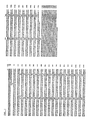
- pKG12 One clone, designated pKG12, was identified after autoradiography. Digestion with the restriction enzymes Kpn I and Pst I showed that pKG12 contained an insert of about 2.5 kb. The insert was subcloned into M13 mp10 and mp11 [25] and DNA sequence analysis was performed using the dideoxy chain termination method [26]. Clone pKG12 was shown to comprise the whole coding region for human t-PA as well as 102 bp 5′ flanking, 760 bp 3′ flanking DNA and a poly A tract. The complete DNA sequence of pKG12 is shown in Fig. 1.
- the whole coding sequence and all of the 5′ noncoding region and 559 bp of the 3′ noncoding DNA is contained within a 2350 partial Ava I / Xmn I fragment.
- Bam HI linkers (5′-CGCGGATCCGCG-3′) were added to the fragment using T4 DNA ligase. After subsequent cleavage with Bam HI and removal of excess Bam HI linker-fragments by 0.7% LGT-agarose electrophoresis, the t-PA fragment was ligated to Bam HI cleaved pUC8.
- the resulting plasmid, denoted pKGE22 contains most of the t-PA cDNA within a Hind III/Bam HI fragment. The sequence downstream of the Xmn I site, harboring the putative polyadenylation signal AATAAA has been removed.
- the ligation mixture was used to transform competent E.coli JM83 cells. White colonies were selected on agar plates containing 50 ⁇ g/ml ampicillin and 25 ⁇ l/plate of 2% X-gal in dimethylformamide.
- the strategy used to construct the gene encoding a t-PA molecule lacking the F, G, and K1 domain was first to remove the 613 bp restriction fragment spanning from Bgl II at position 103 to the Eco RI site at position 716 and then to fuse the K2 domain directly to the signal peptide using an oligonucleotide linker.
- the linker fragment that allowed fusion between the signal peptide and the K2 domain was constructed by synthesis of two complementary 116 bp oligonucleotides using the phosphoamidite method [27].
- each of the synthesized 116-mers were phosphorylated using T4 Polynucleotide kinase (New England Biolabs) as described by Maniatis et al. [28].
- the two strands were annealed by heating to 70°C for 5 min, after which the temperature was allowed to decrease to 20°C over a period of 60 min.
- 5 pmoles of the double stranded linker was ligated to 0.1 pmole of M13 mp8, digested with Eco RI and Hind III, using standard ligation conditions [28].
- the ligation mixture was subsequently used to transform competent E.coli JM 103. Recombinants were selected as white plaques on X- gal plates.
- Single stranded phage DNA was isolated and sequenced by the dideoxy method [26] using a 17-mer M13 universal sequencing primer 3′-GTAAAACGACGGCCAT-5′.
- Double stranded DNA from the M13 clone above was digested to completion with Bgl II and Eco RI.
- the 110 bp fragment obtained, was recovered from a 1.2% LGT agarose gel (BioRad, USA).
- the plasmid pKGE22 was partially digested with Bgl II and Eco RI, and the various cleavage products were separated in a 0.6% LGT agarose gel.
- A4381 bp fragment lacking the internal region of t-PA from Bgl II at position 103 to Eco RI at position 716 was isolated.
- the 110 bp Bgl II / Eco RI oligonucleotide linker was ligated to the 4381 bp partial Bgl II / Eco RI digest of pKGE22 using T4 DNA ligase, thus yielding plasmid pKGEP75.
- the ligation mixture was used to transform competent E.coli HB101 cells. Plasmid DNA from clones appearing on selective plates containing Amp (50 ⁇ g/ml) was prepared.
- lysine residue corresponding to the amino acid at position 277 in the unmodified t-PA sequence was changed to valine by oligonucleotide directed mutagenesis.
- the plasmid pKGEP75 was digested with Sal I / Sac I and a 0.9 kb fragment was recovered from an 0.9% LGT agarose gel. This fragment, which contains the DNA sequence coding for amino acid 277, was cloned into M13 mp19. Single stranded DNA of an M13 clone harboring the 0.9 kb Sal I / Sac I insert was prepared. This single stranded DNA was hybridized to a synthetic oligonucleotide (5′-GCCCTCCCACGATGCGAAA-3′). Annealing was made in 1xTM buffer (10mM Tris-HCl, 10mM MgCl 2, pH 8.0) for 5 min at 70°C.
- 1xTM buffer (10mM Tris-HCl, 10mM MgCl 2, pH 8.0
- the resulting double stranded DNA was directly used to transform competent JM 103 cells, and 200 plaques were hybridized to the mismatch primer labelled with 32P at the 5′ end.
- the 900 bp Sal I / Sac I fragment containing the Lys Val modification was recovered after cleavage with Sal I and Sac I followed by 0.9% LGT agarose gel electrophoresis. This fragment was cloned into Sal I / Sac I digested pKGEP75, thus obtaining plasmid pKGE114.
- Plasmid pKGE114 encodes the exemplary compound which is denoted K2(Gln)P(Val).
- the K2 domain is preceded by a Bam HI site. This site was used to introduce the region coding for the F domain immediately in front of the K2 domain.
- a synthetic 24 bp oligonucleotide mismatch primer (5′-GCAACTTTTGGATCCCACTGAGTG-3′) was used to convert amino acid residue 47 and 48 from Pro-Val to Gly-Ser and thereby creating a Bam HI site at the interface between the G and the K1 domains.
- the double stranded DNA was digested with Sal I and Bam HI, and the fragment containing the 5′ non translated region as well as the signal sequence and the F domain was recovered from 0.8% LGT agarose.
- Plasmid pKGEP115 encoding the exemplary compound FK2(Gln)P(Val)
- plasmid pKGFP114 was digested with Sal I to completion followed by partial Bam HI cleavage.
- the fragment corresponding to the pUC8 vector along with the t-PA gene lacking the 5′ non translated region and the signal sequence was excised and ligated to the Sal I / Bam HI fragment containing the signal sequence and the F domain.
- the expression units controlling the modified cDNA:s prepared as in examples 2 and 3 and the full length cDNA as in example 1 with appropriate polarity ligated to a DNA fragment containing enhancer and promoter sequences and the genomic fragment from the downstream region of the human t-PA gene were introduced into several vectors for expression in different cell systems.
- the eucaryotic expressions vectors were introduced into the cells by conventional transfection methods. Transient expression or expression in selected clones of host cells were assayed with an enzyme linked immunosorbent assay (ELISA) and fibrinolytic activity was assayed on plasminogen containing fibrin plates.
- ELISA enzyme linked immunosorbent assay
- the basic feature of the COS expression vector is that cDNA sequences can be inserted between the SV 40 late promoter and the 3′ polyadenylation-signal sequence using Sal I / Bgl II compatible cohesive ends.
- Full length t-PA cDNA, K2(Gln)P(Val) and FK2(Gln)P(Val) coding sequences were obtained on Sal I / Bam HI fragments from vectors pKGE22, pKGEP114 and pKGEP115 respectively. These fragments were ligated to the Sal I / Bgl II digested COS expression vector yielding the vectors pKGE74, pKE114 and pKGE115.
- t-PA modified or native t-PA in stably transformed mouse cells
- vectors which are capable of high copy number extrachromosomal replication were used.
- the expression vector pKGE83 in which the t-PA gene is under the control of the mouse metallothionein promoter (mMT-1) and with polyadenylation signal and other downstream signals derived from a human genomic fragment which covers the exon 14 of the t-PA gene was constructed.
- the eucaryotic replication origin, plasmid maintenance sequences and transformation of host cells are effected by bovine papilloma virus (BPV).
- BBV bovine papilloma virus
- the starting plasmids are pMTtPA, containing the t-PA gene between Hind III and Bam HI sites in pUC8, the mMT-1 promoter element and the SV 40 small t intron and polyadenylation signal and the pML2d-BPV variant, pKGE50.
- the plasmids, pMTPA and pKGE50 were digested with Bam HI and Sal I. From pMTtPA a 3.9 kb fragment containing t-PA and control elements was isolated and ligated to a Bam HI / Sal I fragment containing the entire BPV genome and pML2d sequences to yield the plasmid pKGE61.
- the plasmid pKGE27 which contains a genomic fragment covering more than the exon 14 region of the human t-PA gene, was digested with Apa I and Sal I.
- This fragment containing processing signals such as the polyadenylation signal sequence was inserted into pKGE61 which had been digested with Apa I and Sal I.
- the resulting plasmid was denoted pKGE83.
- the plasmid pKGE113 which is similar to pKGE83 but contains the cDNA modified as in example 2, was constructed by the ligation of a 10.2 kb Apa I Bam HI fragment derived from pKGE83.
- the plasmid contains the entire BPV-1 genome, the pML2d sequences, the distal portion of the t-PA gene, a 0.7 kb Bam HI Sal I fragmentcontaining mMT-1 promoter element and a Sal I Apa I fragment including the cDNA modifications.
- Table 2 summarizes expression levels obtained for C127 cells after transfection with different plasmids. The amount of ELISA-detectable protein as well as fibrinolytic activity were higher in the clones producing modified t-PA than those transfected with the corresponding vector coding for the full length molecule. It can also be concluded that expression levels are increased when the genomic fragment containing the human t-PA downstream processing signal is used.
- Table 2 plasmid production (pg/cell/day) mean value max value pKGE61 0.5 4 pKGE83 3.1 9 pKGE113 6.1 25
- the vectors indicated above were transfected into mouse C127 cells by use of the calcium phosphate method [30 ].
- the cells were cotransfected with the plasmid pKGE53 which contains the gene coding for neomycin resistance under the control of Harvey sarcoma virus 5′ LTR (long terminal repeat).
- the neomycin analog G418 was added to the media (1mg/ml) , and between 40 and 100 clones were isolated after approximately 2 weeks of cultivation in G418 containing medium. The clones were grown individually and assayed for expression of t-PA antigen with an ELISA assay.
- the expression vector pKGE25 contains the full length t-PA cDNA under the control of SV 40 early promoter and SV 40 processing signals, a transcription unit for DHFR driven by mouse mammary tumor virus MMTV 5′ LTR and polyadenylation signals and other downstream processing signals from SV 40 and a DNA fragment containing the procaryotic replication signals from pBR 322.
- the vector was transfected into DHFR deficient CHO cells [31] and transformants were isolated and grown in increasing concentrations of the dihydrofolate reductase inhibitor methotrexate (MTX).
- MTX dihydrofolate reductase inhibitor methotrexate
- Table 3 Expression values obtained for one typical transformant (pKGE25 7:9) in relation to MTX amplification are shown in Table 3.
- Table 3 ⁇ M MTX production (pg/cell/day) 0.00 0.05 0.02 0.15 0.50 4.7 10.0 9.7 CHOd ⁇ cells were cultivated in medium F-12 containing nucleosides. After transfection the medium was changed to Eagles alpha-MEM lacking nucleosides. Surviving clones were amplified by cultivation in increasing concentrations of methotrexate. Production of t-PA antigen was analyzed with an ELISA assay.
Landscapes
- Health & Medical Sciences (AREA)
- Chemical & Material Sciences (AREA)
- Organic Chemistry (AREA)
- Engineering & Computer Science (AREA)
- Life Sciences & Earth Sciences (AREA)
- Bioinformatics & Cheminformatics (AREA)
- Zoology (AREA)
- Wood Science & Technology (AREA)
- Genetics & Genomics (AREA)
- General Health & Medical Sciences (AREA)
- Biochemistry (AREA)
- Medicinal Chemistry (AREA)
- General Engineering & Computer Science (AREA)
- Biomedical Technology (AREA)
- Microbiology (AREA)
- Hematology (AREA)
- Veterinary Medicine (AREA)
- Animal Behavior & Ethology (AREA)
- Molecular Biology (AREA)
- Biotechnology (AREA)
- General Chemical & Material Sciences (AREA)
- Pharmacology & Pharmacy (AREA)
- Chemical Kinetics & Catalysis (AREA)
- Public Health (AREA)
- Diabetes (AREA)
- Nuclear Medicine, Radiotherapy & Molecular Imaging (AREA)
- Medicines That Contain Protein Lipid Enzymes And Other Medicines (AREA)
- Enzymes And Modification Thereof (AREA)
- Micro-Organisms Or Cultivation Processes Thereof (AREA)
- Pharmaceuticals Containing Other Organic And Inorganic Compounds (AREA)
- Organic Low-Molecular-Weight Compounds And Preparation Thereof (AREA)
- Polysaccharides And Polysaccharide Derivatives (AREA)
- Saccharide Compounds (AREA)
Abstract
Description
- The present invention relates to fibrinolytically active plasminogen activators of the tissue type, DNA-sequences coding for same, pharmaceutical compositions containing same and processes for their production.
- In particular, this invention relates to tissue-type plasminogen activators (t-PA) which have been modified in such a way that a; the uptake of the enzyme by the liver is reduced and b; the enzyme is essentially resistant to inactivation by plasma inhibitors. As a result the modified t-PA:s covered by this invention are characterized by a longer biological half-life than the t-PA preparations (native or recombinant) previously used.
- Another aspect of this invention relates to the expression of t-PA, native or modified, in eucaryotic cells. More particularly, the invention relates to specific DNA sequences containing mRNA processing signals and which induce high production of recombinant proteins in heterologous cells.
- Vascular disorders such as myocardial infarction, pulmonary embolism, stroke, deep vein thrombosis, periferal arterial thrombosis and other vascular thromboses are caused by partial or total occlusion of a blood vessel by blood clots. The clot which consists of a fibrin network can be dissolved by fibrinolytic enzymes. Plasmin is one such fibrinolytic enzyme which is present in the blood as an inactive proenzyme, plasminogen. Plasminogen activators convert plasminogen to plasmin, which in turn degrades the fibrin to soluble fragments. Thus, plasminogen activators can be use to induce thrombolysis.
- The tissue plasminogen activator is regarded to be highly suitable for thromboytic treatments since it is a physiological compound with affinity for fibrin, and which activates plasminogen efficiently only in the presence of fibrin [1, 2]. Thus, it is a clot selective fibrinolytic agent suitable for intravenous administration. Other plasminogen activators such as streptokinase, a bacterial protein, or urokinase, isolated from urine, activates plasminogen but are not clot selective. As a result circulating plasmin is generated which may cause a haemorrhagic potential because the circulating plasmin degrades clotting factors such as fibrinogen, factor VIII and factor V.
- Clinical studies have demonstrated the thrombolytic effectiveness of t-PA for treatment of acute myocardinal infarction [3, 4]. However, due to the rapid clearance of t-PA by the liver [5] high doses 50-90 mg had to be given as a continuous infusion in order to induce efficient thrombolysis. The biological half-life of t-PA in man is only a few minutes [6], and only a small fraction of the activator will actually reach the clot. Another factor which further reduces the amount of t-PA available for clot lysis is the reaction with plasma inhibitors. It has been shown that t-PA forms complexes with a number of plasma protease inhibitors including the recently discovered plasminogen activator inhibitors of endothelial and placental type [7, 8, 9].
- The modifications of t-PA according to the present invention solves both the problem of the short biological half-life due to the liver clearance and the sensitivity to inactivation by plasma inhibitors.
- The DNA sequences containing the information for t-PA and derivatives thereof can be introduced into appropriate vectors for expression in eucaryotic cells. The fibrinolytic activity produced by the transiently transfected or stably transformed host cells may be measured by using standard assays for plasminogen activators. The eucaryotic expression vectors described herein may be constructed by techniques well known by those skilled in the art, using components such as replicons, enhancers, promoters etc from natural sources or chemically synthesized by conventional procedures.
- Established cell lines, as well as normal diploid cells, are suitable as hosts. A large number of different cell lines are usable for expression of t-PA or derivatives thereof. For example, different hamster cell lines such as CHOd⁻, CHOKl and BHK, monkey cell lines such as CV-1 and COS, mouse cell lines such as C127 and 3T3, as well as human cell lines may be used. Other hosts such as insect cells as well as transgenic organisms may also be used for the production of t-PA or t-PA derivatives.
- After introduction into a suitable host cell, the t-PA coding DNA sequences may be contained and propagated either as stably integrated into the host cell genome or in extrachromosomal form.
- The sequences comprising the t-PA gene are preferentially present in the cells in multiple copies. Different strategies for amplification of t-PA gene copy number may be exploited. For stable integration of the vector DNA into the host cells chromosomal DNA, and for the subsequent amplification of the integrated vector DNA, an amplifiable selectable gene is included in the t-PA expression vector. Chinese hamster ovary cells (CHO) are presently preferred together with the dihydrofolate reductase (DHFR) gene as an amplifiable selectable marker gene [10].
- Another amplification system is based on the use of papilloma virus DNA, especially bovine papilloma virus 1 (BPV). All or part of the virus genome is used to obtain stable transformation of mouse cells such as C127 or 3T3. The viral genome contains information for the maintenance of the vector DNA as a stable extrachromosomal element at a high copy number [11].
- In the eucaryotic host-vector systems discussed above, the expression of t-PA molecules or variants of the t-PA molecule is influenced by different upstream and downstream regulating DNA elements.
- We have isolated and characterized a DNA fragment (KGH 11) from a human genomic library , which contains downstream processing signals such as polyadenylation signal etc from the human t-PA gene. The appropriate DNA fragment contains a part of the sequence in the last exon of the human t-PA gene. Since this segment also is represented in the cDNA it provides the possibility to use a unique restriction enzyme site in the overlapping region as a fusion site for ligation of the two elements (Fig. 3) For the eucaryotic expression systems analyzed, the production levels from this homologous construction were significantly higher than from expression vector constructions which are identical except for the processing signals downstream of the t-PA gene.
- Recombinant DNA and other biotechnological techniques have been employed in order to obtain efficient production of t-PA for treatment of vascular diseases. Promising clinical studies were first performed with t-PA isolated from human melanoma cells [12].
- Amino acid sequence analysis of the human melanoma t-PA [13] provided the necessary information for the synthesis of DNA probes which were used for the isolation of, first a partial cDNA [14], and subsequently a complete cDNA coding for the entire protein (Fig. 1).
- Other examples where cDNA:s coding for t-PA have been isolated and where attempts have been made to produce t-PA in heterologous cells are referred to in European patent applications 93619 and 178105. See also reference [15].
- Amino acid sequence determinations of various preparations of human t-PA have revealed differences in the N-terminal starting position. Due to differences in processing of the nascent molecule L,S, and U-forms of polypeptides are produced [16]. The L-form is characterized by having glycine as the N-terminal residue. The N-terminal residue of the S-form and the U-form is serine and valine respectively. The numbering system for the amino acid sequence of t-PA used herein is based on the S-form where the N-terminal serine is numbered 1. As a consequence the L-form N-terminal glycine is at position -3, and the U-form N-terminal valine is at position 4. It is understood that the tissue plasminogen activator modified in accordance with the present invention encompasses all such variant forms.
- Different parts of the t-PA molecule show homologies with parts of other proteins. As discussed in [17] the native t-PA molecule consists of five structural domains which have been termed "finger domain" (F), "growth factor domain" (G), "Kringle domain" (K1 and K2 for Kringle 1 and Kringle 2) and "protease domain" (P) respectively. Thus native t-PA can schematically be described by the formula:

The exon/intron junctions of the human t-PA gene have been determined [18], and the positions of these junctions can be used to define the boundries between the different domains in the amino acid sequence. Thus, the F domain consists of amino acid residues 4-50, the G domain consists of residues 51-87, the K1 domain consists of residues 88-176, and the K2 domain consists of residues 177-262. Following the K2 domain is a short connecting peptide consisting of the residues 263-274. The P domain is coded for by 5 exons and is contained within the amino acid sequence of residues 275-527 [19]. Human t-PA is synthesized as a single-chain 19 polypeptide but can be converted into a two-chain form where the two chains are connected through a disulfide bond. The heavy chain (residues 1-274) consists of the F, G, K1 and K2 domains together with a short connecting peptide, and the light chain (residues 275-527) consists of the P domain. - The fact that native, single-chain t-PA express activity with synthetic, low molecular weight, substrates and is inhibited by protease inhibitors [20] indicates that single-chain t-PA has significant enzymatic activity. In this respect, t-PA is different from other single-chain forms of serine proteases which have essentially no activity with synthetic substrates and does not react with inhibitors. It has been suggested [13] that the enzymatic activity of the single-chain t-PA may be caused by the presence of a certain lysine residue (position 277 in the t-PA molecule). In all other serine proteases the corresponding position (i.e.
position 2 after the activation cleavage site) is occupied by a small hydrofobic residue. - Attempts have been made to apply recombinant DNA techniques for the production of mutated forms of t-PA where the above mentioned lysine residue is exchanged for isoleucine (see International patent applicaton WO 86/01538). However, this modification is not expected to reduce the rapid uptake of t-PA by the liver since it has been shown that the rapid clearance is mediated by structures in the enzymatically inactive heavy chain of the molecule [21].
- Modified activators are known in the art. Thus, van Zonneveld et al. in The Journal of Biol.Chem., Vol 263 (1986) pp 14214-14218 [32], describe t-PA's modified in the F, K1 and K2 domains by deletions of one or two of said domains. The article relates to the binding of such t-PA's to fibrin but is not concerned with for example biological half-life in vivo.
- The main object of the present invention is to provide for fibrinolytically active plasminogen activators of the tissue type which have longer biological half-life in vivo. Another object of the invention is to provide activators which are less sensitive to inhibition by plasma inhibitors as compared with native human t-PA.
- These and other objects of the invention which will be clear from the following disclosure are obtained by a fibrinolytically active plasminogen activator of the tissue type, wherein in addition to the growth factor (G) domain, also the K1 domain and the F domain have been deleted. Additionally the plasminogen activator of the invention has been modified in one or more of the following sites or region: the sites of amino acid residues 184, 277 and 448.
- It is preferred that the 184 site has been modified to prevent glycosylation therat. It is particularly preferred that both sites 184 and 448 have been modified to prevent glycosylation at said sites.
- In this disclosure, when referring to modification of glycosylation sites 184 and 448, the modification is such that no glycosylation occurs. Thus, the site in question is modified so as to prevent N-glycosylation by modifying the N-glycosylation consensus sequence.
- In such plasminogen activator it is preferred that the additional modification has been made at the site of amino acid residue 277, and such modification can be in the form of change to an amino acid residue which in its side chain does not exhibit a positive charge. An example of such modification is substituting a valine residue for the lysine residue at the 277 site.
- In yet another embodiment of the present invention modification of the molecule has been made at the site of amino acid residue 184, whereby N-glycosylation at said site, which occurs in normal t-PA, is no longer achievable. In such a modification at the 184 site the asparagine residue thereof can be replaced by a glutamine residue.
- The invention also covers a DNA-sequence comprising a nucleotide sequence encoding a fibrinolytically active plasminogen activator as described above. In addition, the invention comprises a replicable expression vector capable of expressing such a DNA-sequence. Furthermore, the invention includes host cells transformed with such replicable expression vector.
- As indicated earlier in this disclosure the modified fibrinolytically active plasminogen activators according to the present invention display a longer biological half-life as compared to native t-PA and is therefore particularly useful in pharmaceutical compositions and methods for the treatment of thrombotic diseases, such as vascular disorders.
- The modified t-PA according to the present invention may be formulated using known methods for the manufacture of pharmaceutically useful compositions. Accordingly, the present invention also includes a pharmaceutical composition comprising a therapeutically effective amount of the modified t-PA in admixture with pharmaceutically acceptable carrier. The resulting compositions will provide an amount of modified t-PA effective in a patient to provide for treatment of thrombotic diseases, for example to dissolve blood clots.
- Various dosage forms can be manufactured to enable administration of such pharmaceutical compositions. Thus, for example parenteral administration can be used for patients suffering from cardiovascular disorders. The dosage and frequence of administration will be selected according to the situation at hand. Because of the fact that the modified t-PA according to the present invention has been found to possess longer half-life than native t-PA the dosage can be significantly reduced compared to that presently used in therapy with prior art t-PA. Thus, quite generally, in the treatment of a patient for a thrombotic disorder there will be administered a daily dose of up to say about 1 mg/kg of body weight. Such administration can take place wither by injection or by infusion.
- Compositions for intravenous administration may take the form of solutions of the modified t-PA in an isotonic aqueous solution in sterile state. Such solution may contain a solubilizing agent to maintain the t-PA in solution.
- These modified t-PA molecules which have an increased biological half-life compared with the native t-PA and have retained fibrin affinity, may be used for the in vivo localization of thrombi. The enzyme is preferably made inactive either by chemical modifications of the active site amino acid residues or by modifications of the DNA sequence coding for these residues. A number of well known methods exist for the chemical inactivation of serine proteases with agents such as diisopropylfluorophosphate (DFP), phenylmethylsulfonylfluoride (PMSF), N-p-tosyl-L-lysylchloromethane (TLCK) or peptide chloromethyl ketones such as H-D-Phe-Gly-ArgCH₂Cl. Inactivations by genetic modifications may be performed by using site specific mutagenesis (as in example 2) and thereby change the DNA sequence coding for any of the acitve site residues. Preferably, the serine residue which corresponds to Ser-478 in the native, full sized, t-PA is changed to alanine.
- The invention also covers DNA-sequences comprising a nucleotide sequence encoding a modified plasminogen activator according to the invention.
- The invention also includes the preferred use fo a DNA fragment containing the downstream mRNA processing signals provided from the human t-PA gene for the expression of human proteins in mammalian cells. The DNA fragment is characterized by the nucleotide sequence and restriction enzyme cleavage sites shown in Fig. 3.
- Furthermore, the invention provides for a replicable expression vector capable of expressing, in a transformant host cell, such a DNA-sequence. In addition, the invention includes host cells transformed with such replicable expression vector.
- According to yet another aspect of the invention there is provided a process for producing a modified plasminogen activator according to the invention, such process comprising:
- a) preparing a replicable expression vector capable of expressing the DNA-sequence encoding such plasminogen activator;
- b) transforming a host cell culture using the vector resulting from step a) to form recombinant host cells;
- c) culturing said recombinant host cells under conditions permitting expression of the plasminogen activator encoding DNA-sequence to produce said plasminogen activator.
- d) recovering the resulting plasminogen activator. In such process eucaryotic host cells may be used.
- One of the exemplified compounds differs from the native human t-PA by lacking the growth factor domain and the first Kringle domain. The amino acid residues from Pro-47 to Glu-175 of the native t-PA are deleted and Val-46 is directly followed by Gly-176. An other difference between this exemplary compound and the native t-PA molecule is that the N-glycosylation site in the second Kringle domain (present at Asn-184 in the native molecule) is made unavailable for glycosylation by the conversion of this asparagine residue to glutamine. The lysine residue at the position which corresponds to Lys-277 in the native t-PA molecule is changed to valine. The compound modified as above is denoted FK2(Gln)P(Val). In an other exemplary compound the residues from Cys-6 to Cys-173 of the native t-PA molecule are deleted, and here Ile-5 in the amino acid sequence is followed by Ser-174. The residues corresponding to Asn-184 and Lys-277 in the native molecule are modified in the same way as in the first compound. This second compound is denoted K2(Gln)P(Val).
- These exemplary compounds are schematically depicted in Table 1.
Table 1 Compound residues deleted residues changed Asn-177->Ser FK2(Gln)P(Val) 47-175 Asn-184->Gln Lys-277->Val Asn-177->Ser K2(Gln)P(Val) 6-173 Asn-184->Gln lys-277->Val - The numbers given for the residues refer to the native human t-PA sequence (see Fig. 1.)
- The modifications of human t-PA according to the present invention is preferably a combination of a deletion of the growth factor, K1 and F domains, removal of at least one glycosylation site and modification of the second residue in the protease domain (Lys) into an amino acid residue which does not exhibit a positive charge in its side chain.
- These fibrinolytically active modified t-PA molecules have longer biological half-life in the blood stream and are less sensitive to inactivation by complex formation with inhibitors than the native, unmodified, t-PA (natural or recombinant). Efficient thrombolysis may be obtained with comparatively lower doses of these mutant forms of t-PA than what is presently used for the unmodified t-PA.
- While not wanting to be bound by theory we speculate that smaller molecules such as the modified t-PA:s may diffuse faster into the clot and thereby induce thrombolysis more efficiently than the unmodified full sized t-PA. Our results also indicate that these smaller t-PA molecules are expressed more efficiently by eucaryotic cells. Also potentially important for large scale production is that the single-chain form of the modified molecules will not react, or react more slowly than unmodified t-PA, with plasma inhibitors. This may increase the yield of fibrinolytically active molecules from tissue cultures, since in most cases the media have to be supplemented with serum which contain protease inhibitors. It has been reported that a significant part of the secreted unmodified t-PA is complexed to inhibitors derived from foetal calf serum [22].
- These modified fibrinolytic enzymes may be produced by means of recombinant DNA techniques. The DNA coding for the modified molecules may be constructed by digesting full length t-PA cDNA with suitable restriction enzymes, utilize techniques such as site directed mutagenesis and/or chemical synthesis of DNA fragments. These methods are well known by those who are ordinarily skilled in the art of recombinant DNA.
- The DNA coding for the modified fibrinolytic molecules may be introduced into appropriate vectors for expression in eucaryotic or procaryotic cells.
- Purification of the molecules may be conducted by procedures developed and known for native human t-PA with appropriate modifications. Proper purification procedures may be developed by persons ordinarily skilled in the art of protein purification.
- By using a transcriptional unit which consists of an enhancer element as well as a promoter element upstream of the coding sequence for native or modified human t-PA fused to human t-PA downstream processing signals, high level expression were obtained in all eucaryotic cell systems analyzed, e.g. mouse cells such as C127, NIH 3T3, Swiss 3T3, hamster cells such as CHOd⁻, CHOK1, HAK, RS 1610, monkey cells such as CV-1, COS-1, COS-7. The expression levels were substantially higher by the use of homologous coding and downstream processing units, compared with using downstream processing signals from non-human eucaryotic genes or from genes of viral origin. The t-PA expression sequence is with respect to the sequence in the last exon and further downstream identical to the sequence for this region found in the human genome. This region is characterized by the nucleotide sequence and restriction enzyme cleavage sites indicated in Fig. 3.
- This improved homologous unit is obtained by fusion of the element providing mRNA processing signals to a corresponding site in the last exon region of the cDNA.
- Native and modified t-PA was injected as an intravenous bolus dose of 10-30 µg. From a cannula in the ear artery, frequent blood samples were collected and mixed with a 10% sodium citrate solution. After centrifugation the plasma samples were assayed for recombinant t-PA with an enzyme linked immunosorbent assay (ELISA) utilizing polyclonal antibodies raised against human melanoma t-PA.
- Microorganisms, recombinant DNA molecules and the modified t-PA DNA coding sequences of this invention as well as starting materials useful in preparing them have been deposited in the culture collection of "Deutsche Sammlung von Mikroorganismen", Grisebachstrasse 8, D-3400 GÖTTINGEN, Germany on June 16, 1987 and have been identified there as:
A: E.coli JM83 (pKGE22) accession number: DMS 4142
B: E.coli HB 101 (pKGE81) accession number: DMS 4143
C: E.coli HB 101 (pKGE83) accession number: DSM 4144
D: E.coli HB 101 (pKGE105) accession number: DSM 4145
E: E.coli HB 101 (pKGE114) accession number: DSM 4146
The invention will be further understood with reference to the following illustrative embodiments, which are purely exemplary and should not be taken as limiting the true scope of the present invention as described in the claims. - This exemplification is made with reference to the appended drawings wherein:
- Fig.1:
- Nucleotide sequence and the deduced amino acid sequence of the full length human t-PA cDNA.
- Fig.2:
- Schematic representation of the relationship between the full length t-PA cDNA in vector pKG12 and the t-PA cDNA modified for eucaryotic expression (pKGE22) as described in example 1, and the t-PA protein with its different domains indicated below.
- Fig.3:
- Schematic representation of the human genomic DNA fragment, included in clone KGH11, with reference to the nucleotide numbering in pKG12. The sequence shown, represent part of the last exon, carrying the poly A signal as well as 3′ flanking genomic DNA.
- Fig.4:
- Fibrin autography after SDS/polyacrylamide gel electrophoresis of full sized human t-PA and modified forms of t-PA produced in COS cells.
- Fig.5:
- Elimination of native full sized human t-PA (pKGE74) and modified forms of t-PA (pKGE114, 115) from rabbit plasma.
- Bowes melanoma cells, a transformed human cell line which constitutively produces high levels of t-PA, were cultured in glass roller bottled at +37°C in Eagles minimal essential medium (EMEM) supplemented with 1% non essential amino acids (Flow), glutamine (2mM), penicillin (50 IU/ml), streptomycin (50 µg/ml), Hepes (20mM, pH 7.2) and 10% foetal calf serum.
- Confluent cultures of melanoma cells were harvested by trypsination. After washing in ice cold phosphate buffered saline pH 7.2, the cells were recovered by centrifugation. Cell pellets were lysed in 4M GuSCN, and total RNA was then selectively precipated from a GuHCl solution by ethanol. Messenger RNA was purified from the total RNA preparation by chromatography on oligo-dT cellulose. The poly-A⁺ mRNA obtained was size fractionated on a sucrose gradient, consisting of 10-30% sucrose in 50mM LiCl, 20mM Tris-HCl, 1mM EDTA-Li, 1%LiDS and with a pH of 7.8.
- Sucrose fractions corresponding to 23 S were shown to be enriched in t-PA mRNA by dot blot hybridization. 5 ug mRNA from this enriched fraction was used to construct a cDNA library essentially as described by Okayama & Berg [23] with the modifications detailed in [24]. The cDNA containing plasmid pT4 pre- pared by the disclosed method was used to transform E.coli 5K. The gene bank obtained consisted of approximately 5 x 10⁴ independent clones.
- The isolated partial t-PA cDNA clone [14], was used to screen the gene library for t-PA sequence containing clones. A 476 bp Eco RI fragment of the cDNA clone was nicktranslated with ³²P-dCTP to a specific activity of about 5 x 10⁷CPM/µg using a commercial nicktranslation kit (NEN). Bacterial colonies were transferred to PALL filters by the method suggested by the manufacturer and were hybridized to the nicktranslated DNA probe in 50% formamide, 5xSSC, 250 µg/ml yeast RNA at 37°C over night. After washing in 3 changes of 2xSSC at ambient temperature, the filters were dried and exposed on X-ray film.
- One clone, designated pKG12, was identified after autoradiography. Digestion with the restriction enzymes Kpn I and Pst I showed that pKG12 contained an insert of about 2.5 kb. The insert was subcloned into M13 mp10 and mp11 [25] and DNA sequence analysis was performed using the dideoxy chain termination method [26]. Clone pKG12 was shown to comprise the whole coding region for human t-PA as well as 102
bp 5′ flanking, 760bp 3′ flanking DNA and a poly A tract. The complete DNA sequence of pKG12 is shown in Fig. 1. - As seen in Fig. 2, the whole coding sequence and all of the 5′ noncoding region and 559 bp of the 3′ noncoding DNA is contained within a 2350 partial Ava I / Xmn I fragment.
- To obtain this fragment, 25 µg pKG12 was cleaved to completion with 30 units Xmn I overnight at 37°C. Ava I (9 units) was added and the cleavage continued for another 1h and 20 min at 37°C. The various cleavage products obtained were separated in a 0.6% low gelling temperature agarose gel (LGT-agarose, BioRad). The 2350 bp band was excised and melted at 68°C, followed by phenol extraction and ethanol precipitation. The purified fragment was made blunt ended by a fill-in reaction using the Klenow fragment of DNA polymerase in the presence of dNTP:s. Bam HI linkers (5′-CGCGGATCCGCG-3′) were added to the fragment using T4 DNA ligase. After subsequent cleavage with Bam HI and removal of excess Bam HI linker-fragments by 0.7% LGT-agarose electrophoresis, the t-PA fragment was ligated to Bam HI cleaved pUC8. The resulting plasmid, denoted pKGE22 contains most of the t-PA cDNA within a Hind III/Bam HI fragment. The sequence downstream of the Xmn I site, harboring the putative polyadenylation signal AATAAA has been removed.
- The ligation mixture was used to transform competent E.coli JM83 cells. White colonies were selected on agar plates containing 50 µg/ml ampicillin and 25 µl/plate of 2% X-gal in dimethylformamide.
- The strategy used to construct the gene encoding a t-PA molecule lacking the F, G, and K1 domain was first to remove the 613 bp restriction fragment spanning from Bgl II at
position 103 to the Eco RI site atposition 716 and then to fuse the K2 domain directly to the signal peptide using an oligonucleotide linker. - By removal of the 613 bp internal Bgl II/Eco RI fragment, the region encoding the whole F, G, and K1 domains are deleted. A linker fragment was used to restore the deleted part of the K2 domain along with the 5 N-terminal amino acid residues of the mature, processed t-PA. Furthermore the glycosylation site Asn184 was changed to Gln and the asparagine residue at position 177 was substituted with a serine residue.
- The linker fragment that allowed fusion between the signal peptide and the K2 domain was constructed by synthesis of two complementary 116 bp oligonucleotides using the phosphoamidite method [27].
- 50 pmoles each of the synthesized 116-mers were phosphorylated using T4 Polynucleotide kinase (New England Biolabs) as described by Maniatis et al. [28]. The two strands were annealed by heating to 70°C for 5 min, after which the temperature was allowed to decrease to 20°C over a period of 60 min. 5 pmoles of the double stranded linker was ligated to 0.1 pmole of M13 mp8, digested with Eco RI and Hind III, using standard ligation conditions [28]. The ligation mixture was subsequently used to transform competent
E.coli JM 103. Recombinants were selected as white plaques on X- gal plates. Single stranded phage DNA was isolated and sequenced by the dideoxy method [26] using a 17-mer M13universal sequencing primer 3′-GTAAAACGACGGCCAT-5′. The double stranded replicative form (RF) from one clone having the correct sequence, was prepared, and used for further construction work. - Double stranded DNA from the M13 clone above was digested to completion with Bgl II and Eco RI. The 110 bp fragment obtained, was recovered from a 1.2% LGT agarose gel (BioRad, USA). The plasmid pKGE22 was partially digested with Bgl II and Eco RI, and the various cleavage products were separated in a 0.6% LGT agarose gel. A4381 bp fragment lacking the internal region of t-PA from Bgl II at
position 103 to Eco RI atposition 716 was isolated. The 110 bp Bgl II / Eco RI oligonucleotide linker was ligated to the 4381 bp partial Bgl II / Eco RI digest of pKGE22 using T4 DNA ligase, thus yielding plasmid pKGEP75. The ligation mixture was used to transform competent E.coli HB101 cells. Plasmid DNA from clones appearing on selective plates containing Amp (50 µg/ml) was prepared. - Next, the lysine residue corresponding to the amino acid at position 277 in the unmodified t-PA sequence was changed to valine by oligonucleotide directed mutagenesis.
- The plasmid pKGEP75 was digested with Sal I / Sac I and a 0.9 kb fragment was recovered from an 0.9% LGT agarose gel. This fragment, which contains the DNA sequence coding for amino acid 277, was cloned into M13 mp19. Single stranded DNA of an M13 clone harboring the 0.9 kb Sal I / Sac I insert was prepared. This single stranded DNA was hybridized to a synthetic oligonucleotide (5′-GCCCTCCCACGATGCGAAA-3′). Annealing was made in 1xTM buffer (10mM Tris-HCl,
10mM MgCl 2, pH 8.0) for 5 min at 70°C. After 1 h when the temperature reached 20°C, 1µl 10xTM buffer, 1µl 10mM ATP, 1µl 20mM dNTP, 1µl 100mM DTT, 5 units Klenow fragment and 12 units T4 DNA ligase was added. The extension/ligation reaction was performed at 15°C for 4 h. - The resulting double stranded DNA was directly used to transform
competent JM 103 cells, and 200 plaques were hybridized to the mismatch primer labelled with ³²P at the 5′ end. One plaque, giving a strong hybridization signal after washing at 50°C, was purified and the double stranded replicative form was prepared. - The 900 bp Sal I / Sac I fragment containing the Lys Val modification was recovered after cleavage with Sal I and Sac I followed by 0.9% LGT agarose gel electrophoresis. This fragment was cloned into Sal I / Sac I digested pKGEP75, thus obtaining plasmid pKGE114.
- Plasmid pKGE114 encodes the exemplary compound which is denoted K2(Gln)P(Val).
- In plasmid pKGEP114 the K2 domain is preceded by a Bam HI site. This site was used to introduce the region coding for the F domain immediately in front of the K2 domain.
- By site directed mutagenesis a Bam HI site was created at the junction between the F and the G domains in the t-PA cDNA sequence. Plasmid pKGE22 was digested with Sal I and Eco RI to completion. A 800 bp fragment spanning the signal sequence and the F, G and K1 domains was recovered after LGT agarose electro- phoresis, and subcloned into M13 mp19. The single stranded form of this M13 clone served as template for the in vitro mutagenesis. A synthetic 24 bp oligonucleotide mismatch primer (5′-GCAACTTTTGGATCCCACTGAGTG-3′) was used to convert amino acid residue 47 and 48 from Pro-Val to Gly-Ser and thereby creating a Bam HI site at the interface between the G and the K1 domains. One plaque which gave a strong hybridization signal with the ³²P labelled 24 bp mismatch primer, was purified and double stranded DNA was prepared.
- The double stranded DNA was digested with Sal I and Bam HI, and the fragment containing the 5′ non translated region as well as the signal sequence and the F domain was recovered from 0.8% LGT agarose.
- To obtain plasmid pKGEP115, encoding the exemplary compound FK2(Gln)P(Val), plasmid pKGFP114 was digested with Sal I to completion followed by partial Bam HI cleavage. The fragment corresponding to the pUC8 vector along with the t-PA gene lacking the 5′ non translated region and the signal sequence was excised and ligated to the Sal I / Bam HI fragment containing the signal sequence and the F domain.
- The expression units controlling the modified cDNA:s prepared as in examples 2 and 3 and the full length cDNA as in example 1 with appropriate polarity ligated to a DNA fragment containing enhancer and promoter sequences and the genomic fragment from the downstream region of the human t-PA gene were introduced into several vectors for expression in different cell systems.
- The eucaryotic expressions vectors were introduced into the cells by conventional transfection methods. Transient expression or expression in selected clones of host cells were assayed with an enzyme linked immunosorbent assay (ELISA) and fibrinolytic activity was assayed on plasminogen containing fibrin plates.
- An expression vector containing the
SV 40 late promoter, a polyadenylation signal and the small t intron fromSV 40, and a becterial replicon and selective marker (pML2d), was constructed. The basic feature of the COS expression vector is that cDNA sequences can be inserted between theSV 40 late promoter and the 3′ polyadenylation-signal sequence using Sal I / Bgl II compatible cohesive ends. Full length t-PA cDNA, K2(Gln)P(Val) and FK2(Gln)P(Val) coding sequences were obtained on Sal I / Bam HI fragments from vectors pKGE22, pKGEP114 and pKGEP115 respectively. These fragments were ligated to the Sal I / Bgl II digested COS expression vector yielding the vectors pKGE74, pKE114 and pKGE115. - These expression plasmids were introduced into COS-7 cells via the DEAE-Dextran transfection protocol [29]. Medium was harvested 48 and 72 h post transfection and assayed for antigen and fibrinolytic activity. Further characterization was performed by SDS/polyacrylamide gel electrophoresis followed by fibrin autography (see Fig. 4).
- For production of modified or native t-PA in stably transformed mouse cells, vectors which are capable of high copy number extrachromosomal replication were used. The expression vector pKGE83, in which the t-PA gene is under the control of the mouse metallothionein promoter (mMT-1) and with polyadenylation signal and other downstream signals derived from a human genomic fragment which covers the exon 14 of the t-PA gene was constructed. The eucaryotic replication origin, plasmid maintenance sequences and transformation of host cells are effected by bovine papilloma virus (BPV).
- The starting plasmids are pMTtPA, containing the t-PA gene between Hind III and Bam HI sites in pUC8, the mMT-1 promoter element and the
SV 40 small t intron and polyadenylation signal and the pML2d-BPV variant, pKGE50. - The plasmids, pMTPA and pKGE50 were digested with Bam HI and Sal I. From pMTtPA a 3.9 kb fragment containing t-PA and control elements was isolated and ligated to a Bam HI / Sal I fragment containing the entire BPV genome and pML2d sequences to yield the plasmid pKGE61.
- In the next step the plasmid pKGE27, which contains a genomic fragment covering more than the exon 14 region of the human t-PA gene, was digested with Apa I and Sal I. This fragment containing processing signals such as the polyadenylation signal sequence was inserted into pKGE61 which had been digested with Apa I and Sal I. The resulting plasmid was denoted pKGE83.
- The plasmid pKGE113 which is similar to pKGE83 but contains the cDNA modified as in example 2, was constructed by the ligation of a 10.2 kb Apa I Bam HI fragment derived from pKGE83. The plasmid contains the entire BPV-1 genome, the pML2d sequences, the distal portion of the t-PA gene, a 0.7 kb Bam HI Sal I fragmentcontaining mMT-1 promoter element and a Sal I Apa I fragment including the cDNA modifications.
- These host vector systems are capable of high expression of intact or modified t-PA. Table 2 summarizes expression levels obtained for C127 cells after transfection with different plasmids. The amount of ELISA-detectable protein as well as fibrinolytic activity were higher in the clones producing modified t-PA than those transfected with the corresponding vector coding for the full length molecule. It can also be concluded that expression levels are increased when the genomic fragment containing the human t-PA downstream processing signal is used.
Table 2 plasmid production (pg/cell/day) mean value max value pKGE61 0.5 4 pKGE83 3.1 9 pKGE113 6.1 25
The vectors indicated above were transfected into mouse C127 cells by use of the calcium phosphate method [30 ]. The cells were cotransfected with the plasmid pKGE53 which contains the gene coding for neomycin resistance under the control ofHarvey sarcoma virus 5′ LTR (long terminal repeat). The neomycin analog G418 was added to the media (1mg/ml), and between 40 and 100 clones were isolated after approximately 2 weeks of cultivation in G418 containing medium. The clones were grown individually and assayed for expression of t-PA antigen with an ELISA assay. - The expression vector pKGE25, contains the full length t-PA cDNA under the control of
SV 40 early promoter andSV 40 processing signals, a transcription unit for DHFR driven by mouse mammarytumor virus MMTV 5′ LTR and polyadenylation signals and other downstream processing signals fromSV 40 and a DNA fragment containing the procaryotic replication signals from pBR 322. The vector was transfected into DHFR deficient CHO cells [31] and transformants were isolated and grown in increasing concentrations of the dihydrofolate reductase inhibitor methotrexate (MTX). - Expression values obtained for one typical transformant (pKGE25 7:9) in relation to MTX amplification are shown in Table 3.
Table 3 µM MTX production (pg/cell/day) 0.00 0.05 0.02 0.15 0.50 4.7 10.0 9.7
CHOd⁻ cells were cultivated in medium F-12 containing nucleosides. After transfection the medium was changed to Eagles alpha-MEM lacking nucleosides. Surviving clones were amplified by cultivation in increasing concentrations of methotrexate. Production of t-PA antigen was analyzed with an ELISA assay. -
- 1) Camiolo et al. Proc. Soc. Exp. Biol. Med. 138. pp. 277-280, 1971
- 2) Rånby, M., Biochem. Biophys. Acta, 704, pp. 461-469, 1982
- 3) The TIMI Study Group, N. Engl. J. Med. 312, p. 932, 1985
- 4) Verstraete et al. Lancet, 1, pp. 842-847, 1985
- 5) Korninger et al. Thromb. Haemostas. 46, pp. 658-661, 1981
- 6) Tiefenbrunn et al. Circulation, 71, pp. 110-116, 1985
- 7) Rijken et al. J. Lab. Clin. Med. 101, pp. 285-294, 1983
- 8) Wiman et al. J. Biol. Chem. 259, pp. 3644-3647, 1984
- 9) Lecander et al. British Journal of Haemathology, 57, pp. 407-412, 1984
- 10) Kaufman et al. Mol. Cell. Biol. 7, pp. 1750-1759, 1985
- 11) Sambrook et al. EMBO J. 1. pp. 91-103, 1985
- 12) Coken D. Circulation, 72, pp. 18-20 1985
- 13) Wallén et al. Eur. J. Biochem. 132, pp. 681-686, 1983
- 14) Edlund et al. Proc. Natl.
Acad. Sci. USA 80, pp. 349-352, 1983 - 15) Pennica et al. Nature, 301, pp. 214-221, 1983
- 16) Pohl et al. FEBS Lett. 168, pp. 657-663, 1985
- 17) Patthy, L. Cell, 41, pp. 657-663, 1985
- 18) Ny et al. Proc. Natl.
Acad. Sci. USA 81, pp. 5355-5359, 1984 - 19) Pohl et al. Biochemistry, 23, pp. 3701-3707, 1984
- 20) Rånby et al. Thromb. Res. 27, pp. 175-183, 1982
- 21) Rijken, D.C, and Emeis, J.J., Biochem. J. 238, pp. 643-646, 1986
- 22) Schleuning W.-D. Abstact No. 82 of the VIII:th international Congress on Fibrinolysis, Vienna, 1986
- 23) Okayama & Berg Mol. Cell. Biol. 3, pp. 280-289
- 24) Hedén et al. FEBS Lett. 194, pp. 327-32, 1986
- 25) Messing, J. Methods Enzymol., 101, pp. 20-78, 1983
- 26) Sanger et al. PNAS, 74, pp. 5463-5467, 1977
- 27) Elmblad et al. Nucl. Acids Res. 10, pp. 3291-3301, 1982
- 28) Maniatis et al. Molecular cloning - A Laboratory Manual, Cold Spring Harbor Laboratory, 1982
- 29) Sompayrac & Danna, J. Virol.
Methods 5, 335-341, 1982 (DEAE-Dextran transfection) - 30) Wiegler et al. Proc. Natl. Acad. Sci. USA 76, pp. 1373-1376, 1979
- 31) Urlaub & Chasin Proc. Natl. Acad. Sci. USA 77, pp. 4216-4220, 1980
- 32) Van Zonneveld et al. J. Biol. Chem. 263, pp. 14214-14218, 1986
Claims (18)
- A fibrinolytically active plasminogen activator of the tissue type, wherein the growth factor (G) domain has been deleted, characterized in that also the K1 domain and the F domain have been deleted and that it additionally has been modified in one or more of the following sites: the sites of amino acid residues 184, 277 and 448.
- A fibrinolytically active plasminogen activator according to claim 1, wherein the 184 site has been modified to prevent glycosylation thereat.
- A fibrinolytically active plasminogen activator according to claim 1, wherein the 448 site has been modified to prevent glycosylation thereat.
- A fibrinolytically active plasminogen activator according to claim 1, wherein the 184 and 448 sites have been modified to prevent glycosylation thereat.
- A fibrinolytically active plasminogen activator according to any preceding claim, wherein the additional modification has been made at the site of amino acid residue 277.
- A fibrinolytically active plasminogen activator according to claim 5, wherein the additional modification is constituted by a change to an amino acid residue which in its side chain does not exhibit a positive charge.
- A fibrinolytically active plasminogen activator according to claim 6, wherein the modification is constituted by substituting a valine residue for the lysine residue.
- A fibrinolytically active plasminogen activator according to claim 4, wherein the additional modification is constituted by a change to an amino acid residue which in its side chain does not exhibit a positive charge.
- A fibrinolytically active plasminogen activator according to claim 2, 3 or 4, wherein the modification is constituted by substituting a glutamine residue for the asparagine residue.
- A DNA sequence comprising a nucleotide sequence encoding a fibrinolytically active plasminogen activator according to any of claims 1 to 9.
- A replicable expression vector capable, in a transformant host cell, of expressing a DNA-sequence according to claim 10.
- A host cell transformed with the vector according to claim 11.
- A pharmaceutical composition comprising a therapeutically effective amount of the fibrinolytically active plasminogen activator according to any of claims 1 to 9 in admixture with a pharmaceutically acceptable carrier.
- A composition according to claim 13 in a form suitable for parenteral administration.
- A fibrinolytically active plasminogen activator according to any of claims 1 to 9 for use in the treatment of a thrombotic disease.
- A process for producing a fibrinolytically active plasminogen activator according to any of claims 1 to 9, comprising:a) preparing a replicable expression vector capable of expressing the DNA-sequence encoding such plasminogen activator;b) transforming a host cell culture using the vector resulting from step a) to form recombinant host cells;c) culturing said recombinant host cells under conditions permitting expression of the plasminogen activator encoding DNA-sequence to produce said plasminogen activator; andd) recovering the resulting plasminogen activator.
- A process according to claim 16, wherein eucaryotic host cells are used.
- A DNA sequence according to claim 10, further comprising downstream mRNA processing signals originating from a human t-PA gene for expressing human proteins in mammalian cells.
Priority Applications (1)
| Application Number | Priority Date | Filing Date | Title |
|---|---|---|---|
| AT88850207T ATE93273T1 (en) | 1987-06-18 | 1988-06-14 | NEW FIBRINOLYTIC ENZYMES. |
Applications Claiming Priority (2)
| Application Number | Priority Date | Filing Date | Title |
|---|---|---|---|
| SE8702562A SE8702562L (en) | 1987-06-18 | 1987-06-18 | NEW FIBRINOLYTIC ENZYMES |
| SE8702562 | 1987-06-18 |
Publications (2)
| Publication Number | Publication Date |
|---|---|
| EP0297066A1 EP0297066A1 (en) | 1988-12-28 |
| EP0297066B1 true EP0297066B1 (en) | 1993-08-18 |
Family
ID=20368916
Family Applications (1)
| Application Number | Title | Priority Date | Filing Date |
|---|---|---|---|
| EP88850207A Expired - Lifetime EP0297066B1 (en) | 1987-06-18 | 1988-06-14 | Novel fibrinolytic enzymes |
Country Status (8)
| Country | Link |
|---|---|
| EP (1) | EP0297066B1 (en) |
| JP (1) | JP2628345B2 (en) |
| AT (1) | ATE93273T1 (en) |
| AU (1) | AU615450B2 (en) |
| CA (1) | CA1341459C (en) |
| DE (1) | DE3883315D1 (en) |
| DK (1) | DK335488A (en) |
| SE (1) | SE8702562L (en) |
Families Citing this family (11)
| Publication number | Priority date | Publication date | Assignee | Title |
|---|---|---|---|---|
| US5094953A (en) * | 1988-03-21 | 1992-03-10 | Genentech, Inc. | Human tissue plasminogen activator variants |
| US5262170A (en) * | 1988-09-02 | 1993-11-16 | Genentech, Inc. | Tissue plasminogen activator having zymogenic or fibrin specific properties and substituted at amino acid positions 296-299, DNA molecules encoding them, vectors, and host cells |
| US5258180A (en) * | 1988-09-02 | 1993-11-02 | Genetech, Inc. | Tissue plasminogen activator having fibrin specific properties and deletion of amino acids 466-970, compositions and methods of treatment |
| US5108901A (en) * | 1988-09-02 | 1992-04-28 | Genentech, Inc. | Tissue plasminogen activator having zymogenic or fibrin specific properties |
| US5714145A (en) * | 1988-09-02 | 1998-02-03 | Genentech, Inc. | Tissue plasminogen activator having zymogenic or fibrin specific properties |
| DE3903581A1 (en) * | 1989-02-07 | 1990-08-16 | Boehringer Mannheim Gmbh | FABRIC PLASMINOGEN ACTIVATOR DERIVATIVE |
| US5242688A (en) * | 1990-12-24 | 1993-09-07 | Eli Lilly And Company | Method of treating thromboembolic disorders by administration of diglycosylated t-pa variants |
| US5595736A (en) * | 1991-04-22 | 1997-01-21 | Eli Lilly And Company | Compounds and methods for treatment of thromboembolic disorders |
| DE69333127T2 (en) * | 1992-06-03 | 2004-05-06 | Genentech, Inc., South San Francisco | Variants of the tissue plasminogen activator with improved therapeutic effect |
| US6706504B1 (en) | 1996-11-12 | 2004-03-16 | The Scripps Research Institute | Tissue type plasminogen activator (t-PA) variants: compositions and methods of use |
| KR100728916B1 (en) * | 2005-11-15 | 2007-06-14 | 권영두 | Timing belt and its coupling structure |
Family Cites Families (13)
| Publication number | Priority date | Publication date | Assignee | Title |
|---|---|---|---|---|
| JPS61247384A (en) * | 1984-10-18 | 1986-11-04 | チモ−ジエネテイツクス インコ−ポレ−テツド | Development of plasminogen activating factor in yeast |
| GR860875B (en) * | 1985-04-04 | 1986-07-29 | Beecham Group Plc | Novel compounds |
| NZ217331A (en) * | 1985-08-26 | 1989-05-29 | Lilly Co Eli | Tissue plasminogen activator derivatives and genetically engineered product |
| JPH0811066B2 (en) * | 1985-09-30 | 1996-02-07 | インテグレーテッド・ジエネティックス・インコーポレーテッド | Human uterine plasminogen activator produced by recombinant DNA |
| GB8528321D0 (en) * | 1985-11-18 | 1985-12-24 | Ciba Geigy Ag | Modified fibrinolytic agents |
| EP0231624B1 (en) * | 1985-12-20 | 1993-01-27 | The Upjohn Company | Tissue plasminogen activator (tpa) analogs |
| DK623186A (en) * | 1985-12-23 | 1987-08-26 | Chiron Corp | POLYPEPTIDE WITH TISSUE PLASMINOGEN ACTIVATOR EFFECT |
| JP2527454B2 (en) * | 1986-01-31 | 1996-08-21 | ジェネティックス・インスチチュ−ト・インコ−ポレ−テッド | New thrombolytic protein |
| ATE70301T1 (en) * | 1986-02-17 | 1991-12-15 | Stichting Centraal Lab | TISSUE PLASMINOGEN ACTIVATOR MUTANT, ENCODING RECOMBINANT GENETIC INFORMATION THEREOF AND METHODS FOR THE PRODUCTION OF SUCH MUTANTS, THEIR USE AND PHARMACEUTICAL COMPOSITIONS. |
| GB8608020D0 (en) * | 1986-04-02 | 1986-05-08 | Beecham Group Plc | Compounds |
| PT84587B (en) * | 1986-04-02 | 1989-11-30 | Beecham Group Plc | METHOD FOR PREPARING A FIBRINOLITIC ENZYME |
| DK345087A (en) * | 1986-07-11 | 1988-01-12 | Novo Industri As | MODIFIED TEXTILE PLASMINOGEN ACTIVATOR |
| GB8701811D0 (en) * | 1987-01-28 | 1987-03-04 | Beecham Group Plc | Compounds |
-
1987
- 1987-06-18 SE SE8702562A patent/SE8702562L/en not_active Application Discontinuation
-
1988
- 1988-06-14 DE DE8888850207T patent/DE3883315D1/en not_active Expired - Lifetime
- 1988-06-14 EP EP88850207A patent/EP0297066B1/en not_active Expired - Lifetime
- 1988-06-14 AT AT88850207T patent/ATE93273T1/en not_active IP Right Cessation
- 1988-06-17 JP JP63149893A patent/JP2628345B2/en not_active Expired - Lifetime
- 1988-06-17 DK DK335488A patent/DK335488A/en not_active Application Discontinuation
- 1988-06-17 AU AU17789/88A patent/AU615450B2/en not_active Ceased
- 1988-06-17 CA CA000569728A patent/CA1341459C/en not_active Expired - Lifetime
Non-Patent Citations (1)
| Title |
|---|
| Journal of Biological Chemistry, vol. 263, 1986, pp. 14214-14218 * |
Also Published As
| Publication number | Publication date |
|---|---|
| AU615450B2 (en) | 1991-10-03 |
| ATE93273T1 (en) | 1993-09-15 |
| CA1341459C (en) | 2004-10-19 |
| SE8702562L (en) | 1988-12-19 |
| DK335488A (en) | 1988-12-19 |
| DE3883315D1 (en) | 1993-09-23 |
| SE8702562D0 (en) | 1987-06-18 |
| JP2628345B2 (en) | 1997-07-09 |
| AU1778988A (en) | 1988-12-22 |
| JPH02436A (en) | 1990-01-05 |
| DK335488D0 (en) | 1988-06-17 |
| EP0297066A1 (en) | 1988-12-28 |
Similar Documents
| Publication | Publication Date | Title |
|---|---|---|
| US5147643A (en) | DNA sequences encoding human t-PA substituted at position 275 or at positions 275 and 277 and pharmaceutical compositions | |
| US5501853A (en) | Peptide plasminogen activators | |
| EP0093619B2 (en) | Human tissue plasminogen activator, pharmaceutical compositions containing it, processes for making it, and DNA and transformed cell intermediates therefor | |
| JP2610783B2 (en) | Gene encoding polykringle plasminogen activator and vector containing the same | |
| US4853330A (en) | Human tissue plasminogen activator | |
| US5358932A (en) | Hybrid protein C | |
| IL89500A (en) | Human tissue plasminogen activator variants methods for their production and pharmaceutical compositions and preparations containing them | |
| US5270198A (en) | DNA molecules encoding variants of tissue plasminogen activators, vectors, and host cells | |
| EP0506821B1 (en) | Hybrid protein c | |
| CA1341479C (en) | Hybrid single-chain plasminogen activators | |
| JPH0448433B2 (en) | ||
| CA1341446C (en) | Tissue plasminogen activator analogs having modified growth factor domains | |
| AU615450B2 (en) | Novel fibrinolytic enzymes | |
| US5073494A (en) | Human tissue plasminogen activator substituted at position 275 or at positions 275 and 277 | |
| EP0424405B1 (en) | Variants of plasminogen activators and processes for their production | |
| HK1007333B (en) | Variants of plasminogen activators and processes for their production | |
| EP0493037A2 (en) | Method of treating thromboembolic disorders | |
| US5714372A (en) | Tissue plasminogen activator variants | |
| EP0275606A1 (en) | Hybrid plasminogen activators with improved thrombolytic properties and drugs comprising these plasminogen activators | |
| EP0387380A1 (en) | Mutants of urinary plasminogen activator, their production and use | |
| EP0311589B1 (en) | Modified tissue plasminogen activator | |
| EP0394261A1 (en) | Novel thrombolytic proteins | |
| US6682733B1 (en) | Fibrinolytic enzymes | |
| US5037752A (en) | Modified tissue plasminogen activator substituted at cysteine-73 and lysine-277 | |
| US5486471A (en) | Tissue plasminogen activator analogs having modified growth factor domains |
Legal Events
| Date | Code | Title | Description |
|---|---|---|---|
| PUAI | Public reference made under article 153(3) epc to a published international application that has entered the european phase |
Free format text: ORIGINAL CODE: 0009012 |
|
| AK | Designated contracting states |
Kind code of ref document: A1 Designated state(s): AT BE CH DE ES FR GB GR IT LI LU NL SE |
|
| 17P | Request for examination filed |
Effective date: 19890620 |
|
| 17Q | First examination report despatched |
Effective date: 19920324 |
|
| GRAA | (expected) grant |
Free format text: ORIGINAL CODE: 0009210 |
|
| AK | Designated contracting states |
Kind code of ref document: B1 Designated state(s): AT BE CH DE ES FR GB GR IT LI LU NL SE |
|
| PG25 | Lapsed in a contracting state [announced via postgrant information from national office to epo] |
Ref country code: IT Free format text: LAPSE BECAUSE OF FAILURE TO SUBMIT A TRANSLATION OF THE DESCRIPTION OR TO PAY THE FEE WITHIN THE PRE;WARNING: LAPSES OF ITALIAN PATENTS WITH EFFECTIVE DATE BEFORE 2007 MAY HAVE OCCURRED AT ANY TIME BEFORE 2007. THE CORRECT EFFECTIVE DATE MAY BE DIFFERENT FROM THE ONE RECORDED.SCRIBED TIME-LIMIT Effective date: 19930818 Ref country code: LI Effective date: 19930818 Ref country code: NL Effective date: 19930818 Ref country code: SE Effective date: 19930818 Ref country code: FR Effective date: 19930818 Ref country code: GR Free format text: LAPSE BECAUSE OF FAILURE TO SUBMIT A TRANSLATION OF THE DESCRIPTION OR TO PAY THE FEE WITHIN THE PRESCRIBED TIME-LIMIT Effective date: 19930818 Ref country code: AT Effective date: 19930818 Ref country code: BE Effective date: 19930818 Ref country code: CH Effective date: 19930818 Ref country code: ES Free format text: THE PATENT HAS BEEN ANNULLED BY A DECISION OF A NATIONAL AUTHORITY Effective date: 19930818 Ref country code: DE Effective date: 19930818 |
|
| REF | Corresponds to: |
Ref document number: 93273 Country of ref document: AT Date of ref document: 19930915 Kind code of ref document: T |
|
| RIN1 | Information on inventor provided before grant (corrected) |
Inventor name: HANSSON, LENNART Inventor name: LOEWENADLER, BJOERN Inventor name: POHL, GUNNAR |
|
| REF | Corresponds to: |
Ref document number: 3883315 Country of ref document: DE Date of ref document: 19930923 |
|
| REG | Reference to a national code |
Ref country code: CH Ref legal event code: PL |
|
| EN | Fr: translation not filed | ||
| NLV1 | Nl: lapsed or annulled due to failure to fulfill the requirements of art. 29p and 29m of the patents act | ||
| PLBE | No opposition filed within time limit |
Free format text: ORIGINAL CODE: 0009261 |
|
| STAA | Information on the status of an ep patent application or granted ep patent |
Free format text: STATUS: NO OPPOSITION FILED WITHIN TIME LIMIT |
|
| PGFP | Annual fee paid to national office [announced via postgrant information from national office to epo] |
Ref country code: LU Payment date: 19940630 Year of fee payment: 7 |
|
| EPTA | Lu: last paid annual fee | ||
| 26N | No opposition filed | ||
| PG25 | Lapsed in a contracting state [announced via postgrant information from national office to epo] |
Ref country code: LU Free format text: LAPSE BECAUSE OF NON-PAYMENT OF DUE FEES Effective date: 19950614 |
|
| REG | Reference to a national code |
Ref country code: GB Ref legal event code: 732E |
|
| REG | Reference to a national code |
Ref country code: GB Ref legal event code: 732E |
|
| REG | Reference to a national code |
Ref country code: GB Ref legal event code: IF02 |
|
| PGFP | Annual fee paid to national office [announced via postgrant information from national office to epo] |
Ref country code: GB Payment date: 20020612 Year of fee payment: 15 |
|
| PG25 | Lapsed in a contracting state [announced via postgrant information from national office to epo] |
Ref country code: GB Free format text: LAPSE BECAUSE OF NON-PAYMENT OF DUE FEES Effective date: 20030614 |
|
| GBPC | Gb: european patent ceased through non-payment of renewal fee |
Effective date: 20030614 |