EP0282160B1 - A method of obtaining a retrovirus-containing fraction from retrovirus-containing cells - Google Patents
A method of obtaining a retrovirus-containing fraction from retrovirus-containing cells Download PDFInfo
- Publication number
- EP0282160B1 EP0282160B1 EP88301009A EP88301009A EP0282160B1 EP 0282160 B1 EP0282160 B1 EP 0282160B1 EP 88301009 A EP88301009 A EP 88301009A EP 88301009 A EP88301009 A EP 88301009A EP 0282160 B1 EP0282160 B1 EP 0282160B1
- Authority
- EP
- European Patent Office
- Prior art keywords
- retrovirus
- culture
- monocytes
- mononuclear cells
- incubation
- Prior art date
- Legal status (The legal status is an assumption and is not a legal conclusion. Google has not performed a legal analysis and makes no representation as to the accuracy of the status listed.)
- Expired - Lifetime
Links
Classifications
-
- C—CHEMISTRY; METALLURGY
- C12—BIOCHEMISTRY; BEER; SPIRITS; WINE; VINEGAR; MICROBIOLOGY; ENZYMOLOGY; MUTATION OR GENETIC ENGINEERING
- C12N—MICROORGANISMS OR ENZYMES; COMPOSITIONS THEREOF; PROPAGATING, PRESERVING, OR MAINTAINING MICROORGANISMS; MUTATION OR GENETIC ENGINEERING; CULTURE MEDIA
- C12N7/00—Viruses; Bacteriophages; Compositions thereof; Preparation or purification thereof
-
- G—PHYSICS
- G01—MEASURING; TESTING
- G01N—INVESTIGATING OR ANALYSING MATERIALS BY DETERMINING THEIR CHEMICAL OR PHYSICAL PROPERTIES
- G01N33/00—Investigating or analysing materials by specific methods not covered by groups G01N1/00 - G01N31/00
- G01N33/48—Biological material, e.g. blood, urine; Haemocytometers
- G01N33/50—Chemical analysis of biological material, e.g. blood, urine; Testing involving biospecific ligand binding methods; Immunological testing
- G01N33/53—Immunoassay; Biospecific binding assay; Materials therefor
- G01N33/569—Immunoassay; Biospecific binding assay; Materials therefor for microorganisms, e.g. protozoa, bacteria, viruses
- G01N33/56983—Viruses
-
- G—PHYSICS
- G01—MEASURING; TESTING
- G01N—INVESTIGATING OR ANALYSING MATERIALS BY DETERMINING THEIR CHEMICAL OR PHYSICAL PROPERTIES
- G01N33/00—Investigating or analysing materials by specific methods not covered by groups G01N1/00 - G01N31/00
- G01N33/48—Biological material, e.g. blood, urine; Haemocytometers
- G01N33/50—Chemical analysis of biological material, e.g. blood, urine; Testing involving biospecific ligand binding methods; Immunological testing
- G01N33/53—Immunoassay; Biospecific binding assay; Materials therefor
- G01N33/575—Immunoassay; Biospecific binding assay; Materials therefor for cancer
- G01N33/57515—Immunoassay; Biospecific binding assay; Materials therefor for cancer of the breast
-
- C—CHEMISTRY; METALLURGY
- C12—BIOCHEMISTRY; BEER; SPIRITS; WINE; VINEGAR; MICROBIOLOGY; ENZYMOLOGY; MUTATION OR GENETIC ENGINEERING
- C12N—MICROORGANISMS OR ENZYMES; COMPOSITIONS THEREOF; PROPAGATING, PRESERVING, OR MAINTAINING MICROORGANISMS; MUTATION OR GENETIC ENGINEERING; CULTURE MEDIA
- C12N2740/00—Reverse transcribing RNA viruses
- C12N2740/00011—Details
- C12N2740/10011—Retroviridae
- C12N2740/10051—Methods of production or purification of viral material
-
- G—PHYSICS
- G01—MEASURING; TESTING
- G01N—INVESTIGATING OR ANALYSING MATERIALS BY DETERMINING THEIR CHEMICAL OR PHYSICAL PROPERTIES
- G01N2800/00—Detection or diagnosis of diseases
- G01N2800/52—Predicting or monitoring the response to treatment, e.g. for selection of therapy based on assay results in personalised medicine; Prognosis
Definitions
- the present invention relates to a method of obtaining a retrovirus-containing fraction from mononuclear cells containing a retrovirus.
- the use of such a method providing means for screening said cells for the presence of said retrovirus and also an isolated fraction enabling positive identification of the particular virus to be achieved.
- carcinoma of the breast In females the most common form of malignancy is carcinoma of the breast. This carcinoma is known to affect about 9 per cent of the adult female population and in females in the 40 to 54 age group is a major cause of death. A proble in diagnosis is that in many of these carcinomas the cancerous growth is slow, possibly taking up to 10 years for a 1 cm growth, and as a result of this slow growth, many carcinomas are not detected until the carcinoma is too advanced.
- Murine mammary tumor virus MMTV
- MMTV Murine mammary tumor virus
- virus particles of type C morphology can be enhanced in mammary tumor cells of mice by the use of adrenocorticoids.
- the use of these hormones results in increased production of virus related RNA-depended DNA polymerase, MMTV specific antigens, and B particles.
- IUDR iododeoxyuridine
- dexamethasone was added to the growth medium after IUDR treatment, IUDR being known to act as an inducer of leukemia and herpes viruses.
- MMTV differs in several respects from other members of the retrovirus family. For example it induces a high incidence of mammary adenocarcinomas as opposed to the more common leukemias and sarcomas associated with other retroviruses. (Dickson 1981, Journal of Virology January, 37 pages 36-47).
- a link can therefore be deduced between breast cancer and depressed monocyte functions in patients suffering from breast cancer.
- the question which has to be answered is whether a retrovirus could be shown to be that link.
- the reverse transcriptase activity released by mononuclear cells from patients with breast cancer was 3 to 7 times when these cells were incubated in the presence of 5 ⁇ azacytidine, while the activity increased 60 to 120 times when these cells were incubated in the presence of Phorbol myristate acetate compared with same samples incubated in the presence of dexamethasone.
- a method of forming a retrovirus-containing fraction from monocytes or mononuclear cells containing said virus comprising, preparing a suspension of separated monocytes or mononuclear cells in a culture medium, incubating said culture and separating the culture supernatant from said incubated culture, characterized in that an effective amount of glucocorticoid or of a leukemia or other viral or retroviral inducing drug is added to the suspension before and/or during the incubation of said cultures, and if desired separating a retrovirus-containing fraction from the separated supernatant.
- the invention provides a method of detecting the presence of retroviruses in monocytes or mononuclear cells which is characterized by subjecting a culture of said cells to incubation in the presence of a glucocorticoid hormone or active derivative thereof or of a leukemia or other viral or retroviral inducing drug to form a retrovirus-containing fraction and subjecting the fraction to test procedures for detecting said virus.
- the present invention provides a method of screening human beings suspected of having breast cancer for the presence of retrovirus characterized by subjecting a culture of monocytes or mononuclear cells, taken from the individual to be screened to incubation in a culture in the presence of an amount of a glucocorticoid or of a leukemia or other viral or retroviral inducing agent sufficient when retrovirus is present to give rise in the supernatant to particles containing said retrovirus and subjecting said particules when present to a test procedure which determines the presence of said virus.
- the present invention provides a method of converting a non-detectable form of retrovirus to a detectable form of said virus characterized by subjecting a specimen comprising monocytes or mononuclear cells containing a non-detectable form of said virus to incubation in a culture medium preferably for a period greater than 18 hours in the presence of a glucocorticoid or a leukemia or other viral or retroviral inducing agent to give rise to a fraction containing a detectable form of said virus.
- the invention also provides a vehicle for effecting said conversion from a non-detectable form of retrovirus to a detectable form which comprises a culture medium containing an effective amount of glucocorticoid hormone or an active derivative thereof or of a leukemia or other viral or retroviral inducing agent.
- the glucocorticoid hormone may be, for example, in the form of the synthetic drug dexamethasone and the leukemia or viral inducing agent may be, for example, tetradecanoyl phorbol acetate, especially Phorbol myristate acetate (TPA), azacytidine, especially 5 ⁇ azacytidine, aminopeterin, 8-azaguanine, azaserine, tuftsin, 2-amino-6-mercaptopurine, carboxyethyl-gama-aminobutyric acid, demecolcine, dimethyl sulfoxide, ouabain, polyethyleneglycol, pristane or other viral or retroviral stimulators, preferably for periods of 3 to 60 days.
- TPA Phorbol myristate acetate
- azacytidine especially 5 ⁇ azacytidine
- aminopeterin 8-azaguanine
- azaserine azaserine
- tuftsin 2-a
- a method of forming a retrovirus-containing fraction from monocytes or mononuclear cells or preferably but not essentially purified monocytes containing said virus comprising preparing a suspension of separated mononuclear cells or purified monocytes in a culture medium, incubating said culture and separating the culture, characterized in that an effective amount of dexamethasone, Phorbol myristate acetate or 5 ⁇ azacytidine is added to the suspension before and/or during the incubation of said cultures, and if desired separating a retrovirus-containing fraction from the separated supernatant.
- said culture medium comprises Eagle's medium supplemented with 10 per cent foetal calf serum, said incubation time is 3 to 30 days, preferably 6 days and said effective amount of Phorbol myristate acetate is 330 ng per ml of incubating culture medium.
- the incubation is preferably carried out at substantially 37 degrees C and in an atmosphere of 5 per cent CO2 in air.
- Said retrovirus-containing fraction is separated preferably though not necessarily by filtration means, filtration preferably being carried out with a 220 nm filter.
- Said filtrate is centrifuged at high speed, preferably at 10,000 G for 5 to 15 minutes, and maintaining a temperature preferably of 18 degrees C and the pellet being suspended in a suitable medium as required.
- the invention provides a method of detecting the presence of retroviruses in monocytes said method comprising incubating said culture cells in the presence of Phorbol myristate acetate (330 ng per ml of incubating medium, 10 ⁇ 6M dexamethasone or 15 »M of 5 ⁇ azacytidine as hereinbefore defined, said retrovirus-containing fraction being subjected to detection means.
- Said detection means preferably comprises a reverse transcriptase assay.
- the resuspended high-speed pellet obtained from the supernatant is disrupted by the addition of a non-ionic detergent.
- NP40 final concentration 0.2% v/v
- DTT dithiothreitol
- Mn2+ an assay procedure using Mn2+ may also be used.
- said reverse transcriptase activity is assayed by measuring the incorporation of radioactively labelled deoxycytidine triphosphate (dCTP) into acid-precipitable material, dependent on the presence of a synthetic RNA template.
- dCTP deoxycytidine triphosphate
- the reaction mix contains a final volume of 100 »l, 45 »l of extract, 5 »mol "tris"-HC1 pH 8.3, 5 »mol KC1, 2.5 »mol DDT, 0.6 »mol MC12 , 0.16 »mol each deoxyadenosine triphosphate (dATP), deoxythymidine triphosphate (dTTP), deoxyguanosine triphosphate (dGTP), 0.05 »mol dCTP, 5 »Ci (alpha 32 p) dCTP (3000 Ci/mmol), 0.5 »g oligodeoxycytidylic acid (oligo d(p c )8), 0.5. »g polyguanylic acid.
- the reaction is incubated at 37 degrees C for 1 hour.
- the reaction is stopped by the addition of 0.4 ml of 10 percent (w/v) trichloroacetic acid (TCA) and 25 Mg of calf thymus DNA.
- TCA trichloroacetic acid
- the DNA was precipitated overnight at - 20 degrees C.
- the DNA was sonicated at periods between 5 to 1 minute preferably 30 seconds.
- the precipitated radioactive DNA is collected by filtration onto a GF/C glass-fibre filter, and washed with 30 ml of 5 percent (w/v) TCA, the radioactivity on the filter was measured by means of a scintillation counter.
- alternative detection means such as negative staining electron microscopy of the pellet present in the supernatant of incubated monocytes or mononuclear cells; electron microscopic examination of incubated monocytes or mononuclear cells; histoimmunoassay; immunocytochemical assay, particularly immunogold or immunosilver staining-of incubated or fresh monocytes or mononuclear cells; giant cell formation by monocytes or antigen antibody reaction, for example, peroxidase antiperoxidase, alkaline phosphatase- antialkaline phosphatase, Avidin-biotin or immunosorbent assays (ELISA).
- the antibody could be raised as polyclonal or monoclonal using, for example, rabbits, horses, goats, sheep, swine or mice.
- the method of the invention could be used for cloning and developing probes for the virus.
- a method of screening human beings suspected of having breast cancer for the presence of retrovirus characterized by subjecting said culture of monocytes taken from said individual to be screened as hereinbefore defined and subjecting said centrifuged filtrate to a screening means to determine the presence of said retrovirus.
- the present invention provides a method of converting a non-detectable form of retrovirus to a detectable form of said virus by subjecting monocytes containing a non-detectable form of said virus to incubation in a culture medium, preferably for more than 18 hours, containing Phorbol myristate acetate, preferably at a concentration of 330 ng per ml of incubating culture medium, dexamethasone, preferably at a concentration up to 10 ⁇ 6 M, or 5 ⁇ azacytidine, preferably at a concentration of 15 »M, to give rise to a fraction containing a detectable form of said virus.
- the invention provides a vehicle for effecting said conversion from a non-detectable form of retrovirus to a detectable form which comprises a culture medium containing Phorbol myristate acetate preferably at a concentration of 330 ng per ml incubating culture medium, dexamethasone, preferably at a concentration of 10 ⁇ 6M of 5 ⁇ azacytidine, preferably at a concentration of 15 »M.
- the blood collected for monocytes preparation can be treated with sodium or lithium heparin without interferring with the method for preparing mononuclear cells.
- the blood can further be kept, preferably in polycarbonate tubes, for a period of up to 8 hours at around 4 degrees C before undergoing mononuclear cell separation.
- the mononuclear cells can be further stored at around 4 degrees C for up to 24 hours when in a suitable buffered solution.
- said culture medium for incubation of said monocytes or mononuclear cells can be prepared with or without antibiotics.
- the pH of said medium being kept within the range pH 6.8 to 8 preferably to 7.6 especially 7.4.
- Said culture medium being supplied with air containing CO2 at a concentration of 4-8 percent preferably 5 percent.
- Said culture being maintained at a temperature of between 34 and 40 preferably between 36 and 40, especially 37.3 degrees C.
- Phorbol myristate acetate can be added to said medium at any period during the incubation procedure but must be added at least 2 days before the reverse transcriptase assay for best results.
- the period of incubation being maintained for up to 30 days preferably 6 days. Similar factors apply when 5 ⁇ azacytidine or dexamethasone are used.
- the preferred concentrations for use of said chemicals being in the range 100 to 600 ng per ml of culture medium preferably 330 ng for Phorbol myristate acetate and 10 ⁇ 5 M to 10 ⁇ 7 M preferably 10 ⁇ 6 M for dexamethasone and in the range 5 »M to 50 »M, preferably 10 »M to 20 »M, especially 15 »M for 5 ⁇ azacytidine.
- the monocytes or mononuclear cells can be separated from the said medium by a slow speed centrifuge in the range 600 to 800 xg for 10 to 20 minutes at a temperature of between 4 degrees and 20 degrees C.
- the monocytes or the mononuclear cells can then be resuspended in fresh medium and procedures repeated as necessary.
- said supernatant is separated from the monocytes or the mononuclear cells by either filtration through a suitable membrane with a pore size which allows the virus to pass through, yet retains the monocytes or the mononuclear cells, said filter preferably being 220 nm or by centrifugation at 600-800 xg for 10 to 20 minutes.
- Said supernatant containing said viral particles may then undergo a high-speed centrifugation to precipitate said viral particles, said centrifugation being carried out at 8,000 to 120,000 xg preferably 12,000 xg at 4 degrees C to 20 degrees C for 5 to 120 minutes, preferably for 12 minutes.
- the detection means provide by assaying reverse transcriptase is dependent upon the viability of the monocytes or the mononuclear cells, which can be determined on an aliquot of the sample after incubation with the Phorbol myristate acetate, dexamethasone or 5 ⁇ azacytidine.
- the detection means proved equally effective in determing retrovirus activity in either male or female subjects with breast cancer.
- the present invention also provides in a specific embodiment a method of detecting the effect of surgery, such as mastectomy with or without lymph node clearance, Halsted radical mastectomy, modified radical mastectomy, quadrantectomy or lumpectomy with or without lymph node clearance on the retrovirus present in the mononuclear cells or monocytes from an individual having breast cancer.
- the method of the invention may be used as a tool for selecting an effective treatment or treatments for a breast cancer before actually administering that treatment or treatments.
- the method of the invention may also be used to monitor the effectiveness of treatment or treatments on a patient already undergoing such treatment or treatments. These treatments may be single or combined and may include the following:
- Another use of the invention may be to detect the effect of drugs such as viral, antiviral, hormonal, and cytotoxic drugs for treatment of or prophylaxis for carcinomas by incubating such drug with the monocytes or mononuclear cells suspended in a suitable medium during culture of or during the assay for the retrovirus present in these cells, for example, by incubating the monocytes or mononuclear cells in the presence of the viral or retroviral stimulator.
- drugs such as viral, antiviral, hormonal, and cytotoxic drugs for treatment of or prophylaxis for carcinomas
- Peripheral venous blood (40 ml) was collected from each subject in plastics tubes containing 10 IU preservative free heparin per ml. The blood was taken from the patients when they first presented in clinic with breast lumps. Full biochemical (sequential multichannel analyser with computer, SMAC) and haematological analysis revealed no abnormalities in either patients or controls.
- Mononuclear cells were separated from blood by centrifugation over Ficoll-Hypaque, 1.077 gm/ml density (Boyum 1968, Scandinavian Journal of Clinical and Laboratory Investigation 21 (suppl. 97), pages 77-89) and washed 3 times with ice cold buffered salt solution (BSS) prepared from 8.0 gm NaC1, 0.2 g KCI, 1.15g Na2 HPO4, 0.2 g KH2 PO4 and 0.2 g glucose in 1 litre sterile distilled water.
- BSS buffered salt solution
- Monocytes were purified on a discontinuous density gradient of Percoll.
- Stock Percoll was prepared by mixing 9 parts of Percoll density 1.13 g/ml with 1 part of 10 times strength Eagle's medium. The 3 densities of Percoll were prepared as shown in Table I.
- Up to 40 x 106 mononuclear cells were suspended in 2 ml of Percoll density 1.074 g/ml and placed in a 10 ml polycarbonate centrifuge tube (Nunc, Denmark). Two millilitres of Percoll density 1.066 g/ml were gently layered over the first layer and another 2 ml of Percoll density 1.057 g/ml gently layered on top of the latter.
- the tube was centrifuged at 2200 xg for 90 minutes at room temperature. After centrifugation, 3 bands of cells could be identified.
- the monocyte rich band was found at the interface of the 1.057 g/ml and the 1.066 g/ml density gradient of Percoll. This band was carefully removed and washed 3 times with ice cold BSS, and a sample of cells taken for non-specific esterase staining, total and viability counts. The total number of cells was adjusted to 25 x 106 cells/ml in Eagle's medium pH 7.1.
- the monocytes from patients and controls were suspended in Eagle's medium supplemented with 10 percent foetal calf serum and Phorbol myristate acetate (300 ng per ml of culture medium). After 6 days incubation at 37 degrees C in 5 percent CO2 in air, in a humidified incubator, the supernatant was filtered using a 220 nm filter. The filtrates were centrifuged at 12,000 xg for 12 minutes at 18 degrees C. For reverse transcriptase assay the pellets were suspended in 1 ml of T.N.E. medium (10 mH "tris"-HC1 pH 8.3, 150 nM NaC1, 2 nM EDTA).
- the pellets were suspended in Eagle's medium (1 ml).
- Eagle's medium 1 ml
- the suspension was fixed with 0.25 percent glutaraldehyde-cacodylate, mixed with phosphotungstic acid (2 percent) and examined using a Philips 301 electron microscope.
- the resuspended high speed pellets obtained from the cell-free culture medium of incubated mononuclear cells or monocytes or from mouse mammary tumour cells were disrupted by the addition of the nonionic detergent NP40 (final concentration 0.2 percent v/v) and dithiothreitol (final concentration 50 nM) and incubated at 20 degrees C for 15 minutes.
- NP40 final concentration 0.2 percent v/v
- dithiothreitol final concentration 50 nM
- Reverse transcriptase activity was assayed by measuring the incorporation of radioactively labelled dCTP into acid-precipitable material, dependent on the presence of a synthetic RNA template.
- the reaction mix contained, in a final volume of 100 »l, 45 »l of extract, 5 »mol "tris"-HCl pH 8.3, 5 »mol KCl, 2.5 »mol DTT, 0.6 »mol MgCl2 , 0.16 »mol each dATP, dTTP, dGTP, 0.05 »mol dCTP, 5 »Ci (alpha32 p) dCTP (3000 Ci/mmol), 0.5 »g oligodeoxycytidylic acid (oligo d(p c )8), 0.5 »g polyguanylic acid.
- the reaction was incubated at 37 degrees C for 1 hour. The reaction was stopped by the addition of 0.4 ml of 10 percent (w/v) trichoracetic acid (TCA) and 25 »g of calf thymus DNA. The DNA was precipitated overnight at -20 degrees C. The precipitated radioactivity was collected by filtration onto a GF/C glass-fibre filter and washed with 30 ml of 5 percent (w/v) TCA. The radioactivity on the filter was measured by scintillation counting.
- TCA trichoracetic acid
- the monocytes or mononuclear cells from patients and controls were suspended in Eagle's medium supplemented with 10 percent foetal celf serum and Phorbol myristate acetate at a concentration of 330 ng per ml of culture medium or 5 ⁇ azacytidine at 15 »M. After 6 days incubation at 37 degrees C in 5% CO2 in air, in a humidified incubator, the supernatant was filtered using a 200 nm filter. The filtrates were centrifuged at 12,000 xg for 12 minutes at 18 degrees C. For reverse transcriptase assay the pellets were suspended in 1 ml of T.N.E.
- a high speed pellet was prepared from the cell-free culture medium of incubated monocytes from patients with breast cancer as described previously.
- the pellets were resuspended in 100 »l of T.N.E. medium and layered on discontinuous densities of sucrose 20, 30, 40 and 60 percent in T.N.E. gradient and centrifuged (preferably but not necessarily in Beckman SW65 rotor) at 120,000 xg for 16 hours at 4 degrees C. Fractions (250 ml) were collected by piercing the bottom of the tube, diluted in T.N.E. centrifuged at 12,000 xg for 12 minutes and the pellets were assayed for reverse transcriptase. The density of the sucrose was determined using a refractometer.
- Example 3 shows the reverse transcriptase activity in the cell-free culture medium in which monocytes or mononuclear cells from patients with breast cancer had been indubated was associated with a particle having a buoyant density between 1.165 and 1.18 g/ml on a sucrose density gradient.
- Example 4 shows the results obtained using the preparative method 1 hereinbefore described in which the chemical dexamethasone was used in the culture medium containing monocytes or mononuclear cells.
- the monocytes or the mononuclear cells were obtained from breast cancer patients and age matched controls respectively.
- Example 5 shows the importance of dexamethasone on the reverse transcriptase activity in a patient with breast cancer.
- Example 6 shows comparisons of reverse transcriptase activity on isolated fractions, of age matched controls, treated with and without dexamethasone respectively.
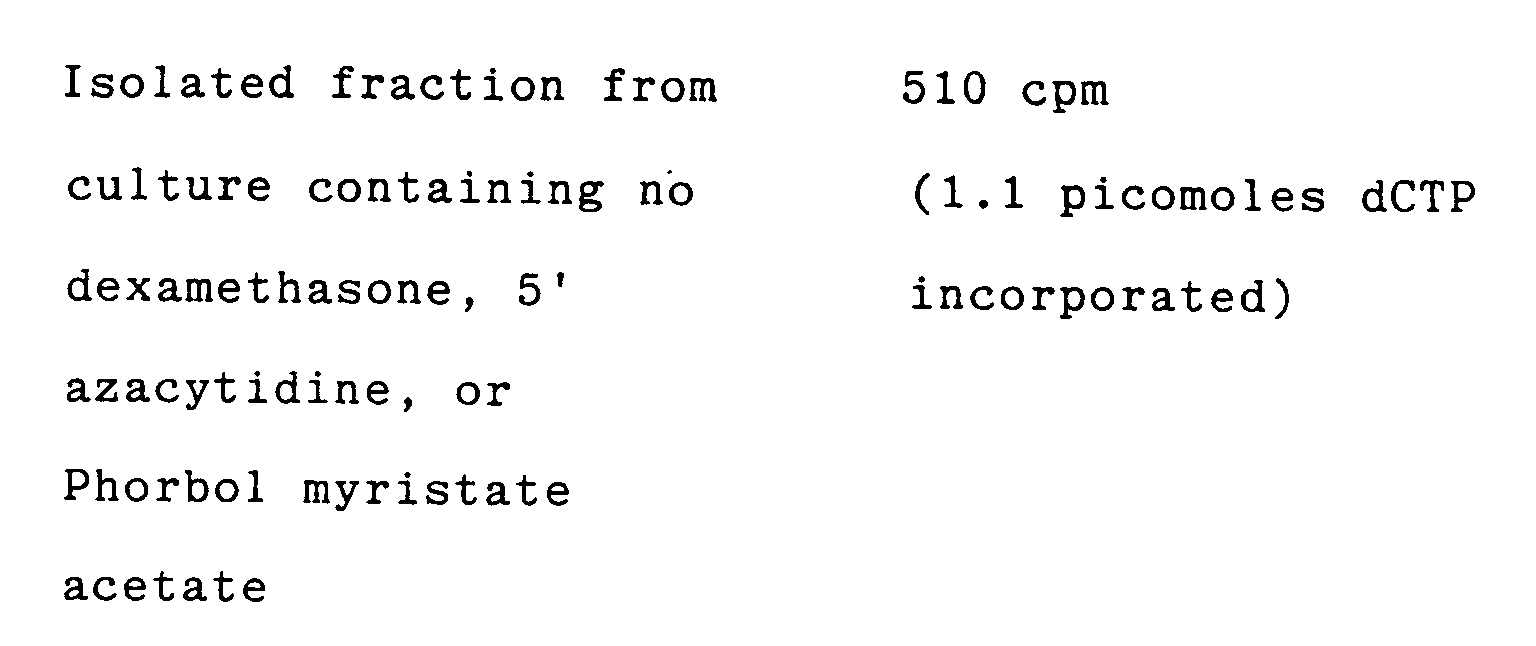
- Example 7 shows the effect of dexamethasone in cultures of monocytes or mononuclear cells, 5 ⁇ azacytidine in cultures of monocytes or mononuclear cells and Phorbol myristate acetate in cultures of monocytes or mononuclear cells in terms of reverse transcriptase activity in a patient with breast cancer using Mg+2 in the assay.
- Example 8 shows the effect of Mn+2 or Mg2+ when used in the reverse transcriptase assay with a patient with a breast cancer using Phorbol myristate acetate as retroviral stimulator.
- Example 9 shows the effect of the period of incubation one reverse transcriptase activity in the isolated fraction from a patient with breast cancer and a control subject using Phorbol myristate acetate as viral stimulator, and Mg2+ in the assay.
- Example 10 shows the effect of the time of centrifugation of the cell-free culture medium in which monocytes or mononuclear cells were incubated on reverse transcriptase activity in a patient with breast cancer.
- Example 11 shows the effect of mastectomy on reverse transcriptase activity in patients with breast cancer.
- Reverse transcriptase activity is expressed in cpm per 45 »l of sample and picomoles of dCTP incorporated per 45 »l of sample.
- Example 12 shows the effect of mastectomy with lymph node clearance on reverse transcriptase activity in patients with breast cancer.
- Reverse transcriptase is expressed in cpm per 45 »l of sample and picomoles of dCTP incorporated per 45 »l of sample.
- Example 13 shows the effect of lumpectomy with lymph node clearance followed by a course of radiotherapy to the chest wall and the axillary region.
- Reverse transcriptase activity is expressed as cpm per 45 »l of sample or picomoles of dCTP incorporated per 45 »l of sample.
- Example 14 shows the effect of tamoxifen (taken by patients with breast cancer) on reverse transcriptase activity.
- Reverse transcriptase activity is expressed as cpm per 45 »l of sample or picomoles of dCTP incorporated per 45 »l of sample.
- Example 15 shows the effect of different concentrations of tamoxifen on reverse transcriptase activity.
- the drug was added during the incubation of monocytes or mononuclear cells from a patient with breast cancer.
- Reverse transcriptase activity is expressed in cpm 45 »l of sample and picomoles of dCTP incorporated per 45 »l of sample.
- Example 16 shows the effect of different concentrations of medroxyprogesterone acetate on reverse transcriptase activity.
- the drug was added during the incubation of monocytes or mononuclear cells from a patient with breast cancer.
- Reverse transcriptase activity is expressed in cpm per 45 »l of sample and picomoles of dCTP incorporated per 45 »l of sample.
- Example 17 shows the effect of 5-fluorouracil on reverse transcriptase activity.
- the drug was added during the incubation of monocytes or mononuclear cells from a patient with breast cancer.
- Reverse transcriptase activity is expressed as cmp per 45 »l of sample and picomoles of dCTP incorporated per 45 »l of sample.
- Example 18 shows the effect of aminoglutethimide on reverse transcriptase activity.
- the drug was added during their incubation of monocytes or mononuclear cells from a patient with breast cancer.
- Reverse transcriptase activity is expressed in cpm per 45 »l of sample and picmoles of dCTP incorporated per 45 »l of sample.
- Example 19 shows the effect of tamoxifen on reverse transcriptase activity.
- the drug was added to the incubated monocytes or mononuclear cells from patients with breast cancer.
- Reverse transcriptase activity is expressed in cpm per 45 »l of sample and picomoles of dCTP incorporated per 45 »l of sample.
- Example 20 shows the effect of tamoxifen on reverse transcriptase activity.
- the drug was added during the reverse transcriptase assay to the pellet from the supernatant of incubated monocytes or mononuclear cells from a patient with breast cancer.
- Reverse transcriptase is expressed in cpm per 45 »l of sample and picomoles of dCTP incorporated per 45 »l of sample.
Landscapes
- Health & Medical Sciences (AREA)
- Life Sciences & Earth Sciences (AREA)
- Engineering & Computer Science (AREA)
- Immunology (AREA)
- Chemical & Material Sciences (AREA)
- Biomedical Technology (AREA)
- Molecular Biology (AREA)
- Hematology (AREA)
- Urology & Nephrology (AREA)
- Biochemistry (AREA)
- Microbiology (AREA)
- Virology (AREA)
- General Health & Medical Sciences (AREA)
- Medicinal Chemistry (AREA)
- Biotechnology (AREA)
- Analytical Chemistry (AREA)
- Wood Science & Technology (AREA)
- Food Science & Technology (AREA)
- General Physics & Mathematics (AREA)
- Pathology (AREA)
- Cell Biology (AREA)
- Organic Chemistry (AREA)
- Bioinformatics & Cheminformatics (AREA)
- Genetics & Genomics (AREA)
- Physics & Mathematics (AREA)
- Zoology (AREA)
- General Engineering & Computer Science (AREA)
- Tropical Medicine & Parasitology (AREA)
- Medicines Containing Material From Animals Or Micro-Organisms (AREA)
- Measuring Or Testing Involving Enzymes Or Micro-Organisms (AREA)
- Micro-Organisms Or Cultivation Processes Thereof (AREA)
- Compounds Of Unknown Constitution (AREA)
- Investigating Or Analysing Biological Materials (AREA)
Abstract
Description
- The present invention relates to a method of obtaining a retrovirus-containing fraction from mononuclear cells containing a retrovirus. The use of such a method providing means for screening said cells for the presence of said retrovirus and also an isolated fraction enabling positive identification of the particular virus to be achieved.
- It has long been suspected that cancer, and in particular, breast cancer may be a result of viral infection. In females the most common form of malignancy is carcinoma of the breast. This carcinoma is known to affect about 9 per cent of the adult female population and in females in the 40 to 54 age group is a major cause of death. A proble in diagnosis is that in many of these carcinomas the cancerous growth is slow, possibly taking up to 10 years for a 1 cm growth, and as a result of this slow growth, many carcinomas are not detected until the carcinoma is too advanced.
- Whilst eary diagnosis of such cancers materially enhances the possibility of a cure it is evident that detection of the causal factor before the cancer becomes manifest would enable prevention measures to be developed. Thus providing a screening method to enable early and effective recognition of the presence of the causal factor would increase greatly the possibility of successfully treating many patients.
- There is also no method of identifying an effective treatment for a patient with breast cancer. Different treatments may be tried and continued depending on the patient's response. But there is no blood test for monitoring the continuous effect of a treatment on the retrovirus present in mononuclear or monocytes from patients with breast cancer.
- At present there is no method which can be used in screening for breast cancer in the very early stages and no method by which retroviruses are screened for directly, although it is known to screen for retroviruses indirectly by use of a mouse mammary tumor antibody, but because of the possibility of cross-reactivity that indirect method can give false positive results.
- It is also known to screen for retroviruses by assaying for the enzyme reverse transcriptase. To do this the virus must undergo replication to provide enough reverse transcriptase to allow positive identification.
- It is known that in genetically susceptible mice a virus, Murine mammary tumor virus, MMTV, can be the cause of breast cancers, the virus being detectable in the mammary tumor cells of the infected mice.
- It is further known that virus particles of type C morphology can be enhanced in mammary tumor cells of mice by the use of adrenocorticoids. The use of these hormones results in increased production of virus related RNA-depended DNA polymerase, MMTV specific antigens, and B particles. This was shown when the synthetic glucocorticoid hormone, dexamethasone, was used in cultures of iododeoxyuridine (IUDR) stimulated mouse mammary tumour cells. In these experiments dexamethasone was added to the growth medium after IUDR treatment, IUDR being known to act as an inducer of leukemia and herpes viruses. (Fine et al. June 1974, Journal of the National Cancer Institute 52, 6, pages 1881-1884). Furthermore, in cell lines and primary explants derived from mammary tumours of several strains of mice the amount of virus production correlates with the level of virus-specific RNA. This suggests that in these cells, transcriptional controls are of primary importance in regulating the production of MMTV. Experiments with dexamethasone (a synthetic glucocorticoid) support this notion since cells treated with the hormone show parallel increases in virus production and intracellular virus-specific RNA. In contrast, a lymphoma cell line (S49) derived from a lymphoma induced by mineral oil in a BALB/c mouse contains large quantities of MMTV-specific RNA yet produces extremely low levels of virus. In these cells, mechanisms other than transcriptional controls may be important in regulating virus production. (Ringold 1975, Virology 65, pages 135-147).
- However, MMTV differs in several respects from other members of the retrovirus family. For example it induces a high incidence of mammary adenocarcinomas as opposed to the more common leukemias and sarcomas associated with other retroviruses. (Dickson 1981, Journal of Virology January, 37 pages 36-47).
- It is known that blood leukocytes including monocytes are attracted to diseased regions of the body in response to chemotactic agents. (Al-Sumidaie et al. 1984, Journal of Immunological Methods 75, pages 129-140). The leukocytes are believed to become involved in elimination and destruction of tumour cells. However it has surprisingly been shown that monocytes, from patients with breast carcinoma when incubated in vitro using an under agarose technique give rise to giant cell formation. These macrophage polykaryons are believed to be formed by fusion of macrophases derived from monocytes (Al-Sumidaie 1986, Jounral of Immunological Methods 91, pages 237-242).
- It has been suggested that giant cell formation most likely results from virally mediated cell fusion. Possible explanations for the giant cell formation from monocytes are:-
- (1) A defect in cellular immunity, resulting from viral infection of monocytes, may produce an increase in tumour incidence as a result of failure to eliminate abnormal cells arising by spontaneous mutation.
- (2) All the cells in the body are infected by a virus which expresses itself in monocytes in the ability to form giant cells and in decreased migration and phagocytosis, but expresses itself in breast tissue as a carcinogenicis. (Al-Sumidaie et al. 1986, British Journal Surgery 73, pages 839-842).
- A link can therefore be deduced between breast cancer and depressed monocyte functions in patients suffering from breast cancer. The question which has to be answered is whether a retrovirus could be shown to be that link.
- It has now been surprisingly found that incubation of monocytes taken from patients with breast cancer, in a culture medium containing dexamethasone, Phorbol myristate acetate or 5ʹ azacytidine for 6 day caused release of particles in the supernatant which showed reverse transcriptase activity and hence indicated a retrovirus to be present. This result was all the more surprising when it is considered that no activity could be detected when a normal incubation period of 18 hours was used and the activity was very low when dexamethasone, Phorbol myristate acetate or 5ʹ azacytidine was omitted from the incubation mixture. This is unlike the case when adrenocorticoids were used to enhance MMTV detection in cultured murine carcinoma cells in which detection could be made within short incubation periods. Furthermore, when 5ʹ azacytidine or Phorbol myristate acetate was added to mouse mammary tumour cell cultures, reverse transcriptase activity doubled compared with the same cell line incubated in the presence of dexamethasone. Conversely, the reverse transcriptase activity released by mononuclear cells from patients with breast cancer was 3 to 7 times when these cells were incubated in the presence of 5ʹ azacytidine, while the activity increased 60 to 120 times when these cells were incubated in the presence of Phorbol myristate acetate compared with same samples incubated in the presence of dexamethasone.
- In accordance with one embodiment of the present invention there is provided a method of forming a retrovirus-containing fraction from monocytes or mononuclear cells containing said virus comprising, preparing a suspension of separated monocytes or mononuclear cells in a culture medium, incubating said culture and separating the culture supernatant from said incubated culture, characterized in that an effective amount of glucocorticoid or of a leukemia or other viral or retroviral inducing drug is added to the suspension before and/or during the incubation of said cultures, and if desired separating a retrovirus-containing fraction from the separated supernatant.
- In another embodiment the invention provides a method of detecting the presence of retroviruses in monocytes or mononuclear cells which is characterized by subjecting a culture of said cells to incubation in the presence of a glucocorticoid hormone or active derivative thereof or of a leukemia or other viral or retroviral inducing drug to form a retrovirus-containing fraction and subjecting the fraction to test procedures for detecting said virus.
- In another embodiment the present invention provides a method of screening human beings suspected of having breast cancer for the presence of retrovirus characterized by subjecting a culture of monocytes or mononuclear cells, taken from the individual to be screened to incubation in a culture in the presence of an amount of a glucocorticoid or of a leukemia or other viral or retroviral inducing agent sufficient when retrovirus is present to give rise in the supernatant to particles containing said retrovirus and subjecting said particules when present to a test procedure which determines the presence of said virus.
- In a further embodiment the present invention provides a method of converting a non-detectable form of retrovirus to a detectable form of said virus characterized by subjecting a specimen comprising monocytes or mononuclear cells containing a non-detectable form of said virus to incubation in a culture medium preferably for a period greater than 18 hours in the presence of a glucocorticoid or a leukemia or other viral or retroviral inducing agent to give rise to a fraction containing a detectable form of said virus.
- The invention also provides a vehicle for effecting said conversion from a non-detectable form of retrovirus to a detectable form which comprises a culture medium containing an effective amount of glucocorticoid hormone or an active derivative thereof or of a leukemia or other viral or retroviral inducing agent.
- The glucocorticoid hormone may be, for example, in the form of the synthetic drug dexamethasone and the leukemia or viral inducing agent may be, for example, tetradecanoyl phorbol acetate, especially Phorbol myristate acetate (TPA), azacytidine, especially 5ʹ azacytidine, aminopeterin, 8-azaguanine, azaserine, tuftsin, 2-amino-6-mercaptopurine, carboxyethyl-gama-aminobutyric acid, demecolcine, dimethyl sulfoxide, ouabain, polyethyleneglycol, pristane or other viral or retroviral stimulators, preferably for periods of 3 to 60 days. By way of example only, more specific embodiments of the present invention will now be described: In accordance with one more specific embodiment of the present invention there is provided a method of forming a retrovirus-containing fraction from monocytes or mononuclear cells or preferably but not essentially purified monocytes containing said virus comprising preparing a suspension of separated mononuclear cells or purified monocytes in a culture medium, incubating said culture and separating the culture, characterized in that an effective amount of dexamethasone, Phorbol myristate acetate or 5ʹ azacytidine is added to the suspension before and/or during the incubation of said cultures, and if desired separating a retrovirus-containing fraction from the separated supernatant. In a preferred embodiment, said culture medium comprises Eagle's medium supplemented with 10 per cent foetal calf serum, said incubation time is 3 to 30 days, preferably 6 days and said effective amount of Phorbol myristate acetate is 330 ng per ml of incubating culture medium. The incubation is preferably carried out at substantially 37 degrees C and in an atmosphere of 5 per cent CO₂ in air. Said retrovirus-containing fraction is separated preferably though not necessarily by filtration means, filtration preferably being carried out with a 220 nm filter. Said filtrate is centrifuged at high speed, preferably at 10,000 G for 5 to 15 minutes, and maintaining a temperature preferably of 18 degrees C and the pellet being suspended in a suitable medium as required.
- In another more specific embodiment the invention provides a method of detecting the presence of retroviruses in monocytes said method comprising incubating said culture cells in the presence of Phorbol myristate acetate (330 ng per ml of incubating medium, 10⁻⁶M dexamethasone or 15 »M of 5ʹ azacytidine as hereinbefore defined, said retrovirus-containing fraction being subjected to detection means. Said detection means preferably comprises a reverse transcriptase assay. For said assay the resuspended high-speed pellet obtained from the supernatant is disrupted by the addition of a non-ionic detergent. Preferably NP40 (final concentration 0.2% v/v) and dithiothreitol (DTT) (final concentration 50mM) and incubated under suitable conditions, preferably at 20 degrees C for 15 minutes. The reverse transcriptase activity is then measured by a standard assay procedure using the divalent ion Mg2+ due to its preferential effect with the human cells. As an alternative an assay procedure using Mn2+ may also be used. Thus, said reverse transcriptase activity is assayed by measuring the incorporation of radioactively labelled deoxycytidine triphosphate (dCTP) into acid-precipitable material, dependent on the presence of a synthetic RNA template. The reaction mix contains a final volume of 100 »l, 45 »l of extract, 5 »mol "tris"-HC1 pH 8.3, 5 »mol KC1, 2.5 »mol DDT, 0.6 »mol MC1₂ , 0.16 »mol each deoxyadenosine triphosphate (dATP), deoxythymidine triphosphate (dTTP), deoxyguanosine triphosphate (dGTP), 0.05 »mol dCTP, 5 »Ci (alpha ³² p) dCTP (3000 Ci/mmol), 0.5 »g oligodeoxycytidylic acid (oligo d(pc)₈), 0.5. »g polyguanylic acid. The reaction is incubated at 37 degrees C for 1 hour. The reaction is stopped by the addition of 0.4 ml of 10 percent (w/v) trichloroacetic acid (TCA) and 25 Mg of calf thymus DNA. The DNA was precipitated overnight at - 20 degrees C. The DNA was sonicated at periods between 5 to 1 minute preferably 30 seconds. The precipitated radioactive DNA is collected by filtration onto a GF/C glass-fibre filter, and washed with 30 ml of 5 percent (w/v) TCA, the radioactivity on the filter was measured by means of a scintillation counter.
- Whilst detection has been described by the means of the aforegoing example, alternative detection means, such as negative staining electron microscopy of the pellet present in the supernatant of incubated monocytes or mononuclear cells; electron microscopic examination of incubated monocytes or mononuclear cells; histoimmunoassay; immunocytochemical assay, particularly immunogold or immunosilver staining-of incubated or fresh monocytes or mononuclear cells; giant cell formation by monocytes or antigen antibody reaction, for example, peroxidase antiperoxidase, alkaline phosphatase- antialkaline phosphatase, Avidin-biotin or immunosorbent assays (ELISA). The antibody could be raised as polyclonal or monoclonal using, for example, rabbits, horses, goats, sheep, swine or mice. Alternatively, the method of the invention could be used for cloning and developing probes for the virus.
- In yet another more specific embodiment of the present invention, there is provided a method of screening human beings suspected of having breast cancer for the presence of retrovirus characterized by subjecting said culture of monocytes taken from said individual to be screened as hereinbefore defined and subjecting said centrifuged filtrate to a screening means to determine the presence of said retrovirus.
- In a further more specific embodiment the present invention provides a method of converting a non-detectable form of retrovirus to a detectable form of said virus by subjecting monocytes containing a non-detectable form of said virus to incubation in a culture medium, preferably for more than 18 hours, containing Phorbol myristate acetate, preferably at a concentration of 330 ng per ml of incubating culture medium, dexamethasone, preferably at a concentration up to 10⁻⁶ M, or 5ʹ azacytidine, preferably at a concentration of 15 »M, to give rise to a fraction containing a detectable form of said virus.
- In another embodiment the invention provides a vehicle for effecting said conversion from a non-detectable form of retrovirus to a detectable form which comprises a culture medium containing Phorbol myristate acetate preferably at a concentration of 330 ng per ml incubating culture medium, dexamethasone, preferably at a concentration of 10⁻⁶M of 5ʹ azacytidine, preferably at a concentration of 15 »M.
- By way of a more specific embodiment of the present invention the blood collected for monocytes preparation can be treated with sodium or lithium heparin without interferring with the method for preparing mononuclear cells. The blood can further be kept, preferably in polycarbonate tubes, for a period of up to 8 hours at around 4 degrees C before undergoing mononuclear cell separation.
- The mononuclear cells can be further stored at around 4 degrees C for up to 24 hours when in a suitable buffered solution.
- Furthermore said culture medium for incubation of said monocytes or mononuclear cells can be prepared with or without antibiotics. Said media containing a suitable feed in particular a good protein source, preferably foetal calf serum at a concentration of between 5 and 20 preferably 7.5 to 12.5 per cent more preferably 10 per cent. The pH of said medium being kept within the range pH 6.8 to 8 preferably to 7.6 especially 7.4. Said culture medium being supplied with air containing CO₂ at a concentration of 4-8 percent preferably 5 percent. Said culture being maintained at a temperature of between 34 and 40 preferably between 36 and 40, especially 37.3 degrees C. The Phorbol myristate acetate, can be added to said medium at any period during the incubation procedure but must be added at least 2 days before the reverse transcriptase assay for best results. The period of incubation being maintained for up to 30 days preferably 6 days. Similar factors apply when 5ʹ azacytidine or dexamethasone are used.
- The preferred concentrations for use of said chemicals being in the range 100 to 600 ng per ml of culture medium preferably 330 ng for Phorbol myristate acetate and 10⁻⁵ M to 10⁻⁷ M preferably 10⁻⁶ M for dexamethasone and in the range 5 »M to 50 »M, preferably 10 »M to 20 »M, especially 15 »M for 5ʹ azacytidine.
- The monocytes or mononuclear cells can be separated from the said medium by a slow speed centrifuge in the range 600 to 800 xg for 10 to 20 minutes at a temperature of between 4 degrees and 20 degrees C. The monocytes or the mononuclear cells can then be resuspended in fresh medium and procedures repeated as necessary.
- In accordance with a more specific embodiment of forming said retrovirus containing supernatant, said supernatant is separated from the monocytes or the mononuclear cells by either filtration through a suitable membrane with a pore size which allows the virus to pass through, yet retains the monocytes or the mononuclear cells, said filter preferably being 220 nm or by centrifugation at 600-800 xg for 10 to 20 minutes.
- Said supernatant containing said viral particles may then undergo a high-speed centrifugation to precipitate said viral particles, said centrifugation being carried out at 8,000 to 120,000 xg preferably 12,000 xg at 4 degrees C to 20 degrees C for 5 to 120 minutes, preferably for 12 minutes.
- In another more specific embodiment the detection means provide by assaying reverse transcriptase is dependent upon the viability of the monocytes or the mononuclear cells, which can be determined on an aliquot of the sample after incubation with the Phorbol myristate acetate, dexamethasone or 5ʹ azacytidine.
- Furthermore, the detection means proved equally effective in determing retrovirus activity in either male or female subjects with breast cancer.
- The present invention also provides in a specific embodiment a method of detecting the effect of surgery, such as mastectomy with or without lymph node clearance, Halsted radical mastectomy, modified radical mastectomy, quadrantectomy or lumpectomy with or without lymph node clearance on the retrovirus present in the mononuclear cells or monocytes from an individual having breast cancer.
- The method of the invention may be used as a tool for selecting an effective treatment or treatments for a breast cancer before actually administering that treatment or treatments. The method of the invention may also be used to monitor the effectiveness of treatment or treatments on a patient already undergoing such treatment or treatments. These treatments may be single or combined and may include the following:
- (1) Surgical treatment, such as Halsted radical mastectomy, modified radical mastectomy, quadrantectomy or lumpectomy, optionally with radiotherapy, Cytotoxic drugs, hormonal therapy, viral or retroviral inhibitors or a combination of all.
- (2) Radiotherapy, and in particular, though not exclusively, radiotherapy in locally advanced breast cancer or radiotherapy in metastatic breast cancer, or optionally with cytotoxic drugs, hormonal therapy or viral or retroviral inhibitors.
- (3) Cytotoxic drugs (single or combined), for example L-phenylalanine mustards, 5-fluorouracil, adriamylin, Cyclophosphamide, methotrexate, vincristine and epirubicin, optionally with hormonal therapy or viral or retroviral inhibitors.
- (4) hormonal therapy, such as with tamoxifen or a derivative thereof, progesterone, progestines,
- (4) hormonal therapy, such as with tamoxifen or a derivative thereof, progesterone, progestines, medroxyprogesterone, norethisterone, megestrol, androgens, aminoglutethimide, oestrogen, cortecosteroids, prolactin or antiprolactin agents, optionally with viral or retroviral inhibitors.
- (5) viral or retroviral inhibitors, for example interferons, lymphokines, azidothymidine, N-methylisatin-beta-4ʹ: 4-diethylthiosemicarbazone, 3ʹ-azido, 3ʹ-amino, 2ʹ, 3ʹ-unsaturated, and 2ʹ, 3ʹ-dideoxy analogues of pyrimidine deoxyribonucleosides, 2-deoxyglucose, tunicamycin or their derivatives, phosphonoformic acid, carbonyl diphosphate optionally with other forms of treatments as above in 1 to 4.
- Another use of the invention may be to detect the effect of drugs such as viral, antiviral, hormonal, and cytotoxic drugs for treatment of or prophylaxis for carcinomas by incubating such drug with the monocytes or mononuclear cells suspended in a suitable medium during culture of or during the assay for the retrovirus present in these cells, for example, by incubating the monocytes or mononuclear cells in the presence of the viral or retroviral stimulator.
- The embodiments described hereinbefore are further illustrated by the following examples.
-
- Peripheral venous blood (40 ml) was collected from each subject in plastics tubes containing 10 IU preservative free heparin per ml. The blood was taken from the patients when they first presented in clinic with breast lumps. Full biochemical (sequential multichannel analyser with computer, SMAC) and haematological analysis revealed no abnormalities in either patients or controls.
- Mononuclear cells were separated from blood by centrifugation over Ficoll-Hypaque, 1.077 gm/ml density (Boyum 1968, Scandinavian Journal of Clinical and Laboratory Investigation 21 (suppl. 97), pages 77-89) and washed 3 times with ice cold buffered salt solution (BSS) prepared from 8.0 gm NaC1, 0.2 g KCI, 1.15g Na₂ HPO₄, 0.2 g KH₂ PO₄ and 0.2 g glucose in 1 litre sterile distilled water.
- Monocytes were purified on a discontinuous density gradient of Percoll. Stock Percoll was prepared by mixing 9 parts of Percoll density 1.13 g/ml with 1 part of 10 times strength Eagle's medium. The 3 densities of Percoll were prepared as shown in Table I. Up to 40 x 10⁶ mononuclear cells were suspended in 2 ml of Percoll density 1.074 g/ml and placed in a 10 ml polycarbonate centrifuge tube (Nunc, Denmark). Two millilitres of Percoll density 1.066 g/ml were gently layered over the first layer and another 2 ml of Percoll density 1.057 g/ml gently layered on top of the latter. The tube was centrifuged at 2200 xg for 90 minutes at room temperature. After centrifugation, 3 bands of cells could be identified. The monocyte rich band was found at the interface of the 1.057 g/ml and the 1.066 g/ml density gradient of Percoll. This band was carefully removed and washed 3 times with ice cold BSS, and a sample of cells taken for non-specific esterase staining, total and viability counts. The total number of cells was adjusted to 25 x 10⁶ cells/ml in Eagle's medium pH 7.1.
- Cells were counted in a haemocytometer, and viability determined by trypan blue dye exclusion. Non-specific esterase staining used was by the method Yam et al., 1971 American Journal of Pathology, 55 pages 283-290.
- All cell manipulations were carried out using sterile materials and solutions in a laminar flow hood.

- The monocytes from patients and controls were suspended in Eagle's medium supplemented with 10 percent foetal calf serum and Phorbol myristate acetate (300 ng per ml of culture medium). After 6 days incubation at 37 degrees C in 5 percent CO₂ in air, in a humidified incubator, the supernatant was filtered using a 220 nm filter. The filtrates were centrifuged at 12,000 xg for 12 minutes at 18 degrees C. For reverse transcriptase assay the pellets were suspended in 1 ml of T.N.E. medium (10 mH "tris"-HC1 pH 8.3, 150 nM NaC1, 2 nM EDTA). For stimulation of giant cell formation among control monocytes or for electron microscopy the pellets were suspended in Eagle's medium (1 ml). For negative-staining electron microscopy the suspension was fixed with 0.25 percent glutaraldehyde-cacodylate, mixed with phosphotungstic acid (2 percent) and examined using a Philips 301 electron microscope.
- The resuspended high speed pellets obtained from the cell-free culture medium of incubated mononuclear cells or monocytes or from mouse mammary tumour cells were disrupted by the addition of the nonionic detergent NP40 (final concentration 0.2 percent v/v) and dithiothreitol (final concentration 50 nM) and incubated at 20 degrees C for 15 minutes.
- Reverse transcriptase activity was assayed by measuring the incorporation of radioactively labelled dCTP into acid-precipitable material, dependent on the presence of a synthetic RNA template. The reaction mix contained, in a final volume of 100 »l, 45 »l of extract, 5 »mol "tris"-HCl pH 8.3, 5 »mol KCl, 2.5 »mol DTT, 0.6 »mol MgCl₂ , 0.16 »mol each dATP, dTTP, dGTP, 0.05 »mol dCTP, 5 »Ci (alpha³² p) dCTP (3000 Ci/mmol), 0.5 »g oligodeoxycytidylic acid (oligo d(pc)₈), 0.5 »g polyguanylic acid. The reaction was incubated at 37 degrees C for 1 hour. The reaction was stopped by the addition of 0.4 ml of 10 percent (w/v) trichoracetic acid (TCA) and 25 »g of calf thymus DNA. The DNA was precipitated overnight at -20 degrees C. The precipitated radioactivity was collected by filtration onto a GF/C glass-fibre filter and washed with 30 ml of 5 percent (w/v) TCA. The radioactivity on the filter was measured by scintillation counting.
- All assays were performed in triplicate.
- In this, the procedure is as for preparative Example 1 except that in the preparation of the cell-free culture medium in which monocytes or mononuclear cells had been incubated there is the following difference.
- The monocytes or mononuclear cells from patients and controls were suspended in Eagle's medium supplemented with 10 percent foetal celf serum and Phorbol myristate acetate at a concentration of 330 ng per ml of culture medium or 5ʹ azacytidine at 15 »M. After 6 days incubation at 37 degrees C in 5% CO₂ in air, in a humidified incubator, the supernatant was filtered using a 200 nm filter. The filtrates were centrifuged at 12,000 xg for 12 minutes at 18 degrees C. For reverse transcriptase assay the pellets were suspended in 1 ml of T.N.E. medium (10 nM "tris"-HCl pH 8.3, 150 nM NACl, 2 mM EDTA). For stimulation of giant cell formation among control monocytes or for electron microscopy the pellets were suspended in Eagle's medium (1 ml). For negative-staining electron microscopy the suspension was fixed with glutaraldehyde-cacodylate, mixed with phosphotungstic acid (2 percent) and examined using a Philips 301 electron microscope.
- A high speed pellet was prepared from the cell-free culture medium of incubated monocytes from patients with breast cancer as described previously. The pellets were resuspended in 100 »l of T.N.E. medium and layered on discontinuous densities of sucrose 20, 30, 40 and 60 percent in T.N.E. gradient and centrifuged (preferably but not necessarily in Beckman SW65 rotor) at 120,000 xg for 16 hours at 4 degrees C. Fractions (250 ml) were collected by piercing the bottom of the tube, diluted in T.N.E. centrifuged at 12,000 xg for 12 minutes and the pellets were assayed for reverse transcriptase. The density of the sucrose was determined using a refractometer.
- Example 3 shows the reverse transcriptase activity in the cell-free culture medium in which monocytes or mononuclear cells from patients with breast cancer had been indubated was associated with a particle having a buoyant density between 1.165 and 1.18 g/ml on a sucrose density gradient.
-


- Example 4 shows the results obtained using the preparative method 1 hereinbefore described in which the chemical dexamethasone was used in the culture medium containing monocytes or mononuclear cells. In which the monocytes or the mononuclear cells were obtained from breast cancer patients and age matched controls respectively.

-

- Example 5 shows the importance of dexamethasone on the reverse transcriptase activity in a patient with breast cancer.

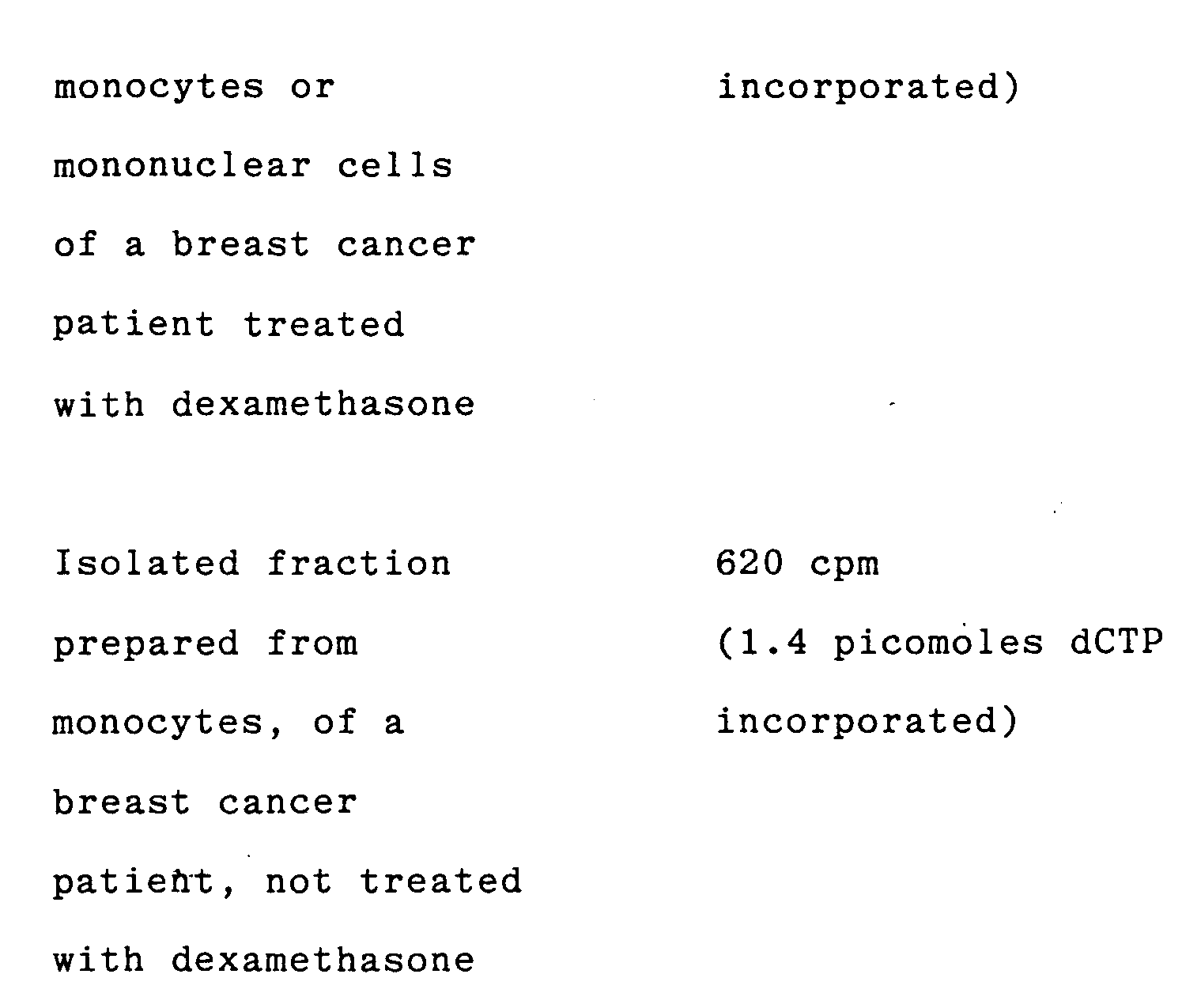
- Example 6 shows comparisons of reverse transcriptase activity on isolated fractions, of age matched controls, treated with and without dexamethasone respectively.
-

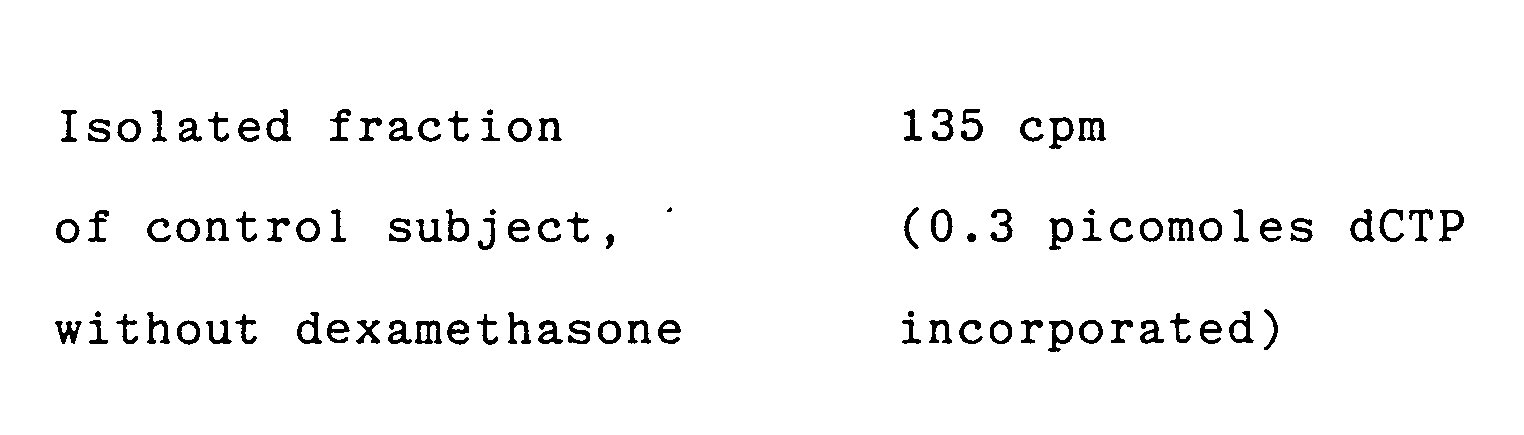
- Example 7 shows the effect of dexamethasone in cultures of monocytes or mononuclear cells, 5ʹ azacytidine in cultures of monocytes or mononuclear cells and Phorbol myristate acetate in cultures of monocytes or mononuclear cells in terms of reverse transcriptase activity in a patient with breast cancer using Mg⁺² in the assay.

- Example 8 shows the effect of Mn⁺² or Mg²⁺ when used in the reverse transcriptase assay with a patient with a breast cancer using Phorbol myristate acetate as retroviral stimulator.

- Example 9 shows the effect of the period of incubation one reverse transcriptase activity in the isolated fraction from a patient with breast cancer and a control subject using Phorbol myristate acetate as viral stimulator, and Mg²⁺ in the assay.

- Example 10 shows the effect of the time of centrifugation of the cell-free culture medium in which monocytes or mononuclear cells were incubated on reverse transcriptase activity in a patient with breast cancer.

- Example 11 shows the effect of mastectomy on reverse transcriptase activity in patients with breast cancer.
- Reverse transcriptase activity is expressed in cpm per 45 »l of sample and picomoles of dCTP incorporated per 45 »l of sample.

- Example 12 shows the effect of mastectomy with lymph node clearance on reverse transcriptase activity in patients with breast cancer. Reverse transcriptase is expressed in cpm per 45 »l of sample and picomoles of dCTP incorporated per 45 »l of sample.

- Example 13 shows the effect of lumpectomy with lymph node clearance followed by a course of radiotherapy to the chest wall and the axillary region. Reverse transcriptase activity is expressed as cpm per 45 »l of sample or picomoles of dCTP incorporated per 45 »l of sample.


- Example 14 shows the effect of tamoxifen (taken by patients with breast cancer) on reverse transcriptase activity. Reverse transcriptase activity is expressed as cpm per 45 »l of sample or picomoles of dCTP incorporated per 45 »l of sample.

- Example 15 shows the effect of different concentrations of tamoxifen on reverse transcriptase activity. The drug was added during the incubation of monocytes or mononuclear cells from a patient with breast cancer. Reverse transcriptase activity is expressed in cpm 45 »l of sample and picomoles of dCTP incorporated per 45 »l of sample.

- Example 16 shows the effect of different concentrations of medroxyprogesterone acetate on reverse transcriptase activity. The drug was added during the incubation of monocytes or mononuclear cells from a patient with breast cancer. Reverse transcriptase activity is expressed in cpm per 45 »l of sample and picomoles of dCTP incorporated per 45 »l of sample.

- Example 17 shows the effect of 5-fluorouracil on reverse transcriptase activity. The drug was added during the incubation of monocytes or mononuclear cells from a patient with breast cancer. Reverse transcriptase activity is expressed as cmp per 45 »l of sample and picomoles of dCTP incorporated per 45 »l of sample.

- Example 18 shows the effect of aminoglutethimide on reverse transcriptase activity. The drug was added during their incubation of monocytes or mononuclear cells from a patient with breast cancer. Reverse transcriptase activity is expressed in cpm per 45 »l of sample and picmoles of dCTP incorporated per 45 »l of sample.

- Example 19 shows the effect of tamoxifen on reverse transcriptase activity. The drug was added to the incubated monocytes or mononuclear cells from patients with breast cancer. Reverse transcriptase activity is expressed in cpm per 45 »l of sample and picomoles of dCTP incorporated per 45 »l of sample.


- Example 20 shows the effect of tamoxifen on reverse transcriptase activity. The drug was added during the reverse transcriptase assay to the pellet from the supernatant of incubated monocytes or mononuclear cells from a patient with breast cancer. Reverse transcriptase is expressed in cpm per 45 »l of sample and picomoles of dCTP incorporated per 45 »l of sample.

Claims (14)
- A method of forming a retrovirus-containing fraction from human monocytes or mononuclear cells containing said virus comprising, preparing a suspension of separated monocytes or mononuclear cells from a human having, or suspected of having breast cancer in a culture medium, incubating said culture and separating the culture supernatant from said incubated culture, wherein an effective amount of a glucocorticoid or of a leukemia or viral inducing drug is added to the suspension before and/or during the incubation of said cultures.
- A method as claimed in claim 1 comprising the step of separating a retrovirus containing fraction from the separated supernatant.
- A method as claimed in claim 1, wherein the glucocorticoid hormone is in the form of dexamethasone.
- A method as claimed in claim 1, wherein the leukemia or viral inducing agent is phorbol myristate acetate or 5' azacytidine.
- A method as claimed in claim 4, wherein the culture medium comprises Eagle's medium supplemented with 10% foetal calf serum, said incubation time is 3 to 30 days and said effective amount of phorbol myristate acetate is 330 ng per ml of incubating culture medium.
- A method as claimed in claim 5, wherein the incubation is carried out at substantially 37 degrees C and in an atmosphere of 5% CO₂ in air.
- A method of detecting the presence of retroviruses in human monocytes or mononuclear cells from a human having, or suspected of having breast cancer comprising subjecting a culture of said cells to incubation in the presence of a glucocorticoid hormone or active derivative thereof or of a leukemia or other viral inducing drug to form a retrovirus containing fraction and subjecting the fraction to test procedures for detecting said virus.
- A method as claimed in claim 7 comprising incubating said culture cells in the presence of phorbal myristate acetate (330 ng per ml of incubating medium) 10⁻⁶ M dexamethasone or 15 »M of 5' azacytidine, said retrovirus containing fraction being subjected to detection means.
- A method as claimed in claim 8, wherein said detection means comprises a reverse transcriptase assay.
- A method as claimed in claim 8, wherein the detection means comprises negative staining electron microscopy.
- A method as claimed in claim 8, wherein the detection means comprises giant cell formation.
- A method as claimed in claim 8, wherein the detection means comprises antibody reaction.
- A method of screening human beings suspected of having breast cancer for the presence of retrovirus as comprising subjecting a culture of monocytes or mononuclear cells, taken from the individual to be screened, to incubation in a culture in the presence of an amount of a glucocorticoid or of a leukemia or other viral inducing agent sufficient when retrovirus is present to give rise in the supernatant to particles containing said retrovirus and subjecting said particles when present to a test procedure which determines the presence of said virus.
- A method as claimed in claim 13 comprising subjecting said culture of monocytes taken from said individual to be screened and subjecting said centrifuged filtrate to a screening means to determine the presence of said retrovirus.
Applications Claiming Priority (2)
| Application Number | Priority Date | Filing Date | Title |
|---|---|---|---|
| GB878702816A GB8702816D0 (en) | 1987-02-07 | 1987-02-07 | Obtaining retrovirus-containing fraction |
| GB8702816 | 1987-02-07 |
Publications (3)
| Publication Number | Publication Date |
|---|---|
| EP0282160A2 EP0282160A2 (en) | 1988-09-14 |
| EP0282160A3 EP0282160A3 (en) | 1990-08-22 |
| EP0282160B1 true EP0282160B1 (en) | 1995-05-10 |
Family
ID=10611913
Family Applications (1)
| Application Number | Title | Priority Date | Filing Date |
|---|---|---|---|
| EP88301009A Expired - Lifetime EP0282160B1 (en) | 1987-02-07 | 1988-02-08 | A method of obtaining a retrovirus-containing fraction from retrovirus-containing cells |
Country Status (5)
| Country | Link |
|---|---|
| EP (1) | EP0282160B1 (en) |
| AT (1) | ATE122390T1 (en) |
| CA (1) | CA1315726C (en) |
| DE (1) | DE3853735D1 (en) |
| GB (2) | GB8702816D0 (en) |
Families Citing this family (285)
| Publication number | Priority date | Publication date | Assignee | Title |
|---|---|---|---|---|
| US6015686A (en) | 1993-09-15 | 2000-01-18 | Chiron Viagene, Inc. | Eukaryotic layered vector initiation systems |
| WO1995019427A1 (en) * | 1994-01-12 | 1995-07-20 | Genetic Therapy, Inc. | Purification of retroviral vectors |
| WO1995028940A1 (en) * | 1994-04-22 | 1995-11-02 | Department Of The Army | Methods for inhibiting human immunodeficiency virus |
| US6458366B1 (en) | 1995-09-01 | 2002-10-01 | Corixa Corporation | Compounds and methods for diagnosis of tuberculosis |
| US6592877B1 (en) | 1995-09-01 | 2003-07-15 | Corixa Corporation | Compounds and methods for immunotherapy and diagnosis of tuberculosis |
| US6290969B1 (en) | 1995-09-01 | 2001-09-18 | Corixa Corporation | Compounds and methods for immunotherapy and diagnosis of tuberculosis |
| US6451592B1 (en) | 1996-04-05 | 2002-09-17 | Chiron Corporation | Recombinant alphavirus-based vectors with reduced inhibition of cellular macromolecular synthesis |
| ATE386811T1 (en) | 1996-04-05 | 2008-03-15 | Novartis Vaccines & Diagnostic | ALPHAVIRUS VECTOR WITH A REDUCED INHIBITION OF THE SYNTHESIS OF CELL MACROMOLECLES |
| CA2266656A1 (en) | 1996-09-17 | 1998-03-26 | Chiron Corporation | Compositions and methods for treating intracellular diseases |
| US6261562B1 (en) | 1997-02-25 | 2001-07-17 | Corixa Corporation | Compounds for immunotherapy of prostate cancer and methods for their use |
| AU8692598A (en) | 1997-08-04 | 1999-02-22 | Calydon, Inc. | A human glandular kallikrein enhancer, vectors comprising the enhancer and methods of use thereof |
| US6914131B1 (en) | 1998-10-09 | 2005-07-05 | Chiron S.R.L. | Neisserial antigens |
| EP1900818A3 (en) | 1997-11-06 | 2008-06-11 | Novartis Vaccines and Diagnostics S.r.l. | Neisserial antigens |
| AU2010699A (en) | 1997-12-24 | 1999-07-19 | Corixa Corporation | Compounds for immunotherapy and diagnosis of breast cancer and methods for theiruse |
| WO1999036544A2 (en) | 1998-01-14 | 1999-07-22 | Chiron S.P.A. | Neisseria meningitidis antigens |
| US20020147143A1 (en) | 1998-03-18 | 2002-10-10 | Corixa Corporation | Compositions and methods for the therapy and diagnosis of lung cancer |
| EP2003201A3 (en) | 1998-03-18 | 2008-12-31 | Corixa Corporation | Compounds and methods for therapy and diagnosis of lung cancer |
| EP2261347A3 (en) | 1998-05-01 | 2012-01-11 | Novartis Vaccines and Diagnostics, Inc. | Neisseria meningitidis antigens and compositions |
| IL141044A0 (en) | 1998-08-07 | 2002-02-10 | Univ Washington | Innunological herpes simplex virus antigens and methods for use thereof |
| US20030235557A1 (en) | 1998-09-30 | 2003-12-25 | Corixa Corporation | Compositions and methods for WT1 specific immunotherapy |
| JP2002527066A (en) | 1998-10-15 | 2002-08-27 | カイロン コーポレイション | Metastatic breast and colon cancer regulatory genes |
| AU769293B2 (en) | 1998-12-08 | 2004-01-22 | Corixa Corporation | Compounds and methods for treatment and diagnosis of chlamydial infection |
| EP1961813B1 (en) | 1998-12-16 | 2011-08-10 | Novartis Vaccines and Diagnostics, Inc. | Human cyclin-dependent kinase (hPNQALRE) |
| US20020119158A1 (en) | 1998-12-17 | 2002-08-29 | Corixa Corporation | Compositions and methods for the therapy and diagnosis of ovarian cancer |
| US6579973B1 (en) | 1998-12-28 | 2003-06-17 | Corixa Corporation | Compositions for the treatment and diagnosis of breast cancer and methods for their use |
| US7935805B1 (en) | 1998-12-31 | 2011-05-03 | Novartis Vaccines & Diagnostics, Inc | Polynucleotides encoding antigenic HIV Type C polypeptides, polypeptides and uses thereof |
| EP1980617A1 (en) | 1998-12-31 | 2008-10-15 | Novartis Vaccines and Diagnostics, Inc. | Improved expression of HIV polypeptides and production of virus-like particles |
| US7625859B1 (en) | 2000-02-16 | 2009-12-01 | Oregon Health & Science University | HER-2 binding antagonists |
| US7393823B1 (en) | 1999-01-20 | 2008-07-01 | Oregon Health And Science University | HER-2 binding antagonists |
| US20030008284A1 (en) | 2000-06-15 | 2003-01-09 | Giulia Kennedy | Polynucleotides related to colon cancer |
| MXPA01009962A (en) | 1999-04-02 | 2002-08-20 | Corixa Corp | Compounds and methods for therapy and diagnosis of lung cancer. |
| US8143386B2 (en) | 1999-04-07 | 2012-03-27 | Corixa Corporation | Fusion proteins of mycobacterium tuberculosis antigens and their uses |
| CA2372235A1 (en) | 1999-04-30 | 2000-11-09 | Rino Rappuoli | Conserved neisserial antigens |
| GB9911683D0 (en) | 1999-05-19 | 1999-07-21 | Chiron Spa | Antigenic peptides |
| GB9916529D0 (en) | 1999-07-14 | 1999-09-15 | Chiron Spa | Antigenic peptides |
| AU779978B2 (en) | 1999-10-07 | 2005-02-24 | Corixa Corporation | Fusion proteins of mycobacterium tuberculosis |
| EP1226253A2 (en) | 1999-10-29 | 2002-07-31 | Chiron S.P.A. | Neisserial antigenic peptides |
| JP2003516731A (en) | 1999-11-18 | 2003-05-20 | カイロン コーポレイション | Human FGF-21 gene and gene expression product |
| CA2871789C (en) | 2000-01-17 | 2017-04-04 | Novartis Vaccines And Diagnostics S.R.L. | Outer membrane vesicle (omv) vaccine comprising n. meningitidis serogroup b outer membrane proteins |
| CN1254541C (en) | 2000-02-23 | 2006-05-03 | 史密丝克莱恩比彻姆生物有限公司 | new compound |
| AU2001241738A1 (en) | 2000-02-25 | 2001-09-03 | Corixa Corporation | Compounds and methods for diagnosis and immunotherapy of tuberculosis |
| DK1947187T5 (en) | 2000-02-28 | 2011-10-24 | Novartis Vaccines & Diagnostic | Hybrid expression of neisserial proteins |
| US20040002068A1 (en) | 2000-03-01 | 2004-01-01 | Corixa Corporation | Compositions and methods for the detection, diagnosis and therapy of hematological malignancies |
| EP1261638A2 (en) | 2000-03-08 | 2002-12-04 | Chiron Corporation | Human fgf-23 gene and gene expression products |
| DE60133190T2 (en) | 2000-04-21 | 2009-04-02 | CORIXA CORP., Wilmington | COMPOUNDS AND METHODS FOR THE TREATMENT AND DIAGNOSIS OF CHLAMYDIA INFECTIONS |
| WO2001090129A2 (en) | 2000-05-19 | 2001-11-29 | Corixa Corporation | Prophylactic and therapeutic treatment of infectious, autoimmune and allergic diseases with mono and disaccharide-base compounds |
| EP1950297A2 (en) | 2000-05-31 | 2008-07-30 | Novartis Vaccines and Diagnostics, Inc. | Compositions and methods for treating neoplastic disease using chemotherapy and radiation sensitizers |
| US7700359B2 (en) | 2000-06-02 | 2010-04-20 | Novartis Vaccines And Diagnostics, Inc. | Gene products differentially expressed in cancerous cells |
| WO2003057926A1 (en) | 2002-01-08 | 2003-07-17 | Chiron Corporation | Gene products differentially expressed in cancerous breast cells and their methods of use |
| DE60139963D1 (en) | 2000-06-20 | 2009-10-29 | Corixa Corp | FUSION PROTEINS FROM MYCOBACTERIUM TUBERCULOSIS |
| EP1319069B1 (en) | 2000-06-28 | 2008-05-21 | Corixa Corporation | Compositions and methods for the therapy and diagnosis of lung cancer |
| US20020165192A1 (en) | 2000-09-19 | 2002-11-07 | Kerr William G. | Control of NK cell function and survival by modulation of ship activity |
| US7691821B2 (en) | 2001-09-19 | 2010-04-06 | University Of South Florida | Inhibition of SHIP to enhance stem cell harvest and transplantation |
| ATE439372T1 (en) | 2000-10-27 | 2009-08-15 | Novartis Vaccines & Diagnostic | NUCLEIC ACIDS AND PROTEINS OF GROUP A AND B STREPTOCOCICS |
| EP2339035A1 (en) | 2000-12-07 | 2011-06-29 | Novartis Vaccines and Diagnostics, Inc. | Endogenous retroviruses up-regulated in prostate cancer |
| GB0107658D0 (en) | 2001-03-27 | 2001-05-16 | Chiron Spa | Streptococcus pneumoniae |
| GB0107661D0 (en) | 2001-03-27 | 2001-05-16 | Chiron Spa | Staphylococcus aureus |
| WO2002081642A2 (en) | 2001-04-06 | 2002-10-17 | Georgetown University | Gene brcc-3 and diagnostic and therapeutic uses thereof |
| AU2002303261A1 (en) | 2001-04-06 | 2002-10-21 | Georgetown University | Gene brcc2 and diagnostic and therapeutic uses thereof |
| AU2002305151A1 (en) | 2001-04-06 | 2002-10-21 | Georgetown University | Gene scc-112 and diagnostic and therapeutic uses thereof |
| CA2446788A1 (en) | 2001-05-09 | 2002-11-14 | Corixa Corporation | Compositions and methods for the therapy and diagnosis of prostate cancer |
| US20030198621A1 (en) | 2001-07-05 | 2003-10-23 | Megede Jan Zur | Polynucleotides encoding antigenic HIV type B and/or type C polypeptides, polypeptides and uses thereof |
| CA2452015C (en) | 2001-07-05 | 2012-07-03 | Chiron Corporation | Polynucleotides encoding antigenic hiv type c polypeptides, polypeptides and uses thereof |
| RU2316591C2 (en) | 2001-11-09 | 2008-02-10 | Джорджтаун Юниверсити | New isoforms of vascular endothelial cell growth inhibitor |
| EP2168596B1 (en) | 2001-12-12 | 2012-05-23 | Novartis Vaccines and Diagnostics S.r.l. | Immunisation against chlamydia trachomatis |
| EP1581119B1 (en) | 2001-12-17 | 2013-01-30 | Corixa Corporation | Compositions and methods for the therapy and diagnosis of inflammatory bowel disease |
| US7026465B2 (en) | 2002-02-15 | 2006-04-11 | Corixa Corporation | Fusion proteins of Mycobacterium tuberculosis |
| MXPA04008890A (en) | 2002-03-15 | 2005-10-18 | Wyeth Corp | Mutants of the p4 protein of nontypable haemophilus influenzae with reduced enzymatic activity. |
| AU2003218350A1 (en) | 2002-03-21 | 2003-10-08 | Sagres Discovery, Inc. | Novel compositions and methods in cancer |
| US7138512B2 (en) | 2002-04-10 | 2006-11-21 | Georgetown University | Gene SHINC-2 and diagnostic and therapeutic uses thereof |
| US7244565B2 (en) | 2002-04-10 | 2007-07-17 | Georgetown University | Gene shinc-3 and diagnostic and therapeutic uses thereof |
| US20030206916A1 (en) | 2002-05-03 | 2003-11-06 | Rush-Presbyterian-St. Luke's Medical Center | Immunogenic peptides |
| CA2489292A1 (en) | 2002-06-13 | 2003-12-24 | Chiron Corporation | Vectors for expression of hml-2 polypeptides |
| AU2003252052A1 (en) | 2002-07-18 | 2004-02-09 | University Of Washington | Rapid, efficient purification of hsv-specific t-lymphocytes and hsv antigens identified via same |
| UA80447C2 (en) | 2002-10-08 | 2007-09-25 | Methods for treating pain by administering nerve growth factor antagonist and opioid analgesic | |
| EP1556083B1 (en) | 2002-10-08 | 2011-02-02 | Rinat Neuroscience Corp. | Methods for treating post-surgical pain by admisnistering an antibody against nerve growth factor and compositions containing the same |
| US7255860B2 (en) | 2002-10-08 | 2007-08-14 | Rinat Neuroscience Corp. | Methods for treating post-surgical pain by administering an anti-nerve growth factor antagonist antibody |
| US9498530B2 (en) | 2002-12-24 | 2016-11-22 | Rinat Neuroscience Corp. | Methods for treating osteoarthritis pain by administering a nerve growth factor antagonist and compositions containing the same |
| US7569364B2 (en) | 2002-12-24 | 2009-08-04 | Pfizer Inc. | Anti-NGF antibodies and methods using same |
| EP2270048B1 (en) | 2002-12-24 | 2015-11-11 | Rinat Neuroscience Corp. | Anti-NGF antibodies and methods using same |
| DK1589934T3 (en) | 2003-01-06 | 2015-12-21 | Corixa Corp | Certain AMINOAL COOLER GLUCOSAMINIDE PHOSPHATE COMPOUNDS AND APPLICATION |
| US7960522B2 (en) | 2003-01-06 | 2011-06-14 | Corixa Corporation | Certain aminoalkyl glucosaminide phosphate compounds and their use |
| US7767387B2 (en) | 2003-06-13 | 2010-08-03 | Sagres Discovery, Inc. | Therapeutic targets in cancer |
| JP2007524362A (en) | 2003-02-14 | 2007-08-30 | サイグレス ディスカバリー, インコーポレイテッド | Therapeutic GPCR targets in cancer |
| US20040170982A1 (en) | 2003-02-14 | 2004-09-02 | Morris David W. | Novel therapeutic targets in cancer |
| KR20050111598A (en) | 2003-02-19 | 2005-11-25 | 리나트 뉴로사이언스 코퍼레이션 | Methods for treating pain by administering a nerve growth factor antagonist and an nsaid and compositions containing the same |
| GB0308198D0 (en) | 2003-04-09 | 2003-05-14 | Chiron Srl | ADP-ribosylating bacterial toxin |
| ES2366617T3 (en) | 2003-04-21 | 2011-10-21 | Epeius Biotechnologies Corporation | METHODS AND COMPOSITIONS FOR THE TREATMENT OF DISORDERS. |
| US20070178066A1 (en) | 2003-04-21 | 2007-08-02 | Hall Frederick L | Pathotropic targeted gene delivery system for cancer and other disorders |
| US7812116B2 (en) | 2003-07-03 | 2010-10-12 | Rush University Medical Center | Immunogenic peptides |
| US7763592B1 (en) | 2003-11-20 | 2010-07-27 | University Of South Florida | SHIP-deficiency to increase megakaryocyte progenitor production |
| US7807646B1 (en) | 2003-11-20 | 2010-10-05 | University Of South Florida | SHIP-deficiency to increase megakaryocyte progenitor production |
| AU2004308482A1 (en) | 2003-12-23 | 2005-07-14 | Rinat Neuroscience Corp. | Agonist anti-trkC antibodies and methods using same |
| US8268324B2 (en) | 2004-03-29 | 2012-09-18 | Galpharma Co., Ltd. | Modified galectin 9 proteins and use thereof |
| AU2005243247B2 (en) | 2004-04-07 | 2012-03-01 | Regents Of The University Of Minnesota | Methods for treating bone cancer pain by administering a nerve growth factor antagonist |
| EP2261672B1 (en) | 2004-07-14 | 2014-09-03 | The Regents of The University of California | Biomarkers for early detection of ovarian cancer |
| US20060024677A1 (en) | 2004-07-20 | 2006-02-02 | Morris David W | Novel therapeutic targets in cancer |
| GEP20115195B (en) | 2004-07-30 | 2011-04-11 | Rinat Neuroscience Corp | Antibodies directed against amyloid-beta peptide and use thereof |
| AU2005272920B2 (en) | 2004-08-10 | 2011-05-12 | Institute For Multiple Myeloma And Bone Cancer Research | Methods of regulating differentiation and treating of multiple myeloma |
| EP2298340B1 (en) | 2004-09-22 | 2014-04-16 | GlaxoSmithKline Biologicals S.A. | Immunogenic composition for use in vaccination against staphylococcei |
| JP2008530245A (en) | 2005-02-18 | 2008-08-07 | ノバルティス ヴァクシンズ アンド ダイアグノスティクス, インコーポレイテッド | Antigens from uropathogenic strains |
| EP1701165A1 (en) | 2005-03-07 | 2006-09-13 | Johannes Dr. Coy | Therapeutic and diagnostic uses of TKTL1 and inhibitors and activators thereof |
| BRPI0609547A2 (en) | 2005-03-31 | 2011-10-18 | Glaxosmithkline Biolog Sa | composition, use of a composition, method for the treatment or prevention of chlamydia infection, use of one or more chlamydia proteins, immunogenic fragments thereof or polynucleotides encoding them, method for the treatment or prevention of chlamydia infection, e, method for the prior determination of chlamydia infection in an individual |
| CA2604885A1 (en) | 2005-04-07 | 2006-10-19 | Guoying Yu | Cacna1e in cancer diagnosis, detection and treatment |
| EP2083088A3 (en) | 2005-04-07 | 2009-10-14 | Novartis Vaccines and Diagnostics, Inc. | Cancer-related genes |
| PE20061323A1 (en) | 2005-04-29 | 2007-02-09 | Rinat Neuroscience Corp | ANTIBODIES TARGETED AGAINST AMYLOID BETA PEPTIDE AND METHODS USING THEM |
| SI2457926T1 (en) | 2005-04-29 | 2015-01-30 | Glaxosmithkline Biologicals S.A. | Novel method for preventing or treating M. tuberculosis infection |
| WO2007014169A2 (en) | 2005-07-22 | 2007-02-01 | Y's Therapeutics Co, Ltd. | Anti-cd26 antibodies and methods of use thereof |
| ES2433251T5 (en) | 2005-11-14 | 2020-03-13 | Teva Pharmaceuticals Int Gmbh | Antagonistic antibodies directed against a peptide related to the calcitonin gene and procedures using them |
| US20090081157A1 (en) | 2006-01-09 | 2009-03-26 | Richard Syd Kornbluth | Immunostimulatory Combinations for Vaccine Adjuvants |
| US9259463B2 (en) | 2006-01-16 | 2016-02-16 | The United States Of America, As Represented By The Secretary, Department Of Health & Human Services | Chlamydia vaccine |
| CA2637707A1 (en) | 2006-02-02 | 2007-08-09 | Rinat Neuroscience Corporation | Methods for treating obesity by administering a trkb antagonist |
| CA2648718A1 (en) | 2006-04-07 | 2007-10-18 | The Research Foundation Of State University Of New York | Transcobalamin receptor polypeptides, nucleic acids, and modulators thereof, and related methods of use in modulating cell growth and treating cancer and cobalamin deficiency |
| CN101516912B (en) | 2006-06-07 | 2013-10-30 | 生物联合公司 | Antibodies recognizing sugar-containing epitopes of CD-43 and CEA expressed on cancer cells and methods of use thereof |
| ATE522541T1 (en) | 2006-06-09 | 2011-09-15 | Novartis Ag | BACTERIAL ADHESIN CONFORMERS |
| EP2586790A3 (en) | 2006-08-16 | 2013-08-14 | Novartis AG | Immunogens from uropathogenic Escherichia coli |
| EP2139447A2 (en) | 2007-03-20 | 2010-01-06 | Harold Brem | Gm-csf cosmeceutical compositions and methods of use thereof |
| WO2009006479A2 (en) | 2007-07-02 | 2009-01-08 | Etubics Corporation | Methods and compositions for producing an adenovirus vector for use with multiple vaccinations |
| GB0714963D0 (en) | 2007-08-01 | 2007-09-12 | Novartis Ag | Compositions comprising antigens |
| WO2009077993A2 (en) | 2007-12-17 | 2009-06-25 | Pfizer Limited | Treatment of interstitial cystitis |
| CN105732813A (en) | 2007-12-18 | 2016-07-06 | 生物联合公司 | Antibodies recognizing a carbohydrate containing epitope on cd-43 and cea expressed on cancer cells and methods using same |
| WO2009126306A2 (en) | 2008-04-10 | 2009-10-15 | Cell Signaling Technology, Inc. | Compositions and methods for detecting egfr mutations in cancer |
| WO2009150623A1 (en) | 2008-06-13 | 2009-12-17 | Pfizer Inc | Treatment of chronic prostatitis |
| TWI516501B (en) | 2008-09-12 | 2016-01-11 | 禮納特神經系統科學公司 | Pcsk9 antagonists |
| CN102224254A (en) | 2008-09-23 | 2011-10-19 | 哈佛大学校长及研究员协会 | Sirt4 and uses thereof |
| WO2010080985A1 (en) | 2009-01-08 | 2010-07-15 | Dana-Farber Cancer Institute, Inc. | Compositions and methods for induced brown fat differentiation |
| WO2010086828A2 (en) | 2009-02-02 | 2010-08-05 | Rinat Neuroscience Corporation | Agonist anti-trkb monoclonal antibodies |
| CN102438650A (en) | 2009-03-06 | 2012-05-02 | 诺华有限公司 | Chlamydia antigens |
| US20100297127A1 (en) | 2009-04-08 | 2010-11-25 | Ghilardi Nico P | Use of il-27 antagonists to treat lupus |
| NZ612315A (en) | 2009-04-14 | 2014-10-31 | Novartis Ag | Compositions for immunising against staphylococcus aureus |
| WO2010146511A1 (en) | 2009-06-17 | 2010-12-23 | Pfizer Limited | Treatment of overactive bladder |
| SI2464658T1 (en) | 2009-07-16 | 2015-02-27 | Novartis Ag | Detoxified escherichia coli immunogens |
| US8563261B2 (en) | 2009-09-28 | 2013-10-22 | The Trustees Of The University Of Pennsylvania | Method of diagnosing and treating interstitial cystitis |
| GB0919690D0 (en) | 2009-11-10 | 2009-12-23 | Guy S And St Thomas S Nhs Foun | compositions for immunising against staphylococcus aureus |
| AU2011207348A1 (en) | 2010-01-21 | 2012-08-02 | Dana-Farber Cancer Institute, Inc. | Context specific genetic screen platform to aid in gene discovery and target validation |
| UA110103C2 (en) | 2010-01-27 | 2015-11-25 | Ґлаксосмітклайн Байолоджікалз С.А. | MODIFIED TUBERCULOSIS ANTIGEN |
| AR080291A1 (en) | 2010-02-24 | 2012-03-28 | Rinat Neuroscience Corp | ANTI-BODIES ANTAGONISTS ANTI RECEIVER OF IL-7 AND PROCEDURES |
| GB201003333D0 (en) | 2010-02-26 | 2010-04-14 | Novartis Ag | Immunogenic proteins and compositions |
| BR112012022917A2 (en) | 2010-03-11 | 2017-01-10 | Pfizer | ph-dependent antigen binding antibodies |
| GB201005625D0 (en) | 2010-04-01 | 2010-05-19 | Novartis Ag | Immunogenic proteins and compositions |
| WO2011133931A1 (en) | 2010-04-22 | 2011-10-27 | Genentech, Inc. | Use of il-27 antagonists for treating inflammatory bowel disease |
| EP2598126A2 (en) | 2010-07-30 | 2013-06-05 | Saint Louis University | Methods of treating pain |
| US9539427B2 (en) | 2010-11-08 | 2017-01-10 | The Johns Hopkins University | Methods for improving heart function |
| WO2012072769A1 (en) | 2010-12-01 | 2012-06-07 | Novartis Ag | Pneumococcal rrgb epitopes and clade combinations |
| US9198975B2 (en) | 2010-12-01 | 2015-12-01 | The University Of North Carolina At Chapel Hill | Methods and compositions for targeting sites of neovascular growth |
| US9267112B2 (en) | 2011-05-10 | 2016-02-23 | The Regents Of The University Of California | Adenovirus isolated from Titi Monkeys |
| US10221218B2 (en) | 2011-05-10 | 2019-03-05 | The Regents Of The University Of California | Adenovirus isolated from titi monkeys |
| CN103608030A (en) | 2011-06-21 | 2014-02-26 | 昂科发克特公司 | Compositions and methods for treating and diagnosing cancer |
| US20130071375A1 (en) | 2011-08-22 | 2013-03-21 | Saint Louis University | Compositions and methods for treating inflammation |
| WO2013028527A1 (en) | 2011-08-23 | 2013-02-28 | Indiana University Research And Technology Corporation | Compositions and methods for treating cancer |
| JP6078067B2 (en) | 2011-08-29 | 2017-02-08 | ザ リージェンツ オブ ザ ユニバーシティ オブ カリフォルニア | Use of HDL-related molecules for the treatment and prevention of pro-inflammatory conditions |
| US10093705B2 (en) | 2011-09-13 | 2018-10-09 | Dana-Farber Cancer Institute, Inc. | Compositions and methods for brown fat induction and activity using FNDC5 |
| US10378060B2 (en) | 2011-10-14 | 2019-08-13 | Dana-Farber Cancer Institute, Inc. | ZNF365/ZFP365 biomarker predictive of anti-cancer response |
| US8871908B2 (en) | 2011-11-11 | 2014-10-28 | Rinat Neuroscience Corp. | Antibodies specific for Trop-2 and their uses |
| WO2013093693A1 (en) | 2011-12-22 | 2013-06-27 | Rinat Neuroscience Corp. | Staphylococcus aureus specific antibodies and uses thereof |
| JP2015502975A (en) | 2011-12-22 | 2015-01-29 | ライナット ニューロサイエンス コーポレイション | Human growth hormone receptor antagonist antibodies and methods of use thereof |
| US8603470B1 (en) | 2012-08-07 | 2013-12-10 | National Cheng Kung University | Use of IL-20 antagonists for treating liver diseases |
| US9605276B2 (en) | 2012-08-24 | 2017-03-28 | Etubics Corporation | Replication defective adenovirus vector in vaccination |
| KR20150082503A (en) | 2012-11-09 | 2015-07-15 | 화이자 인코포레이티드 | Platelet-derived growth factor b specific antibodies and compositions and uses thereof |
| EP2967078B1 (en) | 2013-03-14 | 2018-10-17 | GenVivo, Inc. | Thymidine kinase diagnostic assay for gene therapy applications |
| WO2014144844A1 (en) | 2013-03-15 | 2014-09-18 | The Board Of Trustees Of The Leland Stanford Junior University | tRNA DERIVED SMALL RNAs (tsRNAs) INVOLVED IN CELL VIABILITY |
| JP2016513682A (en) | 2013-03-15 | 2016-05-16 | ダイアックス コーポレーション | Anti-plasma kallikrein antibody |
| CN105229023B (en) | 2013-03-15 | 2019-08-16 | 加利福尼亚大学董事会 | The mitochondrial-derived peptide MOTS3 regulates metabolism and cell survival |
| CA2909721A1 (en) | 2013-04-19 | 2014-10-23 | The Government Of The United States Of America As Represented By The Secretary Of The Department Of Health And Human Services | Lone star virus |
| WO2014181229A2 (en) | 2013-05-07 | 2014-11-13 | Rinat Neuroscience Corp. | Anti-glucagon receptor antibodies and methods of use thereof |
| US10231993B2 (en) | 2013-06-27 | 2019-03-19 | University Of Washington Through Its Center For Commercialization | Biocompatible polymeric system for targeted treatment of thrombotic and hemostatic disorders |
| CA2953917C (en) | 2013-07-01 | 2021-10-19 | The Research Foundation For The State University Of New York | Ship inhibition to combat obesity |
| US10208125B2 (en) | 2013-07-15 | 2019-02-19 | University of Pittsburgh—of the Commonwealth System of Higher Education | Anti-mucin 1 binding agents and uses thereof |
| KR101809072B1 (en) | 2013-08-02 | 2017-12-14 | 화이자 인코포레이티드 | Anti-cxcr4 antibodies and antibody-drug conjugates |
| EP3068801A1 (en) | 2013-11-13 | 2016-09-21 | Pfizer Inc. | Tumor necrosis factor-like ligand 1a specific antibodies and compositions and uses thereof |
| WO2015087187A1 (en) | 2013-12-10 | 2015-06-18 | Rinat Neuroscience Corp. | Anti-sclerostin antibodies |
| WO2015109212A1 (en) | 2014-01-17 | 2015-07-23 | Pfizer Inc. | Anti-il-2 antibodies and compositions and uses thereof |
| MX378344B (en) | 2014-03-21 | 2025-03-10 | Teva Pharmaceuticals Int Gmbh | ANTAGONIST ANTIBODIES DIRECTED AGAINST CALCITONIN GENE-RELATED PEPTIDE AND METHODS USING THEM. |
| EP3122782A4 (en) | 2014-03-27 | 2017-09-13 | Dyax Corp. | Compositions and methods for treatment of diabetic macular edema |
| WO2015164743A2 (en) | 2014-04-24 | 2015-10-29 | Dana-Farber Cancer Institute, Inc. | Tumor suppressor and oncogene biomarkers predictive of anti-immune checkpoint inhibitor response |
| US10308697B2 (en) | 2014-04-30 | 2019-06-04 | President And Fellows Of Harvard College | Fusion proteins for treating cancer and related methods |
| ES2913205T3 (en) | 2014-05-13 | 2022-06-01 | Bioatla Inc | Conditionally active biological proteins |
| AU2015277194B2 (en) | 2014-06-17 | 2020-10-22 | The Research Foundation For The State University Of New York | Ship inhibition to induce activation of natural killer cells |
| US9840553B2 (en) | 2014-06-28 | 2017-12-12 | Kodiak Sciences Inc. | Dual PDGF/VEGF antagonists |
| ES3034398T3 (en) | 2014-08-28 | 2025-08-18 | Bioatla Inc | Conditionally active chimeric antigen receptors for modified t-cells |
| EP3189152A4 (en) | 2014-09-03 | 2018-04-04 | BioAtla LLC | Discovering and producing conditionally active biologic proteins in the same eukaryotic cell production hosts |
| EP3191507A1 (en) | 2014-09-09 | 2017-07-19 | Unum Therapeutics | Chimeric receptors and uses thereof in immune therapy |
| US20170248603A1 (en) | 2014-10-06 | 2017-08-31 | Dana-Farber Cancer Institute, Inc. | Angiopoiten-2 biomarkers predictive of anti-immune checkpoint response |
| US10806773B2 (en) | 2014-10-09 | 2020-10-20 | Dana-Farber Cancer Institute, Inc. | Multiple-variable IL-2 dose regimen for treating immune disorders |
| TWI595006B (en) | 2014-12-09 | 2017-08-11 | 禮納特神經系統科學公司 | Anti-PD-1 antibodies and methods of using same |
| US11390687B2 (en) | 2015-01-02 | 2022-07-19 | Takeda Pharmaceutical Company Limited | Bispecific antibodies against plasma kallikrein and Factor XII |
| AU2016229238B2 (en) | 2015-03-06 | 2022-06-02 | Dana-Farber Cancer Institute, Inc. | PD-L2 biomarkers predictive of PD-1 pathway inhibitor responses in esophagogastric cancers |
| JP2018511655A (en) | 2015-03-20 | 2018-04-26 | ザ リージェンツ オブ ザ ユニバーシティ オブ ミシガン | Immunogenic compositions for use in vaccination against Bordetella |
| US9758575B2 (en) | 2015-04-06 | 2017-09-12 | Yung Shin Pharmaceutical Industrial Co. Ltd. | Antibodies which specifically bind to canine vascular endothelial growth factor and uses thereof |
| IL310723A (en) | 2015-04-13 | 2024-04-01 | Pfizer | Therapeutic antibodies and their uses |
| JP7068160B2 (en) | 2015-07-21 | 2022-05-16 | 武田薬品工業株式会社 | Factor XIIa monoclonal antibody inhibitor |
| US10877045B2 (en) | 2015-07-21 | 2020-12-29 | Saint Louis University | Compositions and methods for diagnosing and treating endometriosis-related infertility |
| US11066481B2 (en) | 2015-07-23 | 2021-07-20 | The Regents Of The University Of California | Antibodies to coagulation factor XIa and uses thereof |
| IL302353A (en) | 2015-08-19 | 2023-06-01 | Pfizer | Tissue factor pathway inhibitor antibodies and uses thereof |
| PT3922645T (en) | 2015-09-15 | 2025-05-29 | Scholar Rock Inc | Anti-pro/latent-myostatin antibodies and uses thereof |
| WO2017062246A1 (en) | 2015-10-05 | 2017-04-13 | The United States Of America, As Represented By The Secretary, Department Of Health & Human Services | Human rota virus g9p[6] strain and use as a vaccine |
| AU2016337525B2 (en) | 2015-10-16 | 2022-01-20 | The Trustees Of Columbia University In The City Of New York | Compositions and methods for inhibition of lineage specific antigens |
| WO2017066561A2 (en) | 2015-10-16 | 2017-04-20 | President And Fellows Of Harvard College | Regulatory t cell pd-1 modulation for regulating t cell effector immune responses |
| WO2017070561A1 (en) | 2015-10-23 | 2017-04-27 | Pfizer Inc. | Anti-il-2 antibodies and compositions and uses thereof |
| WO2017075037A1 (en) | 2015-10-27 | 2017-05-04 | Scholar Rock, Inc. | Primed growth factors and uses thereof |
| EP3368157B1 (en) | 2015-10-29 | 2022-06-29 | Dana-Farber Cancer Institute, Inc. | Methods for identification, assessment, prevention, and treatment of metabolic disorders using pm20d1 and n-lipidated amino acids |
| CN106699889A (en) | 2015-11-18 | 2017-05-24 | 礼进生物医药科技(上海)有限公司 | PD-1 resisting antibody and treatment application thereof |
| KR20250057128A (en) | 2015-12-30 | 2025-04-28 | 코디악 사이언시스 인코포레이티드 | Antibodies and conjugates thereof |
| CN109219618B (en) | 2016-01-21 | 2022-08-09 | 辉瑞大药厂 | Monospecific and bispecific antibodies against epidermal growth factor receptor variants III and CD3 and uses thereof |
| JP2019512271A (en) | 2016-03-21 | 2019-05-16 | デイナ ファーバー キャンサー インスティチュート,インコーポレイテッド | T cell exhaustion state specific gene expression regulator and use thereof |
| JP7099967B2 (en) | 2016-07-01 | 2022-07-12 | リサーチ ディベロップメント ファウンデーション | Elimination of Proliferative Cells from Stem Cell-Derived Grafts |
| ES3033182T3 (en) | 2016-09-20 | 2025-07-31 | Dana Farber Cancer Inst Inc | Compositions and methods for identification, assessment, prevention, and treatment of aml using usp10 biomarkers and modulators |
| WO2018080573A1 (en) | 2016-10-28 | 2018-05-03 | Massachusetts Institute Of Technology | Crispr/cas global regulator screening platform |
| WO2018148246A1 (en) | 2017-02-07 | 2018-08-16 | Massachusetts Institute Of Technology | Methods and compositions for rna-guided genetic circuits |
| KR20190124753A (en) | 2017-03-03 | 2019-11-05 | 리나트 뉴로사이언스 코프. | Anti-GITR Antibodies and Methods of Use thereof |
| US20200056190A1 (en) | 2017-03-16 | 2020-02-20 | Pfizer Inc. | Tyrosine prototrophy |
| AU2018250695A1 (en) | 2017-04-14 | 2019-11-07 | Kodiak Sciences Inc. | Complement factor D antagonist antibodies and conjugates thereof |
| EP3615570A4 (en) | 2017-04-25 | 2021-02-24 | LBL Biotechnology Inc. | Use of il-20 antagonists for treating eye diseases |
| PE20242042A1 (en) | 2017-06-02 | 2024-10-10 | Pfizer | FLT3-SPECIFIC ANTIBODIES AND THEIR USES |
| US11820822B2 (en) | 2017-06-06 | 2023-11-21 | Dana-Farber Cancer Institute, Inc. | Methods for sensitizing cancer cells to T cell-mediated killing by modulating molecular pathways |
| US11322226B2 (en) | 2017-06-13 | 2022-05-03 | Bostongene Corporation | Systems and methods for generating, visualizing and classifying molecular functional profiles |
| CN110997002A (en) | 2017-07-13 | 2020-04-10 | 麻省理工学院 | Targeting HDAC2-SP3 complexes to enhance synaptic function |
| WO2019016784A1 (en) | 2017-07-21 | 2019-01-24 | Universidade De Coimbra | Anti-nucleolin antibody |
| CN113896797B (en) | 2017-08-01 | 2023-05-09 | Ab工作室有限公司 | Bispecific antibodies and their uses |
| EP3684421A4 (en) | 2017-09-18 | 2021-08-04 | Children's Hospital Medical Center | STRONG ISOLATOR AND ITS USE IN GENERAL TRANSFER |
| CN111406069B (en) | 2017-09-21 | 2022-12-30 | 祐和医药科技(北京)有限公司 | anti-CTLA 4 antibodies and uses thereof |
| EP3692370A2 (en) | 2017-10-04 | 2020-08-12 | OPKO Pharmaceuticals, LLC | Articles and methods directed to personalized therapy of cancer |
| SG11202003652QA (en) | 2017-10-27 | 2020-05-28 | Univ New York | Anti-galectin-9 antibodies and uses thereof |
| NZ763061A (en) | 2017-11-24 | 2026-03-27 | Eucure Beijing Biopharma Co Ltd | Anti-ox40 antibodies and uses thereof |
| TW201936633A (en) | 2018-02-01 | 2019-09-16 | 美商輝瑞大藥廠 | Chimeric antigen receptors targeting CD70 |
| TWI878213B (en) | 2018-02-01 | 2025-04-01 | 美商輝瑞大藥廠 | Antibodies specific for cd70 and their uses |
| JP7448954B2 (en) | 2018-02-21 | 2024-03-13 | ザ ユニバーシティー オブ モンタナ | Diaryltrehalose compounds and their uses |
| EP3755716A4 (en) | 2018-02-23 | 2021-08-04 | Eucure (Beijing) Biopharma Co., Ltd | ANTI-PD-1 ANTIBODIES AND THEIR USES |
| CA3090305A1 (en) | 2018-02-28 | 2019-09-06 | Dana-Farber Cancer Institute, Inc. | Methods for treating cancer using combinations of anti-btnl2 and immune checkpoint blockade agents |
| WO2019166946A1 (en) | 2018-02-28 | 2019-09-06 | Pfizer Inc. | Il-15 variants and uses thereof |
| US12071476B2 (en) | 2018-03-02 | 2024-08-27 | Kodiak Sciences Inc. | IL-6 antibodies and fusion constructs and conjugates thereof |
| US11572381B2 (en) | 2018-03-02 | 2023-02-07 | The University Of Montana | Immunogenic trehalose compounds and uses thereof |
| US12103972B2 (en) | 2018-04-06 | 2024-10-01 | Dana-Farber Cancer Institute, Inc. | KIR3DL3 as an HHLA2 receptor, anti-HHLA2 antibodies, and uses thereof |
| BR112020022595A2 (en) | 2018-05-23 | 2021-02-09 | Pfizer Inc. | specific antibodies to gucy2c and uses thereof |
| DK3797121T3 (en) | 2018-05-23 | 2024-07-08 | Pfizer | Antibodies specific for CD3 and uses thereof |
| AU2019299439C1 (en) | 2018-07-03 | 2025-06-26 | Sotio Biotech, Inc. | Chimeric receptors in combination with trans metabolism molecules enhancing glucose import and therapeutic uses thereof |
| KR102728939B1 (en) | 2018-07-20 | 2024-11-11 | 유큐(베이징) 바이오파마 코., 엘티디 | Anti-CD40 antibodies and their uses |
| JP7456638B2 (en) | 2018-08-14 | 2024-03-27 | ソティオ,リミティド ライアビリティ カンパニー | Chimeric antigen receptor polypeptides combined with transmetabolic molecules that modulate the Krebs cycle and their therapeutic uses |
| WO2020047164A1 (en) | 2018-08-28 | 2020-03-05 | Vor Biopharma, Inc | Genetically engineered hematopoietic stem cells and uses thereof |
| BR112021004698A2 (en) | 2018-09-12 | 2021-06-01 | Eucure (Beijing) Biopharma Co., Ltd | anti-tnfrsf9 antibodies and their uses |
| CN112805301B (en) | 2018-10-15 | 2023-07-21 | 安立玺荣生医(香港)有限公司 | Antibodies to granulocyte-macrophage colony-stimulating factor and uses thereof |
| EP3883969A4 (en) | 2018-11-19 | 2022-11-16 | Biocytogen Pharmaceuticals (Beijing) Co., Ltd. | ANTI-PD-1 ANTIBODIES AND THEIR USES |
| EP3898698B1 (en) | 2018-12-21 | 2026-04-01 | Multitude Therapeutics Co., Ltd. | Chimeric antigen receptor specific to muc18 |
| CN114144190B (en) | 2019-01-23 | 2025-08-08 | 纽约大学 | Antibodies specific for the delta 1 chain of the T cell receptor |
| US12463463B2 (en) | 2019-01-28 | 2025-11-04 | Ab Therapeutics, Inc. | Bispecific antibodies and uses thereof |
| CA3125380A1 (en) | 2019-02-18 | 2020-08-27 | Biocytogen Pharmaceuticals (Beijing) Co., Ltd. | Genetically modified non-human animals with humanized immunoglobulin locus |
| US20220289854A1 (en) | 2019-04-30 | 2022-09-15 | Dana-Farber Cancer Institute, Inc. | Methods for treating cancer using combinations of anti-cx3cr1 and immune checkpoint blockade agents |
| KR20220018503A (en) | 2019-05-23 | 2022-02-15 | 더 유니버시티 오브 몬타나 | Vaccine adjuvants based on TLR receptor ligands |
| EP4567125A3 (en) | 2019-07-03 | 2025-09-17 | BostonGene Corporation | Systems and methods for sample preparation, sample sequencing, and sequencing data bias correction and quality control |
| US20240050529A1 (en) | 2019-10-07 | 2024-02-15 | University Of Virginia Patent Foundation | Modulating lymphatic vessels in neurological disease |
| AU2020364071A1 (en) | 2019-10-10 | 2022-05-26 | Kodiak Sciences Inc. | Methods of treating an eye disorder |
| WO2021072244A1 (en) | 2019-10-11 | 2021-04-15 | Beth Israel Deaconess Medical Center, Inc. | Anti-tn antibodies and uses thereof |
| EP4093426A1 (en) | 2020-01-24 | 2022-11-30 | University of Virginia Patent Foundation | Modulating lymphatic vessels in neurological disease |
| EP4093513A4 (en) | 2020-01-24 | 2024-05-08 | Dana-Farber Cancer Institute, Inc. | USE OF BIOMARKERS TO IMPROVE IMMUNOTHERAPY |
| WO2021205325A1 (en) | 2020-04-08 | 2021-10-14 | Pfizer Inc. | Anti-gucy2c antibodies and uses thereof |
| US20230181750A1 (en) | 2020-05-06 | 2023-06-15 | Crispr Therapeutics Ag | Mask peptides and masked anti-ptk7 antibodies comprising such |
| KR20230018439A (en) | 2020-06-02 | 2023-02-07 | 바이오사이토젠 파마슈티컬스 (베이징) 컴퍼니 리미티드 | Genetically Modified Non-Human Animals with Common Light Chain Immunoglobulin Loci |
| EP4165071A4 (en) | 2020-06-15 | 2024-07-17 | Academia Sinica | HUMANIZED ACE2-FC FUSION PROTEIN FOR THE TREATMENT AND PREVENTION OF SARS-COV-2 INFECTION |
| CA3189590A1 (en) | 2020-07-17 | 2022-01-20 | Pfizer Inc. | Therapeutic antibodies and their uses |
| US20230287455A1 (en) | 2020-07-30 | 2023-09-14 | Pfizer Inc. | Cells Having Gene Duplications and Uses Thereof |
| EP4229222A2 (en) | 2020-10-19 | 2023-08-23 | Dana-Farber Cancer Institute, Inc. | Germline biomarkers of clinical response and benefit to immune checkpoint inhibitor therapy |
| US20240024474A1 (en) | 2020-11-13 | 2024-01-25 | David Avigan | Personalized fusion cell vaccines |
| WO2022120256A2 (en) | 2020-12-04 | 2022-06-09 | Bostongene Corporation | Hierarchical machine learning techniques for identifying molecular categories from expression data |
| WO2022159793A2 (en) | 2021-01-25 | 2022-07-28 | Dana-Farber Cancer Institute, Inc. | Methods and compositions for identifying neuroendocrine prostate cancer |
| US20220372580A1 (en) | 2021-04-29 | 2022-11-24 | Bostongene Corporation | Machine learning techniques for estimating tumor cell expression in complex tumor tissue |
| WO2022261183A2 (en) | 2021-06-08 | 2022-12-15 | Dana-Farber Cancer Institute, Inc. | Compositions and methods for treating and/or identifying an agent for treating intestinal cancers |
| EP4380969A1 (en) | 2021-08-02 | 2024-06-12 | Pfizer Inc. | Improved expression vectors and uses thereof |
| JP2024536859A (en) | 2021-09-27 | 2024-10-08 | ソティオ バイオテック インコーポレイティド | Chimeric receptor polypeptides combined with transmetabolic molecules that redirect glucose metabolites from the glycolytic pathway and their therapeutic uses |
| AU2022388928A1 (en) | 2021-11-16 | 2024-05-16 | Sotio Biotech Inc. | Treatment of myxoid/round cell liposarcoma patients |
| EP4440594A2 (en) | 2021-11-29 | 2024-10-09 | Dana-Farber Cancer Institute, Inc. | Methods and compositions to modulate riok2 |
| US20230245479A1 (en) | 2022-01-31 | 2023-08-03 | Bostongene Corporation | Machine learning techniques for cytometry |
| KR20240139082A (en) | 2022-02-02 | 2024-09-20 | 화이자 인코포레이티드 | Cysteine prototrophy |
| WO2023158732A1 (en) | 2022-02-16 | 2023-08-24 | Dana-Farber Cancer Institute, Inc. | Methods for decreasing pathologic alpha-synuclein using agents that modulate fndc5 or biologically active fragments thereof |
| US20240029884A1 (en) | 2022-07-15 | 2024-01-25 | Bostongene Corporation | Techniques for detecting homologous recombination deficiency (hrd) |
| WO2024040207A1 (en) | 2022-08-19 | 2024-02-22 | Sotio Biotech Inc. | Genetically engineered natural killer (nk) cells with chimeric receptor polypeptides in combination with trans metabolism molecules and therapeutic uses thereof |
| WO2024040208A1 (en) | 2022-08-19 | 2024-02-22 | Sotio Biotech Inc. | Genetically engineered immune cells with chimeric receptor polypeptides in combination with multiple trans metabolism molecules and therapeutic uses thereof |
| WO2024215987A1 (en) | 2023-04-14 | 2024-10-17 | Sotio Biotech Inc. | IMMUNE CELLS FOR TREATING CANCER IN COMBINATION WITH IL-15/IL-15Rα CONJUGATES |
| EP4694916A1 (en) | 2023-04-14 | 2026-02-18 | SOTIO Biotech Inc. | Engineered immune cells for treating cancer in combination with il-2/il-15 receptor ?? agonists |
| WO2025030010A1 (en) | 2023-08-01 | 2025-02-06 | Vor Biopharma Inc. | Compositions comprising genetically engineered hematopoietic stem cells and methods of use thereof |
| WO2025034542A1 (en) | 2023-08-04 | 2025-02-13 | Cornell University | Gene signature panel predicting cancer response to immune checkpoint blockade and radiation therapy |
| US20260120879A1 (en) | 2023-10-31 | 2026-04-30 | Bostongene Corporation | Machine learning technique for identifying ici responders and non-responders |
| WO2025165590A1 (en) | 2024-02-02 | 2025-08-07 | Seven Bridges Genomics Inc. | Techniques for improved tumor mutational burden (tmb) determination using a population-specific genomic reference |
| WO2025202359A1 (en) | 2024-03-27 | 2025-10-02 | Adcendo Aps | Anti-gpc1 antibodies and uses thereof |
| TW202543672A (en) | 2024-03-27 | 2025-11-16 | 丹麥商阿德森多私人有限公司 | Anti-gpc1 antibodies and uses thereof |
| TW202604965A (en) | 2024-04-24 | 2026-02-01 | 大陸商百奧賽圖(北京)醫藥科技股份有限公司 | Anti-ptk7/b7h3 antibodies and uses thereof |
Family Cites Families (1)
| Publication number | Priority date | Publication date | Assignee | Title |
|---|---|---|---|---|
| US4707438A (en) * | 1984-08-22 | 1987-11-17 | Tel Aviv University | Immunoassay for breast cancer employing monoclonal antibodies |
-
1987
- 1987-02-07 GB GB878702816A patent/GB8702816D0/en active Pending
-
1988
- 1988-01-13 GB GB8800696A patent/GB2200651B/en not_active Expired - Lifetime
- 1988-02-08 DE DE3853735T patent/DE3853735D1/en not_active Expired - Lifetime
- 1988-02-08 AT AT88301009T patent/ATE122390T1/en not_active IP Right Cessation
- 1988-02-08 CA CA000558426A patent/CA1315726C/en not_active Expired - Fee Related
- 1988-02-08 EP EP88301009A patent/EP0282160B1/en not_active Expired - Lifetime
Also Published As
| Publication number | Publication date |
|---|---|
| GB8702816D0 (en) | 1987-03-11 |
| ATE122390T1 (en) | 1995-05-15 |
| DE3853735D1 (en) | 1995-06-14 |
| EP0282160A2 (en) | 1988-09-14 |
| CA1315726C (en) | 1993-04-06 |
| GB8800696D0 (en) | 1988-02-10 |
| GB2200651B (en) | 1991-06-19 |
| GB2200651A (en) | 1988-08-10 |
| EP0282160A3 (en) | 1990-08-22 |
Similar Documents
| Publication | Publication Date | Title |
|---|---|---|
| EP0282160A2 (en) | A method of obtaining a retrovirus-containing fraction from retrovirus-containing cells | |
| Coleman et al. | Serial observations on terminal deoxynucleotidyl transferase activity and lymphoblast surface markers in acute lymphoblastic leukemia | |
| Poiesz et al. | Isolation of a new type C retrovirus (HTLV) in primary uncultured cells of a patient with Sezary T-cell leukaemia | |
| Haynes et al. | Identification of human T cell leukemia virus in a Japanese patient with adult T cell leukemia and cutaneous lymphomatous vasculitis. | |
| Kalyanaraman et al. | Natural antibodies to the structural core protein (p24) of the human T-cell leukemia (lymphoma) retrovirus found in sera of leukemia patients in Japan | |
| Klein et al. | Continuous lymphoid cell lines with characteristics of B cells (bone-marrow-derived), lacking the Epstein-Barr virus genome and derived from three human lymphomas | |
| Dutcher et al. | Virus-like particles in cow's milk from a herd with a high incidence of lymphosarcoma | |
| Hyypiä et al. | Replication of measles virus in human lymphocytes. | |
| Abkowitz et al. | Feline glucose-6-phosphate dehydrogenase cellular mosaicism. Application to the study of retrovirus-induced pure red cell aplasia. | |
| Schwarz et al. | Properties of mouse leukemia viruses XVI. Suppression of spontaneous fatal leukemias in AKR mice by treatment with broadly reacting antibody against the viral glycoprotein gp 71 | |
| Kasai et al. | Identification of Ly 5 on the surface of ‘natural killer’cells in normal and athymic inbred mouse strains | |
| Klein et al. | Further studies on the membrane immunofluorescence reaction of Burkitt lymphoma cells | |
| JP5737528B2 (en) | Method for determining acute transformation of adult T-cell leukemia | |
| Goldman et al. | Fluorescent antibody and gel diffusion reactions of human and chimpanzee sera with cells cultured from Burkitt tumors and normal chimpanzee blood | |
| Howell et al. | Bone-marrow cells resistant to chloramphenicol in chloramphenicol-induced aplastic anaemia | |
| Holznagel et al. | The role of in vitro-induced lymphocyte apoptosis in feline immunodeficiency virus infection: correlation with different markers of disease progression | |
| Unander et al. | Ontogeny and postnatal persistence of a strong suppressor activity in man. | |
| Senn et al. | Human preleukaemia cell culture studies in sideroblastic anaemia | |
| Charlton et al. | Primaquine-sensitivity of red cells in various races in Southern Africa | |
| Fuscaldo et al. | Correlation of a specific chromosomal marker, 21q-, and retroviral indicators in patients with thrombocythemia | |
| Thorn et al. | Evidence that the spontaneous blastogenesis of lymphocytes from bovine leukemia virus-infected cattle is viral antigen specific | |
| Kiessling et al. | Detection of reverse transcriptase activity in human cells | |
| US4792524A (en) | Adult T cell leukemia associated cell strain | |
| US6335174B1 (en) | Oncofetal antigen specific t-lymphocyte mediated immune response: manipulation and uses of oncofetal antigen specific CD4, CD8 cytotoxic and suppressor T cells and interleukin-10 | |
| JPH02203783A (en) | Cloned human t cell forming non-virulent aids virus having antigenicity |
Legal Events
| Date | Code | Title | Description |
|---|---|---|---|
| PUAI | Public reference made under article 153(3) epc to a published international application that has entered the european phase |
Free format text: ORIGINAL CODE: 0009012 |
|
| AK | Designated contracting states |
Kind code of ref document: A2 Designated state(s): AT BE CH DE ES FR GR IT LI LU NL SE |
|
| 17P | Request for examination filed |
Effective date: 19890131 |
|
| PUAL | Search report despatched |
Free format text: ORIGINAL CODE: 0009013 |
|
| AK | Designated contracting states |
Kind code of ref document: A3 Designated state(s): AT BE CH DE ES FR GR IT LI LU NL SE |
|
| RAP1 | Party data changed (applicant data changed or rights of an application transferred) |
Owner name: THE UNIVERSITY OF LIVERPOOL |
|
| RIN1 | Information on inventor provided before grant (corrected) |
Inventor name: AL-SUMIDAIE, AYAD MOHAMED KHALAF |
|
| 17Q | First examination report despatched |
Effective date: 19921112 |
|
| GRAA | (expected) grant |
Free format text: ORIGINAL CODE: 0009210 |
|
| AK | Designated contracting states |
Kind code of ref document: B1 Designated state(s): AT BE CH DE ES FR GR IT LI LU NL SE |
|
| PG25 | Lapsed in a contracting state [announced via postgrant information from national office to epo] |
Ref country code: IT Free format text: LAPSE BECAUSE OF FAILURE TO SUBMIT A TRANSLATION OF THE DESCRIPTION OR TO PAY THE FEE WITHIN THE PRE;WARNING: LAPSES OF ITALIAN PATENTS WITH EFFECTIVE DATE BEFORE 2007 MAY HAVE OCCURRED AT ANY TIME BEFORE 2007. THE CORRECT EFFECTIVE DATE MAY BE DIFFERENT FROM THE ONE RECORDED.SCRIBED TIME-LIMIT Effective date: 19950510 Ref country code: GR Free format text: LAPSE BECAUSE OF FAILURE TO SUBMIT A TRANSLATION OF THE DESCRIPTION OR TO PAY THE FEE WITHIN THE PRESCRIBED TIME-LIMIT Effective date: 19950510 Ref country code: AT Effective date: 19950510 Ref country code: BE Effective date: 19950510 Ref country code: CH Effective date: 19950510 Ref country code: FR Effective date: 19950510 Ref country code: ES Free format text: THE PATENT HAS BEEN ANNULLED BY A DECISION OF A NATIONAL AUTHORITY Effective date: 19950510 Ref country code: NL Free format text: LAPSE BECAUSE OF FAILURE TO SUBMIT A TRANSLATION OF THE DESCRIPTION OR TO PAY THE FEE WITHIN THE PRESCRIBED TIME-LIMIT Effective date: 19950510 Ref country code: LI Effective date: 19950510 |
|
| REF | Corresponds to: |
Ref document number: 122390 Country of ref document: AT Date of ref document: 19950515 Kind code of ref document: T |
|
| REF | Corresponds to: |
Ref document number: 3853735 Country of ref document: DE Date of ref document: 19950614 |
|
| PG25 | Lapsed in a contracting state [announced via postgrant information from national office to epo] |
Ref country code: SE Effective date: 19950810 |
|
| PG25 | Lapsed in a contracting state [announced via postgrant information from national office to epo] |
Ref country code: DE Effective date: 19950811 |
|
| REG | Reference to a national code |
Ref country code: CH Ref legal event code: PL |
|
| EN | Fr: translation not filed | ||
| NLV1 | Nl: lapsed or annulled due to failure to fulfill the requirements of art. 29p and 29m of the patents act | ||
| PG25 | Lapsed in a contracting state [announced via postgrant information from national office to epo] |
Ref country code: LU Free format text: LAPSE BECAUSE OF NON-PAYMENT OF DUE FEES Effective date: 19960229 |
|
| PLBE | No opposition filed within time limit |
Free format text: ORIGINAL CODE: 0009261 |
|
| STAA | Information on the status of an ep patent application or granted ep patent |
Free format text: STATUS: NO OPPOSITION FILED WITHIN TIME LIMIT |
|
| 26N | No opposition filed |