EP0273315B1 - Ammine-n-heterocyclic-platinum complexes and antitumor agents - Google Patents
Ammine-n-heterocyclic-platinum complexes and antitumor agents Download PDFInfo
- Publication number
- EP0273315B1 EP0273315B1 EP87118819A EP87118819A EP0273315B1 EP 0273315 B1 EP0273315 B1 EP 0273315B1 EP 87118819 A EP87118819 A EP 87118819A EP 87118819 A EP87118819 A EP 87118819A EP 0273315 B1 EP0273315 B1 EP 0273315B1
- Authority
- EP
- European Patent Office
- Prior art keywords
- compound
- formula
- alkyl
- hydrogen
- give
- Prior art date
- Legal status (The legal status is an assumption and is not a legal conclusion. Google has not performed a legal analysis and makes no representation as to the accuracy of the status listed.)
- Expired - Lifetime
Links
- 239000002246 antineoplastic agent Substances 0.000 title abstract description 3
- 150000001875 compounds Chemical class 0.000 claims abstract description 58
- 229910052739 hydrogen Inorganic materials 0.000 claims abstract description 11
- 239000001257 hydrogen Substances 0.000 claims abstract description 11
- 125000006527 (C1-C5) alkyl group Chemical group 0.000 claims abstract description 10
- -1 hydroxy, carboxy Chemical group 0.000 claims abstract description 9
- 229910052736 halogen Inorganic materials 0.000 claims abstract description 5
- 150000002367 halogens Chemical class 0.000 claims abstract description 5
- 125000004970 halomethyl group Chemical group 0.000 claims abstract description 5
- 125000003545 alkoxy group Chemical group 0.000 claims abstract description 4
- 125000004029 hydroxymethyl group Chemical group [H]OC([H])([H])* 0.000 claims abstract description 4
- 125000001997 phenyl group Chemical group [H]C1=C([H])C([H])=C(*)C([H])=C1[H] 0.000 claims abstract description 4
- 125000004043 oxo group Chemical group O=* 0.000 claims abstract description 3
- 150000002431 hydrogen Chemical class 0.000 claims abstract 4
- NQRYJNQNLNOLGT-UHFFFAOYSA-N Piperidine Chemical compound C1CCNCC1 NQRYJNQNLNOLGT-UHFFFAOYSA-N 0.000 claims description 27
- HRGDZIGMBDGFTC-UHFFFAOYSA-N platinum(2+) Chemical compound [Pt+2] HRGDZIGMBDGFTC-UHFFFAOYSA-N 0.000 claims description 18
- 239000000203 mixture Substances 0.000 claims description 15
- NLKNQRATVPKPDG-UHFFFAOYSA-M potassium iodide Chemical compound [K+].[I-] NLKNQRATVPKPDG-UHFFFAOYSA-M 0.000 claims description 13
- 239000007864 aqueous solution Substances 0.000 claims description 9
- 239000003153 chemical reaction reagent Substances 0.000 claims description 7
- SQGYOTSLMSWVJD-UHFFFAOYSA-N silver(1+) nitrate Chemical compound [Ag+].[O-]N(=O)=O SQGYOTSLMSWVJD-UHFFFAOYSA-N 0.000 claims description 7
- 125000004435 hydrogen atom Chemical group [H]* 0.000 claims description 5
- 239000003957 anion exchange resin Substances 0.000 claims description 4
- 229910001961 silver nitrate Inorganic materials 0.000 claims description 2
- LMBFAGIMSUYTBN-MPZNNTNKSA-N teixobactin Chemical compound C([C@H](C(=O)N[C@@H]([C@@H](C)CC)C(=O)N[C@@H](CO)C(=O)N[C@H](CCC(N)=O)C(=O)N[C@H]([C@@H](C)CC)C(=O)N[C@@H]([C@@H](C)CC)C(=O)N[C@@H](CO)C(=O)N[C@H]1C(N[C@@H](C)C(=O)N[C@@H](C[C@@H]2NC(=N)NC2)C(=O)N[C@H](C(=O)O[C@H]1C)[C@@H](C)CC)=O)NC)C1=CC=CC=C1 LMBFAGIMSUYTBN-MPZNNTNKSA-N 0.000 claims 2
- 239000003085 diluting agent Substances 0.000 claims 1
- 239000003937 drug carrier Substances 0.000 claims 1
- 238000004519 manufacturing process Methods 0.000 claims 1
- 239000008194 pharmaceutical composition Substances 0.000 claims 1
- 239000000546 pharmaceutical excipient Substances 0.000 claims 1
- 239000000460 chlorine Substances 0.000 abstract description 5
- 229910052801 chlorine Inorganic materials 0.000 abstract description 3
- ZAMOUSCENKQFHK-UHFFFAOYSA-N Chlorine atom Chemical compound [Cl] ZAMOUSCENKQFHK-UHFFFAOYSA-N 0.000 abstract description 2
- UFHFLCQGNIYNRP-UHFFFAOYSA-N Hydrogen Chemical compound [H][H] UFHFLCQGNIYNRP-UHFFFAOYSA-N 0.000 abstract 1
- 239000003446 ligand Substances 0.000 abstract 1
- RWRDLPDLKQPQOW-UHFFFAOYSA-N Pyrrolidine Chemical compound C1CCNC1 RWRDLPDLKQPQOW-UHFFFAOYSA-N 0.000 description 36
- BASFCYQUMIYNBI-UHFFFAOYSA-N platinum Chemical compound [Pt] BASFCYQUMIYNBI-UHFFFAOYSA-N 0.000 description 26
- OKKJLVBELUTLKV-UHFFFAOYSA-N Methanol Chemical compound OC OKKJLVBELUTLKV-UHFFFAOYSA-N 0.000 description 19
- 239000000243 solution Substances 0.000 description 17
- 239000013078 crystal Substances 0.000 description 10
- 230000000259 anti-tumor effect Effects 0.000 description 9
- XLYOFNOQVPJJNP-UHFFFAOYSA-N water Substances O XLYOFNOQVPJJNP-UHFFFAOYSA-N 0.000 description 9
- 238000005160 1H NMR spectroscopy Methods 0.000 description 8
- 0 *C*1CCCCC1 Chemical compound *C*1CCCCC1 0.000 description 7
- DQLATGHUWYMOKM-UHFFFAOYSA-L cisplatin Chemical compound N[Pt](N)(Cl)Cl DQLATGHUWYMOKM-UHFFFAOYSA-L 0.000 description 7
- 238000002360 preparation method Methods 0.000 description 6
- 229960004316 cisplatin Drugs 0.000 description 5
- 239000007787 solid Substances 0.000 description 5
- 230000000694 effects Effects 0.000 description 4
- 238000002474 experimental method Methods 0.000 description 4
- 239000007924 injection Substances 0.000 description 4
- 238000002347 injection Methods 0.000 description 4
- 125000002496 methyl group Chemical group [H]C([H])([H])* 0.000 description 4
- QFLWZFQWSBQYPS-AWRAUJHKSA-N (3S)-3-[[(2S)-2-[[(2S)-2-[5-[(3aS,6aR)-2-oxo-1,3,3a,4,6,6a-hexahydrothieno[3,4-d]imidazol-4-yl]pentanoylamino]-3-methylbutanoyl]amino]-3-(4-hydroxyphenyl)propanoyl]amino]-4-[1-bis(4-chlorophenoxy)phosphorylbutylamino]-4-oxobutanoic acid Chemical compound CCCC(NC(=O)[C@H](CC(O)=O)NC(=O)[C@H](Cc1ccc(O)cc1)NC(=O)[C@@H](NC(=O)CCCCC1SC[C@@H]2NC(=O)N[C@H]12)C(C)C)P(=O)(Oc1ccc(Cl)cc1)Oc1ccc(Cl)cc1 QFLWZFQWSBQYPS-AWRAUJHKSA-N 0.000 description 3
- 208000007093 Leukemia L1210 Diseases 0.000 description 3
- 241001529936 Murinae Species 0.000 description 3
- DNIAPMSPPWPWGF-UHFFFAOYSA-N Propylene glycol Chemical compound CC(O)CO DNIAPMSPPWPWGF-UHFFFAOYSA-N 0.000 description 3
- HEMHJVSKTPXQMS-UHFFFAOYSA-M Sodium hydroxide Chemical compound [OH-].[Na+] HEMHJVSKTPXQMS-UHFFFAOYSA-M 0.000 description 3
- VSRXQHXAPYXROS-UHFFFAOYSA-N azanide;cyclobutane-1,1-dicarboxylic acid;platinum(2+) Chemical compound [NH2-].[NH2-].[Pt+2].OC(=O)C1(C(O)=O)CCC1 VSRXQHXAPYXROS-UHFFFAOYSA-N 0.000 description 3
- 229960004562 carboplatin Drugs 0.000 description 3
- 125000001495 ethyl group Chemical group [H]C([H])([H])C([H])([H])* 0.000 description 3
- 230000003389 potentiating effect Effects 0.000 description 3
- 239000002904 solvent Substances 0.000 description 3
- CSCPPACGZOOCGX-UHFFFAOYSA-N Acetone Chemical compound CC(C)=O CSCPPACGZOOCGX-UHFFFAOYSA-N 0.000 description 2
- 201000000274 Carcinosarcoma Diseases 0.000 description 2
- LFQSCWFLJHTTHZ-UHFFFAOYSA-N Ethanol Chemical compound CCO LFQSCWFLJHTTHZ-UHFFFAOYSA-N 0.000 description 2
- PEDCQBHIVMGVHV-UHFFFAOYSA-N Glycerine Chemical compound OCC(O)CO PEDCQBHIVMGVHV-UHFFFAOYSA-N 0.000 description 2
- AEMRFAOFKBGASW-UHFFFAOYSA-N Glycolic acid Chemical compound OCC(O)=O AEMRFAOFKBGASW-UHFFFAOYSA-N 0.000 description 2
- 206010028980 Neoplasm Diseases 0.000 description 2
- WCUXLLCKKVVCTQ-UHFFFAOYSA-M Potassium chloride Chemical compound [Cl-].[K+] WCUXLLCKKVVCTQ-UHFFFAOYSA-M 0.000 description 2
- VYPSYNLAJGMNEJ-UHFFFAOYSA-N Silicium dioxide Chemical compound O=[Si]=O VYPSYNLAJGMNEJ-UHFFFAOYSA-N 0.000 description 2
- FAPWRFPIFSIZLT-UHFFFAOYSA-M Sodium chloride Chemical compound [Na+].[Cl-] FAPWRFPIFSIZLT-UHFFFAOYSA-M 0.000 description 2
- 125000000217 alkyl group Chemical group 0.000 description 2
- 229940045985 antineoplastic platinum compound Drugs 0.000 description 2
- UKFXDFUAPNAMPJ-UHFFFAOYSA-N ethylmalonic acid Chemical compound CCC(C(O)=O)C(O)=O UKFXDFUAPNAMPJ-UHFFFAOYSA-N 0.000 description 2
- 238000011156 evaluation Methods 0.000 description 2
- 238000000034 method Methods 0.000 description 2
- 150000003057 platinum Chemical class 0.000 description 2
- 150000003058 platinum compounds Chemical class 0.000 description 2
- 239000000047 product Substances 0.000 description 2
- 238000000746 purification Methods 0.000 description 2
- 239000011541 reaction mixture Substances 0.000 description 2
- 239000000741 silica gel Substances 0.000 description 2
- 229910002027 silica gel Inorganic materials 0.000 description 2
- 239000011780 sodium chloride Substances 0.000 description 2
- 230000004083 survival effect Effects 0.000 description 2
- 238000010998 test method Methods 0.000 description 2
- 238000004809 thin layer chromatography Methods 0.000 description 2
- ZCYVEMRRCGMTRW-UHFFFAOYSA-N 7553-56-2 Chemical compound [I] ZCYVEMRRCGMTRW-UHFFFAOYSA-N 0.000 description 1
- 206010003445 Ascites Diseases 0.000 description 1
- WKBOTKDWSSQWDR-UHFFFAOYSA-N Bromine atom Chemical compound [Br] WKBOTKDWSSQWDR-UHFFFAOYSA-N 0.000 description 1
- PXGOKWXKJXAPGV-UHFFFAOYSA-N Fluorine Chemical compound FF PXGOKWXKJXAPGV-UHFFFAOYSA-N 0.000 description 1
- WQZGKKKJIJFFOK-GASJEMHNSA-N Glucose Natural products OC[C@H]1OC(O)[C@H](O)[C@@H](O)[C@@H]1O WQZGKKKJIJFFOK-GASJEMHNSA-N 0.000 description 1
- 241001465754 Metazoa Species 0.000 description 1
- 241000699670 Mus sp. Species 0.000 description 1
- 241000700157 Rattus norvegicus Species 0.000 description 1
- 208000009971 Walker Carcinoma 256 Diseases 0.000 description 1
- 125000001931 aliphatic group Chemical group 0.000 description 1
- 229910052783 alkali metal Inorganic materials 0.000 description 1
- GDTBXPJZTBHREO-UHFFFAOYSA-N bromine Substances BrBr GDTBXPJZTBHREO-UHFFFAOYSA-N 0.000 description 1
- 229910052794 bromium Inorganic materials 0.000 description 1
- 229920001429 chelating resin Polymers 0.000 description 1
- 125000001309 chloro group Chemical group Cl* 0.000 description 1
- 229940125904 compound 1 Drugs 0.000 description 1
- 229940125773 compound 10 Drugs 0.000 description 1
- 229940126214 compound 3 Drugs 0.000 description 1
- 229940125898 compound 5 Drugs 0.000 description 1
- 239000012153 distilled water Substances 0.000 description 1
- 238000000921 elemental analysis Methods 0.000 description 1
- NNYBQONXHNTVIJ-UHFFFAOYSA-N etodolac Chemical group C1COC(CC)(CC(O)=O)C2=C1C(C=CC=C1CC)=C1N2 NNYBQONXHNTVIJ-UHFFFAOYSA-N 0.000 description 1
- 239000000706 filtrate Substances 0.000 description 1
- 238000001914 filtration Methods 0.000 description 1
- 229910052731 fluorine Inorganic materials 0.000 description 1
- 239000011737 fluorine Substances 0.000 description 1
- 239000008103 glucose Substances 0.000 description 1
- 235000011187 glycerol Nutrition 0.000 description 1
- 125000005843 halogen group Chemical group 0.000 description 1
- 125000002887 hydroxy group Chemical group [H]O* 0.000 description 1
- 238000011081 inoculation Methods 0.000 description 1
- 239000002198 insoluble material Substances 0.000 description 1
- 229910052740 iodine Inorganic materials 0.000 description 1
- 239000011630 iodine Substances 0.000 description 1
- 125000000959 isobutyl group Chemical group [H]C([H])([H])C([H])(C([H])([H])[H])C([H])([H])* 0.000 description 1
- ZLVXBBHTMQJRSX-VMGNSXQWSA-N jdtic Chemical compound C1([C@]2(C)CCN(C[C@@H]2C)C[C@H](C(C)C)NC(=O)[C@@H]2NCC3=CC(O)=CC=C3C2)=CC=CC(O)=C1 ZLVXBBHTMQJRSX-VMGNSXQWSA-N 0.000 description 1
- 229940063718 lodine Drugs 0.000 description 1
- 231100000053 low toxicity Toxicity 0.000 description 1
- NIQQIJXGUZVEBB-UHFFFAOYSA-N methanol;propan-2-one Chemical compound OC.CC(C)=O NIQQIJXGUZVEBB-UHFFFAOYSA-N 0.000 description 1
- 239000012452 mother liquor Substances 0.000 description 1
- 125000004108 n-butyl group Chemical group [H]C([H])([H])C([H])([H])C([H])([H])C([H])([H])* 0.000 description 1
- 125000000740 n-pentyl group Chemical group [H]C([H])([H])C([H])([H])C([H])([H])C([H])([H])C([H])([H])* 0.000 description 1
- 125000004123 n-propyl group Chemical group [H]C([H])([H])C([H])([H])C([H])([H])* 0.000 description 1
- 125000001971 neopentyl group Chemical group [H]C([*])([H])C(C([H])([H])[H])(C([H])([H])[H])C([H])([H])[H] 0.000 description 1
- 239000002504 physiological saline solution Substances 0.000 description 1
- 229910052697 platinum Inorganic materials 0.000 description 1
- RFNZQXPUPSBBOF-UHFFFAOYSA-N platinum(2+) pyrrolidine Chemical compound [Pt+2].C1CCNC1 RFNZQXPUPSBBOF-UHFFFAOYSA-N 0.000 description 1
- 229920001467 poly(styrenesulfonates) Polymers 0.000 description 1
- 239000001103 potassium chloride Substances 0.000 description 1
- 235000011164 potassium chloride Nutrition 0.000 description 1
- 239000000843 powder Substances 0.000 description 1
- 125000002914 sec-butyl group Chemical group [H]C([H])([H])C([H])([H])C([H])(*)C([H])([H])[H] 0.000 description 1
- 229940023144 sodium glycolate Drugs 0.000 description 1
- 239000011343 solid material Substances 0.000 description 1
- 239000003381 stabilizer Substances 0.000 description 1
- 239000007858 starting material Substances 0.000 description 1
- 239000000725 suspension Substances 0.000 description 1
- 125000000999 tert-butyl group Chemical group [H]C([H])([H])C(*)(C([H])([H])[H])C([H])([H])[H] 0.000 description 1
- 231100000419 toxicity Toxicity 0.000 description 1
- 230000001988 toxicity Effects 0.000 description 1
- JEJAMASKDTUEBZ-UHFFFAOYSA-N tris(1,1,3-tribromo-2,2-dimethylpropyl) phosphate Chemical compound BrCC(C)(C)C(Br)(Br)OP(=O)(OC(Br)(Br)C(C)(C)CBr)OC(Br)(Br)C(C)(C)CBr JEJAMASKDTUEBZ-UHFFFAOYSA-N 0.000 description 1
Classifications
-
- C—CHEMISTRY; METALLURGY
- C07—ORGANIC CHEMISTRY
- C07F—ACYCLIC, CARBOCYCLIC OR HETEROCYCLIC COMPOUNDS CONTAINING ELEMENTS OTHER THAN CARBON, HYDROGEN, HALOGEN, OXYGEN, NITROGEN, SULFUR, SELENIUM OR TELLURIUM
- C07F17/00—Metallocenes
- C07F17/02—Metallocenes of metals of Groups 8, 9 or 10 of the Periodic Table
-
- C—CHEMISTRY; METALLURGY
- C07—ORGANIC CHEMISTRY
- C07F—ACYCLIC, CARBOCYCLIC OR HETEROCYCLIC COMPOUNDS CONTAINING ELEMENTS OTHER THAN CARBON, HYDROGEN, HALOGEN, OXYGEN, NITROGEN, SULFUR, SELENIUM OR TELLURIUM
- C07F15/00—Compounds containing elements of Groups 8, 9, 10 or 18 of the Periodic Table
- C07F15/0006—Compounds containing elements of Groups 8, 9, 10 or 18 of the Periodic Table compounds of the platinum group
- C07F15/0086—Platinum compounds
- C07F15/0093—Platinum compounds without a metal-carbon linkage
-
- A—HUMAN NECESSITIES
- A61—MEDICAL OR VETERINARY SCIENCE; HYGIENE
- A61K—PREPARATIONS FOR MEDICAL, DENTAL OR TOILETRY PURPOSES
- A61K31/00—Medicinal preparations containing organic active ingredients
- A61K31/33—Heterocyclic compounds
- A61K31/555—Heterocyclic compounds containing heavy metals, e.g. hemin, hematin, melarsoprol
-
- C—CHEMISTRY; METALLURGY
- C07—ORGANIC CHEMISTRY
- C07F—ACYCLIC, CARBOCYCLIC OR HETEROCYCLIC COMPOUNDS CONTAINING ELEMENTS OTHER THAN CARBON, HYDROGEN, HALOGEN, OXYGEN, NITROGEN, SULFUR, SELENIUM OR TELLURIUM
- C07F15/00—Compounds containing elements of Groups 8, 9, 10 or 18 of the Periodic Table
Definitions
- This invention relates to novel ammine-alicyclic amine-platinum complexes which show potent antitumor activities with low toxicity.
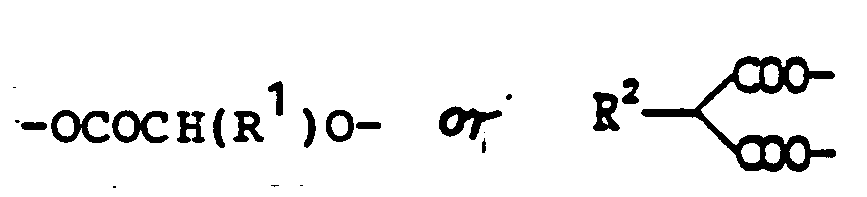
- This invention relates to the ammine-alicyclic amine-platinum complexes. More particularly, it relates to a compound of the formula (I): wherein R is hydrogen C 1 -C 5 alkyl, hydroxy, carboxy, C 1 -C 5 alkoxy, halogen or oxo: m is an integer from 2 to 7; X and Y taken together form wherein R 1 is hydrogen, Ci-Cs alkyl, hydroxymethyl, halomethyl or phenyl; and R 2 is hydrogen or C 1 -C 5 alkyl.
- the said compound is prepared in accordance with the undermentioned scheme.
- Am is and R, m, X and Y each has the same significance as defined above.
- the reagent A includes wherein R 1 and R 2 have the same significance as defined above.
- the reagent B includes alkali metal salts of reagent A above illustrated.
- the compound (V) can be prepared by reacting the compound (VI) with 5 to 45 mol equivalent of potassium iodide in water at room temperature for 30 minutes.
- 3 mol equivalent of potassium iodide is used, some complicated products are obtained.
- An excessive amount (15 mol equivalent) of potassium iodide gives a mixture of K[Ptl 3 (NH 3 )] and K[PtCll 2 (NH 3 )]I and the ratio of both compounds can be calculated from the elemental analysis.
- the compound (III) is prepared by reacting the compound (IV) with 2 mol equivalents of silver nitrate in water with shielding light.
- the compound (III) contains two nitrato groups in place of two halogens.
- the compound (II) in which two nitrato groups are replaced by hydroxy groups can be prepared by passing an aqueous solution of the compound (III) through a column filled with an anion exchange resin (OH-type) such as Amberlite@IRA-400, Dowex®I or Diaion@SA-10A. Since the compound (II) is instable in solid form, it is generally preferred to use the resultant solution in the subsequent step without purification.
- an anion exchange resin OH-type
- the compound (II) dissociates in aqueous solution as shown below and shows alkalinity.
- the aqueous solution of compound (II) is allowed to react with an equimolar amount of reagent A to give the compound (I). Since this reaction proceeds quantitatively, the reagent A may be used in an amount equimolar to the Compound (III).
- the present reaction is usually carried out at room temperature and terminates within 10 days; if necessary, the reaction may be conducted at 50-70 ° C. The terms used in the above definition will be illustratively explained below.
- C 1 -C 5 alkyl herein employed refers to a straight or branched saturated aliphatic hydrocarbon group such as methyl, ethyl, n-propyl, n-butyl, isobutyl, sec-butyl, tert-butyl, n-pentyl and neo-pentyl.
- C 1 -C 5 alkoxy represents preferably methoxy, ethoxy, n-propoxy, isopropoxy, n-butoxy, isobutoxy, sec-butoxy, tert-butoxy, n-pentyloxy and sec-pentyloxy.
- halomethyl represents methyl groups binding 1-3 halogen atoms such as fluorine, chlorine and bromine.
- the compounds (I) of the present invention can be administered to humans or animals enterally or parenterally.
- the compounds (I) of the present invention dissolved or suspended in solvents for injection e.g. distilled water for injection, physiological saline, 5 % aqueous glucose solution, aqueous ethanol, aqueous glycerin, aqueous propylene glycol, etc.
- solvents for injection e.g. distilled water for injection, physiological saline, 5 % aqueous glucose solution, aqueous ethanol, aqueous glycerin, aqueous propylene glycol, etc.
- the compounds of the present invention may be placed in closed ampoules as a solution or suspension, and more preferably preserved in ampoules or vials in forms of crystals, powders, fine crystals, lyophilizates, so as to be dissolved immediately before use. Stabilizers may also be added.
- the compounds (I) of the present invention are used in the treatment of tumors of adults, they are enterally and parenterally administered at a dose or doses of 100 to 1000 mg/body/day, usually once a week or every 3 to 4 weeks.
- the resulting yellow solid material was collected by filtration, washed with cold water and dried at 60 ° C in vacuum. The mother liquor was allowed to stand overnight to give 0.1 g of yellow solid.
- the resulting solution was concentrated, and the residue was mixed with 50 ml of methanol, heated for a short time and the insoluble material was removed.
- the methanolic solution was concentrated to 20 ml and passed through a column of silica gel and the eluate of which the Rf values were 0.42 7a and 0.30 7b on a thin layer chromatography (hereinafter abbreviated as "TLC") was collected.
- TLC thin layer chromatography
- the eluate was passed through the Lobar column to separate each component and then 1.35 g of crude crystals of 7a and 1.40 g of crude crystals of 7b were obtained.
- the crude crystals of 7a was recrystallized from methanol-acetone and dried at 90 ° C in vacuum for 6 hours to give 1.15 g of the pure 7a as pale yellow crystals containing 0.3 mol equivalent of methanol. (Yield : 30 %)
- the objective compounds (I) of the present invention have higher water-solubility than other platinum complexes cited herein and show potent antitumor activities: particularly the compounds (I) show outstanding antitumor activities against Murine Leukemia L1210 resistant to cisplatin (hereinafter abbreviated as L1210/CDDP) and Walker Carcinosarcoma 236.
- Murine Leukemia L 1210 ascites cells (10 5 cells) were intraperitoneally inoculated to BDF 1 mice, and next day a predetermined amount of the test compounds was administered intraperitoneally.
- the saline was used as a solvent for injection.
- the increasing ratio of lifespan (ILS) was calculated according to the following formula.
- a curative index CI was determined from a dosage showing 30 % increasing ratio of lifespan (ILS 30 ) and that showing the maximal increasing ratio of lifespan (ILS max ).
- the tumor seed of Walker Carcinosarcoma was subcutaneously inoculated to Wistar rats (4 weeks of the age, female) and a predetermined amount of the test compound was intravenously administered for 5 days continuously from the next day of the inoculation. Saline was used as a solvent for injection.
Landscapes
- Chemical & Material Sciences (AREA)
- Organic Chemistry (AREA)
- Health & Medical Sciences (AREA)
- Medicinal Chemistry (AREA)
- Pharmacology & Pharmacy (AREA)
- Epidemiology (AREA)
- Life Sciences & Earth Sciences (AREA)
- Animal Behavior & Ethology (AREA)
- General Health & Medical Sciences (AREA)
- Public Health (AREA)
- Veterinary Medicine (AREA)
- Pharmaceuticals Containing Other Organic And Inorganic Compounds (AREA)
- Acyclic And Carbocyclic Compounds In Medicinal Compositions (AREA)
- Organic Low-Molecular-Weight Compounds And Preparation Thereof (AREA)
- Cephalosporin Compounds (AREA)
- Catalysts (AREA)
Abstract
Description
- This invention relates to novel ammine-alicyclic amine-platinum complexes which show potent antitumor activities with low toxicity.
- There are known several platinum compounds having anti-tumor activities. For example, cisplatin (Bristol Myers) and carboplatin (Bristol Myers) are reported as having such activities. EP-A 0 176 995, Chem.Abstr. Vol. 93 (1980), abstr. no. 36830e and Chem.Abstr. Vol. 105 (1986), abstr. no. 15333d disclose aminoalkyl-substituted cycloalkylamine platinum complexes which are useful as antitumor agents. The present inventors have intensively investigated to find platinum compounds which have more potent antitumor activities with less toxicity than the prior art compounds. So the inventors tried to find improved compounds with antitumor acitivities and selected some compounds, for example, diglucuronato-cis- diammine-platinum (II) (US Pat. No. 4575550) and (trans-dihydroxo)(glycolato-0,0')(dimmine)platinum (IV) (US Pat. No. 4658048).
- This invention relates to the ammine-alicyclic amine-platinum complexes. More particularly, it relates to a compound of the formula (I):

- The said compound is prepared in accordance with the undermentioned scheme.

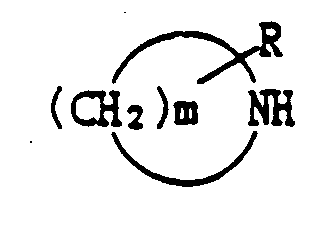

- In this reaction scheme, the compound (V) can be prepared by reacting the compound (VI) with 5 to 45 mol equivalent of potassium iodide in water at room temperature for 30 minutes. When 3 mol equivalent of potassium iodide is used, some complicated products are obtained. An excessive amount (15 mol equivalent) of potassium iodide gives a mixture of K[Ptl3(NH3)] and K[PtCll2(NH3)]I and the ratio of both compounds can be calculated from the elemental analysis.
- An aqueous solution of an alicyclic amine in an amount of the same mol equivalent to the starting material (VI) is added to a solution of the compound (V), and the mixture is allowed to react at room temperature for 0.5 to 1 hour, whereby a mixture (IV) of the compound of X=Y=lodine and the compound of one of X and Y being Iodine and the other = Chlorine in the formula (I) is obtained.
- Then the compound (III) is prepared by reacting the compound (IV) with 2 mol equivalents of silver nitrate in water with shielding light. The compound (III) contains two nitrato groups in place of two halogens.
- The compound (II) in which two nitrato groups are replaced by hydroxy groups can be prepared by passing an aqueous solution of the compound (III) through a column filled with an anion exchange resin (OH-type) such as Amberlite@IRA-400, Dowex®I or Diaion@SA-10A. Since the compound (II) is instable in solid form, it is generally preferred to use the resultant solution in the subsequent step without purification.
- The compound (II) dissociates in aqueous solution as shown below and shows alkalinity.

- The aqueous solution of compound (II) is allowed to react with an equimolar amount of reagent A to give the compound (I). Since this reaction proceeds quantitatively, the reagent A may be used in an amount equimolar to the Compound (III). The present reaction is usually carried out at room temperature and terminates within 10 days; if necessary, the reaction may be conducted at 50-70 ° C. The terms used in the above definition will be illustratively explained below.
- The term "C1-C5 alkyl" herein employed refers to a straight or branched saturated aliphatic hydrocarbon group such as methyl, ethyl, n-propyl, n-butyl, isobutyl, sec-butyl, tert-butyl, n-pentyl and neo-pentyl.
- The term "C1-C5 alkoxy" represents preferably methoxy, ethoxy, n-propoxy, isopropoxy, n-butoxy, isobutoxy, sec-butoxy, tert-butoxy, n-pentyloxy and sec-pentyloxy.
- The term "halomethyl" represents methyl groups binding 1-3 halogen atoms such as fluorine, chlorine and bromine.
- The compounds (I) of the present invention can be administered to humans or animals enterally or parenterally. For example, the compounds (I) of the present invention dissolved or suspended in solvents for injection (e.g. distilled water for injection, physiological saline, 5 % aqueous glucose solution, aqueous ethanol, aqueous glycerin, aqueous propylene glycol, etc.), can be administered intravenously, intramuscularly, or subcutaneously, or by means of instillation.
- The compounds of the present invention may be placed in closed ampoules as a solution or suspension, and more preferably preserved in ampoules or vials in forms of crystals, powders, fine crystals, lyophilizates, so as to be dissolved immediately before use. Stabilizers may also be added.
- When the compounds (I) of the present invention are used in the treatment of tumors of adults, they are enterally and parenterally administered at a dose or doses of 100 to 1000 mg/body/day, usually once a week or every 3 to 4 weeks.
- Presently preferred and practical embodiments of the present invention are illustratively shown in the following Examples.
-

- To a mixture of 6.44 g (18.0 mmol) of Compound 1 in 30 ml of water was added an aqueous solution (120 ml) of 135 g (810 mmol) of KI, and the mixture was stirred at room temperature for 45 minutes. The mixture was mixed with an aqeuous solution (5 ml) of 1.32 g (18.5 mmol) of pyrrolidine and stirred at room temperature for 45 minutes.
- The resulting yellow solid material was collected by filtration, washed with cold water and dried at 60 ° C in vacuum. The mother liquor was allowed to stand overnight to give 0.1 g of yellow solid.
- Yield : 9.1 g (97 %)
- The product is a mixture of

- m.p. : 110 ° C~ (decomp.)
- Anal. Calcd. (%) for C4H12N2Cl0.19I1.81Pt
- : C,9.24; H,2.33; N,5.36; Pt,37.52
- Found (%) : C,9.21; H,2.33; N,5.36; Pt,37.37
- IR v (Nujol) : 3300 (m), 3270 (s), 3200 (s), 3050 (m), 1605 (m), 1350 (w), 1310 (w), 1280 (w), 1260 (s), 1125 (m), 1045 (m), 960 (w), 935 (w), 900 (m), 770 (w), 740 (m) cm-1.
- The mixture of 8.6 g (16.6 mmol) of diiodo Compound 3 containing

- Yield : 100 %
- 1HNMR : (δ, D20, ppm, TMS as external standard)
- 2.25 (b.m, C3-H2, C4-H2); 3.15*(bm, C2-HA, C5-HA; 3.65*(bm, C2-HB, C5-HB); 6.40 (vb, NH, NH3)
- (* : J195 Pt-H could not be read because of broadness).
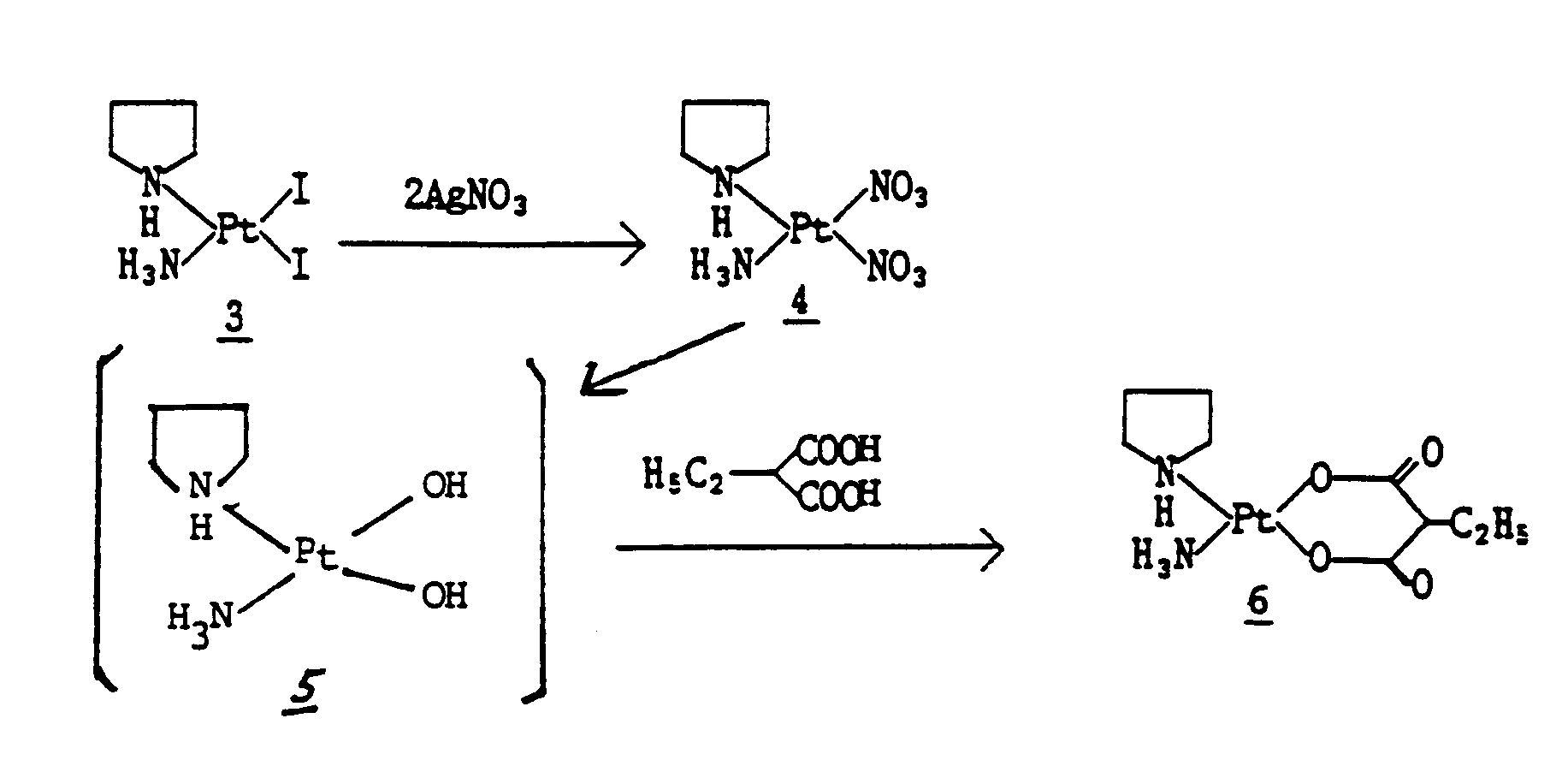
- The solution (20 ml : containing 3.83 mmol of Compound 4) of dinitrato Compound 4 obtained in Preparation Example 1 was passed through a column of about 55 ml of Diaion®SA-10A (OH- type) as an anion exchange resin. The alkaline eluate was mixed with 505.8 mg (3.83 mmol) of ethylmalonic acid and stirred for 1 hr. The mixture was concentrated under reduced pressure and the precipitated solid was collected and recrystallized from water to give 461 mg of Compound 6 as white crystals.
- Yield : 29.3 %
- m.p. : 178-195 ° C (decomp.)
- Anal. Calcd. (%) for C4H18N2O4Pt• (H20)
- : C, 25.06; H, 4.67; N, 6.49; Pt, 45.23
- Found (%) : C, 24.74; H, 4.57; N, 6.63; Pt, 45.10
- IR v (Nujol) : 3580 (w); 3400 (m); 3280 (w); 3200 (W); 3140 (s); 2700 (b, w); 2200 (b, w); 1660 (sh); 1620 (s); 1600 (sh); 1420 (m); 1400 (s); 1370 (sh); 1340 (w); 1310 (w); 1235 (w); 1095 (w); 1030 (w); 980 (w); 950 (w); 905 (w); 830 (w); 810 (w); 760 (w) cm-1
- 1HNMR : (δ, D20, ppm, TMS as external standard)
- 1.50 (t, J = 7.5Hz, CH3); 3.06 (q, J = 7.5Hz, -CH2-in ethyl); 3.93 (t, J=7.5Hz, >CH-); 1.93-2.51 (m, C3-H2 in pyrrolidine); 2.80 -3.40 (m, C2-HA, Cs-HA in pyrrolidine); 3.40-3.83 (m, C2-HB, Cs-HB in pyrrolidine)
-

- A solution of 91.9 g of dinitrato Compound 4 (containing 10.5 mmol of Complex 4) was concentrated to 30 ml and passed through 70 ml of a column of Diaion@ SA-10A (OH-type) as an anion exchange resin to give 105 ml of the solution of Compound 5.
- To the solution were added 799 mg (10.5 mmol) of glycolic acid and 2.1 g (21 mmol) of sodium glycolate and the mixture was heated at 60 ° C for 1 hour. After the reaction, the solution was adjusted to pH 7.4, and further heated for 5 hours.
- The resulting solution was concentrated, and the residue was mixed with 50 ml of methanol, heated for a short time and the insoluble material was removed.
- The methanolic solution was concentrated to 20 ml and passed through a column of silica gel and the eluate of which the Rf values were 0.42 7a and 0.30 7b on a thin layer chromatography (hereinafter abbreviated as "TLC") was collected. The eluate was passed through the Lobar column to separate each component and then 1.35 g of crude crystals of 7a and 1.40 g of crude crystals of 7b were obtained. The crude crystals of 7a was recrystallized from methanol-acetone and dried at 90 ° C in vacuum for 6 hours to give 1.15 g of the pure 7a as pale yellow crystals containing 0.3 mol equivalent of methanol. (Yield : 30 %)
- In the same method, the crude 7b was recrystallized from methanol and dried at 90 ° C in vacuum for 6 hours to give 1.25 g of the pure 7b as pale yellow crystals. (Yield : 34 %) Isomer 7a (Rf = 0.42) ; m.p. : 155
~ 185 °C (decomp.) - Anal.Calcd. (%) for C3 H14 N2O3 Pt (CH3OH)0.3
- : C, 20.62; H, 4.17; N, 7.60: Pt, 53.16
- Found (%) : C, 19.94; H, 4.24; N, 7.53; Pt, 52.66
- IR v (Nujol) : 3550 (sh); 3200 (bs); 3100 (bm); 1635 (s); 1610 (s); 1350 (s); 1305 (m); 1055 (m); 1050 (m); 920 (m); 900 (w); 865 (w); 760 (w); 715 (w) cm-1
- 1HNMR : (δ, D20, ppm, TMS as external standard)
- 2.23 (bm, C3-H3, C4-H2); 3.15 (bm, C2-HA, C5-HA); 3.60 (bm, C2-HB, C5-HB); 3.80 (s, MeOH); 4.53 (s, J195 Pt-H = 36.0Hz, glycolate CH2)
- Isomer 7b (Rf=0.30) ; m.p. : 209~212°C (decomp.)
- Anal.Calcd. (%) for C5 H1 4 N2 O3 Pt
- : C, 20.17; H, 3.95; N, 7.84; Pt, 54.60
- Found (%) C, 20.01; H, 3.89; N, 7.79; Pt, 55.00
- IR v (Nujol) : 3250 (m); 3160 (s); 1625 (s); 1600 (s); 1360 (s); 1340 (s); 1310 (m); 1220 (w); 1175 (w); 1065 (s); 1040 (m): 930 (m); 920 (m); 905 (m); 890 (w); 860 (w); 760 (w) cm-1
- 1HNMR : (δ, D20, ppm, TMS as external standard)
- 2.24 (bm, C3-H2, C4-H2); 3.23 (bm, C2-HA, C5-HA); 3.64 (bm, C2-H3, C5-HB; 4.57 (s, J195 Pt-H=31.5Hz, glycolate CH2)
-

- Using 5.36 g of Compound I, the reaction was performed in the same manner as in Preparation Example 1-(a), whereby 8.70 g of the mixture of

- Yield : 97 %
- m.p. : 110 ° C~ (decomp.)
- Anal. Calcd. (%) for C5H14N2Cl0.20l1.80Pt
- : C, 11.27; H, 2.65; N, 5.25; Pt, 36.60
- Found (%) : C, 11.45; H, 2.68; N, 5.10; Pt, 36.31
- 6.50 g (11.8 mmol) of Compound 8 were reacted in the same method as in Preparation Example 1-(b) to give 118 g of an aqueous solution containing 11.5 mmol of Compound 9. The solution (5.0 g) was concentrated and dried in vacuum to give 209 mg of pale yellow glassy solid.
- Yield : 99 %
- 1HNMR : (δ, D20, ppm, TMS as external standard)
- 2.05 (bm, C3-H2, C4-H2, C5-H2); 3.25*(bm, C2-HA, C6-HA); 3.73 (C2-HB, C5-HB); 6.20 (vb, NH, NH3)
- (* : J195 Pt-H could not be read because of broadness)
-

- Yield : 51.6 %
- m.p. : 188°C- (decomp.)
- Anal. Calcd. (%) for C10H20N2O4Pt• H20
- : C, 26.97; H, 4.98; N, 6.29; Pt, 43.80
- Found (%) : C, 26.68; H, 4.90; N, 6.37; Pt, 43.90
- IR v (Nujol) : 3400 (m); 3280 (m); 3200 (sh); 3100 (m); 1615 (s); 1590 (s); 1405 (s); 1385 (s); 1360 (sh); 1330 (w); 1300 (w); 1230 (w); 1190 (w); 1140 (w); 1085 (w); 1020 (w); 970 (w); 940 (w); 880 (w); 860 (w); 830 (w); 815 (sh); 805 (sh); 760 (w); 695 (w) cm-1
- 1HNMR : (δ, D20, ppm, TMS as external standard)
- 1.50 (t, J=7.5Hz, -CH3); 2.06 (bm, C3-H2, C4-H2 in piperidine); 3.07 (d, q, (d)J=9, (q)J=7.5, -CH2- in ethyl); 2.75-3.50 (bm, C2-HA, C6-HA in piperidine); 3.50-3.96 (bm, C2-HB, C6-HB in piperidine)
-

- Using 100 g of an aqueous solution of dinitrato Compound 9 (containing 10 mmol of Compound 9), the reaction was performed in the same manner as in Example 3, and the reaction mixture was recrystallized from methanol/acetone = 1/10 by weight to give 0.75 g of Compound 11 a as pale yellow crystals.
- Yield : 20 %
- Similarly the crude compound 11 b was recrystallized from methanol to give 1.28 g of Compound 11 b as pale yellow crystals.
- Yield : 35 %
- Isomer 11 a (Rf = 0.45) ; m.p. : 180-190 ° C (decomp.)
- Anal.
Calcd. (%) for C7H16N2O3Pt - : C, 22.64; H, 4.34; N, 7.54; Pt, 52.54
- Found (%) : C, 22.21; H, 4.47; N, 7.64; Pt, 51.82
- IR v (Nujol) : 3250 (sh); 3160 (bm); 3070 (bm); 1635 (s); 1610 (s); 1340 (s); 1300 (s); 1275 (w); 1220 (w); 1190 (w); 1130 (w); 1080 (m); 1040 (m); 1030 (w); 1005 (w); 935 (w); 875 (w); 850 (w); 750 (w); 715 (w) cm-1
- 1HNMR : (6, D20, ppm, TMS as external standard)
- 2.03 (bm, C3-H2, C4-H2, C5-H2); 3.20 (bm, C2-HA, C5-HA); 3.70 (bm, C2-HB, C6-HB); 4.53 (s, J195pt-H = 36Hz, glycolato CH2)
- Isomer 11 b (Rf = 0.34) ; m.p. ; 190-215 °C (decomp.)
- Anal. C
alcd. (%) for C7H16N2O3Pt - : C, 22.64; H, 4.34; N, 7.54; Pt, 52.54
- Found (%) : C, 22.51; H, 4.24; N, 7.57; Pt, 52.47
- IR v (Nujol) : 3260 (m); 3210 (m); 3170 (s); 1620 (s); 1595 (s); 1350 (s); 1325 (m); 1310 (m); 1270 (w); 1220 (w); 1130 (w); 1100 (w); 1070 (m); 1030 (w); 1020 (w); 930 (w); 920 (w); 910 (w); 860 (m); 810 (w); 755 (m); 715 (w) cm-1
- 1HNMR: (δ, D20, ppm, TMS as external standard)
- 2.03 (bm, C3-H2, C4-H2, C5-H2); 3.25 (bm, C2-HA, C6-HA); 3.70 (bm, C2-HB, C6-HB); 4.53 (s, J195Pt-H=31.5Hz, glycolato CH2)
- The objective compounds (I) of the present invention have higher water-solubility than other platinum complexes cited herein and show potent antitumor activities: particularly the compounds (I) show outstanding antitumor activities against Murine Leukemia L1210 resistant to cisplatin (hereinafter abbreviated as L1210/CDDP) and Walker Carcinosarcoma 236.
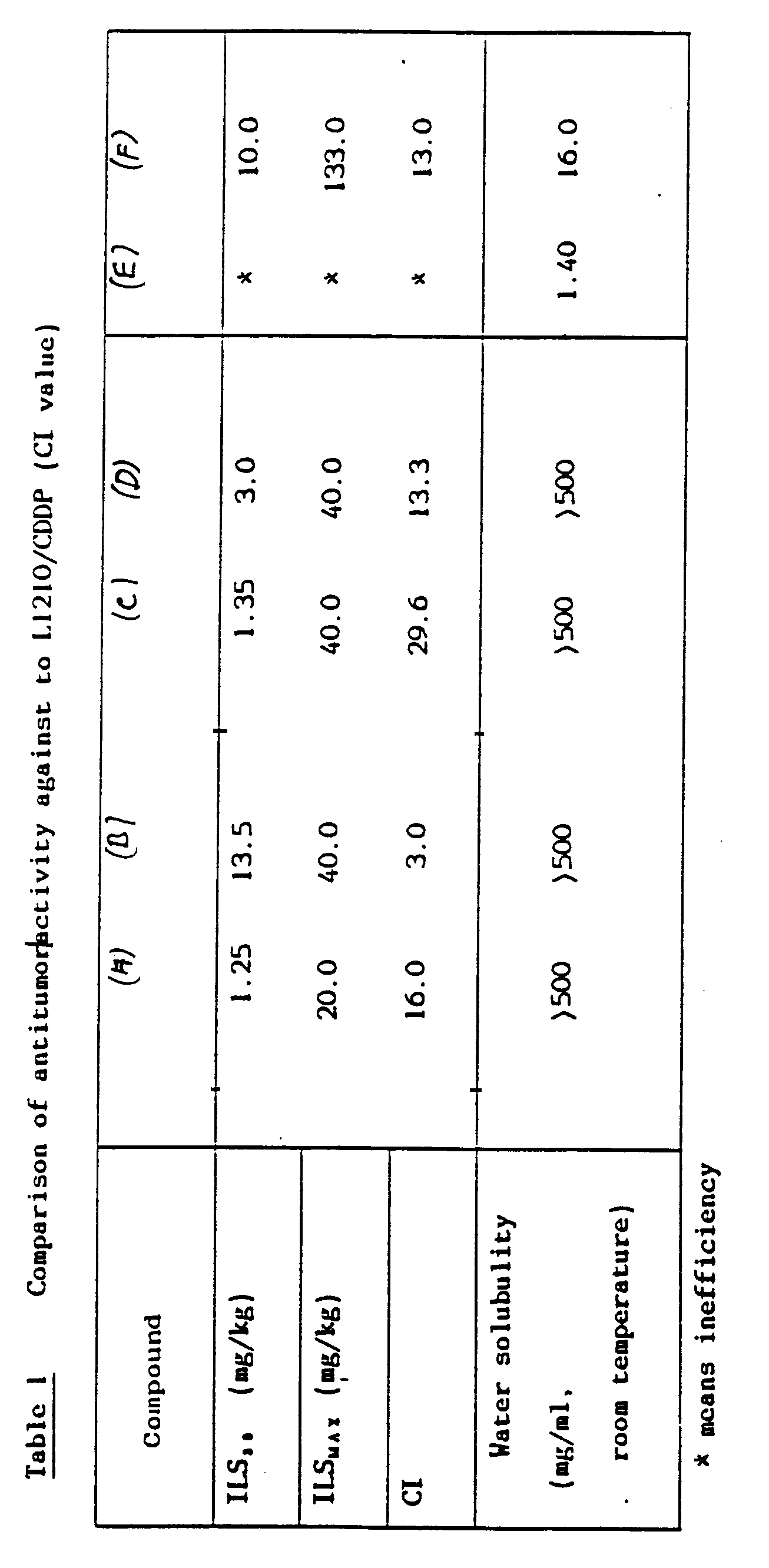
- The antitumor activity of the objective compounds of the present invention will be explained by the following Experiment.
- Murine Leukemia L 1210 ascites cells (105 cells) were intraperitoneally inoculated to BDF1 mice, and next day a predetermined amount of the test compounds was administered intraperitoneally. The saline was used as a solvent for injection.
-
- (A) (Ammine) (glycolato-O,O')(pyrrolidine)platinum (II) 7a
- (Rf value : 0.42)
- (B) (Ammine)(glycolato-O,O')(pyrrolidine)platinum (II) 7b
- (C) (Ammine)(glycolato-O,O')(piperidine)platinum (II) 11 a
- (Rf value : 0.45)
- (D) (Ammine)(glycolato-O,O')(piperidine)platinum (II) 11 b
- (Rf value : 0.34)
- (E) Cisplatin (CDDP)
- (F) Carboplatin
- From the average survival days (a) in the test group and those (b) of the untreated control group, the increasing ratio of lifespan (ILS) was calculated according to the following formula.

- A curative index CI was determined from a dosage showing 30 % increasing ratio of lifespan (ILS30) and that showing the maximal increasing ratio of lifespan (ILSmax).

- The larger the CI value is, the more effective the compound is. The results are shown in Table 1.
- The tumor seed of Walker Carcinosarcoma was subcutaneously inoculated to Wistar rats (4 weeks of the age, female) and a predetermined amount of the test compound was intravenously administered for 5 days continuously from the next day of the inoculation. Saline was used as a solvent for injection.
-
- (A) (Ammine)(glycolato-O,O')(pyrrolidine)platinum (II) 7a
- (Rf value : 0.42)
- (B) (Ammine)(glycolato-O,O')(pyrrolidine)platinum (II) 7b
- (C) (Ammine)(glycolato-O,O')(piperidine)platinum (II) 11 a
- (Rf value : 0.45)
- (D) (Ammine)(glycolato-O,O')(piperidine)platinum (II) 11 b
- (Rf value : 0.34)
- (E) Cisplatin (CDDP)
- (F) Carboplatin
- From the average survival days (a) in each test group and those (b) of the untreated control group, the increasing ratio of lifespan (ILS) was calculated according to the following formula.
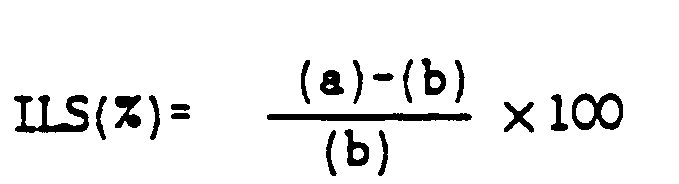
- A curative index CI was determined in the same manner as in Experiment 1. The results are shown in Table 2.

Claims (4)


comprising the following steps:


Priority Applications (1)
| Application Number | Priority Date | Filing Date | Title |
|---|---|---|---|
| AT87118819T ATE73814T1 (en) | 1986-12-18 | 1987-12-18 | AMMINE-N-HETEROCYCLIC PLATINUM COMPLEXES AND ANTITUMOR AGENTS. |
Applications Claiming Priority (2)
| Application Number | Priority Date | Filing Date | Title |
|---|---|---|---|
| JP303529/86 | 1986-12-18 | ||
| JP30352986 | 1986-12-18 |
Publications (2)
| Publication Number | Publication Date |
|---|---|
| EP0273315A1 EP0273315A1 (en) | 1988-07-06 |
| EP0273315B1 true EP0273315B1 (en) | 1992-03-18 |
Family
ID=17922086
Family Applications (1)
| Application Number | Title | Priority Date | Filing Date |
|---|---|---|---|
| EP87118819A Expired - Lifetime EP0273315B1 (en) | 1986-12-18 | 1987-12-18 | Ammine-n-heterocyclic-platinum complexes and antitumor agents |
Country Status (8)
| Country | Link |
|---|---|
| US (1) | US4902797A (en) |
| EP (1) | EP0273315B1 (en) |
| KR (1) | KR900003457B1 (en) |
| AT (1) | ATE73814T1 (en) |
| CA (1) | CA1327039C (en) |
| DE (1) | DE3777583D1 (en) |
| ES (1) | ES2032430T3 (en) |
| GR (1) | GR3004629T3 (en) |
Cited By (4)
| Publication number | Priority date | Publication date | Assignee | Title |
|---|---|---|---|---|
| EP0367974A1 (en) * | 1988-10-07 | 1990-05-16 | BEHRINGWERKE Aktiengesellschaft | Cis-complexes with a 1,3-diaminopropane derivative as a ligand, methods for their preparation and pharmaceutical agents containing such complexes |
| US4939256A (en) * | 1988-02-04 | 1990-07-03 | Kanebo Ltd. | Novel platinum complex, antineoplastic agent containing the same, and intermediate therefor |
| US5665771A (en) * | 1995-02-14 | 1997-09-09 | Johnson Matthey Public Limited Company | Platinum complexes |
| EP1082329B1 (en) * | 1998-05-27 | 2003-03-05 | Pliva-Lachema A.S. | Platinum complex, its preparation and therapeutic application |
Families Citing this family (15)
| Publication number | Priority date | Publication date | Assignee | Title |
|---|---|---|---|---|
| US4970324A (en) * | 1985-12-24 | 1990-11-13 | Hoeschele James D | Aminoalkyl-substituted azetidine platinum(II) complexes |
| GB0011903D0 (en) * | 2000-05-18 | 2000-07-05 | Astrazeneca Ab | Combination chemotherapy |
| US6806289B1 (en) * | 2000-07-14 | 2004-10-19 | Stephen J. Lippard | Coordination complexes, and methods for preparing by combinatorial methods, assaying and using the same |
| JP2005501859A (en) * | 2001-08-23 | 2005-01-20 | イサム・リサーチ・デベロツプメント・カンパニー・オブ・ザ・ヘブルー・ユニバーシテイ・オブ・エルサレム | Platinum complexes and their use in the treatment of cancer |
| US7271161B2 (en) * | 2002-09-11 | 2007-09-18 | Board Of Regents, The University Of Texas System | Platinum complexes as antitumor agents in combination with biochemical modulation |
| ES2257178B1 (en) * | 2004-09-30 | 2007-08-16 | Universidad Autonoma De Madrid | PLATINUM COMPOUNDS OF FORMULA TRANS- (PTC12 (ISOPROPYLAMINE) (4- (HYDROXIMETHYL) -PIRIDINE)) AND TRANS- (PTC12 (ISOPROPYLAMINE) (3-HYDROXIMETHYL) -PIRIDINE AND ITS APPLICATION AS ANTITUMORAL PHARMACO. |
| US8173686B2 (en) | 2006-11-06 | 2012-05-08 | Poniard Pharmaceuticals, Inc. | Use of picoplatin to treat colorectal cancer |
| US8168662B1 (en) | 2006-11-06 | 2012-05-01 | Poniard Pharmaceuticals, Inc. | Use of picoplatin to treat colorectal cancer |
| US8168661B2 (en) * | 2006-11-06 | 2012-05-01 | Poniard Pharmaceuticals, Inc. | Use of picoplatin to treat colorectal cancer |
| US8178564B2 (en) * | 2006-11-06 | 2012-05-15 | Poniard Pharmaceuticals, Inc. | Use of picoplatin to treat colorectal cancer |
| US20110033528A1 (en) * | 2009-08-05 | 2011-02-10 | Poniard Pharmaceuticals, Inc. | Stabilized picoplatin oral dosage form |
| TW200916094A (en) * | 2007-06-27 | 2009-04-16 | Poniard Pharmaceuticals Inc | Stabilized picoplatin dosage form |
| US20100260832A1 (en) * | 2007-06-27 | 2010-10-14 | Poniard Pharmaceuticals, Inc. | Combination therapy for ovarian cancer |
| TW200920347A (en) * | 2007-07-16 | 2009-05-16 | Poniard Pharmaceuticals Inc | Oral formulations for picoplatin |
| AU2009210654A1 (en) * | 2008-02-08 | 2009-08-13 | Poniard Pharmaceuticals, Inc. | Use of picoplatin and bevacizumab to treat colorectal cancer |
Family Cites Families (2)
| Publication number | Priority date | Publication date | Assignee | Title |
|---|---|---|---|---|
| JPS57123198A (en) * | 1981-01-23 | 1982-07-31 | Shionogi & Co Ltd | Novel platinum complex |
| HU193809B (en) * | 1984-09-12 | 1987-12-28 | Chugai Pharmaceutical Co Ltd | Process for producing new platinum complexes |
-
1987
- 1987-12-18 KR KR1019870014490A patent/KR900003457B1/en not_active Expired
- 1987-12-18 ES ES198787118819T patent/ES2032430T3/en not_active Expired - Lifetime
- 1987-12-18 CA CA000554853A patent/CA1327039C/en not_active Expired - Fee Related
- 1987-12-18 AT AT87118819T patent/ATE73814T1/en not_active IP Right Cessation
- 1987-12-18 EP EP87118819A patent/EP0273315B1/en not_active Expired - Lifetime
- 1987-12-18 DE DE8787118819T patent/DE3777583D1/en not_active Expired - Fee Related
- 1987-12-18 US US07/135,061 patent/US4902797A/en not_active Expired - Fee Related
-
1992
- 1992-05-18 GR GR920400958T patent/GR3004629T3/el unknown
Non-Patent Citations (1)
| Title |
|---|
| Chemical Abstracts, vol 93, 1980, abstract No. 153339d * |
Cited By (5)
| Publication number | Priority date | Publication date | Assignee | Title |
|---|---|---|---|---|
| US4939256A (en) * | 1988-02-04 | 1990-07-03 | Kanebo Ltd. | Novel platinum complex, antineoplastic agent containing the same, and intermediate therefor |
| US4968800A (en) * | 1988-02-04 | 1990-11-06 | Kanebo Limited | Novel platinum complex, antineoplastic agent containing the same, and intermediate therefor |
| EP0367974A1 (en) * | 1988-10-07 | 1990-05-16 | BEHRINGWERKE Aktiengesellschaft | Cis-complexes with a 1,3-diaminopropane derivative as a ligand, methods for their preparation and pharmaceutical agents containing such complexes |
| US5665771A (en) * | 1995-02-14 | 1997-09-09 | Johnson Matthey Public Limited Company | Platinum complexes |
| EP1082329B1 (en) * | 1998-05-27 | 2003-03-05 | Pliva-Lachema A.S. | Platinum complex, its preparation and therapeutic application |
Also Published As
| Publication number | Publication date |
|---|---|
| GR3004629T3 (en) | 1993-04-28 |
| KR900003457B1 (en) | 1990-05-19 |
| ES2032430T3 (en) | 1993-02-16 |
| DE3777583D1 (en) | 1992-04-23 |
| US4902797A (en) | 1990-02-20 |
| EP0273315A1 (en) | 1988-07-06 |
| ATE73814T1 (en) | 1992-04-15 |
| KR880007552A (en) | 1988-08-27 |
| CA1327039C (en) | 1994-02-15 |
Similar Documents
| Publication | Publication Date | Title |
|---|---|---|
| US4902797A (en) | Ammine-alicyclic amine-platinum complexes and antitumor agents | |
| EP0166366B1 (en) | Novel platinum complexes | |
| EP0155705B1 (en) | Antitumor platinum complexes | |
| CA1258865A (en) | Platinum complexes | |
| US4607114A (en) | Novel platinum complexes | |
| CA1134378A (en) | Cis-platinum(ii) amine lactate complexes | |
| US4861905A (en) | Platinum complexes | |
| US4560781A (en) | Glycolic acid platinum complexes | |
| EP0115929A1 (en) | Novel organic platinum complex and process for the preparation thereof | |
| EP0127884B1 (en) | Novel glycolic acid type platinum complexes | |
| US4732893A (en) | Amino-anthracenediones-platinum complexes useful as anticancer compounds | |
| US5145848A (en) | Amino anthracenediones-bis platinum complexes, useful as antitumoral agents | |
| US4994591A (en) | Platinum complexes derived from b-silyamines | |
| EP0390138B1 (en) | Platinum complexes and antitumor agents containing them as an active ingredient | |
| KR890004351B1 (en) | Process for the preparation of anti-tumor platinum complexs | |
| GB2134103A (en) | Novel organic platinum complex and process for the preparation thereof | |
| EP0308910A2 (en) | Novel platinum complex | |
| US5498780A (en) | Platinum complex and malignant tumor treating drug containing the same | |
| US5142075A (en) | Anti-tumor platinum(II) complexes and process for the preparation thereof | |
| JPS63264492A (en) | Amine-alicyclic amine platinum complex and antiulcer agent | |
| KR910009822B1 (en) | Process for the preparation of platinum complexes | |
| EP0337459A2 (en) | Platinum complex, process for preparing same and antitumor agent |
Legal Events
| Date | Code | Title | Description |
|---|---|---|---|
| PUAI | Public reference made under article 153(3) epc to a published international application that has entered the european phase |
Free format text: ORIGINAL CODE: 0009012 |
|
| AK | Designated contracting states |
Kind code of ref document: A1 Designated state(s): AT BE CH DE ES FR GB GR IT LI LU NL SE |
|
| 17P | Request for examination filed |
Effective date: 19890105 |
|
| 17Q | First examination report despatched |
Effective date: 19891227 |
|
| GRAA | (expected) grant |
Free format text: ORIGINAL CODE: 0009210 |
|
| AK | Designated contracting states |
Kind code of ref document: B1 Designated state(s): AT BE CH DE ES FR GB GR IT LI LU NL SE |
|
| REF | Corresponds to: |
Ref document number: 73814 Country of ref document: AT Date of ref document: 19920415 Kind code of ref document: T |
|
| ITF | It: translation for a ep patent filed | ||
| REF | Corresponds to: |
Ref document number: 3777583 Country of ref document: DE Date of ref document: 19920423 |
|
| ET | Fr: translation filed | ||
| PLBE | No opposition filed within time limit |
Free format text: ORIGINAL CODE: 0009261 |
|
| STAA | Information on the status of an ep patent application or granted ep patent |
Free format text: STATUS: NO OPPOSITION FILED WITHIN TIME LIMIT |
|
| REG | Reference to a national code |
Ref country code: GR Ref legal event code: FG4A Free format text: 3004629 |
|
| REG | Reference to a national code |
Ref country code: ES Ref legal event code: FG2A Ref document number: 2032430 Country of ref document: ES Kind code of ref document: T3 |
|
| 26N | No opposition filed | ||
| EPTA | Lu: last paid annual fee | ||
| PGFP | Annual fee paid to national office [announced via postgrant information from national office to epo] |
Ref country code: LU Payment date: 19941201 Year of fee payment: 8 Ref country code: GB Payment date: 19941201 Year of fee payment: 8 |
|
| PGFP | Annual fee paid to national office [announced via postgrant information from national office to epo] |
Ref country code: FR Payment date: 19941215 Year of fee payment: 8 |
|
| PGFP | Annual fee paid to national office [announced via postgrant information from national office to epo] |
Ref country code: AT Payment date: 19941222 Year of fee payment: 8 |
|
| PGFP | Annual fee paid to national office [announced via postgrant information from national office to epo] |
Ref country code: SE Payment date: 19941223 Year of fee payment: 8 |
|
| PGFP | Annual fee paid to national office [announced via postgrant information from national office to epo] |
Ref country code: GR Payment date: 19941228 Year of fee payment: 8 Ref country code: ES Payment date: 19941228 Year of fee payment: 8 |
|
| PGFP | Annual fee paid to national office [announced via postgrant information from national office to epo] |
Ref country code: NL Payment date: 19941231 Year of fee payment: 8 |
|
| PGFP | Annual fee paid to national office [announced via postgrant information from national office to epo] |
Ref country code: BE Payment date: 19950104 Year of fee payment: 8 |
|
| PGFP | Annual fee paid to national office [announced via postgrant information from national office to epo] |
Ref country code: CH Payment date: 19950118 Year of fee payment: 8 |
|
| EAL | Se: european patent in force in sweden |
Ref document number: 87118819.9 |
|
| PGFP | Annual fee paid to national office [announced via postgrant information from national office to epo] |
Ref country code: DE Payment date: 19950227 Year of fee payment: 8 |
|
| PG25 | Lapsed in a contracting state [announced via postgrant information from national office to epo] |
Ref country code: LU Free format text: LAPSE BECAUSE OF NON-PAYMENT OF DUE FEES Effective date: 19951218 Ref country code: GB Effective date: 19951218 Ref country code: AT Effective date: 19951218 |
|
| PG25 | Lapsed in a contracting state [announced via postgrant information from national office to epo] |
Ref country code: SE Effective date: 19951219 Ref country code: ES Free format text: LAPSE BECAUSE OF THE APPLICANT RENOUNCES Effective date: 19951219 |
|
| PG25 | Lapsed in a contracting state [announced via postgrant information from national office to epo] |
Ref country code: LI Effective date: 19951231 Ref country code: CH Effective date: 19951231 Ref country code: BE Effective date: 19951231 |
|
| BERE | Be: lapsed |
Owner name: SHIONOGI SEIYAKU K.K. TRADING UNDER THE NAME OF S Effective date: 19951231 |
|
| PG25 | Lapsed in a contracting state [announced via postgrant information from national office to epo] |
Ref country code: GR Free format text: THE PATENT HAS BEEN ANNULLED BY A DECISION OF A NATIONAL AUTHORITY Effective date: 19960630 |
|
| PG25 | Lapsed in a contracting state [announced via postgrant information from national office to epo] |
Ref country code: NL Effective date: 19960701 |
|
| GBPC | Gb: european patent ceased through non-payment of renewal fee |
Effective date: 19951218 |
|
| REG | Reference to a national code |
Ref country code: CH Ref legal event code: PL |
|
| PG25 | Lapsed in a contracting state [announced via postgrant information from national office to epo] |
Ref country code: FR Effective date: 19960830 |
|
| REG | Reference to a national code |
Ref country code: GR Ref legal event code: MM2A Free format text: 3004629 |
|
| NLV4 | Nl: lapsed or anulled due to non-payment of the annual fee |
Effective date: 19960701 |
|
| PG25 | Lapsed in a contracting state [announced via postgrant information from national office to epo] |
Ref country code: DE Effective date: 19960903 |
|
| REG | Reference to a national code |
Ref country code: FR Ref legal event code: ST |
|
| REG | Reference to a national code |
Ref country code: ES Ref legal event code: FD2A Effective date: 20010402 |
|
| PG25 | Lapsed in a contracting state [announced via postgrant information from national office to epo] |
Ref country code: IT Free format text: LAPSE BECAUSE OF NON-PAYMENT OF DUE FEES;WARNING: LAPSES OF ITALIAN PATENTS WITH EFFECTIVE DATE BEFORE 2007 MAY HAVE OCCURRED AT ANY TIME BEFORE 2007. THE CORRECT EFFECTIVE DATE MAY BE DIFFERENT FROM THE ONE RECORDED. Effective date: 20051218 |