EP0270690B1 - Drug for treatment and prophylaxis of kidney and liver diseases - Google Patents
Drug for treatment and prophylaxis of kidney and liver diseases Download PDFInfo
- Publication number
- EP0270690B1 EP0270690B1 EP87904105A EP87904105A EP0270690B1 EP 0270690 B1 EP0270690 B1 EP 0270690B1 EP 87904105 A EP87904105 A EP 87904105A EP 87904105 A EP87904105 A EP 87904105A EP 0270690 B1 EP0270690 B1 EP 0270690B1
- Authority
- EP
- European Patent Office
- Prior art keywords
- isoliquiritigenin
- kidney
- liver
- diseases
- caused
- Prior art date
- Legal status (The legal status is an assumption and is not a legal conclusion. Google has not performed a legal analysis and makes no representation as to the accuracy of the status listed.)
- Expired - Lifetime
Links
Classifications
-
- A—HUMAN NECESSITIES
- A61—MEDICAL OR VETERINARY SCIENCE; HYGIENE
- A61K—PREPARATIONS FOR MEDICAL, DENTAL OR TOILETRY PURPOSES
- A61K31/00—Medicinal preparations containing organic active ingredients
- A61K31/12—Ketones
Definitions
- the present invention relates to medicines for use in the therapy and prevention of kidney and liver diseases, and more particularly to medicines of this kind which can exhibit excellent therapeutic and preventive effects with respect to kidney or liver diseases individually developed or to complications resulting from diseases of these organs.
- the kidney in a vital organism performs at its renal tubule and with its filtration and secretion mechanism the function of excreting into the urine waste substances from blood and noxious substances taken up by the vital organism, such as drugs and toxic substances.
- the liver in a vital organism performs three major functions, as listed below. Namely, the liver first acts as a digestive gland and secretes 500 to 1000 mL of bile per day to assist in the digestion and absorption of fats by the small intestines. Its second function is to process chemical changes, storage, and use of various nutrients within the body; in brief, it is an intermediate metabolism. Thirdly, the liver performs detoxication by subjecting noxious substances, such as toxin, from outside the body and toxic substances produced within the body, to detoxication treatments such as oxidation, reduction and inclusion, and by mixing these substances with bile to dispose of them or by sending them to the kidney for excretion into the urine.
- noxious substances such as toxin
- kidney diseases and liver diseases tend to accumulate locally, and therefore these substances often cause kidney diseases and liver diseases to develop, not only individually but also as complications resulting from diseases of these organs.
- Specific substances which can cause such individual or complicated kidney and liver diseases are of various types.
- drugs which can act as such substances are listed below and are classified according to the organs to be affected.
- the drugs marked with the symbol O are those which can cause injury to both the kidney and the liver. (Drugs possessing the tendency to cause kidney injury)
- O Analgesics, antipyretics, anti-inflammatory drugs, and antirheumatic drugs are included in O Analgesics, antipyretics, anti-inflammatory drugs, and antirheumatic drugs:
- aminoglycosides aminoglycosides, polypeptides, polyenes, cephalosporins and penicillins
- O Analgesics, antipyretics, anti-inflammatory drugs, and antirheumatic drugs are included in O Analgesics, antipyretics, anti-inflammatory drugs, and antirheumatic drugs:
- kidney and liver diseases have been discussed from the viewpoint of the metabolic functions of these organs.
- some kidney diseases are considered to be caused by the intermediary of the immunological mechanism.
- Kidney diseases specified herein are the following: (a) a functional disorder of the kidney which is caused by abnormality in the above-mentioned metabolic functions, including acute hepatitis caused by drugs, and chronic nephritis developed from such acute nephritis; (b) acute nephritis caused by the intermediary of the immunological mechanism and chronic nephritis developed from such acute nephritis; and (c) acute nephritis caused by bacteria and virus infection and chronic nephritis developed from such acute nephritis, including a wide range of functional disorders of kidney sites such as the glomerulus, renal tubule and the lupus.
- liver diseases specified herein are the following: (a) a functional disorder of the liver which is caused by abnormality in the above-mentioned metabolic functions and in the biosynthetic functions, including acute hepatitis caused by drugs, and chronic hepatitis developed from such acute hepatitis; (b) fatty liver caused by drinking, and chronic hepatitis developed from such fatty liver; and (c) viral hepatitis caused by virus infection and chronic hepatitis developed from such acute hepatitis, including liver cirrhosis as a result of diseases involving a wide range of such functional disorders of the liver.
- kidney diseases are adopted in accordance with the seriousness of the disease with a view to maintaining the functions of the liver, and they include rest therapy, dietetic therapy, drug therapy, hemodialysis, and kidney transplantation.
- Hemodialysis is considered to be the final treatment available for patients suffering from kidney disease.
- this treatment can only remove from the blood waste substances stored within the body due to the functional disorders of the kidney, and cannot improve the kidney function per se.
- Such patients have to receive hemodialysis throughout their life and, in the end, most of them will suffer from a complication accompanied by cardiac insufficiency or an infectious disease, and may die from such a complication.
- diuretics are used in treating kidney diseases but their pharmacological effects are only to compensate for the lowered functions of the kidney but not to prevent nor cure kidney diseases.
- diuretics most of the thiazides and furosemide which is a non-thiazide diuretic have side effects which induce functional disorders of the liver and, in this respect, they are not desirable for therapy.
- liver diseases are methods which are adopted with a view to maintaining the liver functions, and they include rest therapy, dietetic therapy, and drug therapy.
- drug therapy include those using, for instance, amino acid such as aspartic acid, thioctic acid, methionine, thioproline and glycine, and peptides such as glutathione, as well as extract from the liver, hydrolysate from the liver, hydrolysate from the placenta, glucuronic acid derivatives, and glycyrrhizin extracted from Glycyrrhiza and refined.
- glycyrrhizin is known to be effective for improving the liver functions which have been disordered by chronic hepatitis.
- this agent involves problems in its administration that it is ineffective when orally administered.
- liver cirrhosis Since, the development mechanisms of various liver diseases have not been clarified except those of viral hepatitis and of toxic hepatitis, the methods of treating liver diseases have mainly been rest therapy and dietetic therapy. Recently, however, malotilate has been developed, which suppresses the changing of liver tissues into fibrous tissues by activating the protein synthetis and RNA synthesis. However, the only application of malotilate that is permitted is for the therapy of liver cirrhosis.
- cianidanol has been developed as an immunity activating agent although the mechanism of this action is not clarified, and this agent is considered to be effective in the treatment of B-type viral hepatitis.
- this agent is considered to be effective in the treatment of B-type viral hepatitis.
- accidents involving the death of patients that were treated with cianidanol have occurred in Italy and Portugal, the sale of cianidanol is prohibited at present in Japan.
- the kidney and the liver play important roles in the metabolism of a vital organism, and are interrelated to each other.
- This fact means that, when the functions of one of these organs are disordered, the other will have to bear an increased burden in terms of the metabolic functions, often resulting in both organs becoming functionally disordered.
- a drug for the therapy which can improve the functions of both organs simultaneously is desired.
- the present inventors have made various studies to solve the problems of the prior art. After examining various types of substances, the present inventors have come to take up isoliquiritigenin and achieved the following findings.
- isoliquiritigenin exists in nature as a component of the plant Glycyrrhiza .
- the content of the isoliquiritigenin in Glycyrrhiza is small, and moreover the greater part of this component exists in the form of glycosides with a lot of analogous homologues coexisting, the separation and refining of the substance has been difficult, and the question of whether isoliquiritigenin has any pharmacological effects has not hitherto been solved.
- the present inventors have made their own studies, and previously made a proposal (Japanese Patent Application No. 49530/1986) concerning the use of isoliquiritigenin as an anti-allergic drug.
- Japanese Patent Application No. 49530/1986 Japanese Patent Application No. 49530/1986
- isoliquiritigenin is effective in the therapy and prevention of kidney and liver diseases.
- the present invention has been accomplished on the basis of the above-mentioned findings. That is, the present invention provides a medicine for use in the therapy and prevention of kidney and liver diseases, which contains as the active ingredient isoliquiritigenin or pharmaceutically acceptable salts thereof.
- kidney diseases specified herein are the following: (a) a functional disorder of the kidney which is caused by abnormality in the metabolic functions, including acute nephritis caused by drugs, and chronic nephritis developed from such acute nephritis; (b) acute nephritis caused by the intermediary of the immunological mechanism and chronic nephritis developed from such acute nephritis; and (c) acute nephritis caused by bacteria and virus infection and chronic nephritis developed from such acute nephritis, including a wide range of functional disorders at kidney sites such as the glomerulus, renal tubule and the lupus.
- liver diseases specified herein are the following: (a) a functional disorder of the liver which is caused by abnormality in the metabolic functions and in the biosynthetic functions, including acute hepatitis caused by drugs, and chronic hepatitis developed from such acute hepatitis; (b) fatty liver caused by drinking or the like and chronic hepatitis developed from such acute hepatitis; and (c) viral hepatitis caused by virus infection and chronic hepatitis developed from such acute hepatitis, including liver cirrhosis as a result of diseases involving a wide range of such functional disorders of the liver.
- Salts of isoliquiritigenin which are pharmaceutically acceptable include non-toxic salts such as salts of alkali metals and alkaline earth metals, for example, sodium salts, potassium salt, magnesium salt and calcium salt, and non-toxic amine salts such as ammonium salt.
- the medicine for use in the therapy and prevention of kidney and liver diseases in accordance with the present invention can be administered either orally or parenterally (such as venous injection, subcutaneous injection or rectal administration), and can be prepared in a formulation which is suitable for the administration method chosen.
- the medicine in accordance with the present invention can be prepared in a formulation such as a tablet, a capsule, a granule, a powder, a fine granule, a pill, a troche, a buccal, a suppository, an ointment, an injection, an emulsion, a suspension, or a syrup, depending on the use.
- a formulation such as a tablet, a capsule, a granule, a powder, a fine granule, a pill, a troche, a buccal, a suppository, an ointment, an injection, an emulsion, a suspension, or a syrup, depending on the use.
- the preparation can be prepared by known methods by using a non-toxic additive or additives that are usually employed in the preparation of a medicine of this kind, such as an excipient, a binder, a disintegrator, a lubricant, a preservative, an antioxidant, an isotonizing agent, a buffer, a coating agent, a corrigent, a solution adjuvant, a base, a dispersing agent, a stabilizer, or a colorant.
- a non-toxic additive or additives that are usually employed in the preparation of a medicine of this kind, such as an excipient, a binder, a disintegrator, a lubricant, a preservative, an antioxidant, an isotonizing agent, a buffer, a coating agent, a corrigent, a solution adjuvant, a base, a dispersing agent, a stabilizer, or a colorant.
- excipients examples include starches and their derivatives (dextrin and carboxymethyl starch), celluloses and their derivatives (methyl cellulose, hydroxypropylmethyl cellulose), sugars (lactose, saccharose and glucose), silicic acid and silicates (natural aluminum silicate, magnesium silicate and magnesium metasilicate aluminate), carbonates (calcium carbonate, magnesium carbonate and sodium bicarbonate), aluminum hydroxide-magnesium, synthetic hydrotalcite, polyoxyethylene derivatives, glycerin monostearate, and sorbitan monooleate.
- starches and their derivatives include starches and their derivatives (dextrin and carboxymethyl starch), celluloses and their derivatives (methyl cellulose, hydroxypropylmethyl cellulose), sugars (lactose, saccharose and glucose), silicic acid and silicates (natural aluminum silicate, magnesium silicate and magnesium metasilicate aluminate), carbonates (calcium carbonate, magnesium carbonate and sodium bicarbonate), aluminum
- binders examples include starches and their derivatives (starch and dextrin), celluloses and their derivatives (ethyl cellulose, sodium carboxymethyl cellulose and hydroxypropylmethyl cellulose), gum arabic, tragacanth, gelatin, sugars (glucose and saccharose), ethanol, polyvinyl alcohol, and polyvinyl pyrrolidone.
- Suitable disintegrators are starches and their derivatives (carboxymethyl starch and hydroxypropyl starch), celluloses and their derivatives (carboxymethyl cellulose, sodium carboxymethyl cellulose, crystalline cellulose and hydroxypropylmethyl cellulose), carbonates (calcium carbonate and sodium bicarbonate), tragacanth, gelatin, and agar.
- Suitable lubricants are stearic acid, calcium stearate, magnesium stearate, talc, silicic acid and its salts (light anhydrous silicic acid and natural aluminum silicate), titanium oxide, calcium hydrogenphosphate, dry aluminum hydroxide gel, and Macrogol.
- Suitable preservatives are para-hydroxybenzoate esters, sulfites (sodium sulfite, sodium pyrosulfite, etc.), phosphates (sodium phosphate, calcium polyphosphate, sodium polyphosphate and sodium metaphosphate), alcohols (chlorobutanol and benzyl alcohol), benzalkonium chloride, benzethonium chloride, phenol, cresol, chlorocresol, dehydroacetic acid, sodium dehydroacetate, glycerin sorbate, and sugars.
- para-hydroxybenzoate esters sulfites (sodium sulfite, sodium pyrosulfite, etc.), phosphates (sodium phosphate, calcium polyphosphate, sodium polyphosphate and sodium metaphosphate), alcohols (chlorobutanol and benzyl alcohol), benzalkonium chloride, benzethonium chloride, phenol, cresol, chlorocresol, dehydro
- antioxidants examples include sulfites (sodium sulfite and sodium bisulfite), rongalit®, erithorbic acid, L-ascorbic acid, cysteine, acetylcysteine, thioglycerol, butyl hydroxyanisole, dibutyl hydroxytoluene, propyl gallate, ascorbyl palmitate, dl- ⁇ -tocopherol, and nordihydroguaiaretic acid.
- sulfites sodium sulfite and sodium bisulfite
- rongalit® erithorbic acid
- L-ascorbic acid cysteine
- acetylcysteine acetylcysteine
- thioglycerol butyl hydroxyanisole
- dibutyl hydroxytoluene propyl gallate
- ascorbyl palmitate dl- ⁇ -tocopherol
- nordihydroguaiaretic acid
- Suitable isotonizing agents are sodium chloride, potassium nitrate, sodium nitrate, dextran, glycerin, and glucose.
- buffers are sodium carbonate, hydrochloride, boric acid, and phosphates (sodium phosphates).
- suitable coating agents are derivatives of celluloses (hydroxypropyl cellulose, cellulose acetate phthalate and hydroxypropylmethyl cellulose phthalate), shellac, polyvinyl pyrrolidone, polyvinyl pyridines (poly-2-vinylpyridine an poly-2-vinyl-5-ethylpyridine), polyvinyl acetaldiethylamino acetate, polyvinyl alcohol phthalate, and methacrylate-methacrylic acid copolymer.
- celluloses hydroxypropyl cellulose, cellulose acetate phthalate and hydroxypropylmethyl cellulose phthalate
- shellac polyvinyl pyrrolidone
- polyvinyl pyridines poly-2-vinylpyridine an poly-2-vinyl-5-ethylpyridine
- polyvinyl acetaldiethylamino acetate polyvinyl alcohol phthalate
- methacrylate-methacrylic acid copolymer me
- corrigents examples include sugars (glucose, saccharose and lactose), sodium saccharin, and sugar alcohols.
- Suitable solution adjuvants are ethylenediamine, nicotinamide, sodium saccharin, citric acid, citrates, sodium benzoate, soaps, polyvinyl pyrrolidone, polysorbates, sorbitan fatty acid esters, glycerin, propylene glycol, benzyl alcohol, glycerol 1,3-diethyl ether, and sugar esters.
- Suitable bases are fats (lard), vegetable oils (olive oil and sesame oil), animal oils, lanolin, vaseline, paraffin, wax, resin, bentonite, glycerin, glycols, higher alcohols (stearyl alcohol and cetanol), and cellulose derivatives.
- Suitable dispersing angents are gum arabic, tragacanth, cellulose derivatives (methyl cellulose), stearic acid polyoxyls, sorbitan sesquioleate, aluminum monostearate, sodium alginate, polysorbates, and sorbitan fatty acid esters.
- Suitable stabilizers are sulfites (sodium bisulfite), nitrogen, and carbon dioxide.
- the content of isoliquilitigenin in the medicine varies depending on the formulation of the medicine. In general, it should preferably be contained at a concentration of 0.1 to 100% by weight.
- the dosage of the medicine in accordance with the present invention can be varied within a wide range in accordance with the kind of warm-blooded animal, including human beings, to which it is to be administered, the seriousness of the disease, and the diagnosis of the doctor, but the dosage in terms of the active ingredient ranges, when the medicine is orally administered, in general, from 0.01 to 300 mg, preferably from 0.01 to 50 mg, per kilogram body weight per day, and when the medicine is parenterally administered it ranges from 0.01 to 150 mg, preferably 0.01 to 20 mg, per kilogram body weight per day.
- these dosage ranges can be varied in accordance with the seriousness of the disease and the diagnosis of the doctor.
- Each of the above-mentioned dosages can be divided into portions so that the dosage is administered one to several times a day.
- Isoliquiritigenin was administered by oral administration or intraperitoneal injection to five 5-week-old male ddy mice.
- the minimum lethal dose was found to be not less than 3000 mg/kg (oral administration) or not less than 1000 mg/kg (intraperitoneal injection).
- gentamycin which is an antibiotic the aminoglycoside type and is known to have a very strong effect of inducing functional disorders of the kidney
- drug-induced acute nephritis which is one of functional disorders of the kidney caused by abnormality in metabolic functions
- isoliquiritigenin against the acute nephritis induced by gentamycin was examined, to confirm the efficacy of the medicine of the present invention.
- rats in a solution control group were administered with gentamycin in the same manner as the isoliquiritigenin administration groups, and orally administered with 5 ml per kilogram body weight of aqueous solutions of 1%-CMC, for 15 continuous days. Samples of the urine were collected using metabolism cages for a period of 24 hours from the day before the initial administration to the next day, and for 24 hours from the day of the last administration to the next day.
- the urine samples were centrifuged at 3000 rpm for 15 minutes, and the supernatant liquids were examined by measuring the activity of lactate dehydrogenase (LDH) within the urine by using an automatic analyzer (AU-550, a product of Olympus Kohgaku Kohgyoh).
- LDH lactate dehydrogenase
- AU-550 automatic analyzer
- NAG N-acetyl- ⁇ -D-glucosaminidase
- isoliquiritigenin remarkably improves acute nephritis induced by a drug, and it can be considered that isoliquiritigenin is very useful in treating acute nephritis caused by drugs.
- a group of ten ddy male mice each weighing 20 to 25 g were subcutaneously injected with 16 mg per kilogram body weight of cis-platinum dissolved in physiological saline solution at a ratio of 2 mg / 10 ml once, and with oral administration of 200 mg per kilogram body weight per day of isoliquiritigenin suspended in 1%-CMC aqueous solution, for 5 continuous days. Thereafter, blood samples were collected, and after they were centrifuged at 3000 rpm for 15 minutes, BUN in the serum was measured.
- an isoliquiritigenin only administration control group and a cis-platinum induced nephritis control group were employed and were compared with the cis-platinum and isoliquiritigenin administration group.
- the isoliquiritigenin only administration control group consisted of ten ddy male mice, each weighing 20 to 25 g, which were orally administered with 200 mg per kilogram body weight per day of isoliquiritigenin, for continuous days.
- mice in this control group were subcutaneously injected with 16 mg per kilogram body weight of cis-platinum once, and orally administered with 1%-CMC aqueous solutions, in place of isoliquilirigenin, for continuous days.
- results of the tests are shown in Table 3.
- isoliquiritigenin remarkably improves acute nephritis induced by drugs.
- isoliquiritigenin is very useful in the prevention and therapy of acute kidney injury caused by drugs.
- the present inventors chose the Masugi nephritis model as a model of chronic nephritis of human beings, and conducted tests according to the method reported in NIHON JINZOH GAKUKAI SHI , vol. 23, pages 323 to 331, 1981, and in NIHON YAKURI GAKUKAI SHI , vol. 77, pages 407 to 417, 1981, so as to confirm the efficacy of the medicine of the present invention.
- SD strain male rats each weighing 180 to 200 g (produced by Nihon Charles River K.K., 7 rats for a nephritis-induced group and 6 rats each for the other groups) were intravenously injected with 0.5 ml per rat of rabbit serum causative of the antibody against GBM within the rats, and immediately thereafter orally administered with 5 ml per kilogram body weight of suspensions in which 30, 100, or 300 mg per kilogram body weight per day of isoliquiritigenin was suspended in 1%-CMC aqueous solutions, everyday for 3 continuous weeks.
- the rats in the nephritis-induced control group were intravenously injected with 0.5 ml per rat of rabbit serum causative of the antibody against GBM within the rats, and orally administered with 5 ml per kilogram body weight of 1%-CMC aqueous solutions, everyday for 3 continuous weeks. Samples of the urine of the rats were collected using metabolism cages for a period of 24 hours from the final administration day which is 3 weeks after the injection of the rabbit serum to the next day.
- isoliquiritigenin is very useful in the prevention and therapy of kidney injury caused by the intermediary of the immunological mechanism.
- d-Galactosamine is a compound capable of inducing injury which is similar to the lesion of viral hepatitis of human beings, and is used to induce a model of hepatitis. Therefore, in this example, the present inventors conducted tests in accordance with the method reported by Sakamoto et al in SHINYAKU-KAIHATSU NO TAMENO YAKUKOH SCREENING HOHOH, VOL 1 (Methods of Screening Drug Effects for Developing Novel Medicines), pages 69 to 82, 1984, by Kohji Sakamoto, published by Seishi Shoin, so as to confirm the efficacy of the medicine in accordance with the present invention.
- Wistar strain male rats each weighing 180 to 200 g (produced by Nihon Charles River K.K., 6 rats in each group) were orally administered with 5 ml per kilogram body weight of a mixture in which 10 or 30 mg per kilogram body weight per day of isoliquiritigenin was suspended in 1%-CMC aqueous solutions, for 5 days, and intraperitoneally injected with 250 mg per kilogram body weight of d-galactosamine dissolved in 5 ml per kilogram body weight of physiological saline solutions, one hour after the administration of isoliquiritigenin on the 4th day. 48 hours after the administration of d-galactosamine, blood samples were collected from aorta abdominalis while the rats were anesthetized wit ether.
- the serum of the blood samples centrifuged a 3000 rpm for 15 minutes were examined by measuring glutamic-oxaloacetic transaminase (GOT), glutamic-pyruvic transaminase (GPT), and ALP by an automatic analyser (AU-550).
- GAT glutamic-oxaloacetic transaminase
- GPT glutamic-pyruvic transaminase
- AU-550 automatic analyser
- a liver injury-induced control group was treated in exactly the same manner as that of the isoliquiritigenin administration groups except that rats in this control group were orally administered with 1%-CMC aqueous solutions in place of the suspensions of isoliquiritigenin in 1%-CMC aqueous solutions.
- Positive control groups were treated in exactly the same manner as that of the isoliquiritigenin administration groups except that rats in two positive controlgroups were orally administered with 30 or 100 mg per kilogram body weight per day of malotilate, in place of isoliquiritigenin, suspended in 1%-CMC aqueous solutions, while rats in the other two positive control groups were orally administered with 30 or 100 mg per kilogram body weight per day of cianidanol, in place of isoliquiritigenin, suspended in similar aqueous solutions. The results of the tests are shown in Table 5. (Results)
- isoliquiritigenin suppresses d-galactosamine-induced injury to the liver in dosages smaller than those of malotilate and cianidanol.
- isoliquiritigenin is useful in the prevention and therapy of liver injury such as viral hepatitis.
- carbon tetrachloride generates free radicals with a very high reactivity by the action of drug metabolizing enzyme systems in liver cells, and these free radicals may strongly depress the cell activity by combining with protein of the liver cell membranes or may cause peroxidation of membrane lipids of the organelles, thus leading to necrosis of liver cells and accumulation of liver fats. Accordingly, carbon tetrachloride is widely used to induce test models of acute drug-induced hepatitis of human beings, fatty liver, chronic hepatitis, and liver cirrhosis.
- Wistar strain male rats each weighing 180 to 200 g (produced by Nihon Charles river K.K., 6 rats in each group) orally administered with 10 or 30 mg per kilogram body weight per day of isoliquiritigenin suspended in 1%-CMC aqueous solutions, for 4 continuous days.
- Rats in a solution control group were orally administered with 5 ml per kilogram body weight per day of 1%-CMC aqueous solutions, for 4 continuous days.
- Two positive control groups were orally administered with 30 or 100 mg per kilogram body weight per day of malotilate suspended in 1%-CMC aqueous solutions, for 4 continuous days, and other two positive control groups were orally administered with 30 or 100 mg per kilogram body weight per day of cianidanol suspended in 1%-CMC aqueous solutions, for 4 continuous days.
- the rats were subcutaneously injected with 0.2 ml per kilogram body weight per day of carbon tetrachloride, which was a reagent for precision analysis, everyday for three consecutive days from the second day of the isoliquiritigenin administration.
- isoliquiritigenin suppresses liver injury induced by carbon tetrachloride in smaller amounts than those of malotilate and cinanidanol, and is thus useful in the prevention and therapy of acute liver injury.
- Wistar strain male rats each weighing 180 to 200 g produced by Nihon Charles river K.K., 6 rats in each group) were orally administered with 30 mg per kilogram body weight per day of isoliquiritigenin suspended in 1%-CMC aqueous solutions, everyday for 3 continuous weeks.
- Rats in a solution control group were orally administered with 5 ml per kilogram body weight per day of 1%-CMC aqueous solutions, every day for 3 continuous weeks.
- Rats in a positive control group were orally administered with 30 mg per kilogram body weight per day of malotilate suspended in 1%-CMC aqueous solutions everyday for 3 continuous weeks, and rats in another positive control groups were orally administered with 30 mg per kilogram body weight per day of cianidanol suspended in 1%-CMC aqueous solutions, everyday for 3 continuous weeks.
- the rats were intraperitoneally injected with 0.5 ml per kilogram body weight per day of carbon tetrachloride, for three consecutive weeks from the third day of the isoliquiritigenin administration twice a week.
- isoliquiritigenin is useful in the prevention and therapy of chronic liver injury.
- cis-platinum a carcinostatic drug
- causes injury to the liver as well as to the kidney CANCER TREATMENT REPORTS , vol. 62, No. 12, pages 2125 to 2126, 1978, by F. Cawalli et al.
- the present inventors have found that the carcinostatic drug cis-platinum causes injury to the liver besides it causes injury to the kidney and that it causes liver injury in a lower dosage than that in which it causes kidney injury.
- the activity of isoliquiritigenin against acute liver injury induced by cis-platinum was examined, to confirm the efficacy of the medicine of the present invention.
- a liver injury-induced control group consisted of six Wistar strain male rats (produced by Nihon Charles River K.K.), each weighing 150 to 180 g, were treated in exactly the same manner as that of the isoliquiritigenin administration group except that the rats in this control group were orally administered with 1%-CMC aqueous solutions alone, in place of isoliquiritigenin, for 10 continuous days. The results of the tests are shown in Table 8. (Results)
- isoliquiritigenin remarkably improves cis-platinum-induced acute liver injury.
- isoliquiritigenin is very useful in therapy of acute liver injury induced by drugs.
- kidney or liver injury was caused by cis-platinum, a carcinostatic drug, to confirm the efficacy of the medicine in accordance with the present invention against a complication resulting from kidney and liver injuries.
- Fisher strain male rats produced by Nihon Charles River K.K., 3 rats in each groups), each weighing 215 to 240 g, were either orally administered or intraperitoneally injected with 20 mg per kilogram body weight per day of isoliquiritigenin suspended in 1%-CMC aqueous solutions once a day, for 12 continuous days. From the 6th day after the start of the isoliquiritigenin administration, the rats in these groups subcutaneously injected with 2 mg per kilogram body weight per day of cis-platinum dissolved in physiological saline solution at a ratio of 2 mg per 10 ml, once a day for 4 continuous days. Similar isoliquiritigenin administration was effected during the cis-platinum injection days immediately after the injection of cis-platinum, and during 3 days following the completion of the cis-platinum administration.
- Rats in a kidney and liver injury-induced control group were injected with cis-platinum in the same manner as that of the isoliquiritigenin administration groups, and were treated in the same manner as that of these groups except that rats in this control group were orally administered with 1%-CMC aqueous solutions, in place of isoliquiritigenin suspended in 1%-CMC aqueous solutions.
- liver samples were collected from the aorta abdominalis while the rats were anesthetized with ether, and autopsy was performed. After the livers were removed, liver samples were fixed in 10%-buffer formalin, dyed with hematoxylin-eosin and with PAS, and observed under a microscope. The collected blood was centrifuged at 3000 rpm for 15 minutes, and the serum was examined by measuring BUN using an automatic analyser (AU-550, a product of Olympus Kohgaku Kohgyoh).
- AU-550 automatic analyser
- Fisher strain male rats produced by Nihon Charles River K.K., 3 rats in each group, each weighing 215 to 240 g, were first divided into two groups. Rats in these groups were subcutaneously injected with 2 mg per kilogram body weight per day of cis-platinum dissolved in physiological saline solution at a ratio of 2 mg per 10 ml, once a day for 4 days, thereby inducing kidney and liver injuries.
- the rats in the two groups were either orally administered or intraperitoneally injected with 20 mg per kilogram body weight per day of isoliquiritigenin suspended in 1%-CMC aqueous solutions, once a day for 4 continuous days, and the rats were also administered with isoliquiritigenin once a day for 3 continuous days after the last injection of cis-platinum.
- the rats in a kidney and liver injury-induced control group were injected with cis-platinum in the same manner as those of the isoliquiritigenin administration groups, and were treated in the same manner as the rats of these groups except that rats in this control group were orally administered with 1%-CMC aqueous solutions, in place of isoliquiritigenin suspended in 1%-CMC aqueous solutions.
- liver samples were collected from the aorta abdominalis wile the rats were anesthetized with ether, and autopsy was performed. After the livers were removed, liver samples were fixed in 10%-buffer formalin, dyed with hematoxylin-eosin and with PAS, and observed through a microscope. The collected blood was centrifuged at 3000 rpm for 15 minutes, and the serum was examined by measuring BUN using an automatic analyser (AU-550, a product of Olympus Kohgaku Kohgyoh).
- AU-550 automatic analyser
- a non-treated control group consisted of Fisher strain male rats (produced by Nihon Charles River K.K., 3 rats in each group), each weighing 215 to 240 g, which were orally administered with 1%-CMC aqueous solutions, in place of isoliquiritigenin suspended in 1%-CMC aqueous solution, once a day for 12 days. 24 hours after the completion of the administration, blood samples were collected, and autopsy was performed. Also, measurement of BUN and observation of liver samples were performed in similar manners as those described above. The results of the tests are shown in Tables 9 and 10. (Results)
- isoliquiritigenin is very useful in the prevention and therapy for complications resulting from kidney and liver injuries.
- Crystals of isoliquiritigenin were ground, lactose and starch were added thereto, and they were mixed. 10% of starch paste was added to the mixture, and they were agitated, thereby obtaining a granule. After the granule was dried, the grains were dressed to a grain size of about 850 ⁇ m. It was then mixed with talc and magnesium stearate, and the mixture was formulated into tablets.
- Isoliquiritigenin was well ground, and starch, lactose, and magnesium stearate were added thereto. After they had been mixed adequately, the mixture were charged into a capsule.
- the present invention provides a medicine for use in the therapy and prevention of kidney and liver diseases characterized by containing as the active ingredient isoliquiritigenin or a pharmaceutically acceptable salt thereof. According to the present invention, there is provided a medicine for use in the therapy and prevention of kidney and liver diseases which exhibits excellent therapeutic and preventive effects with respect to a wide range of kidney or liver diseases individually developed or to complications resulting from diseases of these organs.
- the medicine in accordance with the present invention which contains isoliquiritigenin as the active ingredient has a broad scope of applications such as a medicine for use in the therapy and prevention of kidney diseases, a medicine for use in the therapy and prevention of liver diseases, and a medicine for use in the therapy and prevention of complications resulting from kidney and liver diseases. Therefore, the medicine in accordance with the present invention exhibits excellent therapeutic and preventive effects with respect to a wide range of kidney or liver diseases individually developed or to complications resulting from diseases of these organs.
Landscapes
- Health & Medical Sciences (AREA)
- Animal Behavior & Ethology (AREA)
- Medicinal Chemistry (AREA)
- Pharmacology & Pharmacy (AREA)
- Epidemiology (AREA)
- Life Sciences & Earth Sciences (AREA)
- Chemical & Material Sciences (AREA)
- General Health & Medical Sciences (AREA)
- Public Health (AREA)
- Veterinary Medicine (AREA)
- Medicinal Preparation (AREA)
- Pharmaceuticals Containing Other Organic And Inorganic Compounds (AREA)
- Steroid Compounds (AREA)
- Acyclic And Carbocyclic Compounds In Medicinal Compositions (AREA)
Abstract
Description
- The present invention relates to medicines for use in the therapy and prevention of kidney and liver diseases, and more particularly to medicines of this kind which can exhibit excellent therapeutic and preventive effects with respect to kidney or liver diseases individually developed or to complications resulting from diseases of these organs.
- As is well known, the kidney in a vital organism performs at its renal tubule and with its filtration and secretion mechanism the function of excreting into the urine waste substances from blood and noxious substances taken up by the vital organism, such as drugs and toxic substances.
- On the other hand, the liver in a vital organism performs three major functions, as listed below. Namely, the liver first acts as a digestive gland and secretes 500 to 1000 mL of bile per day to assist in the digestion and absorption of fats by the small intestines. Its second function is to process chemical changes, storage, and use of various nutrients within the body; in brief, it is an intermediate metabolism. Thirdly, the liver performs detoxication by subjecting noxious substances, such as toxin, from outside the body and toxic substances produced within the body, to detoxication treatments such as oxidation, reduction and inclusion, and by mixing these substances with bile to dispose of them or by sending them to the kidney for excretion into the urine.
- In this way, althought the kidney and the liver perform their individual functions, the above-mentioned waste substances and drugs tend to accumulate locally, and therefore these substances often cause kidney diseases and liver diseases to develop, not only individually but also as complications resulting from diseases of these organs. Specific substances which can cause such individual or complicated kidney and liver diseases are of various types. For instance, drugs which can act as such substances are listed below and are classified according to the organs to be affected. In the following list, the drugs marked with the symbol Ⓞ are those which can cause injury to both the kidney and the liver.
(Drugs possessing the tendency to cause kidney injury) - phenacetin, aspirin, indomethacin, mefenamic acid, fenprofen, gold compounds and D-penicillamine
- aminoglycosides, polypeptides, polyenes, cephalosporins and penicillins
- sulfamides
- mitomycin C, daunomycin, cis-platinum and nitrosoureas.
- cyclophosphamide
- methoxyflurane
- thiazides
- (Drugs possessing the tendency to cause liver injury)
- acetaminophen, aspirin, phenylbutazone, sulindac, ibufenac and gold compounds
-
- aminoglycosides, polypeptides, cephalosporins,
- penicillines and tetracyclines
- sulfa drugs and isoniazides
- mitomycin C, cis-platinum, 6-MP and nitrosoureas
- halothane and methoxyflurane
- chlorpromazines, diazepams and barbitals
- thiazides
- The above-listed examples of drugs which can cause kidney and liver diseases are arranged in order based on the following publications:
- RINSHOH SEIJINBYOH (Clinical Studies of Adult Diseases), No.8, vol, 16, (1986), pages 45 to 62 and 85 to 103; SAISHIN IGAKU BUNKO, 42 "Mansei Kan'en no Shinryoh (Diagnosis and Treatment of Chronic Hepatitis)" by Mikio Nishioka, published by Shinkoh Igaku Shuppan-sha K.K. on January 26, 1987, pages 29 to 31; RINSHOH TO KENKYUH (Clinical Studies), No. 4, vol. 63 (published in April 1986), pages 38 to 39; KANZOH NO BYOHKI (Liver Diseases), by Toshitsugu Orita et al, published by Chuhgai Igaku-sha on October 20, 1980, pages 323 to 333; and IYAKUKIN YOHRAN (Handbook of Medical Articles), edited by Osaka-Fu Byohin Yakuzaishi-Kai, published by Yakugyo Jihoh Sha on November 10, 1983.
- Hereinabove, kidney and liver diseases have been discussed from the viewpoint of the metabolic functions of these organs. However, some kidney diseases are considered to be caused by the intermediary of the immunological mechanism.
- Kidney diseases specified herein are the following: (a) a functional disorder of the kidney which is caused by abnormality in the above-mentioned metabolic functions, including acute hepatitis caused by drugs, and chronic nephritis developed from such acute nephritis; (b) acute nephritis caused by the intermediary of the immunological mechanism and chronic nephritis developed from such acute nephritis; and (c) acute nephritis caused by bacteria and virus infection and chronic nephritis developed from such acute nephritis, including a wide range of functional disorders of kidney sites such as the glomerulus, renal tubule and the lupus.
- Similarly, liver diseases specified herein are the following: (a) a functional disorder of the liver which is caused by abnormality in the above-mentioned metabolic functions and in the biosynthetic functions, including acute hepatitis caused by drugs, and chronic hepatitis developed from such acute hepatitis; (b) fatty liver caused by drinking, and chronic hepatitis developed from such fatty liver; and (c) viral hepatitis caused by virus infection and chronic hepatitis developed from such acute hepatitis, including liver cirrhosis as a result of diseases involving a wide range of such functional disorders of the liver.
- Known therapeutic methods of treating kidney diseases are adopted in accordance with the seriousness of the disease with a view to maintaining the functions of the liver, and they include rest therapy, dietetic therapy, drug therapy, hemodialysis, and kidney transplantation. Hemodialysis is considered to be the final treatment available for patients suffering from kidney disease. However, this treatment can only remove from the blood waste substances stored within the body due to the functional disorders of the kidney, and cannot improve the kidney function per se. Thus, such patients have to receive hemodialysis throughout their life and, in the end, most of them will suffer from a complication accompanied by cardiac insufficiency or an infectious disease, and may die from such a complication. Some forms of the drugs therapy practiced at present use, for example, diuretics, immunosuppressants, and corticoids, while others use mannitol and lactulose. However, these forms are all symptomatic treatments, and their therapeutic effects are not sufficient. Thus, the present situation is that the patients are forced to rely on dietetic therapy and rest therapy. For example, diurectics are used in treating kidney diseases but their pharmacological effects are only to compensate for the lowered functions of the kidney but not to prevent nor cure kidney diseases. In addition, among diuretics, most of the thiazides and furosemide which is a non-thiazide diuretic have side effects which induce functional disorders of the liver and, in this respect, they are not desirable for therapy.
- Therefore, with the present situation of drugs available for use in the therapy of kidney diseases, it is apparent that no fully satisfactory drug exists, and the development of a more effective drug is desired.
- Similarly, known therapeutic methods of treating liver diseases are methods which are adopted with a view to maintaining the liver functions, and they include rest therapy, dietetic therapy, and drug therapy. Among these types of therapy, specific examples of drug therapy include those using, for instance, amino acid such as aspartic acid, thioctic acid, methionine, thioproline and glycine, and peptides such as glutathione, as well as extract from the liver, hydrolysate from the liver, hydrolysate from the placenta, glucuronic acid derivatives, and glycyrrhizin extracted from Glycyrrhiza and refined. Among these agents, glycyrrhizin is known to be effective for improving the liver functions which have been disordered by chronic hepatitis. However, this agent involves problems in its administration that it is ineffective when orally administered.
- Since, the development mechanisms of various liver diseases have not been clarified except those of viral hepatitis and of toxic hepatitis, the methods of treating liver diseases have mainly been rest therapy and dietetic therapy. Recently, however, malotilate has been developed, which suppresses the changing of liver tissues into fibrous tissues by activating the protein synthetis and RNA synthesis. However, the only application of malotilate that is permitted is for the therapy of liver cirrhosis.
- Further, cianidanol has been developed as an immunity activating agent although the mechanism of this action is not clarified, and this agent is considered to be effective in the treatment of B-type viral hepatitis. However, because accidents involving the death of patients that were treated with cianidanol have occurred in Italy and Portugal, the sale of cianidanol is prohibited at present in Japan.
- Therefore, in the present situation, development of a drug which is truly effective in the therapy and prevention of a wide range of liver diseases, and which is excellent in terms of safety is desired.
- Furthermore, as described above, the kidney and the liver play important roles in the metabolism of a vital organism, and are interrelated to each other. This fact means that, when the functions of one of these organs are disordered, the other will have to bear an increased burden in terms of the metabolic functions, often resulting in both organs becoming functionally disordered. Particularly in the case of a patient suffering from a functional disorder of the liver, as the functional disorder proceeds, it will often be accompanied by a functional disorder of the kidney. Therefore, a drug for the therapy which can improve the functions of both organs simultaneously is desired.
- The present inventors have made various studies to solve the problems of the prior art. After examining various types of substances, the present inventors have come to take up isoliquiritigenin and achieved the following findings.
- It has been known for long that isoliquiritigenin exists in nature as a component of the plant Glycyrrhiza. However, because the content of the isoliquiritigenin in Glycyrrhiza is small, and moreover the greater part of this component exists in the form of glycosides with a lot of analogous homologues coexisting, the separation and refining of the substance has been difficult, and the question of whether isoliquiritigenin has any pharmacological effects has not hitherto been solved. For instance, Japanese Patent Publication No. 8485/1973 reports that mixtures of liquiritin, isoliquiritin, liquiritigenin, and isoliquiritigenin extracted from Glycyrrhiza have an anti-ulcerous activity. However, the Publication gives no clear report to the effect that isoliquiritigenin, which coexists with other components and is contained in a very small amount, is the active component responsible to the anti-ulcerous activity.
- A report (YAKUGAKU ZASSHI (Pharmaceutics Journal) vol, 80, pages 620 to 624, 1960) by Shibata et al states that isoliquiritigenin has a relatively strong antispasmodic activity, though the purity of the isoliquiritigenin used is not known.
- In recent years, chalcones have attracted attention because of their pharmacological activities. A report (ENSHOH (INFLAMMATION), vol 4, pages 554 to 556, 1984) has been given by Nakadate, et al., concerning the activity of suppressing the rise in permeability of the skin by a carcinogenesis promotor TPA. Japanese Patent Application No.178815/1985 reports concerning their activity of inducing the differentiation of tumor cells of animals, as well as their usefulness as a carcinostatic substance.
- Based on these findings, the present inventors have made their own studies, and previously made a proposal (Japanese Patent Application No. 49530/1986) concerning the use of isoliquiritigenin as an anti-allergic drug. As a result of further studies made on the basis of this finding, the present inventors have newly found that isoliquiritigenin is effective in the therapy and prevention of kidney and liver diseases. The present invention has been accomplished on the basis of the above-mentioned findings. That is, the present invention provides a medicine for use in the therapy and prevention of kidney and liver diseases, which contains as the active ingredient isoliquiritigenin or pharmaceutically acceptable salts thereof.
- As described above, kidney diseases specified herein are the following: (a) a functional disorder of the kidney which is caused by abnormality in the metabolic functions, including acute nephritis caused by drugs, and chronic nephritis developed from such acute nephritis; (b) acute nephritis caused by the intermediary of the immunological mechanism and chronic nephritis developed from such acute nephritis; and (c) acute nephritis caused by bacteria and virus infection and chronic nephritis developed from such acute nephritis, including a wide range of functional disorders at kidney sites such as the glomerulus, renal tubule and the lupus.
- Similarly, liver diseases specified herein are the following: (a) a functional disorder of the liver which is caused by abnormality in the metabolic functions and in the biosynthetic functions, including acute hepatitis caused by drugs, and chronic hepatitis developed from such acute hepatitis; (b) fatty liver caused by drinking or the like and chronic hepatitis developed from such acute hepatitis; and (c) viral hepatitis caused by virus infection and chronic hepatitis developed from such acute hepatitis, including liver cirrhosis as a result of diseases involving a wide range of such functional disorders of the liver.
- Salts of isoliquiritigenin which are pharmaceutically acceptable include non-toxic salts such as salts of alkali metals and alkaline earth metals, for example, sodium salts, potassium salt, magnesium salt and calcium salt, and non-toxic amine salts such as ammonium salt.
- The medicine for use in the therapy and prevention of kidney and liver diseases in accordance with the present invention can be administered either orally or parenterally (such as venous injection, subcutaneous injection or rectal administration), and can be prepared in a formulation which is suitable for the administration method chosen.
- The medicine in accordance with the present invention can be prepared in a formulation such as a tablet, a capsule, a granule, a powder, a fine granule, a pill, a troche, a buccal, a suppository, an ointment, an injection, an emulsion, a suspension, or a syrup, depending on the use.
- The preparation can be prepared by known methods by using a non-toxic additive or additives that are usually employed in the preparation of a medicine of this kind, such as an excipient, a binder, a disintegrator, a lubricant, a preservative, an antioxidant, an isotonizing agent, a buffer, a coating agent, a corrigent, a solution adjuvant, a base, a dispersing agent, a stabilizer, or a colorant.
- Specific examples of non-toxic additives that are usable are listed below.
- Examples of suitable excipients are starches and their derivatives (dextrin and carboxymethyl starch), celluloses and their derivatives (methyl cellulose, hydroxypropylmethyl cellulose), sugars (lactose, saccharose and glucose), silicic acid and silicates (natural aluminum silicate, magnesium silicate and magnesium metasilicate aluminate), carbonates (calcium carbonate, magnesium carbonate and sodium bicarbonate), aluminum hydroxide-magnesium, synthetic hydrotalcite, polyoxyethylene derivatives, glycerin monostearate, and sorbitan monooleate.
- Examples of suitable binders are starches and their derivatives (starch and dextrin), celluloses and their derivatives (ethyl cellulose, sodium carboxymethyl cellulose and hydroxypropylmethyl cellulose), gum arabic, tragacanth, gelatin, sugars (glucose and saccharose), ethanol, polyvinyl alcohol, and polyvinyl pyrrolidone.
- Examples of suitable disintegrators are starches and their derivatives (carboxymethyl starch and hydroxypropyl starch), celluloses and their derivatives (carboxymethyl cellulose, sodium carboxymethyl cellulose, crystalline cellulose and hydroxypropylmethyl cellulose), carbonates (calcium carbonate and sodium bicarbonate), tragacanth, gelatin, and agar.
- Examples of suitable lubricants are stearic acid, calcium stearate, magnesium stearate, talc, silicic acid and its salts (light anhydrous silicic acid and natural aluminum silicate), titanium oxide, calcium hydrogenphosphate, dry aluminum hydroxide gel, and Macrogol.
- Examples of suitable preservatives are para-hydroxybenzoate esters, sulfites (sodium sulfite, sodium pyrosulfite, etc.), phosphates (sodium phosphate, calcium polyphosphate, sodium polyphosphate and sodium metaphosphate), alcohols (chlorobutanol and benzyl alcohol), benzalkonium chloride, benzethonium chloride, phenol, cresol, chlorocresol, dehydroacetic acid, sodium dehydroacetate, glycerin sorbate, and sugars.
- Examples of suitable antioxidants are sulfites (sodium sulfite and sodium bisulfite), rongalit®, erithorbic acid, L-ascorbic acid, cysteine, acetylcysteine, thioglycerol, butyl hydroxyanisole, dibutyl hydroxytoluene, propyl gallate, ascorbyl palmitate, dℓ-α-tocopherol, and nordihydroguaiaretic acid.
- Examples of suitable isotonizing agents are sodium chloride, potassium nitrate, sodium nitrate, dextran, glycerin, and glucose.
- Suitable examples of buffers are sodium carbonate, hydrochloride, boric acid, and phosphates (sodium phosphates).
- Examples of suitable coating agents are derivatives of celluloses (hydroxypropyl cellulose, cellulose acetate phthalate and hydroxypropylmethyl cellulose phthalate), shellac, polyvinyl pyrrolidone, polyvinyl pyridines (poly-2-vinylpyridine an poly-2-vinyl-5-ethylpyridine), polyvinyl acetaldiethylamino acetate, polyvinyl alcohol phthalate, and methacrylate-methacrylic acid copolymer.
- Examples of suitable corrigents are sugars (glucose, saccharose and lactose), sodium saccharin, and sugar alcohols.
- Examples of suitable solution adjuvants are ethylenediamine, nicotinamide, sodium saccharin, citric acid, citrates, sodium benzoate, soaps, polyvinyl pyrrolidone, polysorbates, sorbitan fatty acid esters, glycerin, propylene glycol, benzyl alcohol, glycerol 1,3-diethyl ether, and sugar esters.
- Examples of suitable bases are fats (lard), vegetable oils (olive oil and sesame oil), animal oils, lanolin, vaseline, paraffin, wax, resin, bentonite, glycerin, glycols, higher alcohols (stearyl alcohol and cetanol), and cellulose derivatives.
- Examples of suitable dispersing angents are gum arabic, tragacanth, cellulose derivatives (methyl cellulose), stearic acid polyoxyls, sorbitan sesquioleate, aluminum monostearate, sodium alginate, polysorbates, and sorbitan fatty acid esters.
- Finally, examples of suitable stabilizers are sulfites (sodium bisulfite), nitrogen, and carbon dioxide.
- The content of isoliquilitigenin in the medicine varies depending on the formulation of the medicine. In general, it should preferably be contained at a concentration of 0.1 to 100% by weight.
- The dosage of the medicine in accordance with the present invention can be varied within a wide range in accordance with the kind of warm-blooded animal, including human beings, to which it is to be administered, the seriousness of the disease, and the diagnosis of the doctor, but the dosage in terms of the active ingredient ranges, when the medicine is orally administered, in general, from 0.01 to 300 mg, preferably from 0.01 to 50 mg, per kilogram body weight per day, and when the medicine is parenterally administered it ranges from 0.01 to 150 mg, preferably 0.01 to 20 mg, per kilogram body weight per day. However, these dosage ranges can be varied in accordance with the seriousness of the disease and the diagnosis of the doctor. Each of the above-mentioned dosages can be divided into portions so that the dosage is administered one to several times a day.
- Certain examples of the present invention will now be described, though the present invention is not limited to these examples.
- (Toxicity Tests)
- In this example, tests were conducted to confirm the safety of isoliquiritigenin, which is the active ingredient of the medicine in accordance with the present invention.
- Isoliquiritigenin was administered by oral administration or intraperitoneal injection to five 5-week-old male ddy mice. As a result, the minimum lethal dose was found to be not less than 3000 mg/kg (oral administration) or not less than 1000 mg/kg (intraperitoneal injection).
- (Activity against acute kidney injury induced by gentamycin)
- In this example, gentamycin, which is an antibiotic the aminoglycoside type and is known to have a very strong effect of inducing functional disorders of the kidney, was selected as a model of inducer for drug-induced acute nephritis, which is one of functional disorders of the kidney caused by abnormality in metabolic functions, and the activity of isoliquiritigenin against the acute nephritis induced by gentamycin was examined, to confirm the efficacy of the medicine of the present invention.
- The tests were conducted in accordance with the method reported in NIHON YAKURIGAKUKAI SHI, vol.84, pages 463 to 469, 1984, by Suzuki et al. That is, Wistar strain male rats (produced by Nihon Charles River K.K., 5 rats in each group), each weighing 160 to 180 g, were subcutaneously injected with 80 mg per kilogram body weight per day of gentamycin once a day through the back for 15 days, thereby inducing injury to the kidneys, and then orally administered with 5 ml per kilogram body weight of a mixture in which 50, 150 or 300 mg per kilogram body weight per day of isoliquiritigenin was suspended in aqueous solutions of 1%-carboxymethyl cellulose (hereinafter abbreviated as 1%-CMC), for 15 continuous days. Meanwhile, rats in a solution control group were administered with gentamycin in the same manner as the isoliquiritigenin administration groups, and orally administered with 5 ml per kilogram body weight of aqueous solutions of 1%-CMC, for 15 continuous days. Samples of the urine were collected using metabolism cages for a period of 24 hours from the day before the initial administration to the next day, and for 24 hours from the day of the last administration to the next day. After the amounts of urine were measured, the urine samples were centrifuged at 3000 rpm for 15 minutes, and the supernatant liquids were examined by measuring the activity of lactate dehydrogenase (LDH) within the urine by using an automatic analyzer (AU-550, a product of Olympus Kohgaku Kohgyoh). The activity of N-acetyl-β-D-glucosaminidase (NAG) within the urine was also measured, by using an NAG Test Shionogi (a product of Shionogi Seiyaku). After the completion of the collection of the urine samples but before the initial administration, blood samples were collected from the tail veins. At the day after the last administration, blood samples were collected from the aorta abdominalis while the rats were anesthetized with ether, and the rats were victimized by loss of blood. They were subjected to abdominal section and the kidneys were removed. After the blood samples were centrifuged at 3000 rpm for 15 minutes, the serum was examined by measuring the urea nitrogen within the blood (BUN) by using an automatic analyzer. The removed kidneys were each divided into two, and, after being fixed in 10%-buffer formalin, samples dyed with hematoxylineosin stain were prepared and were observed under a microscope. The results are shown in Tables 1 and 2.


(Results) - (1) It was found that the control group which received only gentamycin showed remarkable increase in NAG and LDH values after 15 days of administration of gentamycin, as well as increase in BUN value. Thus, it was clearly recognized that kidney injury was caused by gentamycin.
- (2) Isoliquiritigenin acted to remarkably suppress the increase in NAG, LDH, and BUN values almost dose-dependently as compared to the control group in which gentamycin induced kidney injury.
- (3) Also, in the pathological views of the kidney tissues, the group which received 300 mg per kilogram body weight of isoliquiritigenin showed remarkable improvement with respect to the necrosis, degeneration, regeneration, division, and infiltration of the epithelium cells of the renal tubule as compared to the control group in which gentamycin induced kidney injury. In addition, the groups which received 50 and 150 mg per kilogram body weight, respectively, of isoliquiritigenin also showed improvement in the necrosis, degeneration, regeneration, and division of the epithelium cells of the renal tubule.
- It is clear from the above-stated results of the tests that isoliquiritigenin remarkably improves acute nephritis induced by a drug, and it can be considered that isoliquiritigenin is very useful in treating acute nephritis caused by drugs.
- (Activity of isoliquiritigenin against acute kidney injury induced by cis-platinum)
- In this Example, tests were conducted by choosing cis-platinum which is an anti-cancer drug and is known to have a very strong effect of inducing functional disorders of the kidney as the inducer of a model drug-induced acute nephritis, a functional disorder of the kidney caused by abnormality in the metabolic functions, and by examining the action of isoliquiritigenin against the acute nephritis induced by cis-platinum, to confirm the efficacy (effects in the prevention and therapy) of the medicine in accordance with the present invention.
- (1) Prevention Tests
A group of ten ddy male mice each weighing 20 to 25 g were orally administered with 200 mg per kilogram body weight per day of isoliquiritigenin suspended in 1%-CMC aqueous solutions, for 5 continuous days, subcutaneously injected with 16 mg per kilogram body weight of cis-platinum dissolved in physiological salines at a ratio of 2 mg per 10 ml, once on the fifth day, and were treated moreover for 5 continuous days orally administered with isoliquiritigenin in the same manner as above. Thereafter, blood samples were collected, and, after they were centrifuged at 300 rpm for 15 minutes, BUN in the serum was measured. - (2) Therapy Tests
- A group of ten ddy male mice each weighing 20 to 25 g were subcutaneously injected with 16 mg per kilogram body weight of cis-platinum dissolved in physiological saline solution at a ratio of 2 mg / 10 ml once, and with oral administration of 200 mg per kilogram body weight per day of isoliquiritigenin suspended in 1%-CMC aqueous solution, for 5 continuous days. Thereafter, blood samples were collected, and after they were centrifuged at 3000 rpm for 15 minutes, BUN in the serum was measured.
- In each of the tests (1) and (2), an isoliquiritigenin only administration control group and a cis-platinum induced nephritis control group were employed and were compared with the cis-platinum and isoliquiritigenin administration group. The isoliquiritigenin only administration control group consisted of ten ddy male mice, each weighing 20 to 25 g, which were orally administered with 200 mg per kilogram body weight per day of isoliquiritigenin, for continuous days. The cis-platinum induced nephritis control group consisted of ten ddy male mice, each weighing 20 to 25 g, which were treated in exactly the same manner as that of the cis-platinum and isoliquiritigenin administration group except that the mice in this control group were subcutaneously injected with 16 mg per kilogram body weight of cis-platinum once, and orally administered with 1%-CMC aqueous solutions, in place of isoliquilirigenin, for continuous days. The results of the tests are shown in Table 3.
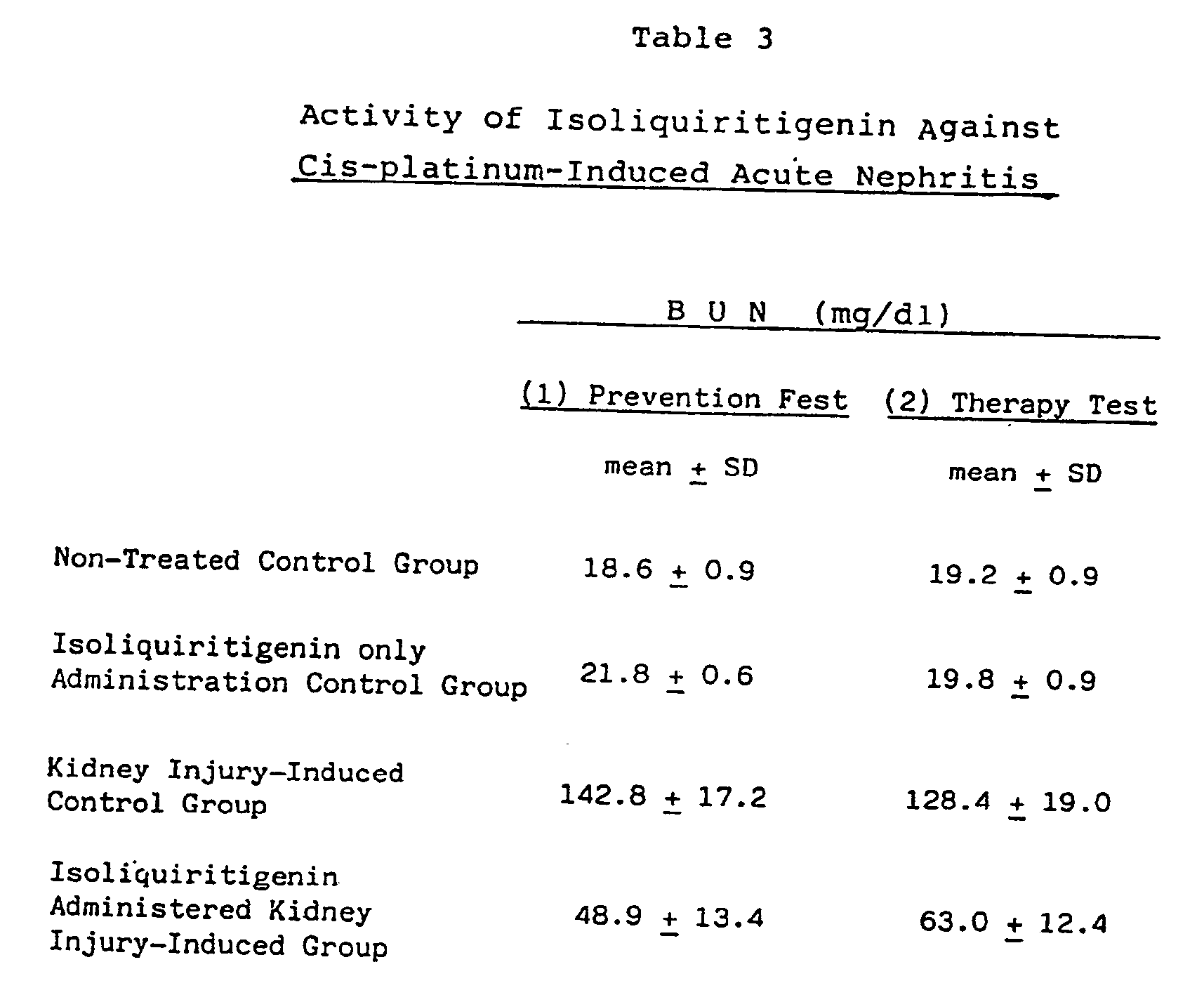
(Results) - (1) The nephritis-induced control groups which received cis-platinum showed remarkable increases in BUN values when compared with non-treated control groups. Thus, it was clearly recognized that acute kidney injury was caused by cis-platinum.
- (2) Isoliquiritigenin was found to remarkably supress increases in BUN value in both the prevention tests and the therapy tests when compared with the nephritis-induced control groups.
- (3) The isoliquiritigenin only administration control groups wherein no kidney injury was caused showed results which are not much different from those shown by non-treated control groups. Thus, it was clearly found that isoliquiritigenin specifically supresses increase in BUN value caused by kidney injury.
- It is clear from the above-stated results of the tests that isoliquiritigenin remarkably improves acute nephritis induced by drugs. Thus, it can be considered that isoliquiritigenin is very useful in the prevention and therapy of acute kidney injury caused by drugs.
- (Activity of isoliquiritigenin against rat anti-GBM (glomerular basement membrane) antibody nephritis).
- It is considered that 70% of chronic kidney diseases of human beings is caused by the intermediary of the immunological mechanism. Observations suggesting the involvement of the immunological mechanism in lot of cases of glomerular nephritis have been made, particularly concerning glomerular nephritis. On the basis of these facts, various studies have been made to prepare animal test models as models of chronic nephritis of human beings. Among these models, the Masugi nephritis model, which has been developed in Japan, is a nephritis model in which nephritis is caused by the antibody against the glomerular tissue antigen (GBM), and this model is used widely in the world. Therefore, in this example, the present inventors chose the Masugi nephritis model as a model of chronic nephritis of human beings, and conducted tests according to the method reported in NIHON JINZOH GAKUKAI SHI, vol. 23, pages 323 to 331, 1981, and in NIHON YAKURI GAKUKAI SHI, vol. 77, pages 407 to 417, 1981, so as to confirm the efficacy of the medicine of the present invention.
- SD strain male rats each weighing 180 to 200 g (produced by Nihon Charles River K.K., 7 rats for a nephritis-induced group and 6 rats each for the other groups) were intravenously injected with 0.5 ml per rat of rabbit serum causative of the antibody against GBM within the rats, and immediately thereafter orally administered with 5 ml per kilogram body weight of suspensions in which 30, 100, or 300 mg per kilogram body weight per day of isoliquiritigenin was suspended in 1%-CMC aqueous solutions, everyday for 3 continuous weeks. The rats in the nephritis-induced control group were intravenously injected with 0.5 ml per rat of rabbit serum causative of the antibody against GBM within the rats, and orally administered with 5 ml per kilogram body weight of 1%-CMC aqueous solutions, everyday for 3 continuous weeks. Samples of the urine of the rats were collected using metabolism cages for a period of 24 hours from the final administration day which is 3 weeks after the injection of the rabbit serum to the next day. After the amounts of the urine were measured, the urine samples were centrifuged at 3000 rpm for 15 minutes, and the supernatant liquids were examined by measuring the activities of lactate dehydrogenase (LDH), the amount of alkaline phosphatase (ALP), and the amount of protein by means of an automatic analyser (AU-550, a product of Olympus Kohgaku Kohgyoh). After the completion of the collection of the urine samples, blood samples were collected from the aorta abdominalis while the rats were anesthetized with ether. The serum of he blood samples was centrifuge at 3000 rpm for 15 minutes and was examined by measuring BUN, creatinine, ALP, total cholesterol, total protein, and albumin. The results of the tests are shown in Table 4.

(Results) - (1) The nephritis-induced control group showed, after 3 weeks, remarkable increases in total protein, total ALP, and total LDH in the urine, when compared with a non-treated control group. Although no remarkable changes in BUN and creatinine in blood were recognized, decrease in ALP and increase in total cholesterol were observed. In addition, although no change in total protein in the serum was recognized, decrease in the albumin content was observed, and decrease in the A/G ratio accompanying this was recognized. It is clearly recognized from these results that kidney injury was caused by the intermediary of the immune system.
- (2) The groups administered with isoliquiritigenin in the respective dosages showed remarkable suppression of increase in total protein, total ALP, and total LDH in the urine, when compared with the nephritis-induced control group. In addition, remarkable improvements were found in the amounts of ALP, total cholesterol, and albumin in the blood.
- It can be considered from the above-mentioned results that isoliquiritigenin is very useful in the prevention and therapy of kidney injury caused by the intermediary of the immunological mechanism.
- (Activity of isoliquiritigenin against liver injury induced by d-galactosamine)
- d-Galactosamine is a compound capable of inducing injury which is similar to the lesion of viral hepatitis of human beings, and is used to induce a model of hepatitis. Therefore, in this example, the present inventors conducted tests in accordance with the method reported by Sakamoto et al in SHINYAKU-KAIHATSU NO TAMENO YAKUKOH SCREENING HOHOH, VOL 1 (Methods of Screening Drug Effects for Developing Novel Medicines), pages 69 to 82, 1984, by Kohji Sakamoto, published by Seishi Shoin, so as to confirm the efficacy of the medicine in accordance with the present invention.
- Wistar strain male rats each weighing 180 to 200 g (produced by Nihon Charles River K.K., 6 rats in each group) were orally administered with 5 ml per kilogram body weight of a mixture in which 10 or 30 mg per kilogram body weight per day of isoliquiritigenin was suspended in 1%-CMC aqueous solutions, for 5 days, and intraperitoneally injected with 250 mg per kilogram body weight of d-galactosamine dissolved in 5 ml per kilogram body weight of physiological saline solutions, one hour after the administration of isoliquiritigenin on the 4th day. 48 hours after the administration of d-galactosamine, blood samples were collected from aorta abdominalis while the rats were anesthetized wit ether. The serum of the blood samples centrifuged a 3000 rpm for 15 minutes were examined by measuring glutamic-oxaloacetic transaminase (GOT), glutamic-pyruvic transaminase (GPT), and ALP by an automatic analyser (AU-550).
- A liver injury-induced control group was treated in exactly the same manner as that of the isoliquiritigenin administration groups except that rats in this control group were orally administered with 1%-CMC aqueous solutions in place of the suspensions of isoliquiritigenin in 1%-CMC aqueous solutions.
- Positive control groups were treated in exactly the same manner as that of the isoliquiritigenin administration groups except that rats in two positive controlgroups were orally administered with 30 or 100 mg per kilogram body weight per day of malotilate, in place of isoliquiritigenin, suspended in 1%-CMC aqueous solutions, while rats in the other two positive control groups were orally administered with 30 or 100 mg per kilogram body weight per day of cianidanol, in place of isoliquiritigenin, suspended in similar aqueous solutions. The results of the tests are shown in Table 5.

(Results) - (1) The liver injury-induced control group showed obvious increase in GOT, GPT, and ALP when compared with a non-treated control group.
- (2) The isoliquiritigenin administration group of rats which received 10 mg per kilogram body weight of isoliquiritigenin showed suppression of increase in GOT, GPT, and ALP, when compared with the liver-injury induced control group, and the isoliquiritigenin administration group of rats which received 30 mg per kilogram body weight of isoliquiritigenin showed remarkable improvement in GOT and GPT values.
- (3) The positive control groups which received 100 mg per kilogram body weight of malotilate or cianidanol showed substantially the same levels of suppression of increase in GOT and GPT values as those showed by the isoliquiritigenin administration group which received 10 mg per kilogram body weight of isoliquiritigenin.
- It is clearly recognized from the above-mentioned results that isoliquiritigenin suppresses d-galactosamine-induced injury to the liver in dosages smaller than those of malotilate and cianidanol. Thus, it can be considered that isoliquiritigenin is useful in the prevention and therapy of liver injury such as viral hepatitis.
- It is considered that carbon tetrachloride generates free radicals with a very high reactivity by the action of drug metabolizing enzyme systems in liver cells, and these free radicals may strongly depress the cell activity by combining with protein of the liver cell membranes or may cause peroxidation of membrane lipids of the organelles, thus leading to necrosis of liver cells and accumulation of liver fats. Accordingly, carbon tetrachloride is widely used to induce test models of acute drug-induced hepatitis of human beings, fatty liver, chronic hepatitis, and liver cirrhosis.
- Therefore, in these examples 6 and 7, the present inventors conducted tests in accordance with a method reported in JAPAN JOURNAL OF PHARMACOLOGY, vol.31, pages 15 to 21, 1981, by Imaizumi et al, and a method reported in NIHON YAKURIGAKUKAI SHI, vol.80, pages 83 to 91, 1982, by Minoru Katoh et al, to confirm the efficacy of the medicine in accordance with the present invention.
- (Activity of isoliquiritigenin against acute liver injury induced by carbon tetrachloride (CCI₄))
- Wistar strain male rats each weighing 180 to 200 g (produced by Nihon Charles river K.K., 6 rats in each group) orally administered with 10 or 30 mg per kilogram body weight per day of isoliquiritigenin suspended in 1%-CMC aqueous solutions, for 4 continuous days. Rats in a solution control group were orally administered with 5 ml per kilogram body weight per day of 1%-CMC aqueous solutions, for 4 continuous days. Two positive control groups were orally administered with 30 or 100 mg per kilogram body weight per day of malotilate suspended in 1%-CMC aqueous solutions, for 4 continuous days, and other two positive control groups were orally administered with 30 or 100 mg per kilogram body weight per day of cianidanol suspended in 1%-CMC aqueous solutions, for 4 continuous days.
- The rats were subcutaneously injected with 0.2 ml per kilogram body weight per day of carbon tetrachloride, which was a reagent for precision analysis, everyday for three consecutive days from the second day of the isoliquiritigenin administration.
- 24 hours after the last administration of carbon tetrachloride, blood samples were collected from aorta abdominalis while the rats were anesthetized with ether. The blood samples were centrifuged at 3000 rpm for 15 minutes and the serum was examined by measuring GOT and GPT values using an automatic analyser (AU-550, a product of Olympus Kohgaku Kohgyoh). The results of the tests are shown in Table 6.

(Results) - (1) It was found that the liver injury-induced control group showed remarkable increases in GOT and GPT values when compared with a non-treated control group. Thus, it was clearly recognized that liver injury was caused by carbon tetrachloride.
- (2) Each of the isoliquiritigenin administration groups with the respective amounts used showed remarkable improvement in GOT and GPT values when compared to the liver injury-induced control group.
- (3) Each of the positive control groups which received 30 or 100 mg per kilogram body weight of malotilate or cianidanol showed suppression of increase in GOT and GPT values to substantially the same extent as that showed by the isoliquiritigenin administration group which received 10 mg per kilogram body weight of isoliquiritigenin.
- It can be considered from the above-mentioned results that isoliquiritigenin suppresses liver injury induced by carbon tetrachloride in smaller amounts than those of malotilate and cinanidanol, and is thus useful in the prevention and therapy of acute liver injury.
- (Activity of isoliquiritigenin against chronic liver injury induced by carbon tetrachloride)
- Wistar strain male rats each weighing 180 to 200 g (produced by Nihon Charles river K.K., 6 rats in each group) were orally administered with 30 mg per kilogram body weight per day of isoliquiritigenin suspended in 1%-CMC aqueous solutions, everyday for 3 continuous weeks. Rats in a solution control group were orally administered with 5 ml per kilogram body weight per day of 1%-CMC aqueous solutions, every day for 3 continuous weeks. Rats in a positive control group were orally administered with 30 mg per kilogram body weight per day of malotilate suspended in 1%-CMC aqueous solutions everyday for 3 continuous weeks, and rats in another positive control groups were orally administered with 30 mg per kilogram body weight per day of cianidanol suspended in 1%-CMC aqueous solutions, everyday for 3 continuous weeks.
- The rats were intraperitoneally injected with 0.5 ml per kilogram body weight per day of carbon tetrachloride, for three consecutive weeks from the third day of the isoliquiritigenin administration twice a week.
- On the 4th day after the last administration of carbon tetrachloride, blood samples were collected from aorta abdominalis while the rats were anesthetized with ether. The blood samples were centrifuged at 3000 rpm for 15 minutes and the serum was examined by measuring GOT and GPT values using an automatic analyser (AU-550, a product of Olympus Kohgaku Kohgyoh). The results of the tests are shown in Table 7.

(Results) - (1) The liver injury-induced control group showed remarkable increase in GOT and GPT when compared with the non-treated control group. Thus, it was clearly recognized that serious injury to the liver was caused by carbon tetrachloride.
- (2) The isoliquiritigenin administration group showed substantially the same level of suppression of increase in GOT and GPT as that showed by the positive control group which received cianidanol. The positive control group which received malotilate showed remarkable suppression in this series of tests.
- It can be considered from the above-mentioned results of the tests that isoliquiritigenin is useful in the prevention and therapy of chronic liver injury.
- (Activity of isoliquiritigenin against acute liver injury induced by cis-platinum)
- It is known that cis-platinum, a carcinostatic drug, causes injury to the liver as well as to the kidney (CANCER TREATMENT REPORTS, vol. 62, No. 12, pages 2125 to 2126, 1978, by F. Cawalli et al). The present inventors have found that the carcinostatic drug cis-platinum causes injury to the liver besides it causes injury to the kidney and that it causes liver injury in a lower dosage than that in which it causes kidney injury. In this example, the activity of isoliquiritigenin against acute liver injury induced by cis-platinum was examined, to confirm the efficacy of the medicine of the present invention.
- A group consisting of six Wistar strain male rats (produced by Nihon Charles River K.K.), each weighing 150 to 180 g, were subcutaneously injected with 8.5 mg per kilogram body weight of cis-platinum dissolved in physiological saline solution at a ratio of 2 mg per 10 ml once, and orally administered with 200 mg per kilogram body weight per day of isoliquiritigenin suspended in 1%-CMC aqueous solutions, for 10 continuous days. The rats were then dissected, and liver samples dyed with hematoxylin- eosin were prepared and observed under a microscope.
- A liver injury-induced control group consisted of six Wistar strain male rats (produced by Nihon Charles River K.K.), each weighing 150 to 180 g, were treated in exactly the same manner as that of the isoliquiritigenin administration group except that the rats in this control group were orally administered with 1%-CMC aqueous solutions alone, in place of isoliquiritigenin, for 10 continuous days. The results of the tests are shown in Table 8.

(Results) - (1) It was clearly recognized that the liver injury-induced control group which received cis-platinum caused injury to the livers when compared with the non-treated control group.
- (2) Isoliquiritigenin remarkably suppressed injury to the livers induced by cis-platinum.
- It is clear from the above-mentioned results that isoliquiritigenin remarkably improves cis-platinum-induced acute liver injury. Thus, it can be considered that isoliquiritigenin is very useful in therapy of acute liver injury induced by drugs.
- (Activity of isoliquiritigenin against acute kidney and liver injuries induced by cis-platinum)
- As described above, it has become clear that isoliquiritigenin is useful in the prevention and therapy of both kidney injury and liver injury. Therefore, in this example, the present inventors conducted the following prevention tests and therapy tests using the same test models as used in examples 3 and 8 wherein kidney or liver injury was caused by cis-platinum, a carcinostatic drug, to confirm the efficacy of the medicine in accordance with the present invention against a complication resulting from kidney and liver injuries.
- Fisher strain male rats (produced by Nihon Charles River K.K., 3 rats in each groups), each weighing 215 to 240 g, were either orally administered or intraperitoneally injected with 20 mg per kilogram body weight per day of isoliquiritigenin suspended in 1%-CMC aqueous solutions once a day, for 12 continuous days. From the 6th day after the start of the isoliquiritigenin administration, the rats in these groups subcutaneously injected with 2 mg per kilogram body weight per day of cis-platinum dissolved in physiological saline solution at a ratio of 2 mg per 10 ml, once a day for 4 continuous days. Similar isoliquiritigenin administration was effected during the cis-platinum injection days immediately after the injection of cis-platinum, and during 3 days following the completion of the cis-platinum administration.
- Rats in a kidney and liver injury-induced control group were injected with cis-platinum in the same manner as that of the isoliquiritigenin administration groups, and were treated in the same manner as that of these groups except that rats in this control group were orally administered with 1%-CMC aqueous solutions, in place of isoliquiritigenin suspended in 1%-CMC aqueous solutions.
- 24 hours after the completion of the administration of isoliquiritigenin, blood samples were collected from the aorta abdominalis while the rats were anesthetized with ether, and autopsy was performed. After the livers were removed, liver samples were fixed in 10%-buffer formalin, dyed with hematoxylin-eosin and with PAS, and observed under a microscope. The collected blood was centrifuged at 3000 rpm for 15 minutes, and the serum was examined by measuring BUN using an automatic analyser (AU-550, a product of Olympus Kohgaku Kohgyoh).
- Fisher strain male rats (produced by Nihon Charles River K.K., 3 rats in each group), each weighing 215 to 240 g, were first divided into two groups. Rats in these groups were subcutaneously injected with 2 mg per kilogram body weight per day of cis-platinum dissolved in physiological saline solution at a ratio of 2 mg per 10 ml, once a day for 4 days, thereby inducing kidney and liver injuries. Everyday, immediately after the injection of cis-platinum, the rats in the two groups were either orally administered or intraperitoneally injected with 20 mg per kilogram body weight per day of isoliquiritigenin suspended in 1%-CMC aqueous solutions, once a day for 4 continuous days, and the rats were also administered with isoliquiritigenin once a day for 3 continuous days after the last injection of cis-platinum. The rats in a kidney and liver injury-induced control group were injected with cis-platinum in the same manner as those of the isoliquiritigenin administration groups, and were treated in the same manner as the rats of these groups except that rats in this control group were orally administered with 1%-CMC aqueous solutions, in place of isoliquiritigenin suspended in 1%-CMC aqueous solutions.
- 24 hours after the completion of the administration of isoliquiritigenin, blood samples were collected from the aorta abdominalis wile the rats were anesthetized with ether, and autopsy was performed. After the livers were removed, liver samples were fixed in 10%-buffer formalin, dyed with hematoxylin-eosin and with PAS, and observed through a microscope. The collected blood was centrifuged at 3000 rpm for 15 minutes, and the serum was examined by measuring BUN using an automatic analyser (AU-550, a product of Olympus Kohgaku Kohgyoh).
- A non-treated control group consisted of Fisher strain male rats (produced by Nihon Charles River K.K., 3 rats in each group), each weighing 215 to 240 g, which were orally administered with 1%-CMC aqueous solutions, in place of isoliquiritigenin suspended in 1%-CMC aqueous solution, once a day for 12 days. 24 hours after the completion of the administration, blood samples were collected, and autopsy was performed. Also, measurement of BUN and observation of liver samples were performed in similar manners as those described above. The results of the tests are shown in Tables 9 and 10.


(Results) - (1) It was clearly recognized from the fact that the kidney and liver injury-induced groups showed increase in BUN and from the pathological views of liver tissues and cells, i.e., from the views of oxyphilic degeneration and vacuolar degeneration of the liver cells, that injury to the kidney and the liver was caused by cis-platinum when compared with the non-treated groups.
- (2) In both the prevention tests and the therapy tests, the isoliquiritigenin administration groups, which received isoliquiritigenin either orally or by intraperitoneal injection, showed remarkable suppression of increase in BUN, and suppression of development of liver injury was also recognized when compared with the kidney and liver injury-induced groups.
- It can be considered from the above-mentioned results and from the results of examples 3 and 8 that isoliquiritigenin is very useful in the prevention and therapy for complications resulting from kidney and liver injuries.
- The foregoing examples show the efficacy of the medicine in accordance with the present invention in treating individual kidney and liver diseases and complications thereof.
- The following examples give examples of prescription in which the formulation and the components of the medicine are specified.
- It is to be understood that the present invention are not limited by the following examples.
- Examples of prescription of tablets each containing 5 or 25 mg of the active ingredient are as given below:
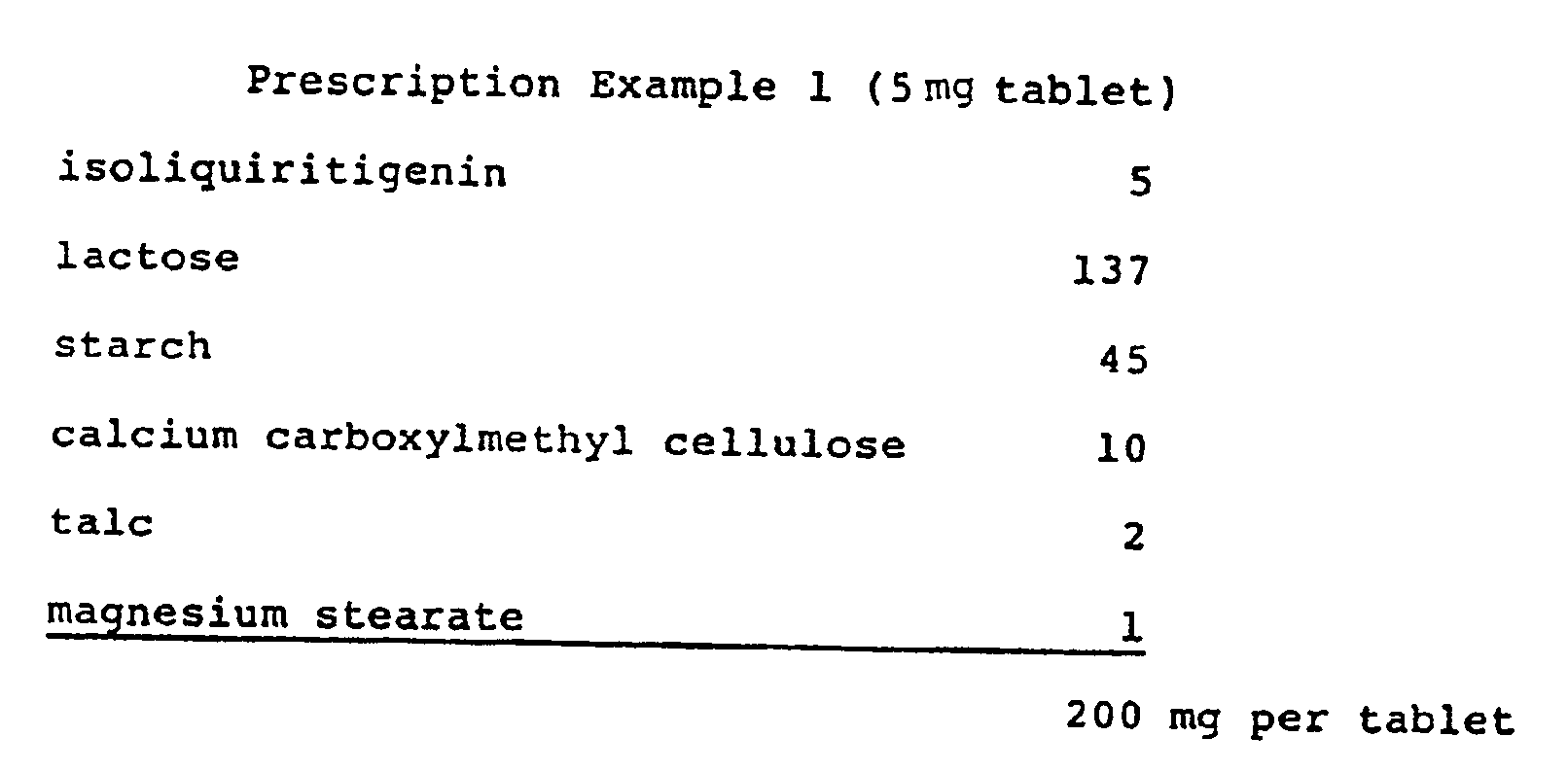

- Details of the manufacturing method is as given below.
- Crystals of isoliquiritigenin were ground, lactose and starch were added thereto, and they were mixed. 10% of starch paste was added to the mixture, and they were agitated, thereby obtaining a granule. After the granule was dried, the grains were dressed to a grain size of about 850 µm. It was then mixed with talc and magnesium stearate, and the mixture was formulated into tablets.
-

- Isoliquiritigenin was well ground, and starch, lactose, and magnesium stearate were added thereto. After they had been mixed adequately, the mixture were charged into a capsule.
- As described above, the present invention provides a medicine for use in the therapy and prevention of kidney and liver diseases characterized by containing as the active ingredient isoliquiritigenin or a pharmaceutically acceptable salt thereof. According to the present invention, there is provided a medicine for use in the therapy and prevention of kidney and liver diseases which exhibits excellent therapeutic and preventive effects with respect to a wide range of kidney or liver diseases individually developed or to complications resulting from diseases of these organs.
- The medicine in accordance with the present invention which contains isoliquiritigenin as the active ingredient has a broad scope of applications such as a medicine for use in the therapy and prevention of kidney diseases, a medicine for use in the therapy and prevention of liver diseases, and a medicine for use in the therapy and prevention of complications resulting from kidney and liver diseases. Therefore, the medicine in accordance with the present invention exhibits excellent therapeutic and preventive effects with respect to a wide range of kidney or liver diseases individually developed or to complications resulting from diseases of these organs.
Claims (13)
Priority Applications (1)
| Application Number | Priority Date | Filing Date | Title |
|---|---|---|---|
| AT87904105T ATE63457T1 (en) | 1986-06-21 | 1987-06-22 | PHARMACEUTICALS FOR THE TREATMENT AND PROPHYLAXIS OF LIVER AND KIDNEY DISEASES. |
Applications Claiming Priority (4)
| Application Number | Priority Date | Filing Date | Title |
|---|---|---|---|
| JP14582986 | 1986-06-21 | ||
| JP145829/86 | 1986-06-21 | ||
| JP205118/86 | 1986-09-02 | ||
| JP20511886 | 1986-09-02 |
Publications (3)
| Publication Number | Publication Date |
|---|---|
| EP0270690A1 EP0270690A1 (en) | 1988-06-15 |
| EP0270690A4 EP0270690A4 (en) | 1989-07-06 |
| EP0270690B1 true EP0270690B1 (en) | 1991-05-15 |
Family
ID=26476844
Family Applications (1)
| Application Number | Title | Priority Date | Filing Date |
|---|---|---|---|
| EP87904105A Expired - Lifetime EP0270690B1 (en) | 1986-06-21 | 1987-06-22 | Drug for treatment and prophylaxis of kidney and liver diseases |
Country Status (4)
| Country | Link |
|---|---|
| US (1) | US4898890A (en) |
| EP (1) | EP0270690B1 (en) |
| AU (1) | AU601992B2 (en) |
| WO (1) | WO1987007835A1 (en) |
Cited By (2)
| Publication number | Priority date | Publication date | Assignee | Title |
|---|---|---|---|---|
| WO2007081115A1 (en) * | 2006-01-09 | 2007-07-19 | Seoul National University Industry Foundation | Composition comprising liquiritigenin for preventing and treating liver disease |
| US9149491B2 (en) | 2013-04-29 | 2015-10-06 | Harsha Chigurupati | Reduced toxicity in alcoholic beverages |
Families Citing this family (16)
| Publication number | Priority date | Publication date | Assignee | Title |
|---|---|---|---|---|
| JPS62207212A (en) * | 1986-03-08 | 1987-09-11 | Nippon Haipotsukusu:Kk | Antiallergic agent |
| FR2610626B1 (en) * | 1987-02-09 | 1989-05-19 | Oreal | NOVEL ANTI-OXIDIZER SYSTEM BASED ON A STABILIZED ASCORBYL ESTER, COMPRISING AT LEAST ONE COMPLEXING AGENT AND AT LEAST ONE THIOL, AND COMPOSITIONS CONTAINING SUCH ANTI-OXIDIZING SYSTEM |
| US5216024A (en) * | 1987-07-28 | 1993-06-01 | Baylor College Of Medicine | Cell growth inhibitors and methods of treating cancer and cell proliferative diseases |
| JPH01175942A (en) * | 1987-12-28 | 1989-07-12 | Sanyo Kokusaku Pulp Co Ltd | Antiviral composition for pharmaceutical use |
| AU634189B2 (en) * | 1988-11-25 | 1993-02-18 | Dainippon Ink And Chemicals Inc. | Therapeutic agent for renal disorders |
| AU7963691A (en) * | 1990-05-17 | 1991-12-10 | Baylor College Of Medicine | Growth inhibitors and methods of treating cancer and cell proliferative diseases |
| US5200398A (en) * | 1991-09-12 | 1993-04-06 | Mount Sinai Hospital Corporation | Composition for the preservation of organs comprising glucuronic acid or a physiologically tolerated salt or ester thereof |
| US5589182A (en) * | 1993-12-06 | 1996-12-31 | Tashiro; Renki | Compositions and method of treating cardio-, cerebro-vascular and alzheimer's diseases and depression |
| EP1552844A1 (en) | 2004-01-07 | 2005-07-13 | Leendert Taal | Botanical extract composition |
| CN101107012A (en) * | 2004-11-24 | 2008-01-16 | 希尔氏宠物营养品公司 | Method for improving liver clearance of xenobiotic substances in animals |
| US20090176864A1 (en) * | 2004-11-24 | 2009-07-09 | Hill's Pet Nutrition, Inc. | Methods For Improving Hepatic and Immune Function In An Animal |
| US8252742B2 (en) | 2004-12-30 | 2012-08-28 | Hill's Pet Nutrition, Inc. | Methods for enhancing the quality of life of a senior animal |
| CA2784197C (en) * | 2004-12-30 | 2015-09-01 | Hill's Pet Nutrition, Inc. | Methods for enhancing the quality of life of a senior animal |
| CN101287460B (en) | 2005-08-17 | 2012-04-25 | 希尔氏宠物营养品公司 | Composition for preventing and treating kidney disease |
| CN101152167B (en) * | 2007-09-06 | 2010-07-21 | 武汉大学 | Isoliquiritigenin vaginal suppository for treating chronic cervicitis and preparation method thereof |
| CN104758274A (en) * | 2015-03-09 | 2015-07-08 | 浙江大学 | Application of isoliquiritigenin in preparation of anti-inflammation medicines in prevention and treatment of hepatitis disease through inhibiting CXCL10 expression |
Family Cites Families (20)
| Publication number | Priority date | Publication date | Assignee | Title |
|---|---|---|---|---|
| US3558612A (en) * | 1968-05-22 | 1971-01-26 | Dow Chemical Co | Substituted phenoxyacetic acids |
| CH593224A5 (en) * | 1973-10-30 | 1977-11-30 | Taisho Pharmaceutical Co Ltd | |
| US4190671A (en) * | 1977-03-17 | 1980-02-26 | Biorex Laboratories Limited | Chalcone derivatives |
| US4163859A (en) * | 1977-07-18 | 1979-08-07 | G. D. Searle & Co. | Phenoxyldialkyl acetic acids and esters |
| US4279930A (en) * | 1978-10-10 | 1981-07-21 | The Upjohn Company | Process for treating inflammation |
| GB2122987B (en) * | 1982-06-01 | 1985-09-25 | Zyma Sa | (+)-cyanidan-3-ol derivatives and pharmaceutical preparations thereof |
| GB2122608B (en) * | 1982-06-01 | 1985-10-02 | Zyma Sa | (+)-cyanidan-3-ol derivatives |
| US4540697A (en) * | 1982-09-09 | 1985-09-10 | Basf Aktiengesellschaft | Aminopropanol derivatives of 2-hydroxy-β-phenyl-propiophenones, pharmaceutical compositions and use |
| US4525356A (en) * | 1982-11-02 | 1985-06-25 | Hokuriku Pharmaceutical Co., Ltd. | N-substituted flavone-8-carboxamides |
| EP0118571A1 (en) * | 1983-03-05 | 1984-09-19 | Kaken Pharmaceutical Co., Ltd. | Inhibitor of aldose reductase |
| US4666907A (en) * | 1983-10-05 | 1987-05-19 | Merck Frosst Canada, Inc. | Phenothiazine and derivatives and analogs and use as leukotriene biosynthesis inhibitors |
| US4537903A (en) * | 1983-10-12 | 1985-08-27 | Merck & Co., Inc. | Substituted cinnamyl-2,3-dihydrobenzofuran and analogs useful as anti-inflammatory agents |
| US4663347A (en) * | 1983-10-31 | 1987-05-05 | Merck Frosst Canada, Inc. | Benzofuran 2-carboxylic acid esters useful as inhibitors of leukotriene biosynthesis |
| JPS60178815A (en) * | 1984-02-24 | 1985-09-12 | Rikagaku Kenkyusho | Carcinostatic agent |
| EP0170105B1 (en) * | 1984-07-07 | 1990-10-17 | Koichi Prof. Dr. Shudo | Benzoic acid derivatives |
| US4666928A (en) * | 1984-08-30 | 1987-05-19 | Merck Frosst Canada, Ind. | Propylphenoxy pyridine carboxylates as leukotriene antagonists |
| US4661499A (en) * | 1985-06-18 | 1987-04-28 | Merck Frosst Canada, Inc. | 2-[(substituted)-phenoxymethyl]quinolines |
| JPS6219552A (en) * | 1985-07-19 | 1987-01-28 | Ono Pharmaceut Co Ltd | 3-((4-aroyl)phenoxy(or phenylthio))cyclopentanecarboxilic acid derivative, production thereof and remedy for cerebral edema containing said derivative as active constituent |
| JPS62185037A (en) * | 1986-02-12 | 1987-08-13 | Tsumura Juntendo Inc | Chalcone derivative |
| JPS62207212A (en) * | 1986-03-08 | 1987-09-11 | Nippon Haipotsukusu:Kk | Antiallergic agent |
-
1987
- 1987-06-22 EP EP87904105A patent/EP0270690B1/en not_active Expired - Lifetime
- 1987-06-22 US US07/157,509 patent/US4898890A/en not_active Expired - Lifetime
- 1987-06-22 WO PCT/JP1987/000409 patent/WO1987007835A1/en not_active Ceased
- 1987-06-22 AU AU75497/87A patent/AU601992B2/en not_active Ceased
Non-Patent Citations (3)
| Title |
|---|
| Chemical Abstracts, vol. 102, no. 23, Abstract 199302c,10 June 1985, Columbus, Ohio, US, Nakadate T. et al., Ensho,4, 554 * |
| Chemical Abstracts, vol. 102, no. 7, Abstract no. 55766j, 18.2.85, Columbus, Ohio, US ,Takahashi S. et al,. Kanko Shikiso 89,1 * |
| Chemical Abstracts, vol. 103, no. 17, Abstract no. 136542f, 28.10, 85, Columbus, Ohio, USA, Friedman F.K., et al., Pharmacology, 31, 203 * |
Cited By (3)
| Publication number | Priority date | Publication date | Assignee | Title |
|---|---|---|---|---|
| WO2007081115A1 (en) * | 2006-01-09 | 2007-07-19 | Seoul National University Industry Foundation | Composition comprising liquiritigenin for preventing and treating liver disease |
| US9149491B2 (en) | 2013-04-29 | 2015-10-06 | Harsha Chigurupati | Reduced toxicity in alcoholic beverages |
| US10039776B2 (en) | 2013-04-29 | 2018-08-07 | Harsha Chigurupati | Hepato-protective beverage composition |
Also Published As
| Publication number | Publication date |
|---|---|
| AU601992B2 (en) | 1990-09-27 |
| EP0270690A1 (en) | 1988-06-15 |
| EP0270690A4 (en) | 1989-07-06 |
| US4898890A (en) | 1990-02-06 |
| AU7549787A (en) | 1988-01-12 |
| WO1987007835A1 (en) | 1987-12-30 |
Similar Documents
| Publication | Publication Date | Title |
|---|---|---|
| US4898890A (en) | Medicines for use in the therapy and prevention of kidney and liver diseases | |
| GUERRA et al. | Long-term antibiotic therapy in tropical sprue | |
| US4598069A (en) | Method of treating hypoglycemia using aloes polysaccharides | |
| JPH0367045B2 (en) | ||
| EP0495116B1 (en) | Anti-human immunodeficiency virus agent | |
| AU563697B2 (en) | Pharmaceutical compositions of anti-pancreatic inflammatory effect | |
| JPS62207212A (en) | Antiallergic agent | |
| CA1295947C (en) | Medicines for use in the therapy and prevention of kidney and liver diseases | |
| US7384558B2 (en) | Compositions capable of inhibiting reactive oxygen and carbonyl species | |
| EP0290817B1 (en) | A use of oxetanocin for inhibiting hiv | |
| EP1106176B1 (en) | Remedies for renal failure | |
| JPH09241157A (en) | Medicinal composition for protecting liver containing lithospermate b | |
| EP0476391B1 (en) | Anti-AIDS virus composition containing cepharanthine as active compound | |
| JPH0662403B2 (en) | Drugs for treating or preventing kidney disease | |
| NL8200509A (en) | MEDICINAL PRODUCT FOR ALLERGY DISEASES, IMMUNE COMPLEX DISEASES AND TUMORS; METHOD FOR TREATING PATIENTS SUFFERING FROM THIS | |
| CN101032534B (en) | Method of preparing Ilex rotunda Thunb total saponins and the application thereof | |
| US5686494A (en) | Pharmaceutical preparations for ameliorating epigastric functional disorders | |
| Walker et al. | Acute interstitial nephritis in a patient taking tienilic acid | |
| JPH08769B2 (en) | Drugs for treating or preventing liver diseases | |
| JPH0426624A (en) | Remedy for chronic renal failure | |
| JP2548223B2 (en) | Kidney disease treatment | |
| JP3879938B2 (en) | Anti-inflammatory agent | |
| US3769405A (en) | Methods for obtaining diuresis | |
| KR100504966B1 (en) | Antihypertensive constituents of ginseng saponin | |
| JPS62207224A (en) | Side effect reducing preparation for antitumor agent |
Legal Events
| Date | Code | Title | Description |
|---|---|---|---|
| PUAI | Public reference made under article 153(3) epc to a published international application that has entered the european phase |
Free format text: ORIGINAL CODE: 0009012 |
|
| AK | Designated contracting states |
Kind code of ref document: A1 Designated state(s): AT BE CH DE FR GB IT LI NL SE |
|
| 17P | Request for examination filed |
Effective date: 19880606 |
|
| A4 | Supplementary search report drawn up and despatched |
Effective date: 19890706 |
|
| 17Q | First examination report despatched |
Effective date: 19900905 |
|
| GRAA | (expected) grant |
Free format text: ORIGINAL CODE: 0009210 |
|
| ITF | It: translation for a ep patent filed | ||
| AK | Designated contracting states |
Kind code of ref document: B1 Designated state(s): AT BE CH DE FR GB IT LI NL SE |
|
| REF | Corresponds to: |
Ref document number: 63457 Country of ref document: AT Date of ref document: 19910615 Kind code of ref document: T |
|
| ET | Fr: translation filed | ||
| REF | Corresponds to: |
Ref document number: 3770133 Country of ref document: DE Date of ref document: 19910620 |
|
| PLBE | No opposition filed within time limit |
Free format text: ORIGINAL CODE: 0009261 |
|
| STAA | Information on the status of an ep patent application or granted ep patent |
Free format text: STATUS: NO OPPOSITION FILED WITHIN TIME LIMIT |
|
| 26N | No opposition filed | ||
| EAL | Se: european patent in force in sweden |
Ref document number: 87904105.1 |
|
| REG | Reference to a national code |
Ref country code: GB Ref legal event code: IF02 |
|
| PGFP | Annual fee paid to national office [announced via postgrant information from national office to epo] |
Ref country code: FR Payment date: 20050512 Year of fee payment: 19 |
|
| PGFP | Annual fee paid to national office [announced via postgrant information from national office to epo] |
Ref country code: SE Payment date: 20050607 Year of fee payment: 19 |
|
| PGFP | Annual fee paid to national office [announced via postgrant information from national office to epo] |
Ref country code: CH Payment date: 20050609 Year of fee payment: 19 |
|
| PGFP | Annual fee paid to national office [announced via postgrant information from national office to epo] |
Ref country code: GB Payment date: 20050621 Year of fee payment: 19 |
|
| PGFP | Annual fee paid to national office [announced via postgrant information from national office to epo] |
Ref country code: BE Payment date: 20050622 Year of fee payment: 19 |
|
| PGFP | Annual fee paid to national office [announced via postgrant information from national office to epo] |
Ref country code: AT Payment date: 20050623 Year of fee payment: 19 |
|
| PGFP | Annual fee paid to national office [announced via postgrant information from national office to epo] |
Ref country code: DE Payment date: 20050629 Year of fee payment: 19 |
|
| PGFP | Annual fee paid to national office [announced via postgrant information from national office to epo] |
Ref country code: NL Payment date: 20050630 Year of fee payment: 19 |
|
| PG25 | Lapsed in a contracting state [announced via postgrant information from national office to epo] |
Ref country code: GB Free format text: LAPSE BECAUSE OF NON-PAYMENT OF DUE FEES Effective date: 20060622 Ref country code: AT Free format text: LAPSE BECAUSE OF NON-PAYMENT OF DUE FEES Effective date: 20060622 |
|
| PG25 | Lapsed in a contracting state [announced via postgrant information from national office to epo] |
Ref country code: SE Free format text: LAPSE BECAUSE OF NON-PAYMENT OF DUE FEES Effective date: 20060623 |
|
| PG25 | Lapsed in a contracting state [announced via postgrant information from national office to epo] |
Ref country code: LI Free format text: LAPSE BECAUSE OF NON-PAYMENT OF DUE FEES Effective date: 20060630 Ref country code: CH Free format text: LAPSE BECAUSE OF NON-PAYMENT OF DUE FEES Effective date: 20060630 Ref country code: BE Free format text: LAPSE BECAUSE OF NON-PAYMENT OF DUE FEES Effective date: 20060630 |
|
| PGFP | Annual fee paid to national office [announced via postgrant information from national office to epo] |
Ref country code: IT Payment date: 20060630 Year of fee payment: 20 |
|
| PG25 | Lapsed in a contracting state [announced via postgrant information from national office to epo] |
Ref country code: NL Free format text: LAPSE BECAUSE OF NON-PAYMENT OF DUE FEES Effective date: 20070101 |
|
| PG25 | Lapsed in a contracting state [announced via postgrant information from national office to epo] |
Ref country code: DE Free format text: LAPSE BECAUSE OF NON-PAYMENT OF DUE FEES Effective date: 20070103 |
|
| REG | Reference to a national code |
Ref country code: CH Ref legal event code: PL |
|
| EUG | Se: european patent has lapsed | ||
| GBPC | Gb: european patent ceased through non-payment of renewal fee |
Effective date: 20060622 |
|
| NLV4 | Nl: lapsed or anulled due to non-payment of the annual fee |
Effective date: 20070101 |
|
| REG | Reference to a national code |
Ref country code: FR Ref legal event code: ST Effective date: 20070228 |
|
| BERE | Be: lapsed |
Owner name: *NIPPON HYPOX LABORATORIES INC. Effective date: 20060630 Owner name: *DAINIPPON INK AND CHEMICALS INC. Effective date: 20060630 |
|
| PG25 | Lapsed in a contracting state [announced via postgrant information from national office to epo] |
Ref country code: FR Free format text: LAPSE BECAUSE OF NON-PAYMENT OF DUE FEES Effective date: 20060630 |