EP0268856A1 - Preparation of primary aralkyl urethanes and ureas and isocyanates derived therefrom - Google Patents
Preparation of primary aralkyl urethanes and ureas and isocyanates derived therefrom Download PDFInfo
- Publication number
- EP0268856A1 EP0268856A1 EP87115751A EP87115751A EP0268856A1 EP 0268856 A1 EP0268856 A1 EP 0268856A1 EP 87115751 A EP87115751 A EP 87115751A EP 87115751 A EP87115751 A EP 87115751A EP 0268856 A1 EP0268856 A1 EP 0268856A1
- Authority
- EP
- European Patent Office
- Prior art keywords
- mixture
- urethane
- compound
- acid
- alkyl
- Prior art date
- Legal status (The legal status is an assumption and is not a legal conclusion. Google has not performed a legal analysis and makes no representation as to the accuracy of the status listed.)
- Granted
Links
- -1 aralkyl urethanes Chemical class 0.000 title claims abstract description 58
- 239000012948 isocyanate Substances 0.000 title claims abstract description 21
- 235000013877 carbamide Nutrition 0.000 title abstract description 23
- 150000003672 ureas Chemical class 0.000 title abstract description 14
- 150000002513 isocyanates Chemical class 0.000 title abstract description 9
- 238000002360 preparation method Methods 0.000 title abstract description 9
- WSFSSNUMVMOOMR-UHFFFAOYSA-N Formaldehyde Chemical compound O=C WSFSSNUMVMOOMR-UHFFFAOYSA-N 0.000 claims abstract description 90
- 238000000034 method Methods 0.000 claims abstract description 50
- 230000008569 process Effects 0.000 claims abstract description 36
- 150000004945 aromatic hydrocarbons Chemical class 0.000 claims abstract description 22
- 125000003710 aryl alkyl group Chemical group 0.000 claims abstract description 10
- IVSZLXZYQVIEFR-UHFFFAOYSA-N m-xylene Chemical group CC1=CC=CC(C)=C1 IVSZLXZYQVIEFR-UHFFFAOYSA-N 0.000 claims description 52
- 239000000203 mixture Substances 0.000 claims description 38
- 125000004432 carbon atom Chemical group C* 0.000 claims description 28
- NBIIXXVUZAFLBC-UHFFFAOYSA-N Phosphoric acid Chemical compound OP(O)(O)=O NBIIXXVUZAFLBC-UHFFFAOYSA-N 0.000 claims description 26
- 239000000047 product Substances 0.000 claims description 26
- QTBSBXVTEAMEQO-UHFFFAOYSA-N Acetic acid Chemical compound CC(O)=O QTBSBXVTEAMEQO-UHFFFAOYSA-N 0.000 claims description 25
- JOYRKODLDBILNP-UHFFFAOYSA-N Ethyl urethane Chemical compound CCOC(N)=O JOYRKODLDBILNP-UHFFFAOYSA-N 0.000 claims description 23
- QAOWNCQODCNURD-UHFFFAOYSA-N Sulfuric acid Chemical compound OS(O)(=O)=O QAOWNCQODCNURD-UHFFFAOYSA-N 0.000 claims description 22
- XSQUKJJJFZCRTK-UHFFFAOYSA-N Urea Chemical compound NC(N)=O XSQUKJJJFZCRTK-UHFFFAOYSA-N 0.000 claims description 22
- 239000003054 catalyst Substances 0.000 claims description 22
- YXFVVABEGXRONW-UHFFFAOYSA-N Toluene Chemical group CC1=CC=CC=C1 YXFVVABEGXRONW-UHFFFAOYSA-N 0.000 claims description 21
- 125000000217 alkyl group Chemical group 0.000 claims description 19
- KXDHJXZQYSOELW-UHFFFAOYSA-M Carbamate Chemical compound NC([O-])=O KXDHJXZQYSOELW-UHFFFAOYSA-M 0.000 claims description 16
- 239000004202 carbamide Substances 0.000 claims description 16
- 239000002904 solvent Substances 0.000 claims description 16
- 230000015572 biosynthetic process Effects 0.000 claims description 14
- 150000001875 compounds Chemical class 0.000 claims description 14
- 229910000147 aluminium phosphate Inorganic materials 0.000 claims description 13
- 125000002496 methyl group Chemical group [H]C([H])([H])* 0.000 claims description 12
- CTQNGGLPUBDAKN-UHFFFAOYSA-N O-Xylene Chemical group CC1=CC=CC=C1C CTQNGGLPUBDAKN-UHFFFAOYSA-N 0.000 claims description 10
- 239000003377 acid catalyst Substances 0.000 claims description 9
- 125000003118 aryl group Chemical group 0.000 claims description 9
- 239000011541 reaction mixture Substances 0.000 claims description 9
- 238000003756 stirring Methods 0.000 claims description 9
- 150000003673 urethanes Chemical class 0.000 claims description 9
- URLKBWYHVLBVBO-UHFFFAOYSA-N Para-Xylene Chemical group CC1=CC=C(C)C=C1 URLKBWYHVLBVBO-UHFFFAOYSA-N 0.000 claims description 8
- 229930040373 Paraformaldehyde Natural products 0.000 claims description 8
- 239000001257 hydrogen Substances 0.000 claims description 8
- 229910052739 hydrogen Inorganic materials 0.000 claims description 8
- 238000005984 hydrogenation reaction Methods 0.000 claims description 8
- PXHVJJICTQNCMI-UHFFFAOYSA-N Nickel Chemical compound [Ni] PXHVJJICTQNCMI-UHFFFAOYSA-N 0.000 claims description 7
- 125000001495 ethyl group Chemical group [H]C([H])([H])C([H])([H])* 0.000 claims description 7
- 238000004519 manufacturing process Methods 0.000 claims description 7
- 229920002866 paraformaldehyde Polymers 0.000 claims description 7
- UHOVQNZJYSORNB-UHFFFAOYSA-N Benzene Chemical group C1=CC=CC=C1 UHOVQNZJYSORNB-UHFFFAOYSA-N 0.000 claims description 6
- VEXZGXHMUGYJMC-UHFFFAOYSA-N Hydrochloric acid Chemical compound Cl VEXZGXHMUGYJMC-UHFFFAOYSA-N 0.000 claims description 6
- SQNZJJAZBFDUTD-UHFFFAOYSA-N durene Chemical group CC1=CC(C)=C(C)C=C1C SQNZJJAZBFDUTD-UHFFFAOYSA-N 0.000 claims description 6
- DCAYPVUWAIABOU-UHFFFAOYSA-N hexadecane Chemical compound CCCCCCCCCCCCCCCC DCAYPVUWAIABOU-UHFFFAOYSA-N 0.000 claims description 6
- 125000004435 hydrogen atom Chemical group [H]* 0.000 claims description 6
- 125000001449 isopropyl group Chemical group [H]C([H])([H])C([H])(*)C([H])([H])[H] 0.000 claims description 6
- MHOVAHRLVXNVSD-UHFFFAOYSA-N rhodium atom Chemical compound [Rh] MHOVAHRLVXNVSD-UHFFFAOYSA-N 0.000 claims description 6
- 238000010438 heat treatment Methods 0.000 claims description 5
- 125000000956 methoxy group Chemical group [H]C([H])([H])O* 0.000 claims description 5
- 239000005056 polyisocyanate Substances 0.000 claims description 5
- 125000002768 hydroxyalkyl group Chemical group 0.000 claims description 4
- AUHZEENZYGFFBQ-UHFFFAOYSA-N mesitylene Chemical group CC1=CC(C)=CC(C)=C1 AUHZEENZYGFFBQ-UHFFFAOYSA-N 0.000 claims description 4
- WSFSSNUMVMOOMR-NJFSPNSNSA-N methanone Chemical compound O=[14CH2] WSFSSNUMVMOOMR-NJFSPNSNSA-N 0.000 claims description 4
- 125000004123 n-propyl group Chemical group [H]C([H])([H])C([H])([H])C([H])([H])* 0.000 claims description 4
- 239000003960 organic solvent Substances 0.000 claims description 4
- KRHYYFGTRYWZRS-UHFFFAOYSA-N Fluorane Chemical compound F KRHYYFGTRYWZRS-UHFFFAOYSA-N 0.000 claims description 3
- 239000002253 acid Substances 0.000 claims description 3
- 229910052799 carbon Inorganic materials 0.000 claims description 3
- 125000005442 diisocyanate group Chemical group 0.000 claims description 3
- 229910000040 hydrogen fluoride Inorganic materials 0.000 claims description 3
- 239000002243 precursor Substances 0.000 claims description 3
- 229920006395 saturated elastomer Polymers 0.000 claims description 3
- LSNNMFCWUKXFEE-UHFFFAOYSA-M Bisulfite Chemical compound OS([O-])=O LSNNMFCWUKXFEE-UHFFFAOYSA-M 0.000 claims description 2
- 239000002841 Lewis acid Substances 0.000 claims description 2
- KJTLSVCANCCWHF-UHFFFAOYSA-N Ruthenium Chemical compound [Ru] KJTLSVCANCCWHF-UHFFFAOYSA-N 0.000 claims description 2
- 230000003197 catalytic effect Effects 0.000 claims description 2
- 239000007859 condensation product Substances 0.000 claims description 2
- 229910000041 hydrogen chloride Inorganic materials 0.000 claims description 2
- IXCSERBJSXMMFS-UHFFFAOYSA-N hydrogen chloride Substances Cl.Cl IXCSERBJSXMMFS-UHFFFAOYSA-N 0.000 claims description 2
- 150000007517 lewis acids Chemical class 0.000 claims description 2
- 125000001827 mesitylenyl group Chemical group [H]C1=C(C(*)=C(C([H])=C1C([H])([H])[H])C([H])([H])[H])C([H])([H])[H] 0.000 claims description 2
- UFWIBTONFRDIAS-UHFFFAOYSA-N naphthalene-acid Chemical group C1=CC=CC2=CC=CC=C21 UFWIBTONFRDIAS-UHFFFAOYSA-N 0.000 claims description 2
- 125000001624 naphthyl group Chemical group 0.000 claims description 2
- 229910052759 nickel Inorganic materials 0.000 claims description 2
- 239000011347 resin Substances 0.000 claims description 2
- 229920005989 resin Polymers 0.000 claims description 2
- 229910052703 rhodium Inorganic materials 0.000 claims description 2
- 239000010948 rhodium Substances 0.000 claims description 2
- 229910052707 ruthenium Inorganic materials 0.000 claims description 2
- 230000002301 combined effect Effects 0.000 claims 1
- 125000004029 hydroxymethyl group Chemical group [H]OC([H])([H])* 0.000 claims 1
- 239000004814 polyurethane Substances 0.000 abstract description 5
- 229920002635 polyurethane Polymers 0.000 abstract description 5
- 229920005862 polyol Polymers 0.000 abstract description 3
- 150000003077 polyols Chemical class 0.000 abstract description 3
- 150000002148 esters Chemical class 0.000 abstract description 2
- KXDHJXZQYSOELW-UHFFFAOYSA-N carbonic acid monoamide Natural products NC(O)=O KXDHJXZQYSOELW-UHFFFAOYSA-N 0.000 abstract 1
- KJAMZCVTJDTESW-UHFFFAOYSA-N tiracizine Chemical compound C1CC2=CC=CC=C2N(C(=O)CN(C)C)C2=CC(NC(=O)OCC)=CC=C21 KJAMZCVTJDTESW-UHFFFAOYSA-N 0.000 abstract 1
- 238000006243 chemical reaction Methods 0.000 description 37
- GTCAXTIRRLKXRU-UHFFFAOYSA-N methyl carbamate Chemical compound COC(N)=O GTCAXTIRRLKXRU-UHFFFAOYSA-N 0.000 description 33
- 229960004279 formaldehyde Drugs 0.000 description 22
- OKKJLVBELUTLKV-UHFFFAOYSA-N Methanol Chemical compound OC OKKJLVBELUTLKV-UHFFFAOYSA-N 0.000 description 21
- 230000000875 corresponding effect Effects 0.000 description 20
- 235000019256 formaldehyde Nutrition 0.000 description 19
- YMWUJEATGCHHMB-UHFFFAOYSA-N Dichloromethane Chemical compound ClCCl YMWUJEATGCHHMB-UHFFFAOYSA-N 0.000 description 13
- LFQSCWFLJHTTHZ-UHFFFAOYSA-N Ethanol Chemical compound CCO LFQSCWFLJHTTHZ-UHFFFAOYSA-N 0.000 description 13
- 235000011007 phosphoric acid Nutrition 0.000 description 11
- 229960004838 phosphoric acid Drugs 0.000 description 11
- 229960000583 acetic acid Drugs 0.000 description 8
- XLYOFNOQVPJJNP-UHFFFAOYSA-N water Substances O XLYOFNOQVPJJNP-UHFFFAOYSA-N 0.000 description 8
- 239000004215 Carbon black (E152) Substances 0.000 description 7
- 238000004458 analytical method Methods 0.000 description 7
- 238000005336 cracking Methods 0.000 description 7
- 235000013350 formula milk Nutrition 0.000 description 7
- 229930195733 hydrocarbon Natural products 0.000 description 7
- HEDRZPFGACZZDS-UHFFFAOYSA-N Chloroform Chemical compound ClC(Cl)Cl HEDRZPFGACZZDS-UHFFFAOYSA-N 0.000 description 6
- 238000005481 NMR spectroscopy Methods 0.000 description 6
- HEMHJVSKTPXQMS-UHFFFAOYSA-M Sodium hydroxide Chemical compound [OH-].[Na+] HEMHJVSKTPXQMS-UHFFFAOYSA-M 0.000 description 6
- HEDRZPFGACZZDS-MICDWDOJSA-N Trichloro(2H)methane Chemical compound [2H]C(Cl)(Cl)Cl HEDRZPFGACZZDS-MICDWDOJSA-N 0.000 description 6
- 150000001336 alkenes Chemical class 0.000 description 6
- 238000002844 melting Methods 0.000 description 6
- 230000008018 melting Effects 0.000 description 6
- 239000000376 reactant Substances 0.000 description 6
- OWIKHYCFFJSOEH-UHFFFAOYSA-N Isocyanic acid Chemical compound N=C=O OWIKHYCFFJSOEH-UHFFFAOYSA-N 0.000 description 5
- XLJMAIOERFSOGZ-UHFFFAOYSA-N anhydrous cyanic acid Natural products OC#N XLJMAIOERFSOGZ-UHFFFAOYSA-N 0.000 description 5
- 150000002430 hydrocarbons Chemical class 0.000 description 5
- 239000007787 solid Substances 0.000 description 5
- CDBYLPFSWZWCQE-UHFFFAOYSA-L Sodium Carbonate Chemical compound [Na+].[Na+].[O-]C([O-])=O CDBYLPFSWZWCQE-UHFFFAOYSA-L 0.000 description 4
- 238000004821 distillation Methods 0.000 description 4
- 150000004820 halides Chemical class 0.000 description 4
- 229920001228 polyisocyanate Polymers 0.000 description 4
- 238000004227 thermal cracking Methods 0.000 description 4
- 239000008096 xylene Substances 0.000 description 4
- 238000001914 filtration Methods 0.000 description 3
- 238000004817 gas chromatography Methods 0.000 description 3
- 239000000463 material Substances 0.000 description 3
- JRZJOMJEPLMPRA-UHFFFAOYSA-N olefin Natural products CCCCCCCC=C JRZJOMJEPLMPRA-UHFFFAOYSA-N 0.000 description 3
- 230000035484 reaction time Effects 0.000 description 3
- 238000010992 reflux Methods 0.000 description 3
- 235000011149 sulphuric acid Nutrition 0.000 description 3
- 0 *c1ccc(*)c(*)c1 Chemical compound *c1ccc(*)c(*)c1 0.000 description 2
- JYEUMXHLPRZUAT-UHFFFAOYSA-N 1,2,3-triazine Chemical compound C1=CN=NN=C1 JYEUMXHLPRZUAT-UHFFFAOYSA-N 0.000 description 2
- QPUYECUOLPXSFR-UHFFFAOYSA-N 1-methylnaphthalene Chemical compound C1=CC=C2C(C)=CC=CC2=C1 QPUYECUOLPXSFR-UHFFFAOYSA-N 0.000 description 2
- CSCPPACGZOOCGX-UHFFFAOYSA-N Acetone Chemical compound CC(C)=O CSCPPACGZOOCGX-UHFFFAOYSA-N 0.000 description 2
- IJGRMHOSHXDMSA-UHFFFAOYSA-N Atomic nitrogen Chemical compound N#N IJGRMHOSHXDMSA-UHFFFAOYSA-N 0.000 description 2
- KZMGYPLQYOPHEL-UHFFFAOYSA-N Boron trifluoride etherate Chemical compound FB(F)F.CCOCC KZMGYPLQYOPHEL-UHFFFAOYSA-N 0.000 description 2
- UFHFLCQGNIYNRP-UHFFFAOYSA-N Hydrogen Chemical compound [H][H] UFHFLCQGNIYNRP-UHFFFAOYSA-N 0.000 description 2
- YGYAWVDWMABLBF-UHFFFAOYSA-N Phosgene Chemical compound ClC(Cl)=O YGYAWVDWMABLBF-UHFFFAOYSA-N 0.000 description 2
- 239000007868 Raney catalyst Substances 0.000 description 2
- 229910000564 Raney nickel Inorganic materials 0.000 description 2
- 229910052783 alkali metal Inorganic materials 0.000 description 2
- 238000009835 boiling Methods 0.000 description 2
- 150000004657 carbamic acid derivatives Chemical class 0.000 description 2
- 229940112021 centrally acting muscle relaxants carbamic acid ester Drugs 0.000 description 2
- MVPPADPHJFYWMZ-UHFFFAOYSA-N chlorobenzene Chemical compound ClC1=CC=CC=C1 MVPPADPHJFYWMZ-UHFFFAOYSA-N 0.000 description 2
- 239000013078 crystal Substances 0.000 description 2
- 150000004985 diamines Chemical class 0.000 description 2
- USIUVYZYUHIAEV-UHFFFAOYSA-N diphenyl ether Chemical compound C=1C=CC=CC=1OC1=CC=CC=C1 USIUVYZYUHIAEV-UHFFFAOYSA-N 0.000 description 2
- JBKVHLHDHHXQEQ-UHFFFAOYSA-N epsilon-caprolactam Chemical compound O=C1CCCCCN1 JBKVHLHDHHXQEQ-UHFFFAOYSA-N 0.000 description 2
- 239000012362 glacial acetic acid Substances 0.000 description 2
- 239000000543 intermediate Substances 0.000 description 2
- 239000010410 layer Substances 0.000 description 2
- 239000007788 liquid Substances 0.000 description 2
- 238000007069 methylation reaction Methods 0.000 description 2
- 125000000325 methylidene group Chemical group [H]C([H])=* 0.000 description 2
- 229910017464 nitrogen compound Inorganic materials 0.000 description 2
- 150000002830 nitrogen compounds Chemical class 0.000 description 2
- 239000012044 organic layer Substances 0.000 description 2
- 125000001997 phenyl group Chemical group [H]C1=C([H])C([H])=C(*)C([H])=C1[H] 0.000 description 2
- 238000006116 polymerization reaction Methods 0.000 description 2
- 229910000029 sodium carbonate Inorganic materials 0.000 description 2
- 239000007858 starting material Substances 0.000 description 2
- 238000003786 synthesis reaction Methods 0.000 description 2
- JOXIMZWYDAKGHI-UHFFFAOYSA-N toluene-4-sulfonic acid Chemical compound CC1=CC=C(S(O)(=O)=O)C=C1 JOXIMZWYDAKGHI-UHFFFAOYSA-N 0.000 description 2
- 238000005406 washing Methods 0.000 description 2
- WSLDOOZREJYCGB-UHFFFAOYSA-N 1,2-Dichloroethane Chemical compound ClCCCl WSLDOOZREJYCGB-UHFFFAOYSA-N 0.000 description 1
- VNDCKFIJOIXFNI-UHFFFAOYSA-N 1,2-bis(isocyanatomethyl)-3,4-dimethylbenzene Chemical compound CC1=CC=C(CN=C=O)C(CN=C=O)=C1C VNDCKFIJOIXFNI-UHFFFAOYSA-N 0.000 description 1
- IAUKWGFWINVWKS-UHFFFAOYSA-N 1,2-di(propan-2-yl)naphthalene Chemical compound C1=CC=CC2=C(C(C)C)C(C(C)C)=CC=C21 IAUKWGFWINVWKS-UHFFFAOYSA-N 0.000 description 1
- BGJSXRVXTHVRSN-UHFFFAOYSA-N 1,3,5-trioxane Chemical group C1OCOCO1 BGJSXRVXTHVRSN-UHFFFAOYSA-N 0.000 description 1
- ZVMXFBYXUQVHNF-UHFFFAOYSA-N 1-cyclohexyl-4,5-bis(isocyanatomethyl)-2,3-dimethylbenzene Chemical compound O=C=NCC1=C(CN=C=O)C(C)=C(C)C(C2CCCCC2)=C1 ZVMXFBYXUQVHNF-UHFFFAOYSA-N 0.000 description 1
- 150000003923 2,5-pyrrolediones Chemical class 0.000 description 1
- SMZOUWXMTYCWNB-UHFFFAOYSA-N 2-(2-methoxy-5-methylphenyl)ethanamine Chemical compound COC1=CC=C(C)C=C1CCN SMZOUWXMTYCWNB-UHFFFAOYSA-N 0.000 description 1
- NIXOWILDQLNWCW-UHFFFAOYSA-N 2-Propenoic acid Natural products OC(=O)C=C NIXOWILDQLNWCW-UHFFFAOYSA-N 0.000 description 1
- OMIGHNLMNHATMP-UHFFFAOYSA-N 2-hydroxyethyl prop-2-enoate Chemical compound OCCOC(=O)C=C OMIGHNLMNHATMP-UHFFFAOYSA-N 0.000 description 1
- 229920002396 Polyurea Polymers 0.000 description 1
- 208000036366 Sensation of pressure Diseases 0.000 description 1
- 230000002378 acidificating effect Effects 0.000 description 1
- 150000007513 acids Chemical class 0.000 description 1
- 229920006397 acrylic thermoplastic Polymers 0.000 description 1
- 238000007259 addition reaction Methods 0.000 description 1
- 230000002730 additional effect Effects 0.000 description 1
- 239000000853 adhesive Substances 0.000 description 1
- 230000001070 adhesive effect Effects 0.000 description 1
- 150000001298 alcohols Chemical class 0.000 description 1
- 229910001508 alkali metal halide Inorganic materials 0.000 description 1
- 150000008045 alkali metal halides Chemical class 0.000 description 1
- 125000005907 alkyl ester group Chemical group 0.000 description 1
- 229910052782 aluminium Inorganic materials 0.000 description 1
- XAGFODPZIPBFFR-UHFFFAOYSA-N aluminium Chemical compound [Al] XAGFODPZIPBFFR-UHFFFAOYSA-N 0.000 description 1
- 150000001412 amines Chemical class 0.000 description 1
- 150000001491 aromatic compounds Chemical class 0.000 description 1
- 125000001797 benzyl group Chemical group [H]C1=C([H])C([H])=C(C([H])=C1[H])C([H])([H])* 0.000 description 1
- 239000006227 byproduct Substances 0.000 description 1
- BRPQOXSCLDDYGP-UHFFFAOYSA-N calcium oxide Chemical compound [O-2].[Ca+2] BRPQOXSCLDDYGP-UHFFFAOYSA-N 0.000 description 1
- 239000000292 calcium oxide Substances 0.000 description 1
- ODINCKMPIJJUCX-UHFFFAOYSA-N calcium oxide Inorganic materials [Ca]=O ODINCKMPIJJUCX-UHFFFAOYSA-N 0.000 description 1
- 150000001715 carbamic acids Chemical group 0.000 description 1
- 239000007795 chemical reaction product Substances 0.000 description 1
- 238000004587 chromatography analysis Methods 0.000 description 1
- 239000008199 coating composition Substances 0.000 description 1
- 238000000576 coating method Methods 0.000 description 1
- 229920001577 copolymer Polymers 0.000 description 1
- 230000007797 corrosion Effects 0.000 description 1
- 238000005260 corrosion Methods 0.000 description 1
- 238000006210 cyclodehydration reaction Methods 0.000 description 1
- 230000003247 decreasing effect Effects 0.000 description 1
- 238000011161 development Methods 0.000 description 1
- KIQKWYUGPPFMBV-UHFFFAOYSA-N diisocyanatomethane Chemical class O=C=NCN=C=O KIQKWYUGPPFMBV-UHFFFAOYSA-N 0.000 description 1
- 238000009826 distribution Methods 0.000 description 1
- 238000005516 engineering process Methods 0.000 description 1
- 125000004494 ethyl ester group Chemical group 0.000 description 1
- 238000001704 evaporation Methods 0.000 description 1
- 239000000706 filtrate Substances 0.000 description 1
- 239000012467 final product Substances 0.000 description 1
- 230000006870 function Effects 0.000 description 1
- 239000007789 gas Substances 0.000 description 1
- 229910052736 halogen Inorganic materials 0.000 description 1
- 150000002367 halogens Chemical class 0.000 description 1
- 125000004051 hexyl group Chemical group [H]C([H])([H])C([H])([H])C([H])([H])C([H])([H])C([H])([H])C([H])([H])* 0.000 description 1
- 239000012456 homogeneous solution Substances 0.000 description 1
- 150000002483 hydrogen compounds Chemical class 0.000 description 1
- 229910000039 hydrogen halide Inorganic materials 0.000 description 1
- 239000012433 hydrogen halide Substances 0.000 description 1
- 125000002887 hydroxy group Chemical group [H]O* 0.000 description 1
- 150000003949 imides Chemical class 0.000 description 1
- 239000012535 impurity Substances 0.000 description 1
- 239000011261 inert gas Substances 0.000 description 1
- 238000010813 internal standard method Methods 0.000 description 1
- 238000011835 investigation Methods 0.000 description 1
- 230000014759 maintenance of location Effects 0.000 description 1
- 238000004949 mass spectrometry Methods 0.000 description 1
- VPKDCDLSJZCGKE-UHFFFAOYSA-N methanediimine Chemical compound N=C=N VPKDCDLSJZCGKE-UHFFFAOYSA-N 0.000 description 1
- 150000004702 methyl esters Chemical class 0.000 description 1
- 238000002156 mixing Methods 0.000 description 1
- 125000002950 monocyclic group Chemical group 0.000 description 1
- 125000001280 n-hexyl group Chemical group C(CCCCC)* 0.000 description 1
- 150000002790 naphthalenes Chemical class 0.000 description 1
- 230000007935 neutral effect Effects 0.000 description 1
- 229910052757 nitrogen Inorganic materials 0.000 description 1
- 150000002923 oximes Chemical class 0.000 description 1
- HFPZCAJZSCWRBC-UHFFFAOYSA-N p-cymene Chemical compound CC(C)C1=CC=C(C)C=C1 HFPZCAJZSCWRBC-UHFFFAOYSA-N 0.000 description 1
- 229920003229 poly(methyl methacrylate) Polymers 0.000 description 1
- 239000002244 precipitate Substances 0.000 description 1
- WMOZXOQBCBSXCL-UHFFFAOYSA-N prop-1-en-2-yl n,n-dimethylcarbamate Chemical compound CN(C)C(=O)OC(C)=C WMOZXOQBCBSXCL-UHFFFAOYSA-N 0.000 description 1
- 125000001436 propyl group Chemical group [H]C([*])([H])C([H])([H])C([H])([H])[H] 0.000 description 1
- HNJBEVLQSNELDL-UHFFFAOYSA-N pyrrolidin-2-one Chemical compound O=C1CCCN1 HNJBEVLQSNELDL-UHFFFAOYSA-N 0.000 description 1
- 238000011084 recovery Methods 0.000 description 1
- 238000001953 recrystallisation Methods 0.000 description 1
- 229910052702 rhenium Inorganic materials 0.000 description 1
- WUAPFZMCVAUBPE-UHFFFAOYSA-N rhenium atom Chemical compound [Re] WUAPFZMCVAUBPE-UHFFFAOYSA-N 0.000 description 1
- 229920002545 silicone oil Polymers 0.000 description 1
- 238000010561 standard procedure Methods 0.000 description 1
- 239000012258 stirred mixture Substances 0.000 description 1
- 239000000126 substance Substances 0.000 description 1
- 125000003107 substituted aryl group Chemical group 0.000 description 1
- 239000000758 substrate Substances 0.000 description 1
- 150000003467 sulfuric acid derivatives Chemical class 0.000 description 1
- ISXSCDLOGDJUNJ-UHFFFAOYSA-N tert-butyl prop-2-enoate Chemical compound CC(C)(C)OC(=O)C=C ISXSCDLOGDJUNJ-UHFFFAOYSA-N 0.000 description 1
- 238000010998 test method Methods 0.000 description 1
- 239000012974 tin catalyst Substances 0.000 description 1
- 150000003606 tin compounds Chemical class 0.000 description 1
- 125000003944 tolyl group Chemical group 0.000 description 1
- 231100000331 toxic Toxicity 0.000 description 1
- 230000002588 toxic effect Effects 0.000 description 1
- 231100000419 toxicity Toxicity 0.000 description 1
- 230000001988 toxicity Effects 0.000 description 1
- 150000003918 triazines Chemical class 0.000 description 1
- HRCGLOHKYLYNQJ-UHFFFAOYSA-N trimethyl 1,3,5-triazinane-1,3,5-tricarboxylate Chemical compound COC(=O)N1CN(C(=O)OC)CN(C(=O)OC)C1 HRCGLOHKYLYNQJ-UHFFFAOYSA-N 0.000 description 1
- 239000003039 volatile agent Substances 0.000 description 1
- 125000005023 xylyl group Chemical group 0.000 description 1
- 125000006839 xylylene group Chemical group 0.000 description 1
Classifications
-
- C—CHEMISTRY; METALLURGY
- C07—ORGANIC CHEMISTRY
- C07C—ACYCLIC OR CARBOCYCLIC COMPOUNDS
- C07C271/00—Derivatives of carbamic acids, i.e. compounds containing any of the groups, the nitrogen atom not being part of nitro or nitroso groups
- C07C271/06—Esters of carbamic acids
- C07C271/08—Esters of carbamic acids having oxygen atoms of carbamate groups bound to acyclic carbon atoms
- C07C271/10—Esters of carbamic acids having oxygen atoms of carbamate groups bound to acyclic carbon atoms with the nitrogen atoms of the carbamate groups bound to hydrogen atoms or to acyclic carbon atoms
-
- C—CHEMISTRY; METALLURGY
- C08—ORGANIC MACROMOLECULAR COMPOUNDS; THEIR PREPARATION OR CHEMICAL WORKING-UP; COMPOSITIONS BASED THEREON
- C08G—MACROMOLECULAR COMPOUNDS OBTAINED OTHERWISE THAN BY REACTIONS ONLY INVOLVING UNSATURATED CARBON-TO-CARBON BONDS
- C08G18/00—Polymeric products of isocyanates or isothiocyanates
- C08G18/06—Polymeric products of isocyanates or isothiocyanates with compounds having active hydrogen
- C08G18/70—Polymeric products of isocyanates or isothiocyanates with compounds having active hydrogen characterised by the isocyanates or isothiocyanates used
- C08G18/72—Polyisocyanates or polyisothiocyanates
- C08G18/74—Polyisocyanates or polyisothiocyanates cyclic
- C08G18/75—Polyisocyanates or polyisothiocyanates cyclic cycloaliphatic
- C08G18/758—Polyisocyanates or polyisothiocyanates cyclic cycloaliphatic containing two or more cycloaliphatic rings
-
- C—CHEMISTRY; METALLURGY
- C07—ORGANIC CHEMISTRY
- C07C—ACYCLIC OR CARBOCYCLIC COMPOUNDS
- C07C275/00—Derivatives of urea, i.e. compounds containing any of the groups, the nitrogen atoms not being part of nitro or nitroso groups
- C07C275/04—Derivatives of urea, i.e. compounds containing any of the groups, the nitrogen atoms not being part of nitro or nitroso groups having nitrogen atoms of urea groups bound to acyclic carbon atoms
- C07C275/20—Derivatives of urea, i.e. compounds containing any of the groups, the nitrogen atoms not being part of nitro or nitroso groups having nitrogen atoms of urea groups bound to acyclic carbon atoms of an unsaturated carbon skeleton
- C07C275/24—Derivatives of urea, i.e. compounds containing any of the groups, the nitrogen atoms not being part of nitro or nitroso groups having nitrogen atoms of urea groups bound to acyclic carbon atoms of an unsaturated carbon skeleton containing six-membered aromatic rings
-
- C—CHEMISTRY; METALLURGY
- C08—ORGANIC MACROMOLECULAR COMPOUNDS; THEIR PREPARATION OR CHEMICAL WORKING-UP; COMPOSITIONS BASED THEREON
- C08G—MACROMOLECULAR COMPOUNDS OBTAINED OTHERWISE THAN BY REACTIONS ONLY INVOLVING UNSATURATED CARBON-TO-CARBON BONDS
- C08G18/00—Polymeric products of isocyanates or isothiocyanates
- C08G18/06—Polymeric products of isocyanates or isothiocyanates with compounds having active hydrogen
- C08G18/70—Polymeric products of isocyanates or isothiocyanates with compounds having active hydrogen characterised by the isocyanates or isothiocyanates used
- C08G18/72—Polyisocyanates or polyisothiocyanates
- C08G18/74—Polyisocyanates or polyisothiocyanates cyclic
- C08G18/75—Polyisocyanates or polyisothiocyanates cyclic cycloaliphatic
- C08G18/751—Polyisocyanates or polyisothiocyanates cyclic cycloaliphatic containing only one cycloaliphatic ring
- C08G18/752—Polyisocyanates or polyisothiocyanates cyclic cycloaliphatic containing only one cycloaliphatic ring containing at least one isocyanate or isothiocyanate group linked to the cycloaliphatic ring by means of an aliphatic group
- C08G18/757—Polyisocyanates or polyisothiocyanates cyclic cycloaliphatic containing only one cycloaliphatic ring containing at least one isocyanate or isothiocyanate group linked to the cycloaliphatic ring by means of an aliphatic group containing at least two isocyanate or isothiocyanate groups linked to the cycloaliphatic ring by means of an aliphatic group
-
- C—CHEMISTRY; METALLURGY
- C08—ORGANIC MACROMOLECULAR COMPOUNDS; THEIR PREPARATION OR CHEMICAL WORKING-UP; COMPOSITIONS BASED THEREON
- C08G—MACROMOLECULAR COMPOUNDS OBTAINED OTHERWISE THAN BY REACTIONS ONLY INVOLVING UNSATURATED CARBON-TO-CARBON BONDS
- C08G18/00—Polymeric products of isocyanates or isothiocyanates
- C08G18/06—Polymeric products of isocyanates or isothiocyanates with compounds having active hydrogen
- C08G18/70—Polymeric products of isocyanates or isothiocyanates with compounds having active hydrogen characterised by the isocyanates or isothiocyanates used
- C08G18/72—Polyisocyanates or polyisothiocyanates
- C08G18/74—Polyisocyanates or polyisothiocyanates cyclic
- C08G18/76—Polyisocyanates or polyisothiocyanates cyclic aromatic
- C08G18/7614—Polyisocyanates or polyisothiocyanates cyclic aromatic containing only one aromatic ring
- C08G18/7628—Polyisocyanates or polyisothiocyanates cyclic aromatic containing only one aromatic ring containing at least one isocyanate or isothiocyanate group linked to the aromatic ring by means of an aliphatic group
-
- C—CHEMISTRY; METALLURGY
- C08—ORGANIC MACROMOLECULAR COMPOUNDS; THEIR PREPARATION OR CHEMICAL WORKING-UP; COMPOSITIONS BASED THEREON
- C08G—MACROMOLECULAR COMPOUNDS OBTAINED OTHERWISE THAN BY REACTIONS ONLY INVOLVING UNSATURATED CARBON-TO-CARBON BONDS
- C08G18/00—Polymeric products of isocyanates or isothiocyanates
- C08G18/06—Polymeric products of isocyanates or isothiocyanates with compounds having active hydrogen
- C08G18/70—Polymeric products of isocyanates or isothiocyanates with compounds having active hydrogen characterised by the isocyanates or isothiocyanates used
- C08G18/72—Polyisocyanates or polyisothiocyanates
- C08G18/74—Polyisocyanates or polyisothiocyanates cyclic
- C08G18/76—Polyisocyanates or polyisothiocyanates cyclic aromatic
- C08G18/7657—Polyisocyanates or polyisothiocyanates cyclic aromatic containing two or more aromatic rings
- C08G18/7692—Polyisocyanates or polyisothiocyanates cyclic aromatic containing two or more aromatic rings containing at least one isocyanate or isothiocyanate group linked to an aromatic ring by means of an aliphatic group
Definitions
- the urethanes produced herein may be used to prepare polyurethanes directly by reaction with polyols.
- the urethanes obtained by this process may also be used directly as blocked isocyanates. Both the aralkyl and the cycloaliphatic isocyanates are useful in the manufacture of light stable polyurethanes, RIM applications, coatings and adhesives.
- Drawbacks with phosgenation reactions include the toxicity of phosgene, and corrosion problems associated with the by-product hydrochloric acid. Furthermore, the organic amines are difficult to prepare requiring elevated pressures while producing low yields of final product.
- reactants (b) and (c) may be "pre-reacted” to form (C ⁇ ) there can be used hydroxyalkylcarbamate such as N-methylolmethyl carbamate: HOCH2NHCOOCH3, or a methylene bisalkyl urethane, such as methylene-bis-methyl urethane: CH2NH OCH3)2 or a cyclodehydration product of a hydroxyalkyl carbamate, such as a triazine derivative of the formula:
- hydroxyalkylcarbamate such as N-methylolmethyl carbamate: HOCH2NHCOOCH3
- a methylene bisalkyl urethane such as methylene-bis-methyl urethane: CH2NH OCH3
- a cyclodehydration product of a hydroxyalkyl carbamate such as a triazine derivative of the formula:
- Acid catalysts suitable for use in the carbamylmethylation process of this invention include sulfuric acid, phosphoric acid, hydrochloric acid, solid sulfonic acid resins, acetic acid, hydrogen fluoride, hydrocarbon sulfonic acids, hydrocarbon sulfate esters as well as Lewis acids, such as boron trifluoride etherate.
- Preferred catalysts are phosphoric acid and sulfuric acid. In general, the acid catalyst is present in excess and serves as a solvent.
- the reaction can take place in the absence of solvent or in the presence of solvents, such as methanol, ethanol, acetic acid, methylene dichloride, ethylene dichloride, chlorobenzene, and so forth.
- solvents such as methanol, ethanol, acetic acid, methylene dichloride, ethylene dichloride, chlorobenzene, and so forth.
- the amount of catalyst required to promote the addition reaction of aromatic hydrocarbon and carbamic acid ester can be varied widely, but at least about 0.75 moles/per mole of hydrocarbon is needed. Where substantial excess of carbamate (b) is utilized the amount of catalyst, based on the aromatic hydrocarbon (a) is typically 1.0 to 10 moles per mole of aromatic hydrocarbon. Preferably the amount of catalyst should be in excess of the amount of carbamate.
- hydrogen and a catalyst are used to produce the corresponding hexahydro or decahydro urethane or ureas by standard procedures.
- a solution of the starting material in an alcohol solvent e.g., methanol or ethanol
- a suitable temperature e.g., in the range of 30°C to 170°C and at an elevated pressure, e.g., 40 to 4,000 pounds per square inch of hydrogen with a catalyst, such as rhodium, ruthenium, rhenium, nickel, mixtures thereof, compounds thereof, and the like, until the aromatic rings are saturated.
- a catalyst such as rhodium, ruthenium, rhenium, nickel, mixtures thereof, compounds thereof, and the like
- the products are isolated in conventional ways, e.g., by filtering off the catalyst and evaporating the solvent.
- the diurethanes and ureas can be cracked to the corresponding diisocyanates by refluxing in a high boiling solvent while passing a stream of inert gas through the solution to remove the alcohol formed.
- they can be cracked by refluxing under reduced pressure in the presence of a basic catalyst, or by passing the hot vapor of the diurethane through a hot tube. Unreacted or half cracked material may be recycled through the cracking step.
- Example 10 the reaction of Example 9 was run again but using 40 ml of methanol instead of acetic acid and at the reflux temperature of methanol. After 6 hours, yields were 15% MXU and 30% DMXDU.
- This example also illustrates the reaction of m-xylene and MEDU.
- 20.25 g (125 m mole) of MEDU was added to a solution of 6 ml (109 m moles) of concentrated sulfuric acid and 20 ml of glacial acetic acid to obtain a clear homogeneous solution.
- To this clear solution was added 5.3 g (50 m moles) of m-xylene followed by stirring in a 55°C oil bath for 24 hours.
- the reaction mixture was analyzed with GLC and GL/Mass.
- the formation of m-DMXDU was confirmed by the comparison of GLC retention time with the authentic sample.
- the formation of MXU was confirmed by GLC/mass spectrometry.
- GLC internal standard method
- Example 26 The procedure of Example 26 was followed with the exception that the aralkyl urethane DMXDU was hydrogenated instead of XDU.
- a curable composition is made comprising a hydroxy functional acrylic acid and the H6DMXDI of Example 31.
- a copolymer of hydroxyethyl acrylate with other acrylics (G-CURE® 867) and H6DMXDI at 50% non-volatiles in a hydrocarbon solvent, the -NCO/-OH ratio being 1.1/1.0 was treated with 1.0% (TRS) of a tin catalyst, UL-28, and spread on a 1200 S aluminum substrate and cured for 20 minutes at 60°, 80° and 100°C. Hard, solvent-resistant films in accordance with this invention should be obtained.
Landscapes
- Chemical & Material Sciences (AREA)
- Organic Chemistry (AREA)
- Health & Medical Sciences (AREA)
- Chemical Kinetics & Catalysis (AREA)
- Medicinal Chemistry (AREA)
- Polymers & Plastics (AREA)
- Organic Low-Molecular-Weight Compounds And Preparation Thereof (AREA)
- Low-Molecular Organic Synthesis Reactions Using Catalysts (AREA)
- Other In-Based Heterocyclic Compounds (AREA)
- Hydrogenated Pyridines (AREA)
- Pyrrole Compounds (AREA)
- Polyurethanes Or Polyureas (AREA)
- Pharmaceuticals Containing Other Organic And Inorganic Compounds (AREA)
Abstract
Description
- The present invention relates to new processes for the preparation of novel mono- and diurethane and urea compounds formed by carbamylmethylation of aromatic hydrocarbons. The aralkyl carbamates or diurethane compounds so formed are useful as intermediates in the preparation of aralkyl isocyanate compounds by thermal cracking and for the preparation of cycloaliphatic methylene isocyanate compounds by metal-catalyzed hydrogenation and subsequent cracking.
- The urethanes produced herein may be used to prepare polyurethanes directly by reaction with polyols. The urethanes obtained by this process may also be used directly as blocked isocyanates. Both the aralkyl and the cycloaliphatic isocyanates are useful in the manufacture of light stable polyurethanes, RIM applications, coatings and adhesives.
- Various methods have been employed to produce aralkyl isocyanate compounds. It is known for example, that organic diamine or monoamine derivatives can be reacted with phosgene to produce corresponding mono- and diisocyanates.
- Drawbacks with phosgenation reactions include the toxicity of phosgene, and corrosion problems associated with the by-product hydrochloric acid. Furthermore, the organic amines are difficult to prepare requiring elevated pressures while producing low yields of final product.
- The difficulties with direct phosgenation have led to the development of non-phosgenation routes.
- In particular, tertiary aralkyl isocyanates have been prepared by a variety of different reactions, such as by reaction of corresponding olefins with isocyanic acid as described in U.S. 3,290,350, and by reaction of the corresponding halides with an alkali metal isocyanate as disclosed in U.S. 4,130,577. The olefin addition route suffers the disadvantages that the yields are poor and that large amounts of olefin and isocyanic acid are lost through self polymerization. On the other hand while the reaction of the halide with the alkali metal isocyanate can provide high yields, the reaction times are long, and the halogen is completely lost as the alkali metal halide, recoverable only at great expense. The reaction of the halide with isocyanic acid is a substantial improvement in terms of yield and reaction time over the prior processes but it consumes hydrogen halide in the manufacture of the aromatic halides from the corresponding olefins.
- Other investigations have reported the preparation of aralkyl isocyanates by reaction of the corresponding halide with isocyanic acid as in U.S. 4,361,518, by addition of the corresponding olefin with a carbamoyl halide to form the benzyl halide followed by reaction with an excess of isocyanic acid as disclosed in U.S. 4,379,767, and by thermal cracking of urethanes formed by reaction with corresponding olefins and carbamic acid esters as in U.S. 4,439,616.
- Aralkyl urethanes, which can be used as intermediates in the synthesis of isocyanate derivatives, have likewise been produced by a number of routes.
- Merely by way of illustration, Singh et al., U.S. 4,570,012 report the production of tertiary aralkyl urethanes, such as tetramethyl xylylene diurethanes, by addition of corresponding tertiary aromatic diols and carbamic acids at moderate temperatures and in the presence of acid catalyst. This method of production is disadvantageous in that it requires expensive aromatic diol compounds which are not widely available commercially.
- It has been surprisingly discovered now that primary aralkyl urethanes and ureas and corresponding isocyanate compounds, as well as aliphatic isocyanate compounds, can be synthesized by a new and novel route that utilizes low cost, readily available commodity chemicals such as toluene, xylene, urea, methanol and formaldehyde and yet, still avoids the conventional toxic phosgenation technology.
- According to the present invention, there is provided a process for production of a urethane or urea selected from those of the formulae:


- (a) an aromatic hydrocarbon of the formula

- (b) a carbamate of the formula
H₂N-COX
wherein X is as above defined; - (c) formaldehyde or a source of formaldehyde, or a condensation product of (b) and (c); and
- (d) an effective catalytic amount of an acid at a temperature of from about 30°C to about 150°C until formation of said urethane or urea compound (I), (II) or a mixture or oligomer thereof is substantially complete.
- Also provided is a process, as defined above, further comprising the step of heating the urethane or urea product (I), (II) or mixture thereof in an inert organic solvent at a temperature in the range of from about 125°C to about 300°C, optionally in the presence of an effective amount of a catalyst until formation of an isocyanate compound of the formula:

- Further provided according to this invention is a process, as first defined above, further comprising the step of catalytically hydrogenating said urethane or urea product (I), (II) or mixture thereof to produce the corresponding hexahydro or decahydro urethane or urea and thereafter heating said hydrogenated urethane at a temperature in the range of from about 125°C to about 300°C until formation of a totally aliphatic isocyanate compound of the formulae:

- Also contemplated by the present invention is a urethane or urea selected from those of the formulae:


- Special mention is made of compounds of formula (I) which are

- Special mention is also made of compounds of formula (VII) which are

- Also contemplated are curable compositions comprising active hydrogen compounds and the novel polyurethane and/or polyisocyanate compounds of this invention.
- Other objects and advantages of the present invention will become apparent from the following detailed description of the invention taken in conjunction with the illustrative working examples.
- In accordance with the process of the present invention, primary aralkyl carbamates or ureas are prepared by reacting lower alkyl, aryl, aralkyl, diamine, N-substituted heterocyclic carbamates or ureas with a suitable aromatic hydrocarbon and formaldehyde in the presence of acid catalyst at a temperature of from about 20°C to about 150°C, preferably 40°C to 100°C, to form mono- and diurethane compounds.
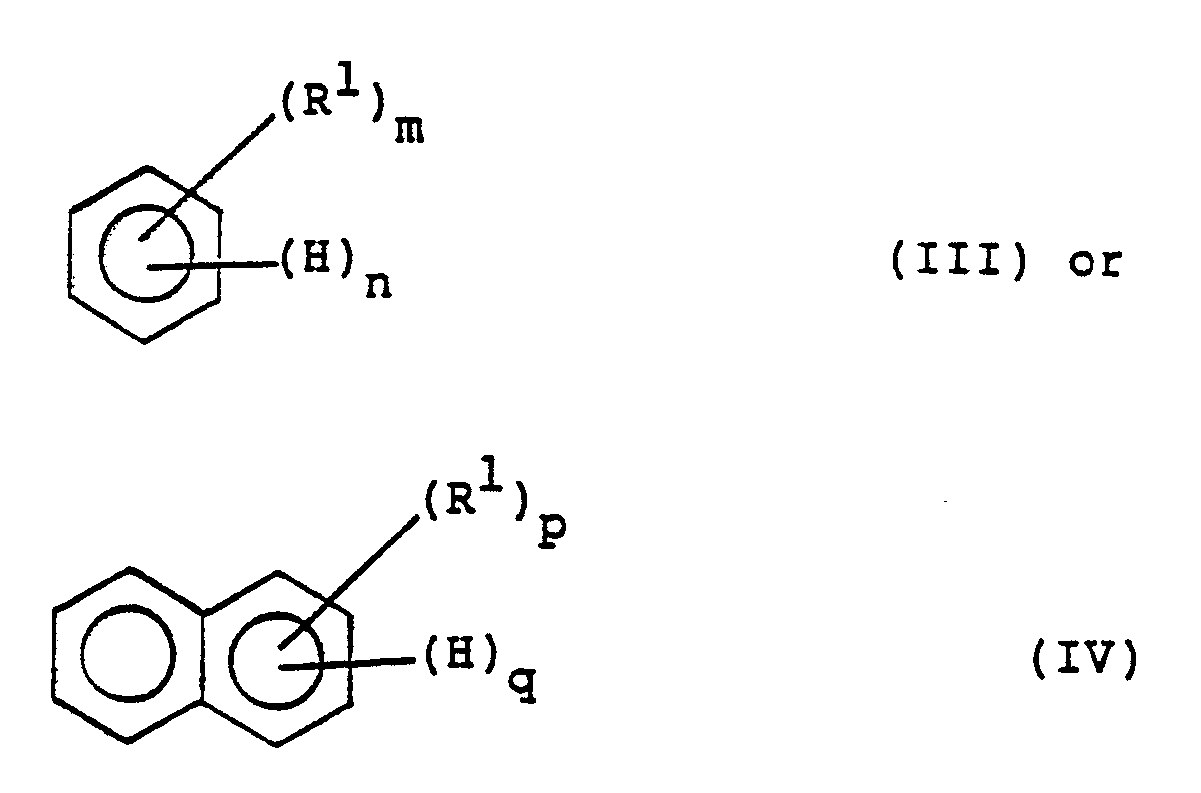
- The aromatic hydrocarbons useful in the preparation of primary aralkyl carbamates or ureas in accordance with the present invention include mono- and bicyclic aryl compounds such as benzene and naphthalene compounds. These aryl compounds broadly can be substituted with one or more lower alkyl groups preferably having from 1 to 30 carbon atoms, especially preferably 1 to 3 carbon atoms, for example, toluene, o-, m- and p-xylene, mesitylene, 1,2,4,5-tetramethylbenzene, isopropyltoluene, alpha-methyl naphthalene, and the like. Preferably, the aryl compounds will be toluene or any of the isomers of xylene. Especially preferred is the meta isomer of xylene.
- The carbamate compounds (b) used in the process are represented by the general formula:
H₂N-COX
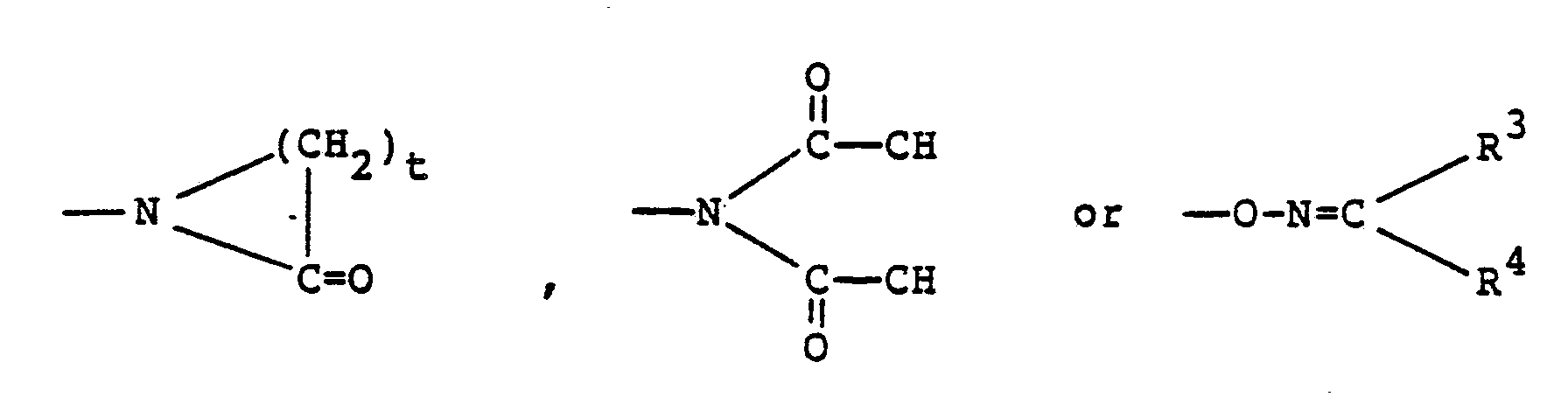
wherein X is as defined above. - When X is OR, R can be alkyl of from 1 to 6 carbon atoms, such methyl, ethyl, propyl, isopropyl, hexyl and the like, R can be aryl or substituted aryl of from 6 to 10 carbon atoms such as phenyl, tolyl, xylyl, trimethylphenyl, tetramethylphenyl, ethylphenyl, and the like, and R can be aralkyl or substituted aralkyl of from about 7 to about 10 carbon atoms, such as benzyl, alpha-methyl benzyl, p-methylbenzyl, beta-phenylethyl, and the like. When X is NR²₂, each R² can be the same or different and will comprise alkyl of from 1 to about 6 carbon atoms, such as methyl, ethyl, isopropyl, n-hexyl and the like.

- The formaldehyde or formaldehyde precursor (c) compound useful in carrying out this invention includes gaseous formaldehyde and formalin, which comprises a solution of about 37% by weight of formaldehyde in water, usually with 10-15% methanol added to prevent polymerization.
- Alternatively, formaldehyde may be employed herein in the form known as trioxymethylene and as paraform.
- Complexes of formaldehyde with alcohols, e.g., methanol, known as formcels can also be used.
- In those embodiments wherein reactants (b) and (c) may be "pre-reacted" to form (Cʹ) there can be used hydroxyalkylcarbamate such as N-methylolmethyl carbamate:
HOCH₂NHCOOCH₃, or
a methylene bisalkyl urethane, such as methylene-bis-methyl urethane:
CH₂NHOCH₃)₂
or a cyclodehydration product of a hydroxyalkyl carbamate, such as a triazine derivative of the formula:
- Acid catalysts suitable for use in the carbamylmethylation process of this invention include sulfuric acid, phosphoric acid, hydrochloric acid, solid sulfonic acid resins, acetic acid, hydrogen fluoride, hydrocarbon sulfonic acids, hydrocarbon sulfate esters as well as Lewis acids, such as boron trifluoride etherate. Preferred catalysts are phosphoric acid and sulfuric acid. In general, the acid catalyst is present in excess and serves as a solvent.
- The reaction can take place in the absence of solvent or in the presence of solvents, such as methanol, ethanol, acetic acid, methylene dichloride, ethylene dichloride, chlorobenzene, and so forth.
- The product distribution depends upon relative mole ratios of the reactants, temperature, time, mode of addition and stirring rate.
- Generally, while the proportion of carbamate compound (b) to aromatic hydrocarbon (a) can be stoichiometric, preferably the carbamate is in substantial excess and functions as solvent and catalyst moderator as well as reactant. It is preferred in accordance with this invention to use from 15% to 400% stoichiometric excess of carbamate, preferably about 200% excess carbamate.
- The proportion of formaldehyde or formaldehyde precursor (c) likewise can vary widely, but this generally will be in the range of from about 0.2 to about 2 moles for each mole of hydrocarbon (a).
- The amount of catalyst required to promote the addition reaction of aromatic hydrocarbon and carbamic acid ester can be varied widely, but at least about 0.75 moles/per mole of hydrocarbon is needed. Where substantial excess of carbamate (b) is utilized the amount of catalyst, based on the aromatic hydrocarbon (a) is typically 1.0 to 10 moles per mole of aromatic hydrocarbon. Preferably the amount of catalyst should be in excess of the amount of carbamate.
- Preferably the carbamate is heated mildly, if necessary, to maintain it molten, e.g., 30°C to 150°C, with from 40°C to 100°C being preferred. The catalyst is dissolved in the molten carbamate, aromatic hydrocarbon is added and formaldehyde is then slowly added with efficient stirring. The reaction proceeds best at 70°C and is generally over in about 1 to 4 hours. When the reaction is complete the mixture is treated to remove or neutralize the catalyst. Unreacted carbamate (b) is then separated by distillation in partial vacuum, by adding a large excess of water and filtering to separate insoluble urethane products from water-soluble carbamate ester, or in any other convenient manner.
- The reaction can be conducted using a significant excess of aromatic hydrocarbon, for example, xylene, over formaldehyde, in which case the monocarbamate is formed with high selectivity. Monocarbamate is isolated in a known manner, e.g., by flashing off the hydrocarbon, and can be converted in a second stage to diurethane, for example, by further reaction with formaldehyde and methyl carbamate.
- If the reaction is carried out in a single stage using stoichiometric quantities of the reactants, moderate conversions to mono and dicarbamates are achieved.
- Primary aralkyl urethane esters and ureas form the corresponding isocyanate by thermal cracking while splitting off the alkanol or corresponding nitrogen compound. In many cases the alcohol can usefully be recycled by reaction with urea or isocyanic acid (HNCO) to form the starting carbamate ester.
- In cracking the urethane esters and the ureas to form the corresponding isocyanates the acidic catalyst must be removed or neutralized for example, with calcium oxide, sodium carbonate, sodium hydroxide and the like. This is followed by cracking of the urethane ester or urea either solvent-free or in high boiling solvents, such as hexadecane, diphenyl ether, diisopropyl naphthalene, silicone oil and the like. Cracking takes place at temperatures on the order of 125°C to 350°C splitting off the alkanol or corresponding nitrogen compounds to yield the corresponding isocyanate.
- This invention has particular application in the production of primary aralkyl polyisocyanates from aromatic hydrocarbons, formaldehyde, and carbamic acid esters or ureas by addition of the reactants to form the corresponding N-aralkyl carbamates followed by thermal cracking of the N-aralkyl carbamates or ureas to the corresponding aromatic diisocyanates.
- Alternatively, the aralkyl carbamates and ureas may be hydrogenated to produce saturated analogs which can then be cracked to produce totally aliphatic isocyanates.
- In the hydrogenation process, hydrogen and a catalyst are used to produce the corresponding hexahydro or decahydro urethane or ureas by standard procedures. For example, a solution of the starting material in an alcohol solvent, e.g., methanol or ethanol, is reacted at a suitable temperature, e.g., in the range of 30°C to 170°C and at an elevated pressure, e.g., 40 to 4,000 pounds per square inch of hydrogen with a catalyst, such as rhodium, ruthenium, rhenium, nickel, mixtures thereof, compounds thereof, and the like, until the aromatic rings are saturated. The products are isolated in conventional ways, e.g., by filtering off the catalyst and evaporating the solvent.
- Illustratively, the preparation of 3,4-dimethylxylylene diisocyanate (DMXDI) and cyclohexyl-3,4-dimethylxylylene diisocyanate and oligomers from starting materials hereinbefore described is outlined as follows:

- More particularly, the diurethanes and ureas can be cracked to the corresponding diisocyanates by refluxing in a high boiling solvent while passing a stream of inert gas through the solution to remove the alcohol formed. Alternatively, they can be cracked by refluxing under reduced pressure in the presence of a basic catalyst, or by passing the hot vapor of the diurethane through a hot tube. Unreacted or half cracked material may be recycled through the cracking step.
- The following examples illustrate the novel processes and novel compounds of the present invention. They are not to be construed to limit the claims in any manner whatsoever.
- In accordance with known techniques, coating compositions can be made by mixing polyols with effective amounts of 0.5 to 5 -NCO/-OH of polyisocyanates, optionally in a hydrocarbon solvent, preferably with a calatyst, e.g., 1% of a tin compound and curing, e.g., at 60-150°C for 1 minute to 1 hour. Hard, solvent resistent films are thus obtained. Alternatively, the polyurethanes and polyureas can be substituted for the polyisocyanates; these will "unblock" under the conditions of the curing reaction and also produce cured compositions.
- In the following Examples and Tables, the following abbreviations are used:
MEC - carbamic acid methyl ester, methyl urethane, methyl carbamate
DMXDU - tetramethylxylylene diurethane
DMXDI - dimethylxylylene diisocyanate
MXU - dimethylxylylene monourethane
MEDU - methylene diurethane
XDU - xylylene diurethane
H₆-DMXDI - hexahydro dimethylxylylene diisocyanate
H₆-XDU - hexahydro xylylene diurethane
H₆-DMXDU - hexahydro dimethylxylylene diurethane - These examples illustrate a method for the carbamylmethylation of m-xylene using excess m-xylene. Aqueous formalin solution (0.2 moles of formaldehyde) was added slowly and with good stirring to well-stirred mixtures of 1.0 mole m-xylene, 0.25 moles of methyl carbamate and 0.75 moles of phosphoric acid. After the reaction was over, a small amount of water was added to the mixture and the organic layer was separated. Results were obtained by gas phase chromatography for these reactions as outlined in Table 1:

- This example illustrates the carbamylmethylation of m-xylene using formalin. At 65°C and with good stirring, 0.1 moles of m-xylene and 0.2 moles of formaldehyde in the form of a formalin solution (37% CH₂O in water) were added simultaneously for a period of more than 2 hours using syringe pumps to 0.2 moles of methyl carbamate in 0.25 moles of phosphoric acid. The mixture was stirred at 65°C for an additional 18 hours and then analyzed by gas chromatography. The yields based on m-xylene of aromatic compounds were 8, 16 and 11% of m-xylene, MXU and DMXDU, respectively.
- This example also illustrates the carbamylmethylation of m-xylene using formalin. The procedure of Example 7 was followed except that the reaction was run at 60°C and not 65°C and using 0.25 moles of sulfuric acid in place of the phosphoric acid. The addition was carried out over 1 hour, and after an additional 3 hours, the yields were 5, 14 and 20% of m-xylene, MXU and DMXDU, respectively.
- This example illustrates the carbamylmethylation of MXU to meta-xylene. Distillation of the product from several of the runs from Examples 1-5 gave 96% pure MXU, b.p. 114-120°C/0.5mm, the yield based on formaldehyde being about 56% and the major impurity in the distillate being DMXDU. When 0.1 mole of formalin was added slowly with good stirring to a mixture of 0.1 mole MXU (prepared by distillation of material obtained in earlier examples), 0.15 mole of methyl carbamate and 0.75 mole of phosphoric acid for more than 1 hour at 10°C and the reaction mixture held at that temperature for 8 hours, the yields of MXU and DMXDU as shown by gas chromatography were 18% and 48%, respectively for a total recovery of 66%.
- This example illustrates the use of (Cʹ), a pre reacted (b) and (c). A mixture of 1 mole of para-formaldehyde, 1 mole of methyl carbamate and 5 g of p-toluenesulfonic acid in 500 ml of toluene was refluxed for 18 hours. The toluene was stripped and replaced with 1000 ml of methylene chloride. The solution was neutralized with sodium carbonate solution, washed with water and dried to give gummy crystals (83%) of the compound 1,3,5-triscarbomethoxyhexahydro-1,3,5-triazine. Recrystallization from ethanol gave white crystals, m.p. 116-119°C.
- For Example 9, 0.1 mole of m-xylene was added with good stirring to a mixture of 0.07 mole of the triazine, 0.25 mole of sulfuric acid and 40 ml of acetic acid at 40°C and stirred at that temperature for 20 hours. Gas chromatography gave yields based on the triazine of 10% MXU and 41% DMXDU.
- For Example 10, the reaction of Example 9 was run again but using 40 ml of methanol instead of acetic acid and at the reflux temperature of methanol. After 6 hours, yields were 15% MXU and 30% DMXDU.
- This example also illustrates the use of m-xylene, paraformaldehyde and methyl carbamate catalyzed by concentrated sulfuric acid. At 55°C, a reaction was run with a reactant mole ratio of m-xylene: (CH₂O)n:MEC:H₂SO₄ of 1:2:2:2. The reaction formed MXU and DMXDU in the yield of 3% and 27% respectively.
- The procedure of Example 11 was followed with the exception that the quantity of sulfuric acid catalyst was varied as were the times and temperatures for reaction, all as shown in Table 2:

- This example illustrates a larger scale synthesis of DMXDU from paraformaldehyde, methyl carbamate and m-xylene. To a solution containing 111 ml (2.08 moles) of concentrated sulfuric acid and 440 ml of glacial acetic acid was added 60g (2.0 moles) of paraformaldehyde; the mixture was stirred in a 56°C oil bath for 30 minutes and then 150 g (2.0 moles) of methyl carbamate was slowly added. The reaction mixture turned a clear homogeneous liquid after the first portion of methyl carbamate was added. The mixture was stirred for 50 minutes after the addition of methyl carbamate had been completed. 106g (1 mole) of m-xylene was then added dropwise. After being heated at 55°C for 15 hours with stirring, the reaction mixture was distilled at reduced pressure to recover acetic acid. A total of 200 ml of acetic acid was thus distilled. The distillation residue was cooled and added slowly to 2 l of 4N cold aqueous sodium hydroxide solution. The resulting sticky precipitate was filtered and washed with water until the washings were neutral. After being dried at 60°C under vacuum, the solid was recrystallized from acetone. 73.1 g of of m-DMXDU was obtained (yield 25%). The melting point of the product was 171-173°C and the product displayed the following spectroscopic properties:
IR (cm⁻¹) : 3330, (N-H); 3140, (C=C-H); 2940, (C-C-H); 1690, ( C=O); 1530, (N-H) NMR (CDCl₃, δ) : 2.3, (2 CH₃); 3.7 (2 OCH₃); 4.2-4.4 (2 CH₂); 4.7-5.0 (2 NH); 6.9-7.1, (2 aromatic H). - This Example illustrates the reaction of m-xylene and MEDU catalyzed by concentrated H₂SO4. MEDU, a reaction product of 1 mole of CH₂O and 2 moles of MEDU, was used in these examples. The reacted mole ratio of m-xylene:H₂SO₄ was 1:2. Data and product yield obtained by GLC are set forth in Table 3.

- This example also illustrates the reaction of m-xylene and MEDU. 20.25 g (125 m mole) of MEDU was added to a solution of 6 ml (109 m moles) of concentrated sulfuric acid and 20 ml of glacial acetic acid to obtain a clear homogeneous solution. To this clear solution was added 5.3 g (50 m moles) of m-xylene followed by stirring in a 55°C oil bath for 24 hours. The reaction mixture was analyzed with GLC and GL/Mass. The formation of m-DMXDU was confirmed by the comparison of GLC retention time with the authentic sample. The formation of MXU was confirmed by GLC/mass spectrometry. GLC (internal standard method) analysis indicated that MXU and DMXDU were formed in the yield of 17% and 44% respectively.
- Reactions were carried out at 70°C or 100°C following the general procedures above, but using reactant mole ratios of m-xylene, paraformaldehyde, methyl carbamate, and phosphoric acid of 1:2:2.25:7.5. Phosphoric acid was used both as a catalyst and as a solvent. Data and product yields determined by GLC are given in Table 4.
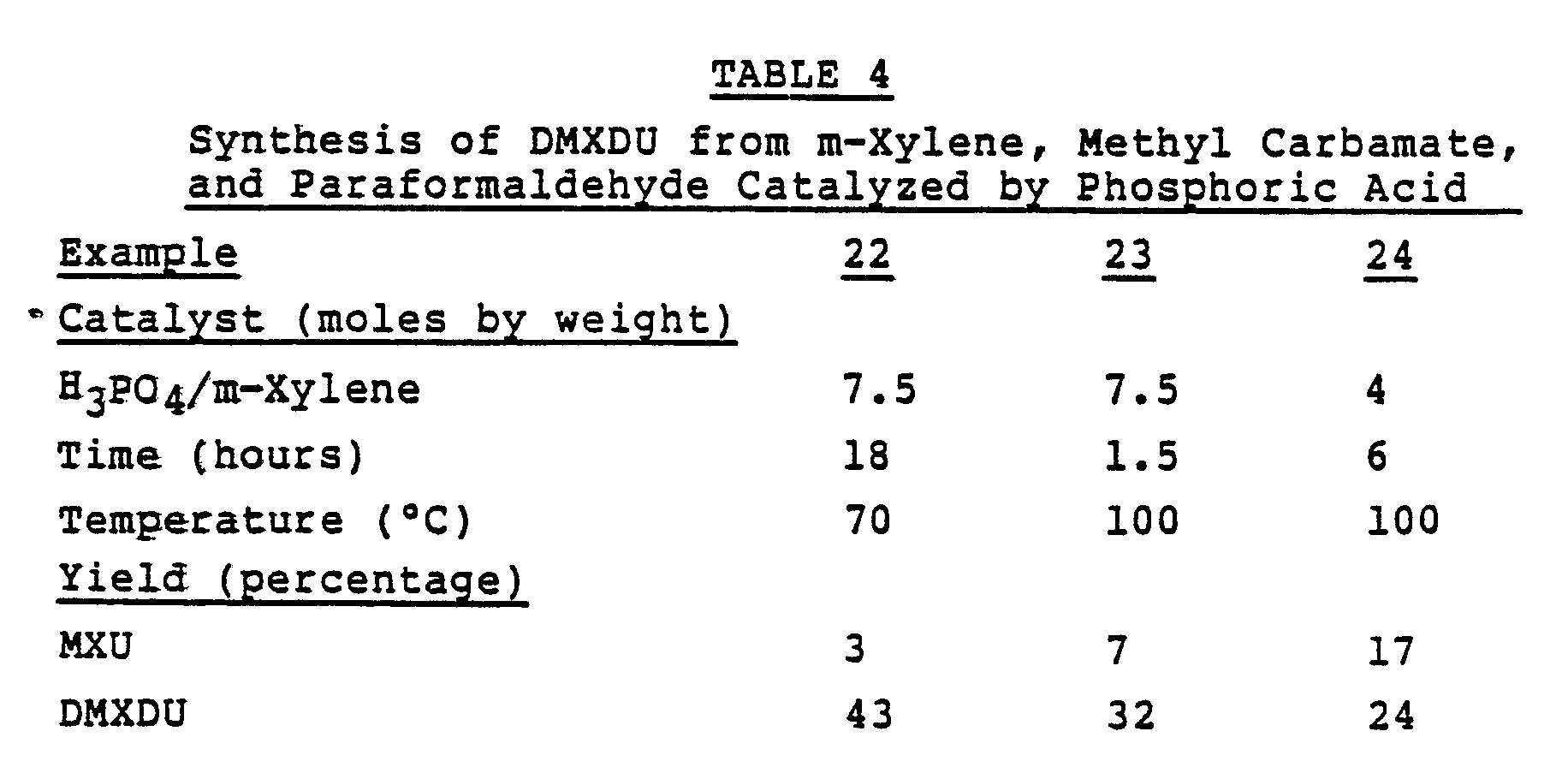
- Results indicate that at 70°C the reaction is complete after 18 hours with yields of MXU and DMXDU of 3% and 43%, respectively. Conducting the reaction at higher temperature, for example, 100°C, shortened the reaction time significantly but the yields of MXU and DMXMU decreased to 32% and 7%, respectively.
- 37.5g (0.5 m) of methyl carbamate was added to a flask containing 173 g (1.5 m) of 85% w/w phosphoric acid and stirred at 70°C for a few minutes. 6 g (0.2 m) of para formaldehyde was added to the reaction mixture to obtain a homogeneous liquid. 21 g (0.2 m) of m-xylene was then added in a period of 2 hours using a syringe pump. During this 2 hours period, another 6 g (0.2 m) of paraformaldehye was added in ten portions to the reaction flask. After the addition of m-xylene and paraformaldehyde was completed, the reaction mixture was stirred at 70°C for 18 hours. A considerable amount of solid precipitated out of the reaction mixture and heating was discontinued. 50 ml of water and 100 ml of methylene chloride were added to the reaction flask. After being stirred at room temperature for one hour, the reaction mixture was filtered. The solids collected were washed with water and methylene chloride. The washings were combined with the filtrate; and the combined mixture was separated into two parts - the organic (CH₂Cl₂) layer and the aqueous (phosphoric acid) layer. The solid (collected by filtration) and the organic layer were analyzed by GLC (internal standard). The results indicated that the yields of MXU and DMXDU were 3% and 43%, respectively.
- These Examples illustrate the hydrogenation of urethane compounds prepared in accordance with this invention. For Example 26, the hydrogenation of XDU was carried out in ethanol solvent in the presence of a rhodium on carbon hydrogenation catalyst, Rh/C, at 30°C and a pressure of 60 psi for 12 hours. For Examples 27-31, the catalyst and other conditions were varied. The conditions used and the analyses by GLC area percent provided product yield data as set forth in Table 6:

- The procedure of Example 26 was followed with these exceptions: the catalyst Ru₂O/C was used in place of Rh/C; a temperature of 100°C was used instead of 30°C; a pressure of 1000 psi instead of 60 psi was applied; and the time for hydrogenation was reduced to 5 hours instead of 12 hours.
- Analysis by GLC indicated a product yield of H₆XDU of 93%. The product melting point was 100-103°C and NMR characteristics were as follows:
(CDCl₃, δ) : 1-2 (2CH₃, 4CH₂, 2CH); 2.7-3.2 (2-N-CH₂); 3.8-4.3 (2OCH₂); 4.7-5.2(2NH). - The procedure of Example 26 was followed with these exceptions: Raney Nickel was used as a catalyst in place of Rh/C; the temperature was 150°C instead of 30°C; a pressure of 3600 psi was applied instead of 60 psi and the hydrogenation time was reduced to 3 hours instead of 12 hours.
- Analysis by GLC area percent indicated a product yield of H₆XDU of 95%. Melting point of the product was 100-103°C and NMR characteristics were as follows:
(CDCl₃, δ) : 1-2 (2CH₃, 4CH₂, 2CH); 2.7-3.2 (2-N-CH₂); 3.8-4.3 (2OCH₂); 4.7-5.2(2NH). - The procedure of Example 26 was followed with the exception that the aralkyl urethane DMXDU was hydrogenated instead of XDU.
- Analysis by GLC area percent indicated a product yield of H₆DMXDU of 98%. Melting point of the product was 74-82°C and NMR characteristics were as follows:
(CHCl₃, δ):0.8-1 (2 CH₃); 1-2.1 (2CH₂, 4CH); 2.8-3.3 (2NCH₂) 3.6 (2 OCH₃); 4.8-5.2 (2NH). - The procedure of Example 27 was followed with these exceptions: DMXDU was hydrogenated instead of XDU; a temperature of 120°C was used instead of 100°C; a pressure of 1500 psi was applied instead of 1000 psi; and the reaction was allowed to run for 6 hours and not 5 hours.
- Analysis by GLC area percent indicated a product yield of H₆-DMXDU of 95%. Melting point of the product was 74-82°C and NMR characteristics were as follows:
(CHCl₃, δ):0.8-1 (2 CH₃); 1-2.1 (2CH₂, 4CH); 2.8-3.3 (2NCH₂) 3.6 (2 OCH₃); 4.8-5.2 (2NH). - The procedure of Example 28 was followed with these exceptions: DMXDU was hydrogenated in place of XDU; Raney Nickel (active) was employed instead of R/Ni; the temperature of 160°C was used instead of 150°C; the pressure of 3700 psi was applied, instead of 3600 psi and the reaction ran for 4 hours and not 3 hours.
- Analysis by GLC indicated product yields for H₆DMXDU of 58% and for DMXDU of 16%. Melting point of the product H₆DMXDU was 74-82°C and NMR characterics were as follows:
(CHCl₃, δ):0.8-1 (2 CH₃); 1-2.1 (2CH₂, 4CH); 2.8-3.3 (2NCH₂) 3.6 (2 OCH₃); 4.8-5.2 (2NH). - In Examples 37-40 the cracking of urethane compounds was carried out in the inert organic solvent, hexadecane at 260°C for 4 hours. A steady stream of nitrogen passed through the reaction mixture during the cracking to carry away alcohol formed in the reaction.
- The ethyl ester of H₆XDU was cracked to yield respective percentages of di- and monoisocyanate of 93% and 7%, respectively.
- The methyl ester of H₆DMXDU was cracked. GLC area percent gave a yield of di- and monoisocyanate percentages of 40% and 33%, respectively.
- A curable composition is made comprising a hydroxy functional acrylic acid and the H₆DMXDI of Example 31. A copolymer of hydroxyethyl acrylate with other acrylics (G-CURE® 867) and H₆DMXDI at 50% non-volatiles in a hydrocarbon solvent, the -NCO/-OH ratio being 1.1/1.0 was treated with 1.0% (TRS) of a tin catalyst, UL-28, and spread on a 1200 S aluminum substrate and cured for 20 minutes at 60°, 80° and 100°C. Hard, solvent-resistant films in accordance with this invention should be obtained.
- If the procedure of Example 36 is repeated, substituting H₆DMXDU for H₆DMXDI, the diurethane will unblock and also should cure to a hard, solvent-resistant film in accordance with this invention.
- In all of the foregoing examples, non-volatile oligomeric materials having at least one isocyanate or urethane group were also obtained.
- The above-mentioned patents, publications and test methods are incorporated herein by reference.
- Many variations will suggest themselves to those skilled in this art, in light of the above detailed description. For example, instead of using m-xylene or toluene as the aromatic hydrocarbon, para-xylene, ortho xylene, mesitylene, 1,2,4,5-tetramethylbenzene or naphthalene substituted by lower alkyl can be used. Instead of methyl carbamate, any of the lower alkyl esters, phenyl esters, N-dialkyl esters or N-heterocyclic esters can be used. Instead of phosphoric acid or sulfuric acid as catalysts for the carbamylmethylation reaction, other acids such as hydrogen chloride, hydrogen fluoride or sulfate esters can be used.
- All such obvious variations are within the full intended scope of the appended claims.
Claims (27)


H₂N-COX
wherein X is as above defined;




Priority Applications (1)
| Application Number | Priority Date | Filing Date | Title |
|---|---|---|---|
| AT87115751T ATE80158T1 (en) | 1986-11-03 | 1987-10-27 | PROCESSES FOR THE PRODUCTION OF PRIMARY ARALKYLURETHANES, UREAS AND ISOCYANATES DERIVED FROM THEM. |
Applications Claiming Priority (2)
| Application Number | Priority Date | Filing Date | Title |
|---|---|---|---|
| US926070 | 1986-11-03 | ||
| US06/926,070 US4879410A (en) | 1986-11-03 | 1986-11-03 | Preparation of primary aralkyl urethanes and ureas and isocyanates derived therefrom |
Publications (2)
| Publication Number | Publication Date |
|---|---|
| EP0268856A1 true EP0268856A1 (en) | 1988-06-01 |
| EP0268856B1 EP0268856B1 (en) | 1992-09-02 |
Family
ID=25452699
Family Applications (1)
| Application Number | Title | Priority Date | Filing Date |
|---|---|---|---|
| EP87115751A Expired - Lifetime EP0268856B1 (en) | 1986-11-03 | 1987-10-27 | Preparation of primary aralkyl urethanes and ureas and isocyanates derived therefrom |
Country Status (9)
| Country | Link |
|---|---|
| US (1) | US4879410A (en) |
| EP (1) | EP0268856B1 (en) |
| JP (1) | JP2567423B2 (en) |
| KR (1) | KR970007916B1 (en) |
| AT (1) | ATE80158T1 (en) |
| BR (1) | BR8705871A (en) |
| CA (1) | CA1320955C (en) |
| DE (1) | DE3781518T2 (en) |
| MX (1) | MX167085B (en) |
Families Citing this family (7)
| Publication number | Priority date | Publication date | Assignee | Title |
|---|---|---|---|---|
| US5043417A (en) * | 1988-10-17 | 1991-08-27 | Michael Worsley | Low molecular weight urea-formaldehyde reaction products and process for the preparation thereof |
| JPH04221356A (en) * | 1990-12-20 | 1992-08-11 | Mitsubishi Gas Chem Co Inc | Production of xylylene diisocyanate |
| US5194660A (en) * | 1990-12-21 | 1993-03-16 | Union Carbide Chemicals & Plastics Technology Corporation | Processes for producing carbamates and isocyanates |
| US5126476A (en) * | 1991-01-25 | 1992-06-30 | Arco Chemical Technology, L.P. | Process for the preparation of aryl-, heteroaryl-, or cycloalkyl-substituted alkyl urethanes and isocyanates |
| US5574103A (en) * | 1992-12-29 | 1996-11-12 | Cytec Technology Corp. | Aminoresin based coatings containing 1,3,5-triazine tris-carbamate co-crosslinkers |
| US6630599B1 (en) * | 1998-01-06 | 2003-10-07 | Cytec Technology Corp. | Process for preparing derivatives of isopropenyl-α, α-dimethylbenzyl isocyanate |
| DE19860049A1 (en) | 1998-12-23 | 2000-06-29 | Basf Ag | Curable preparations |
Citations (3)
| Publication number | Priority date | Publication date | Assignee | Title |
|---|---|---|---|---|
| US3164632A (en) * | 1963-02-04 | 1965-01-05 | Baxter Laboratories Inc | Benzyl ureas |
| FR2439772A1 (en) * | 1978-10-23 | 1980-05-23 | Invest Tecnica Applicada | PROCESS FOR THE PREPARATION OF UREA AND THIOURAE USEFUL FOR THE TREATMENT OF GASTROINTESTINAL ULCERS AND PRODUCTS OBTAINED |
| EP0101832A1 (en) * | 1982-07-22 | 1984-03-07 | American Cyanamid Company | Tertiary aralkyl urethanes and isocyanates derived therefrom |
Family Cites Families (13)
| Publication number | Priority date | Publication date | Assignee | Title |
|---|---|---|---|---|
| NL302592A (en) * | 1960-05-16 | 1900-01-01 | ||
| US3424780A (en) * | 1964-03-16 | 1969-01-28 | Upjohn Co | Process for manufacturing polyisocyanates |
| US3526655A (en) * | 1964-08-11 | 1970-09-01 | Marathon Oil Co | Preparation of isocyanate derivatives |
| US3919279A (en) * | 1974-06-26 | 1975-11-11 | Atlantic Richfield Co | Catalytic production of isocyanates from esters of carbamic acids |
| DE2541100C3 (en) * | 1974-09-14 | 1982-03-18 | Dai-Ichi Kogyo Seiyaku Co.,Ltd., Kyoto | Process for the decomposition of polyurethanes |
| US3992430A (en) * | 1975-09-11 | 1976-11-16 | Chevron Research Company | Process for preparing aromatic isocyanates |
| JPS5934702B2 (en) * | 1976-10-25 | 1984-08-24 | 昭和電工株式会社 | Method for producing α・α-dimethylbenzyl isocyanate or its nuclear substituted product |
| DE2942503A1 (en) * | 1979-10-20 | 1981-05-07 | Basf Ag, 6700 Ludwigshafen | METHOD FOR PRODUCING AROMATIC DI- AND / OR POLYISOCYANATES |
| DE3049627A1 (en) * | 1980-12-31 | 1982-07-29 | Basf Ag, 6700 Ludwigshafen | "METHOD FOR PRODUCING L-ALKENYLISOCYANATES" |
| US4361518A (en) * | 1981-12-17 | 1982-11-30 | American Cyanamid Company | Manufacture of isocyanates |
| US4379767A (en) * | 1982-03-08 | 1983-04-12 | American Cyanamid Company | Manufacture of isocyanates |
| US4570012A (en) * | 1983-01-10 | 1986-02-11 | American Cyanamid Co. | Urethanes from tertiary aralkyl diols |
| DE3317875A1 (en) * | 1983-05-17 | 1984-11-22 | Basf Ag, 6700 Ludwigshafen | 1-ALKYL-2-ISOCYANATOMETHYL-ISOCYANATO-CYCLOHEXANE AND / OR 1-ALKYL-4-ISOCYANATOMETHYL-ISOCYANATO-CYCLOHEXANE, AND THE CORRESPONDING DIAMINES, METHOD AND PRODUCTION THEREOF |
-
1986
- 1986-11-03 US US06/926,070 patent/US4879410A/en not_active Expired - Fee Related
-
1987
- 1987-08-30 MX MX009103A patent/MX167085B/en unknown
- 1987-10-27 DE DE8787115751T patent/DE3781518T2/en not_active Expired - Fee Related
- 1987-10-27 EP EP87115751A patent/EP0268856B1/en not_active Expired - Lifetime
- 1987-10-27 AT AT87115751T patent/ATE80158T1/en not_active IP Right Cessation
- 1987-10-30 CA CA000550656A patent/CA1320955C/en not_active Expired - Fee Related
- 1987-11-02 KR KR1019870012321A patent/KR970007916B1/en not_active Expired - Fee Related
- 1987-11-02 JP JP62278132A patent/JP2567423B2/en not_active Expired - Lifetime
- 1987-11-03 BR BR8705871A patent/BR8705871A/en not_active IP Right Cessation
Patent Citations (3)
| Publication number | Priority date | Publication date | Assignee | Title |
|---|---|---|---|---|
| US3164632A (en) * | 1963-02-04 | 1965-01-05 | Baxter Laboratories Inc | Benzyl ureas |
| FR2439772A1 (en) * | 1978-10-23 | 1980-05-23 | Invest Tecnica Applicada | PROCESS FOR THE PREPARATION OF UREA AND THIOURAE USEFUL FOR THE TREATMENT OF GASTROINTESTINAL ULCERS AND PRODUCTS OBTAINED |
| EP0101832A1 (en) * | 1982-07-22 | 1984-03-07 | American Cyanamid Company | Tertiary aralkyl urethanes and isocyanates derived therefrom |
Non-Patent Citations (3)
| Title |
|---|
| CHEMICAL ABSTRACTS, vol. 83, no. 24, 15th December 1975, page 103, column 1, abstract no. 195073v, Columbus, Ohio, US; & JP - A - 75 65677 (NIPPON KAGAKU) 03-06-1975 * |
| CHEMICAL ABSTRACTS, vol. 90, no. 3, 15th January 1979, page 583, column 2, abstract no. 22282d, Columbus, Ohio, US; K.-C- LIU et al.: "Synthesis of N-(homocyclylcarbamoyl)-maleamic acids and -maleimides", & J. CHIN. CHEM. SOC. (TAIPEI) 1978, 25(2), 77-82 * |
| CHEMICAL ABSTRACTS, vol. 98, no. 2, 10th January 1983, page 47, column 1, abstract no. 5453h, Columbus, Ohio, US; P. McBRIDE "LowEr temperatue curing blocked isocyanate for use in powder coatings", & J. OIL COLOUR CHEM. CHEM. ASSOC. 1982, 65(7), 257-262 * |
Also Published As
| Publication number | Publication date |
|---|---|
| ATE80158T1 (en) | 1992-09-15 |
| MX167085B (en) | 1993-03-03 |
| DE3781518T2 (en) | 1993-02-11 |
| US4879410A (en) | 1989-11-07 |
| KR880006284A (en) | 1988-07-22 |
| JPS63190866A (en) | 1988-08-08 |
| BR8705871A (en) | 1988-06-14 |
| EP0268856B1 (en) | 1992-09-02 |
| DE3781518D1 (en) | 1992-10-08 |
| CA1320955C (en) | 1993-08-03 |
| JP2567423B2 (en) | 1996-12-25 |
| KR970007916B1 (en) | 1997-05-17 |
Similar Documents
| Publication | Publication Date | Title |
|---|---|---|
| EP0164491B1 (en) | Process for the preparation of tertiary aralkyl urethanes and process for the preparation of isocyanates derived therefrom | |
| US3557180A (en) | 2,4-bis(isocyanatocyclohexylmethyl) cyclohexyl isocyanate | |
| EP0268856B1 (en) | Preparation of primary aralkyl urethanes and ureas and isocyanates derived therefrom | |
| US4788329A (en) | Preparation of cyclohexyl mono- and diurethanes and isocyanates derived therefrom by addition of methylcarbamate to limonene, process and compositions | |
| US4786751A (en) | Dissocyanates, diisocyanate mixtures and a process for their production | |
| US4163019A (en) | Production of 4,4'-alkylidene diphenyl diisocyanate | |
| US3676495A (en) | 2,4-bis(4-aminocyclohexylmethyl)cyclohexylamine | |
| US3379758A (en) | Phosgenation of n-arylsulfonyl, n'-alkyl-ureas to produce arylsulfonyl isocyanates | |
| US4603189A (en) | Triisocyanates and a process for their preparation | |
| US4675437A (en) | Cycloaliphatic triisocyanates | |
| CA1297490C (en) | Preparation of a novel diisocyanate from norbornadiene | |
| KR950006901B1 (en) | Novel alicyclic alkyl diurethanes and diisocyanates and methods for their preparation | |
| EP0266659B1 (en) | Process for the preparation of tertiary aralkyl monourethanes | |
| EP0164494B1 (en) | System for conveying conical articles | |
| KR950006898B1 (en) | Isocyanates Derived from Dienes and Methods for Preparing the Isocyanates | |
| JPH0358966A (en) | Preparation of mono-and oligo- urethane | |
| JPS62230763A (en) | Production of n, n-disubstituted mono-and oligourethane | |
| KR840000720B1 (en) | Process for the preparation of novel triamine |
Legal Events
| Date | Code | Title | Description |
|---|---|---|---|
| PUAI | Public reference made under article 153(3) epc to a published international application that has entered the european phase |
Free format text: ORIGINAL CODE: 0009012 |
|
| AK | Designated contracting states |
Kind code of ref document: A1 Designated state(s): AT BE CH DE FR GB IT LI NL SE |
|
| 17P | Request for examination filed |
Effective date: 19881121 |
|
| 17Q | First examination report despatched |
Effective date: 19900516 |
|
| GRAA | (expected) grant |
Free format text: ORIGINAL CODE: 0009210 |
|
| AK | Designated contracting states |
Kind code of ref document: B1 Designated state(s): AT BE CH DE FR GB IT LI NL SE |
|
| REF | Corresponds to: |
Ref document number: 80158 Country of ref document: AT Date of ref document: 19920915 Kind code of ref document: T |
|
| REF | Corresponds to: |
Ref document number: 3781518 Country of ref document: DE Date of ref document: 19921008 |
|
| ET | Fr: translation filed | ||
| ITF | It: translation for a ep patent filed | ||
| PLBE | No opposition filed within time limit |
Free format text: ORIGINAL CODE: 0009261 |
|
| STAA | Information on the status of an ep patent application or granted ep patent |
Free format text: STATUS: NO OPPOSITION FILED WITHIN TIME LIMIT |
|
| 26N | No opposition filed | ||
| EAL | Se: european patent in force in sweden |
Ref document number: 87115751.7 |
|
| PGFP | Annual fee paid to national office [announced via postgrant information from national office to epo] |
Ref country code: AT Payment date: 19960924 Year of fee payment: 10 |
|
| PGFP | Annual fee paid to national office [announced via postgrant information from national office to epo] |
Ref country code: GB Payment date: 19970917 Year of fee payment: 11 |
|
| PGFP | Annual fee paid to national office [announced via postgrant information from national office to epo] |
Ref country code: NL Payment date: 19970919 Year of fee payment: 11 |
|
| PGFP | Annual fee paid to national office [announced via postgrant information from national office to epo] |
Ref country code: SE Payment date: 19971006 Year of fee payment: 11 |
|
| PGFP | Annual fee paid to national office [announced via postgrant information from national office to epo] |
Ref country code: FR Payment date: 19971007 Year of fee payment: 11 |
|
| PG25 | Lapsed in a contracting state [announced via postgrant information from national office to epo] |
Ref country code: AT Free format text: LAPSE BECAUSE OF NON-PAYMENT OF DUE FEES Effective date: 19971027 |
|
| PGFP | Annual fee paid to national office [announced via postgrant information from national office to epo] |
Ref country code: DE Payment date: 19971030 Year of fee payment: 11 |
|
| PGFP | Annual fee paid to national office [announced via postgrant information from national office to epo] |
Ref country code: BE Payment date: 19971105 Year of fee payment: 11 |
|
| PGFP | Annual fee paid to national office [announced via postgrant information from national office to epo] |
Ref country code: CH Payment date: 19980109 Year of fee payment: 11 |
|
| PG25 | Lapsed in a contracting state [announced via postgrant information from national office to epo] |
Ref country code: GB Free format text: LAPSE BECAUSE OF NON-PAYMENT OF DUE FEES Effective date: 19981027 |
|
| PG25 | Lapsed in a contracting state [announced via postgrant information from national office to epo] |
Ref country code: SE Free format text: LAPSE BECAUSE OF NON-PAYMENT OF DUE FEES Effective date: 19981028 |
|
| PG25 | Lapsed in a contracting state [announced via postgrant information from national office to epo] |
Ref country code: LI Free format text: LAPSE BECAUSE OF NON-PAYMENT OF DUE FEES Effective date: 19981031 Ref country code: CH Free format text: LAPSE BECAUSE OF NON-PAYMENT OF DUE FEES Effective date: 19981031 Ref country code: BE Free format text: LAPSE BECAUSE OF NON-PAYMENT OF DUE FEES Effective date: 19981031 |
|
| BERE | Be: lapsed |
Owner name: AMERICAN CYANAMID CY Effective date: 19981031 |
|
| PG25 | Lapsed in a contracting state [announced via postgrant information from national office to epo] |
Ref country code: NL Free format text: LAPSE BECAUSE OF NON-PAYMENT OF DUE FEES Effective date: 19990501 |
|
| REG | Reference to a national code |
Ref country code: CH Ref legal event code: PL |
|
| GBPC | Gb: european patent ceased through non-payment of renewal fee |
Effective date: 19981027 |
|
| EUG | Se: european patent has lapsed |
Ref document number: 87115751.7 |
|
| PG25 | Lapsed in a contracting state [announced via postgrant information from national office to epo] |
Ref country code: FR Free format text: LAPSE BECAUSE OF NON-PAYMENT OF DUE FEES Effective date: 19990630 |
|
| NLV4 | Nl: lapsed or anulled due to non-payment of the annual fee |
Effective date: 19990501 |
|
| REG | Reference to a national code |
Ref country code: FR Ref legal event code: ST |
|
| PG25 | Lapsed in a contracting state [announced via postgrant information from national office to epo] |
Ref country code: DE Free format text: LAPSE BECAUSE OF NON-PAYMENT OF DUE FEES Effective date: 19990803 |
|
| PG25 | Lapsed in a contracting state [announced via postgrant information from national office to epo] |
Ref country code: IT Free format text: LAPSE BECAUSE OF NON-PAYMENT OF DUE FEES;WARNING: LAPSES OF ITALIAN PATENTS WITH EFFECTIVE DATE BEFORE 2007 MAY HAVE OCCURRED AT ANY TIME BEFORE 2007. THE CORRECT EFFECTIVE DATE MAY BE DIFFERENT FROM THE ONE RECORDED. Effective date: 20051027 |