EP0263086A1 - Binding-inducing composition - Google Patents
Binding-inducing composition Download PDFInfo
- Publication number
- EP0263086A1 EP0263086A1 EP19870850264 EP87850264A EP0263086A1 EP 0263086 A1 EP0263086 A1 EP 0263086A1 EP 19870850264 EP19870850264 EP 19870850264 EP 87850264 A EP87850264 A EP 87850264A EP 0263086 A1 EP0263086 A1 EP 0263086A1
- Authority
- EP
- European Patent Office
- Prior art keywords
- enamel matrix
- composition
- enamel
- parts
- composition according
- Prior art date
- Legal status (The legal status is an assumption and is not a legal conclusion. Google has not performed a legal analysis and makes no representation as to the accuracy of the status listed.)
- Granted
Links
- 239000000203 mixture Substances 0.000 title claims abstract description 55
- 230000001939 inductive effect Effects 0.000 title claims abstract description 10
- 210000003298 dental enamel Anatomy 0.000 claims abstract description 48
- 239000011159 matrix material Substances 0.000 claims abstract description 39
- 238000000034 method Methods 0.000 claims abstract description 26
- 239000002243 precursor Substances 0.000 claims abstract description 9
- 230000008929 regeneration Effects 0.000 claims abstract description 5
- 238000011069 regeneration method Methods 0.000 claims abstract description 5
- 239000000470 constituent Substances 0.000 claims abstract description 4
- 210000001519 tissue Anatomy 0.000 claims description 28
- 230000035876 healing Effects 0.000 claims description 21
- 238000011282 treatment Methods 0.000 claims description 19
- 201000001245 periodontitis Diseases 0.000 claims description 18
- 210000000981 epithelium Anatomy 0.000 claims description 8
- 102000008186 Collagen Human genes 0.000 claims description 7
- 108010035532 Collagen Proteins 0.000 claims description 7
- 229920001436 collagen Polymers 0.000 claims description 7
- 241000283690 Bos taurus Species 0.000 claims description 4
- 241000124008 Mammalia Species 0.000 claims description 4
- 239000003085 diluting agent Substances 0.000 claims description 4
- 239000000853 adhesive Substances 0.000 claims description 3
- 230000001070 adhesive effect Effects 0.000 claims description 3
- 241000894007 species Species 0.000 claims description 3
- 239000011248 coating agent Substances 0.000 claims 1
- 238000000576 coating method Methods 0.000 claims 1
- 210000001840 diploid cell Anatomy 0.000 claims 1
- 210000004872 soft tissue Anatomy 0.000 claims 1
- 230000003239 periodontal effect Effects 0.000 description 27
- 210000004379 membrane Anatomy 0.000 description 18
- 239000012528 membrane Substances 0.000 description 18
- 241000282693 Cercopithecidae Species 0.000 description 13
- 238000001356 surgical procedure Methods 0.000 description 10
- 210000004027 cell Anatomy 0.000 description 9
- 210000000988 bone and bone Anatomy 0.000 description 8
- 230000015572 biosynthetic process Effects 0.000 description 7
- 238000002474 experimental method Methods 0.000 description 7
- 108010080379 Fibrin Tissue Adhesive Proteins 0.000 description 6
- 241000894006 Bacteria Species 0.000 description 5
- 210000004268 dentin Anatomy 0.000 description 5
- 238000011161 development Methods 0.000 description 5
- 230000018109 developmental process Effects 0.000 description 5
- 239000003106 tissue adhesive Substances 0.000 description 5
- 238000002054 transplantation Methods 0.000 description 5
- 108010071289 Factor XIII Proteins 0.000 description 4
- 108010049003 Fibrinogen Proteins 0.000 description 4
- 102000008946 Fibrinogen Human genes 0.000 description 4
- 241001465754 Metazoa Species 0.000 description 4
- 108090000190 Thrombin Proteins 0.000 description 4
- 230000007547 defect Effects 0.000 description 4
- 229940012444 factor xiii Drugs 0.000 description 4
- 229940012952 fibrinogen Drugs 0.000 description 4
- 210000000214 mouth Anatomy 0.000 description 4
- 229960004072 thrombin Drugs 0.000 description 4
- 108010039627 Aprotinin Proteins 0.000 description 3
- 241000700159 Rattus Species 0.000 description 3
- 241000282887 Suidae Species 0.000 description 3
- 229960004405 aprotinin Drugs 0.000 description 3
- 239000003795 chemical substances by application Substances 0.000 description 3
- 238000000354 decomposition reaction Methods 0.000 description 3
- 210000004195 gingiva Anatomy 0.000 description 3
- ZPNFWUPYTFPOJU-LPYSRVMUSA-N iniprol Chemical compound C([C@H]1C(=O)NCC(=O)NCC(=O)N[C@H]2CSSC[C@H]3C(=O)N[C@@H](CCCCN)C(=O)N[C@@H](C)C(=O)N[C@@H](CCCNC(N)=N)C(=O)N[C@H](C(N[C@H](C(=O)N[C@@H](CCCNC(N)=N)C(=O)N[C@@H](CC=4C=CC(O)=CC=4)C(=O)N[C@@H](CC=4C=CC=CC=4)C(=O)N[C@@H](CC=4C=CC(O)=CC=4)C(=O)N[C@@H](CC(N)=O)C(=O)N[C@@H](C)C(=O)N[C@@H](CCCCN)C(=O)N[C@@H](C)C(=O)NCC(=O)N[C@@H](CC(C)C)C(=O)N[C@@H](CSSC[C@H](NC(=O)[C@H](CC(O)=O)NC(=O)[C@H](CCC(O)=O)NC(=O)[C@H](C)NC(=O)[C@H](CO)NC(=O)[C@H](CCCCN)NC(=O)[C@H](CC=4C=CC=CC=4)NC(=O)[C@H](CC(N)=O)NC(=O)[C@H](CC(N)=O)NC(=O)[C@H](CCCNC(N)=N)NC(=O)[C@H](CCCCN)NC(=O)[C@H](C)NC(=O)[C@H](CCCNC(N)=N)NC2=O)C(=O)N[C@@H](CCSC)C(=O)N[C@@H](CCCNC(N)=N)C(=O)N[C@@H]([C@@H](C)O)C(=O)N[C@@H](CSSC[C@H](NC(=O)[C@H](CC=2C=CC=CC=2)NC(=O)[C@H](CC(O)=O)NC(=O)[C@H]2N(CCC2)C(=O)[C@@H](N)CCCNC(N)=N)C(=O)N[C@@H](CC(C)C)C(=O)N[C@@H](CCC(O)=O)C(=O)N2[C@@H](CCC2)C(=O)N2[C@@H](CCC2)C(=O)N[C@@H](CC=2C=CC(O)=CC=2)C(=O)N[C@@H]([C@@H](C)O)C(=O)NCC(=O)N2[C@@H](CCC2)C(=O)N3)C(=O)NCC(=O)NCC(=O)N[C@@H](C)C(O)=O)C(=O)N[C@@H](CCC(N)=O)C(=O)N[C@H](C(=O)N[C@@H](CC=2C=CC=CC=2)C(=O)N[C@H](C(=O)N1)C(C)C)[C@@H](C)O)[C@@H](C)CC)=O)[C@@H](C)CC)C1=CC=C(O)C=C1 ZPNFWUPYTFPOJU-LPYSRVMUSA-N 0.000 description 3
- 229940033618 tisseel Drugs 0.000 description 3
- XLYOFNOQVPJJNP-UHFFFAOYSA-N water Substances O XLYOFNOQVPJJNP-UHFFFAOYSA-N 0.000 description 3
- 108010039209 Blood Coagulation Factors Proteins 0.000 description 2
- 102000015081 Blood Coagulation Factors Human genes 0.000 description 2
- 206010061218 Inflammation Diseases 0.000 description 2
- 230000001580 bacterial effect Effects 0.000 description 2
- 230000000740 bleeding effect Effects 0.000 description 2
- 239000003114 blood coagulation factor Substances 0.000 description 2
- 238000006243 chemical reaction Methods 0.000 description 2
- 230000006378 damage Effects 0.000 description 2
- 208000037265 diseases, disorders, signs and symptoms Diseases 0.000 description 2
- 210000001080 enamel organ Anatomy 0.000 description 2
- 230000002349 favourable effect Effects 0.000 description 2
- 239000000835 fiber Substances 0.000 description 2
- 210000004969 inflammatory cell Anatomy 0.000 description 2
- 230000004054 inflammatory process Effects 0.000 description 2
- 238000003307 slaughter Methods 0.000 description 2
- 239000000126 substance Substances 0.000 description 2
- 210000000246 tooth germ Anatomy 0.000 description 2
- UXVMQQNJUSDDNG-UHFFFAOYSA-L Calcium chloride Chemical compound [Cl-].[Cl-].[Ca+2] UXVMQQNJUSDDNG-UHFFFAOYSA-L 0.000 description 1
- 208000032170 Congenital Abnormalities Diseases 0.000 description 1
- 208000006558 Dental Calculus Diseases 0.000 description 1
- 108090000790 Enzymes Proteins 0.000 description 1
- 102000004190 Enzymes Human genes 0.000 description 1
- 206010063560 Excessive granulation tissue Diseases 0.000 description 1
- 108010073385 Fibrin Proteins 0.000 description 1
- 102000009123 Fibrin Human genes 0.000 description 1
- BWGVNKXGVNDBDI-UHFFFAOYSA-N Fibrin monomer Chemical compound CNC(=O)CNC(=O)CN BWGVNKXGVNDBDI-UHFFFAOYSA-N 0.000 description 1
- 241000282412 Homo Species 0.000 description 1
- 241001494479 Pecora Species 0.000 description 1
- 102000013566 Plasminogen Human genes 0.000 description 1
- 108010051456 Plasminogen Proteins 0.000 description 1
- 241000283984 Rodentia Species 0.000 description 1
- 206010044029 Tooth deposit Diseases 0.000 description 1
- 206010052428 Wound Diseases 0.000 description 1
- 208000027418 Wounds and injury Diseases 0.000 description 1
- 210000003489 abdominal muscle Anatomy 0.000 description 1
- 238000004873 anchoring Methods 0.000 description 1
- 238000010171 animal model Methods 0.000 description 1
- 244000052616 bacterial pathogen Species 0.000 description 1
- 239000001110 calcium chloride Substances 0.000 description 1
- 229910001628 calcium chloride Inorganic materials 0.000 description 1
- 229960002713 calcium chloride Drugs 0.000 description 1
- 244000309466 calf Species 0.000 description 1
- 238000004140 cleaning Methods 0.000 description 1
- 229940000425 combination drug Drugs 0.000 description 1
- 239000013065 commercial product Substances 0.000 description 1
- 238000010276 construction Methods 0.000 description 1
- 210000001750 dental cementum Anatomy 0.000 description 1
- 210000003074 dental pulp Anatomy 0.000 description 1
- 201000010099 disease Diseases 0.000 description 1
- 208000035475 disorder Diseases 0.000 description 1
- 229940088598 enzyme Drugs 0.000 description 1
- 238000000605 extraction Methods 0.000 description 1
- 229950003499 fibrin Drugs 0.000 description 1
- 239000000945 filler Substances 0.000 description 1
- 239000007903 gelatin capsule Substances 0.000 description 1
- 210000001126 granulation tissue Anatomy 0.000 description 1
- 238000000227 grinding Methods 0.000 description 1
- 210000004394 hip joint Anatomy 0.000 description 1
- 230000007124 immune defense Effects 0.000 description 1
- 239000007943 implant Substances 0.000 description 1
- 238000010348 incorporation Methods 0.000 description 1
- 230000006698 induction Effects 0.000 description 1
- 208000027866 inflammatory disease Diseases 0.000 description 1
- 238000007689 inspection Methods 0.000 description 1
- 238000011835 investigation Methods 0.000 description 1
- 238000011866 long-term treatment Methods 0.000 description 1
- 230000007774 longterm Effects 0.000 description 1
- 239000000463 material Substances 0.000 description 1
- 210000004400 mucous membrane Anatomy 0.000 description 1
- 210000005036 nerve Anatomy 0.000 description 1
- 210000004416 odontoblast Anatomy 0.000 description 1
- 210000004261 periodontium Anatomy 0.000 description 1
- 230000000144 pharmacologic effect Effects 0.000 description 1
- -1 plasma-fibronectin Proteins 0.000 description 1
- 238000002360 preparation method Methods 0.000 description 1
- 239000003755 preservative agent Substances 0.000 description 1
- 238000004393 prognosis Methods 0.000 description 1
- 210000003456 pulmonary alveoli Anatomy 0.000 description 1
- 239000002994 raw material Substances 0.000 description 1
- 238000011160 research Methods 0.000 description 1
- 230000000979 retarding effect Effects 0.000 description 1
- 239000007787 solid Substances 0.000 description 1
- 239000003381 stabilizer Substances 0.000 description 1
- 238000003860 storage Methods 0.000 description 1
- 208000024891 symptom Diseases 0.000 description 1
- 210000002435 tendon Anatomy 0.000 description 1
- 238000012360 testing method Methods 0.000 description 1
- 238000002560 therapeutic procedure Methods 0.000 description 1
- 238000012546 transfer Methods 0.000 description 1
Images


Classifications
-
- A—HUMAN NECESSITIES
- A61—MEDICAL OR VETERINARY SCIENCE; HYGIENE
- A61K—PREPARATIONS FOR MEDICAL, DENTAL OR TOILETRY PURPOSES
- A61K6/00—Preparations for dentistry
- A61K6/50—Preparations specially adapted for dental root treatment
Definitions
- the present invention relates to a composition for use in inducing binding between parts of living mineralized tissue by new formation of mineralized tissue on at least one of the parts but possible also on the other part.
- the invention also relates to a process for inducing such binding, for example for the treatment of periodontitis.
- the present invention relates to new biologically based techniques useful with regard to inducing bonding between parts of mineralized tissue, for example bone. Even if the invention is generally applicable to provide for such binding it will, in the present disclosure, be illustrated mainly in connection with the treatment of loosening teeth, so called periodontitis, However, it should be noted that this principal illustration of the invention must not be interpreted in a limiting manner. Before the technique of the invention are described more closely it is suitable, in order to facilitate understanding of the invention, to give a brief background to the biological conditions in connection with teeth and associated disorders. At normal dental status the teeth are anchored in special cavities, so called alveoli, in the jaw bone. Between the roots of the teeth and the jaw bone a so called periodontal membrane is located.
- the roots of the teeth are mainly constituted by a material called dentin.
- This dentin is peripherally covered by a thin layer of cementum, thickness about 0.01 to 1 mm.
- cementum inter alia collagen fibres are found which extend from the cementum through the periodontal membrane and which are anchored in the jaw bone.
- the peridontal membrane has a thickness of about 0.2 mm and consists of the above-mentioned collagen fibres and vessels and nerves lying between said fibres and cells belonging to these tissues.
- the jaw bone does not extend all the way up to the crown of the tooth, and in the part of the root which is not covered by jaw bone fibres from the root cementum extend out into the surrounding tooth gum, the gingiva. These fibres assist in anchoring the tooth and, furthermore, stabilize the tooth gum.
- the tooth gum, as well as the whole oral cavity, is covered by a thin layer of epithelium.
- the epithelium forms a dense collar or sleeve around the teeth. Adjacent to the teeth there is formed a shallow furrow between the teeth and the epithelium.
- Inflammatory disorders in the tissues attaching the teeth to the jaw bone are quite frequent and strike to a varying extend the major part of the population all over the world.
- the methods of treatment hitherto used are mainly aiming at retarding an ongoing disease process and at preventing loosening of the teeth as far as possible.
- a partial problem within this area is the cases where the patients have a congenital defect in the dental attachment. Such patients develop symptoms of periodontitis at an early age, so called juvenil periodontitis.
- the treatment often involves extraction of the tooth and replacement with some bridge construction at a substantial cost.
- the bacteria on the surface of the teeth cause cronic inflammation in the tooth gum around the teeth.
- Inflammatory cells excrete their decomposing enzymes which are intended for the bacteria, but in this case they attack the collagen fibres attaching the tooth to gingiva and jaw bone.
- the cells on the surface of the tooth root or the cementum are subject to destruction and epithelium from the oral mucous membrane grows downwardly along the teeth and produces a so called gingival crevice. In this crevice new bacteria obtain a protected area where they c an grow. New inflammatory cells are collecting in said area, and the decomposition of the tissues of the periodontal membrane proceeds.
- the cementum cells suc cumb and the bone of the alveolar area are destroyed. The process proceeds generally very slowly but can at intervals proceed very fast. After some time the teeth subject to attack will completely lose their attachment to the jaw bone.
- Today's treatment is principally directed at removing the bacterial deposits on the tooth surfaces. When the bacteria are removed the inflammation in the gingiva and the periodontal membrane ceases and the decomposition process comes to a stop. The treatment also aims to preventing new bacterial deposits to form on the dental surface. Thus, the treatment results in ending the destruction of the attachment of the teeth to the jaw bone, but no new periodontal membrane of new cementum will be formed in the healing.
- the following invention there is thus provided new techniques for inducing binding between parts of living mineralized tissue by renewed formation of mineralized tissue on at least one of the parts, and these techniques are characterized by the application of a precursor to enamel, so called enamel matrix for the induction of binding.
- the invention provides a composition for such use and said composition contains as an active constituent such enamel matrix.
- the invention is particularly applicable in connection with dental therapies, for example for the treatment of periodontitis, i.e. loosening of teeth, in transplantation of teeth or in reintroduction of teeth disconnected by accident.
- the invention can be used also to facilitate healing of artificial implants, for example tooth implantes, implantes of skeletal replacements such as artificial hip joints.
- the invention may also be used to induce formation of mineralized tissue on such skeletal replacements where it is desired to provide for a new tendon attachment.
- the enamel matrix used in applying the techniques according to the present invention is suitably obtained from some mammal the teeth of which are under development.
- a suitable source of the enamel matrix is slaughtered animals, for example pigs or calves, the sacrifice of which often takes place while the teeth still are under development, in the case of pigs for slaughter an age of about half a year.
- Preferred mammals are thus selected from bovine or porcine species (i.e. cattle or pig) but also other species are conceivable, for example sheep and rodents which have contin uously growing teeth.
- bovine or porcine species i.e. cattle or pig
- sheep and rodents which have contin uously growing teeth.
- cultivated cells or bacteria recombinant DNA-technique
- the composition according to the invention may consist of only such enamel matrix, suitably admixed with water, but the composition may also contain the enamel matrix in combi nation with a carrier, diluent or adhesive acceptable for the purpose.
- a carrier, diluent or adhesive acceptable for the purpose.
- the carrier or diluent is dentally acceptable.
- the composition may optionally contain stabilizers or preserving agents for the purpose of increasing storage stability. Solely the dental matrix in combination with water can, however, be stored in the cold for a certain period of time up to the actual use.
- the invention provides a process for the treatment of periodontitis involving regaining attachment of the teeth by inducing a formation of root cementum and jaw bone and a physiological collagen fibre attachment between these.
- the process is characterized in that epithelium, if present, is removed from the root of the tooth and the root is then supplied with a layer of precursor to dental enamel, so called enamel matrix.
- the area of a tooth subject to attack is subjected to incision to expose the surface of the root while removing possibly formed epithelium, the clean surface of the root is then coated with a layer of enamel matrix or a composition containing such enamel matrix as an active constituent, after which the collagen tissue is repositioned and optionally stitched so that healing can take place.
- the invention can be used, in addition to the treatment of periodontitis, in replantation or transplantation of teeth. It is relatively frequent that youths in their lower teenage are subject to accidents which result in dislocation of one or several teeth. This is mainly the case with the front teeth. By quickly putting back the dislocated tooth good healing can be obtained with normal attachment to the jaw bone. In many cases such reinstatement of dislocated teeth cannot be carried out within a reasonable period of time, but the teeth must be kept for a period of time in an unsuitable medium outside the mouth, for example in the free air.
- the dead periodontal membrane on the dislocated tooth may, however, be removed in a suitable manner, which can be mechanical or chemical, and the composition of enamel matrix is then applied to the naked surface of the root.
- the tooth is then put back into its alveolus and lightly fixed for some weeks. Due to the new enamel matrix on the surface of the root a new cementum layer will be generated and the tooth will hereby obtain new attachment.
- the problem can be solved by removing the teeth to be transplanted from the donor, removing the dental pulp, cleaning the pulp space and applying the root filler agent in the pulp space.
- the periodontal membrane is mechanically or chemically removed and the root of the tooth is covered with the composition containing enamel matrix.
- the tooth is placed in its new location in the receiver's mouth.
- the tooth is maintained in a fixed position for a short period of time, and due to the enamel matrix, reformation of endogeneous mineralized tissue which covers the transplanted tooth and provides fixation of same will be induced.
- the enamel matrix composition may be supplemented with a tissue adhesive based on fibrinogen, Factor XIII (which is a plasma-derived coagulation factor) and thrombin.
- a tissue adhesive based on fibrinogen, Factor XIII (which is a plasma-derived coagulation factor) and thrombin.
- Such supplemented composition may be constituted by a premix of enamel matrix and fibrinogen and Factor XIII, the thrombin being added immediately before applying the composition to the surgical site.
- the premix may optionally contain aprotinin to reduce the rate of decomposition.
- a preferred commercial product for use in such supplemented composition is Tisseel® , a two-component fibrin sealant manufactured and sold by IMMUNO AG, Vienna, Austria.
- the premix of enamel matrix, fibrinogen, Factor XIII and, optionally, aprotinin is mixed with a thrombin solution, and the resulting composition is then rapidly applied to the surgical site.
- this technique greatly facilitates surgery.
- the adhesion of the composition to the root is enhanced, bleeding is stopped and positioning of the muco--periosteal flap is greatly simplified while eliminating the use of sutures.
- Fig. 1 illustrates a cross section through a root of a tooth with adjoining tissues from a monkey tooth which is normally and naturally attached to the jaw bone. Between jaw bone 1, wherein the teeth are attached, and root 7 of the tooth, the dentin, the so called cementum 3 and the periodontal membrane 5 providing fixation of the tooth to the jaw bone 1 are found adjacent to root 7 of the tooth.
- a precursor to enamel i.e. enamel precursor or enamel matrix
- tissue obtained from pigs for slaughter sacrificed at an age of about 6 months and thus provided with teeth under development.
- the tooth germs are isolated. These germs are constituted by enamel matrix producing cells (the enamel organ), enamel matrix, dentin, odontoblasts and dental papille.
- the tooth germs freed of the enamel organ are scraped to isolate and recover the desired enamel matrix, a semi-solid white mass being obtained which is homogenized with water to form a whipped cream-like consistency.
- the homogenizer used is a so called polytron manufactured by Kinematica GmbH, Luzern, Switzerland. The composition obtained is then used in the following examples.
- a tooth is extracted from a monkey and is then stored in air for one hour, the periodontal membrane being then removed. On the root of the tooth there is then applied a thin layer of enamel matrix from pig manufactured as above, the tooth being then repositioned in its location in the jaw bone.
- Fig. 2 there is shown how after a few weeks a new periodontal membrane 5 has been regenerated between jaw bone 1 and root 7 of the tooth, and also a new cementum layer 3 has been formed between the periodontal membrane 5 and the root 7 of the tooth. Due to the use of the composition accoring to the present invention the replantation of the monkey tooth has thus been carried out successfully with complete renewed anchorage of the tooth in the jaw bone.
- FIG. 3 there is shown a detail blowup of the area between jaw bone 1 and root 7 of a monkey tooth. This tooth has been first extracted , then a cavity has been ground on the surface of the root and the tooth has then been put back in its location by the jaw bone for healing.
- the enlargement according to Fig. 3 shows the healing after 8 weeks, and as is seen only small areas of bone-like mineralized tissue have been formed (see the curved arrows).
- Fig. 4 there is shown an experiment carried out in the same manner but where the generated cavity has been filled with the composition prepared according to the above before putting back the tooth. Also here the healing after 8 weeks is shown, and it is clear from the figure how well the periodontal membrane 5 has healed. The figure also shows how new cementum 3 has been formed in the cavity (cf. the non-filled arrows).
- the purpose of this example is to show the influence of "the attachment-promoting composition" on healing of experimental marginal periodontal wounds.
- Experimental defects in the marginal periodontium of monkey teeth were created by removing dental cementum, periodontal membrane and marginal alveolar bone to a cervico-apical distance of approximately 5mm with a dental bur.
- the composition was then applied to the experimental defects and the area allowed to heal. Control defects were also prepared but allowed to heal without the application of the composition. After a healing period the results were evaluated histologically.
- the purpose of this example is to show the influence of "the attachment-promoting composition" on marginal periodontitis in man.
- the composition was used as an adjunct the conventional surgical treatment of patients with marginal periodontitis.
- the patients were operated during which dental calculus and granulation tissue were removed.
- the composition was "painted" on the naked root surfaces and covered with a muco-periostal flap.
- the healing results were evaluated by periodical clinical inspection, recording of pocket depth and ingival index as well as examination of intra-oral radiographs.
- the results after application of the composition was compared with previous quantitative studies on conventional periodontal surgery.
- tissue adhesive is composed of fibrinogen, plasma-fibronectin, Factor XIII (a plasma-derived coagulation factor), plasminogen, aprotinin, thrombin and calcium chloride and manufactured by IMMUNO AG, Vienna, Austria.
- the tissue adhesive marketed under the name of Tisseel of Tissucol polymerizes after its various components have been mixed together to form an adhering coagulum.
- the addition of Tisseel (Tissucol) to "the attachment-promoting composition" enhances adhesion to the root surfaces during periodontal surgery. Furthermore, bleeding is stopped, facilitating visibility and positioning of the muco-periosteal flap. The flap can also be positioned more cervically on the root surfaces and sutures can be eliminated. Covering the root surfaces is essential for the healing results since this ultimately determines the degree of new attachment.
- the purpose of this example is to describe the mineralized tissue-inductive capacity of "the attachment-promoting composition".
- the composition was placed in gelatin capsules which were operated into the abdominal muscle in rats. Sham operated rats were killed and the tissue reaction in the operated areas was evaluated with radiographs, histology and incorporation of 45Ca.
Landscapes
- Health & Medical Sciences (AREA)
- Oral & Maxillofacial Surgery (AREA)
- Epidemiology (AREA)
- Life Sciences & Earth Sciences (AREA)
- Animal Behavior & Ethology (AREA)
- General Health & Medical Sciences (AREA)
- Public Health (AREA)
- Veterinary Medicine (AREA)
- Dental Preparations (AREA)
- Medicines That Contain Protein Lipid Enzymes And Other Medicines (AREA)
- Materials For Medical Uses (AREA)
- Acyclic And Carbocyclic Compounds In Medicinal Compositions (AREA)
- Medicines Containing Material From Animals Or Micro-Organisms (AREA)
- Pharmaceuticals Containing Other Organic And Inorganic Compounds (AREA)
- Preparation Of Compounds By Using Micro-Organisms (AREA)
- Sealing Material Composition (AREA)
Abstract
process for inducing binding between parts of mineralized tissue using such composition.
Description
- The present invention relates to a composition for use in inducing binding between parts of living mineralized tissue by new formation of mineralized tissue on at least one of the parts but possible also on the other part. The invention also relates to a process for inducing such binding, for example for the treatment of periodontitis.
- The present invention relates to new biologically based techniques useful with regard to inducing bonding between parts of mineralized tissue, for example bone. Even if the invention is generally applicable to provide for such binding it will, in the present disclosure, be illustrated mainly in connection with the treatment of loosening teeth, so called periodontitis, However, it should be noted that this principal illustration of the invention must not be interpreted in a limiting manner. Before the technique of the invention are described more closely it is suitable, in order to facilitate understanding of the invention, to give a brief background to the biological conditions in connection with teeth and associated disorders. At normal dental status the teeth are anchored in special cavities, so called alveoli, in the jaw bone. Between the roots of the teeth and the jaw bone a so called periodontal membrane is located. The roots of the teeth are mainly constituted by a material called dentin. This dentin is peripherally covered by a thin layer of cementum, thickness about 0.01 to 1 mm. In this cementum inter alia collagen fibres are found which extend from the cementum through the periodontal membrane and which are anchored in the jaw bone. Thus, the cementum is extremely important for the attachment of a tooth to the jaw bone. The peridontal membrane has a thickness of about 0.2 mm and consists of the above-mentioned collagen fibres and vessels and nerves lying between said fibres and cells belonging to these tissues.
- The jaw bone does not extend all the way up to the crown of the tooth, and in the part of the root which is not covered by jaw bone fibres from the root cementum extend out into the surrounding tooth gum, the gingiva. These fibres assist in anchoring the tooth and, furthermore, stabilize the tooth gum. The tooth gum, as well as the whole oral cavity, is covered by a thin layer of epithelium. The epithelium forms a dense collar or sleeve around the teeth. Adjacent to the teeth there is formed a shallow furrow between the teeth and the epithelium.
- Inflammatory disorders in the tissues attaching the teeth to the jaw bone are quite frequent and strike to a varying extend the major part of the population all over the world. The methods of treatment hitherto used are mainly aiming at retarding an ongoing disease process and at preventing loosening of the teeth as far as possible. Presently, no clinically applicable method exists having the ability of providing healing in such a manner as to enable the teeth to regain attachment to the jaw bone.
- A partial problem within this area is the cases where the patients have a congenital defect in the dental attachment. Such patients develop symptoms of periodontitis at an early age, so called juvenil periodontitis. The treatment often involves extraction of the tooth and replacement with some bridge construction at a substantial cost.
- The bacteria on the surface of the teeth cause cronic inflammation in the tooth gum around the teeth. Inflammatory cells excrete their decomposing enzymes which are intended for the bacteria, but in this case they attack the collagen fibres attaching the tooth to gingiva and jaw bone. The cells on the surface of the tooth root or the cementum are subject to destruction and epithelium from the oral mucous membrane grows downwardly along the teeth and produces a so called gingival crevice. In this crevice new bacteria obtain a protected area where they c an grow. New inflammatory cells are collecting in said area, and the decomposition of the tissues of the periodontal membrane proceeds. The cementum cells suc cumb and the bone of the alveolar area are destroyed. The process proceeds generally very slowly but can at intervals proceed very fast. After some time the teeth subject to attack will completely lose their attachment to the jaw bone.
- Today's treatment is principally directed at removing the bacterial deposits on the tooth surfaces. When the bacteria are removed the inflammation in the gingiva and the periodontal membrane ceases and the decomposition process comes to a stop. The treatment also aims to preventing new bacterial deposits to form on the dental surface. Thus, the treatment results in ending the destruction of the attachment of the teeth to the jaw bone, but no new periodontal membrane of new cementum will be formed in the healing.
- In connection with the research forming the basis of the present invention it has now somewhat surprisingly been found that the formation of cementum is initiated by a thin layer of a precursor to enamel which, in development of the root is formed along all of the root surface. This layer of enamel seems to affect collagen fibre cells in the area so that they develop to cells forming cementum. The thin layer of enamel seems to disappear to a great extent in the continued development of the cementum, but in certain areas remaining residues can be observed.
- In connection with investigations made, it has been found that if dentin is exposed to the cells of the periodontal membrane, for example by grinding a cavity in the surface of the root, healing takes place in the form of a bone-like tissue i.a. lacking the fibres attaching the tooth to the surrounding tissues. If, however, the generated cavity is covered with a precursor to enamel, in the following called enamel matrix, it is found that normal cementum tissue is generated. In the introductory experiments endogenous enamel matrix was used, but it was later found that the same favourable results were obtained using enamel matrix from a totally different animal species. Thus, it has been found in experiments on monkeys that one can induce formation of ce mentum by covering a cavity ground in the surface of the root with enamel matrix, for example porcine origin.
- By the following invention there is thus provided new techniques for inducing binding between parts of living mineralized tissue by renewed formation of mineralized tissue on at least one of the parts, and these techniques are characterized by the application of a precursor to enamel, so called enamel matrix for the induction of binding. Thus, the invention provides a composition for such use and said composition contains as an active constituent such enamel matrix.
- As previously indicated the invention is particularly applicable in connection with dental therapies, for example for the treatment of periodontitis, i.e. loosening of teeth, in transplantation of teeth or in reintroduction of teeth disconnected by accident. However, the invention can be used also to facilitate healing of artificial implants, for example tooth implantes, implantes of skeletal replacements such as artificial hip joints. The invention may also be used to induce formation of mineralized tissue on such skeletal replacements where it is desired to provide for a new tendon attachment. The enamel matrix used in applying the techniques according to the present invention is suitably obtained from some mammal the teeth of which are under development. A suitable source of the enamel matrix is slaughtered animals, for example pigs or calves, the sacrifice of which often takes place while the teeth still are under development, in the case of pigs for slaughter an age of about half a year. Preferred mammals are thus selected from bovine or porcine species (i.e. cattle or pig) but also other species are conceivable, for example sheep and rodents which have contin uously growing teeth. As an alternative source of this substance one may also use cultivated cells or bacteria (recombinant DNA-technique).
- The composition according to the invention may consist of only such enamel matrix, suitably admixed with water, but the composition may also contain the enamel matrix in combi nation with a carrier, diluent or adhesive acceptable for the purpose. For dental use it is suitable that the carrier or diluent is dentally acceptable. The composition may optionally contain stabilizers or preserving agents for the purpose of increasing storage stability. Solely the dental matrix in combination with water can, however, be stored in the cold for a certain period of time up to the actual use.
- The invention provides a process for the treatment of periodontitis involving regaining attachment of the teeth by inducing a formation of root cementum and jaw bone and a physiological collagen fibre attachment between these. The process is characterized in that epithelium, if present, is removed from the root of the tooth and the root is then supplied with a layer of precursor to dental enamel, so called enamel matrix.
- In the preferred application of the invention for the treatment of periodontitis the area of a tooth subject to attack is subjected to incision to expose the surface of the root while removing possibly formed epithelium, the clean surface of the root is then coated with a layer of enamel matrix or a composition containing such enamel matrix as an active constituent, after which the collagen tissue is repositioned and optionally stitched so that healing can take place.
- As previously mentioned the invention can be used, in addition to the treatment of periodontitis, in replantation or transplantation of teeth. It is relatively frequent that youths in their lower teenage are subject to accidents which result in dislocation of one or several teeth. This is mainly the case with the front teeth. By quickly putting back the dislocated tooth good healing can be obtained with normal attachment to the jaw bone. In many cases such reinstatement of dislocated teeth cannot be carried out within a reasonable period of time, but the teeth must be kept for a period of time in an unsuitable medium outside the mouth, for example in the free air. The cells of the periodontal membrane on the surface of the root will then have been destroyed, and when the tooth is put back in location in the mouth it will not regain a physiological attachment but fall out after a certain period of time. Up to now no method has been deviced by which one can obtain regeneration of a new attachment.
- In accordance with the techniques of the invention the dead periodontal membrane on the dislocated tooth may, however, be removed in a suitable manner, which can be mechanical or chemical, and the composition of enamel matrix is then applied to the naked surface of the root. The tooth is then put back into its alveolus and lightly fixed for some weeks. Due to the new enamel matrix on the surface of the root a new cementum layer will be generated and the tooth will hereby obtain new attachment.
- In regard to the transplantation of teeth, i.e. transfer of teeth from one individual to another, it has been found that the tissues of transplanted teeth are attacked by the immune defense of the receiver and decomposed in a very short period of time. Attempts have been made to carry out transplantation between immunologically suitable individuals. Also these attempts have, however, been discouraging. Neither has it been considered reasonable to resort to long term treatment with pharmacological preparations suppressing the rejection reaction for the purpose of maintaining one or several transplanted teeth. Thus, there is today no clinically useful method for transplantation of teeth leading to a favourable long term prognosis.
- However, by employing the techniques according to the present invention the problem can be solved by removing the teeth to be transplanted from the donor, removing the dental pulp, cleaning the pulp space and applying the root filler agent in the pulp space. The periodontal membrane is mechanically or chemically removed and the root of the tooth is covered with the composition containing enamel matrix. Then the tooth is placed in its new location in the receiver's mouth. The tooth is maintained in a fixed position for a short period of time, and due to the enamel matrix, reformation of endogeneous mineralized tissue which covers the transplanted tooth and provides fixation of same will be induced.
- According to a further preferred aspect of this invention the enamel matrix composition may be supplemented with a tissue adhesive based on fibrinogen, Factor XIII (which is a plasma-derived coagulation factor) and thrombin. Such supplemented composition may be constituted by a premix of enamel matrix and fibrinogen and Factor XIII, the thrombin being added immediately before applying the composition to the surgical site. The premix may optionally contain aprotinin to reduce the rate of decomposition. A preferred commercial product for use in such supplemented composition is Tisseel® , a two-component fibrin sealant manufactured and sold by IMMUNO AG, Vienna, Austria.
- In using such tissue adhesive the premix of enamel matrix, fibrinogen, Factor XIII and, optionally, aprotinin, is mixed with a thrombin solution, and the resulting composition is then rapidly applied to the surgical site. In the treatment of periodontitis this technique greatly facilitates surgery. Thus, the adhesion of the composition to the root is enhanced, bleeding is stopped and positioning of the muco--periosteal flap is greatly simplified while eliminating the use of sutures.
- The invention will in the following be further illustrated in conjunction with specific examples. The exemplification is made in connection with dental experiments performed on rats, monkeys and humans. The exemplification is made in connection with the appended drawing, wherein.
- Fig. 1 shows a detail of a cross section through a root of a tooth with adjoining tissues from a monkey;
- Fig. 2 shows a detail of a cross section of the root of a tooth from a monkey treated in accordance with the invention;
- Fig. 3 shows a detail of a replanted monkey tooth without treatment;
- Fig. 4 shows a corresponding detail but on a tooth treated in accordance with the invention;
- Fig. 5 shows an intra-oral radiograph taken before surgery; and
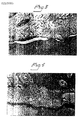
- Fig. 6 shows a corresponding radiograph taken after surgery.
- The detail blowup in Fig. 1 illustrates a cross section through a root of a tooth with adjoining tissues from a monkey tooth which is normally and naturally attached to the jaw bone. Between jaw bone 1, wherein the teeth are attached, and root 7 of the tooth, the dentin, the so called
cementum 3 and the periodontal membrane 5 providing fixation of the tooth to the jaw bone 1 are found adjacent to root 7 of the tooth. - In the following examples there is used as a treating composition a precursor to enamel, i.e. enamel precursor or enamel matrix, tissue obtained from pigs for slaughter sacrificed at an age of about 6 months and thus provided with teeth under development. From cleaned pig jaws the tooth germs are isolated. These germs are constituted by enamel matrix producing cells (the enamel organ), enamel matrix, dentin, odontoblasts and dental papille. The tooth germs freed of the enamel organ are scraped to isolate and recover the desired enamel matrix, a semi-solid white mass being obtained which is homogenized with water to form a whipped cream-like consistency. The homogenizer used is a so called polytron manufactured by Kinematica GmbH, Luzern, Switzerland. The composition obtained is then used in the following examples.
- A tooth is extracted from a monkey and is then stored in air for one hour, the periodontal membrane being then removed. On the root of the tooth there is then applied a thin layer of enamel matrix from pig manufactured as above, the tooth being then repositioned in its location in the jaw bone.
- In Fig. 2 there is shown how after a few weeks a new periodontal membrane 5 has been regenerated between jaw bone 1 and root 7 of the tooth, and also a
new cementum layer 3 has been formed between the periodontal membrane 5 and the root 7 of the tooth. Due to the use of the composition accoring to the present invention the replantation of the monkey tooth has thus been carried out successfully with complete renewed anchorage of the tooth in the jaw bone. - This example is a comparison between healing of a cavity ground in a monkey tooth with and without treatment while using the techniques according to the present invention. In Fig. 3 there is shown a detail blowup of the area between jaw bone 1 and root 7 of a monkey tooth. This tooth has been first extracted , then a cavity has been ground on the surface of the root and the tooth has then been put back in its location by the jaw bone for healing. The enlargement according to Fig. 3 shows the healing after 8 weeks, and as is seen only small areas of bone-like mineralized tissue have been formed (see the curved arrows).
- In Fig. 4 there is shown an experiment carried out in the same manner but where the generated cavity has been filled with the composition prepared according to the above before putting back the tooth. Also here the healing after 8 weeks is shown, and it is clear from the figure how well the periodontal membrane 5 has healed. The figure also shows how
new cementum 3 has been formed in the cavity (cf. the non-filled arrows). - The purpose of this example is to show the influence of "the attachment-promoting composition" on healing of experimental marginal periodontal wounds. Experimental defects in the marginal periodontium of monkey teeth were created by removing dental cementum, periodontal membrane and marginal alveolar bone to a cervico-apical distance of approximately 5mm with a dental bur. The composition was then applied to the experimental defects and the area allowed to heal. Control defects were also prepared but allowed to heal without the application of the composition. After a healing period the results were evaluated histologically.
- The results show that healing, in a way similar to the results described in the previous examples was obtained only when the composition had been applied. This comprised the formation of an adhering layer of new cementum, periodontal membrane and alveolar bone. Thus, new attachment has resulted. This was not the case for the control teeth where the defect persisted only to have been covered with oral epithelium. These results indicate an application of the composition in the treatment of periodontitis.
- This example shows the influence of "the attachment-promoting composition" on marginal periodontal healing following treatment of periodontitis in an experimental animal. Monkeys with naturally occuring periodontitis were selected for the experiment. They received conventional periodontal surgery after which one experimental side in each animal was treated with application of the composition on the exposed root surfaces. The other side served as a control. After a healing period the results were evaluated histomorphometrically.
- The results showed that, after application of the composition a new marginal attachment had been created, consisting of new adhering cementum, periodontal membrane and alveloar bone up to a level corresponding to the enamel-cementum border. In figures this means several millimeters of new periodontal attachment. The control teeth only showed insignificant and incons istent gain of new attachment without any new cementum. These results indicate an application for the composition in the treatment of periodontitis also in man.
- The purpose of this example is to show the influence of "the attachment-promoting composition" on marginal periodontitis in man. After approval from The Swedish Medical Board and The Regional Ethics Comittee the composition was used as an adjunct the conventional surgical treatment of patients with marginal periodontitis. The patients were operated during which dental calculus and granulation tissue were removed. The composition was "painted" on the naked root surfaces and covered with a muco-periostal flap. The healing results were evaluated by periodical clinical inspection, recording of pocket depth and ingival index as well as examination of intra-oral radiographs. The results after application of the composition was compared with previous quantitative studies on conventional periodontal surgery.
- The results showed that the composition had promoted a significant increase of marginal alveolar bone height (Figs. 5 and 6). These figures show intra-oral radiographs taken before (Fig. 5) and 6 months after (Fig. 6) periodontal surgery involving the application of "the attachment-promoting composition". The pre-operative radiograph (Fig. 5) shows that the level (arrow) of the alveolar bone (1) is situated almost at the apex of the tooth. Six months after the application of the composition (Fig. 6) a significant amount of new alveolar bone (1) has been formed and the level is indicated by an arrow at mid-root and is raised by several millimeters. Such a healing result has never been seen after conventional periodontal surgery. Healing in general appeared to progress more rapidly both regarding clinical appearance and reduction of marginal pocket depths compared with previous studies on conventional periodontal surgery. These results show that the composition also has the ability to promote new periodontal attachment in man, a healing result not seen with conventional treatments.
- This example illustrates an improved method of application of "the attachment-promoting composition" in clinical practice. Patients with marginal periodontitis were treated as described in Example 5 with the only difference that a fibrin-based tissue adhesive was mixed in with the composition. The tissue adhesive is composed of fibrinogen, plasma-fibronectin, Factor XIII (a plasma-derived coagulation factor), plasminogen, aprotinin, thrombin and calcium chloride and manufactured by IMMUNO AG, Vienna, Austria. The tissue adhesive marketed under the name of Tisseel of Tissucol polymerizes after its various components have been mixed together to form an adhering coagulum. Thus, the addition of Tisseel (Tissucol) to "the attachment-promoting composition" enhances adhesion to the root surfaces during periodontal surgery. Furthermore, bleeding is stopped, facilitating visibility and positioning of the muco-periosteal flap. The flap can also be positioned more cervically on the root surfaces and sutures can be eliminated. Covering the root surfaces is essential for the healing results since this ultimately determines the degree of new attachment.
- The purpose of this example is to describe the mineralized tissue-inductive capacity of "the attachment-promoting composition". The composition was placed in gelatin capsules which were operated into the abdominal muscle in rats. Sham operated rats were killed and the tissue reaction in the operated areas was evaluated with radiographs, histology and incorporation of ⁴⁵Ca.
- The results showed that a mineralized tissue, resembling cementum had been formed following the application of the composition. No trace of any newly formed tissue were seen in the sham operated animals.
- The experiments presented above show unam biguously the pratical application and advantage of the present invention. In view of the fact that enamel matrix from pig has been used in experiments performed on monkeys the tests additionally show that it is not necessary to use an endogenous enamel matrix. This latter finding is, or course, a substantial advantage since it means that easy access to raw material can be ensured.
Claims (12)
Priority Applications (2)
| Application Number | Priority Date | Filing Date | Title |
|---|---|---|---|
| AT87850264T ATE70715T1 (en) | 1986-09-25 | 1987-09-01 | BOND-INDUCING COMPOSITION. |
| PH36689A PH24529A (en) | 1987-09-01 | 1988-03-25 | Binding inducing compositions and a method of use thereof |
Applications Claiming Priority (2)
| Application Number | Priority Date | Filing Date | Title |
|---|---|---|---|
| SE8604069 | 1986-09-25 | ||
| SE8604069A SE454480B (en) | 1986-09-25 | 1986-09-25 | BINDING INDUCING COMPOSITION |
Publications (2)
| Publication Number | Publication Date |
|---|---|
| EP0263086A1 true EP0263086A1 (en) | 1988-04-06 |
| EP0263086B1 EP0263086B1 (en) | 1991-12-27 |
Family
ID=20365711
Family Applications (1)
| Application Number | Title | Priority Date | Filing Date |
|---|---|---|---|
| EP87850264A Expired - Lifetime EP0263086B1 (en) | 1986-09-25 | 1987-09-01 | Binding-inducing composition |
Country Status (16)
| Country | Link |
|---|---|
| US (1) | US5418221A (en) |
| EP (1) | EP0263086B1 (en) |
| JP (1) | JP2550360B2 (en) |
| CN (1) | CN1033839C (en) |
| AT (1) | ATE70715T1 (en) |
| AU (1) | AU602165B2 (en) |
| CA (1) | CA1293927C (en) |
| CY (1) | CY1638A (en) |
| DE (1) | DE3775510D1 (en) |
| DK (1) | DK502087A (en) |
| HK (1) | HK67992A (en) |
| IL (1) | IL83823A (en) |
| NZ (1) | NZ221829A (en) |
| SE (1) | SE454480B (en) |
| SG (1) | SG33992G (en) |
| ZA (1) | ZA882151B (en) |
Cited By (5)
| Publication number | Priority date | Publication date | Assignee | Title |
|---|---|---|---|---|
| WO1989008441A1 (en) * | 1988-03-17 | 1989-09-21 | Biora Ab | Composition inducing a binding |
| WO1989009044A1 (en) * | 1988-03-25 | 1989-10-05 | Biora Ab | Binding-inducing composition |
| WO2000053197A1 (en) * | 1999-03-10 | 2000-09-14 | Biora Bioex Ab | Matrix protein compositions for grafting |
| US6503539B2 (en) | 1998-02-27 | 2003-01-07 | Biora Bioex Ab | Matrix protein compositions for wound healing |
| US7960347B2 (en) | 1999-03-10 | 2011-06-14 | Institut Straumann Ag | Matrix protein compositions for induction of apoptosis |
Families Citing this family (12)
| Publication number | Priority date | Publication date | Assignee | Title |
|---|---|---|---|---|
| US5674074A (en) * | 1996-06-13 | 1997-10-07 | Angelo, Jr.; Patrick J. | Periodontal procedure |
| AT406120B (en) * | 1997-08-28 | 2000-02-25 | Immuno Ag | TISSUE ADHESIVE |
| WO1999030726A1 (en) | 1997-12-15 | 1999-06-24 | Page Roy C | Improved method for attaching dental and orthopedic implants, ligaments, and tendons to bone |
| ATE247483T1 (en) * | 1998-02-27 | 2003-09-15 | Biora Bioex Ab | COMPOSITIONS CONTAINING MATRIX PROTEIN FOR INFLAMMATORY AND INFECTIOUS CONDITIONS |
| US6899915B2 (en) * | 2000-11-29 | 2005-05-31 | President And Fellows Of Harvard College | Methods and compositions for culturing a biological tooth |
| WO2006064381A2 (en) | 2004-12-10 | 2006-06-22 | Straumann Holding Ag | Protein formulation |
| SE0403014D0 (en) | 2004-12-10 | 2004-12-10 | Straumann Holding Ag | New protein formulation |
| EP2496273B1 (en) | 2009-11-02 | 2016-11-30 | Straumann Holding AG | Purified emd protein composition |
| WO2011073447A1 (en) | 2009-12-18 | 2011-06-23 | Straumann Holding Ag | Emd c-depleted |
| GB0922438D0 (en) | 2009-12-22 | 2010-02-03 | Ucl Business Plc | Agents having tissue generative activity |
| KR101821842B1 (en) | 2010-10-15 | 2018-01-24 | 스트라우만 홀딩 에이쥐 | New emd formulation comprising pga |
| US11457996B2 (en) | 2019-09-12 | 2022-10-04 | King Abdulaziz University | Dental pulp capping composition and method of preserving and regenerating capped pulp and dentin bridge |
Citations (5)
| Publication number | Priority date | Publication date | Assignee | Title |
|---|---|---|---|---|
| DE2220063A1 (en) * | 1972-04-24 | 1973-11-08 | Ministerul En Electrice | Orthodontic implant - from deproteinized humatibial bone tissue, for interalueolaric wall implantation |
| DE2507933A1 (en) * | 1974-02-25 | 1975-08-28 | Miter Inc | DENTAL MEDICINAL PRODUCTS |
| US4172128A (en) * | 1975-03-26 | 1979-10-23 | Erhard Thiele | Process of degrading and regenerating bone and tooth material and products |
| DE3127270A1 (en) * | 1981-07-10 | 1983-03-24 | Link, Gottlieb, 4950 Minden | Bone substitute implant as base for implantation of an artificial tooth |
| WO1984004880A1 (en) * | 1983-06-10 | 1984-12-20 | University Patents Inc | Body implants of extracellular matrix and means and methods of making and using such implants |
Family Cites Families (2)
| Publication number | Priority date | Publication date | Assignee | Title |
|---|---|---|---|---|
| FR2569565B1 (en) * | 1984-08-31 | 1987-06-19 | Russier Jean Jacques | SEALED PHYSIOLOGICAL SEAL FOR ENDO-EXTRACORPOREAL IMPLANTS |
| US4702734A (en) * | 1986-05-08 | 1987-10-27 | Meloy Laboratories, Inc. | Method of promoting periodontal regeneration and fibroblast bonding |
-
1986
- 1986-09-25 SE SE8604069A patent/SE454480B/en not_active IP Right Cessation
-
1987
- 1987-09-01 EP EP87850264A patent/EP0263086B1/en not_active Expired - Lifetime
- 1987-09-01 DE DE8787850264T patent/DE3775510D1/en not_active Expired - Lifetime
- 1987-09-01 AT AT87850264T patent/ATE70715T1/en not_active IP Right Cessation
- 1987-09-08 IL IL83823A patent/IL83823A/en unknown
- 1987-09-16 NZ NZ221829A patent/NZ221829A/en unknown
- 1987-09-17 AU AU78610/87A patent/AU602165B2/en not_active Ceased
- 1987-09-17 CA CA000547097A patent/CA1293927C/en not_active Expired - Lifetime
- 1987-09-24 DK DK502087A patent/DK502087A/en not_active Application Discontinuation
- 1987-09-24 JP JP62237589A patent/JP2550360B2/en not_active Expired - Lifetime
-
1988
- 1988-03-25 CN CN88102159A patent/CN1033839C/en not_active Expired - Fee Related
- 1988-03-25 ZA ZA882151A patent/ZA882151B/en unknown
-
1992
- 1992-03-19 SG SG339/92A patent/SG33992G/en unknown
- 1992-09-10 HK HK679/92A patent/HK67992A/en not_active IP Right Cessation
- 1992-11-06 CY CY1638A patent/CY1638A/en unknown
-
1994
- 1994-03-24 US US08/217,024 patent/US5418221A/en not_active Expired - Lifetime
Patent Citations (5)
| Publication number | Priority date | Publication date | Assignee | Title |
|---|---|---|---|---|
| DE2220063A1 (en) * | 1972-04-24 | 1973-11-08 | Ministerul En Electrice | Orthodontic implant - from deproteinized humatibial bone tissue, for interalueolaric wall implantation |
| DE2507933A1 (en) * | 1974-02-25 | 1975-08-28 | Miter Inc | DENTAL MEDICINAL PRODUCTS |
| US4172128A (en) * | 1975-03-26 | 1979-10-23 | Erhard Thiele | Process of degrading and regenerating bone and tooth material and products |
| DE3127270A1 (en) * | 1981-07-10 | 1983-03-24 | Link, Gottlieb, 4950 Minden | Bone substitute implant as base for implantation of an artificial tooth |
| WO1984004880A1 (en) * | 1983-06-10 | 1984-12-20 | University Patents Inc | Body implants of extracellular matrix and means and methods of making and using such implants |
Cited By (9)
| Publication number | Priority date | Publication date | Assignee | Title |
|---|---|---|---|---|
| WO1989008441A1 (en) * | 1988-03-17 | 1989-09-21 | Biora Ab | Composition inducing a binding |
| EP0337967A2 (en) | 1988-03-17 | 1989-10-18 | Bioventures N.V. | Compositions inducing the binding between parts of living mineralized tissue |
| EP0337967A3 (en) * | 1988-03-17 | 1990-05-16 | Biora Ab | Compositions inducing the binding between parts of living mineralized tissue |
| AU613161B2 (en) * | 1988-03-17 | 1991-07-25 | Institut Straumann Ag | Composition inducing a binding |
| US5098891A (en) * | 1988-03-17 | 1992-03-24 | Bioventures N.V. | Protein composition inducing a binding between parts of mineralized tissue |
| WO1989009044A1 (en) * | 1988-03-25 | 1989-10-05 | Biora Ab | Binding-inducing composition |
| US6503539B2 (en) | 1998-02-27 | 2003-01-07 | Biora Bioex Ab | Matrix protein compositions for wound healing |
| WO2000053197A1 (en) * | 1999-03-10 | 2000-09-14 | Biora Bioex Ab | Matrix protein compositions for grafting |
| US7960347B2 (en) | 1999-03-10 | 2011-06-14 | Institut Straumann Ag | Matrix protein compositions for induction of apoptosis |
Also Published As
| Publication number | Publication date |
|---|---|
| CN1033839C (en) | 1997-01-22 |
| JP2550360B2 (en) | 1996-11-06 |
| ATE70715T1 (en) | 1992-01-15 |
| EP0263086B1 (en) | 1991-12-27 |
| SE454480B (en) | 1988-05-09 |
| NZ221829A (en) | 1990-02-26 |
| CN1035953A (en) | 1989-10-04 |
| AU7861087A (en) | 1988-03-31 |
| CA1293927C (en) | 1992-01-07 |
| AU602165B2 (en) | 1990-10-04 |
| DK502087A (en) | 1988-03-26 |
| JPS63170307A (en) | 1988-07-14 |
| ZA882151B (en) | 1988-12-28 |
| DK502087D0 (en) | 1987-09-24 |
| SE8604069D0 (en) | 1986-09-25 |
| CY1638A (en) | 1992-11-06 |
| IL83823A (en) | 1992-06-21 |
| US5418221A (en) | 1995-05-23 |
| HK67992A (en) | 1992-09-18 |
| IL83823A0 (en) | 1988-02-29 |
| SG33992G (en) | 1992-05-22 |
| DE3775510D1 (en) | 1992-02-06 |
Similar Documents
| Publication | Publication Date | Title |
|---|---|---|
| EP0263086B1 (en) | Binding-inducing composition | |
| EP0337967B1 (en) | Compositions inducing the binding between parts of living mineralized tissue | |
| JP3471967B2 (en) | Hybrid artificial dental root | |
| US5366507A (en) | Method for use in bone tissue regeneration | |
| EP0333947B1 (en) | Compositions inducing binding between parts of living mineralized tissue | |
| IE880864L (en) | Biological binding-inducing composition | |
| JP3668048B2 (en) | Periodontal disease treatment material | |
| JP4836318B2 (en) | Artificial dental root with periodontal ligament formation ability | |
| PL154615B1 (en) | Method for manufacturing a enamel matrix | |
| CZ193588A3 (en) | Preparation for regeneration of mineralized tissue and process for preparing thereof | |
| WO2004098540A1 (en) | Material for treating paradental diseases | |
| PT87078B (en) | PREPARATION PROCESS FOR COMPOSITIONS FOR CONNECTING MINERALIZED FABRICS AND PROCESS FOR INDUCING THAT CONNECTION |
Legal Events
| Date | Code | Title | Description |
|---|---|---|---|
| PUAI | Public reference made under article 153(3) epc to a published international application that has entered the european phase |
Free format text: ORIGINAL CODE: 0009012 |
|
| AK | Designated contracting states |
Kind code of ref document: A1 Designated state(s): AT BE CH DE FR GB IT LI NL SE |
|
| 17P | Request for examination filed |
Effective date: 19880929 |
|
| 17Q | First examination report despatched |
Effective date: 19900808 |
|
| RAP1 | Party data changed (applicant data changed or rights of an application transferred) |
Owner name: BIOVENTURES N.V. |
|
| RIN1 | Information on inventor provided before grant (corrected) |
Inventor name: BLOMLOEF, LEIF Inventor name: HAMMARSTROEM, LARS Inventor name: LINDSKOG, SVEN |
|
| GRAA | (expected) grant |
Free format text: ORIGINAL CODE: 0009210 |
|
| ITF | It: translation for a ep patent filed | ||
| AK | Designated contracting states |
Kind code of ref document: B1 Designated state(s): AT BE CH DE FR GB IT LI NL SE |
|
| PG25 | Lapsed in a contracting state [announced via postgrant information from national office to epo] |
Ref country code: SE Effective date: 19911227 Ref country code: AT Effective date: 19911227 |
|
| REF | Corresponds to: |
Ref document number: 70715 Country of ref document: AT Date of ref document: 19920115 Kind code of ref document: T |
|
| ET | Fr: translation filed | ||
| REF | Corresponds to: |
Ref document number: 3775510 Country of ref document: DE Date of ref document: 19920206 |
|
| PLBE | No opposition filed within time limit |
Free format text: ORIGINAL CODE: 0009261 |
|
| STAA | Information on the status of an ep patent application or granted ep patent |
Free format text: STATUS: NO OPPOSITION FILED WITHIN TIME LIMIT |
|
| 26N | No opposition filed | ||
| REG | Reference to a national code |
Ref country code: GB Ref legal event code: 732E |
|
| REG | Reference to a national code |
Ref country code: CH Ref legal event code: PUE Owner name: BIOVENTURES N.V. TRANSFER- BIOVENTURES B.V. |
|
| REG | Reference to a national code |
Ref country code: FR Ref legal event code: TP |
|
| NLS | Nl: assignments of ep-patents |
Owner name: BIOVENTURES B.V. |
|
| PGFP | Annual fee paid to national office [announced via postgrant information from national office to epo] |
Ref country code: NL Payment date: 20010914 Year of fee payment: 15 |
|
| PGFP | Annual fee paid to national office [announced via postgrant information from national office to epo] |
Ref country code: CH Payment date: 20010917 Year of fee payment: 15 |
|
| PGFP | Annual fee paid to national office [announced via postgrant information from national office to epo] |
Ref country code: BE Payment date: 20010920 Year of fee payment: 15 |
|
| REG | Reference to a national code |
Ref country code: GB Ref legal event code: IF02 |
|
| PGFP | Annual fee paid to national office [announced via postgrant information from national office to epo] |
Ref country code: GB Payment date: 20020828 Year of fee payment: 16 |
|
| PG25 | Lapsed in a contracting state [announced via postgrant information from national office to epo] |
Ref country code: BE Free format text: LAPSE BECAUSE OF NON-PAYMENT OF DUE FEES Effective date: 20020930 Ref country code: CH Free format text: LAPSE BECAUSE OF NON-PAYMENT OF DUE FEES Effective date: 20020930 Ref country code: LI Free format text: LAPSE BECAUSE OF NON-PAYMENT OF DUE FEES Effective date: 20020930 |
|
| BERE | Be: lapsed |
Owner name: *BIOVENTURES B.V. Effective date: 20020930 |
|
| PG25 | Lapsed in a contracting state [announced via postgrant information from national office to epo] |
Ref country code: NL Free format text: LAPSE BECAUSE OF NON-PAYMENT OF DUE FEES Effective date: 20030401 |
|
| REG | Reference to a national code |
Ref country code: CH Ref legal event code: PL |
|
| PG25 | Lapsed in a contracting state [announced via postgrant information from national office to epo] |
Ref country code: GB Free format text: LAPSE BECAUSE OF NON-PAYMENT OF DUE FEES Effective date: 20030901 |
|
| GBPC | Gb: european patent ceased through non-payment of renewal fee | ||
| PGFP | Annual fee paid to national office [announced via postgrant information from national office to epo] |
Ref country code: DE Payment date: 20060928 Year of fee payment: 20 |
|
| PGFP | Annual fee paid to national office [announced via postgrant information from national office to epo] |
Ref country code: IT Payment date: 20060930 Year of fee payment: 20 |
|
| PGFP | Annual fee paid to national office [announced via postgrant information from national office to epo] |
Ref country code: FR Payment date: 20060929 Year of fee payment: 20 |