EP0249993B1 - Method of and apparatus for making bread - Google Patents
Method of and apparatus for making bread Download PDFInfo
- Publication number
- EP0249993B1 EP0249993B1 EP87108816A EP87108816A EP0249993B1 EP 0249993 B1 EP0249993 B1 EP 0249993B1 EP 87108816 A EP87108816 A EP 87108816A EP 87108816 A EP87108816 A EP 87108816A EP 0249993 B1 EP0249993 B1 EP 0249993B1
- Authority
- EP
- European Patent Office
- Prior art keywords
- dough
- container
- yeast
- kneading
- temperature
- Prior art date
- Legal status (The legal status is an assumption and is not a legal conclusion. Google has not performed a legal analysis and makes no representation as to the accuracy of the status listed.)
- Expired - Lifetime
Links
- 235000008429 bread Nutrition 0.000 title claims description 98
- 238000000034 method Methods 0.000 title claims description 41
- 240000004808 Saccharomyces cerevisiae Species 0.000 claims description 117
- 238000004898 kneading Methods 0.000 claims description 95
- XLYOFNOQVPJJNP-UHFFFAOYSA-N water Substances O XLYOFNOQVPJJNP-UHFFFAOYSA-N 0.000 claims description 48
- 239000004615 ingredient Substances 0.000 claims description 34
- 239000000463 material Substances 0.000 claims description 10
- 238000005192 partition Methods 0.000 claims description 6
- 230000003111 delayed effect Effects 0.000 claims description 4
- 238000004519 manufacturing process Methods 0.000 claims description 4
- 230000000284 resting effect Effects 0.000 claims description 4
- 238000003825 pressing Methods 0.000 claims 1
- 238000000855 fermentation Methods 0.000 description 15
- 230000004151 fermentation Effects 0.000 description 15
- 235000013312 flour Nutrition 0.000 description 7
- 241000209140 Triticum Species 0.000 description 6
- 235000021307 Triticum Nutrition 0.000 description 6
- 238000010586 diagram Methods 0.000 description 4
- 238000007493 shaping process Methods 0.000 description 4
- 235000000346 sugar Nutrition 0.000 description 4
- 238000001816 cooling Methods 0.000 description 3
- 230000001419 dependent effect Effects 0.000 description 3
- 238000009413 insulation Methods 0.000 description 3
- 108010068370 Glutens Proteins 0.000 description 2
- 235000014121 butter Nutrition 0.000 description 2
- 230000000694 effects Effects 0.000 description 2
- 235000021312 gluten Nutrition 0.000 description 2
- 150000003839 salts Chemical class 0.000 description 2
- 235000020183 skimmed milk Nutrition 0.000 description 2
- 235000014680 Saccharomyces cerevisiae Nutrition 0.000 description 1
- 230000004913 activation Effects 0.000 description 1
- 230000002411 adverse Effects 0.000 description 1
- 235000013339 cereals Nutrition 0.000 description 1
- 239000003638 chemical reducing agent Substances 0.000 description 1
- 238000011109 contamination Methods 0.000 description 1
- 238000007796 conventional method Methods 0.000 description 1
- 238000005260 corrosion Methods 0.000 description 1
- 230000007797 corrosion Effects 0.000 description 1
- 230000005611 electricity Effects 0.000 description 1
- 239000012212 insulator Substances 0.000 description 1
- JEIPFZHSYJVQDO-UHFFFAOYSA-N iron(III) oxide Inorganic materials O=[Fe]O[Fe]=O JEIPFZHSYJVQDO-UHFFFAOYSA-N 0.000 description 1
- 239000000203 mixture Substances 0.000 description 1
- 238000004886 process control Methods 0.000 description 1
- 230000002035 prolonged effect Effects 0.000 description 1
- 230000005855 radiation Effects 0.000 description 1
- 235000002639 sodium chloride Nutrition 0.000 description 1
- 239000007787 solid Substances 0.000 description 1
- 230000036962 time dependent Effects 0.000 description 1
Images



Classifications
-
- A—HUMAN NECESSITIES
- A21—BAKING; EDIBLE DOUGHS
- A21D—TREATMENT OF FLOUR OR DOUGH FOR BAKING, e.g. BY ADDITION OF MATERIALS; BAKING; BAKERY PRODUCTS
- A21D8/00—Methods for preparing or baking dough
-
- A—HUMAN NECESSITIES
- A21—BAKING; EDIBLE DOUGHS
- A21C—MACHINES OR EQUIPMENT FOR MAKING OR PROCESSING DOUGHS; HANDLING BAKED ARTICLES MADE FROM DOUGH
- A21C1/00—Mixing or kneading machines for the preparation of dough
- A21C1/006—Methods
-
- A—HUMAN NECESSITIES
- A21—BAKING; EDIBLE DOUGHS
- A21B—BAKERS' OVENS; MACHINES OR EQUIPMENT FOR BAKING
- A21B7/00—Baking plants
- A21B7/005—Baking plants in combination with mixing or kneading devices
-
- A—HUMAN NECESSITIES
- A21—BAKING; EDIBLE DOUGHS
- A21C—MACHINES OR EQUIPMENT FOR MAKING OR PROCESSING DOUGHS; HANDLING BAKED ARTICLES MADE FROM DOUGH
- A21C1/00—Mixing or kneading machines for the preparation of dough
- A21C1/02—Mixing or kneading machines for the preparation of dough with vertically-mounted tools; Machines for whipping or beating
-
- B—PERFORMING OPERATIONS; TRANSPORTING
- B01—PHYSICAL OR CHEMICAL PROCESSES OR APPARATUS IN GENERAL
- B01F—MIXING, e.g. DISSOLVING, EMULSIFYING OR DISPERSING
- B01F35/00—Accessories for mixers; Auxiliary operations or auxiliary devices; Parts or details of general application
- B01F35/30—Driving arrangements; Transmissions; Couplings; Brakes
- B01F35/32—Driving arrangements
- B01F35/321—Disposition of the drive
- B01F35/3213—Disposition of the drive at the lower side of the axis, e.g. driving the stirrer from the bottom of a receptacle
-
- B—PERFORMING OPERATIONS; TRANSPORTING
- B01—PHYSICAL OR CHEMICAL PROCESSES OR APPARATUS IN GENERAL
- B01F—MIXING, e.g. DISSOLVING, EMULSIFYING OR DISPERSING
- B01F35/00—Accessories for mixers; Auxiliary operations or auxiliary devices; Parts or details of general application
- B01F35/90—Heating or cooling systems
- B01F2035/99—Heating
-
- B—PERFORMING OPERATIONS; TRANSPORTING
- B01—PHYSICAL OR CHEMICAL PROCESSES OR APPARATUS IN GENERAL
- B01F—MIXING, e.g. DISSOLVING, EMULSIFYING OR DISPERSING
- B01F27/00—Mixers with rotary stirring devices in fixed receptacles; Kneaders
- B01F27/80—Mixers with rotary stirring devices in fixed receptacles; Kneaders with stirrers rotating about a substantially vertical axis
Definitions
- the present invention relates to a method of and an apparatus for making bread at home by manually setting necessary ingredients such as wheat flour, water, yeast, and other materials and automatically kneading, fermenting, releasing gas from, and baking a dough, so that a loaf of bread as it is just baked can be produced at home.
- Generally known methods of making breads include the straight dough method, the sponge-dough method, and the soaker process.
- the straight dough method all the necessary ingredients for making bread, i.e., wheat flour, sugar, salt, skimmed milk, butter, yeast, and water are mixed together into a dough, which is then kneaded, fermented, allowed to release gas, and finally baked. Since the straight dough method is simplest, it is most widely relied upon for making bread in kitchens.
- the sponge-dough method comprises the steps of mixing part of the dough ingredients, i.e., a substantial portion of wheat flour, yeast, and water, into a sponge, which is then allowed to ferment preliminarily, and then mixing the sponge and the remaining ingredients into a dough, which is fermented and baked.
- all the ingredients but yeast are mixed together, and, after a certain period of time, compressed yeast or dry yeast which has been preliminarily fermented in lukewarm water with a small amount of sugar is also added.
- the dough is then fermented, allowed to release gas, and finally baked.
- the yeast absorbs the water and gets activated. If the dough were left as it is for a long period of time, it would be excessively fermented, and the produced bread would be of reduced quality.
- the soaker process is disadvantageous for the following reasons: Since compressed yeast is less available than other yeasts, it is customary to use dry yeast.
- the dry yeast needs to be subjected to preliminary fermentation with lukewarm water containing a small amount of sugar. Consequently, the dry yeast and the lukewarm water have to be stored separately before the preliminary fermentation.
- the lukewarm water should be kept at a desired temperature, and attention should be paid to the manner in which the preliminarily fermented dry yeast is charged because it is viscous.
- FIG. 9 of the accompanying drawings the bread making machine includes a casing 1, a chassis 2 disposed in the casing 1, a motor 3, a heater 4, and a baking chamber 6 with its outer periphery covered with a thermal insulation 5, the motor 3, the heater 4, and the baking chamber 6 being fixed to the chassis 2.
- a kneading container 8 having a kneading blade 7 is detachably mounted in the baking chamber 6, the kneading blade 7 being rotated at a reduced speed by the motor 3 through a belt 9 and pulleys 10, 11 which double as a speed reducer.
- a water supply unit 14 supplies water into the kneading container 8.
- the bread making machine also has a temperature sensor (not shown) for detecting the temperature of the kneading container 8, a control unit 15 for controlling the motor 3, the heater 4, the water supply unit 14, and the like, and an input unit (not shown) for setting control conditions for the control unit 15.
- a temperature sensor not shown
- control unit 15 for controlling the motor 3, the heater 4, the water supply unit 14, and the like
- an input unit (not shown) for setting control conditions for the control unit 15.
- all dough ingredients other than water are charged into the kneading container 8, and a desired baking time and other data are entered through the input unit.
- the water supply unit 14 and the motor 3 starts operating at a prescribed time, and the mixed ingredients are kneaded while detecting the temperature of the kneading container 8.
- the motor 3 When a prescribed temperature or time period has been reached, the motor 3 is de-energized, and the operation enters a fermentation process.
- the fermentation process progresses while temperature control is effected by the heater 4 dependent on the temperature of the kneading container 8 and gas is released from the dough several times by rotation of the motor 3.
- the heater 4 Upon elapse of a prescribed period of time, the heater 4 is energized to bake the dough, which is baked up into bread at a desired time.
- the ingredients are left as they are in the kneading container 8 after the bread making machine is started and until a time is reached for starting an actual bread making process, in order that bread will be baked up at a desired time.
- water would start fermenting yeast before the ingredients are kneaded, thus failing to make bread.
- water is separately stored, and will be supplied from the water supply unit 14 at the time the ingredients start being kneaded.
- the water supply unit 14 comprising a large water tank and a pump mechanism is indispensable, with the result that the bread making machine is large in size.
- the temperature of the dough will also be high causing the yeast to be too activated to make good bread.
- stored water is of lowered temperature. If cold water were brought into touch with the yeast at the time of supplying the water, the yeast would be killed, also failing to make good bread. If atmospheric temperature were much lower, stored water would be frozen and no bread could be made at all. In order to prevent water temperature from dropping, it has been prior practice to employ a thermally insulated water tank or cool stored water with ice.
- the dough stimultaneously begins to ferment, and at the same time the temperature of the dough rises due to the kneading process. Therefore, unless the kneading time interval were varied dependent on the temperature of the dough at the time of starting kneading the dough, the temperature of the dough would become too high or low, and no desirable bread would be produced. Conversely, if the kneading time period were controlled so that the dough would be of an optimum temperature, the time period in which to allow the dough to ferment would be varied, thereby causing the dough to excessively or insufficiently be fermented. Therefore, bread could not stably be made. Moreover, the double may insufficiently or excessively be kneaded dependent on the temperature of the dough at the time of starting to knead the dough. This also fails to make desirable bread.
- a method of making bread comprising the steps of kneading bread ingredients and water into a dough, adding dry yeast to the dough, kneading the dough and the dry yeast, fermenting the dough, releasing a gas from the dough while the dough is being fermented, and baking the dough after the dough has been fermented.
- the breaing making apparatus has a yeast charger for charging dry yeast into a kneading container.
- dry yeast can automatically be added to the dough kneaded in the first kneading step without involving manual operation of the user.
- Another object of the present invention is to provide an automatic bread making apparatus which is compact and simple in structure.
- FIG. 1 shows in vertical cross section an automatic bread making apparatus according to the present invention.
- the automatic bread making machine includes a housing 21, a chassis 22 disposed in the housing 21, a and motor 23 fixedly mounted on the chassis 22.
- the motor 23 has a shaft having one end to which a motor cooling fan 24 is secured and the opposite end to which a smaller-diameter pulley 25 is affixed.
- a fan guide 26 is fixed to the motor 23 around the motor cooling fan 24 for increased motor cooling efficiency.
- a larger-diameter pulley 28 has a shaft rotatably supported in a bearing 28 mounted on the chassis 22.
- a connector 29 is attached to the upper end of the shaft of the larger-diameter pulley 28.
- An endless belt 30 is trained around the larger- and smaller-diameter pulleys 28, 25. Therefore, the connector 29 is rotated when the motor 23 is energized.
- a switch lever 31 is angularly movably supported on a shaft 32 supported on the chassis 22.
- a switch 33 is mounted on the chassis 22 above one end of the switch lever 31.
- a heater 38 is fixed to the inner wall surface of the baking container 34 by means of a clamp 37 through an insulator 49.
- a container fixing spring 39 and a resiliently supported temperature sensor 40 are also fixed to the baking container 34.
- the baking container 34 has its upper open end fixed to an upper frame 42 by means of a fixture 41.
- the housing 21 is secured to the upper frame 42 as well as the chassis 22.
- a kneading container 43 is detachably mounted in the baking container 34 and has a grip handle 44 attached to its upper end.
- a kneading fin or blade 47 disposed in the kneading container 43 is detachably mounted on a blade shaft 46 rotatably supported in a bearing 45 mounted on the kneading container 43.
- a container connector 48 is fixed to the lower end of the blade shaft 46 and coupled to the connector 29. Thus, rotation of the connector 29 is transmitted through the container connector 48 to the kneading blade 47.
- the kneading container 43 When the kneading container 43 is mounted in the baking container 34, the kneading container 43 is fitted in the cylindrical guide 36 and the container fixing spring 39, with the temperature sensor 40 pressed against the outer surface of the kneading container 43.
- An openable lid assembly 50 includes a lid cover 52 having an inner lid 51 positioned above the baking container 34. With the lid assembly 50 closed, the inner lid 51 and the baking container 34 jointly define a baking chamber 53.
- a yeast container 54 of an inverted conical shape is mounted on the inner lid 51 and has an upper opening 54a opening at the upper surface of the lid assembly 50.
- a lid 55 is detachably fitted in the upper opening 54a.
- the yeast container 54 has a lower opening 54b for dropping yeast therethrough and includes a closure plate 56 which openably closes the lower opening 54b.
- the closure plate 56 is integral with a rotatable shaft 57 supported between the yeast container 54 and the inner lid 51.
- the shaft 57 has one end bent 57a into an L shape held in abutment against an actuator bar 58 rotatably supported on a shaft 61 mounted in the lid assembly 50.
- the closure plate 59 is normally urged in a direction to close the lower opening 54b by means of a spring 59.
- the actuator bar 58 coupled to the drive unit 50 is swung to turn the bent end 57a of the shaft 57 to angularly displace the closure plate 59 against the bias of the spring 59 for thereby opening the lower opening 54b.
- Denoted in FIG. 1 at 62 is a switch panel for entering input data such as a time for finishing bread, and 63 a control unit for determining and issuing control conditions for the motor 23 and the heater 38 based on input information from the switch panel 62 and the temperature sensor 49.
- the kneading blade 47 is mounted in the kneading container 43, and bread ingredients such as wheat flour, water, and other materials, except yeast, are put into the kneading container 43.
- the kneading container 43 is then set into the baking container 34, and the lid assembly 50 is closed. At this time, a prescribed amount of yeast is placed in the yeast container 54.
- a desired time for baking up bread is entered through the switch panel 62, and the bread making apparatus is set for operation.
- the motor 23 is energized to rotate the smaller-diameter pulley 25 to cause the belt 30 to rotate the larger-diameter pulley 28 and the connector 29.
- the rotation of the connector 29 is directly transmitted to the container connector 48 to rotate the kneading blade 47 to knead the bread ingredients into a dough.
- the drive unit 60 is energized to turn the actuator bar 58, which then turns the shaft 57 to open the closure plate 56 for thereby charging the yeast from the yeast container 54 into the kneading container 43.
- the charged yeast is kneaded with the dough for a given interval of time.
- temperature information is applied from the temperature sensor 49 to the control unit 63 which adjusts the temperature of the kneading container 43 with the heater 38 while it automatically effects a first fermantation step, a gas releasing step, a second fermentation step, a gas releasing step, a third fermentation step, a gas releasing step, a gas releasing step, a dough-shaping fermentation step, and a baking step successively, after which bread will be baked up at a preset time.
- the inner lid 51 is attached to the lid cover 52 by an attachment screw 64 having a head 64a, a cylindrical shank 64b having one end joined to the head 64a and an annular flange stopper 65 on its intermediate portion, a threaded member 64c on the other end of the shank 64b, and a conical tip 64d on the end of the threaded member 64c.
- the inner lid 51 is slidably guided over the cylindrical shank 64b between the head 64a and the stopper 65. Even when the attachment screw 64 is detached from the lid cover 52 in order to remove the inner lid 51 from the lid cover 52, the attachment screw 64 remains attached to the inner lid 51 by the stopper 65.
- the inner lid 51 and the lid cover 52 are held against each other through a resilient body 66 which normally urges the inner lid 51 resiliently in a downward direction.
- a nonsticky member 67 made of a non-sticky material is interposed between the lower opening 54b and the inner lid 51 and fixed so that it is exposed into the kneading container 43 below the inner lid 51.
- the non-sticky member 67 has a yeast charging port 67a communicating with the lower opening 54b of the yeast container 54.
- the closure plate 56 with its surface covered with a non-sticky material is disposed in a manner to normally close the yeast charging port 67a.
- the lower surface of the inner lid 51 is also covered with a non-sticky material.
- the upper opening 54a of the yeast container 54 has a larger area than that of the lower opening 54b thereof.
- the yeast container 54 has a smooth inner conical surface extending from the upper opening 54a toward the lower opening 54b for allowing stored yeast to drop smoothly and reliably into the kneading container 43.
- the drive unit 60 and the actuator bar 58 with its one end rotatably supported on the shaft 61 for actuating the closure plate 56 are disposed in the lid assembly 50 positioned above the baking container 34.
- the lid assembly there are mounted the yeast container lid 55 and the yeast container 54 with the shaft 57 to which the closure plate 56 is fixed.
- the lid assembly 50 further includes an integral partition 50a separating the yeast charger including the yeast container 54 and its neighboring members and the drive unit 60.
- the partition 50a and a lower lid cover 68 of the lid assembly 50 jointly define an isolated chamber 50b in which the drive unit 60 is located.
- the actuator bar 58 has a substantially circular pivoted portion 58a with its outer periphery fitted substantially hermetically in a cylindrical boss 50a contiguous to the partition 50a integral with the lid assembly 50 and a cylindrical boss 58a on the lower lid cover 68 covering the drive unit 60 from below.
- the closure plate 56 is controlled so that it is opened and closed twice or a larger number of times.
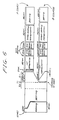
- a method of making bread according to the present invention will be described with reference to the process diagram of FIG. 6.
- bread ingredients are charged into the kneading container 43 in the following proportions: 300 g of wheat flour, 6 g of skimmed milk, 15 g of sugar, 6 g of salt, 9 g of butter, and 210 g of water.
- the ingredients may however be charged in various other proportions.
- the kneading container 43 is set in the baking container 34, and 3 g of dry yeast is put in the yeast container 54.
- the yeast container lid 55 is closed and so is the lid assembly 50.
- the power supply of the bread making apparatus is switched on, and a desired bread baking-up time is entered through the switch panel 62.
- the bread making apparatus is now set for automatic operation. As shown in the process diagram of FIG. 6, the motor 23 is first energized to rotate the kneading blade 47 to knead the charged ingredients into a dough. By using cooled ingredients and water during summer, the dough will not become poor in nature due to an excessive rise in the dough temperature, and hence the dough can well be kneaded until its temperature reaches 28°C.
- the dough is kneaded until its temperature reaches 28°C.
- the kneading time may be set to 10 minutes at minimum and 30 minutes at maximum.
- the bread dough enters a resting stage in which gluten is formed in the dough.
- the closure plate 56 of the yeast charger is opened to allow the stored yeast to be added from the yeast container 54 to the dough in the kneading container 43.
- the motor 23 is rotated again to knead the dought in order to well disperse the yeast into the dough.
- the time period for this re-kneading of the dough at a second kneading stage may be 5 minutes when the ambient temperature is high, or 30 minutes at maximum when the ambient temperature is low.
- the dough enters a first fermentation stage in which the temperature of the dough in the kneading container 43 is detected by the temperature sensor 49, and the control unit 63 controls the heater 38 so that the dough temperature becomes optimum. Thereafter, the kneading blade 47 is rotated to release a gas of CO2 generated in the dough, followed successively by a second fermentation stage, a gas releasing stage, a third fermentation stage, a gas releasing stage, and a dough-shaping fermentation stage.
- the heater 58 is energized to bake the dough.
- the heater 38 is controlled by the temperature sensor 59 and the control unit 63 so that the baked bread will have an optimumly colored crust.
- the control unit 63 is programmed to effect the following control modes.
- the dough temperature is detected at a time T1. If the detected dough temperature is below a preset temperature, then the yeast is charged at this time, and the second kneading stage is started for making bread in a B course. If the detectd dough temperature is higher than a preset temperature at the time T1, then the charging of the yeast is delayed for a time t1 in order to follow a A course for the making of bread.
- the dough temperature is also detected at a time which is t0 ahead of the time T1, and if the detected dough temperature is lower than a preset temperature, then the dough is heated up to the preset temperature.
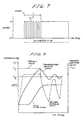
- the kneading blade 47 is intermittently rotated in repeated cycles each for a time t in which the kneading blade 47 makes several revolutions. Upon elapse of the time period T, the kneading blade 47 is continuously rotated.
- the bread making method of the present invention is based on the soaker process and uses granular dry yeast which does not require preliminary fermentation. Therefore, the space needed for storing the yeast is small.
- the proportion of water to the other dough ingredients is selected to be about 75 %, which is higher than the normal proportion.
- the dough is allowed to rest between the first kneading stage and the step of adding dry yeast to the dough.
- This dough resting stage assists in forming gluten in the dough, and can adjust the process time dependent on the dough temperature without adversely affecting the making of bread.
- the dough temperature can be lower than a preset temperature, then the dough is heated up to the preset temperature. Therefore, the dough can be well kneaded in the second kneading stage without paying attention to yeast activation in both summer and winter. As a result, the second kneading time period after the yeast has been charged is reduced.
- the dough temperature can be low during summer, and can be controlled prior to the second kneading stage during winter.
- the dough can optimumly be kneaded even in a short period of time, so that a constant kneading time and temperature can be maintained.
- the temperature control allows constant time and temperature control in the subsequent process, with the result that baked bread will be of good quality throughout the seasons of the year.
- the kneading blade 47 is intermittently rotated in an initial period and then continuously rotated in a subsequent period.
- the powdery ingredients placed in the kneading container 43 and masses of wet flour are prevented from being scattered around in the initial period of the kneading process, but are allowed to gradually mix with water to form a somewhat stiff dough.
- the kneading blade 47 is continuously rotated, but no materials are scattered out of the kneading container 43 and hence the baking container 34 is not smeared.
- This intermediate-and-then-continuous rotation mode does not vary the kneading performance, but still allows good bread to be made.
- the fermentation process has a plurality of gas releasing steps for sufficiently releasing a gas of CO2 generated in the dough and for uniformizing a gas distribution in the dough, resuling in permitting bread of good quality to be baked.
- the time of charging dry yeast is delayed from the charging time which is the case if the dough temperature is lower than the preset temperature. This can prevent the dough from being overly fermented at high ambient temperature during summer. As a consequence, relatively uniform bread of good quality can be baked throughout the year without being largely affected by varying ambient temperatures.
- the proportion of water to the other bread ingredients during the first kneading step is about 75 % which is higher than the normal proportion of water, so that charged dry yeast can easily be mixed into and kneaded with the dough in the second kneading stage.
- the yeast container 54 with the upper and lower openings 54a, 54b is mounted in the lid assembly 50 positioned above the kneading container 43 placed in the baking container 34, with the upper opening 54a opening at the upper surface of the lid assembly 50.
- the lower opening 54b is openable and closable by the closure plate 56 movable by the drive unit 60. Dry yeast can be placed into the yeast container 54 when the lid assembly 50 is closed.
- the drive unit 60 is operated to open the closure plate 56 to allow the stored dry yeast to drop into the kneading container 43.
- the area of the upper opening 54a is greater than the area of the lower opening 54b of the yeast container 54 and the inner wall surface of the yeast container 54 between the upper and lower openings 54a, 54b is smooth.
- the stored yeast can reliably be dropped from the yeast container 54 into the kneading container 43.
- the upper opening 54a of the yeast container 54 opens at the upper surface of the lid assembly 50, yeast can be put into the yeast container 54 without opening the lid assembly 50.
- the inverted conical shape of the yeast container 54 allows the stored yeast to fall smoothly and reliably into the kneading container 43.
- the inner lid 51 on which the yeast container 54 is mounted is detachable, the yeast container 54, the lower opening 54b thereof, and the closure plate 56 with its associated members can be washed or otherwise serviced by detaching the inner lid 51 from the lid assembly 50.
- the inner lid 51 to which the yeast container 54 is fixed is vertically slidably supported on the lid assembly 50 by the attachment screw 64 which serves as a guide for vertical movement of the inner lid 51.
- the lid assembly 50 and the yeast container 54 are held against each other through the resilient member 66. Therefore, even if there are small dimensional variations, the inner lid 51 can be pressed against the baking container 34 to keep the latter completely sealed hermetically. Therefore, temperature control within the baking container 34 can stably be effected for making goodquality bread.
- the inner lid 51 can be detached from the lid assembly 50 simply by removing the attachment screw 64.
- the stopper 65 of the attachment screw 64 prevents the inner lid 51 from falling off or being lost.
- the conical tip 64d of the attachment screw 64 allows the latter to be easily threaded into the threaded hole in the lid assembly 50.
- the closure plate 56 is integral with the shaft 57, which is rotated about its axis to tilt the closure plate 56 downwardly for thereby opening the lower opening 54b of the yeast container 54. Accordingly, the stored yeast can reliably drop downwardly into the kneading container 43 without remaining on the closure plate 56.
- the bent end 57a of the shaft 57 is angularly moved by the actuator bar 58 driven by the drive unit 60, so that the force from the actuator bar 58 can reliably be transmitted to the closure plate 56 that can be operated without failure which may occur due to contamination by the yeast.
- the non-sticky member 67 is interposed between the lower opening 54a of the yeast container 54 and the inner lid 51, and the lower surface of at least one of the closure plate 56 and the inner lid 51 is covered with a non-sticky material. Even when bread materials are deposited on the closure plate 56 during the bread making process or when the dough being excessively expanded touches the closure plate 56, any deposits on the closure plate 56 can easily be removed from the non-sticky material covering the closure plate 56. As a consequence, the closure plate 56 can reliably operate without fail for charging the stored yeast into the kneading container 43.
- the pivoted portion of the actuator bar 58 which drives the closure plate 56 is angularly movably disposed in the lid assembly 50 and fitted substantially hermetically in the cylindrical boss 50c contiguous to the partition 50a integral with the lid assembly 50 and the cylindrical boss 68a on the lower lid cover 68 within the isolated chamber 50b which isolates the drive unit 60 from the yeast charger. Therefore, steam or hot air will not enter the drive unit 60 in the isolated chamber 50b, and the drive unit 60 is prevented from suffering rust, electric insulation failure, or other problems which would result from exposure to steam or hot air.
- the pivoted portion of the actuator bar 58 is also prevented from corrosion, so that it will operate reliably to cause the yeast to drop into the kneading container 43 without fail.
- FIG. 8 shows various temperatures in the bread making apparatus during the bread baking stage. As is apparent from FIG. 8, it is not necessary to pre-heat the dough when the bread baking step is initiated. Assuming that the dough starts to be baked from the temperature at the dough-shaping fermentation, the heater 38 starts baking the dough with the full heater input current until the temperature reaches a preset maximum control temperature T1 which is set by the temperature sensor 40. Until the temperature T1 is reached, the top of the dough is baked to darker brownish color whereas the bottom and sides of the dough are baked to lighter brownish color. The baked bread is thus well balanced in color. The top of the baked bread is well shaped to give a good appearance to the bread.
- the inside of the dough gives off a powdery smell and is still raw since it is not yet sufficiently heated.
- the heater 38 is energized at a certain value to bake the dough up to a preset control temperature T11 set by the temperature sensor 40, which is lower than the preset control temperature T1.
- the dough is not strongly baked at this time and does not take on additional brownish color on its surface, so that the bread remains well balanced in color.
- the crust of the bread is not excessively thick, and the bread is well baked throughout the inside thereof.
- the dough can be baked to well-balanced color and the baked bread has reduced baking irregularities through the combination of the higher-temperature baking mode in which the dough is subjected to heat radiation from the heater 38 energized by the full input current and an increase in the atmospheric temperature in the baking chamber 53, until the preset control temperature T1 is reached, and the subsequent lower-temperature baking mode at the preset control temperature T11.
- the above baking operation is also advantageous in that the bread making apparatus consumes a reduced amount of electricity and hence is economical.
Landscapes
- Life Sciences & Earth Sciences (AREA)
- Engineering & Computer Science (AREA)
- Food Science & Technology (AREA)
- Chemical & Material Sciences (AREA)
- Chemical Kinetics & Catalysis (AREA)
- Baking, Grill, Roasting (AREA)
Description
- The present invention relates to a method of and an apparatus for making bread at home by manually setting necessary ingredients such as wheat flour, water, yeast, and other materials and automatically kneading, fermenting, releasing gas from, and baking a dough, so that a loaf of bread as it is just baked can be produced at home.
- Generally known methods of making breads include the straight dough method, the sponge-dough method, and the soaker process. According to the straight dough method, all the necessary ingredients for making bread, i.e., wheat flour, sugar, salt, skimmed milk, butter, yeast, and water are mixed together into a dough, which is then kneaded, fermented, allowed to release gas, and finally baked. Since the straight dough method is simplest, it is most widely relied upon for making bread in kitchens. The sponge-dough method comprises the steps of mixing part of the dough ingredients, i.e., a substantial portion of wheat flour, yeast, and water, into a sponge, which is then allowed to ferment preliminarily, and then mixing the sponge and the remaining ingredients into a dough, which is fermented and baked. According to the soaker process, all the ingredients but yeast are mixed together, and, after a certain period of time, compressed yeast or dry yeast which has been preliminarily fermented in lukewarm water with a small amount of sugar is also added. The dough is then fermented, allowed to release gas, and finally baked.
- Efforts have been made to produce automatic bread making machines for home use. However, various problems have been encountered in designing such automatic bread making machines.
- More specifically, since all of the bread ingredients are put into a container and mixed together at the outset in the straight dough method, the yeast absorbs the water and gets activated. If the dough were left as it is for a long period of time, it would be excessively fermented, and the produced bread would be of reduced quality.
- Problems of the sponge-dough method are as follows: A space is required for storing the remaining ingredients to be added later. A substantial portion of wheat flour, yeast, and water are first mixed, kneaded, and fermented preliminarily, as described above. Therefore, if the time for baking up the dough were delayed, the dough would be allowed to ferment over a prolonged period of time and hence would be overly fermented. As a result, this method fails to bake bread of good quality at a desired time.
- The soaker process is disadvantageous for the following reasons: Since compressed yeast is less available than other yeasts, it is customary to use dry yeast. The dry yeast needs to be subjected to preliminary fermentation with lukewarm water containing a small amount of sugar. Consequently, the dry yeast and the lukewarm water have to be stored separately before the preliminary fermentation. The lukewarm water should be kept at a desired temperature, and attention should be paid to the manner in which the preliminarily fermented dry yeast is charged because it is viscous.
- As stated above, the conventional methods of making bread pose various problems in the manufacture and operation of automatic home-use bread making machines.
- One conventional automatic bread making machine which has been proposed is illustrated in FIG. 9 of the accompanying drawings. In FIG. 9, the bread making machine includes a casing 1, a
chassis 2 disposed in the casing 1, amotor 3, aheater 4, and abaking chamber 6 with its outer periphery covered with a thermal insulation 5, themotor 3, theheater 4, and thebaking chamber 6 being fixed to thechassis 2. A kneading container 8 having a kneadingblade 7 is detachably mounted in thebaking chamber 6, the kneadingblade 7 being rotated at a reduced speed by themotor 3 through abelt 9 andpulleys baking chamber 6, there is disposed an openable hingedlid 13 having aninner lid 12. Awater supply unit 14 supplies water into the kneading container 8. The bread making machine also has a temperature sensor (not shown) for detecting the temperature of the kneading container 8, acontrol unit 15 for controlling themotor 3, theheater 4, thewater supply unit 14, and the like, and an input unit (not shown) for setting control conditions for thecontrol unit 15. In operation, all dough ingredients other than water are charged into the kneading container 8, and a desired baking time and other data are entered through the input unit. Thewater supply unit 14 and themotor 3 starts operating at a prescribed time, and the mixed ingredients are kneaded while detecting the temperature of the kneading container 8. When a prescribed temperature or time period has been reached, themotor 3 is de-energized, and the operation enters a fermentation process. The fermentation process progresses while temperature control is effected by theheater 4 dependent on the temperature of the kneading container 8 and gas is released from the dough several times by rotation of themotor 3. Upon elapse of a prescribed period of time, theheater 4 is energized to bake the dough, which is baked up into bread at a desired time. - In the conventional automatic breading making machine, the ingredients are left as they are in the kneading container 8 after the bread making machine is started and until a time is reached for starting an actual bread making process, in order that bread will be baked up at a desired time. No problem arises when a bread making process is started immediately after the ingredients have been set in the kneading container. However, if the dough ingredients are set in the kneading container 8 at night and are to be baked in the next morning, water would start fermenting yeast before the ingredients are kneaded, thus failing to make bread. To avoid this problem, water is separately stored, and will be supplied from the
water supply unit 14 at the time the ingredients start being kneaded. Therefore, thewater supply unit 14 comprising a large water tank and a pump mechanism is indispensable, with the result that the bread making machine is large in size. Where water is stored for a long period of time, its temperature is increased particularly when it is hot during summer, for example. Therefore, the temperature of the dough will also be high causing the yeast to be too activated to make good bread. When it is cold during winter, stored water is of lowered temperature. If cold water were brought into touch with the yeast at the time of supplying the water, the yeast would be killed, also failing to make good bread. If atmospheric temperature were much lower, stored water would be frozen and no bread could be made at all. In order to prevent water temperature from dropping, it has been prior practice to employ a thermally insulated water tank or cool stored water with ice. Where the ingredients including yeast start to be kneaded while water is being supplied, the dough stimultaneously begins to ferment, and at the same time the temperature of the dough rises due to the kneading process. Therefore, unless the kneading time interval were varied dependent on the temperature of the dough at the time of starting kneading the dough, the temperature of the dough would become too high or low, and no desirable bread would be produced. Conversely, if the kneading time period were controlled so that the dough would be of an optimum temperature, the time period in which to allow the dough to ferment would be varied, thereby causing the dough to excessively or insufficiently be fermented. Therefore, bread could not stably be made. Moreover, the double may insufficiently or excessively be kneaded dependent on the temperature of the dough at the time of starting to knead the dough. This also fails to make desirable bread. - According to the present invention, there is provided a method of making bread, comprising the steps of kneading bread ingredients and water into a dough, adding dry yeast to the dough, kneading the dough and the dry yeast, fermenting the dough, releasing a gas from the dough while the dough is being fermented, and baking the dough after the dough has been fermented.
- With the above method, as described above, bread ingredients and water are kneaded when starting a bread making process, then dry yeast is added, and the dough with the added dry yeast is kneaded again. Therefore, cold ingredients and water can sufficiently be kneaded even during summer, and can uniformly be kneaded. without forming solid ingredient masses in the dough. As a result, produced bread is of good quality as it is of a fine grain, is white inside, and soft in texture. Since the bread ingredients and water are kneaded when the bread making process begins, a water supply unit composed of a water tank and a pump mechanism, which has heretofore been required, is no longer necessary. Consequently, an automatic bread making apparatus for carrying out the method of the invention is compact and simple in structure.
- The breaing making apparatus has a yeast charger for charging dry yeast into a kneading container. Thus, dry yeast can automatically be added to the dough kneaded in the first kneading step without involving manual operation of the user.
- Therefore, it is an object of the present invention to provide a method of and an apparatus for automatically making bread of good quality.
- Another object of the present invention is to provide an automatic bread making apparatus which is compact and simple in structure.
- The present invention will be described in detail by way of illustrative example with reference to the accompanying drawings, in which;
- FIG. 1 is a vertical cross-sectional view of an automatic bread making apparatus according to the present invention;
- FIG. 2 is a perspective view, partly cut away, of a yeast container in the automatic bread making apparatus;
- FIG. 3 is an enlarged fragmentary cross-sectional view showing a structure by which an inner lid is attached to a lid assembly in the automatic bread making apparatus;
- FIG. 4(a) is an enlarged fragmentary cross-sectional view of the yeast container on the lid assembly;
- FIG. 4(b) is an enlarged fragmentary plan view of the yeast container on the lid assembly;
- FIG. 5(a) is an enlarged fragmentary cross-sectional view of the lid assembly;
- FIG. 5(b) is an enlarged fragmentary plan view of the lid assembly;
- FIG. 6 is a diagram of a bread making method according to the present invention;
- FIG. 7 is a diagram showing a first keading step of the bread making method;
- FIG. 8 is a graph showing temperatures in a baking step of the bread making method; and
- FIG. 9 is a vertical cross-sectional view of a conventional automatic bread making machine.
- FIG. 1 shows in vertical cross section an automatic bread making apparatus according to the present invention. The automatic bread making machine includes a
housing 21, achassis 22 disposed in thehousing 21, a andmotor 23 fixedly mounted on thechassis 22. Themotor 23 has a shaft having one end to which amotor cooling fan 24 is secured and the opposite end to which a smaller-diameter pulley 25 is affixed. Afan guide 26 is fixed to themotor 23 around themotor cooling fan 24 for increased motor cooling efficiency. A larger-diameter pulley 28 has a shaft rotatably supported in abearing 28 mounted on thechassis 22. Aconnector 29 is attached to the upper end of the shaft of the larger-diameter pulley 28. Anendless belt 30 is trained around the larger- and smaller-diameter pulleys 28, 25. Therefore, theconnector 29 is rotated when themotor 23 is energized. - A
switch lever 31 is angularly movably supported on ashaft 32 supported on thechassis 22. Aswitch 33 is mounted on thechassis 22 above one end of theswitch lever 31. To thechassis 22, there are fixed abaking container 34, a thermally insulatingplate 35 surrounding thebaking container 34, and acylindrical guide 36 positioned at the bottom of thebaking container 34 and surrounding theconnector 29. A heater 38 is fixed to the inner wall surface of thebaking container 34 by means of a clamp 37 through aninsulator 49. Acontainer fixing spring 39 and a resiliently supportedtemperature sensor 40 are also fixed to thebaking container 34. Thebaking container 34 has its upper open end fixed to anupper frame 42 by means of afixture 41. Thehousing 21 is secured to theupper frame 42 as well as thechassis 22. - A kneading
container 43 is detachably mounted in thebaking container 34 and has agrip handle 44 attached to its upper end. A kneading fin orblade 47 disposed in the kneadingcontainer 43 is detachably mounted on ablade shaft 46 rotatably suported in abearing 45 mounted on the kneadingcontainer 43. Acontainer connector 48 is fixed to the lower end of theblade shaft 46 and coupled to theconnector 29. Thus, rotation of theconnector 29 is transmitted through thecontainer connector 48 to thekneading blade 47. When the kneadingcontainer 43 is mounted in thebaking container 34, the kneadingcontainer 43 is fitted in thecylindrical guide 36 and thecontainer fixing spring 39, with thetemperature sensor 40 pressed against the outer surface of the kneadingcontainer 43. - An
openable lid assembly 50 includes alid cover 52 having aninner lid 51 positioned above thebaking container 34. With thelid assembly 50 closed, theinner lid 51 and thebaking container 34 jointly define abaking chamber 53. Ayeast container 54 of an inverted conical shape is mounted on theinner lid 51 and has anupper opening 54a opening at the upper surface of thelid assembly 50. Alid 55 is detachably fitted in theupper opening 54a. As shown in FIG. 2, theyeast container 54 has a lower opening 54b for dropping yeast therethrough and includes aclosure plate 56 which openably closes the lower opening 54b. Theclosure plate 56 is integral with arotatable shaft 57 supported between theyeast container 54 and theinner lid 51. Theshaft 57 has one end bent 57a into an L shape held in abutment against anactuator bar 58 rotatably supported on ashaft 61 mounted in thelid assembly 50. Theclosure plate 59 is normally urged in a direction to close the lower opening 54b by means of aspring 59. When adrive unit 60 in thelid assembly 50 is energized, theactuator bar 58 coupled to thedrive unit 50 is swung to turn thebent end 57a of theshaft 57 to angularly displace theclosure plate 59 against the bias of thespring 59 for thereby opening the lower opening 54b. Denoted in FIG. 1 at 62 is a switch panel for entering input data such as a time for finishing bread, and 63 a control unit for determining and issuing control conditions for themotor 23 and the heater 38 based on input information from theswitch panel 62 and thetemperature sensor 49. - Operation of the bread making apparatus will be described below. The
kneading blade 47 is mounted in the kneadingcontainer 43, and bread ingredients such as wheat flour, water, and other materials, except yeast, are put into the kneadingcontainer 43. The kneadingcontainer 43 is then set into thebaking container 34, and thelid assembly 50 is closed. At this time, a prescribed amount of yeast is placed in theyeast container 54. A desired time for baking up bread is entered through theswitch panel 62, and the bread making apparatus is set for operation. When a time to start an actual breading making process is reached, themotor 23 is energized to rotate the smaller-diameter pulley 25 to cause thebelt 30 to rotate the larger-diameter pulley 28 and theconnector 29. The rotation of theconnector 29 is directly transmitted to thecontainer connector 48 to rotate thekneading blade 47 to knead the bread ingredients into a dough. Upon elapse of a prescribed period of time, thedrive unit 60 is energized to turn theactuator bar 58, which then turns theshaft 57 to open theclosure plate 56 for thereby charging the yeast from theyeast container 54 into the kneadingcontainer 43. The charged yeast is kneaded with the dough for a given interval of time. Thereafter, under process control effected by the control unit 63, temperature information is applied from thetemperature sensor 49 to the control unit 63 which adjusts the temperature of the kneadingcontainer 43 with the heater 38 while it automatically effects a first fermantation step, a gas releasing step, a second fermentation step, a gas releasing step, a third fermentation step, a gas releasing step, a gas releasing step, a dough-shaping fermentation step, and a baking step successively, after which bread will be baked up at a preset time. - As shown in FIG. 3, the
inner lid 51 is attached to thelid cover 52 by anattachment screw 64 having ahead 64a, a cylindrical shank 64b having one end joined to thehead 64a and anannular flange stopper 65 on its intermediate portion, a threaded member 64c on the other end of the shank 64b, and aconical tip 64d on the end of the threaded member 64c. Theinner lid 51 is slidably guided over the cylindrical shank 64b between thehead 64a and thestopper 65. Even when theattachment screw 64 is detached from thelid cover 52 in order to remove theinner lid 51 from thelid cover 52, theattachment screw 64 remains attached to theinner lid 51 by thestopper 65. As shown in FIG. 1, theinner lid 51 and thelid cover 52 are held against each other through aresilient body 66 which normally urges theinner lid 51 resiliently in a downward direction. - As illustrated in FIGS. 4(a) and 4(b), a
nonsticky member 67 made of a non-sticky material is interposed between the lower opening 54b and theinner lid 51 and fixed so that it is exposed into the kneadingcontainer 43 below theinner lid 51. Thenon-sticky member 67 has ayeast charging port 67a communicating with the lower opening 54b of theyeast container 54. Theclosure plate 56 with its surface covered with a non-sticky material is disposed in a manner to normally close theyeast charging port 67a. The lower surface of theinner lid 51 is also covered with a non-sticky material. - The
upper opening 54a of theyeast container 54 has a larger area than that of the lower opening 54b thereof. Theyeast container 54 has a smooth inner conical surface extending from theupper opening 54a toward the lower opening 54b for allowing stored yeast to drop smoothly and reliably into the kneadingcontainer 43. - As illustrated in FIGS. 5(a) and 5(b), the
drive unit 60 and theactuator bar 58 with its one end rotatably supported on theshaft 61 for actuating theclosure plate 56 are disposed in thelid assembly 50 positioned above thebaking container 34. In the lid assembly, there are mounted theyeast container lid 55 and theyeast container 54 with theshaft 57 to which theclosure plate 56 is fixed. Thelid assembly 50 further includes an integral partition 50a separating the yeast charger including theyeast container 54 and its neighboring members and thedrive unit 60. The partition 50a and alower lid cover 68 of thelid assembly 50 jointly define an isolated chamber 50b in which thedrive unit 60 is located. Theactuator bar 58 has a substantially circular pivoted portion 58a with its outer periphery fitted substantially hermetically in a cylindrical boss 50a contiguous to the partition 50a integral with thelid assembly 50 and a cylindrical boss 58a on thelower lid cover 68 covering thedrive unit 60 from below. - The
closure plate 56 is controlled so that it is opened and closed twice or a larger number of times. - A method of making bread according to the present invention will be described with reference to the process diagram of FIG. 6. First, bread ingredients are charged into the kneading
container 43 in the following proportions: 300 g of wheat flour, 6 g of skimmed milk, 15 g of sugar, 6 g of salt, 9 g of butter, and 210 g of water. The ingredients may however be charged in various other proportions. - Then, the kneading
container 43 is set in thebaking container 34, and 3 g of dry yeast is put in theyeast container 54. Theyeast container lid 55 is closed and so is thelid assembly 50. The power supply of the bread making apparatus is switched on, and a desired bread baking-up time is entered through theswitch panel 62. The bread making apparatus is now set for automatic operation. As shown in the process diagram of FIG. 6, themotor 23 is first energized to rotate thekneading blade 47 to knead the charged ingredients into a dough. By using cooled ingredients and water during summer, the dough will not become poor in nature due to an excessive rise in the dough temperature, and hence the dough can well be kneaded until its temperature reaches 28°C. In this example, the dough is kneaded until its temperature reaches 28°C. The kneading time may be set to 10 minutes at minimum and 30 minutes at maximum. Then, the bread dough enters a resting stage in which gluten is formed in the dough. At an optimum time which is counted back from the bread baking-up time that has been entered at the outset, theclosure plate 56 of the yeast charger is opened to allow the stored yeast to be added from theyeast container 54 to the dough in the kneadingcontainer 43. At the same time, themotor 23 is rotated again to knead the dought in order to well disperse the yeast into the dough. The time period for this re-kneading of the dough at a second kneading stage may be 5 minutes when the ambient temperature is high, or 30 minutes at maximum when the ambient temperature is low. - Then, the dough enters a first fermentation stage in which the temperature of the dough in the kneading
container 43 is detected by thetemperature sensor 49, and the control unit 63 controls the heater 38 so that the dough temperature becomes optimum. Thereafter, thekneading blade 47 is rotated to release a gas of CO₂ generated in the dough, followed successively by a second fermentation stage, a gas releasing stage, a third fermentation stage, a gas releasing stage, and a dough-shaping fermentation stage. - After the above stages have been completed, the
heater 58 is energized to bake the dough. During the baking step, the heater 38 is controlled by thetemperature sensor 59 and the control unit 63 so that the baked bread will have an optimumly colored crust. - The control unit 63 is programmed to effect the following control modes. In FIG. 6, the dough temperature is detected at a time T1. If the detected dough temperature is below a preset temperature, then the yeast is charged at this time, and the second kneading stage is started for making bread in a B course. If the detectd dough temperature is higher than a preset temperature at the time T1, then the charging of the yeast is delayed for a time t1 in order to follow a A course for the making of bread. The dough temperature is also detected at a time which is t0 ahead of the time T1, and if the detected dough temperature is lower than a preset temperature, then the dough is heated up to the preset temperature.
- As illustrated in FIG. 7, during a certain time period T from the start of the first kneading stage, the
kneading blade 47 is intermittently rotated in repeated cycles each for a time t in which thekneading blade 47 makes several revolutions. Upon elapse of the time period T, thekneading blade 47 is continuously rotated. The bread making method of the present invention is based on the soaker process and uses granular dry yeast which does not require preliminary fermentation. Therefore, the space needed for storing the yeast is small. In order to carry out the bread making method of the invention, which is an improved soaker process, it is necessary to quickly add and knead dry yeast with the bread dough after the first kneading step. To meet this requirement, the proportion of water to the other dough ingredients is selected to be about 75 %, which is higher than the normal proportion. - The dough is allowed to rest between the first kneading stage and the step of adding dry yeast to the dough. This dough resting stage assists in forming gluten in the dough, and can adjust the process time dependent on the dough temperature without adversely affecting the making of bread.
- As described above, during the dough resting period between the first kneading stage and the yeast charging step and a prescribed period of time before the yeast is charged, if the dough temperature is lower than a preset temperature, then the dough is heated up to the preset temperature. Therefore, the dough can be well kneaded in the second kneading stage without paying attention to yeast activation in both summer and winter. As a result, the second kneading time period after the yeast has been charged is reduced. The dough temperature can be low during summer, and can be controlled prior to the second kneading stage during winter. Accordingly, the dough can optimumly be kneaded even in a short period of time, so that a constant kneading time and temperature can be maintained. Moreover, the temperature control allows constant time and temperature control in the subsequent process, with the result that baked bread will be of good quality throughout the seasons of the year.
- During the first kneading stage, the
kneading blade 47 is intermittently rotated in an initial period and then continuously rotated in a subsequent period. Thus, the powdery ingredients placed in the kneadingcontainer 43 and masses of wet flour are prevented from being scattered around in the initial period of the kneading process, but are allowed to gradually mix with water to form a somewhat stiff dough. After the dough has been formed, thekneading blade 47 is continuously rotated, but no materials are scattered out of the kneadingcontainer 43 and hence thebaking container 34 is not smeared. This intermediate-and-then-continuous rotation mode does not vary the kneading performance, but still allows good bread to be made. The fermentation process has a plurality of gas releasing steps for sufficiently releasing a gas of CO₂ generated in the dough and for uniformizing a gas distribution in the dough, resuling in permitting bread of good quality to be baked. - If the dough temperature detected after the first kneading stage is higher than a preset temperature, then the time of charging dry yeast is delayed from the charging time which is the case if the dough temperature is lower than the preset temperature. This can prevent the dough from being overly fermented at high ambient temperature during summer. As a consequence, relatively uniform bread of good quality can be baked throughout the year without being largely affected by varying ambient temperatures.
- The proportion of water to the other bread ingredients during the first kneading step is about 75 % which is higher than the normal proportion of water, so that charged dry yeast can easily be mixed into and kneaded with the dough in the second kneading stage.
- In the arrangement of the bread making apparatus of the invention, the
yeast container 54 with the upper andlower openings 54a, 54b is mounted in thelid assembly 50 positioned above the kneadingcontainer 43 placed in thebaking container 34, with theupper opening 54a opening at the upper surface of thelid assembly 50. The lower opening 54b is openable and closable by theclosure plate 56 movable by thedrive unit 60. Dry yeast can be placed into theyeast container 54 when thelid assembly 50 is closed. When the stored dry yeast is to be charged, thedrive unit 60 is operated to open theclosure plate 56 to allow the stored dry yeast to drop into the kneadingcontainer 43. Therefore, bread ingredients other than dry yeast are first charged and kneaded in a first kneading stage, and then dry yeast is added to the dough which is then kneaded in a second kneading stage. As a result, any water supply unit including a water tank and a pump mechanism are not necessary and no water tank insulation is required. Since yeast can be placed into theyeast container 54 simply by opening theyeast container lid 55 without opening thelid assembly 50, it is quite easy to put yeast into theyeast container 54. The entire bread making apparatus is small in size. Inasmuch as the dough with yeast not yet added can be kneaded strongly even if its temperature is increased, stable and good bread can be produced irrespective of the seasons. The area of theupper opening 54a is greater than the area of the lower opening 54b of theyeast container 54 and the inner wall surface of theyeast container 54 between the upper andlower openings 54a, 54b is smooth. Thus, the stored yeast can reliably be dropped from theyeast container 54 into the kneadingcontainer 43. As theupper opening 54a of theyeast container 54 opens at the upper surface of thelid assembly 50, yeast can be put into theyeast container 54 without opening thelid assembly 50. The inverted conical shape of theyeast container 54 allows the stored yeast to fall smoothly and reliably into the kneadingcontainer 43. Theinner lid 51 on which theyeast container 54 is mounted is detachable, theyeast container 54, the lower opening 54b thereof, and theclosure plate 56 with its associated members can be washed or otherwise serviced by detaching theinner lid 51 from thelid assembly 50. - The
inner lid 51 to which theyeast container 54 is fixed is vertically slidably supported on thelid assembly 50 by theattachment screw 64 which serves as a guide for vertical movement of theinner lid 51. Thelid assembly 50 and theyeast container 54 are held against each other through theresilient member 66. Therefore, even if there are small dimensional variations, theinner lid 51 can be pressed against the bakingcontainer 34 to keep the latter completely sealed hermetically. Therefore, temperature control within thebaking container 34 can stably be effected for making goodquality bread. Theinner lid 51 can be detached from thelid assembly 50 simply by removing theattachment screw 64. Thestopper 65 of theattachment screw 64 prevents theinner lid 51 from falling off or being lost. Theconical tip 64d of theattachment screw 64 allows the latter to be easily threaded into the threaded hole in thelid assembly 50. - The
closure plate 56 is integral with theshaft 57, which is rotated about its axis to tilt theclosure plate 56 downwardly for thereby opening the lower opening 54b of theyeast container 54. Accordingly, the stored yeast can reliably drop downwardly into the kneadingcontainer 43 without remaining on theclosure plate 56. Thebent end 57a of theshaft 57 is angularly moved by theactuator bar 58 driven by thedrive unit 60, so that the force from theactuator bar 58 can reliably be transmitted to theclosure plate 56 that can be operated without failure which may occur due to contamination by the yeast. - The
non-sticky member 67 is interposed between thelower opening 54a of theyeast container 54 and theinner lid 51, and the lower surface of at least one of theclosure plate 56 and theinner lid 51 is covered with a non-sticky material. Even when bread materials are deposited on theclosure plate 56 during the bread making process or when the dough being excessively expanded touches theclosure plate 56, any deposits on theclosure plate 56 can easily be removed from the non-sticky material covering theclosure plate 56. As a consequence, theclosure plate 56 can reliably operate without fail for charging the stored yeast into the kneadingcontainer 43. - The pivoted portion of the
actuator bar 58 which drives theclosure plate 56 is angularly movably disposed in thelid assembly 50 and fitted substantially hermetically in the cylindrical boss 50c contiguous to the partition 50a integral with thelid assembly 50 and the cylindrical boss 68a on thelower lid cover 68 within the isolated chamber 50b which isolates thedrive unit 60 from the yeast charger. Therefore, steam or hot air will not enter thedrive unit 60 in the isolated chamber 50b, and thedrive unit 60 is prevented from suffering rust, electric insulation failure, or other problems which would result from exposure to steam or hot air. The pivoted portion of theactuator bar 58 is also prevented from corrosion, so that it will operate reliably to cause the yeast to drop into the kneadingcontainer 43 without fail. - FIG. 8 shows various temperatures in the bread making apparatus during the bread baking stage. As is apparent from FIG. 8, it is not necessary to pre-heat the dough when the bread baking step is initiated. Assuming that the dough starts to be baked from the temperature at the dough-shaping fermentation, the heater 38 starts baking the dough with the full heater input current until the temperature reaches a preset maximum control temperature T₁ which is set by the
temperature sensor 40. Until the temperature T₁ is reached, the top of the dough is baked to darker brownish color whereas the bottom and sides of the dough are baked to lighter brownish color. The baked bread is thus well balanced in color. The top of the baked bread is well shaped to give a good appearance to the bread. Until the temperature T₁ is reached, the inside of the dough gives off a powdery smell and is still raw since it is not yet sufficiently heated. After the temperature T₁ has been reached, the heater 38 is energized at a certain value to bake the dough up to a preset control temperature T₁₁ set by thetemperature sensor 40, which is lower than the preset control temperature T₁. As a result, the dough is not strongly baked at this time and does not take on additional brownish color on its surface, so that the bread remains well balanced in color. The crust of the bread is not excessively thick, and the bread is well baked throughout the inside thereof. - Even when a dough which has gone through the dough-shaping fermentation step started at room temperature without being pre-heated is placed for baking, the dough can be baked to well-balanced color and the baked bread has reduced baking irregularities through the combination of the higher-temperature baking mode in which the dough is subjected to heat radiation from the heater 38 energized by the full input current and an increase in the atmospheric temperature in the
baking chamber 53, until the preset control temperature T₁ is reached, and the subsequent lower-temperature baking mode at the preset control temperature T₁₁. The above baking operation is also advantageous in that the bread making apparatus consumes a reduced amount of electricity and hence is economical.
Claims (13)
- A method of making bread, comprising the steps of:(a) kneading bread ingredients and water into a first dough;(b) adding dry yeast to said first dough;(c) kneading said first dough and said dry yeast into a second dough;(d) fermenting said second dough;(e) releasing a gas from said second dough while the second dough is being fermented; and(f) baking said second dough after the second dough has been fermented,characterized by a step of resting said first dough between said kneading step (a) and said adding step (b).
- A method according to claim 1, wherein the temperature of said first dough is detected, and when the temperature of said first dough as detected a prescribed time period before said adding step (b) is below a preset temperature, said first dough is pre-heated to said preset temperature.
- A method according to claim 1, wherein the temperature of said first dough kneaded in said first kneading step (a) is detected, and when the detected temperature is higher than a preset temperature, the time of adding said dry yeast in said adding step (b) is delayed from the adding time which is the case when the detected temperature is lower than the preset temperature.
- A method according to any one of claims 1 to 3, wherein said kneading step (a) comprises the steps of first intermittently kneading said first dough for a prescribed period of time (T) and then continuously kneading said first dough after said prescribed period of time.
- A method according to any one of claims 1 to 4, further including the step of releasing the gas from said second dough during said fermenting step (d).
- A method according to any one of claims 1 to 5, wherein the proportion of water to the other bread ingredients in said kneading step (a) is about 75 %.
- An apparatus for making bread, comprising:(a) a housing (21);(b) a baking container (34) disposed in said housing and having a source of heat (38), said baking container having an opening;(c) a kneading container (43) detachably mounted in said baking container for containing bread ingredients and water therein;(d) an openable lid assembly (50) positioned above said kneading container and normally covering said opening of the baking container;(e) a kneading blade (47) movably disposed in said kneading container;(f) a motor (23) for operating said kneading blade to knead the bread ingredients and water into a dough in said kneading container;(g) means for detecting the temperature (40) of said dough kneaded in said kneading container;(h) a yeast charger for charging dry yeast into said kneading container; and(i) a control unit (63) for controlling said source of heat and said motor to successively knead, ferment, release a gas from, and bake said dough in said kneading container.characterized in that said yeast charger comprises a yeast container (54) mounted in said lid assembly (50), said yeast container having an upper opening (54a) which opens at an upper surface of said lid assembly and a lower opening (54b) which opens into said baking container (34), a closure plate (56) positioned at said lower opening above said kneading container (43), and a drive unit (60) mounted in said lid assembly for driving said closure plate to selectively open and close said lower opening (54b).
- An apparatus according to claim 7, wherein said upper opening (54a) has an area greater than that of said lower opening, said yeast container having a smooth surface extending from said upper opening toward said lower opening.
- An apparatus according to claim 7 or 8, wherein said lid assembly (50) has a detachable inner lid (51) for normally closing said baking container (34), said yeast container (54) is fixed to said inner lid.
- An apparatus according to claim 9, wherein said inner lid (51) is supported on said lid assembly by an attachment screw (64) and vertically slidably movable with respect to said lid assembly while being guided by said attachment screw, further including a resilient member (66) through which said lid assembly and said yeast container are held against each other.
- An apparatus according to claim 9 or 10, wherein said yeast charger further includes a rotatable shaft (57) disposed between asid yeast container (54) and said inner lid (51), said closure plate (56) being integral with said rotatable shaft, said rotatable shaft having an L-shaped end, a spring (59) for normally pressing said closure plate against said yeast container at said lower opening (54b) to close the same, and an actuator bar (58) drivable by said drive unit (60) for angularly moving said L-shaped end of said rotatable shaft to swing said closure plate to open said lower opening.
- An apparatus according to claim 9 or 10, wherein said yeast charger further includes means (59) for normally urging said closure plate (56) to close said lower opening (54b), a non-sticky member (67) interposed between said lower opening and said inner lid (51), at least one of said closure plate and said inner lid having an inner surface covered with a non-sticky material.
- An apparatus according to claim 9, wherein said lid assembly (50) includes a partition and a lower lid cover which jointly define an isolated chamber in said lid assembly, said drive unit (60) being disposed in said isolated chamber, said yeast charger further including an actuator bar (58) operable by said drive unit for actuating said closure plate (56), said actuator bar having a pivoted portion pivotally disposed in said isolated chamber and having an outer periphery fitted substantially hermetically in a cylindrical boss contiguous to said partition and another cylindrical boss on said lower lid cover which covers said drive unit from below.
Applications Claiming Priority (20)
| Application Number | Priority Date | Filing Date | Title |
|---|---|---|---|
| JP61145127A JPS62299220A (en) | 1986-06-20 | 1986-06-20 | Bread manufacturing method and device |
| JP145127/86 | 1986-06-20 | ||
| JP147319/86 | 1986-06-24 | ||
| JP61147319A JPS633823A (en) | 1986-06-24 | 1986-06-24 | Bread baking apparatus |
| JP61300041A JPS63153026A (en) | 1986-12-18 | 1986-12-18 | Electric bread maker |
| JP300041/86 | 1986-12-18 | ||
| JP61300037A JPS63153022A (en) | 1986-12-18 | 1986-12-18 | Electric bread maker |
| JP300037/86 | 1986-12-18 | ||
| JP305117/86 | 1986-12-20 | ||
| JP61305117A JPS63158026A (en) | 1986-12-20 | 1986-12-20 | Electric bread maker |
| JP305518/86 | 1986-12-23 | ||
| JP61305518A JPS63160624A (en) | 1986-12-23 | 1986-12-23 | automatic bread machine |
| JP306212/86 | 1986-12-24 | ||
| JP61306212A JPS63160626A (en) | 1986-12-24 | 1986-12-24 | Automatic bread maker |
| JP61315763A JPS63164924A (en) | 1986-12-26 | 1986-12-26 | automatic bread machine |
| JP61315762A JPS63164923A (en) | 1986-12-26 | 1986-12-26 | automatic bread machine |
| JP315763/86 | 1986-12-26 | ||
| JP315762/86 | 1986-12-26 | ||
| JP20806/87 | 1987-01-30 | ||
| JP2080687A JPH0638777B2 (en) | 1987-01-30 | 1987-01-30 | Automatic bread machine |
Publications (3)
| Publication Number | Publication Date |
|---|---|
| EP0249993A2 EP0249993A2 (en) | 1987-12-23 |
| EP0249993A3 EP0249993A3 (en) | 1988-08-31 |
| EP0249993B1 true EP0249993B1 (en) | 1993-03-03 |
Family
ID=27579714
Family Applications (1)
| Application Number | Title | Priority Date | Filing Date |
|---|---|---|---|
| EP87108816A Expired - Lifetime EP0249993B1 (en) | 1986-06-20 | 1987-06-19 | Method of and apparatus for making bread |
Country Status (6)
| Country | Link |
|---|---|
| US (2) | US4885176A (en) |
| EP (1) | EP0249993B1 (en) |
| KR (1) | KR900006862B1 (en) |
| AU (1) | AU578561B2 (en) |
| CA (1) | CA1325917C (en) |
| DE (1) | DE3784381T2 (en) |
Families Citing this family (55)
| Publication number | Priority date | Publication date | Assignee | Title |
|---|---|---|---|---|
| CA1328909C (en) * | 1988-03-14 | 1994-04-26 | Nobushige Arai | Heat generating container for microwave oven |
| JPH0249615A (en) * | 1988-05-09 | 1990-02-20 | Samsung Electron Co Ltd | Kneading cylinder structure for completely automatic domestic bread baking device |
| US5252421A (en) * | 1988-07-18 | 1993-10-12 | Fuji Xerox Co., Ltd. | Electrophotographic toner |
| KR910001223B1 (en) * | 1988-08-29 | 1991-02-26 | 삼성전자 주식회사 | Method and apparatus for making yogurt in baking apparatus |
| US4903588A (en) * | 1988-09-05 | 1990-02-27 | Kabushiki Kaisha Toshiba | Bread baking apparatus |
| JPH0523180Y2 (en) * | 1989-01-13 | 1993-06-14 | ||
| US5466913A (en) * | 1991-11-15 | 1995-11-14 | Funai Electric Co., Ltd. | Bread making apparatus and its temperature control method |
| JPH0613727U (en) * | 1992-07-29 | 1994-02-22 | 船井電機株式会社 | Bread making equipment |
| JP3131961B2 (en) * | 1993-10-08 | 2001-02-05 | 船井電機株式会社 | Bread maker |
| US5415081A (en) * | 1992-12-01 | 1995-05-16 | Funai Electric Co. Ltd. | Bread making apparatus |
| US5445061A (en) * | 1992-12-16 | 1995-08-29 | Barradas; George | Combination bread making machine and cooker |
| USD360104S (en) | 1993-11-05 | 1995-07-11 | Sunbeam Corporation | Bread making machine |
| JP3255205B2 (en) * | 1993-12-06 | 2002-02-12 | 船井電機株式会社 | Bread making machine |
| US5433139A (en) * | 1993-12-06 | 1995-07-18 | Funai Electric Co., Ltd. | Bread making machine |
| US5410949A (en) * | 1993-12-20 | 1995-05-02 | Chiaphua Industries Limited | Automatic breadmaking machine |
| US5402710A (en) * | 1994-01-27 | 1995-04-04 | Chen; Shang-Hsien | Mixer mechanism for an automatic baking machine |
| US5438915A (en) * | 1994-01-28 | 1995-08-08 | Chen; Shang-Hsien | Temperature sensor assembly for an automatic baking machine |
| US5392695A (en) * | 1994-04-05 | 1995-02-28 | Circulair, Inc. | Automatic breadmaking machine |
| JPH07289452A (en) * | 1994-04-27 | 1995-11-07 | Funai Electric Co Ltd | Pivot mechanism of kneading device |
| USD438756S1 (en) | 1994-08-29 | 2001-03-13 | American Harvest, Inc. | Bread pan |
| US5839356A (en) * | 1994-07-15 | 1998-11-24 | American Harvest, Inc. | Automatic bread making machine |
| USD367397S (en) | 1994-07-15 | 1996-02-27 | American Harvest, Inc. | Breadmaker |
| JP3346055B2 (en) * | 1994-11-14 | 2002-11-18 | 松下電器産業株式会社 | Automatic bread maker |
| CN100350866C (en) * | 1994-11-14 | 2007-11-28 | 松下电器产业株式会社 | automatic bread machine |
| US5694832A (en) * | 1995-01-06 | 1997-12-09 | Matsushita Electric Industrial Co., Ltd. | Automatic bread producing machine |
| US5510127A (en) * | 1995-01-13 | 1996-04-23 | Raymond Industrial Ltd. | Process for making bread in an automatic bread maker |
| US5463936A (en) * | 1995-01-23 | 1995-11-07 | Toastmaster Inc. | Combined bread baker and butter churn |
| US5520094A (en) * | 1995-04-05 | 1996-05-28 | Eloofa Industries Co., Ltd. | Cooking device |
| JPH08322735A (en) * | 1995-05-29 | 1996-12-10 | Funai Electric Co Ltd | Bread maker |
| JP3191645B2 (en) * | 1995-10-27 | 2001-07-23 | 松下電器産業株式会社 | Automatic bread maker |
| AU711648B3 (en) * | 1996-09-09 | 1999-10-21 | Salton-Maxim Housewares, Inc. | Bread making machine |
| US5947005A (en) * | 1996-09-09 | 1999-09-07 | Salton-Maxim Housewares, Inc. | Bread making machine and method with automated dispenser and pause function |
| US5839358A (en) * | 1997-10-08 | 1998-11-24 | Malecki; Edward | Kneading paddle extraction device |
| US6035763A (en) * | 1998-04-16 | 2000-03-14 | Yung; Simon K. C. | Breadmaker with improved temperature and humidity control |
| US6113966A (en) * | 1998-04-16 | 2000-09-05 | The West Bend Company | Rapid cycle breadmaker |
| JP2002520034A (en) * | 1998-07-14 | 2002-07-09 | 松下電器産業株式会社 | Automatic bread maker |
| US6223430B1 (en) | 1999-04-30 | 2001-05-01 | Premark Wb Holdings, Inc. | Breadmaker circuit board mounting method |
| US6958168B2 (en) * | 2000-04-14 | 2005-10-25 | Salton, Inc. | Baking rack assembly and method for automatic bread making machine |
| USD443473S1 (en) | 2000-04-14 | 2001-06-12 | Salton, Inc. | Baking rack |
| US6465762B1 (en) | 2001-07-05 | 2002-10-15 | Maytag Corporation | Bread proofing oven and method |
| US6886452B2 (en) * | 2001-08-23 | 2005-05-03 | Claud S. Gordon Company | System and method of leavening with carbon dioxide monitoring |
| DE102004040906B4 (en) * | 2004-08-24 | 2008-03-06 | Avroutski, Efim | Bread Maker |
| NL1029386C2 (en) * | 2005-06-30 | 2007-01-04 | Conway Exploitatie En Beheer B | A method of producing at least one baking, for example bread. |
| KR101388389B1 (en) * | 2006-02-10 | 2014-04-22 | 인터몰레큘러 인코퍼레이티드 | Method and apparatus for combinatorially varying materials, unit process and process sequence |
| WO2008126934A1 (en) * | 2007-04-10 | 2008-10-23 | Japan Kneader Co., Ltd. | Kneading member of kneader, kneader, and bread machine |
| US20120138716A1 (en) * | 2009-08-25 | 2012-06-07 | Teruaki Taguchi | Automatic bread making machine |
| KR20110025057A (en) * | 2009-09-02 | 2011-03-09 | 산요덴키가부시키가이샤 | Automatic bread maker |
| JP5418212B2 (en) * | 2009-12-25 | 2014-02-19 | 三洋電機株式会社 | Automatic bread machine |
| US20130000493A1 (en) * | 2010-05-18 | 2013-01-03 | Takashi Watanabe | Automatic bread machine |
| JP5810325B2 (en) * | 2011-02-17 | 2015-11-11 | パナソニックIpマネジメント株式会社 | Automatic bread machine |
| KR101290871B1 (en) * | 2011-03-22 | 2013-07-29 | 주식회사 신세계에스브이엔 | Method of making baguette bread including six times of fermentation process |
| DE102013001495B4 (en) | 2013-01-23 | 2023-11-02 | Staedtler Mars Gmbh & Co. Kg | Writing, drawing, painting and/or cosmetic pen, comprising a component for holding at least one application medium, and a method for producing it |
| CN108652464B (en) * | 2017-03-29 | 2021-05-28 | 佛山市顺德区美的电热电器制造有限公司 | Bread making method and bread machine |
| EP4013241A1 (en) | 2019-08-16 | 2022-06-22 | Nutrition & Biosciences USA 4, Inc. | Flour- and meal-based food products comprising insoluble alpha-1,3-glucan |
| WO2026044060A1 (en) | 2024-08-22 | 2026-02-26 | International N&H Denmark Aps | Enzymatic in situ production of modified alpha- 1,4-glucans and products obtained, enzymes and modified alpha- 1,4-glucans |
Family Cites Families (9)
| Publication number | Priority date | Publication date | Assignee | Title |
|---|---|---|---|---|
| US3944678A (en) * | 1971-10-09 | 1976-03-16 | Santa Martha Bay Shipping And Trading Co., Ltd. | Process for the fast cooking of metered quantities of foodstuff |
| US3994678A (en) * | 1975-05-12 | 1976-11-30 | Oliver Machinery Company | Heater for billets |
| IT8005160A0 (en) * | 1980-05-26 | 1980-05-26 | Ottopran Srl | IMPROVED MACHINE FOR THE PRODUCTION OF PASTA. |
| FR2485000A1 (en) * | 1980-06-20 | 1981-12-24 | Roussel Uclaf | LOWER ALKYL 4-METHYL 3-FORMYL PENTENE 1-OATES, PROCESS FOR PREPARING THEM AND THEIR APPLICATION |
| EP0295723B1 (en) * | 1983-07-08 | 1992-11-19 | Hosiden Corporation | Kneading means for bread baking machine |
| US4762057A (en) * | 1985-10-11 | 1988-08-09 | Matsushita Electric Industrial Co., Ltd. | Automatic bread producing machine |
| CA1277548C (en) * | 1985-10-12 | 1990-12-11 | Ojima, Tadasu | Method of and an apparatus for making bread at home |
| JPH0415158Y2 (en) * | 1987-03-11 | 1992-04-06 | ||
| US6863437B2 (en) * | 2000-08-23 | 2005-03-08 | National Institute Of Advanced Industrial Science And Technology | Temperature-responsive polymer/polymer complex |
-
1987
- 1987-06-19 EP EP87108816A patent/EP0249993B1/en not_active Expired - Lifetime
- 1987-06-19 US US07/064,253 patent/US4885176A/en not_active Expired - Lifetime
- 1987-06-19 CA CA000540160A patent/CA1325917C/en not_active Expired - Lifetime
- 1987-06-19 DE DE8787108816T patent/DE3784381T2/en not_active Expired - Lifetime
- 1987-06-20 KR KR1019870006276A patent/KR900006862B1/en not_active Expired
- 1987-06-22 AU AU74597/87A patent/AU578561B2/en not_active Expired
-
1989
- 1989-08-24 US US07/397,943 patent/US4957040A/en not_active Expired - Lifetime
Also Published As
| Publication number | Publication date |
|---|---|
| CA1325917C (en) | 1994-01-11 |
| DE3784381D1 (en) | 1993-04-08 |
| AU7459787A (en) | 1987-12-24 |
| DE3784381T2 (en) | 1993-06-17 |
| KR880000016A (en) | 1988-03-23 |
| AU578561B2 (en) | 1988-10-27 |
| EP0249993A3 (en) | 1988-08-31 |
| EP0249993A2 (en) | 1987-12-23 |
| US4885176A (en) | 1989-12-05 |
| KR900006862B1 (en) | 1990-09-24 |
| US4957040A (en) | 1990-09-18 |
Similar Documents
| Publication | Publication Date | Title |
|---|---|---|
| EP0249993B1 (en) | Method of and apparatus for making bread | |
| EP0219077B1 (en) | Apparatus for making bread | |
| JPH0470896B2 (en) | ||
| JPH0417642B2 (en) | ||
| JP2687383B2 (en) | Automatic bread maker | |
| JPH0439329B2 (en) | ||
| JPH0360249B2 (en) | ||
| JPS63164924A (en) | automatic bread machine | |
| JPH0519410B2 (en) | ||
| JPS645887B2 (en) | ||
| JPH0560362B2 (en) | ||
| JP2578925B2 (en) | Automatic bread maker | |
| JPH078263B2 (en) | Fully automatic bread machine | |
| JPS625313A (en) | Full-automatic bread maker | |
| JPH02168913A (en) | Bread maker | |
| JPS63160626A (en) | Automatic bread maker | |
| JPH0521572B2 (en) | ||
| JPH0420336B2 (en) | ||
| JPS63160624A (en) | automatic bread machine | |
| JPH0420329B2 (en) | ||
| JPH0523134B2 (en) | ||
| JPH0634775B2 (en) | Fully automatic bread machine | |
| JPH078264B2 (en) | Fully automatic bread machine | |
| JPH0558324B2 (en) | ||
| JPH0634776B2 (en) | Fully automatic bread machine |
Legal Events
| Date | Code | Title | Description |
|---|---|---|---|
| PUAI | Public reference made under article 153(3) epc to a published international application that has entered the european phase |
Free format text: ORIGINAL CODE: 0009012 |
|
| 17P | Request for examination filed |
Effective date: 19870619 |
|
| AK | Designated contracting states |
Kind code of ref document: A2 Designated state(s): DE GB NL |
|
| PUAL | Search report despatched |
Free format text: ORIGINAL CODE: 0009013 |
|
| RHK1 | Main classification (correction) |
Ipc: A21B 7/00 |
|
| AK | Designated contracting states |
Kind code of ref document: A3 Designated state(s): DE GB NL |
|
| 17Q | First examination report despatched |
Effective date: 19900702 |
|
| GRAA | (expected) grant |
Free format text: ORIGINAL CODE: 0009210 |
|
| AK | Designated contracting states |
Kind code of ref document: B1 Designated state(s): DE GB NL |
|
| REF | Corresponds to: |
Ref document number: 3784381 Country of ref document: DE Date of ref document: 19930408 |
|
| PLBE | No opposition filed within time limit |
Free format text: ORIGINAL CODE: 0009261 |
|
| STAA | Information on the status of an ep patent application or granted ep patent |
Free format text: STATUS: NO OPPOSITION FILED WITHIN TIME LIMIT |
|
| 26N | No opposition filed | ||
| REG | Reference to a national code |
Ref country code: GB Ref legal event code: IF02 |
|
| PGFP | Annual fee paid to national office [announced via postgrant information from national office to epo] |
Ref country code: GB Payment date: 20060614 Year of fee payment: 20 |
|
| PGFP | Annual fee paid to national office [announced via postgrant information from national office to epo] |
Ref country code: NL Payment date: 20060615 Year of fee payment: 20 Ref country code: DE Payment date: 20060615 Year of fee payment: 20 |
|
| PG25 | Lapsed in a contracting state [announced via postgrant information from national office to epo] |
Ref country code: NL Free format text: LAPSE BECAUSE OF EXPIRATION OF PROTECTION Effective date: 20070619 |
|
| REG | Reference to a national code |
Ref country code: GB Ref legal event code: PE20 |
|
| NLV7 | Nl: ceased due to reaching the maximum lifetime of a patent |
Effective date: 20070619 |
|
| PG25 | Lapsed in a contracting state [announced via postgrant information from national office to epo] |
Ref country code: GB Free format text: LAPSE BECAUSE OF EXPIRATION OF PROTECTION Effective date: 20070618 |