EP0246909B1 - Plasmids conferring phage insensitivity on bacteria - Google Patents
Plasmids conferring phage insensitivity on bacteria Download PDFInfo
- Publication number
- EP0246909B1 EP0246909B1 EP19870304557 EP87304557A EP0246909B1 EP 0246909 B1 EP0246909 B1 EP 0246909B1 EP 19870304557 EP19870304557 EP 19870304557 EP 87304557 A EP87304557 A EP 87304557A EP 0246909 B1 EP0246909 B1 EP 0246909B1
- Authority
- EP
- European Patent Office
- Prior art keywords
- plasmid
- lactis
- phage
- insensitivity
- plasmids
- Prior art date
- Legal status (The legal status is an assumption and is not a legal conclusion. Google has not performed a legal analysis and makes no representation as to the accuracy of the status listed.)
- Expired - Lifetime
Links
- 239000013612 plasmid Substances 0.000 title claims abstract description 196
- 241000894006 Bacteria Species 0.000 title claims description 22
- 241000194035 Lactococcus lactis Species 0.000 claims abstract description 161
- 241000194034 Lactococcus lactis subsp. cremoris Species 0.000 claims abstract description 66
- 108090000623 proteins and genes Proteins 0.000 claims abstract description 22
- 230000001580 bacterial effect Effects 0.000 claims abstract description 15
- 239000007858 starting material Substances 0.000 claims abstract description 14
- 235000014897 Streptococcus lactis Nutrition 0.000 claims abstract description 12
- 235000013305 food Nutrition 0.000 claims abstract description 11
- 108091008146 restriction endonucleases Proteins 0.000 claims abstract description 6
- GUBGYTABKSRVRQ-QKKXKWKRSA-N Lactose Natural products OC[C@H]1O[C@@H](O[C@H]2[C@H](O)[C@@H](O)C(O)O[C@@H]2CO)[C@H](O)[C@@H](O)[C@H]1O GUBGYTABKSRVRQ-QKKXKWKRSA-N 0.000 claims description 30
- 239000008101 lactose Substances 0.000 claims description 29
- 108020004414 DNA Proteins 0.000 claims description 20
- 241000194036 Lactococcus Species 0.000 claims description 16
- 239000012634 fragment Substances 0.000 claims description 16
- 235000013365 dairy product Nutrition 0.000 claims description 10
- 238000000034 method Methods 0.000 claims description 9
- 238000000855 fermentation Methods 0.000 claims description 7
- 230000004151 fermentation Effects 0.000 claims description 7
- 235000014962 Streptococcus cremoris Nutrition 0.000 claims description 6
- 235000013351 cheese Nutrition 0.000 claims description 4
- 235000013372 meat Nutrition 0.000 claims description 4
- 239000006041 probiotic Substances 0.000 claims description 2
- 230000000529 probiotic effect Effects 0.000 claims description 2
- 235000018291 probiotics Nutrition 0.000 claims description 2
- 235000013311 vegetables Nutrition 0.000 claims description 2
- 108091028043 Nucleic acid sequence Proteins 0.000 claims 1
- 239000007788 liquid Substances 0.000 claims 1
- 230000035945 sensitivity Effects 0.000 abstract description 7
- 241001515965 unidentified phage Species 0.000 description 33
- 238000002474 experimental method Methods 0.000 description 30
- 230000007246 mechanism Effects 0.000 description 29
- 230000021615 conjugation Effects 0.000 description 28
- 230000000694 effects Effects 0.000 description 27
- 238000012546 transfer Methods 0.000 description 18
- 238000001179 sorption measurement Methods 0.000 description 13
- 238000012360 testing method Methods 0.000 description 12
- 241000588724 Escherichia coli Species 0.000 description 11
- 238000010367 cloning Methods 0.000 description 10
- UCSJYZPVAKXKNQ-HZYVHMACSA-N streptomycin Chemical compound CN[C@H]1[C@H](O)[C@@H](O)[C@H](CO)O[C@H]1O[C@@H]1[C@](C=O)(O)[C@H](C)O[C@H]1O[C@@H]1[C@@H](NC(N)=N)[C@H](O)[C@@H](NC(N)=N)[C@H](O)[C@H]1O UCSJYZPVAKXKNQ-HZYVHMACSA-N 0.000 description 9
- 238000004458 analytical method Methods 0.000 description 8
- 210000004027 cell Anatomy 0.000 description 8
- 239000002253 acid Substances 0.000 description 7
- 230000013011 mating Effects 0.000 description 7
- 229920001817 Agar Polymers 0.000 description 6
- ULGZDMOVFRHVEP-RWJQBGPGSA-N Erythromycin Chemical compound O([C@@H]1[C@@H](C)C(=O)O[C@@H]([C@@]([C@H](O)[C@@H](C)C(=O)[C@H](C)C[C@@](C)(O)[C@H](O[C@H]2[C@@H]([C@H](C[C@@H](C)O2)N(C)C)O)[C@H]1C)(C)O)CC)[C@H]1C[C@@](C)(OC)[C@@H](O)[C@H](C)O1 ULGZDMOVFRHVEP-RWJQBGPGSA-N 0.000 description 6
- 239000008272 agar Substances 0.000 description 6
- 208000015181 infectious disease Diseases 0.000 description 6
- JVTAAEKCZFNVCJ-UHFFFAOYSA-N lactic acid Chemical compound CC(O)C(O)=O JVTAAEKCZFNVCJ-UHFFFAOYSA-N 0.000 description 6
- 230000002101 lytic effect Effects 0.000 description 6
- 235000013336 milk Nutrition 0.000 description 6
- 239000008267 milk Substances 0.000 description 6
- 210000004080 milk Anatomy 0.000 description 6
- 230000010076 replication Effects 0.000 description 6
- 238000011282 treatment Methods 0.000 description 6
- 239000011543 agarose gel Substances 0.000 description 5
- 238000010276 construction Methods 0.000 description 5
- 238000001727 in vivo Methods 0.000 description 5
- 210000001938 protoplast Anatomy 0.000 description 5
- 230000009467 reduction Effects 0.000 description 5
- 229960005322 streptomycin Drugs 0.000 description 5
- 238000002105 Southern blotting Methods 0.000 description 4
- 239000004098 Tetracycline Substances 0.000 description 4
- 239000000499 gel Substances 0.000 description 4
- 238000004519 manufacturing process Methods 0.000 description 4
- 230000006798 recombination Effects 0.000 description 4
- 238000005215 recombination Methods 0.000 description 4
- 230000002829 reductive effect Effects 0.000 description 4
- 229960002180 tetracycline Drugs 0.000 description 4
- 229930101283 tetracycline Natural products 0.000 description 4
- 235000019364 tetracycline Nutrition 0.000 description 4
- 150000003522 tetracyclines Chemical class 0.000 description 4
- 230000009466 transformation Effects 0.000 description 4
- 101100410018 Neurospora crassa (strain ATCC 24698 / 74-OR23-1A / CBS 708.71 / DSM 1257 / FGSC 987) drc-3 gene Proteins 0.000 description 3
- 230000000996 additive effect Effects 0.000 description 3
- 230000003115 biocidal effect Effects 0.000 description 3
- 230000006698 induction Effects 0.000 description 3
- 239000004310 lactic acid Substances 0.000 description 3
- 235000014655 lactic acid Nutrition 0.000 description 3
- 230000001320 lysogenic effect Effects 0.000 description 3
- 238000013507 mapping Methods 0.000 description 3
- 238000011160 research Methods 0.000 description 3
- 239000000523 sample Substances 0.000 description 3
- 230000002269 spontaneous effect Effects 0.000 description 3
- 239000000725 suspension Substances 0.000 description 3
- 102100025015 Dynein regulatory complex subunit 3 Human genes 0.000 description 2
- 241000194032 Enterococcus faecalis Species 0.000 description 2
- IECPWNUMDGFDKC-UHFFFAOYSA-N Fusicsaeure Natural products C12C(O)CC3C(=C(CCC=C(C)C)C(O)=O)C(OC(C)=O)CC3(C)C1(C)CCC1C2(C)CCC(O)C1C IECPWNUMDGFDKC-UHFFFAOYSA-N 0.000 description 2
- 101000908408 Homo sapiens Dynein regulatory complex subunit 3 Proteins 0.000 description 2
- 101000813988 Homo sapiens Epidermal growth factor receptor kinase substrate 8-like protein 1 Proteins 0.000 description 2
- 239000001968 M17 agar Substances 0.000 description 2
- NVNLLIYOARQCIX-MSHCCFNRSA-N Nisin Chemical compound N1C(=O)[C@@H](CC(C)C)NC(=O)C(=C)NC(=O)[C@@H]([C@H](C)CC)NC(=O)[C@@H](NC(=O)C(=C/C)/NC(=O)[C@H](N)[C@H](C)CC)CSC[C@@H]1C(=O)N[C@@H]1C(=O)N2CCC[C@@H]2C(=O)NCC(=O)N[C@@H](C(=O)N[C@H](CCCCN)C(=O)N[C@@H]2C(NCC(=O)N[C@H](C)C(=O)N[C@H](CC(C)C)C(=O)N[C@H](CCSC)C(=O)NCC(=O)N[C@H](CS[C@@H]2C)C(=O)N[C@H](CC(N)=O)C(=O)N[C@H](CCSC)C(=O)N[C@H](CCCCN)C(=O)N[C@@H]2C(N[C@H](C)C(=O)N[C@@H]3C(=O)N[C@@H](C(N[C@H](CC=4NC=NC=4)C(=O)N[C@H](CS[C@@H]3C)C(=O)N[C@H](CO)C(=O)N[C@H]([C@H](C)CC)C(=O)N[C@H](CC=3NC=NC=3)C(=O)N[C@H](C(C)C)C(=O)NC(=C)C(=O)N[C@H](CCCCN)C(O)=O)=O)CS[C@@H]2C)=O)=O)CS[C@@H]1C NVNLLIYOARQCIX-MSHCCFNRSA-N 0.000 description 2
- 108010053775 Nisin Proteins 0.000 description 2
- PEJLNXHANOHNSU-UHFFFAOYSA-N acridine-3,6-diamine;10-methylacridin-10-ium-3,6-diamine;chloride Chemical compound [Cl-].C1=CC(N)=CC2=NC3=CC(N)=CC=C3C=C21.C1=C(N)C=C2[N+](C)=C(C=C(N)C=C3)C3=CC2=C1 PEJLNXHANOHNSU-UHFFFAOYSA-N 0.000 description 2
- 238000003556 assay Methods 0.000 description 2
- 210000000170 cell membrane Anatomy 0.000 description 2
- 238000012512 characterization method Methods 0.000 description 2
- 239000007799 cork Substances 0.000 description 2
- 238000001723 curing Methods 0.000 description 2
- 230000002950 deficient Effects 0.000 description 2
- 230000001419 dependent effect Effects 0.000 description 2
- 230000029087 digestion Effects 0.000 description 2
- 238000001962 electrophoresis Methods 0.000 description 2
- 230000008030 elimination Effects 0.000 description 2
- 238000003379 elimination reaction Methods 0.000 description 2
- 229960003276 erythromycin Drugs 0.000 description 2
- 229960004675 fusidic acid Drugs 0.000 description 2
- IECPWNUMDGFDKC-MZJAQBGESA-N fusidic acid Chemical compound O[C@@H]([C@@H]12)C[C@H]3\C(=C(/CCC=C(C)C)C(O)=O)[C@@H](OC(C)=O)C[C@]3(C)[C@@]2(C)CC[C@@H]2[C@]1(C)CC[C@@H](O)[C@H]2C IECPWNUMDGFDKC-MZJAQBGESA-N 0.000 description 2
- 230000002068 genetic effect Effects 0.000 description 2
- 238000010353 genetic engineering Methods 0.000 description 2
- 238000011534 incubation Methods 0.000 description 2
- 239000003550 marker Substances 0.000 description 2
- 239000000463 material Substances 0.000 description 2
- 239000002609 medium Substances 0.000 description 2
- 238000010369 molecular cloning Methods 0.000 description 2
- 238000011206 morphological examination Methods 0.000 description 2
- 239000004309 nisin Substances 0.000 description 2
- 235000010297 nisin Nutrition 0.000 description 2
- 239000013600 plasmid vector Substances 0.000 description 2
- 230000003389 potentiating effect Effects 0.000 description 2
- 239000013605 shuttle vector Substances 0.000 description 2
- 241000894007 species Species 0.000 description 2
- UNFWWIHTNXNPBV-WXKVUWSESA-N spectinomycin Chemical compound O([C@@H]1[C@@H](NC)[C@@H](O)[C@H]([C@@H]([C@H]1O1)O)NC)[C@]2(O)[C@H]1O[C@H](C)CC2=O UNFWWIHTNXNPBV-WXKVUWSESA-N 0.000 description 2
- 239000013598 vector Substances 0.000 description 2
- 229920000936 Agarose Polymers 0.000 description 1
- 101100398412 Arabidopsis thaliana ASK1 gene Proteins 0.000 description 1
- UXVMQQNJUSDDNG-UHFFFAOYSA-L Calcium chloride Chemical compound [Cl-].[Cl-].[Ca+2] UXVMQQNJUSDDNG-UHFFFAOYSA-L 0.000 description 1
- 102000053602 DNA Human genes 0.000 description 1
- 230000004543 DNA replication Effects 0.000 description 1
- ZGTMUACCHSMWAC-UHFFFAOYSA-L EDTA disodium salt (anhydrous) Chemical compound [Na+].[Na+].OC(=O)CN(CC([O-])=O)CCN(CC(O)=O)CC([O-])=O ZGTMUACCHSMWAC-UHFFFAOYSA-L 0.000 description 1
- 241000588722 Escherichia Species 0.000 description 1
- 108091092566 Extrachromosomal DNA Proteins 0.000 description 1
- WQZGKKKJIJFFOK-GASJEMHNSA-N Glucose Natural products OC[C@H]1OC(O)[C@H](O)[C@@H](O)[C@@H]1O WQZGKKKJIJFFOK-GASJEMHNSA-N 0.000 description 1
- 102000003960 Ligases Human genes 0.000 description 1
- 108090000364 Ligases Proteins 0.000 description 1
- 108091061960 Naked DNA Proteins 0.000 description 1
- VMHLLURERBWHNL-UHFFFAOYSA-M Sodium acetate Chemical compound [Na+].CC([O-])=O VMHLLURERBWHNL-UHFFFAOYSA-M 0.000 description 1
- 241000194017 Streptococcus Species 0.000 description 1
- 101710172711 Structural protein Proteins 0.000 description 1
- 239000008049 TAE buffer Substances 0.000 description 1
- 239000007983 Tris buffer Substances 0.000 description 1
- 241000700605 Viruses Species 0.000 description 1
- HGEVZDLYZYVYHD-UHFFFAOYSA-N acetic acid;2-amino-2-(hydroxymethyl)propane-1,3-diol;2-[2-[bis(carboxymethyl)amino]ethyl-(carboxymethyl)amino]acetic acid Chemical compound CC(O)=O.OCC(N)(CO)CO.OC(=O)CN(CC(O)=O)CCN(CC(O)=O)CC(O)=O HGEVZDLYZYVYHD-UHFFFAOYSA-N 0.000 description 1
- 230000009471 action Effects 0.000 description 1
- 239000000654 additive Substances 0.000 description 1
- 230000002411 adverse Effects 0.000 description 1
- 239000003242 anti bacterial agent Substances 0.000 description 1
- 229940088710 antibiotic agent Drugs 0.000 description 1
- 238000013459 approach Methods 0.000 description 1
- 230000000903 blocking effect Effects 0.000 description 1
- 235000014121 butter Nutrition 0.000 description 1
- 235000015155 buttermilk Nutrition 0.000 description 1
- 239000001110 calcium chloride Substances 0.000 description 1
- 229910001628 calcium chloride Inorganic materials 0.000 description 1
- 235000011148 calcium chloride Nutrition 0.000 description 1
- 238000006243 chemical reaction Methods 0.000 description 1
- 239000003795 chemical substances by application Substances 0.000 description 1
- 238000003776 cleavage reaction Methods 0.000 description 1
- 239000013599 cloning vector Substances 0.000 description 1
- 230000001268 conjugating effect Effects 0.000 description 1
- 238000010411 cooking Methods 0.000 description 1
- 238000001816 cooling Methods 0.000 description 1
- 235000015142 cultured sour cream Nutrition 0.000 description 1
- 238000012217 deletion Methods 0.000 description 1
- 230000037430 deletion Effects 0.000 description 1
- 238000001514 detection method Methods 0.000 description 1
- ZMMJGEGLRURXTF-UHFFFAOYSA-N ethidium bromide Chemical compound [Br-].C12=CC(N)=CC=C2C2=CC=C(N)C=C2[N+](CC)=C1C1=CC=CC=C1 ZMMJGEGLRURXTF-UHFFFAOYSA-N 0.000 description 1
- 229960005542 ethidium bromide Drugs 0.000 description 1
- PGBHMTALBVVCIT-VCIWKGPPSA-N framycetin Chemical compound N[C@@H]1[C@@H](O)[C@H](O)[C@H](CN)O[C@@H]1O[C@H]1[C@@H](O)[C@H](O[C@H]2[C@@H]([C@@H](N)C[C@@H](N)[C@@H]2O)O[C@@H]2[C@@H]([C@@H](O)[C@H](O)[C@@H](CN)O2)N)O[C@@H]1CO PGBHMTALBVVCIT-VCIWKGPPSA-N 0.000 description 1
- 238000001502 gel electrophoresis Methods 0.000 description 1
- 239000008103 glucose Substances 0.000 description 1
- 238000013007 heat curing Methods 0.000 description 1
- 238000009396 hybridization Methods 0.000 description 1
- 230000002458 infectious effect Effects 0.000 description 1
- 230000002401 inhibitory effect Effects 0.000 description 1
- 230000003993 interaction Effects 0.000 description 1
- 238000002955 isolation Methods 0.000 description 1
- 230000035800 maturation Effects 0.000 description 1
- 230000001404 mediated effect Effects 0.000 description 1
- 239000012528 membrane Substances 0.000 description 1
- 230000004060 metabolic process Effects 0.000 description 1
- 244000005700 microbiome Species 0.000 description 1
- 230000001483 mobilizing effect Effects 0.000 description 1
- 238000012986 modification Methods 0.000 description 1
- 231100000989 no adverse effect Toxicity 0.000 description 1
- 230000036961 partial effect Effects 0.000 description 1
- 239000008188 pellet Substances 0.000 description 1
- 238000007747 plating Methods 0.000 description 1
- 230000001681 protective effect Effects 0.000 description 1
- 238000001243 protein synthesis Methods 0.000 description 1
- 230000002797 proteolythic effect Effects 0.000 description 1
- 230000008261 resistance mechanism Effects 0.000 description 1
- JQXXHWHPUNPDRT-WLSIYKJHSA-N rifampicin Chemical compound O([C@](C1=O)(C)O/C=C/[C@@H]([C@H]([C@@H](OC(C)=O)[C@H](C)[C@H](O)[C@H](C)[C@@H](O)[C@@H](C)\C=C\C=C(C)/C(=O)NC=2C(O)=C3C([O-])=C4C)C)OC)C4=C1C3=C(O)C=2\C=N\N1CC[NH+](C)CC1 JQXXHWHPUNPDRT-WLSIYKJHSA-N 0.000 description 1
- 229960001225 rifampicin Drugs 0.000 description 1
- 235000013580 sausages Nutrition 0.000 description 1
- 230000007017 scission Effects 0.000 description 1
- 239000006152 selective media Substances 0.000 description 1
- 239000001632 sodium acetate Substances 0.000 description 1
- 235000017281 sodium acetate Nutrition 0.000 description 1
- 239000007787 solid Substances 0.000 description 1
- 239000000243 solution Substances 0.000 description 1
- 229960000268 spectinomycin Drugs 0.000 description 1
- 239000006228 supernatant Substances 0.000 description 1
- 230000001629 suppression Effects 0.000 description 1
- 238000010998 test method Methods 0.000 description 1
- 230000001131 transforming effect Effects 0.000 description 1
- 230000014616 translation Effects 0.000 description 1
- LENZDBCJOHFCAS-UHFFFAOYSA-N tris Chemical compound OCC(N)(CO)CO LENZDBCJOHFCAS-UHFFFAOYSA-N 0.000 description 1
Images




Classifications
-
- C—CHEMISTRY; METALLURGY
- C07—ORGANIC CHEMISTRY
- C07K—PEPTIDES
- C07K14/00—Peptides having more than 20 amino acids; Gastrins; Somatostatins; Melanotropins; Derivatives thereof
- C07K14/195—Peptides having more than 20 amino acids; Gastrins; Somatostatins; Melanotropins; Derivatives thereof from bacteria
- C07K14/315—Peptides having more than 20 amino acids; Gastrins; Somatostatins; Melanotropins; Derivatives thereof from bacteria from Streptococcus (G), e.g. Enterococci
-
- C—CHEMISTRY; METALLURGY
- C12—BIOCHEMISTRY; BEER; SPIRITS; WINE; VINEGAR; MICROBIOLOGY; ENZYMOLOGY; MUTATION OR GENETIC ENGINEERING
- C12N—MICROORGANISMS OR ENZYMES; COMPOSITIONS THEREOF; PROPAGATING, PRESERVING, OR MAINTAINING MICROORGANISMS; MUTATION OR GENETIC ENGINEERING; CULTURE MEDIA
- C12N15/00—Mutation or genetic engineering; DNA or RNA concerning genetic engineering, vectors, e.g. plasmids, or their isolation, preparation or purification; Use of hosts therefor
- C12N15/09—Recombinant DNA-technology
- C12N15/63—Introduction of foreign genetic material using vectors; Vectors; Use of hosts therefor; Regulation of expression
- C12N15/74—Vectors or expression systems specially adapted for prokaryotic hosts other than E. coli, e.g. Lactobacillus, Micromonospora
- C12N15/746—Vectors or expression systems specially adapted for prokaryotic hosts other than E. coli, e.g. Lactobacillus, Micromonospora for lactic acid bacteria (Streptococcus; Lactococcus; Lactobacillus; Pediococcus; Enterococcus; Leuconostoc; Propionibacterium; Bifidobacterium; Sporolactobacillus)
Definitions
- This invention relates to plasmids which confer phage insensitivity on bacteria, particularly lactic acid bacteria, bacteria to which such plasmids have been introduced and use of such plasmids in the food industry, particularly the dairy industry.
- phage insensitivity and “phage insensitive” are used throughout this application to denote an inability of a bacteriophage to propagate on a host strain.
- resistance is commonly used in the lactic streptococcal/bacteriophage literature to described hosts which do not allow phage propagation even though the "resistance” mechanism is not known, although in a strict scientific sense the term “resistance” implies an inability of a phage to adsorb to a host.
- the insensitivity may be at the level of adsorption, restriction-modification (R-M) of phage DNA, or by powerful, but as yet uncharacterized, mechanisms that prevent phage maturation.
- R-M restriction-modification
- Plasmids encoding R-M activity occur widely in lactic streptococci (21, 22, 23, 24, 25, 26, 27, 28). Although powerful R-M systems have been achieved by the additive effect of two plasmids (21, 24) the potential of R-M as a defence mechanism against phage is limited since the insensitivity conferred is not complete and phage which become modified (i.e. protected from subsequent restriction) pose a threat to the host that previously restricted the unmodified phage.
- a plasmid pNP40 originating in Streptococcus lactis subsp. diacetylactis DRC3 has been described by McKay L.L. and Baldwin K.A. (1). The mechanism associated with this plasmid was effective at 21 and 32°C but not at 37°C. Furthermore, evidence was presented that pNP40 was thermosensitive in its replication. Klaenhammer et . al . have described a plasmid pTR2030, originating in S . lactis ME2, which encodes a heat-sensitive phage-defence mechanism which limits the burst size and plaque size of specific phage without altering the efficiency of plaquing (e.o.p.) or the level of adsorption (2).
- This plasmid is described in European Specification No. 208468A2.
- the pTR 2030 mechanism was heat sensitive in an S . lactis background but not in S . cremoris hosts when challenged with isometric-headed phage (2, 3). The effect of high temperature on the activity of the pTR2030 associated mechanism against prolate-headed phage was not assessed. pTR2030 could be conjugally transferred to a range of S . cremoris strains (3, 4) and it was established that the plasmid conferred resistance to small isometric-headed phage.
- prolate- and large isometric-headed phage were either not inhibited in the pTR2030 transconjugants or exhibited a reduction in plaque size without a reduction in e.o.p. (5).
- the presence of pTR2030 in a lysogen was shown to be unable to inhibit prophage induction in S . cremoris R1 but it did prevent the lysogenic phage from infecting a pTR2030-containing prophage cured derivative S . cremoris R1 (6). It was suggested that the phage resistance mechanism acts at the cell surface or membrane to prevent small isometric-headed phage DNA passage into the host cell or inhibits early events required for lytic replication of externally infecting phage (6).
- the invention provides an isolated plasmid carrying one or more genes which are capable of conferring insensitivity to one or more phages upon Streptococcus cremoris bacteria, the resistance to such phages not being affected at temperatures of 35°C to 40°C, characterised by genes which are also capable of conferring phage insensitivity upon Streptococcus lactis or Streptococcus lactis subsp. diacetylactis , the capability of conferring phage insensitivity not being destroyed by temperatures up to 39°C.
- the plasmids of the present invention are isolated plasmids.
- isolated plasmid means a plasmid which has been removed from the original host in which it was identified, and progeny and derivatives thereof, having the same phage insensitivity properties and includes such plasmids both when in a bacterium- free state and when they have been introduced into another bacterial cell.
- the invention provides a plasmid as defined above originating in a Streptococcus cremoris or a Streptococcus lactis strain, and a plasmid which confers insensitivity to both small isometric-headed and prolate-headed phage.
- the invention further provides a recombinant plasmid carrying genes which encode lactose utilization and phage insensitivity in lactic streptococci, such a plasmid being generated by in vivo cloning.
- the invention also provides a recombinant plasmid carrying genes which encode phage insensitivity, lactose utilization and high-frequency conjugative ability in lactic streptococci, such a plasmid being generated by in vivo cloning.
- the invention provides plasmids pCI 750 pCI 777 pCI 829 pCI 528 isogenic derivatives thereof; plasmids which are substantially similar thereto, particularly plasmids having at least about 80% homology therewith; and DNA in such plasmids encoding phage insensitivity with or without lactose utilization and with or without high frequency conjugative ability.
- the invention also provides bacterial hosts, particularly lactic streptococcal hosts into which has(ve) been introduced one or more of the plasmids defined above; more particularly a host into which have been introduced two of the plasmids defined above whose effect on the phage insenstivity pattern is additive (i.e. in the case of phage which are only partially inhibited by each plasmid on its own, the presence of the two plasmids together gives substantially total insensitivity).
- the invention provides lactic streptococci hosts into which have been introduced plasmids pCI 750 and pCI 829.
- the invention also provides isogenic derivatives of these plasmids including Lac-marked derivatives thereof, plasmids which are substantially similar thereto, or plasmids having phage insensitivity encoding DNA which is substantially similar to that of pCI 750, pCI 829 and pCI 528.
- the invention especially relates to all of the above-defined materials in bioligically pure form or essentially pure form.
- the invention further provides dairy starter cultures, particularly cheese starter cultures, containing any of the materials defined above.
- the invention also has potential for use in cultures used in meat and meat fermentations such as the manufacture of "German" sausage, vegetable fermentation cultures and probiotic cultures.
- the invention also provides methods of conferring phage insensitivity on a bacterium comprising introducing into the said bacterium a plasmid as defined above, and on a food starter culture comprising bacteria in which a plasmid as defined above is introduced into the said bacteria.
- This application more particularly describes three plasmids which confer valuable phage insensitivity against a variety of phage including virulent prolate-headed phage and offer advantages over other plasmids described in the literature.
- some of the prior art plasmids are non-conjugative and cannot easily be used to construct phage insensitive starter strains.
- the plasmids pNP40 (1) and pTR2030 (2-7) are both heat-sensitive in a S. lactis background although the latter was heat-insensitive in S. cremoris hosts when titred against small isometric-headed phage.
- the plasmids described in this application encode heat insensitive mechanisms effective against prolate-headed phage in both S. cremoris and S. lactis backgrounds. This is of major importance in commercial cheese-making.
- pCI528 based on its ability to inhibit isometric- and prolate-headed phage, is the most potent phage insensitivity plasmid currently available. Furthermore, the additive effect of the mechanisms associated with pC1750 and pCI829 against prolate-headed phage has very significant practical applications.
- pCI750 differs from pTR2030 in that the latter does not inhibit the induction of prophage when present in a lysogenic host whereas pC1750 will cause a very severe reduction in the levels of inducibility. Furthermore, the presence of pTR2030 in a host is unable to reduce the e.o.p. of prolate-headed phage. pCI750 and pCI829 can reduce the e.o.p. by between 0.5 and seven log cycles. pCI528 is different to pNP40 and pTR2030 in that an effect on phage adsorption contributes to its overall phage insensitivity mechanism.
- a plasmid is an extrachromosomal DNA molecule capable of automomous replication.
- pCI750 is a 43.6 Mdal.(66Kb) plasmid originally identified in S . cremoris UC653. This plasmid can be conjugatively transferred to Group N streptococcal recipients where it confers insensitivity to bacteriophage infection.
- S . lactis AB001 strain containing this plasmid has been deposited at the National Collection of Industrial Bacteria (NCIB), Aberdeen, Scotland under Accession No. 12261 on 16th May 1986.
- pCI 777 is a 77Mdal plasmid generated following in vivo cloning of lactose utilization genes in the phage insensitivity plasmid after a conjugation experiment between S . cremoris UC653 and S . lactis MG1363Sm. It encodes phage insensitivity, lactose utilization and high frequency conjugative ability.
- S . lactis AB002 strain containing this plasmid has been deposited at the NCIB under Accession No. 12262 on 16th May 1986. It is representative of plasmids pCI 751 and pCI 783.
- pCI 751 is a 51Mdal plasmid generated following in vivo cloning of lactose utilization genes in the phage insensitivity plasmid after a conjugation experiment between S . lactis AB001 and S . lactis LM 0230 Sp. It encodes phage-insensitivity, lactose utilization and high frequency conjugative ability.
- pCI 783 is an 83Mdal plasmid generated following in vivo cloning of lactose utilization genes in the phage insensitivity plasmid after a conjugation experiment between S . cremoris UC653 and S . lactis MG1363Sm. It encodes phage insensitivity and lactose utilization.
- pCI829 is a 27Mdal (44Kb) plasmid originally identified in Streptococcus lactis UC811 (formerly BA2). This plasmid can be conjugatively transferred to Group N streptococcal recipients where it confers insensitivity to bacteriophage infection.
- S . lactis AC001 strain containing this plasmid has been deposited at the NCIB under Accession No. 12263 on 16th May 1986.
- pCI528 is a 28Mdal (43 Kb) plasmid originally identified in S . cremoris UC503. This plasmid can be introduced to Group N streptococcal recipients either by transformation or conjugation where it confers insensitivity to bacteriophage infection.
- S . lactis UC505 strain containing this plasmid has been deposited at the NCIB under Accession No. 12478 on 18th May 1987.
- This group of bacteria includes three species of the genus Streptococcus - S . lactis , S . cremoris and S . lactis , subsp. diacetylactis . These bacteria may also be termed the mesophilic lactic streptococci.
- cremoris UC653 is a strain originally isolated from a mixed strain starter culture. This strain has been used as a component of a defined strain starter used in commercial Cheddar cheesemaking and is deposited in the Stock Culture Collection, Dairy and Food Microbioloby Department, University College, Cork. It has also been deposited at the NCIB under Accession No. 12265 on 20th May 1986.
- S . cremoris UC503 is a strain originally isolated from a mixed strain starter culture used in commercial Cheddar cheesemaking. It was deposited at the NCIB under Accession No. 12477 on 18th May 1987. This strain was previously named S . cremoris F.
- S . cremoris UC563 is a derivative of S . cremoris UC503 cured of its 28 Mdal phage insensitivity plasmid following acriflavin (25 ⁇ g/ml) treatment. This strain is significantly more sensitive to phage UC503 and is also sensitive to phage c2 and UC811 which are incapable of plaquing on S . cremoris UC503.
- S . lactis UC811 is a classical "laboratory strain" and is deposited in the Stock Culture Collection, Dairy and Food Microbiology Department, University College, Cork. It has also been deposited at the NCIB under Accession No. 12266 on 20th May 1986. This strain was previously named S . lactis BA2.
- S . lactis MG1363 Sm is a plasmid-free derivative of S . lactis 712 obtained from M. Gasson, Food Research Institute, Reading, U.K. and made resistant to Streptomycin in the present inventors' laboratory. This strain was used as a recipient in conjugation experiments.
- S . lactis MG1229 is a derivative of S . lactis 712 cured of all its native plasmids except pLP712, a Lac/Prt plasmid. This strain was obtained from M. Gasson, Food Research Institute, Reading, U.K. and was used as a recipient in conjugation experiments.
- S . lactis MG3020 is a derivative of S . lactis MG1363 Sm containing the broad host range plasmid pAM ⁇ 1 (17 Mdal).
- pAM ⁇ 1 broad host range plasmid pAM ⁇ 1 (17 Mdal).
- Em erythromycin
- this strain is resistant to streptomycin and was obtained from M. Gasson, Food Research Institute, Reading, U.K. This strain was used as a donor of pAM ⁇ 1 in conjugation experiments.
- S . lactis LM0230 Sp is a plasmid-free bacteriophage-sensitive derivative of S . lactis C2 obtained from L.L. McKay, University of Minnesota, St. Paul, Minnesota, USA. This strain was used as a recipient in conjugation experiments.
- S . lactis LM2305 is a plasmid-free, bacteriophage-sensitive neomycin sulphate resistant isolate of S . lactis C2 obtained from L.L. McKay, University of Minnesota, St. Paul, Minnesota, USA. This strain was used as a recipient in conjugation experiments.
- S . lactis MMS366 is a Lac ⁇ bacteriophage sensitive recombination deficient (Rec ⁇ ) rifampin resistant isolate of S . lactis ML3 containing plasmids of 31.9, 5.6 1.98 and 1.0 Mdal, obtained of L.L. McKay, University of Minnesota, St. Paul, Minnesota, USA. This strain was used as a recipient in conjugation experiments.
- S . lactis LM 3301 is a Lac ⁇ , bacteriophage sensitive, Streptomycin resistant derivative of S . lactis ML3 containing plasmids of 31.9, 5.6, 1.98 and 1.0, obtained from L.L. McKay, University of Minnesota, St. Paul, Minnesota, USA.
- S . lactis SK3 Lac ⁇ Tc R is a lactose negative (Lac ⁇ ) tetracycline resistant (Tc R ) derivative of S . lactis SK3.
- the strain was made Lac ⁇ following subculture at 37°C and made Tc R after the conjugal introduction of the transposon Tn 919 in the present inventors' laboratory.
- S . lactis SK3 Lac ⁇ Tc R was used as a recipient in conjugation experiments.
- S . lactis subsp. diacetylactis 18-16 Lac ⁇ Tc R is a Lac ⁇ Tc R derivative of S . lactis subsp. diacetylactis 18-16 constructed in a manner identical to that described above for S . lactis SK3 Lac ⁇ Tc R .
- S . lactis subsp. diacetylactis 18-16 Lac ⁇ Tc R was used as a recipient in conjugation experiments.
- Lac ⁇ S is a Lac ⁇ streptomycin resistant derivative of S . lactis subsp. diacetylactis 18-16 and was used as a recipient in conjugation experiments.
- Transformants are defined as cells arising from the introduction of naked DNA (plasmid DNA in the case of this study) into protoplasted recipients.
- S . lactis UC504 is a transformant arising from the treatment of protoplasts of S . lactis MG1363 Sm with total plasmid DNA from S . cremoris UC503 (pAM ⁇ 1).
- S . lactis UC504 harbours pCI528 (28 Mdal), pAM ⁇ 1 (17 Mdal) and two cryptic plasmids of 18.0 and 2.1 Mdal from S . cremoris UC503.
- Transconjugants are defined as cells arising from the conjugative transfer of DNA from a donor to a recipient bacterium.
- S . lactis AB001 harbours plasmids of 26 Mdal (pCI726, encodes ability to utilize lactose) and 43.6 Mdal (pCI750, encodes bacteriophage insensitivity). It has been deposited at the NCIB under Accession No. 12261 on 16th May 1986.
- S . lactis AB002 harbours a single plasmid of 77 Mdal (pCI777, encodes both lactose utilization and bacteriophage insensitivity). This strain exhibits a high frequency conjugative capacity. It has been deposited at the NCIB under Accession No. 12262 on 16th May 1986.
- S . lactis AB003 harbours a single plasmid of 83 Mdal (pCI783, encodes both lactose utilization and bacteriophage insensitivity).
- S . lactis AC003 harbours plasmids of 51 Mdal (pCI 751, encodes both lactose utilization and bacteriophage insensitivity) and 27 Mdal (pCI 829, encodes bacteriophage insensitivity).
- S . lactis MM20 is a transconjugant arising from a conjugation experiment between the S . cremoris UC653 donor and S . lactis MMS366 recipient harbouring plasmids of 26 Mdal (pCI726, encodes lactose utilization genes) and 43.6 Mdal (pCI750, encodes bacteriophage insensitivity).
- S . lactis MM21 is a transconjugant arising from a conjugation experiment between the S . cremoris UC653 donor and the S . lactis MMS366 recipient harbouring a single plasmid of 60 Mdal (pCI760, encodes both lactose utilization and bacteriophage insensitivty).
- S . lactis UC505 is a transconjugant arising from a conjugation experiment between S . lactis UC504 donor and the S . lactis MG1299 recipient. This transconjugant harbours pCI 528 (28 Mdal) and pLP 712 (33 Mdal). It has been deposited at the NCIB under Accession No. 12478 on 18th May 1987.
- This strain was used as source of the pAM401 cloning vector.
- This plasmid originally obtained from D. Clewell, University of Michigan, Ann Arbor, M1, USA, was introduced into E . coli LE392 in the present inventors' laboratory.
- Bacteriophage are viruses capable of infecting bacteria.
- Phage 712, SK1, StL5, Eb1 and c2 are capable of infecting (i.e. lytic for) S . lactis MG1363 Sm.
- the phage c2 is a prolate-headed phage (29), while the phage 712 is generally accepted in the field to be a small isometric-headed phage and was shown to be so by morphological examination in the present inventors' laboratory.
- Phages 18 - 16 and drc3 are capable of infecting S . lactis subsp. diacetylactis 18 - 16S.
- the bacterial strains were routinely grown in the M17 medium of Terzaghi and Sandine (8) in which glucose replaced lactose when required (GM17).
- Solid media contained 1.5% agar (Oxoid No. 3).
- the antibiotics Sigma, U.K.
- streptomycin (Sm) and spectinomycin (Sp) were added to selective media at levels of 600 ⁇ g/ml and 150 ⁇ g/ml, respectively.
- the method used to generate spontaneous antibiotic insensitive mutants of lactic streptococci has been previously reported by Hill et al . (9).
- Agar surface matings were carried out as described by McKay et al . (10). Lactose indicator agar (LIA) of McKay et al . (11) containing the appropriate antibiotic was used to select for Lac transfer. Sensitivity of Lac+ transconjugants to phage was determined using the spot test method. Briefly, this involved incorporating 0.1 ml of the fully grown test cultures into an M17 soft agar (0.7%) overlay which was poured on a hard M17 agar (1.5%) plate. After solidifying, 10 ⁇ l aliquots of the appropriate phage suspension ( 108 pfu/ml) were spotted onto the overlay. Results were read after overnight incubation at 30°C.
- the frequency of transfer of a specific marker refers to the number of transconjugants obtained divided by the number of recipients and is described as the frequency per recipient.
- Protoplasts of S . lactis MG1363 Sm were made, transformed and regenerated as described by Gasson and Anderson (12).
- the transforming DNA was total plasmid DNA from S . cremoris UC503 (pAM ⁇ 1) and transformants were selected on the basis of Em resistance.
- Sensitivity of specific strains to bacteriophage was determined using a "spot test" whereby 0.1 ml of a fully grown culture was incorporated into an M17 soft agar (0.7%) overlay, which was poured on a hard M17 agar (1.5%) plate. After solidifying, 10 ul of a phage suspension (108 pfu/ml) was spotted on the overlay. Results were read after overnight incubation at 30°C.
- the effect of elevated temperature (up to 40°C) on the phage insensitivity mechanisms was determined by assaying phage (preheated to the appropriate temperature) on the culture (preheated) and then incubating the assays at the desired temperature.
- the activity test described by Heap and Lawrence (4) was used to determine the effectiveness of the phage insensitivity mechanisms in simulated laboratory cheesemaking trials.
- 0.6 ml of the phage suspension (105 pfu/ml) was added to a 1.5 ml microcentrifuge tube containing 0.2 ml CaCl2 (0.185M) and 0.6 ml of the fully grown test culture resuspended in M17 (pH 7.5). The tube was mixed vigorously for 10 sec and then incubated at 30°C for 12 min to allow adsorption to occur. After cooling on ice to stop the reaction, the tubes were centrifuged in a microfuge (Eppendorf) for 10 min to pellet the cells and adsorbed phage. A 1.0 ml sample of the supernatant was removed and titred for phage using a sensitive host as indicator. Percent phage adsorbed was determined as [(control titre - residual titre)/control titre] x 100.
- Transconjugants from these matings were designated AB001, AB002 and AB003 or AC001 depending on whether they are derived from the strain UC653 or UC811 donors, respectively. All these transconjugants were totally resistant to phage 712 and allowed phage c2 to plaque with a reduced size. Both phage are lytic for strain MG1363.
- S . lactis AB001 contained two plasmids of 43.6 Mdal (pCI750) and 26 Mdal (pCI726) while S . lactis AB002 and S . lactis AB003 each harboured single plasmids of 77 Mdal (pCI777) and 83 Mdal (pCI783), respectively (Fig. 1).
- the S . lactis AC001 transconjugant (also Lac+, phage 712 insensitive) contained two plasmids of 27 Mdal (pCI829) and 42 Mdal (pCI842) (Fig. 2).
- the pCI750 plasmid present in S . lactis AB001 was removed using plasmid curing treatments. Isolates missing this molecule reverted to phage 712 sensitivity. However, these isolates still harboured pCI726 and remained Lac+ confirming that pCI726 encoded lactose utilization genes while pCI750 encoded phage 712 insensitivity. Furthermore, repeated attempts to transfer pCI726 to S . lactis LM2306 in conjugation experiments were unsuccessful indicating that pCI750 harboured genes conferring conjugative ability in addition to phage insenstivity.
- S . lactis MM20 contained two plasmids of 43.6 Mdal (i.e. pCI750) and 26 Mdal (i.e. pCI726) and
- S . lactis MM21 contained a single plasmid of 60 Mdal. This latter result shows that recombination between pCI750 and pCI726 (or parts thereof) can still occur in a Rec ⁇ strain suggesting that recombination is Rec independent.
- the phage insensitivity genes encoded on pCI750 were introduced on pCI751 (derived from pCI750 and containing lac genes) into a Lac ⁇ derivative of S. lactis AC001 (which still contains pCI829) in conjugation experiments generating transconjugant AC003 (Fig. 3).
- the effect of the presence of both mechanisms in a single strain was to confer total insensitivityto phage c2 (which was capable of forming plaques on strains harbouring either pCI750 or pCI829 alone) in addition to continuing insensitivty to phage 712.
- Plasmid pCI750 present in S . lactis AB001 was capable of conferring total insenstivity to phage sk1 in a manner identical to the insensitivity conferred against phage 712. Also, the plaque sizes developed by all phage that were capable of plaquing on any of the hosts containing pCI750, pCI829 or the mechanisms encoded by both pCI750 and pCI829 together, were very significantly reduced in size compared to those formed on S . lactis MG1363 Sm (which contains no plasmids).
- transconjugants AB002 containing the Lac/phage insensitivity recombinant plasmid pCI777
- AC003 containing the phage insensitivity plasmid pCI829 and the recomibinant Lac/phage insensitivity plasmid pCI751
- the recipients were Lac ⁇ (isolated following curing treatments at 37°C) and contained either the tetracycline resistance transposon Tn 919 (in the case of strains SK3 and 18-16) or were spontaneous fusidic acid (Fus) resistant mutants (in the case of strain UC411) to facilitate selection of transconjugants.
- Selected phage insensitive 18-16 transconjugants were subjected to milk activity tests to determine the efficiency of the phage insensitivity mechanism in this strain when the culture was subjected to repeated growth cycles in milk at 30 and 37°C in the presence of both phage.
- the restriction endonuclease Eco R1 digests the plasmid pCI829 into 8 fragments of 21.0, 12.1, 2.5, 2.1, 1.7, 0.84, 0.69 and 0.41 Kb.
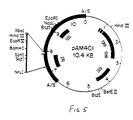
- Eco R1 digested pCI829 DNA was shotgun cloned into the Eco R1 digested shuttle plasmid vector, pAM401 (Fig. 5, ref. 18).
- the DNA was transformed into E . coli DB11. Transformants were selected on the basis of resistance to tetracycline, encoded on pAM401.
- Tetracycline resistant transformants arose at a frequency of 3 x 10²/ ⁇ g DNA and the plasmid profiles of random transformants were examined.
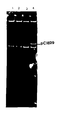
- Eco R1 digestion of recombinant plasmids showed that the 2.5, 2.1, 1.7, 0.84 and 0.69 kb Eco R1 fragments from pCI829 had been cloned (Fig. 6).
- Selected cloned fragments can be used to identify strains harbouring pCI829 (following the appropriate control experiments to ensure that the fragments do not hybridize to any resident plasmids in those strains).
- S. cremoris UC503 displayed a high natural level of phage insensitivity. Mutants showing increased insensitivity to the homologous phage uc503 (i.e. a significant increase in plaque size) were readily isolated either spontaneously or after acriflavin (20 ⁇ g/ml) treatment. Analysis of the plasmid profiles of selected representative mutants showed the consistent loss of a 28 Mdal plasmid, pCI528 (Fig. 7). Furthermore, these mutants were also sensitive to c2 and uc811, phage which were incapable of plaquing on S . lactis UC503 which contains pCI528 (Table 5).
- lactis MG1363 Sm is sensitive to phage 712, c2, m13 and jj50 (Table 6). However, when these phage were titred against UC505 no plaques were formed by any of the phage, even though phage such as m13 had previously been shown to be extremely virulent. Increasing the temperature to 37° or 39°C had minimal or no effect on the insensitivity mechanism.
- Heap-Lawrence milk activity tests were performed to compare the ability of UC505 and MG1299 to produce acid in the presence of virulent phage.
- the data in Table 8 show that UC505 was capable of surviving 12 cycles of the test in the presence of high titres of phage 712, c2, m13 or jj50, or a cocktail of all four phage with no effect at all on acid producing ability.
- MG1299 was unable to produce acid when exposed to any of the phage combinations.
Landscapes
- Health & Medical Sciences (AREA)
- Genetics & Genomics (AREA)
- Chemical & Material Sciences (AREA)
- Organic Chemistry (AREA)
- Life Sciences & Earth Sciences (AREA)
- Engineering & Computer Science (AREA)
- Biophysics (AREA)
- Biomedical Technology (AREA)
- General Engineering & Computer Science (AREA)
- Molecular Biology (AREA)
- General Health & Medical Sciences (AREA)
- Bioinformatics & Cheminformatics (AREA)
- Biochemistry (AREA)
- Wood Science & Technology (AREA)
- Zoology (AREA)
- Biotechnology (AREA)
- Microbiology (AREA)
- Plant Pathology (AREA)
- Physics & Mathematics (AREA)
- Gastroenterology & Hepatology (AREA)
- Medicinal Chemistry (AREA)
- Proteomics, Peptides & Aminoacids (AREA)
- Micro-Organisms Or Cultivation Processes Thereof (AREA)
- Preparation Of Compounds By Using Micro-Organisms (AREA)
- Medicines Containing Material From Animals Or Micro-Organisms (AREA)
- Measuring Or Testing Involving Enzymes Or Micro-Organisms (AREA)
Abstract
Description
- This invention relates to plasmids which confer phage insensitivity on bacteria, particularly lactic acid bacteria, bacteria to which such plasmids have been introduced and use of such plasmids in the food industry, particularly the dairy industry.
- It is known that the activity of a starter culture in dairy fermentations such as the production of cheese, cultured buttermilk, cultured butter or sour cream can be adversely affected by bacteriophage attack. It is accepted that there is an urgent need to extend the range of commercially stable phage-insensitive strains available to the dairy industry. Genetic studies on the lactic streptococci have suggested that genetic manipulation may be used to construct strains with new and/or improved industrial traits.
- The terms "phage insensitivity" and "phage insensitive" are used throughout this application to denote an inability of a bacteriophage to propagate on a host strain. The term "resistance" is commonly used in the lactic streptococcal/bacteriophage literature to described hosts which do not allow phage propagation even though the "resistance" mechanism is not known, although in a strict scientific sense the term "resistance" implies an inability of a phage to adsorb to a host.
- A number of plasmid-encoded mechanisms involved in host-mediated insensitivity to phage attack in the lactic streptococci have been described in the literature. The insensitivity may be at the level of adsorption, restriction-modification (R-M) of phage DNA, or by powerful, but as yet uncharacterized, mechanisms that prevent phage maturation.
- Two plasmid-encoded adsorption blocking systems have been described by Sanders and Klaenhammer (19) and de Vos et al (20). These molecules, pME0030 (30 Mdal, from S. lactis ME2, ref. 19) and pSK112 (34 Mdal, from S. cremoris SK11, ref. 20) have the effect of significantly inhibiting phage adsorption to plasmid-containing hosts with a consequent suppression of phage replication. Elimination of the plasmids from their respective hosts results in highly efficient phage adsorption and an increased sensitivity to specific phage. However, since neither plasmid was reported to be conjugative, it may be difficult to exploit them to construct new phage insensitive starter culture strains.
- Plasmids encoding R-M activity, some of which are conjugative, occur widely in lactic streptococci (21, 22, 23, 24, 25, 26, 27, 28). Although powerful R-M systems have been achieved by the additive effect of two plasmids (21, 24) the potential of R-M as a defence mechanism against phage is limited since the insensitivity conferred is not complete and phage which become modified (i.e. protected from subsequent restriction) pose a threat to the host that previously restricted the unmodified phage.
- A plasmid pNP40 originating in Streptococcus lactis subsp. diacetylactis DRC3 has been described by McKay L.L. and Baldwin K.A. (1). The mechanism associated with this plasmid was effective at 21 and 32°C but not at 37°C. Furthermore, evidence was presented that pNP40 was thermosensitive in its replication. Klaenhammer et. al. have described a plasmid pTR2030, originating in S. lactis ME2, which encodes a heat-sensitive phage-defence mechanism which limits the burst size and plaque size of specific phage without altering the efficiency of plaquing (e.o.p.) or the level of adsorption (2). This plasmid is described in European Specification No. 208468A2. The pTR 2030 mechanism was heat sensitive in an S. lactis background but not in S. cremoris hosts when challenged with isometric-headed phage (2, 3). The effect of high temperature on the activity of the pTR2030 associated mechanism against prolate-headed phage was not assessed. pTR2030 could be conjugally transferred to a range of S. cremoris strains (3, 4) and it was established that the plasmid conferred resistance to small isometric-headed phage. However, prolate- and large isometric-headed phage were either not inhibited in the pTR2030 transconjugants or exhibited a reduction in plaque size without a reduction in e.o.p. (5). The presence of pTR2030 in a lysogen was shown to be unable to inhibit prophage induction in S. cremoris R1 but it did prevent the lysogenic phage from infecting a pTR2030-containing prophage cured derivative S. cremoris R1 (6). It was suggested that the phage resistance mechanism acts at the cell surface or membrane to prevent small isometric-headed phage DNA passage into the host cell or inhibits early events required for lytic replication of externally infecting phage (6). Sanders et al. have devised a conjugal strategy for the construction of fast acid-producing, bacteriophage-resistant lactic streptococci for use in dairy fermentations by introducing pTR2030 into lactose-utilising, antibiotic-sensitive recipient strains (7). This report also describes the use of deletion analysis to locate the region of pTR2030 encoding phage resistance and the cloning of a specific HindIII fragment in E. coli using the pBR322 vector plasmid. A 150 bp region of pTR2030 was sequenced and 19 base pairs from within this region were chemically synthesized to be used as a very specific probe to identify strains harbouring pTR2030.
-
References - Although there has been considerable progress in the study of plasmid-encoded phage insensitivity mechanisms, there is still a definite need for more potent systems. In particular, a heat insensitive mechanism active against virulent prolate-headed phage in S. cremoris and S. lactis backgrounds is highly desirable for use in the food industry.
- It is an object of the present invention to provide plasmids which encode phage-insensitivity in species useful in cheese manufacture and other areas of the food industry.
- The invention provides an isolated plasmid carrying one or more genes which are capable of conferring insensitivity to one or more phages upon Streptococcus cremoris bacteria, the resistance to such phages not being affected at temperatures of 35°C to 40°C, characterised by genes which are also capable of conferring phage insensitivity upon Streptococcus lactis or Streptococcus lactis subsp. diacetylactis, the capability of conferring phage insensitivity not being destroyed by temperatures up to 39°C.
- The plasmids of the present invention are isolated plasmids.
- The term "isolated plasmid" as used herein means a plasmid which has been removed from the original host in which it was identified, and progeny and derivatives thereof, having the same phage insensitivity properties and includes such plasmids both when in a bacterium- free state and when they have been introduced into another bacterial cell.
- In particular the invention provides a plasmid as defined above originating in a Streptococcus cremoris or a Streptococcus lactis strain, and a plasmid which confers insensitivity to both small isometric-headed and prolate-headed phage.
- The invention further provides a recombinant plasmid carrying genes which encode lactose utilization and phage insensitivity in lactic streptococci, such a plasmid being generated by in vivo cloning.
- The invention also provides a recombinant plasmid carrying genes which encode phage insensitivity, lactose utilization and high-frequency conjugative ability in lactic streptococci, such a plasmid being generated by in vivo cloning.
- In particular aspects, the invention provides plasmids
pCI 750
pCI 777
pCI 829
pCI 528
isogenic derivatives thereof; plasmids which are substantially similar thereto, particularly plasmids having at least about 80% homology therewith; and DNA in such plasmids encoding phage insensitivity with or without lactose utilization and with or without high frequency conjugative ability. - The invention also provides bacterial hosts, particularly lactic streptococcal hosts into which has(ve) been introduced one or more of the plasmids defined above; more particularly a host into which have been introduced two of the plasmids defined above whose effect on the phage insenstivity pattern is additive (i.e. in the case of phage which are only partially inhibited by each plasmid on its own, the presence of the two plasmids together gives substantially total insensitivity). In particular, the invention provides lactic streptococci hosts into which have been introduced plasmids pCI 750 and pCI 829. The invention also provides isogenic derivatives of these plasmids including Lac-marked derivatives thereof, plasmids which are substantially similar thereto, or plasmids having phage insensitivity encoding DNA which is substantially similar to that of pCI 750, pCI 829 and pCI 528.
- The invention especially relates to all of the above-defined materials in bioligically pure form or essentially pure form.
- The invention further provides dairy starter cultures, particularly cheese starter cultures, containing any of the materials defined above. The invention also has potential for use in cultures used in meat and meat fermentations such as the manufacture of "German" sausage, vegetable fermentation cultures and probiotic cultures.
- The invention also provides methods of conferring phage insensitivity on a bacterium comprising introducing into the said bacterium a plasmid as defined above, and on a food starter culture comprising bacteria in which a plasmid as defined above is introduced into the said bacteria.
- This application more particularly describes three plasmids which confer valuable phage insensitivity against a variety of phage including virulent prolate-headed phage and offer advantages over other plasmids described in the literature. For example, some of the prior art plasmids are non-conjugative and cannot easily be used to construct phage insensitive starter strains. The plasmids pNP40 (1) and pTR2030 (2-7) are both heat-sensitive in a S. lactis background although the latter was heat-insensitive in S. cremoris hosts when titred against small isometric-headed phage. In contrast, the plasmids described in this application encode heat insensitive mechanisms effective against prolate-headed phage in both S. cremoris and S. lactis backgrounds. This is of major importance in commercial cheese-making.
- pCI528, based on its ability to inhibit isometric- and prolate-headed phage, is the most potent phage insensitivity plasmid currently available. Furthermore, the additive effect of the mechanisms associated with pC1750 and pCI829 against prolate-headed phage has very significant practical applications.
- From a mechanistic viewpoint, pCI750 differs from pTR2030 in that the latter does not inhibit the induction of prophage when present in a lysogenic host whereas pC1750 will cause a very severe reduction in the levels of inducibility. Furthermore, the presence of pTR2030 in a host is unable to reduce the e.o.p. of prolate-headed phage. pCI750 and pCI829 can reduce the e.o.p. by between 0.5 and seven log cycles. pCI528 is different to pNP40 and pTR2030 in that an effect on phage adsorption contributes to its overall phage insensitivity mechanism.
- The present invention will now be described with reference to the accompanying drawings which show the following:-
- Fig. 1
- Agarose gel (0.7%) showing plasmids from S. cremoris UC653 and selected Lac⁺ phage insensitive transconjugants.
Lane 1 - E. coli V517 molecular weight standards
Lane 2 - Plasmid-free S. lactis MG1363 Sm recipient
Lane 3 - S. cremoris UC653 donor containing 6 plasmids of 44, 26, 15, 10, 2.6 and 1.6 Mdal.
Lane 4 - S. lactis AB001 containing 43.6 Mdal pCI750 and 26 Mdal pCI726
Lane 5 - S. lactis AB003 containing 83 Mdal plasmid
Lane 6 - S. lactis AB002 containing 77 Mdal plasmid - Fig. 2
- Agarose gel (0.7%) showing plasmid profiles of S. lactis UC811 and selected Lac⁺ phage insensitive transconjugants
Lane 1 - E. coli V517 molecular weight standards
Lane 2 - Plasmid-free S. lactis MG1363 Sm recipient
Lane 3 - S. lactis UC811 donor containing plasmids of 42, 27, 24.5, 15, 12.5, 6.5, 5.0, 3.6, 2.0, 1.5, 1.4 Mdal
Lane 4 - Transconjugants AC001 harbouring 27 Mdal pCI829 and 42 Mdal pCI842
Lanes 5-7 Selected transconjugants harbouring different plasmids from strain UC811 - Fig. 3
- Construction of an S. lactis strain harbouring two phage insensitive plasmids - pCI829 and pCI751.
Lane 1 - E. coli V517 molecular weight standards
Lane 2 - Lac⁻ AC001 harbouring pCI829 alone and used as a recipient
Lane 3 - Donor strain AB012 harbouring pCI751
Lane 4 - S. lactis AC003 containing pCI751 and pCI829 - Fig. 4
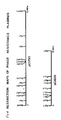
- Restriction maps of the phage insensitive plasmids pCI750 and pCI829
- Fig. 5
- Plasmid shuttle vector pAM401 used for cloning fragments of pCI829. (from Wirth et al. - see ref. 18)
- Fig. 6
- Agarose gel showing EcoR1 digested pCI829 and recombinant plasmids following cloning in pAM401
Lanes
Lane 7 - EcoR1 digest of pCI829 showing fragments of 21, 12, 2.5, 2.1, 1.7, 0.8, 0.7 and 0.4 kb
Lane 8 - Undigested pCI829
Lane 9 - Lambda EcoR1/HindIII Standard digest - Fig. 7
- Agarose gel (0.7%) showing plasmid profiles of S. cremoris UC503 and selected plasmid cured derivatives
Lanes 1-3 - Phage sensitive derivatives of S. cremoris UC503 cured of the 28 Mdal pCI528 plasmid.
Strain UC563 is shown inlane 2.
Lane 4 - S. cremoris UC503 harbouring plasmids of 46, 33, 28, 17, 4.0 and 2.1 Mdal - Fig. 8
- Agarose gel (0.7%) showing the construction of a strain of S. lactis harbouring the phage insensitive plasmid pCI528 from S. cremoris UC503.
Lane 1 - S. cremoris UC503
Lane 2 - S. cremoris UC563 cured of pCI528
Lane 3 - S. cremoris UC503 containing pAMβ1
Lane 4 - S. lactis UC504 - i.e. S. lactis transformant containing pCI528, pAMβ1 and two cryptic plasmids from strain UC503
Lane 5 - S. cremoris UC504 cured of pAMβ1
Lane 6 - S. lactis 505 cured of pLP712
Lane 7 - S. lactis 505 containing pLP712 and pCI829
Lane 8 - S. lactis MG1299 containing pLP712
Lane 9 - E. coli V517 molecular weight standards
Lane 10- S. lactis MG3020 containing pAMβ1 - A plasmid is an extrachromosomal DNA molecule capable of automomous replication.
- pCI750 is a 43.6 Mdal.(66Kb) plasmid originally identified in S. cremoris UC653. This plasmid can be conjugatively transferred to Group N streptococcal recipients where it confers insensitivity to bacteriophage infection. S. lactis AB001 strain containing this plasmid has been deposited at the National Collection of Industrial Bacteria (NCIB), Aberdeen, Scotland under Accession No. 12261 on 16th May 1986.
- pCI 777 is a 77Mdal plasmid generated following in vivo cloning of lactose utilization genes in the phage insensitivity plasmid after a conjugation experiment between S. cremoris UC653 and S. lactis MG1363Sm. It encodes phage insensitivity, lactose utilization and high frequency conjugative ability. S. lactis AB002 strain containing this plasmid has been deposited at the NCIB under Accession No. 12262 on 16th May 1986. It is representative of plasmids pCI 751 and pCI 783.
- pCI 751 is a 51Mdal plasmid generated following in vivo cloning of lactose utilization genes in the phage insensitivity plasmid after a conjugation experiment between S. lactis AB001 and S. lactis LM 0230 Sp. It encodes phage-insensitivity, lactose utilization and high frequency conjugative ability.
- pCI 783 is an 83Mdal plasmid generated following in vivo cloning of lactose utilization genes in the phage insensitivity plasmid after a conjugation experiment between S. cremoris UC653 and S. lactis MG1363Sm. It encodes phage insensitivity and lactose utilization.
- pCI829 is a 27Mdal (44Kb) plasmid originally identified in Streptococcus lactis UC811 (formerly BA2). This plasmid can be conjugatively transferred to Group N streptococcal recipients where it confers insensitivity to bacteriophage infection. S. lactis AC001 strain containing this plasmid has been deposited at the NCIB under Accession No. 12263 on 16th May 1986.
- pCI528 is a 28Mdal (43 Kb) plasmid originally identified in S. cremoris UC503. This plasmid can be introduced to Group N streptococcal recipients either by transformation or conjugation where it confers insensitivity to bacteriophage infection. S. lactis UC505 strain containing this plasmid has been deposited at the NCIB under Accession No. 12478 on 18th May 1987.
- This group of bacteria includes three species of the genus Streptococcus - S. lactis, S. cremoris and S. lactis, subsp. diacetylactis. These bacteria may also be termed the mesophilic lactic streptococci.
- S. cremoris UC653 is a strain originally isolated from a mixed strain starter culture. This strain has been used as a component of a defined strain starter used in commercial Cheddar cheesemaking and is deposited in the Stock Culture Collection, Dairy and Food Microbioloby Department, University College, Cork. It has also been deposited at the NCIB under Accession No. 12265 on 20th May 1986.
- S. cremoris UC503 is a strain originally isolated from a mixed strain starter culture used in commercial Cheddar cheesemaking. It was deposited at the NCIB under Accession No. 12477 on 18th May 1987. This strain was previously named S. cremoris F.
- S. cremoris UC563 is a derivative of S. cremoris UC503 cured of its 28 Mdal phage insensitivity plasmid following acriflavin (25 µg/ml) treatment. This strain is significantly more sensitive to phage UC503 and is also sensitive to phage c2 and UC811 which are incapable of plaquing on S. cremoris UC503.
- S. lactis UC811 is a classical "laboratory strain" and is deposited in the Stock Culture Collection, Dairy and Food Microbiology Department, University College, Cork. It has also been deposited at the NCIB under Accession No. 12266 on 20th May 1986. This strain was previously named S. lactis BA2.
- S. lactis MG1363 Sm is a plasmid-free derivative of S. lactis 712 obtained from M. Gasson, Food Research Institute, Reading, U.K. and made resistant to Streptomycin in the present inventors' laboratory. This strain was used as a recipient in conjugation experiments.
- S. lactis MG1229 is a derivative of S. lactis 712 cured of all its native plasmids except pLP712, a Lac/Prt plasmid. This strain was obtained from M. Gasson, Food Research Institute, Reading, U.K. and was used as a recipient in conjugation experiments.
- S. lactis MG3020 is a derivative of S. lactis MG1363 Sm containing the broad host range plasmid pAMβ1 (17 Mdal). In addition to the erythromycin (Em) resistance encoded on pAMβ1, this strain is resistant to streptomycin and was obtained from M. Gasson, Food Research Institute, Reading, U.K. This strain was used as a donor of pAMβ1 in conjugation experiments.
- S. lactis LM0230 Sp is a plasmid-free bacteriophage-sensitive derivative of S. lactis C2 obtained from L.L. McKay, University of Minnesota, St. Paul, Minnesota, USA. This strain was used as a recipient in conjugation experiments.
- S. lactis LM2305 is a plasmid-free, bacteriophage-sensitive neomycin sulphate resistant isolate of S. lactis C2 obtained from L.L. McKay, University of Minnesota, St. Paul, Minnesota, USA. This strain was used as a recipient in conjugation experiments.
- S. lactis MMS366 is a Lac⁻ bacteriophage sensitive recombination deficient (Rec⁻) rifampin resistant isolate of S. lactis ML3 containing plasmids of 31.9, 5.6 1.98 and 1.0 Mdal, obtained of L.L. McKay, University of Minnesota, St. Paul, Minnesota, USA. This strain was used as a recipient in conjugation experiments.
- S. lactis LM 3301 is a Lac⁻, bacteriophage sensitive, Streptomycin resistant derivative of S. lactis ML3 containing plasmids of 31.9, 5.6, 1.98 and 1.0, obtained from L.L. McKay, University of Minnesota, St. Paul, Minnesota, USA.
- S. lactis SK3 Lac ⁻TcR is a lactose negative (Lac⁻) tetracycline resistant (TcR) derivative of S. lactis SK3. The strain was made Lac⁻ following subculture at 37°C and made TcR after the conjugal introduction of the transposon Tn919 in the present inventors' laboratory. S. lactis SK3 Lac⁻TcR was used as a recipient in conjugation experiments.
- S. lactis subsp. diacetylactis 18-16 Lac⁻TcR is a Lac⁻TcR derivative of S. lactis subsp. diacetylactis 18-16 constructed in a manner identical to that described above for S. lactis SK3 Lac⁻TcR. S. lactis subsp. diacetylactis 18-16 Lac⁻TcR was used as a recipient in conjugation experiments.
- S. lactis subsp. diacetylactis 18-16 Lac⁻S is a Lac⁻ streptomycin resistant derivative of S. lactis subsp. diacetylactis 18-16 and was used as a recipient in conjugation experiments.
- S. cremoris UC411 Lac⁻FusR is a Lac⁻ (made by subculture at 37°C) fusidic acid resistant (FusR) derivative of S. cremoris UC411. This strain was made resistant to Fus by plating 10⁹ cells on plates containing 25 ug/ml Fus and selecting spontaneous resistant mutants.
- Transformants are defined as cells arising from the introduction of naked DNA (plasmid DNA in the case of this study) into protoplasted recipients.
- S. lactis UC504 is a transformant arising from the treatment of protoplasts of S. lactis MG1363 Sm with total plasmid DNA from S. cremoris UC503 (pAMβ1). S. lactis UC504 harbours pCI528 (28 Mdal), pAMβ1 (17 Mdal) and two cryptic plasmids of 18.0 and 2.1 Mdal from S. cremoris UC503.
- Transconjugants are defined as cells arising from the conjugative transfer of DNA from a donor to a recipient bacterium.
- This is a transconjugant arising from a conjugation experiment between the S. cremoris UC653 donor and the S. lactis MG1363Sm recipient. S. lactis AB001 harbours plasmids of 26 Mdal (pCI726, encodes ability to utilize lactose) and 43.6 Mdal (pCI750, encodes bacteriophage insensitivity). It has been deposited at the NCIB under Accession No. 12261 on 16th May 1986.
- This is a transconjugant arising from a conjugation experiment between the S. cremoris UC563 donor and the S. lactis MG1363 Sm recipient. S. lactis AB002 harbours a single plasmid of 77 Mdal (pCI777, encodes both lactose utilization and bacteriophage insensitivity). This strain exhibits a high frequency conjugative capacity. It has been deposited at the NCIB under Accession No. 12262 on 16th May 1986.
- This is a transconjugant arising from a conjugation experiment between the S. cremoris UC653 donor and the S. lactis MG1363 Sm recipient. S. lactis AB003 harbours a single plasmid of 83 Mdal (pCI783, encodes both lactose utilization and bacteriophage insensitivity).
- This is a transconjugant arising from a conjugation experiment between the S. lactis UC811 donor and the S. lactis MG 1363 Sm recipient, harbouring plasmids of 27 Mdal (pCI829, encodes bacteriophage insensitivity) and 42 Mdal (pCI842, encodes lactose utilization). It has been deposited at the NCIB under Accession No. 12263 on 16th May 1986.
- This is a transconjugant arising from a conjugation experiment between the S. lactis AB012 donor and the S. lactis AC001 Lac⁻ recipient. S. lactis AC003 harbours plasmids of 51 Mdal (pCI 751, encodes both lactose utilization and bacteriophage insensitivity) and 27 Mdal (pCI 829, encodes bacteriophage insensitivity).
- S. lactis MM20 is a transconjugant arising from a conjugation experiment between the S. cremoris UC653 donor and S. lactis MMS366 recipient harbouring plasmids of 26 Mdal (pCI726, encodes lactose utilization genes) and 43.6 Mdal (pCI750, encodes bacteriophage insensitivity).
- S. lactis MM21 is a transconjugant arising from a conjugation experiment between the S. cremoris UC653 donor and the S. lactis MMS366 recipient harbouring a single plasmid of 60 Mdal (pCI760, encodes both lactose utilization and bacteriophage insensitivty).
- S. lactis UC505 is a transconjugant arising from a conjugation experiment between S. lactis UC504 donor and the S. lactis MG1299 recipient. This transconjugant harbours pCI 528 (28 Mdal) and pLP 712 (33 Mdal). It has been deposited at the NCIB under Accession No. 12478 on 18th May 1987.
- This strain was used as source of the pAM401 cloning vector. This plasmid, originally obtained from D. Clewell, University of Michigan, Ann Arbor, M1, USA, was introduced into E. coli LE392 in the present inventors' laboratory.
- Bacteriophage are viruses capable of infecting bacteria.
- Phage 712, SK1, StL5, Eb1 and c2 are capable of infecting (i.e. lytic for) S. lactis MG1363 Sm. The phage c2 is a prolate-headed phage (29), while the phage 712 is generally accepted in the field to be a small isometric-headed phage and was shown to be so by morphological examination in the present inventors' laboratory.
- Phages 18 - 16 and drc3 are capable of infecting S. lactis subsp. diacetylactis 18 - 16S.
- Phages uc503 infects S. cremoris UC503 while phages uc503, c2 and UC811 infect mutants cured of the 28 Mdal plasmid. Phages sk3 and uc411 are capable of infecting hosts S. lactis SK3 Lac⁻TcR and S. cremoris UC411 Lac⁻FusR, respectively.
- The bacterial strains were routinely grown in the M17 medium of Terzaghi and Sandine (8) in which glucose replaced lactose when required (GM17). Solid media contained 1.5% agar (Oxoid No. 3). The antibiotics (Sigma, U.K.) streptomycin (Sm) and spectinomycin (Sp) were added to selective media at levels of 600 µg/ml and 150 µg/ml, respectively. The method used to generate spontaneous antibiotic insensitive mutants of lactic streptococci has been previously reported by Hill et al. (9).
- Agar surface matings were carried out as described by McKay et al. (10). Lactose indicator agar (LIA) of McKay et al. (11) containing the appropriate antibiotic was used to select for Lac transfer. Sensitivity of Lac⁺ transconjugants to phage was determined using the spot test method. Briefly, this involved incorporating 0.1 ml of the fully grown test cultures into an M17 soft agar (0.7%) overlay which was poured on a hard M17 agar (1.5%) plate. After solidifying, 10 µl aliquots of the appropriate phage suspension ( 10⁸ pfu/ml) were spotted onto the overlay. Results were read after overnight incubation at 30°C.
- The frequency of transfer of a specific marker (i.e. Lactose utilization or phage insensitivity) refers to the number of transconjugants obtained divided by the number of recipients and is described as the frequency per recipient.
- Protoplasts of S. lactis MG1363 Sm were made, transformed and regenerated as described by Gasson and Anderson (12). The transforming DNA was total plasmid DNA from S. cremoris UC503 (pAMβ1) and transformants were selected on the basis of Em resistance.
- Sensitivity of specific strains to bacteriophage was determined using a "spot test" whereby 0.1 ml of a fully grown culture was incorporated into an M17 soft agar (0.7%) overlay, which was poured on a hard M17 agar (1.5%) plate. After solidifying, 10 ul of a phage suspension (10⁸ pfu/ml) was spotted on the overlay. Results were read after overnight incubation at 30°C.
- The effect of elevated temperature (up to 40°C) on the phage insensitivity mechanisms was determined by assaying phage (preheated to the appropriate temperature) on the culture (preheated) and then incubating the assays at the desired temperature.
- The activity test described by Heap and Lawrence (4) was used to determine the effectiveness of the phage insensitivity mechanisms in simulated laboratory cheesemaking trials.
- 0.6 ml of the phage suspension (10⁵ pfu/ml) was added to a 1.5 ml microcentrifuge tube containing 0.2 ml CaCl₂ (0.185M) and 0.6 ml of the fully grown test culture resuspended in M17 (pH 7.5). The tube was mixed vigorously for 10 sec and then incubated at 30°C for 12 min to allow adsorption to occur. After cooling on ice to stop the reaction, the tubes were centrifuged in a microfuge (Eppendorf) for 10 min to pellet the cells and adsorbed phage. A 1.0 ml sample of the supernatant was removed and titred for phage using a sensitive host as indicator. Percent phage adsorbed was determined as [(control titre - residual titre)/control titre] x 100.
- The method of Anderson and McKay (14) was used to isolate plasmid DNA from streptococci and E. coli V517. Plasmid profiles were analysed by electrophoresis on 0.7% agarose (Sigma, U.K.) gels using a vertical gel apparatus. Electrophoresis was carried out in TAE buffer (40 mM Tris, 10 mM Na₂EDTA, 12mM sodium acetate, pH 7.8). Gels were strained in ethidium bromide solution (5 µg/ml) and DNA was visualised with short-wave UV light.
- Digestions with restriction endonucleases were carried out as described by Maniatis et al. (15). Restriction maps of pCI 750 and pCI 829 were prepared as described by Coveney et al (16).
- The Southern blot and hybridization techniques have been described by Southern (17) and Coveney et al. (16). EcoRI fragments of pCI 829 were shotgun cloned in E. coli using the vector pAM401 and employing the cloning methodologies described by Maniatis et al. (15). Clones containing recombinant plasmids were identified by random screeing of the plasmid contents of transformants.
- Markers associated with lactose utilization and phage insensitivity were transferred from S. cremoris UC653 and S. lactis UC811 donors to a S. lactis MG1363 Sm recipient in agar surface matings (10). The transfer frequencies are shown in Table 1.
- Transconjugants from these matings were designated AB001, AB002 and AB003 or AC001 depending on whether they are derived from the strain UC653 or UC811 donors, respectively. All these transconjugants were totally resistant to phage 712 and allowed phage c2 to plaque with a reduced size. Both phage are lytic for strain MG1363.
- The three Lac⁺ phage 712 insensitive transconjugants isolated from the UC653 x MG1363 mating were lysed by the method of Anderson and McKay (14) and their plasmid profiles were analysed. S. lactis AB001 contained two plasmids of 43.6 Mdal (pCI750) and 26 Mdal (pCI726) while S. lactis AB002 and S. lactis AB003 each harboured single plasmids of 77 Mdal (pCI777) and 83 Mdal (pCI783), respectively (Fig. 1). The S. lactis AC001 transconjugant (also Lac⁺, phage 712 insensitive) contained two plasmids of 27 Mdal (pCI829) and 42 Mdal (pCI842) (Fig. 2).
- Further mating experiments between the AB001 and AC001 donors and a S. lactis LM0230 Sp recipient were completed (Table 1). Transconjugants showed the same resistance patterns as did AB001 and AC001 - i.e. partial insensitivity to phage c2 and total insensitivity to phage 712. A phenotypically representative transconjugant derived from the AB001 x LM0230 mating was designated S. lactis AB012 and this harboured a recombinant Lac/phage insenstivity plasmid of 51 Mdal (pC1751).
- Further mating experiments comparing the ability of AB001 and AB002 to act as donors showed that AB002 could transfer Lac (and phage insenstivity) at frequencies approximately four log cycles higher than AB001 (Table 2). This indicated that pCI777 which is present in S. lactis AB002 harbours genes conferring an ability to transfer at high frequency.
- The pCI750 plasmid present in S. lactis AB001 was removed using plasmid curing treatments. Isolates missing this molecule reverted to phage 712 sensitivity. However, these isolates still harboured pCI726 and remained Lac⁺ confirming that pCI726 encoded lactose utilization genes while pCI750 encoded phage 712 insensitivity. Furthermore, repeated attempts to transfer pCI726 to S. lactis LM2306 in conjugation experiments were unsuccessful indicating that pCI750 harboured genes conferring conjugative ability in addition to phage insenstivity.
- A conjugation experiment between the S. cremoris UC653 donor and the S. lactis MMS336 recipient (which is recombination-deficient) also yielded Lac⁺, phage 712 insensitive transconjugants (Table 2). However, these were of two types, (a) S. lactis MM20 contained two plasmids of 43.6 Mdal (i.e. pCI750) and 26 Mdal (i.e. pCI726) and (b) S. lactis MM21 contained a single plasmid of 60 Mdal. This latter result shows that recombination between pCI750 and pCI726 (or parts thereof) can still occur in a Rec⁻ strain suggesting that recombination is Rec independent.
- The phage insensitivity genes encoded on pCI750 were introduced on pCI751 (derived from pCI750 and containing lac genes) into a Lac⁻ derivative of S. lactis AC001 (which still contains pCI829) in conjugation experiments generating transconjugant AC003 (Fig. 3). The effect of the presence of both mechanisms in a single strain was to confer total insensitivityto phage c2 (which was capable of forming plaques on strains harbouring either pCI750 or pCI829 alone) in addition to continuing insensitivty to phage 712. This effect is shown in Table 9 where isolates harbouring pCI750 or pCI829 alone allowed phage c2 to form plaques of 1.5 mm diameter (which are significantly smaller than those formed on strain MG1363 Sm which is plasmid-free). However, all plaquing ability is eliminated in the case of transconjugant AC003 which contains the phage insensitivity mechanisms encoded on both plasmids.
- The effect of the phage insensitivity plasmids pCI750 and pCI829 on an extended range of phage was examined (Table 3). Plasmid pCI750, present in S. lactis AB001 was capable of conferring total insenstivity to phage sk1 in a manner identical to the insensitivity conferred against phage 712. Also, the plaque sizes developed by all phage that were capable of plaquing on any of the hosts containing pCI750, pCI829 or the mechanisms encoded by both pCI750 and pCI829 together, were very significantly reduced in size compared to those formed on S. lactis MG1363 Sm (which contains no plasmids). In all cases the reduction in plaque size was greater than 50%. Furthermore, the titre of all the phage virulent for hosts AB001, AC001 and AC003 (with the sole exception of phage m13 plaqued on AC001) were all reduced by between 0.5 and 7 log cycles compared with those on S. lactis MG1363 Sm, suggesting that a second mechanism of insensitivity was encoded on these plasmids (i.e. in addition to the mechanism resulting in elimination or reduction of plaque size, Table 3). The manufacturing process in Cheddar cheese-making involves a cooking step where the temperature is increased from 30°C to 37°C or greater. The data in Table 3 indicates that temperatures of 37°C or 40°C have no adverse effect on the ability of either pCI750 or pCI829 to inhibit phage replication. This means that both plasmids will be suitable for inclusion in strains used in commercial Cheddar cheese-making.
- Morphological examination of some of the phage described in Table 3 showed that 712 is a member of the commonly occurring isometric-headed phage group. However, phages c2 and m13 both have prolate heads (29) and thus are members of the extremely virulent prolate-headed grouping. This may explain why these phage can overcome the protective effect of a single phage insensitivity plasmid. Nevertheless, it is significant that the presence of two plasmids can confer the high degree of insenstivity observed in this study.
- The transconjugants AB002 (containing the Lac/phage insensitivity recombinant plasmid pCI777) and AC003 (containing the phage insensitivity plasmid pCI829 and the recomibinant Lac/phage insensitivity plasmid pCI751) were used as donors in a series of conjugation experiments with selected recipients (Table 4). In all cases the recipients were Lac⁻ (isolated following curing treatments at 37°C) and contained either the tetracycline resistance transposon Tn919 (in the case of strains SK3 and 18-16) or were spontaneous fusidic acid (Fus) resistant mutants (in the case of strain UC411) to facilitate selection of transconjugants. In all cases, transfer of the Lac marker was detected at a reasonably high frequency and a high proportion of these Lac⁺ transconjugants were also insensitive to the homolgous phage of the original recipient strain (Table 4). These data demonstrate that the phage insensitivity trait can be transferred by conjugation to a range of recipient types.
- The lactose utilization genes of pCI726 and the phage insensitivity mechanism of pCI750 were introduced into S. lactis subsp. diacetylactis 18-16 S in conjugation experiments from the S. cremoris UC653 donor (frequency of Lac transfer = 1.6 x 10⁻⁶ per recipient of which 23% were totally insensitive to phages 18-16 and drc3 which are highly lytic for the 18-16 wild-type strain). Selected phage insensitive 18-16 transconjugants were subjected to milk activity tests to determine the efficiency of the phage insensitivity mechanism in this strain when the culture was subjected to repeated growth cycles in milk at 30 and 37°C in the presence of both phage. Under these simulated cheese-making conditions, the presence of phage 18-16 and drc3 had no effect on the ability of the phage insensitive 18-16 transconjugants to produce normal levels of acid. This result indicated that the phage insensitivity mechanism of pCI750 will have a practical application in commercial practice.
- Adsorption tests have shown that the presence of either pCI750 or pCI829 in an S. lactis MG1363 Sm host has no effect on the ability of the phage to adsorb. Furthermore, preliminary studies have been undertaken in the case of pCI750 to demonstrate its effect on the inducibility of prophage. The introduction of pCI750 into a lysogenic host reduced the inducibility of prophage compared to a control not containing the phage-insensitivity plasmid, suggesting that the associated mechanism interferes with DNA replication, protein synthesis or even a later stage in the infectious cycle. This contrasts with the reported effect of pTR2030 from Klaenhammer's laboratory, where it did not interfere with the inducibility of prophage and an effect at the level of the cell surface, cell membrane or some early stage in the lytic cycle was proposed as the mode of action of the plasmid (6).
- An analysis of plasmids pCI750 and pCI829 was carried out using a variety of restriction enzymes. The restriction data is as follows:-


- It will be noted that there may be small fragments of DNA which were undetected on the gels.
- Preliminary restriction maps of pCI750 and pCI829 were constructed (Fig. 4). The pattern and sequence of the cleavage sites on the maps is typical of the particular plasmid and can be used very easily to identify the different molecules. A Southern blot and hybridization experiment, using pCI750 as a biotin-labelled probe showed no detectable homology between it and pCI829 suggesting that the two plasmids do not share any significant common sequences.
- The restriction endonuclease EcoR1 digests the plasmid pCI829 into 8 fragments of 21.0, 12.1, 2.5, 2.1, 1.7, 0.84, 0.69 and 0.41 Kb. Using molecular cloning techniques, EcoR1 digested pCI829 DNA was shotgun cloned into the EcoR1 digested shuttle plasmid vector, pAM401 (Fig. 5, ref. 18). Following ligation in the presence of T4 ligase, the DNA was transformed into E. coli DB11. Transformants were selected on the basis of resistance to tetracycline, encoded on pAM401. Tetracycline resistant transformants arose at a frequency of 3 x 10²/µg DNA and the plasmid profiles of random transformants were examined. EcoR1 digestion of recombinant plasmids showed that the 2.5, 2.1, 1.7, 0.84 and 0.69 kb EcoR1 fragments from pCI829 had been cloned (Fig. 6). Selected cloned fragments can be used to identify strains harbouring pCI829 (following the appropriate control experiments to ensure that the fragments do not hybridize to any resident plasmids in those strains).
- Experience in this laboratory has shown that S. cremoris UC503 displayed a high natural level of phage insensitivity. Mutants showing increased insensitivity to the homologous phage uc503 (i.e. a significant increase in plaque size) were readily isolated either spontaneously or after acriflavin (20 µg/ml) treatment. Analysis of the plasmid profiles of selected representative mutants showed the consistent loss of a 28 Mdal plasmid, pCI528 (Fig. 7). Furthermore, these mutants were also sensitive to c2 and uc811, phage which were incapable of plaquing on S. lactis UC503 which contains pCI528 (Table 5).
- It was not possible to transfer pCI528 from its S. cremoris UC503 host to an S. lactis MG1363 Sm recipient using the conjugative mobilization described earlier for plasmids pCI750 and pCI829. The introduction of the promiscuous plasmid pAMβ1 as a mobilizing agent (from an S. lactis MG3020 donor) also failed to bring about transfer of pCI528. The alternative approach of using protoplast transformation was applied. Total plasmid DNA from S. cremoris UC503 containing pAMβ1 was isolated and used to transform S. lactis MG1363 Sm protoplasts. Transformants were selected on the basis of resistance to erythromycin (Em) encoded by pAMβ1 and the plasmid profiles of 50 individual isolates were examined. A single isolate, designated UC504, harboured a 28 Mdal plasmid (in addition to pAMβ1 and two cryptic plasmids from strain UC503) (Fig. 8, lane 4). pAMβ1 was eliminated from UC504 following heat curing treatments. pCI528 was removed from the presence of the two cryptic plasmids by conjugating it into S. lactis MG1299 (i.e. S. lactis MG1363 containing pLP712, a Lac/Prt plasmid from S. lactis 712). The plasmid profile of a transconjugant, designated UC505, containing both pCI528 and pLP712 is shown in Fig. 8 (lane 7).
- S. lactis MG1363 Sm is sensitive to phage 712, c2, m13 and jj50 (Table 6). However, when these phage were titred against UC505 no plaques were formed by any of the phage, even though phage such as m13 had previously been shown to be extremely virulent. Increasing the temperature to 37° or 39°C had minimal or no effect on the insensitivity mechanism.
- Adsorption tests showed that phages 712, c2, m13 and jj50 were capable of adsorbing to S. lactis MG1363 Sm at high efficiency (Table 7). However, the efficiencies of adsorption of the same phage to UC505 were between 35 and 45%. These data suggest that the phage insensitivity mechanism associated with pCI528 is different to those encoded by pCI750 and pCI829 and also to pTR2030 of Klaenhammer's group.
- Heap-Lawrence milk activity tests were performed to compare the ability of UC505 and MG1299 to produce acid in the presence of virulent phage. The data in Table 8 show that UC505 was capable of surviving 12 cycles of the test in the presence of high titres of phage 712, c2, m13 or jj50, or a cocktail of all four phage with no effect at all on acid producing ability. In contrast, MG1299 was unable to produce acid when exposed to any of the phage combinations.
-
- 1. McKay, L.L., and K.A. Baldwin. 1984. Conjugative 40 Mdal plasmid in Streptococcus lactis subsp. diacetylactis DRC3 is associated with resistance to nisin and bacteriophage. Appl. Environ. Microbiol. 47:68-74.
- 2. Klaenhammer, T.R. and R.B Sanozky. 1985. Conjugal transfer from Streptococcus lactis ME2 of plasmids encoding phage resistance, nisin resistance and lactose fermenting ability : evidence for a high-frequency conjugative plasmid responsible for abortive infection of virulent bacteriphage. J. Gen. Microbiol. 131:1531-1541.
- 3. Steenson, L.R. and T.R. Klaenhammer. 1985. Streptococcus cremoris M12R transconjugants carrying the conjugal plasmid pTR2030 are insensitive to attack by lytic bacteriphages. Appl. Environ, Microbiol. 50:851-858.
- 4. Sing, W.D. and T.R. Klaenhammer. 1986. Conjugal transfer of bacteriphage resistance determinants on pTR2030 into Streptococcus cremoris strains. Appl. Environ. Microbiol. 51:1264-1271.
- 5. Jarvis, A.W. and T.R. Klaenhammer. 1986. Bacteriophage resistance conferred on lactic streptococci by the conjugative plasmid pTR2030 : effects on small isometric-, large isometric-, and prolate-headed phages. Appl. Environ. Microbiol. 51:1272-1277.
- 6. Jarvis, A.W. and T.R. Klaenhammer. 1987. Bacteriophage resistance plasmid pTR2030 inhibits infection or rlt temperate bacteriophage but not induction of rlt prophage in Streptococcus cremoris Appl. Environ. Microbiol. 53:385-389.
- 7. Sanders, M.E., P.J. Leonhard, W.D. Sing and T.R. Klaenhammer. 1986. Conjugal strategy for construction of fast acid producing, bacteriophage-resistant lactic streptococci for use in dairy fermentations. Appl. Environ. Microbiol. 52:1001-1007.
- 8. Terzaghi, B.E. and W.E. Sandine. 1975. Improved medium for lactic streptococci and their bacteriophage. Appl. Environ. Microbiol. 29:807-813.
- 9. Hill, C., C. Daly and G.F. Fitzgerald. 1985 Conjugative transfer of the transpoon Tn919 to lactic acid bacteria. FEMS Microbiol. Lett. 30:115-119.
- 10. McKay, L.L., K.A. Baldwin and P.M. Walsh. 1980. Conjugal transfer of genetic information in group N streptococci. Appl. Environ. Microbiol. 40:84-91.
- 11. McKay, L.L., K.A. Baldwin and E.A. Zottola. 1972. Loss of lactose metabolism in S. lactis C2. Appl. Microbiol. 23:1090-1096.
- 12. Gasson, M.J. and P.H. Anderson. 1985. High copy number plasmid vectors for use in lactic streptococci. FEMS Microbiol. Lett. 30:193-196.
- 13. Heap, H.A. and R.C. Lawrence. 1976. The selection of starter strains for cheesemaking. N.Z.J. Diary Sci. Technol. 11:16-22.
- 14. Anderson, D.G. and L.L. McKay. 1983. Simple and rapid method for isolating large plasmid DNA from lactic streptococci. Appl. Environ. Microbiol. 46:549-552.
- 15. Maniatis, T., E.F. Fritsch and J. Sambrook. 1982. Molecular cloning: a laboratory manual. Cold Spring Harbor Laboratory, Cold Spring Harbor, N.Y.
- 16. Coveney, J., G.F. Fitzgerald and C. Daly. 1987. Detailed characterization and comparison of four lactic streptococcal bacteriophage based on morphology, restriction mapping, DNA homology and structural protein analysis. Appl. Environ. Microbiol. 53: In press (July, 1987).
- 17. Southern, E.M. 1975. Detection of specific sequences among DNA fragments separated by gel electrophoresis. J. Mol. Biol. 98:503-5517.
- 18. Wirth, R., F.Y. An and D.B. Clewell. 1986. Highly efficient protoplast transformation system for Streptococcus faecalis and a new Escherichia coli- S. faecalis shuttle vector. J. Bacteriol. 165:831-836.
- 19. Sanders, M.E. and T.R. Klaenhammer. 1983. Characterization of phage sensitive mutants from a phage insensitive strain of Streptococcus lactis : evidence for a plasmid determinant that prevents phage adsorption. Appl. Environ. Microbiol. 46:1125-1133.
- 20. de Vos, W.M., H.M. Underwood and F.L. Davies. 1984. Plasmid encoded bacteriophage resistance in Streptococcus cremoris SK11. FEMS Microbiol Lett. 23:175-178.
- 21. Chopin, A., M.C. Chopin, A. Moillo-Batt and P. Langella. 1984. Two plasmid determined restriction-modification systems in Streptococcus lactis. Plasmid 11:260-263.
- 22. Sanders, M.E. and T.R. Klaenhammer. 1981. Evidence for plasmid linkage of restriction and modification in Streptococcus cremoris KH. Appl. Environ. Microbiol. 42:944-950.
- 23. Wetzel, A., H. Neve, A. Geis and M. Teuber. 1986. Transfer of plasmid mediated phage resistance in lactic acid streptococci. Chem. Mikrobiol. Technol. Lebensm. 10:86-89.
- 24. Klaenhammer, T.R. and R. B. Sanozky-Dawes. 1986. A conjugal plasmid which confers phage restriction and modification activities to lactic streptococci. Abstract 222 from Second ASM Conference on Streptococcal Genetics, 21-24 May, Miami Beach, Florida, U.S.A.
- 25. Daly, C. and G.F. Fitzgerald. 1987. Mechanisms of bacteriophage insensitivity in the lactic streptococci. In Streptococcal Genetics (Ferretti, J.J. and R.C. Curtiss III, eds.) American Society for Microbiology, Washington D.C. U.S.A.
- 26. Klaenhammer, T.R.. 1984. Interactions of bacteriophages with lactic streptococci. Adv. Appl. Microbiol. 30:1-29.
- 27. Steenson, L.R. and T.R. Klaenhammer. 1986. Plasmid heterogeneity in Streptococcus cremoris M12R: Effects on proteolytic activity and host dependent phage replication. J. Dairy Sci. 69:2227-2236.
- 28. Geis. A., H. and M. Teuber. 1987. Plasmid dependent bacteriophage resistance in lactic acid streptococci. Abstract from C.E.C. Meeting 'Culture Collections and Genetic Engineering of Microorganisms' Ioannia, Greece, pp. 33. Commission of the European Communities.
- 29. Davies, S.L. & M.G. Gasson, 1984. Bacteriophages of Dairy Lactic Acid Bacteria, in Advance in Microbiology and Biochemistry of Cheese and Fermented Milk. (Davies, F.L. & B.A. Law, eds.) pp127-151, Elsevier Applied Science Publishers, London.


Claims (14)
- An isolated plasmid carrying one or more genes which are capable of conferring insensitivity to one or more phages upon Streptococcus cremoris bacteria, the resistance to such phages not being affected at temperatures of 35°C to 40°C, characterised in that the genes are genes carried in plasmids pCI750 pCI777 or pCI528, deposited in bacterial strains S. lactis AB001, AB002 and UC505 respectively at the National Collection of Industrial Bacteria, Aberdeen, Scotland under accession nos. 12261, 12262 and 12478 respectively, which are capable of also conferring phage insensitivity upon Streptococcus lactis or Streptococcus lactis subsp. diacetylactis, the capability of conferring phage insensitivity not being destroyed by temperatures of up to 39°C, or genes which have sufficient sequence homology therewith to also confer phage insensitivity upon S. lactis or S. lactis subsp. diacetylactis at temperatures of up to 39°C.
- A plasmid as claimed in claim 1 originating in a Streptococcus cremoris strain.
- A plasmid as claimed in claim 1 or claim 2 which confers insensitivity to both small isometric-headed and prolate-headed phage.
- A recombinant plasmid as claimed in claim 1 or claim 3 carrying genes which encode phage insensitivity determinants and lactose utilization determinants in lactic streptococci.
- A recombinant plasmid as claimed in claim 1 or claim 3 carrying genes which encode phage insensitivity determinants, lactose utilization determinants and high-frequency conjugative ability determinants in lactic streptococci.
- A plasmid as claimed in any one of claims 1 to 5 selected from the group consisting of:-
plasmid pCI750 as deposited in bacterial strain S. lactis AB001 at the National Collection of Industrial Bacteria, Aberdeen, Scotland under the accession no. 12261,
plasmid pCI777 as deposited in bacterial strain S. lactis AB002 at the National Collection of Industrial Bacteria, Aberdeen, Scotland under accession no. 12262, or
plasmid pCI528 as deposited in bacterial strain S. lactis UC505 at the National Collection of Industrial Bacteria, Aberdeen, Scotland, under accession no. 12478,
plasmids carrying one or more of the phage insensitivity encoding genes of any of the said plasmids deposited at the NCIB under the said accession nos. 12261, 12262 and 12478,
and plasmids having sufficient sequence homology with the said deposited plasmids to be capable of conferring phage insensitivity upon S. lactis or S. lactis subsp. diacetylactis as well as S. cremoris at temperatures of up to 39°C. - A plasmid as claimed in claim 1 having a molecular weight of 43.6 Mdal and the following restriction pattern:-
Restriction Enzyme Number of Fragments Fragment Size (kb) BamHI 2 35.6, 30.4 BclI 7 21.32, 13.77, 12.55, 9.75, 4.78 2.13, 1.69 Bg1II Many Not determined BstEII 2 56.74, 9.26 EcoRV 6 41.69, 11.1, 5.48, 5.26, 1.45, 1.08 HindIII 11 23.22, 12.18, 6.70, 5.08, 4.13, 3.51, 3.28, 2.43, 2.03, 1.85, 1.60 HpaII 10 20.97, 14.51, 10.26, 5.91, 3.35, 3.10, 2.25, 2.19, 1.70, 1.55 PvuII 5 26.01, 20.44, 9.66, 6.54, 8.35 Sa1I 4 25.33, 20.06, 13.16, 7.51 Restriction Enzyme Number of Fragments Fragment Size (kb) SacI 1 40.0 StuI 2 32.9, 6.9 Bg1II 3 20.8, 14.4, 4.0 PvuII 3 22.9, 8.3, 5.1 ClaI 4 21.2, 7.4, 6.1, 4.8 EcoRV 6 25.1, 5.9, 4.5, 3.1, 2.7, 2.1 HaeIII 4 25.1, 5.49, 5.0, 4.36 HincII 6 11.8, 5.6, 4.5, 3.8, 2.5, 1.7 AvaI 5 16.3, 12.5, 9.1, 4.6, 3.2 HpaII 8 12.6, 11.9, 10.8, 3.9, 2.4, 2.2, 1.2, 0.4 EcoRI 8 21.0, 12.1, 2.5, 2.1, 1.7, 0.84, 0.69, 0.41 - A DNA sequence of a plasmid as claimed in claim 6 or 7 encoding phage insensitivity determinants or a DNA having a sufficient sequence homology therewith to also confer phage insensitivity upon S. lactis or S. lactis subsp. diacetylactis as well as S. cremoris bacteria at temperatures of up to 39°C.
- A bacterial host containing one or more plasmids as claimed in any of claims 1 to 7, not being a naturally occurring host/plasmid combination.
- A bacterial host as claimed in claim 9 which is a lactic streptococcal host.
- A culture selected from dairy starter cultures, cheese starter cultures, meat and meat fermentation cultures, vegetable fermentation cultures or probiotic cultures containing a plasmid as claimed in any of claims 1 to 7 or a bacterial host as claimed in either of claims 9 and 10.
- A culture as claimed in claim 11 in liquid, frozen, freeze-dried, concentrated frozen or concentrated freeze-dried form.
- A method of conferring phage insensitivity on a cheese-making bacterium comprising introducing into the bacterium a plasmid as claimed in any of claims 1 to 7, so as to provide other than a naturally occurring bacterial host/plasmid combination.
- A method of conferring phage insensitivity on a food starter culture comprising bacteria wherein a plasmid according to any of claims 1 to 7 is introduced into the said bacteria, so as to provide other than a naturally occurring bacterial host/plasmid combination.
Priority Applications (1)
| Application Number | Priority Date | Filing Date | Title |
|---|---|---|---|
| AT87304557T ATE95240T1 (en) | 1986-05-21 | 1987-05-21 | PLASMIDS GIVING PHAGE RESISTANCE TO BACTERIA. |
Applications Claiming Priority (2)
| Application Number | Priority Date | Filing Date | Title |
|---|---|---|---|
| IE135286A IE66528B1 (en) | 1986-05-21 | 1986-05-21 | Plasmids conferring phage insensitivity on bacteria |
| IE135286 | 1986-05-21 |
Publications (3)
| Publication Number | Publication Date |
|---|---|
| EP0246909A2 EP0246909A2 (en) | 1987-11-25 |
| EP0246909A3 EP0246909A3 (en) | 1988-11-30 |
| EP0246909B1 true EP0246909B1 (en) | 1993-09-29 |
Family
ID=11025946
Family Applications (1)
| Application Number | Title | Priority Date | Filing Date |
|---|---|---|---|
| EP19870304557 Expired - Lifetime EP0246909B1 (en) | 1986-05-21 | 1987-05-21 | Plasmids conferring phage insensitivity on bacteria |
Country Status (6)
| Country | Link |
|---|---|
| EP (1) | EP0246909B1 (en) |
| AT (1) | ATE95240T1 (en) |
| DE (1) | DE3787565T2 (en) |
| DK (1) | DK258087A (en) |
| ES (1) | ES2059376T3 (en) |
| IE (1) | IE66528B1 (en) |
Families Citing this family (6)
| Publication number | Priority date | Publication date | Assignee | Title |
|---|---|---|---|---|
| FR2660931B1 (en) * | 1990-04-13 | 1994-09-02 | Sanofi Sa | PLASMID COMPRISING AT LEAST ONE BACTERIAL PHAGE RESISTANCE MECHANISM CONTAINING THE SAME AND THEIR USE. |
| FR2708937B1 (en) * | 1993-08-09 | 1995-12-08 | Sanofi Elf | DNA sequence and plasmids comprising at least one mechanism of resistance to phages, bacteria containing them and their use. |
| AUPM876494A0 (en) * | 1994-10-13 | 1994-11-03 | Mauri Laboratories Pty Ltd | Plasmids encoding bacteriophage resistance for use in lactic acid bacteria |
| ATE247711T1 (en) * | 1995-06-16 | 2003-09-15 | Nestle Sa | PHAGE RESISTANT STREPTOCOCCUS |
| FR2737896B1 (en) * | 1995-08-18 | 1997-11-07 | Systemes Bio Ind | DNA SEQUENCE AND PLASMIDS COMPRISING AT LEAST ONE PHASE RESISTANCE MECHANISM, BACTERIA CONTAINING THEM AND THEIR USE |
| FR2738015B1 (en) * | 1995-08-22 | 1997-11-14 | Systems Bio Ind | DNA SEQUENCES AND PLASMIDS COMPRISING AT LEAST ONE PHASE RESISTANCE MECHANISM, BACTERIA CONTAINING THEM AND THEIR USE |
Family Cites Families (1)
| Publication number | Priority date | Publication date | Assignee | Title |
|---|---|---|---|---|
| US4918014A (en) * | 1985-10-11 | 1990-04-17 | Microlife Technics, Inc. | Method for producing mucoid and phage resistant group N streptococcus strains from non-mucoid and phage sensitive parent strains |
-
1986
- 1986-05-21 IE IE135286A patent/IE66528B1/en unknown
-
1987
- 1987-05-21 DE DE87304557T patent/DE3787565T2/en not_active Expired - Fee Related
- 1987-05-21 EP EP19870304557 patent/EP0246909B1/en not_active Expired - Lifetime
- 1987-05-21 ES ES87304557T patent/ES2059376T3/en not_active Expired - Lifetime
- 1987-05-21 AT AT87304557T patent/ATE95240T1/en not_active IP Right Cessation
- 1987-05-21 DK DK258087A patent/DK258087A/en not_active Application Discontinuation
Also Published As
| Publication number | Publication date |
|---|---|
| ES2059376T3 (en) | 1994-11-16 |
| DK258087D0 (en) | 1987-05-21 |
| DE3787565D1 (en) | 1993-11-04 |
| DK258087A (en) | 1987-11-22 |
| DE3787565T2 (en) | 1994-04-14 |
| EP0246909A2 (en) | 1987-11-25 |
| ATE95240T1 (en) | 1993-10-15 |
| EP0246909A3 (en) | 1988-11-30 |
| IE861352L (en) | 1987-11-21 |
| IE66528B1 (en) | 1996-01-24 |
Similar Documents
| Publication | Publication Date | Title |
|---|---|---|
| Daly et al. | Biotechnology of lactic acid bacteria with special reference to bacteriophage resistance | |
| Moineau et al. | Isolation and characterization of lactococcal bacteriophages from cultured buttermilk plants in the United States | |
| Klaenhammer | Interactions of bacteriophages with lactic streptococci | |
| Sing et al. | A strategy for rotation of different bacteriophage defenses in a lactococcal single-strain starter culture system | |
| Sing et al. | Conjugal transfer of bacteriophage resistance determinants on pTR2030 into Streptococcus cremoris strains | |
| Teuber et al. | The bacteriophages of lactic acid bacteria with emphasis on genetic aspects of group N lactic streptococci | |
| Steenson et al. | Streptococcus cremoris M12R transconjugants carrying the conjugal plasmid pTR2030 are insensitive to attack by lytic bacteriophages | |
| David et al. | Plasmid transformation by electroporation of Leuconostoc paramesenteroides and its use in molecular cloning | |
| EP0506789B1 (en) | Cloning vector for use in lactic acid bacteria and a method for constructing the same | |
| Baumgartner et al. | Conjugative co-transfer of lactose and bacteriophage resistance plasmids from Streptococcus cremoris UC653 | |
| EP0246909B1 (en) | Plasmids conferring phage insensitivity on bacteria | |
| Neve et al. | Conjugation, a common plasmid transfer mechanism in lactic acid streptococci of dairy starter cultures | |
| Laible et al. | Identification and cloning of plasmid deoxyribonucleic acid coding for abortive phage infection from Streptococcus lactis ssp. diacetylactis KR2 | |
| US4883756A (en) | pTN1060, a conjugal plasmid and derivatives thereof that confer phage resistance to group N streptococci | |
| US5019506A (en) | Plasmid and uses thereof | |
| Su et al. | Isolation, cloning and characterisation of the abiI gene from Lactococcus lactis subsp. lactis M138 encoding abortive phage infection | |
| EP0208468B1 (en) | PTR2030, a conjugal plasmid and derivatives thereof that confer phage resistance to group N streptococci | |
| Neve et al. | Biology of the temperate Streptococcus thermophilus bacteriophage TP-J34 and physical characterization of the phage genome | |
| Polzin et al. | Copy number and location of insertion sequences ISS1 and IS981 in lactococci and several other lactic acid bacteria | |
| Kleinschmidt et al. | Evaluation of horizontal and vertical gene transfer and stability of heterologous DNA in Streptococcus thermophilus isolated from yogurt and yogurt starter cultures | |
| US5618723A (en) | Method of eliminating genetic routes for bacteriophage evolution and products produced thereby | |
| US4931396A (en) | pTR2030, a conjugal plasmid and derivatives thereof that confer phage reisistance to group N streptococci | |
| Jarvis et al. | Resistance against industrial bacteriophages conferred on lactococci by plasmid pAJ1106 and related plasmids | |
| IE et al. | European Patent Application | |
| Steele et al. | Conjugal transfer of genetic material by Lactococcus lactis subsp. lactis 11007 |
Legal Events
| Date | Code | Title | Description |
|---|---|---|---|
| PUAI | Public reference made under article 153(3) epc to a published international application that has entered the european phase |
Free format text: ORIGINAL CODE: 0009012 |
|
| AK | Designated contracting states |
Kind code of ref document: A2 Designated state(s): AT BE CH DE ES FR GB GR IT LI LU NL SE |
|
| PUAL | Search report despatched |
Free format text: ORIGINAL CODE: 0009013 |
|
| AK | Designated contracting states |
Kind code of ref document: A3 Designated state(s): AT BE CH DE ES FR GB GR IT LI LU NL SE |
|
| 17P | Request for examination filed |
Effective date: 19890526 |
|
| 17Q | First examination report despatched |
Effective date: 19910627 |
|
| GRAA | (expected) grant |
Free format text: ORIGINAL CODE: 0009210 |
|
| AK | Designated contracting states |
Kind code of ref document: B1 Designated state(s): AT BE CH DE ES FR GB GR IT LI LU NL SE |
|
| PG25 | Lapsed in a contracting state [announced via postgrant information from national office to epo] |
Ref country code: IT Free format text: LAPSE BECAUSE OF FAILURE TO SUBMIT A TRANSLATION OF THE DESCRIPTION OR TO PAY THE FEE WITHIN THE PRE;WARNING: LAPSES OF ITALIAN PATENTS WITH EFFECTIVE DATE BEFORE 2007 MAY HAVE OCCURRED AT ANY TIME BEFORE 2007. THE CORRECT EFFECTIVE DATE MAY BE DIFFERENT FROM THE ONE RECORDED.SCRIBED TIME-LIMIT Effective date: 19930929 Ref country code: SE Effective date: 19930929 Ref country code: AT Effective date: 19930929 Ref country code: GR Free format text: LAPSE BECAUSE OF FAILURE TO SUBMIT A TRANSLATION OF THE DESCRIPTION OR TO PAY THE FEE WITHIN THE PRESCRIBED TIME-LIMIT Effective date: 19930929 |
|
| REF | Corresponds to: |
Ref document number: 95240 Country of ref document: AT Date of ref document: 19931015 Kind code of ref document: T |
|
| RAP2 | Party data changed (patent owner data changed or rights of a patent transferred) |
Owner name: DALY, CHARLES Owner name: FITZGERALD, GERALD FRANCIS Owner name: UNIVERSITY COLLEGE CORK |
|
| REF | Corresponds to: |
Ref document number: 3787565 Country of ref document: DE Date of ref document: 19931104 |
|
| RIN2 | Information on inventor provided after grant (corrected) |
Free format text: DALY, CHARLES * FITZGERALD, GERALD F. * COFFEY AIDAN OF BALLYLANEEN * BAUMGARTNER, ANDREAS * COSTELLO, VERONICA, A. |
|
| ET | Fr: translation filed | ||
| EPTA | Lu: last paid annual fee | ||
| PLBE | No opposition filed within time limit |
Free format text: ORIGINAL CODE: 0009261 |
|
| STAA | Information on the status of an ep patent application or granted ep patent |
Free format text: STATUS: NO OPPOSITION FILED WITHIN TIME LIMIT |
|
| 26N | No opposition filed | ||
| REG | Reference to a national code |
Ref country code: ES Ref legal event code: FG2A Ref document number: 2059376 Country of ref document: ES Kind code of ref document: T3 |
|
| PGFP | Annual fee paid to national office [announced via postgrant information from national office to epo] |
Ref country code: LU Payment date: 19950501 Year of fee payment: 9 |
|
| PGFP | Annual fee paid to national office [announced via postgrant information from national office to epo] |
Ref country code: CH Payment date: 19950511 Year of fee payment: 9 |
|
| PGFP | Annual fee paid to national office [announced via postgrant information from national office to epo] |
Ref country code: ES Payment date: 19950517 Year of fee payment: 9 |
|
| PGFP | Annual fee paid to national office [announced via postgrant information from national office to epo] |
Ref country code: NL Payment date: 19950531 Year of fee payment: 9 |
|
| PGFP | Annual fee paid to national office [announced via postgrant information from national office to epo] |
Ref country code: BE Payment date: 19950608 Year of fee payment: 9 |
|
| PG25 | Lapsed in a contracting state [announced via postgrant information from national office to epo] |
Ref country code: LU Free format text: LAPSE BECAUSE OF NON-PAYMENT OF DUE FEES Effective date: 19960521 |
|
| PG25 | Lapsed in a contracting state [announced via postgrant information from national office to epo] |
Ref country code: ES Free format text: LAPSE BECAUSE OF NON-PAYMENT OF DUE FEES Effective date: 19960522 |
|
| PG25 | Lapsed in a contracting state [announced via postgrant information from national office to epo] |
Ref country code: BE Effective date: 19960531 Ref country code: LI Effective date: 19960531 Ref country code: CH Effective date: 19960531 |
|
| BERE | Be: lapsed |
Owner name: DALY CHARLES Effective date: 19960531 Owner name: UNIVERSITY COLLEGE CORK Effective date: 19960531 Owner name: FITZGERALD GERALDFRANCIS Effective date: 19960531 |
|
| PG25 | Lapsed in a contracting state [announced via postgrant information from national office to epo] |
Ref country code: NL Effective date: 19961201 |
|
| REG | Reference to a national code |
Ref country code: CH Ref legal event code: PL |
|
| NLV4 | Nl: lapsed or anulled due to non-payment of the annual fee |
Effective date: 19961201 |
|
| REG | Reference to a national code |
Ref country code: ES Ref legal event code: FD2A Effective date: 19990201 |
|
| REG | Reference to a national code |
Ref country code: GB Ref legal event code: IF02 |
|
| PGFP | Annual fee paid to national office [announced via postgrant information from national office to epo] |
Ref country code: FR Payment date: 20050418 Year of fee payment: 19 |
|
| PGFP | Annual fee paid to national office [announced via postgrant information from national office to epo] |
Ref country code: GB Payment date: 20050512 Year of fee payment: 19 |
|
| PGFP | Annual fee paid to national office [announced via postgrant information from national office to epo] |
Ref country code: DE Payment date: 20050531 Year of fee payment: 19 |
|
| PG25 | Lapsed in a contracting state [announced via postgrant information from national office to epo] |
Ref country code: GB Free format text: LAPSE BECAUSE OF NON-PAYMENT OF DUE FEES Effective date: 20060521 |
|
| PG25 | Lapsed in a contracting state [announced via postgrant information from national office to epo] |
Ref country code: DE Free format text: LAPSE BECAUSE OF NON-PAYMENT OF DUE FEES Effective date: 20061201 |
|
| GBPC | Gb: european patent ceased through non-payment of renewal fee |
Effective date: 20060521 |
|
| REG | Reference to a national code |
Ref country code: FR Ref legal event code: ST Effective date: 20070131 |
|
| PG25 | Lapsed in a contracting state [announced via postgrant information from national office to epo] |
Ref country code: FR Free format text: LAPSE BECAUSE OF NON-PAYMENT OF DUE FEES Effective date: 20060531 |