EP0241502B1 - N-substituted amino acid derivatives for use in liquid crystal materials and devices - Google Patents
N-substituted amino acid derivatives for use in liquid crystal materials and devices Download PDFInfo
- Publication number
- EP0241502B1 EP0241502B1 EP86905900A EP86905900A EP0241502B1 EP 0241502 B1 EP0241502 B1 EP 0241502B1 EP 86905900 A EP86905900 A EP 86905900A EP 86905900 A EP86905900 A EP 86905900A EP 0241502 B1 EP0241502 B1 EP 0241502B1
- Authority
- EP
- European Patent Office
- Prior art keywords
- alkyl
- group
- groups
- liquid crystal
- derivative
- Prior art date
- Legal status (The legal status is an assumption and is not a legal conclusion. Google has not performed a legal analysis and makes no representation as to the accuracy of the status listed.)
- Expired
Links
- 239000000463 material Substances 0.000 title claims abstract description 27
- 239000004973 liquid crystal related substance Substances 0.000 title claims abstract description 22
- -1 N-substituted amino Chemical group 0.000 title claims description 7
- 150000001875 compounds Chemical class 0.000 claims abstract description 49
- 239000004990 Smectic liquid crystal Substances 0.000 claims abstract description 32
- 239000000203 mixture Substances 0.000 claims abstract description 24
- 125000000217 alkyl group Chemical group 0.000 claims abstract description 11
- 125000004435 hydrogen atom Chemical group [H]* 0.000 claims abstract description 8
- 125000004122 cyclic group Chemical group 0.000 claims abstract description 7
- 229910052739 hydrogen Inorganic materials 0.000 claims description 13
- 239000001257 hydrogen Substances 0.000 claims description 13
- 125000002496 methyl group Chemical group [H]C([H])([H])* 0.000 claims description 13
- 125000004432 carbon atom Chemical group C* 0.000 claims description 10
- UUFQTNFCRMXOAE-UHFFFAOYSA-N 1-methylmethylene Chemical compound C[CH] UUFQTNFCRMXOAE-UHFFFAOYSA-N 0.000 claims description 9
- 125000003545 alkoxy group Chemical group 0.000 claims description 6
- 229910052757 nitrogen Inorganic materials 0.000 claims description 5
- GLUUGHFHXGJENI-UHFFFAOYSA-N Piperazine Chemical compound C1CNCCN1 GLUUGHFHXGJENI-UHFFFAOYSA-N 0.000 claims description 4
- NQRYJNQNLNOLGT-UHFFFAOYSA-N Piperidine Chemical compound C1CCNCC1 NQRYJNQNLNOLGT-UHFFFAOYSA-N 0.000 claims description 4
- 125000003837 (C1-C20) alkyl group Chemical group 0.000 claims description 3
- RYHBNJHYFVUHQT-UHFFFAOYSA-N 1,4-Dioxane Chemical compound C1COCCO1 RYHBNJHYFVUHQT-UHFFFAOYSA-N 0.000 claims description 3
- UFHFLCQGNIYNRP-UHFFFAOYSA-N Hydrogen Chemical compound [H][H] UFHFLCQGNIYNRP-UHFFFAOYSA-N 0.000 claims description 3
- 125000005194 alkoxycarbonyloxy group Chemical group 0.000 claims description 3
- 125000005196 alkyl carbonyloxy group Chemical group 0.000 claims description 3
- 125000001997 phenyl group Chemical group [H]C1=C([H])C([H])=C(*)C([H])=C1[H] 0.000 claims description 3
- OSFBJERFMQCEQY-UHFFFAOYSA-N propylidene Chemical compound [CH]CC OSFBJERFMQCEQY-UHFFFAOYSA-N 0.000 claims description 3
- 230000000694 effects Effects 0.000 claims description 2
- 125000000816 ethylene group Chemical group [H]C([H])([*:1])C([H])([H])[*:2] 0.000 claims description 2
- 125000003709 fluoroalkyl group Chemical group 0.000 claims description 2
- 229910052736 halogen Inorganic materials 0.000 claims description 2
- 150000002367 halogens Chemical group 0.000 claims description 2
- TVMXDCGIABBOFY-UHFFFAOYSA-N octane Chemical compound CCCCCCCC TVMXDCGIABBOFY-UHFFFAOYSA-N 0.000 claims description 2
- 125000004076 pyridyl group Chemical group 0.000 claims description 2
- 125000000714 pyrimidinyl group Chemical group 0.000 claims description 2
- TUCNEACPLKLKNU-UHFFFAOYSA-N acetyl Chemical group C[C]=O TUCNEACPLKLKNU-UHFFFAOYSA-N 0.000 claims 1
- 125000004428 fluoroalkoxy group Chemical group 0.000 claims 1
- 150000002431 hydrogen Chemical group 0.000 claims 1
- 239000002019 doping agent Substances 0.000 abstract description 16
- 125000000524 functional group Chemical group 0.000 abstract description 10
- 230000000903 blocking effect Effects 0.000 abstract description 7
- 125000002843 carboxylic acid group Chemical group 0.000 abstract description 4
- 125000003275 alpha amino acid group Chemical group 0.000 abstract description 2
- 150000001370 alpha-amino acid derivatives Chemical class 0.000 abstract 2
- 235000008206 alpha-amino acids Nutrition 0.000 abstract 2
- XEKOWRVHYACXOJ-UHFFFAOYSA-N Ethyl acetate Chemical compound CCOC(C)=O XEKOWRVHYACXOJ-UHFFFAOYSA-N 0.000 description 25
- HEMHJVSKTPXQMS-UHFFFAOYSA-M Sodium hydroxide Chemical compound [OH-].[Na+] HEMHJVSKTPXQMS-UHFFFAOYSA-M 0.000 description 21
- LFQSCWFLJHTTHZ-UHFFFAOYSA-N Ethanol Chemical compound CCO LFQSCWFLJHTTHZ-UHFFFAOYSA-N 0.000 description 18
- 229940024606 amino acid Drugs 0.000 description 18
- 239000000047 product Substances 0.000 description 18
- 239000012071 phase Substances 0.000 description 13
- RTZKZFJDLAIYFH-UHFFFAOYSA-N Diethyl ether Chemical compound CCOCC RTZKZFJDLAIYFH-UHFFFAOYSA-N 0.000 description 12
- 238000000034 method Methods 0.000 description 12
- WCYWZMWISLQXQU-UHFFFAOYSA-N methyl Chemical compound [CH3] WCYWZMWISLQXQU-UHFFFAOYSA-N 0.000 description 12
- 239000000243 solution Substances 0.000 description 12
- 235000001014 amino acid Nutrition 0.000 description 11
- XLYOFNOQVPJJNP-UHFFFAOYSA-N water Substances O XLYOFNOQVPJJNP-UHFFFAOYSA-N 0.000 description 10
- QTBSBXVTEAMEQO-UHFFFAOYSA-N Acetic acid Chemical compound CC(O)=O QTBSBXVTEAMEQO-UHFFFAOYSA-N 0.000 description 9
- UHOVQNZJYSORNB-UHFFFAOYSA-N Benzene Chemical compound C1=CC=CC=C1 UHOVQNZJYSORNB-UHFFFAOYSA-N 0.000 description 9
- YMWUJEATGCHHMB-UHFFFAOYSA-N Dichloromethane Chemical compound ClCCl YMWUJEATGCHHMB-UHFFFAOYSA-N 0.000 description 9
- 150000001413 amino acids Chemical class 0.000 description 9
- 238000002360 preparation method Methods 0.000 description 9
- 125000002924 primary amino group Chemical group [H]N([H])* 0.000 description 9
- 125000002887 hydroxy group Chemical group [H]O* 0.000 description 8
- 239000010410 layer Substances 0.000 description 7
- CSCPPACGZOOCGX-UHFFFAOYSA-N Acetone Chemical compound CC(C)=O CSCPPACGZOOCGX-UHFFFAOYSA-N 0.000 description 6
- VEXZGXHMUGYJMC-UHFFFAOYSA-N Hydrochloric acid Chemical compound Cl VEXZGXHMUGYJMC-UHFFFAOYSA-N 0.000 description 6
- OKKJLVBELUTLKV-UHFFFAOYSA-N Methanol Chemical compound OC OKKJLVBELUTLKV-UHFFFAOYSA-N 0.000 description 6
- ZMXDDKWLCZADIW-UHFFFAOYSA-N N,N-Dimethylformamide Chemical compound CN(C)C=O ZMXDDKWLCZADIW-UHFFFAOYSA-N 0.000 description 6
- UIIMBOGNXHQVGW-UHFFFAOYSA-M Sodium bicarbonate Chemical compound [Na+].OC([O-])=O UIIMBOGNXHQVGW-UHFFFAOYSA-M 0.000 description 6
- 150000001732 carboxylic acid derivatives Chemical group 0.000 description 6
- 150000002148 esters Chemical class 0.000 description 6
- 239000002904 solvent Substances 0.000 description 6
- MTCFGRXMJLQNBG-REOHCLBHSA-N (2S)-2-Amino-3-hydroxypropansäure Chemical compound OC[C@H](N)C(O)=O MTCFGRXMJLQNBG-REOHCLBHSA-N 0.000 description 5
- KCOPAESEGCGTKM-UHFFFAOYSA-N 1,3-oxazol-4-one Chemical compound O=C1COC=N1 KCOPAESEGCGTKM-UHFFFAOYSA-N 0.000 description 5
- CKLJMWTZIZZHCS-REOHCLBHSA-N L-aspartic acid Chemical compound OC(=O)[C@@H](N)CC(O)=O CKLJMWTZIZZHCS-REOHCLBHSA-N 0.000 description 5
- GDFAOVXKHJXLEI-VKHMYHEASA-N N-methyl-L-alanine Chemical compound C[NH2+][C@@H](C)C([O-])=O GDFAOVXKHJXLEI-VKHMYHEASA-N 0.000 description 5
- MTCFGRXMJLQNBG-UHFFFAOYSA-N Serine Natural products OCC(N)C(O)=O MTCFGRXMJLQNBG-UHFFFAOYSA-N 0.000 description 5
- VYPSYNLAJGMNEJ-UHFFFAOYSA-N Silicium dioxide Chemical compound O=[Si]=O VYPSYNLAJGMNEJ-UHFFFAOYSA-N 0.000 description 5
- 125000003277 amino group Chemical group 0.000 description 5
- 229960005261 aspartic acid Drugs 0.000 description 5
- 238000001704 evaporation Methods 0.000 description 5
- 230000008020 evaporation Effects 0.000 description 5
- 239000003208 petroleum Substances 0.000 description 5
- 239000000741 silica gel Substances 0.000 description 5
- 229910002027 silica gel Inorganic materials 0.000 description 5
- 229910000030 sodium bicarbonate Inorganic materials 0.000 description 5
- 238000003756 stirring Methods 0.000 description 5
- HEDRZPFGACZZDS-UHFFFAOYSA-N Chloroform Chemical compound ClC(Cl)Cl HEDRZPFGACZZDS-UHFFFAOYSA-N 0.000 description 4
- AHLPHDHHMVZTML-BYPYZUCNSA-N L-Ornithine Chemical compound NCCC[C@H](N)C(O)=O AHLPHDHHMVZTML-BYPYZUCNSA-N 0.000 description 4
- AHLPHDHHMVZTML-UHFFFAOYSA-N Orn-delta-NH2 Natural products NCCCC(N)C(O)=O AHLPHDHHMVZTML-UHFFFAOYSA-N 0.000 description 4
- UTJLXEIPEHZYQJ-UHFFFAOYSA-N Ornithine Natural products OC(=O)C(C)CCCN UTJLXEIPEHZYQJ-UHFFFAOYSA-N 0.000 description 4
- 239000002253 acid Substances 0.000 description 4
- 235000003704 aspartic acid Nutrition 0.000 description 4
- OQFSQFPPLPISGP-UHFFFAOYSA-N beta-carboxyaspartic acid Natural products OC(=O)C(N)C(C(O)=O)C(O)=O OQFSQFPPLPISGP-UHFFFAOYSA-N 0.000 description 4
- 210000004027 cell Anatomy 0.000 description 4
- 239000012043 crude product Substances 0.000 description 4
- 230000001747 exhibiting effect Effects 0.000 description 4
- 239000000284 extract Substances 0.000 description 4
- 239000000706 filtrate Substances 0.000 description 4
- 229960003104 ornithine Drugs 0.000 description 4
- CTSLXHKWHWQRSH-UHFFFAOYSA-N oxalyl chloride Chemical compound ClC(=O)C(Cl)=O CTSLXHKWHWQRSH-UHFFFAOYSA-N 0.000 description 4
- 238000001953 recrystallisation Methods 0.000 description 4
- 0 **c(cc1)ccc1-c1ccc(*)cc1 Chemical compound **c(cc1)ccc1-c1ccc(*)cc1 0.000 description 3
- WFDIJRYMOXRFFG-UHFFFAOYSA-N Acetic anhydride Chemical compound CC(=O)OC(C)=O WFDIJRYMOXRFFG-UHFFFAOYSA-N 0.000 description 3
- XUJNEKJLAYXESH-REOHCLBHSA-N L-Cysteine Chemical compound SC[C@H](N)C(O)=O XUJNEKJLAYXESH-REOHCLBHSA-N 0.000 description 3
- QNAYBMKLOCPYGJ-REOHCLBHSA-N L-alanine Chemical compound C[C@H](N)C(O)=O QNAYBMKLOCPYGJ-REOHCLBHSA-N 0.000 description 3
- AGPKZVBTJJNPAG-WHFBIAKZSA-N L-isoleucine Chemical compound CC[C@H](C)[C@H](N)C(O)=O AGPKZVBTJJNPAG-WHFBIAKZSA-N 0.000 description 3
- ROHFNLRQFUQHCH-YFKPBYRVSA-N L-leucine Chemical compound CC(C)C[C@H](N)C(O)=O ROHFNLRQFUQHCH-YFKPBYRVSA-N 0.000 description 3
- COLNVLDHVKWLRT-QMMMGPOBSA-N L-phenylalanine Chemical compound OC(=O)[C@@H](N)CC1=CC=CC=C1 COLNVLDHVKWLRT-QMMMGPOBSA-N 0.000 description 3
- KZSNJWFQEVHDMF-BYPYZUCNSA-N L-valine Chemical compound CC(C)[C@H](N)C(O)=O KZSNJWFQEVHDMF-BYPYZUCNSA-N 0.000 description 3
- ROHFNLRQFUQHCH-UHFFFAOYSA-N Leucine Natural products CC(C)CC(N)C(O)=O ROHFNLRQFUQHCH-UHFFFAOYSA-N 0.000 description 3
- KZSNJWFQEVHDMF-UHFFFAOYSA-N Valine Natural products CC(C)C(N)C(O)=O KZSNJWFQEVHDMF-UHFFFAOYSA-N 0.000 description 3
- 229960003767 alanine Drugs 0.000 description 3
- 150000001408 amides Chemical class 0.000 description 3
- 125000000539 amino acid group Chemical group 0.000 description 3
- 239000007864 aqueous solution Substances 0.000 description 3
- HSDAJNMJOMSNEV-UHFFFAOYSA-N benzyl chloroformate Chemical compound ClC(=O)OCC1=CC=CC=C1 HSDAJNMJOMSNEV-UHFFFAOYSA-N 0.000 description 3
- 125000003178 carboxy group Chemical group [H]OC(*)=O 0.000 description 3
- 238000004440 column chromatography Methods 0.000 description 3
- 235000018417 cysteine Nutrition 0.000 description 3
- XUJNEKJLAYXESH-UHFFFAOYSA-N cysteine Natural products SCC(N)C(O)=O XUJNEKJLAYXESH-UHFFFAOYSA-N 0.000 description 3
- 235000014705 isoleucine Nutrition 0.000 description 3
- 229960000310 isoleucine Drugs 0.000 description 3
- AGPKZVBTJJNPAG-UHFFFAOYSA-N isoleucine Natural products CCC(C)C(N)C(O)=O AGPKZVBTJJNPAG-UHFFFAOYSA-N 0.000 description 3
- HTUMBQDCCIXGCV-UHFFFAOYSA-N lead oxide Chemical compound [O-2].[Pb+2] HTUMBQDCCIXGCV-UHFFFAOYSA-N 0.000 description 3
- 238000002844 melting Methods 0.000 description 3
- 230000008018 melting Effects 0.000 description 3
- 235000017557 sodium bicarbonate Nutrition 0.000 description 3
- 125000006850 spacer group Chemical group 0.000 description 3
- 125000001424 substituent group Chemical group 0.000 description 3
- 238000006467 substitution reaction Methods 0.000 description 3
- 239000000758 substrate Substances 0.000 description 3
- 230000007704 transition Effects 0.000 description 3
- 239000004474 valine Substances 0.000 description 3
- XYXYXSKSTZAEJW-VIFPVBQESA-N (2s)-2-(phenylmethoxycarbonylamino)butanedioic acid Chemical compound OC(=O)C[C@@H](C(O)=O)NC(=O)OCC1=CC=CC=C1 XYXYXSKSTZAEJW-VIFPVBQESA-N 0.000 description 2
- IMSODMZESSGVBE-UHFFFAOYSA-N 2-Oxazoline Chemical compound C1CN=CO1 IMSODMZESSGVBE-UHFFFAOYSA-N 0.000 description 2
- 239000004475 Arginine Substances 0.000 description 2
- DCXYFEDJOCDNAF-UHFFFAOYSA-N Asparagine Natural products OC(=O)C(N)CC(N)=O DCXYFEDJOCDNAF-UHFFFAOYSA-N 0.000 description 2
- IJGRMHOSHXDMSA-UHFFFAOYSA-N Atomic nitrogen Chemical compound N#N IJGRMHOSHXDMSA-UHFFFAOYSA-N 0.000 description 2
- WHUUTDBJXJRKMK-UHFFFAOYSA-N Glutamic acid Natural products OC(=O)C(N)CCC(O)=O WHUUTDBJXJRKMK-UHFFFAOYSA-N 0.000 description 2
- GDFAOVXKHJXLEI-UHFFFAOYSA-N L-N-Boc-N-methylalanine Natural products CNC(C)C(O)=O GDFAOVXKHJXLEI-UHFFFAOYSA-N 0.000 description 2
- ODKSFYDXXFIFQN-BYPYZUCNSA-P L-argininium(2+) Chemical compound NC(=[NH2+])NCCC[C@H]([NH3+])C(O)=O ODKSFYDXXFIFQN-BYPYZUCNSA-P 0.000 description 2
- DCXYFEDJOCDNAF-REOHCLBHSA-N L-asparagine Chemical compound OC(=O)[C@@H](N)CC(N)=O DCXYFEDJOCDNAF-REOHCLBHSA-N 0.000 description 2
- WHUUTDBJXJRKMK-VKHMYHEASA-N L-glutamic acid Chemical compound OC(=O)[C@@H](N)CCC(O)=O WHUUTDBJXJRKMK-VKHMYHEASA-N 0.000 description 2
- ZDXPYRJPNDTMRX-VKHMYHEASA-N L-glutamine Chemical compound OC(=O)[C@@H](N)CCC(N)=O ZDXPYRJPNDTMRX-VKHMYHEASA-N 0.000 description 2
- KDXKERNSBIXSRK-YFKPBYRVSA-N L-lysine Chemical compound NCCCC[C@H](N)C(O)=O KDXKERNSBIXSRK-YFKPBYRVSA-N 0.000 description 2
- FFEARJCKVFRZRR-BYPYZUCNSA-N L-methionine Chemical compound CSCC[C@H](N)C(O)=O FFEARJCKVFRZRR-BYPYZUCNSA-N 0.000 description 2
- AYFVYJQAPQTCCC-GBXIJSLDSA-N L-threonine Chemical compound C[C@@H](O)[C@H](N)C(O)=O AYFVYJQAPQTCCC-GBXIJSLDSA-N 0.000 description 2
- QIVBCDIJIAJPQS-VIFPVBQESA-N L-tryptophane Chemical compound C1=CC=C2C(C[C@H](N)C(O)=O)=CNC2=C1 QIVBCDIJIAJPQS-VIFPVBQESA-N 0.000 description 2
- OUYCCCASQSFEME-QMMMGPOBSA-N L-tyrosine Chemical compound OC(=O)[C@@H](N)CC1=CC=C(O)C=C1 OUYCCCASQSFEME-QMMMGPOBSA-N 0.000 description 2
- KDXKERNSBIXSRK-UHFFFAOYSA-N Lysine Natural products NCCCCC(N)C(O)=O KDXKERNSBIXSRK-UHFFFAOYSA-N 0.000 description 2
- 239000004472 Lysine Substances 0.000 description 2
- AXDLCFOOGCNDST-UHFFFAOYSA-N N-Methyltyrosine Chemical compound CNC(C(O)=O)CC1=CC=C(O)C=C1 AXDLCFOOGCNDST-UHFFFAOYSA-N 0.000 description 2
- JUJWROOIHBZHMG-UHFFFAOYSA-N Pyridine Chemical compound C1=CC=NC=C1 JUJWROOIHBZHMG-UHFFFAOYSA-N 0.000 description 2
- AYFVYJQAPQTCCC-UHFFFAOYSA-N Threonine Natural products CC(O)C(N)C(O)=O AYFVYJQAPQTCCC-UHFFFAOYSA-N 0.000 description 2
- 239000004473 Threonine Substances 0.000 description 2
- QIVBCDIJIAJPQS-UHFFFAOYSA-N Tryptophan Natural products C1=CC=C2C(CC(N)C(O)=O)=CNC2=C1 QIVBCDIJIAJPQS-UHFFFAOYSA-N 0.000 description 2
- 239000000654 additive Substances 0.000 description 2
- 235000004279 alanine Nutrition 0.000 description 2
- 125000003368 amide group Chemical group 0.000 description 2
- ODKSFYDXXFIFQN-UHFFFAOYSA-N arginine Natural products OC(=O)C(N)CCCNC(N)=N ODKSFYDXXFIFQN-UHFFFAOYSA-N 0.000 description 2
- 235000009582 asparagine Nutrition 0.000 description 2
- 229960001230 asparagine Drugs 0.000 description 2
- 230000015572 biosynthetic process Effects 0.000 description 2
- 125000000484 butyl group Chemical group [H]C([*])([H])C([H])([H])C([H])([H])C([H])([H])[H] 0.000 description 2
- LYQFWZFBNBDLEO-UHFFFAOYSA-M caesium bromide Chemical compound [Br-].[Cs+] LYQFWZFBNBDLEO-UHFFFAOYSA-M 0.000 description 2
- FJDQFPXHSGXQBY-UHFFFAOYSA-L caesium carbonate Chemical compound [Cs+].[Cs+].[O-]C([O-])=O FJDQFPXHSGXQBY-UHFFFAOYSA-L 0.000 description 2
- 238000003776 cleavage reaction Methods 0.000 description 2
- 238000001816 cooling Methods 0.000 description 2
- 238000001035 drying Methods 0.000 description 2
- 238000010828 elution Methods 0.000 description 2
- 125000001495 ethyl group Chemical group [H]C([H])([H])C([H])([H])* 0.000 description 2
- 238000003818 flash chromatography Methods 0.000 description 2
- 239000011521 glass Substances 0.000 description 2
- 235000013922 glutamic acid Nutrition 0.000 description 2
- 239000004220 glutamic acid Substances 0.000 description 2
- ZDXPYRJPNDTMRX-UHFFFAOYSA-N glutamine Natural products OC(=O)C(N)CCC(N)=O ZDXPYRJPNDTMRX-UHFFFAOYSA-N 0.000 description 2
- 235000004554 glutamine Nutrition 0.000 description 2
- 125000004051 hexyl group Chemical group [H]C([H])([H])C([H])([H])C([H])([H])C([H])([H])C([H])([H])C([H])([H])* 0.000 description 2
- JVTAAEKCZFNVCJ-UHFFFAOYSA-N lactic acid Chemical compound CC(O)C(O)=O JVTAAEKCZFNVCJ-UHFFFAOYSA-N 0.000 description 2
- 229910052943 magnesium sulfate Inorganic materials 0.000 description 2
- 229930182817 methionine Natural products 0.000 description 2
- 125000002347 octyl group Chemical group [H]C([*])([H])C([H])([H])C([H])([H])C([H])([H])C([H])([H])C([H])([H])C([H])([H])C([H])([H])[H] 0.000 description 2
- 230000003287 optical effect Effects 0.000 description 2
- 239000012044 organic layer Substances 0.000 description 2
- COLNVLDHVKWLRT-UHFFFAOYSA-N phenylalanine Natural products OC(=O)C(N)CC1=CC=CC=C1 COLNVLDHVKWLRT-UHFFFAOYSA-N 0.000 description 2
- 230000007017 scission Effects 0.000 description 2
- 239000007787 solid Substances 0.000 description 2
- 150000003512 tertiary amines Chemical class 0.000 description 2
- FYSNRJHAOHDILO-UHFFFAOYSA-N thionyl chloride Chemical compound ClS(Cl)=O FYSNRJHAOHDILO-UHFFFAOYSA-N 0.000 description 2
- OUYCCCASQSFEME-UHFFFAOYSA-N tyrosine Natural products OC(=O)C(N)CC1=CC=C(O)C=C1 OUYCCCASQSFEME-UHFFFAOYSA-N 0.000 description 2
- VDFVNEFVBPFDSB-UHFFFAOYSA-N 1,3-dioxane Chemical compound C1COCOC1 VDFVNEFVBPFDSB-UHFFFAOYSA-N 0.000 description 1
- 125000003504 2-oxazolinyl group Chemical group O1C(=NCC1)* 0.000 description 1
- HBAQYPYDRFILMT-UHFFFAOYSA-N 8-[3-(1-cyclopropylpyrazol-4-yl)-1H-pyrazolo[4,3-d]pyrimidin-5-yl]-3-methyl-3,8-diazabicyclo[3.2.1]octan-2-one Chemical class C1(CC1)N1N=CC(=C1)C1=NNC2=C1N=C(N=C2)N1C2C(N(CC1CC2)C)=O HBAQYPYDRFILMT-UHFFFAOYSA-N 0.000 description 1
- CKLJMWTZIZZHCS-UHFFFAOYSA-N D-OH-Asp Natural products OC(=O)C(N)CC(O)=O CKLJMWTZIZZHCS-UHFFFAOYSA-N 0.000 description 1
- QNAYBMKLOCPYGJ-UHFFFAOYSA-N D-alpha-Ala Natural products CC([NH3+])C([O-])=O QNAYBMKLOCPYGJ-UHFFFAOYSA-N 0.000 description 1
- LEVWYRKDKASIDU-QWWZWVQMSA-N D-cystine Chemical compound OC(=O)[C@H](N)CSSC[C@@H](N)C(O)=O LEVWYRKDKASIDU-QWWZWVQMSA-N 0.000 description 1
- BDAGIHXWWSANSR-UHFFFAOYSA-M Formate Chemical group [O-]C=O BDAGIHXWWSANSR-UHFFFAOYSA-M 0.000 description 1
- QNAYBMKLOCPYGJ-UWTATZPHSA-N L-Alanine Natural products C[C@@H](N)C(O)=O QNAYBMKLOCPYGJ-UWTATZPHSA-N 0.000 description 1
- CKLJMWTZIZZHCS-UWTATZPHSA-N L-Aspartic acid Natural products OC(=O)[C@H](N)CC(O)=O CKLJMWTZIZZHCS-UWTATZPHSA-N 0.000 description 1
- OFOBLEOULBTSOW-UHFFFAOYSA-N Malonic acid Chemical compound OC(=O)CC(O)=O OFOBLEOULBTSOW-UHFFFAOYSA-N 0.000 description 1
- SCIFESDRCALIIM-UHFFFAOYSA-N N-Me-Phenylalanine Natural products CNC(C(O)=O)CC1=CC=CC=C1 SCIFESDRCALIIM-UHFFFAOYSA-N 0.000 description 1
- SCIFESDRCALIIM-VIFPVBQESA-N N-methyl-L-phenylalanine Chemical compound C[NH2+][C@H](C([O-])=O)CC1=CC=CC=C1 SCIFESDRCALIIM-VIFPVBQESA-N 0.000 description 1
- 229930040373 Paraformaldehyde Natural products 0.000 description 1
- 239000004642 Polyimide Substances 0.000 description 1
- CZPWVGJYEJSRLH-UHFFFAOYSA-N Pyrimidine Chemical compound C1=CN=CN=C1 CZPWVGJYEJSRLH-UHFFFAOYSA-N 0.000 description 1
- 125000002252 acyl group Chemical group 0.000 description 1
- 230000000996 additive effect Effects 0.000 description 1
- 125000004453 alkoxycarbonyl group Chemical group 0.000 description 1
- 150000001350 alkyl halides Chemical class 0.000 description 1
- 230000029936 alkylation Effects 0.000 description 1
- 238000005804 alkylation reaction Methods 0.000 description 1
- 150000003862 amino acid derivatives Chemical class 0.000 description 1
- 239000008346 aqueous phase Substances 0.000 description 1
- 238000010533 azeotropic distillation Methods 0.000 description 1
- 230000008901 benefit Effects 0.000 description 1
- AGEZXYOZHKGVCM-UHFFFAOYSA-N benzyl bromide Chemical compound BrCC1=CC=CC=C1 AGEZXYOZHKGVCM-UHFFFAOYSA-N 0.000 description 1
- 230000003851 biochemical process Effects 0.000 description 1
- 238000009835 boiling Methods 0.000 description 1
- 229910052794 bromium Inorganic materials 0.000 description 1
- 150000001663 caesium Chemical class 0.000 description 1
- 229910000024 caesium carbonate Inorganic materials 0.000 description 1
- 239000003054 catalyst Substances 0.000 description 1
- 230000003197 catalytic effect Effects 0.000 description 1
- 230000008859 change Effects 0.000 description 1
- 239000003610 charcoal Substances 0.000 description 1
- 238000006243 chemical reaction Methods 0.000 description 1
- 229910052801 chlorine Inorganic materials 0.000 description 1
- 238000004587 chromatography analysis Methods 0.000 description 1
- 230000005492 condensed matter physics Effects 0.000 description 1
- 239000000470 constituent Substances 0.000 description 1
- 238000010276 construction Methods 0.000 description 1
- 239000013078 crystal Substances 0.000 description 1
- 210000002858 crystal cell Anatomy 0.000 description 1
- 150000001934 cyclohexanes Chemical group 0.000 description 1
- 229960003067 cystine Drugs 0.000 description 1
- 238000009795 derivation Methods 0.000 description 1
- 230000001627 detrimental effect Effects 0.000 description 1
- 238000011161 development Methods 0.000 description 1
- 230000018109 developmental process Effects 0.000 description 1
- 125000000118 dimethyl group Chemical group [H]C([H])([H])* 0.000 description 1
- VAYGXNSJCAHWJZ-UHFFFAOYSA-N dimethyl sulfate Chemical compound COS(=O)(=O)OC VAYGXNSJCAHWJZ-UHFFFAOYSA-N 0.000 description 1
- 238000004821 distillation Methods 0.000 description 1
- 230000032050 esterification Effects 0.000 description 1
- 238000005886 esterification reaction Methods 0.000 description 1
- 239000002024 ethyl acetate extract Substances 0.000 description 1
- 238000011049 filling Methods 0.000 description 1
- 238000001914 filtration Methods 0.000 description 1
- 239000012530 fluid Substances 0.000 description 1
- 229910052731 fluorine Inorganic materials 0.000 description 1
- 125000001153 fluoro group Chemical group F* 0.000 description 1
- 238000010438 heat treatment Methods 0.000 description 1
- 125000003707 hexyloxy group Chemical group [H]C([H])([H])C([H])([H])C([H])([H])C([H])([H])C([H])([H])C([H])([H])O* 0.000 description 1
- 238000004128 high performance liquid chromatography Methods 0.000 description 1
- 229910003437 indium oxide Inorganic materials 0.000 description 1
- PJXISJQVUVHSOJ-UHFFFAOYSA-N indium(iii) oxide Chemical compound [O-2].[O-2].[O-2].[In+3].[In+3] PJXISJQVUVHSOJ-UHFFFAOYSA-N 0.000 description 1
- 239000013067 intermediate product Substances 0.000 description 1
- INQOMBQAUSQDDS-UHFFFAOYSA-N iodomethane Chemical compound IC INQOMBQAUSQDDS-UHFFFAOYSA-N 0.000 description 1
- 239000004310 lactic acid Substances 0.000 description 1
- 235000014655 lactic acid Nutrition 0.000 description 1
- 229910000464 lead oxide Inorganic materials 0.000 description 1
- HWSZZLVAJGOAAY-UHFFFAOYSA-L lead(II) chloride Chemical compound Cl[Pb]Cl HWSZZLVAJGOAAY-UHFFFAOYSA-L 0.000 description 1
- 239000007788 liquid Substances 0.000 description 1
- 238000004519 manufacturing process Methods 0.000 description 1
- 125000000250 methylamino group Chemical group [H]N(*)C([H])([H])[H] 0.000 description 1
- 230000011987 methylation Effects 0.000 description 1
- 238000007069 methylation reaction Methods 0.000 description 1
- 238000002156 mixing Methods 0.000 description 1
- 230000004048 modification Effects 0.000 description 1
- 238000012986 modification Methods 0.000 description 1
- 239000012452 mother liquor Substances 0.000 description 1
- XJODGRWDFZVTKW-ZCFIWIBFSA-N n-methylleucine Chemical compound CN[C@@H](C(O)=O)CC(C)C XJODGRWDFZVTKW-ZCFIWIBFSA-N 0.000 description 1
- 229930014626 natural product Natural products 0.000 description 1
- 238000010899 nucleation Methods 0.000 description 1
- 125000000962 organic group Chemical group 0.000 description 1
- 239000011368 organic material Substances 0.000 description 1
- 230000020477 pH reduction Effects 0.000 description 1
- 229920002866 paraformaldehyde Polymers 0.000 description 1
- 229920003229 poly(methyl methacrylate) Polymers 0.000 description 1
- 229920001721 polyimide Polymers 0.000 description 1
- 229920000642 polymer Polymers 0.000 description 1
- 239000004926 polymethyl methacrylate Substances 0.000 description 1
- 238000001556 precipitation Methods 0.000 description 1
- 230000002035 prolonged effect Effects 0.000 description 1
- 125000006239 protecting group Chemical group 0.000 description 1
- 238000000746 purification Methods 0.000 description 1
- UMJSCPRVCHMLSP-UHFFFAOYSA-N pyridine Natural products COC1=CC=CN=C1 UMJSCPRVCHMLSP-UHFFFAOYSA-N 0.000 description 1
- 239000011541 reaction mixture Substances 0.000 description 1
- 229920006395 saturated elastomer Polymers 0.000 description 1
- 238000007789 sealing Methods 0.000 description 1
- 239000011734 sodium Substances 0.000 description 1
- 210000004872 soft tissue Anatomy 0.000 description 1
- 239000012265 solid product Substances 0.000 description 1
- 230000002269 spontaneous effect Effects 0.000 description 1
- 238000010186 staining Methods 0.000 description 1
- 238000003860 storage Methods 0.000 description 1
- 239000000126 substance Substances 0.000 description 1
- PXQLVRUNWNTZOS-UHFFFAOYSA-N sulfanyl Chemical class [SH] PXQLVRUNWNTZOS-UHFFFAOYSA-N 0.000 description 1
- 238000003786 synthesis reaction Methods 0.000 description 1
- 239000006188 syrup Substances 0.000 description 1
- 235000020357 syrup Nutrition 0.000 description 1
- XOLBLPGZBRYERU-UHFFFAOYSA-N tin dioxide Chemical compound O=[Sn]=O XOLBLPGZBRYERU-UHFFFAOYSA-N 0.000 description 1
- 229910001887 tin oxide Inorganic materials 0.000 description 1
- 238000007738 vacuum evaporation Methods 0.000 description 1
Images



Classifications
-
- C—CHEMISTRY; METALLURGY
- C09—DYES; PAINTS; POLISHES; NATURAL RESINS; ADHESIVES; COMPOSITIONS NOT OTHERWISE PROVIDED FOR; APPLICATIONS OF MATERIALS NOT OTHERWISE PROVIDED FOR
- C09K—MATERIALS FOR MISCELLANEOUS APPLICATIONS, NOT PROVIDED FOR ELSEWHERE
- C09K19/00—Liquid crystal materials
- C09K19/04—Liquid crystal materials characterised by the chemical structure of the liquid crystal components, e.g. by a specific unit
- C09K19/06—Non-steroidal liquid crystal compounds
- C09K19/08—Non-steroidal liquid crystal compounds containing at least two non-condensed rings
- C09K19/30—Non-steroidal liquid crystal compounds containing at least two non-condensed rings containing saturated or unsaturated non-aromatic rings, e.g. cyclohexane rings
- C09K19/3001—Cyclohexane rings
-
- C—CHEMISTRY; METALLURGY
- C09—DYES; PAINTS; POLISHES; NATURAL RESINS; ADHESIVES; COMPOSITIONS NOT OTHERWISE PROVIDED FOR; APPLICATIONS OF MATERIALS NOT OTHERWISE PROVIDED FOR
- C09K—MATERIALS FOR MISCELLANEOUS APPLICATIONS, NOT PROVIDED FOR ELSEWHERE
- C09K19/00—Liquid crystal materials
- C09K19/02—Liquid crystal materials characterised by optical, electrical or physical properties of the components, in general
- C09K19/0225—Ferroelectric
-
- C—CHEMISTRY; METALLURGY
- C09—DYES; PAINTS; POLISHES; NATURAL RESINS; ADHESIVES; COMPOSITIONS NOT OTHERWISE PROVIDED FOR; APPLICATIONS OF MATERIALS NOT OTHERWISE PROVIDED FOR
- C09K—MATERIALS FOR MISCELLANEOUS APPLICATIONS, NOT PROVIDED FOR ELSEWHERE
- C09K19/00—Liquid crystal materials
- C09K19/04—Liquid crystal materials characterised by the chemical structure of the liquid crystal components, e.g. by a specific unit
- C09K19/06—Non-steroidal liquid crystal compounds
- C09K19/08—Non-steroidal liquid crystal compounds containing at least two non-condensed rings
- C09K19/10—Non-steroidal liquid crystal compounds containing at least two non-condensed rings containing at least two benzene rings
- C09K19/12—Non-steroidal liquid crystal compounds containing at least two non-condensed rings containing at least two benzene rings at least two benzene rings directly linked, e.g. biphenyls
- C09K19/126—Compounds containing at least one asymmetric carbon atom
-
- C—CHEMISTRY; METALLURGY
- C09—DYES; PAINTS; POLISHES; NATURAL RESINS; ADHESIVES; COMPOSITIONS NOT OTHERWISE PROVIDED FOR; APPLICATIONS OF MATERIALS NOT OTHERWISE PROVIDED FOR
- C09K—MATERIALS FOR MISCELLANEOUS APPLICATIONS, NOT PROVIDED FOR ELSEWHERE
- C09K19/00—Liquid crystal materials
- C09K19/04—Liquid crystal materials characterised by the chemical structure of the liquid crystal components, e.g. by a specific unit
- C09K19/06—Non-steroidal liquid crystal compounds
- C09K19/08—Non-steroidal liquid crystal compounds containing at least two non-condensed rings
- C09K19/10—Non-steroidal liquid crystal compounds containing at least two non-condensed rings containing at least two benzene rings
- C09K19/20—Non-steroidal liquid crystal compounds containing at least two non-condensed rings containing at least two benzene rings linked by a chain containing carbon and oxygen atoms as chain links, e.g. esters or ethers
- C09K19/2007—Non-steroidal liquid crystal compounds containing at least two non-condensed rings containing at least two benzene rings linked by a chain containing carbon and oxygen atoms as chain links, e.g. esters or ethers the chain containing -COO- or -OCO- groups
- C09K19/2021—Compounds containing at least one asymmetric carbon atom
-
- C—CHEMISTRY; METALLURGY
- C09—DYES; PAINTS; POLISHES; NATURAL RESINS; ADHESIVES; COMPOSITIONS NOT OTHERWISE PROVIDED FOR; APPLICATIONS OF MATERIALS NOT OTHERWISE PROVIDED FOR
- C09K—MATERIALS FOR MISCELLANEOUS APPLICATIONS, NOT PROVIDED FOR ELSEWHERE
- C09K19/00—Liquid crystal materials
- C09K19/04—Liquid crystal materials characterised by the chemical structure of the liquid crystal components, e.g. by a specific unit
- C09K19/06—Non-steroidal liquid crystal compounds
- C09K19/08—Non-steroidal liquid crystal compounds containing at least two non-condensed rings
- C09K19/10—Non-steroidal liquid crystal compounds containing at least two non-condensed rings containing at least two benzene rings
- C09K19/20—Non-steroidal liquid crystal compounds containing at least two non-condensed rings containing at least two benzene rings linked by a chain containing carbon and oxygen atoms as chain links, e.g. esters or ethers
- C09K19/2007—Non-steroidal liquid crystal compounds containing at least two non-condensed rings containing at least two benzene rings linked by a chain containing carbon and oxygen atoms as chain links, e.g. esters or ethers the chain containing -COO- or -OCO- groups
- C09K19/2021—Compounds containing at least one asymmetric carbon atom
- C09K19/2028—Compounds containing at least one asymmetric carbon atom containing additionally a linking group other than -COO- or -OCO-, e.g. -CH2-CH2-, -CH=CH-, -C=C-; containing at least one additional carbon atom in the chain containing -COO- or -OCO- groups, e.g. -COO-CH*-CH3
-
- C—CHEMISTRY; METALLURGY
- C09—DYES; PAINTS; POLISHES; NATURAL RESINS; ADHESIVES; COMPOSITIONS NOT OTHERWISE PROVIDED FOR; APPLICATIONS OF MATERIALS NOT OTHERWISE PROVIDED FOR
- C09K—MATERIALS FOR MISCELLANEOUS APPLICATIONS, NOT PROVIDED FOR ELSEWHERE
- C09K19/00—Liquid crystal materials
- C09K19/04—Liquid crystal materials characterised by the chemical structure of the liquid crystal components, e.g. by a specific unit
- C09K19/06—Non-steroidal liquid crystal compounds
- C09K19/08—Non-steroidal liquid crystal compounds containing at least two non-condensed rings
- C09K19/10—Non-steroidal liquid crystal compounds containing at least two non-condensed rings containing at least two benzene rings
- C09K19/22—Non-steroidal liquid crystal compounds containing at least two non-condensed rings containing at least two benzene rings linked by a chain containing carbon and nitrogen atoms as chain links, e.g. Schiff bases
-
- C—CHEMISTRY; METALLURGY
- C09—DYES; PAINTS; POLISHES; NATURAL RESINS; ADHESIVES; COMPOSITIONS NOT OTHERWISE PROVIDED FOR; APPLICATIONS OF MATERIALS NOT OTHERWISE PROVIDED FOR
- C09K—MATERIALS FOR MISCELLANEOUS APPLICATIONS, NOT PROVIDED FOR ELSEWHERE
- C09K19/00—Liquid crystal materials
- C09K19/04—Liquid crystal materials characterised by the chemical structure of the liquid crystal components, e.g. by a specific unit
- C09K19/06—Non-steroidal liquid crystal compounds
- C09K19/32—Non-steroidal liquid crystal compounds containing condensed ring systems, i.e. fused, bridged or spiro ring systems
-
- C—CHEMISTRY; METALLURGY
- C09—DYES; PAINTS; POLISHES; NATURAL RESINS; ADHESIVES; COMPOSITIONS NOT OTHERWISE PROVIDED FOR; APPLICATIONS OF MATERIALS NOT OTHERWISE PROVIDED FOR
- C09K—MATERIALS FOR MISCELLANEOUS APPLICATIONS, NOT PROVIDED FOR ELSEWHERE
- C09K19/00—Liquid crystal materials
- C09K19/04—Liquid crystal materials characterised by the chemical structure of the liquid crystal components, e.g. by a specific unit
- C09K19/42—Mixtures of liquid crystal compounds covered by two or more of the preceding groups C09K19/06 - C09K19/40
-
- C—CHEMISTRY; METALLURGY
- C09—DYES; PAINTS; POLISHES; NATURAL RESINS; ADHESIVES; COMPOSITIONS NOT OTHERWISE PROVIDED FOR; APPLICATIONS OF MATERIALS NOT OTHERWISE PROVIDED FOR
- C09K—MATERIALS FOR MISCELLANEOUS APPLICATIONS, NOT PROVIDED FOR ELSEWHERE
- C09K19/00—Liquid crystal materials
- C09K19/04—Liquid crystal materials characterised by the chemical structure of the liquid crystal components, e.g. by a specific unit
- C09K19/42—Mixtures of liquid crystal compounds covered by two or more of the preceding groups C09K19/06 - C09K19/40
- C09K19/50—Mixtures of liquid crystal compounds covered by two or more of the preceding groups C09K19/06 - C09K19/40 containing steroidal liquid crystal compounds
-
- C—CHEMISTRY; METALLURGY
- C09—DYES; PAINTS; POLISHES; NATURAL RESINS; ADHESIVES; COMPOSITIONS NOT OTHERWISE PROVIDED FOR; APPLICATIONS OF MATERIALS NOT OTHERWISE PROVIDED FOR
- C09K—MATERIALS FOR MISCELLANEOUS APPLICATIONS, NOT PROVIDED FOR ELSEWHERE
- C09K19/00—Liquid crystal materials
- C09K19/52—Liquid crystal materials characterised by components which are not liquid crystals, e.g. additives with special physical aspect: solvents, solid particles
- C09K19/58—Dopants or charge transfer agents
- C09K19/586—Optically active dopants; chiral dopants
-
- C—CHEMISTRY; METALLURGY
- C09—DYES; PAINTS; POLISHES; NATURAL RESINS; ADHESIVES; COMPOSITIONS NOT OTHERWISE PROVIDED FOR; APPLICATIONS OF MATERIALS NOT OTHERWISE PROVIDED FOR
- C09K—MATERIALS FOR MISCELLANEOUS APPLICATIONS, NOT PROVIDED FOR ELSEWHERE
- C09K19/00—Liquid crystal materials
- C09K19/04—Liquid crystal materials characterised by the chemical structure of the liquid crystal components, e.g. by a specific unit
- C09K19/06—Non-steroidal liquid crystal compounds
- C09K19/08—Non-steroidal liquid crystal compounds containing at least two non-condensed rings
- C09K19/30—Non-steroidal liquid crystal compounds containing at least two non-condensed rings containing saturated or unsaturated non-aromatic rings, e.g. cyclohexane rings
- C09K19/3001—Cyclohexane rings
- C09K2019/3095—Cyclohexane rings in which the end group is the monoterpene menthyl
Definitions
- the present invention relates to liquid crystal compounds derived from amino acids and to materials and devices using them.
- the invention relates to the liquid crystal phases of such compounds exhibiting ferroelectric behaviour and to the use of the compounds as dopants to produce mixtures capable of forming phases with ferroelectric properties.
- Liquid crystal materials exhibiting a tilted chiral smectic phase have been proposed for use in rapidly switched electro-optical devices, processing and storage devices, based upon the ferroelectric properties of tilted chiral smectic phases, as described for example by N. A. Clark and S. T. Lagerwall in App Phys Lett 36, 899, (1980). (Reference 1).
- liquid crystal materials described in Reference 1 DOBAMC (p-decyloxybenzylidene p-amino 2 methylbutylcinnamate) and HOBACPC (L-4-hexyloxybenzylidene-4'-amino-2-chloropropylcinnamate) are for most applications far from ideal because they are relatively unstable chemically and sensitive to light, their spontaneous polarisation coefficients (Ps) are relatively small and their tilted smectic phase occur at inconveniently high temperatures and exist over inconveniently small temperature ranges.
- Ps spontaneous polarisation coefficients
- ferroelectric smectic liquid crystal mixtures by mixing a liquid crystal material that shows a smectic phase, preferably the smectic C (designated Sc) phase as this is the most fluid, with a chiral (optionally active) compound or compounds to induce the smectic phase of the material to become chiral, e.g. S * c (the asterisk indicating chirality).
- the smectic liquid crystal material in this case is termed a 'host' and the chiral compound(s) is termed a 'dopant'.
- a good dopant should desirably induce a high Ps in the mixture. It is preferred that the dopant also shows a smectic liquid crystal phase as an indication of compatibility with a smectic lattice, but this is not essential.
- ferroelectric smectic liquid crystal materials As the data of ferroelectric smectic liquid crystal materials increases, e.g. in large screen displays of A4 size or larger, it is desirable to decrease the cost of the materials as far as possible. In the case of the chiral dopants the special problems of synthesis of optically pure enantiomers increases their cost.
- Biochemical processes are often extremely sterospecific and result in the production of optically pure compounds, with the added advantage that some biochemical products are very cheap. If such biochemical products could be used to make liquid crystal materials it would be very useful.
- One attempt to achieve this is described in published copending PCT application GB85/00512 in which compounds of lactic acid are discussed, and in UK patent application 8620111 in which derivatives of a-amino acids are discussed.
- the amino acid derivatives described in that latter patent application contain the grouping -CO.NH.CH(A).COO- where A represents the residue of the amino acid. The presence of the NH group in these compounds is a probable cause of their relatively high melting point.
- a derivative of an a-aminocarboxylic acid which derivative is optically active and having a general formula I
- the groups A are residues of naturally occurring a-amino acids and their derivation is shown in table 1, where the residue shown in the right hand column is the side chain extending from the chiral centre to which are attached the a-amino and carboxylic acid functions that form the amide and ester links shown in Formula 1.
- Some of the residues shown in table 1 contain functional groups, e.g. -OH in serine, -SH in cysteine,-COOH in aspartic acid -NH in tryptophan and -NH 2 in ornithine.
- the hydrogen atoms present in these residue functional groups may in some case take part in hydrogen bonding which can increase the melting point of the compounds incorporating them which may be detrimental to liquid crystal used and thus the groups B are introduced to reduce or prevent completely the possibility of hydrogen bonding.
- the presence of these functional groups in the a-amino acid side chains may also be used instead of or in addition to the a-amino and carboxylic acid functional groups attached to the chiral centre for bonding to the groups X and Y.
- R is preferably a lower, e.g. C 1-5 n-alkyl or n-acyl group, especially methyl.
- the group B in formulae I and III above may be any organic group which contains no hydrogen atoms likely to form strong hydrogen bonds.
- a group B in compounds of Formula I it is of course preferred to avoid the use of a group B in compounds of Formula I altogether by the use of an a-amino acid residue that contains no functional groups, such as a-alamine, valine, leucine, isoleucine or phenylalamine.
- a cyclic group when a cyclic group is pyrimidine it is preferably a 2,5- linked 1,3- pyrimidine, when a dioxan it is preferably a trans-dioxan.
- substituents are preferably in the 1 and/or 4 positions e.g. where S is a substituent.
- Preferred substituents on the cyclic groups are CH 3 , CF 3 , CN, F, Cl, Br or COCH 3 , especially F.
- substituents are preferably on the ring positions adjacent to the CO or COO group, by means of which the mesogenic (liquid crystal forming) group of Formula II is sterically hindered from rotation relative to the chiral centre.
- R 1 is other than H it is preferably an unbranched organic chain of 1-20 carbon atoms.
- two groups of formula II are present in a compound of formula I or III, e.g. X and Y, T 1 and T 3 or T 2 and T 3 they may have the same or different structures encompassed by the possibilities of formula II.
- the total of (c + d + e) in the groups of formula II in a compound of formula I or III is preferably 2 or 3.
- the group C, D or E linking the group of formula II to the CO unit of the a-aminoacid is preferably a single bond.
- each Ph represents optionally substituted phenyl
- each Cy represents optionally substituted trans-cyclohexane
- each BCO represents bicyclo(2,2,2)octyl
- each Py represents pyridine or 2,5- linked 1,3- pyrimidine
- each Dx represents 2,5- linked 1,3-dioxane.
- Each group R 1 in table 2 is indepenently selected from the groups from which R 1 in formula II may be selected, may be the same or different and are preferably both n-alkyl or n-alkoxy.
- R 1 is preferably n-alkyl or n-alkoxy containing 5 to 12 carbon atoms.
- R 1 is preferably n-alkyl containing 1 to 12 carbon atoms.
- R A represents C 5 - 12 n-alkyl or n-alkoxy
- R B represents n-alkyl containing 1-12 carbon atoms especially ethyl, butyl or hexyl
- R c represents n-alkyl or n-alkoxy containing 1-12 carbon atoms, especially ethyl, butyl, hexyl, ethoxy, butyloxy, or hexyloxy.
- A is as defined above, especially
- T 1 , T 2 and T 3 are listed in table 4 below, where R A , R B and R c are as defined with respect to table 3.
- the compounds of Formulae I and III may be prepared using the following preparative routes.
- a-amino carboxylic acids preferably one possessing a chiral centre, e.g. alanine, serine, valine, threonine, cysteine, leucine, isoleucine, methionine, phenylalanine, tyrosine, tryptophan, aspartic acid, glutamic acid, asparagine, glutamine, ornithine, lysine, arginine and cystine.
- serine, threonine and tyrosine contain functional hydroxy (-OH) groups in side chains
- aspartic acid and glutamic acid contain functional carboxylic acid (CO Z H) groups in side chains
- asparagine and glutamine contain functional amide (-CONH 2 ) groups in side chains
- ornithine, lysine and arginine contain functional amino (-NH 2 ) groups in the side chains and cysteine has a functional mercapto (-SH) group in its side chain.
- compounds of formula I may be prepared from the N-substituted amino acid by extension of both the amino and carboxylic acid termini.
- X may be 4-alkyl- or 4-alkoxy-phenyl or 4'-alkyl- or 4'-alkoxy-biphen-4-yl and A may be
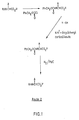
- the method used for the extension of the carboxylic terminus depends upon whether the acid contains any functional groups in a side chain. If there are no functional groups in the side chain, for example as is the case with alanine, valine, leucine, iso leucine, methionine and phenylalanine, then the carboxylic group may be extended by the method of Route 2 illustrated in Figure 1 of the accompanying drawings where Y is as defined above and A represents the remainder of the a-amino acid residue.
- Y may be 4-alkyl- or 4-alkoxy-phenyl or 4'-alkyl- or 4'-alkoxy-biphen-4-yl and A may be
- blocking group B As defined above.
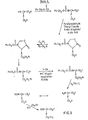
- the most convenient blocking group is methyl (CH 3 ) and blocking may be achieved by Route 3 illustrated in Figure 2 of the accompanying drawing in which A represents the remainder of the a-amino acid residue. It will be noted that the amino and carboxylic termini are themselves temporarily protected by blocking groups which are subsequently removed. R in Route 3 may for example be After protection the a-amino carboxylic acid may have its amino and carboxylic termini extended by Route 1 and Route 2 above.
- Compounds of Formula III may be prepared by extension of either the amino terminus or the carboxylic terminus as appropriate, and a functional group in a side chain on the a-amino acid residue.
- the amino or carboxylic acid termini may be extended by appropriate combinations of Routes 1, 2 and 3 above.
- the side chain contains a hydroxyl group, then it is necessary to protect for example the a-amino carboxylic acid against internal esterification by protecting the carboxyl group when the hydroxyl group is extended and vice-versa.
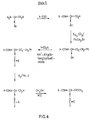
- Route 5 An example of a suitale route for preparation of a compound of Formula III in which the amino terminus and the side chain hydroxyl group of an a-amino carboxylic acid are etended, based upon Routes 1 to 3 above is Route 5 illustrated in Figure 4 of the accompanying drawings in which X and Y are as defined above and R is the a-amino acid residue.
- X may be 4-alkyl- or 4-alkoxy-phenyl or 4'-alkyl- or 4'-alkoxy-biphen-4-yl
- Y may be 4-alkyl or 4-alkoxy-phenyl or 4'-alkyl- or 4'-alkoxy-biphen-4-yl
- R may be
- Route 6 An example of a suitable route for preparation of a compound of Formula III in which the carboxylic acid terminus and the side chain hydroxyl group of an a-amino carboxylic acid are extended, based upon Routes 1 to 3 above is Route 6 illustrated in Figure 5 of the accompanying drawings in which X and Y are as defined above and R is the a-amino acid residue.
- X, Y and R may be as in Route 5 above.
- the amino- group in the product of the final step of Route 5 may be converted into a tertiary amine or an amide group containing no hydrogen atoms likely to engage in strong hydrogen bonding by known methods, such as treatment with an alkyl halide to produce a tertiary amine.
- a compound offormula III may be prepared by extension of that group.
- the a-carboxylic acid group should be appropriately blocked while the side chain carboxylic group is extended. This may be done via the oxazoline as in Route 7 shown in Figure 6, where Y is as defined above and A represents the remainder of the amino acid residue. In this case, as in Route 4, it is preferable to add the group R after cleavage of the oxazoline. The amino terminus of the product of Route 7 may then be extended as in Route 1.
- the compounds of Formulae I and III may be isolated in an optically active (chiral) form, in which case the starting amino acid in Routes 1 to 7 is the corresponding (S)- or (R)-isomer, or in a racemic form, in which case the starting amino acid is racemic. Many of the amino acids are commercially available.
- a ferroelectric smectic liquid crystal material being a mixture of at least two compounds at least one of which is a compound of formula I or III.
- ferroelectric smectic liquid crystal mixture may therefore comprise a mixture of at least one compound of formula I or III and a smectic host.
- esters have the general formula where represents 1,4-phenyl or trans-1,4-cyclohexyl, R 3 represents C 3 - 12 alkyl, alkoxy, alkylcarbonyloxy, alkoxycarbonyl, or alkoxycarbonyloxy, j is 0 or 1, R 4 represents C 3-12 alkyl or alkoxy, one of 0 1 or 0 2 is H and the other F.
- esters of Formula V for use in or as a host together with a compound of formula I or III as dopant are those below, where R 5 is alkyl or alkoxy:
- Ferroelectric smectic liquid crystal mixtures containing a compound of formula I or III may contain other chiral dopants. Such other dopants may induce the same or the opposite sense of helical pitch on the chiral smectic phase of the mixture. If the latter, then a mixture may be obtained in some cases which has an infinite pitch and if the senses of Ps induced by the compound of formula I or III and the dopant are additive, i.e. the same then the mixture may also have a large Ps.
- Some examples of the other known types of dopant which can be used in this way are listed in Table 6.
- R c may be n-alkyl or n-alkoxy
- R D may be n-alkyl or n-alkoxy if not present as ⁇ COOR D .
- R C and R D may independently contain 1-12 carbon atoms.
- (F) indicates that a fluorine substituent may be present.
- a ferroelectric smectic liquid crystal material may also contain other known additives to modify or improve its properties if this is considered necessary, such as viscosity, liquid crystal transition temperatures, birefrigence etc.
- a typical ferroelectric smectic liquid crystal mixture which contains a compound of formula I or III is as follows!
- composition selected will depend upon the properties required. Ps is generally proportional to the amount of chiral dopants present in the mixture, and it is desirable to achieve as high a Ps as possible without compromise of other desirable properties.
- Ferroelectric smectic liquid crystal materials incorporating a compound of formula I or III may be used in the known types of electro optic device which use such materials, for example as generally described in Appl. Phys. Lett. 36, (1980) p. 899. (Reference 1).
- the device may for example be a Clark-Lagerwall device, as described in Reference 1, or in 'Recent Developments in Condensed Matter Physics, 4, (1981), p. 309 published by Plenum, New York'.
- a device operating by a ferroelectric effect in a liquid crystal material exhibiting a chiral smectic phase comprising two substrates at least one of which is optically transparent, electrodes on the inner surfaces of the substrates and a layer of the liquid crystal material sandwiched between the substrates, wherein the liquid crystal material comprises at least one compound of Formulae I or III specified above.
- the device may, for example by a Clark-Lagerwell device.
- Step 1 Preparation of N-methylalanine (i.e. where R in formula I is methyl, and A is also methyl).
- the precipitated NN'-dicyclohexylurea was filtered off and the filtrate was washed successively with water (3 x 50 ml), aqueous 5% acetic acid (3 x 50 ml) and again with water (3 x 50 ml).
- the organic layer was dried and evaporated to give the crude ester, which was purified by column chromatography on silica gel with 3:1 ethyl acetate:petroleum fraction (bp 60-80°C) as eluant.
- Benzyl chloroformate (15 mmol) was added dropwise during ca. 20 minutes to a vigorously stirred solution of serine (10 mmol) in aqueous 10% sodium hydrogen carbonate (50 ml) and stirring was continued for 4 hr.
- the product oxazolinone was obtained as an oil; yield 80%.
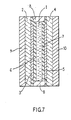
- a liquid crystal cell comprises a layer 1 of liquid crystal material exhibiting a chiral smectic phase sandwiched between a glass slide 2 having a transparent conducting layer 3 on its surface e.g. of tin oxide or indium oxide, and a glass slide 4 also having a transparent conducting layer 5 on its surface.
- the slides 2, 4 with the layers 3, 5 are coated by films 6, 7 of a polyimide polymer.
- films 6, 7 Prior to construction of the cell the films 6, 7 are rubbed with a soft tissue in a given direction the rubbing directions being arranged parallel on assembly of the cell.
- a spacer 8, e.g. of polymethylmethacrylate separates the slides 2, 4 to a required distance e.g. 5 microns.
- the material 1 is introduced between the slides 2, 4 by filling the space between the slides 2, 4 and spacer 8 and sealing the spacer 8 in a vacuum in a known way.
- a suitable material 1 is:
- a polariser 9 is arranged with its polarisation axis parallel to the rubbing direction of the films 6, 7 and an analyser (crossed polariser) 10 is arranged with its polarisation axis perpendicular to that rubbing direction.
Landscapes
- Chemical & Material Sciences (AREA)
- Crystallography & Structural Chemistry (AREA)
- Engineering & Computer Science (AREA)
- Materials Engineering (AREA)
- Organic Chemistry (AREA)
- Organic Low-Molecular-Weight Compounds And Preparation Thereof (AREA)
- Liquid Crystal Substances (AREA)
Abstract
Description
- The present invention relates to liquid crystal compounds derived from amino acids and to materials and devices using them. In particular the invention relates to the liquid crystal phases of such compounds exhibiting ferroelectric behaviour and to the use of the compounds as dopants to produce mixtures capable of forming phases with ferroelectric properties.
- Liquid crystal materials exhibiting a tilted chiral smectic phase have been proposed for use in rapidly switched electro-optical devices, processing and storage devices, based upon the ferroelectric properties of tilted chiral smectic phases, as described for example by N. A. Clark and S. T. Lagerwall in App Phys Lett 36, 899, (1980). (Reference 1).
- The liquid crystal materials described in
Reference 1, DOBAMC (p-decyloxybenzylidene p-amino 2 methylbutylcinnamate) and HOBACPC (L-4-hexyloxybenzylidene-4'-amino-2-chloropropylcinnamate) are for most applications far from ideal because they are relatively unstable chemically and sensitive to light, their spontaneous polarisation coefficients (Ps) are relatively small and their tilted smectic phase occur at inconveniently high temperatures and exist over inconveniently small temperature ranges. - It is becoming increasingly common to prepare ferroelectric smectic liquid crystal mixtures by mixing a liquid crystal material that shows a smectic phase, preferably the smectic C (designated Sc) phase as this is the most fluid, with a chiral (optionally active) compound or compounds to induce the smectic phase of the material to become chiral, e.g. S* c (the asterisk indicating chirality). The smectic liquid crystal material in this case is termed a 'host' and the chiral compound(s) is termed a 'dopant'. A good dopant should desirably induce a high Ps in the mixture. It is preferred that the dopant also shows a smectic liquid crystal phase as an indication of compatibility with a smectic lattice, but this is not essential.
- As the data of ferroelectric smectic liquid crystal materials increases, e.g. in large screen displays of A4 size or larger, it is desirable to decrease the cost of the materials as far as possible. In the case of the chiral dopants the special problems of synthesis of optically pure enantiomers increases their cost.
- Biochemical processes are often extremely sterospecific and result in the production of optically pure compounds, with the added advantage that some biochemical products are very cheap. If such biochemical products could be used to make liquid crystal materials it would be very useful. One attempt to achieve this is described in published copending PCT application GB85/00512 in which compounds of lactic acid are discussed, and in UK patent application 8620111 in which derivatives of a-amino acids are discussed. The amino acid derivatives described in that latter patent application contain the grouping -CO.NH.CH(A).COO- where A represents the residue of the amino acid. The presence of the NH group in these compounds is a probable cause of their relatively high melting point.
- It is an object of the present invention to identify further useful liquid crystal materials derived from optically active natural products.
- According to a first aspect of the invention there is provided a derivative of an a-aminocarboxylic acid, this derivative being optically active and having a general formula I
-

- CH3, CH3(CH2)3, CH20B , CH3CH(CH3),CH3CH(OB) , BSCH2, CH3CH(CH3)CH2,
- CH3CH2CH(CH3), CH3SCH2CH2,


- BOOCCH2CH2 , B2NCOCH2 , B2NCOCH2CH2 , B2NCH2CH2CH2 , B2NCH2CH2CH2CH2,


- wherein R1 is selected from hydrogen, halogen or C1-20 alkyl, alkoxy, fluoroalkyl, fluoralkoxy, alkoxy substituted alkyl, alkyl carbonyloxy and alkoxycarbonyloxy,
- wherein each of the links C, D and E is independently selected from a single bond, COO, OOC, CH2CH2, CN2O, OCH2, CH=N, and N=CH,
- wherein each of the cyclic groups

- wherein each of c, d and e is independently 0 or 1, and (c + d + e) in X plus (c + d + e) in Y is 2, 3 or 4 provided that in Y, E may be a group (CH2)n where n is in the range of 0 to 12.
- Many of the compounds of Formula I may be used as chiral dopants in ferroelectric smectic liquid crystal mixtures with hosts, as described above, and suitability for-such use is among the factors influencing the structural and other preferences discussed below.
- The groups A are residues of naturally occurring a-amino acids and their derivation is shown in table 1, where the residue shown in the right hand column is the side chain extending from the chiral centre to which are attached the a-amino and carboxylic acid functions that form the amide and ester links shown in
Formula 1. Some of the residues shown in table 1 contain functional groups, e.g. -OH in serine, -SH in cysteine,-COOH in aspartic acid -NH in tryptophan and -NH2 in ornithine. The hydrogen atoms present in these residue functional groups may in some case take part in hydrogen bonding which can increase the melting point of the compounds incorporating them which may be detrimental to liquid crystal used and thus the groups B are introduced to reduce or prevent completely the possibility of hydrogen bonding. - As well as possibly presenting the problem of hydrogen bonding, the presence of these functional groups in the a-amino acid side chains may also be used instead of or in addition to the a-amino and carboxylic acid functional groups attached to the chiral centre for bonding to the groups X and Y.

- Therefore according to a further aspect of the invention there is provided a derivative of an a-aminocarboxylic acid, being optically active and having a general formula III:

- wherein R is C1-20 n-alkyl or n-acyl,
- wherein t is 0 or 1, and either T1 represents a group of general formula ll t = o and T2 represents a group-OR2, NHR3 or NR3R4 where R2, R3 and R4 represent unbranched or branched or chiral alkyl groups having 1 to 20 carbon atoms or t = 1 and T2 represents a group of general formula II and T1 represents an unbranched or branched or chiral alkyl group having 1 to 20 carbon atoms
- and wherein W is selected from the following groups:
- T3COOCH2 , CH3CH(OOCT3) , T3SCH2 , T3

- T3OOCCH2CH2, T3CONBCH2CH2, T3CONBCH2CH2CH2CH2,


- , T3 NBCH2CH2CH2CH2,


- T3COOCH2 , CH3CH(OOCT3) , T3SCH2 , T3
- In formulae I and III above, R is preferably a lower, e.g. C1-5 n-alkyl or n-acyl group, especially methyl.
- The group B in formulae I and III above may be any organic group which contains no hydrogen atoms likely to form strong hydrogen bonds. Preferred B groups are alkyl, preferably C1-20 n-alkyl especially methyl, for substitution onto -OH, -SH, =NH or -NH2 functional groups in the residue A. Another preferred group for substitution onto -OH, =NH or ―NH2 functional groups in the residue A is acyl, i.e. R-CO- where R is C1-20 alkyl, preferably n-alkyl especially methyl, which forms ester or amide groups with these functional groups, e.g. with the -NH2 functional group in residue A derived from ornithine.
- It is of course preferred to avoid the use of a group B in compounds of Formula I altogether by the use of an a-amino acid residue that contains no functional groups, such as a-alamine, valine, leucine, isoleucine or phenylalamine.
- Concerning the group of formula II, when a cyclic group is pyrimidine it is preferably a 2,5- linked 1,3- pyrimidine, when a dioxan it is preferably a trans-dioxan. When a cyclic group is a substituted cyclohexane substituents are preferably in the 1 and/or 4 positions e.g.

- The total of (c + d + e) in the groups of formula II in a compound of formula I or III is preferably 2 or 3. The group C, D or E linking the group of formula II to the CO unit of the a-aminoacid is preferably a single bond.
- Examples of preferred combinations of X and Y, of T1 and T3, and T2 and T3 in formula I and III are listed in table 2 below where each Ph represents optionally substituted phenyl, each Cy represents optionally substituted trans-cyclohexane, each BCO represents bicyclo(2,2,2)octyl, each Py represents pyridine or 2,5- linked 1,3- pyrimidine and each Dx represents 2,5- linked 1,3-dioxane. Each group R1 in table 2 is indepenently selected from the groups from which R1 in formula II may be selected, may be the same or different and are preferably both n-alkyl or n-alkoxy.


- In X or T1 R1 is preferably n-alkyl or n-alkoxy containing 5 to 12 carbon atoms. In Y or T2 R1 is preferably n-alkyl containing 1 to 12 carbon atoms.
- Some particularly preferred combinations of X and Y in formula I are shown in table 3 where RA represents C5-12 n-alkyl or n-alkoxy, RB represents n-alkyl containing 1-12 carbon atoms especially ethyl, butyl or hexyl, Rc represents n-alkyl or n-alkoxy containing 1-12 carbon atoms, especially ethyl, butyl, hexyl, ethoxy, butyloxy, or hexyloxy. A is as defined above, especially
- CH3, CH3CH(CH3), CH3 CH(CH3)CH2, CH3CH2CH(CH3), or

- Similarly some particularly preferred groups from which T1, T2 and T3 may be selected are listed in table 4 below, where RA, RB and Rc are as defined with respect to table 3.

- The compounds of Formulae I and III may be prepared using the following preparative routes.
- It is convenient to prepare the compounds of Formulae I and III from naturally occurring preferably commercially available a-amino carboxylic acids, preferably one possessing a chiral centre, e.g. alanine, serine, valine, threonine, cysteine, leucine, isoleucine, methionine, phenylalanine, tyrosine, tryptophan, aspartic acid, glutamic acid, asparagine, glutamine, ornithine, lysine, arginine and cystine.
- It will be noted that serine, threonine and tyrosine contain functional hydroxy (-OH) groups in side chains, aspartic acid and glutamic acid contain functional carboxylic acid (COZH) groups in side chains, asparagine and glutamine contain functional amide (-CONH2) groups in side chains, ornithine, lysine and arginine contain functional amino (-NH2) groups in the side chains and cysteine has a functional mercapto (-SH) group in its side chain.
- When the compounds of formula I and III are prepared in this way from a naturally occurring a-amino acid it is necessary at some stage to add the group R by substitution onto the α-NH2 position of the amino acid. This may be performed at any stage in the preparation provided that other vulnerable sites in the molecule are blocked by a protecting group where necessary, but it is most convenient to add the group R to the α-NH2 position of the starting amino acid before addition of the group X and Y of formula I, or T1, T2 or T3 of formula III.
- Many literature routes are known for the addition of the group R onto the α-NH2 position of an a-amino acid. For example alkylation, in particular methylation may be carried out by the method of E. Fishcher and W. Lipschitz, Chemische Berichte (1915), p. 360-378. In this reference the preparation of N-methylalanine, N-methylleucine, N-methylphenylalanine and N-methyltyrosine are described.
- Using this procedure, when the group R has been added, compounds of formula I may be prepared from the N-substituted amino acid by extension of both the amino and carboxylic acid termini.
- Extension of the amino group may be achieved by
Route 1 below:

- The method used for the extension of the carboxylic terminus depends upon whether the acid contains any functional groups in a side chain. If there are no functional groups in the side chain, for example as is the case with alanine, valine, leucine, iso leucine, methionine and phenylalanine, then the carboxylic group may be extended by the method of
Route 2 illustrated in Figure 1 of the accompanying drawings where Y is as defined above and A represents the remainder of the a-amino acid residue. For example Y may be 4-alkyl- or 4-alkoxy-phenyl or 4'-alkyl- or 4'-alkoxy-biphen-4-yl and A may be
- If there are functional hydroxyl groups in a side chain then before extension of the carboxylic terminus they may be protected by an appropriate blocking group B as defined above. The most convenient blocking group is methyl (CH3) and blocking may be achieved by
Route 3 illustrated in Figure 2 of the accompanying drawing in which A represents the remainder of the a-amino acid residue. It will be noted that the amino and carboxylic termini are themselves temporarily protected by blocking groups which are subsequently removed. R inRoute 3 may for example be
Route 1 andRoute 2 above. - If there are functional carboxylic (-C02H) groups in a side chain of the a-amino carboxylic acid then extension of both the carboxylic functions is possible. To prepare a compound of Formula I from such a dicarboxylic acid then selective blocking and unblocking procedures must be performed on the carboxyl groups. This can conveniently be achieved by proceeding via the oxazolinone in
Route 4 illustrated in Figure 3, where Y as defined above and A represents the remainder of the amino acid residue, e.g. CH2 (aspartic acid). As the N of the amino acid is involved in formation of the oxazoline ring in this route, it is more convenient in this case to add the group R to the N after Y has been added, as shown inRoute 4. The main terminus may then be extended as inRoute 1, and the P-carboxylic acid group blocked by a group B, e.g. methyl, as shown inRoute 4. - Compounds of Formula III may be prepared by extension of either the amino terminus or the carboxylic terminus as appropriate, and a functional group in a side chain on the a-amino acid residue.
- When the a-amino acid contains a hydroxyl group in a side chain the amino or carboxylic acid termini may be extended by appropriate combinations of
Routes - An example of a suitale route for preparation of a compound of Formula III in which the amino terminus and the side chain hydroxyl group of an a-amino carboxylic acid are etended, based upon
Routes 1 to 3 above isRoute 5 illustrated in Figure 4 of the accompanying drawings in which X and Y are as defined above and R is the a-amino acid residue. For example X may be 4-alkyl- or 4-alkoxy-phenyl or 4'-alkyl- or 4'-alkoxy-biphen-4-yl, Y may be 4-alkyl or 4-alkoxy-phenyl or 4'-alkyl- or 4'-alkoxy-biphen-4-yl and R may be -

Routes 1 to 3 above isRoute 6 illustrated in Figure 5 of the accompanying drawings in which X and Y are as defined above and R is the a-amino acid residue. X, Y and R may be as inRoute 5 above. The amino- group in the product of the final step ofRoute 5 may be converted into a tertiary amine or an amide group containing no hydrogen atoms likely to engage in strong hydrogen bonding by known methods, such as treatment with an alkyl halide to produce a tertiary amine. - When the a-amino acid contains a carboxylic group in the side chain a compound offormula III may be prepared by extension of that group. The a-carboxylic acid group should be appropriately blocked while the side chain carboxylic group is extended. This may be done via the oxazoline as in
Route 7 shown in Figure 6, where Y is as defined above and A represents the remainder of the amino acid residue. In this case, as inRoute 4, it is preferable to add the group R after cleavage of the oxazoline. The amino terminus of the product ofRoute 7 may then be extended as inRoute 1. - Various modifications of the
above Routes 1 to 7 will be apparent to those skilled in the art. Although the various steps involved inRoutes 1 to 7 above are not novel, the overall routes and products are novel. Various other methods of making compounds of Formulae I and III will also be apparent to those skilled in the art. - The compounds of Formulae I and III may be isolated in an optically active (chiral) form, in which case the starting amino acid in
Routes 1 to 7 is the corresponding (S)- or (R)-isomer, or in a racemic form, in which case the starting amino acid is racemic. Many of the amino acids are commercially available. - Where an optically active product is required from
Routes 1 to 7 the intermediate products, as well as the final products, are checked to ensure that their optical activity is not destroyed by racemisation during the preparation. - Many of the compounds of formulae I and III, and particularly those which show smectic phases, are useful constituents of ferroelectric smectic liquid crystal mixtures.
- Therefore according to a further aspect of the invention there is provided a ferroelectric smectic liquid crystal material, being a mixture of at least two compounds at least one of which is a compound of formula I or III.
- Generally compounds of formulae I and III will be suitable as chiral dopants rather than as smectic hosts, and the ferroelectric smectic liquid crystal mixture may therefore comprise a mixture of at least one compound of formula I or III and a smectic host.
- Compounds of formulae I and III may be used as dopants in a wide variety of tilted smectic hosts. Some examples of suitably known hosts are the compounds listed in Table 5 below, or mixture of them. A particularly preferred series of compounds for use as or in a tilted smectic host is the series of esters described in copending patent application WO 86/04327 the contents of which are included herein by reference. These esters have the general formula


- Ferroelectric smectic liquid crystal mixtures containing a compound of formula I or III may contain other chiral dopants. Such other dopants may induce the same or the opposite sense of helical pitch on the chiral smectic phase of the mixture. If the latter, then a mixture may be obtained in some cases which has an infinite pitch and if the senses of Ps induced by the compound of formula I or III and the dopant are additive, i.e. the same then the mixture may also have a large Ps. Some examples of the other known types of dopant which can be used in this way are listed in Table 6.

- Where RA and RB may be C1-C12 n-alkyl or n-alkoxy, e.g. RA = C8H17 or C8H170 and RB = C5H11, and n is 1 or 2.

- Where Rc may be n-alkyl or n-alkoxy, and RD may be n-alkyl or n-alkoxy if not present as―COORD. RC and RD may independently contain 1-12 carbon atoms. (F) indicates that a fluorine substituent may be present.
- In addition to a compound of formula I or III, a host, and other chiral dopants which may be present, a ferroelectric smectic liquid crystal material may also contain other known additives to modify or improve its properties if this is considered necessary, such as viscosity, liquid crystal transition temperatures, birefrigence etc.
- A typical ferroelectric smectic liquid crystal mixture which contains a compound of formula I or III is as follows!
-

- The actual composition selected will depend upon the properties required. Ps is generally proportional to the amount of chiral dopants present in the mixture, and it is desirable to achieve as high a Ps as possible without compromise of other desirable properties.
- Ferroelectric smectic liquid crystal materials incorporating a compound of formula I or III may be used in the known types of electro optic device which use such materials, for example as generally described in Appl. Phys. Lett. 36, (1980) p. 899. (Reference 1).
- The device may for example be a Clark-Lagerwall device, as described in
Reference 1, or in 'Recent Developments in Condensed Matter Physics, 4, (1981), p. 309 published by Plenum, New York'. - According to the present invention in a further aspect there is provided a device operating by a ferroelectric effect in a liquid crystal material exhibiting a chiral smectic phase, the device comprising two substrates at least one of which is optically transparent, electrodes on the inner surfaces of the substrates and a layer of the liquid crystal material sandwiched between the substrates, wherein the liquid crystal material comprises at least one compound of Formulae I or III specified above. The device may, for example by a Clark-Lagerwell device.
- Examples of the preparation and properties of compounds embodying the present invention will now be described. In the following Examples certain abbreviations and symbols used having the following meanings:
- h = hours;
- g = grammes;
- mp = melting point;
- bp = boiling point;
- hplc = high pressure liquid chromatography;
- C-SA = crystalline solid to smectic A liquid crystal; transition temperature;
- SA-I = smectic A liquid crystal to isotropic liquid; transition temperature;
- [a] = optical rotation angle (°) Na D line; CHCI3.
- Preparation of compounds of structure:

-
- 1A. L-alanine (18 g) was dissolved in aqueous NaOH (110 ml, 2M). Toluolsulphodichloride (76 g) dissolved in diethyl ether (200 ml) was added and the flask was sealed and shaken at room temperature for 1 hr. A further portion of aqueous NaOH (2M, 300 ml) was then added and the flask sealed and shaken for another hour. The ether was evaporated off to leave a yellow aqueous solution which was filtered and acidified with excess 5M HCI. A thick oil formed which crystallised on seeding and standing for 15 hours at 0°C, forming colourless crystalline needles. These were recrystallised from water. Yield: 33 g (ca. 67%) mpt 134-135°C.
- 1B. The product from 1A above (15 g) was dissolved in aqueous NaOH (125 ml, 2M). Methyl iodide (18 g) was added and the mixture was heated to 65-68°C with violent shaking for 20 min. The mixture was then maintained at this temperature without shaking for a further 20 min before cooling to room temperature and acidifying with excess 5M HCI. An oil formed which rapidly solidified. The solid product was dissolved in aqueous NaHC03 and reprecipitated by acidification with HCI. This product was then recrystallised from water twice. Yield: 12 g mpt 121-123°C. The product was Toluosulpho-L-N-methylalanine:

- 1C. The product from 1B above (20 g) was heated for 8 hr at 100C with HCI (76 ml d.1.19). The clear yellow solution was then cooled to 0°C and the Toluolsulphonic acid which crystallised out was filtered off. The filtrate was evaporated at reduced pressure to obtain the hydrochloride of L-N-methylalanine as a brown syrup which crystallised with difficulty, after prolonged standing in a vacuum dessicator, as brown needles. This crude product was dissolved in ethanol (40 ml) by shaking, and then precipitated out by the gradual addition of diethyl ether, and was then filtered off. Final purification was by recrystallisation from a little ethanol acidified with HCI, followed by drying over
P 201 in vacuo. Mpt was 165.5-166°C. - 1D. The methylamino acid was prepared by heating an aqueous solution of the hydrochloride of 1C with lead oxide PbO, the insoluble lead chloride which formed, and excess PbO being filtered off. The filtrate was evaporated in vacuo to yield colourless needles of the N-methyl alanine. These were recrystallised from ethanol, adding ether to the mother liquor to obtain a further crop of crystals. Yield: ca. 75%. The product was finally dried and kept in vacuo over P205.
- The appropriate 4-n-alkyl or alkyloxy biphenylyl 4'-carboxylic acid (10 mmol) was stirred for 2-3 hours in dry benzene with oxalyl chloride (29 mmol) and dimethyl formamide (catalytic amount). The benzene solvent and unreacted oxalyl chloride were then removed by vacuum evaporation.
- The resulting 4-n-alkyl or alkoxy 4'-carbonyl chloride was dissolved in dry dichloromethane (30 ml) and the solution was added dropwise during 20 minutes to a very vigorously stirred solution of L-N-methylalanine (10 mmol) prepared as in
step 1 above in saturated aqueous NaHC03 (100 ml). Stirring was continued for a further 30 minutes, then the solution was acidified and organic material was extracted into dichloromethane (3 x 50 ml). The combined extracts were dried and evaporated to give the crude amide, whcih was purified by flash chromatography on silica gel with 3:1 ethyl acetate:petroleum fraction (bpt 60-80°C) as eluant.. - Using this method the C8H11O― and C9H19― derivatives were prepared, i.e.:

- (Ref. A. Hassner and V. Aleanian; Tetrahedron letters, (1978), 4475.)
- A mixture of the product of
step 2 above (10 mmol), NN'-dicyclohexylcarbodiimide (11 mmol), ethanol (11 mmol), 4-pyrrilidinopyridine (1 mmol) and dichloromethane (50 ml) was stirrred at room temperature until the reaction was complete by tlc.. - The precipitated NN'-dicyclohexylurea was filtered off and the filtrate was washed successively with water (3 x 50 ml), aqueous 5% acetic acid (3 x 50 ml) and again with water (3 x 50 ml). The organic layer was dried and evaporated to give the crude ester, which was purified by column chromatography on silica gel with 3:1 ethyl acetate:petroleum fraction (bp 60-80°C) as eluant.
- Using this method the compounds:


- The following examples illustrate the use of the various protecting and de-protecting methods. Although the amino acids used contained an amino-group where the NH has not been replaced by NR, there is no chemical reason why these methods should not be used in amino acids in which NH has been replaced by NR.
- Benzyl chloroformate (15 mmol) was added dropwise during ca. 20 minutes to a vigorously stirred solution of serine (10 mmol) in aqueous 10% sodium hydrogen carbonate (50 ml) and stirring was continued for 4 hr.
- The solution was cautiously acidified with dilute HCI and any precipitated product was filtered off. The filtrate or the whole solution if no precipitation occurred was then shaken with ether (3 x 50 ml). Evaporation of the dried ethereal extracts gave the crude product which together with any precipitated product was purified by column chromatography on silica gel and elution with 3:1 ethyl acetate:petroleum fraction (bp 60-80°C).

- The amino group of serine-was protected using benzyl chloroformate as in Example 2 above.
- A solution of the protected serine (10 mmol) in the minimum volume of aqueous 80% ethanol was- titrated to
pH 7 with aqueous 20% caesium carbonate; then the solvent was removed by evaporation at ca. 35°C. Last traces of water were removed from the residue by azeotropic distillation of benzene (3X). - A solution of the resulting caesium salt in dry dimethylformamide (50 ml) was stirred for 24 hr with benzyl bromide (1.2 mol equivalents). The precipitated CsBr was filtered off and the solvent removed in vacuo. Addition of water and shaking of the resulting mixture with chloroform (3 x 50 ml) gave, after evaporation of the dried extracts, the benzyl ester, which was purified by flash chromatography on silica gel and elution with 3:1 ethyl acetate:petroleum fraction (bp 60-80°C).

- The products of Examples 2 and 3 containing protected amino- and carboxylic groups were dissolved in the minimum amount of a mixture of ethanol and ethyl acetate (10:1) and hydrogenated in the presence of 7.5% palladised charcoal (50 mg/g) until the uptake of hydrogen has ceased. The catalyst was filtered off and the solvent removed in vacuo, giving the crude product, which- was purified by an appropriate procedure (e.g. recrystallisation, chromatography). Yields were generally 90-100%.
- An a-amino carboxylic acid which had had its terminal amino- and carboxylic acid groups protected as described in Example 2 and 3 (10 mmol) was dissolved in acetone (30 ml) in a three necked round bottomed flask equipped with two dropping funnels, one containing dimethyl sulfphate (10 mmol), the other containing aqueous 40% w/v sodium hydroxide (20 ml).
- Approximately one third of the sodium hydroxide solution was added to the flask with vigorous stirring, after which time the flask and contents were heated to approx 50°C. Continuing stirring, the remainder of the sodium hydroxide solution and the dimethyl sulphate was added dropwise, simultaneously, over a period of 1.5 h. Stirring was continued for a further 30 min, after which time the acetone was removed by distillation under nitrogen. The contents of the flask were poured out onto crushed ice (100 g) and the solid collected by filtration and washed with cold water.
- Drying in vacuo and recrystallisation from petroleum fraction (bp 60-80°C) yielded the pure methylated product.
- The amino group of L-aspartic acid was protected as in Example 2 using benzyl chloroformate, to form N-benzyloxycarbonyl-L-aspartic acid.
- A mixture of the protected acid (5.35 g), paraformaldehyde (1.8 g), acetic anhydride (4.0 g), acetic acid (75 g) and thionyl chloride (0.3 g) was heated at 100°C for 4 h. Evaporation of the acetic acid under reduced pressure gave an oily residue which was dissolved in ethyl acetate and shaken with aqueous 5% sodium hydrogen carbonate. The aqueous layer was collected and was carefully acidified, with cooling (0-50C). The aqueous phase was then shaken with ethyl acetate (3 x 50 ml) and the ethyl acetate extracts washed with water (1 x 50 ml) and dried (MgS04). Removal of the solvent gave a pale yellow oily crude product. This was purified by column chromatography on silica gel, using an eluant of chloroform/ethyl acetate 3:1.
- The product oxazolinone:

- A solution of the oxazolinone prepared as in Example 6 (1.5 g) in methanol (20 ml) was treated with 1M sodium hydroxide (10 ml) at room temperature for 4 hr. The reaction mixture was then neutralized with 1 M hydrochloric acid and the methanol was removed under reduced pressure. The aqueous solution was shaken with ethyl acetate which in turn was shaken with aqueous 5% sodium hydrogen carbonate. This extract was washed with ethyl acetate before being acidified by the addition of 6M hydrochloric acid, and shaken with ethyl acetate.
- The organic layer was separated, washed with water and dried (MgS04). Evaporation of the solvent gave an oily residue which solidified on staining. Recrystallisation from water gave N-benzyloxycarbonyl-L-aspartic acid.
- An example of the use of a compound of formula I in a liquid crystal material and device embodying the present invention will now be described with reference to Figure 7, which is a cross-sectional end view of a liquid crystal shutter.
- In Figure 7 a liquid crystal cell comprises a
layer 1 of liquid crystal material exhibiting a chiral smectic phase sandwiched between aglass slide 2 having atransparent conducting layer 3 on its surface e.g. of tin oxide or indium oxide, and aglass slide 4 also having atransparent conducting layer 5 on its surface. Theslides layers films films spacer 8, e.g. of polymethylmethacrylate, separates theslides material 1 is introduced between theslides slides spacer 8 and sealing thespacer 8 in a vacuum in a known way. - A
suitable material 1 is:

- A polariser 9 is arranged with its polarisation axis parallel to the rubbing direction of the
films - When a square wave voltage (from a conventional source not shown) varying between about +10 volts and -10 volts is applied across the cell by making contact with the
layers
Claims (9)


wherein X and Y are independently groups of general formula II


Applications Claiming Priority (2)
| Application Number | Priority Date | Filing Date | Title |
|---|---|---|---|
| GB858524879A GB8524879D0 (en) | 1985-10-09 | 1985-10-09 | N-substituted amino acid derivatives |
| GB8524879 | 1985-10-09 |
Publications (2)
| Publication Number | Publication Date |
|---|---|
| EP0241502A1 EP0241502A1 (en) | 1987-10-21 |
| EP0241502B1 true EP0241502B1 (en) | 1990-05-23 |
Family
ID=10586401
Family Applications (1)
| Application Number | Title | Priority Date | Filing Date |
|---|---|---|---|
| EP86905900A Expired EP0241502B1 (en) | 1985-10-09 | 1986-10-06 | N-substituted amino acid derivatives for use in liquid crystal materials and devices |
Country Status (5)
| Country | Link |
|---|---|
| US (2) | US4824217A (en) |
| EP (1) | EP0241502B1 (en) |
| DE (1) | DE3671462D1 (en) |
| GB (1) | GB8524879D0 (en) |
| WO (1) | WO1987002375A1 (en) |
Families Citing this family (16)
| Publication number | Priority date | Publication date | Assignee | Title |
|---|---|---|---|---|
| US5236618A (en) * | 1984-07-11 | 1993-08-17 | Merck Patent Gesellschaft Mit Beschrankter Haftung | Liquid crystal phase |
| GB8428653D0 (en) * | 1984-11-13 | 1984-12-19 | Secr Defence | Diesters |
| GB8524879D0 (en) * | 1985-10-09 | 1985-11-13 | Secr Defence | N-substituted amino acid derivatives |
| GB8607974D0 (en) * | 1986-04-01 | 1986-05-08 | Secr Defence | Amide liquid crystal compounds |
| DE3638119A1 (en) * | 1986-11-08 | 1988-05-11 | Hoechst Ag | CHIRAL ARYLOXYPROPIONIC ACID ESTERS AND THEIR USE AS DOPE IN LIQUID CRYSTAL PHASES |
| DE3644522A1 (en) * | 1986-12-24 | 1988-07-14 | Hoechst Ag | USE OF OPTICALLY ACTIVE 1-ACYLPROLINE ESTERS AS DOPING SUBSTANCES IN LIQUID CRYSTAL MIXTURES AND NEW OPTICALLY ACTIVE 1-ACYL PROLINESTERS |
| JPH06104827B2 (en) * | 1987-07-31 | 1994-12-21 | キヤノン株式会社 | Ferroelectric liquid crystal element |
| US5192798A (en) * | 1988-02-19 | 1993-03-09 | The Upjohn Company | Lipophilic polyamines useful for treating hypercholesterolemia |
| DE3909354A1 (en) * | 1989-03-22 | 1990-09-27 | Hoechst Ag | FERROELECTRIC LIQUID CRYSTAL SYSTEMS HAVING HIGH SPONTANEOUS POLARIZATION AND GOOD ORIENTATION PROPERTIES |
| JPH0655701B2 (en) * | 1989-09-22 | 1994-07-27 | 昭和電工株式会社 | Amino acid derivative |
| DE4010295A1 (en) * | 1989-03-31 | 1990-10-04 | Showa Denko Kk | NEW AMINO ACID DERIVATIVES AND METHOD FOR THE PRODUCTION THEREOF |
| US5037574A (en) * | 1989-05-19 | 1991-08-06 | Cornell Research Foundation, Inc. | Hydrogen-bonded liquid crystal complexes |
| US5231528A (en) * | 1989-06-23 | 1993-07-27 | Hoechst Aktiengesellschaft | Ferroelectric liquid crystal components having high spontaneous polarization and low helical pitch |
| JP2938232B2 (en) * | 1991-07-25 | 1999-08-23 | キヤノン株式会社 | Ferroelectric liquid crystal display device |
| GB2297556B (en) * | 1995-01-31 | 1998-08-26 | Merck Patent Gmbh | Liquid crystalline material comprising terpenoids |
| US7303694B2 (en) * | 2003-07-17 | 2007-12-04 | Wisconsin Alumni Research Foundation | Liquid crystals with reduced toxicity and applications thereof |
Family Cites Families (19)
| Publication number | Priority date | Publication date | Assignee | Title |
|---|---|---|---|---|
| US4293193A (en) * | 1979-08-15 | 1981-10-06 | Temple University | Amine-substituted liquid crystal compositions |
| US4394070A (en) * | 1980-07-16 | 1983-07-19 | Minnesota Mining And Manufacturing Company | Helichromic compounds and displays |
| US4460492A (en) * | 1981-11-19 | 1984-07-17 | Temple University | Low viscosity lyotropic cholesteric liquid crystal compositions |
| US4613209A (en) * | 1982-03-23 | 1986-09-23 | At&T Bell Laboratories | Smectic liquid crystals |
| FR2533209B1 (en) * | 1982-09-22 | 1985-11-08 | Centre Nat Rech Scient | LIPOPEPTIDES, THEIR OBTAINMENT AND THEIR APPLICATION AS EMULSIFIERS |
| DE3377219D1 (en) * | 1982-11-26 | 1988-08-04 | Hitachi Ltd | Smectic liquid crystal compounds and liquid crystal compositions |
| EP0115693B1 (en) * | 1983-01-06 | 1987-08-26 | Chisso Corporation | Liquid crystalline compounds and mixtures thereof |
| JPS6028487A (en) * | 1983-07-27 | 1985-02-13 | Alps Electric Co Ltd | Liquid crystal composition |
| DE3333677A1 (en) * | 1983-09-17 | 1985-04-04 | Merck Patent Gmbh, 6100 Darmstadt | LIQUID CRYSTAL PHASE |
| FR2561657B1 (en) * | 1984-03-20 | 1988-02-19 | Thomson Csf | PROCESS FOR OBTAINING A SMECTIC LIQUID CRYSTAL C CHIRAL FERROELECTRIC LIQUID CRYSTAL OBTAINED BY THIS METHOD AND VISUALIZATION DEVICE USING THE LIQUID CRYSTAL |
| US4668829A (en) * | 1984-07-18 | 1987-05-26 | University Patents, Inc. | Ferroelectric smectic liquid crystals |
| US4775223A (en) * | 1984-09-20 | 1988-10-04 | Canon Kabushiki Kaisha | Lactic acid derivative, liquid crystal composition containing same and liquid crystal device |
| GB8524879D0 (en) * | 1985-10-09 | 1985-11-13 | Secr Defence | N-substituted amino acid derivatives |
| WO1986002937A1 (en) * | 1984-11-13 | 1986-05-22 | The Secretary Of State For Defence In Her Britanni | Compounds for ferroelectric liquid crystal devices |
| GB2170214A (en) * | 1985-01-26 | 1986-07-30 | Stc Plc | Ferroelectric smectic liquid crystal mixture |
| GB8501509D0 (en) * | 1985-01-22 | 1985-02-20 | Secr Defence | Esters |
| US4764619A (en) * | 1985-03-26 | 1988-08-16 | Asahi Glass Company Ltd. | Optically active compounds, smectic liquid crystal compositions containing them and smectic liquid crystal display devices |
| GB8520715D0 (en) * | 1985-08-19 | 1985-09-25 | Secr Defence | Secondary alcohol derivatives |
| US4705874A (en) * | 1985-10-01 | 1987-11-10 | University Patents, Inc. | Synthesis of new liquid crystal materials possessing phenylbenzoate or biphenyl core units and (2,3)-epoxyalkyloxiranemethanol chiral tails |
-
1985
- 1985-10-09 GB GB858524879A patent/GB8524879D0/en active Pending
- 1985-11-08 US US06/890,844 patent/US4824217A/en not_active Expired - Lifetime
-
1986
- 1986-10-06 WO PCT/GB1986/000599 patent/WO1987002375A1/en not_active Ceased
- 1986-10-06 US US07/093,546 patent/US4941992A/en not_active Expired - Lifetime
- 1986-10-06 EP EP86905900A patent/EP0241502B1/en not_active Expired
- 1986-10-06 DE DE8686905900T patent/DE3671462D1/en not_active Expired - Lifetime
Also Published As
| Publication number | Publication date |
|---|---|
| DE3671462D1 (en) | 1990-06-28 |
| EP0241502A1 (en) | 1987-10-21 |
| US4941992A (en) | 1990-07-17 |
| WO1987002375A1 (en) | 1987-04-23 |
| US4824217A (en) | 1989-04-25 |
| GB8524879D0 (en) | 1985-11-13 |
Similar Documents
| Publication | Publication Date | Title |
|---|---|---|
| EP0241502B1 (en) | N-substituted amino acid derivatives for use in liquid crystal materials and devices | |
| KR960009566B1 (en) | Ferroelectric smectic liquid crystal composition containing chiral liquid crystal compound | |
| EP0159872B1 (en) | Smectic liquid crystal compound and liquid crystal compositions | |
| EP0201554B2 (en) | Compounds for ferroelectric liquid crystal devices | |
| WO1987006577A2 (en) | Optically active naphthalene compounds and liquid crystal compositions containing them | |
| EP0737733B1 (en) | Liquid crystal compound having ferrielectric phase and liquid crystal composition | |
| Chan et al. | The synthesis of optically active cyanohydrin esters and their use as high Ps dopants for ferroelectric displays | |
| US4923633A (en) | Liquid crystal compounds containing two or more chiral centers | |
| JP2624956B2 (en) | Mixtures for ferroelectric liquid crystal devices | |
| JPS59118744A (en) | Liquid crystal substance and liquid crystal composition | |
| EP0585032B1 (en) | Anti-ferroelectric liquid crystal and liquid crystal display device | |
| US5384071A (en) | Chiral liquid crystal compounds | |
| JP2525156B2 (en) | Amino acid derivative and device suitable for use in liquid crystal material | |
| US5091557A (en) | Amino acid derivative having liquid crystal property and process for production of the same | |
| WO1988002390A2 (en) | Liquid crystal compounds, mixtures and devices | |
| US5002692A (en) | Amide liquid crystal compounds: mixtures and devices using them | |
| US5041602A (en) | Amino acid derivative having liquid crystal property and process for production of the same | |
| WO1987005291A2 (en) | Liquid crystal compounds, mixtures and devices | |
| JP2579810B2 (en) | Alkylthiobenzoic acid derivatives | |
| EP0354355A1 (en) | Optically active compound and liquid crystal composition | |
| JP3065734B2 (en) | Cinnamic acid derivative | |
| US5118442A (en) | Optically active compound | |
| JPH03120239A (en) | New ester compound, liquid crystal composition and optical switching element containing the same | |
| JPH04316544A (en) | Cyclohexylamine derivative and production thereof | |
| JPH03284656A (en) | Amine derivative |
Legal Events
| Date | Code | Title | Description |
|---|---|---|---|
| PUAI | Public reference made under article 153(3) epc to a published international application that has entered the european phase |
Free format text: ORIGINAL CODE: 0009012 |
|
| 17P | Request for examination filed |
Effective date: 19870610 |
|
| AK | Designated contracting states |
Kind code of ref document: A1 Designated state(s): CH DE FR GB LI |
|
| 17Q | First examination report despatched |
Effective date: 19890127 |
|
| GRAA | (expected) grant |
Free format text: ORIGINAL CODE: 0009210 |
|
| AK | Designated contracting states |
Kind code of ref document: B1 Designated state(s): CH DE FR GB LI |
|
| REF | Corresponds to: |
Ref document number: 3671462 Country of ref document: DE Date of ref document: 19900628 |
|
| ET | Fr: translation filed | ||
| PLBE | No opposition filed within time limit |
Free format text: ORIGINAL CODE: 0009261 |
|
| STAA | Information on the status of an ep patent application or granted ep patent |
Free format text: STATUS: NO OPPOSITION FILED WITHIN TIME LIMIT |
|
| 26N | No opposition filed | ||
| REG | Reference to a national code |
Ref country code: GB Ref legal event code: IF02 |
|
| REG | Reference to a national code |
Ref country code: GB Ref legal event code: 732E |
|
| REG | Reference to a national code |
Ref country code: FR Ref legal event code: TP |
|
| PGFP | Annual fee paid to national office [announced via postgrant information from national office to epo] |
Ref country code: FR Payment date: 20020906 Year of fee payment: 17 |
|
| PGFP | Annual fee paid to national office [announced via postgrant information from national office to epo] |
Ref country code: GB Payment date: 20020916 Year of fee payment: 17 |
|
| PGFP | Annual fee paid to national office [announced via postgrant information from national office to epo] |
Ref country code: CH Payment date: 20020917 Year of fee payment: 17 |
|
| PGFP | Annual fee paid to national office [announced via postgrant information from national office to epo] |
Ref country code: DE Payment date: 20020924 Year of fee payment: 17 |
|
| PG25 | Lapsed in a contracting state [announced via postgrant information from national office to epo] |
Ref country code: GB Free format text: LAPSE BECAUSE OF NON-PAYMENT OF DUE FEES Effective date: 20031006 |
|
| PG25 | Lapsed in a contracting state [announced via postgrant information from national office to epo] |
Ref country code: LI Free format text: LAPSE BECAUSE OF NON-PAYMENT OF DUE FEES Effective date: 20031031 Ref country code: CH Free format text: LAPSE BECAUSE OF NON-PAYMENT OF DUE FEES Effective date: 20031031 |
|
| PG25 | Lapsed in a contracting state [announced via postgrant information from national office to epo] |
Ref country code: DE Free format text: LAPSE BECAUSE OF NON-PAYMENT OF DUE FEES Effective date: 20040501 |
|
| GBPC | Gb: european patent ceased through non-payment of renewal fee |
Effective date: 20031006 |
|
| REG | Reference to a national code |
Ref country code: CH Ref legal event code: PL |
|
| PG25 | Lapsed in a contracting state [announced via postgrant information from national office to epo] |
Ref country code: FR Free format text: LAPSE BECAUSE OF NON-PAYMENT OF DUE FEES Effective date: 20040630 |
|
| REG | Reference to a national code |
Ref country code: FR Ref legal event code: ST |