EP0238982B1 - Anticholinergic compounds, pharmaceutical compositions and method of treatment - Google Patents
Anticholinergic compounds, pharmaceutical compositions and method of treatment Download PDFInfo
- Publication number
- EP0238982B1 EP0238982B1 EP87103868A EP87103868A EP0238982B1 EP 0238982 B1 EP0238982 B1 EP 0238982B1 EP 87103868 A EP87103868 A EP 87103868A EP 87103868 A EP87103868 A EP 87103868A EP 0238982 B1 EP0238982 B1 EP 0238982B1
- Authority
- EP
- European Patent Office
- Prior art keywords
- compound according
- compound
- formula
- carbon atoms
- methyl
- Prior art date
- Legal status (The legal status is an assumption and is not a legal conclusion. Google has not performed a legal analysis and makes no representation as to the accuracy of the status listed.)
- Expired - Lifetime
Links
- 0 C(C1)C1C1*C2(CC2)CCC1 Chemical compound C(C1)C1C1*C2(CC2)CCC1 0.000 description 4
Images
Classifications
-
- C—CHEMISTRY; METALLURGY
- C07—ORGANIC CHEMISTRY
- C07D—HETEROCYCLIC COMPOUNDS
- C07D225/00—Heterocyclic compounds containing rings of more than seven members having one nitrogen atom as the only ring hetero atom
- C07D225/02—Heterocyclic compounds containing rings of more than seven members having one nitrogen atom as the only ring hetero atom not condensed with other rings
-
- C—CHEMISTRY; METALLURGY
- C07—ORGANIC CHEMISTRY
- C07D—HETEROCYCLIC COMPOUNDS
- C07D451/00—Heterocyclic compounds containing 8-azabicyclo [3.2.1] octane, 9-azabicyclo [3.3.1] nonane, or 3-oxa-9-azatricyclo [3.3.1.0<2,4>] nonane ring systems, e.g. tropane or granatane alkaloids, scopolamine; Cyclic acetals thereof
- C07D451/02—Heterocyclic compounds containing 8-azabicyclo [3.2.1] octane, 9-azabicyclo [3.3.1] nonane, or 3-oxa-9-azatricyclo [3.3.1.0<2,4>] nonane ring systems, e.g. tropane or granatane alkaloids, scopolamine; Cyclic acetals thereof containing not further condensed 8-azabicyclo [3.2.1] octane or 3-oxa-9-azatricyclo [3.3.1.0<2,4>] nonane ring systems, e.g. tropane; Cyclic acetals thereof
- C07D451/04—Heterocyclic compounds containing 8-azabicyclo [3.2.1] octane, 9-azabicyclo [3.3.1] nonane, or 3-oxa-9-azatricyclo [3.3.1.0<2,4>] nonane ring systems, e.g. tropane or granatane alkaloids, scopolamine; Cyclic acetals thereof containing not further condensed 8-azabicyclo [3.2.1] octane or 3-oxa-9-azatricyclo [3.3.1.0<2,4>] nonane ring systems, e.g. tropane; Cyclic acetals thereof with hetero atoms directly attached in position 3 of the 8-azabicyclo [3.2.1] octane or in position 7 of the 3-oxa-9-azatricyclo [3.3.1.0<2,4>] nonane ring system
- C07D451/06—Oxygen atoms
- C07D451/10—Oxygen atoms acylated by aliphatic or araliphatic carboxylic acids, e.g. atropine, scopolamine
-
- A—HUMAN NECESSITIES
- A61—MEDICAL OR VETERINARY SCIENCE; HYGIENE
- A61P—SPECIFIC THERAPEUTIC ACTIVITY OF CHEMICAL COMPOUNDS OR MEDICINAL PREPARATIONS
- A61P25/00—Drugs for disorders of the nervous system
- A61P25/02—Drugs for disorders of the nervous system for peripheral neuropathies
-
- A—HUMAN NECESSITIES
- A61—MEDICAL OR VETERINARY SCIENCE; HYGIENE
- A61P—SPECIFIC THERAPEUTIC ACTIVITY OF CHEMICAL COMPOUNDS OR MEDICINAL PREPARATIONS
- A61P27/00—Drugs for disorders of the senses
- A61P27/02—Ophthalmic agents
-
- C—CHEMISTRY; METALLURGY
- C07—ORGANIC CHEMISTRY
- C07D—HETEROCYCLIC COMPOUNDS
- C07D225/00—Heterocyclic compounds containing rings of more than seven members having one nitrogen atom as the only ring hetero atom
- C07D225/04—Heterocyclic compounds containing rings of more than seven members having one nitrogen atom as the only ring hetero atom condensed with carbocyclic rings or ring systems
Definitions
- Thepresent invention relates to certain novel anticholinergic and mydriatic compounds as well as pharmaceutical compositions containing the novel compounds and methods of treatment of animals and humans in need thereof.
- anticholinergic drugs such as atropine andscopolamine and their synthetic analogs all share a variety of undesirable side effects.
- Ophthalmic use may also induce local side effects such as transient stinging, allergic lid reactions, follicular conjunctivitis, edema and photophobia. See Toxicology of Commercial Products, R.E. Gosselin et al, Eds. (Williams & Wilkins, Balt., 4th Ed., 1976) Sec. III, pp. 43-46.
- Mydriatic agents are an important class of compounds that are used to dilate the pupil. Mydriasis is required during ophthalmicexaminations, in order to provide for a more complete examinations, in order to provide for a more complete examination of the fundus, the vitreous and the periphery of the lens, and in various surgical procedures such as those reported by Freeman et al., American Intra-Ocular Society Journal7:172-173 (1981) (e.g., vitrectomy, lens extraction, andintraocular lens implantation). Commercially available mydriatic drugs such as atropine, scopolamine, homatropine and their synthetic analogs all suffer from several disadvantages.
- the mydriasis induced by these agents causes blurred vision and is of a relatively long duration, i.e., several hours, it is necessary to virtually immobilize the patient after the ophthalmic wxamination until the mydriasis subsides and the patient can resume normal activieties. Ophthalmic use of these agents may also induce local side effects such as transient stinging, allergic lid photophobia. See R.E. Gosselin et al supra .
- USP 2814623 describes certain esters of N-methylscopolamine quaternary ammonium salt having high anticholinergic activity but lack appreciable CNS activity.
- USP 3649630 describes homatropine dipropylacetate which is said to have good antiulcer activity but very little mydriatic and antisecretory activity.
- F.R.-M 6937 describes derivatives of norscopolamine and the corresponding acid addition and quaternary salt having anticholinergic properties.
- USP 4160099 describes labile quaternary ammonium salts/esters of atropine as transient derivatives. Bodor in J.Med.Chem. 1980, 23, 474 and in Adv. Drug Res. 13, 255 (1984) describes the same specific group of anticholinergic agents which are "soft" in nature but which are quite different structurally from the compounds described hereinafter.
- R1 is a straight or branched chain alkyl or cycloalkyl group having up to 8 carbon atoms
- R2 is an aryl, cycloalkyl or alkyl group having up to 8 carbon atoms
- R3 is H or a group defined by X is wherein R8 is H or a straight or branched chain alkyl group having up to 5 carbon atoms; m4is an integer from 0 to 4; R4 is wherein R5 is an alkyl group having up to 5 carbon atoms; or R4 is wherein R5 and R6 may be the same or different and are alkyl groups having up to 5 carbon atoms; or R4 is an ortho-, meta- or para-substituted alkyl pyridine of the formula wherein Z is an integer from 0 to 3; or a quaternary ammonium salt of a compound of formula (I) with a compound of the formula R7Y wherein R7 is an alkyl group having up to 5 carbon atoms and Y is a pharmaceutically acceptable anion.
- the compounds of formula (I) exhibit anticholinergic and/or mydriatic properties.
- the invention further provides pharmaceutical compositions in unit dosage form comprising an anticholinergic or mydriasis inducing effective amount of a compound of the above formula and a pharmaceutically acceptable carrier therefor.
- the invention is predicated on the discovery that certain esters of inactive polar acidic metabolites of atropine, scopolamine and other compounds, as well as synthetic analogs thereof, are active anticholinergic compounds which are significantly less toxic than their parent free alcohols.
- the free acids having the structural formula: are anticholinergically inactive metabolites of atropine and scopolamine, respectively.
- Certain esters of these acids possess anticholinergic and mydriatic properties equivalent to atropine and scopolamine but are far less toxic.
- the esters are metabolically hydrolyzed to the above inactive acidic metabolites (II) and (III) and non-toxic alcohols when administered to animals or humans.
- R1 in the above formula (I) is the esterification residue of a pharmaceutically acceptable non-toxic alcohol R1OH such that the ester group therein, -COOR1 is metabolically hydrolyzable to the free alcohol and the inactive acidic metabolite -COOH.
- R1 is most preferably lower alkyl, e.g., methyl, ethyl, propyl, etc.
- the quaternary ammonium derivatives are the preferred anticholinergic and mydriatic compounds in that they possess higher anticholinergic activities than the non-derivatized compounds.
- the quaternary substituents may be any non-toxic lower alkyl group, most preferably methyl, and Y may be any pharmaceutically acceptable anion, preferably halogen, sulfate, alkylsulfate or alkylsulfonate.
- the compounds of the present invention are referred to as "soft drug” analogs or derivatives of the corresponding active alcohols.
- Soft drug mydriatic agents according to the present invention are illustrated in the following Table A which exemplifies several drugs based upon the above structural formula I.
- esters are prepared in two steps to the tertiary compounds and in three steps to the quaternary compounds from the phenylmalonic acid.
- Soft drug anticholinergic agents according to the present invention are illustrated in the following Table B which exemplifies several drugs based upon above structural formula I.
- the rates of metabolic hydrolysis of the active esters may be controlled by selection of the esterifying alcohol.
- the obtained compound has the following structure:
- the previously prepared acid chloride was dissolved in 10 ml of dry benzene and was added dropwise with stirring for half an hour to a solution of dry tropine (2.8 g, 0.02 mol) in dry benzene.
- the mixture was stirred at room temperature for 24 hours and filtered. The filtrate was washed with water until neutral.
- the organic layer was dried over anhydrous MgSO4 and the solvent evaporated.
- the obtained oily base was purified by conversion into oxalate salt by adding an ether solution of oxalic acid to a solution of the base in ether. By scratching the mixture and keeping in a refrigerator overnight, a white solid product was separated. Rapid filtration and drying in a vacuum desiccator over anhydrous CaCl2 was carried out.
- the compound has the following structure:
- the previously prepared acid chloride was dissolved in 10 ml of dry benzene and added dropwise with stirring for half an hour to a solution of dry tropine (2.8 g, 0.02 mol) in dry benzene.
- the mixture was stirred at room tenperature for 24 hours and filtered. The filtrate was washed with water until neutral.
- the organic layer was dried over anhydrous MgSO4 and the solvent evaporated.
- the obtained oily base was purified by formation of oxalate salt.
- An ether solution of oxalic acid was added to an ether solution of the base. By scratching the mixture and keeping in a deep freezer for 24 hours, a white solid product was obtained. Filtration followed by drying in a vacuum desiccator over CaCl2 was carried out.
- the obtained compound has the following structure:
- the synthesized compound has the following structure:
- the cyclohexyl ester prepared above (2.6 g, 0.01 mol) was mixed with thionyl chloride (5 ml) and heated at 70°C for one hour under anhydrous condition. The obtained liquid was evaporated under reduced pressure. Anhydrous benzene (10 ml) was added to the residue and redistilled again to remove any residual thionyl chloride. The oily product was solidified on standing and was used for the next step without further purification.
- the acid chloride was dissolved in 10 ml of dry benzene and added dropwise with stirring for half an hour to a solution of dry tropine (2.8 g, 0.02 mol) in dry benzene.
- the mixture was stirred at room temperature for 24 hours and filtered. The filtrate was washed with water until neutral.
- the organic layer was dried over anhydrous MgSO4 and the solvent evaporated.
- the obtained oily base was converted into oxalate salt by adding an ether solution of oxalic acid to a solution of the base in ether. By scratching the mixture and cooling in a refrigerator, a white solid product was separated. Filtration and drying over CaCl2 in a vacuum desiccator was carried out.
- the obtained compound has the following structure:
- Phenylmalonic acid (2.5 g, 0.014 mol) in dry ether (10 ml) was treated with thionyl chloride (1.78 g, 1.09 ml, 0.01 mol), and N,N-dimethyl formamide (two drops). The mixture was heated at 50°-60°C for 2 hr. Ether and excess thionyl chloride were removed and three separate portions of dry benzene were added and removed the same way. The residue (1.9 gm, 0.01 mol) was dissolved in 20 ml dry benzene and added dropwise over a period of 0.5 hr to a stirred solution of dry tropine (2.82 g, 0.02 mol) in 10 ml dry benzene.
- the obtained compound has the following structure:
- the obtained compound has the following structure:
- the compound has the following structure:
- HPLC high pressure liquid chromatography
- the chromatographic analysis was performed in a system consisting of LCD/Milton Roy Consta Metric III metering pump and LCD UV III Monitor Detector operated at 254 nm.
- the mobile phase consisted of 32% acetonitrile in 0.01 M potassium dihydrogen phosphate, 0.004 M 1-octanesulfonic acid, sodium in 0.1% acetic acid at a flow rate of 2.3 ml/min.
- Sodium hydroxide and sodium dibasic phosphate were used to prepare the buffer at pH 12. The ionic strength was maintained at 0.1 M with sodium chloride.
- Freshly collected plasma was used which contained about 80% plasma diluted with anticoagulant citrate phosphate dextrose solution, U.S.P.
- the mobile phase used for the separation of compound (2) and its degradation product, the half ester (7) consisted of 32% MeCN, 0.01M KH2PO4, 0.004M 1-octanesulfonic acid sodium salt and 0.1% acetic acid. At flow rate of 1.5 ml/min (2) and (7) have retention times of 9 min and 4.6 min, respectively.
- the concentration of the formed dibasic acid was determined by HPLC. 15% acetonitrile, 0.01M KH2 PO4 and 0.1% acetic acid was used as a mobile phase. At a flow rate of 2 ml/min, the product has a retention time of 4 min.
- the liver homogenate was prepared by the following method. Two Sprague-Dawley rats were killed by decapitation, and the livers were removed, weighed and homogenized in a tissue homogenizer in 0.11 M aqueous phosphate buffer, pH 7.4, to make 20% liver homogenate. The homogenate was centrifuged and the supernatant was used for the test. 100 l of 0.6 M solution of the ester in methanol was mixed with 10 ml of the homogenate, previously equilibrated to 37°C in a water bath, to result in an initial concentration of 6 x 10 ⁇ 3 mol/liter ⁇ 1.
- the anticholinergic activity of all the new compounds was investigated in vitro by studying the inhibitory action of the drugs on carbachol-induced spasms of strips of ileum from freshly killed guinea pigs.
- the terminal ileum from guinea pig (200-500 g) was cut into 2-3 cm strips and suspended in freshly prepared Tyrode's solution in 40 ml organ bath. The solution was aerated with 95% oxygen and 5% carbon dioxide at 37°C. A tension of 1 g was applied to the tissue, and cumulative-response curves recorded with carbachol until constant responses were obtained. A concentration of the antagonist was then added to the bath and after 10 seconds, further concentration response curves to carbachol were established. This procedure was then repeated using increasing concentrations of the antagonist.
- PA2 log ( A a -1) -log [antagonist]
- the mydriatic activity of the compounds is illustrated by the following procedure.
- the mydriatic activity of the soft ester drugs was evaluated in 0.9% saline solution at concentrations of 0.05% and 0.1% compared to 0.1% tropicamide (Mydriacyl®).
- Mydriacyl® Normal New Zealand albino rabbits of either sex, weighing about 2 kg were employed. The animals were placed in wooden restraining boxes. Standard doses of 50 ⁇ l were applied to the rabbits' eyes and pupillary changes were measured in a light and temperature controlled room. The degree of pupil dilation, in millimeters, was measured with a Starrett micrometer held at a constant distance at time intervals of 15, 30, 60 90, 120, 180, 240, 300 and 360 minutes.
- the differences in the same animals between the pupil diameter of the eye with drug versus the other eye with saline was recorded. Each point on the graph is the average obtained on 3-6 animals.
- the recovery time is defined as that time required for the pupil diameter to return to 1.0 millimeter in diameter.
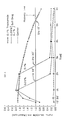
- Fig. 1 depicts mydriasis as a function of time.
- Tropicamide is typical of the shortest acting of the commercially available anticholinergic mydriatic agents.
- the "recovery time" i.e., recovery from mydriasis, is much shorter with the compositions and methods of the invention than with the commercially available products.
- Table 11 sets forth hydrolysis kinetic data in various media for several compounds according to the invention.
- Table 12 sets forth anticholinergic activities for various of the compounds according to the present invention. See Table 11 for the identities of the compounds identified by Roman numerals. The activities were obtained according to the method described in Example 19.
Landscapes
- Chemical & Material Sciences (AREA)
- Organic Chemistry (AREA)
- Health & Medical Sciences (AREA)
- Animal Behavior & Ethology (AREA)
- Public Health (AREA)
- Veterinary Medicine (AREA)
- General Health & Medical Sciences (AREA)
- Chemical Kinetics & Catalysis (AREA)
- General Chemical & Material Sciences (AREA)
- Medicinal Chemistry (AREA)
- Nuclear Medicine, Radiotherapy & Molecular Imaging (AREA)
- Bioinformatics & Cheminformatics (AREA)
- Pharmacology & Pharmacy (AREA)
- Life Sciences & Earth Sciences (AREA)
- Engineering & Computer Science (AREA)
- Neurology (AREA)
- Neurosurgery (AREA)
- Ophthalmology & Optometry (AREA)
- Biomedical Technology (AREA)
- Pharmaceuticals Containing Other Organic And Inorganic Compounds (AREA)
- Nitrogen Condensed Heterocyclic Rings (AREA)
- Acyclic And Carbocyclic Compounds In Medicinal Compositions (AREA)
- Hydrogenated Pyridines (AREA)
- Organic Low-Molecular-Weight Compounds And Preparation Thereof (AREA)
- Medicinal Preparation (AREA)
- Medicines That Contain Protein Lipid Enzymes And Other Medicines (AREA)
- Saccharide Compounds (AREA)
- Steroid Compounds (AREA)
- Plural Heterocyclic Compounds (AREA)
- Indole Compounds (AREA)
- Pyridine Compounds (AREA)
Abstract
Description
- Thepresent inventionrelates to certain novel anticholinergic and mydriatic compounds as well as pharmaceutical compositions containing the novel compounds and methods of treatment of animals and humans in need thereof.
- Commercially available anticholinergic drugs such as atropine andscopolamine and their synthetic analogs all share a variety of undesirable side effects. In the elderly, exciterment, agitation and drowsiness are frequently observed even in small doses. Dangerous central nervous system mediated psychotic reactions and behavioral disturbances have occurred in children after topical ocular administration. Ophthalmic use may also induce local side effects such as transient stinging, allergic lid reactions, follicular conjunctivitis, edema and photophobia. See Toxicology of Commercial Products, R.E. Gosselin et al, Eds. (Williams & Wilkins, Balt., 4th Ed., 1976) Sec. III, pp. 43-46.
- Mydriatic agents are an important class of compounds that are used to dilate the pupil. Mydriasis is required during ophthalmicexaminations, in order to provide for a more complete examinations, in order to provide for a more complete examination of the fundus, the vitreous and the periphery of the lens, and in various surgical procedures such as those reported by Freeman et al., American Intra-Ocular Society Journal7:172-173 (1981) (e.g., vitrectomy, lens extraction, andintraocular lens implantation). Commercially available mydriatic drugs such as atropine, scopolamine, homatropine and their synthetic analogs all suffer from several disadvantages. Because the mydriasis induced by these agents causes blurred vision and is of a relatively long duration, i.e., several hours, it is necessary to virtually immobilize the patient after the ophthalmic wxamination until the mydriasis subsides and the patient can resume normal activieties. Ophthalmic use of these agents may also induce local side effects such as transient stinging, allergic lid photophobia. See R.E. Gosselin et al supra.
- USP 2814623 describes certain esters of N-methylscopolamine quaternary ammonium salt having high anticholinergic activity but lack appreciable CNS activity. USP 3649630 describes homatropine dipropylacetate which is said to have good antiulcer activity but very little mydriatic and antisecretory activity. F.R.-M 6937 describes derivatives of norscopolamine and the corresponding acid addition and quaternary salt having anticholinergic properties. USP 4160099 describes labile quaternary ammonium salts/esters of atropine as transient derivatives. Bodor in J.Med.Chem. 1980, 23, 474 and in Adv. Drug Res. 13, 255 (1984) describes the same specific group of anticholinergic agents which are "soft" in nature but which are quite different structurally from the compounds described hereinafter.
- It is an object of the present invention to provide novel anticholinergic compounds which exhibit anticholinergic properties and which induce mydriasis as well as pharmaceutical compositions and methods of treatment embodying those compounds which are more effective and less toxic than those presently available.
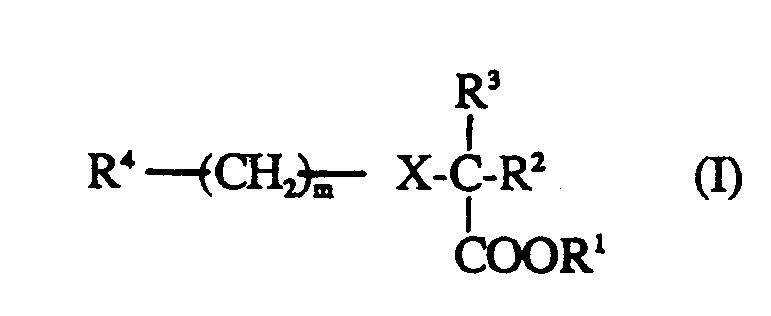
- The foregoing and other objects are realized by the present invention which provides certain novel compounds having the formula:

wherein
R¹ is a straight or branched chain alkyl or cycloalkyl group having up to 8 carbon atoms;
R² is an aryl, cycloalkyl or alkyl group having up to 8 carbon atoms;
- R³ is H or a group defined by

X is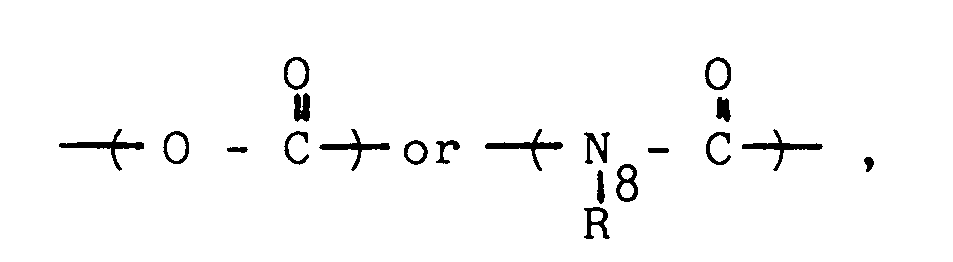
wherein R⁸ is H or a straight or branched chain alkyl group having up to 5 carbon atoms;
m₄is an integer from 0 to 4;
R⁴ is
wherein R⁵ is an alkyl group having up to 5 carbon atoms;
or R⁴ is
wherein R⁵ and R⁶ may be the same or different and are alkyl groups having up to 5 carbon atoms;
or R⁴ is an ortho-, meta- or para-substituted alkyl pyridine of the formula
wherein Z is an integer from 0 to 3;
or a quaternary ammonium salt of a compound of formula (I) with a compound of the formula R⁷Y wherein R⁷ is an alkyl group having up to 5 carbon atoms and Y is a pharmaceutically acceptable anion. - The compounds of formula (I) exhibit anticholinergic and/or mydriatic properties.
- The invention further provides pharmaceutical compositions in unit dosage form comprising an anticholinergic or mydriasis inducing effective amount of a compound of the above formula and a pharmaceutically acceptable carrier therefor.
- The invention is predicated on the discovery that certain esters of inactive polar acidic metabolites of atropine, scopolamine and other compounds, as well as synthetic analogs thereof, are active anticholinergic compounds which are significantly less toxic than their parent free alcohols. Several have also been found to be active mydriatic agents which induce a much shorter duration of mydriasis than the parent free alcohols.
- For example, the free acids having the structural formula:
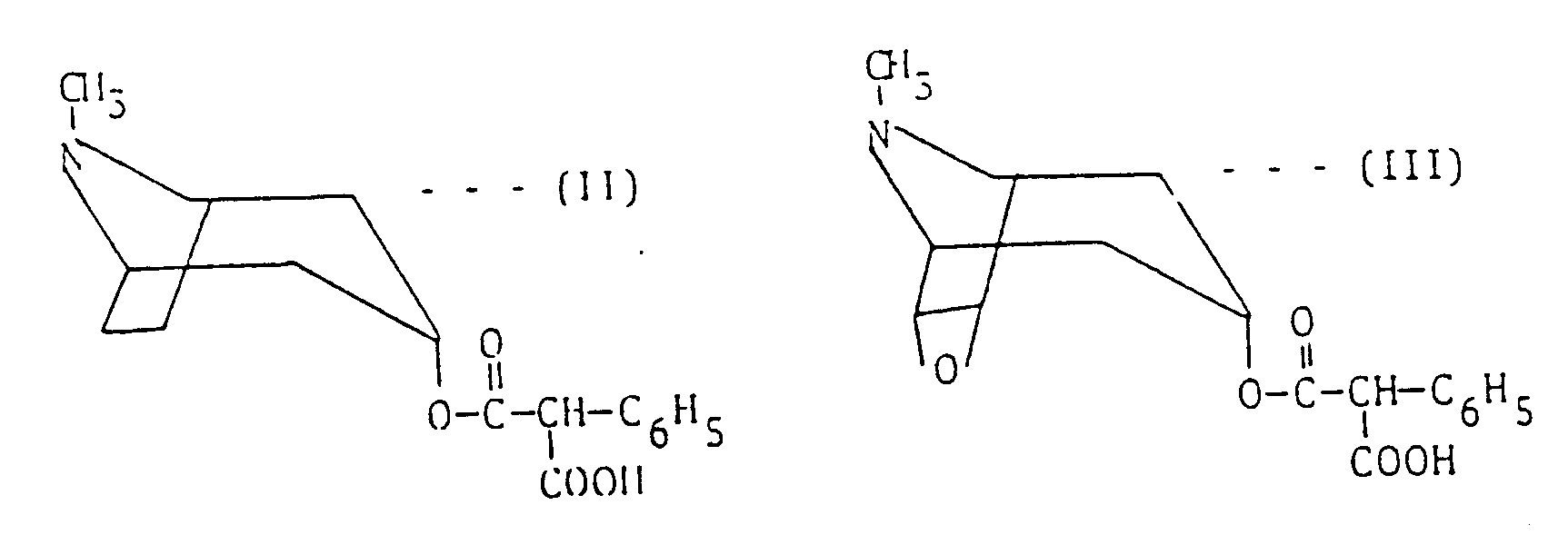
are anticholinergically inactive metabolites of atropine and scopolamine, respectively. Certain esters of these acids possess anticholinergic and mydriatic properties equivalent to atropine and scopolamine but are far less toxic. The esters are metabolically hydrolyzed to the above inactive acidic metabolites (II) and (III) and non-toxic alcohols when administered to animals or humans. - R¹ in the above formula (I) is the esterification residue of a pharmaceutically acceptable non-toxic alcohol R¹OH such that the ester group therein, -COOR¹ is metabolically hydrolyzable to the free alcohol and the inactive acidic metabolite -COOH. R¹is most preferably lower alkyl, e.g., methyl, ethyl, propyl, etc.
- The quaternary ammonium derivatives are the preferred anticholinergic and mydriatic compounds in that they possess higher anticholinergic activities than the non-derivatized compounds. The quaternary substituents may be any non-toxic lower alkyl group, most preferably methyl, and Y may be any pharmaceutically acceptable anion, preferably halogen, sulfate, alkylsulfate or alkylsulfonate.
- For purposes of illustration, the compounds of the present invention are referred to as "soft drug" analogs or derivatives of the corresponding active alcohols.
- Soft drug mydriatic agents according to the present invention are illustrated in the following Table A which exemplifies several drugs based upon the above structural formula I.
- The esters are prepared in two steps to the tertiary compounds and in three steps to the quaternary compounds from the phenylmalonic acid.
- The following reaction scheme is illustrative of the method:


- Soft drug anticholinergic agents according to the present invention are illustrated in the following Table B which exemplifies several drugs based upon above structural formula I.

- The rates of metabolic hydrolysis of the active esters may be controlled by selection of the esterifying alcohol.
- The invention is illustrated by the following non-limiting examples.
- A mixture of phenylmalonic acid (3.6 g, 0.02 mol) boron trifluoride etherate (2.4 ml, 0.02 mol) and 0.8 ml of anhydrous methanol (0.02 mol) was refluxed and stirred for 24 hours. After cooling to room temperature, the reaction mixture was filtered and 20 ml of water was added.
- The precipitated oil was extracted with CHCl₃ (30x3). The combined extracts were washed with water and dried over anhydrous MgSO₄ and evaporated under reduced pressure. The obtained oily liquid showed nmr spectra is consistent with its structure.
Rf of the acid = 0.52 yield = 57%
Rf of the ester = 0.72. - To the obtained oily liquid above was added 5 ml of thionyl chloride. The reaction mixture was heated on an oil bath for one hour under anhydrous condition. The excess thionyl chloride were removed by the addition and the in vacuo distillation of 10 ml of anhydrous benzene. The product was oily and was reacted immediately with tropine base.
- Thoroughly dried tropine (1.4 g, 0.01 mol) was added to the freshly prepared methyl hydrogen phenylmalonyl chloride. The mixture was heated for 5 hrs at 100°, while stirring, under anhydrous condition. The mixture turned to brown and gas evolved. After cooling to room temperature and filtration the mixture was treated with 10 ml of water. The clear solution was adjusted to pH 9 with saturated Na₂CO₃ solution, extracted with ethyl ether and dried over anhydrous MgSO₄. The ethereal solution was filtered and distilled under reduced pressure to produce an oily product.
- Phenylmalonic acid (13.5 g, 0.07 mol) in dry ether (40 ml) was treated with thionyl chloride (8.92 g, 5.4 ml, 0.07 mol) and one drop of N,N-dimethyl formamide. The mixture was heated at 40-50°C. for 3 hours. The clear solution was evaporated under reduced pressure to remove any residual thionyl chloride. The oily residue redissolved in dry ether (40 ml), the solution was treated with ethyl alcohol (0.075 mol, 4.1 cc) and refluxed for 2 hours. The reaction mixture was cooled to room temperature and washed with water. The organic layer was extracted with saturated solution of sodium bicarbonate until alkaline. The combined extracts were washed with ether and the aqueous layer acidified with 5N HCl to pH1. The precipitated oil was extracted with CH₂Cl₂ (3x50). The combined extracts were washed with water (4x50) and dried over anhydrous MgSO₄. The oil product crystallized on standing.
Yield: - 7.2 g (49.4%)
M.p.: 78-9°C (as reported). - Ethyl hydrogen phenylmalonate (2.08 g, 0.01 mol) mixed with thionyl chloride (5 ml) and heated at 70°C for one hour under anhydrous condition. The obtained liquid was evaporated under reduced pressure. Anhydrous benzene (10 ml) was added to the residue and redistilled again to remove any residual thionyl chloride.
- The previously obtained acid chloride (0.01 mol) dissolved in 10 ml of dry benzene was added dropwise with stirring for half an hour to a solution of dry tropine (2.8g, 0.02 mol) in dry benzene. The mixture was stirred at room temperature for 24 hours and filtered. The filtrate was washed with water until neutral. The organic layer was dried over anhydrous MgSO₄ and the solvent evaporated. The obtained oily base was converted into oxalate salt by adding an ether solution of oxalic acid to a solution of the base in ether. By scratching the mixture a white solid product was obtained. When cooled in a deep freezer, then washed with cold ether and dried for 24 hours in a desiccator over CaCl₂, the crystalline product represented 78% conversion to oxalate.
- Recrystallization was carried out from methanol-ether mixture.
Rf of the free base = 0.4
Yield of the free base = 75%
Yield of the oxalate = 78%
M.p. 135-7°C.Anal for C₁₉H₂₅O₄N.(COOH)₂ C% H% N% Theoretical 59.85 6.45 3.32 Found 59.88 6.52 3.30
¹HNMR (CDCl₃) = δ 7.31 (s, 5H, C₆H₆) 5.13-4.88 (s, 1H, C₃ tropine) 4.53 (s, 1H,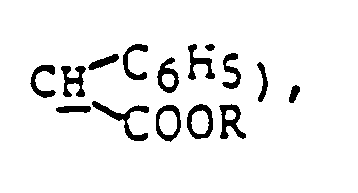
4.19 (q, 2H, J = 7Hz, -COOCH₂CH₃) 3.29-2.9 (br.s, 1H, C₁ + C₅ of tropine), 2.83-1.6[m, 11H, N-CH₃ (s, 2.25)+, bicyclic envelop of tropine. - According to the microanalytical data and NMR spectra, the obtained compound has the following structure:

- Phenylmalonic acid (13.5 g, 0.07 mol) in dry ether (40 ml) was treated with thionyl chloride (8.92 g, 5.4 ml, 0.071 mol) and one drop of N,N-dimethyl formamide. The mixture was heated at 40-50 C for 3 hours. The clear solution was evaporated under reduced pressure to remove any residual thionyl chloride. The oily residue was redissolved in dry ether (40 ml) and the solution was treated with methyl alcohol (0.075 mol, 3 ml) and refluxed for 2 hours. The reaction mixture was cooled to room temperature and washed with water. The organic layer was extracted with saturated solution of sodium bicarbonate until alkaline. The combined extracts were washed with ether and the aqueous layer acidified with 5N HCl to pH1. The precipitated oil was extracted with CH₂Cl₂ (3x50). The combined extracts were washed with water (4x50) and dried over anhydrous MgSO₄. The oil product crystallized on standing.
Yield - 6 g (41.2%)
M.p. - 86-88°C as reported. - The previously prepared ester (2.94 g, 0.01 mol) was mixed with thionyl chloride (5 ml) and heated at 70°C for one hour under anhydrous condition. The obtained liquid was evaporated under reduced pressure. Anhydrous benzene (10 ml) was added to the residue and redistilled again to remove any residual thionyl chloride.
- The previously prepared acid chloride was dissolved in 10 ml of dry benzene and was added dropwise with stirring for half an hour to a solution of dry tropine (2.8 g, 0.02 mol) in dry benzene. The mixture was stirred at room temperature for 24 hours and filtered. The filtrate was washed with water until neutral. The organic layer was dried over anhydrous MgSO₄ and the solvent evaporated. The obtained oily base was purified by conversion into oxalate salt by adding an ether solution of oxalic acid to a solution of the base in ether. By scratching the mixture and keeping in a refrigerator overnight, a white solid product was separated. Rapid filtration and drying in a vacuum desiccator over anhydrous CaCl₂ was carried out.
- Recrystallization from methanol-ether mixture gave white crystalline product.
Rf of the free base = 0.41
Yield of the free base = 1 g (64.5%)
Yield of the oxalate = 1.5 g (35.7%)
M.p. - 89.91°C.Anal. for C₁₈H₂₃O₄N.(COOH)₂.H₂O: C% H% N% Theoretical 56.47 6.39 3.29 Found 56.48 6.2 2.94
¹HNMR (CDCl₃): δ 7.33 (s, 5H, C₆H₅), 5.2-4.8 (br. s, 1H, C₃ tropine), 4.6 (s, 1H,
3.4 (s, 3H -OCH₃), 3.29-2.9 (s, 2H, C₁ + C₅ of tropine), 2.23-1.4 [(m, 11H, bicyclic envelop + NCH₃ (s, 223)]. - According to the microanalytical data and NMR spectra, the compound has the following structure:

- Phenylmalonic acid (13.5 g, 0.07 mol) in dry ether (40 ml) was treated with thionyl chloride (8.92 g, 5.4 ml, 0.07 mol) and one drop of N,N-dimethyl formamide. The mixture was heated at 40-50°C for 3 hours. The clear solution was evaporated under reduced pressure to remove any residual of thionyl chloride. The oily residue was redissolved in dry ether (40 ml), and the solution treated with isopropyl alcohol (0.075 mol, 5.76 ml), refluxed for 2 hours and worked up as before to give the titled compounds.
Yield = 60% (as reported)
M.p. - 64-66°C (as reported). - The previously prepared monoester (2.22 g, 0.01 mol) was mixed with thionyl chloride (5 ml) and heated at 70°C for one hour under anhydrous condition. The obtained liquid was evaporated under reduced pressure. Anhydrous benzene (10 ml) was added and the mixture redistilled again.
- The previously prepared acid chloride was dissolved in 10 ml of dry benzene and added dropwise with stirring for half an hour to a solution of dry tropine (2.8 g, 0.02 mol) in dry benzene. The mixture was stirred at room tenperature for 24 hours and filtered. The filtrate was washed with water until neutral. The organic layer was dried over anhydrous MgSO₄ and the solvent evaporated. The obtained oily base was purified by formation of oxalate salt. An ether solution of oxalic acid was added to an ether solution of the base. By scratching the mixture and keeping in a deep freezer for 24 hours, a white solid product was obtained. Filtration followed by drying in a vacuum desiccator over CaCl₂ was carried out.
- Recrystallization from methanol-ether mixture gave a white crystalline product.
Rf of the base - 0.3
Yield of the base - 2.5 g (72.4%)
Yield of the oxalate - 3 g (68.9%)
M.p. - 78-80°C.Anal. for C₂₀H₂₇O₄N.(COOH)₂. C% H% N% Theoretical 60.68 6.71 3.21 Found 60.41 6.77 3.13
¹HNMR (CDCl₃): δ 7.23 (s, 5H, C₆H₅), 5.2-4.8 (br. s, 1H, C₃ tropine), 4.46 (s, 1H,
3.1-2.91 (br. s, 2H, C₁ + C₅ of tropine), 2.3-1.44 [(m, 11H, bicyclic envelope), + 2.2 (s, 3H, -N-CH₃), 1.23 (d, 6H,
- According to both microanalytical data and NMR spectra, the obtained compound has the following structure:

- Phenylmalonic acid (13.5 g., 0.07 mol) in dry ether (40 ml) was treated with thionyl chloride (8.92 g, 5.4 ml, 0.07 mol) and one drop of N,N-dimethyl formamide. The mixture was heated at 40-50°C for 3 hours. The clear solution was distilled under vacuum. The oil residue redissolved in dry ether (40 ml), the solution was treated with cyclohexyl alcohol (0.075 mol, 7.9 cc) and refluxed for 2 hours. The mixture was worked up as before to give an oily product which crystallized on standing. Recrystallization was carried out from benzene-petroleum ether (40-60°C) mixture to give a white crystalline product.
Rf - 0.76
M.p. - 80-2°C
Yield - 12.5 g (64.14%).Anal. for C₁₅H₁₈O₄ C% H% Theoretical 68.69 6.9 Found 68.79 6.92
¹HNMR (CDCl₃): δ 8.96 (s, 1H, -COOH), 7.3 (s, 5H, C₆H₅), 4.6 (s, 1H,
1.96-1.10 (br. s, 11H, C₆H₁₁). - According to the previous data, the synthesized compound has the following structure:

- The cyclohexyl ester prepared above (2.6 g, 0.01 mol) was mixed with thionyl chloride (5 ml) and heated at 70°C for one hour under anhydrous condition. The obtained liquid was evaporated under reduced pressure. Anhydrous benzene (10 ml) was added to the residue and redistilled again to remove any residual thionyl chloride. The oily product was solidified on standing and was used for the next step without further purification.
- The acid chloride was dissolved in 10 ml of dry benzene and added dropwise with stirring for half an hour to a solution of dry tropine (2.8 g, 0.02 mol) in dry benzene. The mixture was stirred at room temperature for 24 hours and filtered. The filtrate was washed with water until neutral. The organic layer was dried over anhydrous MgSO₄ and the solvent evaporated. The obtained oily base was converted into oxalate salt by adding an ether solution of oxalic acid to a solution of the base in ether. By scratching the mixture and cooling in a refrigerator, a white solid product was separated. Filtration and drying over CaCl₂ in a vacuum desiccator was carried out. On recrystallization from methanol-ether mixture, a white crystalline product was obtained.
Rf - 0.22
Yield of the base - 3 g 77%
Yield of the oxalate - 3.1 g 63%
M.p - 160°-2°C.Anal. for C₂₃H₃₁NO₄.(COOH)₂ C% H% N% Theoretical 63.15 6.99 2.94 Found 63.05 7.26 2.78 
3.2-2.9 (br s, 2H, C₁ + C₅ of tropine); 2.23-1.06[m, 21H, bicyclic envelop + N-CH₃ (s, 2.23) + C₆H₁₁ (br s, 1.66-1.06)]. - According to the microanalytical data and NMR spectra the obtained compound has the following structure:

- Phenylmalonic acid (2.5 g, 0.014 mol) in dry ether (10 ml) was treated with thionyl chloride (1.78 g, 1.09 ml, 0.01 mol), and N,N-dimethyl formamide (two drops). The mixture was heated at 50°-60°C for 2 hr. Ether and excess thionyl chloride were removed and three separate portions of dry benzene were added and removed the same way. The residue (1.9 gm, 0.01 mol) was dissolved in 20 ml dry benzene and added dropwise over a period of 0.5 hr to a stirred solution of dry tropine (2.82 g, 0.02 mol) in 10 ml dry benzene. The mixture was stirred at ambient temperature for 24 hr and filtered. The filtrate was washed with water until neutral and the organic layer was dried over anhydrous MgSO₄ and evaporated. The oily product was transformed to the corresponding oxalate by addition of an ethereal solution of oxalic acid to the solution of the compound in ether. A white solid product was obtained by scratching the ethereal solution and keeping in a refrigerator overnight.
- The white solid was isolated by filtration and thoroughly washed with ether and dried to give 0.7 gm (23%). Rf (CHCl₃: MeOH 3:1)=0.23, m.p. 112-115°C.
Anal. for C₁₇H₂₁O₄N (COOH)₂ 0.5H₂O C% H% N% Theoretical 56.71 6.01 3.48 Found 56.94 6.26 3.32
¹HNMR (CDCl₃) δ 7.16 (s, 5H, C₆H₅); 4.88 (s, 1H,
3.13-2.86 (br s, 2H, C₁+C₅ of tropine); 2.23-1.7 [m, 11H, bicyclic envelope of tropine + N-CH₃ (s, 2.23)]. - According to the above data, the obtained compound has the following structure:

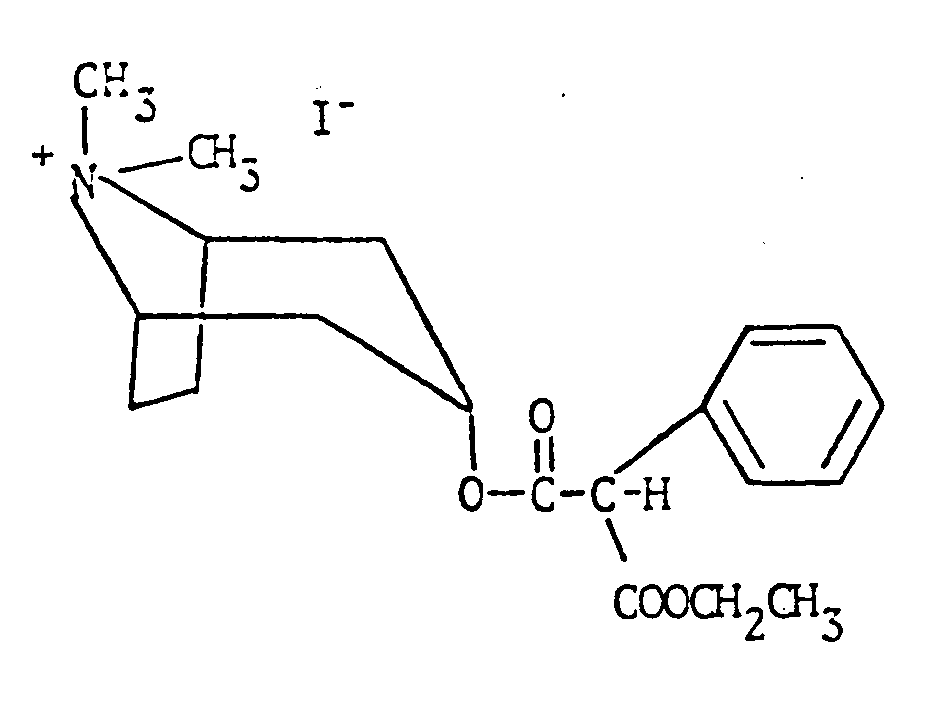
- A solution of cyclohexyl (±)-α-carboxymethyl-8-methyl-8-azabicyclo (3·2·1)oct-3-yl benzeneacetate (3.85 g, 0.01 mol) and 10 ml of methyl iodide in 30 ml of dry benzene was stirred at room temperature for 6 hr. The mixture was filtered and the solid was dried and recrystallized from methanol-ether mixture to give a yellowish-white solid product.
Rf - 0.35
Yield - (55.9%)
M.p. - 228-230°C.Anal for C₂₄H₃₄INO₄.0.25 H₂O C% H% N% Theoretical 54.19 6.53 2.63 Found 54.00 6.48 2.50
¹HNMR (DMSO-d₆) δ 7.33 (s, 5H, C₆H₅); 4.99 (s, 1H,
of tropine); 3.1-1.4 [m, 24H, N⁺CH₃ (s, 3.1) + N⁺CH₃ (s, 3) + bicyclic envelop + C₆H₁₁ (br s, 1.7-1.4)]. - According to the previous data, the obtained compound has the following structure:

- A solution of ethyl (±)-α-(carboxy)-8-methyl-8-azabicyclo [3·2·1]oct-3-yl benzeneacetate (3.31 g, 0.01 mol) and 10 ml of methyl iodide in 25 ml of dry benzene was stirred at room temperature for 6 hr. The mixture was filtered and the solid was dried and recrystallized from alcohol-ether mixture.
Rf - 0.41
M.p. - 232-234 (dec)Anal. for C₂₀H₂₈INO₄ C% H% N% Theoretical 50.75 5.92 2.96 Found 50.55 5.97 2.97
¹HNMR (DMSO-d₆) δ 7.28 (s, 5H, C₆H₅; 4.96 (s, 1H,
4.13 (q, 2H, J = 7Hz, -OCH₂CH₃); 3.23-1.9 [m, 14H, bicyclic envelop + N⁺CH₃ (s, 3.23) + 1.6 (t, 3H, J = 7Hz, -OCH₂CH₃). - According to the previous data the compound has the following structure:

- A solution of methyl (±)-α-(carboxy)-8-methyl-8-azabicyclo[3·2·1]oct-3-yl-benzeneacetate in dry ethyl ether and dimethylsulfate (2 x moles of the ester), was stirred at room temperature overnight. The white solid was filtered, dried, and recrystallized from methanol-ether.
M.p. - 138-140°CAnal. for C₂₀H₂₉NO₈S·1/2 H₂O C% H% N% S% Theoretical 53.08 6.68 3.09 7.08 Found 53.06 6.65 3.01 7.14
¹H NMR (DMSO-d₆) δ 7.4 (s, C₆H₅); 5.1 (s,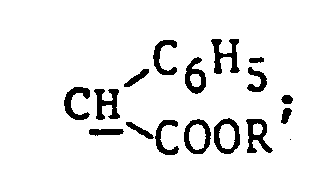
3.8 (s, -OCH₃); 3.4 (s, CH₃SO₄); 3.1 and 3 (s,
2.7-1.6 (m, bicyclic ring). - According to the previous data the compound has the following structure:

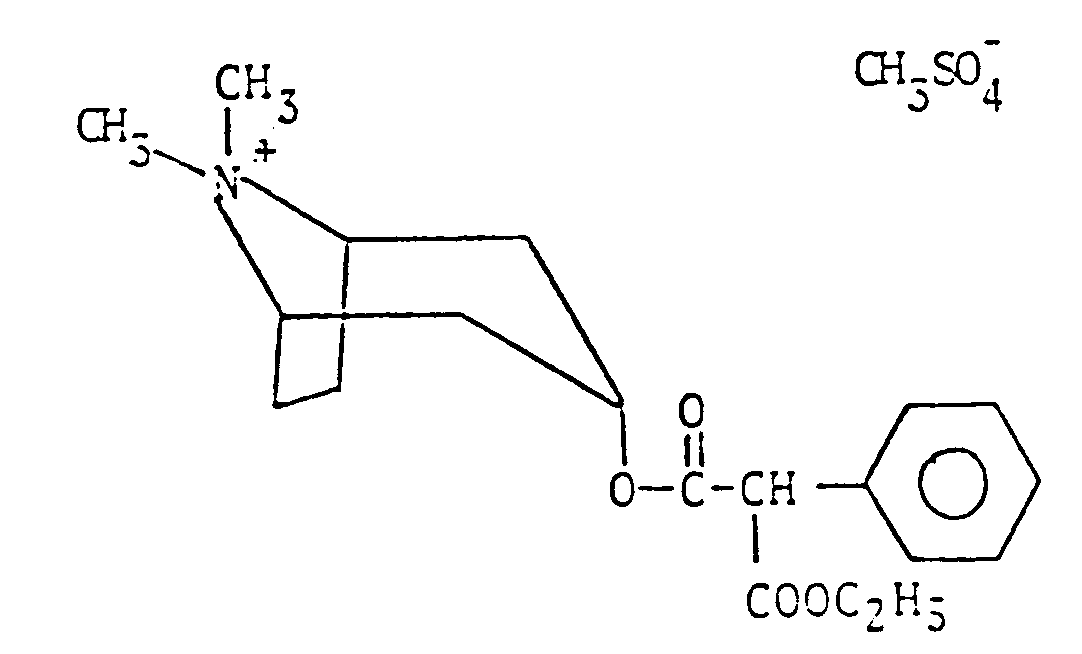
- A solution of ethyl (±)-α-(carboxy)-8-methyl-8-azabicyclo[3·2·1]oct-3-yl-benzeneacetate in dry ethyl ether and dimethylsulfate (2x moles of the ester) was stirred at room temperature overnight. The white solid was filtered, dried and recrystallized from methanol-ether.
M.p. - 165-167°Anal. for C₂₁H₃₁NO₈S C% H% N% S% Theoretical 55.13 6.83 3.06 7.01 Found 55.10 6.87 2.96 7.02
¹H NMR DMSO-d₆). δ 7.4 (s, C₆H₅); 5.1 (s,
4.2 (q-CH₂CH₃); 3.4 (s, CH₃SO₄); 3.1 and 3 (s,
2.8-1.7 (m, bicyclic ring); 1.2 (t, -CH₂-CH₃). - According to the previous data the compound has the following structure:
- A solution of isopropyl (±)-α-(carboxy)-8-methyl-8-azabicyclo[3·2·1]oct-3-yl-benzeneacetate in dry ethyl ether and dimethylsulfate (2x moles of the ester) was stirred at room temperature overnight. The white solid was filtered, dried, and recrystallized from methanol-ether.
M.p. - 128-130°Anal. for C₂₂H₃₃NO₈S C% H% N% S% Theoretical 56.03 7.05 2.97 6.80 Found 55.91 7.08 2.96 6.78
¹H NMR (DMSO-d₆) δ 7.5 (s, C₆H₅); 5.1 (s,
m,
3.4 (s, CH₃SO₄); 3.2 and 3.1 (s,
2.8-1.7 (m, bicyclic ring); 1.3 (t,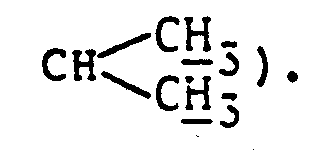
- According to the previous data, the compound has the following structure:

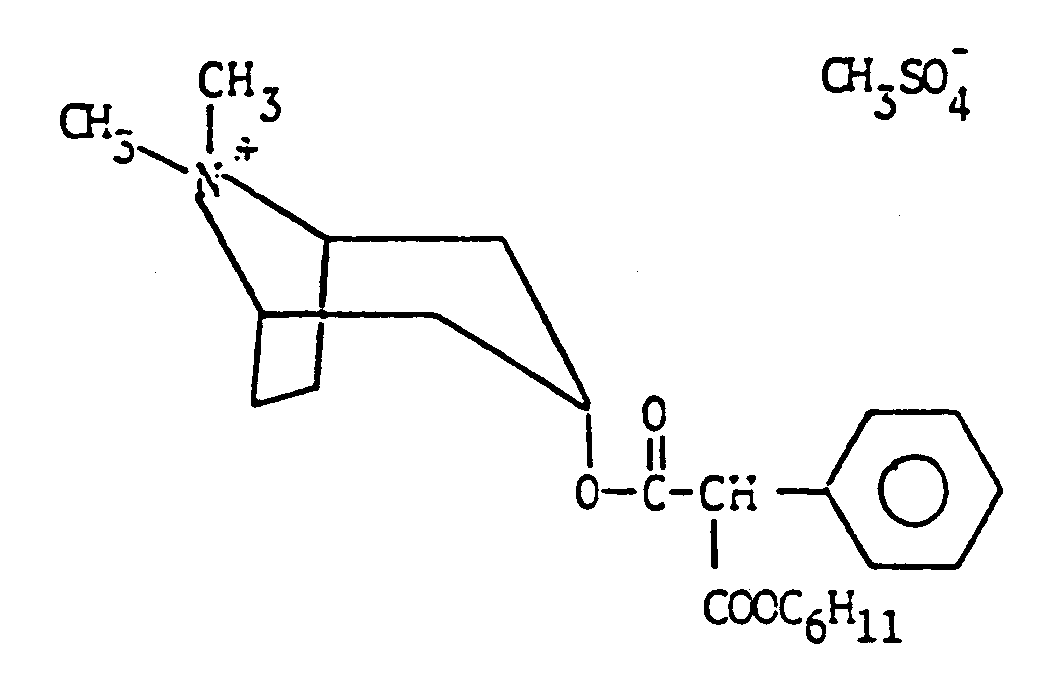
- A solution of cyclohexyl (±)-α-(carboxy)-8-methyl-8-azabicyclo[3·2·1]oct-3-yl-benzeneacetate in dry ethyl ether and dimethylsulfate (2x moles of the ester) was stirred at room temperature overnight. The white solid was filtered, dried, and recrystallized from methanol-ether.
M.p. - 196-198°Anal. for C₂₅H₃₇NO₈S. 1/2 H₂O C% H% N% S% Theoretical 57.67 7.36 2.69 6.16 Found 57.91 7.15 2.68 6.17
¹H NMR (DMSO-d₆) δ 7.4 (s, C₆H₅); 5.1 (s,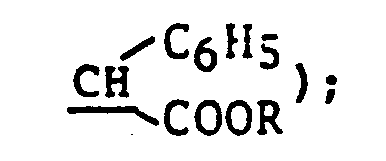
3.8 (s, CH₃ SO₄); 3.1 and 3 (s,
2.8-1.4 (m, bicyclic ring, C₆H₁₁). - According to the previous data the compound has the following structure:
- A high pressure liquid chromatography (HPLC) method was used for the determination of rate of hydrolysis of the newly prepared tropanyl esters in aqueous buffered solution at pH 12.0 and in human plasma.
- The chromatographic analysis was performed in a system consisting of LCD/Milton Roy Consta Metric III metering pump and LCD UV III Monitor Detector operated at 254 nm. A 30 cm x 3.9 mm (internal diameter) reverse phase ASI/U Bondpak C18 column operated at ambient temperature was used for the analysis. The mobile phase consisted of 32% acetonitrile in 0.01 M potassium dihydrogen phosphate, 0.004 M 1-octanesulfonic acid, sodium in 0.1% acetic acid at a flow rate of 2.3 ml/min.
- Sodium hydroxide and sodium dibasic phosphate were used to prepare the buffer at pH 12. The ionic strength was maintained at 0.1 M with sodium chloride.
- One hundred microliters of a freshly prepared solution of the compound in methanol was added to 10 ml buffered solution, previously equilibrated to 37°C in a water bath and mixed thoroughly to make an initial concentration of 6 x 10⁻³ mol. liter⁻¹. Samples of 100 µl were injected into the column at various time intervals. The rate constants, half-lives, and standard errors were calculated and the results are listed in Table
- 1. The following retention times at a flow rate of 2.3 ml/min using 32% acetonitrile are:
N.B.
Compound (1) had a retention time of 3.0 minutes.
Compound (2) had a retention tire of 7.3 minutes.
Compound (3) had a retention time of 9.3 minutes.
Compound (5) had a retention time of 4.7 minutes.
Compound (7) had a retention time of 3.5 minutes. -
K ± S.E. (min⁻¹) = 80.8 ± 0.75 x 10⁻²
t 1/2 (min) = 0.85. - The kinetic studies for the hydrolysis of the new tropines in aqueous buffer solution at pH 12.0 and in human plasma was carried out using HPLC method.
- The previous method adapted for the hydrolysis of
compounds flow rate 2 ml/min. Compounds 4 and 6 had retention times of 8.0 and 6.6 min, respectively, as shown in Table 2. Compound 7 had a retention time of 3.1 min at a flow rate of 2.3 ml/min and 3.5 min at 2.0 ml/min.
- Freshly collected plasma was used which contained about 80% plasma diluted with anticoagulant citrate phosphate dextrose solution, U.S.P.
- A 100 µl volume of a freshly prepared solution of the compound in methanol was added to 10 ml plasma, previously equilibrated a 37°C in a water bath, and mixed thoroughly to result in an initial concentration of 6 x 10⁻³ mol. liter⁻¹. One ml samples of plasma were withdrawn from the test medium, mixed immediately with 3 ml ice cold acetonitrile, centrifuged and the supernatant analyzed by HPLC. The first order hydrolytic rate constant was determined by following the disappearance of the compound as function of time. The results are given in Table 3.

- The mobile phase used for the separation of compound (2) and its degradation product, the half ester (7) consisted of 32% MeCN, 0.01M KH₂PO₄, 0.004M 1-octanesulfonic acid sodium salt and 0.1% acetic acid. At flow rate of 1.5 ml/min (2) and (7) have retention times of 9 min and 4.6 min, respectively.
- 100 microliters of a freshly prepared solution of compound (2) in methanol was added to 10 ml buffered solution (pH 12), previously equilibrated to 37°C in a water bath to result in an initial concentration of 6 x 10⁻³ mol liter⁻¹. Samples of 1 ml were taken at time intervals and mixed with 3 ml of acetonitrile. 100 microliters of the collected samples were injected and disappearance of (2) and formation of (7) was followed by HPLC.
- The results are given in Table 4.
TABLE 4 Rate of hydrolysis of tertiary ethyl ester (2) to the half ester (7) in 0.01 N NaOH pH at 37°C Compound No. Kobsd(min⁻¹) ± S.E.M. t 1/2 (min) 2 16.5 ± 0.58 x 10⁻² 4.19 ± 0.14 7 1.68 ± 0.34 x 10⁻¹ 3.79 ± 0.66 - The previously described method for the determination of rate of hydrolysis of compound (2) was followed for the determination of hydrolysis of compound (7).
- The disappearance of compound (7) was followed by HPLC.
- The concentration of the formed dibasic acid was determined by HPLC. 15% acetonitrile, 0.01M KH₂ PO₄ and 0.1% acetic acid was used as a mobile phase. At a flow rate of 2 ml/min, the product has a retention time of 4 min.
- The collected samples after determination of rate of disappearance of compound (7) were used for the determination of rate of formation of the hydrolysis product (8). 100 microliters of the sample was injected and the formation of the product was followed by HPLC.
- The results are given in Table 5.
TABLE 5 Compound No. Kobsd(min⁻¹) ± S.E.M. t 1/2 (min) 7 20.9 ± 0.27 x 10⁻⁴ 331.25 ± 4.31 8 21.7 ± 0.95 x 10⁻⁴ 316.01 ± 33.5 - The liver homogenate was prepared by the following method. Two Sprague-Dawley rats were killed by decapitation, and the livers were removed, weighed and homogenized in a tissue homogenizer in 0.11 M aqueous phosphate buffer, pH 7.4, to make 20% liver homogenate. The homogenate was centrifuged and the supernatant was used for the test. 100 l of 0.6 M solution of the ester in methanol was mixed with 10 ml of the homogenate, previously equilibrated to 37°C in a water bath, to result in an initial concentration of 6 x 10⁻³ mol/liter⁻¹. samples of 1.0 ml were withdrawn at time intervals from the medium, added immediately to 3 ml ice-cold acetonitrile, shaken vigorously, and placed in a freezer. When all samples had been collected, they were centrifuged, and each supernantant was analyzed by HPLC. The results are shown in Table 6.

- The anticholinergic activity of all the new compounds was investigated in vitro by studying the inhibitory action of the drugs on carbachol-induced spasms of strips of ileum from freshly killed guinea pigs. The terminal ileum from guinea pig (200-500 g) was cut into 2-3 cm strips and suspended in freshly prepared Tyrode's solution in 40 ml organ bath. The solution was aerated with 95% oxygen and 5% carbon dioxide at 37°C. A tension of 1 g was applied to the tissue, and cumulative-response curves recorded with carbachol until constant responses were obtained. A concentration of the antagonist was then added to the bath and after 10 seconds, further concentration response curves to carbachol were established. This procedure was then repeated using increasing concentrations of the antagonist. EC₅₀ was calculated for carbachol alone and for carbachol in the presence of the various antagonist concentrations. PA₂ value for each tested compound is listed in Table 7. Atropine was used as standard for comparison. The PA₂ was calculated as follows:

- A =
- EC₅₀ or carbachol in presence of the antagonist
- a =
- EC₅₀ for carbachol alone before adding antagonist
-

To a solution of 2.07 g (0.006 mol) of isopropyl (±)-α-(carboxy)-8-methyl-8-azabicyclo-[3·2·1]oct-3-1-benzeneacetate in 20 ml of dry benzene was added 6 ml methyl iodide and the mixture was stirred at room temperature for 6 hr. The yellowish white solid product was filtered, dried and crystallized from ethanol-ether mixture to yield 1.8 g (61.56%) of the title compound m.p. 251-254°C.
¹H NMR (DMSO-d₆) δ 7.3 (s, 5H, C₆H₅), 4.96 (s, 3H C₃ of tropine + -COOCH(CH₃)₂ +
3.16-1.97 [m, 14H, N⁺CH₃ (s, 3.16) + N⁺CH₃ (s, 3.06) + bicyclic envelop of tropine]; 1.27 (br s, 6H,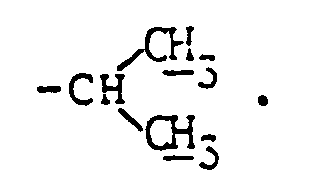
Anal. for C₂₁H₃₀INO₄.0.5 H₂O C% H% N% Theoretical 50.81 6.29 2.82 Found 50.67 6.25 2.95
The pharmacological result: PA₂ = 7.61. - The mydriatic activity of the compounds is illustrated by the following procedure.
- The mydriatic activity of the soft ester drugs (Compound 5) was evaluated in 0.9% saline solution at concentrations of 0.05% and 0.1% compared to 0.1% tropicamide (Mydriacyl®). Normal New Zealand albino rabbits of either sex, weighing about 2 kg were employed. The animals were placed in wooden restraining boxes. Standard doses of 50 µl were applied to the rabbits' eyes and pupillary changes were measured in a light and temperature controlled room. The degree of pupil dilation, in millimeters, was measured with a Starrett micrometer held at a constant distance at time intervals of 15, 30, 60 90, 120, 180, 240, 300 and 360 minutes. The differences in the same animals between the pupil diameter of the eye with drug versus the other eye with saline was recorded. Each point on the graph is the average obtained on 3-6 animals. The recovery time is defined as that time required for the pupil diameter to return to 1.0 millimeter in diameter.
- The results are set forth in Fig. 1 which depicts mydriasis as a function of time. Tropicamide is typical of the shortest acting of the commercially available anticholinergic mydriatic agents. The active agent therein is tropicamide - chemical name = Benzeneacetamide N-ethyl-α-(hydroxymethyl)-N-(4-pyridinylmethyl)-. As is apparent from the results depicted in Fig. 1, the "recovery time", i.e., recovery from mydriasis, is much shorter with the compositions and methods of the invention than with the commercially available products.
- Tables 8, 9 and 10 below set forth yield and analysis data for compounds depicted therein prepared according to the above-described procedures:


- Table 11 sets forth hydrolysis kinetic data in various media for several compounds according to the invention.

- Table 12 sets forth anticholinergic activities for various of the compounds according to the present invention. See Table 11 for the identities of the compounds identified by Roman numerals. The activities were obtained according to the method described in Example 19.

Compound (4) had a retention time of 8.0 minutes.
Compound (6) had a retention time of 6.6 minutes.


Claims (28)
- A compound having the formula
R¹ is a staight or branched chain alkyl or cycloalkyl group having up to 8 carbon atoms;
R² is an aryl, cycloalkyl or alkyl group having up to 8 carbon atoms;
R³ is H or a group defined by R²,
X is
m is an integer from 0 to 4; and
R⁴ is


- A compound according to Claim 1 wherein R² is phenyl.
- A compound according to Claim 1 wherein R³ is H.
- A compound according to Claim 1 having the formula


- A compound according to any one of Claims 1 to 4 wherein R¹ is a cycloalkyl group.
- A compound according to any one of Claims 1 to 4 wherein R¹ is a straight or branched chain alkyl group.
- A compound according to Claim 6 wherein R¹ is methyl, ethyl or propyl.
- A quaternary ammonium compound according to any one of Claims 1 to 7 wherein R⁷ is methyl and Y is halide, sulfate, alkylsulfate or alkylsulfonate.
- A compound according to Claim 1 having the formula

- A compound according to Claim 9 wherein R¹ is a cycloalkyl group.
- A compound according to Claim 10 wherein R¹ is cyclohexyl.
- A compound according to Claim 9 wherein R¹ is a straight or branched chain alkyl group.
- A compound according to Claim 12 wherein R¹ is methyl.
- A compound according to Claim 12 wherein R¹ is ethyl.
- A compound according to Claim 12 wherein R¹ is isopropyl.
- A compound according to any one of Claims 9 to 15, in the form of its salt with dimethylsulfate.
- A compound according to Claim 1 having the formula

- A compound according to Claim 17 wherein R¹ is a cycloalkyl group.
- A compound according to Claim 18 wherein R¹ is cyclohexyl.
- A compound according to Claim 17 wherein R¹ is a straight or branched chain alkyl group.
- A compound according to Claim 20 wherein R¹ is methyl.
- A compound according to Claim 20 wherein R¹ is ethyl.
- A compound according to Claim 20 wherein R¹ is isopropyl.
- A compound according to any one of Claims 17 to 23, wherein Y⁻ is I⁻ or CH₃SO₄⁻.
- A compound according to Claim 1 having the formula

- A compound according to Claim 1 having the formula

- A pharmaceutical composition in unit dosage form comprising an anticholinergic effective amount of a compound as claimed in any one of Claims 1 to 26 and a pharmaceutically acceptable carrier therefor.
- A pharmaceutical composition in unit dosage form for administration to the eye or eyes of an animal or human comprising a mydriatic effective amount of a compound as claimed in any one of Claims 1 to 26 and a pharmaceutically acceptable carrier therefor.
Priority Applications (1)
| Application Number | Priority Date | Filing Date | Title |
|---|---|---|---|
| AT87103868T ATE86622T1 (en) | 1986-03-17 | 1987-03-17 | ANTICHOLINERGIC COMPOUNDS, PHARMACEUTICAL COMPOSITIONS AND METHODS OF TREATMENT. |
Applications Claiming Priority (2)
| Application Number | Priority Date | Filing Date | Title |
|---|---|---|---|
| US83994186A | 1986-03-17 | 1986-03-17 | |
| US839941 | 1986-03-17 |
Publications (2)
| Publication Number | Publication Date |
|---|---|
| EP0238982A1 EP0238982A1 (en) | 1987-09-30 |
| EP0238982B1 true EP0238982B1 (en) | 1993-03-10 |
Family
ID=25281041
Family Applications (1)
| Application Number | Title | Priority Date | Filing Date |
|---|---|---|---|
| EP87103868A Expired - Lifetime EP0238982B1 (en) | 1986-03-17 | 1987-03-17 | Anticholinergic compounds, pharmaceutical compositions and method of treatment |
Country Status (14)
| Country | Link |
|---|---|
| EP (1) | EP0238982B1 (en) |
| JP (1) | JP2672311B2 (en) |
| KR (1) | KR900007218B1 (en) |
| AT (1) | ATE86622T1 (en) |
| CA (1) | CA1328106C (en) |
| DE (1) | DE3784531T2 (en) |
| DK (1) | DK170560B1 (en) |
| ES (1) | ES2044851T3 (en) |
| FI (1) | FI87213C (en) |
| IE (1) | IE60645B1 (en) |
| NO (1) | NO874765L (en) |
| NZ (1) | NZ219653A (en) |
| WO (1) | WO1987005603A1 (en) |
| ZA (1) | ZA871948B (en) |
Families Citing this family (3)
| Publication number | Priority date | Publication date | Assignee | Title |
|---|---|---|---|---|
| PE20050489A1 (en) * | 2003-11-04 | 2005-09-02 | Glaxo Group Ltd | ANTAGONISTS OF MUSCARINE ACETYLCHOLINE RECEPTORS |
| JPWO2006025324A1 (en) * | 2004-08-30 | 2008-05-08 | 小野薬品工業株式会社 | Tropane compounds and pharmaceutical compositions containing them as active ingredients |
| CN113321648B (en) * | 2021-05-21 | 2022-02-11 | 常州康普药业有限公司 | Synthetic method of atropine sulfate |
Citations (1)
| Publication number | Priority date | Publication date | Assignee | Title |
|---|---|---|---|---|
| US4160099A (en) * | 1974-06-24 | 1979-07-03 | Interx Research Corporation | Labile, non-heterocyclic quaternary ammonium salt/esters as transient derivatives |
Family Cites Families (3)
| Publication number | Priority date | Publication date | Assignee | Title |
|---|---|---|---|---|
| US2814623A (en) * | 1955-12-05 | 1957-11-26 | Upjohn Co | Certain esters of n-methyl scopolamine quaternary ammonium salts |
| DE1670048C3 (en) * | 1966-01-26 | 1980-09-04 | C.H. Boehringer Sohn, 6507 Ingelheim | New norscopolamine derivatives |
| NL7002588A (en) * | 1969-03-04 | 1970-09-08 |
-
1987
- 1987-03-16 IE IE69887A patent/IE60645B1/en not_active IP Right Cessation
- 1987-03-16 CA CA000532123A patent/CA1328106C/en not_active Expired - Fee Related
- 1987-03-17 JP JP62502072A patent/JP2672311B2/en not_active Expired - Lifetime
- 1987-03-17 KR KR1019870701055A patent/KR900007218B1/en not_active Expired
- 1987-03-17 AT AT87103868T patent/ATE86622T1/en not_active IP Right Cessation
- 1987-03-17 EP EP87103868A patent/EP0238982B1/en not_active Expired - Lifetime
- 1987-03-17 NZ NZ219653A patent/NZ219653A/en unknown
- 1987-03-17 DE DE8787103868T patent/DE3784531T2/en not_active Expired - Lifetime
- 1987-03-17 ES ES87103868T patent/ES2044851T3/en not_active Expired - Lifetime
- 1987-03-17 WO PCT/US1987/000533 patent/WO1987005603A1/en not_active Ceased
- 1987-03-17 ZA ZA871948A patent/ZA871948B/en unknown
- 1987-10-30 DK DK567887A patent/DK170560B1/en not_active IP Right Cessation
- 1987-11-09 FI FI874937A patent/FI87213C/en not_active IP Right Cessation
- 1987-11-16 NO NO874765A patent/NO874765L/en unknown
Patent Citations (1)
| Publication number | Priority date | Publication date | Assignee | Title |
|---|---|---|---|---|
| US4160099A (en) * | 1974-06-24 | 1979-07-03 | Interx Research Corporation | Labile, non-heterocyclic quaternary ammonium salt/esters as transient derivatives |
Non-Patent Citations (2)
| Title |
|---|
| Adv.Drug Res.13, 255 (1984) * |
| J.Med.Chem. 1980, 23, 474 * |
Also Published As
| Publication number | Publication date |
|---|---|
| IE870698L (en) | 1987-09-17 |
| EP0238982A1 (en) | 1987-09-30 |
| NO874765L (en) | 1988-01-14 |
| KR880701230A (en) | 1988-07-26 |
| NZ219653A (en) | 1990-02-26 |
| FI87213B (en) | 1992-08-31 |
| DK567887D0 (en) | 1987-10-30 |
| DK567887A (en) | 1987-10-30 |
| KR900007218B1 (en) | 1990-10-05 |
| ZA871948B (en) | 1987-09-07 |
| AU595307B2 (en) | 1990-03-29 |
| JPS63502898A (en) | 1988-10-27 |
| FI874937A7 (en) | 1987-11-09 |
| AU7203187A (en) | 1987-10-09 |
| ES2044851T3 (en) | 1994-01-16 |
| WO1987005603A1 (en) | 1987-09-24 |
| FI87213C (en) | 1992-12-10 |
| CA1328106C (en) | 1994-03-29 |
| DE3784531D1 (en) | 1993-04-15 |
| FI874937A0 (en) | 1987-11-09 |
| IE60645B1 (en) | 1994-08-10 |
| NO874765D0 (en) | 1987-11-16 |
| JP2672311B2 (en) | 1997-11-05 |
| DE3784531T2 (en) | 1993-06-24 |
| ATE86622T1 (en) | 1993-03-15 |
| DK170560B1 (en) | 1995-10-23 |
Similar Documents
| Publication | Publication Date | Title |
|---|---|---|
| Clarke et al. | Compounds affecting the central nervous system. 4. 3. beta.-phenyltropane-2-carboxylic esters and analogs | |
| EP0094742B1 (en) | Substituted azabicyclo compounds, process for their preparation and pharmaceutical compositions containing them | |
| DE69034146T2 (en) | Chemical compounds | |
| JPH05320162A (en) | Peptide quinuclidine | |
| JP3223192B2 (en) | Azabicyclo and azacyclooxime and amine choline agonists | |
| US3299072A (en) | Thebaine derivatives | |
| US8394824B2 (en) | Quinuclidine compounds having quaternary ammonium group, its preparation method and use as blocking agents of acetylcholine | |
| KR880002412B1 (en) | Process for the preparation of substituted hexahydro benzo (e) indene and octahydro phenanthrene | |
| JPH0322390B2 (en) | ||
| CH630629A5 (en) | MORPHINE DERIVATIVES, THEIR PREPARATION PROCESS AND THEIR USE AS A MEDICINAL PRODUCT. | |
| JPH0251914B2 (en) | ||
| EP0238982A1 (en) | Anticholinergic compounds, pharmaceutical compositions and method of treatment | |
| Mashkovsky et al. | Relationships between the chemical structure and pharmacological activity in a series of synthetic quinuclidine derivatives | |
| DE1518452B2 (en) | 4-SUBSTITUTED 2-BENZHYDRYL-2BUTANOL DERIVATIVES AND PROCESS FOR THEIR PRODUCTION | |
| AU595307C (en) | Anticholinergic compounds, pharmaceutical compositions and method of treatment | |
| EP0076559B1 (en) | Antiallergic imidosulfamides | |
| EP0101951A1 (en) | 1,3-Dioxolo(4,5-g)quinolines and preparation thereof | |
| CH641457A5 (en) | AZEPINO (1,2,3-LM) BETA CARBOLIN COMPOUNDS, METHOD FOR THE PRODUCTION THEREOF AND MEDICINAL PRODUCTS CONTAINING THE COMPOUNDS. | |
| EP0052311A1 (en) | 1-((Benzoylphenyl) - lower-alkyl) piperidines and carbinol analogs and preparation thereof | |
| DE4222910A1 (en) | New phospholipid derivatives | |
| RU2058985C1 (en) | Indole derivatives, process for preparation thereof and pharmaceutical composition based thereon for treating mental disorders | |
| JPS604833B2 (en) | Ergoline derivatives and their production method | |
| NL8603303A (en) | AZONIA PIRONORTROPANOL ESTERS, PREPARATIONS CONTAINING THEM, METHOD FOR THE PREPARATION THEREOF AND THEIR USE AGAINST ASTHMA AND AS BRONCHOLYTICS. | |
| US3910950A (en) | Hexahydro-1H-furo(3,4-c)pyrrole compounds | |
| KR810000583B1 (en) | Method for preparing 4a-aryl-octahydro-1H-2-pyridine |
Legal Events
| Date | Code | Title | Description |
|---|---|---|---|
| PUAI | Public reference made under article 153(3) epc to a published international application that has entered the european phase |
Free format text: ORIGINAL CODE: 0009012 |
|
| AK | Designated contracting states |
Kind code of ref document: A1 Designated state(s): AT BE CH DE ES FR GB GR IT LI LU NL SE |
|
| 17P | Request for examination filed |
Effective date: 19871028 |
|
| 17Q | First examination report despatched |
Effective date: 19890714 |
|
| GRAA | (expected) grant |
Free format text: ORIGINAL CODE: 0009210 |
|
| AK | Designated contracting states |
Kind code of ref document: B1 Designated state(s): AT BE CH DE ES FR GB GR IT LI LU NL SE |
|
| REF | Corresponds to: |
Ref document number: 86622 Country of ref document: AT Date of ref document: 19930315 Kind code of ref document: T |
|
| REF | Corresponds to: |
Ref document number: 3784531 Country of ref document: DE Date of ref document: 19930415 |
|
| ITF | It: translation for a ep patent filed | ||
| ET | Fr: translation filed | ||
| REG | Reference to a national code |
Ref country code: GR Ref legal event code: FG4A Free format text: 3008082 |
|
| PLBE | No opposition filed within time limit |
Free format text: ORIGINAL CODE: 0009261 |
|
| STAA | Information on the status of an ep patent application or granted ep patent |
Free format text: STATUS: NO OPPOSITION FILED WITHIN TIME LIMIT |
|
| REG | Reference to a national code |
Ref country code: ES Ref legal event code: FG2A Ref document number: 2044851 Country of ref document: ES Kind code of ref document: T3 |
|
| 26N | No opposition filed | ||
| EPTA | Lu: last paid annual fee | ||
| EAL | Se: european patent in force in sweden |
Ref document number: 87103868.3 |
|
| PGFP | Annual fee paid to national office [announced via postgrant information from national office to epo] |
Ref country code: AT Payment date: 19970313 Year of fee payment: 11 |
|
| PGFP | Annual fee paid to national office [announced via postgrant information from national office to epo] |
Ref country code: SE Payment date: 19970319 Year of fee payment: 11 |
|
| PGFP | Annual fee paid to national office [announced via postgrant information from national office to epo] |
Ref country code: CH Payment date: 19970320 Year of fee payment: 11 |
|
| PGFP | Annual fee paid to national office [announced via postgrant information from national office to epo] |
Ref country code: GR Payment date: 19970321 Year of fee payment: 11 |
|
| PGFP | Annual fee paid to national office [announced via postgrant information from national office to epo] |
Ref country code: ES Payment date: 19970324 Year of fee payment: 11 |
|
| PGFP | Annual fee paid to national office [announced via postgrant information from national office to epo] |
Ref country code: NL Payment date: 19970327 Year of fee payment: 11 |
|
| PGFP | Annual fee paid to national office [announced via postgrant information from national office to epo] |
Ref country code: LU Payment date: 19970425 Year of fee payment: 11 |
|
| PGFP | Annual fee paid to national office [announced via postgrant information from national office to epo] |
Ref country code: BE Payment date: 19970521 Year of fee payment: 11 |
|
| PG25 | Lapsed in a contracting state [announced via postgrant information from national office to epo] |
Ref country code: LU Free format text: LAPSE BECAUSE OF NON-PAYMENT OF DUE FEES Effective date: 19980317 Ref country code: AT Free format text: LAPSE BECAUSE OF NON-PAYMENT OF DUE FEES Effective date: 19980317 |
|
| PG25 | Lapsed in a contracting state [announced via postgrant information from national office to epo] |
Ref country code: ES Free format text: LAPSE BECAUSE OF EXPIRATION OF PROTECTION Effective date: 19980318 Ref country code: SE Free format text: LAPSE BECAUSE OF NON-PAYMENT OF DUE FEES Effective date: 19980318 |
|
| PG25 | Lapsed in a contracting state [announced via postgrant information from national office to epo] |
Ref country code: LI Free format text: LAPSE BECAUSE OF NON-PAYMENT OF DUE FEES Effective date: 19980331 Ref country code: GR Free format text: LAPSE BECAUSE OF NON-PAYMENT OF DUE FEES Effective date: 19980331 Ref country code: BE Free format text: LAPSE BECAUSE OF NON-PAYMENT OF DUE FEES Effective date: 19980331 Ref country code: CH Free format text: LAPSE BECAUSE OF NON-PAYMENT OF DUE FEES Effective date: 19980331 |
|
| BERE | Be: lapsed |
Owner name: UNIVERSITY OF FLORIDA Effective date: 19980331 |
|
| PG25 | Lapsed in a contracting state [announced via postgrant information from national office to epo] |
Ref country code: NL Free format text: LAPSE BECAUSE OF NON-PAYMENT OF DUE FEES Effective date: 19981001 |
|
| REG | Reference to a national code |
Ref country code: CH Ref legal event code: PL |
|
| NLV4 | Nl: lapsed or anulled due to non-payment of the annual fee |
Effective date: 19981001 |
|
| EUG | Se: european patent has lapsed |
Ref document number: 87103868.3 |
|
| REG | Reference to a national code |
Ref country code: ES Ref legal event code: FD2A Effective date: 20000201 |
|
| REG | Reference to a national code |
Ref country code: GB Ref legal event code: IF02 |
|
| PGFP | Annual fee paid to national office [announced via postgrant information from national office to epo] |
Ref country code: GB Payment date: 20060206 Year of fee payment: 20 |
|
| PGFP | Annual fee paid to national office [announced via postgrant information from national office to epo] |
Ref country code: DE Payment date: 20060330 Year of fee payment: 20 |
|
| PGFP | Annual fee paid to national office [announced via postgrant information from national office to epo] |
Ref country code: IT Payment date: 20060331 Year of fee payment: 20 |
|
| PG25 | Lapsed in a contracting state [announced via postgrant information from national office to epo] |
Ref country code: GB Free format text: LAPSE BECAUSE OF EXPIRATION OF PROTECTION Effective date: 20070316 |
|
| REG | Reference to a national code |
Ref country code: GB Ref legal event code: PE20 |
|
| PGFP | Annual fee paid to national office [announced via postgrant information from national office to epo] |
Ref country code: FR Payment date: 20060331 Year of fee payment: 20 |