EP0209689B1 - Use of tetrahydrobiopterins in the preparation of a medicament for the treatment of infantile autism - Google Patents
Use of tetrahydrobiopterins in the preparation of a medicament for the treatment of infantile autism Download PDFInfo
- Publication number
- EP0209689B1 EP0209689B1 EP86107614A EP86107614A EP0209689B1 EP 0209689 B1 EP0209689 B1 EP 0209689B1 EP 86107614 A EP86107614 A EP 86107614A EP 86107614 A EP86107614 A EP 86107614A EP 0209689 B1 EP0209689 B1 EP 0209689B1
- Authority
- EP
- European Patent Office
- Prior art keywords
- parts
- tetrahydrobiopterin
- treatment
- patient
- medicament
- Prior art date
- Legal status (The legal status is an assumption and is not a legal conclusion. Google has not performed a legal analysis and makes no representation as to the accuracy of the status listed.)
- Expired - Lifetime
Links
- 208000020706 Autistic disease Diseases 0.000 title claims abstract description 23
- 206010003805 Autism Diseases 0.000 title claims abstract description 22
- 238000011282 treatment Methods 0.000 title claims abstract description 19
- 239000003814 drug Substances 0.000 title claims description 26
- 238000002360 preparation method Methods 0.000 title claims description 5
- LDCYZAJDBXYCGN-UHFFFAOYSA-N oxitriptan Natural products C1=C(O)C=C2C(CC(N)C(O)=O)=CNC2=C1 LDCYZAJDBXYCGN-UHFFFAOYSA-N 0.000 claims abstract description 28
- LDCYZAJDBXYCGN-VIFPVBQESA-N 5-hydroxy-L-tryptophan Chemical compound C1=C(O)C=C2C(C[C@H](N)C(O)=O)=CNC2=C1 LDCYZAJDBXYCGN-VIFPVBQESA-N 0.000 claims abstract description 27
- 229940000681 5-hydroxytryptophan Drugs 0.000 claims abstract description 27
- WTDRDQBEARUVNC-LURJTMIESA-N L-DOPA Chemical compound OC(=O)[C@@H](N)CC1=CC=C(O)C(O)=C1 WTDRDQBEARUVNC-LURJTMIESA-N 0.000 claims abstract description 20
- WTDRDQBEARUVNC-UHFFFAOYSA-N L-Dopa Natural products OC(=O)C(N)CC1=CC=C(O)C(O)=C1 WTDRDQBEARUVNC-UHFFFAOYSA-N 0.000 claims abstract description 20
- 150000001875 compounds Chemical class 0.000 claims description 23
- 239000004480 active ingredient Substances 0.000 claims description 17
- CIWBSHSKHKDKBQ-JLAZNSOCSA-N Ascorbic acid Chemical compound OC[C@H](O)[C@H]1OC(=O)C(O)=C1O CIWBSHSKHKDKBQ-JLAZNSOCSA-N 0.000 claims description 16
- 150000003839 salts Chemical class 0.000 claims description 9
- 235000010323 ascorbic acid Nutrition 0.000 claims description 8
- 229960005070 ascorbic acid Drugs 0.000 claims description 8
- 239000011668 ascorbic acid Substances 0.000 claims description 8
- FNKQXYHWGSIFBK-BYAPIUGTSA-N L-erythro-5,6,7,8-tetrahydrobiopterin Chemical compound N1=C(N)NC(=O)C2=C1NCC([C@@H](O)[C@@H](O)C)N2 FNKQXYHWGSIFBK-BYAPIUGTSA-N 0.000 claims description 7
- GVJHHUAWPYXKBD-UHFFFAOYSA-N d-alpha-tocopherol Natural products OC1=C(C)C(C)=C2OC(CCCC(C)CCCC(C)CCCC(C)C)(C)CCC2=C1C GVJHHUAWPYXKBD-UHFFFAOYSA-N 0.000 claims description 4
- GVJHHUAWPYXKBD-IEOSBIPESA-N α-tocopherol Chemical compound OC1=C(C)C(C)=C2O[C@@](CCC[C@H](C)CCC[C@H](C)CCCC(C)C)(C)CCC2=C1C GVJHHUAWPYXKBD-IEOSBIPESA-N 0.000 claims description 4
- 238000004519 manufacturing process Methods 0.000 claims description 3
- 239000011627 DL-alpha-tocopherol Substances 0.000 claims description 2
- 235000001815 DL-alpha-tocopherol Nutrition 0.000 claims description 2
- PWKSKIMOESPYIA-BYPYZUCNSA-N L-N-acetyl-Cysteine Chemical compound CC(=O)N[C@@H](CS)C(O)=O PWKSKIMOESPYIA-BYPYZUCNSA-N 0.000 claims description 2
- 229960000984 tocofersolan Drugs 0.000 claims description 2
- 235000010384 tocopherol Nutrition 0.000 claims description 2
- 239000011732 tocopherol Substances 0.000 claims description 2
- 229960001295 tocopherol Drugs 0.000 claims description 2
- 229930003799 tocopherol Natural products 0.000 claims description 2
- PWKSKIMOESPYIA-UHFFFAOYSA-N 2-acetamido-3-sulfanylpropanoic acid Chemical compound CC(=O)NC(CS)C(O)=O PWKSKIMOESPYIA-UHFFFAOYSA-N 0.000 claims 1
- 229960004308 acetylcysteine Drugs 0.000 claims 1
- 230000003064 anti-oxidating effect Effects 0.000 claims 1
- 239000007800 oxidant agent Substances 0.000 claims 1
- 229960004617 sapropterin Drugs 0.000 abstract description 10
- FNKQXYHWGSIFBK-RPDRRWSUSA-N sapropterin Chemical compound N1=C(N)NC(=O)C2=C1NC[C@H]([C@@H](O)[C@@H](O)C)N2 FNKQXYHWGSIFBK-RPDRRWSUSA-N 0.000 abstract description 9
- 239000004615 ingredient Substances 0.000 abstract description 5
- 239000008194 pharmaceutical composition Substances 0.000 abstract description 2
- QZAYGJVTTNCVMB-UHFFFAOYSA-N serotonin Chemical compound C1=C(O)C=C2C(CCN)=CNC2=C1 QZAYGJVTTNCVMB-UHFFFAOYSA-N 0.000 description 31
- 239000000203 mixture Substances 0.000 description 17
- 208000024891 symptom Diseases 0.000 description 16
- 229940076279 serotonin Drugs 0.000 description 15
- 210000004556 brain Anatomy 0.000 description 13
- 229940079593 drug Drugs 0.000 description 11
- 239000008280 blood Substances 0.000 description 7
- 210000004369 blood Anatomy 0.000 description 7
- 150000003943 catecholamines Chemical class 0.000 description 7
- 208000037265 diseases, disorders, signs and symptoms Diseases 0.000 description 7
- 230000001771 impaired effect Effects 0.000 description 7
- RKSUYBCOVNCALL-NTVURLEBSA-N sapropterin dihydrochloride Chemical compound Cl.Cl.N1=C(N)NC(=O)C2=C1NC[C@H]([C@@H](O)[C@@H](O)C)N2 RKSUYBCOVNCALL-NTVURLEBSA-N 0.000 description 7
- 239000000243 solution Substances 0.000 description 7
- FBPFZTCFMRRESA-KVTDHHQDSA-N D-Mannitol Chemical compound OC[C@@H](O)[C@@H](O)[C@H](O)[C@H](O)CO FBPFZTCFMRRESA-KVTDHHQDSA-N 0.000 description 6
- 229930195725 Mannitol Natural products 0.000 description 6
- VLSOAXRVHARBEQ-UHFFFAOYSA-N [4-fluoro-2-(hydroxymethyl)phenyl]methanol Chemical compound OCC1=CC=C(F)C=C1CO VLSOAXRVHARBEQ-UHFFFAOYSA-N 0.000 description 6
- 230000006872 improvement Effects 0.000 description 6
- 239000000594 mannitol Substances 0.000 description 6
- 235000010355 mannitol Nutrition 0.000 description 6
- QIVBCDIJIAJPQS-HLTLGYGQSA-N (2s)-2-amino-3-(2,4,5,6,7-pentadeuterio-1h-indol-3-yl)propanoic acid Chemical compound [2H]C1=C([2H])C([2H])=C2C(C[C@H](N)C(O)=O)=C([2H])NC2=C1[2H] QIVBCDIJIAJPQS-HLTLGYGQSA-N 0.000 description 5
- 206010000117 Abnormal behaviour Diseases 0.000 description 5
- 229920002153 Hydroxypropyl cellulose Polymers 0.000 description 5
- 230000002159 abnormal effect Effects 0.000 description 5
- 229940024606 amino acid Drugs 0.000 description 5
- 239000003963 antioxidant agent Substances 0.000 description 5
- 235000006708 antioxidants Nutrition 0.000 description 5
- 230000015572 biosynthetic process Effects 0.000 description 5
- 239000002552 dosage form Substances 0.000 description 5
- 238000009472 formulation Methods 0.000 description 5
- 239000008187 granular material Substances 0.000 description 5
- 239000001863 hydroxypropyl cellulose Substances 0.000 description 5
- 235000010977 hydroxypropyl cellulose Nutrition 0.000 description 5
- 239000000546 pharmaceutical excipient Substances 0.000 description 5
- 229920000036 polyvinylpyrrolidone Polymers 0.000 description 5
- 239000001267 polyvinylpyrrolidone Substances 0.000 description 5
- 235000013855 polyvinylpyrrolidone Nutrition 0.000 description 5
- 239000002243 precursor Substances 0.000 description 5
- -1 aromatic amino acids Chemical class 0.000 description 4
- 230000006399 behavior Effects 0.000 description 4
- 230000003542 behavioural effect Effects 0.000 description 4
- 239000011230 binding agent Substances 0.000 description 4
- 230000037396 body weight Effects 0.000 description 4
- 239000002775 capsule Substances 0.000 description 4
- HQKMJHAJHXVSDF-UHFFFAOYSA-L magnesium stearate Chemical compound [Mg+2].CCCCCCCCCCCCCCCCCC([O-])=O.CCCCCCCCCCCCCCCCCC([O-])=O HQKMJHAJHXVSDF-UHFFFAOYSA-L 0.000 description 4
- 239000000843 powder Substances 0.000 description 4
- XLYOFNOQVPJJNP-UHFFFAOYSA-N water Substances O XLYOFNOQVPJJNP-UHFFFAOYSA-N 0.000 description 4
- QTBSBXVTEAMEQO-UHFFFAOYSA-N Acetic acid Chemical compound CC(O)=O QTBSBXVTEAMEQO-UHFFFAOYSA-N 0.000 description 3
- 206010020651 Hyperkinesia Diseases 0.000 description 3
- 208000000269 Hyperkinesis Diseases 0.000 description 3
- QIVBCDIJIAJPQS-VIFPVBQESA-N L-tryptophane Chemical class C1=CC=C2C(C[C@H](N)C(O)=O)=CNC2=C1 QIVBCDIJIAJPQS-VIFPVBQESA-N 0.000 description 3
- GUBGYTABKSRVRQ-QKKXKWKRSA-N Lactose Natural products OC[C@H]1O[C@@H](O[C@H]2[C@H](O)[C@@H](O)C(O)O[C@@H]2CO)[C@H](O)[C@@H](O)[C@H]1O GUBGYTABKSRVRQ-QKKXKWKRSA-N 0.000 description 3
- BYPFEZZEUUWMEJ-UHFFFAOYSA-N Pentoxifylline Chemical compound O=C1N(CCCCC(=O)C)C(=O)N(C)C2=C1N(C)C=N2 BYPFEZZEUUWMEJ-UHFFFAOYSA-N 0.000 description 3
- 229920003081 Povidone K 30 Polymers 0.000 description 3
- 229920002472 Starch Polymers 0.000 description 3
- 150000001412 amines Chemical class 0.000 description 3
- 230000036765 blood level Effects 0.000 description 3
- JBNULYRBVMNPIS-OWJCAWTQSA-L calcium;4-[[(2r)-2,4-dihydroxy-3,3-dimethylbutanoyl]amino]butanoate;hydrate Chemical compound O.[Ca+2].OCC(C)(C)[C@@H](O)C(=O)NCCCC([O-])=O.OCC(C)(C)[C@@H](O)C(=O)NCCCC([O-])=O JBNULYRBVMNPIS-OWJCAWTQSA-L 0.000 description 3
- 239000000969 carrier Substances 0.000 description 3
- 239000005515 coenzyme Substances 0.000 description 3
- 201000010099 disease Diseases 0.000 description 3
- 230000006870 function Effects 0.000 description 3
- 229950001260 hopantenic acid Drugs 0.000 description 3
- 239000008101 lactose Substances 0.000 description 3
- YVUQSNJEYSNKRX-UHFFFAOYSA-N pimozide Chemical compound C1=CC(F)=CC=C1C(C=1C=CC(F)=CC=1)CCCN1CCC(N2C(NC3=CC=CC=C32)=O)CC1 YVUQSNJEYSNKRX-UHFFFAOYSA-N 0.000 description 3
- 229960003634 pimozide Drugs 0.000 description 3
- 239000008107 starch Substances 0.000 description 3
- 235000019698 starch Nutrition 0.000 description 3
- 238000003786 synthesis reaction Methods 0.000 description 3
- GCCPWDPPTDJJNJ-UHFFFAOYSA-N 2-amino-6-phenyl-5,6,7,8-tetrahydro-1h-pteridin-4-one Chemical compound N1C=2C(=O)NC(N)=NC=2NCC1C1=CC=CC=C1 GCCPWDPPTDJJNJ-UHFFFAOYSA-N 0.000 description 2
- HWOZEJJVUCALGB-UHFFFAOYSA-N 6-Methyltetrahydropterin Chemical compound N1C(N)=NC(=O)C2=C1NCC(C)N2 HWOZEJJVUCALGB-UHFFFAOYSA-N 0.000 description 2
- GUBGYTABKSRVRQ-XLOQQCSPSA-N Alpha-Lactose Chemical compound O[C@@H]1[C@@H](O)[C@@H](O)[C@@H](CO)O[C@H]1O[C@@H]1[C@@H](CO)O[C@H](O)[C@H](O)[C@H]1O GUBGYTABKSRVRQ-XLOQQCSPSA-N 0.000 description 2
- VEXZGXHMUGYJMC-UHFFFAOYSA-N Hydrochloric acid Chemical compound Cl VEXZGXHMUGYJMC-UHFFFAOYSA-N 0.000 description 2
- XUJNEKJLAYXESH-REOHCLBHSA-N L-Cysteine Chemical compound SC[C@H](N)C(O)=O XUJNEKJLAYXESH-REOHCLBHSA-N 0.000 description 2
- VPVOXUSPXFPWBN-UHFFFAOYSA-N L-sepiapterin Natural products N1=C(N)NC(=O)C2=C1NCC(C(=O)C(O)C)=N2 VPVOXUSPXFPWBN-UHFFFAOYSA-N 0.000 description 2
- 241001465754 Metazoa Species 0.000 description 2
- 208000018737 Parkinson disease Diseases 0.000 description 2
- NBIIXXVUZAFLBC-UHFFFAOYSA-N Phosphoric acid Chemical compound OP(O)(O)=O NBIIXXVUZAFLBC-UHFFFAOYSA-N 0.000 description 2
- 241000700159 Rattus Species 0.000 description 2
- 229930006000 Sucrose Natural products 0.000 description 2
- CZMRCDWAGMRECN-UGDNZRGBSA-N Sucrose Chemical compound O[C@H]1[C@H](O)[C@@H](CO)O[C@@]1(CO)O[C@@H]1[C@H](O)[C@@H](O)[C@H](O)[C@@H](CO)O1 CZMRCDWAGMRECN-UGDNZRGBSA-N 0.000 description 2
- QAOWNCQODCNURD-UHFFFAOYSA-N Sulfuric acid Chemical compound OS(O)(=O)=O QAOWNCQODCNURD-UHFFFAOYSA-N 0.000 description 2
- QIVBCDIJIAJPQS-UHFFFAOYSA-N Tryptophan Natural products C1=CC=C2C(CC(N)C(O)=O)=CNC2=C1 QIVBCDIJIAJPQS-UHFFFAOYSA-N 0.000 description 2
- 239000002253 acid Substances 0.000 description 2
- 150000007513 acids Chemical class 0.000 description 2
- 230000007059 acute toxicity Effects 0.000 description 2
- 231100000403 acute toxicity Toxicity 0.000 description 2
- 125000003118 aryl group Chemical group 0.000 description 2
- 239000001913 cellulose Substances 0.000 description 2
- 229920002678 cellulose Polymers 0.000 description 2
- 235000010980 cellulose Nutrition 0.000 description 2
- 229940110456 cocoa butter Drugs 0.000 description 2
- 235000019868 cocoa butter Nutrition 0.000 description 2
- 230000006735 deficit Effects 0.000 description 2
- 208000002161 echolalia Diseases 0.000 description 2
- 230000008451 emotion Effects 0.000 description 2
- 238000001914 filtration Methods 0.000 description 2
- 210000001035 gastrointestinal tract Anatomy 0.000 description 2
- LNEPOXFFQSENCJ-UHFFFAOYSA-N haloperidol Chemical compound C1CC(O)(C=2C=CC(Cl)=CC=2)CCN1CCCC(=O)C1=CC=C(F)C=C1 LNEPOXFFQSENCJ-UHFFFAOYSA-N 0.000 description 2
- 239000011872 intimate mixture Substances 0.000 description 2
- 239000000314 lubricant Substances 0.000 description 2
- 235000019359 magnesium stearate Nutrition 0.000 description 2
- BDAGIHXWWSANSR-UHFFFAOYSA-N methanoic acid Natural products OC=O BDAGIHXWWSANSR-UHFFFAOYSA-N 0.000 description 2
- 238000007911 parenteral administration Methods 0.000 description 2
- 230000004044 response Effects 0.000 description 2
- VPVOXUSPXFPWBN-VKHMYHEASA-N sepiapterin Chemical compound N1C(N)=NC(=O)C2=C1NCC(C(=O)[C@@H](O)C)=N2 VPVOXUSPXFPWBN-VKHMYHEASA-N 0.000 description 2
- 229940126478 sepiapterin Drugs 0.000 description 2
- 239000005720 sucrose Substances 0.000 description 2
- 239000000725 suspension Substances 0.000 description 2
- 231100000419 toxicity Toxicity 0.000 description 2
- 230000001988 toxicity Effects 0.000 description 2
- 230000032258 transport Effects 0.000 description 2
- FNKQXYHWGSIFBK-UHFFFAOYSA-N (1'R,2'S,6R)-5,6,7,8-Tetrahydrobiopterin Natural products N1=C(N)NC(=O)C2=C1NCC(C(O)C(O)C)N2 FNKQXYHWGSIFBK-UHFFFAOYSA-N 0.000 description 1
- VIYKYVYAKVNDPS-HKGPVOKGSA-N (2s)-2-azanyl-3-[3,4-bis(oxidanyl)phenyl]propanoic acid Chemical compound OC(=O)[C@@H](N)CC1=CC=C(O)C(O)=C1.OC(=O)[C@@H](N)CC1=CC=C(O)C(O)=C1 VIYKYVYAKVNDPS-HKGPVOKGSA-N 0.000 description 1
- OSWFIVFLDKOXQC-UHFFFAOYSA-N 4-(3-methoxyphenyl)aniline Chemical compound COC1=CC=CC(C=2C=CC(N)=CC=2)=C1 OSWFIVFLDKOXQC-UHFFFAOYSA-N 0.000 description 1
- 244000215068 Acacia senegal Species 0.000 description 1
- 229920001817 Agar Polymers 0.000 description 1
- 0 CC(C(NC(*)CN1)=C1N=C(C=N)N)=O Chemical compound CC(C(NC(*)CN1)=C1N=C(C=N)N)=O 0.000 description 1
- OUHGJUFJQFLTCQ-WYMLVPIESA-N CCC(C(C(C)O)O)N(C=C)/C(/C(CN)=O)=C(\N)/N=C(\C)/N Chemical compound CCC(C(C(C)O)O)N(C=C)/C(/C(CN)=O)=C(\N)/N=C(\C)/N OUHGJUFJQFLTCQ-WYMLVPIESA-N 0.000 description 1
- 229920002261 Corn starch Polymers 0.000 description 1
- 241000196324 Embryophyta Species 0.000 description 1
- 108010010803 Gelatin Proteins 0.000 description 1
- WQZGKKKJIJFFOK-GASJEMHNSA-N Glucose Natural products OC[C@H]1OC(O)[C@H](O)[C@@H](O)[C@@H]1O WQZGKKKJIJFFOK-GASJEMHNSA-N 0.000 description 1
- 229920000084 Gum arabic Polymers 0.000 description 1
- 206010024796 Logorrhoea Diseases 0.000 description 1
- 229920000168 Microcrystalline cellulose Polymers 0.000 description 1
- 102000008109 Mixed Function Oxygenases Human genes 0.000 description 1
- 108010074633 Mixed Function Oxygenases Proteins 0.000 description 1
- 238000010521 absorption reaction Methods 0.000 description 1
- 239000000205 acacia gum Substances 0.000 description 1
- 235000010489 acacia gum Nutrition 0.000 description 1
- 239000008272 agar Substances 0.000 description 1
- 235000010419 agar Nutrition 0.000 description 1
- 229910000147 aluminium phosphate Inorganic materials 0.000 description 1
- 150000001413 amino acids Chemical class 0.000 description 1
- 239000003708 ampul Substances 0.000 description 1
- 238000004458 analytical method Methods 0.000 description 1
- 230000003078 antioxidant effect Effects 0.000 description 1
- 230000009118 appropriate response Effects 0.000 description 1
- 239000012298 atmosphere Substances 0.000 description 1
- WQZGKKKJIJFFOK-VFUOTHLCSA-N beta-D-glucose Chemical compound OC[C@H]1O[C@@H](O)[C@H](O)[C@@H](O)[C@@H]1O WQZGKKKJIJFFOK-VFUOTHLCSA-N 0.000 description 1
- KGBXLFKZBHKPEV-UHFFFAOYSA-N boric acid Chemical compound OB(O)O KGBXLFKZBHKPEV-UHFFFAOYSA-N 0.000 description 1
- 239000004327 boric acid Substances 0.000 description 1
- 239000000872 buffer Substances 0.000 description 1
- 230000004656 cell transport Effects 0.000 description 1
- 210000001175 cerebrospinal fluid Anatomy 0.000 description 1
- 230000001684 chronic effect Effects 0.000 description 1
- 239000008120 corn starch Substances 0.000 description 1
- 230000003247 decreasing effect Effects 0.000 description 1
- 230000003111 delayed effect Effects 0.000 description 1
- 238000003745 diagnosis Methods 0.000 description 1
- 230000008034 disappearance Effects 0.000 description 1
- 238000001647 drug administration Methods 0.000 description 1
- 230000000694 effects Effects 0.000 description 1
- 239000000839 emulsion Substances 0.000 description 1
- 230000002255 enzymatic effect Effects 0.000 description 1
- 239000000796 flavoring agent Substances 0.000 description 1
- 235000013355 food flavoring agent Nutrition 0.000 description 1
- 235000019253 formic acid Nutrition 0.000 description 1
- 229920000159 gelatin Polymers 0.000 description 1
- 239000008273 gelatin Substances 0.000 description 1
- 235000019322 gelatine Nutrition 0.000 description 1
- 235000011852 gelatine desserts Nutrition 0.000 description 1
- 239000008103 glucose Substances 0.000 description 1
- 235000001727 glucose Nutrition 0.000 description 1
- 238000005469 granulation Methods 0.000 description 1
- 230000003179 granulation Effects 0.000 description 1
- 229960003878 haloperidol Drugs 0.000 description 1
- 230000036541 health Effects 0.000 description 1
- CBOIHMRHGLHBPB-UHFFFAOYSA-N hydroxymethyl Chemical group O[CH2] CBOIHMRHGLHBPB-UHFFFAOYSA-N 0.000 description 1
- 238000001727 in vivo Methods 0.000 description 1
- 150000002475 indoles Chemical class 0.000 description 1
- 210000000936 intestine Anatomy 0.000 description 1
- 239000007928 intraperitoneal injection Substances 0.000 description 1
- 238000001990 intravenous administration Methods 0.000 description 1
- 238000010253 intravenous injection Methods 0.000 description 1
- 230000000622 irritating effect Effects 0.000 description 1
- 231100000053 low toxicity Toxicity 0.000 description 1
- 230000003211 malignant effect Effects 0.000 description 1
- 238000000034 method Methods 0.000 description 1
- 235000019813 microcrystalline cellulose Nutrition 0.000 description 1
- 239000008108 microcrystalline cellulose Substances 0.000 description 1
- 229940016286 microcrystalline cellulose Drugs 0.000 description 1
- 239000002547 new drug Substances 0.000 description 1
- 239000012457 nonaqueous media Substances 0.000 description 1
- 231100000252 nontoxic Toxicity 0.000 description 1
- 230000003000 nontoxic effect Effects 0.000 description 1
- 231100000956 nontoxicity Toxicity 0.000 description 1
- 230000000474 nursing effect Effects 0.000 description 1
- 210000000056 organ Anatomy 0.000 description 1
- 238000004806 packaging method and process Methods 0.000 description 1
- 238000012856 packing Methods 0.000 description 1
- 239000000825 pharmaceutical preparation Substances 0.000 description 1
- 238000012216 screening Methods 0.000 description 1
- 238000007873 sieving Methods 0.000 description 1
- 239000007787 solid Substances 0.000 description 1
- 230000000087 stabilizing effect Effects 0.000 description 1
- 230000000638 stimulation Effects 0.000 description 1
- 239000000829 suppository Substances 0.000 description 1
- 239000004094 surface-active agent Substances 0.000 description 1
- 208000011580 syndromic disease Diseases 0.000 description 1
- 235000020357 syrup Nutrition 0.000 description 1
- 239000006188 syrup Substances 0.000 description 1
- 239000003826 tablet Substances 0.000 description 1
- 230000001225 therapeutic effect Effects 0.000 description 1
- 239000002562 thickening agent Substances 0.000 description 1
- 125000001493 tyrosinyl group Chemical class [H]OC1=C([H])C([H])=C(C([H])=C1[H])C([H])([H])C([H])(N([H])[H])C(*)=O 0.000 description 1
- 230000000007 visual effect Effects 0.000 description 1
- 230000001755 vocal effect Effects 0.000 description 1
Images


Classifications
-
- A—HUMAN NECESSITIES
- A61—MEDICAL OR VETERINARY SCIENCE; HYGIENE
- A61K—PREPARATIONS FOR MEDICAL, DENTAL OR TOILETRY PURPOSES
- A61K31/00—Medicinal preparations containing organic active ingredients
- A61K31/33—Heterocyclic compounds
- A61K31/395—Heterocyclic compounds having nitrogen as a ring hetero atom, e.g. guanethidine or rifamycins
- A61K31/495—Heterocyclic compounds having nitrogen as a ring hetero atom, e.g. guanethidine or rifamycins having six-membered rings with two or more nitrogen atoms as the only ring heteroatoms, e.g. piperazine or tetrazines
- A61K31/505—Pyrimidines; Hydrogenated pyrimidines, e.g. trimethoprim
-
- A—HUMAN NECESSITIES
- A61—MEDICAL OR VETERINARY SCIENCE; HYGIENE
- A61P—SPECIFIC THERAPEUTIC ACTIVITY OF CHEMICAL COMPOUNDS OR MEDICINAL PREPARATIONS
- A61P25/00—Drugs for disorders of the nervous system
-
- A—HUMAN NECESSITIES
- A61—MEDICAL OR VETERINARY SCIENCE; HYGIENE
- A61P—SPECIFIC THERAPEUTIC ACTIVITY OF CHEMICAL COMPOUNDS OR MEDICINAL PREPARATIONS
- A61P25/00—Drugs for disorders of the nervous system
- A61P25/18—Antipsychotics, i.e. neuroleptics; Drugs for mania or schizophrenia
-
- A—HUMAN NECESSITIES
- A61—MEDICAL OR VETERINARY SCIENCE; HYGIENE
- A61P—SPECIFIC THERAPEUTIC ACTIVITY OF CHEMICAL COMPOUNDS OR MEDICINAL PREPARATIONS
- A61P43/00—Drugs for specific purposes, not provided for in groups A61P1/00-A61P41/00
Definitions
- the present invention relates to the manufacture of a medicament for the treatment of infantile autism which contains tetrahydrobiopterin or a derivative thereof as an effective ingredient.
- autism has been considered to be a disease caused by brain impairment.
- the etiology of autism has been ascribed to heredity, developmental anomaly or impairment at delivery but no lucid and convincing explanation has yet been put forward. Therefore, the treatments so far tried have been limited to nosotropic ones which involve the administration of such drugs as pimozide, haloperidol, pentoxyfylline and calcium hopantenate in accordance with the specific abnormal behaviors manifested by autistic patients, and no treatment which is truly etiotropic has been known [Acta paedopsychiat., 48 , 173-184 (1982); Clin. Eval., 8 , 629-673, Dec., 1980; Shinryo to Shinyaku (Diagnosis and New Drugs), 21 , 4, Special Issue, April 1, 1984).
- Tetrahydrobiopterin and derivatives thereof are known compounds which have been used in the treatment of malignant hyperphenylalaninemia, depressions and Parkinson's disease (see, for example, Japanese Patent Public Disclosure Nos. 25323/1984 and 76086/1984).
- the present inventors obtained observations that indicate impaired cellular transport of aromatic amino acids in representative cases of children suffering from infantile autism. They therefore postulated that insufficiency of serotonin and catecholamines in the brain could cause autism and on the basis of this hypothesis, the inventors administered 5HTP (5-hydroxytryptophan) and L-DOPA (i.e., precursors for serotonin and catecholamines) to autistic children. In many cases, their symptoms were generally relieved but, in some cases, the symptoms were aggravated, probably because of overdosing of these drugs.
- the present inventors used tetrahydrobiopterin which is a coenzyme for the hydroxylase of aromatic amino acids and which is a rate-limiting factor for the synthesis of serotonin and catecholamines. This compound turned out be surprisingly effective in the treatment of autism.
- the present invention has been accomplished on the basis of this finding.
- the present invention relates to the manufacture of medicament for the treatment of autism which contains a compound of the formula (I): (wherein R is -CH3, CH2OH or or a salt thereof as an effective ingredient.
- Examples of compounds of formula (I) used in the medicaments of the present invention include the compounds listed below and salts thereof:
- 5,6,7,8-tetrahydrobiopterin and salts thereof are preferred.
- L-erythro-5,6,7,8-tetrahydrobiopterin and salts thereof are most preferred.
- the compounds of formula (I) are known and are described in, for example, Japanese Patent Public Disclosure Nos. 25323/1984 and 76086/1984.
- Illustrative salts are those with pharmaceutically nontoxic acids such as hydrochloric acid, phosphoric acid, sulfuric acid, boric acid, acetic acid and formic acid. Salts of the compounds of formula (I) with such acids are also included in the definition of the "active ingredient" in the pharmaceutical composition of the present invention.
- the medicaments of the present invention may be prepared by formulating them in dosage forms which are suitable for peroral, rectal or non-parenteral administration, the last-mentioned including intravenous injection and administration into the cerebrospinal fluid.
- dosage forms which are suitable for peroral, rectal or non-parenteral administration, the last-mentioned including intravenous injection and administration into the cerebrospinal fluid.
- common carriers and routine formulation techniques may be employed.
- “Common carriers” means those which are employed in standard pharmaceutical preparations and includes excipients, binders and disintegrators the choice of which depends on the specific dosage form used.
- Typical examples of the excipient are starch, lactose, sucrose, glucose, mannitol and cellulose; illustrative binders are polyvinylpyrrolidone, starch, sucrose, hydroxypropyl cellulose and gum arabic; illustrative disintegrators include starch, agar, gelatin powder, cellulose, and CMC. Any other common excipients, binders and disintegrators may also be employed.
- the medicament of the present invention preferably contains antioxidants for the purpose of stabilizing the effective ingredient.
- antioxidants may be selected from among those which are commonly incorporated in pharmaceuticals and include ascorbic acid, N-acetylcystein, L-cystein, dl- ⁇ -tocopherol, and natural tocopherol. These antioxidants are preferably used in amounts that stabilize the active compound and the weight ratio of the antioxidant to the active compound generally ranges from 0.2 to 1.5.
- Formulations of the manufactured medicament of the present invention which are suitable for peroral administration may be provided in the form of tablets, capsules, powders, granules, or suspensions in non-aqueous solutions such as syrups, emulsions or drafts, each containing one or more of the active compounds in predetermined amounts.
- the granule may be provided by first preparing an intimate mixture of one or more of the active ingredients with one or more of the auxiliary components shown above, then granulating the mixture, and classifying the granules by screening through a sieve.
- the tablet may be prepared by compressing or otherwise forming one or more of the active ingredients, optionally with one or more auxiliary components.
- the capsule may be prepared by first making a powder or granules as an intimate mixture of one or more of the active ingredients with one or more auxiliary components, then charging the mixture into an appropriate capsule on a packing machine, etc.
- the manufactured medicament of the present invention may be formulated as a suppository (for rectal administration) with the aid of a common carrier such as cocoa butter.
- the manufactured medicament of the present invention may also be formulated in a dosage form suitable for non-parenteral administration by packaging one or more active ingredients as dry solids in a sterile nitrogen-purged container.
- the resulting dry formulation may be administered to patients non-parenterally after being dispersed or dissolved in a given amount of aseptic water.
- the dosage forms are preferably prepared from a mixture of the active ingredient, routine auxiliary components and one or more of the antioxidants listed above. If desired, the formulations may further contain one or more auxiliary components selected from among excipients, buffers, flavoring agents, binders, surfactants, thickening agents, and lubricants.
- the dose of the active compound of formula (I) will of course vary with the route of administration, the severity of the disease to be treated, and the patient to be treated, but the exact dose ultimately chosen should be left to the good discretion of the doctor responsible for the treatment.
- a dose which is appropriate for the treatment of autistic disorders generally ranges from 0.1 to 50 mg/kg body weight/day, and a typical effective dose is within the range of 0.5 to 10 mg/kg body weight/day.
- the active ingredient may be administered once a day or, alternatively, it may be administered in up to four portions daily at suitable intervals.
- the active ingredient may be straightforwardly administered without being mixed with any other components. However, for several reasons, typically for the purpose of providing ease in controlling the dose level, the active compound is preferably administered in a pharmaceutical dosage form.
- the dosage formulation of the medicament of the present invention may contain 5-hydroxytryptophan (5HTP) and/or L-dopa (L-DOPA) as an auxiliary active ingredient. It has been observed that the combined use of these active ingredients proves even more effective in treating autism than when the active ingredient of formula (I) is used alone. If two or more active ingredients are used, their proportions are not limited to any particular value but, as guide figures, 5HTP and/or L-DOPA may be used in amounts, on a weight basis, of 0.1 to 10, preferably 0.5 to 2 parts, per 1 part of the active ingredient of formula (I).
- an appropriate dose is such that the sum of the active ingredients ranges from 0.1 to 50 mg/kg body weight/day, preferably from 0.5 to 10 mg/kg body weight/day.
- Whether the patient should be treated with a preparation containing the compound of formula (I) as the sole active ingredient or with a preparation containing both the compound (I) and 5HTP and/or L-DOPA will be decided by the good judgment of the doctor depending upon the patients age and or the severity of the disease.
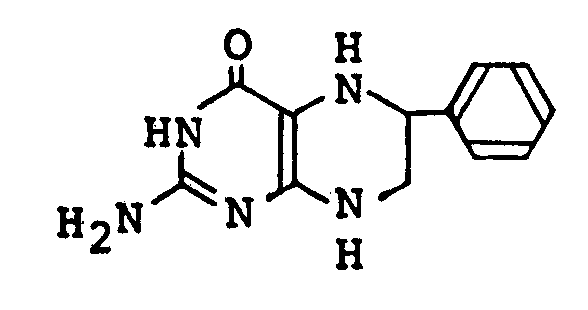
- the active compounds which are most preferable for use in the treatment of autism are optically active L-erythro-5,6,7,8-tetrahydrobiopterin and salts thereof. They may be replaced by analogues thereof, such as DL-tetrahydrobiopterin, 1',2'-diacetyltetrahydrobiopterin, sepiapterin, 6-methyl-5,6,7,8-tetrahydropterin, 6-phenyl-5,6,7,8-tetrahydropterin, and salts thereof. It should, however, be emphasized again that from the viewpoints of nontoxicity and other factors, L-erythro-5,6,7,8-tetrahydrobiopterin which exists in vivo is most preferable.
- Polyvinylpyrrolidone (Kollidon 30) was dissolved in sterile purified water. The solution was uniformly mixed with 10 parts of ascorbic acid and 5 parts of L-cysteine hydrochloride. Thereafter, 10 parts of tetrahydrobiopterin dihydrochloride was added and a uniform mixture was obtained.
- the resulting solution was added to 59 parts of an excipient (mannitol or lactose) and 15 parts of a disintegrator [corn starch or hydroxypropyl cellulose (LH-22)] and the kneaded mixture was granulated, dried and sieved.
- an excipient mannitol or lactose
- a disintegrator corn starch or hydroxypropyl cellulose (LH-22)
- a uniform solution of tetrahydrobiopterin was prepared as in Example 1 and mixed with 58 parts of lactose and 15 parts of microcrystalline cellulose. To the mixture, one part of magnesium stearate was added and the resulting mixture was pelletized to form tablets.
- Granules as prepared in Example 1 were charged into capsules, with 0.2% magnesium stearate incorporated as a lubricant.
- Tetrahydrobiopterin dihydrochloride 1.5 g Ascorbic acid 1.5 g L-cysteine hydrochloride 0.5 g Mannitol 6.5 g
- the above-listed components were dissolved in sterile purified water to make a volume of 100 ml.
- the solution was sterilized by filtration, put into vials or ampules in 1- or 2-ml portions, freeze-dried and the containers sealed.
- Tetrahydrobiopterin dihydrochloride (2.0 g) was dissolved in sterile purified water in an oxygen-free atmosphere to make a volume of 100 ml. The solution was sterilized by filtration, worked up as in Example 4, and the container sealed.
- Tetrahydrobiopterin dihydrochloride 150 parts Ascorbic acid 150 parts L-cysteine hydrochloride 50 parts
- a uniform powder prepared from these components was dispersed in 9,950 parts of cocoa butter.
- Tetrahydrobiopterin dihydrochloride 5 parts Ascorbic acid 5 parts L-cysteine hydrochloride 2 parts
- a uniform solution was prepared from these components, and added to a uniform mixture of mannitol (55 parts), polyvinylpyrrolidone (1 part), hydroxypropyl cellulose (14 parts) and 5-hydroxytryptophan (5 parts). The kneaded mixture was granulated, dried and sieved.
- Tetrahydrobiopterin dihydrochloride 5 parts Ascorbic acid 5 parts L-cysteine hydrochloride 5 parts Mannitol 52 parts Polyvinylpyrrolidone (Kollidon 30) 1 part Hydroxypropyl cellulose (LH-22) 12 parts L-DOPA 10 parts
- Tetrahydrobiopterin dihydrochloride 5 parts Ascorbic acid 5 parts L-cysteine hydrochloride 2 parts
- a uniform solution was prepared from these components, and added to a uniform mixture of 5-hydroxytryptophan (5 parts), L-DOPA (10 parts), mannitol (50 parts), polyvinylpyrrolidone (Kollidon 30) (1 part) and hydroxypropyl cellulose (LH-22) (9 parts). The kneaded mixture was granulated, dried and sieved.
- the WHO defines infantile autism as follows: 1) it is a syndrome manifested within 30 months of birth; 2) it involves abnormal responses to visual and auditory stimulations (such as impaired understanding of language, retarded development of language, and apparently echolalia); 3) it involves impaired social and interpersonal relations; and 4) it involves frequent stereotyped or manneristic behaviors.
- Patients to be treated by tetrahydrobiopterin were selected by examination to check whether their symptoms satisfied the WHO's definition of autism.
- Clinical symptoms and changes in abnormal behaviors were evaluated by the "Rating Scale for Abnormal Behaviors in Children" and "Children's Behavior Checklist" prepared by the "Study Group on Behavioral Disorders in Children".
- Trp-d2 deuterated tryptophan-3-3-d2
- Trp-d2 deuterated tryptophan-3-3-d2
- 5HT-d2 deuterated serotonin
- tetrahydrobiopterin which is a coenzyme that is involved in the biosynthesis of these amines as their regulators was administered.
- the therapeutic effects of this coenzyme were remarkable as demonstrated in the following case studies.
- Pimozide, pentoxyphylline and calcium hopantenate were either ineffective or their continued administration was impossible. His symptoms were not relieved by administration of 10 mg/kg of L-DOPA; on the contrary, this drug aggravated the patients symptoms and, hence, its application was discontinued.
- L-DOPA L-erythro-5,6,7,8-tetrahydrobiopterin
- 5HTP (1 mg/kg/day) was again administered in combination with 1 mg/kg/day of BPH4.
- the patient became normal in terms of understanding instructions, playing, sleeping and interacting with his family. He even became able to attend school, walk alone, and go out of his home in the same way as normal children.
- the administration of BPH4 was discontinued at week 6 and only 5HTP was administered thereafter. Then, the patient fell again into hyperkinesis, frequently uttered animal noises, and refused to stop this undesirable behavior when ordered to do so verbally. His symptoms were further aggravated when the administration of 5HTP was suspended.
- the patient was given L-DOPA at a dose of 10 mg/kg/day. At day 10, he showed increasing interest in other people and minifested other responses which were, however, by no means pronounced.
Landscapes
- Health & Medical Sciences (AREA)
- Chemical & Material Sciences (AREA)
- Medicinal Chemistry (AREA)
- Pharmacology & Pharmacy (AREA)
- Life Sciences & Earth Sciences (AREA)
- Animal Behavior & Ethology (AREA)
- General Health & Medical Sciences (AREA)
- Public Health (AREA)
- Veterinary Medicine (AREA)
- Bioinformatics & Cheminformatics (AREA)
- Engineering & Computer Science (AREA)
- Chemical Kinetics & Catalysis (AREA)
- General Chemical & Material Sciences (AREA)
- Nuclear Medicine, Radiotherapy & Molecular Imaging (AREA)
- Organic Chemistry (AREA)
- Epidemiology (AREA)
- Biomedical Technology (AREA)
- Neurology (AREA)
- Neurosurgery (AREA)
- Psychiatry (AREA)
- Pharmaceuticals Containing Other Organic And Inorganic Compounds (AREA)
- Saccharide Compounds (AREA)
- Steroid Compounds (AREA)
- Nitrogen And Oxygen Or Sulfur-Condensed Heterocyclic Ring Systems (AREA)
Abstract
Description
- The present invention relates to the manufacture of a medicament for the treatment of infantile autism which contains tetrahydrobiopterin or a derivative thereof as an effective ingredient.
- Ever since the finding of the dysfunctioning of the brain in autistic children, autism has been considered to be a disease caused by brain impairment. The etiology of autism has been ascribed to heredity, developmental anomaly or impairment at delivery but no lucid and convincing explanation has yet been put forward. Therefore, the treatments so far tried have been limited to nosotropic ones which involve the administration of such drugs as pimozide, haloperidol, pentoxyfylline and calcium hopantenate in accordance with the specific abnormal behaviors manifested by autistic patients, and no treatment which is truly etiotropic has been known [Acta paedopsychiat., 48, 173-184 (1982); Clin. Eval., 8, 629-673, Dec., 1980; Shinryo to Shinyaku (Diagnosis and New Drugs), 21, 4, Special Issue, April 1, 1984).
- Tetrahydrobiopterin and derivatives thereof are known compounds which have been used in the treatment of malignant hyperphenylalaninemia, depressions and Parkinson's disease (see, for example, Japanese Patent Public Disclosure Nos. 25323/1984 and 76086/1984).
- As mentioned above, however, no etiotropic drug for the treatment of autism has been found and there exists a strong need to develop such a drug.
- The present inventors obtained observations that indicate impaired cellular transport of aromatic amino acids in representative cases of children suffering from infantile autism. They therefore postulated that insufficiency of serotonin and catecholamines in the brain could cause autism and on the basis of this hypothesis, the inventors administered 5HTP (5-hydroxytryptophan) and L-DOPA (i.e., precursors for serotonin and catecholamines) to autistic children. In many cases, their symptoms were generally relieved but, in some cases, the symptoms were aggravated, probably because of overdosing of these drugs.
- Therefore, instead of administering these two precursors, the present inventors used tetrahydrobiopterin which is a coenzyme for the hydroxylase of aromatic amino acids and which is a rate-limiting factor for the synthesis of serotonin and catecholamines. This compound turned out be surprisingly effective in the treatment of autism. The present invention has been accomplished on the basis of this finding.
- Fig. 1 is a graph depicting the blood level of Trp-d₅ as a function of time after it was administered per-orally to autistic children;
- Fig. 2 is a graph showing the blood level of Phe-d₅ as a function of time after it was administered per-orally to autistic children;
- Fig. 3 is a graph showing the blood level of Tyr-d₄ as a function of time after it was administered per-orally to autistic children; and
- Figs. 4 and 5 are charts which outline the time schedule of administration of BPH₄, 5HTP and L-DOPA and the resulting changes in the symptoms of
Cases 1 and 2, respectively. - The present invention relates to the manufacture of medicament for the treatment of autism which contains a compound of the formula (I):

(wherein R is
-CH₃, CH₂OH or
or a salt thereof as an effective ingredient. - Examples of compounds of formula (I) used in the medicaments of the present invention include the compounds listed below and salts thereof:
- 1) L-erythro-5,6,7,8-tetrahydrobiopterin:

- 2) DL-5,6,7,8-tetrahydrobiopterin:
- 3) 1',2'-diacetyl-5,6,7,8-tetrahydrobiopterin:

- 4) sepiapterin:

- 5) 6-methyl-5,6,7,8-tetrahydropterin:

- 6) 6-phenyl-5,6,7,8-tetrahydropterin:
- Among the compounds shown above, 5,6,7,8-tetrahydrobiopterin and salts thereof are preferred. In consideration of several factors such as toxicity, L-erythro-5,6,7,8-tetrahydrobiopterin and salts thereof are most preferred.
- The compounds of formula (I) are known and are described in, for example, Japanese Patent Public Disclosure Nos. 25323/1984 and 76086/1984. Illustrative salts are those with pharmaceutically nontoxic acids such as hydrochloric acid, phosphoric acid, sulfuric acid, boric acid, acetic acid and formic acid. Salts of the compounds of formula (I) with such acids are also included in the definition of the "active ingredient" in the pharmaceutical composition of the present invention.
- The medicaments of the present invention may be prepared by formulating them in dosage forms which are suitable for peroral, rectal or non-parenteral administration, the last-mentioned including intravenous injection and administration into the cerebrospinal fluid. For this purpose, common carriers and routine formulation techniques may be employed.
- "Common carriers" means those which are employed in standard pharmaceutical preparations and includes excipients, binders and disintegrators the choice of which depends on the specific dosage form used. Typical examples of the excipient are starch, lactose, sucrose, glucose, mannitol and cellulose; illustrative binders are polyvinylpyrrolidone, starch, sucrose, hydroxypropyl cellulose and gum arabic; illustrative disintegrators include starch, agar, gelatin powder, cellulose, and CMC. Any other common excipients, binders and disintegrators may also be employed.
- In addition to the carriers described above, the medicament of the present invention preferably contains antioxidants for the purpose of stabilizing the effective ingredient. Appropriate antioxidants may be selected from among those which are commonly incorporated in pharmaceuticals and include ascorbic acid, N-acetylcystein, L-cystein, dℓ-α-tocopherol, and natural tocopherol. These antioxidants are preferably used in amounts that stabilize the active compound and the weight ratio of the antioxidant to the active compound generally ranges from 0.2 to 1.5.
- Formulations of the manufactured medicament of the present invention which are suitable for peroral administration may be provided in the form of tablets, capsules, powders, granules, or suspensions in non-aqueous solutions such as syrups, emulsions or drafts, each containing one or more of the active compounds in predetermined amounts.
- The granule may be provided by first preparing an intimate mixture of one or more of the active ingredients with one or more of the auxiliary components shown above, then granulating the mixture, and classifying the granules by screening through a sieve.
- The tablet may be prepared by compressing or otherwise forming one or more of the active ingredients, optionally with one or more auxiliary components.
- The capsule may be prepared by first making a powder or granules as an intimate mixture of one or more of the active ingredients with one or more auxiliary components, then charging the mixture into an appropriate capsule on a packing machine, etc.
- The manufactured medicament of the present invention may be formulated as a suppository (for rectal administration) with the aid of a common carrier such as cocoa butter.
- The manufactured medicament of the present invention may also be formulated in a dosage form suitable for non-parenteral administration by packaging one or more active ingredients as dry solids in a sterile nitrogen-purged container. The resulting dry formulation may be administered to patients non-parenterally after being dispersed or dissolved in a given amount of aseptic water.
- The dosage forms are preferably prepared from a mixture of the active ingredient, routine auxiliary components and one or more of the antioxidants listed above. If desired, the formulations may further contain one or more auxiliary components selected from among excipients, buffers, flavoring agents, binders, surfactants, thickening agents, and lubricants.
- The dose of the active compound of formula (I) will of course vary with the route of administration, the severity of the disease to be treated, and the patient to be treated, but the exact dose ultimately chosen should be left to the good discretion of the doctor responsible for the treatment.
- A dose which is appropriate for the treatment of autistic disorders generally ranges from 0.1 to 50 mg/kg body weight/day, and a typical effective dose is within the range of 0.5 to 10 mg/kg body weight/day.
- If a desired dose is determined, the active ingredient may be administered once a day or, alternatively, it may be administered in up to four portions daily at suitable intervals.
- The active ingredient may be straightforwardly administered without being mixed with any other components. However, for several reasons, typically for the purpose of providing ease in controlling the dose level, the active compound is preferably administered in a pharmaceutical dosage form.
- In addition to the compound of formula (I), the dosage formulation of the medicament of the present invention may contain 5-hydroxytryptophan (5HTP) and/or L-dopa (L-DOPA) as an auxiliary active ingredient. It has been observed that the combined use of these active ingredients proves even more effective in treating autism than when the active ingredient of formula (I) is used alone. If two or more active ingredients are used, their proportions are not limited to any particular value but, as guide figures, 5HTP and/or L-DOPA may be used in amounts, on a weight basis, of 0.1 to 10, preferably 0.5 to 2 parts, per 1 part of the active ingredient of formula (I).
- If a medicament containing the mixture of active compound (I) and 5HTP and/or L-DOPA is used in treatment of autism, an appropriate dose is such that the sum of the active ingredients ranges from 0.1 to 50 mg/kg body weight/day, preferably from 0.5 to 10 mg/kg body weight/day.
- Whether the patient should be treated with a preparation containing the compound of formula (I) as the sole active ingredient or with a preparation containing both the compound (I) and 5HTP and/or L-DOPA will be decided by the good judgment of the doctor depending upon the patients age and or the severity of the disease.
- As already mentioned, the active compounds which are most preferable for use in the treatment of autism are optically active L-erythro-5,6,7,8-tetrahydrobiopterin and salts thereof. They may be replaced by analogues thereof, such as DL-tetrahydrobiopterin, 1',2'-diacetyltetrahydrobiopterin, sepiapterin, 6-methyl-5,6,7,8-tetrahydropterin, 6-phenyl-5,6,7,8-tetrahydropterin, and salts thereof. It should, however, be emphasized again that from the viewpoints of nontoxicity and other factors, L-erythro-5,6,7,8-tetrahydrobiopterin which exists in vivo is most preferable. It will be interesting to note that the acute toxicity of the L-erythro-5,6,7,8-tetrahydrobiopterin dihydrochloride which was administered to rats per-orally was 2 g/kg or more, indicating the substantial absence of toxicity in this compound. The non-optically active form, DL-tetrahydrobiopterin, also presents low toxicity as demonstrated in the treatment of Parkinson's disease in Japanese Patent Public Disclosure Nos. 76086/1984 and 25323/1984, and may be used for the treatment of autism. Little acute toxicity is also found in the other compounds represented by the formula (I).
- The following examples are provided for the purpose of further illustrating the present invention but are in no sense to be taken as limiting.
- One part of polyvinylpyrrolidone (Kollidon 30) was dissolved in sterile purified water. The solution was uniformly mixed with 10 parts of ascorbic acid and 5 parts of L-cysteine hydrochloride. Thereafter, 10 parts of tetrahydrobiopterin dihydrochloride was added and a uniform mixture was obtained.
- The resulting solution was added to 59 parts of an excipient (mannitol or lactose) and 15 parts of a disintegrator [corn starch or hydroxypropyl cellulose (LH-22)] and the kneaded mixture was granulated, dried and sieved.
- A uniform solution of tetrahydrobiopterin was prepared as in Example 1 and mixed with 58 parts of lactose and 15 parts of microcrystalline cellulose. To the mixture, one part of magnesium stearate was added and the resulting mixture was pelletized to form tablets.
- Granules as prepared in Example 1 were charged into capsules, with 0.2% magnesium stearate incorporated as a lubricant.
-
Tetrahydrobiopterin dihydrochloride 1.5 g Ascorbic acid 1.5 g L-cysteine hydrochloride 0.5 g Mannitol 6.5 g - The above-listed components were dissolved in sterile purified water to make a volume of 100 ml. The solution was sterilized by filtration, put into vials or ampules in 1- or 2-ml portions, freeze-dried and the containers sealed.
- Tetrahydrobiopterin dihydrochloride (2.0 g) was dissolved in sterile purified water in an oxygen-free atmosphere to make a volume of 100 ml. The solution was sterilized by filtration, worked up as in Example 4, and the container sealed.
-
Tetrahydrobiopterin dihydrochloride 150 parts Ascorbic acid 150 parts L-cysteine hydrochloride 50 parts - A uniform powder prepared from these components was dispersed in 9,950 parts of cocoa butter.
-
Tetrahydrobiopterin dihydrochloride 5 parts Ascorbic acid 5 parts L- cysteine hydrochloride 2 parts - A uniform solution was prepared from these components, and added to a uniform mixture of mannitol (55 parts), polyvinylpyrrolidone (1 part), hydroxypropyl cellulose (14 parts) and 5-hydroxytryptophan (5 parts). The kneaded mixture was granulated, dried and sieved.
-
Tetrahydrobiopterin dihydrochloride 5 parts Ascorbic acid 5 parts L- cysteine hydrochloride 5 parts Mannitol 52 parts Polyvinylpyrrolidone (Kollidon 30) 1 part Hydroxypropyl cellulose (LH-22) 12 parts L- DOPA 10 parts - These components were worked up as in Example 7, followed by granulation and sieving, except that 5 parts of 5-hydroxytryptophan was replaced by 10 parts of L-DOPA.
-
Tetrahydrobiopterin dihydrochloride 5 parts Ascorbic acid 5 parts L- cysteine hydrochloride 2 parts - A uniform solution was prepared from these components, and added to a uniform mixture of 5-hydroxytryptophan (5 parts), L-DOPA (10 parts), mannitol (50 parts), polyvinylpyrrolidone (Kollidon 30) (1 part) and hydroxypropyl cellulose (LH-22) (9 parts). The kneaded mixture was granulated, dried and sieved.
- The definition of autism and the legitimacy of its treatment with tetrahydrobiopterin based on biochemical observations are discussed below.
- The WHO defines infantile autism as follows: 1) it is a syndrome manifested within 30 months of birth; 2) it involves abnormal responses to visual and auditory stimulations (such as impaired understanding of language, retarded development of language, and bizarre echolalia); 3) it involves impaired social and interpersonal relations; and 4) it involves frequent stereotyped or manneristic behaviors. Patients to be treated by tetrahydrobiopterin were selected by examination to check whether their symptoms satisfied the WHO's definition of autism. Clinical symptoms and changes in abnormal behaviors were evaluated by the "Rating Scale for Abnormal Behaviors in Children" and "Children's Behavior Checklist" prepared by the "Study Group on Behavioral Disorders in Children".
- Childrens with infantile autism who were selected on the basis of examination in consideration of the WHO's definition were given perorally deuterated-phenylalanine (labelled on the aromatic ring and hereinafter abbreviated as Phe-d₅) and deuterated tryptophan (labelled on the indole nucleus and hereinafter abbreviated as Trp-d₅). The results of analyses of Phe-d₅, Trp-d₅ and Tyr-d₄ (deuterated tyrosine produced as a result of metabolization of Phe-d₅ and labelled on the aromatic ring) in blood are shown in Figs. 1 to 3, from which one can clearly see impaired transport of Trp-d₅ and Tyr-d₄ into the blood. The data in Figs. 1 and 2 show impaired uptake of Trp-d₅ and Phe-d₅, and the Tyr-d₄ disappearance curve in Fig. 3 differs entirely from the normal curve. These results suggest that infantile autism involves abnormal transport of aromatic amino acids, and this phenomenon exist not only between blood and the intestines but also between blood and the brain. Impaired uptake of aromatic amino acids would reduce the supply of amino acids into the brain, which may lead to chronic insufficiency of serotonin and catecholamines in the brain. In the formation of serotonin, the tryptophan level could be an enzymatic activity limiting factor.
- On the other hand, high blood serotonin levels in autistic children have been reported and the present inventors have confirmed that this is an indisputable fact. However, when deuterated tryptophan-3-3-d₂ (hereunder abbreviated as Trp-d₂) was administered to rats either perorally or by intraperitoneal injection, a large amount of deuterated serotonin (hereunder 5HT-d₂) was detected in the
brain 30 minutes later whereas no detectable amount of 5HT-d₂ was found in the other organs checked, the only exception being the intestinal tract where a very small amount of 5HT-d₂ was detected. This indicates that although serotonin synthesis in the brain is very rapid, it is not synthesized in either platelets or plasma in the blood until several hours have passed from the administration of Trp-d₂ - Clinical observations of high serotonin levels in autistic children would be explained as follows: impaired absorption of tryptophan by the intestinal tract causes excessive, although gradual, synthesis of serotonin in that location, from which excess serotonin is taken up by platelets. It is therefore postulated that high serotonin levels in the blood do not necessarily mean high serotonin levels in the brain, and that the reported assumption of high serotonin levels in the brain of autistic patients is quite dubious.
- Therefore, on the basis of the hypothesis that the levels of serotonin and catecholamines decrease in the brain of autistic patients, the present inventors administered very small amounts of 5HTP (5-hydroxytryptophan) and L-DOPA, precursors of these amines, to the patients. The results were remarkable but the administration of these precursors required very strict dose control since any overdosage aggravated the symptoms of the patients because of the irritating action of the drugs.
- The present inventors therefore reached the idea that better results would be obtained if, in addition to these amine precursors which regulate the levels of serotonin and catecholamines in the brain, tetrahydrobiopterin which is a coenzyme that is involved in the biosynthesis of these amines as their regulators was administered. The therapeutic effects of this coenzyme, optionally in combination with 5HTP and/or L-DOPA, were remarkable as demonstrated in the following case studies.
- The patient would not laugh at all and this symptom emerged about 10 months after his birth. He avoided eye contact and entirely lacked verbosity, two typical symptoms of autism. An interview with the patient revealed that he was abnormal with respect to 23 out of the 24 items in Checklist for the History of Abnormal Behaviors prepared by the "Study Group on Behavioral Disorders in Children". The patient was six years and one month old when he was brought to Musashi National Nursing Home, Tokyo, Japan. Among the most noticeable of his symptoms were: hyperkinesis, inability to interact with other people, echolaria, delayed echolaria, inability to make communicative speech, inability to verbalize, animal noise, sloppiness, and attachment to certain objects. The patient was not able to get along with classmates. Pimozide, pentoxyphylline and calcium hopantenate were either ineffective or their continued administration was impossible. His symptoms were not relieved by administration of 10 mg/kg of L-DOPA; on the contrary, this drug aggravated the patients symptoms and, hence, its application was discontinued.
- Starting six weeds after the administration of L-DOPA was discontinued, 5HTP was administered at a dose of 1 mg/kg/day. Eight weeks after the commencement of 5HTP administration, the frequency of echolalia decreased and the patient started to utter normal words and sentences. In the ninth week, 2 mg/kg of L-DOPA was administered in addition to 5HTP; the patient acquired the ability to lead a school life and interact with other children but no further improvements were attained. Therefore, the administration of L-erythro-5,6,7,8-tetrahydrobiopterin (hereunder BPH₄) was incorporated in the regimen.
- When 2.5 mg/kg/day of BPH₄ was administered in addition to 5HTP and L-DOPA, the patient got excited for a while but at day he became less excitable, and thereafter, he was well disciplined and could play with other children. One week later, the administration of 5HTP and L-DOPA was discontinued and only BPH₄ was given at a dose of 2.5 mg/kg/day, but the symptoms of the patients were further relieved.
- One week after the administration of BPH₄ alone, 5HTP (1 mg/kg/day) was again administered in combination with 1 mg/kg/day of BPH₄. After one week of the combined administration of BPH₄ and 5HTP, the patient became normal in terms of understanding instructions, playing, sleeping and interacting with his family. He even became able to attend school, walk alone, and go out of his home in the same way as normal children. In view of such pronounced improvements, the administration of BPH₄ was discontinued at
week 6 and only 5HTP was administered thereafter. Then, the patient fell again into hyperkinesis, frequently uttered animal noises, and refused to stop this undesirable behavior when ordered to do so verbally. His symptoms were further aggravated when the administration of 5HTP was suspended. - Following a suspension of about 8 weeks in the administration of drugs, the administration of BPH₄ above (1 mg/kg/day) was resumed. The patient still suffered from hyperkinesis and would laugh to himself. However, his ability to understand language improved and he became able to interact and converse with othere people, making appropriate responses to them (Fig. 4 and Table 1).

- Since earliest infancy, the patient manifested such symptoms as the avoidance of eye and human contact. Interview with the patient revealed that he was abnormal with respect to 22 out of the 24 items in the Children Behavior Checklist prepared by the "Study Group on Behavioral Disorders in Children". When he was 4 years and 8 months old, the patient was unable to speak, did not obey verbal instructions, was hyperactive lacked outward expressiveness, and showed abnormal attachment to objects. Pimozide, pentoxyphylline and calcium hopantenate were ineffective. The patient was five years old when he was hospitalized at Municipal Children's Health Center, Osaka, Japan.
- The patient was given L-DOPA at a dose of 10 mg/kg/day. At
day 10, he showed increasing interest in other people and minifested other responses which were, however, by no means pronounced. - At day 11 and afterward, both 5HTP (1 mg/kg/day) and L-DOPA (10 mg/kg/day) were administered. About two weeks after this combined drug regimen, the patient started to respond to other person's calls and to verbalize his feelings. However, the improvement was not appreciable and the drug treatment was suspended after four weeks.
- In the fifth week and afterward, the patient was given BPH₄ (1 mg/kg/day) alone. The patient's interpersonal transactional mode improved and he responded to selected persons, enabling others to infer his emotions. He expressed his emotions with words and he showed increasing interest in exercising the whole body and playing ball. The overall improvement was pronounced.
- In the seventh week and afterward, the patient was given both BPH₄ (1 mg/kg/day) and 5HTP (1 mg/kg/day). He showed better understanding of language and became able to develop a social life with other children. He also learned to count numbers and be patient. The improvements were great.
- When the drug application was discontinued in the 12th week, the patient gradually lost his patience, got easily excited and showed a tendency to avoid eye contact. During a 10-day intermission, the symptoms of the patient became seriously aggravated.
- After the 10-day intermission, the administration of BPH₄ (1 mg/kg/day) and 5HTP (1 mg/kg/day) was resumed. The improvement in the patient's ability to understand language, interact with other people, and respond to other person's calls was so remarkable that the patient almost looked like a normal child (Fig. 5 and Table 2).

- The above-described cases are totally representative of autistic patients and were objectively supported by the Checklist of Medical History and the "Rating Scale for Present Abnormal Behaviors in Children" prepared by the "Study Group on Behavioral Disorders in Children". The present inventors administered BPH₄ to these representative cases and attained strikingly good results. The ability of BPH₄ to alleviate the symptoms of autism was also demonstrated by the fact that the patients got worse as a result of discontinuation of drug treatment and that they changed for better when drug administration was resumed.
- Remarkable effects were attained even when BPH₄ was administered alone, but the two case studies demonstrate that satisfactory results could also be obtained by using BPH₄ in combination with 5HTP and/or with L-DOPA capable of increasing the levels of catecholamines in the brain.
Claims (6)
- Use of a compound of the formula:


- Use according to Claim 1 wherein R is

- Use according to Claim 1 wherein the compound of formula (I) is L-erythro-5,6,7,8-tetrahydrobiopterin.
- Use according to Claim 1 wherein 5-hydroxytryptophan and/or L-DOPA is used as an additional active ingredient in the preparation of the medicament.
- Use according to Claim 4 wherein the ratio of the compound of formula (I) to the additional active ingredient used is 1:0.1 - 10 by weight.
- Use according to Claim 1 wherein an anti-oxidizing agent selected from ascorbic acid, N-acetylcysteine, L-cysteine, dl-α-tocopherol and natural tocopherol is also used in the preparation of the medicament.
Priority Applications (1)
| Application Number | Priority Date | Filing Date | Title |
|---|---|---|---|
| AT86107614T ATE73331T1 (en) | 1985-06-04 | 1986-06-04 | USE OF TETRAHYDROBIOPTERINS TO MANUFACTURE A MEDICATION FOR THE TREATMENT OF CHILDREN'S AUTISM. |
Applications Claiming Priority (2)
| Application Number | Priority Date | Filing Date | Title |
|---|---|---|---|
| JP60121347A JPS61277618A (en) | 1985-06-04 | 1985-06-04 | Remedy for autism |
| JP121347/85 | 1985-06-04 |
Publications (3)
| Publication Number | Publication Date |
|---|---|
| EP0209689A2 EP0209689A2 (en) | 1987-01-28 |
| EP0209689A3 EP0209689A3 (en) | 1989-12-20 |
| EP0209689B1 true EP0209689B1 (en) | 1992-03-11 |
Family
ID=14809022
Family Applications (1)
| Application Number | Title | Priority Date | Filing Date |
|---|---|---|---|
| EP86107614A Expired - Lifetime EP0209689B1 (en) | 1985-06-04 | 1986-06-04 | Use of tetrahydrobiopterins in the preparation of a medicament for the treatment of infantile autism |
Country Status (5)
| Country | Link |
|---|---|
| US (2) | US4778794A (en) |
| EP (1) | EP0209689B1 (en) |
| JP (1) | JPS61277618A (en) |
| AT (1) | ATE73331T1 (en) |
| DE (1) | DE3684190D1 (en) |
Cited By (2)
| Publication number | Priority date | Publication date | Assignee | Title |
|---|---|---|---|---|
| US8003126B2 (en) | 2004-11-17 | 2011-08-23 | Biomarin Pharmaceutical Inc. | Stable tablet formulation |
| EP1708690B1 (en) | 2003-11-17 | 2016-07-20 | BioMarin Pharmaceutical Inc. | Treatment of phenylketonuria with bh4 |
Families Citing this family (85)
| Publication number | Priority date | Publication date | Assignee | Title |
|---|---|---|---|---|
| JPS5925323A (en) * | 1982-03-03 | 1984-02-09 | 鐘淵化学工業株式会社 | A therapeutic agent for diseases involving brain neurotransmitters consisting of pterin derivatives |
| US4937342A (en) * | 1987-11-30 | 1990-06-26 | Kabushiki Kaisha Vitamin Kenkyusyo | Intermediates for synthesizing BH4 and its derivatives |
| US4994467A (en) * | 1989-05-31 | 1991-02-19 | Zimmerman Andrew W | Treating autism and other developmental disorders in children with NMDA receptor antagonists |
| US5753656A (en) | 1994-08-05 | 1998-05-19 | Suntory Limited | Method for treating spinocerebellar degeneration |
| DE69725721T3 (en) | 1996-08-30 | 2007-10-31 | Daiichi Asubio Pharma Co., Ltd. | PREVENTIVE OR HEALING MEDICINE FOR DISEASES CAUSED BY LACK OF STAIN OXIDE SYNTHASE (NOS) |
| US6197746B1 (en) | 1998-05-19 | 2001-03-06 | Repligen Corporation | Method of using secretin for treating autism |
| US6020310A (en) | 1997-05-19 | 2000-02-01 | Repligen Corporation | Method for assisting in differential diagnosis and treatment of autistic syndromes |
| WO1999043324A1 (en) * | 1998-02-27 | 1999-09-02 | Suntory Limited | Preventives or remedies for drug-induced renal disturbance |
| JP4306825B2 (en) * | 1998-02-27 | 2009-08-05 | アスビオファーマ株式会社 | Preventive or therapeutic agent for diseases associated with vascular dysfunction involving insulin resistance |
| WO2001079837A1 (en) * | 2000-04-12 | 2001-10-25 | Repligen Corporation | Methylxanthines in the diagnosis and treatment of autistic disorder |
| US20060110325A1 (en) * | 2003-02-21 | 2006-05-25 | Hinz Martin C | Serotonin and catecholamine segment optimization technology |
| US20090311795A1 (en) * | 2002-03-21 | 2009-12-17 | Hinz Martin C | Bilateral control of functions traditionally regulated by only serotonin or only dopamine |
| CA2479218A1 (en) * | 2002-03-21 | 2003-10-02 | Martin C. Hinz | Serotonin and catecholamine system segment optimization technology |
| US20070293571A1 (en) * | 2006-06-08 | 2007-12-20 | Hinz Martin C | Adminstration of dopa precursors with sources of dopa to effectuate optimal catecholamine neurotransmitter outcomes |
| DE10260263A1 (en) * | 2002-12-20 | 2004-07-15 | Biocrates Life Sciences Gmbh | Use of tetrahydrobiopterin derivatives for the treatment and nutrition of patients with amino acid metabolism disorders |
| US7442372B2 (en) | 2003-08-29 | 2008-10-28 | Biomarin Pharmaceutical Inc. | Delivery of therapeutic compounds to the brain and other tissues |
| AU2012200512C1 (en) * | 2003-11-17 | 2020-04-30 | Merck & Cie | Crystalline forms of (6R) -L-erythro-tetrahydrobiopterin dihydrochloride |
| EP1751312A4 (en) * | 2004-05-21 | 2010-01-27 | Univ Duke | Polymorphism in tryptophan hydroxylase-2 controls brain serotonin synthesis |
| JP2008504295A (en) * | 2004-06-25 | 2008-02-14 | ボード オブ リージェンツ, ザ ユニバーシティ オブ テキサス システム | Methods and compositions for the treatment of attention deficit hyperactivity disorder and hyperphenylalaninemia |
| US20100130500A1 (en) * | 2004-12-08 | 2010-05-27 | Biomarin Pharmaceutical Inc. | Methods and compositions for the treatment of pulmonary hypertension of the newborn |
| US20070034214A1 (en) * | 2005-08-12 | 2007-02-15 | Dochniak Michael J | Method to affect the development of autism spectrum disorders |
| WO2007067570A1 (en) * | 2005-12-05 | 2007-06-14 | Biomarin Pharmaceutical Inc. | Methods and compositions for the treatment of disease |
| WO2007119367A1 (en) * | 2006-03-20 | 2007-10-25 | Kaneka Corporation | Composition containing biopterin and method for using the same |
| WO2008089148A1 (en) * | 2007-01-12 | 2008-07-24 | Biomarin Pharmaceutical Inc. | Method of treating a metabolic or neuropsychiatry disorder with a bh4 derivative prodrug |
| CA2675134A1 (en) * | 2007-01-12 | 2008-07-24 | Biomarin Pharmaceutical Inc. | Pterin analogs |
| KR20160065998A (en) | 2007-04-11 | 2016-06-09 | 바이오마린 파머수티컬 인크. | Methods of administering tetrahydrobiopterin, associated compositions, and methods of measuring |
| AU2008347005B2 (en) | 2008-01-03 | 2013-10-03 | Biomarin Pharmaceutical Inc. | Pterin analog for treating BH4 responsive condition |
| US20110104074A1 (en) * | 2008-06-18 | 2011-05-05 | University Of Louisville Research Foundation, Inc. | Methods for targeted cancer treatment and detection |
| WO2010017570A2 (en) * | 2008-08-12 | 2010-02-18 | Orpha Swiss Gmbh | Pharmaceutical form comprising tetrahydrobiopterin |
| JP5066756B2 (en) * | 2010-04-22 | 2012-11-07 | 学校法人日本大学 | Drugs and foods for prevention and improvement of brain dysfunction |
| WO2012054815A1 (en) | 2010-10-22 | 2012-04-26 | Duke University | Slow-release formulations of 5-hydroxytryptophan as an adjunct to pro-serotonergic therapies |
| CA2828685C (en) * | 2011-03-01 | 2018-05-29 | Rubicon Research Private Limited | Stable compositions of tetrahydrobiopterin |
| US9303038B2 (en) | 2011-09-06 | 2016-04-05 | Cellix Bio Private Limited | Compositions and methods for the treatment of epilepsy and neurological diseases |
| US9216178B2 (en) | 2011-11-02 | 2015-12-22 | Biomarin Pharmaceutical Inc. | Dry blend formulation of tetrahydrobiopterin |
| WO2013167990A1 (en) | 2012-05-07 | 2013-11-14 | Mahesh Kandula | Compositions and methods for the treatment of depression |
| JP2015522531A (en) | 2012-05-07 | 2015-08-06 | セリックスビオ プライヴェート リミテッド | Compositions and methods for the treatment of neuromuscular and neurodegenerative diseases |
| US9738631B2 (en) | 2012-05-07 | 2017-08-22 | Cellix Bio Private Limited | Compositions and methods for the treatment of neurological disorders |
| US9309233B2 (en) | 2012-05-08 | 2016-04-12 | Cellix Bio Private Limited | Compositions and methods for the treatment of blood clotting disorders |
| US9522884B2 (en) | 2012-05-08 | 2016-12-20 | Cellix Bio Private Limited | Compositions and methods for the treatment of metabolic disorders |
| US9266823B2 (en) | 2012-05-08 | 2016-02-23 | Cellix Bio Private Limited | Compositions and methods for the treatment of parkinson's disease |
| US9403826B2 (en) | 2012-05-08 | 2016-08-02 | Cellix Bio Private Limited | Compositions and methods for the treatment of inflammatory disorders |
| US9434704B2 (en) | 2012-05-08 | 2016-09-06 | Cellix Bio Private Limited | Compositions and methods for the treatment of neurological degenerative disorders |
| US9242939B2 (en) | 2012-05-10 | 2016-01-26 | Cellix Bio Private Limited | Compositions and methods for the treatment of respiratory disorders |
| WO2013168000A1 (en) | 2012-05-10 | 2013-11-14 | Mahesh Kandula | Compositions and methods for the treatment of severe pain |
| WO2013168004A2 (en) | 2012-05-10 | 2013-11-14 | Mahesh Kandula | Compositions and methods for the treatment of fibromyalgia pain |
| US9499526B2 (en) | 2012-05-10 | 2016-11-22 | Cellix Bio Private Limited | Compositions and methods for the treatment of neurologic diseases |
| US9339484B2 (en) | 2012-05-10 | 2016-05-17 | Cellix Bio Private Limited | Compositions and methods for the treatment of restless leg syndrome and fibromyalgia |
| WO2013168015A1 (en) | 2012-05-10 | 2013-11-14 | Mahesh Kandula | Compositions and methods for the treatment of asthma and allergy |
| US9499527B2 (en) | 2012-05-10 | 2016-11-22 | Cellix Bio Private Limited | Compositions and methods for the treatment of familial amyloid polyneuropathy |
| US9315461B2 (en) | 2012-05-10 | 2016-04-19 | Cellix Bio Private Limited | Compositions and methods for the treatment of neurologic diseases |
| SG11201407318UA (en) | 2012-05-10 | 2014-12-30 | Cellix Bio Private Ltd | Compositions and methods for the treatment of metabolic syndrome |
| US9321775B2 (en) | 2012-05-10 | 2016-04-26 | Cellix Bio Private Limited | Compositions and methods for the treatment of moderate to severe pain |
| WO2013168011A1 (en) | 2012-05-10 | 2013-11-14 | Mahesh Kandula | Compositions and methods for the treatment of chronic pain |
| WO2013168002A1 (en) | 2012-05-10 | 2013-11-14 | Mahesh Kandula | Compositions and methods for the treatment of neurological conditions |
| WO2013167997A2 (en) | 2012-05-10 | 2013-11-14 | Mahesh Kandula | Compositions and methods for the treatment of metabolic syndrome |
| US9498461B2 (en) | 2012-05-23 | 2016-11-22 | Cellix Bio Private Limited | Compositions and methods for the treatment of inflammatory bowel disease |
| WO2013175344A2 (en) | 2012-05-23 | 2013-11-28 | Mahesh Kandula | Compositions and methods for the treatment of periodontitis and rheumatoid arthritis |
| WO2013175347A2 (en) | 2012-05-23 | 2013-11-28 | Mahesh Kandula | Compositions and methods for the treatment of respiratory disorders |
| AU2013264820A1 (en) | 2012-05-23 | 2014-11-27 | Cellixbio Private Limited | Compositions and methods for treatment of mucositis |
| AU2013264896A1 (en) | 2012-05-23 | 2014-11-27 | Cellixbio Private Limited | Compositions and methods for the treatment of multiple sclerosis |
| WO2013175376A2 (en) | 2012-05-23 | 2013-11-28 | Mahesh Kandula | Compositions and methods for the treatment of local pain |
| US9108942B1 (en) | 2014-11-05 | 2015-08-18 | Mahesh Kandula | Compositions and methods for the treatment of moderate to severe pain |
| WO2014020480A2 (en) | 2012-08-03 | 2014-02-06 | Mahesh Kandula | Compositions and methods for the treatment migraine and neurologic diseases |
| US9624168B2 (en) | 2012-09-06 | 2017-04-18 | Cellix Bio Private Limited | Compositions and methods for the treatment inflammation and lipid disorders |
| CA2873029A1 (en) | 2012-09-08 | 2014-03-13 | Cellixbio Private Limited | Compositions and methods for the treatment of inflammation and lipid disorders |
| WO2014041446A2 (en) * | 2012-09-17 | 2014-03-20 | Mahesh Kandula | Compositions and methods for the treatment of metabolic diseases |
| US9333187B1 (en) | 2013-05-15 | 2016-05-10 | Cellix Bio Private Limited | Compositions and methods for the treatment of inflammatory bowel disease |
| SG11201509782TA (en) | 2013-06-04 | 2015-12-30 | Cellix Bio Private Ltd | Compositions and methods for the treatment of diabetes and pre-diabetes |
| WO2015034984A1 (en) * | 2013-09-05 | 2015-03-12 | Emory University | Nutritional formulas comprising medium chain fatty acids or esters thereof and methods related thereto |
| US9096537B1 (en) | 2014-12-31 | 2015-08-04 | Mahesh Kandula | Compositions and methods for the treatment of mucositis |
| EP3240779B1 (en) | 2014-09-26 | 2020-10-28 | Cellixbio Private Limited | Compositions and methods for the treatment of epilepsy and neurological disorders |
| ES2799309T3 (en) | 2014-09-29 | 2020-12-16 | Cellix Bio Private Ltd | Compounds and compositions for the treatment of multiple sclerosis |
| CA2965449C (en) | 2014-10-27 | 2020-11-10 | Cellix Bio Private Limited | Three component salts of fumaric acid monomethyl ester with piperazine or ethylene diamine for the treatment of multiple sclerosis |
| US9150557B1 (en) | 2014-11-05 | 2015-10-06 | Cellix Bio Private Limited | Compositions and methods for the treatment of hyperglycemia |
| US9175008B1 (en) | 2014-11-05 | 2015-11-03 | Cellix Bio Private Limited | Prodrugs of anti-platelet agents |
| US10208014B2 (en) | 2014-11-05 | 2019-02-19 | Cellix Bio Private Limited | Compositions and methods for the treatment of neurological disorders |
| US9321716B1 (en) | 2014-11-05 | 2016-04-26 | Cellix Bio Private Limited | Compositions and methods for the treatment of metabolic syndrome |
| US9284287B1 (en) | 2014-11-05 | 2016-03-15 | Cellix Bio Private Limited | Compositions and methods for the suppression of carbonic anhydrase activity |
| US9173877B1 (en) | 2014-11-05 | 2015-11-03 | Cellix Bio Private Limited | Compositions and methods for the treatment of local pain |
| US9290486B1 (en) | 2014-11-05 | 2016-03-22 | Cellix Bio Private Limited | Compositions and methods for the treatment of epilepsy |
| CN107207411A (en) | 2014-12-01 | 2017-09-26 | 塞尔利克斯生物私人有限公司 | composition and method for treating multiple sclerosis |
| US9206111B1 (en) | 2014-12-17 | 2015-12-08 | Cellix Bio Private Limited | Compositions and methods for the treatment of neurological diseases |
| ES2905771T3 (en) | 2015-01-06 | 2022-04-12 | Cellix Bio Private Ltd | Compositions and methods for the treatment of inflammation and pain |
| CN108024997A (en) | 2015-07-17 | 2018-05-11 | 奥维德医疗公司 | Methods of treating developmental disorders with gaboxadol |
| US11464756B1 (en) | 2017-05-19 | 2022-10-11 | Jerry Darm | Mecuna pruriens, L-DOPA and 5-HTP based dietary supplements, pharmaceutical formulations and uses thereof |
Family Cites Families (3)
| Publication number | Priority date | Publication date | Assignee | Title |
|---|---|---|---|---|
| GB8318833D0 (en) * | 1983-07-12 | 1983-08-10 | Wellcome Found | Chemical compounds |
| JPS5976086A (en) * | 1982-09-20 | 1984-04-28 | ザ ウエルカム フアウンデ−シヨン リミテツド | Pteridine compound |
| DE3378634D1 (en) * | 1982-09-20 | 1989-01-12 | Wellcome Found | Pharmaceutically active pteridine derivatives |
-
1985
- 1985-06-04 JP JP60121347A patent/JPS61277618A/en active Granted
-
1986
- 1986-06-04 AT AT86107614T patent/ATE73331T1/en not_active IP Right Cessation
- 1986-06-04 US US06/870,495 patent/US4778794A/en not_active Expired - Lifetime
- 1986-06-04 DE DE8686107614T patent/DE3684190D1/en not_active Expired - Lifetime
- 1986-06-04 EP EP86107614A patent/EP0209689B1/en not_active Expired - Lifetime
-
1988
- 1988-06-23 US US07/210,312 patent/US4920122A/en not_active Expired - Lifetime
Cited By (2)
| Publication number | Priority date | Publication date | Assignee | Title |
|---|---|---|---|---|
| EP1708690B1 (en) | 2003-11-17 | 2016-07-20 | BioMarin Pharmaceutical Inc. | Treatment of phenylketonuria with bh4 |
| US8003126B2 (en) | 2004-11-17 | 2011-08-23 | Biomarin Pharmaceutical Inc. | Stable tablet formulation |
Also Published As
| Publication number | Publication date |
|---|---|
| ATE73331T1 (en) | 1992-03-15 |
| US4778794A (en) | 1988-10-18 |
| US4920122A (en) | 1990-04-24 |
| JPH0380127B2 (en) | 1991-12-24 |
| DE3684190D1 (en) | 1992-04-16 |
| JPS61277618A (en) | 1986-12-08 |
| EP0209689A2 (en) | 1987-01-28 |
| EP0209689A3 (en) | 1989-12-20 |
Similar Documents
| Publication | Publication Date | Title |
|---|---|---|
| US4920122A (en) | Pharmaceutical composition and method for the treatment of infantile autism | |
| EP0722731B1 (en) | Remedy for spinocerebellar degeneration | |
| EP0236684B1 (en) | Galanthamine or analogues thereof for treating alzheimer's disease | |
| US8349359B2 (en) | Liposomal formulation for oral administration of glutathione (reduced) | |
| US6191153B1 (en) | Use of 2-amino-6-n-propyl-amino-4,5,6,7-tetrahydrobenzothiazole as a pharmaceutical composition having an antidepressant activity | |
| JPH05194229A (en) | Remedy for mental illness symptoms consisting of pterin derivative | |
| MXPA05002827A (en) | Pharmaceutical formulations of modafinil. | |
| JPH11116482A (en) | Use of the natural stereoisomeric form of tetrahydrofolate for the preparation of a medicament suitable for influencing homocysteine levels, in particular for promoting homocysteine remethylation | |
| EA003142B1 (en) | Drug, possessing an antidepressant effect, its use and method of treatment | |
| IL182950A (en) | Liposomal suspension for oral administration of reduced glutathione | |
| KR20140107355A (en) | Methods for treating hyperbilirubinemia with stannsoporfin | |
| O'reilly et al. | Pharmacokinetic analysis of potentiating effect of phenylbutazone on anticoagulant action of warfarin in man | |
| US6017946A (en) | Serotonin containing formulation for oral administration and method of use | |
| US20110306669A1 (en) | Rapid onset and short term modafinil compositions and methods of use thereof | |
| CN101569626B (en) | method of treating movement disorders using barbituric acid derivatives | |
| US5011841A (en) | Treatment of depression | |
| JP2017036271A (en) | Activity motivator | |
| JP2588191B2 (en) | Therapeutic agent for improving neurological symptoms associated with malignant tumors and severe viral infections | |
| EP1099446B1 (en) | Combination for treating depression and anxiety containing a CNS-penetrant NK-1 receptor antagonist and an antidepressant or anxiolytic agent | |
| US7338955B1 (en) | Medicament for treatment of neuropathies | |
| CA1285880C (en) | Use of terguride as a geriatric agent | |
| EP1518554B1 (en) | Pharmaceutical composition for the treatment of hyperhomocysteinemia | |
| EP0301466B1 (en) | Uricosuric composition | |
| US2793157A (en) | Anticonvulsant 3-ethyl-5-phenyl hydantoin unit dosages and method of using same | |
| EP0216072B1 (en) | Use of dibenz[cd,f]indole derivatives in the prevention of alcohol abuse |
Legal Events
| Date | Code | Title | Description |
|---|---|---|---|
| PUAI | Public reference made under article 153(3) epc to a published international application that has entered the european phase |
Free format text: ORIGINAL CODE: 0009012 |
|
| AK | Designated contracting states |
Kind code of ref document: A2 Designated state(s): AT BE CH DE FR GB IT LI LU NL SE |
|
| PUAL | Search report despatched |
Free format text: ORIGINAL CODE: 0009013 |
|
| AK | Designated contracting states |
Kind code of ref document: A3 Designated state(s): AT BE CH DE FR GB IT LI LU NL SE |
|
| 17P | Request for examination filed |
Effective date: 19900405 |
|
| 17Q | First examination report despatched |
Effective date: 19901018 |
|
| ITF | It: translation for a ep patent filed | ||
| GRAA | (expected) grant |
Free format text: ORIGINAL CODE: 0009210 |
|
| AK | Designated contracting states |
Kind code of ref document: B1 Designated state(s): AT BE CH DE FR GB IT LI LU NL SE |
|
| REF | Corresponds to: |
Ref document number: 73331 Country of ref document: AT Date of ref document: 19920315 Kind code of ref document: T |
|
| REF | Corresponds to: |
Ref document number: 3684190 Country of ref document: DE Date of ref document: 19920416 |
|
| ET | Fr: translation filed | ||
| PLBE | No opposition filed within time limit |
Free format text: ORIGINAL CODE: 0009261 |
|
| STAA | Information on the status of an ep patent application or granted ep patent |
Free format text: STATUS: NO OPPOSITION FILED WITHIN TIME LIMIT |
|
| 26N | No opposition filed | ||
| ITTA | It: last paid annual fee | ||
| EPTA | Lu: last paid annual fee | ||
| EAL | Se: european patent in force in sweden |
Ref document number: 86107614.9 |
|
| PGFP | Annual fee paid to national office [announced via postgrant information from national office to epo] |
Ref country code: LU Payment date: 20010611 Year of fee payment: 16 |
|
| PGFP | Annual fee paid to national office [announced via postgrant information from national office to epo] |
Ref country code: AT Payment date: 20010613 Year of fee payment: 16 |
|
| PGFP | Annual fee paid to national office [announced via postgrant information from national office to epo] |
Ref country code: NL Payment date: 20010628 Year of fee payment: 16 |
|
| PGFP | Annual fee paid to national office [announced via postgrant information from national office to epo] |
Ref country code: BE Payment date: 20010717 Year of fee payment: 16 |
|
| REG | Reference to a national code |
Ref country code: GB Ref legal event code: IF02 |
|
| PG25 | Lapsed in a contracting state [announced via postgrant information from national office to epo] |
Ref country code: LU Free format text: LAPSE BECAUSE OF NON-PAYMENT OF DUE FEES Effective date: 20020604 Ref country code: AT Free format text: LAPSE BECAUSE OF NON-PAYMENT OF DUE FEES Effective date: 20020604 |
|
| PG25 | Lapsed in a contracting state [announced via postgrant information from national office to epo] |
Ref country code: BE Free format text: LAPSE BECAUSE OF NON-PAYMENT OF DUE FEES Effective date: 20020630 |
|
| BERE | Be: lapsed |
Owner name: *SUNTORY LTD Effective date: 20020630 |
|
| PG25 | Lapsed in a contracting state [announced via postgrant information from national office to epo] |
Ref country code: NL Free format text: LAPSE BECAUSE OF NON-PAYMENT OF DUE FEES Effective date: 20030101 |
|
| NLV4 | Nl: lapsed or anulled due to non-payment of the annual fee |
Effective date: 20030101 |
|
| REG | Reference to a national code |
Ref country code: GB Ref legal event code: 732E |
|
| REG | Reference to a national code |
Ref country code: CH Ref legal event code: PUE Owner name: DAIICHI SUNTORY PHARMA CO., LTD. Free format text: SUNTORY LTD#NO. 1-40 DOJIMAHAMA 2-CHOME#KITA-KU/OSAKA-SHI/OSAKA (JP) -TRANSFER TO- DAIICHI SUNTORY PHARMA CO., LTD.#7-2, KOJIMACHI 5-CHOME#CHIYODA-KU, TOKYO (JP) Ref country code: CH Ref legal event code: NV Representative=s name: ARNOLD & SIEDSMA AG |
|
| REG | Reference to a national code |
Ref country code: FR Ref legal event code: TP |
|
| PGFP | Annual fee paid to national office [announced via postgrant information from national office to epo] |
Ref country code: GB Payment date: 20050601 Year of fee payment: 20 |
|
| PGFP | Annual fee paid to national office [announced via postgrant information from national office to epo] |
Ref country code: DE Payment date: 20050602 Year of fee payment: 20 |
|
| PGFP | Annual fee paid to national office [announced via postgrant information from national office to epo] |
Ref country code: SE Payment date: 20050607 Year of fee payment: 20 |
|
| PGFP | Annual fee paid to national office [announced via postgrant information from national office to epo] |
Ref country code: FR Payment date: 20050608 Year of fee payment: 20 |
|
| PGFP | Annual fee paid to national office [announced via postgrant information from national office to epo] |
Ref country code: CH Payment date: 20050615 Year of fee payment: 20 |
|
| PGFP | Annual fee paid to national office [announced via postgrant information from national office to epo] |
Ref country code: IT Payment date: 20050627 Year of fee payment: 20 |
|
| REG | Reference to a national code |
Ref country code: GB Ref legal event code: PE20 |
|
| REG | Reference to a national code |
Ref country code: CH Ref legal event code: PFA Owner name: DAIICHI ASUBIO PHARMA CO., LTD. Free format text: DAIICHI SUNTORY PHARMA CO., LTD.#7-2, KOJIMACHI 5-CHOME#CHIYODA-KU, TOKYO (JP) -TRANSFER TO- DAIICHI ASUBIO PHARMA CO., LTD.#9-11, AKASAKA 2-CHOME, MINATO-KU#TOKYO (JP) |
|
| REG | Reference to a national code |
Ref country code: FR Ref legal event code: CD Ref country code: FR Ref legal event code: CA |
|
| PG25 | Lapsed in a contracting state [announced via postgrant information from national office to epo] |
Ref country code: GB Free format text: LAPSE BECAUSE OF EXPIRATION OF PROTECTION Effective date: 20060603 |
|
| REG | Reference to a national code |
Ref country code: CH Ref legal event code: PL |
|
| EUG | Se: european patent has lapsed |