EP0205098B1 - Influenza vaccine - Google Patents
Influenza vaccine Download PDFInfo
- Publication number
- EP0205098B1 EP0205098B1 EP86107631A EP86107631A EP0205098B1 EP 0205098 B1 EP0205098 B1 EP 0205098B1 EP 86107631 A EP86107631 A EP 86107631A EP 86107631 A EP86107631 A EP 86107631A EP 0205098 B1 EP0205098 B1 EP 0205098B1
- Authority
- EP
- European Patent Office
- Prior art keywords
- influenza
- mdp
- lecithin
- mdp derivative
- antigen
- Prior art date
- Legal status (The legal status is an assumption and is not a legal conclusion. Google has not performed a legal analysis and makes no representation as to the accuracy of the status listed.)
- Expired - Lifetime
Links
- 0 *C(C1OC11N)C(*)O*CC1C=C Chemical compound *C(C1OC11N)C(*)O*CC1C=C 0.000 description 1
Images


Classifications
-
- A—HUMAN NECESSITIES
- A61—MEDICAL OR VETERINARY SCIENCE; HYGIENE
- A61K—PREPARATIONS FOR MEDICAL, DENTAL OR TOILETRY PURPOSES
- A61K39/00—Medicinal preparations containing antigens or antibodies
- A61K39/12—Viral antigens
- A61K39/145—Orthomyxoviridae, e.g. influenza virus
-
- A—HUMAN NECESSITIES
- A61—MEDICAL OR VETERINARY SCIENCE; HYGIENE
- A61K—PREPARATIONS FOR MEDICAL, DENTAL OR TOILETRY PURPOSES
- A61K39/00—Medicinal preparations containing antigens or antibodies
- A61K39/12—Viral antigens
-
- A—HUMAN NECESSITIES
- A61—MEDICAL OR VETERINARY SCIENCE; HYGIENE
- A61K—PREPARATIONS FOR MEDICAL, DENTAL OR TOILETRY PURPOSES
- A61K9/00—Medicinal preparations characterised by special physical form
- A61K9/10—Dispersions; Emulsions
- A61K9/127—Synthetic bilayered vehicles, e.g. liposomes or liposomes with cholesterol as the only non-phosphatidyl surfactant
- A61K9/1271—Non-conventional liposomes, e.g. PEGylated liposomes or liposomes coated or grafted with polymers
-
- A—HUMAN NECESSITIES
- A61—MEDICAL OR VETERINARY SCIENCE; HYGIENE
- A61K—PREPARATIONS FOR MEDICAL, DENTAL OR TOILETRY PURPOSES
- A61K9/00—Medicinal preparations characterised by special physical form
- A61K9/10—Dispersions; Emulsions
- A61K9/127—Synthetic bilayered vehicles, e.g. liposomes or liposomes with cholesterol as the only non-phosphatidyl surfactant
- A61K9/1271—Non-conventional liposomes, e.g. PEGylated liposomes or liposomes coated or grafted with polymers
- A61K9/1272—Non-conventional liposomes, e.g. PEGylated liposomes or liposomes coated or grafted with polymers comprising non-phosphatidyl surfactants as bilayer-forming substances, e.g. cationic lipids or non-phosphatidyl liposomes coated or grafted with polymers
-
- A—HUMAN NECESSITIES
- A61—MEDICAL OR VETERINARY SCIENCE; HYGIENE
- A61K—PREPARATIONS FOR MEDICAL, DENTAL OR TOILETRY PURPOSES
- A61K9/00—Medicinal preparations characterised by special physical form
- A61K9/10—Dispersions; Emulsions
- A61K9/127—Synthetic bilayered vehicles, e.g. liposomes or liposomes with cholesterol as the only non-phosphatidyl surfactant
- A61K9/1277—Preparation processes; Proliposomes
-
- A—HUMAN NECESSITIES
- A61—MEDICAL OR VETERINARY SCIENCE; HYGIENE
- A61K—PREPARATIONS FOR MEDICAL, DENTAL OR TOILETRY PURPOSES
- A61K9/00—Medicinal preparations characterised by special physical form
- A61K9/48—Preparations in capsules, e.g. of gelatin, of chocolate
- A61K9/50—Microcapsules having a gas, liquid or semi-solid filling; Solid microparticles or pellets surrounded by a distinct coating layer, e.g. coated microspheres, coated drug crystals
- A61K9/5005—Wall or coating material
- A61K9/5063—Compounds of unknown constitution, e.g. material from plants or animals
- A61K9/5068—Cell membranes or bacterial membranes enclosing drugs
-
- A—HUMAN NECESSITIES
- A61—MEDICAL OR VETERINARY SCIENCE; HYGIENE
- A61P—SPECIFIC THERAPEUTIC ACTIVITY OF CHEMICAL COMPOUNDS OR MEDICINAL PREPARATIONS
- A61P31/00—Antiinfectives, i.e. antibiotics, antiseptics, chemotherapeutics
- A61P31/12—Antivirals
-
- A—HUMAN NECESSITIES
- A61—MEDICAL OR VETERINARY SCIENCE; HYGIENE
- A61P—SPECIFIC THERAPEUTIC ACTIVITY OF CHEMICAL COMPOUNDS OR MEDICINAL PREPARATIONS
- A61P31/00—Antiinfectives, i.e. antibiotics, antiseptics, chemotherapeutics
- A61P31/12—Antivirals
- A61P31/14—Antivirals for RNA viruses
- A61P31/16—Antivirals for RNA viruses for influenza or rhinoviruses
-
- A—HUMAN NECESSITIES
- A61—MEDICAL OR VETERINARY SCIENCE; HYGIENE
- A61K—PREPARATIONS FOR MEDICAL, DENTAL OR TOILETRY PURPOSES
- A61K39/00—Medicinal preparations containing antigens or antibodies
- A61K2039/555—Medicinal preparations containing antigens or antibodies characterised by a specific combination antigen/adjuvant
- A61K2039/55511—Organic adjuvants
- A61K2039/5555—Muramyl dipeptides
-
- A—HUMAN NECESSITIES
- A61—MEDICAL OR VETERINARY SCIENCE; HYGIENE
- A61K—PREPARATIONS FOR MEDICAL, DENTAL OR TOILETRY PURPOSES
- A61K39/00—Medicinal preparations containing antigens or antibodies
- A61K2039/555—Medicinal preparations containing antigens or antibodies characterised by a specific combination antigen/adjuvant
- A61K2039/55511—Organic adjuvants
- A61K2039/55555—Liposomes; Vesicles, e.g. nanoparticles; Spheres, e.g. nanospheres; Polymers
-
- C—CHEMISTRY; METALLURGY
- C12—BIOCHEMISTRY; BEER; SPIRITS; WINE; VINEGAR; MICROBIOLOGY; ENZYMOLOGY; MUTATION OR GENETIC ENGINEERING
- C12N—MICROORGANISMS OR ENZYMES; COMPOSITIONS THEREOF; PROPAGATING, PRESERVING, OR MAINTAINING MICROORGANISMS; MUTATION OR GENETIC ENGINEERING; CULTURE MEDIA
- C12N2760/00—MICROORGANISMS OR ENZYMES; COMPOSITIONS THEREOF; PROPAGATING, PRESERVING, OR MAINTAINING MICROORGANISMS; MUTATION OR GENETIC ENGINEERING; CULTURE MEDIA ssRNA viruses negative-sense
- C12N2760/00011—Details
- C12N2760/16011—Orthomyxoviridae
- C12N2760/16111—Influenzavirus A, i.e. influenza A virus
- C12N2760/16134—Use of virus or viral component as vaccine, e.g. live-attenuated or inactivated virus, VLP, viral protein
-
- Y—GENERAL TAGGING OF NEW TECHNOLOGICAL DEVELOPMENTS; GENERAL TAGGING OF CROSS-SECTIONAL TECHNOLOGIES SPANNING OVER SEVERAL SECTIONS OF THE IPC; TECHNICAL SUBJECTS COVERED BY FORMER USPC CROSS-REFERENCE ART COLLECTIONS [XRACs] AND DIGESTS
- Y10—TECHNICAL SUBJECTS COVERED BY FORMER USPC
- Y10S—TECHNICAL SUBJECTS COVERED BY FORMER USPC CROSS-REFERENCE ART COLLECTIONS [XRACs] AND DIGESTS
- Y10S436/00—Chemistry: analytical and immunological testing
- Y10S436/829—Liposomes, e.g. encapsulation
-
- Y—GENERAL TAGGING OF NEW TECHNOLOGICAL DEVELOPMENTS; GENERAL TAGGING OF CROSS-SECTIONAL TECHNOLOGIES SPANNING OVER SEVERAL SECTIONS OF THE IPC; TECHNICAL SUBJECTS COVERED BY FORMER USPC CROSS-REFERENCE ART COLLECTIONS [XRACs] AND DIGESTS
- Y10—TECHNICAL SUBJECTS COVERED BY FORMER USPC
- Y10T—TECHNICAL SUBJECTS COVERED BY FORMER US CLASSIFICATION
- Y10T428/00—Stock material or miscellaneous articles
- Y10T428/29—Coated or structually defined flake, particle, cell, strand, strand portion, rod, filament, macroscopic fiber or mass thereof
- Y10T428/2982—Particulate matter [e.g., sphere, flake, etc.]
- Y10T428/2984—Microcapsule with fluid core [includes liposome]
Definitions
- This invention relates to a novel influenza vaccine, in particular to an influenza vaccine consisting of artificial vesicle-like particles of a complex of HANA antigen derived from influenza virus, known as the active component of the vaccine, and a muramyldipeptide derivative (hereunder referred to as MDP derivatives) known as synthetic adjuvant, the artificial particles being similar in size and shape to naturally occurring influenza virus particles.
- MDP derivatives muramyldipeptide derivative
- influenza HA vaccines Since the vaccination effect of presently used influenza HA vaccines is subject to fluctuation by mutations which occur on HA (hemagglutinin) molecule of the prevailing virus, it is strongly desired to develop more effective vaccines than the conventional ones.
- influenza HANA vaccine a component vaccine consisted of HA and NA (neuraminidase) as main ingredients, i.e., influenza HANA vaccine.
- the resulting vaccine comprised of purified HA and NA is considered an ideal vaccine in terms of safety and effect and has already been put to practical use in England. Actually, however, the effect of the vaccine is still insufficient.
- MDP muramyldipeptide
- HANA vaccine containing highly purified HA and NA as main ingredients, and that effective adjuvant effect was obtained.
- HANA vaccine obtained by simply adding these MDP derivatives into a vaccine as an adjuvant does not provide the vaccine with adequate effect.
- the primary object of the present invention is to provide a novel influenza vaccine having an improved immunogenicity compared with the conventional vaccine.
- Another object of the present invention is to provide a novel influenza vaccine comprising of artificial vesicle-like particles of HANA antigen-MDP derivative complex having nearly the same particle size and shape as the natural virus particles.
- an influenza vaccine comprising of artificial vesicle-like particles of a complex of HANA antigen and at least one MDP derivative, where the MDP derivative forms a membrane of the particle (corresponding to the lipid membrance of natural influenza virus particle) on the surface of which there exists the HANA antigen being bonded to the MDP derivative so as to form the complex, which thus differs from the vaccine obtained by simply mixing a vaccine and an adjuvant.
- the artificial vesicle-like particles of a complex of HANA antigen and MDP derivative obtained according to the present invention have nearly the same particle size and the same shape as the natural virus particles.
- the novel influenza vaccine can be prepared by the following special process.
- An influenza HANA antigen and an MDP derivative are firstly mixed in a weight ratio between 10/1 and 1/300 in a suitable buffer solution, for example, phosphate-buffered saline, and then the resulting mixture is solubilized by adding an effective amount (0.1 - 10 w/V%) of surface active agent thereto. Thereafter, the surface active agent is removed therefrom by dialysis to obtain a novel HANA antigen MDP derivative complex.
- a surface active agent which can be removed by dialysis.
- surfactants include octylglucoside, sodium cholate and the like.
- the HANA antigen - MDP derivative complex thus obtained forms a so-called virosome in which the MDP derivative per se enables formation of artificial vesicle-like particles and HANA antigens are combined on the surface thereof through their narrow ends so that they have the same orientation as on the natural virus particles.
- MDP derivatives together with (i) cholesterol (ii) lecithin and dicetyl phosphate or (iii) a mixture of (i) and (ii), etc., which promote the ability of MDP derivative artificial vesicle-like particles to form.
- MDP derivatives usable in the present invention include many kinds of appropriate chemical modifications of MDP. Such MDP derivatives are described, i.e., in Japanese Patent Public Disclosure (KOKAI) Nos. 52-46020, 52-156812, 54-73729, 54-130517, 55-19236, 55-28932, 55-28933, 56-18996, 56-49396 and 60-78997.
- KKAI Japanese Patent Public Disclosure
- an MDP higher fatty ester having the following formula: wherein Q represents a synthetic higher fatty acid residure having 20 to 60 of total carbon atoms; A represents L-alanine, L-serine or glycine; and iso Gln represents isoglutamine.
- MDP derivative having the following formula: wherein X represents an amino acid such as L-alanine, L-serine, L-valine and glycine; Y represents -NH-A or wherein R1 is hydrogen atom, lower alkyl group, carboxamido group or carboxyl group; n is 1 to 6; and A is a saturated or unsaturated aliphatic hydrocarbone residue having 8 to 30 of carbon atoms with or without branches.
- MDP-Lys N ⁇ -(N-acetyl muramyl-L-alanyl-D-isoglutaminyl)-N ⁇ -stearoyl-L-lysine, referred as MDP-Lys (L18).
- the HANA antigen used in the present invention can be obtained by the steps of purifying influenza virus by high-speed centrifugal separation or chemical treatment of allantoic fluid harvested from influenza virus infected eggs, solubilizing the purified virus with a nonionic surface active agent such as Triton x -100 and NP-40 or an anionic surface active agent such as sodium deoxycholate and sodium cholate, or a cationic surface active agent such as cetyl trimethyl ammonium, or decomposing the purified virus with an organic solvent such as ether, and then further purifying the resultant by sucrose density-gradient centrifugation, affinity chromatography or the like.
- a nonionic surface active agent such as Triton x -100 and NP-40 or an anionic surface active agent such as sodium deoxycholate and sodium cholate, or a cationic surface active agent such as cetyl trimethyl ammonium
- Influenza A/Bangkok/1/79 (H3N2) virus was grown in embryonated hen's eggs and purified by subjecting the grown virus to high-speed centrifugal separation (23,000 r.p.m., 90 minutes), low-speed centrifugal separation (6,000 r.p.m., 60 minutes) and sucrose density-gradient centrifugation (30,000 r.p.m., 3 hours). There was then added Triton x-100 to the resulting virus solution in such amount that the final concentration of the Triton x-100 became 1%, the virus was solubilized by fully agitating it, after which purified HANA antigen solution was obtained by sucrose density-gradient centrifugation.
- the respective ingredients were mixed and then octyl glucoside was added in such amount that the final concentration of the glucoside became 3 wt%.
- dialysis into a phosphate-buffered saline was conducted according to the conventional method.
- the HANA antigen concentration of each sample thus obtained was adjusted to 0.8 ⁇ g N/ml and then inoculated at a dose of 0.5 ml/mouse into the peritoneum of each of a group of 15 DDY mice (4 weeks old, ). Thereafter, the mice were divided into three groups of five each and blood was collected from the mice of the respective groups at one week, 2 weeks and 3 weeks, and Hemagglutinin inhibition Test was conducted according to the WHO method to measure antibody-forming ability.
- mice were also immunized with the aforesaid respective samples according to the same method as described above, and infected with virus of the strain used for preparing the vaccine 2 weeks later.
- the lungs of the mice were removed 4 days later. Plaque forming test by MDCK cell was conducted on the lungs to measure the amount of virus in the lung. The results obtained are shown in Table 1.
- sample No. 1 In order to determine whether the above prepared sample No. 1 forms a complex, the densities of the HANA antigen, whole virus and sample No. 1 were measured by sucrose density-gradient centrifugation. As is obvious from the results shown in Fig. 4, sample No. 1 appeared as a band at a quite different position from the positions of HANA antigen and whole virus, so that sample No. 1 can be concluded to form a complex which differs from HANA antigen and whole virus.
- HANA antigen was prepared by the same method as set forth in example 1 except for using influenza A/Philippine/2/82 (H3N2) strain.
- the HANA antigen was mixed with the ingredients shown in Table 2, after which the mixture was subjected to a ultrasonic treatment for 8 minutes by Heat Systems W375 Sonicator equipped with a cup horn [range: 2.5] (Heat System-Ultrasonics., Inc.).
- the antibody-forming ability of each sample thus obtained was measured by the same method as set forth in example 1.
- influenza vaccine of the present invention has good immunogenicity and improved influenza infection protective properties.
Landscapes
- Health & Medical Sciences (AREA)
- Life Sciences & Earth Sciences (AREA)
- Chemical & Material Sciences (AREA)
- Animal Behavior & Ethology (AREA)
- Public Health (AREA)
- Veterinary Medicine (AREA)
- General Health & Medical Sciences (AREA)
- Pharmacology & Pharmacy (AREA)
- Medicinal Chemistry (AREA)
- Virology (AREA)
- Epidemiology (AREA)
- Dispersion Chemistry (AREA)
- Molecular Biology (AREA)
- Mycology (AREA)
- Microbiology (AREA)
- Immunology (AREA)
- Pulmonology (AREA)
- Engineering & Computer Science (AREA)
- Biophysics (AREA)
- Bioinformatics & Cheminformatics (AREA)
- Chemical Kinetics & Catalysis (AREA)
- Organic Chemistry (AREA)
- Nuclear Medicine, Radiotherapy & Molecular Imaging (AREA)
- Communicable Diseases (AREA)
- General Chemical & Material Sciences (AREA)
- Oncology (AREA)
- Cell Biology (AREA)
- Botany (AREA)
- Zoology (AREA)
- Medicines Containing Antibodies Or Antigens For Use As Internal Diagnostic Agents (AREA)
Abstract
Description
- This invention relates to a novel influenza vaccine, in particular to an influenza vaccine consisting of artificial vesicle-like particles of a complex of HANA antigen derived from influenza virus, known as the active component of the vaccine, and a muramyldipeptide derivative (hereunder referred to as MDP derivatives) known as synthetic adjuvant, the artificial particles being similar in size and shape to naturally occurring influenza virus particles. This invention also relates to a process for preparing such a novel vaccine.
- Since the vaccination effect of presently used influenza HA vaccines is subject to fluctuation by mutations which occur on HA (hemagglutinin) molecule of the prevailing virus, it is strongly desired to develop more effective vaccines than the conventional ones.
- One of recent approaches in influenza vaccine development is directed to a component vaccine consisted of HA and NA (neuraminidase) as main ingredients, i.e., influenza HANA vaccine. The resulting vaccine comprised of purified HA and NA is considered an ideal vaccine in terms of safety and effect and has already been put to practical use in England. Actually, however, the effect of the vaccine is still insufficient.
- On the other hand, another approach is directed to utilization of adjuvants. This work has resulted in the development of muramyldipeptide (MDP) and, through appropriate chemical modification, many kinds of MDP derivatives which exhibited improved immunopotentiation and were used as novel adjuvant materials. Regarding these MDP derivatives, it is, for example, reported by Kotani et. al., in YAKUGAKU ZASSHI 103(1), 1-27, 1983 that 6-0-(2-tetradecylhexadecanoyl) MDP was administered to guinea pigs together with influenza vaccine (i.e., HANA vaccine) containing highly purified HA and NA as main ingredients, and that effective adjuvant effect was obtained. However, HANA vaccine obtained by simply adding these MDP derivatives into a vaccine as an adjuvant does not provide the vaccine with adequate effect.
- Accordingly, the primary object of the present invention is to provide a novel influenza vaccine having an improved immunogenicity compared with the conventional vaccine.
- Another object of the present invention is to provide a novel influenza vaccine comprising of artificial vesicle-like particles of HANA antigen-MDP derivative complex having nearly the same particle size and shape as the natural virus particles.
- These and other objects of the present invention will be clear from the following description.
- According to the present invention, there is provided an influenza vaccine comprising of artificial vesicle-like particles of a complex of HANA antigen and at least one MDP derivative, where the MDP derivative forms a membrane of the particle (corresponding to the lipid membrance of natural influenza virus particle) on the surface of which there exists the HANA antigen being bonded to the MDP derivative so as to form the complex, which thus differs from the vaccine obtained by simply mixing a vaccine and an adjuvant. Thus, the artificial vesicle-like particles of a complex of HANA antigen and MDP derivative obtained according to the present invention have nearly the same particle size and the same shape as the natural virus particles.
-
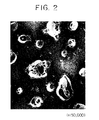
- Figs. 1 and 2 are electron photomicrographs (x 150,000) of sample vaccine No. 1 and sample vaccine No. 2 of the present invention, respectively;
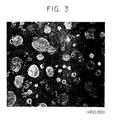
- Fig. 3 is an electron photomicrograph (x 200,000) of sample vaccine No. 4 of the present invention; and
- Fig. 4 represents a comparison of bands of density by the sucrose density-gradient centrifugation method to ascertain formation of the complex of the present invention.
- The novel influenza vaccine can be prepared by the following special process.
- An influenza HANA antigen and an MDP derivative are firstly mixed in a weight ratio between 10/1 and 1/300 in a suitable buffer solution, for example, phosphate-buffered saline, and then the resulting mixture is solubilized by adding an effective amount (0.1 - 10 w/V%) of surface active agent thereto. Thereafter, the surface active agent is removed therefrom by dialysis to obtain a novel HANA antigen MDP derivative complex. In this connection, it is important to use a surface active agent which can be removed by dialysis. Examples of such surfactants include octylglucoside, sodium cholate and the like. Referring to Figs. 1 to 3, the HANA antigen - MDP derivative complex thus obtained forms a so-called virosome in which the MDP derivative per se enables formation of artificial vesicle-like particles and HANA antigens are combined on the surface thereof through their narrow ends so that they have the same orientation as on the natural virus particles.
- According to another aspect of the present invention, there can be used MDP derivatives together with (i) cholesterol (ii) lecithin and dicetyl phosphate or (iii) a mixture of (i) and (ii), etc., which promote the ability of MDP derivative artificial vesicle-like particles to form. In this case, it is preferable to employ the following weight ratio:
For using cholesterol: an MDP derivative/cholesterol = 1/0 to 1/5, more preferably 1/0.5 to 1/2
For using lecithin: an MDP derivative/lecithin = 1/0 to 1/50, more preferably 1/1 to 1/20
For using dicetyl phosphate: Lecithin/dicetyl phosphate = 1/0.05 to 1/2, more preferably 1/0.5 to 1/1
In addition, in accordance with this aspect of the invention, it is not necessarily required to use the surface active agent and to conduct dialysis, so that this aspect has an advantage in that MDP derivative vesicle-like particles can be formed by, i.e., conventional sonication (the ultrasonic method), microinjection, reverse phase evaporation or the like. - MDP derivatives usable in the present invention include many kinds of appropriate chemical modifications of MDP. Such MDP derivatives are described, i.e., in Japanese Patent Public Disclosure (KOKAI) Nos. 52-46020, 52-156812, 54-73729, 54-130517, 55-19236, 55-28932, 55-28933, 56-18996, 56-49396 and 60-78997.
- It is preferable to use an MDP higher fatty ester having the following formula:

wherein Q represents a synthetic higher fatty acid residure having 20 to 60 of total carbon atoms;
A represents L-alanine, L-serine or glycine; and iso Gln represents isoglutamine. - It is more preferable to use 6-0-(2-tetradecyl hexadecanoyl) MDP referred as B30-MDP. These fatty esters are described in Japanese Patent Public Disclosure (KOKAI) No. 54-130517.
- It is also preferable to use the MDP derivative having the following formula:

wherein X represents an amino acid such as L-alanine, L-serine, L-valine and glycine;
Y represents -NH-A or
wherein R₁ is hydrogen atom, lower alkyl group, carboxamido group or carboxyl group; n is 1 to 6; and A is a saturated or unsaturated aliphatic hydrocarbone residue having 8 to 30 of carbon atoms with or without branches. More preferable example of such derivatives includes Nα-(N-acetyl muramyl-L-alanyl-D-isoglutaminyl)-Nε-stearoyl-L-lysine, referred as MDP-Lys (L18). - Futhermore, it is preferable to use Nα-(N-acetyl muramyl-N-methyl-L-alanyl-D-isoglutaminyl)-Nε-stearoyl-L-lysine, referred as MDP (MeAla)-Lys (18), which is described in Japanese Patent Public Disclosure No. 60-78997.
- The HANA antigen used in the present invention can be obtained by the steps of purifying influenza virus by high-speed centrifugal separation or chemical treatment of allantoic fluid harvested from influenza virus infected eggs, solubilizing the purified virus with a nonionic surface active agent such as Triton x -100 and NP-40 or an anionic surface active agent such as sodium deoxycholate and sodium cholate, or a cationic surface active agent such as cetyl trimethyl ammonium, or decomposing the purified virus with an organic solvent such as ether, and then further purifying the resultant by sucrose density-gradient centrifugation, affinity chromatography or the like.
- The present invention will be illustrated more concretely by referring to the following non-limitative examples.
- Influenza A/Bangkok/1/79 (H₃N₂) virus was grown in embryonated hen's eggs and purified by subjecting the grown virus to high-speed centrifugal separation (23,000 r.p.m., 90 minutes), low-speed centrifugal separation (6,000 r.p.m., 60 minutes) and sucrose density-gradient centrifugation (30,000 r.p.m., 3 hours). There was then added Triton x-100 to the resulting virus solution in such amount that the final concentration of the Triton x-100 became 1%, the virus was solubilized by fully agitating it, after which purified HANA antigen solution was obtained by sucrose density-gradient centrifugation.
- Using the purified HANA antigen solution obtained above, four kinds of vaccine samples, the compositions of which are shown in Table 1, were prepared as follows.
- The respective ingredients were mixed and then octyl glucoside was added in such amount that the final concentration of the glucoside became 3 wt%. After the ingredients were solubilized, dialysis into a phosphate-buffered saline was conducted according to the conventional method. The HANA antigen concentration of each sample thus obtained was adjusted to 0.8 µg N/mℓ and then inoculated at a dose of 0.5 mℓ/mouse into the peritoneum of each of a group of 15 DDY mice (4 weeks old,). Thereafter, the mice were divided into three groups of five each and blood was collected from the mice of the respective groups at one week, 2 weeks and 3 weeks, and Hemagglutinin inhibition Test was conducted according to the WHO method to measure antibody-forming ability.

- DDY mice were also immunized with the aforesaid respective samples according to the same method as described above, and infected with virus of the strain used for preparing the vaccine 2 weeks later. The lungs of the mice were removed 4 days later. Plaque forming test by MDCK cell was conducted on the lungs to measure the amount of virus in the lung. The results obtained are shown in Table 1.

- As is obvious from the results shown in Table 1, all vaccines of the present invention have superior antibody-forming ability to comparative examples consisting of only HANA.
- Observing the shapes of the vaccines of sample Nos. 1, 2 and 4 with an electron microscope, it was ascertained that the MDP derivative artificial vesicle-like particles having the same size and the same shape as the natural influenza virus particles, on the surface of which the HANA antigens are bonded to the MDP derivative so as to form the complex were clearly formed as shown in Figs. 1 to 3.
- In order to determine whether the above prepared sample No. 1 forms a complex, the densities of the HANA antigen, whole virus and sample No. 1 were measured by sucrose density-gradient centrifugation. As is obvious from the results shown in Fig. 4, sample No. 1 appeared as a band at a quite different position from the positions of HANA antigen and whole virus, so that sample No. 1 can be concluded to form a complex which differs from HANA antigen and whole virus.
- HANA antigen was prepared by the same method as set forth in example 1 except for using influenza A/Philippine/2/82 (H₃N₂) strain. The HANA antigen was mixed with the ingredients shown in Table 2, after which the mixture was subjected to a ultrasonic treatment for 8 minutes by Heat Systems W375 Sonicator equipped with a cup horn [range: 2.5] (Heat System-Ultrasonics., Inc.). The antibody-forming ability of each sample thus obtained was measured by the same method as set forth in example 1.
- The results obtained are shown in Table 2, which show that the vaccines of the present invention have good antibody-forming ability.

- As is obvious from the above examples 1 and 2, the influenza vaccine of the present invention has good immunogenicity and improved influenza infection protective properties.
Claims (14)
- An influenza vaccine comprising a complex of HANA antigen and a MDP derivative,
wherein the MDP derivative forms itself into an artificial vesicle-like particle, and has the following formula:
A represents L-alanine, L-serine or glycine; and
iso Gln represents isoglutamine. - The influenza vaccine according to claim 1,
wherein the MDP derivative is 6-0-(2-tetradecyl hexadecanoyl)MDP. - The influenza vaccine according to claim 1 or 2,
wherein the weight ratio of influenza HANA antigen to the MDP derivative is between 10/1 and 1/300. - The influenza vaccine according to any one of claims 1 to 3,
wherein the artificial vesicle-like particles of the MDP derivative contain cholesterol, or lecithin and dicetylphosphate, or a mixture thereof. - The influenza vaccine according to claim 4, wherein cholesterol is contained in such an amount that the weight ratio of the MDP derivative to cholesterol is 1/0 to 1/5.
- The influenza vaccine according to claim 4, wherein lecithin and dicetylphosphate are contained in such an amount that the weight ratio of the MDP derivative to lecithin is 1/0 to 1/50 and the weight ratio of lecithin to dicetylphosphate is 1/0.05 to 1/2.
- The influenza vaccine according to claim 1, wherein the influenza HANA antigen is an antigen prepared by subjecting influenza virus to purification.
- A process for preparing an influenza vaccine comprising the steps of mixing an influenza HANA antigen and a MDP derivative as defined in claim 1 or 2 in a suitable medium; solubilizing the resulting mixture with the surface active agent capable of being removed by dialysis, the solubilization being conducted in the presence or absence of cholesterol, lecithin and dicetylphosphate or a mixture thereof; and then removing the surface active agent therefrom by dialysis to obtain an influenza vaccine comprising artificial vesicle-like particles of a complex of influenza HANA antigen and a MDP derivative.
- The process according to claim 8, wherein the solubilization is conducted in the presence of cholesterol, lecithin and dicetylphosphate, or a mixture thereof.
- The process according to claim 8, wherein the solubilization is conducted in the absence of cholesterol lecithin and dicetylphosphate, or a mixture thereof.
- The process according to any one of claims 8 to 10, wherein the weight ratio of influenza HANA antigen to the MDP derivatives is between 10/1 and 1/300.
- The process according to claim 9, wherein cholesterol is contained in such an amount that the weight ratio of the MDP derivative to cholesterol is 1/0 to 1/5.
- The process according to claim 9, wherein lecithin and dicetylphosphate are contained in such an amount that the weight ratio of the MDP derivative to lecithin is 1/0 to 1/50 and the weight ratio of lecithin to dicetylphosphate is 1/0.05 to 1/2.
- The process according to any one of claims 8 to 13, wherein the influenza HANA antigen is an antigen prepared by subjecting influenza virus to purification.
Priority Applications (1)
| Application Number | Priority Date | Filing Date | Title |
|---|---|---|---|
| AT86107631T ATE76756T1 (en) | 1985-06-06 | 1986-06-05 | INFLUENZA VACCINE. |
Applications Claiming Priority (2)
| Application Number | Priority Date | Filing Date | Title |
|---|---|---|---|
| JP60123341A JPH0688911B2 (en) | 1985-06-06 | 1985-06-06 | Influenza vaccine and method for producing the same |
| JP123341/85 | 1985-06-06 |
Publications (3)
| Publication Number | Publication Date |
|---|---|
| EP0205098A2 EP0205098A2 (en) | 1986-12-17 |
| EP0205098A3 EP0205098A3 (en) | 1989-03-22 |
| EP0205098B1 true EP0205098B1 (en) | 1992-06-03 |
Family
ID=14858166
Family Applications (1)
| Application Number | Title | Priority Date | Filing Date |
|---|---|---|---|
| EP86107631A Expired - Lifetime EP0205098B1 (en) | 1985-06-06 | 1986-06-05 | Influenza vaccine |
Country Status (12)
| Country | Link |
|---|---|
| US (1) | US4826687A (en) |
| EP (1) | EP0205098B1 (en) |
| JP (1) | JPH0688911B2 (en) |
| KR (1) | KR940001373B1 (en) |
| CN (1) | CN1020407C (en) |
| AT (1) | ATE76756T1 (en) |
| AU (1) | AU585353B2 (en) |
| CA (1) | CA1262091A (en) |
| CS (1) | CS269981B2 (en) |
| DE (1) | DE3685519T2 (en) |
| ES (1) | ES8707113A1 (en) |
| SU (1) | SU1651782A3 (en) |
Families Citing this family (42)
| Publication number | Priority date | Publication date | Assignee | Title |
|---|---|---|---|---|
| US5916588A (en) * | 1984-04-12 | 1999-06-29 | The Liposome Company, Inc. | Peptide-containing liposomes, immunogenic liposomes and methods of preparation and use |
| US5897873A (en) * | 1984-04-12 | 1999-04-27 | The Liposome Company, Inc. | Affinity associated vaccine |
| US6090406A (en) * | 1984-04-12 | 2000-07-18 | The Liposome Company, Inc. | Potentiation of immune responses with liposomal adjuvants |
| US5026557A (en) * | 1987-09-09 | 1991-06-25 | The Liposome Company, Inc. | Adjuvant composition |
| AU627226B2 (en) * | 1988-08-25 | 1992-08-20 | Liposome Company, Inc., The | Influenza vaccine and novel adjuvants |
| WO1990001948A1 (en) * | 1988-08-25 | 1990-03-08 | The Liposome Company, Inc. | Influenza vaccine and novel adjuvants |
| US5100662A (en) * | 1989-08-23 | 1992-03-31 | The Liposome Company, Inc. | Steroidal liposomes exhibiting enhanced stability |
| WO1991011174A1 (en) * | 1990-01-25 | 1991-08-08 | The University Of Colorado Foundation, Inc. | Method for preventing immune suppression in trauma patients |
| JP2777258B2 (en) * | 1990-03-13 | 1998-07-16 | 第一製薬株式会社 | Muramyl dipeptide-containing lipid membrane structure |
| US5091188A (en) * | 1990-04-26 | 1992-02-25 | Haynes Duncan H | Phospholipid-coated microcrystals: injectable formulations of water-insoluble drugs |
| US5246707A (en) * | 1990-04-26 | 1993-09-21 | Haynes Duncan H | Sustained release delivery of water-soluble bio-molecules and drugs using phospholipid-coated microcrystals, microdroplets and high-concentration liposomes |
| GB9018690D0 (en) * | 1990-08-24 | 1990-10-10 | Wellcome Found | Vaccines |
| NZ240369A (en) * | 1990-10-30 | 1993-09-27 | Daiichi Seiyaku Co | Muramyl dipeptide derivatives and vaccine compositions |
| CA2183435C (en) * | 1994-02-24 | 2008-05-13 | Craig D. Wright | Vaccines containing paucilamellar lipid vesicles as immunological adjuvants |
| CA2234957C (en) * | 1995-10-17 | 2006-12-19 | Inge B. Henriksen | Insoluble drug delivery |
| US7255877B2 (en) * | 1996-08-22 | 2007-08-14 | Jagotec Ag | Fenofibrate microparticles |
| US6465016B2 (en) | 1996-08-22 | 2002-10-15 | Research Triangle Pharmaceuticals | Cyclosporiine particles |
| ATE241363T1 (en) * | 1998-02-11 | 2003-06-15 | Rtp Pharma Corp | COMBINATION PREPARATIONS CONTAINING UNSATURATED FATTY ACID AND STEROIDS FOR THE TREATMENT OF INFLAMMATION |
| US6979456B1 (en) | 1998-04-01 | 2005-12-27 | Jagotec Ag | Anticancer compositions |
| EP1079808B1 (en) | 1998-05-29 | 2004-02-11 | Skyepharma Canada Inc. | Thermoprotected microparticle compositions and process for terminal steam sterilization thereof |
| JP4198318B2 (en) | 1998-08-19 | 2008-12-17 | ヤーゴテック アクチェンゲゼルシャフト | Injectable aqueous dispersion of propofol |
| US7939105B2 (en) | 1998-11-20 | 2011-05-10 | Jagotec Ag | Process for preparing a rapidly dispersing solid drug dosage form |
| JP2003509453A (en) * | 1999-09-21 | 2003-03-11 | アールティーピー・ファーマ・インコーポレーテッド | Surface-modified granular compositions of biologically active substances |
| JP5102423B2 (en) | 2000-04-20 | 2012-12-19 | オバン・エナジー・リミテッド | Improved treatment of water-insoluble drug particles |
| JP4969761B2 (en) | 2000-08-31 | 2012-07-04 | オバン・エナジー・リミテッド | Method for producing a synergistic mixture comprising small particles of a solid substrate having a desired particle size and small particles of a first material |
| NZ525231A (en) * | 2000-09-20 | 2004-08-27 | Skyepharma Canada Inc | Phospholipid stabilised feno-fibrate microparticles for pharmaceutical use |
| US8586094B2 (en) * | 2000-09-20 | 2013-11-19 | Jagotec Ag | Coated tablets |
| US6534088B2 (en) * | 2001-02-22 | 2003-03-18 | Skyepharma Canada Inc. | Fibrate-statin combinations with reduced fed-fasted effects |
| DE60239594D1 (en) * | 2001-02-23 | 2011-05-12 | Glaxosmithkline Biolog Sa | INFLUENZA VACCINE COMPOSITIONS FOR INTRADERMAL ADMINISTRATION |
| WO2002087494A2 (en) * | 2001-04-27 | 2002-11-07 | Glaxosmithkline Biologicals, Sa | Novel vaccine |
| JP2004531578A (en) * | 2001-06-29 | 2004-10-14 | ベクトン・ディキンソン・アンド・カンパニー | Intradermal delivery of vaccines and gene therapeutics by microcannula |
| US20040248798A1 (en) | 2003-02-14 | 2004-12-09 | Peter Sutovsky | Contraceptive methods and compositions related to proteasomal interference |
| US20050123550A1 (en) * | 2003-05-12 | 2005-06-09 | Laurent Philippe E. | Molecules enhancing dermal delivery of influenza vaccines |
| US7588774B2 (en) * | 2003-05-12 | 2009-09-15 | Becton, Dickinson And Company | Molecules enhancing dermal delivery of influenza vaccines |
| TWI329130B (en) | 2003-06-19 | 2010-08-21 | Bestewil Holding Bv | Functionally reconstituted viral membranes containing adjuvant |
| WO2005074460A2 (en) * | 2003-12-05 | 2005-08-18 | Becton Dickinson And Company | Methods of enhancing immune response in the intradermal compartment and compounds useful in the methods |
| US20060121055A1 (en) * | 2004-12-06 | 2006-06-08 | Becton, Dickinson And Company, Inc. | Compositions with enhanced immunogenicity |
| US7468187B2 (en) | 2005-10-18 | 2008-12-23 | Iowa State University Research Foundation, Inc. | Canine influenza virus and related compositions and methods of use |
| US20090060889A1 (en) * | 2007-03-12 | 2009-03-05 | Von Hofe Eric | Ii-RNAi involved Ii suppression in cancer immunotherapy |
| US9144606B2 (en) | 2008-04-21 | 2015-09-29 | Nanobio Corporation | Nanoemulsion influenza vaccine |
| CA2840982C (en) | 2011-07-06 | 2022-06-07 | Vira BITKO | Human respiratory syncytial virus vaccine |
| CA2845872C (en) | 2011-08-22 | 2023-03-28 | Nanobio Corporation | Herpes simplex virus nanoemulsion vaccine |
Family Cites Families (12)
| Publication number | Priority date | Publication date | Assignee | Title |
|---|---|---|---|---|
| US4009258A (en) * | 1972-09-25 | 1977-02-22 | The Mount Sinai School Of Medicine Of The City University Of New York | Influenza vaccine containing a recombinant, antigenically hybridized virus and method of using the same |
| CH589453A5 (en) * | 1974-01-14 | 1977-07-15 | Sandoz Ag | |
| US4117113A (en) * | 1974-06-25 | 1978-09-26 | National Research Development Corporation | Immunological preparations |
| US4196191A (en) * | 1975-09-29 | 1980-04-01 | Burroughs Wellcome Co. | Biological preparations |
| US4261975A (en) * | 1979-09-19 | 1981-04-14 | Merck & Co., Inc. | Viral liposome particle |
| EP0032578B1 (en) * | 1980-01-16 | 1984-07-25 | Hans Georg Prof. Dr. Weder | Process and dialysis-installation for the preparation of bilayer-vesicles and their use |
| DE3173713D1 (en) * | 1980-09-05 | 1986-03-20 | Frappier Armand Inst | Formation of an immunosome exclusively made of viral antigens reconstituted on an artificial membrane |
| US4327182A (en) * | 1981-01-22 | 1982-04-27 | Connaught Laboratories Incorporated | Purification of influenza sub-unit vaccine |
| US4565696A (en) * | 1983-08-03 | 1986-01-21 | The Regents Of The University Of California | Production of immunogens by antigen conjugation to liposomes |
| FR2551758B1 (en) * | 1983-08-16 | 1986-01-31 | Anvar | MURAMYL-PEPTIDES AND STEROID DERIVATIVES HAVING MACROPHAGE ACTIVATION PROPERTIES |
| IL69720A (en) * | 1983-09-14 | 1987-08-31 | Univ Ramot | Anti-tumor pharmaceutical compositions comprising liposome-bound porphyrins |
| US4663161A (en) * | 1985-04-22 | 1987-05-05 | Mannino Raphael J | Liposome methods and compositions |
-
1985
- 1985-06-06 JP JP60123341A patent/JPH0688911B2/en not_active Expired - Lifetime
-
1986
- 1986-05-28 US US06/867,539 patent/US4826687A/en not_active Expired - Fee Related
- 1986-06-04 CA CA000510861A patent/CA1262091A/en not_active Expired
- 1986-06-05 KR KR1019860004500A patent/KR940001373B1/en not_active Expired - Fee Related
- 1986-06-05 AU AU58365/86A patent/AU585353B2/en not_active Ceased
- 1986-06-05 DE DE8686107631T patent/DE3685519T2/en not_active Expired - Fee Related
- 1986-06-05 ES ES555748A patent/ES8707113A1/en not_active Expired
- 1986-06-05 EP EP86107631A patent/EP0205098B1/en not_active Expired - Lifetime
- 1986-06-05 AT AT86107631T patent/ATE76756T1/en not_active IP Right Cessation
- 1986-06-05 SU SU864027675A patent/SU1651782A3/en active
- 1986-06-06 CS CS864197A patent/CS269981B2/en unknown
- 1986-06-06 CN CN86103717A patent/CN1020407C/en not_active Expired - Fee Related
Also Published As
| Publication number | Publication date |
|---|---|
| ES555748A0 (en) | 1987-07-01 |
| KR940001373B1 (en) | 1994-02-21 |
| EP0205098A2 (en) | 1986-12-17 |
| US4826687A (en) | 1989-05-02 |
| SU1651782A3 (en) | 1991-05-23 |
| CN86103717A (en) | 1987-02-11 |
| ES8707113A1 (en) | 1987-07-01 |
| JPS61282321A (en) | 1986-12-12 |
| AU5836586A (en) | 1986-12-18 |
| EP0205098A3 (en) | 1989-03-22 |
| CS419786A2 (en) | 1989-04-14 |
| JPH0688911B2 (en) | 1994-11-09 |
| CS269981B2 (en) | 1990-05-14 |
| CA1262091A (en) | 1989-10-03 |
| KR870000075A (en) | 1987-02-16 |
| DE3685519D1 (en) | 1992-07-09 |
| ATE76756T1 (en) | 1992-06-15 |
| DE3685519T2 (en) | 1993-01-21 |
| CN1020407C (en) | 1993-05-05 |
| AU585353B2 (en) | 1989-06-15 |
Similar Documents
| Publication | Publication Date | Title |
|---|---|---|
| US4826687A (en) | Influenza vaccine | |
| Perrin et al. | Rabies immunosome (subunit vaccine) structure and immunogenicity. Pre-and post-exposure protection studies | |
| JP2703528B2 (en) | Vaccines containing immunogenic conjugates | |
| CA2258878C (en) | Liposomal influenza vaccine composition and method | |
| EP0634937B1 (en) | Vaccines containing non-ionic surfactant vesicles | |
| US6780421B1 (en) | Adjuvant for a vaccine composition | |
| AU627226B2 (en) | Influenza vaccine and novel adjuvants | |
| US4196191A (en) | Biological preparations | |
| US4148876A (en) | Biological preparations | |
| Kilbourne | Comparative efficacy of neuraminidase-specific and conventional influenza virus vaccines in induction of antibody to neuraminidase in humans | |
| AP431A (en) | Influenza vaccine compositions. | |
| KR101225199B1 (en) | Functionally reconstituted viral membranes containing adjuvant | |
| Nerome et al. | Development of a new type of influenza subunit vaccine made by muramyldipeptide-liposome: enhancement of humoral and cellular immune responses | |
| CA1079634A (en) | Antigens bound to exterior surface of microvesicles | |
| Renfrey et al. | Morphological and biochemical characterization of influenza vaccines commercially available in the United Kingdom | |
| US20110177163A1 (en) | Compositions and methods for treating hepatitis a | |
| JP3000569B2 (en) | Amino acid residue sequence of hepatitis B virus core antigen | |
| NZ197306A (en) | Isolation of glycoprotein antigens from a virus preparation of a vaccine | |
| DE69127975T2 (en) | Vaccines | |
| CN117618548A (en) | RSV vaccine composition and preparation method and application thereof | |
| MX2013003451A (en) | Generation of virosome particles. | |
| Meyer et al. | Induction of cytotoxic and helper T cell responses by modified simian immunodeficiency virus hypervariable epitope constructs | |
| Berezin et al. | Isolation and studies of myxovirus glycoproteins | |
| Thibodeau | Immunosome technology to improve antigen presentation for efficient and safe viral vaccines |
Legal Events
| Date | Code | Title | Description |
|---|---|---|---|
| PUAI | Public reference made under article 153(3) epc to a published international application that has entered the european phase |
Free format text: ORIGINAL CODE: 0009012 |
|
| AK | Designated contracting states |
Kind code of ref document: A2 Designated state(s): AT BE CH DE FR GB IT LI NL SE |
|
| PUAL | Search report despatched |
Free format text: ORIGINAL CODE: 0009013 |
|
| AK | Designated contracting states |
Kind code of ref document: A3 Designated state(s): AT BE CH DE FR GB IT LI NL SE |
|
| 17P | Request for examination filed |
Effective date: 19890824 |
|
| 17Q | First examination report despatched |
Effective date: 19910117 |
|
| GRAA | (expected) grant |
Free format text: ORIGINAL CODE: 0009210 |
|
| AK | Designated contracting states |
Kind code of ref document: B1 Designated state(s): AT BE CH DE FR GB IT LI NL SE |
|
| REF | Corresponds to: |
Ref document number: 76756 Country of ref document: AT Date of ref document: 19920615 Kind code of ref document: T |
|
| REF | Corresponds to: |
Ref document number: 3685519 Country of ref document: DE Date of ref document: 19920709 |
|
| ITF | It: translation for a ep patent filed | ||
| ET | Fr: translation filed | ||
| PLBE | No opposition filed within time limit |
Free format text: ORIGINAL CODE: 0009261 |
|
| STAA | Information on the status of an ep patent application or granted ep patent |
Free format text: STATUS: NO OPPOSITION FILED WITHIN TIME LIMIT |
|
| 26N | No opposition filed | ||
| EAL | Se: european patent in force in sweden |
Ref document number: 86107631.3 |
|
| PGFP | Annual fee paid to national office [announced via postgrant information from national office to epo] |
Ref country code: FR Payment date: 19980506 Year of fee payment: 13 |
|
| PGFP | Annual fee paid to national office [announced via postgrant information from national office to epo] |
Ref country code: SE Payment date: 19980507 Year of fee payment: 13 |
|
| PGFP | Annual fee paid to national office [announced via postgrant information from national office to epo] |
Ref country code: GB Payment date: 19980508 Year of fee payment: 13 |
|
| PGFP | Annual fee paid to national office [announced via postgrant information from national office to epo] |
Ref country code: AT Payment date: 19980513 Year of fee payment: 13 |
|
| PGFP | Annual fee paid to national office [announced via postgrant information from national office to epo] |
Ref country code: BE Payment date: 19980527 Year of fee payment: 13 |
|
| PGFP | Annual fee paid to national office [announced via postgrant information from national office to epo] |
Ref country code: NL Payment date: 19980630 Year of fee payment: 13 |
|
| PGFP | Annual fee paid to national office [announced via postgrant information from national office to epo] |
Ref country code: DE Payment date: 19980828 Year of fee payment: 13 |
|
| PGFP | Annual fee paid to national office [announced via postgrant information from national office to epo] |
Ref country code: CH Payment date: 19980928 Year of fee payment: 13 |
|
| PG25 | Lapsed in a contracting state [announced via postgrant information from national office to epo] |
Ref country code: GB Free format text: LAPSE BECAUSE OF NON-PAYMENT OF DUE FEES Effective date: 19990605 Ref country code: AT Free format text: LAPSE BECAUSE OF NON-PAYMENT OF DUE FEES Effective date: 19990605 |
|
| PG25 | Lapsed in a contracting state [announced via postgrant information from national office to epo] |
Ref country code: SE Free format text: THE PATENT HAS BEEN ANNULLED BY A DECISION OF A NATIONAL AUTHORITY Effective date: 19990629 |
|
| PG25 | Lapsed in a contracting state [announced via postgrant information from national office to epo] |
Ref country code: LI Free format text: LAPSE BECAUSE OF NON-PAYMENT OF DUE FEES Effective date: 19990630 Ref country code: FR Free format text: THE PATENT HAS BEEN ANNULLED BY A DECISION OF A NATIONAL AUTHORITY Effective date: 19990630 Ref country code: CH Free format text: LAPSE BECAUSE OF NON-PAYMENT OF DUE FEES Effective date: 19990630 Ref country code: BE Free format text: LAPSE BECAUSE OF NON-PAYMENT OF DUE FEES Effective date: 19990630 |
|
| BERE | Be: lapsed |
Owner name: JURIDICAL FOUNDATION THE CHEMO-SERO-THERAPEUTIC R Effective date: 19990630 Owner name: DAIICHI SEIYAKU CO. LTD Effective date: 19990630 Owner name: NATIONAL INSTITUTE OF HEALTH Effective date: 19990630 |
|
| PG25 | Lapsed in a contracting state [announced via postgrant information from national office to epo] |
Ref country code: NL Free format text: LAPSE BECAUSE OF NON-PAYMENT OF DUE FEES Effective date: 20000101 |
|
| GBPC | Gb: european patent ceased through non-payment of renewal fee |
Effective date: 19990605 |
|
| REG | Reference to a national code |
Ref country code: CH Ref legal event code: PL |
|
| EUG | Se: european patent has lapsed |
Ref document number: 86107631.3 |
|
| NLV4 | Nl: lapsed or anulled due to non-payment of the annual fee |
Effective date: 20000101 |
|
| PG25 | Lapsed in a contracting state [announced via postgrant information from national office to epo] |
Ref country code: DE Free format text: LAPSE BECAUSE OF NON-PAYMENT OF DUE FEES Effective date: 20000503 |
|
| REG | Reference to a national code |
Ref country code: FR Ref legal event code: ST |
|
| PG25 | Lapsed in a contracting state [announced via postgrant information from national office to epo] |
Ref country code: IT Free format text: LAPSE BECAUSE OF NON-PAYMENT OF DUE FEES;WARNING: LAPSES OF ITALIAN PATENTS WITH EFFECTIVE DATE BEFORE 2007 MAY HAVE OCCURRED AT ANY TIME BEFORE 2007. THE CORRECT EFFECTIVE DATE MAY BE DIFFERENT FROM THE ONE RECORDED. Effective date: 20050605 |