EP0202776A1 - Ureidoalkanoylaminocarbonyl amino and imino acids and esters - Google Patents
Ureidoalkanoylaminocarbonyl amino and imino acids and esters Download PDFInfo
- Publication number
- EP0202776A1 EP0202776A1 EP86302953A EP86302953A EP0202776A1 EP 0202776 A1 EP0202776 A1 EP 0202776A1 EP 86302953 A EP86302953 A EP 86302953A EP 86302953 A EP86302953 A EP 86302953A EP 0202776 A1 EP0202776 A1 EP 0202776A1
- Authority
- EP
- European Patent Office
- Prior art keywords
- lower alkyl
- hydrogen
- formula
- carbons
- amino
- Prior art date
- Legal status (The legal status is an assumption and is not a legal conclusion. Google has not performed a legal analysis and makes no representation as to the accuracy of the status listed.)
- Withdrawn
Links
- 125000002924 primary amino group Chemical group [H]N([H])* 0.000 title claims description 59
- 150000002148 esters Chemical class 0.000 title description 10
- 125000001841 imino group Chemical group [H]N=* 0.000 title description 5
- 150000001875 compounds Chemical class 0.000 claims abstract description 42
- 125000000217 alkyl group Chemical group 0.000 claims description 67
- -1 2-naphthylthio Chemical group 0.000 claims description 61
- 125000002915 carbonyl group Chemical group [*:2]C([*:1])=O 0.000 claims description 60
- 229910052739 hydrogen Inorganic materials 0.000 claims description 51
- 239000001257 hydrogen Substances 0.000 claims description 51
- 125000002496 methyl group Chemical group [H]C([H])([H])* 0.000 claims description 31
- 229960002429 proline Drugs 0.000 claims description 21
- 150000002431 hydrogen Chemical group 0.000 claims description 20
- 125000000250 methylamino group Chemical group [H]N(*)C([H])([H])[H] 0.000 claims description 20
- 125000004435 hydrogen atom Chemical group [H]* 0.000 claims description 18
- UFHFLCQGNIYNRP-UHFFFAOYSA-N Hydrogen Chemical compound [H][H] UFHFLCQGNIYNRP-UHFFFAOYSA-N 0.000 claims description 14
- 125000001797 benzyl group Chemical group [H]C1=C([H])C([H])=C(C([H])=C1[H])C([H])([H])* 0.000 claims description 12
- 150000003839 salts Chemical group 0.000 claims description 12
- 125000003545 alkoxy group Chemical group 0.000 claims description 9
- 125000000113 cyclohexyl group Chemical group [H]C1([H])C([H])([H])C([H])([H])C([H])(*)C([H])([H])C1([H])[H] 0.000 claims description 9
- 125000001309 chloro group Chemical group Cl* 0.000 claims description 8
- 125000001153 fluoro group Chemical group F* 0.000 claims description 8
- 125000005843 halogen group Chemical group 0.000 claims description 8
- 125000004433 nitrogen atom Chemical group N* 0.000 claims description 8
- 125000000484 butyl group Chemical group [H]C([*])([H])C([H])([H])C([H])([H])C([H])([H])[H] 0.000 claims description 7
- 125000001246 bromo group Chemical group Br* 0.000 claims description 6
- 229910052736 halogen Inorganic materials 0.000 claims description 6
- 125000005842 heteroatom Chemical group 0.000 claims description 6
- 125000001997 phenyl group Chemical group [H]C1=C([H])C([H])=C(*)C([H])=C1[H] 0.000 claims description 6
- 206010020772 Hypertension Diseases 0.000 claims description 5
- 229910052783 alkali metal Inorganic materials 0.000 claims description 5
- 125000004414 alkyl thio group Chemical group 0.000 claims description 5
- ZZVUWRFHKOJYTH-UHFFFAOYSA-N diphenhydramine Chemical group C=1C=CC=CC=1C(OCCN(C)C)C1=CC=CC=C1 ZZVUWRFHKOJYTH-UHFFFAOYSA-N 0.000 claims description 5
- 150000002367 halogens Chemical class 0.000 claims description 5
- 125000002023 trifluoromethyl group Chemical group FC(F)(F)* 0.000 claims description 5
- 125000000094 2-phenylethyl group Chemical group [H]C1=C([H])C([H])=C(C([H])=C1[H])C([H])([H])C([H])([H])* 0.000 claims description 4
- 229910052794 bromium Inorganic materials 0.000 claims description 4
- 125000001637 1-naphthyl group Chemical group [H]C1=C([H])C([H])=C2C(*)=C([H])C([H])=C([H])C2=C1[H] 0.000 claims description 3
- 125000005978 1-naphthyloxy group Chemical group 0.000 claims description 3
- 125000001622 2-naphthyl group Chemical group [H]C1=C([H])C([H])=C2C([H])=C(*)C([H])=C([H])C2=C1[H] 0.000 claims description 3
- 125000005979 2-naphthyloxy group Chemical group 0.000 claims description 3
- NINIDFKCEFEMDL-UHFFFAOYSA-N Sulfur Chemical group [S] NINIDFKCEFEMDL-UHFFFAOYSA-N 0.000 claims description 3
- QVGXLLKOCUKJST-UHFFFAOYSA-N atomic oxygen Chemical group [O] QVGXLLKOCUKJST-UHFFFAOYSA-N 0.000 claims description 3
- 229910052801 chlorine Inorganic materials 0.000 claims description 3
- 125000000753 cycloalkyl group Chemical group 0.000 claims description 3
- 229910052731 fluorine Inorganic materials 0.000 claims description 3
- 229910052760 oxygen Inorganic materials 0.000 claims description 3
- 239000001301 oxygen Substances 0.000 claims description 3
- 125000001424 substituent group Chemical group 0.000 claims description 3
- 229910052717 sulfur Chemical group 0.000 claims description 3
- 239000011593 sulfur Chemical group 0.000 claims description 3
- 230000000202 analgesic effect Effects 0.000 claims description 2
- 230000002401 inhibitory effect Effects 0.000 claims description 2
- 125000000956 methoxy group Chemical group [H]C([H])([H])O* 0.000 claims description 2
- 125000004356 hydroxy functional group Chemical group O* 0.000 claims 4
- 239000003937 drug carrier Substances 0.000 claims 2
- 239000008194 pharmaceutical composition Substances 0.000 claims 2
- 208000001953 Hypotension Diseases 0.000 claims 1
- KCNKJCHARANTIP-SNAWJCMRSA-N allyl-{4-[3-(4-bromo-phenyl)-benzofuran-6-yloxy]-but-2-enyl}-methyl-amine Chemical compound C=1OC2=CC(OC/C=C/CN(CC=C)C)=CC=C2C=1C1=CC=C(Br)C=C1 KCNKJCHARANTIP-SNAWJCMRSA-N 0.000 claims 1
- 208000021822 hypotensive Diseases 0.000 claims 1
- 230000001077 hypotensive effect Effects 0.000 claims 1
- UUUHXMGGBIUAPW-UHFFFAOYSA-N 1-[1-[2-[[5-amino-2-[[1-[5-(diaminomethylideneamino)-2-[[1-[3-(1h-indol-3-yl)-2-[(5-oxopyrrolidine-2-carbonyl)amino]propanoyl]pyrrolidine-2-carbonyl]amino]pentanoyl]pyrrolidine-2-carbonyl]amino]-5-oxopentanoyl]amino]-3-methylpentanoyl]pyrrolidine-2-carbon Chemical compound C1CCC(C(=O)N2C(CCC2)C(O)=O)N1C(=O)C(C(C)CC)NC(=O)C(CCC(N)=O)NC(=O)C1CCCN1C(=O)C(CCCN=C(N)N)NC(=O)C1CCCN1C(=O)C(CC=1C2=CC=CC=C2NC=1)NC(=O)C1CCC(=O)N1 UUUHXMGGBIUAPW-UHFFFAOYSA-N 0.000 abstract description 4
- 102000004270 Peptidyl-Dipeptidase A Human genes 0.000 abstract description 4
- 108090000882 Peptidyl-Dipeptidase A Proteins 0.000 abstract description 4
- 230000000694 effects Effects 0.000 abstract description 3
- 230000005764 inhibitory process Effects 0.000 abstract description 3
- 102000003729 Neprilysin Human genes 0.000 abstract description 2
- 108090000028 Neprilysin Proteins 0.000 abstract description 2
- 239000000730 antalgic agent Substances 0.000 abstract description 2
- 239000002220 antihypertensive agent Substances 0.000 abstract description 2
- 229940035676 analgesics Drugs 0.000 abstract 1
- XEKOWRVHYACXOJ-UHFFFAOYSA-N Ethyl acetate Chemical compound CCOC(C)=O XEKOWRVHYACXOJ-UHFFFAOYSA-N 0.000 description 69
- OKKJLVBELUTLKV-UHFFFAOYSA-N Methanol Chemical compound OC OKKJLVBELUTLKV-UHFFFAOYSA-N 0.000 description 63
- 239000000243 solution Substances 0.000 description 35
- 239000000047 product Substances 0.000 description 34
- QTBSBXVTEAMEQO-UHFFFAOYSA-N Acetic acid Chemical compound CC(O)=O QTBSBXVTEAMEQO-UHFFFAOYSA-N 0.000 description 30
- VEXZGXHMUGYJMC-UHFFFAOYSA-N Hydrochloric acid Chemical compound Cl VEXZGXHMUGYJMC-UHFFFAOYSA-N 0.000 description 27
- YXFVVABEGXRONW-UHFFFAOYSA-N Toluene Chemical compound CC1=CC=CC=C1 YXFVVABEGXRONW-UHFFFAOYSA-N 0.000 description 27
- XLYOFNOQVPJJNP-UHFFFAOYSA-N water Chemical compound O XLYOFNOQVPJJNP-UHFFFAOYSA-N 0.000 description 27
- RTZKZFJDLAIYFH-UHFFFAOYSA-N Diethyl ether Chemical compound CCOCC RTZKZFJDLAIYFH-UHFFFAOYSA-N 0.000 description 24
- 239000000203 mixture Substances 0.000 description 24
- 229910001868 water Inorganic materials 0.000 description 21
- VYPSYNLAJGMNEJ-UHFFFAOYSA-N Silicium dioxide Chemical compound O=[Si]=O VYPSYNLAJGMNEJ-UHFFFAOYSA-N 0.000 description 17
- UIIMBOGNXHQVGW-UHFFFAOYSA-M Sodium bicarbonate Chemical compound [Na+].OC([O-])=O UIIMBOGNXHQVGW-UHFFFAOYSA-M 0.000 description 16
- SJRJJKPEHAURKC-UHFFFAOYSA-N N-Methylmorpholine Chemical compound CN1CCOCC1 SJRJJKPEHAURKC-UHFFFAOYSA-N 0.000 description 15
- VLKZOEOYAKHREP-UHFFFAOYSA-N n-Hexane Chemical compound CCCCCC VLKZOEOYAKHREP-UHFFFAOYSA-N 0.000 description 15
- 239000000741 silica gel Substances 0.000 description 15
- 229910002027 silica gel Inorganic materials 0.000 description 15
- HEDRZPFGACZZDS-UHFFFAOYSA-N Chloroform Chemical compound ClC(Cl)Cl HEDRZPFGACZZDS-UHFFFAOYSA-N 0.000 description 14
- YMWUJEATGCHHMB-UHFFFAOYSA-N Dichloromethane Chemical compound ClCCl YMWUJEATGCHHMB-UHFFFAOYSA-N 0.000 description 12
- CSNNHWWHGAXBCP-UHFFFAOYSA-L Magnesium sulfate Chemical compound [Mg+2].[O-][S+2]([O-])([O-])[O-] CSNNHWWHGAXBCP-UHFFFAOYSA-L 0.000 description 12
- 239000007787 solid Substances 0.000 description 10
- 125000006239 protecting group Chemical group 0.000 description 9
- 0 CC1IC(C)C(*)CC1 Chemical compound CC1IC(C)C(*)CC1 0.000 description 8
- 239000002253 acid Substances 0.000 description 8
- 238000006243 chemical reaction Methods 0.000 description 8
- 235000017557 sodium bicarbonate Nutrition 0.000 description 8
- 229910000030 sodium bicarbonate Inorganic materials 0.000 description 8
- 238000000034 method Methods 0.000 description 7
- 150000001412 amines Chemical class 0.000 description 6
- LDECUSDQMXVUMP-UHFFFAOYSA-N benzyl 3-[6-[[2-(butylamino)-1-[3-methoxycarbonyl-4-(2-methoxy-2-oxoethoxy)phenyl]-2-oxoethyl]-hexylamino]-6-oxohexyl]-4-methyl-2-oxo-6-(4-phenylphenyl)-1,6-dihydropyrimidine-5-carboxylate Chemical compound O=C1NC(C=2C=CC(=CC=2)C=2C=CC=CC=2)C(C(=O)OCC=2C=CC=CC=2)=C(C)N1CCCCCC(=O)N(CCCCCC)C(C(=O)NCCCC)C1=CC=C(OCC(=O)OC)C(C(=O)OC)=C1 LDECUSDQMXVUMP-UHFFFAOYSA-N 0.000 description 6
- 125000002147 dimethylamino group Chemical group [H]C([H])([H])N(*)C([H])([H])[H] 0.000 description 6
- 125000002887 hydroxy group Chemical group [H]O* 0.000 description 6
- 229910052943 magnesium sulfate Inorganic materials 0.000 description 6
- NXJCBFBQEVOTOW-UHFFFAOYSA-L palladium(2+);dihydroxide Chemical compound O[Pd]O NXJCBFBQEVOTOW-UHFFFAOYSA-L 0.000 description 6
- JOXIMZWYDAKGHI-UHFFFAOYSA-N toluene-4-sulfonic acid Chemical class CC1=CC=C(S(O)(=O)=O)C=C1 JOXIMZWYDAKGHI-UHFFFAOYSA-N 0.000 description 6
- QCQCHGYLTSGIGX-GHXANHINSA-N 4-[[(3ar,5ar,5br,7ar,9s,11ar,11br,13as)-5a,5b,8,8,11a-pentamethyl-3a-[(5-methylpyridine-3-carbonyl)amino]-2-oxo-1-propan-2-yl-4,5,6,7,7a,9,10,11,11b,12,13,13a-dodecahydro-3h-cyclopenta[a]chrysen-9-yl]oxy]-2,2-dimethyl-4-oxobutanoic acid Chemical compound N([C@@]12CC[C@@]3(C)[C@]4(C)CC[C@H]5C(C)(C)[C@@H](OC(=O)CC(C)(C)C(O)=O)CC[C@]5(C)[C@H]4CC[C@@H]3C1=C(C(C2)=O)C(C)C)C(=O)C1=CN=CC(C)=C1 QCQCHGYLTSGIGX-GHXANHINSA-N 0.000 description 5
- 239000012043 crude product Substances 0.000 description 5
- 239000000706 filtrate Substances 0.000 description 5
- 239000010410 layer Substances 0.000 description 5
- 239000012044 organic layer Substances 0.000 description 5
- 239000011541 reaction mixture Substances 0.000 description 5
- NXLNNXIXOYSCMB-UHFFFAOYSA-N (4-nitrophenyl) carbonochloridate Chemical compound [O-][N+](=O)C1=CC=C(OC(Cl)=O)C=C1 NXLNNXIXOYSCMB-UHFFFAOYSA-N 0.000 description 4
- JUJWROOIHBZHMG-UHFFFAOYSA-N Pyridine Chemical compound C1=CC=NC=C1 JUJWROOIHBZHMG-UHFFFAOYSA-N 0.000 description 4
- WYURNTSHIVDZCO-UHFFFAOYSA-N Tetrahydrofuran Chemical compound C1CCOC1 WYURNTSHIVDZCO-UHFFFAOYSA-N 0.000 description 4
- 239000004480 active ingredient Substances 0.000 description 4
- 239000003054 catalyst Substances 0.000 description 4
- 239000000460 chlorine Substances 0.000 description 4
- 239000002934 diuretic Substances 0.000 description 4
- 238000005984 hydrogenation reaction Methods 0.000 description 4
- 239000000463 material Substances 0.000 description 4
- 239000007858 starting material Substances 0.000 description 4
- 239000000725 suspension Substances 0.000 description 4
- 125000000999 tert-butyl group Chemical group [H]C([H])([H])C(*)(C([H])([H])[H])C([H])([H])[H] 0.000 description 4
- CUKWUWBLQQDQAC-VEQWQPCFSA-N (3s)-3-amino-4-[[(2s)-1-[[(2s)-1-[[(2s)-1-[[(2s,3s)-1-[[(2s)-1-[(2s)-2-[[(1s)-1-carboxyethyl]carbamoyl]pyrrolidin-1-yl]-3-(1h-imidazol-5-yl)-1-oxopropan-2-yl]amino]-3-methyl-1-oxopentan-2-yl]amino]-3-(4-hydroxyphenyl)-1-oxopropan-2-yl]amino]-3-methyl-1-ox Chemical compound C([C@@H](C(=O)N[C@@H]([C@@H](C)CC)C(=O)N[C@@H](CC=1NC=NC=1)C(=O)N1[C@@H](CCC1)C(=O)N[C@@H](C)C(O)=O)NC(=O)[C@@H](NC(=O)[C@H](CCCN=C(N)N)NC(=O)[C@@H](N)CC(O)=O)C(C)C)C1=CC=C(O)C=C1 CUKWUWBLQQDQAC-VEQWQPCFSA-N 0.000 description 3
- 102000005862 Angiotensin II Human genes 0.000 description 3
- 101800000734 Angiotensin-1 Proteins 0.000 description 3
- 102400000344 Angiotensin-1 Human genes 0.000 description 3
- 101800000733 Angiotensin-2 Proteins 0.000 description 3
- 108010064733 Angiotensins Proteins 0.000 description 3
- 102000015427 Angiotensins Human genes 0.000 description 3
- UHOVQNZJYSORNB-UHFFFAOYSA-N Benzene Chemical compound C1=CC=CC=C1 UHOVQNZJYSORNB-UHFFFAOYSA-N 0.000 description 3
- JZUFKLXOESDKRF-UHFFFAOYSA-N Chlorothiazide Chemical compound C1=C(Cl)C(S(=O)(=O)N)=CC2=C1NCNS2(=O)=O JZUFKLXOESDKRF-UHFFFAOYSA-N 0.000 description 3
- ZMXDDKWLCZADIW-UHFFFAOYSA-N N,N-Dimethylformamide Chemical compound CN(C)C=O ZMXDDKWLCZADIW-UHFFFAOYSA-N 0.000 description 3
- YGYAWVDWMABLBF-UHFFFAOYSA-N Phosgene Chemical compound ClC(Cl)=O YGYAWVDWMABLBF-UHFFFAOYSA-N 0.000 description 3
- UIIMBOGNXHQVGW-DEQYMQKBSA-M Sodium bicarbonate-14C Chemical compound [Na+].O[14C]([O-])=O UIIMBOGNXHQVGW-DEQYMQKBSA-M 0.000 description 3
- ZMANZCXQSJIPKH-UHFFFAOYSA-N Triethylamine Chemical compound CCN(CC)CC ZMANZCXQSJIPKH-UHFFFAOYSA-N 0.000 description 3
- VNENAWNFPWDTMZ-VIFPVBQESA-N [(2s)-4-chloro-3-oxo-1-phenylbutan-2-yl]carbamic acid Chemical compound OC(=O)N[C@H](C(=O)CCl)CC1=CC=CC=C1 VNENAWNFPWDTMZ-VIFPVBQESA-N 0.000 description 3
- ORWYRWWVDCYOMK-HBZPZAIKSA-N angiotensin I Chemical compound C([C@@H](C(=O)N[C@@H]([C@@H](C)CC)C(=O)N[C@@H](CC=1NC=NC=1)C(=O)N1[C@@H](CCC1)C(=O)N[C@@H](CC=1C=CC=CC=1)C(=O)N[C@@H](CC=1NC=NC=1)C(=O)N[C@@H](CC(C)C)C(O)=O)NC(=O)[C@@H](NC(=O)[C@H](CCCN=C(N)N)NC(=O)[C@@H](N)CC(O)=O)C(C)C)C1=CC=C(O)C=C1 ORWYRWWVDCYOMK-HBZPZAIKSA-N 0.000 description 3
- 229950006323 angiotensin ii Drugs 0.000 description 3
- 239000002585 base Substances 0.000 description 3
- 239000002775 capsule Substances 0.000 description 3
- 230000001882 diuretic effect Effects 0.000 description 3
- 125000004185 ester group Chemical group 0.000 description 3
- IXCSERBJSXMMFS-UHFFFAOYSA-N hydrogen chloride Substances Cl.Cl IXCSERBJSXMMFS-UHFFFAOYSA-N 0.000 description 3
- 229910000041 hydrogen chloride Inorganic materials 0.000 description 3
- 239000004615 ingredient Substances 0.000 description 3
- FVAUCKIRQBBSSJ-UHFFFAOYSA-M sodium iodide Chemical compound [Na+].[I-] FVAUCKIRQBBSSJ-UHFFFAOYSA-M 0.000 description 3
- 241000894007 species Species 0.000 description 3
- 239000000126 substance Substances 0.000 description 3
- RYHBNJHYFVUHQT-UHFFFAOYSA-N 1,4-Dioxane Chemical compound C1COCCO1 RYHBNJHYFVUHQT-UHFFFAOYSA-N 0.000 description 2
- YOETUEMZNOLGDB-UHFFFAOYSA-N 2-methylpropyl carbonochloridate Chemical compound CC(C)COC(Cl)=O YOETUEMZNOLGDB-UHFFFAOYSA-N 0.000 description 2
- QGZKDVFQNNGYKY-UHFFFAOYSA-N Ammonia Chemical compound N QGZKDVFQNNGYKY-UHFFFAOYSA-N 0.000 description 2
- IJGRMHOSHXDMSA-UHFFFAOYSA-N Atomic nitrogen Chemical compound N#N IJGRMHOSHXDMSA-UHFFFAOYSA-N 0.000 description 2
- 229920002261 Corn starch Polymers 0.000 description 2
- YXHKONLOYHBTNS-UHFFFAOYSA-N Diazomethane Chemical compound C=[N+]=[N-] YXHKONLOYHBTNS-UHFFFAOYSA-N 0.000 description 2
- QOSSAOTZNIDXMA-UHFFFAOYSA-N Dicylcohexylcarbodiimide Chemical compound C1CCCCC1N=C=NC1CCCCC1 QOSSAOTZNIDXMA-UHFFFAOYSA-N 0.000 description 2
- YNAVUWVOSKDBBP-UHFFFAOYSA-N Morpholine Chemical compound C1COCCN1 YNAVUWVOSKDBBP-UHFFFAOYSA-N 0.000 description 2
- JGFZNNIVVJXRND-UHFFFAOYSA-N N,N-Diisopropylethylamine (DIPEA) Chemical compound CCN(C(C)C)C(C)C JGFZNNIVVJXRND-UHFFFAOYSA-N 0.000 description 2
- LRHPLDYGYMQRHN-UHFFFAOYSA-N N-Butanol Chemical compound CCCCO LRHPLDYGYMQRHN-UHFFFAOYSA-N 0.000 description 2
- NQRYJNQNLNOLGT-UHFFFAOYSA-N Piperidine Chemical compound C1CCNCC1 NQRYJNQNLNOLGT-UHFFFAOYSA-N 0.000 description 2
- 108090000783 Renin Proteins 0.000 description 2
- FAPWRFPIFSIZLT-UHFFFAOYSA-M Sodium chloride Chemical compound [Na+].[Cl-] FAPWRFPIFSIZLT-UHFFFAOYSA-M 0.000 description 2
- 235000021355 Stearic acid Nutrition 0.000 description 2
- VIRIBRKLNNFDFR-KRWDZBQOSA-N [(2s)-4-[benzyl(methyl)amino]-3-oxo-1-phenylbutan-2-yl]carbamic acid Chemical compound C([C@@H](C(=O)CN(C)CC=1C=CC=CC=1)NC(O)=O)C1=CC=CC=C1 VIRIBRKLNNFDFR-KRWDZBQOSA-N 0.000 description 2
- 239000013543 active substance Substances 0.000 description 2
- 125000001584 benzyloxycarbonyl group Chemical group C(=O)(OCC1=CC=CC=C1)* 0.000 description 2
- 230000015572 biosynthetic process Effects 0.000 description 2
- 230000036772 blood pressure Effects 0.000 description 2
- 230000037396 body weight Effects 0.000 description 2
- 229910052799 carbon Inorganic materials 0.000 description 2
- 238000004587 chromatography analysis Methods 0.000 description 2
- 239000008120 corn starch Substances 0.000 description 2
- 229940099112 cornstarch Drugs 0.000 description 2
- 230000008878 coupling Effects 0.000 description 2
- 239000007822 coupling agent Substances 0.000 description 2
- 238000010168 coupling process Methods 0.000 description 2
- 238000005859 coupling reaction Methods 0.000 description 2
- 239000013078 crystal Substances 0.000 description 2
- PAFZNILMFXTMIY-UHFFFAOYSA-N cyclohexylamine Chemical compound NC1CCCCC1 PAFZNILMFXTMIY-UHFFFAOYSA-N 0.000 description 2
- 238000010828 elution Methods 0.000 description 2
- 229960002003 hydrochlorothiazide Drugs 0.000 description 2
- 229940102223 injectable solution Drugs 0.000 description 2
- HQKMJHAJHXVSDF-UHFFFAOYSA-L magnesium stearate Chemical compound [Mg+2].CCCCCCCCCCCCCCCCCC([O-])=O.CCCCCCCCCCCCCCCCCC([O-])=O HQKMJHAJHXVSDF-UHFFFAOYSA-L 0.000 description 2
- PSHKMPUSSFXUIA-UHFFFAOYSA-N n,n-dimethylpyridin-2-amine Chemical compound CN(C)C1=CC=CC=N1 PSHKMPUSSFXUIA-UHFFFAOYSA-N 0.000 description 2
- QIQXTHQIDYTFRH-UHFFFAOYSA-N octadecanoic acid Chemical compound CCCCCCCCCCCCCCCCCC(O)=O QIQXTHQIDYTFRH-UHFFFAOYSA-N 0.000 description 2
- OQCDKBAXFALNLD-UHFFFAOYSA-N octadecanoic acid Natural products CCCCCCCC(C)CCCCCCCCC(O)=O OQCDKBAXFALNLD-UHFFFAOYSA-N 0.000 description 2
- 239000002244 precipitate Substances 0.000 description 2
- 239000003755 preservative agent Substances 0.000 description 2
- 125000001436 propyl group Chemical group [H]C([*])([H])C([H])([H])C([H])([H])[H] 0.000 description 2
- UMJSCPRVCHMLSP-UHFFFAOYSA-N pyridine Natural products COC1=CC=CN=C1 UMJSCPRVCHMLSP-UHFFFAOYSA-N 0.000 description 2
- 239000008117 stearic acid Substances 0.000 description 2
- 238000003756 stirring Methods 0.000 description 2
- 238000007920 subcutaneous administration Methods 0.000 description 2
- YLQBMQCUIZJEEH-UHFFFAOYSA-N tetrahydrofuran Natural products C=1C=COC=1 YLQBMQCUIZJEEH-UHFFFAOYSA-N 0.000 description 2
- ZYJPUMXJBDHSIF-NSHDSACASA-N (2s)-2-[(2-methylpropan-2-yl)oxycarbonylamino]-3-phenylpropanoic acid Chemical compound CC(C)(C)OC(=O)N[C@H](C(O)=O)CC1=CC=CC=C1 ZYJPUMXJBDHSIF-NSHDSACASA-N 0.000 description 1
- PVOAHINGSUIXLS-UHFFFAOYSA-N 1-Methylpiperazine Chemical compound CN1CCNCC1 PVOAHINGSUIXLS-UHFFFAOYSA-N 0.000 description 1
- JIVPVXMEBJLZRO-CQSZACIVSA-N 2-chloro-5-[(1r)-1-hydroxy-3-oxo-2h-isoindol-1-yl]benzenesulfonamide Chemical compound C1=C(Cl)C(S(=O)(=O)N)=CC([C@@]2(O)C3=CC=CC=C3C(=O)N2)=C1 JIVPVXMEBJLZRO-CQSZACIVSA-N 0.000 description 1
- HBAQYPYDRFILMT-UHFFFAOYSA-N 8-[3-(1-cyclopropylpyrazol-4-yl)-1H-pyrazolo[4,3-d]pyrimidin-5-yl]-3-methyl-3,8-diazabicyclo[3.2.1]octan-2-one Chemical class C1(CC1)N1N=CC(=C1)C1=NNC2=C1N=C(N=C2)N1C2C(N(CC1CC2)C)=O HBAQYPYDRFILMT-UHFFFAOYSA-N 0.000 description 1
- GUBGYTABKSRVRQ-XLOQQCSPSA-N Alpha-Lactose Chemical compound O[C@@H]1[C@@H](O)[C@@H](O)[C@@H](CO)O[C@H]1O[C@@H]1[C@@H](CO)O[C@H](O)[C@H](O)[C@H]1O GUBGYTABKSRVRQ-XLOQQCSPSA-N 0.000 description 1
- 102000004881 Angiotensinogen Human genes 0.000 description 1
- 108090001067 Angiotensinogen Proteins 0.000 description 1
- 239000004475 Arginine Substances 0.000 description 1
- WKBOTKDWSSQWDR-UHFFFAOYSA-N Bromine atom Chemical compound [Br] WKBOTKDWSSQWDR-UHFFFAOYSA-N 0.000 description 1
- XDTMQSROBMDMFD-UHFFFAOYSA-N C1CCCCC1 Chemical compound C1CCCCC1 XDTMQSROBMDMFD-UHFFFAOYSA-N 0.000 description 1
- OYPRJOBELJOOCE-UHFFFAOYSA-N Calcium Chemical compound [Ca] OYPRJOBELJOOCE-UHFFFAOYSA-N 0.000 description 1
- CKDWPUIZGOQOOM-UHFFFAOYSA-N Carbamyl chloride Chemical compound NC(Cl)=O CKDWPUIZGOQOOM-UHFFFAOYSA-N 0.000 description 1
- OKTJSMMVPCPJKN-UHFFFAOYSA-N Carbon Chemical compound [C] OKTJSMMVPCPJKN-UHFFFAOYSA-N 0.000 description 1
- VEXZGXHMUGYJMC-UHFFFAOYSA-M Chloride anion Chemical compound [Cl-] VEXZGXHMUGYJMC-UHFFFAOYSA-M 0.000 description 1
- ZAMOUSCENKQFHK-UHFFFAOYSA-N Chlorine atom Chemical compound [Cl] ZAMOUSCENKQFHK-UHFFFAOYSA-N 0.000 description 1
- 241000237858 Gastropoda Species 0.000 description 1
- 108010010803 Gelatin Proteins 0.000 description 1
- DGAQECJNVWCQMB-PUAWFVPOSA-M Ilexoside XXIX Chemical compound C[C@@H]1CC[C@@]2(CC[C@@]3(C(=CC[C@H]4[C@]3(CC[C@@H]5[C@@]4(CC[C@@H](C5(C)C)OS(=O)(=O)[O-])C)C)[C@@H]2[C@]1(C)O)C)C(=O)O[C@H]6[C@@H]([C@H]([C@@H]([C@H](O6)CO)O)O)O.[Na+] DGAQECJNVWCQMB-PUAWFVPOSA-M 0.000 description 1
- GUBGYTABKSRVRQ-QKKXKWKRSA-N Lactose Natural products OC[C@H]1O[C@@H](O[C@H]2[C@H](O)[C@@H](O)C(O)O[C@@H]2CO)[C@H](O)[C@@H](O)[C@H]1O GUBGYTABKSRVRQ-QKKXKWKRSA-N 0.000 description 1
- WHXSMMKQMYFTQS-UHFFFAOYSA-N Lithium Chemical compound [Li] WHXSMMKQMYFTQS-UHFFFAOYSA-N 0.000 description 1
- KDXKERNSBIXSRK-UHFFFAOYSA-N Lysine Natural products NCCCCC(N)C(O)=O KDXKERNSBIXSRK-UHFFFAOYSA-N 0.000 description 1
- 239000004472 Lysine Substances 0.000 description 1
- FYYHWMGAXLPEAU-UHFFFAOYSA-N Magnesium Chemical compound [Mg] FYYHWMGAXLPEAU-UHFFFAOYSA-N 0.000 description 1
- 241000124008 Mammalia Species 0.000 description 1
- LSDPWZHWYPCBBB-UHFFFAOYSA-N Methanethiol Chemical compound SC LSDPWZHWYPCBBB-UHFFFAOYSA-N 0.000 description 1
- CESYKOGBSMNBPD-UHFFFAOYSA-N Methyclothiazide Chemical compound ClC1=C(S(N)(=O)=O)C=C2S(=O)(=O)N(C)C(CCl)NC2=C1 CESYKOGBSMNBPD-UHFFFAOYSA-N 0.000 description 1
- CYLWJCABXYDINA-UHFFFAOYSA-N Polythiazide Polymers ClC1=C(S(N)(=O)=O)C=C2S(=O)(=O)N(C)C(CSCC(F)(F)F)NC2=C1 CYLWJCABXYDINA-UHFFFAOYSA-N 0.000 description 1
- ZLMJMSJWJFRBEC-UHFFFAOYSA-N Potassium Chemical compound [K] ZLMJMSJWJFRBEC-UHFFFAOYSA-N 0.000 description 1
- 102100028255 Renin Human genes 0.000 description 1
- 102000005686 Serum Globulins Human genes 0.000 description 1
- 108010045362 Serum Globulins Proteins 0.000 description 1
- FNYLWPVRPXGIIP-UHFFFAOYSA-N Triamterene Chemical compound NC1=NC2=NC(N)=NC(N)=C2N=C1C1=CC=CC=C1 FNYLWPVRPXGIIP-UHFFFAOYSA-N 0.000 description 1
- 229910052784 alkaline earth metal Inorganic materials 0.000 description 1
- XSDQTOBWRPYKKA-UHFFFAOYSA-N amiloride Chemical compound NC(=N)NC(=O)C1=NC(Cl)=C(N)N=C1N XSDQTOBWRPYKKA-UHFFFAOYSA-N 0.000 description 1
- 229960002576 amiloride Drugs 0.000 description 1
- 229940024606 amino acid Drugs 0.000 description 1
- 150000003862 amino acid derivatives Chemical class 0.000 description 1
- 150000001413 amino acids Chemical class 0.000 description 1
- WGQKYBSKWIADBV-UHFFFAOYSA-N aminomethyl benzene Natural products NCC1=CC=CC=C1 WGQKYBSKWIADBV-UHFFFAOYSA-N 0.000 description 1
- 229910021529 ammonia Inorganic materials 0.000 description 1
- 239000012736 aqueous medium Substances 0.000 description 1
- 239000007864 aqueous solution Substances 0.000 description 1
- ODKSFYDXXFIFQN-UHFFFAOYSA-N arginine Natural products OC(=O)C(N)CCCNC(N)=N ODKSFYDXXFIFQN-UHFFFAOYSA-N 0.000 description 1
- 125000000852 azido group Chemical group *N=[N+]=[N-] 0.000 description 1
- 229960003515 bendroflumethiazide Drugs 0.000 description 1
- HDWIHXWEUNVBIY-UHFFFAOYSA-N bendroflumethiazidum Chemical compound C1=C(C(F)(F)F)C(S(=O)(=O)N)=CC(S(N2)(=O)=O)=C1NC2CC1=CC=CC=C1 HDWIHXWEUNVBIY-UHFFFAOYSA-N 0.000 description 1
- 229960001541 benzthiazide Drugs 0.000 description 1
- NDTSRXAMMQDVSW-UHFFFAOYSA-N benzthiazide Chemical compound C1=C(Cl)C(S(=O)(=O)N)=CC(S(N2)(=O)=O)=C1N=C2CSCC1=CC=CC=C1 NDTSRXAMMQDVSW-UHFFFAOYSA-N 0.000 description 1
- NEDMOHHWRPHBAL-MERQFXBCSA-N benzyl (2s)-pyrrolidin-1-ium-2-carboxylate;chloride Chemical compound Cl.O=C([C@H]1NCCC1)OCC1=CC=CC=C1 NEDMOHHWRPHBAL-MERQFXBCSA-N 0.000 description 1
- 150000003939 benzylamines Chemical class 0.000 description 1
- 239000011230 binding agent Substances 0.000 description 1
- GDTBXPJZTBHREO-UHFFFAOYSA-N bromine Substances BrBr GDTBXPJZTBHREO-UHFFFAOYSA-N 0.000 description 1
- AOJDZKCUAATBGE-UHFFFAOYSA-N bromomethane Chemical compound Br[CH2] AOJDZKCUAATBGE-UHFFFAOYSA-N 0.000 description 1
- MAEIEVLCKWDQJH-UHFFFAOYSA-N bumetanide Chemical compound CCCCNC1=CC(C(O)=O)=CC(S(N)(=O)=O)=C1OC1=CC=CC=C1 MAEIEVLCKWDQJH-UHFFFAOYSA-N 0.000 description 1
- 229960004064 bumetanide Drugs 0.000 description 1
- 239000011575 calcium Substances 0.000 description 1
- 229910052791 calcium Inorganic materials 0.000 description 1
- 150000001721 carbon Chemical group 0.000 description 1
- 125000004432 carbon atom Chemical group C* 0.000 description 1
- 239000003153 chemical reaction reagent Substances 0.000 description 1
- WORJEOGGNQDSOE-UHFFFAOYSA-N chloroform;methanol Chemical compound OC.ClC(Cl)Cl WORJEOGGNQDSOE-UHFFFAOYSA-N 0.000 description 1
- 229960002155 chlorothiazide Drugs 0.000 description 1
- 229960001523 chlortalidone Drugs 0.000 description 1
- 239000013066 combination product Substances 0.000 description 1
- 229940127555 combination product Drugs 0.000 description 1
- 239000013058 crude material Substances 0.000 description 1
- 238000002425 crystallisation Methods 0.000 description 1
- 230000008025 crystallization Effects 0.000 description 1
- 125000001511 cyclopentyl group Chemical group [H]C1([H])C([H])([H])C([H])([H])C([H])(*)C1([H])[H] 0.000 description 1
- 230000001419 dependent effect Effects 0.000 description 1
- XHFGWHUWQXTGAT-UHFFFAOYSA-N dimethylamine hydrochloride Natural products CNC(C)C XHFGWHUWQXTGAT-UHFFFAOYSA-N 0.000 description 1
- IQDGSYLLQPDQDV-UHFFFAOYSA-N dimethylazanium;chloride Chemical compound Cl.CNC IQDGSYLLQPDQDV-UHFFFAOYSA-N 0.000 description 1
- 231100000676 disease causative agent Toxicity 0.000 description 1
- 238000004090 dissolution Methods 0.000 description 1
- 229940030606 diuretics Drugs 0.000 description 1
- 239000002552 dosage form Substances 0.000 description 1
- 229920001971 elastomer Polymers 0.000 description 1
- 239000003480 eluent Substances 0.000 description 1
- 229960003199 etacrynic acid Drugs 0.000 description 1
- AVOLMBLBETYQHX-UHFFFAOYSA-N etacrynic acid Chemical compound CCC(=C)C(=O)C1=CC=C(OCC(O)=O)C(Cl)=C1Cl AVOLMBLBETYQHX-UHFFFAOYSA-N 0.000 description 1
- 239000002024 ethyl acetate extract Substances 0.000 description 1
- 125000001495 ethyl group Chemical group [H]C([H])([H])C([H])([H])* 0.000 description 1
- 239000000284 extract Substances 0.000 description 1
- 239000012467 final product Substances 0.000 description 1
- 239000000796 flavoring agent Substances 0.000 description 1
- 235000019634 flavors Nutrition 0.000 description 1
- RGUQWGXAYZNLMI-UHFFFAOYSA-N flumethiazide Chemical compound C1=C(C(F)(F)F)C(S(=O)(=O)N)=CC2=C1NC=NS2(=O)=O RGUQWGXAYZNLMI-UHFFFAOYSA-N 0.000 description 1
- 229960003028 flumethiazide Drugs 0.000 description 1
- 239000006260 foam Substances 0.000 description 1
- 238000001640 fractional crystallisation Methods 0.000 description 1
- 229960003883 furosemide Drugs 0.000 description 1
- ZZUFCTLCJUWOSV-UHFFFAOYSA-N furosemide Chemical compound C1=C(Cl)C(S(=O)(=O)N)=CC(C(O)=O)=C1NCC1=CC=CO1 ZZUFCTLCJUWOSV-UHFFFAOYSA-N 0.000 description 1
- 239000008273 gelatin Substances 0.000 description 1
- 229920000159 gelatin Polymers 0.000 description 1
- 239000007903 gelatin capsule Substances 0.000 description 1
- 235000019322 gelatine Nutrition 0.000 description 1
- 235000011852 gelatine desserts Nutrition 0.000 description 1
- 239000011521 glass Substances 0.000 description 1
- 238000005469 granulation Methods 0.000 description 1
- 230000003179 granulation Effects 0.000 description 1
- 229960003313 hydroflumethiazide Drugs 0.000 description 1
- DMDGGSIALPNSEE-UHFFFAOYSA-N hydroflumethiazide Chemical compound C1=C(C(F)(F)F)C(S(=O)(=O)N)=CC2=C1NCNS2(=O)=O DMDGGSIALPNSEE-UHFFFAOYSA-N 0.000 description 1
- 239000007924 injection Substances 0.000 description 1
- 238000002347 injection Methods 0.000 description 1
- 150000007529 inorganic bases Chemical class 0.000 description 1
- 238000007918 intramuscular administration Methods 0.000 description 1
- 238000007912 intraperitoneal administration Methods 0.000 description 1
- 238000001990 intravenous administration Methods 0.000 description 1
- 229910052740 iodine Inorganic materials 0.000 description 1
- 150000002500 ions Chemical class 0.000 description 1
- 239000008101 lactose Substances 0.000 description 1
- 229960001375 lactose Drugs 0.000 description 1
- 229910052744 lithium Inorganic materials 0.000 description 1
- 239000011777 magnesium Substances 0.000 description 1
- 229910052749 magnesium Inorganic materials 0.000 description 1
- 235000019359 magnesium stearate Nutrition 0.000 description 1
- 239000002609 medium Substances 0.000 description 1
- 229960003739 methyclothiazide Drugs 0.000 description 1
- 238000002156 mixing Methods 0.000 description 1
- 239000012452 mother liquor Substances 0.000 description 1
- RIWRFSMVIUAEBX-UHFFFAOYSA-N n-methyl-1-phenylmethanamine Chemical compound CNCC1=CC=CC=C1 RIWRFSMVIUAEBX-UHFFFAOYSA-N 0.000 description 1
- 125000000449 nitro group Chemical group [O-][N+](*)=O 0.000 description 1
- 229910052757 nitrogen Inorganic materials 0.000 description 1
- 231100000252 nontoxic Toxicity 0.000 description 1
- 230000003000 nontoxic effect Effects 0.000 description 1
- 150000007530 organic bases Chemical class 0.000 description 1
- 238000007911 parenteral administration Methods 0.000 description 1
- 239000008177 pharmaceutical agent Substances 0.000 description 1
- 239000000546 pharmaceutical excipient Substances 0.000 description 1
- UYWQUFXKFGHYNT-UHFFFAOYSA-N phenylmethyl ester of formic acid Natural products O=COCC1=CC=CC=C1 UYWQUFXKFGHYNT-UHFFFAOYSA-N 0.000 description 1
- 210000002381 plasma Anatomy 0.000 description 1
- 229960005483 polythiazide Drugs 0.000 description 1
- 229920000046 polythiazide Polymers 0.000 description 1
- 229910052700 potassium Inorganic materials 0.000 description 1
- 239000011591 potassium Substances 0.000 description 1
- 239000000843 powder Substances 0.000 description 1
- 238000002360 preparation method Methods 0.000 description 1
- 230000002335 preservative effect Effects 0.000 description 1
- 150000003254 radicals Chemical class 0.000 description 1
- 238000001953 recrystallisation Methods 0.000 description 1
- 229920006395 saturated elastomer Polymers 0.000 description 1
- 239000012047 saturated solution Substances 0.000 description 1
- 238000009491 slugging Methods 0.000 description 1
- 229910052708 sodium Inorganic materials 0.000 description 1
- 239000011734 sodium Substances 0.000 description 1
- 239000011780 sodium chloride Substances 0.000 description 1
- 235000009518 sodium iodide Nutrition 0.000 description 1
- LXMSZDCAJNLERA-ZHYRCANASA-N spironolactone Chemical compound C([C@@H]1[C@]2(C)CC[C@@H]3[C@@]4(C)CCC(=O)C=C4C[C@H]([C@@H]13)SC(=O)C)C[C@@]21CCC(=O)O1 LXMSZDCAJNLERA-ZHYRCANASA-N 0.000 description 1
- 229960002256 spironolactone Drugs 0.000 description 1
- 239000003381 stabilizer Substances 0.000 description 1
- 239000008174 sterile solution Substances 0.000 description 1
- 238000003786 synthesis reaction Methods 0.000 description 1
- LFKDJXLFVYVEFG-UHFFFAOYSA-N tert-butyl carbamate Chemical compound CC(C)(C)OC(N)=O LFKDJXLFVYVEFG-UHFFFAOYSA-N 0.000 description 1
- 239000003451 thiazide diuretic agent Substances 0.000 description 1
- 229960000356 tienilic acid Drugs 0.000 description 1
- AGHANLSBXUWXTB-UHFFFAOYSA-N tienilic acid Chemical compound ClC1=C(Cl)C(OCC(=O)O)=CC=C1C(=O)C1=CC=CS1 AGHANLSBXUWXTB-UHFFFAOYSA-N 0.000 description 1
- 229960001288 triamterene Drugs 0.000 description 1
- 229960004813 trichlormethiazide Drugs 0.000 description 1
- LMJSLTNSBFUCMU-UHFFFAOYSA-N trichlormethiazide Chemical compound C1=C(Cl)C(S(=O)(=O)N)=CC2=C1NC(C(Cl)Cl)NS2(=O)=O LMJSLTNSBFUCMU-UHFFFAOYSA-N 0.000 description 1
- 238000005406 washing Methods 0.000 description 1
- 239000008215 water for injection Substances 0.000 description 1
Classifications
-
- C—CHEMISTRY; METALLURGY
- C07—ORGANIC CHEMISTRY
- C07D—HETEROCYCLIC COMPOUNDS
- C07D231/00—Heterocyclic compounds containing 1,2-diazole or hydrogenated 1,2-diazole rings
- C07D231/02—Heterocyclic compounds containing 1,2-diazole or hydrogenated 1,2-diazole rings not condensed with other rings
- C07D231/06—Heterocyclic compounds containing 1,2-diazole or hydrogenated 1,2-diazole rings not condensed with other rings having one double bond between ring members or between a ring member and a non-ring member
-
- A—HUMAN NECESSITIES
- A61—MEDICAL OR VETERINARY SCIENCE; HYGIENE
- A61P—SPECIFIC THERAPEUTIC ACTIVITY OF CHEMICAL COMPOUNDS OR MEDICINAL PREPARATIONS
- A61P25/00—Drugs for disorders of the nervous system
- A61P25/04—Centrally acting analgesics, e.g. opioids
-
- A—HUMAN NECESSITIES
- A61—MEDICAL OR VETERINARY SCIENCE; HYGIENE
- A61P—SPECIFIC THERAPEUTIC ACTIVITY OF CHEMICAL COMPOUNDS OR MEDICINAL PREPARATIONS
- A61P43/00—Drugs for specific purposes, not provided for in groups A61P1/00-A61P41/00
-
- A—HUMAN NECESSITIES
- A61—MEDICAL OR VETERINARY SCIENCE; HYGIENE
- A61P—SPECIFIC THERAPEUTIC ACTIVITY OF CHEMICAL COMPOUNDS OR MEDICINAL PREPARATIONS
- A61P9/00—Drugs for disorders of the cardiovascular system
- A61P9/12—Antihypertensives
-
- C—CHEMISTRY; METALLURGY
- C07—ORGANIC CHEMISTRY
- C07C—ACYCLIC OR CARBOCYCLIC COMPOUNDS
- C07C275/00—Derivatives of urea, i.e. compounds containing any of the groups, the nitrogen atoms not being part of nitro or nitroso groups
- C07C275/04—Derivatives of urea, i.e. compounds containing any of the groups, the nitrogen atoms not being part of nitro or nitroso groups having nitrogen atoms of urea groups bound to acyclic carbon atoms
- C07C275/20—Derivatives of urea, i.e. compounds containing any of the groups, the nitrogen atoms not being part of nitro or nitroso groups having nitrogen atoms of urea groups bound to acyclic carbon atoms of an unsaturated carbon skeleton
- C07C275/24—Derivatives of urea, i.e. compounds containing any of the groups, the nitrogen atoms not being part of nitro or nitroso groups having nitrogen atoms of urea groups bound to acyclic carbon atoms of an unsaturated carbon skeleton containing six-membered aromatic rings
-
- C—CHEMISTRY; METALLURGY
- C07—ORGANIC CHEMISTRY
- C07D—HETEROCYCLIC COMPOUNDS
- C07D205/00—Heterocyclic compounds containing four-membered rings with one nitrogen atom as the only ring hetero atom
- C07D205/02—Heterocyclic compounds containing four-membered rings with one nitrogen atom as the only ring hetero atom not condensed with other rings
- C07D205/04—Heterocyclic compounds containing four-membered rings with one nitrogen atom as the only ring hetero atom not condensed with other rings having no double bonds between ring members or between ring members and non-ring members
-
- C—CHEMISTRY; METALLURGY
- C07—ORGANIC CHEMISTRY
- C07D—HETEROCYCLIC COMPOUNDS
- C07D207/00—Heterocyclic compounds containing five-membered rings not condensed with other rings, with one nitrogen atom as the only ring hetero atom
- C07D207/02—Heterocyclic compounds containing five-membered rings not condensed with other rings, with one nitrogen atom as the only ring hetero atom with only hydrogen or carbon atoms directly attached to the ring nitrogen atom
- C07D207/04—Heterocyclic compounds containing five-membered rings not condensed with other rings, with one nitrogen atom as the only ring hetero atom with only hydrogen or carbon atoms directly attached to the ring nitrogen atom having no double bonds between ring members or between ring members and non-ring members
- C07D207/10—Heterocyclic compounds containing five-membered rings not condensed with other rings, with one nitrogen atom as the only ring hetero atom with only hydrogen or carbon atoms directly attached to the ring nitrogen atom having no double bonds between ring members or between ring members and non-ring members with hetero atoms or with carbon atoms having three bonds to hetero atoms with at the most one bond to halogen, e.g. ester or nitrile radicals, directly attached to ring carbon atoms
-
- C—CHEMISTRY; METALLURGY
- C07—ORGANIC CHEMISTRY
- C07D—HETEROCYCLIC COMPOUNDS
- C07D207/00—Heterocyclic compounds containing five-membered rings not condensed with other rings, with one nitrogen atom as the only ring hetero atom
- C07D207/02—Heterocyclic compounds containing five-membered rings not condensed with other rings, with one nitrogen atom as the only ring hetero atom with only hydrogen or carbon atoms directly attached to the ring nitrogen atom
- C07D207/04—Heterocyclic compounds containing five-membered rings not condensed with other rings, with one nitrogen atom as the only ring hetero atom with only hydrogen or carbon atoms directly attached to the ring nitrogen atom having no double bonds between ring members or between ring members and non-ring members
- C07D207/10—Heterocyclic compounds containing five-membered rings not condensed with other rings, with one nitrogen atom as the only ring hetero atom with only hydrogen or carbon atoms directly attached to the ring nitrogen atom having no double bonds between ring members or between ring members and non-ring members with hetero atoms or with carbon atoms having three bonds to hetero atoms with at the most one bond to halogen, e.g. ester or nitrile radicals, directly attached to ring carbon atoms
- C07D207/16—Carbon atoms having three bonds to hetero atoms with at the most one bond to halogen, e.g. ester or nitrile radicals
-
- C—CHEMISTRY; METALLURGY
- C07—ORGANIC CHEMISTRY
- C07D—HETEROCYCLIC COMPOUNDS
- C07D207/00—Heterocyclic compounds containing five-membered rings not condensed with other rings, with one nitrogen atom as the only ring hetero atom
- C07D207/02—Heterocyclic compounds containing five-membered rings not condensed with other rings, with one nitrogen atom as the only ring hetero atom with only hydrogen or carbon atoms directly attached to the ring nitrogen atom
- C07D207/18—Heterocyclic compounds containing five-membered rings not condensed with other rings, with one nitrogen atom as the only ring hetero atom with only hydrogen or carbon atoms directly attached to the ring nitrogen atom having one double bond between ring members or between a ring member and a non-ring member
- C07D207/22—Heterocyclic compounds containing five-membered rings not condensed with other rings, with one nitrogen atom as the only ring hetero atom with only hydrogen or carbon atoms directly attached to the ring nitrogen atom having one double bond between ring members or between a ring member and a non-ring member with hetero atoms or with carbon atoms having three bonds to hetero atoms with at the most one bond to halogen, e.g. ester or nitrile radicals, directly attached to ring carbon atoms
-
- C—CHEMISTRY; METALLURGY
- C07—ORGANIC CHEMISTRY
- C07D—HETEROCYCLIC COMPOUNDS
- C07D209/00—Heterocyclic compounds containing five-membered rings, condensed with other rings, with one nitrogen atom as the only ring hetero atom
- C07D209/02—Heterocyclic compounds containing five-membered rings, condensed with other rings, with one nitrogen atom as the only ring hetero atom condensed with one carbocyclic ring
- C07D209/04—Indoles; Hydrogenated indoles
- C07D209/30—Indoles; Hydrogenated indoles with hetero atoms or with carbon atoms having three bonds to hetero atoms with at the most one bond to halogen, directly attached to carbon atoms of the hetero ring
- C07D209/42—Carbon atoms having three bonds to hetero atoms with at the most one bond to halogen, e.g. ester or nitrile radicals
-
- C—CHEMISTRY; METALLURGY
- C07—ORGANIC CHEMISTRY
- C07D—HETEROCYCLIC COMPOUNDS
- C07D209/00—Heterocyclic compounds containing five-membered rings, condensed with other rings, with one nitrogen atom as the only ring hetero atom
- C07D209/02—Heterocyclic compounds containing five-membered rings, condensed with other rings, with one nitrogen atom as the only ring hetero atom condensed with one carbocyclic ring
- C07D209/52—Heterocyclic compounds containing five-membered rings, condensed with other rings, with one nitrogen atom as the only ring hetero atom condensed with one carbocyclic ring condensed with a ring other than six-membered
-
- C—CHEMISTRY; METALLURGY
- C07—ORGANIC CHEMISTRY
- C07D—HETEROCYCLIC COMPOUNDS
- C07D211/00—Heterocyclic compounds containing hydrogenated pyridine rings, not condensed with other rings
- C07D211/04—Heterocyclic compounds containing hydrogenated pyridine rings, not condensed with other rings with only hydrogen or carbon atoms directly attached to the ring nitrogen atom
- C07D211/06—Heterocyclic compounds containing hydrogenated pyridine rings, not condensed with other rings with only hydrogen or carbon atoms directly attached to the ring nitrogen atom having no double bonds between ring members or between ring members and non-ring members
- C07D211/36—Heterocyclic compounds containing hydrogenated pyridine rings, not condensed with other rings with only hydrogen or carbon atoms directly attached to the ring nitrogen atom having no double bonds between ring members or between ring members and non-ring members with hetero atoms or with carbon atoms having three bonds to hetero atoms with at the most one bond to halogen, e.g. ester or nitrile radicals, directly attached to ring carbon atoms
- C07D211/40—Oxygen atoms
- C07D211/42—Oxygen atoms attached in position 3 or 5
-
- C—CHEMISTRY; METALLURGY
- C07—ORGANIC CHEMISTRY
- C07D—HETEROCYCLIC COMPOUNDS
- C07D211/00—Heterocyclic compounds containing hydrogenated pyridine rings, not condensed with other rings
- C07D211/04—Heterocyclic compounds containing hydrogenated pyridine rings, not condensed with other rings with only hydrogen or carbon atoms directly attached to the ring nitrogen atom
- C07D211/06—Heterocyclic compounds containing hydrogenated pyridine rings, not condensed with other rings with only hydrogen or carbon atoms directly attached to the ring nitrogen atom having no double bonds between ring members or between ring members and non-ring members
- C07D211/36—Heterocyclic compounds containing hydrogenated pyridine rings, not condensed with other rings with only hydrogen or carbon atoms directly attached to the ring nitrogen atom having no double bonds between ring members or between ring members and non-ring members with hetero atoms or with carbon atoms having three bonds to hetero atoms with at the most one bond to halogen, e.g. ester or nitrile radicals, directly attached to ring carbon atoms
- C07D211/60—Carbon atoms having three bonds to hetero atoms with at the most one bond to halogen, e.g. ester or nitrile radicals
-
- C—CHEMISTRY; METALLURGY
- C07—ORGANIC CHEMISTRY
- C07D—HETEROCYCLIC COMPOUNDS
- C07D217/00—Heterocyclic compounds containing isoquinoline or hydrogenated isoquinoline ring systems
- C07D217/22—Heterocyclic compounds containing isoquinoline or hydrogenated isoquinoline ring systems with hetero atoms or with carbon atoms having three bonds to hetero atoms with at the most one bond to halogen, e.g. ester or nitrile radicals, directly attached to carbon atoms of the nitrogen-containing ring
- C07D217/26—Carbon atoms having three bonds to hetero atoms with at the most one bond to halogen
-
- C—CHEMISTRY; METALLURGY
- C07—ORGANIC CHEMISTRY
- C07D—HETEROCYCLIC COMPOUNDS
- C07D233/00—Heterocyclic compounds containing 1,3-diazole or hydrogenated 1,3-diazole rings, not condensed with other rings
- C07D233/04—Heterocyclic compounds containing 1,3-diazole or hydrogenated 1,3-diazole rings, not condensed with other rings having one double bond between ring members or between a ring member and a non-ring member
- C07D233/28—Heterocyclic compounds containing 1,3-diazole or hydrogenated 1,3-diazole rings, not condensed with other rings having one double bond between ring members or between a ring member and a non-ring member with hetero atoms or with carbon atoms having three bonds to hetero atoms with at the most one bond to halogen, e.g. ester or nitrile radicals, directly attached to ring carbon atoms
- C07D233/30—Oxygen or sulfur atoms
- C07D233/32—One oxygen atom
- C07D233/38—One oxygen atom with acyl radicals or hetero atoms directly attached to ring nitrogen atoms
-
- C—CHEMISTRY; METALLURGY
- C07—ORGANIC CHEMISTRY
- C07D—HETEROCYCLIC COMPOUNDS
- C07D233/00—Heterocyclic compounds containing 1,3-diazole or hydrogenated 1,3-diazole rings, not condensed with other rings
- C07D233/54—Heterocyclic compounds containing 1,3-diazole or hydrogenated 1,3-diazole rings, not condensed with other rings having two double bonds between ring members or between ring members and non-ring members
- C07D233/64—Heterocyclic compounds containing 1,3-diazole or hydrogenated 1,3-diazole rings, not condensed with other rings having two double bonds between ring members or between ring members and non-ring members with substituted hydrocarbon radicals attached to ring carbon atoms, e.g. histidine
-
- C—CHEMISTRY; METALLURGY
- C07—ORGANIC CHEMISTRY
- C07D—HETEROCYCLIC COMPOUNDS
- C07D277/00—Heterocyclic compounds containing 1,3-thiazole or hydrogenated 1,3-thiazole rings
- C07D277/02—Heterocyclic compounds containing 1,3-thiazole or hydrogenated 1,3-thiazole rings not condensed with other rings
- C07D277/04—Heterocyclic compounds containing 1,3-thiazole or hydrogenated 1,3-thiazole rings not condensed with other rings having no double bonds between ring members or between ring members and non-ring members
- C07D277/06—Heterocyclic compounds containing 1,3-thiazole or hydrogenated 1,3-thiazole rings not condensed with other rings having no double bonds between ring members or between ring members and non-ring members with carbon atoms having three bonds to hetero atoms with at the most one bond to halogen, e.g. ester or nitrile radicals, directly attached to ring carbon atoms
-
- C—CHEMISTRY; METALLURGY
- C07—ORGANIC CHEMISTRY
- C07D—HETEROCYCLIC COMPOUNDS
- C07D295/00—Heterocyclic compounds containing polymethylene-imine rings with at least five ring members, 3-azabicyclo [3.2.2] nonane, piperazine, morpholine or thiomorpholine rings, having only hydrogen atoms directly attached to the ring carbon atoms
- C07D295/16—Heterocyclic compounds containing polymethylene-imine rings with at least five ring members, 3-azabicyclo [3.2.2] nonane, piperazine, morpholine or thiomorpholine rings, having only hydrogen atoms directly attached to the ring carbon atoms acylated on ring nitrogen atoms
- C07D295/20—Heterocyclic compounds containing polymethylene-imine rings with at least five ring members, 3-azabicyclo [3.2.2] nonane, piperazine, morpholine or thiomorpholine rings, having only hydrogen atoms directly attached to the ring carbon atoms acylated on ring nitrogen atoms by radicals derived from carbonic acid, or sulfur or nitrogen analogues thereof
- C07D295/215—Radicals derived from nitrogen analogues of carbonic acid
-
- C—CHEMISTRY; METALLURGY
- C07—ORGANIC CHEMISTRY
- C07D—HETEROCYCLIC COMPOUNDS
- C07D401/00—Heterocyclic compounds containing two or more hetero rings, having nitrogen atoms as the only ring hetero atoms, at least one ring being a six-membered ring with only one nitrogen atom
- C07D401/02—Heterocyclic compounds containing two or more hetero rings, having nitrogen atoms as the only ring hetero atoms, at least one ring being a six-membered ring with only one nitrogen atom containing two hetero rings
- C07D401/12—Heterocyclic compounds containing two or more hetero rings, having nitrogen atoms as the only ring hetero atoms, at least one ring being a six-membered ring with only one nitrogen atom containing two hetero rings linked by a chain containing hetero atoms as chain links
-
- C—CHEMISTRY; METALLURGY
- C07—ORGANIC CHEMISTRY
- C07D—HETEROCYCLIC COMPOUNDS
- C07D403/00—Heterocyclic compounds containing two or more hetero rings, having nitrogen atoms as the only ring hetero atoms, not provided for by group C07D401/00
- C07D403/02—Heterocyclic compounds containing two or more hetero rings, having nitrogen atoms as the only ring hetero atoms, not provided for by group C07D401/00 containing two hetero rings
- C07D403/12—Heterocyclic compounds containing two or more hetero rings, having nitrogen atoms as the only ring hetero atoms, not provided for by group C07D401/00 containing two hetero rings linked by a chain containing hetero atoms as chain links
-
- C—CHEMISTRY; METALLURGY
- C07—ORGANIC CHEMISTRY
- C07D—HETEROCYCLIC COMPOUNDS
- C07D409/00—Heterocyclic compounds containing two or more hetero rings, at least one ring having sulfur atoms as the only ring hetero atoms
- C07D409/02—Heterocyclic compounds containing two or more hetero rings, at least one ring having sulfur atoms as the only ring hetero atoms containing two hetero rings
- C07D409/12—Heterocyclic compounds containing two or more hetero rings, at least one ring having sulfur atoms as the only ring hetero atoms containing two hetero rings linked by a chain containing hetero atoms as chain links
-
- C—CHEMISTRY; METALLURGY
- C07—ORGANIC CHEMISTRY
- C07D—HETEROCYCLIC COMPOUNDS
- C07D487/00—Heterocyclic compounds containing nitrogen atoms as the only ring hetero atoms in the condensed system, not provided for by groups C07D451/00 - C07D477/00
- C07D487/02—Heterocyclic compounds containing nitrogen atoms as the only ring hetero atoms in the condensed system, not provided for by groups C07D451/00 - C07D477/00 in which the condensed system contains two hetero rings
- C07D487/04—Ortho-condensed systems
-
- C—CHEMISTRY; METALLURGY
- C07—ORGANIC CHEMISTRY
- C07D—HETEROCYCLIC COMPOUNDS
- C07D495/00—Heterocyclic compounds containing in the condensed system at least one hetero ring having sulfur atoms as the only ring hetero atoms
- C07D495/02—Heterocyclic compounds containing in the condensed system at least one hetero ring having sulfur atoms as the only ring hetero atoms in which the condensed system contains two hetero rings
- C07D495/10—Spiro-condensed systems
Definitions
- R is hydrogen, lower alkyl, halo substituted lower alkyl, -(CH 2 ) m -cycloalkyl, v is an integer from 2 to 6.
- R, and R 2 are independently selected from hydrogen lower alkyl, halo substituted lower alkyl, - (CH 2 ) m -cycloakyl, -(CH 2 ) v -NH 2 , -(CH 2 ) r -OH, -(CH 2 ) r -O-lower alkyl, or R 1 and R 2 taken with the N atom form a hetero ring of the formula R 26 is hydrogen or lower alkyl.
- X is an amino or imino acid or ester of the formula n is zero, one or two.
- R 25 is lower alkyl of 1 to 4 carbons or R 7 is hydrogen, lower alkyl, halogen, hydroxy, a 1- or 2-naphthyl of the formula of the formula a substituted 1- or 2- naththyloxy of the formula -O-(CH 2 ) -S-lower alkyl, , a 1- or 2-naphthylthio of the formula , or a substituted 1- or 2-naphthylthio of the formula -O-lower alkyl, a 1- or 2-naohthyloxy of the formula , a substituted 1- or 2-naphthyloxy of the formula -S-lower alkyl, , a 1- or 2-naphthylthio of the formula , or a substituted 1- or 2-naphthylthio of the formula or R 10
- This invention in its broadest aspects relates to the amino and imino acid and ester compounds of formula I and to compositions and the method of using such compounds as pharmaceutical agents.
- lower alkyl used in defining various symbols refers to straight or branched chain radicals having up to seven carbons.
- the preferred lower alkyl groups are up to four carbons with methyl and ethyl most preferred.
- lower alkoxy and lower alkylthio refer to such lower alkyl groups attached to an oxygen or sulfur.
- cycloalkyl refers to saturated rings of 4 to 7 carbon atoms with cyclopentyl and cyclohexyl being most preferred.
- halogen refers to chloro, bromo and fluoro.
- halo substituted lower alkyl refers to such alkyl groups in which one or more carbons have been replaced by a halogen, i.e., CF 3 , CH 2 Cl 3 , CH 2 Br, etc.
- the compounds of formula I are obtained by treating an amine of the formula particularly the hydrochloride salt thereof, wherein R 6 in the definition of X is an easily removable protecting group such as benzyl, benzhydryl, t-butyl, etc., with p-nitrophenyl chloroformate or phosgene in the presence of N-methylmorpholine followed by treatment with an amine of the formula
- the amine of formula III could first be treated with p-nitrophenyl chloroformate or phosgene and the resultant product then treated with the amino intermediate of formula II.
- the compounds of formula I wherein R, and R 2 are both hydrogen can be prepared by employing ammonia as the reagent of formula III in the first procedure described above.
- R 6 is hydrogen
- the amino intermediate of formula II can be prepared as follows. An amino acid derivative of the formula wherein R 30 is t-butyl, -CH 2 -CCl 3 , benzhydryl, sequentially with isobutylchloroformate and a terti--ary base such as N-methylmorpholine followed by reaction with diazomethane and treatment with hydrogen chloride to give
- R 6 in the definition of X is an easily removable protecting group, followed by removal of the t-butyl, benzhydryl, -CH 2 -CCl 3 , or group, for example by treating with hydrogen chloride when R 30 is t-butyl, to yield the amino intermediate of formula II.
- R is hydrogen then the N-atom is protected, for example by a t-butoxycarbonyl group which can be removed by hydrogenation following completion of the reaction.
- R 26 is hydrogen then that N-atom is protected, for example, by benzyloxycarbonyl group which can be removed following completion of the reaction.
- R, R,, R 2 , R 3 and R s are , or then the hydroxyl, amino, imidazolyl, mercaptan or guanidinyl function should be protected during the reaction.
- Suitable protecting groups include benzyloxycarbonyl, t-butoxycarbonyl, benzyl, trimethyl- silylethylcarbonyl,benzhydryl,trityl etc., and nitro in the case of guanidinyl.
- the protecting group is removed by hydrogenation, treatment with acid, or other known methods following completion of the reaction.
- ester products of formula I wherein R 6 is may be obtained by employing the amino or imino acid ester of formula III in the above reactions with such ester group already in place.
- ester products of formula I wherein R 6 is can also be obtained by treating the product of formula I wherein R 6 is hydrogen with a molar excess of the compound of the formula wherein L is a leaving group such as chlorine, bromine, tolysulfonyl, etc.
- ester products of formula I wherein R 6 is can be prepared by treating the product of formula I wherein R 6 is hydrogen with a molar excess of the compound of the formula
- ester products of formula I wherein R 6 is or can be prepared by coupling the product of formula I wherein R 6 is hydrogen with a molar excess of the compound of the formula or the formula in the presence of a coupling agent such as dicyclohexylcarbodiimide and the optional presence of a catalyst such as dimethylaminopyridine followed by removal of the hydroxyl protecting group.
- a coupling agent such as dicyclohexylcarbodiimide
- a catalyst such as dimethylaminopyridine followed by removal of the hydroxyl protecting group.
- ester products of formula I wherein R 6 can be prepared by coupling the product of formula I wherein R 6 is hydrogen with a molar excess of the compound of formula or the formula in the presence of a coupling agent such as dicylohexylcarbodiimide and the optional presence of a catalyst such as dimethylaminopyridine.
- a coupling agent such as dicylohexylcarbodiimide
- a catalyst such as dimethylaminopyridine.
- Preferred compounds of this invention are those of formula I wherein: or
- the compounds of formula I wherein R 6 is hydrogen form salts with a variety of inorganic or organic bases.
- the nontoxic, pharmaceutically acceptable salts are preferred, although other salts are also useful in isolating or purifying the product.
- Such pharmaceutically acceptable salts include alkali metal salts such as sodium, potassium or lithium, alkaline earth metal salts such as calcium or magnesium, and salts derived from amino acids such as arginine, lysine, etc.
- the salts are obtained by reacting the acid form of the compound with an equivalent of the base supplying the desired ion in a medium in which the salt precipitates or in aqueous medium and then lyophilizing.
- the compounds of formula I when R3 is other than hydrogen contain an asymmetric center as represented by the in formula I.
- the compounds of formula I can exist in diastereomeric forms or in mixtures thereof:
- the above described processes can utilize racemates, enantiomers or diastereomers as starting materials.
- diastereomeric products When diastereomeric products are prepared, they can be separated by conventional chromatographic or fractional crystallization methods.
- the compounds of formula I, and the pharmaceutically acceptable salts thereof, are hypotensive agents. They inhibit the conversion of the decapeptide angiotensin I to angiotensin II and, therefore, are useful in reducing or relieving angiotensin related hypertension.
- Angiotensin I is converted by angiotensin converting enzyme (ACE) to angiotensin II.
- ACE angiotensin converting enzyme
- the latter is an active pressor substance which has been implicated as the causative agent in several forms of hypertension in various mammalian species, e.g., humans.
- the compounds of this invention intervene in the angiotensinogen-(renin)- angiotensin I-angiotensin II sequence by inhibiting angiotensin converting enzyme and reducing or eliminating the formation of the pressor substance angiotensin II.
- a composition containing one (or a combination) of the compounds of this invention angiotensin dependent hypertension in a species of mammal - (e.g., humans) suffering therefrom is alleviated.
- a single dose, or preferably two to four divided daily doses, provided on a basis of about 0.1 to 100 mg., preferably about 1 to 50 mg., per kg. of body weight per day is appropriate to reduce blood pressure.
- the substance is preferably administered orally but parenteral routes such as the subcutaneous, intramuscular, intravenous or intraperitoneal routes can also be employed.
- the compounds of this invention can also be formulated in combination with a diuretic for the treatment of hypertension.
- a combination product comprising a compound of this invention and a diuretic can be administered in an effective amount which comprises a total daily dosage of about 30 to 600 mg., preferably about 30 to 330 mg. of a compound of this invention, and about 15 to 300 mg., preferably about 15 to 200 mg. of the diuretic, to a mammalian species in need thereof.
- Exemplary of the diuretics contemplated for use in combination of this invention are the thiazide diuretics, e.g., chlorothiazide, hydrochlorothiazide, flumethiazide, hydroflumethiazide, ben- droflumethiazide, methyclothiazide, trichloromethiazide, polythiazide or benzthiazide as well as ethacrynic acid, ticrynafen, chlor- thalidone,furosemide,musolimine,bumetanide,triam-ne, amiloride and spironolactone and salts of such compounds.
- thiazide diuretics e.g., chlorothiazide, hydrochlorothiazide, flumethiazide, hydroflumethiazide, ben- droflumethiazide, methyclothiazide, trichloromethia
- the compounds of formula I can be formulated for use in the reduction of blood pressure in compositions such as tablets, capsules or elixirs for oral administration, or in sterile solutions or suspensions for parenteral administration.
- compositions such as tablets, capsules or elixirs for oral administration, or in sterile solutions or suspensions for parenteral administration.
- About 10 to 500 mg. of a compound of formula I is compounded with physiologically acceptable vehicle, carrier, excipient, binder, preservative, stabilizer, flavor, etc., in a unit dosage form as called for by accepted pharmaceutical practice.
- the amount of active substance in these compositions or preparations is such that a suitable dosage in the range indicated is obtained.
- the compounds of formula I wherein X is -NH- CH RS -COOR 6 also possess enkephalinase inhibition activity and are useful as analgesic agents.
- a composition containing one or a combination of such compounds of formula I or a pharmaceutically acceptable salt thereof pain is alleviated in the mammalian host.
- the composition is preferably administered orally but parenteral routes such as subcutaneous can also be employed.
- the combined extracts are made basic using sodium bicarbonate and extracted with ethyl acetate.
- the ethyl acetate extracts are dried - (MgSO 4 ) and concentrated.
- the crude crystalline residue is dissolved in ether and a solution of p-toluenesulfonic acid (3.0 g., 28 mmole) in ethyl acetate is added.
- the resulting pink crystals are triturated with hot ethyl acetate and collected to give 6.5 g.
- N-Methylmorpholine (0.46 ml., 4.2 mmole) is added to a stirring suspension of L-proline, phenylmethyl ester, hydrochloride salt (0.39 g., 1.6 mmole) in methylene chloride (dry, distilled) at - 40 ° followed by phosgene in benzene - (approximately IM, 2.5 ml., 2.5 mmole).
- the mixture is stirred at -30° for one hour.
- the ice bath is removed and the mixture is stirred for an additional hour.
- the mixture is then concentrated in vacuoand diluted with methylene chloride.
- N-Methylmorpholine (2.0 ml., 18.0 mmole) is added over a period of 5 minutes to a cooled (-30°) mixture of 1-[[[(S)-3-amino-2-oxo-4-phenylbutyl]methylamino]carbonyl]-L-proline, phenylmethyl ester (3.6 g., 8.0 mmole) and p-nitrophenyl chloroformate (1.6 g., 8.0 mmole) in methylene chloride (30 ml.). The resulting mixture is stirred for 15 more minutes in the cold bath and 20 minutes after removal of the bath.
- a suspension of the phenylmethyl ester product from part (g) (0.8 g., 1.5 mmole) in methanol and palladium hydroxide (20% on carbon) is hydrogenated at room temperature and atmospheric pressure for 30 minutes.
- the mixture is filtered, the solids are rinsed with methanol, and the filtrate is concentrated to give 0.42 g. of yellow oil.
- the residue is chromatographed on LPS-1 silica gel using an elution gradient of 3 - 10% acetic acid in chloroform. Fractions containing the desired material are combined and concentrated. The residue is dissolved in methanol/water, filtered, concentrated (methanol removed) and lyophilized to give a white solid.
- Morpholine (1 ml., 11.4 mmole) is added to a stirring solution of 1-[[[(S)-3-[[(4-nitrophenoxy)-carbonyl]amino]-2-oxo-4-phenylbutyl]-methylamino]carbonyl]-L-proline, phenylmethyl ester (0.9 g., 1.58 mmole) in toluene at 0° in one portion.
- the reaction mixture turns yellow in 15 minutes and TLC indicates complete loss of starting material after 30 minutes.
- the resulting solution is washed sequentially with water, 1 N hydrochloric acid, and 10% sodium bicarbonate.
- the organic layer is dried (MgSO 4 ) and concentrated.
- Cyclohexylamine (1 ml., 8.7 mmole) is added to a cold (0°) solution of 1-[[[(S)-3-[[(4-nitrophenoxy)carbonyl]amino]-2-oxo-4-phenylbutyl]-methylamino]carbonyl]-L-proline, phenylmethyl ester (0.9 g., 1.58 mmole) in toluene in one portion.
- the solution turns yellow immediately and TLC indicates all starting material has been consumed.
- the resulting solution is washed sequential with water, 1N hydrochloric acid, and 10% sodium bicarbonate.
- the organic layer is dried (MgSO 4 ) and concentrated to a pale yellow oil.
- the crude prod- _uct is purified (2 x ) by preparative layer chromotog- raphy using ethyl acetate as eluant to give 0.31 g. of 1-[[[(S)-3-[[(cyclohexylamino)carbonyl]amino]-2-oxo-4-phenylbutyl]methylamino]carbonyl]-L-proline, phenylmethyl ester as a clear, colorless salt.
- N-Methyl piperazine (1 ml., 9.0 mmole) is added to a cooled (0°) solution of 1-[[[(S)-3-[[(4-nitrophenoxy)carbonyl]amino]-2-oxo-4-phenylbutyl]-methylamino]carbonyl]-L-proline, phenylmethyl ester (1.06 g., 1.8 mmole) in toluene (20 ml.) in an ice bath in one portion. The resulting solution is stirred for an additional 45 minutes as it warms to room temperature. The solution is washed sequentially with water and 10% sodium bicarbonate, dried - (MgSO 4 ), and concentrated.
- Diisopropylethylamine (1.5 ml., 8.75 mmole) is added to a cooled (0°) solution of 1-[[[(S)-3-[[(4-nitrophenoxy)carbonyl]amino]-2-oxo-4-phenylbutyl]-methylamino]carbonyl]-L-proline, phenylmethyl ester (1.0 g., 1.75 mmole) and dimethylamine hydrochloride (0.71 g., 8.75 mmoles) in toluene (50 ml.) in one portion.
- the resulting yellow solution is stirred in a closed system at 0° for 4 hours and for 2 hours following removal of the ice bath.
- the R 3 protecting group shown in Example 17, the R, protecting groups shown in Examples 15 and 16, the R protecting groups shown in Examples 21 and 22, the R s protecting group shown in Example 27, and the R 26 protecting group shown in Example 19 are removed as the last step in the synthesis.
- the R6 ester groups shown in Examples 28 to 30 are not removed.
- 1000 tablets each containing the following ingredients are prepared from sufficient bulk quantities by mixing the 1-[[methyl[(S)-2-oxo-4-phenyl-3-[(1-piperidinylcarbonyl)amino]butyl]amino]carbonyl]-L-proline and cornstarch with an aqueous solution of the gelatin. The mixture is dried and ground to a fine powder. The Avicel and then the magnesium stearate are admixed with granulation. This mixture is then compressed in a tablet press to form 1000 tablets each containing 100 mg. of active ingredient.
- tablets containing 100 mg. of the product of any of Examples 2 to 30 can be prepared.
- Two piece #1 gelatin capsules are filled with a mixture of the following ingredients:
- capsules containing 50 mg. of the product of any of Examples 1 and 3 to 30 can be prepared.
- An injectable solution is prepared as follows:
- the active substance, preservatives and sodium chloride are dissolved in 3 liters of water for injection and then the volume is brought up to 5 liters.
- the solution is filtered through a sterile filter and aseptically filled into presterilized vials which are closed with presterilized rubber closures.
- Each vial contains 5 ml. of solution in a concentration of 100 mg. of active ingredient per ml. of solution for injection.
- an injectable solution containing 100 mg. of active ingredient per ml. of solution can be prepared for the product of any of Examples 1, 2, and 4 to 30.
- 1000 tablets containing the following ingredients are prepared from sufficient bulk quantities by slugging the 1-[[[(S)-3-[[(dimethylamino)carbonyl]-amino] - 2-oxo-4-phenylbutyl]methylamino]carbonyl]-L-proline, Avicel, and a portion of the stearic acid.
- the slugs are ground and passed through a #2 screen, then mixed with the hydrochlorothiazide, lactose, cornstarch, and remainder of the stearic acid.
- the mixture is compressed into 350 mg. capsule shaped tablets in a tablet press.
- the tablets are scored for dividing in half.
- tablets can be prepared containing 100 mg. of the product of any of Examples 1 to 4 and 6 to 30.
Landscapes
- Chemical & Material Sciences (AREA)
- Organic Chemistry (AREA)
- Health & Medical Sciences (AREA)
- General Health & Medical Sciences (AREA)
- Veterinary Medicine (AREA)
- Public Health (AREA)
- Chemical Kinetics & Catalysis (AREA)
- General Chemical & Material Sciences (AREA)
- Medicinal Chemistry (AREA)
- Nuclear Medicine, Radiotherapy & Molecular Imaging (AREA)
- Bioinformatics & Cheminformatics (AREA)
- Pharmacology & Pharmacy (AREA)
- Life Sciences & Earth Sciences (AREA)
- Animal Behavior & Ethology (AREA)
- Engineering & Computer Science (AREA)
- Cardiology (AREA)
- Heart & Thoracic Surgery (AREA)
- Pain & Pain Management (AREA)
- Biomedical Technology (AREA)
- Neurology (AREA)
- Neurosurgery (AREA)
- Pharmaceuticals Containing Other Organic And Inorganic Compounds (AREA)
- Plural Heterocyclic Compounds (AREA)
- Thiazole And Isothizaole Compounds (AREA)
- Other In-Based Heterocyclic Compounds (AREA)
- Nitrogen Condensed Heterocyclic Rings (AREA)
- Peptides Or Proteins (AREA)
- Indole Compounds (AREA)
- Acyclic And Carbocyclic Compounds In Medicinal Compositions (AREA)
- Organic Low-Molecular-Weight Compounds And Preparation Thereof (AREA)
- Pyrrole Compounds (AREA)
Abstract
Compounds of the formula

Iare disclosed. These compounds are useful as hypotensive agents due to their angiotensin converting enzyme inhibition activity and depending upon the definition of X may also be useful as analgesics due to their enkephalinase inhibition activity.
Description
- This invention is directed to novel compounds of the formula


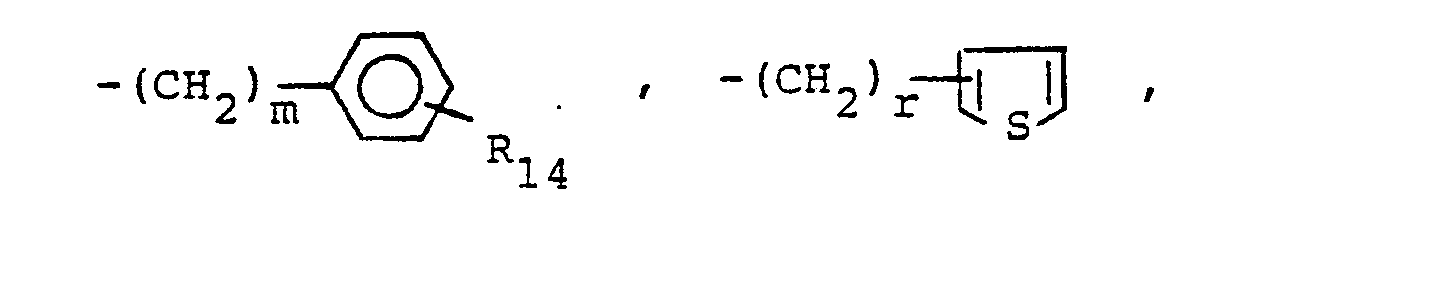


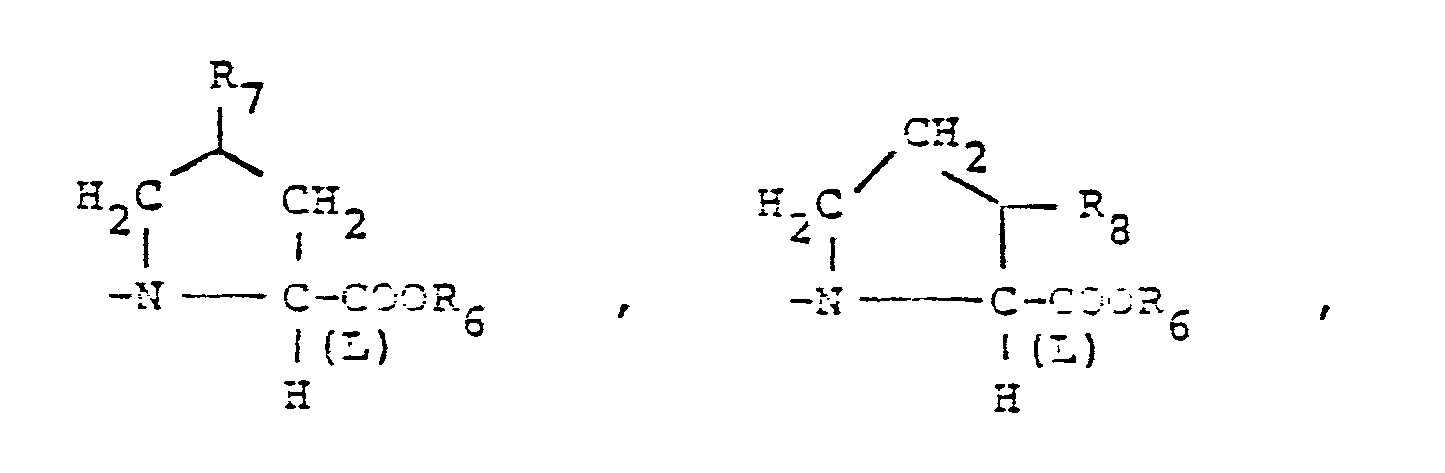

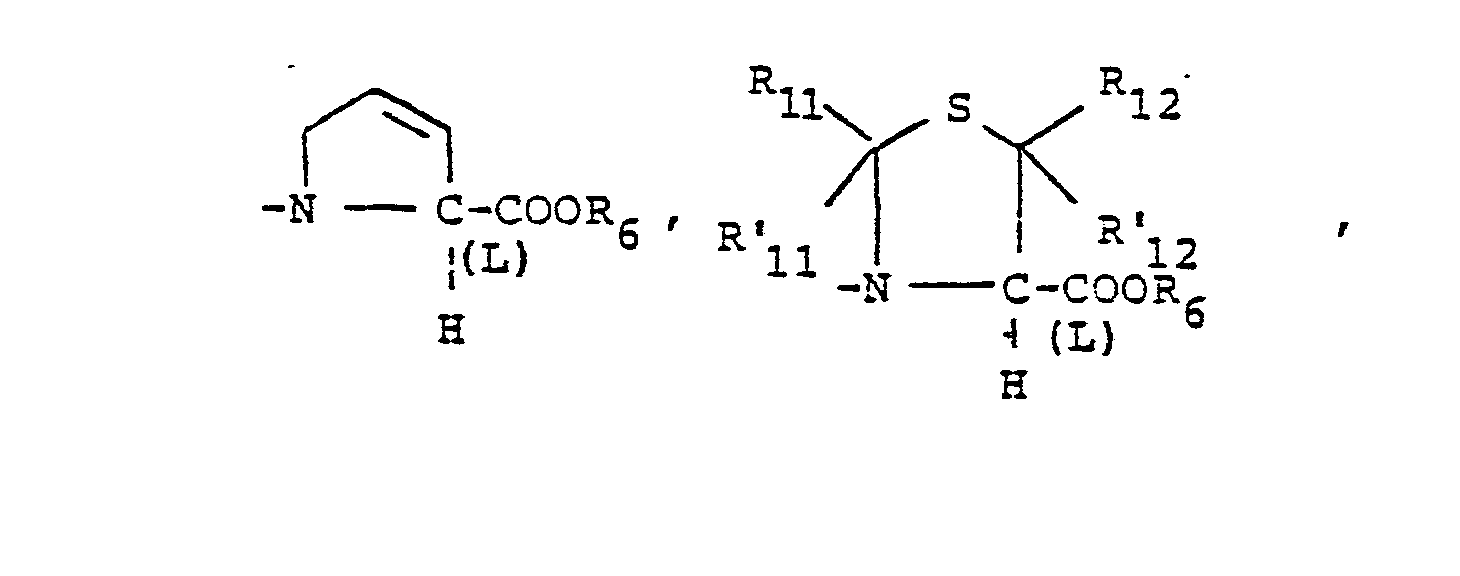


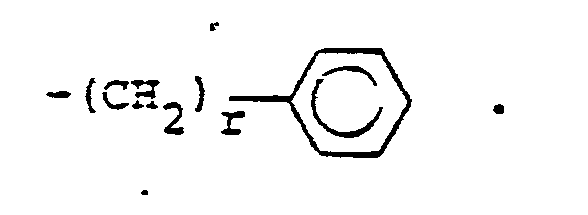









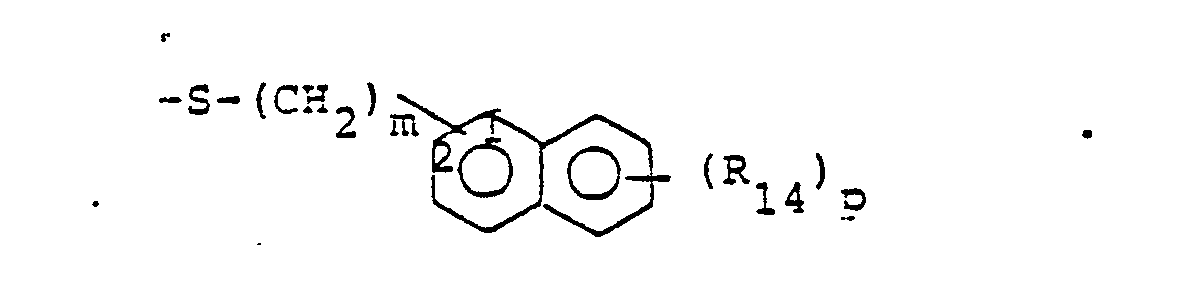


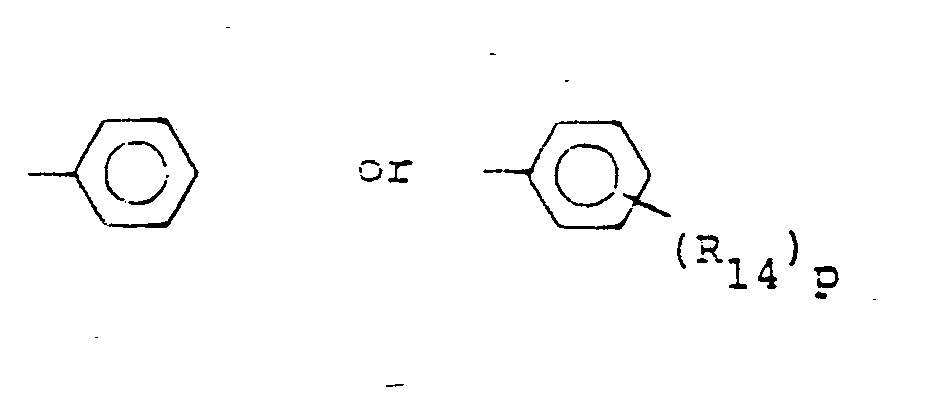
- R,3 is lower alkyl of 1 to 4 carbons, lower alkoxy of 1 to 4 carbons, lower alkylthio of 1 to 4 carbons, chloro, bromo, fluoro, trifluoromethyl, hydroxy, phenyl, phenoxy, phenylthio or phenylmethyl.
- R14 is lower alkyl of 1 to 4 carbons, lower alkoxy of 1 to 4 carbons, lower alkylthio of 1 to 4 carbons, chloro, bromo, fluoro, trifluoromethyl or hydroxy. m is zero, one, two, three, or four.
- p is one, two or three provided that p is more than one only if R13 or R14 is methyl, methoxy, chloro, or fluoro.
- R,s is hydrogen or lower alkyl of 1 to 4 carbons.
- Y is oxygen or sulfur.
- R16 is lower alkyl of 1 to 4 carbons,





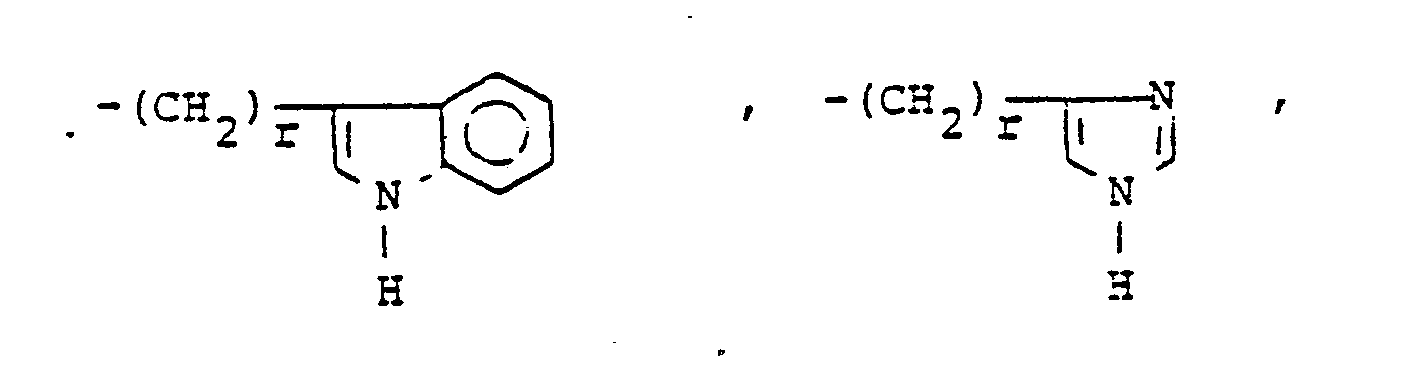

- R20 is hydrogen, lower alkyl, benzyl or phenethyl.




- R6 is hydrogen, lower alkyl, benzyl, benzhydryl,


- R17 is hydrogen, lower alkyl, cycloalkyl, or phenyl.
- R18 is hydrogen, lower alkyl, lower alkoxy or phenyl. R2, and R22 are independently selected from hydrogen and lower alkyl.
- R23 is lower alkyl.


- This invention in its broadest aspects relates to the amino and imino acid and ester compounds of formula I and to compositions and the method of using such compounds as pharmaceutical agents.
- The term lower alkyl used in defining various symbols refers to straight or branched chain radicals having up to seven carbons. The preferred lower alkyl groups are up to four carbons with methyl and ethyl most preferred. Similarly the terms lower alkoxy and lower alkylthio refer to such lower alkyl groups attached to an oxygen or sulfur.
- The term cycloalkyl refers to saturated rings of 4 to 7 carbon atoms with cyclopentyl and cyclohexyl being most preferred.
- The term halogen refers to chloro, bromo and fluoro. The term halo substituted lower alkyl refers to such alkyl groups in which one or more carbons have been replaced by a halogen, i.e., CF3, CH2Cl3, CH2Br, etc.
- The symbols


- The compounds of formula I are obtained by treating an amine of the formula


- The compounds of formula I wherein R, and R2 are both hydrogen can be prepared by employing ammonia as the reagent of formula III in the first procedure described above.
- Removal of the R6 protecting group, for example by hydrogenation when R6 is benzyl, yields the acid products of formula I, i.e., R6 is hydrogen.
- The amino intermediate of formula II can be prepared as follows. An amino acid derivative of the formula


- The chloride of formula V is treated with a substituted benzylamine of the formula


- The amine of formula VIII, particularly the p-toluenesulfonic acid salt thereof, is treated with the chlorocarbonylamine of the formula

- in the presence of a base such as triethylamine, wherein R6 in the definition of X is an easily removable protecting group, followed by removal of the t-butyl, benzhydryl, -CH2-CCl3,


- In the above reactions, if R is hydrogen then the N-atom is protected, for example by a t-butoxycarbonyl group which can be removed by hydrogenation following completion of the reaction. Also, if R26 is hydrogen then that N-atom is protected, for example, by benzyloxycarbonyl group which can be removed following completion of the reaction. Similarly, if any or all of R, R,, R2, R3 and Rs are




- The ester products of formula I wherein R6 is

- The ester products of formula I wherein R6 is


- The ester products of formula I wherein R6 is


- The ester products of formula I wherein R6 is
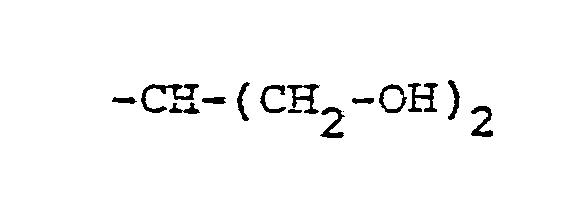


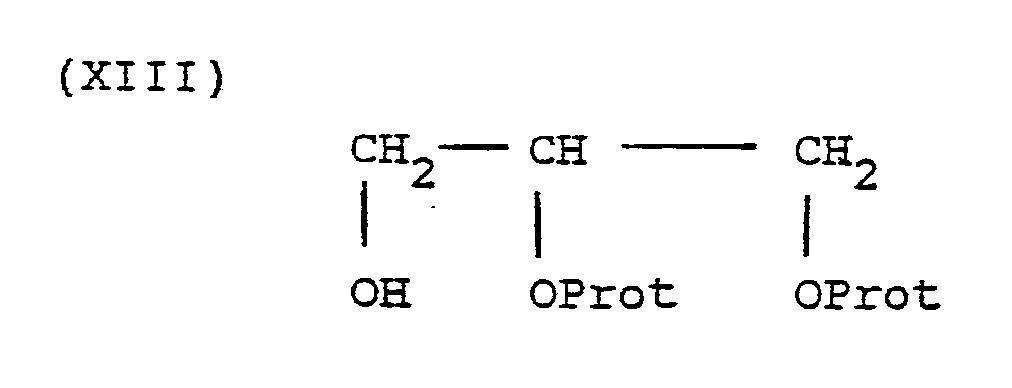
- Similarly, the ester products of formula I wherein R6 is

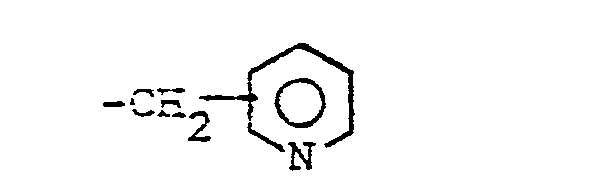

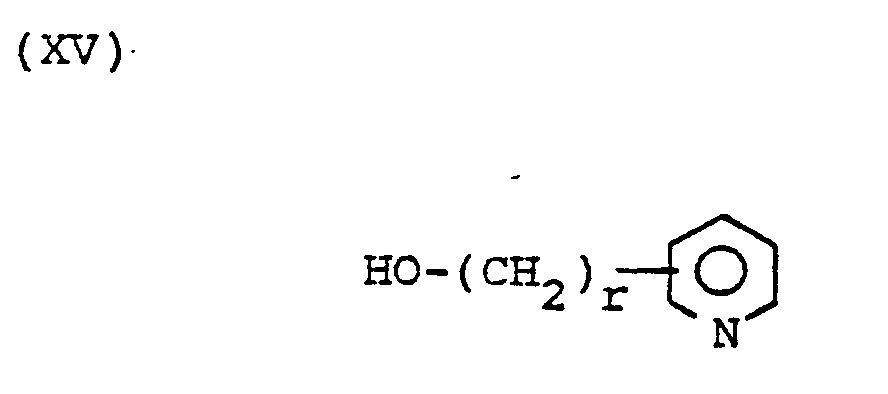
- The products of formula I wherein R, is amino may be obtained by reducing the corresponding products of formula I wherein R, is azido.
- Preferred compounds of this invention are those of formula I wherein:

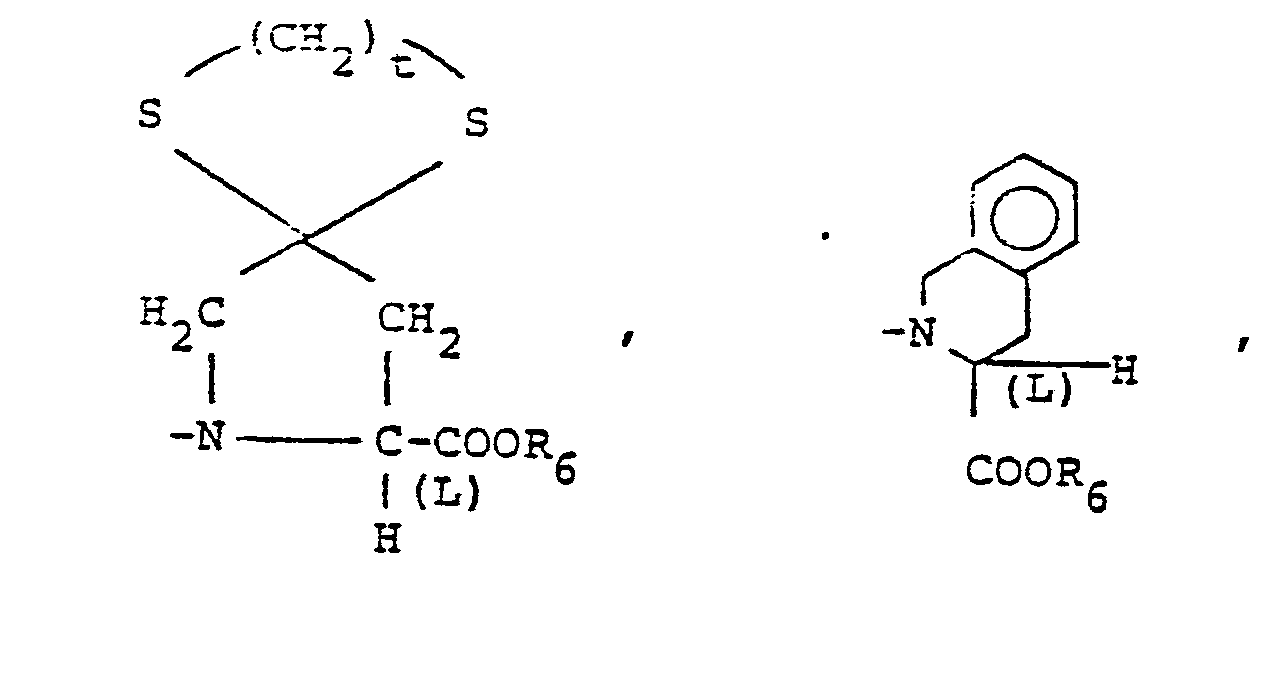

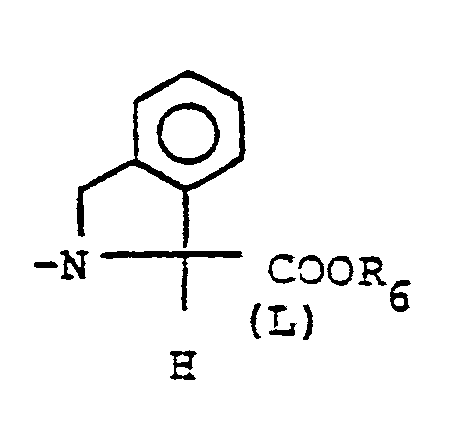

- R6 is hydrogen, straight or branched chain lower alkyl of 1 to 4 carbons, or an alkali metal salt ion.
- R4 is cyclohexyl or phenyl and R5 is hydrogen.
- R4 is hydrogen and Rs is methyl,


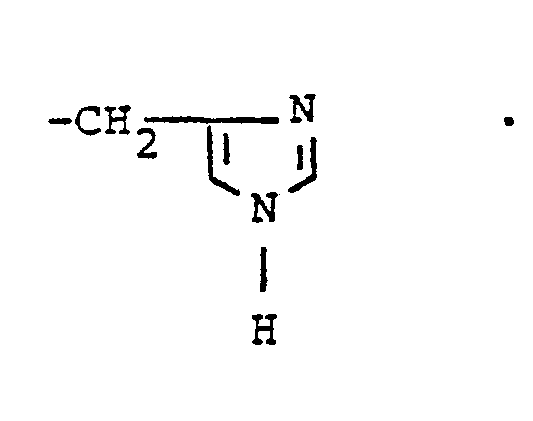
- R, is hydrogen, cyclohexyl, lower alkoxy of 1 to 4 carbons,



- R13 is methyl, methoxy, methylthio, Cl, Br, F, or hydroxy.
- m is zero, one or two.
- t is two or three.
- R is straight or branched chain lower alkyl of 1 to 4 carbons.
- R, and R2 are independently selected from straight or branched chain lower alkyl of 1 to 4 carbons or R, is cyclohexyl and R2 is hydrogen or R, and R2 taken together with the N atom to which they are attached complete a hetero ring of the formula


- R3 is straight or branched chain lower alkyl of 1 to 4 carbons,


- R,4 is methyl, methoxy, methylthio, CI, Br, F, or hydroxy. X is
- Most preferred compounds of this invention are those of formula I wherein:

- R6 is hydrogen or an alkali metal salt ion.
- R, and R2 are each methyl or R, is cyclohexyl and R2 is hydrogen or R, and R2 taken together with the N atom to which they are attached complete a hetero ring of the formula


- The compounds of formula I wherein R6 is hydrogen form salts with a variety of inorganic or organic bases. The nontoxic, pharmaceutically acceptable salts are preferred, although other salts are also useful in isolating or purifying the product. Such pharmaceutically acceptable salts include alkali metal salts such as sodium, potassium or lithium, alkaline earth metal salts such as calcium or magnesium, and salts derived from amino acids such as arginine, lysine, etc. The salts are obtained by reacting the acid form of the compound with an equivalent of the base supplying the desired ion in a medium in which the salt precipitates or in aqueous medium and then lyophilizing.
- The compounds of formula I when R3 is other than hydrogen contain an asymmetric center as represented by the in formula I. Thus, the compounds of formula I can exist in diastereomeric forms or in mixtures thereof: The above described processes can utilize racemates, enantiomers or diastereomers as starting materials. When diastereomeric products are prepared, they can be separated by conventional chromatographic or fractional crystallization methods.
- The products of formula I wherein the imino acid ring is monosubstituted give rise to cis-trans isomerism. The configuration of the final product will depend upon the configuration of the R,, Rs and Rg substituent in the starting material of formula III.
- The compounds of formula I, and the pharmaceutically acceptable salts thereof, are hypotensive agents. They inhibit the conversion of the decapeptide angiotensin I to angiotensin II and, therefore, are useful in reducing or relieving angiotensin related hypertension. The action of the enzyme renin on angiotensinogen, a pseudoglobulin in blood plasma, produces angiotensin I. Angiotensin I is converted by angiotensin converting enzyme (ACE) to angiotensin II. The latter is an active pressor substance which has been implicated as the causative agent in several forms of hypertension in various mammalian species, e.g., humans. The compounds of this invention intervene in the angiotensinogen-(renin)- angiotensin I-angiotensin II sequence by inhibiting angiotensin converting enzyme and reducing or eliminating the formation of the pressor substance angiotensin II. Thus by the administration of a composition containing one (or a combination) of the compounds of this invention, angiotensin dependent hypertension in a species of mammal - (e.g., humans) suffering therefrom is alleviated. A single dose, or preferably two to four divided daily doses, provided on a basis of about 0.1 to 100 mg., preferably about 1 to 50 mg., per kg. of body weight per day is appropriate to reduce blood pressure. The substance is preferably administered orally but parenteral routes such as the subcutaneous, intramuscular, intravenous or intraperitoneal routes can also be employed.
- The compounds of this invention can also be formulated in combination with a diuretic for the treatment of hypertension. A combination product comprising a compound of this invention and a diuretic can be administered in an effective amount which comprises a total daily dosage of about 30 to 600 mg., preferably about 30 to 330 mg. of a compound of this invention, and about 15 to 300 mg., preferably about 15 to 200 mg. of the diuretic, to a mammalian species in need thereof. Exemplary of the diuretics contemplated for use in combination of this invention are the thiazide diuretics, e.g., chlorothiazide, hydrochlorothiazide, flumethiazide, hydroflumethiazide, ben- droflumethiazide, methyclothiazide, trichloromethiazide, polythiazide or benzthiazide as well as ethacrynic acid, ticrynafen, chlor- thalidone,furosemide,musolimine,bumetanide,triam- terene, amiloride and spironolactone and salts of such compounds.
- The compounds of formula I can be formulated for use in the reduction of blood pressure in compositions such as tablets, capsules or elixirs for oral administration, or in sterile solutions or suspensions for parenteral administration. About 10 to 500 mg. of a compound of formula I is compounded with physiologically acceptable vehicle, carrier, excipient, binder, preservative, stabilizer, flavor, etc., in a unit dosage form as called for by accepted pharmaceutical practice. The amount of active substance in these compositions or preparations is such that a suitable dosage in the range indicated is obtained.
- The compounds of formula I wherein X is -NH- CH RS -COOR6 also possess enkephalinase inhibition activity and are useful as analgesic agents. Thus, by the administration of a composition containing one or a combination of such compounds of formula I or a pharmaceutically acceptable salt thereof, pain is alleviated in the mammalian host. A single dose, or preferably two to four divided daily doses, provided on a basis of about 0.1 to about 100 mg. per kilogram of body weight per day, preferably about 1 to about 50 mg. per kilogram per day, produces the desired analgesic activity. The composition is preferably administered orally but parenteral routes such as subcutaneous can also be employed.
- The following examples are illustrative of the invention. Temperatures are given in degrees centigrade.
- 1-[[Methyl[(S)-2-oxo-4-phenyl-3-[(1-piperldinylcarbonyl)amino]butyl]amino]carbonyl]-L-proline
- To a stirred solution of N-[(1,1-dimethylethoxy)-carbonyl]-L-phenylalanine (26.5 g., 100 mmole) in a tetrahydrofuran (150 ml.) at -20° is added isobutylchloroformate (13 ml., 100 mmole). N-Methylmorpholine (11 ml., 100 mmole) is then added in drops. The solution is stirred between -15°C and - 20°C for fifteen minutes and then filtered. Tetrahydrofuran (25 ml.) is used for the washings. The filtrate is added to a cold (ice bath) ethereal solution of diazomethane in drops. After the addition is over, the ice bath is removed, and the reaction mixture is stirred at ambient temperature for 2 hours. Nitrogen is blown over the solution and the volume is reduced to 400 ml. The reaction mixture is then stirred in an ice bath and hydrogen chloride in acetic acid (2N, 55 mi.) is added in drops. After the addition is over, the ice bath is removed and the reaction mixture is stirred for 15 minutes at room temperature. The reaction mixture is evaporated in vacuo and the residue on attempted dissolution in ether affords 6.2 g. of (S)-[3-chloro-2-oxo-1-(phenylmethyl)propyl] carbamic acid, 1,1-dimethylethyl ester; m.p. 104-105°; [α]-= +20.3° (c = 2, chloroform). The mother liquor on concentration and after crystallization from ether/hexane gives an additional 17.65 g. of product.
- A solution of (S)-[3-chloro-2-oxo-1-(phenylmethyl)propyl]carbamic acid, 1,1-dimethylethyl ester (6.43 g., 21.6 mmole), sodium bicarbonate (2.17 g., 25.9 mmole), sodium iodide (1.62 g., 11.0 mmole) and benzylmethylamine (2.76 mi., 2.14 mmole) in dimethylformamide (60 mi.) is stirred at room temperature for 4 hours. The resulting solution is concentrated and partitioned between ether and water. The ether layer is washed with water - (twice) and extracted with 1N hydrochloric acid - (five times). The combined extracts are made basic using sodium bicarbonate and extracted with ethyl acetate. The ethyl acetate extracts are dried - (MgSO4) and concentrated. The crude crystalline residue is dissolved in ether and a solution of p-toluenesulfonic acid (3.0 g., 28 mmole) in ethyl acetate is added.The resulting pink crystals are triturated with hot ethyl acetate and collected to give 6.5 g. of (S)-[3-[methyl(phenylmethyl)amino]-2-oxo-1-(phenylmethyl)propyl]carbamic acid, 1,1-dimethylethyl ester, p-toluenesulfonate salt as a white solid; m.p. 150 -152°.
- A mixture of p-toluenesulfonate salt product from part (b) (6.5 g., 11.7 mmole) and palladium hydroxide (20%) in methanol is hydrogenated at atmospheric pressure and room temperature for 1.5 hours. The resulting solution is filtered, concentrated, and triturated with ether to give 4.75 g. of a white crystalline solid. A portion of this material is partitioned between ethyl acetate and 10% sodium bicarbonate. The organic layer is treated with hydrochloric acid/ether to give the crude hydrochloride salt as blue-green solid. Recrystallization from methanol/ether gives (SH3-(methylamino)-2-oxo-1-(phenylmethyl)propyl]-carbamic acid 1,1-dimethylethyl ester, hydrochloride salt; m.p. 164 -169°.
- N-Methylmorpholine (0.46 ml., 4.2 mmole) is added to a stirring suspension of L-proline, phenylmethyl ester, hydrochloride salt (0.39 g., 1.6 mmole) in methylene chloride (dry, distilled) at - 40° followed by phosgene in benzene - (approximately IM, 2.5 ml., 2.5 mmole). The mixture is stirred at -30° for one hour. The ice bath is removed and the mixture is stirred for an additional hour. The mixture is then concentrated in vacuoand diluted with methylene chloride. (S)-[3/--(Methylamino)-2-oxo-1-(phenylmethyl)propyl]-carbamic acid, 1,1-dimethylethyl ester, hydrochloride salt (0.34 g., 1.0 mmole) is added to the solution and the mixture is stirred overnight. The resulting solution is diluted with methylene chloride and washed with 1 N hydrochloric acid and 10% sodium bicarbonate dried (MgSO4) and concentrated. The crude product (0.61 g.) is combined with material from a previous run (0.56 g.) and chromatographed on LPS-1 silica gel using hexane:ethyl acetate (2:1) as the eluant. The combined fractions are rechromatographed on LPS-1 using ether:ethyl acetate (10:1) as eluent. Fractions containing the desired product (Rf = 0.43, hexane: ethyl acetate, 1:1) are combined and concentrated to give 0.26 g. of 1-[[[(S)-3-[[(1,1-dimethyl-ethoxy)-carbonyl]amino]-2-oxo-4-phenylbutyl]methylamino]-carbonyl]-L-proline, phenylmethyl ester.
- A solution of 1-[[[(S)-3-[[(1,1-dimethylethoxy) carbonyl]amino]-2-oxo-4-phenylbutyl]methylamino]-carbonyl]-L-proline, phenylmethyl ester (7.12 g., 13.6 mmole) is stirred in a saturated solution of hydrochloric acid/ethyl acetate for one hour. The resulting precipitate is collected and washed with ethyl acetate to give 5.63 g. of 1-[[[(S)-3-amino-2-oxo-4-phenylbutyl]methylamino]carbonyl]-I-proline, phenylmethyl ester, m.p. 174 -175°;[a] 25 D = +16.20°. TLC (silica gel; chloroform methanol: acetic acid, 4:1:1)Rf = 0.60.
- N-Methylmorpholine (2.0 ml., 18.0 mmole) is added over a period of 5 minutes to a cooled (-30°) mixture of 1-[[[(S)-3-amino-2-oxo-4-phenylbutyl]methylamino]carbonyl]-L-proline, phenylmethyl ester (3.6 g., 8.0 mmole) and p-nitrophenyl chloroformate (1.6 g., 8.0 mmole) in methylene chloride (30 ml.). The resulting mixture is stirred for 15 more minutes in the cold bath and 20 minutes after removal of the bath. The mixture is washed with water (2 x), 1N hydrochloric acid, 10% sodium bicarbonate (4 x), and 1 N hydrochloric acid. The organic layer is dried (MgSO,) and concentrated to a red oil. The crude material is filtered through silica gel using chloroform and chloroform:ethyl acetate (1:1) as eluants. Fractions containing the desired product (Rf = 0.57, ethyl acetate) are combined and concentrated. The residue is dissolved in methanol and cooled. Crystals are filtered off and the filtrate is concentrated to give 2.95 g. of 1-[[[(S)-3-[[(4-nitrophenoxy)-carbonyl]amino]-2-oxo-4-phenylbutyl]methylamino]-carbonyl]-L-proline, phenylmethyl ester as a yellow oil.
- A solution of piperidine (0.5 ml., 5.2 mmole) in toluene (15 ml.) is added dropwise over five minutes to a cooled solution (0°) of 1-[[[(S)-3-[[(4-nitrophenoxy)carbonyl]amino]-2-oxo-4-phenylbutyl]-methylamino]carbonyl]-L-proline, phenylmethyl ester (1.48 g., 2.6 mmole) in toluene (40 ml.) in an ice bath. The solution immediately turns yellow. The resulting solution is stirred at room temperature for 30 minutes, diluted with water and washed sequentially with in hydrochloric acid, 10% sodium bicarbonate, and water. The organic layer is dried - (MgSO,) and concentrated. The residue (1.5 g.) is chromatographed on LPS-1 silica gel using an elution gradient of 50 - 100% ethyl acetate in hexane. Fractions containing the desired product (Rf = 0.54 traces at Rf = 0.4, 0.6, ethyl acetate) are combined and concentrated to a yellow oil (0.85 g.). The residue is then purified by preparative layer chromatography using ethyl acetate as eluant to give 0.81 g. of 1-[[methyl[(S)-2-oxo-4-phenyl-3-[-(1-piperidinylcarbonyl)amino]butyl]amino]carbonyl]-L-proline, phenylmethyl ester as a pale yellow oil.
- A suspension of the phenylmethyl ester product from part (g) (0.8 g., 1.5 mmole) in methanol and palladium hydroxide (20% on carbon) is hydrogenated at room temperature and atmospheric pressure for 30 minutes. The mixture is filtered, the solids are rinsed with methanol, and the filtrate is concentrated to give 0.42 g. of yellow oil. The residue is chromatographed on LPS-1 silica gel using an elution gradient of 3 - 10% acetic acid in chloroform. Fractions containing the desired material are combined and concentrated. The residue is dissolved in methanol/water, filtered, concentrated (methanol removed) and lyophilized to give a white solid. The material is rechromatographed on CC-4 silica gel using ethyl acetate as the eluant. Fractions containing the desired produced are combined and lyophilized from water/dioxane to give 1-[[methyl[(S)-2-oxo-4-phenyl-3-[(1-piperidinyl- carbonyl)amino]butyl]amino]carbonyl]-L-proline as a white solid; m.p. 69-72°; [α]25 D = -37° (c = 0.2, methanol). TLC (silica gel; toluene:acetic acid, 4:1) R, = 0.18.
- Anal. caic'd. for C23H32N4O5 • 1 H2O:
- C, 59.72; H, 7.41; N, 12.11
- Found: C, 59.86; H, 7.07; N, 11.67.
- Morpholine (1 ml., 11.4 mmole) is added to a stirring solution of 1-[[[(S)-3-[[(4-nitrophenoxy)-carbonyl]amino]-2-oxo-4-phenylbutyl]-methylamino]carbonyl]-L-proline, phenylmethyl ester (0.9 g., 1.58 mmole) in toluene at 0° in one portion. The reaction mixture turns yellow in 15 minutes and TLC indicates complete loss of starting material after 30 minutes. The resulting solution is washed sequentially with water, 1 N hydrochloric acid, and 10% sodium bicarbonate. The organic layer is dried (MgSO4) and concentrated. The crude product is purified by preparative layer chromatography to give 0.26 g. of 1-[[methyl[(S)-3-[(4-morpholinylcarbonyl)amino]carbonyl]-2-oxo-4-phenylbutyl]amino]carbonyl]-L-proline, phenylmethyl ester as a yellow oil. TLC (ethyl acetate) Rf = 0.18.
- A solution of the phenylmethyl ester product from part (a) (0.26 g., 0.48 mmole) in methanol containing palladium hydroxide on carbon is hydrogenated at room temperature and atmospheric pressure for 30 minutes. The mixture is filtered - (Celite), the solids rinsed with methanol, and the filtrate is concentrated. The residue is triturated with ether and dried under vacuum to give 0.16 g. of 1-[[methyl[(S)-3-[(4-morpholinylcarbonyl)amino]-2-oxo-4-phenylbutyllamino]carbonyl]-L-proline as a white solid; m.p. 75-90°; [α]D = -38° (c = 0.9, methanol). TLC(silica gel; chloroform: methanol:acetic acid, 4:1:1) Rf = 0.8, trace at Rf = 0.2.
- Anal. calc'd. for C22H30N4O6 • 0.71 H2O:
- C, 57.54; H, 6.89; N, 12.20
- Found: C, 57.54; H, 6.78; N, 11.97.
- Cyclohexylamine (1 ml., 8.7 mmole) is added to a cold (0°) solution of 1-[[[(S)-3-[[(4-nitrophenoxy)carbonyl]amino]-2-oxo-4-phenylbutyl]-methylamino]carbonyl]-L-proline, phenylmethyl ester (0.9 g., 1.58 mmole) in toluene in one portion. The solution turns yellow immediately and TLC indicates all starting material has been consumed. The resulting solution is washed sequential with water, 1N hydrochloric acid, and 10% sodium bicarbonate. The organic layer is dried (MgSO4) and concentrated to a pale yellow oil. The crude prod- _uct is purified (2x) by preparative layer chromotog- raphy using ethyl acetate as eluant to give 0.31 g. of 1-[[[(S)-3-[[(cyclohexylamino)carbonyl]amino]-2-oxo-4-phenylbutyl]methylamino]carbonyl]-L-proline, phenylmethyl ester as a clear, colorless salt.
- A suspension of the phenylmethyl ester from part (a) (0.31 g., 0.56 mmole) in methanol and palladium hydroxide on carbon is hydrogenated at room temperature and atmospheric pressure for 30 minutes. The resulting mixture is filtered (Celite), the solids washed with methanol, and the filtrate concentrated to give 0.27 g. of a clear glass. The residue is triturated with ether and dried under vacuum to give 0.175 g. of 1-[[[(S)-3-[[-(cyclohexylamino)carbonyl]amino]-2-oxo-4-phenylbutyl] methylamino]carbonyl]-L-proline; m.p. 75-110°; [α]D = 27° (c = 1, methanol). TLC (silica gel; toluene: acetic acid, 4:1) Rf = 0.18.
- Anal. caic'd for C24H34N4O5• 0.8 H20:
- C, 60.93; H, 7.59; N, 11.84
- Found: C, 60.93; H. 7.40; N, 11.89.
- N-Methyl piperazine (1 ml., 9.0 mmole) is added to a cooled (0°) solution of 1-[[[(S)-3-[[(4-nitrophenoxy)carbonyl]amino]-2-oxo-4-phenylbutyl]-methylamino]carbonyl]-L-proline, phenylmethyl ester (1.06 g., 1.8 mmole) in toluene (20 ml.) in an ice bath in one portion. The resulting solution is stirred for an additional 45 minutes as it warms to room temperature. The solution is washed sequentially with water and 10% sodium bicarbonate, dried - (MgSO4), and concentrated. The crude product is chromatographed on LPS-1 silica gel eluting with a solution of ethyl acetate:pyridine:acetic acid: water (300:20:6:11 - 100:20:6:11). Fractions containing the desired product are combined and concentrated to give 0.3 g. of 1-[[methyl[(S)-3-[[(4-methyl-1-piperazinyl)carbonyl]amino]-2-oxo-4-phenylbutyl]-amino]carbonyl]-L-proline, phenylmethyl ester; TLC (silica gel; ethyl acetate:pyridine:acetic acid: water, 100:20:6:11) Rf = 0.26.
- A solution of the phenylmethyl ester product from part (a) (0.3 g., 0.54 mmole) in methanol (20 ml.) is hydrogenated for one hour at room temperature and atmospheric pressure using palladium hydroxide as catalyst. The resulting mixture is filtered and concentrated to a yellow oil. The crude product is dissolved in water and washed with ether, ethyl acetate, and chloroform. The aqueous layer is treated with 1N hydrochloric acid (0.5 ml.) and chromatographed on HP-20 using a 0.01 N hydrochloric acid:methanol (100 - 0%) gradient. Fractions containing the desired product are combined, concentrated and lyophilized to give 0.042 g. of 1-[[methyl[(S)-3-[[(4-methyl-1-piperazinyl)-carbonyl]amino]-2-oxo-4-phenylbutyl]amino]-carbonyl]-L-proline, hydrochloride as a bright yellow solid; m.p. (95) 101-106°; [α]D = -16° (c.= 0.4, methanol). TLC (silica gel; n-butanol:acetic acid:water: ethyl acetate, 1:1:1:1)Rf = 0.37.
- Anal. caic'd. for C23H33N5O5• 2 HCI. 1.7 H20:
- C, 49.06; H, 6.87; N, 12.44; Cl, 12.59
- Found: C, 49.02; H, 7.08; N, 12.29; CI, 12.37.
- Diisopropylethylamine (1.5 ml., 8.75 mmole) is added to a cooled (0°) solution of 1-[[[(S)-3-[[(4-nitrophenoxy)carbonyl]amino]-2-oxo-4-phenylbutyl]-methylamino]carbonyl]-L-proline, phenylmethyl ester (1.0 g., 1.75 mmole) and dimethylamine hydrochloride (0.71 g., 8.75 mmoles) in toluene (50 ml.) in one portion. The resulting yellow solution is stirred in a closed system at 0° for 4 hours and for 2 hours following removal of the ice bath. The resulting mixture is washed sequentially with water, 10% sodium bicarbonate, 1 N hydrochloric acid, and 10% sodium bicarbonate. The solution is dried (MgSO4) and concentrated to a pale yellow oil which is chromatographed on LPS-1 silica gel using 50 - 100% ethyl acetate in hexane as eluant. Fractions containing the desired product are combined and concentrated to give 0.68 g. of 1-[[[(S)-3-[[(dimethylamino)carbonyl]amino]-2-oxo-4-phenylbutyl]methylamino]carbonyl]-L-proline, phenylmethyl ester as a clear oil. TLC (silica gel, ethyl acetate) Rf = 0.2.
- A solution of the phenylmethyl ester product from part (a) (0.68 g., 1.37 mmole) in methanol is hydrogenated at room temperature and atmospheric pressure for three hours using palladium hydroxide on carbon as catalyst. The resulting solution is filtered and concentrated to a white foam which is lyophilized from dioxane/water to give 0.5 g. of 1-[[-[(S)-3-[[(dimethylamino)carbonyl]amino]-2-oxo-4-phenylbutyl]methylamino]carbonyl]-L-proline; m.p. - (60) 74 -104° [α]D = -38.6° (c = 1.0, methanol). TLC (silica gel; chloroform:methanol: acetic acid, 4:1:1) Rf = 0.73, trace at 0.33.
- Anal calc'd. for C22H28N4O5• 1.1 H20:
- C, 56.62; H, 7.17; N, 13.20
- Found: C, 56.63; H, 7.25; N, 13.14.
- Following the procedure of Examples 1 -5, the amine shown in Col. I is treated with 4-nitrophenyl chloroformate and then reacted with the amine shown in Col. 11 to yield the ester product shown in Col. III. Removal of the R6 ester group yields the corresponding acid product.

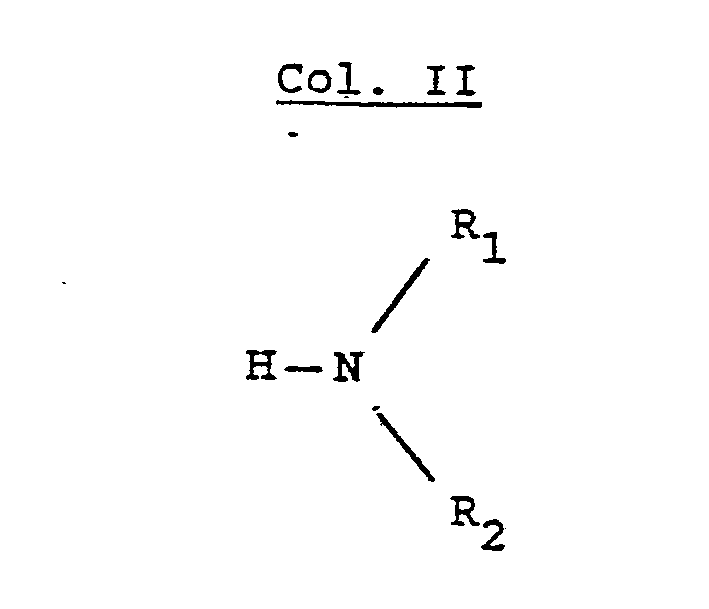


- The R3 protecting group shown in Example 17, the R, protecting groups shown in Examples 15 and 16, the R protecting groups shown in Examples 21 and 22, the Rs protecting group shown in Example 27, and the R26 protecting group shown in Example 19 are removed as the last step in the synthesis. The R6 ester groups shown in Examples 28 to 30 are not removed.
- 1000 tablets each containing the following ingredients:

- In a similar manner, tablets containing 100 mg. of the product of any of Examples 2 to 30 can be prepared.
- A similar procedure can be employed to form tablets containing 50 mg. of active ingredient.
- Two piece #1 gelatin capsules are filled with a mixture of the following ingredients:

- In a similar manner capsules containing 50 mg. of the product of any of Examples 1 and 3 to 30 can be prepared.
- An injectable solution is prepared as follows:

- The active substance, preservatives and sodium chloride are dissolved in 3 liters of water for injection and then the volume is brought up to 5 liters. The solution is filtered through a sterile filter and aseptically filled into presterilized vials which are closed with presterilized rubber closures. Each vial contains 5 ml. of solution in a concentration of 100 mg. of active ingredient per ml. of solution for injection.
- In a similar manner, an injectable solution containing 100 mg. of active ingredient per ml. of solution can be prepared for the product of any of Examples 1, 2, and 4 to 30.
- 1000 tablets containing the following ingredients:

- In a similar manner, tablets can be prepared containing 100 mg. of the product of any of Examples 1 to 4 and 6 to 30.
Claims (14)
1. A compound of the formula

or such a compound in pharmaceutically acceptable salt form, wherein:
X is
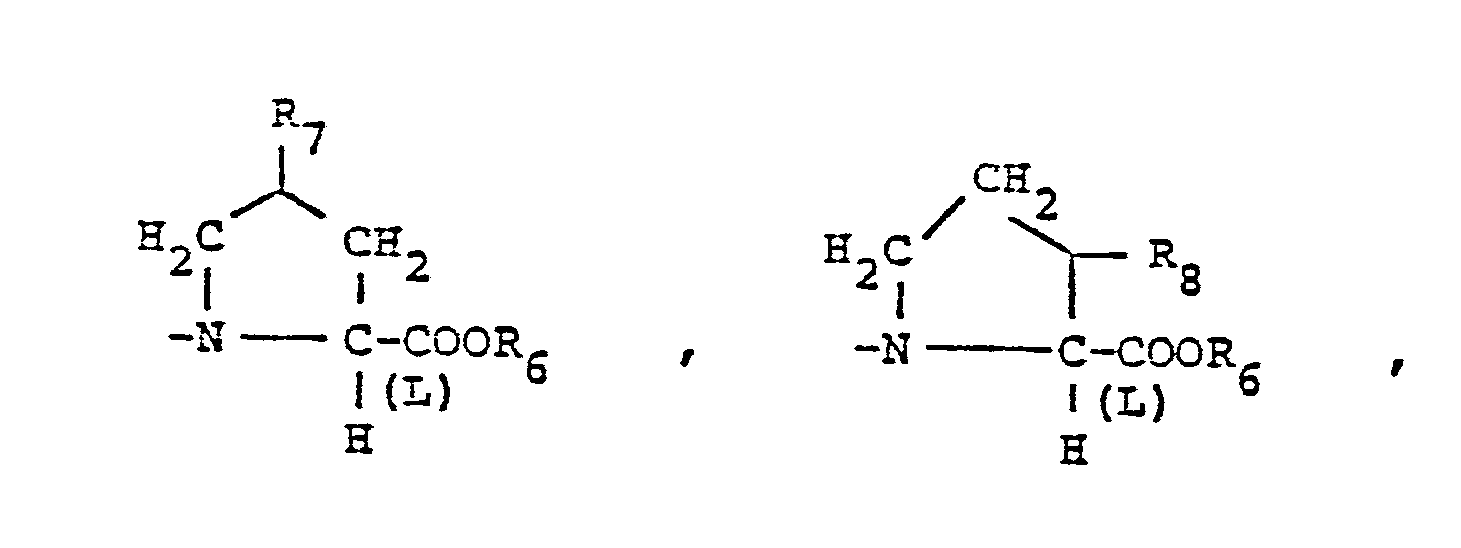


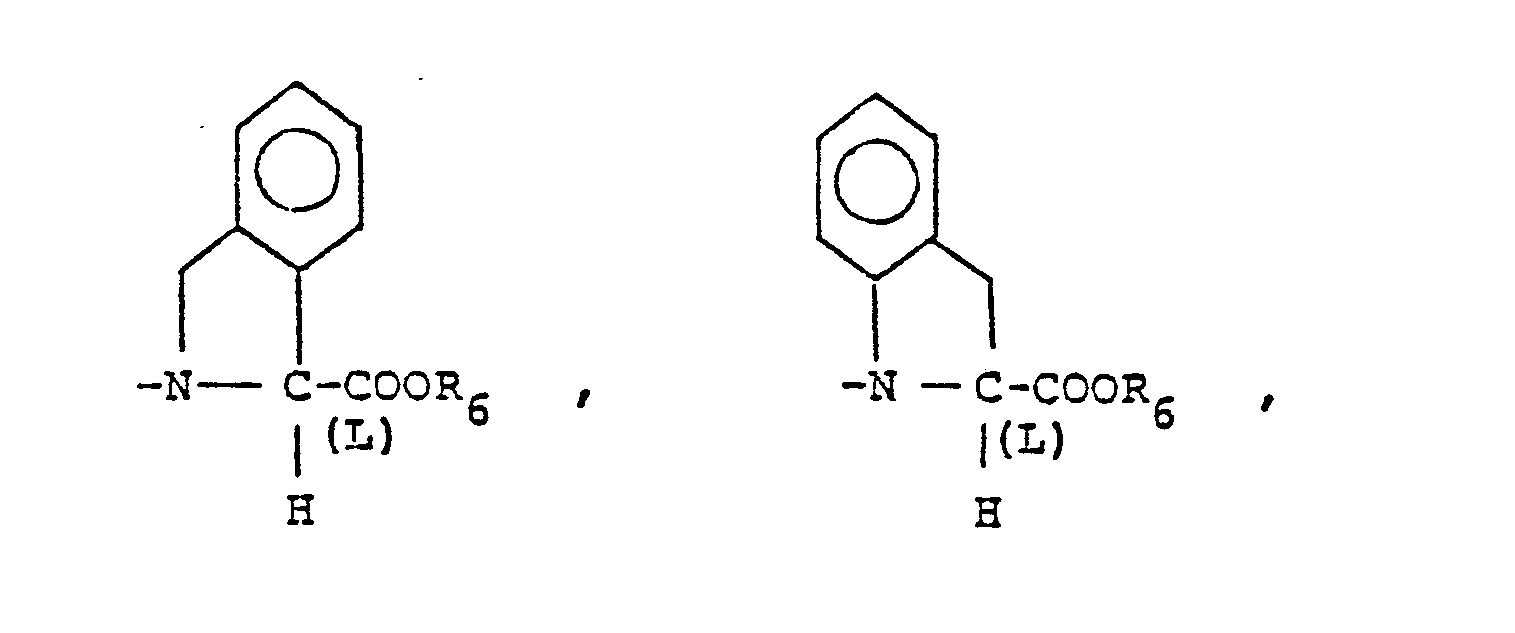


or

n is zero, one or two;
R25 is lower alkyl of 1 to 4 carbons or

R7 is hydrogen, lower alkyl, halogen, hydroxy,


a 1- or 2-naphthyl of the formula

a substituted 1- or 2- naphthyl




of the formula

a substituted 1- or 2-naphthylolxy of the formula
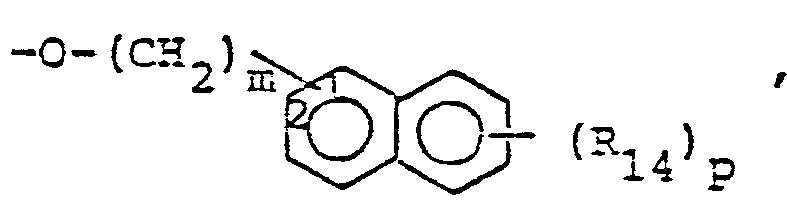
-S-lcwer alkyl,


, a 1- or 2-naphthylthio of the formula

, or a substituted 1- or 2-naphthylthio of the formula


-O-lower alkyl, a 1- or 2-naphthyloxy of the formula

, a substituted 1- or 2-naphthyloxy of the formula -

-S-lower alkyl,


a 1- or 2-naphthylthio of the formula

, or a substituted 1- or 2-naphthylthio of the formula


or

R10 is halogen or -Y-R16
R11, R'11, R12 and R'12 are independently selected from hydrogen and lower alkyl or R'11, R12 and R'12 are hydrogen and R,, is

or
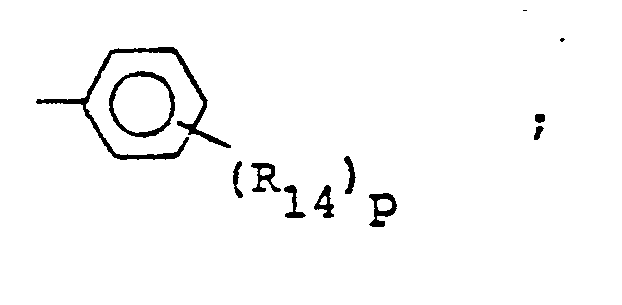
R13 is lower alkyl or 1 to 4 carbons, lower alkoxy of 1 to 4 carbons, lower alkylthio of 1 to 4 carbons, chloro, bromo, fluoro, trifluoromethyl, hydroxy, phenyl, phenoxy, phenylthio, or phenylmethyl;
R,, is lower alkyl or 1 to 4 carbons, lower alkoxy of 1 to 4 carbons, lower alkylthio of 1 to 4 carbons, chloro, bromo, fluoro, trifluoromethyl or hydroxy;
m is zero, one, two, three, or four; p is one, two or three provided that p is more than one only if R13 or R14 is methyl, methoxy, chloro, or fluoro;
R15 is hydrogen or lower alkyl of 1 to 4 carbons;
Y is oxygen or sulfur;
R,6 is lower alkyl of 1 to 4 carbons,

or the R16 groups join to complete an unsubstituted 5-or 6-membered ring or said ring in which one or more of the carbons has a lower alkyl of 1 to 4 carbons or a di(lower alkyl of 1 to 4 carbons) substituent;


, or
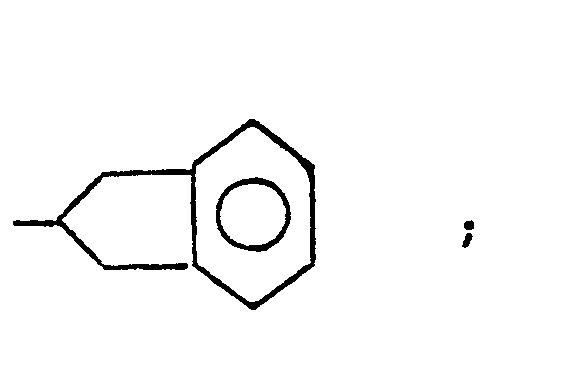


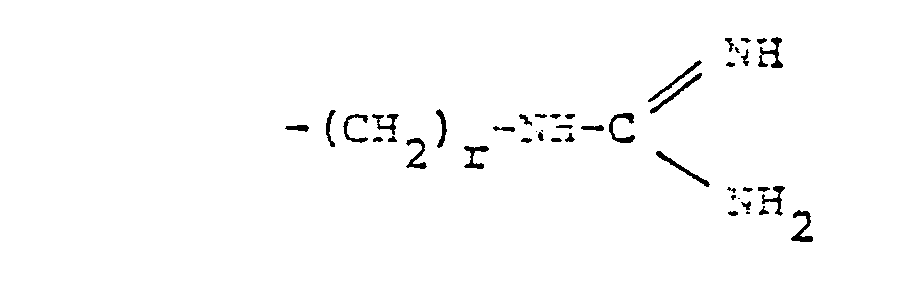
, or

r is an integer from 1 to 4;
R19 is lower alkyl, benzyl or phenethyl;
R20 is hydrogen, lower alkyl, benzyl or phenethyl;
R is hydrogen, lower alkyl, halo substituted lower alkyl,







or

R, and R2 are independently selected from the group consisting of hydrogen, lower alkyl, halo substituted lower alkyl, -(CH2)m-cycloalkyl,



and

or R, and R2 taken together with the N atom to which they are attached complete a hetero ring of the formula


, or

v is an integer from 2 to 6;
R26 is hydrogen or lower alkyl;
R3 is hydrogen, lower alkyl,


halo substituted lower alkyl, -(CH2)m-cycloalkyl,




, R6 is hydrogen, lower alkyl, benzyl, benzhydryl,


or

R17 is hydrogen, lower alkyl, cycloalkyl, or phenyl;
R18 is hydrogen, lower alkyl, lower alkoxy or phenyl;
R21 and R22 are independently selected from hydrogen and lower alkyl; R23 is lower alkyl; and
R24 is hydrogen, lower alkyl,


, or

2. A compound of Claim 1 wherein:
Xis


or

R6 is hydrogen or an alkali metal salt ion;
R4 is cyclohexyl or phenyl and R5 is hydrogen or R4 is hydrogen and R5 is methyl,


or

R, is hydrogen, cyclohexyl, lower alkoxy of


or
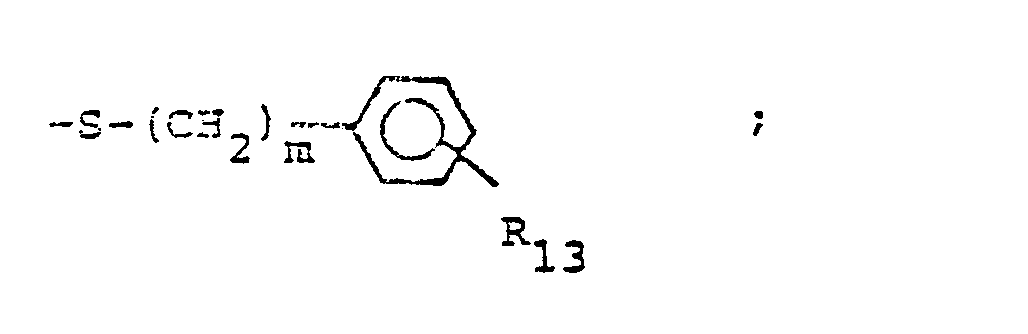
m is zero, one or two;
R13 is methyl, methoxy, methylthio, chloro, bromo, fluoro, or hydroxy; and
t is 2 or 3.
3. A compound of Claim 2 wherein
R is straight or branched chain lower alkyl of 1 to 4 carbons;
R, and R2 are independently selected from straight or branched chain lower alkyl of 1 to 4 carbons, or R, is cyclohexyl and R2 is hydrogen, or R, and R2 taken together with the N atom to which they are attached complete a hetero ring of the formula

or

R26 is hydrogen or straight or branched chain lower alkyl of 1 to 4 carbons;
R3 is straight or branched chain lower alkyl of 1 to 4 carbons,

, or

m is zero, one, or two; and
R14 is methyl, methoxy, methylthio, Cl, Br, F, or hydroxy.
4. A compound of Claim 3 wherein:
x is

R is methyl; and
R6 is hydrogen or an alkali metal salt ion.
5. A compound of Claim 4 wherein R, and R2 taken together with the N atom to which they are attached complete a hetero ring of the formula

, or
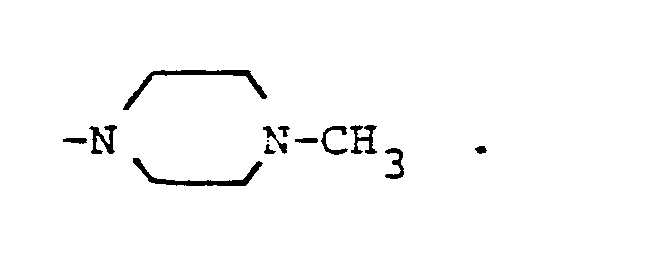
6. The compound of Claim 5, 1-[[methyl[(S)-2-oxo-4-phenyl-3-[(1-piperidinylcarbonyl)amino]butyl]-amino]carbonyl]-L-proline.
7. The compound of Claim 5, 1-[[methyl[(S)-3-[(4-morpholinylcarbonyl)amino]]-2-oxo-4-phenylbutyl]-amino]carbonyl]-L-proline.
8. The compound of Claim 5, 1-[[methyl[(S)-3-[[(4-methyl-1-piperazinyl)carbonyl]amino]-2-oxo-4-phenylbutyl]amino]carbonyl]-L-proline, dihydrochloride salt.
9. A compound of Claim 4 wherein:
R, is cyclohexyl and R2 is hydrogen.
10. The compound of Claim 9, 1-[[[(S)-3-[[-(cyclohexylamino)carbonyl]amino]-2-oxo-4-phenylbutyl]methylamino]carbonyl]-L-proline.
11. A compound of Claim 4 wherein
R, and R2 are both methyl.
12. The compound of Claim 11, 1-[[[(S)-3-[[-(dimethylamino)carbonyl]amino]-2-oxo-4-phenylbutyl]methylamino]carbonyl]-L-proline.
13. A pharmaceutical composition useful for treating hypertension comprising a pharmaceutically acceptable carrier and a hypotensive compound of the formula
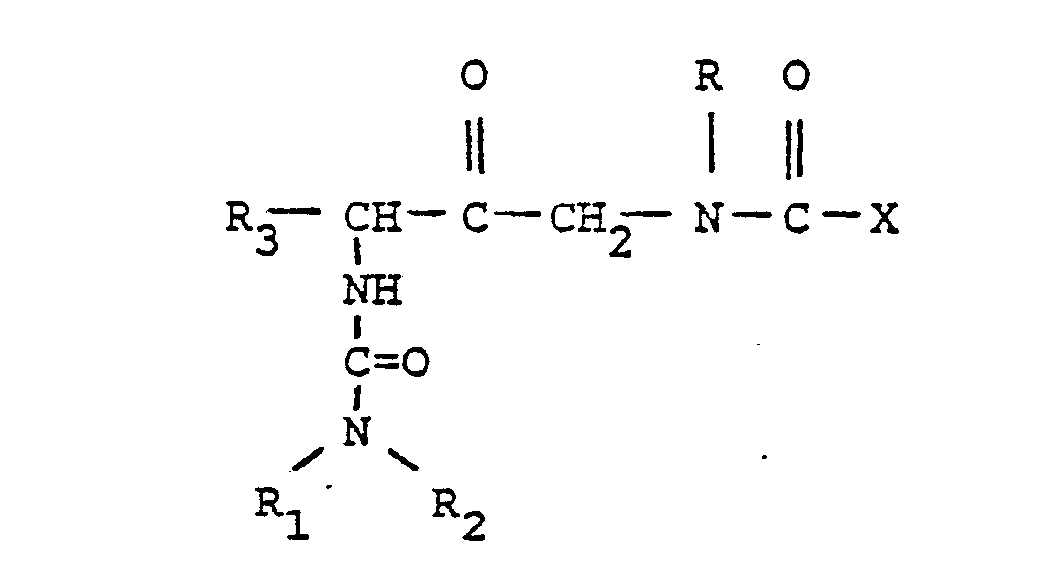
wherein R, R,, R2, R3 and X are as defined in Claim 1.
14. A pharmaceutical composition useful as an analgesic comprising a pharmaceutically acceptable carrier and an enkemphalinase inhibiting compound of the formula

wherein R, R,, R2, R3, Rs and R6 are as defined in Claim 1.
Applications Claiming Priority (2)
| Application Number | Priority Date | Filing Date | Title |
|---|---|---|---|
| US06/726,264 US4740508A (en) | 1985-04-22 | 1985-04-22 | Ureidoalkanoylaminocarbonyl amino and imino acids and esters |
| US726264 | 1996-10-04 |
Publications (1)
| Publication Number | Publication Date |
|---|---|
| EP0202776A1 true EP0202776A1 (en) | 1986-11-26 |
Family
ID=24917871
Family Applications (1)
| Application Number | Title | Priority Date | Filing Date |
|---|---|---|---|
| EP86302953A Withdrawn EP0202776A1 (en) | 1985-04-22 | 1986-04-18 | Ureidoalkanoylaminocarbonyl amino and imino acids and esters |
Country Status (4)
| Country | Link |
|---|---|
| US (2) | US4740508A (en) |
| EP (1) | EP0202776A1 (en) |
| JP (1) | JPS61257963A (en) |
| CA (1) | CA1285563C (en) |
Families Citing this family (4)
| Publication number | Priority date | Publication date | Assignee | Title |
|---|---|---|---|---|
| US5100903A (en) * | 1989-05-12 | 1992-03-31 | Anaquest, Inc. | N-aryl-n-(1-substituted-3-alkoxy-4-piperidinyl)amides and pharmaceutical compositions and methods employing such compounds |
| US4994471A (en) * | 1989-05-12 | 1991-02-19 | Boc, Inc. | N-aryl-N-(1-substituted-3-alkoxy-4-piperidinyl)amides and pharmaceutical compositions and methods employing such compounds |
| US5475138A (en) * | 1994-07-07 | 1995-12-12 | Pharm-Eco Laboratories Incorporated | Method preparing amino acid-derived diaminopropanols |
| US6063963A (en) * | 1995-07-05 | 2000-05-16 | Pharm-Eco Laboratories, Inc. | Amino acid-derived diaminopropanols |
Citations (1)
| Publication number | Priority date | Publication date | Assignee | Title |
|---|---|---|---|---|
| EP0103496A1 (en) * | 1982-07-22 | 1984-03-21 | E.R. Squibb & Sons, Inc. | Acylalkylaminocarbonyl substituted amino and imino acid compounds |
Family Cites Families (2)
| Publication number | Priority date | Publication date | Assignee | Title |
|---|---|---|---|---|
| US4329473A (en) * | 1979-06-01 | 1982-05-11 | Almquist Ronald G | Oxoalkanoic acid derivatives as inhibitors of angiotensin converting enzyme |
| US4621092A (en) * | 1982-07-22 | 1986-11-04 | E. R. Squibb & Sons, Inc. | Substituted proline compounds, composition and method of use |
-
1985
- 1985-04-22 US US06/726,264 patent/US4740508A/en not_active Expired - Fee Related
-
1986
- 1986-03-13 CA CA000503993A patent/CA1285563C/en not_active Expired - Lifetime
- 1986-04-18 EP EP86302953A patent/EP0202776A1/en not_active Withdrawn
- 1986-04-22 JP JP61093208A patent/JPS61257963A/en active Pending
-
1987
- 1987-12-28 US US07/138,477 patent/US4810791A/en not_active Expired - Fee Related
Patent Citations (1)
| Publication number | Priority date | Publication date | Assignee | Title |
|---|---|---|---|---|
| EP0103496A1 (en) * | 1982-07-22 | 1984-03-21 | E.R. Squibb & Sons, Inc. | Acylalkylaminocarbonyl substituted amino and imino acid compounds |
Also Published As
| Publication number | Publication date |
|---|---|
| US4740508A (en) | 1988-04-26 |
| CA1285563C (en) | 1991-07-02 |
| JPS61257963A (en) | 1986-11-15 |
| US4810791A (en) | 1989-03-07 |
Similar Documents
| Publication | Publication Date | Title |
|---|---|---|
| EP0132304B1 (en) | Hydroxy substituted peptide compounds | |
| USH725H (en) | Ureido amino and imino acids, compositions and methods for use | |
| US4757050A (en) | Ureido renin inhibitors | |
| EP0320118B1 (en) | Peptides with collagenase inhibiting activity | |
| EP0223437A2 (en) | Aminocarbonyl renin inhibitors | |
| EP0331921A1 (en) | Renin inhibitors containing alpha-heteroatom amino acids | |
| US4474778A (en) | Lactam containing compounds, their pharmaceutical compositions and method of use | |
| US4820691A (en) | Amino acid 1,2-diketo derivatives as renin inhibitors | |
| CA1261332A (en) | Ester substituted aminoalkanoylureido amino and imino acid and ester compounds | |
| EP0159156A1 (en) | Hydroxy substituted ureido amino and imino acids | |
| US4711884A (en) | Thiazine and thiazepine containing compounds | |
| US4560506A (en) | Mercaptocycloalkylcarbonyl and mercaptoarylcarbonyl dipeptides | |
| US4325944A (en) | Mixed disulfides | |
| EP0103496A1 (en) | Acylalkylaminocarbonyl substituted amino and imino acid compounds | |
| US4512988A (en) | Acylamino oxo or hydroxy substituted alkylamino thiazines and thiazepines | |
| EP0158947B1 (en) | Amino thiol dipeptides | |
| US4692455A (en) | Certain acyclic, alicyclic, aromatic or heterocyclic derivatives of 3-benzoylamino-2-oxo- butyl-amino-carbonyl-oxy-3-propanoic acids, esters thereof, pharmaceutical compositions containing same and their enkephalinase inhibiting properties | |
| US4568489A (en) | N-Acyl-γ-glutamyl imino and amino acids and esters | |
| US4810791A (en) | Ureidoalkanoylaminocarbonyl amino and imino acids and esters | |
| US4456595A (en) | Carboxy and substituted carboxy aroly peptides | |
| US4524212A (en) | Acyloxyketone substituted imino and amino acids | |
| US5013861A (en) | Ester substituted aminoalkanoylureido amino and imino acid and ester compounds | |
| WO1991010679A2 (en) | RENIN INHIBITING PEPTIDES HAVING AN 'alpha'-HETEROATOM AMINO ACID AT THE P3 POSITION | |
| US4636522A (en) | Acylaminoalkanoyl urethanes or thiourethanes | |
| US5187290A (en) | Acylaminoalkanoyl urethanes or thiourethanes |
Legal Events
| Date | Code | Title | Description |
|---|---|---|---|
| PUAI | Public reference made under article 153(3) epc to a published international application that has entered the european phase |
Free format text: ORIGINAL CODE: 0009012 |
|
| AK | Designated contracting states |
Kind code of ref document: A1 Designated state(s): AT BE CH DE FR GB IT LI LU NL SE |
|
| 17P | Request for examination filed |
Effective date: 19870513 |
|
| 17Q | First examination report despatched |
Effective date: 19890111 |
|
| STAA | Information on the status of an ep patent application or granted ep patent |
Free format text: STATUS: THE APPLICATION IS DEEMED TO BE WITHDRAWN |
|
| 18D | Application deemed to be withdrawn |
Effective date: 19890722 |
|
| RIN1 | Information on inventor provided before grant (corrected) |
Inventor name: WELLER III, HAROLD NORRIS Inventor name: GORDON, ERIC MICHAEL |