EP0201741B1 - Dipeptide derivatives, processes for preparing them, pharmaceutical composition and use - Google Patents
Dipeptide derivatives, processes for preparing them, pharmaceutical composition and use Download PDFInfo
- Publication number
- EP0201741B1 EP0201741B1 EP86105231A EP86105231A EP0201741B1 EP 0201741 B1 EP0201741 B1 EP 0201741B1 EP 86105231 A EP86105231 A EP 86105231A EP 86105231 A EP86105231 A EP 86105231A EP 0201741 B1 EP0201741 B1 EP 0201741B1
- Authority
- EP
- European Patent Office
- Prior art keywords
- group
- hydrogen atom
- integer
- pro
- general formula
- Prior art date
- Legal status (The legal status is an assumption and is not a legal conclusion. Google has not performed a legal analysis and makes no representation as to the accuracy of the status listed.)
- Expired
Links
- 238000000034 method Methods 0.000 title claims description 17
- 108010016626 Dipeptides Proteins 0.000 title claims description 16
- 239000008194 pharmaceutical composition Substances 0.000 title description 3
- 150000001875 compounds Chemical class 0.000 claims description 69
- 125000004435 hydrogen atom Chemical group [H]* 0.000 claims description 22
- 125000004432 carbon atom Chemical group C* 0.000 claims description 16
- 125000000217 alkyl group Chemical group 0.000 claims description 14
- 230000003496 anti-amnesic effect Effects 0.000 claims description 11
- 125000001997 phenyl group Chemical group [H]C1=C([H])C([H])=C(*)C([H])=C1[H] 0.000 claims description 10
- 125000002485 formyl group Chemical group [H]C(*)=O 0.000 claims description 9
- 125000004464 hydroxyphenyl group Chemical group 0.000 claims description 9
- 125000002816 methylsulfanyl group Chemical group [H]C([H])([H])S[*] 0.000 claims description 9
- 239000003795 chemical substances by application Substances 0.000 claims description 7
- 239000002585 base Substances 0.000 claims description 6
- 229910052799 carbon Inorganic materials 0.000 claims description 5
- 239000002253 acid Substances 0.000 claims description 4
- 150000008065 acid anhydrides Chemical class 0.000 claims description 4
- 150000001732 carboxylic acid derivatives Chemical class 0.000 claims description 4
- 239000002475 cognitive enhancer Substances 0.000 claims description 4
- 150000004820 halides Chemical class 0.000 claims description 4
- 239000004480 active ingredient Substances 0.000 claims description 3
- 229910000288 alkali metal carbonate Inorganic materials 0.000 claims description 3
- 150000008041 alkali metal carbonates Chemical class 0.000 claims description 3
- 150000008044 alkali metal hydroxides Chemical class 0.000 claims description 3
- 108090000765 processed proteins & peptides Proteins 0.000 claims description 3
- 125000005843 halogen group Chemical group 0.000 claims description 2
- 125000002887 hydroxy group Chemical group [H]O* 0.000 claims description 2
- 239000003649 prolyl endopeptidase inhibitor Substances 0.000 claims description 2
- 125000005270 trialkylamine group Chemical group 0.000 claims description 2
- 229910052757 nitrogen Inorganic materials 0.000 claims 4
- 125000004433 nitrogen atom Chemical group N* 0.000 claims 4
- 150000002148 esters Chemical class 0.000 claims 2
- 229940122210 Prolyl endopeptidase inhibitor Drugs 0.000 claims 1
- 125000002252 acyl group Chemical group 0.000 claims 1
- ORZXYSPOAVJYRU-UHFFFAOYSA-N benzyl 2-(2-formylpyrrolidine-1-carbonyl)pyrrolidine-1-carboxylate Chemical compound O=CC1CCCN1C(=O)C1N(C(=O)OCC=2C=CC=CC=2)CCC1 ORZXYSPOAVJYRU-UHFFFAOYSA-N 0.000 claims 1
- 239000003937 drug carrier Substances 0.000 claims 1
- 230000001590 oxidative effect Effects 0.000 claims 1
- 125000000956 methoxy group Chemical group [H]C([H])([H])O* 0.000 description 34
- ZMANZCXQSJIPKH-UHFFFAOYSA-N Triethylamine Chemical compound CCN(CC)CC ZMANZCXQSJIPKH-UHFFFAOYSA-N 0.000 description 24
- 230000000694 effects Effects 0.000 description 22
- OKKJLVBELUTLKV-UHFFFAOYSA-N Methanol Chemical compound OC OKKJLVBELUTLKV-UHFFFAOYSA-N 0.000 description 18
- IAZDPXIOMUYVGZ-UHFFFAOYSA-N Dimethylsulphoxide Chemical compound CS(C)=O IAZDPXIOMUYVGZ-UHFFFAOYSA-N 0.000 description 15
- 102000005593 Endopeptidases Human genes 0.000 description 15
- 108010059378 Endopeptidases Proteins 0.000 description 15
- XEKOWRVHYACXOJ-UHFFFAOYSA-N Ethyl acetate Chemical compound CCOC(C)=O XEKOWRVHYACXOJ-UHFFFAOYSA-N 0.000 description 15
- 239000000203 mixture Substances 0.000 description 14
- 210000004556 brain Anatomy 0.000 description 13
- 0 CCC1*=C*=*C1 Chemical compound CCC1*=C*=*C1 0.000 description 12
- 239000012267 brine Substances 0.000 description 12
- HPALAKNZSZLMCH-UHFFFAOYSA-M sodium;chloride;hydrate Chemical compound O.[Na+].[Cl-] HPALAKNZSZLMCH-UHFFFAOYSA-M 0.000 description 12
- 239000002904 solvent Substances 0.000 description 12
- 239000000243 solution Substances 0.000 description 11
- 241000700159 Rattus Species 0.000 description 10
- VYPSYNLAJGMNEJ-UHFFFAOYSA-N Silicium dioxide Chemical compound O=[Si]=O VYPSYNLAJGMNEJ-UHFFFAOYSA-N 0.000 description 10
- 208000037265 diseases, disorders, signs and symptoms Diseases 0.000 description 10
- YMWUJEATGCHHMB-UHFFFAOYSA-N Dichloromethane Chemical compound ClCCl YMWUJEATGCHHMB-UHFFFAOYSA-N 0.000 description 9
- 102000056251 Prolyl Oligopeptidases Human genes 0.000 description 9
- 101710178372 Prolyl endopeptidase Proteins 0.000 description 9
- 238000006243 chemical reaction Methods 0.000 description 9
- 208000035475 disorder Diseases 0.000 description 9
- 208000024891 symptom Diseases 0.000 description 9
- CSNNHWWHGAXBCP-UHFFFAOYSA-L Magnesium sulfate Chemical compound [Mg+2].[O-][S+2]([O-])([O-])[O-] CSNNHWWHGAXBCP-UHFFFAOYSA-L 0.000 description 8
- UIIMBOGNXHQVGW-UHFFFAOYSA-M Sodium bicarbonate Chemical compound [Na+].OC([O-])=O UIIMBOGNXHQVGW-UHFFFAOYSA-M 0.000 description 8
- 238000004440 column chromatography Methods 0.000 description 8
- 239000000741 silica gel Substances 0.000 description 8
- 229910002027 silica gel Inorganic materials 0.000 description 8
- 239000007858 starting material Substances 0.000 description 8
- 238000012360 testing method Methods 0.000 description 8
- XLYOFNOQVPJJNP-UHFFFAOYSA-N water Substances O XLYOFNOQVPJJNP-UHFFFAOYSA-N 0.000 description 8
- 229930000680 A04AD01 - Scopolamine Natural products 0.000 description 7
- LFQSCWFLJHTTHZ-UHFFFAOYSA-N Ethanol Chemical compound CCO LFQSCWFLJHTTHZ-UHFFFAOYSA-N 0.000 description 7
- STECJAGHUSJQJN-GAUPFVANSA-N Hyoscine Natural products C1([C@H](CO)C(=O)OC2C[C@@H]3N([C@H](C2)[C@@H]2[C@H]3O2)C)=CC=CC=C1 STECJAGHUSJQJN-GAUPFVANSA-N 0.000 description 7
- STECJAGHUSJQJN-UHFFFAOYSA-N N-Methyl-scopolamin Natural products C1C(C2C3O2)N(C)C3CC1OC(=O)C(CO)C1=CC=CC=C1 STECJAGHUSJQJN-UHFFFAOYSA-N 0.000 description 7
- STECJAGHUSJQJN-FWXGHANASA-N scopolamine Chemical compound C1([C@@H](CO)C(=O)O[C@H]2C[C@@H]3N([C@H](C2)[C@@H]2[C@H]3O2)C)=CC=CC=C1 STECJAGHUSJQJN-FWXGHANASA-N 0.000 description 7
- 229960002646 scopolamine Drugs 0.000 description 7
- 208000000044 Amnesia Diseases 0.000 description 6
- 208000031091 Amnestic disease Diseases 0.000 description 6
- RTZKZFJDLAIYFH-UHFFFAOYSA-N Diethyl ether Chemical compound CCOCC RTZKZFJDLAIYFH-UHFFFAOYSA-N 0.000 description 6
- 241000699670 Mus sp. Species 0.000 description 6
- WYURNTSHIVDZCO-UHFFFAOYSA-N Tetrahydrofuran Chemical compound C1CCOC1 WYURNTSHIVDZCO-UHFFFAOYSA-N 0.000 description 6
- 230000006986 amnesia Effects 0.000 description 6
- KRKNYBCHXYNGOX-UHFFFAOYSA-N citric acid Chemical compound OC(=O)CC(O)(C(O)=O)CC(O)=O KRKNYBCHXYNGOX-UHFFFAOYSA-N 0.000 description 6
- 238000001816 cooling Methods 0.000 description 6
- 230000002401 inhibitory effect Effects 0.000 description 6
- 239000003921 oil Substances 0.000 description 6
- 239000012279 sodium borohydride Substances 0.000 description 6
- 229910000033 sodium borohydride Inorganic materials 0.000 description 6
- 238000003756 stirring Methods 0.000 description 6
- 241000699666 Mus <mouse, genus> Species 0.000 description 5
- DKGAVHZHDRPRBM-UHFFFAOYSA-N Tert-Butanol Chemical compound CC(C)(C)O DKGAVHZHDRPRBM-UHFFFAOYSA-N 0.000 description 5
- 230000006872 improvement Effects 0.000 description 5
- 229920006395 saturated elastomer Polymers 0.000 description 5
- KZMGYPLQYOPHEL-UHFFFAOYSA-N Boron trifluoride etherate Chemical compound FB(F)F.CCOCC KZMGYPLQYOPHEL-UHFFFAOYSA-N 0.000 description 4
- KDLHZDBZIXYQEI-UHFFFAOYSA-N Palladium Chemical compound [Pd] KDLHZDBZIXYQEI-UHFFFAOYSA-N 0.000 description 4
- 239000004365 Protease Substances 0.000 description 4
- 230000005764 inhibitory process Effects 0.000 description 4
- 229910000030 sodium bicarbonate Inorganic materials 0.000 description 4
- 235000017557 sodium bicarbonate Nutrition 0.000 description 4
- 241001465754 Metazoa Species 0.000 description 3
- KWYUFKZDYYNOTN-UHFFFAOYSA-M Potassium hydroxide Chemical compound [OH-].[K+] KWYUFKZDYYNOTN-UHFFFAOYSA-M 0.000 description 3
- HEMHJVSKTPXQMS-UHFFFAOYSA-M Sodium hydroxide Chemical compound [OH-].[Na+] HEMHJVSKTPXQMS-UHFFFAOYSA-M 0.000 description 3
- 230000037396 body weight Effects 0.000 description 3
- 210000004027 cell Anatomy 0.000 description 3
- 239000012043 crude product Substances 0.000 description 3
- 239000003814 drug Substances 0.000 description 3
- 238000000605 extraction Methods 0.000 description 3
- 238000009472 formulation Methods 0.000 description 3
- 239000002504 physiological saline solution Substances 0.000 description 3
- 239000000843 powder Substances 0.000 description 3
- 239000011541 reaction mixture Substances 0.000 description 3
- 239000007787 solid Substances 0.000 description 3
- UDYFLDICVHJSOY-UHFFFAOYSA-N sulfur trioxide-pyridine complex Substances O=S(=O)=O.C1=CC=NC=C1 UDYFLDICVHJSOY-UHFFFAOYSA-N 0.000 description 3
- YLQBMQCUIZJEEH-UHFFFAOYSA-N tetrahydrofuran Natural products C=1C=COC=1 YLQBMQCUIZJEEH-UHFFFAOYSA-N 0.000 description 3
- RRONHWAVOYADJL-HNNXBMFYSA-N (2s)-3-phenyl-2-(phenylmethoxycarbonylamino)propanoic acid Chemical compound C([C@@H](C(=O)O)NC(=O)OCC=1C=CC=CC=1)C1=CC=CC=C1 RRONHWAVOYADJL-HNNXBMFYSA-N 0.000 description 2
- VQDQISMDUHBUFF-UHFFFAOYSA-N 4-phenylbutanoyl chloride Chemical compound ClC(=O)CCCC1=CC=CC=C1 VQDQISMDUHBUFF-UHFFFAOYSA-N 0.000 description 2
- 108010004032 Bromelains Proteins 0.000 description 2
- HEDRZPFGACZZDS-UHFFFAOYSA-N Chloroform Chemical compound ClC(Cl)Cl HEDRZPFGACZZDS-UHFFFAOYSA-N 0.000 description 2
- 108090000317 Chymotrypsin Proteins 0.000 description 2
- 239000004129 EU approved improving agent Substances 0.000 description 2
- 102000004190 Enzymes Human genes 0.000 description 2
- 108090000790 Enzymes Proteins 0.000 description 2
- WQZGKKKJIJFFOK-GASJEMHNSA-N Glucose Natural products OC[C@H]1OC(O)[C@H](O)[C@@H](O)[C@@H]1O WQZGKKKJIJFFOK-GASJEMHNSA-N 0.000 description 2
- DHMQDGOQFOQNFH-UHFFFAOYSA-N Glycine Chemical compound NCC(O)=O DHMQDGOQFOQNFH-UHFFFAOYSA-N 0.000 description 2
- VEXZGXHMUGYJMC-UHFFFAOYSA-N Hydrochloric acid Chemical compound Cl VEXZGXHMUGYJMC-UHFFFAOYSA-N 0.000 description 2
- UFHFLCQGNIYNRP-UHFFFAOYSA-N Hydrogen Chemical compound [H][H] UFHFLCQGNIYNRP-UHFFFAOYSA-N 0.000 description 2
- XNSAINXGIQZQOO-UHFFFAOYSA-N L-pyroglutamyl-L-histidyl-L-proline amide Natural products NC(=O)C1CCCN1C(=O)C(NC(=O)C1NC(=O)CC1)CC1=CN=CN1 XNSAINXGIQZQOO-UHFFFAOYSA-N 0.000 description 2
- 108090000526 Papain Proteins 0.000 description 2
- 102000057297 Pepsin A Human genes 0.000 description 2
- 108090000284 Pepsin A Proteins 0.000 description 2
- 102000035195 Peptidases Human genes 0.000 description 2
- 108091005804 Peptidases Proteins 0.000 description 2
- CDBYLPFSWZWCQE-UHFFFAOYSA-L Sodium Carbonate Chemical compound [Na+].[Na+].[O-]C([O-])=O CDBYLPFSWZWCQE-UHFFFAOYSA-L 0.000 description 2
- UIIMBOGNXHQVGW-DEQYMQKBSA-M Sodium bicarbonate-14C Chemical compound [Na+].O[14C]([O-])=O UIIMBOGNXHQVGW-DEQYMQKBSA-M 0.000 description 2
- 229920002472 Starch Polymers 0.000 description 2
- 108090001109 Thermolysin Proteins 0.000 description 2
- 239000000627 Thyrotropin-Releasing Hormone Substances 0.000 description 2
- 101800004623 Thyrotropin-releasing hormone Proteins 0.000 description 2
- 102400000336 Thyrotropin-releasing hormone Human genes 0.000 description 2
- 102000004142 Trypsin Human genes 0.000 description 2
- 108090000631 Trypsin Proteins 0.000 description 2
- HCHKCACWOHOZIP-UHFFFAOYSA-N Zinc Chemical compound [Zn] HCHKCACWOHOZIP-UHFFFAOYSA-N 0.000 description 2
- 238000002835 absorbance Methods 0.000 description 2
- 231100000215 acute (single dose) toxicity testing Toxicity 0.000 description 2
- 238000011047 acute toxicity test Methods 0.000 description 2
- 125000003295 alanine group Chemical group N[C@@H](C)C(=O)* 0.000 description 2
- 125000003158 alcohol group Chemical group 0.000 description 2
- 239000007864 aqueous solution Substances 0.000 description 2
- 239000012298 atmosphere Substances 0.000 description 2
- QVGXLLKOCUKJST-UHFFFAOYSA-N atomic oxygen Chemical compound [O] QVGXLLKOCUKJST-UHFFFAOYSA-N 0.000 description 2
- WQZGKKKJIJFFOK-VFUOTHLCSA-N beta-D-glucose Chemical compound OC[C@H]1O[C@@H](O)[C@H](O)[C@@H](O)[C@@H]1O WQZGKKKJIJFFOK-VFUOTHLCSA-N 0.000 description 2
- 230000015572 biosynthetic process Effects 0.000 description 2
- 210000004204 blood vessel Anatomy 0.000 description 2
- 235000019835 bromelain Nutrition 0.000 description 2
- 239000002775 capsule Substances 0.000 description 2
- 238000010531 catalytic reduction reaction Methods 0.000 description 2
- 239000003638 chemical reducing agent Substances 0.000 description 2
- 229960002376 chymotrypsin Drugs 0.000 description 2
- 238000000354 decomposition reaction Methods 0.000 description 2
- 229940079593 drug Drugs 0.000 description 2
- 229940088598 enzyme Drugs 0.000 description 2
- 238000001914 filtration Methods 0.000 description 2
- 230000006870 function Effects 0.000 description 2
- 239000008103 glucose Substances 0.000 description 2
- 239000011874 heated mixture Substances 0.000 description 2
- 229910052739 hydrogen Inorganic materials 0.000 description 2
- 239000001257 hydrogen Substances 0.000 description 2
- 239000007924 injection Substances 0.000 description 2
- 238000002347 injection Methods 0.000 description 2
- 125000001449 isopropyl group Chemical group [H]C([H])([H])C([H])(*)C([H])([H])[H] 0.000 description 2
- 239000007788 liquid Substances 0.000 description 2
- 231100000053 low toxicity Toxicity 0.000 description 2
- HQKMJHAJHXVSDF-UHFFFAOYSA-L magnesium stearate Chemical compound [Mg+2].CCCCCCCCCCCCCCCCCC([O-])=O.CCCCCCCCCCCCCCCCCC([O-])=O HQKMJHAJHXVSDF-UHFFFAOYSA-L 0.000 description 2
- NUJOXMJBOLGQSY-UHFFFAOYSA-N manganese dioxide Chemical compound O=[Mn]=O NUJOXMJBOLGQSY-UHFFFAOYSA-N 0.000 description 2
- 238000005259 measurement Methods 0.000 description 2
- 230000015654 memory Effects 0.000 description 2
- 125000001360 methionine group Chemical group N[C@@H](CCSC)C(=O)* 0.000 description 2
- IZAPPFQMAUWRCO-IUCAKERBSA-N methyl (2s)-1-[(2s)-2-amino-3-methylbutanoyl]pyrrolidine-2-carboxylate Chemical compound COC(=O)[C@@H]1CCCN1C(=O)[C@@H](N)C(C)C IZAPPFQMAUWRCO-IUCAKERBSA-N 0.000 description 2
- WKMFENXPTHYYIW-BQBZGAKWSA-N methyl (2s)-1-[(2s)-2-aminopropanoyl]pyrrolidine-2-carboxylate Chemical compound COC(=O)[C@@H]1CCCN1C(=O)[C@H](C)N WKMFENXPTHYYIW-BQBZGAKWSA-N 0.000 description 2
- HQEIPVHJHZTMDP-JEDNCBNOSA-N methyl (2s)-pyrrolidine-2-carboxylate;hydrochloride Chemical compound Cl.COC(=O)[C@@H]1CCCN1 HQEIPVHJHZTMDP-JEDNCBNOSA-N 0.000 description 2
- 239000003960 organic solvent Substances 0.000 description 2
- 229910052760 oxygen Inorganic materials 0.000 description 2
- 239000001301 oxygen Substances 0.000 description 2
- 235000019834 papain Nutrition 0.000 description 2
- 229940055729 papain Drugs 0.000 description 2
- 229940111202 pepsin Drugs 0.000 description 2
- BWHMMNNQKKPAPP-UHFFFAOYSA-L potassium carbonate Chemical compound [K+].[K+].[O-]C([O-])=O BWHMMNNQKKPAPP-UHFFFAOYSA-L 0.000 description 2
- 238000002360 preparation method Methods 0.000 description 2
- 125000001500 prolyl group Chemical group [H]N1C([H])(C(=O)[*])C([H])([H])C([H])([H])C1([H])[H] 0.000 description 2
- 235000019833 protease Nutrition 0.000 description 2
- XNSAINXGIQZQOO-SRVKXCTJSA-N protirelin Chemical compound NC(=O)[C@@H]1CCCN1C(=O)[C@@H](NC(=O)[C@H]1NC(=O)CC1)CC1=CN=CN1 XNSAINXGIQZQOO-SRVKXCTJSA-N 0.000 description 2
- 238000010992 reflux Methods 0.000 description 2
- NDVLTYZPCACLMA-UHFFFAOYSA-N silver oxide Chemical compound [O-2].[Ag+].[Ag+] NDVLTYZPCACLMA-UHFFFAOYSA-N 0.000 description 2
- 239000008107 starch Substances 0.000 description 2
- 235000019698 starch Nutrition 0.000 description 2
- 230000004083 survival effect Effects 0.000 description 2
- 239000000725 suspension Substances 0.000 description 2
- 238000003786 synthesis reaction Methods 0.000 description 2
- VZGDMQKNWNREIO-UHFFFAOYSA-N tetrachloromethane Chemical compound ClC(Cl)(Cl)Cl VZGDMQKNWNREIO-UHFFFAOYSA-N 0.000 description 2
- 229940034199 thyrotropin-releasing hormone Drugs 0.000 description 2
- 239000012588 trypsin Substances 0.000 description 2
- 239000011701 zinc Substances 0.000 description 2
- 229910052725 zinc Inorganic materials 0.000 description 2
- JXGVXCZADZNAMJ-NSHDSACASA-N (2s)-1-phenylmethoxycarbonylpyrrolidine-2-carboxylic acid Chemical compound OC(=O)[C@@H]1CCCN1C(=O)OCC1=CC=CC=C1 JXGVXCZADZNAMJ-NSHDSACASA-N 0.000 description 1
- NMYWMOZOCYAHNC-LBPRGKRZSA-N (2s)-2-(phenylmethoxycarbonylamino)hexanoic acid Chemical compound CCCC[C@@H](C(O)=O)NC(=O)OCC1=CC=CC=C1 NMYWMOZOCYAHNC-LBPRGKRZSA-N 0.000 description 1
- CANZBRDGRHNSGZ-NSHDSACASA-N (2s)-3-methyl-2-(phenylmethoxycarbonylamino)butanoic acid Chemical compound CC(C)[C@@H](C(O)=O)NC(=O)OCC1=CC=CC=C1 CANZBRDGRHNSGZ-NSHDSACASA-N 0.000 description 1
- FPKHNNQXKZMOJJ-NSHDSACASA-N (2s)-4-methylsulfanyl-2-(phenylmethoxycarbonylamino)butanoic acid Chemical compound CSCC[C@@H](C(O)=O)NC(=O)OCC1=CC=CC=C1 FPKHNNQXKZMOJJ-NSHDSACASA-N 0.000 description 1
- AGRIQBHIKABLPJ-UHFFFAOYSA-N 1-Pyrrolidinecarboxaldehyde Chemical class O=CN1CCCC1 AGRIQBHIKABLPJ-UHFFFAOYSA-N 0.000 description 1
- VMZCDNSFRSVYKQ-UHFFFAOYSA-N 2-phenylacetyl chloride Chemical compound ClC(=O)CC1=CC=CC=C1 VMZCDNSFRSVYKQ-UHFFFAOYSA-N 0.000 description 1
- -1 3-Phenylpropanoyl Chemical group 0.000 description 1
- MFEILWXBDBCWKF-UHFFFAOYSA-N 3-phenylpropanoyl chloride Chemical compound ClC(=O)CCC1=CC=CC=C1 MFEILWXBDBCWKF-UHFFFAOYSA-N 0.000 description 1
- VSHULXBTMXBAAP-UHFFFAOYSA-N 5-phenylpentanoyl chloride Chemical compound ClC(=O)CCCCC1=CC=CC=C1 VSHULXBTMXBAAP-UHFFFAOYSA-N 0.000 description 1
- 229920001817 Agar Polymers 0.000 description 1
- GUBGYTABKSRVRQ-XLOQQCSPSA-N Alpha-Lactose Chemical compound O[C@@H]1[C@@H](O)[C@@H](O)[C@@H](CO)O[C@H]1O[C@@H]1[C@@H](CO)O[C@H](O)[C@H](O)[C@H]1O GUBGYTABKSRVRQ-XLOQQCSPSA-N 0.000 description 1
- 208000024827 Alzheimer disease Diseases 0.000 description 1
- 241000416162 Astragalus gummifer Species 0.000 description 1
- YNDUEXZHPYROLS-UHFFFAOYSA-N CCC1(C2)CC(C)=CC2C1 Chemical compound CCC1(C2)CC(C)=CC2C1 YNDUEXZHPYROLS-UHFFFAOYSA-N 0.000 description 1
- 101100005766 Caenorhabditis elegans cdf-1 gene Proteins 0.000 description 1
- 206010065559 Cerebral arteriosclerosis Diseases 0.000 description 1
- 206010008111 Cerebral haemorrhage Diseases 0.000 description 1
- VEXZGXHMUGYJMC-UHFFFAOYSA-M Chloride anion Chemical compound [Cl-] VEXZGXHMUGYJMC-UHFFFAOYSA-M 0.000 description 1
- FBPFZTCFMRRESA-FSIIMWSLSA-N D-Glucitol Natural products OC[C@H](O)[C@H](O)[C@@H](O)[C@H](O)CO FBPFZTCFMRRESA-FSIIMWSLSA-N 0.000 description 1
- FBPFZTCFMRRESA-KVTDHHQDSA-N D-Mannitol Chemical compound OC[C@@H](O)[C@@H](O)[C@H](O)[C@H](O)CO FBPFZTCFMRRESA-KVTDHHQDSA-N 0.000 description 1
- FBPFZTCFMRRESA-JGWLITMVSA-N D-glucitol Chemical compound OC[C@H](O)[C@@H](O)[C@H](O)[C@H](O)CO FBPFZTCFMRRESA-JGWLITMVSA-N 0.000 description 1
- 206010012289 Dementia Diseases 0.000 description 1
- QOSSAOTZNIDXMA-UHFFFAOYSA-N Dicylcohexylcarbodiimide Chemical compound C1CCCCC1N=C=NC1CCCCC1 QOSSAOTZNIDXMA-UHFFFAOYSA-N 0.000 description 1
- 108010010803 Gelatin Proteins 0.000 description 1
- 239000004471 Glycine Substances 0.000 description 1
- 206010021143 Hypoxia Diseases 0.000 description 1
- LRQKBLKVPFOOQJ-YFKPBYRVSA-N L-norleucine Chemical group CCCC[C@H]([NH3+])C([O-])=O LRQKBLKVPFOOQJ-YFKPBYRVSA-N 0.000 description 1
- GUBGYTABKSRVRQ-QKKXKWKRSA-N Lactose Natural products OC[C@H]1O[C@@H](O[C@H]2[C@H](O)[C@@H](O)C(O)O[C@@H]2CO)[C@H](O)[C@@H](O)[C@H]1O GUBGYTABKSRVRQ-QKKXKWKRSA-N 0.000 description 1
- 239000012448 Lithium borohydride Substances 0.000 description 1
- 229930195725 Mannitol Natural products 0.000 description 1
- 208000026139 Memory disease Diseases 0.000 description 1
- USPFMEKVPDBMCG-LBPRGKRZSA-N N-benzyloxycarbonyl-L-leucine Chemical compound CC(C)C[C@@H](C(O)=O)NC(=O)OCC1=CC=CC=C1 USPFMEKVPDBMCG-LBPRGKRZSA-N 0.000 description 1
- 108010065893 N-benzyloxycarbonylvalylprolinal Proteins 0.000 description 1
- 101800001814 Neurotensin Proteins 0.000 description 1
- 102000050267 Neurotensin Human genes 0.000 description 1
- 102000004270 Peptidyl-Dipeptidase A Human genes 0.000 description 1
- 108090000882 Peptidyl-Dipeptidase A Proteins 0.000 description 1
- GMZVRMREEHBGGF-UHFFFAOYSA-N Piracetam Chemical class NC(=O)CN1CCCC1=O GMZVRMREEHBGGF-UHFFFAOYSA-N 0.000 description 1
- 239000002202 Polyethylene glycol Substances 0.000 description 1
- ZLMJMSJWJFRBEC-UHFFFAOYSA-N Potassium Chemical compound [K] ZLMJMSJWJFRBEC-UHFFFAOYSA-N 0.000 description 1
- 206010036631 Presenile dementia Diseases 0.000 description 1
- 206010038669 Respiratory arrest Diseases 0.000 description 1
- 238000000692 Student's t-test Methods 0.000 description 1
- 229930006000 Sucrose Natural products 0.000 description 1
- CZMRCDWAGMRECN-UGDNZRGBSA-N Sucrose Chemical compound O[C@H]1[C@H](O)[C@@H](CO)O[C@@]1(CO)O[C@@H]1[C@H](O)[C@@H](O)[C@H](O)[C@@H](CO)O1 CZMRCDWAGMRECN-UGDNZRGBSA-N 0.000 description 1
- 229920001615 Tragacanth Polymers 0.000 description 1
- GXBMIBRIOWHPDT-UHFFFAOYSA-N Vasopressin Natural products N1C(=O)C(CC=2C=C(O)C=CC=2)NC(=O)C(N)CSSCC(C(=O)N2C(CCC2)C(=O)NC(CCCN=C(N)N)C(=O)NCC(N)=O)NC(=O)C(CC(N)=O)NC(=O)C(CCC(N)=O)NC(=O)C1CC1=CC=CC=C1 GXBMIBRIOWHPDT-UHFFFAOYSA-N 0.000 description 1
- 108010004977 Vasopressins Proteins 0.000 description 1
- 102000002852 Vasopressins Human genes 0.000 description 1
- 206010052428 Wound Diseases 0.000 description 1
- 208000027418 Wounds and injury Diseases 0.000 description 1
- 239000008351 acetate buffer Substances 0.000 description 1
- DPXJVFZANSGRMM-UHFFFAOYSA-N acetic acid;2,3,4,5,6-pentahydroxyhexanal;sodium Chemical compound [Na].CC(O)=O.OCC(O)C(O)C(O)C(O)C=O DPXJVFZANSGRMM-UHFFFAOYSA-N 0.000 description 1
- 231100000403 acute toxicity Toxicity 0.000 description 1
- 230000007059 acute toxicity Effects 0.000 description 1
- 239000002671 adjuvant Substances 0.000 description 1
- 239000008272 agar Substances 0.000 description 1
- 229910000147 aluminium phosphate Inorganic materials 0.000 description 1
- 229940024606 amino acid Drugs 0.000 description 1
- 235000001014 amino acid Nutrition 0.000 description 1
- 150000001413 amino acids Chemical class 0.000 description 1
- 125000003277 amino group Chemical group 0.000 description 1
- 230000003109 amnesic effect Effects 0.000 description 1
- 238000004458 analytical method Methods 0.000 description 1
- 238000010171 animal model Methods 0.000 description 1
- KBZOIRJILGZLEJ-LGYYRGKSSA-N argipressin Chemical compound C([C@H]1C(=O)N[C@@H](CCC(N)=O)C(=O)N[C@@H](CC(N)=O)C(=O)N[C@@H](CSSC[C@@H](C(N[C@@H](CC=2C=CC(O)=CC=2)C(=O)N1)=O)N)C(=O)N1[C@@H](CCC1)C(=O)N[C@@H](CCCN=C(N)N)C(=O)NCC(N)=O)C1=CC=CC=C1 KBZOIRJILGZLEJ-LGYYRGKSSA-N 0.000 description 1
- 125000004429 atom Chemical group 0.000 description 1
- QRONLDFFPZYHDZ-HOTGVXAUSA-N benzyl n-[(2s)-1-[(2s)-2-formylpyrrolidin-1-yl]-3-methyl-1-oxobutan-2-yl]carbamate Chemical compound N([C@@H](C(C)C)C(=O)N1[C@@H](CCC1)C=O)C(=O)OCC1=CC=CC=C1 QRONLDFFPZYHDZ-HOTGVXAUSA-N 0.000 description 1
- ZYHFAZNBTZHBRE-IRXDYDNUSA-N benzyl n-[(2s)-1-[(2s)-2-formylpyrrolidin-1-yl]-4-methyl-1-oxopentan-2-yl]carbamate Chemical compound N([C@@H](CC(C)C)C(=O)N1[C@@H](CCC1)C=O)C(=O)OCC1=CC=CC=C1 ZYHFAZNBTZHBRE-IRXDYDNUSA-N 0.000 description 1
- 125000001584 benzyloxycarbonyl group Chemical group C(=O)(OCC1=CC=CC=C1)* 0.000 description 1
- 239000011230 binding agent Substances 0.000 description 1
- 239000008280 blood Substances 0.000 description 1
- 210000004369 blood Anatomy 0.000 description 1
- 210000004958 brain cell Anatomy 0.000 description 1
- 210000005013 brain tissue Anatomy 0.000 description 1
- 239000000872 buffer Substances 0.000 description 1
- 239000001768 carboxy methyl cellulose Substances 0.000 description 1
- 239000001913 cellulose Substances 0.000 description 1
- 229920002678 cellulose Polymers 0.000 description 1
- 235000010980 cellulose Nutrition 0.000 description 1
- 230000002490 cerebral effect Effects 0.000 description 1
- 206010008118 cerebral infarction Diseases 0.000 description 1
- 208000026106 cerebrovascular disease Diseases 0.000 description 1
- 230000008859 change Effects 0.000 description 1
- 239000003153 chemical reaction reagent Substances 0.000 description 1
- 230000001143 conditioned effect Effects 0.000 description 1
- 210000003792 cranial nerve Anatomy 0.000 description 1
- 235000014113 dietary fatty acids Nutrition 0.000 description 1
- 235000013681 dietary sucrose Nutrition 0.000 description 1
- 201000010099 disease Diseases 0.000 description 1
- 238000002474 experimental method Methods 0.000 description 1
- 239000000194 fatty acid Substances 0.000 description 1
- 229930195729 fatty acid Natural products 0.000 description 1
- 150000004665 fatty acids Chemical class 0.000 description 1
- 239000008273 gelatin Substances 0.000 description 1
- 229920000159 gelatin Polymers 0.000 description 1
- 235000019322 gelatine Nutrition 0.000 description 1
- 235000011852 gelatine desserts Nutrition 0.000 description 1
- 239000008187 granular material Substances 0.000 description 1
- 239000003112 inhibitor Substances 0.000 description 1
- 230000035987 intoxication Effects 0.000 description 1
- 231100000566 intoxication Toxicity 0.000 description 1
- 230000003834 intracellular effect Effects 0.000 description 1
- 201000005851 intracranial arteriosclerosis Diseases 0.000 description 1
- 238000007912 intraperitoneal administration Methods 0.000 description 1
- 230000000302 ischemic effect Effects 0.000 description 1
- 239000008101 lactose Substances 0.000 description 1
- 125000001909 leucine group Chemical group [H]N(*)C(C(*)=O)C([H])([H])C(C([H])([H])[H])C([H])([H])[H] 0.000 description 1
- 230000007787 long-term memory Effects 0.000 description 1
- 239000000314 lubricant Substances 0.000 description 1
- 235000019359 magnesium stearate Nutrition 0.000 description 1
- 239000000594 mannitol Substances 0.000 description 1
- 235000010355 mannitol Nutrition 0.000 description 1
- 230000007246 mechanism Effects 0.000 description 1
- 230000003340 mental effect Effects 0.000 description 1
- 208000030159 metabolic disease Diseases 0.000 description 1
- 230000004060 metabolic process Effects 0.000 description 1
- KALWJAOLQCJRJQ-HOTGVXAUSA-N methyl (2S)-1-[(2S)-1-phenylmethoxycarbonylpyrrolidine-2-carbonyl]pyrrolidine-2-carboxylate Chemical compound COC(=O)[C@H]1N(CCC1)C(=O)[C@H]1N(CCC1)C(=O)OCC1=CC=CC=C1 KALWJAOLQCJRJQ-HOTGVXAUSA-N 0.000 description 1
- CWWARWOPSKGELM-SARDKLJWSA-N methyl (2s)-2-[[(2s)-2-[[2-[[(2s)-2-[[(2s)-2-[[(2s)-5-amino-2-[[(2s)-5-amino-2-[[(2s)-1-[(2s)-6-amino-2-[[(2s)-1-[(2s)-2-amino-5-(diaminomethylideneamino)pentanoyl]pyrrolidine-2-carbonyl]amino]hexanoyl]pyrrolidine-2-carbonyl]amino]-5-oxopentanoyl]amino]-5 Chemical compound C([C@@H](C(=O)NCC(=O)N[C@@H](CC(C)C)C(=O)N[C@@H](CCSC)C(=O)OC)NC(=O)[C@H](CC=1C=CC=CC=1)NC(=O)[C@H](CCC(N)=O)NC(=O)[C@H](CCC(N)=O)NC(=O)[C@H]1N(CCC1)C(=O)[C@H](CCCCN)NC(=O)[C@H]1N(CCC1)C(=O)[C@@H](N)CCCN=C(N)N)C1=CC=CC=C1 CWWARWOPSKGELM-SARDKLJWSA-N 0.000 description 1
- 229920000609 methyl cellulose Polymers 0.000 description 1
- 150000004702 methyl esters Chemical group 0.000 description 1
- 239000001923 methylcellulose Substances 0.000 description 1
- 235000010981 methylcellulose Nutrition 0.000 description 1
- TYRGLVWXHJRKMT-QMMMGPOBSA-N n-benzyloxycarbonyl-l-serine-betalactone Chemical compound OC(=O)[C@H](C)NC(=O)OCC1=CC=CC=C1 TYRGLVWXHJRKMT-QMMMGPOBSA-N 0.000 description 1
- 239000005445 natural material Substances 0.000 description 1
- 229930014626 natural product Natural products 0.000 description 1
- 210000005036 nerve Anatomy 0.000 description 1
- 210000002569 neuron Anatomy 0.000 description 1
- PCJGZPGTCUMMOT-ISULXFBGSA-N neurotensin Chemical compound C([C@@H](C(=O)N[C@@H]([C@@H](C)CC)C(=O)N[C@@H](CC(C)C)C(O)=O)NC(=O)[C@H]1N(CCC1)C(=O)[C@H](CCCN=C(N)N)NC(=O)[C@H](CCCN=C(N)N)NC(=O)[C@H]1N(CCC1)C(=O)[C@H](CCCCN)NC(=O)[C@H](CC(N)=O)NC(=O)[C@H](CCC(O)=O)NC(=O)[C@H](CC=1C=CC(O)=CC=1)NC(=O)[C@H](CC(C)C)NC(=O)[C@H]1NC(=O)CC1)C1=CC=C(O)C=C1 PCJGZPGTCUMMOT-ISULXFBGSA-N 0.000 description 1
- 239000002858 neurotransmitter agent Substances 0.000 description 1
- 231100000956 nontoxicity Toxicity 0.000 description 1
- 239000007800 oxidant agent Substances 0.000 description 1
- 125000003538 pentan-3-yl group Chemical group [H]C([H])([H])C([H])([H])C([H])(*)C([H])([H])C([H])([H])[H] 0.000 description 1
- 238000010647 peptide synthesis reaction Methods 0.000 description 1
- 239000000546 pharmaceutical excipient Substances 0.000 description 1
- COLNVLDHVKWLRT-QMMMGPOBSA-N phenylalanine group Chemical group N[C@@H](CC1=CC=CC=C1)C(=O)O COLNVLDHVKWLRT-QMMMGPOBSA-N 0.000 description 1
- 239000008363 phosphate buffer Substances 0.000 description 1
- NBIIXXVUZAFLBC-UHFFFAOYSA-N phosphoric acid Substances OP(O)(O)=O NBIIXXVUZAFLBC-UHFFFAOYSA-N 0.000 description 1
- 229920001223 polyethylene glycol Polymers 0.000 description 1
- 235000010482 polyoxyethylene sorbitan monooleate Nutrition 0.000 description 1
- 229920000053 polysorbate 80 Polymers 0.000 description 1
- 239000001267 polyvinylpyrrolidone Substances 0.000 description 1
- 229920000036 polyvinylpyrrolidone Polymers 0.000 description 1
- 235000013855 polyvinylpyrrolidone Nutrition 0.000 description 1
- 229910052700 potassium Inorganic materials 0.000 description 1
- 239000011591 potassium Substances 0.000 description 1
- 229910000027 potassium carbonate Inorganic materials 0.000 description 1
- 230000003449 preventive effect Effects 0.000 description 1
- 239000000047 product Substances 0.000 description 1
- 150000003147 proline derivatives Chemical class 0.000 description 1
- 230000009467 reduction Effects 0.000 description 1
- 238000006722 reduction reaction Methods 0.000 description 1
- 125000002914 sec-butyl group Chemical group [H]C([H])([H])C([H])([H])C([H])(*)C([H])([H])[H] 0.000 description 1
- 125000003548 sec-pentyl group Chemical group [H]C([H])([H])C([H])([H])C([H])([H])C([H])(*)C([H])([H])[H] 0.000 description 1
- 239000000377 silicon dioxide Substances 0.000 description 1
- 235000012239 silicon dioxide Nutrition 0.000 description 1
- 229910001923 silver oxide Inorganic materials 0.000 description 1
- 229910000029 sodium carbonate Inorganic materials 0.000 description 1
- 235000019812 sodium carboxymethyl cellulose Nutrition 0.000 description 1
- 229920001027 sodium carboxymethylcellulose Polymers 0.000 description 1
- 239000000600 sorbitol Substances 0.000 description 1
- 235000010356 sorbitol Nutrition 0.000 description 1
- 229960004793 sucrose Drugs 0.000 description 1
- 239000000829 suppository Substances 0.000 description 1
- 239000004094 surface-active agent Substances 0.000 description 1
- 239000006188 syrup Substances 0.000 description 1
- 235000020357 syrup Nutrition 0.000 description 1
- 239000003826 tablet Substances 0.000 description 1
- 239000000454 talc Substances 0.000 description 1
- 229910052623 talc Inorganic materials 0.000 description 1
- 235000012222 talc Nutrition 0.000 description 1
- 125000000999 tert-butyl group Chemical group [H]C([H])([H])C(*)(C([H])([H])[H])C([H])([H])[H] 0.000 description 1
- 125000005931 tert-butyloxycarbonyl group Chemical group [H]C([H])([H])C(OC(*)=O)(C([H])([H])[H])C([H])([H])[H] 0.000 description 1
- 125000001973 tert-pentyl group Chemical group [H]C([H])([H])C([H])([H])C(*)(C([H])([H])[H])C([H])([H])[H] 0.000 description 1
- 239000000196 tragacanth Substances 0.000 description 1
- 235000010487 tragacanth Nutrition 0.000 description 1
- 229940116362 tragacanth Drugs 0.000 description 1
- GPRLSGONYQIRFK-MNYXATJNSA-N triton Chemical compound [3H+] GPRLSGONYQIRFK-MNYXATJNSA-N 0.000 description 1
- 125000002987 valine group Chemical group [H]N([H])C([H])(C(*)=O)C([H])(C([H])([H])[H])C([H])([H])[H] 0.000 description 1
- 229960003726 vasopressin Drugs 0.000 description 1
- 238000010792 warming Methods 0.000 description 1
- 238000005303 weighing Methods 0.000 description 1
Classifications
-
- C—CHEMISTRY; METALLURGY
- C07—ORGANIC CHEMISTRY
- C07K—PEPTIDES
- C07K5/00—Peptides containing up to four amino acids in a fully defined sequence; Derivatives thereof
- C07K5/04—Peptides containing up to four amino acids in a fully defined sequence; Derivatives thereof containing only normal peptide links
- C07K5/06—Dipeptides
- C07K5/06008—Dipeptides with the first amino acid being neutral
- C07K5/06017—Dipeptides with the first amino acid being neutral and aliphatic
- C07K5/06026—Dipeptides with the first amino acid being neutral and aliphatic the side chain containing 0 or 1 carbon atom, i.e. Gly or Ala
-
- C—CHEMISTRY; METALLURGY
- C07—ORGANIC CHEMISTRY
- C07D—HETEROCYCLIC COMPOUNDS
- C07D207/00—Heterocyclic compounds containing five-membered rings not condensed with other rings, with one nitrogen atom as the only ring hetero atom
- C07D207/02—Heterocyclic compounds containing five-membered rings not condensed with other rings, with one nitrogen atom as the only ring hetero atom with only hydrogen or carbon atoms directly attached to the ring nitrogen atom
- C07D207/04—Heterocyclic compounds containing five-membered rings not condensed with other rings, with one nitrogen atom as the only ring hetero atom with only hydrogen or carbon atoms directly attached to the ring nitrogen atom having no double bonds between ring members or between ring members and non-ring members
- C07D207/08—Heterocyclic compounds containing five-membered rings not condensed with other rings, with one nitrogen atom as the only ring hetero atom with only hydrogen or carbon atoms directly attached to the ring nitrogen atom having no double bonds between ring members or between ring members and non-ring members with hydrocarbon radicals, substituted by hetero atoms, attached to ring carbon atoms
-
- C—CHEMISTRY; METALLURGY
- C07—ORGANIC CHEMISTRY
- C07D—HETEROCYCLIC COMPOUNDS
- C07D207/00—Heterocyclic compounds containing five-membered rings not condensed with other rings, with one nitrogen atom as the only ring hetero atom
- C07D207/02—Heterocyclic compounds containing five-membered rings not condensed with other rings, with one nitrogen atom as the only ring hetero atom with only hydrogen or carbon atoms directly attached to the ring nitrogen atom
- C07D207/04—Heterocyclic compounds containing five-membered rings not condensed with other rings, with one nitrogen atom as the only ring hetero atom with only hydrogen or carbon atoms directly attached to the ring nitrogen atom having no double bonds between ring members or between ring members and non-ring members
- C07D207/10—Heterocyclic compounds containing five-membered rings not condensed with other rings, with one nitrogen atom as the only ring hetero atom with only hydrogen or carbon atoms directly attached to the ring nitrogen atom having no double bonds between ring members or between ring members and non-ring members with hetero atoms or with carbon atoms having three bonds to hetero atoms with at the most one bond to halogen, e.g. ester or nitrile radicals, directly attached to ring carbon atoms
- C07D207/16—Carbon atoms having three bonds to hetero atoms with at the most one bond to halogen, e.g. ester or nitrile radicals
-
- C—CHEMISTRY; METALLURGY
- C07—ORGANIC CHEMISTRY
- C07K—PEPTIDES
- C07K5/00—Peptides containing up to four amino acids in a fully defined sequence; Derivatives thereof
- C07K5/04—Peptides containing up to four amino acids in a fully defined sequence; Derivatives thereof containing only normal peptide links
- C07K5/06—Dipeptides
- C07K5/06008—Dipeptides with the first amino acid being neutral
- C07K5/06017—Dipeptides with the first amino acid being neutral and aliphatic
- C07K5/06034—Dipeptides with the first amino acid being neutral and aliphatic the side chain containing 2 to 4 carbon atoms
-
- C—CHEMISTRY; METALLURGY
- C07—ORGANIC CHEMISTRY
- C07K—PEPTIDES
- C07K5/00—Peptides containing up to four amino acids in a fully defined sequence; Derivatives thereof
- C07K5/04—Peptides containing up to four amino acids in a fully defined sequence; Derivatives thereof containing only normal peptide links
- C07K5/06—Dipeptides
- C07K5/06008—Dipeptides with the first amino acid being neutral
- C07K5/06017—Dipeptides with the first amino acid being neutral and aliphatic
- C07K5/06034—Dipeptides with the first amino acid being neutral and aliphatic the side chain containing 2 to 4 carbon atoms
- C07K5/06043—Leu-amino acid
-
- C—CHEMISTRY; METALLURGY
- C07—ORGANIC CHEMISTRY
- C07K—PEPTIDES
- C07K5/00—Peptides containing up to four amino acids in a fully defined sequence; Derivatives thereof
- C07K5/04—Peptides containing up to four amino acids in a fully defined sequence; Derivatives thereof containing only normal peptide links
- C07K5/06—Dipeptides
- C07K5/06008—Dipeptides with the first amino acid being neutral
- C07K5/06017—Dipeptides with the first amino acid being neutral and aliphatic
- C07K5/06034—Dipeptides with the first amino acid being neutral and aliphatic the side chain containing 2 to 4 carbon atoms
- C07K5/06052—Val-amino acid
-
- C—CHEMISTRY; METALLURGY
- C07—ORGANIC CHEMISTRY
- C07K—PEPTIDES
- C07K5/00—Peptides containing up to four amino acids in a fully defined sequence; Derivatives thereof
- C07K5/04—Peptides containing up to four amino acids in a fully defined sequence; Derivatives thereof containing only normal peptide links
- C07K5/06—Dipeptides
- C07K5/06008—Dipeptides with the first amino acid being neutral
- C07K5/06017—Dipeptides with the first amino acid being neutral and aliphatic
- C07K5/0606—Dipeptides with the first amino acid being neutral and aliphatic the side chain containing heteroatoms not provided for by C07K5/06086 - C07K5/06139, e.g. Ser, Met, Cys, Thr
-
- C—CHEMISTRY; METALLURGY
- C07—ORGANIC CHEMISTRY
- C07K—PEPTIDES
- C07K5/00—Peptides containing up to four amino acids in a fully defined sequence; Derivatives thereof
- C07K5/04—Peptides containing up to four amino acids in a fully defined sequence; Derivatives thereof containing only normal peptide links
- C07K5/06—Dipeptides
- C07K5/06008—Dipeptides with the first amino acid being neutral
- C07K5/06078—Dipeptides with the first amino acid being neutral and aromatic or cycloaliphatic
-
- C—CHEMISTRY; METALLURGY
- C07—ORGANIC CHEMISTRY
- C07K—PEPTIDES
- C07K5/00—Peptides containing up to four amino acids in a fully defined sequence; Derivatives thereof
- C07K5/04—Peptides containing up to four amino acids in a fully defined sequence; Derivatives thereof containing only normal peptide links
- C07K5/06—Dipeptides
- C07K5/06139—Dipeptides with the first amino acid being heterocyclic
- C07K5/06165—Dipeptides with the first amino acid being heterocyclic and Pro-amino acid; Derivatives thereof
-
- A—HUMAN NECESSITIES
- A61—MEDICAL OR VETERINARY SCIENCE; HYGIENE
- A61K—PREPARATIONS FOR MEDICAL, DENTAL OR TOILETRY PURPOSES
- A61K38/00—Medicinal preparations containing peptides
Definitions
- the present invention relates to a novel dipeptide derivative that exhibits enzyme inhibiting activity against prolyl endopeptidase (EC, 3. 4. 21. 26).
- the compounds of the invention not only exhibit enzyme inhibiting activities against prolyl endopeptidase, but also are effective for the improvement and remedy of symptoms caused by an organic disorder in the brain.
- the present invention also relates to the synthesis and use of such a derivative.
- organic disorder in the brain here means various symptoms caused by ischemic disorders such as sequela of cerebral infarction, sequela of cerebral hemorrhage and sequela of cerebral arteriosclerosis, and various organic disorders cuased by presbyophrenia, presenile dementia, amnesia, sequela of external wounds of the head, and sequela of cerebral operation.
- ischemic disorders such as sequela of cerebral infarction, sequela of cerebral hemorrhage and sequela of cerebral arteriosclerosis, and various organic disorders cuased by presbyophrenia, presenile dementia, amnesia, sequela of external wounds of the head, and sequela of cerebral operation.
- Prolyl endopeptidase is known to inactivate neuro-transmitters such as Substance P, thyrotropin- releasing hormone (TRH) and neurotensin or vasopressin speculatively associated with memory.
- TRH thyrotropin- releasing hormone
- neurotensin or vasopressin speculatively associated with memory Tsuru and Yoshimoto of the Department of Pharmaceutical Sciences, Nagasaki University, found that compounds capable of inhibiting the prolyl endopeptidase activity were effective for preventing experimental amnesia caused in rats by scopolamine, and inferred that prolyl endopeptidase inhibitors have some relation to the fixation of memory. This suggests the potential use of prolyl endopeptidase activity inhibitors as anti-amnesic agents for preventing and curing amnesia.
- a brain cell retains an intracellular environment completely different from the surrounding envoironment (extracellular liquid) and lives while maintaining this difference, which requires energy to be continually produced and supplied to the cell. Most of the energy necessary for nerve cells of the brain is supplied by oxygen and glucose which are constantly supplied from the blood, since these energy sources are not stored in the brain.
- brain blood vessels themselves have developped mechanisms for controlling the bloodstream so as to safely supply the energy sources for the brain tissue and maintain the external environment of the cranial nerve cells such as to be constant.
- EP-A-0154353 discloses that N-benzyloxycarbonyl-valyl-prolinal and N-benzyloxycarbonyl-leucyl-prolinal have anti-amnestic activity and are useable for the remedy of memory disorder such as dementia senilis.
- the present inventors found compounds having anti-prolyl endopeptidase activity, and disclosed them in Japanese Patent Laid-Open No. 37764/1986. Tsuru et al. also discloses compounds having said activity in Japanese Patent Laid-Open No. 188317/1985.
- the present inventors have made various studies to find a compound having anti-prolyl endopeptidase activity and anti-amnesic activity which are considered associated with the improvement and remedy of symptoms caused by various disorders in the brain described above. Further, to find a novel compound of sufficiently low toxicity, they synthesized compounds which have structures similar to natural substances by combination of fatty acids with amino acids or peptide compounds which are highly safe as natural compounds.
- a novel compound according to the present invention which is represented by the general formula (1) has anti-prolyl endopeptidase activity.
- This compound exhibits the strongest anti-prolyl endopeptitase activity among the anti-prolyl endopeptidase compounds heretofore discovered (Tadashi yoshimoto, Agr. Biol. chem. Assoc. (Japan), Synopses of Lectures, pp 752 to 754, (1983), and Japanese Patent Application No. 160994/1984, filed on July 31, 1984).
- the present inventors have also found that a novel dipeptide derivative represented by the general formula (1) having anti-prolyl endopeptidase activity has anti-amnesic effects on laboratory animals.
- the present invention has been accomplished on the basis of these findings.
- a novel dipeptide derivative according to the present invention which is represented by the formula (1) is effective for the improvement and remedy of mental symptoms caused by organic disorders in the brain and, especially, for improvement and remedy of amnesia.
- the compounds according to the present invention represented by the formula (1) differ greatly from the known piracetam derivatives based anti-amnesic agents in that the former contains a proline group. Because of this feature, the compounds of the formula (1) present extremely low toxicity levels in organisms.
- novel dipeptide derivatives of the present invention are represented by the formula (1): (wherein m is an integer of 3 to 8; n is 0 or an integer of 1 to 6; R 1 is hydrogen atom; R 2 is hydrogen atom, a branched alkyl group having 3 to 5 carbon atoms, phenyl group, hydroxyphenyl group or methylthio group, or R 1 and R 2 together represent a single bond between carbon atom and nitgogen atom; and R 3 is a formyl group; provided that when n is 0, R 2 represents one of the above-described groups except hydrogen atom).
- R 2 is the branched alkyl group, it can be, for examle, isopropyl, sec-butyl, tert-butyl, 1-methylbutyl, 1-ethylpropyl or 1,1-dimethylpropyl, among which isopropyl is particularly preferred.
- R4- is hydrogen atom, a branched alkyl group having 3 to 5 carbon atoms, phenyl group, hydroxyphenyl group or methylthio group, provided that when n is 0, R 4 represents one of said groups except hydrogen atom).
- R 4 when n is 0 is preferably a branched alkyl group having 3 to 5 carbon atoms.
- Another preferred group of compounds of the invention are expressed by the formula: (wherein m and R 3 have the same meanings as given above).
- the compounds according to the present inveniton are prepared by a general peptide synthesis method, but they are more conveniently synthesized by a method according to the present inveniton which will be explained in the following.
- the compounds of the formula (1) of the present invention may be synthesized by the following procedure : First of all, compounds having the formula (1 a) are prepared: (wherein m, n, R 1 and R 2 , respectively, represent the same meanings as in the formula (1), and B represents a lower alkyl group) by reacting a dipeptide represented by the formula (2): (wherein n, R 1 , R 2 and B, respectively, represent the same meanings as in the formula (1a)) and carboxylic acid, acid halide or acid anhydride represented by the formula (3) in the presence of a base: (wherein m represents the same meaning as in the formula (1)), and A represetns hydroxyl group, a halogen atom, or the following group (wherein m represents the same meaning as the above).
- This synthesis utilized the conventional acylating reaction of an amino group, and reagents such as a base differ depending upon which of carboxylic acid, acid halide and acid anhydride is used as the starting compound.
- reagents such as a base
- carboxylic acid, acid halide and acid anhydride is used as the starting compound.
- acid halide is used, trialkylamine such as triethylamine is preferable as a base, but the aqueous solution of alkali metal hydroxide, alkali metal carbonate or the like may be used.
- alkali metal hydroxide e.g., sodium hydroxide and potassium hydroxide
- alkali metal carbonate such as sodium carbonate and potassium carbonate
- a condensing agent such as WSCD and dicyclohexyl carbodiimide is used in an organic solvent which is inert in the reaction.
- Compounds of formula (1 a) are then converted into the following compounds of formula (1 b): (wherein m, n, R 1 and R 2 are the same as above). These are readily obtained by treating the compound (1 a) with a reducing agent.
- a reducing agent for example, an alcohol form (1 b) is obtained at a high yield by adding methanol dropwise to a suspension of the compound of the formula (1a) and sodium borohydride in tertiary butyl alcohol or tetrahydrofuran.
- An alcohol form (1 b) is also obtained by adding a reducing agent such as sodium borohydride, lithium borohydride, zinc borohydride, and potassium borohydride to the alcohol solution of the compound of the formula (1 a).
- a reducing agent such as sodium borohydride, lithium borohydride, zinc borohydride, and potassium borohydride
- the prolinal derivative of the above formula (1 ) is obtained by treating the compound of the formula (1 b) with an oxidizing agent in an organic solvent.
- the solvent used in this reaction may be anything that does not participate in the reaction, but dimethyl sulfoxide is the most preferable.
- dimethyl sulfoxide is the most preferable.
- an oxydizing agent a complex of sulfur trioxide-pyridine complex, dimethyl sulfoxide, dimethyl sulfoxide-dicyclohexyl carboimide-phosphoric acid, silver oxide and manganese dioxide may be mentioned.
- a) Z-Met-OH, b) Z-norLeu-OH, c) Z-Ala-OH, d) Z-Val-OH, and e) Z-Leu-OH were used as the starting compounds and treated by the procedures described above to obtain a') H-Met-Pro-OMe, b') H-norLeu-Pro-OMe, c') H-Ala-Pro-OMe, d') H-Val-Pro-OMe and e') H-Leu-Pro-OMe, respectively. All of these compounds were in the form of an oil.
- the Z-Pro-Pro-OMe obtained was dissolved (1 equivalent) in ethanol, and boron trifluoride etherate complex (1 equivalent) and palladium on carbon (trace) were added to remove the Z group by catalytic reduction in an atmosphere of hydrogen.
- the solvent was distilled off under vacuum to obtain the end compound as an oil.
- H-Phe-Pro-OMe In place of H-Phe-Pro-OMe, a) H-Met-Pro-OMe, b) H-norLeu-Pro-OMe, c) H-Ala-Pro-OMe, d) H-Val-Pro-OMe, and e) H-Leu-Pro-OMe were used as the starting compounds and treated by the procedures described above to obtain a') N-(4-phenyl)butanoyl-Met-pro-OMe (SUAM 1343), b') N-(4-phenyl)butanoyl- norLeu-Pro-OMe (SUAM 1235), c') N-(4-phenyl)butanoyl-Ala-Pro-OMe (SUAM 1098), d') N-(4-phenyl)-butanoyl-Val-Pro-OMe (SUAM 1112) and e') N-(4-pehnyl)butanoyl-Leu
- N-(4-phenyl)butanoyl-Phe-Pro-OMe (SUAM 1232) (1.3 g) obtained in Example 1 and sodium borohydride (460 mg) were dissolved in tertiary butyl alcohol (20 ml) and heated to 80°C with stirring. Absolute methanol (3.4 ml) was added dropwise under reflux, and thereafter the mixture was refluxed for 2 hours with stirring. After reaction, the heated mixture was cooled to room temperature and several milliliters of water was added under cooling with ice to inactivate unreacted sodium borohydride. After methanol and tertiary butyl alcohol were distilled off under vacuum, the residue was extracted with ethyl acetate. The extract was washed with brine and dried over anhydrous magnesium sulfate. The solvent was distilled off under vacuum and the resulting residue was purified by column chromatography on silica gel to obtain the end compound as an oil (1.2 g).
- N-(4-phenyl)butanoyl-Phe-Pro-OMe In place of N-(4-phenyl)butanoyl-Phe-Pro-OMe, a) N-(4-phenyl)butanoyl-Met-Pro-OMe, b) N-(4-phenyl)-butanoyl-norLeu-Pro-OMe, c) N-(4-phenyl)butanoyl-Ala-Pro-OMe, d) N-(4-phenyl)butanoyl-Val-Pro-OMe and e) N-(4-phenyl)butanoyl-Leu-Pro-OMe were used as the starting compounds and treated by the procedures described above to obtain a') N-(4-phenyl)butanoyl-Met-Pro-CH 2 OH (SUAM 1344), b') N-(4-phenyl)butanoyl- norLeu-Pro-CH 2
- N-(4-phenyl)butanoyl-Pro-Pro-OMe In place of N-(4-phenyl)butanoyl-Pro-Pro-OMe, a) N-(2-pehnyl)acetyl-Pro-Pro-OMe, b) N-(3-phenyl)-propionyl-Pro-Pro-OMe and c) N-(5-pehnyl)pentanoyl-Pro-Pro-OMe were used as the starting compounds and treated by the procedures described above to obtain a')-N-(2-phenyl(acetyl-Pro-Pro-CH 2 OH (SUAM 1335 , b') N-(3-phenyl)propionyl-Pro-Prop-CH 2 0H (SUAM 1338) and c') N-(5-phenyl)pentanoyl-Pro-Pro-CH 2 OH (SUAM 1341), respectively. All of these compounds were oily.
- the extract was washed successively with 10% aqueous citric acid, brine, saturated aqueous sodium bicarbonate and brine, and dried over anhydrous magnesium sulfate. After distilling off the solvent under vacuum, the resulting crude product was purifed by column chromatography on silica gel to obtain the end compound as an oil (800 mg).
- N-(4-phenyl)butanoyl-Phe-Pro-CH z OH In place of N-(4-phenyl)butanoyl-Phe-Pro-CH z OH, a) N-(4-phenyl)butanoyl-Met-Pro-CH 2 0H, b) N-(4-phenyl)butanoyl-norLeu-Pro-CH z OH, c) N-(4-phenyl)butanoyl-Ala-Pro-CH 2 OH, d) N-(4-phenyl)butanoyl-Val-Pro-CH 2 0H and e) N-(4-phenyl)butanoyl-Leu -Pro-CH 2 OH were used as the starting compounds and treated by the procedures described above to obtain a') N-(4-phenyl)butanoyl-Met-Pro-CHO (SUAM 1345), b') N-(4-phenyl
- the extract was washed successively with 10% aqueous citric acid, brine, saturated aqueous sodium bicarbonate and brine, and dried over anhydrous magnesium sulfate. After distilling off the solvent under vacuum, the resulting crude product was purified by column chromatography on silica gel to obtain the end compound as an oil (700 mg).
- Yoshimoto and Tsuru The method of Yoshimoto and Tsuru (T. Yoshimoto and D. Tsuru, Agr. Biol. Chem. 42,2417,1978) was used to measure the anti-prolyl endopeptidase activities of several compounds according to the present invention.
- the results of the test were assessed both 24 hours and 48 hours after the administration of scopolamine.
- the number of amnesic rats and of sound rats was counted for each of the control group (rats to which the test compounds were not administered but to which only scopolamine and physiological saline were administered intraperitoneally) and the treated group (rats to which both the test comound and scopolamine were administered).
- the results are shown in Table 3.
- SUAMs 1110, 1115 and 1117 administration of 1 mg/kg did not manifest the desired effect but when 0.1 mg/kg and 0.025 mg/kg of each was administered, very strong effects were produced.
- SUAMs 1231 and 1333 also exhibited a strong effect at 0.020 mg/kg. Thus these compounds exhibited very strong anti-amnesic effects in a low dose without producing any apparent change in the rats when the dose was raised up to more than 100 mg/kg.
- mice of ddY-strain weighing 25 to 34 g were allotted to groups consisting of 7 to 10 animals each.
- Each compound to be tested was suspended in physiological saline with 2 to 3 drops of Tween 80 R added thereto, and administered intraperitoneally at the rate of 0.1 ml per 10 g of body weight.
- Each mouse was put into a 1 l desiccator 30 minutes after the administration, and the pressure in the desiccator was reduced to 180 mmHg by means of a vacuum pump. The period from the start of pressure reduction to the respiratory arrest of the mouse was assumed to be the survival time (minute) of the mouse.
- the compounds of the present invention were checked for their acute toxicity in CDF-1 strain male mice (body weight: 27.2 to 30.1 g) purchased from Awazu Laboratory Animals Co., Ltd.
- Test samples were prepared by dissolving the respective compounds in DMSO, and a portion (0.1 ml) of the so conditioned test sample was administered intraperitoneally to each of the mice used. Each of the treated groups consisted of five mice. After 24 hours and 48 hours had passed from the time of administration, respectively, the mice were observed. The average amount of each test compound administered in this Example is shown in Table 5.
- the present invention includes pharmaceutical compositions which contain compounds according to the present invention which are effective for the improvement of symptoms caused by organic disorders of the brain together with adjuvants which are acceptable from the pharmaceutical point of view.
- active ingredients and pharmaceutical compositions are administered orally in suitable solid forms such as capsules, tablets and powders, or liquid forms such as elixir, syrup and suspensions. They may also be administered parenterally, e.g., in the form of injection or suppository.
- a carrier in solid powder form such as lactose, saccharose, mannitol, sorbitol, cellulose and glycine.
- Suitable lubricants silicon dioxide, talc, magnesium stearate and polyethylene glycol may be cited, while starch, gelatin, tragacanth, methyl cellulose, sodium carboxymethyl cellulose and polyvinyl pyrrolidone may be cited as binders. Starch or agar may be used as a disintegrator.
- the compounds according to the present invention are orally administered in a daily dose of 10 to 4,000 mg, preferably, 100 to 1,000 mg per adult. Alternatively, they may be administered parenterally in a dose of 1 to 2,000 mg, preferably, 50 to 500 mg. It is understood that the dosage will differ depending upon the symptoms of the disease, the age and weight of a patient, the stage of the symptoms and the form of administration.
- the compounds according to the present inveniton exhibit appreciable anti-prolyl endopeptidase activity and anti-amnesic effects.
- the acute toxicity test results show that the compounds cause no toxicity even when administered in such high doses as about 500 mg/kg/mouse. Because of this relatively wide margin of safety, as compared with their remarkable anti-prolyl endopeptidase activity, the compounds of the present invention hold promise as pharmaceuticals for preventing and curing amnesia.
Landscapes
- Chemical & Material Sciences (AREA)
- Organic Chemistry (AREA)
- Genetics & Genomics (AREA)
- Biochemistry (AREA)
- Biophysics (AREA)
- General Health & Medical Sciences (AREA)
- Health & Medical Sciences (AREA)
- Medicinal Chemistry (AREA)
- Molecular Biology (AREA)
- Proteomics, Peptides & Aminoacids (AREA)
- Life Sciences & Earth Sciences (AREA)
- Medicines That Contain Protein Lipid Enzymes And Other Medicines (AREA)
- Peptides Or Proteins (AREA)
Description
- The present invention relates to a novel dipeptide derivative that exhibits enzyme inhibiting activity against prolyl endopeptidase (EC, 3. 4. 21. 26).
- More particularly, the compounds of the invention not only exhibit enzyme inhibiting activities against prolyl endopeptidase, but also are effective for the improvement and remedy of symptoms caused by an organic disorder in the brain.
- The present invention also relates to the synthesis and use of such a derivative.
- The term "organic disorder in the brain" here means various symptoms caused by ischemic disorders such as sequela of cerebral infarction, sequela of cerebral hemorrhage and sequela of cerebral arteriosclerosis, and various organic disorders cuased by presbyophrenia, presenile dementia, amnesia, sequela of external wounds of the head, and sequela of cerebral operation.
- Prolyl endopeptidase is known to inactivate neuro-transmitters such as Substance P, thyrotropin- releasing hormone (TRH) and neurotensin or vasopressin speculatively associated with memory. Tsuru and Yoshimoto of the Department of Pharmaceutical Sciences, Nagasaki University, found that compounds capable of inhibiting the prolyl endopeptidase activity were effective for preventing experimental amnesia caused in rats by scopolamine, and inferred that prolyl endopeptidase inhibitors have some relation to the fixation of memory. This suggests the potential use of prolyl endopeptidase activity inhibitors as anti-amnesic agents for preventing and curing amnesia.
- Actually a novel dipeptide derivative according to the present invention which is represented by the formula (1) as shown later was confirmed to be effective as an anti-amnesic agent by animal experiments.
- A brain cell retains an intracellular environment completely different from the surrounding envoironment (extracellular liquid) and lives while maintaining this difference, which requires energy to be continually produced and supplied to the cell. Most of the energy necessary for nerve cells of the brain is supplied by oxygen and glucose which are constantly supplied from the blood, since these energy sources are not stored in the brain.
- If there is a disorder in the brain, and the supply of oxygen and glucose is interrupted, then energy metabolic disorders will sequentially progress and the cells will lose their functions after a time, finally causing organic collapse, and failure of normal functions.
- The prevent this, brain blood vessels themselves have developped mechanisms for controlling the bloodstream so as to safely supply the energy sources for the brain tissue and maintain the external environment of the cranial nerve cells such as to be constant.
- When disorders of a blood vessel in the brain are internally treated, various kinds of brain circulation improving agents, brain vasolidators, brain metabolism improving agents and the like are used. In the present state of the art, however, these agents can improve subjective symptoms but can hardly improve the symptoms of nerves. Biochemistry 22(8) (1983), pages 1990-1995 disclose the preparation of (3-Phenylpropanoyl)-L-alanyl-L-proline. This compound was synthesised during various studies of the inhibition of the zinc protease angiotensin converting enzyme, although no activity of the above proline derivative is mentioned.
- EP-A-0154353 discloses that N-benzyloxycarbonyl-valyl-prolinal and N-benzyloxycarbonyl-leucyl-prolinal have anti-amnestic activity and are useable for the remedy of memory disorder such as dementia senilis.
- The present inventors found compounds having anti-prolyl endopeptidase activity, and disclosed them in Japanese Patent Laid-Open No. 37764/1986. Tsuru et al. also discloses compounds having said activity in Japanese Patent Laid-Open No. 188317/1985.
- The present inventors have made various studies to find a compound having anti-prolyl endopeptidase activity and anti-amnesic activity which are considered associated with the improvement and remedy of symptoms caused by various disorders in the brain described above. Further, to find a novel compound of sufficiently low toxicity, they synthesized compounds which have structures similar to natural substances by combination of fatty acids with amino acids or peptide compounds which are highly safe as natural compounds.
- As a result, it has been found that a novel compound according to the present invention which is represented by the general formula (1) has anti-prolyl endopeptidase activity. This compound exhibits the strongest anti-prolyl endopeptitase activity among the anti-prolyl endopeptidase compounds heretofore discovered (Tadashi yoshimoto, Agr. Biol. chem. Assoc. (Japan), Synopses of Lectures, pp 752 to 754, (1983), and Japanese Patent Application No. 160994/1984, filed on July 31, 1984).
- The present inventors have also found that a novel dipeptide derivative represented by the general formula (1) having anti-prolyl endopeptidase activity has anti-amnesic effects on laboratory animals.
- The present invention has been accomplished on the basis of these findings.
- A novel dipeptide derivative according to the present invention which is represented by the formula (1) is effective for the improvement and remedy of mental symptoms caused by organic disorders in the brain and, especially, for improvement and remedy of amnesia.
- The compounds according to the present invention represented by the formula (1) differ greatly from the known piracetam derivatives based anti-amnesic agents in that the former contains a proline group. Because of this feature, the compounds of the formula (1) present extremely low toxicity levels in organisms.
- The novel dipeptide derivatives of the present invention are represented by the formula (1):

- When R2 is the branched alkyl group, it can be, for examle, isopropyl, sec-butyl, tert-butyl, 1-methylbutyl, 1-ethylpropyl or 1,1-dimethylpropyl, among which isopropyl is particularly preferred.
- One preferred group among the compounds of the present invention of the formula (1) is expressed by the formula:

- In this embodiment, R4 when n is 0 is preferably a branched alkyl group having 3 to 5 carbon atoms. Another preferred group of compounds of the invention are expressed by the formula:

- The following compounds of the formula (1) are particularly preferred because of their high anti-prolyl endopeptidase activities. The following compounds will sometimes be referred to by the respective numbers indicated in the parentheses shown hereinunder.

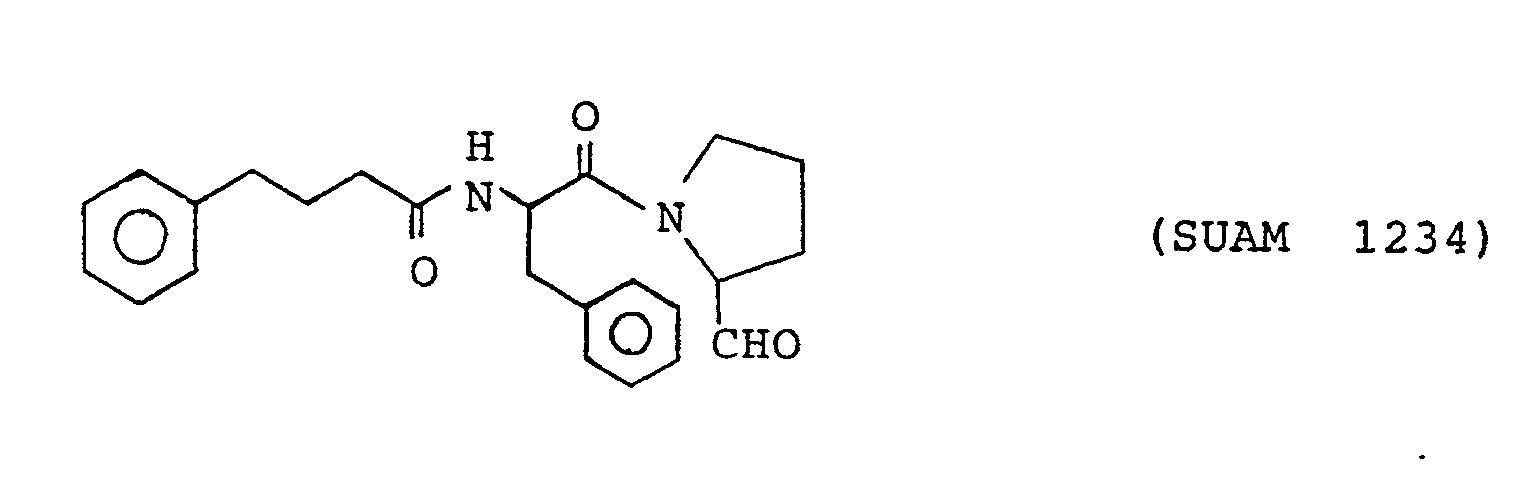


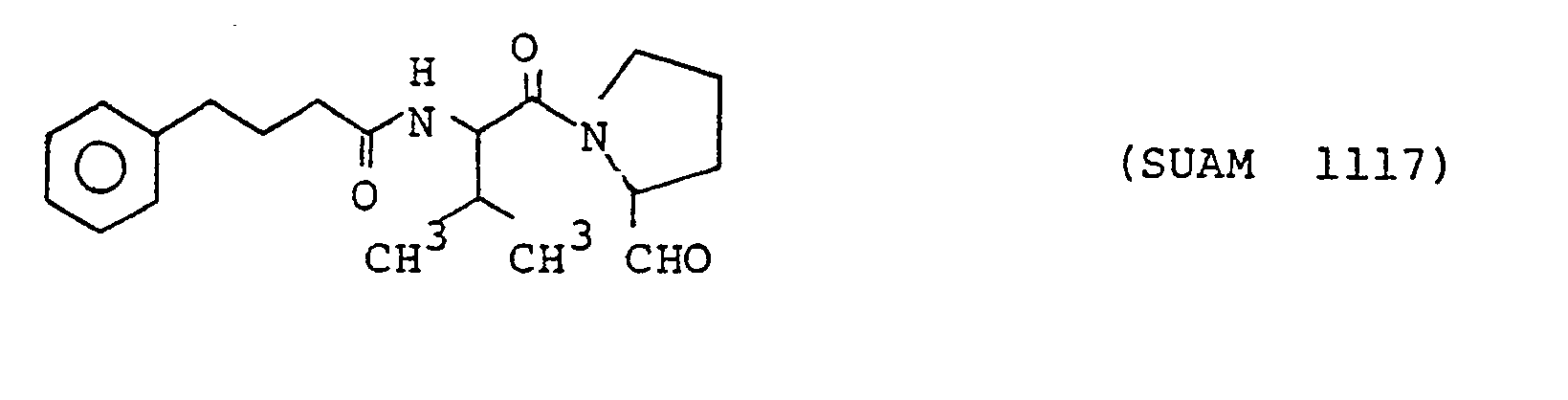
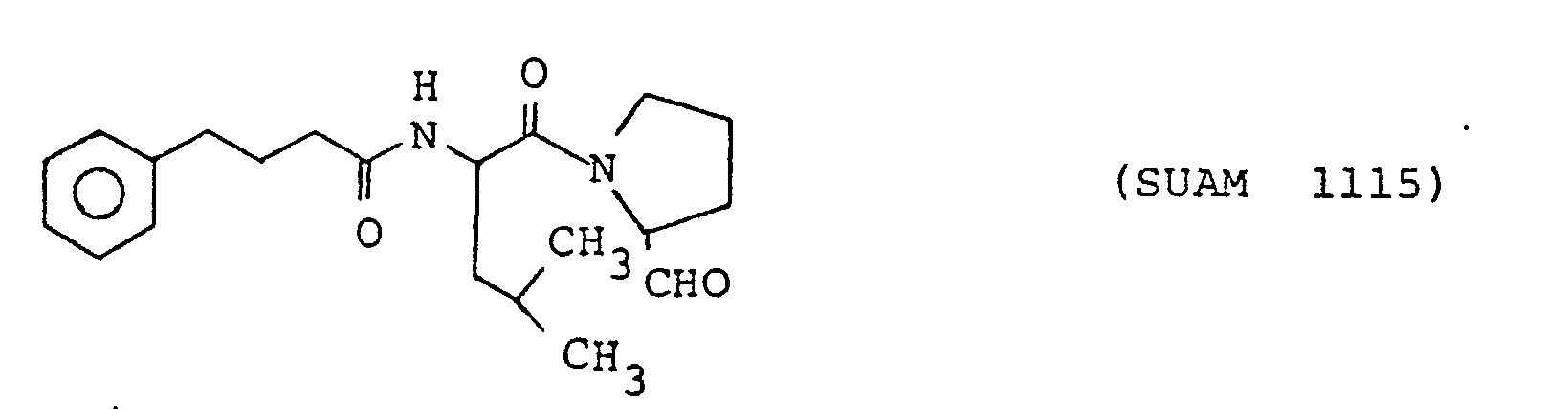
- The compounds according to the present inveniton are prepared by a general peptide synthesis method, but they are more conveniently synthesized by a method according to the present inveniton which will be explained in the following.
- Explanation of the abbreviations
- Z : benzyloxycarbonyl group
- Boc : tert-butyloxycarbonyl group
- Pro : proline residue

- Ala : alanine residue
- Val : valine residue
- Leu : leucine residue
- norLeu : norleucine residue
- Phe : phenylalanine residue
- Met : methionine residue
- OMe : methylester residue
- WSCD : N-ethyl-N',N'-dimethylaminopropyl carbodiimide
- TEA: triethylamine
- The compounds of the formula (1) of the present invention may be synthesized by the following procedure : First of all, compounds having the formula (1 a) are prepared:


- This synthesis utilized the conventional acylating reaction of an amino group, and reagents such as a base differ depending upon which of carboxylic acid, acid halide and acid anhydride is used as the starting compound. For example, if acid halide is used, trialkylamine such as triethylamine is preferable as a base, but the aqueous solution of alkali metal hydroxide, alkali metal carbonate or the like may be used.
- When acid anhydride is used, the above-described aqueous solution of alkali metal hydroxide, e.g., sodium hydroxide and potassium hydroxide, or alkali metal carbonate such as sodium carbonate and potassium carbonate is used as a base.
- When carboxylic acid is used, a condensing agent such as WSCD and dicyclohexyl carbodiimide is used in an organic solvent which is inert in the reaction.
Compounds of formula (1 a) are then converted into the following compounds of formula (1 b):
- An alcohol form (1 b) is also obtained by adding a reducing agent such as sodium borohydride, lithium borohydride, zinc borohydride, and potassium borohydride to the alcohol solution of the compound of the formula (1 a).
- (3) The prolinal derivative of the above formula (1 ) is obtained by treating the compound of the formula (1 b) with an oxidizing agent in an organic solvent.
- The solvent used in this reaction may be anything that does not participate in the reaction, but dimethyl sulfoxide is the most preferable. As an oxydizing agent, a complex of sulfur trioxide-pyridine complex, dimethyl sulfoxide, dimethyl sulfoxide-dicyclohexyl carboimide-phosphoric acid, silver oxide and manganese dioxide may be mentioned.
- When the effects of these compounds for preventing decomposition of Z-giycy!-pro!yi-j6-naphtyiamide by prolyl endopeptidase were examined, they exhibited very high anti-prolyl endopeptidase activities as will be shown in the later-described example 4, and no inhibitory activity to proteinases such as papain, bromelain, trypsin, chymotrypsin, thermolysin and pepsin.
- These compounds obtained in this way are novel and have anti-amnesic effects.
- The present invention will be explained in more detail with reference to the examples.
- Z-Phe-OH (1 equivalent), H-Pro-OMe hydrochloride (1 equivalent) and TEA (1 equivalent) were dissolved in dry methylene chloride, and WSCD (1 equivalent) was added dropwide under cooling with ice. After being stirred for 20 hours at room temperature, the reaction mixture was washed successively with 1 N HCI, water, saturated aqueous sodium bicarbonate, water and brine, and was dried over anhydrous magnesium sulfate. The solvent was distilled off under vacuum, and the resulting residue was purified by column chromatography on silica gel. Z-Phe-Pro-OMe (1 equivalent) obtained was dissolved in ethanol (1 equivalent) and boron trifluoride etherate complex (1 equivalent) and palladium on carbon (trace) were added to remove the Z group by catalytic reduction in an atmosphere of hydrogen. The solvent was distilled off under vacuum to obtain the end compound.
- In place of Z-Phe-OH, a) Z-Met-OH, b) Z-norLeu-OH, c) Z-Ala-OH, d) Z-Val-OH, and e) Z-Leu-OH were used as the starting compounds and treated by the procedures described above to obtain a') H-Met-Pro-OMe, b') H-norLeu-Pro-OMe, c') H-Ala-Pro-OMe, d') H-Val-Pro-OMe and e') H-Leu-Pro-OMe, respectively. All of these compounds were in the form of an oil.
- Z-Pro-OH (1 equivalent), H-Pro-OMe hydrochloride (1 equivalent) and TEA (1 equivalent) were dissolved in dry methylene chloride, and WSCD (1 equivalent) was added dropwise under cooling with ice. After being stirred for 20 hours at room temperature, the reaction mixture was washed successively with 1 N HCI, water, aqueous sodium bicarbonate, water and brine, and was dried over anhydrous magnesium sulfate. The solvent was distilled off under vacuum, and the resulting residue was purified by column chromatography on silica gel. The Z-Pro-Pro-OMe obtained was dissolved (1 equivalent) in ethanol, and boron trifluoride etherate complex (1 equivalent) and palladium on carbon (trace) were added to remove the Z group by catalytic reduction in an atmosphere of hydrogen. The solvent was distilled off under vacuum to obtain the end compound as an oil.
- H-Phe-Pro-OMe (1 equivalent) and TEA (1 equivalent) were dissolved in dry tetrahydrofuran, and 4-phenylbutanoyl chloride (1 equivalent) was added dropwise under cooling with ice. The mixture was stirred for 6 hours at room temperature, and the hydrochloride of TEA separated out was removed by filtration. The solvent was distilled off under vacuum and the resulting residue was dissolved in a small amount of ether. The ethereal solution was washed successively with 1 N HCI, brine, saturated aqueous sodium bicarbonate and brine, and thereafter was dried over anhydrous magnesium sulfate. The solvent was removed under vacuum and the residue was purified by column chromatography on silica gel to obtain the required compound (an oily compound).
- In place of H-Phe-Pro-OMe, a) H-Met-Pro-OMe, b) H-norLeu-Pro-OMe, c) H-Ala-Pro-OMe, d) H-Val-Pro-OMe, and e) H-Leu-Pro-OMe were used as the starting compounds and treated by the procedures described above to obtain a') N-(4-phenyl)butanoyl-Met-pro-OMe (SUAM 1343), b') N-(4-phenyl)butanoyl- norLeu-Pro-OMe (SUAM 1235), c') N-(4-phenyl)butanoyl-Ala-Pro-OMe (SUAM 1098), d') N-(4-phenyl)-butanoyl-Val-Pro-OMe (SUAM 1112) and e') N-(4-pehnyl)butanoyl-Leu-Pro-OMe (SUAM 1113), respectively. All of these compounds were oily.
- H-Pro-Pro-OMe (1 equivalent) and TEA (1 equivalent) were dissolved in dry tetrahydrofuran, and 4- pehnylbutanoyl chloride (1 equivalent) was added dropwise under cooling with ice. The mixture were stirred for 6 hours at room temperature, and the hydrochloride of TEA separeted out was removed by filtration. The solvent was distilled off under vacuum. The resulting residue was dissolved in a small amount of ether, was washed successively with 1 N HCI, brine, saturated aqueous sodium bicarbonate and brine, and thereafter was dried over anhydrous magnesium sulfate. After being condensed under a reduced pressure, the remaining product was purified by column chromatography on silica gel to obtain the required compound (an oily compound).
- In place of 4-phenylbutanoyl chloride, a) 2-phenylacetyl chloride, b) 3-phenylpropionyl chloride and c) 5-phenylpentanoyl chloride were used as the starting compounds and treated by the procedures described above to obtain a') N-(2-phenyl)acetyl-Pro-Pro-OMe (SUAM 1334), b') N-(3-phenyl)propionyl-Pro-Pro-OMe (SUAM 1337) and c') N-(5-phenyl)pentanoyl-Pro-Pro-OMe (SUAM 1340), respectively. All of these compounds were oily.
- N-(4-phenyl)butanoyl-Phe-Pro-OMe (SUAM 1232) (1.3 g) obtained in Example 1 and sodium borohydride (460 mg) were dissolved in tertiary butyl alcohol (20 ml) and heated to 80°C with stirring. Absolute methanol (3.4 ml) was added dropwise under reflux, and thereafter the mixture was refluxed for 2 hours with stirring. After reaction, the heated mixture was cooled to room temperature and several milliliters of water was added under cooling with ice to inactivate unreacted sodium borohydride. After methanol and tertiary butyl alcohol were distilled off under vacuum, the residue was extracted with ethyl acetate. The extract was washed with brine and dried over anhydrous magnesium sulfate. The solvent was distilled off under vacuum and the resulting residue was purified by column chromatography on silica gel to obtain the end compound as an oil (1.2 g).
- In place of N-(4-phenyl)butanoyl-Phe-Pro-OMe, a) N-(4-phenyl)butanoyl-Met-Pro-OMe, b) N-(4-phenyl)-butanoyl-norLeu-Pro-OMe, c) N-(4-phenyl)butanoyl-Ala-Pro-OMe, d) N-(4-phenyl)butanoyl-Val-Pro-OMe and e) N-(4-phenyl)butanoyl-Leu-Pro-OMe were used as the starting compounds and treated by the procedures described above to obtain a') N-(4-phenyl)butanoyl-Met-Pro-CH2OH (SUAM 1344), b') N-(4-phenyl)butanoyl- norLeu-Pro-CH20H (SUAM 1236), c') N-(4-phenyl)butanoyl-Ala-Pro-CH2OH (SUAM 1109), d') N-(4-phenyl)-butanoyl-Val-Pro-CH2OH (SUAM 1116) and e') N-(4-pehnyl)butanoyl-Leu-Pro-CH20H (SUAM 1114), respectively. All of these compounds were oily.
- A mixture of the N-(4-phenyl)butanoyl-Pro-Pro-OMe (SUAM 1229) (1.3 g) obtained in Example 1 and sodium borohydride (510 mg) was dissolved in tertiary butyl alcohol (20 ml) and heated to 80°C with stirring. Absolute methanol (3.8 ml) was added dropwise under reflux, and thereafter the mixtue was refluxed for 2 hours with stirring. After reaction, the heated mixture was cooled to room temperature and several milliliters of water was added under cooling with ice to inactivate unreacted sodium borohydride. After methanol and tertiary butyl alcohol were distilled off under vacuum, the residue was subjected to extraction with ethyl acetate. The extract was washed with brine and dried over anhydrous magnesium sulfate. The solvent was distilled off under vacuum and the resulting crude product was purified by column chromatography on silica gel to obtain the end compound as an oil (1.2 g).
- In place of N-(4-phenyl)butanoyl-Pro-Pro-OMe, a) N-(2-pehnyl)acetyl-Pro-Pro-OMe, b) N-(3-phenyl)-propionyl-Pro-Pro-OMe and c) N-(5-pehnyl)pentanoyl-Pro-Pro-OMe were used as the starting compounds and treated by the procedures described above to obtain a')-N-(2-phenyl(acetyl-Pro-Pro-CH2OH (SUAM 1335 , b') N-(3-phenyl)propionyl-Pro-Prop-CH20H (SUAM 1338) and c') N-(5-phenyl)pentanoyl-Pro-Pro-CH2OH (SUAM 1341), respectively. All of these compounds were oily.
- A mixture of N-(4-phenyl)butanoyl-Phe-Pro-CHzOH (SUAM 1233) (1.2 g) obtained in Example 2 and TEA (1.6 ml) was dissolved in anhydrous dimethyl sulfoxide (8 ml), and to the stirred solution, a solution of sulfur trioxide-pyridine complex (1.9 g) in dimethyl sulfoxide (8 ml) was added. After stirring the mixture at room temperature for about 20 minutes, the reaction solution was poured into iced water (100 ml) and subjected to extraction with ethyl acetate. The extract was washed successively with 10% aqueous citric acid, brine, saturated aqueous sodium bicarbonate and brine, and dried over anhydrous magnesium sulfate. After distilling off the solvent under vacuum, the resulting crude product was purifed by column chromatography on silica gel to obtain the end compound as an oil (800 mg).
- In place of N-(4-phenyl)butanoyl-Phe-Pro-CHzOH, a) N-(4-phenyl)butanoyl-Met-Pro-CH20H, b) N-(4-phenyl)butanoyl-norLeu-Pro-CHzOH, c) N-(4-phenyl)butanoyl-Ala-Pro-CH2OH, d) N-(4-phenyl)butanoyl-Val-Pro-CH20H and e) N-(4-phenyl)butanoyl-Leu -Pro-CH2OH were used as the starting compounds and treated by the procedures described above to obtain a') N-(4-phenyl)butanoyl-Met-Pro-CHO (SUAM 1345), b') N-(4-phenyl)butanoyl-norLeu-Pro-CHO (SUAM 1333), c') N-(4-phenyl)butanoyl-Ala-Pro-CHO (SUAM 1110), d') N-(4-phenyl)butanoyl-Val-Pro-CHO (SUAM 1117) and e') N-(4-phenyl)butanoyl-Leu-Pro-CHO (SUAM 1115), respectively. All of these compounds were oily.
- A mixture of N-(4-phenyl)butanoyl-Pro-Pro-CH2OH (SUAM 1230) (1.3 g) obtained in Example 2 and TEA (2.0 ml) was dissolved in anhydrous dimethyl sulfoxide (8 ml), and to the stirred solution, a solution of sulfur trioxide-pyridine complex (2.3 g) in dimethyl sulfoxide (8 ml) was added. After stirring the mixture at a room temperature for about 20 minutes, the reaction solution was poured into iced water (100 ml) and subjected to extraction with ethyl acetate. The extract was washed successively with 10% aqueous citric acid, brine, saturated aqueous sodium bicarbonate and brine, and dried over anhydrous magnesium sulfate. After distilling off the solvent under vacuum, the resulting crude product was purified by column chromatography on silica gel to obtain the end compound as an oil (700 mg).
- In place of N-(4-phenyl)butanoyl-Pro-Pro-CH2OH, phenyl)pentanoyl-Pro-Pro-CH20H (SUAM 1341) was used as the starting compound and treated by the procedures described above to obtain N-(5-phenyl)-pentanoyl-Pro-Pro-CHO (SUAM 1342). The analytical data for the compounds obtained in Examples 1 to 3 are listed in Table 1.
- All the compounds shown in Table 1 are oily and soluble in carbon tetrachloride, ether, chloroform, methylene chloride, ethyl acetate and methanol.
- When the effects of these compounds for inhibiting decomposition of Z-glycyl-prolyl-,8-naphthylamide by prolyl endopeptidase were examined, they exhibited very high anti-prolyl endopeptidase activities as will be shown in the later-described Example 4, and no inhibitory activity to proteinase such as papain, bromelain, trypsin, chymotrypsin, thermolysin and pepsin.
- These compounds obtained in this way are novel and have anti-amnesic effects as shown in Example 5.
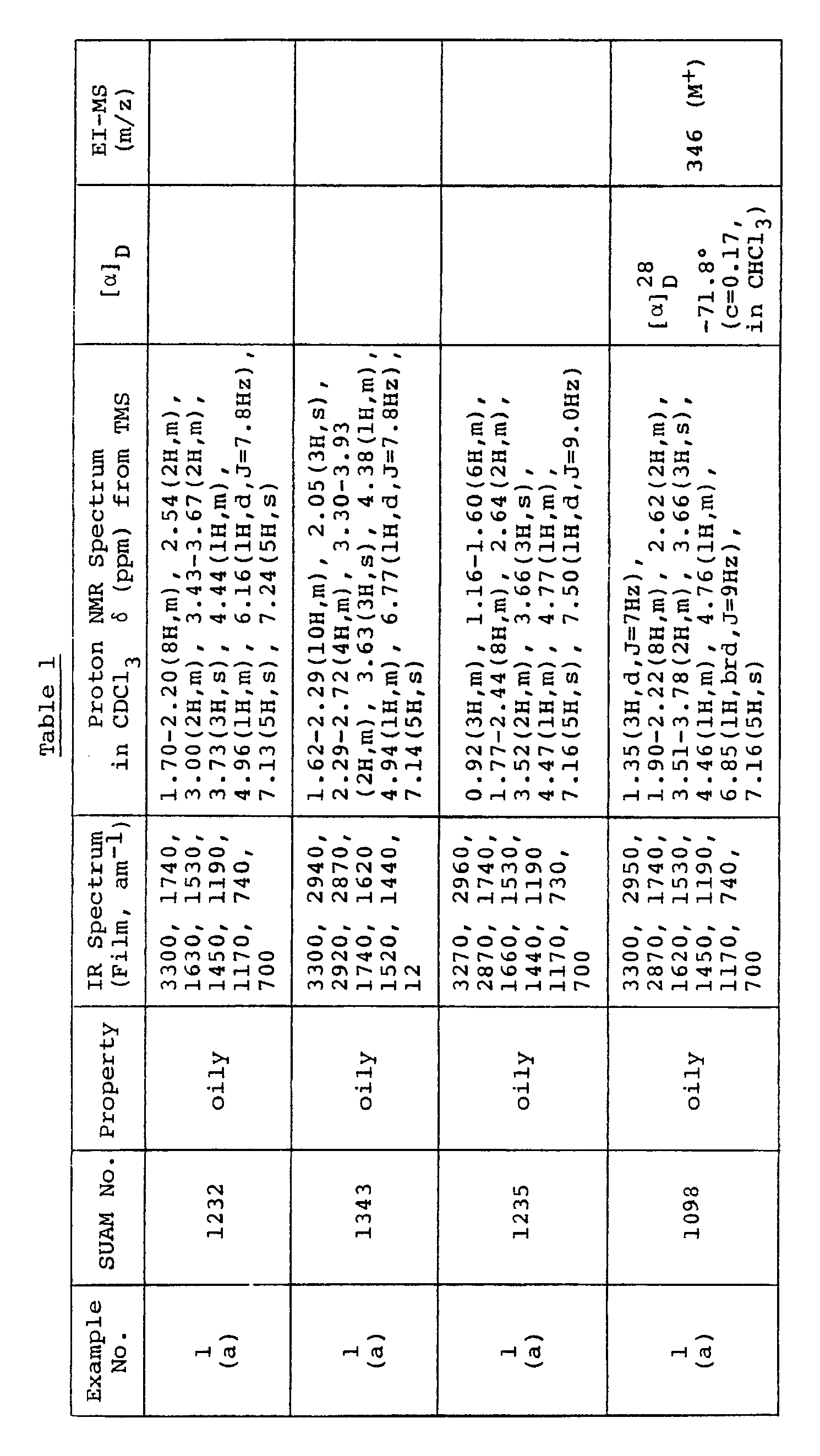


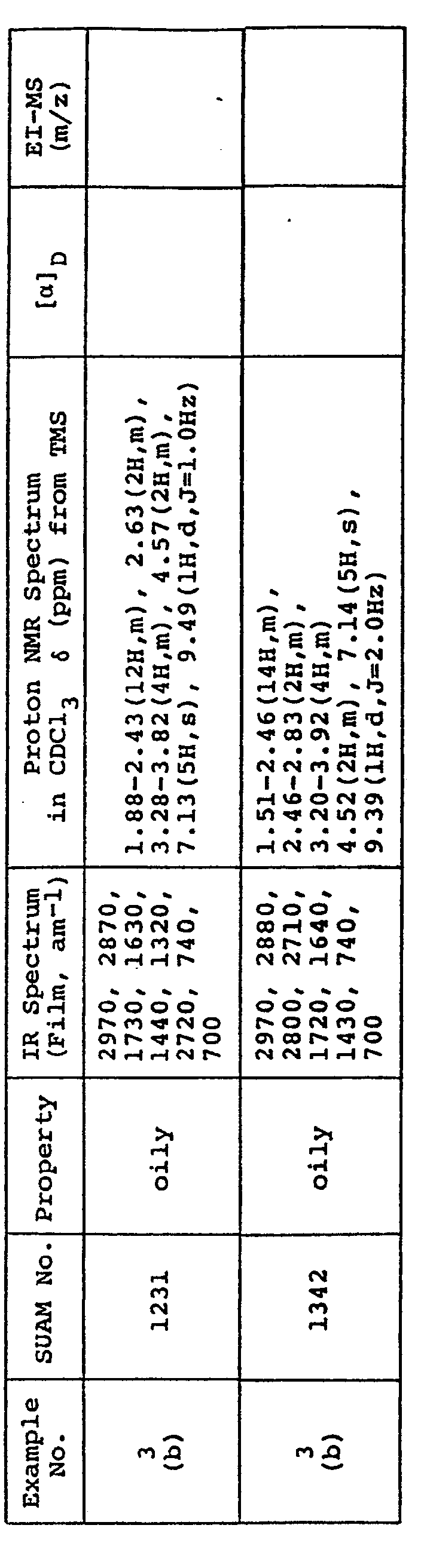
- The method of Yoshimoto and Tsuru (T. Yoshimoto and D. Tsuru, Agr. Biol. Chem. 42,2417,1978) was used to measure the anti-prolyl endopeptidase activities of several compounds according to the present invention. A mixture of 0.0025M Z-glycyl-proline-,8-naphthylamide (0.25 ml), 0.1M phosphate buffer (pH 7.0; 0.99 ml) and a solution of a particular anti-prolyl endopeptidase compound (0.01 ml) was incubated in a test tube at 37°C for 3 minutes. Thereafter 0.1 m of a solution of prolyl endopeptidase (0.2 U/ml) was added and the mixture was heated at 35°C for 10 minutes. After the reaction, 2.0 ml of Triton x-100 in 1 M acetate buffer (pH 4.0) was added to the reaction mixture until the final concentration of the surfactant was 10%. The mixture was left at a room temperature for 15 minutes and the absorbance (a) at 410 nm was measured.
- A sample for a blind test was prepared by using the buffer solely in place of the anti-prolyl endopeptidase comound and its absorbance (b) was also measured. The percent inhibition of prolyl endopeptidase was calculated by the formula: [(b-a)/b]x100, and the amount of a specific compound needed to achieve 50% inhibition (ICso) was determined. The results are shown in Table 2.

- Several of the anti-prolyl endopeptidase compounds according to the present invention were checked for their ability to prevent the inhibition of long-term memory fixation by scopolamine. Solutions of physiological saline which contained 20 pg/kg of selected compounds of the present inveniton were administered intraperitoneally once a day to Wister male rats (100 to 120 g). One hour after the administration, electric shocks were applied to the rats so that they would acquire passive avoidance learning. Immediately thereafter, scopolamine was administered intraperitoneally to each rat in an amount of 3 mg per kg of body weight.
- The results of the test were assessed both 24 hours and 48 hours after the administration of scopolamine. The number of amnesic rats and of sound rats was counted for each of the control group (rats to which the test compounds were not administered but to which only scopolamine and physiological saline were administered intraperitoneally) and the treated group (rats to which both the test comound and scopolamine were administered). The results are shown in Table 3. With respect to SUAMs 1110, 1115 and 1117, administration of 1 mg/kg did not manifest the desired effect but when 0.1 mg/kg and 0.025 mg/kg of each was administered, very strong effects were produced. SUAMs 1231 and 1333 also exhibited a strong effect at 0.020 mg/kg. Thus these compounds exhibited very strong anti-amnesic effects in a low dose without producing any apparent change in the rats when the dose was raised up to more than 100 mg/kg.


- Male mice of ddY-strain weighing 25 to 34 g were allotted to groups consisting of 7 to 10 animals each. Each compound to be tested was suspended in physiological saline with 2 to 3 drops of Tween 80R added thereto, and administered intraperitoneally at the rate of 0.1 ml per 10 g of body weight.
- Each mouse was put into a 1 ℓ desiccator 30 minutes after the administration, and the pressure in the desiccator was reduced to 180 mmHg by means of a vacuum pump. The period from the start of pressure reduction to the respiratory arrest of the mouse was assumed to be the survival time (minute) of the mouse.
- If the mouse survived more than 15 minutes, its survival time was recorded as being 15 minutes. A student's t-test was adopted for the significance analysis.
- The results are shown in Table 4.

- The compounds of the present invention were checked for their acute toxicity in CDF-1 strain male mice (body weight: 27.2 to 30.1 g) purchased from Awazu Laboratory Animals Co., Ltd.
- Test samples were prepared by dissolving the respective compounds in DMSO, and a portion (0.1 ml) of the so conditioned test sample was administered intraperitoneally to each of the mice used. Each of the treated groups consisted of five mice. After 24 hours and 48 hours had passed from the time of administration, respectively, the mice were observed. The average amount of each test compound administered in this Example is shown in Table 5.
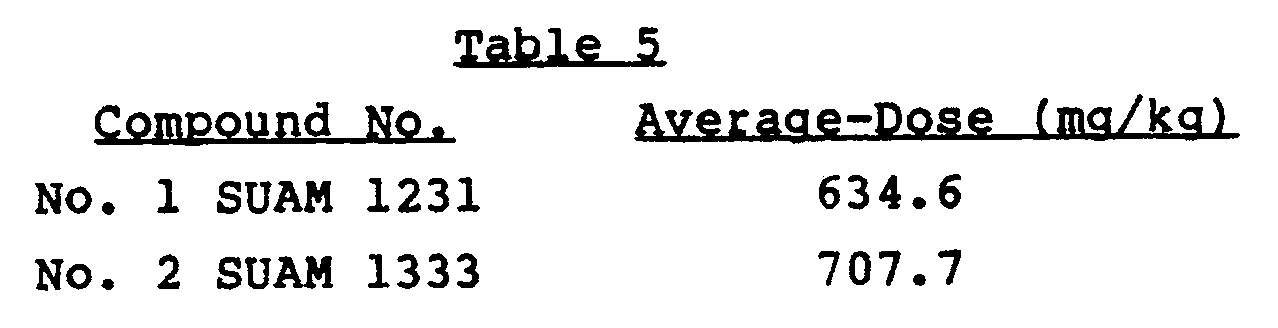
- Each of the groups tested remained sound and showed no sign of intoxication at the times of observation 24 hours and 48 hours after the administration of the doses shown in Table 5.
- The present invention includes pharmaceutical compositions which contain compounds according to the present invention which are effective for the improvement of symptoms caused by organic disorders of the brain together with adjuvants which are acceptable from the pharmaceutical point of view.
- These active ingredients and pharmaceutical compositions are administered orally in suitable solid forms such as capsules, tablets and powders, or liquid forms such as elixir, syrup and suspensions. They may also be administered parenterally, e.g., in the form of injection or suppository.
- As an example of suitable excipients for solid drugs which are contained in drug components, a carrier in solid powder form may be cited such as lactose, saccharose, mannitol, sorbitol, cellulose and glycine.
- As an example of suitable lubricants, silicon dioxide, talc, magnesium stearate and polyethylene glycol may be cited, while starch, gelatin, tragacanth, methyl cellulose, sodium carboxymethyl cellulose and polyvinyl pyrrolidone may be cited as binders. Starch or agar may be used as a disintegrator.
- The compounds according to the present invention are orally administered in a daily dose of 10 to 4,000 mg, preferably, 100 to 1,000 mg per adult. Alternatively, they may be administered parenterally in a dose of 1 to 2,000 mg, preferably, 50 to 500 mg. It is understood that the dosage will differ depending upon the symptoms of the disease, the age and weight of a patient, the stage of the symptoms and the form of administration.
-

- These components were uniformly mixed and formed into tablets or capsules.
-

- These components were uniformly mixed and formed into powders or granules.
-

- These components were mixed under warming and were sterilized to obtain injections.
- As described above, the compounds according to the present inveniton exhibit appreciable anti-prolyl endopeptidase activity and anti-amnesic effects. The acute toxicity test results show that the compounds cause no toxicity even when administered in such high doses as about 500 mg/kg/mouse. Because of this relatively wide margin of safety, as compared with their remarkable anti-prolyl endopeptidase activity, the compounds of the present invention hold promise as pharmaceuticals for preventing and curing amnesia.
Claims (10)


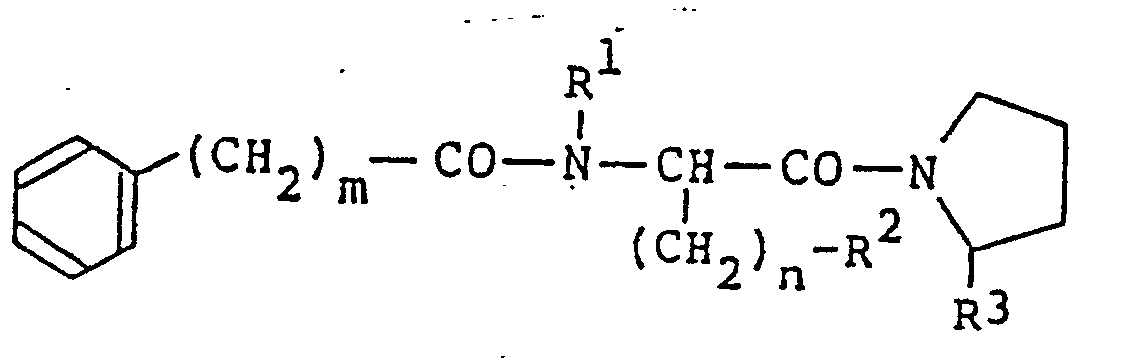


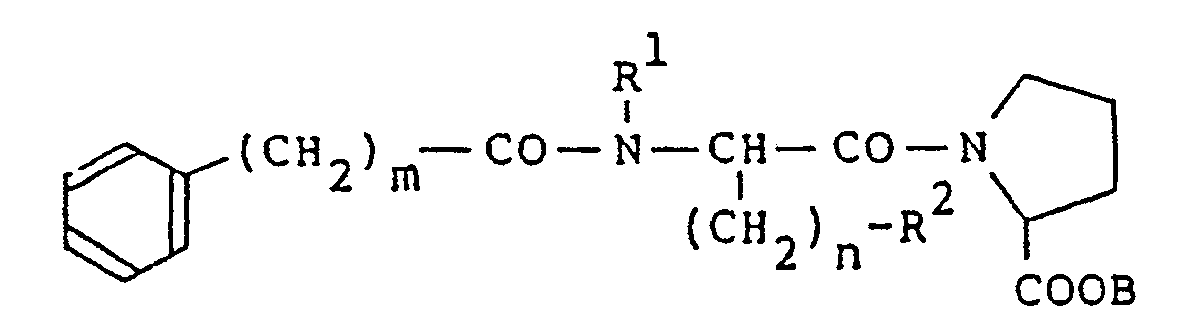

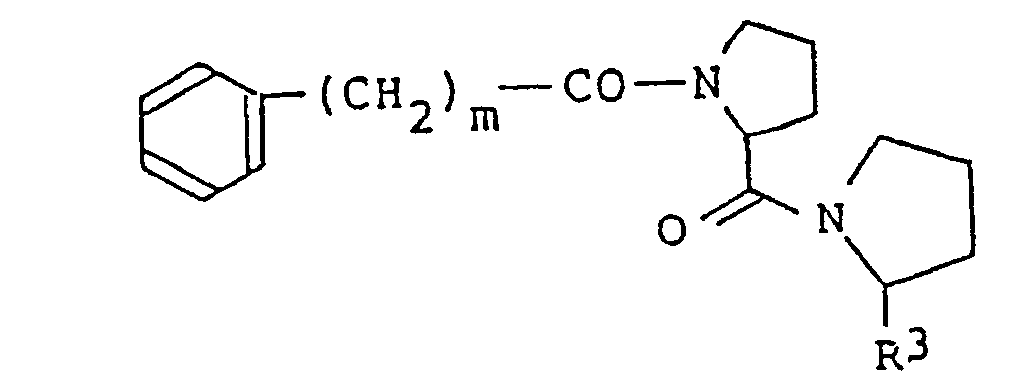


Priority Applications (1)
| Application Number | Priority Date | Filing Date | Title |
|---|---|---|---|
| AT86105231T ATE65782T1 (en) | 1985-04-16 | 1986-04-16 | DIPEPTIDE DERIVATIVES, METHOD OF MANUFACTURE, PHARMACEUTICAL COMPOSITIONS AND THEIR APPLICATIONS. |
Applications Claiming Priority (4)
| Application Number | Priority Date | Filing Date | Title |
|---|---|---|---|
| JP80871/85 | 1985-04-16 | ||
| JP60080871A JPH0623191B2 (en) | 1985-04-16 | 1985-04-16 | Peptidase-inhibiting active compound, its production method and use |
| JP60290237A JPH0651677B2 (en) | 1985-12-23 | 1985-12-23 | Dipeptide derivative, production method and use thereof |
| JP290237/85 | 1985-12-23 |
Publications (3)
| Publication Number | Publication Date |
|---|---|
| EP0201741A2 EP0201741A2 (en) | 1986-11-20 |
| EP0201741A3 EP0201741A3 (en) | 1989-02-08 |
| EP0201741B1 true EP0201741B1 (en) | 1991-07-31 |
Family
ID=26421833
Family Applications (1)
| Application Number | Title | Priority Date | Filing Date |
|---|---|---|---|
| EP86105231A Expired EP0201741B1 (en) | 1985-04-16 | 1986-04-16 | Dipeptide derivatives, processes for preparing them, pharmaceutical composition and use |
Country Status (4)
| Country | Link |
|---|---|
| US (1) | US4873342A (en) |
| EP (1) | EP0201741B1 (en) |
| CA (1) | CA1309805C (en) |
| DE (1) | DE3680578D1 (en) |
Cited By (1)
| Publication number | Priority date | Publication date | Assignee | Title |
|---|---|---|---|---|
| US8183280B2 (en) | 2005-09-02 | 2012-05-22 | Vantia Limited | FAP inhibitors |
Families Citing this family (33)
| Publication number | Priority date | Publication date | Assignee | Title |
|---|---|---|---|---|
| US4880827A (en) * | 1986-03-18 | 1989-11-14 | Sumitomo Pharmaceuticals Company, Ltd. | Pyrrolidine derivatives having inhibitory action for proline specific endopepidase |
| EP0268190B1 (en) * | 1986-11-20 | 1993-06-16 | Ono Pharmaceutical Co., Ltd. | Prolinal derivatives |
| US5254550A (en) * | 1986-11-20 | 1993-10-19 | Ono Pharmaceutical Co., Ltd. | Prolinal derivatives and pharmaceutical compositions thereof |
| EP0277588B1 (en) * | 1987-02-04 | 1993-03-24 | Ono Pharmaceutical Co., Ltd. | Prolinal derivatives |
| DE3855875T2 (en) * | 1987-02-23 | 1997-08-28 | Ono Pharmaceutical Co | Thiazolidine derivatives |
| DE3712365A1 (en) * | 1987-04-11 | 1988-10-27 | Hoechst Ag | NEW 2-ACYLPYRROLIDINE DERIVATIVES, METHOD FOR THE PRODUCTION THEREOF, CONTAINERS AND THE USE THEREOF |
| DE3712364A1 (en) * | 1987-04-11 | 1988-10-27 | Hoechst Ag | NEW PYRROLIDIN-2 (1,3-DICARBONYL) DERIVATIVES, METHOD FOR THE PRODUCTION THEREOF, THE CONTAINERS AND THE USE THEREOF |
| JP2691442B2 (en) * | 1989-02-20 | 1997-12-17 | 株式会社ヤクルト本社 | Novel proline derivative |
| WO1990012005A1 (en) * | 1989-04-13 | 1990-10-18 | Japan Tobacco Inc. | New amino acid derivatives having prolylendopeptidase inhibitor activity |
| EP0536399B1 (en) * | 1990-06-07 | 1996-01-24 | Zeria Pharmaceutical Co., Ltd. | Novel arylalkanoylamine derivative and drug containing the same |
| JP3810097B2 (en) * | 1993-01-15 | 2006-08-16 | 明治製菓株式会社 | Pyrrolidin-2-ylcarbonyl heterocyclic compound derivative |
| AU693791B2 (en) * | 1994-05-12 | 1998-07-09 | Orsolya Csuka | Compounds for reversing drug resistance |
| ES2314305T3 (en) * | 1996-09-10 | 2009-03-16 | BOEHRINGER INGELHEIM PHARMA GMBH & CO.KG | MODIFIED AMINO ACIDS, MEDICINES CONTAINING THESE COMPOUNDS AND PROCEDURE FOR OBTAINING THEM. |
| US6313097B1 (en) | 1999-03-02 | 2001-11-06 | Boehringer Ingelheim Pharma Kg | Antagonists of calcitonin gene-related peptide |
| US6121311A (en) * | 1999-04-28 | 2000-09-19 | Japan Tobacco Inc. | Method for treating cocainism |
| FI20030014A0 (en) * | 2003-01-03 | 2003-01-03 | Orion Corp | Compositions with the inhibitory action of prolyl oligopeptidase |
| ATE462432T1 (en) | 2003-05-05 | 2010-04-15 | Probiodrug Ag | GLUTAMINYL CYCLASE INHIBITORS |
| US7667044B2 (en) | 2003-11-03 | 2010-02-23 | Probiodrug Ag | Compounds for the treatment of neurological disorders |
| WO2006058720A2 (en) * | 2003-11-03 | 2006-06-08 | Probiodrug Ag | Novel compounds for the treatment of neurological disorders |
| ZA200603165B (en) | 2003-11-03 | 2007-07-25 | Probiodrug Ag | Combinations useful for the treatment of neuronal disorders |
| CN1918131B (en) | 2004-02-05 | 2011-05-04 | 前体生物药物股份公司 | Novel inhibitors of glutaminyl cyclase |
| DE602005025464D1 (en) * | 2004-03-26 | 2011-02-03 | Dsm Ip Assets Bv | AMINO ACID AND PEPTIDE CONJUGATES OF ARYL ALKYLIC ACIDS FOR USE IN COSMETICS |
| US8278345B2 (en) | 2006-11-09 | 2012-10-02 | Probiodrug Ag | Inhibitors of glutaminyl cyclase |
| SI2091948T1 (en) | 2006-11-30 | 2012-07-31 | Probiodrug Ag | Novel inhibitors of glutaminyl cyclase |
| US8015671B2 (en) * | 2007-02-28 | 2011-09-13 | Illinois Tool Works Inc. | Strap with enhanced stiffness |
| EA200901140A1 (en) | 2007-03-01 | 2010-04-30 | Пробиодруг Аг | NEW USE OF GLUTAMINYL CYCLLASE INHIBITORS |
| EP2142514B1 (en) | 2007-04-18 | 2014-12-24 | Probiodrug AG | Thiourea derivatives as glutaminyl cyclase inhibitors |
| CN102695546B (en) | 2009-09-11 | 2014-09-10 | 前体生物药物股份公司 | Heterocylcic derivatives as inhibitors of glutaminyl cyclase |
| WO2011107530A2 (en) | 2010-03-03 | 2011-09-09 | Probiodrug Ag | Novel inhibitors |
| SG183229A1 (en) | 2010-03-10 | 2012-09-27 | Probiodrug Ag | Heterocyclic inhibitors of glutaminyl cyclase (qc, ec 2.3.2.5) |
| EP2560953B1 (en) | 2010-04-21 | 2016-01-06 | Probiodrug AG | Inhibitors of glutaminyl cyclase |
| WO2012123563A1 (en) | 2011-03-16 | 2012-09-20 | Probiodrug Ag | Benz imidazole derivatives as inhibitors of glutaminyl cyclase |
| DK3461819T3 (en) | 2017-09-29 | 2020-08-10 | Probiodrug Ag | GLUTAMINYL CYCLASE INHIBITORS |
Family Cites Families (4)
| Publication number | Priority date | Publication date | Assignee | Title |
|---|---|---|---|---|
| IL58849A (en) * | 1978-12-11 | 1983-03-31 | Merck & Co Inc | Carboxyalkyl dipeptides and derivatives thereof,their preparation and pharmaceutical compositions containing them |
| JPS60172929A (en) * | 1984-02-17 | 1985-09-06 | Yakult Honsha Co Ltd | Agent for alleviating amnesia |
| JPS60188317A (en) * | 1984-03-09 | 1985-09-25 | Yakult Honsha Co Ltd | Antiamnestic agent |
| JPS6137764A (en) * | 1984-07-31 | 1986-02-22 | Suntory Ltd | Novel physiologically active compound having anti-prolyl-endopeptidase activity |
-
1986
- 1986-04-16 US US06/852,710 patent/US4873342A/en not_active Expired - Fee Related
- 1986-04-16 DE DE8686105231T patent/DE3680578D1/en not_active Expired - Lifetime
- 1986-04-16 EP EP86105231A patent/EP0201741B1/en not_active Expired
- 1986-04-16 CA CA000506770A patent/CA1309805C/en not_active Expired - Lifetime
Cited By (1)
| Publication number | Priority date | Publication date | Assignee | Title |
|---|---|---|---|---|
| US8183280B2 (en) | 2005-09-02 | 2012-05-22 | Vantia Limited | FAP inhibitors |
Also Published As
| Publication number | Publication date |
|---|---|
| DE3680578D1 (en) | 1991-09-05 |
| EP0201741A2 (en) | 1986-11-20 |
| EP0201741A3 (en) | 1989-02-08 |
| CA1309805C (en) | 1992-11-03 |
| US4873342A (en) | 1989-10-10 |
Similar Documents
| Publication | Publication Date | Title |
|---|---|---|
| EP0201741B1 (en) | Dipeptide derivatives, processes for preparing them, pharmaceutical composition and use | |
| EP0201743B1 (en) | Dipeptide derivatives of fatty acids, process for preparing them, pharmaceutical composition and use | |
| CA1320734C (en) | Pyrrolidineamide derivative of acylamino acid and pharmaceutical composition containing the same | |
| EP0201742B1 (en) | N-acylpyrrolidine derivatives, processes for preparing them, pharmaceutical composition and use | |
| EP0268281B1 (en) | Pyrrolidineamide derivative having anti-prolyl endopeptidase activity, compositions comprising the same, processes for the preparation of the same, and the use of the same for the preparation of a medicament of therapeutic value | |
| EP0172458A2 (en) | Novel biologically active compound having anti-prolyl endopeptidase activity | |
| EP0035383B1 (en) | Angiotensin converting enzyme inhibitors | |
| EP0216539A2 (en) | Novel amino acid derivatives | |
| US4707490A (en) | Anti-hypertensive agents | |
| US4386073A (en) | Tripeptides acting on the central nervous system and a process for the preparation thereof | |
| CZ302095A3 (en) | Novel peptide derivatives | |
| EP0277588A1 (en) | Prolinal derivatives | |
| EP0480044A1 (en) | Novel 4h-3,1-benzoxazin-4-one derivative | |
| WO1992016549A1 (en) | Parasubstituted phenylalanine derivates | |
| EP0224272B1 (en) | Pyrrolidinylamide ester derivative having anti-prolyl endopeptidase activity, its synthesis and use and a pharmaceutical composition containing it | |
| JPH04208299A (en) | Prolyl endopeptidase-inhibiting peptide | |
| AU599926B2 (en) | Dipeptide derivative and synthesis and use thereof | |
| JPH0680077B2 (en) | Novel peptide compound having proline endopeptidase inhibitor activity | |
| NO883818L (en) | NEW CONNECTIONS. | |
| JP2674703B2 (en) | Novel thiazolidine derivative and its use | |
| US4698355A (en) | Anti-hypertensive agents | |
| US4698356A (en) | Anti-hypertensive agents | |
| JPH0532602A (en) | Naphthylmethylamine derivative and renin inhibitor containing the same | |
| US4690940A (en) | Anti-hypertensive agents | |
| US4690938A (en) | Anti-hypertensive agents |
Legal Events
| Date | Code | Title | Description |
|---|---|---|---|
| PUAI | Public reference made under article 153(3) epc to a published international application that has entered the european phase |
Free format text: ORIGINAL CODE: 0009012 |
|
| AK | Designated contracting states |
Kind code of ref document: A2 Designated state(s): AT BE CH DE FR GB IT LI LU NL SE |
|
| PUAL | Search report despatched |
Free format text: ORIGINAL CODE: 0009013 |
|
| AK | Designated contracting states |
Kind code of ref document: A3 Designated state(s): AT BE CH DE FR GB IT LI LU NL SE |
|
| 17P | Request for examination filed |
Effective date: 19890614 |
|
| 17Q | First examination report despatched |
Effective date: 19900130 |
|
| ITF | It: translation for a ep patent filed | ||
| GRAA | (expected) grant |
Free format text: ORIGINAL CODE: 0009210 |
|
| AK | Designated contracting states |
Kind code of ref document: B1 Designated state(s): AT BE CH DE FR GB IT LI LU NL SE |
|
| REF | Corresponds to: |
Ref document number: 65782 Country of ref document: AT Date of ref document: 19910815 Kind code of ref document: T |
|
| REF | Corresponds to: |
Ref document number: 3680578 Country of ref document: DE Date of ref document: 19910905 |
|
| ET | Fr: translation filed | ||
| PLBE | No opposition filed within time limit |
Free format text: ORIGINAL CODE: 0009261 |
|
| STAA | Information on the status of an ep patent application or granted ep patent |
Free format text: STATUS: NO OPPOSITION FILED WITHIN TIME LIMIT |
|
| 26N | No opposition filed | ||
| EPTA | Lu: last paid annual fee | ||
| EAL | Se: european patent in force in sweden |
Ref document number: 86105231.4 |
|
| PGFP | Annual fee paid to national office [announced via postgrant information from national office to epo] |
Ref country code: SE Payment date: 19970306 Year of fee payment: 12 |
|
| PGFP | Annual fee paid to national office [announced via postgrant information from national office to epo] |
Ref country code: AT Payment date: 19970317 Year of fee payment: 12 |
|
| PGFP | Annual fee paid to national office [announced via postgrant information from national office to epo] |
Ref country code: CH Payment date: 19970319 Year of fee payment: 12 |
|
| PGFP | Annual fee paid to national office [announced via postgrant information from national office to epo] |
Ref country code: LU Payment date: 19970402 Year of fee payment: 12 |
|
| PGFP | Annual fee paid to national office [announced via postgrant information from national office to epo] |
Ref country code: GB Payment date: 19970408 Year of fee payment: 12 |
|
| PGFP | Annual fee paid to national office [announced via postgrant information from national office to epo] |
Ref country code: FR Payment date: 19970425 Year of fee payment: 12 |
|
| PGFP | Annual fee paid to national office [announced via postgrant information from national office to epo] |
Ref country code: NL Payment date: 19970428 Year of fee payment: 12 Ref country code: BE Payment date: 19970428 Year of fee payment: 12 |
|
| PGFP | Annual fee paid to national office [announced via postgrant information from national office to epo] |
Ref country code: DE Payment date: 19970522 Year of fee payment: 12 |
|
| PG25 | Lapsed in a contracting state [announced via postgrant information from national office to epo] |
Ref country code: LU Free format text: LAPSE BECAUSE OF NON-PAYMENT OF DUE FEES Effective date: 19980416 Ref country code: GB Free format text: LAPSE BECAUSE OF NON-PAYMENT OF DUE FEES Effective date: 19980416 Ref country code: AT Free format text: LAPSE BECAUSE OF NON-PAYMENT OF DUE FEES Effective date: 19980416 |
|
| PG25 | Lapsed in a contracting state [announced via postgrant information from national office to epo] |
Ref country code: SE Free format text: LAPSE BECAUSE OF NON-PAYMENT OF DUE FEES Effective date: 19980417 |
|
| PG25 | Lapsed in a contracting state [announced via postgrant information from national office to epo] |
Ref country code: LI Free format text: LAPSE BECAUSE OF NON-PAYMENT OF DUE FEES Effective date: 19980430 Ref country code: FR Free format text: THE PATENT HAS BEEN ANNULLED BY A DECISION OF A NATIONAL AUTHORITY Effective date: 19980430 Ref country code: CH Free format text: LAPSE BECAUSE OF NON-PAYMENT OF DUE FEES Effective date: 19980430 Ref country code: BE Free format text: LAPSE BECAUSE OF NON-PAYMENT OF DUE FEES Effective date: 19980430 |
|
| BERE | Be: lapsed |
Owner name: SUNTORY LTD Effective date: 19980430 |
|
| PG25 | Lapsed in a contracting state [announced via postgrant information from national office to epo] |
Ref country code: NL Free format text: LAPSE BECAUSE OF NON-PAYMENT OF DUE FEES Effective date: 19981101 |
|
| GBPC | Gb: european patent ceased through non-payment of renewal fee |
Effective date: 19980416 |
|
| REG | Reference to a national code |
Ref country code: CH Ref legal event code: PL |
|
| NLV4 | Nl: lapsed or anulled due to non-payment of the annual fee |
Effective date: 19981101 |
|
| EUG | Se: european patent has lapsed |
Ref document number: 86105231.4 |
|
| PG25 | Lapsed in a contracting state [announced via postgrant information from national office to epo] |
Ref country code: DE Free format text: LAPSE BECAUSE OF NON-PAYMENT OF DUE FEES Effective date: 19990202 |
|
| REG | Reference to a national code |
Ref country code: FR Ref legal event code: ST |
|
| PG25 | Lapsed in a contracting state [announced via postgrant information from national office to epo] |
Ref country code: IT Free format text: LAPSE BECAUSE OF NON-PAYMENT OF DUE FEES;WARNING: LAPSES OF ITALIAN PATENTS WITH EFFECTIVE DATE BEFORE 2007 MAY HAVE OCCURRED AT ANY TIME BEFORE 2007. THE CORRECT EFFECTIVE DATE MAY BE DIFFERENT FROM THE ONE RECORDED. Effective date: 20050416 |