EP0201588B1 - Assay for detecting infection by human t-cell lymphotrophic virus - Google Patents
Assay for detecting infection by human t-cell lymphotrophic virus Download PDFInfo
- Publication number
- EP0201588B1 EP0201588B1 EP85905989A EP85905989A EP0201588B1 EP 0201588 B1 EP0201588 B1 EP 0201588B1 EP 85905989 A EP85905989 A EP 85905989A EP 85905989 A EP85905989 A EP 85905989A EP 0201588 B1 EP0201588 B1 EP 0201588B1
- Authority
- EP
- European Patent Office
- Prior art keywords
- iii
- glycoprotein
- htlv
- human
- daltons
- Prior art date
- Legal status (The legal status is an assumption and is not a legal conclusion. Google has not performed a legal analysis and makes no representation as to the accuracy of the status listed.)
- Expired - Lifetime
Links
- 241000700605 Viruses Species 0.000 title claims abstract description 19
- 208000015181 infectious disease Diseases 0.000 title claims abstract description 5
- 238000003556 assay Methods 0.000 title abstract description 14
- 108090000288 Glycoproteins Proteins 0.000 claims abstract description 59
- 102000003886 Glycoproteins Human genes 0.000 claims abstract description 59
- 210000004027 cell Anatomy 0.000 claims abstract description 34
- 108090000623 proteins and genes Proteins 0.000 claims description 15
- 102000004169 proteins and genes Human genes 0.000 claims description 14
- 238000000034 method Methods 0.000 claims description 13
- 210000001744 T-lymphocyte Anatomy 0.000 claims description 9
- 108700026244 Open Reading Frames Proteins 0.000 claims description 5
- 101710121417 Envelope glycoprotein Proteins 0.000 claims description 4
- 239000003153 chemical reaction reagent Substances 0.000 claims description 3
- 241000598436 Human T-cell lymphotropic virus Species 0.000 claims description 2
- 102100021696 Syncytin-1 Human genes 0.000 claims 2
- 239000012472 biological sample Substances 0.000 claims 1
- 239000000523 sample Substances 0.000 claims 1
- 208000000389 T-cell leukemia Diseases 0.000 abstract 2
- 208000028530 T-cell lymphoblastic leukemia/lymphoma Diseases 0.000 abstract 2
- 238000002405 diagnostic procedure Methods 0.000 abstract 1
- 229920001184 polypeptide Polymers 0.000 description 17
- 108090000765 processed proteins & peptides Proteins 0.000 description 17
- 102000004196 processed proteins & peptides Human genes 0.000 description 17
- 230000000890 antigenic effect Effects 0.000 description 14
- 208000030507 AIDS Diseases 0.000 description 13
- 210000002966 serum Anatomy 0.000 description 12
- 239000000427 antigen Substances 0.000 description 9
- 102000036639 antigens Human genes 0.000 description 9
- 108091007433 antigens Proteins 0.000 description 9
- 235000018102 proteins Nutrition 0.000 description 9
- 210000004369 blood Anatomy 0.000 description 7
- 239000008280 blood Substances 0.000 description 7
- 210000003296 saliva Anatomy 0.000 description 7
- 239000013592 cell lysate Substances 0.000 description 6
- 238000001502 gel electrophoresis Methods 0.000 description 6
- 208000031886 HIV Infections Diseases 0.000 description 5
- DBMJMQXJHONAFJ-UHFFFAOYSA-M Sodium laurylsulphate Chemical compound [Na+].CCCCCCCCCCCCOS([O-])(=O)=O DBMJMQXJHONAFJ-UHFFFAOYSA-M 0.000 description 5
- XUJNEKJLAYXESH-UHFFFAOYSA-N cysteine Natural products SCC(N)C(O)=O XUJNEKJLAYXESH-UHFFFAOYSA-N 0.000 description 5
- 230000000694 effects Effects 0.000 description 5
- 239000011324 bead Substances 0.000 description 4
- 238000001514 detection method Methods 0.000 description 4
- 230000000652 homosexual effect Effects 0.000 description 4
- 239000002773 nucleotide Substances 0.000 description 4
- 125000003729 nucleotide group Chemical group 0.000 description 4
- 241000725303 Human immunodeficiency virus Species 0.000 description 3
- 208000008771 Lymphadenopathy Diseases 0.000 description 3
- 229920002684 Sepharose Polymers 0.000 description 3
- 238000000211 autoradiogram Methods 0.000 description 3
- 238000003018 immunoassay Methods 0.000 description 3
- 208000018555 lymphatic system disease Diseases 0.000 description 3
- 239000000463 material Substances 0.000 description 3
- 238000002360 preparation method Methods 0.000 description 3
- 238000002415 sodium dodecyl sulfate polyacrylamide gel electrophoresis Methods 0.000 description 3
- 241001430294 unidentified retrovirus Species 0.000 description 3
- YBJHBAHKTGYVGT-ZKWXMUAHSA-N (+)-Biotin Chemical compound N1C(=O)N[C@@H]2[C@H](CCCCC(=O)O)SC[C@@H]21 YBJHBAHKTGYVGT-ZKWXMUAHSA-N 0.000 description 2
- 108091003079 Bovine Serum Albumin Proteins 0.000 description 2
- 108090000790 Enzymes Proteins 0.000 description 2
- 102000004190 Enzymes Human genes 0.000 description 2
- LFQSCWFLJHTTHZ-UHFFFAOYSA-N Ethanol Chemical compound CCO LFQSCWFLJHTTHZ-UHFFFAOYSA-N 0.000 description 2
- 102100034349 Integrase Human genes 0.000 description 2
- 241000283973 Oryctolagus cuniculus Species 0.000 description 2
- 241001494479 Pecora Species 0.000 description 2
- 239000012083 RIPA buffer Substances 0.000 description 2
- FAPWRFPIFSIZLT-UHFFFAOYSA-M Sodium chloride Chemical compound [Na+].[Cl-] FAPWRFPIFSIZLT-UHFFFAOYSA-M 0.000 description 2
- YJQCOFNZVFGCAF-UHFFFAOYSA-N Tunicamycin II Natural products O1C(CC(O)C2C(C(O)C(O2)N2C(NC(=O)C=C2)=O)O)C(O)C(O)C(NC(=O)C=CCCCCCCCCC(C)C)C1OC1OC(CO)C(O)C(O)C1NC(C)=O YJQCOFNZVFGCAF-UHFFFAOYSA-N 0.000 description 2
- 150000001413 amino acids Chemical group 0.000 description 2
- 239000000872 buffer Substances 0.000 description 2
- 238000002967 competitive immunoassay Methods 0.000 description 2
- 239000012895 dilution Substances 0.000 description 2
- 238000010790 dilution Methods 0.000 description 2
- 201000010099 disease Diseases 0.000 description 2
- 208000037265 diseases, disorders, signs and symptoms Diseases 0.000 description 2
- 229940088598 enzyme Drugs 0.000 description 2
- 239000012634 fragment Substances 0.000 description 2
- 210000005260 human cell Anatomy 0.000 description 2
- 238000001114 immunoprecipitation Methods 0.000 description 2
- 108010034897 lentil lectin Proteins 0.000 description 2
- 210000000265 leukocyte Anatomy 0.000 description 2
- 210000004698 lymphocyte Anatomy 0.000 description 2
- 239000006166 lysate Substances 0.000 description 2
- 239000000203 mixture Substances 0.000 description 2
- YBYRMVIVWMBXKQ-UHFFFAOYSA-N phenylmethanesulfonyl fluoride Chemical compound FS(=O)(=O)CC1=CC=CC=C1 YBYRMVIVWMBXKQ-UHFFFAOYSA-N 0.000 description 2
- 239000013641 positive control Substances 0.000 description 2
- 125000002924 primary amino group Chemical group [H]N([H])* 0.000 description 2
- 230000009257 reactivity Effects 0.000 description 2
- 238000012216 screening Methods 0.000 description 2
- 229940083575 sodium dodecyl sulfate Drugs 0.000 description 2
- 235000019333 sodium laurylsulphate Nutrition 0.000 description 2
- GPRLSGONYQIRFK-MNYXATJNSA-N triton Chemical compound [3H+] GPRLSGONYQIRFK-MNYXATJNSA-N 0.000 description 2
- ZHSGGJXRNHWHRS-VIDYELAYSA-N tunicamycin Chemical compound O([C@H]1[C@@H]([C@H]([C@@H](O)[C@@H](CC(O)[C@@H]2[C@H]([C@@H](O)[C@@H](O2)N2C(NC(=O)C=C2)=O)O)O1)O)NC(=O)/C=C/CC(C)C)[C@H]1O[C@H](CO)[C@@H](O)[C@H](O)[C@H]1NC(C)=O ZHSGGJXRNHWHRS-VIDYELAYSA-N 0.000 description 2
- MEYZYGMYMLNUHJ-UHFFFAOYSA-N tunicamycin Natural products CC(C)CCCCCCCCCC=CC(=O)NC1C(O)C(O)C(CC(O)C2OC(C(O)C2O)N3C=CC(=O)NC3=O)OC1OC4OC(CO)C(O)C(O)C4NC(=O)C MEYZYGMYMLNUHJ-UHFFFAOYSA-N 0.000 description 2
- 210000002845 virion Anatomy 0.000 description 2
- QKNYBSVHEMOAJP-UHFFFAOYSA-N 2-amino-2-(hydroxymethyl)propane-1,3-diol;hydron;chloride Chemical compound Cl.OCC(N)(CO)CO QKNYBSVHEMOAJP-UHFFFAOYSA-N 0.000 description 1
- HRPVXLWXLXDGHG-UHFFFAOYSA-N Acrylamide Chemical compound NC(=O)C=C HRPVXLWXLXDGHG-UHFFFAOYSA-N 0.000 description 1
- 102000003846 Carbonic anhydrases Human genes 0.000 description 1
- 108090000209 Carbonic anhydrases Proteins 0.000 description 1
- 238000002965 ELISA Methods 0.000 description 1
- XUJNEKJLAYXESH-REOHCLBHSA-N L-Cysteine Chemical compound SC[C@H](N)C(O)=O XUJNEKJLAYXESH-REOHCLBHSA-N 0.000 description 1
- ROHFNLRQFUQHCH-YFKPBYRVSA-N L-leucine Chemical compound CC(C)C[C@H](N)C(O)=O ROHFNLRQFUQHCH-YFKPBYRVSA-N 0.000 description 1
- ROHFNLRQFUQHCH-UHFFFAOYSA-N Leucine Natural products CC(C)CC(N)C(O)=O ROHFNLRQFUQHCH-UHFFFAOYSA-N 0.000 description 1
- 102000016943 Muramidase Human genes 0.000 description 1
- 108010014251 Muramidase Proteins 0.000 description 1
- 102000003505 Myosin Human genes 0.000 description 1
- 108060008487 Myosin Proteins 0.000 description 1
- 108010062010 N-Acetylmuramoyl-L-alanine Amidase Proteins 0.000 description 1
- 108010058846 Ovalbumin Proteins 0.000 description 1
- 241000609499 Palicourea Species 0.000 description 1
- 108010065081 Phosphorylase b Proteins 0.000 description 1
- 108020004511 Recombinant DNA Proteins 0.000 description 1
- 238000012300 Sequence Analysis Methods 0.000 description 1
- 229920004890 Triton X-100 Polymers 0.000 description 1
- 239000013504 Triton X-100 Substances 0.000 description 1
- 230000003302 anti-idiotype Effects 0.000 description 1
- 239000002543 antimycotic Substances 0.000 description 1
- 238000000376 autoradiography Methods 0.000 description 1
- 229960002685 biotin Drugs 0.000 description 1
- 235000020958 biotin Nutrition 0.000 description 1
- 239000011616 biotin Substances 0.000 description 1
- 210000001124 body fluid Anatomy 0.000 description 1
- 239000010839 body fluid Substances 0.000 description 1
- 229940098773 bovine serum albumin Drugs 0.000 description 1
- 239000007853 buffer solution Substances 0.000 description 1
- 239000000969 carrier Substances 0.000 description 1
- 210000000170 cell membrane Anatomy 0.000 description 1
- 238000012512 characterization method Methods 0.000 description 1
- 239000003593 chromogenic compound Substances 0.000 description 1
- 235000018417 cysteine Nutrition 0.000 description 1
- 230000009089 cytolysis Effects 0.000 description 1
- 229960003964 deoxycholic acid Drugs 0.000 description 1
- KXGVEGMKQFWNSR-LLQZFEROSA-N deoxycholic acid Chemical compound C([C@H]1CC2)[C@H](O)CC[C@]1(C)[C@@H]1[C@@H]2[C@@H]2CC[C@H]([C@@H](CCC(O)=O)C)[C@@]2(C)[C@@H](O)C1 KXGVEGMKQFWNSR-LLQZFEROSA-N 0.000 description 1
- 230000001419 dependent effect Effects 0.000 description 1
- 239000003599 detergent Substances 0.000 description 1
- 238000003745 diagnosis Methods 0.000 description 1
- LOKCTEFSRHRXRJ-UHFFFAOYSA-I dipotassium trisodium dihydrogen phosphate hydrogen phosphate dichloride Chemical compound P(=O)(O)(O)[O-].[K+].P(=O)(O)([O-])[O-].[Na+].[Na+].[Cl-].[K+].[Cl-].[Na+] LOKCTEFSRHRXRJ-UHFFFAOYSA-I 0.000 description 1
- 108010078428 env Gene Products Proteins 0.000 description 1
- 230000001747 exhibiting effect Effects 0.000 description 1
- 210000003608 fece Anatomy 0.000 description 1
- 239000012091 fetal bovine serum Substances 0.000 description 1
- GNBHRKFJIUUOQI-UHFFFAOYSA-N fluorescein Chemical compound O1C(=O)C2=CC=CC=C2C21C1=CC=C(O)C=C1OC1=CC(O)=CC=C21 GNBHRKFJIUUOQI-UHFFFAOYSA-N 0.000 description 1
- 208000006454 hepatitis Diseases 0.000 description 1
- 231100000283 hepatitis Toxicity 0.000 description 1
- 239000012133 immunoprecipitate Substances 0.000 description 1
- 238000000338 in vitro Methods 0.000 description 1
- 239000004816 latex Substances 0.000 description 1
- 229920000126 latex Polymers 0.000 description 1
- 230000002934 lysing effect Effects 0.000 description 1
- 229960000274 lysozyme Drugs 0.000 description 1
- 239000004325 lysozyme Substances 0.000 description 1
- 235000010335 lysozyme Nutrition 0.000 description 1
- HOVAGTYPODGVJG-VEIUFWFVSA-N methyl alpha-D-mannoside Chemical compound CO[C@H]1O[C@H](CO)[C@@H](O)[C@H](O)[C@@H]1O HOVAGTYPODGVJG-VEIUFWFVSA-N 0.000 description 1
- 229940126619 mouse monoclonal antibody Drugs 0.000 description 1
- 239000013642 negative control Substances 0.000 description 1
- 229940092253 ovalbumin Drugs 0.000 description 1
- 239000002245 particle Substances 0.000 description 1
- 230000008506 pathogenesis Effects 0.000 description 1
- 210000005259 peripheral blood Anatomy 0.000 description 1
- 239000011886 peripheral blood Substances 0.000 description 1
- 239000002953 phosphate buffered saline Substances 0.000 description 1
- 229920002401 polyacrylamide Polymers 0.000 description 1
- 239000011148 porous material Substances 0.000 description 1
- 239000000047 product Substances 0.000 description 1
- 238000000159 protein binding assay Methods 0.000 description 1
- 238000003127 radioimmunoassay Methods 0.000 description 1
- 238000003156 radioimmunoprecipitation Methods 0.000 description 1
- 239000011347 resin Substances 0.000 description 1
- 229920005989 resin Polymers 0.000 description 1
- 230000003248 secreting effect Effects 0.000 description 1
- 230000035945 sensitivity Effects 0.000 description 1
- 230000000405 serological effect Effects 0.000 description 1
- 239000011780 sodium chloride Substances 0.000 description 1
- 239000000243 solution Substances 0.000 description 1
- 208000011580 syndromic disease Diseases 0.000 description 1
- 210000001519 tissue Anatomy 0.000 description 1
- 238000004448 titration Methods 0.000 description 1
- 238000009966 trimming Methods 0.000 description 1
- 210000002700 urine Anatomy 0.000 description 1
- 229960005486 vaccine Drugs 0.000 description 1
- 125000002987 valine group Chemical group [H]N([H])C([H])(C(*)=O)C([H])(C([H])([H])[H])C([H])([H])[H] 0.000 description 1
- XLYOFNOQVPJJNP-UHFFFAOYSA-N water Substances O XLYOFNOQVPJJNP-UHFFFAOYSA-N 0.000 description 1
- 238000001262 western blot Methods 0.000 description 1
Images


Classifications
-
- C—CHEMISTRY; METALLURGY
- C07—ORGANIC CHEMISTRY
- C07K—PEPTIDES
- C07K14/00—Peptides having more than 20 amino acids; Gastrins; Somatostatins; Melanotropins; Derivatives thereof
- C07K14/005—Peptides having more than 20 amino acids; Gastrins; Somatostatins; Melanotropins; Derivatives thereof from viruses
-
- G—PHYSICS
- G01—MEASURING; TESTING
- G01N—INVESTIGATING OR ANALYSING MATERIALS BY DETERMINING THEIR CHEMICAL OR PHYSICAL PROPERTIES
- G01N33/00—Investigating or analysing materials by specific methods not covered by groups G01N1/00 - G01N31/00
- G01N33/48—Biological material, e.g. blood, urine; Haemocytometers
- G01N33/50—Chemical analysis of biological material, e.g. blood, urine; Testing involving biospecific ligand binding methods; Immunological testing
- G01N33/53—Immunoassay; Biospecific binding assay; Materials therefor
- G01N33/569—Immunoassay; Biospecific binding assay; Materials therefor for microorganisms, e.g. protozoa, bacteria, viruses
- G01N33/56983—Viruses
- G01N33/56988—HIV or HTLV
-
- C—CHEMISTRY; METALLURGY
- C12—BIOCHEMISTRY; BEER; SPIRITS; WINE; VINEGAR; MICROBIOLOGY; ENZYMOLOGY; MUTATION OR GENETIC ENGINEERING
- C12N—MICROORGANISMS OR ENZYMES; COMPOSITIONS THEREOF; PROPAGATING, PRESERVING, OR MAINTAINING MICROORGANISMS; MUTATION OR GENETIC ENGINEERING; CULTURE MEDIA
- C12N2740/00—Reverse transcribing RNA viruses
- C12N2740/00011—Details
- C12N2740/10011—Retroviridae
- C12N2740/16011—Human Immunodeficiency Virus, HIV
- C12N2740/16111—Human Immunodeficiency Virus, HIV concerning HIV env
- C12N2740/16122—New viral proteins or individual genes, new structural or functional aspects of known viral proteins or genes
-
- Y—GENERAL TAGGING OF NEW TECHNOLOGICAL DEVELOPMENTS; GENERAL TAGGING OF CROSS-SECTIONAL TECHNOLOGIES SPANNING OVER SEVERAL SECTIONS OF THE IPC; TECHNICAL SUBJECTS COVERED BY FORMER USPC CROSS-REFERENCE ART COLLECTIONS [XRACs] AND DIGESTS
- Y10—TECHNICAL SUBJECTS COVERED BY FORMER USPC
- Y10S—TECHNICAL SUBJECTS COVERED BY FORMER USPC CROSS-REFERENCE ART COLLECTIONS [XRACs] AND DIGESTS
- Y10S435/00—Chemistry: molecular biology and microbiology
- Y10S435/81—Packaged device or kit
-
- Y—GENERAL TAGGING OF NEW TECHNOLOGICAL DEVELOPMENTS; GENERAL TAGGING OF CROSS-SECTIONAL TECHNOLOGIES SPANNING OVER SEVERAL SECTIONS OF THE IPC; TECHNICAL SUBJECTS COVERED BY FORMER USPC CROSS-REFERENCE ART COLLECTIONS [XRACs] AND DIGESTS
- Y10—TECHNICAL SUBJECTS COVERED BY FORMER USPC
- Y10S—TECHNICAL SUBJECTS COVERED BY FORMER USPC CROSS-REFERENCE ART COLLECTIONS [XRACs] AND DIGESTS
- Y10S435/00—Chemistry: molecular biology and microbiology
- Y10S435/974—Aids related test
-
- Y—GENERAL TAGGING OF NEW TECHNOLOGICAL DEVELOPMENTS; GENERAL TAGGING OF CROSS-SECTIONAL TECHNOLOGIES SPANNING OVER SEVERAL SECTIONS OF THE IPC; TECHNICAL SUBJECTS COVERED BY FORMER USPC CROSS-REFERENCE ART COLLECTIONS [XRACs] AND DIGESTS
- Y10—TECHNICAL SUBJECTS COVERED BY FORMER USPC
- Y10S—TECHNICAL SUBJECTS COVERED BY FORMER USPC CROSS-REFERENCE ART COLLECTIONS [XRACs] AND DIGESTS
- Y10S530/00—Chemistry: natural resins or derivatives; peptides or proteins; lignins or reaction products thereof
- Y10S530/82—Proteins from microorganisms
- Y10S530/826—Viruses
-
- Y—GENERAL TAGGING OF NEW TECHNOLOGICAL DEVELOPMENTS; GENERAL TAGGING OF CROSS-SECTIONAL TECHNOLOGIES SPANNING OVER SEVERAL SECTIONS OF THE IPC; TECHNICAL SUBJECTS COVERED BY FORMER USPC CROSS-REFERENCE ART COLLECTIONS [XRACs] AND DIGESTS
- Y10—TECHNICAL SUBJECTS COVERED BY FORMER USPC
- Y10S—TECHNICAL SUBJECTS COVERED BY FORMER USPC CROSS-REFERENCE ART COLLECTIONS [XRACs] AND DIGESTS
- Y10S530/00—Chemistry: natural resins or derivatives; peptides or proteins; lignins or reaction products thereof
- Y10S530/827—Proteins from mammals or birds
- Y10S530/829—Blood
Definitions
- This invention relates to novel purified forms of glycoproteins found in cells infected with human T-cell lymphotrophic virus, type III (HTLV-III), and to assays for detecting in a biological specimen the presence of an antibody to the antigenic determinants present in said glycoproteins.
- HTLV-III human T-cell lymphotrophic virus, type III
- HTLV-III is suspected of playing a key role in the pathogenesis of the acquired immunodeficiency syndrome (AIDS). It has been shown that human patients whose bodies contain antibodies to HTLV-III-infected cells are apparently latently or actively infected with the virus.
- glycoprotein having a molecular weight of approximately 90,000 daltons in unglycoslated form and 110,000 daltons in glycosylated form.
- This glycoprotein can be obtained from a lysate of a lymphadenopathy retrovirus which includes antigens selectively recognized in vitro by serum of patients affected with AIDS or by serum of asymptomatic carriers of the AIDS virus. Further, this glycoprotein can be obtained from cultures of T-lymphocytes infected with HTLV-III and from HTLV-III preparations.
- polypeptides or glycoproteins present in HTLV-III virions or in human cells infected with HTLV-III and related viruses when purified and isolated, contain an antigenic determinant or determinants which provide a high degree of sensitivity and immunospecificity for antibody to human cells infected with HTLV-III and related viruses.
- HTLV-III or the term “HTLV-III” related viruses
- viruses that are closely related to HTLV-III by serological biochemical and molecular criteria, including lymphadenopathy associated virus (LAV) (see Barre-Sinoussi (1983) Science 220 :859), ARV (see Sanchez-Pescador (1985) Science 227 :484) and Aids. Retrovirus (RV) (see Folks, (1985), Proc. Nat'l. Acad. Sci. 82 :4539), and other forms, subtypes and variants, including simian viruses.
- LAV lymphadenopathy associated virus
- ARV see Sanchez-Pescador (1985) Science 227 :484
- Retrovirus RV
- the terms "human T-cell lymphotrophic virus-III” and "human T-cell leukemia virus-III” are used interchangeably, although the former is preferable.
- polypeptides containing immunologically cross-reactive antigenic determinants are useful for the same purpose.
- polypeptides containing immunologically cross-reactive antigenic determinants we mean polypeptides having in common antigenic determinants with which a given antibody will react.
- Such other polypeptides include the unglycosylated moieties of the glycoproteins, chemically synthesized polypeptides, and polypeptides made by organisms or cells engineered by recombinant DNA techniques.
- antibodies or fragments thereof which are anti-idiotypic towards the active determinant or determinants on the glycoprotein of the invention. It has also been shown that anti-idiotypic reagents are useful as diagnostic tools for the detection of antigens carrying sites which are immunologically cross-reactive with those on the antibodies (Potocnjak et al., Science 215: 1637-1639 (1982). Thus, an assay for HTLV-III infection could be carried out with the aid of an anti-idiotypic or immunologically active fragments thereof which carry an antigenic site or sites thereon which are immunologically similar to the antigenic site or sites on the glycoproteins of the invention.
- anti-idiotypic antibodies can be raised against first antibodies having specificity against the antigenic sites on the glycoproteins of the invention (i.e. the anti-idiotypic antibodies are anti-antibodies).
- anti-idiotypic antibodies are anti-antibodies.
- monoclonal anti-idiotypic antibodies are used.
- the invention therefore embraces substantially pure glycoprotein having a molecular weight of approximately 160,000 daltons, of which approximately 90,000 daltons is the molecular weight of the unglycosylated moiety, said glycoprotein being substantially identical to an envelope glycoprotein encoded by the largest open reading frame in the 3' half of the human T-cell lymphotropic virus, type III genome and obtainable from cells infected with human T-cell lymphotrophic virus, type III.
- An assay for HTLV-III infection is important because the virus can be readily transferred from the peripheral blood leukocytes of antibody-positive people to leukocytes of antibody-negative people when the two are cultivated together. Popovic et al., Science, Vol. 219, 856-859 (1983). Consequently, it appears that there is great risk of infection involved in whole blood transfusions when the transfused blood contains infected cells.
- the assay is of importance because biological specimens from individuals exhibiting acquired immunodeficient syndrome (AIDS) give a positive test for antibodies to antigenic determinants of the novel glycoproteins, thus facilitating diagnosis of that disease.
- AIDS acquired immunodeficient syndrome
- the invention also embraces the method of assaying a biological specimen for the presence of antibody to HTLV-III-specific glycoproteins which comprises: 1) incubating said specimen with a polypeptide having an antigenic determinant or determinants immunologically cross-reactive with those of a glycoprotein having a molecular weight of approximately 160,000 daltons (gp160), the 90,000 dalton unglycosylated moiety of which has substantially all of the antigenic determinants of the glycoprotein, the glycoprotein being an envelope glycoprotein encoded by the largest open reading frame in the 3' half of the HTLV-III genome and being obtained from cells infected with HTLV-III; and 2) determining whether or not an immunocomplex is formed between said antibody and said polypeptide.
- the invention also embraces a method of assaying a biological specimen for the presence of antigenic determinant or determinants immunologically cross-reactive with the determinants of the glycoprotein of molecular weight 160,000 daltons.
- the determinants to be assayed may occur on the stated glycoproteins themselves or on other polypeptides. They may be in free circulation in the body fluids or in lymphocytes.
- the assay can be carried out by known immunoassay methods, using antibodies, monoclonal or polyvalent, having immune reactivity with the antigenic determinants found on the stated glycoproteins. For example competitive immunoassays or immunometric (sandwich) assays can be used. Immunoprecipitation, ELISA, or Western blot are other examples of assays that can be used.
- Fig. 1 represents an autoradiogram showing specific activities of gp120 and gp160 as determined by gel electrophoresis.
- Fig. 2 represents an autoradiogram showing specific activities of gp120 and gp160 as determined by gel electrophoresis.
- Fig. 3 represents an autoradiogram illustrating specific activity of p90 as determined by gel electrophoresis.
- Fig. 4 represents an audioradiogram showing soluble cell lysates reacted with saliva.
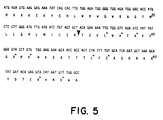
- Fig. 5 represents a nucleotide sequence and predicted amino acid sequence for the amino terminal ends of gp160 and gp120.
- the glycoprotein of the present invention has a molecular weight of approximately 160,000 daltons as determined by sodium dodecyl sulfate (SDS) gel electrophoresis and are soluble in SDS buffer consisting of 0.15 M sodium chloride, 0.05 M Tris hydrochloride PH 7.2, 1% Triton* X-100, 1% sodium deoxycholate, 0.1% sodium dodecylsulfate, and 1mM phenylmethylsulfonyl fluoride.
- Triton X-100 is a nonionic detergent (octylphenoxy polyethoxy (9-10) ethanol).
- the unglycosylated moiety of 160,000 dalton glycoprotein has a molecular weight of approximately 90,000 daltons and contains substantially the same antigenic determinant or determinants as do the glycoproteins themselves. * Triton is a Registered Trade Mark
- the glycoproteins can be obtained from HTLV-III-infected cells; gp120 can also be obtained from HTLV-III virions.
- a variety of cell lines have been prepared, which are permanently and persistently infected with HTLV-III; among them can be mentioned HTLV-III-infected H9 cells, Lymphadenopathy Associated Virus-(LAV) infected NC37 cells, and Molt 3 and HUT 78 cells infected with fresh AIDS virus isolates.
- any cell which harbors the virus may be an appropriate source for the novel glycoproteins.
- the cells are metabolically labelled (e.g. with 35S-cysteine) and immunoprecipitated with antisera obtained from HTLV-III-infected subjects.
- the novel glycoproteins can then be detected and isolated by gel electrophoresis or other chromatographic procedures.
- the glycoproteins are env glycoproteins and are coded by the largest open reading frame in the 3' half of the HTLV-III genome.
- Fig. 5 shows the nucleotide sequence and predicted amino acid sequence encoded by the amino terminal portion of the HTLV-III envelope gene region.
- the HTLV-III sequence is derived from Ratner et al. (1985) Nature (London) 313 :277.
- the dark arrow indicates the site at which the leader sequence is cleaved from gp160.
- Asterisks indicate cysteine, leucine, and valine residues determined by radiolabel sequence analysis.
- the first nucleotide presented corresponds to nucleotide sequence 5802 of the HTLV-III genome.
- the glycoproteins are present in HTLV-III-infected human T-cell line H9, LAV-infected NC37 cells, and Molt 3 and HUT 78 cells infected with fresh AIDS virus isolates.
- the glycoproteins can readily be separated from the cells of these cell lines by lysis thereof and SDS gel electrophoresis.
- the purified and isolated glycoproteins or any antigen immunologically cross-reactive therewith can be employed as a standard antigen in any conventional assay procedure for detection in biological specimens of the presence of antibodies specific thereto, hence of the presence of HTLV-III infection and/or of AIDS.
- the antibodies specific to such HTLV-III antigens are not found in patients suffering from diseases such as hepatitis which are not accompanied by HTLV-III infection.
- glycoproteins or polypeptides immunologically cross-reactive therewith can be labelled by conventional procedures with 125I or 35S or 3H for use in radioimmunoassay, with fluorescein for fluorescent immunoassay, with enzyme for enzyme immunoassay or with biotin, for biotin-avidin linked assays. It can be employed labelled or unlabelled as desired, in competitive immunoassays, as well as in double antibody assays using two antibodies, either of the idiotype:antiidiotype variety or more particularly of the second antibody type using an anti-Fc antibody, or other assays.
- novel glycoproteins or polypeptides immunologically cross-reactive therewith could be immobilized on an insoluble phase, such as an insoluble resin, and detection of the anti-glycoprotein antibodies is carried out by measuring their binding to the insoluble phase.
- insoluble phases also include latex particles, which when coated with the novel glycoprotein or its immunologically cross-reactive polypeptides and subjected to anti-glycoprotein antibody, will agglutinate.
- Yet other insoluble phases include test tubes, vials, titration wells, and the like, to which the novel glycoprotein or its immunologically cross-reactive polypeptide can be bound, and antibody thereto detected by double antibody techniques or Protein-A dependent techniques.
- the assay for antibodies which recognize HTLV-III-induced antigens may utilize the glycoprotein or glycoproteins or the unglycosylated moieties of the glycoproteins, respectively, in crude form, and is not limited to using these proteins in substantially pure form.
- the glycoprotein(s) may be first substantially purified and then mixed together. Alternatively cruder mixtures can also be used.
- kit comprises a carrier being compartmentalized to receive therein one or more containers, which of said containers comprising one or more elements necessary to carry out the tests.
- the first container may contain one or both of the purified glycoproteins or its immunologically cross-reactive polypeptides in detectably labelled or in insolubilized form.
- a second container may comprise anti IgG antibody, polyclonal or monoclonal, useful in double antibody binding assay, or elements needed for detection of the label on the glycoprotein or its immunologically cross-reactive polypeptides (e.g. chromogenic substrates).
- Additional containers may comprise varying amounts of one of the glycoproteins or its immunologically cross-reactive polypeptides which can be used to prepare a standard curve into which experimental results can be interpolated.
- the materials may be present in the kit by themselves, in solution, freeze-dried, or in admixture with other inert materials, such as inert proteins, and the like.
- the biological specimens tested may include blood, serum, lymphocytes, urine, tissues, saliva, feces, and the like. Of particular interest is the screening of blood in blood banks, to assure that the blood is not contaminated with HTLV-III. Screening of blood-derived products, such as vaccines, can also be done by the methods of the invention.
- HTLV-III-MA HTLV-III-induced cell membrane antigens
- Uninfected H9 cells (a), and H9 cells infected with HTLV-III(b) at their peak log phase of growth were harvested and exposed to [35S]-cysteine (100 ⁇ Ci/ml; specific activity 957.5 Ci/mmole) for 14-16 hours.
- a soluble cell lysate was obtained and cleared once with a reference negative control serum bound to Protein A Sepharose CL4B (Protein A beads) as described by Essex et al., (1983) Science 220:859, before portions were reacted with 8 ⁇ l of the following sera preabsorbed with Protein A beads with the results shown in Fig.
- the molecular weight markers were 14C-labeled myosin (200,000), phosphorylase-b (92,500), bovine serum albumin (69,000), ovalbumin (46,000), carbonic anhydrase (30,000) and lysozyme (14,300).
- H9 cells infected with HTLV-III at their peak log phase of growth were harvested and exposed to [35S]-cysteine (100 ⁇ Ci/ml; specific activity 957.5 Ci/mmole) for 14-16 hours.
- the soluble cell lysate was first reacted with lentil lectin sepharose 4B at a ratio of 20 x 106 cells to 1 ml of lentil lectin 4B at 4°C for 3 hours.
- Deoxycholate-free RIPA buffer in the presence of 5% methyl ⁇ D mannoside was used to elute the glycoprotein fraction.
- the glycoprotein fraction was analyzed using RIP-SDS-PAGE with human sera positive for anti-HTLV-III-MA.
- the [35S]-cysteine labeled glycoproteins were reacted with 8 ⁇ l of the following sera with the results shown in Fig. 2: 4 sera from 4 AIDS patients positive for anti-HTLV-III-MA (lanes 1-4), 2 sera from 2 ARC patients that were positive for anti-HTLV-III-MA (lanes 5-6), 2 sera from 2 healthy homosexuals that were positive for anti-HTLV-III-MA (lanes 7-8), 2 sera from healthy homosexuals that were negative for anti-HTLV-III-MA (lanes 9-10), and 2 sera from 2 laboratory workers that were negative for anti-HTLV-III-MA (lanes 11-12).
- HTLV-III-infected H9 cells at their peak log phase of growth were harvested and resuspended in McCoy's 5A medium supplemented with 10% fetal bovine serum, 1% of antibiotic-antimycotic mixture, and 20 ⁇ g/ml of tunicamycin for 2 hours. After this trimming step, the cells were labelled with [35S]-cysteine as described above in the presence of 20 ⁇ g/ml of tunicamycin for 3 hours. The labelled material was then subjected to the same lysing and preclearing procedures as described above. The proteins from treated and untreated cells were analyzed by human sera positive for anti-HTLV-III-MA using RIP-SDS-PAGE as shown in Fig. 3, left hand lane.
- Soluble cell lysates from tunicamycin-untreated (a) and - treated cells (b) were reacted with: 8 ⁇ l of a reference serum negative for antibodies to HTLV-III (lanes 1-2) and 8 ⁇ l of a reference serum positive for antibodies to HTLV-III from an ARC patient (lanes 3-4), with the results shown in Fig. 3.
- the following specific examples relate to assaying a saliva specimen for antibodies to HTLV-III.
- Serum from an AIDS patient known to be positive for HTLV-III antigens p24, p55, gp120, and gp160 was used as a positive control. Immunoprecipitates were anlayzed in a 10% acrylamide resolving gel with a 3.5% stacking gel according to the discontinuous buffer systems of Laemmli described above. Autoradiography was carried out for 5 days at -70°C. Serum samples from the same patients were obtained at approximately the same time and were tested by immunoprecipitation as described earlier.
- soluble cell lysates were prepared from H9 (lanes a, c, e, g, i, k) and H9/HTLV-III (lanes b, d, f, h, j, l) cells exposed to 35S-cysteine, harvested, and lysed with RIPA buffer. These lysates were then reacted with 150 ⁇ l of a 1:2 dilution of saliva which had been bound to Protein A-Sepharose CL-4B (Protein A-beads, Sigma) with 10 l of sheep anti-human IgA sera.
- Samples were as follows: saliva from AIDS patient 1 (lanes a, b); normal laboratory worker (lanes c, d); AIDS patient 2 (lanes e, f); AIDS patient 3 (lanes i, j); AIDS patient 4 (lanes k, l).
- Reference serum from AIDS patient known to be positive for HTLV-III antigens (lanes g, h). Approximate molecular weights in thousands are at the right.
Landscapes
- Health & Medical Sciences (AREA)
- Life Sciences & Earth Sciences (AREA)
- Chemical & Material Sciences (AREA)
- Engineering & Computer Science (AREA)
- Immunology (AREA)
- Virology (AREA)
- Molecular Biology (AREA)
- General Health & Medical Sciences (AREA)
- Biomedical Technology (AREA)
- Organic Chemistry (AREA)
- Biochemistry (AREA)
- Hematology (AREA)
- Medicinal Chemistry (AREA)
- Urology & Nephrology (AREA)
- Biotechnology (AREA)
- Gastroenterology & Hepatology (AREA)
- Microbiology (AREA)
- Physics & Mathematics (AREA)
- Analytical Chemistry (AREA)
- Cell Biology (AREA)
- Tropical Medicine & Parasitology (AREA)
- General Physics & Mathematics (AREA)
- Pathology (AREA)
- Food Science & Technology (AREA)
- Biophysics (AREA)
- Genetics & Genomics (AREA)
- Proteomics, Peptides & Aminoacids (AREA)
- AIDS & HIV (AREA)
- Peptides Or Proteins (AREA)
- Medicines Containing Antibodies Or Antigens For Use As Internal Diagnostic Agents (AREA)
- Measuring Or Testing Involving Enzymes Or Micro-Organisms (AREA)
- Micro-Organisms Or Cultivation Processes Thereof (AREA)
- Preparation Of Compounds By Using Micro-Organisms (AREA)
Abstract
Description
- This invention relates to novel purified forms of glycoproteins found in cells infected with human T-cell lymphotrophic virus, type III (HTLV-III), and to assays for detecting in a biological specimen the presence of an antibody to the antigenic determinants present in said glycoproteins.
- HTLV-III is suspected of playing a key role in the pathogenesis of the acquired immunodeficiency syndrome (AIDS). It has been shown that human patients whose bodies contain antibodies to HTLV-III-infected cells are apparently latently or actively infected with the virus.
- According to EP-A-0201540 a glycoprotein is known having a molecular weight of approximately 90,000 daltons in unglycoslated form and 110,000 daltons in glycosylated form. This glycoprotein can be obtained from a lysate of a lymphadenopathy retrovirus which includes antigens selectively recognized in vitro by serum of patients affected with AIDS or by serum of asymptomatic carriers of the AIDS virus. Further, this glycoprotein can be obtained from cultures of T-lymphocytes infected with HTLV-III and from HTLV-III preparations.
- It has now been found that particular polypeptides or glycoproteins present in HTLV-III virions or in human cells infected with HTLV-III and related viruses, when purified and isolated, contain an antigenic determinant or determinants which provide a high degree of sensitivity and immunospecificity for antibody to human cells infected with HTLV-III and related viruses. For convenience, when we use either the term "HTLV-III", or the term "HTLV-III" related viruses", in this application, we mean to include viruses that are closely related to HTLV-III by serological biochemical and molecular criteria, including lymphadenopathy associated virus (LAV) (see Barre-Sinoussi (1983) Science 220:859), ARV (see Sanchez-Pescador (1985) Science 227:484) and Aids. Retrovirus (RV) (see Folks, (1985), Proc. Nat'l. Acad. Sci. 82:4539), and other forms, subtypes and variants, including simian viruses. The terms "human T-cell lymphotrophic virus-III" and "human T-cell leukemia virus-III" are used interchangeably, although the former is preferable.
- Consequently, the substantially pure glycoproteins or their unglycosylated moieties are useful as a diagnostic tool for assaying biological specimens to determine prior or current infection with HTLV-III. Other polypeptides containing immunologically cross-reactive antigenic determinants are useful for the same purpose. By "polypeptides containing immunologically cross-reactive antigenic determinants", we mean polypeptides having in common antigenic determinants with which a given antibody will react. Such other polypeptides include the unglycosylated moieties of the glycoproteins, chemically synthesized polypeptides, and polypeptides made by organisms or cells engineered by recombinant DNA techniques. They also include antibodies or fragments thereof which are anti-idiotypic towards the active determinant or determinants on the glycoprotein of the invention. It has also been shown that anti-idiotypic reagents are useful as diagnostic tools for the detection of antigens carrying sites which are immunologically cross-reactive with those on the antibodies (Potocnjak et al., Science 215: 1637-1639 (1982). Thus, an assay for HTLV-III infection could be carried out with the aid of an anti-idiotypic or immunologically active fragments thereof which carry an antigenic site or sites thereon which are immunologically similar to the antigenic site or sites on the glycoproteins of the invention. Such anti-idiotypic antibodies can be raised against first antibodies having specificity against the antigenic sites on the glycoproteins of the invention (i.e. the anti-idiotypic antibodies are anti-antibodies). Preferably monoclonal anti-idiotypic antibodies are used.
- The invention therefore embraces substantially pure glycoprotein having a molecular weight of approximately 160,000 daltons, of which approximately 90,000 daltons is the molecular weight of the unglycosylated moiety, said glycoprotein being substantially identical to an envelope glycoprotein encoded by the largest open reading frame in the 3' half of the human T-cell lymphotropic virus, type III genome and obtainable from cells infected with human T-cell lymphotrophic virus, type III.
- An assay for HTLV-III infection is important because the virus can be readily transferred from the peripheral blood leukocytes of antibody-positive people to leukocytes of antibody-negative people when the two are cultivated together. Popovic et al., Science, Vol. 219, 856-859 (1983). Consequently, it appears that there is great risk of infection involved in whole blood transfusions when the transfused blood contains infected cells. The assay is of importance because biological specimens from individuals exhibiting acquired immunodeficient syndrome (AIDS) give a positive test for antibodies to antigenic determinants of the novel glycoproteins, thus facilitating diagnosis of that disease.
- Consequently, the invention also embraces the method of assaying a biological specimen for the presence of antibody to HTLV-III-specific glycoproteins which comprises: 1) incubating said specimen with a polypeptide having an antigenic determinant or determinants immunologically cross-reactive with those of a glycoprotein having a molecular weight of approximately 160,000 daltons (gp160), the 90,000 dalton unglycosylated moiety of which has substantially all of the antigenic determinants of the glycoprotein, the glycoprotein being an envelope glycoprotein encoded by the largest open reading frame in the 3' half of the HTLV-III genome and being obtained from cells infected with HTLV-III; and 2) determining whether or not an immunocomplex is formed between said antibody and said polypeptide.
- The invention also embraces a method of assaying a biological specimen for the presence of antigenic determinant or determinants immunologically cross-reactive with the determinants of the glycoprotein of molecular weight
160,000 daltons. The determinants to be assayed may occur on the stated glycoproteins themselves or on other polypeptides. They may be in free circulation in the body fluids or in lymphocytes. The assay can be carried out by known immunoassay methods, using antibodies, monoclonal or polyvalent, having immune reactivity with the antigenic determinants found on the stated glycoproteins. For example competitive immunoassays or immunometric (sandwich) assays can be used. Immunoprecipitation, ELISA, or Western blot are other examples of assays that can be used. - In the drawings, Fig. 1 represents an autoradiogram showing specific activities of gp120 and gp160 as determined by gel electrophoresis.
- Fig. 2 represents an autoradiogram showing specific activities of gp120 and gp160 as determined by gel electrophoresis.
- Fig. 3 represents an autoradiogram illustrating specific activity of p90 as determined by gel electrophoresis.
- Fig. 4 represents an audioradiogram showing soluble cell lysates reacted with saliva.
- Fig. 5 represents a nucleotide sequence and predicted amino acid sequence for the amino terminal ends of gp160 and gp120.
- The glycoprotein of the present invention has a molecular weight of
approximately 160,000 daltons as determined by sodium dodecyl sulfate (SDS) gel electrophoresis and are soluble in SDS buffer consisting of 0.15 M sodium chloride, 0.05 M Tris hydrochloride PH 7.2, 1% Triton* X-100, 1% sodium deoxycholate, 0.1% sodium dodecylsulfate, and 1mM phenylmethylsulfonyl fluoride. Triton X-100 is a nonionic detergent (octylphenoxy polyethoxy (9-10) ethanol). The unglycosylated moiety of 160,000 dalton glycoprotein has a molecular weight of approximately 90,000 daltons and contains substantially the same antigenic determinant or determinants as do the glycoproteins themselves.
* Triton is a Registered Trade Mark - The glycoproteins can be obtained from HTLV-III-infected cells; gp120 can also be obtained from HTLV-III virions. A variety of cell lines have been prepared, which are permanently and persistently infected with HTLV-III; among them can be mentioned HTLV-III-infected H9 cells, Lymphadenopathy Associated Virus-(LAV) infected NC37 cells, and
Molt 3 and HUT 78 cells infected with fresh AIDS virus isolates. - It may be that the exact sizes of the novel glycoproteins are slightly different in different lines; however, the common immunologically cross-reactive portions of the glycoproteins are the same regardless of cell line, since they are portions encoded by HTLV-III. Thus, any cell which harbors the virus may be an appropriate source for the novel glycoproteins. In order to obtain the protein from any infected cells carrying the virus, the cells are metabolically labelled (e.g. with ³⁵S-cysteine) and immunoprecipitated with antisera obtained from HTLV-III-infected subjects. The novel glycoproteins can then be detected and isolated by gel electrophoresis or other chromatographic procedures.
- The glycoproteins are env glycoproteins and are coded by the largest open reading frame in the 3' half of the HTLV-III genome. Fig. 5 shows the nucleotide sequence and predicted amino acid sequence encoded by the amino terminal portion of the HTLV-III envelope gene region. The HTLV-III sequence is derived from Ratner et al. (1985) Nature (London) 313:277. The dark arrow indicates the site at which the leader sequence is cleaved from gp160. Asterisks indicate cysteine, leucine, and valine residues determined by radiolabel sequence analysis. The first nucleotide presented corresponds to nucleotide sequence 5802 of the HTLV-III genome.
- For example, the glycoproteins are present in HTLV-III-infected human T-cell line H9, LAV-infected NC37 cells, and Molt 3 and HUT 78 cells infected with fresh AIDS virus isolates. The glycoproteins can readily be separated from the cells of these cell lines by lysis thereof and SDS gel electrophoresis.
- The purified and isolated glycoproteins or any antigen immunologically cross-reactive therewith can be employed as a standard antigen in any conventional assay procedure for detection in biological specimens of the presence of antibodies specific thereto, hence of the presence of HTLV-III infection and/or of AIDS. The antibodies specific to such HTLV-III antigens are not found in patients suffering from diseases such as hepatitis which are not accompanied by HTLV-III infection.
- The glycoproteins or polypeptides immunologically cross-reactive therewith can be labelled by conventional procedures with ¹²⁵I or ³⁵S or ³H for use in radioimmunoassay, with fluorescein for fluorescent immunoassay, with enzyme for enzyme immunoassay or with biotin, for biotin-avidin linked assays. It can be employed labelled or unlabelled as desired, in competitive immunoassays, as well as in double antibody assays using two antibodies, either of the idiotype:antiidiotype variety or more particularly of the second antibody type using an anti-Fc antibody, or other assays.
- Alternatively, the novel glycoproteins or polypeptides immunologically cross-reactive therewith could be immobilized on an insoluble phase, such as an insoluble resin, and detection of the anti-glycoprotein antibodies is carried out by measuring their binding to the insoluble phase. Insoluble phases also include latex particles, which when coated with the novel glycoprotein or its immunologically cross-reactive polypeptides and subjected to anti-glycoprotein antibody, will agglutinate. Yet other insoluble phases include test tubes, vials, titration wells, and the like, to which the novel glycoprotein or its immunologically cross-reactive polypeptide can be bound, and antibody thereto detected by double antibody techniques or Protein-A dependent techniques.
- The assay for antibodies which recognize HTLV-III-induced antigens may utilize the glycoprotein or glycoproteins or the unglycosylated moieties of the glycoproteins, respectively, in crude form, and is not limited to using these proteins in substantially pure form. For example, the glycoprotein(s) may be first substantially purified and then mixed together. Alternatively cruder mixtures can also be used.
- The elements necessary for carrying out the diagnostic methodology described hereinbefore may be present in a kit. Such kit comprises a carrier being compartmentalized to receive therein one or more containers, which of said containers comprising one or more elements necessary to carry out the tests.
- For example, the first container may contain one or both of the purified glycoproteins or its immunologically cross-reactive polypeptides in detectably labelled or in insolubilized form.
- A second container may comprise anti IgG antibody, polyclonal or monoclonal, useful in double antibody binding assay, or elements needed for detection of the label on the glycoprotein or its immunologically cross-reactive polypeptides (e.g. chromogenic substrates).
- Additional containers may comprise varying amounts of one of the glycoproteins or its immunologically cross-reactive polypeptides which can be used to prepare a standard curve into which experimental results can be interpolated. The materials may be present in the kit by themselves, in solution, freeze-dried, or in admixture with other inert materials, such as inert proteins, and the like.
- The biological specimens tested may include blood, serum, lymphocytes, urine, tissues, saliva, feces, and the like. Of particular interest is the screening of blood in blood banks, to assure that the blood is not contaminated with HTLV-III. Screening of blood-derived products, such as vaccines, can also be done by the methods of the invention.
- The following specific examples are intended to illustrate more fully the nature of the invention without acting as a limitation upon its scope.
- The reactivity of serum samples positive for antibodies to HTLV-III-induced cell membrane antigens (HTLV-III-MA) was determined by RIP-SDS-PAGE, the proteins being separated on a 12.5% SDS-polyacrylamide gel with 3.5% stacking gel using the Laemmli buffer system.
- Uninfected H9 cells (a), and H9 cells infected with HTLV-III(b) at their peak log phase of growth were harvested and exposed to [³⁵S]-cysteine (100 µCi/ml; specific activity 957.5 Ci/mmole) for 14-16 hours. A soluble cell lysate was obtained and cleared once with a reference negative control serum bound to Protein A Sepharose CL4B (Protein A beads) as described by Essex et al., (1983) Science 220:859, before portions were reacted with 8 µl of the following sera preabsorbed with Protein A beads with the results shown in Fig. 1 of the drawing: (A) sera from 8 AIDS patients that were positive for anti-HTLV-III-MA (lanes 1-8), (B) sera from 4 ARC patients that were positive for anti-HTLV-III-MA (lanes 1-4) and sera from 4 healthy homosexuals that were positive for anti-HTLV-III-MA (lanes 5-8); (C) sera from 2 healthy homosexuals that were negative for anti-HTLV-III-MA (lanes 1-2), sera from 2 laboratory workers that were negative for anti-HTLV-III-MA (lanes 3-4), a mouse monoclonal antibody to p24 of HTLV-III lane 5), a normal rabbit serum (lane 6), a reference rabbit antiserum to disrupted HTLV-III (lane 7), and a positive control ARC patient (lane 8). The molecular weight markers were ¹⁴C-labeled myosin (200,000), phosphorylase-b (92,500), bovine serum albumin (69,000), ovalbumin (46,000), carbonic anhydrase (30,000) and lysozyme (14,300).
- H9 cells infected with HTLV-III at their peak log phase of growth were harvested and exposed to [³⁵S]-cysteine (100 µCi/ml; specific activity 957.5 Ci/mmole) for 14-16 hours. To enrich glycoprotein fractions, the soluble cell lysate was first reacted with lentil lectin sepharose 4B at a ratio of 20 x 10⁶ cells to 1 ml of lentil lectin 4B at 4°C for 3 hours. Deoxycholate-free RIPA buffer in the presence of 5% methyl α D mannoside was used to elute the glycoprotein fraction. The glycoprotein fraction was analyzed using RIP-SDS-PAGE with human sera positive for anti-HTLV-III-MA. The [³⁵S]-cysteine labeled glycoproteins were reacted with 8 µl of the following sera with the results shown in Fig. 2: 4 sera from 4 AIDS patients positive for anti-HTLV-III-MA (lanes 1-4), 2 sera from 2 ARC patients that were positive for anti-HTLV-III-MA (lanes 5-6), 2 sera from 2 healthy homosexuals that were positive for anti-HTLV-III-MA (lanes 7-8), 2 sera from healthy homosexuals that were negative for anti-HTLV-III-MA (lanes 9-10), and 2 sera from 2 laboratory workers that were negative for anti-HTLV-III-MA (lanes 11-12).
- HTLV-III-infected H9 cells at their peak log phase of growth were harvested and resuspended in McCoy's 5A medium supplemented with 10% fetal bovine serum, 1% of antibiotic-antimycotic mixture, and 20 µg/ml of tunicamycin for 2 hours. After this trimming step, the cells were labelled with [³⁵S]-cysteine as described above in the presence of 20 µg/ml of tunicamycin for 3 hours. The labelled material was then subjected to the same lysing and preclearing procedures as described above. The proteins from treated and untreated cells were analyzed by human sera positive for anti-HTLV-III-MA using RIP-SDS-PAGE as shown in Fig. 3, left hand lane. Soluble cell lysates from tunicamycin-untreated (a) and - treated cells (b) were reacted with: 8 µl of a reference serum negative for antibodies to HTLV-III (lanes 1-2) and 8 µl of a reference serum positive for antibodies to HTLV-III from an ARC patient (lanes 3-4), with the results shown in Fig. 3.
- The following specific examples relate to assaying a saliva specimen for antibodies to HTLV-III.
- Whole saliva was collected from individuals and stored at -70°C. Following 1:2 dilution with phosphate buffered saline or water, samples were centrifuged and passed through 0.22 m pore size filters (Millipore Corporation, Bedford, MA). Radioimmunoprecipitation of ³⁵S-cysteine labelled H9/HTLV-III infected and H9 infected cell lysates were carried out as described above except that Protein-A beads were first reacted with 10 µl of sheep anti-human secretory IgA serum (Cappel Lab. Inc., Cochranville, PA) before addition of 150 µl of the saliva samples. Serum from an AIDS patient known to be positive for HTLV-III antigens p24, p55, gp120, and gp160 was used as a positive control. Immunoprecipitates were anlayzed in a 10% acrylamide resolving gel with a 3.5% stacking gel according to the discontinuous buffer systems of Laemmli described above. Autoradiography was carried out for 5 days at -70°C. Serum samples from the same patients were obtained at approximately the same time and were tested by immunoprecipitation as described earlier.
- Specifically shown in Fig. 4, soluble cell lysates were prepared from H9 (lanes a, c, e, g, i, k) and H9/HTLV-III (lanes b, d, f, h, j, l) cells exposed to ³⁵S-cysteine, harvested, and lysed with RIPA buffer. These lysates were then reacted with 150 µl of a 1:2 dilution of saliva which had been bound to Protein A-Sepharose CL-4B (Protein A-beads, Sigma) with 10 l of sheep anti-human IgA sera. Samples were as follows: saliva from AIDS patient 1 (lanes a, b); normal laboratory worker (lanes c, d); AIDS patient 2 (lanes e, f); AIDS patient 3 (lanes i, j); AIDS patient 4 (lanes k, l). Reference serum from AIDS patient known to be positive for HTLV-III antigens (lanes g, h). Approximate molecular weights in thousands are at the right.
Claims (3)
- A substantially pure glycoprotein having a molecular weight of approximately 160,000 daltons, of which approximately 90,000 daltons is the molecular weight of the unglycosylated moiety, said glycoprotein being substantially identical to an envelope glycoprotein encoded by the largest open reading frame in the 3' half of the human T-cell lymphotropic virus, type III genome and obtainable from cells infected with human T-cell lymphotrophic virus, type III.
- A 90,000 dalton protein characterised in that said protein is the unglycosylated moiety of a glycoprotein having a molecular weight of approximately 160,000 daltons, said glycoprotein being substantially identical to an envelope glycoprotein encoded by the largest open reading frame in the 3' half of the human T-cell lymphotrophic virus, type III genome and obtainable from cells infected with human T-cell lymphotrophic virus, type III.
- A method of assaying a biological sample for antibody indicative of infection with human T-cell lymphotrophic virus, type III, said method comprising,
incubating said sample with a reagent comprising the glycoprotein of claim 1 or the protein of claim 2, and
determining whether or not an immunocomplex is formed between said antibody and reagent.
Applications Claiming Priority (3)
| Application Number | Priority Date | Filing Date | Title |
|---|---|---|---|
| US06/670,361 US4725669A (en) | 1984-11-09 | 1984-11-09 | Assay for detecting infection by human T-cell lymphotropic virus-III |
| US670361 | 1984-11-09 | ||
| PCT/US1985/002227 WO1986002930A1 (en) | 1984-11-09 | 1985-11-08 | Assay for detecting infection by human t-cell lymphotrophic virus |
Publications (3)
| Publication Number | Publication Date |
|---|---|
| EP0201588A1 EP0201588A1 (en) | 1986-11-20 |
| EP0201588A4 EP0201588A4 (en) | 1988-03-18 |
| EP0201588B1 true EP0201588B1 (en) | 1995-01-04 |
Family
ID=24690118
Family Applications (1)
| Application Number | Title | Priority Date | Filing Date |
|---|---|---|---|
| EP85905989A Expired - Lifetime EP0201588B1 (en) | 1984-11-09 | 1985-11-08 | Assay for detecting infection by human t-cell lymphotrophic virus |
Country Status (5)
| Country | Link |
|---|---|
| US (2) | US4725669A (en) |
| EP (1) | EP0201588B1 (en) |
| AT (1) | ATE116658T1 (en) |
| DE (1) | DE3587969T2 (en) |
| WO (1) | WO1986002930A1 (en) |
Families Citing this family (93)
| Publication number | Priority date | Publication date | Assignee | Title |
|---|---|---|---|---|
| US7205102B1 (en) | 1983-09-15 | 2007-04-17 | Institut Pasteur | Cloned DNA sequences related to the genomic RNA of lymphadenopathy-associated virus (LAV) and proteins encoded by said LAV genomic RNA |
| GB8423659D0 (en) | 1984-09-19 | 1984-10-24 | Pasteur Institut | Cloned dna sequences |
| US7232654B1 (en) | 1983-09-15 | 2007-06-19 | Institut Pasteur | DNA sequence of the LTR region of human immunodeficiency virus type 1 (HIV-1) |
| GB8429099D0 (en) | 1984-11-16 | 1984-12-27 | Pasteur Institut | Closed dna sequences |
| US7351412B1 (en) * | 1983-12-05 | 2008-04-01 | Institut Pasteur | Cloned DNA sequences related to the genomic RNA of lymphadenopathy-associated-virus (LAV) and proteins encoded by said LAV genomic RNA |
| US5610035A (en) * | 1983-12-05 | 1997-03-11 | Institut Pasteur Centre National De La Recherche Scientific | Methods for the preparation of hybridomas producing lymphadenopathy-associated virus (LAV) GP110-specific monoclonal antibodies and methods for the purification of GP110 employing said monoclonal antibodies |
| US5843638A (en) | 1983-12-05 | 1998-12-01 | Institut Pasteur And Centre National De La Recherche Scientifique | Nucleic acids and pepties of human immunodeficiency virus type-1 (HIV-1). |
| US4716102A (en) * | 1984-08-15 | 1987-12-29 | Regents Of The University Of California | Purified AIDS-associated virus ARV-2 |
| US9328391B1 (en) | 1984-08-22 | 2016-05-03 | The United States Of America As Represented By The Secretary, Department Of Health And Human Services | Cloning and expression of HIV-1 DNA |
| US9309574B1 (en) | 1984-08-22 | 2016-04-12 | The United States Of America As Represented By The Secretary, Department Of Health And Human Services | Molecular cloning of HIV-1 from immortalized cell lines |
| US6610476B1 (en) | 1984-08-22 | 2003-08-26 | The United States Of America As Represented By The Department Of Health And Human Services | Detection of HIV-1 DNA |
| US7045130B1 (en) | 1984-10-18 | 2006-05-16 | Institut Pasteur | Antibodies against antigens of human immunodeficiency virus (HIV-1) |
| US5705612A (en) * | 1984-10-18 | 1998-01-06 | Institut Pasteur And Centre National De La Recherche Scientifique | NEF peptide encoded by human immunodefiency virus type 1 (HIV-1) |
| CA1341423C (en) * | 1984-10-31 | 2003-03-04 | Paul A. Luciw | Recombinant proteins of viruses associated with lymphadenopathy syndrome and/or acquired immune deficiency syndrome |
| US4725669A (en) * | 1984-11-09 | 1988-02-16 | President And Fellows Of Harvard College | Assay for detecting infection by human T-cell lymphotropic virus-III |
| US6894152B1 (en) | 1984-11-16 | 2005-05-17 | Institut Pasteur | Cloned DNA sequences related to the genomic RNA of lymphadenopathy-associated-virus (LAV) and proteins encoded by said LAV genomic RNA |
| FR2580177B2 (en) * | 1985-04-15 | 1989-06-02 | Pasteur Institut | AIDS VIRUS ENVELOPE GLYCOPROTEIN-RELATED ANTIGENS, IN PARTICULAR PRECURSORS OF SUCH GLYCOPROTEIN, PROCESSES FOR OBTAINING SUCH ANTIGENS, AND MEANS USED IN SUCH PROCESSES, APPLICATIONS OF SUCH ANTIGENS TO THE PREPARATION OF IMMUNOGEN COMPOSITIONS AIDS OR RELATED CONDITIONS |
| US5773210A (en) * | 1985-04-19 | 1998-06-30 | The United States Of America As Represented By The Department Of Health And Human Services | Acquired immune deficiency syndrome (AIDS) viral envelope protein and method of testing for AIDS |
| FI861626A7 (en) * | 1985-04-19 | 1986-10-20 | Hoffmann La Roche | FOERVAERVAT IMMUNBRIST SYNDROME (AIDS) -RELATERAT VIRALT RECOMBINANT HOELJEPROTEIN SAMT ETT TESTFOERFARANDE FOER AIDS. |
| US4843011A (en) * | 1985-08-01 | 1989-06-27 | Akzo N.V. | Monoclonal antibodies for binding HTLV-III proteins, and cell lines for their production |
| ZA866956B (en) * | 1985-09-13 | 1987-11-25 | Pasteur Institut | Methods for utilizing cell lines which lack human class ii histocompatibility antigens |
| US6541609B2 (en) | 1985-11-14 | 2003-04-01 | President And Fellows Of Harvard College | HIV-2 peptides |
| WO1987002892A1 (en) * | 1985-11-14 | 1987-05-21 | President And Fellows Of Harvard College | T-lymphotrophic virus |
| US4794077A (en) * | 1985-12-13 | 1988-12-27 | Biosciences Corporation Of Texas | Detection of human cancer cells with anitbodies to human cancer nucleolar antigen p145 |
| US4839288A (en) * | 1986-01-22 | 1989-06-13 | Institut Pasteur | Retrovirus capable of causing AIDS, antigens obtained from this retrovirus and corresponding antibodies and their application for diagnostic purposes |
| US5364933A (en) | 1986-03-03 | 1994-11-15 | Institut Pasteur | Methods of immunopurification of antigens of human immunodeficiency virus type 2 (HIV-2) |
| US6514691B1 (en) | 1986-01-22 | 2003-02-04 | Institut Pasteur | Peptides of human immunodeficiency virus type 2 (HIV-2), antibodies against peptides of HIV-2, and methods and kits for detecting HIV-2 |
| US4753873A (en) * | 1986-02-03 | 1988-06-28 | Cambridge Bioscience Corporation | Peptides for the diagnosis of HTLV-III antibodies, their preparation and use |
| US4734362A (en) * | 1986-02-03 | 1988-03-29 | Cambridge Bioscience Corporation | Process for purifying recombinant proteins, and products thereof |
| CA1310924C (en) * | 1986-04-24 | 1992-12-01 | Francis P. Mccormick | Infective drug delivery system |
| US4785077A (en) * | 1986-05-05 | 1988-11-15 | Scripps Clinic And Research Foundation | Substantially pure cytotoxicity triggering factor |
| DE3722272A1 (en) * | 1986-07-08 | 1988-01-21 | Bio Rad Laboratories | DIFFERENTIATION OF THE DISEASE CONDITION IN AIDS ANTI-BODY TESTING |
| EP0255190A3 (en) * | 1986-08-01 | 1990-08-29 | Repligen Corporation | Recombinant polypeptides and their uses, inclusing assay for aids virus |
| US5142025A (en) * | 1986-08-01 | 1992-08-25 | Repligen Corporation | Recombinant HTLV-III proteins and uses thereof |
| EP0318498B1 (en) * | 1986-08-04 | 1993-03-03 | THE UNITED STATES OF AMERICA as represented by the Secretary United States Department of Commerce | Human b lymphotropic virus (hblv) isolation and products |
| WO1988001387A1 (en) * | 1986-08-11 | 1988-02-25 | The United States Of America, As Represented By Th | Testing for the human b lymphotropic virus (hblv) |
| WO1988001305A1 (en) * | 1986-08-12 | 1988-02-25 | The United States Of America, As Represented By Th | Molecular cloning and clones of human b lymphotropic virus (hblv) |
| US6290963B1 (en) * | 1986-08-22 | 2001-09-18 | The United States Of America As Represented By The Secretary Of The Department Of Health And Human Services | Anti-HIV compositions containing native and recombinant peptides |
| IL85149A0 (en) * | 1987-01-27 | 1988-06-30 | Microgenesys Inc | Hiv gp160 aids virus envelope protein-containing substrates and methods for detection of aids antibody thereby |
| US4902615A (en) * | 1987-03-27 | 1990-02-20 | Biosciences Corporation Of Texas | Detection of human cancer cells with antibodies to human cancer nucleolar antigen p120 |
| US4865966A (en) * | 1987-04-17 | 1989-09-12 | New York University | Method for detecting antibodies to human immunodeficiency virus |
| US5122446A (en) * | 1987-04-17 | 1992-06-16 | New York University | Method for detecting antibodies to human immunodeficiency virus |
| US4921787A (en) * | 1987-05-01 | 1990-05-01 | Cambridge Bioscience Corporation | Detection of antibodies to human immunodeficiency virus by agglutination of antigen coated latex |
| US6657050B1 (en) | 1987-05-29 | 2003-12-02 | Tanox, Inc. | Chimeric viral-neutralizing immunoglobulins |
| US5981278A (en) * | 1987-05-29 | 1999-11-09 | Tanox, Inc. | Chimeric monoclonal antibodies which neutralize HIV-1 infection and their applications in therapy and prevention for AIDS |
| US5256767A (en) * | 1987-06-10 | 1993-10-26 | The Immune Response Corporation | Retroviral antigens |
| JPH0720880B2 (en) * | 1987-06-10 | 1995-03-08 | ジ イミューン リスポンス コーポレーション,インコーポレーテッド | Prevention and treatment of retroviral diseases |
| US5447837A (en) * | 1987-08-05 | 1995-09-05 | Calypte, Inc. | Multi-immunoassay diagnostic system for antigens or antibodies or both |
| US6210873B1 (en) | 1987-08-28 | 2001-04-03 | Board Of Regents, The University Of Texas System | Methods and compositions for the priming of specific cytotoxic T-lymphocyte response |
| US5128319A (en) * | 1987-08-28 | 1992-07-07 | Board Of Regents, The University Of Texas System | Prophylaxis and therapy of acquired immunodeficiency syndrome |
| US5019387A (en) * | 1987-09-08 | 1991-05-28 | Duke University | Production of antibodies to HIV |
| US4879211A (en) * | 1987-11-30 | 1989-11-07 | United Biomedical Inc. | Rapid immunoagglutination test for presence of HIV in body fluids |
| US5215913A (en) * | 1987-11-30 | 1993-06-01 | Roger Williams General Hospital | IgG-1 human monoclonal antibody reactive with an HIV-1 antigen and methods of use |
| US6133029A (en) * | 1988-03-21 | 2000-10-17 | Chiron Corporation | Replication defective viral vectors for infecting human cells |
| US5716826A (en) * | 1988-03-21 | 1998-02-10 | Chiron Viagene, Inc. | Recombinant retroviruses |
| US5077198A (en) * | 1988-04-14 | 1991-12-31 | Eastman Kodak Company | Diagnostic kit and method for rapid detection of antibodies |
| US5268299A (en) * | 1988-04-14 | 1993-12-07 | Eastman Kodak Company | Diluent composition useful in the detection of antibodies in assays |
| US5338829A (en) * | 1988-04-20 | 1994-08-16 | Trustees Of The University Of Pennsylvania | Peptides derived from human immunodeficiency virus-1 GP160 |
| US5008183A (en) * | 1988-05-10 | 1991-04-16 | Bio-Research Laboratories, Inc. | Assay system for detecting antibody and a method of producing non-human immune antibody |
| US5658569A (en) * | 1988-07-06 | 1997-08-19 | Verigen, Inc. | Anti-HIV-1 neutralizing antibodies |
| US5529776A (en) * | 1988-07-06 | 1996-06-25 | Verigen Inc. | Anti-HIV-1 neutralizing antibodies |
| SE8803870D0 (en) * | 1988-10-28 | 1988-10-28 | Medscand Ab | METHOD FOR DETECTION OF HUMAN PAPILLOMAVIRUS (HPV) FOR DIAGNOSTIC PURPOSES |
| DE69033975T2 (en) * | 1989-01-23 | 2002-10-02 | Chiron Corp. (N.D.Ges.D. Staates Delaware), Emeryville | Recombinant therapies for infections and hyperproliferative disorders |
| US6165710A (en) * | 1989-10-23 | 2000-12-26 | Robinson; James E. | Method for immobilizing viral glycoproteins for use in solid-phase immunoassays |
| EP0897987B1 (en) * | 1989-10-24 | 2001-02-28 | Chiron Corporation | Secretion of human protein linked to gamma interferon signal peptide |
| US7041293B1 (en) | 1990-04-03 | 2006-05-09 | Genentech, Inc. | HIV env antibodies |
| CA2078546A1 (en) * | 1990-04-03 | 1991-10-04 | Phillip W. Berman | Methods and compositions for vaccination against hiv |
| US5298391A (en) * | 1990-04-23 | 1994-03-29 | Consiglio Nazionale Delle Ricerche | Use of the SP-2 monoclonal antibody for the clinical diagnostics and for the monitoring of the HIV infection progress |
| CA2082806A1 (en) * | 1990-06-08 | 1991-12-09 | James R. Rusche | Immunoassays for anti-hiv-1 antibodies |
| US5914109A (en) * | 1990-06-15 | 1999-06-22 | New York University | Heterohybridomas producing human monoclonal antibodies to HIV-1 |
| US5817491A (en) * | 1990-09-21 | 1998-10-06 | The Regents Of The University Of California | VSV G pseusdotyped retroviral vectors |
| EP0554401A4 (en) * | 1990-10-26 | 1996-10-30 | New York Health Res Inst | Neutralizing human monoclonal antibodies specific for the v3 loop and cd-4 binding site of hiv-1 gp120 |
| US5587285A (en) * | 1992-01-31 | 1996-12-24 | University Of Texas System | Generation serological assay for monitoring HIV exposure |
| US5464740A (en) * | 1992-09-08 | 1995-11-07 | Amur Research Corp. | Diagnositc agent and methods for identifying HIV infected individuals and monitoring their therapy |
| AU700371B2 (en) * | 1993-06-07 | 1999-01-07 | Genentech Inc. | Hiv envelope polypeptides |
| US5603933A (en) * | 1993-08-31 | 1997-02-18 | Board Of Regents, The University Of Texas | CD4 peptides for binding to viral envelope proteins |
| US6074646A (en) | 1993-10-26 | 2000-06-13 | Board Of Regents, The University Of Texas System | Nondenatured HIV envelope antigens for detecting early HIV-specific antibodies |
| US6171596B1 (en) | 1993-12-10 | 2001-01-09 | The United States Of America As Represented By The Department Of Health And Human Services | Oligomeric HIV-1 envelope glycoproteins |
| US6039957A (en) * | 1993-12-10 | 2000-03-21 | United States Of America, As Represented By The Department Of Health And Human Services | Oligomeric HIV-1 envelope glycoproteins |
| US5888814A (en) * | 1994-06-06 | 1999-03-30 | Chiron Corporation | Recombinant host cells encoding TNF proteins |
| US6585979B1 (en) * | 1996-07-08 | 2003-07-01 | Genentech, Inc. | HIV envelope polypeptides and immunogenic composition |
| US6274900B1 (en) * | 1998-01-05 | 2001-08-14 | Texas Instruments Incorporated | Semiconductor device architectures including UV transmissive nitride layers |
| US6537631B1 (en) * | 1999-04-30 | 2003-03-25 | Kimberly-Clark Worldwide, Inc. | Roll of wet wipes |
| WO2001034654A1 (en) | 1999-11-05 | 2001-05-17 | Biogen, Inc. | Hedgehog fusion proteins and uses |
| AU2002339876A1 (en) * | 2001-09-04 | 2003-03-18 | Wisconsin Alumni Research Foundation | Liquid crystal switching mechanism |
| EP1438433A4 (en) * | 2001-10-04 | 2005-12-21 | Wisconsin Alumni Res Found | DETECTION OF DNA HYBRIDIZATION ON SURFACES |
| AU2003212466A1 (en) * | 2002-02-28 | 2003-09-16 | Board Of Regents, The University Of Texas System | Method and composition for detecting early hiv antibody |
| US7807348B2 (en) * | 2002-03-20 | 2010-10-05 | Wisconsin Alumni Research Foundation | Optical imaging of nanostructured substrates |
| US7125592B2 (en) * | 2002-04-10 | 2006-10-24 | Wisconsin Alumni Research Foundation | Detecting interactions at biomimetic interfaces with liquid crystals |
| WO2004044583A1 (en) * | 2002-11-08 | 2004-05-27 | Wisconsin Alumni Research Foundation | Surfaces with gradients in surface topography |
| WO2005010160A2 (en) * | 2003-07-17 | 2005-02-03 | Wisconsin Alumni Research Foundation | Liquid crystals with reduced toxicity and applications thereof |
| WO2007111681A2 (en) * | 2005-10-31 | 2007-10-04 | Wisconsin Alumni Research Foundation | Device and methods for liquid crystal-based bioagent detection |
| WO2013026452A1 (en) | 2011-08-23 | 2013-02-28 | Skau Aps | Method for removing immunosuppresive properties of hiv envelope glycoproteins |
Family Cites Families (8)
| Publication number | Priority date | Publication date | Assignee | Title |
|---|---|---|---|---|
| GB8324800D0 (en) * | 1983-09-15 | 1983-10-19 | Pasteur Institut | Antigens |
| DE3334405A1 (en) * | 1983-09-23 | 1985-04-04 | Behringwerke Ag, 3550 Marburg | MEMBRANE ASSOCIATED PROTEINS (MP (DOWN ARROW) 2 (DOWN ARROW)), METHOD FOR THEIR EXTRACTION AND USE |
| NZ211860A (en) * | 1984-04-23 | 1990-10-26 | Us Health | Method for detection of hiv; test kit |
| US4520113A (en) * | 1984-04-23 | 1985-05-28 | The United States Of America As Represented By The Secretary Of The Department Of Health And Human Services | Serological detection of antibodies to HTLV-III in sera of patients with AIDS and pre-AIDS conditions |
| US4716102A (en) * | 1984-08-15 | 1987-12-29 | Regents Of The University Of California | Purified AIDS-associated virus ARV-2 |
| WO1986002383A1 (en) * | 1984-10-18 | 1986-04-24 | Institut Pasteur | Envelope antigens of lymphadenopathy associated virus and their applications |
| US4725669A (en) * | 1984-11-09 | 1988-02-16 | President And Fellows Of Harvard College | Assay for detecting infection by human T-cell lymphotropic virus-III |
| FR2580177B2 (en) * | 1985-04-15 | 1989-06-02 | Pasteur Institut | AIDS VIRUS ENVELOPE GLYCOPROTEIN-RELATED ANTIGENS, IN PARTICULAR PRECURSORS OF SUCH GLYCOPROTEIN, PROCESSES FOR OBTAINING SUCH ANTIGENS, AND MEANS USED IN SUCH PROCESSES, APPLICATIONS OF SUCH ANTIGENS TO THE PREPARATION OF IMMUNOGEN COMPOSITIONS AIDS OR RELATED CONDITIONS |
-
1984
- 1984-11-09 US US06/670,361 patent/US4725669A/en not_active Expired - Lifetime
-
1985
- 1985-11-08 WO PCT/US1985/002227 patent/WO1986002930A1/en not_active Ceased
- 1985-11-08 DE DE3587969T patent/DE3587969T2/en not_active Expired - Lifetime
- 1985-11-08 EP EP85905989A patent/EP0201588B1/en not_active Expired - Lifetime
- 1985-11-08 AT AT85905989T patent/ATE116658T1/en not_active IP Right Cessation
-
1994
- 1994-05-17 US US08/245,077 patent/US5731142A/en not_active Expired - Lifetime
Also Published As
| Publication number | Publication date |
|---|---|
| DE3587969T2 (en) | 1995-05-11 |
| US4725669A (en) | 1988-02-16 |
| WO1986002930A1 (en) | 1986-05-22 |
| ATE116658T1 (en) | 1995-01-15 |
| US5731142A (en) | 1998-03-24 |
| DE3587969D1 (en) | 1995-02-16 |
| EP0201588A1 (en) | 1986-11-20 |
| EP0201588A4 (en) | 1988-03-18 |
Similar Documents
| Publication | Publication Date | Title |
|---|---|---|
| US5731142A (en) | Assay for detecting infection by HTLV-III | |
| EP0233045B1 (en) | Peptides for the diagnose of HTLV-III antibodies, their preparation and use | |
| EP0151579B1 (en) | Method and products for detection of human t cell leukemia virus | |
| US4753873A (en) | Peptides for the diagnosis of HTLV-III antibodies, their preparation and use | |
| EP0258404B1 (en) | Method of detecting antibody against htlv-iii | |
| US20020042045A1 (en) | METHODS FOR THE DETECTION OF HTLV-II ANTIBODIES EMPLOYIING NOVEL HTLV-II nra ENVELOPE PEPTIDES | |
| US6074646A (en) | Nondenatured HIV envelope antigens for detecting early HIV-specific antibodies | |
| US4743678A (en) | Method and products for detection of human T cell leukemia virus | |
| US6531574B1 (en) | T-lymphotrophic virus | |
| US5068174A (en) | T-cell lymphotrophic virus protein and assay | |
| AU754309B2 (en) | Diagnosis of feline immunodeficiency virus infection using env/gag polypeptide markers | |
| CA1340405C (en) | Method for detecting antibodies to human immunodeficiency virus | |
| CA1283043C (en) | T-cell lymphotrophic virus protein and assay | |
| CA1247082A (en) | Assay for detecting infection by human t-cell leukemia virus | |
| EP0386713A2 (en) | Immunoassay for antibodies to HIV | |
| EP0453563A1 (en) | Diagnostic proteins to test for more than one antibody | |
| US6541609B2 (en) | HIV-2 peptides | |
| Johansson et al. | Anti-herpes simplex type 1 activity in IgG subclasses produced systemically and intrathecally in patients with herpes encephalitis | |
| EP0345559A2 (en) | HIV-2 variants | |
| EP0445650A2 (en) | Detection of anti-hiv antibodies | |
| JPS63501295A (en) | T-lymphatic virus |
Legal Events
| Date | Code | Title | Description |
|---|---|---|---|
| PUAI | Public reference made under article 153(3) epc to a published international application that has entered the european phase |
Free format text: ORIGINAL CODE: 0009012 |
|
| 17P | Request for examination filed |
Effective date: 19860725 |
|
| AK | Designated contracting states |
Kind code of ref document: A1 Designated state(s): AT BE CH DE FR GB IT LI LU NL SE |
|
| A4 | Supplementary search report drawn up and despatched |
Effective date: 19880318 |
|
| 17Q | First examination report despatched |
Effective date: 19901004 |
|
| GRAA | (expected) grant |
Free format text: ORIGINAL CODE: 0009210 |
|
| AK | Designated contracting states |
Kind code of ref document: B1 Designated state(s): AT BE CH DE FR GB IT LI LU NL SE |
|
| REF | Corresponds to: |
Ref document number: 116658 Country of ref document: AT Date of ref document: 19950115 Kind code of ref document: T |
|
| RHK2 | Main classification (correction) |
Ipc: C07K 14/16 |
|
| EAL | Se: european patent in force in sweden |
Ref document number: 85905989.1 |
|
| REF | Corresponds to: |
Ref document number: 3587969 Country of ref document: DE Date of ref document: 19950216 |
|
| ET | Fr: translation filed | ||
| ITF | It: translation for a ep patent filed | ||
| PLBI | Opposition filed |
Free format text: ORIGINAL CODE: 0009260 |
|
| 26 | Opposition filed |
Opponent name: AKZO N.V. Effective date: 19951004 |
|
| NLR1 | Nl: opposition has been filed with the epo |
Opponent name: AKZO N.V. |
|
| PLBF | Reply of patent proprietor to notice(s) of opposition |
Free format text: ORIGINAL CODE: EPIDOS OBSO |
|
| PLBF | Reply of patent proprietor to notice(s) of opposition |
Free format text: ORIGINAL CODE: EPIDOS OBSO |
|
| PLBF | Reply of patent proprietor to notice(s) of opposition |
Free format text: ORIGINAL CODE: EPIDOS OBSO |
|
| PLBF | Reply of patent proprietor to notice(s) of opposition |
Free format text: ORIGINAL CODE: EPIDOS OBSO |
|
| PLBL | Opposition procedure terminated |
Free format text: ORIGINAL CODE: EPIDOS OPPC |
|
| PLBM | Termination of opposition procedure: date of legal effect published |
Free format text: ORIGINAL CODE: 0009276 |
|
| STAA | Information on the status of an ep patent application or granted ep patent |
Free format text: STATUS: OPPOSITION PROCEDURE CLOSED |
|
| 27C | Opposition proceedings terminated |
Effective date: 19971211 |
|
| NLR2 | Nl: decision of opposition | ||
| REG | Reference to a national code |
Ref country code: GB Ref legal event code: IF02 |
|
| PGFP | Annual fee paid to national office [announced via postgrant information from national office to epo] |
Ref country code: NL Payment date: 20041018 Year of fee payment: 20 |
|
| PGFP | Annual fee paid to national office [announced via postgrant information from national office to epo] |
Ref country code: AT Payment date: 20041021 Year of fee payment: 20 |
|
| PGFP | Annual fee paid to national office [announced via postgrant information from national office to epo] |
Ref country code: GB Payment date: 20041103 Year of fee payment: 20 |
|
| PGFP | Annual fee paid to national office [announced via postgrant information from national office to epo] |
Ref country code: FR Payment date: 20041119 Year of fee payment: 20 |
|
| PGFP | Annual fee paid to national office [announced via postgrant information from national office to epo] |
Ref country code: SE Payment date: 20041122 Year of fee payment: 20 |
|
| PGFP | Annual fee paid to national office [announced via postgrant information from national office to epo] |
Ref country code: CH Payment date: 20041125 Year of fee payment: 20 |
|
| PGFP | Annual fee paid to national office [announced via postgrant information from national office to epo] |
Ref country code: LU Payment date: 20041129 Year of fee payment: 20 |
|
| PGFP | Annual fee paid to national office [announced via postgrant information from national office to epo] |
Ref country code: BE Payment date: 20041216 Year of fee payment: 20 |
|
| PGFP | Annual fee paid to national office [announced via postgrant information from national office to epo] |
Ref country code: DE Payment date: 20041230 Year of fee payment: 20 |
|
| PG25 | Lapsed in a contracting state [announced via postgrant information from national office to epo] |
Ref country code: GB Free format text: LAPSE BECAUSE OF EXPIRATION OF PROTECTION Effective date: 20051107 |
|
| PG25 | Lapsed in a contracting state [announced via postgrant information from national office to epo] |
Ref country code: NL Free format text: LAPSE BECAUSE OF EXPIRATION OF PROTECTION Effective date: 20051108 |
|
| BE20 | Be: patent expired |
Owner name: THE *PRESIDENT AND FELLOWS OF HARVARD COLLEGE Effective date: 20051108 |
|
| REG | Reference to a national code |
Ref country code: GB Ref legal event code: PE20 |
|
| REG | Reference to a national code |
Ref country code: CH Ref legal event code: PL |
|
| NLV7 | Nl: ceased due to reaching the maximum lifetime of a patent |
Effective date: 20051108 |
|
| EUG | Se: european patent has lapsed | ||
| BE20 | Be: patent expired |
Owner name: THE *PRESIDENT AND FELLOWS OF HARVARD COLLEGE Effective date: 20051108 |