EP0200686A2 - Oxime derivatives - Google Patents
Oxime derivatives Download PDFInfo
- Publication number
- EP0200686A2 EP0200686A2 EP86810191A EP86810191A EP0200686A2 EP 0200686 A2 EP0200686 A2 EP 0200686A2 EP 86810191 A EP86810191 A EP 86810191A EP 86810191 A EP86810191 A EP 86810191A EP 0200686 A2 EP0200686 A2 EP 0200686A2
- Authority
- EP
- European Patent Office
- Prior art keywords
- formula
- compound
- oxygen
- alkyl
- oder
- Prior art date
- Legal status (The legal status is an assumption and is not a legal conclusion. Google has not performed a legal analysis and makes no representation as to the accuracy of the status listed.)
- Withdrawn
Links
Classifications
-
- C—CHEMISTRY; METALLURGY
- C07—ORGANIC CHEMISTRY
- C07D—HETEROCYCLIC COMPOUNDS
- C07D317/00—Heterocyclic compounds containing five-membered rings having two oxygen atoms as the only ring hetero atoms
- C07D317/08—Heterocyclic compounds containing five-membered rings having two oxygen atoms as the only ring hetero atoms having the hetero atoms in positions 1 and 3
- C07D317/44—Heterocyclic compounds containing five-membered rings having two oxygen atoms as the only ring hetero atoms having the hetero atoms in positions 1 and 3 ortho- or peri-condensed with carbocyclic rings or ring systems
- C07D317/46—Heterocyclic compounds containing five-membered rings having two oxygen atoms as the only ring hetero atoms having the hetero atoms in positions 1 and 3 ortho- or peri-condensed with carbocyclic rings or ring systems condensed with one six-membered ring
- C07D317/48—Methylenedioxybenzenes or hydrogenated methylenedioxybenzenes, unsubstituted on the hetero ring
- C07D317/50—Methylenedioxybenzenes or hydrogenated methylenedioxybenzenes, unsubstituted on the hetero ring with only hydrogen atoms, hydrocarbon or substituted hydrocarbon radicals, directly attached to atoms of the carbocyclic ring
- C07D317/54—Radicals substituted by oxygen atoms
-
- A—HUMAN NECESSITIES
- A01—AGRICULTURE; FORESTRY; ANIMAL HUSBANDRY; HUNTING; TRAPPING; FISHING
- A01N—PRESERVATION OF BODIES OF HUMANS OR ANIMALS OR PLANTS OR PARTS THEREOF; BIOCIDES, e.g. AS DISINFECTANTS, AS PESTICIDES OR AS HERBICIDES; PEST REPELLANTS OR ATTRACTANTS; PLANT GROWTH REGULATORS
- A01N35/00—Biocides, pest repellants or attractants, or plant growth regulators containing organic compounds containing a carbon atom having two bonds to hetero atoms with at the most one bond to halogen, e.g. aldehyde radical
- A01N35/08—Biocides, pest repellants or attractants, or plant growth regulators containing organic compounds containing a carbon atom having two bonds to hetero atoms with at the most one bond to halogen, e.g. aldehyde radical at least one of the bonds to hetero atoms is to nitrogen
- A01N35/10—Biocides, pest repellants or attractants, or plant growth regulators containing organic compounds containing a carbon atom having two bonds to hetero atoms with at the most one bond to halogen, e.g. aldehyde radical at least one of the bonds to hetero atoms is to nitrogen containing a carbon-to-nitrogen double bond
-
- A—HUMAN NECESSITIES
- A01—AGRICULTURE; FORESTRY; ANIMAL HUSBANDRY; HUNTING; TRAPPING; FISHING
- A01N—PRESERVATION OF BODIES OF HUMANS OR ANIMALS OR PLANTS OR PARTS THEREOF; BIOCIDES, e.g. AS DISINFECTANTS, AS PESTICIDES OR AS HERBICIDES; PEST REPELLANTS OR ATTRACTANTS; PLANT GROWTH REGULATORS
- A01N39/00—Biocides, pest repellants or attractants, or plant growth regulators containing aryloxy- or arylthio-aliphatic or cycloaliphatic compounds, containing the group or, e.g. phenoxyethylamine, phenylthio-acetonitrile, phenoxyacetone
-
- A—HUMAN NECESSITIES
- A01—AGRICULTURE; FORESTRY; ANIMAL HUSBANDRY; HUNTING; TRAPPING; FISHING
- A01N—PRESERVATION OF BODIES OF HUMANS OR ANIMALS OR PLANTS OR PARTS THEREOF; BIOCIDES, e.g. AS DISINFECTANTS, AS PESTICIDES OR AS HERBICIDES; PEST REPELLANTS OR ATTRACTANTS; PLANT GROWTH REGULATORS
- A01N43/00—Biocides, pest repellants or attractants, or plant growth regulators containing heterocyclic compounds
- A01N43/02—Biocides, pest repellants or attractants, or plant growth regulators containing heterocyclic compounds having rings with one or more oxygen or sulfur atoms as the only ring hetero atoms
- A01N43/24—Biocides, pest repellants or attractants, or plant growth regulators containing heterocyclic compounds having rings with one or more oxygen or sulfur atoms as the only ring hetero atoms with two or more hetero atoms
- A01N43/26—Biocides, pest repellants or attractants, or plant growth regulators containing heterocyclic compounds having rings with one or more oxygen or sulfur atoms as the only ring hetero atoms with two or more hetero atoms five-membered rings
- A01N43/28—Biocides, pest repellants or attractants, or plant growth regulators containing heterocyclic compounds having rings with one or more oxygen or sulfur atoms as the only ring hetero atoms with two or more hetero atoms five-membered rings with two hetero atoms in positions 1,3
- A01N43/30—Biocides, pest repellants or attractants, or plant growth regulators containing heterocyclic compounds having rings with one or more oxygen or sulfur atoms as the only ring hetero atoms with two or more hetero atoms five-membered rings with two hetero atoms in positions 1,3 with two oxygen atoms in positions 1,3, condensed with a carbocyclic ring
-
- A—HUMAN NECESSITIES
- A01—AGRICULTURE; FORESTRY; ANIMAL HUSBANDRY; HUNTING; TRAPPING; FISHING
- A01N—PRESERVATION OF BODIES OF HUMANS OR ANIMALS OR PLANTS OR PARTS THEREOF; BIOCIDES, e.g. AS DISINFECTANTS, AS PESTICIDES OR AS HERBICIDES; PEST REPELLANTS OR ATTRACTANTS; PLANT GROWTH REGULATORS
- A01N47/00—Biocides, pest repellants or attractants, or plant growth regulators containing organic compounds containing a carbon atom not being member of a ring and having no bond to a carbon or hydrogen atom, e.g. derivatives of carbonic acid
- A01N47/08—Biocides, pest repellants or attractants, or plant growth regulators containing organic compounds containing a carbon atom not being member of a ring and having no bond to a carbon or hydrogen atom, e.g. derivatives of carbonic acid the carbon atom having one or more single bonds to nitrogen atoms
- A01N47/10—Carbamic acid derivatives, i.e. containing the group —O—CO—N<; Thio analogues thereof
- A01N47/24—Carbamic acid derivatives, i.e. containing the group —O—CO—N<; Thio analogues thereof containing the groups, or; Thio analogues thereof
Definitions
- the compounds of the formula I are suitable for controlling various types of pests on animals and plants and in the bedding. They can be used for controlling insects, e.g. of the order Lepidoptera, Coleoptera, Homoptera, Heteroptera, Diptera, Thysanoptera, Orthoptera, Anoplura, Siphonaptera, Mallophaga, Thysanura, Isoptera, Psocoptera and Hymenoptera and of mites and ticks of the order Acarina.
- insects e.g. of the order Lepidoptera, Coleoptera, Homoptera, Heteroptera, Diptera, Thysanoptera, Orthoptera, Anoplura, Siphonaptera, Mallophaga, Thysanura, Isoptera, Psocoptera and Hymenoptera and of mites and ticks of the order Acarina.
- the cationic surfactants are primarily quaternary ammonium salts which contain at least one alkyl radical having 8 to 22 carbon atoms as N substituents and, as further substituents, have lower, optionally halogenated alkyl, benzyl or lower hydroxyalkyl radicals.
- the salts are preferably in the form of halides, methyl sulfates or ethyl sulfates, e.g. the stearyltrimethylammonium chloride or the benzyldi (2-chloroethyl) ethyl ammonium broc.id.
- the pesticidal preparations generally contain 0.1 to 99%, in particular 0.1 to 95%, active ingredient of the formula I, 1 to 99.9% of a solid or liquid additive and 0 to 25%, in particular 0.1 to 25 %, a surfactant.
- the active ingredient is dissolved in methylene chloride, sprayed onto the carrier and the solvent is then evaporated off in vacuo.
- Cotton plants are sprayed with a test solution containing 400 ppm of the compound to be tested.
Landscapes
- Life Sciences & Earth Sciences (AREA)
- Wood Science & Technology (AREA)
- Agronomy & Crop Science (AREA)
- Plant Pathology (AREA)
- Health & Medical Sciences (AREA)
- Engineering & Computer Science (AREA)
- Dentistry (AREA)
- Zoology (AREA)
- Environmental Sciences (AREA)
- General Health & Medical Sciences (AREA)
- Chemical & Material Sciences (AREA)
- Pest Control & Pesticides (AREA)
- Organic Chemistry (AREA)
- Organic Low-Molecular-Weight Compounds And Preparation Thereof (AREA)
- Agricultural Chemicals And Associated Chemicals (AREA)
- Heterocyclic Carbon Compounds Containing A Hetero Ring Having Nitrogen And Oxygen As The Only Ring Hetero Atoms (AREA)
Abstract
Neue Oximderivate der Formel

- U für einen der Reste
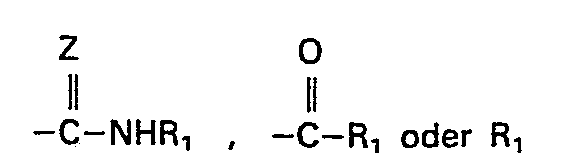
- R1 C1-C6-Alkyl, C2-C5-Alkenyl, C3-Monohalogenalkenyl, C3-Cs-Alkinyl, C3-C6-Cycloalkyl, C2-C5-Alkoxyalkyl, C2-C5-Alkylthioalkyl oder gegebenenfalls am Kern substituiertes Phenyl oder Benzyl,
- R2 und R3 unabhängig voneinander Wasserstoff oder C1-C3-Alkyl,
- R4, R5 und R6 unabhängig voneinander Wasserstoff, Halogen, C1-C4-Alkyl, C2-C4-Halogenalkyl, C1-C4-Atkoxy, C1-C4-Halogenalkoxy oder Nitroc,
- n eine Zahl 0 oder 1,
- X Sauerstoff, Schwefel oder CH2,
- Y Sauerstoff, Schwefel, CH2 oder C=O und
- Z Sauerstoff oder Schwefel bedeuten; mit der Massgabe, dass X und Y nicht gleichzeitig Sauerstoff bedeuten und/oder mindestens einer der Reste R4, R5 und R6 eine von Wasserstoff abweichende Bedeutung hat, wenn R1 eine C,-C3-Alkylgruppe darstellt;
Verfahren zur Herstellung dieser Oximderivate und ihre Verwendung in der Schädlingsbekämpfung insbesondere als Ovizide gegen Insekten und Vertretern der Ordnung Akarina.New oxime derivatives of the formula
- U for one of the leftovers
- R 1 C 1 -C 6 alkyl, C 2 -C 5 alkenyl, C 3 monohalogenalkenyl, C 3 -C s alkynyl, C 3 -C 6 cycloalkyl, C 2 -C 5 alkoxyalkyl, C 2 - C 5 alkylthioalkyl or phenyl or benzyl optionally substituted on the nucleus,
- R 2 and R 3 independently of one another are hydrogen or C 1 -C 3 -alkyl,
- R 4 , R 5 and R 6 independently of one another are hydrogen, halogen, C 1 -C 4 -alkyl, C 2 -C 4 -haloalkyl, C 1 -C 4 -atkoxy, C 1 -C 4 -haloalkoxy or nitroc,
- n is a number 0 or 1,
- X oxygen, sulfur or CH 2 ,
- Y is oxygen, sulfur, CH 2 or C = O and
- Z is oxygen or sulfur; with the proviso that X and Y do not simultaneously mean oxygen and / or at least one of the radicals R 4 , R 5 and R 6 has a meaning other than hydrogen if R 1 represents a C 1 -C 3 -alkyl group;
Process for the preparation of these oxime derivatives and their use in pest control, in particular as ovicides against insects and representatives of the order Akarina.
Description
Die vorliegende Erfindung betrifft Oximderivate, Verfahren zu ihrer Herstellung und ihre Verwendung in der Schädlingsbekämpfung.The present invention relates to oxime derivatives, processes for their preparation and their use in pest control.
Die erfindungsgemässen Oximderivate (Oximcarbamate, Oximester und Oximäther) haben die Formel

- U für einen der Reste

- R1 CI-C6-Alkyl, C2-C5-Alkenyl, C3-Monohalogenalkenyl, C3-CS-Alkinyl, C3-C6-Cycloalkyl, C2-C5-Alkoxyalkyl, C2-C5-Alkylthioalkyl, oder gegebenenfalls am Kern substituiertes Benzyl,
- R2 und R3 unabhängig voneinander Wasserstoff oder CI-C3-Alkyl,
- R4, R5 und R6 unabhängig voneinander Wasserstoff, Halogen, C1-C4-Alkyl, C2-C4-Halogenalkyl, C1-C4-Alkoxy, C1-C4-Halogenalkoxy oder Nitro,
- n eine Zahl 0 oder 1,
- X Sauerstoff, Schwefel oder

- Y Sauerstoff, Schwefel,


- Z Sauerstoff oder Schwefel bedeuten; mit der Massgabe, dass X und Y nicht gleichzeitig Sauerstoff bedeuten und/oder mindestens einer der Reste R4, R5 und R6 eine von Wasserstoff abweichende Bedeutung hat, wenn R1 eine CI-C3-Alkylgruppe darstellt.
- U for one of the leftovers
- R 1 C I -C 6 alkyl, C 2 -C 5 alkenyl, C 3 monohalogenalkenyl, C 3 -C S alkynyl, C 3 -C 6 cycloalkyl, C 2 -C 5 alkoxyalkyl, C 2 - C 5 alkylthioalkyl, or benzyl optionally substituted on the nucleus,
- R 2 and R 3 independently of one another are hydrogen or C I -C 3 alkyl,
- R 4 , R 5 and R 6 independently of one another are hydrogen, halogen, C 1 -C 4 alkyl, C 2 -C 4 haloalkyl, C 1 -C 4 alkoxy, C 1 -C 4 haloalkoxy or nitro,
- n is a number 0 or 1,
- X oxygen, sulfur or
- Y oxygen, sulfur,
- Z is oxygen or sulfur; with the proviso that X and Y do not simultaneously mean oxygen and / or at least one of the radicals R 4 , R 5 and R 6 has a meaning other than hydrogen if R 1 represents a C I -C 3 alkyl group.
Halogen steht im Rahmen der vorliegenden Erfindung für Fluor, Chlor, Brom oder Jod, vorzugsweise für Fluor oder Chlor.Halogen in the context of the present invention is fluorine, chlorine, bromine or iodine, preferably fluorine or chlorine.
Der Erfindungsgegenstand umfasst auch die möglichen Isomeren der Verbindungen der Formel I.The subject of the invention also includes the possible isomers of the compounds of the formula I.
Die Alkyl-, Alkoxy-, Halogenalkyl-, Halogenalkoxy-, Alkoxyalkyl, Alkylthioalkyl-, Alkenyl- und Alkinylgruppen können geradkettig oder verzweigt sein. Beispiele solcher Gruppen sind u.a. Methyl, Methoxy, Methoxymethyl, Methylthiomethyl, Difluormethoxy, Aethyl, Aethoxy, 2-Fluoräthoxy, 1,1,2,2-Tetrafluoräthyl, Pentafluoräthyl, 1,1,2,2-Tetrafluoräthoxy, Pentafluoräthoxy, Propyl, Isopropyl, n-Butyl, n-Pentyl, n-Hexyl und deren Isomere, Vinyl, 1-Propen-3yl, 1-Propinyl.The alkyl, alkoxy, haloalkyl, haloalkoxy, alkoxyalkyl, alkylthioalkyl, alkenyl and alkynyl groups can be straight-chain or branched. Examples of such groups include Methyl, methoxy, methoxymethyl, methylthiomethyl, difluoromethoxy, ethyl, ethoxy, 2-fluoroethoxy, 1,1,2,2-tetrafluoroethyl, pentafluoroethyl, 1,1,2,2-tetrafluoroethoxy, pentafluoroethoxy, propyl, isopropyl, n-butyl, n-pentyl, n-hexyl and their isomers, vinyl, 1-propen-3yl, 1-propynyl.
Bevorzugte Cycloalkylgruppen bei R1 sind Cyclopentyl und Cyclohexyl.Preferred cycloalkyl groups in R 1 are cyclopentyl and cyclohexyl.
Als Substituenten an den Phenyl- oder Benzylgruppen bei R1 kommen bevorzugt Halogen, CI-C4-Alkyl, CI-C4-Alkoxy, C1-C4-Alkylthio oder CI-C4-Halogenalkyl in Frage.Halogen, C I -C 4 alkyl, C I -C 4 alkoxy, C 1 -C 4 alkylthio or C I -C 4 haloalkyl are preferred as substituents on the phenyl or benzyl groups at R 1 .
Bevorzugt sind erfindungsgemäss Verbindungen der Formel I, worin
- R1 Ci-C6-Alkyl, Cz-Cs-Alkenyl, C3-Chloralkenyl, C3-C5-Alkinyl oder gegebenenfalls am Kern substituiertes Benzyl;
- Rz und R3 unabhängig voneinander Wasserstoff oder Methyl;
- R4, Rs und R6 Wasserstoff,
- n eine Zahl 0 oder 1;
- X Sauerstoff, Schwefel oder

- Y Sauerstoff oder

- Z Sauerstoff oder Schwefel bedeuten.
- R 1 Ci-C 6 alkyl, C z -Cs alkenyl, C 3 chloroalkenyl, C 3 -C 5 alkynyl or optionally substituted benzyl on the nucleus;
- Rz and R 3 are independently hydrogen or methyl;
- R 4 , Rs and R 6 are hydrogen,
- n is a number 0 or 1;
- X oxygen, sulfur or
- Y oxygen or
- Z is oxygen or sulfur.
Insbesondere bevorzugt sind Verbindungen der Formel I, die dadurch gekennzeichnet sind, dass
- U für einen der Reste


- und R1, R2, R3, R4, R5, R6, n, X, Y und Z die vorstehend angegebenen Bedeutungen haben, mit der Massgabe, dass Y und X gleichzeitig Sauerstoff, sowie R2 Methyl bedeuten und/oder, dass mindestens einer der Reste R4, K5 oder R6 eine von Wasserstoff abweichende Bedeutung hat, wenn U für den Rest -CH2-CH=CH2 steht.
- U for one of the leftovers
- and R 1 , R 2 , R 3 , R 4 , R 5 , R 6 , n, X, Y and Z have the meanings given above, with the proviso that Y and X are both oxygen and R 2 are methyl and / or that at least one of the radicals R 4 , K 5 or R 6 has a meaning deviating from hydrogen if U is the radical -CH 2 -CH = CH 2 .
Hervorzuheben sind wegen ihrer biologischen Bedeutung auch die erfindungsgemässen Verbindungen der Formel Ia

- U für einen der Reste


- R1 C1-C4-Alkyl;
- R2 Wasserstoff oder Methyl;
- R5 Wasserstoff, Halogen, Methyl oder Trifluormethyl;
- X und Z unabhängig voneinander Sauerstoff oder Schwefel; und
- Y Sauerstoff oder

- U for one of the leftovers
- R 1 C 1 -C 4 alkyl;
- R 2 is hydrogen or methyl;
- R 5 is hydrogen, halogen, methyl or trifluoromethyl;
- X and Z are independently oxygen or sulfur; and
- Y oxygen or
Die Verbindungen der Formel I bzw. Ia) können nach an sich bekannten Methoden wie folgt hergestellt werden:

In den Formeln II bis VI haben R1 bis R6, n, X, Y und Z die vorstehend für Formel I bzw. Ia) angegebene Bedeutungen. In der Formel V steht Hal für ein Halogenatom, vorzugsweise Chlor. In der Formel VII steht A für eine herkömmliche Abgangsgruppe, wie z.B. ein Halogenatom, vorzugsweise Chlor, die Mesyloxy- oder Tosyloxy-Gruppe. Als Basen kommen insbesondere tertiäre Amine, wie Trialkylamine und Pyridin, ferner Hydride, Hydroxide, Oxide, Carbonate und Hydrogencarbonate von Alkali- und Erdalkalimetallen sowie Alkalimetallalkoholate, wie z.B. Kalium-t-butylat und Natriummethylat usw. in Betracht.In the formulas II to VI, R 1 to R 6 , n, X, Y and Z have the meanings given above for formulas I and Ia). In formula V, Hal represents a halogen atom, preferably chlorine. In formula VII, A represents a conventional leaving group, such as a halogen atom, preferably chlorine, the mesyloxy or tosyloxy group. Suitable bases are in particular tertiary amines, such as trialkylamines and pyridine, further hydrides, hydroxides, oxides, carbonates and hydrogen carbonates of alkali and alkaline earth metals and alkali metal alcoholates, such as, for example, potassium t-butoxide and sodium methylate, etc.
Bei der vorstehend beschriebenen Herstellung der erfindungsgemässen Verbindungen wird also aus einer Carbonylverbindung der Formel II mit Hydroxylamin zunächst das Oxim der Formel III gebildet, das dann a) mit einem Isocyanat oder Isothiocyanat der Formel IV oder b) mit einem Acylhalogenid der Formel V in Gegenwart einer Base oder mit einem Anhydrid der Formel VI oder c) in Gegenwart einer Base mit einer Verbindung der Formel VII umgesetzt wird.In the preparation of the compounds according to the invention described above, the oxime of the formula III is first formed from a carbonyl compound of the formula II with hydroxylamine, which is then a) with an isocyanate or isothiocyanate of the formula IV or b) with an acyl halide of the formula V in the presence of a Base or with an anhydride of formula VI or c) in the presence of a base with a compound of formula VII.
Die Verfahrensschritte werden bei einer Reaktionstemperatur zwischen -10 und +150°C, zumeist zwischen +20 und +80°C, bei normalem oder erhöhtem Druck und vorzugsweise in einem inerten Lösungs- oder Verdünnungsmittel durchgeführt. Als Lösungs- oder Verdünnungsmittel eignen sich z.B. Aether und ätherartige Verbindungen, wie Diäthyläther, Diisopropyläther, Dioxan, 1,2-Dimethoxyäthan und Tetrahydrofuran; Amide, wie N,N-dialkylierte Carbonsäureamide; aliphatische, aromatische sowie halogenierte Kohlenwasserstoffe, insbesondere Benzol, Toluol, Xylole, Chloroform und Chlorbenzol; Nitrile wie Acetonitril; Dimethylsulfoxid und Ketone wie Aceton und Methyläthylketon.The process steps are carried out at a reaction temperature between -10 and + 150 ° C, mostly between +20 and + 80 ° C, at normal or elevated pressure and preferably in an inert solvent or diluent. Suitable solvents or diluents are e.g. Ethers and ethereal compounds, such as diethyl ether, diisopropyl ether, dioxane, 1,2-dimethoxyethane and tetrahydrofuran; Amides such as N, N-dialkylated carboxamides; aliphatic, aromatic and halogenated hydrocarbons, in particular benzene, toluene, xylenes, chloroform and chlorobenzene; Nitriles such as acetonitrile; Dimethyl sulfoxide and ketones such as acetone and methyl ethyl ketone.
Zur Herstellung von Verbindungen der Formel I bzw. Ia, worin U den Rest R1 bedeutet, kann man auch eine Carbonyl-Verbindung der Formel II, worin Rz bis R6 n, X und Y die vorstehend angegebenen Bedeutungen haben, direkt mit einem Hydroxylaminhydrohalogenid-Derivat der Formel VIII

in Gegenwart einer Base, z.B. eines Alkaliacetats, umsetzten, wobei in Formel VIII der Rest R1 die vorstehend angegebenen Bedeutungen hat und Hal für ein Halogenatom, z.B. Chlor, steht. Für dieses Verfahren werden Alkohole oder Alkohol-Wasser-Gemische als Lösungsmittel bevorzugt.in the presence of a base, for example an alkali metal acetate, where in formula VIII the radical R 1 has the meanings given above and Hal represents a halogen atom, for example chlorine. Alcohols or alcohol-water mixtures are preferred as solvents for this process.
Die Ausgangsstoffe der Formeln II bis VIII sind bekannt oder können, falls sie neu sind, analog bekannten Methoden hergestellt werden. Sie bilden dann ebenfalls einen Gegenstand der vorliegenden Erfindung.The starting materials of the formulas II to VIII are known or, if they are new, can be prepared analogously to known methods. They then also form an object of the present invention.
Die Verbindungen der Formel I können als Gemische von verschiedenen geometrischen resp. enantiomeren Formen vorliegen, bzw. bei der Synthese gebildet werden, wenn bei der Herstellung nicht einheitliche Ausgangsmaterialien verwendet werden. Die Isomerengemische können nach bekannten Methoden in die einzelnen Formen aufgetrennt werden. Unter der Verbindung der Formel I versteht man sowohl die sinzelnen geometrischen resp. enantiomeren Formen, als auch deren Gemische.The compounds of formula I as mixtures of different geometrical, respectively. Enantiomeric forms are present, or are formed in the synthesis, if non-uniform starting materials are used in the production. The isomer mixtures can be separated into the individual forms by known methods. The compound of formula I means both the individual geometric, respectively. enantiomeric forms, as well as their mixtures.
Die Verbindungen der Formel I eignen sich zur Bekämpfung von verschiedenartigen Schädlingen an Tieren und Pflanzen sowie im Beden, So können sie zur Bekämpfung von Insekten, z.B. der Ordnung Lepidoptera, Coleoptera, Homoptera, Heteroptera, Diptera, Thysanoptera, Orthoptera, Anoplura, Siphonaptera, Mallophaga, Thysanura, Isoptera, Psocoptera und Hymenoptera und von Milben und Zecken der Ordnung Acarina eingesetzt werden.The compounds of the formula I are suitable for controlling various types of pests on animals and plants and in the bedding. They can be used for controlling insects, e.g. of the order Lepidoptera, Coleoptera, Homoptera, Heteroptera, Diptera, Thysanoptera, Orthoptera, Anoplura, Siphonaptera, Mallophaga, Thysanura, Isoptera, Psocoptera and Hymenoptera and of mites and ticks of the order Acarina.
eignen sich Verbindungen der Formel I bzw. Ia) zur Bekämpfung von pflanzenschädigenden Insekten in Zier- und Nutzpflanzen, insbesondere in Baumwollkulturen (z.B. Spodoptera littoralis und Heliothis virescens). Die Verbindungen der Formel I haben auch eine günstige Wirkung gegen Bodeninsekten (z.B. Aulacophora femoralis, Chortophila brassicae, Diabrotica balteata, Pachnoda savignyi und Scotia ypsilon). Insbesondere aktiv sind die erfindungsgemässen Verbindungen als Ovizide im Pflanzenschutz, speziell zur Bekämpfung von pflanzenschädigenden Insekten, wie z.B. Laspeyresia pomonella und Lobesia botrana.Compounds of the formula I or Ia) are suitable for controlling plant-damaging insects in ornamental and useful plants, in particular in cotton crops (e.g. Spodoptera littoralis and Heliothis virescens). The compounds of formula I also have a beneficial action against soil insects (e.g. Aulacophora femoralis, Chortophila brassicae, Diabrotica balteata, Pachnoda savignyi and Scotia ypsilon). The compounds according to the invention are particularly active as ovicides in crop protection, especially for combating crop-damaging insects, such as e.g. Laspeyresia pomonella and Lobesia botrana.
Wirkstoffe der Formel I zeigen auch eine sehr günstige Wirkung gegen Fliegen, wie z.B. Musca domestica, sowie Mückenlarven. Allgemein zeichnen sie sich durch eine breite ovizide und ovolarvizide Wirkung aus. Sie besitzen gute Wirkung gegen ektoparasitäre Milben und Zecken z.B. der Familien Ixodidae, Argasidae und Dermanyssidae und können die Eiablage ektoparasitärer Akariden hemmen.Active ingredients of the formula I also have a very favorable action against flies, such as Musca domestica, and mosquito larvae. In general, they are characterized by a broad ovicidal and ovolarvicidal effect out. They have good activity against ectoparasitic mites and ticks, for example of the families Ixodidae, Argasidae and Dermanyssidae, and can inhibit the oviposition of ectoparasitic acarids.
Die akarizide bzw. insektizide Wirkung lässt sich durch Zusatz von anderen Insektiziden und/oder Akariziden wesentlich verbreitern und an gegebene Umstände anpassen. Als Zusätze eignen sich z.B. org. Phosphorverbindungen; Nitrophenole und deren Derivate; Formamidine; Harnstoffe; pyrethrinartige Verbindungen sowie Karbamate und chlorierte Kohlenwasserstoffe.The acaricidal or insecticidal effect can be significantly broadened by adding other insecticides and / or acaricides and adapted to the given circumstances. Suitable additives are e.g. org. Phosphorus compounds; Nitrophenols and their derivatives; Formamidines; Ureas; pyrethrin-like compounds as well as carbamates and chlorinated hydrocarbons.
Die gute pestizide Wirkung der erfindungsgemässen Verbindungen der Formeln I und Ia entspricht einer Abtötungsrate (Mortalität) von mindestens 50-60 % der erwähnten Schädlinge.The good pesticidal activity of the compounds of the formulas I and Ia according to the invention corresponds to a mortality rate of at least 50-60% of the pests mentioned.
Mit besonderem Vorteil werden Verbindungen der Formel I auch mit Substanzen kombiniert, welche einen synergistischen oder verstärkenden Effekt ausüben. Beispiele solcher Verbindungen sind u.a. Piperonylbutoxid, Propinyläther, Propinyloxime, Propinylcarbamate und Propinylphosphonate, 2-(3,4-Methylendioxyphenoxy)-3,6,9-tri- oxaundecan (Sesamex resp. Sesoxane), S,S,S-Tributylphosphoro- trithioate, 1,2-Methylendioxy-4-(2-(octylsulfinyl)-propyl)-benzol.Compounds of the formula I are particularly advantageously combined with substances which have a synergistic or reinforcing effect. Examples of such connections include Piperonyl butoxide, propynyl ether, propynyl oximes, propynyl carbamates and propynyl phosphonates, 2- (3,4-methylenedioxyphenoxy) -3,6,9-tri-oxaundecane (Sesamex or Sesoxane), S, S, S-tributylphosphorotithioate, 1,2- Methylenedioxy-4- (2- (octylsulfinyl) propyl) benzene.
Die Verbindungen der Formel I werden in unveränderter Form oder vorzugsweise zusammen mit den in der Formulierungstechnik üblichen Hilfsmitteln eingesetzt und werden daher z.B. zu Emulsionskonzentraten, direkt versprühbaren oder verdünnbaren Lösungen, verdünnten Emulsionen, Spritzpulvern, löslichen Pulvern, Stäubemitteln, Granulaten, auch Verkapselungen in z.B. polymeren Stoffen in bekannter Weise verarbeitet. Die Anwendungsverfahren wie Versprühen, Vernebeln, Verstäuben, Verstreuen oder Giessen werden gleich wie die Art der Mittel den angestrebten Zielen und den gegebenen Verhältnissen entsprechend gewählt.The compounds of the formula I are used in unchanged form or preferably together with the auxiliaries customary in formulation technology and are therefore used, for example, to emulsion concentrates, directly sprayable or dilutable solutions, diluted emulsions, wettable powders, soluble powders, dusts, granules, also encapsulations in e.g. polymeric materials processed in a known manner. The application methods, such as spraying, atomizing, dusting, scattering or pouring, are selected in the same way as the type of agent, in accordance with the desired objectives and the given conditions.
Die Formulierungen, d.h. die mindenstens einen Wirkstoff der Formel 1 und gegebenenfalls einen festen oder flüssigen Zusatzstoff enthaltenden Mittel, Zubereitungen oder Zusammensetzungen werden in bekannter Weise hergestellt, z.B. durch inniges Vermischen und/oder Vermahlen der Wirkstoffe mit Streckmitteln, wie z.B. mit Lösungsmitteln, festen Trägerstoffen, und gegebenenfalls oberflächenaktiven Verbindungen (Tensiden).The formulations, i.e. the agents, preparations or compositions containing at least one active ingredient of formula 1 and optionally a solid or liquid additive are prepared in a known manner, e.g. by intimately mixing and / or grinding the active ingredients with extenders, e.g. with solvents, solid carriers, and optionally surface-active compounds (surfactants).
Als Lösungsmittel können in Frage kommen: Aromatische Kohlenwasserstoffe, bevorzugt die Fraktionen Cs bis Cla, wie z.B. Xylolgemische oder substituierte Naphthaline, Phthalsäureester wie Dibutyl- oder Dioctylphthalat, aliphatische Kohlenwasserstoffe wie Cyclohexan oder Paraffine, Alkohole und Glykole sowie deren Aether und Ester, wie Aethanol, Aethylenglykol, Aethylenglykolmonomethyl- oder -äthyläther, Essigester, Propylmyristat oder Propylpalmitat, Ketone wie Cyclohexanon, stark polare Lösungsmittel wie N-Methyl-2-pyrrolidon, Dimethylsulfoxid oder Dimethylformamid, sowie gegebenenfalls epoxidierte Pflanzenöle wie epoxidiertes Kokosnussöl oder Sojaöl; Silikonöle oder Wasser.Possible solvents are: Aromatic hydrocarbons, preferably the fractions Cs to C l a, such as, for example, xylene mixtures or substituted naphthalenes, phthalic acid esters such as dibutyl or dioctyl phthalate, aliphatic hydrocarbons such as cyclohexane or paraffins, alcohols and glycols and their ethers and esters, such as Ethanol, ethylene glycol, ethylene glycol monomethyl or ethyl ether, ethyl acetate, propyl myristate or propyl palmitate, ketones such as cyclohexanone, strongly polar solvents such as N-methyl-2-pyrrolidone, dimethyl sulfoxide or dimethyl formamide, and optionally epoxidized vegetable oils such as epoxidized coconut oil or soybean oil; Silicone oils or water.
Als feste Trägerstoffe, z.B. für Stäubemittel und dispergierbare Pulver, werden in der Regel natürliche Gesteinsmehle verwendet, wie Calcit, Talkum, Kaolin, Montmorillonit oder Attapulgit. Zur Verbesserung der physikalischen Eigenschaften können auch hochdisperse Kieselsäure oder hochdisperse saugfähige Polymerisate zugesetzt werden. Als gekörnte, adsorptive Granulatträger kommen poröse Typen, wie z.B. Bimsstein, Ziegelbruch, Sepiolit oder Bentonit, als nicht sorptive Trägermaterialien z.B. Calcit oder Sand in Frage. Darüberhinaus kann eine Vielzahl von vorgranulierten Materialien anorganischer oder organischer Natur wie insbesondere Dolomit oder zerkleinerte Pflanzenrückstände verwendet werden.As solid carriers, e.g. natural dust, such as calcite, talc, kaolin, montmorillonite or attapulgite, is generally used for dusts and dispersible powders. To improve the physical properties, highly disperse silica or highly disperse absorbent polymers can also be added. Porous types, such as e.g. Pumice stone, broken brick, sepiolite or bentonite, as non-sorptive carrier materials e.g. Calcite or sand in question. In addition, a large number of pregranulated materials of inorganic or organic nature, such as, in particular, dolomite or comminuted plant residues can be used.
Als oberflächenaktive Verbindungen kommen je nach der Art des zu formulierenden Wirkstoffes der Formel I nichtionogene, kation-und/oder anionaktive Tenside mit guten Emulgier-, Dispergier-und Netzeigenschaften in Betracht. Unter Tensiden sind auch Tensidgemische zu verstehen.Depending on the nature of the active ingredient of the formula I to be formulated, suitable surface-active compounds are nonionic, cationic and / or anionic surfactants with good emulsifying, dispersing and wetting properties. Surfactants are also to be understood as mixtures of surfactants.
Geeignete anionische Tenside können sowohl sog. wasserlösliche Seifen wie wasserlösliche synthetische oberflächenaktive Verbindungen sein.Suitable anionic surfactants can be both so-called water-soluble soaps and water-soluble synthetic surface-active compounds.
Als Seifen eignen sich die Alkali-, Erdalkali- oder gegebenenfalls substituierten Ammoniumsalze von höheren Fettsäuren (Clo-C22), wie z.B. die Na- oder K-Salze der Oel- oder Stearinsäure, oder von natürlichen Fettsäuregemischen, die z.B. aus Kokosnuss- oder Tallöl gewonnen werden können. Ferner sind auch die Fettsäuremethyl-taurinsalze zu erwähnen.Suitable soaps are the alkali metal, alkaline earth metal or optionally substituted ammonium salts of higher fatty acids (C 1 oC 22 ), such as, for example, the Na or K salts of oleic or stearic acid, or of natural fatty acid mixtures, for example made from coconut or Tall oil can be extracted. The fatty acid methyl taurine salts should also be mentioned.
Häufiger werden jedoch sog. synthetische Tenside verwendet, insbesondere Fettsulfonate, Fettsulfate, sulfonierte Benzimidazolderivate oder Alkylarylsulfonate.However, so-called synthetic surfactants are used more frequently, in particular fatty sulfonates, fatty sulfates, sulfonated benzimidazole derivatives or alkylarylsulfonates.
Die Fettsulfonate oder -sulfate liegen in der Regel als Alkali-, Erdalkali- oder gegebenenfalls substituierte Ammoniumsalze vor und weisen einen Alkylrest mit 8 bis 22 C-Atomen auf, wobei Alkyl auch den Alkylteil von Acylresten einschliesst, z.B. das Na- oder Ca-Salz der Ligninsulfonsäure, des Dodecylschwefelsäureesters oder eines aus natürlichen Fettsäuren hergestellten Fettalkoholsulfatgemisches. Hierher gehören auch die Salze der Schwefelsäureester und Sulfonsäuren von Fettalkohol-Aethylenoxid-Addukten. Die sulfonierten Benzimidazolderivate enthalten vorzugsweise 2 Sulfonsäuregruppen und einen Fettsäurerest mit 8-22 C-Atomen. Alkylarylsulfonate sind z.B. die Na-, Ca- oder Triäthanolaminsalze der Dodecylbenzolsulfonsäure, der Dibutylnaphthalinsulfonsäure, oder eines Naphthalinsulfonsäure-Formaldehydkondensationsproduktes.The fatty sulfonates or sulfates are usually present as alkali, alkaline earth or optionally substituted ammonium salts and have an alkyl radical with 8 to 22 carbon atoms, alkyl also including the alkyl part of acyl radicals, e.g. the Na or Ca salt of lignin sulfonic acid, dodecylsulfuric acid ester or a fatty alcohol sulfate mixture made from natural fatty acids. This subheading also includes the salts of sulfuric acid esters and sulfonic acids from fatty alcohol / ethylene oxide adducts. The sulfonated benzimidazole derivatives preferably contain 2 sulfonic acid groups and a fatty acid residue with 8-22 carbon atoms. Alkylarylsulfonates are e.g. the sodium, calcium or triethanolamine salts of dodecylbenzenesulfonic acid, dibutylnaphthalenesulfonic acid, or a naphthalenesulfonic acid-formaldehyde condensation product.
Ferner kommen auch entsprechende Phosphate wie z.B. Salze des Phosphorsäureesters eines p-Nonylphenol-(4-14)-Aethylenoxid-Adduktes und Phospholipide in Frage.Corresponding phosphates such as e.g. Salts of the phosphoric acid ester of a p-nonylphenol- (4-14) -ethylene oxide adduct and phospholipids in question.
Als nichtionische Tenside kommen in erster Linie Polyglykolätherderivate von aliphatischen oder cycloaliphatischen Alkoholen, gesättigten oder ungesättigten Fettsäuren und Alkylphenolen in Frage, die 3 bis 30 Glykoläthergruppen und 8 bis 20 Kohlenstoffatome im (aliphatischen) Kohlenwasserstoffrest und 6 bis 18 Kohlenstoffatome im Alkylrest der Alkylphenole enthalten können.Suitable nonionic surfactants are primarily polyglycol ether derivatives of aliphatic or cycloaliphatic alcohols, saturated or unsaturated fatty acids and alkylphenols, which can contain 3 to 30 glycol ether groups and 8 to 20 carbon atoms in the (aliphatic) hydrocarbon radical and 6 to 18 carbon atoms in the alkyl radical of the alkylphenols.
Weitere geeignete nichtionische Tenside sind die wasserlöslichen, 20 bis 250 Aethylenglykoläthergruppen und 10 bis 100 Propylenglykoläthergruppen enthaltenden Polyäthylenoxid-Addukte an Polypropylenglykol, Aethylendiaminopolypropylenglykol und Alkylpolypropylenglykol mit 1 bis 10 Kohlenstoffatomen in der Alkylkette. Die genannten Verbindungen enthalten üblicherweise pro Propylenglykoleinheit 1 bis 5-Aethylenglykoleinheiten.Other suitable nonionic surfactants are the water-soluble, 20 to 250 ethylene glycol ether groups and 10 to 100 propylene glycol ether groups containing polyethylene oxide adducts with polypropylene glycol, ethylenediaminopolypropylene glycol and alkylpolypropylene glycol with 1 to 10 carbon atoms in the alkyl chain. The compounds mentioned usually contain 1 to 5-ethylene glycol units per propylene glycol unit.
Als Beispiele nichtionischer Tenside seien Nonylphenolpolyäthoxy- äthanole, Ricinusölpolyglycoläther, Ricinusölthioxilat, Polypropylen-Polyäthylenoxid-Addukte, Tributylphenoxypolyäthoxyäthanol, Polyäthylenglykol und Octylphenoxypolyäthoxyäthanol erwähnt.Examples of nonionic surfactants include nonylphenol polyethoxyethanols, castor oil polyglycol ethers, castor oil thioxilate, polypropylene / polyethylene oxide adducts, tributylphenoxypolyethoxyethanol, polyethylene glycol and octylphenoxypolyethoxyethanol.
Ferner kommen auch Fettsäureester von Polyoxyäthylensorbitan wie das Polyoxyäthylensorbitan-trioleat in Betracht.Fatty acid esters of polyoxyethylene sorbitan, such as polyoxyethylene sorbitan trioleate, are also suitable.
Bei den kationischen Tensiden handelt es sich vor allem um quartäre Ammoniumsalze, welche als N-Substituenten mindestens einen Alkylrest mit 8 bis 22 C-Atomen enthalten und als weitere Substituenten niedrige, gegebenenfalls halogenierte Alkyl-, Benzyl- oder niedrige Hydroxyalkylreste aufweisen. Die Salze liegen vorzugsweise als Halogenide, Methylsulfate oder Aethylsulfate vor, z.B. das Stearyltrimethylammoniumchlorid oder das Benzyldi(2-chloräthyl)-äthyl- ammoniumbroc.id.The cationic surfactants are primarily quaternary ammonium salts which contain at least one alkyl radical having 8 to 22 carbon atoms as N substituents and, as further substituents, have lower, optionally halogenated alkyl, benzyl or lower hydroxyalkyl radicals. The salts are preferably in the form of halides, methyl sulfates or ethyl sulfates, e.g. the stearyltrimethylammonium chloride or the benzyldi (2-chloroethyl) ethyl ammonium broc.id.
Die in der Formulierungstechnik gebräuchlichen Tenside sind u.a. in folgenden Publikationen beschrieben:
- "McCutcheon's Detergents and Emulsifiers Annual" MC Publishing Corp., Ridgewood, New Jersey, 1979; Dr. Helmut Stache "Tensid Taschenbuch", Carl Hanser Verlag München/Wien 1981.
- "McCutcheon's Detergents and Emulsifiers Annual" MC Publishing Corp., Ridgewood, New Jersey, 1979; Dr. Helmut Stache "Tensid Taschenbuch", Carl Hanser Verlag Munich / Vienna 1981.
Die pestiziden Zubereitungen enthalten in der Regel 0,1 bis 99 %, insbesondere 0,1 bis 95 %, Wirkstoff der Formel I, 1 bis 99,9 % eines festen oder flüssigen Zusatzstoffes und 0 bis 25 %, insbesondere 0,1 bis 25 %, eines Tensides.The pesticidal preparations generally contain 0.1 to 99%, in particular 0.1 to 95%, active ingredient of the formula I, 1 to 99.9% of a solid or liquid additive and 0 to 25%, in particular 0.1 to 25 %, a surfactant.
Während als Handelsware eher konzentrierte Mittel bevorzugt werden, verwendet der Endverbraucher in der Regel verdünnte Mittel.While concentrated agents are preferred as a commodity, the end user generally uses diluted agents.
Die Mittel können auch weitere Zusätze wie Stabilisatoren, Entschäumer, Viskositätsregulatoren, Bindemittel, Haftmittel sowie Dünger oder andere Wirkstoffe zur Erzielung spezieller Effekte enthalten.The agents can also contain other additives such as stabilizers, defoamers, viscosity regulators, binders, adhesives and fertilizers or other active ingredients to achieve special effects.
Eine Lösung von 112 g (0,6 Mol) 4-Phenoxy-phenol und 157,6 g Bromacetaldehyd-diäthylacetal (0,8 Mol) in 480 ml Dimethylformamid wird mit 150 g Kaliumcarbonat und 4 g feinpulverigem Kaliumjodid versetzt und unter Stickstoff 14 Std. auf 150°C erhitzt. Nun werden aus der Reaktionslösung die Salze abfiltriert und im Wasserstrahlvakuum das Dimethylformamid weitgehend abdestilliert. Der Rückstand wird in Aether gelöst, zweimal mit Wasser, dreimal mit 20%iger Kalilauge und wieder mit Wasser gewaschen, die Aetherlösung über Natriumsulfat getrocknet und der Aether vollständig abdestilliert.A solution of 112 g (0.6 mol) of 4-phenoxyphenol and 157.6 g of bromoacetaldehyde diethyl acetal (0.8 mol) in 480 ml of dimethylformamide is mixed with 150 g of potassium carbonate and 4 g of finely powdered potassium iodide and 14 hours under nitrogen heated to 150 ° C. Now the salts are filtered off from the reaction solution and the dimethylformamide is largely distilled off in a water jet vacuum. The residue is dissolved in ether, washed twice with water, three times with 20% potassium hydroxide solution and again with water, the ether solution is dried over sodium sulfate and the ether is distilled off completely.
Das so erhaltene 4-Phenoxy-phenoxy-acetaldehyd-diäthylacetal wird ohne weitere Reinigung zur Herstellung des freien Aldehyds verwendet.The 4-phenoxy-phenoxy-acetaldehyde-diethyl acetal thus obtained is used without further purification to prepare the free aldehyde.
Die Lösung von 170 g des unter a) erhaltenen Acetals in 2000 ml Tetrahydrofuran wird mit 280 ml 1N-HC1 versetzt und unter Stickstoff 21 Std. bei 45°C gerührt. Anschliessend wird das Tetrahydrofuran im Vakuum abdestilliert, der Rückstand mit Diäthyläther versetzt und wiederholt mit gesättigter Natriumhydrogencarbonat-Lösung und schliesslich mit Wasser gewaschen. Die Aetherphase trocknet man über Natriumsulfat und destilliert das Lösungsmittel vollständig ab. Der rohe Aldehyd wird an Kieselgel chromatographisch gereinigt, (Eluierungsmittel: Diäthyläther-Hexan 1:1) wodurch reiner 4-Phenoxy-phenoxy-acetaldehyd vom Smp. 79-81°C erhalten wird.The solution of 170 g of the acetal obtained under a) in 2000 ml of tetrahydrofuran is mixed with 280 ml of 1N-HCl and stirred under nitrogen at 45 ° C. for 21 hours. The tetrahydrofuran is then distilled off in vacuo, the residue is mixed with diethyl ether and washed repeatedly with saturated sodium bicarbonate solution and finally with water. The ether phase is dried over sodium sulfate and the solvent is distilled off completely. The crude aldehyde is purified chromatographically on silica gel (eluent: diethyl ether-hexane 1: 1), resulting in pure 4-phenoxy-phenoxy-acetaldehyde of mp 79-81 ° C.
Zu einer Lösung von 68,5 g 4-Phenoxy-phenoxy-acetaldehyd in 300 ml Aethanol wird bei Raumtemperatur die Lösung von 25 g Hydroxylamin-hydrochlorid und 29,4 g kristallwasserfreiem Natriumacetat in 100 ml Wasser getropft. Nach dem Abflauen der leicht exothermen Reaktion wird das Gemisch 2 Std. auf Rückflusstemperatur erwärmt. Nun wird auf 0°C abgekühlt und das Gemisch 3 Std. bei dieser Temperatur gerührt, wobei das gebildete Oxim auskristallisiert. Das auskristallisierte 4-Phenoxy-phenoxy-acetaldehydoxim (Nr. 1) abgenutscht, wiederholt gut mit Wasser gewaschen und im Vakuumschrank bei 40°C getrocknet. Smp. 102-105°C.The solution of 25 g of hydroxylamine hydrochloride and 29.4 g of anhydrous sodium acetate in 100 ml of water is added dropwise to a solution of 68.5 g of 4-phenoxyphenoxyacetaldehyde in 300 ml of ethanol at room temperature. After the slightly exothermic reaction has subsided, the mixture is heated to reflux temperature for 2 hours. The mixture is then cooled to 0 ° C. and the mixture is stirred at this temperature for 3 hours, during which the oxime formed crystallizes out. The crystallized 4-phenoxy-phenoxy-acetaldehyde oxime (No. 1) is suction filtered, repeatedly washed well with water and dried in a vacuum cabinet at 40 ° C. M.p. 102-105 ° C.
Zu einer Suspension von 2,24 g Natriumhydrid (55%ige Suspension in Mineralöl, die vorgängig mit Hexan gewaschen wird) in 50 ml Dimethylformamid (Stickstoff-Atmosphäre) tropft man unter Rühren bei 0-5°C innerhalb von ca. 30 Min. die Lösung von 12,2 g 4-Phenoxy-phenoxy-acetaldehydoxim in 15 ml Dimethylformamid. Nach weiteren 4 Std. Rühren bei 8-10°C ist die Wasserstoffentwicklung beendet. Nun tropft man in ca. 20 Min. bei 0-5°C 8,2 g Propargylbromid zum Reaktionsgemisch und rührt anschliessend über Nacht bei Raumtemperatur. Zur Aufarbeitung wird das Reaktionsgemisch mit Wasser versetzt und wiederholt mit Diäthyläther extrahiert. Die vereinigten Aetherphasen werden mit Wasser gewaschen, über Natriumsulfat getrocknet und das Lösungsmittel abdestilliert. Durch anschliessende chromatographische Reinigung an 250 g Kieselgel (Eluierungsmittel Diäthyläther/n-Hexan 1:9) wird die Titelverbindung der Formel

Zu einer Lösung von 64 g 4-Phenoxy-phenoxy-aceton in 260 ml Aethanol wird bei Raumtemperatur die Lösung von 22 g Hydroxylamin-hydrochlorid und 26 g wasserfreiem Natriumacetat in 110 ml Wasser in ca. 1 Std. getropft. Nach dem Abflauen der leicht exothermen Reaktion wird noch 3,5 Std. auf Rückflusstemperatur erhitzt. Anschliessend wird aus dem Reaktionsgemisch das Aethanol am Rotationsverdampfer abdestilliert, der wässrige Rückstand dreimal mit Aether-Hexan (2:1) extrahiert, die vereinigten organischen Phasen mit Wasser und 10%iger Natriumhydrogencarbonat-Lösung gewaschen und über Natriumsulfat getrocknet. Nach dem Abdestillieren der Lösungsmittel und der Umkristallisation aus Diäthyläther-Pentan erhält man 4-Phenoxy-phenoxy-acetonoxim vom Smp. 59-61°C.The solution of 22 g of hydroxylamine hydrochloride and 26 g of anhydrous sodium acetate in 110 ml of water is added dropwise to a solution of 64 g of 4-phenoxyphenoxyacetone in 260 ml of ethanol at room temperature in about 1 hour. After the slightly exothermic reaction has subsided, the mixture is heated to reflux temperature for a further 3.5 hours. The ethanol is then distilled off from the reaction mixture on a rotary evaporator, the aqueous residue is extracted three times with ether-hexane (2: 1), the combined organic phases are washed with water and 10% sodium hydrogen carbonate solution and dried over sodium sulfate. After distilling off the solvents and recrystallization from diethyl ether-pentane, 4-phenoxy-phenoxy-acetone oxime of mp 59-61 ° C. is obtained.
Die Lösung von 7,1 g Acetonoxim-äthyläther (0,07 Mol), 12,1 g 4-Phenoxy-phenoxy-aceton (0,05 Mol) und 100 ml 2N Schwefelsäure in 12 ml 1,2-Dimethoxyäthan wird unter Rühren 12 Std. im schwachen Stickstoff-Strom auf 80°C erwärmt, wobei das abgespaltene Aceton abdestilliert. Hierauf wird die Reaktionslösung mit 100 ml Aether verdünnt, dreimal mit 10%iger Natriumhydrogencarbonat-Lösung und zweimal mit Wasser gewaschen. Nach dem Trocknen über Natriumsulfat wird das Lösungsmittel abdestilliert und das Rohprodukt an Kieselgel chromatographiert (Eluierungsmittel: Hexan/Aether 19:1), wodurch 4-Phenoxy-phenoxy-acetonoxim-äthyläther (Verbindung Nr. 2) mit demThe solution of 7.1 g of acetone oxime-ethyl ether (0.07 mol), 12.1 g of 4-phenoxy-phenoxy-acetone (0.05 mol) and 100 ml of 2N sulfuric acid in 12 ml of 1,2-dimethoxyethane is stirred Warmed to 80 ° C. in a gentle stream of nitrogen for 12 hours, during which the acetone which has been split off distills off. Then the reaction solution with 100 ml of ether diluted, washed three times with 10% sodium hydrogen carbonate solution and twice with water. After drying over sodium sulfate, the solvent is distilled off and the crude product is chromatographed on silica gel (eluent: hexane / ether 19: 1), whereby 4-phenoxy-phenoxy-acetone oxime-ethyl ether (compound no. 2) with the
Brechungungsindex nD 20° = 1,5513 und der Formel

Auf analoge Weise werden auch folgende Verbindungen der Formel I hergestellt:
- Verbindung Nr. 3

- Verbindung Nr. 4

- Compound No. 3
- Compound No. 4
Zu einer Lösung von 12,85 g (0,05 Mol) 4-Phenoxy-phenoxy-acetonoxim und 0,05 g Diazabicyclooctan in 90 ml Acetonitril tropft man bei Raumtemperatur unter Rühren in 30 Min. 3,42 g Methylisocyanat (0,06 Mol) in 10 ml Acetonitril. Nach 7 Std. Rühren bei 40°C wird das Lösungsmittel im Rotationsverdampfer abdestilliert und der Rückstand an 200 g Kieselgel chromatographisch gereinigt (Eluierungsmittel: Diäthyläther-Hexan 3:1). Die Hauptfraktion wird anschliessend in Diäthyläther umkristallisiert, wodurch 4-Phenoxy-phenoxy-acetonoxim-N-methylcarbamat (Verbindung Nr. 5) vom Smp. 60-62°C der Formel

Auf analoge Weise wird auch die Verbindung Nr. 6 der Formel

Zu einer Lösung von 10,3 g (0,04 Mol) 4-Phenoxy-phenoxy-acetonoxim und 0,145 g (0,0012 Mol) 4-Dimethylaminopyridin in 30 ml Toluol tropft man unter Rühren bei 60°C innerhalb von 10 Min. 5,9 g (0,045 Mol) Propionsäureanhydrid und rührt weitere 2,5 Std. bei 60°C. Hierauf wird das abgekühlte Reaktionsgemisch mit 50 ml Aether verdünnt, dreimal mit eiskalter 20%iger Natriumcarbonat-Lösung gewaschen, die organische Phase über Natriumsulfat getrocknet und die Lösungsmittel abdestilliert. Der Rückstand wird an 200 g Kieselgel chromatographiert (Eluierungsmittel: Diäthyläther-n-Hexan 1:2) und anschliessend in Diäthyläther-Pentan (1:3) umkristallisiert, wodurch reiner 4-Phenoxy-phenoxy-acetonoxim-propionsäureester der Formel

Zu einer Lösung von 48 g (0,2 Mol) 4-(4-Phenoxy-phenyl)-2-butanon*) in 500 ml Aethanol tropft man bei Raumtemperatur innert ca. 30 Min. die frisch bereitete Lösung aus 15,3 g Hydroxylamin-hydrochlorid (0,22 Mol) in 100 ml Wasser und 200 ml 1N Natronlauge. Anschliessend wird 1,5 Std. auf Rückflusstemperatur erhitzt und 16 Std. bei Raumtemperatur nachgerührt. Das Aethanol wird nun im Wasserstrahlvakuum abdestilliert und der Rückstand wiederholt mit Aether extrahiert. Die vereinigten Aetherphasen wäscht man wiederholt mit Wasser, trocknet über Natriumsulfat und destilliert den Aether vollständig ab. Das rohe Oxim wird an Kieselgel chromatographiert (Eluierungsmittel: Diäthyläther n-Hexan 1:1). Das so erhaltene 4-(4-Phenoxy-phenyl)-2-butanonoxim schmilzt nach Umkristallisation in Diäthyläther n-Hexan bei 80-82°C. z.B. Helv. Chim. Acta 58, 286 (1975)To a solution of 48 g (0.2 mol) of 4- (4-phenoxy-phenyl) -2-butanone * ) in 500 ml of ethanol, the freshly prepared solution of 15.3 g is added dropwise at room temperature within about 30 minutes Hydroxylamine hydrochloride (0.22 mol) in 100 ml of water and 200 ml of 1N sodium hydroxide solution. The mixture is then heated to the reflux temperature for 1.5 hours and stirred at room temperature for 16 hours. The ethanol is then distilled off in a water jet vacuum and the residue is extracted repeatedly with ether. The combined ether phases are washed repeatedly with water, dried over sodium sulfate and the ether is completely distilled off. The crude oxime is chromatographed on silica gel (eluent: diethyl ether n-hexane 1: 1). The 4- (4-phenoxy-phenyl) -2-butanone oxime thus obtained melts after recrystallization in diethyl ether n-hexane at 80-82 ° C. e.g. Helv. Chim. Acta 58, 286 (1975)
2,57 g Natriumhydrid (55Xig in Mineralöl) werden wiederholt mit n-Hexan gewaschen und anschliessend unter Stickstoff in 50 ml Tetrahydrofuran suspendiert. Zu dieser Suspension tropft man in 30 Min. bei Raumtemperatur unter Rühren die Lösung von 15 g 4-(Phenoxyphenyl)-2-butanonoxim in 80 ml Tetrahydrofuran. Anschliessend wird bis zum Ende der Wasserstoffentwicklung bei 50°C weiter gerührt. Nun tropft man bei 20°C die Lösung vond 10,5 g Propargylbromid in 30 ml Hexamethylphosphorsäuretriamid zu und rührt weitere 16 Std. bei Raumtemperatur. Zur Aufarbeitung wird im Rotationsverdampfer erst das Tetrahydrofuran weitgehend abdestilliert, nun fügt man 400 ml Wasser zum Reaktionsgemisch und extrahiert wiederholt mit Aether. Die vereinigten Aetherphasen werden mit Wasser gewaschen, über Natriumsulfat getrocknet und der Aether abdestilliert. Durch Chromatographie an Kieselgel (Eluierungsmittel:Diäthyläther-n-Hexan/1:3) wird der 4-(4-Phenoxy-phenyl)-2-butanonoxim-propargyläther der Formel

Auf analoge Weise wird auch die Verbindung Nr. 9 der Formel

Zu einer Lösung von 13,3 g (0,055 Mol) 4-Phenoxy-phenoxy-aceton in 70 ml Aethanol tropft man unter Rühren bei 35°C innerhalb von 30 Minuten die Lösung von 7,3 g (0,066 Mol) 0-Allylhydroxylaminhydrochlorid und 5,4 g Natriumacetat (0,066 Mol) in 40 ml Wasser. Nach weiterem 4-stündigem Rühren bei 35°C wird das Aethanol am Rotationsverdampfer abdestilliert und der Rückstand wiederholt mit Diäthyläther extrahiert. Die vereinigten Aetherextrakte werden mit 5%iger Natriumcarbonatlösung und Wasser gewaschen, die organische Phase wird über Natriumsulfat getrocknet, das Lösungsmittel abdestilliert und das Rohprodukt an Kieselgel chromatographisch gereinigt (Eluierungsmittel: n-Hexan/Diäthylether/19:1).To a solution of 13.3 g (0.055 mol) of 4-phenoxy-phenoxyacetone in 70 ml of ethanol, the solution of 7.3 g (0.066 mol) of 0-allylhydroxylamine hydrochloride and 5.4 g sodium acetate (0.066 mol) in 40 ml water. After stirring for a further 4 hours at 35 ° C., the ethanol is distilled off on a rotary evaporator and the residue is extracted repeatedly with diethyl ether. The combined ether extracts are washed with 5% sodium carbonate solution and water, the organic phase is dried over sodium sulfate, the solvent is distilled off and the crude product is purified by chromatography on silica gel (eluent: n-hexane / diethyl ether / 19: 1).
Auf diese Weise erhält man die Titelverbindung der Formel

In entsprechender Weise wird auch die Verbindung der Formel

In analoger Weise, wie in den Beispielen 1 bis 6 beschrieben werden auch die folgenden Verbindungen der Formel I hergestellt.


Aus solchen Konzentraten können durch Verdünnen mit Wasser Emulsionen jeder gewünschten Konzentration hergestellt werden.

Die Lösungen sind zur Anwendung in Form kleinster Tropfen geeignet.

Der Wirkstoff wird in Methylenchlorid gelöst, auf den Träger aufgesprüht und das Lösungsmittel anschliessend im Vakuum abgedampft.

Durch inniges Vermischen der Trägerstoffe mit dem Wirkstoff erhält man gebrauchsfertige Stäubemittel.Ready-to-use dusts are obtained by intimately mixing the carrier substances with the active ingredient.
Formulierungen für feste Wirkstoffe der Formel I gemäss Beispiel 1 bis 6 (% = Gewichtsprozent)

Der Wirkstoff wird mit den Zusatzstoffen gut vermischt und in einer geeigneten Mühle gut vermahlen. Man erhält Spritzpulver, die sich mit Wasser zu Suspensionen jeder gewünschten Konzentration verdünnen lassen.


Aus diesem Konzentrat können durch Verdünnen mit Wasser Emulsionen jeder gewünschten Konzentration hergestellt werden.

Man erhält anwendungsfertige Stäubemittel, indem der Wirkstoff mit dem Träger vermischt und auf einer geeigneten Mühle vermahlen wird.

Der Wirkstoff wird mit den Zusatzstoffen vermischt, vermahlen und mit Wasser angefeuchtet. Dieses Gemisch wird extrudiert und anschliessend im Luftstrom getrocknet.

Der feingemahlene Wirkstoff wird in einem Mischer auf das mit Polyäthylenglykol angefeuchtete Kaolin gleichmässig aufgetragen. Auf diese Weise erhält man staubfreie Umhüllungs-Granulate.

Der fein gemahlene Wirkstoff wird mit den Zusatzstoffen innig vermischt. Man erhält so ein Suspensions-Konzentrat, aus welchem durch Verdünnen mit Wasser Suspensionen jeder gewünschten Konzentration hergestellt werden können.The finely ground active ingredient is intimately mixed with the additives. This gives a suspension concentrate from which suspensions of any desired concentration can be prepared by dilution with water.
Baumwollpflanzen werden mit einer Versuchslösung, enthaltend 400 ppm der zu prüfenden Verbindung, besprüht.Cotton plants are sprayed with a test solution containing 400 ppm of the compound to be tested.
Nach dem Antrocknen des Belages werden die Pflanzen mit Larven von Spodoptera littoralis (Li-Stadium) besetzt. Man verwendet pro Versuchsverbindung zwei Pflanzen. Die Auswertung der erzielten Abtötungsrate erfolgt nach 2, 4, 24, 48 und 72 Stunden. Der Versuch wird bei 28°C und 60 % relativer Luftfeuchtigkeit durchgeführt. Verbindungen gemäss der Formel I gemäss den Beispielen 1 bis 6 zeigen im obigen Test gute Wirkung gegenüber Spodoptera littoralis-Larven.After the covering has dried on, the plants are populated with larvae of Spodoptera littoralis (Li stage). Two plants are used per test compound. The kill rate achieved is evaluated after 2, 4, 24, 48 and 72 hours. The test is carried out at 28 ° C and 60% relative humidity. In the above test, compounds of the formula I according to Examples 1 to 6 show good activity against Spodoptera littoralis larvae.
Zu 9 ml eines Zuchtmediums wird bei 50°C ein ml einer 0,1 % Aktivsubstanz enthaltenden wässrigen Zubereitung hinzugefügt. Nun werden ca. 30 frisch geschlüpfte Lucilia sericata-Larven zum Zuchtmedium gegeben. Nach 48 und 96 Stunden wird die insektizide Wirkung durch Ermittlung der Abtötungsrate festgestellt. Verbindungen der Formel I gemäss den Beispielen 1 bis 6 zeigen in diesem Test gute Wirkung gegen Lucilia sericata.One ml of an aqueous preparation containing 0.1% active substance is added to 9 ml of growth medium at 50 ° C. Now about 30 freshly hatched Lucilia sericata larvae are added to the culture medium. After 48 and 96 hours, the insecticidal effect is achieved Determination of the kill rate determined. Compounds of the formula I according to Examples 1 to 6 show good activity against Lucilia sericata in this test.
Auf die Oberfläche von 150 ml Wasser, das sich in einem Behälter befindet, wird so viel einer 0,1%igen acetonischen Lösung des Wirkstoffs pipettiert, dass eine Konzentration von 100 ppm erhalten wird. Nach Verdunsten des Acetons wird der Behälter mit 30 bis 40 2tägigen Aedes-Larven beschickt. Nach 2 und 7 Tagen wird die % Mortalität (Anzahl der schwimmunfähigen Larven) geprüft.So much of a 0.1% acetone solution of the active ingredient is pipetted onto the surface of 150 ml of water, which is in a container, that a concentration of 100 ppm is obtained. After the acetone has evaporated, the container is charged with 30 to 40 2-day Aedes larvae. After 2 and 7 days the% mortality (number of larvae unable to swim) is checked.
Verbindungen der Formel I gemäss den Beispielen 1 bis 6 zeigen gute Wirkung (Mortalität) im obigen Test.Compounds of the formula I according to Examples 1 to 6 show good activity (mortality) in the above test.
Entsprechende Mengenanteile einer benetzbaren pulverförmigen Formulierung, enthaltend 25 Gew.% des zu prüfenden Wirkstoffes, werden mit jeweils so viel Wasser vermischt, dass sich wässrige Emulsionen mit Wirkstoffkonzentrationen von 400 und 200 ppm ergeben.Corresponding proportions of a wettable powdered formulation containing 25% by weight of the active ingredient to be tested are mixed with so much water that aqueous emulsions with active ingredient concentrations of 400 and 200 ppm result.
In diese wirkstoffhaltigen Emulsionen werden eintägige Eigelege von Heliothis auf Gellophan® während drei Minuten eingetaucht und dann auf Rundfiltern abgenutscht. Die so behandelten Gelege werden in Petrischalen ausgelegt und in der Dunkelheit aufbewahrt. Nach 6 bis 8 Tagen wird die Schlupfrate im Vergleich zu unbehandelten Kontrollen festgelegt. Zur Auswertung wird die zur 100%igen Abtötung der Eier erforderliche Wirkstoffkonzentration bestimmt.Heliothis egg gels on Gellophan ® are immersed in these active ingredient-containing emulsions for three minutes and then sucked off on round filters. The scrim treated in this way are placed in petri dishes and stored in the dark. After 6 to 8 days, the hatching rate is determined in comparison to untreated controls. For the evaluation, the active ingredient concentration required for 100% killing of the eggs is determined.
Die erfindungsgemässen Verbindungen Nr. 1 und 4 zeigen bei 200 bzw. 400 ppm 100%ige Wirkung (Mortalität) in obigem Test.Compounds Nos. 1 and 4 according to the invention show 100% activity (mortality) in the above test at 200 and 400 ppm, respectively.
Etwa 4 cm hohe, in Wasser angezogene Erbsenkeimlinge werden vor Versuchsbeginn je mit ca. 200 Individuen der Spezies Myzus persicae besiedelt. Die so behandelten Pflanzen werden 24 Stunden später mit einer wässrigen Suspension enthaltend 400 ppm der zu prüfenden Verbindung bis zur Tropfnässe besprüht. Man verwendet pro Konzentration zwei Pflanzen. Eine Auswertung der erzielten Abtötungsrate erfolgt 48 Stunden nach Applikation. Der Versuch wird bei 20-22°C und 60 % relativer Luftfeuchtigkeit durchgeführt.Approximately 4 cm high pea seedlings, which are grown in water, are populated with approx. 200 individuals of the species Myzus persicae before the start of the experiment. The plants treated in this way are sprayed to runoff point 24 hours later with an aqueous suspension containing 400 ppm of the compound to be tested. Two plants are used per concentration. The kill rate achieved is evaluated 48 hours after application. The test is carried out at 20-22 ° C and 60% relative humidity.
Verbindungen der Formel I gemäss den Beispielen 1 bis 6 zeigen in diesem Test eine gute Wirkung.Compounds of the formula I according to Examples 1 to 6 show a good effect in this test.
Es werden 5 etwa einen bis drei cm lange Maiskeimlinge sowie eine Rondelle aus Filterpapier in eine 400 ppm des zu prüfenden Wirkstoffes enthaltende wässrige Zubereitung getaucht. Die feuchte Filterpapierrondelle wird auf dem Boden eines 200 ml Plastikbechers ausgelegt, und dann werden die 5 behandelten Maiskeimlinge zusammen mit 10 Larven von Diabrotica balteata des zweiten bis dritten Larvalstadiums in den Becher gegeben. Pro Wirkstoffkonzentration werden 2 Ansätze durchgeführt. Die mit den Larven besetzten Becher werden während 6 Tagen bei Tageslicht, einer relativen Luftfeuchtigkeit von 40 bis 60 % und einer Temperatur von 22 bis 24°C gehalten. Danach wird die prozentuale Abtötung der Testtiere bestimmt.There are 5 approximately one to three cm long corn seedlings and a rondelle of filter paper immersed in an aqueous preparation containing 400 ppm of the active ingredient to be tested. The wet filter paper disc is placed on the bottom of a 200 ml plastic cup and then the 5 treated corn seedlings are added to the cup along with 10 larvae of Diabrotica balteata of the second to third larval stages. Two approaches are carried out for each active ingredient concentration. The cups filled with the larvae are kept for 6 days in daylight, a relative humidity of 40 to 60% and a temperature of 22 to 24 ° C. The percentage kill of the test animals is then determined.
Verbindungen gemäss den Beispielen 1 bis 6 zeigen gute Wirkung in diesem Test.Compounds according to Examples 1 to 6 show good activity in this test.
Abgelegte Eier von Laspeyresia pomonella, die nicht älter als 24 Stunden sind, werden auf Filterpapier für 1 Minute in eine acetonisch-wässrige Lösung enthaltend 400 ppm des zu prüfenden Wirkstoffes eingetaucht. Nach dem Antrocknen der Lösung werden die Eier in Petrischalen ausgelegt und bei einer Temperatur von 28°C belassen. Nach 6 Tagen wird der prozentuale Schlupf aus den behandelten Eiern bewertet.Laid eggs of Laspeyresia pomonella, which are not older than 24 hours, are immersed on filter paper for 1 minute in an acetone-aqueous solution containing 400 ppm of the active ingredient to be tested. After the solution dries, the Lay the eggs in Petri dishes and keep them at a temperature of 28 ° C. After 6 days, the percentage hatching from the treated eggs is assessed.
Die erfindungsgemässen Verbindungen Nr. 2, 3 und 4 zeigen 100%ige Wirkung in obigem Test.Compounds Nos. 2, 3 and 4 according to the invention show 100% activity in the above test.
Es werden aus Baumwollblättern Blattrondellen von 4 cm Durchmesser hergestellt, von denen ein Teil durch Eintauchen in eine wässrige Zubereitung des zu prüfenden Wirkstoffes und nachfolgendes Trocknen behandelt wird. Ein rechteckiger flacher Behälter (10 x 20 cm) wird mit 50 Spodoptera-Larven im 2. Larvalstadium besiedelt. Der Behälter ist mit einem Plastik-Deckel abgeschlossen, in dem sich zwei runde Aussparungen (ca. 7 cm Durchmesser) befinden, welche jeweils so durch einen Plastikbecher abgeschlossen sind, dass die Oeffnung des Bechers mit dem Rand der Aussparung abschliesst. Auf dem Boden eines jeden Bechers befindet sich eine Agar-Schicht mit einer darauf haftenden Baumwollblatt-Rondelle, wobei der eine Becher eine behandelte und der andere eine unbehandelte Rondelle enthält.Leaf rondelles with a diameter of 4 cm are made from cotton leaves, some of which are treated by immersing them in an aqueous preparation of the active substance to be tested and then drying them. A rectangular flat container (10 x 20 cm) is populated with 50 Spodoptera larvae in the 2nd larval stage. The container is closed with a plastic lid, in which there are two round recesses (approx. 7 cm in diameter), each of which is closed by a plastic cup so that the opening of the cup closes with the edge of the recess. On the bottom of each beaker there is an agar layer with a cotton leaf rondelle adhering to it, one beaker containing a treated and the other an untreated rondelle.
Nach 18 Stunden bei Raumtemperatur und Neon-Beleuchtung wird auf Frasshemmung (fehlender Frass an der behandelten Rondelle) und Repellentwirkung (keine Larven an der behandelten Rondelle) unter Berücksichtigung des phototaktischen Verhaltens der Test-Larven bonitiert.After 18 hours at room temperature and neon lighting, a rating is given for inhibition of feeding (lack of feeding on the treated rondelle) and repellent effect (no larvae on the treated rondelle), taking into account the phototactic behavior of the test larvae.
Die erfindungsgemässe Verbindung Nr. 10 zeigt bei 200 ppm 100 % Frasshemmung und 100 % Repellentwirkung in diesem Test.Compound No. 10 according to the invention shows 100% pest inhibition and 100% repellent action at 200 ppm in this test.
Als Testtiere werden vollgesogene Weibchen der Rinderzecke Boophilus microplus verwendet. Pro Konzentration werden je 10 Zecken eines OP-resistenten Stammes (z.B. Biarra-Stamm) und eines normal empfindlichen Stammes (z.B. Yeerongpilly-Stamm) behandelt. Die Zecken werden auf mit Doppelklebeband bezogenen Platten fixiert und dann entweder mit wässrigen Emulsionen bzw. mit Lösungen der Salze der zu untersuchenden Verbindungen benetzt oder mit einem mit diesen Flüssigkeiten getränkten Wattebausch in Berührung gebracht. Anschliessend werden sie in einem klimatisierten Raum bei konstanten Bedingungen aufbewahrt. Die Auswertung erfolgt nach drei Wochen. Es wird die totale Hemmung der Ablage von fertilen Eiern ermittelt.Soaked females of the Boophilus microplus cattle tick are used as test animals. 10 ticks of one OP-resistant strain (eg Biarra strain) and one normally sensitive strain (eg Yeerongpilly strain) are treated per concentration. The Ticks are fixed on plates covered with double-sided adhesive tape and then either wetted with aqueous emulsions or with solutions of the salts of the compounds to be examined or brought into contact with a cotton ball soaked with these liquids. They are then kept in an air-conditioned room under constant conditions. The evaluation takes place after three weeks. The total inhibition of the storage of fertile eggs is determined.
Die Hemmwirkung der Substanzen wird ausgedrückt als minimale Substanzkonzentration in ppm bei 100%iger Wirkung gegen normal sensible und resistente adulte weibliche Zecken.The inhibitory effect of the substances is expressed as a minimum substance concentration in ppm with a 100% effect against normally sensitive and resistant adult female ticks.
In diesem Test zeigen eine 100%ige akarizide Wirkung die Verbindungen Nr. 2, 4 und 10 bei 250 ppm und die Verbindung Nr. 1, 11, 13 und 14 bei 500 ppm.In this test, 100% acaricidal activity was shown by Compounds Nos. 2, 4 and 10 at 250 ppm and Compound Nos. 1, 11, 13 and 14 at 500 ppm.
Claims (21)


und R1, Rz, R3, R4, R5, R6, n, X, Y und Z die in Anspruch 1 oder 2 angegebenen Bedeutungen haben, mit der Massgabe, dass Y und X gleichzeitig Sauerstoff, sowie Rz Methyl bedeuten und/oder, dass mindestens einer der Reste R4, R5 oder R6 eine von Wasserstoff abweichende Bedeutung hat, wenn U für den Rest -CH2-CH=CH2 steht.3. Compound of formula I according to claim 1, characterized in that
and R 1 , Rz, R 3 , R 4 , R 5 , R 6 , n, X, Y and Z have the meanings given in claim 1 or 2, with the proviso that Y and X are both oxygen and Rz are methyl and / or that at least one of the radicals R 4 , R 5 or R 6 has a meaning deviating from hydrogen if U is the radical -CH 2 -CH = CH 2 .


Applications Claiming Priority (6)
| Application Number | Priority Date | Filing Date | Title |
|---|---|---|---|
| CH1868/85 | 1985-05-02 | ||
| CH186885 | 1985-05-02 | ||
| CH2364/85 | 1985-06-04 | ||
| CH236485 | 1985-06-04 | ||
| CH114486 | 1986-03-21 | ||
| CH1144/86 | 1986-03-21 |
Publications (2)
| Publication Number | Publication Date |
|---|---|
| EP0200686A2 true EP0200686A2 (en) | 1986-11-05 |
| EP0200686A3 EP0200686A3 (en) | 1987-10-07 |
Family
ID=27172737
Family Applications (1)
| Application Number | Title | Priority Date | Filing Date |
|---|---|---|---|
| EP86810191A Withdrawn EP0200686A3 (en) | 1985-05-02 | 1986-04-28 | Oxime derivatives |
Country Status (4)
| Country | Link |
|---|---|
| US (1) | US4766152A (en) |
| EP (1) | EP0200686A3 (en) |
| BR (1) | BR8601953A (en) |
| IL (1) | IL78638A0 (en) |
Cited By (1)
| Publication number | Priority date | Publication date | Assignee | Title |
|---|---|---|---|---|
| EP0361067A1 (en) * | 1988-09-01 | 1990-04-04 | Bayer Ag | Disubstituted naphthalines, preparation processes and their herbicidal use |
Families Citing this family (2)
| Publication number | Priority date | Publication date | Assignee | Title |
|---|---|---|---|---|
| JPH04342554A (en) * | 1991-05-20 | 1992-11-30 | Sumitomo Chem Co Ltd | 3-(4-substituted-2-chlorophenoxy)propionaldoxime ethyl ether compound, its production and noxious life controlling agent containing the same |
| EP2714659B1 (en) | 2011-05-25 | 2017-07-05 | American Dye Source, Inc. | Compounds with oxime ester and/or acyl groups |
Family Cites Families (3)
| Publication number | Priority date | Publication date | Assignee | Title |
|---|---|---|---|---|
| JPS58150559A (en) * | 1982-03-04 | 1983-09-07 | Sumitomo Chem Co Ltd | Oxime ether derivative, its preparation and insecticide containing said derivative as active component |
| DE3220524A1 (en) * | 1982-06-01 | 1983-12-01 | Bayer Ag, 5090 Leverkusen | 4,4'-disubstituted diphenyl ethers, processes for their preparation, and their use as herbicides |
| JPS60246361A (en) * | 1984-05-22 | 1985-12-06 | Nippon Soda Co Ltd | Oxime ether derivative, preparation thereof and insecticide |
-
1986
- 1986-04-28 EP EP86810191A patent/EP0200686A3/en not_active Withdrawn
- 1986-04-29 IL IL78638A patent/IL78638A0/en unknown
- 1986-04-30 BR BR8601953A patent/BR8601953A/en unknown
- 1986-05-01 US US06/858,619 patent/US4766152A/en not_active Expired - Fee Related
Cited By (2)
| Publication number | Priority date | Publication date | Assignee | Title |
|---|---|---|---|---|
| EP0361067A1 (en) * | 1988-09-01 | 1990-04-04 | Bayer Ag | Disubstituted naphthalines, preparation processes and their herbicidal use |
| US5108489A (en) * | 1988-09-01 | 1992-04-28 | Bayer Aktiengesellschaft | Herbicidal disubstituted naphthalenes |
Also Published As
| Publication number | Publication date |
|---|---|
| US4766152A (en) | 1988-08-23 |
| EP0200686A3 (en) | 1987-10-07 |
| BR8601953A (en) | 1987-01-06 |
| IL78638A0 (en) | 1986-08-31 |
Similar Documents
| Publication | Publication Date | Title |
|---|---|---|
| EP0129513B1 (en) | Oxamic-acid derivatives | |
| EP0125204A1 (en) | 3-Phenoxybenzyl (2-phenyl-2,2-alkylene-ethyl) ethers, process for their preparation and their use as pesticides | |
| EP0110829B1 (en) | Pesticides | |
| EP0276196B1 (en) | Substituted dioxolane derivatives | |
| EP0183650B1 (en) | Phenyl hydrazines, process for their production and their use in pest control | |
| EP0133418A2 (en) | Use of 3-acylamino-benzisothiazoles in pest control | |
| EP0179020A2 (en) | Thioxanthenes used as parasiticides | |
| EP0055213B1 (en) | Phenyl ureas | |
| EP0231152A2 (en) | Phenylbenzoyl ureas | |
| EP0098800B1 (en) | Carbamic-acid esters | |
| EP0050093A2 (en) | Alpha-allenyl-3-phenoxybenzylic esters of cyclopropane-carboxylic acid, their preparation and application as pesticides | |
| EP0044278B1 (en) | Phenyl ureas | |
| EP0145662B1 (en) | Isothioureas | |
| EP0138756A1 (en) | Novel oxadiazines | |
| EP0135105B1 (en) | Controlling agent against insects and representatives of the akarine order, containing 2-(1-indolinyl-methyl)-imidazoline or its salts as the active component | |
| EP0200686A2 (en) | Oxime derivatives | |
| EP0113317B1 (en) | Carbamates | |
| EP0138772A1 (en) | Esters of phenylcarboximides | |
| EP0207891A1 (en) | Salts of 3-acylamino-benzisothiazole-S,S-dioxides, process for their preparation and their use as pesticides | |
| EP0278915B1 (en) | Diphenylethylene derivatives | |
| EP0165903B1 (en) | Phenyl benzoyl ureas | |
| EP0062003B1 (en) | Carboxylated oxime carbamates, process for their production and their use in pest control | |
| EP0049684B1 (en) | N-(benzamidosulfenyl)-n-methyl carbamates, intermediates, preparation, and pesticidal use | |
| EP0053096A1 (en) | Asymmetric bicarbamates, process for their preparation and their use in combating pests | |
| DE3832656A1 (en) | Substituted carbamates |
Legal Events
| Date | Code | Title | Description |
|---|---|---|---|
| PUAI | Public reference made under article 153(3) epc to a published international application that has entered the european phase |
Free format text: ORIGINAL CODE: 0009012 |
|
| 17P | Request for examination filed |
Effective date: 19860430 |
|
| AK | Designated contracting states |
Kind code of ref document: A2 Designated state(s): BE CH DE FR GB IT LI NL |
|
| PUAL | Search report despatched |
Free format text: ORIGINAL CODE: 0009013 |
|
| AK | Designated contracting states |
Kind code of ref document: A3 Designated state(s): BE CH DE FR GB IT LI NL |
|
| 17Q | First examination report despatched |
Effective date: 19890908 |
|
| STAA | Information on the status of an ep patent application or granted ep patent |
Free format text: STATUS: THE APPLICATION IS DEEMED TO BE WITHDRAWN |
|
| 18D | Application deemed to be withdrawn |
Effective date: 19910903 |
|
| RIN1 | Information on inventor provided before grant (corrected) |
Inventor name: KARRER, FRIEDRICH, DR. |