EP0197635B1 - Acrylic emulsion copolymers for thickening aqueous systems and copolymerizable surfactant monomers for use therein - Google Patents
Acrylic emulsion copolymers for thickening aqueous systems and copolymerizable surfactant monomers for use therein Download PDFInfo
- Publication number
- EP0197635B1 EP0197635B1 EP86301099A EP86301099A EP0197635B1 EP 0197635 B1 EP0197635 B1 EP 0197635B1 EP 86301099 A EP86301099 A EP 86301099A EP 86301099 A EP86301099 A EP 86301099A EP 0197635 B1 EP0197635 B1 EP 0197635B1
- Authority
- EP
- European Patent Office
- Prior art keywords
- carbon atoms
- monomer
- alkyl
- integer
- percent
- Prior art date
- Legal status (The legal status is an assumption and is not a legal conclusion. Google has not performed a legal analysis and makes no representation as to the accuracy of the status listed.)
- Expired - Lifetime
Links
- 239000000178 monomer Substances 0.000 title claims description 104
- 229920001577 copolymer Polymers 0.000 title claims description 98
- 239000000839 emulsion Substances 0.000 title claims description 33
- 239000004094 surface-active agent Substances 0.000 title claims description 28
- 230000008719 thickening Effects 0.000 title claims description 12
- NIXOWILDQLNWCW-UHFFFAOYSA-N acrylic acid group Chemical group C(C=C)(=O)O NIXOWILDQLNWCW-UHFFFAOYSA-N 0.000 title description 8
- 239000000203 mixture Substances 0.000 claims description 53
- 125000004432 carbon atom Chemical group C* 0.000 claims description 49
- -1 sorbitan fatty ester Chemical class 0.000 claims description 48
- 125000000217 alkyl group Chemical group 0.000 claims description 46
- 239000006185 dispersion Substances 0.000 claims description 22
- JOYRKODLDBILNP-UHFFFAOYSA-N Ethyl urethane Chemical compound CCOC(N)=O JOYRKODLDBILNP-UHFFFAOYSA-N 0.000 claims description 19
- 238000000034 method Methods 0.000 claims description 15
- 238000005553 drilling Methods 0.000 claims description 14
- 239000002736 nonionic surfactant Substances 0.000 claims description 14
- 239000000853 adhesive Substances 0.000 claims description 13
- 230000001070 adhesive effect Effects 0.000 claims description 13
- 125000005037 alkyl phenyl group Chemical group 0.000 claims description 13
- 239000003973 paint Substances 0.000 claims description 13
- 239000012530 fluid Substances 0.000 claims description 12
- 150000001732 carboxylic acid derivatives Chemical class 0.000 claims description 10
- 150000001875 compounds Chemical class 0.000 claims description 10
- 229920000126 latex Polymers 0.000 claims description 10
- 150000003254 radicals Chemical group 0.000 claims description 10
- 238000004132 cross linking Methods 0.000 claims description 9
- 239000004816 latex Substances 0.000 claims description 9
- 239000007788 liquid Substances 0.000 claims description 8
- 239000004753 textile Substances 0.000 claims description 8
- 239000007795 chemical reaction product Substances 0.000 claims description 6
- 238000007334 copolymerization reaction Methods 0.000 claims description 6
- 238000006116 polymerization reaction Methods 0.000 claims description 6
- 230000008569 process Effects 0.000 claims description 6
- 125000000391 vinyl group Chemical group [H]C([*])=C([H])[H] 0.000 claims description 6
- JIGUQPWFLRLWPJ-UHFFFAOYSA-N Ethyl acrylate Chemical compound CCOC(=O)C=C JIGUQPWFLRLWPJ-UHFFFAOYSA-N 0.000 claims description 5
- CERQOIWHTDAKMF-UHFFFAOYSA-N Methacrylic acid Chemical compound CC(=C)C(O)=O CERQOIWHTDAKMF-UHFFFAOYSA-N 0.000 claims description 5
- PNJWIWWMYCMZRO-UHFFFAOYSA-N pent‐4‐en‐2‐one Natural products CC(=O)CC=C PNJWIWWMYCMZRO-UHFFFAOYSA-N 0.000 claims description 5
- 238000007639 printing Methods 0.000 claims description 5
- 238000001246 colloidal dispersion Methods 0.000 claims description 4
- 239000003599 detergent Substances 0.000 claims description 4
- 239000003999 initiator Substances 0.000 claims description 4
- 239000011499 joint compound Substances 0.000 claims description 4
- 239000000049 pigment Substances 0.000 claims description 4
- ZVEMLYIXBCTVOF-UHFFFAOYSA-N 1-(2-isocyanatopropan-2-yl)-3-prop-1-en-2-ylbenzene Chemical compound CC(=C)C1=CC=CC(C(C)(C)N=C=O)=C1 ZVEMLYIXBCTVOF-UHFFFAOYSA-N 0.000 claims description 3
- UUFQTNFCRMXOAE-UHFFFAOYSA-N 1-methylmethylene Chemical compound C[CH] UUFQTNFCRMXOAE-UHFFFAOYSA-N 0.000 claims description 3
- SMZOUWXMTYCWNB-UHFFFAOYSA-N 2-(2-methoxy-5-methylphenyl)ethanamine Chemical compound COC1=CC=C(C)C=C1CCN SMZOUWXMTYCWNB-UHFFFAOYSA-N 0.000 claims description 3
- 239000004641 Diallyl-phthalate Substances 0.000 claims description 3
- QUDWYFHPNIMBFC-UHFFFAOYSA-N bis(prop-2-enyl) benzene-1,2-dicarboxylate Chemical compound C=CCOC(=O)C1=CC=CC=C1C(=O)OCC=C QUDWYFHPNIMBFC-UHFFFAOYSA-N 0.000 claims description 3
- 239000003129 oil well Substances 0.000 claims description 3
- JNYAEWCLZODPBN-JGWLITMVSA-N (2r,3r,4s)-2-[(1r)-1,2-dihydroxyethyl]oxolane-3,4-diol Chemical compound OC[C@@H](O)[C@H]1OC[C@H](O)[C@H]1O JNYAEWCLZODPBN-JGWLITMVSA-N 0.000 claims description 2
- 230000003472 neutralizing effect Effects 0.000 claims description 2
- VGGSQFUCUMXWEO-UHFFFAOYSA-N Ethene Chemical compound C=C VGGSQFUCUMXWEO-UHFFFAOYSA-N 0.000 claims 1
- PRXRUNOAOLTIEF-ADSICKODSA-N Sorbitan trioleate Chemical compound CCCCCCCC\C=C/CCCCCCCC(=O)OC[C@@H](OC(=O)CCCCCCC\C=C/CCCCCCCC)[C@H]1OC[C@H](O)[C@H]1OC(=O)CCCCCCC\C=C/CCCCCCCC PRXRUNOAOLTIEF-ADSICKODSA-N 0.000 claims 1
- 239000004147 Sorbitan trioleate Substances 0.000 claims 1
- 239000008199 coating composition Substances 0.000 claims 1
- SNVLJLYUUXKWOJ-UHFFFAOYSA-N methylidenecarbene Chemical compound C=[C] SNVLJLYUUXKWOJ-UHFFFAOYSA-N 0.000 claims 1
- 230000000379 polymerizing effect Effects 0.000 claims 1
- 229960000391 sorbitan trioleate Drugs 0.000 claims 1
- 235000019337 sorbitan trioleate Nutrition 0.000 claims 1
- 239000000047 product Substances 0.000 description 27
- 239000002562 thickening agent Substances 0.000 description 27
- 238000006243 chemical reaction Methods 0.000 description 21
- 239000012948 isocyanate Substances 0.000 description 15
- 238000002360 preparation method Methods 0.000 description 15
- 238000000576 coating method Methods 0.000 description 14
- 150000002513 isocyanates Chemical class 0.000 description 14
- 239000007787 solid Substances 0.000 description 11
- XLYOFNOQVPJJNP-UHFFFAOYSA-N water Substances O XLYOFNOQVPJJNP-UHFFFAOYSA-N 0.000 description 10
- 239000002253 acid Substances 0.000 description 9
- 238000001035 drying Methods 0.000 description 9
- 238000009472 formulation Methods 0.000 description 9
- ROOXNKNUYICQNP-UHFFFAOYSA-N ammonium persulfate Chemical compound [NH4+].[NH4+].[O-]S(=O)(=O)OOS([O-])(=O)=O ROOXNKNUYICQNP-UHFFFAOYSA-N 0.000 description 8
- 239000006072 paste Substances 0.000 description 8
- RBQRWNWVPQDTJJ-UHFFFAOYSA-N methacryloyloxyethyl isocyanate Chemical compound CC(=C)C(=O)OCCN=C=O RBQRWNWVPQDTJJ-UHFFFAOYSA-N 0.000 description 7
- 229920000642 polymer Polymers 0.000 description 7
- HEMHJVSKTPXQMS-UHFFFAOYSA-M Sodium hydroxide Chemical compound [OH-].[Na+] HEMHJVSKTPXQMS-UHFFFAOYSA-M 0.000 description 6
- PPBRXRYQALVLMV-UHFFFAOYSA-N Styrene Chemical compound C=CC1=CC=CC=C1 PPBRXRYQALVLMV-UHFFFAOYSA-N 0.000 description 6
- 229920006397 acrylic thermoplastic Polymers 0.000 description 6
- 125000003178 carboxy group Chemical group [H]OC(*)=O 0.000 description 6
- 239000000463 material Substances 0.000 description 6
- 229920003229 poly(methyl methacrylate) Polymers 0.000 description 6
- 229920000058 polyacrylate Polymers 0.000 description 6
- ISXSCDLOGDJUNJ-UHFFFAOYSA-N tert-butyl prop-2-enoate Chemical compound CC(C)(C)OC(=O)C=C ISXSCDLOGDJUNJ-UHFFFAOYSA-N 0.000 description 6
- 238000012360 testing method Methods 0.000 description 6
- ZORQXIQZAOLNGE-UHFFFAOYSA-N 1,1-difluorocyclohexane Chemical compound FC1(F)CCCCC1 ZORQXIQZAOLNGE-UHFFFAOYSA-N 0.000 description 5
- LFQSCWFLJHTTHZ-UHFFFAOYSA-N Ethanol Chemical compound CCO LFQSCWFLJHTTHZ-UHFFFAOYSA-N 0.000 description 5
- 238000001816 cooling Methods 0.000 description 5
- 230000000694 effects Effects 0.000 description 5
- 238000010438 heat treatment Methods 0.000 description 5
- 238000002156 mixing Methods 0.000 description 5
- 238000006386 neutralization reaction Methods 0.000 description 5
- 239000001593 sorbitan monooleate Substances 0.000 description 5
- 235000011069 sorbitan monooleate Nutrition 0.000 description 5
- 229940035049 sorbitan monooleate Drugs 0.000 description 5
- KSBAEPSJVUENNK-UHFFFAOYSA-L tin(ii) 2-ethylhexanoate Chemical compound [Sn+2].CCCCC(CC)C([O-])=O.CCCCC(CC)C([O-])=O KSBAEPSJVUENNK-UHFFFAOYSA-L 0.000 description 5
- KAKZBPTYRLMSJV-UHFFFAOYSA-N Butadiene Chemical compound C=CC=C KAKZBPTYRLMSJV-UHFFFAOYSA-N 0.000 description 4
- 239000004908 Emulsion polymer Substances 0.000 description 4
- QIGBRXMKCJKVMJ-UHFFFAOYSA-N Hydroquinone Chemical compound OC1=CC=C(O)C=C1 QIGBRXMKCJKVMJ-UHFFFAOYSA-N 0.000 description 4
- HVUMOYIDDBPOLL-XWVZOOPGSA-N Sorbitan monostearate Chemical compound CCCCCCCCCCCCCCCCCC(=O)OC[C@@H](O)[C@H]1OC[C@H](O)[C@H]1O HVUMOYIDDBPOLL-XWVZOOPGSA-N 0.000 description 4
- 229910052783 alkali metal Inorganic materials 0.000 description 4
- 229910001870 ammonium persulfate Inorganic materials 0.000 description 4
- 150000002148 esters Chemical class 0.000 description 4
- 238000004519 manufacturing process Methods 0.000 description 4
- 238000000746 purification Methods 0.000 description 4
- 238000000518 rheometry Methods 0.000 description 4
- 239000001587 sorbitan monostearate Substances 0.000 description 4
- 235000011076 sorbitan monostearate Nutrition 0.000 description 4
- 229940035048 sorbitan monostearate Drugs 0.000 description 4
- 239000005995 Aluminium silicate Substances 0.000 description 3
- VHUUQVKOLVNVRT-UHFFFAOYSA-N Ammonium hydroxide Chemical compound [NH4+].[OH-] VHUUQVKOLVNVRT-UHFFFAOYSA-N 0.000 description 3
- LYCAIKOWRPUZTN-UHFFFAOYSA-N Ethylene glycol Chemical compound OCCO LYCAIKOWRPUZTN-UHFFFAOYSA-N 0.000 description 3
- OKKJLVBELUTLKV-UHFFFAOYSA-N Methanol Chemical compound OC OKKJLVBELUTLKV-UHFFFAOYSA-N 0.000 description 3
- DNIAPMSPPWPWGF-UHFFFAOYSA-N Propylene glycol Chemical compound CC(O)CO DNIAPMSPPWPWGF-UHFFFAOYSA-N 0.000 description 3
- DBMJMQXJHONAFJ-UHFFFAOYSA-M Sodium laurylsulphate Chemical compound [Na+].CCCCCCCCCCCCOS([O-])(=O)=O DBMJMQXJHONAFJ-UHFFFAOYSA-M 0.000 description 3
- 239000008186 active pharmaceutical agent Substances 0.000 description 3
- 239000003513 alkali Substances 0.000 description 3
- 235000012211 aluminium silicate Nutrition 0.000 description 3
- 239000000908 ammonium hydroxide Substances 0.000 description 3
- 230000008901 benefit Effects 0.000 description 3
- 239000000440 bentonite Substances 0.000 description 3
- 229910000278 bentonite Inorganic materials 0.000 description 3
- SVPXDRXYRYOSEX-UHFFFAOYSA-N bentoquatam Chemical compound O.O=[Si]=O.O=[Al]O[Al]=O SVPXDRXYRYOSEX-UHFFFAOYSA-N 0.000 description 3
- 230000015572 biosynthetic process Effects 0.000 description 3
- 239000001913 cellulose Substances 0.000 description 3
- 229920002678 cellulose Polymers 0.000 description 3
- 239000012141 concentrate Substances 0.000 description 3
- MTHSVFCYNBDYFN-UHFFFAOYSA-N diethylene glycol Chemical compound OCCOCCO MTHSVFCYNBDYFN-UHFFFAOYSA-N 0.000 description 3
- 238000007720 emulsion polymerization reaction Methods 0.000 description 3
- 239000013505 freshwater Substances 0.000 description 3
- 125000002768 hydroxyalkyl group Chemical group 0.000 description 3
- NLYAJNPCOHFWQQ-UHFFFAOYSA-N kaolin Chemical compound O.O.O=[Al]O[Si](=O)O[Si](=O)O[Al]=O NLYAJNPCOHFWQQ-UHFFFAOYSA-N 0.000 description 3
- 239000006210 lotion Substances 0.000 description 3
- FAPWRFPIFSIZLT-UHFFFAOYSA-M sodium chloride Inorganic materials [Na+].[Cl-] FAPWRFPIFSIZLT-UHFFFAOYSA-M 0.000 description 3
- 235000019333 sodium laurylsulphate Nutrition 0.000 description 3
- 239000000758 substrate Substances 0.000 description 3
- VZCYOOQTPOCHFL-UHFFFAOYSA-N trans-butenedioic acid Natural products OC(=O)C=CC(O)=O VZCYOOQTPOCHFL-UHFFFAOYSA-N 0.000 description 3
- MYRTYDVEIRVNKP-UHFFFAOYSA-N 1,2-Divinylbenzene Chemical compound C=CC1=CC=CC=C1C=C MYRTYDVEIRVNKP-UHFFFAOYSA-N 0.000 description 2
- KUDUQBURMYMBIJ-UHFFFAOYSA-N 2-prop-2-enoyloxyethyl prop-2-enoate Chemical compound C=CC(=O)OCCOC(=O)C=C KUDUQBURMYMBIJ-UHFFFAOYSA-N 0.000 description 2
- HRPVXLWXLXDGHG-UHFFFAOYSA-N Acrylamide Chemical compound NC(=O)C=C HRPVXLWXLXDGHG-UHFFFAOYSA-N 0.000 description 2
- NLHHRLWOUZZQLW-UHFFFAOYSA-N Acrylonitrile Chemical compound C=CC#N NLHHRLWOUZZQLW-UHFFFAOYSA-N 0.000 description 2
- QGZKDVFQNNGYKY-UHFFFAOYSA-O Ammonium Chemical compound [NH4+] QGZKDVFQNNGYKY-UHFFFAOYSA-O 0.000 description 2
- SOGAXMICEFXMKE-UHFFFAOYSA-N Butylmethacrylate Chemical compound CCCCOC(=O)C(C)=C SOGAXMICEFXMKE-UHFFFAOYSA-N 0.000 description 2
- VTYYLEPIZMXCLO-UHFFFAOYSA-L Calcium carbonate Chemical compound [Ca+2].[O-]C([O-])=O VTYYLEPIZMXCLO-UHFFFAOYSA-L 0.000 description 2
- UXVMQQNJUSDDNG-UHFFFAOYSA-L Calcium chloride Chemical compound [Cl-].[Cl-].[Ca+2] UXVMQQNJUSDDNG-UHFFFAOYSA-L 0.000 description 2
- XTHFKEDIFFGKHM-UHFFFAOYSA-N Dimethoxyethane Chemical compound COCCOC XTHFKEDIFFGKHM-UHFFFAOYSA-N 0.000 description 2
- LCGLNKUTAGEVQW-UHFFFAOYSA-N Dimethyl ether Chemical compound COC LCGLNKUTAGEVQW-UHFFFAOYSA-N 0.000 description 2
- MHAJPDPJQMAIIY-UHFFFAOYSA-N Hydrogen peroxide Chemical compound OO MHAJPDPJQMAIIY-UHFFFAOYSA-N 0.000 description 2
- RRHGJUQNOFWUDK-UHFFFAOYSA-N Isoprene Chemical compound CC(=C)C=C RRHGJUQNOFWUDK-UHFFFAOYSA-N 0.000 description 2
- KFZMGEQAYNKOFK-UHFFFAOYSA-N Isopropanol Chemical compound CC(C)O KFZMGEQAYNKOFK-UHFFFAOYSA-N 0.000 description 2
- BAPJBEWLBFYGME-UHFFFAOYSA-N Methyl acrylate Chemical compound COC(=O)C=C BAPJBEWLBFYGME-UHFFFAOYSA-N 0.000 description 2
- BAVYZALUXZFZLV-UHFFFAOYSA-N Methylamine Chemical compound NC BAVYZALUXZFZLV-UHFFFAOYSA-N 0.000 description 2
- LRHPLDYGYMQRHN-UHFFFAOYSA-N N-Butanol Chemical compound CCCCO LRHPLDYGYMQRHN-UHFFFAOYSA-N 0.000 description 2
- OFOBLEOULBTSOW-UHFFFAOYSA-N Propanedioic acid Natural products OC(=O)CC(O)=O OFOBLEOULBTSOW-UHFFFAOYSA-N 0.000 description 2
- VYPSYNLAJGMNEJ-UHFFFAOYSA-N Silicium dioxide Chemical compound O=[Si]=O VYPSYNLAJGMNEJ-UHFFFAOYSA-N 0.000 description 2
- CDBYLPFSWZWCQE-UHFFFAOYSA-L Sodium Carbonate Chemical compound [Na+].[Na+].[O-]C([O-])=O CDBYLPFSWZWCQE-UHFFFAOYSA-L 0.000 description 2
- 229920002472 Starch Polymers 0.000 description 2
- GWEVSGVZZGPLCZ-UHFFFAOYSA-N Titan oxide Chemical compound O=[Ti]=O GWEVSGVZZGPLCZ-UHFFFAOYSA-N 0.000 description 2
- XTXRWKRVRITETP-UHFFFAOYSA-N Vinyl acetate Chemical compound CC(=O)OC=C XTXRWKRVRITETP-UHFFFAOYSA-N 0.000 description 2
- 150000007513 acids Chemical class 0.000 description 2
- 229920006243 acrylic copolymer Polymers 0.000 description 2
- 230000009471 action Effects 0.000 description 2
- 239000000654 additive Substances 0.000 description 2
- 150000001298 alcohols Chemical class 0.000 description 2
- 125000001931 aliphatic group Chemical group 0.000 description 2
- 150000001340 alkali metals Chemical class 0.000 description 2
- 125000002947 alkylene group Chemical group 0.000 description 2
- 239000002585 base Substances 0.000 description 2
- CQEYYJKEWSMYFG-UHFFFAOYSA-N butyl acrylate Chemical compound CCCCOC(=O)C=C CQEYYJKEWSMYFG-UHFFFAOYSA-N 0.000 description 2
- 239000006227 byproduct Substances 0.000 description 2
- 239000001110 calcium chloride Substances 0.000 description 2
- 229910001628 calcium chloride Inorganic materials 0.000 description 2
- 239000003054 catalyst Substances 0.000 description 2
- 239000000460 chlorine Substances 0.000 description 2
- 239000011248 coating agent Substances 0.000 description 2
- 238000006482 condensation reaction Methods 0.000 description 2
- 235000014113 dietary fatty acids Nutrition 0.000 description 2
- 239000003792 electrolyte Substances 0.000 description 2
- 125000004185 ester group Chemical group 0.000 description 2
- 230000032050 esterification Effects 0.000 description 2
- 238000005886 esterification reaction Methods 0.000 description 2
- 239000000194 fatty acid Substances 0.000 description 2
- 229930195729 fatty acid Natural products 0.000 description 2
- 239000000945 filler Substances 0.000 description 2
- 239000000706 filtrate Substances 0.000 description 2
- 230000009477 glass transition Effects 0.000 description 2
- 230000015784 hyperosmotic salinity response Effects 0.000 description 2
- VZCYOOQTPOCHFL-UPHRSURJSA-N maleic acid Chemical compound OC(=O)\C=C/C(O)=O VZCYOOQTPOCHFL-UPHRSURJSA-N 0.000 description 2
- 125000002960 margaryl group Chemical group [H]C([*])([H])C([H])([H])C([H])([H])C([H])([H])C([H])([H])C([H])([H])C([H])([H])C([H])([H])C([H])([H])C([H])([H])C([H])([H])C([H])([H])C([H])([H])C([H])([H])C([H])([H])C([H])([H])C([H])([H])[H] 0.000 description 2
- 150000002734 metacrylic acid derivatives Chemical class 0.000 description 2
- 125000005395 methacrylic acid group Chemical group 0.000 description 2
- 239000002245 particle Substances 0.000 description 2
- 150000003141 primary amines Chemical class 0.000 description 2
- 102000004169 proteins and genes Human genes 0.000 description 2
- 108090000623 proteins and genes Proteins 0.000 description 2
- 238000011084 recovery Methods 0.000 description 2
- 238000009877 rendering Methods 0.000 description 2
- 239000011347 resin Substances 0.000 description 2
- 229920005989 resin Polymers 0.000 description 2
- 150000003335 secondary amines Chemical class 0.000 description 2
- 238000004513 sizing Methods 0.000 description 2
- 239000011780 sodium chloride Substances 0.000 description 2
- 239000002904 solvent Substances 0.000 description 2
- 238000010561 standard procedure Methods 0.000 description 2
- 235000019698 starch Nutrition 0.000 description 2
- 239000000126 substance Substances 0.000 description 2
- 239000000725 suspension Substances 0.000 description 2
- 238000003786 synthesis reaction Methods 0.000 description 2
- 230000002194 synthesizing effect Effects 0.000 description 2
- PUPZLCDOIYMWBV-UHFFFAOYSA-N (+/-)-1,3-Butanediol Chemical compound CC(O)CCO PUPZLCDOIYMWBV-UHFFFAOYSA-N 0.000 description 1
- 125000004209 (C1-C8) alkyl group Chemical group 0.000 description 1
- DNIAPMSPPWPWGF-GSVOUGTGSA-N (R)-(-)-Propylene glycol Chemical compound C[C@@H](O)CO DNIAPMSPPWPWGF-GSVOUGTGSA-N 0.000 description 1
- KTZVZZJJVJQZHV-UHFFFAOYSA-N 1-chloro-4-ethenylbenzene Chemical compound ClC1=CC=C(C=C)C=C1 KTZVZZJJVJQZHV-UHFFFAOYSA-N 0.000 description 1
- JAHNSTQSQJOJLO-UHFFFAOYSA-N 2-(3-fluorophenyl)-1h-imidazole Chemical compound FC1=CC=CC(C=2NC=CN=2)=C1 JAHNSTQSQJOJLO-UHFFFAOYSA-N 0.000 description 1
- OEPOKWHJYJXUGD-UHFFFAOYSA-N 2-(3-phenylmethoxyphenyl)-1,3-thiazole-4-carbaldehyde Chemical compound O=CC1=CSC(C=2C=C(OCC=3C=CC=CC=3)C=CC=2)=N1 OEPOKWHJYJXUGD-UHFFFAOYSA-N 0.000 description 1
- GOXQRTZXKQZDDN-UHFFFAOYSA-N 2-Ethylhexyl acrylate Chemical compound CCCCC(CC)COC(=O)C=C GOXQRTZXKQZDDN-UHFFFAOYSA-N 0.000 description 1
- MTLWTRLYHAQCAM-UHFFFAOYSA-N 2-[(1-cyano-2-methylpropyl)diazenyl]-3-methylbutanenitrile Chemical compound CC(C)C(C#N)N=NC(C#N)C(C)C MTLWTRLYHAQCAM-UHFFFAOYSA-N 0.000 description 1
- YZBOVSFWWNVKRJ-UHFFFAOYSA-M 2-butoxycarbonylbenzoate Chemical compound CCCCOC(=O)C1=CC=CC=C1C([O-])=O YZBOVSFWWNVKRJ-UHFFFAOYSA-M 0.000 description 1
- ZNQVEEAIQZEUHB-UHFFFAOYSA-N 2-ethoxyethanol Chemical compound CCOCCO ZNQVEEAIQZEUHB-UHFFFAOYSA-N 0.000 description 1
- NJRHMGPRPPEGQL-UHFFFAOYSA-N 2-hydroxybutyl prop-2-enoate Chemical compound CCC(O)COC(=O)C=C NJRHMGPRPPEGQL-UHFFFAOYSA-N 0.000 description 1
- VHSHLMUCYSAUQU-UHFFFAOYSA-N 2-hydroxypropyl methacrylate Chemical compound CC(O)COC(=O)C(C)=C VHSHLMUCYSAUQU-UHFFFAOYSA-N 0.000 description 1
- FAXDZWQIWUSWJH-UHFFFAOYSA-N 3-methoxypropan-1-amine Chemical compound COCCCN FAXDZWQIWUSWJH-UHFFFAOYSA-N 0.000 description 1
- CEBRPXLXYCFYGU-UHFFFAOYSA-N 3-methylbut-1-enylbenzene Chemical compound CC(C)C=CC1=CC=CC=C1 CEBRPXLXYCFYGU-UHFFFAOYSA-N 0.000 description 1
- CYUZOYPRAQASLN-UHFFFAOYSA-N 3-prop-2-enoyloxypropanoic acid Chemical compound OC(=O)CCOC(=O)C=C CYUZOYPRAQASLN-UHFFFAOYSA-N 0.000 description 1
- DBCAQXHNJOFNGC-UHFFFAOYSA-N 4-bromo-1,1,1-trifluorobutane Chemical compound FC(F)(F)CCCBr DBCAQXHNJOFNGC-UHFFFAOYSA-N 0.000 description 1
- QISOBCMNUJQOJU-UHFFFAOYSA-N 4-bromo-1h-pyrazole-5-carboxylic acid Chemical compound OC(=O)C=1NN=CC=1Br QISOBCMNUJQOJU-UHFFFAOYSA-N 0.000 description 1
- XZIIFPSPUDAGJM-UHFFFAOYSA-N 6-chloro-2-n,2-n-diethylpyrimidine-2,4-diamine Chemical compound CCN(CC)C1=NC(N)=CC(Cl)=N1 XZIIFPSPUDAGJM-UHFFFAOYSA-N 0.000 description 1
- FIHBHSQYSYVZQE-UHFFFAOYSA-N 6-prop-2-enoyloxyhexyl prop-2-enoate Chemical compound C=CC(=O)OCCCCCCOC(=O)C=C FIHBHSQYSYVZQE-UHFFFAOYSA-N 0.000 description 1
- NIXOWILDQLNWCW-UHFFFAOYSA-M Acrylate Chemical compound [O-]C(=O)C=C NIXOWILDQLNWCW-UHFFFAOYSA-M 0.000 description 1
- LSNNMFCWUKXFEE-UHFFFAOYSA-M Bisulfite Chemical compound OS([O-])=O LSNNMFCWUKXFEE-UHFFFAOYSA-M 0.000 description 1
- 0 C*C(COC1*(*)O)C1O Chemical compound C*C(COC1*(*)O)C1O 0.000 description 1
- 241000010202 Catalpa speciosa Species 0.000 description 1
- ZAMOUSCENKQFHK-UHFFFAOYSA-N Chlorine atom Chemical compound [Cl] ZAMOUSCENKQFHK-UHFFFAOYSA-N 0.000 description 1
- XZMCDFZZKTWFGF-UHFFFAOYSA-N Cyanamide Chemical compound NC#N XZMCDFZZKTWFGF-UHFFFAOYSA-N 0.000 description 1
- IAYPIBMASNFSPL-UHFFFAOYSA-N Ethylene oxide Chemical compound C1CO1 IAYPIBMASNFSPL-UHFFFAOYSA-N 0.000 description 1
- 239000004606 Fillers/Extenders Substances 0.000 description 1
- VZCYOOQTPOCHFL-OWOJBTEDSA-N Fumaric acid Natural products OC(=O)\C=C\C(O)=O VZCYOOQTPOCHFL-OWOJBTEDSA-N 0.000 description 1
- WOBHKFSMXKNTIM-UHFFFAOYSA-N Hydroxyethyl methacrylate Chemical compound CC(=C)C(=O)OCCO WOBHKFSMXKNTIM-UHFFFAOYSA-N 0.000 description 1
- DGAQECJNVWCQMB-PUAWFVPOSA-M Ilexoside XXIX Chemical compound C[C@@H]1CC[C@@]2(CC[C@@]3(C(=CC[C@H]4[C@]3(CC[C@@H]5[C@@]4(CC[C@@H](C5(C)C)OS(=O)(=O)[O-])C)C)[C@@H]2[C@]1(C)O)C)C(=O)O[C@H]6[C@@H]([C@H]([C@@H]([C@H](O6)CO)O)O)O.[Na+] DGAQECJNVWCQMB-PUAWFVPOSA-M 0.000 description 1
- VVQNEPGJFQJSBK-UHFFFAOYSA-N Methyl methacrylate Chemical compound COC(=O)C(C)=C VVQNEPGJFQJSBK-UHFFFAOYSA-N 0.000 description 1
- GYCMBHHDWRMZGG-UHFFFAOYSA-N Methylacrylonitrile Chemical compound CC(=C)C#N GYCMBHHDWRMZGG-UHFFFAOYSA-N 0.000 description 1
- 229910019142 PO4 Inorganic materials 0.000 description 1
- 229920001214 Polysorbate 60 Polymers 0.000 description 1
- 239000002174 Styrene-butadiene Substances 0.000 description 1
- BZHJMEDXRYGGRV-UHFFFAOYSA-N Vinyl chloride Chemical compound ClC=C BZHJMEDXRYGGRV-UHFFFAOYSA-N 0.000 description 1
- 230000002378 acidificating effect Effects 0.000 description 1
- 238000013019 agitation Methods 0.000 description 1
- 238000003915 air pollution Methods 0.000 description 1
- 150000008044 alkali metal hydroxides Chemical class 0.000 description 1
- 125000005907 alkyl ester group Chemical group 0.000 description 1
- 150000001408 amides Chemical class 0.000 description 1
- 150000001412 amines Chemical class 0.000 description 1
- 150000001414 amino alcohols Chemical class 0.000 description 1
- 239000012874 anionic emulsifier Substances 0.000 description 1
- 239000012431 aqueous reaction media Substances 0.000 description 1
- 230000009286 beneficial effect Effects 0.000 description 1
- 239000011230 binding agent Substances 0.000 description 1
- 238000009435 building construction Methods 0.000 description 1
- MTAZNLWOLGHBHU-UHFFFAOYSA-N butadiene-styrene rubber Chemical compound C=CC=C.C=CC1=CC=CC=C1 MTAZNLWOLGHBHU-UHFFFAOYSA-N 0.000 description 1
- 229910000019 calcium carbonate Inorganic materials 0.000 description 1
- 229920003086 cellulose ether Polymers 0.000 description 1
- 229910052801 chlorine Inorganic materials 0.000 description 1
- 239000004927 clay Substances 0.000 description 1
- 239000003086 colorant Substances 0.000 description 1
- 239000013065 commercial product Substances 0.000 description 1
- 239000000470 constituent Substances 0.000 description 1
- 239000003431 cross linking reagent Substances 0.000 description 1
- 230000007423 decrease Effects 0.000 description 1
- 230000002950 deficient Effects 0.000 description 1
- 230000001419 dependent effect Effects 0.000 description 1
- HPNMFZURTQLUMO-UHFFFAOYSA-N diethylamine Chemical compound CCNCC HPNMFZURTQLUMO-UHFFFAOYSA-N 0.000 description 1
- 238000006471 dimerization reaction Methods 0.000 description 1
- 230000003292 diminished effect Effects 0.000 description 1
- 235000019329 dioctyl sodium sulphosuccinate Nutrition 0.000 description 1
- YHAIUSTWZPMYGG-UHFFFAOYSA-L disodium;2,2-dioctyl-3-sulfobutanedioate Chemical compound [Na+].[Na+].CCCCCCCCC(C([O-])=O)(C(C([O-])=O)S(O)(=O)=O)CCCCCCCC YHAIUSTWZPMYGG-UHFFFAOYSA-L 0.000 description 1
- GVGUFUZHNYFZLC-UHFFFAOYSA-N dodecyl benzenesulfonate;sodium Chemical compound [Na].CCCCCCCCCCCCOS(=O)(=O)C1=CC=CC=C1 GVGUFUZHNYFZLC-UHFFFAOYSA-N 0.000 description 1
- JRBPAEWTRLWTQC-UHFFFAOYSA-N dodecylamine Chemical compound CCCCCCCCCCCCN JRBPAEWTRLWTQC-UHFFFAOYSA-N 0.000 description 1
- 238000002036 drum drying Methods 0.000 description 1
- 239000003995 emulsifying agent Substances 0.000 description 1
- 238000010556 emulsion polymerization method Methods 0.000 description 1
- 230000002708 enhancing effect Effects 0.000 description 1
- 230000007613 environmental effect Effects 0.000 description 1
- 238000003912 environmental pollution Methods 0.000 description 1
- IYNRVIKPUTZSOR-HWKANZROSA-N ethenyl (e)-but-2-enoate Chemical compound C\C=C\C(=O)OC=C IYNRVIKPUTZSOR-HWKANZROSA-N 0.000 description 1
- MEGHWIAOTJPCHQ-UHFFFAOYSA-N ethenyl butanoate Chemical compound CCCC(=O)OC=C MEGHWIAOTJPCHQ-UHFFFAOYSA-N 0.000 description 1
- SUPCQIBBMFXVTL-UHFFFAOYSA-N ethyl 2-methylprop-2-enoate Chemical compound CCOC(=O)C(C)=C SUPCQIBBMFXVTL-UHFFFAOYSA-N 0.000 description 1
- STVZJERGLQHEKB-UHFFFAOYSA-N ethylene glycol dimethacrylate Substances CC(=C)C(=O)OCCOC(=O)C(C)=C STVZJERGLQHEKB-UHFFFAOYSA-N 0.000 description 1
- 230000009746 freeze damage Effects 0.000 description 1
- 238000004108 freeze drying Methods 0.000 description 1
- 239000011521 glass Substances 0.000 description 1
- 150000002334 glycols Chemical class 0.000 description 1
- 239000010440 gypsum Substances 0.000 description 1
- 229910052602 gypsum Inorganic materials 0.000 description 1
- 150000004820 halides Chemical class 0.000 description 1
- 229910052736 halogen Inorganic materials 0.000 description 1
- 150000002367 halogens Chemical group 0.000 description 1
- 231100000206 health hazard Toxicity 0.000 description 1
- 230000036571 hydration Effects 0.000 description 1
- 238000006703 hydration reaction Methods 0.000 description 1
- 229910052739 hydrogen Inorganic materials 0.000 description 1
- 239000001257 hydrogen Substances 0.000 description 1
- 230000007062 hydrolysis Effects 0.000 description 1
- 238000006460 hydrolysis reaction Methods 0.000 description 1
- 230000003301 hydrolyzing effect Effects 0.000 description 1
- 230000006872 improvement Effects 0.000 description 1
- 238000011065 in-situ storage Methods 0.000 description 1
- 238000010348 incorporation Methods 0.000 description 1
- 239000006115 industrial coating Substances 0.000 description 1
- 239000000976 ink Substances 0.000 description 1
- 229910052500 inorganic mineral Inorganic materials 0.000 description 1
- 238000009434 installation Methods 0.000 description 1
- 239000003077 lignite Substances 0.000 description 1
- 238000011068 loading method Methods 0.000 description 1
- 239000011976 maleic acid Substances 0.000 description 1
- LVHBHZANLOWSRM-UHFFFAOYSA-N methylenebutanedioic acid Natural products OC(=O)CC(=C)C(O)=O LVHBHZANLOWSRM-UHFFFAOYSA-N 0.000 description 1
- 239000011707 mineral Substances 0.000 description 1
- 230000004048 modification Effects 0.000 description 1
- 238000012986 modification Methods 0.000 description 1
- NJWMENBYMFZACG-UHFFFAOYSA-N n-heptylheptan-1-amine Chemical compound CCCCCCCNCCCCCCC NJWMENBYMFZACG-UHFFFAOYSA-N 0.000 description 1
- JACMPVXHEARCBO-UHFFFAOYSA-N n-pentylpentan-1-amine Chemical group CCCCCNCCCCC JACMPVXHEARCBO-UHFFFAOYSA-N 0.000 description 1
- 229920005615 natural polymer Polymers 0.000 description 1
- 229930014626 natural product Natural products 0.000 description 1
- 229920000847 nonoxynol Polymers 0.000 description 1
- IOQPZZOEVPZRBK-UHFFFAOYSA-N octan-1-amine Chemical compound CCCCCCCCN IOQPZZOEVPZRBK-UHFFFAOYSA-N 0.000 description 1
- 229920002113 octoxynol Polymers 0.000 description 1
- 239000003960 organic solvent Substances 0.000 description 1
- 239000003208 petroleum Substances 0.000 description 1
- 235000021317 phosphate Nutrition 0.000 description 1
- 150000003013 phosphoric acid derivatives Chemical class 0.000 description 1
- 230000000704 physical effect Effects 0.000 description 1
- 229920003023 plastic Polymers 0.000 description 1
- 239000004033 plastic Substances 0.000 description 1
- USHAGKDGDHPEEY-UHFFFAOYSA-L potassium persulfate Chemical compound [K+].[K+].[O-]S(=O)(=O)OOS([O-])(=O)=O USHAGKDGDHPEEY-UHFFFAOYSA-L 0.000 description 1
- 239000000843 powder Substances 0.000 description 1
- 238000001556 precipitation Methods 0.000 description 1
- FBCQUCJYYPMKRO-UHFFFAOYSA-N prop-2-enyl 2-methylprop-2-enoate Chemical compound CC(=C)C(=O)OCC=C FBCQUCJYYPMKRO-UHFFFAOYSA-N 0.000 description 1
- HJWLCRVIBGQPNF-UHFFFAOYSA-N prop-2-enylbenzene Chemical compound C=CCC1=CC=CC=C1 HJWLCRVIBGQPNF-UHFFFAOYSA-N 0.000 description 1
- 239000000376 reactant Substances 0.000 description 1
- 239000012429 reaction media Substances 0.000 description 1
- 239000012966 redox initiator Substances 0.000 description 1
- 150000003839 salts Chemical class 0.000 description 1
- 230000035945 sensitivity Effects 0.000 description 1
- 238000007086 side reaction Methods 0.000 description 1
- 239000000377 silicon dioxide Substances 0.000 description 1
- 239000002002 slurry Substances 0.000 description 1
- 229910000029 sodium carbonate Inorganic materials 0.000 description 1
- 229940080264 sodium dodecylbenzenesulfonate Drugs 0.000 description 1
- 238000003900 soil pollution Methods 0.000 description 1
- 238000000935 solvent evaporation Methods 0.000 description 1
- 229940035044 sorbitan monolaurate Drugs 0.000 description 1
- 238000001694 spray drying Methods 0.000 description 1
- 239000011115 styrene butadiene Substances 0.000 description 1
- 229920003048 styrene butadiene rubber Polymers 0.000 description 1
- 150000005846 sugar alcohols Polymers 0.000 description 1
- 229920001059 synthetic polymer Polymers 0.000 description 1
- CIHOLLKRGTVIJN-UHFFFAOYSA-N tert‐butyl hydroperoxide Chemical compound CC(C)(C)OO CIHOLLKRGTVIJN-UHFFFAOYSA-N 0.000 description 1
- 238000005979 thermal decomposition reaction Methods 0.000 description 1
- 239000004408 titanium dioxide Substances 0.000 description 1
- 239000000606 toothpaste Substances 0.000 description 1
- 229920002554 vinyl polymer Polymers 0.000 description 1
Classifications
-
- D—TEXTILES; PAPER
- D21—PAPER-MAKING; PRODUCTION OF CELLULOSE
- D21H—PULP COMPOSITIONS; PREPARATION THEREOF NOT COVERED BY SUBCLASSES D21C OR D21D; IMPREGNATING OR COATING OF PAPER; TREATMENT OF FINISHED PAPER NOT COVERED BY CLASS B31 OR SUBCLASS D21G; PAPER NOT OTHERWISE PROVIDED FOR
- D21H19/00—Coated paper; Coating material
- D21H19/36—Coatings with pigments
- D21H19/44—Coatings with pigments characterised by the other ingredients, e.g. the binder or dispersing agent
- D21H19/56—Macromolecular organic compounds or oligomers thereof obtained by reactions only involving carbon-to-carbon unsaturated bonds
- D21H19/58—Polymers or oligomers of diolefins, aromatic vinyl monomers or unsaturated acids or derivatives thereof
-
- C—CHEMISTRY; METALLURGY
- C08—ORGANIC MACROMOLECULAR COMPOUNDS; THEIR PREPARATION OR CHEMICAL WORKING-UP; COMPOSITIONS BASED THEREON
- C08F—MACROMOLECULAR COMPOUNDS OBTAINED BY REACTIONS ONLY INVOLVING CARBON-TO-CARBON UNSATURATED BONDS
- C08F220/00—Copolymers of compounds having one or more unsaturated aliphatic radicals, each having only one carbon-to-carbon double bond, and only one being terminated by only one carboxyl radical or a salt, anhydride ester, amide, imide or nitrile thereof
- C08F220/02—Monocarboxylic acids having less than ten carbon atoms; Derivatives thereof
- C08F220/04—Acids; Metal salts or ammonium salts thereof
-
- C—CHEMISTRY; METALLURGY
- C08—ORGANIC MACROMOLECULAR COMPOUNDS; THEIR PREPARATION OR CHEMICAL WORKING-UP; COMPOSITIONS BASED THEREON
- C08F—MACROMOLECULAR COMPOUNDS OBTAINED BY REACTIONS ONLY INVOLVING CARBON-TO-CARBON UNSATURATED BONDS
- C08F246/00—Copolymers in which the nature of only the monomers in minority is defined
-
- C—CHEMISTRY; METALLURGY
- C08—ORGANIC MACROMOLECULAR COMPOUNDS; THEIR PREPARATION OR CHEMICAL WORKING-UP; COMPOSITIONS BASED THEREON
- C08G—MACROMOLECULAR COMPOUNDS OBTAINED OTHERWISE THAN BY REACTIONS ONLY INVOLVING UNSATURATED CARBON-TO-CARBON BONDS
- C08G18/00—Polymeric products of isocyanates or isothiocyanates
- C08G18/06—Polymeric products of isocyanates or isothiocyanates with compounds having active hydrogen
- C08G18/70—Polymeric products of isocyanates or isothiocyanates with compounds having active hydrogen characterised by the isocyanates or isothiocyanates used
- C08G18/81—Unsaturated isocyanates or isothiocyanates
- C08G18/8108—Unsaturated isocyanates or isothiocyanates having only one isocyanate or isothiocyanate group
-
- C—CHEMISTRY; METALLURGY
- C09—DYES; PAINTS; POLISHES; NATURAL RESINS; ADHESIVES; COMPOSITIONS NOT OTHERWISE PROVIDED FOR; APPLICATIONS OF MATERIALS NOT OTHERWISE PROVIDED FOR
- C09D—COATING COMPOSITIONS, e.g. PAINTS, VARNISHES OR LACQUERS; FILLING PASTES; CHEMICAL PAINT OR INK REMOVERS; INKS; CORRECTING FLUIDS; WOODSTAINS; PASTES OR SOLIDS FOR COLOURING OR PRINTING; USE OF MATERIALS THEREFOR
- C09D7/00—Features of coating compositions, not provided for in group C09D5/00; Processes for incorporating ingredients in coating compositions
- C09D7/40—Additives
- C09D7/43—Thickening agents
-
- C—CHEMISTRY; METALLURGY
- C09—DYES; PAINTS; POLISHES; NATURAL RESINS; ADHESIVES; COMPOSITIONS NOT OTHERWISE PROVIDED FOR; APPLICATIONS OF MATERIALS NOT OTHERWISE PROVIDED FOR
- C09K—MATERIALS FOR MISCELLANEOUS APPLICATIONS, NOT PROVIDED FOR ELSEWHERE
- C09K3/00—Materials not provided for elsewhere
-
- C—CHEMISTRY; METALLURGY
- C09—DYES; PAINTS; POLISHES; NATURAL RESINS; ADHESIVES; COMPOSITIONS NOT OTHERWISE PROVIDED FOR; APPLICATIONS OF MATERIALS NOT OTHERWISE PROVIDED FOR
- C09K—MATERIALS FOR MISCELLANEOUS APPLICATIONS, NOT PROVIDED FOR ELSEWHERE
- C09K8/00—Compositions for drilling of boreholes or wells; Compositions for treating boreholes or wells, e.g. for completion or for remedial operations
- C09K8/02—Well-drilling compositions
- C09K8/04—Aqueous well-drilling compositions
- C09K8/14—Clay-containing compositions
- C09K8/18—Clay-containing compositions characterised by the organic compounds
- C09K8/22—Synthetic organic compounds
- C09K8/24—Polymers
-
- C—CHEMISTRY; METALLURGY
- C11—ANIMAL OR VEGETABLE OILS, FATS, FATTY SUBSTANCES OR WAXES; FATTY ACIDS THEREFROM; DETERGENTS; CANDLES
- C11D—DETERGENT COMPOSITIONS; USE OF SINGLE SUBSTANCES AS DETERGENTS; SOAP OR SOAP-MAKING; RESIN SOAPS; RECOVERY OF GLYCEROL
- C11D3/00—Other compounding ingredients of detergent compositions covered in group C11D1/00
- C11D3/16—Organic compounds
- C11D3/37—Polymers
- C11D3/3746—Macromolecular compounds obtained by reactions only involving carbon-to-carbon unsaturated bonds
- C11D3/3757—(Co)polymerised carboxylic acids, -anhydrides, -esters in solid and liquid compositions
- C11D3/3765—(Co)polymerised carboxylic acids, -anhydrides, -esters in solid and liquid compositions in liquid compositions
-
- D—TEXTILES; PAPER
- D06—TREATMENT OF TEXTILES OR THE LIKE; LAUNDERING; FLEXIBLE MATERIALS NOT OTHERWISE PROVIDED FOR
- D06P—DYEING OR PRINTING TEXTILES; DYEING LEATHER, FURS OR SOLID MACROMOLECULAR SUBSTANCES IN ANY FORM
- D06P1/00—General processes of dyeing or printing textiles, or general processes of dyeing leather, furs, or solid macromolecular substances in any form, classified according to the dyes, pigments, or auxiliary substances employed
- D06P1/44—General processes of dyeing or printing textiles, or general processes of dyeing leather, furs, or solid macromolecular substances in any form, classified according to the dyes, pigments, or auxiliary substances employed using insoluble pigments or auxiliary substances, e.g. binders
- D06P1/52—General processes of dyeing or printing textiles, or general processes of dyeing leather, furs, or solid macromolecular substances in any form, classified according to the dyes, pigments, or auxiliary substances employed using insoluble pigments or auxiliary substances, e.g. binders using compositions containing synthetic macromolecular substances
- D06P1/5207—Macromolecular compounds obtained by reactions involving only carbon-to-carbon unsaturated bonds
- D06P1/525—Polymers of unsaturated carboxylic acids or functional derivatives thereof
-
- C—CHEMISTRY; METALLURGY
- C08—ORGANIC MACROMOLECULAR COMPOUNDS; THEIR PREPARATION OR CHEMICAL WORKING-UP; COMPOSITIONS BASED THEREON
- C08L—COMPOSITIONS OF MACROMOLECULAR COMPOUNDS
- C08L33/00—Compositions of homopolymers or copolymers of compounds having one or more unsaturated aliphatic radicals, each having only one carbon-to-carbon double bond, and only one being terminated by only one carboxyl radical, or of salts, anhydrides, esters, amides, imides or nitriles thereof; Compositions of derivatives of such polymers
- C08L33/02—Homopolymers or copolymers of acids; Metal or ammonium salts thereof
-
- C—CHEMISTRY; METALLURGY
- C08—ORGANIC MACROMOLECULAR COMPOUNDS; THEIR PREPARATION OR CHEMICAL WORKING-UP; COMPOSITIONS BASED THEREON
- C08L—COMPOSITIONS OF MACROMOLECULAR COMPOUNDS
- C08L33/00—Compositions of homopolymers or copolymers of compounds having one or more unsaturated aliphatic radicals, each having only one carbon-to-carbon double bond, and only one being terminated by only one carboxyl radical, or of salts, anhydrides, esters, amides, imides or nitriles thereof; Compositions of derivatives of such polymers
- C08L33/04—Homopolymers or copolymers of esters
- C08L33/06—Homopolymers or copolymers of esters of esters containing only carbon, hydrogen and oxygen, which oxygen atoms are present only as part of the carboxyl radical
- C08L33/08—Homopolymers or copolymers of acrylic acid esters
-
- C—CHEMISTRY; METALLURGY
- C08—ORGANIC MACROMOLECULAR COMPOUNDS; THEIR PREPARATION OR CHEMICAL WORKING-UP; COMPOSITIONS BASED THEREON
- C08L—COMPOSITIONS OF MACROMOLECULAR COMPOUNDS
- C08L39/00—Compositions of homopolymers or copolymers of compounds having one or more unsaturated aliphatic radicals, each having only one carbon-to-carbon double bond, and at least one being terminated by a single or double bond to nitrogen or by a heterocyclic ring containing nitrogen; Compositions of derivatives of such polymers
Definitions
- Alkali-soluble and alkali-swellable emulsion polymers and copolymers are well known (see e.g. US-A-3,003,987; 3,070,561, and 3,081,198) and are useful in coatings, textile sizings, textile printing pastes, paints and industrial coatings where a water-soluble resin can be utilized. They are also useful as thickening agents in latex-based adhesives, where clays, other fillers, pigments and the like are present.
- alkali-soluble emulsion polymers and copolymers find application in cleaners, laundry detergents, lotions, toothpastes, and other personal care products.
- acrylic polymers are used as drilling fluid additives for viscosity control and as bentonite extenders for enhancing performance of the drilling fluid.
- water-soluble alkali metal polyacrylates are useful additives in drilling fluids based on fresh water.
- acrylics have performed well in fresh water drilling, see US-A- 4,301,016, supra, and US-A- 2,718,497, but acrylics have poor salt tolerance as compared to some cellulosic materials.
- acrylics and other synthetic polymers and copolymers offer a major advantage in manufacturing reproducability, as compared to chemically grafted or modified natural products, provided the salt tolerance problem is not a factor.
- the resistance of acrylic polymers to biological decay is a property which is especially beneficial in drilling muds, paints, cleaner solutions, and personal care products.
- functional polymeric side chains have been added to synthetic acrylic systems.
- acrylics available as liquid emulsions and dispersions are generally easier to use than modified natural polymers which usually are dry powders, since the former are capable of addition at most any point in a mixing process.
- dry products based on starches, cellulose, and proteins require a relatively long hydration time and take longer to dissolve than the soluble alkali metal polymers.
- US-A- 3,657,175 discloses improved thickening agents based on acrylics, styrene and butadiene, containing bound surfactant groups.
- highly alkaline compounds such as sodium hydroxide
- alkali-soluble thickeners for latex paints which are emulsion copolymers of an alpha, beta-monoethylenically unsaturated carboxylic acid, a monoethylenically unsaturated monomer lacking surfactant capacity, a nonionic urethane monomer which is a urethane reaction product of a monohydric nonionic surfactant with a monoethylenically unsaturated monoisocyanate, and optionally a polyethylenically unsaturated monomer.
- the nonionic surfactant component of the urethane monomer is usually an oxyethylated hydrophobe containing adducted ethylene oxide and optionally higher alkylene oxide residues also to provide the hydrophilic portion of the molecule, the hydrophobe being usually an aliphatic alcohol or alkylphenol with at least 6 carbon atoms in the aliphatic or alkyl chain.
- These thickeners are said to provide superior thickening action and superior hydrolytic stability as compared to the thickeners containing ester groups.
- new anionic copolymers are prepared by emulsion copolymerizing a monomer system comprising specified proportions of (A) at least one addition copolymerizable nonionic urethane monomer which is the urethane reaction product of a monoethylenically unsaturated monoisocyanate with a nonionic surfactant of the formula where R, x and y are as indicated hereinbelow, (B) a copolymerizable a,j8-ethy(enica!iy unsaturated carboxylic acid monomer of specified formula, (C) at least one nonionic, copolymerizable a,,6-ethylenically unsaturated monomer of a specified formula, and (D) optionally (in a small amount) a copolymerizable polyethylenically unsaturated cross-linking monomer.
- A at least one addition copolymerizable nonionic urethane monomer which is the urethane reaction product
- the emulsion polymerization is carried out at a low pH and the resulting copolymers are essentially water-insoluble and are present in the aqueous reaction medium in the form of a relatively stable dispersion.
- an alkaline material to the dispersion to neutralize at least a portion of the residual carboxyl groups on the copolymer, it becomes water-soluble and substantially thickens the aqueous system in which it is present.
- the invention also includes aqueous compositions containing effective thickening amounts of at least a partially neutralised emulsion copolymer according to the invention and a process for making a thickened aqueous composition comprising combining with the aqueous composition an effective thickening amount of emulsion copolymer according to the invention and at least partially neutralising the copolymer to thicken the composition.
- the presence of the copolymerizable nonionic urethane monomer imparts to the copolymer the ability to provide higher water viscosities upon neutralization, as well as enhanced electrolyte stability. This latter property is most important to the stability of the rheological properties of thickened aqueous systems of very high alkalinity.
- the surfactant monomer contains ester linkages
- hydrolysis of such linkages is known to take place in the presence of highly alkaline compounds, resulting in instability of systems thickened with copolymers based on ester surfactant monomers.
- the copolymerizable surfactant monomer can easily be prepared in near quantitative yield without unwanted side reactions or formation of by-products which would interfere with production of a commercial product of uniform composition and properties.
- the reaction employed in preparing the surfactant monomer is general for preparation of all such monomers, and allows the tailoring of copolymers for specific markets.
- This invention also contemplates novel addition copolymerizable polyhydric alcohol or amine-substituted carboxyl amino alkyl acrylate surfactant monomers for use in preparing such anionic copolymers, in particular the compounds defined in claims 17, 20 hereinafter.
- the new copolymer thickeners are obtained by aqueous emulsion copolymerization of a monomer system comprising:
- the copolymers are prepared by conventional emulsion polymerization methods at low pH, e.g. pH 2.5-5, yielding a high solids, low viscosity copolymer dispersion which thickens substantially upon neutralization of at least some of the remaining carboxyl groups.
- the copolymers are useful in a variety of applications, particularly as thickeners for aqueous systems. As liquid emulsion copolymers, they can readily be added at any point in the mixing process. Alternatively, the copolymers can be dried by any one of several well known methods, either as pure polymers, or onto a solid substrate such as kaolin clay.
- the copolymers of this invention are prepared by emulsion copolymerization of three essential types of monomers and an optional fourth monomer type, namely (A) a nonionic urethane monomer obtained by condensing a nonionic surfactant with an ethylenically unsaturated monoisocyanate, (B) an a, ⁇ 3 -ethylenically unsaturated carboxylic acid monomer, (C) a nonionic ⁇ , ⁇ -ethylenically unsaturated monomer, and (D) optionally a polyethylenically unsaturated cross-linking monomer.
- A a nonionic urethane monomer obtained by condensing a nonionic surfactant with an ethylenically unsaturated monoisocyanate
- B an a, ⁇ 3 -ethylenically unsaturated carboxylic acid monomer
- C a nonionic ⁇ , ⁇ -ethylenically unsatur
- the proportions of the monomers can be varied widely within certain specific ranges to obtain thickening agents possessing a variety of rheological properties.
- the aqueous acidic copolymer dispersions are easily handled high solids latices which upon neutralization of at least a portion of the carboxyl groups, swell and thicken aqueous systems.
- the nonionic urethane monomer serves as a major constituent of the copolymer backbone, and depending upon the amount thereof present permits modification of the film forming characteristics of the copolymers when dried.
- the bound urethane surfactant monomer permits adjustment of the rheological properties provided by the copolymer, decreases the electrolyte sensitivity and enhances the thickening action of the copolymers.
- novel copolymerizable nonionic surfactant monomers of this invention are prepared by the conventional condensation reaction of an isocyanate with an active hydrogen compound (see High Polymers XVI Part 1, pp. 71-74).
- the isocyanate compound can be prepared using the method of US-A- 2,718,516 in which an amino alcohol is first reacted with an alkyl chloroformate to produce a compound of the formula
- D is an an alkylene group containing from 2 to 4 carbon atoms
- the sum of p, q, r and s is zero and Rio is sorbitan triolate.
- nonionic surfactants which can be reacted with the monoethylenically unsaturated monoisocyanates to produce the novel nonionic surfactant monomers of the invention are sorbitan fatty acid esters, such as sorbitan monooleate and sorbitan monostearate, and the polyoxyethylene sorbitan fatty acid esters, such as poly(oxyethylene) 20 sorbitan monolaurate, and poly(oxyetbylene) 20 sorbitan monostearate.
- Suitable amine surfactants include such primary amines as octyl amine, and dodecyl amine, and such secondary amines as dipentyl and diheptyl amine. These reactants for the most part are commercially available.
- a suitable stannous catalyst By employing a suitable stannous catalyst, the condensation reaction is carried out at relatively low temperature, e.g. 40 C to 60 C and essentially quantitative yields are obtained. No by-products are formed, and thus purification of the product is unnecessary. This feature of the reaction is important in determining and controlling the amount of bound surfactant monomer present in the emulsion copolymer, whereby copolymer reproducability is readily accomplished.
- the surfactant monomer comprises from 5 to 15 percent by weight of the copolymer, 7 to 10 percent being a particularly preferred quantity for such monomer.
- the copolymerizable ⁇ , ⁇ -ethylenically unsaturated carboxylic acid monomers have the general formula where either Rs is H, and R 6 is H, an alkyl group containing from 1 to 4 carbon atoms or -CH 2 COOX;or R 5 is -COOX and R 6 is H, and X is H or an alkyl group containing from 1 to 4 carbon atoms.
- Examples of these acid monomers include such monobasic acids as acrylic, methacrylic, crotonic, and acyloxypropionic acid.
- Dibasic acid monomers include maleic, fumaric, and itaconic acid, and they can be used in place of a portion, e.g. up to about 10 weight percent, of the monobasic acid.
- Monomers which are monoesters of dibasic acids, such as the monobutyl ester of maleic acid can also be used to advantage.
- the weight percent of carboxylic acid monomer is 5 to about 70 percent, based on the total weight of monomers present. Preferably between 30 and 50 weight percent of the acid monomer is present. The most preferred weight percentage of the carboxylic acid monomer is between 35 and 45 percent.
- Acrylic and methacrylic acid are preferred acid monomers.
- nonionic monomers examples include the C 1 -C 8 alkyl and C z -Cs hydroxyalkyl esters of acrylic and methacrylic acids, such as methyl acrylate, ethyl acrylate, butyl acrylate, 2-ethyl hexyl acrylate, methyl methacrylate, ethyl methacrylate, butyl methacrylate, 2-hydroxybutyl acrylate, 2-hydroxyethyl methacrylate, 2-hydroxypropyl methacrylate, styrene, butadiene, isoprene, vinyl chloride, vinylidene chloride, acrylonitrile, methacrylonitrile, vinyl acetate, vinyl butyrate, vinyl caprolate, p-chloro styrene, isopropyl styrene, vinyl toluene and the like.
- the preferred monomers are acrylate and methacrylate esters alone or mixtures thereof with styren
- the nonionic monomer comprises from 10 to 90 percent by weight of the copolymer.
- the preferred proportion of this monomer is 30-70 weight percent, while the most preferred range is 50-60 weight percent.
- a small amount of a polyethylenically unsaturated monomer may be added as a cross-linking agent.
- Such monomers include diallyl phthalate, vinyl crotonate, allyl methacrylate, divinyl benzene, NN'- methylene-bis-acrylamide, ethylene glycol diacrylate, ethylene glycol dimethacrylate, 1,6-hexanediol diacrylate, and the like.
- the copolymers of this invention are readily prepared by conventional emulsion polymerization techniques using the monomers described above.
- the polymerization can be carried out in continuous, semi-continuous or batch fashion.
- the polymerization reaction can be initiated at 40-90 C, preferably 75°-85 C, with a free radical producing initiator such as the usual thermal decomposition initiators such as ammonium persulfate or potassium persulfate or at lower temperatures using redox initiators such as t-butyl hydroperoxide/bisulfite, or hydrogen peroxide with a ferrous compound.
- azo initiators such as azobisisovaleronitrile can be used.
- An anionic emulsifier is normally included in the reaction medium at a concentration of 1 to 3 percent to maintain the copolymer product in the form of a stable aqueous dispersion.
- Suitable emulsifiers for such purpose are sodium lauryl sulfate, sodium dodecylbenzene sulfonate, as well as other ammonium, and alkali metal alkyl aryl sulfonates, ammonium and alkali metal alkyl sulfates, sodium dioctyl sulfosuccinate, and sulfonated alkyl esters and amides.
- nonionic surfactant such as nonylphenol ethoxylates, octylphenol ethoxylates and linear or branched alkyl ethoxylates also may be employed if desired as they have a marked effect on the properties of the copolymer product.
- the polymerization is carried out at a pH below 5.0, generally in the range of 2.5 to 5, to maintain the insolubility of the copolymer in the continuous water phase by reason of the presence of free carboxyl groups.
- the finished copolymer dispersions have a relatively low viscosity even at a solids content of from 20-40 weight percent, or higher.
- aqueous systems containing the copolymers markedly thicken.
- the improved copolymers of this invention are in-situ thickeners prepared by emulsion copolymerization at a pH between 2.5 and 5.
- the polymerization product is a milky white latex-like aqueous colloidal dispersion having a solids content up to 50 percent, generally from 5 to 50 percent, preferably 20-40 percent, by weight.
- the viscosity of these dispersions is generally low, typically from 25-100 mPa s at 25 C.
- the dispersions, which are relatively stable, are easily blended into a variety of aqueous systems. Different dispersions according to the invention can be blended together to provide the properties desired for a specific application.
- the pure copolymer, in dried form is a solid at a temperature of 25° C.
- an alkaline material such as an alkali metal hydroxide, sodium carbonate, or other bases such as ammonium hydroxide, methylamine or diethylamine
- an alkaline material such as an alkali metal hydroxide, sodium carbonate, or other bases
- ammonium hydroxide, methylamine or diethylamine at least some of the free carboxy groups in the polymer are neutralized, rendering the copolymer soluble in water.
- a low pH e.g. a pH below 5.5
- the polymer exists in the form of discrete, water insoluble particles, having an average particle size of 0.1 to 5 microns.
- Average molecular weights of the copolymers are estimated to be between 100,000 and 5,000,000.
- Preferred copolymers have an average molecular weight of from 500,000 to 1,000,000. Copolymers having substantially higher molecular weights may be obtained when a polyethylenically unsaturated cross-linking monomer is also present.
- nonionic ⁇ , ⁇ -ethylenically unsaturated monomer has a significant effect on the thickening potential of the copolymers.
- Other properties such as the rheology of thickened compositions are dependent on the pH of neutralization, and the glass transition temperature, which properties may also be modified by the choice of non-ionic monomer.
- butyl acrylate can be incorporated into the copolymer backbone to lower the glass transition temperature, or "soften" the copolymer.
- incorporation of methacrylate esters into the copolymer will stiffen the copolymer backbone and thereby harden a cast film of the polymer.
- reaction conditions described in this preparation apply generally for synthesizing surfactant monomers by reaction between isocyanate and alkyl poly(oxyethylene) alcohols, although the actual surfactant monomer produced, heptadecyl poly(ethyleneoxy) 19 ethyl oxycarbonylamino ethyl methacrylate, is not within the scope of the invention.
- a mixture of 200 grams of previously dried poly(oxyethylene) 2o sorbitan monostearate (0.153 mole) and 0.5 grams of MEHQ were charged to a reactor as described in Example 1. The mixture was heated to 45° C, and 0.25 grams of stannous octoate were added. While holding the reaction temperature at 45-50 C 17.76 grams of 2-isocyanato ethyl methacrylate (0.114 mole) were added via a dropping funnel over 1 hour. When the additon of isocyanate was complete the mixture was held at 45 ° C for 75 minutes. Upon cooling the product was a yellow liquid which could be used without purification.
- An aqueous monomer mixture was prepared by combining 6.14 grams of a 30% solution of sodium lauryl sulfate, 23 grams of the monomer of Preparation A, and 264 grams of water. After the monomer of Preparation A was well dispersed in the water, 92.0 grams of methacrylic acid, 115.0 grams ethyl acrylate, and 0.23 grams diallyl phthalate were added and the mixture was vigorously agitated to provide a uniform white emulsion. To an all-glass reaction vessel equipped with a mechanical stirrer, heating mantle, thermometer, condenser, and dropping funnel were added 200 grams of water and 6.14 grams of a 30% solution of sodium lauryl sulfate.
- the reactor contents were heated with agitation to 85 C and 9.9 grams of 2.5% ammonium persulfate solution were added. Addition of the monomer pre-emulsion mixture was begun at the rate of 2.5 ml./min. After 10 minutes the monomer feed rate was increased to 8 ml./min. and 2.5 ml. shots of .35% ammonium persulfate were added at 5 minute intervals. After completion of the monomer addition, 19.8 grams of .45% ammonium persulfate solution were added and the copolymer was cooked out for 1.5 hours. The resulting emulsion copolymer was cooled and filtered through a 40 mesh screen to remove any grit. The filtrate had a 30% solids content and the pH thereof was 2.9. A 1.0% solids solution thereof raised to pH 9.0 with NaOH, provided a viscosity of 9,000 mPas at 25°C (#6 spindle at 20 RPM Brookfield LVT - Brookfield is a trademark).
- copolymers of this invention are prepared by conventional emulsion poly- nerization methods and the resulting copolymer dispersions which contain 5 to 50 percent, preferably 20 to 10 percent, of copolymer, are suitable as such for use in various industrial applications such as adhesives, :oatings, drilling fluids, cleaners, wall joint compounds, lotions and other personal care products, highly absorbant applications, paints, wall paper adhesives, textile print pastes, textile sizings and oil recovery applications.
- Freeze-point depressants may be added to the latex products of this invention to provide moderate cold-weather protection during shipping,if desired.
- the list of suitable freeze-point depressants is long and the members thereof are well known to the trade.
- the generally suitable freeze-point depressants are lower molecular weight alcohols and glycols such as methanol, ethanol, isopropanol, butanol, ethylene glycol, propylene glycol, butylene glycol, diethylene glycol, ethylene glycol monoethylether, ethylene glycol dimethyl ether, and the like.
- the product of the invention can be dried by a variety of known industrially available methods. These include, but are not limited to, tray drying, spray drying, drum drying, freeze drying, and precipitation and recovery followed by tray or fluidized bed drying.
- the copolymer products of this invention can be dried onto a variety of particulate substrates such as silica, kaolin, lignite, bentonite and other clays, and weighting materials normally utilized in various applications. The purpose of using such substrates is to enable delivery of dry products capable of rapid mixing and dispersion in various applications where the support material is compatible with the desired composition.
- the presence of a solid particulate support facilitates the drying of copolymers that form films at relatively low temperatures, frequently a limiting factor in drying process selection.
- the use of dried blends of this type eliminates all concern of product freeze damage and related costs to provide cold weather protection during shipping.
- copolymer products of various properties can be delivered to the end user in dry form with acceptable economics.
- copolymer dispersions of the invention usually can be combined in aqueous compositions designed for particular applications with predictable effects due to the fact that the surfactant monomer may be carefully chosen and incorporated in the copolymer chain in the desired amount.
- the copolymer dispersions of the invention are of interest as print paste thickeners for use in, but not limited to, textile printing.
- aqueous dispersions having a concentration of 1 percent polymer solids of several of the foregoing examples were studied in "clear" formulations resulting from neutralization with ammonium hydroxide to pH 9.
- the "clear” formulations were then typically treated with up to 10% of an acrylic "low crock" print binder, a representative composition of such type being offered for sale by Alco Chemical Corporation under the designation PB-1, a 45% solids acrylic emulsion polymer (CAS No. 27082-10-6) and 5% of a color concentrate of the type sold by many companies to textile mills.
- a typical product of the general type is offered for sale by Catawba Charlabs of North Carolina as Impriment Blue SGG, trademark, a blue paste for test purposes.
- color concentrates may be substituted for the blue concentrate used in these examples. Colors are selected to answer the need of stylists in the printing industry.
- the degree of crosslinking of the copolymer thickeners can be varied for the purpose of altering print paste rheology.
- the viscosities set forth in Table III can be varied by addition of a nonionic surfactant to the print paste.
- General purpose adhesives may be thickened with copolymer dispersions of this invention to the high viscosity required for rendering the adhesives useful for various purposes such as floor tile and carpet installation.
- an adhesive having the necessary filler loading and containing a solvent-based tackifying resin, to which a styrene butadiene latex is added.
- a small amount of the dispersion was added to the adhesive and Brookfield viscosities were determined on the adhesive before and after addition ofthe latex. The results obtained are set forth in Table IV, below:
- Typical oil well drilling fluids were prepared using standard methods, and the fluids were subjected to the API Fluid Loss Test and Fann 35 Viscosimeter test. A comparison was made of the thickening effects of various thickeners of this invention utilizing a standard bentonite composition (Aquagel@ of N.L. Baroid, Inc.) dispersed in mud at 15 pounds per barrel (PPB). In some of the tests fresh water mud was used. In addition, muds contaminated with either sodium chloride at a concentration of 25,000 mg/I (PPM) or 2000 mg./I (PPM) of calcium chloride were also tested for thickening effect.
- PPM 25,000 mg/I
- PPM 2000 mg./I
- a walljoint compound was prepared in which were included various copolymer dispersions of the invention.
- This compound designed for use in gypsum board tape joints for building construction, had the formulation set forth in Table VIII.
- Part A The components of Part A were blended together to provide a smooth mixture using a low shear folding type mixer.
- the components of Part B were dry blended and added slowly to Part A, and mixing was continued until a smooth blend was obtained. Part of the water of Part A was withheld and added during the addition of Part B.
- copolymers of this invention are excellent thickeners for cleaners and liquid detergent formulations.
- an institutional cleaner containing no phosphates was prepared utilizing thickeners of the invention.
- the composition of the cleaner is set forth in Table X, below.
- the “grind” was subjected to high shear mixing, following which the latex was blended in. Then the thickener was added and the pH was adjusted to above 5.5 with addition of ammonium hydroxide.
- Pigment dispersions and suspension (slurries) of calcium carbonate, titanium dioxide, kaolin and other minerals can be prepared using the thickeners of this invention.
- Paper coatings prepared using copolymers of this invention offer an improvement over prior coatings containing thickeners, especially as regards efficiency, i.e. the amount of thickener required to increase the viscosity of the coatings to useful levels.
- efficiency i.e. the amount of thickener required to increase the viscosity of the coatings to useful levels.
- the fluid retention of the coatings was compared using an "S.D. Warren" tester (S.D. Warren is a trade mark), an electronic water retention (EWR) in seconds was measured.
- the EWR values have a bearing on the overall usefulness of a particular thickener, regardless of the amount used in the coating, and provides evidence of the runability of the coating.
- the results of the tests are presented in Tables XII and XIII.
Landscapes
- Chemical & Material Sciences (AREA)
- Organic Chemistry (AREA)
- Chemical Kinetics & Catalysis (AREA)
- Engineering & Computer Science (AREA)
- Materials Engineering (AREA)
- Health & Medical Sciences (AREA)
- Life Sciences & Earth Sciences (AREA)
- Medicinal Chemistry (AREA)
- Polymers & Plastics (AREA)
- Wood Science & Technology (AREA)
- Dispersion Chemistry (AREA)
- General Life Sciences & Earth Sciences (AREA)
- Oil, Petroleum & Natural Gas (AREA)
- Textile Engineering (AREA)
- Addition Polymer Or Copolymer, Post-Treatments, Or Chemical Modifications (AREA)
Description
- Alkali-soluble and alkali-swellable emulsion polymers and copolymers are well known (see e.g. US-A-3,003,987; 3,070,561, and 3,081,198) and are useful in coatings, textile sizings, textile printing pastes, paints and industrial coatings where a water-soluble resin can be utilized. They are also useful as thickening agents in latex-based adhesives, where clays, other fillers, pigments and the like are present. In addition, alkali-soluble emulsion polymers and copolymers find application in cleaners, laundry detergents, lotions, toothpastes, and other personal care products. In petroleum exploration, acrylic polymers are used as drilling fluid additives for viscosity control and as bentonite extenders for enhancing performance of the drilling fluid. Thus, according to US-A- 4,301,016 water-soluble alkali metal polyacrylates are useful additives in drilling fluids based on fresh water.
- A variety of natural and synthetic products based on cellulose, starches and proteins also have found application in paints, drilling fluids, paper coatings, adhesives, cleaners, lotions and the like. For instance, US-A- 3,769,247 discloses the use of certain cellulose ethers as thickeners for latex paints. Although acrylic polymer emulsions offer various advantages in most of the above-described areas of use, they have been found to be seriously deficient in some areas, particularly in water-base paint formulations where rheology control is essential to obtain correct flow and leveling, and to minimize splattering and dripping from brushes and rollers. In such paint formulations cellulose-based thickeners generally have out-performed acrylics.
- In drilling muds acrylics have performed well in fresh water drilling, see US-A- 4,301,016, supra, and US-A- 2,718,497, but acrylics have poor salt tolerance as compared to some cellulosic materials. On the other hand acrylics and other synthetic polymers and copolymers offer a major advantage in manufacturing reproducability, as compared to chemically grafted or modified natural products, provided the salt tolerance problem is not a factor.
- The resistance of acrylic polymers to biological decay is a property which is especially beneficial in drilling muds, paints, cleaner solutions, and personal care products. In order to provide improved properties for specific applications, functional polymeric side chains have been added to synthetic acrylic systems.
- In various industrial applications, acrylics available as liquid emulsions and dispersions are generally easier to use than modified natural polymers which usually are dry powders, since the former are capable of addition at most any point in a mixing process. On the other hand, dry products based on starches, cellulose, and proteins require a relatively long hydration time and take longer to dissolve than the soluble alkali metal polymers.
- Another class of acrylic based emulsion polymers, popularly known as "inverse emulsions" and "inverse suspensions", such as those disclosed in US-A- 3,284,393 and 3,826,771, are commercially available. These products generally rely on an organic solvent system, typically aliphatic in nature, as the continuous phase, and the presence of large quantities of surfactants. Those formulations which have greater tolerance for salt usually contain major amounts of acrylamide in the copolymers, and minor amounts of other monomers. Unfortunately, acrylamide presents a health hazard in manufacture and use of the copolymers, as well as environmental problems. The difficulty of disposal of the solvents and large amounts of free surfactants in the inverse emulsions has emphasized the need for their replacement by compositions that do not cause environmental pollution. This is especially true as regards drilling fluids where soil pollution is a problem, and in the drying of coatings and adhesives where solvent evaporation contributes to air pollution.
- US-A- 3,657,175 discloses improved thickening agents based on acrylics, styrene and butadiene, containing bound surfactant groups.
- As shown by US-A- 4,384,096; 4,351,754, and 4,421,903, improved thickeners for aqueous systems have been developed in which there are introduced to the acrylic polymer backbones ester surfactant groups in sufficient number to enhance thickening and rheological properties. These thickeners find use in paints, coatings, adhesives, cleaners, drilling fluids, textile printing inks, personal care products, and the like. Difficulties encountered in preparation of such copolymers are poor yield, inadvertent prepolymerization, dimerization of acrylic acid monomers and the requirement of heat and vacuum conditions if complete conversion is desired. These process steps are costly to carry out, and invariably quantities of esterification catalyst and unreacted nonionic surfactant remain in the product.
- In preparing the product of US-A- 4,421,902 a statistical mixture of acrylic acid dimer is obtained prior to esterification which interferes with yield of the desired copolymer having surfactant groups. In addition, the polymerization reaction not being quantitative, produces varying results which is undesirable in commercial practice.
- A particular shortcoming of thickeners having an acrylic polymer or copolymer backbone into which are incorporated ester surfactant groups, is the tendency for the ester groups to hydrolize, especially in the presence of highly alkaline compounds, such as sodium hydroxide, whereby the thickening properties of the copolymers is substantially diminished. Thus, such acrylic copolymers do not lend themselves as effective thickeners for aqueous systems containing excess alkali.
- In EP-A- 173,109 and the corresponding US-A- 4,514,552, both of which were published after the earlier priority date claimed for the present application and the first of which does not designate, Austria, Luxembourg or Switzerland, alkali-soluble thickeners for latex paints are disclosed which are emulsion copolymers of an alpha, beta-monoethylenically unsaturated carboxylic acid, a monoethylenically unsaturated monomer lacking surfactant capacity, a nonionic urethane monomer which is a urethane reaction product of a monohydric nonionic surfactant with a monoethylenically unsaturated monoisocyanate, and optionally a polyethylenically unsaturated monomer. The nonionic surfactant component of the urethane monomer is usually an oxyethylated hydrophobe containing adducted ethylene oxide and optionally higher alkylene oxide residues also to provide the hydrophilic portion of the molecule, the hydrophobe being usually an aliphatic alcohol or alkylphenol with at least 6 carbon atoms in the aliphatic or alkyl chain. These thickeners are said to provide superior thickening action and superior hydrolytic stability as compared to the thickeners containing ester groups.
- According to this invention, new anionic copolymers are prepared by emulsion copolymerizing a monomer system comprising specified proportions of (A) at least one addition copolymerizable nonionic urethane monomer which is the urethane reaction product of a monoethylenically unsaturated monoisocyanate with a nonionic surfactant of the formula

- This invention also contemplates novel addition copolymerizable polyhydric alcohol or amine-substituted carboxyl amino alkyl acrylate surfactant monomers for use in preparing such anionic copolymers, in particular the compounds defined in claims 17, 20 hereinafter.
- The new copolymer thickeners are obtained by aqueous emulsion copolymerization of a monomer system comprising:
- (A) 1 to 25 percent of at least one nonionic urethane monomer which is the urethane reaction product of a monoethylenically unsaturated monoisocyanate with a nonionic surfactant of the formula:


- (B) 5 to 70 percent of a copolymerizable α,β -ethylenically unsaturated carboxylic acid monomer of the formula
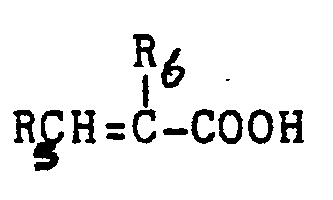
- (C) 10 to to 90 percent of at least one nonionic, copolymerizable α,β -ethylenically unsaturated monomer of the formula
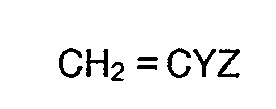


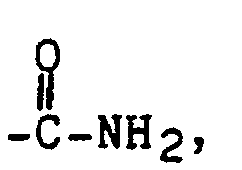
- (D) up to 1 percent of a copolymerizable polyethylenically unsaturated cross-linking monomer, said percentages being by weight, based on the total weight of said monomers.
- The copolymers are prepared by conventional emulsion polymerization methods at low pH, e.g. pH 2.5-5, yielding a high solids, low viscosity copolymer dispersion which thickens substantially upon neutralization of at least some of the remaining carboxyl groups. The copolymers are useful in a variety of applications, particularly as thickeners for aqueous systems. As liquid emulsion copolymers, they can readily be added at any point in the mixing process. Alternatively, the copolymers can be dried by any one of several well known methods, either as pure polymers, or onto a solid substrate such as kaolin clay.
- Monomeric Components: As noted previously the copolymers of this invention are prepared by emulsion copolymerization of three essential types of monomers and an optional fourth monomer type, namely (A) a nonionic urethane monomer obtained by condensing a nonionic surfactant with an ethylenically unsaturated monoisocyanate, (B) an a,{3 -ethylenically unsaturated carboxylic acid monomer, (C) a nonionic α,β -ethylenically unsaturated monomer, and (D) optionally a polyethylenically unsaturated cross-linking monomer. The proportions of the monomers can be varied widely within certain specific ranges to obtain thickening agents possessing a variety of rheological properties. As prepared, the aqueous acidic copolymer dispersions are easily handled high solids latices which upon neutralization of at least a portion of the carboxyl groups, swell and thicken aqueous systems. The nonionic urethane monomer serves as a major constituent of the copolymer backbone, and depending upon the amount thereof present permits modification of the film forming characteristics of the copolymers when dried. The bound urethane surfactant monomer permits adjustment of the rheological properties provided by the copolymer, decreases the electrolyte sensitivity and enhances the thickening action of the copolymers.
- According to preferred embodiments, the copolymers of this invention comprise 1 to 25 weight percent, based on total weight of monomers, of at least one polyhydric alcohol- or amine-substituted carbonyl amino alkyl acrylate monomer of the formula:


- The novel copolymerizable nonionic surfactant monomers of this invention are prepared by the conventional condensation reaction of an isocyanate with an active hydrogen compound (see High Polymers XVI Part 1, pp. 71-74). The isocyanate compound can be prepared using the method of US-A- 2,718,516 in which an amino alcohol is first reacted with an alkyl chloroformate to produce a compound of the formula
- HO-A-NHCOOC2Hs
- where A is an alkyl group. This compound is then reacted with an acid halide of the formula
- Z-CO-X
- In the particularly preferred surfactant monomers D is an an alkylene group containing from 2 to 4 carbon atoms, a is zero or an integer of from 2 to 20 and b is zero and E is either CH2 = CH- or CH2 = C-(CH3)-. In one preferred class of monomers the sum of p, q, r and s is zero and Rio is sorbitan triolate. Examples of nonionic surfactants which can be reacted with the monoethylenically unsaturated monoisocyanates to produce the novel nonionic surfactant monomers of the invention are sorbitan fatty acid esters, such as sorbitan monooleate and sorbitan monostearate, and the polyoxyethylene sorbitan fatty acid esters, such as poly(oxyethylene)20 sorbitan monolaurate, and poly(oxyetbylene)20 sorbitan monostearate. Suitable amine surfactants include such primary amines as octyl amine, and dodecyl amine, and such secondary amines as dipentyl and diheptyl amine. These reactants for the most part are commercially available. Moisture should be removed before use thereof since water interferes with the isocyanate reaction. By employing a suitable stannous catalyst, the condensation reaction is carried out at relatively low temperature, e.g. 40 C to 60 C and essentially quantitative yields are obtained. No by-products are formed, and thus purification of the product is unnecessary. This feature of the reaction is important in determining and controlling the amount of bound surfactant monomer present in the emulsion copolymer, whereby copolymer reproducability is readily accomplished.
- Preferably the surfactant monomer comprises from 5 to 15 percent by weight of the copolymer, 7 to 10 percent being a particularly preferred quantity for such monomer.
- The copolymerizable α,β -ethylenically unsaturated carboxylic acid monomers have the general formula

- Examples of these acid monomers include such monobasic acids as acrylic, methacrylic, crotonic, and acyloxypropionic acid. Dibasic acid monomers include maleic, fumaric, and itaconic acid, and they can be used in place of a portion, e.g. up to about 10 weight percent, of the monobasic acid. Monomers which are monoesters of dibasic acids, such as the monobutyl ester of maleic acid can also be used to advantage. The weight percent of carboxylic acid monomer is 5 to about 70 percent, based on the total weight of monomers present. Preferably between 30 and 50 weight percent of the acid monomer is present. The most preferred weight percentage of the carboxylic acid monomer is between 35 and 45 percent. Acrylic and methacrylic acid are preferred acid monomers.
- In the copolymers of this invention a monomer which serves as a major component of the backbone is a nonionic copolymerizable α,β -ethylenically unsaturated monomer of the formula:


- Examples of these nonionic monomers are the C1-C8 alkyl and Cz-Cs hydroxyalkyl esters of acrylic and methacrylic acids, such as methyl acrylate, ethyl acrylate, butyl acrylate, 2-ethyl hexyl acrylate, methyl methacrylate, ethyl methacrylate, butyl methacrylate, 2-hydroxybutyl acrylate, 2-hydroxyethyl methacrylate, 2-hydroxypropyl methacrylate, styrene, butadiene, isoprene, vinyl chloride, vinylidene chloride, acrylonitrile, methacrylonitrile, vinyl acetate, vinyl butyrate, vinyl caprolate, p-chloro styrene, isopropyl styrene, vinyl toluene and the like. The preferred monomers are acrylate and methacrylate esters alone or mixtures thereof with styrene, acrylonitrile, or vinyl acetate.
- The nonionic monomer comprises from 10 to 90 percent by weight of the copolymer. The preferred proportion of this monomer is 30-70 weight percent, while the most preferred range is 50-60 weight percent.
- A small amount of a polyethylenically unsaturated monomer may be added as a cross-linking agent. Such monomers include diallyl phthalate, vinyl crotonate, allyl methacrylate, divinyl benzene, NN'- methylene-bis-acrylamide, ethylene glycol diacrylate, ethylene glycol dimethacrylate, 1,6-hexanediol diacrylate, and the like. Preferably from 0.05 to 1 weight percent, based on total monomers, of the polyethylenically unsaturated monomer is incorporated into the copolymer.
- The copolymers of this invention are readily prepared by conventional emulsion polymerization techniques using the monomers described above. The polymerization can be carried out in continuous, semi-continuous or batch fashion. The polymerization reaction can be initiated at 40-90 C, preferably 75°-85 C, with a free radical producing initiator such as the usual thermal decomposition initiators such as ammonium persulfate or potassium persulfate or at lower temperatures using redox initiators such as t-butyl hydroperoxide/bisulfite, or hydrogen peroxide with a ferrous compound. Alternatively azo initiators such as azobisisovaleronitrile can be used.
- An anionic emulsifier is normally included in the reaction medium at a concentration of 1 to 3 percent to maintain the copolymer product in the form of a stable aqueous dispersion. Suitable emulsifiers for such purpose are sodium lauryl sulfate, sodium dodecylbenzene sulfonate, as well as other ammonium, and alkali metal alkyl aryl sulfonates, ammonium and alkali metal alkyl sulfates, sodium dioctyl sulfosuccinate, and sulfonated alkyl esters and amides. Optionally, a nonionic surfactant, such as nonylphenol ethoxylates, octylphenol ethoxylates and linear or branched alkyl ethoxylates also may be employed if desired as they have a marked effect on the properties of the copolymer product.
- The polymerization is carried out at a pH below 5.0, generally in the range of 2.5 to 5, to maintain the insolubility of the copolymer in the continuous water phase by reason of the presence of free carboxyl groups. The finished copolymer dispersions have a relatively low viscosity even at a solids content of from 20-40 weight percent, or higher. Upon addition of an alkali to neutralize at least a portion of the free carboxyl groups, aqueous systems containing the copolymers markedly thicken.
- The improved copolymers of this invention are in-situ thickeners prepared by emulsion copolymerization at a pH between 2.5 and 5. The polymerization product is a milky white latex-like aqueous colloidal dispersion having a solids content up to 50 percent, generally from 5 to 50 percent, preferably 20-40 percent, by weight. The viscosity of these dispersions is generally low, typically from 25-100 mPa s at 25 C. The dispersions, which are relatively stable, are easily blended into a variety of aqueous systems. Different dispersions according to the invention can be blended together to provide the properties desired for a specific application. The pure copolymer, in dried form, is a solid at a temperature of 25° C.
- Upon addition of an alkaline material such as an alkali metal hydroxide, sodium carbonate, or other bases such as ammonium hydroxide, methylamine or diethylamine, at least some of the free carboxy groups in the polymer are neutralized, rendering the copolymer soluble in water. At a low pH, e.g. a pH below 5.5, the polymer exists in the form of discrete, water insoluble particles, having an average particle size of 0.1 to 5 microns. Average molecular weights of the copolymers are estimated to be between 100,000 and 5,000,000. Preferred copolymers have an average molecular weight of from 500,000 to 1,000,000. Copolymers having substantially higher molecular weights may be obtained when a polyethylenically unsaturated cross-linking monomer is also present.
- The selection of the nonionic α,β -ethylenically unsaturated monomer has a significant effect on the thickening potential of the copolymers. Other properties such as the rheology of thickened compositions are dependent on the pH of neutralization, and the glass transition temperature, which properties may also be modified by the choice of non-ionic monomer. For example, butyl acrylate can be incorporated into the copolymer backbone to lower the glass transition temperature, or "soften" the copolymer. On the other hand, incorporation of methacrylate esters into the copolymer will stiffen the copolymer backbone and thereby harden a cast film of the polymer.
- The following preparation and examples, in which all parts are by weight unless otherwise indicated, are presented as a means of further describing the preparation and use of the novel copolymers of this invention, and should not be considered as limiting the scope of the invention. Further embodiments of the invention can be found in claims 3, 4, 6 to 10, 14 and 15.
- The reaction conditions described in this preparation apply generally for synthesizing surfactant monomers by reaction between isocyanate and alkyl poly(oxyethylene) alcohols, although the actual surfactant monomer produced, heptadecyl poly(ethyleneoxy)19 ethyl oxycarbonylamino ethyl methacrylate, is not within the scope of the invention.
- A mixture of 150g of previously dried heptadecyl poly(ethyleneoxy)19 ethanol (0.132 mol) and 0.25 grams monomethyl ether of hydroquinone (MEHQ) was charged to a 500 ml reaction flask equipped with a thermometer, mechanical stirrer, heating mantle, condenser, and drying tube. The mixture was heated to 50 ° C and .25 grams of stannous octoate were added. To this mixture were added 20.17 grams of 2-isocyanato ethyl methacrylate (.139 mol) via a dropping funnel over thirty minutes, while the temperture of the mixture was maintained at 50-55 C. When the addition of isocyanate was completed, the mixture was held at 50-55° C for 3.5 hours to ensure complete reaction of the isocyanate. The product after cooling was a white waxy material which could be used in copolymer synthesis without purification.
- Preparation of the sorbitan monooleate poly(oxyethylene)19 ethyl oxycarbonyl amino ethyl methacrylate.
- A mixture of 100 grams of previously dried poly(oxyethylene)20 sorbitan mono-oleate (0.076 mol) and 0.25 grams of MEHQ were charged to a 500 ml reaction flask equipped with a thermometer, mechanical/stirrer, heating mantle, condenser and drying tube. The mixture was heated to 45 C, and 0.25 grams of stannous octoate and 8.89 of 2-isocyanato ethyl methacrylate (0.0573 mol) were added while holding the reaction temperature at 450 C. When the addition of isocyanate was complete the mixture was held at 45 C for 75 minutes. The product after cooling was a yellow liquid. The reaction conditions described in this example apply to the reaction between isocyanate and both ethoxylated and non-ethoxylated sorbitan ester surfactants.
- Preparation of 3-methoxy propyl-1 amino carbonyl amino ethyl methacrylate.
- A mixture of 100 grams of previously dried 1-amino-3-methoxy propane (0.660 mole) and 0.5 grams of monomethyl ether of hydroquinone (MEHQ) was charged to a 500 ml reaction flask equipped with a thermometer, mechanical stirrer, heating mantle, condenser, and drying tube. The mixture was heated to 45 ° C and 0.3 grams of stannous octoate were added. To this mixture were added 100.3 grams of 2-isocyanato ethyl methacrylate (0.647 mole) via a dropping funnel over 75 minutes while maintaining the temperature of the mixture between 45-50 C. When the addition of the isocyanate was complete, the mixture was held at 50 C for 1 hour to ensure complete reaction of the isocyanate. The product after cooling was a yellow oil which could be used in copolymer synthesis without purification. The reaction conditions described above apply generally for synthesizing surfactant monomers by reaction between isocyanate and primary or secondary amines.
- Preparation of the sorbitan monooleate poly(oxyethylene)19 ethyl oxycarbonyl amino ethyl methacrylate.
- A mixture of 100 grams of previously dried poly(oxyethylene)2o sorbitan monooleate (0.0765 mol) and 0.25 grams of MEHQ were charged to a 500 ml reaction flask equipped with a thermometer, mechanical stirrer, heating mantle, condenser, and drying tube. The mixture was heated to 45 C, and 0.25 grams of stannous octoate and 8.89 of 2-isocyanato ethyl methacrylate (0.0573 mol) were added while holding the reaction temperature at 45 C. When the addition of isocyanate was complete the mixture was held at 45 C for 75 minutes. The product after cooling was a yellow liquid. The reaction conditions described in this example apply to the reacton between isocyanate and both ethoxylated and non-ethoxylated sorbitan ester surfactants.
- Preparation of sorbitan monostearate poly(oxyethylene)19 ethyl oxycarbonyl amino ethyl methacrylate.
- A mixture of 200 grams of previously dried poly(oxyethylene)2o sorbitan monostearate (0.153 mole) and 0.5 grams of MEHQ were charged to a reactor as described in Example 1. The mixture was heated to 45° C, and 0.25 grams of stannous octoate were added. While holding the reaction temperature at 45-50 C 17.76 grams of 2-isocyanato ethyl methacrylate (0.114 mole) were added via a dropping funnel over 1 hour. When the additon of isocyanate was complete the mixture was held at 45 ° C for 75 minutes. Upon cooling the product was a yellow liquid which could be used without purification.
- In Table I, below, the surfactants reacted with 2-isocyanato ethyl methacrylate and the procedure used, as designated by the appropriate example number, are set forth:

- Preparation of a copolymer (not within the scope of the invention) comprising heptadecyloxy poly-(oxyethylene),9 ethyloxycarbonyl amino ethyl methacrylate, methacrylic acid and ethyl acrylate.
- An aqueous monomer mixture was prepared by combining 6.14 grams of a 30% solution of sodium lauryl sulfate, 23 grams of the monomer of Preparation A, and 264 grams of water. After the monomer of Preparation A was well dispersed in the water, 92.0 grams of methacrylic acid, 115.0 grams ethyl acrylate, and 0.23 grams diallyl phthalate were added and the mixture was vigorously agitated to provide a uniform white emulsion. To an all-glass reaction vessel equipped with a mechanical stirrer, heating mantle, thermometer, condenser, and dropping funnel were added 200 grams of water and 6.14 grams of a 30% solution of sodium lauryl sulfate. The reactor contents were heated with agitation to 85 C and 9.9 grams of 2.5% ammonium persulfate solution were added. Addition of the monomer pre-emulsion mixture was begun at the rate of 2.5 ml./min. After 10 minutes the monomer feed rate was increased to 8 ml./min. and 2.5 ml. shots of .35% ammonium persulfate were added at 5 minute intervals. After completion of the monomer addition, 19.8 grams of .45% ammonium persulfate solution were added and the copolymer was cooked out for 1.5 hours. The resulting emulsion copolymer was cooled and filtered through a 40 mesh screen to remove any grit. The filtrate had a 30% solids content and the pH thereof was 2.9. A 1.0% solids solution thereof raised to pH 9.0 with NaOH, provided a viscosity of 9,000 mPas at 25°C (#6 spindle at 20 RPM Brookfield LVT - Brookfield is a trademark).
- Using the emulsion polymerization procedure described in preparation B, different copolymer dispersions according the invention were prepared and these are identified by "LEC" (liquid emulsion copolymer) numbers in Table IIA and IIB below. Also presented in these tables are viscosities for aqueous systems containing the copolymers. In some of the systems tested either sodium or calcium chloride was present, while the others merely contained water.


- As noted previously the copolymers of this invention are prepared by conventional emulsion poly- nerization methods and the resulting copolymer dispersions which contain 5 to 50 percent, preferably 20 to 10 percent, of copolymer, are suitable as such for use in various industrial applications such as adhesives, :oatings, drilling fluids, cleaners, wall joint compounds, lotions and other personal care products, highly absorbant applications, paints, wall paper adhesives, textile print pastes, textile sizings and oil recovery applications.
- Freeze-point depressants may be added to the latex products of this invention to provide moderate cold-weather protection during shipping,if desired. The list of suitable freeze-point depressants is long and the members thereof are well known to the trade. Among the generally suitable freeze-point depressants are lower molecular weight alcohols and glycols such as methanol, ethanol, isopropanol, butanol, ethylene glycol, propylene glycol, butylene glycol, diethylene glycol, ethylene glycol monoethylether, ethylene glycol dimethyl ether, and the like.
- Alternatively, the product of the invention can be dried by a variety of known industrially available methods. These include, but are not limited to, tray drying, spray drying, drum drying, freeze drying, and precipitation and recovery followed by tray or fluidized bed drying. Additionally, the copolymer products of this invention can be dried onto a variety of particulate substrates such as silica, kaolin, lignite, bentonite and other clays, and weighting materials normally utilized in various applications. The purpose of using such substrates is to enable delivery of dry products capable of rapid mixing and dispersion in various applications where the support material is compatible with the desired composition. In addition, the presence of a solid particulate support facilitates the drying of copolymers that form films at relatively low temperatures, frequently a limiting factor in drying process selection. The use of dried blends of this type eliminates all concern of product freeze damage and related costs to provide cold weather protection during shipping. In addition, copolymer products of various properties can be delivered to the end user in dry form with acceptable economics.
- The copolymer dispersions of the invention usually can be combined in aqueous compositions designed for particular applications with predictable effects due to the fact that the surfactant monomer may be carefully chosen and incorporated in the copolymer chain in the desired amount.
- The copolymer dispersions of the invention are of interest as print paste thickeners for use in, but not limited to, textile printing. For example, aqueous dispersions having a concentration of 1 percent polymer solids of several of the foregoing examples were studied in "clear" formulations resulting from neutralization with ammonium hydroxide to pH 9. The "clear" formulations were then typically treated with up to 10% of an acrylic "low crock" print binder, a representative composition of such type being offered for sale by Alco Chemical Corporation under the designation PB-1, a 45% solids acrylic emulsion polymer (CAS No. 27082-10-6) and 5% of a color concentrate of the type sold by many companies to textile mills. A typical product of the general type is offered for sale by Catawba Charlabs of North Carolina as Impriment Blue SGG, trademark, a blue paste for test purposes.
- Viscosity determinations were made on the "clear" formulations and print pastes and the results are set forth in Table III, below. The "LEC" numbers which appear in this table are for copolymers of the same number identified in Table II above.
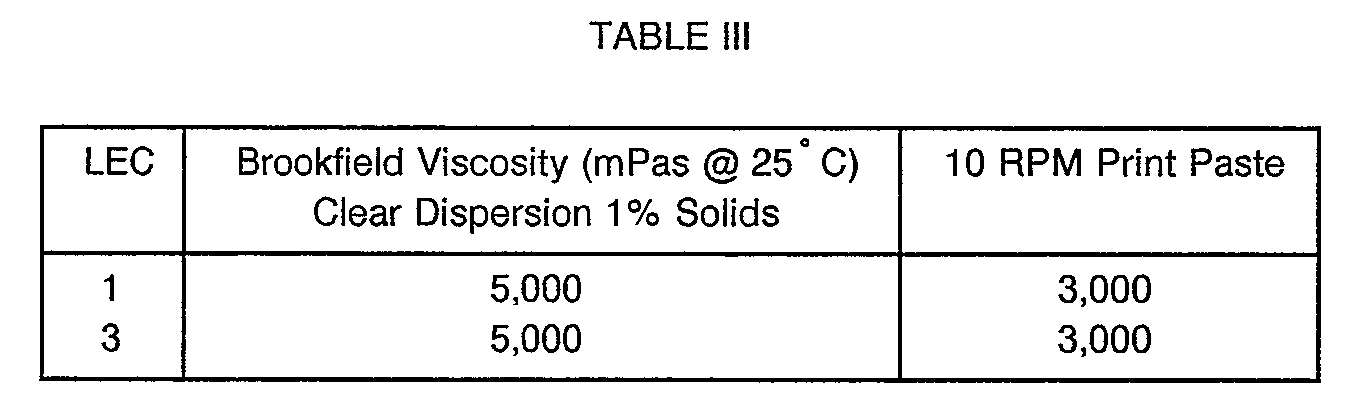
- Any number of different color concentrates may be substituted for the blue concentrate used in these examples. Colors are selected to answer the need of stylists in the printing industry. The degree of crosslinking of the copolymer thickeners can be varied for the purpose of altering print paste rheology. The viscosities set forth in Table III can be varied by addition of a nonionic surfactant to the print paste.
- General purpose adhesives may be thickened with copolymer dispersions of this invention to the high viscosity required for rendering the adhesives useful for various purposes such as floor tile and carpet installation. For example, there is commercially available for such purposes an adhesive having the necessary filler loading and containing a solvent-based tackifying resin, to which a styrene butadiene latex is added. A small amount of the dispersion was added to the adhesive and Brookfield viscosities were determined on the adhesive before and after addition ofthe latex. The results obtained are set forth in Table IV, below:

- Typical oil well drilling fluids were prepared using standard methods, and the fluids were subjected to the API Fluid Loss Test and Fann 35 Viscosimeter test. A comparison was made of the thickening effects of various thickeners of this invention utilizing a standard bentonite composition (Aquagel@ of N.L. Baroid, Inc.) dispersed in mud at 15 pounds per barrel (PPB). In some of the tests fresh water mud was used. In addition, muds contaminated with either sodium chloride at a concentration of 25,000 mg/I (PPM) or 2000 mg./I (PPM) of calcium chloride were also tested for thickening effect. The muds were tested for apparent viscosity at 600 RPM (A.V.) plastic viscosity in mPas (P.V.), yield point (Y.P.), in units of 0.48 Pa (equal to Ibs/100 ft.2), gel stength and fluid loss (F.L.) API Filtrate (RP 13B Fluid Loss) at 0.25 PPB active copolymer addition. The results are set forth in Tables V, VI and VII, below:


- To illustrate the above, Standard Procedure for Testing Drilling Fluids, API RP13B, Seventh Edition, 1978, is employed.
- A walljoint compound was prepared in which were included various copolymer dispersions of the invention. This compound, designed for use in gypsum board tape joints for building construction, had the formulation set forth in Table VIII.

- The components of Part A were blended together to provide a smooth mixture using a low shear folding type mixer. The components of Part B were dry blended and added slowly to Part A, and mixing was continued until a smooth blend was obtained. Part of the water of Part A was withheld and added during the addition of Part B.
- The resulting walljoint compounds of this invention were tested for certain physical properties and the results are tabulated in Table IX, below:

- The copolymers of this invention are excellent thickeners for cleaners and liquid detergent formulations. For example, an institutional cleaner containing no phosphates was prepared utilizing thickeners of the invention. The composition of the cleaner is set forth in Table X, below.
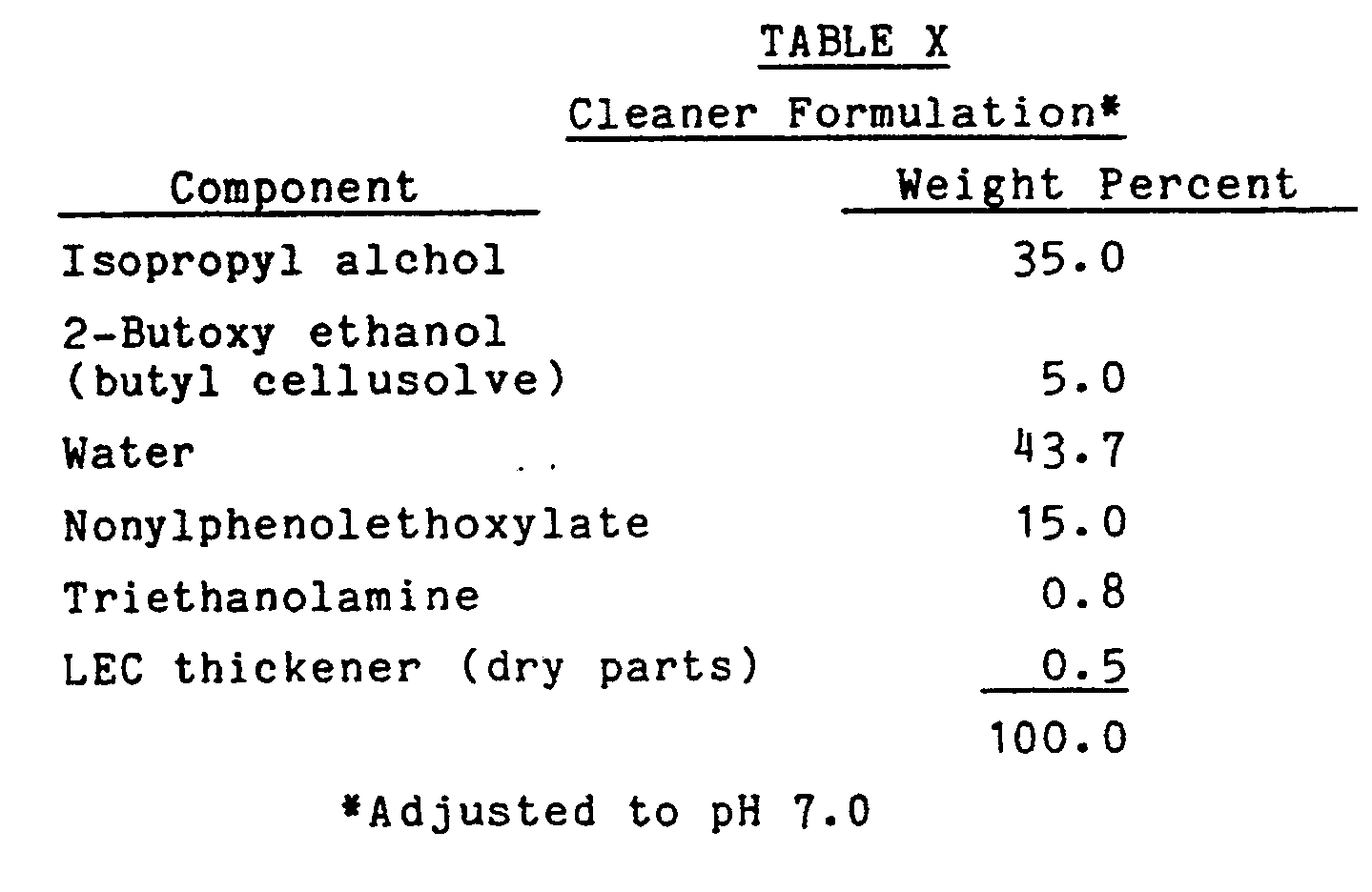
- Products of this invention have demonstrated utility in the manufacture of paints and coatings. In particular, the alkali soluble thickeners of the invention have application in interior latex wall paints as demonstrated by the following formulations (see Table XI).

- The "grind" was subjected to high shear mixing, following which the latex was blended in. Then the thickener was added and the pH was adjusted to above 5.5 with addition of ammonium hydroxide.
- Pigment dispersions and suspension (slurries) of calcium carbonate, titanium dioxide, kaolin and other minerals can be prepared using the thickeners of this invention.
- Paper coatings prepared using copolymers of this invention offer an improvement over prior coatings containing thickeners, especially as regards efficiency, i.e. the amount of thickener required to increase the viscosity of the coatings to useful levels. In this regard, the overall rheology of coatings of both the low and high shear type containing thickeners of this invention were studied. The fluid retention of the coatings was compared using an "S.D. Warren" tester (S.D. Warren is a trade mark), an electronic water retention (EWR) in seconds was measured. The EWR values have a bearing on the overall usefulness of a particular thickener, regardless of the amount used in the coating, and provides evidence of the runability of the coating. The results of the tests are presented in Tables XII and XIII.


Claims (22)


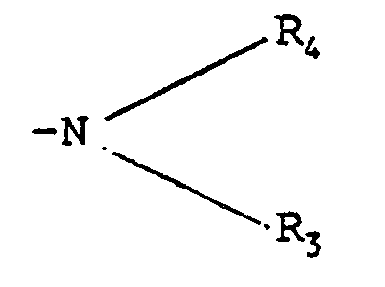


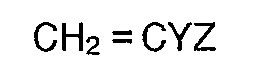


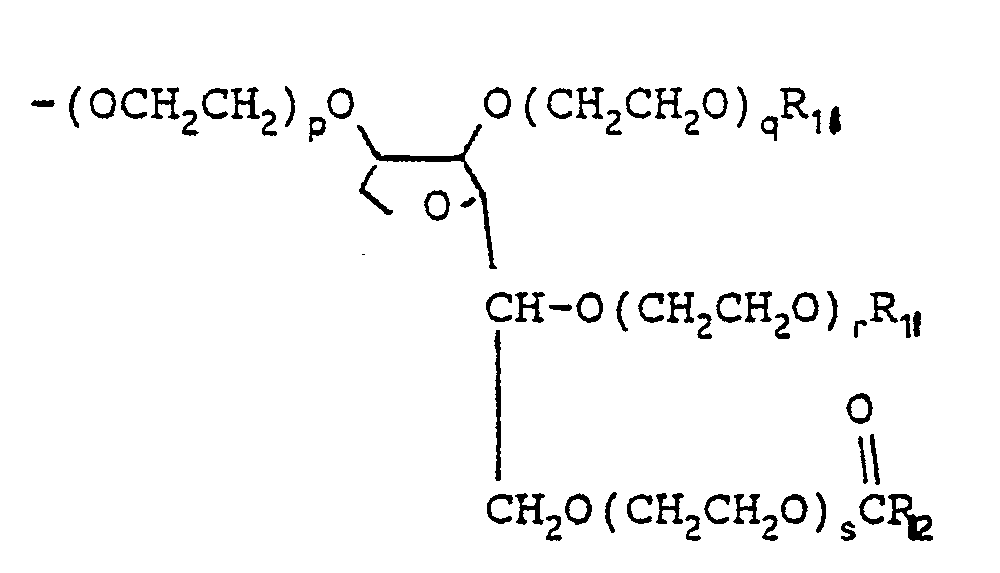


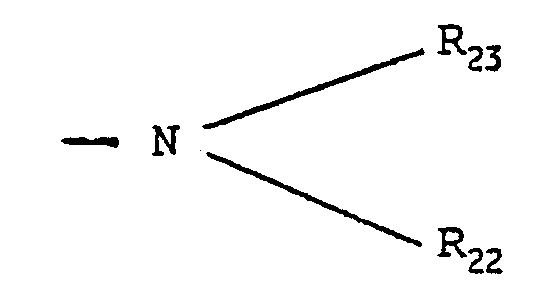
Priority Applications (1)
| Application Number | Priority Date | Filing Date | Title |
|---|---|---|---|
| AT86301099T ATE69453T1 (en) | 1985-04-04 | 1986-02-18 | ACRYLATE EMULSION POLYMERS AS THICKENING AGENTS IN AQUEOUS SYSTEMS AND COPOLYMERIZABLE MONOMERIC EMULSIFYING AGENTS USABLE IN THESE COPOLYMERS. |
Applications Claiming Priority (4)
| Application Number | Priority Date | Filing Date | Title |
|---|---|---|---|
| US71976885A | 1985-04-04 | 1985-04-04 | |
| US719768 | 1985-04-04 | ||
| US782571 | 1985-10-01 | ||
| US06/782,571 US4600761A (en) | 1985-04-04 | 1985-10-01 | Acrylic emulsion copolymers for thickening aqueous systems and copolymerizable surfactant monomers for use therein |
Publications (3)
| Publication Number | Publication Date |
|---|---|
| EP0197635A2 EP0197635A2 (en) | 1986-10-15 |
| EP0197635A3 EP0197635A3 (en) | 1987-08-19 |
| EP0197635B1 true EP0197635B1 (en) | 1991-11-13 |
Family
ID=27110137
Family Applications (1)
| Application Number | Title | Priority Date | Filing Date |
|---|---|---|---|
| EP86301099A Expired - Lifetime EP0197635B1 (en) | 1985-04-04 | 1986-02-18 | Acrylic emulsion copolymers for thickening aqueous systems and copolymerizable surfactant monomers for use therein |
Country Status (4)
| Country | Link |
|---|---|
| US (1) | US4600761A (en) |
| EP (1) | EP0197635B1 (en) |
| CA (2) | CA1270347A (en) |
| DE (1) | DE3682420D1 (en) |
Families Citing this family (113)
| Publication number | Priority date | Publication date | Assignee | Title |
|---|---|---|---|---|
| JPS61204211A (en) * | 1985-03-08 | 1986-09-10 | Kansai Paint Co Ltd | Aqueous coating composition |
| US4745154A (en) * | 1986-04-14 | 1988-05-17 | Alco Chemical Corporation | Water soluble polymers, their preparation and their uses |
| US4722962A (en) * | 1986-06-12 | 1988-02-02 | Desoto, Inc. | Nonionic associative thickeners |
| US4735981A (en) * | 1986-10-03 | 1988-04-05 | Desoto, Inc. | Combinations of associative thickeners and aqueous latex paints containing the same |
| US4801671A (en) * | 1987-06-25 | 1989-01-31 | Desoto, Inc. | Production of alkali-soluble, carboxyl-functional aqueous emulsion thickeners |
| DE3817469A1 (en) * | 1988-05-21 | 1989-11-30 | Hoechst Ag | DISPERSION POLYMERISES CONTAINING UREA GROUPS BASED ON ETHYLENICALLY UNSATURATED MONOMERERS, PROCESS FOR THEIR PREPARATION AND THEIR USE |
| GB8813978D0 (en) * | 1988-06-13 | 1988-07-20 | Unilever Plc | Liquid detergents |
| US5162475A (en) * | 1988-06-20 | 1992-11-10 | Ppg Industries, Inc. | Polymerizable surfactant |
| US5296627A (en) * | 1988-06-20 | 1994-03-22 | Ppg Industries, Inc. | Ethylenically unsaturated poly(alkyleneoxy) surfactants |
| FR2633930B1 (en) * | 1988-07-07 | 1991-04-19 | Coatex Sa | THICKENING AGENT FOR MODIFYING THE RHEOLOGICAL CHARACTERISTICS OF AQUEOUS LOADED AND / OR PIGMENTED, WHITE OR COLORED COMPOSITIONS |
| US5191051A (en) * | 1989-01-09 | 1993-03-02 | Union Carbide Chemicals & Plastics Technology Corporation | Propoxylated alkali-soluble thickeners |
| DE68922867D1 (en) * | 1989-01-09 | 1995-06-29 | Union Carbide Chem Plastic | PROPOXYLATED ALKALINE-SOLUBLE THICKENING AGENTS. |
| US5073285A (en) * | 1989-06-12 | 1991-12-17 | Lever Brothers Company, Division Of Conopco, Inc. | Stably suspended organic peroxy bleach in a structured aqueous liquid |
| US5053448A (en) * | 1989-07-21 | 1991-10-01 | S. C. Johnson & Son, Inc. | Polymeric thickener and methods of producing the same |
| DE69022941T2 (en) * | 1989-08-24 | 1996-05-15 | Fukui Gyomo K K | Thermosetting liquid (meth) acrylate resins and summaries containing them. |
| DE3935137A1 (en) * | 1989-10-21 | 1991-04-25 | Hoechst Ag | COPOLYMERISATES CONTAINING URETHAN GROUPS BASED ON ETHYLENICALLY UNSATURATED MONOMERS, METHODS FOR THEIR PRODUCTION AND THEIR USE |
| US5030507A (en) * | 1990-01-12 | 1991-07-09 | National Starch And Chemical Investment Holding Corporation | Formaldehyde-free nonwoven binder composition |
| US5206286A (en) * | 1990-04-02 | 1993-04-27 | Ppg Industries, Inc. | Aqueous emulsion polymers prepared with crosslinkable non-ionic surfactants |
| US5244960A (en) * | 1990-04-02 | 1993-09-14 | Ppg Industries, Inc. | Thermosetting waterborne coating compositions prepared from aqueous emulsion polymers |
| EP0500828A4 (en) * | 1990-07-30 | 1992-12-09 | Union Carbide Chemicals And Plastics Company, Inc. | Method of coating substrates utilizing an alkali-functional associative thickener containing coating composition |
| DE4026239A1 (en) * | 1990-08-18 | 1992-02-20 | Hoechst Ag | COPOLYMERISATE CONTAINING CARBOXYL GROUPS, THEIR PRODUCTION AND THEIR USE AS THICKENERS |
| CA2065231A1 (en) * | 1990-09-17 | 1992-03-18 | Peter M. Attard | Clay-free, asbestos-free and glass microbubble-free joint compounds |
| US5320672A (en) * | 1991-12-17 | 1994-06-14 | Whalen Shaw Michael | Associatively dispersed pigments and coatings containing said pigments |
| EP0642541A1 (en) * | 1992-05-29 | 1995-03-15 | Union Carbide Chemicals & Plastics Technology Corporation | Aqueous latexes containing macromonomeres |
| US5461100A (en) * | 1992-05-29 | 1995-10-24 | Union Carbide Chemicals & Plastics Technology Corporation | Aircraft anti-icing fluids |
| US5426182A (en) * | 1992-05-29 | 1995-06-20 | Union Carbide Chemical & Plastics Technology Corporation | Polysaccharides containing complex hydrophobic groups |
| US5292828A (en) * | 1992-05-29 | 1994-03-08 | Union Carbide Chemicals & Plastics Technology Corporation | Polymers containing complex hydrophobic groups |
| US5478602A (en) * | 1992-05-29 | 1995-12-26 | Union Carbide Chemicals & Plastics Technology Corporation | Polymers containing macromonomers and their use in a method of coating substrates |
| US5739378A (en) * | 1992-05-29 | 1998-04-14 | Union Carbide Chemicals & Plastics Technology Corporation | Complex hydrophobe-containing oligomers |
| US5488180A (en) * | 1992-05-29 | 1996-01-30 | Union Carbide Chemicals & Plastics Technology Corporation | Complex hydrophobe compounds |
| US5292843A (en) * | 1992-05-29 | 1994-03-08 | Union Carbide Chemicals & Plastics Technology Corporation | Polymers containing macromonomers |
| FR2693203B1 (en) * | 1992-07-01 | 1994-08-26 | Coatex Sas | Partially or completely water-soluble acrylic copolymer, crosslinked or not and its use. |
| US5663123A (en) * | 1992-07-15 | 1997-09-02 | Kb Technologies Ltd. | Polymeric earth support fluid compositions and method for their use |
| EP0658269B1 (en) * | 1993-06-03 | 1999-10-13 | Showa Denko Kabushiki Kaisha | Solid polymer electrolyte, battery and solid-state electric double layer capacitor using the same as well as processes for the manufacture thereof |
| US5399618A (en) * | 1993-06-28 | 1995-03-21 | Union Carbide Chemical & Plastics Technology Corporation | Processes for preparing aqueous polymer emulsions |
| US5294692A (en) * | 1993-06-30 | 1994-03-15 | National Starch And Chemical Investment Holding Corporation | Associative monomers and polymers |
| US5708068A (en) * | 1995-01-16 | 1998-01-13 | Union Carbide Chemicals & Plastics Technology Corporation | Aircraft deicing/anti-icing fluids thickened by associative polymers |
| US5639841A (en) * | 1995-02-28 | 1997-06-17 | Union Carbide Chemicals & Plastics Technology Corporation | Polymers containing macromonomer mixtures |
| US5912220A (en) † | 1996-09-20 | 1999-06-15 | S. C. Johnson & Son, Inc. | Surfactant complex with associative polymeric thickener |
| WO1998034994A1 (en) | 1997-02-12 | 1998-08-13 | Kb Technologies, Ltd. | Composition and method for a dual-function soil-grouting excavating or boring fluid |
| US6897186B2 (en) * | 1997-02-12 | 2005-05-24 | Kg International, Llc | Composition and method for dual function soil grouting excavating or boring fluid |
| US6159906A (en) * | 1997-10-01 | 2000-12-12 | Rheox, Inc. | Oil well drilling fluids with improved anti-settling properties and methods of providing anti-settling properties to oil well drilling fluids |
| US6232392B1 (en) | 1998-06-24 | 2001-05-15 | Ppg Industries Ohio, Inc. | Temporary water-washable coating for spray booths and vehicles during assembly |
| DE69943379D1 (en) | 1998-11-23 | 2011-06-01 | Grace W R & Co | IMPROVED PROCESSING AND LIFE OF MORTAR PLATES FROM MASONAL MORTARS AND METHOD FOR THE PRODUCTION THEREOF |
| US6187221B1 (en) * | 1999-05-12 | 2001-02-13 | National Starch And Chemical Investment Holding Corporation | Controlled release bleach thickening composition having enhanced viscosity stability at elevated temperatures |
| US6869996B1 (en) | 1999-06-08 | 2005-03-22 | The Sherwin-Williams Company | Waterborne coating having improved chemical resistance |
| AUPQ164299A0 (en) | 1999-07-14 | 1999-08-05 | Orica Australia Pty Ltd | Aqueous polymer dispersion |
| US7288616B2 (en) * | 2002-01-18 | 2007-10-30 | Lubrizol Advanced Materials, Inc. | Multi-purpose polymers, methods and compositions |
| US7153496B2 (en) * | 2002-01-18 | 2006-12-26 | Noveon Ip Holdings Corp. | Hair setting compositions, polymers and methods |
| US7078457B2 (en) * | 2002-07-30 | 2006-07-18 | Rohm And Haas Company | Polymer composition and process for the preparation thereof |
| US8329807B2 (en) * | 2003-08-18 | 2012-12-11 | Columbia Insurance Company | Latex paint film resistant to adverse effects of water, and compositions and methods for making same |
| US9139676B2 (en) | 2003-08-18 | 2015-09-22 | Benjamin Moore & Co. | Environmentally friendly colorant compositions and latex paints/coatings |
| US7402627B2 (en) * | 2003-08-18 | 2008-07-22 | Columbia Insurance Company | Precursor colorant composition for latex paint |
| US7892525B2 (en) * | 2003-08-22 | 2011-02-22 | Lubrizol Advanced Materials, Inc. | Antiperspirant gel compositions |
| WO2006042220A1 (en) * | 2004-10-08 | 2006-04-20 | The Sherwin-Williams Company | Self crosslinking waterborne coatings |
| US9668476B2 (en) * | 2006-02-23 | 2017-06-06 | Lanxess Corporation | Removable antimicrobial coating compositions and methods of use |
| BRPI0708169B1 (en) * | 2006-02-24 | 2015-08-04 | Lubrizol Advanced Mat Inc | Composition |
| JP5368113B2 (en) | 2006-02-24 | 2013-12-18 | ルブリゾル アドバンスド マテリアルズ, インコーポレイテッド | Polymerizable silicone copolyol macromer and polymers made therefrom |
| FR2912309B1 (en) | 2007-02-13 | 2010-06-04 | Oreal | (EN) METHOD FOR PERMANENTLY DEFORMING KERATIN FIBERS COMPRISING AN APPLICATION STEP OF AN OXIDIZING COMPOSITION CONTAINING A CATIONIC THERAPY POLYMER. |
| US7741402B2 (en) * | 2007-03-21 | 2010-06-22 | Rohm And Haas Company | Thickener composition and method for thickening aqueous systems |
| FR2920986B1 (en) | 2007-09-14 | 2010-01-15 | Oreal | COSMETIC COMPOSITIONS CONTAINING CATIONIC COPOLYMER AND PARTICULATE AMINO SILICONE AND USES THEREOF |
| FR2920976B1 (en) | 2007-09-14 | 2009-12-04 | Oreal | COSMETIC COMPOSITION COMPRISING A CATIONIC COPOLYMER AND ANIONIC ASSOCIATIVE POLYMER AND COSMETIC PROCESSING METHOD. |
| FR2920977B1 (en) | 2007-09-14 | 2012-07-27 | Oreal | COSMETIC COMPOSITIONS CONTAINING A CATIONIC COPOLYMER AND A PARTICULAR TRIGLYCERIDE AND USES THEREOF. |
| FR2920970B1 (en) | 2007-09-14 | 2010-02-26 | Oreal | COSMETIC COMPOSITIONS CONTAINING CATIONIC COPOLYMER, CYCLODEXTRIN AND SURFACTANT AND USES THEREOF. |
| FR2920971B1 (en) | 2007-09-14 | 2014-03-28 | Oreal | COSMETIC COMPOSITION COMPRISING AT LEAST ONE PARTICULAR CATIONIC POLYMER, AT LEAST ONE SURFACE ACTIVE AGENT, AT LEAST ONE CATIONIC OR AMPHOTERIC POLYMER AND AT LEAST ONE MINERAL PARTICLE, AND METHOD OF COSMETIC TREATMENT. |
| FR2920978B1 (en) | 2007-09-14 | 2012-04-27 | Oreal | COSMETIC COMPOSITION COMPRISING CATIONIC COPOLYMER AND STARCH AND METHOD OF COSMETIC TREATMENT. |
| FR2920969B1 (en) | 2007-09-14 | 2009-12-18 | Oreal | COSMETIC COMPOSITIONS CONTAINING CATIONIC COPOLYMER, AMINO SILICONE AND CATIONIC POLYMER AND USES THEREOF. |
| FR2920972B1 (en) | 2007-09-14 | 2009-12-04 | Oreal | COSMETIC COMPOSITION COMPRISING A PARTICULAR CATIONIC POLYMER AND AT LEAST ONE C8-C24 FATTY ACID ESTER AND SORBITAN OXYETHYLENE COMPRISING 2 TO 10 OXYETHYLENE MOTIFS, AND COSMETIC TREATMENT METHOD. |
| FR2930440B1 (en) | 2008-04-28 | 2012-12-14 | Oreal | COSMETIC COMPOSITION COMPRISING A CATIONIC POLYURETHANE AND A PARTICULAR POLYACRYLATE AND USES THEREFOR |
| US20110177146A1 (en) | 2009-07-27 | 2011-07-21 | E. I. Du Pont De Nemours And Company | Removable antimicrobial coating compositions containing cationic rheology agent and methods of use |
| US20110182959A1 (en) * | 2009-07-27 | 2011-07-28 | E.I. Du Pont De Nemours And Company. | Removable antimicrobial coating compositions containing acid-activated rheology agent and methods of use |
| EP2298848B1 (en) | 2009-08-28 | 2017-10-11 | Services Pétroliers Schlumberger | Method for servicing subterranean wells |
| BR112012013051A2 (en) | 2009-12-01 | 2016-11-22 | Lubrizol Advanced Mat Inc | composition and product |
| JP5806226B2 (en) | 2009-12-01 | 2015-11-10 | ルブリゾル アドバンスド マテリアルズ, インコーポレイテッド | Hydrolytically stable multipurpose polymer |
| US9278515B2 (en) | 2010-06-14 | 2016-03-08 | Hewlett-Packard Development Company, L.P. | Printing method |
| US9493685B2 (en) * | 2010-06-14 | 2016-11-15 | Hewlett-Packard Development Company, L.P. | Pre-treatment composition |
| US20130195775A1 (en) | 2011-08-03 | 2013-08-01 | Landec Corporation | Ionic/ionogenic comb copolymer compositions and personal care products containing the same |
| US9096755B2 (en) | 2011-09-13 | 2015-08-04 | Lubrizol Advanced Materials, Inc. | Surfactant responsive micro-gels |
| WO2013040174A1 (en) | 2011-09-13 | 2013-03-21 | Lubrizol Advanced Materials, Inc. | Surfactant responsive emulsion polymerized micro-gels |
| WO2013040178A1 (en) | 2011-09-13 | 2013-03-21 | Lubrizol Advanced Materials, Inc. | Surfactant responsive dispersion polymerized micro-gels |
| GB201116659D0 (en) | 2011-09-28 | 2011-11-09 | Unilever Plc | Thickening vinyl copolymers |
| GB201116660D0 (en) | 2011-09-28 | 2011-11-09 | Unilever Plc | Thickening vinyl copolymers |
| WO2013067109A1 (en) | 2011-11-01 | 2013-05-10 | Lubrizol Advanced Materials, Inc. | Acrylate-olefin copolymers, methods for producing same and compositions utilizing same |
| CN103183822B (en) * | 2011-12-28 | 2016-03-30 | 辽宁奥克化学股份有限公司 | A kind of unsaturated ammonia ester polyoxyalkyl ether and preparation method thereof |
| CN104994914B (en) | 2012-12-20 | 2018-07-27 | 路博润先进材料公司 | Irritation mitigates polymer and application thereof |
| CN104994836B (en) | 2012-12-20 | 2018-10-19 | 路博润先进材料公司 | Irritation mitigates polymer and application thereof |
| BR112015021509A2 (en) | 2013-03-08 | 2017-07-18 | Lubrizol Advanced Mat Inc | uses of at least one anionic surfactant and an amphiphilic nonionic dispersion polymer |
| US10435308B2 (en) | 2013-03-08 | 2019-10-08 | Ecolab Usa Inc. | Enhanced foam fractionation of oil phase from aqueous/oil mixed phase via increased viscoelasticity |
| CN105007884B (en) | 2013-03-08 | 2018-09-28 | 路博润先进材料公司 | Polymers and methods for alleviating polysiloxane deposition loss on keratinous substrates |
| US10773973B2 (en) | 2013-03-08 | 2020-09-15 | Ecolab Usa Inc. | Enhanced foam removal of total suspended solids and multiply charged cations from aqueous or aqueous/oil mixed phase via increased viscoelasticity |
| CN106029717B (en) | 2013-12-17 | 2019-07-16 | 路博润先进材料公司 | Surfactant responsiveness emulsion polymerization microgel |
| BR112016014650A2 (en) | 2013-12-23 | 2017-08-08 | Lubrizol Advanced Mat Inc | ANTI-DANDDRAND COMPOSITION AND METHOD FOR IMPROVING THE PHASE STABILITY OF AN ANTI-DANDDRAND SHAMPOO COMPOSITION |
| CN104262612B (en) * | 2014-09-09 | 2018-01-02 | 江苏苏博特新材料股份有限公司 | A kind of preparation method of the ester type polyethers containing unsaturated double-bond |
| US9702081B2 (en) | 2014-09-26 | 2017-07-11 | The Chemours Company Fc, Llc | Polyurethanes derived from non-fluorinated or partially fluorinated polymers |
| WO2016048642A1 (en) * | 2014-09-26 | 2016-03-31 | The Chemours Company Fc, Llc | Non-fluorinated monomers and polymers for surface effect compositions |
| US11207248B2 (en) | 2014-11-10 | 2021-12-28 | The Procter And Gamble Company | Personal care compositions with two benefit phases |
| MX376115B (en) | 2014-11-10 | 2025-03-07 | Procter & Gamble | COMPOSITIONS FOR PERSONAL CARE WITH TWO BENEFICIAL PHASES. |
| US10966916B2 (en) | 2014-11-10 | 2021-04-06 | The Procter And Gamble Company | Personal care compositions |
| RU2712887C2 (en) | 2014-11-24 | 2020-01-31 | Акцо Нобель Кемикалз Интернэшнл Б.В. | Internal polymer thinner for viscoelastic fluids based on surfactant |
| KR102307131B1 (en) | 2014-11-28 | 2021-09-30 | 가부시키가이샤 시세이도 | Oil-in-water type emulsion cosmetic |
| WO2016100466A1 (en) | 2014-12-18 | 2016-06-23 | Lubrizol Advanced Materials, Inc. | Amphiphilic suspension and stability agent for antidandruff hair care compositions |
| WO2016106168A1 (en) | 2014-12-23 | 2016-06-30 | Lubrizol Advanced Materials, Inc. | Laundry detergent compositions stabilized with an amphiphilic rheology modifier crosslinked with an amphiphilic crosslinker |
| WO2016209593A1 (en) * | 2015-06-26 | 2016-12-29 | Dow Global Technologies Llc | Improved dimethyl ethylene glycol composition for acid gas treatment |
| US10100243B2 (en) | 2015-07-13 | 2018-10-16 | KMP Holdings, LLC | Environmentally preferable microemulsion composition |
| JP2019501260A (en) | 2015-12-23 | 2019-01-17 | ルブリゾル アドバンスド マテリアルズ, インコーポレイテッド | Hydrophobic modified alkali swellable emulsion polymer |
| WO2018118679A1 (en) | 2016-12-19 | 2018-06-28 | Lubrizol Advanced Materials, Inc. | Surfactant responsive emulsion polymerized micro-gels |
| JP2020531533A (en) | 2017-08-22 | 2020-11-05 | ルブリゾル アドバンスド マテリアルズ, インコーポレイテッド | Soap compositions and treatments to relieve winter-related pruritus |
| WO2019079409A1 (en) | 2017-10-20 | 2019-04-25 | The Procter & Gamble Company | Aerosol foam skin cleanser |
| WO2019079405A1 (en) | 2017-10-20 | 2019-04-25 | The Procter & Gamble Company | Aerosol foam skin cleanser |
| WO2019126162A1 (en) | 2017-12-20 | 2019-06-27 | Lubrizol Advanced Materials, Inc. | Cleansing composition containing oil with foaming properties |
| EP3764981A1 (en) | 2018-03-16 | 2021-01-20 | Lubrizol Advanced Materials, Inc. | Foaming cleanser compositions containing a non-polar oil and amphiphilic polymer |
| WO2020112486A1 (en) | 2018-11-29 | 2020-06-04 | The Procter & Gamble Company | Methods for screening personal care products |
| WO2020123609A1 (en) | 2018-12-11 | 2020-06-18 | Lubrizol Advanced Materials, Inc. | Compositions and treatment methods for the mitigation of winter season related pruritus |
Citations (1)
| Publication number | Priority date | Publication date | Assignee | Title |
|---|---|---|---|---|
| EP1073109A2 (en) * | 1999-07-28 | 2001-01-31 | Sharp Kabushiki Kaisha | Single phase perovskite ferroelectric film on platinum electrode and method for forming same |
Family Cites Families (7)
| Publication number | Priority date | Publication date | Assignee | Title |
|---|---|---|---|---|
| US2718516A (en) * | 1952-11-08 | 1955-09-20 | Rohm & Haas | Isocyanato esters of acrylic, methacrylic, and crotonic acids |
| US4233425A (en) * | 1978-11-15 | 1980-11-11 | The Dow Chemical Company | Addition polymerizable polyethers having pendant ethylenically unsaturated urethane groups |
| US4384096A (en) * | 1979-08-27 | 1983-05-17 | The Dow Chemical Company | Liquid emulsion polymers useful as pH responsive thickeners for aqueous systems |
| US4351754A (en) * | 1979-09-17 | 1982-09-28 | Rohm And Haas Company | Thickening agent for aqueous compositions |
| US4421902A (en) * | 1982-09-30 | 1983-12-20 | Rohm And Haas Company | Alkyl, poly(oxyethylene) poly(carbonyloxyethylene) acrylate emulsion copolymers for thickening purposes |
| US4507188A (en) * | 1983-12-21 | 1985-03-26 | Thiokol Corporation | Ultraviolet curable formulations containing urethane acrylate monomers |
| US4514552A (en) * | 1984-08-23 | 1985-04-30 | Desoto, Inc. | Alkali soluble latex thickeners |
-
1985
- 1985-10-01 US US06/782,571 patent/US4600761A/en not_active Ceased
-
1986
- 1986-02-18 CA CA000502071A patent/CA1270347A/en not_active Expired - Lifetime
- 1986-02-18 DE DE8686301099T patent/DE3682420D1/en not_active Expired - Fee Related
- 1986-02-18 EP EP86301099A patent/EP0197635B1/en not_active Expired - Lifetime
-
1989
- 1989-06-13 CA CA000602709A patent/CA1277086C/en not_active Expired - Lifetime
Patent Citations (1)
| Publication number | Priority date | Publication date | Assignee | Title |
|---|---|---|---|---|
| EP1073109A2 (en) * | 1999-07-28 | 2001-01-31 | Sharp Kabushiki Kaisha | Single phase perovskite ferroelectric film on platinum electrode and method for forming same |
Also Published As
| Publication number | Publication date |
|---|---|
| EP0197635A2 (en) | 1986-10-15 |
| CA1270347A (en) | 1990-06-12 |
| CA1277086C (en) | 1990-11-27 |
| US4600761A (en) | 1986-07-15 |
| DE3682420D1 (en) | 1991-12-19 |
| EP0197635A3 (en) | 1987-08-19 |
Similar Documents
| Publication | Publication Date | Title |
|---|---|---|
| US4600761A (en) | Acrylic emulsion copolymers for thickening aqueous systems and copolymerizable surfactant monomers for use therein | |
| US4743698A (en) | Acrylic emulsion copolymers for thickening aqueous systems and copolymerizable surfactant monomers for use therein | |
| EP0217485B1 (en) | Acrylic-methylene succinic ester emulsion copolymers for thickening aqueous systems | |
| KR100379588B1 (en) | High Performance Alkali-Swellable Rheological Additives for Aqueous Systems | |
| US5412142A (en) | Associative monomers | |
| US4745154A (en) | Water soluble polymers, their preparation and their uses | |
| US4892916A (en) | Polymeric thickeners and their production | |
| EP0216479B2 (en) | Polymeric thickeners and their production | |
| US4569965A (en) | Crotonate-containing copolymers, processes for their preparation and their use as thickeners in aqueous systems and as sizing agents | |
| USRE33008E (en) | Acrylic emulsion copolymers for thickening aqueous systems and copolymerizable surfactant monomers for use therein | |
| US5011978A (en) | Copolymers as thickeners and modifiers for latex systems | |
| US6762269B1 (en) | High temperature viscosity stable thickener | |
| HK1052362B (en) | Acrylic copolymer partially or fully soluble in water, cured or not and its use | |
| US4916183A (en) | Copolymers as thickeners and modifiers for latex systems | |
| US5013787A (en) | Copolymers as thickeners and modifiers for latex systems | |
| AU635240B2 (en) | Propoxylated or butoxylated alkali-soluble thickeners | |
| CA2196908A1 (en) | Novel associative monomers and polymers |
Legal Events
| Date | Code | Title | Description |
|---|---|---|---|
| PUAI | Public reference made under article 153(3) epc to a published international application that has entered the european phase |
Free format text: ORIGINAL CODE: 0009012 |
|
| AK | Designated contracting states |
Kind code of ref document: A2 Designated state(s): AT BE CH DE FR GB IT LI LU NL SE |
|
| PUAL | Search report despatched |
Free format text: ORIGINAL CODE: 0009013 |
|
| AK | Designated contracting states |
Kind code of ref document: A3 Designated state(s): AT BE CH DE FR GB IT LI LU NL SE |
|
| 17P | Request for examination filed |
Effective date: 19880116 |
|
| 17Q | First examination report despatched |
Effective date: 19890425 |
|
| RAP1 | Party data changed (applicant data changed or rights of an application transferred) |
Owner name: NATIONAL STARCH AND CHEMICAL INVESTMENT HOLDING CO |
|
| DX | Miscellaneous (deleted) | ||
| GRAA | (expected) grant |
Free format text: ORIGINAL CODE: 0009210 |
|
| AK | Designated contracting states |
Kind code of ref document: B1 Designated state(s): AT BE CH DE FR GB IT LI LU NL SE |
|
| PG25 | Lapsed in a contracting state [announced via postgrant information from national office to epo] |
Ref country code: SE Effective date: 19911113 Ref country code: LI Effective date: 19911113 Ref country code: CH Effective date: 19911113 Ref country code: AT Effective date: 19911113 |
|
| REF | Corresponds to: |
Ref document number: 69453 Country of ref document: AT Date of ref document: 19911115 Kind code of ref document: T |
|
| REF | Corresponds to: |
Ref document number: 3682420 Country of ref document: DE Date of ref document: 19911219 |
|
| ET | Fr: translation filed | ||
| ITF | It: translation for a ep patent filed | ||
| REG | Reference to a national code |
Ref country code: CH Ref legal event code: PL |
|
| PG25 | Lapsed in a contracting state [announced via postgrant information from national office to epo] |
Ref country code: LU Free format text: LAPSE BECAUSE OF NON-PAYMENT OF DUE FEES Effective date: 19920229 |
|
| PLBE | No opposition filed within time limit |
Free format text: ORIGINAL CODE: 0009261 |
|
| STAA | Information on the status of an ep patent application or granted ep patent |
Free format text: STATUS: NO OPPOSITION FILED WITHIN TIME LIMIT |
|
| 26N | No opposition filed | ||
| PGFP | Annual fee paid to national office [announced via postgrant information from national office to epo] |
Ref country code: NL Payment date: 20001222 Year of fee payment: 16 |
|
| PGFP | Annual fee paid to national office [announced via postgrant information from national office to epo] |
Ref country code: BE Payment date: 20010313 Year of fee payment: 16 |
|
| REG | Reference to a national code |
Ref country code: GB Ref legal event code: IF02 |
|
| PG25 | Lapsed in a contracting state [announced via postgrant information from national office to epo] |
Ref country code: BE Free format text: LAPSE BECAUSE OF NON-PAYMENT OF DUE FEES Effective date: 20020228 |
|
| BERE | Be: lapsed |
Owner name: NATIONAL STARCH AND CHEMICAL INVESTMENT HOLDING C Effective date: 20020228 |
|
| PG25 | Lapsed in a contracting state [announced via postgrant information from national office to epo] |
Ref country code: NL Free format text: LAPSE BECAUSE OF NON-PAYMENT OF DUE FEES Effective date: 20020901 |
|
| NLV4 | Nl: lapsed or anulled due to non-payment of the annual fee |
Effective date: 20020901 |
|
| PGFP | Annual fee paid to national office [announced via postgrant information from national office to epo] |
Ref country code: GB Payment date: 20030106 Year of fee payment: 18 |
|
| PGFP | Annual fee paid to national office [announced via postgrant information from national office to epo] |
Ref country code: FR Payment date: 20030204 Year of fee payment: 18 |
|
| PGFP | Annual fee paid to national office [announced via postgrant information from national office to epo] |
Ref country code: DE Payment date: 20030228 Year of fee payment: 18 |
|
| PG25 | Lapsed in a contracting state [announced via postgrant information from national office to epo] |
Ref country code: GB Free format text: LAPSE BECAUSE OF NON-PAYMENT OF DUE FEES Effective date: 20040218 |
|
| PG25 | Lapsed in a contracting state [announced via postgrant information from national office to epo] |
Ref country code: DE Free format text: LAPSE BECAUSE OF NON-PAYMENT OF DUE FEES Effective date: 20040901 |
|
| GBPC | Gb: european patent ceased through non-payment of renewal fee |
Effective date: 20040218 |
|
| PG25 | Lapsed in a contracting state [announced via postgrant information from national office to epo] |
Ref country code: FR Free format text: LAPSE BECAUSE OF NON-PAYMENT OF DUE FEES Effective date: 20041029 |
|
| REG | Reference to a national code |
Ref country code: FR Ref legal event code: ST |
|
| PG25 | Lapsed in a contracting state [announced via postgrant information from national office to epo] |
Ref country code: IT Free format text: LAPSE BECAUSE OF NON-PAYMENT OF DUE FEES;WARNING: LAPSES OF ITALIAN PATENTS WITH EFFECTIVE DATE BEFORE 2007 MAY HAVE OCCURRED AT ANY TIME BEFORE 2007. THE CORRECT EFFECTIVE DATE MAY BE DIFFERENT FROM THE ONE RECORDED. Effective date: 20050218 |