EP0192777B1 - Method of and apparatus for treating radioactive waste - Google Patents
Method of and apparatus for treating radioactive waste Download PDFInfo
- Publication number
- EP0192777B1 EP0192777B1 EP85904280A EP85904280A EP0192777B1 EP 0192777 B1 EP0192777 B1 EP 0192777B1 EP 85904280 A EP85904280 A EP 85904280A EP 85904280 A EP85904280 A EP 85904280A EP 0192777 B1 EP0192777 B1 EP 0192777B1
- Authority
- EP
- European Patent Office
- Prior art keywords
- radioactive waste
- resin
- carbonized
- degassing
- ion exchange
- Prior art date
- Legal status (The legal status is an assumption and is not a legal conclusion. Google has not performed a legal analysis and makes no representation as to the accuracy of the status listed.)
- Expired - Lifetime
Links
- 239000002901 radioactive waste Substances 0.000 title claims abstract description 38
- 238000000034 method Methods 0.000 title claims description 31
- 239000011347 resin Substances 0.000 claims abstract description 116
- 229920005989 resin Polymers 0.000 claims abstract description 116
- NWUYHJFMYQTDRP-UHFFFAOYSA-N 1,2-bis(ethenyl)benzene;1-ethenyl-2-ethylbenzene;styrene Chemical compound C=CC1=CC=CC=C1.CCC1=CC=CC=C1C=C.C=CC1=CC=CC=C1C=C NWUYHJFMYQTDRP-UHFFFAOYSA-N 0.000 claims abstract description 83
- 239000003456 ion exchange resin Substances 0.000 claims abstract description 77
- 229920003303 ion-exchange polymer Polymers 0.000 claims abstract description 77
- XLYOFNOQVPJJNP-UHFFFAOYSA-N water Substances O XLYOFNOQVPJJNP-UHFFFAOYSA-N 0.000 claims abstract description 55
- 238000005979 thermal decomposition reaction Methods 0.000 claims abstract description 35
- 239000007789 gas Substances 0.000 claims description 55
- 238000007872 degassing Methods 0.000 claims description 46
- 239000008188 pellet Substances 0.000 claims description 36
- 229910052910 alkali metal silicate Inorganic materials 0.000 claims description 34
- 230000008569 process Effects 0.000 claims description 25
- 239000004568 cement Substances 0.000 claims description 23
- 239000011261 inert gas Substances 0.000 claims description 18
- 238000010438 heat treatment Methods 0.000 claims description 13
- 238000007711 solidification Methods 0.000 claims description 12
- 230000008023 solidification Effects 0.000 claims description 12
- 239000004848 polyfunctional curative Substances 0.000 claims description 11
- 238000002156 mixing Methods 0.000 claims description 9
- 239000007788 liquid Substances 0.000 claims description 8
- 239000002002 slurry Substances 0.000 claims description 7
- 238000005453 pelletization Methods 0.000 claims description 4
- 229920000388 Polyphosphate Polymers 0.000 claims description 3
- XUIMIQQOPSSXEZ-UHFFFAOYSA-N Silicon Chemical group [Si] XUIMIQQOPSSXEZ-UHFFFAOYSA-N 0.000 claims description 3
- 229910052784 alkaline earth metal Inorganic materials 0.000 claims description 3
- -1 alkaline earth metal salts Chemical class 0.000 claims description 3
- 238000007599 discharging Methods 0.000 claims description 3
- 239000001205 polyphosphate Substances 0.000 claims description 3
- 235000011176 polyphosphates Nutrition 0.000 claims description 3
- 229910052710 silicon Inorganic materials 0.000 claims description 3
- 239000010703 silicon Substances 0.000 claims description 3
- 238000009849 vacuum degassing Methods 0.000 claims description 3
- 229910052816 inorganic phosphate Inorganic materials 0.000 claims description 2
- 239000002699 waste material Substances 0.000 abstract description 11
- 230000002209 hydrophobic effect Effects 0.000 abstract description 5
- 239000000047 product Substances 0.000 description 39
- 238000003756 stirring Methods 0.000 description 25
- 238000005342 ion exchange Methods 0.000 description 22
- 239000003795 chemical substances by application Substances 0.000 description 20
- 229920000642 polymer Polymers 0.000 description 13
- 239000002585 base Substances 0.000 description 12
- 238000007906 compression Methods 0.000 description 12
- 230000006835 compression Effects 0.000 description 12
- 238000007654 immersion Methods 0.000 description 12
- 239000000843 powder Substances 0.000 description 12
- QVGXLLKOCUKJST-UHFFFAOYSA-N atomic oxygen Chemical compound [O] QVGXLLKOCUKJST-UHFFFAOYSA-N 0.000 description 11
- 230000000694 effects Effects 0.000 description 11
- 239000001301 oxygen Substances 0.000 description 11
- 229910052760 oxygen Inorganic materials 0.000 description 11
- 239000000126 substance Substances 0.000 description 11
- 238000003860 storage Methods 0.000 description 10
- 239000000203 mixture Substances 0.000 description 9
- 239000003957 anion exchange resin Substances 0.000 description 8
- 239000011230 binding agent Substances 0.000 description 8
- 238000001179 sorption measurement Methods 0.000 description 8
- 239000002912 waste gas Substances 0.000 description 8
- 239000003729 cation exchange resin Substances 0.000 description 7
- 239000007787 solid Substances 0.000 description 7
- 229920001187 thermosetting polymer Polymers 0.000 description 7
- 239000012298 atmosphere Substances 0.000 description 6
- 238000002411 thermogravimetry Methods 0.000 description 6
- 238000012432 intermediate storage Methods 0.000 description 5
- 239000012299 nitrogen atmosphere Substances 0.000 description 5
- OKTJSMMVPCPJKN-UHFFFAOYSA-N Carbon Chemical compound [C] OKTJSMMVPCPJKN-UHFFFAOYSA-N 0.000 description 4
- 239000011398 Portland cement Substances 0.000 description 4
- 238000006243 chemical reaction Methods 0.000 description 4
- 150000001875 compounds Chemical class 0.000 description 4
- 238000000354 decomposition reaction Methods 0.000 description 4
- 238000011038 discontinuous diafiltration by volume reduction Methods 0.000 description 4
- 239000010440 gypsum Substances 0.000 description 4
- 229910052602 gypsum Inorganic materials 0.000 description 4
- 230000002285 radioactive effect Effects 0.000 description 4
- IJGRMHOSHXDMSA-UHFFFAOYSA-N Atomic nitrogen Chemical compound N#N IJGRMHOSHXDMSA-UHFFFAOYSA-N 0.000 description 3
- PNEYBMLMFCGWSK-UHFFFAOYSA-N aluminium oxide Inorganic materials [O-2].[O-2].[O-2].[Al+3].[Al+3] PNEYBMLMFCGWSK-UHFFFAOYSA-N 0.000 description 3
- 230000008859 change Effects 0.000 description 3
- 229920001577 copolymer Polymers 0.000 description 3
- 229910001873 dinitrogen Inorganic materials 0.000 description 3
- 238000002474 experimental method Methods 0.000 description 3
- 230000007246 mechanism Effects 0.000 description 3
- 125000001997 phenyl group Chemical group [H]C1=C([H])C([H])=C(*)C([H])=C1[H] 0.000 description 3
- 125000001453 quaternary ammonium group Chemical group 0.000 description 3
- 230000009467 reduction Effects 0.000 description 3
- 125000000542 sulfonic acid group Chemical group 0.000 description 3
- 230000008961 swelling Effects 0.000 description 3
- 229920005992 thermoplastic resin Polymers 0.000 description 3
- MYRTYDVEIRVNKP-UHFFFAOYSA-N 1,2-Divinylbenzene Chemical compound C=CC1=CC=CC=C1C=C MYRTYDVEIRVNKP-UHFFFAOYSA-N 0.000 description 2
- 229920003043 Cellulose fiber Polymers 0.000 description 2
- PPBRXRYQALVLMV-UHFFFAOYSA-N Styrene Chemical compound C=CC1=CC=CC=C1 PPBRXRYQALVLMV-UHFFFAOYSA-N 0.000 description 2
- AYJRCSIUFZENHW-UHFFFAOYSA-L barium carbonate Chemical compound [Ba+2].[O-]C([O-])=O AYJRCSIUFZENHW-UHFFFAOYSA-L 0.000 description 2
- 230000008901 benefit Effects 0.000 description 2
- 229910052799 carbon Inorganic materials 0.000 description 2
- 238000003763 carbonization Methods 0.000 description 2
- 239000010439 graphite Substances 0.000 description 2
- 229910002804 graphite Inorganic materials 0.000 description 2
- 230000020169 heat generation Effects 0.000 description 2
- 239000008240 homogeneous mixture Substances 0.000 description 2
- 239000004033 plastic Substances 0.000 description 2
- 125000003367 polycyclic group Chemical group 0.000 description 2
- 239000011148 porous material Substances 0.000 description 2
- 239000012857 radioactive material Substances 0.000 description 2
- 239000012265 solid product Substances 0.000 description 2
- 238000009210 therapy by ultrasound Methods 0.000 description 2
- 239000010409 thin film Substances 0.000 description 2
- 229920000049 Carbon (fiber) Polymers 0.000 description 1
- 238000010521 absorption reaction Methods 0.000 description 1
- 230000001133 acceleration Effects 0.000 description 1
- 239000002253 acid Substances 0.000 description 1
- 230000002730 additional effect Effects 0.000 description 1
- 239000000853 adhesive Substances 0.000 description 1
- 230000001070 adhesive effect Effects 0.000 description 1
- 229910052783 alkali metal Inorganic materials 0.000 description 1
- 150000001340 alkali metals Chemical class 0.000 description 1
- 150000001342 alkaline earth metals Chemical class 0.000 description 1
- 229910000147 aluminium phosphate Inorganic materials 0.000 description 1
- 238000011001 backwashing Methods 0.000 description 1
- 238000009835 boiling Methods 0.000 description 1
- 238000001354 calcination Methods 0.000 description 1
- 239000000378 calcium silicate Substances 0.000 description 1
- 229910052918 calcium silicate Inorganic materials 0.000 description 1
- OYACROKNLOSFPA-UHFFFAOYSA-N calcium;dioxido(oxo)silane Chemical compound [Ca+2].[O-][Si]([O-])=O OYACROKNLOSFPA-UHFFFAOYSA-N 0.000 description 1
- 239000004917 carbon fiber Substances 0.000 description 1
- 238000010000 carbonizing Methods 0.000 description 1
- 125000002091 cationic group Chemical group 0.000 description 1
- 238000010276 construction Methods 0.000 description 1
- 230000001419 dependent effect Effects 0.000 description 1
- 238000003795 desorption Methods 0.000 description 1
- 238000001035 drying Methods 0.000 description 1
- 238000001704 evaporation Methods 0.000 description 1
- 230000008020 evaporation Effects 0.000 description 1
- 239000000835 fiber Substances 0.000 description 1
- 239000008187 granular material Substances 0.000 description 1
- 238000005469 granulation Methods 0.000 description 1
- 230000003179 granulation Effects 0.000 description 1
- 150000002500 ions Chemical group 0.000 description 1
- 239000010808 liquid waste Substances 0.000 description 1
- 238000004519 manufacturing process Methods 0.000 description 1
- 239000011159 matrix material Substances 0.000 description 1
- 238000005259 measurement Methods 0.000 description 1
- 229910052751 metal Inorganic materials 0.000 description 1
- 239000002184 metal Substances 0.000 description 1
- VNWKTOKETHGBQD-UHFFFAOYSA-N methane Chemical compound C VNWKTOKETHGBQD-UHFFFAOYSA-N 0.000 description 1
- GEMHFKXPOCTAIP-UHFFFAOYSA-N n,n-dimethyl-n'-phenylcarbamimidoyl chloride Chemical compound CN(C)C(Cl)=NC1=CC=CC=C1 GEMHFKXPOCTAIP-UHFFFAOYSA-N 0.000 description 1
- 239000003921 oil Substances 0.000 description 1
- 230000003647 oxidation Effects 0.000 description 1
- 238000007254 oxidation reaction Methods 0.000 description 1
- NBIIXXVUZAFLBC-UHFFFAOYSA-N phosphoric acid Substances OP(O)(O)=O NBIIXXVUZAFLBC-UHFFFAOYSA-N 0.000 description 1
- 230000000704 physical effect Effects 0.000 description 1
- 239000010802 sludge Substances 0.000 description 1
- 239000001488 sodium phosphate Substances 0.000 description 1
- 229910000162 sodium phosphate Inorganic materials 0.000 description 1
- 239000008400 supply water Substances 0.000 description 1
- 229910052723 transition metal Inorganic materials 0.000 description 1
- 150000003624 transition metals Chemical class 0.000 description 1
- RYFMWSXOAZQYPI-UHFFFAOYSA-K trisodium phosphate Chemical compound [Na+].[Na+].[Na+].[O-]P([O-])([O-])=O RYFMWSXOAZQYPI-UHFFFAOYSA-K 0.000 description 1
- 230000004580 weight loss Effects 0.000 description 1
Images


Classifications
-
- G—PHYSICS
- G21—NUCLEAR PHYSICS; NUCLEAR ENGINEERING
- G21F—PROTECTION AGAINST X-RADIATION, GAMMA RADIATION, CORPUSCULAR RADIATION OR PARTICLE BOMBARDMENT; TREATING RADIOACTIVELY CONTAMINATED MATERIAL; DECONTAMINATION ARRANGEMENTS THEREFOR
- G21F9/00—Treating radioactively contaminated material; Decontamination arrangements therefor
- G21F9/28—Treating solids
- G21F9/30—Processing
- G21F9/32—Processing by incineration
Definitions
- the present invention relates to a process for treating a radioactive waste comprising mainly a used ion exchange resin.
- the invention relates to a process and device for treating a spent ion exchange resin having adsorbed a radioactive material, which is generated from a nuclear power plant.
- the above-mentioned volume reduction and solidification treatment apparatuses are satisfactory from the viewpoints of the technical performance and safety, they have a problem that an increase in the capacity of the apparatus and a special means are necessitated for the treatment of spent ion exchange resin because of its properties.
- the description will be made on the problems of the respective apparatuses stated above.
- the quantity of heat generated amounts to 10 4 kcal/kg which is thrice as much as that of the inflammable solids, since the spent ion exchange resin is a plastic. Therefore, a means is provided therein so as to prevent a temperature runaway in the fluidized bed furnace. It is, for example, a means of introducing and mixing with another radioactive waste of a low calorific value such as inflammable solids.
- thermoplastic resin used as the solidifying agent
- the intended solidifying effect of the thermoplastic resin cannot be obtained when water is contained therein even in only a small amount.
- thermosetting resin when the solidification is effected in the presence of water, a curing accelerator, such as cobalt naphthenate, in the thermosetting resin is decomposed and, therefore, this resin cannot be cured, so that a part of the thermosetting resin remains as it is, i.e. in liquid form.
- a curing accelerator such as cobalt naphthenate
- the solid product having a high toughness cannot be obtained.
- the water content of a powder dried with a centrifugal thin film dryer is controlled strictly by determination with a moisture meter such as a neutron moisture meter.
- the pellets are broken due to the moisture during the storage, since dry powder of the spent ion exchange resin absorbs water to change its volume. To prevent the breakage, the humidity of air in the pellet-storing tank is controlled.
- the dry powder or pellets of the spent ion exchange resin are solidified with a hydraulic solidifyng agent such as cement or a solidifying agent comprising an alkali silicate solution
- a hydraulic solidifyng agent such as cement or a solidifying agent comprising an alkali silicate solution
- said dry powder or pellets absorb water to increase the volume thereof, since the solidification reaction is effected in the presence of a large amount of water. Therefore, when the hydraulic solidifying agent or the solidifying agent comprising an alkali silicate solution is used, the amount of the solidified radioactive waste to be packed in an ordinary 200 I drum is only 1/3 to 1/2 of that treated in the apparatus (2) (110 kg of the resin can be packed in the 200 I drum) disadvantageously.
- US-A-40 53 432 describes a process for reducing the volume of a spent radioactive ion exchange resin in which the resin is dehydrated, thermally decomposed into a waste gas and a radioactive material, which is burnt in an oxygen-containing gas.
- a spent radioactive ion exchange resin from a nuclear power plant is thermally decomposed in 2 steps: first at a temperature of 350°C or below to decompose the ion exchange groups and then at high temperature to decompose the polymer matrix.
- the radioactive components remain in the residue which is solidified with a solidifying agent such as cement or plastic.
- the processes for treating the radioactive waste comprising mainly spent ion exchange resin have problems due to the properties of the ion exchange resin.
- the object of the present invention is to provide a process and an apparatus for treating a radioactive waste comprising mainly a spent ion exchange resin by reducing its volume and solidifying the same in an easy manner to obtain a solid having a high uniaxial compression strength.
- the process of the present invention for treating radioactive waste mainly comprising a spent ion exchange resin comprises the steps of
- the invention further concerns the apparatus for treating a radioactive waste, comprising mainly a spent ion exchange resin, which comprises a thermal decomposition device for heating the radioactive waste to carbonize it, comprising an inert gas feeding device for feeding an inert gas in the thermal decomposition device, a waste gas treating device for discharging the gas generated in the thermal decomposition device and treating the gas, the degassing means for degassing the carbonized radioactive waste to remove a gas adsorbed therein and a solidifying means for solidifying the degassed radioactive waste.
- the apparatus for treating a radioactive waste comprising mainly a spent ion exchange resin
- a thermal decomposition device for heating the radioactive waste to carbonize it, comprising an inert gas feeding device for feeding an inert gas in the thermal decomposition device, a waste gas treating device for discharging the gas generated in the thermal decomposition device and treating the gas, a pelletizer for pelletizing the carbonized radioactive waste, a degassing means for degassing the pelletized radioactive waste to release a gas adsorbed therein and a solidifying means for solidifying the degassed, pelletized radioactive waste.
- the present invention having the above-mentioned characteristic. constitution exhibits an effect of remarkably reducing the volume of a radioactive waste comprising mainly a spent ion exchange resin and solidifying it in an easy manner to obtain a solid having a high uniaxial compression strength.
- the fundamental principle of the present invention is that the ion exchange groups of an ion exchange resin are thermally decomposed at a temperature of 120 to 350°C, preferably 200 to 300°C and that a styrene/divinylbenzene copolymer which is a polymer base of the ion exchange resin is carbonized in the step of thermal decomposition.
- the inventors have further found that as the polymer base of the ion exchange resin is carbonized by the thermal decomposition, the expansion or shrinkage due to water absorption or drying of the ion exchange resin observed before the carbonization disappears and, instead, a phenomenon of the adsorption of a gas such as air appears.
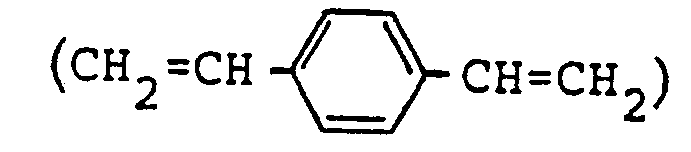
- the cation exchange resin has a polymer base comprising a copolymer of styrene with divinylbenzene having a sulfonic acid group (S0 3 H) bonded thereto as the ion exchange group.
- This compound has a crosslinked, three-dimensional structure of the following formula and a molecular formula of (C 16 H 15 0 3 S) n :
- the anion exchange resin has the same polymer base as that of the above-mentioned cation exchange resin but it has a quaternary ammonium group (NR 3 0H) bonded thereto as the ion exchange group.
- This compound has the molecular formula of (C 2o H 26 0N) n and the following structural formula:
- Fig. 2 shows a skeletal structure of the cation exchange resin.
- the skeletal structure of the anion exchange resin is essentially the same as this, merely different in the ion exchange groups from each other.
- the ion exchange group having the lowest bond energy is decomposed first, then the straight-chain moiety of the polymer base is decomposed, and finally the benzene ring moiety is decomposed.
- thermogravimetric analysis TGA
- Fig. 3 The results of the thermogravimetric analysis (TGA) of the ion exchange resin effected with a differential thermal balance in air are shown in Fig. 3. A weight loss due to the evaporation of water occurring at 70 to 110°C is not shown.
- the solid line shows a thermogravimetric change of the anion exchange resin and the broken line shows that of the cation exchange resin.
- the decomposition temperatures of the bonded moieties shown in Fig. 3 are shown in Table 2.
- the quaternary ammonium group (ion exchange group) of the anion exchange resin is decomposed first at 130 to 190°C, then the straight-chain moiety is decomposed at 350°C or higher, and finally the benzene ring moiety is decomposed at 380°C or higher.
- the sulfonic acid group (ion exchange group) is decomposed at 200 to 300°C, then the straight-chain moiety, and finally the benzene ring moiety are decomposed in the same manner as in the anion exchange resin.
- Figs. 4 and 5 show results of thermogravimetric analyses carried out in air containing oxygen in an amount corresponding to a chemical equivalent necessary for the thermal decomposition of the spent resin and in an oxygen-free nitrogen atmosphere (the results shown in Fig. 3 were obtained when oxygen was fed in an amount far larger than the chemical equivalent).
- Fig. 4 showing the results obtained by the thermal decomposition of the cation exchange resin, the solid line shows those obtained in an atmosphere containing a chemical equivalent of oxygen and the broken line shows those obtained in a nitrogen atmosphere. It will be understood that a major part of the reaction of the polymer base is oxidation which requires oxygen and which is exothermic.
- the ion exchange group (sulfonic acid group) is thermally decomposed at 200 to 300°C even in a nitrogen atmosphere. In this case, the supply of oxygen is unnecessary for the thermal decomposition of the ion exchange group and this reaction is not exothermic.
- Fig. 5 shows the data obtained by the thermal decomposition of the anion exchange resin.
- the solid and broken lines show the data obtained in the atmosphere containing a chemical equivalent of oxygen and in a nitrogen atmosphere, respectively, as in Fig. 4. It has thus been found that the ion exchange group (quaternary ammonium group) of the anion exchange resin is decomposed at 130 to 190°C even in the absence of oxygen and the polymer base is oxidatively decomposed by oxygen at 350 to 480°C to generate heat like the cationic exchange resin.
- dry granular ion exchange resin and granular ion exchange resin thermally decomposed at 600°C (hereinafter referred to as carbonized resin) were used and degrees of swelling of them with water were measured.
- carbonized resin dry granular ion exchange resin and granular ion exchange resin thermally decomposed at 600°C
- the phenomenon observed when the dry ion exchange resin was immersed in water was different from that of the carbonized resin.
- the phenomena and the mechanisms thereof of both resins are shown in Fig. 7.
- the phenomenon observed when the dry ion exchange resin is immersed in water is swelling and the mechanism is considered generally as follows: the ion exchange group of the ion exchange resin is present in the reticular molecular structure of the styrene/divinylbenzene copolymer.
- the ion exchange group has a high polarizability. This is a main cause for the adsorption of water having a high polarity.
- the adsorbed water penetrates therein even by forcedly enlarging the openings of the elastic reticulate structure of the polymer base, whereby the ion exchange resin is swollen to increase its volume.
- the granular ion exchange resin having an average granular diameter of 400 pm in a dry state is swollen to an average granular diameter of 450 to 600 pm (the volume ratio: 1.2 to 3) (the degree of the volume increase which varies depending on the ion bonded with the ion exchange group is generally as follows: H * > alkali metal > alkaline earth metal and transition metal).
- the ion exchange resin is swollen for the following two reasons: one is that the ion exchange group having a high polarizability absorbs water and the reason is that the polymer base has an elastic reticulate structure. Namely, even a resin comprising a polymer base having no ion exchange group absorbs water to expand its volume about 1.2-fold. However, this phenomenon is not observed in the carbonized resin. Namely, the granule diameter of the resin is reduced by the carbonization below that of the dry resin and the volume of the carbonized resin is 1/2 of the dry resin. Consequently, the properties of pores of up to about 0,7 mm (7A) of the ion exchange resin appear.
- the molecular structure is converted into a polycyclic one which is close to the structure of graphite and, as a result, a hydrophobic property of carbon appears.
- This property inhibits the adsorption of water in the pores and facilitates the adsorption of a gas such as air.
- the gas such as air temporarily adsorbed is desorbed again and released as the gas in the presence of a large amount of water when, for example, it is immersed in water. This is the degassing phenomenon. Because of this phenomenon, the carbonized resin seems as if it is swollen. Since the carbonized resin has a dense polycyclic structure, its volume is not increased even by adsorption of water, unlike ordinary polymer bases. This fact is supported by the fact that the volume was unchanged even after the immersion for 150 h (about 6 days) as shown in Fig. 6.
- the above-described properties of the carbonized resin were not known prior to the present invention. Namely, the ion exchange resin thermally decomposed at a temperature in the range of 200 to 600°C (above 120°C) has properties utterly different from those of the non-decomposed ion exchange resin.
- the intermediate storage of the waste can be facilitated without necessitating any special equipment for humidity control, etc. Since the carbonized resin or its pellets are hydrophobic as described above, the solid product thereof prepared by solidifying the same even with a thermosetting plastic sensitive to water has a high strength.
- the inventors have developed a process for preparing the solidified product by degassing the carbonized resin by immersing it in a solidifying agent comprising the hydraulic substance or alkali silicate while the hardening effect thereof is inhibited and then hardening the solidifying agent.
- the carbonized resin was immersed in the alkali silicate solution to degass the resin. Then, the hardening agent was added thereto to solidify the same.
- the relationships between the residue of the adsorbed gas and the strength of the solidified product and between the former and the feed amount are shown in Fig. 8.
- the temperature in this step was 25°C and the relative amounts of the carbonized resin alkali silicate solution and hardening agent were 40 wt.%, 40 wt.% and 20 wt.%, respectively.
- the hardening agent is not limited to silicon polyphosphate but any weak acid may be used. Examples of them include inorganic phosphates such as sodium phosphate and alkaline earth metal salts such as calcium silicate and barium carbonate (for details, see the specification of Japanese Patent Laid-Open No. 197500/1982).
- the amount of the gas adsorbed in the carbonized resin was 2.1 cm 3 /g prior to the degassing step.
- the uniaxial compression strength is reduced slowly as the residue of the adsorbed gas increases and the feed amount of the carbonized resin per unit volume is reduced as the residue of the adsorbed gas increases. This corresponds to the amount of the bubbles generated by the gas desorbed from the carbonized resin. Further, it is apparent that the reduction in the uniaxial compression strength is due to the bubbles.
- the residue of the adsorbed gas should be controlled to up to 59%. Also, to pack the waste in an amount of at least 110 kg in a 200 I drum, the residue of the adsorbed gas should be controlled to up to 50%.
- the immersion time of the carbonized resin in the alkali silicate solution necessary for the 50% release was determined.
- the residue of the adsorbed gas observed after the immersion in the alkali silicate solution is shown in Fig. 9. The immersion was effected under three different conditions, i.e. without stirring, under stirring and under both stirring and heating.
- the quantity of the adsorbed gas was reduced with time.
- the reduction rate of the quantity of the gas was as follows: (without stirring) ⁇ (under stirring) ⁇ (under both stirring and heating).
- the residue was reduced to 50% or below which satisfies the above-mentioned requirements of the feed amount and strength within 2 h in the cases of "under stirring” and “under both stirring and heating” and in 3 h in the case of "without stirring".
- the effects similar to those obtained by stirring were obtained also by an ultrasonic treatment.
- the mechanism of the variation of the degree of reduction of the adsorbed gas depending on the immersion conditions is as follows:
- the carbonized resin is covered by the desorbed gas and the cover thus formed inhibits the adsorption of water in the carbonized resin to inhibit the release of the gas.
- the gas covering the carbonized resin is removed to accelerate the release of the gas.
- the release of the gas is accelerated, supposedly because water is converted into water vapor and the rate thereof to diffuse into the carbonized resin is increased.
- the above-mentioned results indicate that when the carbonized resin is immersed in the alkali silicate solution, at least 50% of the gas adsorbed therein can be released in 3 h.
- the treated resin can be solidified with the hardening agent to form a solidified product having a high strength and a large feed amount.
- the desorption time of the gas can be shortened by stirring or heating.
- the carbonized, powdery ion exchange resin and pellets obtained by compression granulation of the carbonized resin can also be degassed in the same manner as in the above-described defoamation of the carbonized granular ion exchange resin.
- Fig. 10 The results of the degassing are shown in Fig. 10. This degassing process was effected at 25°C and the diameter of the granular ion exchange resin was about 30 um.
- the pellets were columnar and had both height and diameter of about 20 mm. To reduce the residue of the adsorbed gas in the pellets to 50% or less, the treatment time of about 4 h is necessary.
- the carbonized, powdery ion exchange resin can be degassed in a period of time shorter than that required for the degassing of the carbonized, granular ion exchange resin.
- the pellets cannot be degassed sufficiently by merely stirring in some cases.
- the residue of adsorbed gas in the pellets can be reduced to 20% or less by vacuum suction of the gas adsorbed therein and then introducing a mixture of the alkali silicate solution and the hardening agent therein and, thus, the intended solidified product having a large feed amount and a high strength can be obtained.
- the adsorbed gas in the carbonized powdery and granular ion exchange resins can be released by previously immersing them in the alkali silicate solution and the intended solidified product having a large feed amount and a high strength can be obtained.
- the pellets can be degassed by the vacuum degassing more effectively and then it is immersed in the alkali silicate solution to obtain a solidified product having a large feed amount and a high strength.
- a hydraulic substance such as cement
- Portland cement is used usually as the cement, which can be hardened by mixing with water. Since cement is in the form of a powder, the carbonized resin is immersed previously in water to release the gas from the resin.
- Fig. 11 shows a change of the residue of the adsorbed gas in the carbonized granular ion exchange resin with time.
- the experiments were carried out under three different conditions, i.e. without stirring, under stirring and under both stirring and heating, in the same manner as in Fig. 9. The time required for the degassing was shorter than that required when the alkali silicate solution was used.
- the residue of the adsorbed gas was reduced to 50% or less in 2 h.
- the cement is added to the degassed carbonized resin to harden the resin and to obtain a solidified product.
- the resulting solidified product comprises 40 wt.% of the cement, 20 wt.% of water and 40 wt.% of the carbonized resin.
- the relations between the residue of the adsorbed gas in the carbonized resin and the uniaxial compression strength of the solidified product and between the former and the feed amount of the obtained solidified product are the same as in Fig. 8.
- the solidified product having a large feed amount and a high strength can be obtained also when the cement is used.
- Fig. 12 shows the degassing rates of the carbonized resins and the pellets determined at 25°C.
- the carbonized powdery ion exchange resin can be degassed by immersion in a shorter period of time. The time necessary for reducing the residue of the adsorbed gas in the pellets was about 3 h. However, the degassing cannot be effected sufficiently by the mere stirring in some cases.
- the residue of the adsorbed gas in the carbonized resin can be reduced to 20% or less and the solidified product having a large feed amount and a high strength can be obtained.
- the product solidified with cement and having a large feed amount and a high strength can be obtained from the powdery or granular ion exchange resin by carbonizing the same and immersing the carbonized resin previously with water to release the adsorbed gas. Also, the product solidified with cement and having a large feed amount and a high strength can be obtained from the pellets by effectively degassing the same by vacuum suction.
- a powdery ion exchange resin from a condensate purifier in a boiling water reactor was thermally decomposed to obtain a carbonized resin, which was then mixed with an alkali silicate as solidifying agent to solidify the same.
- a flow sheet of the treatment system employed in this example is given in Fig. 1.
- the spent powdery ion exchange resin (hereinafter referred to as powdery resin) 51 was in the form of a slurry, since it was discharged from a condensate demineralizer by back washing.
- the powdery resin 51 was stored in a waste resin tank 52.
- the powdery resin 51 in the form of about 10% slurry was fed into a dehydrator 54 through a valve 53 and centrifugally dehydrated therein to a water content of around 50%. Then, a given amount (about 200 kg on the dry weight basis) of the dehydrated powdery resin 51 was fed in a thermal decomposition device through a knife gate valve 55.
- the thermal decomposition device comprised a reactor 56 of a batchwise fixed bed system have a capacity of about 1 m 3 and a heater 57.
- the powdery resin 51 fed in the reactor 56 was heated to 300°C by means of the heater 57 for about 4 h to form a carbonized resin 58.
- An inert gas such as nitrogen gas was fed in the reactor 56 through an inert gas inlet tube 80 and a valve 81 to carry out thermal decomposition of the ion exchange resin in the inert gas. Therefore, even when the heating temperature of the ion exchange resin is elevated to around 600°C, the ion exchange resin is not burnt and, accordingly, neither heat generation nor temperature runaway is caused unlike the process carried out in an oxygen atmosphere (see Figs. 4 and 5). Thus, no device is required for preventing the heat generation due to the burning or runaway of the temperature.
- a waste gas comprising water from the powdery resin as well as H 2 S, SO., NH 3 , etc. formed by the decomposition of the ion exchange group was formed in the course of the thermal decomposition.
- the waste gas was introduced in a waste gas treating device 60 through a valve 59 and treated therein.
- the carbonized resin 58 was fed into a drum 62 through a knife gate valve 61.
- the amount of the carbonized resin 58 was as small as about 120 kg, while the amount of the initial powdery resin was 200 kg (on the dry basis).
- 72 kg of water was fed in the drum 62 from a supply water tank 63 to initiate degassing of the carbonized resin. In this stage, the mixture was stirred by means of stirring blades 64 so as to accelerate the degassing.
- a powdery alkali silicate was fed therein through a solidifier hopper 65 and a powdery inorganic phosphoric acid compound was fed through a hardener hopper 66 in such amounts that the total of them would be 108 kg.
- the carbonized resin, water, solidifier and hardener were mixed homogeneously by means of the stirring blades 64 to form a solidified product.
- Fig. 13 shows a sectional view of the resulting solidified product and an enlarged sectional view thereof. It is apparent from Fig. 13 that the carbonized resin 58 was dispersed quite homogeneously in the solidifier 67 and no bubble was observed in the solidified product owing to the degassing effect.
- the obtained solidified product had a sufficient strength of at least 150 kg/cm 2. It was understood from the results obtained in this example that the bubble-free, strong solidified product as shown in Fig. 13 could be obtained by homogeneously mixing 120 kg of the carbonized resin with 180 kg of the alkali silicate solidifier containing the hardener and water in the 200 I drum.
- a solidified product was prepared in the apparatus shown in Fig. 1 in the same manner as above except that the defoaming step was omitted.
- 120 kg of the carbonized resin was mixed homogeneously with 180 kg of the solidifier in the 200 I drum in this case, the solidified product was swollen in the course of the hardening and a part thereof ran over the drum.
- the same procedure as above was repeated except that the amounts of the carbonized resin and solidifier were reduced to 60 kg and 90 kg, respectively and they were mixed together homogeneously in the 200 I drum to obtain a solidified product shown in Fig. 14.
- the resulting solidified product contained a large amount of bubbles 68 in addition to the carbonized resin 58 and the solidifier 67.
- the solidified product had a uniaxial compression strength of as low as 50 kg/cm 2 .
- the powdery resin was thermally decomposed and then solidified homogeneously with an alkali silicate by a solidifying process and in a thermal decomposition device different from those used in Example 1.
- a flow sheet of the treatment system employed in this example is given in Fig. 15.
- the powdery resin 51 in the waste resin tank 52 was fed quantitatively in the form of about 10% slurry in a thermal decomposition device 70 through a slurry pump 69.
- the thermal decomposition device 70 was a rotary kiln of continuous treatment type in which the temperature was kept at 200 to 400°C.
- the slurry of the powdery resin fed therein was dried and thermally decomposed simultaneously to form the carbonized resin 58.
- An inert gas such as nitrogen gas was fed in the thermal decomposition device 70 through the inert gas inlet tube 80 and the valve 81 so as to carry out the thermal decomposition of the ion exchange resin in the inert gas.
- the waste gas formed in this step was sent to the waste gas treating device 60 through the valve 59 and treated therein in the same manner as in Example 1.
- the obtained carbonized resin 58 was stored temporarily in a powder hopper 71. Thereafter, a given amount (600 kg) of the carbonized resin 58 was fed from the powder hopper 71 into a kneader 72 and, at the same time, 400 kg of a liquid alkali silicate containing no hardener was fed therein as the hardener from a hardener tank 73.
- the degassing was effected in the blender 72.
- the degassing was accelerated by stirring with the stirring blades 64 and by vibration with an ultrasonic vibrator 74 attached to the blender 72, since a longer time is required for the degassing of the liquid alkali silicate than that of water.
- the degassing was completed in about 2 h.
- 200 kg of a powdery inorganic phosphoric compound was fed from the hardener hopper 66 into the blender 72 to mix the same with the mixture of the carbonized resin 58 and the alkali silicate homogeneously. After completion of the mixing, about 300 kg of the obtained mixture was poured in each drum 62 to obtain a solidified product.
- the solidified product obtained as above contained no bubbles and had a uniaxial compression strength of at least 150 kg/cm 2 as in Example 1.
- the feed amount of the carbonized resin in a 200 I drum was 120 kg.
- the thermal decomposition may be effected either batchwise or continuously in a thermal decomposition device such as a fixed bed furnace or a rotary kiln multistage furnace, that the carbonized resin may be mixed with the solidifier by either the in-drum method as in Example 1 or out-drum method as in Example 2 and that the degassing may be effected by mere standing, stirring, ultrasonic treatment, vacuum degassing or a combination of some of them.
- any combination of the decomposition device means of mixing the carbonized resin and the solidified and the degassing means may be employed.
- the powdery ion exchange resin was treated in Examples 1 and 2, a granular ion exchange resin thereof can be treated in the same manner as above.
- granular resin from a drainage purifier in a pressurized water reactor was thermally decomposed to obtain a carbonized resin, which was then pelletized and the pellets were solidified with an alkali silicate solidifier in a drum.
- a flow sheet of the treatment system employed in this example is given in Fig. 16.
- the spent granular resin 76 from the waste resin tank 51 was dehydrated centrifugally in the dehydrator 54 in the same manner as in Example 1 and then fed into the reactor 56 and heated to 300°C with the heater 57 for about 4 h to form the carbonized resin 58.
- An inert gas such as nitrogen gas was fed in the reactor 56 through the inert gas inlet tube 80 and the valve 81 to carry out thermal decomposition of the ion exchange resin in the inert gas.
- the carbonized resin 58 was fed into a powder mixer 77 through the knife gate valve 61.
- a binder 79 was added thereto in an amount of about 20 kg for 100 kg of the carbonized resin through a binder hopper 78.
- the binder 79 was used for improving the toughness of the pellets prepared in a granulator 80a.
- the binder used in this example was a cellulose fiber having a thickness of about 101tm and a length of about 300 pm.
- a binder other than the cellulose fiber such as a fibrous substance, e.g. metal fiber or carbon fiber, or a thermosetting or thermoplastic resin usually used as an adhesive is used.
- a homogeneous mixture of the carbonized resin 58 and the binder 79 prepared in the powder mixer 77 was fed into the granulator 80a through the knife gate valve 81.
- the granulator 80a herein used was an ordinary tableting machine in which the powder was pressed into pellets under a pressure of about 5 ton/cm 2 .
- the mixture of the carbonized resin and the binder was shaped into columnar pellets 82 having both height and diameter of about 20 mm in the granulator 80a and the pellets 82 were fed into the drum 62 through a chute 83.
- the drum 62 was placed in a vacuum housing 84. After confirming that the drum 62 was filled with the pellets 82, the housing 84 was evacuated with a vacuum pump 85. After completion of the vacuum defoaming of the carbonized resin, 80 kg of a mixture of an alkali silicate solidifier and an inorganic phosphoric compound as hardener was fed from a solidifier feeding tank into the drum 62 through a valve 87 while the vacuum condition was kept to obtain a solidified product.
- the pressure in the vacuum housing 84 was returned to an atmospheric pressure by a leak valve 88 and the drum 62 was taken out and left to stand to effect curing. After about one month, the properties of the obtained solid were examined to find that the gaps between the pellets were entirely filled up with the solidifier and no bubbles were contained therein.
- the solidified product had a uniaxial compression strength of at least 150 kg/cm 2 .
- the carbonized resin which was compression-molded into the pellets 82 as described above could be feed in an amount of up to 150 kg in the 200 I drum.
- the tableting machine used in this example may be replaced with a briquetting machine or extruder.
- the pellets 82 may be treated by another method wherein they are stored in a large tank as such for a given period of time (usually 5 to 10 years) to decay the radioactivity before solidified in the drum or the like, if necessary. This method is generally called “intermediate storage” and has advantages which will be stated below.
- the ion exchange resin When the ion exchange resin is dried and pelletized directly, the resulting pellets absorb moiety in air and swollen to reduce its toughness during the storage, since the resin has a high hygroscopicity. On the contrary, the carbonized resin from which the ion exchange group has been removed does not absorb the moiety in air and, therefore, the toughness of the pellets is not reduced in the course of the storage, since the carbonized resin is hydrophobic as described above. This effect is quite advantageous. In Fig. 17, the toughness of the pellets of the untreated resin during the intermediate storage is shown in comparison with that of the pellets of the carbonized resin.
- the alkali silicate used as the solidifier in the above Examples 1 to 3 may be replaced with a hydraulic substance such as cement or gypsum.
- the alkali silicate proved to be the best solidifier.
- the high-sulfate slug cement, alumina cement, Portland cement and calcined gypsum are called "hydraulic solidifiers", since they solidify upon reaction with water.
Landscapes
- Engineering & Computer Science (AREA)
- Environmental & Geological Engineering (AREA)
- Physics & Mathematics (AREA)
- General Engineering & Computer Science (AREA)
- High Energy & Nuclear Physics (AREA)
- Processing Of Solid Wastes (AREA)
- Separation, Recovery Or Treatment Of Waste Materials Containing Plastics (AREA)
- Excavating Of Shafts Or Tunnels (AREA)
- Fertilizers (AREA)
Abstract
Description
- The present invention relates to a process for treating a radioactive waste comprising mainly a used ion exchange resin. Particularly, the invention relates to a process and device for treating a spent ion exchange resin having adsorbed a radioactive material, which is generated from a nuclear power plant.
- The following passages are given in a treatise entitled "Volume-reduction treatment in bulk in a nuclear power plant": on pages 770 to 774 of Journal of the Atomic Energy Society of Japan, Vol. 24, No. 10-(1982) (partially modified with respect to the operation conditions, etc.):
- "Radioactive wastes discharged from nuclear power plants are enclosed in a drum and kept in storage facilities in the plants. The storage space required is increasing with the operation time and, therefore, a remarkable volume reduction of the waste is demanded. Apparatuses for the volume reduction and solidification treatment have been developed under these circumstances. Three typical examples of them will be shown:
- (1) An apparatus in which a concentrated waste liquid, inflammable solids, spent ion exchange resin, waste oil, etc. are burnt or calcined in a fluidized bed furnace operated (at 900°C). A binder is added to the resulting ash or calcination product and the mixture is pelletized with a pelletizing machine to form pellets to be stored.
- (2) An apparatus in which a concentrated liquid waste, spent ion exchange resin, filter sludge, etc. are dried and pulverized with a centrifugal thin-film dryer (temperature of vapor used as the heating source: 160°C) and the obtained powder is mixed with a thermosetting resin to form a homogeneous mixture, which is packed in a drum and solidified.
- (3) An apparatus in which a dry powder obtained in the same manner as in (2) is pelletized with a granulating machine to form pellets to be stored. The pellets may be packed in a drum and a solidifying agent is poured therein to solidify them in the final treatment.
- In all of the above-mentioned apparatuses, various wastes are treated in bulk in a single apparatus so as to reduce the size of the apparatus and to improve the reliability of the operation."
- Though the above-mentioned volume reduction and solidification treatment apparatuses are satisfactory from the viewpoints of the technical performance and safety, they have a problem that an increase in the capacity of the apparatus and a special means are necessitated for the treatment of spent ion exchange resin because of its properties. Now, the description will be made on the problems of the respective apparatuses stated above. In the apparatus (1), the quantity of heat generated amounts to 104 kcal/kg which is thrice as much as that of the inflammable solids, since the spent ion exchange resin is a plastic. Therefore, a means is provided therein so as to prevent a temperature runaway in the fluidized bed furnace. It is, for example, a means of introducing and mixing with another radioactive waste of a low calorific value such as inflammable solids.
- In the apparatus (2) wherein a thermoplastic resin is used as the solidifying agent, the intended solidifying effect of the thermoplastic resin cannot be obtained when water is contained therein even in only a small amount.
- Namely, when the solidification is effected in the presence of water, a curing accelerator, such as cobalt naphthenate, in the thermosetting resin is decomposed and, therefore, this resin cannot be cured, so that a part of the thermosetting resin remains as it is, i.e. in liquid form.
- Further, water cannot be removed thoroughly from the spent ion exchange resin in most cases even if it is dried carefully.
- Thus, when the mixture of the spent ion exchange resin containing water even in a small amount with the thermosetting resin is solidified, the solid product having a high toughness cannot be obtained. Under these circumstances, the water content of a powder dried with a centrifugal thin film dryer is controlled strictly by determination with a moisture meter such as a neutron moisture meter. In the apparatus (3), the pellets are broken due to the moisture during the storage, since dry powder of the spent ion exchange resin absorbs water to change its volume. To prevent the breakage, the humidity of air in the pellet-storing tank is controlled. When the dry powder or pellets of the spent ion exchange resin are solidified with a hydraulic solidifyng agent such as cement or a solidifying agent comprising an alkali silicate solution, said dry powder or pellets absorb water to increase the volume thereof, since the solidification reaction is effected in the presence of a large amount of water. Therefore, when the hydraulic solidifying agent or the solidifying agent comprising an alkali silicate solution is used, the amount of the solidified radioactive waste to be packed in an ordinary 200 I drum is only 1/3 to 1/2 of that treated in the apparatus (2) (110 kg of the resin can be packed in the 200 I drum) disadvantageously.
- US-A-40 53 432 describes a process for reducing the volume of a spent radioactive ion exchange resin in which the resin is dehydrated, thermally decomposed into a waste gas and a radioactive material, which is burnt in an oxygen-containing gas.
- According to EP-A-0 111 839 a spent radioactive ion exchange resin from a nuclear power plant is thermally decomposed in 2 steps: first at a temperature of 350°C or below to decompose the ion exchange groups and then at high temperature to decompose the polymer matrix. The radioactive components remain in the residue which is solidified with a solidifying agent such as cement or plastic.
- As described above, the processes for treating the radioactive waste comprising mainly spent ion exchange resin have problems due to the properties of the ion exchange resin.
- The object of the present invention is to provide a process and an apparatus for treating a radioactive waste comprising mainly a spent ion exchange resin by reducing its volume and solidifying the same in an easy manner to obtain a solid having a high uniaxial compression strength.
- This object is solved by the process as claimed in
claim 1. The dependent claims concern preferred embodiments of the invention. - The process of the present invention for treating radioactive waste mainly comprising a spent ion exchange resin comprises the steps of
- dehydrating a slurry of the spent radioactive ion exchange resin,
- heating the dehydrated powdery resin in an inert gas atmosphere to thermally decompose and carbonize it,
- degassing the carbonized active waste to release a gas adsorbed therein,
- solidifying the radioactive waste.
- The invention further concerns the apparatus for treating a radioactive waste, comprising mainly a spent ion exchange resin, which comprises a thermal decomposition device for heating the radioactive waste to carbonize it, comprising an inert gas feeding device for feeding an inert gas in the thermal decomposition device, a waste gas treating device for discharging the gas generated in the thermal decomposition device and treating the gas, the degassing means for degassing the carbonized radioactive waste to remove a gas adsorbed therein and a solidifying means for solidifying the degassed radioactive waste.
- In another embodiment of the present invention the apparatus for treating a radioactive waste, comprising mainly a spent ion exchange resin, comprises a thermal decomposition device for heating the radioactive waste to carbonize it, comprising an inert gas feeding device for feeding an inert gas in the thermal decomposition device, a waste gas treating device for discharging the gas generated in the thermal decomposition device and treating the gas, a pelletizer for pelletizing the carbonized radioactive waste, a degassing means for degassing the pelletized radioactive waste to release a gas adsorbed therein and a solidifying means for solidifying the degassed, pelletized radioactive waste.
- The present invention having the above-mentioned characteristic. constitution exhibits an effect of remarkably reducing the volume of a radioactive waste comprising mainly a spent ion exchange resin and solidifying it in an easy manner to obtain a solid having a high uniaxial compression strength.
- Brief Description of Drawings:
- Fig. 1 is a flow sheet of the effective thermal decomposition/solidification system of the present invention. Fig. 2 shows a skeleton of the ion exchange resin. Fig. 3 shows results of thermogravimetric analysis of the ion exchange resin in air. Fig. 4 shows results of thermogravimetric analysis of a cation exchange resin which suggest the dependence on the atmosphere in the thermal decomposition. Fig. 5 shows results of thermogravimetric analysis of an anion exchange resin which suggest the dependence on the atmospehre in the thermal decomposition. Fig. 6 shows volumetric changes of a dry ion exchange resin and the carbonized resin of the present invention immersed in water. Fig. 7 shows microscopically the phenomena which occur when said two resins are immersed in water. Fig. 8 shows relationships between the quantity of the adsorbed gas remaining in the carbonized resin and the strength of the solidified product and between said quantity and the amount of the charged carbonized resin. Fig. 9 shows the degassing rate of the granulated, carbonized ion exchange resin immersed in an alkali silicate solution. Fig. 10 shows the degassing rate of the carbonized resin of various forms immersed in an alkali silicate solution. Fig. 11 shows the degassing rate of the granulated, carbonized ion exchange resin immersed in water. Fig. 12 shows the degassing rate of the carbonized resin of various forms immersed in water. Fig. 13 is a sectional view of a solidified product prepared according to the present invention. Fig. 14 is a sectional view of a solidified product prepared by a conventional process. Fig. 15 is another flow sheet of the effective thermal decomposition/solidification system of the present invention. Fig. 16 is still another effective flow sheet of effecting the present invention. Fig. 17 shows changes in strength of dry ion exchange resin pellets and carbonized resin pellets during the storage for a long period of time.
- The fundamental principle of the present invention is that the ion exchange groups of an ion exchange resin are thermally decomposed at a temperature of 120 to 350°C, preferably 200 to 300°C and that a styrene/divinylbenzene copolymer which is a polymer base of the ion exchange resin is carbonized in the step of thermal decomposition. The inventors have further found that as the polymer base of the ion exchange resin is carbonized by the thermal decomposition, the expansion or shrinkage due to water absorption or drying of the ion exchange resin observed before the carbonization disappears and, instead, a phenomenon of the adsorption of a gas such as air appears. Supposedly, such a phenomenon occurs for the following reasons: The elastic, reticular molecular structure is converted into a dense molecular structure such as that of graphite and the water-absorbing ion exchange groups disappear and therefore, neither expansion nor shrinkage does occur. At the same time, the hydrophilic ion exchange groups are converted into hydrophobic carbon, which adsorbs gases such as air.
- The cation exchange resin has a polymer base comprising a copolymer of styrene


- The anion exchange resin has the same polymer base as that of the above-mentioned cation exchange resin but it has a quaternary ammonium group (NR30H) bonded thereto as the ion exchange group. This compound has the molecular formula of (C2oH260N)n and the following structural formula:

- Fig. 2 shows a skeletal structure of the cation exchange resin. The skeletal structure of the anion exchange resin is essentially the same as this, merely different in the ion exchange groups from each other.
- The energies of the
bonds 
- In the thermal decomposition of the ion exchange resin, the ion exchange group having the lowest bond energy is decomposed first, then the straight-chain moiety of the polymer base is decomposed, and finally the benzene ring moiety is decomposed.
- The results of the thermogravimetric analysis (TGA) of the ion exchange resin effected with a differential thermal balance in air are shown in Fig. 3. A weight loss due to the evaporation of water occurring at 70 to 110°C is not shown. The solid line shows a thermogravimetric change of the anion exchange resin and the broken line shows that of the cation exchange resin. The decomposition temperatures of the bonded moieties shown in Fig. 3 are shown in Table 2.

- It is apparent from Table 2 that the quaternary ammonium group (ion exchange group) of the anion exchange resin is decomposed first at 130 to 190°C, then the straight-chain moiety is decomposed at 350°C or higher, and finally the benzene ring moiety is decomposed at 380°C or higher. In the thermal decomposition of the cation exchange resin, the sulfonic acid group (ion exchange group) is decomposed at 200 to 300°C, then the straight-chain moiety, and finally the benzene ring moiety are decomposed in the same manner as in the anion exchange resin.
- However, the decomposition characteristics vary depending on the presence or absence of oxygen. Figs. 4 and 5 show results of thermogravimetric analyses carried out in air containing oxygen in an amount corresponding to a chemical equivalent necessary for the thermal decomposition of the spent resin and in an oxygen-free nitrogen atmosphere (the results shown in Fig. 3 were obtained when oxygen was fed in an amount far larger than the chemical equivalent). In Fig. 4 showing the results obtained by the thermal decomposition of the cation exchange resin, the solid line shows those obtained in an atmosphere containing a chemical equivalent of oxygen and the broken line shows those obtained in a nitrogen atmosphere. It will be understood that a major part of the reaction of the polymer base is oxidation which requires oxygen and which is exothermic. On the other hand, the ion exchange group (sulfonic acid group) is thermally decomposed at 200 to 300°C even in a nitrogen atmosphere. In this case, the supply of oxygen is unnecessary for the thermal decomposition of the ion exchange group and this reaction is not exothermic.
- Fig. 5 shows the data obtained by the thermal decomposition of the anion exchange resin. The solid and broken lines show the data obtained in the atmosphere containing a chemical equivalent of oxygen and in a nitrogen atmosphere, respectively, as in Fig. 4. It has thus been found that the ion exchange group (quaternary ammonium group) of the anion exchange resin is decomposed at 130 to 190°C even in the absence of oxygen and the polymer base is oxidatively decomposed by oxygen at 350 to 480°C to generate heat like the cationic exchange resin.
- The results of the above-described thermal decomposition suggest that though the ion exchange group in the ion exchange resin can be decomposed non-exothermally in an inert gas atmosphere such as a nitrogen atmosphere, the polymer base cannot be decomposed completely even if it is heated at it is. The physical properties of the ion exchange resin in which the ion exchange group has been decomposed were examined. The experiments were made on the adsorption of water and swelling due to this adsorption which have been the problems to be solved in the prior art. The results of the immersion tests are shown in Fig. 6. In these experiments, dry granular ion exchange resin and granular ion exchange resin thermally decomposed at 600°C (hereinafter referred to as carbonized resin) were used and degrees of swelling of them with water were measured. When the dry ion exchange resin was immersed in water, its volume was immediately increased about 3-folds. On the other hand, when the carbonized resin was immersed in water, its volume was increased slowly and then reduced to the initial one by degassing.
- Thus, the phenomenon observed when the dry ion exchange resin was immersed in water was different from that of the carbonized resin. The phenomena and the mechanisms thereof of both resins are shown in Fig. 7. The phenomenon observed when the dry ion exchange resin is immersed in water is swelling and the mechanism is considered generally as follows: the ion exchange group of the ion exchange resin is present in the reticular molecular structure of the styrene/divinylbenzene copolymer. The ion exchange group has a high polarizability. This is a main cause for the adsorption of water having a high polarity. The adsorbed water penetrates therein even by forcedly enlarging the openings of the elastic reticulate structure of the polymer base, whereby the ion exchange resin is swollen to increase its volume. For example, the granular ion exchange resin having an average granular diameter of 400 pm in a dry state is swollen to an average granular diameter of 450 to 600 pm (the volume ratio: 1.2 to 3) (the degree of the volume increase which varies depending on the ion bonded with the ion exchange group is generally as follows: H* > alkali metal > alkaline earth metal and transition metal). It is to be noted herein that the ion exchange resin is swollen for the following two reasons: one is that the ion exchange group having a high polarizability absorbs water and the reason is that the polymer base has an elastic reticulate structure. Namely, even a resin comprising a polymer base having no ion exchange group absorbs water to expand its volume about 1.2-fold. However, this phenomenon is not observed in the carbonized resin. Namely, the granule diameter of the resin is reduced by the carbonization below that of the dry resin and the volume of the carbonized resin is 1/2 of the dry resin. Consequently, the properties of pores of up to about 0,7 mm (7A) of the ion exchange resin appear. More particularly, the molecular structure is converted into a polycyclic one which is close to the structure of graphite and, as a result, a hydrophobic property of carbon appears. This property inhibits the adsorption of water in the pores and facilitates the adsorption of a gas such as air. However, the gas such as air temporarily adsorbed is desorbed again and released as the gas in the presence of a large amount of water when, for example, it is immersed in water. This is the degassing phenomenon. Because of this phenomenon, the carbonized resin seems as if it is swollen. Since the carbonized resin has a dense polycyclic structure, its volume is not increased even by adsorption of water, unlike ordinary polymer bases. This fact is supported by the fact that the volume was unchanged even after the immersion for 150 h (about 6 days) as shown in Fig. 6.
- The above-described properties of the carbonized resin were not known prior to the present invention. Namely, the ion exchange resin thermally decomposed at a temperature in the range of 200 to 600°C (above 120°C) has properties utterly different from those of the non-decomposed ion exchange resin. By pelletizing the carbonized resin and storing them, taking advantage of these properties, the intermediate storage of the waste can be facilitated without necessitating any special equipment for humidity control, etc. Since the carbonized resin or its pellets are hydrophobic as described above, the solid product thereof prepared by solidifying the same even with a thermosetting plastic sensitive to water has a high strength.
- As a result, a strict control of water and its measurement as required in the conventional process wherein the non-carbonized ion exchange resin is solidified by mixing it with the thermosetting plastic become unnecessary. However, when a hydraulic substance or a solidifying agent comprising an alkali silicate is used, any solidified product of a high strength cannot be obtained unless the degassing is effected as will be described with reference to Fig. 8.
- The inventors have developed a process for preparing the solidified product by degassing the carbonized resin by immersing it in a solidifying agent comprising the hydraulic substance or alkali silicate while the hardening effect thereof is inhibited and then hardening the solidifying agent.
- This solidification process will be illustrated with reference to an example wherein the carbonized granular ion exchange resin is solidified homogeneously with an alkali silicate solution and powdery silicon polyphosphate as hardening agent.
- The carbonized resin was immersed in the alkali silicate solution to degass the resin. Then, the hardening agent was added thereto to solidify the same. The relationships between the residue of the adsorbed gas and the strength of the solidified product and between the former and the feed amount are shown in Fig. 8. The temperature in this step was 25°C and the relative amounts of the carbonized resin alkali silicate solution and hardening agent were 40 wt.%, 40 wt.% and 20 wt.%, respectively.
- The hardening agent is not limited to silicon polyphosphate but any weak acid may be used. Examples of them include inorganic phosphates such as sodium phosphate and alkaline earth metal salts such as calcium silicate and barium carbonate (for details, see the specification of Japanese Patent Laid-Open No. 197500/1982).
- The amount of the gas adsorbed in the carbonized resin was 2.1 cm3/g prior to the degassing step.
- According to Fig. 8, the uniaxial compression strength is reduced slowly as the residue of the adsorbed gas increases and the feed amount of the carbonized resin per unit volume is reduced as the residue of the adsorbed gas increases. This corresponds to the amount of the bubbles generated by the gas desorbed from the carbonized resin. Further, it is apparent that the reduction in the uniaxial compression strength is due to the bubbles. To attain a uniaxial compression strength of at least 150 kg/cm2 which is a measure for ocean dumping, the residue of the adsorbed gas should be controlled to up to 59%. Also, to pack the waste in an amount of at least 110 kg in a 200 I drum, the residue of the adsorbed gas should be controlled to up to 50%. A reason why the adsorbed gas remaining in an amount of up to 50% does not exert an influence on the strength and feed amount is supposedly that the adsorbed gas is not replaced entirely with water to release the gas and to form the bubbles. Namely, a part of the adsorbed gas is not released as the bubbles even by immersion in water or the like. Thus, the release of 50% of the gas from the carbonized resin is sufficient. The immersion time of the carbonized resin in the alkali silicate solution necessary for the 50% release was determined. The residue of the adsorbed gas observed after the immersion in the alkali silicate solution is shown in Fig. 9. The immersion was effected under three different conditions, i.e. without stirring, under stirring and under both stirring and heating. In all the cases, the quantity of the adsorbed gas was reduced with time. The reduction rate of the quantity of the gas was as follows: (without stirring) < (under stirring) < (under both stirring and heating). The residue was reduced to 50% or below which satisfies the above-mentioned requirements of the feed amount and strength within 2 h in the cases of "under stirring" and "under both stirring and heating" and in 3 h in the case of "without stirring". The effects similar to those obtained by stirring were obtained also by an ultrasonic treatment. The mechanism of the variation of the degree of reduction of the adsorbed gas depending on the immersion conditions is as follows: When the immersion is effected without stirring, the carbonized resin is covered by the desorbed gas and the cover thus formed inhibits the adsorption of water in the carbonized resin to inhibit the release of the gas. When the immersion is effected under stirring, the gas covering the carbonized resin is removed to accelerate the release of the gas. When the immersion is effected under both stirring and heating, the release of the gas is accelerated, supposedly because water is converted into water vapor and the rate thereof to diffuse into the carbonized resin is increased.
- The above-mentioned results indicate that when the carbonized resin is immersed in the alkali silicate solution, at least 50% of the gas adsorbed therein can be released in 3 h. The treated resin can be solidified with the hardening agent to form a solidified product having a high strength and a large feed amount. The desorption time of the gas can be shortened by stirring or heating.
- The carbonized, powdery ion exchange resin and pellets obtained by compression granulation of the carbonized resin can also be degassed in the same manner as in the above-described defoamation of the carbonized granular ion exchange resin.
- The results of the degassing are shown in Fig. 10. This degassing process was effected at 25°C and the diameter of the granular ion exchange resin was about 30 um. The pellets were columnar and had both height and diameter of about 20 mm. To reduce the residue of the adsorbed gas in the pellets to 50% or less, the treatment time of about 4 h is necessary. The carbonized, powdery ion exchange resin can be degassed in a period of time shorter than that required for the degassing of the carbonized, granular ion exchange resin. The pellets cannot be degassed sufficiently by merely stirring in some cases. The residue of adsorbed gas in the pellets can be reduced to 20% or less by vacuum suction of the gas adsorbed therein and then introducing a mixture of the alkali silicate solution and the hardening agent therein and, thus, the intended solidified product having a large feed amount and a high strength can be obtained.
- Thus, the adsorbed gas in the carbonized powdery and granular ion exchange resins can be released by previously immersing them in the alkali silicate solution and the intended solidified product having a large feed amount and a high strength can be obtained. The pellets can be degassed by the vacuum degassing more effectively and then it is immersed in the alkali silicate solution to obtain a solidified product having a large feed amount and a high strength.
- When the alkali silicate solution used in the above embodiments is replaced with a hydraulic substance such as cement, the similar effects can be obtained. Portland cement is used usually as the cement, which can be hardened by mixing with water. Since cement is in the form of a powder, the carbonized resin is immersed previously in water to release the gas from the resin. Fig. 11 shows a change of the residue of the adsorbed gas in the carbonized granular ion exchange resin with time. In this test, the experiments were carried out under three different conditions, i.e. without stirring, under stirring and under both stirring and heating, in the same manner as in Fig. 9. The time required for the degassing was shorter than that required when the alkali silicate solution was used. In all the cases, the residue of the adsorbed gas was reduced to 50% or less in 2 h. The cement is added to the degassed carbonized resin to harden the resin and to obtain a solidified product. When 40 parts by weight of the carbonized resin is degassed by immersion in 20 parts by weight of water and then 40 parts by weight of cement is added thereto, the resulting solidified product comprises 40 wt.% of the cement, 20 wt.% of water and 40 wt.% of the carbonized resin. The relations between the residue of the adsorbed gas in the carbonized resin and the uniaxial compression strength of the solidified product and between the former and the feed amount of the obtained solidified product are the same as in Fig. 8. Thus, the solidified product having a large feed amount and a high strength can be obtained also when the cement is used.
- When the carbonized granular ion exchange resin to be solidified with cement in this embodiment is replaced with the carbonized powdery ion exchange resin or pelletized carbonized resin, similar effects to those obtained as above can be obtained. Fig. 12 shows the degassing rates of the carbonized resins and the pellets determined at 25°C. As compared with the carbonized granular ion exchange resin, the carbonized powdery ion exchange resin can be degassed by immersion in a shorter period of time. The time necessary for reducing the residue of the adsorbed gas in the pellets was about 3 h. However, the degassing cannot be effected sufficiently by the mere stirring in some cases. Therefore, it is desirable to release the gas adsorbed in the carbonized resin by vacuum suction before the introduction of a mixture of the cement and water. By this process, the residue of the adsorbed gas in the carbonized resin can be reduced to 20% or less and the solidified product having a large feed amount and a high strength can be obtained.
- As described above, the product solidified with cement and having a large feed amount and a high strength can be obtained from the powdery or granular ion exchange resin by carbonizing the same and immersing the carbonized resin previously with water to release the adsorbed gas. Also, the product solidified with cement and having a large feed amount and a high strength can be obtained from the pellets by effectively degassing the same by vacuum suction.
- When the cement used as the hydraulic substance in the above embodiment is replaced with a solidifying agent comprising a powdery alkali silicate and a powdery hardening agent, the same effects as those of the cement can be obtained, since said solidifying agent is also a hydraulic substance which can be hardened by water.
- The present invention will now be illustrated with reference to flow sheets of effective apparatuses for carrying out the process of the present invention.
- In this example, a powdery ion exchange resin from a condensate purifier in a boiling water reactor was thermally decomposed to obtain a carbonized resin, which was then mixed with an alkali silicate as solidifying agent to solidify the same. A flow sheet of the treatment system employed in this example is given in Fig. 1.
- The spent powdery ion exchange resin (hereinafter referred to as powdery resin) 51 was in the form of a slurry, since it was discharged from a condensate demineralizer by back washing. The
powdery resin 51 was stored in awaste resin tank 52. Thepowdery resin 51 in the form of about 10% slurry was fed into adehydrator 54 through avalve 53 and centrifugally dehydrated therein to a water content of around 50%. Then, a given amount (about 200 kg on the dry weight basis) of the dehydratedpowdery resin 51 was fed in a thermal decomposition device through aknife gate valve 55. The thermal decomposition device comprised areactor 56 of a batchwise fixed bed system have a capacity of about 1 m3 and aheater 57. Thepowdery resin 51 fed in thereactor 56 was heated to 300°C by means of theheater 57 for about 4 h to form a carbonizedresin 58. - An inert gas such as nitrogen gas was fed in the
reactor 56 through an inertgas inlet tube 80 and avalve 81 to carry out thermal decomposition of the ion exchange resin in the inert gas. Therefore, even when the heating temperature of the ion exchange resin is elevated to around 600°C, the ion exchange resin is not burnt and, accordingly, neither heat generation nor temperature runaway is caused unlike the process carried out in an oxygen atmosphere (see Figs. 4 and 5). Thus, no device is required for preventing the heat generation due to the burning or runaway of the temperature. A waste gas comprising water from the powdery resin as well as H2S, SO., NH3, etc. formed by the decomposition of the ion exchange group was formed in the course of the thermal decomposition. The waste gas was introduced in a wastegas treating device 60 through avalve 59 and treated therein. On the other hand, the carbonizedresin 58 was fed into adrum 62 through aknife gate valve 61. The amount of the carbonizedresin 58 was as small as about 120 kg, while the amount of the initial powdery resin was 200 kg (on the dry basis). After confirming that the temperature of the carbonizedresin 58 packed in thedrum 62 was lowered to 100°C or less, 72 kg of water was fed in thedrum 62 from asupply water tank 63 to initiate degassing of the carbonized resin. In this stage, the mixture was stirred by means of stirringblades 64 so as to accelerate the degassing. After stirring for about 1 h to complete the degassing, a powdery alkali silicate was fed therein through asolidifier hopper 65 and a powdery inorganic phosphoric acid compound was fed through ahardener hopper 66 in such amounts that the total of them would be 108 kg. The carbonized resin, water, solidifier and hardener were mixed homogeneously by means of thestirring blades 64 to form a solidified product. - The product was cured by leaving it to stand for one month and its properties were examined. The results were as shown below. Fig. 13 shows a sectional view of the resulting solidified product and an enlarged sectional view thereof. It is apparent from Fig. 13 that the carbonized
resin 58 was dispersed quite homogeneously in thesolidifier 67 and no bubble was observed in the solidified product owing to the degassing effect. The obtained solidified product had a sufficient strength of at least 150 kg/cm2. It was understood from the results obtained in this example that the bubble-free, strong solidified product as shown in Fig. 13 could be obtained by homogeneously mixing 120 kg of the carbonized resin with 180 kg of the alkali silicate solidifier containing the hardener and water in the 200 I drum. - A solidified product was prepared in the apparatus shown in Fig. 1 in the same manner as above except that the defoaming step was omitted. When 120 kg of the carbonized resin was mixed homogeneously with 180 kg of the solidifier in the 200 I drum in this case, the solidified product was swollen in the course of the hardening and a part thereof ran over the drum. Then, the same procedure as above was repeated except that the amounts of the carbonized resin and solidifier were reduced to 60 kg and 90 kg, respectively and they were mixed together homogeneously in the 200 I drum to obtain a solidified product shown in Fig. 14. Namely, it was found that when the degassing step was omitted, the resulting solidified product contained a large amount of
bubbles 68 in addition to the carbonizedresin 58 and thesolidifier 67. The solidified product had a uniaxial compression strength of as low as 50 kg/cm2. - The results obtained by effecting the degassing will be compared with those obtained when the degassing step was omitted:
- (1) In case the degassing treatment was effected, the resulting solidified product had no bubbles. As a result, the solidified product had a uniaxial compression strength of at least 150 kg/cm2 and the feed amount of the carbonized resin in the 200 I drum was at least 120 kg (at least 200 kg on the dry basis in terms of the non-decomposed powdery resin).
- (2) On the contrary, in case the degassing treatment was omitted, the solidified product contained bubbles and, therefore, it had a uniaxial compression strength of around 50 kg/cm2 and the feed amount of the carbonized resin in the 200 drum was around 60 kg.
- In this example, the powdery resin was thermally decomposed and then solidified homogeneously with an alkali silicate by a solidifying process and in a thermal decomposition device different from those used in Example 1. A flow sheet of the treatment system employed in this example is given in Fig. 15.
- The
powdery resin 51 in thewaste resin tank 52 was fed quantitatively in the form of about 10% slurry in athermal decomposition device 70 through aslurry pump 69. Thethermal decomposition device 70 was a rotary kiln of continuous treatment type in which the temperature was kept at 200 to 400°C. The slurry of the powdery resin fed therein was dried and thermally decomposed simultaneously to form the carbonizedresin 58. An inert gas such as nitrogen gas was fed in thethermal decomposition device 70 through the inertgas inlet tube 80 and thevalve 81 so as to carry out the thermal decomposition of the ion exchange resin in the inert gas. The waste gas formed in this step was sent to the wastegas treating device 60 through thevalve 59 and treated therein in the same manner as in Example 1. The obtained carbonizedresin 58 was stored temporarily in apowder hopper 71. Thereafter, a given amount (600 kg) of the carbonizedresin 58 was fed from thepowder hopper 71 into akneader 72 and, at the same time, 400 kg of a liquid alkali silicate containing no hardener was fed therein as the hardener from ahardener tank 73. The degassing was effected in theblender 72. In this step, the degassing was accelerated by stirring with the stirringblades 64 and by vibration with anultrasonic vibrator 74 attached to theblender 72, since a longer time is required for the degassing of the liquid alkali silicate than that of water. As a result, the degassing was completed in about 2 h. Then, 200 kg of a powdery inorganic phosphoric compound was fed from thehardener hopper 66 into theblender 72 to mix the same with the mixture of the carbonizedresin 58 and the alkali silicate homogeneously. After completion of the mixing, about 300 kg of the obtained mixture was poured in eachdrum 62 to obtain a solidified product. - The solidified product obtained as above contained no bubbles and had a uniaxial compression strength of at least 150 kg/cm2 as in Example 1. The feed amount of the carbonized resin in a 200 I drum was 120 kg.
- It is apparent from Examples 1 and 2 that the thermal decomposition may be effected either batchwise or continuously in a thermal decomposition device such as a fixed bed furnace or a rotary kiln multistage furnace, that the carbonized resin may be mixed with the solidifier by either the in-drum method as in Example 1 or out-drum method as in Example 2 and that the degassing may be effected by mere standing, stirring, ultrasonic treatment, vacuum degassing or a combination of some of them. Thus, in the construction of the treatment apparatus, any combination of the decomposition device, means of mixing the carbonized resin and the solidified and the degassing means may be employed. Though the powdery ion exchange resin was treated in Examples 1 and 2, a granular ion exchange resin thereof can be treated in the same manner as above.
- In this example, a granular ion exchange resin (hereinafter referred to as "granular resin" from a drainage purifier in a pressurized water reactor was thermally decomposed to obtain a carbonized resin, which was then pelletized and the pellets were solidified with an alkali silicate solidifier in a drum. A flow sheet of the treatment system employed in this example is given in Fig. 16.
- The spent
granular resin 76 from thewaste resin tank 51 was dehydrated centrifugally in thedehydrator 54 in the same manner as in Example 1 and then fed into thereactor 56 and heated to 300°C with theheater 57 for about 4 h to form the carbonizedresin 58. - An inert gas such as nitrogen gas was fed in the
reactor 56 through the inertgas inlet tube 80 and thevalve 81 to carry out thermal decomposition of the ion exchange resin in the inert gas. The carbonizedresin 58 was fed into apowder mixer 77 through theknife gate valve 61. Abinder 79 was added thereto in an amount of about 20 kg for 100 kg of the carbonized resin through abinder hopper 78. Thebinder 79 was used for improving the toughness of the pellets prepared in agranulator 80a. The binder used in this example was a cellulose fiber having a thickness of about 101tm and a length of about 300 pm. Similar effects can be obtained when a binder other than the cellulose fiber such as a fibrous substance, e.g. metal fiber or carbon fiber, or a thermosetting or thermoplastic resin usually used as an adhesive is used. A homogeneous mixture of the carbonizedresin 58 and thebinder 79 prepared in thepowder mixer 77 was fed into thegranulator 80a through theknife gate valve 81. Thegranulator 80a herein used was an ordinary tableting machine in which the powder was pressed into pellets under a pressure of about 5 ton/cm2. The mixture of the carbonized resin and the binder was shaped intocolumnar pellets 82 having both height and diameter of about 20 mm in thegranulator 80a and thepellets 82 were fed into thedrum 62 through achute 83. Thedrum 62 was placed in avacuum housing 84. After confirming that thedrum 62 was filled with thepellets 82, thehousing 84 was evacuated with avacuum pump 85. After completion of the vacuum defoaming of the carbonized resin, 80 kg of a mixture of an alkali silicate solidifier and an inorganic phosphoric compound as hardener was fed from a solidifier feeding tank into thedrum 62 through avalve 87 while the vacuum condition was kept to obtain a solidified product. - Then, the pressure in the
vacuum housing 84 was returned to an atmospheric pressure by aleak valve 88 and thedrum 62 was taken out and left to stand to effect curing. After about one month, the properties of the obtained solid were examined to find that the gaps between the pellets were entirely filled up with the solidifier and no bubbles were contained therein. The solidified product had a uniaxial compression strength of at least 150 kg/cm2. The carbonized resin which was compression-molded into thepellets 82 as described above could be feed in an amount of up to 150 kg in the 200 I drum. - The tableting machine used in this example may be replaced with a briquetting machine or extruder.
- Though the pelletized carbonized resin was directly solidified in the drum in this example, the
pellets 82 may be treated by another method wherein they are stored in a large tank as such for a given period of time (usually 5 to 10 years) to decay the radioactivity before solidified in the drum or the like, if necessary. This method is generally called "intermediate storage" and has advantages which will be stated below. - When the ion exchange resin is dried and pelletized directly, the resulting pellets absorb moiety in air and swollen to reduce its toughness during the storage, since the resin has a high hygroscopicity. On the contrary, the carbonized resin from which the ion exchange group has been removed does not absorb the moiety in air and, therefore, the toughness of the pellets is not reduced in the course of the storage, since the carbonized resin is hydrophobic as described above. This effect is quite advantageous. In Fig. 17, the toughness of the pellets of the untreated resin during the intermediate storage is shown in comparison with that of the pellets of the carbonized resin. It was found that the toughness of the pelletized carbonized resin was hardly reduced even after the storage for 10 years, while that of the pellets of the untreated ion exchange resin was halved after the storage for about 2 years. The data given in Fig. 17 were those obtained by an about 10-fold acceleration test carried out under storage conditions comprising a temperature of 40°C and a humidity of 80%, while the practical storage conditions comprise a temperature of 20°C and a humidity of 40%. The intermediate storage period plotted as abscissae is, therefore, an estimate.
- When the pellets of the carbonized resin thus stored intermediately are degassed and solidified in the drum in the same manner as in the above examples, an additional effect can be obtained in that the radioactivity on the surface of the solidified product becomes lower than that in the above examples due to the decay of the radioactivity in the course of the intermediate storage.
- The alkali silicate used as the solidifier in the above Examples 1 to 3 may be replaced with a hydraulic substance such as cement or gypsum. The toughnesses of the solidified products obtained by using the alkali silicate, high-sulfate slug cement, alumina cement, Portland cement or calcined gypsum as the solidifier in the same treatment apparatus as in Example 1 were examined to obtain the following results: alkali silicate > high-sulfate slug cement = alumina cement > Portland cement = calcined gypsum. Thus, the alkali silicate proved to be the best solidifier.
- The high-sulfate slug cement, alumina cement, Portland cement and calcined gypsum are called "hydraulic solidifiers", since they solidify upon reaction with water.
Claims (15)
Applications Claiming Priority (2)
| Application Number | Priority Date | Filing Date | Title |
|---|---|---|---|
| JP180561/84 | 1984-08-31 | ||
| JP59180561A JPS6159299A (en) | 1984-08-31 | 1984-08-31 | Radioactive waste processing method and processing equipment |
Publications (3)
| Publication Number | Publication Date |
|---|---|
| EP0192777A1 EP0192777A1 (en) | 1986-09-03 |
| EP0192777A4 EP0192777A4 (en) | 1986-10-02 |
| EP0192777B1 true EP0192777B1 (en) | 1990-08-22 |
Family
ID=16085429
Family Applications (1)
| Application Number | Title | Priority Date | Filing Date |
|---|---|---|---|
| EP85904280A Expired - Lifetime EP0192777B1 (en) | 1984-08-31 | 1985-08-28 | Method of and apparatus for treating radioactive waste |
Country Status (5)
| Country | Link |
|---|---|
| EP (1) | EP0192777B1 (en) |
| JP (1) | JPS6159299A (en) |
| KR (1) | KR870700248A (en) |
| DE (1) | DE3579312D1 (en) |
| WO (1) | WO1986001633A1 (en) |
Families Citing this family (5)
| Publication number | Priority date | Publication date | Assignee | Title |
|---|---|---|---|---|
| JP4322735B2 (en) * | 2004-05-27 | 2009-09-02 | 株式会社東芝 | Method and apparatus for solidifying radioactive waste |
| JP2012149168A (en) * | 2011-01-19 | 2012-08-09 | Toshiba Corp | Method of treating waste ion exchange resin containing chromium |
| CN103219059B (en) * | 2013-04-10 | 2016-04-20 | 中广核工程有限公司 | Radioactive waste resin metering system |
| CN104064239B (en) * | 2014-07-14 | 2018-05-29 | 中广核工程有限公司 | A treatment method for low- and medium-level radioactive activated carbon in nuclear power plants |
| KR101776905B1 (en) | 2017-06-09 | 2017-09-08 | (주)한국원자력 엔지니어링 | Consolidation Method and Apparatus of Carbonization By-product Producted by Middle and Low level Radiative Waste Carbonization System |
Citations (2)
| Publication number | Priority date | Publication date | Assignee | Title |
|---|---|---|---|---|
| JPS5682500A (en) * | 1979-11-08 | 1981-07-06 | Kernforschungsz Karlsruhe | Method of solidifying radioactive ion exchanging resin with cement |
| JPS578498A (en) * | 1980-06-19 | 1982-01-16 | Hitachi Ltd | Pelletizing method of radioactive liquid waste |
Family Cites Families (12)
| Publication number | Priority date | Publication date | Assignee | Title |
|---|---|---|---|---|
| US3865745A (en) * | 1971-01-15 | 1975-02-11 | Grace W R & Co | Process for the preparation of metal carbide and metal oxide microspheres |
| US4008171A (en) * | 1973-09-10 | 1977-02-15 | Westinghouse Electric Corporation | Volume reduction of spent radioactive ion exchange resin |
| AT338387B (en) * | 1975-06-26 | 1977-08-25 | Oesterr Studien Atomenergie | METHOD OF EMBEDDING RADIOACTIVE AND / OR TOXIC WASTE |
| AT338388B (en) * | 1975-06-26 | 1977-08-25 | Oesterr Studien Atomenergie | METHOD AND DEVICE FOR TRANSFERRING RADIOACTIVE ION EXCHANGE RESINS INTO A STORAGE FORM |
| US4053432A (en) * | 1976-03-02 | 1977-10-11 | Westinghouse Electric Corporation | Volume reduction of spent radioactive ion-exchange material |
| JPS54157000A (en) * | 1978-05-31 | 1979-12-11 | Tokyo Electric Power Co Inc:The | Method of waste disposal of ion-exchange resin having radioactivity |
| JPS6041320B2 (en) * | 1980-04-30 | 1985-09-14 | 住友重機械工業株式会社 | Processing method for waste ion exchange resin in heavy water-moderated nuclear reactors |
| SE425708B (en) * | 1981-03-20 | 1982-10-25 | Studsvik Energiteknik Ab | PROCEDURE FOR FINAL TREATMENT OF RADIOACTIVE ORGANIC MATERIAL |
| JPS58155398A (en) * | 1982-03-12 | 1983-09-16 | 株式会社日立製作所 | Method of solidifying radioactive waste |
| JPS58166299A (en) * | 1982-03-27 | 1983-10-01 | 株式会社日立製作所 | Solidification method of radioactive waste using inorganic solidification agent |
| JPS59107300A (en) * | 1982-12-10 | 1984-06-21 | 株式会社日立製作所 | Radioactive waste resin processing method and equipment |
| JPH0230680B2 (en) * | 1983-05-18 | 1990-07-09 | Ngk Insulators Ltd | HOSHASEIHAIKIBUTSUNOSHORIHOHO |
-
1984
- 1984-08-31 JP JP59180561A patent/JPS6159299A/en active Granted
-
1985
- 1985-08-28 KR KR860700206A patent/KR870700248A/en not_active Withdrawn
- 1985-08-28 WO PCT/JP1985/000472 patent/WO1986001633A1/en not_active Ceased
- 1985-08-28 DE DE8585904280T patent/DE3579312D1/en not_active Expired - Lifetime
- 1985-08-28 EP EP85904280A patent/EP0192777B1/en not_active Expired - Lifetime
Patent Citations (3)
| Publication number | Priority date | Publication date | Assignee | Title |
|---|---|---|---|---|
| JPS5682500A (en) * | 1979-11-08 | 1981-07-06 | Kernforschungsz Karlsruhe | Method of solidifying radioactive ion exchanging resin with cement |
| US4483789A (en) * | 1979-11-08 | 1984-11-20 | Kernforschungszentrum Karlsruhe Gmbh | Method for permanently storing radioactive ion exchanger resins |
| JPS578498A (en) * | 1980-06-19 | 1982-01-16 | Hitachi Ltd | Pelletizing method of radioactive liquid waste |
Also Published As
| Publication number | Publication date |
|---|---|
| KR870700248A (en) | 1987-05-30 |
| JPS6159299A (en) | 1986-03-26 |
| EP0192777A4 (en) | 1986-10-02 |
| DE3579312D1 (en) | 1990-09-27 |
| WO1986001633A1 (en) | 1986-03-13 |
| JPH0448199B2 (en) | 1992-08-06 |
| EP0192777A1 (en) | 1986-09-03 |
Similar Documents
| Publication | Publication Date | Title |
|---|---|---|
| EP0096342B1 (en) | Method of processing radioactive waste | |
| EP0158780A1 (en) | Process and apparatus for solidification of radioactive waste | |
| US4010108A (en) | Radioactive waste disposal of water containing waste using urea-formaldehyde resin | |
| US4775495A (en) | Process for disposing of radioactive liquid waste | |
| US5045241A (en) | Method for solidifying radioactive wastes | |
| US4167491A (en) | Radioactive waste disposal | |
| GB2048554A (en) | Process for conditioning radioactive and/or toxic waste | |
| EP0192777A1 (en) | Method of and apparatus for treating radioactive waste | |
| US4383888A (en) | Process for concentrating radioactive combustible waste | |
| CN114255901A (en) | Optimization of waste resin wet oxidation and method for treating waste by using oxidized waste liquid | |
| US4533395A (en) | Method of making a leach resistant fixation product of harmful water-containing waste and cement | |
| FI129112B (en) | Method for treating and solidifying liquid waste | |
| US4931222A (en) | Process for treating radioactive liquid waste containing sodium borate and solidified radioactive waste | |
| EP1137014B1 (en) | Co-solidification of low-level radioactive wet wastes produced from BWR nuclear power plants | |
| JPS61205899A (en) | How to dispose of used ion exchange resin | |
| JPS5815000B2 (en) | Radioactive waste disposal method | |
| KR900000341B1 (en) | Radioactive waste solids and its manufacturing method | |
| JP2816006B2 (en) | Solidification of radioactive waste | |
| RU2741059C1 (en) | Method of processing spent radioactive ion-exchange resins | |
| JPH03150499A (en) | Solidification of radioactive waste | |
| JPH10104393A (en) | Solidifying material for radioactive material, solidification processing method for radioactive material and solid | |
| JPS623698A (en) | Solidifying processing method of radioactive waste | |
| JPS6186693A (en) | How to dispose of used ion exchange resin | |
| JPS6186692A (en) | Method for solidifying used radioactive ion exchange resin | |
| JPS62267699A (en) | Method of solidifying and processing radioactive waste |
Legal Events
| Date | Code | Title | Description |
|---|---|---|---|
| PUAI | Public reference made under article 153(3) epc to a published international application that has entered the european phase |
Free format text: ORIGINAL CODE: 0009012 |
|
| 17P | Request for examination filed |
Effective date: 19860409 |
|
| AK | Designated contracting states |
Kind code of ref document: A1 Designated state(s): DE FR GB |
|
| A4 | Supplementary search report drawn up and despatched |
Effective date: 19861002 |
|
| 17Q | First examination report despatched |
Effective date: 19880817 |
|
| GRAA | (expected) grant |
Free format text: ORIGINAL CODE: 0009210 |
|
| AK | Designated contracting states |
Kind code of ref document: B1 Designated state(s): DE FR GB |
|
| REF | Corresponds to: |
Ref document number: 3579312 Country of ref document: DE Date of ref document: 19900927 |
|
| ET | Fr: translation filed | ||
| PLBE | No opposition filed within time limit |
Free format text: ORIGINAL CODE: 0009261 |
|
| STAA | Information on the status of an ep patent application or granted ep patent |
Free format text: STATUS: NO OPPOSITION FILED WITHIN TIME LIMIT |
|
| 26N | No opposition filed | ||
| PGFP | Annual fee paid to national office [announced via postgrant information from national office to epo] |
Ref country code: GB Payment date: 19930818 Year of fee payment: 9 Ref country code: FR Payment date: 19930818 Year of fee payment: 9 |
|
| PG25 | Lapsed in a contracting state [announced via postgrant information from national office to epo] |
Ref country code: GB Effective date: 19940828 |
|
| GBPC | Gb: european patent ceased through non-payment of renewal fee |
Effective date: 19940828 |
|
| PG25 | Lapsed in a contracting state [announced via postgrant information from national office to epo] |
Ref country code: FR Effective date: 19950428 |
|
| REG | Reference to a national code |
Ref country code: FR Ref legal event code: ST |
|
| PGFP | Annual fee paid to national office [announced via postgrant information from national office to epo] |
Ref country code: DE Payment date: 19951031 Year of fee payment: 11 |
|
| PG25 | Lapsed in a contracting state [announced via postgrant information from national office to epo] |
Ref country code: DE Effective date: 19970501 |