EP0192694B1 - Elektrischer winkelverschiebungssensor - Google Patents
Elektrischer winkelverschiebungssensor Download PDFInfo
- Publication number
- EP0192694B1 EP0192694B1 EP85904270A EP85904270A EP0192694B1 EP 0192694 B1 EP0192694 B1 EP 0192694B1 EP 85904270 A EP85904270 A EP 85904270A EP 85904270 A EP85904270 A EP 85904270A EP 0192694 B1 EP0192694 B1 EP 0192694B1
- Authority
- EP
- European Patent Office
- Prior art keywords
- carrier
- strain
- locations
- thickness
- angular range
- Prior art date
- Legal status (The legal status is an assumption and is not a legal conclusion. Google has not performed a legal analysis and makes no representation as to the accuracy of the status listed.)
- Expired
Links
Images


Classifications
-
- A—HUMAN NECESSITIES
- A61—MEDICAL OR VETERINARY SCIENCE; HYGIENE
- A61B—DIAGNOSIS; SURGERY; IDENTIFICATION
- A61B5/00—Measuring for diagnostic purposes; Identification of persons
- A61B5/103—Measuring devices for testing the shape, pattern, colour, size or movement of the body or parts thereof, for diagnostic purposes
- A61B5/107—Measuring physical dimensions, e.g. size of the entire body or parts thereof
- A61B5/1071—Measuring physical dimensions, e.g. size of the entire body or parts thereof measuring angles, e.g. using goniometers
-
- G—PHYSICS
- G01—MEASURING; TESTING
- G01B—MEASURING LENGTH, THICKNESS OR SIMILAR LINEAR DIMENSIONS; MEASURING ANGLES; MEASURING AREAS; MEASURING IRREGULARITIES OF SURFACES OR CONTOURS
- G01B7/00—Measuring arrangements characterised by the use of electric or magnetic techniques
-
- G—PHYSICS
- G01—MEASURING; TESTING
- G01D—MEASURING NOT SPECIALLY ADAPTED FOR A SPECIFIC VARIABLE; ARRANGEMENTS FOR MEASURING TWO OR MORE VARIABLES NOT COVERED IN A SINGLE OTHER SUBCLASS; TARIFF METERING APPARATUS; MEASURING OR TESTING NOT OTHERWISE PROVIDED FOR
- G01D5/00—Mechanical means for transferring the output of a sensing member; Means for converting the output of a sensing member to another variable where the form or nature of the sensing member does not constrain the means for converting; Transducers not specially adapted for a specific variable
-
- A—HUMAN NECESSITIES
- A61—MEDICAL OR VETERINARY SCIENCE; HYGIENE
- A61B—DIAGNOSIS; SURGERY; IDENTIFICATION
- A61B2562/00—Details of sensors; Constructional details of sensor housings or probes; Accessories for sensors
- A61B2562/02—Details of sensors specially adapted for in-vivo measurements
- A61B2562/0247—Pressure sensors
-
- A—HUMAN NECESSITIES
- A61—MEDICAL OR VETERINARY SCIENCE; HYGIENE
- A61B—DIAGNOSIS; SURGERY; IDENTIFICATION
- A61B2562/00—Details of sensors; Constructional details of sensor housings or probes; Accessories for sensors
- A61B2562/02—Details of sensors specially adapted for in-vivo measurements
- A61B2562/0261—Strain gauges
-
- Y—GENERAL TAGGING OF NEW TECHNOLOGICAL DEVELOPMENTS; GENERAL TAGGING OF CROSS-SECTIONAL TECHNOLOGIES SPANNING OVER SEVERAL SECTIONS OF THE IPC; TECHNICAL SUBJECTS COVERED BY FORMER USPC CROSS-REFERENCE ART COLLECTIONS [XRACs] AND DIGESTS
- Y10—TECHNICAL SUBJECTS COVERED BY FORMER USPC
- Y10S—TECHNICAL SUBJECTS COVERED BY FORMER USPC CROSS-REFERENCE ART COLLECTIONS [XRACs] AND DIGESTS
- Y10S33/00—Geometrical instruments
- Y10S33/13—Wire and strain gauges
Definitions
- This invention relates to an electrical sensor for measuring angular displacement. Particularly, but not exclusively, the invention relates to an electro-goniometer for use in monitoring joint mobility in patients with ailments such as arthritis which produce abnormal joint movement.
- One electro-goniometer for use in medical assessment of joint mobility uses mercury-filled tubes as resistive elements of a Wheatstone bridge circuit (see, for example, GB-A-2099155). Two or four such tubes are used to provide a bendable beam and a linear relationship between electrical output and angular displacement is given. Problems have been encountered concerning the long-term stability of the electrode/mercury interface and also the well- recognised toxicity of mercury makes its use undesirable.
- An object of this invention is to obviate or mitigate the aforesaid disadvantages.
- the invention is as set out in claim 1.
- an electrical sensor for use in providing a signal indicative of angular displacement between two spaced locations, comprising a flexible carrier of material capable of flexing when its ends are fixed to said locations and said locations undergo relative rotary movement within a predetermined angular range; and at least one electrically conductive element having a resistance which is a function of strain affixed to the carrier and extending therealong substantially the whole distance between said locations.
- the carrier is a flexible elastic member
- the conductive element is a conductive elastomer (such as rubber doped with carbon particles).
- the electrically conductive element comprises a wire resistance strain gauge and the thickness of the carrier is selected such that the strain at the surface threof does not exceed a predetermined limit when the carrier is flexed by relative rotary movement of said locations within said predetermined angular range, this limit being selected such that there is no permanent plastic deformation of the carrier or the strain gauge when relative movement of the locations within the predetermined angular range causes maximum flexure of the carrier.
- strain gauges for determining angular rotations in engineering applications is described in "Measurement of the Angular Displacement of a Platform Mounted on a Flexible Column", T P Adams et al, Measurement and Control, Volume 18, November 1985, pp 464-468.
- the carrier is a thin strip of spring steel not exceeding 0.5 mm in thickness.
- Other possible materials are, for example, non-ferrous metals, acrylic polymers, thermoplastics materials and other plastics materials and fibres.
- the strain may be monitored by measuring the electrical resistance of the gauges in a Wheatstone bridge arrangement.
- the electrical output may be calibrated to read angular displacement between the ends of the carrier.
- the electro-goniometer of the invention uses the 'bending beam' approach but replaces the mercury filled tubes of prior devices, suitably with commercially available strain gauges. These gauges have a definite strain limit and have, up till now, been used to measure strain, stress or force where no appreciable angular displacements have occurred. The use of strain gauges where significant deflections would take place is a rather controversial step but the strain magnitude has been reduced sufficiently by decreasing the thickness of the bending beam to very small values.
- the resulting device is therefore very flexible and tests have shown the electrical output to be linearly related to angular movement and stability to be excellent.
- the method of bending does not influence the output (a Z bend would zero if the top and bottom ends of the carrier were parallel).
- the size of the unit can be very small and will therefore easily satisfy the criterion on being worn beneath clothing.
- the device therefore overcomes several of the limitations of previous devices and is convenient for the measuring of joint motion in clinical and research centres.
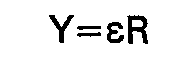
- strain gauges measure the strain (change in length divided by the original length) is it necessary to relate stress (o) to strain (e) using Young's Modulus:
- the surface strain of a bending beam is directly related to the thickness (2y) and inversely related to the radius of curvature of the deflected beam.
- the limit of strain will be in the order of a few thousand microstrain (i.e. 1000-10,000x10 -6 ).
- An example of the scale of strain means that a beam 5 mm thick cannot bend tighter than a 250 mm radius arc without the danger of plastic deformation.
- the bending beam For use as a flexible electro-goniometer for joint assessment the bending beam must be able to conform to a much smaller radius of curvature. Values as low as 5 mm are required in some operating conditions which means the thickness of the beam must be recalculated.
- an electro-goniometer 1 comprises an elongate carrier strip 2 of spring steel having an elongate strain gauge 3 adhesively secured thereto and aligned with the longitudinal axis of the strip 2.
- the strain gauge 3 extends along substantially the whole length of the carrier strip 2. Any commercially available strain gauge of suitable dimensions may be used; examples are strain gauges sold by Kyowa KC-120-A1-11 and Showa N.11-FA-60-120-11.
- the strip 2 in this embodiment has the following features:
- a second, similar strain gauge is preferably provided on the opposed face of the strip 2.
- Fig. 2 shows the device 1 applied to a hinged joint4 capable of relative rotation to give a variable angle 8.
- the joint 4 is shown for simplicity as a pair of plates hinged together, but in practice could be for example an ankle joint.
- the device 1 is secured at its ends by any suitable means, such as adhesive tape 5.
- any suitable means such as adhesive tape 5.
- the strain gauge is stretched and thus its resistance rises, while any concave curvature produces a reduction in resistance.
- the net change in resistance is thus a function of the angle 8, regardless of the curvature or number of curves intermediate the ends of the goniometer 1.
- Fig. 3 illustrates one circuit suitable for use with the present invention.
- a goniometer 1 having series front and rear strain gauges 3, 3a is connected in a bridge circuit with resistors 6, 7. Further resistors and/or amplifiers may be included in the bridge to improve sensitivity.
- the resistors 6, 7 may be fixed resistors in a monitoring circuit, or alternatively may comprise further strain gauges adjacent the goniometer to provide compensation for ambient conditions such as temperature. It is also possible to provide all four arms of the bridge as strain gauges on a single carrier.
- the voltage measured across the goniometer of the invention is linearly proportional to the angle 8 between its ends.
- a meter such as 8 (Fig. 3) can readily be calibrated to give a reading directly in angular measurement.
- the invention also provides a sensor 10 for monitoring twisting movement.
- a carrier strip 11 similar to that of the previous embodiment, has secured thereto a pair of serpentine strain gauges 12, 13 comprising lengths arranged oblique to the longitudinal axis of the strip 11; preferably the mean angle is 45°.
- the sensor 10 acts in a manner analogous to the above embodiment to give an output indicative of the relative rotational twist between its ends about the longitudinal axis.
- Figs. 1 and 5 can be combined as shown in Fig. 6.
- Such a device provides means for defining the three-dimensional angular orientation of one end of the device relative to the other.
Landscapes
- Health & Medical Sciences (AREA)
- Life Sciences & Earth Sciences (AREA)
- Physics & Mathematics (AREA)
- General Physics & Mathematics (AREA)
- Medical Informatics (AREA)
- Molecular Biology (AREA)
- Pathology (AREA)
- Engineering & Computer Science (AREA)
- Biomedical Technology (AREA)
- Heart & Thoracic Surgery (AREA)
- Oral & Maxillofacial Surgery (AREA)
- Biophysics (AREA)
- Surgery (AREA)
- Animal Behavior & Ethology (AREA)
- General Health & Medical Sciences (AREA)
- Public Health (AREA)
- Veterinary Medicine (AREA)
- Dentistry (AREA)
- Measurement Of Length, Angles, Or The Like Using Electric Or Magnetic Means (AREA)
- Measurement Of The Respiration, Hearing Ability, Form, And Blood Characteristics Of Living Organisms (AREA)
Claims (9)
Applications Claiming Priority (2)
| Application Number | Priority Date | Filing Date | Title |
|---|---|---|---|
| GB8422136 | 1984-09-01 | ||
| GB848422136A GB8422136D0 (en) | 1984-09-01 | 1984-09-01 | Electrogoniometer |
Publications (2)
| Publication Number | Publication Date |
|---|---|
| EP0192694A1 EP0192694A1 (de) | 1986-09-03 |
| EP0192694B1 true EP0192694B1 (de) | 1989-11-02 |
Family
ID=10566133
Family Applications (1)
| Application Number | Title | Priority Date | Filing Date |
|---|---|---|---|
| EP85904270A Expired EP0192694B1 (de) | 1984-09-01 | 1985-08-30 | Elektrischer winkelverschiebungssensor |
Country Status (6)
| Country | Link |
|---|---|
| US (1) | US4897927A (de) |
| EP (1) | EP0192694B1 (de) |
| CA (1) | CA1257918A (de) |
| DE (1) | DE3574049D1 (de) |
| GB (1) | GB8422136D0 (de) |
| WO (1) | WO1986001588A1 (de) |
Families Citing this family (28)
| Publication number | Priority date | Publication date | Assignee | Title |
|---|---|---|---|---|
| US4760850A (en) * | 1986-05-15 | 1988-08-02 | Wright State University | Method for balancing assistance |
| NL8700750A (nl) * | 1987-03-31 | 1988-10-17 | Hendrikus Herman Schutte Dr | Hoekmeter. |
| US5347871A (en) * | 1992-02-03 | 1994-09-20 | Teledyne Industries, Inc. | Strain sensor |
| US5289722A (en) * | 1992-04-27 | 1994-03-01 | Kansas State University Research Foundation | Preassembled, easily mountable strain gage |
| US5316017A (en) * | 1992-10-07 | 1994-05-31 | Greenleaf Medical Systems, Inc. | Man-machine interface for a joint measurement system |
| US5269070A (en) * | 1992-10-19 | 1993-12-14 | Thurston Wm H | Instrument for measuring flatness or uniformity of curvature |
| US5339533A (en) * | 1993-07-01 | 1994-08-23 | Richardson James B | System for measuring stiffness of a fractured bone |
| GB2290616B (en) * | 1994-06-20 | 1998-06-24 | James Bruce Richardson | System for measuring stiffness of a fractured bone |
| GB2290615B (en) * | 1994-06-20 | 1998-07-08 | James Bruce Richardson | System for measuring stiffness of a fractured bone |
| US5533531A (en) * | 1994-08-22 | 1996-07-09 | Greenleaf Medical Systems | Electronically aligned man-machine interface |
| USD384298S (en) * | 1995-11-02 | 1997-09-30 | Boyd Darry L | Load gauge block |
| US20030154613A1 (en) * | 2000-04-17 | 2003-08-21 | Bernard Hodac | Differential bending and/or subsidence detector and method for monitoring a structure |
| AU2002357580A1 (en) * | 2002-12-30 | 2004-07-22 | Massimo Bergamasco | Device for gioniometric measurements |
| DE10324838A1 (de) * | 2003-06-02 | 2004-12-23 | Cooper Cameron Corp., Houston | Messverfahren und Vorrichtung zur Messung eines zurückgelegten Weges |
| FR2878961B1 (fr) * | 2004-12-06 | 2008-03-07 | Daniel Henri Lucien Jos Martin | Dispositif indicateur de mouvements d'un corps |
| FR2904409B1 (fr) * | 2006-07-28 | 2009-02-13 | Univ Aix Marseille Ii | Bande souple comportant des moyens de caracterisation de sa geometrie |
| EP2049868A2 (de) * | 2006-08-09 | 2009-04-22 | Shell Internationale Research Maatschappij B.V. | Verfahren zur anbringung einer kette verbundener spannungssensoren an einem objekt, flexible stützstruktur dafür und verfahren zur herstellung einer mineralischen kohlenwasserstoffflüssigkeit |
| FR2906025B1 (fr) * | 2006-09-14 | 2009-04-03 | Commissariat Energie Atomique | Procede et dispositif d'acquisition d'une forme geometrique deformable |
| DE102007044555A1 (de) * | 2007-07-18 | 2009-01-22 | Siemens Ag | Optische Koppelvorrichtung und Verfahren zu deren Herstellung |
| EP2265900A2 (de) * | 2008-04-11 | 2010-12-29 | Rambus Inc. | Bewegungserfassung mithilfe eines flexiblen substrats |
| US20100036287A1 (en) * | 2008-08-08 | 2010-02-11 | Michael Weber | Method and Device for Detecting Parameters for the Characterization of Motion Sequences at the Human or Animal Body |
| WO2011032575A1 (de) * | 2009-09-21 | 2011-03-24 | Epionics Medical Gmbh | Verfahren und system zum erfassen von parametern zur charakterisierung von bewegungsabläufen am menschlichen körper und computerimplementiertes verfahren zur analyse von parametern zur charakterisierung von bewegungsabläufen am menschlichen körper |
| KR102056898B1 (ko) | 2013-01-22 | 2019-12-18 | 삼성디스플레이 주식회사 | 플렉서블 디스플레이 및 이의 각도 측정 방법 |
| US8941392B1 (en) | 2013-08-17 | 2015-01-27 | Bend Labs, Inc. | Angular displacement sensor of compliant material |
| US9316477B1 (en) * | 2014-10-01 | 2016-04-19 | Hsin-Hui Wu | Digital angle finder |
| US9612102B2 (en) | 2015-04-17 | 2017-04-04 | Bend Labs, Inc | Compliant multi-region angular displacement and strain sensors |
| US10682077B2 (en) * | 2015-04-22 | 2020-06-16 | Board Of Regents, The University Of Texas System | Mechanical audio and haptic feedback deflection beam |
| US10959644B2 (en) | 2016-03-24 | 2021-03-30 | Bend Labs Inc. | Compliant sensors for force sensing |
Family Cites Families (10)
| Publication number | Priority date | Publication date | Assignee | Title |
|---|---|---|---|---|
| FR825448A (fr) * | 1937-08-10 | 1938-03-03 | Fausse équerre ne comportant pas d'articulation en son sommet | |
| GB728606A (en) * | 1952-08-28 | 1955-04-20 | Technograph Printed Circuits L | Electric resistance devices |
| US3305816A (en) * | 1964-02-08 | 1967-02-21 | Hitachi Ltd | Ternary alloy strain gauge |
| GB1411968A (en) * | 1972-12-19 | 1975-10-29 | Standard Telephones Cables Ltd | Pressure transducer |
| US3991745A (en) * | 1973-08-29 | 1976-11-16 | Wilmark Electronic Co., Inc. | Curvature measurement device |
| US3986254A (en) * | 1974-10-09 | 1976-10-19 | Consearch Ab | Encased strain gauge |
| US3937212A (en) * | 1974-12-27 | 1976-02-10 | Nasa | Miniature muscle displacement transducer |
| US4444205A (en) * | 1980-05-31 | 1984-04-24 | University Of Strathclyde | Apparatus for assessing joint mobility |
| GB2080542B (en) * | 1980-07-16 | 1984-08-30 | Short Brothers Ltd | Measurement of shaft angle displacement |
| GB2099155B (en) * | 1981-03-27 | 1985-01-16 | Nat Res Dev | Goniometer |
-
1984
- 1984-09-01 GB GB848422136A patent/GB8422136D0/en active Pending
-
1985
- 1985-08-30 WO PCT/GB1985/000387 patent/WO1986001588A1/en not_active Ceased
- 1985-08-30 DE DE8585904270T patent/DE3574049D1/de not_active Expired
- 1985-08-30 EP EP85904270A patent/EP0192694B1/de not_active Expired
- 1985-08-30 US US06/948,347 patent/US4897927A/en not_active Expired - Lifetime
- 1985-09-03 CA CA000489936A patent/CA1257918A/en not_active Expired
Also Published As
| Publication number | Publication date |
|---|---|
| CA1257918A (en) | 1989-07-25 |
| EP0192694A1 (de) | 1986-09-03 |
| WO1986001588A1 (en) | 1986-03-13 |
| DE3574049D1 (en) | 1989-12-07 |
| GB8422136D0 (en) | 1984-10-03 |
| US4897927A (en) | 1990-02-06 |
Similar Documents
| Publication | Publication Date | Title |
|---|---|---|
| EP0192694B1 (de) | Elektrischer winkelverschiebungssensor | |
| US4461085A (en) | Goniometer | |
| US5086785A (en) | Angular displacement sensors | |
| US2316975A (en) | Gauge | |
| US3991745A (en) | Curvature measurement device | |
| US5056530A (en) | Method of measuring axial force in mammalian fibrous tissue and device | |
| US6324918B1 (en) | Bidirectional force sensor | |
| US3908279A (en) | Curvature measurement device | |
| EP0287149A2 (de) | Winkelmesseinrichtung | |
| EP0502658B1 (de) | Dimensionsmessvorrichtung | |
| US3815247A (en) | Device for the measurement of the angle of kyphosis | |
| EP0691105B1 (de) | Messinstrument zur Bestimmung des Relaxierungsgrades | |
| US20210041312A1 (en) | Force sensor and sensing element thereof | |
| US4597297A (en) | Tension measurement device | |
| US3995476A (en) | Miniature biaxial strain transducer | |
| RU2852911C1 (ru) | Датчик угла | |
| GB2099155A (en) | Goniometer | |
| RU2060480C1 (ru) | Тензорезисторный преобразователь усилий | |
| RU2843493C1 (ru) | Датчик угла | |
| RU2060454C1 (ru) | Преобразователь линейных перемещений | |
| JPH01242902A (ja) | 形態計測用検出器 | |
| SU1763878A1 (ru) | Тензометрическа балка | |
| JPH02210204A (ja) | フレキシブル角度計 | |
| GB2080542A (en) | Measurement of shaft angle displacement | |
| RU2010155C1 (ru) | Устройство для измерения деформаций и сил |
Legal Events
| Date | Code | Title | Description |
|---|---|---|---|
| PUAI | Public reference made under article 153(3) epc to a published international application that has entered the european phase |
Free format text: ORIGINAL CODE: 0009012 |
|
| AK | Designated contracting states |
Kind code of ref document: A1 Designated state(s): DE FR GB |
|
| 17P | Request for examination filed |
Effective date: 19860820 |
|
| 17Q | First examination report despatched |
Effective date: 19880427 |
|
| GRAA | (expected) grant |
Free format text: ORIGINAL CODE: 0009210 |
|
| AK | Designated contracting states |
Kind code of ref document: B1 Designated state(s): DE FR GB |
|
| ET | Fr: translation filed | ||
| REF | Corresponds to: |
Ref document number: 3574049 Country of ref document: DE Date of ref document: 19891207 |
|
| PLBE | No opposition filed within time limit |
Free format text: ORIGINAL CODE: 0009261 |
|
| STAA | Information on the status of an ep patent application or granted ep patent |
Free format text: STATUS: NO OPPOSITION FILED WITHIN TIME LIMIT |
|
| 26N | No opposition filed | ||
| REG | Reference to a national code |
Ref country code: GB Ref legal event code: IF02 |
|
| PGFP | Annual fee paid to national office [announced via postgrant information from national office to epo] |
Ref country code: FR Payment date: 20040810 Year of fee payment: 20 |
|
| PGFP | Annual fee paid to national office [announced via postgrant information from national office to epo] |
Ref country code: GB Payment date: 20040825 Year of fee payment: 20 |
|
| PGFP | Annual fee paid to national office [announced via postgrant information from national office to epo] |
Ref country code: DE Payment date: 20040902 Year of fee payment: 20 |
|
| PG25 | Lapsed in a contracting state [announced via postgrant information from national office to epo] |
Ref country code: GB Free format text: LAPSE BECAUSE OF EXPIRATION OF PROTECTION Effective date: 20050829 |
|
| REG | Reference to a national code |
Ref country code: GB Ref legal event code: PE20 |