EP0184438A2 - Transforming aspergillus niger, and plasmids for use therein - Google Patents
Transforming aspergillus niger, and plasmids for use therein Download PDFInfo
- Publication number
- EP0184438A2 EP0184438A2 EP85308827A EP85308827A EP0184438A2 EP 0184438 A2 EP0184438 A2 EP 0184438A2 EP 85308827 A EP85308827 A EP 85308827A EP 85308827 A EP85308827 A EP 85308827A EP 0184438 A2 EP0184438 A2 EP 0184438A2
- Authority
- EP
- European Patent Office
- Prior art keywords
- niger
- process according
- selectable marker
- dna
- vector
- Prior art date
- Legal status (The legal status is an assumption and is not a legal conclusion. Google has not performed a legal analysis and makes no representation as to the accuracy of the status listed.)
- Granted
Links
- 241000228245 Aspergillus niger Species 0.000 title claims abstract description 72
- 239000013612 plasmid Substances 0.000 title claims description 27
- 230000001131 transforming effect Effects 0.000 title description 4
- 238000000034 method Methods 0.000 claims abstract description 32
- 239000013598 vector Substances 0.000 claims abstract description 31
- 239000003550 marker Substances 0.000 claims abstract description 26
- 108090000623 proteins and genes Proteins 0.000 claims description 40
- 108020004414 DNA Proteins 0.000 claims description 34
- 241000351920 Aspergillus nidulans Species 0.000 claims description 9
- 230000002538 fungal effect Effects 0.000 claims description 9
- 108091028043 Nucleic acid sequence Proteins 0.000 claims description 5
- 238000004519 manufacturing process Methods 0.000 claims description 5
- 101710113020 Ornithine transcarbamylase, mitochondrial Proteins 0.000 claims description 3
- 230000003115 biocidal effect Effects 0.000 claims description 2
- 239000002207 metabolite Substances 0.000 claims description 2
- 230000010076 replication Effects 0.000 claims description 2
- 230000001580 bacterial effect Effects 0.000 claims 1
- 230000002950 deficient Effects 0.000 claims 1
- 230000009466 transformation Effects 0.000 abstract description 15
- 230000014509 gene expression Effects 0.000 abstract description 11
- 238000010348 incorporation Methods 0.000 abstract description 3
- 210000004027 cell Anatomy 0.000 description 13
- 239000004475 Arginine Substances 0.000 description 10
- 102000004190 Enzymes Human genes 0.000 description 10
- 108090000790 Enzymes Proteins 0.000 description 10
- ODKSFYDXXFIFQN-UHFFFAOYSA-N arginine Natural products OC(=O)C(N)CCCNC(N)=N ODKSFYDXXFIFQN-UHFFFAOYSA-N 0.000 description 10
- 102000004169 proteins and genes Human genes 0.000 description 10
- 241000588724 Escherichia coli Species 0.000 description 7
- 239000006151 minimal media Substances 0.000 description 7
- 239000007983 Tris buffer Substances 0.000 description 6
- 239000012634 fragment Substances 0.000 description 6
- LENZDBCJOHFCAS-UHFFFAOYSA-N tris Chemical compound OCC(N)(CO)CO LENZDBCJOHFCAS-UHFFFAOYSA-N 0.000 description 6
- KCXVZYZYPLLWCC-UHFFFAOYSA-N EDTA Chemical compound OC(=O)CN(CC(O)=O)CCN(CC(O)=O)CC(O)=O KCXVZYZYPLLWCC-UHFFFAOYSA-N 0.000 description 5
- 239000000047 product Substances 0.000 description 5
- IJGRMHOSHXDMSA-UHFFFAOYSA-N Atomic nitrogen Chemical compound N#N IJGRMHOSHXDMSA-UHFFFAOYSA-N 0.000 description 4
- 108091008146 restriction endonucleases Proteins 0.000 description 4
- 241000894007 species Species 0.000 description 4
- QTBSBXVTEAMEQO-UHFFFAOYSA-N Acetic acid Chemical compound CC(O)=O QTBSBXVTEAMEQO-UHFFFAOYSA-N 0.000 description 3
- UXVMQQNJUSDDNG-UHFFFAOYSA-L Calcium chloride Chemical compound [Cl-].[Cl-].[Ca+2] UXVMQQNJUSDDNG-UHFFFAOYSA-L 0.000 description 3
- 102000007981 Ornithine carbamoyltransferase Human genes 0.000 description 3
- HEMHJVSKTPXQMS-UHFFFAOYSA-M Sodium hydroxide Chemical compound [OH-].[Na+] HEMHJVSKTPXQMS-UHFFFAOYSA-M 0.000 description 3
- 239000001110 calcium chloride Substances 0.000 description 3
- 229910001628 calcium chloride Inorganic materials 0.000 description 3
- 210000002421 cell wall Anatomy 0.000 description 3
- 238000002474 experimental method Methods 0.000 description 3
- 108010090409 novozym 234 Proteins 0.000 description 3
- XLYOFNOQVPJJNP-UHFFFAOYSA-N water Chemical compound O XLYOFNOQVPJJNP-UHFFFAOYSA-N 0.000 description 3
- YBJHBAHKTGYVGT-ZKWXMUAHSA-N (+)-Biotin Chemical compound N1C(=O)N[C@@H]2[C@H](CCCCC(=O)O)SC[C@@H]21 YBJHBAHKTGYVGT-ZKWXMUAHSA-N 0.000 description 2
- DLFVBJFMPXGRIB-UHFFFAOYSA-N Acetamide Chemical compound CC(N)=O DLFVBJFMPXGRIB-UHFFFAOYSA-N 0.000 description 2
- 241000228212 Aspergillus Species 0.000 description 2
- 241000233866 Fungi Species 0.000 description 2
- KFZMGEQAYNKOFK-UHFFFAOYSA-N Isopropanol Chemical compound CC(C)O KFZMGEQAYNKOFK-UHFFFAOYSA-N 0.000 description 2
- 102000003960 Ligases Human genes 0.000 description 2
- 108090000364 Ligases Proteins 0.000 description 2
- CSNNHWWHGAXBCP-UHFFFAOYSA-L Magnesium sulfate Chemical compound [Mg+2].[O-][S+2]([O-])([O-])[O-] CSNNHWWHGAXBCP-UHFFFAOYSA-L 0.000 description 2
- WCUXLLCKKVVCTQ-UHFFFAOYSA-M Potassium chloride Chemical compound [Cl-].[K+] WCUXLLCKKVVCTQ-UHFFFAOYSA-M 0.000 description 2
- FAPWRFPIFSIZLT-UHFFFAOYSA-M Sodium chloride Chemical compound [Na+].[Cl-] FAPWRFPIFSIZLT-UHFFFAOYSA-M 0.000 description 2
- 238000010276 construction Methods 0.000 description 2
- 239000008367 deionised water Substances 0.000 description 2
- 230000029087 digestion Effects 0.000 description 2
- 230000006862 enzymatic digestion Effects 0.000 description 2
- 238000010353 genetic engineering Methods 0.000 description 2
- 238000009396 hybridization Methods 0.000 description 2
- 238000009776 industrial production Methods 0.000 description 2
- 239000002054 inoculum Substances 0.000 description 2
- 230000010354 integration Effects 0.000 description 2
- 238000002955 isolation Methods 0.000 description 2
- 239000000463 material Substances 0.000 description 2
- 239000002609 medium Substances 0.000 description 2
- 244000005700 microbiome Species 0.000 description 2
- 238000002156 mixing Methods 0.000 description 2
- 239000000203 mixture Substances 0.000 description 2
- 229910052757 nitrogen Inorganic materials 0.000 description 2
- 239000008188 pellet Substances 0.000 description 2
- 239000000843 powder Substances 0.000 description 2
- 238000002360 preparation method Methods 0.000 description 2
- 238000011160 research Methods 0.000 description 2
- 239000000243 solution Substances 0.000 description 2
- 239000006228 supernatant Substances 0.000 description 2
- 239000000725 suspension Substances 0.000 description 2
- 238000012546 transfer Methods 0.000 description 2
- 238000000844 transformation Methods 0.000 description 2
- LWIHDJKSTIGBAC-UHFFFAOYSA-K tripotassium phosphate Chemical compound [K+].[K+].[K+].[O-]P([O-])([O-])=O LWIHDJKSTIGBAC-UHFFFAOYSA-K 0.000 description 2
- -1 0.2% Chemical compound 0.000 description 1
- 229920001817 Agar Polymers 0.000 description 1
- 229920000936 Agarose Polymers 0.000 description 1
- 101150076489 B gene Proteins 0.000 description 1
- 108091003079 Bovine Serum Albumin Proteins 0.000 description 1
- OKTJSMMVPCPJKN-UHFFFAOYSA-N Carbon Chemical compound [C] OKTJSMMVPCPJKN-UHFFFAOYSA-N 0.000 description 1
- 102000005575 Cellulases Human genes 0.000 description 1
- 108010084185 Cellulases Proteins 0.000 description 1
- 108020004638 Circular DNA Proteins 0.000 description 1
- FBPFZTCFMRRESA-FSIIMWSLSA-N D-Glucitol Natural products OC[C@H](O)[C@H](O)[C@@H](O)[C@H](O)CO FBPFZTCFMRRESA-FSIIMWSLSA-N 0.000 description 1
- 241001131785 Escherichia coli HB101 Species 0.000 description 1
- 108020000949 Fungal DNA Proteins 0.000 description 1
- AHLPHDHHMVZTML-BYPYZUCNSA-N L-Ornithine Chemical compound NCCC[C@H](N)C(O)=O AHLPHDHHMVZTML-BYPYZUCNSA-N 0.000 description 1
- ODKSFYDXXFIFQN-BYPYZUCNSA-P L-argininium(2+) Chemical compound NC(=[NH2+])NCCC[C@H]([NH3+])C(O)=O ODKSFYDXXFIFQN-BYPYZUCNSA-P 0.000 description 1
- 239000000020 Nitrocellulose Substances 0.000 description 1
- 108091093105 Nuclear DNA Proteins 0.000 description 1
- 239000004677 Nylon Substances 0.000 description 1
- AHLPHDHHMVZTML-UHFFFAOYSA-N Orn-delta-NH2 Natural products NCCCC(N)C(O)=O AHLPHDHHMVZTML-UHFFFAOYSA-N 0.000 description 1
- UTJLXEIPEHZYQJ-UHFFFAOYSA-N Ornithine Natural products OC(=O)C(C)CCCN UTJLXEIPEHZYQJ-UHFFFAOYSA-N 0.000 description 1
- 101710198224 Ornithine carbamoyltransferase, mitochondrial Proteins 0.000 description 1
- 229920001030 Polyethylene Glycol 4000 Polymers 0.000 description 1
- 239000002202 Polyethylene glycol Substances 0.000 description 1
- 108020004511 Recombinant DNA Proteins 0.000 description 1
- 108020005091 Replication Origin Proteins 0.000 description 1
- VMHLLURERBWHNL-UHFFFAOYSA-M Sodium acetate Chemical compound [Na+].CC([O-])=O VMHLLURERBWHNL-UHFFFAOYSA-M 0.000 description 1
- DBMJMQXJHONAFJ-UHFFFAOYSA-M Sodium laurylsulphate Chemical compound [Na+].CCCCCCCCCCCCOS([O-])(=O)=O DBMJMQXJHONAFJ-UHFFFAOYSA-M 0.000 description 1
- 238000002105 Southern blotting Methods 0.000 description 1
- 241001672648 Vieira Species 0.000 description 1
- 108010048241 acetamidase Proteins 0.000 description 1
- 239000008272 agar Substances 0.000 description 1
- 238000013019 agitation Methods 0.000 description 1
- 238000003556 assay Methods 0.000 description 1
- 230000009286 beneficial effect Effects 0.000 description 1
- 229960002685 biotin Drugs 0.000 description 1
- 235000020958 biotin Nutrition 0.000 description 1
- 239000011616 biotin Substances 0.000 description 1
- 229940098773 bovine serum albumin Drugs 0.000 description 1
- 229910052799 carbon Inorganic materials 0.000 description 1
- 230000001413 cellular effect Effects 0.000 description 1
- 230000002759 chromosomal effect Effects 0.000 description 1
- 210000000349 chromosome Anatomy 0.000 description 1
- 238000011109 contamination Methods 0.000 description 1
- 238000002425 crystallisation Methods 0.000 description 1
- 230000008025 crystallization Effects 0.000 description 1
- 230000009089 cytolysis Effects 0.000 description 1
- 229910021641 deionized water Inorganic materials 0.000 description 1
- 230000002939 deleterious effect Effects 0.000 description 1
- FFYPMLJYZAEMQB-UHFFFAOYSA-N diethyl pyrocarbonate Chemical compound CCOC(=O)OC(=O)OCC FFYPMLJYZAEMQB-UHFFFAOYSA-N 0.000 description 1
- MTHSVFCYNBDYFN-UHFFFAOYSA-N diethylene glycol Chemical compound OCCOCCO MTHSVFCYNBDYFN-UHFFFAOYSA-N 0.000 description 1
- 239000012153 distilled water Substances 0.000 description 1
- 238000011143 downstream manufacturing Methods 0.000 description 1
- 238000001962 electrophoresis Methods 0.000 description 1
- 238000005516 engineering process Methods 0.000 description 1
- 230000002255 enzymatic effect Effects 0.000 description 1
- 230000029142 excretion Effects 0.000 description 1
- 108010000165 exo-1,3-alpha-glucanase Proteins 0.000 description 1
- 238000000855 fermentation Methods 0.000 description 1
- 230000004151 fermentation Effects 0.000 description 1
- 238000001914 filtration Methods 0.000 description 1
- 230000002068 genetic effect Effects 0.000 description 1
- 150000004676 glycans Chemical class 0.000 description 1
- 239000001963 growth medium Substances 0.000 description 1
- 210000003000 inclusion body Anatomy 0.000 description 1
- 238000011534 incubation Methods 0.000 description 1
- 239000000543 intermediate Substances 0.000 description 1
- 229930027917 kanamycin Natural products 0.000 description 1
- SBUJHOSQTJFQJX-NOAMYHISSA-N kanamycin Chemical compound O[C@@H]1[C@@H](O)[C@H](O)[C@@H](CN)O[C@@H]1O[C@H]1[C@H](O)[C@@H](O[C@@H]2[C@@H]([C@@H](N)[C@H](O)[C@@H](CO)O2)O)[C@H](N)C[C@@H]1N SBUJHOSQTJFQJX-NOAMYHISSA-N 0.000 description 1
- 229960000318 kanamycin Drugs 0.000 description 1
- 229930182823 kanamycin A Natural products 0.000 description 1
- 231100000518 lethal Toxicity 0.000 description 1
- 230000001665 lethal effect Effects 0.000 description 1
- 239000007788 liquid Substances 0.000 description 1
- 229910052943 magnesium sulfate Inorganic materials 0.000 description 1
- 238000012986 modification Methods 0.000 description 1
- 230000004048 modification Effects 0.000 description 1
- 239000004570 mortar (masonry) Substances 0.000 description 1
- 229920001220 nitrocellulos Polymers 0.000 description 1
- 108020004707 nucleic acids Proteins 0.000 description 1
- 102000039446 nucleic acids Human genes 0.000 description 1
- 150000007523 nucleic acids Chemical class 0.000 description 1
- 229920001778 nylon Polymers 0.000 description 1
- 229960003104 ornithine Drugs 0.000 description 1
- 230000035515 penetration Effects 0.000 description 1
- 239000013600 plasmid vector Substances 0.000 description 1
- 239000004033 plastic Substances 0.000 description 1
- 229920003023 plastic Polymers 0.000 description 1
- 238000007747 plating Methods 0.000 description 1
- 229920001223 polyethylene glycol Polymers 0.000 description 1
- 229920001282 polysaccharide Polymers 0.000 description 1
- 239000005017 polysaccharide Substances 0.000 description 1
- 239000001103 potassium chloride Substances 0.000 description 1
- 235000011164 potassium chloride Nutrition 0.000 description 1
- 229910000160 potassium phosphate Inorganic materials 0.000 description 1
- 235000011009 potassium phosphates Nutrition 0.000 description 1
- 239000002244 precipitate Substances 0.000 description 1
- 238000000746 purification Methods 0.000 description 1
- 230000005855 radiation Effects 0.000 description 1
- 238000012216 screening Methods 0.000 description 1
- 230000003248 secreting effect Effects 0.000 description 1
- 238000000926 separation method Methods 0.000 description 1
- 239000001632 sodium acetate Substances 0.000 description 1
- 235000017281 sodium acetate Nutrition 0.000 description 1
- 239000011780 sodium chloride Substances 0.000 description 1
- 239000000600 sorbitol Substances 0.000 description 1
- 239000000126 substance Substances 0.000 description 1
- 230000004083 survival effect Effects 0.000 description 1
- 238000012360 testing method Methods 0.000 description 1
- 231100000331 toxic Toxicity 0.000 description 1
- 230000002588 toxic effect Effects 0.000 description 1
- 239000003053 toxin Substances 0.000 description 1
- 238000005406 washing Methods 0.000 description 1
Images
Classifications
-
- C—CHEMISTRY; METALLURGY
- C12—BIOCHEMISTRY; BEER; SPIRITS; WINE; VINEGAR; MICROBIOLOGY; ENZYMOLOGY; MUTATION OR GENETIC ENGINEERING
- C12N—MICROORGANISMS OR ENZYMES; COMPOSITIONS THEREOF; PROPAGATING, PRESERVING, OR MAINTAINING MICROORGANISMS; MUTATION OR GENETIC ENGINEERING; CULTURE MEDIA
- C12N15/00—Mutation or genetic engineering; DNA or RNA concerning genetic engineering, vectors, e.g. plasmids, or their isolation, preparation or purification; Use of hosts therefor
- C12N15/09—Recombinant DNA-technology
- C12N15/63—Introduction of foreign genetic material using vectors; Vectors; Use of hosts therefor; Regulation of expression
- C12N15/79—Vectors or expression systems specially adapted for eukaryotic hosts
- C12N15/80—Vectors or expression systems specially adapted for eukaryotic hosts for fungi
-
- Y—GENERAL TAGGING OF NEW TECHNOLOGICAL DEVELOPMENTS; GENERAL TAGGING OF CROSS-SECTIONAL TECHNOLOGIES SPANNING OVER SEVERAL SECTIONS OF THE IPC; TECHNICAL SUBJECTS COVERED BY FORMER USPC CROSS-REFERENCE ART COLLECTIONS [XRACs] AND DIGESTS
- Y10—TECHNICAL SUBJECTS COVERED BY FORMER USPC
- Y10S—TECHNICAL SUBJECTS COVERED BY FORMER USPC CROSS-REFERENCE ART COLLECTIONS [XRACs] AND DIGESTS
- Y10S435/00—Chemistry: molecular biology and microbiology
- Y10S435/8215—Microorganisms
- Y10S435/911—Microorganisms using fungi
- Y10S435/913—Aspergillus
- Y10S435/917—Aspergillus niger
Definitions
- This invention relates to fungal transformants, and to methods of effecting transformation of fungi. More specifically, it relates to transformation of the filamentous fungal species Aspergillus niger and related Asperqilli, intermediates for use therein, and novel, useful fungal transformants thereof produced by genetic engineering techniques.
- the fungal species Aspergillus niger is used widely in the industrial production of enzymes, e.g. for use in the food industry. Its use is based on the secretory capacity of the microorganism.
- A. niger is used in large quantities and on a commercial scale for this industrial production, and is consequently a well-characterized micro-organism.
- To apply genetic engineering techniques to A. niger it is necessary to transfer DNA into A. niger so that the resultant fungal transformant may express an additional useful product and secrete it in large amounts.
- A. niger is the source organism for numerous industrially important proteins, enzymes and other products. It is also capable of excreting highly expressed proteins. The transformation of filamentous fungi such as A. niger has however proved particularly difficult.
- transformants of the fungal species Aspergillus niger are prepared, which contain foreign DNA conferring modified properties of expression on the Aspergillus niger, and having a rapidly selectable phenotype permitting them to be readily differentiated from the original Aspergillus niger.
- Aspergillus niger is transformed by use of a DNA vector which contains a selectable marker which is capable of incorporation into the DNA of the host A. niger cells, but which is not to be found in the A. niger cells prior to this transformation.
- the vector may also contain other foreign DNA sequences required to be introduced into the A. niger, to enhance or modify its useful expressions of proteins.
- the transformants so formed can be selected and isolated from the unchanged cells on the basis of the selectable marker incorporated therein, grown and cultivated in the usual way, to provide colonies of transformants of A. niger with enhanced or modified capabilities of useful protein expression.
- the selectable marker used in the present invention is suitably one which is naturally present in A. niger, so that its presence in the transformants will not materially affect the properties thereof as compared with the wild type A. niger.
- a mutant strain of A. niger is used as the host for transformation, the mutant being one which lacks the chosen genetic marker as compared with the wild type A. niger.
- the mutant is transformed with a vector containing the selectable marker and the foreign DNA required to be incorporated, to modify or enhance the properties of expression of A. niger.
- A. niger strain to be transformed, coupled with a vector plasmid capable of complementing the A. niger mutant host, allows for straightforward selection and isolation of successfully transformed cells from unchanged host cells. It enables one to avoid reliance for selection on the other foreign DNA introduced by the vector plasmid which, although perhaps containing the gene which it is primarily desired to incorporate for its properties of expression in A. niger, may not provide the basis of easy and rapid selection and separation of the transformants.
- a dominant selectable marker i.e. a gene which specifies a novel phenotype such as ability to utilise a metabolite that is not usually metabolized by A. niger, or ability to resist toxic effects of a chemical or antibiotic.
- Transformants of the wild type A. niger can then be selected on the basis of the dominant selectable marker introduced therein.
- a specific preferred example of a selectable marker is the Arg B + gene coding for the enzyme ornithine transcarbamylase. This enzyme is present in wild type A. niger. Mutants lacking this enzyme (Arg B strains) can be prepared by usual non-specific techniques, e.g. treatment with ultraviolet radiation, and selected by their ability to grow on a medium containing arginine, but not on minimal medium. Transformants made according to the process of the invention, from an Arg B strain of A. niger and a vector containing the Arg B + gene, are consequently Arg B + and are readily selectable and isolatable from the non-transformed Arg B strain, by standard plating out and cultivation techniques.
- the selectable marker Arg B + can be obtained by treatment of fungal DNA of species Aspergillus nidulans with appropriate restriction enzymes, and then ligated into a suitable vector plasmid for use in transforming A. niger (Arg B - ).
- spheroplasts of A, niger are prepared and used in the transformation.
- the preferred method of preparing the spheroplasts is by enzymatic digestion of the cell walls, using for example cellulases.
- a suitable enzyme for enzymatic digestion of A. niger to produce spheroplasts thereof is within the skill of the art, perhaps requirinq some routine screening tests.
- Useful enzymes are those capable of digesting complex polysaccharides, and are found among those known as effective in preparing fungal spheroplasts of z wide variety of fungal species.
- suitable enzymes include Novozym 234 (an impure mutanase) and B-glucuronidase. Other suitable methods may be used to form spheroplasts. Moreover, with suitable methods for cell wall penetration by the vectors, whole cells of A. niger may be used, instead of spheroplasts.
- Transformations according to the present invention are suitably conducted using an appropriately chosen vector plasmid.
- the vector must contain the chosen selectable marker (e.g. Arg B + ), and it must contain the other useful gene which the transformants are to contain.
- the vector may comprise linear or circular DNA.
- the vector also contains an E. coli replicon so that it can be manipulated and replicated therein, for introduction of selectable markers and the like, and preparation of adequate quantities of the vector in E. coli.
- the present invention provides a transformation system that allows selection of arginine prototrophic colonies from an Aspergillus niger arginine auxotroph (arg B - 350.52) by treating spheroplasts, typically obtained by enzymatic (for example Novozym 234 and B-glucuronidase) digestion of the cell wall followed by subsequent purification, with DNA, in the form of a plasmid, that contains the ornithine transcarbamylase structural gene of A. nidulans in the presence of polyethylene glycol 40Yd and CaCl 2 .
- These transformants integrate the arg B + piece of DNA into their chromosomes and are capable of expressing this gene.
- the transformants also take up the other DNA present in the plasmid, shown by the presence of sequences in the transformants that hybridize to pBR322 and Tn5 that are not present in the parental strain.
- a recipient strain and a piece of DNA of which a part is selectable in this strain i.e. contains a selectable marker.
- the strain should be of the species Aspergillus niger or closely related species of the Aspergillus genera.
- the recipient strain and the transforming DNA have to be chosen so that the transformants obtained by the uptake of the DNA into the recipient have a readily selectable phenotype.
- recipients that are sensitive to toxic metabolites with a DNA that encodes resistance (e.g. G418 and Tn5) or recipients that are unable to grow on a particular source of carbon, nitrogen etc., with a DNA that encodes the ability to use this (e.g. acetamide and acetamidase) , or use prototrophic recipients and a DNA that encodes the missing enzyme.
- Aspergillus niger (ATCC 46951) was mutagenized with UV light and an isolate obtained that required ornithine or arginine for growth in a defined minimal media. This strain which lacks ornithine carbamoyl transferase was called arg B (350.52). Media for growing Aspergillus niger were as described for A. nidulans by Cove, Biochem Biophys Acta (1966) 113, 51-56.
- Tn5 is described in Berg et al "Biotechnology” (1983) 1, 417-435; pHC79 is described in Hohn et al “Gene” (1980) 11, 291-296; pUCl2 is described in Vieira et al “Gene” (1982) 19, 259-268; and pBB116 described in Berse et al “Gene” (1983) 25, 109-117.
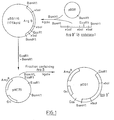
- FIG. 1 the process utilizes the Arg B + gene extracted by known techniques using the enzyme Bam Hl from DNA of A. nidulans. This fraction is initially ligated with known E. coli plasmid pBB8 using ligase to form plasmid pBB116, which is also known. Then plasmid pBB116 is treated with restriction enzymes EcoRI and Bam Hl to prepare fragments thereof. The fragment containing the Arg B + gene may be isolated from the mixture by normal methods, e.q. agarose electrophoresis and electroelution, and purified.
- This novel plasmid contains the replication origin, Ori, derived from pHC79 permitting it to be produced in quantity by replication in E. coli. It contains the Arg B + gene as a selectable marker in Aspergillus, and has other DNA sequences, which can be introduced by transformation by known techniques into spheroplasts of A. niger Arg B mutants. The resulting transformants can be selected on the basis of their Arg B + characteristic, from the non-transformed mutants, and isolated and cultivated.
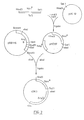
- FIG. 2 diagrammatically illustrates a construction of alternative plasmid pDG3 for effecting transformation of A. niger strains Arg B .
- known E. coli plasmid pUC 12 is ligated with a portion of the known transposon Tn5, specifically that portion containing the kanamycin resistance gene (KanR), using restriction endonucleases Hind III and Sal I and T4 ligases.
- the resultant plasmid vector, pNE02 is then cut with Xbal and ligated with pBB116 Xbal fragments to produce plasmid pDG3.
- This novel plasmid pDG3 is approximately 7.4 kilo-base pairs long, and contains the Kan R gene derived from Tn5, the Amp R gene derived from pUCl2 and the Arg B + gene derived from pBB116. It can be used in transformations with spheroplasts of Arg B mutants of A. niger.
- Both pDG 1 and pDG 3 contain in their DNA sequences both the selectable marker Arg B + and other DNA foreign to A. niger for incorporation into A. niger.
- This foreign DNA can include useful genes conferring novel and beneficial properties on A. niger transformants.
- the vector comprising the foreign DNA is integrated into the genome of the recipient cell, i.e. it becomes part of the chromosomal or nuclear DNA, rather than remaining as a plasmid, so that the expression of the foreign DNA is thereafter permanent and there is little chance of its subsequent loss from the transformed cell.
- the novel phenotype of the transformants is thus very stable.
- spheroplasts were separated from undigested fragments by filtering through 30 m nylon mesh and harvested by centrifuging at 2500 g for 5 minutes in a swing out rotor in 50 ml conical buttom tubes, at room temperature. The spheroplasts were washed, by resuspending and centrifuging, twice in 10 mls of 0.6 M KC1.
- the number of spheroplasts was determined using a hemocytometer and they were resuspended at a final concentration of 10 8 /ml in 1.2 M Sorbitol, 10 mM Tris/HCI, 10 mM CaCl 2 p H 7.5. 0.4 ml aliquots were placed in plastic tubes to which DNA either pDG 1 or pDG 3 in different experiments, (total vol. 40 1 in 10 mM Tris/HCl 1 mM EDTA pH 8) was added and incubated at room temperature for 25 minutes.
- Transformants which have successfully taken up the Arg B + and other DNA from the vector plasmids pDG 1 and pDG 3 will grow on minimal media plus KC1 - the potassium chloride being necessary to prevent rupture of the spheroplasts.
- transformants were grown in minimal media, DNA was prepared from them, and they were probed with radioactively labelled plasmids.
- Mycelia grown from 36 to 72 hours from an inoculum of 10 conidia/ml in 50 mls of appropriately supplemented media, were harvested through Whatman No. 54 paper and washed with distilled water. The mycelium was transferred to a cold mortar and ground to a fine powder in approximately 50 mls of liquid nitrogen with a pestle. This powder was poured into a 50 ml sterile siliconized conical flask to which was added 5 mls of 50 mM ethylenediaminetetraacetic acid, 0.2%, sodium dodecyl sulfate pH 8.5 and 5 1 of diethyl pyrocarbonate. This suspension was shaken for 1 minute at room temperature, then heated at 68°C for 20 minutes.
- the cellular debris was removed by centrifuging the suspension in a 15 ml Corex tube at 4°C X 8000 rpm X 15 minutes in a Sorvall SS34 rotor. Using wide mouthed Gilson tips 4 mls of the clear supernatant was removed to a fresh 15 ml Corex tube. To this was added 0.25 mls of 8 M acetic acid/KOH pH 4.2. This solution was incubated on ice for 45 minutes and the resulting precipitate was removed by centrifuging at 16000 rpm X 15 min X 4°C in a Sorvall SS34 rotor.
- Transformants obtained with pDG 3 also showed hybridization to Tn 5 sequences indicating the uptake of Kan R gene from pDG 3.
- This gene is expressed in A. niger.
- the growth rates of transformants are not very good, so it is probably rather poorly expressed.
- the vector is also integrated into the genome along with the arg B + gene in these transformants, so that a viable method of transforming foreign DNA into A. niger is provided.
- the stability of the transformed phenotypes thus prepared was checked.
- Transformants were inoculated from minimal media on to complete media and 10 mM arginine, and grown for 5 days from a central inoculum. Conidia were removed from the edge of the colony, diluted appropriately, and plated on to minimal plus 10 mM arginine. After 3 days, colonies were replica plated on to minimal and minimal plus arginine. Out of 400 colonies tested from 8 transformants, all were prototrophic. This indicates that the transformed phenotype is perfectly stable over this growth period, as would be expected for any gene integrated into the genome.
Landscapes
- Life Sciences & Earth Sciences (AREA)
- Health & Medical Sciences (AREA)
- Genetics & Genomics (AREA)
- Engineering & Computer Science (AREA)
- Bioinformatics & Cheminformatics (AREA)
- Wood Science & Technology (AREA)
- Biomedical Technology (AREA)
- Organic Chemistry (AREA)
- Biotechnology (AREA)
- General Engineering & Computer Science (AREA)
- Chemical & Material Sciences (AREA)
- Zoology (AREA)
- Molecular Biology (AREA)
- Biophysics (AREA)
- Mycology (AREA)
- Plant Pathology (AREA)
- Physics & Mathematics (AREA)
- Biochemistry (AREA)
- General Health & Medical Sciences (AREA)
- Microbiology (AREA)
- Micro-Organisms Or Cultivation Processes Thereof (AREA)
- Enzymes And Modification Thereof (AREA)
- Purification Treatments By Anaerobic Or Anaerobic And Aerobic Bacteria Or Animals (AREA)
- Vehicle Body Suspensions (AREA)
- Control Of Eletrric Generators (AREA)
- Preparation Of Compounds By Using Micro-Organisms (AREA)
Abstract
Description
- This invention relates to fungal transformants, and to methods of effecting transformation of fungi. More specifically, it relates to transformation of the filamentous fungal species Aspergillus niger and related Asperqilli, intermediates for use therein, and novel, useful fungal transformants thereof produced by genetic engineering techniques.
- The fungal species Aspergillus niger is used widely in the industrial production of enzymes, e.g. for use in the food industry. Its use is based on the secretory capacity of the microorganism. A. niger is used in large quantities and on a commercial scale for this industrial production, and is consequently a well-characterized micro-organism. To apply genetic engineering techniques to A. niger, it is necessary to transfer DNA into A. niger so that the resultant fungal transformant may express an additional useful product and secrete it in large amounts.
- Numerous genes have been cloned in a variety of prokaryotic vectors, and efforts are being made to obtain high expression levels for the encoded proteins. Genes are likely to be more efficiently expressed and processed and to produce a product more nearly the same as the original protein if these genes are placed into a host that is the same as or closely related to the species from which the gene was originally extracted.
- However, very high levels of expression of individual proteins can be deleterious, if not lethal, to the cell if allowed to build up to high concentrations therein, and can cause crystallization of the protein into inactive and highly insoluble inclusion bodies. Thus one should develop systems that allow efficient excretion of synthesized proteins from the cell. Also, it is best to chose as hosts organisms which have been grown commercially, so that the already well developed fermentation technology and downstream processing can be exploited in the production of novel products or the increased production of existing products. A. niger is the source organism for numerous industrially important proteins, enzymes and other products. It is also capable of excreting highly expressed proteins. The transformation of filamentous fungi such as A. niger has however proved particularly difficult.
- In accordance with the present invention, transformants of the fungal species Aspergillus niger (or related Aspergilli) are prepared, which contain foreign DNA conferring modified properties of expression on the Aspergillus niger, and having a rapidly selectable phenotype permitting them to be readily differentiated from the original Aspergillus niger.
- In the process of the present invention, Aspergillus niger is transformed by use of a DNA vector which contains a selectable marker which is capable of incorporation into the DNA of the host A. niger cells, but which is not to be found in the A. niger cells prior to this transformation. The vector may also contain other foreign DNA sequences required to be introduced into the A. niger, to enhance or modify its useful expressions of proteins. Then the transformants so formed can be selected and isolated from the unchanged cells on the basis of the selectable marker incorporated therein, grown and cultivated in the usual way, to provide colonies of transformants of A. niger with enhanced or modified capabilities of useful protein expression.
- In the Accompanyinq Drawings:
- Figure 1 of the accompanying drawings is a diagrammatic representation of the process for preparing vector plasmid pDGl for use in preparing A. niger transformants in accordance with the present invention;
- Figure 2 is a similar diagrammatic representation for preparing alternative vector plasmid pDG3.
- The selectable marker used in the present invention is suitably one which is naturally present in A. niger, so that its presence in the transformants will not materially affect the properties thereof as compared with the wild type A. niger. Thus, in the preferred process of the invention, a mutant strain of A. niger is used as the host for transformation, the mutant being one which lacks the chosen genetic marker as compared with the wild type A. niger. The mutant is transformed with a vector containing the selectable marker and the foreign DNA required to be incorporated, to modify or enhance the properties of expression of A. niger.
- The use of a mutant A. niger strain to be transformed, coupled with a vector plasmid capable of complementing the A. niger mutant host, allows for straightforward selection and isolation of successfully transformed cells from unchanged host cells. It enables one to avoid reliance for selection on the other foreign DNA introduced by the vector plasmid which, although perhaps containing the gene which it is primarily desired to incorporate for its properties of expression in A. niger, may not provide the basis of easy and rapid selection and separation of the transformants.
- In occasional cases, where the desired modification to A. niger is to introduce DNA sequences which will express a specific protein not normally present in A. niger, and which has an easy assay, these sequences themselves might constitute a dominant selectable marker, and hence permit the use of wild type A. niger as host. However, such instances are rare.
- In specific applications, it may be necessary to avoid having to obtain a mutant in the desired host. To transform a wild type A. niger, one can use a dominant selectable marker, i.e. a gene which specifies a novel phenotype such as ability to utilise a metabolite that is not usually metabolized by A. niger, or ability to resist toxic effects of a chemical or antibiotic. Transformants of the wild type A. niger can then be selected on the basis of the dominant selectable marker introduced therein.
- A specific preferred example of a selectable marker is the Arg B+ gene coding for the enzyme ornithine transcarbamylase. This enzyme is present in wild type A. niger. Mutants lacking this enzyme (Arg B strains) can be prepared by usual non-specific techniques, e.g. treatment with ultraviolet radiation, and selected by their ability to grow on a medium containing arginine, but not on minimal medium. Transformants made according to the process of the invention, from an Arg B strain of A. niger and a vector containing the Arg B+ gene, are consequently Arg B+ and are readily selectable and isolatable from the non-transformed Arg B strain, by standard plating out and cultivation techniques.
- Whilst it is preferred, as described above, to utilize a selectable marker which is natural to wild type A. niger, it is not in fact essential that the selectable marker as used in the vector be actually derived from A. niger. It can equally well be obtained from another, similar species which also contains the required gene, subject to limitations of expression. Thus, in the preferred case under the present invention, the selectable marker Arg B+ can be obtained by treatment of fungal DNA of species Aspergillus nidulans with appropriate restriction enzymes, and then ligated into a suitable vector plasmid for use in transforming A. niger (Arg B-).
- In the preferred embodiment of the process of the present invention, spheroplasts of A, niger are prepared and used in the transformation. The preferred method of preparing the spheroplasts is by enzymatic digestion of the cell walls, using for example cellulases. The selection of a suitable enzyme for enzymatic digestion of A. niger to produce spheroplasts thereof is within the skill of the art, perhaps requirinq some routine screening tests. Useful enzymes are those capable of digesting complex polysaccharides, and are found among those known as effective in preparing fungal spheroplasts of z wide variety of fungal species. Specific examples of suitable enzymes include Novozym 234 (an impure mutanase) and B-glucuronidase. Other suitable methods may be used to form spheroplasts. Moreover, with suitable methods for cell wall penetration by the vectors, whole cells of A. niger may be used, instead of spheroplasts.
- Transformations according to the present invention are suitably conducted using an appropriately chosen vector plasmid. To be suitable for use herein, the vector must contain the chosen selectable marker (e.g. Arg B+), and it must contain the other useful gene which the transformants are to contain. The vector may comprise linear or circular DNA. Preferably the vector also contains an E. coli replicon so that it can be manipulated and replicated therein, for introduction of selectable markers and the like, and preparation of adequate quantities of the vector in E. coli.
- In a specific embodiment, the present invention provides a transformation system that allows selection of arginine prototrophic colonies from an Aspergillus niger arginine auxotroph (arg B- 350.52) by treating spheroplasts, typically obtained by enzymatic (for example Novozym 234 and B-glucuronidase) digestion of the cell wall followed by subsequent purification, with DNA, in the form of a plasmid, that contains the ornithine transcarbamylase structural gene of A. nidulans in the presence of polyethylene glycol 40Yd and CaCl2. These transformants integrate the arg B+ piece of DNA into their chromosomes and are capable of expressing this gene. The transformants also take up the other DNA present in the plasmid, shown by the presence of sequences in the transformants that hybridize to pBR322 and Tn5 that are not present in the parental strain.
- Thus, in summary, to perform the transformation described in this invention one needs a recipient strain and a piece of DNA of which a part is selectable in this strain, i.e. contains a selectable marker. The strain should be of the species Aspergillus niger or closely related species of the Aspergillus genera. However, the recipient strain and the transforming DNA have to be chosen so that the transformants obtained by the uptake of the DNA into the recipient have a readily selectable phenotype. Thus one can use recipients that are sensitive to toxic metabolites with a DNA that encodes resistance (e.g. G418 and Tn5) or recipients that are unable to grow on a particular source of carbon, nitrogen etc., with a DNA that encodes the ability to use this (e.g. acetamide and acetamidase) , or use prototrophic recipients and a DNA that encodes the missing enzyme.
- The invention is illustrated in the following specific examples.
- Aspergillus niger (ATCC 46951) was mutagenized with UV light and an isolate obtained that required ornithine or arginine for growth in a defined minimal media. This strain which lacks ornithine carbamoyl transferase was called arg B (350.52). Media for growing Aspergillus niger were as described for A. nidulans by Cove, Biochem Biophys Acta (1966) 113, 51-56.
- Tn5 is described in Berg et al "Biotechnology" (1983) 1, 417-435; pHC79 is described in Hohn et al "Gene" (1980) 11, 291-296; pUCl2 is described in Vieira et al "Gene" (1982) 19, 259-268; and pBB116 described in Berse et al "Gene" (1983) 25, 109-117.
- Restriction enzymes were obtained from International Biotechnologies Incorporated and were used as per manufacturers instructions. Plasmids were prepared by the alkaline lysis procedures of Ish-Horowitz et al "Nucleic Acids Research" (1981) 9, 2989-2998.
- The preparation and construction of two novel vector plasmids, useful in the process of the present invention, is diagrammatically illustrated in the accompanying drawings. In Figure 1, the process utilizes the Arg B+ gene extracted by known techniques using the enzyme Bam Hl from DNA of A. nidulans. This fraction is initially ligated with known E. coli plasmid pBB8 using ligase to form plasmid pBB116, which is also known. Then plasmid pBB116 is treated with restriction enzymes EcoRI and Bam Hl to prepare fragments thereof. The fragment containing the Arg B+ gene may be isolated from the mixture by normal methods, e.q. agarose electrophoresis and electroelution, and purified. Then it is ligated with known E. coli plasmid pHC79 also cut with Bam Hl and EcoRI, to produce novel plasmid pDGl. If desired, isolation of the fragment may be omitted, the ligation step performed using the entire mixture, and the plasmids containing the desired sequences then selected by known methods. This novel plasmid contains the replication origin, Ori, derived from pHC79 permitting it to be produced in quantity by replication in E. coli. It contains the Arg B+ gene as a selectable marker in Aspergillus, and has other DNA sequences, which can be introduced by transformation by known techniques into spheroplasts of A. niger Arg B mutants. The resulting transformants can be selected on the basis of their Arg B+ characteristic, from the non-transformed mutants, and isolated and cultivated.
- Figure 2 diagrammatically illustrates a construction of alternative plasmid pDG3 for effecting transformation of A. niger strains Arg B . In this process, known E.
coli plasmid pUC 12 is ligated with a portion of the known transposon Tn5, specifically that portion containing the kanamycin resistance gene (KanR), using restriction endonucleases Hind III and Sal I and T4 ligases. The resultant plasmid vector, pNE02, is then cut with Xbal and ligated with pBB116 Xbal fragments to produce plasmid pDG3. This novel plasmid pDG3 is approximately 7.4 kilo-base pairs long, and contains the KanR gene derived from Tn5, the AmpR gene derived from pUCl2 and the Arg B+ gene derived from pBB116. It can be used in transformations with spheroplasts of Arg B mutants of A. niger. - Both
pDG 1 andpDG 3 contain in their DNA sequences both the selectable marker Arg B+ and other DNA foreign to A. niger for incorporation into A. niger. This foreign DNA can include useful genes conferring novel and beneficial properties on A. niger transformants. - It is to be noted in connection with the present invention, that the vector comprising the foreign DNA is integrated into the genome of the recipient cell, i.e. it becomes part of the chromosomal or nuclear DNA, rather than remaining as a plasmid, so that the expression of the foreign DNA is thereafter permanent and there is little chance of its subsequent loss from the transformed cell. The novel phenotype of the transformants is thus very stable.
- 500 mls of complete media (Cove 1966) + 0.02% arginine + 10-5% biotin in a 2 1 conical flask was inoculated with 105 conidia/ml of A. niger strain 350.52 (arg B) prepared as previously described, and incubated at 30°C, shaking at 250 rpm for 20 hours. The mycelia was harvested through Whatman No. 54 filter paper, washed with sterile deionized water and sucked dry. The mycelia was added to 50 ml of filter sterile 1.2 M MgSO4 10 mM potassium phosphate pH 5.8 in a 250 ml flask to which was added 20 mg of Novozym 234 (Novo Enzyme Industries) , 0.1 ml (=15000 units) of B-glucuronidase (Sigma) and 3 mg of Bovine serum albumin for each gram of mycelia. Digestion was allowed to proceed at 37°C with gentle shaking for 50-70 minutes checking periodically for spheroplast production by light-microscope. 50 mls of sterile deionised water was added and the spheroplasts were separated from undigested fragments by filtering through 30 m nylon mesh and harvested by centrifuging at 2500 g for 5 minutes in a swing out rotor in 50 ml conical buttom tubes, at room temperature. The spheroplasts were washed, by resuspending and centrifuging, twice in 10 mls of 0.6 M KC1. The number of spheroplasts was determined using a hemocytometer and they were resuspended at a final concentration of 108/ml in 1.2 M Sorbitol, 10 mM Tris/HCI, 10 mM CaCl2 pH 7.5. 0.4 ml aliquots were placed in plastic tubes to which DNA either
pDG 1 orpDG 3 in different experiments, (total vol. 40 1 in 10 mM Tris/HCl 1 mM EDTA pH 8) was added and incubated at room temperature for 25 minutes. 0.4 ml, 0.4 ml then 1.6 ml aliquots of 60% PEG4000, 10 mM Tris/HCl, 10 mM CaCl2 pH 7.5 were added to each tube sequentially with gentle, but thorough mixing between each addition, followed by a further incubation at room temperature for 20 minutes. The transformed spheroplasts were then added to appropriately supplementedminimal media 1% agar overlays, plus or minus 0.6 M KC1 at 45°C and poured immediately onto the identical (but cold) media in plates. After 3-5 days at 37°C the number of colonies growing was counted. - Transformants which have successfully taken up the Arg B+ and other DNA from the vector plasmids pDG 1 and
pDG 3 will grow on minimal media plus KC1 - the potassium chloride being necessary to prevent rupture of the spheroplasts. - The results are given in the following Table.

- All viable cells and spheroplasts, incluging unchanged cells, unchanged spheroplasts, transformants, and revertants, will grow on minimal media plus arginine plus KC1. Such growth medium serves to check on the percentage survival of viable material, which was in these experiments in the range 40-90%. On minimal media plus arginine, only contaminating, non-spheroplast materials will grow. The contamination with such non-osmotically sensitive cells was less than 1% in the present experiments.
- To check if these are genuine transformates cather than revertants, transformants were grown in minimal media, DNA was prepared from them, and they were probed with radioactively labelled plasmids.
- Mycelia, grown from 36 to 72 hours from an inoculum of 10 conidia/ml in 50 mls of appropriately supplemented media, were harvested through Whatman No. 54 paper and washed with distilled water. The mycelium was transferred to a cold mortar and ground to a fine powder in approximately 50 mls of liquid nitrogen with a pestle. This powder was poured into a 50 ml sterile siliconized conical flask to which was added 5 mls of 50 mM ethylenediaminetetraacetic acid, 0.2%, sodium dodecyl sulfate pH 8.5 and 5 1 of diethyl pyrocarbonate. This suspension was shaken for 1 minute at room temperature, then heated at 68°C for 20 minutes. The cellular debris was removed by centrifuging the suspension in a 15 ml Corex tube at 4°C X 8000 rpm X 15 minutes in a Sorvall SS34 rotor. Using wide mouthed Gilson tips 4 mls of the clear supernatant was removed to a fresh 15 ml Corex tube. To this was added 0.25 mls of 8 M acetic acid/KOH pH 4.2. This solution was incubated on ice for 45 minutes and the resulting precipitate was removed by centrifuging at 16000 rpm X 15 min X 4°C in a Sorvall SS34 rotor. 3 mls of the clear supernatant was transferred as before to 3 mls of propan-2-ol in a fresh 15 ml Corex tube. After mixing, the DNA was pelleted by centrifuging at 10000 rpm X 4 min X 4°C in a Sorvall SS34 rotor. The drained pellets were redissolved in 0.5 ml of 10 mM Tris/
HCl 1 mM EDTA pH 7.5 by gentle agitation. This solution was transferred to 1.5 ml microfuge tubes and 1 1 of a 10 mg/ml stock of boiled RNAase was added. The RNA was digested at 37°C for 20 minutes. - Then 60 1 of 3 M sodium acetate pH 6 and 660 1 of propan-2-ol was added. The precipitated DNA was pelleted by centrifuging at 15000 g for 2 mins. The pellet was dried briefly in a Speed-vac and then redissolved in 100 1 of 10 mM Tris/
HCl 1 mM EDTA pH 8 . - Southern transfers and hybridizations were as described in Buxton et al "Molecular General Genetics" (1983) 190:403-405. DNA for dot blots was denatured in 9 volumes of lM NaOH for 10 min and neutralized with a further 1.5 volume of 0.7M Tris/HCl, 0.3M NaCl, 20mM EDTA, pH 6.8. After application to nitrocellulose using a Bethesda Research Laboratories's dot blot apparatus the filters were treated as for Southerns.
- DNA from 8 transformants, A. niger strain 350.52 and A. nidulans FGSC4, were loaded onto dot-blots and probed with pBR322. Sequences homologous to pBR322 were detected in 6 of the 8 transformants, but not in either A. nidulans wild type or in the A. niger recipient from which these transformants were derived. A Southern blot was also done of BamHl digested DNA of these strains and probed with pDGl. A. nidulans wild type showed one BamHl fragment homologous to the arg B gene. Under the conditions of washing, A. niger 350.52 showed no bands hybridizing. Five of the transformants showed discrete bands, the same pattern not being observed in different transformants either indicating different integration events at the same locus or integration at different sites in the genome. Transformants obtained with
pDG 3 also showed hybridization toTn 5 sequences indicating the uptake of KanR gene frompDG 3. - Thus, it is concluded that A. niger (strain 350.52) ar B has been transformed with the A. nidulans arg B+ gene.
- This gene is expressed in A. niger. The growth rates of transformants are not very good, so it is probably rather poorly expressed. In 75% of cases, the vector is also integrated into the genome along with the arg B+ gene in these transformants, so that a viable method of transforming foreign DNA into A. niger is provided.
- The stability of the transformed phenotypes thus prepared was checked. Transformants were inoculated from minimal media on to complete media and 10 mM arginine, and grown for 5 days from a central inoculum. Conidia were removed from the edge of the colony, diluted appropriately, and plated on to minimal plus 10 mM arginine. After 3 days, colonies were replica plated on to minimal and minimal plus arginine. Out of 400 colonies tested from 8 transformants, all were prototrophic. This indicates that the transformed phenotype is perfectly stable over this growth period, as would be expected for any gene integrated into the genome.
- The following viable cultures were deposited with the American Type Culture Collection on 24th January 1985: E. coli HB101 containing pDGl and E. coli JM83 containing pDG3, designated respectively ATCC 53005 and ATCC 53006, and Aspergillus niger strain 350.52, designated ATCC 20739.
Claims (14)
Priority Applications (1)
| Application Number | Priority Date | Filing Date | Title |
|---|---|---|---|
| AT85308827T ATE82772T1 (en) | 1984-12-05 | 1985-12-04 | TRANSFORMATION OF ASPERGILLUS NIGER AND PLASMIDS TO BE USED THEREIN. |
Applications Claiming Priority (2)
| Application Number | Priority Date | Filing Date | Title |
|---|---|---|---|
| US06/678,578 US4885249A (en) | 1984-12-05 | 1984-12-05 | Aspergillus niger transformation system |
| US678578 | 1984-12-05 |
Publications (3)
| Publication Number | Publication Date |
|---|---|
| EP0184438A2 true EP0184438A2 (en) | 1986-06-11 |
| EP0184438A3 EP0184438A3 (en) | 1988-01-13 |
| EP0184438B1 EP0184438B1 (en) | 1992-11-25 |
Family
ID=24723387
Family Applications (1)
| Application Number | Title | Priority Date | Filing Date |
|---|---|---|---|
| EP85308827A Expired EP0184438B1 (en) | 1984-12-05 | 1985-12-04 | Transforming aspergillus niger, and plasmids for use therein |
Country Status (8)
| Country | Link |
|---|---|
| US (1) | US4885249A (en) |
| EP (1) | EP0184438B1 (en) |
| JP (1) | JPS61162168A (en) |
| AT (1) | ATE82772T1 (en) |
| AU (1) | AU590733B2 (en) |
| CA (1) | CA1341342C (en) |
| DE (1) | DE3586858T2 (en) |
| DK (1) | DK175213B1 (en) |
Cited By (57)
| Publication number | Priority date | Publication date | Assignee | Title |
|---|---|---|---|---|
| EP0249350A1 (en) * | 1986-06-06 | 1987-12-16 | Panlabs, Inc. | Filamentous fungal expression systems |
| EP0305216A1 (en) * | 1987-08-28 | 1989-03-01 | Novo Nordisk A/S | Recombinant Humicola lipase and process for the production of recombinant humicola lipases |
| EP0439997A1 (en) * | 1990-01-29 | 1991-08-07 | Ciba-Geigy Ag | Novel fungal expression system |
| US5362640A (en) * | 1992-03-09 | 1994-11-08 | Oji Paper Co., Ltd. | Ornithine carbamoyl transferase gene and utilization of the DNA |
| US5364770A (en) * | 1985-08-29 | 1994-11-15 | Genencor International Inc. | Heterologous polypeptides expressed in aspergillus |
| US5447862A (en) * | 1987-02-04 | 1995-09-05 | Ciba-Geigy Corporation | Pectin lyase genes of aspergillus niger |
| EP0683228A2 (en) | 1987-02-04 | 1995-11-22 | Ciba-Geigy Ag | Novel expression system |
| US5536661A (en) * | 1987-03-10 | 1996-07-16 | Novo Nordisk A/S | Process for the production of protein products in aspergillus |
| US5674728A (en) * | 1993-11-03 | 1997-10-07 | Novartis Corporation | Aspergillus niger vacuolar aspartyl protease |
| US5723292A (en) * | 1984-05-25 | 1998-03-03 | Zymogenetics, Inc. | Stable DNA constructs |
| US5965384A (en) * | 1986-03-17 | 1999-10-12 | Novo Nordisk A/S | Methods for producing Humicola lipases in aspergillus |
| US6004785A (en) * | 1985-08-29 | 1999-12-21 | Genencor International Inc. | Heterologous polypeptides expressed in filamentous fungi, processes for making same, and vectors for making same |
| US6013452A (en) * | 1995-12-15 | 2000-01-11 | Novo Nordisk A/S | Fungus wherein the areA, pepC and/or pepE genes have been inactivated |
| US6025185A (en) * | 1994-06-17 | 2000-02-15 | Novo Nordisk Als | Fungus wherein the areA gene has been modified and an areA gene from Aspergillus oryzae |
| WO2002077218A1 (en) | 2001-03-22 | 2002-10-03 | Novo Nordisk Health Care Ag | Coagulation factor vii derivatives |
| WO2004020611A1 (en) * | 2002-08-30 | 2004-03-11 | Puratos Naamloze Vennootschap | Myrothecium sp. transformation and expression system |
| WO2005003311A2 (en) | 2003-06-25 | 2005-01-13 | Novozymes A/S | Enzymes for starch processing |
| WO2006069290A2 (en) | 2004-12-22 | 2006-06-29 | Novozymes A/S | Enzymes for starch processing |
| EP1762243A1 (en) | 1999-03-31 | 2007-03-14 | Oxford Biomedica (UK) Ltd | Factor for regulation of neurite growth |
| WO2007045248A1 (en) | 2005-10-17 | 2007-04-26 | Novozymes A/S | Use of fungal mutants for expression of antibodies |
| WO2008101893A2 (en) | 2007-02-20 | 2008-08-28 | Dsm Ip Assets B.V. | Novel sialidase |
| WO2008113799A1 (en) | 2007-03-22 | 2008-09-25 | Dsm Ip Assets B.V. | Novel lysyl oxidases |
| EP2175013A1 (en) | 2000-12-07 | 2010-04-14 | DSM IP Assets B.V. | Protein hydrolysates enriched in peptides having a carboxy terminal proline residue |
| EP2177503A1 (en) | 2004-02-20 | 2010-04-21 | UCL Business PLC | Modulators of cannabinoid receptors |
| EP2202240A1 (en) | 2000-08-18 | 2010-06-30 | Sterix Limited | Compound |
| WO2010089385A1 (en) | 2009-02-06 | 2010-08-12 | Novozymes Biopharma Dk A/S | Purification process |
| WO2010092135A2 (en) | 2009-02-11 | 2010-08-19 | Novozymes Biopharma Uk Ltd. | Albumin variants and conjugates |
| WO2011006982A2 (en) | 2009-07-17 | 2011-01-20 | Rigshospitalet | Inhibitors of complement activation |
| EP2316930A1 (en) | 2005-09-14 | 2011-05-04 | Novo Nordisk Health Care AG | Human coagulation factor VII polypeptides |
| WO2011067283A1 (en) | 2009-12-01 | 2011-06-09 | Novo Nordisk A/S | Novel peptidyl alpha-hydroxyglycine alpha-amidating lyases |
| EP2336308A2 (en) | 2003-06-25 | 2011-06-22 | Novozymes A/S | Enzymes for starch processing |
| EP2341146A2 (en) | 2001-07-05 | 2011-07-06 | Imperial College Innovations Limited | Method for determining chromatin structure |
| WO2011101339A2 (en) | 2010-02-18 | 2011-08-25 | Dsm Ip Assets B.V. | Fermentation broth and filtration filter cake and uses thereof |
| WO2011107591A1 (en) | 2010-03-05 | 2011-09-09 | Rigshospitalet | Chimeric inhibitor molecules of complement activation |
| EP2392655A2 (en) | 2003-09-09 | 2011-12-07 | Novo Nordisk Health Care AG | Coagulation factor VII polypeptides |
| WO2012007445A1 (en) | 2010-07-13 | 2012-01-19 | Dsm Ip Assets B.V. | Mutarotase in crystallization |
| WO2012007446A1 (en) | 2010-07-13 | 2012-01-19 | Dsm Ip Assets B.V. | Use of a mutarotase in the production of dried powders |
| US8119171B2 (en) | 2000-12-07 | 2012-02-21 | Dsm Ip Assets B.V. | Method for the prevention or reduction of haze in beverages |
| EP2439267A2 (en) | 2005-11-28 | 2012-04-11 | DSM IP Assets B.V. | Enzyme preparations yielding a clean taste |
| US8257760B2 (en) | 2002-06-07 | 2012-09-04 | Dsm Ip Assets B.V. | Method for the prevention or reduction of haze in beverages |
| US8372620B2 (en) | 1998-12-23 | 2013-02-12 | Dupont Nutrition Biosciences Aps | Bacterial xylanases |
| WO2013040093A2 (en) | 2011-09-12 | 2013-03-21 | Amunix Operating Inc. | Glucagon-like peptide-2 compositions and methods of making and using same |
| EP2594583A1 (en) | 2007-08-08 | 2013-05-22 | Novozymes Biopharma DK A/S | Transferrin variants and conugates |
| WO2013117705A1 (en) | 2012-02-09 | 2013-08-15 | Var2 Pharmaceuticals Aps | Targeting of chondroitin sulfate glycans |
| WO2014060401A1 (en) | 2012-10-15 | 2014-04-24 | Novo Nordisk Health Care Ag | Coagulation factor vii polypeptides |
| US9371369B2 (en) | 2009-02-03 | 2016-06-21 | Amunix Operating Inc. | Extended recombinant polypeptides and compositions comprising same |
| US9376672B2 (en) | 2009-08-24 | 2016-06-28 | Amunix Operating Inc. | Coagulation factor IX compositions and methods of making and using same |
| US9670473B2 (en) | 2006-01-10 | 2017-06-06 | Angiodesign (Uk) Limited | Crystals of angiotensin-converting enzyme (ACE) |
| US9938331B2 (en) | 2005-09-27 | 2018-04-10 | Amunix Operating Inc. | Biologically active proteins having increased in vivo and/or in vitro stability |
| US10370430B2 (en) | 2012-02-15 | 2019-08-06 | Bioverativ Therapeutics Inc. | Recombinant factor VIII proteins |
| US10421798B2 (en) | 2012-02-15 | 2019-09-24 | Bioverativ Therapeutics Inc. | Factor VIII compositions and methods of making and using same |
| WO2020012021A1 (en) | 2018-07-13 | 2020-01-16 | Varct Diagnostics Aps | Isolation of circulating cells of fetal origin using recombinant malaria protein var2csa |
| US10548953B2 (en) | 2013-08-14 | 2020-02-04 | Bioverativ Therapeutics Inc. | Factor VIII-XTEN fusions and uses thereof |
| US10745680B2 (en) | 2015-08-03 | 2020-08-18 | Bioverativ Therapeutics Inc. | Factor IX fusion proteins and methods of making and using same |
| US12030925B2 (en) | 2018-05-18 | 2024-07-09 | Bioverativ Therapeutics Inc. | Methods of treating hemophilia A |
| US12161696B2 (en) | 2016-12-02 | 2024-12-10 | Bioverativ Therapeutics Inc. | Methods of treating hemophilic arthropathy using chimeric clotting factors |
| US12617839B2 (en) | 2014-01-10 | 2026-05-05 | Bioverativ Therapeutics Inc. | Factor VIII chimeric proteins and uses thereof |
Families Citing this family (27)
| Publication number | Priority date | Publication date | Assignee | Title |
|---|---|---|---|---|
| JP2748347B2 (en) * | 1989-03-09 | 1998-05-06 | キッコーマン 株式会社 | Aspergillus soya transformant |
| US5290474A (en) * | 1990-10-05 | 1994-03-01 | Genencor International, Inc. | Detergent composition for treating cotton-containing fabrics containing a surfactant and a cellulase composition containing endolucanase III from trichoderma ssp |
| CA2093422C (en) * | 1990-10-05 | 2001-04-03 | Genencor International, Inc. | Detergent compositions containing cellulase compositions deficient in cbh i type components |
| DK36592D0 (en) * | 1992-03-20 | 1992-03-20 | Novo Nordisk As | PROCEDURE FOR PRODUCING PROTEINS |
| US5846802A (en) * | 1992-04-15 | 1998-12-08 | Buxton; Frank | Fungal Protease |
| DK47493D0 (en) * | 1993-04-27 | 1993-04-27 | Novo Nordisk As | METHOD OF PRODUCING CHEESE |
| US6268140B1 (en) | 1994-02-03 | 2001-07-31 | Neugenesis | Combinatorial metabolic libraries |
| US5643745A (en) * | 1994-02-03 | 1997-07-01 | University Of Hawaii | Heterologous dimeric proteins produced in heterokaryons |
| US5683899A (en) | 1994-02-03 | 1997-11-04 | University Of Hawaii | Methods and compositions for combinatorial-based discovery of new multimeric molecules |
| DK0767837T3 (en) * | 1994-06-29 | 2004-03-15 | Dsm Ip Assets Bv | Increased production of b-galactosidase in Aspergillus Oryzae |
| US5776730A (en) * | 1995-12-15 | 1998-07-07 | University Of Hawaii | Neurospora hosts for the production of recombinant proteins, and methods for producing same |
| WO2000020555A2 (en) * | 1998-10-06 | 2000-04-13 | Aarl Inc | Transformation system in the field of filamentous fungal hosts: in chrysosporium |
| US7883872B2 (en) * | 1996-10-10 | 2011-02-08 | Dyadic International (Usa), Inc. | Construction of highly efficient cellulase compositions for enzymatic hydrolysis of cellulose |
| US5811381A (en) * | 1996-10-10 | 1998-09-22 | Mark A. Emalfarb | Cellulase compositions and methods of use |
| ATE529502T1 (en) * | 1999-08-13 | 2011-11-15 | Suntory Holdings Ltd | LIPID-SECRETING MICRO-ORGANISM AND METHOD FOR PRODUCING THE LIPID AND LIPID SPHERES WITH LIPID ENCLOSED THEREIN BY USING MICRO-ORGANISMS |
| JP4088097B2 (en) * | 2002-04-26 | 2008-05-21 | サントリー株式会社 | Method for producing highly unsaturated fatty acid-containing lipid |
| US8323014B2 (en) * | 2003-10-31 | 2012-12-04 | Pirelli Pneumatici S.P.A. | Expandable bladder for tyre-curing apparatuses, a manufacturing method thereof, and a process for manufacturing tyres for vehicle wheels |
| US20050181509A1 (en) * | 2004-02-12 | 2005-08-18 | The Penn State Research Foundation | Dual selection based, targeted gene disruption method for fungi and fungus-like organisms |
| US8163533B2 (en) * | 2004-10-15 | 2012-04-24 | Intrexon Corporation | Methods and compositions for combinatorial-based production of multivalent recombinant antigens |
| CN1298837C (en) * | 2005-07-28 | 2007-02-07 | 秘鸣 | Aspergillus niger fungus and its application in production of Pu'er tea |
| US9862956B2 (en) | 2006-12-10 | 2018-01-09 | Danisco Us Inc. | Expression and high-throughput screening of complex expressed DNA libraries in filamentous fungi |
| US8680252B2 (en) | 2006-12-10 | 2014-03-25 | Dyadic International (Usa), Inc. | Expression and high-throughput screening of complex expressed DNA libraries in filamentous fungi |
| NZ578309A (en) | 2007-01-30 | 2012-06-29 | Verenium Corp | Enzymes for the treatment of lignocellulosics, nucleic acids encoding them and methods for making and using them |
| CA2736661A1 (en) * | 2007-09-07 | 2009-03-12 | Dyadic International, Inc. | Novel fungal enzymes |
| BR112013008347A2 (en) | 2010-10-06 | 2016-06-14 | Bp Corp North America Inc | cbh variant polypeptides i |
| EP4023757A1 (en) | 2020-12-29 | 2022-07-06 | The Protein Brewery B.V. | Methods for generating selection marker-free transformants of heterokaryotic organisms |
| CN114958899A (en) * | 2022-05-30 | 2022-08-30 | 福州大学 | Replicon capable of autonomously replicating in Aspergillus niger cells |
Family Cites Families (6)
| Publication number | Priority date | Publication date | Assignee | Title |
|---|---|---|---|---|
| US4486533A (en) * | 1982-09-02 | 1984-12-04 | St. Louis University | Filamentous fungi functional replicating extrachromosomal element |
| EP0191221A1 (en) * | 1984-10-24 | 1986-08-20 | The Regents Of The University Of California | Vectors for transformation of ascomycetes |
| US4735901A (en) * | 1985-01-14 | 1988-04-05 | E. R. Squibb & Sons, Inc. | Transformation of Candida albicans |
| EP0625577A1 (en) * | 1985-08-29 | 1994-11-23 | Genencor International, Inc. | Heterologous polypeptides expressed in filamentous fungi, processes for their preparation, and vectors for their preparation |
| FI864473L (en) * | 1985-11-20 | 1987-05-21 | Panlabs Inc | SAMMANSATTA YTTRYCKSKASSETTER FOER FUNGALTRANSFORMERING. |
| US4935349A (en) * | 1986-01-17 | 1990-06-19 | Zymogenetics, Inc. | Expression of higher eucaryotic genes in aspergillus |
-
1984
- 1984-12-05 US US06/678,578 patent/US4885249A/en not_active Expired - Lifetime
-
1985
- 1985-12-04 CA CA000496877A patent/CA1341342C/en not_active Expired - Lifetime
- 1985-12-04 DE DE8585308827T patent/DE3586858T2/en not_active Expired - Fee Related
- 1985-12-04 EP EP85308827A patent/EP0184438B1/en not_active Expired
- 1985-12-04 AT AT85308827T patent/ATE82772T1/en active
- 1985-12-04 DK DK198505626A patent/DK175213B1/en not_active IP Right Cessation
- 1985-12-05 JP JP60274884A patent/JPS61162168A/en active Pending
- 1985-12-05 AU AU50780/85A patent/AU590733B2/en not_active Expired
Non-Patent Citations (6)
| Title |
|---|
| CHEMICAL ABSTRACTS, vol. 100, no. 7, 13th February 1984, page 135, abstract no. 46176y, Columbus, Ohio, US; B. BERSE et al.: "Cloning and characterization of the ornithine carbamoyltransferase gene from Aspergillus nidulans", & GENE 1983, 25(1), 109-17 * |
| CHEMICAL ABSTRACTS, vol. 101, no. 25, 17th December 1984, page 194, abstract no. 223909h, Columbus, Ohio, US; M.A. JOHN et al.: "Transformation of Aspergillus nidulans using the argB gene", & ENZYME MICROB. TECHNOL. 1984, 6(9), 386-9 * |
| CHEMICAL ABSTRACTS, vol. 103, no. 5, 5th August 1985, page 271, abstract no. 34728d, Columbus, Ohio, US; J.M. KELLY et al.: "Transformation of Aspergillus niger by the amdS gene of Aspergillus nidulans", & EMBO J. 1985, 4(2), 475-9 * |
| GENE, vol. 26, 1983, pages 205-221, Elsevier Science Publishers; J. TILBURN et al.: "Transformation by integration in Aspergillus nidulans" * |
| GENE, vol. 37, 1985, pages 207-214, Elsevier Science Publishers; F.P. BUXTON et al.: "Transformation of Aspergillus niger using the argB gene of Aspergillus nidulans" * |
| PROC. NATL. ACAD. SCI. USA, vol. 81, March 1984, pages 1470-1474; M.M. YELTON et al.: "Transformation of Aspergillus nidulans by using a trpC plasmid" * |
Cited By (79)
| Publication number | Priority date | Publication date | Assignee | Title |
|---|---|---|---|---|
| US5723292A (en) * | 1984-05-25 | 1998-03-03 | Zymogenetics, Inc. | Stable DNA constructs |
| US6103490A (en) * | 1985-08-29 | 2000-08-15 | Genencor International, Inc. | Heterologous polypeptides expressed in filamentous fungi, processes for making same, and vectors for making same |
| US6379928B1 (en) | 1985-08-29 | 2002-04-30 | Genencor International, Inc. | Heterologous polypeptides expressed in filamentous fungi, processes for making same, and vectors for making same |
| US5364770A (en) * | 1985-08-29 | 1994-11-15 | Genencor International Inc. | Heterologous polypeptides expressed in aspergillus |
| US6171817B1 (en) | 1985-08-29 | 2001-01-09 | Genencor International, Inc. | Heterologous polypeptides expressed in filamentous fungi, process for making same, and vectors for making same |
| US5578463A (en) * | 1985-08-29 | 1996-11-26 | Genencor International, Inc. | Heterologous polypeptides expressed in filamentous fungi, processes for making same, and vectors for making same |
| US6004785A (en) * | 1985-08-29 | 1999-12-21 | Genencor International Inc. | Heterologous polypeptides expressed in filamentous fungi, processes for making same, and vectors for making same |
| US5965384A (en) * | 1986-03-17 | 1999-10-12 | Novo Nordisk A/S | Methods for producing Humicola lipases in aspergillus |
| US7517668B1 (en) | 1986-03-17 | 2009-04-14 | Novozymes A/S | Process for the production of protein products in aspergillus |
| US5863759A (en) * | 1986-03-17 | 1999-01-26 | Novo Nordisk A/S | Process for the production of protein products in aspergillus |
| EP0249350A1 (en) * | 1986-06-06 | 1987-12-16 | Panlabs, Inc. | Filamentous fungal expression systems |
| US5447862A (en) * | 1987-02-04 | 1995-09-05 | Ciba-Geigy Corporation | Pectin lyase genes of aspergillus niger |
| EP0683228A2 (en) | 1987-02-04 | 1995-11-22 | Ciba-Geigy Ag | Novel expression system |
| US5536661A (en) * | 1987-03-10 | 1996-07-16 | Novo Nordisk A/S | Process for the production of protein products in aspergillus |
| EP0305216A1 (en) * | 1987-08-28 | 1989-03-01 | Novo Nordisk A/S | Recombinant Humicola lipase and process for the production of recombinant humicola lipases |
| EP0439997A1 (en) * | 1990-01-29 | 1991-08-07 | Ciba-Geigy Ag | Novel fungal expression system |
| US5362640A (en) * | 1992-03-09 | 1994-11-08 | Oji Paper Co., Ltd. | Ornithine carbamoyl transferase gene and utilization of the DNA |
| US5674728A (en) * | 1993-11-03 | 1997-10-07 | Novartis Corporation | Aspergillus niger vacuolar aspartyl protease |
| US5756338A (en) * | 1993-11-03 | 1998-05-26 | Novartis Corporation | Aspergillus niger vacuolar aspartyl protease |
| US6025185A (en) * | 1994-06-17 | 2000-02-15 | Novo Nordisk Als | Fungus wherein the areA gene has been modified and an areA gene from Aspergillus oryzae |
| US6013452A (en) * | 1995-12-15 | 2000-01-11 | Novo Nordisk A/S | Fungus wherein the areA, pepC and/or pepE genes have been inactivated |
| US8372620B2 (en) | 1998-12-23 | 2013-02-12 | Dupont Nutrition Biosciences Aps | Bacterial xylanases |
| EP1762243A1 (en) | 1999-03-31 | 2007-03-14 | Oxford Biomedica (UK) Ltd | Factor for regulation of neurite growth |
| EP2202240A1 (en) | 2000-08-18 | 2010-06-30 | Sterix Limited | Compound |
| US8119171B2 (en) | 2000-12-07 | 2012-02-21 | Dsm Ip Assets B.V. | Method for the prevention or reduction of haze in beverages |
| EP2175013A1 (en) | 2000-12-07 | 2010-04-14 | DSM IP Assets B.V. | Protein hydrolysates enriched in peptides having a carboxy terminal proline residue |
| WO2002077218A1 (en) | 2001-03-22 | 2002-10-03 | Novo Nordisk Health Care Ag | Coagulation factor vii derivatives |
| EP2341146A2 (en) | 2001-07-05 | 2011-07-06 | Imperial College Innovations Limited | Method for determining chromatin structure |
| US8257760B2 (en) | 2002-06-07 | 2012-09-04 | Dsm Ip Assets B.V. | Method for the prevention or reduction of haze in beverages |
| WO2004020611A1 (en) * | 2002-08-30 | 2004-03-11 | Puratos Naamloze Vennootschap | Myrothecium sp. transformation and expression system |
| EP2336308A2 (en) | 2003-06-25 | 2011-06-22 | Novozymes A/S | Enzymes for starch processing |
| WO2005003311A2 (en) | 2003-06-25 | 2005-01-13 | Novozymes A/S | Enzymes for starch processing |
| EP2392655A2 (en) | 2003-09-09 | 2011-12-07 | Novo Nordisk Health Care AG | Coagulation factor VII polypeptides |
| EP2177503A1 (en) | 2004-02-20 | 2010-04-21 | UCL Business PLC | Modulators of cannabinoid receptors |
| EP2365068A2 (en) | 2004-12-22 | 2011-09-14 | Novozymes A/S | Enzymes for starch processing |
| WO2006069290A2 (en) | 2004-12-22 | 2006-06-29 | Novozymes A/S | Enzymes for starch processing |
| EP2316930A1 (en) | 2005-09-14 | 2011-05-04 | Novo Nordisk Health Care AG | Human coagulation factor VII polypeptides |
| US9938331B2 (en) | 2005-09-27 | 2018-04-10 | Amunix Operating Inc. | Biologically active proteins having increased in vivo and/or in vitro stability |
| WO2007045248A1 (en) | 2005-10-17 | 2007-04-26 | Novozymes A/S | Use of fungal mutants for expression of antibodies |
| EP3563688A1 (en) | 2005-11-28 | 2019-11-06 | DSM IP Assets B.V. | Enzyme preparations yielding a clean taste |
| EP2439266A2 (en) | 2005-11-28 | 2012-04-11 | DSM IP Assets B.V. | Enzyme preparations yielding a clean taste |
| EP2439267A2 (en) | 2005-11-28 | 2012-04-11 | DSM IP Assets B.V. | Enzyme preparations yielding a clean taste |
| US9670473B2 (en) | 2006-01-10 | 2017-06-06 | Angiodesign (Uk) Limited | Crystals of angiotensin-converting enzyme (ACE) |
| WO2008101893A2 (en) | 2007-02-20 | 2008-08-28 | Dsm Ip Assets B.V. | Novel sialidase |
| WO2008113799A1 (en) | 2007-03-22 | 2008-09-25 | Dsm Ip Assets B.V. | Novel lysyl oxidases |
| EP2604623A2 (en) | 2007-08-08 | 2013-06-19 | Novozymes Biopharma DK A/S | Transferrin variants and conjugates |
| EP2594583A1 (en) | 2007-08-08 | 2013-05-22 | Novozymes Biopharma DK A/S | Transferrin variants and conugates |
| US12071456B2 (en) | 2009-02-03 | 2024-08-27 | Amunix Pharmaceuticals, Inc. | Extended recombinant polypeptides and compositions comprising same |
| US10961287B2 (en) | 2009-02-03 | 2021-03-30 | Amunix Pharmaceuticals, Inc | Extended recombinant polypeptides and compositions comprising same |
| US9371369B2 (en) | 2009-02-03 | 2016-06-21 | Amunix Operating Inc. | Extended recombinant polypeptides and compositions comprising same |
| US9926351B2 (en) | 2009-02-03 | 2018-03-27 | Amunix Operating Inc. | Extended recombinant polypeptides and compositions comprising same |
| EP2617733A1 (en) | 2009-02-06 | 2013-07-24 | Novozymes Biopharma DK A/S | Purification process |
| WO2010089385A1 (en) | 2009-02-06 | 2010-08-12 | Novozymes Biopharma Dk A/S | Purification process |
| WO2010092135A2 (en) | 2009-02-11 | 2010-08-19 | Novozymes Biopharma Uk Ltd. | Albumin variants and conjugates |
| EP3243835A1 (en) | 2009-02-11 | 2017-11-15 | Albumedix A/S | Albumin variants and conjugates |
| WO2011006982A2 (en) | 2009-07-17 | 2011-01-20 | Rigshospitalet | Inhibitors of complement activation |
| EP3222287A1 (en) | 2009-08-24 | 2017-09-27 | Amunix Operating Inc. | Coagulation factor ix compositions and methods of making and using same |
| US9758776B2 (en) | 2009-08-24 | 2017-09-12 | Amunix Operating Inc. | Coagulation factor IX compositions and methods of making and using same |
| US9376672B2 (en) | 2009-08-24 | 2016-06-28 | Amunix Operating Inc. | Coagulation factor IX compositions and methods of making and using same |
| WO2011067283A1 (en) | 2009-12-01 | 2011-06-09 | Novo Nordisk A/S | Novel peptidyl alpha-hydroxyglycine alpha-amidating lyases |
| WO2011101339A2 (en) | 2010-02-18 | 2011-08-25 | Dsm Ip Assets B.V. | Fermentation broth and filtration filter cake and uses thereof |
| EP3815708A1 (en) | 2010-03-05 | 2021-05-05 | Omeros Corporation | Chimeric inhibitor molecules of complement activation |
| WO2011107591A1 (en) | 2010-03-05 | 2011-09-09 | Rigshospitalet | Chimeric inhibitor molecules of complement activation |
| WO2012007445A1 (en) | 2010-07-13 | 2012-01-19 | Dsm Ip Assets B.V. | Mutarotase in crystallization |
| WO2012007446A1 (en) | 2010-07-13 | 2012-01-19 | Dsm Ip Assets B.V. | Use of a mutarotase in the production of dried powders |
| WO2013040093A2 (en) | 2011-09-12 | 2013-03-21 | Amunix Operating Inc. | Glucagon-like peptide-2 compositions and methods of making and using same |
| WO2013117705A1 (en) | 2012-02-09 | 2013-08-15 | Var2 Pharmaceuticals Aps | Targeting of chondroitin sulfate glycans |
| US10421798B2 (en) | 2012-02-15 | 2019-09-24 | Bioverativ Therapeutics Inc. | Factor VIII compositions and methods of making and using same |
| EP3564260A1 (en) | 2012-02-15 | 2019-11-06 | Bioverativ Therapeutics Inc. | Factor viii compositions and methods of making and using same |
| US10370430B2 (en) | 2012-02-15 | 2019-08-06 | Bioverativ Therapeutics Inc. | Recombinant factor VIII proteins |
| US11685771B2 (en) | 2012-02-15 | 2023-06-27 | Bioverativ Therapeutics Inc. | Recombinant factor VIII proteins |
| EP4194465A1 (en) | 2012-02-15 | 2023-06-14 | Bioverativ Therapeutics Inc. | Factor viii compositions and methods of making and using same |
| WO2014060401A1 (en) | 2012-10-15 | 2014-04-24 | Novo Nordisk Health Care Ag | Coagulation factor vii polypeptides |
| US10548953B2 (en) | 2013-08-14 | 2020-02-04 | Bioverativ Therapeutics Inc. | Factor VIII-XTEN fusions and uses thereof |
| US12617839B2 (en) | 2014-01-10 | 2026-05-05 | Bioverativ Therapeutics Inc. | Factor VIII chimeric proteins and uses thereof |
| US10745680B2 (en) | 2015-08-03 | 2020-08-18 | Bioverativ Therapeutics Inc. | Factor IX fusion proteins and methods of making and using same |
| US12161696B2 (en) | 2016-12-02 | 2024-12-10 | Bioverativ Therapeutics Inc. | Methods of treating hemophilic arthropathy using chimeric clotting factors |
| US12030925B2 (en) | 2018-05-18 | 2024-07-09 | Bioverativ Therapeutics Inc. | Methods of treating hemophilia A |
| WO2020012021A1 (en) | 2018-07-13 | 2020-01-16 | Varct Diagnostics Aps | Isolation of circulating cells of fetal origin using recombinant malaria protein var2csa |
Also Published As
| Publication number | Publication date |
|---|---|
| AU5078085A (en) | 1986-06-12 |
| CA1341342C (en) | 2002-02-26 |
| DK175213B1 (en) | 2004-07-12 |
| US4885249A (en) | 1989-12-05 |
| JPS61162168A (en) | 1986-07-22 |
| AU590733B2 (en) | 1989-11-16 |
| EP0184438A3 (en) | 1988-01-13 |
| EP0184438B1 (en) | 1992-11-25 |
| DK562685A (en) | 1986-06-06 |
| DK562685D0 (en) | 1985-12-04 |
| ATE82772T1 (en) | 1992-12-15 |
| DE3586858T2 (en) | 1993-05-19 |
| DE3586858D1 (en) | 1993-01-07 |
Similar Documents
| Publication | Publication Date | Title |
|---|---|---|
| EP0184438B1 (en) | Transforming aspergillus niger, and plasmids for use therein | |
| Buxton et al. | Transformation of Aspergillus niger using the argB gene of Aspergillus nidulans | |
| EP0226752B1 (en) | Method for high-level expression of polypeptides in yeast of the genus Pichia | |
| CA1273882A (en) | Autonomous replication sequences for yeast strains of the genus pichia | |
| DE3856339T2 (en) | Transformation of alkalophilic bacillus strains | |
| DE69932345T2 (en) | PREPARATION AND SCALING OF INTERESTING DNA BANKS IN CELLS OF FILAMENTOUS MUSHROOMS | |
| EP0263311A2 (en) | Yeast production of human tumor necrosis factor | |
| EP0495208A2 (en) | Pichia pastoris acid phosphatase gene | |
| US6171817B1 (en) | Heterologous polypeptides expressed in filamentous fungi, process for making same, and vectors for making same | |
| US5166329A (en) | DNA encoding the alcohol oxidase 2 gene of yeast of the genus Pichia | |
| US4935350A (en) | Materials and methods for controlling plasmid copy number and stability | |
| CA1327330C (en) | Expression system comprising aspergillus niger pectin lyase i gene sequences | |
| DE69432336T2 (en) | Schimmel protease | |
| EP0205506B1 (en) | A method of transforming fungi with a vector | |
| EP0501914A1 (en) | Improved yeast vectors | |
| JP3133774B2 (en) | Novel host-vector system | |
| US4477571A (en) | Chimeric plasmids that replicate in bacteria and yeast and microorganisms transformed therewith | |
| US4464472A (en) | Construction and use of functional minichromosomes | |
| US5057416A (en) | Supersecreting mutants of Saccharomyces cerevisiae | |
| EP0048081A2 (en) | DNA capable of replication and stable mitotic maintenance in a host eukaryote, method of preparation thereof and eukaryotic cell containing same | |
| IE61984B1 (en) | Penicillium transformants and methods for their production | |
| EP0339567A1 (en) | Expression of Hepatitis B PreS 2 Protein in Methylotrophic Yeasts | |
| EP0174785B1 (en) | A positive retroregulatory element, plasmid and cells comprising said element and their production, a method of enhancing gene expression using said element and a method of enhancing rna half life using said element | |
| EP0222725B1 (en) | Process for recovering polypeptides localized in the periplasmic space of yeast | |
| JP2748347B2 (en) | Aspergillus soya transformant |
Legal Events
| Date | Code | Title | Description |
|---|---|---|---|
| PUAI | Public reference made under article 153(3) epc to a published international application that has entered the european phase |
Free format text: ORIGINAL CODE: 0009012 |
|
| AK | Designated contracting states |
Kind code of ref document: A2 Designated state(s): AT BE CH DE FR GB IT LI LU NL SE |
|
| PUAL | Search report despatched |
Free format text: ORIGINAL CODE: 0009013 |
|
| AK | Designated contracting states |
Kind code of ref document: A3 Designated state(s): AT BE CH DE FR GB IT LI LU NL SE |
|
| 17P | Request for examination filed |
Effective date: 19880707 |
|
| RAP1 | Party data changed (applicant data changed or rights of an application transferred) |
Owner name: ALLELIX BIOPHARMACEUTICALS INC. |
|
| 17Q | First examination report despatched |
Effective date: 19900730 |
|
| RAP1 | Party data changed (applicant data changed or rights of an application transferred) |
Owner name: GIST-BROCADES N.V. |
|
| GRAA | (expected) grant |
Free format text: ORIGINAL CODE: 0009210 |
|
| AK | Designated contracting states |
Kind code of ref document: B1 Designated state(s): AT BE CH DE FR GB IT LI LU NL SE |
|
| REF | Corresponds to: |
Ref document number: 82772 Country of ref document: AT Date of ref document: 19921215 Kind code of ref document: T |
|
| ITF | It: translation for a ep patent filed | ||
| ITTA | It: last paid annual fee | ||
| REF | Corresponds to: |
Ref document number: 3586858 Country of ref document: DE Date of ref document: 19930107 |
|
| ET | Fr: translation filed | ||
| PLBI | Opposition filed |
Free format text: ORIGINAL CODE: 0009260 |
|
| 26 | Opposition filed |
Opponent name: ALKO LTD. Effective date: 19930825 Opponent name: NOVO NORDISK A/S Effective date: 19930824 Opponent name: GENENCOR INTERNATIONAL INC., Effective date: 19930824 Opponent name: ROEHM GMBH Effective date: 19930824 |
|
| NLR1 | Nl: opposition has been filed with the epo |
Opponent name: ALKO LTD. Opponent name: NOVO NORDISK A/S Opponent name: GENENCOR INTERNATIONAL INC., Opponent name: ROEHM GMBH |
|
| EPTA | Lu: last paid annual fee | ||
| EAL | Se: european patent in force in sweden |
Ref document number: 85308827.6 |
|
| PLBO | Opposition rejected |
Free format text: ORIGINAL CODE: EPIDOS REJO |
|
| APAC | Appeal dossier modified |
Free format text: ORIGINAL CODE: EPIDOS NOAPO |
|
| APAA | Appeal reference recorded |
Free format text: ORIGINAL CODE: EPIDOS REFN |
|
| REG | Reference to a national code |
Ref country code: CH Ref legal event code: PUE Owner name: GIST-BROCADES N.V. TRANSFER- DSM N.V. |
|
| REG | Reference to a national code |
Ref country code: FR Ref legal event code: TP |
|
| BECA | Be: change of holder's address |
Free format text: 19981015 *DSM N.V.:HET OVERLOON 1, 6411 TE HEERLEN |
|
| NLS | Nl: assignments of ep-patents |
Owner name: DSM N.V. |
|
| REG | Reference to a national code |
Ref country code: GB Ref legal event code: 732E |
|
| PGFP | Annual fee paid to national office [announced via postgrant information from national office to epo] |
Ref country code: FR Payment date: 19991117 Year of fee payment: 15 |
|
| PGFP | Annual fee paid to national office [announced via postgrant information from national office to epo] |
Ref country code: SE Payment date: 19991118 Year of fee payment: 15 Ref country code: GB Payment date: 19991118 Year of fee payment: 15 Ref country code: DE Payment date: 19991118 Year of fee payment: 15 Ref country code: AT Payment date: 19991118 Year of fee payment: 15 |
|
| PGFP | Annual fee paid to national office [announced via postgrant information from national office to epo] |
Ref country code: NL Payment date: 19991122 Year of fee payment: 15 Ref country code: CH Payment date: 19991122 Year of fee payment: 15 |
|
| PGFP | Annual fee paid to national office [announced via postgrant information from national office to epo] |
Ref country code: LU Payment date: 19991130 Year of fee payment: 15 |
|
| PGFP | Annual fee paid to national office [announced via postgrant information from national office to epo] |
Ref country code: BE Payment date: 19991215 Year of fee payment: 15 |
|
| PLBQ | Unpublished change to opponent data |
Free format text: ORIGINAL CODE: EPIDOS OPPO |
|
| PLAB | Opposition data, opponent's data or that of the opponent's representative modified |
Free format text: ORIGINAL CODE: 0009299OPPO |
|
| R26 | Opposition filed (corrected) |
Opponent name: ROEHM GMBH * 19930824 GENENCOR INTERNATIONAL INC., Effective date: 19930824 |
|
| APAC | Appeal dossier modified |
Free format text: ORIGINAL CODE: EPIDOS NOAPO |
|
| RDAH | Patent revoked |
Free format text: ORIGINAL CODE: EPIDOS REVO |
|
| RDAG | Patent revoked |
Free format text: ORIGINAL CODE: 0009271 |
|
| STAA | Information on the status of an ep patent application or granted ep patent |
Free format text: STATUS: PATENT REVOKED |
|
| NLR1 | Nl: opposition has been filed with the epo |
Opponent name: ALKO LTD. Opponent name: NOVO NORDISK A/S Opponent name: GENENCOR INTERNATIONAL INC., Opponent name: ROEHM GMBH |
|
| 27W | Patent revoked |
Effective date: 19991111 |
|
| GBPR | Gb: patent revoked under art. 102 of the ep convention designating the uk as contracting state |
Free format text: 991111 |
|
| REG | Reference to a national code |
Ref country code: CH Ref legal event code: PL |
|
| NLR2 | Nl: decision of opposition | ||
| APAH | Appeal reference modified |
Free format text: ORIGINAL CODE: EPIDOSCREFNO |
|
| PLAB | Opposition data, opponent's data or that of the opponent's representative modified |
Free format text: ORIGINAL CODE: 0009299OPPO |