EP0184365A2 - Improvements in the treatment of tumors in mammals - Google Patents
Improvements in the treatment of tumors in mammals Download PDFInfo
- Publication number
- EP0184365A2 EP0184365A2 EP85308547A EP85308547A EP0184365A2 EP 0184365 A2 EP0184365 A2 EP 0184365A2 EP 85308547 A EP85308547 A EP 85308547A EP 85308547 A EP85308547 A EP 85308547A EP 0184365 A2 EP0184365 A2 EP 0184365A2
- Authority
- EP
- European Patent Office
- Prior art keywords
- formula
- compound
- alkyl
- hydrogen
- amino
- Prior art date
- Legal status (The legal status is an assumption and is not a legal conclusion. Google has not performed a legal analysis and makes no representation as to the accuracy of the status listed.)
- Granted
Links
- 206010028980 Neoplasm Diseases 0.000 title claims abstract description 54
- 241000124008 Mammalia Species 0.000 title claims abstract description 20
- 150000001875 compounds Chemical class 0.000 claims description 83
- -1 purine nucleoside compound Chemical class 0.000 claims description 29
- 239000001257 hydrogen Substances 0.000 claims description 27
- 229910052739 hydrogen Inorganic materials 0.000 claims description 27
- 125000006239 protecting group Chemical group 0.000 claims description 22
- 125000004178 (C1-C4) alkyl group Chemical group 0.000 claims description 20
- KDCGOANMDULRCW-UHFFFAOYSA-N 7H-purine Chemical group N1=CNC2=NC=NC2=C1 KDCGOANMDULRCW-UHFFFAOYSA-N 0.000 claims description 20
- 150000003839 salts Chemical class 0.000 claims description 20
- QGZKDVFQNNGYKY-UHFFFAOYSA-N Ammonia Chemical compound N QGZKDVFQNNGYKY-UHFFFAOYSA-N 0.000 claims description 19
- 238000000034 method Methods 0.000 claims description 17
- 229910052757 nitrogen Inorganic materials 0.000 claims description 14
- 125000004435 hydrogen atom Chemical group [H]* 0.000 claims description 13
- 150000001720 carbohydrates Chemical class 0.000 claims description 11
- 150000002431 hydrogen Chemical group 0.000 claims description 10
- CZPWVGJYEJSRLH-UHFFFAOYSA-N Pyrimidine Chemical compound C1=CN=CN=C1 CZPWVGJYEJSRLH-UHFFFAOYSA-N 0.000 claims description 9
- 125000000217 alkyl group Chemical group 0.000 claims description 9
- 125000001246 bromo group Chemical group Br* 0.000 claims description 8
- 125000001309 chloro group Chemical group Cl* 0.000 claims description 8
- BDYOVGXZAQDDGF-INEUFUBQSA-N 4-amino-1-[(3r,4r)-2,2-difluoro-3,4,5-trihydroxypentanoyl]pyrimidin-2-one Chemical compound NC=1C=CN(C(=O)C(F)(F)[C@H](O)[C@H](O)CO)C(=O)N=1 BDYOVGXZAQDDGF-INEUFUBQSA-N 0.000 claims description 7
- 229910021529 ammonia Inorganic materials 0.000 claims description 7
- 239000003814 drug Substances 0.000 claims description 7
- 238000004519 manufacturing process Methods 0.000 claims description 7
- 239000002777 nucleoside Substances 0.000 claims description 7
- 125000002924 primary amino group Chemical group [H]N([H])* 0.000 claims description 7
- 238000005859 coupling reaction Methods 0.000 claims description 6
- 125000001153 fluoro group Chemical group F* 0.000 claims description 6
- 125000002346 iodo group Chemical group I* 0.000 claims description 6
- 239000008194 pharmaceutical composition Substances 0.000 claims description 6
- 239000000546 pharmaceutical excipient Substances 0.000 claims description 6
- BDYOVGXZAQDDGF-XINAWCOVSA-N 4-amino-1-[(3s,4r)-2,2-difluoro-3,4,5-trihydroxypentanoyl]pyrimidin-2-one Chemical compound NC=1C=CN(C(=O)C(F)(F)[C@@H](O)[C@H](O)CO)C(=O)N=1 BDYOVGXZAQDDGF-XINAWCOVSA-N 0.000 claims description 5
- 238000002512 chemotherapy Methods 0.000 claims description 5
- 239000003085 diluting agent Substances 0.000 claims description 5
- 239000003937 drug carrier Substances 0.000 claims description 5
- 150000003833 nucleoside derivatives Chemical class 0.000 claims description 5
- AQKXPKQQTIZCTL-INEUFUBQSA-N 1-[(3r,4r)-2,2-difluoro-3,4,5-trihydroxypentanoyl]pyrimidine-2,4-dione Chemical compound OC[C@@H](O)[C@@H](O)C(F)(F)C(=O)N1C=CC(=O)NC1=O AQKXPKQQTIZCTL-INEUFUBQSA-N 0.000 claims description 4
- XOHVRRONTCFJKX-PHDIDXHHSA-N 4-amino-1-[(3r,4r)-2,2-difluoro-3,4,5-trihydroxypentanoyl]-5-methylpyrimidin-2-one Chemical compound CC1=CN(C(=O)C(F)(F)[C@H](O)[C@H](O)CO)C(=O)N=C1N XOHVRRONTCFJKX-PHDIDXHHSA-N 0.000 claims description 4
- UFHFLCQGNIYNRP-UHFFFAOYSA-N Hydrogen Chemical compound [H][H] UFHFLCQGNIYNRP-UHFFFAOYSA-N 0.000 claims description 4
- 230000008878 coupling Effects 0.000 claims description 4
- 238000010168 coupling process Methods 0.000 claims description 4
- 230000008569 process Effects 0.000 claims description 4
- 125000000714 pyrimidinyl group Chemical group 0.000 claims description 4
- 230000002152 alkylating effect Effects 0.000 claims description 3
- 229910052736 halogen Inorganic materials 0.000 claims description 3
- 150000002367 halogens Chemical class 0.000 claims description 3
- 239000002212 purine nucleoside Substances 0.000 claims description 3
- 208000035269 cancer or benign tumor Diseases 0.000 claims description 2
- FOTWCQURQXWSKB-NQXXGFSBSA-N (3r,4r)-1-(2,6-diaminopurin-9-yl)-2,2-difluoro-3,4,5-trihydroxypentan-1-one Chemical compound NC1=NC(N)=C2N=CN(C(=O)C(F)(F)[C@H](O)[C@H](O)CO)C2=N1 FOTWCQURQXWSKB-NQXXGFSBSA-N 0.000 claims 1
- QZAHCXBISZQRBY-NQXXGFSBSA-N (3r,4r)-1-(6-amino-2-chloropurin-9-yl)-2,2-difluoro-3,4,5-trihydroxypentan-1-one Chemical compound NC1=NC(Cl)=NC2=C1N=CN2C(=O)C(F)(F)[C@H](O)[C@H](O)CO QZAHCXBISZQRBY-NQXXGFSBSA-N 0.000 claims 1
- ZGANTLFWCFMRBE-NQXXGFSBSA-N 9-[(3r,4r)-2,2-difluoro-3,4,5-trihydroxypentanoyl]-3h-purine-2,6-dione Chemical compound N1C(=O)NC(=O)C2=C1N(C(=O)C(F)(F)[C@H](O)[C@H](O)CO)C=N2 ZGANTLFWCFMRBE-NQXXGFSBSA-N 0.000 claims 1
- OKKJLVBELUTLKV-UHFFFAOYSA-N Methanol Chemical compound OC OKKJLVBELUTLKV-UHFFFAOYSA-N 0.000 description 75
- 239000000203 mixture Substances 0.000 description 48
- 239000000243 solution Substances 0.000 description 34
- 238000006243 chemical reaction Methods 0.000 description 31
- YMWUJEATGCHHMB-UHFFFAOYSA-N Dichloromethane Chemical compound ClCCl YMWUJEATGCHHMB-UHFFFAOYSA-N 0.000 description 24
- 239000002585 base Substances 0.000 description 22
- XLYOFNOQVPJJNP-UHFFFAOYSA-N water Substances O XLYOFNOQVPJJNP-UHFFFAOYSA-N 0.000 description 21
- 239000000706 filtrate Substances 0.000 description 19
- RTZKZFJDLAIYFH-UHFFFAOYSA-N Diethyl ether Chemical compound CCOCC RTZKZFJDLAIYFH-UHFFFAOYSA-N 0.000 description 17
- 239000007787 solid Substances 0.000 description 17
- 239000002904 solvent Substances 0.000 description 16
- WYURNTSHIVDZCO-UHFFFAOYSA-N Tetrahydrofuran Chemical compound C1CCOC1 WYURNTSHIVDZCO-UHFFFAOYSA-N 0.000 description 14
- 238000009472 formulation Methods 0.000 description 13
- LFQSCWFLJHTTHZ-UHFFFAOYSA-N Ethanol Chemical compound CCO LFQSCWFLJHTTHZ-UHFFFAOYSA-N 0.000 description 12
- XEKOWRVHYACXOJ-UHFFFAOYSA-N Ethyl acetate Chemical compound CCOC(C)=O XEKOWRVHYACXOJ-UHFFFAOYSA-N 0.000 description 12
- 238000001914 filtration Methods 0.000 description 12
- 125000002887 hydroxy group Chemical group [H]O* 0.000 description 12
- 239000011541 reaction mixture Substances 0.000 description 12
- 239000011347 resin Substances 0.000 description 11
- 229920005989 resin Polymers 0.000 description 11
- CSCPPACGZOOCGX-UHFFFAOYSA-N Acetone Chemical compound CC(C)=O CSCPPACGZOOCGX-UHFFFAOYSA-N 0.000 description 9
- CPELXLSAUQHCOX-UHFFFAOYSA-N Hydrogen bromide Chemical compound Br CPELXLSAUQHCOX-UHFFFAOYSA-N 0.000 description 9
- YXFVVABEGXRONW-UHFFFAOYSA-N Toluene Chemical compound CC1=CC=CC=C1 YXFVVABEGXRONW-UHFFFAOYSA-N 0.000 description 9
- 235000014633 carbohydrates Nutrition 0.000 description 9
- 238000004949 mass spectrometry Methods 0.000 description 9
- 238000003786 synthesis reaction Methods 0.000 description 9
- IJGRMHOSHXDMSA-UHFFFAOYSA-N Atomic nitrogen Chemical compound N#N IJGRMHOSHXDMSA-UHFFFAOYSA-N 0.000 description 8
- HEDRZPFGACZZDS-UHFFFAOYSA-N Chloroform Chemical compound ClC(Cl)Cl HEDRZPFGACZZDS-UHFFFAOYSA-N 0.000 description 8
- 239000002253 acid Substances 0.000 description 8
- 241001465754 Metazoa Species 0.000 description 7
- 241000699670 Mus sp. Species 0.000 description 7
- 239000004480 active ingredient Substances 0.000 description 7
- 150000002596 lactones Chemical class 0.000 description 7
- 229920006395 saturated elastomer Polymers 0.000 description 7
- 239000000725 suspension Substances 0.000 description 7
- YLQBMQCUIZJEEH-UHFFFAOYSA-N tetrahydrofuran Natural products C=1C=COC=1 YLQBMQCUIZJEEH-UHFFFAOYSA-N 0.000 description 7
- QTBSBXVTEAMEQO-UHFFFAOYSA-N Acetic acid Chemical compound CC(O)=O QTBSBXVTEAMEQO-UHFFFAOYSA-N 0.000 description 6
- OKKJLVBELUTLKV-MZCSYVLQSA-N Deuterated methanol Chemical compound [2H]OC([2H])([2H])[2H] OKKJLVBELUTLKV-MZCSYVLQSA-N 0.000 description 6
- VEXZGXHMUGYJMC-UHFFFAOYSA-N Hydrochloric acid Chemical compound Cl VEXZGXHMUGYJMC-UHFFFAOYSA-N 0.000 description 6
- ZMXDDKWLCZADIW-UHFFFAOYSA-N N,N-Dimethylformamide Chemical compound CN(C)C=O ZMXDDKWLCZADIW-UHFFFAOYSA-N 0.000 description 6
- ZMANZCXQSJIPKH-UHFFFAOYSA-N Triethylamine Chemical compound CCN(CC)CC ZMANZCXQSJIPKH-UHFFFAOYSA-N 0.000 description 6
- 230000015572 biosynthetic process Effects 0.000 description 6
- HQKMJHAJHXVSDF-UHFFFAOYSA-L magnesium stearate Chemical compound [Mg+2].CCCCCCCCCCCCCCCCCC([O-])=O.CCCCCCCCCCCCCCCCCC([O-])=O HQKMJHAJHXVSDF-UHFFFAOYSA-L 0.000 description 6
- 125000001181 organosilyl group Chemical group [SiH3]* 0.000 description 6
- 239000000047 product Substances 0.000 description 6
- RIOQSEWOXXDEQQ-UHFFFAOYSA-N triphenylphosphine Chemical compound C1=CC=CC=C1P(C=1C=CC=CC=1)C1=CC=CC=C1 RIOQSEWOXXDEQQ-UHFFFAOYSA-N 0.000 description 6
- 239000003039 volatile agent Substances 0.000 description 6
- AFVFQIVMOAPDHO-UHFFFAOYSA-N Methanesulfonic acid Chemical compound CS(O)(=O)=O AFVFQIVMOAPDHO-UHFFFAOYSA-N 0.000 description 5
- VYPSYNLAJGMNEJ-UHFFFAOYSA-N Silicium dioxide Chemical compound O=[Si]=O VYPSYNLAJGMNEJ-UHFFFAOYSA-N 0.000 description 5
- 125000002252 acyl group Chemical group 0.000 description 5
- 239000003153 chemical reaction reagent Substances 0.000 description 5
- 150000002170 ethers Chemical class 0.000 description 5
- 239000003921 oil Substances 0.000 description 5
- 235000019198 oils Nutrition 0.000 description 5
- 230000002441 reversible effect Effects 0.000 description 5
- 239000003826 tablet Substances 0.000 description 5
- SFDVTUXLEUTYPH-NQXXGFSBSA-N (3r,4r)-1-(6-bromo-2-chloropurin-9-yl)-2,2-difluoro-3,4,5-trihydroxypentan-1-one Chemical compound N1=C(Cl)N=C2N(C(=O)C(F)(F)[C@H](O)[C@H](O)CO)C=NC2=C1Br SFDVTUXLEUTYPH-NQXXGFSBSA-N 0.000 description 4
- SRBFZHDQGSBBOR-IOVATXLUSA-N D-xylopyranose Chemical compound O[C@@H]1COC(O)[C@H](O)[C@H]1O SRBFZHDQGSBBOR-IOVATXLUSA-N 0.000 description 4
- IAZDPXIOMUYVGZ-UHFFFAOYSA-N Dimethylsulphoxide Chemical compound CS(C)=O IAZDPXIOMUYVGZ-UHFFFAOYSA-N 0.000 description 4
- JUJWROOIHBZHMG-UHFFFAOYSA-N Pyridine Chemical compound C1=CC=NC=C1 JUJWROOIHBZHMG-UHFFFAOYSA-N 0.000 description 4
- 229920002472 Starch Polymers 0.000 description 4
- QAOWNCQODCNURD-UHFFFAOYSA-N Sulfuric acid Chemical compound OS(O)(=O)=O QAOWNCQODCNURD-UHFFFAOYSA-N 0.000 description 4
- 210000004027 cell Anatomy 0.000 description 4
- OPTASPLRGRRNAP-UHFFFAOYSA-N cytosine Chemical compound NC=1C=CNC(=O)N=1 OPTASPLRGRRNAP-UHFFFAOYSA-N 0.000 description 4
- 230000000694 effects Effects 0.000 description 4
- 239000003480 eluent Substances 0.000 description 4
- 239000007903 gelatin capsule Substances 0.000 description 4
- 229910000042 hydrogen bromide Inorganic materials 0.000 description 4
- 230000007062 hydrolysis Effects 0.000 description 4
- 238000006460 hydrolysis reaction Methods 0.000 description 4
- 239000004615 ingredient Substances 0.000 description 4
- 239000007788 liquid Substances 0.000 description 4
- 239000000463 material Substances 0.000 description 4
- 229910052751 metal Inorganic materials 0.000 description 4
- 239000002184 metal Substances 0.000 description 4
- 238000011160 research Methods 0.000 description 4
- 238000010561 standard procedure Methods 0.000 description 4
- 235000019698 starch Nutrition 0.000 description 4
- 238000012360 testing method Methods 0.000 description 4
- FTVLMFQEYACZNP-UHFFFAOYSA-N trimethylsilyl trifluoromethanesulfonate Chemical compound C[Si](C)(C)OS(=O)(=O)C(F)(F)F FTVLMFQEYACZNP-UHFFFAOYSA-N 0.000 description 4
- AQPNEZXXSZNRJE-MPTZHHAHSA-N (3s,4r)-3,5-bis[[tert-butyl(dimethyl)silyl]oxy]-1-(2,6-dichloropurin-9-yl)-2,2-difluoro-3,4,5-trihydroxypentan-1-one Chemical compound N1=C(Cl)N=C2N(C(=O)C(F)(F)[C@@](O)(O[Si](C)(C)C(C)(C)C)[C@H](O)C(O)O[Si](C)(C)C(C)(C)C)C=NC2=C1Cl AQPNEZXXSZNRJE-MPTZHHAHSA-N 0.000 description 3
- LCKIJJUVXIJIDB-ZPJLEJLVSA-N (3s,4r)-3,5-bis[[tert-butyl(dimethyl)silyl]oxy]-1-(6-chloropurin-9-yl)-2,2-difluoro-3,4,5-trihydroxypentan-1-one Chemical compound N1=CN=C2N(C(=O)C(F)(F)[C@@](O)(O[Si](C)(C)C(C)(C)C)[C@H](O)C(O)O[Si](C)(C)C(C)(C)C)C=NC2=C1Cl LCKIJJUVXIJIDB-ZPJLEJLVSA-N 0.000 description 3
- GXIKNHADGMHKMI-AURTYUHDSA-N (3s,4r)-3,5-bis[[tert-butyl(dimethyl)silyl]oxy]-2,2-difluoro-3,4,5-trihydroxypentanoic acid Chemical compound CC(C)(C)[Si](C)(C)OC(O)[C@@H](O)[C@@](O)(C(F)(F)C(O)=O)O[Si](C)(C)C(C)(C)C GXIKNHADGMHKMI-AURTYUHDSA-N 0.000 description 3
- NWUYHJFMYQTDRP-UHFFFAOYSA-N 1,2-bis(ethenyl)benzene;1-ethenyl-2-ethylbenzene;styrene Chemical compound C=CC1=CC=CC=C1.CCC1=CC=CC=C1C=C.C=CC1=CC=CC=C1C=C NWUYHJFMYQTDRP-UHFFFAOYSA-N 0.000 description 3
- ZWEHNKRNPOVVGH-UHFFFAOYSA-N 2-Butanone Chemical compound CCC(C)=O ZWEHNKRNPOVVGH-UHFFFAOYSA-N 0.000 description 3
- QDWXEYDAUGYGIF-NQXXGFSBSA-N 2-chloro-9-[(3r,4r)-2,2-difluoro-3,4,5-trihydroxypentanoyl]-3h-purin-6-one Chemical compound N1=C(Cl)NC(=O)C2=C1N(C(=O)C(F)(F)[C@H](O)[C@H](O)CO)C=N2 QDWXEYDAUGYGIF-NQXXGFSBSA-N 0.000 description 3
- OZBOEPRPFJXOCN-RFZPGFLSSA-N 4-amino-1-[(3r,4r)-2,2-difluoro-3,4,5-trihydroxypentanoyl]-5-iodopyrimidin-2-one Chemical compound NC1=NC(=O)N(C(=O)C(F)(F)[C@H](O)[C@H](O)CO)C=C1I OZBOEPRPFJXOCN-RFZPGFLSSA-N 0.000 description 3
- WFDIJRYMOXRFFG-UHFFFAOYSA-N Acetic anhydride Chemical compound CC(=O)OC(C)=O WFDIJRYMOXRFFG-UHFFFAOYSA-N 0.000 description 3
- WEVYAHXRMPXWCK-UHFFFAOYSA-N Acetonitrile Chemical compound CC#N WEVYAHXRMPXWCK-UHFFFAOYSA-N 0.000 description 3
- UHOVQNZJYSORNB-UHFFFAOYSA-N Benzene Chemical compound C1=CC=CC=C1 UHOVQNZJYSORNB-UHFFFAOYSA-N 0.000 description 3
- MNQZXJOMYWMBOU-VKHMYHEASA-N D-glyceraldehyde Chemical compound OC[C@@H](O)C=O MNQZXJOMYWMBOU-VKHMYHEASA-N 0.000 description 3
- HMFHBZSHGGEWLO-SOOFDHNKSA-N D-ribofuranose Chemical compound OC[C@H]1OC(O)[C@H](O)[C@@H]1O HMFHBZSHGGEWLO-SOOFDHNKSA-N 0.000 description 3
- MYMOFIZGZYHOMD-UHFFFAOYSA-N Dioxygen Chemical compound O=O MYMOFIZGZYHOMD-UHFFFAOYSA-N 0.000 description 3
- LYCAIKOWRPUZTN-UHFFFAOYSA-N Ethylene glycol Chemical compound OCCO LYCAIKOWRPUZTN-UHFFFAOYSA-N 0.000 description 3
- 208000028018 Lymphocytic leukaemia Diseases 0.000 description 3
- 208000015914 Non-Hodgkin lymphomas Diseases 0.000 description 3
- MUBZPKHOEPUJKR-UHFFFAOYSA-N Oxalic acid Chemical compound OC(=O)C(O)=O MUBZPKHOEPUJKR-UHFFFAOYSA-N 0.000 description 3
- PYMYPHUHKUWMLA-LMVFSUKVSA-N Ribose Natural products OC[C@@H](O)[C@@H](O)[C@@H](O)C=O PYMYPHUHKUWMLA-LMVFSUKVSA-N 0.000 description 3
- HEMHJVSKTPXQMS-UHFFFAOYSA-M Sodium hydroxide Chemical compound [OH-].[Na+] HEMHJVSKTPXQMS-UHFFFAOYSA-M 0.000 description 3
- 125000002777 acetyl group Chemical group [H]C([H])([H])C(*)=O 0.000 description 3
- 238000005917 acylation reaction Methods 0.000 description 3
- HMFHBZSHGGEWLO-UHFFFAOYSA-N alpha-D-Furanose-Ribose Natural products OCC1OC(O)C(O)C1O HMFHBZSHGGEWLO-UHFFFAOYSA-N 0.000 description 3
- 201000011510 cancer Diseases 0.000 description 3
- 239000001913 cellulose Substances 0.000 description 3
- 235000010980 cellulose Nutrition 0.000 description 3
- 229920002678 cellulose Polymers 0.000 description 3
- 230000034994 death Effects 0.000 description 3
- 231100000517 death Toxicity 0.000 description 3
- FAMRKDQNMBBFBR-BQYQJAHWSA-N diethyl azodicarboxylate Substances CCOC(=O)\N=N\C(=O)OCC FAMRKDQNMBBFBR-BQYQJAHWSA-N 0.000 description 3
- 150000002148 esters Chemical class 0.000 description 3
- FAMRKDQNMBBFBR-UHFFFAOYSA-N ethyl n-ethoxycarbonyliminocarbamate Chemical compound CCOC(=O)N=NC(=O)OCC FAMRKDQNMBBFBR-UHFFFAOYSA-N 0.000 description 3
- 238000002474 experimental method Methods 0.000 description 3
- 238000004128 high performance liquid chromatography Methods 0.000 description 3
- 239000012433 hydrogen halide Substances 0.000 description 3
- 229910000039 hydrogen halide Inorganic materials 0.000 description 3
- 208000025036 lymphosarcoma Diseases 0.000 description 3
- 235000019359 magnesium stearate Nutrition 0.000 description 3
- XMASOCWIKFSBEC-YTSPXQHTSA-N methylsulfonyl (3s,4r)-3,5-bis[[tert-butyl(dimethyl)silyl]oxy]-2,2-difluoro-3,4,5-trihydroxypentanoate Chemical compound CC(C)(C)[Si](C)(C)OC(O)[C@@H](O)[C@](O)(O[Si](C)(C)C(C)(C)C)C(F)(F)C(=O)OS(C)(=O)=O XMASOCWIKFSBEC-YTSPXQHTSA-N 0.000 description 3
- VLKZOEOYAKHREP-UHFFFAOYSA-N n-Hexane Chemical compound CCCCCC VLKZOEOYAKHREP-UHFFFAOYSA-N 0.000 description 3
- 239000012299 nitrogen atmosphere Substances 0.000 description 3
- 239000012044 organic layer Substances 0.000 description 3
- 239000002516 radical scavenger Substances 0.000 description 3
- 230000009467 reduction Effects 0.000 description 3
- 239000008107 starch Substances 0.000 description 3
- 239000000829 suppository Substances 0.000 description 3
- 239000006188 syrup Substances 0.000 description 3
- 235000020357 syrup Nutrition 0.000 description 3
- 238000003828 vacuum filtration Methods 0.000 description 3
- 238000005303 weighing Methods 0.000 description 3
- JUBHYRUGQZKAMO-INEUFUBQSA-N (3r,4r)-1-(6-aminopurin-9-yl)-2,2-difluoro-3,4,5-trihydroxypentan-1-one Chemical compound NC1=NC=NC2=C1N=CN2C(=O)C(F)(F)[C@H](O)[C@H](O)CO JUBHYRUGQZKAMO-INEUFUBQSA-N 0.000 description 2
- WFMBOGWJPNESIL-QWWZWVQMSA-N (3r,4r)-2,2-difluoro-3,4,5-trihydroxypentanal Chemical compound OC[C@@H](O)[C@@H](O)C(F)(F)C=O WFMBOGWJPNESIL-QWWZWVQMSA-N 0.000 description 2
- CPRLIPVPASGZEU-ZPJLEJLVSA-N (3s,4r)-1-(6-aminopurin-9-yl)-3,5-bis[[tert-butyl(dimethyl)silyl]oxy]-2,2-difluoro-3,4,5-trihydroxypentan-1-one Chemical compound N1=CN=C2N(C(=O)C(F)(F)[C@@](O)(O[Si](C)(C)C(C)(C)C)[C@H](O)C(O)O[Si](C)(C)C(C)(C)C)C=NC2=C1N CPRLIPVPASGZEU-ZPJLEJLVSA-N 0.000 description 2
- WSLDOOZREJYCGB-UHFFFAOYSA-N 1,2-Dichloroethane Chemical compound ClCCCl WSLDOOZREJYCGB-UHFFFAOYSA-N 0.000 description 2
- OISVCGZHLKNMSJ-UHFFFAOYSA-N 2,6-dimethylpyridine Chemical compound CC1=CC=CC(C)=N1 OISVCGZHLKNMSJ-UHFFFAOYSA-N 0.000 description 2
- VHYFNPMBLIVWCW-UHFFFAOYSA-N 4-Dimethylaminopyridine Chemical compound CN(C)C1=CC=NC=C1 VHYFNPMBLIVWCW-UHFFFAOYSA-N 0.000 description 2
- VHUUQVKOLVNVRT-UHFFFAOYSA-N Ammonium hydroxide Chemical compound [NH4+].[OH-] VHUUQVKOLVNVRT-UHFFFAOYSA-N 0.000 description 2
- 238000011735 C3H mouse Methods 0.000 description 2
- 0 CC(*=S)=C(CC*(*)C(*)N=C)N(C)C Chemical compound CC(*=S)=C(CC*(*)C(*)N=C)N(C)C 0.000 description 2
- AOJJSUZBOXZQNB-TZSSRYMLSA-N Doxorubicin Chemical compound O([C@H]1C[C@@](O)(CC=2C(O)=C3C(=O)C=4C=CC=C(C=4C(=O)C3=C(O)C=21)OC)C(=O)CO)[C@H]1C[C@H](N)[C@H](O)[C@H](C)O1 AOJJSUZBOXZQNB-TZSSRYMLSA-N 0.000 description 2
- OAKJQQAXSVQMHS-UHFFFAOYSA-N Hydrazine Chemical compound NN OAKJQQAXSVQMHS-UHFFFAOYSA-N 0.000 description 2
- JVTAAEKCZFNVCJ-UHFFFAOYSA-M Lactate Chemical compound CC(O)C([O-])=O JVTAAEKCZFNVCJ-UHFFFAOYSA-M 0.000 description 2
- 206010035226 Plasma cell myeloma Diseases 0.000 description 2
- SMWDFEZZVXVKRB-UHFFFAOYSA-N Quinoline Chemical compound N1=CC=CC2=CC=CC=C21 SMWDFEZZVXVKRB-UHFFFAOYSA-N 0.000 description 2
- UIIMBOGNXHQVGW-UHFFFAOYSA-M Sodium bicarbonate Chemical compound [Na+].OC([O-])=O UIIMBOGNXHQVGW-UHFFFAOYSA-M 0.000 description 2
- WQDUMFSSJAZKTM-UHFFFAOYSA-N Sodium methoxide Chemical compound [Na+].[O-]C WQDUMFSSJAZKTM-UHFFFAOYSA-N 0.000 description 2
- 229940122803 Vinca alkaloid Drugs 0.000 description 2
- 229960000583 acetic acid Drugs 0.000 description 2
- 239000003377 acid catalyst Substances 0.000 description 2
- 230000002378 acidificating effect Effects 0.000 description 2
- 150000007513 acids Chemical class 0.000 description 2
- 230000004913 activation Effects 0.000 description 2
- 230000010933 acylation Effects 0.000 description 2
- 208000009956 adenocarcinoma Diseases 0.000 description 2
- 239000000443 aerosol Substances 0.000 description 2
- VSCWAEJMTAWNJL-UHFFFAOYSA-K aluminium trichloride Chemical compound Cl[Al](Cl)Cl VSCWAEJMTAWNJL-UHFFFAOYSA-K 0.000 description 2
- 239000000908 ammonium hydroxide Substances 0.000 description 2
- 238000004458 analytical method Methods 0.000 description 2
- 230000000259 anti-tumor effect Effects 0.000 description 2
- PYMYPHUHKUWMLA-UHFFFAOYSA-N arabinose Natural products OCC(O)C(O)C(O)C=O PYMYPHUHKUWMLA-UHFFFAOYSA-N 0.000 description 2
- WPYMKLBDIGXBTP-UHFFFAOYSA-N benzoic acid Chemical compound OC(=O)C1=CC=CC=C1 WPYMKLBDIGXBTP-UHFFFAOYSA-N 0.000 description 2
- 125000001584 benzyloxycarbonyl group Chemical group C(=O)(OCC1=CC=CC=C1)* 0.000 description 2
- SRBFZHDQGSBBOR-UHFFFAOYSA-N beta-D-Pyranose-Lyxose Natural products OC1COC(O)C(O)C1O SRBFZHDQGSBBOR-UHFFFAOYSA-N 0.000 description 2
- 238000009835 boiling Methods 0.000 description 2
- 239000002775 capsule Substances 0.000 description 2
- 239000003729 cation exchange resin Substances 0.000 description 2
- 239000007810 chemical reaction solvent Substances 0.000 description 2
- 239000003795 chemical substances by application Substances 0.000 description 2
- 229940104302 cytosine Drugs 0.000 description 2
- XBDQKXXYIPTUBI-UHFFFAOYSA-N dimethylselenoniopropionate Natural products CCC(O)=O XBDQKXXYIPTUBI-UHFFFAOYSA-N 0.000 description 2
- 239000002552 dosage form Substances 0.000 description 2
- 229940079593 drug Drugs 0.000 description 2
- DNJIEGIFACGWOD-UHFFFAOYSA-N ethanethiol Chemical compound CCS DNJIEGIFACGWOD-UHFFFAOYSA-N 0.000 description 2
- 239000000796 flavoring agent Substances 0.000 description 2
- 125000002485 formyl group Chemical group [H]C(*)=O 0.000 description 2
- 239000007789 gas Substances 0.000 description 2
- 239000008187 granular material Substances 0.000 description 2
- GNOIPBMMFNIUFM-UHFFFAOYSA-N hexamethylphosphoric triamide Chemical compound CN(C)P(=O)(N(C)C)N(C)C GNOIPBMMFNIUFM-UHFFFAOYSA-N 0.000 description 2
- 238000011081 inoculation Methods 0.000 description 2
- 238000001990 intravenous administration Methods 0.000 description 2
- 239000003456 ion exchange resin Substances 0.000 description 2
- 229920003303 ion-exchange polymer Polymers 0.000 description 2
- AWJUIBRHMBBTKR-UHFFFAOYSA-N isoquinoline Chemical compound C1=NC=CC2=CC=CC=C21 AWJUIBRHMBBTKR-UHFFFAOYSA-N 0.000 description 2
- 208000003747 lymphoid leukemia Diseases 0.000 description 2
- 238000005259 measurement Methods 0.000 description 2
- 239000002609 medium Substances 0.000 description 2
- 229940098779 methanesulfonic acid Drugs 0.000 description 2
- BDAGIHXWWSANSR-UHFFFAOYSA-N methanoic acid Natural products OC=O BDAGIHXWWSANSR-UHFFFAOYSA-N 0.000 description 2
- 125000003835 nucleoside group Chemical group 0.000 description 2
- 239000003960 organic solvent Substances 0.000 description 2
- IZUPBVBPLAPZRR-UHFFFAOYSA-N pentachlorophenol Chemical compound OC1=C(Cl)C(Cl)=C(Cl)C(Cl)=C1Cl IZUPBVBPLAPZRR-UHFFFAOYSA-N 0.000 description 2
- UYWQUFXKFGHYNT-UHFFFAOYSA-N phenylmethyl ester of formic acid Natural products O=COCC1=CC=CC=C1 UYWQUFXKFGHYNT-UHFFFAOYSA-N 0.000 description 2
- 239000001267 polyvinylpyrrolidone Substances 0.000 description 2
- 235000013855 polyvinylpyrrolidone Nutrition 0.000 description 2
- 229920000036 polyvinylpyrrolidone Polymers 0.000 description 2
- 239000000843 powder Substances 0.000 description 2
- 239000002244 precipitate Substances 0.000 description 2
- UMJSCPRVCHMLSP-UHFFFAOYSA-N pyridine Natural products COC1=CC=CN=C1 UMJSCPRVCHMLSP-UHFFFAOYSA-N 0.000 description 2
- 239000000376 reactant Substances 0.000 description 2
- 230000004044 response Effects 0.000 description 2
- 239000000377 silicon dioxide Substances 0.000 description 2
- 229910052708 sodium Inorganic materials 0.000 description 2
- 239000011734 sodium Substances 0.000 description 2
- 239000007858 starting material Substances 0.000 description 2
- 239000000758 substrate Substances 0.000 description 2
- 239000000454 talc Substances 0.000 description 2
- 229910052623 talc Inorganic materials 0.000 description 2
- 235000012222 talc Nutrition 0.000 description 2
- 150000003512 tertiary amines Chemical class 0.000 description 2
- 230000001225 therapeutic effect Effects 0.000 description 2
- LBLYYCQCTBFVLH-UHFFFAOYSA-M toluenesulfonate group Chemical group C=1(C(=CC=CC1)S(=O)(=O)[O-])C LBLYYCQCTBFVLH-UHFFFAOYSA-M 0.000 description 2
- 231100000331 toxic Toxicity 0.000 description 2
- 230000002588 toxic effect Effects 0.000 description 2
- 239000003643 water by type Substances 0.000 description 2
- JUBHYRUGQZKAMO-XINAWCOVSA-N (3s,4r)-1-(6-aminopurin-9-yl)-2,2-difluoro-3,4,5-trihydroxypentan-1-one Chemical compound NC1=NC=NC2=C1N=CN2C(=O)C(F)(F)[C@@H](O)[C@H](O)CO JUBHYRUGQZKAMO-XINAWCOVSA-N 0.000 description 1
- 125000006273 (C1-C3) alkyl group Chemical group 0.000 description 1
- UOCLXMDMGBRAIB-UHFFFAOYSA-N 1,1,1-trichloroethane Chemical compound CC(Cl)(Cl)Cl UOCLXMDMGBRAIB-UHFFFAOYSA-N 0.000 description 1
- ASOKPJOREAFHNY-UHFFFAOYSA-N 1-Hydroxybenzotriazole Chemical compound C1=CC=C2N(O)N=NC2=C1 ASOKPJOREAFHNY-UHFFFAOYSA-N 0.000 description 1
- PAMIQIKDUOTOBW-UHFFFAOYSA-N 1-methylpiperidine Chemical compound CN1CCCCC1 PAMIQIKDUOTOBW-UHFFFAOYSA-N 0.000 description 1
- SPXOTSHWBDUUMT-UHFFFAOYSA-N 138-42-1 Chemical group OS(=O)(=O)C1=CC=C([N+]([O-])=O)C=C1 SPXOTSHWBDUUMT-UHFFFAOYSA-N 0.000 description 1
- RMFWVOLULURGJI-UHFFFAOYSA-N 2,6-dichloro-7h-purine Chemical compound ClC1=NC(Cl)=C2NC=NC2=N1 RMFWVOLULURGJI-UHFFFAOYSA-N 0.000 description 1
- MNURPFVONZPVLA-UHFFFAOYSA-N 2-chlorobenzenesulfonic acid Chemical group OS(=O)(=O)C1=CC=CC=C1Cl MNURPFVONZPVLA-UHFFFAOYSA-N 0.000 description 1
- AUVALWUPUHHNQV-UHFFFAOYSA-N 2-hydroxy-3-propylbenzoic acid Chemical class CCCC1=CC=CC(C(O)=O)=C1O AUVALWUPUHHNQV-UHFFFAOYSA-N 0.000 description 1
- 125000003903 2-propenyl group Chemical group [H]C([*])([H])C([H])=C([H])[H] 0.000 description 1
- BMYNFMYTOJXKLE-UHFFFAOYSA-N 3-azaniumyl-2-hydroxypropanoate Chemical compound NCC(O)C(O)=O BMYNFMYTOJXKLE-UHFFFAOYSA-N 0.000 description 1
- OSWFIVFLDKOXQC-UHFFFAOYSA-N 4-(3-methoxyphenyl)aniline Chemical compound COC1=CC=CC(C=2C=CC(N)=CC=2)=C1 OSWFIVFLDKOXQC-UHFFFAOYSA-N 0.000 description 1
- VLCWWUAZSRUCPZ-UHFFFAOYSA-N 4-[bis(trimethylsilyl)amino]-5-iodo-6-trimethylsilyl-1h-pyrimidin-2-one Chemical compound C[Si](C)(C)N([Si](C)(C)C)C1=NC(=O)NC([Si](C)(C)C)=C1I VLCWWUAZSRUCPZ-UHFFFAOYSA-N 0.000 description 1
- ZUJLOZAKENQFIU-RFZPGFLSSA-N 4-amino-1-[(3r,4r)-2,2-difluoro-3,4,5-trihydroxypentanoyl]-5-fluoropyrimidin-2-one Chemical compound NC1=NC(=O)N(C(=O)C(F)(F)[C@H](O)[C@H](O)CO)C=C1F ZUJLOZAKENQFIU-RFZPGFLSSA-N 0.000 description 1
- ZUJLOZAKENQFIU-UHNVWZDZSA-N 4-amino-1-[(3s,4r)-2,2-difluoro-3,4,5-trihydroxypentanoyl]-5-fluoropyrimidin-2-one Chemical compound NC1=NC(=O)N(C(=O)C(F)(F)[C@@H](O)[C@H](O)CO)C=C1F ZUJLOZAKENQFIU-UHNVWZDZSA-N 0.000 description 1
- XOHVRRONTCFJKX-RITPCOANSA-N 4-amino-1-[(3s,4r)-2,2-difluoro-3,4,5-trihydroxypentanoyl]-5-methylpyrimidin-2-one Chemical compound CC1=CN(C(=O)C(F)(F)[C@@H](O)[C@H](O)CO)C(=O)N=C1N XOHVRRONTCFJKX-RITPCOANSA-N 0.000 description 1
- XCLDGXXRBOFWCD-RFZPGFLSSA-N 4-amino-5-bromo-1-[(3r,4r)-2,2-difluoro-3,4,5-trihydroxypentanoyl]pyrimidin-2-one Chemical compound NC1=NC(=O)N(C(=O)C(F)(F)[C@H](O)[C@H](O)CO)C=C1Br XCLDGXXRBOFWCD-RFZPGFLSSA-N 0.000 description 1
- XKJPZIWYMTYEIO-RFZPGFLSSA-N 4-amino-5-chloro-1-[(3r,4r)-2,2-difluoro-3,4,5-trihydroxypentanoyl]pyrimidin-2-one Chemical compound NC1=NC(=O)N(C(=O)C(F)(F)[C@H](O)[C@H](O)CO)C=C1Cl XKJPZIWYMTYEIO-RFZPGFLSSA-N 0.000 description 1
- XKJPZIWYMTYEIO-UHNVWZDZSA-N 4-amino-5-chloro-1-[(3s,4r)-2,2-difluoro-3,4,5-trihydroxypentanoyl]pyrimidin-2-one Chemical compound NC1=NC(=O)N(C(=O)C(F)(F)[C@@H](O)[C@H](O)CO)C=C1Cl XKJPZIWYMTYEIO-UHNVWZDZSA-N 0.000 description 1
- IWYVYUZADLIDEY-UHFFFAOYSA-M 4-methoxybenzenesulfonate Chemical group COC1=CC=C(S([O-])(=O)=O)C=C1 IWYVYUZADLIDEY-UHFFFAOYSA-M 0.000 description 1
- RGUKYNXWOWSRET-UHFFFAOYSA-N 4-pyrrolidin-1-ylpyridine Chemical compound C1CCCN1C1=CC=NC=C1 RGUKYNXWOWSRET-UHFFFAOYSA-N 0.000 description 1
- ZKBQDFAWXLTYKS-UHFFFAOYSA-N 6-Chloro-1H-purine Chemical compound ClC1=NC=NC2=C1NC=N2 ZKBQDFAWXLTYKS-UHFFFAOYSA-N 0.000 description 1
- DTNARMWKCKXDSL-UHFFFAOYSA-N 6-[bis(trimethylsilyl)amino]-5-methyl-1h-pyrimidin-2-one Chemical compound CC=1C=NC(=O)NC=1N([Si](C)(C)C)[Si](C)(C)C DTNARMWKCKXDSL-UHFFFAOYSA-N 0.000 description 1
- 244000215068 Acacia senegal Species 0.000 description 1
- 235000006491 Acacia senegal Nutrition 0.000 description 1
- GUBGYTABKSRVRQ-XLOQQCSPSA-N Alpha-Lactose Chemical compound O[C@@H]1[C@@H](O)[C@@H](O)[C@@H](CO)O[C@H]1O[C@@H]1[C@@H](CO)O[C@H](O)[C@H](O)[C@H]1O GUBGYTABKSRVRQ-XLOQQCSPSA-N 0.000 description 1
- 241000416162 Astragalus gummifer Species 0.000 description 1
- 239000005711 Benzoic acid Substances 0.000 description 1
- CPELXLSAUQHCOX-UHFFFAOYSA-M Bromide Chemical compound [Br-] CPELXLSAUQHCOX-UHFFFAOYSA-M 0.000 description 1
- 238000011740 C57BL/6 mouse Methods 0.000 description 1
- QWOJMRHUQHTCJG-UHFFFAOYSA-N CC([CH2-])=O Chemical compound CC([CH2-])=O QWOJMRHUQHTCJG-UHFFFAOYSA-N 0.000 description 1
- VOPWNXZWBYDODV-UHFFFAOYSA-N Chlorodifluoromethane Chemical compound FC(F)Cl VOPWNXZWBYDODV-UHFFFAOYSA-N 0.000 description 1
- 229940126062 Compound A Drugs 0.000 description 1
- XFXPMWWXUTWYJX-UHFFFAOYSA-N Cyanide Chemical compound N#[C-] XFXPMWWXUTWYJX-UHFFFAOYSA-N 0.000 description 1
- FBPFZTCFMRRESA-FSIIMWSLSA-N D-Glucitol Natural products OC[C@H](O)[C@H](O)[C@@H](O)[C@H](O)CO FBPFZTCFMRRESA-FSIIMWSLSA-N 0.000 description 1
- FBPFZTCFMRRESA-KVTDHHQDSA-N D-Mannitol Chemical compound OC[C@@H](O)[C@@H](O)[C@H](O)[C@H](O)CO FBPFZTCFMRRESA-KVTDHHQDSA-N 0.000 description 1
- FBPFZTCFMRRESA-JGWLITMVSA-N D-glucitol Chemical compound OC[C@H](O)[C@@H](O)[C@H](O)[C@H](O)CO FBPFZTCFMRRESA-JGWLITMVSA-N 0.000 description 1
- 238000011765 DBA/2 mouse Methods 0.000 description 1
- YXHKONLOYHBTNS-UHFFFAOYSA-N Diazomethane Chemical compound C=[N+]=[N-] YXHKONLOYHBTNS-UHFFFAOYSA-N 0.000 description 1
- QOSSAOTZNIDXMA-UHFFFAOYSA-N Dicylcohexylcarbodiimide Chemical compound C1CCCCC1N=C=NC1CCCCC1 QOSSAOTZNIDXMA-UHFFFAOYSA-N 0.000 description 1
- 208000030453 Drug-Related Side Effects and Adverse reaction Diseases 0.000 description 1
- 108010010803 Gelatin Proteins 0.000 description 1
- WQZGKKKJIJFFOK-GASJEMHNSA-N Glucose Natural products OC[C@H]1OC(O)[C@H](O)[C@@H](O)[C@@H]1O WQZGKKKJIJFFOK-GASJEMHNSA-N 0.000 description 1
- 229920000084 Gum arabic Polymers 0.000 description 1
- NLDMNSXOCDLTTB-UHFFFAOYSA-N Heterophylliin A Natural products O1C2COC(=O)C3=CC(O)=C(O)C(O)=C3C3=C(O)C(O)=C(O)C=C3C(=O)OC2C(OC(=O)C=2C=C(O)C(O)=C(O)C=2)C(O)C1OC(=O)C1=CC(O)=C(O)C(O)=C1 NLDMNSXOCDLTTB-UHFFFAOYSA-N 0.000 description 1
- 241000282412 Homo Species 0.000 description 1
- AVXURJPOCDRRFD-UHFFFAOYSA-N Hydroxylamine Chemical compound ON AVXURJPOCDRRFD-UHFFFAOYSA-N 0.000 description 1
- XQFRJNBWHJMXHO-RRKCRQDMSA-N IDUR Chemical compound C1[C@H](O)[C@@H](CO)O[C@H]1N1C(=O)NC(=O)C(I)=C1 XQFRJNBWHJMXHO-RRKCRQDMSA-N 0.000 description 1
- DGAQECJNVWCQMB-PUAWFVPOSA-M Ilexoside XXIX Chemical compound C[C@@H]1CC[C@@]2(CC[C@@]3(C(=CC[C@H]4[C@]3(CC[C@@H]5[C@@]4(CC[C@@H](C5(C)C)OS(=O)(=O)[O-])C)C)[C@@H]2[C@]1(C)O)C)C(=O)O[C@H]6[C@@H]([C@H]([C@@H]([C@H](O6)CO)O)O)O.[Na+] DGAQECJNVWCQMB-PUAWFVPOSA-M 0.000 description 1
- FBOZXECLQNJBKD-ZDUSSCGKSA-N L-methotrexate Chemical compound C=1N=C2N=C(N)N=C(N)C2=NC=1CN(C)C1=CC=C(C(=O)N[C@@H](CCC(O)=O)C(O)=O)C=C1 FBOZXECLQNJBKD-ZDUSSCGKSA-N 0.000 description 1
- GUBGYTABKSRVRQ-QKKXKWKRSA-N Lactose Natural products OC[C@H]1O[C@@H](O[C@H]2[C@H](O)[C@@H](O)C(O)O[C@@H]2CO)[C@H](O)[C@@H](O)[C@H]1O GUBGYTABKSRVRQ-QKKXKWKRSA-N 0.000 description 1
- WHXSMMKQMYFTQS-UHFFFAOYSA-N Lithium Chemical compound [Li] WHXSMMKQMYFTQS-UHFFFAOYSA-N 0.000 description 1
- FYYHWMGAXLPEAU-UHFFFAOYSA-N Magnesium Chemical compound [Mg] FYYHWMGAXLPEAU-UHFFFAOYSA-N 0.000 description 1
- 229930195725 Mannitol Natural products 0.000 description 1
- 239000012359 Methanesulfonyl chloride Substances 0.000 description 1
- 229920000168 Microcrystalline cellulose Polymers 0.000 description 1
- 240000002769 Morchella esculenta Species 0.000 description 1
- 235000002779 Morchella esculenta Nutrition 0.000 description 1
- 208000034578 Multiple myelomas Diseases 0.000 description 1
- FXHOOIRPVKKKFG-UHFFFAOYSA-N N,N-Dimethylacetamide Chemical compound CN(C)C(C)=O FXHOOIRPVKKKFG-UHFFFAOYSA-N 0.000 description 1
- NQTADLQHYWFPDB-UHFFFAOYSA-N N-Hydroxysuccinimide Chemical compound ON1C(=O)CCC1=O NQTADLQHYWFPDB-UHFFFAOYSA-N 0.000 description 1
- FUSMLIOHYMYAOO-UHFFFAOYSA-N N-[2-oxo-5,6-bis(trimethylsilyl)-1H-pyrimidin-4-yl]acetamide Chemical compound C[Si](C)(C)C1=C(C(=NC(N1)=O)NC(C)=O)[Si](C)(C)C FUSMLIOHYMYAOO-UHFFFAOYSA-N 0.000 description 1
- 235000019502 Orange oil Nutrition 0.000 description 1
- 229910019142 PO4 Inorganic materials 0.000 description 1
- ZLMJMSJWJFRBEC-UHFFFAOYSA-N Potassium Chemical compound [K] ZLMJMSJWJFRBEC-UHFFFAOYSA-N 0.000 description 1
- UIIMBOGNXHQVGW-DEQYMQKBSA-M Sodium bicarbonate-14C Chemical compound [Na+].O[14C]([O-])=O UIIMBOGNXHQVGW-DEQYMQKBSA-M 0.000 description 1
- FAPWRFPIFSIZLT-UHFFFAOYSA-M Sodium chloride Chemical compound [Na+].[Cl-] FAPWRFPIFSIZLT-UHFFFAOYSA-M 0.000 description 1
- CZMRCDWAGMRECN-UGDNZRGBSA-N Sucrose Chemical compound O[C@H]1[C@H](O)[C@@H](CO)O[C@@]1(CO)O[C@@H]1[C@H](O)[C@@H](O)[C@H](O)[C@@H](CO)O1 CZMRCDWAGMRECN-UGDNZRGBSA-N 0.000 description 1
- 229930006000 Sucrose Natural products 0.000 description 1
- QAOWNCQODCNURD-UHFFFAOYSA-L Sulfate Chemical compound [O-]S([O-])(=O)=O QAOWNCQODCNURD-UHFFFAOYSA-L 0.000 description 1
- 206010070863 Toxicity to various agents Diseases 0.000 description 1
- 229920001615 Tragacanth Polymers 0.000 description 1
- 208000036142 Viral infection Diseases 0.000 description 1
- 241000700605 Viruses Species 0.000 description 1
- HCHKCACWOHOZIP-UHFFFAOYSA-N Zinc Chemical compound [Zn] HCHKCACWOHOZIP-UHFFFAOYSA-N 0.000 description 1
- KBZDZTFKFVPAGB-UHFFFAOYSA-N [hydroxy(dimethyl)-lambda4-selanyl]methane Chemical compound C[Se](C)(C)O KBZDZTFKFVPAGB-UHFFFAOYSA-N 0.000 description 1
- GDNDOLAIOJSATB-UHFFFAOYSA-M [keto(dimethyl)sulfuraniumyl]methane;hydroxide Chemical compound [OH-].C[S+](C)(C)=O GDNDOLAIOJSATB-UHFFFAOYSA-M 0.000 description 1
- 230000002159 abnormal effect Effects 0.000 description 1
- 235000010489 acacia gum Nutrition 0.000 description 1
- DPXJVFZANSGRMM-UHFFFAOYSA-N acetic acid;2,3,4,5,6-pentahydroxyhexanal;sodium Chemical compound [Na].CC(O)=O.OCC(O)C(O)C(O)C(O)C=O DPXJVFZANSGRMM-UHFFFAOYSA-N 0.000 description 1
- 239000011149 active material Substances 0.000 description 1
- 150000001263 acyl chlorides Chemical class 0.000 description 1
- 235000010443 alginic acid Nutrition 0.000 description 1
- 229920000615 alginic acid Polymers 0.000 description 1
- 150000001335 aliphatic alkanes Chemical class 0.000 description 1
- 229910052783 alkali metal Inorganic materials 0.000 description 1
- 150000008044 alkali metal hydroxides Chemical class 0.000 description 1
- 125000000266 alpha-aminoacyl group Chemical group 0.000 description 1
- 150000003863 ammonium salts Chemical class 0.000 description 1
- 150000008064 anhydrides Chemical class 0.000 description 1
- 239000007593 antibiotic medium 1 Substances 0.000 description 1
- 239000002246 antineoplastic agent Substances 0.000 description 1
- 239000003849 aromatic solvent Substances 0.000 description 1
- 125000003118 aryl group Chemical group 0.000 description 1
- CBHOOMGKXCMKIR-UHFFFAOYSA-N azane;methanol Chemical compound N.OC CBHOOMGKXCMKIR-UHFFFAOYSA-N 0.000 description 1
- 150000001540 azides Chemical class 0.000 description 1
- 235000010233 benzoic acid Nutrition 0.000 description 1
- 125000003236 benzoyl group Chemical group [H]C1=C([H])C([H])=C(C([H])=C1[H])C(*)=O 0.000 description 1
- 125000001797 benzyl group Chemical group [H]C1=C([H])C([H])=C(C([H])=C1[H])C([H])([H])* 0.000 description 1
- WQZGKKKJIJFFOK-VFUOTHLCSA-N beta-D-glucose Chemical compound OC[C@H]1O[C@@H](O)[C@H](O)[C@@H](O)[C@@H]1O WQZGKKKJIJFFOK-VFUOTHLCSA-N 0.000 description 1
- SIPUZPBQZHNSDW-UHFFFAOYSA-N bis(2-methylpropyl)aluminum Chemical group CC(C)C[Al]CC(C)C SIPUZPBQZHNSDW-UHFFFAOYSA-N 0.000 description 1
- 230000037396 body weight Effects 0.000 description 1
- 210000004556 brain Anatomy 0.000 description 1
- 201000008275 breast carcinoma Diseases 0.000 description 1
- 239000012267 brine Substances 0.000 description 1
- 239000006227 byproduct Substances 0.000 description 1
- 239000001506 calcium phosphate Substances 0.000 description 1
- 229910000389 calcium phosphate Inorganic materials 0.000 description 1
- 235000011010 calcium phosphates Nutrition 0.000 description 1
- 239000000378 calcium silicate Substances 0.000 description 1
- 229910052918 calcium silicate Inorganic materials 0.000 description 1
- 229960003340 calcium silicate Drugs 0.000 description 1
- 235000012241 calcium silicate Nutrition 0.000 description 1
- OYACROKNLOSFPA-UHFFFAOYSA-N calcium;dioxido(oxo)silane Chemical compound [Ca+2].[O-][Si]([O-])=O OYACROKNLOSFPA-UHFFFAOYSA-N 0.000 description 1
- 239000003560 cancer drug Substances 0.000 description 1
- 239000001768 carboxy methyl cellulose Substances 0.000 description 1
- 150000001735 carboxylic acids Chemical class 0.000 description 1
- 239000000969 carrier Substances 0.000 description 1
- 239000003054 catalyst Substances 0.000 description 1
- 238000006555 catalytic reaction Methods 0.000 description 1
- 239000003638 chemical reducing agent Substances 0.000 description 1
- FOCAUTSVDIKZOP-UHFFFAOYSA-N chloroacetic acid Chemical compound OC(=O)CCl FOCAUTSVDIKZOP-UHFFFAOYSA-N 0.000 description 1
- 229940106681 chloroacetic acid Drugs 0.000 description 1
- 238000004587 chromatography analysis Methods 0.000 description 1
- 238000003776 cleavage reaction Methods 0.000 description 1
- 238000007796 conventional method Methods 0.000 description 1
- 239000000824 cytostatic agent Substances 0.000 description 1
- 230000001085 cytostatic effect Effects 0.000 description 1
- 231100000433 cytotoxic Toxicity 0.000 description 1
- 230000001472 cytotoxic effect Effects 0.000 description 1
- 239000008121 dextrose Substances 0.000 description 1
- 150000008049 diazo compounds Chemical class 0.000 description 1
- CRGRWBQSZSQVIE-UHFFFAOYSA-N diazomethylbenzene Chemical compound [N-]=[N+]=CC1=CC=CC=C1 CRGRWBQSZSQVIE-UHFFFAOYSA-N 0.000 description 1
- SQXIUQFLOIOHQV-UHFFFAOYSA-N diazomethylsilane Chemical compound [SiH3]C=[N+]=[N-] SQXIUQFLOIOHQV-UHFFFAOYSA-N 0.000 description 1
- HPNMFZURTQLUMO-UHFFFAOYSA-N diethylamine Chemical compound CCNCC HPNMFZURTQLUMO-UHFFFAOYSA-N 0.000 description 1
- HPYNZHMRTTWQTB-UHFFFAOYSA-N dimethylpyridine Natural products CC1=CC=CN=C1C HPYNZHMRTTWQTB-UHFFFAOYSA-N 0.000 description 1
- 125000005982 diphenylmethyl group Chemical group [H]C1=C([H])C([H])=C(C([H])=C1[H])C([H])(*)C1=C([H])C([H])=C([H])C([H])=C1[H] 0.000 description 1
- 201000010099 disease Diseases 0.000 description 1
- 208000037265 diseases, disorders, signs and symptoms Diseases 0.000 description 1
- 238000004821 distillation Methods 0.000 description 1
- 229960004679 doxorubicin Drugs 0.000 description 1
- 238000002651 drug therapy Methods 0.000 description 1
- 239000003995 emulsifying agent Substances 0.000 description 1
- 230000001804 emulsifying effect Effects 0.000 description 1
- 239000000839 emulsion Substances 0.000 description 1
- 125000002587 enol group Chemical group 0.000 description 1
- 238000005837 enolization reaction Methods 0.000 description 1
- 125000004185 ester group Chemical group 0.000 description 1
- CCIVGXIOQKPBKL-UHFFFAOYSA-M ethanesulfonate Chemical group CCS([O-])(=O)=O CCIVGXIOQKPBKL-UHFFFAOYSA-M 0.000 description 1
- 125000003754 ethoxycarbonyl group Chemical group C(=O)(OCC)* 0.000 description 1
- IRSJDVYTJUCXRV-UHFFFAOYSA-N ethyl 2-bromo-2,2-difluoroacetate Chemical compound CCOC(=O)C(F)(F)Br IRSJDVYTJUCXRV-UHFFFAOYSA-N 0.000 description 1
- 125000004494 ethyl ester group Chemical group 0.000 description 1
- 238000011049 filling Methods 0.000 description 1
- 235000019634 flavors Nutrition 0.000 description 1
- 239000006260 foam Substances 0.000 description 1
- 235000013305 food Nutrition 0.000 description 1
- 235000013355 food flavoring agent Nutrition 0.000 description 1
- 235000003599 food sweetener Nutrition 0.000 description 1
- 235000019253 formic acid Nutrition 0.000 description 1
- 239000012634 fragment Substances 0.000 description 1
- 238000007710 freezing Methods 0.000 description 1
- 230000008014 freezing Effects 0.000 description 1
- 239000008273 gelatin Substances 0.000 description 1
- 229920000159 gelatin Polymers 0.000 description 1
- 229940014259 gelatin Drugs 0.000 description 1
- 235000019322 gelatine Nutrition 0.000 description 1
- 235000011852 gelatine desserts Nutrition 0.000 description 1
- 239000012362 glacial acetic acid Substances 0.000 description 1
- 230000009036 growth inhibition Effects 0.000 description 1
- 150000004678 hydrides Chemical class 0.000 description 1
- IXCSERBJSXMMFS-UHFFFAOYSA-N hydrogen chloride Substances Cl.Cl IXCSERBJSXMMFS-UHFFFAOYSA-N 0.000 description 1
- 229910000041 hydrogen chloride Inorganic materials 0.000 description 1
- 230000003301 hydrolyzing effect Effects 0.000 description 1
- 239000007943 implant Substances 0.000 description 1
- 239000012442 inert solvent Substances 0.000 description 1
- 208000015181 infectious disease Diseases 0.000 description 1
- 230000036512 infertility Effects 0.000 description 1
- 238000001802 infusion Methods 0.000 description 1
- 230000005764 inhibitory process Effects 0.000 description 1
- 239000003999 initiator Substances 0.000 description 1
- 239000002198 insoluble material Substances 0.000 description 1
- 238000007918 intramuscular administration Methods 0.000 description 1
- 150000002576 ketones Chemical class 0.000 description 1
- 239000008101 lactose Substances 0.000 description 1
- 239000010410 layer Substances 0.000 description 1
- 208000032839 leukemia Diseases 0.000 description 1
- 239000011344 liquid material Substances 0.000 description 1
- 229910052744 lithium Inorganic materials 0.000 description 1
- 239000012280 lithium aluminium hydride Substances 0.000 description 1
- 239000007937 lozenge Substances 0.000 description 1
- 239000000314 lubricant Substances 0.000 description 1
- 239000011777 magnesium Substances 0.000 description 1
- 229910052749 magnesium Inorganic materials 0.000 description 1
- 239000000594 mannitol Substances 0.000 description 1
- 235000010355 mannitol Nutrition 0.000 description 1
- 229910052987 metal hydride Inorganic materials 0.000 description 1
- 150000004681 metal hydrides Chemical class 0.000 description 1
- 150000002739 metals Chemical class 0.000 description 1
- QARBMVPHQWIHKH-UHFFFAOYSA-N methanesulfonyl chloride Chemical compound CS(Cl)(=O)=O QARBMVPHQWIHKH-UHFFFAOYSA-N 0.000 description 1
- 229960000485 methotrexate Drugs 0.000 description 1
- 125000004184 methoxymethyl group Chemical group [H]C([H])([H])OC([H])([H])* 0.000 description 1
- 229920000609 methyl cellulose Polymers 0.000 description 1
- 125000002496 methyl group Chemical group [H]C([H])([H])* 0.000 description 1
- 239000001923 methylcellulose Substances 0.000 description 1
- 235000010981 methylcellulose Nutrition 0.000 description 1
- XMASOCWIKFSBEC-QSBNIXTBSA-N methylsulfonyl (3r,4r)-3,5-bis[[tert-butyl(dimethyl)silyl]oxy]-2,2-difluoro-3,4,5-trihydroxypentanoate Chemical compound CC(C)(C)[Si](C)(C)OC(O)[C@@H](O)[C@@](O)(O[Si](C)(C)C(C)(C)C)C(F)(F)C(=O)OS(C)(=O)=O XMASOCWIKFSBEC-QSBNIXTBSA-N 0.000 description 1
- 125000004170 methylsulfonyl group Chemical group [H]C([H])([H])S(*)(=O)=O 0.000 description 1
- 235000019813 microcrystalline cellulose Nutrition 0.000 description 1
- 239000008108 microcrystalline cellulose Substances 0.000 description 1
- 229940016286 microcrystalline cellulose Drugs 0.000 description 1
- 239000002480 mineral oil Substances 0.000 description 1
- 235000010446 mineral oil Nutrition 0.000 description 1
- 238000002156 mixing Methods 0.000 description 1
- 230000004048 modification Effects 0.000 description 1
- 238000012986 modification Methods 0.000 description 1
- 201000000050 myeloid neoplasm Diseases 0.000 description 1
- RBXVOQPAMPBADW-UHFFFAOYSA-N nitrous acid;phenol Chemical class ON=O.OC1=CC=CC=C1 RBXVOQPAMPBADW-UHFFFAOYSA-N 0.000 description 1
- 239000002674 ointment Substances 0.000 description 1
- 239000010502 orange oil Substances 0.000 description 1
- 235000006408 oxalic acid Nutrition 0.000 description 1
- 125000004430 oxygen atom Chemical group O* 0.000 description 1
- 125000006503 p-nitrobenzyl group Chemical group [H]C1=C([H])C(=C([H])C([H])=C1[N+]([O-])=O)C([H])([H])* 0.000 description 1
- 239000008024 pharmaceutical diluent Substances 0.000 description 1
- 125000006678 phenoxycarbonyl group Chemical group 0.000 description 1
- 235000021317 phosphate Nutrition 0.000 description 1
- 150000003013 phosphoric acid derivatives Chemical class 0.000 description 1
- 239000006187 pill Substances 0.000 description 1
- 239000002798 polar solvent Substances 0.000 description 1
- 229920001467 poly(styrenesulfonates) Polymers 0.000 description 1
- 229920005862 polyol Polymers 0.000 description 1
- 150000003077 polyols Chemical class 0.000 description 1
- 229920000137 polyphosphoric acid Polymers 0.000 description 1
- 229910052700 potassium Inorganic materials 0.000 description 1
- 239000011591 potassium Substances 0.000 description 1
- LPNYRYFBWFDTMA-UHFFFAOYSA-N potassium tert-butoxide Chemical compound [K+].CC(C)(C)[O-] LPNYRYFBWFDTMA-UHFFFAOYSA-N 0.000 description 1
- 239000003755 preservative agent Substances 0.000 description 1
- HNDXKIMMSFCCFW-UHFFFAOYSA-M propane-2-sulfonate Chemical group CC(C)S([O-])(=O)=O HNDXKIMMSFCCFW-UHFFFAOYSA-M 0.000 description 1
- 239000003380 propellant Substances 0.000 description 1
- 235000019260 propionic acid Nutrition 0.000 description 1
- IUVKMZGDUIUOCP-BTNSXGMBSA-N quinbolone Chemical compound O([C@H]1CC[C@H]2[C@H]3[C@@H]([C@]4(C=CC(=O)C=C4CC3)C)CC[C@@]21C)C1=CCCC1 IUVKMZGDUIUOCP-BTNSXGMBSA-N 0.000 description 1
- 230000035484 reaction time Effects 0.000 description 1
- 238000010992 reflux Methods 0.000 description 1
- 150000003290 ribose derivatives Chemical class 0.000 description 1
- 230000007017 scission Effects 0.000 description 1
- 150000003335 secondary amines Chemical class 0.000 description 1
- 239000012056 semi-solid material Substances 0.000 description 1
- 239000000741 silica gel Substances 0.000 description 1
- 229910002027 silica gel Inorganic materials 0.000 description 1
- 125000003808 silyl group Chemical group [H][Si]([H])([H])[*] 0.000 description 1
- UYAZWBBYAKETRH-UHFFFAOYSA-N silyl methanesulfonate Chemical class CS(=O)(=O)O[SiH3] UYAZWBBYAKETRH-UHFFFAOYSA-N 0.000 description 1
- BABPEPRNSRIYFA-UHFFFAOYSA-N silyl trifluoromethanesulfonate Chemical compound FC(F)(F)S(=O)(=O)O[SiH3] BABPEPRNSRIYFA-UHFFFAOYSA-N 0.000 description 1
- UFRMEPMMTAZILX-UHFFFAOYSA-N silylformamide Chemical compound NC([SiH3])=O UFRMEPMMTAZILX-UHFFFAOYSA-N 0.000 description 1
- 235000017557 sodium bicarbonate Nutrition 0.000 description 1
- 229910000030 sodium bicarbonate Inorganic materials 0.000 description 1
- 235000019812 sodium carboxymethyl cellulose Nutrition 0.000 description 1
- 229920001027 sodium carboxymethylcellulose Polymers 0.000 description 1
- 239000011780 sodium chloride Substances 0.000 description 1
- 159000000000 sodium salts Chemical class 0.000 description 1
- HPALAKNZSZLMCH-UHFFFAOYSA-M sodium;chloride;hydrate Chemical compound O.[Na+].[Cl-] HPALAKNZSZLMCH-UHFFFAOYSA-M 0.000 description 1
- 239000011343 solid material Substances 0.000 description 1
- 239000000600 sorbitol Substances 0.000 description 1
- 235000010356 sorbitol Nutrition 0.000 description 1
- 229910001220 stainless steel Inorganic materials 0.000 description 1
- 239000010935 stainless steel Substances 0.000 description 1
- 239000012058 sterile packaged powder Substances 0.000 description 1
- 238000003756 stirring Methods 0.000 description 1
- 238000007920 subcutaneous administration Methods 0.000 description 1
- 239000000126 substance Substances 0.000 description 1
- 239000005720 sucrose Substances 0.000 description 1
- 150000003871 sulfonates Chemical class 0.000 description 1
- 125000000472 sulfonyl group Chemical group *S(*)(=O)=O 0.000 description 1
- 150000003461 sulfonyl halides Chemical class 0.000 description 1
- 230000004083 survival effect Effects 0.000 description 1
- 239000000375 suspending agent Substances 0.000 description 1
- 238000013268 sustained release Methods 0.000 description 1
- 239000012730 sustained-release form Substances 0.000 description 1
- 239000003765 sweetening agent Substances 0.000 description 1
- 208000024891 symptom Diseases 0.000 description 1
- 239000007916 tablet composition Substances 0.000 description 1
- 125000000999 tert-butyl group Chemical group [H]C([H])([H])C(*)(C([H])([H])[H])C([H])([H])[H] 0.000 description 1
- 125000001412 tetrahydropyranyl group Chemical group 0.000 description 1
- 125000005958 tetrahydrothienyl group Chemical group 0.000 description 1
- 238000002560 therapeutic procedure Methods 0.000 description 1
- 235000010487 tragacanth Nutrition 0.000 description 1
- 239000000196 tragacanth Substances 0.000 description 1
- 229940116362 tragacanth Drugs 0.000 description 1
- IMFACGCPASFAPR-UHFFFAOYSA-N tributylamine Chemical compound CCCCN(CCCC)CCCC IMFACGCPASFAPR-UHFFFAOYSA-N 0.000 description 1
- QORWJWZARLRLPR-UHFFFAOYSA-H tricalcium bis(phosphate) Chemical compound [Ca+2].[Ca+2].[Ca+2].[O-]P([O-])([O-])=O.[O-]P([O-])([O-])=O QORWJWZARLRLPR-UHFFFAOYSA-H 0.000 description 1
- ITMCEJHCFYSIIV-UHFFFAOYSA-M triflate Chemical compound [O-]S(=O)(=O)C(F)(F)F ITMCEJHCFYSIIV-UHFFFAOYSA-M 0.000 description 1
- 125000000025 triisopropylsilyl group Chemical group C(C)(C)[Si](C(C)C)(C(C)C)* 0.000 description 1
- 125000000026 trimethylsilyl group Chemical group [H]C([H])([H])[Si]([*])(C([H])([H])[H])C([H])([H])[H] 0.000 description 1
- MDTPTXSNPBAUHX-UHFFFAOYSA-M trimethylsulfanium;hydroxide Chemical compound [OH-].C[S+](C)C MDTPTXSNPBAUHX-UHFFFAOYSA-M 0.000 description 1
- UNXRWKVEANCORM-UHFFFAOYSA-N triphosphoric acid Chemical class OP(O)(=O)OP(O)(=O)OP(O)(O)=O UNXRWKVEANCORM-UHFFFAOYSA-N 0.000 description 1
- 125000002221 trityl group Chemical group [H]C1=C([H])C([H])=C([H])C([H])=C1C([*])(C1=C(C(=C(C(=C1[H])[H])[H])[H])[H])C1=C([H])C([H])=C([H])C([H])=C1[H] 0.000 description 1
- 239000003981 vehicle Substances 0.000 description 1
- OGWKCGZFUXNPDA-XQKSVPLYSA-N vincristine Chemical compound C([N@]1C[C@@H](C[C@]2(C(=O)OC)C=3C(=CC4=C([C@]56[C@H]([C@@]([C@H](OC(C)=O)[C@]7(CC)C=CCN([C@H]67)CC5)(O)C(=O)OC)N4C=O)C=3)OC)C[C@@](C1)(O)CC)CC1=C2NC2=CC=CC=C12 OGWKCGZFUXNPDA-XQKSVPLYSA-N 0.000 description 1
- 229960004528 vincristine Drugs 0.000 description 1
- OGWKCGZFUXNPDA-UHFFFAOYSA-N vincristine Natural products C1C(CC)(O)CC(CC2(C(=O)OC)C=3C(=CC4=C(C56C(C(C(OC(C)=O)C7(CC)C=CCN(C67)CC5)(O)C(=O)OC)N4C=O)C=3)OC)CN1CCC1=C2NC2=CC=CC=C12 OGWKCGZFUXNPDA-UHFFFAOYSA-N 0.000 description 1
- 230000009385 viral infection Effects 0.000 description 1
- 230000003442 weekly effect Effects 0.000 description 1
- 239000000080 wetting agent Substances 0.000 description 1
- 239000008096 xylene Substances 0.000 description 1
- 150000003738 xylenes Chemical class 0.000 description 1
- 150000003741 xylose derivatives Chemical class 0.000 description 1
- 229910052725 zinc Inorganic materials 0.000 description 1
- 239000011701 zinc Substances 0.000 description 1
Classifications
-
- C—CHEMISTRY; METALLURGY
- C07—ORGANIC CHEMISTRY
- C07H—SUGARS; DERIVATIVES THEREOF; NUCLEOSIDES; NUCLEOTIDES; NUCLEIC ACIDS
- C07H19/00—Compounds containing a hetero ring sharing one ring hetero atom with a saccharide radical; Nucleosides; Mononucleotides; Anhydro-derivatives thereof
- C07H19/02—Compounds containing a hetero ring sharing one ring hetero atom with a saccharide radical; Nucleosides; Mononucleotides; Anhydro-derivatives thereof sharing nitrogen
- C07H19/04—Heterocyclic radicals containing only nitrogen atoms as ring hetero atom
- C07H19/16—Purine radicals
-
- A—HUMAN NECESSITIES
- A61—MEDICAL OR VETERINARY SCIENCE; HYGIENE
- A61K—PREPARATIONS FOR MEDICAL, DENTAL OR TOILETRY PURPOSES
- A61K31/00—Medicinal preparations containing organic active ingredients
- A61K31/70—Carbohydrates; Sugars; Derivatives thereof
-
- A—HUMAN NECESSITIES
- A61—MEDICAL OR VETERINARY SCIENCE; HYGIENE
- A61P—SPECIFIC THERAPEUTIC ACTIVITY OF CHEMICAL COMPOUNDS OR MEDICINAL PREPARATIONS
- A61P35/00—Antineoplastic agents
-
- C—CHEMISTRY; METALLURGY
- C07—ORGANIC CHEMISTRY
- C07H—SUGARS; DERIVATIVES THEREOF; NUCLEOSIDES; NUCLEOTIDES; NUCLEIC ACIDS
- C07H19/00—Compounds containing a hetero ring sharing one ring hetero atom with a saccharide radical; Nucleosides; Mononucleotides; Anhydro-derivatives thereof
- C07H19/02—Compounds containing a hetero ring sharing one ring hetero atom with a saccharide radical; Nucleosides; Mononucleotides; Anhydro-derivatives thereof sharing nitrogen
- C07H19/04—Heterocyclic radicals containing only nitrogen atoms as ring hetero atom
- C07H19/06—Pyrimidine radicals
Definitions
- the present invention provides a method of treating susceptible neoplasms in mammals comprising administering to said mammal a pharmaceutically effective amount of a compound of formula (I): in which:
- the present invention provides for the use of a compound of formula (I) for the manufacture of a medicament for the treatment of susceptible neoplasms.
- the present invention also provides a novel compound of formula (II): in which:
- the present invention further provides a compound of formula (III): in which:
- the present invention also provides pharmaceutical formulations useful for treating susceptible neoplasms in mammals comprising a compound of formulae II or III in combination with a suitable pharmaceutically acceptable carrier, diluent or excipient therefor.
- the compounds employed in the present invention are preferably prepared by reacting a D-glyceraldehyde ketonide with a C 1 -C 4 alkyl bromodifluoroacetate to afford an alkyl 3-dioxolanyl-2,2-difluoro-3-hydroxypropionate.
- the hydroxypropionate is hydrolyzed to a lactone which is protected and reduced to afford a 2-desoxy-2,2-difluororibose or xylose derivative.
- the hydroxy group of this compound is provided with a leaving group, and the resulting carbohydrate is coupled with an appropriate base.
- the resulting protected nucleoside is finally deprotected to provide the desired compound.
- the overall reaction scheme is illustrated as follows: wherein R 10 and R 11 independently are C 1 -C 3 alkyl, "Prot" is a hydroxy protecting group and "Leav” is a leaving group.
- the protecting groups are those commonly used in synthetic organic chemistry. Chemists are accustomed to choosing groups which can be placed efficiently on hydroxy groups, and which can be removed easily when the reaction is complete. Suitable groups may be those described in standard textbooks, such as Chapter 3 of Protective Groups in Organic Chemistry, McOmie, Ed., Plenum Press, New York (1973); and Chapter 2 of Protective Groups in Organic Synthesis, Greene, John Wiley & Sons, New York (1981).
- Hydroxy-protecting groups commonly employed include formyl, 2-chloroacetyl, benzyl, diphenylmethyl, triphenylmethyl, 4-nitrobenzyl, phenoxycarbonyl, C 1 -C 4 alkyl such as t-butyl, methoxymethyl, tetrahydropyranyl, allyl, tetrahydrothienyl, 2-methoxyethoxymethyl, methoxyacetyl, phenoxyacetyl, isobutyryl, ethoxycarbonyl, and benzyloxycarbonyl.
- Silyl hydroxy-protecting groups are particularly convenient because most are cleaved easily by contact with water or an alcohol.
- Such groups may include especially trimethylsilyl, as well as isopropyldimethylsilyl, methyldiisopropylsilyl, or triisopropylsilyl.
- the t-butyldimethylsilyl group is a special case and is preferred as the protecting group in this synthesis; it is more difficult to cleave, requiring a reagent such as a hydrohalic acid to remove it from the hydroxy groups.
- Ribose or xylose has a hydroxy group at the 1-position of its ring.
- a leaving group In order to react the carbohydrate with the base, to form the compounds employed in this invention, a leaving group must be placed at the 1-position.
- the leaving groups are those typically used in organic synthesis.
- the preferred leaving groups are sulfonates, of which the most preferred is methanesulfonate.
- Other typical leaving groups such as toluenesulfonate, ethanesulfonate, isopropanesulfonate, 4-methoxybenzenesulfonate, 4-nitrobenzenesulfonate, 2-chlorobenzenesulfonate, chloro and bromo also may be used.
- the carbohydrates employed in the synthesis of the compounds employed in the present invention are prepared by reacting a D-glyceraldehyde ketonide of the formula wherein R 10 and R11 are as defined above with a C 1 -C 4 alkyl bromodifluoroacetate, preferably the ethyl ester.
- the preferred glyceraldehyde ketonide is the ace t on ide in which R 10 and R 11 are both methyl (see Fischer and Baer, Helv. Chim. Acta. 17, 622 (1934)).
- Ethyl bromodifluoroacetate was prepared first by Morel and Dawans, Tet. 33, 1445 (1977).
- the reaction of the ketonide and the haloacetate is carried out in the presence of an activated metal such as magnesium or preferably zinc. Activation is obtained most easily by applying ultrasonic energy to the reaction mixture. Activation by that means compensates for the presence of a small amount of water in the reaction mixture, avoiding the necessity to maintain anhydrous conditions, and also avoids the necessity to prepare and carefully store activated metals.
- the metal may be activated by the customary methods known in the art. Approximately an equimolar amount of metal is the most advantageous amount.
- the reaction has been performed in ethers such as tetrahydrofuran and diethyl ether, at moderate temperatures.
- organic solvents which are inert to the reaction conditions may be used, including halogenated alkanes such as chloroform, dichloromethane, or trichloroethane, and aromatic solvents including benzene, toluene and the xylenes.
- Temperatures in the range of from about ambient temperature to about 150°C may be used; temperatures from about ambient temperature to about 80°C are preferred, however. Economically- acceptable yields have been obtained in reaction times ranging from a few minutes to a few hours.
- the reaction is exothermic, and the mixture may need to be cooled, depending on the scale of the reaction and the rate at which the reactants are added.
- the product of the first reaction is an alkyl 3-dioxolanyl-2,2-difluoro-3-hydroxypropionate of the formula in which R 10 and R 11 are as described above.
- the ratio of the 3-R-hydroxy intermediate to its 3-S-hydroxy enantiomer is usually about 3:1.
- the 3-R-hydroxy enantiomer has the proper stereochemistry to produce the ribose derivative in its natural configuration, and so it is the desired enantiomeric product of the first step.
- the 3-R-hydroxy enantiomer can generally be separated cleanly from the 3-S-enantiomer by chromatography on silica gel, eluting with chloroform containing 0.5% methanol.
- the hydrolysis reagent preferably is a mildly acidic ion exchange resin, of which Dowex 50W-X12 (Dow Chemical Company) is most highly preferred. Other mild hydrolytic reagents may be employed although larger amounts of by-products may be obtained. For example, aqueous acetic acid, or other relatively strong acids such as propionic acid, formic acid, chloroacetic acid, or oxalic acid may be used for the hydrolysis.
- the hydroxy groups of the lactone should be protected before its keto oxygen is reduced.
- the usual reaction conditions are used, depending on the protecting groups chosen.
- the t-butyldimethylsilyl group is most conveniently provided in the form of its trifluoromethanesulfonate, and the protection reaction is carried out in the presence of a base such-as lutidine, pyridine and the like.
- Acyl protecting groups such as acetyl, benzoyl and the like are added by reacting the lactone with an acylating agent such as an acyl chloride, bromide, cyanide or azide, or with an appropriate anhydride.
- the reactions are conveniently carried out in a basic solvent such as pyridine, quinoline or isoquinoline, or in a tertiary amine solvent such as triethylamine, tributylamine, or methylpiperidine.
- the reaction also may be carried out in an inert solvent, to which an acid scavenger, such as a tertiary amine, has been added.
- Acylation catalysts such as 4-dimethylaminopyridine or 4-pyrrolidinopyridine may be used in the reaction, if desired.
- the acylation reactions which provide protecting groups on the hydroxy groups are carried out at moderate temperatures in the range of from -25°C to 100°C. Such acylations also may be performed by acid-catalyzed reactions of the appropriate carboxylic acids, in inert organic solvents or neat.
- Acid catalysts such as sulfuric acid, polyphosphoric acid, or methanesulfonic acid may be used.
- Acyl protecting groups may also be provided by forming an active ester of the appropriate acid, for example esters formed by reaction with reagents such as dicyclohexylcarbodiimide, acylimidazoles, nitrophenols, pentachlorophenol, N-hydroxysuccinimide and 1-hydroxybenzotriazole.
- reagents such as dicyclohexylcarbodiimide, acylimidazoles, nitrophenols, pentachlorophenol, N-hydroxysuccinimide and 1-hydroxybenzotriazole.
- Protected groups of the ether type are produced by reacting the lactone with, for example, an appropriate diazo compound, such as diazomethane, phenyldiazomethane or a silyldiazomethane.
- an appropriate diazo compound such as diazomethane, phenyldiazomethane or a silyldiazomethane.
- Such reactions commonly are carried out in solvents including esters such as ethyl acetate, halogenated solvents including dichloromethane and chloroform, and ethers including diethyl ether and tetrahydrofuran.
- solvents including esters such as ethyl acetate, halogenated solvents including dichloromethane and chloroform, and ethers including diethyl ether and tetrahydrofuran.
- the process is usually carried out at low temperatures from about -50°C to about 0°C.
- Such ether-forming reactions may also be carried out with the assistance of reagents such as trimethyloxosulfonium hydroxide, trimethylsulfonium hydroxide and trimethylselenonium hydroxide, in solvents such as dimethylsulfoxide, dimethylformamide, hexamethylphosphoramide, acetone, or acetonitrile.
- reagents such as trimethyloxosulfonium hydroxide, trimethylsulfonium hydroxide and trimethylselenonium hydroxide
- solvents such as dimethylsulfoxide, dimethylformamide, hexamethylphosphoramide, acetone, or acetonitrile.
- silyl protecting groups discussed above are placed on the hydroxy groups by the conventional methods, such as by reaction with the appropriate silylcarboxamide or bis(substituted-silyl)carboxamide, or an appropriately substituted silazane.
- suitable silylcarboxamide or bis(substituted-silyl)carboxamide or an appropriately substituted silazane.
- silyl methanesulfonates, toluenesulfonates and the like are useful also.
- An equivalent amount of a base is usually necessary in the reaction mixture, unless a basic solvent is used in the reaction.
- the keto oxygen of the lactone is reduced to the alcohol, forming the protected 2-desoxy-2,2-difluororibose or xylose.
- the most preferred reducing agent is diisobutyl aluminum hydride, used at a low temperature in the range of about -100°C to -20°C. The reduction must be performed very carefully to avoid conditions so vigorous that the ring is opened at the oxygen atom.
- Other metal hydrides such as the widely used lithium aluminum hydride, can also be used for the reduction, but it is necessary to keep the temperature quite low and to assure that the hydride is destroyed before the temperature is allowed to rise above about -20°C.
- a solvent with a very low freezing point such as toluene
- solvents including lower alkanols, especially ethanol, or ethers such as diethyl ether.
- an appropriate leaving group must be placed at the 1-position of the carbohydrate.
- the preferred leaving group is methanesulfonyl, and the compound with this leaving group is readily provided by reaction with methanesulfonyl chloride in the presence of an equivalent amount of a suitable acid scavenger such as triethylamine and the like.
- a suitable acid scavenger such as triethylamine and the like.
- Other sulfonyl leaving groups are provided in the same way by reaction with the appropriate sulfonyl halide.
- a chloro or bromo leaving group When a chloro or bromo leaving group is to be used, it is frequently advantageous first to make the 1-acetate derivative, as by reaction with acetic anhydride, or another source of acetyl groups, in the presence of an equivalent amount or more of an acid scavenger.
- the acetate group then is displaced, at a low temperature such as about -50°C to about 0°C, with gaseous hydrogen bromide or hydrogen chloride. Because the gaseous hydrogen halide may tend to remove the protecting groups, especially silyl protecting groups, operating this step at low temperatures and adding the hydrogen halide slowly in small increments is necessary.
- the compounds employed in the present-invention having a base portion which is composed of a purine substrate are preferably synthesized by reacting the 1-hydroxy analog of the carbohydrate having protecting groups at the 3- and 5-position with the base in the presence of diethyl azodicarboxylate and triphenylphosphine. Standard modifications are then made to the purine substrate if desired.
- the bases used to form the compounds employed in the present invention are known to those skilled in the art, and no discussion of their synthesis is necessary.
- the primary amino groups present on some of the bases, however, should be protected before the base is coupled with the carbohydrate.
- the usual amino- protecting groups are employed, including silyl groups such as have been discussed, as well as such typical groups as t-butoxycarbonyl, benzyloxycarbonyl, 4-methoxybenzyloxycarbonyl, 4-nitrobenzyloxycarbonyl, formyl, or acetyl.
- the reaction between the protected carbohydrate and the base preferably is performed neat at a temperature in the range of from about 50°C to about 200°C.
- a temperature in the range of from about 50°C to about 200°C.
- relatively high-boiling solvents such as dimethylformamide, dimethylacetamide, or hexamethylphosphoramide, however, is possible. If the coupling reaction is carried out at elevated pressures to avoid distillation of a low-boiling solvent, any convenient inert reaction solvent can be used.
- the coupling reaction may be done at low temperatures if a reaction initiator, such as a tri- fluoromethanesulfonyloxysilane, is used.
- a reaction initiator such as a tri- fluoromethanesulfonyloxysilane
- the usual inert reaction solvents, as discussed above, may be used at temperatures in the range of from about ambient temperature to about 100°C.
- the final step of the reaction sequence is the removal of the protecting groups.
- Most silyl protecting groups are cleaved easily by contact with water or an alcohol.
- the t-butyldimethylsilyl protecting group requires acid conditions, such as contact with gaseous hydrogen halide, for its removal.
- Acyl protecting groups are removed by simple hydrolysis with strong or moderately strong bases, such as alkali metal hydroxides, at temperatures from about ambient temperature to about 100°C. At least one equivalent amount of base is needed for each protecting group.
- bases such as alkali metal hydroxides
- Such hydrolyses conveniently are carried out in hydroxylic solvents, especially aqueous alkanols.
- the reactions also may be carried out, however, in any convenient solvent, such as polyols including ethylene glycol, ethers such as tetrahydrofuran, ketones such as acetone and methyl ethyl ketone and other polar solvents such as dimethylsulfoxide.
- acyl protecting groups may also be performed with other bases, including, for example, sodium methoxide, potassium t-butoxide, hydrazine, hydroxylamine, ammonia, alkali metal amides and secondary amines such as diethylamine.
- the acyl protecting groups also can be removed with acid catalysts, such as methanesulfonic acid, hydrochloric acid, hydrobromic acid, sulfuric acid, or with acidic ion exchange resins. Carrying out such hydrolyses at a relatively high temperature, such as the reflux temperature of the mixture is preferred, but temperatures as low as ambient may be used when particularly strong acids are used.
- protecting groups which are ethers is carried out by known methods, for example, with ethanethiol and aluminum chloride.
- the compounds employed in this invention are capable of forming pharmaceutically-acceptable addition salts.
- Such salts are to be construed as included within the scope of this invention and may include hydrobromide, hydrochloride, mono-, di- or triphosphate esters and sodium salts of such phosphates, sulfate, the sodium, potassium, lithium or ammonium salts, as well as others well-known to those skilled in the art.
- “Pharmaceutically-acceptable salts” are those salts useful in the chemotherapy of warm-blooded animals:
- the configuration at the juncture between the ribose and the base is preferably as follows:
- nucleosides employed in the present invention, but the following specific nucleosides are given to further elaborate the type of agents which may be used in this invention.
- the resulting mixture was stirred for 30 minutes, concentrated under vacuum to about one-half the original volume and cooled in ice.
- the precipitated solid was collected by filtration and the filtrate was shaken one time with about 300 ml of 10% sodium bicarbonate and one time with brine.
- the organic layer was separated and concentrated to dryness in vacuo at 45°C.
- the residue was dissolved into 1.3 1. of methanol saturated with ammonia and the resulting solution was stirred overnight.
- the volatiles were removed in vacuo at 45°C to provide 32 g of residue.
- the residue was dissolved into 275 ml of methanol and 100 g of Biorad cation exchange resin (AG50WX8) was added to the resulting solution.
- the suspension was stirred at ambient temperature overnight.
- the resin was removed by filtration and rinsed one time with 100 ml of methanol. The filtrate was discarded and the resin was suspended in 100 ml of methanol and 50 ml of concentrated ammonium hydroxide. This mixture was stirred vigorously for 15 minutes and the resin was filtered. This procedure was repeated two times with additional fresh methanolic ammonia. The basic methanolic filtrates were combined and evaporated at 45°C in vacuo to yield a brown foam weighing 13.8 grams.
- the aqueous layer was chromatographed on a Whatman Prep ODS-3 reverse phase column in 2.0 ml portions using water/methanol (9:1, v:v) to afford 30 mg of 1-(4-amino-5-iodo-2-oxo-1H-pyrimidin-1-yl)-2-desoxy-2,2-difluororibose.
- the resin was collected by filtration and suspended in 30 ml of methanol/ammonia (v:v, 2:1). The solution was stirred for 10 minutes. The resin was collected by vacuum filtration, and the basic filtrates were combined and concentrated in vacuo at 50°C to provide 1.5 g of an orange oil. The oil was dissolved in 10 ml of water and chromatographed 2.0 ml per run on a Whatman partisil ODS-3 50 cm reverse phase prep column using water as the eluent to provide 0.07 g of 1-(4-amino-5-methyl-2-oxo-1H-pyrimidin-1-yl)-2-desoxy-2,2-difluororibose.
- the filtrate was charged with 100 ml of water and the suspension was stirred vigorously for 30 minutes.
- the organic layer was separated and concentrated in vacuo at 45°C to give 11.2 g of a brown oil.
- the oil was dissolved in 95 ml of methanol to which 33 g of Biorad AG50WX8 cation exchange resin had been added and the suspension was stirred overnight at ambient temperature.
- the resin was collected by filtration and washed with 50 ml of metha- n&l.
- the resin was stirred vigorously with 100 ml of a solution of methanol/ammonia (v:v, 1:1). The resin was collected by filtration and again stirred in this solution.
- the compound labeled B was chromatographed on a Whatman 50 cm ODS-3 reverse phase prep column using water/methanol (v:v, 1:1) as the eluent to afford 0.06 g of 1-(2-desoxy-2,2-difluoro-a-D-xylofuranosyl)cytosine.
- the reaction mixture was stirred at room temperature for approximately 60 hours and an additional 0.66 g (1.7 mmol) of 3,5-bis(t-butyldimethyl- siloxy)-1-hydroxy-2-desoxy-2,2-difluororibose was added to the reaction mixture.
- the mixture was stirred for an additional 6 hours at room temperature.
- the solvent was evaporated under vacuum and the residue was stirred in a small amount of diethyl ether overnight.
- the precipitated solid was removed by vacuum filtration and the filtrate was concentrated under vacuum to dryness.
- the residue was chromatographed over 70 g of silica and eluted with chloroform.
- the present invention provides a method of treating susceptible neoplasms in mammals comprising administering to a mammal in need of such treatment a pharmaceutically effective amount of a compound of formula I.
- the method comprises administering the compound to the mammal by various routes including the oral, rectal, transdermal, subcutaneous, intravenous, intramuscular or intranasal routes.
- pharmaceutically effective amount refers to an appropriate amount of a compound of formula I which is capable of providing chemotherapy to mammals.
- the active compounds are effective over a wide dosage range. For example,-dosages per day will normally fall within the range of about 0.1 to about 1200 mg/kg of body weight. In the treatment of adult humans, the range of about 0.1 to about 50 mg/kg, in single or divided doses, is preferred.
- the amount of compound actually administered will be determined by a physician, in the light of the relevant circumstances including the condition to be treated, the particular compound to be administered, the chosen route of administration, the age, weight, and response of the individual patient, and the severity of the patient's symptoms, and therefore the above dosage ranges are not intended to limit the scope of the invention in any way.
- susceptible neoplasm represents an abnormal growth of tissue in mammals capable of being treated by a compound of formula I. While the compounds of formula I are effective against tumors, both solid and non-solid type, the compounds are effective in controlling the growth of rapidly dividing cells because of the compounds cytotoxic nature. It is a special feature of these compounds that they have a broad spectrum of activity, and are accordingly useful against a variety of tumors.
- the compounds of the present method are preferably administered as a pharmaceutical formulation.
- a pharmaceutical formulation useful for treating susceptible neoplasms in mammals comprising a compound of formulae II or III in combination with a pharmaceutical carrier, diluent or excipient therefor.
- the active ingredient will be present in the formulation in the range of about 1% to about 90% by weight.
- the active ingredient will usually be mixed with a carrier, or diluted by a carrier, or enclosed within a carrier which may be in the form of a capsule, sachet, paper or other container.
- a carrier When the carrier serves as a diluent, it may be a solid, semi-solid or liquid material which acts as a vehicle, excipient or medium for the active ingredient.
- compositions can be in the form of tablets, pills, powders, lozenges, sachets, cachets, elixirs, suspensions, emulsions, solutions, syrups, aerosols (as a solid or in a liquid medium), ointments containing for example up to 10% by weight of the active compound, soft and hard gelatin capsules, suppositories, sterile injectable solutions and sterile packaged powders.
- Suitable carriers, excipients, and diluents include lactose, dextrose, sucrose, sorbitol, mannitol, starches, gum acacia, calcium phosphate, alginates, tragacanth, gelatin, calcium silicate, microcrystalline cellulose, polyvinylpyrrolidone, cellulose, water, syrup, methyl cellulose, methyl-and propylhydroxybenzoates, talc, magnesium stearate and mineral oil.
- the formulations can additionally include lubricating agents, wetting agents, emulsifying and suspending agents, preserving agents, sweetening agents or flavoring agents.
- the compositions of the invention may be formulated so as to provide quick, sustained release of the active ingredient after administration to the patient by employing procedures well known in the art.
- compositions are preferably formulated in a unit dosage form, each dosage containing from about 5 to about 500 mg, more usually about 25 to about 300 mg, of the active ingredient.
- unit dosage form refers to physically discrete units suitable as unitary dosages for human subjects and other mammals, each unit containing a predetermined quantity of active material calculated to produce the desired therapeutic effect, in association with a suitable pharmaceutical carrier.
- formulation examples represent specific pharmaceutical formulations employing compounds comprehended by the present method.
- the formulations may employ as active compounds any of the compounds of Formula I.
- the examples are illustrative only and are not intended to limit the scope of the invention in any way.
- Hard gelatin capsules are prepared using the following ingredients:
- the above ingredients are mixed and filled into hard gelatin capsules in 460 mg quantities.
- a tablet formula is prepared using the ingredients below:
- the components are blended and compressed to form tablets each weighing 665 mg.
- An aerosol solution is prepared containing the following components:
- the active compound is mixed with ethanol and the mixture added to a portion of the propellant 22, cooled to -30°C and transferred to a filling device. The required amount is then placed in a stainless steel container and diluted with the remainder of the propellant. The valve units are then fitted to the container.
- Tablets each containing 60 mg of active ingredient are made up as follows:
- the difluoronucleoside starch and cellulose are passed through a No. 45 mesh U.S. sieve and mixed thoroughly.
- the solution of polyvinylpyrrolidone is mixed with the resultant powders which are then passed through a No. 14 mesh U.S. sieve.
- the granules so produced are dried at 50°-60°C and passed through a No. 18 mesh U.S. sieve.
- the sodium carboxymethyl starch, magnesium stearate and talc, previously passed through a No. 60 mesh U.S. sieve, are then added to the granules which, after mixing, are compressed on a tablet machine to yield tablets each weighing 150 mg.
- Capsules each containing 80 mg of medicament are made as follows:
- the active ingredient, cellulose, starch and magnesium stearate are blended, passed through a No. 45 mesh U.S. sieve, and filled into hard gelatin capsules in 200 mg quantities.
- Suppositories each containing 225 mg of nucleoside are made as follows:
- the nucleoside is passed through a No. 60 mesh U.S. sieve and suspended in the saturated fatty acid glycerides previously melted using the minimum heat necessary. The mixture is then poured into a suppository mold of nominal 2 g capacity and allowed to cool.
- the medicament is passed through a No. 45 mesh U.S. sieve and mixed with the sodium carboxymethyl cellulose and syrup to form a smooth paste.
- the benzoic acid solution, flavor and color are diluted with some of the water and added, with stirring. Sufficient water is then added to produce the required volume.
- An intravenous formulation is prepared as follows:
- the solution of the above ingredients is administered intravenously at a rate of 1 ml/minute to a mammal in need of treatment from susceptible neoplasms.
- the compounds represented by formula I are cytostatic in that they inhibit the growth of human leukemic cells (CCRF-CEM cell line).
- Table 1 gives the results of the testing of several compounds representative of those of Formula I.
- column 1 gives the name of the compound and column 2 the IC 50 (concentration giving 50% growth inhibition) in mcg/ml.
- Example 1 To further demonstrate the ability of the compounds of formula I to treat susceptible neoplasms in mammals, the compounds of Example 1, 1-(4-amino-2-oxo-1H-pyrimidin-1-yl)-2-desoxy-2,2-difluororibose, Example 5, 1-(4-amino-2-oxo-lH-pyrimidin - I-yl)-2-desoxy-2,2-difluoroxylose, and Example 6, 1-(6-amino-9H-purin-9-yl)-2-desoxy-2,2-difluororibose, were tested in animals bearing a tumor system representative of L1210V lymphocytic leukemia.
- column 1 gives the example number of the compound tested; column 2, the experiment number; column 3, the dose level of the compound in mg/kg; column 4, the route of administration; column 5, the dosage schedule, that is, the days on which the compound was administered to the mice; column 6, the average increase in life span of the treated mice as compared to the control mice; column 7, the toxic deaths over the number of mice in each group; and column 8, the indefinite survivors, that is, the number of 45 day survivors in each group.
- Example 1 The compounds of Example 1, 1-(4-amino-2-oxo-1H-pyrimidin-1-yl)-2-desoxy-2,2-difluororibose, and Example 5, 1-(4-amino-2-oxo-lH-pyrimidin-I-yl)-2-desoxy-2,2-difluoroxylose, also demonstrated activity in additional tumor test systems.
- These systems include the 6C3HED lymphosarcoma, also known Is the Gardner lymphosarcoma (6C3HED); the CA-755 adenocarcinoma (CA755); the P1534J lymphatic leukemia (P1534J); and the X5563 plasma cell myeloma (X5563). Each of these systems is described in detail below.
- 6C3HED. The 6C3HED lymphosarcoma was obtained in 1979 from the Division of Cancer Treatment, N.C.I., tumor bank maintained at E. G. and G. Mason Research (Worchester, MA). First passage tumor was stored in liquid nitrogen using standard techniques. The transplanted tumor was re-established from the tumor bank every six months or as needed. The tumor is maintained by serial passage twice weekly in C3H mice (Charles River; Wilmington, MA).
- CA755 - The adenocarcinoma 755 is an undifferentiated mammary carcinoma which was obtained in 1980 from the Division of Cancer Treatment, N.C.I., tumor bank maintained at E. G. and G. Mason Research (Worchester, MA). First passage tumor was stored in liquid nitrogen using standard techniques. The transplanted tumor was re-established from the tumor bank every six months or as needed. The tumor is maintained by serial passage once a week in C57BL/6 female mice (Jackson Laboratory; Bar Harbor, ME).
- P1534J The P1534J lymphocytic leukemia (solid form) was obtained in 1973 from the Jackson Laboratory (Bar Harbor, ME). First passage tumor was stored in liquid nitrogen using standard techniques. Subsequent replenishment of the tumor bank with this tumor was accomplished from first passage tumor. The transplanted tumor was re-established from the tumor bank every six months or as needed. The tumor is maintained by serial passage once a week in DBA/2 mice (Charles River; Wilmington, MA).
- the following procedure was employed in demonstrating the activity of these compounds against the tumor systems.
- the tumor was removed from passage animals and minced into 1 to 3 mm square fragments using sterile techniques. Tumor pieces were checked for sterility using both Antibiotic Medium 1 and Brain Heart Infusion (Difco; Detroit, MI). Recipient mice were shaved and tumor pieces were implanted subcutaneously in the axillary region by trocar. Drug therapy on the appropriate schedule was initiated on. the day after tumor implant. The compound was dissolved in saline for all experiments. All animals were weighed at the beginning and end of drug treatment. Food and water were provided ad libitum. On days 10 to 12, two dimensional measurements (width and length) of all tumors were taken using vernier calipers. Tumor weights were calculated from these measurements using the following formula:
- the tumor weight was rounded to the nearest tenth of a gram for analysis. No group is included in the analysis for therapeutic activity in which deaths attributable to drug toxicity exceeded 30 percent of the treated group.
- column 1 gives the example number of the compound tested; column 2 provides the tumor system; column 3, the dose level; column 4, the route administered; column 5, the dosage schedule; column 6, the percent inhibition of the tumor; and column 7, the toxic deaths observed prior to completion of the study.
- the compounds employed in the present method are also effective for the treatment of viral infections, and more particularly in the treatment of infections caused by viruses of the herpes genus.
- the compounds are effectively administered orally, topically or parenterally.
- .dosage rates in the range of from about 5 mg/kg to about 500 mg/kg are useful. It is more preferred to administer at rates in the range of from about 10 mg/kg to about 100 mg/kg.
Landscapes
- Chemical & Material Sciences (AREA)
- Health & Medical Sciences (AREA)
- Organic Chemistry (AREA)
- Life Sciences & Earth Sciences (AREA)
- General Health & Medical Sciences (AREA)
- Molecular Biology (AREA)
- Engineering & Computer Science (AREA)
- Biochemistry (AREA)
- Biotechnology (AREA)
- Genetics & Genomics (AREA)
- Medicinal Chemistry (AREA)
- Veterinary Medicine (AREA)
- Public Health (AREA)
- Animal Behavior & Ethology (AREA)
- Pharmacology & Pharmacy (AREA)
- Epidemiology (AREA)
- Nuclear Medicine, Radiotherapy & Molecular Imaging (AREA)
- Chemical Kinetics & Catalysis (AREA)
- General Chemical & Material Sciences (AREA)
- Pharmaceuticals Containing Other Organic And Inorganic Compounds (AREA)
- Saccharide Compounds (AREA)
- Medicines Containing Material From Animals Or Micro-Organisms (AREA)
- Polymers With Sulfur, Phosphorus Or Metals In The Main Chain (AREA)
- Organic Low-Molecular-Weight Compounds And Preparation Thereof (AREA)
- Steroid Compounds (AREA)
Abstract
Description
- While the treatment of cancer was once considered impossible, great strides have been made during the past ten years in controlling the ravages of this often fatal disease. Several drugs which contribute to the increasing rate of survival are now routinely used clinically. The most commonly employed antitumor agents include methotrexate, doxorubicin and the vinca alkaloids such as vincristine. However, research continues to develop more effective compounds with greater safety . for subjects under treatment. This invention provides valuable improvements in the treatment of tumors.
- The present invention provides a method of treating susceptible neoplasms in mammals comprising administering to said mammal a pharmaceutically effective amount of a compound of formula (I):

in which: - R1 is hydrogen, C1-C4 alkyl or
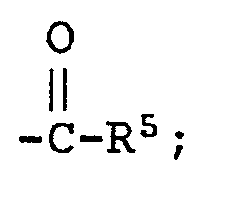
- R 2 is a base defined by one of the formulae


- X is N or C-R 4 ;
- R3 is hydrogen, C1-C4 alkyl or

- R4 is hydrogen, C1-C4 alkyl, amino, bromo, fluoro, chloro or iodo;
- each R5 independently is hydrogen or C1-C4 alkyl; or a pharmaceutically-acceptable salt thereof.
- Thus, the present invention provides for the use of a compound of formula (I) for the manufacture of a medicament for the treatment of susceptible neoplasms.
- The present invention also provides a novel compound of formula (II):

- R6 is hydrogen or C1-C4 alkyl;
- R7 is a pyrimidine or purine base of one of the formulae


- Q is N, C-(C2-C4 alkyl) or C-amino
- X is N or C-R 4 ;
- R8 is hydrogen or Cl-C4 alkyl;
- R4 is hydrogen, C1-C4 alkyl, amino, bromo, fluoro, chloro and iodo; or
- a pharmaceutically-acceptable salt thereof; with the proviso that R6 and R8, both may be hydrogen only when X is N.
- The present invention further provides a compound of formula (III):

in which: - R6 is hydrogen or C1-C4 alkyl;

- a pharmaceutically-acceptable salt thereof.
- Further, there is provided a process for preparing a compound of formula (II) or (III), as defined above, which comprises:
- (a) coupling a pyrimidine base of the formula R7H, or a protected derivative thereof, with a carbohydrate of formula IV, or a protected derivative thereof:

- (b) if a formula (III) or formula (II) compound in which the base is a purine is desired, reacting with ammonia a corresponding purine nucleoside compound in which a C-2 and/or C-6 substituent of the purine portion of the compound is halogen, and, if desired, alkylating the product.
- The present invention also provides pharmaceutical formulations useful for treating susceptible neoplasms in mammals comprising a compound of formulae II or III in combination with a suitable pharmaceutically acceptable carrier, diluent or excipient therefor.
- Further, there is provided a compound of formula (II) or (III) for use in the chemotherapy of a mammal.
- The compounds employed in the present invention are preferably prepared by reacting a D-glyceraldehyde ketonide with a C1-C4 alkyl bromodifluoroacetate to afford an alkyl 3-dioxolanyl-2,2-difluoro-3-hydroxypropionate. The hydroxypropionate is hydrolyzed to a lactone which is protected and reduced to afford a 2-desoxy-2,2-difluororibose or xylose derivative. The hydroxy group of this compound is provided with a leaving group, and the resulting carbohydrate is coupled with an appropriate base. The resulting protected nucleoside is finally deprotected to provide the desired compound. The overall reaction scheme is illustrated as follows:

wherein R10 and R11 independently are C1-C3 alkyl, "Prot" is a hydroxy protecting group and "Leav" is a leaving group. - It generally is desirable to convert free hydroxy groups to protected hydroxy groups during coupling of the 2-desoxy-2,2-difluorocarbohydrate to a base. The protecting groups are those commonly used in synthetic organic chemistry. Chemists are accustomed to choosing groups which can be placed efficiently on hydroxy groups, and which can be removed easily when the reaction is complete. Suitable groups may be those described in standard textbooks, such as Chapter 3 of Protective Groups in Organic Chemistry, McOmie, Ed., Plenum Press, New York (1973); and Chapter 2 of Protective Groups in Organic Synthesis, Greene, John Wiley & Sons, New York (1981).
- Hydroxy-protecting groups commonly employed include formyl,
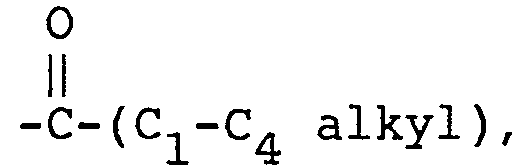
- Ribose or xylose has a hydroxy group at the 1-position of its ring. In order to react the carbohydrate with the base, to form the compounds employed in this invention, a leaving group must be placed at the 1-position. The leaving groups are those typically used in organic synthesis. The preferred leaving groups are sulfonates, of which the most preferred is methanesulfonate. Other typical leaving groups such as toluenesulfonate, ethanesulfonate, isopropanesulfonate, 4-methoxybenzenesulfonate, 4-nitrobenzenesulfonate, 2-chlorobenzenesulfonate, chloro and bromo also may be used.
- The carbohydrates employed in the synthesis of the compounds employed in the present invention are prepared by reacting a D-glyceraldehyde ketonide of the formula

wherein R10 and R11 are as defined above with a C1-C4 alkyl bromodifluoroacetate, preferably the ethyl ester. - The preferred glyceraldehyde ketonide is the acetonide in which R10 and R11 are both methyl (see Fischer and Baer, Helv. Chim. Acta. 17, 622 (1934)). Ethyl bromodifluoroacetate was prepared first by Morel and Dawans, Tet. 33, 1445 (1977). The reaction of the ketonide and the haloacetate is carried out in the presence of an activated metal such as magnesium or preferably zinc. Activation is obtained most easily by applying ultrasonic energy to the reaction mixture. Activation by that means compensates for the presence of a small amount of water in the reaction mixture, avoiding the necessity to maintain anhydrous conditions, and also avoids the necessity to prepare and carefully store activated metals. However, if desired, the metal may be activated by the customary methods known in the art. Approximately an equimolar amount of metal is the most advantageous amount.
- The reaction has been performed in ethers such as tetrahydrofuran and diethyl ether, at moderate temperatures. However, other organic solvents which are inert to the reaction conditions may be used, including halogenated alkanes such as chloroform, dichloromethane, or trichloroethane, and aromatic solvents including benzene, toluene and the xylenes. Temperatures in the range of from about ambient temperature to about 150°C may be used; temperatures from about ambient temperature to about 80°C are preferred, however. Economically- acceptable yields have been obtained in reaction times ranging from a few minutes to a few hours. One should note that the reaction is exothermic, and the mixture may need to be cooled, depending on the scale of the reaction and the rate at which the reactants are added.
- The product of the first reaction is an alkyl 3-dioxolanyl-2,2-difluoro-3-hydroxypropionate of the formula

in which R10 and R11 are as described above. - The ratio of the 3-R-hydroxy intermediate to its 3-S-hydroxy enantiomer is usually about 3:1. The 3-R-hydroxy enantiomer has the proper stereochemistry to produce the ribose derivative in its natural configuration, and so it is the desired enantiomeric product of the first step. The 3-R-hydroxy enantiomer can generally be separated cleanly from the 3-S-enantiomer by chromatography on silica gel, eluting with chloroform containing 0.5% methanol.
- The hydroxypropionate, in either form, is hydrolyzed using very mild conditions to form the lactone of the formula
-

- Proper control of the hydrolysis step will cleave the ketonide function and the ester group, providing the lactone in a single step. The hydrolysis reagent preferably is a mildly acidic ion exchange resin, of which Dowex 50W-X12 (Dow Chemical Company) is most highly preferred. Other mild hydrolytic reagents may be employed although larger amounts of by-products may be obtained. For example, aqueous acetic acid, or other relatively strong acids such as propionic acid, formic acid, chloroacetic acid, or oxalic acid may be used for the hydrolysis.
- The hydroxy groups of the lactone should be protected before its keto oxygen is reduced. The usual reaction conditions are used, depending on the protecting groups chosen. For example, the t-butyldimethylsilyl group is most conveniently provided in the form of its trifluoromethanesulfonate, and the protection reaction is carried out in the presence of a base such-as lutidine, pyridine and the like. Acyl protecting groups such as acetyl, benzoyl and the like are added by reacting the lactone with an acylating agent such as an acyl chloride, bromide, cyanide or azide, or with an appropriate anhydride. The reactions are conveniently carried out in a basic solvent such as pyridine, quinoline or isoquinoline, or in a tertiary amine solvent such as triethylamine, tributylamine, or methylpiperidine. The reaction also may be carried out in an inert solvent, to which an acid scavenger, such as a tertiary amine, has been added. Acylation catalysts such as 4-dimethylaminopyridine or 4-pyrrolidinopyridine may be used in the reaction, if desired. The acylation reactions which provide protecting groups on the hydroxy groups are carried out at moderate temperatures in the range of from -25°C to 100°C. Such acylations also may be performed by acid-catalyzed reactions of the appropriate carboxylic acids, in inert organic solvents or neat. Acid catalysts such as sulfuric acid, polyphosphoric acid, or methanesulfonic acid may be used.
- Acyl protecting groups may also be provided by forming an active ester of the appropriate acid, for example esters formed by reaction with reagents such as dicyclohexylcarbodiimide, acylimidazoles, nitrophenols, pentachlorophenol, N-hydroxysuccinimide and 1-hydroxybenzotriazole.
- Protected groups of the ether type are produced by reacting the lactone with, for example, an appropriate diazo compound, such as diazomethane, phenyldiazomethane or a silyldiazomethane. Such reactions commonly are carried out in solvents including esters such as ethyl acetate, halogenated solvents including dichloromethane and chloroform, and ethers including diethyl ether and tetrahydrofuran. The process is usually carried out at low temperatures from about -50°C to about 0°C. Such ether-forming reactions may also be carried out with the assistance of reagents such as trimethyloxosulfonium hydroxide, trimethylsulfonium hydroxide and trimethylselenonium hydroxide, in solvents such as dimethylsulfoxide, dimethylformamide, hexamethylphosphoramide, acetone, or acetonitrile.
- The silyl protecting groups discussed above are placed on the hydroxy groups by the conventional methods, such as by reaction with the appropriate silylcarboxamide or bis(substituted-silyl)carboxamide, or an appropriately substituted silazane. Suitably substituted silyl methanesulfonates, toluenesulfonates and the like are useful also. An equivalent amount of a base is usually necessary in the reaction mixture, unless a basic solvent is used in the reaction.
- When the hydroxy groups have been protected, the keto oxygen of the lactone is reduced to the alcohol, forming the protected 2-desoxy-2,2-difluororibose or xylose. The most preferred reducing agent is diisobutyl aluminum hydride, used at a low temperature in the range of about -100°C to -20°C. The reduction must be performed very carefully to avoid conditions so vigorous that the ring is opened at the oxygen atom. Other metal hydrides, such as the widely used lithium aluminum hydride, can also be used for the reduction, but it is necessary to keep the temperature quite low and to assure that the hydride is destroyed before the temperature is allowed to rise above about -20°C. Accordingly, a solvent with a very low freezing point, such as toluene, must be used in the reduction step. Other solvents, of course, can be used, including lower alkanols, especially ethanol, or ethers such as diethyl ether.
- To obtain efficient reaction with the base, an appropriate leaving group must be placed at the 1-position of the carbohydrate. The preferred leaving group is methanesulfonyl, and the compound with this leaving group is readily provided by reaction with methanesulfonyl chloride in the presence of an equivalent amount of a suitable acid scavenger such as triethylamine and the like. Other sulfonyl leaving groups are provided in the same way by reaction with the appropriate sulfonyl halide.
- When a chloro or bromo leaving group is to be used, it is frequently advantageous first to make the 1-acetate derivative, as by reaction with acetic anhydride, or another source of acetyl groups, in the presence of an equivalent amount or more of an acid scavenger. The acetate group then is displaced, at a low temperature such as about -50°C to about 0°C, with gaseous hydrogen bromide or hydrogen chloride. Because the gaseous hydrogen halide may tend to remove the protecting groups, especially silyl protecting groups, operating this step at low temperatures and adding the hydrogen halide slowly in small increments is necessary.
- The compounds employed in the present-invention having a base portion which is composed of a purine substrate are preferably synthesized by reacting the 1-hydroxy analog of the carbohydrate having protecting groups at the 3- and 5-position with the base in the presence of diethyl azodicarboxylate and triphenylphosphine. Standard modifications are then made to the purine substrate if desired.
- The bases used to form the compounds employed in the present invention are known to those skilled in the art, and no discussion of their synthesis is necessary. The primary amino groups present on some of the bases, however, should be protected before the base is coupled with the carbohydrate. The usual amino- protecting groups are employed, including silyl groups such as have been discussed, as well as such typical groups as t-butoxycarbonyl, benzyloxycarbonyl, 4-methoxybenzyloxycarbonyl, 4-nitrobenzyloxycarbonyl, formyl, or acetyl.
- Converting the keto oxygen atoms on the bases to the enol form, in order to make the base more highly aromatic and allowing a more ready attack of the base by the carbohydrate is advisable. Enolization is provided most conveniently by producing the silyl protecting groups. The usual silyl protecting groups, as discussed above, may be used for this purpose.
- The reaction between the protected carbohydrate and the base preferably is performed neat at a temperature in the range of from about 50°C to about 200°C. Use of relatively high-boiling solvents for the reaction, such as dimethylformamide, dimethylacetamide, or hexamethylphosphoramide, however, is possible. If the coupling reaction is carried out at elevated pressures to avoid distillation of a low-boiling solvent, any convenient inert reaction solvent can be used.
- The coupling reaction may be done at low temperatures if a reaction initiator, such as a tri- fluoromethanesulfonyloxysilane, is used. The usual inert reaction solvents, as discussed above, may be used at temperatures in the range of from about ambient temperature to about 100°C.
- The final step of the reaction sequence is the removal of the protecting groups. Most silyl protecting groups are cleaved easily by contact with water or an alcohol. The t-butyldimethylsilyl protecting group requires acid conditions, such as contact with gaseous hydrogen halide, for its removal.
- Acyl protecting groups are removed by simple hydrolysis with strong or moderately strong bases, such as alkali metal hydroxides, at temperatures from about ambient temperature to about 100°C. At least one equivalent amount of base is needed for each protecting group. Such hydrolyses conveniently are carried out in hydroxylic solvents, especially aqueous alkanols. The reactions also may be carried out, however, in any convenient solvent, such as polyols including ethylene glycol, ethers such as tetrahydrofuran, ketones such as acetone and methyl ethyl ketone and other polar solvents such as dimethylsulfoxide. The cleavage of acyl protecting groups may also be performed with other bases, including, for example, sodium methoxide, potassium t-butoxide, hydrazine, hydroxylamine, ammonia, alkali metal amides and secondary amines such as diethylamine. The acyl protecting groups also can be removed with acid catalysts, such as methanesulfonic acid, hydrochloric acid, hydrobromic acid, sulfuric acid, or with acidic ion exchange resins. Carrying out such hydrolyses at a relatively high temperature, such as the reflux temperature of the mixture is preferred, but temperatures as low as ambient may be used when particularly strong acids are used.
- The removal of protecting groups which are ethers is carried out by known methods, for example, with ethanethiol and aluminum chloride.
- Compounds of the invention possessing hydroxy or amino acyl or alkyl groups can, of course, be either selectively deprotected, or such groups may be removed and selectively replaced by standard conditions.
- None of the reaction steps require unusual excesses of the reactants. As usual in organic syntheses, use of a moderate excess, in the range of 1.05X to 2X, is advisable.
- The compounds employed in this invention are capable of forming pharmaceutically-acceptable addition salts. Such salts are to be construed as included within the scope of this invention and may include hydrobromide, hydrochloride, mono-, di- or triphosphate esters and sodium salts of such phosphates, sulfate, the sodium, potassium, lithium or ammonium salts, as well as others well-known to those skilled in the art. "Pharmaceutically-acceptable salts" are those salts useful in the chemotherapy of warm-blooded animals:
- The structural drawings defining the compounds employed in the present invention do not indicate their stereochemistry. Compounds of all configurations are believed to be useful, and the stereochemistry of the compound is not to be construed as a limitation. The preferred compounds possess the configuration of naturally occurring ribose, e.g.,

- The configuration at the juncture between the ribose and the base is preferably as follows:

- One skilled in the art would be aware of the bases which are used in the synthesis of the nucleosides employed in the present invention, but the following specific nucleosides are given to further elaborate the type of agents which may be used in this invention.
- 1-(2,4-dioxo-1H,3H-pyrimidin-1-yl)-2-desoxy-2,2-difluororibose
- 1-(4-amino-5-chloro-2-oxo-1H-pyrimidin-1-yl)-2-desoxy-2,2-difluororibose
- 1-(4-amino-5-bromo-2-oxo-lH-pyrimidin-l-yl)-2-desoxy-2,2-difluororibose
- 1-(4-amino-2-oxo-1H-pyrimidin-1-yl)-2- desoxy-2,2-difluororibose
- 1-(4-amino-5-iodo-2-oxo-lH-pyrimidin-l-yl)-2-desoxy-2,2-difluororibose
- 1-(4-amino-5-methyl-2-oxo-lH-pyrimidin-I-yl)-2-desoxy-2,2-difluororibose
- 1-(2-amino-6-oxo-lH,9H-purin-9-yl)-2- desoxy-2,2-difluororibose
- 1-(6-amino-9H-purin-9-yl)-2-desoxy-2,2-difluororibose
- 1-(4-amino-5-fluoro-2-oxo-1H-pyrimidin-1-yl)-2-desoxy-2,2-difluororibose
- 1-(4-amino-5-chloro-2-oxo-1H-pyrimidin-1-yl)-2-desoxy-2,2-difluoroxylose
- 1-(4-amino-2-oxo-1H-pyrimidin-1-yl)-2- desoxy-2,2-difluoroxylose
- 1-(4-amino-5-fluoro-2-oxo-1H-pyrimidin-1-yl)-2-desoxy-2,2-difluoroxylose
- 1-(4-amino-5-methyl-2-oxo-1H-pyrimidin-1-yl)-2-desoxy-2,2-difluoroxylose
- 1-(2-amino-6-oxo-lH,9H-purin-9-yl)-2- desoxy-2,2-difluoroxylose
- 1-(6-amino-9H-purin-9-yl)-2-desoxy-2,2-difluoroxylose
- The following non-limiting Examples are provided to further illustrate the invention.
- To 47.3 g (0.1 mol) of 3,5-bis(t-butyldimethyl- siloxy)-1-methanesulfonyloxy-2-desoxy-2,2-difluororibose in 940 ml of dry 1,2-dichloroethane was added 48.0 g (0.16 mol) of bis-trimethylsilyl N-acetylcytosine followed by 39.23 g (0.177 mol) of trifluoromethanesulfonyloxytrimethylsilane. The reaction mixture was refluxed under a nitrogen atmosphere for about 15 hours, cooled to room temperature, and diluted by the addition of 16 ml of methanol. The resulting mixture was stirred for 30 minutes, concentrated under vacuum to about one-half the original volume and cooled in ice. The precipitated solid was collected by filtration and the filtrate was shaken one time with about 300 ml of 10% sodium bicarbonate and one time with brine. The organic layer was separated and concentrated to dryness in vacuo at 45°C. The residue was dissolved into 1.3 1. of methanol saturated with ammonia and the resulting solution was stirred overnight. The volatiles were removed in vacuo at 45°C to provide 32 g of residue. The residue was dissolved into 275 ml of methanol and 100 g of Biorad cation exchange resin (AG50WX8) was added to the resulting solution. The suspension was stirred at ambient temperature overnight. The resin was removed by filtration and rinsed one time with 100 ml of methanol. The filtrate was discarded and the resin was suspended in 100 ml of methanol and 50 ml of concentrated ammonium hydroxide. This mixture was stirred vigorously for 15 minutes and the resin was filtered. This procedure was repeated two times with additional fresh methanolic ammonia. The basic methanolic filtrates were combined and evaporated at 45°C in vacuo to yield a brown foam weighing 13.8 grams. This material was chromatographed with the use of a Waters Prep 500 C18 reverse phase column with 100% water to yield 1.26 g of 1-(4-amino-2-oxo-1H-pyrimidin-1-yl)-2-desoxy-2,2-difluororibose.
- NMR (CD30D, 90 mHz, 6) 3.7-4.65 (m, 4H), 4.83 (s, 4H), 5.97 (d, J = 8Hz, 1H), 6.24 (t, J = 7Hz, 1H, 7.88 (d, J = 8Hz, 1H).
- Mass spec. m/e = 263 = P
- To 1.99 g (0.0042 mol) of 3,5-bis(t-butyl- dimethylsiloxy)-1-methanesulfonyloxy-2-desoxy-2,2-difluororibose in 35 ml of dry 1,2-dichloroethane was added 2.08 g (0.0046 mol) of tris-trimethylsilyl-5-iodocytosine followed by 1.11 g (0.005 mol) of trifluoromethanesulfonyloxytrimethylsilane. The reaction mixture was refluxed for about 16 hours under a nitrogen atmosphere and cooled to room temperature. Five milliliters of methanol were added to the reaction mixture and the mixture was stirred for an additional 30 minutes. The mixture was filtered and the precipitated solid was collected by filtration. The filtrate was evaporated to dryness under reduced pressure, and the resulting residue was dissolved in 20 ml of dichloromethane saturated with anhydrous hydrogen bromide. This mixture was stirred for about 3 hours. The volatiles were removed in vacuo at 45°C. The residue was dissolved in 15 ml of water, neutralized to pH 7-8 with 10% sodium bicarbonate, and the resulting solution was washed once with 10 ml of ethyl acetate. The aqueous layer was chromatographed on a Whatman Prep ODS-3 reverse phase column in 2.0 ml portions using water/methanol (9:1, v:v) to afford 30 mg of 1-(4-amino-5-iodo-2-oxo-1H-pyrimidin-1-yl)-2-desoxy-2,2-difluororibose.
- NMR (CD30D, 90 mHz, 6) 3.47-4.66 (m, 4H), 4.78 (s, 4H), 6.14 (t, J = 7Hz, 1H), 8.32 (s, 1H).
- Mass spec. m/e = 389 = P
- A solution of 190 mg (0.0007 mol) of 1-(4-amino-2-oxo-lH-pyrimidin-I-yl)-2-desoxy-2,2-difluororibose in 16 ml of glacial acetic acid and 4 ml of water was refluxed for approximately 24 hours. The reaction mixture was cooled to ambient temperature and the volatiles were evaporated under vacuum at about 60°-70°C. The residue was stirred with 5.0 ml of toluene and the resulting solution was evaporated several times. The residue was dissolved in 12 ml of methanol, and the resulting mixture was cooled to -15°C and saturated with anhydrous ammonia. The solution was stirred overnight at ambient temperature. The volatiles were removed in vacuo at 45°C. The residue was suspended in about 5.0 ml of hot water and the insoluble material was removed by filtration. The filtrate was chromatographed on a Whatman 50 cm partisil ODS-3 reverse phase column using water/methanol (9:1, v:v) as the eluent to afford 0.05 g of product containing a small trace of unreacted starting material. The unreacted starting material was removed by passing a solution of 0.05 g of the mixture in about 5.0 ml of a solvent solution of methylene chloride/methanol (9:1, v:v) through a Waters Silica Sep-Pak. The eluate was evaporated in vacuo at 45°C to yield 0.036 g of 1-(2,4-dioxo-1H,3H-pyrimidin-1-yl)-2- desoxy-2,2-difluororibose.
- NMR (CD30D, 90 mHz, 6) 3.54-4.48 (m, 4H), 4.83 (s, 3H), 5.69 (d, J = 8Hz, 1H), 6.10 (dd, J = 7Hz, 9Hz, 1H), 7.8 (d, J = 8Hz, 1H).
- Mass spec. m/e = 264 = P
- A solution of 1.86 g (0.0039 mol) of 3,5- bis(t-butyldimethylsilyloxy)-I-methanesulfonyloxy-2- desoxy-2,2-difluororibose, 1.87 g (0.0055 mol) of bis-trimethylsilyl-5-methylcytosine and 1.34 g (0.006 mol) of trifluoromethanesulfonyloxytrimethylsilane in 37 ml of dry methylene chloride was refluxed overnight. The reaction mixture was cooled to room temperature and 1.0 ml of methanol was added thereto. The precipitated solid was collected by filtration and the filtrate was evaporated in vacuo at 45°C. The residue was dissolved in 20 ml of water and the resulting solution was concentrated to about 10 ml in vacuo at 50°C at which point a precipitate formed. The precipitated solid was collected by filtration and the filtrate was concentrated in vacuo at 50°C to afford 2.2 g of residue. The residue was triturated several times with 10 ml portions of warm acetone. The decanted organic layers were combined and evaporated in vacuo at 45°C to provide 1.67 g of a yellow oil. This material was dissolved into 15 ml of methanol/water (v:v, 1:1) and the resulting solution was stirred overnight with 5.0 g of Biorad AG50WX8. The suspension was saturated with anhydrous ammonia and stirred for 10 minutes. The resin was collected by filtration and suspended in 30 ml of methanol/ammonia (v:v, 2:1). The solution was stirred for 10 minutes. The resin was collected by vacuum filtration, and the basic filtrates were combined and concentrated in vacuo at 50°C to provide 1.5 g of an orange oil. The oil was dissolved in 10 ml of water and chromatographed 2.0 ml per run on a Whatman partisil ODS-3 50 cm reverse phase prep column using water as the eluent to provide 0.07 g of 1-(4-amino-5-methyl-2-oxo-1H-pyrimidin-1-yl)-2-desoxy-2,2-difluororibose.
- NMR (CD3OD, 90 mHz, 6) 1.94 (s, 3H), 3.53-4.62 (m, 4H), 4.75 (s, 4H), 6.17 (t, J = 8Hz, 1H, 7.67 (s, 1H).
- Mass spec. m/e = 277 = P
- Under a nitrogen atmosphere, to 17.89 g (0.0375 mol) of 3,5-bis(t-butyldimethylsiloxy)-1-methane- sulfonyloxy-2-desoxy-2,2-difluoroxylose in 300 ml of dry methylene chloride was added 23.0 g (0.063 mol) of tris-trimethylcytosine followed by 10.84 g (0.0488 mol) of trifluoromethanesulfonyloxytrimethylsilane. The solution was refluxed overnight and cooled to room temperature. Twenty milliliters of methanol were added to the reaction mixture and the resulting solution was stirred vigorously for about one hour. The precipitated solid was collected by filtration. The filtrate was charged with 100 ml of water and the suspension was stirred vigorously for 30 minutes. The organic layer was separated and concentrated in vacuo at 45°C to give 11.2 g of a brown oil. The oil was dissolved in 95 ml of methanol to which 33 g of Biorad AG50WX8 cation exchange resin had been added and the suspension was stirred overnight at ambient temperature. The resin was collected by filtration and washed with 50 ml of metha- n&l. The resin was stirred vigorously with 100 ml of a solution of methanol/ammonia (v:v, 1:1). The resin was collected by filtration and again stirred in this solution. The resin was collected and the basic filtrates were combined and concentrated in vacuo at 50°C to give 2.09 g of a yellow residue. This material was suspended in 25 ml of water and stirred vigorously for 15 minutes. The insoluble precipitate was filtered to yield 0.250 g of a compound labeled A. The filtrate was concentrated in vacuo at 50°C to yield 0.86 g of a compound labeled B. Compound A was dissolved in 20 ml of methanol and stirred for 3 days with Biorad AG50WX8 at ambient temperature. The resin was collected by filtration and slurried in 30 ml of a solution of methanol/concentrated ammonium hydroxide (v:v, 1:1). The resin was collected by filtration and the filtrate concentrated in vacuo at 50°C to give 0.14 g of 1-(2- desoxy-2,2-difluoro-p-D-xylofuranosyl)cytosine.
- NMR (CD30D, 90 mHz, 6) 3.72-4.34 (m, 4H), 4.78 (s, 4H), 5.86 (d, J = 8Hz, 1H), 6.17 (d, J = 15Hz, 1H), 7.78 (d, J = 8Hz, 1H).
- The compound labeled B was chromatographed on a Whatman 50 cm ODS-3 reverse phase prep column using water/methanol (v:v, 1:1) as the eluent to afford 0.06 g of 1-(2-desoxy-2,2-difluoro-a-D-xylofuranosyl)cytosine.
- NMR (CD3OD, 90 mHz, 6) 3.53-3.9 (m, 2H), 4.1-4.57 (m, 2H) 4.83 (s, 4H), 5.9 (d, J = 8Hz, 1H), 6.3 (dd, J = 7Hz, 12Hz, 1H) 7.55 (d, J = 8Hz, 1H).
- Mass spec. m/e = 263 = P
- A. 1-(6-Chloro-9H-purin-9-yl)-3,5-bis(t- butyldimethylsiloxy)-2-desoxy-2,2-difluororibose
- To a solution of 0.77 g (5.0 mmol) of 6-chloropurine in 50 ml of tetrahydrofuran was added 1.31 g (5.0 mmol) of triphenylphosphine and 0.87 g (5.0 mmol) of diethyl azodicarboxylate. To this solution was added a solution of 1.99 g (5.0 mmol) of 3,5-bis(t-butyldi- methylsiloxy)-1-hydroxy-2-desoxy-2,2-difluororibose in tetrahydrofuran. The reaction mixture was stirred at room temperature for approximately 60 hours and an additional 0.66 g (1.7 mmol) of 3,5-bis(t-butyldimethyl- siloxy)-1-hydroxy-2-desoxy-2,2-difluororibose was added to the reaction mixture. The mixture was stirred for an additional 6 hours at room temperature. The solvent was evaporated under vacuum and the residue was stirred in a small amount of diethyl ether overnight. The precipitated solid was removed by vacuum filtration and the filtrate was concentrated under vacuum to dryness. The residue was chromatographed over 70 g of silica and eluted with chloroform. Fractions containing the major component were combined and the solvent was evaporated therefrom to provide 1.0 g of 1-(6-chloro-9H-purin-9-yl)-3,5-bis(t-butyldimethylsiloxy)-2-desoxy-2,2-difluororibose. The structure of the product was verified by NMR. Mass spec. = 477 [534-(t-butyl)]
- B. l-(6-Amino-9H-purin-9-yl)-3,5-bis(t-butyldimethylsiloxy)-2-desoxy-2,2-difluororibose
- A solution of 0.5 g (0.936 mmol) of 1-(6-chloro-9H-purin-9-yl)-3,5-bis(t-butyldimethylsiloxy)-2-desoxy-2,2-difluororibose dissolved in 75 ml of absolute ethanol was saturated with anhydrous ammonia at about 0°C. The reaction flask was sealed, and the mixture was allowed to warm to room temperature. The mixture was stirred for about 72 hours at room temperature and the volatiles were evaporated under reduced pressure to provide 420 mg of 1-(6-amino-9H-purin-9-yl)-3,5-bis(t-butyldimethylsiloxy)-2-desoxy-2,2-difluororibose.
- Mass spec = 458 [515-(t-butyl)]
- C. A solution of 100 mg (0.194 mmol) of 1-(6-amino-9H-purin-9-yl)-3,5-bis(t-butyldimethyl- siloxy)-2-desoxy-2,2-difluororibose dissolved in 25 ml of methylene chloride cooled to about 0°C with an external ice bath was saturated with anhydrous hydrogen bromide gas. The mixture was stirred at about 0°C for about 4 hours, and nitrogen was bubbled through the reaction mixture. The mixture was filtered and the collected solid was washed with methanol to provide 110 mg of solid. The solid was purified by HPLC to provide 12.1 mg of β-1-(6-amino-9H-purin-9-yl)-2-desoxy-2,2-difluororibose.
- NMR (CD30D, 30 mHz, 6): 3.8-4.65 (m, 4H); 4.83 (bs, 4H); 6.33 (dd, 1H); 8.22 (s, 1H); 8.4 (s, 1H). mass spec. m/e = 287
- To a solution of 1.89 g (10.0 mmol) of 2,6-dichloropurine in 100 ml of tetrahydrofuran was added 2.62 g (10.0 mmol) of triphenylphosphine and 1.74 g (10.0 mmol) of diethyl azodicarboxylate. To this mixture was added a solution of 3.98 g (10.0 mmol) of 3,5-bis(t-butyldimethylsiloxy)-1-hydroxy-2-desoxy-2,2-difluororibose in 25 ml of tetrahydrofuran and the mixture was stirred at room temperature overnight. The precipitated solid was removed by vacuum filtration and the filtrate was concentrated under vacuum. The residue was dissolved in 100 ml of diethyl ether and the solution was stirred at room temperature overnight. The mixture was filtered and the filtrate was evaporated to dryness under vacuum. The residue was dissolved in 25 ml of ethyl acetate, and the mixture was set in the refrigerator. The mixture was filtered and the filtrate was chromatographed by HPLC while eluting with hexane/ethyl acetate (4/1, v/v). The first chromaphore containing fractions were combined and the solvent was evaporated therefrom to provide 2.5 g of 1-(2,6-dichloro-9H-purin-9-yl)-3,5-bis(t-butyldimethylsiloxy)-2-desoxy-2,2-difluororibose. m/e = [568-(t-butyl)] = 511
- B. l-(2-Chloro-6-oxo-lH,9H-purin-9-yl)-2- desoxy-2,2-difluororibose and 1-(2-chloro-6-bromo-9H-purin-9-yl)-2-desoxy-2,2-difluororibose.
- A solution of 0.5 g (0.88 mmol) of 1-(2,6-dichloro-9H-purin-9-yl)-3,5-bis(t-butyldimethylsiloxy)-2-desoxy-2,2-difluororibose dissolved in 100 ml of methylene chloride cooled to about 0°C was saturated with anhydrous hydrogen bromide gas. The mixture was stirred at 0°C for about 7 hours and then at room temperature for about 16 hours. The mixture was filtered, and the precipitated solid was dissolved in methanol. The methanolic solution was concentration under vacuum to provide 160 mg of a mixture of 1-(2-chloro-6-oxo-lH,9H-purin-9-yl)-2-desoxy-2,2-difluororibose and 1-(2-chloro-6-bromo-9H-purin-9-yl)-2-desoxy-2,2-difluororibose as a light yellow solid. m/e = 322 and 386 respectively.
- C. 1-(2-Chloro-6-oxo-lH,9H-purin-9-yl)-2- desoxy-2,2-difluororibose
- A mixture of 1.18 g (3 mmol) of 1-(2-chloro-6-oxo-lH,9H-purin-9-yl)-2-desoxy-2,2-difluororibose and 1-(2-chloro-6-bromo-9H-purin-9-yl)-2-desoxy-2,2-difluororibose dissolved in 11 ml of 1.0 N sodium hydroxide was stirred at room temperature for three hours. The pH of the mixture was lowered to about 7 with 2N hydrochloric acid. The mixture was concentrated under vacuum at about 45°C. The residue was slurried in warm methanol, filtered and this procedure was repeated. The filtrates were combined and the solution was concentrated under vacuum at 15°C to provide 1.36 g of 1-(2-chloro-6-oxo-1H,9H-purin-9-yl)-2-desoxy-2,2-difluororibose. m/e = 322.
- D. This is the preferred synthesis of 1-(2-amino-6-oxo-lH,9H-purin-9-yl)-2-desoxy-2,2-difluororibose. The material prepared by the following reaction was used as a reference standard for the subsequent synthesis of the compound which was biologically evaluated.
- To a suspension of 1.3 g of 1-(2-chloro-6-oxo-1H,9H-purin-9-yl)-2-desoxy-2,2-difluororibose in 30 ml of absolute ethanol at a temperature of about 0°C was added anhydrous ammonia. The mixture was placed in a closed reaction vessel and heated at about 150°C overnight. The mixture was cooled and the solid was collected. The filtrate was suspended in 15 ml of hot methanol and the mixture was again filtered. The filtrate was concentrated under vacuum and the residue was chromatographed by HPLC using water/methanol (9/1, v/v) as the eluent at a flow rate of 4 ml/minute to provide 10 mg of a-1-(2-amino-6-oxo-1H,9H-purin-9-yl)-2-desoxy-2,2-difluororibose and 5 mg of β-1-(2-amino-6-oxo-1H,9H-purin-9-yl)-2-desoxy-2,2-difluororibose. m/e = 303
- The compounds which were biologically tested were prepared as follows:
- To 0.26 g of a mixture of 1-(2-chloro-6-oxo-1H,9H-purin-9-yl)-2-desoxy-2,2-difluororibose and 1-(2-chloro-6-bromo-9H-purin-9-yl)-2-desoxy-2,2-difluororibose in 10 ml of absolute ethanol at about 0°C was added anhydrous ammonia for 20 minutes. The flask was sealed and placed in an oil bath at about 150°C for about 16 hours. The volatiles were evaporated under reduced pressure and the residue was purified by standard procedures to provide 9.6 mg of a-l-(2-chloro-6-amino-9H-purin-9-yl)-2-desoxy-2,2-difluororibose having m/e = 322; 8.2 mg of β-1-(2-chloro-6-amino-9H-purin-9-yl)-2-desoxy-2,2-difluororibose having m/e = 322 and an NMR (CD30D, 300 mHz, δ) 3.8-4.65 (m, 4H); 4.93 (bs, 4H); 6.25 (dd, 1H); 8.35 (s, 1H); 6.5 mg of a mixture of a- and β-1-(2,6-diamino-9H-purin-9-yl)-2- desoxy-2,2-difluororibose having (m + l)/e = 304 and m/e calc. 303.1017; obs. 303.1009; 9.0 mg of 1-(2-amino-6-oxo-lH,9H-purin-9-yl)-2-desoxy-2,2-difluororibose having (m+H)/e and calc. 304.0857; obs. 304.0857; and NMR (CD3OD, 300 mHz, 6) 3.85-4.65 (m, 4H); 4.9 (bs, 5H); 6.15 (dd, 1H); 7.98 (s, 1H); and 9.0 mg of a- and β-1-(2,6-dioxo-1H,3H,9H-purin-9-yl)-2-desoxy-2,2-difluororibose having m/e = 304.
- The present invention provides a method of treating susceptible neoplasms in mammals comprising administering to a mammal in need of such treatment a pharmaceutically effective amount of a compound of formula I. The method comprises administering the compound to the mammal by various routes including the oral, rectal, transdermal, subcutaneous, intravenous, intramuscular or intranasal routes.
- The term "pharmaceutically effective amount" refers to an appropriate amount of a compound of formula I which is capable of providing chemotherapy to mammals. The active compounds are effective over a wide dosage range. For example,-dosages per day will normally fall within the range of about 0.1 to about 1200 mg/kg of body weight. In the treatment of adult humans, the range of about 0.1 to about 50 mg/kg, in single or divided doses, is preferred. However, it will be understood that the amount of compound actually administered will be determined by a physician, in the light of the relevant circumstances including the condition to be treated, the particular compound to be administered, the chosen route of administration, the age, weight, and response of the individual patient, and the severity of the patient's symptoms, and therefore the above dosage ranges are not intended to limit the scope of the invention in any way.
- The term "susceptible neoplasm", as defined herein, represents an abnormal growth of tissue in mammals capable of being treated by a compound of formula I. While the compounds of formula I are effective against tumors, both solid and non-solid type, the compounds are effective in controlling the growth of rapidly dividing cells because of the compounds cytotoxic nature. It is a special feature of these compounds that they have a broad spectrum of activity, and are accordingly useful against a variety of tumors.
- The compounds of the present method are preferably administered as a pharmaceutical formulation.
- Therefore, as yet another embodiment of the present invention, a pharmaceutical formulation useful for treating susceptible neoplasms in mammals is provided comprising a compound of formulae II or III in combination with a pharmaceutical carrier, diluent or excipient therefor.
- The active ingredient will be present in the formulation in the range of about 1% to about 90% by weight. The active ingredient will usually be mixed with a carrier, or diluted by a carrier, or enclosed within a carrier which may be in the form of a capsule, sachet, paper or other container. When the carrier serves as a diluent, it may be a solid, semi-solid or liquid material which acts as a vehicle, excipient or medium for the active ingredient. Thus, the compositions can be in the form of tablets, pills, powders, lozenges, sachets, cachets, elixirs, suspensions, emulsions, solutions, syrups, aerosols (as a solid or in a liquid medium), ointments containing for example up to 10% by weight of the active compound, soft and hard gelatin capsules, suppositories, sterile injectable solutions and sterile packaged powders.
- Some examples of suitable carriers, excipients, and diluents include lactose, dextrose, sucrose, sorbitol, mannitol, starches, gum acacia, calcium phosphate, alginates, tragacanth, gelatin, calcium silicate, microcrystalline cellulose, polyvinylpyrrolidone, cellulose, water, syrup, methyl cellulose, methyl-and propylhydroxybenzoates, talc, magnesium stearate and mineral oil. The formulations can additionally include lubricating agents, wetting agents, emulsifying and suspending agents, preserving agents, sweetening agents or flavoring agents. The compositions of the invention may be formulated so as to provide quick, sustained release of the active ingredient after administration to the patient by employing procedures well known in the art.
- The compositions are preferably formulated in a unit dosage form, each dosage containing from about 5 to about 500 mg, more usually about 25 to about 300 mg, of the active ingredient. The term "unit dosage form" refers to physically discrete units suitable as unitary dosages for human subjects and other mammals, each unit containing a predetermined quantity of active material calculated to produce the desired therapeutic effect, in association with a suitable pharmaceutical carrier.
- The following formulation examples represent specific pharmaceutical formulations employing compounds comprehended by the present method. The formulations may employ as active compounds any of the compounds of Formula I. The examples are illustrative only and are not intended to limit the scope of the invention in any way.
- Hard gelatin capsules are prepared using the following ingredients:

- The above ingredients are mixed and filled into hard gelatin capsules in 460 mg quantities.
- A tablet formula is prepared using the ingredients below:

- The components are blended and compressed to form tablets each weighing 665 mg.
- An aerosol solution is prepared containing the following components:

- The active compound is mixed with ethanol and the mixture added to a portion of the propellant 22, cooled to -30°C and transferred to a filling device. The required amount is then placed in a stainless steel container and diluted with the remainder of the propellant. The valve units are then fitted to the container.
- Tablets each containing 60 mg of active ingredient are made up as follows:

- The difluoronucleoside starch and cellulose are passed through a No. 45 mesh U.S. sieve and mixed thoroughly. The solution of polyvinylpyrrolidone is mixed with the resultant powders which are then passed through a No. 14 mesh U.S. sieve. The granules so produced are dried at 50°-60°C and passed through a No. 18 mesh U.S. sieve. The sodium carboxymethyl starch, magnesium stearate and talc, previously passed through a No. 60 mesh U.S. sieve, are then added to the granules which, after mixing, are compressed on a tablet machine to yield tablets each weighing 150 mg.
- Capsules each containing 80 mg of medicament are made as follows:

- The active ingredient, cellulose, starch and magnesium stearate are blended, passed through a No. 45 mesh U.S. sieve, and filled into hard gelatin capsules in 200 mg quantities.
- Suppositories each containing 225 mg of nucleoside are made as follows:

- The nucleoside is passed through a No. 60 mesh U.S. sieve and suspended in the saturated fatty acid glycerides previously melted using the minimum heat necessary. The mixture is then poured into a suppository mold of nominal 2 g capacity and allowed to cool.
- Suspensions each containing 50 mg of medicament per 5 ml dose are made as follows:

- The medicament is passed through a No. 45 mesh U.S. sieve and mixed with the sodium carboxymethyl cellulose and syrup to form a smooth paste. The benzoic acid solution, flavor and color are diluted with some of the water and added, with stirring. Sufficient water is then added to produce the required volume.
- An intravenous formulation is prepared as follows:

- The solution of the above ingredients is administered intravenously at a rate of 1 ml/minute to a mammal in need of treatment from susceptible neoplasms.
- The activity of representative compounds employed in the present invention has been demonstrated in standard screens commonly used by those in the art for testing compounds with potential antitumor activity. For example, these screens have been used to demonstrate the antitumor activity of commercially available cancer drugs such as the vinca alkaloids. See, e.g., Miller et al., in J. Med. Chem. Vol. 20, No. 3 409 (1977) and Sweeney, et al., in Cancer Research 38, 2886 (1978).
- The compounds represented by formula I are cytostatic in that they inhibit the growth of human leukemic cells (CCRF-CEM cell line). Table 1 below gives the results of the testing of several compounds representative of those of Formula I. In the Table, column 1 gives the name of the compound and column 2 the IC50 (concentration giving 50% growth inhibition) in mcg/ml.

- To further demonstrate the ability of the compounds of formula I to treat susceptible neoplasms in mammals, the compounds of Example 1, 1-(4-amino-2-oxo-1H-pyrimidin-1-yl)-2-desoxy-2,2-difluororibose, Example 5, 1-(4-amino-2-oxo-lH-pyrimidin-I-yl)-2-desoxy-2,2-difluoroxylose, and Example 6, 1-(6-amino-9H-purin-9-yl)-2-desoxy-2,2-difluororibose, were tested in animals bearing a tumor system representative of L1210V lymphocytic leukemia.
- The study testing the efficacy of these compounds against L1210V leukemia was initiated by an IP inoculation of 1 X 10⁶ cells. Treatment was begun 24 hours after inoculation. The response to therapy was determined by comparing the mean life span of the ten treated animals to that of the ten control animals; prolongation of life in the treated animals beyond that of controls is expressed as a percentage. Table 2 gives the results of several experiments in mice bearing this tumor. In the Table, column 1 gives the example number of the compound tested; column 2, the experiment number; column 3, the dose level of the compound in mg/kg; column 4, the route of administration; column 5, the dosage schedule, that is, the days on which the compound was administered to the mice; column 6, the average increase in life span of the treated mice as compared to the control mice; column 7, the toxic deaths over the number of mice in each group; and column 8, the indefinite survivors, that is, the number of 45 day survivors in each group.


- The compounds of Example 1, 1-(4-amino-2-oxo-1H-pyrimidin-1-yl)-2-desoxy-2,2-difluororibose, and Example 5, 1-(4-amino-2-oxo-lH-pyrimidin-I-yl)-2-desoxy-2,2-difluoroxylose, also demonstrated activity in additional tumor test systems. These systems include the 6C3HED lymphosarcoma, also known Is the Gardner lymphosarcoma (6C3HED); the CA-755 adenocarcinoma (CA755); the P1534J lymphatic leukemia (P1534J); and the X5563 plasma cell myeloma (X5563). Each of these systems is described in detail below.
- 6C3HED. - The 6C3HED lymphosarcoma was obtained in 1979 from the Division of Cancer Treatment, N.C.I., tumor bank maintained at E. G. and G. Mason Research (Worchester, MA). First passage tumor was stored in liquid nitrogen using standard techniques. The transplanted tumor was re-established from the tumor bank every six months or as needed. The tumor is maintained by serial passage twice weekly in C3H mice (Charles River; Wilmington, MA).
- CA755 - The adenocarcinoma 755 is an undifferentiated mammary carcinoma which was obtained in 1980 from the Division of Cancer Treatment, N.C.I., tumor bank maintained at E. G. and G. Mason Research (Worchester, MA). First passage tumor was stored in liquid nitrogen using standard techniques. The transplanted tumor was re-established from the tumor bank every six months or as needed. The tumor is maintained by serial passage once a week in C57BL/6 female mice (Jackson Laboratory; Bar Harbor, ME).
- P1534J - The P1534J lymphocytic leukemia (solid form) was obtained in 1973 from the Jackson Laboratory (Bar Harbor, ME). First passage tumor was stored in liquid nitrogen using standard techniques. Subsequent replenishment of the tumor bank with this tumor was accomplished from first passage tumor. The transplanted tumor was re-established from the tumor bank every six months or as needed. The tumor is maintained by serial passage once a week in DBA/2 mice (Charles River; Wilmington, MA).
- X5563 Myeloma - the tumor is maintained in C3H mice.
- The following procedure was employed in demonstrating the activity of these compounds against the tumor systems. The tumor was removed from passage animals and minced into 1 to 3 mm square fragments using sterile techniques. Tumor pieces were checked for sterility using both Antibiotic Medium 1 and Brain Heart Infusion (Difco; Detroit, MI). Recipient mice were shaved and tumor pieces were implanted subcutaneously in the axillary region by trocar. Drug therapy on the appropriate schedule was initiated on. the day after tumor implant. The compound was dissolved in saline for all experiments. All animals were weighed at the beginning and end of drug treatment. Food and water were provided ad libitum. On days 10 to 12, two dimensional measurements (width and length) of all tumors were taken using vernier calipers. Tumor weights were calculated from these measurements using the following formula:
- Tumor Weight (mg) = Tumor Length (mm) X Tumor Width (mm)2/2
- For all data, the tumor weight was rounded to the nearest tenth of a gram for analysis. No group is included in the analysis for therapeutic activity in which deaths attributable to drug toxicity exceeded 30 percent of the treated group.
- In Table 3 which follows, column 1 gives the example number of the compound tested; column 2 provides the tumor system; column 3, the dose level; column 4, the route administered; column 5, the dosage schedule; column 6, the percent inhibition of the tumor; and column 7, the toxic deaths observed prior to completion of the study.


- The compounds employed in the present method are also effective for the treatment of viral infections, and more particularly in the treatment of infections caused by viruses of the herpes genus. The compounds are effectively administered orally, topically or parenterally. In general,.dosage rates in the range of from about 5 mg/kg to about 500 mg/kg are useful. It is more preferred to administer at rates in the range of from about 10 mg/kg to about 100 mg/kg.
or the pharmaceutically-acceptable salts thereof,,
Claims (16)

in which:
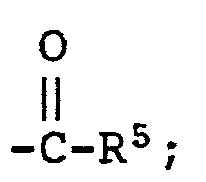


in which:


in which:


in which the R7H pyrimidine base and R6 are as defined in claim 3 and Leav is a leaving group, and if desired, removing any protecting group present to produce the pyrimidine base product; and

in which:


in which:


in which the R7H pyrimidine base and R6 are as defined above and Leav is a leaving group, and if desired, removing any protecting group present to produce the pyrimidine base product; and


a pharmaceutically-acceptable salt thereof.
Applications Claiming Priority (4)
| Application Number | Priority Date | Filing Date | Title |
|---|---|---|---|
| US67778384A | 1984-12-04 | 1984-12-04 | |
| US677783 | 1984-12-04 | ||
| US78641985A | 1985-10-10 | 1985-10-10 | |
| US786419 | 1985-10-10 |
Publications (3)
| Publication Number | Publication Date |
|---|---|
| EP0184365A2 true EP0184365A2 (en) | 1986-06-11 |
| EP0184365A3 EP0184365A3 (en) | 1988-01-27 |
| EP0184365B1 EP0184365B1 (en) | 1993-08-04 |
Family
ID=27101898
Family Applications (1)
| Application Number | Title | Priority Date | Filing Date |
|---|---|---|---|
| EP85308547A Expired - Lifetime EP0184365B1 (en) | 1984-12-04 | 1985-11-25 | Improvements in the treatment of tumors in mammals |
Country Status (21)
| Country | Link |
|---|---|
| US (1) | US5464826A (en) |
| EP (1) | EP0184365B1 (en) |
| JP (1) | JPH0637394B2 (en) |
| KR (2) | KR890003439B1 (en) |
| CN (1) | CN1020194C (en) |
| AT (1) | ATE92499T1 (en) |
| AU (1) | AU581269B2 (en) |
| CA (1) | CA1264738A (en) |
| CY (1) | CY1806A (en) |
| DE (1) | DE3587500T2 (en) |
| DK (1) | DK162965C (en) |
| EG (1) | EG17765A (en) |
| ES (1) | ES8801546A1 (en) |
| GR (1) | GR852858B (en) |
| HK (1) | HK113693A (en) |
| HU (1) | HU194273B (en) |
| IE (1) | IE60328B1 (en) |
| IL (1) | IL77133A (en) |
| NZ (1) | NZ214364A (en) |
| PH (1) | PH23172A (en) |
| PT (1) | PT81559B (en) |
Cited By (42)
| Publication number | Priority date | Publication date | Assignee | Title |
|---|---|---|---|---|
| EP0211354A3 (en) * | 1985-07-29 | 1988-02-10 | Merrell Dow Pharmaceuticals Inc. | Nucleosides and their use as antineoplastic agents |
| US4814438A (en) * | 1986-12-24 | 1989-03-21 | Eli Lilly And Company | Immunoglobulin conjugates of 2',2'-difluronucleosides |
| EP0272891A3 (en) * | 1986-12-24 | 1989-11-08 | Eli Lilly And Company | Immunoglobulin conjugates |
| EP0345751A1 (en) * | 1988-06-08 | 1989-12-13 | Merrell Dow Pharmaceuticals Inc. | Anti-retroviral diflourinated nucleosides |
| US4914028A (en) * | 1988-02-10 | 1990-04-03 | Eli Lilly And Company | Method of preparing beta-2',2'-difluoronucleosides |
| EP0376518A1 (en) * | 1988-12-12 | 1990-07-04 | Eli Lilly And Company | Phospholipid nucleosides |
| EP0329348A3 (en) * | 1988-02-16 | 1990-09-12 | Eli Lilly And Company | 2',3'-dideoxy-2',2'-difluoronucleosides |
| US4965374A (en) * | 1987-08-28 | 1990-10-23 | Eli Lilly And Company | Process for and intermediates of 2',2'-difluoronucleosides |
| US4994558A (en) * | 1986-12-24 | 1991-02-19 | Eli Lilly And Company | Immunoglobulin conjugates |
| EP0334361A3 (en) * | 1988-03-25 | 1991-04-03 | Merrell Dow Pharmaceuticals Inc. | Novel acetylenic, cyano and allenic aristeromycin/adenosine derivatives |
| EP0306190A3 (en) * | 1987-08-28 | 1991-11-21 | Eli Lilly And Company | Improvements in or relating to 2',2'-difluoronucleosides |
| US5223608A (en) * | 1987-08-28 | 1993-06-29 | Eli Lilly And Company | Process for and intermediates of 2',2'-difluoronucleosides |
| EP0576230A1 (en) * | 1992-06-22 | 1993-12-29 | Eli Lilly And Company | 2'-deoxy-2', 2'-difluoro(4-substituted pyrimidine) nucleosides having antiviral and anti-cancer activity and intermediates |
| EP0576227A3 (en) * | 1992-06-22 | 1994-02-09 | Eli Lilly And Company | 2'-Deoxy-2',2'-difluoro(2,6,8-substituted) purine nucleosides having anti-viral and anti-cancer activity and intermediates |
| EP0647654A3 (en) * | 1993-09-16 | 1995-05-03 | Lilly Co Eli | |
| US5424416A (en) * | 1993-08-25 | 1995-06-13 | Eli Lilly And Company | Process for preparation of 2-deoxy-2,2-difluoro-D-ribofuranosyl-3,5-hydroxy protected-1-alkyl and aryl sulfonates and their use in preparation of 2',2'-difluoro-2'-deoxy nucleosides |
| EP0719788A2 (en) | 1994-12-13 | 1996-07-03 | Eli Lilly And Company | Process for preparing 1-(2'-deoxy-2',2'-difluoro-d-ribofuranosyl)-4-aminopyrimidin-2-one) hydrochloride |
| US5559222A (en) * | 1995-02-03 | 1996-09-24 | Eli Lilly And Company | Preparation of 1-(2'-deoxy-2',2'-difluoro-D-ribo-pentofuranosyl)-cytosine from 2-deoxy-2,2-difluoro-β-D-ribo-pentopyranose |
| US5574021A (en) * | 1988-02-16 | 1996-11-12 | Eli Lilly And Company | Methods of treatment using 2',3'-dideoxy-2',2'-difluoronucleosides |
| WO1998032762A1 (en) * | 1997-01-24 | 1998-07-30 | Norsk Hydro Asa | Gemcitabine derivatives |
| WO1999052514A3 (en) * | 1998-04-14 | 2000-07-06 | Lilly Co Eli | Pharmaceutical composition and combination preparation for immunosuppressive therapy |
| WO2003043632A3 (en) * | 2001-11-20 | 2003-12-11 | Hoffmann La Roche | Use of bisindolmaleimide and gemcitabine for the treatment of cancer |
| US7485716B2 (en) | 2005-05-02 | 2009-02-03 | Pharmaessentia Corp. | Stereoselective synthesis of β-nucleosides |
| WO2009061781A1 (en) * | 2007-11-07 | 2009-05-14 | Schering Corporation | Novel modulators of cell cycle checkpoints and their use in combination with checkpoint kinase inhibitors |
| NO330601B1 (en) * | 2002-10-09 | 2011-05-23 | Astrazeneca Ab | A pharmaceutical composition comprising the quinazoline derivative ZD6474 combined with gemcitabine, seen comprising the same and their use in the manufacture of a medicament for the treatment of disease. |
| WO2011116026A2 (en) | 2010-03-15 | 2011-09-22 | The Board Of Trustees Of The University Of Illinois | Inhibitors of beta integrin-g protein alpha subunit binding interactions |
| US8193339B2 (en) | 2007-11-06 | 2012-06-05 | Pharmaessentia Corp. | Synthesis of β-nucleosides |
| WO2012087943A2 (en) | 2010-12-20 | 2012-06-28 | The Regents Of The University Of Michigan | Inhibitors of the epidermal growth factor receptor-heat shock protein 90 binding interaction |
| RU2493162C1 (en) * | 1992-12-18 | 2013-09-20 | Ф.Хоффманн-Ля Рош Аг | N-oxycarbonyl-substituted 5'-deoxy-5-fluorocytidines and pharmaceutical preparation |
| WO2016123143A1 (en) | 2015-01-26 | 2016-08-04 | The University Of Chicago | CAR T-CELLS RECOGNIZING CANCER-SPECIFIC IL 13Rα2 |
| WO2019032431A1 (en) | 2017-08-07 | 2019-02-14 | Amgen Inc. | Treatment of triple negative breast cancer or colorectal cancer with liver metastases with an anti pd-l1 antibody and an oncolytic virus |
| WO2019056023A2 (en) | 2017-09-18 | 2019-03-21 | The Regents Of The University Of California | Claudin6 antibodies and methods of treating cancer |
| US10308719B2 (en) | 2015-01-26 | 2019-06-04 | The University Of Chicago | IL13Rα2 binding agents and use thereof in cancer treatment |
| WO2020058405A1 (en) | 2018-09-20 | 2020-03-26 | Basilea Pharmaceutica International AG | Pharmaceutical combinations for use in the treatment of neoplastic diseases |
| WO2020191342A1 (en) | 2019-03-20 | 2020-09-24 | The Regents Of The University Of California | Claudin-6 antibodies and drug conjugates |
| WO2020191344A1 (en) | 2019-03-20 | 2020-09-24 | The Regents Of The University Of California | Claudin-6 bispecific antibodies |
| WO2020222668A1 (en) | 2019-04-30 | 2020-11-05 | Instituto de Medicina Molecular João Lobo Antunes | Rank pathway inhibitors in combination with cdk inhibitors |
| WO2020245198A1 (en) | 2019-06-04 | 2020-12-10 | Apterna Limited | APTAMERS AGAINST TRANSFERRIN RECEPTOR (TfR) |
| WO2020263793A1 (en) | 2019-06-24 | 2020-12-30 | Amgen Inc. | Inhibition of sirp-gamma for cancer treatment |
| WO2022129071A1 (en) | 2020-12-14 | 2022-06-23 | Apterna Limited | APTAMER-siRNA FUSIONS |
| US12480162B2 (en) | 2017-10-06 | 2025-11-25 | The Regents Of The University Of Michigan | Detection of metastatic disease and related methods |
| US12558407B2 (en) | 2019-05-02 | 2026-02-24 | University Of Florida Research Foundation, Inc. | Compositions for treatment of diffuse intrinsic pontine glioma |
Families Citing this family (117)
| Publication number | Priority date | Publication date | Assignee | Title |
|---|---|---|---|---|
| CA1269659A (en) * | 1984-08-06 | 1990-05-29 | Brigham Young University | Method for the production of 2'-deoxyadenosine compounds |
| JP2001518931A (en) * | 1997-03-24 | 2001-10-16 | イーライ・リリー・アンド・カンパニー | Difluoronucleoside phosphonic acid and its derivatives |
| US6326507B1 (en) * | 1998-06-19 | 2001-12-04 | Trustees Of Dartmouth College | Therapeutic compounds and methods of use |
| US20050281821A1 (en) * | 1999-01-06 | 2005-12-22 | Flavia Pernasetti | Method and composition for angiogenesis inhibition |
| EP1189611B1 (en) * | 1999-06-14 | 2006-05-03 | Cancer Research Technology Limited | Cancer therapy |
| WO2002009700A1 (en) * | 2000-07-28 | 2002-02-07 | Cancer Research Technology Limited | Cancer treatment by combination therapy |
| GB0019124D0 (en) * | 2000-08-03 | 2000-09-27 | Pfizer | Novel process |
| EP1415987B1 (en) * | 2000-10-20 | 2007-02-28 | Eisai R&D Management Co., Ltd. | Nitrogenous aromatic ring compounds as anti cancer agents |
| US20050250854A1 (en) * | 2000-11-03 | 2005-11-10 | Amgen Inc. | Combination therapy using pentafluorobenzenesulfonamides and antineoplastic agents |
| US6822001B2 (en) * | 2000-11-03 | 2004-11-23 | Tularik Inc. | Combination therapy using pentafluorobenzenesulfonamides and antineoplastic agents |
| US7435755B2 (en) | 2000-11-28 | 2008-10-14 | The Trustees Of Dartmouth College | CDDO-compounds and combination therapies thereof |
| GB0121285D0 (en) * | 2001-09-03 | 2001-10-24 | Cancer Res Ventures Ltd | Anti-cancer combinations |
| US7390885B2 (en) * | 2001-11-26 | 2008-06-24 | Cell Matrix, Inc. | Humanized collagen antibodies and related methods |
| US7365167B2 (en) * | 2001-11-26 | 2008-04-29 | Cell Matrix, Inc. | Humanized collagen antibodies and related methods |
| RU2346686C2 (en) * | 2002-01-14 | 2009-02-20 | Новартис Аг | Combinations containing epothilones and antimetabolites |
| US7176237B2 (en) * | 2002-01-15 | 2007-02-13 | The Trustees Of Dartmouth College | Tricyclic-bis-enone derivatives and methods of use thereof |
| WO2003068162A2 (en) * | 2002-02-14 | 2003-08-21 | Pharmasset Ltd. | Modified fluorinated nucleoside analogues |
| GB2386836B (en) * | 2002-03-22 | 2006-07-26 | Cancer Res Ventures Ltd | Anti-cancer combinations |
| GB2394658A (en) * | 2002-11-01 | 2004-05-05 | Cancer Rec Tech Ltd | Oral anti-cancer composition |
| EP1604665B1 (en) * | 2003-03-10 | 2011-05-11 | Eisai R&D Management Co., Ltd. | C-kit kinase inhibitor |
| AU2003239510A1 (en) * | 2003-05-20 | 2005-01-21 | Aronex Pharmaceuticals, Inc. | Combination chemotherapy comprising gemcitabine and a liposomal platinum complex |
| AU2003233586A1 (en) * | 2003-05-20 | 2005-01-21 | Aronex Pharmaceuticals, Inc. | Combination chemotherapy comprising capecitabine and a liposomal platinum complex |
| DE10323279A1 (en) * | 2003-05-21 | 2004-12-16 | Stada Arzneimittel Ag | Ready-to-use gemcitabine solutions |
| GB0321999D0 (en) * | 2003-09-19 | 2003-10-22 | Cancer Rec Tech Ltd | Anti-cancer combinations |
| WO2005044788A1 (en) * | 2003-11-11 | 2005-05-19 | Eisai Co., Ltd. | Urea derivative and process for producing the same |
| KR101226631B1 (en) * | 2004-02-06 | 2013-01-28 | 쓰레솔드 파마슈티컬스, 인코포레이티드 | Anti-cancer therapies |
| EP1913947B1 (en) * | 2004-04-22 | 2011-12-28 | Eli Lilly And Company | Combination therapy for the treatment of cancer |
| KR100578616B1 (en) * | 2004-07-23 | 2006-05-10 | 한미약품 주식회사 | Method for preparing D-erythro-2,2-difluoro-2-deoxy-1-oxo ribose compound |
| ATE428421T1 (en) * | 2004-09-17 | 2009-05-15 | Eisai R&D Man Co Ltd | MEDICAL COMPOSITION WITH IMPROVED STABILITY AND REDUCED GELING PROPERTIES |
| US20060089328A1 (en) * | 2004-10-22 | 2006-04-27 | Edgar Schridde | Ready-to-use gemcitabine solutions |
| US20060089329A1 (en) * | 2004-10-22 | 2006-04-27 | Edgar Schridde | Ready-to-use gemcitabine solution concentrates |
| US7563570B2 (en) * | 2004-10-29 | 2009-07-21 | Pangaea Biotech | Method of determining a chemotherapeutic regimen for non small cell lung cancer based on BRCA1 expression |
| EP1819718A1 (en) * | 2004-12-08 | 2007-08-22 | Sicor Inc. | Difluoronucleosides and process for preparation thereof |
| DE102004063347A1 (en) * | 2004-12-23 | 2006-07-13 | Stada Arzneimittel Ag | Ready-to-use gemcitabine solutions and gemcitabine solution concentrates |
| MY142304A (en) | 2005-01-31 | 2010-11-15 | Taiho Pharmaceutical Co Ltd | Novel pyrimidine nucleoside compound or salt thereof |
| KR20070112774A (en) * | 2005-03-04 | 2007-11-27 | 다브르 파마 리미티드 | Intermediates and preparation methods for the preparation of 21-deoxy, 21,21-difluoro-D-ribofuranosylnucleosides rich in beta-anomers |
| WO2007015569A1 (en) * | 2005-08-01 | 2007-02-08 | Eisai R & D Management Co., Ltd. | Method for prediction of the efficacy of vascularization inhibitor |
| EP1925676A4 (en) | 2005-08-02 | 2010-11-10 | Eisai R&D Man Co Ltd | METHOD FOR ANALYZING THE EFFECT OF A VASCULARIZATION INHIBITOR |
| AU2006283174A1 (en) * | 2005-08-24 | 2007-03-01 | Cell-Matrix, Inc. | Combination therapies for inhibiting integrin-extracellular matrix interactions |
| CA2620436A1 (en) * | 2005-08-26 | 2007-03-01 | Antisoma Plc | Combinations comprising dmxaa for the treatment of cancer |
| CN101316590B (en) | 2005-11-07 | 2011-08-03 | 卫材R&D管理有限公司 | combined use of angiogenesis inhibitor and c-kit kinase inhibitor |
| WO2007061127A1 (en) * | 2005-11-22 | 2007-05-31 | Eisai R & D Management Co., Ltd. | Anti-tumor agent for multiple myeloma |
| WO2007136103A1 (en) * | 2006-05-18 | 2007-11-29 | Eisai R & D Management Co., Ltd. | Antitumor agent for thyroid cancer |
| EP2044939A1 (en) * | 2006-06-29 | 2009-04-08 | Eisai R&D Management Co., Ltd. | Therapeutic agent for liver fibrosis |
| EP2045256A4 (en) | 2006-07-21 | 2009-09-02 | Taiho Pharmaceutical Co Ltd | 2'CYANOPYRIMIDINE NUCLEOSIDE COMPOUND |
| US8058261B2 (en) | 2006-07-24 | 2011-11-15 | Taiho Pharmaceutical Co., Ltd. | 3′-ethynylcytidine derivative |
| KR101472600B1 (en) * | 2006-08-28 | 2014-12-15 | 에자이 알앤드디 매니지먼트 가부시키가이샤 | Antitumor agent for undifferentiated gastric cancer |
| US8921340B2 (en) | 2006-11-17 | 2014-12-30 | Trustees Of Dartmouth College | Methods for using synthetic triterpenoids in the treatment of bone or cartilage diseases or conditions |
| WO2008064133A1 (en) * | 2006-11-17 | 2008-05-29 | Trustees Of Dartmouth College | Synthesis and biological activities of new tricyclic-bis-enones (tbes) |
| US8299046B2 (en) * | 2006-11-17 | 2012-10-30 | Trustees Of Dartmouth College | Synthetic triterpenoids and tricyclic-bis-enones for use in stimulating bone and cartilage growth |
| KR20090108086A (en) | 2007-01-19 | 2009-10-14 | 에자이 알앤드디 매니지먼트 가부시키가이샤 | Pancreatic cancer treatment composition |
| EP2119707B1 (en) * | 2007-01-29 | 2015-01-14 | Eisai R&D Management Co., Ltd. | Composition for treatment of undifferentiated-type of gastric cancer |
| US8765690B2 (en) * | 2007-04-05 | 2014-07-01 | Threshold Pharmaceuticals, Inc. | Treatment of cancer with glufosfamide in patients not receiving insulin therapy |
| US20090048205A1 (en) * | 2007-08-15 | 2009-02-19 | Colin Meyer | Combination therapy with synthetic triterpenoids and gemcitabine |
| JO2778B1 (en) | 2007-10-16 | 2014-03-15 | ايساي انك | Certain vehicles, installations and methods |
| CN101848895B (en) | 2007-11-09 | 2013-10-23 | 卫材R&D管理有限公司 | Combined use of angiogenesis inhibitory substance and antitumor platinum complex |
| HUE043175T2 (en) | 2008-01-11 | 2019-08-28 | Reata Pharmaceuticals Inc | Synthetic triterpenoids and their use in the treatment of disease |
| US20100324087A1 (en) * | 2008-01-29 | 2010-12-23 | Eisai R&D Management Co., Ltd. | Combined use of angiogenesis inhibitor and taxane |
| CN104250280A (en) * | 2008-04-18 | 2014-12-31 | 里亚塔医药公司 | Antioxidant Inflammation Modulators: C-17 Homologous Oleanolic Acid Derivatives |
| ES2703274T3 (en) | 2008-04-18 | 2019-03-07 | Reata Pharmaceuticals Inc | Antioxidant modulators of inflammation: oleanolic acid derivatives with amino and other modifications in C-17 |
| US8071632B2 (en) * | 2008-04-18 | 2011-12-06 | Reata Pharmaceuticals, Inc. | Antioxidant inflammation modulators: novel derivatives of oleanolic acid |
| MX339476B (en) | 2008-04-18 | 2016-05-27 | Reata Pharmaceuticals Inc | Compounds including an anti-inflammatory pharmacore and methods of use. |
| KR101713140B1 (en) | 2008-04-18 | 2017-03-08 | 리타 파마슈티컬스 잉크. | Antioxidant inflammation modulators: oleanolic acid derivatives with saturation in the C-ring |
| EP2296645B1 (en) | 2008-05-22 | 2014-11-19 | Galera Therapeutics, LLC | Combination antitumor therapy |
| EP2309860B1 (en) | 2008-07-22 | 2014-01-08 | Trustees of Dartmouth College | Monocyclic cyanoenones and methods of use thereof |
| US20110207680A1 (en) * | 2008-08-13 | 2011-08-25 | Curd John G | Administration of Glufosfamide For The Treatment of Cancer |
| EP2417146B1 (en) * | 2009-04-06 | 2016-07-13 | Otsuka Pharmaceutical Co., Ltd. | (2'-deoxy-ribofuranosyl)-1,3,4,7-tetrahydro-(1,3)diazepin-2-one derivatives for treating cancer |
| US8609631B2 (en) | 2009-04-06 | 2013-12-17 | Eisai Inc. | Compositions and methods for treating cancer |
| WO2010118010A1 (en) * | 2009-04-06 | 2010-10-14 | Eisai Inc. | Combination of decitabine with cytidine deaminase inhibitor and use thereof in the treatment of cancer |
| ES2628609T3 (en) * | 2009-04-06 | 2017-08-03 | Otsuka Pharmaceutical Co., Ltd. | Combination of cytidine-based antineoplastic drugs with cytidine deaminase inhibitor and use thereof in the treatment of cancer |
| GB0907551D0 (en) | 2009-05-01 | 2009-06-10 | Univ Dundee | Treatment or prophylaxis of proliferative conditions |
| BR112012003592B8 (en) | 2009-08-19 | 2021-05-25 | Eisai R&D Man Co Ltd | pharmaceutical composition containing quinoline derivative |
| EP2473041B1 (en) | 2009-09-04 | 2018-03-07 | Merck Sharp & Dohme Corp. | Modulators of cell cycle checkpoints and their use in combination with checkpoint kinase inhibitors |
| CA2790176A1 (en) | 2010-02-18 | 2011-08-25 | Centro Nacional De Investigaciones Oncologicas (Cnio) | Triazolo [4, 5 - b] pyridin derivatives |
| WO2011143593A1 (en) | 2010-05-14 | 2011-11-17 | Cornerstone Pharmaceuticals, Inc. | Conjugates of a lipoic acid derivative and anti-proliferation agent and medical uses thereof |
| WO2011143590A1 (en) | 2010-05-14 | 2011-11-17 | Cornerstone Pharmaceuticals, Inc. | Combination therapy compositions and methods using lipoic acid derivatives and an anti-proliferation agent |
| US8530444B2 (en) * | 2010-06-01 | 2013-09-10 | Aposense Ltd. | Pharmaceutical compounds |
| US9192680B2 (en) | 2010-06-01 | 2015-11-24 | Aposense Ltd. | Pharmaceutical compounds |
| CA2802644C (en) | 2010-06-25 | 2017-02-21 | Eisai R & D Management Co., Ltd. | Antitumor agent using compounds having kinase inhibitory effect in combination |
| WO2012069972A1 (en) | 2010-11-19 | 2012-05-31 | Piramal Life Sciences Limited | A pharmaceutical combination for the treatment of breast cancer |
| WO2012123889A1 (en) | 2011-03-14 | 2012-09-20 | Piramal Healthcare Limited | A synergistic pharmaceutical combination for the treatment of pancreatic cancer |
| ES2620644T3 (en) | 2011-04-01 | 2017-06-29 | Genentech, Inc. | Combinations of AKT inhibitor compounds and chemotherapeutic agents, and methods of use |
| EP2700403B1 (en) | 2011-04-18 | 2015-11-25 | Eisai R&D Management Co., Ltd. | Therapeutic agent for tumor |
| WO2012166899A2 (en) | 2011-06-03 | 2012-12-06 | Eisai R&D Management Co., Ltd. | Biomarkers for predicting and assessing responsiveness of thyroid and kidney cancer subjects to lenvatinib compounds |
| NZ700073A (en) | 2012-04-04 | 2016-08-26 | Halozyme Inc | Combination therapy with an anti - hyaluronan agent and a tumor - targeted taxane |
| US8921419B2 (en) | 2012-05-08 | 2014-12-30 | Trustees Of Dartmouth College | Triterpenoids and compositions containing the same |
| KR101915942B1 (en) | 2012-06-08 | 2018-11-06 | 에프. 호프만-라 로슈 아게 | Mutant selectivity and combinations of a phosphoinositide 3 kinase inhibitor compound and chemotherapeutic agents for the treatment of cancer |
| BR112014029403A2 (en) | 2012-07-04 | 2018-10-09 | F. Hoffmann-La Roche Ag | conjugates, antibody and pharmaceutical formulation |
| EP2711008A1 (en) | 2012-09-19 | 2014-03-26 | Institut Univ. de Ciència i Tecnologia, S.A. | N6,N6-dimethyladenosine for use in treating or preventing primary and metastatic breast cancer |
| EP2711009A1 (en) | 2012-09-19 | 2014-03-26 | Institut Univ. de Ciència i Tecnologia, S.A. | Compounds for use in treating or preventing primary and metastatic breast and prostate cancer |
| EP2711007A1 (en) | 2012-09-19 | 2014-03-26 | Institut Univ. de Ciència i Tecnologia, S.A. | 4-Aminopyrazolo[3,4-d]pyrimidine for use in treating or preventing primary and metastatic breast and prostate cancer |
| WO2014078522A1 (en) | 2012-11-14 | 2014-05-22 | Ohio State Innovation Foundation | Materials and methods useful for treating glioblastoma |
| AU2013364953A1 (en) | 2012-12-21 | 2015-04-30 | Eisai R&D Management Co., Ltd. | Amorphous form of quinoline derivative, and method for producing same |
| CN105264380B (en) | 2013-05-14 | 2017-09-05 | 卫材R&D管理有限公司 | Biomarkers for predicting and evaluating responsiveness of endometrial cancer subjects to lenvatinib compounds |
| WO2015191576A1 (en) | 2014-06-09 | 2015-12-17 | Lipomedix Pharmaceuticals Ltd. | Combination therapy comprising a liposomal prodrug of mitomycin c and radiotherapy |
| CN106687476B (en) | 2014-06-26 | 2020-11-13 | 豪夫迈·罗氏有限公司 | Anti-BRDU antibody and method of use |
| CA2957005C (en) | 2014-08-28 | 2021-10-12 | Eisai R&D Management Co., Ltd. | High-purity quinoline derivative and method for manufacturing same |
| WO2016078160A1 (en) * | 2014-11-17 | 2016-05-26 | 常州方圆制药有限公司 | Cytidine derivative and application thereof |
| SG11201706630UA (en) | 2015-02-25 | 2017-09-28 | Eisai R&D Man Co Ltd | Method for suppressing bitterness of quinoline derivative |
| WO2016140717A1 (en) | 2015-03-04 | 2016-09-09 | Merck Sharp & Dohme Corp. | Combination of a pd-1 antagonist and a vegfr/fgfr/ret tyrosine kinase inhibitor for treating cancer |
| BR112017027227B1 (en) | 2015-06-16 | 2023-12-12 | Eisai R&D Management Co., Ltd | ANTI-CANCER AGENT |
| CN106317147B (en) * | 2015-07-06 | 2018-11-27 | 扬州硒瑞恩生物医药科技有限公司 | nucleoside compound and preparation method thereof |
| JP6553726B2 (en) | 2015-08-20 | 2019-07-31 | エーザイ・アール・アンド・ディー・マネジメント株式会社 | Tumor therapeutic agent |
| US20200306254A1 (en) | 2016-06-29 | 2020-10-01 | Eli Lilly And Company | Combination of erk1/2 inhibitor compound with gemcitabine or with gemcitabine and nab-paclitaxel for use in treatment of pancreatic cancer |
| US20180169120A1 (en) | 2016-11-21 | 2018-06-21 | Bexion Pharmaceuticals, Inc. | Combination therapy including sapc-dops for the treatment of pancreatic cancer |
| EP3565549B1 (en) | 2017-01-09 | 2022-03-09 | Shuttle Pharmaceuticals, Inc. | Selective histone deacetylase inhibitors for the treatment of human disease |
| US11584733B2 (en) | 2017-01-09 | 2023-02-21 | Shuttle Pharmaceuticals, Inc. | Selective histone deacetylase inhibitors for the treatment of human disease |
| US12303505B2 (en) | 2017-02-08 | 2025-05-20 | Eisai R&D Management Co., Ltd. | Tumor-treating pharmaceutical composition |
| BR112019023064A2 (en) | 2017-05-16 | 2020-06-09 | Eisai R&D Man Co Ltd | treatment of hepatocellular carcinoma |
| EP3737376B1 (en) | 2018-01-09 | 2024-04-17 | Shuttle Pharmaceuticals, Inc. | Selective histone deacetylase inhibitors for the treatment of human diseases |
| AU2019216531A1 (en) | 2018-02-02 | 2020-09-24 | Maverix Oncology, Inc. | Small molecule drug conjugates of gemcitabine monophosphate |
| US20190351031A1 (en) | 2018-05-16 | 2019-11-21 | Halozyme, Inc. | Methods of selecting subjects for combination cancer therapy with a polymer-conjugated soluble ph20 |
| EP3820879B1 (en) | 2018-06-29 | 2024-11-06 | Changchun Changcheng Pharmaceutical Technology Co., LTD | Phosphorus-containing prodrugs of gemcitabine |
| US12171746B2 (en) | 2019-01-11 | 2024-12-24 | Lipomedix Pharmaceuticals Ltd. | Liposome composition comprising liposomal prodrug of mitomycin c and method of manufacture |
| CN110684062B (en) * | 2019-10-18 | 2022-12-13 | 大连大学 | Medicine for treating non-small cell lung cancer and preparation method thereof |
| EP4433506A1 (en) | 2021-11-16 | 2024-09-25 | Genentech, Inc. | Methods and compositions for treating systemic lupus erythematosus (sle) with mosunetuzumab |
| WO2026082894A1 (en) | 2024-10-17 | 2026-04-23 | Sanofi | Ceacam5 antibody-drug conjugate for use in cancer therapy |
Family Cites Families (13)
| Publication number | Priority date | Publication date | Assignee | Title |
|---|---|---|---|---|
| DE147774C (en) * | ||||
| US3705147A (en) * | 1969-08-22 | 1972-12-05 | Univ Utah | 3-deazapyrimidine nucleosides and method of preparation thereof |
| US3870700A (en) * | 1973-05-29 | 1975-03-11 | Miles Lab | 2-halogeno-2-deoxy-5-(substituted)uridines |
| JPS5136467A (en) * | 1974-09-20 | 1976-03-27 | Tanabe Seiyaku Co | 11 beetaa dd2** harogeno 2** deokishiribofuranoshirurashirujudotai no seiho |
| DE2628202A1 (en) * | 1976-06-23 | 1977-12-29 | Max Planck Gesellschaft | PROCESS FOR THE PREPARATION OF 2'-SUBSTITUTE-D-RIBOFURANOSYLPURINE DERIVATIVES |
| US4058602A (en) * | 1976-08-09 | 1977-11-15 | The United States Of America As Represented By The Department Of Health, Education And Welfare | Synthesis, structure, and antitumor activity of 5,6-dihydro-5-azacytidine |
| US4211773A (en) * | 1978-10-02 | 1980-07-08 | Sloan Kettering Institute For Cancer Research | 5-Substituted 1-(2'-Deoxy-2'-substituted-β-D-arabinofuranosyl)pyrimidine nucleosides |
| US4526988A (en) * | 1983-03-10 | 1985-07-02 | Eli Lilly And Company | Difluoro antivirals and intermediate therefor |
| ZA859008B (en) * | 1984-12-04 | 1987-07-29 | Lilly Co Eli | The treatment of tumors in mammals |
| CA1295998C (en) * | 1985-07-29 | 1992-02-18 | Sai P. Sunkara | Nucleosides and their use as antineoplastic agents |
| US4914028A (en) * | 1988-02-10 | 1990-04-03 | Eli Lilly And Company | Method of preparing beta-2',2'-difluoronucleosides |
| US4983724A (en) * | 1988-02-16 | 1991-01-08 | Eli Lilly And Company | Inversion of 2,2-difluororibose to a 2,2-difluoroxylose and intermediates therefor |
| JPH0232093A (en) * | 1988-06-08 | 1990-02-01 | Merrell Dow Pharmaceut Inc | Anti-retrovirus difluorinated nucleoside |
-
1985
- 1985-11-25 DE DE85308547T patent/DE3587500T2/en not_active Expired - Lifetime
- 1985-11-25 AT AT85308547T patent/ATE92499T1/en not_active IP Right Cessation
- 1985-11-25 IL IL77133A patent/IL77133A/en not_active IP Right Cessation
- 1985-11-25 CA CA000496077A patent/CA1264738A/en not_active Expired - Lifetime
- 1985-11-25 EP EP85308547A patent/EP0184365B1/en not_active Expired - Lifetime
- 1985-11-26 PT PT81559A patent/PT81559B/en unknown
- 1985-11-27 GR GR852858A patent/GR852858B/el unknown
- 1985-11-28 PH PH33109A patent/PH23172A/en unknown
- 1985-11-28 NZ NZ214364A patent/NZ214364A/en unknown
- 1985-11-28 DK DK549685A patent/DK162965C/en not_active IP Right Cessation
- 1985-12-02 AU AU50555/85A patent/AU581269B2/en not_active Expired
- 1985-12-03 HU HU854620A patent/HU194273B/en unknown
- 1985-12-03 JP JP60273161A patent/JPH0637394B2/en not_active Expired - Lifetime
- 1985-12-03 EG EG771/85A patent/EG17765A/en active
- 1985-12-03 ES ES549547A patent/ES8801546A1/en not_active Expired
- 1985-12-03 KR KR1019850009042A patent/KR890003439B1/en not_active Expired
- 1985-12-03 CN CN85109409A patent/CN1020194C/en not_active Expired - Lifetime
- 1985-12-03 IE IE303885A patent/IE60328B1/en not_active IP Right Cessation
-
1989
- 1989-05-18 KR KR1019890006677A patent/KR890003426B1/en not_active Expired
-
1993
- 1993-10-21 HK HK1136/93A patent/HK113693A/en not_active IP Right Cessation
-
1994
- 1994-07-26 US US08/280,687 patent/US5464826A/en not_active Expired - Lifetime
-
1995
- 1995-09-08 CY CY180695A patent/CY1806A/en unknown
Cited By (61)
| Publication number | Priority date | Publication date | Assignee | Title |
|---|---|---|---|---|
| EP0211354A3 (en) * | 1985-07-29 | 1988-02-10 | Merrell Dow Pharmaceuticals Inc. | Nucleosides and their use as antineoplastic agents |
| US4814438A (en) * | 1986-12-24 | 1989-03-21 | Eli Lilly And Company | Immunoglobulin conjugates of 2',2'-difluronucleosides |
| EP0272891A3 (en) * | 1986-12-24 | 1989-11-08 | Eli Lilly And Company | Immunoglobulin conjugates |
| US4994558A (en) * | 1986-12-24 | 1991-02-19 | Eli Lilly And Company | Immunoglobulin conjugates |
| US5434254A (en) * | 1987-08-28 | 1995-07-18 | Eli Lilly And Company | Process for preparing 2',2'-difluoronucleosides |
| US5945547A (en) * | 1987-08-28 | 1999-08-31 | Eli Lilly And Company | Imtermediate in process to make 2', 2'-difluoronucleosides |
| EP0688783A1 (en) * | 1987-08-28 | 1995-12-27 | Eli Lilly And Company | Method for preparing 2',deoxy-2',2'-difluornucleosides |
| US4965374A (en) * | 1987-08-28 | 1990-10-23 | Eli Lilly And Company | Process for and intermediates of 2',2'-difluoronucleosides |
| EP0688782A1 (en) * | 1987-08-28 | 1995-12-27 | Eli Lilly And Company | Stereoselective process for preparing protected 2',2'-difluorolactonen |
| EP0306190A3 (en) * | 1987-08-28 | 1991-11-21 | Eli Lilly And Company | Improvements in or relating to 2',2'-difluoronucleosides |
| US5223608A (en) * | 1987-08-28 | 1993-06-29 | Eli Lilly And Company | Process for and intermediates of 2',2'-difluoronucleosides |
| US4914028A (en) * | 1988-02-10 | 1990-04-03 | Eli Lilly And Company | Method of preparing beta-2',2'-difluoronucleosides |
| EP0329348A3 (en) * | 1988-02-16 | 1990-09-12 | Eli Lilly And Company | 2',3'-dideoxy-2',2'-difluoronucleosides |
| US5574021A (en) * | 1988-02-16 | 1996-11-12 | Eli Lilly And Company | Methods of treatment using 2',3'-dideoxy-2',2'-difluoronucleosides |
| US5644043A (en) * | 1988-02-16 | 1997-07-01 | Eli Lilly And Company | 2',3'-dideoxy-2',2'-difluoronucleosides and intermediates |
| EP0334361A3 (en) * | 1988-03-25 | 1991-04-03 | Merrell Dow Pharmaceuticals Inc. | Novel acetylenic, cyano and allenic aristeromycin/adenosine derivatives |
| EP0345751A1 (en) * | 1988-06-08 | 1989-12-13 | Merrell Dow Pharmaceuticals Inc. | Anti-retroviral diflourinated nucleosides |
| EP0376518A1 (en) * | 1988-12-12 | 1990-07-04 | Eli Lilly And Company | Phospholipid nucleosides |
| EP0576230A1 (en) * | 1992-06-22 | 1993-12-29 | Eli Lilly And Company | 2'-deoxy-2', 2'-difluoro(4-substituted pyrimidine) nucleosides having antiviral and anti-cancer activity and intermediates |
| US5430026A (en) * | 1992-06-22 | 1995-07-04 | Eli Lilly And Company | 2'-deoxy-2',2'-difluoro (4-substituted pyrimidine) nucleosides, bicyclic derivatives,pharmaceutical compositions, and synthetic precursors |
| EP0576227A3 (en) * | 1992-06-22 | 1994-02-09 | Eli Lilly And Company | 2'-Deoxy-2',2'-difluoro(2,6,8-substituted) purine nucleosides having anti-viral and anti-cancer activity and intermediates |
| RU2493162C1 (en) * | 1992-12-18 | 2013-09-20 | Ф.Хоффманн-Ля Рош Аг | N-oxycarbonyl-substituted 5'-deoxy-5-fluorocytidines and pharmaceutical preparation |
| US5424416A (en) * | 1993-08-25 | 1995-06-13 | Eli Lilly And Company | Process for preparation of 2-deoxy-2,2-difluoro-D-ribofuranosyl-3,5-hydroxy protected-1-alkyl and aryl sulfonates and their use in preparation of 2',2'-difluoro-2'-deoxy nucleosides |
| US5541345A (en) * | 1993-09-16 | 1996-07-30 | Eli Lilly And Company | Anomeric fluororibosyl amines |
| US5594155A (en) * | 1993-09-16 | 1997-01-14 | Eli Lilly And Company | Anomeric fluororibosyl amines |
| EP0647654A3 (en) * | 1993-09-16 | 1995-05-03 | Lilly Co Eli | |
| US5808048A (en) * | 1994-12-13 | 1998-09-15 | Eli Lilly And Company | Process for preparing 1-(2'-deoxy-2',2'-difluoro-D-ribofuranosyl)-4-aminopyrimidin-2-one) hydrochloride |
| EP0719788A2 (en) | 1994-12-13 | 1996-07-03 | Eli Lilly And Company | Process for preparing 1-(2'-deoxy-2',2'-difluoro-d-ribofuranosyl)-4-aminopyrimidin-2-one) hydrochloride |
| US5637688A (en) * | 1994-12-13 | 1997-06-10 | Eli Lilly And Company | Process for preparing 1-(2'-deoxy-2'-difluoro-d-ribofuranosyl)-4-aminopyrimidin-2-one hydrochloride |
| US5608043A (en) * | 1995-02-03 | 1997-03-04 | Eli Lilly And Company | Process for the preparation of 2-deoxy-2,2-difluoro-β-D-ribo-pentopyranose compounds |
| US5559222A (en) * | 1995-02-03 | 1996-09-24 | Eli Lilly And Company | Preparation of 1-(2'-deoxy-2',2'-difluoro-D-ribo-pentofuranosyl)-cytosine from 2-deoxy-2,2-difluoro-β-D-ribo-pentopyranose |
| WO1998032762A1 (en) * | 1997-01-24 | 1998-07-30 | Norsk Hydro Asa | Gemcitabine derivatives |
| WO1999052514A3 (en) * | 1998-04-14 | 2000-07-06 | Lilly Co Eli | Pharmaceutical composition and combination preparation for immunosuppressive therapy |
| WO2003043632A3 (en) * | 2001-11-20 | 2003-12-11 | Hoffmann La Roche | Use of bisindolmaleimide and gemcitabine for the treatment of cancer |
| NO330601B1 (en) * | 2002-10-09 | 2011-05-23 | Astrazeneca Ab | A pharmaceutical composition comprising the quinazoline derivative ZD6474 combined with gemcitabine, seen comprising the same and their use in the manufacture of a medicament for the treatment of disease. |
| US7485716B2 (en) | 2005-05-02 | 2009-02-03 | Pharmaessentia Corp. | Stereoselective synthesis of β-nucleosides |
| US8193339B2 (en) | 2007-11-06 | 2012-06-05 | Pharmaessentia Corp. | Synthesis of β-nucleosides |
| WO2009061781A1 (en) * | 2007-11-07 | 2009-05-14 | Schering Corporation | Novel modulators of cell cycle checkpoints and their use in combination with checkpoint kinase inhibitors |
| WO2011116026A2 (en) | 2010-03-15 | 2011-09-22 | The Board Of Trustees Of The University Of Illinois | Inhibitors of beta integrin-g protein alpha subunit binding interactions |
| WO2014043594A1 (en) | 2010-03-15 | 2014-03-20 | The Board Of Trustees Of The University Of Illinois | Inhibitors of beta integrin-g protein alpha subunit binding interactions |
| WO2012087943A2 (en) | 2010-12-20 | 2012-06-28 | The Regents Of The University Of Michigan | Inhibitors of the epidermal growth factor receptor-heat shock protein 90 binding interaction |
| US9029502B2 (en) | 2010-12-20 | 2015-05-12 | The Regents Of The University Of Michigan | Inhibitors of the epidermal growth factor receptor-heat shock protein 90 binding interaction |
| US10851169B2 (en) | 2015-01-26 | 2020-12-01 | The University Of Chicago | Conjugates of IL13Rα2 binding agents and use thereof in cancer treatment |
| WO2016123143A1 (en) | 2015-01-26 | 2016-08-04 | The University Of Chicago | CAR T-CELLS RECOGNIZING CANCER-SPECIFIC IL 13Rα2 |
| US11827712B2 (en) | 2015-01-26 | 2023-11-28 | The University Of Chicago | IL13Rα2 binding agents and use thereof |
| US10308719B2 (en) | 2015-01-26 | 2019-06-04 | The University Of Chicago | IL13Rα2 binding agents and use thereof in cancer treatment |
| US11673935B2 (en) | 2015-01-26 | 2023-06-13 | The University Of Chicago | Car T-cells recognizing cancer-specific IL 13Ra2 |
| WO2019032431A1 (en) | 2017-08-07 | 2019-02-14 | Amgen Inc. | Treatment of triple negative breast cancer or colorectal cancer with liver metastases with an anti pd-l1 antibody and an oncolytic virus |
| WO2019056023A2 (en) | 2017-09-18 | 2019-03-21 | The Regents Of The University Of California | Claudin6 antibodies and methods of treating cancer |
| EP4435009A2 (en) | 2017-09-18 | 2024-09-25 | The Regents of the University of California | Claudin6 antibodies and methods of treating cancer |
| US12480162B2 (en) | 2017-10-06 | 2025-11-25 | The Regents Of The University Of Michigan | Detection of metastatic disease and related methods |
| WO2020058405A1 (en) | 2018-09-20 | 2020-03-26 | Basilea Pharmaceutica International AG | Pharmaceutical combinations for use in the treatment of neoplastic diseases |
| WO2020191344A1 (en) | 2019-03-20 | 2020-09-24 | The Regents Of The University Of California | Claudin-6 bispecific antibodies |
| WO2020191342A1 (en) | 2019-03-20 | 2020-09-24 | The Regents Of The University Of California | Claudin-6 antibodies and drug conjugates |
| EP4527408A2 (en) | 2019-03-20 | 2025-03-26 | The Regents of the University of California | Claudin-6 antibodies and drug conjugates |
| WO2020222668A1 (en) | 2019-04-30 | 2020-11-05 | Instituto de Medicina Molecular João Lobo Antunes | Rank pathway inhibitors in combination with cdk inhibitors |
| US12558407B2 (en) | 2019-05-02 | 2026-02-24 | University Of Florida Research Foundation, Inc. | Compositions for treatment of diffuse intrinsic pontine glioma |
| WO2020245198A1 (en) | 2019-06-04 | 2020-12-10 | Apterna Limited | APTAMERS AGAINST TRANSFERRIN RECEPTOR (TfR) |
| WO2020263793A1 (en) | 2019-06-24 | 2020-12-30 | Amgen Inc. | Inhibition of sirp-gamma for cancer treatment |
| WO2022129071A1 (en) | 2020-12-14 | 2022-06-23 | Apterna Limited | APTAMER-siRNA FUSIONS |
| EP4361271A2 (en) | 2020-12-14 | 2024-05-01 | Apterna Limited | Aptamer-sirna fusions |
Also Published As
| Publication number | Publication date |
|---|---|
| ES549547A0 (en) | 1987-08-01 |
| DK162965B (en) | 1992-01-06 |
| DK549685A (en) | 1986-06-05 |
| JPS61148193A (en) | 1986-07-05 |
| CN1020194C (en) | 1993-03-31 |
| HK113693A (en) | 1993-10-29 |
| KR890003439B1 (en) | 1989-09-21 |
| CA1264738A (en) | 1990-01-23 |
| NZ214364A (en) | 1988-11-29 |
| PT81559A (en) | 1985-12-01 |
| DK162965C (en) | 1992-06-01 |
| KR860004920A (en) | 1986-07-16 |
| DE3587500T2 (en) | 1993-12-16 |
| EP0184365B1 (en) | 1993-08-04 |
| IE60328B1 (en) | 1994-06-29 |
| ES8801546A1 (en) | 1987-08-01 |
| CY1806A (en) | 1995-09-08 |
| AU5055585A (en) | 1986-06-12 |
| HU194273B (en) | 1988-01-28 |
| IL77133A (en) | 1991-01-31 |
| IE853038L (en) | 1986-06-04 |
| EG17765A (en) | 1990-08-30 |
| US5464826A (en) | 1995-11-07 |
| CN85109409A (en) | 1986-08-27 |
| DE3587500D1 (en) | 1993-09-09 |
| PH23172A (en) | 1989-05-19 |
| JPH0637394B2 (en) | 1994-05-18 |
| PT81559B (en) | 1988-03-03 |
| EP0184365A3 (en) | 1988-01-27 |
| ATE92499T1 (en) | 1993-08-15 |
| GR852858B (en) | 1986-03-28 |
| KR890003426B1 (en) | 1989-09-20 |
| DK549685D0 (en) | 1985-11-28 |
| AU581269B2 (en) | 1989-02-16 |
| HUT39188A (en) | 1986-08-28 |
Similar Documents
| Publication | Publication Date | Title |
|---|---|---|
| EP0184365B1 (en) | Improvements in the treatment of tumors in mammals | |
| EP0269574B1 (en) | Novel adenosine derivatives and pharmaceutical compositions containing them as an active ingredient | |
| FI77870C (en) | Process for the preparation of antiviral difluoro-substituted nucleosides and difluoro carbohydrates useful as intermediates in the process. | |
| US4963662A (en) | Fluorinated nucleosides and method for treating retrovirus infections therewith | |
| EP1030857B1 (en) | Adenosine a1 receptor agonists | |
| CA1295998C (en) | Nucleosides and their use as antineoplastic agents | |
| HU203363B (en) | Process for producing 2',3'-dideoxy-2',2'-difluoronucleosides and pharmaceutical compositions comprising same as active ingredient | |
| KR20110128947A (en) | Substituted Nucleoside and Nucleotide Analogs | |
| US5661136A (en) | 2-halo-2'-fluoro ARA adenosines as antinoplastic agents | |
| US5061793A (en) | 2-deoxy-2',2'-difluoro-inosine and 5'O-derivatives | |
| US5578582A (en) | Methods of treating ischemia with C2, N6 -disubstituted adenosine derivatives | |
| WO2016012781A1 (en) | Process for the preparation of gemcitabine-[phenyl(benzoxy-l-alaninyl)] phosphate | |
| WO1993023417A1 (en) | Novel adenosine derivatives | |
| JP6767011B2 (en) | Nucleoside derivative with physiological activity such as anti-DNA virus activity | |
| US5153180A (en) | Fluorinated nucleosides and process for treating retrovirus infections therewith | |
| EP0362967A1 (en) | Nucleoside derivatives | |
| NO880606L (en) | NUCLEOTID ANALOGS AND PROCEDURES FOR THEIR PREPARATION. | |
| EP0366171B1 (en) | Nucleoside derivatives | |
| US5644043A (en) | 2',3'-dideoxy-2',2'-difluoronucleosides and intermediates | |
| EP0095292A1 (en) | 5-(2-halogenovinyl)-2'-deoxyuridine derivatives, processes for their preparation, pharmaceutical compositions containing them, and their use in treating viral infections" | |
| WO1990015063A1 (en) | Novel thimine derivatives | |
| JPWO1991006555A1 (en) | Nucleoside Derivatives | |
| HK1005875A1 (en) | N-oxycarbonyl substituted 5'-deoxy-5-fluorocytidines |
Legal Events
| Date | Code | Title | Description |
|---|---|---|---|
| PUAI | Public reference made under article 153(3) epc to a published international application that has entered the european phase |
Free format text: ORIGINAL CODE: 0009012 |
|
| 17P | Request for examination filed |
Effective date: 19851129 |
|
| AK | Designated contracting states |
Kind code of ref document: A2 Designated state(s): AT BE CH DE FR GB IT LI LU NL SE |
|
| PUAL | Search report despatched |
Free format text: ORIGINAL CODE: 0009013 |
|
| AK | Designated contracting states |
Kind code of ref document: A3 Designated state(s): AT BE CH DE FR GB IT LI LU NL SE |
|
| 17Q | First examination report despatched |
Effective date: 19901001 |
|
| GRAA | (expected) grant |
Free format text: ORIGINAL CODE: 0009210 |
|
| AK | Designated contracting states |
Kind code of ref document: B1 Designated state(s): AT BE CH DE FR GB IT LI LU NL SE |
|
| REF | Corresponds to: |
Ref document number: 92499 Country of ref document: AT Date of ref document: 19930815 Kind code of ref document: T |
|
| REF | Corresponds to: |
Ref document number: 3587500 Country of ref document: DE Date of ref document: 19930909 |
|
| ET | Fr: translation filed | ||
| ITF | It: translation for a ep patent filed | ||
| EPTA | Lu: last paid annual fee | ||
| PLBE | No opposition filed within time limit |
Free format text: ORIGINAL CODE: 0009261 |
|
| STAA | Information on the status of an ep patent application or granted ep patent |
Free format text: STATUS: NO OPPOSITION FILED WITHIN TIME LIMIT |
|
| 26N | No opposition filed | ||
| EAL | Se: european patent in force in sweden |
Ref document number: 85308547.0 |
|
| REG | Reference to a national code |
Ref country code: GB Ref legal event code: IF02 |
|
| PGFP | Annual fee paid to national office [announced via postgrant information from national office to epo] |
Ref country code: LU Payment date: 20041001 Year of fee payment: 20 |
|
| PGFP | Annual fee paid to national office [announced via postgrant information from national office to epo] |
Ref country code: GB Payment date: 20041004 Year of fee payment: 20 Ref country code: AT Payment date: 20041004 Year of fee payment: 20 |
|
| PGFP | Annual fee paid to national office [announced via postgrant information from national office to epo] |
Ref country code: NL Payment date: 20041006 Year of fee payment: 20 |
|
| PGFP | Annual fee paid to national office [announced via postgrant information from national office to epo] |
Ref country code: SE Payment date: 20041105 Year of fee payment: 20 Ref country code: FR Payment date: 20041105 Year of fee payment: 20 |
|
| PGFP | Annual fee paid to national office [announced via postgrant information from national office to epo] |
Ref country code: DE Payment date: 20041130 Year of fee payment: 20 Ref country code: BE Payment date: 20041130 Year of fee payment: 20 |
|
| PGFP | Annual fee paid to national office [announced via postgrant information from national office to epo] |
Ref country code: CH Payment date: 20050107 Year of fee payment: 20 |
|
| PG25 | Lapsed in a contracting state [announced via postgrant information from national office to epo] |
Ref country code: GB Free format text: LAPSE BECAUSE OF EXPIRATION OF PROTECTION Effective date: 20051124 |
|
| PG25 | Lapsed in a contracting state [announced via postgrant information from national office to epo] |
Ref country code: NL Free format text: LAPSE BECAUSE OF EXPIRATION OF PROTECTION Effective date: 20051125 |
|
| BE20 | Be: patent expired |
Owner name: *ELI LILLY AND CY Effective date: 20051125 |
|
| REG | Reference to a national code |
Ref country code: GB Ref legal event code: PE20 |
|
| REG | Reference to a national code |
Ref country code: CH Ref legal event code: PL |
|
| EUG | Se: european patent has lapsed | ||
| NLV7 | Nl: ceased due to reaching the maximum lifetime of a patent |
Effective date: 20051125 |
|
| BE20 | Be: patent expired |
Owner name: *ELI LILLY AND CY Effective date: 20051125 |