EP0181706B1 - Hybrid organometallic compounds of in and ba and process for metal organic chemical vapour deposition - Google Patents
Hybrid organometallic compounds of in and ba and process for metal organic chemical vapour deposition Download PDFInfo
- Publication number
- EP0181706B1 EP0181706B1 EP85307400A EP85307400A EP0181706B1 EP 0181706 B1 EP0181706 B1 EP 0181706B1 EP 85307400 A EP85307400 A EP 85307400A EP 85307400 A EP85307400 A EP 85307400A EP 0181706 B1 EP0181706 B1 EP 0181706B1
- Authority
- EP
- European Patent Office
- Prior art keywords
- compounds
- compound
- process according
- hybrid
- organic chemical
- Prior art date
- Legal status (The legal status is an assumption and is not a legal conclusion. Google has not performed a legal analysis and makes no representation as to the accuracy of the status listed.)
- Expired
Links
Images


Classifications
-
- C—CHEMISTRY; METALLURGY
- C07—ORGANIC CHEMISTRY
- C07F—ACYCLIC, CARBOCYCLIC OR HETEROCYCLIC COMPOUNDS CONTAINING ELEMENTS OTHER THAN CARBON, HYDROGEN, HALOGEN, OXYGEN, NITROGEN, SULFUR, SELENIUM OR TELLURIUM
- C07F5/00—Compounds containing elements of Groups 3 or 13 of the Periodic Table
-
- C—CHEMISTRY; METALLURGY
- C07—ORGANIC CHEMISTRY
- C07C—ACYCLIC OR CARBOCYCLIC COMPOUNDS
- C07C391/00—Compounds containing selenium
-
- C—CHEMISTRY; METALLURGY
- C07—ORGANIC CHEMISTRY
- C07C—ACYCLIC OR CARBOCYCLIC COMPOUNDS
- C07C395/00—Compounds containing tellurium
-
- C—CHEMISTRY; METALLURGY
- C07—ORGANIC CHEMISTRY
- C07F—ACYCLIC, CARBOCYCLIC OR HETEROCYCLIC COMPOUNDS CONTAINING ELEMENTS OTHER THAN CARBON, HYDROGEN, HALOGEN, OXYGEN, NITROGEN, SULFUR, SELENIUM OR TELLURIUM
- C07F3/00—Compounds containing elements of Groups 2 or 12 of the Periodic Table
-
- C—CHEMISTRY; METALLURGY
- C07—ORGANIC CHEMISTRY
- C07F—ACYCLIC, CARBOCYCLIC OR HETEROCYCLIC COMPOUNDS CONTAINING ELEMENTS OTHER THAN CARBON, HYDROGEN, HALOGEN, OXYGEN, NITROGEN, SULFUR, SELENIUM OR TELLURIUM
- C07F3/00—Compounds containing elements of Groups 2 or 12 of the Periodic Table
- C07F3/02—Magnesium compounds
-
- C—CHEMISTRY; METALLURGY
- C07—ORGANIC CHEMISTRY
- C07F—ACYCLIC, CARBOCYCLIC OR HETEROCYCLIC COMPOUNDS CONTAINING ELEMENTS OTHER THAN CARBON, HYDROGEN, HALOGEN, OXYGEN, NITROGEN, SULFUR, SELENIUM OR TELLURIUM
- C07F3/00—Compounds containing elements of Groups 2 or 12 of the Periodic Table
- C07F3/06—Zinc compounds
-
- C—CHEMISTRY; METALLURGY
- C07—ORGANIC CHEMISTRY
- C07F—ACYCLIC, CARBOCYCLIC OR HETEROCYCLIC COMPOUNDS CONTAINING ELEMENTS OTHER THAN CARBON, HYDROGEN, HALOGEN, OXYGEN, NITROGEN, SULFUR, SELENIUM OR TELLURIUM
- C07F3/00—Compounds containing elements of Groups 2 or 12 of the Periodic Table
- C07F3/08—Cadmium compounds
-
- C—CHEMISTRY; METALLURGY
- C07—ORGANIC CHEMISTRY
- C07F—ACYCLIC, CARBOCYCLIC OR HETEROCYCLIC COMPOUNDS CONTAINING ELEMENTS OTHER THAN CARBON, HYDROGEN, HALOGEN, OXYGEN, NITROGEN, SULFUR, SELENIUM OR TELLURIUM
- C07F3/00—Compounds containing elements of Groups 2 or 12 of the Periodic Table
- C07F3/10—Mercury compounds
- C07F3/12—Aromatic substances containing mercury
-
- C—CHEMISTRY; METALLURGY
- C07—ORGANIC CHEMISTRY
- C07F—ACYCLIC, CARBOCYCLIC OR HETEROCYCLIC COMPOUNDS CONTAINING ELEMENTS OTHER THAN CARBON, HYDROGEN, HALOGEN, OXYGEN, NITROGEN, SULFUR, SELENIUM OR TELLURIUM
- C07F5/00—Compounds containing elements of Groups 3 or 13 of the Periodic Table
- C07F5/02—Boron compounds
- C07F5/027—Organoboranes and organoborohydrides
-
- C—CHEMISTRY; METALLURGY
- C07—ORGANIC CHEMISTRY
- C07F—ACYCLIC, CARBOCYCLIC OR HETEROCYCLIC COMPOUNDS CONTAINING ELEMENTS OTHER THAN CARBON, HYDROGEN, HALOGEN, OXYGEN, NITROGEN, SULFUR, SELENIUM OR TELLURIUM
- C07F5/00—Compounds containing elements of Groups 3 or 13 of the Periodic Table
- C07F5/06—Aluminium compounds
-
- C—CHEMISTRY; METALLURGY
- C07—ORGANIC CHEMISTRY
- C07F—ACYCLIC, CARBOCYCLIC OR HETEROCYCLIC COMPOUNDS CONTAINING ELEMENTS OTHER THAN CARBON, HYDROGEN, HALOGEN, OXYGEN, NITROGEN, SULFUR, SELENIUM OR TELLURIUM
- C07F9/00—Compounds containing elements of Groups 5 or 15 of the Periodic Table
- C07F9/02—Phosphorus compounds
- C07F9/28—Phosphorus compounds with one or more P—C bonds
- C07F9/50—Organo-phosphines
- C07F9/505—Preparation; Separation; Purification; Stabilisation
-
- C—CHEMISTRY; METALLURGY
- C07—ORGANIC CHEMISTRY
- C07F—ACYCLIC, CARBOCYCLIC OR HETEROCYCLIC COMPOUNDS CONTAINING ELEMENTS OTHER THAN CARBON, HYDROGEN, HALOGEN, OXYGEN, NITROGEN, SULFUR, SELENIUM OR TELLURIUM
- C07F9/00—Compounds containing elements of Groups 5 or 15 of the Periodic Table
- C07F9/66—Arsenic compounds
- C07F9/70—Organo-arsenic compounds
- C07F9/72—Aliphatic compounds
-
- C—CHEMISTRY; METALLURGY
- C07—ORGANIC CHEMISTRY
- C07F—ACYCLIC, CARBOCYCLIC OR HETEROCYCLIC COMPOUNDS CONTAINING ELEMENTS OTHER THAN CARBON, HYDROGEN, HALOGEN, OXYGEN, NITROGEN, SULFUR, SELENIUM OR TELLURIUM
- C07F9/00—Compounds containing elements of Groups 5 or 15 of the Periodic Table
- C07F9/90—Antimony compounds
-
- C—CHEMISTRY; METALLURGY
- C07—ORGANIC CHEMISTRY
- C07F—ACYCLIC, CARBOCYCLIC OR HETEROCYCLIC COMPOUNDS CONTAINING ELEMENTS OTHER THAN CARBON, HYDROGEN, HALOGEN, OXYGEN, NITROGEN, SULFUR, SELENIUM OR TELLURIUM
- C07F9/00—Compounds containing elements of Groups 5 or 15 of the Periodic Table
- C07F9/94—Bismuth compounds
-
- C—CHEMISTRY; METALLURGY
- C23—COATING METALLIC MATERIAL; COATING MATERIAL WITH METALLIC MATERIAL; CHEMICAL SURFACE TREATMENT; DIFFUSION TREATMENT OF METALLIC MATERIAL; COATING BY VACUUM EVAPORATION, BY SPUTTERING, BY ION IMPLANTATION OR BY CHEMICAL VAPOUR DEPOSITION, IN GENERAL; INHIBITING CORROSION OF METALLIC MATERIAL OR INCRUSTATION IN GENERAL
- C23C—COATING METALLIC MATERIAL; COATING MATERIAL WITH METALLIC MATERIAL; SURFACE TREATMENT OF METALLIC MATERIAL BY DIFFUSION INTO THE SURFACE, BY CHEMICAL CONVERSION OR SUBSTITUTION; COATING BY VACUUM EVAPORATION, BY SPUTTERING, BY ION IMPLANTATION OR BY CHEMICAL VAPOUR DEPOSITION, IN GENERAL
- C23C16/00—Chemical coating by decomposition of gaseous compounds, without leaving reaction products of surface material in the coating, i.e. chemical vapour deposition [CVD] processes
- C23C16/06—Chemical coating by decomposition of gaseous compounds, without leaving reaction products of surface material in the coating, i.e. chemical vapour deposition [CVD] processes characterised by the deposition of metallic material
- C23C16/18—Chemical coating by decomposition of gaseous compounds, without leaving reaction products of surface material in the coating, i.e. chemical vapour deposition [CVD] processes characterised by the deposition of metallic material from metallo-organic compounds
-
- C—CHEMISTRY; METALLURGY
- C23—COATING METALLIC MATERIAL; COATING MATERIAL WITH METALLIC MATERIAL; CHEMICAL SURFACE TREATMENT; DIFFUSION TREATMENT OF METALLIC MATERIAL; COATING BY VACUUM EVAPORATION, BY SPUTTERING, BY ION IMPLANTATION OR BY CHEMICAL VAPOUR DEPOSITION, IN GENERAL; INHIBITING CORROSION OF METALLIC MATERIAL OR INCRUSTATION IN GENERAL
- C23C—COATING METALLIC MATERIAL; COATING MATERIAL WITH METALLIC MATERIAL; SURFACE TREATMENT OF METALLIC MATERIAL BY DIFFUSION INTO THE SURFACE, BY CHEMICAL CONVERSION OR SUBSTITUTION; COATING BY VACUUM EVAPORATION, BY SPUTTERING, BY ION IMPLANTATION OR BY CHEMICAL VAPOUR DEPOSITION, IN GENERAL
- C23C16/00—Chemical coating by decomposition of gaseous compounds, without leaving reaction products of surface material in the coating, i.e. chemical vapour deposition [CVD] processes
- C23C16/22—Chemical coating by decomposition of gaseous compounds, without leaving reaction products of surface material in the coating, i.e. chemical vapour deposition [CVD] processes characterised by the deposition of inorganic material, other than metallic material
- C23C16/30—Deposition of compounds, mixtures or solid solutions, e.g. borides, carbides, nitrides
- C23C16/301—AIII BV compounds, where A is Al, Ga, In or Tl and B is N, P, As, Sb or Bi
-
- C—CHEMISTRY; METALLURGY
- C23—COATING METALLIC MATERIAL; COATING MATERIAL WITH METALLIC MATERIAL; CHEMICAL SURFACE TREATMENT; DIFFUSION TREATMENT OF METALLIC MATERIAL; COATING BY VACUUM EVAPORATION, BY SPUTTERING, BY ION IMPLANTATION OR BY CHEMICAL VAPOUR DEPOSITION, IN GENERAL; INHIBITING CORROSION OF METALLIC MATERIAL OR INCRUSTATION IN GENERAL
- C23C—COATING METALLIC MATERIAL; COATING MATERIAL WITH METALLIC MATERIAL; SURFACE TREATMENT OF METALLIC MATERIAL BY DIFFUSION INTO THE SURFACE, BY CHEMICAL CONVERSION OR SUBSTITUTION; COATING BY VACUUM EVAPORATION, BY SPUTTERING, BY ION IMPLANTATION OR BY CHEMICAL VAPOUR DEPOSITION, IN GENERAL
- C23C16/00—Chemical coating by decomposition of gaseous compounds, without leaving reaction products of surface material in the coating, i.e. chemical vapour deposition [CVD] processes
- C23C16/22—Chemical coating by decomposition of gaseous compounds, without leaving reaction products of surface material in the coating, i.e. chemical vapour deposition [CVD] processes characterised by the deposition of inorganic material, other than metallic material
- C23C16/30—Deposition of compounds, mixtures or solid solutions, e.g. borides, carbides, nitrides
- C23C16/305—Sulfides, selenides, or tellurides
- C23C16/306—AII BVI compounds, where A is Zn, Cd or Hg and B is S, Se or Te
Definitions
- This invention relates to organometallic compounds comprising gallium and/or indium and mixed alkyl substituents.
- This invention also relates to metal organic chemical vapour deposition (MOCVD) processes such as are employed for example in the optoelectronics industry.
- MOCVD metal organic chemical vapour deposition
- MOCVD is a method for depositing thin metal or metal compound films on a silicon or other substrate.
- the deposited films can be sources of doping impurities which are driven into the substrate, or the films themselves can have electrical or optical properties different from those of the substrate. These films are used to make laser diodes, solar cells, photocathodes, field effect transistors and other discrete devices, in fiber optic communications, microwave communications, digital audio disc systems, and other advanced optoelectronic technologies.
- the properties of the film depend on the deposition conditions and the chemical identity of the deposited film.
- a special advantage of MOCVD is that organometallic compounds can be found which have much higher vapour pressure at moderate temperatures than the corresponding metals, and which decompose to release the corresponding metals or form compounds thereof at the 550 to 700 degrees Celsius deposition temperatures which should not be exceeded during fabrication.
- Typical apparatus currently in use for MOCVD comprises a bubbler which contains a supply or the organometallic compound chosen for a particular process, a reactor or deposition chamber which contains the substrate on which a film is to be deposited, a source of a carrier gas which is inert to the organometallic compound in the bubbler and either inert or reactive to the compound in the deposition chamber, and optionally sources of other reactants or dopants supplied to the reaction chamber.
- the bubbler and contents are maintained at a constant and relatively low temperature which typically is above the melting point of the organometallic compound but far below its decomposition temperature.
- the deposition chamber is typically maintained at a much higher temperature, such as about 550 to 700 degrees Celsius, at which the organometallic compound readily decomposes to release its constituent metal.
- the carrier gas is introduced into the bubbler under the surface of the organometallic compound. Rising bubbles of the carrier gas provide a large, constant contact surface and thus uniformly vapourize the organometallic compound.
- the carrier gas and vapour collected in the headspace of the bubbler are continuously directed to the deposition chamber.
- organometallic compounds for MOVCD desirably are liquids at or slightly above room temperature (about -20°C to 40°C). Such compounds also should have a vapour pressure of at least 133.3 Pa (1.0 torr) at the bubbler temperature, boil and decompose at temperatures substantially exceeding the bubbler temperature, and decompose readily at the temperature encountered in the deposition chamber.
- organometallic compounds of aluminium, boron, cadmium, mercury, thallium and zinc, with two different organic substituent groups, are disclosed in the Dictionary of Organometallic compounds, vol. 1, Chapman and Hall, London. Also disclosed therein are organohydride compounds of benyllium, magnesium and gallium, and alkyl/cyclopentadienyl gallium compounds.
- organo boron compounds are disclosed in US-A-2969382, organozinc compounds in US-A-3578494 and organocadmium compounds in JACS vol. 97 No. 7, PP 1672 to 1679.
- organometallic compounds often do not form homologous series. Many organometallic compounds characteristically exist in only one form, for example, as monomers, dimers, trimers, tetramers, or higher polymers. Structurally similar compounds often have different characteristic forms, and thus much different or inconsistent vapour pressure, melting points, and decomposition temperatures.
- Trimethylindium is believed to characteristically form a tetramer and triethylindium is believed to characteristically form a monomer at room temperature. This difference is believed to underline their inconsistent properties.
- the preceding table illustrates that trimethylindium is a solid at temperatures employed in bubblers, and has a vapour pressure of sublimation which is undesirably low. Trimethylindium has been vapourized by providing two bubblers in series to better control the amount of entrained vapour. The apparatus necessary for this two bubbler procedure is more expensive and complex, and yet provides less control of the partial pressure of trimethylindium, than apparatus used to vapourize a liquid from a single bubbler.
- Triethylindium has an even lower vapour pressure at 30 degrees Celsius than trimethylindium, and is also less thermally and chemically stable than trimethylindium. Triethylindium starts to decompose to Indium at 35 degrees Celsius, and at an even lower temperature in the presence of hydrogen-the typical carrier gas. The vapourization of triethylindium thus must take place at a temperature approaching its decomposition temperature, and even then the deposition rate is undesirably low. The lack of homology in these Indium compounds and the small number of known Indium compounds have prevented those of ordinary skill in the art from selecting an optimal compound for Indium MOCVD.
- a first aspect of the invention is a genus of compounds useful for metal organic chemical vapour deposition, defined by the molecular formula: wherein each said R substituent is a C 1 to C 4 alkyl group and at least two of the R substituents are different.
- M is gallium or indium.
- Such compounds are known herein as mixed or hybrid organometallic compounds, and are believed to be novel.
- a second aspect of the invention is a metal organic chemical vapour deposition process wherein there is used a compound having the formula MR 3 defined above.
- the apparatus employed for metal organic chemical vapour deposition generally comprises a deposition chamber maintained at a temperature between the melting point and the decomposition temperature of the compound being deposited, at which the said compound has a vapour pressure which is useful for a particular deposition process.
- the apparatus further comprises a deposition chamber maintained at a temperature at least as high as the decomposition temperature of the compound.
- Practice of this process allows one to tailor the molecular structure of an organometallic compound of a desired metal to fit the required specifications of vapour pressure, melting point, boiling point and decomposition temperature which are necessary for successful or optimal practice of MOCVD.
- Still another aspect of the invention is a process for synthesising hybrid organometallic compounds, comprising the steps of:
- the hybrid compounds thus produced can also be used in MOCVD processes accordingly to the invention.
- R substituents contemplated for use in the novel compounds are alkyl groups having from one to four carbon atoms, and specifically include methyl, ethyl, n-propyl, isopropyl, n-butyl, isobutyl, and t-butyl groups.
- the generic invention includes gallium or indium combined with any two or more R substituents as previously defined.
- the genus is limited, however, by the requirement that at least two different R substituents must be associated with each metal atom.
- Exemplary species contemplated herein include the following:
- Hybrid organometallic compounds can be produced by mixing organometallic compounds containing the respective substituents of the hybrid; by reacting a halogen substituted organometallic compound with an alkylating or arylating agent to add an unlike substituent; by reacting the metal for which an organometallic hybrid compound is desired with mixtures of organic halides; by substituting a more active metal for a less active metal in an organometallic hybrid compound of the less active metal; or by other means.
- first and second organometallic compounds are first selected.
- Each reactant has the formula: in which each R' of the first compound can be identical, and each R' of the second compound can be identical, but at least one R' substituent of the first compound is different than at least one R' substituent of the second compound.
- the first and second compounds are mixed together and allowed to equilibrate at a temperature below the lower of the boiling points of the reactants and products, preferably from 0-30 0 Celsius.
- a nonreactive solvent such as benzene, hexane, ether, tetrahydrofuran, etc. is optional. The result of this exchange reaction will typically .
- the desired product can be isolated by distillation, crystallization, or other well known processes.
- the product mixture can be used for MOCVD without isolating a pure hybrid product.
- the following equations illustrate reactions of this type in which stoichiometric proportions of the reactants provide a major proportion of the indicated product:
- a halogenated organometallic compound having one of the desired alkyl substituents is reacted with an alkylating agent.
- the alkyl group of the alkylating agent then replaces the halogen substituent of the organometallic compound.
- Typical alkylating agents for use herein include such materials as methyllithium, ethylmagnesium bromide, or lithium aluminium hydride. Examples of these synthetic reactions are set forth in the two following equations:
- organometallic synthesis such as those discussed on pages 345-348 and 365-366 of Roberts and Caserio, Basic Principles of Organic Chemistry, W. A. Benjamin Inc. (New York: 1964) can also be adopted to synthesize the hybrid organometallic compounds defined herein.
- the present compounds have utility as reactants in MOCVD.
- Preferred reactants for this utility have a melting point of less than about 30 degrees Celsius, have a vapour pressure of at least 1.0 torrs at a temperature within the bubbler temperature range of from about minus 20 degrees Celsius to about 40 degrees Celsius, are stable at the indicated bubbler temperatures but readily decompose at a deposition chamber temperature of from about 550 to about 700 degrees Celsius, and are inert at bubbler temperatures with respect to at least one carrier gas such as hydrogen, nitrogen or helium.
- the present compounds also have utility for the preparation of other such compounds within the scope of the present invention.
- a hybrid organometallic compound which does not have a desirable decomposition tempeature may be reacted with another organometallic compound to produce a new hybrid.
- the present compounds also have utility in organic synthesis and as catalysts, for example in Ziegler-Natta processes.
- the ultimate utility of these compounds, employed in MOCVD, is to provide a coating of the constituent metal, or (in combination with other reactants introduced in the deposition chamber) to provide coatings of metal oxides, nitrides, III-V compounds, and so forth.
- the metal hybrid organometallic compounds can also be used as dopants.
- a second aspect of the present invention is a process for selecting particular hybrid organometallic compounds of gallium and/or indium which are useful in metal organic chemical vapour deposition processes.
- the present process characterised as an MOCVD process, comprises the steps of selecting first and second compounds, each having the formula MR3 as further defined below, making a hybrid compound having at least one substituent in common with the first compound and at least one substituent in common with the second compound, and employing the hybrid compound for metal organic chemical vapour deposition in apparatus further specified below. Since in the usual chemical vapour deposition process a particular element has been selected for deposition, usually the M constituents of the first and second compound will be the same. However, the process is not limited by this consideration nor has the second compound an optimal melting point, vapour pressure, or decomposition tempeature for use in MOCVD. First and second compounds meeting this definition are trimethylindium and triethylindium, whose melting points, volatility, and decomposition temperatures are set forth above in Table I above.
- first and second gallium or indium compounds useful in practicing the present invention can be found in the list of known homosubstituted and hybrid organometallic compounds in the "Background Art" section set forth previously.
- the next step is to make a composite compound having at least one R' substituent possessed by the first compound and at least one R' substituent possessed by the second compound.
- one manner of synthesizing the composite compound is by mixing the first and second compounds in the manner previously described, the present process is not limited to that method of synthesis. The other synthetic methods previously described, or method not specifically disclosed herein, can also be used within the scope of the present process invention.
- the composite compound should differ from each of the first and second compounds as to at least one property selected from decomposition temperature, vapour pressure at a particular temperature suitable for a bubbler, and melting point.
- the composite compound will be useful for MOCVD under different process conditions than the first and second compounds.
- the composite compound defined herein may have a corresponding property between those of the first and second compounds or may have a surprisingly different value of the corresponding property.
- Examples of the composite compounds within the scope of the second step of the process include the generic class and species set forth previously for the compound invention, as well as the previously mentioned hybrid organometallic compounds known to the art.
- the composite compound is employed for MOCVD in apparatus comprising a bubbler or equivalent apparatus maintained at a temperature between the melting point and decomposition temperature of the composite compound.
- the desired composite compound will have a vapour pressure at this temperature of at least 133.3 Pa (1.0 torr), and thus will be useful for deposition.
- the MOCVD apparatus used in this step further comprises a deposition chamber maintained at a temperature at least as high as the decomposition temperature of the composite compound, triggering the breakdown of the composite organometallic compound to release its constituent metal.
- the present hybrid organometallic compounds have an advantage over any nonazeotropic mixture for use in MOCVD, as any nonazeotropic mixture will be fractionated by the carrier gas in a manner analogous to gas liquid chromatography.
- the resulting product had a melting point of about 5 to 7 degrees Celsius and a boiling point of 23-25°C at 200 Pa (1.5 torr), which is unexpectedly different than the respective melting points and boiling points of trimethylindium and triethylindium.
- Proton nuclear magnetic resonance and infrared spectra were taken, and are presented as Figure 1 and 2 forming a part of this specification.
- NMR spectra of trimethylindium and triethylindium are presented as Figures 5 and 6.
- the infrared spectrum is not believed to distinguish the product compound, but the NMR spectrum of dimethylethylindium is characterised by peaks at delta+1.27 (triplet representing ethyl); +0.37 (quartet representing ethyl); and -0.36 (singlet representing methyl). Integration of the areas under the peaks provides the ratio of methyl to ethyl groups, which is 2:1.
- Figure 5 is the NMR spectrum of trimethylindium, characterised by a singlet methyl peak at a delta value of -0.20.
- the melting point of trimethylindium is 88 degrees Celsius.
- Figure 6 is the NMR spectrum of triethylindium, characterised by peaks at delta values of +1.24 (triplet ethyl) and +0.40 (quartet ethyl).
- the melting point of triethylindium is -32 degrees Celsius.
- Methyldiethylindium prepared as described previously is placed in a bubbler and suitably interconnected with a source of hydrogen gas and a deposition chamber.
- the chamber is also supplied with phosphine gas.
- the bubbler is maintained at 20 degrees Celsius using a suitable heat source, the deposition chamber is maintained at 650 degrees Celsius, and an Indium Phosphide substrate is supported within the deposition chamber.
- the entraining hydrogen is delivered at 100 cubic centimeters per minute (at standard temperature and pressure).
- the partial pressure of hydrogen in the deposition chamber is atmospheric pressure, and the partial pressure of methyldiethylindium is about 13.33 Pa (10 torr), the partial pressure of phosphine being atmospheric pressure.
- a coating of indium phosphide approximately 2 ⁇ m thick, uniform in composition and thickness, is found to be deposited on the substrate.
Landscapes
- Chemical & Material Sciences (AREA)
- Organic Chemistry (AREA)
- Engineering & Computer Science (AREA)
- Chemical Kinetics & Catalysis (AREA)
- General Chemical & Material Sciences (AREA)
- Materials Engineering (AREA)
- Mechanical Engineering (AREA)
- Metallurgy (AREA)
- Inorganic Chemistry (AREA)
- Health & Medical Sciences (AREA)
- Life Sciences & Earth Sciences (AREA)
- Biochemistry (AREA)
- General Health & Medical Sciences (AREA)
- Molecular Biology (AREA)
- Chemical Vapour Deposition (AREA)
- Organic Low-Molecular-Weight Compounds And Preparation Thereof (AREA)
Abstract
Description
- This invention relates to organometallic compounds comprising gallium and/or indium and mixed alkyl substituents. This invention also relates to metal organic chemical vapour deposition (MOCVD) processes such as are employed for example in the optoelectronics industry.
- MOCVD is a method for depositing thin metal or metal compound films on a silicon or other substrate. The deposited films can be sources of doping impurities which are driven into the substrate, or the films themselves can have electrical or optical properties different from those of the substrate. These films are used to make laser diodes, solar cells, photocathodes, field effect transistors and other discrete devices, in fiber optic communications, microwave communications, digital audio disc systems, and other advanced optoelectronic technologies. The properties of the film depend on the deposition conditions and the chemical identity of the deposited film.
- A special advantage of MOCVD is that organometallic compounds can be found which have much higher vapour pressure at moderate temperatures than the corresponding metals, and which decompose to release the corresponding metals or form compounds thereof at the 550 to 700 degrees Celsius deposition temperatures which should not be exceeded during fabrication.
- Typical apparatus currently in use for MOCVD comprises a bubbler which contains a supply or the organometallic compound chosen for a particular process, a reactor or deposition chamber which contains the substrate on which a film is to be deposited, a source of a carrier gas which is inert to the organometallic compound in the bubbler and either inert or reactive to the compound in the deposition chamber, and optionally sources of other reactants or dopants supplied to the reaction chamber. The bubbler and contents are maintained at a constant and relatively low temperature which typically is above the melting point of the organometallic compound but far below its decomposition temperature. The deposition chamber is typically maintained at a much higher temperature, such as about 550 to 700 degrees Celsius, at which the organometallic compound readily decomposes to release its constituent metal. To operate the MOCVD apparatus, the carrier gas is introduced into the bubbler under the surface of the organometallic compound. Rising bubbles of the carrier gas provide a large, constant contact surface and thus uniformly vapourize the organometallic compound. The carrier gas and vapour collected in the headspace of the bubbler are continuously directed to the deposition chamber.
- An example of such apparatus, and its use, is disclosed in IBM Technical Disclosure Bulletin Vol. 17 No. 10 of March 1975, page 3096. A further example of such apparatus, with multiple compound sources enabling a chemical reaction between different source compounds within the deposition chamber, is disclosed in US-A-4105810.
- While it is possible to vapourize a sublimable solid organometallic compound in a bubbler, it is difficult to control its rate of vapourization. The surface area of a solid exposed to the carrier gas changes as vapourization proceeds. In contrast, a liquid contained in a bubbler with substantially vertical walls presents the same surface area of a solid to the carrier gas so long as the flow and bubble size of the carrier gas remains steady. Thus, organometallic compounds for MOVCD desirably are liquids at or slightly above room temperature (about -20°C to 40°C). Such compounds also should have a vapour pressure of at least 133.3 Pa (1.0 torr) at the bubbler temperature, boil and decompose at temperatures substantially exceeding the bubbler temperature, and decompose readily at the temperature encountered in the deposition chamber.
- A number of organometallic compounds of aluminium, boron, cadmium, mercury, thallium and zinc, with two different organic substituent groups, are disclosed in the Dictionary of Organometallic compounds, vol. 1, Chapman and Hall, London. Also disclosed therein are organohydride compounds of benyllium, magnesium and gallium, and alkyl/cyclopentadienyl gallium compounds.
- Further such organo boron compounds are disclosed in US-A-2969382, organozinc compounds in US-A-3578494 and organocadmium compounds in JACS vol. 97 No. 7, PP 1672 to 1679.
- Organoselenium compounds with two different alkyl or anyl substituents are disclosed in J. Org. Chem. Vol. 46, 1981, pp 4127-4130. (Am. Chem. Soc., Washington DC, USA).
- Organobismuth compounds with two different alkyl substituents are disclosed in Chem. Abs., Chemical Substance Index, A-B, Vol. 99 pt.1., 1983 p. 1319 CS col. 2.
- Bis (cyclopentadienyl) (methylcyclopentadienyl) aluminium is disclosed in US-A-2987534.
- Cyclopentadienyl dimethyl aluminium is disclosed in Comprehensive Organometallic Chemistry, Vol. 1. (Pergamor Press) pp 588-590 and 688.
- Finally, methods of gas plating organoaluminium and organomagnesium compounds are disclosed in US-A-2880115.
- For certain metals, notably gallium and indium it is difficult to select a useful candidate having the necessary properties for MOCVD.
- Another factor complicates the selection of a workable organometallic compound for MOCVD: structurally related organometallic compounds often do not form homologous series. Many organometallic compounds characteristically exist in only one form, for example, as monomers, dimers, trimers, tetramers, or higher polymers. Structurally similar compounds often have different characteristic forms, and thus much different or inconsistent vapour pressure, melting points, and decomposition temperatures.
- As particular case in point, consider the two known comp.ounds of indium-trimethylindium and triethylindium. Both of these compounds have been used to deposit Indium containing films. (See: 1. Manasevit and Simpson, J. Electrochem. Soc., 118, C291 (1971): 120,135 (1973); 2 Bass, J. Crystal Growth, 31, 172 (1975) 3. Duchemin, et al., Paper 13, 7th Intern. Symp, on GaAs and Related Compounds, Clayton, MD, Sept., 1978). Though they are structurally similar, the respective melting points, vapour pressures at 30 degrees Celsius and decomposition temperatures of these compounds are inconsistent with what would be expected of homologs, as illustrated by Table 1 below:
-

- Trimethylindium is believed to characteristically form a tetramer and triethylindium is believed to characteristically form a monomer at room temperature. This difference is believed to underline their inconsistent properties. The preceding table illustrates that trimethylindium is a solid at temperatures employed in bubblers, and has a vapour pressure of sublimation which is undesirably low. Trimethylindium has been vapourized by providing two bubblers in series to better control the amount of entrained vapour. The apparatus necessary for this two bubbler procedure is more expensive and complex, and yet provides less control of the partial pressure of trimethylindium, than apparatus used to vapourize a liquid from a single bubbler. Triethylindium has an even lower vapour pressure at 30 degrees Celsius than trimethylindium, and is also less thermally and chemically stable than trimethylindium. Triethylindium starts to decompose to Indium at 35 degrees Celsius, and at an even lower temperature in the presence of hydrogen-the typical carrier gas. The vapourization of triethylindium thus must take place at a temperature approaching its decomposition temperature, and even then the deposition rate is undesirably low. The lack of homology in these Indium compounds and the small number of known Indium compounds have prevented those of ordinary skill in the art from selecting an optimal compound for Indium MOCVD.
- A first aspect of the invention is a genus of compounds useful for metal organic chemical vapour deposition, defined by the molecular formula:

- A second aspect of the invention is a metal organic chemical vapour deposition process wherein there is used a compound having the formula MR3 defined above.
- The apparatus employed for metal organic chemical vapour deposition generally comprises a deposition chamber maintained at a temperature between the melting point and the decomposition temperature of the compound being deposited, at which the said compound has a vapour pressure which is useful for a particular deposition process. The apparatus further comprises a deposition chamber maintained at a temperature at least as high as the decomposition temperature of the compound. Practice of this process allows one to tailor the molecular structure of an organometallic compound of a desired metal to fit the required specifications of vapour pressure, melting point, boiling point and decomposition temperature which are necessary for successful or optimal practice of MOCVD.
- Still another aspect of the invention is a process for synthesising hybrid organometallic compounds, comprising the steps of:
- (A) selecting different first and second compounds, each having the formula:

- (B) mixing said first and second compounds together to form a product.
- The hybrid compounds thus produced can also be used in MOCVD processes accordingly to the invention.
- Preferred embodiments of the invention will now be described with reference to the accompanying drawings wherein:
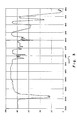
- Figure 1 is an infrared absorption spectrum of dimethylethylindium.
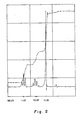
- Figure 2 is a proton nuclear magnetic resonance spectrum of dimethylethylindium.
- Figure 3 is an infrared absorption spectrum of diethylmethylindium.
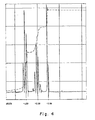
- Figure 4 is a proton nuclear magnetic resonance spectrum of diethylmethylindium.
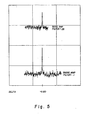
- Figure 5 is a proton nuclear magnetic resonance spectrum of trimethylindium, a prior art compound.
- Figure 6 is a proton nuclear magnetic resonance spectrum of triethylindium, a prior art compound.
- R substituents contemplated for use in the novel compounds are alkyl groups having from one to four carbon atoms, and specifically include methyl, ethyl, n-propyl, isopropyl, n-butyl, isobutyl, and t-butyl groups.
- The generic invention includes gallium or indium combined with any two or more R substituents as previously defined. The genus is limited, however, by the requirement that at least two different R substituents must be associated with each metal atom.
- Exemplary species contemplated herein include the following:
- dimethylethylgallium
- dimethylethylindium
- diethylmethylindium.
- Hybrid organometallic compounds can be produced by mixing organometallic compounds containing the respective substituents of the hybrid; by reacting a halogen substituted organometallic compound with an alkylating or arylating agent to add an unlike substituent; by reacting the metal for which an organometallic hybrid compound is desired with mixtures of organic halides; by substituting a more active metal for a less active metal in an organometallic hybrid compound of the less active metal; or by other means.
- To practice the mixing method described in the preceding paragraph, first and second organometallic compounds are first selected. Each reactant has the formula:


- In the second synthetic method identified above, a halogenated organometallic compound having one of the desired alkyl substituents is reacted with an alkylating agent. The alkyl group of the alkylating agent then replaces the halogen substituent of the organometallic compound. Typical alkylating agents for use herein include such materials as methyllithium, ethylmagnesium bromide, or lithium aluminium hydride. Examples of these synthetic reactions are set forth in the two following equations:


- Other methods ordinarily used in organometallic synthesis, such as those discussed on pages 345-348 and 365-366 of Roberts and Caserio, Basic Principles of Organic Chemistry, W. A. Benjamin Inc. (New York: 1964) can also be adopted to synthesize the hybrid organometallic compounds defined herein.
- As indicated previously, the present compounds have utility as reactants in MOCVD. Preferred reactants for this utility have a melting point of less than about 30 degrees Celsius, have a vapour pressure of at least 1.0 torrs at a temperature within the bubbler temperature range of from about minus 20 degrees Celsius to about 40 degrees Celsius, are stable at the indicated bubbler temperatures but readily decompose at a deposition chamber temperature of from about 550 to about 700 degrees Celsius, and are inert at bubbler temperatures with respect to at least one carrier gas such as hydrogen, nitrogen or helium.
- The present compounds also have utility for the preparation of other such compounds within the scope of the present invention. For example, a hybrid organometallic compound which does not have a desirable decomposition tempeature may be reacted with another organometallic compound to produce a new hybrid. '
- The present compounds also have utility in organic synthesis and as catalysts, for example in Ziegler-Natta processes.
- The ultimate utility of these compounds, employed in MOCVD, is to provide a coating of the constituent metal, or (in combination with other reactants introduced in the deposition chamber) to provide coatings of metal oxides, nitrides, III-V compounds, and so forth. The metal hybrid organometallic compounds can also be used as dopants.
- A second aspect of the present invention is a process for selecting particular hybrid organometallic compounds of gallium and/or indium which are useful in metal organic chemical vapour deposition processes.
- The present process, characterised as an MOCVD process, comprises the steps of selecting first and second compounds, each having the formula MR3 as further defined below, making a hybrid compound having at least one substituent in common with the first compound and at least one substituent in common with the second compound, and employing the hybrid compound for metal organic chemical vapour deposition in apparatus further specified below. Since in the usual chemical vapour deposition process a particular element has been selected for deposition, usually the M constituents of the first and second compound will be the same. However, the process is not limited by this consideration nor has the second compound an optimal melting point, vapour pressure, or decomposition tempeature for use in MOCVD. First and second compounds meeting this definition are trimethylindium and triethylindium, whose melting points, volatility, and decomposition temperatures are set forth above in Table I above.
- Other examples of first and second gallium or indium compounds useful in practicing the present invention can be found in the list of known homosubstituted and hybrid organometallic compounds in the "Background Art" section set forth previously.
- Once first and second compounds have been selected, the next step is to make a composite compound having at least one R' substituent possessed by the first compound and at least one R' substituent possessed by the second compound. Although one manner of synthesizing the composite compound is by mixing the first and second compounds in the manner previously described, the present process is not limited to that method of synthesis. The other synthetic methods previously described, or method not specifically disclosed herein, can also be used within the scope of the present process invention. The composite compound should differ from each of the first and second compounds as to at least one property selected from decomposition temperature, vapour pressure at a particular temperature suitable for a bubbler, and melting point. By differing in respect to at least one of these properties, the composite compound will be useful for MOCVD under different process conditions than the first and second compounds. When one of the first and second compounds has a property such as melting point which is too low for a conventional MOCVD process and the other compound has a corresponding property which is too high for MOCVD, the composite compound defined herein may have a corresponding property between those of the first and second compounds or may have a surprisingly different value of the corresponding property.
- Examples of the composite compounds within the scope of the second step of the process include the generic class and species set forth previously for the compound invention, as well as the previously mentioned hybrid organometallic compounds known to the art.
- As a final step, the composite compound is employed for MOCVD in apparatus comprising a bubbler or equivalent apparatus maintained at a temperature between the melting point and decomposition temperature of the composite compound. The desired composite compound will have a vapour pressure at this temperature of at least 133.3 Pa (1.0 torr), and thus will be useful for deposition. The MOCVD apparatus used in this step further comprises a deposition chamber maintained at a temperature at least as high as the decomposition temperature of the composite compound, triggering the breakdown of the composite organometallic compound to release its constituent metal.
- The present hybrid organometallic compounds have an advantage over any nonazeotropic mixture for use in MOCVD, as any nonazeotropic mixture will be fractionated by the carrier gas in a manner analogous to gas liquid chromatography.
- The following examples are provided to further exemplify and demonstrate the use of the present compound and process inventions. The examples do not limit the scope of the invention, which is defined by the claims found at the end of the specification.
- 3.00 ml oftriethylindium (3.78 g., 0.0187 mol) was added to 5.988 g (0.0374 mol) oftrimethylindium in a 50 ml. flask in a glove bag under Argon atmosphere. The reagent were stirred at room temperature overnight. Reaction was essentially complete when all of the trimethylindium was fully reacted, leaving no residual solids. The resulting clear liquid was then distilled under full vacuum, (about 1.5 torrs pressure). Some of the resulting dimethylethylindium distilled over at room temperature, or about 23 degrees Celsius. Gentle heating caused the rest to come over at 25 degrees Celsius, this temperature being measured at the distillation head. The resulting product had a melting point of about 5 to 7 degrees Celsius and a boiling point of 23-25°C at 200 Pa (1.5 torr), which is unexpectedly different than the respective melting points and boiling points of trimethylindium and triethylindium. Proton nuclear magnetic resonance and infrared spectra were taken, and are presented as Figure 1 and 2 forming a part of this specification. For comparison, the NMR spectra of trimethylindium and triethylindium are presented as Figures 5 and 6. The infrared spectrum is not believed to distinguish the product compound, but the NMR spectrum of dimethylethylindium is characterised by peaks at delta+1.27 (triplet representing ethyl); +0.37 (quartet representing ethyl); and -0.36 (singlet representing methyl). Integration of the areas under the peaks provides the ratio of methyl to ethyl groups, which is 2:1.
- 5.00 ml (6.30 g., 0.0312 mol) of triethylindium was added to 2.495 g (0.0156mol)oftrimethylindiumina a 50 ml flask in a glove bag containing an Argon atmosphere. The mixture was stirred overnight and then distilled at 33 to 35 degrees Celsius under full vacuum as previously defined. The distillate was a clear, colourless liquid. NMR and IR spectra were taken, and are provided as Figures 3 and 4 herein. The NMR is characterized by peaks at delta values of +1.28 (triplet ethyl); +0.39 (quartet ethyl); and -0.39 (singlet methyl). An integration of the areas under the peaks shows a ratio of ethyl to methyl of 1.94:1. The melting point was found to be below about 3 degrees Celsius, as the product failed to solidify when the container was placed in ice water.
- Figure 5 is the NMR spectrum of trimethylindium, characterised by a singlet methyl peak at a delta value of -0.20. The melting point of trimethylindium is 88 degrees Celsius.
- Figure 6 is the NMR spectrum of triethylindium, characterised by peaks at delta values of +1.24 (triplet ethyl) and +0.40 (quartet ethyl). The melting point of triethylindium is -32 degrees Celsius.
- The procedure of Examples 1 and 2 is followed for the species previously listed herein. The reactants mixed to form the indicated species are provided below:

- Methyldiethylindium prepared as described previously is placed in a bubbler and suitably interconnected with a source of hydrogen gas and a deposition chamber. The chamber is also supplied with phosphine gas. The bubbler is maintained at 20 degrees Celsius using a suitable heat source, the deposition chamber is maintained at 650 degrees Celsius, and an Indium Phosphide substrate is supported within the deposition chamber. The entraining hydrogen is delivered at 100 cubic centimeters per minute (at standard temperature and pressure). The partial pressure of hydrogen in the deposition chamber is atmospheric pressure, and the partial pressure of methyldiethylindium is about 13.33 Pa (10 torr), the partial pressure of phosphine being atmospheric pressure. After about 30 minutes of deposition, a coating of indium phosphide approximately 2 µm thick, uniform in composition and thickness, is found to be deposited on the substrate.
Claims (13)


Priority Applications (1)
| Application Number | Priority Date | Filing Date | Title |
|---|---|---|---|
| AT85307400T ATE48002T1 (en) | 1984-10-25 | 1985-10-15 | HYBRID ORGANOINDIUM AND ORGANOGALLIUM COMPOUNDS AND PROCESSES FOR ORGANOMETALLIC CHEMICAL VAPOR DEPOSITION. |
Applications Claiming Priority (2)
| Application Number | Priority Date | Filing Date | Title |
|---|---|---|---|
| US664645 | 1984-10-25 | ||
| US06/664,645 US4720560A (en) | 1984-10-25 | 1984-10-25 | Hybrid organometallic compounds, particularly for metal organic chemical vapor deposition |
Publications (2)
| Publication Number | Publication Date |
|---|---|
| EP0181706A1 EP0181706A1 (en) | 1986-05-21 |
| EP0181706B1 true EP0181706B1 (en) | 1989-11-15 |
Family
ID=24666848
Family Applications (1)
| Application Number | Title | Priority Date | Filing Date |
|---|---|---|---|
| EP85307400A Expired EP0181706B1 (en) | 1984-10-25 | 1985-10-15 | Hybrid organometallic compounds of in and ba and process for metal organic chemical vapour deposition |
Country Status (10)
| Country | Link |
|---|---|
| US (1) | US4720560A (en) |
| EP (1) | EP0181706B1 (en) |
| JP (1) | JPS61104079A (en) |
| KR (1) | KR900001008B1 (en) |
| AT (1) | ATE48002T1 (en) |
| BR (1) | BR8505338A (en) |
| CA (1) | CA1251804A (en) |
| DE (1) | DE3574257D1 (en) |
| DK (1) | DK488785A (en) |
| IL (1) | IL76716A0 (en) |
Families Citing this family (23)
| Publication number | Priority date | Publication date | Assignee | Title |
|---|---|---|---|---|
| DE3514410A1 (en) * | 1985-04-20 | 1986-10-23 | Schering AG, Berlin und Bergkamen, 1000 Berlin | NEW ALKALINE METAL ALUMINUM DIALKYL DIHYDRIDES AND THEIR SOLUTIONS IN AROMATIC HYDROCARBONS |
| JPH0627327B2 (en) * | 1987-06-30 | 1994-04-13 | インターナシヨナル・ビジネス・マシーンズ・コーポレーシヨン | Method for depositing Group IB metal |
| EP0305144A3 (en) * | 1987-08-24 | 1989-03-08 | Canon Kabushiki Kaisha | Method of forming crystalline compound semiconductor film |
| DE3742525C2 (en) * | 1987-12-11 | 1998-02-19 | Hertz Inst Heinrich | Process for the preparation of metal alkyl compounds and their use |
| US4992305A (en) * | 1988-06-22 | 1991-02-12 | Georgia Tech Research Corporation | Chemical vapor deposition of transistion metals |
| US4915988A (en) * | 1988-06-22 | 1990-04-10 | Georgia Tech Research Corporation | Chemical vapor deposition of group IIA metals and precursors therefor |
| US4942252A (en) * | 1988-08-16 | 1990-07-17 | Cvd Incorporated | Synthesis of phosphorus and arsenic, halides and hydrides |
| NL8802458A (en) * | 1988-10-07 | 1990-05-01 | Philips Nv | PROCESS FOR THE MANUFACTURE OF AN EPITAXIAL INDIUM PHOSPHIDE LAYER ON A SUBSTRATE SURFACE. |
| US5147688A (en) * | 1990-04-24 | 1992-09-15 | Cvd, Inc. | MOCVD of indium oxide and indium/tin oxide films on substrates |
| DE4104076C2 (en) * | 1991-02-11 | 1994-03-31 | Bruker Analytische Messtechnik | Device for nuclear magnetic resonance spectrometric measurement of chemical and / or physical reaction processes |
| US5300185A (en) * | 1991-03-29 | 1994-04-05 | Kabushiki Kaisha Toshiba | Method of manufacturing III-V group compound semiconductor |
| DE4214224A1 (en) * | 1992-04-30 | 1993-11-04 | Merck Patent Gmbh | USE OF ELEMENT ORGANIC COMPOUNDS FOR DEPOSITING THE ELEMENT ON SUBSTRATES |
| US5380895A (en) * | 1993-02-10 | 1995-01-10 | Bandgap Technology Corporation | Method for the synthesis of metal alkyls and metal aryls |
| US5502227A (en) * | 1993-07-27 | 1996-03-26 | Cvd, Incorporated | Liquid indium source |
| JPH07153700A (en) * | 1993-11-26 | 1995-06-16 | Sony Corp | Metal-organic vapor phase epitaxy method and light-emitting device manufacturing method |
| US6211106B1 (en) * | 1998-06-18 | 2001-04-03 | Industrial Technology Research Institute | Groups IIA and IIIA based catalyst composition for preparing high-syndiotacticity polystyrene |
| DE60301152T8 (en) | 2002-01-17 | 2006-04-27 | Shipley Co., L.L.C., Marlborough | Organoindium compounds for use in chemical vapor deposition |
| DE102005037076B3 (en) * | 2005-08-03 | 2007-01-25 | Otto-Von-Guericke-Universität Magdeburg | Preparation of a mixture of substituted organobismuth compound, useful as e.g. precursor for gas phase separation of bismuth containing material, comprises mixing Grignard reagent with different alkyl groups |
| US20070141374A1 (en) * | 2005-12-19 | 2007-06-21 | General Electric Company | Environmentally resistant disk |
| WO2014078263A1 (en) * | 2012-11-14 | 2014-05-22 | Dow Global Technologies Llc | Methods of producing trimethylgallium |
| WO2015024893A1 (en) * | 2013-08-22 | 2015-02-26 | Umicore Ag & Co. Kg | Method for producing alkyl-indium compounds and the use thereof |
| EP3173507A1 (en) * | 2015-11-25 | 2017-05-31 | Umicore AG & Co. KG | Method for the organometallic gas phase deposition under use of solutions of indiumalkyl compounds in hydrocarbons |
| WO2022118744A1 (en) * | 2020-12-04 | 2022-06-09 | 株式会社高純度化学研究所 | Vapor deposition raw material for use in production of film containing indium and at least one another metal, and method for producing film containing indium and at least one another metal |
Family Cites Families (19)
| Publication number | Priority date | Publication date | Assignee | Title |
|---|---|---|---|---|
| US2266776A (en) * | 1938-09-24 | 1941-12-23 | Atlantic Refining Co | Diesel fuel |
| US2818416A (en) * | 1952-12-10 | 1957-12-31 | Ethyl Corp | Cyclomatic compounds |
| US2880115A (en) * | 1955-07-13 | 1959-03-31 | Ohio Commw Eng Co | Method of gas plating light metals |
| US3097066A (en) * | 1956-02-25 | 1963-07-09 | Studiengesellschaft Kohle Mbh | Process for the production of boron and aluminium compounds containing hydrocarbon raicals and/or hydrogen |
| US2987534A (en) * | 1958-04-25 | 1961-06-06 | Ethyl Corp | Group iii-a element compounds |
| US3026356A (en) * | 1958-04-25 | 1962-03-20 | Herbert C Brown | Process for the preparation of organo boron compounds |
| US2969382A (en) * | 1958-04-25 | 1961-01-24 | Ethyl Corp | Process for the manufacture of cyclopentadienyl group iii-a metal compounds |
| US3247261A (en) * | 1958-12-24 | 1966-04-19 | Dal Mon Research Co | Organo-metallo compounds |
| US3161686A (en) * | 1960-03-30 | 1964-12-15 | Herbert C Brown | Novel organoboron compounds |
| JPS466817Y1 (en) * | 1967-06-30 | 1971-03-10 | ||
| US3755479A (en) * | 1967-10-24 | 1973-08-28 | Ethyl Corp | Beryllium hydride compositions and their use in making cyclopentadienyl beryllium hydride compounds |
| US3578494A (en) * | 1969-04-09 | 1971-05-11 | Continental Oil Co | Zinc plating by chemical reduction |
| US3755478A (en) * | 1971-08-18 | 1973-08-28 | Lithium Corp | Cyclic process for the preparation of diorganomagnesium compounds |
| JPS5312359B2 (en) * | 1972-06-14 | 1978-04-28 | ||
| JPS5422276B2 (en) * | 1973-03-19 | 1979-08-06 | ||
| DE2429600A1 (en) * | 1973-06-22 | 1975-01-16 | Gen Electric | MAGNETIC MATERIALS STABLE IN AIR AND METHOD OF PRODUCTION |
| EP0040939B1 (en) * | 1980-05-27 | 1985-01-02 | The Secretary of State for Defence in Her Britannic Majesty's Government of the United Kingdom of Great Britain and | Manufacture of cadmium mercury telluride |
| JPS57145972A (en) * | 1980-11-18 | 1982-09-09 | British Telecomm | Formation of group iii-v compount |
| US4447369A (en) * | 1982-04-16 | 1984-05-08 | Ethyl Corporation | Organomagnesium compounds |
-
1984
- 1984-10-25 US US06/664,645 patent/US4720560A/en not_active Expired - Lifetime
-
1985
- 1985-10-15 AT AT85307400T patent/ATE48002T1/en not_active IP Right Cessation
- 1985-10-15 EP EP85307400A patent/EP0181706B1/en not_active Expired
- 1985-10-15 DE DE8585307400T patent/DE3574257D1/en not_active Expired
- 1985-10-15 IL IL76716A patent/IL76716A0/en unknown
- 1985-10-21 CA CA000493480A patent/CA1251804A/en not_active Expired
- 1985-10-24 KR KR1019850007847A patent/KR900001008B1/en not_active Expired
- 1985-10-24 DK DK488785A patent/DK488785A/en not_active Application Discontinuation
- 1985-10-25 JP JP60239257A patent/JPS61104079A/en active Granted
- 1985-10-25 BR BR8505338A patent/BR8505338A/en unknown
Non-Patent Citations (5)
| Title |
|---|
| Comprehensive organometallic chemistry, vol. 1, (Pergamon Press), pp. 588-590, 688 * |
| E. Wiberg "Neuere Ergebnisse der präperativen Hydridforschung", Angewandte Chemie 65 Jahrgang Nr. 1, Jan. 1953, p. 25 * |
| IBM Technical Disclosure, vol. 17, no. 10, March 1975, p. 3096 * |
| Stadelhofer, J. et al., J. Organomet. Chem., 1975, 84, C1-C4 * |
| Stadelhofer, J. et al., J. Organomet. Chem., 1976, 116, 65-73 * |
Also Published As
| Publication number | Publication date |
|---|---|
| EP0181706A1 (en) | 1986-05-21 |
| CA1251804A (en) | 1989-03-28 |
| JPH0357188B2 (en) | 1991-08-30 |
| BR8505338A (en) | 1986-08-05 |
| KR860003266A (en) | 1986-05-21 |
| KR900001008B1 (en) | 1990-02-24 |
| ATE48002T1 (en) | 1989-12-15 |
| DK488785A (en) | 1986-04-26 |
| IL76716A0 (en) | 1986-02-28 |
| DE3574257D1 (en) | 1989-12-21 |
| US4720560A (en) | 1988-01-19 |
| DK488785D0 (en) | 1985-10-24 |
| JPS61104079A (en) | 1986-05-22 |
Similar Documents
| Publication | Publication Date | Title |
|---|---|---|
| US4720560A (en) | Hybrid organometallic compounds, particularly for metal organic chemical vapor deposition | |
| US4734514A (en) | Hydrocarbon-substituted analogs of phosphine and arsine, particularly for metal organic chemical vapor deposition | |
| US4992305A (en) | Chemical vapor deposition of transistion metals | |
| EP1990345B1 (en) | Organometallic germanium compounds suitable for use in vapor deposition processes | |
| US4960916A (en) | Organometallic antimony compounds useful in chemical vapor deposition processes | |
| EP1643547B1 (en) | Preparation of group 12 and 13 metal compounds having low levels of oxygenated impurities | |
| US5112432A (en) | Organometallic compounds | |
| US4915988A (en) | Chemical vapor deposition of group IIA metals and precursors therefor | |
| JP4689969B2 (en) | Preparation of Group IVA and Group VIA compounds | |
| JPH0217193A (en) | Cyclic organometal compound | |
| US6111124A (en) | Lewis base adducts of anhydrous mononuclear tris(β-diketonate) bismuth compositions for deposition of bismuth-containing films, and method of making the same | |
| EP1083161A1 (en) | Organometallic compounds for vapor-phase epitaxy of organometal | |
| KR970010591B1 (en) | Organometallic compounds | |
| US4882206A (en) | Chemical vapor deposition of group IIIB metals | |
| EP0251555B1 (en) | Gallium hydride/trialkylamine adducts, and their use in deposition of iii-v compound films | |
| EP0460627B1 (en) | Volatile crown ligand beta-diketonate alkaline earth metal complexes | |
| EP0108469B1 (en) | Preparation of organometallic indium and gallium compounds | |
| US5166428A (en) | Method for preparation of organo-tellurium and selenium compounds | |
| US4946994A (en) | Preparation of ditertiarybutyltelluride | |
| JPH03502457A (en) | organometallic compound | |
| EP0478590B1 (en) | Method for preparation of organo-tellurium and selenium compounds | |
| US5882805A (en) | Chemical vapor deposition of II/VI semiconductor material using triisopropylindium as a dopant | |
| US5371257A (en) | Preparation of diisopropyl stibines and use thereof | |
| US5149853A (en) | Organometallic compounds | |
| JPH05125081A (en) | Organometallic compound |
Legal Events
| Date | Code | Title | Description |
|---|---|---|---|
| PUAI | Public reference made under article 153(3) epc to a published international application that has entered the european phase |
Free format text: ORIGINAL CODE: 0009012 |
|
| AK | Designated contracting states |
Kind code of ref document: A1 Designated state(s): AT BE CH DE FR GB IT LI NL SE |
|
| 17P | Request for examination filed |
Effective date: 19860819 |
|
| 17Q | First examination report despatched |
Effective date: 19870928 |
|
| GRAA | (expected) grant |
Free format text: ORIGINAL CODE: 0009210 |
|
| AK | Designated contracting states |
Kind code of ref document: B1 Designated state(s): AT BE CH DE FR GB IT LI NL SE |
|
| PG25 | Lapsed in a contracting state [announced via postgrant information from national office to epo] |
Ref country code: SE Effective date: 19891115 Ref country code: NL Effective date: 19891115 Ref country code: LI Effective date: 19891115 Ref country code: IT Free format text: LAPSE BECAUSE OF FAILURE TO SUBMIT A TRANSLATION OF THE DESCRIPTION OR TO PAY THE FEE WITHIN THE PRESCRIBED TIME-LIMIT;WARNING: LAPSES OF ITALIAN PATENTS WITH EFFECTIVE DATE BEFORE 2007 MAY HAVE OCCURRED AT ANY TIME BEFORE 2007. THE CORRECT EFFECTIVE DATE MAY BE DIFFERENT FROM THE ONE RECORDED. Effective date: 19891115 Ref country code: CH Effective date: 19891115 Ref country code: BE Effective date: 19891115 Ref country code: AT Effective date: 19891115 |
|
| REF | Corresponds to: |
Ref document number: 48002 Country of ref document: AT Date of ref document: 19891215 Kind code of ref document: T |
|
| REF | Corresponds to: |
Ref document number: 3574257 Country of ref document: DE Date of ref document: 19891221 |
|
| REG | Reference to a national code |
Ref country code: CH Ref legal event code: PL |
|
| ET | Fr: translation filed | ||
| NLV1 | Nl: lapsed or annulled due to failure to fulfill the requirements of art. 29p and 29m of the patents act | ||
| PLBE | No opposition filed within time limit |
Free format text: ORIGINAL CODE: 0009261 |
|
| STAA | Information on the status of an ep patent application or granted ep patent |
Free format text: STATUS: NO OPPOSITION FILED WITHIN TIME LIMIT |
|
| 26N | No opposition filed | ||
| REG | Reference to a national code |
Ref country code: GB Ref legal event code: IF02 |
|
| PGFP | Annual fee paid to national office [announced via postgrant information from national office to epo] |
Ref country code: GB Payment date: 20041006 Year of fee payment: 20 |
|
| PGFP | Annual fee paid to national office [announced via postgrant information from national office to epo] |
Ref country code: FR Payment date: 20041020 Year of fee payment: 20 |
|
| PGFP | Annual fee paid to national office [announced via postgrant information from national office to epo] |
Ref country code: DE Payment date: 20041130 Year of fee payment: 20 |
|
| PG25 | Lapsed in a contracting state [announced via postgrant information from national office to epo] |
Ref country code: GB Free format text: LAPSE BECAUSE OF EXPIRATION OF PROTECTION Effective date: 20051014 |
|
| REG | Reference to a national code |
Ref country code: GB Ref legal event code: PE20 |