EP0174051B1 - Method for treatment of impunded material (sludges) from the chemical treatment of spent sulfuric acid with lime - Google Patents
Method for treatment of impunded material (sludges) from the chemical treatment of spent sulfuric acid with lime Download PDFInfo
- Publication number
- EP0174051B1 EP0174051B1 EP85201376A EP85201376A EP0174051B1 EP 0174051 B1 EP0174051 B1 EP 0174051B1 EP 85201376 A EP85201376 A EP 85201376A EP 85201376 A EP85201376 A EP 85201376A EP 0174051 B1 EP0174051 B1 EP 0174051B1
- Authority
- EP
- European Patent Office
- Prior art keywords
- carbon
- sludge
- treatment
- solid
- solids
- Prior art date
- Legal status (The legal status is an assumption and is not a legal conclusion. Google has not performed a legal analysis and makes no representation as to the accuracy of the status listed.)
- Expired
Links
- 238000000034 method Methods 0.000 title claims description 13
- QAOWNCQODCNURD-UHFFFAOYSA-N Sulfuric acid Chemical compound OS(O)(=O)=O QAOWNCQODCNURD-UHFFFAOYSA-N 0.000 title claims description 10
- 235000008733 Citrus aurantifolia Nutrition 0.000 title claims description 5
- 235000011941 Tilia x europaea Nutrition 0.000 title claims description 5
- 239000004571 lime Substances 0.000 title claims description 5
- 239000000463 material Substances 0.000 title description 6
- 239000000126 substance Substances 0.000 title description 2
- OKTJSMMVPCPJKN-UHFFFAOYSA-N Carbon Chemical compound [C] OKTJSMMVPCPJKN-UHFFFAOYSA-N 0.000 claims description 37
- 229910052799 carbon Inorganic materials 0.000 claims description 33
- 239000007787 solid Substances 0.000 claims description 32
- 239000010802 sludge Substances 0.000 claims description 14
- VEXZGXHMUGYJMC-UHFFFAOYSA-N Hydrochloric acid Chemical compound Cl VEXZGXHMUGYJMC-UHFFFAOYSA-N 0.000 claims description 8
- 238000010521 absorption reaction Methods 0.000 claims description 4
- LQNUZADURLCDLV-UHFFFAOYSA-N nitrobenzene Chemical compound [O-][N+](=O)C1=CC=CC=C1 LQNUZADURLCDLV-UHFFFAOYSA-N 0.000 claims description 4
- XLYOFNOQVPJJNP-UHFFFAOYSA-N water Substances O XLYOFNOQVPJJNP-UHFFFAOYSA-N 0.000 claims description 4
- 238000005243 fluidization Methods 0.000 claims description 3
- 239000013505 freshwater Substances 0.000 claims description 3
- 239000000203 mixture Substances 0.000 claims description 3
- 239000006227 byproduct Substances 0.000 claims description 2
- 239000013461 intermediate chemical Substances 0.000 claims description 2
- 238000004519 manufacturing process Methods 0.000 claims description 2
- 238000006386 neutralization reaction Methods 0.000 claims description 2
- 239000003960 organic solvent Substances 0.000 claims description 2
- 238000004064 recycling Methods 0.000 claims description 2
- 239000000979 synthetic dye Substances 0.000 claims description 2
- 238000007865 diluting Methods 0.000 claims 1
- 238000002156 mixing Methods 0.000 claims 1
- 230000008929 regeneration Effects 0.000 description 7
- 238000011069 regeneration method Methods 0.000 description 7
- 238000010790 dilution Methods 0.000 description 6
- 239000012895 dilution Substances 0.000 description 6
- 230000020477 pH reduction Effects 0.000 description 5
- OSGAYBCDTDRGGQ-UHFFFAOYSA-L calcium sulfate Chemical compound [Ca+2].[O-]S([O-])(=O)=O OSGAYBCDTDRGGQ-UHFFFAOYSA-L 0.000 description 4
- 238000007796 conventional method Methods 0.000 description 3
- 239000007789 gas Substances 0.000 description 3
- 239000012141 concentrate Substances 0.000 description 2
- 238000011109 contamination Methods 0.000 description 2
- 239000000446 fuel Substances 0.000 description 2
- 238000010791 quenching Methods 0.000 description 2
- 230000003381 solubilizing effect Effects 0.000 description 2
- 230000001154 acute effect Effects 0.000 description 1
- QVGXLLKOCUKJST-UHFFFAOYSA-N atomic oxygen Chemical compound [O] QVGXLLKOCUKJST-UHFFFAOYSA-N 0.000 description 1
- 238000009933 burial Methods 0.000 description 1
- 238000005352 clarification Methods 0.000 description 1
- 238000004140 cleaning Methods 0.000 description 1
- 238000010586 diagram Methods 0.000 description 1
- 238000005187 foaming Methods 0.000 description 1
- 239000003673 groundwater Substances 0.000 description 1
- 238000011065 in-situ storage Methods 0.000 description 1
- 238000010169 landfilling Methods 0.000 description 1
- 238000013206 minimal dilution Methods 0.000 description 1
- 229910052760 oxygen Inorganic materials 0.000 description 1
- 239000001301 oxygen Substances 0.000 description 1
- 230000001172 regenerating effect Effects 0.000 description 1
- 239000002002 slurry Substances 0.000 description 1
- 230000006641 stabilisation Effects 0.000 description 1
- 238000011105 stabilization Methods 0.000 description 1
- 239000002699 waste material Substances 0.000 description 1
Images
Classifications
-
- C—CHEMISTRY; METALLURGY
- C02—TREATMENT OF WATER, WASTE WATER, SEWAGE, OR SLUDGE
- C02F—TREATMENT OF WATER, WASTE WATER, SEWAGE, OR SLUDGE
- C02F9/00—Multistage treatment of water, waste water or sewage
-
- C—CHEMISTRY; METALLURGY
- C02—TREATMENT OF WATER, WASTE WATER, SEWAGE, OR SLUDGE
- C02F—TREATMENT OF WATER, WASTE WATER, SEWAGE, OR SLUDGE
- C02F1/00—Treatment of water, waste water, or sewage
- C02F1/28—Treatment of water, waste water, or sewage by sorption
- C02F1/283—Treatment of water, waste water, or sewage by sorption using coal, charred products, or inorganic mixtures containing them
-
- C—CHEMISTRY; METALLURGY
- C02—TREATMENT OF WATER, WASTE WATER, SEWAGE, OR SLUDGE
- C02F—TREATMENT OF WATER, WASTE WATER, SEWAGE, OR SLUDGE
- C02F1/00—Treatment of water, waste water, or sewage
- C02F1/66—Treatment of water, waste water, or sewage by neutralisation; pH adjustment
-
- C—CHEMISTRY; METALLURGY
- C02—TREATMENT OF WATER, WASTE WATER, SEWAGE, OR SLUDGE
- C02F—TREATMENT OF WATER, WASTE WATER, SEWAGE, OR SLUDGE
- C02F11/00—Treatment of sludge; Devices therefor
-
- C—CHEMISTRY; METALLURGY
- C02—TREATMENT OF WATER, WASTE WATER, SEWAGE, OR SLUDGE
- C02F—TREATMENT OF WATER, WASTE WATER, SEWAGE, OR SLUDGE
- C02F2101/00—Nature of the contaminant
- C02F2101/10—Inorganic compounds
-
- C—CHEMISTRY; METALLURGY
- C02—TREATMENT OF WATER, WASTE WATER, SEWAGE, OR SLUDGE
- C02F—TREATMENT OF WATER, WASTE WATER, SEWAGE, OR SLUDGE
- C02F2101/00—Nature of the contaminant
- C02F2101/30—Organic compounds
-
- C—CHEMISTRY; METALLURGY
- C02—TREATMENT OF WATER, WASTE WATER, SEWAGE, OR SLUDGE
- C02F—TREATMENT OF WATER, WASTE WATER, SEWAGE, OR SLUDGE
- C02F2103/00—Nature of the water, waste water, sewage or sludge to be treated
- C02F2103/14—Paint wastes
-
- Y—GENERAL TAGGING OF NEW TECHNOLOGICAL DEVELOPMENTS; GENERAL TAGGING OF CROSS-SECTIONAL TECHNOLOGIES SPANNING OVER SEVERAL SECTIONS OF THE IPC; TECHNICAL SUBJECTS COVERED BY FORMER USPC CROSS-REFERENCE ART COLLECTIONS [XRACs] AND DIGESTS
- Y10—TECHNICAL SUBJECTS COVERED BY FORMER USPC
- Y10S—TECHNICAL SUBJECTS COVERED BY FORMER USPC CROSS-REFERENCE ART COLLECTIONS [XRACs] AND DIGESTS
- Y10S210/00—Liquid purification or separation
- Y10S210/902—Materials removed
- Y10S210/908—Organic
- Y10S210/909—Aromatic compound, e.g. pcb, phenol
-
- Y—GENERAL TAGGING OF NEW TECHNOLOGICAL DEVELOPMENTS; GENERAL TAGGING OF CROSS-SECTIONAL TECHNOLOGIES SPANNING OVER SEVERAL SECTIONS OF THE IPC; TECHNICAL SUBJECTS COVERED BY FORMER USPC CROSS-REFERENCE ART COLLECTIONS [XRACs] AND DIGESTS
- Y10—TECHNICAL SUBJECTS COVERED BY FORMER USPC
- Y10S—TECHNICAL SUBJECTS COVERED BY FORMER USPC CROSS-REFERENCE ART COLLECTIONS [XRACs] AND DIGESTS
- Y10S210/00—Liquid purification or separation
- Y10S210/902—Materials removed
- Y10S210/917—Color
Definitions
- This invention relates to a method for treating sludges that result from the chemical treatment of spent sulfuric acid with lime, and in particular to a method for solubilizing the solids, reducing color, and total organic carbon (TOC) of the treated material to a predetermined level.
- TOC total organic carbon
- a novel and improved method for treating such a sludge comprises mechanical fluidization of the sludge, followed by dilution to a fresh water content of about 5-10% by weight, and then acidification with hydrochloric acid, clarification of the acidified material to concentrate solids and to produce an effluent which is passed through carbon absorption columns to reduce levels of nitrobenzene, other organics, and color to a predetermined level.
- the method further comprises recycling of the concentrated solids from the clarifier for reacidification thereby causing solubilizing of additional solids.
- the continuous reacidification of the recycled solids simultaneously with acidification of additional sludge reduces the initial solids content to a predetermined level.
- the remaining finely divided insoluble solids are then directed into a carbon regeneration furnace simultaneously with regeneration of the spent carbon.
- the regenerated carbon and the inert oxides from the insoluble solids are then reused in the carbon absorption column.
- the spent carbon and any remaining insolubles are incinerated in the carbon regeneration furnace.
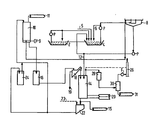
- Figure 1 is a schematic diagram illustrating the method and apparatus of the invention.
- impounded sludge in vessel 2 as set forth in Table 1, is mechanically fluidized in situ.
- the sludge is subjected to minimal dilution (with water to a dilution level of about 5-10% by weight of fresh water) and then acidification with hydrochloric acid 5 to a concentration of about 0.26-0.36 kg of about 34% hydrochloric acid per kg of net solids.
- the dilution avoids serious foaming conditions.
- the flow of sludge from vessel 4 which is controlled by recycle 6 and flows into clarifier 8 to concentrate solids.
- the resultant clear effluent is taken from the clarifier 8 and transferred to a carbon column 10 with an air inlet 9.
- a portion of the concentrated solids from the clarifier 8 is returned for reacidification in vessel 4, and another portion of the concentrated solids is transferred to furnace 14 for incineration simultaneously with carbon regeneration through recycle 12.
- the treated effluent 11 After passing through the carbon column 10, the treated effluent 11 is reused for dilution or discharged. After this treatment, the effluent has characteristics as set forth in Table 2.
- Spent carbon is transferred via a tank 16 to the carbon regeneration furnace 14 by means of a dewatering screw 18.
- the removed water 19 is used in the dilution step.
- the spent carbon from the dewatering screw 18 is blended with a portion of the concentrated solids from the recycled bottoms from clarifier 8. This blend will incinerate the solids to an inert material as spent carbon is being regenerated.
- Fuel supply 20 provides the fuel necessary to evaporate the carbon, while incinerating the solids.
- Regenerated carbon from the furnace is transferred to the quench tank 22, and then to the regenerated carbon tank 24 or back to the carbon column 10.
- the carbon make-up 23 is also supplied via the quench tank 22.
- the exhaust gases from the carbon regenerating furnace 14 are released from stack 26 and are also transferred to afterburner 28.
- the gases from afterburner 28 are cooled in water scrubber 30 and discharged through stack 26.
- the waste 31 can be used for acidification in vessel 4. It is imperative to the invention that the required procedure be carried out in the proper sequence. Therefore, the fluidization and dilution must be carried out before acidification, and solids must be returned from the clarifier for reacidification and solids must be blended with spent carbon during the regeneration. The significance of this feature will result in only a few percent of solids remaining when treatment has concluded. After conclusion of treatment of the impounded sludge, all remaining spent carbon and the few percent of solids are incinerated in furnace 14 by increasing the oxygen content of the off gases. The spent carbon and solids are incinerated, leaving inert solids 15 for disposal.
Landscapes
- Life Sciences & Earth Sciences (AREA)
- Hydrology & Water Resources (AREA)
- Engineering & Computer Science (AREA)
- Environmental & Geological Engineering (AREA)
- Water Supply & Treatment (AREA)
- Chemical & Material Sciences (AREA)
- Organic Chemistry (AREA)
- Treatment Of Sludge (AREA)
- Solid-Sorbent Or Filter-Aiding Compositions (AREA)
- Separation Of Suspended Particles By Flocculating Agents (AREA)
- Water Treatment By Sorption (AREA)
Description
- This invention relates to a method for treating sludges that result from the chemical treatment of spent sulfuric acid with lime, and in particular to a method for solubilizing the solids, reducing color, and total organic carbon (TOC) of the treated material to a predetermined level.
- It has become an increasingly critical problem to provide a method for cleaning up impounded material (sludges) that does not require land space for burial. This problem is particularly acute with industries that chemically treat spent sulfuric acid with lime, resulting in calcium sulfate settling in lagoons or impoundments.
- The conventional methods for these materials are:
- 1) dewatering, followed by landfilling of the semi-solids, or
- 2) vaulting in place using slurry walls and stabilization. Both of these conventional methods result in the contamination of land making such land useless for any future productive use. Both of these methods can create groundwater contamination at some future data that could require complete removal or re- vaulting
- There has heretofore not been found possible a method to clean-up sludges that is cost effective with the conventional methods. The prior art does not teach a system to solubilize the solids (calcium sulfate) and to treat the solublized sludge with activated carbon to reduce TOC and color to a predetermined level, and to incinerate remaining undissolved solids simultaneously with regeneration of the spent carbon, and finally to incinerate the spent carbon with all other remaining solids.
- It is an object of this invention to provide an improved method for treating a semi-solid sludge formed by the neutralization of lime of a sulfuric acid effluent contaminated with environmentally significant amounts of organic solvents and by-products resulting from the production of synthetic dyes and related intermediate chemicals.
- According to the invention, a novel and improved method for treating such a sludge comprises mechanical fluidization of the sludge, followed by dilution to a fresh water content of about 5-10% by weight, and then acidification with hydrochloric acid, clarification of the acidified material to concentrate solids and to produce an effluent which is passed through carbon absorption columns to reduce levels of nitrobenzene, other organics, and color to a predetermined level.
- The method further comprises recycling of the concentrated solids from the clarifier for reacidification thereby causing solubilizing of additional solids. The continuous reacidification of the recycled solids simultaneously with acidification of additional sludge reduces the initial solids content to a predetermined level. The remaining finely divided insoluble solids are then directed into a carbon regeneration furnace simultaneously with regeneration of the spent carbon. The regenerated carbon and the inert oxides from the insoluble solids are then reused in the carbon absorption column. At the completion of the treatment, the spent carbon and any remaining insolubles are incinerated in the carbon regeneration furnace.
- Figure 1 is a schematic diagram illustrating the method and apparatus of the invention.
- Referring to the figure, impounded sludge in vessel 2 as set forth in Table 1, is mechanically fluidized in situ.

- In vessel 4, the sludge is subjected to minimal dilution (with water to a dilution level of about 5-10% by weight of fresh water) and then acidification with hydrochloric acid 5 to a concentration of about 0.26-0.36 kg of about 34% hydrochloric acid per kg of net solids. The dilution avoids serious foaming conditions. The flow of sludge from vessel 4 which is controlled by recycle 6 and flows into
clarifier 8 to concentrate solids. The resultant clear effluent is taken from theclarifier 8 and transferred to acarbon column 10 with anair inlet 9. A portion of the concentrated solids from theclarifier 8 is returned for reacidification in vessel 4, and another portion of the concentrated solids is transferred tofurnace 14 for incineration simultaneously with carbon regeneration through recycle 12. - After passing through the
carbon column 10, the treatedeffluent 11 is reused for dilution or discharged. After this treatment, the effluent has characteristics as set forth in Table 2.
- In order to improve the efficiency of treatment, it is desirable to recover the spent carbon from the
carbon column 10. Spent carbon is transferred via a tank 16 to thecarbon regeneration furnace 14 by means of a dewatering screw 18. The removedwater 19 is used in the dilution step. The spent carbon from the dewatering screw 18 is blended with a portion of the concentrated solids from the recycled bottoms fromclarifier 8. This blend will incinerate the solids to an inert material as spent carbon is being regenerated.Fuel supply 20 provides the fuel necessary to evaporate the carbon, while incinerating the solids. Regenerated carbon from the furnace is transferred to the quench tank 22, and then to the regenerated carbon tank 24 or back to thecarbon column 10. The carbon make-up 23 is also supplied via the quench tank 22. The exhaust gases from thecarbon regenerating furnace 14 are released fromstack 26 and are also transferred to afterburner 28. The gases from afterburner 28 are cooled inwater scrubber 30 and discharged throughstack 26. Thewaste 31 can be used for acidification in vessel 4. It is imperative to the invention that the required procedure be carried out in the proper sequence. Therefore, the fluidization and dilution must be carried out before acidification, and solids must be returned from the clarifier for reacidification and solids must be blended with spent carbon during the regeneration. The significance of this feature will result in only a few percent of solids remaining when treatment has concluded. After conclusion of treatment of the impounded sludge, all remaining spent carbon and the few percent of solids are incinerated infurnace 14 by increasing the oxygen content of the off gases. The spent carbon and solids are incinerated, leavinginert solids 15 for disposal.
- The invention may be embodied in other specific forms. The present disclosed embodiments are therefore to be considered in all respects as illustrative and not restrictive, the scope of the invention being indicated by the appended claims.
Claims (1)
- A method of treating an impounded semi-solid sludge formed by the neutralization by lime of a sulfuric acid effluent contaminated with environmentally significant amounts of organic solvents and by-products resulting from the production of synthetic dyes and related intermediate chemicals said method comprising the steps of:a) subjecting said impounded semi-solid sludge to a mechanical fluidization treatment,b) diluting said fluidized sludge with water to a fresh water content of about 5-10% by weight and acidifying said dilated sludge with hydrochloric acid,c) clarifying the acidified sludge to provide a clarified effluent and solid bottoms,d) subjecting the thus clarified effluent to carbon absorption with activated carbon to remove color, nitrobenzene, and other organics,e) recycling said solid bottoms for reacidification andf) blending a portion of a thus recycled solid bottoms with spent carbon from said carbon absorption step d and incinerating said blend of said recycled solid bottoms and said spent carbon and in which the spent carbon is regenerated simultaneously while said blend is incinerated.
Applications Claiming Priority (2)
| Application Number | Priority Date | Filing Date | Title |
|---|---|---|---|
| US648847 | 1984-09-07 | ||
| US06/648,847 US4581144A (en) | 1984-09-07 | 1984-09-07 | Method for treatment of impounded material (sludges) from the chemical treatment of spent sulfuric acid with lime |
Publications (3)
| Publication Number | Publication Date |
|---|---|
| EP0174051A2 EP0174051A2 (en) | 1986-03-12 |
| EP0174051A3 EP0174051A3 (en) | 1987-11-25 |
| EP0174051B1 true EP0174051B1 (en) | 1990-11-28 |
Family
ID=24602471
Family Applications (1)
| Application Number | Title | Priority Date | Filing Date |
|---|---|---|---|
| EP85201376A Expired EP0174051B1 (en) | 1984-09-07 | 1985-08-30 | Method for treatment of impunded material (sludges) from the chemical treatment of spent sulfuric acid with lime |
Country Status (5)
| Country | Link |
|---|---|
| US (1) | US4581144A (en) |
| EP (1) | EP0174051B1 (en) |
| JP (1) | JPS6168199A (en) |
| CA (1) | CA1234477A (en) |
| DE (1) | DE3580723D1 (en) |
Families Citing this family (7)
| Publication number | Priority date | Publication date | Assignee | Title |
|---|---|---|---|---|
| US4758335A (en) * | 1986-02-24 | 1988-07-19 | Hayden James M | Contaminated water disposal system |
| US5453202A (en) * | 1993-04-29 | 1995-09-26 | American Color & Chemical Corporation | Method for treatment of impounded sludges, soils and other contaminated solid materials |
| DE10209987A1 (en) * | 2002-03-07 | 2003-09-25 | Clariant Gmbh | Thermally stable polyalkylene glycols as lubricants for refrigeration machines |
| US7067613B2 (en) * | 2004-06-04 | 2006-06-27 | Chemical Products Corporation | Separation of polyolefins from nylons |
| US20060069170A1 (en) * | 2004-09-27 | 2006-03-30 | Chemical Products Corporation | Decomposition of Polyester |
| US20060070188A1 (en) * | 2004-09-27 | 2006-04-06 | Chemical Products Corporation | Colorant Removal from Polymeric Fibers |
| CN111348766B (en) * | 2020-04-29 | 2020-12-11 | 吉林中粮生化有限公司 | Method and treatment system for treating polyhydroxyalkanoate fermentation broth by membrane filtration, and application of the obtained fermentation waste liquor |
Family Cites Families (10)
| Publication number | Priority date | Publication date | Assignee | Title |
|---|---|---|---|---|
| US3640820A (en) * | 1969-08-22 | 1972-02-08 | Nalco Chemical Co | Sewage treatment process |
| DE2020304B2 (en) * | 1970-04-25 | 1976-10-07 | Thorn, Werner, Prof. Dr., 2073 Lütjensee | METHOD OF TREATMENT OF WASTE WATER BY Settling fresh or putrid sludge |
| US4005011A (en) * | 1973-09-13 | 1977-01-25 | American Color & Chemical Corporation | Method for treating effluent resulting from the manufacture of synthetic dyestuffs and related intermediate chemicals |
| US4038180A (en) * | 1974-11-22 | 1977-07-26 | Agway, Inc. | Process of dewatering sewage sludge |
| US4157961A (en) * | 1975-12-23 | 1979-06-12 | Borst Adolf H | Combined waste water clarification and trash disposal system |
| JPS5345054A (en) * | 1976-10-05 | 1978-04-22 | Agency Of Ind Science & Technol | Treatment of waste water using inorganic adsorbent |
| JPS5351174A (en) * | 1976-10-21 | 1978-05-10 | Chisso Eng Co Ltd | Method of disposing oillstained gypsum |
| JPS5939196B2 (en) * | 1977-04-14 | 1984-09-21 | 東レ・テキスタイル株式会社 | Method for recycling flocculant in flocculation treatment of dyeing wastewater |
| GB1577036A (en) * | 1978-05-19 | 1980-10-15 | Richland Resources Ltd | Treatment of raw sewage to produce non-toxic solids |
| JPS551851A (en) * | 1978-06-20 | 1980-01-09 | Kurita Water Ind Ltd | Dehydration of organic sludge |
-
1984
- 1984-09-07 US US06/648,847 patent/US4581144A/en not_active Expired - Lifetime
-
1985
- 1985-08-30 EP EP85201376A patent/EP0174051B1/en not_active Expired
- 1985-08-30 DE DE8585201376T patent/DE3580723D1/en not_active Expired - Lifetime
- 1985-09-04 JP JP60193989A patent/JPS6168199A/en active Pending
- 1985-09-05 CA CA000490030A patent/CA1234477A/en not_active Expired
Also Published As
| Publication number | Publication date |
|---|---|
| US4581144A (en) | 1986-04-08 |
| CA1234477A (en) | 1988-03-29 |
| JPS6168199A (en) | 1986-04-08 |
| EP0174051A3 (en) | 1987-11-25 |
| EP0174051A2 (en) | 1986-03-12 |
| DE3580723D1 (en) | 1991-01-10 |
Similar Documents
| Publication | Publication Date | Title |
|---|---|---|
| US3977966A (en) | Purification of non-biodegradable industrial wastewaters | |
| US5051191A (en) | Method to detoxify sewage sludge | |
| JP3698436B2 (en) | In particular, methods and equipment for treating wastewater containing organic matter by wet oxidation with internal recirculation of solid residues, and purification equipment therefor | |
| US4422940A (en) | Method of neutralizing and detoxifying wastes containing organic compounds | |
| US5725772A (en) | Wastewater treatment system | |
| EP0174051A2 (en) | Method for treatment of impunded material (sludges) from the chemical treatment of spent sulfuric acid with lime | |
| CN112979034A (en) | Deep refining method for salt water by resource utilization of waste salt | |
| US5075015A (en) | Method for color removal from thermally conditioned sludge liquors | |
| US5453202A (en) | Method for treatment of impounded sludges, soils and other contaminated solid materials | |
| EP0226667B1 (en) | Process for reducing the nitrate content in water | |
| KR100479649B1 (en) | The procces and apparatus of Livestock wastewater treatment. | |
| EP0952116B1 (en) | Process for decomposition and removal of dioxins contained in sludge | |
| EP0202387B1 (en) | Integrated biological adsorption process for treating wastewater | |
| US11834358B2 (en) | Process for treating frac flowback and produced water including naturally occurring radioactive material | |
| JPH038496A (en) | Treatment of septic tank sludge | |
| US5641407A (en) | Method for treating industrial effluent | |
| JP3526141B2 (en) | Method and apparatus for reducing organic sludge and recovering phosphorus resources | |
| KR200289075Y1 (en) | Apparatus of Livestock wastewater treatment. | |
| JPS58104696A (en) | Treatment of waste water | |
| JP4457702B2 (en) | Wastewater treatment method and treatment apparatus | |
| JPS5771699A (en) | Treating method for organic waste liquid | |
| KR19980046307A (en) | Method and apparatus for reuse by chemical treatment of regeneration water used for regeneration of NH₄ + saturated zeolite | |
| JP2003053323A (en) | Microbial degradation treatment method for dioxin-contaminated solids | |
| JP2001096267A (en) | Purification method of dioxin pollutants | |
| Vachon et al. | Steel industry wastes |
Legal Events
| Date | Code | Title | Description |
|---|---|---|---|
| PUAI | Public reference made under article 153(3) epc to a published international application that has entered the european phase |
Free format text: ORIGINAL CODE: 0009012 |
|
| AK | Designated contracting states |
Kind code of ref document: A2 Designated state(s): DE FR GB NL |
|
| PUAL | Search report despatched |
Free format text: ORIGINAL CODE: 0009013 |
|
| AK | Designated contracting states |
Kind code of ref document: A3 Designated state(s): DE FR GB NL |
|
| 17P | Request for examination filed |
Effective date: 19880505 |
|
| 17Q | First examination report despatched |
Effective date: 19890410 |
|
| GRAA | (expected) grant |
Free format text: ORIGINAL CODE: 0009210 |
|
| AK | Designated contracting states |
Kind code of ref document: B1 Designated state(s): DE FR GB NL |
|
| REF | Corresponds to: |
Ref document number: 3580723 Country of ref document: DE Date of ref document: 19910110 |
|
| ET | Fr: translation filed | ||
| PLBE | No opposition filed within time limit |
Free format text: ORIGINAL CODE: 0009261 |
|
| STAA | Information on the status of an ep patent application or granted ep patent |
Free format text: STATUS: NO OPPOSITION FILED WITHIN TIME LIMIT |
|
| 26N | No opposition filed | ||
| PGFP | Annual fee paid to national office [announced via postgrant information from national office to epo] |
Ref country code: NL Payment date: 19950830 Year of fee payment: 11 |
|
| PG25 | Lapsed in a contracting state [announced via postgrant information from national office to epo] |
Ref country code: NL Effective date: 19970301 |
|
| NLV4 | Nl: lapsed or anulled due to non-payment of the annual fee |
Effective date: 19970301 |
|
| PGFP | Annual fee paid to national office [announced via postgrant information from national office to epo] |
Ref country code: GB Payment date: 19970801 Year of fee payment: 13 |
|
| PGFP | Annual fee paid to national office [announced via postgrant information from national office to epo] |
Ref country code: FR Payment date: 19970819 Year of fee payment: 13 |
|
| PGFP | Annual fee paid to national office [announced via postgrant information from national office to epo] |
Ref country code: DE Payment date: 19971022 Year of fee payment: 13 |
|
| PG25 | Lapsed in a contracting state [announced via postgrant information from national office to epo] |
Ref country code: GB Free format text: LAPSE BECAUSE OF NON-PAYMENT OF DUE FEES Effective date: 19980830 |
|
| GBPC | Gb: european patent ceased through non-payment of renewal fee |
Effective date: 19980830 |
|
| PG25 | Lapsed in a contracting state [announced via postgrant information from national office to epo] |
Ref country code: FR Free format text: LAPSE BECAUSE OF NON-PAYMENT OF DUE FEES Effective date: 19990430 |
|
| PG25 | Lapsed in a contracting state [announced via postgrant information from national office to epo] |
Ref country code: DE Free format text: LAPSE BECAUSE OF NON-PAYMENT OF DUE FEES Effective date: 19990601 |
|
| REG | Reference to a national code |
Ref country code: FR Ref legal event code: ST |