EP0167223B1 - Structural adhesive compositions, three component redox catalyst systems and their use in bonding metal surfaces together - Google Patents
Structural adhesive compositions, three component redox catalyst systems and their use in bonding metal surfaces together Download PDFInfo
- Publication number
- EP0167223B1 EP0167223B1 EP85301966A EP85301966A EP0167223B1 EP 0167223 B1 EP0167223 B1 EP 0167223B1 EP 85301966 A EP85301966 A EP 85301966A EP 85301966 A EP85301966 A EP 85301966A EP 0167223 B1 EP0167223 B1 EP 0167223B1
- Authority
- EP
- European Patent Office
- Prior art keywords
- group
- weight
- monomer
- polymeric material
- percent
- Prior art date
- Legal status (The legal status is an assumption and is not a legal conclusion. Google has not performed a legal analysis and makes no representation as to the accuracy of the status listed.)
- Expired
Links
- 239000000203 mixture Substances 0.000 title claims abstract description 109
- 229910052751 metal Inorganic materials 0.000 title claims abstract description 16
- 239000002184 metal Substances 0.000 title claims abstract description 16
- 239000003054 catalyst Substances 0.000 title claims abstract description 12
- 239000000853 adhesive Substances 0.000 title claims description 64
- 230000001070 adhesive effect Effects 0.000 title claims description 64
- 150000001875 compounds Chemical class 0.000 claims abstract description 58
- 229910021645 metal ion Inorganic materials 0.000 claims abstract description 21
- 150000002894 organic compounds Chemical class 0.000 claims abstract description 12
- 150000002432 hydroperoxides Chemical class 0.000 claims abstract description 11
- 150000002484 inorganic compounds Chemical class 0.000 claims abstract description 9
- 150000003573 thiols Chemical class 0.000 claims abstract description 8
- 239000003522 acrylic cement Substances 0.000 claims abstract description 7
- 230000033116 oxidation-reduction process Effects 0.000 claims abstract description 4
- 239000000463 material Substances 0.000 claims description 93
- 239000000178 monomer Substances 0.000 claims description 92
- KAKZBPTYRLMSJV-UHFFFAOYSA-N Butadiene Chemical compound C=CC=C KAKZBPTYRLMSJV-UHFFFAOYSA-N 0.000 claims description 51
- PPBRXRYQALVLMV-UHFFFAOYSA-N Styrene Chemical compound C=CC1=CC=CC=C1 PPBRXRYQALVLMV-UHFFFAOYSA-N 0.000 claims description 37
- 229920001577 copolymer Polymers 0.000 claims description 32
- 125000000217 alkyl group Chemical group 0.000 claims description 31
- 229920000642 polymer Polymers 0.000 claims description 29
- 125000004432 carbon atom Chemical group C* 0.000 claims description 27
- 239000006188 syrup Substances 0.000 claims description 27
- 235000020357 syrup Nutrition 0.000 claims description 27
- 229920001519 homopolymer Polymers 0.000 claims description 23
- RTZKZFJDLAIYFH-UHFFFAOYSA-N Diethyl ether Chemical compound CCOCC RTZKZFJDLAIYFH-UHFFFAOYSA-N 0.000 claims description 18
- MHAJPDPJQMAIIY-UHFFFAOYSA-N Hydrogen peroxide Chemical compound OO MHAJPDPJQMAIIY-UHFFFAOYSA-N 0.000 claims description 16
- 239000007795 chemical reaction product Substances 0.000 claims description 15
- 125000004435 hydrogen atom Chemical group [H]* 0.000 claims description 14
- 239000012948 isocyanate Substances 0.000 claims description 14
- 238000000034 method Methods 0.000 claims description 13
- 238000006116 polymerization reaction Methods 0.000 claims description 13
- 230000000694 effects Effects 0.000 claims description 12
- 150000002513 isocyanates Chemical class 0.000 claims description 11
- 229920002554 vinyl polymer Polymers 0.000 claims description 11
- SMZOUWXMTYCWNB-UHFFFAOYSA-N 2-(2-methoxy-5-methylphenyl)ethanamine Chemical compound COC1=CC=C(C)C=C1CCN SMZOUWXMTYCWNB-UHFFFAOYSA-N 0.000 claims description 10
- CERQOIWHTDAKMF-UHFFFAOYSA-N Methacrylic acid Chemical compound CC(=C)C(O)=O CERQOIWHTDAKMF-UHFFFAOYSA-N 0.000 claims description 10
- 229920001971 elastomer Polymers 0.000 claims description 10
- IQPQWNKOIGAROB-UHFFFAOYSA-N isocyanate group Chemical group [N-]=C=O IQPQWNKOIGAROB-UHFFFAOYSA-N 0.000 claims description 10
- NLHHRLWOUZZQLW-UHFFFAOYSA-N Acrylonitrile Chemical compound C=CC#N NLHHRLWOUZZQLW-UHFFFAOYSA-N 0.000 claims description 9
- GYCMBHHDWRMZGG-UHFFFAOYSA-N Methylacrylonitrile Chemical compound CC(=C)C#N GYCMBHHDWRMZGG-UHFFFAOYSA-N 0.000 claims description 9
- 238000007334 copolymerization reaction Methods 0.000 claims description 9
- 125000002887 hydroxy group Chemical group [H]O* 0.000 claims description 9
- 239000000047 product Substances 0.000 claims description 9
- 150000005215 alkyl ethers Chemical class 0.000 claims description 8
- 150000002148 esters Chemical class 0.000 claims description 8
- 229920002587 poly(1,3-butadiene) polymer Polymers 0.000 claims description 8
- 239000000758 substrate Substances 0.000 claims description 8
- 229920006337 unsaturated polyester resin Polymers 0.000 claims description 8
- 125000002768 hydroxyalkyl group Chemical group 0.000 claims description 7
- 125000001741 organic sulfur group Chemical group 0.000 claims description 7
- 239000011145 styrene acrylonitrile resin Substances 0.000 claims description 7
- 150000003673 urethanes Chemical class 0.000 claims description 7
- XLYOFNOQVPJJNP-UHFFFAOYSA-N water Substances O XLYOFNOQVPJJNP-UHFFFAOYSA-N 0.000 claims description 7
- 239000000806 elastomer Substances 0.000 claims description 6
- 239000013536 elastomeric material Substances 0.000 claims description 6
- 230000013011 mating Effects 0.000 claims description 4
- FRIBMENBGGCKPD-UHFFFAOYSA-N 3-(2,3-dimethoxyphenyl)prop-2-enal Chemical compound COC1=CC=CC(C=CC=O)=C1OC FRIBMENBGGCKPD-UHFFFAOYSA-N 0.000 claims description 2
- 150000002736 metal compounds Chemical class 0.000 claims description 2
- ORTQZVOHEJQUHG-UHFFFAOYSA-L copper(II) chloride Chemical compound Cl[Cu]Cl ORTQZVOHEJQUHG-UHFFFAOYSA-L 0.000 claims 4
- NJRXVEJTAYWCQJ-UHFFFAOYSA-N thiomalic acid Chemical compound OC(=O)CC(S)C(O)=O NJRXVEJTAYWCQJ-UHFFFAOYSA-N 0.000 claims 4
- 229960003280 cupric chloride Drugs 0.000 claims 2
- 239000003795 chemical substances by application Substances 0.000 abstract description 8
- -1 pyrazolidine compound Chemical class 0.000 description 31
- NIXOWILDQLNWCW-UHFFFAOYSA-N acrylic acid group Chemical group C(C=C)(=O)O NIXOWILDQLNWCW-UHFFFAOYSA-N 0.000 description 25
- 150000003254 radicals Chemical class 0.000 description 15
- 229920005862 polyol Polymers 0.000 description 11
- 150000003077 polyols Chemical class 0.000 description 11
- 239000002253 acid Substances 0.000 description 10
- 239000005056 polyisocyanate Substances 0.000 description 8
- 229920001228 polyisocyanate Polymers 0.000 description 8
- 238000009472 formulation Methods 0.000 description 7
- 150000007513 acids Chemical class 0.000 description 6
- 230000009477 glass transition Effects 0.000 description 6
- 229910052736 halogen Inorganic materials 0.000 description 6
- 150000002367 halogens Chemical class 0.000 description 6
- LYCAIKOWRPUZTN-UHFFFAOYSA-N Ethylene glycol Chemical compound OCCO LYCAIKOWRPUZTN-UHFFFAOYSA-N 0.000 description 5
- 125000003118 aryl group Chemical group 0.000 description 5
- 239000001257 hydrogen Substances 0.000 description 5
- 229910052739 hydrogen Inorganic materials 0.000 description 5
- 238000002156 mixing Methods 0.000 description 5
- SOGAXMICEFXMKE-UHFFFAOYSA-N Butylmethacrylate Chemical compound CCCCOC(=O)C(C)=C SOGAXMICEFXMKE-UHFFFAOYSA-N 0.000 description 4
- PEDCQBHIVMGVHV-UHFFFAOYSA-N Glycerine Chemical compound OCC(O)CO PEDCQBHIVMGVHV-UHFFFAOYSA-N 0.000 description 4
- NBIIXXVUZAFLBC-UHFFFAOYSA-N Phosphoric acid Chemical compound OP(O)(O)=O NBIIXXVUZAFLBC-UHFFFAOYSA-N 0.000 description 4
- 125000001931 aliphatic group Chemical group 0.000 description 4
- 125000003342 alkenyl group Chemical group 0.000 description 4
- XXROGKLTLUQVRX-UHFFFAOYSA-N allyl alcohol Chemical compound OCC=C XXROGKLTLUQVRX-UHFFFAOYSA-N 0.000 description 4
- 239000010949 copper Substances 0.000 description 4
- BHEPBYXIRTUNPN-UHFFFAOYSA-N hydridophosphorus(.) (triplet) Chemical compound [PH] BHEPBYXIRTUNPN-UHFFFAOYSA-N 0.000 description 4
- 229920001223 polyethylene glycol Polymers 0.000 description 4
- 239000005060 rubber Substances 0.000 description 4
- 125000000391 vinyl group Chemical group [H]C([*])=C([H])[H] 0.000 description 4
- OMIGHNLMNHATMP-UHFFFAOYSA-N 2-hydroxyethyl prop-2-enoate Chemical compound OCCOC(=O)C=C OMIGHNLMNHATMP-UHFFFAOYSA-N 0.000 description 3
- WOBHKFSMXKNTIM-UHFFFAOYSA-N Hydroxyethyl methacrylate Chemical compound CC(=C)C(=O)OCCO WOBHKFSMXKNTIM-UHFFFAOYSA-N 0.000 description 3
- VVQNEPGJFQJSBK-UHFFFAOYSA-N Methyl methacrylate Chemical compound COC(=O)C(C)=C VVQNEPGJFQJSBK-UHFFFAOYSA-N 0.000 description 3
- 239000002202 Polyethylene glycol Substances 0.000 description 3
- 125000002947 alkylene group Chemical group 0.000 description 3
- 230000000712 assembly Effects 0.000 description 3
- 238000000429 assembly Methods 0.000 description 3
- 125000003178 carboxy group Chemical group [H]OC(*)=O 0.000 description 3
- 238000006243 chemical reaction Methods 0.000 description 3
- MTHSVFCYNBDYFN-UHFFFAOYSA-N diethylene glycol Chemical compound OCCOCCO MTHSVFCYNBDYFN-UHFFFAOYSA-N 0.000 description 3
- 239000004615 ingredient Substances 0.000 description 3
- 239000007788 liquid Substances 0.000 description 3
- 235000011007 phosphoric acid Nutrition 0.000 description 3
- 229920000570 polyether Polymers 0.000 description 3
- 238000002360 preparation method Methods 0.000 description 3
- 229920006395 saturated elastomer Polymers 0.000 description 3
- 150000003464 sulfur compounds Chemical class 0.000 description 3
- RMVRSNDYEFQCLF-UHFFFAOYSA-N thiophenol Chemical compound SC1=CC=CC=C1 RMVRSNDYEFQCLF-UHFFFAOYSA-N 0.000 description 3
- YXIWHUQXZSMYRE-UHFFFAOYSA-N 1,3-benzothiazole-2-thiol Chemical compound C1=CC=C2SC(S)=NC2=C1 YXIWHUQXZSMYRE-UHFFFAOYSA-N 0.000 description 2
- PSYGHMBJXWRQFD-UHFFFAOYSA-N 2-(2-sulfanylacetyl)oxyethyl 2-sulfanylacetate Chemical compound SCC(=O)OCCOC(=O)CS PSYGHMBJXWRQFD-UHFFFAOYSA-N 0.000 description 2
- XFCMNSHQOZQILR-UHFFFAOYSA-N 2-[2-(2-methylprop-2-enoyloxy)ethoxy]ethyl 2-methylprop-2-enoate Chemical compound CC(=C)C(=O)OCCOCCOC(=O)C(C)=C XFCMNSHQOZQILR-UHFFFAOYSA-N 0.000 description 2
- SBYMUDUGTIKLCR-UHFFFAOYSA-N 2-chloroethenylbenzene Chemical compound ClC=CC1=CC=CC=C1 SBYMUDUGTIKLCR-UHFFFAOYSA-N 0.000 description 2
- RYGMFSIKBFXOCR-UHFFFAOYSA-N Copper Chemical compound [Cu] RYGMFSIKBFXOCR-UHFFFAOYSA-N 0.000 description 2
- JIGUQPWFLRLWPJ-UHFFFAOYSA-N Ethyl acrylate Chemical compound CCOC(=O)C=C JIGUQPWFLRLWPJ-UHFFFAOYSA-N 0.000 description 2
- VZCYOOQTPOCHFL-OWOJBTEDSA-N Fumaric acid Chemical compound OC(=O)\C=C\C(O)=O VZCYOOQTPOCHFL-OWOJBTEDSA-N 0.000 description 2
- 239000005057 Hexamethylene diisocyanate Substances 0.000 description 2
- XEEYBQQBJWHFJM-UHFFFAOYSA-N Iron Chemical compound [Fe] XEEYBQQBJWHFJM-UHFFFAOYSA-N 0.000 description 2
- 239000004952 Polyamide Substances 0.000 description 2
- LCXXNKZQVOXMEH-UHFFFAOYSA-N Tetrahydrofurfuryl methacrylate Chemical compound CC(=C)C(=O)OCC1CCCO1 LCXXNKZQVOXMEH-UHFFFAOYSA-N 0.000 description 2
- ZJCCRDAZUWHFQH-UHFFFAOYSA-N Trimethylolpropane Chemical compound CCC(CO)(CO)CO ZJCCRDAZUWHFQH-UHFFFAOYSA-N 0.000 description 2
- XTXRWKRVRITETP-UHFFFAOYSA-N Vinyl acetate Chemical compound CC(=O)OC=C XTXRWKRVRITETP-UHFFFAOYSA-N 0.000 description 2
- 239000000654 additive Substances 0.000 description 2
- 125000000746 allylic group Chemical group 0.000 description 2
- 229910000147 aluminium phosphate Inorganic materials 0.000 description 2
- 150000005840 aryl radicals Chemical class 0.000 description 2
- 230000009286 beneficial effect Effects 0.000 description 2
- AOJOEFVRHOZDFN-UHFFFAOYSA-N benzyl 2-methylprop-2-enoate Chemical compound CC(=C)C(=O)OCC1=CC=CC=C1 AOJOEFVRHOZDFN-UHFFFAOYSA-N 0.000 description 2
- NTXGQCSETZTARF-UHFFFAOYSA-N buta-1,3-diene;prop-2-enenitrile Chemical compound C=CC=C.C=CC#N NTXGQCSETZTARF-UHFFFAOYSA-N 0.000 description 2
- XZKRXPZXQLARHH-UHFFFAOYSA-N buta-1,3-dienylbenzene Chemical compound C=CC=CC1=CC=CC=C1 XZKRXPZXQLARHH-UHFFFAOYSA-N 0.000 description 2
- WERYXYBDKMZEQL-UHFFFAOYSA-N butane-1,4-diol Chemical compound OCCCCO WERYXYBDKMZEQL-UHFFFAOYSA-N 0.000 description 2
- YACLQRRMGMJLJV-UHFFFAOYSA-N chloroprene Chemical compound ClC(=C)C=C YACLQRRMGMJLJV-UHFFFAOYSA-N 0.000 description 2
- 229910052802 copper Inorganic materials 0.000 description 2
- OPQARKPSCNTWTJ-UHFFFAOYSA-L copper(ii) acetate Chemical compound [Cu+2].CC([O-])=O.CC([O-])=O OPQARKPSCNTWTJ-UHFFFAOYSA-L 0.000 description 2
- 238000004132 cross linking Methods 0.000 description 2
- LDHQCZJRKDOVOX-NSCUHMNNSA-N crotonic acid Chemical class C\C=C\C(O)=O LDHQCZJRKDOVOX-NSCUHMNNSA-N 0.000 description 2
- OIWOHHBRDFKZNC-UHFFFAOYSA-N cyclohexyl 2-methylprop-2-enoate Chemical compound CC(=C)C(=O)OC1CCCCC1 OIWOHHBRDFKZNC-UHFFFAOYSA-N 0.000 description 2
- 125000000524 functional group Chemical group 0.000 description 2
- 239000011521 glass Substances 0.000 description 2
- 235000011187 glycerol Nutrition 0.000 description 2
- VOZRXNHHFUQHIL-UHFFFAOYSA-N glycidyl methacrylate Chemical compound CC(=C)C(=O)OCC1CO1 VOZRXNHHFUQHIL-UHFFFAOYSA-N 0.000 description 2
- RRAMGCGOFNQTLD-UHFFFAOYSA-N hexamethylene diisocyanate Chemical compound O=C=NCCCCCCN=C=O RRAMGCGOFNQTLD-UHFFFAOYSA-N 0.000 description 2
- 238000005304 joining Methods 0.000 description 2
- 150000002739 metals Chemical class 0.000 description 2
- PJUIMOJAAPLTRJ-UHFFFAOYSA-N monothioglycerol Chemical compound OCC(O)CS PJUIMOJAAPLTRJ-UHFFFAOYSA-N 0.000 description 2
- 150000002898 organic sulfur compounds Chemical class 0.000 description 2
- PNJWIWWMYCMZRO-UHFFFAOYSA-N pent‐4‐en‐2‐one Natural products CC(=O)CC=C PNJWIWWMYCMZRO-UHFFFAOYSA-N 0.000 description 2
- 229920003023 plastic Polymers 0.000 description 2
- 239000004033 plastic Substances 0.000 description 2
- 229920001084 poly(chloroprene) Polymers 0.000 description 2
- 229920002647 polyamide Polymers 0.000 description 2
- 229920000768 polyamine Polymers 0.000 description 2
- 229920000728 polyester Polymers 0.000 description 2
- 229920005906 polyester polyol Polymers 0.000 description 2
- 239000004814 polyurethane Substances 0.000 description 2
- 229920002635 polyurethane Polymers 0.000 description 2
- 125000002924 primary amino group Chemical group [H]N([H])* 0.000 description 2
- 125000001424 substituent group Chemical group 0.000 description 2
- 229940035024 thioglycerol Drugs 0.000 description 2
- CWERGRDVMFNCDR-UHFFFAOYSA-N thioglycolic acid Chemical compound OC(=O)CS CWERGRDVMFNCDR-UHFFFAOYSA-N 0.000 description 2
- QEQBMZQFDDDTPN-UHFFFAOYSA-N (2-methylpropan-2-yl)oxy benzenecarboperoxoate Chemical compound CC(C)(C)OOOC(=O)C1=CC=CC=C1 QEQBMZQFDDDTPN-UHFFFAOYSA-N 0.000 description 1
- RIPYNJLMMFGZSX-UHFFFAOYSA-N (5-benzoylperoxy-2,5-dimethylhexan-2-yl) benzenecarboperoxoate Chemical compound C=1C=CC=CC=1C(=O)OOC(C)(C)CCC(C)(C)OOC(=O)C1=CC=CC=C1 RIPYNJLMMFGZSX-UHFFFAOYSA-N 0.000 description 1
- 229920002818 (Hydroxyethyl)methacrylate Polymers 0.000 description 1
- ZCOMURCDMLBWOR-UHFFFAOYSA-N (hydroxy-phenyl-phosphonomethyl)phosphonic acid Chemical compound OP(=O)(O)C(P(O)(O)=O)(O)C1=CC=CC=C1 ZCOMURCDMLBWOR-UHFFFAOYSA-N 0.000 description 1
- YHMYGUUIMTVXNW-UHFFFAOYSA-N 1,3-dihydrobenzimidazole-2-thione Chemical compound C1=CC=C2NC(S)=NC2=C1 YHMYGUUIMTVXNW-UHFFFAOYSA-N 0.000 description 1
- VGHSXKTVMPXHNG-UHFFFAOYSA-N 1,3-diisocyanatobenzene Chemical compound O=C=NC1=CC=CC(N=C=O)=C1 VGHSXKTVMPXHNG-UHFFFAOYSA-N 0.000 description 1
- ALQLPWJFHRMHIU-UHFFFAOYSA-N 1,4-diisocyanatobenzene Chemical compound O=C=NC1=CC=C(N=C=O)C=C1 ALQLPWJFHRMHIU-UHFFFAOYSA-N 0.000 description 1
- AYMDJPGTQFHDSA-UHFFFAOYSA-N 1-(2-ethenoxyethoxy)-2-ethoxyethane Chemical compound CCOCCOCCOC=C AYMDJPGTQFHDSA-UHFFFAOYSA-N 0.000 description 1
- KXESJSGVJFDEAM-UHFFFAOYSA-N 1-hydroxybut-1-en-2-ylphosphonic acid Chemical compound CCC(=CO)P(O)(O)=O KXESJSGVJFDEAM-UHFFFAOYSA-N 0.000 description 1
- YENKRZXDJWBUIY-UHFFFAOYSA-N 1-phosphonooxypropan-2-yl 2-methylprop-2-enoate Chemical compound OP(=O)(O)OCC(C)OC(=O)C(C)=C YENKRZXDJWBUIY-UHFFFAOYSA-N 0.000 description 1
- LIFLRQVHKGGNSG-UHFFFAOYSA-N 2,3-dichlorobuta-1,3-diene Chemical compound ClC(=C)C(Cl)=C LIFLRQVHKGGNSG-UHFFFAOYSA-N 0.000 description 1
- JAHNSTQSQJOJLO-UHFFFAOYSA-N 2-(3-fluorophenyl)-1h-imidazole Chemical compound FC1=CC=CC(C=2NC=CN=2)=C1 JAHNSTQSQJOJLO-UHFFFAOYSA-N 0.000 description 1
- OEPOKWHJYJXUGD-UHFFFAOYSA-N 2-(3-phenylmethoxyphenyl)-1,3-thiazole-4-carbaldehyde Chemical compound O=CC1=CSC(C=2C=C(OCC=3C=CC=CC=3)C=CC=2)=N1 OEPOKWHJYJXUGD-UHFFFAOYSA-N 0.000 description 1
- JKNCOURZONDCGV-UHFFFAOYSA-N 2-(dimethylamino)ethyl 2-methylprop-2-enoate Chemical compound CN(C)CCOC(=O)C(C)=C JKNCOURZONDCGV-UHFFFAOYSA-N 0.000 description 1
- OGWZVZSVQQBXJD-UHFFFAOYSA-N 2-[ethoxy(hydroxy)phosphoryl]oxyethyl 2-methylprop-2-enoate Chemical compound CCOP(O)(=O)OCCOC(=O)C(C)=C OGWZVZSVQQBXJD-UHFFFAOYSA-N 0.000 description 1
- PQCQUHTVHDSFDH-UHFFFAOYSA-N 2-[ethoxy(hydroxy)phosphoryl]oxyethyl prop-2-enoate Chemical compound CCOP(O)(=O)OCCOC(=O)C=C PQCQUHTVHDSFDH-UHFFFAOYSA-N 0.000 description 1
- WAJJFPMYKWCDNI-UHFFFAOYSA-N 2-[hydroxy(2-prop-2-enoyloxyethoxy)phosphoryl]oxyethyl prop-2-enoate Chemical compound C=CC(=O)OCCOP(=O)(O)OCCOC(=O)C=C WAJJFPMYKWCDNI-UHFFFAOYSA-N 0.000 description 1
- YWLLQUWZWIKQKV-UHFFFAOYSA-N 2-[hydroxy(methoxy)phosphoryl]oxyethyl prop-2-enoate Chemical compound COP(O)(=O)OCCOC(=O)C=C YWLLQUWZWIKQKV-UHFFFAOYSA-N 0.000 description 1
- NXBXJOWBDCQIHF-UHFFFAOYSA-N 2-[hydroxy-[2-(2-methylprop-2-enoyloxy)ethoxy]phosphoryl]oxyethyl 2-methylprop-2-enoate Chemical compound CC(=C)C(=O)OCCOP(O)(=O)OCCOC(=O)C(C)=C NXBXJOWBDCQIHF-UHFFFAOYSA-N 0.000 description 1
- QLIBJPGWWSHWBF-UHFFFAOYSA-N 2-aminoethyl methacrylate Chemical compound CC(=C)C(=O)OCCN QLIBJPGWWSHWBF-UHFFFAOYSA-N 0.000 description 1
- UGIJCMNGQCUTPI-UHFFFAOYSA-N 2-aminoethyl prop-2-enoate Chemical compound NCCOC(=O)C=C UGIJCMNGQCUTPI-UHFFFAOYSA-N 0.000 description 1
- WFUGQJXVXHBTEM-UHFFFAOYSA-N 2-hydroperoxy-2-(2-hydroperoxybutan-2-ylperoxy)butane Chemical compound CCC(C)(OO)OOC(C)(CC)OO WFUGQJXVXHBTEM-UHFFFAOYSA-N 0.000 description 1
- RUMACXVDVNRZJZ-UHFFFAOYSA-N 2-methylpropyl 2-methylprop-2-enoate Chemical compound CC(C)COC(=O)C(C)=C RUMACXVDVNRZJZ-UHFFFAOYSA-N 0.000 description 1
- SEILKFZTLVMHRR-UHFFFAOYSA-N 2-phosphonooxyethyl 2-methylprop-2-enoate Chemical compound CC(=C)C(=O)OCCOP(O)(O)=O SEILKFZTLVMHRR-UHFFFAOYSA-N 0.000 description 1
- UDXXYUDJOHIIDZ-UHFFFAOYSA-N 2-phosphonooxyethyl prop-2-enoate Chemical compound OP(O)(=O)OCCOC(=O)C=C UDXXYUDJOHIIDZ-UHFFFAOYSA-N 0.000 description 1
- UGWULZWUXSCWPX-UHFFFAOYSA-N 2-sulfanylideneimidazolidin-4-one Chemical compound O=C1CNC(=S)N1 UGWULZWUXSCWPX-UHFFFAOYSA-N 0.000 description 1
- MBPRFGSCNYECTH-UHFFFAOYSA-N 2-tert-butylperoxy-2-ethylbutanoic acid Chemical compound CCC(CC)(C(O)=O)OOC(C)(C)C MBPRFGSCNYECTH-UHFFFAOYSA-N 0.000 description 1
- DKIDEFUBRARXTE-UHFFFAOYSA-N 3-mercaptopropanoic acid Chemical compound OC(=O)CCS DKIDEFUBRARXTE-UHFFFAOYSA-N 0.000 description 1
- UPMLOUAZCHDJJD-UHFFFAOYSA-N 4,4'-Diphenylmethane Diisocyanate Chemical compound C1=CC(N=C=O)=CC=C1CC1=CC=C(N=C=O)C=C1 UPMLOUAZCHDJJD-UHFFFAOYSA-N 0.000 description 1
- JLBJTVDPSNHSKJ-UHFFFAOYSA-N 4-Methylstyrene Chemical compound CC1=CC=C(C=C)C=C1 JLBJTVDPSNHSKJ-UHFFFAOYSA-N 0.000 description 1
- OHNKSVVCUPOUDJ-UHFFFAOYSA-N 5-nitro-1h-indene Chemical compound [O-][N+](=O)C1=CC=C2CC=CC2=C1 OHNKSVVCUPOUDJ-UHFFFAOYSA-N 0.000 description 1
- QPOZGXKWWKLJDK-UHFFFAOYSA-N 6-nitro-3h-1,3-benzothiazole-2-thione Chemical compound [O-][N+](=O)C1=CC=C2NC(=S)SC2=C1 QPOZGXKWWKLJDK-UHFFFAOYSA-N 0.000 description 1
- CBXRMWPHQZKUQS-UHFFFAOYSA-N 8-methylnonyl 2-sulfanylacetate Chemical compound CC(C)CCCCCCCOC(=O)CS CBXRMWPHQZKUQS-UHFFFAOYSA-N 0.000 description 1
- HRPVXLWXLXDGHG-UHFFFAOYSA-N Acrylamide Chemical compound NC(=O)C=C HRPVXLWXLXDGHG-UHFFFAOYSA-N 0.000 description 1
- 239000004342 Benzoyl peroxide Substances 0.000 description 1
- OMPJBNCRMGITSC-UHFFFAOYSA-N Benzoylperoxide Chemical compound C=1C=CC=CC=1C(=O)OOC(=O)C1=CC=CC=C1 OMPJBNCRMGITSC-UHFFFAOYSA-N 0.000 description 1
- DWSLZXIVLWVGRD-UHFFFAOYSA-N CC(=C)C(=O)OCCP(O)=O Chemical compound CC(=C)C(=O)OCCP(O)=O DWSLZXIVLWVGRD-UHFFFAOYSA-N 0.000 description 1
- 239000004215 Carbon black (E152) Substances 0.000 description 1
- VEXZGXHMUGYJMC-UHFFFAOYSA-M Chloride anion Chemical compound [Cl-] VEXZGXHMUGYJMC-UHFFFAOYSA-M 0.000 description 1
- 239000004593 Epoxy Substances 0.000 description 1
- JOYRKODLDBILNP-UHFFFAOYSA-N Ethyl urethane Chemical compound CCOC(N)=O JOYRKODLDBILNP-UHFFFAOYSA-N 0.000 description 1
- IAYPIBMASNFSPL-UHFFFAOYSA-N Ethylene oxide Chemical compound C1CO1 IAYPIBMASNFSPL-UHFFFAOYSA-N 0.000 description 1
- HDIFHQMREAYYJW-XGXNLDPDSA-N Glyceryl Ricinoleate Chemical compound CCCCCC[C@@H](O)C\C=C/CCCCCCCC(=O)OCC(O)CO HDIFHQMREAYYJW-XGXNLDPDSA-N 0.000 description 1
- 239000005058 Isophorone diisocyanate Substances 0.000 description 1
- CERQOIWHTDAKMF-UHFFFAOYSA-M Methacrylate Chemical compound CC(=C)C([O-])=O CERQOIWHTDAKMF-UHFFFAOYSA-M 0.000 description 1
- LSDPWZHWYPCBBB-UHFFFAOYSA-N Methanethiol Chemical class SC LSDPWZHWYPCBBB-UHFFFAOYSA-N 0.000 description 1
- 229920000459 Nitrile rubber Polymers 0.000 description 1
- SUHOOTKUPISOBE-UHFFFAOYSA-N O-phosphoethanolamine Chemical compound NCCOP(O)(O)=O SUHOOTKUPISOBE-UHFFFAOYSA-N 0.000 description 1
- ABLZXFCXXLZCGV-UHFFFAOYSA-N Phosphorous acid Chemical compound OP(O)=O ABLZXFCXXLZCGV-UHFFFAOYSA-N 0.000 description 1
- 239000004163 Spermaceti wax Substances 0.000 description 1
- 229910000831 Steel Inorganic materials 0.000 description 1
- NINIDFKCEFEMDL-UHFFFAOYSA-N Sulfur Chemical compound [S] NINIDFKCEFEMDL-UHFFFAOYSA-N 0.000 description 1
- 239000004830 Super Glue Substances 0.000 description 1
- ATJFFYVFTNAWJD-UHFFFAOYSA-N Tin Chemical compound [Sn] ATJFFYVFTNAWJD-UHFFFAOYSA-N 0.000 description 1
- 229910021627 Tin(IV) chloride Inorganic materials 0.000 description 1
- HCHKCACWOHOZIP-UHFFFAOYSA-N Zinc Chemical compound [Zn] HCHKCACWOHOZIP-UHFFFAOYSA-N 0.000 description 1
- JUIBLDFFVYKUAC-UHFFFAOYSA-N [5-(2-ethylhexanoylperoxy)-2,5-dimethylhexan-2-yl] 2-ethylhexaneperoxoate Chemical compound CCCCC(CC)C(=O)OOC(C)(C)CCC(C)(C)OOC(=O)C(CC)CCCC JUIBLDFFVYKUAC-UHFFFAOYSA-N 0.000 description 1
- YDONNITUKPKTIG-UHFFFAOYSA-N [Nitrilotris(methylene)]trisphosphonic acid Chemical compound OP(O)(=O)CN(CP(O)(O)=O)CP(O)(O)=O YDONNITUKPKTIG-UHFFFAOYSA-N 0.000 description 1
- 238000012644 addition polymerization Methods 0.000 description 1
- 230000000996 additive effect Effects 0.000 description 1
- 150000001279 adipic acids Chemical class 0.000 description 1
- 230000002411 adverse Effects 0.000 description 1
- 229910052782 aluminium Inorganic materials 0.000 description 1
- XAGFODPZIPBFFR-UHFFFAOYSA-N aluminium Chemical compound [Al] XAGFODPZIPBFFR-UHFFFAOYSA-N 0.000 description 1
- 125000000129 anionic group Chemical group 0.000 description 1
- 229940058344 antitrematodals organophosphorous compound Drugs 0.000 description 1
- 150000001491 aromatic compounds Chemical class 0.000 description 1
- 239000012298 atmosphere Substances 0.000 description 1
- 235000013871 bee wax Nutrition 0.000 description 1
- 239000012166 beeswax Substances 0.000 description 1
- 235000019400 benzoyl peroxide Nutrition 0.000 description 1
- 239000004305 biphenyl Substances 0.000 description 1
- AGIABBZIYOGTGE-UHFFFAOYSA-N bis(prop-2-enyl)phosphinic acid Chemical compound C=CCP(=O)(O)CC=C AGIABBZIYOGTGE-UHFFFAOYSA-N 0.000 description 1
- CZQGPAIRPODOCJ-UHFFFAOYSA-N bis[2-(2-methylprop-2-enoyloxy)ethyl]phosphinic acid Chemical compound CC(=C)C(=O)OCCP(O)(=O)CCOC(=O)C(C)=C CZQGPAIRPODOCJ-UHFFFAOYSA-N 0.000 description 1
- 150000003842 bromide salts Chemical class 0.000 description 1
- NSGQRLUGQNBHLD-UHFFFAOYSA-N butan-2-yl butan-2-yloxycarbonyloxy carbonate Chemical compound CCC(C)OC(=O)OOC(=O)OC(C)CC NSGQRLUGQNBHLD-UHFFFAOYSA-N 0.000 description 1
- CQEYYJKEWSMYFG-UHFFFAOYSA-N butyl acrylate Chemical compound CCCCOC(=O)C=C CQEYYJKEWSMYFG-UHFFFAOYSA-N 0.000 description 1
- SHZIWNPUGXLXDT-UHFFFAOYSA-N caproic acid ethyl ester Natural products CCCCCC(=O)OCC SHZIWNPUGXLXDT-UHFFFAOYSA-N 0.000 description 1
- 150000001732 carboxylic acid derivatives Chemical class 0.000 description 1
- 125000002843 carboxylic acid group Chemical group 0.000 description 1
- 239000004359 castor oil Substances 0.000 description 1
- 235000019438 castor oil Nutrition 0.000 description 1
- 125000002091 cationic group Chemical group 0.000 description 1
- 239000000919 ceramic Substances 0.000 description 1
- 239000012185 ceresin wax Substances 0.000 description 1
- 229910017052 cobalt Inorganic materials 0.000 description 1
- 239000010941 cobalt Substances 0.000 description 1
- 229940011182 cobalt acetate Drugs 0.000 description 1
- GUTLYIVDDKVIGB-UHFFFAOYSA-N cobalt atom Chemical compound [Co] GUTLYIVDDKVIGB-UHFFFAOYSA-N 0.000 description 1
- QAHREYKOYSIQPH-UHFFFAOYSA-L cobalt(II) acetate Chemical compound [Co+2].CC([O-])=O.CC([O-])=O QAHREYKOYSIQPH-UHFFFAOYSA-L 0.000 description 1
- FJDJVBXSSLDNJB-LNTINUHCSA-N cobalt;(z)-4-hydroxypent-3-en-2-one Chemical compound [Co].C\C(O)=C\C(C)=O.C\C(O)=C\C(C)=O.C\C(O)=C\C(C)=O FJDJVBXSSLDNJB-LNTINUHCSA-N 0.000 description 1
- 239000012141 concentrate Substances 0.000 description 1
- 239000007859 condensation product Substances 0.000 description 1
- 238000007796 conventional method Methods 0.000 description 1
- 238000005260 corrosion Methods 0.000 description 1
- 230000007797 corrosion Effects 0.000 description 1
- SPTHWAJJMLCAQF-UHFFFAOYSA-M ctk4f8481 Chemical compound [O-]O.CC(C)C1=CC=CC=C1C(C)C SPTHWAJJMLCAQF-UHFFFAOYSA-M 0.000 description 1
- 229940076286 cupric acetate Drugs 0.000 description 1
- FCPZWSAJRRKPLK-UHFFFAOYSA-N cyclohex-2-en-1-ylphosphonic acid Chemical compound OP(O)(=O)C1CCCC=C1 FCPZWSAJRRKPLK-UHFFFAOYSA-N 0.000 description 1
- 125000000596 cyclohexenyl group Chemical group C1(=CCCCC1)* 0.000 description 1
- BLCKNMAZFRMCJJ-UHFFFAOYSA-N cyclohexyl cyclohexyloxycarbonyloxy carbonate Chemical compound C1CCCCC1OC(=O)OOC(=O)OC1CCCCC1 BLCKNMAZFRMCJJ-UHFFFAOYSA-N 0.000 description 1
- BSVQJWUUZCXSOL-UHFFFAOYSA-N cyclohexylsulfonyl ethaneperoxoate Chemical compound CC(=O)OOS(=O)(=O)C1CCCCC1 BSVQJWUUZCXSOL-UHFFFAOYSA-N 0.000 description 1
- 150000001991 dicarboxylic acids Chemical class 0.000 description 1
- KORSJDCBLAPZEQ-UHFFFAOYSA-N dicyclohexylmethane-4,4'-diisocyanate Chemical compound C1CC(N=C=O)CCC1CC1CCC(N=C=O)CC1 KORSJDCBLAPZEQ-UHFFFAOYSA-N 0.000 description 1
- 235000014113 dietary fatty acids Nutrition 0.000 description 1
- 238000007598 dipping method Methods 0.000 description 1
- QZYRMODBFHTNHF-UHFFFAOYSA-N ditert-butyl benzene-1,2-dicarboperoxoate Chemical compound CC(C)(C)OOC(=O)C1=CC=CC=C1C(=O)OOC(C)(C)C QZYRMODBFHTNHF-UHFFFAOYSA-N 0.000 description 1
- TVMDUMQNXXNGMG-UHFFFAOYSA-N dodecyl 2-sulfanylacetate Chemical compound CCCCCCCCCCCCOC(=O)CS TVMDUMQNXXNGMG-UHFFFAOYSA-N 0.000 description 1
- 230000007613 environmental effect Effects 0.000 description 1
- 150000002170 ethers Chemical class 0.000 description 1
- 229920001038 ethylene copolymer Polymers 0.000 description 1
- 230000007717 exclusion Effects 0.000 description 1
- 230000001747 exhibiting effect Effects 0.000 description 1
- 229930195729 fatty acid Natural products 0.000 description 1
- 239000000194 fatty acid Substances 0.000 description 1
- 150000004665 fatty acids Chemical class 0.000 description 1
- 239000000835 fiber Substances 0.000 description 1
- 239000001530 fumaric acid Substances 0.000 description 1
- 239000003292 glue Substances 0.000 description 1
- 125000005456 glyceride group Chemical group 0.000 description 1
- ZEMPKEQAKRGZGQ-XOQCFJPHSA-N glycerol triricinoleate Natural products CCCCCC[C@@H](O)CC=CCCCCCCCC(=O)OC[C@@H](COC(=O)CCCCCCCC=CC[C@@H](O)CCCCCC)OC(=O)CCCCCCCC=CC[C@H](O)CCCCCC ZEMPKEQAKRGZGQ-XOQCFJPHSA-N 0.000 description 1
- 238000010559 graft polymerization reaction Methods 0.000 description 1
- 125000001188 haloalkyl group Chemical group 0.000 description 1
- 150000002366 halogen compounds Chemical class 0.000 description 1
- 238000010438 heat treatment Methods 0.000 description 1
- KETWBQOXTBGBBN-UHFFFAOYSA-N hex-1-enylbenzene Chemical compound CCCCC=CC1=CC=CC=C1 KETWBQOXTBGBBN-UHFFFAOYSA-N 0.000 description 1
- 229930195733 hydrocarbon Natural products 0.000 description 1
- 150000002430 hydrocarbons Chemical group 0.000 description 1
- WGCNASOHLSPBMP-UHFFFAOYSA-N hydroxyacetaldehyde Natural products OCC=O WGCNASOHLSPBMP-UHFFFAOYSA-N 0.000 description 1
- 238000010348 incorporation Methods 0.000 description 1
- 239000011261 inert gas Substances 0.000 description 1
- 239000003112 inhibitor Substances 0.000 description 1
- 230000000977 initiatory effect Effects 0.000 description 1
- 229910010272 inorganic material Inorganic materials 0.000 description 1
- 230000002452 interceptive effect Effects 0.000 description 1
- 238000011835 investigation Methods 0.000 description 1
- 229910052742 iron Inorganic materials 0.000 description 1
- 125000000959 isobutyl group Chemical group [H]C([H])([H])C([H])(C([H])([H])[H])C([H])([H])* 0.000 description 1
- NIMLQBUJDJZYEJ-UHFFFAOYSA-N isophorone diisocyanate Chemical compound CC1(C)CC(N=C=O)CC(C)(CN=C=O)C1 NIMLQBUJDJZYEJ-UHFFFAOYSA-N 0.000 description 1
- 150000002596 lactones Chemical class 0.000 description 1
- RVPVRDXYQKGNMQ-UHFFFAOYSA-N lead(2+) Chemical compound [Pb+2] RVPVRDXYQKGNMQ-UHFFFAOYSA-N 0.000 description 1
- 235000021388 linseed oil Nutrition 0.000 description 1
- 239000000944 linseed oil Substances 0.000 description 1
- 150000002689 maleic acids Chemical class 0.000 description 1
- FPYJFEHAWHCUMM-UHFFFAOYSA-N maleic anhydride Chemical compound O=C1OC(=O)C=C1 FPYJFEHAWHCUMM-UHFFFAOYSA-N 0.000 description 1
- 238000010297 mechanical methods and process Methods 0.000 description 1
- 239000007769 metal material Substances 0.000 description 1
- FQPSGWSUVKBHSU-UHFFFAOYSA-N methacrylamide Chemical compound CC(=C)C(N)=O FQPSGWSUVKBHSU-UHFFFAOYSA-N 0.000 description 1
- 125000005395 methacrylic acid group Chemical group 0.000 description 1
- RBQRWNWVPQDTJJ-UHFFFAOYSA-N methacryloyloxyethyl isocyanate Chemical compound CC(=C)C(=O)OCCN=C=O RBQRWNWVPQDTJJ-UHFFFAOYSA-N 0.000 description 1
- MKIJJIMOAABWGF-UHFFFAOYSA-N methyl 2-sulfanylacetate Chemical compound COC(=O)CS MKIJJIMOAABWGF-UHFFFAOYSA-N 0.000 description 1
- 125000002496 methyl group Chemical group [H]C([H])([H])* 0.000 description 1
- LVHBHZANLOWSRM-UHFFFAOYSA-N methylenebutanedioic acid Natural products OC(=O)CC(=C)C(O)=O LVHBHZANLOWSRM-UHFFFAOYSA-N 0.000 description 1
- 150000002763 monocarboxylic acids Chemical class 0.000 description 1
- 239000012170 montan wax Substances 0.000 description 1
- ILSQBBRAYMWZLQ-UHFFFAOYSA-N n-(1,3-benzothiazol-2-ylsulfanyl)-n-propan-2-ylpropan-2-amine Chemical compound C1=CC=C2SC(SN(C(C)C)C(C)C)=NC2=C1 ILSQBBRAYMWZLQ-UHFFFAOYSA-N 0.000 description 1
- 125000005609 naphthenate group Chemical group 0.000 description 1
- 150000001451 organic peroxides Chemical class 0.000 description 1
- 150000002903 organophosphorus compounds Chemical class 0.000 description 1
- 125000000466 oxiranyl group Chemical group 0.000 description 1
- 239000001301 oxygen Substances 0.000 description 1
- 229910052760 oxygen Inorganic materials 0.000 description 1
- WRUUGTRCQOWXEG-UHFFFAOYSA-N pamidronate Chemical compound NCCC(O)(P(O)(O)=O)P(O)(O)=O WRUUGTRCQOWXEG-UHFFFAOYSA-N 0.000 description 1
- 239000012188 paraffin wax Substances 0.000 description 1
- 150000002976 peresters Chemical class 0.000 description 1
- 150000004965 peroxy acids Chemical class 0.000 description 1
- 125000001997 phenyl group Chemical group [H]C1=C([H])C([H])=C(*)C([H])=C1[H] 0.000 description 1
- ACVYVLVWPXVTIT-UHFFFAOYSA-N phosphinic acid Chemical class O[PH2]=O ACVYVLVWPXVTIT-UHFFFAOYSA-N 0.000 description 1
- 150000003009 phosphonic acids Chemical class 0.000 description 1
- 150000003016 phosphoric acids Chemical class 0.000 description 1
- 125000004437 phosphorous atom Chemical group 0.000 description 1
- 150000003022 phthalic acids Chemical class 0.000 description 1
- 229920001490 poly(butyl methacrylate) polymer Polymers 0.000 description 1
- 229920001483 poly(ethyl methacrylate) polymer Polymers 0.000 description 1
- 229920001200 poly(ethylene-vinyl acetate) Polymers 0.000 description 1
- 229920000058 polyacrylate Polymers 0.000 description 1
- 229920001515 polyalkylene glycol Polymers 0.000 description 1
- 229920002857 polybutadiene Polymers 0.000 description 1
- 229920000120 polyethyl acrylate Polymers 0.000 description 1
- 230000000379 polymerizing effect Effects 0.000 description 1
- 229920006295 polythiol Polymers 0.000 description 1
- 239000011148 porous material Substances 0.000 description 1
- 239000002243 precursor Substances 0.000 description 1
- SCUZVMOVTVSBLE-UHFFFAOYSA-N prop-2-enenitrile;styrene Chemical compound C=CC#N.C=CC1=CC=CC=C1 SCUZVMOVTVSBLE-UHFFFAOYSA-N 0.000 description 1
- KCTAWXVAICEBSD-UHFFFAOYSA-N prop-2-enoyloxy prop-2-eneperoxoate Chemical group C=CC(=O)OOOC(=O)C=C KCTAWXVAICEBSD-UHFFFAOYSA-N 0.000 description 1
- RZKYDQNMAUSEDZ-UHFFFAOYSA-N prop-2-enylphosphonic acid Chemical compound OP(O)(=O)CC=C RZKYDQNMAUSEDZ-UHFFFAOYSA-N 0.000 description 1
- 230000001902 propagating effect Effects 0.000 description 1
- BWJUFXUULUEGMA-UHFFFAOYSA-N propan-2-yl propan-2-yloxycarbonyloxy carbonate Chemical compound CC(C)OC(=O)OOC(=O)OC(C)C BWJUFXUULUEGMA-UHFFFAOYSA-N 0.000 description 1
- 125000001436 propyl group Chemical group [H]C([*])([H])C([H])([H])C([H])([H])[H] 0.000 description 1
- 238000010526 radical polymerization reaction Methods 0.000 description 1
- 150000003839 salts Chemical class 0.000 description 1
- GNBVPFITFYNRCN-UHFFFAOYSA-M sodium thioglycolate Chemical compound [Na+].[O-]C(=O)CS GNBVPFITFYNRCN-UHFFFAOYSA-M 0.000 description 1
- 229940046307 sodium thioglycolate Drugs 0.000 description 1
- 239000000243 solution Substances 0.000 description 1
- 235000012424 soybean oil Nutrition 0.000 description 1
- 235000019385 spermaceti wax Nutrition 0.000 description 1
- 239000010959 steel Substances 0.000 description 1
- 238000003756 stirring Methods 0.000 description 1
- 238000003860 storage Methods 0.000 description 1
- 229920000638 styrene acrylonitrile Polymers 0.000 description 1
- 229920003048 styrene butadiene rubber Polymers 0.000 description 1
- 239000000126 substance Substances 0.000 description 1
- 235000011044 succinic acid Nutrition 0.000 description 1
- 150000003444 succinic acids Chemical class 0.000 description 1
- TXDNPSYEJHXKMK-UHFFFAOYSA-N sulfanylsilane Chemical compound S[SiH3] TXDNPSYEJHXKMK-UHFFFAOYSA-N 0.000 description 1
- 229910052717 sulfur Inorganic materials 0.000 description 1
- 239000011593 sulfur Substances 0.000 description 1
- 150000003504 terephthalic acids Chemical class 0.000 description 1
- CXOHVCKJGLFRKZ-AATRIKPKSA-N tert-butyl (e)-but-2-eneperoxoate Chemical compound C\C=C\C(=O)OOC(C)(C)C CXOHVCKJGLFRKZ-AATRIKPKSA-N 0.000 description 1
- OPQYOFWUFGEMRZ-UHFFFAOYSA-N tert-butyl 2,2-dimethylpropaneperoxoate Chemical compound CC(C)(C)OOC(=O)C(C)(C)C OPQYOFWUFGEMRZ-UHFFFAOYSA-N 0.000 description 1
- SWAXTRYEYUTSAP-UHFFFAOYSA-N tert-butyl ethaneperoxoate Chemical compound CC(=O)OOC(C)(C)C SWAXTRYEYUTSAP-UHFFFAOYSA-N 0.000 description 1
- 125000000999 tert-butyl group Chemical group [H]C([H])([H])C(*)(C([H])([H])[H])C([H])([H])[H] 0.000 description 1
- CIHOLLKRGTVIJN-UHFFFAOYSA-N tert‐butyl hydroperoxide Chemical compound CC(C)(C)OO CIHOLLKRGTVIJN-UHFFFAOYSA-N 0.000 description 1
- 239000011135 tin Substances 0.000 description 1
- 229910052718 tin Inorganic materials 0.000 description 1
- HPGGPRDJHPYFRM-UHFFFAOYSA-J tin(iv) chloride Chemical compound Cl[Sn](Cl)(Cl)Cl HPGGPRDJHPYFRM-UHFFFAOYSA-J 0.000 description 1
- DVKJHBMWWAPEIU-UHFFFAOYSA-N toluene 2,4-diisocyanate Chemical compound CC1=CC=C(N=C=O)C=C1N=C=O DVKJHBMWWAPEIU-UHFFFAOYSA-N 0.000 description 1
- RUELTTOHQODFPA-UHFFFAOYSA-N toluene 2,6-diisocyanate Chemical compound CC1=C(N=C=O)C=CC=C1N=C=O RUELTTOHQODFPA-UHFFFAOYSA-N 0.000 description 1
- VZCYOOQTPOCHFL-UHFFFAOYSA-N trans-butenedioic acid Natural products OC(=O)C=CC(O)=O VZCYOOQTPOCHFL-UHFFFAOYSA-N 0.000 description 1
- LDHQCZJRKDOVOX-UHFFFAOYSA-N trans-crotonic acid Natural products CC=CC(O)=O LDHQCZJRKDOVOX-UHFFFAOYSA-N 0.000 description 1
- ZTWTYVWXUKTLCP-UHFFFAOYSA-N vinylphosphonic acid Chemical compound OP(O)(=O)C=C ZTWTYVWXUKTLCP-UHFFFAOYSA-N 0.000 description 1
- 238000003466 welding Methods 0.000 description 1
- 239000002023 wood Substances 0.000 description 1
- 229910052725 zinc Inorganic materials 0.000 description 1
- 239000011701 zinc Substances 0.000 description 1
- PAPBSGBWRJIAAV-UHFFFAOYSA-N ε-Caprolactone Chemical compound O=C1CCCCCO1 PAPBSGBWRJIAAV-UHFFFAOYSA-N 0.000 description 1
Classifications
-
- C—CHEMISTRY; METALLURGY
- C09—DYES; PAINTS; POLISHES; NATURAL RESINS; ADHESIVES; COMPOSITIONS NOT OTHERWISE PROVIDED FOR; APPLICATIONS OF MATERIALS NOT OTHERWISE PROVIDED FOR
- C09J—ADHESIVES; NON-MECHANICAL ASPECTS OF ADHESIVE PROCESSES IN GENERAL; ADHESIVE PROCESSES NOT PROVIDED FOR ELSEWHERE; USE OF MATERIALS AS ADHESIVES
- C09J175/00—Adhesives based on polyureas or polyurethanes; Adhesives based on derivatives of such polymers
- C09J175/04—Polyurethanes
- C09J175/14—Polyurethanes having carbon-to-carbon unsaturated bonds
- C09J175/16—Polyurethanes having carbon-to-carbon unsaturated bonds having terminal carbon-to-carbon unsaturated bonds
-
- C—CHEMISTRY; METALLURGY
- C08—ORGANIC MACROMOLECULAR COMPOUNDS; THEIR PREPARATION OR CHEMICAL WORKING-UP; COMPOSITIONS BASED THEREON
- C08F—MACROMOLECULAR COMPOUNDS OBTAINED BY REACTIONS ONLY INVOLVING CARBON-TO-CARBON UNSATURATED BONDS
- C08F291/00—Macromolecular compounds obtained by polymerising monomers on to macromolecular compounds according to more than one of the groups C08F251/00 - C08F289/00
-
- C—CHEMISTRY; METALLURGY
- C08—ORGANIC MACROMOLECULAR COMPOUNDS; THEIR PREPARATION OR CHEMICAL WORKING-UP; COMPOSITIONS BASED THEREON
- C08F—MACROMOLECULAR COMPOUNDS OBTAINED BY REACTIONS ONLY INVOLVING CARBON-TO-CARBON UNSATURATED BONDS
- C08F4/00—Polymerisation catalysts
- C08F4/40—Redox systems
-
- C—CHEMISTRY; METALLURGY
- C09—DYES; PAINTS; POLISHES; NATURAL RESINS; ADHESIVES; COMPOSITIONS NOT OTHERWISE PROVIDED FOR; APPLICATIONS OF MATERIALS NOT OTHERWISE PROVIDED FOR
- C09J—ADHESIVES; NON-MECHANICAL ASPECTS OF ADHESIVE PROCESSES IN GENERAL; ADHESIVE PROCESSES NOT PROVIDED FOR ELSEWHERE; USE OF MATERIALS AS ADHESIVES
- C09J4/00—Adhesives based on organic non-macromolecular compounds having at least one polymerisable carbon-to-carbon unsaturated bond ; adhesives, based on monomers of macromolecular compounds of groups C09J183/00 - C09J183/16
-
- C—CHEMISTRY; METALLURGY
- C09—DYES; PAINTS; POLISHES; NATURAL RESINS; ADHESIVES; COMPOSITIONS NOT OTHERWISE PROVIDED FOR; APPLICATIONS OF MATERIALS NOT OTHERWISE PROVIDED FOR
- C09J—ADHESIVES; NON-MECHANICAL ASPECTS OF ADHESIVE PROCESSES IN GENERAL; ADHESIVE PROCESSES NOT PROVIDED FOR ELSEWHERE; USE OF MATERIALS AS ADHESIVES
- C09J4/00—Adhesives based on organic non-macromolecular compounds having at least one polymerisable carbon-to-carbon unsaturated bond ; adhesives, based on monomers of macromolecular compounds of groups C09J183/00 - C09J183/16
- C09J4/06—Organic non-macromolecular compounds having at least one polymerisable carbon-to-carbon unsaturated bond in combination with a macromolecular compound other than an unsaturated polymer of groups C09J159/00 - C09J187/00
Definitions
- the present invention relates to structural adhesive compositions. More particularly, the invention relates to equal mix, multi-pack acrylic structural adhesive compositions which are particularly useful for bonding metal substrates.
- Structural adhesive compositions such as anaerobic and non-anaerobic acrylic, urethane, epoxy and cyanoacrylate adhesives, are well known articles of commerce which are extensively used commercially for bonding metal and plastic materials.
- the acrylic structural adhesives are extremely attractive because they provide very strong bonds with both plastic and metal materials, even though a particular adhesive may not have the capability of bonding both types of materials.
- the acrylic structural adhesives typically comprise a mixture of one or more olefinically-unsaturated reactive monomers and curing agents, with cure being effected through a free radical polymerization mechanism.
- the adhesives preferably contain one or more polymeric materials which may or may not be reactive, that is, capable of being polymerized per se or at least capable of interpolymerizing with the reactive monomers, such as grafting onto or crosslinking the growing polymers from the reactive monomer polymerization.
- the adhesives can contain other additives for improving adhesion to substrate materials, environmental resistance, impact resistance, flexibility, heat resistance and the like.
- the acrylic structural adhesives do have certain characteristics which have tended to inhibit more widespread usage. Among these characteristics are an unpleasant odor, a low flash point which imposes undesirable restrictions on shipping and handling of the adhesives, a disparate mix ratio which presents problems with respect to accuracy in and compatibility with machine dispensing and a cure time which is incompatible, that is, either too slow or too fast, with many applications. While it has been possible to overcome one or more of these negatives with some measure of success, such efforts have always been left with at least one undesirable characteristic.
- two-part acrylic structural adhesive compositions wherein the separate parts can be admixed in equal amounts, by volume or weight, and which provide performance characteristics which equal or surpass those of the previously known disparate mix two-part acrylic adhesive compositions, such as those disclosed in GB-A-2060660 in which an organic peroxide, hydroperoxide, perester, or peracid is used as a free radical source and a pyrazolidine compound is used as an essential component of an actuator composition.
- the two-pack acrylic adhesive compositions of the invention are unexpectedly tolerable to wide variations in mix ratio, that is, the adhesives are curable at mix ratios other than unity (as well as at unity) with no substantial loss in adhesion performance, thus reducing the need for constant calibration of mixing orifices.
- the adhesive compositions of the invention allow the formulator to more successfully address the problems of odor, flash point and cure rate in his attempts to more fully meet the needs of his customers.
- the invention also provides a novel, three-component oxidation-reduction catalyst system comprising from 0.05 to 10, preferably 0.2 to 3, most preferably 0.5 to 1.5 parts by weight of at least one organic hydroperoxide; from 0.005 to 2, preferably 0.05 to 1, most preferably 0.1 to 0.5, parts by weight of at least one organic thiol; and from 0.005 to 1, preferably 0.01 to 0.5, most preferably 0.01 to 0.25 parts by weight of at least one inorganic or organic compound of a metal having a standard reduction potential in the range from +0.9 to -0.5.
- novel two-part acrylic structural adhesive compositions comprising at least one olefinically unsaturated reactive monomer and a three component curing agent comprising at least one peroxygen compound selected from the group consisting of hydrogen peroxide, organic hydroperoxides and organic peroxyesters; at least one thiol, and at least one organic or inorganic compound containing certain metal ions.
- the three component curing agent which must be employed in the practice of this invention unexpectedly permits each of the two packs to be admixed by equal volume or weight without an adverse effect on adhesive performance or shelf stability and also permits the formulator to more effectively modify the acrylic adhesives to the user's needs.
- novel acrylic structural adhesive compositions of the invention comprise, in combination
- the free radical-polymerizable acrylic structural adhesive compositions of the invention are normally provided as two-package adhesive systems, with equal amounts, by weight or volume, of the package being mixed at the time of use.
- These adhesive compositions comprise
- Each individual package of the adhesive compositions of the invention can optionally contain up to 30, preferably not more than 15 percent by weight, based on total weight of the individual package, of at least one polymeric material having an intrinsic viscosity in the range from 0.1 to 1.3, such polymeric material being obtained from the polymerization or copolymerization of at least one styrene monomer, acrylic monomer, substituted acrylic monomer, olefinically-unsaturated non-acrylic monomer or mixtures thereof; the total amount of such optional additive, when present in both packages, not exceeding 60, preferably 30, percent by weight, based on the combined weight of both packages; up to 20, preferably not more than 15, percent by weight, based on total weight of the package, of at least one elastomeric material having a second order glass transition temperature below 5°C; with the total amount of elastomeric material, when present in both packages, not exceeding 40, preferably 30, percent by weight, based on the combined weight of both packages; up to 5 percent by weight of at least one uns
- the invention further provides a method for bonding mating surfaces of two or metal substrates comprising applying to at least one of such surface a room temperature-curable adhesive composition comprising
- Polymer-in-monomer syrups suitable for use in the present invention are well-known in the art.
- Representative syrups, including precursor liquid monomer compounds containing at least one olefinically unsaturated group, and their preparation are disclosed in U.S.A. Patents Nos. 3,333,025; 3,725,504; and 3,873,640.
- a catalyst for example, a free radical-generating catalyst such as benzoyl peroxide or azodiisobutyric acid dinitrile, is then added, preferably in the form of a solution. The quantity of catalyst added is such that it will be completely consumed when the desired viscosity is reached.
- the polymer-in-monomer syrup is cooled.
- the syrups have a viscosity in the range from about 500 to about 1,000,000 mPa - s at 20°C.
- Monomeric liquid olefinically unsaturated compounds suitable for use in the adhesive compositions of the invention for forming polymer-in-monomer syrups and as additional polymerizable materials are characterized by the presence of at least one
- the olefinically unsaturated group is preferably a vinyl group, more preferably terminally located, with acrylic and substituted acrylic monomers being currently preferred.
- each individual package of the adhesive compositions should not contain more than 30, preferably not more than 15, percent by weight, based on the total weight of the individual package, with the total amount of such non-acrylic monomers being not more than 50, preferably not more than 25 percent by weight, based on the total weight of both packages.
- Representative olefinically unsaturated monomers include, without limitation, methyl methacrylate, butyl methacrylate, ethyl acrylate, diethylene glycol dimethacrylate, methacrylic acid, acrylic acid, acrylonitrile, methacrylonitrile, styrene, vinyl styrene, vinyl acetate, chlorostyrene, glycidyl methacrylate, itaconic acid, acrylamide, methacrylamide, vinylidene chloride, 2,3-dichloro-1,3-butadiene, 2-chloro-1,3-butadiene, methylstyrene, n-butylstyrene, 2-hydroxyethyl methacrylate, 2-hydroxyethyl acrylate, tetrahydrofurfuryl methacrylate, benzyl methacrylate and cyclohexyl methacrylate.
- neoprene which is produced by the polymerization of 2-chloro-1,3-butadiene. Further elucidation would be superfluous.
- the isocyanate-functional prepolymers which are suitable for use in the practice of this invention are well-known.
- such prepolymers are adducts or condensation products of polyisocyanate compounds having at least 2 free isocyanate groups and monomeric or polymeric polyols having at least two hydroxy groups, including mixtures of such polyols.
- the reaction between the polyisocyanate and the polyols is effected employing an excess amount of polyisocyanate to ensure that the reaction product will contain at least 2 free, unreacted isocyanate groups.
- Polyols useful in preparing isocyanate-functional prepolymer used in the present invention preferably have an average molecular weight of 300 to 3,000.
- Suitable polyols include polyalkylene glycols such as polyethylene glycols; polyetherpolyols such as those prepared by addition polymerization of ethylene oxide and a polyol such as trimethylol propane in a ratio to provide unreacted hydroxyl groups in the product; organic hydroxylated elastomers exhibiting second order glass transition temperatures below about 5°C such as poly(butadiene-styrene) polyols and poly(butadiene) polyols; polyester polyols such as are prepared by polymerizing polyols, such as diethylene glycol, trimethylol propane or 1,4-butanediol, with polycarboxylic acids, such as phthalic, terephthalic, adipic, maleic or succinic acids, in a ratio to provide unreacted hydroxyl groups
- Polyisocyanates which can be reacted with polyols to form isocyanate-functional prepolymers for use in the present invention can be any monomeric; that is, non-polymeric, isocyanate compound having at least 2 free isocyanate groups, including aliphatic, cycloaliphatic and aromatic compounds.
- Representative polyisocyanates include, without limitation thereto, 2,4-tolylene diisocyanate, 2,6-tolylene diisocyanate, 4,4'-diphenylmethane diisocyanate, m- and p-phenylene diisocyanate, polymethylene poly(phenyl .
- isocyanate hexamethylene diisocyanate
- hexamethylene diisocyanate 4,4'-methylene-bis(cyclohexyl isocyanate)
- isophorone diisocyanate and other aliphatic cycloaliphatic and aromatic polyisocyanates, and including mixtures of such polyisocyanates.
- cycloaliphatic and aromatic polyisocyanates are preferred.
- Hydroxy-functional compounds which can be employed to introduce olefinic unsaturation into the isocyanate-functional prepolymer include, without limitation, hydroxyethyl acrylate, hydroxyethyl methacrylate, and allyl alcohol.
- butadiene-based elastomeric polymeric materials which are suitable for use in the practice of this invention are also well-known and can be any elastomer derived from 1,3-butadiene or its halogenated analogs which has a glass transition temperature below ambient temperature and preferably not above about 5°C.
- Suitable elastomers include butadiene homopolymer, copolymers of butadiene with styrene, acrylonitrile and methacrylonitrile, and such homopolymers and copolymers modified by copolymerization therein of trace amounts (0.05 to 5 percent) of a functional comonomer, such as acrylic acid, methacrylic acid, maleic anhydride, fumaric acid, styrene and methyl methacrylate.
- a functional comonomer such as acrylic acid, methacrylic acid, maleic anhydride, fumaric acid, styrene and methyl methacrylate.
- Polyvinyl alkyl ethers suitable for use in the adhesive compositions which are described herein are well-known in the art. Such ethers will preferably contain one to 8, more preferably one to 4, carbon atoms in the alkyl moiety of said ether. Likewise, styreneacrylonitrile polymers which are suitable for use in the invention are well-known.
- adducts of ethylenically unsaturated monofunctional isocyanates and saturated or unsaturated polymeric materials having one or more active hydrogen atom-containing groups selected from the group consisting of -OH, -NH 2 , -NH-, -SH and -COOH which are suitable for use in the practice of the invention are readily prepared by procedures well known in the art.
- Ethylenically unsaturated monofunctional isocyanates are known in the art. Methods of making such compounds, for example, by phosgenation of the corresponding amino alkyl methacrylate, are disclosed in U.S.A. patents 2,718,516 and 2,821,544, which describe isocyanate esters of acrylic methacrylic and crotonic acids. Isocyanatoethyl methacrylate is a currently preferred compound for forming such adducts. Substantially any saturated or unsaturated having at least two active hydrogen atom-containing group can be reacted with the monofunctional isocyanate esters of the unsaturated monocarboxylic acids.
- Representative polymeric materials include polyesters, polyethers, polytiols, polyamines and polyamides, with polyethers, such as poly(tetramethylene ether) glycol being currently preferred.
- Reactive monomers which have at least one terminal olefinically unsaturated group at least one reactive moiety selected from the group consisting of are well known, as are methods for making such compounds and the reactions into which such compounds enter.
- Representative compounds include 2-hydroxyethyl methacrylate, 2-hydroxyethyl acrylate, allyl alcohol, amino ethyl methacrylate, amino ethyl acrylate, dimethylamino ethyl methacrylate, glycidyl methacrylate, mercapto ethyl methacrylate, acrylic acid, methacrylic acid and crotonic acid.
- Polymeric materials which have one or more groups which are reactive with such functional groups (-OH, -NH 2 , etc.,) are equally well known.
- isocyanate-functional polyurethanes are reactive with -NH 2 and -NH- groups
- polyamines and polyamides are reactive with oxirane groups
- polyesters, which contain -COOH groups are reactive with -OH and -SH groups
- polyols, such as polyethers and polythiols are reactive with -COOH groups.
- the reactive monomer and the polymeric material can be reacted in stoichiometric amounts or, in those cases in which the polymeric material has two or more reactive groups, one can use less than stoichiometric amounts of the reactive monomer if desired, thus leaving some of the polymers reactive groups unreacted.
- Elastomeric polymeric materials having second order glass transition temperatures below about 5°C can be effective in modifying room temperature flexibility of the adhesive bond.
- elastomers are polychloroprene rubber; polybutadiene rubber; butadiene copolymer rubbers such as acrylonitrile-butadiene, carboxylated acrylonitrile-butadiene and styrene-butadiene rubbers; polyacrylate rubbers such as poly(ethyl acrylate) and poly(ethyl acrylate-halogenated vinyl ether-acrylic acid) rubbers; and ethylene copolymers such as ethylene-vinyl acetate rubbers.
- elastomeric polymers having a glass transition temperature about 5°C can be employed since, other than the low glass transition temperature, there are no other limitations on the identity of the elastomer except for the specific requirements of the particular adhesive being formulated, such as suitable molecular weight, viscosity characteristics and compatibility with the other ingredients of the adhesive.
- Such elastomeric polymeric materials are particularly beneficial when incorporated in acrylic adhesives comprising at least one olefinically unsaturated polyurethane.
- Non-acrylic monomers which can be employed in the herein-described adhesive systems include styrene, chlorostyrene, vinyl styrene and vinyl acetate.
- Polymeric materials having an intrinsic viscosity of 0.1 to about 1.3 which are suitable for use in the present invention can be obtained by the polymerization of one or more acrylic and nonacrylic monomers, including mixtures thereof.
- Exemplary polymeric materials include poly(methyl methacrylate/n-butyl- acrylate/ethylacrylate) (90/5/5); poly(n-butyl methacrylate/isobutyl methacrylate) (50/50); poly(n-butyl methacrylate) and poly(ethyl methacrylate).
- the viscosity will be about midway in the recited range.
- polymeric materials having such intrinsic viscosities is especially beneficial in acrylic adhesives containing homopolymers and copolymers of 1,3-butadiene.
- Phosphorous-containing compounds which are suitable for use in the adhesive compositions of the invention are selected from the group consisting of derivatives of phosphinic acid, phosphonic acid and phosphoric acid having at least one -POH group and at least one organic moiety characterized by the presence of at least one olefinically unsaturated group, which is preferably terminally located.
- each R is the same or different, and each R is independently a divalent organic radical directly bonded to the phosphorous atom through a carbon-phosphorous bond, said divalent radical being selected from the group consisting of divalent unsubstituted organic radical and divalent organic radical having at least one substituent group selected from the class consisting of halogen, hydroxyl, amino, alkyl radical containing from one to 8, preferably one to 4, carbon atoms and aryl radical having at least one moiety containing at least one aromatic nucleus; at least one X is and the other X is a functional group selected from the group consisting of hydrogen, hydroxyl, amino, mercapto, halogen and wherein R is as previously defined; R 1 is hydrogen or-R2-X, wherein R 2 is a divalent organic radical directly bonded to the oxygen radical through a carbon-oxygen bond, said divalent radical being selected from the group consisting of divalent unsubsti
- the divalent organic radicals R and R 2 can have a compound structure, that is, the radical can contain at least one, or a series of at. least 2, unsubstituted or substituted hydrocarbon group(s) containing or separated from each other by -0-, -S-, -COO-, -NH-, -NHCOO-, and (R 7 0)p, wherein R' is an alkylene group containing from 2 to 7, preferably 2 to 4 carbon atoms, and p is an integer from 2 to 10.
- the divalent radical is an alkylene radical having a straight chain or ring of from one to 22, preferably one to 9, carbon atoms in any non-repeating unit.
- divalent radicals having a compound structure would have 2 or more of such straight chains or rings.
- the divalent radicals can be saturated or unsaturated; aliphatic, cycloaliphatic or aromatic; and, with compound structures, can include mixtures thereof; and generally have from one to about 22 carbon atoms in each chain or ring of carbon atoms.
- representative X-R- and X-R 2- radicals include, without limitation thereto, lower alkenyl, cyclohexenyl, hydroxy-lower alkenyl, halo-lower alkenyl, carboxy-lower alkenyl, lower alkyl, amino-lower alkyl, hydroxy-lower alkyl, mercapto-lower alkyl, alkoxy-lower alkyl, halo-lower alkyl, di-phosphonomethyl-amino-lower alkyl, phenyl-hydroxy-phosphonomethyl, aminophenyl-hydroxy-phosphonomethyl, halophehyl-hydroxy-phosphonomethyl, phenyl-amino-phosphonomethyl, halophenyl-amino-phosphonomethyl, hydroxy-phosphonomethyl, lower alkyl-hydroxy-phosphonomethyl, halo-lower alkyl-hydroxyphosphonomethyl and amino-lower
- Phosphorous-containing compounds having vinyl unsaturation are preferred over such compounds having allylic unsaturation, with monoesters of phosphinic, phosphonic and phosphoric acids having one unit of vinyl or allylic, especially vinyl, unsaturation presently being preferred.
- Representative phosphorous-containing compounds include, without limitation, phosphoric acid; 2-methacryloyloxyethyl phosphate; bis-(2-methacryloyloxyethyl) phosphate; 2-acryloyloxyethyl phosphate; bis-(2-acryloyloxyethyl) phosphate; methyl-(2-methacryloyloxyethyl) phosphate; ethyl methacryloyloxyethyl phosphate; methyl acryloyloxyethyl phosphate; ethyl acryloyloxyethyl phosphate; compounds of Formula IV wherein R 3 is hydrogen or methyl and R 4 is propyl, isobutyl, ethylhexyl, halopropyl, haloisobutyl or haloethylhexyl; vinyl phosphonic acid; cyclohexene-3-phosphonic acid; alpha-hydroxybutene-2-phosphonic
- Peroxygen compounds which are suitable for use in the present invention are selected from the group consisting of hydrogen peroxide, organic peroxyesters of peroxymonocarboxylic acids, full and partial organic peroxyesters of monoperoxy dicarboxylic acids and diperoxydicarboxylic acids, full and partial organic peroxyesters of peroxymonocarbonic acids and peroxydicarbonic acids, full and partial esters of organic peroxymonocarbonic and peroxydicarbonic acids, and organic hydroperoxides.
- a partial but representative listing of organic peroxygen compounds which can be utilized in the practice of the invention include t-butyl peroxyacetate, t-butyl peroxybenzoate, t-butyl peroxy-(2-ethylhexanoate), t-butylperoxyisobutyrate, o,o-t-butyl o-isopropyl monoperoxy carbonate, t-butylperoxypivalate, 2,5-dimethyl-2,5-di(benzoyl-peroxy)hexane, t-butylperoxy(2-ethylbutyrate), 2,5-dimethyl-2,5di(2-ethyl- hexanoyl peroxy) hexane, di-t-butyl diperoxyphthalate, o,o-t-butyl o-hydrogenmonoperoxymaleate, di-sec- butyl peroxydicarbonate, diisopropylperoxy dicarbonate
- the organosulfur compounds which are employed in the practice of the invention must be mercaptan compounds which have at least one -SH group or which exist in a tautomeric form containing at least one -SH group.
- a partial but representative listing of such compounds include mercaptoacetic acid, mercaptosuccinic (malic) acid, 3-mercaptopropionic acid, thioglycerol, polyethylene glycol dimercaptoacetate, 2,2'-dimercaptodiethyi ether, thioglycerol, polyethylene glycol di-3-mercaptopropionate, polyethylene glycol dimercaptoacetate, dodecyl thioglycolate, methyl thioglycolate, 2-mercaptobenzo- thazole, diisopropyl benzothiazyl-2-sulfenamide, 2-thiohydantoin, 2-mercapto-6-nitrobenzothiazole, thiophenol, 2-benzimidazolethio
- the third component for the oxidation-reduction couple curing agent is an inorganic or an organic compound containing at least one metal ion which has a standard reduction potential in the range from +0.9 to -0.5, preferably +0.8 to -0.3, and more preferably +0.35 to +0.01.
- the metal ion-containing compounds are interactive with the herein described peroxygen and organosulfur compounds to generate free radicals which are capable of initiating and propagating the polymerization of olefinically unsaturated monomers and polymers, and including graft polymerization and crosslinking between such unsaturated materials and polymers which are normally not considered further polymerizable.
- the metal ion can be in either the cationic or anionic moiety of the compound in which it is included.
- Preferred metal ions include copper, tin, cobalt, zinc and iron, with Cu2+, Cu(NH 3 ) 4 2+ , V0 2+ , Cu(Cl) 4 -2 , Fe3+, Co2+, Co(CI) 4 - 2 , Co(NH 3 ) 6 2+ , Co(H 2 O) 4 2+ , cupric naphthenate, cupric acetate, cobalt acetate, cobalt acetylacetonate and stannic chloride being especially preferred.
- inorganic metal salts, especially the chloride or bromide salts are preferred where increased cure rate is desired.
- the metal ion-containing compounds are employed in an amount in the range from 0.005 to 1, preferably 0.01 to 0.5, most preferably 0.05 to 0.1, percent by weight, based on the weight of the pack into which they are incorporated.
- Halogen-containing compounds will be employed in the range from 0.005 to 0.5, preferably 0.01 to 0.25, most preferably 0.05 to 0.1, percent by weight, also based on the weight of the pack into which they are incorporated.
- hydroxyl containing materials such as ethylene glycol, glycerine and the like in amounts less than 10, preferably less than 5, percent by weight, based on total weight of both packages, provides'a more lengthy pot life and a longer cure period.
- Water has also been found to be effective in increasing pot life and, in addition, improves storage stability of the compositions, when used in amounts not exceeding two percent by weight, based on total weight of the combined packages.
- the herein-described adhesive compositions are prepared by conventional methods, such as are disclosed in U.S.A. patents 3,832,774 and 3,890,407, both of which disclosures are incorporated herein by reference.
- the compositions are provided as two-part systems, with the sulfur compound and peroxygen compound being kept separate from the metal compound until prior to use.
- the adhesive systems are epsecially useful for bonding metal surfaces such as steel, aluminum and copper to a variety of substrates, including metals, fibers, glass, ceramics, wood, and the like, with litte, if any pretreatment of the metal surface prior to application of the primer or adhesive, as the case may be.
- the adhesive systems of this invention provide effective bonding at room temperature, thus heat is not -equired either for applying the adhesive systems to the substrates or for curing. They can also be employed on porous substrates, unlike the anearobic adhesives which require the exclusion of air and thus cannot be used on surfaces containing air in their pores.
- compositions were prepared according to the following formulations.
- the gel time was determined by dipping a glass stirring rod into the composition and noting the time at which the composition no longer flowed. The gel times are reported below.
- Adhesive compositions are prepared from the indicated ingredients. After thorough mixing, the gel times for each formulation was determined following the procedure of Example I. The gel times are reported in the Table.
- compositions were prepared by homogeneously blending the ingredients.
- This example illustrates the effect of metal ions.
- the following data illustrate various polymeric materials which can be employed in the practice of the invention.
- the gel times are determined following the procedure of Example I.
- the base adhesive formulations are as follows:
- This example illustrates the effect which compounds such as glycerine has upon cure rates.
Landscapes
- Chemical & Material Sciences (AREA)
- Organic Chemistry (AREA)
- Medicinal Chemistry (AREA)
- Polymers & Plastics (AREA)
- Health & Medical Sciences (AREA)
- Chemical Kinetics & Catalysis (AREA)
- Materials Engineering (AREA)
- Engineering & Computer Science (AREA)
- Adhesives Or Adhesive Processes (AREA)
- Polyurethanes Or Polyureas (AREA)
- Graft Or Block Polymers (AREA)
- Catalysts (AREA)
- Polymerization Catalysts (AREA)
- Macromonomer-Based Addition Polymer (AREA)
Abstract
Description
- The present invention relates to structural adhesive compositions. More particularly, the invention relates to equal mix, multi-pack acrylic structural adhesive compositions which are particularly useful for bonding metal substrates.
- Structural adhesive compositions, such as anaerobic and non-anaerobic acrylic, urethane, epoxy and cyanoacrylate adhesives, are well known articles of commerce which are extensively used commercially for bonding metal and plastic materials. The load-bearing and stress-relieving properties of structural adhesives, as well as their bond strength, which can exceed the strength of the engineering materials which are being bonded, make these adhesives attractive alternatives to or replacements for mechanical methods, such as riveting or spot welding, of joining engineering materials, especially where it is preferable to distribute load stresses over larger areas rather than to concentrate such stresses at a few points. Their use can reduce or eliminate costly finishing operations necessitated by mechanical joining methods, present a more pleasing exterior and at least reduce the possibility of corrosion of assemblies containing one or more metal components. Additionally, they can be used to bond a diversity of metals without extensive surface preparation. For example, Zalucha et al U.S.A. Patent 4,223,115 and Briggs et al U.S.A. Patent 3,890,407 disclose acrylic structural adhesive compositions which are effective bonding materials for oily metal surfaces.
- Among the different types of structural adhesives, the acrylic structural adhesives are extremely attractive because they provide very strong bonds with both plastic and metal materials, even though a particular adhesive may not have the capability of bonding both types of materials. The acrylic structural adhesives typically comprise a mixture of one or more olefinically-unsaturated reactive monomers and curing agents, with cure being effected through a free radical polymerization mechanism. The adhesives preferably contain one or more polymeric materials which may or may not be reactive, that is, capable of being polymerized per se or at least capable of interpolymerizing with the reactive monomers, such as grafting onto or crosslinking the growing polymers from the reactive monomer polymerization. In addition, the adhesives can contain other additives for improving adhesion to substrate materials, environmental resistance, impact resistance, flexibility, heat resistance and the like. However, despite their many advantages, the acrylic structural adhesives do have certain characteristics which have tended to inhibit more widespread usage. Among these characteristics are an unpleasant odor, a low flash point which imposes undesirable restrictions on shipping and handling of the adhesives, a disparate mix ratio which presents problems with respect to accuracy in and compatibility with machine dispensing and a cure time which is incompatible, that is, either too slow or too fast, with many applications. While it has been possible to overcome one or more of these negatives with some measure of success, such efforts have always been left with at least one undesirable characteristic.
- During the course of extensive investigations directed to the problems of odor, flash point, mix ratio and cure rate, it became evident that a new curing agent was a necessity, particularly if the room temperature cure capability of the adhesives were to be maintained. It became equally evident that just providing an equal mix adhesive would require a new curing agent, if the performance characteristics of the disparate mix acrylic adhesives were to be equalled.
- In accordance with the present invention, there are now provided two-part acrylic structural adhesive compositions wherein the separate parts can be admixed in equal amounts, by volume or weight, and which provide performance characteristics which equal or surpass those of the previously known disparate mix two-part acrylic adhesive compositions, such as those disclosed in GB-A-2060660 in which an organic peroxide, hydroperoxide, perester, or peracid is used as a free radical source and a pyrazolidine compound is used as an essential component of an actuator composition. The two-pack acrylic adhesive compositions of the invention are unexpectedly tolerable to wide variations in mix ratio, that is, the adhesives are curable at mix ratios other than unity (as well as at unity) with no substantial loss in adhesion performance, thus reducing the need for constant calibration of mixing orifices. In addition, the adhesive compositions of the invention allow the formulator to more successfully address the problems of odor, flash point and cure rate in his attempts to more fully meet the needs of his customers. The invention also provides a novel, three-component oxidation-reduction catalyst system comprising from 0.05 to 10, preferably 0.2 to 3, most preferably 0.5 to 1.5 parts by weight of at least one organic hydroperoxide; from 0.005 to 2, preferably 0.05 to 1, most preferably 0.1 to 0.5, parts by weight of at least one organic thiol; and from 0.005 to 1, preferably 0.01 to 0.5, most preferably 0.01 to 0.25 parts by weight of at least one inorganic or organic compound of a metal having a standard reduction potential in the range from +0.9 to -0.5.
- More particularly, there are provided novel two-part acrylic structural adhesive compositions comprising at least one olefinically unsaturated reactive monomer and a three component curing agent comprising at least one peroxygen compound selected from the group consisting of hydrogen peroxide, organic hydroperoxides and organic peroxyesters; at least one thiol, and at least one organic or inorganic compound containing certain metal ions. The three component curing agent which must be employed in the practice of this invention unexpectedly permits each of the two packs to be admixed by equal volume or weight without an adverse effect on adhesive performance or shelf stability and also permits the formulator to more effectively modify the acrylic adhesives to the user's needs.
- The novel acrylic structural adhesive compositions of the invention comprise, in combination
- (A) at least one olefinically unsaturated monomer;
- (B) at least one polymeric material selected from the group consisting of
- (1) at least one olefinically unsaturated urethane reaction product of at least one isocyanate-functional prepolymer and at least one hydroxy-functional monomer having at least one unit of polymerizable olefinic unsaturation, such reaction product being characterized by the presence of at least two units of olefinic unsaturation and the substantial absence of free isocyanate groups;
- (2) at least one butadiene-based elastomeric polymeric material selected from the group consisting of
- (a) homopolymer of butadiene;
- (b) copolymer of butadiene and at least one monomer copolymerizable therewith selected from the group consisting of styrene, acrylonitrile, methacrylonitrile and mixtures thereof;
- (c) modified elastomeric polymeric material selected from the group consisting of butadiene homopolymer and copolymer as previously defined, such homopolymer and copolymer having been modified by copolymerization therein of trace amounts up to 5 percent by weight, based on weight of modified elastomeric polymeric material, of at least one functional monomer; and
- (d) mixtures thereof;
- (3) at least one polymer-in-monomer syrup consisting essentially of
- (b) from 2 to 90 percent by weight of at least one polymer derived from such (3) (a) monomers; and
- (a) from 10 to 98 percent by weight of at least one olefinically unsaturated monomeric compound having at least one

- (c) from 0 to 30 percent by weight of a polymer containing the group (CH2CCI=CHCH2)n, wherein n is an integer;
wherein (3)(b) is present as a partial polymerization product of (3)(a) or of (3)(a) in the presence of (3)(c); the mixture of (3)(a) and (3)(b) or of (3)(a), (3)(b) and (3)(c) being a syrup of polymer dissolved or dispersed in unpolymerized monomer, in which syrup the amount of (3)(b) derived from (3)(a) is in the range from 2 to 90 percent by weight, based on the total weight of (3)(a), (3)(b) and (3)(c). - (4) at least one polymeric material selected from the group consisting of polyvinyl alkyl ether, styrene-acrylonitrile resin, unsaturated polyester resin and mixtures thereof, the alkyl moiety of such ether containing from one to 8 carbon atoms;
- (5) at least one homopolymer or copolymer of at least one monomer selected from the group consisting of styrene and alkyl or hydroxyalkyl esters of acrylic or methacrylic acid, said ester having from one to 18 carbon atoms in the alkyl moiety; and
- (6) at least one polymeric material having at least one terminal olefinically unsaturated group, said polymeric material being selected from the group consisting of, (1) at least one adduct of at least one ethylenically unsaturated monofunctional isocyanate and at least one polymeric material containing one or more active hydrogen atom-containing moiety(ies) selected from the group consisting of


- (7) mixtures of such polymeric materials; and
- (C) a redox catalyst curing agent comprising
- (1) at least one peroxygen compound selected from the group consisting of hydrogen peroxide, organic peroxyesters and organic hydroperoxides;
- (2) at least one organic sulfur-containing compound having at least one -SH group or having a tautomeric form containing at least one -SH group; and,
- (3) at least one inorganic or organic compound of a metal ion, said metal ion having a standard reduction potential in the range from +0.9 to -0.5.
- The free radical-polymerizable acrylic structural adhesive compositions of the invention are normally provided as two-package adhesive systems, with equal amounts, by weight or volume, of the package being mixed at the time of use. These adhesive compositions comprise
- (I) a first package comprising
- (A) at least one olefinically unsaturated monomer;
- (B) at least one polymeric material selected from the group consisting of
- (1) at least one olefinically unsaturated urethane reaction product of at least one isocyanate-functional prepolymer and at least one hydroxy-functional monomer having at least one unit of polymerizable olefinic unsaturation, such reaction product being characterized by the presence of at least two units of olefinic unsaturation and the substantial absence of free isocyanate groups;
- (2) at least one butadiene-based elastomeric polymeric material selected from the group consisting of
- (a) homopolymer of butadiene;
- (b) copolymer of butadiene and at least one monomer copolymerizable therewith selected from the group consisting of styrene, acrylonitrile, methacrylonitrile and mixtures thereof;
- (c) modified elastomeric polymeric material selected from the group consisting of butadiene homopolymer and copolymer as previously defined, such homopolymer and copolymer having been modified by copolymerization therein of trace amounts up to 5 percent by weight, based on weight of modified elastomeric polymeric material, of at least one functional monomer; and
- (d) mixtures thereof;
- (3) at least one polymer-in-monomer syrup consisting essentially of
- (a) from 2 to 90 percent by weight of at least one polymer derived from such (3)(a) monomers; and,
- (b) from 10 to 98 percent by weight of at least one olefinically unsaturated monomeric compound having at least one

- (c) from 0 to 30 percent by weight of a polymer containing the group (CH2CCI=CHCH2)n, wherein n is an integer;
wherein (3)(b) is present as a partial polymerization product of (3)(a) or of (3)(a) in the presence of (3)(c); the mixture of (3)(a) and (3)(b) or of (3)(a), (3)(b) and (3)(c) being a syrup of polymer dissolved or dispersed in unpolymerized monomer, in which syrup the amount of (3)(b) derived from (3)(a) is in the range from 2 to 90 percent by weight, based on the total weight of (3)(a), (3)(b) and (3)(c). - (4) at least one polymeric material selected from the group consisting of polyvinyl. alkyl ether, styrene-acrylonitrile resin, unsaturated polyester resin and mixtures thereof, the alkyl moiety of such ether containing from one to 8 carbon atoms;
- (5) at least one homopolymer or copolymer of at least one monomer selected from the group consisting of styrene and alkyl or hydroxyalkyl esters of acrylic or methacrylic acid, said ester having from one to 18 carbon atoms in the alkyl moiety; and,
- (6) at least one polymeric material having at least one terminal olefinically unsaturated group, said polymeric material being selected from the group consisting of, (1) at least one adduct of at least one ethylenically unsaturated monofunctional isocyanate and at least one polymeric material containing one or more active hydrogen atom-containing moiety(ies) selected from the group consisting of


- (7) mixtures of such polymeric materials; and,
- (C) at least one inorganic or organic compound of a metal ion, said metal ion having a standard reduction potential in the range from +0.9 to -0.5; and
- (II) a second package comprising
- (A) at least one olefinically unsaturated monomer;
- (B) at least one polymeric material selected from the group consisting of
- (1) at least one olefinically unsaturated urethane reaction product of at least one isocyanate-functional prepolymer and at least one hydroxy-functional monomer having at least 1 unit of polymerizable olefinic unsaturation, such reaction product being characterized by the presence of at least two units of olefinic unsaturation and the substantial absence of free isocyanate groups;
- (2) at least one butadiene-based elastomeric polymeric material selected from the group consisting of
- (a) homopolymer of butadiene;
- (b) copolymer of butadiene and at least one monomer copolymerizable therewith selected from the group consisting of styrene, acrylonitrile, methacrylonitrile and mixtures thereof;
- (c) modified elastomeric polymeric material selected from the group consisting of butadiene homopolymer and copolymer as previously defined, such homopolymer and copolymer having been modified by copolymerization therein of trace amounts up to 5 percent by weight, based on weight of modified elastomeric polymeric material, of at least one functional monomer; and
- (d) mixtures thereof;
- (3) at least one polymer-in-monomer syrup consisting essentially of
- (b) from 2 to 90 percent by weight of at least one polymer derived from such (3)(a) monomers; and
- (a) from 10 to 98 percent by weight of at least one olefinically unsaturated monomeric compound having at least one

- (c) from 0 to 30 percent by weight of a polymer containing the group (CH2CCI=CHCH2)n, wherein n is an integer;
wherein (3)(b) is present as a partial polymerization product of (3)(a) or of (3)(a) in the presence of (3)(c); the mixture of (3)(a) and (3)(b) or of (3)(a), (3)(b) and (3)(c) being a syrup of polymer dissolved or dispersed in unpolymerized monomer, in which syrup the amount of (3)(b) derived from (3)(a) is in the range from 2 to 90 percent by weight, based on the total'weight of (3)(a), (3)(b) and (3)(c). - (4) at least one polymeric material selected from the group consisting of polyvinyl alkyl ether, styrene-acrylonitrile resin, unsaturated polyester resin and mixtures thereof, the alkyl moiety of such ether containing from one to 8 carbon atoms;
- (5) at least one homopolymer or copolymer of at least one monomer selected from the group consisting of styrene and alkyl or hydroxyalkyl esters of acrylic or methacrylic acid, said ester having from one to 18 carbon atoms in the alkyl moiety;
- (6) at least one polymeric material having at least one terminal olefinically unsaturated group, said polymeric material being selected from the group consisting of, (1) at least one adduct of at least one ethylenically unsaturated monofunctional isocyanate and at least one polymeric material containing one or more active hydrogen atom-containing moiety(ies) selected from the group consisting of


- (7) mixtures of such polymeric materials;
- (C) at least one organic sulfur-containing compound having at least one -SH group or having a tautomeric form containing at least one -SH group; and
- (D) at least one peroxygen compound selected from the group consisting of hydrogen peroxide, organic peroxyesters and organic hydroperoxides;
wherein,the volume orweight, respectively, of said first package is substantially equal to the volume or weight, respectively, of said second package, at the time when said packages are intermixed. - Each individual package of the adhesive compositions of the invention can optionally contain up to 30, preferably not more than 15 percent by weight, based on total weight of the individual package, of at least one polymeric material having an intrinsic viscosity in the range from 0.1 to 1.3, such polymeric material being obtained from the polymerization or copolymerization of at least one styrene monomer, acrylic monomer, substituted acrylic monomer, olefinically-unsaturated non-acrylic monomer or mixtures thereof; the total amount of such optional additive, when present in both packages, not exceeding 60, preferably 30, percent by weight, based on the combined weight of both packages; up to 20, preferably not more than 15, percent by weight, based on total weight of the package, of at least one elastomeric material having a second order glass transition temperature below 5°C; with the total amount of elastomeric material, when present in both packages, not exceeding 40, preferably 30, percent by weight, based on the combined weight of both packages; up to 5 percent by weight of at least one unsaturated dicarboxylic acid ester; up to 10 percent by weight of at least one unsaturated polyester resin; up to 20 percent by weight of at least one unsaturated carboxylic acid having one or more, preferably one, carboxylic acid group; and up to one percent by weight of at least one waxy substance selected from the group consisting of paraffin wax, montan wax, beeswax, ceresin wax and spermaceti wax.
- The invention further provides a method for bonding mating surfaces of two or metal substrates comprising applying to at least one of such surface a room temperature-curable adhesive composition comprising
- (A) at least one olefinically unsaturated monomer;
- (B) at least one polymeric material selected from the group consisting of ,
- (1) at least one olefinically unsaturated urethane reaction product of at least one isocyanate-functional prepolymer and at least one hydroxy-functional monomer having at least one unit of polymerizable olefinic unsaturation, such reaction product being characterized by the presence of at least two units of olefinic unsaturation and the substantial absence of free isocyanate groups;
- (2) at least one butadiene-based elastomeric polymeric material selected from the group consisting of
- (a) homopolymer of butadiene;
- (b) copolymer of butadiene and at least one monomer copolymerizable therewith selected from the group consisting of styrene, acrylonitrile, methacrylonitrile and mixtures thereof;
- (c) modified elastomeric polymeric material selected from the group consisting of butadiene homopolymer and copolymer as previously defined, such homopolymer and copolymer having been modified by copolymerization therein by trace amounts up to 5 percent by weight, based on weight of modified elastomeric material, of at least one functional monomer; and
- (d) mixtures thereof;
- (3) at least one polymer-in-monomer syrup consisting essentially of
- (a) from 10 to 98 percent by weight of at least one olefinically unsaturated monomeric compound having at least one
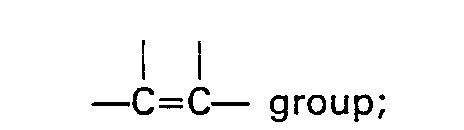
- (b) from 2 to 90 percent by weight of at least one polymer derived from such (3)(a) monomers;
- (c) from zero to 30 percent by weight of at least one polymer containing the group (CH2CCI=CHCH2)n, wherein n is an integer;
wherein (3)(b) is present as a partial polymerization product of (3)(a) or of (3)(a) in the presence of (3)(c); the mixture of (3)(a) and (3)(b) or of (3)(a), (3)(b) and (3)(c) being a syrup of polymer dissolved or dispersed in unpolymerized monomer, in which syrup the amount of (3)(b) derived from (3)(a) is in the range from 2 to 90 percent, based on the total weight of (3)(a), (3)(b) and (3)(c); - (a) from 10 to 98 percent by weight of at least one olefinically unsaturated monomeric compound having at least one
- (4) at least one polymeric material selected from the group consisting of polyvinyl alkyl ether, styrene-acrylonitrile resin, unsaturated polyester resin and mixtures thereof, the alkyl moiety of such ether containing from one to 8 carbon atoms;
- (5) at least one homopolymer or copolymer of at least one olefinically unsaturated monomer selected from the group consisting of styrene and alkyl or hydroxyalkyl esters of acrylic and methacrylic acid, said ester having one to 18 carbon atoms in the alkyl moiety;
- (6) at least one polymeric material having at least one terminal olefinically unsaturated group, said polymeric material being selected from the group consisting of, (1) at least one adduct of at least one ethylenically unsaturated monofunctional isocyanate and at least one polymeric containing one or more active hydrogen moieties selected from the group consisting of


- (7) mixtures of such polymeric materials;
- (C) at least one inorganic or organic compound of a metal ion, said metal ion having a standard reduction potential in the range from +0.9 to -0.5:
- (D) at least one organic sulfur-containing compound having at least one -SH group or having a tautomeric form containing at least one -SH group; and
- (E) at least one peroxygen compound selected from the group consisting of hydrogen peroxide, organic peroxyesters and organic hydroperoxides; and placing the mating surfaces in abutting relationship until the adhesive composition cures to effect bonding of said surfaces.
- Polymer-in-monomer syrups suitable for use in the present invention, compositionally as well as their preparation, are well-known in the art. Representative syrups, including precursor liquid monomer compounds containing at least one olefinically unsaturated group, and their preparation are disclosed in U.S.A. Patents Nos. 3,333,025; 3,725,504; and 3,873,640. Briefly, such syrups are conveniently prepared by de-aerating the starting mixture consisting essentially of at least one polymerizable liquid olefinically unsaturated compound and, when used, polymer containing the group (CH2-CCI=CHCH2)n, for a short period of about 40°C under vacuum and then heating the mixture to about 75°C under an inert gas atmosphere. A catalyst, for example, a free radical-generating catalyst such as benzoyl peroxide or azodiisobutyric acid dinitrile, is then added, preferably in the form of a solution. The quantity of catalyst added is such that it will be completely consumed when the desired viscosity is reached. After the reaction is completed, the polymer-in-monomer syrup is cooled. Preferably, the syrups have a viscosity in the range from about 500 to about 1,000,000 mPa - s at 20°C.
- Monomeric liquid olefinically unsaturated compounds suitable for use in the adhesive compositions of the invention for forming polymer-in-monomer syrups and as additional polymerizable materials are characterized by the presence of at least one
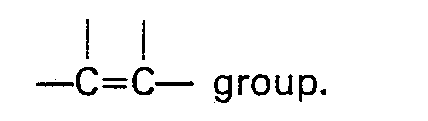
- Polymers containing the grouping (CH2-CCI=CHCH2)n, wherein n is an integer, are well-known in the art under the name neoprene, which is produced by the polymerization of 2-chloro-1,3-butadiene. Further elucidation would be superfluous.
- The isocyanate-functional prepolymers which are suitable for use in the practice of this invention are well-known. Typically, such prepolymers are adducts or condensation products of polyisocyanate compounds having at least 2 free isocyanate groups and monomeric or polymeric polyols having at least two hydroxy groups, including mixtures of such polyols. The reaction between the polyisocyanate and the polyols is effected employing an excess amount of polyisocyanate to ensure that the reaction product will contain at least 2 free, unreacted isocyanate groups.
- Polyols useful in preparing isocyanate-functional prepolymer used in the present invention preferably have an average molecular weight of 300 to 3,000. Suitable polyols include polyalkylene glycols such as polyethylene glycols; polyetherpolyols such as those prepared by addition polymerization of ethylene oxide and a polyol such as trimethylol propane in a ratio to provide unreacted hydroxyl groups in the product; organic hydroxylated elastomers exhibiting second order glass transition temperatures below about 5°C such as poly(butadiene-styrene) polyols and poly(butadiene) polyols; polyester polyols such as are prepared by polymerizing polyols, such as diethylene glycol, trimethylol propane or 1,4-butanediol, with polycarboxylic acids, such as phthalic, terephthalic, adipic, maleic or succinic acids, in a ratio to provide unreacted hydroxyl groups in the product; glyceride esters of hydroxylated fatty acids such as castor oil, glycerol monoricinoleate, blown linseed oil and blown soya oil; and polyesterpolyols such as are prepared by the polymerization of a lactone such as e caprolactone.
- Polyisocyanates which can be reacted with polyols to form isocyanate-functional prepolymers for use in the present invention can be any monomeric; that is, non-polymeric, isocyanate compound having at least 2 free isocyanate groups, including aliphatic, cycloaliphatic and aromatic compounds. Representative polyisocyanates include, without limitation thereto, 2,4-tolylene diisocyanate, 2,6-tolylene diisocyanate, 4,4'-diphenylmethane diisocyanate, m- and p-phenylene diisocyanate, polymethylene poly(phenyl . isocyanate), hexamethylene diisocyanate, 4,4'-methyfene-bis(cyclohexyf isocyanate), hexamethylene diisocyanate, 4,4'-methylene-bis(cyclohexyl isocyanate), isophorone diisocyanate, and other aliphatic cycloaliphatic and aromatic polyisocyanates, and including mixtures of such polyisocyanates. Currently, cycloaliphatic and aromatic polyisocyanates are preferred.
- Hydroxy-functional compounds which can be employed to introduce olefinic unsaturation into the isocyanate-functional prepolymer include, without limitation, hydroxyethyl acrylate, hydroxyethyl methacrylate, and allyl alcohol.
- The butadiene-based elastomeric polymeric materials which are suitable for use in the practice of this invention are also well-known and can be any elastomer derived from 1,3-butadiene or its halogenated analogs which has a glass transition temperature below ambient temperature and preferably not above about 5°C. Suitable elastomers include butadiene homopolymer, copolymers of butadiene with styrene, acrylonitrile and methacrylonitrile, and such homopolymers and copolymers modified by copolymerization therein of trace amounts (0.05 to 5 percent) of a functional comonomer, such as acrylic acid, methacrylic acid, maleic anhydride, fumaric acid, styrene and methyl methacrylate.
- Polyvinyl alkyl ethers suitable for use in the adhesive compositions which are described herein are well-known in the art. Such ethers will preferably contain one to 8, more preferably one to 4, carbon atoms in the alkyl moiety of said ether. Likewise, styreneacrylonitrile polymers which are suitable for use in the invention are well-known.
- The adducts of ethylenically unsaturated monofunctional isocyanates and saturated or unsaturated polymeric materials having one or more active hydrogen atom-containing groups selected from the group consisting of -OH, -NH2, -NH-, -SH and -COOH which are suitable for use in the practice of the invention are readily prepared by procedures well known in the art.
- Ethylenically unsaturated monofunctional isocyanates are known in the art. Methods of making such compounds, for example, by phosgenation of the corresponding amino alkyl methacrylate, are disclosed in U.S.A. patents 2,718,516 and 2,821,544, which describe isocyanate esters of acrylic methacrylic and crotonic acids. Isocyanatoethyl methacrylate is a currently preferred compound for forming such adducts. Substantially any saturated or unsaturated having at least two active hydrogen atom-containing group can be reacted with the monofunctional isocyanate esters of the unsaturated monocarboxylic acids. Representative polymeric materials include polyesters, polyethers, polytiols, polyamines and polyamides, with polyethers, such as poly(tetramethylene ether) glycol being currently preferred.
- Reactive monomers which have at least one terminal olefinically unsaturated group at least one reactive moiety selected from the group consisting of

- Elastomeric polymeric materials having second order glass transition temperatures below about 5°C can be effective in modifying room temperature flexibility of the adhesive bond. Especially preferred of such elastomers are polychloroprene rubber; polybutadiene rubber; butadiene copolymer rubbers such as acrylonitrile-butadiene, carboxylated acrylonitrile-butadiene and styrene-butadiene rubbers; polyacrylate rubbers such as poly(ethyl acrylate) and poly(ethyl acrylate-halogenated vinyl ether-acrylic acid) rubbers; and ethylene copolymers such as ethylene-vinyl acetate rubbers. Other elastomeric polymers having a glass transition temperature about 5°C can be employed since, other than the low glass transition temperature, there are no other limitations on the identity of the elastomer except for the specific requirements of the particular adhesive being formulated, such as suitable molecular weight, viscosity characteristics and compatibility with the other ingredients of the adhesive.
- Such elastomeric polymeric materials are particularly beneficial when incorporated in acrylic adhesives comprising at least one olefinically unsaturated polyurethane.
- Non-acrylic monomers which can be employed in the herein-described adhesive systems include styrene, chlorostyrene, vinyl styrene and vinyl acetate.
- Polymeric materials having an intrinsic viscosity of 0.1 to about 1.3 which are suitable for use in the present invention can be obtained by the polymerization of one or more acrylic and nonacrylic monomers, including mixtures thereof. Exemplary polymeric materials include poly(methyl methacrylate/n-butyl- acrylate/ethylacrylate) (90/5/5); poly(n-butyl methacrylate/isobutyl methacrylate) (50/50); poly(n-butyl methacrylate) and poly(ethyl methacrylate). Preferably, the viscosity will be about midway in the recited range.
- The use of polymeric materials having such intrinsic viscosities is especially beneficial in acrylic adhesives containing homopolymers and copolymers of 1,3-butadiene.
- Phosphorous-containing compounds which are suitable for use in the adhesive compositions of the invention are selected from the group consisting of derivatives of phosphinic acid, phosphonic acid and phosphoric acid having at least one -POH group and at least one organic moiety characterized by the presence of at least one olefinically unsaturated group, which is preferably terminally located. More particularly, such olefinically unsaturated organophosphorous compounds have the characteristic formula


- A currently preferred group of phosphorous-containing compound has the formula

- In the several formulae I-IV, the divalent organic radicals R and R2 can have a compound structure, that is, the radical can contain at least one, or a series of at. least 2, unsubstituted or substituted hydrocarbon group(s) containing or separated from each other by -0-, -S-, -COO-, -NH-, -NHCOO-, and (R70)p, wherein R' is an alkylene group containing from 2 to 7, preferably 2 to 4 carbon atoms, and p is an integer from 2 to 10. Preferably, the divalent radical is an alkylene radical having a straight chain or ring of from one to 22, preferably one to 9, carbon atoms in any non-repeating unit. It will be understood that divalent radicals having a compound structure would have 2 or more of such straight chains or rings. The divalent radicals can be saturated or unsaturated; aliphatic, cycloaliphatic or aromatic; and, with compound structures, can include mixtures thereof; and generally have from one to about 22 carbon atoms in each chain or ring of carbon atoms.
- In the several formulae I―III, representative X-R- and X-R2- radicals include, without limitation thereto, lower alkenyl, cyclohexenyl, hydroxy-lower alkenyl, halo-lower alkenyl, carboxy-lower alkenyl, lower alkyl, amino-lower alkyl, hydroxy-lower alkyl, mercapto-lower alkyl, alkoxy-lower alkyl, halo-lower alkyl, di-phosphonomethyl-amino-lower alkyl, phenyl-hydroxy-phosphonomethyl, aminophenyl-hydroxy-phosphonomethyl, halophehyl-hydroxy-phosphonomethyl, phenyl-amino-phosphonomethyl, halophenyl-amino-phosphonomethyl, hydroxy-phosphonomethyl, lower alkyl-hydroxy-phosphonomethyl, halo-lower alkyl-hydroxyphosphonomethyl and amino-lower alkyl-hydroxy-phosphonomethyl; the term "lower" referring to a group containing from one to 8, preferably one to 4 carbon atoms.
- Phosphorous-containing compounds having vinyl unsaturation are preferred over such compounds having allylic unsaturation, with monoesters of phosphinic, phosphonic and phosphoric acids having one unit of vinyl or allylic, especially vinyl, unsaturation presently being preferred. Representative phosphorous-containing compounds include, without limitation, phosphoric acid; 2-methacryloyloxyethyl phosphate; bis-(2-methacryloyloxyethyl) phosphate; 2-acryloyloxyethyl phosphate; bis-(2-acryloyloxyethyl) phosphate; methyl-(2-methacryloyloxyethyl) phosphate; ethyl methacryloyloxyethyl phosphate; methyl acryloyloxyethyl phosphate; ethyl acryloyloxyethyl phosphate; compounds of Formula IV wherein R3 is hydrogen or methyl and R4 is propyl, isobutyl, ethylhexyl, halopropyl, haloisobutyl or haloethylhexyl; vinyl phosphonic acid; cyclohexene-3-phosphonic acid; alpha-hydroxybutene-2-phosphonic acid; 1-hydroxy-1-phenylmethane-1,1-diphosphonic acid; 1-hydroxy-1-methyl-1-1-diphosphonic acid; 1-amino-1-phenyl-1,1-di-phosphonic acid; 3-amino-1-hydroxypropane-1,1-diphosphonic acid; amino-tris (methylenephosphonic acid); gammaaminopropylphosphonic acid; gamm4-glycidoxypropylphosphonic acid; phosphoric acid-mono-2-aminoethyl ester; allyl phosphonic acid; allyl phosphinic acid; β-methacryloyl-oxyethyl phosphinic acid; diallylphosphinic acid; bis(β-methacryloyl-oxyethyl) phosphinic acid and allyl methacryloyloxyethyl phosphinic acid.
- Peroxygen compounds which are suitable for use in the present invention are selected from the group consisting of hydrogen peroxide, organic peroxyesters of peroxymonocarboxylic acids, full and partial organic peroxyesters of monoperoxy dicarboxylic acids and diperoxydicarboxylic acids, full and partial organic peroxyesters of peroxymonocarbonic acids and peroxydicarbonic acids, full and partial esters of organic peroxymonocarbonic and peroxydicarbonic acids, and organic hydroperoxides. A partial but representative listing of organic peroxygen compounds which can be utilized in the practice of the invention include t-butyl peroxyacetate, t-butyl peroxybenzoate, t-butyl peroxy-(2-ethylhexanoate), t-butylperoxyisobutyrate, o,o-t-butyl o-isopropyl monoperoxy carbonate, t-butylperoxypivalate, 2,5-dimethyl-2,5-di(benzoyl-peroxy)hexane, t-butylperoxy(2-ethylbutyrate), 2,5-dimethyl-2,5di(2-ethyl- hexanoyl peroxy) hexane, di-t-butyl diperoxyphthalate, o,o-t-butyl o-hydrogenmonoperoxymaleate, di-sec- butyl peroxydicarbonate, diisopropylperoxy dicarbonate, dicyclohexyl peroxydicarbonate, t-butyl peroxy- crotonate, N,N-diethyl-t-butyl peroxycarbonate, N,N-diphenyl t-butyl peroxycarbonate, acetyl cyclohexylsulfonyl peroxide, cumene hydroperoxide, t-butyl hydroperoxide, methyl ethyl ketone hydroperoxide, and diisopropyl benzene hydroperoxide. The peroxygen compound is employed in an amount in the range from 0.05 to 10, preferably 0.2 to 3, most preferably 0.5 to 1.5, percent by weight, based on the total weight of the package into which it is incorporated.
- The organosulfur compounds which are employed in the practice of the invention must be mercaptan compounds which have at least one -SH group or which exist in a tautomeric form containing at least one -SH group. A partial but representative listing of such compounds include mercaptoacetic acid, mercaptosuccinic (malic) acid, 3-mercaptopropionic acid, thioglycerol, polyethylene glycol dimercaptoacetate, 2,2'-dimercaptodiethyi ether, thioglycerol, polyethylene glycol di-3-mercaptopropionate, polyethylene glycol dimercaptoacetate, dodecyl thioglycolate, methyl thioglycolate, 2-mercaptobenzo- thazole, diisopropyl benzothiazyl-2-sulfenamide, 2-thiohydantoin, 2-mercapto-6-nitrobenzothiazole, thiophenol, 2-benzimidazolethiol, 3,3'-thiopropionic acid, sodium thioglycolate, polyethylene dimercaptoacetate, isodecyl thioglycolate and mercapto silane. The organic thiols are employed in an amount in the range of 0.005 to 2, preferably 0.05 to 1, most preferably 0.1 to 0.5, percent by weight, based on the total weight of the pack into which they are incorporated.
- The third component for the oxidation-reduction couple curing agent is an inorganic or an organic compound containing at least one metal ion which has a standard reduction potential in the range from +0.9 to -0.5, preferably +0.8 to -0.3, and more preferably +0.35 to +0.01. The metal ion-containing compounds are interactive with the herein described peroxygen and organosulfur compounds to generate free radicals which are capable of initiating and propagating the polymerization of olefinically unsaturated monomers and polymers, and including graft polymerization and crosslinking between such unsaturated materials and polymers which are normally not considered further polymerizable. The metal ion can be in either the cationic or anionic moiety of the compound in which it is included. Preferred metal ions include copper, tin, cobalt, zinc and iron, with Cu2+, Cu(NH3)4 2+, V02+, Cu(Cl)4 -2, Fe3+, Co2+, Co(CI)4-2, Co(NH3)6 2+, Co(H2O)4 2+, cupric naphthenate, cupric acetate, cobalt acetate, cobalt acetylacetonate and stannic chloride being especially preferred. Currently, inorganic metal salts, especially the chloride or bromide salts are preferred where increased cure rate is desired. Reducing or totally eliminating the halogen compound increases the time required for cure, thus providing the formulator with a myriad of options with respect to cure rate. The metal ion-containing compounds are employed in an amount in the range from 0.005 to 1, preferably 0.01 to 0.5, most preferably 0.05 to 0.1, percent by weight, based on the weight of the pack into which they are incorporated. Halogen-containing compounds will be employed in the range from 0.005 to 0.5, preferably 0.01 to 0.25, most preferably 0.05 to 0.1, percent by weight, also based on the weight of the pack into which they are incorporated.
- It has also been discovered that the incorporation of hydroxyl containing materials, such as ethylene glycol, glycerine and the like in amounts less than 10, preferably less than 5, percent by weight, based on total weight of both packages, provides'a more lengthy pot life and a longer cure period. Water has also been found to be effective in increasing pot life and, in addition, improves storage stability of the compositions, when used in amounts not exceeding two percent by weight, based on total weight of the combined packages.
- The herein-described adhesive compositions are prepared by conventional methods, such as are disclosed in U.S.A. patents 3,832,774 and 3,890,407, both of which disclosures are incorporated herein by reference. Typically, the compositions are provided as two-part systems, with the sulfur compound and peroxygen compound being kept separate from the metal compound until prior to use. The adhesive systems are epsecially useful for bonding metal surfaces such as steel, aluminum and copper to a variety of substrates, including metals, fibers, glass, ceramics, wood, and the like, with litte, if any pretreatment of the metal surface prior to application of the primer or adhesive, as the case may be. Thus, bonding can be effected even to oily metal surfaces which are otherwise clean without an extensive pretreatment as is usually required with the vast majority of currently available primers and adhesives. Additionally, the adhesive systems of this invention provide effective bonding at room temperature, thus heat is not -equired either for applying the adhesive systems to the substrates or for curing. They can also be employed on porous substrates, unlike the anearobic adhesives which require the exclusion of air and thus cannot be used on surfaces containing air in their pores.
- The invention is illustrated by the following examples, wherein all parts, proportions and percentages are by weight unless otherwise indicated.
- Compositions were prepared according to the following formulations.

- The gel time was determined by dipping a glass stirring rod into the composition and noting the time at which the composition no longer flowed. The gel times are reported below.

- Adhesive compositions are prepared from the indicated ingredients. After thorough mixing, the gel times for each formulation was determined following the procedure of Example I. The gel times are reported in the Table.

- Two formulations are prepared as follows:

- Various sulfur compounds were added to the formulations I and II. Except for mercaptobenzothiazole which was added in an amount of 0.1 PBW, the sulfur compounds were added in an amount of 0.2 PBW. The gel times for each resulting mixture was determined following the procedure of Example I. The results are reported below.

-

- The following compositions were prepared by homogeneously blending the ingredients.
- Gel times for each composition were obtained following the procedure of Example I.


- The following data illustrate unsaturated monomers which are effectively utilized in the practice of the invention. The gel times are determined following the procedure of Example I. The base adhesive formulations are as follows:

- For base adhesive 5-1;
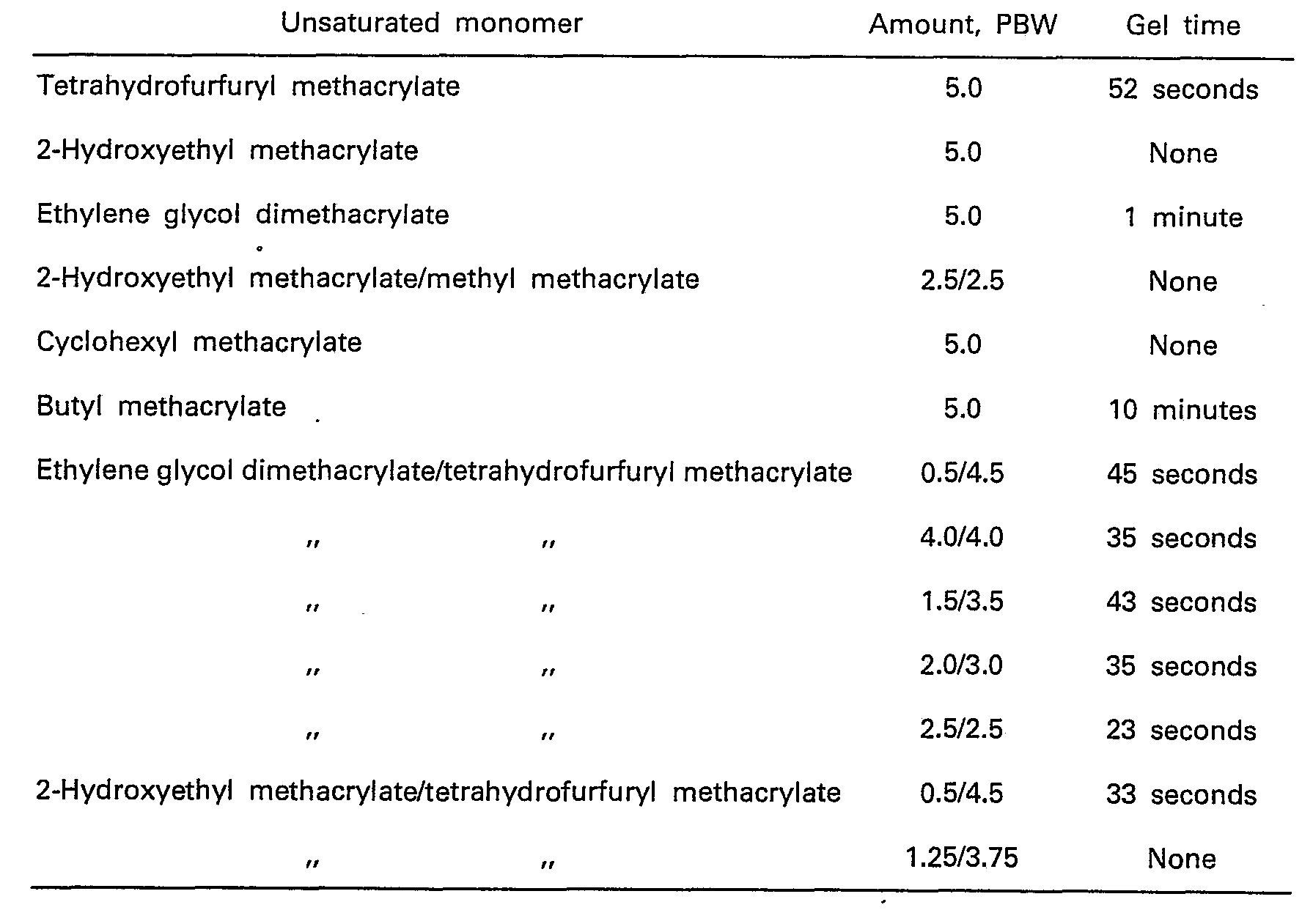
- This example illustrates the effect of metal ions.
- It should be noted that lead ion is not within the scope of the invention.

- The following data illustrate various polymeric materials which can be employed in the practice of the invention. The gel times are determined following the procedure of Example I. The base adhesive formulations are as follows:


- The following example illustrates the effect which the concentration of peroxygen compound has on cure rate.


- The following Example illustrates the effect of halogen and water concentration on cure rate.

- The following two-package adhesive is prepared:

- Equal weight amounts of Part A and Part B were combined by mixing Part B into Part A. After thorough mixing, the mixed composition was employed to bond various substrates, using a 0.5 in. overlap and a 10 mil glue line. The bonded assemblies were cured overnight. Peel strength of the bonded assemblies was obtained following the procedure of ASTM D1002-79. The data is reported in the following Table:

- The following example illustrates the effect which concentration of metal ion has on cure rate.


- The following example illustrates the effect which concentration of sulfur-containing compound has upon cure rates.


- This example illustrates the effect which compounds such as glycerine has upon cure rates.

- The following example illustrates the effect of peroxygen concentration on cure speed.


- The following data illustrate the use of hydroperoxide compounds as the only peroxygen compound in combination with a third compound and an organic or inorganic metal ion-containing compound.

- The following data illustrate the tolerance of the adhesive compositions of the invention. Using the adhesive of Example X, gel times of the mixed adhesives at different mix ratios were determined, following the procedure of Example I. The results are reported below:
-


- The following data demonstrate the effect of inhibitor concentration upon cure rate:

Claims (16)

wherein (3)(b) is present as a partial polymerization product of (3)(a) or of (3)(a) in the presence of (3)(c); the mixture of (3)(a) and (3)(b) or of (3)(a), (3)(b) and (3)(c) being a syrup of polymer dissolved or dispersed in unpolymerized monomer, in which syrup the amount of (3)(b) derived from (3)(a) is in the range from 2 to 90 percent, based on the total weight of (3)(a), (3)(b) and (3)(c);


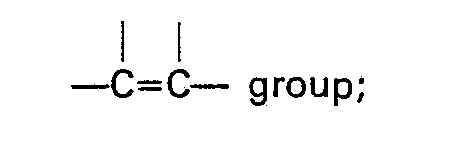
wherein (3)(b) is present as a partial polymerization product of (3)(a) or of (3)(a) in the presence of (3)(c); the mixture of (3)(a) and (3)(b) or of (3)(a), (3)(b) and (3)(c) being a syrup of polymer dissolved or dispersed in unpolymerized monomer, in which syrup the amount of (3)(b) derived from (3)(a) is in the range from 2 to 90 percent, based on the total weight of (3)(a), (3)(b) and (3)(c);


wherein the volume or weight, respectively, of said first package is substantially equal to the volume or weight, respectively, of said second package, at the time when said packages are intermixed.

wherein (3)(b) is present as a partial polymerization product of (3)(a) or of (3)(a) in the presence of (3)(c); the mixture of (3)(a) and (3)(b) or of (3)(a), (3)(b) and (3)(c) being a syrup of polymer dissolved or dispersed in unpolymerized monomer, in which syrup the amount of (3)(b) derived from (3)(a) is in the range from 2 to 90 percent, based on the total weight of (3)(a), (3)(b) and (3)(c);


Priority Applications (1)
| Application Number | Priority Date | Filing Date | Title |
|---|---|---|---|
| AT85301966T ATE34763T1 (en) | 1984-05-29 | 1985-03-21 | STRUCTURAL ADHESIVE COMPOSITIONS, THREE-COMPONENT REDOX CATALYST SYSTEMS AND THEIR USE FOR METAL SURFACES JOINING. |
Applications Claiming Priority (2)
| Application Number | Priority Date | Filing Date | Title |
|---|---|---|---|
| US61474884A | 1984-05-29 | 1984-05-29 | |
| US614748 | 1984-05-29 |
Publications (2)
| Publication Number | Publication Date |
|---|---|
| EP0167223A1 EP0167223A1 (en) | 1986-01-08 |
| EP0167223B1 true EP0167223B1 (en) | 1988-06-01 |
Family
ID=24462548
Family Applications (1)
| Application Number | Title | Priority Date | Filing Date |
|---|---|---|---|
| EP85301966A Expired EP0167223B1 (en) | 1984-05-29 | 1985-03-21 | Structural adhesive compositions, three component redox catalyst systems and their use in bonding metal surfaces together |
Country Status (11)
| Country | Link |
|---|---|
| EP (1) | EP0167223B1 (en) |
| JP (1) | JPS60258205A (en) |
| KR (1) | KR850008501A (en) |
| AT (1) | ATE34763T1 (en) |
| CA (1) | CA1231085A (en) |
| DE (1) | DE3518438A1 (en) |
| DK (1) | DK235985A (en) |
| FR (1) | FR2565595B1 (en) |
| GB (1) | GB2159525B (en) |
| NO (1) | NO851454L (en) |
| ZA (1) | ZA852098B (en) |
Families Citing this family (7)
| Publication number | Priority date | Publication date | Assignee | Title |
|---|---|---|---|---|
| US5391602A (en) * | 1993-11-30 | 1995-02-21 | National Starch And Chemical Investment Holding Corporation | Radiation-cured pressure sensitive adhesives |
| AU7838298A (en) * | 1998-06-12 | 1999-12-30 | Minnesota Mining And Manufacturing Company | Low odor polymerizable compositions useful for bonding low surface energy substrates |
| US6383655B1 (en) | 1998-06-12 | 2002-05-07 | 3M Innovative Properties Company | Low odor polymerizable compositions useful for bonding low surface energy substrates |
| US6812308B2 (en) | 2000-11-21 | 2004-11-02 | 3M Innovative Properties Company | Initiator systems and adhesive compositions made therewith |
| US6479602B1 (en) | 2000-03-15 | 2002-11-12 | 3M Innovative Properties | Polymerization initiator systems and bonding compositions comprising vinyl aromatic compounds |
| EP2981583B1 (en) | 2013-04-05 | 2020-06-24 | fischerwerke GmbH & Co. KG | Biogenic fluid non-reactive thinning agents in synthetic resin adhesives |
| CN106398552A (en) * | 2015-07-30 | 2017-02-15 | 电气化学工业株式会社 | Composition and adhesive composition |
Family Cites Families (20)
| Publication number | Priority date | Publication date | Assignee | Title |
|---|---|---|---|---|
| GB674144A (en) * | 1949-05-12 | 1952-06-18 | Phillips Petroleum Co | Improvements in or relating to process of producing polymers of high molecular weight |
| GB685855A (en) * | 1950-03-02 | 1953-01-14 | Turley & Williams Ltd | Improvements in and connected with gas burners |
| GB714868A (en) * | 1951-12-24 | 1954-09-01 | Dental Fillings Ltd | Improvements in or relating to polymerisation products |
| GB766562A (en) * | 1954-02-04 | 1957-01-23 | British Geon Ltd | Polymerisation process |
| BE537434A (en) * | 1954-05-07 | |||
| US2834760A (en) * | 1954-12-14 | 1958-05-13 | Polymer Corp | Redox type polymerization |
| GB829213A (en) * | 1956-02-09 | 1960-03-02 | Hercules Powder Co Ltd | Improvements in or relating to low temperature emulsion polymerization of unsaturated compounds |
| NL243459A (en) * | 1958-09-22 | |||
| NL261814A (en) * | 1960-03-03 | |||
| BE607559A (en) * | 1960-08-26 | |||
| US3084068A (en) * | 1960-11-08 | 1963-04-02 | Du Pont | Process for acrylic polymerizations |
| NL129659C (en) * | 1960-11-17 | |||
| BE620250A (en) * | 1961-07-17 | |||
| BE675019A (en) * | 1965-01-13 | 1966-07-12 | ||
| GB1170983A (en) * | 1967-08-04 | 1969-11-19 | Bp Chem Int Ltd | Process for the Production of Cured Products. |
| NL155270B (en) * | 1967-12-19 | 1977-12-15 | Chatillon Italiana Fibre | PROCESS FOR THE POLYMERIZATION IN THE MASS OF VINYL CHLORIDE, IF MIXED WITH AT LEAST ANOTHER COPOLYMERIZABLE MONOMER. |
| DE2046086C3 (en) * | 1970-09-18 | 1983-11-17 | Bayer Ag, 5090 Leverkusen | Process for the production of acrylonitrile copolymers |
| NL7609074A (en) * | 1976-08-16 | 1978-02-20 | Akzo Nv | PROCESS FOR PREPARING SBR RUBBERS. |
| US4223115A (en) * | 1978-04-24 | 1980-09-16 | Lord Corporation | Structural adhesive formulations |
| GB2060660B (en) * | 1979-10-18 | 1983-11-23 | Bostik Ltd | Adhesives containing pyrazoline activators |
-
1985
- 1985-03-19 CA CA000476884A patent/CA1231085A/en not_active Expired
- 1985-03-20 ZA ZA852098A patent/ZA852098B/en unknown
- 1985-03-21 GB GB08507298A patent/GB2159525B/en not_active Expired
- 1985-03-21 EP EP85301966A patent/EP0167223B1/en not_active Expired
- 1985-03-21 AT AT85301966T patent/ATE34763T1/en not_active IP Right Cessation
- 1985-04-11 NO NO851454A patent/NO851454L/en unknown
- 1985-04-24 JP JP60086622A patent/JPS60258205A/en active Pending
- 1985-05-22 DE DE19853518438 patent/DE3518438A1/en active Granted
- 1985-05-28 KR KR1019850003653A patent/KR850008501A/en not_active Withdrawn
- 1985-05-28 DK DK235985A patent/DK235985A/en not_active Application Discontinuation
- 1985-05-28 FR FR8507976A patent/FR2565595B1/en not_active Expired
Also Published As
| Publication number | Publication date |
|---|---|
| EP0167223A1 (en) | 1986-01-08 |
| GB8507298D0 (en) | 1985-05-01 |
| DE3518438C2 (en) | 1990-12-13 |
| ZA852098B (en) | 1986-01-29 |
| DK235985D0 (en) | 1985-05-28 |
| JPS60258205A (en) | 1985-12-20 |
| FR2565595A1 (en) | 1985-12-13 |
| DE3518438A1 (en) | 1985-12-05 |
| ATE34763T1 (en) | 1988-06-15 |
| KR850008501A (en) | 1985-12-18 |
| FR2565595B1 (en) | 1987-10-09 |
| GB2159525B (en) | 1988-03-02 |
| DK235985A (en) | 1985-11-30 |
| NO851454L (en) | 1985-12-02 |
| CA1231085A (en) | 1988-01-05 |
| GB2159525A (en) | 1985-12-04 |
Similar Documents
| Publication | Publication Date | Title |
|---|---|---|
| EP0270318B1 (en) | Modified structural adhesives | |
| US4467071A (en) | Epoxy modified structural adhesives having improved heat resistance | |
| US4452944A (en) | Structural adhesive formulations | |
| EP0278642B1 (en) | Structural adhesive compositions | |
| JPH039155B2 (en) | ||
| US5641834A (en) | Modified polyalkadiene-containing compositions | |
| AU737446B2 (en) | Additives for controlling cure rate of polymerizable composition | |
| US5096962A (en) | Acrylic adhesive compositions | |
| EP0167223A1 (en) | Structural adhesive compositions, three component redox catalyst systems and their use in bonding metal surfaces together | |
| EP0220555A2 (en) | Structural adhesive formulations | |
| EP0866809B1 (en) | Modified polyalkadiene-containing compositions | |
| EP0563894B1 (en) | Two-part room temperature curable composition | |
| EP1190011A2 (en) | Adhesive formulations | |
| KR820001836B1 (en) | Structural adhesive formulations | |
| JPS62109875A (en) | Adhesive composition | |
| CA2234762A1 (en) | Modified polyalkadiene-containing compositions |
Legal Events
| Date | Code | Title | Description |
|---|---|---|---|
| PUAI | Public reference made under article 153(3) epc to a published international application that has entered the european phase |
Free format text: ORIGINAL CODE: 0009012 |
|
| AK | Designated contracting states |
Designated state(s): AT BE CH IT LI NL SE |
|
| 17P | Request for examination filed |
Effective date: 19860428 |
|
| 17Q | First examination report despatched |
Effective date: 19861120 |
|
| GRAA | (expected) grant |
Free format text: ORIGINAL CODE: 0009210 |
|
| AK | Designated contracting states |
Kind code of ref document: B1 Designated state(s): AT BE CH IT LI NL SE |
|
| REF | Corresponds to: |
Ref document number: 34763 Country of ref document: AT Date of ref document: 19880615 Kind code of ref document: T |
|
| ITF | It: translation for a ep patent filed | ||
| PLBE | No opposition filed within time limit |
Free format text: ORIGINAL CODE: 0009261 |
|
| STAA | Information on the status of an ep patent application or granted ep patent |
Free format text: STATUS: NO OPPOSITION FILED WITHIN TIME LIMIT |
|
| 26N | No opposition filed | ||
| ITTA | It: last paid annual fee | ||
| PGFP | Annual fee paid to national office [announced via postgrant information from national office to epo] |
Ref country code: AT Payment date: 19910221 Year of fee payment: 7 |
|
| PGFP | Annual fee paid to national office [announced via postgrant information from national office to epo] |
Ref country code: SE Payment date: 19910222 Year of fee payment: 7 |
|
| PGFP | Annual fee paid to national office [announced via postgrant information from national office to epo] |
Ref country code: BE Payment date: 19910226 Year of fee payment: 7 |
|
| PGFP | Annual fee paid to national office [announced via postgrant information from national office to epo] |
Ref country code: CH Payment date: 19910311 Year of fee payment: 7 |
|
| PGFP | Annual fee paid to national office [announced via postgrant information from national office to epo] |
Ref country code: NL Payment date: 19910331 Year of fee payment: 7 |
|
| PG25 | Lapsed in a contracting state [announced via postgrant information from national office to epo] |
Ref country code: AT Effective date: 19920321 |
|
| PG25 | Lapsed in a contracting state [announced via postgrant information from national office to epo] |
Ref country code: SE Effective date: 19920322 |
|
| PG25 | Lapsed in a contracting state [announced via postgrant information from national office to epo] |
Ref country code: LI Effective date: 19920331 Ref country code: CH Effective date: 19920331 Ref country code: BE Effective date: 19920331 |
|
| BERE | Be: lapsed |
Owner name: LORD CORP. Effective date: 19920331 |
|
| PG25 | Lapsed in a contracting state [announced via postgrant information from national office to epo] |
Ref country code: NL Effective date: 19921001 |
|
| NLV4 | Nl: lapsed or anulled due to non-payment of the annual fee | ||
| REG | Reference to a national code |
Ref country code: CH Ref legal event code: PL |
|
| EUG | Se: european patent has lapsed |
Ref document number: 85301966.9 Effective date: 19921005 |