EP0164395B1 - Ceramic compositions - Google Patents
Ceramic compositions Download PDFInfo
- Publication number
- EP0164395B1 EP0164395B1 EP85900264A EP85900264A EP0164395B1 EP 0164395 B1 EP0164395 B1 EP 0164395B1 EP 85900264 A EP85900264 A EP 85900264A EP 85900264 A EP85900264 A EP 85900264A EP 0164395 B1 EP0164395 B1 EP 0164395B1
- Authority
- EP
- European Patent Office
- Prior art keywords
- hfo2
- 2sio2
- ceramic composition
- solid solution
- matrix phase
- Prior art date
- Legal status (The legal status is an assumption and is not a legal conclusion. Google has not performed a legal analysis and makes no representation as to the accuracy of the status listed.)
- Expired
Links
Images












Classifications
-
- C—CHEMISTRY; METALLURGY
- C04—CEMENTS; CONCRETE; ARTIFICIAL STONE; CERAMICS; REFRACTORIES
- C04B—LIME, MAGNESIA; SLAG; CEMENTS; COMPOSITIONS THEREOF, e.g. MORTARS, CONCRETE OR LIKE BUILDING MATERIALS; ARTIFICIAL STONE; CERAMICS; REFRACTORIES; TREATMENT OF NATURAL STONE
- C04B35/00—Shaped ceramic products characterised by their composition; Ceramics compositions; Processing powders of inorganic compounds preparatory to the manufacturing of ceramic products
- C04B35/622—Forming processes; Processing powders of inorganic compounds preparatory to the manufacturing of ceramic products
- C04B35/64—Burning or sintering processes
- C04B35/645—Pressure sintering
-
- C—CHEMISTRY; METALLURGY
- C04—CEMENTS; CONCRETE; ARTIFICIAL STONE; CERAMICS; REFRACTORIES
- C04B—LIME, MAGNESIA; SLAG; CEMENTS; COMPOSITIONS THEREOF, e.g. MORTARS, CONCRETE OR LIKE BUILDING MATERIALS; ARTIFICIAL STONE; CERAMICS; REFRACTORIES; TREATMENT OF NATURAL STONE
- C04B35/00—Shaped ceramic products characterised by their composition; Ceramics compositions; Processing powders of inorganic compounds preparatory to the manufacturing of ceramic products
- C04B35/01—Shaped ceramic products characterised by their composition; Ceramics compositions; Processing powders of inorganic compounds preparatory to the manufacturing of ceramic products based on oxide ceramics
- C04B35/10—Shaped ceramic products characterised by their composition; Ceramics compositions; Processing powders of inorganic compounds preparatory to the manufacturing of ceramic products based on oxide ceramics based on aluminium oxide
-
- C—CHEMISTRY; METALLURGY
- C04—CEMENTS; CONCRETE; ARTIFICIAL STONE; CERAMICS; REFRACTORIES
- C04B—LIME, MAGNESIA; SLAG; CEMENTS; COMPOSITIONS THEREOF, e.g. MORTARS, CONCRETE OR LIKE BUILDING MATERIALS; ARTIFICIAL STONE; CERAMICS; REFRACTORIES; TREATMENT OF NATURAL STONE
- C04B35/00—Shaped ceramic products characterised by their composition; Ceramics compositions; Processing powders of inorganic compounds preparatory to the manufacturing of ceramic products
- C04B35/01—Shaped ceramic products characterised by their composition; Ceramics compositions; Processing powders of inorganic compounds preparatory to the manufacturing of ceramic products based on oxide ceramics
- C04B35/10—Shaped ceramic products characterised by their composition; Ceramics compositions; Processing powders of inorganic compounds preparatory to the manufacturing of ceramic products based on oxide ceramics based on aluminium oxide
- C04B35/111—Fine ceramics
- C04B35/117—Composites
- C04B35/119—Composites with zirconium oxide
-
- C—CHEMISTRY; METALLURGY
- C04—CEMENTS; CONCRETE; ARTIFICIAL STONE; CERAMICS; REFRACTORIES
- C04B—LIME, MAGNESIA; SLAG; CEMENTS; COMPOSITIONS THEREOF, e.g. MORTARS, CONCRETE OR LIKE BUILDING MATERIALS; ARTIFICIAL STONE; CERAMICS; REFRACTORIES; TREATMENT OF NATURAL STONE
- C04B35/00—Shaped ceramic products characterised by their composition; Ceramics compositions; Processing powders of inorganic compounds preparatory to the manufacturing of ceramic products
- C04B35/01—Shaped ceramic products characterised by their composition; Ceramics compositions; Processing powders of inorganic compounds preparatory to the manufacturing of ceramic products based on oxide ceramics
- C04B35/16—Shaped ceramic products characterised by their composition; Ceramics compositions; Processing powders of inorganic compounds preparatory to the manufacturing of ceramic products based on oxide ceramics based on silicates other than clay
- C04B35/18—Shaped ceramic products characterised by their composition; Ceramics compositions; Processing powders of inorganic compounds preparatory to the manufacturing of ceramic products based on oxide ceramics based on silicates other than clay rich in aluminium oxide
- C04B35/185—Mullite 3Al2O3-2SiO2
-
- F—MECHANICAL ENGINEERING; LIGHTING; HEATING; WEAPONS; BLASTING
- F02—COMBUSTION ENGINES; HOT-GAS OR COMBUSTION-PRODUCT ENGINE PLANTS
- F02B—INTERNAL-COMBUSTION PISTON ENGINES; COMBUSTION ENGINES IN GENERAL
- F02B3/00—Engines characterised by air compression and subsequent fuel addition
- F02B3/06—Engines characterised by air compression and subsequent fuel addition with compression ignition
Definitions
- This invention relates to a high strength, high toughness and low thermal conductivity ceramic composition. More specifically, this invention relates to a ceramic composite of finely divided ZrO2-HfO2 solid solution particles dispersed in a mixture of Al2O3-Cr2O3 solid solution.
- the ideal ceramic composition used as a lining material should possess and exhibit high strength, high toughness and very low thermal conductivity at ultrahigh combustion temperatures as well as high resistance to thermal shock, wear and corrosion.
- ceramics are generally known for their high temperature strength, heat resistance and high temperature thermal insulation characteristics, they are also known as being extremely brittle. In general, to overstress a ceramic part leads to disintegration of the ceramic composition.
- zirconium dioxide exists in three allotropic forms; monoclinic, tetragonal and cubic and that there is a large volume expansion during the transition from monoclinic to tetragonal.
- zirconium dioxide exists in three allotropic forms; monoclinic, tetragonal and cubic and that there is a large volume expansion during the transition from monoclinic to tetragonal.
- lime stabilized zirconia is viewed as creating a multiphase material having a fine-scale precipitate of monoclinic zirconia in a stabilized cubic matrix which in turn results in enhanced strength. More recently, an even more powerful strengthening mechanism viewed as involving a dispersion of a metastable tetragonal zirconia in cubic zirconia has been suggested. In this more recent development, the martensitic transformation (fast and diffusionless) between monoclinic and tetragonal phases is partially alleviated by inducing and creating tetragonal zirconia in sintered bodies or dormains of a resulting time-stabilized zirconia.
- transformation stabilizing ceramic mechanisms and their underlying rationales may be questionable and although their respective effects on high temperature properties of the resulting transformation toughened ceramics are encouraging, the breadth of applicability of these general principles to the field of ceramics generally and the extent to which the properties can be improved is still not well defined or understood.
- transformation toughened ceramics and ceramic coatings in specific pragmatic applications (e.g. light diesel engines and/or ceramic engines) still remains uncertain.
- a ceramic composition comprising:
- the improved ceramic compositions according to the present invention are viewed as transformation toughened ceramics wherein a fine dispersed ZrO2-HfO2 solid solution is present in either a chromium alumina or chromium mullite solid solution matrix wherein the HfO2 and Cr2O3 content of the respective solid solutions can be selected to optimize the balance of the high temperature properties.
- the mole fraction of Cr2O3 is preferably from 0.02 (2 mole %) to 0.3 (30 mole %) and the mole fraction of HFO2 is preferably from 0.1 (10 mole %) to 0.5 (50 mole %) with 20 mole percent Cr2O3 and 10 to 20 mole percent HfO2 representing a particularly preferred combination.
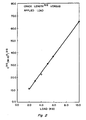
- FIGURE 1 is a typical plot of the indentation diagonal squared, a2, versus the applied load, P, used to evaluate the hardness, H v , of a ceramic composition according to the present invention.
- FIGURE 2 is a typical plot of the crack length of the three halves power, c 3/2 , versus the applied load, P, used to valuate the fracture toughness, K IC , of a ceramic composition according to the present invention.
- FIGURE 3 is a typical linear plot of the crack length to the three halves power, c 3/2 , versus the indentation diagonal squared, a2, characteristic of a ceramic composition according to the present invention.
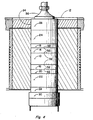
- FIGURE 4 is a cross sectional view of a thermal conductivity specimen cell used to measure high temperature thermal conductivity of ceramic composition according to the present invention.
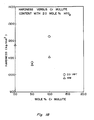
- FIGURES 5 through 12 illustrate experimental data plots using identation test data measured for the ((1-x)Al2O3 ⁇ xCr2O3)-15 vol.((1-y)ZrO2 ⁇ yHfO2) ceramic compositions according to the present invention.
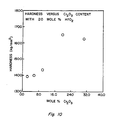
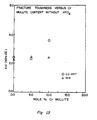
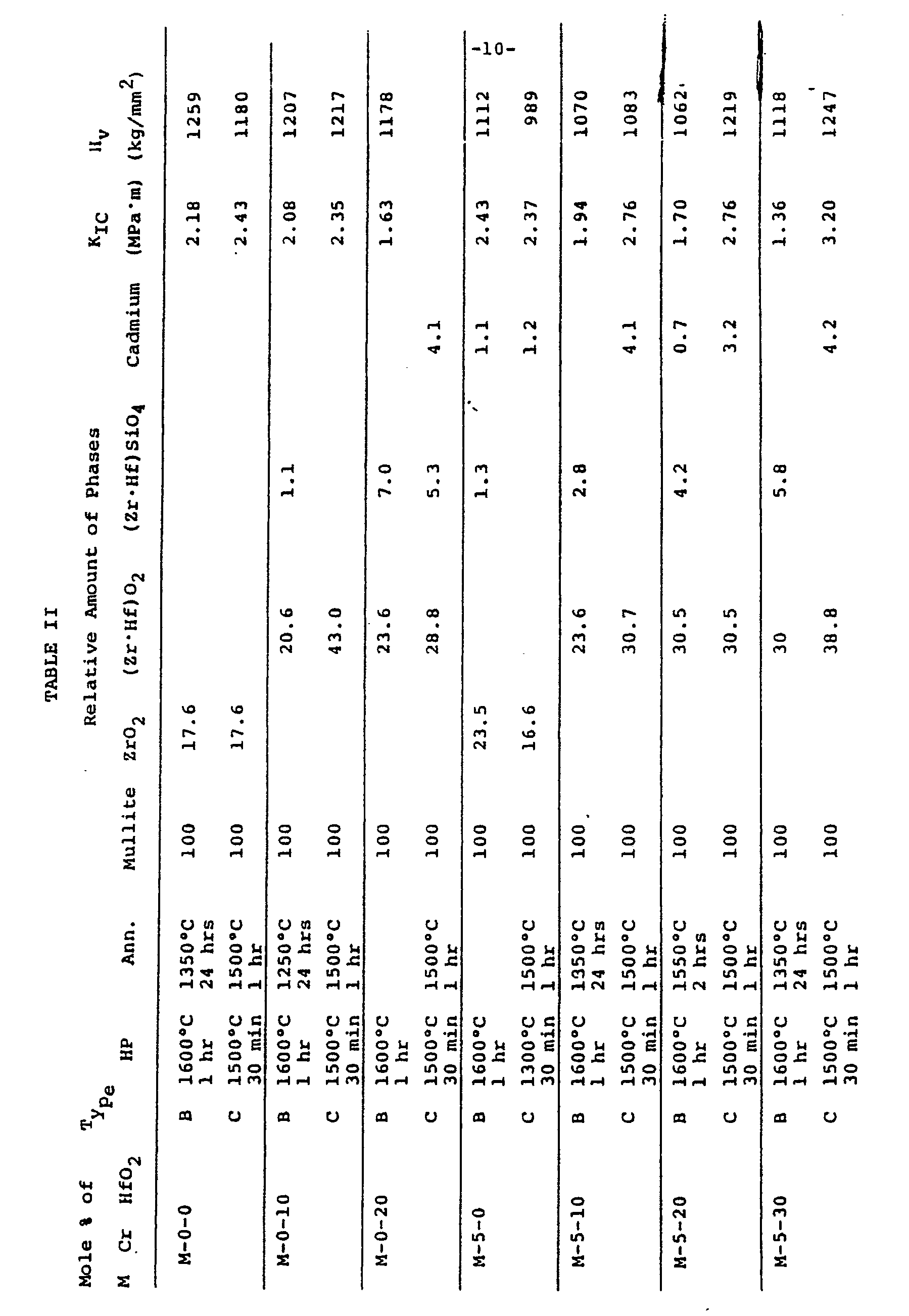
- FIGURES 13 through 18 illustrate experimental data plots using indentation test data measured for the ((1-x)3Al2O3 ⁇ 2SiO2 + x[3Cr2O3 ⁇ 2SiO2])-((1-y)ZrO2 ⁇ yHfO2) ceramic compositions according to the present invention.
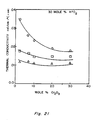
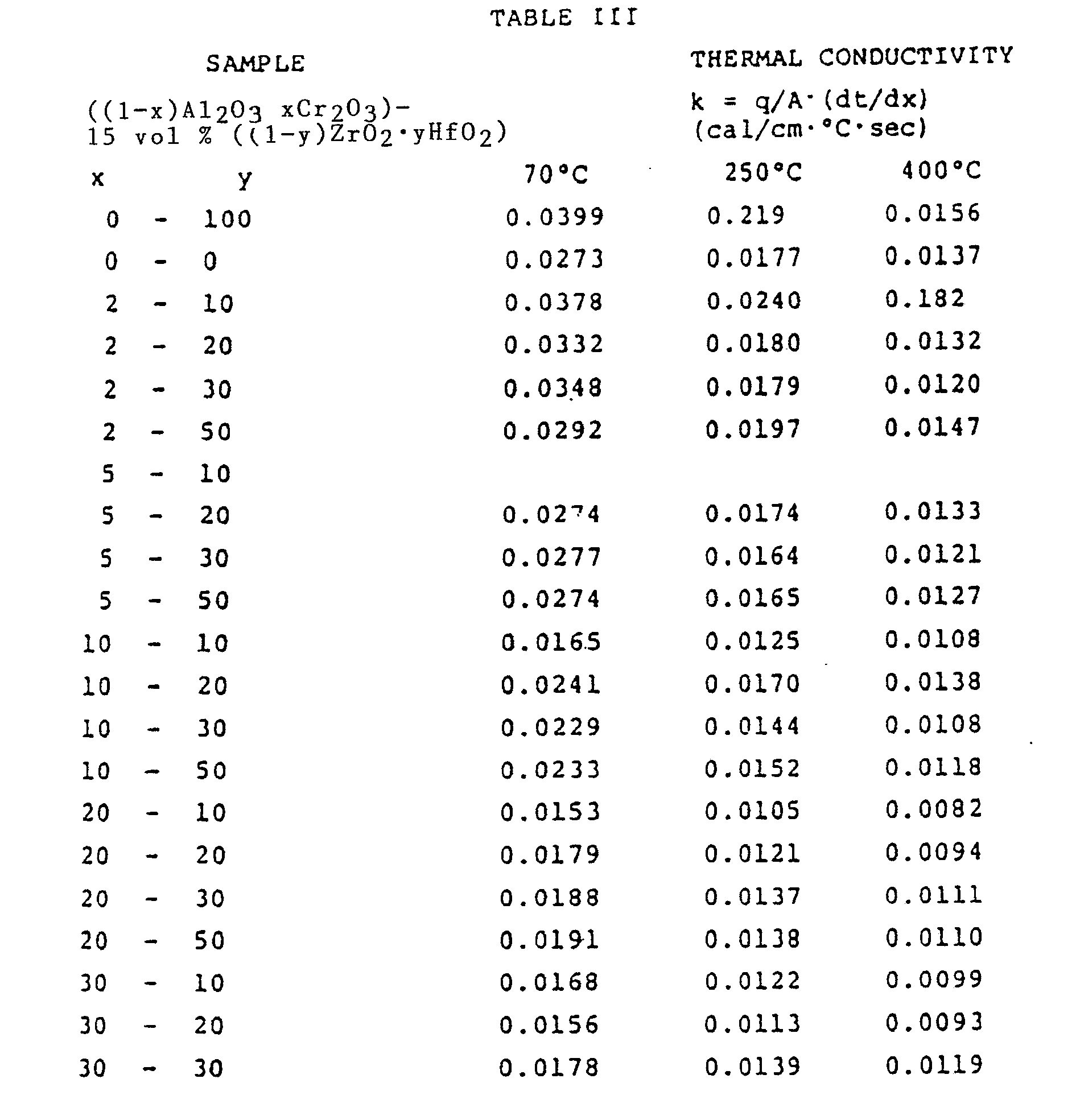
- FIGURES 19 through 23 illustrate experimental data plots using thermal conductivity data measured for compositions of Figures 5 through 12.
- novel transformation toughened ceramic compositions according to the present invention how they are prepared and the pragmatic significance of their high temperature properties can perhaps be best explained and understood by reference to a series of compositions characteristic of the alumina system and the mullite system.
- the particular alumina system of interest is the ceramic compositions having the continuous matrix phase of(1-x)Al2O3 ⁇ Cr2O3 solid solution and a dispersed phase within this continuous matrix phase of finely divided (1-y)ZrO2 ⁇ yHfO2 solid solution particles.
- the x and y represent the mole fraction or mole percent of Cr2O3 relative to Al2O3 and mole fraction or mole percent of HfO2 relative to ZrO2 in the respective solid solutions.
- the mullite system of interest is the ceramic compositions having a continuous matrix phase (1-x)3Al2O3 ⁇ 2SiO2 + x[3Cr2O3 ⁇ 2SiO2] and a finely dispersed phase of (1-y)ZrO2 ⁇ yHfO2 where x and y again represent the mole fraction or mole percent of the 3Cr2O3 ⁇ 2SiO2 and HfO2, respectively.
- the mole fraction or the mole percent refers to the mole fraction of the second compnent of a two component system wherein it is to be understood that the mole fraction (mole %) of the first component plus the x or y sums to unity; e.g., ZrO2 ⁇ yHfO2 means (1-y) ZrO2 ⁇ yHfO2.
- compositions in the alumina system were prepared.
- the continuous matrix phase, (1-x)Al2O3 ⁇ xCr2O3 was present in 85 percent by volume and the dispersed phase, ZrO2 ⁇ yHfO2, was present in 15 percent by volume; i.e. ((1-x)Al2O3 ⁇ xCr2O3) plus 15 vol. % (ZrO2 ⁇ yHfO2).
- the continuous matrix phase 3Al2O3 ⁇ 2SiO2 + x[3Cr2O3 ⁇ SiO2] was present as the major phase and the dispersed phase, ZrO2 ⁇ yHfO2, was present as the minor phase.
- the relative mole fractions of both the chromium oxide component and the hafnium oxide component were varied such as to characterize a broad relative range of concentrations of each respective component.
- the twenty-two specimens were distributed as illustrated in TABLE I wherein two of the samples involved either no HfO2 or no ZrO2 (controls) and the remaining twenty involved compositions with all four oxides.
- the x and y (mole fractions) of the mullite samples were intentionally distributed over a broad range of compositions with four additional specimens less one component being included as controls (as explained later in TABLE II).
- Specimens representative of both the alumina and mullite composition were prepared by hot pressing of mixtures of pre-solutionized powders. Hardness and fracture toughness were determined by the microhardness indentation method. Thermal conductivity of the respective specimens was determined by comparison with known standards. The following examples illustrate the preparation and composition of the specimens employed in the high temperature property evaluation.
- compositions specified in TABLE I were prepared by adding 85 parts by volume of the (1-x)Al2O3 ⁇ xCr2O3 solutionized powder and 15 parts by volume of the (1-y)ZrO2 ⁇ yHfO2 solutionized powder and then ball milling the mixture for 43 hours.
- Specimens for microindentation tests were hot pressed at 1600°C for one hour in boron nitride coated graphite dyes under a pressure of 30 MN/m2. After hot pressing, the samples were then oxidized in air at 1350°C for two hours.
- Specimens for thermal conductivity measurements were hot pressed at 1600°C for one hour under a pressure of 15 MN/m2. In both cases, full density was achieved.
- compositions and four controls as specified in TABLE II were prepared.
- Half of the compositions (type B in TABLE II) were prepared by a physical mixing or blending technique analogous to the process described in EXAMPLE I.
- the other half of the compositions were prepared by a co-precipitation technique (type C in TABLE II).
- Appropirate stoichiometric amounts of aluminum hydroxide, silicic acid and chromic acid were used as starting materials for the acid/base neutralization reaction used to prepare the mullite solid solutions.
- Oxide powders were used to prepare the ZrO2-HfO2 solid solutions, again in a manner described in EXAMPLE I. Weighed powders were mixed in proportions corresponding to TABLE II and ball milled for seventy-two hours. In the co-precipitated compositions, the slurries corresponding to the compositional properties of TABLE II were dried and hot pressed at 1550°C for 30 minutes at a pressure of 30 MN/m2. The hot pressing (HP) and the annealing (Ann.) of the specimens was otherwise as specified in TABLE II.
- the thermal conductivity measurements of compositions according to the present invention were performed by a comparative method.
- the method involved the use of a commercially available comparative thermal conductivity instrument manufactured by Dynatech Corporation (Model TCFCM).
- the comparative measurement involved placing test specimen 10 to be measured within the Model TCFCM 12 such that it is stacked between a top reference standard specimen 14 and a bottom reference standard 16.
- the stack of specimens is sandwiched between an upper surface plate 18 and a lower surface plate 20 which in turn rest on auxiliary heater 22 and is capped by a main heater 24.
- the top heater 24 in turn is covered by insulation, while the auxiliary heater 22 rests on a spacer 28 and heat sink 30.
- a plurality of thermocouples 32 are stategically positioned within the sample cavity 34 at critical interfaces, such as to make temperature measurements while pressure pad 36 compresses the stack of specimens.
- Figures 5 through 12 graphically present and summarize the results of the indentation tests on the alumina system compositions of EXAMPLE I as specifically set out in TABLE III.
- the twenty-two alumina compositions measured contained about 2 to about 30 mole percent Cr2O3 in the alumina/chromium solid solution matrix and from 0 to about 50 mole percent HfO2 in the zirconia/hafnium dioxide dispersed solid solution particles.
- the measured fracture toughness generally decreased with increasing HfO2 content at constant Cr2O3 content. This may be attributed to the decrease in the critical particle size of the tetragonal-monoclinic phase transition with increasing HfO2 content.
- FIGS 9 through 12 and TABLE III illustrate that for constant HfO2 contents of 10, 20 and 50 mole percent there appears to be a shift in the peak of the fracture toughness, K IC , versus Cr2O3 content curve.
- the peaks appear at 10, 20 and 30 mole percent Cr2O3 content, respectively.
- the fracture toughness continually decreased with increasing Cr2O3 content with the effect of the HfO2 content on the hardness being less discernible. Generally, the hardness stayed fairly constnt with increasing HfO2 content and constant Cr2O3 content.
- the average particle size for the dispersed ZrO2-HfO2 phase in most of the above specimens was of the order of 5 ⁇ m. This is felt to be too large to effectively retain the metastable tetragonal phase which, as previously indicated, mechanistically is thought to produce an increase in fracture toughness due to a stress-induced phase transformation of even greater significance than the originally observed phenomena associated with PSZ.
- the time-stabilized zirconia and the associated high energy absorbing tetragonal to monoclinic transition beneficial effects may not be fully realized (a feature which from a particle size analysis should be kept in mind when evaluating the coprecipitation versus ball milled specimens of EXAMPLE II).
- E constant modulus value
- the transformation toughened ceramic alloys involving twenty percent Cr2O3-10% HfO2 and/or 20% Cr2O3-20% HfO2 having a relatively high Cr2O3 content should exhibit significantly increased hardness and modulus.
- high HfO2 content e.g. 50 mole % should significantly increase the transformation temperature and thus, increase the potential for transformation toughening.
- the critical particle size for transformation is preferably decreased. To achieve a reasonable increase in the toughening and keep the critical particle size within pragmatic limits, intermediate values of HfO2 (e-g., about 10 to about 20 mole % ) in the dispersed solid solution phase are preferred.
- Figures 13 through 18 graphically display and summarize the results of the indentation tests on the mullite system of EXAMPLE II as specifically found in the far right columns of data of TABLE II. Again, the figures illustrate and suggest certain general trends in the data. For example, Figures 13 through 15 suggest that for the co-precipitated samples, keeping HfO2 constant and increasing the Cr mullite content, results in an increase in the fracture toughness; while, the effect of a change in the HfO2 content on fracture toughness is more obscure. Similarly, for mechanically mixed samples, an increase in HfO2 content generally results in a decrease in fracture toughness at constant Cr mullite content. With no HfO2 the fracture toughness remains constant while increasing the Cr mullite content. In all cases except one, for the same composition, the fracture toughness of the coprecipitated samples was greater than the fracture toughness of the mechanically mixed samples. This may be due to the difference in hot pressing conditions and/or subsequent particle size and distribution.
- Figures 16 through 18 indicate that the hardness of the co-precipitated samples increased with increasing HfO2 content with 0 percent and 5 percent Cr mullite. The hardness stayed relatively constant with increasing HfO2 content with 10 percent mullite. For the mechanically mixed specimens, the hardness generally decreased with increasing HfO2 content. For seven of the ten compositions the hardness of the coprecipitated samples were greater than the corresponding values of the mechanically mixed samples. Thus, the coprecipitation method of sample preparation appears to enhance both fracture toughness and hardness simultaneously.
- the thermal conductivity of the twenty-two compositions in the alumina system,((1-x)Al2O3 ⁇ xCr2O3)-((1-y)ZrO2 ⁇ yHfO2), prepared in EXAMPLE I were measured at three different temperatures in the previously described thermal conductivity instrument illustrated in Figure 4.
- the specimens for these measurements were hot pressed cylinders 3 centimeters in diameter and 2 centimeters in height. Both top and bottom surfaces were lapped with 15 ⁇ m diamond disk.
- the results of the thermal conductivity measurements expressed in cal/cm ⁇ °C ⁇ sec at the three respective temperatures are given in TABLE III.
- sample notations are expressed in terms of the x and y of the above alumina formula and represent the relative mole percent of the Cr2O3 in the matrix phase and the HfO2 in the dispersed phase.
- the data are also plotted as thermal conductivity versus Cr2O3 content at various HfO2 contents in Figures 19 through 22. As indicated in these figures, the curves can be extrapolated back to zero percent CrO2 and no HfO2. From the extrapolation, it can be concluded that pure ZrO2 dispersed in a pure Al2O3 matrix should have a thermal conductivity value of about 0.038 cal/cm ⁇ °C ⁇ sec.
- compositions of the present invention are advantageously employed as transformation toughened ceramics at high temperatures in application that require a balance of physical, chemical and mechanical properties.
- the compositions are useful in that the minor constituents can be altered to take advantage of the specific enhancement of critical properties such as hardness, fracture toughness and low thermal conductivity (as demonstrated in the presented test data) without significantly sacrificing the known corrosion, wear and high temperature stability of the major ceramic constituent.
- the present invention is to be viewed as being directed broadly to a class of novel ceramic compositions wherein the Cr2O3 content in the matrix phase and the HfO2 in the zirconia dispersed phase can varied to achieve the improvement in the critical properties.
- this novel concept is envisioned as being applicable and beneficial at various relative proportions of disperse phase to host matrix phase.
Landscapes
- Chemical & Material Sciences (AREA)
- Engineering & Computer Science (AREA)
- Ceramic Engineering (AREA)
- Manufacturing & Machinery (AREA)
- Materials Engineering (AREA)
- Structural Engineering (AREA)
- Organic Chemistry (AREA)
- Inorganic Chemistry (AREA)
- Composite Materials (AREA)
- Compositions Of Oxide Ceramics (AREA)
Abstract
Description
- This invention relates to a high strength, high toughness and low thermal conductivity ceramic composition. More specifically, this invention relates to a ceramic composite of finely divided ZrO₂-HfO₂ solid solution particles dispersed in a mixture of Al₂O₃-Cr₂O₃ solid solution.
- It is well known in the internal combustion engine art that an increase in temperature in the combustion chamber and a minimization of the associated heat loss during combustion will theoretically result in increased efficiency of the engine. This in turn will lead to improved performance and economy. Thus, the so-called adiabatic (no heat loss) ceramic engine, high temperature ceramic-based turbine and ceramic recuperators (heat exchangers) are well known and publicly acknowledged as contemporary research and development objectives (for example, see "The Coming Age of Ceramic Engines", March 1982, Popular Science, p 64). However, at these higher temperatures, the conventional ceramic materials employed in constructing such devices are inadequate in one or more critical properties.
- Thus, in the case of ceramic lined diesel engines and similar applications, the ideal ceramic composition used as a lining material should possess and exhibit high strength, high toughness and very low thermal conductivity at ultrahigh combustion temperatures as well as high resistance to thermal shock, wear and corrosion. Although ceramics are generally known for their high temperature strength, heat resistance and high temperature thermal insulation characteristics, they are also known as being extremely brittle. In general, to overstress a ceramic part leads to disintegration of the ceramic composition.
- Although contemporary applications involving calcium and yttrium stablized zirconia are reported to result in improved strength, toughness and thermal conductivity, it has also been reported that such partially stabilized zirconia (PSZ) deteriorates rapidly at temperatures below engine operating temperatures. Furthermore, the use of titanium alloys as found in U. S. patent 3,152,523; the silicon nitride, lithium aluminium silicate, fused silica, silicon carbide, sintered silicon carbide, reaction sintered silicon carbide and reaction bonded silicon nitride ceramics as proposed in U. S. patent 4,242,948; and the cordierite, beta spodumene-mullite and fused silica-clay of U. S. patent 4,245,611 are felt to be deficient as ceramic compositions for the adiabatic engine in one or more of the above critical properties.
- More specifically, it is generally known that zirconium dioxide (zirconia) exists in three allotropic forms; monoclinic, tetragonal and cubic and that there is a large volume expansion during the transition from monoclinic to tetragonal. Further, it has been historically accepted that because of this disruptive phase transition, the refractory properties of zirconia cannot be used. However, recent developments relating to suppressing or disrupting the deleterious effects of the phase transition have been discovered. For example, in the so-called partially stabilized zirconia (PSZ) the addition of metal oxide (e.g. lime stabilized zirconia) is viewed as creating a multiphase material having a fine-scale precipitate of monoclinic zirconia in a stabilized cubic matrix which in turn results in enhanced strength. More recently, an even more powerful strengthening mechanism viewed as involving a dispersion of a metastable tetragonal zirconia in cubic zirconia has been suggested. In this more recent development, the martensitic transformation (fast and diffusionless) between monoclinic and tetragonal phases is partially alleviated by inducing and creating tetragonal zirconia in sintered bodies or dormains of a resulting time-stabilized zirconia. Although these transformation stabilizing ceramic mechanisms and their underlying rationales may be questionable and although their respective effects on high temperature properties of the resulting transformation toughened ceramics are encouraging, the breadth of applicability of these general principles to the field of ceramics generally and the extent to which the properties can be improved is still not well defined or understood. Thus, the use of transformation toughened ceramics and ceramic coatings in specific pragmatic applications (e.g. light diesel engines and/or ceramic engines) still remains uncertain.
- According to the present invention there is provided a ceramic composition comprising:
- (a) a matrix phase selected from solid solutions characterized by the formula (1-x) Al₂O₃·xCr₂O₃ or the formula (1-x) [3Al₂O₃·2SiO₂] + x[3Cr₂O₃·2SiO₂]1 where x is not zero and is the mole fraction of Cr₂O₃ or 3Cr₂O₃·2SiO₂; and
- (b) a dispersed phase characterized by the formula (1-y) ZrO₂·yHfO₂ where y is not zero and is the mole fraction of HfO₂.
- The improved ceramic compositions according to the present invention are viewed as transformation toughened ceramics wherein a fine dispersed ZrO₂-HfO₂ solid solution is present in either a chromium alumina or chromium mullite solid solution matrix wherein the HfO₂ and Cr₂O₃ content of the respective solid solutions can be selected to optimize the balance of the high temperature properties. According to the present invention, the mole fraction of Cr₂O₃ is preferably from 0.02 (2 mole %) to 0.3 (30 mole %) and the mole fraction of HFO₂ is preferably from 0.1 (10 mole %) to 0.5 (50 mole %) with 20 mole percent Cr₂O₃ and 10 to 20 mole percent HfO₂ representing a particularly preferred combination.
- It is an object of the present invention to provide material suitable for application as light diesel engine cylinder and head liner and piston cap. It is a further object to provide transformation toughened ceramics useful in the super hot adiabatic engine, gas-turbine engine and recuperator heat exchanger applications. Fulfilment of these objects and the presence and fulfilment of additional objects will be apparent on complete reading of the specification and attached claims when taken in conjunction with the attached drawing.
- FIGURE 1 is a typical plot of the indentation diagonal squared, a², versus the applied load, P, used to evaluate the hardness, Hv, of a ceramic composition according to the present invention.
- FIGURE 2 is a typical plot of the crack length of the three halves power, c3/2, versus the applied load, P, used to valuate the fracture toughness, KIC, of a ceramic composition according to the present invention.
- FIGURE 3 is a typical linear plot of the crack length to the three halves power, c3/2, versus the indentation diagonal squared, a², characteristic of a ceramic composition according to the present invention.
- FIGURE 4 is a cross sectional view of a thermal conductivity specimen cell used to measure high temperature thermal conductivity of ceramic composition according to the present invention.
- FIGURES 5 through 12 illustrate experimental data plots using identation test data measured for the ((1-x)Al₂O₃· xCr₂O₃)-15 vol.((1-y)ZrO₂·yHfO₂) ceramic compositions according to the present invention.
- FIGURES 13 through 18 illustrate experimental data plots using indentation test data measured for the ((1-x)3Al₂O₃·2SiO₂ + x[3Cr₂O₃·2SiO₂])-((1-y)ZrO₂·yHfO₂) ceramic compositions according to the present invention.
- FIGURES 19 through 23 illustrate experimental data plots using thermal conductivity data measured for compositions of Figures 5 through 12.
- The novel transformation toughened ceramic compositions according to the present invention, how they are prepared and the pragmatic significance of their high temperature properties can perhaps be best explained and understood by reference to a series of compositions characteristic of the alumina system and the mullite system. The particular alumina system of interest is the ceramic compositions having the continuous matrix phase of(1-x)Al₂O₃·Cr₂O₃ solid solution and a dispersed phase within this continuous matrix phase of finely divided (1-y)ZrO₂·yHfO₂ solid solution particles. The x and y represent the mole fraction or mole percent of Cr₂O₃ relative to Al₂O₃ and mole fraction or mole percent of HfO₂ relative to ZrO₂ in the respective solid solutions. Similarly, the mullite system of interest is the ceramic compositions having a continuous matrix phase (1-x)3Al₂O₃·2SiO₂ + x[3Cr₂O₃·2SiO₂] and a finely dispersed phase of (1-y)ZrO₂·yHfO₂ where x and y again represent the mole fraction or mole percent of the 3Cr₂O₃·2SiO₂ and HfO₂, respectively.
- For purposes of this invention, the mole fraction or the mole percent, whether designated by x or y, refers to the mole fraction of the second compnent of a two component system wherein it is to be understood that the mole fraction (mole %) of the first component plus the x or y sums to unity; e.g., ZrO₂·yHfO₂ means (1-y) ZrO₂·yHfO₂.
- In order to study and evaluate the high temperature properties of the above ceramic compositions, twenty-two compositions in the alumina system and ten compositions in the mullite system were prepared. In the alumina system the continuous matrix phase, (1-x)Al₂O₃·xCr₂O₃, was present in 85 percent by volume and the dispersed phase, ZrO₂·yHfO₂, was present in 15 percent by volume; i.e. ((1-x)Al₂O₃·xCr₂O₃) plus 15 vol. % (ZrO₂·yHfO₂). In the mullite system, the continuous matrix phase, 3Al₂O₃·2SiO₂ + x[3Cr₂O₃·SiO₂], was present as the major phase and the dispersed phase, ZrO₂· yHfO₂, was present as the minor phase. In both systems, the relative mole fractions of both the chromium oxide component and the hafnium oxide component were varied such as to characterize a broad relative range of concentrations of each respective component. Thus, in the case of the alumina system, the twenty-two specimens were distributed as illustrated in TABLE I wherein two of the samples involved either no HfO₂ or no ZrO₂ (controls) and the remaining twenty involved compositions with all four oxides. Similarly, the x and y (mole fractions) of the mullite samples were intentionally distributed over a broad range of compositions with four additional specimens less one component being included as controls (as explained later in TABLE II).

- Specimens representative of both the alumina and mullite composition were prepared by hot pressing of mixtures of pre-solutionized powders. Hardness and fracture toughness were determined by the microhardness indentation method. Thermal conductivity of the respective specimens was determined by comparison with known standards. The following examples illustrate the preparation and composition of the specimens employed in the high temperature property evaluation.
- Five separate solid solutions of Al₂O₃-Cr₂O₃ having the mole fraction of Cr₂O₃ specified in the ordinate of TABLE I and the four separate solid solutions of ZrO₂-HfO₂ having the specified mole fraction of HfO₂ as found in the abscissa of TABLE I were prepared by mixing appropriate amounts of metal oxides in a ball mill and then reacting the mixture at 1350°C for 24 hours. The metal oxides employed were from commercial sources as follows: Al₂O₃ was Alcoa XA-139; the Cr₂O₃ was Reagent Grade from J. T. Baker Chemical Company; ZrO₂ was Zircoa A and the HfO₂ was 99.9% HfO₂ from Apache Chemical Inc. The twenty-two compositions specified in TABLE I were prepared by adding 85 parts by volume of the (1-x)Al₂O₃·xCr₂O₃ solutionized powder and 15 parts by volume of the (1-y)ZrO₂·yHfO₂ solutionized powder and then ball milling the mixture for 43 hours. Specimens for microindentation tests were hot pressed at 1600°C for one hour in boron nitride coated graphite dyes under a pressure of 30 MN/m². After hot pressing, the samples were then oxidized in air at 1350°C for two hours. Specimens for thermal conductivity measurements were hot pressed at 1600°C for one hour under a pressure of 15 MN/m². In both cases, full density was achieved.
- In order to evaluate the mullite system, ((1-x)Al₂O₃· 2SiO₂ + x[3Cr₂O₃·SiO₂])-((1-y)ZrO₂·yHfO₂), a series of ten compositions and four controls as specified in TABLE II was prepared. Half of the compositions (type B in TABLE II) were prepared by a physical mixing or blending technique analogous to the process described in EXAMPLE I. The other half of the compositions were prepared by a co-precipitation technique (type C in TABLE II). Appropirate stoichiometric amounts of aluminum hydroxide, silicic acid and chromic acid were used as starting materials for the acid/base neutralization reaction used to prepare the mullite solid solutions. Oxide powders were used to prepare the ZrO₂-HfO₂ solid solutions, again in a manner described in EXAMPLE I. Weighed powders were mixed in proportions corresponding to TABLE II and ball milled for seventy-two hours. In the co-precipitated compositions, the slurries corresponding to the compositional properties of TABLE II were dried and hot pressed at 1550°C for 30 minutes at a pressure of 30 MN/m². The hot pressing (HP) and the annealing (Ann.) of the specimens was otherwise as specified in TABLE II.
- With respect to measuring and evaluating the high temperature properties of the ceramic compositions of EXAMPLES I and II, the microindentation technique was used to determine relative fracture toughness and absolute hardness. A Tukon microhardness testing machine was used for microhardness and indentation fracture toughening studies. A minimum of five indentations were made at each of the five or more different loads for each sample. The loads varied from 2 kg to 15.9 kg depending on specimen composition. A Vickers diamond indentor (136°) was used in all studies. The following equation (1) developed by Anstis et al (for further explanation see "A Critical Evaluation of Indentation Techniques for Measuring Fracture Toughness: I. Direct Crack Measurements, " J. Am. Ceram. Soc. 64 (9) 33-8 (1981)) was used to calculate these two material properties.
constant = KIC (H/E)1/2/(P/c3/2) (1)
The above equation relates a material independent constant to the fracture toughness, hardness, elastic modulus, crack size and applied load. According to this equation, the c3/2 versus P plot where c is the crack length and P is the applied load should yield a straight line with a slope equal to:
slope = constant (E/H)1/2/KIC (2)
By rearranging the above equation and solving for fracture toughness, the following is calculated:
KIC = constant (E/H)1/2/slope (3)
- The hardness was determined from the a² versus P curve where a is one half of the diagonal of the indentation. From Hucke's work ("Process Development for Silicon Carbide Base Structural Ceramics", Report DAAG 46-80-C-0056-P0004, June, 1982, AMMRC, Watertown, Massachusetts), this hardness, Hv, is independent of load and is the hardness at large loads. The equation used to calculate this value is:
Hv = k/s' (4)
where k is a proportionality constant for a Vickers diamond indentor (136°) and is equal in this case to 4,636. The slope, s', is determined from the a² versus P curve. The value of the constant in equation (4) is of little significance since a standard (NC203) was used to make all the calculations. - To determine KIC' the value of the elastic modulus, E, for the composition being measured must be available or determined. For the alumina system, the literature value of the elastic modulus for Al₂O₃ of 413 GPa (60 x 10⁶ psi) was used (see Engineering Property Data on Selected Ceramics, Vol. III, Single Oxides, MCIC-HB-07, Metal and Ceramics Information Center, Battelle, Columbus, Ohio). It was assumed that this value was constant and characteristic of all alumina compositions employed. For the mullite system a value of 172 GPa (25 x 10⁶ psi) was used. This value is intermediate between two values, 144 and 220 GPa (21 and 32 x 10⁶ psi) reported in literature. (See Van Vlack, L.H., Elements of Material Science, Addison-Wesley, Reading, Massachusetts, pf. 5.4.1-22 and Matdigasmi, K. S., and Brown, L. M., "Synthesis in Mechanical Properties of Stoichiometric Alumin Silicate (Mullite), J. Am. Ceram. Soc. 55 (11) 548-552 (1972)).
- Plots of a² versus P and c3/2 versus P curves were constructed for all indentation test data generated. The degree of linear fit was excellent, r² = .99, for a 11 a² versus P curves. The linear fit was good, for most tests r² was at least .97, for the c3/2 versus P. Curves. Figures 1 through 3 of the drawings illustrate typical a² versus P, c3/2 versus P, and c3/2 versus a² curves generated by plotting the respective data characteristic of compositions according to the present invention. As clearly indicated in Figures 1 through 3, the experimentally measured data is essentially linear across the entire range of interest consistent with the nature of the above equations.
- The thermal conductivity measurements of compositions according to the present invention were performed by a comparative method. As illustrated in Figure 4, the method involved the use of a commercially available comparative thermal conductivity instrument manufactured by Dynatech Corporation (Model TCFCM). The comparative measurement involved placing
test specimen 10 to be measured within theModel TCFCM 12 such that it is stacked between a top referencestandard specimen 14 and abottom reference standard 16. As further illustrated in Figure 4, the stack of specimens is sandwiched between anupper surface plate 18 and alower surface plate 20 which in turn rest onauxiliary heater 22 and is capped by amain heater 24. Thetop heater 24 in turn is covered by insulation, while theauxiliary heater 22 rests on aspacer 28 andheat sink 30. A plurality ofthermocouples 32 are stategically positioned within thesample cavity 34 at critical interfaces, such as to make temperature measurements whilepressure pad 36 compresses the stack of specimens. - The actual measurement and computation of the thermal conductivity is defined by the following equation:
q = kA(dT/dx) (5)
where q is heat flux, A is the specimen cross section area, T is temperature, x is distance tween two points in the sample and k is the desired thermal conductivity. When the specimens with the same A of two different materials are arranged as shown in Figure 4 then:
T(k/Δx)sample = ΔT(k/Δx)reference (6)
Thus, by measuring the temperature difference between two thermocouples at a distance x apart in both reference materials and te test sample, the thermal conductivity of the test material can be evaluated. - Figures 5 through 12 graphically present and summarize the results of the indentation tests on the alumina system compositions of EXAMPLE I as specifically set out in TABLE III. The twenty-two alumina compositions measured contained about 2 to about 30 mole percent Cr₂O₃ in the alumina/chromium solid solution matrix and from 0 to about 50 mole percent HfO₂ in the zirconia/hafnium dioxide dispersed solid solution particles. As illsutrated in Figures 5 through 8 and as presented in TABLE III, the measured fracture toughness generally decreased with increasing HfO₂ content at constant Cr₂O₃ content. This may be attributed to the decrease in the critical particle size of the tetragonal-monoclinic phase transition with increasing HfO₂ content. However, it has not been verified that the particle size of the dispersed ZrO₂-HfO₂ solid solution phase in any of the samples was small enough to retain the tetragonal phase (as further discussed below).
- Figures 9 through 12 and TABLE III illustrate that for constant HfO₂ contents of 10, 20 and 50 mole percent there appears to be a shift in the peak of the fracture toughness, KIC, versus Cr₂O₃ content curve. The peaks appear at 10, 20 and 30 mole percent Cr₂O₃ content, respectively. The fracture toughness continually decreased with increasing Cr₂O₃ content with the effect of the HfO₂ content on the hardness being less discernible. Generally, the hardness stayed fairly constnt with increasing HfO₂ content and constant Cr₂O₃ content.
- The average particle size for the dispersed ZrO₂-HfO₂ phase in most of the above specimens was of the order of 5 µm. This is felt to be too large to effectively retain the metastable tetragonal phase which, as previously indicated, mechanistically is thought to produce an increase in fracture toughness due to a stress-induced phase transformation of even greater significance than the originally observed phenomena associated with PSZ. In this respect, the time-stabilized zirconia and the associated high energy absorbing tetragonal to monoclinic transition beneficial effects may not be fully realized (a feature which from a particle size analysis should be kept in mind when evaluating the coprecipitation versus ball milled specimens of EXAMPLE II). In interpreting the above experimental data and property measurements, it should also kept in mind that using a constant modulus value, E, for all compositions will introduce some error in the calculated fracture toughness value. Although present, this error is felt to be small.
- In view of the above data, the transformation toughened ceramic alloys involving twenty percent Cr₂O₃-10% HfO₂ and/or 20% Cr₂O₃-20% HfO₂ having a relatively high Cr₂O₃ content should exhibit significantly increased hardness and modulus. Further, high HfO₂ content (e.g. 50 mole %) should significantly increase the transformation temperature and thus, increase the potential for transformation toughening. For the same reason, the critical particle size for transformation is preferably decreased. To achieve a reasonable increase in the toughening and keep the critical particle size within pragmatic limits, intermediate values of HfO₂ (e-g., about 10 to about 20 mole % ) in the dispersed solid solution phase are preferred.
- Figures 13 through 18 graphically display and summarize the results of the indentation tests on the mullite system of EXAMPLE II as specifically found in the far right columns of data of TABLE II. Again, the figures illustrate and suggest certain general trends in the data. For example, Figures 13 through 15 suggest that for the co-precipitated samples, keeping HfO₂ constant and increasing the Cr mullite content, results in an increase in the fracture toughness; while, the effect of a change in the HfO₂ content on fracture toughness is more obscure. Similarly, for mechanically mixed samples, an increase in HfO₂ content generally results in a decrease in fracture toughness at constant Cr mullite content. With no HfO₂ the fracture toughness remains constant while increasing the Cr mullite content. In all cases except one, for the same composition, the fracture toughness of the coprecipitated samples was greater than the fracture toughness of the mechanically mixed samples. This may be due to the difference in hot pressing conditions and/or subsequent particle size and distribution.
- Figures 16 through 18 indicate that the hardness of the co-precipitated samples increased with increasing HfO₂ content with 0 percent and 5 percent Cr mullite. The hardness stayed relatively constant with increasing HfO₂ content with 10 percent mullite. For the mechanically mixed specimens, the hardness generally decreased with increasing HfO₂ content. For seven of the ten compositions the hardness of the coprecipitated samples were greater than the corresponding values of the mechanically mixed samples. Thus, the coprecipitation method of sample preparation appears to enhance both fracture toughness and hardness simultaneously.
- The thermal conductivity of the twenty-two compositions in the alumina system,((1-x)Al₂O₃·xCr₂O₃)-((1-y)ZrO₂·yHfO₂), prepared in EXAMPLE I were measured at three different temperatures in the previously described thermal conductivity instrument illustrated in Figure 4. The specimens for these measurements were hot pressed cylinders 3 centimeters in diameter and 2 centimeters in height. Both top and bottom surfaces were lapped with 15 µm diamond disk. The results of the thermal conductivity measurements expressed in cal/cm·°C·sec at the three respective temperatures are given in TABLE III. The sample notations are expressed in terms of the x and y of the above alumina formula and represent the relative mole percent of the Cr₂O₃ in the matrix phase and the HfO₂ in the dispersed phase. The data are also plotted as thermal conductivity versus Cr₂O₃ content at various HfO₂ contents in Figures 19 through 22. As indicated in these figures, the curves can be extrapolated back to zero percent CrO₂ and no HfO₂. From the extrapolation, it can be concluded that pure ZrO₂ dispersed in a pure Al₂O₃ matrix should have a thermal conductivity value of about 0.038 cal/cm·°C·sec. Greve et al (see "Thermal Diffusivity/Conductivity of Alumina with Zirconia Disperesed Phase" Am. Ceram. Soc. Bull. 56 (5) 514-5 (1977)) reported that an Al₂O₃ matrix containing fifteen volume percent ZrO₂ had a thermal conductivity value of 0.018 cal/cm·°C· sec. Thus, the 70°C thermal conductivity curves in Figures 19 through 22 can be normalized by multiplying a factor of 0.018/0.038 to become the normalized curve shown in Figure 23.
- The compositions of the present invention are advantageously employed as transformation toughened ceramics at high temperatures in application that require a balance of physical, chemical and mechanical properties. In particular, the compositions are useful in that the minor constituents can be altered to take advantage of the specific enhancement of critical properties such as hardness, fracture toughness and low thermal conductivity (as demonstrated in the presented test data) without significantly sacrificing the known corrosion, wear and high temperature stability of the major ceramic constituent. As such, the present invention is to be viewed as being directed broadly to a class of novel ceramic compositions wherein the Cr₂O₃ content in the matrix phase and the HfO₂ in the zirconia dispersed phase can varied to achieve the improvement in the critical properties. Similarly, this novel concept is envisioned as being applicable and beneficial at various relative proportions of disperse phase to host matrix phase.
Claims (12)
- A ceramic composition comprising:(a) a matrix phase selected from solid solutions characterized by the formula (1-x) Al₂O₃·xCr₂O₃ or the formula (1-x) [3Al₂O₃·2SiO₂] + x[3Cr₂O₃·2SiO₂] where x is not zero and is the mole fraction of Cr₂O₃ or 3Cr₂O₃·2SiO₂; and(b) a dispersed phase characterized by the formula (1-y) ZrO₂·yHfO₂ where y is not zero and is the mole fraction of HfO₂.
- A ceramic composition as claimed in claim 1, wherein x is from 0.02 to 0.3 and y is from 0.1 to 0.5.
- A ceramic composition as claimed in claim 1, wherein said matrix phase is (1-x) Al₂O₃·xCr₂O₃.
- A ceramic composition as claimed in claim 1, wherein said matrix phase is (1-x) [3Al₂O₃·2SiO₂] + x[3Cr₂O₃·2SiO₂].
- A ceramic composition as claimed in claim 3, wherein x is from 0.02 to 0.3 and y is from 0.1 to 0.5.
- A ceramic composition as claimed in claim 3, wherein x is at least about 0.2 and y is from 0.12 to 0.2.
- A ceramic composition as claimed in claim 4, wherein x is from 0.02 to 0.3 and y is from 0.1 to 0.5.
- A ceramic composition as claimed in any one of claim 1 to 7, wherein said matrix phase is present in about 85 volume percent and said dispersed phase is present in about 15 volume percent.
- A ceramic composition comprising:(a) a continuous matrix phase of Al₂O₃-Cr₂O₃ solid solution; and(b) a dispersed phase within said continuous matrix phase of finely divided ZrO₂-HfO₂ solid solution particles.
- A ceramic composition comprising:(a) a continuous matrix phase of 3Al₂O₃·2SiO₂-3Cr₂O₃·2SiO₂ solid solution; and(b) a disperse phase within said continuous matrix phase of a finely divided ZrO₂-HfO₂ solid solution particles.
- A ceramic composition comprising finely dispersed zirconium dioxide/hafnium dioxide solid solution particles in a matrix phase of aluminum oxide/chromium oxide solid solution.
- A ceramic composition comprising finely dispersed zirconium dioxide/hafnium dioxide solid solution particles in a matrix phase of aluminum mullite/chromium mullite solid solution.
Applications Claiming Priority (2)
| Application Number | Priority Date | Filing Date | Title |
|---|---|---|---|
| US06/546,119 US4533647A (en) | 1983-10-27 | 1983-10-27 | Ceramic compositions |
| US546119 | 1990-06-29 |
Publications (3)
| Publication Number | Publication Date |
|---|---|
| EP0164395A1 EP0164395A1 (en) | 1985-12-18 |
| EP0164395A4 EP0164395A4 (en) | 1988-01-20 |
| EP0164395B1 true EP0164395B1 (en) | 1991-08-14 |
Family
ID=24178956
Family Applications (1)
| Application Number | Title | Priority Date | Filing Date |
|---|---|---|---|
| EP85900264A Expired EP0164395B1 (en) | 1983-10-27 | 1984-10-26 | Ceramic compositions |
Country Status (5)
| Country | Link |
|---|---|
| US (1) | US4533647A (en) |
| EP (1) | EP0164395B1 (en) |
| JP (1) | JPS61500313A (en) |
| DE (1) | DE3484931D1 (en) |
| WO (1) | WO1985001936A1 (en) |
Families Citing this family (23)
| Publication number | Priority date | Publication date | Assignee | Title |
|---|---|---|---|---|
| DE3022213C2 (en) * | 1980-06-13 | 1987-12-23 | Feldmühle AG, 4000 Düsseldorf | Ceramic molded body with eutectic structural components and process for its production |
| EP0199459B1 (en) * | 1985-04-11 | 1992-01-15 | Corning Glass Works | High toughness ceramic alloys |
| US4647547A (en) * | 1985-12-10 | 1987-03-03 | The United States Of America As Represented By The United States Department Of Energy | High temperature refractory of MgCr2 O4 matrix and unstabilized ZrO2 particles |
| DE3774594D1 (en) * | 1986-03-11 | 1992-01-02 | Philips Nv | COMPOSITE BODY. |
| US4804645A (en) * | 1987-03-27 | 1989-02-14 | Sandvik Aktiebolag | Ceramic material based on alumina and refractory hard constituents |
| US4866014A (en) * | 1987-04-13 | 1989-09-12 | Ford Motor Company | Method of making a stress resistant, partially stabilized zirconia ceramic |
| US5183610A (en) * | 1987-07-22 | 1993-02-02 | Cooper Indusries, Inc. | Alumina-zirconia ceramic |
| US4921819A (en) * | 1987-09-24 | 1990-05-01 | E. I. Dupont De Nemours And Company | Hafnia modified alumina fibers |
| US4770673A (en) * | 1987-10-09 | 1988-09-13 | Corning Glass Works | Ceramic cutting tool inserts |
| US4886768A (en) * | 1987-11-13 | 1989-12-12 | Board Of Regents Acting For And On Behalf Of University Of Michigan | Toughened ceramics |
| DK0395912T3 (en) * | 1989-05-02 | 1993-12-06 | Lonza Ag | Sintered zirconia powder and process for its preparation |
| US5106795A (en) * | 1989-05-26 | 1992-04-21 | Corhart Refractories Corporation | Chromic oxide refractories with improved thermal shock resistance |
| ATE109441T1 (en) * | 1990-08-06 | 1994-08-15 | Cerasiv Gmbh | SINTERED BODIES AND ITS USE. |
| US5830816A (en) * | 1990-08-06 | 1998-11-03 | Cerasiv Gmbh Innovatives Keramik-Engineering | Sintered molding |
| US5364801A (en) * | 1990-12-17 | 1994-11-15 | Texas Instruments Incorporated | Method of forming a charge pump circuit |
| DE19623425B4 (en) * | 1996-06-12 | 2005-06-16 | Deutsches Zentrum für Luft- und Raumfahrt e.V. | Process for the preparation of reaction-bonded mullite-containing ceramic shaped bodies and their use |
| KR100635675B1 (en) | 1997-10-31 | 2006-10-17 | 세람텍 아게 이노바티베 세라믹 엔지니어링 | Sintered body reinforced with small plate |
| KR100321293B1 (en) | 1999-05-07 | 2002-03-18 | 박호군 | Tetragonal zirconia-alumina ceramic powders |
| KR101117039B1 (en) * | 2003-08-29 | 2012-03-15 | 다우 글로벌 테크놀로지스 엘엘씨 | Improved diesel exhaust filter |
| FR2883282B1 (en) | 2005-03-15 | 2007-05-25 | Saint Gobain Ct Recherches | INTERNAL COATING OF REACTOR OF GASIFIER |
| US8173564B2 (en) * | 2005-03-15 | 2012-05-08 | Saint-Gobain Centre De Recherches Et D'etudes Europeen | Gasifier reactor internal coating |
| FR2974081B1 (en) * | 2011-04-15 | 2016-02-26 | Saint Gobain Ct Recherches | PRODUCT OF CHROMIUM, ZIRCONIUM AND HAFNIUM OXIDES |
| CN118420336A (en) * | 2024-04-29 | 2024-08-02 | 北京航空航天大学 | A hafnium oxide toughening material with T'-YSZ@Al2O3 core-shell structure, preparation method and application |
Family Cites Families (6)
| Publication number | Priority date | Publication date | Assignee | Title |
|---|---|---|---|---|
| US3152523A (en) * | 1962-08-16 | 1964-10-13 | Whitfield Lab Inc | Piston for internal combustion engines |
| JPS5241616A (en) * | 1975-09-30 | 1977-03-31 | Asahi Glass Co Ltd | Zirconia containing high antiicorrosive thermal fusion refractories |
| US4245611A (en) * | 1978-09-05 | 1981-01-20 | General Motors Corporation | Ceramic insulated engine pistons |
| US4210454A (en) * | 1979-03-05 | 1980-07-01 | Chicago Fire Brick Company | Aluminous refractory compositions containing carbon, silicon and chrome oxide |
| DE2920795A1 (en) * | 1979-05-22 | 1980-12-04 | Max Planck Gesellschaft | HIGH-STRENGTH AND TEMPERATURE-RESISTANT CERAMIC MOLDED BODY, ESPECIALLY MULLIT, ITS PRODUCTION AND USE |
| JPS56109188A (en) * | 1980-01-31 | 1981-08-29 | Nec Corp | Low temperature brazing material |
-
1983
- 1983-10-27 US US06/546,119 patent/US4533647A/en not_active Expired - Fee Related
-
1984
- 1984-10-26 EP EP85900264A patent/EP0164395B1/en not_active Expired
- 1984-10-26 JP JP60500154A patent/JPS61500313A/en active Pending
- 1984-10-26 DE DE8585900264T patent/DE3484931D1/en not_active Expired - Lifetime
- 1984-10-26 WO PCT/US1984/001736 patent/WO1985001936A1/en not_active Ceased
Also Published As
| Publication number | Publication date |
|---|---|
| US4533647A (en) | 1985-08-06 |
| EP0164395A1 (en) | 1985-12-18 |
| DE3484931D1 (en) | 1991-09-19 |
| JPS61500313A (en) | 1986-02-27 |
| EP0164395A4 (en) | 1988-01-20 |
| WO1985001936A1 (en) | 1985-05-09 |
Similar Documents
| Publication | Publication Date | Title |
|---|---|---|
| US4533647A (en) | Ceramic compositions | |
| Lange | Transformation toughening: Part 3 Experimental observations in the ZrO2-Y2O3 system | |
| Mazdiyasni et al. | High/low modulus Si3N4‐BN composite for improved electrical and thermal shock behavior | |
| Lange | Transformation toughening: Part 5 Effect of temperature and alloy on fracture toughness | |
| Munro | Evaluated material properties for a sintered alpha‐alumina | |
| EP0257963B1 (en) | High strength zirconia ceramic | |
| Becher | Toughening behavior in ceramics associated with the transformation of tetragonal ZrO2 | |
| Orange et al. | High temperature mechanical properties of reaction-sintered mullite/zirconia and mullite/alumina/zirconia composites | |
| Vleugels et al. | Development and characterization of Y2O3‐stabilized ZrO2 (Y‐TZP) composites with TiB2, TiN, TiC, and TiC0. 5N0. 5 | |
| Chokshi et al. | High temperature mechanical properties of single phase alumina | |
| Tsai et al. | Transformation plasticity and toughening in CeO2‐partially‐stabilized zirconia–alumina (Ce‐TZP/Al2O3) composites doped with MnO | |
| Xu et al. | Preparation and Performance Study of Sialon‐Si3N4‐SiC Composite Ceramics for Concentrated Solar Power | |
| CA1249609A (en) | Ceramic composition | |
| Ikuma et al. | Crack-size dependence of fracture toughness in transformation-toughened ceramics | |
| US4647547A (en) | High temperature refractory of MgCr2 O4 matrix and unstabilized ZrO2 particles | |
| JPS6177665A (en) | High tenacity zirconia sintered body | |
| Wereszczak et al. | Creep of CaO/SiO2-containing MgO refractories | |
| JPS6048471B2 (en) | Zirconia sintered body | |
| Van Dreser et al. | High‐Temperature Firing of Basic Refractories | |
| WO1999005077A1 (en) | Electroconductive ceramic material | |
| Gupta | Role of stress-induced phase transformation in enhancing strength and toughness of zirconia ceramics | |
| Kinikoğlu et al. | Effect of SrO on densification and mechanical properties of reaction-sintered mullite-zirconia | |
| JPS6077406A (en) | Substrate for thin film magnetic head and manufacture of the same | |
| Paterson et al. | Comparison of indentation and notched bar toughness of TZP ceramics: relevance to models of the fracture process | |
| JPH0764631B2 (en) | High toughness zirconia sintered body with excellent hot water stability |
Legal Events
| Date | Code | Title | Description |
|---|---|---|---|
| PUAI | Public reference made under article 153(3) epc to a published international application that has entered the european phase |
Free format text: ORIGINAL CODE: 0009012 |
|
| AK | Designated contracting states |
Designated state(s): DE FR GB |
|
| 17P | Request for examination filed |
Effective date: 19851106 |
|
| A4 | Supplementary search report drawn up and despatched |
Effective date: 19880120 |
|
| 17Q | First examination report despatched |
Effective date: 19900119 |
|
| GRAA | (expected) grant |
Free format text: ORIGINAL CODE: 0009210 |
|
| AK | Designated contracting states |
Kind code of ref document: B1 Designated state(s): DE FR GB |
|
| REF | Corresponds to: |
Ref document number: 3484931 Country of ref document: DE Date of ref document: 19910919 |
|
| PG25 | Lapsed in a contracting state [announced via postgrant information from national office to epo] |
Ref country code: GB Effective date: 19911114 |
|
| EN | Fr: translation not filed | ||
| PG25 | Lapsed in a contracting state [announced via postgrant information from national office to epo] |
Ref country code: FR Effective date: 19920103 |
|
| PLBI | Opposition filed |
Free format text: ORIGINAL CODE: 0009260 |
|
| 26 | Opposition filed |
Opponent name: CERASIV GMBH INNOVATIVES KERAMIK-ENGINEERING Effective date: 19920505 |
|
| PG25 | Lapsed in a contracting state [announced via postgrant information from national office to epo] |
Ref country code: DE Effective date: 19920701 |
|
| GBPC | Gb: european patent ceased through non-payment of renewal fee | ||
| REG | Reference to a national code |
Ref country code: FR Ref legal event code: ST |
|
| RDAG | Patent revoked |
Free format text: ORIGINAL CODE: 0009271 |
|
| STAA | Information on the status of an ep patent application or granted ep patent |
Free format text: STATUS: PATENT REVOKED |
|
| 27W | Patent revoked |
Effective date: 19920925 |