EP0157558B1 - Process and apparatus for coloring textile yarns - Google Patents
Process and apparatus for coloring textile yarns Download PDFInfo
- Publication number
- EP0157558B1 EP0157558B1 EP19850302006 EP85302006A EP0157558B1 EP 0157558 B1 EP0157558 B1 EP 0157558B1 EP 19850302006 EP19850302006 EP 19850302006 EP 85302006 A EP85302006 A EP 85302006A EP 0157558 B1 EP0157558 B1 EP 0157558B1
- Authority
- EP
- European Patent Office
- Prior art keywords
- yarn
- yarns
- drying
- colorant
- compared
- Prior art date
- Legal status (The legal status is an assumption and is not a legal conclusion. Google has not performed a legal analysis and makes no representation as to the accuracy of the status listed.)
- Expired
Links
- 238000000034 method Methods 0.000 title claims description 33
- 239000004753 textile Substances 0.000 title claims description 29
- 238000004040 coloring Methods 0.000 title claims description 13
- 238000001035 drying Methods 0.000 claims description 37
- 239000003086 colorant Substances 0.000 claims description 30
- 239000011521 glass Substances 0.000 claims description 27
- 239000007788 liquid Substances 0.000 claims description 26
- 239000000049 pigment Substances 0.000 claims description 24
- 239000004744 fabric Substances 0.000 claims description 23
- 238000013508 migration Methods 0.000 claims description 23
- 230000005012 migration Effects 0.000 claims description 22
- 235000019642 color hue Nutrition 0.000 claims description 20
- 239000011347 resin Substances 0.000 claims description 18
- 229920005989 resin Polymers 0.000 claims description 18
- 238000009941 weaving Methods 0.000 claims description 8
- 229920000728 polyester Polymers 0.000 claims description 6
- XLYOFNOQVPJJNP-UHFFFAOYSA-N water Substances O XLYOFNOQVPJJNP-UHFFFAOYSA-N 0.000 claims description 6
- -1 polyethylene vinyl acetate Polymers 0.000 claims description 5
- 229920000742 Cotton Polymers 0.000 claims description 3
- 239000004677 Nylon Substances 0.000 claims description 3
- 229920001778 nylon Polymers 0.000 claims description 3
- 239000012860 organic pigment Substances 0.000 claims description 3
- 239000004709 Chlorinated polyethylene Substances 0.000 claims description 2
- 229920001577 copolymer Polymers 0.000 claims description 2
- 229920000642 polymer Polymers 0.000 claims description 2
- 229920002689 polyvinyl acetate Polymers 0.000 claims description 2
- 239000011118 polyvinyl acetate Substances 0.000 claims description 2
- 229920000915 polyvinyl chloride Polymers 0.000 claims description 2
- 239000004800 polyvinyl chloride Substances 0.000 claims description 2
- 229920002379 silicone rubber Polymers 0.000 claims description 2
- 239000011248 coating agent Substances 0.000 claims 5
- 238000000576 coating method Methods 0.000 claims 5
- 238000010438 heat treatment Methods 0.000 claims 3
- KAKZBPTYRLMSJV-UHFFFAOYSA-N Butadiene Chemical compound C=CC=C KAKZBPTYRLMSJV-UHFFFAOYSA-N 0.000 claims 2
- PPBRXRYQALVLMV-UHFFFAOYSA-N Styrene Chemical compound C=CC1=CC=CC=C1 PPBRXRYQALVLMV-UHFFFAOYSA-N 0.000 claims 2
- 238000011144 upstream manufacturing Methods 0.000 claims 1
- 238000004804 winding Methods 0.000 claims 1
- 239000000975 dye Substances 0.000 description 14
- NIXOWILDQLNWCW-UHFFFAOYSA-N acrylic acid group Chemical group C(C=C)(=O)O NIXOWILDQLNWCW-UHFFFAOYSA-N 0.000 description 8
- 230000000694 effects Effects 0.000 description 7
- 239000011230 binding agent Substances 0.000 description 6
- 239000004816 latex Substances 0.000 description 6
- 229920000126 latex Polymers 0.000 description 6
- 239000000203 mixture Substances 0.000 description 5
- 239000002759 woven fabric Substances 0.000 description 5
- UQSXHKLRYXJYBZ-UHFFFAOYSA-N Iron oxide Chemical compound [Fe]=O UQSXHKLRYXJYBZ-UHFFFAOYSA-N 0.000 description 4
- 229920000178 Acrylic resin Polymers 0.000 description 3
- 239000004925 Acrylic resin Substances 0.000 description 3
- 238000005299 abrasion Methods 0.000 description 3
- 239000003153 chemical reaction reagent Substances 0.000 description 3
- 239000000463 material Substances 0.000 description 3
- 238000012545 processing Methods 0.000 description 3
- 238000005406 washing Methods 0.000 description 3
- 238000004043 dyeing Methods 0.000 description 2
- 238000009472 formulation Methods 0.000 description 2
- 239000001023 inorganic pigment Substances 0.000 description 2
- 238000004519 manufacturing process Methods 0.000 description 2
- 238000009974 package dyeing Methods 0.000 description 2
- 239000000126 substance Substances 0.000 description 2
- 239000001993 wax Substances 0.000 description 2
- 238000012935 Averaging Methods 0.000 description 1
- VYZAMTAEIAYCRO-UHFFFAOYSA-N Chromium Chemical compound [Cr] VYZAMTAEIAYCRO-UHFFFAOYSA-N 0.000 description 1
- 239000004698 Polyethylene Substances 0.000 description 1
- NRCMAYZCPIVABH-UHFFFAOYSA-N Quinacridone Chemical compound N1C2=CC=CC=C2C(=O)C2=C1C=C1C(=O)C3=CC=CC=C3NC1=C2 NRCMAYZCPIVABH-UHFFFAOYSA-N 0.000 description 1
- 240000005319 Sedum acre Species 0.000 description 1
- BLRPTPMANUNPDV-UHFFFAOYSA-N Silane Chemical compound [SiH4] BLRPTPMANUNPDV-UHFFFAOYSA-N 0.000 description 1
- 239000006087 Silane Coupling Agent Substances 0.000 description 1
- 229920002472 Starch Polymers 0.000 description 1
- 150000001252 acrylic acid derivatives Chemical class 0.000 description 1
- 229920006243 acrylic copolymer Polymers 0.000 description 1
- 239000000654 additive Substances 0.000 description 1
- 125000000129 anionic group Chemical group 0.000 description 1
- HFACYLZERDEVSX-UHFFFAOYSA-N benzidine Chemical compound C1=CC(N)=CC=C1C1=CC=C(N)C=C1 HFACYLZERDEVSX-UHFFFAOYSA-N 0.000 description 1
- MTAZNLWOLGHBHU-UHFFFAOYSA-N butadiene-styrene rubber Chemical compound C=CC=C.C=CC1=CC=CC=C1 MTAZNLWOLGHBHU-UHFFFAOYSA-N 0.000 description 1
- 229910052793 cadmium Inorganic materials 0.000 description 1
- BDOSMKKIYDKNTQ-UHFFFAOYSA-N cadmium atom Chemical compound [Cd] BDOSMKKIYDKNTQ-UHFFFAOYSA-N 0.000 description 1
- 239000006229 carbon black Substances 0.000 description 1
- 235000019241 carbon black Nutrition 0.000 description 1
- 125000002091 cationic group Chemical group 0.000 description 1
- 239000003795 chemical substances by application Substances 0.000 description 1
- 229910017052 cobalt Inorganic materials 0.000 description 1
- 239000010941 cobalt Substances 0.000 description 1
- GUTLYIVDDKVIGB-UHFFFAOYSA-N cobalt atom Chemical compound [Co] GUTLYIVDDKVIGB-UHFFFAOYSA-N 0.000 description 1
- 230000001419 dependent effect Effects 0.000 description 1
- 239000000986 disperse dye Substances 0.000 description 1
- 238000005108 dry cleaning Methods 0.000 description 1
- 229920001971 elastomer Polymers 0.000 description 1
- 239000000839 emulsion Substances 0.000 description 1
- 230000001747 exhibiting effect Effects 0.000 description 1
- 230000002349 favourable effect Effects 0.000 description 1
- 239000000945 filler Substances 0.000 description 1
- 239000012530 fluid Substances 0.000 description 1
- 235000021384 green leafy vegetables Nutrition 0.000 description 1
- 238000007759 kiss coating Methods 0.000 description 1
- 238000002156 mixing Methods 0.000 description 1
- 238000012986 modification Methods 0.000 description 1
- 230000004048 modification Effects 0.000 description 1
- 239000003607 modifier Substances 0.000 description 1
- 238000004806 packaging method and process Methods 0.000 description 1
- 239000003973 paint Substances 0.000 description 1
- 238000010422 painting Methods 0.000 description 1
- IEQIEDJGQAUEQZ-UHFFFAOYSA-N phthalocyanine Chemical compound N1C(N=C2C3=CC=CC=C3C(N=C3C4=CC=CC=C4C(=N4)N3)=N2)=C(C=CC=C2)C2=C1N=C1C2=CC=CC=C2C4=N1 IEQIEDJGQAUEQZ-UHFFFAOYSA-N 0.000 description 1
- 229920000573 polyethylene Polymers 0.000 description 1
- 229920001296 polysiloxane Polymers 0.000 description 1
- 238000007639 printing Methods 0.000 description 1
- 238000009877 rendering Methods 0.000 description 1
- 229910000077 silane Inorganic materials 0.000 description 1
- 239000007787 solid Substances 0.000 description 1
- 235000012424 soybean oil Nutrition 0.000 description 1
- 239000003549 soybean oil Substances 0.000 description 1
- 238000005507 spraying Methods 0.000 description 1
- 239000008107 starch Substances 0.000 description 1
- 235000019698 starch Nutrition 0.000 description 1
- 239000004094 surface-active agent Substances 0.000 description 1
- 229920001169 thermoplastic Polymers 0.000 description 1
- 239000004416 thermosoftening plastic Substances 0.000 description 1
- 229920002554 vinyl polymer Polymers 0.000 description 1
- 238000011179 visual inspection Methods 0.000 description 1
- 239000000080 wetting agent Substances 0.000 description 1
Images

Classifications
-
- D—TEXTILES; PAPER
- D06—TREATMENT OF TEXTILES OR THE LIKE; LAUNDERING; FLEXIBLE MATERIALS NOT OTHERWISE PROVIDED FOR
- D06B—TREATING TEXTILE MATERIALS USING LIQUIDS, GASES OR VAPOURS
- D06B11/00—Treatment of selected parts of textile materials, e.g. partial dyeing
- D06B11/0093—Treatments carried out during or after a regular application of treating materials, in order to get differentiated effects on the textile material
-
- D—TEXTILES; PAPER
- D06—TREATMENT OF TEXTILES OR THE LIKE; LAUNDERING; FLEXIBLE MATERIALS NOT OTHERWISE PROVIDED FOR
- D06B—TREATING TEXTILE MATERIALS USING LIQUIDS, GASES OR VAPOURS
- D06B11/00—Treatment of selected parts of textile materials, e.g. partial dyeing
- D06B11/002—Treatment of selected parts of textile materials, e.g. partial dyeing of moving yarns
Definitions
- the present invention generally relates to a process and apparatus for coloring textile yarns to produce a tone-on-tone or striated appearance when such yarns are utilized to form a woven fabric.
- the yarns of the present invention produce a very noticeable and aesthetically pleasing tone-on-tone, striated, or heather-like appearance.
- Fabrics of this type find particular utility for window shades and vertical blinds, or as facings for wall covering or other decorative purposes.
- a textile yarn is coated or otherwise brought into contact with a colorant-containing liquid. Subsequently, the coated yarn is dried so that one portion of the yarn surface is dried at a faster rate than the drying rate of another portion of the yarn surface.
- Such a differential drying rate between the yarn surface portions will effect migration of the colorant to that portion of the yarn surface dried at a faster drying rate to a degree sufficient to achieve a visually perceptive darker color hue thereat when compared to other yarn surface portions. Twisting of the yarn during packaging and/orweaving will randomly distribute the darker color hue surface along the yarn's length. Thus, woven fabrics of the twisted yarn will be visually striated in coloring appearance.
- One conventional process utilized in Europe reportedly involves the package dyeing of glass sliver yarns to produce a tone-on-tone colored yarn.
- Package dyeing is a process in which a dyebath is pumped under pressure through a package of yarn wound on a perforated tube. The dyebath solution is thus forceably pumped through the cross-section of the yarn package.
- the yarn produced in this conventional manner is not without its problems, however. Considerable variation in color over the cross-section of the yarn package may occur, the color becoming progressively lighter towards the low pressure side of the yarn package. Since the yarn packages are small (e.g. averaging about 4-5 pounds) there may also be undesirable color variation from package to package.
- United States Patent 3,775,054 discloses a process whereby yarns with random color variation can be produced by applying dye using a rotating brush member.
- the differential speed between the linear speed of the rotating brush tips and the linear speed of the moving yarns determines the blending effect of the applied dye with respect to the basic color characteristics of the yarns.
- United States Patent 3,950,132 disclose a random dyeing method wherein the yarns are laid in a zig-zag fashion and passed through a pair of dye- application rollers.
- United States Patent 4,0$7,242 relates to a method of providing variegated dyed yarns which includes, in a preliminary step, passing a partially oriented polyester feeder yarn over a surface which is wetted with a liquid reagent.
- the liquid reagent alters the affinity of the yarn to a disperse dye and thus when the feeder yarn is dyed, the area treated with the reagent will be intermittently darker due to the increased dye affinity thereof.
- United States Patent 4,246,668 discloses a process wherein a number of webs of material are guided in a side-by-side fashion between treatment rollers.
- the treatment pressure is set differently at individual longitudinal portions of the roller nip so that the web of material is exposed to different treatment pressure at different points with the result that dye or other finishes are forced out of those portions of the web subjected to the greatest pressure and into those portions subjected to the least pressure.
- United States Patent 2,823,092 discloses a method whereby so-called “marbled” open-width cloth can be produced by compressing the cloth width-wise into a rope form and subsequently passing the compressed cloth while in such rope form lengthwise through a padding zone.
- the surface of a cloth in the padding zone will therefore acquire a random localized application of multi- tone color in spaced isolated portions thereof so as to establish the "marbled" appearance when the cloth is subsequently reopened to its full width.
- United States Patent 3,644,969 discloses a method whereby thermoplastic yarn can be fed into a confined space so as to form a long stack of uniform cross-section of folded yarn. A dye solution is then fed at different locations to the same cross-section of the stack so the resulting intensity of the color of the yarn due to each dye falls off across the stack from the point of application.
- United States Patent 3,726,640 discloses a method wherein color patterns can be formed on e.g. carpets by application of dye droplets in an equal volume over the surface of the carpet breadth.
- a method of producing a colored textile yarn comprising the steps of:
- the method of the present invention is capable of providing a novel process for producing striated or tone-on-tone colored textile yarns for weaving into fabrics so that the resulting woven fabrics exhibit a notable tone-on-tone, striated, or heather-like appearance.
- a striated colored yarn which is consistent in color and which exhibits a large degree of contrast between the dark and light areas of the yarn can be produced.
- various weights and yarn sizes can be processed to produce a striated colored textile yarn of the present invention.
- the striated colored textile yarn of the present invention can be produced in virtually unlimited package sizes and exhibits good light fastness and heat stability. Other desired properties including durability to washing, flame retardancy, water, stain and abrasion resistances can be imparted to the yarn in dependence upon the selected components of the yarn treatment bath.
- Virtually all textile yarns can be treated in the manner of the present invention.
- natural yarns of cotton, synthetic yarns of polyester or nylon and blends of such natural and synthetic yarns can be advantageously treated in accordance with the present invention so long as the textile yarns are capable of absorbing a colorant-containing liquid.
- the "colorant" in the liquid can be either a dyestuff (natural and/or synthetic) or a pigment.
- a resin component in the liquid to act as a binder for the pigments to ensure proper adhesion to the textile yarn.
- the glass sliver yarns are preferably contacted with a pigmented resin bath comprising an acrylic resin, suitable pigments for coloring, and other auxiliary chemical components including silane, surfactants, and softeners.
- the yarns are then dried according to the present invention, for example, by means of a heated cylinder, to promote pigment migration to that side of the yarn in direct contact with the cylinder.
- the colored yarn exiting the drying cylinder has a ribbon-like form with one side being noticeably darker in color hue when compared to the other side thereof.
- other synthetic and natural textile yarns could also be treated by a nonresinous dye bath suitable for the particular yarns utilized so long as the "differential" drying rate is maintained to cause colorant migration towards the heat source (e.g. to the yarn side adjacent the heated drum).
- the treated yarn is then wound on a conventional package (e.g. yarn package core) suitable for weaving.
- a conventional package e.g. yarn package core
- Varying degrees of color contrast can be achieved by altering the components in the pigmented liquid bath and by utilizing different temperatures on the drying cylinder.
- the process for producing a striated or tone-on-tone colored textile yarn is dependent on the ability of the colorant component of the liquid to migrate to specific areas of the yarn.
- migration as used herein is meant to refer to the movement of dye or pigment from one area of the yarn or fabric to another. Many factors have been found to influence colorant migration, including the affinity of the yarn for the dye or pigment, the nature of the dyes or pigments involved, the nature of the finish components, the manner in which the finish is applied, and most important, the manner in which the material is dried and the drying temperature.
- glass yarns do not have a natural affinity for dyes or pigments, it is preferred to use a water-based resin bonded pigment system to color the glass yarns since the resin or binder holds the pigments on the glass filaments.
- the technique for dying glass yarns is not unlike that of painting except that a pigmented resin bath for textile purposes is more fluid compared to a latex paint and the bath components are selected for desired effects.
- Various resins or binders may be advantageously used according to the present invention including polymers or copolymers of polyvinylchloride, polyvinylacetate, polyvinyl acrylates and latexes of butadiene styrene, polyester, polyethylene vinyl acetate, chlorinated polyethylene vinyl acetate, water based silicone elastomers or any combination of these.
- Particularly preferred binders are selected from the acrylic copolymer group typically termed acrylic resins or latex resins.
- Acrylic latexes have good adhesion to glass, are noted for good heat stability and lightfastness, and are also good pigment binders.
- a wide variety of acrylic latexes are commercially available and may be selected for specific properties such as a soft hand, durability to washing or drycleaning, or for abrasion resistance.
- the acrylic latex chosen may affect the degree of color migration. If the acrylic latex is cationic in nature, it will have an affinity for the negatively charged glass surface and be less prone to migrate. If the acrylic is too reactive at low temperatures, it may cure before the moisture is completely removed and before adequate migration is achieved. Preferred acrylic latexes should therefore be anionic or nonionic in nature and should not cure at temperatures below 250°F (120°C). At 250°F (120°C), the water will have evaporated and pigment migration will essentially be complete. The concentration of the acrylic latex may also influence migration.
- a pigmented resin bath of 95 percent acrylic latex resin and 5 percent pigments will tend to migrate considerably less than a bath consisting of 4 percent resin and 5 percent pigments when processed in a similar manner.
- Preferred concentrations of acrylic resin for treating e.g. glass sliver yarns according to the process of the present invention range from between about 2-25 percent (based upon the weight of the solids in the bath) with a more preferred range of between about 4-10 percent.
- the primary purpose of the pigments is, of course, to achieve a desired color.
- Organic pigments with good lightfastness including the phthalocyanine blues and greens, quinacridone reds, benzidine yellows, and carbon blacks are particularly preferred.
- Inorganic pigments including iron oxide yellows, iron oxide reds, cadmium or chrome yellows and cobalt blues may also be used, but such inorganic pigments migrate under the conditions of the present invention to lesser degree than organic pigments.
- Auxiliary chemicals may be added to the resin bath for improved processing or for added properties.
- Softeners including polyethylene emulsions, silicones, expoxidized soybean oil and waxes may be added to improve the final hand of the yarn.
- a silane coupling agent to help bond the resin and pigments to the glass surface for improved durability to crocking, abrasion, and washing.
- Wetting agents, defoamers, delustering agents, fluorochemicals for water and stain epellancy, and various hand modifiers may be added to achieve desired results. These additives should not be used in excess otherwise the migration properties of the pigments in the bath may be masked.
- An exemplary pigmented resin bath formulation suitable for use in the present invention includes:
- Particularly preferred yarns suitable for coloring by the process and apparatus of this invention include glass sliver yarns.
- a glass sliver yarn is a collection of numerous strands of glass filaments.
- a particularly suitable glass sliver yarn is identified as 666 TEX and is manufactured by the Schuller Company in Europe and can be commercially obtained in the United States from Manville Sales Corporation.
- the 666 TEX yarn consists of numerous glass filaments having a nominal diameter of 10 microns and lengths of 18-24 inches (46-41 cm). When these filaments are collected into a single strand, a yarn with a fluffy and almost texturized appearance is produced with random variations in the diameter and bulkiness of the yarn.
- Another suitable glass sliver yarn is 333 TEX which has a diameter size about one-half that of the 666 TEX yarn.
- glass sliver yarns as the particularly preferred yarns for treatment in accordance with the present invention
- favorable results are also achieved when utilizing natural yarns (e.g. cotton), synthetic yarns (e.g. polyester or nylon) or blends thereof.
- the particular colorant-containing bath utilized will of course depend upon the type of textile yarn being treated. It may thus be desirable to use a nonresinous dyestuff bath with certain textile yarns. The selection of a particular colorant-containing liquid for treating particular textile yarns is believed well within the skill of those in this art.
- FIG 1 shows a dyeing apparatus 10 which is particularly suitable for the practice of the present invention and for describing the sequence of the processing steps involved.
- the untreated yarn 12 is creeled from a standard yarn package 14 and passed into bath 16 containing the colorant liquid (hereinafter termed "finish"). Excess finish is squeezed from yarn 12 by rubber pad rolls 18, 20 and the wet yarn is then passed onto a heated cylinder 22 which is preferably driven by any suitable means (not shown) to effect movement of the yarn through the various processing stations.
- the side of the yarn 12 facing away from the cylinder 22 is identified in the accompanying figures as “side a" while the side in direct contact with the cylinder 22 is identified as “side b". While the surface temperature of the cylinder is substantially uniform, the yarn itself is not dried uniformly.
- the yarn 12 does not dry immediately nor is colorant migration instantaneous. For that reason, the yarn 12 is preferably maintained in contact with the heated surface of cylinder 22 until drying of yarn 12 is complete. Since the cylinder 22 is usually not large enough in diameter to complete drying of the yarn 12 in one revolution, the yarn 12 is preferably spiralled on the cylinder 22 for a number of turns. After each turn, the yarn 12 is pulled from cylinder 22 by an offset tensioning roll 24 which aids in tracking the yarn on the cylinder 22.
- twisting of yarn 12 may naturally occur when it is wound onto package 30. Additional twisting of yarn 12 could be achieved, if desired by suitable mechanical twisting means (not shown) so as to further randomly distribute the darker color hue of side b along the length of yarn 12. Thus package 30 may itself exhibit a heather-like appearance from random portions of side b being exposed due to such twisting.
- twisting means could also be positioned adjacent to a weaving machine so as to effect desired twisting of yarn 12 when creeled from package 30 during fabric production, if desired.
- Figure 2 schematically depicts an exemplary glass sliver yarn 12 colored by the process of the present invention, the yarn 12 being illustrated in a twisted state to show that side b is darker than side a.
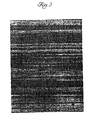
- a fabric woven with yarn 12 as a filler in the cross machine direction is shown in accompanying Figure 3.
- the yarn of the present invention has a tendency to further twist or turn as it is inserted as fill into the fabric and thus different portions of the upper and lower yarn surfaces are visible on the fabric face. In effect, therefore, the twisting randomizes the dark and light color hues of the upper and lower yarn surfaces to give the pleasing heather-like appearance to the woven fabric.
- twisting of the yarn may also occur as the yarn is transferred from the cylinder 22 to package 30.
- the temperature of the heated cylinder 22 is an important factor in determining the degree of colorant migration and thus ultimately the degree of contrast between the dark and light areas in the colored yarn. Too low a surface temperature will result in little, if any, migration since the yarn would effectively be dried uniformly. Uniform drying of the yarn is to be avoided in accordance with the present invention. Too high a temperature on the other hand may destabilize the finish on the wet yarn and, for example, may cause the colorant to separate from the glass yarn surface when glass sliver yarns are utilized. The high temperature may also discolor some of the finish components or the starch-based binder typically applied to some yarns during manufacturing.
- a preferred range of temperatures for colorant migration to occur in accordance with the present invention is about 250 degrees to about 450 degrees Fahrenheit (120 to 230°C) and an even more preferred temperature range is between about 300 degrees to about 350 degrees Fahrenheit (150 to 180°C).
- Cylinder 22 shown in accompanying Figure 1 preferably has a diameter of about 30 inches although larger or smaller diameters can be employed, if desirable.
- the surface of cylinder 22 is heated by means of steam in accordance with well known techniques. Depending on the steam pressure utilized, temperatures of 300-350 degrees Fahrenheit (150 to 180°C) can be obtained and controlled without difficulty employing control techniques believed well known to those in this art.
- a 666 TEX glass sliver yarn obtained from Manville Sales Corporation, Denver, Colorado was padded with the above resin bath formula on an apparatus similar to that shown in accompanying Figure 1 at a pad pressure of 25 Ibs/sq. in (170 kPa).
- the heated cylinder 22 steam can
- the heated cylinder 22 was set at a temperature of 310°F (155°C) and the yarn was wrapped around the cylinder for the required number of turns so as to be in contact with the heated cylinder for a period of 2 minutes.
- the completely dried and cured yarn was then wound onto a package.
- the treated yarn was observed to be beige-tan in color and was about 30% darker in color on one side (e.g. the side that came into contact with the heated cylinder) when compared to the other side.
- the yarn treated in this example was woven into a fabric style identified as Burlington Industries S/16003/666 (see Figure 3), the result was a fabric exhibiting a highly striated or tone-on-tone tan color.
- a pigmented resin bath of the below composition was used:
Landscapes
- Engineering & Computer Science (AREA)
- Chemical & Material Sciences (AREA)
- Materials Engineering (AREA)
- Textile Engineering (AREA)
- Coloring (AREA)
- Treatments For Attaching Organic Compounds To Fibrous Goods (AREA)
Description
- Background and summary of the present invention 1. Introduction
- The present invention generally relates to a process and apparatus for coloring textile yarns to produce a tone-on-tone or striated appearance when such yarns are utilized to form a woven fabric. Thus, when woven into a fabric, the yarns of the present invention produce a very noticeable and aesthetically pleasing tone-on-tone, striated, or heather-like appearance. Fabrics of this type find particular utility for window shades and vertical blinds, or as facings for wall covering or other decorative purposes.
- In accordance with the present invention, a textile yarn is coated or otherwise brought into contact with a colorant-containing liquid. Subsequently, the coated yarn is dried so that one portion of the yarn surface is dried at a faster rate than the drying rate of another portion of the yarn surface. Such a differential drying rate between the yarn surface portions will effect migration of the colorant to that portion of the yarn surface dried at a faster drying rate to a degree sufficient to achieve a visually perceptive darker color hue thereat when compared to other yarn surface portions. Twisting of the yarn during packaging and/orweaving will randomly distribute the darker color hue surface along the yarn's length. Thus, woven fabrics of the twisted yarn will be visually striated in coloring appearance.
- Other methods capable of producing multicolored or tone-on-tone effects on fabrics or yarn exist. One conventional process utilized in Europe reportedly involves the package dyeing of glass sliver yarns to produce a tone-on-tone colored yarn. Package dyeing is a process in which a dyebath is pumped under pressure through a package of yarn wound on a perforated tube. The dyebath solution is thus forceably pumped through the cross-section of the yarn package. The yarn produced in this conventional manner is not without its problems, however. Considerable variation in color over the cross-section of the yarn package may occur, the color becoming progressively lighter towards the low pressure side of the yarn package. Since the yarn packages are small (e.g. averaging about 4-5 pounds) there may also be undesirable color variation from package to package.
- Other attempts at achieving striated tone-on-tone yarn or fabric appearances exist in the patent literature as evidenced by United States Patent Nos. 3,775,054 to DeVinney; 3,950,132 to Somers et al; 4,087,242 to Frank et al; 4,246,668 to Spillmann et al; 2,823,092 to Spencer; 3,644,969 to Guillermann et al; and 3,726,640 to Takriti et al.
- United States Patent 3,775,054 discloses a process whereby yarns with random color variation can be produced by applying dye using a rotating brush member. The differential speed between the linear speed of the rotating brush tips and the linear speed of the moving yarns determines the blending effect of the applied dye with respect to the basic color characteristics of the yarns.
- United States Patent 3,950,132 disclose a random dyeing method wherein the yarns are laid in a zig-zag fashion and passed through a pair of dye- application rollers.
- United States Patent 4,0$7,242 relates to a method of providing variegated dyed yarns which includes, in a preliminary step, passing a partially oriented polyester feeder yarn over a surface which is wetted with a liquid reagent. The liquid reagent alters the affinity of the yarn to a disperse dye and thus when the feeder yarn is dyed, the area treated with the reagent will be intermittently darker due to the increased dye affinity thereof.
- United States Patent 4,246,668 discloses a process wherein a number of webs of material are guided in a side-by-side fashion between treatment rollers. The treatment pressure is set differently at individual longitudinal portions of the roller nip so that the web of material is exposed to different treatment pressure at different points with the result that dye or other finishes are forced out of those portions of the web subjected to the greatest pressure and into those portions subjected to the least pressure.
- United States Patent 2,823,092 discloses a method whereby so-called "marbled" open-width cloth can be produced by compressing the cloth width-wise into a rope form and subsequently passing the compressed cloth while in such rope form lengthwise through a padding zone. The surface of a cloth in the padding zone will therefore acquire a random localized application of multi- tone color in spaced isolated portions thereof so as to establish the "marbled" appearance when the cloth is subsequently reopened to its full width.
- United States Patent 3,644,969 discloses a method whereby thermoplastic yarn can be fed into a confined space so as to form a long stack of uniform cross-section of folded yarn. A dye solution is then fed at different locations to the same cross-section of the stack so the resulting intensity of the color of the yarn due to each dye falls off across the stack from the point of application.
- United States Patent 3,726,640 discloses a method wherein color patterns can be formed on e.g. carpets by application of dye droplets in an equal volume over the surface of the carpet breadth.
- In a first aspect of the invention, there is provided a method of producing a colored textile yarn comprising the steps of:
- (a) applying a colorant-containing liquid to the surfaces of said one and other side of the yarn;
- (b) drying said one side of the yarn at a drying rate which is faster than the drying rate of said other side of the yarn to establish a drying rate gradient between said one and other sides; and
- (c) allowing the colorant in the liquid applied according to step (a) to migrate to said one side of the yarn by virtue of the drying rate gradient established according to step (b), said migration effecting a darker colour hue on said one side when compared to said other side.
- The method of the present invention is capable of providing a novel process for producing striated or tone-on-tone colored textile yarns for weaving into fabrics so that the resulting woven fabrics exhibit a notable tone-on-tone, striated, or heather-like appearance. In accordance with the present invention therefore, a striated colored yarn which is consistent in color and which exhibits a large degree of contrast between the dark and light areas of the yarn can be produced. Moreover, various weights and yarn sizes can be processed to produce a striated colored textile yarn of the present invention.
- The striated colored textile yarn of the present invention can be produced in virtually unlimited package sizes and exhibits good light fastness and heat stability. Other desired properties including durability to washing, flame retardancy, water, stain and abrasion resistances can be imparted to the yarn in dependence upon the selected components of the yarn treatment bath.
- Virtually all textile yarns can be treated in the manner of the present invention. For example, natural yarns of cotton, synthetic yarns of polyester or nylon and blends of such natural and synthetic yarns can be advantageously treated in accordance with the present invention so long as the textile yarns are capable of absorbing a colorant-containing liquid.
- The "colorant" in the liquid can be either a dyestuff (natural and/or synthetic) or a pigment. When pigments are utilized as a colorant, it is typically desirable to include a resin component in the liquid to act as a binder for the pigments to ensure proper adhesion to the textile yarn. For example, when treating glass sliver yarns in accordance with the present invention, it is particularly preferred to utilize a pigmented liquid resin.
- The glass sliver yarns are preferably contacted with a pigmented resin bath comprising an acrylic resin, suitable pigments for coloring, and other auxiliary chemical components including silane, surfactants, and softeners. The yarns are then dried according to the present invention, for example, by means of a heated cylinder, to promote pigment migration to that side of the yarn in direct contact with the cylinder. The colored yarn exiting the drying cylinder has a ribbon-like form with one side being noticeably darker in color hue when compared to the other side thereof. However, as indicated above, other synthetic and natural textile yarns could also be treated by a nonresinous dye bath suitable for the particular yarns utilized so long as the "differential" drying rate is maintained to cause colorant migration towards the heat source (e.g. to the yarn side adjacent the heated drum).
- The treated yarn is then wound on a conventional package (e.g. yarn package core) suitable for weaving. When woven into a fabric, a very pleasing randomly striated, tone-on-tone, or heather-like appearance is achieved. Varying degrees of color contrast can be achieved by altering the components in the pigmented liquid bath and by utilizing different temperatures on the drying cylinder.
- Reference will hereinafter be made to the accompanying drawings wherein like reference numerals denote like elements throughout the various figures, and wherein:
- Figure 1 is a schematic perspective view showing a preferred apparatus of the present invention for coloring textile yarns;
- Figure 2 is a schematic representation of a single glass sliver yarn, partially twisted, showing dark and light pigmented areas achieved by the present invention; and
- Figure 3 is a photograph of a fabric sample woven with the yarn schematically depicted in Figure 2.
- The process for producing a striated or tone-on-tone colored textile yarn is dependent on the ability of the colorant component of the liquid to migrate to specific areas of the yarn. The term "migration" as used herein is meant to refer to the movement of dye or pigment from one area of the yarn or fabric to another. Many factors have been found to influence colorant migration, including the affinity of the yarn for the dye or pigment, the nature of the dyes or pigments involved, the nature of the finish components, the manner in which the finish is applied, and most important, the manner in which the material is dried and the drying temperature.
- For example, since glass yarns do not have a natural affinity for dyes or pigments, it is preferred to use a water-based resin bonded pigment system to color the glass yarns since the resin or binder holds the pigments on the glass filaments. The technique for dying glass yarns is not unlike that of painting except that a pigmented resin bath for textile purposes is more fluid compared to a latex paint and the bath components are selected for desired effects.
- Various resins or binders may be advantageously used according to the present invention including polymers or copolymers of polyvinylchloride, polyvinylacetate, polyvinyl acrylates and latexes of butadiene styrene, polyester, polyethylene vinyl acetate, chlorinated polyethylene vinyl acetate, water based silicone elastomers or any combination of these. Particularly preferred binders are selected from the acrylic copolymer group typically termed acrylic resins or latex resins. Acrylic latexes have good adhesion to glass, are noted for good heat stability and lightfastness, and are also good pigment binders. A wide variety of acrylic latexes are commercially available and may be selected for specific properties such as a soft hand, durability to washing or drycleaning, or for abrasion resistance.
- When using glass sliver yarns, the acrylic latex chosen may affect the degree of color migration. If the acrylic latex is cationic in nature, it will have an affinity for the negatively charged glass surface and be less prone to migrate. If the acrylic is too reactive at low temperatures, it may cure before the moisture is completely removed and before adequate migration is achieved. Preferred acrylic latexes should therefore be anionic or nonionic in nature and should not cure at temperatures below 250°F (120°C). At 250°F (120°C), the water will have evaporated and pigment migration will essentially be complete. The concentration of the acrylic latex may also influence migration. A pigmented resin bath of 95 percent acrylic latex resin and 5 percent pigments will tend to migrate considerably less than a bath consisting of 4 percent resin and 5 percent pigments when processed in a similar manner. Preferred concentrations of acrylic resin for treating e.g. glass sliver yarns according to the process of the present invention range from between about 2-25 percent (based upon the weight of the solids in the bath) with a more preferred range of between about 4-10 percent.
- The primary purpose of the pigments is, of course, to achieve a desired color. Organic pigments with good lightfastness including the phthalocyanine blues and greens, quinacridone reds, benzidine yellows, and carbon blacks are particularly preferred. Inorganic pigments including iron oxide yellows, iron oxide reds, cadmium or chrome yellows and cobalt blues may also be used, but such inorganic pigments migrate under the conditions of the present invention to lesser degree than organic pigments.
- Auxiliary chemicals may be added to the resin bath for improved processing or for added properties. Softeners including polyethylene emulsions, silicones, expoxidized soybean oil and waxes may be added to improve the final hand of the yarn. It is often desirable with glass yarns to add small amounts of a silane coupling agent to help bond the resin and pigments to the glass surface for improved durability to crocking, abrasion, and washing. Wetting agents, defoamers, delustering agents, fluorochemicals for water and stain epellancy, and various hand modifiers may be added to achieve desired results. These additives should not be used in excess otherwise the migration properties of the pigments in the bath may be masked.
- An exemplary pigmented resin bath formulation suitable for use in the present invention includes:

- Particularly preferred yarns suitable for coloring by the process and apparatus of this invention include glass sliver yarns. A glass sliver yarn is a collection of numerous strands of glass filaments. A particularly suitable glass sliver yarn is identified as 666 TEX and is manufactured by the Schuller Company in Europe and can be commercially obtained in the United States from Manville Sales Corporation. The 666 TEX yarn consists of numerous glass filaments having a nominal diameter of 10 microns and lengths of 18-24 inches (46-41 cm). When these filaments are collected into a single strand, a yarn with a fluffy and almost texturized appearance is produced with random variations in the diameter and bulkiness of the yarn. Another suitable glass sliver yarn is 333 TEX which has a diameter size about one-half that of the 666 TEX yarn.
- Although reference has been made and will hereinafter be made to glass sliver yarns as the particularly preferred yarns for treatment in accordance with the present invention, favorable results are also achieved when utilizing natural yarns (e.g. cotton), synthetic yarns (e.g. polyester or nylon) or blends thereof. The particular colorant-containing bath utilized will of course depend upon the type of textile yarn being treated. It may thus be desirable to use a nonresinous dyestuff bath with certain textile yarns. The selection of a particular colorant-containing liquid for treating particular textile yarns is believed well within the skill of those in this art.
- Figure 1 shows a
dyeing apparatus 10 which is particularly suitable for the practice of the present invention and for describing the sequence of the processing steps involved. Theuntreated yarn 12 is creeled from a standard yarn package 14 and passed intobath 16 containing the colorant liquid (hereinafter termed "finish"). Excess finish is squeezed fromyarn 12 by rubber pad rolls 18, 20 and the wet yarn is then passed onto aheated cylinder 22 which is preferably driven by any suitable means (not shown) to effect movement of the yarn through the various processing stations. The side of theyarn 12 facing away from thecylinder 22 is identified in the accompanying figures as "side a" while the side in direct contact with thecylinder 22 is identified as "side b". While the surface temperature of the cylinder is substantially uniform, the yarn itself is not dried uniformly. Side b ofyarn 12 which is in contact with theheated cylinder 22 begins to dry first. As side b dries, the finish and colorants from other portions of the yarn including the center and side a of theyarn 12 migrate towards these initial dry areas. Further drying and migration of the finish occur due to the continued contact of side b withcylinder 22. Side b thus exhibits a darker color hue when compared to side a due to the finish migration thereto by virtue of the contact of side b withheated cylinder 22. - Of course, the
yarn 12 does not dry immediately nor is colorant migration instantaneous. For that reason, theyarn 12 is preferably maintained in contact with the heated surface ofcylinder 22 until drying ofyarn 12 is complete. Since thecylinder 22 is usually not large enough in diameter to complete drying of theyarn 12 in one revolution, theyarn 12 is preferably spiralled on thecylinder 22 for a number of turns. After each turn, theyarn 12 is pulled fromcylinder 22 by an offset tensioning roll 24 which aids in tracking the yarn on thecylinder 22. - Side b of
yarn 12 is always disposed in contact with theheated cylinder 22 and therefore, the finish and colorants will always migrate towards the cylinder 22 (e.g. from side a to side b). There is little tendency for theyarn 12 to twist on thecylinder 22 since there is sufficient tension by virtue of offset roll 24 to maintain theyarn 12 againstcylinder 22. If desired, a small amount of wax for improved weaving lubricity can be applied toyarn 12 by means of akiss roll 26 before the yarn is wound onto apackage 30. - Some twisting of
yarn 12 may naturally occur when it is wound ontopackage 30. Additional twisting ofyarn 12 could be achieved, if desired by suitable mechanical twisting means (not shown) so as to further randomly distribute the darker color hue of side b along the length ofyarn 12. Thuspackage 30 may itself exhibit a heather-like appearance from random portions of side b being exposed due to such twisting. Of course, twisting means could also be positioned adjacent to a weaving machine so as to effect desired twisting ofyarn 12 when creeled frompackage 30 during fabric production, if desired. - Figure 2 schematically depicts an exemplary
glass sliver yarn 12 colored by the process of the present invention, theyarn 12 being illustrated in a twisted state to show that side b is darker than side a. - A fabric woven with
yarn 12 as a filler in the cross machine direction is shown in accompanying Figure 3. In weaving, the yarn of the present invention has a tendency to further twist or turn as it is inserted as fill into the fabric and thus different portions of the upper and lower yarn surfaces are visible on the fabric face. In effect, therefore, the twisting randomizes the dark and light color hues of the upper and lower yarn surfaces to give the pleasing heather-like appearance to the woven fabric. As noted above, twisting of the yarn may also occur as the yarn is transferred from thecylinder 22 to package 30. - The temperature of the
heated cylinder 22 is an important factor in determining the degree of colorant migration and thus ultimately the degree of contrast between the dark and light areas in the colored yarn. Too low a surface temperature will result in little, if any, migration since the yarn would effectively be dried uniformly. Uniform drying of the yarn is to be avoided in accordance with the present invention. Too high a temperature on the other hand may destabilize the finish on the wet yarn and, for example, may cause the colorant to separate from the glass yarn surface when glass sliver yarns are utilized. The high temperature may also discolor some of the finish components or the starch-based binder typically applied to some yarns during manufacturing. A preferred range of temperatures for colorant migration to occur in accordance with the present invention is about 250 degrees to about 450 degrees Fahrenheit (120 to 230°C) and an even more preferred temperature range is between about 300 degrees to about 350 degrees Fahrenheit (150 to 180°C). -
Cylinder 22 shown in accompanying Figure 1 preferably has a diameter of about 30 inches although larger or smaller diameters can be employed, if desirable. The surface ofcylinder 22 is heated by means of steam in accordance with well known techniques. Depending on the steam pressure utilized, temperatures of 300-350 degrees Fahrenheit (150 to 180°C) can be obtained and controlled without difficulty employing control techniques believed well known to those in this art. - The present invention will be further understood by reference to the following non-limiting examples.
- In the following example, a pigmented resin bath of the below formulation was utilized:

- A 666 TEX glass sliver yarn obtained from Manville Sales Corporation, Denver, Colorado was padded with the above resin bath formula on an apparatus similar to that shown in accompanying Figure 1 at a pad pressure of 25 Ibs/sq. in (170 kPa). The heated cylinder 22 (steam can) was set at a temperature of 310°F (155°C) and the yarn was wrapped around the cylinder for the required number of turns so as to be in contact with the heated cylinder for a period of 2 minutes. The completely dried and cured yarn was then wound onto a package.
- The treated yarn was observed to be beige-tan in color and was about 30% darker in color on one side (e.g. the side that came into contact with the heated cylinder) when compared to the other side. When the yarn treated in this example was woven into a fabric style identified as Burlington Industries S/16003/666 (see Figure 3), the result was a fabric exhibiting a highly striated or tone-on-tone tan color.
- A pigmented resin bath of the below composition was used:

- The following textile yarns were each brought into contact with the above-formulated pigmented liquid bath and dried in a manner similar to Example I above with running times (ie. time in contact with the heated cylinder) adjusted to account for variance in the amount of pigmented liquid absorbed:

- Visual inspection revealed that each yarn Nos. 1-4 exhibited a beige-tan color and was significantly darker on that portion of the yarn which came into contact with the heated cylinder. Although the amount of pigment migration varied among the yarn Nos. 1-4, each exhibited a visually perceptible color hue difference thereby rendering such yarns suitable for forming woven fabrics having a striated appearance similar to Figure 3.
- It is understood that various modifications will be apparent to those skilled in the art without departing from the scope and spirit of this invention. For example, other methods of drying the yarn, such as electrical heat, may be utilized to induce and encourage migration of the pigments. The colorant liquid bath may also be applied by means other than padding, for example, by spraying, kiss-coating, or printing onto the yarn.
Claims (16)
Applications Claiming Priority (2)
| Application Number | Priority Date | Filing Date | Title |
|---|---|---|---|
| US59229584A | 1984-03-22 | 1984-03-22 | |
| US592295 | 1990-10-03 |
Publications (2)
| Publication Number | Publication Date |
|---|---|
| EP0157558A1 EP0157558A1 (en) | 1985-10-09 |
| EP0157558B1 true EP0157558B1 (en) | 1989-07-19 |
Family
ID=24370116
Family Applications (1)
| Application Number | Title | Priority Date | Filing Date |
|---|---|---|---|
| EP19850302006 Expired EP0157558B1 (en) | 1984-03-22 | 1985-03-22 | Process and apparatus for coloring textile yarns |
Country Status (2)
| Country | Link |
|---|---|
| EP (1) | EP0157558B1 (en) |
| DE (1) | DE3571658D1 (en) |
Family Cites Families (5)
| Publication number | Priority date | Publication date | Assignee | Title |
|---|---|---|---|---|
| CH437180A (en) * | 1965-08-11 | 1967-11-30 | Friedrich Elsaesser Johann | Process for the production of a multicolored yarn in a continuous process |
| NL6616070A (en) * | 1965-11-16 | 1967-05-17 | ||
| US3921377A (en) * | 1973-10-26 | 1975-11-25 | E J Snyder & Co Inc | Production of dyed fabrics |
| US4056353A (en) * | 1976-03-26 | 1977-11-01 | Bent Alfred H | Textile finishing |
| GB2064597B (en) * | 1979-12-05 | 1983-07-06 | Courtaulds Ltd | Process for colouring pile fabrics |
-
1985
- 1985-03-22 EP EP19850302006 patent/EP0157558B1/en not_active Expired
- 1985-03-22 DE DE8585302006T patent/DE3571658D1/en not_active Expired
Also Published As
| Publication number | Publication date |
|---|---|
| DE3571658D1 (en) | 1989-08-24 |
| EP0157558A1 (en) | 1985-10-09 |
Similar Documents
| Publication | Publication Date | Title |
|---|---|---|
| US4586934A (en) | Process and apparatus for coloring textile yarns | |
| US3099514A (en) | Color-printed flocked fabrics | |
| US3986824A (en) | Process for the manufacture of a dyed sheet-like textile structure | |
| US3650800A (en) | Textile products and production thereof | |
| US5118532A (en) | Method of producing decorative vertical louver window covering material and decorative vertical louver material so produced | |
| EP3040473B1 (en) | Denim fabric having fireproof properties and method for dyeing the warp using indigo blue dye | |
| US4617218A (en) | Tightly curled, cut pile, tufted carpet | |
| US6497936B1 (en) | Method and apparatus for dyeing and treating yarns | |
| US5076809A (en) | Process to pigment flame-resistant yarn | |
| EP0157558A1 (en) | Process and apparatus for coloring textile yarns | |
| CA1274354A (en) | Process and apparatus for coloring textile yarns | |
| MXPA02008987A (en) | Face finished fabrics exhibiting non directional surface characteristics after dyeing in open width form. | |
| US3060549A (en) | Method of producing multi-colored glass fiber fabrics | |
| US3989448A (en) | Overprint of solvent on total solvent coating | |
| CA1128709A (en) | Textile dyeing process | |
| CA1128711A (en) | Textile dyeing process | |
| US3138431A (en) | Dyeable rubber coated fabrics | |
| US4822376A (en) | Printed bleeding madras | |
| CA1142712A (en) | Continuous conditioning and texturizing synthetic yarn to produce a product yarn having substantial latent shrinkage | |
| US2629647A (en) | Process of ornamental dyeing | |
| US3117052A (en) | Multi-colored glass fiber fabrics | |
| DE3126051A1 (en) | Multi-component yarn for multi-coloured velours and process for producing it | |
| US3201931A (en) | Dyed glass fiber yarn | |
| US4056353A (en) | Textile finishing | |
| KR102162223B1 (en) | Method for manufacturing a synthetic resin fabric |
Legal Events
| Date | Code | Title | Description |
|---|---|---|---|
| PUAI | Public reference made under article 153(3) epc to a published international application that has entered the european phase |
Free format text: ORIGINAL CODE: 0009012 |
|
| AK | Designated contracting states |
Designated state(s): BE DE FR GB IT NL SE |
|
| 17P | Request for examination filed |
Effective date: 19860404 |
|
| 17Q | First examination report despatched |
Effective date: 19871005 |
|
| RAP1 | Party data changed (applicant data changed or rights of an application transferred) |
Owner name: BGF INDUSTRIES INC.(A DELAWARE CORPORATION) |
|
| RAP1 | Party data changed (applicant data changed or rights of an application transferred) |
Owner name: BGF INDUSTRIES, INC. (A DELAWARE CORPORATION) |
|
| GRAA | (expected) grant |
Free format text: ORIGINAL CODE: 0009210 |
|
| AK | Designated contracting states |
Kind code of ref document: B1 Designated state(s): BE DE FR GB IT NL SE |
|
| PG25 | Lapsed in a contracting state [announced via postgrant information from national office to epo] |
Ref country code: NL Effective date: 19890719 Ref country code: IT Free format text: LAPSE BECAUSE OF FAILURE TO SUBMIT A TRANSLATION OF THE DESCRIPTION OR TO PAY THE FEE WITHIN THE PRESCRIBED TIME-LIMIT;WARNING: LAPSES OF ITALIAN PATENTS WITH EFFECTIVE DATE BEFORE 2007 MAY HAVE OCCURRED AT ANY TIME BEFORE 2007. THE CORRECT EFFECTIVE DATE MAY BE DIFFERENT FROM THE ONE RECORDED. Effective date: 19890719 Ref country code: BE Effective date: 19890719 |
|
| REF | Corresponds to: |
Ref document number: 3571658 Country of ref document: DE Date of ref document: 19890824 |
|
| ET | Fr: translation filed | ||
| NLV1 | Nl: lapsed or annulled due to failure to fulfill the requirements of art. 29p and 29m of the patents act | ||
| PLBE | No opposition filed within time limit |
Free format text: ORIGINAL CODE: 0009261 |
|
| STAA | Information on the status of an ep patent application or granted ep patent |
Free format text: STATUS: NO OPPOSITION FILED WITHIN TIME LIMIT |
|
| 26N | No opposition filed | ||
| PGFP | Annual fee paid to national office [announced via postgrant information from national office to epo] |
Ref country code: SE Payment date: 19940228 Year of fee payment: 10 |
|
| PGFP | Annual fee paid to national office [announced via postgrant information from national office to epo] |
Ref country code: FR Payment date: 19940308 Year of fee payment: 10 |
|
| PGFP | Annual fee paid to national office [announced via postgrant information from national office to epo] |
Ref country code: GB Payment date: 19940316 Year of fee payment: 10 |
|
| PGFP | Annual fee paid to national office [announced via postgrant information from national office to epo] |
Ref country code: DE Payment date: 19940519 Year of fee payment: 10 |
|
| EAL | Se: european patent in force in sweden |
Ref document number: 85302006.3 |
|
| PG25 | Lapsed in a contracting state [announced via postgrant information from national office to epo] |
Ref country code: GB Effective date: 19950322 |
|
| PG25 | Lapsed in a contracting state [announced via postgrant information from national office to epo] |
Ref country code: SE Effective date: 19950323 |
|
| GBPC | Gb: european patent ceased through non-payment of renewal fee |
Effective date: 19950322 |
|
| PG25 | Lapsed in a contracting state [announced via postgrant information from national office to epo] |
Ref country code: FR Free format text: LAPSE BECAUSE OF NON-PAYMENT OF DUE FEES Effective date: 19951130 |
|
| PG25 | Lapsed in a contracting state [announced via postgrant information from national office to epo] |
Ref country code: DE Effective date: 19951201 |
|
| EUG | Se: european patent has lapsed |
Ref document number: 85302006.3 |
|
| REG | Reference to a national code |
Ref country code: FR Ref legal event code: ST |