EP0156570B1 - Shaped article of composition comprising thermoplastic synthetic resin and cellular material and method of producing same - Google Patents
Shaped article of composition comprising thermoplastic synthetic resin and cellular material and method of producing same Download PDFInfo
- Publication number
- EP0156570B1 EP0156570B1 EP19850301629 EP85301629A EP0156570B1 EP 0156570 B1 EP0156570 B1 EP 0156570B1 EP 19850301629 EP19850301629 EP 19850301629 EP 85301629 A EP85301629 A EP 85301629A EP 0156570 B1 EP0156570 B1 EP 0156570B1
- Authority
- EP
- European Patent Office
- Prior art keywords
- cellular material
- matrix
- cork
- dough
- synthetic resin
- Prior art date
- Legal status (The legal status is an assumption and is not a legal conclusion. Google has not performed a legal analysis and makes no representation as to the accuracy of the status listed.)
- Expired - Lifetime
Links
Images



Classifications
-
- B—PERFORMING OPERATIONS; TRANSPORTING
- B29—WORKING OF PLASTICS; WORKING OF SUBSTANCES IN A PLASTIC STATE IN GENERAL
- B29C—SHAPING OR JOINING OF PLASTICS; SHAPING OF MATERIAL IN A PLASTIC STATE, NOT OTHERWISE PROVIDED FOR; AFTER-TREATMENT OF THE SHAPED PRODUCTS, e.g. REPAIRING
- B29C67/00—Shaping techniques not covered by groups B29C39/00 - B29C65/00, B29C70/00 or B29C73/00
- B29C67/20—Shaping techniques not covered by groups B29C39/00 - B29C65/00, B29C70/00 or B29C73/00 for porous or cellular articles, e.g. of foam plastics, coarse-pored
- B29C67/207—Shaping techniques not covered by groups B29C39/00 - B29C65/00, B29C70/00 or B29C73/00 for porous or cellular articles, e.g. of foam plastics, coarse-pored comprising impregnating expanded particles or fragments with a binder
-
- B—PERFORMING OPERATIONS; TRANSPORTING
- B29—WORKING OF PLASTICS; WORKING OF SUBSTANCES IN A PLASTIC STATE IN GENERAL
- B29C—SHAPING OR JOINING OF PLASTICS; SHAPING OF MATERIAL IN A PLASTIC STATE, NOT OTHERWISE PROVIDED FOR; AFTER-TREATMENT OF THE SHAPED PRODUCTS, e.g. REPAIRING
- B29C48/00—Extrusion moulding, i.e. expressing the moulding material through a die or nozzle which imparts the desired form; Apparatus therefor
- B29C48/022—Extrusion moulding, i.e. expressing the moulding material through a die or nozzle which imparts the desired form; Apparatus therefor characterised by the choice of material
-
- C—CHEMISTRY; METALLURGY
- C08—ORGANIC MACROMOLECULAR COMPOUNDS; THEIR PREPARATION OR CHEMICAL WORKING-UP; COMPOSITIONS BASED THEREON
- C08L—COMPOSITIONS OF MACROMOLECULAR COMPOUNDS
- C08L23/00—Compositions of homopolymers or copolymers of unsaturated aliphatic hydrocarbons having only one carbon-to-carbon double bond; Compositions of derivatives of such polymers
- C08L23/02—Compositions of homopolymers or copolymers of unsaturated aliphatic hydrocarbons having only one carbon-to-carbon double bond; Compositions of derivatives of such polymers not modified by chemical after-treatment
- C08L23/04—Homopolymers or copolymers of ethene
- C08L23/08—Copolymers of ethene
- C08L23/0846—Copolymers of ethene with unsaturated hydrocarbons containing atoms other than carbon or hydrogen
- C08L23/0853—Ethylene vinyl acetate copolymers
-
- C—CHEMISTRY; METALLURGY
- C08—ORGANIC MACROMOLECULAR COMPOUNDS; THEIR PREPARATION OR CHEMICAL WORKING-UP; COMPOSITIONS BASED THEREON
- C08L—COMPOSITIONS OF MACROMOLECULAR COMPOUNDS
- C08L97/00—Compositions of lignin-containing materials
- C08L97/02—Lignocellulosic material, e.g. wood, straw or bagasse
-
- B—PERFORMING OPERATIONS; TRANSPORTING
- B29—WORKING OF PLASTICS; WORKING OF SUBSTANCES IN A PLASTIC STATE IN GENERAL
- B29C—SHAPING OR JOINING OF PLASTICS; SHAPING OF MATERIAL IN A PLASTIC STATE, NOT OTHERWISE PROVIDED FOR; AFTER-TREATMENT OF THE SHAPED PRODUCTS, e.g. REPAIRING
- B29C48/00—Extrusion moulding, i.e. expressing the moulding material through a die or nozzle which imparts the desired form; Apparatus therefor
- B29C48/03—Extrusion moulding, i.e. expressing the moulding material through a die or nozzle which imparts the desired form; Apparatus therefor characterised by the shape of the extruded material at extrusion
- B29C48/09—Articles with cross-sections having partially or fully enclosed cavities, e.g. pipes or channels
- B29C48/10—Articles with cross-sections having partially or fully enclosed cavities, e.g. pipes or channels flexible, e.g. blown foils
-
- B—PERFORMING OPERATIONS; TRANSPORTING
- B29—WORKING OF PLASTICS; WORKING OF SUBSTANCES IN A PLASTIC STATE IN GENERAL
- B29K—INDEXING SCHEME ASSOCIATED WITH SUBCLASSES B29B, B29C OR B29D, RELATING TO MOULDING MATERIALS OR TO MATERIALS FOR MOULDS, REINFORCEMENTS, FILLERS OR PREFORMED PARTS, e.g. INSERTS
- B29K2023/00—Use of polyalkenes or derivatives thereof as moulding material
-
- B—PERFORMING OPERATIONS; TRANSPORTING
- B29—WORKING OF PLASTICS; WORKING OF SUBSTANCES IN A PLASTIC STATE IN GENERAL
- B29K—INDEXING SCHEME ASSOCIATED WITH SUBCLASSES B29B, B29C OR B29D, RELATING TO MOULDING MATERIALS OR TO MATERIALS FOR MOULDS, REINFORCEMENTS, FILLERS OR PREFORMED PARTS, e.g. INSERTS
- B29K2023/00—Use of polyalkenes or derivatives thereof as moulding material
- B29K2023/04—Polymers of ethylene
- B29K2023/08—Copolymers of ethylene
- B29K2023/083—EVA, i.e. ethylene vinyl acetate copolymer
-
- B—PERFORMING OPERATIONS; TRANSPORTING
- B29—WORKING OF PLASTICS; WORKING OF SUBSTANCES IN A PLASTIC STATE IN GENERAL
- B29K—INDEXING SCHEME ASSOCIATED WITH SUBCLASSES B29B, B29C OR B29D, RELATING TO MOULDING MATERIALS OR TO MATERIALS FOR MOULDS, REINFORCEMENTS, FILLERS OR PREFORMED PARTS, e.g. INSERTS
- B29K2105/00—Condition, form or state of moulded material or of the material to be shaped
- B29K2105/04—Condition, form or state of moulded material or of the material to be shaped cellular or porous
-
- B—PERFORMING OPERATIONS; TRANSPORTING
- B29—WORKING OF PLASTICS; WORKING OF SUBSTANCES IN A PLASTIC STATE IN GENERAL
- B29K—INDEXING SCHEME ASSOCIATED WITH SUBCLASSES B29B, B29C OR B29D, RELATING TO MOULDING MATERIALS OR TO MATERIALS FOR MOULDS, REINFORCEMENTS, FILLERS OR PREFORMED PARTS, e.g. INSERTS
- B29K2503/00—Use of resin-bonded materials as filler
- B29K2503/04—Inorganic materials
-
- B—PERFORMING OPERATIONS; TRANSPORTING
- B29—WORKING OF PLASTICS; WORKING OF SUBSTANCES IN A PLASTIC STATE IN GENERAL
- B29K—INDEXING SCHEME ASSOCIATED WITH SUBCLASSES B29B, B29C OR B29D, RELATING TO MOULDING MATERIALS OR TO MATERIALS FOR MOULDS, REINFORCEMENTS, FILLERS OR PREFORMED PARTS, e.g. INSERTS
- B29K2711/00—Use of natural products or their composites, not provided for in groups B29K2601/00 - B29K2709/00, for preformed parts, e.g. for inserts
- B29K2711/02—Cork
-
- Y—GENERAL TAGGING OF NEW TECHNOLOGICAL DEVELOPMENTS; GENERAL TAGGING OF CROSS-SECTIONAL TECHNOLOGIES SPANNING OVER SEVERAL SECTIONS OF THE IPC; TECHNICAL SUBJECTS COVERED BY FORMER USPC CROSS-REFERENCE ART COLLECTIONS [XRACs] AND DIGESTS
- Y10—TECHNICAL SUBJECTS COVERED BY FORMER USPC
- Y10T—TECHNICAL SUBJECTS COVERED BY FORMER US CLASSIFICATION
- Y10T428/00—Stock material or miscellaneous articles
- Y10T428/24—Structurally defined web or sheet [e.g., overall dimension, etc.]
- Y10T428/24355—Continuous and nonuniform or irregular surface on layer or component [e.g., roofing, etc.]
- Y10T428/24372—Particulate matter
-
- Y—GENERAL TAGGING OF NEW TECHNOLOGICAL DEVELOPMENTS; GENERAL TAGGING OF CROSS-SECTIONAL TECHNOLOGIES SPANNING OVER SEVERAL SECTIONS OF THE IPC; TECHNICAL SUBJECTS COVERED BY FORMER USPC CROSS-REFERENCE ART COLLECTIONS [XRACs] AND DIGESTS
- Y10—TECHNICAL SUBJECTS COVERED BY FORMER USPC
- Y10T—TECHNICAL SUBJECTS COVERED BY FORMER US CLASSIFICATION
- Y10T428/00—Stock material or miscellaneous articles
- Y10T428/25—Web or sheet containing structurally defined element or component and including a second component containing structurally defined particles
-
- Y—GENERAL TAGGING OF NEW TECHNOLOGICAL DEVELOPMENTS; GENERAL TAGGING OF CROSS-SECTIONAL TECHNOLOGIES SPANNING OVER SEVERAL SECTIONS OF THE IPC; TECHNICAL SUBJECTS COVERED BY FORMER USPC CROSS-REFERENCE ART COLLECTIONS [XRACs] AND DIGESTS
- Y10—TECHNICAL SUBJECTS COVERED BY FORMER USPC
- Y10T—TECHNICAL SUBJECTS COVERED BY FORMER US CLASSIFICATION
- Y10T428/00—Stock material or miscellaneous articles
- Y10T428/25—Web or sheet containing structurally defined element or component and including a second component containing structurally defined particles
- Y10T428/253—Cellulosic [e.g., wood, paper, cork, rayon, etc.]
-
- Y—GENERAL TAGGING OF NEW TECHNOLOGICAL DEVELOPMENTS; GENERAL TAGGING OF CROSS-SECTIONAL TECHNOLOGIES SPANNING OVER SEVERAL SECTIONS OF THE IPC; TECHNICAL SUBJECTS COVERED BY FORMER USPC CROSS-REFERENCE ART COLLECTIONS [XRACs] AND DIGESTS
- Y10—TECHNICAL SUBJECTS COVERED BY FORMER USPC
- Y10T—TECHNICAL SUBJECTS COVERED BY FORMER US CLASSIFICATION
- Y10T428/00—Stock material or miscellaneous articles
- Y10T428/25—Web or sheet containing structurally defined element or component and including a second component containing structurally defined particles
- Y10T428/254—Polymeric or resinous material
-
- Y—GENERAL TAGGING OF NEW TECHNOLOGICAL DEVELOPMENTS; GENERAL TAGGING OF CROSS-SECTIONAL TECHNOLOGIES SPANNING OVER SEVERAL SECTIONS OF THE IPC; TECHNICAL SUBJECTS COVERED BY FORMER USPC CROSS-REFERENCE ART COLLECTIONS [XRACs] AND DIGESTS
- Y10—TECHNICAL SUBJECTS COVERED BY FORMER USPC
- Y10T—TECHNICAL SUBJECTS COVERED BY FORMER US CLASSIFICATION
- Y10T428/00—Stock material or miscellaneous articles
- Y10T428/26—Web or sheet containing structurally defined element or component, the element or component having a specified physical dimension
- Y10T428/263—Coating layer not in excess of 5 mils thick or equivalent
- Y10T428/264—Up to 3 mils
-
- Y—GENERAL TAGGING OF NEW TECHNOLOGICAL DEVELOPMENTS; GENERAL TAGGING OF CROSS-SECTIONAL TECHNOLOGIES SPANNING OVER SEVERAL SECTIONS OF THE IPC; TECHNICAL SUBJECTS COVERED BY FORMER USPC CROSS-REFERENCE ART COLLECTIONS [XRACs] AND DIGESTS
- Y10—TECHNICAL SUBJECTS COVERED BY FORMER USPC
- Y10T—TECHNICAL SUBJECTS COVERED BY FORMER US CLASSIFICATION
- Y10T428/00—Stock material or miscellaneous articles
- Y10T428/31504—Composite [nonstructural laminate]
- Y10T428/3167—Of cork
Definitions
- Rail pads are employed for building resilience into the support of the rails in a railway permanent way. They may be located between rail and sleeper or baseplate, between baseplate and sleeper or other support (as in the case of a non-ballasted construction) and/or under the sleeper. They may be in the form of individual pads or continuous strip eg., for use with non-ballasted track with continuous rail support.
- Such pads have to be resiliently compressible under axle loads of up to 30 tonnes or more and at rolling stock speeds of up to 250 kph or even higher, weather-resistant and abrasion-resistant.
- Their mechanical properties should not change significantly over a wide range of temperatures from as low as -20°C or lower to +60°C or even higher, and they must be able to provide a conformable interface between adjacent track members.
- their mechanical characteristics should also be such that they do not deform under clip (or bolt) load and live load in such a way as to reduce significantly the clip toe load bolt load.
- compositions of rubber and cork One class of material that has found wide acceptance for the last two decades for moulding into rail pads comprises compositions of rubber and cork. However, because of the need to vulcanise these compositions after moulding, the pads are relatively expensive and research has continued for cheaper alternatives.
- pads moulded from both high aid low density polyethylenes have been tried but show a tendency to crack.
- More recently pads moulded from ethylene/vinyl acetate (EVA) copolymers have achieved some acceptance but it has been found that their mechanical properties are too temperature sensitive; they tend to become too stiff at low temperatures and at levels of vinyl acetate which give adequate performance at the elevated temperatures encountered during use, the pads tend to be insufficiently compressible because when loaded in compression between surfaces where fraction is present the material cannot expand laterally.
- EVA ethylene/vinyl acetate
- thermoplastic materials such as cork
- the incorporation of cellular materials such as cork into these thermoplastic materials has hitherto been tried and rejected because under the conditions of temperature and pressure required to mould the compositions the cork is degraded (ie., denatured and/or mechanically broken down) and at the required moulding pressures either the cork is permanently compressed so that its resilient properties are reduced or lost, or if the mould pressure is released too soon in an attempt to avoid this, the mould shape is lost.
- the search has therefore continued for alternative materials for use in the production of rail pads which are cheaper than the presently used rubber-cork composites but whose properties are better than the thermoplastic materials presently employed.
- a shaped article such as a rail pad comprising a resiliently compressible extrudate having a textured surface and comprising particles or granules of cork or other resiliently compressible cellular material substantially homogeneously dispersed throughout a polymeric matrix comprising a thermoplastic synthetic resin which is at least substantially saturated, said matrix having a stiffness modulus (100 sec modulus at 0.2% strain measured at 23°c) of not more than 1000 MPa and being extrudable in the heat softened state under conditions, especially of temperature, at which the cellular material is not significantly degraded, and the extruded composition having a Poissons ratio which is less than, and preferably not more than 80% and most preferably not more than half that of, the Poissons ratio of the matrix.
- the extrudate is conveniently sheet material, and will usually have a thickness in the range of 3 to 15mm. However larger or smaller thicknesses are not excluded.
- thermoplastic synthetic resins are low density polyethylenes, ethylene copolymers, eg. ethylene/propylene polymers, and plasticised vinyl chloride polymers.
- the polymeric matrix may comprise a blend of two or more polymeric materials and that at least one of these may have a stiffness modulus above 1000 MPa provided that the value for the overall blend does not exceed that figure.
- the blend may include a minor amount of vulcanisable rubber, if desired, but this tends to increase the complexity and cost of manufacture due to the need for a vulcanisation step.
- the stiffness modulus of the matrix is preferably 25 to 200 MPa, more preferably 75 to 150 MPa. However lower values eg. down to 2 MPa or even lower may be desirable for some applications.
- the preferred thermoplastic synthetic resins for the production of rail pads are polymers of ethylene and vinyl esters especially vinyl acetate and preferably containing 5 to 50% by weight vinyl acetate. The inclusion of vinyl acetate residues in the copolymer increases elastomeric properties and lowers the softening point.
- the improvement tends to be insignificant below 5% and while the lowering of the softening point which is achieved by increasing the vinyl acetate content lowers the temperature required for melt processing and therefore reduces the risk of degrading the cellular material, the performance of the rail pad at elevated temperatures tends to suffer at vinyl acetate contents above 50% by weight in the copolymer, unless the product is cross-linked.
- the preferred range for the production of rail pads is 5 to 28% more preferably 7 to 20% and most preferably 10 to 15%, by weight. However higher or lower concentrations may be suitable for other applications and, if desired, one or more further comonomers may be included.
- Cross-linking may be effected by incorporating a free radical initiator such as a peroxide into the composition or by subjecting the extrudate to irradiation. However this increases the complexity and cost of production and is preferably avoided.
- the size of the cork particles or granules also affects the properties of the composition; the smaller the particle the less its resilience and also the more thermoplast is required as a binder.
- the preferred size range is 0.3 to 2mm preferably 0.5 to 1mm but larger or smaller sizes may be appropriate for other applications.
- Cork particles obtained by attrition methods are particularly suitable, but other methods eg. stone grinding may be used.
- cork is much the preferred cellular material other cellular materials may be used which have levels of compressive strength and resilience similar to those of cork and the ability to be formed into compositions with thermoplastic materials and extruded.
- the composition may include conventional additives such as heat and light stabilisers, processing aids, pigments, and plasticisers but, at least in the case of ethylene/vinyl acetate polymers, the presence of particulate filler, other than the cellular material, in any substantial amount, eg. 10 phr or more, tends to detract from the resilience of the material.
- conventional additives such as heat and light stabilisers, processing aids, pigments, and plasticisers
- the method of forming the shaped article must be such as to avoid any significant degradation of the cellular material, eg. by denaturing or breaking down its structure, and also to avoid freezing it in the shaped composition in a substantially compressed state.
- the normal techniques for producing shaped articles from thermoplastic compositions by compression or injection moulding are largely unacceptable.
- a method of producing a resiliently compressible shaped article from a composition comprising a thermoplastic synthetic resin component which is at least substantially saturated and a resiliently compressible cellular material in particulate or granular form, the method comprising:
- the formation of the textured surface may be achieved by use of an appropriately profiled die surface, if desired, but adequate texturing will generally be obtained as a result of the relief of the compression in the cellular material.
- the composition of synthetic resin component and cellular material is fed to the screw extruder in a pre-heated dough-like form with the synthetic resin component in a heat softened state.
- the dough could be formed in a pre-mixing stage in the extruder itself with choice of appropriate conditions but preferably it is formed by malaxation in a heavy duty internal mixer, preferably of the interlocking rotor type eg. a Shaw 'Intermix', where the mixing is effected under carefully controlled conditions of pressure, temperature, time and energy consumption in order to obtain a homogeneous mix without any significant denaturing or mechanical breakdown of the particles of cellular material. Denaturing of the particles may be detected by discoloration. Mechanical breakdowns is shown by fragmentation of the particles and a reduction in the compression achieved under a given load.
- the dough so obtained is then fed hot to the extruder.
- the use of open mills tends to be unsuitable.
- the extruder screw design and extruder conditions are such that the compression to which the dough is subjected in the extruder barrel is not so high as to cause any significant denaturing and mechanical breakdown of the cellular material.
- the feed section of the extruder is so designed that a relatively large length of the total length of the screw in the extruder is exposed to the feed, e.g. at least 25-30% of the total length of the screw.
- the screw exerts no significant compression; that is to say, there is substantially no tapering of the hub and substantially no decrease in pitch of the screw in the section of the screw extending between the feed section and the die, at least for the major portion of that part of the length of the screw.
- a further important feature of the process is that the temperature during extrusion is such as not to cause significant denaturing of the cellular material. Denaturing is a function of temperature and time; that is, at lower temperatures, longer processing times can be used and vice versa. However, processing times at any particular temperature can be extended if the processing is in an enclosed atmosphere. Where cork is employed, the processing temperature should not exceed about 120°C to 125°C where the composition is exposed to air but during processing in enclosed atmospheres temperatures as high as 200°C may be tolerable for short periods. Because of the high coefficient of friction of cork, both the formation of the dough and its subsequent extrusion tend to generate heat and therefore any applied heat should be at a lower temperature and accurate temperature control is important.
- compositions comprising ethylene/vinyl acetate copolymer and cork
- the use of synthetic resins with higher softening points may necessitate somewhat higher temperatures e.g. up to 130°C or even higher.
- the compression of the cellular material caused by the extrusion process is relieved at least partially, and preferably as fully as possible, before the synthetic resin material has cooled to a temperature at which any recovery of the compressed cellular material is prevented.
- this is achievable by extruding the composition from the die into an atmosphere that is not below ambient temperature and where there is no forced draft.
- a heated atmosphere may be desirable and in others a slight surface cooling, e.g. of about 1-2°C may be needed to prevent the extrudate sticking to surfaces immediately downstream of the die. This may be achieved by blowing ambient air over the surface of the extrudate as it leaves the die.
- the high surface coefficient of friction of the cellular material interferes with uniform distribution of the composition through a straight slit die having a high aspect ratio and it has therefore been found advantageous to use an arcuate die orifice.
- an annular die orifice is employed to form a tubular sheet extrudate which may thereafter be slit longitudinally to produce flat sheet from which shaped articles such as rail pads may be cut. By this means sheet up to 1.5m wide or even wider can be produced.
- the annular slot is preferably adjustable for thickness by means of a tapered nose cone which is axially adjustable relative to the die mouth.
- the slot thickness is adjusted to produce extrudate having a thickness of at least 1.5mm, preferably 3 to 15mm.
- the nose cone is supported externally since internal supports such as between the nose and the mouth of the die can produce undesired surface markings and/or even zones of weakness in the extrudate unless they are specially profiled or high extrusion pressures are used leading to undesirable mechanical breakdown of the cellular particles.
- the flat sheet obtained by slitting the annular extrudate may be treated to remove any undesired surface imperfections and to improve uniformity of thickness without destroying the textured nature, eg. by passing through gauging rollers, before the temperature of the extrudate falls below the softening point of the synthetic resin. The product is thereafter cut into lengths and stacked.
- Apparatus suitable for producing flat sheet from a thermoplastic composition containing a component which has a high coefficient of friction may comprise an extruder having an annular die orifice for extruding tubular sheet, preferably at least 1.5mm thick and more preferably 3 to 15mm thick, and means downstream of the die for slitting the advancing extrudate longitudinally.
- the slitting means is suitably a knife edge located in the path of the extrudate. Where the extrudate is extruded horizontally and the knife is located at or near the 6 o'clock position, the apparatus may also require support and profiling means for supporting the advancing slit tube and opening it out into flat sheet. A gas cushion between the support and profiling means and the extrudate prevents sticking.
- the thickness of the annular gap is adjustable.
- the die comprises a mouth and a tapered nose cone located in the mouth and mounted to be movable axially relative to the die mouth. It is important that the manner in which the nose cone is supported is sufficient to resist the extrusion pressure in the die and prevent any substantial movement of the nose during extrusion. Preferably, final adjustment of the nose cone for concentricity is effected after extrusion has commenced.
- Means may be provided for measuring the thickness of the extrudate, together with means responsive to said measuring means for automatically adjusting the size of the annular gap to maintain the extrudate thickness between predetermined limits.
- the thickness may be measured directly or indirectly, eg. by weighing fixed lengths of the extrudate.
- the apparatus may further include one or more of the following, namely means for forming a dough of thermo-plastic polymeric material and the component having a high coefficient of friction in a heated atmosphere and feeding it hot to the extruder, gauging means for removing any undesired imperfections from the face of the flat sheet and improving uniformity of thickness, preferably without destroying any texturing on the face, means for cooling the sheet downstream of the gauging means, and means for cutting the cooled sheet into lengths and stacking the lengths of cut sheet.
- shaped articles can be produced from compositions comprising thermoplastic polymers and particles or granules of cellular material such as cork without any significant degradation of the cellular material and wherein the particles or granules of cellular material are not in a permanently compressed state.
- the shaped articles so obtained are resiliently compressible and can be produced with properties making them particularly suitable for use as rail lads.
- Such pads can be produced substantially cheaper than those made from rubber and cork, primarily because no vulcanisation step is required, and yet their properties such as deflection under load and variation of stiffness with temperature are substantially improved as compared with rail pads made from the thermoplastic materials employed hitherto as alternatives to rubber/ cork compositions.
- rail pads manufactured from compositions comprising a thermoplastic resin and a cellular material such as cork in accordance with this invention were at least as compressible as pads manufactured from compositions containing the same amount of cork but with rubber as the matrix although pads from the rubber alone were more compressible than pads of the copolymer alone.
- the textured surface of the shaped article is particularly important in rail pads since it assists the pad to conform with the surfaces constraining it when subjected to compression such as by a rail clip and also increases the surface coefficient of friction.
- pads in which a profiled, e.g. ridged or ribbed, surface is superimposed on the textured surface are also included within the scope of the invention.
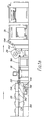
- Figure 1 is a general side elevation view, not necessary to scale, of a line for the production of flat sheetstock suitable for use in the production of rail pads from a composition of ethylene/vinyl acetate copolymer and cork.
- the Figure is split into Figures 1A and 1B.
- Figures 2 and 3 are graphs of Load v Deflection and in which curves are shown for rail pads in accordance with the invention and typical prior art pads.
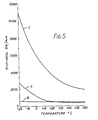
- Figures 4 and 5 are graphs of Stiffness v Temperature showing curves for rail pads in accordance with the invention and typical prior art pads.
- 2 is a screw extruder having an annular die 4
- 6 is a fixed knife edge downstream of the die
- 8 is a support member for the extrudate
- 10 and 12 are conveyors
- 14 is a gauging means
- 16 and 18 are weigh conveyors
- 20 is a cooling chamber
- 22 is an edge trimmer
- 24 is a cutter
- 26 is a stacker.
- the dough is then transferred while still hot to the hopper 102 of extruder 2 having a barrel diameter of 300mm, the screw of which is a pure metering screw with uniform shaft diameter and flight pitch and an L:D ratio of 8:1.
- Screw and barrel temperatures were in the range of 40-60°C and 70-100°C, respectively, and the screw speed was in the range 15 to 30 rpm.
- the feed section formed about 30% of the total length of the screw.
- the mix is advanced along the extruder barrel 104 through the feed and metering sections and then extruded through annular die 4 at a die temperature and pressure of 95 to 120°C and 500-750 psig (about 34 to 51 Kg/cm2) to produce tubular sheet having a nominal thickness of about 5.2mm and an outer circumference of 1.3m.
- the die is formed by a mouth 106 and a tapering nose cone 108 which is supported on three rods, two of which, 110, are located one to each side of the cone and the third of which, 111, is located underneath.
- the cone is adjustable axially relative to the die mouth to adjust the die gap. Adjustment is by combination of a hydraulic ram and pulse motor drive, not shown.
- the nose cone is mounted at the front end of an axially movable piston, the rear end of which is biassed into engagement against the forward end of a screwed rod which is screwed into a tapped collar whereby rotation of the collar relative to the screwed rod by means of the pulse motor drive advances or retracts said rod and hence the piston and the nose cone.
- the ram comprises a hollow shaft through which the nose cone piston extends and the forward end of which is engagable with the rear of the nose cone whereby in operation it can be moved forward to engage the nose cone and push it and its piston forward to relieve the screwed rod of the extrusion pressure during any adjustment.
- the mounting of the outside or mouth of the die includes means such as adjustment screws for centering it relative to the nose cone.
- the tubular sheet is extruded into ambient air but no forced cooling is provided.
- the advancing extrudate is passed over fixed knife edge 6 and is thereby slit longitudinally as it moves forward and the slit tube is supported on and transformed into flat sheet as it advances over support member 8.
- the knife edge is at about the 6 o'clock position relative to the extruded tube but it may also be, for example, at the 12 o'clock position.
- the rate of extrusion is such that as the extrudate emerges from the die, the compression of the cork granules that occurs during extrusion is relieved before the ethylene/vinyl acetate polymer composition has cooled below its softening point thereby producing on the faces of the extrudate a textured surface which has a look and feel rather like that of a rough-skinned reptile.
- the flattened slit tubular sheet is then advanced by conveyor 10 through the nip between rollers 120 and 122 of gauging means 14 in which the sheet is subjected to a small amount of compression and any undesirable protrusions are removed to provide improved thickness control.
- the gauged sheet is then withdrawn by conveyer 12 which operates at the same linear velocity as conveyor 10.
- conveyer 12 which operates at the same linear velocity as conveyor 10.
- conveyors 10 and 12 are formed by a single endless belt 124 which passes over driving, tension and idler rollers 126, 128, 130, 132, 134, 136 and 140.
- weigh conveyor 16 which may be of conventional construction for continuously weighing a measured length of the advancing sheet.
- the weigh conveyor 16 generates a signal proportional to the measured weight and includes means for comparing the signal with a signal of fixed value corresponding to the weight corresponding to the desired thickness of the sheet and means responsive to any difference in the signals is provided for automatically adjusting the axial location of the nose cone 108 relative to the mouth 106 of the extruder die 104 to maintain the thickness of the extrudate within predetermined limits.
- the sheet is passed through a cooling chamber 20, eg., by means of driven endless belt 150, and supported on idler rollers 152. In the chamber, the sheet is subjected to a cooling air stream, suitably at ambient temperature, to cool it below the softening point of the polymer.
- roller 154 which is driven from motor 156 by driving belt 158 and advanced through an edge trimmer 22 where it is trimmed to a predetermined width in known manner.
- the trimmed sheet is then advanced over a further weigh conveyor 18 and thence by driven endless belt 160 to cutter 24 where the sheet is cut into predetermined lengths in known manner, the cut lengths being advanced by further driven endless belts 162, 164 to an automatic stacker 26.
- tubular sheet having the same nominal thickness and outer circumference as before was extruded from the same composition but using extruder screw and barrel temperatures both in the range 100-120°C, an extruder screw speed in the range 8 to 15 rpm, a die temperature in the range 70 to 90°C and a die pressure of 20-30 Kg/cm2.
- the extruder and die assembly employed was basically the same as that used in the first experiment; however, the knife edge was at the 12 o'clock position and the support 8 for the extrudate was replaced by a flat continuous belt conveyor.
- Compressed air at ambient temperature was directed on to the inner face of the tubular extrudate just downstream of the die, between the mouth of the die and the knife edge, to prevent the slit extrudate sticking to surfaces immediately downstream of the die.
- the air was directed in the form of a number of radially inwardly directed jets from a distributor in the form of a hollow ring inside the extrudate and having holes spaced at regular intervals around its outer face, through which the compressed air was projected on to the extrudate. This air cooling is sufficient to cool the extrudate through 1-2°C.
- the performance of the rail pad according to the present invention is marginally better than that of a rubber/cork composite rail pad, particularly in the important region of about 90 to 240 kN, and both are substantially better than that of an ethylene/vinyl acetate copolymer rail pad.
- the stiffness of the rail pad of Experiment 2 reduces from 270 kN/mm at -20°C to 450 kN/mm at +50°C a difference of 2250 kN/mm. That of the ethylene/vinyl acetate copolymer pad (curve B) however decreases from 10,800 kN/mm at -20°C to 2000 kN/mm at +50°C a difference of 8,800 kN/mm.
- the variation in stiffness of the rail pad of the present invention with temperature is much less than that of the pad of ethylene/vinyl acetate copolymer and is much closer to that of a conventional rubber/cork rail pad.
Landscapes
- Chemical & Material Sciences (AREA)
- Engineering & Computer Science (AREA)
- Medicinal Chemistry (AREA)
- Mechanical Engineering (AREA)
- Organic Chemistry (AREA)
- Polymers & Plastics (AREA)
- Health & Medical Sciences (AREA)
- Chemical Kinetics & Catalysis (AREA)
- Materials Engineering (AREA)
- Life Sciences & Earth Sciences (AREA)
- Wood Science & Technology (AREA)
- Manufacture Of Porous Articles, And Recovery And Treatment Of Waste Products (AREA)
- Extrusion Moulding Of Plastics Or The Like (AREA)
- Compositions Of Macromolecular Compounds (AREA)
- Chemical And Physical Treatments For Wood And The Like (AREA)
- Transition And Organic Metals Composition Catalysts For Addition Polymerization (AREA)
- Luminescent Compositions (AREA)
- Casting Or Compression Moulding Of Plastics Or The Like (AREA)
- Slide Fasteners, Snap Fasteners, And Hook Fasteners (AREA)
- Medicines Containing Antibodies Or Antigens For Use As Internal Diagnostic Agents (AREA)
- Footwear And Its Accessory, Manufacturing Method And Apparatuses (AREA)
- Laminated Bodies (AREA)
- Molding Of Porous Articles (AREA)
Abstract
Description
- This invention relates to rail pads and other shaped articles from compositions comprising thermoplastic synthetic resin and cellular material, to the production of such articles by extrusion and to apparatus suitable for use in the production of said articles. While the invention will be described with particular reference to rail pads, it will be understood that the principles involved are not limited thereto and can be applied to other shaped products. Rail pads are employed for building resilience into the support of the rails in a railway permanent way. They may be located between rail and sleeper or baseplate, between baseplate and sleeper or other support (as in the case of a non-ballasted construction) and/or under the sleeper. They may be in the form of individual pads or continuous strip eg., for use with non-ballasted track with continuous rail support.
- Such pads have to be resiliently compressible under axle loads of up to 30 tonnes or more and at rolling stock speeds of up to 250 kph or even higher, weather-resistant and abrasion-resistant. Their mechanical properties should not change significantly over a wide range of temperatures from as low as -20°C or lower to +60°C or even higher, and they must be able to provide a conformable interface between adjacent track members. Preferably they have a useful life that is not less than that of the rail itself, eg. 10-15 years, electrical insulating properties and a high coefficient of friction. Where, for example, they are intended for location directly under a rail, their mechanical characteristics should also be such that they do not deform under clip (or bolt) load and live load in such a way as to reduce significantly the clip toe load bolt load.
- One class of material that has found wide acceptance for the last two decades for moulding into rail pads comprises compositions of rubber and cork. However, because of the need to vulcanise these compositions after moulding, the pads are relatively expensive and research has continued for cheaper alternatives.
- To this end, pads moulded from both high aid low density polyethylenes have been tried but show a tendency to crack. More recently pads moulded from ethylene/vinyl acetate (EVA) copolymers have achieved some acceptance but it has been found that their mechanical properties are too temperature sensitive; they tend to become too stiff at low temperatures and at levels of vinyl acetate which give adequate performance at the elevated temperatures encountered during use, the pads tend to be insufficiently compressible because when loaded in compression between surfaces where fraction is present the material cannot expand laterally. While this latter deficiency has been overcome to some extent by forming the pads with protuberances such as studs or ribs, or otherwise profiling them, this solution has had limited success because foreign particles such as wind blown particles and rust tend to collect in and around the protuberances and thus over time the benefit of the protuberances is lost.
- The incorporation of cellular materials such as cork into these thermoplastic materials has hitherto been tried and rejected because under the conditions of temperature and pressure required to mould the compositions the cork is degraded (ie., denatured and/or mechanically broken down) and at the required moulding pressures either the cork is permanently compressed so that its resilient properties are reduced or lost, or if the mould pressure is released too soon in an attempt to avoid this, the mould shape is lost. The search has therefore continued for alternative materials for use in the production of rail pads which are cheaper than the presently used rubber-cork composites but whose properties are better than the thermoplastic materials presently employed.
- According to the present invention, there is provided a shaped article such as a rail pad comprising a resiliently compressible extrudate having a textured surface and comprising particles or granules of cork or other resiliently compressible cellular material substantially homogeneously dispersed throughout a polymeric matrix comprising a thermoplastic synthetic resin which is at least substantially saturated, said matrix having a stiffness modulus (100 sec modulus at 0.2% strain measured at 23°c) of not more than 1000 MPa and being extrudable in the heat softened state under conditions, especially of temperature, at which the cellular material is not significantly degraded, and the extruded composition having a Poissons ratio which is less than, and preferably not more than 80% and most preferably not more than half that of, the Poissons ratio of the matrix.
- For use in the manufacture of rail pads, the extrudate is conveniently sheet material, and will usually have a thickness in the range of 3 to 15mm. However larger or smaller thicknesses are not excluded.
- Examples of suitable thermoplastic synthetic resins are low density polyethylenes, ethylene copolymers, eg. ethylene/propylene polymers, and plasticised vinyl chloride polymers. It will also be understood that the polymeric matrix may comprise a blend of two or more polymeric materials and that at least one of these may have a stiffness modulus above 1000 MPa provided that the value for the overall blend does not exceed that figure. The blend may include a minor amount of vulcanisable rubber, if desired, but this tends to increase the complexity and cost of manufacture due to the need for a vulcanisation step.
- For the production of rail pads the stiffness modulus of the matrix is preferably 25 to 200 MPa, more preferably 75 to 150 MPa. However lower values eg. down to 2 MPa or even lower may be desirable for some applications. Where the cellular material is cork, the preferred thermoplastic synthetic resins for the production of rail pads are polymers of ethylene and vinyl esters especially vinyl acetate and preferably containing 5 to 50% by weight vinyl acetate. The inclusion of vinyl acetate residues in the copolymer increases elastomeric properties and lowers the softening point. However, the improvement tends to be insignificant below 5% and while the lowering of the softening point which is achieved by increasing the vinyl acetate content lowers the temperature required for melt processing and therefore reduces the risk of degrading the cellular material, the performance of the rail pad at elevated temperatures tends to suffer at vinyl acetate contents above 50% by weight in the copolymer, unless the product is cross-linked. The preferred range for the production of rail pads is 5 to 28% more preferably 7 to 20% and most preferably 10 to 15%, by weight. However higher or lower concentrations may be suitable for other applications and, if desired, one or more further comonomers may be included. Cross-linking may be effected by incorporating a free radical initiator such as a peroxide into the composition or by subjecting the extrudate to irradiation. However this increases the complexity and cost of production and is preferably avoided.
- The size of the cork particles or granules also affects the properties of the composition; the smaller the particle the less its resilience and also the more thermoplast is required as a binder. For rail pads the preferred size range is 0.3 to 2mm preferably 0.5 to 1mm but larger or smaller sizes may be appropriate for other applications. Cork particles obtained by attrition methods are particularly suitable, but other methods eg. stone grinding may be used.
- Below about 5 parts of cork per hundred parts of the matrix (5 phr), little improvement is obtained. As the cork content is increased the deflection under load increases but the composition tends to become more compressible and less resistant to abrasion and at levels above about 60 phr it becomes increasingly difficult to disperse the cork in the matrix. The preferred range is 10 to 50 phr and more preferably 10 to 25 phr for rail pads. While cork is much the preferred cellular material other cellular materials may be used which have levels of compressive strength and resilience similar to those of cork and the ability to be formed into compositions with thermoplastic materials and extruded.
- The composition may include conventional additives such as heat and light stabilisers, processing aids, pigments, and plasticisers but, at least in the case of ethylene/vinyl acetate polymers, the presence of particulate filler, other than the cellular material, in any substantial amount, eg. 10 phr or more, tends to detract from the resilience of the material.
- The method of forming the shaped article must be such as to avoid any significant degradation of the cellular material, eg. by denaturing or breaking down its structure, and also to avoid freezing it in the shaped composition in a substantially compressed state. Thus, the normal techniques for producing shaped articles from thermoplastic compositions by compression or injection moulding are largely unacceptable.
- In accordance with a further aspect of the present invention, there is provided a method of producing a resiliently compressible shaped article from a composition comprising a thermoplastic synthetic resin component which is at least substantially saturated and a resiliently compressible cellular material in particulate or granular form, the method comprising:
- a) forming a hot dough comprising a dispersion of the cellular material in a matrix comprising the synthetic resin component;
- b) feeding said dough with the matrix in the heat-softened state to a screw extruder;
- c) extruding said hot dough through a die under conditions at which there is no significant mechanical breakdown or denaturing of the cellular material but at least some compression thereof; and
- d) causing or allowing the compression in the cellular material in the extrudate to be at least partly, and preferably substantially fully, relieved downstream of the die orifice before the synthetic resin component cools to a temperature which would prevent recovery of the cellular material from a compressed state.
- The formation of the textured surface may be achieved by use of an appropriately profiled die surface, if desired, but adequate texturing will generally be obtained as a result of the relief of the compression in the cellular material.
- One important feature of the process is that the composition of synthetic resin component and cellular material is fed to the screw extruder in a pre-heated dough-like form with the synthetic resin component in a heat softened state. It is possible that the dough could be formed in a pre-mixing stage in the extruder itself with choice of appropriate conditions but preferably it is formed by malaxation in a heavy duty internal mixer, preferably of the interlocking rotor type eg. a Shaw 'Intermix', where the mixing is effected under carefully controlled conditions of pressure, temperature, time and energy consumption in order to obtain a homogeneous mix without any significant denaturing or mechanical breakdown of the particles of cellular material. Denaturing of the particles may be detected by discoloration. Mechanical breakdowns is shown by fragmentation of the particles and a reduction in the compression achieved under a given load.
- The dough so obtained is then fed hot to the extruder. The use of open mills tends to be unsuitable.
- Another important feature is that the extruder screw design and extruder conditions are such that the compression to which the dough is subjected in the extruder barrel is not so high as to cause any significant denaturing and mechanical breakdown of the cellular material. Preferably the feed section of the extruder is so designed that a relatively large length of the total length of the screw in the extruder is exposed to the feed, e.g. at least 25-30% of the total length of the screw. It is also preferred that the screw exerts no significant compression; that is to say, there is substantially no tapering of the hub and substantially no decrease in pitch of the screw in the section of the screw extending between the feed section and the die, at least for the major portion of that part of the length of the screw. A further important feature of the process is that the temperature during extrusion is such as not to cause significant denaturing of the cellular material. Denaturing is a function of temperature and time; that is, at lower temperatures, longer processing times can be used and vice versa. However, processing times at any particular temperature can be extended if the processing is in an enclosed atmosphere. Where cork is employed, the processing temperature should not exceed about 120°C to 125°C where the composition is exposed to air but during processing in enclosed atmospheres temperatures as high as 200°C may be tolerable for short periods. Because of the high coefficient of friction of cork, both the formation of the dough and its subsequent extrusion tend to generate heat and therefore any applied heat should be at a lower temperature and accurate temperature control is important. For the preferred compositions comprising ethylene/vinyl acetate copolymer and cork, it is preferred not to exceed 120°C and the most suitable temperature range is 95-115°C in both the dough-forming and extrusion steps. However, the use of synthetic resins with higher softening points may necessitate somewhat higher temperatures e.g. up to 130°C or even higher.
- Yet another important feature is that the compression of the cellular material caused by the extrusion process is relieved at least partially, and preferably as fully as possible, before the synthetic resin material has cooled to a temperature at which any recovery of the compressed cellular material is prevented. In general it has been found that this is achievable by extruding the composition from the die into an atmosphere that is not below ambient temperature and where there is no forced draft. However, in some cases a heated atmosphere may be desirable and in others a slight surface cooling, e.g. of about 1-2°C may be needed to prevent the extrudate sticking to surfaces immediately downstream of the die. This may be achieved by blowing ambient air over the surface of the extrudate as it leaves the die. Where the process is employed to produce sheet material, the high surface coefficient of friction of the cellular material interferes with uniform distribution of the composition through a straight slit die having a high aspect ratio and it has therefore been found advantageous to use an arcuate die orifice. Preferably an annular die orifice is employed to form a tubular sheet extrudate which may thereafter be slit longitudinally to produce flat sheet from which shaped articles such as rail pads may be cut. By this means sheet up to 1.5m wide or even wider can be produced.
- The annular slot is preferably adjustable for thickness by means of a tapered nose cone which is axially adjustable relative to the die mouth. Preferably the slot thickness is adjusted to produce extrudate having a thickness of at least 1.5mm, preferably 3 to 15mm. Preferably the nose cone is supported externally since internal supports such as between the nose and the mouth of the die can produce undesired surface markings and/or even zones of weakness in the extrudate unless they are specially profiled or high extrusion pressures are used leading to undesirable mechanical breakdown of the cellular particles. The flat sheet obtained by slitting the annular extrudatemay be treated to remove any undesired surface imperfections and to improve uniformity of thickness without destroying the textured nature, eg. by passing through gauging rollers, before the temperature of the extrudate falls below the softening point of the synthetic resin. The product is thereafter cut into lengths and stacked.
- Apparatus suitable for producing flat sheet from a thermoplastic composition containing a component which has a high coefficient of friction may comprise an extruder having an annular die orifice for extruding tubular sheet, preferably at least 1.5mm thick and more preferably 3 to 15mm thick, and means downstream of the die for slitting the advancing extrudate longitudinally. The slitting means is suitably a knife edge located in the path of the extrudate. Where the extrudate is extruded horizontally and the knife is located at or near the 6 o'clock position, the apparatus may also require support and profiling means for supporting the advancing slit tube and opening it out into flat sheet. A gas cushion between the support and profiling means and the extrudate prevents sticking.
- Preferably the thickness of the annular gap is adjustable. Suitably the die comprises a mouth and a tapered nose cone located in the mouth and mounted to be movable axially relative to the die mouth. It is important that the manner in which the nose cone is supported is sufficient to resist the extrusion pressure in the die and prevent any substantial movement of the nose during extrusion. Preferably, final adjustment of the nose cone for concentricity is effected after extrusion has commenced.
- Means may be provided for measuring the thickness of the extrudate, together with means responsive to said measuring means for automatically adjusting the size of the annular gap to maintain the extrudate thickness between predetermined limits. The thickness may be measured directly or indirectly, eg. by weighing fixed lengths of the extrudate.
- The apparatus may further include one or more of the following, namely means for forming a dough of thermo-plastic polymeric material and the component having a high coefficient of friction in a heated atmosphere and feeding it hot to the extruder, gauging means for removing any undesired imperfections from the face of the flat sheet and improving uniformity of thickness, preferably without destroying any texturing on the face, means for cooling the sheet downstream of the gauging means, and means for cutting the cooled sheet into lengths and stacking the lengths of cut sheet.
- By means of the present invention, shaped articles can be produced from compositions comprising thermoplastic polymers and particles or granules of cellular material such as cork without any significant degradation of the cellular material and wherein the particles or granules of cellular material are not in a permanently compressed state. The shaped articles so obtained are resiliently compressible and can be produced with properties making them particularly suitable for use as rail lads. Such pads can be produced substantially cheaper than those made from rubber and cork, primarily because no vulcanisation step is required, and yet their properties such as deflection under load and variation of stiffness with temperature are substantially improved as compared with rail pads made from the thermoplastic materials employed hitherto as alternatives to rubber/ cork compositions.
- When sheets in accordance with this invention and containing even as much as 15 to 20 parts of cork granules per 100 parts of the polymer matrix were flexed by hand, Their apparent stiffness when flexed seemed to be little different from that of corresponding sheets made from the polymer matrix alone and substantially greater than that hitherto considered to be acceptable for materials which would be suitable for use in the production of rail pads. Accordingly, the discovery that their compressibility or deflection under load is substantially increased and that the Poissons ratio is substantially reduced, eg., from 0.5 to about 0.3 or 0.25, or even lower, was unexpected.
- Particularly surprising was the discovery that rail pads manufactured from compositions comprising a thermoplastic resin and a cellular material such as cork in accordance with this invention were at least as compressible as pads manufactured from compositions containing the same amount of cork but with rubber as the matrix although pads from the rubber alone were more compressible than pads of the copolymer alone.
- The textured surface of the shaped article is particularly important in rail pads since it assists the pad to conform with the surfaces constraining it when subjected to compression such as by a rail clip and also increases the surface coefficient of friction. However pads in which a profiled, e.g. ridged or ribbed, surface is superimposed on the textured surface are also included within the scope of the invention.
- The invention will now be described in greater detail with reference to one embodiment thereof and with the aid of accompanying drawings in which:
- Figure 1 is a general side elevation view, not necessary to scale, of a line for the production of flat sheetstock suitable for use in the production of rail pads from a composition of ethylene/vinyl acetate copolymer and cork. The Figure is split into Figures 1A and 1B.
- Figures 2 and 3 are graphs of Load v Deflection and in which curves are shown for rail pads in accordance with the invention and typical prior art pads.
- Figures 4 and 5 are graphs of Stiffness v Temperature showing curves for rail pads in accordance with the invention and typical prior art pads.
- Referring to the Figure 1, 2 is a screw extruder having an annular die 4, 6 is a fixed knife edge downstream of the die, 8 is a support member for the extrudate, 10 and 12 are conveyors, 14 is a gauging means, 16 and 18 are weigh conveyors, 20 is a cooling chamber, 22 is an edge trimmer, 24 is a cutter and 26 is a stacker. 98 parts by weight of an ethylene/vinyl acetate copolymer having a vinyl acetate content of 12.5% by weight, a melt flow index (BS 2782 105C) of 4 dg/min, a density (BS 3412(D) 1976) of 0.931, a softening point (BS 2782 102A) of 68°C and a stiffness modulus (100 sec modulus at 0.2% strain and 23°C) of 94 MPa, 4 parts by weight of a low molecular weight polyethylene carbon black masterbatch containing 50% by weight of carbon black and 15 parts by weight of granulated cork having a particle size in the range 0.5mm to 1mm and a bulk density of 60 kg/m³ were metered to a Shaw 'Intermix' K4 MkIII internal mixer operating with a rotor speed of 33 rpm and ram pressure of 56 psig, and mixed for two minutes to form a having a batch weight of 48kg approximately which is recovered at about 115 to 120°C.
- The dough is then transferred while still hot to the
hopper 102 ofextruder 2 having a barrel diameter of 300mm, the screw of which is a pure metering screw with uniform shaft diameter and flight pitch and an L:D ratio of 8:1. Screw and barrel temperatures were in the range of 40-60°C and 70-100°C, respectively, and the screw speed was in the range 15 to 30 rpm. The feed section formed about 30% of the total length of the screw. - The mix is advanced along the
extruder barrel 104 through the feed and metering sections and then extruded throughannular die 4 at a die temperature and pressure of 95 to 120°C and 500-750 psig (about 34 to 51 Kg/cm²) to produce tubular sheet having a nominal thickness of about 5.2mm and an outer circumference of 1.3m. - The die is formed by a
mouth 106 and a taperingnose cone 108 which is supported on three rods, two of which, 110, are located one to each side of the cone and the third of which, 111, is located underneath. The cone is adjustable axially relative to the die mouth to adjust the die gap. Adjustment is by combination of a hydraulic ram and pulse motor drive, not shown. The nose cone is mounted at the front end of an axially movable piston, the rear end of which is biassed into engagement against the forward end of a screwed rod which is screwed into a tapped collar whereby rotation of the collar relative to the screwed rod by means of the pulse motor drive advances or retracts said rod and hence the piston and the nose cone. The ram comprises a hollow shaft through which the nose cone piston extends and the forward end of which is engagable with the rear of the nose cone whereby in operation it can be moved forward to engage the nose cone and push it and its piston forward to relieve the screwed rod of the extrusion pressure during any adjustment. The mounting of the outside or mouth of the die includes means such as adjustment screws for centering it relative to the nose cone. - The tubular sheet is extruded into ambient air but no forced cooling is provided. The advancing extrudate is passed over fixed
knife edge 6 and is thereby slit longitudinally as it moves forward and the slit tube is supported on and transformed into flat sheet as it advances oversupport member 8. In the embodiment illustrated, the knife edge is at about the 6 o'clock position relative to the extruded tube but it may also be, for example, at the 12 o'clock position. - The rate of extrusion is such that as the extrudate emerges from the die, the compression of the cork granules that occurs during extrusion is relieved before the ethylene/vinyl acetate polymer composition has cooled below its softening point thereby producing on the faces of the extrudate a textured surface which has a look and feel rather like that of a rough-skinned reptile.
- The flattened slit tubular sheet is then advanced by
conveyor 10 through the nip betweenrollers - The gauged sheet is then withdrawn by
conveyer 12 which operates at the same linear velocity asconveyor 10. To this end, conveniently conveyors 10 and 12 are formed by a singleendless belt 124 which passes over driving, tension andidler rollers conveyor 12 the sheet is advanced to weighconveyor 16 which may be of conventional construction for continuously weighing a measured length of the advancing sheet. Suitably, theweigh conveyor 16 generates a signal proportional to the measured weight and includes means for comparing the signal with a signal of fixed value corresponding to the weight corresponding to the desired thickness of the sheet and means responsive to any difference in the signals is provided for automatically adjusting the axial location of thenose cone 108 relative to themouth 106 of the extruder die 104 to maintain the thickness of the extrudate within predetermined limits. After theweigh conveyor 16, the sheet is passed through a coolingchamber 20, eg., by means of drivenendless belt 150, and supported onidler rollers 152. In the chamber, the sheet is subjected to a cooling air stream, suitably at ambient temperature, to cool it below the softening point of the polymer. It is withdrawn from the chamber byroller 154 which is driven frommotor 156 by drivingbelt 158 and advanced through anedge trimmer 22 where it is trimmed to a predetermined width in known manner. The trimmed sheet is then advanced over afurther weigh conveyor 18 and thence by drivenendless belt 160 tocutter 24 where the sheet is cut into predetermined lengths in known manner, the cut lengths being advanced by further drivenendless belts automatic stacker 26. - In a second experiment, tubular sheet having the same nominal thickness and outer circumference as before was extruded from the same composition but using extruder screw and barrel temperatures both in the range 100-120°C, an extruder screw speed in the
range 8 to 15 rpm, a die temperature in the range 70 to 90°C and a die pressure of 20-30 Kg/cm². - The extruder and die assembly employed was basically the same as that used in the first experiment; however, the knife edge was at the 12 o'clock position and the
support 8 for the extrudate was replaced by a flat continuous belt conveyor. Compressed air at ambient temperature was directed on to the inner face of the tubular extrudate just downstream of the die, between the mouth of the die and the knife edge, to prevent the slit extrudate sticking to surfaces immediately downstream of the die. The air was directed in the form of a number of radially inwardly directed jets from a distributor in the form of a hollow ring inside the extrudate and having holes spaced at regular intervals around its outer face, through which the compressed air was projected on to the extrudate. This air cooling is sufficient to cool the extrudate through 1-2°C. - Rail pads having a nominal thickness of 5.2mm were cut from the sheet formed in each of the two experiments. The pads had the following typical properties:

- Load deflection characteristics measured using a Mayes ESH 1000-4C servo hydraulic testing machine conforming generally to ISO 2856 on 170mm x 148mm x 5.2mm samples.
- For static load deflection, 6 preconditioning cycles were completed from zero to 250 kN at 6 cycles/minute and the load deflection curve was then plotted from zero to 250 kN at 1200 kN/minute in an atmosphere at controlled temperature. The results were as follows.

- Results for Dynamic deflection (sinusoidally at 5 Hz between 14 kN and 89 kN) are as follows:

- The Deflection (mm) of each of the pads of
Experiments 1 and 2 was plotted against Load (kN). The resultant curves are shown as curves (A) in Figures 2 and 3, respectively, of the accompanying drawings which, for the purposes of comparison, also show curves for (B) a prior art rail pad of rubber/cork composition and (C) a prior art rail pad moulded from ethylene/vinyl acetate copolymer. - As can be seen in these Figures, the performance of the rail pad according to the present invention is marginally better than that of a rubber/cork composite rail pad, particularly in the important region of about 90 to 240 kN, and both are substantially better than that of an ethylene/vinyl acetate copolymer rail pad.
- The Stiffness (kN/mm of each the pads of
Experiments 1 and 2 was plotted against Temperature (°C) and at working load of 89 kN. The resultant curves are shown as curves (A) in Figure 4 and 5 respectively which also show the corresponding curves for rail pads moulded of rubber/cork composition (curve B) and for rail pads moulded from ethylene/vinyl acetate copolymer (curve C). As can be seen from Figure 4, the stiffness of the rail paid of Experiment 1 varies hardly at all between -20°C and +60°C and its performance approaches that of the rubber/cork material (curve B) whereas the stiffness of the ethylene/vinyl acetate copolymer pad (curve C) at +60°C is only about one fifth of its value at -20°C. - The stiffness of the rail pad of
Experiment 2 reduces from 270 kN/mm at -20°C to 450 kN/mm at +50°C a difference of 2250 kN/mm. That of the ethylene/vinyl acetate copolymer pad (curve B) however decreases from 10,800 kN/mm at -20°C to 2000 kN/mm at +50°C a difference of 8,800 kN/mm. Thus, the variation in stiffness of the rail pad of the present invention with temperature is much less than that of the pad of ethylene/vinyl acetate copolymer and is much closer to that of a conventional rubber/cork rail pad.
Claims (10)
- A shaped article suitable for use as or in the production of rail pads and comprising a resiliently compressible extruded sheet of a composition comprising particles or granules of cork or similarly resiliently compressible cellular material and a polymeric matrix characterised in that said particles or granules have a particle size in the range 0.3 mm to 2 mm, are dispersed in substantially undegraded form throughout said polymeric matrix and are present in an amount of up to 60 parts per 100 parts of the matrix, by weight, said polymeric matrix comprises a thermoplastic synthetic resin which is at least substantially saturated, has a stiffness modulus (100 sec modulus at O.2% strain measured at 23°C) of not more than 1,000 MPa and is extrudable in the heat softened state under conditions at which said cellular material is not substantially degraded, said extruded composition has a Poissons ratio which is less than that of the matrix and said article has a textured surface resulting from at least partial relief of the compression of the cellular material in the extrusion process.
- A shaped article as claimed in claim 1 characterised in that it is a rail pad formed from extruded sheet and is from 3 to 15 mm thick.
- A shaped article as claimed in claim 1 or claim 2 characterised in that the matrix has a stiffness in the range of 25 to 250 MPa.
- A shaped article as claimed in any one of claims 1 to 3 wherein the matrix comprises ethylene/vinyl acetate copolymer containing 5 to 50% vinyl acetate, by weight.
- A shaped article as claimed in any one of claims 1 to 4 characterised in that the cork is present in an amount of 10 to 25 parts, per hundred parts of the matrix, by weight.
- A method of producing a resiliently compressible shaped article from a composition comprising a thermoplastic synthetic resin component which is at least substantially saturated and cork or similarly resiliently compressible cellular material in particulate or granular form, the method comprising:-a) forming a hot dough comprising a dispersion of the cellular material in a matrix comprising the synthetic resin component;b) feeding said dough with the matrix in the heat softened state to a screw extruder;c) extruding said hot dough through a die under conditions at which there is no significant mechanical breakdown or denaturing of the cellular material but at least some compression thereof; andd) causing or allowing the compression in the cellular material in the extrudate to be at least partly, relieved downstream of the die orifice before the synthetic resin component cools to a temperature which would prevent recovery of the cellular material from a compressed state.
- A method as claimed in claim 6 in which the dough is formed in a heavy duty internal mixer.
- A method as claimed in claim 6 or claim 7 in which the cellular material is cork and the synthetic resin component comprises ethylene/vinyl acetate copolymer and the temperature of the dough in steps (a), (b) and (c) does not exceed 120°C.
- A method as claimed in any one of claims 6 to 8 wherein the dough is extruded into the form of a cylindrical sheet which is then slit longitudinally and opened into a flat sheet.
- A method as claimed in claim 9 wherein the flat sheet is passed through gauging rollers to remove undesired surface imperfections and improve uniformity of thickness without destroying the textured finish of the surface.
Priority Applications (1)
| Application Number | Priority Date | Filing Date | Title |
|---|---|---|---|
| AT85301629T ATE61812T1 (en) | 1984-03-21 | 1985-03-08 | ARTICLES MOLDED FROM A COMPOSITION OF A THERMOPLASTIC SYNTHETIC RESIN AND FOAM MATERIAL AND PROCESS FOR THEIR MANUFACTURE. |
Applications Claiming Priority (2)
| Application Number | Priority Date | Filing Date | Title |
|---|---|---|---|
| GB8407311 | 1984-03-21 | ||
| GB8407311A GB8407311D0 (en) | 1984-03-21 | 1984-03-21 | Shaped article of thermoplastic synthetic resin and cellular material |
Publications (3)
| Publication Number | Publication Date |
|---|---|
| EP0156570A2 EP0156570A2 (en) | 1985-10-02 |
| EP0156570A3 EP0156570A3 (en) | 1986-12-30 |
| EP0156570B1 true EP0156570B1 (en) | 1991-03-20 |
Family
ID=10558436
Family Applications (1)
| Application Number | Title | Priority Date | Filing Date |
|---|---|---|---|
| EP19850301629 Expired - Lifetime EP0156570B1 (en) | 1984-03-21 | 1985-03-08 | Shaped article of composition comprising thermoplastic synthetic resin and cellular material and method of producing same |
Country Status (10)
| Country | Link |
|---|---|
| US (1) | US4624880A (en) |
| EP (1) | EP0156570B1 (en) |
| AT (1) | ATE61812T1 (en) |
| AU (1) | AU570546B2 (en) |
| CA (1) | CA1236668A (en) |
| DE (1) | DE3582184D1 (en) |
| ES (1) | ES8606105A1 (en) |
| FI (1) | FI87320C (en) |
| GB (1) | GB8407311D0 (en) |
| PT (1) | PT80134B (en) |
Families Citing this family (12)
| Publication number | Priority date | Publication date | Assignee | Title |
|---|---|---|---|---|
| DE3718545A1 (en) * | 1987-06-03 | 1988-12-22 | Signode System Gmbh | EDGE PROTECTION PROFILE SECTION AND METHOD FOR PRODUCING THE SAME |
| FR2672002B1 (en) * | 1991-01-25 | 1995-05-24 | Sabate Sa Bouchons Champagne | COMPOSITION FOR USE IN THE MANUFACTURE OF A CAP AND METHOD OF MANUFACTURE. |
| US6245823B1 (en) * | 1995-10-20 | 2001-06-12 | Free-Flow Packaging International, Inc. | Composition and blowing agent for making foamed polyethylene material |
| FR2766324B1 (en) * | 1997-07-23 | 1999-10-22 | Speed France | CUTTING WIRE WITH IMPROVED DEGRADABILITY FOR BRUSH CUTTERS AND TRIMMERS |
| USD435217S (en) * | 1999-04-15 | 2000-12-19 | Supreme Corq | Synthetic cork for a liquid container |
| US6447871B1 (en) | 1999-09-27 | 2002-09-10 | The Aerospace Corporation | Composite materials with embedded machines |
| US6830793B2 (en) | 1999-09-27 | 2004-12-14 | The Aerospace Corporation | Composite damping material |
| US9026578B2 (en) | 2004-05-14 | 2015-05-05 | Microsoft Corporation | Systems and methods for persisting data between web pages |
| US7461726B2 (en) * | 2005-02-25 | 2008-12-09 | The Aerospace Corporation | Force diversion apparatus and methods |
| US7367898B2 (en) * | 2005-02-25 | 2008-05-06 | The Aerospace Corporation | Force diversion apparatus and methods and devices including the same |
| BRPI0604459B1 (en) * | 2006-10-03 | 2014-04-15 | Jose Norberto Pinto Coelho | STOPPING PROCESS FROM AGLOMERATION OF MIXED MATERIALS |
| US9194452B2 (en) | 2012-10-31 | 2015-11-24 | The Aerospace Corporation | High stiffness vibration damping apparatus, methods and systems |
Family Cites Families (9)
| Publication number | Priority date | Publication date | Assignee | Title |
|---|---|---|---|---|
| FR747777A (en) * | 1932-03-15 | 1933-06-23 | Process for obtaining, with artificial plastics based on synthetic resins, objects endowed with a certain elasticity | |
| GB683067A (en) * | 1951-06-26 | 1952-11-19 | Dodge Cork Company | A laminar product of polymerized vinyl chloride resin and comminuted cork and process of manufacturing the same |
| DE1194569B (en) * | 1957-05-11 | 1965-06-10 | Justco As | Process for the production of molded bodies from a mixture of crushed cork and a thermoplastic material |
| AU441798B2 (en) * | 1970-03-31 | 1973-10-22 | Amine resin and process | |
| GB1522620A (en) * | 1974-12-05 | 1978-08-23 | Fillite Ltd | Moulding processes and material |
| US4042543A (en) * | 1976-02-13 | 1977-08-16 | Strickman Robert L | Material for stoppers |
| DE7720993U1 (en) * | 1977-07-05 | 1977-10-20 | Fa. Carl Freudenberg, 6940 Weinheim | Self-laying base plate |
| US4347272A (en) * | 1980-07-11 | 1982-08-31 | Schmidt Donald H | Flexible composition of cork and sheet structures made therefrom |
| GB2140448B (en) * | 1983-05-27 | 1986-08-13 | Cork Manufacturing Company Lim | Antivibration mat |
-
1984
- 1984-03-21 GB GB8407311A patent/GB8407311D0/en active Pending
-
1985
- 1985-03-08 EP EP19850301629 patent/EP0156570B1/en not_active Expired - Lifetime
- 1985-03-08 DE DE8585301629T patent/DE3582184D1/en not_active Expired - Lifetime
- 1985-03-08 AT AT85301629T patent/ATE61812T1/en not_active IP Right Cessation
- 1985-03-18 US US06/713,574 patent/US4624880A/en not_active Expired - Fee Related
- 1985-03-18 ES ES541361A patent/ES8606105A1/en not_active Expired
- 1985-03-19 AU AU40124/85A patent/AU570546B2/en not_active Ceased
- 1985-03-20 PT PT80134A patent/PT80134B/en not_active IP Right Cessation
- 1985-03-21 CA CA000477107A patent/CA1236668A/en not_active Expired
- 1985-03-21 FI FI851129A patent/FI87320C/en not_active IP Right Cessation
Also Published As
| Publication number | Publication date |
|---|---|
| CA1236668A (en) | 1988-05-17 |
| PT80134B (en) | 1987-06-17 |
| EP0156570A2 (en) | 1985-10-02 |
| EP0156570A3 (en) | 1986-12-30 |
| ES541361A0 (en) | 1986-04-16 |
| AU4012485A (en) | 1985-09-26 |
| AU570546B2 (en) | 1988-03-17 |
| US4624880A (en) | 1986-11-25 |
| ATE61812T1 (en) | 1991-04-15 |
| PT80134A (en) | 1985-04-01 |
| ES8606105A1 (en) | 1986-04-16 |
| FI851129L (en) | 1985-09-22 |
| FI851129A0 (en) | 1985-03-21 |
| FI87320C (en) | 1992-12-28 |
| DE3582184D1 (en) | 1991-04-25 |
| FI87320B (en) | 1992-09-15 |
| GB8407311D0 (en) | 1984-04-26 |
Similar Documents
| Publication | Publication Date | Title |
|---|---|---|
| US4624880A (en) | Shaped article of composition comprising thermoplastic synthetic resin and cellular material and method of producing same | |
| US5938994A (en) | Method for manufacturing of plastic wood-fiber pellets | |
| EP2565004B1 (en) | Method of manufacturing composite pellets for extrusion, and composite pellets thus produced | |
| EP1152882B1 (en) | Method and apparatus for extruding polycarbonate material of low bulk density | |
| EP2631060A1 (en) | A low-pressure process for preparing a polymer film by extrusion-blowing | |
| CA2106820C (en) | Process and device for producing extrudates from ultra-high molecular weight polyethylene | |
| US5393473A (en) | Process for pelleting ultra-high molecular weight polyethylene | |
| US3655850A (en) | Method for the continuous production of glass fiber reinforced thermoplastics | |
| US5476628A (en) | GMT sheet material produced from GMT recyclate | |
| GB2166568A (en) | A method and apparatus for monitoring deviations in the dimensions of a continuously extruded profile strip | |
| EP1389519A1 (en) | A process for producing a covering of an elastomer material and product thereof | |
| US3244786A (en) | Extrusion process and apparatus therefor | |
| US6699416B2 (en) | Impact modifier material and method and apparatus for the production thereof | |
| EP3974138A1 (en) | Method of producing long fibre thermoplastic material | |
| KR101166370B1 (en) | A profile manufacturing system and a method for manufacturing the same | |
| EP0272606B1 (en) | Process for the extrusion for ultra-high molecular-weight polyethylene | |
| CN101524889B (en) | Method and apparatus for manufacturing a rubber sheet containing short fibers | |
| JP2816715B2 (en) | Method of manufacturing resin shaft for paper feed roller | |
| KR20240170144A (en) | A method of manufacturing a foam with improved adhesion and flowability using a recycled foam | |
| US20020122941A1 (en) | Plastic logs | |
| EP0642406A1 (en) | Method and apparatus for mixing carbon black and polymeric material | |
| Belyi | Extrusion of Composites Based on Crushed Wood and Thermoplastics | |
| CA2316228A1 (en) | Process and device for the extrusion of polymers with high percentage of inert materials | |
| Sohn | Gravimetric Feeding in the Extrusion of Pipes, Profiles and Films | |
| JPH0747544A (en) | Extuder for thermosetting resin molding material |
Legal Events
| Date | Code | Title | Description |
|---|---|---|---|
| PUAI | Public reference made under article 153(3) epc to a published international application that has entered the european phase |
Free format text: ORIGINAL CODE: 0009012 |
|
| AK | Designated contracting states |
Designated state(s): AT BE CH DE FR GB IT LI LU NL SE |
|
| PUAL | Search report despatched |
Free format text: ORIGINAL CODE: 0009013 |
|
| AK | Designated contracting states |
Kind code of ref document: A3 Designated state(s): AT BE CH DE FR GB IT LI LU NL SE |
|
| 17P | Request for examination filed |
Effective date: 19870622 |
|
| 17Q | First examination report despatched |
Effective date: 19881222 |
|
| GRAA | (expected) grant |
Free format text: ORIGINAL CODE: 0009210 |
|
| AK | Designated contracting states |
Kind code of ref document: B1 Designated state(s): AT BE CH DE FR GB IT LI LU NL SE |
|
| PG25 | Lapsed in a contracting state [announced via postgrant information from national office to epo] |
Ref country code: IT Free format text: LAPSE BECAUSE OF FAILURE TO SUBMIT A TRANSLATION OF THE DESCRIPTION OR TO PAY THE FEE WITHIN THE PRESCRIBED TIME-LIMIT;WARNING: LAPSES OF ITALIAN PATENTS WITH EFFECTIVE DATE BEFORE 2007 MAY HAVE OCCURRED AT ANY TIME BEFORE 2007. THE CORRECT EFFECTIVE DATE MAY BE DIFFERENT FROM THE ONE RECORDED. Effective date: 19910320 Ref country code: AT Effective date: 19910320 |
|
| REF | Corresponds to: |
Ref document number: 61812 Country of ref document: AT Date of ref document: 19910415 Kind code of ref document: T |
|
| REF | Corresponds to: |
Ref document number: 3582184 Country of ref document: DE Date of ref document: 19910425 |
|
| ET | Fr: translation filed | ||
| PLBE | No opposition filed within time limit |
Free format text: ORIGINAL CODE: 0009261 |
|
| STAA | Information on the status of an ep patent application or granted ep patent |
Free format text: STATUS: NO OPPOSITION FILED WITHIN TIME LIMIT |
|
| 26N | No opposition filed | ||
| PG25 | Lapsed in a contracting state [announced via postgrant information from national office to epo] |
Ref country code: LU Free format text: LAPSE BECAUSE OF NON-PAYMENT OF DUE FEES Effective date: 19920331 |
|
| PGFP | Annual fee paid to national office [announced via postgrant information from national office to epo] |
Ref country code: SE Payment date: 19940304 Year of fee payment: 10 |
|
| PGFP | Annual fee paid to national office [announced via postgrant information from national office to epo] |
Ref country code: CH Payment date: 19940316 Year of fee payment: 10 |
|
| PGFP | Annual fee paid to national office [announced via postgrant information from national office to epo] |
Ref country code: FR Payment date: 19940328 Year of fee payment: 10 |
|
| PGFP | Annual fee paid to national office [announced via postgrant information from national office to epo] |
Ref country code: BE Payment date: 19940331 Year of fee payment: 10 |
|
| EAL | Se: european patent in force in sweden |
Ref document number: 85301629.3 |
|
| PG25 | Lapsed in a contracting state [announced via postgrant information from national office to epo] |
Ref country code: SE Effective date: 19950309 |
|
| PG25 | Lapsed in a contracting state [announced via postgrant information from national office to epo] |
Ref country code: LI Effective date: 19950331 Ref country code: CH Effective date: 19950331 Ref country code: BE Effective date: 19950331 |
|
| BERE | Be: lapsed |
Owner name: JAMES WALKER & CY LTD Effective date: 19950331 |
|
| PG25 | Lapsed in a contracting state [announced via postgrant information from national office to epo] |
Ref country code: FR Free format text: LAPSE BECAUSE OF NON-PAYMENT OF DUE FEES Effective date: 19951130 |
|
| REG | Reference to a national code |
Ref country code: CH Ref legal event code: PL |
|
| EUG | Se: european patent has lapsed |
Ref document number: 85301629.3 |
|
| REG | Reference to a national code |
Ref country code: FR Ref legal event code: ST |
|
| PGFP | Annual fee paid to national office [announced via postgrant information from national office to epo] |
Ref country code: GB Payment date: 19970228 Year of fee payment: 13 |
|
| PGFP | Annual fee paid to national office [announced via postgrant information from national office to epo] |
Ref country code: NL Payment date: 19970331 Year of fee payment: 13 |
|
| PGFP | Annual fee paid to national office [announced via postgrant information from national office to epo] |
Ref country code: DE Payment date: 19970429 Year of fee payment: 13 |
|
| PG25 | Lapsed in a contracting state [announced via postgrant information from national office to epo] |
Ref country code: GB Free format text: LAPSE BECAUSE OF NON-PAYMENT OF DUE FEES Effective date: 19980308 |
|
| PG25 | Lapsed in a contracting state [announced via postgrant information from national office to epo] |
Ref country code: NL Free format text: LAPSE BECAUSE OF NON-PAYMENT OF DUE FEES Effective date: 19981001 |
|
| GBPC | Gb: european patent ceased through non-payment of renewal fee |
Effective date: 19980308 |
|
| NLV4 | Nl: lapsed or anulled due to non-payment of the annual fee |
Effective date: 19981001 |
|
| PG25 | Lapsed in a contracting state [announced via postgrant information from national office to epo] |
Ref country code: DE Free format text: LAPSE BECAUSE OF NON-PAYMENT OF DUE FEES Effective date: 19981201 |