EP0145019B1 - Pyridazinone derivatives and salts thereof - Google Patents
Pyridazinone derivatives and salts thereof Download PDFInfo
- Publication number
- EP0145019B1 EP0145019B1 EP84115292A EP84115292A EP0145019B1 EP 0145019 B1 EP0145019 B1 EP 0145019B1 EP 84115292 A EP84115292 A EP 84115292A EP 84115292 A EP84115292 A EP 84115292A EP 0145019 B1 EP0145019 B1 EP 0145019B1
- Authority
- EP
- European Patent Office
- Prior art keywords
- pyridazinone
- pyridyl
- aminophenyl
- methyl
- set forth
- Prior art date
- Legal status (The legal status is an assumption and is not a legal conclusion. Google has not performed a legal analysis and makes no representation as to the accuracy of the status listed.)
- Expired - Lifetime
Links
- AAILEWXSEQLMNI-UHFFFAOYSA-N 1h-pyridazin-6-one Chemical class OC1=CC=CN=N1 AAILEWXSEQLMNI-UHFFFAOYSA-N 0.000 title claims description 18
- 150000003839 salts Chemical class 0.000 title claims description 8
- 150000001875 compounds Chemical class 0.000 claims description 19
- -1 cyano, hydroxyl Chemical group 0.000 claims description 13
- 239000000496 cardiotonic agent Substances 0.000 claims description 9
- 125000000217 alkyl group Chemical group 0.000 claims description 8
- 125000003917 carbamoyl group Chemical group [H]N([H])C(*)=O 0.000 claims description 7
- 125000002496 methyl group Chemical group [H]C([H])([H])* 0.000 claims description 7
- 125000004442 acylamino group Chemical group 0.000 claims description 5
- 125000003545 alkoxy group Chemical group 0.000 claims description 5
- 125000004453 alkoxycarbonyl group Chemical group 0.000 claims description 5
- 125000003178 carboxy group Chemical group [H]OC(*)=O 0.000 claims description 5
- 125000002924 primary amino group Chemical group [H]N([H])* 0.000 claims description 5
- 125000003282 alkyl amino group Chemical group 0.000 claims description 4
- 125000004435 hydrogen atom Chemical group [H]* 0.000 claims description 4
- 125000002883 imidazolyl group Chemical group 0.000 claims description 4
- 150000007522 mineralic acids Chemical class 0.000 claims description 4
- 150000007524 organic acids Chemical class 0.000 claims description 4
- 125000004076 pyridyl group Chemical group 0.000 claims description 4
- 125000002947 alkylene group Chemical group 0.000 claims description 3
- 125000006615 aromatic heterocyclic group Chemical group 0.000 claims description 3
- 125000004663 dialkyl amino group Chemical group 0.000 claims description 3
- 125000002887 hydroxy group Chemical group [H]O* 0.000 claims description 3
- 125000004433 nitrogen atom Chemical group N* 0.000 claims description 3
- 125000005843 halogen group Chemical group 0.000 claims description 2
- 125000003373 pyrazinyl group Chemical group 0.000 claims description 2
- 125000003226 pyrazolyl group Chemical group 0.000 claims description 2
- 125000002098 pyridazinyl group Chemical group 0.000 claims description 2
- 125000000714 pyrimidinyl group Chemical group 0.000 claims description 2
- 125000000168 pyrrolyl group Chemical group 0.000 claims description 2
- UFHFLCQGNIYNRP-UHFFFAOYSA-N Hydrogen Chemical compound [H][H] UFHFLCQGNIYNRP-UHFFFAOYSA-N 0.000 claims 1
- 239000003937 drug carrier Substances 0.000 claims 1
- 229910052739 hydrogen Inorganic materials 0.000 claims 1
- 239000001257 hydrogen Substances 0.000 claims 1
- 238000004519 manufacturing process Methods 0.000 claims 1
- 239000008194 pharmaceutical composition Substances 0.000 claims 1
- ZMXDDKWLCZADIW-UHFFFAOYSA-N N,N-Dimethylformamide Chemical compound CN(C)C=O ZMXDDKWLCZADIW-UHFFFAOYSA-N 0.000 description 18
- LFQSCWFLJHTTHZ-UHFFFAOYSA-N Ethanol Natural products CCO LFQSCWFLJHTTHZ-UHFFFAOYSA-N 0.000 description 16
- 239000013078 crystal Substances 0.000 description 13
- OKKJLVBELUTLKV-UHFFFAOYSA-N Methanol Chemical compound OC OKKJLVBELUTLKV-UHFFFAOYSA-N 0.000 description 12
- CSCPPACGZOOCGX-UHFFFAOYSA-N Acetone Chemical compound CC(C)=O CSCPPACGZOOCGX-UHFFFAOYSA-N 0.000 description 9
- HEMHJVSKTPXQMS-UHFFFAOYSA-M Sodium hydroxide Chemical compound [OH-].[Na+] HEMHJVSKTPXQMS-UHFFFAOYSA-M 0.000 description 9
- 238000002360 preparation method Methods 0.000 description 9
- 241000282472 Canis lupus familiaris Species 0.000 description 6
- RTZKZFJDLAIYFH-UHFFFAOYSA-N Diethyl ether Chemical compound CCOCC RTZKZFJDLAIYFH-UHFFFAOYSA-N 0.000 description 6
- 0 O=*(CC1)NN=C1C(CCC1)=CC=C1NC1=NC=CCC1 Chemical compound O=*(CC1)NN=C1C(CCC1)=CC=C1NC1=NC=CCC1 0.000 description 6
- ZMANZCXQSJIPKH-UHFFFAOYSA-N Triethylamine Chemical compound CCN(CC)CC ZMANZCXQSJIPKH-UHFFFAOYSA-N 0.000 description 6
- 235000019441 ethanol Nutrition 0.000 description 6
- 239000000243 solution Substances 0.000 description 6
- 239000000203 mixture Substances 0.000 description 5
- VLKZOEOYAKHREP-UHFFFAOYSA-N n-Hexane Chemical compound CCCCCC VLKZOEOYAKHREP-UHFFFAOYSA-N 0.000 description 5
- 210000003540 papillary muscle Anatomy 0.000 description 5
- 239000011541 reaction mixture Substances 0.000 description 5
- XLYOFNOQVPJJNP-UHFFFAOYSA-N water Substances O XLYOFNOQVPJJNP-UHFFFAOYSA-N 0.000 description 5
- QCQCHGYLTSGIGX-GHXANHINSA-N 4-[[(3ar,5ar,5br,7ar,9s,11ar,11br,13as)-5a,5b,8,8,11a-pentamethyl-3a-[(5-methylpyridine-3-carbonyl)amino]-2-oxo-1-propan-2-yl-4,5,6,7,7a,9,10,11,11b,12,13,13a-dodecahydro-3h-cyclopenta[a]chrysen-9-yl]oxy]-2,2-dimethyl-4-oxobutanoic acid Chemical compound N([C@@]12CC[C@@]3(C)[C@]4(C)CC[C@H]5C(C)(C)[C@@H](OC(=O)CC(C)(C)C(O)=O)CC[C@]5(C)[C@H]4CC[C@@H]3C1=C(C(C2)=O)C(C)C)C(=O)C1=CN=CC(C)=C1 QCQCHGYLTSGIGX-GHXANHINSA-N 0.000 description 4
- HEDRZPFGACZZDS-UHFFFAOYSA-N Chloroform Chemical compound ClC(Cl)Cl HEDRZPFGACZZDS-UHFFFAOYSA-N 0.000 description 4
- 230000008602 contraction Effects 0.000 description 4
- 230000000694 effects Effects 0.000 description 4
- 239000002904 solvent Substances 0.000 description 4
- QTBSBXVTEAMEQO-UHFFFAOYSA-N Acetic acid Chemical compound CC(O)=O QTBSBXVTEAMEQO-UHFFFAOYSA-N 0.000 description 3
- UHOVQNZJYSORNB-UHFFFAOYSA-N Benzene Chemical compound C1=CC=CC=C1 UHOVQNZJYSORNB-UHFFFAOYSA-N 0.000 description 3
- XEKOWRVHYACXOJ-UHFFFAOYSA-N Ethyl acetate Chemical compound CCOC(C)=O XEKOWRVHYACXOJ-UHFFFAOYSA-N 0.000 description 3
- VEXZGXHMUGYJMC-UHFFFAOYSA-N Hydrochloric acid Chemical compound Cl VEXZGXHMUGYJMC-UHFFFAOYSA-N 0.000 description 3
- 230000037396 body weight Effects 0.000 description 3
- 230000000747 cardiac effect Effects 0.000 description 3
- 230000003184 effect on constriction Effects 0.000 description 3
- 210000002216 heart Anatomy 0.000 description 3
- 210000005246 left atrium Anatomy 0.000 description 3
- 238000000034 method Methods 0.000 description 3
- 210000000056 organ Anatomy 0.000 description 3
- 238000010898 silica gel chromatography Methods 0.000 description 3
- XMTUHSIIBGFSTQ-UHFFFAOYSA-N 3-(4-aminophenyl)-4,5-dihydro-1h-pyridazin-6-one Chemical compound C1=CC(N)=CC=C1C1=NNC(=O)CC1 XMTUHSIIBGFSTQ-UHFFFAOYSA-N 0.000 description 2
- MPZMVUQGXAOJIK-UHFFFAOYSA-N 4-bromopyridine;hydron;chloride Chemical compound Cl.BrC1=CC=NC=C1 MPZMVUQGXAOJIK-UHFFFAOYSA-N 0.000 description 2
- XGAFCCUNHIMIRV-UHFFFAOYSA-N 4-chloropyridine;hydron;chloride Chemical compound Cl.ClC1=CC=NC=C1 XGAFCCUNHIMIRV-UHFFFAOYSA-N 0.000 description 2
- IJGRMHOSHXDMSA-UHFFFAOYSA-N Atomic nitrogen Chemical compound N#N IJGRMHOSHXDMSA-UHFFFAOYSA-N 0.000 description 2
- 241000700199 Cavia porcellus Species 0.000 description 2
- SECXISVLQFMRJM-UHFFFAOYSA-N N-Methylpyrrolidone Chemical compound CN1CCCC1=O SECXISVLQFMRJM-UHFFFAOYSA-N 0.000 description 2
- ISWSIDIOOBJBQZ-UHFFFAOYSA-N Phenol Chemical compound OC1=CC=CC=C1 ISWSIDIOOBJBQZ-UHFFFAOYSA-N 0.000 description 2
- NBIIXXVUZAFLBC-UHFFFAOYSA-N Phosphoric acid Chemical compound OP(O)(O)=O NBIIXXVUZAFLBC-UHFFFAOYSA-N 0.000 description 2
- CDBYLPFSWZWCQE-UHFFFAOYSA-L Sodium Carbonate Chemical compound [Na+].[Na+].[O-]C([O-])=O CDBYLPFSWZWCQE-UHFFFAOYSA-L 0.000 description 2
- WYURNTSHIVDZCO-UHFFFAOYSA-N Tetrahydrofuran Chemical compound C1CCOC1 WYURNTSHIVDZCO-UHFFFAOYSA-N 0.000 description 2
- 230000007059 acute toxicity Effects 0.000 description 2
- 231100000403 acute toxicity Toxicity 0.000 description 2
- 210000000709 aorta Anatomy 0.000 description 2
- 230000036772 blood pressure Effects 0.000 description 2
- 229910001873 dinitrogen Inorganic materials 0.000 description 2
- 239000002552 dosage form Substances 0.000 description 2
- 239000003814 drug Substances 0.000 description 2
- 210000002837 heart atrium Anatomy 0.000 description 2
- 238000010438 heat treatment Methods 0.000 description 2
- JVTAAEKCZFNVCJ-UHFFFAOYSA-N lactic acid Chemical compound CC(O)C(O)=O JVTAAEKCZFNVCJ-UHFFFAOYSA-N 0.000 description 2
- BASFCYQUMIYNBI-UHFFFAOYSA-N platinum Chemical compound [Pt] BASFCYQUMIYNBI-UHFFFAOYSA-N 0.000 description 2
- 125000001424 substituent group Chemical group 0.000 description 2
- 230000002459 sustained effect Effects 0.000 description 2
- 230000002861 ventricular Effects 0.000 description 2
- UNCQVRBWJWWJBF-UHFFFAOYSA-N 2-chloropyrimidine Chemical compound ClC1=NC=CC=N1 UNCQVRBWJWWJBF-UHFFFAOYSA-N 0.000 description 1
- GOAZSGLSVJVOLX-UHFFFAOYSA-N 3-(4-aminophenyl)-1h-pyridazin-6-one Chemical compound C1=CC(N)=CC=C1C1=NNC(=O)C=C1 GOAZSGLSVJVOLX-UHFFFAOYSA-N 0.000 description 1
- GDMRFHZLKNYRRO-UHFFFAOYSA-N 3-(4-aminophenyl)-4-methyl-4,5-dihydro-1h-pyridazin-6-one Chemical compound CC1CC(=O)NN=C1C1=CC=C(N)C=C1 GDMRFHZLKNYRRO-UHFFFAOYSA-N 0.000 description 1
- WDTDPPXBFNJALR-UHFFFAOYSA-N 3-(4-aminophenyl)-5-methyl-4,5-dihydro-1h-pyridazin-6-one Chemical compound N1C(=O)C(C)CC(C=2C=CC(N)=CC=2)=N1 WDTDPPXBFNJALR-UHFFFAOYSA-N 0.000 description 1
- PZEJPZNAXVDYDR-UHFFFAOYSA-N CC(C(c(cc1)ccc1NC1=CC=[N+](C)[I-]CC1)=NN1)=CC1=O Chemical compound CC(C(c(cc1)ccc1NC1=CC=[N+](C)[I-]CC1)=NN1)=CC1=O PZEJPZNAXVDYDR-UHFFFAOYSA-N 0.000 description 1
- BIKPTRGJCFGWCP-UHFFFAOYSA-N CC1=CC(c2cccc(CNc3ccncc3)c2)=NCC1=O Chemical compound CC1=CC(c2cccc(CNc3ccncc3)c2)=NCC1=O BIKPTRGJCFGWCP-UHFFFAOYSA-N 0.000 description 1
- CGTPECJVHAMFMM-GFCCVEGCSA-N C[C@H](CCC(CCN)=O)c(cc1)ccc1NC1=CNCN1 Chemical compound C[C@H](CCC(CCN)=O)c(cc1)ccc1NC1=CNCN1 CGTPECJVHAMFMM-GFCCVEGCSA-N 0.000 description 1
- 239000005749 Copper compound Substances 0.000 description 1
- 206010019280 Heart failures Diseases 0.000 description 1
- 241000699670 Mus sp. Species 0.000 description 1
- FXHOOIRPVKKKFG-UHFFFAOYSA-N N,N-Dimethylacetamide Chemical compound CN(C)C(C)=O FXHOOIRPVKKKFG-UHFFFAOYSA-N 0.000 description 1
- DUZKJTCMXFYUOX-IGZPSHKNSA-N N/C(/Nc(cc1)ccc1C(C=C1)=NNC1=O)=C\C=N/C=[IH] Chemical compound N/C(/Nc(cc1)ccc1C(C=C1)=NNC1=O)=C\C=N/C=[IH] DUZKJTCMXFYUOX-IGZPSHKNSA-N 0.000 description 1
- IUXCCQMUAPNENY-LBPRGKRZSA-N O=C(C=C1)NN=C1C(C=C1)=CC[C@H]1NC1=CN=CCC1 Chemical compound O=C(C=C1)NN=C1C(C=C1)=CC[C@H]1NC1=CN=CCC1 IUXCCQMUAPNENY-LBPRGKRZSA-N 0.000 description 1
- UPPQDUAILCEAHT-UHFFFAOYSA-N O=C(C=C1)NN=C1c(cc1)ccc1Nc1ccnnc1 Chemical compound O=C(C=C1)NN=C1c(cc1)ccc1Nc1ccnnc1 UPPQDUAILCEAHT-UHFFFAOYSA-N 0.000 description 1
- 239000004480 active ingredient Substances 0.000 description 1
- 229910000147 aluminium phosphate Inorganic materials 0.000 description 1
- 239000003708 ampul Substances 0.000 description 1
- 239000007864 aqueous solution Substances 0.000 description 1
- 206010003119 arrhythmia Diseases 0.000 description 1
- 230000006793 arrhythmia Effects 0.000 description 1
- 239000008280 blood Substances 0.000 description 1
- 210000004369 blood Anatomy 0.000 description 1
- 230000017531 blood circulation Effects 0.000 description 1
- 125000004106 butoxy group Chemical group [*]OC([H])([H])C([H])([H])C(C([H])([H])[H])([H])[H] 0.000 description 1
- 125000006309 butyl amino group Chemical group 0.000 description 1
- 125000000484 butyl group Chemical group [H]C([*])([H])C([H])([H])C([H])([H])C([H])([H])[H] 0.000 description 1
- 125000004744 butyloxycarbonyl group Chemical group 0.000 description 1
- 239000002775 capsule Substances 0.000 description 1
- 239000003054 catalyst Substances 0.000 description 1
- 239000003795 chemical substances by application Substances 0.000 description 1
- 238000001816 cooling Methods 0.000 description 1
- 150000001880 copper compounds Chemical class 0.000 description 1
- 125000004093 cyano group Chemical group *C#N 0.000 description 1
- 238000010908 decantation Methods 0.000 description 1
- 230000007547 defect Effects 0.000 description 1
- 230000000881 depressing effect Effects 0.000 description 1
- 125000001664 diethylamino group Chemical group [H]C([H])([H])C([H])([H])N(*)C([H])([H])C([H])([H])[H] 0.000 description 1
- 125000002147 dimethylamino group Chemical group [H]C([H])([H])N(*)C([H])([H])[H] 0.000 description 1
- 239000008298 dragée Substances 0.000 description 1
- 229940079593 drug Drugs 0.000 description 1
- 239000000839 emulsion Substances 0.000 description 1
- IDGUHHHQCWSQLU-UHFFFAOYSA-N ethanol;hydrate Chemical compound O.CCO IDGUHHHQCWSQLU-UHFFFAOYSA-N 0.000 description 1
- 125000003754 ethoxycarbonyl group Chemical group C(=O)(OCC)* 0.000 description 1
- 125000001495 ethyl group Chemical group [H]C([H])([H])C([H])([H])* 0.000 description 1
- 210000001105 femoral artery Anatomy 0.000 description 1
- 210000003191 femoral vein Anatomy 0.000 description 1
- 238000001914 filtration Methods 0.000 description 1
- 238000009472 formulation Methods 0.000 description 1
- 239000007789 gas Substances 0.000 description 1
- 239000008187 granular material Substances 0.000 description 1
- 230000010247 heart contraction Effects 0.000 description 1
- 239000012535 impurity Substances 0.000 description 1
- 230000002401 inhibitory effect Effects 0.000 description 1
- 229940102223 injectable solution Drugs 0.000 description 1
- 238000001990 intravenous administration Methods 0.000 description 1
- 238000010253 intravenous injection Methods 0.000 description 1
- 239000004310 lactic acid Substances 0.000 description 1
- 235000014655 lactic acid Nutrition 0.000 description 1
- 125000001160 methoxycarbonyl group Chemical group [H]C([H])([H])OC(*)=O 0.000 description 1
- 210000004975 mitral orifice Anatomy 0.000 description 1
- 239000012046 mixed solvent Substances 0.000 description 1
- 210000003205 muscle Anatomy 0.000 description 1
- 230000002107 myocardial effect Effects 0.000 description 1
- 238000007911 parenteral administration Methods 0.000 description 1
- 229960001412 pentobarbital Drugs 0.000 description 1
- WEXRUCMBJFQVBZ-UHFFFAOYSA-N pentobarbital Chemical compound CCCC(C)C1(CC)C(=O)NC(=O)NC1=O WEXRUCMBJFQVBZ-UHFFFAOYSA-N 0.000 description 1
- 125000001147 pentyl group Chemical group C(CCCC)* 0.000 description 1
- 210000003516 pericardium Anatomy 0.000 description 1
- 239000000825 pharmaceutical preparation Substances 0.000 description 1
- 230000000144 pharmacologic effect Effects 0.000 description 1
- 230000035479 physiological effects, processes and functions Effects 0.000 description 1
- 239000006187 pill Substances 0.000 description 1
- 229910052697 platinum Inorganic materials 0.000 description 1
- 239000002798 polar solvent Substances 0.000 description 1
- 239000000843 powder Substances 0.000 description 1
- 125000001436 propyl group Chemical group [H]C([*])([H])C([H])([H])C([H])([H])[H] 0.000 description 1
- 125000004742 propyloxycarbonyl group Chemical group 0.000 description 1
- 238000010992 reflux Methods 0.000 description 1
- 230000029058 respiratory gaseous exchange Effects 0.000 description 1
- 230000000284 resting effect Effects 0.000 description 1
- 239000000523 sample Substances 0.000 description 1
- 230000035945 sensitivity Effects 0.000 description 1
- 229910000029 sodium carbonate Inorganic materials 0.000 description 1
- 208000010110 spontaneous platelet aggregation Diseases 0.000 description 1
- 230000000087 stabilizing effect Effects 0.000 description 1
- 230000004936 stimulating effect Effects 0.000 description 1
- 239000000126 substance Substances 0.000 description 1
- 239000007940 sugar coated tablet Substances 0.000 description 1
- 239000000829 suppository Substances 0.000 description 1
- 239000000725 suspension Substances 0.000 description 1
- 230000009885 systemic effect Effects 0.000 description 1
- 239000003826 tablet Substances 0.000 description 1
- YLQBMQCUIZJEEH-UHFFFAOYSA-N tetrahydrofuran Natural products C=1C=COC=1 YLQBMQCUIZJEEH-UHFFFAOYSA-N 0.000 description 1
- 231100000041 toxicology testing Toxicity 0.000 description 1
- 230000001052 transient effect Effects 0.000 description 1
Classifications
-
- C—CHEMISTRY; METALLURGY
- C07—ORGANIC CHEMISTRY
- C07D—HETEROCYCLIC COMPOUNDS
- C07D401/00—Heterocyclic compounds containing two or more hetero rings, having nitrogen atoms as the only ring hetero atoms, at least one ring being a six-membered ring with only one nitrogen atom
- C07D401/02—Heterocyclic compounds containing two or more hetero rings, having nitrogen atoms as the only ring hetero atoms, at least one ring being a six-membered ring with only one nitrogen atom containing two hetero rings
- C07D401/12—Heterocyclic compounds containing two or more hetero rings, having nitrogen atoms as the only ring hetero atoms, at least one ring being a six-membered ring with only one nitrogen atom containing two hetero rings linked by a chain containing hetero atoms as chain links
-
- A—HUMAN NECESSITIES
- A61—MEDICAL OR VETERINARY SCIENCE; HYGIENE
- A61P—SPECIFIC THERAPEUTIC ACTIVITY OF CHEMICAL COMPOUNDS OR MEDICINAL PREPARATIONS
- A61P9/00—Drugs for disorders of the cardiovascular system
- A61P9/04—Inotropic agents, i.e. stimulants of cardiac contraction; Drugs for heart failure
-
- C—CHEMISTRY; METALLURGY
- C07—ORGANIC CHEMISTRY
- C07D—HETEROCYCLIC COMPOUNDS
- C07D237/00—Heterocyclic compounds containing 1,2-diazine or hydrogenated 1,2-diazine rings
- C07D237/02—Heterocyclic compounds containing 1,2-diazine or hydrogenated 1,2-diazine rings not condensed with other rings
- C07D237/06—Heterocyclic compounds containing 1,2-diazine or hydrogenated 1,2-diazine rings not condensed with other rings having three double bonds between ring members or between ring members and non-ring members
- C07D237/10—Heterocyclic compounds containing 1,2-diazine or hydrogenated 1,2-diazine rings not condensed with other rings having three double bonds between ring members or between ring members and non-ring members with hetero atoms or with carbon atoms having three bonds to hetero atoms with at the most one bond to halogen, e.g. ester or nitrile radicals, directly attached to ring carbon atoms
- C07D237/14—Oxygen atoms
-
- C—CHEMISTRY; METALLURGY
- C07—ORGANIC CHEMISTRY
- C07D—HETEROCYCLIC COMPOUNDS
- C07D403/00—Heterocyclic compounds containing two or more hetero rings, having nitrogen atoms as the only ring hetero atoms, not provided for by group C07D401/00
- C07D403/02—Heterocyclic compounds containing two or more hetero rings, having nitrogen atoms as the only ring hetero atoms, not provided for by group C07D401/00 containing two hetero rings
- C07D403/12—Heterocyclic compounds containing two or more hetero rings, having nitrogen atoms as the only ring hetero atoms, not provided for by group C07D401/00 containing two hetero rings linked by a chain containing hetero atoms as chain links
Definitions
- This invention relates to a noval pyridazinone derivative or a salt thereof which is useful for a cardiac stimulant.
- Pyridazinone derivatives of the formula have been known as platelet aggregation inhibiting agents and blood pressure depressing compounds as disclosed in EP-A-0 084 250. However, they have never been employed as cardiac stimulants.
- cardiac stimulants which effect a direct enhancement of the cardiac contraction, have been available in the treatment of cardiac insufficiency.
- these cardiac stimulants may have some defects such as follows: (1) their safety margin is extremely small; (2) they may cause arrhythmia; (3) their cardiac stimulating activity is transient; and (4) they may not be suitable for oral administration.
- a primary object of the present invention is to provide a novel cardiac compound having a high and sustained activity.
- the present invention pertains to pyridazinone derivatives having the general formula (I): wherein A represents 5- or 6-membered aromatic heterocyclic ring having 1-3 nitrogen atoms, the ring being optionally substituted by at least a member selected from the group consisting of C 1-5 alkyl, cyano, hydroxyl, C 1-5 alkoxyl, amino, C 1-5 alkylamino, C 2 - 6 dialkyamino, C 2 - s acylamino, carboxyl, C 2 - s , alkoxycarbonyl and carbamoyl, R' and R 2 independently represent a hydrogen atom or C 1-5 alkyl or R' and R 2 may form together C 1-5 alkylene, and the dotted line represents either a single bond or a double bond, and a salt thereof with a pharmaceutically acceptable organic or inorganic acid.
- A represents 5- or 6-membered aromatic heterocyclic ring having 1-3 nitrogen atoms, the ring being optionally substituted by at
- the group A in the general formula (I) includes, for instance, pyridyl, pyridazinyl, pyrimidinyl, pyrazinyl, sym-trazinyl, asym-triazinyl, pyrrolyl, imidazolyl, and pyrazolyl, which may also be substituted by at least one substituent.
- normal or branched C 1-5 alkyl such as methyl, ethyl, propyl, butyl and pentyl; cyano; hydroxyl; normal or branched C 1-5 alkoxyl such as methoxy, ethoxy, propoxy and butoxy; amino; normal or branched C 1-5 alkylamino such as methylamino, ethylamino, propylamino and butylamino; normal or branched C 2 - 6 dialkylamino such as dimethylamino and diethylamino; normal or branched C 2-5 acylamino such as acetylamino, propionylamino and butrylamino; carboxyl; normal or branched C 2-5 alkoxycarbonyl such as methoxycarbonyl, ethoxycarbonyl, propoxycarbonyl and butoxycarbonyl; and carbamoyl.
- C 1-5 alkyl such as methyl, ethyl,
- A represents an imidazolyl substituted by a methyl and/or a hydroxyl, or a pyridyl substituted by at least a member selected from the group consisting of methyl, cyano, hydroxyl, methoxy, amino, dimethylamino and carbamoyl.
- both R' and R 2 represent a hydrogen atom. In another preferred pyridazinone derivative both R' and R 2 are methyl.
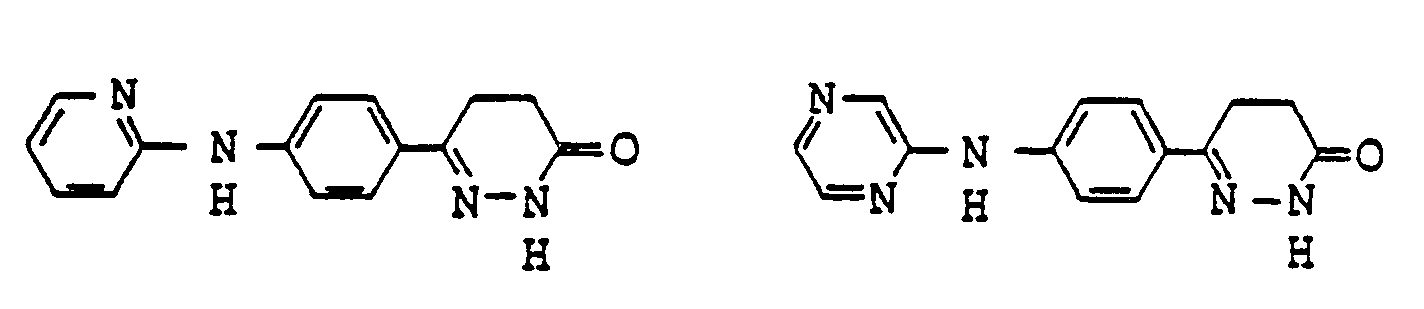
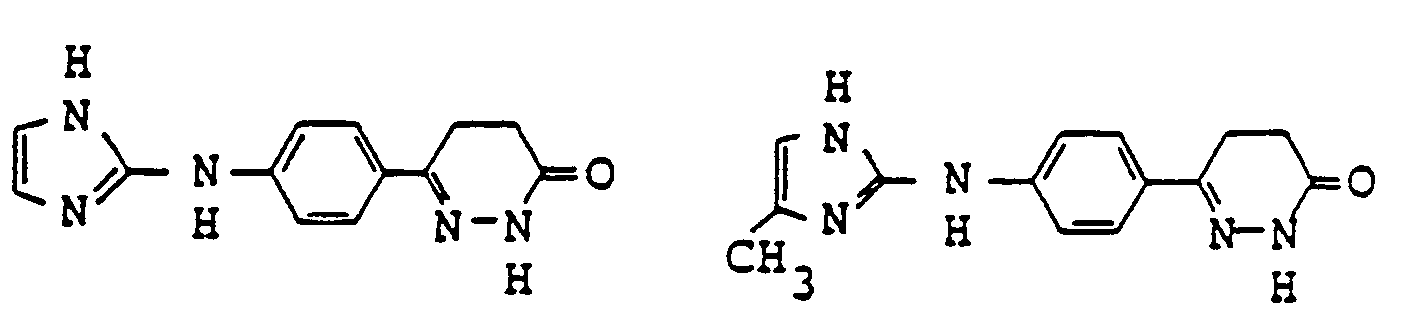
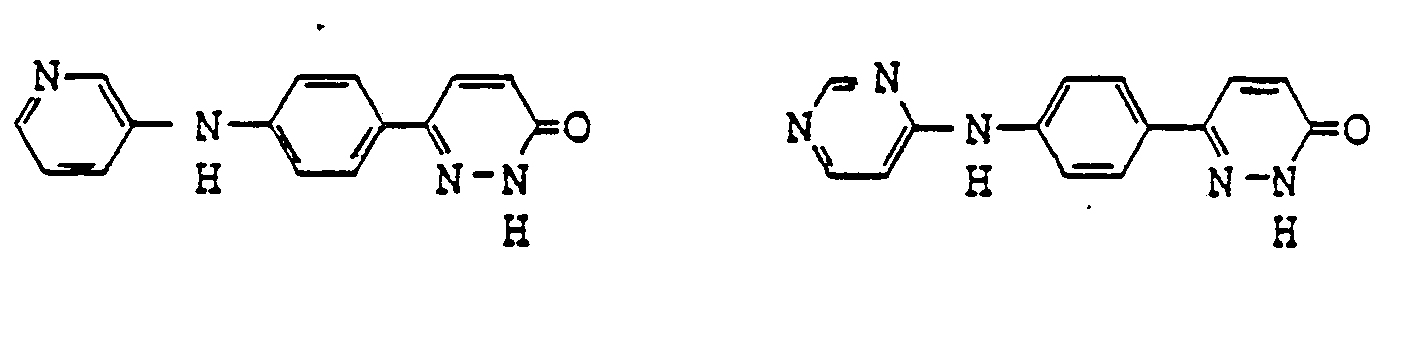
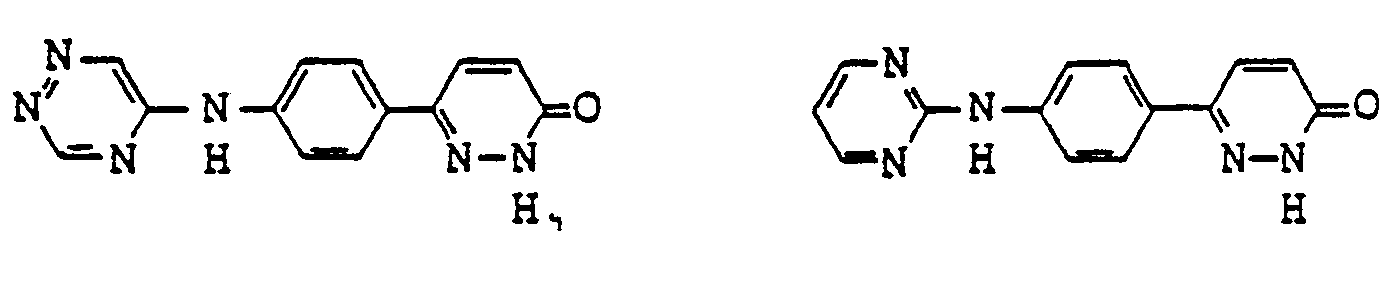
- pyridazinone derivatives having the general formula (I) are the following compounds:
- salts of pyridazinone derivatives having the general formula (I) are also included in the scope of the present invention. By illustrating those salts, mention may be made of salts of inorganic acid such as hydrochloric acid and phosphoric acid and of organic acid such as lactic acid and acetic acid. All these compounds are useful as cardiac stimulants.
- a pyridazinone derivative according to the present invention may be prepared as follows: wherein A, R 1 , R 2 and the dotted line are as defined hereinabove, and X represents a halogen atom.
- a desired pyridazinone derivative (I) may be synthesized by heating a mixture of a compound (II) and a compound (III) in a polar solvent such as dimethylformamide, dimethylacetamide and phenol at 50-200°C for about 0.5-10 hours.
- a copper compound may be used as a catalyst.
- a compound (II) is a known compound described in Journal of Medicinal Chemistry, 17, 273-280 (1974).
- the compounds according to the present invention when used as a cardiac stimulant, may be administered suitably by an oral and parenteral route.
- an oral and parenteral route By way of illustrating available dosage unit form, mention may be made of powder, granule, tablet, sugar-coated tablet, pill, capsule and solution in case of oral administration, and suppository, suspension, solution, emulsion, ampoule and injectable solution in case of parenteral administration. A combination of these dosage forms may of course be also available.
- These dosage forms of the compound according to the present invention may be formulated pharmaceutically by the usual way in the art.
- Dosage can be determined by a physician according to age, sex, body weight, sensitivity to the drug, degree of sumptom and physical condition of a patient, administration route, duration and interval of administration, properties, formulation and type of pharmaceutical preparation, kind of active ingredient and so on. Dosage range, for example, is generally 0.01 - 30 mg/kg/day, and preferably approximately 0.05-10 mg/kg/day by oral administration.
- the deposited crystal was collected by decantation and washed with acetone and n-hexane.
- Silica gel chromatography of the crystal thus obtained which was dissolved in 10 ml of N,N-dimethylformamide was performed with chloroform/ methanol. The fraction of the product was concentrated and dried, and the residue was dissolved in ethanol and mixed with 1 N HCI/ethanol to convert into hydrochloride salt.
- the crude crytal thus obtained was recrystallized from a mixed solvent of ethanol-water and thoroughly purified with a silica gel chromatography to remove a trace amount of impurity contained in the crystal.
- An isolated and cross-circulated papillary muscle preparation of the dog was prepared by Endo and Hashimoto's method (referred to American Journal of Physiology, 218,1459-1463,1970).
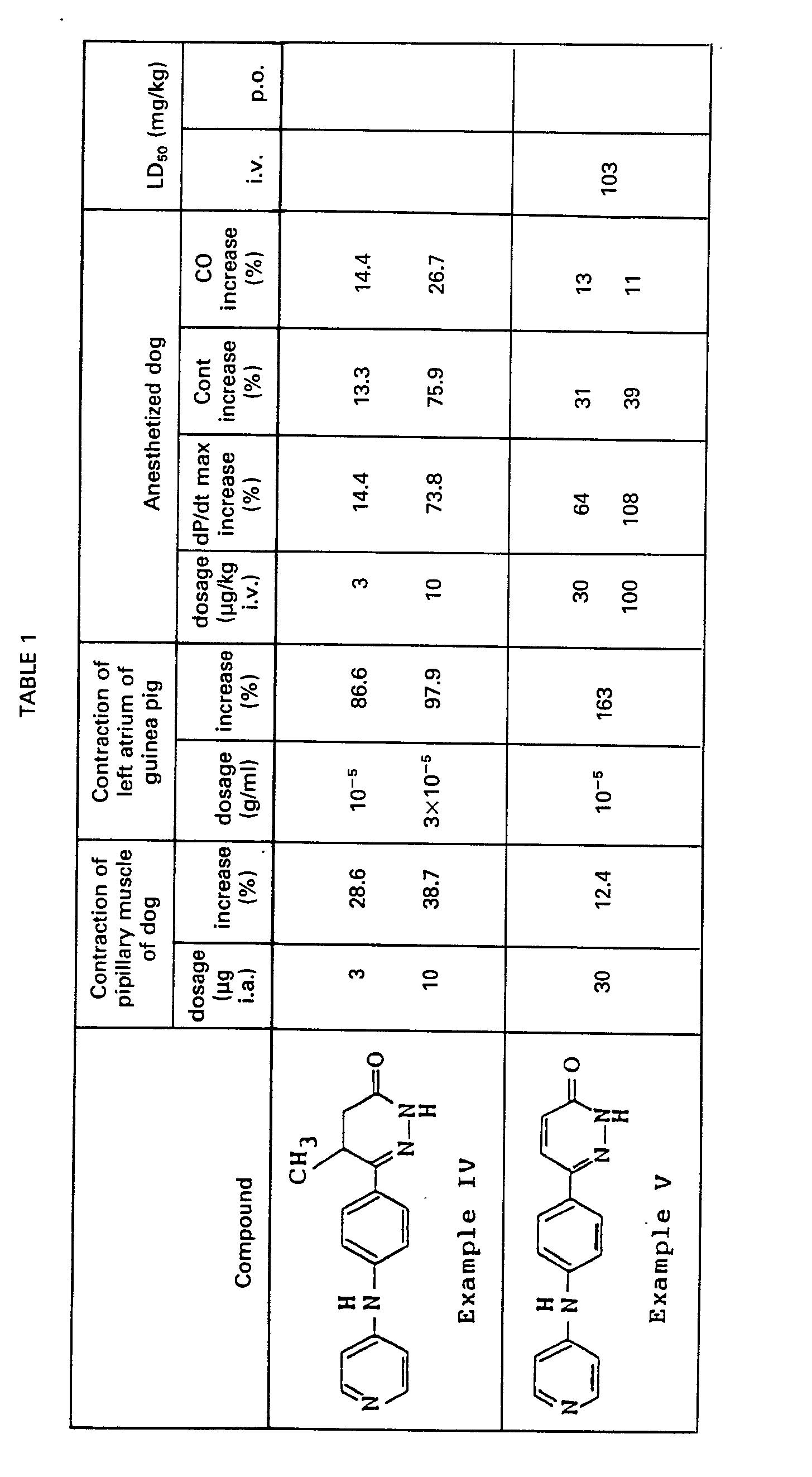
- the effect of the compound was measured by closely intraarterially injecting the compound dissolved in a solvent to the papillary muscle for the purpose of recording its effect on contraction of papillary muscle. Rate of increase in contraction of papillary muscle is shown in Table 1.
- a left atrium was isolated from a male guinea pig with 200-300 g of body weight soon after striking on the back of its head.
- the mitral orifice was fixed to the bottom of an organ bath filled with 30 ml of Krebs-Henseleit solution maintained at 35°C.
- a gas mixture comprising 95% of 0 2 and 5% of CO 2 was passed through the Krebs-Henseleit solution in the organ bath.
- Isometric tension was measured by connecting a left auricle of heart and a transducer by a yarn.
- a resting tension of 0.5 g was given to the atrium, which was then electrically driven with square pulses with duration of 1 msec and voltage of 1.5 times as much as threshold in the rate of 2Hz via dipolar platinum electrodes.
- Contraction of right ventricular muscle was determined with a strain-gauge attached to the wall.
- Systemic blood pressure was measured from the left femoral artery.
- Heart rate was measured with electrocardiogram (lead II) and a cardiotachometer.
- the compound dissolved in a solvent was administered intravenously from a left femoral vein.
- Acute toxicity (LD so ) for intravenous and oral administration in male mice was determined by the method of Richfield and Wilcoxon (referred to Journal of Pharmacology and Experimental Therapeutics, 96, 99-113, 1949). The result is shown in Table 1.
Landscapes
- Chemical & Material Sciences (AREA)
- Organic Chemistry (AREA)
- Health & Medical Sciences (AREA)
- Engineering & Computer Science (AREA)
- Bioinformatics & Cheminformatics (AREA)
- Cardiology (AREA)
- Hospice & Palliative Care (AREA)
- Heart & Thoracic Surgery (AREA)
- Chemical Kinetics & Catalysis (AREA)
- General Chemical & Material Sciences (AREA)
- Medicinal Chemistry (AREA)
- Nuclear Medicine, Radiotherapy & Molecular Imaging (AREA)
- Pharmacology & Pharmacy (AREA)
- Life Sciences & Earth Sciences (AREA)
- Animal Behavior & Ethology (AREA)
- General Health & Medical Sciences (AREA)
- Public Health (AREA)
- Veterinary Medicine (AREA)
- Pharmaceuticals Containing Other Organic And Inorganic Compounds (AREA)
- Plural Heterocyclic Compounds (AREA)
Description
- This invention relates to a noval pyridazinone derivative or a salt thereof which is useful for a cardiac stimulant.
- Pyridazinone derivatives of the formula

- Various cardiac stimulants, which effect a direct enhancement of the cardiac contraction, have been available in the treatment of cardiac insufficiency. However, these cardiac stimulants may have some defects such as follows: (1) their safety margin is extremely small; (2) they may cause arrhythmia; (3) their cardiac stimulating activity is transient; and (4) they may not be suitable for oral administration.
- A primary object of the present invention is to provide a novel cardiac compound having a high and sustained activity.
- In the course of the present inventors' study onto compounds which act as cardiac stimulants with a high and sustained activity, the present invention has been achieved. The present invention pertains to pyridazinone derivatives having the general formula (I):

- The group A in the general formula (I) includes, for instance, pyridyl, pyridazinyl, pyrimidinyl, pyrazinyl, sym-trazinyl, asym-triazinyl, pyrrolyl, imidazolyl, and pyrazolyl, which may also be substituted by at least one substituent. By way of illustrating the substituent, mention may be made of normal or branched C1-5 alkyl such as methyl, ethyl, propyl, butyl and pentyl; cyano; hydroxyl; normal or branched C1-5 alkoxyl such as methoxy, ethoxy, propoxy and butoxy; amino; normal or branched C1-5 alkylamino such as methylamino, ethylamino, propylamino and butylamino; normal or branched C2-6 dialkylamino such as dimethylamino and diethylamino; normal or branched C2-5 acylamino such as acetylamino, propionylamino and butrylamino; carboxyl; normal or branched C2-5 alkoxycarbonyl such as methoxycarbonyl, ethoxycarbonyl, propoxycarbonyl and butoxycarbonyl; and carbamoyl.
- Preferably, A represents an imidazolyl substituted by a methyl and/or a hydroxyl, or a pyridyl substituted by at least a member selected from the group consisting of methyl, cyano, hydroxyl, methoxy, amino, dimethylamino and carbamoyl.
- In a preferred pyridazinone derivative of this invention both R' and R2 represent a hydrogen atom. In another preferred pyridazinone derivative both R' and R2 are methyl.
- Examples of pyridazinone derivatives having the general formula (I) are the following compounds:
-











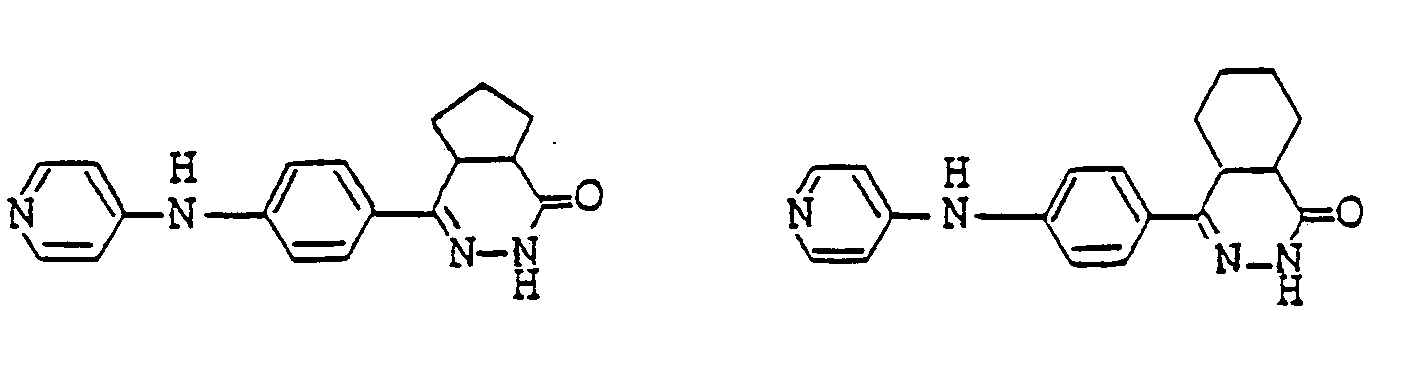


- Pharmaceutically acceptable salts of pyridazinone derivatives having the general formula (I) are also included in the scope of the present invention. By illustrating those salts, mention may be made of salts of inorganic acid such as hydrochloric acid and phosphoric acid and of organic acid such as lactic acid and acetic acid. All these compounds are useful as cardiac stimulants.
- Preparation of the compound according to the present invention will be described below.
- A pyridazinone derivative according to the present invention, for example, may be prepared as follows:

- That is, a desired pyridazinone derivative (I) may be synthesized by heating a mixture of a compound (II) and a compound (III) in a polar solvent such as dimethylformamide, dimethylacetamide and phenol at 50-200°C for about 0.5-10 hours. A copper compound may be used as a catalyst.
- A compound (II) is a known compound described in Journal of Medicinal Chemistry, 17, 273-280 (1974).
- The compounds according to the present invention, when used as a cardiac stimulant, may be administered suitably by an oral and parenteral route. By way of illustrating available dosage unit form, mention may be made of powder, granule, tablet, sugar-coated tablet, pill, capsule and solution in case of oral administration, and suppository, suspension, solution, emulsion, ampoule and injectable solution in case of parenteral administration. A combination of these dosage forms may of course be also available. These dosage forms of the compound according to the present invention may be formulated pharmaceutically by the usual way in the art. Dosage can be determined by a physician according to age, sex, body weight, sensitivity to the drug, degree of sumptom and physical condition of a patient, administration route, duration and interval of administration, properties, formulation and type of pharmaceutical preparation, kind of active ingredient and so on. Dosage range, for example, is generally 0.01-30 mg/kg/day, and preferably approximately 0.05-10 mg/kg/day by oral administration.
- The invention will be more clearly understood with reference to the following examples.
-

- 3.89 g of 4-bromopyridine hydrochloride and 3.78 g of 6-(4-aminophenyl)-4,5-dihydro-3(2H)-pyridazinone were dissolved in 50 ml of N,N-dimethylformamide, and then reacted for 2 hours at 105°C under the nitrogen gas flow. The reaction mixture was poured into 800 ml of water containing 2.12 g of sodium carbonate, and then the deposited crystal was filtered out, washed with water and dried under reduced pressure to recover 4.28 g of 6-[4-(4'-pyridyl)aminophenyl]-4,5-dihydro-3(2H)-pyridazinone in the yield of 70.7%. The crystal thus obtained was dissolved in methyl alcohol with heating, mixed with HCI- ethyl alcohol and then with ether to be converted into hydrochloride salt.
- IR (KBr): 1642 cm-1
- MS: M" 266
-
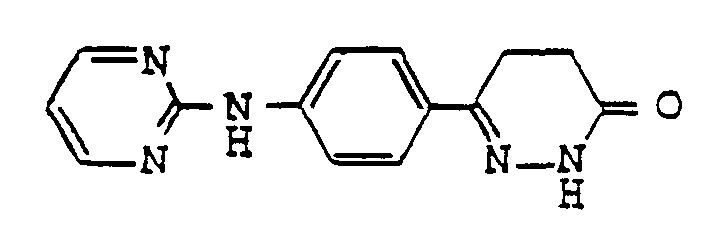
- A mixture of 2 g of 6-(4-aminophenyl)-4,5-dihydro-3(2H)-pyridazinone and 1.22 g of 2-chloropyrimidine was heated under reflux in 10 ml of dimethylformamide for 4 hours and cooled to deposit crystal. The deposited crystal was filtered out, washed with dimethylformamide and tetrahydrofuran, and dried to recover 1.20 g of 6-[4-(2'-pyrimidinyl)aminophenyl)-4,5-dihydro-3(2H)-pyridazinone in the yield of 42.5%.
- IR (KBr): 1670 cm-1
-
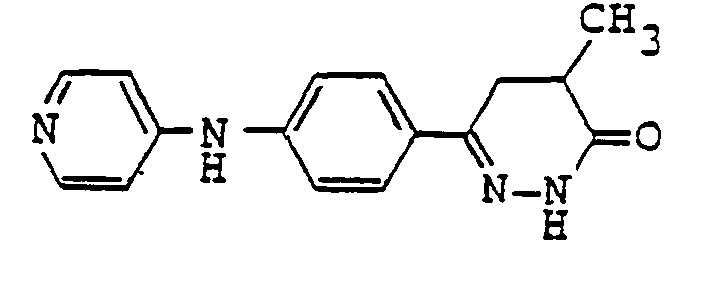
- 1.02 g of 6-(4-aminophenyl)-4-methyl-4,5-dihydro-3(2H)-pyridazinone was dissolved in 5 ml of N-methylpyrrolidone, to which 0.35 ml of triethylamine was added and then heated to 90°C. 0.75g of 4-chloropyridine hydrochloride was added and reacted at 90°C for 2 hrs. After the reaction mixture was cooled on ice, 50 ml of acetone was added. The deposited crystal was filtered out and dissolved in 50 ml of water. The aqueous solution was adjusted to approximate pH 9 with 1 N NaOH. The deposited crystal was collected by decantation and washed with acetone and n-hexane. Silica gel chromatography of the crystal thus obtained which was dissolved in 10 ml of N,N-dimethylformamide was performed with chloroform/ methanol. The fraction of the product was concentrated and dried, and the residue was dissolved in ethanol and mixed with 1 N HCI/ethanol to convert into hydrochloride salt. Benzene, hexane, and ethyl acetate were added to the solution to deposit hydrochloride salt which was filtered out and dried to obtain 0.98 g of 6-[4-(4'-pyridyl)aminophenyl-4-methyl-4,5-dihydro-3(2H)pyridazinone in the yield of 61.6%.
- m.p.=241-244°C
-

- 0.81 g of 6-(4-aminophenyl)-5-methyl-4,5-dihydro-3(2H)-pyridazinone was dissolved in 4 ml of N-methylpyrrolidone, mixed with 0.28 ml of triethylamine and then heated to 90°C. 0.60 g of 4-chloropyridine hydrochloride was added and reacted at 90°C for 2 hrs. The reaction mixture was cooled on ice bath and mixed with 50 ml of acetone to deposit crystal. The crystal was dissolved in water and alkalinized with 1 N NaOH to deposit the crystal which was then performed silica gel chromatography with chloroform/ methanol. The residue which was obtained by the concentration to dryness of the fractions was dissolved in ethyl alcohol and mixed with 1 N HCI/ethanol to convert into hydrochloride salt. The ethanol solution was mixed with ether to deposit the crystal which was filtered out and dried to obtain 0.863 g of 6-[4-(4'-pyridyl)aminophenyl]-5-methyl-4,5-dihydro-3(2H)pyridazinone in the yield of 68.3%.
- m.p.=249-252°C.
-

- A mixture of 2.33 g of 4-bromopyridine hydrochloride and 1.87 g of 6-(4-aminophenyl)-3(2H)-pyridazinone was reacted in 30 ml of N,N-dimethylformamide under the nitrogen gas flow at 110°C for 4 hours.
- After cooling the reaction mixture, 75 ml of water was added. The reaction mixture was neutralized with 2N sodium hydroxide followed by the filtration of deposited crystal.
- The crude crytal thus obtained was recrystallized from a mixed solvent of ethanol-water and thoroughly purified with a silica gel chromatography to remove a trace amount of impurity contained in the crystal.
- Fractions containing a desired substance were gathered, and the solvent was evaporated. Addition of HCI-ethanol and of ether of the condensate dissolved in a small amount of methanol yielded 0.23 g of 6-[4-(4'-pyridyl)aminophenyl]-3(2H)-pyridazinone hydrochloride.
- IR (KBr): 1650 cm-1
- Pharmacological and toxicological studies of pyridazinone derivatives according to the present invention were carried out by the following methods to show their utility as a cardiac stimulant.
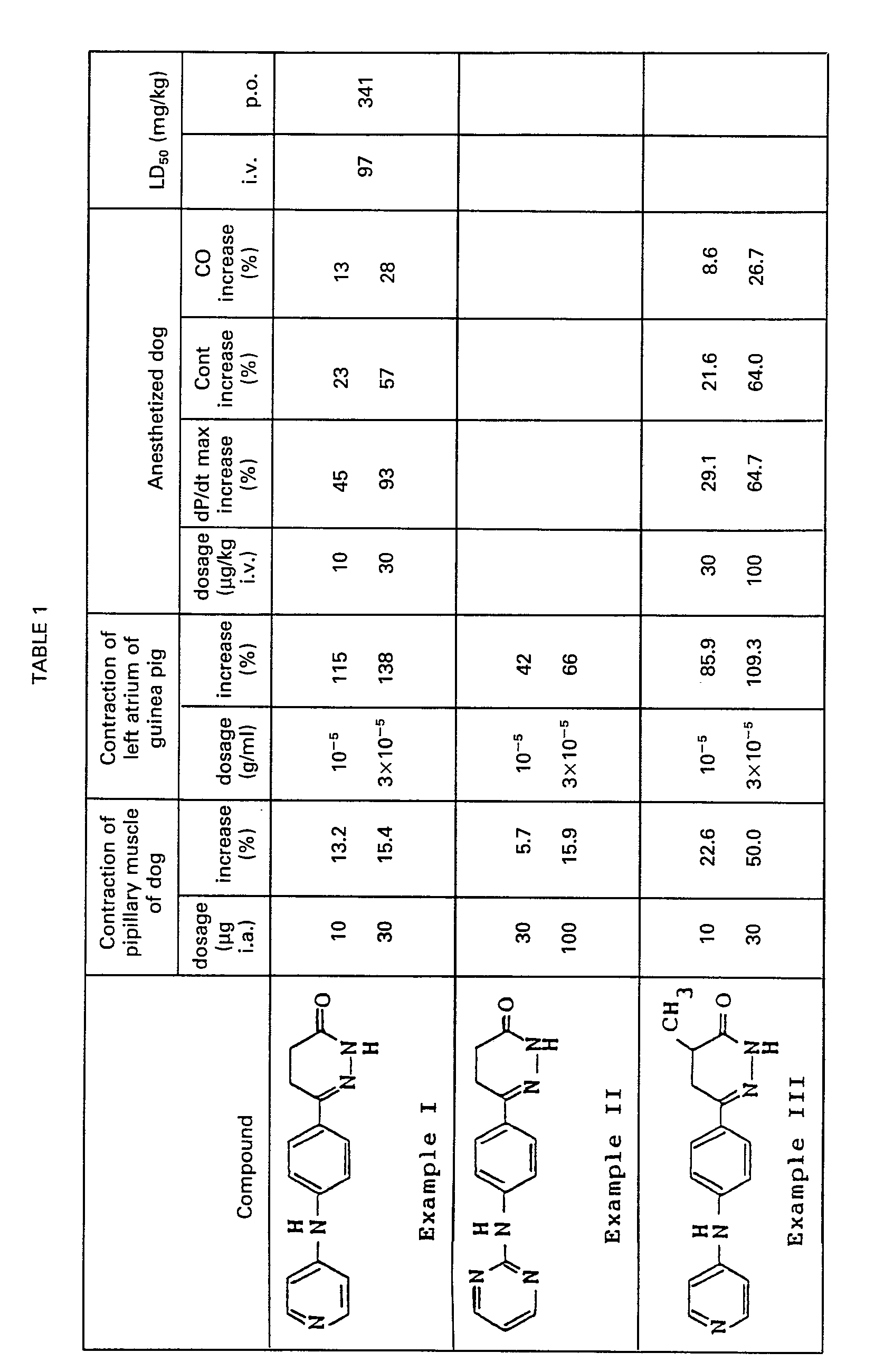
- An isolated and cross-circulated papillary muscle preparation of the dog was prepared by Endo and Hashimoto's method (referred to American Journal of Physiology, 218,1459-1463,1970). The effect of the compound was measured by closely intraarterially injecting the compound dissolved in a solvent to the papillary muscle for the purpose of recording its effect on contraction of papillary muscle. Rate of increase in contraction of papillary muscle is shown in Table 1.
- A left atrium was isolated from a male guinea pig with 200-300 g of body weight soon after striking on the back of its head. The mitral orifice was fixed to the bottom of an organ bath filled with 30 ml of Krebs-Henseleit solution maintained at 35°C. A gas mixture comprising 95% of 02 and 5% of CO2 was passed through the Krebs-Henseleit solution in the organ bath. Isometric tension was measured by connecting a left auricle of heart and a transducer by a yarn. A resting tension of 0.5 g was given to the atrium, which was then electrically driven with square pulses with duration of 1 msec and voltage of 1.5 times as much as threshold in the rate of 2Hz via dipolar platinum electrodes.
- After stabilizing the atrium for 30 minutes from its preparation, the compound dissolved in a solvent was added to the organ bath to measure its effect. The rate of increase in contraction of left atrium is shown in Table 1.
- Male and female mongrel dogs with body weight of 8-15 kg were used. A dog was anesthetized by intravenous injection of 30 mg/kg of sodium pentobarbital and practiced artificial respiration. The dog was thoractomized between fourth and fifth costa which was cutoff. The pericardium was incised to expose heart. Blood flow through the aorta, which was measured with an electromagnetic blood flowmeter whose probe was attached to the ascending aorta, was used as an approximate index of cardiac output (CO). Left ventricular pressure (LVP) was measured with a Miller Catheter-tip pressure transducer and the first derivative of the LVP (dP/dt) was measured with a differentiater. Contraction of right ventricular muscle (Cont) was determined with a strain-gauge attached to the wall. Systemic blood pressure was measured from the left femoral artery. Heart rate was measured with electrocardiogram (lead II) and a cardiotachometer. The compound dissolved in a solvent was administered intravenously from a left femoral vein.
- Maximum value of dP/dt (dP/dt max) and rate of increase in Cont and CO are shown in Table 1.
- Acute toxicity (LDso) for intravenous and oral administration in male mice was determined by the method of Richfield and Wilcoxon (referred to Journal of Pharmacology and Experimental Therapeutics, 96, 99-113, 1949). The result is shown in Table 1.
Claims (13)


Priority Applications (1)
| Application Number | Priority Date | Filing Date | Title |
|---|---|---|---|
| AT84115292T ATE58136T1 (en) | 1983-12-14 | 1984-12-12 | PYRIDAZINONE DERIVATIVES AND THEIR SALTS. |
Applications Claiming Priority (4)
| Application Number | Priority Date | Filing Date | Title |
|---|---|---|---|
| JP235480/83 | 1983-12-14 | ||
| JP58235480A JPS60126282A (en) | 1983-12-14 | 1983-12-14 | Pyridazinone derivatives or salts thereof |
| JP59050693A JPS60197672A (en) | 1984-03-16 | 1984-03-16 | Viridazinone derivatives or their salts |
| JP50693/84 | 1984-03-16 |
Publications (3)
| Publication Number | Publication Date |
|---|---|
| EP0145019A2 EP0145019A2 (en) | 1985-06-19 |
| EP0145019A3 EP0145019A3 (en) | 1986-03-26 |
| EP0145019B1 true EP0145019B1 (en) | 1990-11-07 |
Family
ID=26391147
Family Applications (1)
| Application Number | Title | Priority Date | Filing Date |
|---|---|---|---|
| EP84115292A Expired - Lifetime EP0145019B1 (en) | 1983-12-14 | 1984-12-12 | Pyridazinone derivatives and salts thereof |
Country Status (5)
| Country | Link |
|---|---|
| EP (1) | EP0145019B1 (en) |
| DE (1) | DE3483563D1 (en) |
| HU (1) | HU193067B (en) |
| SU (1) | SU1342416A3 (en) |
| UA (1) | UA6841A1 (en) |
Cited By (4)
| Publication number | Priority date | Publication date | Assignee | Title |
|---|---|---|---|---|
| EP0197664A3 (en) * | 1985-03-12 | 1987-09-23 | Smith Kline & French Laboratories Limited | 2-aminopyrimidinone derivatives |
| US4766122A (en) * | 1985-03-27 | 1988-08-23 | Smith Kline & French Laboratories Limited | Cyanoamidine compounds and derivatives thereof |
| WO1989000567A1 (en) * | 1987-07-22 | 1989-01-26 | Rorer International (Overseas) Inc. | Benzopyridazinone and pyridopyridazinone compounds and their use in the treatment of congestive heart failure |
| WO1990001479A1 (en) * | 1988-08-06 | 1990-02-22 | Cassella Aktiengesellschaft | 4,5-dihydro-3(2h)-pyridazinones, process for producing them and their use |
Families Citing this family (5)
| Publication number | Priority date | Publication date | Assignee | Title |
|---|---|---|---|---|
| DE3902316A1 (en) * | 1989-01-26 | 1990-08-02 | Lentia Gmbh | Novel piperazinylalkyl-3(2H)-pyridazinones, process for their preparation and their use as hypotensive agents |
| AU2002214332A1 (en) * | 2000-11-22 | 2002-06-03 | Mitsubishi Pharma Corporation | Ophthalmological preparations |
| WO2002072099A1 (en) * | 2001-03-14 | 2002-09-19 | Mitsubishi Pharma Corporation | Therapeutic and/or preventive agent for diabetic ischemic heart disease |
| CA2450018A1 (en) * | 2001-04-27 | 2002-11-07 | Mitsubishi Pharma Corporation | Crystal of 6-[4-(4-pyridylamino)phenyl]-4, 5-dihydro-3(2h)-pyridazinone hydrochloride trihydrate |
| WO2006095844A1 (en) * | 2005-03-10 | 2006-09-14 | Mitsubishi Pharma Corporation | Pharmaceutical preparation |
Family Cites Families (1)
| Publication number | Priority date | Publication date | Assignee | Title |
|---|---|---|---|---|
| JPS58113180A (en) * | 1981-12-28 | 1983-07-05 | Mitsui Toatsu Chem Inc | Pyridazinone derivative |
-
1984
- 1984-12-11 HU HU844597A patent/HU193067B/en not_active IP Right Cessation
- 1984-12-12 EP EP84115292A patent/EP0145019B1/en not_active Expired - Lifetime
- 1984-12-12 DE DE8484115292T patent/DE3483563D1/en not_active Expired - Lifetime
- 1984-12-13 UA UA3826169A patent/UA6841A1/en unknown
- 1984-12-13 SU SU843826169A patent/SU1342416A3/en active
Cited By (5)
| Publication number | Priority date | Publication date | Assignee | Title |
|---|---|---|---|---|
| EP0197664A3 (en) * | 1985-03-12 | 1987-09-23 | Smith Kline & French Laboratories Limited | 2-aminopyrimidinone derivatives |
| US4766122A (en) * | 1985-03-27 | 1988-08-23 | Smith Kline & French Laboratories Limited | Cyanoamidine compounds and derivatives thereof |
| WO1989000567A1 (en) * | 1987-07-22 | 1989-01-26 | Rorer International (Overseas) Inc. | Benzopyridazinone and pyridopyridazinone compounds and their use in the treatment of congestive heart failure |
| US4806535A (en) * | 1987-07-22 | 1989-02-21 | Rorer Pharmaceutical Corporation | Imidazolylphenyl and 1,2,4-triazolylphenyl benzopyridazinone and pyridopyridazinone compounds and their use for increasing cardiatonic contractility |
| WO1990001479A1 (en) * | 1988-08-06 | 1990-02-22 | Cassella Aktiengesellschaft | 4,5-dihydro-3(2h)-pyridazinones, process for producing them and their use |
Also Published As
| Publication number | Publication date |
|---|---|
| EP0145019A2 (en) | 1985-06-19 |
| HU193067B (en) | 1987-08-28 |
| DE3483563D1 (en) | 1990-12-13 |
| SU1342416A3 (en) | 1987-09-30 |
| HUT36114A (en) | 1985-08-28 |
| UA6841A1 (en) | 1995-03-31 |
| EP0145019A3 (en) | 1986-03-26 |
Similar Documents
| Publication | Publication Date | Title |
|---|---|---|
| EP0497852B1 (en) | Bicyclo-imidazoles, process for producing them and drugs containing them | |
| US4353905A (en) | Substituted 4,5-dihydro-6-[4-(1H-imidazol-1-yl)phenyl]-3(2H)-pyridazinones and 6-[4-(1H-imidazol-1-yl)phenyl]-3(2H)-pyridazinones | |
| US5171851A (en) | Imidazole substituted benzoxazine or benzothiazine derivatives | |
| KR910005233B1 (en) | Pyridazinone derivatives | |
| EP0117403B1 (en) | 6-(acylaminoaryl)-3(2h)-pyridazinone derivatives, their preparation and use | |
| US5808065A (en) | Pyridazinone derivatives and processes for preparing the same | |
| EP0327800B1 (en) | 6-phenyldihydro-3(2h)-pyridazinones, process for their preparation and medicines containing these compounds | |
| US4602019A (en) | Indeno[1,2-c]pyridazin-3-one derivatives useful as cardiotonic and antihypertensive agents | |
| EP0145019B1 (en) | Pyridazinone derivatives and salts thereof | |
| US4661484A (en) | Pyridazinone derivatives and salts thereof as cardiac stimulants | |
| EP0125749B1 (en) | Imidazolyl-pyridazinones | |
| US4921856A (en) | Dihydropyridazinone derivatives, a process for their preparation and pharmaceutical preparations containing these compounds | |
| US4508718A (en) | Cardiotonic and antihypertensive oxadiazinone compounds | |
| US4668787A (en) | 5,6-dialkoxy-4-imino-2(1H)quinazolinone derivatives | |
| US4822797A (en) | Piperazinyl carbonyl phenyl pyridazinone derivatives useful as cardiotonics | |
| US4957920A (en) | Benzimidazoles, and pharmaceutical preparations containing these compounds | |
| HU192023B (en) | Process for production of 2,4-dihydro-5-/substituated phenyl/-4,4/double substituated/-3h-pirasole-3-ons | |
| US4971968A (en) | Pyridazinone derivatives and salts thereof | |
| US4847251A (en) | Pyridazinone derivatives, and pharmaceutical compositions containing them | |
| US4808618A (en) | Substituted 1,3-dialkylpyrido[4,3-d]pyrimidine-2,4-diones | |
| EP0339208A1 (en) | 6-Oxopyridazine derivatives, process for their preparation and medicaments containing these compounds | |
| US5108998A (en) | Cardiotonic thiadiazine derivatives | |
| EP0240026A1 (en) | Heterocyclically substituted benzimidazoles, method for their preparation and medicines containing these compounds | |
| US4656170A (en) | N-[4-[2-(1,4,5,6-tetrahydro-4-methyl-6-oxo-3-pyridazinyl)ethenyl]phenyl]acetamide and related compounds | |
| US4701453A (en) | Substituted indeno-pyridazinones |
Legal Events
| Date | Code | Title | Description |
|---|---|---|---|
| PUAI | Public reference made under article 153(3) epc to a published international application that has entered the european phase |
Free format text: ORIGINAL CODE: 0009012 |
|
| AK | Designated contracting states |
Designated state(s): AT BE CH DE FR GB IT LI NL SE |
|
| RIN1 | Information on inventor provided before grant (corrected) |
Inventor name: FURUYA, RIKIZO Inventor name: KITADA, YOSHIMI Inventor name: SHIMOODA, ISAO Inventor name: KOBAYASHI, MAKIO Inventor name: NARIMATSU, AKIHIRO Inventor name: OKUSHIMA, HIROMI |
|
| PUAL | Search report despatched |
Free format text: ORIGINAL CODE: 0009013 |
|
| AK | Designated contracting states |
Kind code of ref document: A3 Designated state(s): AT BE CH DE FR GB IT LI NL SE |
|
| 17P | Request for examination filed |
Effective date: 19860916 |
|
| 17Q | First examination report despatched |
Effective date: 19880726 |
|
| RAP1 | Party data changed (applicant data changed or rights of an application transferred) |
Owner name: MITSUBISHI KASEI CORPORATION |
|
| GRAA | (expected) grant |
Free format text: ORIGINAL CODE: 0009210 |
|
| AK | Designated contracting states |
Kind code of ref document: B1 Designated state(s): AT BE CH DE FR GB IT LI NL SE |
|
| REF | Corresponds to: |
Ref document number: 58136 Country of ref document: AT Date of ref document: 19901115 Kind code of ref document: T |
|
| ITF | It: translation for a ep patent filed | ||
| REF | Corresponds to: |
Ref document number: 3483563 Country of ref document: DE Date of ref document: 19901213 |
|
| ET | Fr: translation filed | ||
| ITTA | It: last paid annual fee | ||
| PLBE | No opposition filed within time limit |
Free format text: ORIGINAL CODE: 0009261 |
|
| STAA | Information on the status of an ep patent application or granted ep patent |
Free format text: STATUS: NO OPPOSITION FILED WITHIN TIME LIMIT |
|
| 26N | No opposition filed | ||
| EAL | Se: european patent in force in sweden |
Ref document number: 84115292.9 |
|
| PGFP | Annual fee paid to national office [announced via postgrant information from national office to epo] |
Ref country code: SE Payment date: 19990927 Year of fee payment: 16 Ref country code: CH Payment date: 19990927 Year of fee payment: 16 |
|
| PGFP | Annual fee paid to national office [announced via postgrant information from national office to epo] |
Ref country code: BE Payment date: 19991001 Year of fee payment: 16 |
|
| PGFP | Annual fee paid to national office [announced via postgrant information from national office to epo] |
Ref country code: AT Payment date: 19991006 Year of fee payment: 16 |
|
| PGFP | Annual fee paid to national office [announced via postgrant information from national office to epo] |
Ref country code: FR Payment date: 19991124 Year of fee payment: 16 |
|
| PGFP | Annual fee paid to national office [announced via postgrant information from national office to epo] |
Ref country code: GB Payment date: 19991126 Year of fee payment: 16 |
|
| PGFP | Annual fee paid to national office [announced via postgrant information from national office to epo] |
Ref country code: NL Payment date: 19991129 Year of fee payment: 16 |
|
| PGFP | Annual fee paid to national office [announced via postgrant information from national office to epo] |
Ref country code: DE Payment date: 19991231 Year of fee payment: 16 |
|
| PG25 | Lapsed in a contracting state [announced via postgrant information from national office to epo] |
Ref country code: GB Free format text: LAPSE BECAUSE OF NON-PAYMENT OF DUE FEES Effective date: 20001212 Ref country code: AT Free format text: LAPSE BECAUSE OF NON-PAYMENT OF DUE FEES Effective date: 20001212 |
|
| PG25 | Lapsed in a contracting state [announced via postgrant information from national office to epo] |
Ref country code: SE Free format text: LAPSE BECAUSE OF NON-PAYMENT OF DUE FEES Effective date: 20001213 |
|
| PG25 | Lapsed in a contracting state [announced via postgrant information from national office to epo] |
Ref country code: LI Free format text: LAPSE BECAUSE OF NON-PAYMENT OF DUE FEES Effective date: 20001231 Ref country code: CH Free format text: LAPSE BECAUSE OF NON-PAYMENT OF DUE FEES Effective date: 20001231 Ref country code: BE Free format text: LAPSE BECAUSE OF NON-PAYMENT OF DUE FEES Effective date: 20001231 |
|
| BERE | Be: lapsed |
Owner name: MITSUBISHI KASEI CORP. Effective date: 20001231 |
|
| PG25 | Lapsed in a contracting state [announced via postgrant information from national office to epo] |
Ref country code: NL Free format text: LAPSE BECAUSE OF NON-PAYMENT OF DUE FEES Effective date: 20010701 |
|
| GBPC | Gb: european patent ceased through non-payment of renewal fee |
Effective date: 20001212 |
|
| EUG | Se: european patent has lapsed |
Ref document number: 84115292.9 |
|
| REG | Reference to a national code |
Ref country code: CH Ref legal event code: PL |
|
| PG25 | Lapsed in a contracting state [announced via postgrant information from national office to epo] |
Ref country code: FR Free format text: LAPSE BECAUSE OF NON-PAYMENT OF DUE FEES Effective date: 20010831 |
|
| NLV4 | Nl: lapsed or anulled due to non-payment of the annual fee |
Effective date: 20010701 |
|
| REG | Reference to a national code |
Ref country code: FR Ref legal event code: ST |
|
| PG25 | Lapsed in a contracting state [announced via postgrant information from national office to epo] |
Ref country code: DE Free format text: LAPSE BECAUSE OF NON-PAYMENT OF DUE FEES Effective date: 20011002 |