EP0137562A2 - Phase-shift control for a phased array antenna - Google Patents
Phase-shift control for a phased array antenna Download PDFInfo
- Publication number
- EP0137562A2 EP0137562A2 EP84201399A EP84201399A EP0137562A2 EP 0137562 A2 EP0137562 A2 EP 0137562A2 EP 84201399 A EP84201399 A EP 84201399A EP 84201399 A EP84201399 A EP 84201399A EP 0137562 A2 EP0137562 A2 EP 0137562A2
- Authority
- EP
- European Patent Office
- Prior art keywords
- phase
- antenna
- shift control
- setting
- computing means
- Prior art date
- Legal status (The legal status is an assumption and is not a legal conclusion. Google has not performed a legal analysis and makes no representation as to the accuracy of the status listed.)
- Withdrawn
Links
- 230000010363 phase shift Effects 0.000 title claims abstract description 21
- 230000001419 dependent effect Effects 0.000 claims description 3
- 238000000034 method Methods 0.000 description 7
- 230000005540 biological transmission Effects 0.000 description 4
- 238000010586 diagram Methods 0.000 description 1
- 230000000694 effects Effects 0.000 description 1
Images

Classifications
-
- H—ELECTRICITY
- H01—ELECTRIC ELEMENTS
- H01Q—ANTENNAS, i.e. RADIO AERIALS
- H01Q3/00—Arrangements for changing or varying the orientation or the shape of the directional pattern of the waves radiated from an antenna or antenna system
- H01Q3/26—Arrangements for changing or varying the orientation or the shape of the directional pattern of the waves radiated from an antenna or antenna system varying the relative phase or relative amplitude of energisation between two or more active radiating elements; varying the distribution of energy across a radiating aperture
- H01Q3/30—Arrangements for changing or varying the orientation or the shape of the directional pattern of the waves radiated from an antenna or antenna system varying the relative phase or relative amplitude of energisation between two or more active radiating elements; varying the distribution of energy across a radiating aperture varying the relative phase between the radiating elements of an array
- H01Q3/34—Arrangements for changing or varying the orientation or the shape of the directional pattern of the waves radiated from an antenna or antenna system varying the relative phase or relative amplitude of energisation between two or more active radiating elements; varying the distribution of energy across a radiating aperture varying the relative phase between the radiating elements of an array by electrical means
- H01Q3/36—Arrangements for changing or varying the orientation or the shape of the directional pattern of the waves radiated from an antenna or antenna system varying the relative phase or relative amplitude of energisation between two or more active radiating elements; varying the distribution of energy across a radiating aperture varying the relative phase between the radiating elements of an array by electrical means with variable phase-shifters
Definitions
- the invention relates to a phase shift control for a phased array antenna, whereby the antenna modules comprising the phase shifters are arranged in rows and columns, which phase shift control is provided with computing means for caLcuLating the desired phase setting for the separate phase shifters from at Least the beam direction to be determined, the frequency of the energy emitted, and the position of each phase shifter in the array.
- phase-shift control is known from, for example, M.I. Skolnik, "Introduction to Radar Systems", 2 nd ed., McGraw-Hill Kogakusha, Ltd., 1980, p. 323, where the phase shift for the respective antenna modules is determined in a beam-steering computer. If these phase shifts must be determined for each radar pulse emitted, an exceptionally Large computer capacity will be required for the usually Large number of antenna modules. This capacity can be Limited by refraining from a phase setting per pulse and enabling this setting after each transmission of a given pulse series or by performing the phase setting in accordance with certain patterns.
- the present invention has for its object to provide such a phase-shift control that with a strongly reduced computer capacity still a phase setting per pulse and per antenna module can be achieved.
- the computing means thereto comprises central computing means for calculating, from the beam direction to be determined and the frequency of the energy emitted, the terms in the mathematical expression for the phase setting, which terms are the same for all phase shifters, and a computing chip present in each antenna module for determining the desired phase setting from the terms determined by the central computing means and the position of the separate phase shifters in the array.
- the complete computer processes to be performed are therefore split into processes performed centrally and processes performed locally, i.e. on antenna-module LeveL.
- the x- and y-axes determine the antenna plane and the z-axis the antenna main axis and it is assumed that the beam direction makes an angle 0 with the z-axis and that the projection of the beam direction on the x-y plane makes an angle ⁇ with the x-axis, then for phase differences ⁇ and ⁇ y between the phase shifters adjoining the x- and y-directions: where d 1 is the distance between two antenna modules in the x-direction and d 2 the distance between two antenna modules in the y-direction. If all antenna modules in the x-y plane are arranged above and next to each other, then for the phase shift for antenna module m,n:
- this phase shift wiLL be: while maintaining the row and column configuration in the array.
- the first situation in the array wiLL be considered here, so that
- K is a constant. It is known to calculate this phase shift for each antena module separately in a beam-steering computer. According to the invention, the caLcuLation is however split into processes performed centrally and processes performed LocaLLy in each antenna module. In the case of centraLLy performed processes, the results can be fed to all antenna modules simultaneously.
- the d, e, f and g values can be stored permanently in each computing chip; they can however also be supplied by the central computing means each time before the array is activated. In such a case, the B-vaLue can be supplied as well; it is also possible to enter this value separately or simultaneously with the a, b and c values when the array is in the active mode.
- the numeral 1 represents the central computing means.
- the computing chip of each antenna module is designated by 2 and the associated phase shifter by 3.
- the antenna modules are thus formed by the elements 2 and 3 jointly.
- the data transmissions from the central computing means 1 to the separate antenna modules 2, 3 are routed via the buffer elements 4 by means of the addressing circuit 5.
- the d-values are the same for the antenna modules Lying in a column.
- ALL buffer elements 4 are therefore fiLLed with a certain m-value from the central computing means.
- the e-values are the same for the antenna modules Lying in a row.
- aLL buffer elements 4 are filled with the same n-value from the central computing means, namely m successive times with a new n-value.
- the f- and g-values are different for each antenna module.
- the buffer elements are fiLLed m successive times with a certain C or m,n ⁇ m,n value from the central computing means.
- the addressing circuit 5 ensures that this information is entered intothe antenna modules.
- C m,n values are frequency-dependent, it is preferable to enter several of such values in each antenna module to ensure that, when the array is in the active mode, an appropriate C m,n value is avaiLabLe for the LocaLLy performed caLcuLations with each frequency change.
- the values d 1 .cos ⁇ .sin ⁇ , d 2 .sin ⁇ .sin ⁇ and , supplied to the antenna modules each time, are the same for all antenna modules.
- the buffer elements 4 are fiLLed successively with the same a-, b- or c-value from the central computing means 1, while the addressing circuit 5 again ensures that this information is entered into the respective antenna modules.
- the a-, b- and c-values for a subsequent radar pulse are entered into the antenna modules.
- only a command signal is sent to all antenna modules simultaneously in the same way as the a-, b- and c-values,whereupon the array switches to the newly selected beam direction.
Landscapes
- Variable-Direction Aerials And Aerial Arrays (AREA)
Abstract
Description
- The invention relates to a phase shift control for a phased array antenna, whereby the antenna modules comprising the phase shifters are arranged in rows and columns, which phase shift control is provided with computing means for caLcuLating the desired phase setting for the separate phase shifters from at Least the beam direction to be determined, the frequency of the energy emitted, and the position of each phase shifter in the array.
- Such a phase-shift control is known from, for example, M.I. Skolnik, "Introduction to Radar Systems", 2nd ed., McGraw-Hill Kogakusha, Ltd., 1980, p. 323, where the phase shift for the respective antenna modules is determined in a beam-steering computer. If these phase shifts must be determined for each radar pulse emitted, an exceptionally Large computer capacity will be required for the usually Large number of antenna modules. This capacity can be Limited by refraining from a phase setting per pulse and enabling this setting after each transmission of a given pulse series or by performing the phase setting in accordance with certain patterns. The present invention has for its object to provide such a phase-shift control that with a strongly reduced computer capacity still a phase setting per pulse and per antenna module can be achieved.
- According to the invention, the computing means thereto comprises central computing means for calculating, from the beam direction to be determined and the frequency of the energy emitted, the terms in the mathematical expression for the phase setting, which terms are the same for all phase shifters, and a computing chip present in each antenna module for determining the desired phase setting from the terms determined by the central computing means and the position of the separate phase shifters in the array. The complete computer processes to be performed are therefore split into processes performed centrally and processes performed locally, i.e. on antenna-module LeveL.
- If in a Cartesian coordinate system the x- and y-axes determine the antenna plane and the z-axis the antenna main axis and it is assumed that the beam direction makes an angle 0 with the z-axis and that the projection of the beam direction on the x-y plane makes an angle ϕ with the x-axis, then for phase differences ψ and ψy between the phase shifters adjoining the x- and y-directions:


- If on the other hand the rows of antenna modules are shifted alternately a distance of ½d1 in the x-direction with respect to each other, this phase shift wiLL be:


- In the case of using a space-fed phased array antenna, either a Lens array or a reflect array, a correction must be made in the expression for ψm,n. This correction allows for the change from a spherical to a plane phase front. To this effect, the term


- During scanning with the antenna beam at certain elevations it is sometimes desirable to widen the beam. This requires the introduction of an additional phase shift εm,n; consequently, no plane phase front is formed, but say a quadratic phase front.
- For phase shift ψm,n the relationship is now:

- The terms
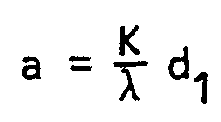


- The division between centrally and LocaLLy performed processes may be effected other than described above. For instance,


- The invention wiLL now be described with reference to the accompanying figure, showing a block diagram of an embodiment of the phase-shift control in accordance with the invention.
- In this figure, the numeral 1 represents the central computing means. The computing chip of each antenna module is designated by 2 and the associated phase shifter by 3. The antenna modules are thus formed by the elements 2 and 3 jointly. The data transmissions from the central computing means 1 to the separate antenna modules 2, 3 are routed via the
buffer elements 4 by means of the addressingcircuit 5. - Reading of the values d = m, e = n, f = Cm,n and g = εm,n into the separate computing chips takes place before the array antenna assumes the active mode. The d-values are the same for the antenna modules Lying in a column. ALL
buffer elements 4 are therefore fiLLed with a certain m-value from the central computing means. The e-values are the same for the antenna modules Lying in a row. To enter these values,aLL buffer elements 4 are filled with the same n-value from the central computing means, namely m successive times with a new n-value. The f- and g-values are different for each antenna module. To enter these values, the buffer elements are fiLLed m successive times with a certain C or m,n εm,n value from the central computing means. In all cases, the addressingcircuit 5 ensures that this information is entered intothe antenna modules. - Since the Cm,n values are frequency-dependent, it is preferable to enter several of such values in each antenna module to ensure that, whenthe array is in the active mode, an appropriate Cm,n value is avaiLabLe for the LocaLLy performed caLcuLations with each frequency change.
- With the array antenna in the active mode, the values


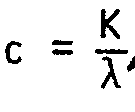
buffer elements 4 are fiLLed successively with the same a-, b- or c-value from the central computing means 1, while the addressingcircuit 5 again ensures that this information is entered into the respective antenna modules. During the transmission of a radar pulse and the Listening to an echo the a-, b- and c-values for a subsequent radar pulse are entered into the antenna modules. In the dead time before the transmission of the next radar pulse, only a command signal is sent to all antenna modules simultaneously in the same way as the a-, b- and c-values,whereupon the array switches to the newly selected beam direction.
Claims (3)
Applications Claiming Priority (2)
| Application Number | Priority Date | Filing Date | Title |
|---|---|---|---|
| NL8303444 | 1983-10-07 | ||
| NL8303444A NL8303444A (en) | 1983-10-07 | 1983-10-07 | PHASE ROTATOR CONTROL FOR A PHASED-ARRAY ANTENNA. |
Publications (2)
| Publication Number | Publication Date |
|---|---|
| EP0137562A2 true EP0137562A2 (en) | 1985-04-17 |
| EP0137562A3 EP0137562A3 (en) | 1985-06-12 |
Family
ID=19842516
Family Applications (1)
| Application Number | Title | Priority Date | Filing Date |
|---|---|---|---|
| EP84201399A Withdrawn EP0137562A3 (en) | 1983-10-07 | 1984-10-02 | Phase-shift control for a phased array antenna |
Country Status (2)
| Country | Link |
|---|---|
| EP (1) | EP0137562A3 (en) |
| NL (1) | NL8303444A (en) |
Cited By (11)
| Publication number | Priority date | Publication date | Assignee | Title |
|---|---|---|---|---|
| FR2617647A1 (en) * | 1985-03-21 | 1989-01-06 | Knudsen Donald | BEAMFORMING CONTROL DEVICE FOR MULTI-TRANSDUCER NETWORK ANTENNA |
| EP0357165A3 (en) * | 1988-08-31 | 1991-03-13 | Mitsubishi Denki Kabushiki Kaisha | Phase shift data transfer system for phased array antenna apparatuses |
| EP0416264A3 (en) * | 1989-09-06 | 1991-04-10 | Hughes Aircraft Company | Adaptive polarization combining system |
| DE3521026A1 (en) * | 1985-06-12 | 1991-05-08 | Telefunken Systemtechnik | Phase controlled antenna - has matrix of emitter modules coupled to digital phase shift control stages |
| WO1991001620A3 (en) * | 1989-06-02 | 1991-05-16 | Scientific Atlanta | Multi-element antenna system and array signal processing method |
| EP0921591A1 (en) * | 1997-12-02 | 1999-06-09 | Nec Corporation | Array antenna with switched distributed-constant phase-shifter |
| US6198458B1 (en) | 1994-11-04 | 2001-03-06 | Deltec Telesystems International Limited | Antenna control system |
| US6573875B2 (en) | 2001-02-19 | 2003-06-03 | Andrew Corporation | Antenna system |
| US6677896B2 (en) | 1999-06-30 | 2004-01-13 | Radio Frequency Systems, Inc. | Remote tilt antenna system |
| US7031751B2 (en) | 2001-02-01 | 2006-04-18 | Kathrein-Werke Kg | Control device for adjusting a different slope angle, especially of a mobile radio antenna associated with a base station, and corresponding antenna and corresponding method for modifying the slope angle |
| US7557675B2 (en) | 2005-03-22 | 2009-07-07 | Radiacion Y Microondas, S.A. | Broad band mechanical phase shifter |
Family Cites Families (6)
| Publication number | Priority date | Publication date | Assignee | Title |
|---|---|---|---|---|
| GB1163215A (en) * | 1967-04-11 | 1969-09-04 | Gen Electric & English Elect | Improvements in or relating to Aerial Arrays |
| US3699584A (en) * | 1970-12-30 | 1972-10-17 | Us Army | Insertion phase correction of phase shifters by presetting binary counters |
| US3697994A (en) * | 1971-07-19 | 1972-10-10 | Us Navy | Automatic beam steering technique for cylindrical-array radar antennas |
| FR2235503B1 (en) * | 1973-06-28 | 1978-10-27 | Siemens Ag | |
| US4217587A (en) * | 1978-08-14 | 1980-08-12 | Westinghouse Electric Corp. | Antenna beam steering controller |
| JPS5665504A (en) * | 1979-10-31 | 1981-06-03 | Mitsubishi Electric Corp | Beam scanning device |
-
1983
- 1983-10-07 NL NL8303444A patent/NL8303444A/en not_active Application Discontinuation
-
1984
- 1984-10-02 EP EP84201399A patent/EP0137562A3/en not_active Withdrawn
Cited By (20)
| Publication number | Priority date | Publication date | Assignee | Title |
|---|---|---|---|---|
| FR2617647A1 (en) * | 1985-03-21 | 1989-01-06 | Knudsen Donald | BEAMFORMING CONTROL DEVICE FOR MULTI-TRANSDUCER NETWORK ANTENNA |
| DE3521026A1 (en) * | 1985-06-12 | 1991-05-08 | Telefunken Systemtechnik | Phase controlled antenna - has matrix of emitter modules coupled to digital phase shift control stages |
| EP0357165A3 (en) * | 1988-08-31 | 1991-03-13 | Mitsubishi Denki Kabushiki Kaisha | Phase shift data transfer system for phased array antenna apparatuses |
| WO1991001620A3 (en) * | 1989-06-02 | 1991-05-16 | Scientific Atlanta | Multi-element antenna system and array signal processing method |
| EP0416264A3 (en) * | 1989-09-06 | 1991-04-10 | Hughes Aircraft Company | Adaptive polarization combining system |
| US6538619B2 (en) | 1994-11-04 | 2003-03-25 | Andrew Corporation | Antenna control system |
| US6198458B1 (en) | 1994-11-04 | 2001-03-06 | Deltec Telesystems International Limited | Antenna control system |
| US6346924B1 (en) | 1994-11-04 | 2002-02-12 | Andrew Corporation | Antenna control system |
| CN1316835C (en) * | 1994-11-04 | 2007-05-16 | 安德鲁公司 | Antenna control system |
| US6567051B2 (en) | 1994-11-04 | 2003-05-20 | Andrew Corporation | Antenna control system |
| US6590546B2 (en) | 1994-11-04 | 2003-07-08 | Andrew Corporation | Antenna control system |
| US6600457B2 (en) | 1994-11-04 | 2003-07-29 | Andrew Corporation | Antenna control system |
| US6603436B2 (en) | 1994-11-04 | 2003-08-05 | Andrew Corporation | Antenna control system |
| US8558739B2 (en) | 1994-11-04 | 2013-10-15 | Andrew Llc | Antenna control system |
| EP0921591A1 (en) * | 1997-12-02 | 1999-06-09 | Nec Corporation | Array antenna with switched distributed-constant phase-shifter |
| US6677896B2 (en) | 1999-06-30 | 2004-01-13 | Radio Frequency Systems, Inc. | Remote tilt antenna system |
| US7031751B2 (en) | 2001-02-01 | 2006-04-18 | Kathrein-Werke Kg | Control device for adjusting a different slope angle, especially of a mobile radio antenna associated with a base station, and corresponding antenna and corresponding method for modifying the slope angle |
| US6573875B2 (en) | 2001-02-19 | 2003-06-03 | Andrew Corporation | Antenna system |
| US6987487B2 (en) | 2001-02-19 | 2006-01-17 | Andrew Corporation | Antenna system |
| US7557675B2 (en) | 2005-03-22 | 2009-07-07 | Radiacion Y Microondas, S.A. | Broad band mechanical phase shifter |
Also Published As
| Publication number | Publication date |
|---|---|
| EP0137562A3 (en) | 1985-06-12 |
| NL8303444A (en) | 1985-05-01 |
Similar Documents
| Publication | Publication Date | Title |
|---|---|---|
| US4277787A (en) | Charge transfer device phased array beamsteering and multibeam beamformer | |
| US8144051B2 (en) | Adaptive sidelobe blanking for motion compensation | |
| EP0137562A2 (en) | Phase-shift control for a phased array antenna | |
| US4445119A (en) | Distributed beam steering computer | |
| US5592178A (en) | Wideband interference suppressor in a phased array radar | |
| US4964078A (en) | Combined multiple memories | |
| US3803625A (en) | Network approach for reducing the number of phase shifters in a limited scan phased array | |
| EP0357165B1 (en) | Phase shift data transfer system for phased array antenna apparatuses | |
| US3964066A (en) | Electronic scanned cylindrical-array antenna using network approach for reduced system complexity | |
| US4532519A (en) | Phased array system to produce, steer and stabilize non-circularly-symmetric beams | |
| EP0388210A2 (en) | Target aimpoint location | |
| US4774516A (en) | Method for smoothing an image generated by coordinate conversion and a digital scan converter using the method | |
| US3697994A (en) | Automatic beam steering technique for cylindrical-array radar antennas | |
| EP0367167A2 (en) | Method and system for reducing phase error in a phased array radar beam steering controller | |
| EP1250726B1 (en) | Antenna arrangement and method for side-lobe suppression | |
| US3680109A (en) | Phased array | |
| US6906665B1 (en) | Cluster beam-forming system and method | |
| JP3061504B2 (en) | Array antenna | |
| EP0313636B1 (en) | Technique for roll stabilization and partitioning of phased array antenna receiving apertures | |
| Haupt | Genetic algorithm design of antenna arrays | |
| US4229739A (en) | Spread beam computational hardware for digital beam controllers | |
| US3308465A (en) | Antenna system | |
| EP0474977A2 (en) | Improvements in or relating to radar systems | |
| KR100517954B1 (en) | Method for Precision Phase Control of Phased Array Antenna | |
| US7126532B2 (en) | Apparatus for tracing an optimal direction to receive satellite signal in active phase array antenna system |
Legal Events
| Date | Code | Title | Description |
|---|---|---|---|
| PUAI | Public reference made under article 153(3) epc to a published international application that has entered the european phase |
Free format text: ORIGINAL CODE: 0009012 |
|
| PUAL | Search report despatched |
Free format text: ORIGINAL CODE: 0009013 |
|
| AK | Designated contracting states |
Designated state(s): DE FR GB IT NL |
|
| AK | Designated contracting states |
Designated state(s): DE FR GB IT NL |
|
| 17P | Request for examination filed |
Effective date: 19851114 |
|
| 17Q | First examination report despatched |
Effective date: 19870508 |
|
| STAA | Information on the status of an ep patent application or granted ep patent |
Free format text: STATUS: THE APPLICATION IS DEEMED TO BE WITHDRAWN |
|
| 18D | Application deemed to be withdrawn |
Effective date: 19880222 |
|
| RIN1 | Information on inventor provided before grant (corrected) |
Inventor name: BOUWMEESTER, ALBERT JAN HENDRIK Inventor name: MULDER, WILLEM |