EP0130633B1 - Process for the preparation of 1-(phenyl)-1-hydroxy-2-amino-3-fluoro propane derivatives - Google Patents
Process for the preparation of 1-(phenyl)-1-hydroxy-2-amino-3-fluoro propane derivatives Download PDFInfo
- Publication number
- EP0130633B1 EP0130633B1 EP84200772A EP84200772A EP0130633B1 EP 0130633 B1 EP0130633 B1 EP 0130633B1 EP 84200772 A EP84200772 A EP 84200772A EP 84200772 A EP84200772 A EP 84200772A EP 0130633 B1 EP0130633 B1 EP 0130633B1
- Authority
- EP
- European Patent Office
- Prior art keywords
- phenyl
- formula
- above mentioned
- threo
- alkyl
- Prior art date
- Legal status (The legal status is an assumption and is not a legal conclusion. Google has not performed a legal analysis and makes no representation as to the accuracy of the status listed.)
- Expired - Lifetime
Links
- 0 CC(*)C*(*)*(*(*)*(c1ccc(*)cc1)O)N=* Chemical compound CC(*)C*(*)*(*(*)*(c1ccc(*)cc1)O)N=* 0.000 description 2
Classifications
-
- C—CHEMISTRY; METALLURGY
- C07—ORGANIC CHEMISTRY
- C07D—HETEROCYCLIC COMPOUNDS
- C07D209/00—Heterocyclic compounds containing five-membered rings, condensed with other rings, with one nitrogen atom as the only ring hetero atom
- C07D209/02—Heterocyclic compounds containing five-membered rings, condensed with other rings, with one nitrogen atom as the only ring hetero atom condensed with one carbocyclic ring
- C07D209/44—Iso-indoles; Hydrogenated iso-indoles
- C07D209/48—Iso-indoles; Hydrogenated iso-indoles with oxygen atoms in positions 1 and 3, e.g. phthalimide
-
- C—CHEMISTRY; METALLURGY
- C07—ORGANIC CHEMISTRY
- C07C—ACYCLIC OR CARBOCYCLIC COMPOUNDS
- C07C315/00—Preparation of sulfones; Preparation of sulfoxides
- C07C315/04—Preparation of sulfones; Preparation of sulfoxides by reactions not involving the formation of sulfone or sulfoxide groups
-
- C—CHEMISTRY; METALLURGY
- C07—ORGANIC CHEMISTRY
- C07C—ACYCLIC OR CARBOCYCLIC COMPOUNDS
- C07C319/00—Preparation of thiols, sulfides, hydropolysulfides or polysulfides
- C07C319/14—Preparation of thiols, sulfides, hydropolysulfides or polysulfides of sulfides
- C07C319/20—Preparation of thiols, sulfides, hydropolysulfides or polysulfides of sulfides by reactions not involving the formation of sulfide groups
-
- C—CHEMISTRY; METALLURGY
- C07—ORGANIC CHEMISTRY
- C07D—HETEROCYCLIC COMPOUNDS
- C07D263/00—Heterocyclic compounds containing 1,3-oxazole or hydrogenated 1,3-oxazole rings
- C07D263/02—Heterocyclic compounds containing 1,3-oxazole or hydrogenated 1,3-oxazole rings not condensed with other rings
- C07D263/08—Heterocyclic compounds containing 1,3-oxazole or hydrogenated 1,3-oxazole rings not condensed with other rings having one double bond between ring members or between a ring member and a non-ring member
- C07D263/10—Heterocyclic compounds containing 1,3-oxazole or hydrogenated 1,3-oxazole rings not condensed with other rings having one double bond between ring members or between a ring member and a non-ring member with only hydrogen atoms, hydrocarbon or substituted hydrocarbon radicals, directly attached to ring carbon atoms
-
- C—CHEMISTRY; METALLURGY
- C07—ORGANIC CHEMISTRY
- C07D—HETEROCYCLIC COMPOUNDS
- C07D263/00—Heterocyclic compounds containing 1,3-oxazole or hydrogenated 1,3-oxazole rings
- C07D263/02—Heterocyclic compounds containing 1,3-oxazole or hydrogenated 1,3-oxazole rings not condensed with other rings
- C07D263/08—Heterocyclic compounds containing 1,3-oxazole or hydrogenated 1,3-oxazole rings not condensed with other rings having one double bond between ring members or between a ring member and a non-ring member
- C07D263/10—Heterocyclic compounds containing 1,3-oxazole or hydrogenated 1,3-oxazole rings not condensed with other rings having one double bond between ring members or between a ring member and a non-ring member with only hydrogen atoms, hydrocarbon or substituted hydrocarbon radicals, directly attached to ring carbon atoms
- C07D263/14—Heterocyclic compounds containing 1,3-oxazole or hydrogenated 1,3-oxazole rings not condensed with other rings having one double bond between ring members or between a ring member and a non-ring member with only hydrogen atoms, hydrocarbon or substituted hydrocarbon radicals, directly attached to ring carbon atoms with radicals substituted by oxygen atoms
-
- C—CHEMISTRY; METALLURGY
- C07—ORGANIC CHEMISTRY
- C07D—HETEROCYCLIC COMPOUNDS
- C07D263/00—Heterocyclic compounds containing 1,3-oxazole or hydrogenated 1,3-oxazole rings
- C07D263/02—Heterocyclic compounds containing 1,3-oxazole or hydrogenated 1,3-oxazole rings not condensed with other rings
- C07D263/08—Heterocyclic compounds containing 1,3-oxazole or hydrogenated 1,3-oxazole rings not condensed with other rings having one double bond between ring members or between a ring member and a non-ring member
- C07D263/16—Heterocyclic compounds containing 1,3-oxazole or hydrogenated 1,3-oxazole rings not condensed with other rings having one double bond between ring members or between a ring member and a non-ring member with hetero atoms or with carbon atoms having three bonds to hetero atoms with at the most one bond to halogen, e.g. ester or nitrile radicals, directly attached to ring carbon atoms
- C07D263/18—Oxygen atoms
- C07D263/20—Oxygen atoms attached in position 2
-
- C—CHEMISTRY; METALLURGY
- C07—ORGANIC CHEMISTRY
- C07D—HETEROCYCLIC COMPOUNDS
- C07D263/00—Heterocyclic compounds containing 1,3-oxazole or hydrogenated 1,3-oxazole rings
- C07D263/02—Heterocyclic compounds containing 1,3-oxazole or hydrogenated 1,3-oxazole rings not condensed with other rings
- C07D263/08—Heterocyclic compounds containing 1,3-oxazole or hydrogenated 1,3-oxazole rings not condensed with other rings having one double bond between ring members or between a ring member and a non-ring member
- C07D263/16—Heterocyclic compounds containing 1,3-oxazole or hydrogenated 1,3-oxazole rings not condensed with other rings having one double bond between ring members or between a ring member and a non-ring member with hetero atoms or with carbon atoms having three bonds to hetero atoms with at the most one bond to halogen, e.g. ester or nitrile radicals, directly attached to ring carbon atoms
- C07D263/18—Oxygen atoms
- C07D263/20—Oxygen atoms attached in position 2
- C07D263/24—Oxygen atoms attached in position 2 with hydrocarbon radicals, substituted by oxygen atoms, attached to other ring carbon atoms
Definitions
- This invention relates to a process for preparing 1-(phenyl)-1-hydroxy-2-amino-3-fluoro-propane derivatives of formula: wherein
- the compounds of formula II contain two asymmetric carbon atoms and can exist as stereoisomers.
- the D-(threo)-forms are preferred because of their broader antibacterial activity.
- U.S. Patent 4,235,892 discloses the compounds of formula II and a process for their preparation.
- This process essentially consists in N-protecting a 1-(phenyl)-2-amino-1,3-propanediol, (the phenyl moiety of which is variously substituted) by an imido derivative of a bicarboxylic acid, in treating the thus obtained compound with dialkylaminosulfotrifluoride (DAST), in removing the N-protecting group and then in acylating the thus obtained 1-(phenyl)-1-hydroxy-2-amino-3-fluoro-propane with the desired haloacetic acid or with a suitable reactive derivative thereof.
- DAST dialkylaminosulfotrifluoride
- One of the main disadvantages is that the fluorination of the primary hydroxy group is not selective and leads to the formation of many by-products, among which may be mentioned, for instance, the products deriving from the substitution at the secondary hydroxy group.
- the desired compound may thus be obtained at a sufficient purity degree only by a particularly complex column chromatography process.
- DAST is the only agent which allows to perform the fluorination step on the peculiar intermediate products which are prepared according to the process of US Patent 4,235,892 and DAST is very expensive and dangerous, especially when it is intended for large scale production.
- object of the present invention is a process for the preparation of the compounds of formula II substantially free from by-products deriving from replacement of the secondary hydroxy group with a fluorine atom or racemization of the asymmetric carbon atoms, characterized in that
- the use of the compounds of formula I has the advantage to avoid the formation of many by-products and this not only in that the protection hinders the fluorination of the secondary hydroxy group but also in that it insures the stability of the configuration of the asymmetric carbon atoms.
- Another advantage is that the compounds of formula I are prepared very easily by making use of cheap reactants and that the protective groups can be removed very easily as well after the completion of the fluorination step.
- Still another advantage of the compounds of formula I is that the protection of the secondary hydroxy group allows to substitute the primary hydroxy group with a suitable leaving group so that the fluorination step can be most conveniently carried out with fluorination agents which are cheaper and less dangerous than DAST.
- the protection of the amino and of the secondary hydroxy group thus performed is substantially inert to those treatments that the molecule undergoes, more particularly with nucleophiles and bases, up to the fluorination step and can then be easily removed under mild conditions.
- X 1 , X 2 and R 4 are hydrogen, 1-6 C alkyl, 1-6 C haloalkyl, 3-6 C cycloalkyl, phenyl or substituted phenyl
- suitable reactants are: aldehydes such as formaldehyde, acetaldehyde, valeraldehyde, caproaldehyde, benzaldehyde, anisaldehyde, 4-chlorobenzaldehyde, 4-ethoxy-3-methoxy-benzaldehyde, 2,6-dinitrobenzaldehyde or ketones such as acetone, diethylketone or hexylmethylketone for protecting the secondary hydroxy group and one hydrogen of the amino group, and acids such as acetic, dichloroacetic, trifluoroacetic, pivaloyl, benzoic, 2,4-dibromobenzoic, veratric, 2,5-dimethylbenz
- X 1 and X 2 are an alkylene radical having from 2 to 5 carbon atoms
- suitable reactants are the cycloalkanones such as cyclopropanone, cyclopentanone or cyclohexanone.
- Suitable reactants are the ketoacids such as (2-oxocyclopentyl) acetic acid, (2-oxocyclohexyl)-acetic acid, 3-(2-oxocyclopentyl) propionic acid and 3-(2-oxocyclohexyl)-propionic acid.
- Suitable reactants are the aldehydo-acids or the keto-acids such as phthalaldehydic acid, succinic semialdehyde, levulinic acid, 4-phenyl-4-oxo-butyric acid; hexahydrophthalaldehydic acid; (2-acetyl)-cyclohexylcarboxylic acid and (2-acetyl)-cyclopentyl-carboxylic acid.
- Suitable reactants are the halocarbonates of formula XCOOR 2 where X is a halogen atom and R2 is an alkyl, aralkyl or an aryl radical; preferably R 2 is an 1-4 C alkyl radical.
- Preferred compounds according to the process of this invention are those wherein X 2 and X 3 together are a covalent bond and X 1 is hydrogen, 1-6 C alkyl, 1-6 C haloalkyl, phenylalkyl(1-6C), phenyl where the phenyl ring may be substituted by one or two halogen, 1-3 C alkyl, 1-3 C alkoxy or nitro.
- a preferred reactant is benzamidine.
- the methods for preparing the compounds of formula I change according to the nature of the desired compound. Excepting those where X 1 and X 2 together are an oxygen atom, they can be prepared according to known techniques.
- the methods for preparing oxazolines involve the reaction of a compound of formula where R and X 4 have the above mentioned meanings, with a suitable reactant such as an amidine, a halohydrate of an iminoether, an orthoester or a nitrile.
- a suitable reactant such as an amidine, a halohydrate of an iminoether, an orthoester or a nitrile.
- the role of the solvent is critical. When the reaction is carried out in the presence of a non-aprotic solvent, the cyclization proceeds either on the secondary or on the primary hydroxy group and affords a mixture of the two possible cyclic compounds.
- Suitable aprotic solvents are the aromatic hydrocarbons such as benzene and toluene.
- suitable strong bases are the alkali and the alkaline earth metal alcoholates as well as the tertiary amines.
- the cyclization reaction may also proceed via the intermediate formation of the alcoholate at the secondary hydroxy group when they are used alkali and alkaline earth metal alcoholates, alkali metal hydrides such as sodium hydride, sodium amide, Grignard-like organo-metallic derivatives and alkyl-lithium derivatives.
- alkali metal hydrides such as sodium hydride, sodium amide, Grignard-like organo-metallic derivatives and alkyl-lithium derivatives.
- the compounds (V) can be prepared according to known techniques such as the reaction of the desired 1-(phenyl)-2-amino-1,3-propanediol, substituted at the phenyl ring, with a compound of formula X-COOR 2 , where X is halogen and R 2 has the above mentioned meanings, in the presence of a base and of a suitable diluent.
- an organic diluent such as acetonitrile
- an organic base such as a tertiary amine
- an inorganic base such as an alkali metal carbonate or bicarbonate
- a basic diluent such as pyridine
- the compounds of formula V wherein R is -SCH 3 are more soluble into the aprotic solvents, than those wherein R is -SO-CH 3 or SO 2 CH 3 .
- a preferred way for preparing compounds (I) wherein R is -SO-CH 3 or -SO 2 CH 3 comprises the preparation of the corresponding compounds (V) wherein R is -S-CH 3 , their subsequent cyclization and lastly, their oxidation according to known techniques.
- substitution of the hydrogen of the primary hydroxy group with a -SO 2 R 6 radical, where R 6 has the above mentioned meanings, can be carried out before or after the protection of both the secondary hydroxy and amino group. Also this substitution can be carried out according to known techniques.
- Examples of desired fluorination agents when X 4 is -O-SO 2 -R 6 , where R 6 has the above mentioned meanings, are the alkali and the alkaline-earth metal fluorides.
- the protective groups are removed from the compounds of formula I wherein X 4 is fluorine.
- a preferred method is consisting in removing the protective groups with acids, preferably inorganic acids, in aqueous medium or in water/organic diluents mixtures.
- acids preferably inorganic acids
- aqueous medium or in water/organic diluents mixtures are preferred when hydrolysis regenerates the compound or the compounds which had been previously used as protective agents and when the amine which is formed is soluble in an aqueous solution of inorganic acids. It is thus obtained a repartion of the amine in the aqueous layer and of the protective agent or agents in the organic layer, from which they are recovered and then recycled; in its turn, the amine is recovered by precipitation via neutralization of the aqueous layer.
- the amine can be extracted with a suitable organic solvent.
- the protective group may also be removed through treatment with an organo-metallic derivative such as a Grignard's derivative and the subsequent hydrolysis in mild conditions with inorganic acids in water or in water/organic solvent mixtures.
- an organo-metallic derivative such as a Grignard's derivative
- Another possible method for removing the protective group when X 1 and X 2 , together, are an oxygen atom comprises the reduction of the keto group and the subsequent hydrolysis in mild conditions as described above. This reduction is preferably carried out with complex hydrides such as sodium borohydride. After removal of the protective groups it is obtained a compound of formula which can be reacted with a haloacetic acid of formula R 1 COOH, wherein R 1 has the above mentioned meanings, or a reactive derivative thereof to afford the desired compound of formula (II).
- This invention is illustrated by the following examples which should not be constructed as limiting it in any way.
- the crude product (A) has been obtained (quantitative yield) from the organic layer after drying over sodium sulfate and evaporation of the solvent in vacuo; the crude, after crystallization from methanol, gave a pure product (0.84 g; yield 75%) as shown by HPLC and TLC analysis. Elemental Analysis for C 20 H 19 O 9 N (found) C 57.3 %; H 4.6%; N 3.3 % (Calculated) C 57.55 %; H 4.56 %; N 3.36 %.
- Crude product (C) has been used as such for the subsequent hydrolysis (Example 4).
- An aliquot has been purified by chromatography on silica gel using ethyl acetate/petroleum ether in various ratios or pure ethyl acetate as eluents.
- Product (C) (0.2 g; 0.5 mmols) has been dissolved in methanol (2 ml) containing potassium hydroxide (42 mg; 0.75 mmols) at 0°C and under vigorous stirring. After 30' the hydrolysis has been checked by TLC and showed the disappearance of product (C).
- D-(threo)-1-(4-methylthio)-phenyl-2-amino-1,3-propanediol (1.06 g; 4.93 mmols) has been suspended into an aqueous solution of potassium carbonate (1.8 g of potassium carbonate into 20 ml of water) and the thus obtained mixture has been cooled, under vigorous stirring, to 0°C.
- Ethyl chlorocarbonate (0.5 ml) has been dropped quickly into the mixture maintained under vigorous stirring at 0°C; after half a hour, further 0.24 ml of ethyl chlorocarbonate (total amount: 7.74 mmols) has been added and the mixture has been maintained under stirring for 1 further hour.
- Acetic anhydride (76.6 g; 20.7 ml) has been dropped into the reaction mixture by keeping the temperature below 40°C.
- the reaction mixture has been then cooled to 20-22°C and maintained under stirring at this temperature for 3 hours and, finally, allowed to stand in refrigerator overnight.
- Ethyl acetoimidate hydrochloride (50 g; 400 mmols) has been suspended in dichloromethane (360 ml). To the thus obtained suspension has been added D-(-)-threo-1-(4-methylthiophenyl)-2amino-1,3-propanediol (76.37 g; 358 mmols). The reaction mixture has been stirred for 5 hours and then poured into ice and water (230 g).
- the aqueous layer has been separated and extracted with dichloromethane (60 ml).
- the combined organic extracts have been washed with water, dried on sodium sulfate and evaporated to dryness.
- Crystalline product (Q) (69.50 g; 81%) has been thus obtained which has been purified by crystallization from methylter.butyl-ether (1750 ml), filtration and drying in vacuo at 40-50°C. Yield, 55.60 g (65%) m.p. 111-113°C.
- the reaction mixture has been kept under stirring for 1 further hour and then allowed to stand in refrigerator overnight.
- the thus obtained mixture has been poured into a mixture of concentrate hydrochloric acid (150 ml) and ice and extracted with ethyl acetate (500 ml x 2).
- the residue has been purified by crystallization from ethyl alcohol (200 ml).
- the organic layer has been separated, dried over sodium sulfate and evaporated to dryness.
- the residue (0.7 g) has been purified by chromatography on a silica gel column (70 g) eluting with dichloromethane/methyl alcohol (9.5:0.5).
- the fraction containing the desired product (V) has been isolated and evaporated to dryness.
- the oily residue has been purified by flash chromatography on a silica gel column eluting at first with 900 ml of ethyl acetate/petroleum ether 1:9 and then with 1500 ml of ethyl acetate/petroleum ether 2:8.
Landscapes
- Chemical & Material Sciences (AREA)
- Organic Chemistry (AREA)
- Chemical Kinetics & Catalysis (AREA)
- Organic Low-Molecular-Weight Compounds And Preparation Thereof (AREA)
- Heterocyclic Carbon Compounds Containing A Hetero Ring Having Nitrogen And Oxygen As The Only Ring Hetero Atoms (AREA)
- Nitrogen And Oxygen Or Sulfur-Condensed Heterocyclic Ring Systems (AREA)
- Acyclic And Carbocyclic Compounds In Medicinal Compositions (AREA)
- Plural Heterocyclic Compounds (AREA)
Abstract
Description
- This invention relates to a process for preparing 1-(phenyl)-1-hydroxy-2-amino-3-fluoro-propane derivatives of formula:

- R is CH3S-, CH3SO- and CH3SO2; and
- R1 is dichloromethyl.
- The compounds of formula II contain two asymmetric carbon atoms and can exist as stereoisomers. The D-(threo)-forms are preferred because of their broader antibacterial activity. U.S. Patent 4,235,892 discloses the compounds of formula II and a process for their preparation. This process essentially consists in N-protecting a 1-(phenyl)-2-amino-1,3-propanediol, (the phenyl moiety of which is variously substituted) by an imido derivative of a bicarboxylic acid, in treating the thus obtained compound with dialkylaminosulfotrifluoride (DAST), in removing the N-protecting group and then in acylating the thus obtained 1-(phenyl)-1-hydroxy-2-amino-3-fluoro-propane with the desired haloacetic acid or with a suitable reactive derivative thereof.
- Although apparently easy, this process suffers many disadvantages and affords low yields.
- One of the main disadvantages is that the fluorination of the primary hydroxy group is not selective and leads to the formation of many by-products, among which may be mentioned, for instance, the products deriving from the substitution at the secondary hydroxy group. The desired compound may thus be obtained at a sufficient purity degree only by a particularly complex column chromatography process. Another disadvantage is that DAST is the only agent which allows to perform the fluorination step on the peculiar intermediate products which are prepared according to the process of US Patent 4,235,892 and DAST is very expensive and dangerous, especially when it is intended for large scale production.
- It has been now found that the above mentioned disadvantages can be overcome by using new compounds of formula I wherein either the amino group or the secondary hydroxy group of the 1-(phenyl)-2-amino-1,3-propanediol derivative are protected. Also the primary hydroxy group is substituted by a leaving group which can be replaced by a fluorine atom.
- Thus, object of the present invention is a process for the preparation of the compounds of formula II substantially free from by-products deriving from replacement of the secondary hydroxy group with a fluorine atom or racemization of the asymmetric carbon atoms,
characterized in that - (i) both the secondary hydroxy and the amino group of a D-threo 1-(phenyl)-2-amino-1,3-propanediol are protected via a D-threo compound of the formula

- R has the above mentioned meanings;
- X1 is hydrogen, 1-6 C alkyl, 1-6 C haloalkyl, 3-6 C cycloalkyl, phenyl or phenylalkyl (1-6 C), where the phenyl ring may be substituted by one or two halogen, 1-3 C alkyl, 1-3 alkoxy or nitro; or
- X1 together with X2 is an oxygen atom or an alkylene having from two to five carbon atoms; or
- X1 together with X2 and R4 is a chain of formula

- X2 is hydrogen, 1-6 C alkyl, 1-6 C haloakyl, 3-6 C cycloalkyl or phenyl which may be substituted by one or two halogen, 1-3 C alkyl, 1-3 C alkoxy or nitro; or
- X2 together with X1 has the above mentioned meanings; or
- X2 together with X3 is a covalent bond; or
- X2 together with R4 is
-(CH2)m-CH=CH-; -(CH2)m-CH2-CH2-
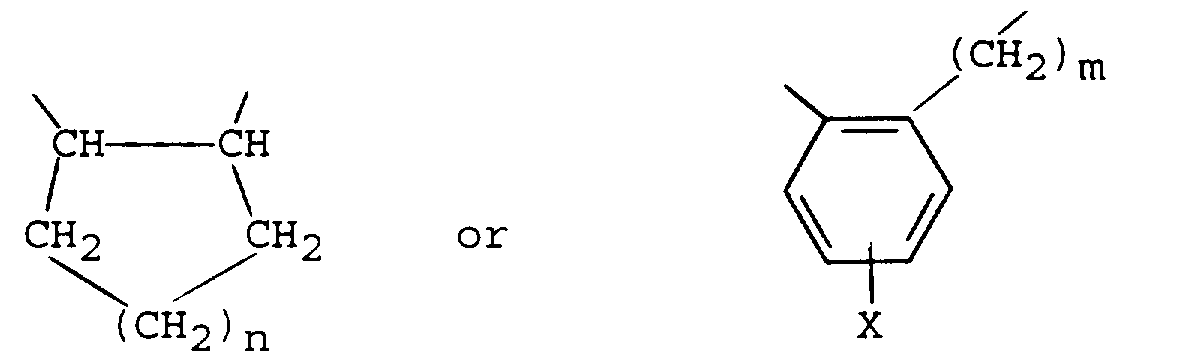
- X2 together with X1 and R4 has the above mentioned meanings; and
- X3 is hydrogen or -CO-R4 where R4 is hydrogen, 1-6 alkyl, 1-6 C haloalkyl, 3-6 C cycloalkyl, phenyl or phenyl-alkyl(1-6C), where the phenyl ring may be substituted by one or two halogen, 1-3 C alkyl, 1-3 C alkoxy or nitro, or
- R4 together with X2 has the above mentioned meanings; or
- R4 together with X2 and X1 has the above mentioned meanings; or
- X3 together with X2 has the above mentioned meanings; and
- X4 is -O-SO2R6 where R6 is methyl, trifluoromethyl, phenyl or p-methyl-phenyl; and
- (ii) the D-threo compound of formula (I) is fluorinated with KF in a polyglycol to afford a D-threo compound of the formula

- (iii) the D-threo compound of formula (Ia) is hydrolyzed to afford a D-threo compound of the formula

- (iv) the D-threo compound of formula (VI) is acylated with a compound of formula R1COOH, wherein R1 has the above mentioned meanings, or a reactive derivative thereof to afford the desired D-threo compound of formula (II).
- The use of the compounds of formula I has the advantage to avoid the formation of many by-products and this not only in that the protection hinders the fluorination of the secondary hydroxy group but also in that it insures the stability of the configuration of the asymmetric carbon atoms.
- Furthermore the compounds of formula I are quite soluble in the most part of the aprotic organic solvents, thus allowing to carry out the fluorination step also in homogeneous phase and under anhydrous and mild conditions.
- Another advantage is that the compounds of formula I are prepared very easily by making use of cheap reactants and that the protective groups can be removed very easily as well after the completion of the fluorination step.
- Still another advantage of the compounds of formula I is that the protection of the secondary hydroxy group allows to substitute the primary hydroxy group with a suitable leaving group so that the fluorination step can be most conveniently carried out with fluorination agents which are cheaper and less dangerous than DAST.
- The protection of the amino and of the secondary hydroxy group thus performed is substantially inert to those treatments that the molecule undergoes, more particularly with nucleophiles and bases, up to the fluorination step and can then be easily removed under mild conditions.
- When X1, X2 and R4, equal or different among them, are hydrogen, 1-6 C alkyl, 1-6 C haloalkyl, 3-6 C cycloalkyl, phenyl or substituted phenyl, examples of suitable reactants are: aldehydes such as formaldehyde, acetaldehyde, valeraldehyde, caproaldehyde, benzaldehyde, anisaldehyde, 4-chlorobenzaldehyde, 4-ethoxy-3-methoxy-benzaldehyde, 2,6-dinitrobenzaldehyde or ketones such as acetone, diethylketone or hexylmethylketone for protecting the secondary hydroxy group and one hydrogen of the amino group, and acids such as acetic, dichloroacetic, trifluoroacetic, pivaloyl, benzoic, 2,4-dibromobenzoic, veratric, 2,5-dimethylbenzoic or 4-nitrobenzoic acid, for protecting the second hydrogen of the amino group.
- When X1 and X2, together, are an alkylene radical having from 2 to 5 carbon atoms, examples of suitable reactants are the cycloalkanones such as cyclopropanone, cyclopentanone or cyclohexanone.
- When X1 together with X2 and R4 is a chain of formula

- When X2 together with R4 forms a mono- or a poly-cylic system, examples of suitable reactants are the aldehydo-acids or the keto-acids such as phthalaldehydic acid, succinic semialdehyde, levulinic acid, 4-phenyl-4-oxo-butyric acid; hexahydrophthalaldehydic acid; (2-acetyl)-cyclohexylcarboxylic acid and (2-acetyl)-cyclopentyl-carboxylic acid.
- When X1 together with X2 is an oxygen atom, examples of suitable reactants are the halocarbonates of formula XCOOR2 where X is a halogen atom and R2 is an alkyl, aralkyl or an aryl radical; preferably R2 is an 1-4 C alkyl radical.
- Preferred compounds according to the process of this invention are those wherein X2 and X3 together are a covalent bond and X1 is hydrogen, 1-6 C alkyl, 1-6 C haloalkyl, phenylalkyl(1-6C), phenyl where the phenyl ring may be substituted by one or two halogen, 1-3 C alkyl, 1-3 C alkoxy or nitro. Examples of suitable reactants for preparing such a compounds are the amidines of formula X1-C(=NH)-NH2 or their salts, the halohydrates of iminoethers of formula X1-C-(OR')=NH2 +·X, the orthoesters of formula X1-(OR')3 and the nitriles of formula X1-CN, where X1 has the above mentioned meanings, X is halogen and R' is preferably an alkyl having low molecular weight. A preferred reactant is benzamidine.
- The methods for preparing the compounds of formula I change according to the nature of the desired compound. Excepting those where X1 and X2 together are an oxygen atom, they can be prepared according to known techniques.
- Examples of known techniques for preparing oxazolines, i.e. the compounds of formula I where X2 and X3, together, are a covalent bond, are disclosed by E.H. Rodd ("Chemistry of Carbon Compounds" vol. IV; Heterocyclic Compounds, page 361, Elsevier Publishing Co. 1957) and by R.C. Elderfield ("Heterocyclic Compounds", vol. V, page 377, J. Wiley and Sons, Inc., 1957) as well as by Angew. Chem. Int. Ed. 15, 270-281, 1976; Chem. Rev. 71, 483506, 1971; Chem. Rev. 44, 447-476, 1941.
- As mentioned before, the methods for preparing oxazolines involve the reaction of a compound of formula

- Alternatively they are prepared by dehydratation, catalyzed by acids, of amides of formula


- The preparation of compounds I where X1 and X2, together, are an oxygen atom is based on the unexpected finding that compounds of formula
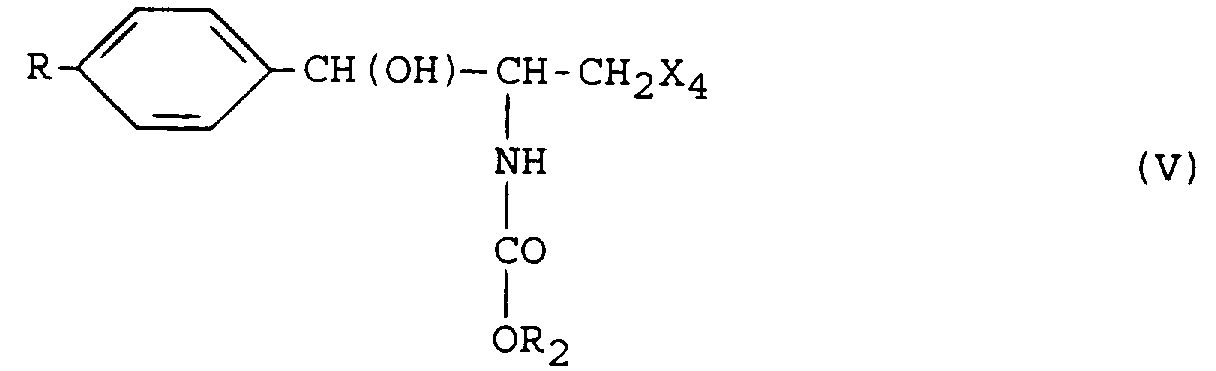
- The role of the solvent is critical. When the reaction is carried out in the presence of a non-aprotic solvent, the cyclization proceeds either on the secondary or on the primary hydroxy group and affords a mixture of the two possible cyclic compounds.
- Examples of suitable aprotic solvents are the aromatic hydrocarbons such as benzene and toluene. Examples of suitable strong bases are the alkali and the alkaline earth metal alcoholates as well as the tertiary amines.
- The cyclization reaction may also proceed via the intermediate formation of the alcoholate at the secondary hydroxy group when they are used alkali and alkaline earth metal alcoholates, alkali metal hydrides such as sodium hydride, sodium amide, Grignard-like organo-metallic derivatives and alkyl-lithium derivatives.
- In their turn, the compounds (V) can be prepared according to known techniques such as the reaction of the desired 1-(phenyl)-2-amino-1,3-propanediol, substituted at the phenyl ring, with a compound of formula X-COOR2, where X is halogen and R2 has the above mentioned meanings, in the presence of a base and of a suitable diluent.
- When it is used an organic diluent such as acetonitrile, it is preferably used an organic base such as a tertiary amine whereas is preferably used an inorganic base such as an alkali metal carbonate or bicarbonate, when the reaction is carried out in aqueous medium. Alternatively it may be used a basic diluent such as pyridine.
- The compounds of formula V wherein R is -SCH3 are more soluble into the aprotic solvents, than those wherein R is -SO-CH3 or SO2CH3. A preferred way for preparing compounds (I) wherein R is -SO-CH3 or -SO2CH3 comprises the preparation of the corresponding compounds (V) wherein R is -S-CH3, their subsequent cyclization and lastly, their oxidation according to known techniques.
- The substitution of the hydrogen of the primary hydroxy group with a -SO2R6 radical, where R6 has the above mentioned meanings, can be carried out before or after the protection of both the secondary hydroxy and amino group. Also this substitution can be carried out according to known techniques.
- Examples of desired fluorination agents when X4 is -O-SO2-R6, where R6 has the above mentioned meanings, are the alkali and the alkaline-earth metal fluorides.
- Anyway, the replacement of the group X4 with fluorine is a complex technical problem particularly when it is desired to use the most economic and amenable fluorination agents, that is the alkali and alkaline-earth metal fluorides, because F anion behaves besides as a nucleophilic agent also as a base causing competitive side-reactions such as elimination, hydrolysis or, whenever it is possible, solvolysis (E.V. & S.M. Dehmlow "Phase transfer catalysis" Verlag Chemie, 1980, page 80). Because of the peculiar nature of the hydrogen atom that is marked with an asterisk in formula (I), the compounds (I) undergo elimination. When they have been reacted with F⊖ in phase transfer conditions or in the presence of crown ethers, they did not react or did afford low yields of the desired compound owing to the concomitant formation of hydrolization and elimination products.
- Now, it has been found that these drawbacks can be overcome when the reaction between a compound (I) wherein X4 is -O-SO2-R6, where R6 has the above mentioned meanings, and F⊖ is carried out in the presence of a suitable polyglycol. Preferably, the fluorination step will be carried out according to the last technique.
- After performance of the fluorination step, the protective groups are removed from the compounds of formula I wherein X4 is fluorine.
- A preferred method is consisting in removing the protective groups with acids, preferably inorganic acids, in aqueous medium or in water/organic diluents mixtures. The latter media are preferred when hydrolysis regenerates the compound or the compounds which had been previously used as protective agents and when the amine which is formed is soluble in an aqueous solution of inorganic acids. It is thus obtained a repartion of the amine in the aqueous layer and of the protective agent or agents in the organic layer, from which they are recovered and then recycled; in its turn, the amine is recovered by precipitation via neutralization of the aqueous layer. Alternatively the amine can be extracted with a suitable organic solvent.
- When X1 and X2, together are an oxygen atom, the protective group may also be removed through treatment with an organo-metallic derivative such as a Grignard's derivative and the subsequent hydrolysis in mild conditions with inorganic acids in water or in water/organic solvent mixtures.
- Another possible method for removing the protective group when X1 and X2, together, are an oxygen atom, comprises the reduction of the keto group and the subsequent hydrolysis in mild conditions as described above. This reduction is preferably carried out with complex hydrides such as sodium borohydride. After removal of the protective groups it is obtained a compound of formula

- The protection performed by the compounds of formula I is useful not only for preparing the compounds of formula II, but also whenever it is desired to replace the primary hydroxy group with another functional group, such as chlorine, bromine, iodine, nitrile, hydrogen, -OR7, -SR7, -SCOR7, -SCN, -S(=NH)NH2, -CH-(COOR7)2, wherein R7 is alkyl, aralkyl or aryl. This invention is illustrated by the following examples which should not be constructed as limiting it in any way.
- D-(threo)-1-(4-methylsulfonylphenyl)-2-phthalimido-1,3-propanediol (1 g; 2.66 mmols), prepared as described in U.S. Patent 4,235,892, has been dissolved in anhydrous pyridine (5 ml). Acetylchloride (0.2 ml; 2.83 mmols) has been added dropwise to this solution kept under stirring at O°C; after completion of the addition, the reaction mixture has been heated to 25°C and kept under stirring for 1 hour; afterwards, the reaction mixture has been poured into water and ice, acidified with hydrochloric acid and extracted with ethyl acetate.
- The crude product (A) has been obtained (quantitative yield) from the organic layer after drying over sodium sulfate and evaporation of the solvent in vacuo; the crude, after crystallization from methanol, gave a pure product (0.84 g; yield 75%) as shown by HPLC and TLC analysis.
Elemental Analysis for C20H19O9N (found) C 57.3 %; H 4.6%; N 3.3 % (Calculated) C 57.55 %; H 4.56 %; N 3.36 %. - The acetylation is regio-selective on the secondary hydroxy group as shown by NMR spectrum in DMSO; delta=1.78; s, 3H, CH3CO-; 4.50 dd- 2H, -CH2OAc; 6.02,d,1H, benzylic OH.
- Reduction of compound (A) to 3-acetoxy-1-(4-methylsulfonylphenyl)-1-hydroxy-2-(3-hydroxy-1H-isoindol-1-one-2-yl)-propane (B).
- Compound (A) (0.76 g; 1.82 mmols) has been added to a mixture of tetrahydrofuran and water (1:1; 4 ml); to this suspension, kept at 0°C under vigorous stirring, has been added portionwise sodium borohydride (138 mg; 3.64 mmols). As the reaction proceeded, the suspension became a homogeneous solution, after 1 hour and after having checked by TLC the disappearance of compound (A) and the formation of a new product, tetrahydrofuran has been evaporated in vacuo and the product extracted with ethyl acetate.
- After drying over sodium sulfate and evaporation of the solvent, compound (B) (0.7 g; yield 92%) has been obtained sufficiently pure to undergo as such the following reaction (Example 3).
- Compound (B) proved to be a mixture of two diastereoisomers because of the formation, during the reduction step, of a new asymmetric carbon atom; this has been proved by TLC, HPLC and NMR spectra in DMSO containing D2O; delta 1.78; s, and 1.86, s, 3H on the whole, CH3-CO in two diastereoisomers in the ratio 35:65; 5.84,s, and 6.24,s,1H, on the whole


- Product (B) (0.55 g; 1.3 mmol) has been suspended in benzene (5 ml) containing a little amount of p-toluensulfonic acid (5 mg); by heating, the mixture became a clear solution. A short time later the water formed during the reaction has been distilled azeotropically until water was absent in the distilled benzene and TLC analysis showed the disappearance of product (B). At the end, almost all benzene has been evaporated in vacuo; after having added some water, product (C) has been extracted with ethyl acetate. Crude product (C) has been obtained in quantitative yield from the organic phase after drying over sodium sulfate and evaporation of the solvent in vacuo.
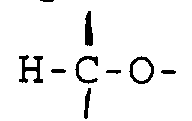
- Crude product (C) has been used as such for the subsequent hydrolysis (Example 4). An aliquot has been purified by chromatography on silica gel using ethyl acetate/petroleum ether in various ratios or pure ethyl acetate as eluents. It has been proved that the crude contained small amounts of some unidentified impurities; after purification by chromatography has been proved to be a mixture of two diastereoisomers as shown by TLC and HPLC analysis as well as by NMR spectrum in DMSO: delta 6.38,s, and 6.07 s, 1H on the whole,


- Product (C) (0.2 g; 0.5 mmols) has been dissolved in methanol (2 ml) containing potassium hydroxide (42 mg; 0.75 mmols) at 0°C and under vigorous stirring. After 30' the hydrolysis has been checked by TLC and showed the disappearance of product (C).
- Methanol has been evaporated in vacuo and in the cold; the residue has been treated with water and extracted with ethyl acetate. The organic layer has been dried and evaporated to afford product (D) which has been recrystallized from ethyl acetate (0.16 g; yield 89%). The presence of two diastereoisomers in product (D) has been shown by NMR spectrum in DMSO, delta = 6.3, s and 5.82,s, 1H on the whole,

- D-(threo)-1-(4-methylthio)-phenyl-2-amino-1,3-propanediol (1.06 g; 4.93 mmols) has been suspended into an aqueous solution of potassium carbonate (1.8 g of potassium carbonate into 20 ml of water) and the thus obtained mixture has been cooled, under vigorous stirring, to 0°C.
- Ethyl chlorocarbonate (0.5 ml) has been dropped quickly into the mixture maintained under vigorous stirring at 0°C; after half a hour, further 0.24 ml of ethyl chlorocarbonate (total amount: 7.74 mmols) has been added and the mixture has been maintained under stirring for 1 further hour.
- At first the reaction mixture became clear and then a white precipitate has been slowly formed. After having checked the completion of the reaction by TLC, the suspension has been extracted with ethyl acetate. After drying on sodium sulfate, filtration and evaporation of the solvent, the organic extracts afforded 1.37 g of crude (H) (yield, 95.5%) which has been recrystallized from ethyl acetate/diisopropyl ether. m.p. = 75°C.
I.R. spectrum: 3340 and 3450 cm-1 (OH, NH stretching), 1690-1700 cm-1 (broad band: C=O amide). - In a similar manner it has been prepared the 1,3-dihydroxy-1-(4-methylsulfonyl-phenyl)-2-ethoxycarbonylamino-propane (I) which, after crystallization from ethyl acetate, showed (IR analysis) the following peaks: 3200-3360 cm (broad band - OH and NH stretching), 1715 cm (CO amide).
- Compound (H) (5 g; 17.5 mmols) has been dissolved in warm toluene (25 ml). To this solution, an equimolar amount of potassium ter.butylate has been added and the reaction mixture has been refluxed for 3 hours. Afterwards, almost all the solvent has been evaporated; water and ice have been added to the residue and the precipitate has been collected by filtration. The thus obtained crude (J) has been recrystallized from ethanol (3.7 g; yield, 88%); m.p. 130-131°C.
I.R. Spectrum: 3180, 3240, 3300 cm-1 (OH and NH stretching) 1720; 1745 cm-1 (C=O, oxazolidinone); - NMR in DMSO, delta: 7.64 and 8.0, two doublets, 2H each one of p-substituted phenyl; 7.88, S, 1H, NH amido; 5.48, d, 1H, benzyl hydrogen; 3.56, m, 2H, hydroxymethyl; 5.16, m, H linked to C4 of oxazolidinone ring; 3.2, S, 3H, CH3S-.
- Compound (J) (53 g; 221 mmols) has been added portionwise to 84 ml of hydrogen peroxide (130 vol.) maintained under stirring at 40-45°C. After completion of the addition, the stirring has been continued for further 20 hours at 40°C.
- Acetic anhydride (76.6 g; 20.7 ml) has been dropped into the reaction mixture by keeping the temperature below 40°C. The reaction mixture has been then cooled to 20-22°C and maintained under stirring at this temperature for 3 hours and, finally, allowed to stand in refrigerator overnight.
- Afterwards, the solvent has been evaporated with caution in vacuo at 40°C; hot ethanol has been added to the thus obtained residue. The solvent has been again evaporated and the residue crystallized from methyl alcohol. 48.6 g of product (K) yield, 81%, m.p. 172-174°C.
I.R. spectrum: 1710 cm-1 (C=O, amide) 3470, 3340, 3250, 3200 cm-1 (OH and NH). - Compound (K) (200 mg; 0.84 mmols) has been dissolved in anhydrous pyridine (3 ml). The thus obtained solution has been cooled to 0°C and added with freshly distilled methanesulfonyl chloride (0.06 ml). The solution has been maintained at 0°C overnight and then diluted with an aqueous solution of hydrochloric acid (stoichiometric amount with respect to pyridine) and ice. After extraction with ethyl acetate, the organic extract has been dried over sodium sulfate and evaporated in vacuo to afford crude (M); yield, 85-90%.
I.R. spectrum: 3300 cm-1 (NH), 1760 and 1740 cm-1. -
- i)D-(-)-threo-1-(4-methylthiophenyl)-2-amino-1,3-propane diol (20 g; 94 mmols) has been thoroughly mixed with benzamidine hydrochloride dihydrate (25 g; 130 mmols) and melted at 100°C. The melted mass, after 1 hour at said temperature has been cooled.
To the cooled mass has been added ethyl alcohol (850 ml) and the mixture has been refluxed till complete dissolution. The solution has been then filtered with active carbon and cooled to -10°C. The crystalline precipitate has been collected by filtration and dried at 50°C under reduced pressure for 10 hours.
19 g (69%) of compound (N) have been thus obtained, m.p. 174-176°C.
The thus obtained product has been purified by crystallization from ethyl alcohol (400 ml), filtration and drying at 60 °C under reduced pressure for 8 hours.
Yield, 17 g (62%); m.p. 175-177°C. - ii) A solution of 390.6 g (1.83 moles) of D-(-)-threo-1-(4-methylthiophenyl)-2-amino-1,3-propanediol and 374 g (2.01 moles) of ethyl benzimidate hydrochloride in 500 ml of water was warmed under stirring at 30°C for 20 hours. The mixture was cooled at 5°C and the resulting precipitate was filtered, washed with water and dried in vacuum at 50°C.
The crude oxazoline was purified by recrystallization from ethanol to give 395 g (72%) of product (N), m.p. 172-73°C. - In a similar manner may be prepared from D-(-)-threo-1-(4-methylthiophenyl)-2-amino-1,3-propanediol and the proper imidate the following derivatives:
- D-(-)-threo-2-(4-nitrophenyl)-4-hydroxymethyl-5-(4-methylthio phenyl)-2-oxazoline (O)
- D-(-)-threo-2-benzyl-4-hydroxymethyl-5-(4-methylthiophenyl)-2-oxazoline (P).
- Ethyl acetoimidate hydrochloride (50 g; 400 mmols) has been suspended in dichloromethane (360 ml). To the thus obtained suspension has been added D-(-)-threo-1-(4-methylthiophenyl)-2amino-1,3-propanediol (76.37 g; 358 mmols). The reaction mixture has been stirred for 5 hours and then poured into ice and water (230 g).
- The aqueous layer has been separated and extracted with dichloromethane (60 ml). The combined organic extracts have been washed with water, dried on sodium sulfate and evaporated to dryness.
- Crystalline product (Q) (69.50 g; 81%) has been thus obtained which has been purified by crystallization from methylter.butyl-ether (1750 ml), filtration and drying in vacuo at 40-50°C. Yield, 55.60 g (65%) m.p. 111-113°C.
- In a similar manner has been prepared D-(-)-threo-2-methyl-4-hydroxymethyl-5-(4-methylsulfonylphenyl)-2-oxazoline (R) melting at 153-155°C.
- D-(-)-threo-2-phenyl-4-hydroxymethyl-5-(4-methylthiophenyl)-2-oxazoline (5 g; 16.7 mmols) prepared as disclosed by Example 9 above, has been added portionwise to acetic anhydride (5.80 ml) under stirring at 35°C. Into the thus obtained suspension, has been dropped hydrogen peroxide (20 ml; 130 volumes) maintaining the temperature at 35-40°C by external cooling.
- After completion of the addition, stirring has been continued at 35°C till complete dissolution and the solution is allowed to stand overnight at 4°C. To the reaction mixture has been added water (25 ml). The precipitate has been separated by filtration, washed on the filter till neutral and then dried in vacuo at 60°C to afford 4.4 g of the desired product (U) which has been purified by crystallization from methyl alcohol (400 ml).
Yield, 3.80 g (68.5%); m.p. 209-211°C. - Preparation of D-(-)threo-2-dichloromethyl-4-methanesulfonyloxymethyl-5-(4-methylsulfonylphenyl)-2-oxazoline (V). Methanesulfonyl chloride (8.13 ml; 105 mmols) has been dropped in 15 minutes into a solution of D-(-)-threo-1-(4-methylsulfonylphenyl)-2-dichloroacetylamino-1,3-propane diol (35.60 g; 100 mmols) in anhydrous pyridine (136 ml) maintained under stirring at 0°C.
- The reaction mixture has been kept under stirring for 1 further hour and then allowed to stand in refrigerator overnight. The thus obtained mixture has been poured into a mixture of concentrate hydrochloric acid (150 ml) and ice and extracted with ethyl acetate (500 ml x 2).
- The combined organic extracts have been washed with 5% hydrochloric acid (200 ml) and then with water till neutral, dried over sodium sulfate and evaporated to dryness.
- The residue has been purified by crystallization from ethyl alcohol (200 ml).
- 24.4 g (56%) of D-(-)-threo-1-(4-methylsulfonylphenyl)-2-dichloroacetylamino-3-methanesulfonyloxypropanol melting at 109-112°C have been thus obtained.
- A mixture of this product (2 g; 4.6 mmols) and of methane sulfonic acid (0.1 ml) in 35 ml of 1,2-dichloroethane, has been refluxed in a round-bottomed flask equipped with a water trap for 3 hrs. The reaction mixture has been cooled and washed with water.
- The organic layer has been separated, dried over sodium sulfate and evaporated to dryness. The residue (0.7 g) has been purified by chromatography on a silica gel column (70 g) eluting with dichloromethane/methyl alcohol (9.5:0.5). The fraction containing the desired product (V) has been isolated and evaporated to dryness.
- It has been thus obtained a product (200 mg) melting at 116-118°C which show a NMR spectrum consistent with the structural formula.
- In a similar manner may be prepared from D-threo-(1-(4-methylsulfonylphenyl)-2-trifluoroacetylamino-1,3-propanediol (British Patent No. 1534387) the correspondent D-(threo-(-)-2-trifluoromethyl-4-hydroxymethyl-5-(4-methylsulfonylphenyl)-2-oxazoline (W).
- A mixture of product (N) (4 g; 13.37 mmols) prepared as disclosed in Example 9 above, in anhydrous pyridine (15 ml) has been kept under stirring at room temperature for about 1 hr. After cooling to 0°C has been added dropwise methane sulfonyl chloride (1145 ml; 14.7 mmols) and stirring has been continued for 2 further hrs maintaining the temperature at 0°C. The mixture has been then allowed to stand at about 3°C for 3 hrs. Ice has been added to the reaction mixture and the thus obtained solid has been filtered and dried in vacuo at room temperature. 4.96 g of chromatographically (T.L.C.) pure product (T) have been thus obtained.
Yield, 98%; m.p. 107-108°C. - In a similar manner may be prepared the following compounds:
- D-(-)-threo-2-methyl-4-methanesulfonyloxymethyl-5-(4-methylthiophenyl)-2-oxazoline (Y)
- D-(-)-threo-2-benzyl-4-methanesulfonyloxymethyl-5-(4-methylthiophenyl)-2-oxazoline (Z)
- D-(-)-threo-2-trifluoromethyl-4-methanesulfonyloxymethyl-5-(4-methylsulfonylphenyl)-2-oxazoline (a)
- D-(-)-threo-2-(4-nitrophenyl)-4-methanesulfonyloxymethyl-5-(4-methylthiophenyl)-2-oxazoline (b).
- Product (X) (4 g; 10.61 mmols) prepared as disclosed in Example 13 and anhydrous potassium fluoride (6.164 g; 106 mmols) in polyethylene glycol 400 (25 ml) have been maintained under stirring at 100-105°C for 19 hrs. After having added water, the mixture has been extracted with ethyl ether (3 x 10 ml). The combined organic extracts have been dried over sodium sulfate and evaporated to dryness. The oily residue has been purified by flash chromatography on a silica gel column eluting at first with 900 ml of ethyl acetate/petroleum ether 1:9 and then with 1500 ml of ethyl acetate/petroleum ether 2:8.
- 2.19 (yield, 68.5%) of product (c) have been thus obtained. An analytically pure sample has been prepared by crystallization from isopropanol; m.p. 70-72°C.
NMR (CDCl3) delta: 5.5 d, (J=7Hz) (H-C5); 5.08, d.d, (1H) (CH2F); 4.13-4.71, m, 2H (H-C4 and -CH2F). - Product (c) (1.01 g; 3.35 mmols) prepared as disclosed in Example 14 has been added to 2N hydrochloric acid (18 ml) and maintained under stirring at 100-105°C. After 50 minutes, further 20 ml of 2N hydrochloric acid have been added and the stirring is continued at 100-105°C. After 3 hrs and a half the solution has been cooled and extracted with ethyl ether (20 ml x 2). The aqueous layer has been at first made basic with sodium bicarbonate and the saturated with potassium carbonate. Finally it has been extracted with chloroform (20 ml x 3). The combined organic extracts have been evaporated to dryness in vacuo. 0.64 g of product (d) have been thus obtained. Yield, 88%.
- To a mixture of product (U) (0.3 g; 0.9 mmols) prepared as disclosed in Example 11, in pyridine (5 ml) has been added methanesulfonyl chloride (0.077 ml; 0.99 mmols) at 0°C. After having continued the stirring at 0°C for 10 minutes, the mixture has been allowed to stand in refrigerator overnight. The mixture has been then made acid, extracted with ethyl acetate (15 ml x 2), dried over sodium sulfate and evaporated to dryness in vacuo.
0.32 g of product (e) have been thus obtained. Yield, 87%. - Product (e) (0.32 g; 0.78 mmols) prepared as disclosed in Example 16 above and anhydrous potassium fluoride (0.53 g; 0.91 mmols) in polyethylene glycol (400 ml) have been kept under stirring at 90-95°C for 3 hrs, then at 75°C for 17 hrs and, finally, at 110°C for 6 hrs. The reaction mixture has been worked up as disclosed in Example 14 and have been thus obtained 0.13 g of product (f). Yield, 50%.
NMR (CDCl3) delta: 5.76 d, (J=7Hz, H-C); 5.16, d.d, (1H) (-CH2F); 4.2-4.75, m, (2H), (H-C4 and -CH2F).
Claims (1)
- A process for preparing a D-threo compound of the formula
 R is a methylthio, methylsulfoxy, methylsulfonyl; andR1 is dichloromethyl;substantially free from by-products deriving from replacement of the secondary hydroxy group with a fluorine atom or racemization of the asymmetric carbon atoms,
characterized in that(i) both the secondary hydroxy and the amino group of a D-threo 1-(phenyl)-2-amino-1,3-propanediol are protected via a D-threo compound of the formula R has the above mentioned meanings;X1 is hydrogen, 1-6 C alkyl, 1-6 C haloalkyl, 3-6 C cycloalkyl, phenyl or phenylalkyl (1-6 C), where the phenyl ring may be substituted by one or two halogen, 1-3 C alkyl, 1-3 alkoxy or nitro; orX1 together with X2 is an oxygen atom or an alkylene having from two to five carbon atoms; orX1 together with X2 and R4 is a chain of formula
 X2 is hydrogen, 1-6 C alkyl, 1-6 C haloakyl, 3-6 C cycloalkyl or phenyl which may be substituted by one or two halogen, 1-3 C alkyl, 1-3 C alkoxy or nitro; orX2 together with X1 has the above mentioned meanings; orX2 together with X3 is a covalent bond; orX2 together with R4 is
-(CH2)m-CH=CH-; -(CH2)m-CH2-CH2-
 X2 together with X1 and R4 has the above mentioned meanings; andX3 is hydrogen or -CO-R4 where R4 is hydrogen, 1-6 alkyl, 1-6 C haloalkyl, 3-6 C cycloalkyl, phenyl or phenyl-alkyl(1-6C), where the phenyl ring may be substituted by one or two halogen, 1-3 C alkyl, 1-3 C alkoxy or nitro, or R4 together with X2 has the above mentioned meanings; or R4 together with X2 and X1 has the above mentioned meanings; orX3 together with X2 has the above mentioned meanings; andX4 is -O-SO2R6 where R6 is methyl, trifluoromethyl, phenyl or p-methyl-phenyl; andii) the D-threo compound of formula (I) is fluorinated with KF in a polyglycol to afford a D-threo compound of the formula
 (iii) the D-threo compound of formula (Ia) is hydrolyzed to afford a D-threo compound of the formula
 (iv) the D-threo compound of formula (VI) is acylated with a compound of formula R1COOH, wherein R1 has the above mentioned meanings, or a reactive derivative thereof to afford the desired D-threo compound of formula (II).
Priority Applications (2)
| Application Number | Priority Date | Filing Date | Title |
|---|---|---|---|
| EP95201522A EP0677511A3 (en) | 1983-06-02 | 1984-05-29 | Intermediates for the preparation of 1-phenyl-1-hydroxy-2-amino-3-fluoropropane derivatives. |
| EP95201523A EP0678506A3 (en) | 1983-06-02 | 1984-05-29 | Intermediates for the preparation of 1-phenyl-1-hydroxy-2-amino-3-fluoropropane derivatives. |
Applications Claiming Priority (6)
| Application Number | Priority Date | Filing Date | Title |
|---|---|---|---|
| IT21417/83A IT1175919B (en) | 1983-06-02 | 1983-06-02 | New p-substd.-phenyl-oxazoline derivs. |
| IT2141783 | 1983-06-02 | ||
| IT2244983 | 1983-08-05 | ||
| IT22449/83A IT1164388B (en) | 1983-08-05 | 1983-08-05 | New p-substd.-phenyl-oxazoline derivs. |
| IT1943584 | 1984-02-03 | ||
| IT19435/84A IT1173213B (en) | 1984-02-03 | 1984-02-03 | PROCEDURE TO FLUORINE SOME DERIVATIVES FROM 1L-FENYL-2-AMINO-1,3-PROPANDIOL AND THEIR INTERMEDIATES |
Related Child Applications (3)
| Application Number | Title | Priority Date | Filing Date |
|---|---|---|---|
| EP95201523.8 Division-Into | 1984-05-29 | ||
| EP95201522.0 Division-Into | 1984-05-29 | ||
| EP95201522A Division EP0677511A3 (en) | 1983-06-02 | 1984-05-29 | Intermediates for the preparation of 1-phenyl-1-hydroxy-2-amino-3-fluoropropane derivatives. |
Publications (3)
| Publication Number | Publication Date |
|---|---|
| EP0130633A2 EP0130633A2 (en) | 1985-01-09 |
| EP0130633A3 EP0130633A3 (en) | 1987-08-05 |
| EP0130633B1 true EP0130633B1 (en) | 1996-10-09 |
Family
ID=27272965
Family Applications (3)
| Application Number | Title | Priority Date | Filing Date |
|---|---|---|---|
| EP95201522A Withdrawn EP0677511A3 (en) | 1983-06-02 | 1984-05-29 | Intermediates for the preparation of 1-phenyl-1-hydroxy-2-amino-3-fluoropropane derivatives. |
| EP84200772A Expired - Lifetime EP0130633B1 (en) | 1983-06-02 | 1984-05-29 | Process for the preparation of 1-(phenyl)-1-hydroxy-2-amino-3-fluoro propane derivatives |
| EP95201523A Withdrawn EP0678506A3 (en) | 1983-06-02 | 1984-05-29 | Intermediates for the preparation of 1-phenyl-1-hydroxy-2-amino-3-fluoropropane derivatives. |
Family Applications Before (1)
| Application Number | Title | Priority Date | Filing Date |
|---|---|---|---|
| EP95201522A Withdrawn EP0677511A3 (en) | 1983-06-02 | 1984-05-29 | Intermediates for the preparation of 1-phenyl-1-hydroxy-2-amino-3-fluoropropane derivatives. |
Family Applications After (1)
| Application Number | Title | Priority Date | Filing Date |
|---|---|---|---|
| EP95201523A Withdrawn EP0678506A3 (en) | 1983-06-02 | 1984-05-29 | Intermediates for the preparation of 1-phenyl-1-hydroxy-2-amino-3-fluoropropane derivatives. |
Country Status (5)
| Country | Link |
|---|---|
| EP (3) | EP0677511A3 (en) |
| JP (2) | JPH0819085B2 (en) |
| AT (1) | ATE143953T1 (en) |
| DE (1) | DE3486438T2 (en) |
| ES (1) | ES8505927A1 (en) |
Cited By (2)
| Publication number | Priority date | Publication date | Assignee | Title |
|---|---|---|---|---|
| US7126005B2 (en) | 2003-10-06 | 2006-10-24 | Aurobindo Pharma Limited | Process for preparing florfenicol |
| CN103965085A (en) * | 2014-04-17 | 2014-08-06 | 上海恒晟药业有限公司 | Preparation method of substituted 1, 2-alkamine medicine |
Families Citing this family (14)
| Publication number | Priority date | Publication date | Assignee | Title |
|---|---|---|---|---|
| US5243056A (en) * | 1983-06-02 | 1993-09-07 | Zambon S.P.A. | Intermediates for the preparation of 1-(phenyl)-1-hydroxy-2-amino-3-fluoro propane derivatives |
| US5153328A (en) * | 1984-02-03 | 1992-10-06 | Zambon S.P.A. | 2 Hydrocarbyl-4 substituted methyl 5 (4 substituted phenyl)-oxazolines |
| US5332835A (en) * | 1984-02-03 | 1994-07-26 | Zambon S.P.A. | Process for fluorinating 1-phenyl-2-amino-1,3-propanediol compounds and new oxazoline compounds useful in this process |
| US4876352A (en) * | 1988-09-14 | 1989-10-24 | Schering Corporation | Pressurized fluorination of hydroxy alkyl groups |
| US5227494A (en) * | 1988-09-14 | 1993-07-13 | Schering Corporation | Process for preparing oxazoline compounds |
| AU5674690A (en) * | 1989-05-15 | 1990-12-18 | Schering Corporation | Process for preparing antibacterial compounds and intermediates thereto |
| EP0407190A3 (en) * | 1989-07-07 | 1991-03-13 | Schering Corporation | Process for producing antibacterial intermediates via enzyme hydrolysis of racemic substrates |
| IT1237798B (en) * | 1989-10-20 | 1993-06-17 | Zambon Spa | STEREO-CHEMICAL REVERSAL PROCESS OF (2S, 3S) -2-AMINO-3-FENYL-1, 3-PROPANDIOLS IN THE CORRESPONDING ENANTIOMERS (2R, 3R). |
| IT1240676B (en) * | 1990-04-24 | 1993-12-17 | Agrimont Spa | COMPOSITIONS WITH HERBICIDE ACTIVITY |
| ATE115123T1 (en) * | 1990-10-25 | 1994-12-15 | Schering Corp | PROCESS FOR THE MANUFACTURE OF FLORFENICOL, ITS ANALOGUES AND OXAZOLINE INTERMEDIATE PRODUCTS. |
| IT1249048B (en) | 1991-02-21 | 1995-02-11 | Zambon Spa | PROCESS FOR THE PREPARATION OF TRANS- (5R) -2-OSSAZOLINE -2,4,5, TRISOSTITUITE |
| US5663361A (en) * | 1996-08-19 | 1997-09-02 | Schering Corporation | Process for preparing intermediates to florfenicol |
| US7601869B2 (en) * | 2005-06-20 | 2009-10-13 | Aurobindo Pharma Ltd. | Process for the preparation of Florfenicol |
| KR101408596B1 (en) * | 2005-09-07 | 2014-06-17 | 엠에스디 인터내셔널 홀딩즈 게엠베하 | Process for the production of ester oxazoline compounds and their conversion to fluorfenicol |
Family Cites Families (4)
| Publication number | Priority date | Publication date | Assignee | Title |
|---|---|---|---|---|
| US2820041A (en) * | 1958-01-14 | Preparation of nitrophenyloxazolines | ||
| AT179022B (en) * | 1950-04-14 | 1954-07-10 | Parke Davis & Co | Process for the preparation of new oxazoline derivatives |
| IT1065143B (en) | 1976-08-05 | 1985-02-25 | Clesa Spa | D-TREO-1-FENYL-2-TRIFLUOROACETAMIDO-1,3-PROPANDIOL DERIVATIVES AND PROCESSES FOR THEIR PREPARATION |
| US4235892A (en) * | 1979-02-05 | 1980-11-25 | Schering Corporation, Patent Dept. | 1-Aryl-2-acylamido-3-fluoro-1-propanols, methods for their use as antibacterial agents and compositions useful therefor |
-
1984
- 1984-05-29 EP EP95201522A patent/EP0677511A3/en not_active Withdrawn
- 1984-05-29 EP EP84200772A patent/EP0130633B1/en not_active Expired - Lifetime
- 1984-05-29 DE DE3486438T patent/DE3486438T2/en not_active Expired - Lifetime
- 1984-05-29 AT AT84200772T patent/ATE143953T1/en not_active IP Right Cessation
- 1984-05-29 EP EP95201523A patent/EP0678506A3/en not_active Withdrawn
- 1984-06-01 ES ES533355A patent/ES8505927A1/en not_active Expired
- 1984-06-02 JP JP59113774A patent/JPH0819085B2/en not_active Expired - Lifetime
-
1995
- 1995-09-29 JP JP7287772A patent/JP2721959B2/en not_active Expired - Lifetime
Non-Patent Citations (2)
| Title |
|---|
| Angewandte Chemie (International Edition), Vol. 20 (1981), pages 647 to 667 * |
| Houben-Weyl, Methoden der Organischen Chemie, Vol. V/3 (1962), pages 166 to 169 * |
Cited By (3)
| Publication number | Priority date | Publication date | Assignee | Title |
|---|---|---|---|---|
| US7126005B2 (en) | 2003-10-06 | 2006-10-24 | Aurobindo Pharma Limited | Process for preparing florfenicol |
| CN103965085A (en) * | 2014-04-17 | 2014-08-06 | 上海恒晟药业有限公司 | Preparation method of substituted 1, 2-alkamine medicine |
| CN103965085B (en) * | 2014-04-17 | 2016-02-24 | 上海恒晟药业有限公司 | A kind of preparation method replacing 1,2-amino alcohol medicine |
Also Published As
| Publication number | Publication date |
|---|---|
| DE3486438T2 (en) | 1998-08-13 |
| EP0678506A2 (en) | 1995-10-25 |
| ES533355A0 (en) | 1985-06-16 |
| EP0130633A3 (en) | 1987-08-05 |
| JPS6069072A (en) | 1985-04-19 |
| DE3486438D1 (en) | 1996-11-14 |
| EP0678506A3 (en) | 1996-07-24 |
| EP0677511A2 (en) | 1995-10-18 |
| EP0677511A3 (en) | 1996-07-24 |
| EP0130633A2 (en) | 1985-01-09 |
| JP2721959B2 (en) | 1998-03-04 |
| ATE143953T1 (en) | 1996-10-15 |
| JPH08295678A (en) | 1996-11-12 |
| JPH0819085B2 (en) | 1996-02-28 |
| ES8505927A1 (en) | 1985-06-16 |
Similar Documents
| Publication | Publication Date | Title |
|---|---|---|
| US4743700A (en) | Process for fluorinating 1-phenyl-2-amino-1,3-propanediol compounds | |
| US5567844A (en) | Process for preparing 1-phenyl-2-amino-3-fluoro-1-propanols | |
| US5105009A (en) | Intermediates for the preparation of 1-(phenyl)-1-hydroxy-2-amino-3-fluoropropane derivatives | |
| EP0677511A2 (en) | Intermediates for the preparation of 1-(phenyl)-1-hydroxy-2-amino-3-fluoro propane derivatives | |
| KR900001509B1 (en) | (Threo) -1-aryl-2-acylamido-3-fluoro-1-propanol and preparation method thereof | |
| EP0707567B1 (en) | Process for the synthesis of azetidinones | |
| HU207057B (en) | Process for producing 4-(fluoromethyl)-oxazoline derivatives | |
| US5401852A (en) | Process for the stereochemical inversion of (2S,3S)-2-amino-3-phenyl-1,3-propanediols into their (2R,3R) enantiomers | |
| US5153328A (en) | 2 Hydrocarbyl-4 substituted methyl 5 (4 substituted phenyl)-oxazolines | |
| Breton et al. | Preparation of functionalized oxazolines | |
| US5243056A (en) | Intermediates for the preparation of 1-(phenyl)-1-hydroxy-2-amino-3-fluoro propane derivatives | |
| EP0220947A2 (en) | Polyfluoroalkylisoxazolylamines, their preparation and use | |
| KR920002295B1 (en) | Method for preparing prolidinone derivative | |
| US4391980A (en) | Aryloxymethyl oxazolinium derivatives | |
| MXPA06014201A (en) | Process for preparing 2-oxo-1-pyrrolidine derivatives by intramolecular allylation. | |
| HU217981B (en) | N- (3-chlorophenyl) piperazine derivatives and processes for their preparation | |
| US7619116B2 (en) | Intermediates for the synthesis of (R)-tamsulosin and of its pharmaceutically acceptable salts and process for their preparation | |
| US6350902B2 (en) | Process for the selective N-formylation of N-hydroxylamines | |
| EP0500177B1 (en) | Process for the preparation of trans-(5R)-2,4,5-trisubstituted 2-oxazolines | |
| US20010031896A1 (en) | Process for the selective N-formylation of N-hydroxylamines | |
| Li et al. | Asymmetric synthesis and absolute stereochemistry of 4, 4-bis-(trifluoromethyl) imidazoline based ACAT inhibitors | |
| WO1995008530A1 (en) | Process for producing 3-amino-2-hydroxy-1-propanol derivative | |
| KR100467552B1 (en) | 4(4-oxocyclohexyl) benzamides as intermediate products for medicaments | |
| KR100463111B1 (en) | Oxazolidinone derivatives, methods for producing the same and antibacterial composition containing the said compounds | |
| HU188354B (en) | Process for producing hydrogenchlorid-acid additional salts of 1-/chloro alkyl/-1,2,3,4-tetrahydro-beta-carbolines |
Legal Events
| Date | Code | Title | Description |
|---|---|---|---|
| PUAI | Public reference made under article 153(3) epc to a published international application that has entered the european phase |
Free format text: ORIGINAL CODE: 0009012 |
|
| AK | Designated contracting states |
Designated state(s): AT BE CH DE FR GB IT LI LU NL SE |
|
| PUAL | Search report despatched |
Free format text: ORIGINAL CODE: 0009013 |
|
| AK | Designated contracting states |
Kind code of ref document: A3 Designated state(s): AT BE CH DE FR GB IT LI LU NL SE |
|
| 17P | Request for examination filed |
Effective date: 19880113 |
|
| 17Q | First examination report despatched |
Effective date: 19900131 |
|
| RAP1 | Party data changed (applicant data changed or rights of an application transferred) |
Owner name: ZAMBON GROUP S.P.A. |
|
| APAB | Appeal dossier modified |
Free format text: ORIGINAL CODE: EPIDOS NOAPE |
|
| APAU | Communication from the board of appeal sent |
Free format text: ORIGINAL CODE: EPIDOS OBAP |
|
| GRAG | Despatch of communication of intention to grant |
Free format text: ORIGINAL CODE: EPIDOS AGRA |
|
| GRAH | Despatch of communication of intention to grant a patent |
Free format text: ORIGINAL CODE: EPIDOS IGRA |
|
| GRAH | Despatch of communication of intention to grant a patent |
Free format text: ORIGINAL CODE: EPIDOS IGRA |
|
| GRAA | (expected) grant |
Free format text: ORIGINAL CODE: 0009210 |
|
| AK | Designated contracting states |
Kind code of ref document: B1 Designated state(s): AT BE CH DE FR GB IT LI LU NL SE |
|
| REF | Corresponds to: |
Ref document number: 143953 Country of ref document: AT Date of ref document: 19961015 Kind code of ref document: T |
|
| XX | Miscellaneous (additional remarks) |
Free format text: TEILANMELDUNG 95201522.0 EINGEREICHT AM 29/05/84. |
|
| REF | Corresponds to: |
Ref document number: 3486438 Country of ref document: DE Date of ref document: 19961114 |
|
| ITF | It: translation for a ep patent filed | ||
| ET | Fr: translation filed | ||
| RAP2 | Party data changed (patent owner data changed or rights of a patent transferred) |
Owner name: SCHERING-PLOUGH LTD. |
|
| NLT2 | Nl: modifications (of names), taken from the european patent patent bulletin |
Owner name: SCHERING-PLOUGH LTD. |
|
| PLBE | No opposition filed within time limit |
Free format text: ORIGINAL CODE: 0009261 |
|
| STAA | Information on the status of an ep patent application or granted ep patent |
Free format text: STATUS: NO OPPOSITION FILED WITHIN TIME LIMIT |
|
| REG | Reference to a national code |
Ref country code: CH Ref legal event code: PUE Owner name: ZAMBON GROUP S.P.A. TRANSFER- SCHERING-PLOUGH LTD. Ref country code: CH Ref legal event code: NV Representative=s name: HUG INTERLIZENZ AG |
|
| REG | Reference to a national code |
Ref country code: GB Ref legal event code: 732E |
|
| 26N | No opposition filed | ||
| NLS | Nl: assignments of ep-patents |
Owner name: SCHERING-PLOUGH LTD. |
|
| REG | Reference to a national code |
Ref country code: FR Ref legal event code: TP |
|
| REG | Reference to a national code |
Ref country code: GB Ref legal event code: IF02 |
|
| REG | Reference to a national code |
Ref country code: CH Ref legal event code: NV |
|
| PGFP | Annual fee paid to national office [announced via postgrant information from national office to epo] |
Ref country code: LU Payment date: 20030331 Year of fee payment: 20 |
|
| PGFP | Annual fee paid to national office [announced via postgrant information from national office to epo] |
Ref country code: GB Payment date: 20030401 Year of fee payment: 20 |
|
| PGFP | Annual fee paid to national office [announced via postgrant information from national office to epo] |
Ref country code: AT Payment date: 20030402 Year of fee payment: 20 |
|
| PGFP | Annual fee paid to national office [announced via postgrant information from national office to epo] |
Ref country code: NL Payment date: 20030403 Year of fee payment: 20 |
|
| PGFP | Annual fee paid to national office [announced via postgrant information from national office to epo] |
Ref country code: FR Payment date: 20030505 Year of fee payment: 20 |
|
| PGFP | Annual fee paid to national office [announced via postgrant information from national office to epo] |
Ref country code: SE Payment date: 20030506 Year of fee payment: 20 |
|
| PGFP | Annual fee paid to national office [announced via postgrant information from national office to epo] |
Ref country code: DE Payment date: 20030530 Year of fee payment: 20 |
|
| PGFP | Annual fee paid to national office [announced via postgrant information from national office to epo] |
Ref country code: CH Payment date: 20030605 Year of fee payment: 20 |
|
| PGFP | Annual fee paid to national office [announced via postgrant information from national office to epo] |
Ref country code: BE Payment date: 20030617 Year of fee payment: 20 |
|
| PG25 | Lapsed in a contracting state [announced via postgrant information from national office to epo] |
Ref country code: LI Free format text: LAPSE BECAUSE OF EXPIRATION OF PROTECTION Effective date: 20040528 Ref country code: GB Free format text: LAPSE BECAUSE OF EXPIRATION OF PROTECTION Effective date: 20040528 Ref country code: CH Free format text: LAPSE BECAUSE OF EXPIRATION OF PROTECTION Effective date: 20040528 |
|
| PG25 | Lapsed in a contracting state [announced via postgrant information from national office to epo] |
Ref country code: NL Free format text: LAPSE BECAUSE OF EXPIRATION OF PROTECTION Effective date: 20040529 Ref country code: LU Free format text: LAPSE BECAUSE OF NON-PAYMENT OF DUE FEES Effective date: 20040529 Ref country code: AT Free format text: LAPSE BECAUSE OF EXPIRATION OF PROTECTION Effective date: 20040529 |
|
| BE20 | Be: patent expired |
Owner name: *SCHERING-PLOUGH LTD Effective date: 20040529 |
|
| REG | Reference to a national code |
Ref country code: GB Ref legal event code: PE20 |
|
| EUG | Se: european patent has lapsed | ||
| REG | Reference to a national code |
Ref country code: CH Ref legal event code: PL |
|
| NLV7 | Nl: ceased due to reaching the maximum lifetime of a patent |
Effective date: 20040529 |
|
| APAH | Appeal reference modified |
Free format text: ORIGINAL CODE: EPIDOSCREFNO |