EP0129240A1 - Hydraulic fluids - Google Patents
Hydraulic fluids Download PDFInfo
- Publication number
- EP0129240A1 EP0129240A1 EP84106971A EP84106971A EP0129240A1 EP 0129240 A1 EP0129240 A1 EP 0129240A1 EP 84106971 A EP84106971 A EP 84106971A EP 84106971 A EP84106971 A EP 84106971A EP 0129240 A1 EP0129240 A1 EP 0129240A1
- Authority
- EP
- European Patent Office
- Prior art keywords
- weight
- fluid
- total weight
- referred
- boron
- Prior art date
- Legal status (The legal status is an assumption and is not a legal conclusion. Google has not performed a legal analysis and makes no representation as to the accuracy of the status listed.)
- Granted
Links
Classifications
-
- C—CHEMISTRY; METALLURGY
- C10—PETROLEUM, GAS OR COKE INDUSTRIES; TECHNICAL GASES CONTAINING CARBON MONOXIDE; FUELS; LUBRICANTS; PEAT
- C10M—LUBRICATING COMPOSITIONS; USE OF CHEMICAL SUBSTANCES EITHER ALONE OR AS LUBRICATING INGREDIENTS IN A LUBRICATING COMPOSITION
- C10M111/00—Lubrication compositions characterised by the base-material being a mixture of two or more compounds covered by more than one of the main groups C10M101/00 - C10M109/00, each of these compounds being essential
- C10M111/04—Lubrication compositions characterised by the base-material being a mixture of two or more compounds covered by more than one of the main groups C10M101/00 - C10M109/00, each of these compounds being essential at least one of them being a macromolecular organic compound
-
- C—CHEMISTRY; METALLURGY
- C10—PETROLEUM, GAS OR COKE INDUSTRIES; TECHNICAL GASES CONTAINING CARBON MONOXIDE; FUELS; LUBRICANTS; PEAT
- C10M—LUBRICATING COMPOSITIONS; USE OF CHEMICAL SUBSTANCES EITHER ALONE OR AS LUBRICATING INGREDIENTS IN A LUBRICATING COMPOSITION
- C10M105/00—Lubricating compositions characterised by the base-material being a non-macromolecular organic compound
- C10M105/02—Well-defined hydrocarbons
- C10M105/04—Well-defined hydrocarbons aliphatic
-
- C—CHEMISTRY; METALLURGY
- C10—PETROLEUM, GAS OR COKE INDUSTRIES; TECHNICAL GASES CONTAINING CARBON MONOXIDE; FUELS; LUBRICANTS; PEAT
- C10M—LUBRICATING COMPOSITIONS; USE OF CHEMICAL SUBSTANCES EITHER ALONE OR AS LUBRICATING INGREDIENTS IN A LUBRICATING COMPOSITION
- C10M105/00—Lubricating compositions characterised by the base-material being a non-macromolecular organic compound
- C10M105/08—Lubricating compositions characterised by the base-material being a non-macromolecular organic compound containing oxygen
- C10M105/18—Ethers, e.g. epoxides
-
- C—CHEMISTRY; METALLURGY
- C10—PETROLEUM, GAS OR COKE INDUSTRIES; TECHNICAL GASES CONTAINING CARBON MONOXIDE; FUELS; LUBRICANTS; PEAT
- C10M—LUBRICATING COMPOSITIONS; USE OF CHEMICAL SUBSTANCES EITHER ALONE OR AS LUBRICATING INGREDIENTS IN A LUBRICATING COMPOSITION
- C10M105/00—Lubricating compositions characterised by the base-material being a non-macromolecular organic compound
- C10M105/78—Lubricating compositions characterised by the base-material being a non-macromolecular organic compound containing boron
-
- C—CHEMISTRY; METALLURGY
- C10—PETROLEUM, GAS OR COKE INDUSTRIES; TECHNICAL GASES CONTAINING CARBON MONOXIDE; FUELS; LUBRICANTS; PEAT
- C10M—LUBRICATING COMPOSITIONS; USE OF CHEMICAL SUBSTANCES EITHER ALONE OR AS LUBRICATING INGREDIENTS IN A LUBRICATING COMPOSITION
- C10M107/00—Lubricating compositions characterised by the base-material being a macromolecular compound
- C10M107/20—Lubricating compositions characterised by the base-material being a macromolecular compound containing oxygen
- C10M107/30—Macromolecular compounds obtained otherwise than by reactions only involving carbon-to-carbon unsaturated bonds
- C10M107/32—Condensation polymers of aldehydes or ketones; Polyesters; Polyethers
- C10M107/34—Polyoxyalkylenes
-
- C—CHEMISTRY; METALLURGY
- C10—PETROLEUM, GAS OR COKE INDUSTRIES; TECHNICAL GASES CONTAINING CARBON MONOXIDE; FUELS; LUBRICANTS; PEAT
- C10M—LUBRICATING COMPOSITIONS; USE OF CHEMICAL SUBSTANCES EITHER ALONE OR AS LUBRICATING INGREDIENTS IN A LUBRICATING COMPOSITION
- C10M129/00—Lubricating compositions characterised by the additive being an organic non-macromolecular compound containing oxygen
- C10M129/02—Lubricating compositions characterised by the additive being an organic non-macromolecular compound containing oxygen having a carbon chain of less than 30 atoms
- C10M129/04—Hydroxy compounds
- C10M129/06—Hydroxy compounds having hydroxy groups bound to acyclic or cycloaliphatic carbon atoms
- C10M129/08—Hydroxy compounds having hydroxy groups bound to acyclic or cycloaliphatic carbon atoms containing at least 2 hydroxy groups
-
- C—CHEMISTRY; METALLURGY
- C10—PETROLEUM, GAS OR COKE INDUSTRIES; TECHNICAL GASES CONTAINING CARBON MONOXIDE; FUELS; LUBRICANTS; PEAT
- C10M—LUBRICATING COMPOSITIONS; USE OF CHEMICAL SUBSTANCES EITHER ALONE OR AS LUBRICATING INGREDIENTS IN A LUBRICATING COMPOSITION
- C10M129/00—Lubricating compositions characterised by the additive being an organic non-macromolecular compound containing oxygen
- C10M129/02—Lubricating compositions characterised by the additive being an organic non-macromolecular compound containing oxygen having a carbon chain of less than 30 atoms
- C10M129/16—Ethers
-
- C—CHEMISTRY; METALLURGY
- C10—PETROLEUM, GAS OR COKE INDUSTRIES; TECHNICAL GASES CONTAINING CARBON MONOXIDE; FUELS; LUBRICANTS; PEAT
- C10M—LUBRICATING COMPOSITIONS; USE OF CHEMICAL SUBSTANCES EITHER ALONE OR AS LUBRICATING INGREDIENTS IN A LUBRICATING COMPOSITION
- C10M133/00—Lubricating compositions characterised by the additive being an organic non-macromolecular compound containing nitrogen
- C10M133/02—Lubricating compositions characterised by the additive being an organic non-macromolecular compound containing nitrogen having a carbon chain of less than 30 atoms
- C10M133/04—Amines, e.g. polyalkylene polyamines; Quaternary amines
- C10M133/06—Amines, e.g. polyalkylene polyamines; Quaternary amines having amino groups bound to acyclic or cycloaliphatic carbon atoms
-
- C—CHEMISTRY; METALLURGY
- C10—PETROLEUM, GAS OR COKE INDUSTRIES; TECHNICAL GASES CONTAINING CARBON MONOXIDE; FUELS; LUBRICANTS; PEAT
- C10M—LUBRICATING COMPOSITIONS; USE OF CHEMICAL SUBSTANCES EITHER ALONE OR AS LUBRICATING INGREDIENTS IN A LUBRICATING COMPOSITION
- C10M145/00—Lubricating compositions characterised by the additive being a macromolecular compound containing oxygen
- C10M145/18—Macromolecular compounds obtained otherwise than by reactions only involving carbon-to-carbon unsaturated bonds
- C10M145/24—Polyethers
- C10M145/26—Polyoxyalkylenes
- C10M145/36—Polyoxyalkylenes etherified
-
- C—CHEMISTRY; METALLURGY
- C10—PETROLEUM, GAS OR COKE INDUSTRIES; TECHNICAL GASES CONTAINING CARBON MONOXIDE; FUELS; LUBRICANTS; PEAT
- C10M—LUBRICATING COMPOSITIONS; USE OF CHEMICAL SUBSTANCES EITHER ALONE OR AS LUBRICATING INGREDIENTS IN A LUBRICATING COMPOSITION
- C10M169/00—Lubricating compositions characterised by containing as components a mixture of at least two types of ingredient selected from base-materials, thickeners or additives, covered by the preceding groups, each of these compounds being essential
- C10M169/04—Mixtures of base-materials and additives
-
- C—CHEMISTRY; METALLURGY
- C10—PETROLEUM, GAS OR COKE INDUSTRIES; TECHNICAL GASES CONTAINING CARBON MONOXIDE; FUELS; LUBRICANTS; PEAT
- C10M—LUBRICATING COMPOSITIONS; USE OF CHEMICAL SUBSTANCES EITHER ALONE OR AS LUBRICATING INGREDIENTS IN A LUBRICATING COMPOSITION
- C10M169/00—Lubricating compositions characterised by containing as components a mixture of at least two types of ingredient selected from base-materials, thickeners or additives, covered by the preceding groups, each of these compounds being essential
- C10M169/04—Mixtures of base-materials and additives
- C10M169/044—Mixtures of base-materials and additives the additives being a mixture of non-macromolecular and macromolecular compounds
-
- C—CHEMISTRY; METALLURGY
- C10—PETROLEUM, GAS OR COKE INDUSTRIES; TECHNICAL GASES CONTAINING CARBON MONOXIDE; FUELS; LUBRICANTS; PEAT
- C10M—LUBRICATING COMPOSITIONS; USE OF CHEMICAL SUBSTANCES EITHER ALONE OR AS LUBRICATING INGREDIENTS IN A LUBRICATING COMPOSITION
- C10M2201/00—Inorganic compounds or elements as ingredients in lubricant compositions
- C10M2201/08—Inorganic acids or salts thereof
- C10M2201/082—Inorganic acids or salts thereof containing nitrogen
-
- C—CHEMISTRY; METALLURGY
- C10—PETROLEUM, GAS OR COKE INDUSTRIES; TECHNICAL GASES CONTAINING CARBON MONOXIDE; FUELS; LUBRICANTS; PEAT
- C10M—LUBRICATING COMPOSITIONS; USE OF CHEMICAL SUBSTANCES EITHER ALONE OR AS LUBRICATING INGREDIENTS IN A LUBRICATING COMPOSITION
- C10M2203/00—Organic non-macromolecular hydrocarbon compounds and hydrocarbon fractions as ingredients in lubricant compositions
- C10M2203/04—Well-defined cycloaliphatic compounds
- C10M2203/045—Well-defined cycloaliphatic compounds used as base material
-
- C—CHEMISTRY; METALLURGY
- C10—PETROLEUM, GAS OR COKE INDUSTRIES; TECHNICAL GASES CONTAINING CARBON MONOXIDE; FUELS; LUBRICANTS; PEAT
- C10M—LUBRICATING COMPOSITIONS; USE OF CHEMICAL SUBSTANCES EITHER ALONE OR AS LUBRICATING INGREDIENTS IN A LUBRICATING COMPOSITION
- C10M2207/00—Organic non-macromolecular hydrocarbon compounds containing hydrogen, carbon and oxygen as ingredients in lubricant compositions
- C10M2207/02—Hydroxy compounds
- C10M2207/021—Hydroxy compounds having hydroxy groups bound to acyclic or cycloaliphatic carbon atoms
- C10M2207/022—Hydroxy compounds having hydroxy groups bound to acyclic or cycloaliphatic carbon atoms containing at least two hydroxy groups
-
- C—CHEMISTRY; METALLURGY
- C10—PETROLEUM, GAS OR COKE INDUSTRIES; TECHNICAL GASES CONTAINING CARBON MONOXIDE; FUELS; LUBRICANTS; PEAT
- C10M—LUBRICATING COMPOSITIONS; USE OF CHEMICAL SUBSTANCES EITHER ALONE OR AS LUBRICATING INGREDIENTS IN A LUBRICATING COMPOSITION
- C10M2207/00—Organic non-macromolecular hydrocarbon compounds containing hydrogen, carbon and oxygen as ingredients in lubricant compositions
- C10M2207/02—Hydroxy compounds
- C10M2207/021—Hydroxy compounds having hydroxy groups bound to acyclic or cycloaliphatic carbon atoms
- C10M2207/022—Hydroxy compounds having hydroxy groups bound to acyclic or cycloaliphatic carbon atoms containing at least two hydroxy groups
- C10M2207/0225—Hydroxy compounds having hydroxy groups bound to acyclic or cycloaliphatic carbon atoms containing at least two hydroxy groups used as base material
-
- C—CHEMISTRY; METALLURGY
- C10—PETROLEUM, GAS OR COKE INDUSTRIES; TECHNICAL GASES CONTAINING CARBON MONOXIDE; FUELS; LUBRICANTS; PEAT
- C10M—LUBRICATING COMPOSITIONS; USE OF CHEMICAL SUBSTANCES EITHER ALONE OR AS LUBRICATING INGREDIENTS IN A LUBRICATING COMPOSITION
- C10M2207/00—Organic non-macromolecular hydrocarbon compounds containing hydrogen, carbon and oxygen as ingredients in lubricant compositions
- C10M2207/02—Hydroxy compounds
- C10M2207/023—Hydroxy compounds having hydroxy groups bound to carbon atoms of six-membered aromatic rings
-
- C—CHEMISTRY; METALLURGY
- C10—PETROLEUM, GAS OR COKE INDUSTRIES; TECHNICAL GASES CONTAINING CARBON MONOXIDE; FUELS; LUBRICANTS; PEAT
- C10M—LUBRICATING COMPOSITIONS; USE OF CHEMICAL SUBSTANCES EITHER ALONE OR AS LUBRICATING INGREDIENTS IN A LUBRICATING COMPOSITION
- C10M2207/00—Organic non-macromolecular hydrocarbon compounds containing hydrogen, carbon and oxygen as ingredients in lubricant compositions
- C10M2207/02—Hydroxy compounds
- C10M2207/023—Hydroxy compounds having hydroxy groups bound to carbon atoms of six-membered aromatic rings
- C10M2207/024—Hydroxy compounds having hydroxy groups bound to carbon atoms of six-membered aromatic rings having at least two phenol groups but no condensed ring
-
- C—CHEMISTRY; METALLURGY
- C10—PETROLEUM, GAS OR COKE INDUSTRIES; TECHNICAL GASES CONTAINING CARBON MONOXIDE; FUELS; LUBRICANTS; PEAT
- C10M—LUBRICATING COMPOSITIONS; USE OF CHEMICAL SUBSTANCES EITHER ALONE OR AS LUBRICATING INGREDIENTS IN A LUBRICATING COMPOSITION
- C10M2207/00—Organic non-macromolecular hydrocarbon compounds containing hydrogen, carbon and oxygen as ingredients in lubricant compositions
- C10M2207/04—Ethers; Acetals; Ortho-esters; Ortho-carbonates
-
- C—CHEMISTRY; METALLURGY
- C10—PETROLEUM, GAS OR COKE INDUSTRIES; TECHNICAL GASES CONTAINING CARBON MONOXIDE; FUELS; LUBRICANTS; PEAT
- C10M—LUBRICATING COMPOSITIONS; USE OF CHEMICAL SUBSTANCES EITHER ALONE OR AS LUBRICATING INGREDIENTS IN A LUBRICATING COMPOSITION
- C10M2207/00—Organic non-macromolecular hydrocarbon compounds containing hydrogen, carbon and oxygen as ingredients in lubricant compositions
- C10M2207/04—Ethers; Acetals; Ortho-esters; Ortho-carbonates
- C10M2207/0406—Ethers; Acetals; Ortho-esters; Ortho-carbonates used as base material
-
- C—CHEMISTRY; METALLURGY
- C10—PETROLEUM, GAS OR COKE INDUSTRIES; TECHNICAL GASES CONTAINING CARBON MONOXIDE; FUELS; LUBRICANTS; PEAT
- C10M—LUBRICATING COMPOSITIONS; USE OF CHEMICAL SUBSTANCES EITHER ALONE OR AS LUBRICATING INGREDIENTS IN A LUBRICATING COMPOSITION
- C10M2207/00—Organic non-macromolecular hydrocarbon compounds containing hydrogen, carbon and oxygen as ingredients in lubricant compositions
- C10M2207/04—Ethers; Acetals; Ortho-esters; Ortho-carbonates
- C10M2207/046—Hydroxy ethers
-
- C—CHEMISTRY; METALLURGY
- C10—PETROLEUM, GAS OR COKE INDUSTRIES; TECHNICAL GASES CONTAINING CARBON MONOXIDE; FUELS; LUBRICANTS; PEAT
- C10M—LUBRICATING COMPOSITIONS; USE OF CHEMICAL SUBSTANCES EITHER ALONE OR AS LUBRICATING INGREDIENTS IN A LUBRICATING COMPOSITION
- C10M2209/00—Organic macromolecular compounds containing oxygen as ingredients in lubricant compositions
- C10M2209/10—Macromolecular compoundss obtained otherwise than by reactions only involving carbon-to-carbon unsaturated bonds
- C10M2209/103—Polyethers, i.e. containing di- or higher polyoxyalkylene groups
- C10M2209/1033—Polyethers, i.e. containing di- or higher polyoxyalkylene groups used as base material
-
- C—CHEMISTRY; METALLURGY
- C10—PETROLEUM, GAS OR COKE INDUSTRIES; TECHNICAL GASES CONTAINING CARBON MONOXIDE; FUELS; LUBRICANTS; PEAT
- C10M—LUBRICATING COMPOSITIONS; USE OF CHEMICAL SUBSTANCES EITHER ALONE OR AS LUBRICATING INGREDIENTS IN A LUBRICATING COMPOSITION
- C10M2209/00—Organic macromolecular compounds containing oxygen as ingredients in lubricant compositions
- C10M2209/10—Macromolecular compoundss obtained otherwise than by reactions only involving carbon-to-carbon unsaturated bonds
- C10M2209/103—Polyethers, i.e. containing di- or higher polyoxyalkylene groups
- C10M2209/104—Polyethers, i.e. containing di- or higher polyoxyalkylene groups of alkylene oxides containing two carbon atoms only
-
- C—CHEMISTRY; METALLURGY
- C10—PETROLEUM, GAS OR COKE INDUSTRIES; TECHNICAL GASES CONTAINING CARBON MONOXIDE; FUELS; LUBRICANTS; PEAT
- C10M—LUBRICATING COMPOSITIONS; USE OF CHEMICAL SUBSTANCES EITHER ALONE OR AS LUBRICATING INGREDIENTS IN A LUBRICATING COMPOSITION
- C10M2209/00—Organic macromolecular compounds containing oxygen as ingredients in lubricant compositions
- C10M2209/10—Macromolecular compoundss obtained otherwise than by reactions only involving carbon-to-carbon unsaturated bonds
- C10M2209/103—Polyethers, i.e. containing di- or higher polyoxyalkylene groups
- C10M2209/104—Polyethers, i.e. containing di- or higher polyoxyalkylene groups of alkylene oxides containing two carbon atoms only
- C10M2209/1045—Polyethers, i.e. containing di- or higher polyoxyalkylene groups of alkylene oxides containing two carbon atoms only used as base material
-
- C—CHEMISTRY; METALLURGY
- C10—PETROLEUM, GAS OR COKE INDUSTRIES; TECHNICAL GASES CONTAINING CARBON MONOXIDE; FUELS; LUBRICANTS; PEAT
- C10M—LUBRICATING COMPOSITIONS; USE OF CHEMICAL SUBSTANCES EITHER ALONE OR AS LUBRICATING INGREDIENTS IN A LUBRICATING COMPOSITION
- C10M2209/00—Organic macromolecular compounds containing oxygen as ingredients in lubricant compositions
- C10M2209/10—Macromolecular compoundss obtained otherwise than by reactions only involving carbon-to-carbon unsaturated bonds
- C10M2209/103—Polyethers, i.e. containing di- or higher polyoxyalkylene groups
- C10M2209/105—Polyethers, i.e. containing di- or higher polyoxyalkylene groups of alkylene oxides containing three carbon atoms only
-
- C—CHEMISTRY; METALLURGY
- C10—PETROLEUM, GAS OR COKE INDUSTRIES; TECHNICAL GASES CONTAINING CARBON MONOXIDE; FUELS; LUBRICANTS; PEAT
- C10M—LUBRICATING COMPOSITIONS; USE OF CHEMICAL SUBSTANCES EITHER ALONE OR AS LUBRICATING INGREDIENTS IN A LUBRICATING COMPOSITION
- C10M2209/00—Organic macromolecular compounds containing oxygen as ingredients in lubricant compositions
- C10M2209/10—Macromolecular compoundss obtained otherwise than by reactions only involving carbon-to-carbon unsaturated bonds
- C10M2209/103—Polyethers, i.e. containing di- or higher polyoxyalkylene groups
- C10M2209/105—Polyethers, i.e. containing di- or higher polyoxyalkylene groups of alkylene oxides containing three carbon atoms only
- C10M2209/1055—Polyethers, i.e. containing di- or higher polyoxyalkylene groups of alkylene oxides containing three carbon atoms only used as base material
-
- C—CHEMISTRY; METALLURGY
- C10—PETROLEUM, GAS OR COKE INDUSTRIES; TECHNICAL GASES CONTAINING CARBON MONOXIDE; FUELS; LUBRICANTS; PEAT
- C10M—LUBRICATING COMPOSITIONS; USE OF CHEMICAL SUBSTANCES EITHER ALONE OR AS LUBRICATING INGREDIENTS IN A LUBRICATING COMPOSITION
- C10M2209/00—Organic macromolecular compounds containing oxygen as ingredients in lubricant compositions
- C10M2209/10—Macromolecular compoundss obtained otherwise than by reactions only involving carbon-to-carbon unsaturated bonds
- C10M2209/103—Polyethers, i.e. containing di- or higher polyoxyalkylene groups
- C10M2209/106—Polyethers, i.e. containing di- or higher polyoxyalkylene groups of alkylene oxides containing four carbon atoms only
- C10M2209/1065—Polyethers, i.e. containing di- or higher polyoxyalkylene groups of alkylene oxides containing four carbon atoms only used as base material
-
- C—CHEMISTRY; METALLURGY
- C10—PETROLEUM, GAS OR COKE INDUSTRIES; TECHNICAL GASES CONTAINING CARBON MONOXIDE; FUELS; LUBRICANTS; PEAT
- C10M—LUBRICATING COMPOSITIONS; USE OF CHEMICAL SUBSTANCES EITHER ALONE OR AS LUBRICATING INGREDIENTS IN A LUBRICATING COMPOSITION
- C10M2209/00—Organic macromolecular compounds containing oxygen as ingredients in lubricant compositions
- C10M2209/10—Macromolecular compoundss obtained otherwise than by reactions only involving carbon-to-carbon unsaturated bonds
- C10M2209/103—Polyethers, i.e. containing di- or higher polyoxyalkylene groups
- C10M2209/107—Polyethers, i.e. containing di- or higher polyoxyalkylene groups of two or more specified different alkylene oxides covered by groups C10M2209/104 - C10M2209/106
- C10M2209/1075—Polyethers, i.e. containing di- or higher polyoxyalkylene groups of two or more specified different alkylene oxides covered by groups C10M2209/104 - C10M2209/106 used as base material
-
- C—CHEMISTRY; METALLURGY
- C10—PETROLEUM, GAS OR COKE INDUSTRIES; TECHNICAL GASES CONTAINING CARBON MONOXIDE; FUELS; LUBRICANTS; PEAT
- C10M—LUBRICATING COMPOSITIONS; USE OF CHEMICAL SUBSTANCES EITHER ALONE OR AS LUBRICATING INGREDIENTS IN A LUBRICATING COMPOSITION
- C10M2209/00—Organic macromolecular compounds containing oxygen as ingredients in lubricant compositions
- C10M2209/10—Macromolecular compoundss obtained otherwise than by reactions only involving carbon-to-carbon unsaturated bonds
- C10M2209/103—Polyethers, i.e. containing di- or higher polyoxyalkylene groups
- C10M2209/108—Polyethers, i.e. containing di- or higher polyoxyalkylene groups etherified
-
- C—CHEMISTRY; METALLURGY
- C10—PETROLEUM, GAS OR COKE INDUSTRIES; TECHNICAL GASES CONTAINING CARBON MONOXIDE; FUELS; LUBRICANTS; PEAT
- C10M—LUBRICATING COMPOSITIONS; USE OF CHEMICAL SUBSTANCES EITHER ALONE OR AS LUBRICATING INGREDIENTS IN A LUBRICATING COMPOSITION
- C10M2209/00—Organic macromolecular compounds containing oxygen as ingredients in lubricant compositions
- C10M2209/10—Macromolecular compoundss obtained otherwise than by reactions only involving carbon-to-carbon unsaturated bonds
- C10M2209/103—Polyethers, i.e. containing di- or higher polyoxyalkylene groups
- C10M2209/108—Polyethers, i.e. containing di- or higher polyoxyalkylene groups etherified
- C10M2209/1085—Polyethers, i.e. containing di- or higher polyoxyalkylene groups etherified used as base material
-
- C—CHEMISTRY; METALLURGY
- C10—PETROLEUM, GAS OR COKE INDUSTRIES; TECHNICAL GASES CONTAINING CARBON MONOXIDE; FUELS; LUBRICANTS; PEAT
- C10M—LUBRICATING COMPOSITIONS; USE OF CHEMICAL SUBSTANCES EITHER ALONE OR AS LUBRICATING INGREDIENTS IN A LUBRICATING COMPOSITION
- C10M2209/00—Organic macromolecular compounds containing oxygen as ingredients in lubricant compositions
- C10M2209/10—Macromolecular compoundss obtained otherwise than by reactions only involving carbon-to-carbon unsaturated bonds
- C10M2209/103—Polyethers, i.e. containing di- or higher polyoxyalkylene groups
- C10M2209/109—Polyethers, i.e. containing di- or higher polyoxyalkylene groups esterified
- C10M2209/1095—Polyethers, i.e. containing di- or higher polyoxyalkylene groups esterified used as base material
-
- C—CHEMISTRY; METALLURGY
- C10—PETROLEUM, GAS OR COKE INDUSTRIES; TECHNICAL GASES CONTAINING CARBON MONOXIDE; FUELS; LUBRICANTS; PEAT
- C10M—LUBRICATING COMPOSITIONS; USE OF CHEMICAL SUBSTANCES EITHER ALONE OR AS LUBRICATING INGREDIENTS IN A LUBRICATING COMPOSITION
- C10M2215/00—Organic non-macromolecular compounds containing nitrogen as ingredients in lubricant Compositions
- C10M2215/02—Amines, e.g. polyalkylene polyamines; Quaternary amines
- C10M2215/04—Amines, e.g. polyalkylene polyamines; Quaternary amines having amino groups bound to acyclic or cycloaliphatic carbon atoms
-
- C—CHEMISTRY; METALLURGY
- C10—PETROLEUM, GAS OR COKE INDUSTRIES; TECHNICAL GASES CONTAINING CARBON MONOXIDE; FUELS; LUBRICANTS; PEAT
- C10M—LUBRICATING COMPOSITIONS; USE OF CHEMICAL SUBSTANCES EITHER ALONE OR AS LUBRICATING INGREDIENTS IN A LUBRICATING COMPOSITION
- C10M2227/00—Organic non-macromolecular compounds containing atoms of elements not provided for in groups C10M2203/00, C10M2207/00, C10M2211/00, C10M2215/00, C10M2219/00 or C10M2223/00 as ingredients in lubricant compositions
- C10M2227/06—Organic compounds derived from inorganic acids or metal salts
- C10M2227/061—Esters derived from boron
-
- C—CHEMISTRY; METALLURGY
- C10—PETROLEUM, GAS OR COKE INDUSTRIES; TECHNICAL GASES CONTAINING CARBON MONOXIDE; FUELS; LUBRICANTS; PEAT
- C10M—LUBRICATING COMPOSITIONS; USE OF CHEMICAL SUBSTANCES EITHER ALONE OR AS LUBRICATING INGREDIENTS IN A LUBRICATING COMPOSITION
- C10M2227/00—Organic non-macromolecular compounds containing atoms of elements not provided for in groups C10M2203/00, C10M2207/00, C10M2211/00, C10M2215/00, C10M2219/00 or C10M2223/00 as ingredients in lubricant compositions
- C10M2227/06—Organic compounds derived from inorganic acids or metal salts
- C10M2227/061—Esters derived from boron
- C10M2227/0615—Esters derived from boron used as base material
-
- C—CHEMISTRY; METALLURGY
- C10—PETROLEUM, GAS OR COKE INDUSTRIES; TECHNICAL GASES CONTAINING CARBON MONOXIDE; FUELS; LUBRICANTS; PEAT
- C10M—LUBRICATING COMPOSITIONS; USE OF CHEMICAL SUBSTANCES EITHER ALONE OR AS LUBRICATING INGREDIENTS IN A LUBRICATING COMPOSITION
- C10M2227/00—Organic non-macromolecular compounds containing atoms of elements not provided for in groups C10M2203/00, C10M2207/00, C10M2211/00, C10M2215/00, C10M2219/00 or C10M2223/00 as ingredients in lubricant compositions
- C10M2227/06—Organic compounds derived from inorganic acids or metal salts
- C10M2227/061—Esters derived from boron
- C10M2227/062—Cyclic esters
-
- C—CHEMISTRY; METALLURGY
- C10—PETROLEUM, GAS OR COKE INDUSTRIES; TECHNICAL GASES CONTAINING CARBON MONOXIDE; FUELS; LUBRICANTS; PEAT
- C10M—LUBRICATING COMPOSITIONS; USE OF CHEMICAL SUBSTANCES EITHER ALONE OR AS LUBRICATING INGREDIENTS IN A LUBRICATING COMPOSITION
- C10M2227/00—Organic non-macromolecular compounds containing atoms of elements not provided for in groups C10M2203/00, C10M2207/00, C10M2211/00, C10M2215/00, C10M2219/00 or C10M2223/00 as ingredients in lubricant compositions
- C10M2227/06—Organic compounds derived from inorganic acids or metal salts
- C10M2227/061—Esters derived from boron
- C10M2227/062—Cyclic esters
- C10M2227/0625—Cyclic esters used as base material
-
- C—CHEMISTRY; METALLURGY
- C10—PETROLEUM, GAS OR COKE INDUSTRIES; TECHNICAL GASES CONTAINING CARBON MONOXIDE; FUELS; LUBRICANTS; PEAT
- C10N—INDEXING SCHEME ASSOCIATED WITH SUBCLASS C10M RELATING TO LUBRICATING COMPOSITIONS
- C10N2020/00—Specified physical or chemical properties or characteristics, i.e. function, of component of lubricating compositions
- C10N2020/01—Physico-chemical properties
-
- C—CHEMISTRY; METALLURGY
- C10—PETROLEUM, GAS OR COKE INDUSTRIES; TECHNICAL GASES CONTAINING CARBON MONOXIDE; FUELS; LUBRICANTS; PEAT
- C10N—INDEXING SCHEME ASSOCIATED WITH SUBCLASS C10M RELATING TO LUBRICATING COMPOSITIONS
- C10N2040/00—Specified use or application for which the lubricating composition is intended
- C10N2040/08—Hydraulic fluids, e.g. brake-fluids
Definitions
- the present invention refers to liquid compositions that are suited as hydraulic fluids for the transmission of power, particularly as hydraulic break fluids having a content in boron of from 0% to 1% by weight, and consisting of mixtures of glycols, glycolethers of various molecular weights and, possibly, boric glycolesters.
- the breaking systems for motorvehicles represent an important safety element, and the efficient working of the breaks is, to a large extent, determined by the cha racteristics of the hydraulic fluids used in said breaking systems. Therefrom results that on said fluids are imposed by the current regulations very strict requisites, such as concern the prescribed characteristics of: boiling point, viscosity at high and low temperatures, the pH value, the stability at low and high temperatures, re sistance to corresion attack on metals, the swelling action on rubbers.
- par- ticul k rly decisive for the purposes of ascertaining the suitability or unsuitability of a break fluid is theboi ling point at total reflux after humidification (WET PERT) and the viscosity at lew temperatures.
- the affinity fer water not oxly manifests itself in the absorption of water from ahumid gaseous surrounding (atmosphere), but also in determining the intensity of the intramolecular beads which affect the value of the total reflux boiling temperature at atmospheric pressure (PERT) and on the fluidity at lowtem peratures.
- the hydraulic break-fluids normally used must meet all FMVSS 116, DOT-3 and DOT-4 (i.e.:Federal Motor-Vehicle Safety Standard - Department of Transportation) and SAE J 1703 (Society of Automotive Engineers N.Y.) standards.
- the break-fluid belonging to the classes DOT-3 and DOT-4 have the following characteristics:
- French Pat. n°2.158.523 describes liquid compositions for breaks belonging to the class DOT-4, cen sisting of mixtures of tetraethylenglycol, other glycols and lower glycolethers. Said compositions possess a WET PERT slightly greater than 155°C (max. 156.5°C in example n°2), and high viscosity values at low temperatures, due to the presence of tetraethylenglycol (1590 cSt at -40°C in example 1).
- Said liquids named DOT-3 / DOT-4 have been six- gled out in the boric esters of the glycols, and more particularly in the products of the partial or total es terification with boric acid of one or more of the com ponents of the traditional formulations based on alcohols, glycols, glycolethers, polyglycols and polygly- colethers.
- compositions part of the absorbed wateris removed by hydrolysis reactions of the esterwiththe contemporaneous undesired tendency of the boric acid to precipitate.
- organoborates used in the process have the drawback of either causing consistent swellings in the rubbers (esters of etheric glycols) or to produce high viscosities (esters of glycols), and at any ratete cause an unavoidable greater cost in comparison with the traditional formulations.
- object of the present invention is that of providing compositions that be suited for use as hydraulic fluids which, though not containing boron com pounds, possess WET PERT greater than 155°C and viscosities at -40°C that be below 1500 cSt, that is, fluids belonging contemporaneously to the class DOT-3 (with refernce to the viscosity) and to DOT-4 (with reference to the WET PERT).
- Still another object of this invention is that of providing compositions based on boric esters which, at an equal content in boron, will have WET PERT values greater than those of the compositions of the Prior Art.
- a further object of the present invention is that of providing break fluids that will meet all the DOT-3 and DOT-4 specifications; more particularly that will meet the non-agressivity standards towards rubber and the metals present in the breaking system.
- compositions based on the hydraulic fluids of this invention consist of:
- Suitable alkylenglycols consist of: monomethy lenglycol, diethylenglycol, triethylenglycol, monepro- pylenglycol, dipropylenglycol, tripropylenglycol. amongst these, the preferred ones are: diethylenglycol and triethylenglycol.
- Suitable alkylenglycol monoalkylethers(b) consist of: C 1 -C 4 monoalkylethers of alkylenglycols(a). Of these the preferred one is triethylenslycol monoethylether.
- Suitable polyalkylenglycol monoalkylethers (c) are those in which in the above specified general formula:
- Suitable boric esters(d) are the reaction products of a boron compound with alkylenglycols(a).
- the preferred one is the reaction product from the reac tion of boric acid with diethylenglycol.
- the liquid compositions obtained by means of the present invention display all a WET PERT greater than 155°C (lower limit of DOT-4 class), viscosity values at -40°C lower than 1500 cSt (top limit of class DOT-3), and PERT values of about 250°C and over. Moreover, they are characterized by an almost total lack of aggressiveness towards the various types of rubber and metals present in the breaking systems, with a con sequential considerable advantage for the life of said systems; besides displaying all the typical properties of the traditional products of the highest quality.
- compositions of the present invention may be additioned with additives that have the purpose of boosting the performance of the breaking fluids.
- additives that have the purpose of boosting the performance of the breaking fluids.
- various types of additives are com prised: buffering agents, corrosion inhibitors, anti- oxidizers, substances increasing the protective power with respect to ferrous metals in a humid and oxidizing environment, stabilizers, dyestuffs.
- the quantity of additives that may be in corporated into the liquid compositions varies from0% to 10% on the total weight of the compositions.
- the preparation of the boric esters(a) is carried out at atmospheric pressure, preferably in the presence of an azeotropicsolvent, or at a reduced pressure in the absence of a solvent, at temperatures comprised between 50°C and 200°C.
- the formulation of the hydraulic fluids according to the present invention is obtained by mixing together components(a), (b), (c) and (d) and additives in a mixer until achieving a thorough and complete homogenization.
- the mixing is carried out at atmospheric pressure, room temperature and, preferably, in the ab sence of humidity.
- a breaking, fluid was prepared by mixing together the following components:
- a hydraulic fluid was prepared by mixing together the following components:
- a hydraulic fluid was prepared by mixing together the following components:
- a hydraulic break fluid was prepared by admixing the following components:
- a hydraulic fluid was prepared by mixing together the following components:
- a hydraulic fluid containing 0.46% of boron, was prepared by mixing together the following components:
- a hydraulic fluid containing 0.5 % of boron, was pre pared by mixing together the following components:
- a hydraulic fluid containing 0.7% of boron, was pre pared by mixing together the following components:
- a hydraulic fluid containing 0.46% of boron, was pre pared by mixing together the following components:
- a hydraulic fluid containing 0.5% of boron, was pre pared by mixing together the following components:
- a hydraulic fluid containing 0.43% boron, was pre pared by mixing together the following components:
Landscapes
- Chemical & Material Sciences (AREA)
- Oil, Petroleum & Natural Gas (AREA)
- Chemical Kinetics & Catalysis (AREA)
- General Chemical & Material Sciences (AREA)
- Organic Chemistry (AREA)
- Health & Medical Sciences (AREA)
- Emergency Medicine (AREA)
- Engineering & Computer Science (AREA)
- Lubricants (AREA)
Abstract
- (a) an alkylenglycol; (b) alkylenglycol monoalkylether;
- (c) a polyalkylenglycol monoalkylether of the general formula:


- n = an integer which confers onto the compound a molecular weight comprised between 208 and 1000; and possibly
- (d) the reaction product of (a) with a boron compound.
Description
- The present invention refers to liquid compositions that are suited as hydraulic fluids for the transmission of power, particularly as hydraulic break fluids having a content in boron of from 0% to 1% by weight, and consisting of mixtures of glycols, glycolethers of various molecular weights and, possibly, boric glycolesters.
- The breaking systems for motorvehicles represent an important safety element, and the efficient working of the breaks is, to a large extent, determined by the cha racteristics of the hydraulic fluids used in said breaking systems. Therefrom results that on said fluids are imposed by the current regulations very strict requisites, such as concern the prescribed characteristics of: boiling point, viscosity at high and low temperatures, the pH value, the stability at low and high temperatures, re sistance to corresion attack on metals, the swelling action on rubbers.
- Amongst the characteristics just cited above, par- ticulkrly decisive for the purposes of ascertaining the suitability or unsuitability of a break fluid, is theboi ling point at total reflux after humidification (WET PERT) and the viscosity at lew temperatures.
- Said characteristics are closely bound to the hygro scopicity of the fluids in question.
- In fact, it is knownthat the affinity fer water not oxly manifests itself in the absorption of water from ahumid gaseous surrounding (atmosphere), but also in determining the intensity of the intramolecular beads which affect the value of the total reflux boiling temperature at atmospheric pressure (PERT) and on the fluidity at lowtem peratures.
- The gradual absorption of moisture by the breakflu ids, however this may occur, leads to a gradual lowering of the boiling point. This lowering of the boiling point makes the break fluid less reliable for use in breaks, since the modern motervehicles develop a considerable amount of friction heat which may cause the boiling of the breaking liquid, with a consequential formation of a vapor phase which frustrtes the uncempressibility of the liquid necessary for achieving the power transmission.
- Since such a phenomenon occurs unfailingly, whatever the fluid, on the long run, attains a condition of unsuitability for its use. An effective remedy to this is the periodical change of the liquid of the breaking system.
- However, since this is after all always a not too simple operation, and at any rate a somewhat expensive one, it would be desirable, the principle of the periodical change of the breaking fluid still remaining valid, to be able to dispose of a break-fluid having the charac teristic of attenuating the harmful effect of the absorb tion of water with the consequential prolongation of the period of operation under conditions of full suitability.
- The hydraulic break-fluids normally used must meet all FMVSS 116, DOT-3 and DOT-4 (i.e.:Federal Motor-Vehicle Safety Standard - Department of Transportation) and SAEJ 1703 (Society of Automotive Engineers N.Y.) standards.
- The break-fluid belonging to the classes DOT-3 and DOT-4 have the following characteristics:

- It is known from the patent and scientific litera ture of the last decades that almost the totality of the hydraulic break-fluids consist of a mixture of ales hols, glycols, glycolethers, polyglycols, polyglycelethers and their derivatives.
- For instance, French Pat. n°2.158.523 describes liquid compositions for breaks belonging to the class DOT-4, cen sisting of mixtures of tetraethylenglycol, other glycols and lower glycolethers. Said compositions possess a WET PERT slightly greater than 155°C (max. 156.5°C in example n°2), and high viscosity values at low temperatures, due to the presence of tetraethylenglycol (1590 cSt at -40°C in example 1).
- It is quite obvious that a too high viscosity at low temperatures represents a negative characteristic forhy- draulic breaks, so much so as to compromise its actual use.
- Numerous researches were carried out in the attempt of obtaining break-fluids having always a high WET PERT, greater than 155°C, but of a low viscosity at -40°C, not greater than 1500 cSt.
- Said liquids named DOT-3 / DOT-4 have been six- gled out in the boric esters of the glycols, and more particularly in the products of the partial or total es terification with boric acid of one or more of the com ponents of the traditional formulations based on alcohols, glycols, glycolethers, polyglycols and polygly- colethers.
- For instance, US.Pat. n°3.625.899, practically the first patent concerning boric esters, describes hydraulic break compositions consisting of mixtures of at least one boric ester of an etheric glycol; of a polyglycol and a monoether or diether glycols.
- In the steps of this patent there were followed up different streams or currents of research, which differ from each other in the way of having each emphasized a particular type of boron ester, but all of them sharing with each other the fact that in order that the composition may fall within the DOT-4 class, there is neces sary the presence of boton in the composition, in concentrations greater than a limit value.
- In said compositions part of the absorbed wateris removed by hydrolysis reactions of the esterwiththe contemporaneous undesired tendency of the boric acid to precipitate.
- Moreover, the organoborates used in the process have the drawback of either causing consistent swellings in the rubbers (esters of etheric glycols) or to produce high viscosities (esters of glycols), and at any ratete cause an unavoidable greater cost in comparison with the traditional formulations.
- For this reason the formulations containing organe borates have not met with a wide diffusion so far onthe market. Thus, there is felt the need for a break-fluid that may be a DOT-4 also in the absence of boron and, more in general, that it shall have superior characteris tics of resistance to moisture also in the presence of slight quantities of boric esters.
- Thus, object of the present invention is that of providing compositions that be suited for use as hydraulic fluids which, though not containing boron com pounds, possess WET PERT greater than 155°C and viscosities at -40°C that be below 1500 cSt, that is, fluids belonging contemporaneously to the class DOT-3 (with refernce to the viscosity) and to DOT-4 (with reference to the WET PERT).
- Still another object of this invention is that of providing compositions based on boric esters which, at an equal content in boron, will have WET PERT values greater than those of the compositions of the Prior Art.
- A further object of the present invention is that of providing break fluids that will meet all the DOT-3 and DOT-4 specifications; more particularly that will meet the non-agressivity standards towards rubber and the metals present in the breaking system.
- It has now, surprisingly been found that all the above listed objects as well as objects and advantages that may result from the description of this invention, are achieved by special liquid compositions having a content in boron comprised between 0% and 1% by weight, wherein the boron will be in the form of a glycol borate.
- More particularly, the compositions based on the hydraulic fluids of this invention, consist of:
- (a) 2 - 40% by weight, with respect to the composition, of an alkylenglycol;
- (b) 15-65% by weight, with respect to the composition, of at least one alkylenglycol monoalkylether;
- (c) 15-55% by weight, with respect to the composition, of at least one polyalkylenglycol monoalkylether of the formula:

- (d) 0%-54% by weight, with respect to the composition, of at least one boric ester of (a).
- Suitable alkylenglycols (a) consist of: monomethy lenglycol, diethylenglycol, triethylenglycol, monepro- pylenglycol, dipropylenglycol, tripropylenglycol. amongst these, the preferred ones are: diethylenglycol and triethylenglycol.
- Suitable alkylenglycol monoalkylethers(b) consist of: C1-C4 monoalkylethers of alkylenglycols(a). Of these the preferred one is triethylenslycol monoethylether.
- Suitable polyalkylenglycol monoalkylethers (c) are those in which in the above specified general formula:
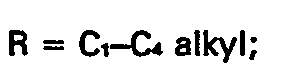
- R = C1-C4 alkyl; R'= H, CH3; n = such an integer that the molecular weight (M.W.) of the compound shall be comprised between 208 and 1000. Preferrential compounds are those wherein R' = H.
- Suitable boric esters(d) are the reaction products of a boron compound with alkylenglycols(a). The preferred one is the reaction product from the reac tion of boric acid with diethylenglycol.
- The liquid compositions obtained by means of the present invention display all a WET PERT greater than 155°C (lower limit of DOT-4 class), viscosity values at -40°C lower than 1500 cSt (top limit of class DOT-3), and PERT values of about 250°C and over.
Moreover, they are characterized by an almost total lack of aggressiveness towards the various types of rubber and metals present in the breaking systems, with a con sequential considerable advantage for the life of said systems; besides displaying all the typical properties of the traditional products of the highest quality. - Whenever required, the compositions of the present invention may be additioned with additives that have the purpose of boosting the performance of the breaking fluids. Amongst the various types of additives are com prised: buffering agents, corrosion inhibitors, anti- oxidizers, substances increasing the protective power with respect to ferrous metals in a humid and oxidizing environment, stabilizers, dyestuffs.
- In generalthe quantity of additives that may be in corporated into the liquid compositions varies from0% to 10% on the total weight of the compositions. The preparation of the boric esters(a) is carried out at atmospheric pressure, preferably in the presence of an azeotropicsolvent, or at a reduced pressure in the absence of a solvent, at temperatures comprised between 50°C and 200°C.
- The formulation of the hydraulic fluids according to the present invention is obtained by mixing together components(a), (b), (c) and (d) and additives in a mixer until achieving a thorough and complete homogenization. In general the mixing is carried out at atmospheric pressure, room temperature and, preferably, in the ab sence of humidity.
- The present invention will be now further illustrated by the following non-limiting examples.
- A breaking, fluid was prepared by mixing together the following components:
-

- This breaking fluid possess the following characteris- tics:
-


- For comparative purposes example 1 of French Pat. Nr. 2.158.523, referring to the preparation of a mixture of the following composition, was rapegted:
-

- On the fluid thus obtained the following characteristics were determined:
-

- A hydraulic fluid was prepared by mixing together the following components:
-

- This fluid showed the following characteristics:

- A hydraulic fluid was prepared by mixing together the following components:
-


- This fluid showed the following characteristics:

- A hydraulic break fluid was prepared by admixing the following components:
-


- This fluid showed the following characteristics:

- A hydraulic fluid was prepared by mixing together the following components:
-

- This fluid showed the following characteristics:

- A hydraulic fluid w as prepared, containing 0.1% of boron, by mixing together the following components:

- This fluid showed the following characteristics:

- For comparative purposes there was prepared a fluid like the one described in example 3 of French Pat.Nr. 2.158.524, containing an equivalent quantity of boron

- On the fluid thus obtained the following characteris tics were then determined:

- A hydraulic fluid, containing 0.46% of boron, was prepared by mixing together the following components:
-

- This fluid showed the following characteristics:

- For comparative pàrposes there was prepared a fluid according to that of example 1 of French Pat.Nr. 2.158.522 containing an equal quantity of 0.46% boron and consis ting of:
-

- On the fluid thus obtained the following characteris tics were determined:

- A hydraulic fluid, containing 0.5 % of boron, was pre pared by mixing together the following components:
-

- This fluid showed the following characteristics:
-

- A hydraulic fluid, containing 0.7% of boron, was pre pared by mixing together the following components:
-
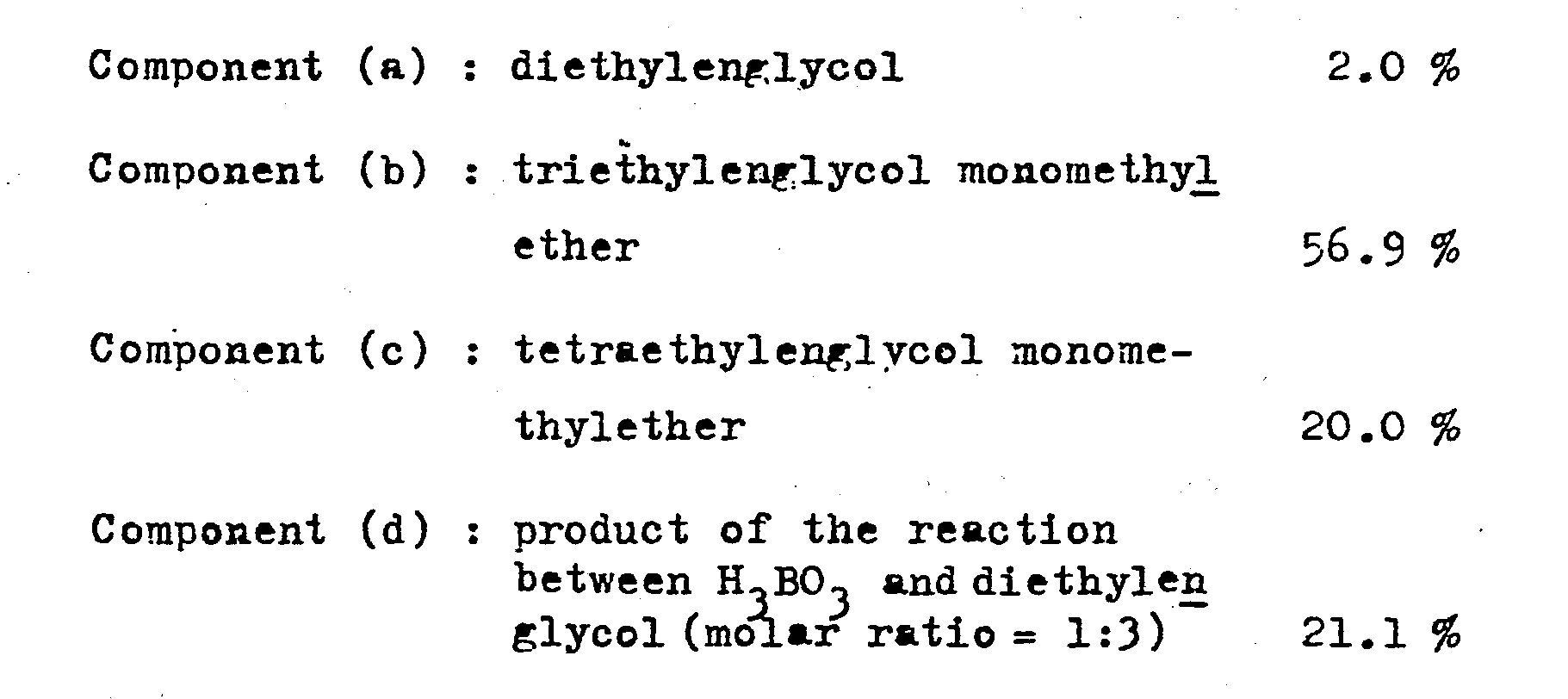
- This fluid showed the following characteristics:

- A hydraulic fluid, containing 0.46% of boron, was pre pared by mixing together the following components:


- This fluid showed the following characteristics:

- A hydraulic fluid, containing 0.5% of boron, was pre pared by mixing together the following components:


- This fluid showed the following characteristics:

- A hydraulic fluid, containing 0.43% boron, was pre pared by mixing together the following components:


- This fluid showed the followng characteristics:

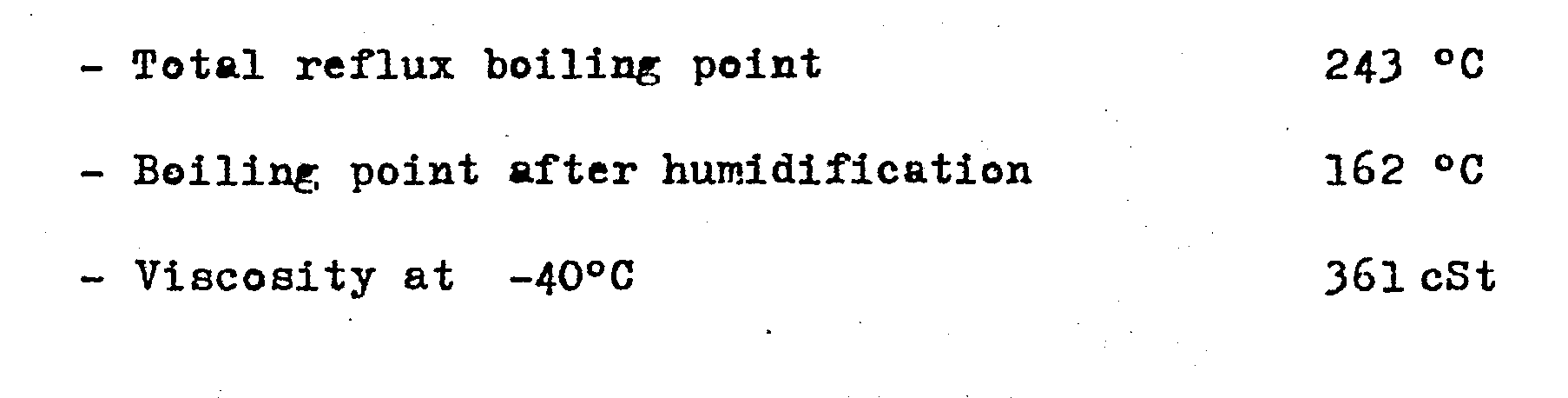
- For comparative reasons there was prepared a fluid like the one of example 38 of US.Pat. Nr.3.711.410, containing 0.43% of boron, and consisting of the fol lowing basic components:

- This flmid showed the following characteristics:
Claims (5)


Applications Claiming Priority (2)
| Application Number | Priority Date | Filing Date | Title |
|---|---|---|---|
| IT2169883 | 1983-06-21 | ||
| IT21698/83A IT1163547B (en) | 1983-06-21 | 1983-06-21 | HYDRAULIC FLUIDS |
Publications (3)
| Publication Number | Publication Date |
|---|---|
| EP0129240A1 true EP0129240A1 (en) | 1984-12-27 |
| EP0129240B1 EP0129240B1 (en) | 1988-03-30 |
| EP0129240B2 EP0129240B2 (en) | 1994-06-01 |
Family
ID=11185563
Family Applications (1)
| Application Number | Title | Priority Date | Filing Date |
|---|---|---|---|
| EP84106971A Expired - Lifetime EP0129240B2 (en) | 1983-06-21 | 1984-06-18 | Hydraulic fluids |
Country Status (4)
| Country | Link |
|---|---|
| EP (1) | EP0129240B2 (en) |
| JP (1) | JPS6013892A (en) |
| DE (1) | DE3470176D1 (en) |
| IT (1) | IT1163547B (en) |
Cited By (6)
| Publication number | Priority date | Publication date | Assignee | Title |
|---|---|---|---|---|
| WO2004081155A1 (en) * | 2003-03-12 | 2004-09-23 | Basf Aktiengesellschaft | Dot 4 brake fluids |
| WO2004053031A3 (en) * | 2002-12-09 | 2004-09-30 | Union Carbide Chem Plastic | Alkoxylates as such or as base oils for hydraulic compositions |
| WO2014164087A1 (en) * | 2013-03-12 | 2014-10-09 | The Lubrizol Corporation | Lubricating composition containing lewis acid reaction product |
| EP3929269A1 (en) | 2020-06-22 | 2021-12-29 | Clariant International Ltd | Low viscosity functional fluid composition |
| EP4056669A1 (en) | 2021-03-12 | 2022-09-14 | Clariant International Ltd | Low viscosity functional fluid composition |
| EP4130211A1 (en) | 2021-08-02 | 2023-02-08 | Clariant International Ltd | Low viscosity functional fluid composition |
Families Citing this family (1)
| Publication number | Priority date | Publication date | Assignee | Title |
|---|---|---|---|---|
| CN104284930A (en) * | 2012-03-23 | 2015-01-14 | 巴斯夫欧洲公司 | Fluid composition for a vibration dampener |
Citations (2)
| Publication number | Priority date | Publication date | Assignee | Title |
|---|---|---|---|---|
| DE939045C (en) * | 1952-02-19 | 1956-02-16 | Anorgana G M B H | Hydraulic fluids |
| FR1233918A (en) * | 1958-08-27 | 1960-10-13 | Shell Res Ltd | Hydraulic fluids |
Family Cites Families (1)
| Publication number | Priority date | Publication date | Assignee | Title |
|---|---|---|---|---|
| JPS5440978A (en) * | 1977-09-06 | 1979-03-31 | Nippon Nyukazai Co Ltd | Additive agent for operation liquid |
-
1983
- 1983-06-21 IT IT21698/83A patent/IT1163547B/en active
-
1984
- 1984-06-18 DE DE8484106971T patent/DE3470176D1/en not_active Expired
- 1984-06-18 EP EP84106971A patent/EP0129240B2/en not_active Expired - Lifetime
- 1984-06-18 JP JP59123901A patent/JPS6013892A/en active Granted
Patent Citations (2)
| Publication number | Priority date | Publication date | Assignee | Title |
|---|---|---|---|---|
| DE939045C (en) * | 1952-02-19 | 1956-02-16 | Anorgana G M B H | Hydraulic fluids |
| FR1233918A (en) * | 1958-08-27 | 1960-10-13 | Shell Res Ltd | Hydraulic fluids |
Cited By (11)
| Publication number | Priority date | Publication date | Assignee | Title |
|---|---|---|---|---|
| WO2004053031A3 (en) * | 2002-12-09 | 2004-09-30 | Union Carbide Chem Plastic | Alkoxylates as such or as base oils for hydraulic compositions |
| WO2004081155A1 (en) * | 2003-03-12 | 2004-09-23 | Basf Aktiengesellschaft | Dot 4 brake fluids |
| WO2014164087A1 (en) * | 2013-03-12 | 2014-10-09 | The Lubrizol Corporation | Lubricating composition containing lewis acid reaction product |
| US9868919B2 (en) | 2013-03-12 | 2018-01-16 | The Lubrizol Corporation | Lubricating composition containing lewis acid reaction product |
| EP3929269A1 (en) | 2020-06-22 | 2021-12-29 | Clariant International Ltd | Low viscosity functional fluid composition |
| WO2021259514A1 (en) | 2020-06-22 | 2021-12-30 | Clariant International Ltd | Low viscosity functional fluid composition |
| US12012569B2 (en) | 2020-06-22 | 2024-06-18 | Clariant International Ltd | Low viscosity functional fluid composition |
| EP4056669A1 (en) | 2021-03-12 | 2022-09-14 | Clariant International Ltd | Low viscosity functional fluid composition |
| WO2022189047A1 (en) | 2021-03-12 | 2022-09-15 | Clariant International Ltd | Low viscosity functional fluid composition |
| EP4130211A1 (en) | 2021-08-02 | 2023-02-08 | Clariant International Ltd | Low viscosity functional fluid composition |
| WO2023011801A1 (en) | 2021-08-02 | 2023-02-09 | Clariant International Ltd | Low viscosity functional fluid composition |
Also Published As
| Publication number | Publication date |
|---|---|
| JPH0458520B2 (en) | 1992-09-17 |
| JPS6013892A (en) | 1985-01-24 |
| DE3470176D1 (en) | 1988-05-05 |
| EP0129240B1 (en) | 1988-03-30 |
| EP0129240B2 (en) | 1994-06-01 |
| IT1163547B (en) | 1987-04-08 |
| IT8321698A0 (en) | 1983-06-21 |
Similar Documents
| Publication | Publication Date | Title |
|---|---|---|
| ATE547505T1 (en) | FREEZER OIL COMPOSITION FOR CARBON DIOXIDE FREEZER | |
| US20080033201A1 (en) | Polyol Ester for Transformers | |
| KR20140136449A (en) | Lubricating oil composition and device using same | |
| BRPI0707459A2 (en) | concentrated compositions of lubricating oil and lubricating oil additives | |
| US3972822A (en) | Water-insensitive and stable hydraulic fluid compositions | |
| JPH0380196B2 (en) | ||
| KR970070170A (en) | Polyol ester lubricant | |
| EP0129240B1 (en) | Hydraulic fluids | |
| CN112251272A (en) | Refrigerating machine oil composition | |
| EP0157583A2 (en) | Oil based lubricant compostions | |
| US4219434A (en) | Hydraulic fluid compositions based on mixed glycol ether-glycol boric acid esters | |
| KR930701577A (en) | Freezer oil composition | |
| CN108727264B (en) | Preparation method of naphthalimide diester fluorescent dye and composition thereof | |
| CA1047480A (en) | Hydraulic fluids based on borate esters | |
| GB2152512A (en) | Stabilisation of polyalkylene glycols | |
| CN114106916B (en) | Refrigerating machine oil composition, refrigerant and refrigerating machine oil composition and air conditioning system | |
| US2521402A (en) | Liquid media for operation of hydraulic mechanisms | |
| RU2105024C1 (en) | Antifreeze | |
| RU2115685C1 (en) | Cooling liquid | |
| JPH09302372A (en) | Refrigeration oil composition | |
| CA3021440A1 (en) | Viscometric properties improver | |
| US3783132A (en) | Compositions comprising phosphate esters and 2,6-diamino-pyridine as an antioxidant | |
| US6276147B1 (en) | Air conditioning and refrigeration system using a concentrated polar solution | |
| RU2476586C2 (en) | Lubricant composition of noncombustible working fluid for aviation equipment | |
| EP0212150A2 (en) | Method of indirect liquid-phase heat transfer |
Legal Events
| Date | Code | Title | Description |
|---|---|---|---|
| PUAI | Public reference made under article 153(3) epc to a published international application that has entered the european phase |
Free format text: ORIGINAL CODE: 0009012 |
|
| AK | Designated contracting states |
Designated state(s): BE DE FR GB NL |
|
| 17P | Request for examination filed |
Effective date: 19850424 |
|
| 17Q | First examination report despatched |
Effective date: 19860520 |
|
| GRAA | (expected) grant |
Free format text: ORIGINAL CODE: 0009210 |
|
| AK | Designated contracting states |
Kind code of ref document: B1 Designated state(s): BE DE FR GB NL |
|
| REF | Corresponds to: |
Ref document number: 3470176 Country of ref document: DE Date of ref document: 19880505 |
|
| ET | Fr: translation filed | ||
| PLBI | Opposition filed |
Free format text: ORIGINAL CODE: 0009260 |
|
| PLBI | Opposition filed |
Free format text: ORIGINAL CODE: 0009260 |
|
| 26 | Opposition filed |
Opponent name: HUELS AKTIENGESELLSCHAFT Effective date: 19881213 |
|
| 26 | Opposition filed |
Opponent name: BASF AKTIENGESELLSCHAFT, LUDWIGSHAFEN Effective date: 19881217 Opponent name: HUELS AKTIENGESELLSCHAFT Effective date: 19881213 |
|
| NLR1 | Nl: opposition has been filed with the epo |
Opponent name: HUELS AG |
|
| NLR1 | Nl: opposition has been filed with the epo |
Opponent name: BASF AG |
|
| PLBN | Opposition rejected |
Free format text: ORIGINAL CODE: 0009273 |
|
| 27O | Opposition rejected |
Effective date: 19930202 |
|
| NLR2 | Nl: decision of opposition | ||
| PUAH | Patent maintained in amended form |
Free format text: ORIGINAL CODE: 0009272 |
|
| STAA | Information on the status of an ep patent application or granted ep patent |
Free format text: STATUS: PATENT MAINTAINED AS AMENDED |
|
| 27A | Patent maintained in amended form |
Effective date: 19940601 |
|
| AK | Designated contracting states |
Kind code of ref document: B2 Designated state(s): BE DE FR GB NL |
|
| NLR2 | Nl: decision of opposition | ||
| ET3 | Fr: translation filed ** decision concerning opposition | ||
| NLR3 | Nl: receipt of modified translations in the netherlands language after an opposition procedure | ||
| PGFP | Annual fee paid to national office [announced via postgrant information from national office to epo] |
Ref country code: GB Payment date: 19960610 Year of fee payment: 13 |
|
| PGFP | Annual fee paid to national office [announced via postgrant information from national office to epo] |
Ref country code: FR Payment date: 19960611 Year of fee payment: 13 |
|
| PGFP | Annual fee paid to national office [announced via postgrant information from national office to epo] |
Ref country code: NL Payment date: 19960626 Year of fee payment: 13 |
|
| PGFP | Annual fee paid to national office [announced via postgrant information from national office to epo] |
Ref country code: DE Payment date: 19960627 Year of fee payment: 13 |
|
| PGFP | Annual fee paid to national office [announced via postgrant information from national office to epo] |
Ref country code: BE Payment date: 19960812 Year of fee payment: 13 |
|
| PG25 | Lapsed in a contracting state [announced via postgrant information from national office to epo] |
Ref country code: GB Free format text: LAPSE BECAUSE OF NON-PAYMENT OF DUE FEES Effective date: 19970618 |
|
| PG25 | Lapsed in a contracting state [announced via postgrant information from national office to epo] |
Ref country code: BE Effective date: 19970630 |
|
| BERE | Be: lapsed |
Owner name: MONTEDISON S.P.A. Effective date: 19970630 |
|
| PG25 | Lapsed in a contracting state [announced via postgrant information from national office to epo] |
Ref country code: NL Effective date: 19980101 |
|
| GBPC | Gb: european patent ceased through non-payment of renewal fee |
Effective date: 19970618 |
|
| PG25 | Lapsed in a contracting state [announced via postgrant information from national office to epo] |
Ref country code: FR Free format text: LAPSE BECAUSE OF NON-PAYMENT OF DUE FEES Effective date: 19980227 |
|
| NLV4 | Nl: lapsed or anulled due to non-payment of the annual fee |
Effective date: 19980101 |
|
| PG25 | Lapsed in a contracting state [announced via postgrant information from national office to epo] |
Ref country code: DE Free format text: LAPSE BECAUSE OF NON-PAYMENT OF DUE FEES Effective date: 19980303 |
|
| REG | Reference to a national code |
Ref country code: FR Ref legal event code: ST |
|
| REG | Reference to a national code |
Ref country code: FR Ref legal event code: ST |
|
| APAH | Appeal reference modified |
Free format text: ORIGINAL CODE: EPIDOSCREFNO |