EP0127076A2 - Histargin, dessen mikrobiologische Herstellung, dessen Verwendung als Arzneimittel und ein Stamm Streptomyces roseoviridis zu seiner Produktion - Google Patents
Histargin, dessen mikrobiologische Herstellung, dessen Verwendung als Arzneimittel und ein Stamm Streptomyces roseoviridis zu seiner Produktion Download PDFInfo
- Publication number
- EP0127076A2 EP0127076A2 EP84105601A EP84105601A EP0127076A2 EP 0127076 A2 EP0127076 A2 EP 0127076A2 EP 84105601 A EP84105601 A EP 84105601A EP 84105601 A EP84105601 A EP 84105601A EP 0127076 A2 EP0127076 A2 EP 0127076A2
- Authority
- EP
- European Patent Office
- Prior art keywords
- histargin
- compound
- growth
- formula
- cultured
- Prior art date
- Legal status (The legal status is an assumption and is not a legal conclusion. Google has not performed a legal analysis and makes no representation as to the accuracy of the status listed.)
- Withdrawn
Links
Images
Classifications
-
- C—CHEMISTRY; METALLURGY
- C07—ORGANIC CHEMISTRY
- C07D—HETEROCYCLIC COMPOUNDS
- C07D233/00—Heterocyclic compounds containing 1,3-diazole or hydrogenated 1,3-diazole rings, not condensed with other rings
- C07D233/54—Heterocyclic compounds containing 1,3-diazole or hydrogenated 1,3-diazole rings, not condensed with other rings having two double bonds between ring members or between ring members and non-ring members
- C07D233/64—Heterocyclic compounds containing 1,3-diazole or hydrogenated 1,3-diazole rings, not condensed with other rings having two double bonds between ring members or between ring members and non-ring members with substituted hydrocarbon radicals attached to ring carbon atoms, e.g. histidine
-
- A—HUMAN NECESSITIES
- A61—MEDICAL OR VETERINARY SCIENCE; HYGIENE
- A61P—SPECIFIC THERAPEUTIC ACTIVITY OF CHEMICAL COMPOUNDS OR MEDICINAL PREPARATIONS
- A61P25/00—Drugs for disorders of the nervous system
- A61P25/04—Centrally acting analgesics, e.g. opioids
-
- A—HUMAN NECESSITIES
- A61—MEDICAL OR VETERINARY SCIENCE; HYGIENE
- A61P—SPECIFIC THERAPEUTIC ACTIVITY OF CHEMICAL COMPOUNDS OR MEDICINAL PREPARATIONS
- A61P43/00—Drugs for specific purposes, not provided for in groups A61P1/00-A61P41/00
-
- C—CHEMISTRY; METALLURGY
- C12—BIOCHEMISTRY; BEER; SPIRITS; WINE; VINEGAR; MICROBIOLOGY; ENZYMOLOGY; MUTATION OR GENETIC ENGINEERING
- C12N—MICROORGANISMS OR ENZYMES; COMPOSITIONS THEREOF; PROPAGATING, PRESERVING, OR MAINTAINING MICROORGANISMS; MUTATION OR GENETIC ENGINEERING; CULTURE MEDIA
- C12N1/00—Microorganisms, e.g. protozoa; Compositions thereof; Processes of propagating, maintaining or preserving microorganisms or compositions thereof; Processes of preparing or isolating a composition containing a microorganism; Culture media therefor
- C12N1/20—Bacteria; Culture media therefor
- C12N1/205—Bacterial isolates
-
- C—CHEMISTRY; METALLURGY
- C12—BIOCHEMISTRY; BEER; SPIRITS; WINE; VINEGAR; MICROBIOLOGY; ENZYMOLOGY; MUTATION OR GENETIC ENGINEERING
- C12P—FERMENTATION OR ENZYME-USING PROCESSES TO SYNTHESISE A DESIRED CHEMICAL COMPOUND OR COMPOSITION OR TO SEPARATE OPTICAL ISOMERS FROM A RACEMIC MIXTURE
- C12P17/00—Preparation of heterocyclic carbon compounds with only O, N, S, Se or Te as ring hetero atoms
- C12P17/10—Nitrogen as only ring hetero atom
-
- C—CHEMISTRY; METALLURGY
- C12—BIOCHEMISTRY; BEER; SPIRITS; WINE; VINEGAR; MICROBIOLOGY; ENZYMOLOGY; MUTATION OR GENETIC ENGINEERING
- C12R—INDEXING SCHEME ASSOCIATED WITH SUBCLASSES C12C - C12Q, RELATING TO MICROORGANISMS
- C12R2001/00—Microorganisms ; Processes using microorganisms
- C12R2001/01—Bacteria or Actinomycetales ; using bacteria or Actinomycetales
- C12R2001/465—Streptomyces
Definitions
- the present invention relates to a novel physiologically active substance, histargin, of the following formula or a salt or ester or hydrate thereof.
- Histargin can be collected as a white powder by filtrating the culture broth of a histargin-producing microorganism, and fractionating the filtrate by chromatography or the like using an ion-exchange resin such as Amberlite IRC 50, as shown in the Examples to appear later.
- an ion-exchange resin such as Amberlite IRC 50, as shown in the Examples to appear later.
- Histargin monohydrate has the following properties: Melting point: 161-165°C
- Histargin shows enzyme-inhibiting activity against carboxypeptidase B and enkephalinase B. It exhibits further the activity to potentiate cell-mediated immunity and analgesic and analgesia-potentiating activities.
- the present invention relates further to a process for producing histargin, which comprises cultivation a histargin-producing strain of the genus Streptomyces to produce and accumulate histargin in the culture broth, and then recovering histargin.
- Streptomyces roseovirides MFl18-A5 which was isolated from soil collected in Itami City, Hyogo Prefecture, Japan. This strain was deposited on April 18, 1983 with the Fermentation Research Institute, Agency of Industrial Science and Technolgoy, Ministry of International Trade and Industry of Japan, where it was kept as FERM-P No.7043 (Accession No. FERM BP-527).
- microbiological characteristics of this strain (MF118-A5) are described below.
- substrate mycelia of MF118-A5 are branched and extend straight aerial hyphae. No whirls are observed on the aerial hyphae. Chains of mature spores include those having more than 10 spores. The spores range in size from about 0.4 to 0.6 x 1.6 to 1.8 microns, and their surfaces are smooth.
- the strain MF118-A5 is close to the following two microorganisms: Actinomyces roseoviridis [Reference (1): International Journal of Systematic Bacteriology, Vol. 18, page 372, 1968, Reference (2): Gause, G. F. et al, Zur Klassice der Actinomyceten, page 43, VEB Gustay Fischer Verlag, Jena, 1958)] and Streptomyces lavendulae (International Journal of Systematic Bacteriology, Vol. 18, page 138, 1968).
- MF118-A5 and Streptomyces lavendulae IMCS-0169 are different in the shape and color of aerial mycelia, and the utitilization of carbon sources.
- Actinomyces roseoviridis IMCS-0149 (ISP 5175), on the other hand, is described in Reference (2) as negative for the hydrolysis of starch and for the coagulation and peptonization of milk, but has been found in the comparative experiments to be positive for these reactions, as in the case of MF118-A5.
- Actinomyces roseoviridis IMCS-0149 and MF118-A5 are in good agreement.
- MFl18-A5 was identified as Streptomyces roseoviridis MF118-A5.
- Nutritional sources for use in cultivating the histargin-producing strain according to the process of this invention may be any known nutritional sources that can be utilized by ordinary microorganisms.
- commercially available fats and oils and carbohydrates such as glycerol, glucose, lactose, sucrose, starch, maltose and molasses, can be used as carbon sources.
- nitrogen sources are peptone, meat extract, corn steep liquor, cotton seed meal, peanut meal, soybean flour, corn gluten meal, fish meal, yeast extract, N-Z amine, casein, sodium nitrate, amonium nitrate, and ammonium sulfate that are on the market.
- inorganic nutritional sources are sodium chloride, phosphates, calcium carbonate and magnesium sulfate.
- Particularly preferred components of media are glycerol, dextrin, etc. as carbon sources, and soybean peptone, yeast extract, ammonium sulfate, etc. as nitrogen sources. It is preferred to use media containing 2.0 % of glycerol, 2.0 % of dextrin, 1.0 % of soybean peptone, 0.3 % of yeast extract, 0.2 % of ammonium sulfate, 0.2 % of calcium carbonate, and 0.01 % of the anti-foaming agent KM70 (trade mark for a product of Shin-etsu Chemical Co., Ltd., Japan).
- Liquid culture is a preferred way of mass-producing histargin.
- the cultivation temperature is that at which the histargin-producing strain grows and produces histargin.
- a suitable temperature is 20 to 40°C, preferably 25 to 35°C. Cultivation is usually continued until histargin is produced and accumulated in sufficient amounts in the culture broth. An example of the cultivation will be given below.
- a medium (adjusted to a pH of 7.4) containing a 2.0 % of glycerol, 2.0 % of dextrin, 1.0 % of soybean peptone, 0.3 % of yeast extract, 0.2 % of ammonium sulfate, 0.2 % of calcium carbonate and 0.01 % of the anti-foaming agent KM70 was put in a 500 ml Sakaguchi flask, and sterilized. A loopful of spores from a slant culture of the histargin-producing strain was inoculated into the medium, and shake-cultured aerobically at 27°C. Accumulation of histargin was observed after 45 to 150 hours of cultivating.
- Histargin was produced in as good amounts by fermentor culture as by shake culture. For example, 120 liters of a medium was put in a 200 liters fermentor, and sterilized. Five liters of a cultured broth containing the histargin-producing strain was inoculated into the medium. The inoculated medium was incubated with stirring at 250 rpm under aeration with 90 liters/minute of sterile air. Under these conditions, production of histargin reached its maximum after 68 hours of cultivation.
- Anti-carboxypeptidase B activity was measured in the following way according to an improved method based on the angiotensin I transferase activity determination method described in M.Hayakari et al., "Analytical Biochemistry," 84, 361-369, 1978.
- a mixed solution was prepared by adding 0.25 ml of 0.05M Tris-hydrochloric acid buffer solution (pH 8.0) and 0.15 ml of a solution containing a histargin sample to 0.05 ml of 0.05M hippuryl-L-lysine (a product of Peptide Institute). The mixed solution was heated for 3 minutes at 37°C, and 0.05 ml of an aqueous solution of 1 ⁇ g/ml of purified carboxypeptidase B (a product of Boehringer-Mannheim obtained from the pancreas of pigs) was added to the mixed solution. To the resulting mixture was added 0.03 ml of 1N sodium hydroxide to terminate the reaction.
- histargin was also found to exhibit inhibitory activity against enkephalinase B that exists in the brain of animals and participates in the physiological mechanism of pain.
- Histargin is present in the filtrate of the culture broth of the histargin-producing strain, as well as in the bacterial cells contained in the culture broth.
- a method comprising adsorbing the culture broth filtrate onto an adsorbent, and releasing histargin from the adsorbent.
- the adsorbent are activated carbon, ion-exchange resins, and nonionic adsorbent resins.
- histargin is adsorbed to Amberlite IRC50 (H + type), and eluted with 0.5N hydrochloric acid containing 50 % acetone.
- a column is packed with Amberlite IRC50 (H + type) whose volume is 8 % of the volume of the culture broth filtrate. Then, the culture broth filtrate is adsorbed onto the column. The column is washed with water, and then with a 50 % aqueous solution of acetone.
- the eluate is concentrated under reduced pressure to obtain a crude powder of histargin.
- Chromatography on an ion exchange resin may be used to purify the crude histargin.
- Chromatography on Dowex 50W is particularly useful for the purification. According to this technique, the crude histargin can be purified using pyridine-acetic acid buffer solution.
- Histargin obtained in the above manner by this invention was examined for biological activities or pharmacological actions. This substance was found to have an analgesic action, and the action to potentiate cell-mediated immunity. The following tests describe the biological activities of histargin.
- This test shows the effect of histargin on cell-mediated immunity in normal mice. This effect was investigated using as its index the degree of delayed- type hypersensitivity (D.T.H.) to sheep red blood cell (SRBC) injectd intravenously as an antigen (see J. Exp. Med. 139, 1529-1539, 1974).
- D.T.H. delayed- type hypersensitivity
- SRBC sheep red blood cell
- a suspension of 10 5 SRBCs in 0.05 ml of physiological saline solution was injected intravenously into Slc-CDF 1 mice (female, 9 weeks old).
- h istargin monohydrate in doses of 5, 0.5, 0,05 and 0.005 mg/kg was administerd once intraperitoneally as a solution dissolved in physiological saline solution.
- histargin to be a substance which potentiates cell-mediated immunity in normal animals. Accordingly, histargin obtained by this invention is useful as an immunopotentiator. It is also useful as an antineoplastic immunomodulator and finds use as an adjuvant to various chemotherapeutic agents against cancer.
- This test shows the action of histargin to potentiate analgesia produced by morphine.
- Wistar rats were intraperitoneally administered 0.5 mg/kg of morphine, and classified into rats responsive to an analgesic action of morphine and rats unresponsive to this action. This classification test complied with the Showa Igaku Zasshi (Showa Medical Journal), Vol. 39, pp. 573-542, 1979.
- the morphine-unresponsive rats were used in studies of whether histargin will potentiate morphine-induced analgesia.
- a solution of histargin monohydrate (100 mg/kg) of this invention dissolved in physiological saline solution was administered intraperitoneally. Then, 0.5 mg/kg of morphine was administered.
- the analgesic effect of the test compound was evaluated by the tail- flic technique wherein a pain threshold was measured as follows:
- This test shows the activity of histargin to inhibit enkephalinase B.
- Enkephalinase B was obtained by homogenizing the brains of crab-eating monkeys, fractionating the homogenate, and purifying soluble fractions in accordance with the method of Hazato et al. (Biochemical and Biophysical Research Communications, Vol. 105, No. 2, pp. 470-475, 1982). The inhibitory activity of histargin against enkephalinase B was measured by the method of Hasato et al. described in the same reference.
- Histargin monohydrate in a concentration of 100 ⁇ g/ml was found to give a 92 % inhibition against enkephalinase B.
- histargin can be highly expected to show an analgesic action even when used alone.
- Histargin is thus considered to be a substance having low toxicity.
- Analgesics or analgesia-potentiators containing histargin as the active ingredient can be prepared by combining histargin or its pharmaceutically acceptable salts or esters or hydrates with carriers that are widely used. Histargin or its pharmaceutically acceptable salts or esters or hydrates may also be blended with various chemotherapeutic agents.
- Examples or the salts of histargin are salts formed between the carboxyl groups of histargin and pharmaceutically acceptable cations, such as the cations of alkali metals (e.g. sodium, potassium) and alkaline earth metals (e.g. calcium, magnesium).
- the salts of histargin also include acid-addition salts formed between one or both of the imino and guanidino groups of histargin and pharmaceutically acceptable inorganic acids (e.g. hydrochloric acid) or organic acids (e.g. acetic acid).
- pharmaceutically acceptable inorganic acids e.g. hydrochloric acid
- organic acids e.g. acetic acid
- esters of histargin include alkyl esters taht can be easily metabolized and decomposed in vivo.
- the compound and pharmaceutical compositions of this invention may be administered as oral agents, injections or rectal suppositories.
- pH adjustors, buffers, stabilizers, and excipients are aded to said compounds as active ingredients.
- the mixtures are then freeze-dried by customary methods to make lyophilized injections.
- Subcutaneous, intramuscular and intravenous injections can be prepared by adding pH adjustors, buffers, stabilizers, isotonlzers, and local anesthetics to the compounds as active ingredients, and treating the mixtures by customary methods.
- binders, disintegrators, lubricants, colorants, taste correctives and odor correctives are added to the compounds as active ingredients. Then, the mjxtures are formed into tablets, coated tablets, granules, powders, and capsules by customary methods.
- taste correctives, buffers, stabilizers, and odor correctives are added to the compounds as active ingredients, followed by forming the mixtures into syrups and dry syrups by customary methods.
- histargin vary according to symptoms and objectives of treatment. In adults, histargin 0.02 to 2000 mg t.i.d. can be given.
- histargin according to this . invention is described in detail with reference to the following Examples, but this invention is in no way limited to these examples. This is because it is easy to modify the methods disclosed in the present specification in the light of the disclosures concerning the physical and chemical properties of histargin, as well as the methods of producing and purifying it.
- a medium was prepared according to the following recipe:
- a loopful of the histargin-producing strain Streptomyces roseoviridis MF118-A5 (FERM P-7043) from its slant culture was used to inoculate 500 ml Sakaguchi flasks each containing 120 ml of the above medium which had been sterilized for 20 minutes at 120°C.
- the inoculated medium was aerobically shake-cultured with 130 reciprocations/ minute at 27°C.
- the amount of histargin produced was examined with the passage of time by measuring the anti-carboxypeptidase B activity of the cultured broth.
- the concentration of histargin in the cultured broth that was determined by the carboxypeptidase B-inhibiting activity reached its peak after 4 days of cultivation, and maintained constant high values until after 6 days of cultivation. Tnereafter, its values gradually decreased.
- Example 1 5 ml of the cultured broth as primary inoculum that had been prepared by 28 hours of cultivation under the same conditions as shown in Example 1 was inoculated into the same medium as described in Example 1.
- the inoculated medium was fermented for 96 hours under the same conditions as in Example 1 to obtain 60 liters of a fermented mash.
- the fermented mash was filtered using diatomaceous earth as a filter aid to obtain 56 liters of the filtrate.
- the carboxypeptidase B-inhibiting activity (IC 50 ) of the filtrate was 90 al/ml.
- the mixture was stirred for 60 minutes to adsorb histargin onto the activated carbon.
- the activated carbon was separated by filtration, and washed with 5 liters of water. Then, the activated carbon was put in 2 liters of a 90 % aqueous solution of methanol (adjusted to pH 2 with hydrochloric acid), and the solution was stirred for 30 minutes to elute histargin from the activated carbon.
- the solution was filtered, and the filtrate was concentrated to dryness under reduced pressure to obtain 5.3 g of a crude powder.
- the carboxypeptidase B-inhibiting activity (IC 50 ) of this crude powder was 55.6 ⁇ g/ml.
- the crude powder was dissolved in 500 ml of 0.2M pyridine-acetic acid buffer solution with a pH of 3.2.
- the solution was adsorbed onto a 300 ml column of the ion exchange resin Dowex 50W (pyridinium type, x 4, 100-200 mesh) equilibrated with the same buffer solution as described above.
- the column was washed with 0.5M pyridine-acetic acid buffer solution with a pH of 4.6, and eluted with 1M pyridine-acetic acid buffer solution with a pH of 5.0. Active fractions were collected, and the combined active fraction was concentrated to dryness under reduced pressure to obtain 1.5 g of a crude powder.
- the carboxypeptidase B-inhibiting activity (IC 50 ) of the crude powder was 35.3 ⁇ g/ml.
- the crude powder was dissolved in 10 ml of a 10 % aqueous solution of ammonium acetate.
- the solution was adsorbed onto the high-performance liquid chromatographic reversed-phase column Partisil-10-ODS-3/Magnum 20 (product of Whatman) that had been equilibrated with a 10 % aqueous solution of ammonium acetate.
- the column was eluted with a 10 % aqueous solution of ammonium acetate at a rate of 8 ml/minute.
- the eluate was obtained as fractions with a volume of 8 ml each. Active fractions (Fraction Nos. 40 to 53) were combined and diluted with water to 500 ml.
- the dilution was adsorbed onto a 300 ml column of the ion exchange resin Dowex 50W (H + type, x 4, 100-200 mesh). The column was washed with 1 liter of water, and eluted with 1.5N ammonia water. Active fractions were collected, and the combined active fraction was concentrated to dryness under reduced pressure to obtain 406 mg of pure stargin monohydrate which had a carboxypeptidase B-inhibiting activity (IC50) of 12 ⁇ g/ml.
- IC50 carboxypeptidase B-inhibiting activity
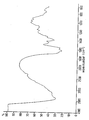
- the attached drawing shows the infrared absorption spectrum of histargin monohydrate according to this invention.
Landscapes
- Chemical & Material Sciences (AREA)
- Health & Medical Sciences (AREA)
- Organic Chemistry (AREA)
- Life Sciences & Earth Sciences (AREA)
- Engineering & Computer Science (AREA)
- Bioinformatics & Cheminformatics (AREA)
- Wood Science & Technology (AREA)
- General Health & Medical Sciences (AREA)
- Zoology (AREA)
- Medicinal Chemistry (AREA)
- Genetics & Genomics (AREA)
- Biotechnology (AREA)
- General Chemical & Material Sciences (AREA)
- Chemical Kinetics & Catalysis (AREA)
- Nuclear Medicine, Radiotherapy & Molecular Imaging (AREA)
- Biochemistry (AREA)
- Biomedical Technology (AREA)
- Pharmacology & Pharmacy (AREA)
- General Engineering & Computer Science (AREA)
- Veterinary Medicine (AREA)
- Microbiology (AREA)
- Public Health (AREA)
- Animal Behavior & Ethology (AREA)
- Pain & Pain Management (AREA)
- Neurosurgery (AREA)
- Neurology (AREA)
- Tropical Medicine & Parasitology (AREA)
- Virology (AREA)
- Preparation Of Compounds By Using Micro-Organisms (AREA)
- Pharmaceuticals Containing Other Organic And Inorganic Compounds (AREA)
- Micro-Organisms Or Cultivation Processes Thereof (AREA)
Applications Claiming Priority (2)
| Application Number | Priority Date | Filing Date | Title |
|---|---|---|---|
| JP89075/83 | 1983-05-23 | ||
| JP58089075A JPS59216597A (ja) | 1983-05-23 | 1983-05-23 | 新生理活性物質ヒスタジン |
Publications (2)
| Publication Number | Publication Date |
|---|---|
| EP0127076A2 true EP0127076A2 (de) | 1984-12-05 |
| EP0127076A3 EP0127076A3 (de) | 1987-04-29 |
Family
ID=13960733
Family Applications (1)
| Application Number | Title | Priority Date | Filing Date |
|---|---|---|---|
| EP84105601A Withdrawn EP0127076A3 (de) | 1983-05-23 | 1984-05-17 | Histargin, dessen mikrobiologische Herstellung, dessen Verwendung als Arzneimittel und ein Stamm Streptomyces roseoviridis zu seiner Produktion |
Country Status (5)
| Country | Link |
|---|---|
| EP (1) | EP0127076A3 (de) |
| JP (1) | JPS59216597A (de) |
| DK (1) | DK251384A (de) |
| GR (1) | GR82026B (de) |
| ZA (1) | ZA843846B (de) |
Cited By (3)
| Publication number | Priority date | Publication date | Assignee | Title |
|---|---|---|---|---|
| EP0175180A1 (de) * | 1984-09-05 | 1986-03-26 | Microbial Chemistry Research Foundation | Mit Histargin verwandte Verbindungen, Verfahren zu deren Herstellung und deren Anwendung als Heilmittel |
| US8236844B2 (en) | 2006-01-24 | 2012-08-07 | Nippon Zoki Pharmaceutical Co., Ltd. | Histidine derivatives |
| US8324261B2 (en) | 2007-07-23 | 2012-12-04 | Nippon Zoki Pharmaceutical Co., Ltd. | Histidine derivatives |
Family Cites Families (1)
| Publication number | Priority date | Publication date | Assignee | Title |
|---|---|---|---|---|
| FR2367492A1 (fr) * | 1976-10-12 | 1978-05-12 | Stanley Drug Products Inc | Derives de l'histidine utilisables pour lutter contre les infections microbiennes. |
-
1983
- 1983-05-23 JP JP58089075A patent/JPS59216597A/ja active Granted
-
1984
- 1984-05-17 EP EP84105601A patent/EP0127076A3/de not_active Withdrawn
- 1984-05-21 GR GR74769A patent/GR82026B/el unknown
- 1984-05-22 ZA ZA843846A patent/ZA843846B/xx unknown
- 1984-05-22 DK DK251384A patent/DK251384A/da not_active Application Discontinuation
Cited By (3)
| Publication number | Priority date | Publication date | Assignee | Title |
|---|---|---|---|---|
| EP0175180A1 (de) * | 1984-09-05 | 1986-03-26 | Microbial Chemistry Research Foundation | Mit Histargin verwandte Verbindungen, Verfahren zu deren Herstellung und deren Anwendung als Heilmittel |
| US8236844B2 (en) | 2006-01-24 | 2012-08-07 | Nippon Zoki Pharmaceutical Co., Ltd. | Histidine derivatives |
| US8324261B2 (en) | 2007-07-23 | 2012-12-04 | Nippon Zoki Pharmaceutical Co., Ltd. | Histidine derivatives |
Also Published As
| Publication number | Publication date |
|---|---|
| JPH0358342B2 (de) | 1991-09-05 |
| ZA843846B (en) | 1985-02-27 |
| JPS59216597A (ja) | 1984-12-06 |
| GR82026B (de) | 1984-12-12 |
| EP0127076A3 (de) | 1987-04-29 |
| DK251384A (da) | 1984-11-24 |
| DK251384D0 (da) | 1984-05-22 |
Similar Documents
| Publication | Publication Date | Title |
|---|---|---|
| CA1121290A (en) | Amino sugar derivatives | |
| EP0315147B1 (de) | Antibiotika, Benanomicine A und B und Dexylosylbenanomicin B, ihre Herstellung und Verwendung | |
| EP0095154B1 (de) | Biologisch wirksame Verbindungen WS 6049, Verfahren zu deren Herstellung und deren pharmazeutische Zusammensetzungen | |
| IE840201L (en) | Rebeccamycin and derivatives | |
| URAMOTO et al. | Isolation and characterization of phosmidosine a new antifungal nucleotide antibiotic | |
| US4358602A (en) | Ebelactones and production thereof | |
| EP0127076A2 (de) | Histargin, dessen mikrobiologische Herstellung, dessen Verwendung als Arzneimittel und ein Stamm Streptomyces roseoviridis zu seiner Produktion | |
| CA2061239C (en) | Polyhydroxycyclopentane derivatives, their preparation and their therapeutic use | |
| EP1319666B1 (de) | Antibakterielle Verbindungen | |
| US4859593A (en) | New physiologically active substance, arphamenine and production thereof | |
| EP0048660B1 (de) | Antibiotika, Verfahren zu deren Herstellung und diese enthaltende pharmazeutische Zusammensetzungen | |
| US4792522A (en) | Rigolettone antitumor complex | |
| US4550159A (en) | Anthracycline compounds | |
| US4522812A (en) | Novel physiologically active substance K-4, a process for preparation thereof and a pharmaceutical composition containing the same | |
| EP0061172B1 (de) | Phosphor enthaltende Oligopeptide, Verfahren zu ihrer Herstellung und Arzneimittel, in denen diese enthalten sind | |
| US4416870A (en) | Antibiotic compound, its production and its medicinal use | |
| CA1159000B (en) | Protease inhibitors | |
| JPWO1997031122A1 (ja) | Fa−70d物質、その製造法及びその用途 | |
| EP0053025A2 (de) | Antibiotikum und dessen Herstellung aus einem Streptomycen gehörenden Mikroorganismus | |
| EP0162422A2 (de) | Physiologisch wirksame Foroxymithin-Verbindung, ein Verfahren und Mikroorganismen zu ihrer Herstellung und ihre Verwendung als Arzneimittel | |
| EP0253413B1 (de) | Antibiotika "Mureidomycine A,B,C und D" genannt, deren Verfahren zur Herstellung und deren Verwendung | |
| EP0310238B1 (de) | Physiologisch aktive Substanzen, Probestin und Prostatin und deren Herstellung | |
| IE64227B1 (en) | Ws-9326a ws-9326b and their derivatives | |
| EP0175291B1 (de) | Alpha-D-mannosidase Hemmungsmittel | |
| IE853322L (en) | Micromonospora microorganisms and antibiotic production¹therby |
Legal Events
| Date | Code | Title | Description |
|---|---|---|---|
| PUAI | Public reference made under article 153(3) epc to a published international application that has entered the european phase |
Free format text: ORIGINAL CODE: 0009012 |
|
| AK | Designated contracting states |
Designated state(s): AT BE CH DE FR GB IT LI LU NL SE |
|
| PUAL | Search report despatched |
Free format text: ORIGINAL CODE: 0009013 |
|
| AK | Designated contracting states |
Kind code of ref document: A3 Designated state(s): AT BE CH DE FR GB IT LI LU NL SE |
|
| STAA | Information on the status of an ep patent application or granted ep patent |
Free format text: STATUS: THE APPLICATION HAS BEEN WITHDRAWN |
|
| 18W | Application withdrawn |
Withdrawal date: 19870909 |
|
| RIN1 | Information on inventor provided before grant (corrected) |
Inventor name: IINUMA, HIRONOBU Inventor name: OHBAYASHI, AKIRA Inventor name: NIIDA, TARO Inventor name: TAKEUCHI, TOMIO Inventor name: KAWAMURA, KENJI Inventor name: AOYAGI, TAKAAKI Inventor name: OGAWA, KEIJI Inventor name: UMEZAWA, HAMAO, PROF. Inventor name: HACHISU, MITSUGU Inventor name: HAMADA, MASA |