EP0102062A2 - 1,3-Dithianes, their production and use - Google Patents
1,3-Dithianes, their production and use Download PDFInfo
- Publication number
- EP0102062A2 EP0102062A2 EP83108374A EP83108374A EP0102062A2 EP 0102062 A2 EP0102062 A2 EP 0102062A2 EP 83108374 A EP83108374 A EP 83108374A EP 83108374 A EP83108374 A EP 83108374A EP 0102062 A2 EP0102062 A2 EP 0102062A2
- Authority
- EP
- European Patent Office
- Prior art keywords
- group
- compound
- salt
- formula
- substituted
- Prior art date
- Legal status (The legal status is an assumption and is not a legal conclusion. Google has not performed a legal analysis and makes no representation as to the accuracy of the status listed.)
- Granted
Links
Classifications
-
- C—CHEMISTRY; METALLURGY
- C07—ORGANIC CHEMISTRY
- C07D—HETEROCYCLIC COMPOUNDS
- C07D231/00—Heterocyclic compounds containing 1,2-diazole or hydrogenated 1,2-diazole rings
- C07D231/02—Heterocyclic compounds containing 1,2-diazole or hydrogenated 1,2-diazole rings not condensed with other rings
- C07D231/10—Heterocyclic compounds containing 1,2-diazole or hydrogenated 1,2-diazole rings not condensed with other rings having two or three double bonds between ring members or between ring members and non-ring members
- C07D231/12—Heterocyclic compounds containing 1,2-diazole or hydrogenated 1,2-diazole rings not condensed with other rings having two or three double bonds between ring members or between ring members and non-ring members with only hydrogen atoms, hydrocarbon or substituted hydrocarbon radicals, directly attached to ring carbon atoms
-
- C—CHEMISTRY; METALLURGY
- C07—ORGANIC CHEMISTRY
- C07D—HETEROCYCLIC COMPOUNDS
- C07D339/00—Heterocyclic compounds containing rings having two sulfur atoms as the only ring hetero atoms
- C07D339/08—Six-membered rings
-
- A—HUMAN NECESSITIES
- A01—AGRICULTURE; FORESTRY; ANIMAL HUSBANDRY; HUNTING; TRAPPING; FISHING
- A01N—PRESERVATION OF BODIES OF HUMANS OR ANIMALS OR PLANTS OR PARTS THEREOF; BIOCIDES, e.g. AS DISINFECTANTS, AS PESTICIDES OR AS HERBICIDES; PEST REPELLANTS OR ATTRACTANTS; PLANT GROWTH REGULATORS
- A01N43/00—Biocides, pest repellants or attractants, or plant growth regulators containing heterocyclic compounds
- A01N43/02—Biocides, pest repellants or attractants, or plant growth regulators containing heterocyclic compounds having rings with one or more oxygen or sulfur atoms as the only ring hetero atoms
- A01N43/24—Biocides, pest repellants or attractants, or plant growth regulators containing heterocyclic compounds having rings with one or more oxygen or sulfur atoms as the only ring hetero atoms with two or more hetero atoms
- A01N43/32—Biocides, pest repellants or attractants, or plant growth regulators containing heterocyclic compounds having rings with one or more oxygen or sulfur atoms as the only ring hetero atoms with two or more hetero atoms six-membered rings
-
- A—HUMAN NECESSITIES
- A01—AGRICULTURE; FORESTRY; ANIMAL HUSBANDRY; HUNTING; TRAPPING; FISHING
- A01N—PRESERVATION OF BODIES OF HUMANS OR ANIMALS OR PLANTS OR PARTS THEREOF; BIOCIDES, e.g. AS DISINFECTANTS, AS PESTICIDES OR AS HERBICIDES; PEST REPELLANTS OR ATTRACTANTS; PLANT GROWTH REGULATORS
- A01N43/00—Biocides, pest repellants or attractants, or plant growth regulators containing heterocyclic compounds
- A01N43/34—Biocides, pest repellants or attractants, or plant growth regulators containing heterocyclic compounds having rings with one nitrogen atom as the only ring hetero atom
- A01N43/40—Biocides, pest repellants or attractants, or plant growth regulators containing heterocyclic compounds having rings with one nitrogen atom as the only ring hetero atom six-membered rings
-
- A—HUMAN NECESSITIES
- A01—AGRICULTURE; FORESTRY; ANIMAL HUSBANDRY; HUNTING; TRAPPING; FISHING
- A01N—PRESERVATION OF BODIES OF HUMANS OR ANIMALS OR PLANTS OR PARTS THEREOF; BIOCIDES, e.g. AS DISINFECTANTS, AS PESTICIDES OR AS HERBICIDES; PEST REPELLANTS OR ATTRACTANTS; PLANT GROWTH REGULATORS
- A01N43/00—Biocides, pest repellants or attractants, or plant growth regulators containing heterocyclic compounds
- A01N43/64—Biocides, pest repellants or attractants, or plant growth regulators containing heterocyclic compounds having rings with three nitrogen atoms as the only ring hetero atoms
- A01N43/647—Triazoles; Hydrogenated triazoles
- A01N43/653—1,2,4-Triazoles; Hydrogenated 1,2,4-triazoles
-
- A—HUMAN NECESSITIES
- A01—AGRICULTURE; FORESTRY; ANIMAL HUSBANDRY; HUNTING; TRAPPING; FISHING
- A01N—PRESERVATION OF BODIES OF HUMANS OR ANIMALS OR PLANTS OR PARTS THEREOF; BIOCIDES, e.g. AS DISINFECTANTS, AS PESTICIDES OR AS HERBICIDES; PEST REPELLANTS OR ATTRACTANTS; PLANT GROWTH REGULATORS
- A01N43/00—Biocides, pest repellants or attractants, or plant growth regulators containing heterocyclic compounds
- A01N43/90—Biocides, pest repellants or attractants, or plant growth regulators containing heterocyclic compounds having two or more relevant hetero rings, condensed among themselves or with a common carbocyclic ring system
-
- A—HUMAN NECESSITIES
- A01—AGRICULTURE; FORESTRY; ANIMAL HUSBANDRY; HUNTING; TRAPPING; FISHING
- A01N—PRESERVATION OF BODIES OF HUMANS OR ANIMALS OR PLANTS OR PARTS THEREOF; BIOCIDES, e.g. AS DISINFECTANTS, AS PESTICIDES OR AS HERBICIDES; PEST REPELLANTS OR ATTRACTANTS; PLANT GROWTH REGULATORS
- A01N47/00—Biocides, pest repellants or attractants, or plant growth regulators containing organic compounds containing a carbon atom not being member of a ring and having no bond to a carbon or hydrogen atom, e.g. derivatives of carbonic acid
- A01N47/08—Biocides, pest repellants or attractants, or plant growth regulators containing organic compounds containing a carbon atom not being member of a ring and having no bond to a carbon or hydrogen atom, e.g. derivatives of carbonic acid the carbon atom having one or more single bonds to nitrogen atoms
- A01N47/28—Ureas or thioureas containing the groups >N—CO—N< or >N—CS—N<
- A01N47/30—Derivatives containing the group >N—CO—N aryl or >N—CS—N—aryl
-
- A—HUMAN NECESSITIES
- A01—AGRICULTURE; FORESTRY; ANIMAL HUSBANDRY; HUNTING; TRAPPING; FISHING
- A01N—PRESERVATION OF BODIES OF HUMANS OR ANIMALS OR PLANTS OR PARTS THEREOF; BIOCIDES, e.g. AS DISINFECTANTS, AS PESTICIDES OR AS HERBICIDES; PEST REPELLANTS OR ATTRACTANTS; PLANT GROWTH REGULATORS
- A01N47/00—Biocides, pest repellants or attractants, or plant growth regulators containing organic compounds containing a carbon atom not being member of a ring and having no bond to a carbon or hydrogen atom, e.g. derivatives of carbonic acid
- A01N47/08—Biocides, pest repellants or attractants, or plant growth regulators containing organic compounds containing a carbon atom not being member of a ring and having no bond to a carbon or hydrogen atom, e.g. derivatives of carbonic acid the carbon atom having one or more single bonds to nitrogen atoms
- A01N47/28—Ureas or thioureas containing the groups >N—CO—N< or >N—CS—N<
- A01N47/34—Ureas or thioureas containing the groups >N—CO—N< or >N—CS—N< containing the groups, e.g. biuret; Thio analogues thereof; Urea-aldehyde condensation products
-
- A—HUMAN NECESSITIES
- A01—AGRICULTURE; FORESTRY; ANIMAL HUSBANDRY; HUNTING; TRAPPING; FISHING
- A01N—PRESERVATION OF BODIES OF HUMANS OR ANIMALS OR PLANTS OR PARTS THEREOF; BIOCIDES, e.g. AS DISINFECTANTS, AS PESTICIDES OR AS HERBICIDES; PEST REPELLANTS OR ATTRACTANTS; PLANT GROWTH REGULATORS
- A01N57/00—Biocides, pest repellants or attractants, or plant growth regulators containing organic phosphorus compounds
- A01N57/18—Biocides, pest repellants or attractants, or plant growth regulators containing organic phosphorus compounds having phosphorus-to-carbon bonds
- A01N57/24—Biocides, pest repellants or attractants, or plant growth regulators containing organic phosphorus compounds having phosphorus-to-carbon bonds containing heterocyclic radicals
-
- C—CHEMISTRY; METALLURGY
- C07—ORGANIC CHEMISTRY
- C07D—HETEROCYCLIC COMPOUNDS
- C07D233/00—Heterocyclic compounds containing 1,3-diazole or hydrogenated 1,3-diazole rings, not condensed with other rings
- C07D233/54—Heterocyclic compounds containing 1,3-diazole or hydrogenated 1,3-diazole rings, not condensed with other rings having two double bonds between ring members or between ring members and non-ring members
- C07D233/56—Heterocyclic compounds containing 1,3-diazole or hydrogenated 1,3-diazole rings, not condensed with other rings having two double bonds between ring members or between ring members and non-ring members with only hydrogen atoms or radicals containing only hydrogen and carbon atoms, attached to ring carbon atoms
-
- C—CHEMISTRY; METALLURGY
- C07—ORGANIC CHEMISTRY
- C07D—HETEROCYCLIC COMPOUNDS
- C07D249/00—Heterocyclic compounds containing five-membered rings having three nitrogen atoms as the only ring hetero atoms
- C07D249/02—Heterocyclic compounds containing five-membered rings having three nitrogen atoms as the only ring hetero atoms not condensed with other rings
- C07D249/08—1,2,4-Triazoles; Hydrogenated 1,2,4-triazoles
-
- C—CHEMISTRY; METALLURGY
- C07—ORGANIC CHEMISTRY
- C07D—HETEROCYCLIC COMPOUNDS
- C07D409/00—Heterocyclic compounds containing two or more hetero rings, at least one ring having sulfur atoms as the only ring hetero atoms
- C07D409/02—Heterocyclic compounds containing two or more hetero rings, at least one ring having sulfur atoms as the only ring hetero atoms containing two hetero rings
- C07D409/04—Heterocyclic compounds containing two or more hetero rings, at least one ring having sulfur atoms as the only ring hetero atoms containing two hetero rings directly linked by a ring-member-to-ring-member bond
-
- C—CHEMISTRY; METALLURGY
- C07—ORGANIC CHEMISTRY
- C07D—HETEROCYCLIC COMPOUNDS
- C07D493/00—Heterocyclic compounds containing oxygen atoms as the only ring hetero atoms in the condensed system
- C07D493/02—Heterocyclic compounds containing oxygen atoms as the only ring hetero atoms in the condensed system in which the condensed system contains two hetero rings
- C07D493/10—Spiro-condensed systems
-
- C—CHEMISTRY; METALLURGY
- C07—ORGANIC CHEMISTRY
- C07F—ACYCLIC, CARBOCYCLIC OR HETEROCYCLIC COMPOUNDS CONTAINING ELEMENTS OTHER THAN CARBON, HYDROGEN, HALOGEN, OXYGEN, NITROGEN, SULFUR, SELENIUM OR TELLURIUM
- C07F9/00—Compounds containing elements of Groups 5 or 15 of the Periodic Table
- C07F9/02—Phosphorus compounds
- C07F9/547—Heterocyclic compounds, e.g. containing phosphorus as a ring hetero atom
- C07F9/6553—Heterocyclic compounds, e.g. containing phosphorus as a ring hetero atom having sulfur atoms, with or without selenium or tellurium atoms, as the only ring hetero atoms
- C07F9/655363—Heterocyclic compounds, e.g. containing phosphorus as a ring hetero atom having sulfur atoms, with or without selenium or tellurium atoms, as the only ring hetero atoms the sulfur atom being part of a six-membered ring
Definitions
- the present invention relates to novel compounds having very useful pesticidal actions and, more particularly, to a 1,3-dithiane of the formula wherein R 1 is a di-substituted amino group; R 2 and R 3 are such that one of them is an electron-withdrawing group with the other being a hydrogen atom or a hydrocarbon group or heterocyclic group which may optionally be substituted or that R 2 and R 3 taken together with the adjacent carbon atom form a spiro ring provided that at least one of R 2 and R 3 is a carbonyl group; X 1 and X 2 each is a sulfur atom and at least one of X 1 and X 2 may be oxidized, or a salt thereof, methods for producing the same, and pesticidal compositions containing said
- a variety of synthetic compounds having controlling effects on pests have heretofore been employed as pesticides but a large majority of the compounds is organophosphorus compounds, carbamates, or organochlorine compounds. It is well known that the use of such limited varieties of compounds causes various troubles such as an increased tolerance of pests to insecticides, and some of the above-mentioned pesticides, are not satisfactory in that while they have great pesticidal. activity, they are also highly toxic to human beings, domestic animals and fish and sometimes even to natural enemies of pests so that they are liable to cause an unpredictable massive emergence of pests.
- a novel 1,3-dithiane compound of the above general formula (I) or a salt thereof can be obtained by reacting a compound of the formula wherein R 1 is as defined hereinbefore; and R 4 is a hydrocarbon group or a hydroxy group, or a salt thereof with a compound of the formula wherein R 2' and R 3' are such that at least one of them is an electron-withdrawing group with the other being a hydrocarbon group or heterocyclic group which may optionally be substituted or that R 2' and R 31 taken together with the adjacent carbon atom form a ring.
- at least one of R 2 and R 3 is a carbonyl group, or a salt thereof; by reacting a compound of the formula wherein R 1 1 R 2 and R 3 are as defined hereinbefore, or a salt thereof with an oxidizing agent; by heating a compound of the formula wherein R 1 , X 1 and X 2 are as defined hereinbefore; and R 2" and R 3 " are such that one of them is a group
- the present invention is therefore concerned with:
- R 1 is a di-substituted amino group and R 1' is a dialkylamino group.
- the substituent groups on the amino group include, among others, lower alkyl groups of 1 to 4 carbon atoms, such as methyl, ethyl, propyl, isopropyl, etc., and cyano group, although methyl is preferred.
- the di-substituted amino group may form, by bondage of these substituents to each other, a cyclic amino group such as morpholino, pyrrolidino, etc.
- the electron-withdrawing (or electron attractive) group as represented by R 2 , R 2' , R , R , R 3' , R 3" and R 5 means a group which "has a greater tendency to attract electrons than do hydrogen atoms in the molecule", thus being exemplified by nitrile, nitro, groups of the formula COOR 7 (where R 7 is a hydrogen atom or a hydrocarbon group) such as carboxyl and C 1-10 alkoxycarbonyl (e.g. methoxycarbonyl, ethoxycarbonyl, octyloxycarbonyl, etc.), SO 2 R (where R is as defined hereinbefore) such as C 6-10 arylsulfonyl (e.g.
- methylaminocarbonyl dimethylaminocarbonyl, ethylaminocarbonyl, diethylaminocarbonyl, n-propylamino- carbonyl, isopropylaminocarbonyl, diisopropylaminocarbonyl, n-butylaminocarbonyl, sec-butylaminocarbonyl, tert- butylaminocarbonyl, n-hexylaminocarbonyl, n-nonylamino- carbonyl, n-decylaminocarbonyl, n-tetradecylaminocarbonyl, etc.), amino-C 1-4 alkylaminocarbonyl (e.g.
- cyclopropylaminocarbonyl cyclopentylaminocarbonyl, cyclohexylaminocarbonyl, etc.
- 5- or 6- membered cyclic aminocarbonyl containing 1 to 3 nitrogen atoms which may be substituted with C 1-4 alkyl (e.g. piperazinocarbonyl morpholinocarbonyl, pyprolidinocarbonyl, N-methylpiperazinocarbonyl, etc.), C 6-10 arylaminocarbonyl which may be substituted with C 1-4 alkyl or halogen (e.g.
- phenylaminocarbonyl o-fluoro- p-chlorophenylaminocarbonyl, m-methylphenylaminocarbonyl, p-ethylphenylaminocarbonyl, etc.
- C l-4 alkylamino- carbonylaminocarbonyl e.g. methylaminocarbonylamino- carbonyl, ethylaminocarbonylaminocarbonyl, etc.
- hydroxy-C 1-4 alkoxy-C 1-4 alkylaminocarbonyl e.g.
- COR (where R is as defined hereinbefore) such as Cl-4 alkylcarbonyl (e.g. methylcarbonyl, ethylcarbonyl, n-propylcarbonyl, etc.) and C 6-10 arylcarbonyl (e.g. phenylcarbonyl, etc.) or PO(OR) 2 (where R is as defined hereinbefore) such as di-C l-4 alkoxy- phosphoryl (e.g. dimethoxyphosphoryl, diethoxyphosphoryl, etc.) and di-C 6-10 aryloxyphosphoryl (e.g.
- R 2 , R 2' , R 3 , R 3' and R 6 each represents a hydrocarbon group or heterocyclic group which may optionally be substituted, and the hydrocarbon group includes, among others, alkyl groups of 1 to 15 carbon atoms, such as methyl, ethyl, propyl, isopropyl, butyl, isobutyl, sec - butyl, tert-butyl, pentyl, hexyl, heptyl, octyl, nonyl, decyl, undecyl, dodecyl, tridecyl, tetradecyl, pentadecyl, etc.; cycloalkyl groups of 3 to 6 carbon atoms, such as cyclopropane, cyclobutane, cyclohexane, etc.; alkenyl groups of 2 to 4 carbon atoms such as vinyl, allyl, 2-
- hydrocarbon and heterocyclic groups may each contain one to several (preferable 1 to 2) substitutents such as nitro, amino, hydroxy, cyano, carbamoyl, carboxyl, sulfo, halogen (e.g. fluorine, chlorine, bromine, iodine, etc.), trifluoromethyl, methylenedioxy, lower alkoxy groups of 1 to 4 carbon atoms (e.g. methoxy, ethoxy, propoxy, isopropoxy, butoxy, isobutoxy, sec-butoxy, tert- butoxy, etc.), hydroxy-C1-4 alkoxy group (e.g.
- substitutents such as nitro, amino, hydroxy, cyano, carbamoyl, carboxyl, sulfo, halogen (e.g. fluorine, chlorine, bromine, iodine, etc.), trifluoromethyl, methylenedioxy, lower alkoxy groups of 1 to 4 carbon atoms (e.
- aryl, aralkyl, cycloalkyl and heterocyclic groups my have such substituents as the alkyls and aryls mentioned above.
- hydrocarbon group and heterocyclic group which may optionally be substituted, are C 6-l0 aryl which may be substituted with halogen, nitro, amino, methylenedioxy, C 1-4 a lkox y, C 1-4 alkyl, trifluoromethyl, phenoxy, halogenobenzoylaminocarbonylamino and/or halogenophenyl- aminocarbonylamino (e.g.
- nitrogen and sulfur e.g. pyrrolyl, diazolyl, triazolyl, pyridyl, pyrimidyl, thienyl, thiazolyl, thiadiazolyl, etc.
- each pair taken together with the adjacent carbon atom may form a ring provided that at least one member of each pair is a carbonyl group, and exmaples of such ring include 5- to 6-membered alicyclic rings containing 1 to 2 oxo groups such as cyclohexanone, cyclohexanedione, cyclopentanone, cyclopentanedione, etc. and 5- to 6- membered heterocyclic rings containing 1 to 3 oxo groups such as pyrazolone, pyridazinetrione, pyridone, oxazolone, pyrrolidone, piperidone, etc.
- R and R may be a hydrogen atom.
- R 4 means a hydrocarbon group or a hydroxy group, and the hydrocarbon group is exemplified by the groups mentioned for R 2 and R 3 .
- R 2" and R 3" are such that one of them is a group of the formula -COR or-COOR.
- the hydrocarbon groups which may optionally be substituted, as represented by R are such groups as mentioned for R and R 3 .
- the hydrocarbon groups and the hydrocarbon groups which may optionally be substituted, as represented by R 7 , R and R , are such groups as those mentioned for R and R 3 .
- the cyclic amino group formed by R 8 and R 9 taken together with the adjacent nitrogen atom includes 5- to 6-membered cyclic amino groups such as piperazino, morpholino, pyrrolidino, etc. and these cyclic amino groups may be substituted for example by lower alkyl groups such as those mentioned hereinbefore.
- X 1 and X 2 each is a sulfur atom which may optionally be oxidized and X 1' and X 2' are such that at least one of them is an oxidized sulfur atom.
- the objective compound (I) of the present invention exists as isomers when the carbon atom in 2-position of its 1,3-dithiane nucleus is an asymmetric carbon atom but all of these isomers as well as the mixture thereof fall within the scope of the present invention.
- an acidic group e.g. COOH
- the objective compound (I) may form a salt, for example, with an alkali metal or alkaline earth metal such as sodium, potassium, calcium, magnesium, etc.
- the compound (I) may form a salt with a mineral acid such as hydrochloric acid, phosphoric acid, sulfuric acid, etc. or an organic acid such as oxalic acid, acetic acid, benzoic acid, etc.
- a mineral acid such as hydrochloric acid, phosphoric acid, sulfuric acid, etc.
- an organic acid such as oxalic acid, acetic acid, benzoic acid, etc.
- the objective compound (I) may form a quaternary ammonium salt with an alkyl halide (of 1 to 4 carbon atoms) such as methyl iodide, methyl bromide, ethyl bromide, methyl chloride, ethyl chloride, etc.
- Representative species of the objective compound (I) include 1,3-dithianes of the formula [wherein R 1' is as defined hereinbefore; and R 2a and R 3a are such that one of them is a cyano group with the other being a chlorine-substituted phenyl group or a group of the formula -CONHR 8a (wherein R 8a is a lower alkyl group of 1 to 4 carbon atoms)] and salts thereof, 1, 3-dithianes of the formula wherein R1 is as defined above and R 2b is a di-C 1-4 - alkylaminocarbonyl group and salts thereof, and 1, 3-dithianes of the formula wherein R 1' is as defined above and R a is phenyl group or a C 1-4 alkyl group and salts thereof.
- the compound (I) according to the present invention is effective in controlling sanitary pests and insects and mites parasitizing animals or plants and displays strong pesticidal activity as a contact poison when applied directly to the animals or plants parasitized by such pests.
- a more outstanding characteristic of this compound (I) is that it displays strong pesticidal effects when such pests expose themselves to it by sucking, gnawing or otherwise contacting the plants which were caused to absorb the compound (I) from their roots, leaves, stems, etc. Such properties are advantageous in the control of sucking or grawing insects and mites.
- the compound (I) of the present invention is sparingly toxic to plants and fish, thus possessing properties valuable and safe for use as an agricultural pest control agent.
- the compound (I) and compositions containing (I) are particularly effective in the control of harmful insects of the order Hemiptera such as Eurydema rugosa, Scotinophara lurida, Riptortus clavatus, Stephanitis nashi, Laodelphax stiatellus, Nephotettix cincticeps, Unaspis yanonensis, Aphis glycines, Lipaphis pseudobrassicae, Brevicoryne brassicae and Aphis gossypii insects of the order Glossata such as Spodoptera litura, Plutella xylostella, Pieris rapae crucivora, Chilo suppressalis, Plusia nigrisigna, Halicoverpa assulta,
- the compound (I) according to the present invention can be used in any application form in which an agricultural chemical can be made available.
- one or more species of compound (I) are either dissolved or dispersed in a suitable liquid vehicle or admixed with or adsorbed on a suitable solid vehicle and the resulting composition is made available in any of such forms as emulsifiable concentrate, oil, wettable powder, dusts, granules, tablets, aerosol mist, ointment, etc.
- additives as emulsifiers, suspending agents, extenders, penetrants, wetting agents, thickners, stabilizers, etc. as necessary.
- the proportion of the active agent (I) in such an insecticidal/acaricidal preparation depends on the intended use and application.
- the range of about 10 to 90 weight percent is desirable, while the range of about 0.1 to 10 weight % is suitable for an oil or dust.
- Granules may preferably contain about 1 to 20 weight % of (I).
- concentration ranges are permissible for practical uses.
- the liquid vehicle that may be employed includes, among others, water and organic solvents such as alcohols (e.g. methyl alcohol, ethyl alcohol, ethylene glycol, etc.), ketones (e.g. acetone, methyl ethyl ketone, etc.), ethers (e.g. dioxane, tetrahydrofuran, cellosolve, etc.), aliphatic hydrocarbons (e.g. gasoline, kerosin, kerosene, fuel oil, machine oil, etc.), aromatic hydrocarbons (e.g. benzene, toluene, xylene, solvent naphtha, methylnaphthalene, etc.), halogenated hydrocarbons (e.g.
- alcohols e.g. methyl alcohol, ethyl alcohol, ethylene glycol, etc.
- ketones e.g. acetone, methyl ethyl ketone, etc.
- ethers e.g. dio
- the solid vehicle includes, among others, vegetable powders (e.g. soybean flour, tobacco powder, wheat flour, saw dust, etc.), mineral powders (e.g.
- clays such as kaolin, bentonite, terra alba, clay, agalmatolite, etc., talc, silicates such as diatomaceous earth, mica powder, etc.), alumina powder, sulfur powder, active carbon, etc.
- talc silicates such as diatomaceous earth, mica powder, etc.
- the ointment bases that can be used includes polyethylene glycols, pectin, fatty acid esters of polyols.such as glycerin monostearate, etc., cellulose derivatives such as methylcellulose, sodium alginate, bentonite, higher alcohols, polyols such as glycerin, vaseline,white vaseline,liquid paraffin, lard, vegetable oils, lanolin, dehydrated lanolin, hydrogenated oils, resins. These bases may be used singly or in combination, with or without addition of surfactants, etc.
- the surfactants which may be employed as emulsifiers, extenders, penetrants, dispersants, etc. include, among others, polyoxyalkyl aryl ethers (e.g. Nonal®, Takemoto Yushi K.K. Japan), alkylsulfates (e.g. Emal 10®, Emal 40° Atlas Co., Ltd., Japan), alkylsulfonates (e.g. Neogen®, N eogen T®, D aiichi Kogyo Seiyaku K.K., Japan; Neopellex®, Kao Atlas Co., Ltd.,Japan),polyethylene glycol ethers (e.g.
- the compound according to the present invention may be used in combination or admixture with other kinds of insecticides (e.g. pyrethrin , organophosphorus, carbamate and natural insecticides), acaricides, nematocides, herbicides, plant growth hormones, plant growth regulators, fungicides (e.g. copper, organochlorine, organosulfur, phenolic and other fungicides), synergists, attractants, repellents, pigments, fertilizers, etc.
- insecticides e.g. pyrethrin , organophosphorus, carbamate and natural insecticides
- acaricides e.g. pyrethrin , organophosphorus, carb
- the objective compound (I) of the present invention can be produced, for example by the following processes.
- a compound (II) or a salt thereof is reacted with a compound (III) or a salt thereof to give a l,3-dithiane (IX) or a salt thereof.
- the starting material compounds (II) and (III) may each be a free compound or-may be used in the form of a salt such as those mentioned for compound (I).
- Each molar equivalent of compound (II) is reacted with one or slightly more than one equivalent of compound (III).
- this reaction is preferably conducted in a suitable solvent, such as water, alcohols (e.g., methanol, ethanol, n-propanol, isopropyl alcohol, n-butanol, etc.), aromatic hydrocarbons (e.g. benzene, toluene, xylene, etc.), halogenated hydrocarbons (e.g.
- ethers e.g. ethyl ether, dioxane, tetrahydrofuran, etc.
- ketones such as acetone, methyl ethyl ketone, etc.
- nitriles e.g. acetonitrile, etc.
- acid amides e.g. dimethylformamide, etc.
- esters e.g. ethylacetate
- sulfoxides e.g. dimethyl sulfoxide
- other organic solvents e.g. a mixture of water with an aromatic hydrocarbon or halogenated hydrocarbon can be employed.
- the reaction may be accelerated by adding a base to the solvent.
- a base include tertiary amines (e.g. triethylamine, pyridine, y-collidine, 4-dimethylaminopyridine, DBU (1,8-diazabicyclo[5,4,0]undeca-7-ene), etc.), hydroxides, carbonates and bicarbonates of alkali metals or alkaline earth metals and alkoxides of alkali metals (e.g. sodium carbonate, potassium carbonate, sodium hydrogen carbonate, sodium hydroxide, potassium carbonate, sodium alkoxide, etc.), and organic metal salts (e.g. n-butyllithium).
- tertiary amines e.g. triethylamine, pyridine, y-collidine, 4-dimethylaminopyridine, DBU (1,8-diazabicyclo[5,4,0]undeca-7-ene), etc.
- the reaction may be conducted more advantageously, in some cases, in the presence of the base and a phase transfer catalyst (.a quaternary ammonium salt such as triethylbenzylammonium chloride, tri-n-octylmethylammonium chloride, trimethyldecylammonium chloride, etc.).
- a phase transfer catalyst .a quaternary ammonium salt such as triethylbenzylammonium chloride, tri-n-octylmethylammonium chloride, trimethyldecylammonium chloride, etc.
- the reaction proceeds at room temperature (0-40°C), it may be accelerated by. heating the reaction system at a suitable temperature (60 to 100°C). The reaction generally goes to completion in a few minutes to several hours.
- the desired compound (I) can be isolated and purified by the per se conventional procedure, for example by washing the reaction mixture directly with water or removing the solvent, extracting the residue with an organic solvent such as toluene, and washing the extract with water, followed by dehydration over a desiccant such as anhydrous sodium sulfate and removal of the solvent.
- a compound (IV) or a salt thereof is reacted with an oxidizing agent to produce a 1,3-dithiane (X) or a salt thereof.
- the salt of compound (IV) may be one of the kinds mentioned for compound (I).
- the oxidizing agent is optional only if the desired reaction can be accomplished.
- hydrogen peroxide potassium permanganate, sodium metaperiodate, ceriumammonium nitrate, and organic peracids such as m-chloroperbenzoic acid, etc.
- Each molecular equivalent of said compound (IV) or salt thereof is reacted with 1.0 to 5.0 equivalents, preferably 1.1 to 4.2 equivalents, of the oxidizing agent.
- the reaction is preferably conducted in a solvent, such as halogenated hydrocarbons (e.g.
- reaction prodeeds under cooling or at room temperature (-30°C to +40°C), the reaction may be accelerated by heating the reaction mixture at a suitable temperature (60 to 100°C). The reaction goes to completion generally in 30 minutes to 12 hours and, preferably, 1 to 3 hours.
- the product compound (X) can be isolated and purified by the per se known procedure, for example by washing the reaction mixture directly with water or by removing the solvent, extracting the residue with an organic solvent such as chloroform, and washing the extract with water, followed by dehydration over a desiccant such as anhydrous sodium sulfate and removal of the solvent.
- a desiccant such as anhydrous sodium sulfate
- the compound (V) or a salt thereof is either heated in an organic solvent or reacted with a base to produce a 1,3-dithiane (VI) or a salt thereof.
- the compound (V) may be a free compound or may be used in the form of a salt such as those mentioned for compound (I).
- the compound (V) or salt thereof is heated in an organic solvent such as those mentioned for Process (A) at a temperature of generally 40 to 100°C and preferably 40 to 60°C. The heating is continued generally for 1 to 10 hours and preferably for 2 to 4 hours.
- each molar equivalent of the compound (V) or salt thereof is reacted with 0.5 to 8.0 molar equivalents, preferably 1.0 to 1.5 equivalents, of a base.
- the base may for example be one of those mentioned for Process (A). This reaction with the base is conducted for 0.5 to 6 hours or preferably for 1 to 2 hours.
- the base may be permitted to act on (V) or salt thereof in a solvent such as, for example, water, alcohols (e.g.
- armatic hydrocarbons e.g. benzene, toluene, xylene, etc.
- halogenated hydrocarbons e.g. methylene chloride, chloroform, etc.
- ethers dioxane, tetrahydrofuran, etc.
- ketones e.g. acetone, etc.
- nitriles e.g. acetonitrile, etc.
- acid amides e.g. dimethylformamide, etc.
- sulfoxides e.g. dimethyl sulfoxide, etc.
- Preferred solvents are ethanol, n-propanol, dioxane, acetonitrile, dimethylformamide, dimethyl sulfoxide, etc.
- the base is preferably permitted to act at room temperature (0 to 40°C).
- the product compound (I) can be isolated and purified by the per se kwnon procedures such as solvent extraction, concentration, pH adjustment, distillation, crystallization, recrystallization, chromatography, etc.
- a compound (VI) or a salt thereof is reacted with a compound (VII)in the presence of a base to give a 1,3-dithiane (XI) or a salt thereof.
- the compound (VI) can be used in the free form or in the form of a salt such as those mentioned for compound (I).
- the base may be selected from among those mentioned for Process (A), although such other reagents as Grignard reagents (e.g. methylmagnesium iodide, ethylmagnesium chloride, phenylmagnesium bromide, etc.) and alkyllithium compounds (e.g. n-butyllithium) can also be employed.
- Grignard reagents e.g. methylmagnesium iodide, ethylmagnesium chloride, phenylmagnesium bromide, etc.
- alkyllithium compounds e.g. n-butyllithium
- Each molar equivalent of said compound (VI) or salt thereof is reacted with 1 to 3 molar equivalents, preferably 1 to 2 equivalents, of said compound (VII). This reaction may be conducted in a solvent such as hydro
- n-hexane n-hexane
- ethers e.g. ethyl ether, dioxane, tetrahydrofuran,etc.
- aromatic hydrocarbons e.g. benzene, toluene, etc.
- acid amides e.g. dimethylformamide, etc.
- sulfoxides e.g. dimethyl sulfoxide, etc.
- Preferred solvents are n-hexane, tetrahydrofuran, dimethyl sulfoxide, etc.
- This reaction is conducted generally at -70 to +30°C and preferably at -30 to +20°C.
- the reaction time is 1.0 to 10 hours and preferably 2.0 to 4.0 hours.
- the product compound (XI) or salt thereof is isolated and purified by the per se known procedure.
- a compound (XIII) or a salt thereof is alkylated to a 1,3-dithiane (XII) or a salt thereof.
- the salt of compound (XIII) may be a salt such as those mentioned for the product compound (I).
- Each molar equivalent of said compound (VIII) or salt thereof is reacted with 1 to 10 equivalents, preferably 1 to 5 equivalents of an alkylating agent. This reaction may be advantageously conducted in the presence of a base.
- the alkylating agent may of any kind only if it does not cause side reactions.
- alkyl halides e.g.
- methyl iodide, ethyl iodide, propyl bromide, etc. alkyl sulfates (e.g. dimethyl sulfate, etc.), Grignard reagents (e.g. methylammonium iodide, ethylmagnesium chloride, etc.), etc. Particularly preferred are methyl iodide, ethyl bromide, dimethyl sulfate, etc.
- this reaction is preferably conducted in a solvent such as water, alcohols (e.g. methanol, ethanol, etc.), nitriles (e.g. acetonitrile, etc.), halogenated hydrocarbons (e.g.
- methyl iodide ethyl bromide, chloroform, etc.
- aromatic hydrocarbons e.g. benzene, toluene, xylene, etc.
- preferred are ethanol, methyl iodide, ethyl bromide, benzene and toluene, for instance.
- the reaction temperature depends on the alkylating agent employed and the solvent used but generally the reaction is carried out at 40-150°C, preferably at 80-120°C. Generally, the reaction is complete in 0.5-48 hours, and a reaction period of 1.0-10 hours is particularly preferred.
- the compound (XII) thus produced can be isolated by the above-mentioned known methods.
- the desired compound (-1) of this invention can also be produced by reacting a compound of the formula wherein the symbols are as defined above, or a salt thereof with a dialkylamine.
- the compound (XIII) may be in the form of a salt with a mineral acid (e.g. hydrochloric acid, phosphoric acid, sulfuric acid, etc.) or an organic acid (e.g. oxalic acid, acetic acid, benzoic acid, etc.).
- This reaction is the so- called Wallach reaction and is preferably carried out in the manner of reduction in the presence, for instance, of formic acid or a formic acid derivative such as a formic acid salt (e.g. salt with an alkali metal, an alkaline earth metal, etc.), formamide or ammonium formate.
- this reaction is carried out at high temperatures (100-200°C) without using any solvent.
- the reaction can advantageously be promoted by the use of a catalyst such as magnesium chloride or ammonium sulfate, for instance.
- the reaction period can be selected in an adequate manner such that the desired compound can be obtained.
- the product produced can be isolated and purified by the known methods mentioned above.
- the thus-obtained desired compound (I) of the present invention may further be purified, as desired, by such means as recrystallization or column chromatography.
- the compound may preferably be isolated in the form of a salt form by adding an inorganic acid such as hydrogen chloride or an organic acid such as oxalic acid, p-toluenesulfonic acid or picric acid, for instance, and collecting the resulting crystalline salt.
- the salt produced here can be purified easily by recystallization from an alcohol or water.
- the compounds (II), (III) and (VII) used as the starting materials in the above processes (A) to (E) can be synthesized by the known methods as described, for instance, in Japanese Patent Publication No. 18847/1970; J. Am. Chem. Soc., 63, 352 (1941); J. Org. Chem., 26, 2507 (1961); and Cyanides in Organic Reactions, A Literature Review, or modifications thereof.
- the compounds (IV), (V), (VI) and (VIII) are all novel compounds synthesized by the processes according to the present invention as mentioned above.
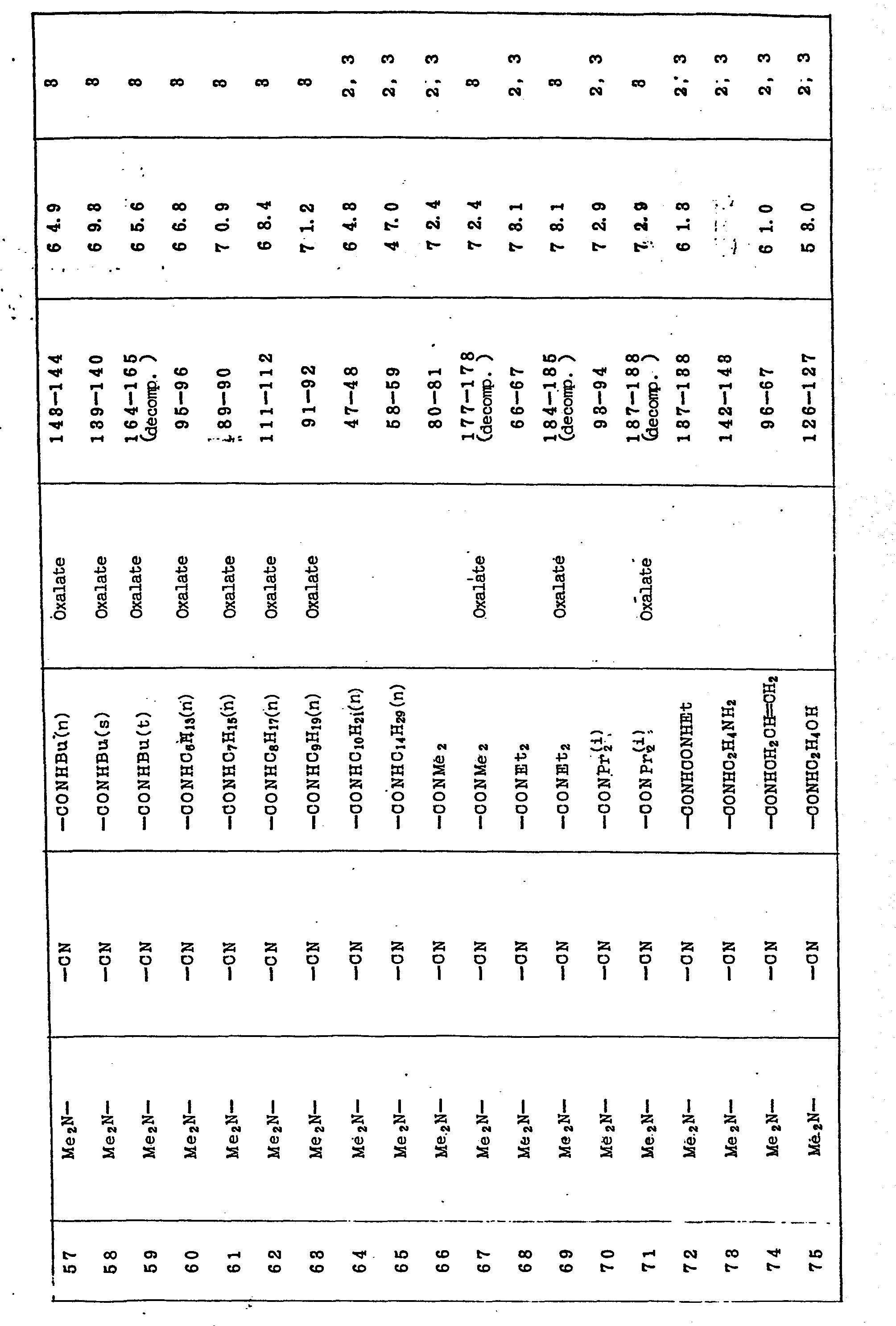
- Table 1 shows some representative species of compound (1) prepared by the procedures of Examples 1 through 7, together with their melting/boiling point and yield data.
- the Compounds No. 1 through 8 were those obtained in Examples 1 to 3.
- the compound numbers indicated in the following Examples and Experimental Examples correspond to the Compound Numbers given in Table 1.
- products of this invention are not limited to those specific compounds.
- An emulsifiable concentrate prepared by admixing the following components.
- a wettable powder prepared by admixing the following components.
- a dust prepared by admixing the following components.
- a granular product prepared by admixing and granulating the following components.
- test compound was made into an emulsifiable concentrate according to the formula of Example 8 and the concentrate was diluted with water to give an aqueous solution of 500 ppm concentration.
- a 1 ⁇ l portion of this test solution was dripped onto the back of the abdomen of each 5- instar larva of Chilo suppressalis, whereby 50 ug/g of the test drug was administered.
- the larvae were transferred to a Petri dish (9 cm across) and maintained in a room at 25°C for 48 hours. Then, dead larva were counted. Using 10 larvae for each dose level, the experiment was carried out in duplicate. The results in terms of mortality rate are shown in Table 2.
- test compound was made into an emulsifiable concentrate according to the formula of Example ? and the concentrate was diluted with water to prepare a test liquid of 50 ppm concentration.
- This liquid was put in a 100 ml beaker and 8 paddy rice seedlings (7 days after germination) were dipped in the liquid for 10 seconds. Then, the seedlings were transferred to a test tube containing 1 ml of water and ten 3-instar larvae of Laodelphax striatellus were released into the tube.
- the test tube was maintained in a room (28°C) for 24 hours, at the end of which time the larvae were investigated for survival. This experiment was carried out in duplicate and the results in terms of % mortality are shown in Table 3.
- test compound was made into a wettable powder according to the formula of Example 9 and diluted with water (with 3,000 times of Dyne , an extender) to prepare an aqueous suspension of 500 ppm.
- This aqueous suspension was applied to 2-instar female larvae of Unaspis yanonensis (10 to 50 larvae) feeding on seedlings (2 months after germination) of trifoliate orange in a pot (9 cm in diameter). After the treatment, the pot was placed in a green house (25-30°C). On the 20th day after the treatment the number of surviving adults was investigated. This experiment was carried out in duplicate and the results in terms of % mortality are presented in Table 5.
- Each test compound was made into an emulsifiable concentrate according to the formula of Example 3 and the concentrate was diluted with water (containing 3,000 times of Dyne , an extender) to prepare an aqueous solution of 500 ppm.
- Ten female larvae of Tetranychus urticae were used to infest kidney bean seedlings water-cultured in an ice cream cup.
- the cup was placed in a glass chamber (28°C) for 24 hours and, then, 20 ml of the above aqueous solution was applied to the seedlings. After the treatment, the cup was returned to the glass chamber and the number of adults feeding on the foliage was investigated on the second day. This experiment was performed in duplicate and the % decrease of population was calculated by means of the equation given below. The results are shown in Table 6.
Landscapes
- Chemical & Material Sciences (AREA)
- Life Sciences & Earth Sciences (AREA)
- Organic Chemistry (AREA)
- Health & Medical Sciences (AREA)
- General Health & Medical Sciences (AREA)
- Wood Science & Technology (AREA)
- Environmental Sciences (AREA)
- Engineering & Computer Science (AREA)
- Dentistry (AREA)
- Pest Control & Pesticides (AREA)
- Agronomy & Crop Science (AREA)
- Zoology (AREA)
- Plant Pathology (AREA)
- Biochemistry (AREA)
- Molecular Biology (AREA)
- Agricultural Chemicals And Associated Chemicals (AREA)
- Heterocyclic Carbon Compounds Containing A Hetero Ring Having Oxygen Or Sulfur (AREA)
- Heterocyclic Compounds Containing Sulfur Atoms (AREA)
- Plural Heterocyclic Compounds (AREA)
- Nitrogen And Oxygen Or Sulfur-Condensed Heterocyclic Ring Systems (AREA)
Abstract

Description
- The present invention relates to novel compounds having very useful pesticidal actions and, more particularly, to a 1,3-dithiane of the formula

- A variety of synthetic compounds having controlling effects on pests have heretofore been employed as pesticides but a large majority of the compounds is organophosphorus compounds, carbamates, or organochlorine compounds. It is well known that the use of such limited varieties of compounds causes various troubles such as an increased tolerance of pests to insecticides, and some of the above-mentioned pesticides, are not satisfactory in that while they have great pesticidal. activity, they are also highly toxic to human beings, domestic animals and fish and sometimes even to natural enemies of pests so that they are liable to cause an unpredictable massive emergence of pests.
- The intensive research undertaken by the present inventors to develop a new pest control agent which would be only sparingly toxic to human beings, domestic animals and fish, and even to natural enemies, safe to use, possessed of high activity for pest control, and completely different from the conventional insecticidal compounds in chemical structure resulted in the following discoveries. Thus, a novel 1,3-dithiane compound of the above general formula (I) or a salt thereof can be obtained by reacting a compound of the formula





- The present invention is therefore concerned with:
- (1) a 1,3-dithiane (I) or a salt thereof;
- (2) a method of producing a 1,3-dithiane of the formula

- (3) a method of producing a 1,3-dithiane of the formula

- (4) a method of producing a 1,3-dithiane (VI) or a salt thereof characterized by heating a compound (V) or a salt thereof in an organic solvent or treating the same (V) with a base;
- (6) a method of producing a 1,3-dithiane of the formula

- (6) a method of producing a 1,3-dithiane of the formula

- (7) a pesticidal composition characterized by containing a 1,3-dithiane (I) or a salt thereof as an active ingredient.
- Referring to the above formulas, R1 is a di-substituted amino group and R1' is a dialkylamino group. The substituent groups on the amino group include, among others, lower alkyl groups of 1 to 4 carbon atoms, such as methyl, ethyl, propyl, isopropyl, etc., and cyano group, although methyl is preferred. The di-substituted amino group may form, by bondage of these substituents to each other, a cyclic amino group such as morpholino, pyrrolidino, etc. The electron-withdrawing (or electron attractive) group as represented by R2, R2', R , R , R3', R3" and R5 means a group which "has a greater tendency to attract electrons than do hydrogen atoms in the molecule", thus being exemplified by nitrile, nitro, groups of the formula COOR7 (where R7 is a hydrogen atom or a hydrocarbon group) such as carboxyl and C1-10 alkoxycarbonyl (e.g. methoxycarbonyl, ethoxycarbonyl, octyloxycarbonyl, etc.), SO2R (where R is as defined hereinbefore) such as C 6-10 arylsulfonyl (e.g. phenylsulfonyl, etc.), CONR8R9 [where R8 and R9 are the same or different and each is a hydrogen atom, Cl-4 alkylaminocarbonyl or a hydrocarbon group which may optionally be substituted or R8 and R9 combinedly represent a group of the formula =CH-R1 (where R1' is as defined hereinbefore) or taken together with the adjacent nitrogen atom represent a cyclic amino group] such as carbamoyl, mono- or di- C1-15 alkylaminocarbonyl (e.g. methylaminocarbonyl, dimethylaminocarbonyl, ethylaminocarbonyl, diethylaminocarbonyl, n-propylamino- carbonyl, isopropylaminocarbonyl, diisopropylaminocarbonyl, n-butylaminocarbonyl, sec-butylaminocarbonyl, tert- butylaminocarbonyl, n-hexylaminocarbonyl, n-nonylamino- carbonyl, n-decylaminocarbonyl, n-tetradecylaminocarbonyl, etc.), amino-C1-4 alkylaminocarbonyl (e.g. aminomethyl- aminocarbonyl, aminoethylaminocarbonyl, etc.), C2-4 alkenylaminocarbonyl (e.g. vinylaminocarbonyl, allyl- aminocarbonyl, etc.), hydroxy-C1-4 alkylaminocarbonyl (e.g. hydroxymethylaminocarbonyl, hydroxyethylamino- carbonyl, etc.), di-C1-4 alkylaminomethyleneaminocarbonyl (e.g. dimethylaminomethyleneaminocarbonyl, etc.), C3-6 cycloalkylaminocarbonyl (e.g. cyclopropylaminocarbonyl, cyclopentylaminocarbonyl, cyclohexylaminocarbonyl, etc.), 5- or 6- membered cyclic aminocarbonyl containing 1 to 3 nitrogen atoms which may be substituted with C1-4 alkyl (e.g. piperazinocarbonyl morpholinocarbonyl, pyprolidinocarbonyl, N-methylpiperazinocarbonyl, etc.), C6-10 arylaminocarbonyl which may be substituted with C1-4 alkyl or halogen (e.g. phenylaminocarbonyl, o-fluoro- p-chlorophenylaminocarbonyl, m-methylphenylaminocarbonyl, p-ethylphenylaminocarbonyl, etc.), Cl-4 alkylamino- carbonylaminocarbonyl (e.g. methylaminocarbonylamino- carbonyl, ethylaminocarbonylaminocarbonyl, etc.) and hydroxy-C1-4 alkoxy-C1-4 alkylaminocarbonyl (e.g. hydroxymethoxymethylaminocarbonyl, hydroxyethoxyethyl- aminocarbonyl, etc.), COR (where R is as defined hereinbefore) such as Cl-4 alkylcarbonyl (e.g. methylcarbonyl, ethylcarbonyl, n-propylcarbonyl, etc.) and C6-10 arylcarbonyl (e.g. phenylcarbonyl, etc.) or PO(OR)2 (where R is as defined hereinbefore) such as di-Cl-4 alkoxy- phosphoryl (e.g. dimethoxyphosphoryl, diethoxyphosphoryl, etc.) and di-C6-10 aryloxyphosphoryl (e.g. diphenoxy- phosphoryl, etc.), etc. R2, R2', R 3, R3' and R6 each represents a hydrocarbon group or heterocyclic group which may optionally be substituted, and the hydrocarbon group includes, among others, alkyl groups of 1 to 15 carbon atoms, such as methyl, ethyl, propyl, isopropyl, butyl, isobutyl, sec - butyl, tert-butyl, pentyl, hexyl, heptyl, octyl, nonyl, decyl, undecyl, dodecyl, tridecyl, tetradecyl, pentadecyl, etc.; cycloalkyl groups of 3 to 6 carbon atoms, such as cyclopropane, cyclobutane, cyclohexane, etc.; alkenyl groups of 2 to 4 carbon atoms such as vinyl, allyl, 2-methallyl, 3-methallyl, 3-butenyl, etc.; cycloalkenyl groups of 3 to 6 carbon atoms, such as cyclopropenyl, cyclopentenyl, cyclohexenyl, etc.; aryl groups of 6 to 10 carbon atoms, such as phenyl, naphthyl, etc.; and aralkyl groups of 7 to 10 carbon atoms, such as benzyl, phenylethyl, etc., and the heterocyclic group include, among others, 5- to 6-membered heterocyclic groups containing oxygen, sulfur or/and nitrogen atoms as heteroatoms, such as thienyl, furyl, pyrazolyl, thiazolyl, isothiazolyl, oxazolyl, isooxazolyl, diazolyl, triazolyl, tetrazolyl, pyridyl, pyrimidyl, pyridazinyl, quinolyl, isoquinolyl, indolyl, etc. These hydrocarbon and heterocyclic groups may each contain one to several (preferable 1 to 2) substitutents such as nitro, amino, hydroxy, cyano, carbamoyl, carboxyl, sulfo, halogen (e.g. fluorine, chlorine, bromine, iodine, etc.), trifluoromethyl, methylenedioxy, lower alkoxy groups of 1 to 4 carbon atoms (e.g. methoxy, ethoxy, propoxy, isopropoxy, butoxy, isobutoxy, sec-butoxy, tert- butoxy, etc.), hydroxy-C1-4 alkoxy group (e.g. hydroxy- methoxy, hydroxyethoxy, etc.), phenoxy, benzoyl, halogenobenzoylaminocarbonylamino, halogenophenylaminocarbonyl- amino, etc. Moreover, the aryl, aralkyl, cycloalkyl and heterocyclic groups my have such substituents as the alkyls and aryls mentioned above. Representative examples of the hydrocarbon group and heterocyclic group which may optionally be substituted, are C6-l0 aryl which may be substituted with halogen, nitro, amino, methylenedioxy, C1-4 alkoxy, C1-4 alkyl, trifluoromethyl, phenoxy, halogenobenzoylaminocarbonylamino and/or halogenophenyl- aminocarbonylamino (e.g. phenyl, naphthyl, o-, m- or p-chloro, bromo or fluorophenyl, 2, 3-, 2, 4-, 2,5-, 2, 6- or 3, 4-di-chloro or bromophenyl, o-, m- or p-nitrophenyl, o-, m- or p- methoxyphenyl, 3-nitro-4-methoxy- or 3-methoxy-4-nitrophenyl, o-, m- or p-trifluorophenyl, o-, m- or p- phenoxyphenyl, 2, 3- or 3, 4-methylenedioxyphenyl, o-, m- or p-aminophenyl,o-, m- or p-methyl or ethylphenyl, 2, 3-, 2, 4-, 2, 5- or 3, 4-dimethylphenyl, o-, m- or p-chlorophenylaminocarbonyl- aminophenyl, 2,6-di-fluoro or bromobenzoylaminocarbonyl- aminophenyl, etc.), Cl-6 alkyl (e.g. methyl, ethyl, propyl, isopropyl, butyl, i-butyl, sec-butyl, tert-butyl, pentyl, hexyl, etc.), 5- or 6-membered heterocyclic group containing 1 to 3 hetero atoms selected from nitrogen and sulfur (e.g. pyrrolyl, diazolyl, triazolyl, pyridyl, pyrimidyl, thienyl, thiazolyl, thiadiazolyl, etc.) and the like. Referring to R2 and R3, and R2' and R3', each pair taken together with the adjacent carbon atom, may form a ring provided that at least one member of each pair is a carbonyl group, and exmaples of such ring include 5- to 6-membered alicyclic rings containing 1 to 2 oxo groups such as cyclohexanone, cyclohexanedione, cyclopentanone, cyclopentanedione, etc. and 5- to 6- membered heterocyclic rings containing 1 to 3 oxo groups such as pyrazolone, pyridazinetrione, pyridone, oxazolone, pyrrolidone, piperidone, etc. And these rings may optionally be substituted by the above-mentioned alkyl groups, halogens, amino, hydroxy, groups of the formula N=CH-R1' (where R is as defined hereinbefore), etc. One of R and R may be a hydrogen atom. R4 means a hydrocarbon group or a hydroxy group, and the hydrocarbon group is exemplified by the groups mentioned for R2 and R3. R2" and R3" are such that one of them is a group of the formula -COR or-COOR. The hydrocarbon groups which may optionally be substituted, as represented by R, are such groups as mentioned for R and R3. The hydrocarbon groups and the hydrocarbon groups which may optionally be substituted, as represented by R7, R and R , are such groups as those mentioned for R and R3. The cyclic amino group formed by R 8 and R9 taken together with the adjacent nitrogen atom includes 5- to 6-membered cyclic amino groups such as piperazino, morpholino, pyrrolidino, etc. and these cyclic amino groups may be substituted for example by lower alkyl groups such as those mentioned hereinbefore. X1 and X 2 each is a sulfur atom which may optionally be oxidized and X1' and X2' are such that at least one of them is an oxidized sulfur atom.
- The objective compound (I) of the present invention exists as isomers when the carbon atom in 2-position of its 1,3-dithiane nucleus is an asymmetric carbon atom but all of these isomers as well as the mixture thereof fall within the scope of the present invention. Moreover, when an acidic group (e.g. COOH) exists in the substituent of R 2, R 3, the objective compound (I) may form a salt, for example, with an alkali metal or alkaline earth metal such as sodium, potassium, calcium, magnesium, etc. Further, at the basic group in the substituent of R2, R3 and/or the di-substituted amino group R1, the compound (I) may form a salt with a mineral acid such as hydrochloric acid, phosphoric acid, sulfuric acid, etc. or an organic acid such as oxalic acid, acetic acid, benzoic acid, etc. Furthermore, at the di-substituted amino group Rl, the objective compound (I) may form a quaternary ammonium salt with an alkyl halide (of 1 to 4 carbon atoms) such as methyl iodide, methyl bromide, ethyl bromide, methyl chloride, ethyl chloride, etc.
- Representative species of the objective compound (I) include 1,3-dithianes of the formula


- The compound (I) according to the present invention is effective in controlling sanitary pests and insects and mites parasitizing animals or plants and displays strong pesticidal activity as a contact poison when applied directly to the animals or plants parasitized by such pests. A more outstanding characteristic of this compound (I) is that it displays strong pesticidal effects when such pests expose themselves to it by sucking, gnawing or otherwise contacting the plants which were caused to absorb the compound (I) from their roots, leaves, stems, etc. Such properties are advantageous in the control of sucking or grawing insects and mites.
- Moreover, the compound (I) of the present invention is sparingly toxic to plants and fish, thus possessing properties valuable and safe for use as an agricultural pest control agent. The compound (I) and compositions containing (I) are particularly effective in the control of harmful insects of the order Hemiptera such as Eurydema rugosa, Scotinophara lurida, Riptortus clavatus, Stephanitis nashi, Laodelphax stiatellus, Nephotettix cincticeps, Unaspis yanonensis, Aphis glycines, Lipaphis pseudobrassicae, Brevicoryne brassicae and Aphis gossypii insects of the order Glossata such as Spodoptera litura, Plutella xylostella, Pieris rapae crucivora, Chilo suppressalis, Plusia nigrisigna, Halicoverpa assulta, Leucania separata, Mamestra brassicae, Adoxophyes orana, Syllepte derogata, Cnaphalocrocis medinalis and Phthorimaea operculella, insects of the order Coleoptera such as Epilachna vigintioctopunctata, Aulacophora femoralis, Phyllotreta striolata, Oulema orgzae and Schinocnemus squameus, insects of the order Diptera such as Musca domestica, Culex pipiens pallens, Tabanus trigonus, Hylemya antiqua and Hylemya platura, insects of the order Orthoptera such as Locusta migratoria,and Gryllotalpa africana, harmful insects of the order Blattella germanica and Periplaneta fuliginosa, mites such as Tetranychus urticae, Panonychus citri, Tetranychus kanzawai Tetranychus cinnabarinus, Pansnychus ulmi and Aculus pelekassi, nematodes such as Aphelenchoides besseyi,and so on.
- In using the compound (I) according to the present invention as an insectioidal/acaricidal agent, it can be used in any application form in which an agricultural chemical can be made available. Thus, depending on the intended use, one or more species of compound (I) are either dissolved or dispersed in a suitable liquid vehicle or admixed with or adsorbed on a suitable solid vehicle and the resulting composition is made available in any of such forms as emulsifiable concentrate, oil, wettable powder, dusts, granules, tablets, aerosol mist, ointment, etc. There may also be added to these preparations such additives as emulsifiers, suspending agents, extenders, penetrants, wetting agents, thickners, stabilizers, etc. as necessary. These preparations can be produced by the known methods.
- The proportion of the active agent (I) in such an insecticidal/acaricidal preparation depends on the intended use and application. In the case of an emulsifiable concentrate or wettable powder, the range of about 10 to 90 weight percent is desirable, while the range of about 0.1 to 10 weight % is suitable for an oil or dust. Granules may preferably contain about 1 to 20 weight % of (I). However, deviations from such concentration ranges are permissible for practical uses. In using the emulsifiable concentrate or wettable powder, it is preferable to dilute the concentrate or powder to a suitable concentration (.e.g. 100- to 100000- fold), for example with water.
- The liquid vehicle that may be employed includes, among others, water and organic solvents such as alcohols (e.g. methyl alcohol, ethyl alcohol, ethylene glycol, etc.), ketones (e.g. acetone, methyl ethyl ketone, etc.), ethers (e.g. dioxane, tetrahydrofuran, cellosolve, etc.), aliphatic hydrocarbons (e.g. gasoline, kerosin, kerosene, fuel oil, machine oil, etc.), aromatic hydrocarbons (e.g. benzene, toluene, xylene, solvent naphtha, methylnaphthalene, etc.), halogenated hydrocarbons (e.g. chloroform, carbon tetrachloride, etc.), acid amides (e.g. dimethylformamide, etc.), esters (e.g. ethyl acetate, butyl acetate, glycerin fatty acid esters, etc.), nitriles (e.g. acetonitrile, etc.), etc. and these vehicles can be used singly or in combination. The solid vehicle includes, among others, vegetable powders (e.g. soybean flour, tobacco powder, wheat flour, saw dust, etc.), mineral powders (e.g. clays such as kaolin, bentonite, terra alba, clay, agalmatolite, etc., talc, silicates such as diatomaceous earth, mica powder, etc.), alumina powder, sulfur powder, active carbon, etc. These solid vehicles may be used singly or.in combination. The ointment bases that can be used includes polyethylene glycols, pectin, fatty acid esters of polyols.such as glycerin monostearate, etc., cellulose derivatives such as methylcellulose, sodium alginate, bentonite, higher alcohols, polyols such as glycerin, vaseline,white vaseline,liquid paraffin, lard, vegetable oils, lanolin, dehydrated lanolin, hydrogenated oils, resins. These bases may be used singly or in combination, with or without addition of surfactants, etc.
- The surfactants which may be employed as emulsifiers, extenders, penetrants, dispersants, etc. include, among others, polyoxyalkyl aryl ethers (e.g. Nonal®, Takemoto Yushi K.K. Japan), alkylsulfates (e.g. Emal 10®, Emal 40° Atlas Co., Ltd., Japan), alkylsulfonates (e.g. Neogen®, Neogen T®, Daiichi Kogyo Seiyaku K.K., Japan; Neopellex®, Kao Atlas Co., Ltd.,Japan),polyethylene glycol ethers (e.g. Nonipol 85®, Nonipol 100 , Nonipol 160 , Sanyo Kasei K.K., Japan), polyol esters (e.g. Tween , Tween 80 , Kao Atlas Co., Ltd., Japan), etc. The compound according to the present invention may be used in combination or admixture with other kinds of insecticides (e.g. pyrethrin , organophosphorus, carbamate and natural insecticides), acaricides, nematocides, herbicides, plant growth hormones, plant growth regulators, fungicides (e.g. copper, organochlorine, organosulfur, phenolic and other fungicides), synergists, attractants, repellents, pigments, fertilizers, etc.
- The objective compound (I) of the present invention can be produced, for example by the following processes.
- In the first place, a compound (II) or a salt thereof is reacted with a compound (III) or a salt thereof to give a l,3-dithiane (IX) or a salt thereof.
- The starting material compounds (II) and (III) may each be a free compound or-may be used in the form of a salt such as those mentioned for compound (I). Each molar equivalent of compound (II) is reacted with one or slightly more than one equivalent of compound (III). Generally, this reaction is preferably conducted in a suitable solvent, such as water, alcohols (e.g., methanol, ethanol, n-propanol, isopropyl alcohol, n-butanol, etc.), aromatic hydrocarbons (e.g. benzene, toluene, xylene, etc.), halogenated hydrocarbons (e.g. methylene chloride, chloroform, carbon tetrachloride, etc.), ethers (e.g. ethyl ether, dioxane, tetrahydrofuran, etc.), ketones such as acetone, methyl ethyl ketone, etc. , nitriles (e.g. acetonitrile, etc.), acid amides (e.g. dimethylformamide, etc.), esters (e.g. ethylacetate), sulfoxides (e.g. dimethyl sulfoxide), and other organic solvents. If necessary, a mixture of water with an aromatic hydrocarbon or halogenated hydrocarbon can be employed. The reaction may be accelerated by adding a base to the solvent. Examples of the base include tertiary amines (e.g. triethylamine, pyridine, y-collidine, 4-dimethylaminopyridine, DBU (1,8-diazabicyclo[5,4,0]undeca-7-ene), etc.), hydroxides, carbonates and bicarbonates of alkali metals or alkaline earth metals and alkoxides of alkali metals (e.g. sodium carbonate, potassium carbonate, sodium hydrogen carbonate, sodium hydroxide, potassium carbonate, sodium alkoxide, etc.), and organic metal salts (e.g. n-butyllithium). The reaction may be conducted more advantageously, in some cases, in the presence of the base and a phase transfer catalyst (.a quaternary ammonium salt such as triethylbenzylammonium chloride, tri-n-octylmethylammonium chloride, trimethyldecylammonium chloride, etc.).
- While this reaction proceeds at room temperature (0-40°C), it may be accelerated by. heating the reaction system at a suitable temperature (60 to 100°C). The reaction generally goes to completion in a few minutes to several hours. After completion of the reaction, the desired compound (I) can be isolated and purified by the per se conventional procedure, for example by washing the reaction mixture directly with water or removing the solvent, extracting the residue with an organic solvent such as toluene, and washing the extract with water, followed by dehydration over a desiccant such as anhydrous sodium sulfate and removal of the solvent.
- A compound (IV) or a salt thereof is reacted with an oxidizing agent to produce a 1,3-dithiane (X) or a salt thereof.
- The salt of compound (IV) may be one of the kinds mentioned for compound (I). The oxidizing agent is optional only if the desired reaction can be accomplished. Thus, for example, hydrogen peroxide, potassium permanganate, sodium metaperiodate, ceriumammonium nitrate, and organic peracids such as m-chloroperbenzoic acid, etc. Each molecular equivalent of said compound (IV) or salt thereof is reacted with 1.0 to 5.0 equivalents, preferably 1.1 to 4.2 equivalents, of the oxidizing agent. The reaction is preferably conducted in a solvent, such as halogenated hydrocarbons (e.g. methylene chloride, chloroform, carbon tetrachloride, etc.), alcohols (e.g.methanol, ethanol, etc.), ketones (e.g. acetone, etc.), nitriles (e.g. acetonitrile, etc.), organic acids (e.g. acetic acid, etc.), water,etc. While the reaction prodeeds under cooling or at room temperature (-30°C to +40°C), the reaction may be accelerated by heating the reaction mixture at a suitable temperature (60 to 100°C). The reaction goes to completion generally in 30 minutes to 12 hours and, preferably, 1 to 3 hours. After completion of the reaction, the product compound (X) can be isolated and purified by the per se known procedure, for example by washing the reaction mixture directly with water or by removing the solvent, extracting the residue with an organic solvent such as chloroform, and washing the extract with water, followed by dehydration over a desiccant such as anhydrous sodium sulfate and removal of the solvent.
- The compound (V) or a salt thereof is either heated in an organic solvent or reacted with a base to produce a 1,3-dithiane (VI) or a salt thereof.
- The compound (V) may be a free compound or may be used in the form of a salt such as those mentioned for compound (I).
- The compound (V) or salt thereof is heated in an organic solvent such as those mentioned for Process (A) at a temperature of generally 40 to 100°C and preferably 40 to 60°C. The heating is continued generally for 1 to 10 hours and preferably for 2 to 4 hours. As an alternative method, each molar equivalent of the compound (V) or salt thereof is reacted with 0.5 to 8.0 molar equivalents, preferably 1.0 to 1.5 equivalents, of a base. The base may for example be one of those mentioned for Process (A). This reaction with the base is conducted for 0.5 to 6 hours or preferably for 1 to 2 hours. The base may be permitted to act on (V) or salt thereof in a solvent such as, for example, water, alcohols (e.g. methanol, ethanol, n-propanol, isopropyl alcohol, n-butanol, etc.), armatic hydrocarbons (e.g. benzene, toluene, xylene, etc.), halogenated hydrocarbons (e.g. methylene chloride, chloroform, etc.), ethers (dioxane, tetrahydrofuran, etc.), ketones (e.g. acetone, etc.), nitriles (e.g. acetonitrile, etc.), acid amides (e.g. dimethylformamide, etc.), sulfoxides (e.g. dimethyl sulfoxide, etc.), etc. Preferred solvents are ethanol, n-propanol, dioxane, acetonitrile, dimethylformamide, dimethyl sulfoxide, etc. Generally, the base is preferably permitted to act at room temperature (0 to 40°C). The product compound (I) can be isolated and purified by the per se kwnon procedures such as solvent extraction, concentration, pH adjustment, distillation, crystallization, recrystallization, chromatography, etc.
- A compound (VI) or a salt thereof is reacted with a compound (VII)in the presence of a base to give a 1,3-dithiane (XI) or a salt thereof.
- The compound (VI) can be used in the free form or in the form of a salt such as those mentioned for compound (I). The base may be selected from among those mentioned for Process (A), although such other reagents as Grignard reagents (e.g. methylmagnesium iodide, ethylmagnesium chloride, phenylmagnesium bromide, etc.) and alkyllithium compounds (e.g. n-butyllithium) can also be employed. Each molar equivalent of said compound (VI) or salt thereof is reacted with 1 to 3 molar equivalents, preferably 1 to 2 equivalents, of said compound (VII). This reaction may be conducted in a solvent such as hydrocarbons (e.g. n-hexane), ethers (e.g. ethyl ether, dioxane, tetrahydrofuran,etc.), aromatic hydrocarbons (e.g. benzene, toluene, etc.), acid amides (e.g. dimethylformamide, etc.), sulfoxides (e.g. dimethyl sulfoxide, etc.). Preferred solvents are n-hexane, tetrahydrofuran, dimethyl sulfoxide, etc. This reaction is conducted generally at -70 to +30°C and preferably at -30 to +20°C. The reaction time is 1.0 to 10 hours and preferably 2.0 to 4.0 hours. The product compound (XI) or salt thereof is isolated and purified by the per se known procedure.
- A compound (XIII) or a salt thereof is alkylated to a 1,3-dithiane (XII) or a salt thereof. The salt of compound (XIII) may be a salt such as those mentioned for the product compound (I). Each molar equivalent of said compound (VIII) or salt thereof is reacted with 1 to 10 equivalents, preferably 1 to 5 equivalents of an alkylating agent. This reaction may be advantageously conducted in the presence of a base. The alkylating agent may of any kind only if it does not cause side reactions. For example, alkyl halides (e.g. methyl iodide, ethyl iodide, propyl bromide, etc.), alkyl sulfates (e.g. dimethyl sulfate, etc.), Grignard reagents (e.g. methylammonium iodide, ethylmagnesium chloride, etc.), etc. Particularly preferred are methyl iodide, ethyl bromide, dimethyl sulfate, etc. Generally this reaction is preferably conducted in a solvent such as water, alcohols (e.g. methanol, ethanol, etc.), nitriles (e.g. acetonitrile, etc.), halogenated hydrocarbons (e.g. methyl iodide, ethyl bromide, chloroform, etc.), and aromatic hydrocarbons (e.g. benzene, toluene, xylene, etc.). Among them, preferred are ethanol, methyl iodide, ethyl bromide, benzene and toluene, for instance. The reaction temperature depends on the alkylating agent employed and the solvent used but generally the reaction is carried out at 40-150°C, preferably at 80-120°C. Generally, the reaction is complete in 0.5-48 hours, and a reaction period of 1.0-10 hours is particularly preferred. The compound (XII) thus produced can be isolated by the above-mentioned known methods.
- The desired compound (-1) of this invention can also be produced by reacting a compound of the formula

- The compound (XIII) may be in the form of a salt with a mineral acid (e.g. hydrochloric acid, phosphoric acid, sulfuric acid, etc.) or an organic acid (e.g. oxalic acid, acetic acid, benzoic acid, etc.). This reaction is the so- called Wallach reaction and is preferably carried out in the manner of reduction in the presence, for instance, of formic acid or a formic acid derivative such as a formic acid salt (e.g. salt with an alkali metal, an alkaline earth metal, etc.), formamide or ammonium formate. Generally, this reaction is carried out at high temperatures (100-200°C) without using any solvent. The reaction can advantageously be promoted by the use of a catalyst such as magnesium chloride or ammonium sulfate, for instance. The reaction period can be selected in an adequate manner such that the desired compound can be obtained. The product produced can be isolated and purified by the known methods mentioned above.
- The thus-obtained desired compound (I) of the present invention may further be purified, as desired, by such means as recrystallization or column chromatography. When the compound contains an amino group and it is difficult to- crystallize the reaction product, the compound may preferably be isolated in the form of a salt form by adding an inorganic acid such as hydrogen chloride or an organic acid such as oxalic acid, p-toluenesulfonic acid or picric acid, for instance, and collecting the resulting crystalline salt. The salt produced here can be purified easily by recystallization from an alcohol or water.
- The compounds (II), (III) and (VII) used as the starting materials in the above processes (A) to (E) can be synthesized by the known methods as described, for instance, in Japanese Patent Publication No. 18847/1970; J. Am. Chem. Soc., 63, 352 (1941); J. Org. Chem., 26, 2507 (1961); and Cyanides in Organic Reactions, A Literature Review, or modifications thereof. The compounds (IV), (V), (VI) and (VIII) are all novel compounds synthesized by the processes according to the present invention as mentioned above.
- The following examples illustrate the invention but are by no means limitative of the invention.
- To 20 ml of chloroform were added 1.6 g (0.01 mole) of diethyl malonate ' and 4.3 g (0.01 mole) of 1,3- bis(benzenesulfonylthio)-2-(N,N-dimethylamino)propane, and then 2.1 g (0.02 mole) of triethylamine was added thereto at room temperature. After completion of addition, the reaction was allowed to proceed at 40°C for 4 hours. The reaction mixture was washed with two 20-ml portions of water, dried over anhydrous sodium sulfate and concentrated to dryness. The residue was heated in 20 ml of ether-hexane (1:1) for dissolution and the solution was allowed to stand in the cold overnight. The resulting crystalline precipitate was collected by filtration to give 2.7 g (90%) of 2,2-diethoxycarbonyl-5-(N,N-dimethylamino)-l,3-dithiane as light-yellow crystals melting at 38-39°C.
- To 20 ml of chloroform were added 1.52 g (0.01 mole) of p-chlorophenylacetonitrile and 4.3 g (0.01 mole) of l,3-bis(benzenesulfonylthio)-2-(N,N-dimethylamino)propane, and then 3.1 g (0.02 mole) of 1,8-diazabicyclo[5,4,0]undeca-7-ene was added thereto at roan temperature. After completion of addition, the reaction was allowed to proceed at 40°C for 4 hours. The reaction mixture was washed with two 20-ml portions of water, dried over anhydrous magnesium sulfate and concentrated to dryness. The crystals thus obtained were heated in 10 ml of toluene for dissolution and the solution was allowed to stand in the cold overnight. The resulting crystalline precipitate was collected by filtration to give 2.6 g (87%) of 2-cyano-2-(p-chlorophenyl)-5-(N,N-dimethylamino)-1,3-dithiane as light-yellow crystals melting at 110-111°C.
- To 20 ml of chloroform were added 1.54 g (0.01 mole) of N-n-amylcyanoacetamide and 4.3 g (0.01 mole) of 1,3-bis(benzenesulfonylthio)-2-(N,N-dimethylamino)propane, and then 3.1 g (0.02 mole) of l,8-diazabicyclo[5.4.0]undeca-7-ene was added thereto at room temperature. After completion of addition, the reaction was allowed to proceed at 50°C for 4 hours. The reaction mixture was washed with two 20-ml portions of water, dried over anhydrous magnesium sulfate and concentrated to dryness. The residue was dissolved in 20 ml of acetonitrile, and 0.9 g (0.01 mole) of oxalic acid was added to the solution. The mixture was stirred well. The resulting crystalline precipitate was collected by filtration and recrystallized from 95% ethanol to give 3.1 g (79.2%) of 2-cyano-2-(N-n-amyl) -carboxamido-5- (N,N-dimethylamino)-1,3-dithiane oxalate as light-yellow crystals melting at 195-196°C.
- To 20 ml of dimethyl sulfoxide were added 1.52 g (0.01 mole) of p-chlorophenylacetonitrile. Sodium hydroxide (0.5 g) was gradually added to the mixture with ice-cooling, followed by gradual addition of 3.6 g (0.01 mole) of sodium 2-dimethylamino-l,3-propane- dithiosulfate with ice-cooling. After completion of addition, the reaction was allowed to proceed at 5°C for 1 hour. The temperature was raised gradually and the reaction was allowed to proceed at 40°C for 4 hours. Tb the reaction mixture are added 50 ml of chloroform and 50 ml of saturated aqueous sodium chloride. The organic and aqueous layers were separated. The organic layer was washed 5 times with saturated aqueous sodium chloride, dried over anhydrous magnesium sulfate and concentrated to dryness. To the residue was added 10 ml of toluene and the mixture was heated for dissolution. After decolorization, the solution was allowed to stand in the cold overnight. The resulting crystalline precipitate was collected by filtration to give 1.0 g (35%) of 2-cyano-2-(p-chlorophenyl)-5-(N,N-dimethylamino)-l,3-dithiane as light-yellow crystals melting at 110-111°C.
- To 20 ml of ethanol were added 2.6 g (0.01 mole) of 2-cyano-2-ethoxycarbonyl-5-dimethylamino-l,3-dithiane, and then 0.73 g (0.01 mole) of diethylamine was added thereto. The reaction was allowed to proceed at 60°C for 1 hour. After completion of the reaction, the solvent was removed under reduced pressure. To the residue were added 20 ml of acetonitrile and 0.9 g of anhydrous oxalic acid and the mixture was thoroughly stirred. The resulting crystalline precipitate was collected by filtration to give 1.7 g (61.4%) of 2-cyano-5-dimethylamino-l,3-dithiane oxalate as light-yellow crystals melting at 162-164°C.
- To 20 ml of dry tetrahydrofuran were added 1.3 g (0.01 mole) of 2-cyano-5-dimethylamino-l,3-dithiane and the mixture was cooled to -30°C in a nitrogen gas stream. A solution of 16% n-butyllithium in hexane (4ml) was added, and a solution of 1.3 g (0.01 mole) of n-propyl bromide in 10 ml of n-hexane was added dropwise over 15 minutes. After completion of addition, the temperature was gradually raised to room temperature over about 1 hour. The reaction was allowed to proceed at room temperature for 2 hours. To the reaction mixture were added 50 ml of water and 50 ml of ethyl acetate. The oil layer was separated, dried over anhydrous sodium sulfate and concentrated under reduced pressure. The residue was purified by column chromatography (SiO2, chloroform). The product was isolated as an oxalic acid salt, yielding 1.86 g (58.1%) of 2-cyano-2-n-propyl-5-dimethylamino-l,3-dithiane oxalate as white crystals melting at 170-171°C.
- In 120 ml of methanol were dissolved 3.0 g (0.01 mole) of 2-cyano-2-(4-chlorophenyl)-5-dimethylamino-1,3-dithiane. While the solution was maintained at 20°C, a solution of 2.2 g (0.0105 mole) of sodium metaperiodate in 35 ml of water was added dropwise over 30 minutes. The mixture was stirred at the same temperature for 30 minutes. After completion of the reaction, the insoluble matter was filtered off and the filtrate was concentrated under reduced pressure. The residue was stirred well with 50 ml of chloroform and 50 ml of water. The chloroform layer was then separated, dried over anhydrous sodium sulfate and concentrated under reduced pressure. The residue was stirred well with 20 ml of acetonitrile and 0.9 g of anhydrous oxalic acid. The resulting crystalline precipitate was collected by filtration to give 2.0 g (51.4%) of 2-cyano-2-(4-chlorophenyl)-5-dimethylamino-1,3-dithiane 1-oxide oxalate as white crystals melting at 142-143°C.
- Table 1 shows some representative species of compound (1) prepared by the procedures of Examples 1 through 7, together with their melting/boiling point and yield data. The Compounds No. 1 through 8 were those obtained in Examples 1 to 3. The compound numbers indicated in the following Examples and Experimental Examples correspond to the Compound Numbers given in Table 1. Of course, products of this invention are not limited to those specific compounds.




- An emulsifiable concentrate prepared by admixing the following components.

- A wettable powder prepared by admixing the following components.

- A dust prepared by admixing the following components.

- A granular product prepared by admixing and granulating the following components.

- Each test compound was made into an emulsifiable concentrate according to the formula of Example 8 and the concentrate was diluted with water to give an aqueous solution of 500 ppm concentration. Using ametered feed microsyringe, a 1 µl portion of this test solution was dripped onto the back of the abdomen of each 5- instar larva of Chilo suppressalis, whereby 50 ug/g of the test drug was administered. Then, the larvae were transferred to a Petri dish (9 cm across) and maintained in a room at 25°C for 48 hours. Then, dead larva were counted. Using 10 larvae for each dose level, the experiment was carried out in duplicate. The results in terms of mortality rate are shown in Table 2.


- Each test compound was made into an emulsifiable concentrate according to the formula of Example ? and the concentrate was diluted with water to prepare a test liquid of 50 ppm concentration. This liquid was put in a 100 ml beaker and 8 paddy rice seedlings (7 days after germination) were dipped in the liquid for 10 seconds. Then, the seedlings were transferred to a test tube containing 1 ml of water and ten 3-instar larvae of Laodelphax striatellus were released into the tube. The test tube was maintained in a room (28°C) for 24 hours, at the end of which time the larvae were investigated for survival. This experiment was carried out in duplicate and the results in terms of % mortality are shown in Table 3.

- Effect against Spodoptera litura a) Using a spray gun (spray pressure 1 kg/cm2), soybean seedlings (10 days after germination) in a pot (9 cm in diameter) were sprayed with 20 ml of a 500 ppm aqueous dilution of the test compound (the emulsifiable concentrate of Example 8) (with 3,000 times of Dyne , an extender). Two hours after the treatment, 2 leaves were shorn off and each was placed in an ice cream cup (6 cm in diameter, 4 cm deep) and ten 3-instar larvae of Spodoptera litura were released into the cup. The cup was maintained in a room (25°C) for 48 hours, at the end of which time the larvae were investigated for survivals. This experiment was carried out in duplicate and the results in terms of % mortality are shown in Table 4.

- Each test compound was made into a wettable powder according to the formula of Example 9 and diluted with water (with 3,000 times of Dyne , an extender) to prepare an aqueous suspension of 500 ppm. This aqueous suspension was applied to 2-instar female larvae of Unaspis yanonensis (10 to 50 larvae) feeding on seedlings (2 months after germination) of trifoliate orange in a pot (9 cm in diameter). After the treatment, the pot was placed in a green house (25-30°C). On the 20th day after the treatment the number of surviving adults was investigated. This experiment was carried out in duplicate and the results in terms of % mortality are presented in Table 5.
- In the above Experimental Examples 2 through 4, % mortality calculations were made by means of the formula given in Experimental Example 1.

- Each test compound was made into an emulsifiable concentrate according to the formula of Example 3 and the concentrate was diluted with water (containing 3,000 times of Dyne , an extender) to prepare an aqueous solution of 500 ppm. Ten female larvae of Tetranychus urticae were used to infest kidney bean seedlings water-cultured in an ice cream cup. The cup was placed in a glass chamber (28°C) for 24 hours and, then, 20 ml of the above aqueous solution was applied to the seedlings. After the treatment, the cup was returned to the glass chamber and the number of adults feeding on the foliage was investigated on the second day. This experiment was performed in duplicate and the % decrease of population was calculated by means of the equation given below. The results are shown in Table 6.


Claims (10)


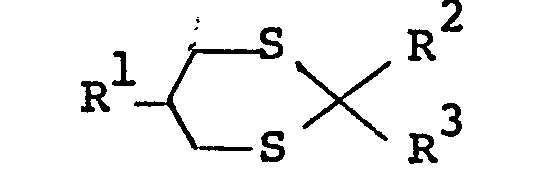


Applications Claiming Priority (2)
| Application Number | Priority Date | Filing Date | Title |
|---|---|---|---|
| JP57149633A JPS5939891A (en) | 1982-08-27 | 1982-08-27 | 1,3-dithians, their preparation, and insecticidal composition |
| JP149633/82 | 1982-08-27 |
Publications (3)
| Publication Number | Publication Date |
|---|---|
| EP0102062A2 true EP0102062A2 (en) | 1984-03-07 |
| EP0102062A3 EP0102062A3 (en) | 1985-05-15 |
| EP0102062B1 EP0102062B1 (en) | 1988-11-23 |
Family
ID=15479486
Family Applications (1)
| Application Number | Title | Priority Date | Filing Date |
|---|---|---|---|
| EP83108374A Expired EP0102062B1 (en) | 1982-08-27 | 1983-08-25 | 1,3-dithianes, their production and use |
Country Status (5)
| Country | Link |
|---|---|
| US (1) | US4640929A (en) |
| EP (1) | EP0102062B1 (en) |
| JP (1) | JPS5939891A (en) |
| KR (1) | KR900008839B1 (en) |
| DE (1) | DE3378536D1 (en) |
Cited By (2)
| Publication number | Priority date | Publication date | Assignee | Title |
|---|---|---|---|---|
| EP0227338A1 (en) * | 1985-12-19 | 1987-07-01 | Imperial Chemical Industries Plc | Sulfur-containing heterocyclic compounds, their production and their use as pesticides |
| US5502073A (en) * | 1987-06-05 | 1996-03-26 | The Wellcome Foundation | Heterocyclic pesticidal compounds |
Families Citing this family (6)
| Publication number | Priority date | Publication date | Assignee | Title |
|---|---|---|---|---|
| IT1197516B (en) * | 1986-12-24 | 1988-11-30 | Abc Ist Biolog Chem Spa | THEOFILLINMETYLANIC AND THEOFILLINMETYLDITIAN DERIVATIVES PROCEDURE FOR THEIR PREPARATION AND PHARMACEUTICAL COMPOSITIONS THAT INCLUDE THEM |
| GB8713222D0 (en) * | 1987-06-05 | 1987-07-08 | Wellcome Found | Heterocyclic pesticidal compounds |
| EG19064A (en) * | 1987-06-05 | 1994-07-30 | Wellcome Found | Novel heterocyclic pesticidal compounds |
| GB8827886D0 (en) * | 1988-11-30 | 1989-01-05 | Wellcome Found | Novel heterocyclic pesticidal compounds |
| JPH06505711A (en) * | 1990-12-07 | 1994-06-30 | テンプル ユニバーシティ−オブ ザ コモンウェルス システム オブ ハイヤー エデュケーション | Stabilized insect parasitic nematode composition |
| CN113004263B (en) * | 2021-03-11 | 2024-01-26 | 陕西大美化工科技有限公司 | 4-thiophene ring substituted pyridine derivative and application thereof in pesticides |
Family Cites Families (1)
| Publication number | Priority date | Publication date | Assignee | Title |
|---|---|---|---|---|
| US3318936A (en) * | 1961-06-27 | 1967-05-09 | Takeda Chemical Industries Ltd | Dithiocyanato amino alkanes |
-
1982
- 1982-08-27 JP JP57149633A patent/JPS5939891A/en active Granted
-
1983
- 1983-08-23 US US06/525,635 patent/US4640929A/en not_active Expired - Fee Related
- 1983-08-25 DE DE8383108374T patent/DE3378536D1/en not_active Expired
- 1983-08-25 KR KR1019830003978A patent/KR900008839B1/en not_active Expired
- 1983-08-25 EP EP83108374A patent/EP0102062B1/en not_active Expired
Cited By (2)
| Publication number | Priority date | Publication date | Assignee | Title |
|---|---|---|---|---|
| EP0227338A1 (en) * | 1985-12-19 | 1987-07-01 | Imperial Chemical Industries Plc | Sulfur-containing heterocyclic compounds, their production and their use as pesticides |
| US5502073A (en) * | 1987-06-05 | 1996-03-26 | The Wellcome Foundation | Heterocyclic pesticidal compounds |
Also Published As
| Publication number | Publication date |
|---|---|
| KR840006234A (en) | 1984-11-22 |
| DE3378536D1 (en) | 1988-12-29 |
| US4640929A (en) | 1987-02-03 |
| EP0102062A3 (en) | 1985-05-15 |
| KR900008839B1 (en) | 1990-11-30 |
| JPS5939891A (en) | 1984-03-05 |
| EP0102062B1 (en) | 1988-11-23 |
| JPH0347275B2 (en) | 1991-07-18 |
Similar Documents
| Publication | Publication Date | Title |
|---|---|---|
| KR0169469B1 (en) | Guanidine derivatives, methods for their preparation and pesticide compositions containing them | |
| US5367093A (en) | Insecticidal phenylhydrazine derivatives | |
| US5438123A (en) | Insecticidal phenylhydrazine derivatives | |
| JP2551392B2 (en) | Pyridylmethylamines | |
| JPS6128679B2 (en) | ||
| KR0135974B1 (en) | Tetrahydropyrimidine compound, preparation method thereof and pest control composition containing same | |
| US5696256A (en) | Process for preparing and using guanidine derivatives | |
| KR0180726B1 (en) | Diaminoethylene compounds | |
| EP0102062B1 (en) | 1,3-dithianes, their production and use | |
| US4474775A (en) | Pyrazol-4-yl phosphates and insecticidal and acaricidal use | |
| JP3279818B2 (en) | Insecticide and acaricide | |
| DE3003337A1 (en) | PYRIMIDIN-4-YL-PHOSPHOROTHIONATE, METHOD FOR THE PRODUCTION THEREOF, INTERMEDIATE PRODUCTS USED AND METHOD FOR THE PRODUCTION THEREOF, AND USE OF THE PYRIMIDIN-4-YL-PHOSPHOROTHIC OZIDE, ORAL INHALIDHIDE OID | |
| SU1019992A3 (en) | Insecticidal and acaricidal composition | |
| US3712915A (en) | Indanyl-n-methyl-carbamic acid esters | |
| US3997526A (en) | Amido phosphorothiolate pesticide | |
| JPS6045571A (en) | 1,3-dithiane compound, its preparation and insecticidal composition | |
| US3970751A (en) | Certain thiazolotriazolyphosphonothioates used as insecticides | |
| US4024252A (en) | 2-(5-Ethyl-6-bromothiazolo[3,2-b]-5-triazolyl)thiophosphonate esters, compositions and method of use | |
| US4382087A (en) | Selected O-(2-trichloromethyl-4-pyrimidinyl)-O,O-dialkyl phosphorothionates and O-(2-trichloromethyl-4-pyrimidinyl)-O,O-dialkyl phosphoronates and their use as insecticides | |
| US4137065A (en) | Amido phosphorothiolate pesticide | |
| CH636361A5 (en) | AN ISOXAZOLINON RING CONTAINING MONO- AND DITHIOPHOSPHORIC ACID ESTERS. | |
| DE2625828A1 (en) | NEW ORGANOPHOSPHORTHIOLATES AND PHOSPHORDITHIOATES | |
| US4000267A (en) | Insecticidal and acaricidal compositions employing pyrido[1,2a]pyrimidinone thiophosphates | |
| US4115558A (en) | Hydrazone dithiophosphates and phosphonates and use thereof as insecticides | |
| JPH0210825B2 (en) |
Legal Events
| Date | Code | Title | Description |
|---|---|---|---|
| PUAI | Public reference made under article 153(3) epc to a published international application that has entered the european phase |
Free format text: ORIGINAL CODE: 0009012 |
|
| AK | Designated contracting states |
Designated state(s): CH DE FR GB IT LI |
|
| PUAL | Search report despatched |
Free format text: ORIGINAL CODE: 0009013 |
|
| AK | Designated contracting states |
Designated state(s): CH DE FR GB IT LI |
|
| 17P | Request for examination filed |
Effective date: 19850727 |
|
| 17Q | First examination report despatched |
Effective date: 19860701 |
|
| D17Q | First examination report despatched (deleted) | ||
| GRAA | (expected) grant |
Free format text: ORIGINAL CODE: 0009210 |
|
| AK | Designated contracting states |
Kind code of ref document: B1 Designated state(s): CH DE FR GB IT LI |
|
| ITF | It: translation for a ep patent filed | ||
| REF | Corresponds to: |
Ref document number: 3378536 Country of ref document: DE Date of ref document: 19881229 |
|
| ET | Fr: translation filed | ||
| PLBE | No opposition filed within time limit |
Free format text: ORIGINAL CODE: 0009261 |
|
| STAA | Information on the status of an ep patent application or granted ep patent |
Free format text: STATUS: NO OPPOSITION FILED WITHIN TIME LIMIT |
|
| 26N | No opposition filed | ||
| REG | Reference to a national code |
Ref country code: CH Ref legal event code: PFA Free format text: TAKEDA CHEMICAL INDUSTRIES, LTD |
|
| ITTA | It: last paid annual fee | ||
| PGFP | Annual fee paid to national office [announced via postgrant information from national office to epo] |
Ref country code: GB Payment date: 19940816 Year of fee payment: 12 |
|
| PGFP | Annual fee paid to national office [announced via postgrant information from national office to epo] |
Ref country code: DE Payment date: 19940922 Year of fee payment: 12 |
|
| PGFP | Annual fee paid to national office [announced via postgrant information from national office to epo] |
Ref country code: CH Payment date: 19940923 Year of fee payment: 12 |
|
| PGFP | Annual fee paid to national office [announced via postgrant information from national office to epo] |
Ref country code: FR Payment date: 19950619 Year of fee payment: 13 |
|
| PG25 | Lapsed in a contracting state [announced via postgrant information from national office to epo] |
Ref country code: GB Effective date: 19950825 |
|
| PG25 | Lapsed in a contracting state [announced via postgrant information from national office to epo] |
Ref country code: LI Effective date: 19950831 Ref country code: CH Effective date: 19950831 |
|
| REG | Reference to a national code |
Ref country code: CH Ref legal event code: PL |
|
| GBPC | Gb: european patent ceased through non-payment of renewal fee |
Effective date: 19950825 |
|
| PG25 | Lapsed in a contracting state [announced via postgrant information from national office to epo] |
Ref country code: DE Effective date: 19960501 |
|
| PG25 | Lapsed in a contracting state [announced via postgrant information from national office to epo] |
Ref country code: FR Effective date: 19970430 |
|
| REG | Reference to a national code |
Ref country code: FR Ref legal event code: ST |