EP0100117B1 - Process for isomerising styrene oxide or homologues to beta-phenylaldehydes - Google Patents
Process for isomerising styrene oxide or homologues to beta-phenylaldehydes Download PDFInfo
- Publication number
- EP0100117B1 EP0100117B1 EP83201037A EP83201037A EP0100117B1 EP 0100117 B1 EP0100117 B1 EP 0100117B1 EP 83201037 A EP83201037 A EP 83201037A EP 83201037 A EP83201037 A EP 83201037A EP 0100117 B1 EP0100117 B1 EP 0100117B1
- Authority
- EP
- European Patent Office
- Prior art keywords
- phenylaldehydes
- styrene oxide
- homologues
- titanium
- process according
- Prior art date
- Legal status (The legal status is an assumption and is not a legal conclusion. Google has not performed a legal analysis and makes no representation as to the accuracy of the status listed.)
- Expired
Links
- 238000000034 method Methods 0.000 title claims abstract description 15
- AWMVMTVKBNGEAK-UHFFFAOYSA-N Styrene oxide Chemical compound C1OC1C1=CC=CC=C1 AWMVMTVKBNGEAK-UHFFFAOYSA-N 0.000 title claims description 10
- 238000006317 isomerization reaction Methods 0.000 claims abstract description 7
- 239000002904 solvent Substances 0.000 claims abstract description 7
- 239000003054 catalyst Substances 0.000 claims abstract description 6
- HNPSIPDUKPIQMN-UHFFFAOYSA-N dioxosilane;oxo(oxoalumanyloxy)alumane Chemical class O=[Si]=O.O=[Al]O[Al]=O HNPSIPDUKPIQMN-UHFFFAOYSA-N 0.000 claims abstract description 6
- OKKJLVBELUTLKV-UHFFFAOYSA-N Methanol Chemical compound OC OKKJLVBELUTLKV-UHFFFAOYSA-N 0.000 claims description 6
- CSCPPACGZOOCGX-UHFFFAOYSA-N Acetone Chemical group CC(C)=O CSCPPACGZOOCGX-UHFFFAOYSA-N 0.000 claims description 4
- 150000002576 ketones Chemical class 0.000 claims description 4
- 150000001298 alcohols Chemical class 0.000 claims description 3
- 125000004432 carbon atom Chemical group C* 0.000 claims description 3
- 239000002253 acid Substances 0.000 claims description 2
- 150000007513 acids Chemical class 0.000 claims description 2
- 150000002148 esters Chemical class 0.000 claims description 2
- 150000002334 glycols Chemical class 0.000 claims description 2
- 239000002798 polar solvent Substances 0.000 claims 2
- LFQSCWFLJHTTHZ-UHFFFAOYSA-N Ethanol Chemical compound CCO LFQSCWFLJHTTHZ-UHFFFAOYSA-N 0.000 claims 1
- RTAQQCXQSZGOHL-UHFFFAOYSA-N Titanium Chemical compound [Ti] RTAQQCXQSZGOHL-UHFFFAOYSA-N 0.000 abstract description 13
- 239000010936 titanium Substances 0.000 abstract description 13
- 229910052719 titanium Inorganic materials 0.000 abstract description 11
- 238000006243 chemical reaction Methods 0.000 abstract description 5
- PPBRXRYQALVLMV-UHFFFAOYSA-N Styrene Chemical compound C=CC1=CC=CC=C1 PPBRXRYQALVLMV-UHFFFAOYSA-N 0.000 abstract 2
- 238000001228 spectrum Methods 0.000 description 10
- 239000000203 mixture Substances 0.000 description 7
- GWEVSGVZZGPLCZ-UHFFFAOYSA-N titanium dioxide Inorganic materials O=[Ti]=O GWEVSGVZZGPLCZ-UHFFFAOYSA-N 0.000 description 5
- VYPSYNLAJGMNEJ-UHFFFAOYSA-N Silicium dioxide Chemical compound O=[Si]=O VYPSYNLAJGMNEJ-UHFFFAOYSA-N 0.000 description 4
- 230000003595 spectral effect Effects 0.000 description 4
- 239000003153 chemical reaction reagent Substances 0.000 description 3
- 239000013078 crystal Substances 0.000 description 3
- 150000007530 organic bases Chemical class 0.000 description 3
- 229910052710 silicon Inorganic materials 0.000 description 3
- 239000010703 silicon Substances 0.000 description 3
- OGIDPMRJRNCKJF-UHFFFAOYSA-N titanium oxide Inorganic materials [Ti]=O OGIDPMRJRNCKJF-UHFFFAOYSA-N 0.000 description 3
- BPQQTUXANYXVAA-UHFFFAOYSA-N Orthosilicate Chemical compound [O-][Si]([O-])([O-])[O-] BPQQTUXANYXVAA-UHFFFAOYSA-N 0.000 description 2
- 229910021536 Zeolite Inorganic materials 0.000 description 2
- 150000001875 compounds Chemical class 0.000 description 2
- 150000002924 oxiranes Chemical class 0.000 description 2
- 239000002243 precursor Substances 0.000 description 2
- 238000002360 preparation method Methods 0.000 description 2
- 229910052814 silicon oxide Inorganic materials 0.000 description 2
- XLYOFNOQVPJJNP-UHFFFAOYSA-N water Substances O XLYOFNOQVPJJNP-UHFFFAOYSA-N 0.000 description 2
- 239000010457 zeolite Substances 0.000 description 2
- 239000005995 Aluminium silicate Substances 0.000 description 1
- 229910018557 Si O Inorganic materials 0.000 description 1
- BOTDANWDWHJENH-UHFFFAOYSA-N Tetraethyl orthosilicate Chemical compound CCO[Si](OCC)(OCC)OCC BOTDANWDWHJENH-UHFFFAOYSA-N 0.000 description 1
- 229910010066 TiC14 Inorganic materials 0.000 description 1
- 229910003077 Ti−O Inorganic materials 0.000 description 1
- 238000002441 X-ray diffraction Methods 0.000 description 1
- 238000010521 absorption reaction Methods 0.000 description 1
- 150000001299 aldehydes Chemical class 0.000 description 1
- 229910052784 alkaline earth metal Inorganic materials 0.000 description 1
- 150000001342 alkaline earth metals Chemical class 0.000 description 1
- -1 alkylaryl sulphate Chemical compound 0.000 description 1
- 235000012211 aluminium silicate Nutrition 0.000 description 1
- 238000004458 analytical method Methods 0.000 description 1
- 125000003118 aryl group Chemical group 0.000 description 1
- QVGXLLKOCUKJST-UHFFFAOYSA-N atomic oxygen Chemical group [O] QVGXLLKOCUKJST-UHFFFAOYSA-N 0.000 description 1
- 230000015572 biosynthetic process Effects 0.000 description 1
- 239000004927 clay Substances 0.000 description 1
- 229910052681 coesite Inorganic materials 0.000 description 1
- 229910052906 cristobalite Inorganic materials 0.000 description 1
- 230000008034 disappearance Effects 0.000 description 1
- 238000009826 distribution Methods 0.000 description 1
- 230000000694 effects Effects 0.000 description 1
- 238000006735 epoxidation reaction Methods 0.000 description 1
- 239000007789 gas Substances 0.000 description 1
- 238000004817 gas chromatography Methods 0.000 description 1
- 239000011521 glass Substances 0.000 description 1
- 238000010335 hydrothermal treatment Methods 0.000 description 1
- NLYAJNPCOHFWQQ-UHFFFAOYSA-N kaolin Chemical compound O.O.O=[Al]O[Si](=O)O[Si](=O)O[Al]=O NLYAJNPCOHFWQQ-UHFFFAOYSA-N 0.000 description 1
- 238000004519 manufacturing process Methods 0.000 description 1
- 239000000463 material Substances 0.000 description 1
- 229910052751 metal Inorganic materials 0.000 description 1
- 239000002184 metal Substances 0.000 description 1
- 230000000877 morphologic effect Effects 0.000 description 1
- 239000010413 mother solution Substances 0.000 description 1
- 239000003960 organic solvent Substances 0.000 description 1
- 229910052760 oxygen Chemical group 0.000 description 1
- 239000001301 oxygen Chemical group 0.000 description 1
- SOQBVABWOPYFQZ-UHFFFAOYSA-N oxygen(2-);titanium(4+) Chemical class [O-2].[O-2].[Ti+4] SOQBVABWOPYFQZ-UHFFFAOYSA-N 0.000 description 1
- 239000000843 powder Substances 0.000 description 1
- 230000005855 radiation Effects 0.000 description 1
- 239000011541 reaction mixture Substances 0.000 description 1
- 238000010992 reflux Methods 0.000 description 1
- 239000000377 silicon dioxide Substances 0.000 description 1
- LIVNPJMFVYWSIS-UHFFFAOYSA-N silicon monoxide Inorganic materials [Si-]#[O+] LIVNPJMFVYWSIS-UHFFFAOYSA-N 0.000 description 1
- 238000003756 stirring Methods 0.000 description 1
- 229910052682 stishovite Inorganic materials 0.000 description 1
- 239000000126 substance Substances 0.000 description 1
- 229910021653 sulphate ion Inorganic materials 0.000 description 1
- 239000000725 suspension Substances 0.000 description 1
- 229920002994 synthetic fiber Polymers 0.000 description 1
- 150000005622 tetraalkylammonium hydroxides Chemical group 0.000 description 1
- LPSKDVINWQNWFE-UHFFFAOYSA-M tetrapropylazanium;hydroxide Chemical compound [OH-].CCC[N+](CCC)(CCC)CCC LPSKDVINWQNWFE-UHFFFAOYSA-M 0.000 description 1
- 150000003609 titanium compounds Chemical class 0.000 description 1
- 229910052905 tridymite Inorganic materials 0.000 description 1
Images


Classifications
-
- B—PERFORMING OPERATIONS; TRANSPORTING
- B01—PHYSICAL OR CHEMICAL PROCESSES OR APPARATUS IN GENERAL
- B01J—CHEMICAL OR PHYSICAL PROCESSES, e.g. CATALYSIS OR COLLOID CHEMISTRY; THEIR RELEVANT APPARATUS
- B01J29/00—Catalysts comprising molecular sieves
- B01J29/89—Silicates, aluminosilicates or borosilicates of titanium, zirconium or hafnium
-
- C—CHEMISTRY; METALLURGY
- C07—ORGANIC CHEMISTRY
- C07C—ACYCLIC OR CARBOCYCLIC COMPOUNDS
- C07C45/00—Preparation of compounds having >C = O groups bound only to carbon or hydrogen atoms; Preparation of chelates of such compounds
- C07C45/56—Preparation of compounds having >C = O groups bound only to carbon or hydrogen atoms; Preparation of chelates of such compounds from heterocyclic compounds
- C07C45/57—Preparation of compounds having >C = O groups bound only to carbon or hydrogen atoms; Preparation of chelates of such compounds from heterocyclic compounds with oxygen as the only heteroatom
- C07C45/58—Preparation of compounds having >C = O groups bound only to carbon or hydrogen atoms; Preparation of chelates of such compounds from heterocyclic compounds with oxygen as the only heteroatom in three-membered rings
Definitions
- This invention relates to a process for isomerising styrene oxide or homologues to ⁇ -phenylaldehydes, using a synthetic zeolite as catalyst.
- the styrene oxide is isomerised using kaolin as catalyst, and operating at a temperature of 180°C.
- a synthetic zeolite containing titanium atoms is able to selectively isomerise styrene oxide or homologues, with high yields of P-phenylaldehydes.
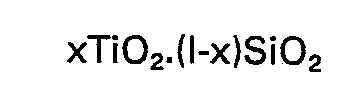
- the subject matter of the present invention is a process for isomerising styrene oxide or homologues to ⁇ -phenylaldehydes, consisting of conducting the isomerisation reaction in the presence of a catalyst constituted by synthetic zeolites containing titanium atoms (titanium silicalites), of the following general formula: where x lies between 0.0001 and 0.04, and possibly in the presence of one or more solvents. Titanium silicalite is indicated hereinafter as TS-1.
- the synthetic zeolites used for the epoxidation reaction are described in Belgian patent 886,812, of which we repeat some points illustrating the material and relative method of preparation.
- the composition range of the titanium silicalite expressed in terms of molar ratios of the reagents is as follows:
- the final TS-1 has a composition satisfying the formula xTiO 2 .(I-x)SiO 2 , where x lies between 0.0001 and 0.04, and preferably between 0.01 and 0.025.
- the TS ⁇ 1 is of the silicalite type, and all the titanium substitutes the silicon.
- the synthetic material has characteristics which are shown up by X-ray and infrared examination.
- the X-ray examination is carried out by means of a powder diffractometer provided with an electronic pulse counting system, using the radiation CuKa-.
- the titanium silicalites (TS-1) are characterised by a X-ray diffraction spectrum as shown in Figure 1 b. This spectrum is similar overall to the typical spectrum of silicalite ( Figure 1a), however it has certain clearly “single” reflections where double reflections are evident in the pure silicalite spectrum.
- TS-1 and silicalite were examined by the same apparatus, using AI 2 0 3 as the internal standard.
- the constants of the elementary crystalline cell were determined by the minimum square method, on the basis of the interplanar distances of 7-8 single reflections lying within the range of 10-400 o.
- a large proportion of the interplanar distances of TS-1 are tendentially greater than the corresponding distances of pure silicalite, although only slightly, which is in accordance with the larger predictable value of the Ti-O bond distance relative to that of the Si-O bond distance.
- TS-1 shows a characteristic absorption band at about 950 cm- 1 (see Figure 2, spectra B, C and D) which is not present in the pure silicalite spectrum ( Figure 2, spectrum A), and is also absent in titanium oxides (rutile, anastase) and in alkaline titanates.
- Spectrum B is that of TS-1 with 5 mol% of Ti0 2
- spectrum C is that of TS-1 with 8 mol% of Ti0 2
- spectrum D is that of TS-1 with 2.3 mol% of TiO z .
- the band intensity at approximately 950 cm -1 increases with the quantity of titanium which substitutes the silicon in the silicalite structure.
- TS-1 is in the form of parallelepipeds with chamfered edges.
- a X-ray microprobe examination has shown that the titanium distribution within the crystal is perfectly uniform, thus confirming that the titanium substitutes the silicon in the silicalite structure, and is not present in other forms.
- the process for preparing titanium silicalite comprises the preparation of a reaction mixture consisting of sources of silicon oxide, titanium oxide and possibly an alkaline oxide, a nitrogenated organic base and water, the composition in terms of the molar reagent ratios being as heretofore defined.
- the silicon oxide source can be a tetraalkylorthosilicate, preferably tetraethylorthosilicate, or simply a silicate in colloidal form, or again a silicate of an alkaline metal, preferably Na or K.
- the titanium oxide source is a hydrolysable titanium compound preferably chosen from TiC1 4 , TiOC1 2 and Ti(alkoxy) 4 , preferably Ti(OC 2 H 5 ) 4 .
- the organic base is tetraalkylammonium hydroxide, and in particular tetrapropylammonium hydroxide.
- the reagent mixture is subjected to hydrothermal treatment in an autoclave at a temperature of between 130 and 200°C under its own developed pressure, for a time of 6-30 days until the crystals of the TS-1 precursor are formed. These are separated from the mother solution, carefully washed with water and dried. When in the anhydrous state they have the following composition:
- the precursor crystals are heated for between 1 and 72 hours in air at 550°C to completely eliminate the nitrogenated organic base.
- the final TS-1 has the following composition: where x is as heretofore defined.
- the isomerisation reaction is carried out at a temperature of between 30 and 100°C, and preferably between 60 and 80°C.
- Styrene oxide homologues are all those which satisfy the general formula: where X can be H, an alkyl radical or oxygen bonded to an alkyl radical, the alkyl radical having between 1 and 20 carbon atoms, and Y can be H or CH 3 .
- X can be H, an alkyl radical or oxygen bonded to an alkyl radical, the alkyl radical having between 1 and 20 carbon atoms, and Y can be H or CH 3 .
- ⁇ -phenylaldehydes are obtained of formula: where X and Y are as heretofore specified.
- the reaction can be carried out in mass or in the presence of a suitable solvent.
- the solvent used can be any polar compound such as alcohols, ketones, esters, glycols or acids, with a number of carbon atoms which is not too high, and preferably less than or equal to 6.
- Methanol is the most preferred of the alcohols, and acetone the most preferred of the ketones.
- Examples 1-12 100 cc of solvent, 50 g of epoxide and 3 g of catalyst are fed into a 250 cc glass flask fitted with a reflux condenser and magnetic stirrer.
- the flask is immersed in a bath temperature-controlled at 70°C under stirring, and the disappearance of the epoxide and the formation of the aldehyde are followed by withdrawing samples with time and analysing them by gas chromatography. On completion of the reaction, the mixture is cooled and qualitative and quantitative GLC and gas mass analyses are carried out.
Landscapes
- Chemical & Material Sciences (AREA)
- Organic Chemistry (AREA)
- Engineering & Computer Science (AREA)
- Materials Engineering (AREA)
- Chemical Kinetics & Catalysis (AREA)
- Organic Low-Molecular-Weight Compounds And Preparation Thereof (AREA)
- Low-Molecular Organic Synthesis Reactions Using Catalysts (AREA)
- Catalysts (AREA)
- Epoxy Compounds (AREA)
Abstract
Description
- This invention relates to a process for isomerising styrene oxide or homologues to β-phenylaldehydes, using a synthetic zeolite as catalyst.
- Various processes are known for obtaining β-phenylaldehydes from styrene oxide.
- In USA patent 3,927,110, the styrene oxide is reacted in the presence of an aryl or alkylaryl sulphate of an alkaline-earth metal at a temperature of between 125° and 450°C, to give P-phenylaldehydes. In Japanese patent application 49/051233, a suspension of clay in an organic solvent is added to the styrene oxide in order to effect the isomerisation.
- In Japanese patent application 74/025932, the styrene oxide is isomerised using kaolin as catalyst, and operating at a temperature of 180°C.
- These processes have the drawback of poor yields.
- We have surprisingly found that a synthetic zeolite containing titanium atoms is able to selectively isomerise styrene oxide or homologues, with high yields of P-phenylaldehydes.
- The subject matter of the present invention is a process for isomerising styrene oxide or homologues to β-phenylaldehydes, consisting of conducting the isomerisation reaction in the presence of a catalyst constituted by synthetic zeolites containing titanium atoms (titanium silicalites), of the following general formula:

- The synthetic zeolites used for the epoxidation reaction are described in Belgian patent 886,812, of which we repeat some points illustrating the material and relative method of preparation. The composition range of the titanium silicalite expressed in terms of molar ratios of the reagents is as follows:

- The final TS-1 has a composition satisfying the formula xTiO2.(I-x)SiO2, where x lies between 0.0001 and 0.04, and preferably between 0.01 and 0.025. The TS―1 is of the silicalite type, and all the titanium substitutes the silicon.
- The synthetic material has characteristics which are shown up by X-ray and infrared examination.
- The X-ray examination is carried out by means of a powder diffractometer provided with an electronic pulse counting system, using the radiation CuKa-. The titanium silicalites (TS-1) are characterised by a X-ray diffraction spectrum as shown in Figure 1 b. This spectrum is similar overall to the typical spectrum of silicalite (Figure 1a), however it has certain clearly "single" reflections where double reflections are evident in the pure silicalite spectrum.
- Because the spectral differences between TS-1 and silicalite are relatively small, special accuracy is required in the spectral determination. For this reason TS-1 and silicalite were examined by the same apparatus, using
AI 203 as the internal standard. - Table 1 shows the most significant spectral data of a TS-1 where x = 0.017, and of a pure silicalite.
- The constants of the elementary crystalline cell were determined by the minimum square method, on the basis of the interplanar distances of 7-8 single reflections lying within the range of 10-400 o.
- A large proportion of the interplanar distances of TS-1 are tendentially greater than the corresponding distances of pure silicalite, although only slightly, which is in accordance with the larger predictable value of the Ti-O bond distance relative to that of the Si-O bond distance.
- Passage from a double reflection to a single reflection is interpreted as a change from a monoclinic symmetry (pseudo orthorhombic) (silicalite) to an effective orthorhombic symmetry, "titanium silicalite" (TS-1). In Figure 1, the most apparent aforesaid spectral differences are indicated by arrows.
- INFRARED EXAMINATION. TS-1 shows a characteristic absorption band at about 950 cm-1 (see Figure 2, spectra B, C and D) which is not present in the pure silicalite spectrum (Figure 2, spectrum A), and is also absent in titanium oxides (rutile, anastase) and in alkaline titanates.
- Spectrum B is that of TS-1 with 5 mol% of Ti02, spectrum C is that of TS-1 with 8 mol% of Ti02, and spectrum D is that of TS-1 with 2.3 mol% of TiOz.
- As can be seen from Figure 2, the band intensity at approximately 950 cm-1 increases with the quantity of titanium which substitutes the silicon in the silicalite structure.
- MORPHOLOGY. From a morphological aspect, TS-1 is in the form of parallelepipeds with chamfered edges. A X-ray microprobe examination has shown that the titanium distribution within the crystal is perfectly uniform, thus confirming that the titanium substitutes the silicon in the silicalite structure, and is not present in other forms.
- The process for preparing titanium silicalite comprises the preparation of a reaction mixture consisting of sources of silicon oxide, titanium oxide and possibly an alkaline oxide, a nitrogenated organic base and water, the composition in terms of the molar reagent ratios being as heretofore defined.
- The silicon oxide source can be a tetraalkylorthosilicate, preferably tetraethylorthosilicate, or simply a silicate in colloidal form, or again a silicate of an alkaline metal, preferably Na or K. The titanium oxide source is a hydrolysable titanium compound preferably chosen from TiC14, TiOC12 and Ti(alkoxy)4, preferably Ti(OC2H5)4.
- The organic base is tetraalkylammonium hydroxide, and in particular tetrapropylammonium hydroxide.
- The reagent mixture is subjected to hydrothermal treatment in an autoclave at a temperature of between 130 and 200°C under its own developed pressure, for a time of 6-30 days until the crystals of the TS-1 precursor are formed. These are separated from the mother solution, carefully washed with water and dried. When in the anhydrous state they have the following composition:

- The precursor crystals are heated for between 1 and 72 hours in air at 550°C to completely eliminate the nitrogenated organic base. The final TS-1 has the following composition:

- Chemical and physical examinations are carried out on the products thus obtained.
- The isomerisation reaction is carried out at a temperature of between 30 and 100°C, and preferably between 60 and 80°C.
- Styrene oxide homologues are all those which satisfy the general formula:


- The reaction can be carried out in mass or in the presence of a suitable solvent.
- The solvent used can be any polar compound such as alcohols, ketones, esters, glycols or acids, with a number of carbon atoms which is not too high, and preferably less than or equal to 6.
- Methanol is the most preferred of the alcohols, and acetone the most preferred of the ketones.
- Some examples are described hereinafter illustrating the manner of operating the process according to the present invention, which however must not be considered limited to them or by them.
- Examples 1-12 100 cc of solvent, 50 g of epoxide and 3 g of catalyst are fed into a 250 cc glass flask fitted with a reflux condenser and magnetic stirrer.
- The flask is immersed in a bath temperature-controlled at 70°C under stirring, and the disappearance of the epoxide and the formation of the aldehyde are followed by withdrawing samples with time and analysing them by gas chromatography. On completion of the reaction, the mixture is cooled and qualitative and quantitative GLC and gas mass analyses are carried out.
- The results are indicated in Table 2.


Claims (6)
Priority Applications (1)
| Application Number | Priority Date | Filing Date | Title |
|---|---|---|---|
| AT83201037T ATE22066T1 (en) | 1982-07-28 | 1983-07-13 | PROCESS FOR ISOMERIZATION OF STYRENE OXIDE OR HOMOLOGUES TO BETA-PHENYLALDEHYDE. |
Applications Claiming Priority (2)
| Application Number | Priority Date | Filing Date | Title |
|---|---|---|---|
| IT22606/82A IT1152297B (en) | 1982-07-28 | 1982-07-28 | PROCEDURE FOR THE ISOMERIZATION OF STYRENE OXIDE OR BETA-PHENYLALDEHYD APPROVALS |
| IT2260682 | 1982-07-28 |
Publications (3)
| Publication Number | Publication Date |
|---|---|
| EP0100117A2 EP0100117A2 (en) | 1984-02-08 |
| EP0100117A3 EP0100117A3 (en) | 1984-08-29 |
| EP0100117B1 true EP0100117B1 (en) | 1986-09-10 |
Family
ID=11198368
Family Applications (1)
| Application Number | Title | Priority Date | Filing Date |
|---|---|---|---|
| EP83201037A Expired EP0100117B1 (en) | 1982-07-28 | 1983-07-13 | Process for isomerising styrene oxide or homologues to beta-phenylaldehydes |
Country Status (9)
| Country | Link |
|---|---|
| US (1) | US4495371A (en) |
| EP (1) | EP0100117B1 (en) |
| JP (1) | JPS5946238A (en) |
| AT (1) | ATE22066T1 (en) |
| CA (1) | CA1208658A (en) |
| DE (1) | DE3366081D1 (en) |
| DK (1) | DK341583A (en) |
| IT (1) | IT1152297B (en) |
| NO (1) | NO156449C (en) |
Families Citing this family (14)
| Publication number | Priority date | Publication date | Assignee | Title |
|---|---|---|---|---|
| US4593130A (en) * | 1985-06-24 | 1986-06-03 | American Cyanamid Company | Synthesis of 10-hydroxymethyl-9-anthraldehyde |
| DE3546372A1 (en) * | 1985-12-31 | 1987-07-02 | Basf Ag | NEW PHENYLACETALDEHYDE AND METHOD FOR PRODUCING PHENYLACETALDEHYDE |
| US4650908A (en) * | 1985-12-23 | 1987-03-17 | The Dow Chemical Company | Production of arylacetaldehydes |
| FR2596755B1 (en) * | 1986-04-03 | 1988-05-27 | Rhone Poulenc Sante | PROCESS FOR THE PREPARATION OF ETHYLENIC CARBONYL COMPOUNDS |
| DE3632529A1 (en) * | 1986-09-25 | 1988-04-07 | Basf Ag | METHOD FOR PRODUCING ALDEHYDES AND / OR KETONES BY REALIZING EPOXIES |
| DE3708737A1 (en) * | 1987-03-18 | 1988-10-06 | Basf Ag | METHOD FOR PRODUCING PHENYL ACETALDEHYDES |
| DE3740270A1 (en) * | 1987-11-27 | 1989-06-01 | Basf Ag | METHOD FOR PRODUCING PHENYL ACETALDEHYDES |
| DE3801106A1 (en) * | 1988-01-16 | 1989-07-27 | Basf Ag | METHOD FOR PRODUCING PHENYLETHANOLS |
| DE3808512A1 (en) * | 1988-03-15 | 1989-09-28 | Basf Ag | METHOD FOR PRODUCING (ALPHA) KETOCARBONIC ACID ESTERS |
| US4925986A (en) * | 1989-04-13 | 1990-05-15 | Eastman Kodak Company | Preparation of aldehydes from unsaturated terminal epoxides |
| US4925987A (en) * | 1989-04-13 | 1990-05-15 | Eastman Kodak Company | Preparation of aldehydes from unsaturated terminal epoxides |
| US5312995A (en) * | 1993-04-23 | 1994-05-17 | Arco Chemical Technology, L.P. | Process for isomerizing epoxides to aldehydes |
| AU2002356941A1 (en) * | 2001-11-15 | 2003-06-10 | Pq Holding, Inc. | Method for controlling synthesis conditions during molecular sieve synthesis using combinations of quaternary ammonium hydroxides and halides |
| CN118459326B (en) * | 2024-07-11 | 2024-10-11 | 北京弗莱明科技有限公司 | Catalytic ethanol oxidation process for preparing food grade acetic acid and preparation method thereof |
Family Cites Families (6)
| Publication number | Priority date | Publication date | Assignee | Title |
|---|---|---|---|---|
| BE499678A (en) * | 1949-12-03 | |||
| US2628255A (en) * | 1951-01-02 | 1953-02-10 | Dow Chemical Co | Production of arylacetaldehydes |
| US3067256A (en) * | 1959-06-22 | 1962-12-04 | Hoechst Ag | Process for preparing aldehydes by isomerization of alpha-olefin oxides |
| US3855303A (en) * | 1970-06-15 | 1974-12-17 | Continental Oil Co | Isomerization of alph-epoxides |
| US3927110A (en) * | 1974-01-18 | 1975-12-16 | Cosden Oil & Chem Co | Thermolysis of styrene oxide |
| IT1127311B (en) * | 1979-12-21 | 1986-05-21 | Anic Spa | SYNTHETIC, CRYSTALLINE, POROUS MATERIAL CONSTITUTED BY SILICON AND TITANIUM OXIDES, METHOD FOR ITS PREPARATION AND ITS USES |
-
1982
- 1982-07-28 IT IT22606/82A patent/IT1152297B/en active
-
1983
- 1983-07-13 DE DE8383201037T patent/DE3366081D1/en not_active Expired
- 1983-07-13 AT AT83201037T patent/ATE22066T1/en not_active IP Right Cessation
- 1983-07-13 EP EP83201037A patent/EP0100117B1/en not_active Expired
- 1983-07-14 US US06/513,800 patent/US4495371A/en not_active Expired - Fee Related
- 1983-07-18 CA CA000432626A patent/CA1208658A/en not_active Expired
- 1983-07-26 NO NO832720A patent/NO156449C/en unknown
- 1983-07-26 DK DK341583A patent/DK341583A/en unknown
- 1983-07-28 JP JP58136912A patent/JPS5946238A/en active Granted
Also Published As
| Publication number | Publication date |
|---|---|
| CA1208658A (en) | 1986-07-29 |
| IT1152297B (en) | 1986-12-31 |
| IT8222606A1 (en) | 1984-01-28 |
| NO156449C (en) | 1987-09-23 |
| US4495371A (en) | 1985-01-22 |
| IT8222606A0 (en) | 1982-07-28 |
| ATE22066T1 (en) | 1986-09-15 |
| DE3366081D1 (en) | 1986-10-16 |
| NO832720L (en) | 1984-01-30 |
| JPS5946238A (en) | 1984-03-15 |
| DK341583A (en) | 1984-01-29 |
| EP0100117A2 (en) | 1984-02-08 |
| JPH0460977B2 (en) | 1992-09-29 |
| DK341583D0 (en) | 1983-07-26 |
| NO156449B (en) | 1987-06-15 |
| EP0100117A3 (en) | 1984-08-29 |
Similar Documents
| Publication | Publication Date | Title |
|---|---|---|
| EP0100118B1 (en) | Process for the synthesis of glycol monomethylethers | |
| EP0100119B1 (en) | Process for the epoxidation of olefinic compounds | |
| US4495371A (en) | Process for isomerizing styrene oxide or homologues to β-phenylaldehydes | |
| US4410501A (en) | Preparation of porous crystalline synthetic material comprised of silicon and titanium oxides | |
| EP0102655A2 (en) | Process for oxidising alcohols to aldehydes and/or ketones | |
| KR900009148B1 (en) | Synthetic crystalline porous material including oxides of silicon, titanium and gallium | |
| KR870000917B1 (en) | Single epoxidation method of compound with two double bonds | |
| EP0634212A1 (en) | Structured catalyst, containing microporous oxides of silicium, aluminium and titanium | |
| US5736479A (en) | Oxidation catalysts | |
| EP0246272B1 (en) | Silica-titania hydrocarbon conversion catalyst | |
| EP0226257B1 (en) | Synthetic, crystalline, porous material containing silicon oxide, titanium oxide and aluminium oxide | |
| JP3697737B2 (en) | Synthetic zeolite material | |
| EP0102097B1 (en) | Process for oxidising vinylbenzene compounds to beta-phenylaldehydes | |
| JPH07267630A (en) | Obtainment of zeolite containing titanium | |
| US5246690A (en) | Synthetic, crystalline, porous material containing silicon oxide, titanium oxide and aluminum oxide | |
| JPH11152245A (en) | Production of unsaturated ketone | |
| US5290533A (en) | Method for production of a coated substrate with controlled surface characteristics | |
| JP2824398B2 (en) | Catalyst for producing aromatic carbonate and method for producing aromatic carbonate using the same | |
| JP2901500B2 (en) | Method for producing aromatic carbonate and catalyst used therefor | |
| KR0183192B1 (en) | Catalyst for preparing aryl ester and method for preparing aryl ester using the catalyst | |
| KR900009149B1 (en) | Catalysts based on silicon, titanium and gallium and methods for their preparation | |
| JPH0640978A (en) | Method for producing dihydric phenols | |
| FR2526414A1 (en) | CRYSTALLINE AND POROUS SYNTHETIC MATERIALS CONSISTING OF SILICON AND BORON OXIDES, PROCESS FOR THE PREPARATION THEREOF AND USE THEREOF | |
| JPH0640977A (en) | Production of dihydric phenols | |
| JPS6165827A (en) | Production of 1,2,4,5,-tetramethylbenzene |
Legal Events
| Date | Code | Title | Description |
|---|---|---|---|
| PUAI | Public reference made under article 153(3) epc to a published international application that has entered the european phase |
Free format text: ORIGINAL CODE: 0009012 |
|
| AK | Designated contracting states |
Designated state(s): AT BE CH DE FR GB LI LU NL SE |
|
| PUAL | Search report despatched |
Free format text: ORIGINAL CODE: 0009013 |
|
| AK | Designated contracting states |
Designated state(s): AT BE CH DE FR GB LI LU NL SE |
|
| 17P | Request for examination filed |
Effective date: 19841203 |
|
| GRAA | (expected) grant |
Free format text: ORIGINAL CODE: 0009210 |
|
| RAP1 | Party data changed (applicant data changed or rights of an application transferred) |
Owner name: ENICHEM ANIC S.P.A. |
|
| AK | Designated contracting states |
Kind code of ref document: B1 Designated state(s): AT BE CH DE FR GB LI LU NL SE |
|
| REF | Corresponds to: |
Ref document number: 22066 Country of ref document: AT Date of ref document: 19860915 Kind code of ref document: T |
|
| REF | Corresponds to: |
Ref document number: 3366081 Country of ref document: DE Date of ref document: 19861016 |
|
| ET | Fr: translation filed | ||
| PLBE | No opposition filed within time limit |
Free format text: ORIGINAL CODE: 0009261 |
|
| STAA | Information on the status of an ep patent application or granted ep patent |
Free format text: STATUS: NO OPPOSITION FILED WITHIN TIME LIMIT |
|
| 26N | No opposition filed | ||
| PGFP | Annual fee paid to national office [announced via postgrant information from national office to epo] |
Ref country code: LU Payment date: 19910619 Year of fee payment: 9 |
|
| PGFP | Annual fee paid to national office [announced via postgrant information from national office to epo] |
Ref country code: BE Payment date: 19910710 Year of fee payment: 9 Ref country code: AT Payment date: 19910710 Year of fee payment: 9 |
|
| PGFP | Annual fee paid to national office [announced via postgrant information from national office to epo] |
Ref country code: NL Payment date: 19910731 Year of fee payment: 9 |
|
| REG | Reference to a national code |
Ref country code: CH Ref legal event code: PUE Owner name: ENICHEM SYNTHESIS S.P.A. |
|
| NLS | Nl: assignments of ep-patents |
Owner name: ENICHEM SYNTHESIS S.P.A. TE PALERMO, ITALIE. |
|
| REG | Reference to a national code |
Ref country code: FR Ref legal event code: TP |
|
| EPTA | Lu: last paid annual fee | ||
| REG | Reference to a national code |
Ref country code: GB Ref legal event code: 732 |
|
| PGFP | Annual fee paid to national office [announced via postgrant information from national office to epo] |
Ref country code: SE Payment date: 19920611 Year of fee payment: 10 |
|
| PG25 | Lapsed in a contracting state [announced via postgrant information from national office to epo] |
Ref country code: LU Free format text: LAPSE BECAUSE OF NON-PAYMENT OF DUE FEES Effective date: 19920713 Ref country code: AT Effective date: 19920713 |
|
| PG25 | Lapsed in a contracting state [announced via postgrant information from national office to epo] |
Ref country code: SE Effective date: 19920714 |
|
| PG25 | Lapsed in a contracting state [announced via postgrant information from national office to epo] |
Ref country code: BE Effective date: 19920731 |
|
| BERE | Be: lapsed |
Owner name: ENICHEM SYNTHESIS S.P.A. Effective date: 19920731 |
|
| PG25 | Lapsed in a contracting state [announced via postgrant information from national office to epo] |
Ref country code: NL Effective date: 19930201 |
|
| NLV4 | Nl: lapsed or anulled due to non-payment of the annual fee | ||
| PGFP | Annual fee paid to national office [announced via postgrant information from national office to epo] |
Ref country code: GB Payment date: 19930702 Year of fee payment: 11 |
|
| PGFP | Annual fee paid to national office [announced via postgrant information from national office to epo] |
Ref country code: FR Payment date: 19930722 Year of fee payment: 11 |
|
| PGFP | Annual fee paid to national office [announced via postgrant information from national office to epo] |
Ref country code: DE Payment date: 19930819 Year of fee payment: 11 |
|
| PGFP | Annual fee paid to national office [announced via postgrant information from national office to epo] |
Ref country code: CH Payment date: 19931027 Year of fee payment: 11 |
|
| PG25 | Lapsed in a contracting state [announced via postgrant information from national office to epo] |
Ref country code: GB Effective date: 19940713 |
|
| PG25 | Lapsed in a contracting state [announced via postgrant information from national office to epo] |
Ref country code: LI Effective date: 19940731 Ref country code: CH Effective date: 19940731 |
|
| EUG | Se: european patent has lapsed |
Ref document number: 83201037.5 Effective date: 19930204 |
|
| GBPC | Gb: european patent ceased through non-payment of renewal fee |
Effective date: 19940713 |
|
| PG25 | Lapsed in a contracting state [announced via postgrant information from national office to epo] |
Ref country code: FR Effective date: 19950331 |
|
| REG | Reference to a national code |
Ref country code: CH Ref legal event code: PL |
|
| PG25 | Lapsed in a contracting state [announced via postgrant information from national office to epo] |
Ref country code: DE Effective date: 19950401 |
|
| REG | Reference to a national code |
Ref country code: FR Ref legal event code: ST |