EP0097469A2 - Triazole antifungal agents - Google Patents
Triazole antifungal agents Download PDFInfo
- Publication number
- EP0097469A2 EP0097469A2 EP83303389A EP83303389A EP0097469A2 EP 0097469 A2 EP0097469 A2 EP 0097469A2 EP 83303389 A EP83303389 A EP 83303389A EP 83303389 A EP83303389 A EP 83303389A EP 0097469 A2 EP0097469 A2 EP 0097469A2
- Authority
- EP
- European Patent Office
- Prior art keywords
- formula
- compound
- alkyl
- acceptable salt
- pharmaceutically acceptable
- Prior art date
- Legal status (The legal status is an assumption and is not a legal conclusion. Google has not performed a legal analysis and makes no representation as to the accuracy of the status listed.)
- Granted
Links
- 0 **(*)(CI*N1N=CN2C1C2)O Chemical compound **(*)(CI*N1N=CN2C1C2)O 0.000 description 5
Classifications
-
- C—CHEMISTRY; METALLURGY
- C07—ORGANIC CHEMISTRY
- C07D—HETEROCYCLIC COMPOUNDS
- C07D231/00—Heterocyclic compounds containing 1,2-diazole or hydrogenated 1,2-diazole rings
- C07D231/02—Heterocyclic compounds containing 1,2-diazole or hydrogenated 1,2-diazole rings not condensed with other rings
- C07D231/10—Heterocyclic compounds containing 1,2-diazole or hydrogenated 1,2-diazole rings not condensed with other rings having two or three double bonds between ring members or between ring members and non-ring members
- C07D231/12—Heterocyclic compounds containing 1,2-diazole or hydrogenated 1,2-diazole rings not condensed with other rings having two or three double bonds between ring members or between ring members and non-ring members with only hydrogen atoms, hydrocarbon or substituted hydrocarbon radicals, directly attached to ring carbon atoms
-
- A—HUMAN NECESSITIES
- A01—AGRICULTURE; FORESTRY; ANIMAL HUSBANDRY; HUNTING; TRAPPING; FISHING
- A01N—PRESERVATION OF BODIES OF HUMANS OR ANIMALS OR PLANTS OR PARTS THEREOF; BIOCIDES, e.g. AS DISINFECTANTS, AS PESTICIDES OR AS HERBICIDES; PEST REPELLANTS OR ATTRACTANTS; PLANT GROWTH REGULATORS
- A01N43/00—Biocides, pest repellants or attractants, or plant growth regulators containing heterocyclic compounds
- A01N43/64—Biocides, pest repellants or attractants, or plant growth regulators containing heterocyclic compounds having rings with three nitrogen atoms as the only ring hetero atoms
- A01N43/647—Triazoles; Hydrogenated triazoles
- A01N43/653—1,2,4-Triazoles; Hydrogenated 1,2,4-triazoles
-
- A—HUMAN NECESSITIES
- A01—AGRICULTURE; FORESTRY; ANIMAL HUSBANDRY; HUNTING; TRAPPING; FISHING
- A01N—PRESERVATION OF BODIES OF HUMANS OR ANIMALS OR PLANTS OR PARTS THEREOF; BIOCIDES, e.g. AS DISINFECTANTS, AS PESTICIDES OR AS HERBICIDES; PEST REPELLANTS OR ATTRACTANTS; PLANT GROWTH REGULATORS
- A01N47/00—Biocides, pest repellants or attractants, or plant growth regulators containing organic compounds containing a carbon atom not being member of a ring and having no bond to a carbon or hydrogen atom, e.g. derivatives of carbonic acid
- A01N47/08—Biocides, pest repellants or attractants, or plant growth regulators containing organic compounds containing a carbon atom not being member of a ring and having no bond to a carbon or hydrogen atom, e.g. derivatives of carbonic acid the carbon atom having one or more single bonds to nitrogen atoms
- A01N47/28—Ureas or thioureas containing the groups >N—CO—N< or >N—CS—N<
-
- A—HUMAN NECESSITIES
- A01—AGRICULTURE; FORESTRY; ANIMAL HUSBANDRY; HUNTING; TRAPPING; FISHING
- A01N—PRESERVATION OF BODIES OF HUMANS OR ANIMALS OR PLANTS OR PARTS THEREOF; BIOCIDES, e.g. AS DISINFECTANTS, AS PESTICIDES OR AS HERBICIDES; PEST REPELLANTS OR ATTRACTANTS; PLANT GROWTH REGULATORS
- A01N47/00—Biocides, pest repellants or attractants, or plant growth regulators containing organic compounds containing a carbon atom not being member of a ring and having no bond to a carbon or hydrogen atom, e.g. derivatives of carbonic acid
- A01N47/08—Biocides, pest repellants or attractants, or plant growth regulators containing organic compounds containing a carbon atom not being member of a ring and having no bond to a carbon or hydrogen atom, e.g. derivatives of carbonic acid the carbon atom having one or more single bonds to nitrogen atoms
- A01N47/28—Ureas or thioureas containing the groups >N—CO—N< or >N—CS—N<
- A01N47/30—Derivatives containing the group >N—CO—N aryl or >N—CS—N—aryl
-
- A—HUMAN NECESSITIES
- A01—AGRICULTURE; FORESTRY; ANIMAL HUSBANDRY; HUNTING; TRAPPING; FISHING
- A01N—PRESERVATION OF BODIES OF HUMANS OR ANIMALS OR PLANTS OR PARTS THEREOF; BIOCIDES, e.g. AS DISINFECTANTS, AS PESTICIDES OR AS HERBICIDES; PEST REPELLANTS OR ATTRACTANTS; PLANT GROWTH REGULATORS
- A01N47/00—Biocides, pest repellants or attractants, or plant growth regulators containing organic compounds containing a carbon atom not being member of a ring and having no bond to a carbon or hydrogen atom, e.g. derivatives of carbonic acid
- A01N47/08—Biocides, pest repellants or attractants, or plant growth regulators containing organic compounds containing a carbon atom not being member of a ring and having no bond to a carbon or hydrogen atom, e.g. derivatives of carbonic acid the carbon atom having one or more single bonds to nitrogen atoms
- A01N47/28—Ureas or thioureas containing the groups >N—CO—N< or >N—CS—N<
- A01N47/32—Ureas or thioureas containing the groups >N—CO—N< or >N—CS—N< containing >N—CO—N< or >N—CS—N< groups directly attached to a cycloaliphatic ring
-
- A—HUMAN NECESSITIES
- A01—AGRICULTURE; FORESTRY; ANIMAL HUSBANDRY; HUNTING; TRAPPING; FISHING
- A01N—PRESERVATION OF BODIES OF HUMANS OR ANIMALS OR PLANTS OR PARTS THEREOF; BIOCIDES, e.g. AS DISINFECTANTS, AS PESTICIDES OR AS HERBICIDES; PEST REPELLANTS OR ATTRACTANTS; PLANT GROWTH REGULATORS
- A01N47/00—Biocides, pest repellants or attractants, or plant growth regulators containing organic compounds containing a carbon atom not being member of a ring and having no bond to a carbon or hydrogen atom, e.g. derivatives of carbonic acid
- A01N47/08—Biocides, pest repellants or attractants, or plant growth regulators containing organic compounds containing a carbon atom not being member of a ring and having no bond to a carbon or hydrogen atom, e.g. derivatives of carbonic acid the carbon atom having one or more single bonds to nitrogen atoms
- A01N47/28—Ureas or thioureas containing the groups >N—CO—N< or >N—CS—N<
- A01N47/36—Ureas or thioureas containing the groups >N—CO—N< or >N—CS—N< containing the group >N—CO—N< directly attached to at least one heterocyclic ring; Thio analogues thereof
-
- A—HUMAN NECESSITIES
- A61—MEDICAL OR VETERINARY SCIENCE; HYGIENE
- A61P—SPECIFIC THERAPEUTIC ACTIVITY OF CHEMICAL COMPOUNDS OR MEDICINAL PREPARATIONS
- A61P31/00—Antiinfectives, i.e. antibiotics, antiseptics, chemotherapeutics
- A61P31/04—Antibacterial agents
-
- C—CHEMISTRY; METALLURGY
- C07—ORGANIC CHEMISTRY
- C07D—HETEROCYCLIC COMPOUNDS
- C07D233/00—Heterocyclic compounds containing 1,3-diazole or hydrogenated 1,3-diazole rings, not condensed with other rings
- C07D233/54—Heterocyclic compounds containing 1,3-diazole or hydrogenated 1,3-diazole rings, not condensed with other rings having two double bonds between ring members or between ring members and non-ring members
- C07D233/56—Heterocyclic compounds containing 1,3-diazole or hydrogenated 1,3-diazole rings, not condensed with other rings having two double bonds between ring members or between ring members and non-ring members with only hydrogen atoms or radicals containing only hydrogen and carbon atoms, attached to ring carbon atoms
-
- C—CHEMISTRY; METALLURGY
- C07—ORGANIC CHEMISTRY
- C07D—HETEROCYCLIC COMPOUNDS
- C07D249/00—Heterocyclic compounds containing five-membered rings having three nitrogen atoms as the only ring hetero atoms
- C07D249/02—Heterocyclic compounds containing five-membered rings having three nitrogen atoms as the only ring hetero atoms not condensed with other rings
- C07D249/08—1,2,4-Triazoles; Hydrogenated 1,2,4-triazoles
Definitions
- This invention relates to 1,2,4-triazole derivatives which have antifungal activity and are useful in the treatment of fungal infections in animals, including humans, and as agricultural fungicides.
- R is naphthyl, biphenylyl or phenyl optionally substituted by 1 to 3 substituents each independently selected from halo, CF 3 , C 1 -C 4 alkyl and C 1 -C 4 alkoxy; and R 1 is where X is 0 or S;
- the 0-ethers of the alcohols of the formula (I) include, for example, the C 1 -C 6 alkyl, C 2 -C 4 alkenyl, C 2 -C 4 alkynyl, aryl (e.g. phenyl) and aralkyl (e.g. benzyl optionally ring substituted by halo, C 1 C 4 alkyl and C 1 -C 4 alkoxy) ethers.
- the 0-esters of the alcohols of the formula (I) include, for example, the C 2 -C 4 alkanoyl and aroyl (e.g. benzoyl, optionally substituted by halo, C 1 -C 4 alkyl or C 1 -C 4 alkoxy) esters.
- the preferred ester is the acetyl ester.
- alkyl and alkoxy groups can be straight or branched chain.
- Aryl is preferably phenyl optionally substituted by 1 or 2 substituents each selected from halo, CF 3 , C 1 -C 4 alkyl and C 1 -C 4 alkoxy.
- Alkyl is preferably benzyl optionally substituted on the phenyl ring portion by 1 or 2 substituents each selected from hale, CF 3 , C 1 -C 4 alkyl and C 1 -C 4 alkoxy.
- Heteroaryl is preferably pyridyl, pyrimidinyl or pyrazinyl optionally substituted by 1 or 2 substituents each selected from hale, CF 3 , C 1 -C 4 alkyl, C 1 -C 4 alkoxy and hydroxy.
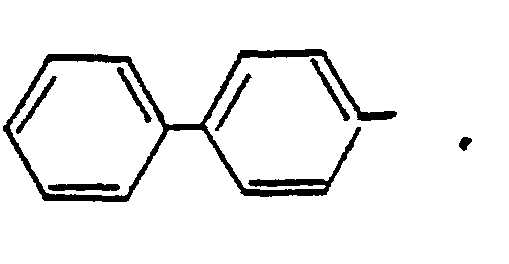
- the preferred biphenylyl group is
- acylating agent is either (a) a C 1 -C 4 alkyl formate, (b) an acid chloride or anhydride of the formula R 3 C O C 1 or ( R 3 CO ) 20 where R 3 is as defined in claim 5 except for H, or (c) an acid of the formula R 3 COOH is noted.
- Other micro-organisms used in such tests can include Cryptococcus neoformans, Aspergillus fumigatus, Trichophyton spp, Microsporum spp, Epidermophyton floccosum, Coccidioides immitis, and Torulopsis glabrata.
- the in vivo evaluation of the compounds can be carried out at a series of dose levels by intraperitoneal or intravenous injection or by oral administration, to mice which are inoculated with a strain of Candida albicans. Untreated mice die within 48 hours and the dose level at which the compound provides 50% protection against the lethal effect of the infection is noted.
- the antifungal compounds of the formula (I) can be administered alone, but will generally be administered in admixture with a pharmaceutical carrier selected with regard to the intended route of administration and standard pharmaceutical practice.
- a pharmaceutical carrier selected with regard to the intended route of administration and standard pharmaceutical practice.
- they may be administered orally in the form of tablets containing such excipients as starch or lactose, or in capsules or ovules either alone or in admixture with excipients, or in the form of elixirs or suspensions containing flavouring or colouring agents.
- They may be injected parenterally, for example, intravenously, intramuscularly or subcutaneously.
- parenteral administration they are best used in the form of a sterile aqueous solution which may contain other substances, for example, enough salts or glucose to make the solution isotonic.
- th; daily dosage level of the antifungal compounds of the formula (I) will be from 0.1 to 5 mg/kg (in divided doses) when administered by either the oral or parenteral route.
- tablets or capsules of the compounds can be expected to contain from 5 mg to 0.5 g of active compound for administration singly or two or more at a time as appropriate.
- the antifungal compounds of the formula (I) may be administered in the form of a suppository or pessary, or may be applied topically in the form of a lotion, solution, ointment or dusting powder.
- they may be incorporated into an ointment consisting of an aqueous emulsion of polyethylene glycols or liquid paraffin; or they may be incorporated, at a concentration of between 1 and 10%, into an ointment consisting of a white wax or white soft paraffin base together with such stabilizers and preservatives as may be required.
- ureas and thioureas of the formula (I) can be prepared by the following general methods:-
- reaction is typically carried out in a suitable organic solvent, e.g. dichloromethane, at a temperature of from 0-30°C for up to about 24 hours. Generally a slight excess of (III) is used.
- a suitable organic solvent e.g. dichloromethane
- the solution can then be evaporated and the residue purified by conventional procedures, e.g. by recrystallisation or chromatography.
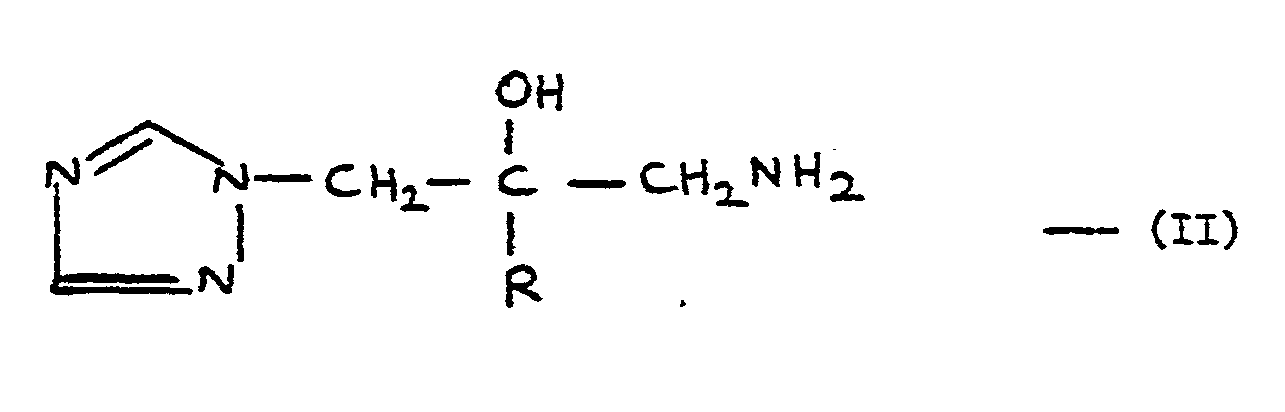
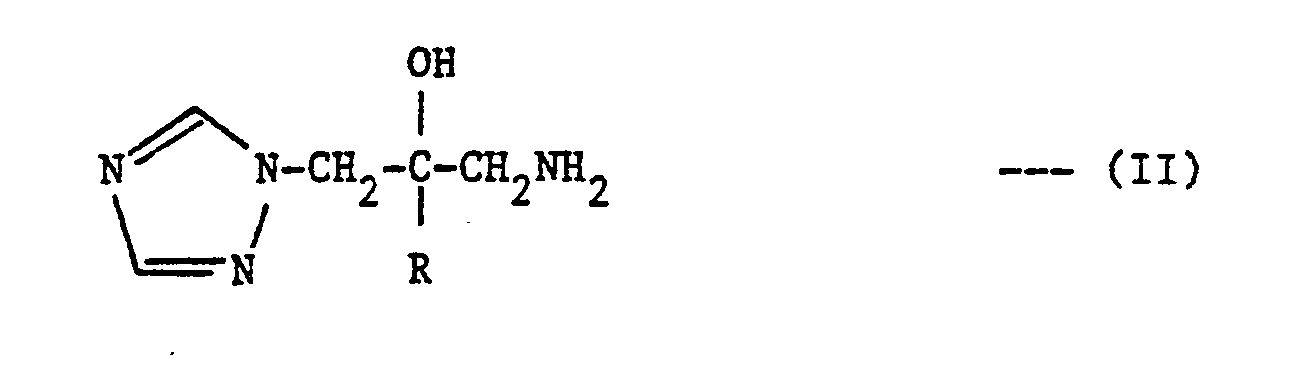
- the reaction is typically carried out by heating the 1,3-oxazolidin-2-one or l,3-oxazolidin-2-thione derivative (IV) with an excess of the appropriate amine either without a solvent or in a suitable organic solvent, e.g. dioxan, for up to about 24 hours. Temperatures up to reflux can be used. The solvent is then evaporated and the residue purified by standard procedures.
- a suitable organic solvent e.g. dioxan
- the amine (II) is dissolved in a suitable organic solvent, e.g. pyridine, with stirring and cooling.
- a suitable organic solvent e.g. pyridine
- the carbamoyl or thiocarbamoyl chloride (V) is then added, generally in a slight excess, and the mixture stirred for up to about 18 hours.
- Water is then added and the mixture is extracted with a suitable organic solvent, e.g. dichloromethane.
- the product may be recovered from the organic phase by standard procedures.
- the reaction is preferably carried out under reflux in aqueous acidic conditions for up to about 12 hours, the product again being recovered by standard procedures.
- acylamino derivatives of the formula (I) may be prepared by the following routes:-
- the reaction is typically carrie out by heating the acid (generally in slight excess), amine (II) and 1,1'-carbonyldiimidazole at up to reflux temperature in a suitable organic solvent, e.g. dry tetrahydrofuran (THF), for up to about 6 hours.
- a suitable organic solvent e.g. dry tetrahydrofuran (THF)
- THF dry tetrahydrofuran
- an acid chloride or anhydride When using an acid chloride or anhydride, heating is not generally necessary.
- the acid chloride or anhydride ai amine (II) are stirred in a suitable organic solvent, e.g. dry pyridine, at 0-5°C for a few hours, typically 1-2 hours.
- a suitable organic solvent e.g. dichloromethane.
- the product may then be recovere from the organic phase and purified by conventional procedures.
- the preferred formylating agent is ethyl formate.
- the 0-ethers can be made by conventional methods, e.g. by treating an alkali metal salt of the alcohols of the formula (I), e.g. a lithium or sodium salt, with the appropriate halide, e.g. an alkyl, alkeny], alkynyl or aralkyl halide.
- 0-Esters can also be made conventionally, e.g. by treating an alkali metal salt of compound (I) with an appropriate acid chloride or anhydride.
- the compounds of the invention contain optically active centres, and the invention includes both the resolved and unresolved forms. Resolution can be carried out according to standard techniques.
- Pharmaceutically acceptable acid addition salts of the compounds of the formula (I) are generally those formed from strong acids which form non-toxic acid addition salts, such as hydrochloric, hydrobromic, sulphuric, oxalic and methanesulphonic acids. These salts can be obtained conventionally by reaction of the free base with the desired acid in an appropriate organic solvent.
- the invention also includes the alkali metal and ammonium salts, which again may be formed conventionally.
- the compounds of the formula (I) and their salts also have activity against a variety of plant pathogenic fungi, including for example various rusts, mildews and moulds, and the compounds are thus useful for treating plants and seeds to eradicate or prevent such diseases.
- the in vitro evaluation of the activity of the compounds against plant fungi can be determined by measuring their minimum inhibitory concentrations in the same way as previously described except that the plates are incubated at 30°C for 48 hours or longer before being examined for the presence or absence of ! growth.
- Micro-organisms used in such tests include Cochliobolus carbonum, Pyricularia oryzae, Glomerella cingulata, Penicillium digitatum, Botrytis cinerea and Rhizoctonia solani.
- the compounds an their agriculturally acceptable salts are preferably used in the form of a composition formulated as appropriate to the particular use and purpose desired.
- the compounds may be applied in th form of dusting powders, or granules, seed dressings, aqueous solutions, dispersions or emulsions, dips, sprays, aerosols or smokes.
- Compositions may also be supplied in the form of dispersible powders, granules or grains, or concentrates for dilution prior to use.
- Such compositions may contain such conventional carriers, diluents or adjuvants as are known and acceptable in agriculture and horticulture and they are manufactured in accordance with conventional procedures.
- compositions may also incorporate other active ingredients, for example, compounds having herbicidal or insecticidal activity or further fungicide.
- active ingredients for example, compounds having herbicidal or insecticidal activity or further fungicide.
- the compounds and compositions can be applie in a number of ways, for example they can be applied directly to the plant foliage, stems, branches, seeds or roots or to the soi or other growing medium, and they may be used not only to eradicate disease, but also prophylactically to protect the plat or seeds from attack.
- N-[2-(2,4-Dichlorophenyl)-2-hydroxy-3-(1H-1,2,4-triazol-l-yl)prop-1-yl]-N',N'-tetramethylenethiourea was prepared similarly to the previous Example, starting from the corresponding oxazolidin-2-thione and pyrrolidine. It had an m.p. of 209-210° (33% yield).
- the amine (A) (0.4 g, 1.39 mmole) was dissolved in pyridine (10 ml) and the solution was stirred and cooled in ice. dimethylcarbomoyl chloride (0.18 g, 1.67 mmole) was then added end stirring was continued for 2 hours. Water (20 ml) was then edded and the mixture was extracted three times with iichloromethane (90 ml in all).
- the amine (A) (0.4 g, 1.39 mmole) was dissolved in ether and a solution of hydrogen chloride in ether was added. The solvent was then evaporated and the residue was added to a mixture of urea (0.32 g, 5.3 mmole), water (20 ml), and 24 ml of a mixture of water:concentrated hydrochloric acid:acetic acid (50:1:1). The solution was heated under reflux for 11 hours, allowed to cool and then basified by the addition of solid sodium carbonate.
- 3-Pyridinecarboxylic acid (0.235 g, 1.9 mmole) and 1,1'-carbonyldiimidazole (“CDA") (0.310 g, 1.9 mmole) were dissolved in dry THF (10 ml).
- the preferred compounds are the products of Examples 14 to 16 and 20-22, which are especially active as human and plant fungicides.
- the most preferred individual compounds are the products of Examples 14 and 21.
- R is 2,4-dichlorophenyl and R 1 is -COR 3 where R 3 is 6-chloro-3-pyridyl, isopropyl, p-chlorobenzyl, 2,4-dichlorophenyl, 4-chlorophenyl or methyl.
Landscapes
- Life Sciences & Earth Sciences (AREA)
- Organic Chemistry (AREA)
- Chemical & Material Sciences (AREA)
- Health & Medical Sciences (AREA)
- General Health & Medical Sciences (AREA)
- Engineering & Computer Science (AREA)
- Zoology (AREA)
- Environmental Sciences (AREA)
- Wood Science & Technology (AREA)
- Dentistry (AREA)
- Plant Pathology (AREA)
- Pest Control & Pesticides (AREA)
- Agronomy & Crop Science (AREA)
- Pharmacology & Pharmacy (AREA)
- Veterinary Medicine (AREA)
- Oncology (AREA)
- Animal Behavior & Ethology (AREA)
- Chemical Kinetics & Catalysis (AREA)
- Communicable Diseases (AREA)
- Public Health (AREA)
- General Chemical & Material Sciences (AREA)
- Medicinal Chemistry (AREA)
- Nuclear Medicine, Radiotherapy & Molecular Imaging (AREA)
- Pharmaceuticals Containing Other Organic And Inorganic Compounds (AREA)
- Plural Heterocyclic Compounds (AREA)
- Agricultural Chemicals And Associated Chemicals (AREA)
Abstract

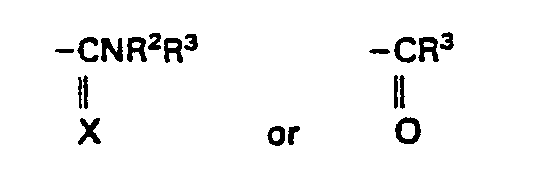
- R2 is hydrogen of C1-C4 alkyl; and
- R3 is hydrogen, C1-C4 alkyl, C3-Ca cycloalkyl, aryl, aralkyl, or heteroaryl; or
- R2 and R3 taken together with the N atom to which they are attached represent a 1-pyrrolidinyl or piperidino group; and their pharmaceutically acceptable salts. The compounds are useful as human veterinary and agricultural fungicides
Description
- This invention relates to 1,2,4-triazole derivatives which have antifungal activity and are useful in the treatment of fungal infections in animals, including humans, and as agricultural fungicides.
- According to the invention, there are provided compounds of the formula:-

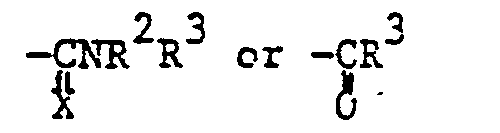
- R is hydrogen or C1-C4 alkyl;
- and R3 is hydrogen, C1-C4 alkyl, C3-C6 cycloalkyl, aryl, aralkyl, or heteroaryl; or R2 and R3 taken together with the N atom to which they are .attached represent a 1-pyrrolidinyl or piperidino group; and the pharmaceutically and agriculturally acceptable salts thereof.
- The 0-ethers of the alcohols of the formula (I) include, for example, the C1-C6 alkyl, C2-C4 alkenyl, C2-C4 alkynyl, aryl (e.g. phenyl) and aralkyl (e.g. benzyl optionally ring substituted by halo, C1 C4 alkyl and C1-C4 alkoxy) ethers.
- The 0-esters of the alcohols of the formula (I) include, for example, the C2-C4 alkanoyl and aroyl (e.g. benzoyl, optionally substituted by halo, C1-C4 alkyl or C1-C4 alkoxy) esters.
- The preferred ester is the acetyl ester.
- R is preferably phenyl substituted by 1 or 2 substituents selected from halo, CF3, C1-C4 alkyl and C1-C4 alkoxy, most preferably 1 or 2 substituents selected from halo and CF3.
- R is in particular 2,4-difluorophenyl or 2,4-dichlorophenyl. "Halo" means F, Cl, Br or I.
- Where appropriate, alkyl and alkoxy groups can be straight or branched chain.
- "Aryl" is preferably phenyl optionally substituted by 1 or 2 substituents each selected from halo, CF3, C1-C4 alkyl and C1-C4 alkoxy.
- "Aralkyl" is preferably benzyl optionally substituted on the phenyl ring portion by 1 or 2 substituents each selected from hale, CF3, C1-C4 alkyl and C1-C4 alkoxy.
- "Heteroaryl" is preferably pyridyl, pyrimidinyl or pyrazinyl optionally substituted by 1 or 2 substituents each selected from hale, CF3, C1-C4 alkyl, C1-C4 alkoxy and hydroxy.
- The preferred biphenylyl group is
-
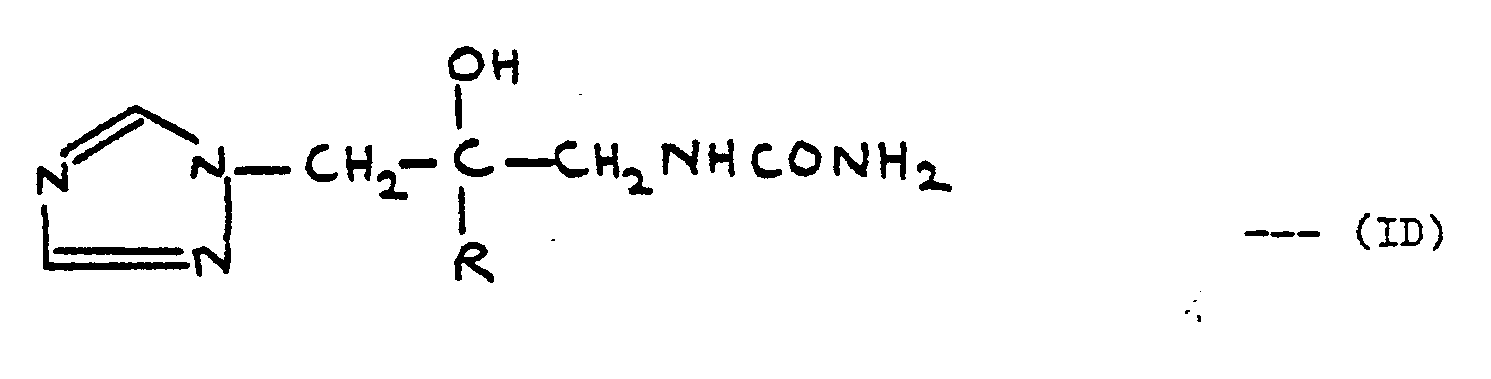
- 4. A process for preparing a triazole antifungal agent of the formula:-

- 5. A process for preparing a triazole antifungal agent of the formula:-

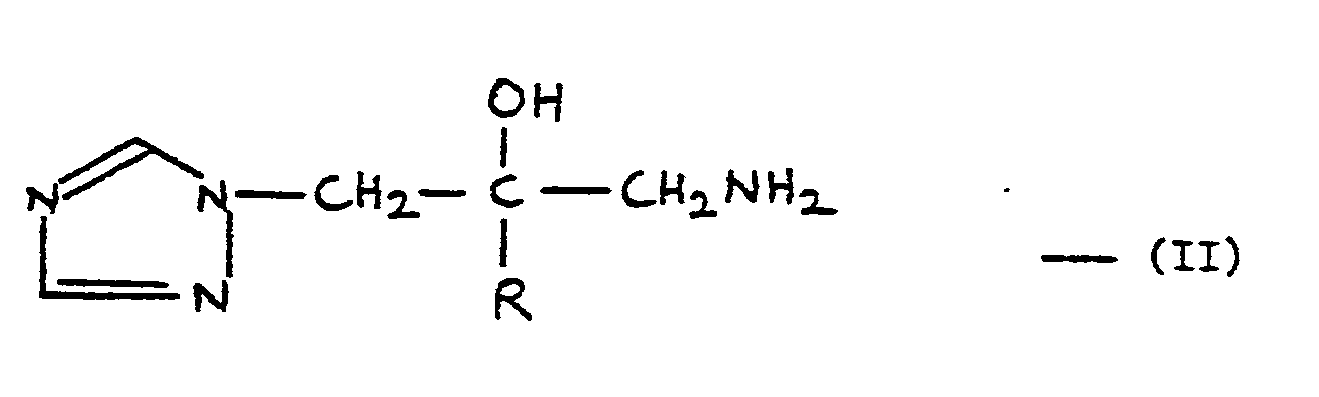
- 6. A process as claimed in claim 5, wherein said acylating agent is either (a) a C1-C4 alkyl formate, (b) an acid chloride or anhydride of the formula R 3 COC1 or (R 3 CO)20 where R3 is as defined in claim 5 except for H, or (c) an acid of the formula R3COOH is noted. Other micro-organisms used in such tests can include Cryptococcus neoformans, Aspergillus fumigatus, Trichophyton spp, Microsporum spp, Epidermophyton floccosum, Coccidioides immitis, and Torulopsis glabrata.
- The in vivo evaluation of the compounds can be carried out at a series of dose levels by intraperitoneal or intravenous injection or by oral administration, to mice which are inoculated with a strain of Candida albicans. Untreated mice die within 48 hours and the dose level at which the compound provides 50% protection against the lethal effect of the infection is noted.
- For human use, the antifungal compounds of the formula (I) (or salts, esters or ethers thereof) can be administered alone, but will generally be administered in admixture with a pharmaceutical carrier selected with regard to the intended route of administration and standard pharmaceutical practice. For example, they may be administered orally in the form of tablets containing such excipients as starch or lactose, or in capsules or ovules either alone or in admixture with excipients, or in the form of elixirs or suspensions containing flavouring or colouring agents. They may be injected parenterally, for example, intravenously, intramuscularly or subcutaneously. For parenteral administration, they are best used in the form of a sterile aqueous solution which may contain other substances, for example, enough salts or glucose to make the solution isotonic.
- For oral and parenteral administration to human patients, it is expected that th; daily dosage level of the antifungal compounds of the formula (I) will be from 0.1 to 5 mg/kg (in divided doses) when administered by either the oral or parenteral route. Thus tablets or capsules of the compounds can be expected to contain from 5 mg to 0.5 g of active compound for administration singly or two or more at a time as appropriate.
- The physician in any event will determine the actual dosage which will be moat suitable for an individual patient and it will vary with the age, weight and response of the particular patient. the above dosages are exemplary of the average case. There can, of courese, be individual instances where higher or lower dosage ranges are merited, and such are within the scope of this invention.
- Alternatively, the antifungal compounds of the formula (I) may be administered in the form of a suppository or pessary, or may be applied topically in the form of a lotion, solution, ointment or dusting powder. For example, they may be incorporated into an ointment consisting of an aqueous emulsion of polyethylene glycols or liquid paraffin; or they may be incorporated, at a concentration of between 1 and 10%, into an ointment consisting of a white wax or white soft paraffin base together with such stabilizers and preservatives as may be required.
- The ureas and thioureas of the formula (I) can be prepared by the following general methods:-

- The reaction is typically carried out in a suitable organic solvent, e.g. dichloromethane, at a temperature of from 0-30°C for up to about 24 hours. Generally a slight excess of (III) is used. The solution can then be evaporated and the residue purified by conventional procedures, e.g. by recrystallisation or chromatography.
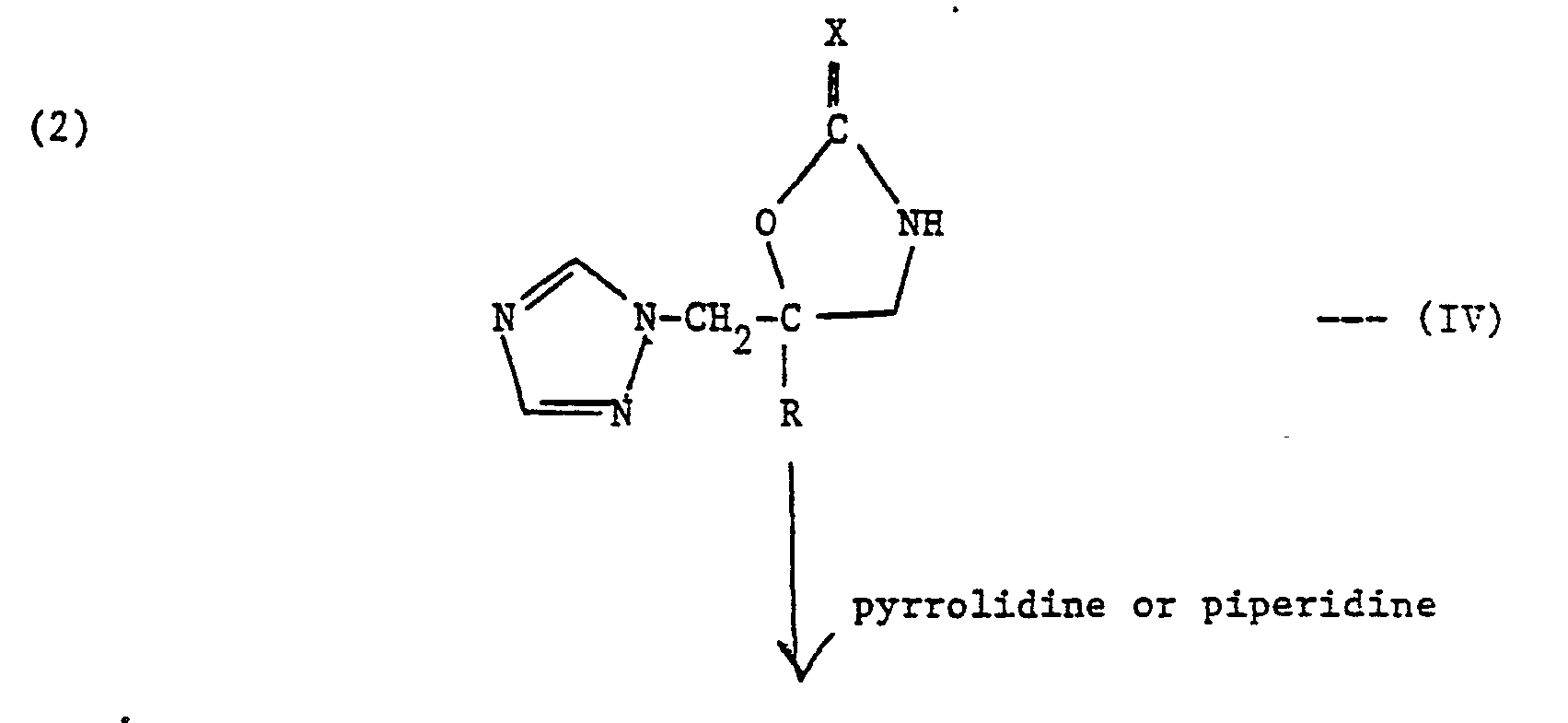

- The reaction is typically carried out by heating the 1,3-oxazolidin-2-one or l,3-oxazolidin-2-thione derivative (IV) with an excess of the appropriate amine either without a solvent or in a suitable organic solvent, e.g. dioxan, for up to about 24 hours. Temperatures up to reflux can be used. The solvent is then evaporated and the residue purified by standard procedures.

- In a typical procedure the amine (II) is dissolved in a suitable organic solvent, e.g. pyridine, with stirring and cooling. The carbamoyl or thiocarbamoyl chloride (V) is then added, generally in a slight excess, and the mixture stirred for up to about 18 hours. Water is then added and the mixture is extracted with a suitable organic solvent, e.g. dichloromethane. The product may be recovered from the organic phase by standard procedures.

- The reaction is preferably carried out under reflux in aqueous acidic conditions for up to about 12 hours, the product again being recovered by standard procedures.
- The acylamino derivatives of the formula (I) may be prepared by the following routes:-
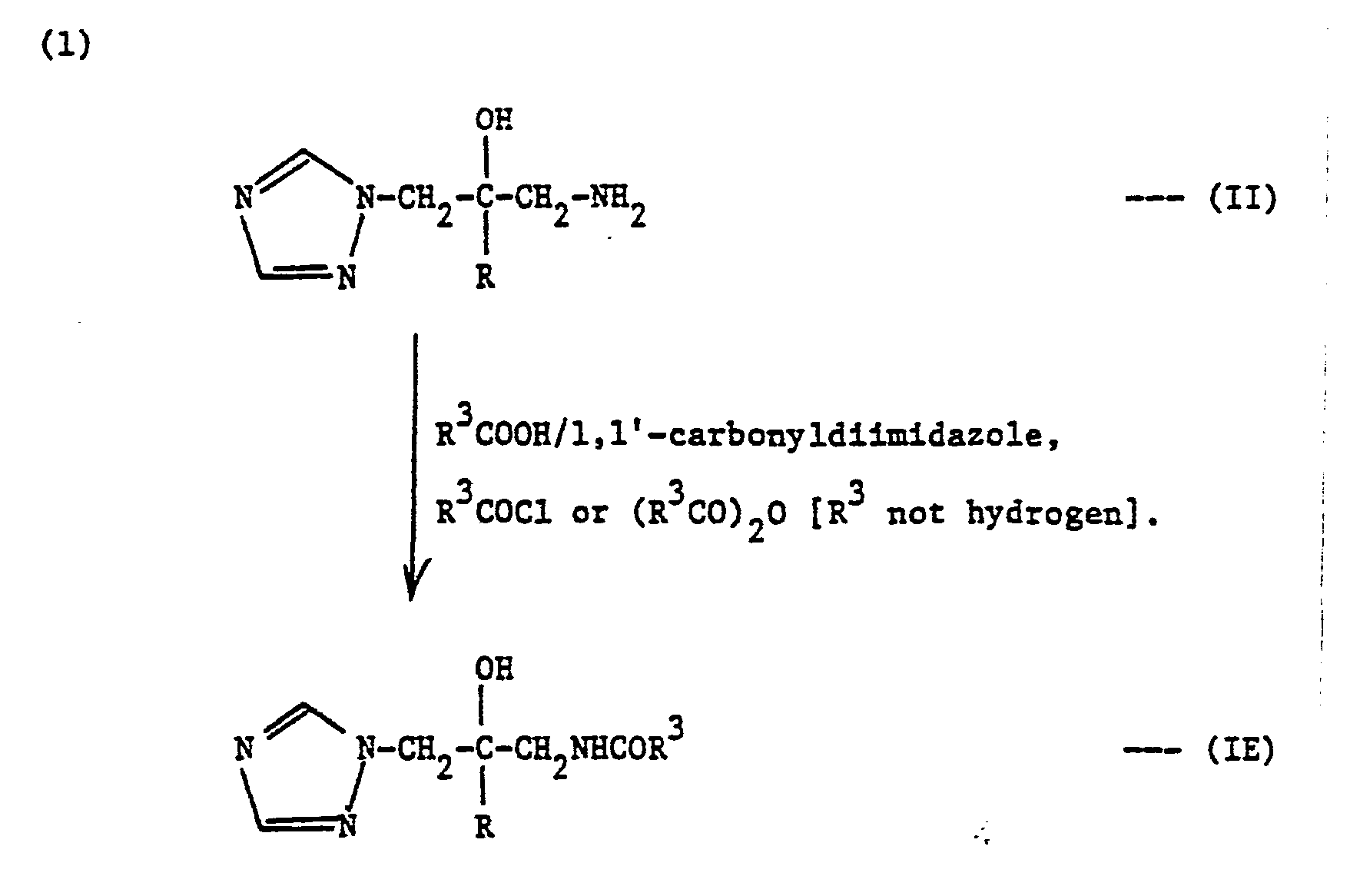
- When the free acid is used, the reaction is typically carrie out by heating the acid (generally in slight excess), amine (II) and 1,1'-carbonyldiimidazole at up to reflux temperature in a suitable organic solvent, e.g. dry tetrahydrofuran (THF), for up to about 6 hours. The solvent is then evaporated and the product may be recovered from the residue and purified by conventional procedures.
- When using an acid chloride or anhydride, heating is not generally necessary. Typically the acid chloride or anhydride ai amine (II) are stirred in a suitable organic solvent, e.g. dry pyridine, at 0-5°C for a few hours, typically 1-2 hours. Water : then added and the mixture is extracted with a suitable organic solvent, e.g. dichloromethane. The product may then be recovere from the organic phase and purified by conventional procedures.

- The preferred formylating agent is ethyl formate.
- Typically the amine (II) and ethyl formate (generally in excess) are heated together under reflux for a few hours. The product can then be recovered and purified by conventional procedures.
- Other conventional formylating agents such as formic acid/acetic anhydride and dimethyl formamide/sodium methoxide, can also be used.
- The 0-ethers can be made by conventional methods, e.g. by treating an alkali metal salt of the alcohols of the formula (I), e.g. a lithium or sodium salt, with the appropriate halide, e.g. an alkyl, alkeny], alkynyl or aralkyl halide. 0-Esters can also be made conventionally, e.g. by treating an alkali metal salt of compound (I) with an appropriate acid chloride or anhydride.
- The compounds of the invention contain optically active centres, and the invention includes both the resolved and unresolved forms. Resolution can be carried out according to standard techniques.
- Pharmaceutically acceptable acid addition salts of the compounds of the formula (I) are generally those formed from strong acids which form non-toxic acid addition salts, such as hydrochloric, hydrobromic, sulphuric, oxalic and methanesulphonic acids. These salts can be obtained conventionally by reaction of the free base with the desired acid in an appropriate organic solvent. The invention also includes the alkali metal and ammonium salts, which again may be formed conventionally.
- The starting materials for the previous routes are either known compounds or may be prepared conventionally. Typical routes, which are illustrated in detail in the following Preparations, are as follows:-


- The compounds of the formula (I) and their salts also have activity against a variety of plant pathogenic fungi, including for example various rusts, mildews and moulds, and the compounds are thus useful for treating plants and seeds to eradicate or prevent such diseases.
- The in vitro evaluation of the activity of the compounds against plant fungi can be determined by measuring their minimum inhibitory concentrations in the same way as previously described except that the plates are incubated at 30°C for 48 hours or longer before being examined for the presence or absence of ! growth.
- Micro-organisms used in such tests include Cochliobolus carbonum, Pyricularia oryzae, Glomerella cingulata, Penicillium digitatum, Botrytis cinerea and Rhizoctonia solani.
- For agricultural and horticultural purposes the compounds an their agriculturally acceptable salts are preferably used in the form of a composition formulated as appropriate to the particular use and purpose desired. Thus the compounds may be applied in th form of dusting powders, or granules, seed dressings, aqueous solutions, dispersions or emulsions, dips, sprays, aerosols or smokes. Compositions may also be supplied in the form of dispersible powders, granules or grains, or concentrates for dilution prior to use. Such compositions may contain such conventional carriers, diluents or adjuvants as are known and acceptable in agriculture and horticulture and they are manufactured in accordance with conventional procedures. The compositions may also incorporate other active ingredients, for example, compounds having herbicidal or insecticidal activity or further fungicide. The compounds and compositions can be applie in a number of ways, for example they can be applied directly to the plant foliage, stems, branches, seeds or roots or to the soi or other growing medium, and they may be used not only to eradicate disease, but also prophylactically to protect the plat or seeds from attack.
- The following Examples illustrate the invention. All temperatures are in °C:-
-

- The amine (A) (0.4 g, 1.39 mmole) and 4-chlorobenzylisothio- cyanate (0.28 g, 1.53 mmole) were stirred in dichloromethane (20 ml) and the mixture was cooled in an ice-bath. After 1 hour the ice-bath was removed and stirring was continued for a further 18 hours. Evaporation of solvent and recrystallisation from ethanol gave the title compound, 0.55 g (84%), m.p. 209-210°.
- Found: C,48.48; H,4.01; N,15.09; Calculated for C19H18 C13N5OS: C,48.48; H,3.85; N,14.88.
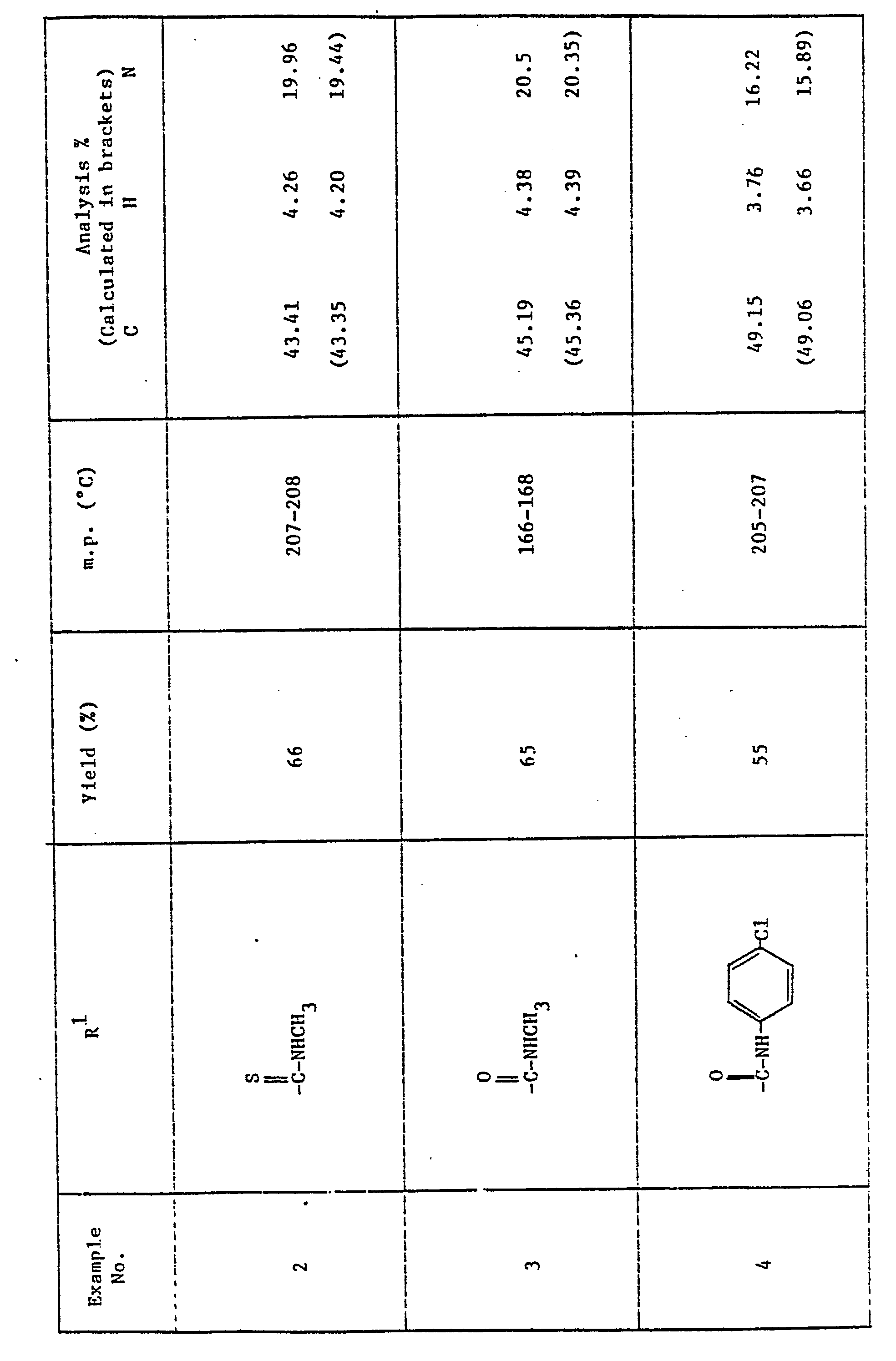
- The following compounds were prepared similarly to Example 1, starting from the same amine and appropriate isocyanate or isothiocyanate:-
-



-

- The 1,3-oxazolidin-2-one (B) (0.35 g, 1.12 mmole) and pyrrolidine (0.59g, 7 mmole) were heated under reflux in dioxan (1)ml) for 18 hours. The solvent was then evaporated and the residuewas chromatographed on 230-400 mesh silica, eluting with a mixture of dichloromethane:methano1:0.88 ammonia (98:2:1), to give, after one recrystallisation from ethyl acetate, the title compoundg (42%), m.p. 174-176°.

- Analysis %:-Found: C,49.71; H,4.94; N,18.33; Calculated for C16H19Cl2N5O2: C,50.01; H,4.98; N,18.23.
- N-[2-(2,4-Dichlorophenyl)-2-hydroxy-3-(1H-1,2,4-triazol-l-yl)prop-1-yl]-N',N'-tetramethylenethiourea was prepared similarly to the previous Example, starting from the corresponding oxazolidin-2-thione and pyrrolidine. It had an m.p. of 209-210° (33% yield).
- Analysis %:-Found: C,48.09; H,4.75; N,17.87; Calculated for:C16H19Cl2N5OS: C,48.01; H,4.78; N,17.50.
-

- The amine (A) (0.4 g, 1.39 mmole) was dissolved in pyridine (10 ml) and the solution was stirred and cooled in ice. dimethylcarbomoyl chloride (0.18 g, 1.67 mmole) was then added end stirring was continued for 2 hours. Water (20 ml) was then edded and the mixture was extracted three times with iichloromethane (90 ml in all). The combined extracts were dried (MgSO4) and evaporated and the residue was chromatographed on silica (230-400 mesh), eluting with a mixture of iichloromethane:methanol:0.88 ammonia (93:7:1) to give, after one recrystallisation from ethanol, the title compound,0.29 g (58%), m.p. 189-190°.
- Found: C,47.07; H,4.83; N,19.87; Calculated for C14H17Cl2N5O2: C,46.94; H,4.78; N,19.55.
-

- The amine (A) (0.4 g, 1.39 mmole) was dissolved in ether and a solution of hydrogen chloride in ether was added. The solvent was then evaporated and the residue was added to a mixture of urea (0.32 g, 5.3 mmole), water (20 ml), and 24 ml of a mixture of water:concentrated hydrochloric acid:acetic acid (50:1:1). The solution was heated under reflux for 11 hours, allowed to cool and then basified by the addition of solid sodium carbonate. Extraction with ethyl acetate followed by drying (MgS04) and evaporation of the combined extracts gave a white glassy solid which was chromatographed on silica (230-400 mesh), eluting with a mixture of dichloromethane:methanol:0.88 ammonia (93:7:1), to give after one recrystallisation from ethyl acetate, the title compound, 0.19 g (41X), m.p. 168-169°.
- Analysis %:-Found: C,43.90; H,4.01; N,21.16; Calculated for C12H13Cl2N5O2: C,43.65; H,3.97; N,21.21.
-
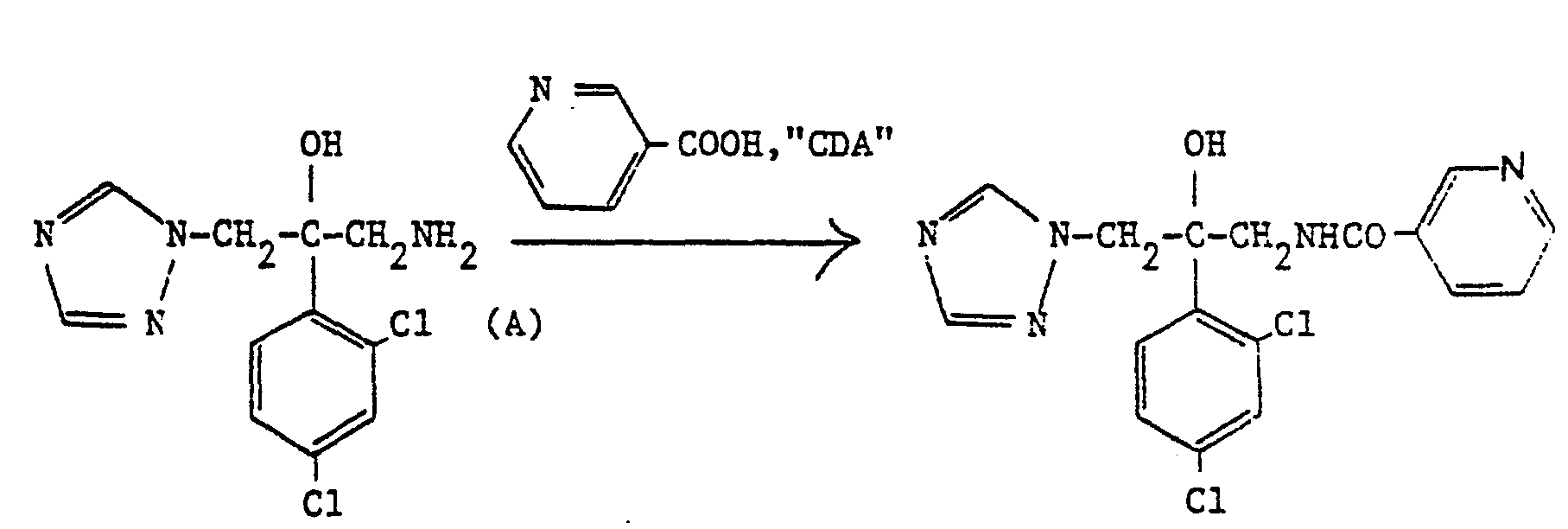
- 3-Pyridinecarboxylic acid (0.235 g, 1.9 mmole) and 1,1'-carbonyldiimidazole ("CDA") (0.310 g, 1.9 mmole) were dissolved in dry THF (10 ml). A solution of the amine (A) (0.5 g, 1.74 mmole) in THF (20 ml) was then added and the mixture was heated under reflux for 2 hours. The THF was then evaporated and the residue was dissolved in ethyl acetate. The solution was washed with water (2 x 100 ml), dried (MgSO4) and evaporated to give a white glassy solid which was triturated with ether to give, as a white solid, the title compound, 0.54 g (81%), m.p. 175°.
- Analysis %:-Found: C,51.94; H,3.79; N,18.08; Calculated for C17H15Cl2N5O2: C,52.05; H,3.85; N,17.85.
- The following compounds were prepared similarly to the previous Example, starting from the same amine, appropriate acid, and "CDA".


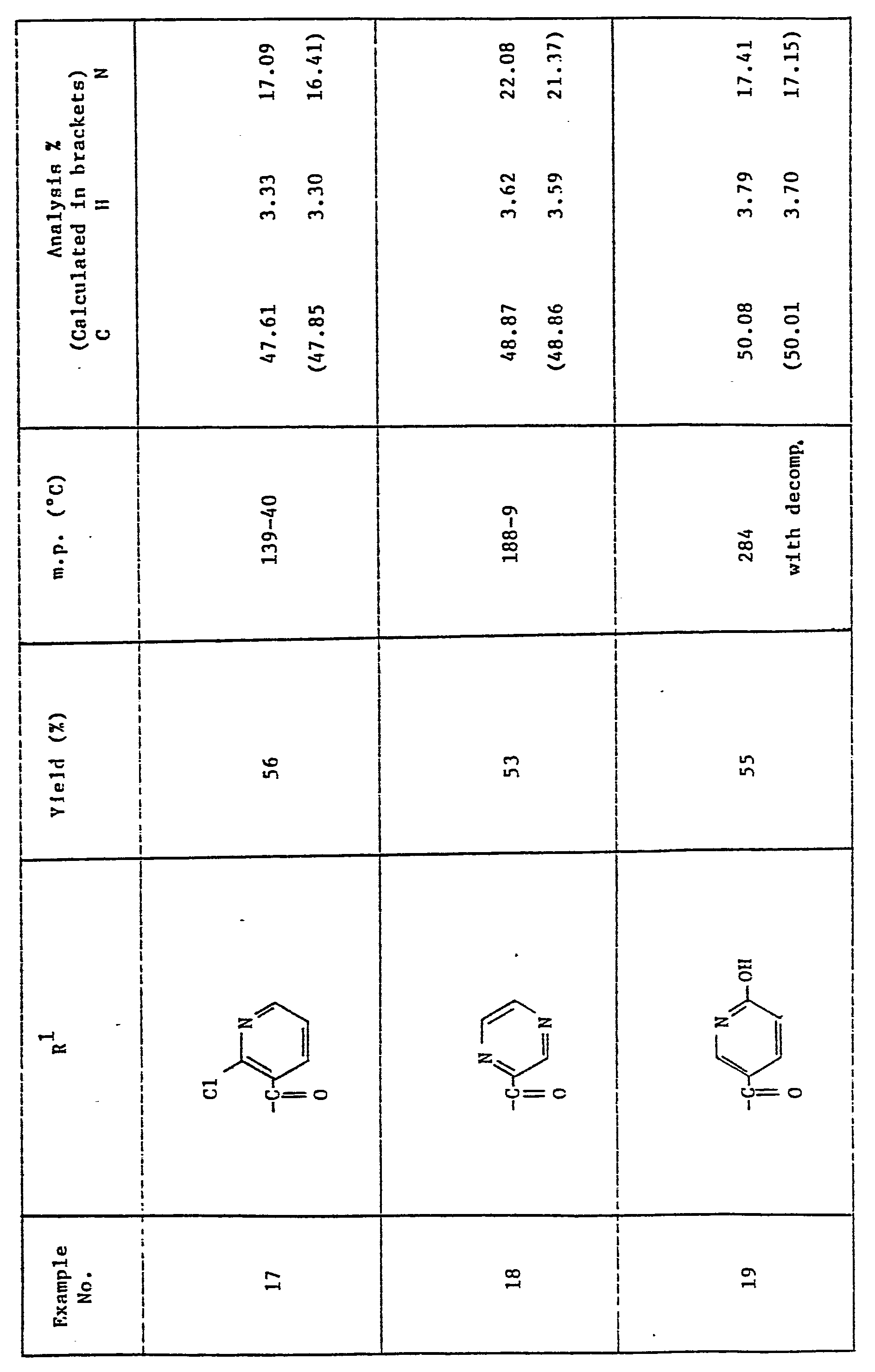
-

- To a stirred and ice-cooled suspension of the amine (A) (0.4 g, 1.39 mmole) in pyridine (10 ml) was added 2,4-dichlorobenzoyl chloride (0.35 g, 1.67 mmole) and stirring was continued for 1 hour. Water (20 ml) was then added and the mixture was extracted twice with dichloromethane. The combined extracts were dried (MgS04) and evaporated to give a yellow oil which was chromatographed on silica (230-400 mesh), eluting first with ethyl acetate and then with a mixture of ether:ethanol:0.88 ammonia (97:3:1) to give as a white solid, after one recrystallisation from ethyl acetate/60-80° petrol, the title compound, 0.413 g (72%), m.p. 153-4°C.
- Analysis %:-Found: C,46.88; H,3.05; N,12.55; Calculated for C18H14Cl4N4O2: C,46.98; H,3.07; N,12.18.
- The corresponding 4-chlorobenzamide was prepared similarly to the previous Example, starting from the same amine and 4-chlorobenzoyl chloride. The product had an m.p. of 199-200° (75% yield).
- Analysis %:- Found: C,50.96; H,3.61; N,13.10; Calculated for C18H15Cl3N4O2: C,50.79; H,3.55; N,13.16.
-

- To a stirred and ice-cooled suspension of the amine (A) (0.4 g, 1.39 mmole) in pyridine (10 ml) was added acetic anhydride (0.17 g, 1.67 mmole) and stirring was continued for 2 hours. Water (20 ml) was then added and the mixture was extracted three times with dichloromethane. The combined extracts were dried (MgS04) and evaporated to give a white solid which was recrystallised once from ethyl acetate to give the title compound, 0.27 g (59X), m.p. 178-179°.
- Analysis %:-Found: C,47.31; H,4.23; N,17.20; Calculated for C13H14Cl2N4O2: C,47.43; H,4.29; N,17.02.
-

- The amine (A) (250 mg) was heated under reflux with excess ethyl formate (10 ml) for 3 hours. The mixture was then cooled and evaporated under reduced pressure to dryness. The residue was triturated with ether to give, as a white solid, the title compound, 253 mg, (92%), m.p. 157°.
- Analysis %:-Found: C,45.73; H,3.83; N,17.78; Calculated for C12H12Cl2N4O2: C,45.55; H,3.79; N,18.09.
- The following Preparations illustrate methods for obtaining certain of the starting materials used in the previous Examples. All temperatures are in °C.
-

- A solution of the amine (A) (0.1 g, 0.35 mmole) and 1,1'-carbonyldiimidazole (0.056 g, 0.35 mmole) in THF (5 ml) was stirred at room temperature for 5 hours. The solvent was then evaporated and the residue was dissolved in ethyl acetate (20 ml). This solution was washed three times with water (300 ml in total), dried (MgS04), evaporated and the residue triturated with a mixture of 60-80° petrol:ether to give, as a white solid, the title compound, 0.074 g (68%), m.p. 223°.
- Analysis %:-Found: C,45.91; H,3.27; N,18.09; Calculated for C12H10Cl2N4O2: C,46.02; H,3.22; N,17.89.
-

- A solution of the amine (A) (1 g, 3.48 mmole) and 1,1'-thiocarbonyldiimidazole (0.62 g, 3.48 mmole) in THF (20 ml) was stirred at room temperature for 1 hour. The solvent was then evaporated and the residue was chromatographed on silica (230-400 mesh),eluting with ethyl acetate to give,after one recrystallisation from ethanol,the title compound 0.65 g,(57%) as a white solid, m.p. 232-235°.
- Analysis %:-Found: C,43.95; H,3.04; N,17.37; Calculated for C12A10Cl2N4OS: C,43.79; H,3.06; N,17.02.
-

- A solution of the epoxide methanesulphonate salt (C) (10 g, 27.32 mmole) and lithium azide (7 g, 143 mmole) in dimethylformamide (100 ml) was stirred at 70° for 1.5 hours. The mixture was then cooled end added to a mixture of dichloromethane (500 ml) and water (50 ml). The organic layer was separated and the aqueous layer was washed a further five times with dichloromethane (200 ml in total). The combined organic extracts were dried (MgS04) and evaporated to give a colourless gum, trituration of which with ether gave, as a white solid, the title compound, 8.2 g (96%), m.p. 119-120°.
- Analysis %:-Found: C,42.31; H,3.23; N,27.07; Calculated for C11H10Cl2N6O: C,42.18; H,3.22; N,26.83.
-

- A solution of azide (D) (1 g, 3.2 mmole) and triphenylphosphine (0.84 g, 3.2 mmole) in dichloromethane was stirred at room temperature for 18 hours. Evaporation of solvent and trituration of the residual colourless gum with ether gave, as a white solid, the title compound, (1.72 g, 98%), m.p. 183-184°.
- Analvsis %:-Found: C,63.41; H,4.59; N,10.37; Calculated for C29H25Cl2N4OP: C,63.6; H,4.57; N,10.24.
-

- A solution of the phosphinimine (E) (0.5 g, 0.914 mmole) in a mixture of methanol (15 ml) and 1N sodium hydroxide solution (5 ml) was heated under reflux for 1.5 hours. The solution was then allowed to cool and the methanol was removed by evaporation under reduced pressure. -3N hydrochloric acid (6 ml) and toluene (10 ml) were then added and the aqueous layer was separated, washed a further three times with toluene (30 ml in total) and then neutralised by addition of solid sodium bicarbonate. Extraction of this solution with dichloromethane (6 x 10 ml), drying (MgS04) and evaporation of the combined extracts gave, as a white solid, the title compound, 254 mg (97%), m.p. 104-105°.
- Analysis %:-Found: C,45.97; H,4.31; N,19.26; Calculated for C11A12Cl2N4O: C,45.99; H,4.18; N,19.5.
- The preferred compounds are the products of Examples 14 to 16 and 20-22, which are especially active as human and plant fungicides. The most preferred individual compounds are the products of Examples 14 and 21.
- In vivo data (oral PD50 values obtained in mice inoculated with Candida albicans) for these compounds are as follows:-
-

- Thus in a preferred aspect R is 2,4-dichlorophenyl and R1 is -COR3 where R3 is 6-chloro-3-pyridyl, isopropyl, p-chlorobenzyl, 2,4-dichlorophenyl, 4-chlorophenyl or methyl.
Claims (12)
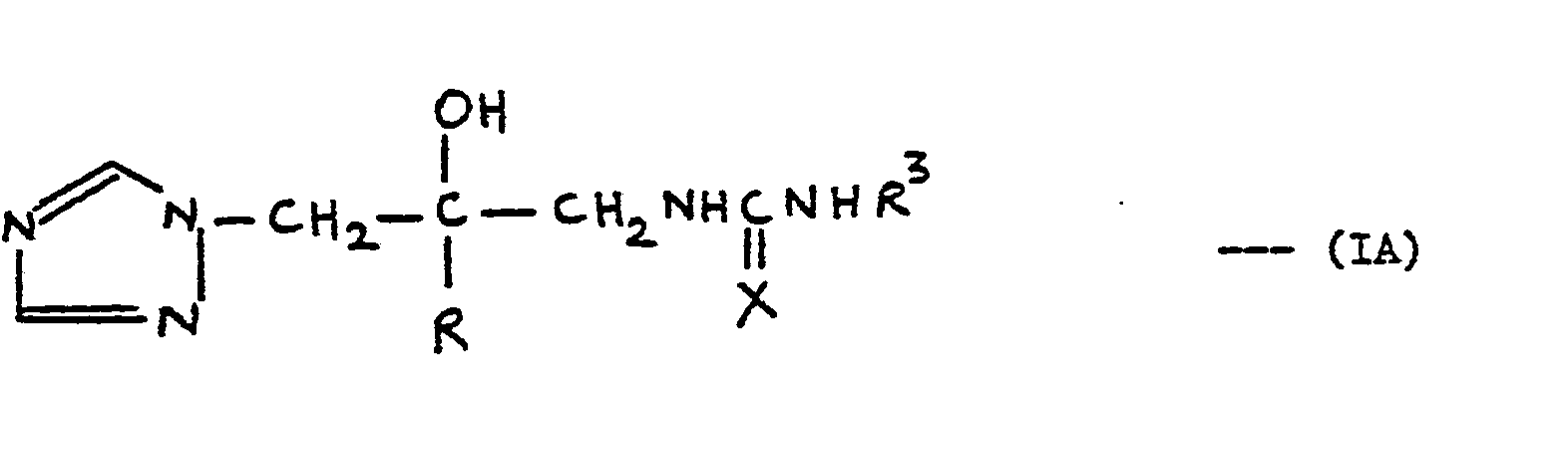

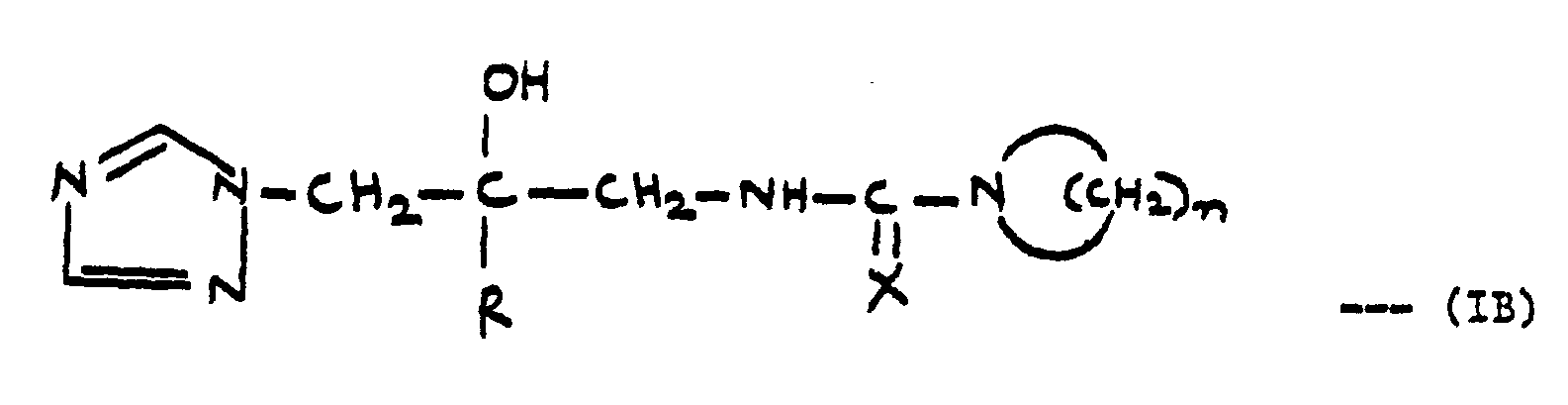





or R2 and R3 taken together with the N atom to which they are attached represent a I-pyrrolidinyl or piperidino group; as an agricultural fungicide.
Priority Applications (1)
| Application Number | Priority Date | Filing Date | Title |
|---|---|---|---|
| AT83303389T ATE22886T1 (en) | 1982-06-18 | 1983-06-13 | ANTIFUNGAL TRIAZOLES. |
Applications Claiming Priority (2)
| Application Number | Priority Date | Filing Date | Title |
|---|---|---|---|
| GB8217721 | 1982-06-18 | ||
| GB8217721 | 1982-06-18 |
Publications (3)
| Publication Number | Publication Date |
|---|---|
| EP0097469A2 true EP0097469A2 (en) | 1984-01-04 |
| EP0097469A3 EP0097469A3 (en) | 1984-03-21 |
| EP0097469B1 EP0097469B1 (en) | 1986-10-15 |
Family
ID=10531140
Family Applications (1)
| Application Number | Title | Priority Date | Filing Date |
|---|---|---|---|
| EP83303389A Expired EP0097469B1 (en) | 1982-06-18 | 1983-06-13 | Triazole antifungal agents |
Country Status (8)
| Country | Link |
|---|---|
| US (1) | US4482558A (en) |
| EP (1) | EP0097469B1 (en) |
| JP (1) | JPS5962574A (en) |
| AT (1) | ATE22886T1 (en) |
| DE (1) | DE3366922D1 (en) |
| DK (1) | DK165180C (en) |
| GR (1) | GR79318B (en) |
| IE (1) | IE55460B1 (en) |
Cited By (11)
| Publication number | Priority date | Publication date | Assignee | Title |
|---|---|---|---|---|
| EP0121979A3 (en) * | 1983-03-09 | 1984-11-21 | Imperial Chemical Industries Plc | Azolylmethyl tetrahydrofuran derivatives as plant growth regulators and fungicides |
| FR2558834A1 (en) * | 1984-01-26 | 1985-08-02 | Rhone Poulenc Agrochimie | GROUP FUNGICIDES TRIAZOLE AND OLIGOETHER |
| GB2159148A (en) * | 1984-05-18 | 1985-11-27 | Ici Plc | Fungicidal imidazole and 1,2,4-triazole derivatives |
| EP0318214A1 (en) * | 1987-11-20 | 1989-05-31 | Schering Corporation | Tri- and tetra-substituted-oxetanes and -tetrahydrofurans and intermediates thereof |
| EP0332387A1 (en) * | 1988-03-04 | 1989-09-13 | Sankyo Company Limited | Triazole derivatives, their preparation and their use as fungicides |
| EP0480215A1 (en) * | 1990-10-08 | 1992-04-15 | J. URIACH & CIA. S.A. | New sulfonamides as antifungal agents |
| US5478826A (en) * | 1993-03-15 | 1995-12-26 | J. Uriach & Cia. S.A. | Orally active azole derivatives |
| WO1997005131A1 (en) * | 1995-08-02 | 1997-02-13 | J. Uriach & Cia. S.A. | New carboxamides with antifungal activity |
| ES2112774A1 (en) * | 1995-10-20 | 1998-04-01 | Uriach & Cia Sa J | New azole derivatives having antifungal activity |
| EP0783501B1 (en) * | 1995-08-02 | 2001-01-10 | J. URIACH & CIA. S.A. | pyrimidone derivatives with antifungal activity |
| WO2004018485A1 (en) * | 2002-08-26 | 2004-03-04 | Ranbaxy Laboratories Limited | Azole derivatives as antifungal agents |
Families Citing this family (8)
| Publication number | Priority date | Publication date | Assignee | Title |
|---|---|---|---|---|
| CA1193253A (en) * | 1982-09-30 | 1985-09-10 | Kenneth Richardson | Triazole antifungal agents |
| US4576957A (en) * | 1984-07-05 | 1986-03-18 | American Cyanamid Company | N-(Substituted phenyl)-N'-[(1H-imidazol-1-yl) and (1H-1,2,4-triazol-1-yl)alkyl]ureas |
| CA2482041C (en) | 2002-04-17 | 2012-06-05 | Cytokinetics, Inc. | 4-chromanone derivatives for treating cellular proliferative diseases and disorders |
| DE60326248D1 (en) * | 2002-07-17 | 2009-04-02 | Cytokinetics Inc | Compounds, compositions and methods for treating cellular proliferative disorders |
| EP1554265A4 (en) * | 2002-09-13 | 2008-05-07 | Cytokinetics Inc | Compounds, compositions and methods |
| EP1670456A2 (en) * | 2003-10-06 | 2006-06-21 | Cytokinetics, Inc. | Compounds, compositions and methods |
| CN115322182B (en) * | 2022-08-23 | 2025-03-14 | 广西医科大学 | A nitrogen azole antifungal compound and its application |
| CN115745898B (en) * | 2022-09-23 | 2025-11-11 | 许昌学院 | Aromatic acrylamide-triazole compound, and preparation method and application thereof |
Family Cites Families (2)
| Publication number | Priority date | Publication date | Assignee | Title |
|---|---|---|---|---|
| HU187399B (en) * | 1980-12-24 | 1985-12-28 | Sumitomo Chemical Co | Process for preparing imidazolyl-propanol derivatives |
| DE3279417D1 (en) * | 1981-03-18 | 1989-03-09 | Ici Plc | Triazole compounds, a process for preparing them, their use as plant fungicides and fungicidal compositions containing them |
-
1983
- 1983-06-03 US US06/500,748 patent/US4482558A/en not_active Expired - Lifetime
- 1983-06-13 EP EP83303389A patent/EP0097469B1/en not_active Expired
- 1983-06-13 AT AT83303389T patent/ATE22886T1/en active
- 1983-06-13 DE DE8383303389T patent/DE3366922D1/en not_active Expired
- 1983-06-15 DK DK275483A patent/DK165180C/en active
- 1983-06-15 GR GR71687A patent/GR79318B/el unknown
- 1983-06-17 IE IE1436/83A patent/IE55460B1/en unknown
- 1983-06-18 JP JP58110032A patent/JPS5962574A/en active Granted
Cited By (18)
| Publication number | Priority date | Publication date | Assignee | Title |
|---|---|---|---|---|
| EP0121979A3 (en) * | 1983-03-09 | 1984-11-21 | Imperial Chemical Industries Plc | Azolylmethyl tetrahydrofuran derivatives as plant growth regulators and fungicides |
| US4636247A (en) * | 1983-03-09 | 1987-01-13 | Imperial Chemical Industries Plc | Heterocyclic compounds |
| EP0243983A3 (en) * | 1983-03-09 | 1988-07-06 | Imperial Chemical Industries Plc | Heterocyclic compounds |
| FR2558834A1 (en) * | 1984-01-26 | 1985-08-02 | Rhone Poulenc Agrochimie | GROUP FUNGICIDES TRIAZOLE AND OLIGOETHER |
| GB2159148A (en) * | 1984-05-18 | 1985-11-27 | Ici Plc | Fungicidal imidazole and 1,2,4-triazole derivatives |
| EP0318214A1 (en) * | 1987-11-20 | 1989-05-31 | Schering Corporation | Tri- and tetra-substituted-oxetanes and -tetrahydrofurans and intermediates thereof |
| WO1989004829A1 (en) * | 1987-11-20 | 1989-06-01 | Schering Corporation | Tri- and tetra-substituted-oxetanes and tetrahydrofurans and intermediates thereof |
| EP0332387A1 (en) * | 1988-03-04 | 1989-09-13 | Sankyo Company Limited | Triazole derivatives, their preparation and their use as fungicides |
| EP0480215A1 (en) * | 1990-10-08 | 1992-04-15 | J. URIACH & CIA. S.A. | New sulfonamides as antifungal agents |
| US5478826A (en) * | 1993-03-15 | 1995-12-26 | J. Uriach & Cia. S.A. | Orally active azole derivatives |
| US5646294A (en) * | 1993-03-15 | 1997-07-08 | J. Uriach & Cia. S.A. | Orally active azole derivatives |
| US5760245A (en) * | 1993-03-15 | 1998-06-02 | J. Uriach & Cia S.A. | Homochiral intermediates for preparation of orally active azole derivatives |
| WO1997005131A1 (en) * | 1995-08-02 | 1997-02-13 | J. Uriach & Cia. S.A. | New carboxamides with antifungal activity |
| US5888941A (en) * | 1995-08-02 | 1999-03-30 | J. Uriach & Cia. S.A. | Carbozamides with antifungal activity |
| EP0783501B1 (en) * | 1995-08-02 | 2001-01-10 | J. URIACH & CIA. S.A. | pyrimidone derivatives with antifungal activity |
| ES2112774A1 (en) * | 1995-10-20 | 1998-04-01 | Uriach & Cia Sa J | New azole derivatives having antifungal activity |
| WO2004018485A1 (en) * | 2002-08-26 | 2004-03-04 | Ranbaxy Laboratories Limited | Azole derivatives as antifungal agents |
| WO2004018486A1 (en) * | 2002-08-26 | 2004-03-04 | Ranbaxy Laboratories Limited | Azole derivatives as antifungal agents |
Also Published As
| Publication number | Publication date |
|---|---|
| US4482558A (en) | 1984-11-13 |
| JPS6345672B2 (en) | 1988-09-12 |
| DK165180B (en) | 1992-10-19 |
| DE3366922D1 (en) | 1986-11-20 |
| DK165180C (en) | 1993-03-08 |
| EP0097469A3 (en) | 1984-03-21 |
| DK275483D0 (en) | 1983-06-15 |
| EP0097469B1 (en) | 1986-10-15 |
| DK275483A (en) | 1983-12-19 |
| ATE22886T1 (en) | 1986-11-15 |
| IE55460B1 (en) | 1990-09-26 |
| JPS5962574A (en) | 1984-04-10 |
| GR79318B (en) | 1984-10-22 |
| IE831436L (en) | 1983-12-18 |
Similar Documents
| Publication | Publication Date | Title |
|---|---|---|
| EP0097469B1 (en) | Triazole antifungal agents | |
| EP0096569A2 (en) | Triazole antifungal agents | |
| US4885294A (en) | 2-aryl-3-(substituted piperazinyl)-1-(1H-1,2,4-triazolyl)propanol-2-ol antifungal agents | |
| EP0097014A2 (en) | Triazole antifungal agents | |
| EP0195557B1 (en) | Triazole antifungal agents | |
| DK159205B (en) | BIS (TRIAZOL) ALKANOL COMPOUNDS, APPLICATION OF THESE, PHARMACEUTICAL PREPARATIONS AND AGRICULTURAL FUNGICIDS CONTAINING THESE AND PROCEDURES FOR TREATING PLANTS OR SEEDS WHICH HAVE A FUNGI INFECTION | |
| EP0352946A1 (en) | Triazole antifungal agents | |
| US4767777A (en) | Triazole antifungal agents | |
| US4678789A (en) | Triazole antifungal agents | |
| US5023258A (en) | Triazole antifungal agents | |
| EP0115416B1 (en) | Triazole antifungal agents | |
| EP0115400A1 (en) | Triazole antifungal agents | |
| EP0100193B1 (en) | Triazole anti-fungal agents | |
| EP0126581B1 (en) | Antifungal triazole derivatives | |
| US4638007A (en) | Triazole antifungal agents | |
| EP0115939B1 (en) | Triazole antifungal agents | |
| US4466974A (en) | Bistriazole antifungal agents | |
| US4992454A (en) | Antifungal 1,3-bis (1H-1,2,4-triazol-1-yl)-2-aryl butan-2-ols and derivatives thereof | |
| US4529799A (en) | Bis-pyridyl containing triazoles | |
| EP0133805B1 (en) | Triazole antifungal agents | |
| US4965277A (en) | Allylaminoethylazoles |
Legal Events
| Date | Code | Title | Description |
|---|---|---|---|
| PUAI | Public reference made under article 153(3) epc to a published international application that has entered the european phase |
Free format text: ORIGINAL CODE: 0009012 |
|
| 17P | Request for examination filed |
Effective date: 19830615 |
|
| AK | Designated contracting states |
Designated state(s): AT BE CH DE FR GB IT LI LU NL SE |
|
| PUAL | Search report despatched |
Free format text: ORIGINAL CODE: 0009013 |
|
| AK | Designated contracting states |
Designated state(s): AT BE CH DE FR GB IT LI LU NL SE |
|
| GRAA | (expected) grant |
Free format text: ORIGINAL CODE: 0009210 |
|
| AK | Designated contracting states |
Kind code of ref document: B1 Designated state(s): AT BE CH DE FR GB IT LI LU NL SE |
|
| REF | Corresponds to: |
Ref document number: 22886 Country of ref document: AT Date of ref document: 19861115 Kind code of ref document: T |
|
| REF | Corresponds to: |
Ref document number: 3366922 Country of ref document: DE Date of ref document: 19861120 |
|
| ET | Fr: translation filed | ||
| ITF | It: translation for a ep patent filed | ||
| PLBE | No opposition filed within time limit |
Free format text: ORIGINAL CODE: 0009261 |
|
| STAA | Information on the status of an ep patent application or granted ep patent |
Free format text: STATUS: NO OPPOSITION FILED WITHIN TIME LIMIT |
|
| 26N | No opposition filed | ||
| ITTA | It: last paid annual fee | ||
| EPTA | Lu: last paid annual fee | ||
| EAL | Se: european patent in force in sweden |
Ref document number: 83303389.7 |
|
| PGFP | Annual fee paid to national office [announced via postgrant information from national office to epo] |
Ref country code: SE Payment date: 19991227 Year of fee payment: 18 Ref country code: DE Payment date: 19991227 Year of fee payment: 18 |
|
| PGFP | Annual fee paid to national office [announced via postgrant information from national office to epo] |
Ref country code: NL Payment date: 19991228 Year of fee payment: 18 |
|
| PGFP | Annual fee paid to national office [announced via postgrant information from national office to epo] |
Ref country code: LU Payment date: 19991230 Year of fee payment: 18 |
|
| PGFP | Annual fee paid to national office [announced via postgrant information from national office to epo] |
Ref country code: FR Payment date: 20000112 Year of fee payment: 18 |
|
| PGFP | Annual fee paid to national office [announced via postgrant information from national office to epo] |
Ref country code: BE Payment date: 20000125 Year of fee payment: 18 |
|
| PGFP | Annual fee paid to national office [announced via postgrant information from national office to epo] |
Ref country code: GB Payment date: 20000313 Year of fee payment: 18 |
|
| PGFP | Annual fee paid to national office [announced via postgrant information from national office to epo] |
Ref country code: AT Payment date: 20000406 Year of fee payment: 18 |
|
| PGFP | Annual fee paid to national office [announced via postgrant information from national office to epo] |
Ref country code: CH Payment date: 20000605 Year of fee payment: 18 |
|
| PG25 | Lapsed in a contracting state [announced via postgrant information from national office to epo] |
Ref country code: LU Free format text: LAPSE BECAUSE OF NON-PAYMENT OF DUE FEES Effective date: 20010613 Ref country code: GB Free format text: LAPSE BECAUSE OF NON-PAYMENT OF DUE FEES Effective date: 20010613 Ref country code: AT Free format text: LAPSE BECAUSE OF NON-PAYMENT OF DUE FEES Effective date: 20010613 |
|
| PG25 | Lapsed in a contracting state [announced via postgrant information from national office to epo] |
Ref country code: SE Free format text: LAPSE BECAUSE OF NON-PAYMENT OF DUE FEES Effective date: 20010614 |
|
| PG25 | Lapsed in a contracting state [announced via postgrant information from national office to epo] |
Ref country code: LI Free format text: LAPSE BECAUSE OF NON-PAYMENT OF DUE FEES Effective date: 20010630 Ref country code: CH Free format text: LAPSE BECAUSE OF NON-PAYMENT OF DUE FEES Effective date: 20010630 Ref country code: BE Free format text: LAPSE BECAUSE OF NON-PAYMENT OF DUE FEES Effective date: 20010630 |
|
| BERE | Be: lapsed |
Owner name: PFIZER CORP. Effective date: 20010630 |
|
| PG25 | Lapsed in a contracting state [announced via postgrant information from national office to epo] |
Ref country code: NL Free format text: LAPSE BECAUSE OF NON-PAYMENT OF DUE FEES Effective date: 20020101 |
|
| GBPC | Gb: european patent ceased through non-payment of renewal fee |
Effective date: 20010613 |
|
| EUG | Se: european patent has lapsed |
Ref document number: 83303389.7 |
|
| REG | Reference to a national code |
Ref country code: CH Ref legal event code: PL |
|
| PG25 | Lapsed in a contracting state [announced via postgrant information from national office to epo] |
Ref country code: FR Free format text: LAPSE BECAUSE OF NON-PAYMENT OF DUE FEES Effective date: 20020228 |
|
| NLV4 | Nl: lapsed or anulled due to non-payment of the annual fee |
Effective date: 20020101 |
|
| PG25 | Lapsed in a contracting state [announced via postgrant information from national office to epo] |
Ref country code: DE Free format text: LAPSE BECAUSE OF NON-PAYMENT OF DUE FEES Effective date: 20020403 |