EP0092829B1 - Process for semi-synthesis of human insulin and alkaline protease for use therein - Google Patents
Process for semi-synthesis of human insulin and alkaline protease for use therein Download PDFInfo
- Publication number
- EP0092829B1 EP0092829B1 EP19830104036 EP83104036A EP0092829B1 EP 0092829 B1 EP0092829 B1 EP 0092829B1 EP 19830104036 EP19830104036 EP 19830104036 EP 83104036 A EP83104036 A EP 83104036A EP 0092829 B1 EP0092829 B1 EP 0092829B1
- Authority
- EP
- European Patent Office
- Prior art keywords
- water
- enzyme
- insulin
- human insulin
- protease
- Prior art date
- Legal status (The legal status is an assumption and is not a legal conclusion. Google has not performed a legal analysis and makes no representation as to the accuracy of the status listed.)
- Expired
Links
- 238000000034 method Methods 0.000 title claims description 63
- PBGKTOXHQIOBKM-FHFVDXKLSA-N insulin (human) Chemical compound C([C@@H](C(=O)N[C@@H](CC(C)C)C(=O)N[C@H]1CSSC[C@H]2C(=O)N[C@H](C(=O)N[C@@H](CO)C(=O)N[C@H](C(=O)N[C@H](C(N[C@@H](CO)C(=O)N[C@@H](CC(C)C)C(=O)N[C@@H](CC=3C=CC(O)=CC=3)C(=O)N[C@@H](CCC(N)=O)C(=O)N[C@@H](CC(C)C)C(=O)N[C@@H](CCC(O)=O)C(=O)N[C@@H](CC(N)=O)C(=O)N[C@@H](CC=3C=CC(O)=CC=3)C(=O)N[C@@H](CSSC[C@H](NC(=O)[C@H](C(C)C)NC(=O)[C@H](CC(C)C)NC(=O)[C@H](CC=3C=CC(O)=CC=3)NC(=O)[C@H](CC(C)C)NC(=O)[C@H](C)NC(=O)[C@H](CCC(O)=O)NC(=O)[C@H](C(C)C)NC(=O)[C@H](CC(C)C)NC(=O)[C@H](CC=3NC=NC=3)NC(=O)[C@H](CO)NC(=O)CNC1=O)C(=O)NCC(=O)N[C@@H](CCC(O)=O)C(=O)N[C@@H](CCCNC(N)=N)C(=O)NCC(=O)N[C@@H](CC=1C=CC=CC=1)C(=O)N[C@@H](CC=1C=CC=CC=1)C(=O)N[C@@H](CC=1C=CC(O)=CC=1)C(=O)N[C@@H]([C@@H](C)O)C(=O)N1[C@@H](CCC1)C(=O)N[C@@H](CCCCN)C(=O)N[C@@H]([C@@H](C)O)C(O)=O)C(=O)N[C@@H](CC(N)=O)C(O)=O)=O)CSSC[C@@H](C(N2)=O)NC(=O)[C@H](CCC(N)=O)NC(=O)[C@H](CCC(O)=O)NC(=O)[C@H](C(C)C)NC(=O)[C@@H](NC(=O)CN)[C@@H](C)CC)[C@@H](C)CC)[C@@H](C)O)NC(=O)[C@H](CCC(N)=O)NC(=O)[C@H](CC(N)=O)NC(=O)[C@@H](NC(=O)[C@@H](N)CC=1C=CC=CC=1)C(C)C)C1=CN=CN1 PBGKTOXHQIOBKM-FHFVDXKLSA-N 0.000 title claims description 45
- 230000008569 process Effects 0.000 title claims description 39
- 238000003786 synthesis reaction Methods 0.000 title claims description 14
- 108091005658 Basic proteases Proteins 0.000 title description 4
- 101001044342 Homo sapiens Insulin-degrading enzyme Proteins 0.000 title 1
- 102000004190 Enzymes Human genes 0.000 claims description 73
- 108090000790 Enzymes Proteins 0.000 claims description 73
- NOESYZHRGYRDHS-UHFFFAOYSA-N insulin Chemical compound N1C(=O)C(NC(=O)C(CCC(N)=O)NC(=O)C(CCC(O)=O)NC(=O)C(C(C)C)NC(=O)C(NC(=O)CN)C(C)CC)CSSCC(C(NC(CO)C(=O)NC(CC(C)C)C(=O)NC(CC=2C=CC(O)=CC=2)C(=O)NC(CCC(N)=O)C(=O)NC(CC(C)C)C(=O)NC(CCC(O)=O)C(=O)NC(CC(N)=O)C(=O)NC(CC=2C=CC(O)=CC=2)C(=O)NC(CSSCC(NC(=O)C(C(C)C)NC(=O)C(CC(C)C)NC(=O)C(CC=2C=CC(O)=CC=2)NC(=O)C(CC(C)C)NC(=O)C(C)NC(=O)C(CCC(O)=O)NC(=O)C(C(C)C)NC(=O)C(CC(C)C)NC(=O)C(CC=2NC=NC=2)NC(=O)C(CO)NC(=O)CNC2=O)C(=O)NCC(=O)NC(CCC(O)=O)C(=O)NC(CCCNC(N)=N)C(=O)NCC(=O)NC(CC=3C=CC=CC=3)C(=O)NC(CC=3C=CC=CC=3)C(=O)NC(CC=3C=CC(O)=CC=3)C(=O)NC(C(C)O)C(=O)N3C(CCC3)C(=O)NC(CCCCN)C(=O)NC(C)C(O)=O)C(=O)NC(CC(N)=O)C(O)=O)=O)NC(=O)C(C(C)CC)NC(=O)C(CO)NC(=O)C(C(C)O)NC(=O)C1CSSCC2NC(=O)C(CC(C)C)NC(=O)C(NC(=O)C(CCC(N)=O)NC(=O)C(CC(N)=O)NC(=O)C(NC(=O)C(N)CC=1C=CC=CC=1)C(C)C)CC1=CN=CN1 NOESYZHRGYRDHS-UHFFFAOYSA-N 0.000 claims description 51
- 230000000694 effects Effects 0.000 claims description 42
- 101000976075 Homo sapiens Insulin Proteins 0.000 claims description 40
- 241000590020 Achromobacter Species 0.000 claims description 34
- 108010023294 Protease La Proteins 0.000 claims description 29
- XLYOFNOQVPJJNP-UHFFFAOYSA-N water Substances O XLYOFNOQVPJJNP-UHFFFAOYSA-N 0.000 claims description 22
- 108010005991 Pork Regular Insulin Proteins 0.000 claims description 21
- 125000003178 carboxy group Chemical group [H]OC(*)=O 0.000 claims description 20
- 238000006243 chemical reaction Methods 0.000 claims description 20
- 239000004473 Threonine Substances 0.000 claims description 18
- 108700023418 Amidases Proteins 0.000 claims description 17
- AYFVYJQAPQTCCC-UHFFFAOYSA-N Threonine Natural products CC(O)C(N)C(O)=O AYFVYJQAPQTCCC-UHFFFAOYSA-N 0.000 claims description 17
- 102000005922 amidase Human genes 0.000 claims description 17
- 239000003960 organic solvent Substances 0.000 claims description 16
- -1 diisopropyl phosphofluoride Chemical compound 0.000 claims description 12
- 108091005804 Peptidases Proteins 0.000 claims description 10
- 239000004365 Protease Substances 0.000 claims description 10
- 102100037486 Reverse transcriptase/ribonuclease H Human genes 0.000 claims description 10
- BZCVUUOCIRSZBE-WGTBXUJISA-N (2S)-6-amino-2-[[(2S)-1-[(2S,3R)-2-[[(2S)-2-[[(2S)-2-[[(2S)-2-[[2-[[(2S)-2-[[(2S)-2-[[2-[[(1R,6R,12S,15S,18S,21S,24S,27S,30S,33S,36S,39S,42R,47R,50S,53S,56S,59S,62S,65S,68S,71S,74R,77S,80S,83S,88R)-88-[[(2S)-5-amino-2-[[(2S)-2-[[(2S)-2-[[(2S,3S)-2-[(2-aminoacetyl)amino]-3-methylpentanoyl]amino]-3-methylbutanoyl]amino]-4-carboxybutanoyl]amino]-5-oxopentanoyl]amino]-6-[[(2S)-2-[[(2S)-2-[[(2S)-5-amino-2-[[(2S)-4-amino-2-[[(2S)-2-[[(2S)-2-amino-3-phenylpropanoyl]amino]-3-methylbutanoyl]amino]-4-oxobutanoyl]amino]-5-oxopentanoyl]amino]-3-(1H-imidazol-5-yl)propanoyl]amino]-4-methylpentanoyl]amino]-47-[[(1S)-3-amino-1-carboxy-3-oxopropyl]carbamoyl]-53-(2-amino-2-oxoethyl)-62-(3-amino-3-oxopropyl)-24,56-bis(2-carboxyethyl)-12,71,80-tris(hydroxymethyl)-33,50,65-tris[(4-hydroxyphenyl)methyl]-15-(1H-imidazol-5-ylmethyl)-27,83-dimethyl-18,30,36,59,68-pentakis(2-methylpropyl)-7,10,13,16,19,22,25,28,31,34,37,40,49,52,55,58,61,64,67,70,73,76,79,82,85,87-hexacosaoxo-21,39,77-tri(propan-2-yl)-3,4,44,45,90,91-hexathia-8,11,14,17,20,23,26,29,32,35,38,41,48,51,54,57,60,63,66,69,72,75,78,81,84,86-hexacosazabicyclo[72.11.7]dononacontane-42-carbonyl]amino]acetyl]amino]-4-carboxybutanoyl]amino]-5-carbamimidamidopentanoyl]amino]acetyl]amino]-3-phenylpropanoyl]amino]-3-phenylpropanoyl]amino]-3-(4-hydroxyphenyl)propanoyl]amino]-3-hydroxybutanoyl]pyrrolidine-2-carbonyl]amino]hexanoic acid Chemical compound CC[C@H](C)[C@H](NC(=O)CN)C(=O)N[C@@H](C(C)C)C(=O)N[C@@H](CCC(O)=O)C(=O)N[C@@H](CCC(N)=O)C(=O)N[C@H]1CSSC[C@@H]2NC(=O)[C@@H](NC(=O)[C@H](CO)NC(=O)[C@H](C)NC(=O)[C@H](CSSC[C@H](NC(=O)[C@H](CC(C)C)NC(=O)[C@H](Cc3cnc[nH]3)NC(=O)[C@H](CCC(N)=O)NC(=O)[C@H](CC(N)=O)NC(=O)[C@@H](NC(=O)[C@@H](N)Cc3ccccc3)C(C)C)C(=O)NCC(=O)N[C@@H](CO)C(=O)N[C@@H](Cc3cnc[nH]3)C(=O)N[C@@H](CC(C)C)C(=O)N[C@@H](C(C)C)C(=O)N[C@@H](CCC(O)=O)C(=O)N[C@@H](C)C(=O)N[C@@H](CC(C)C)C(=O)N[C@@H](Cc3ccc(O)cc3)C(=O)N[C@@H](CC(C)C)C(=O)N[C@@H](C(C)C)C(=O)N[C@@H](CSSC[C@H](NC(=O)[C@H](Cc3ccc(O)cc3)NC(=O)[C@H](CC(N)=O)NC(=O)[C@H](CCC(O)=O)NC(=O)[C@H](CC(C)C)NC(=O)[C@H](CCC(N)=O)NC(=O)[C@H](Cc3ccc(O)cc3)NC(=O)[C@H](CC(C)C)NC(=O)[C@H](CO)NC2=O)C(=O)N[C@@H](CC(N)=O)C(O)=O)C(=O)NCC(=O)N[C@@H](CCC(O)=O)C(=O)N[C@@H](CCCNC(N)=N)C(=O)NCC(=O)N[C@@H](Cc2ccccc2)C(=O)N[C@@H](Cc2ccccc2)C(=O)N[C@@H](Cc2ccc(O)cc2)C(=O)N[C@@H]([C@@H](C)O)C(=O)N2CCC[C@H]2C(=O)N[C@@H](CCCCN)C(O)=O)NC1=O)C(C)C BZCVUUOCIRSZBE-WGTBXUJISA-N 0.000 claims description 9
- 108700043016 des-Ala- insulin Proteins 0.000 claims description 9
- 235000018102 proteins Nutrition 0.000 claims description 9
- 102000004169 proteins and genes Human genes 0.000 claims description 9
- 108090000623 proteins and genes Proteins 0.000 claims description 9
- 239000000758 substrate Substances 0.000 claims description 8
- 241000894006 Bacteria Species 0.000 claims description 7
- 229920005654 Sephadex Polymers 0.000 claims description 7
- 239000007810 chemical reaction solvent Substances 0.000 claims description 7
- 238000002523 gelfiltration Methods 0.000 claims description 7
- 108090000371 Esterases Proteins 0.000 claims description 6
- QNAYBMKLOCPYGJ-REOHCLBHSA-N L-alanine Chemical compound C[C@H](N)C(O)=O QNAYBMKLOCPYGJ-REOHCLBHSA-N 0.000 claims description 6
- 239000012507 Sephadex™ Substances 0.000 claims description 6
- 235000004279 alanine Nutrition 0.000 claims description 6
- 239000003431 cross linking reagent Substances 0.000 claims description 6
- 238000004519 manufacturing process Methods 0.000 claims description 6
- 230000009257 reactivity Effects 0.000 claims description 6
- 125000006850 spacer group Chemical group 0.000 claims description 5
- 125000000217 alkyl group Chemical group 0.000 claims description 4
- 125000003710 aryl alkyl group Chemical group 0.000 claims description 4
- 238000005520 cutting process Methods 0.000 claims description 4
- 239000001963 growth medium Substances 0.000 claims description 4
- 239000003112 inhibitor Substances 0.000 claims description 4
- 238000002360 preparation method Methods 0.000 claims description 4
- RDFCSSHDJSZMTQ-ZDUSSCGKSA-N Tos-Lys-CH2Cl Chemical compound CC1=CC=C(S(=O)(=O)N[C@@H](CCCCN)C(=O)CCl)C=C1 RDFCSSHDJSZMTQ-ZDUSSCGKSA-N 0.000 claims description 3
- 239000003054 catalyst Substances 0.000 claims description 3
- 229920000768 polyamine Polymers 0.000 claims description 3
- 239000002904 solvent Substances 0.000 claims description 3
- WPLOVIFNBMNBPD-ATHMIXSHSA-N subtilin Chemical compound CC1SCC(NC2=O)C(=O)NC(CC(N)=O)C(=O)NC(C(=O)NC(CCCCN)C(=O)NC(C(C)CC)C(=O)NC(=C)C(=O)NC(CCCCN)C(O)=O)CSC(C)C2NC(=O)C(CC(C)C)NC(=O)C1NC(=O)C(CCC(N)=O)NC(=O)C(CC(C)C)NC(=O)C(NC(=O)C1NC(=O)C(=C/C)/NC(=O)C(CCC(N)=O)NC(=O)C(CC(C)C)NC(=O)C(C)NC(=O)CNC(=O)C(NC(=O)C(NC(=O)C2NC(=O)CNC(=O)C3CCCN3C(=O)C(NC(=O)C3NC(=O)C(CC(C)C)NC(=O)C(=C)NC(=O)C(CCC(O)=O)NC(=O)C(NC(=O)C(CCCCN)NC(=O)C(N)CC=4C5=CC=CC=C5NC=4)CSC3)C(C)SC2)C(C)C)C(C)SC1)CC1=CC=CC=C1 WPLOVIFNBMNBPD-ATHMIXSHSA-N 0.000 claims description 3
- 150000002894 organic compounds Chemical class 0.000 claims description 2
- OAHKWDDSKCRNFE-UHFFFAOYSA-N phenylmethanesulfonyl chloride Chemical compound ClS(=O)(=O)CC1=CC=CC=C1 OAHKWDDSKCRNFE-UHFFFAOYSA-N 0.000 claims description 2
- 230000000379 polymerizing effect Effects 0.000 claims 1
- 239000000243 solution Substances 0.000 description 31
- CSCPPACGZOOCGX-UHFFFAOYSA-N Acetone Chemical compound CC(C)=O CSCPPACGZOOCGX-UHFFFAOYSA-N 0.000 description 24
- 229920006037 cross link polymer Polymers 0.000 description 24
- 229940125396 insulin Drugs 0.000 description 18
- QTBSBXVTEAMEQO-UHFFFAOYSA-N Acetic acid Chemical compound CC(O)=O QTBSBXVTEAMEQO-UHFFFAOYSA-N 0.000 description 17
- KDXKERNSBIXSRK-YFKPBYRVSA-N L-lysine Chemical compound NCCCC[C@H](N)C(O)=O KDXKERNSBIXSRK-YFKPBYRVSA-N 0.000 description 17
- AYFVYJQAPQTCCC-GBXIJSLDSA-N L-threonine Chemical compound C[C@@H](O)[C@H](N)C(O)=O AYFVYJQAPQTCCC-GBXIJSLDSA-N 0.000 description 15
- 239000000203 mixture Substances 0.000 description 15
- 239000004472 Lysine Substances 0.000 description 14
- 239000007853 buffer solution Substances 0.000 description 14
- 229960002898 threonine Drugs 0.000 description 14
- 102000004877 Insulin Human genes 0.000 description 13
- 108090001061 Insulin Proteins 0.000 description 13
- 229940024606 amino acid Drugs 0.000 description 13
- 235000001014 amino acid Nutrition 0.000 description 13
- ZMXDDKWLCZADIW-UHFFFAOYSA-N N,N-Dimethylformamide Chemical compound CN(C)C=O ZMXDDKWLCZADIW-UHFFFAOYSA-N 0.000 description 12
- 150000001413 amino acids Chemical class 0.000 description 12
- 239000007788 liquid Substances 0.000 description 12
- KDXKERNSBIXSRK-UHFFFAOYSA-N Lysine Natural products NCCCCC(N)C(O)=O KDXKERNSBIXSRK-UHFFFAOYSA-N 0.000 description 10
- 235000018977 lysine Nutrition 0.000 description 10
- 238000006116 polymerization reaction Methods 0.000 description 10
- 238000001962 electrophoresis Methods 0.000 description 9
- 239000000047 product Substances 0.000 description 9
- QKNYBSVHEMOAJP-UHFFFAOYSA-N 2-amino-2-(hydroxymethyl)propane-1,3-diol;hydron;chloride Chemical compound Cl.OCC(N)(CO)CO QKNYBSVHEMOAJP-UHFFFAOYSA-N 0.000 description 8
- LFQSCWFLJHTTHZ-UHFFFAOYSA-N Ethanol Chemical compound CCO LFQSCWFLJHTTHZ-UHFFFAOYSA-N 0.000 description 7
- 239000012295 chemical reaction liquid Substances 0.000 description 7
- 241000590035 Achromobacter lyticus Species 0.000 description 6
- LYCAIKOWRPUZTN-UHFFFAOYSA-N Ethylene glycol Chemical compound OCCO LYCAIKOWRPUZTN-UHFFFAOYSA-N 0.000 description 6
- OKKJLVBELUTLKV-UHFFFAOYSA-N Methanol Chemical compound OC OKKJLVBELUTLKV-UHFFFAOYSA-N 0.000 description 6
- FAPWRFPIFSIZLT-UHFFFAOYSA-M Sodium chloride Chemical compound [Na+].[Cl-] FAPWRFPIFSIZLT-UHFFFAOYSA-M 0.000 description 6
- 229960000583 acetic acid Drugs 0.000 description 6
- 230000015572 biosynthetic process Effects 0.000 description 6
- 238000005516 engineering process Methods 0.000 description 6
- 229920000642 polymer Polymers 0.000 description 6
- 239000000843 powder Substances 0.000 description 6
- 108090000765 processed proteins & peptides Proteins 0.000 description 6
- 239000006228 supernatant Substances 0.000 description 6
- 239000008351 acetate buffer Substances 0.000 description 5
- 239000000706 filtrate Substances 0.000 description 5
- 239000002609 medium Substances 0.000 description 5
- XWVNOUSQIVZZJK-ZDUSSCGKSA-N methyl (2s)-6-amino-2-[(4-methylphenyl)sulfonylamino]hexanoate Chemical compound NCCCC[C@@H](C(=O)OC)NS(=O)(=O)C1=CC=C(C)C=C1 XWVNOUSQIVZZJK-ZDUSSCGKSA-N 0.000 description 5
- 239000002244 precipitate Substances 0.000 description 5
- 238000003756 stirring Methods 0.000 description 5
- 239000004475 Arginine Substances 0.000 description 4
- IJGRMHOSHXDMSA-UHFFFAOYSA-N Atomic nitrogen Chemical compound N#N IJGRMHOSHXDMSA-UHFFFAOYSA-N 0.000 description 4
- IAZDPXIOMUYVGZ-UHFFFAOYSA-N Dimethylsulphoxide Chemical compound CS(C)=O IAZDPXIOMUYVGZ-UHFFFAOYSA-N 0.000 description 4
- KFZMGEQAYNKOFK-UHFFFAOYSA-N Isopropanol Chemical compound CC(C)O KFZMGEQAYNKOFK-UHFFFAOYSA-N 0.000 description 4
- 235000019766 L-Lysine Nutrition 0.000 description 4
- 101710127332 Protease I Proteins 0.000 description 4
- 101710137710 Thioesterase 1/protease 1/lysophospholipase L1 Proteins 0.000 description 4
- DTQVDTLACAAQTR-UHFFFAOYSA-N Trifluoroacetic acid Chemical compound OC(=O)C(F)(F)F DTQVDTLACAAQTR-UHFFFAOYSA-N 0.000 description 4
- 239000002253 acid Substances 0.000 description 4
- 230000009471 action Effects 0.000 description 4
- 238000005273 aeration Methods 0.000 description 4
- RDOXTESZEPMUJZ-UHFFFAOYSA-N anisole Chemical compound COC1=CC=CC=C1 RDOXTESZEPMUJZ-UHFFFAOYSA-N 0.000 description 4
- ODKSFYDXXFIFQN-UHFFFAOYSA-N arginine Natural products OC(=O)C(N)CCCNC(N)=N ODKSFYDXXFIFQN-UHFFFAOYSA-N 0.000 description 4
- 235000009697 arginine Nutrition 0.000 description 4
- 125000000484 butyl group Chemical group [H]C([*])([H])C([H])([H])C([H])([H])C([H])([H])[H] 0.000 description 4
- 238000009833 condensation Methods 0.000 description 4
- 230000005494 condensation Effects 0.000 description 4
- 238000004132 cross linking Methods 0.000 description 4
- 238000000354 decomposition reaction Methods 0.000 description 4
- 238000011835 investigation Methods 0.000 description 4
- 102000004196 processed proteins & peptides Human genes 0.000 description 4
- 238000000746 purification Methods 0.000 description 4
- 238000000926 separation method Methods 0.000 description 4
- RYHBNJHYFVUHQT-UHFFFAOYSA-N 1,4-Dioxane Chemical compound C1COCCO1 RYHBNJHYFVUHQT-UHFFFAOYSA-N 0.000 description 3
- OKTJSMMVPCPJKN-UHFFFAOYSA-N Carbon Chemical compound [C] OKTJSMMVPCPJKN-UHFFFAOYSA-N 0.000 description 3
- 241000588724 Escherichia coli Species 0.000 description 3
- PEDCQBHIVMGVHV-UHFFFAOYSA-N Glycerine Chemical compound OCC(O)CO PEDCQBHIVMGVHV-UHFFFAOYSA-N 0.000 description 3
- 102000004142 Trypsin Human genes 0.000 description 3
- 108090000631 Trypsin Proteins 0.000 description 3
- 230000003247 decreasing effect Effects 0.000 description 3
- 206010012601 diabetes mellitus Diseases 0.000 description 3
- 238000000502 dialysis Methods 0.000 description 3
- 238000010828 elution Methods 0.000 description 3
- 238000006911 enzymatic reaction Methods 0.000 description 3
- 238000000855 fermentation Methods 0.000 description 3
- 230000004151 fermentation Effects 0.000 description 3
- 238000005194 fractionation Methods 0.000 description 3
- 230000002068 genetic effect Effects 0.000 description 3
- 230000006872 improvement Effects 0.000 description 3
- 238000009776 industrial production Methods 0.000 description 3
- 238000005342 ion exchange Methods 0.000 description 3
- 238000004811 liquid chromatography Methods 0.000 description 3
- 125000003588 lysine group Chemical group [H]N([H])C([H])([H])C([H])([H])C([H])([H])C([H])([H])C([H])(N([H])[H])C(*)=O 0.000 description 3
- 239000000463 material Substances 0.000 description 3
- 230000007935 neutral effect Effects 0.000 description 3
- 238000011084 recovery Methods 0.000 description 3
- 238000011160 research Methods 0.000 description 3
- 150000003839 salts Chemical class 0.000 description 3
- 239000011780 sodium chloride Substances 0.000 description 3
- 239000000126 substance Substances 0.000 description 3
- 235000000346 sugar Nutrition 0.000 description 3
- 239000012588 trypsin Substances 0.000 description 3
- XNWFRZJHXBZDAG-UHFFFAOYSA-N 2-METHOXYETHANOL Chemical compound COCCO XNWFRZJHXBZDAG-UHFFFAOYSA-N 0.000 description 2
- RTZKZFJDLAIYFH-UHFFFAOYSA-N Diethyl ether Chemical compound CCOCC RTZKZFJDLAIYFH-UHFFFAOYSA-N 0.000 description 2
- SXRSQZLOMIGNAQ-UHFFFAOYSA-N Glutaraldehyde Chemical compound O=CCCCC=O SXRSQZLOMIGNAQ-UHFFFAOYSA-N 0.000 description 2
- VEXZGXHMUGYJMC-UHFFFAOYSA-N Hydrochloric acid Chemical compound Cl VEXZGXHMUGYJMC-UHFFFAOYSA-N 0.000 description 2
- 229930006000 Sucrose Natural products 0.000 description 2
- CZMRCDWAGMRECN-UGDNZRGBSA-N Sucrose Chemical compound O[C@H]1[C@H](O)[C@@H](CO)O[C@@]1(CO)O[C@@H]1[C@H](O)[C@@H](O)[C@H](O)[C@@H](CO)O1 CZMRCDWAGMRECN-UGDNZRGBSA-N 0.000 description 2
- XSQUKJJJFZCRTK-UHFFFAOYSA-N Urea Chemical compound NC(N)=O XSQUKJJJFZCRTK-UHFFFAOYSA-N 0.000 description 2
- 239000005018 casein Substances 0.000 description 2
- BECPQYXYKAMYBN-UHFFFAOYSA-N casein, tech. Chemical compound NCCCCC(C(O)=O)N=C(O)C(CC(O)=O)N=C(O)C(CCC(O)=N)N=C(O)C(CC(C)C)N=C(O)C(CCC(O)=O)N=C(O)C(CC(O)=O)N=C(O)C(CCC(O)=O)N=C(O)C(C(C)O)N=C(O)C(CCC(O)=N)N=C(O)C(CCC(O)=N)N=C(O)C(CCC(O)=N)N=C(O)C(CCC(O)=O)N=C(O)C(CCC(O)=O)N=C(O)C(COP(O)(O)=O)N=C(O)C(CCC(O)=N)N=C(O)C(N)CC1=CC=CC=C1 BECPQYXYKAMYBN-UHFFFAOYSA-N 0.000 description 2
- 235000021240 caseins Nutrition 0.000 description 2
- 150000001875 compounds Chemical class 0.000 description 2
- 235000013681 dietary sucrose Nutrition 0.000 description 2
- 239000003814 drug Substances 0.000 description 2
- 125000001495 ethyl group Chemical group [H]C([H])([H])C([H])([H])* 0.000 description 2
- 238000002474 experimental method Methods 0.000 description 2
- 238000001914 filtration Methods 0.000 description 2
- 210000002196 fr. b Anatomy 0.000 description 2
- 210000003918 fraction a Anatomy 0.000 description 2
- 238000004108 freeze drying Methods 0.000 description 2
- 239000000499 gel Substances 0.000 description 2
- 239000001257 hydrogen Substances 0.000 description 2
- 229910052739 hydrogen Inorganic materials 0.000 description 2
- 125000004435 hydrogen atom Chemical group [H]* 0.000 description 2
- 230000007062 hydrolysis Effects 0.000 description 2
- 238000006460 hydrolysis reaction Methods 0.000 description 2
- 238000001155 isoelectric focusing Methods 0.000 description 2
- 125000001449 isopropyl group Chemical group [H]C([H])([H])C([H])(*)C([H])([H])[H] 0.000 description 2
- 238000005259 measurement Methods 0.000 description 2
- 239000012528 membrane Substances 0.000 description 2
- 229910052751 metal Inorganic materials 0.000 description 2
- 239000002184 metal Substances 0.000 description 2
- UZKWTJUDCOPSNM-UHFFFAOYSA-N methoxybenzene Substances CCCCOC=C UZKWTJUDCOPSNM-UHFFFAOYSA-N 0.000 description 2
- 125000002496 methyl group Chemical group [H]C([H])([H])* 0.000 description 2
- 238000012986 modification Methods 0.000 description 2
- 230000004048 modification Effects 0.000 description 2
- 239000002808 molecular sieve Substances 0.000 description 2
- 230000003472 neutralizing effect Effects 0.000 description 2
- 229910052757 nitrogen Inorganic materials 0.000 description 2
- YBYRMVIVWMBXKQ-UHFFFAOYSA-N phenylmethanesulfonyl fluoride Chemical compound FS(=O)(=O)CC1=CC=CC=C1 YBYRMVIVWMBXKQ-UHFFFAOYSA-N 0.000 description 2
- 238000001556 precipitation Methods 0.000 description 2
- 125000006239 protecting group Chemical group 0.000 description 2
- 239000002994 raw material Substances 0.000 description 2
- 238000011218 seed culture Methods 0.000 description 2
- URGAHOPLAPQHLN-UHFFFAOYSA-N sodium aluminosilicate Chemical compound [Na+].[Al+3].[O-][Si]([O-])=O.[O-][Si]([O-])=O URGAHOPLAPQHLN-UHFFFAOYSA-N 0.000 description 2
- ATHGHQPFGPMSJY-UHFFFAOYSA-N spermidine Chemical compound NCCCCNCCCN ATHGHQPFGPMSJY-UHFFFAOYSA-N 0.000 description 2
- PFNFFQXMRSDOHW-UHFFFAOYSA-N spermine Chemical compound NCCCNCCCCNCCCN PFNFFQXMRSDOHW-UHFFFAOYSA-N 0.000 description 2
- 229960004793 sucrose Drugs 0.000 description 2
- 125000000999 tert-butyl group Chemical group [H]C([H])([H])C(*)(C([H])([H])[H])C([H])([H])[H] 0.000 description 2
- 238000010792 warming Methods 0.000 description 2
- 238000005406 washing Methods 0.000 description 2
- VUUNELJIFNFWJC-NSHDSACASA-N (2s)-2,6-diamino-n-(4-nitrophenyl)hexanamide Chemical compound NCCCC[C@H](N)C(=O)NC1=CC=C([N+]([O-])=O)C=C1 VUUNELJIFNFWJC-NSHDSACASA-N 0.000 description 1
- KFNRNFXZFIRNEO-NSHDSACASA-N (2s)-5-(diaminomethylideneamino)-2-[(4-methylphenyl)sulfonylamino]pentanoic acid Chemical compound CC1=CC=C(S(=O)(=O)N[C@@H](CCCN=C(N)N)C(O)=O)C=C1 KFNRNFXZFIRNEO-NSHDSACASA-N 0.000 description 1
- JVIPLYCGEZUBIO-UHFFFAOYSA-N 2-(4-fluorophenyl)-1,3-dioxoisoindole-5-carboxylic acid Chemical compound O=C1C2=CC(C(=O)O)=CC=C2C(=O)N1C1=CC=C(F)C=C1 JVIPLYCGEZUBIO-UHFFFAOYSA-N 0.000 description 1
- UXFQFBNBSPQBJW-UHFFFAOYSA-N 2-amino-2-methylpropane-1,3-diol Chemical compound OCC(N)(C)CO UXFQFBNBSPQBJW-UHFFFAOYSA-N 0.000 description 1
- BFSVOASYOCHEOV-UHFFFAOYSA-N 2-diethylaminoethanol Chemical compound CCN(CC)CCO BFSVOASYOCHEOV-UHFFFAOYSA-N 0.000 description 1
- 125000000094 2-phenylethyl group Chemical group [H]C1=C([H])C([H])=C(C([H])=C1[H])C([H])([H])C([H])([H])* 0.000 description 1
- TYMLOMAKGOJONV-UHFFFAOYSA-N 4-nitroaniline Chemical compound NC1=CC=C([N+]([O-])=O)C=C1 TYMLOMAKGOJONV-UHFFFAOYSA-N 0.000 description 1
- 102000009027 Albumins Human genes 0.000 description 1
- 108010088751 Albumins Proteins 0.000 description 1
- USFZMSVCRYTOJT-UHFFFAOYSA-N Ammonium acetate Chemical compound N.CC(O)=O USFZMSVCRYTOJT-UHFFFAOYSA-N 0.000 description 1
- 239000005695 Ammonium acetate Substances 0.000 description 1
- OYPRJOBELJOOCE-UHFFFAOYSA-N Calcium Chemical compound [Ca] OYPRJOBELJOOCE-UHFFFAOYSA-N 0.000 description 1
- 229920002134 Carboxymethyl cellulose Polymers 0.000 description 1
- 102000000496 Carboxypeptidases A Human genes 0.000 description 1
- 108010080937 Carboxypeptidases A Proteins 0.000 description 1
- KRKNYBCHXYNGOX-UHFFFAOYSA-K Citrate Chemical compound [O-]C(=O)CC(O)(CC([O-])=O)C([O-])=O KRKNYBCHXYNGOX-UHFFFAOYSA-K 0.000 description 1
- 239000004375 Dextrin Substances 0.000 description 1
- 229920001353 Dextrin Polymers 0.000 description 1
- 229920001425 Diethylaminoethyl cellulose Polymers 0.000 description 1
- 108010010803 Gelatin Proteins 0.000 description 1
- WQZGKKKJIJFFOK-GASJEMHNSA-N Glucose Natural products OC[C@H]1OC(O)[C@H](O)[C@@H](O)[C@@H]1O WQZGKKKJIJFFOK-GASJEMHNSA-N 0.000 description 1
- 244000068988 Glycine max Species 0.000 description 1
- 235000010469 Glycine max Nutrition 0.000 description 1
- 239000005057 Hexamethylene diisocyanate Substances 0.000 description 1
- DGAQECJNVWCQMB-PUAWFVPOSA-M Ilexoside XXIX Chemical compound C[C@@H]1CC[C@@]2(CC[C@@]3(C(=CC[C@H]4[C@]3(CC[C@@H]5[C@@]4(CC[C@@H](C5(C)C)OS(=O)(=O)[O-])C)C)[C@@H]2[C@]1(C)O)C)C(=O)O[C@H]6[C@@H]([C@H]([C@@H]([C@H](O6)CO)O)O)O.[Na+] DGAQECJNVWCQMB-PUAWFVPOSA-M 0.000 description 1
- ODKSFYDXXFIFQN-BYPYZUCNSA-N L-arginine Chemical compound OC(=O)[C@@H](N)CCCN=C(N)N ODKSFYDXXFIFQN-BYPYZUCNSA-N 0.000 description 1
- 229930064664 L-arginine Natural products 0.000 description 1
- 235000014852 L-arginine Nutrition 0.000 description 1
- ODKSFYDXXFIFQN-BYPYZUCNSA-P L-argininium(2+) Chemical compound NC(=[NH2+])NCCC[C@H]([NH3+])C(O)=O ODKSFYDXXFIFQN-BYPYZUCNSA-P 0.000 description 1
- FYYHWMGAXLPEAU-UHFFFAOYSA-N Magnesium Chemical compound [Mg] FYYHWMGAXLPEAU-UHFFFAOYSA-N 0.000 description 1
- 229910019142 PO4 Inorganic materials 0.000 description 1
- 229920001744 Polyaldehyde Polymers 0.000 description 1
- ZLMJMSJWJFRBEC-UHFFFAOYSA-N Potassium Chemical compound [K] ZLMJMSJWJFRBEC-UHFFFAOYSA-N 0.000 description 1
- 240000004808 Saccharomyces cerevisiae Species 0.000 description 1
- 229920002684 Sepharose Polymers 0.000 description 1
- 102000012479 Serine Proteases Human genes 0.000 description 1
- 108010022999 Serine Proteases Proteins 0.000 description 1
- VYPSYNLAJGMNEJ-UHFFFAOYSA-N Silicium dioxide Chemical compound O=[Si]=O VYPSYNLAJGMNEJ-UHFFFAOYSA-N 0.000 description 1
- PTFCDOFLOPIGGS-UHFFFAOYSA-N Zinc dication Chemical compound [Zn+2] PTFCDOFLOPIGGS-UHFFFAOYSA-N 0.000 description 1
- 230000002378 acidificating effect Effects 0.000 description 1
- 150000001298 alcohols Chemical class 0.000 description 1
- PNEYBMLMFCGWSK-UHFFFAOYSA-N aluminium oxide Inorganic materials [O-2].[O-2].[O-2].[Al+3].[Al+3] PNEYBMLMFCGWSK-UHFFFAOYSA-N 0.000 description 1
- 229940043376 ammonium acetate Drugs 0.000 description 1
- 235000019257 ammonium acetate Nutrition 0.000 description 1
- 150000003863 ammonium salts Chemical class 0.000 description 1
- BFNBIHQBYMNNAN-UHFFFAOYSA-N ammonium sulfate Chemical compound N.N.OS(O)(=O)=O BFNBIHQBYMNNAN-UHFFFAOYSA-N 0.000 description 1
- 229910052921 ammonium sulfate Inorganic materials 0.000 description 1
- 235000011130 ammonium sulphate Nutrition 0.000 description 1
- 238000004458 analytical method Methods 0.000 description 1
- NVYVHAPFRUEAJN-UHFFFAOYSA-N anisole;2,2,2-trifluoroacetic acid Chemical compound OC(=O)C(F)(F)F.COC1=CC=CC=C1 NVYVHAPFRUEAJN-UHFFFAOYSA-N 0.000 description 1
- 239000012736 aqueous medium Substances 0.000 description 1
- 239000007864 aqueous solution Substances 0.000 description 1
- 239000000440 bentonite Substances 0.000 description 1
- 229910000278 bentonite Inorganic materials 0.000 description 1
- SVPXDRXYRYOSEX-UHFFFAOYSA-N bentoquatam Chemical compound O.O=[Si]=O.O=[Al]O[Al]=O SVPXDRXYRYOSEX-UHFFFAOYSA-N 0.000 description 1
- 229960000686 benzalkonium chloride Drugs 0.000 description 1
- 125000001797 benzyl group Chemical group [H]C1=C([H])C([H])=C(C([H])=C1[H])C([H])([H])* 0.000 description 1
- CADWTSSKOVRVJC-UHFFFAOYSA-N benzyl(dimethyl)azanium;chloride Chemical compound [Cl-].C[NH+](C)CC1=CC=CC=C1 CADWTSSKOVRVJC-UHFFFAOYSA-N 0.000 description 1
- WQZGKKKJIJFFOK-VFUOTHLCSA-N beta-D-glucose Chemical compound OC[C@H]1O[C@@H](O)[C@H](O)[C@@H](O)[C@@H]1O WQZGKKKJIJFFOK-VFUOTHLCSA-N 0.000 description 1
- 210000004369 blood Anatomy 0.000 description 1
- 239000008280 blood Substances 0.000 description 1
- 239000006172 buffering agent Substances 0.000 description 1
- 239000006227 byproduct Substances 0.000 description 1
- 210000004899 c-terminal region Anatomy 0.000 description 1
- 239000011575 calcium Substances 0.000 description 1
- 229910052791 calcium Inorganic materials 0.000 description 1
- 239000001506 calcium phosphate Substances 0.000 description 1
- 229910000389 calcium phosphate Inorganic materials 0.000 description 1
- 235000011010 calcium phosphates Nutrition 0.000 description 1
- 229940041514 candida albicans extract Drugs 0.000 description 1
- 239000004202 carbamide Substances 0.000 description 1
- 229910052799 carbon Inorganic materials 0.000 description 1
- 150000004649 carbonic acid derivatives Chemical class 0.000 description 1
- 239000001768 carboxy methyl cellulose Substances 0.000 description 1
- 235000010948 carboxy methyl cellulose Nutrition 0.000 description 1
- 239000008112 carboxymethyl-cellulose Substances 0.000 description 1
- 210000004027 cell Anatomy 0.000 description 1
- 239000001913 cellulose Substances 0.000 description 1
- 229920002678 cellulose Polymers 0.000 description 1
- 230000008859 change Effects 0.000 description 1
- 150000001805 chlorine compounds Chemical class 0.000 description 1
- 125000002603 chloroethyl group Chemical group [H]C([*])([H])C([H])([H])Cl 0.000 description 1
- 238000004587 chromatography analysis Methods 0.000 description 1
- 238000004891 communication Methods 0.000 description 1
- 238000007796 conventional method Methods 0.000 description 1
- 238000001816 cooling Methods 0.000 description 1
- 238000012217 deletion Methods 0.000 description 1
- 230000037430 deletion Effects 0.000 description 1
- 230000008021 deposition Effects 0.000 description 1
- 238000003795 desorption Methods 0.000 description 1
- 235000019425 dextrin Nutrition 0.000 description 1
- 125000005442 diisocyanate group Chemical group 0.000 description 1
- 229910000396 dipotassium phosphate Inorganic materials 0.000 description 1
- 238000004090 dissolution Methods 0.000 description 1
- 229940079593 drug Drugs 0.000 description 1
- 238000001035 drying Methods 0.000 description 1
- 230000007613 environmental effect Effects 0.000 description 1
- 239000000284 extract Substances 0.000 description 1
- 235000013305 food Nutrition 0.000 description 1
- 125000000524 functional group Chemical group 0.000 description 1
- 238000001502 gel electrophoresis Methods 0.000 description 1
- 239000008273 gelatin Substances 0.000 description 1
- 229920000159 gelatin Polymers 0.000 description 1
- 235000019322 gelatine Nutrition 0.000 description 1
- 235000011852 gelatine desserts Nutrition 0.000 description 1
- 239000012362 glacial acetic acid Substances 0.000 description 1
- 239000011521 glass Substances 0.000 description 1
- 239000008103 glucose Substances 0.000 description 1
- 235000001727 glucose Nutrition 0.000 description 1
- 229910001385 heavy metal Inorganic materials 0.000 description 1
- RRAMGCGOFNQTLD-UHFFFAOYSA-N hexamethylene diisocyanate Chemical compound O=C=NCCCCCCN=C=O RRAMGCGOFNQTLD-UHFFFAOYSA-N 0.000 description 1
- 230000003054 hormonal effect Effects 0.000 description 1
- 230000003301 hydrolyzing effect Effects 0.000 description 1
- 125000002887 hydroxy group Chemical group [H]O* 0.000 description 1
- 230000001900 immune effect Effects 0.000 description 1
- 230000005764 inhibitory process Effects 0.000 description 1
- 239000004026 insulin derivative Substances 0.000 description 1
- 150000002500 ions Chemical class 0.000 description 1
- TWYRZWVFWYSNBU-JTQLQIEISA-N l-arg p-nitroanilide Chemical compound NC(N)=NCCC[C@H](N)C(=O)NC1=CC=C([N+]([O-])=O)C=C1 TWYRZWVFWYSNBU-JTQLQIEISA-N 0.000 description 1
- 238000009630 liquid culture Methods 0.000 description 1
- 239000007791 liquid phase Substances 0.000 description 1
- 239000011777 magnesium Substances 0.000 description 1
- 229910052749 magnesium Inorganic materials 0.000 description 1
- 229910052943 magnesium sulfate Inorganic materials 0.000 description 1
- 235000013372 meat Nutrition 0.000 description 1
- 239000013028 medium composition Substances 0.000 description 1
- 230000004060 metabolic process Effects 0.000 description 1
- 229910021645 metal ion Inorganic materials 0.000 description 1
- 150000002739 metals Chemical class 0.000 description 1
- 235000013336 milk Nutrition 0.000 description 1
- 239000008267 milk Substances 0.000 description 1
- 210000004080 milk Anatomy 0.000 description 1
- 239000000178 monomer Substances 0.000 description 1
- QJGQUHMNIGDVPM-UHFFFAOYSA-N nitrogen group Chemical group [N] QJGQUHMNIGDVPM-UHFFFAOYSA-N 0.000 description 1
- 150000007523 nucleic acids Chemical class 0.000 description 1
- 102000039446 nucleic acids Human genes 0.000 description 1
- 108020004707 nucleic acids Proteins 0.000 description 1
- 125000002347 octyl group Chemical group [H]C([*])([H])C([H])([H])C([H])([H])C([H])([H])C([H])([H])C([H])([H])C([H])([H])C([H])([H])[H] 0.000 description 1
- 210000000496 pancreas Anatomy 0.000 description 1
- 125000001147 pentyl group Chemical group C(CCCC)* 0.000 description 1
- 238000010647 peptide synthesis reaction Methods 0.000 description 1
- 125000000286 phenylethyl group Chemical group [H]C1=C([H])C([H])=C(C([H])=C1[H])C([H])([H])C([H])([H])* 0.000 description 1
- 235000021317 phosphate Nutrition 0.000 description 1
- 239000008363 phosphate buffer Substances 0.000 description 1
- 150000003013 phosphoric acid derivatives Chemical class 0.000 description 1
- 229920002401 polyacrylamide Polymers 0.000 description 1
- 238000002264 polyacrylamide gel electrophoresis Methods 0.000 description 1
- 239000005056 polyisocyanate Substances 0.000 description 1
- 229920001228 polyisocyanate Polymers 0.000 description 1
- 229920001184 polypeptide Polymers 0.000 description 1
- 239000011591 potassium Substances 0.000 description 1
- 229910052700 potassium Inorganic materials 0.000 description 1
- 125000001436 propyl group Chemical group [H]C([*])([H])C([H])([H])C([H])([H])[H] 0.000 description 1
- 239000011541 reaction mixture Substances 0.000 description 1
- 230000035484 reaction time Effects 0.000 description 1
- 238000009877 rendering Methods 0.000 description 1
- 238000005185 salting out Methods 0.000 description 1
- 238000013341 scale-up Methods 0.000 description 1
- 239000000741 silica gel Substances 0.000 description 1
- 229910002027 silica gel Inorganic materials 0.000 description 1
- 239000011734 sodium Substances 0.000 description 1
- 229910052708 sodium Inorganic materials 0.000 description 1
- 239000007787 solid Substances 0.000 description 1
- 238000001179 sorption measurement Methods 0.000 description 1
- 229940063673 spermidine Drugs 0.000 description 1
- 229940063675 spermine Drugs 0.000 description 1
- 239000010421 standard material Substances 0.000 description 1
- 239000007858 starting material Substances 0.000 description 1
- 230000001954 sterilising effect Effects 0.000 description 1
- 238000004659 sterilization and disinfection Methods 0.000 description 1
- 150000008163 sugars Chemical class 0.000 description 1
- 150000003467 sulfuric acid derivatives Chemical class 0.000 description 1
- XASPGLPXANLVTJ-RITPCOANSA-N tert-butyl (2s,3r)-2-amino-3-hydroxybutanoate Chemical compound C[C@@H](O)[C@H](N)C(=O)OC(C)(C)C XASPGLPXANLVTJ-RITPCOANSA-N 0.000 description 1
- 150000003587 threonine derivatives Chemical class 0.000 description 1
- DVKJHBMWWAPEIU-UHFFFAOYSA-N toluene 2,4-diisocyanate Chemical compound CC1=CC=C(N=C=O)C=C1N=C=O DVKJHBMWWAPEIU-UHFFFAOYSA-N 0.000 description 1
- 238000006257 total synthesis reaction Methods 0.000 description 1
- QORWJWZARLRLPR-UHFFFAOYSA-H tricalcium bis(phosphate) Chemical compound [Ca+2].[Ca+2].[Ca+2].[O-]P([O-])([O-])=O.[O-]P([O-])([O-])=O QORWJWZARLRLPR-UHFFFAOYSA-H 0.000 description 1
- LENZDBCJOHFCAS-UHFFFAOYSA-N tris Chemical compound OCC(N)(CO)CO LENZDBCJOHFCAS-UHFFFAOYSA-N 0.000 description 1
- 238000000108 ultra-filtration Methods 0.000 description 1
- 238000005199 ultracentrifugation Methods 0.000 description 1
- 239000011782 vitamin Substances 0.000 description 1
- 235000013343 vitamin Nutrition 0.000 description 1
- 229940088594 vitamin Drugs 0.000 description 1
- 229930003231 vitamin Natural products 0.000 description 1
- 239000012138 yeast extract Substances 0.000 description 1
Images

Classifications
-
- C—CHEMISTRY; METALLURGY
- C12—BIOCHEMISTRY; BEER; SPIRITS; WINE; VINEGAR; MICROBIOLOGY; ENZYMOLOGY; MUTATION OR GENETIC ENGINEERING
- C12N—MICROORGANISMS OR ENZYMES; COMPOSITIONS THEREOF; PROPAGATING, PRESERVING, OR MAINTAINING MICROORGANISMS; MUTATION OR GENETIC ENGINEERING; CULTURE MEDIA
- C12N9/00—Enzymes; Proenzymes; Compositions thereof; Processes for preparing, activating, inhibiting, separating or purifying enzymes
- C12N9/14—Hydrolases (3)
- C12N9/48—Hydrolases (3) acting on peptide bonds (3.4)
- C12N9/50—Proteinases, e.g. Endopeptidases (3.4.21-3.4.25)
- C12N9/52—Proteinases, e.g. Endopeptidases (3.4.21-3.4.25) derived from bacteria or Archaea
-
- C—CHEMISTRY; METALLURGY
- C07—ORGANIC CHEMISTRY
- C07K—PEPTIDES
- C07K14/00—Peptides having more than 20 amino acids; Gastrins; Somatostatins; Melanotropins; Derivatives thereof
- C07K14/435—Peptides having more than 20 amino acids; Gastrins; Somatostatins; Melanotropins; Derivatives thereof from animals; from humans
- C07K14/575—Hormones
- C07K14/62—Insulins
-
- C—CHEMISTRY; METALLURGY
- C12—BIOCHEMISTRY; BEER; SPIRITS; WINE; VINEGAR; MICROBIOLOGY; ENZYMOLOGY; MUTATION OR GENETIC ENGINEERING
- C12N—MICROORGANISMS OR ENZYMES; COMPOSITIONS THEREOF; PROPAGATING, PRESERVING, OR MAINTAINING MICROORGANISMS; MUTATION OR GENETIC ENGINEERING; CULTURE MEDIA
- C12N11/00—Carrier-bound or immobilised enzymes; Carrier-bound or immobilised microbial cells; Preparation thereof
- C12N11/02—Enzymes or microbial cells immobilised on or in an organic carrier
Definitions
- the present invention relates to a process for semi-synthesis of human insulin. More particularly, the present invention relates to a process for semi-synthesis of human insulin from porcine insulin using as a catalyst Achromobacter protease la or water-soluble cross-linked Achromobacter protease la.
- insulin is a hormonal protein which is secreted from pancreas and plays an important role in reducing blood sugar and in sugar metabolism, and is essential for the treatment of diabetes.
- Animal-produced insulin is used; however such insulin is accompanided by side effects in human diabetes; and easy, economical and industrial production of human insulin has long been desired.
- a process which comprises performing a step of cutting and removing alanine at B 30 of porcine insulin to obtain des-B 30 -alanine insulin, performing as a second step a step of condensing protected threonine as the amino acid at B 30 and finally obtaining human insulin is disclosed in Japanese Patent Application (OPI) Nos. 135789/79 and 138391/80 (the term "OPI” as used herein refers to a "published unexaminedJapanese patent application"), Japanese Patent Publication Nos. 18798/82 and 18799/82, etc. Further, a process for substituting protected threonine at B 30 in porcine insulin in the presence of trypsin is described in Japanese Patent Application (OPI) No. 135452/81, etc.
- E. coli producing human insulin is obtained by genetic technology and it is circulated as if such would be commercially available but a question is cast thereon by the informed people (for example, Gendai Kagaku, 1981, November, page 20, left column, published by Tokyo Kagaku Dojin, Tokyo). It is no exaggeration to say that this technology is not suitable for industrial preparation, i.e. because E. coli obtained by genetic technology does not produce insulin as an exo-enzyme but merely produces the same as an endo-enzyme so that the production yield is extremely small; further mutants are more fragile than mother strains and inferior in the competition for existence.
- the enzyme is reacted with porcine insulin under the condition of pH 8.5, and desalanine insulin (DAI), composed of 29 amino acids in which the bond between lysine at the 29-position and alanine at the 30-position is decomposed and lysine is present on the carboxyl terminal, is obtained.
- DAI desalanine insulin
- human insulin By hydrolysis of human insulin-OBu t , human insulin can be synthesized enzymatically and chemically.
- EP-A-0 017 938 describes a process to produce human insulin from animal-insulin which consists in the condensation of a des-B30-insulin with a threonine derivative.
- the condensation is carried out with the use of A. lyticus protease I, while the deletion of the B30 amino acid is performed with either carboxypeptidase A or with A. lyticus protease I.
- the methods applied are all liquid phase reactions using a water-soluble enzyme so that it is necessary to separate the enzyme from human insulin obtained; if the purification of insulin is insufficient, immunological side effects may occur as, for instance, the formation of anti-bodies; the latter represents a serious risk for the patient when insulin is administered over long periods of time.
- human insulin containing at B 30 threonine having a protective group can be obtained from porcine insulin in one step, using an enzyme or the water-soluble cross-linked modification thereof which has a synthesis activity larger by two figures than trypsin, and specifically cuts only the acid peptide bond at the carboxyl group site of lysine, as compared to trypsin which cuts all of the acid peptide bonds at the carboxyl group site of the basic amino acids present in the polypeptide chains.
- Achromobacter protease la can be stabilized without resort to immobilization and with retaining its solubility in water, and this water-soluble enzyme can be separated and purified with ease utilizing the large difference in the molecular weight.
- the present invention is based on the above findings.
- the present invention provides a process for semi-synthesis of human insulin by preparing human insulin derivative containing carboxyl group-protected threonine at B 30 thereof from porcine insulin by using water as a reaction solvent characterized in that Achromobacter protease la or water-soluble cross-linked Achromobacter protease la is used as a catalyst.
- the present invention provides Achromobacter protease la as a novel alkaline protease capable of catalyzing the process for semi-synthesizing human insulin from porcine insulin.
- the present inventors have extensively investigated a method for obtaining the enzyme, its properties as well as a method for its utilization.
- the present invention provides Achromobacter protease la having the characteristics as described below:
- This protease is produced by the genus Achromobacter.
- Achromobacter lyticus M 497-1 is deposited at the Foundation of Fermentation Research Institute, the American Type Culture Collection and the Agency of Industrial Science and Technology, Ministry of International Trade and Industry of Japan und IFO 12725, ATCC 21456 and FERM P-6718, respectively.
- the production of the enzyme is carried out by cultivating bacteria belonging to the genus Achromobacter in a culture medium.
- the culture medium may be a solid or liquid. Cultivation may be subjected to settled culture, but it is generally more advantageous that it is carried out under aerobic conditions using a liquid culture, such as shaking culture or aeration spinner culture.
- any material may be added as long as the growth of the bacteria and the production of Achromobacter protease la are accelerated.
- examples include sugars such as glucose, saccharose, dextrin; as nitrogen sources, examples include organic or inorgnic nitrogen-containing compounds such as pepton, meat extract, yeast extract, dry yeast, soybean powders, casein, casamino acid, amino acids, ammonium salts.
- inorganic salts metals such as sodium, potassium, calcium, magnesium, may also be added in the form of phosphates, sulfates, carbonates, chlorides. Vitamins, nucleic acids and compounds related thereto may also be added for the purpose of accelerating the growth of the bacteria and the production of Achromobacter protease la.
- Culture conditions such as liquid property of medium, culture temperature, amount of aeration, culture time, vary depending upon strains used, composition of medium, but, in short, are chosen and controlled appropriately such that an accumulated amount of the desired Achromobacter protease la becomes maximal.
- the liquid property of a medium is about neutral
- the culture temperature is between 20 and 35°C, preferably 25 and 30°C
- aeration amounts from about 0.5 to 1.5 I/min per 1 liter of the medium
- the culture time is about 1 to 2 days.
- a bacteria producing Achromobacter protease la is cultured and the same is secreted into and accumulated in the culture liquid.
- the product can be fractionally precipitated by salting out by the addition of salts, such as ammonium sulfate, to the supernatant or the filtrate obtained after removing the cells by a process such as centrifugal separation or filtration; or by adding a hydrophilic organic solvent, such as alcohols, acetone, to the supernatant or the filtrate.
- salts such as ammonium sulfate
- a hydrophilic organic solvent such as alcohols, acetone
- the degree of purification can be enhanced by adsorption and desorption using, e.g., alumina, bentonite, calcium phosphate gel, activated charcoal, a chromatographic method using various ion exchange materials, a molecular sieve method using Sephadex @ , biogel, singly or in suitable combination thereof.
- an isoelectric point precipitation method, a dialysis method, an electrophoresis method, a precipitation method using heavy metal ions can also be employed.
- the substrate solution comprises 1.3 ml of a 0.2 M 2-amino-2-methyl-1,3-propandiol buffer solution (pH 9.5) and 0.15 ml of an aqueous 2.5 mM benzoyi-DL-lysine-p-nitroanilide (hereafter referred to as Bz-Lys-p-NA) solution.
- Bz-Lys-p-NA benzoyi-DL-lysine-p-nitroanilide
- reaction liquid was colorimetrically measured at 405 nm and its absorbancy was determined.
- amount of the enzyme that produced 1 pmole of p-nitroaniline per 1 minute at 30°C was defined as 1 unit (1 p).
- the method for calculating the enzyme titer corresponds to the following equation.
- the enzyme is a serine protease which undergoes inhibition by diisopropyl phosphofluoride, phenylmethylsulfonyl fluoride and tosyl-L-lysine chloromethyl ketone.
- this enzyme has a property of specifically hydrolyzing the amide bond and the ester bond of the carboxyl group of L-lysine so that it is applicable in to the fields of food chemistry, pharmaceuticals, clinical chemistry and biochemistry.
- This enzyme can be used in solution as a monomer; a solution of this alternatively, this enzyme is cross-linked with cross-linking agents such as glutaraldehyde, diisocyanate, to convert the same into a water-soluble Achromobacter protease la polymer. It is needless to say that this enzyme is advantageously employed in the modification suitable for each utility or purpose.
- This novel enzyme has a characteristic substrate specificity that specifically acts on the peptide bond alone at the carboxyl group site of lysine and hydrolyzes the same; for this reason, this enzyme can be utilized concretely in the enzyme decomposition of peptides or proteins for the determination of configuration and order of amino acids, and the decomposition and synthesis of lysyl peptide.
- the characteristic feature of the present invention lies in performing the desired amino acid exchange in one step by choosing water as a reaction solvent.
- organic solvents used there is no limit as long as they are miscible with water, and methanol, ethanol, isopropanol, ethylene glycol, methyl cellosolve, acetone, dioxane, dimethylformamide, dimethyl sulfoxide, are exemplified as normal solvents. These organic solvents are employed such that the total volume of a mixture of one or more organic solvents be in the same amount as that of water or in an amount smaller than that of water, or no organic solvent is used, in which the process of the present invention lies.
- the reaction is carried out at 50°C or lower but at 0°C or lower the reaction does not substantially proceed in a practical sense.
- the pH of the reaction liquid mixture is from 4 to 10, preferably about neutral. When the range of 4 to 10 in pH is not maintained, the reaction is slow and not practical.
- the water-soluble cross-linked polymer of the present invention is a cross-linked polymer of Achromobacter protease la using a polyfunctional organic compound or the like, likewise a cross-linked polymer using polyamine as a spacer in combination, or a cross-linked polymer likewise using a water-soluble protein in combination; in any case, the resulting water-soluble cross-linked polymer of the present invention has a molecular weight of from about 400,000 to about 700,000, is soluble in water, extremely stable under environmental conditions over wide ranges and exhibits enzyme activity quite equivalent to that of the enzyme prior to polymerization under reaction conditions over wider ranges.
- the final concentration thereof in the reaction liquid is adjusted to generally 0.2 to 20 wt%, preferably 1 to 15 wt%.
- the enzyme concentration becomes small, the yield of the cross-linked polymer of the present invention is decreased and practical nature is poor; when the concentration exceeds this limit, the product loses its water solubility.
- the thus-adjusted aqueous enzyme solution is used in combination with any one of the cross-linking agents of the present invention, spacers and water-soluble proteins as shown in Table 4 to allow to be reacted.
- the water-soluble cross-linked polymer of the present invention is obtained.
- cross-linking agents of the present invention polyaldehydes such as glutaraldehyde; polyisocyanates such as hexamethylenedithisisocyanate, hexamethylenediisocyanate, toluenediisocyanate; are generally employed, and it is preferred that the cross-linking agent be used in a concentration of about 1 to 5%. When the concentration is too high, the reaction becomes vigorous and insolubilization or the like occurs; when the concentration is too low, the yield is decreased.
- Examples of the spacers of the present invention incldue polyamines such as spermine, spermidine, and, as water-soluble proteins of the present invention, proteins such as albumin, water-soluble gelatin and the like are preferred since they are supplied particularly inexpensively on an industrial scale. Any of the combinations as described in Table 4 is performed and these mixtures are incubated generally around neutral range of about 30°C for several minutes to 30 hours to cause cross-linking polymerization. Thereafter, raw materials are removed by dialysis, gel filtration is performed, ultra-filtration is performed, ultracentrifugation is performed, electrophoresis using polyacrylamide gel is utilized, or, isoelectric point electrophoresis such as ampholine, is utilized; in any case, the product can easily be isolated.
- Achromobacter protease la cross-linked polymer of the present invention can be used for enzyme reaction as it is, can be stored in a buffer solution having a suitable pH at 30°C or lower, or, can be stored as a freeze dried product; in any case, the polymer exhibits extremely effective enzyme reaction activity appropriately depending upon necessity.
- the water-soluble cross-linked polymer of Achromobacter protease la in accordance with the present invention shows extremely high activity and specificity; further, pH stability, heat stability and stability in various media are markedly high as compared to the enzyme prior to polymerization.
- the water-soluble cross-linked polymer of Achromobacter protease la in accordance with the present invention strongly acts on the bond of the carboxyl group of lysine but hardly acts on arginine and does not hydrolyze the bond of other amino acids.
- Such an easy separation and recovery is one of advantages of the present invention and, at the same time, the cross-linked polymer of the present invention can be repeatedly used because no loss is found in its enzyme activity.
- the polymer can be utilized for enzyme decomposition of peptides in termination of amino acid configuration, decomposition and synthesis and lysyl peptides, etc., and the present inventors have established a process for semi-synthesizing human insulin using the cross-linked polymer of the present invention.
- the process of the present invention is an epoch-making process for semi-synthesizing human insulin which solves all of these drawbacks. Due to water solubility of the cross-linked polymer of the enzyme in accordance with the present invention, the reaction can be performed in a homogeneous system; and due to extremely high stability, it is possible to recover and repeatedly use the polymer without losing the activity of the enzyme action; or, the enzyme reaction can be carried out in high yield both in water alone or in the system in which organic solvents miscible with water are used in combination over wide ranges.
- Thr-OR Thr-OR
- R is hydrogen or substituted or unsubstituted alkyl or aralkyl
- the other comprises incubating porcine insulin and the cross-linked polymer of the present invention, cutting 8 30 from the resulting desalanine insulin (hereafter referred to as DAI), then incubating DAI, Thr-OR and the cross-linked polymer of the present invention to prepare human insulin derivatve having Thr-OR at B 30 (hereafter referred to as B 30 RO-Thr-I) and then converting the derivative into human insulin in a conventional manner.
- DAI desalanine insulin
- water alone or one or more organic solvents miscible with water for increasing the solubility of raw materials in combination can be used as reaction solvents.
- the amount of the organic solvents used in combination there is no particular limit.
- organic solvents used include methanol, ethanol, isopropanol, ethylene glycol, methyl cellosolve, acetone, dioxane, dimethylformamide, dimethyl sulfoxide.
- Table 5 The stability of the water-soluble cross-linked polymer in accordance with the present invention in these solvents is shown in Table 5 in comparison with the enzyme prior to polymerization, wherein there is no fear that the activity is reduced.
- the protected threonine is represented by Thr-OR. That is, the protective group is to protect the carboxyl group of threonine. It is unavoidable to protect other functional groups at the same time but in the case of using threonine having, e.g., the hydroxyl group being simultaneously protected, there is a possibility accompanying a disadvantage that requires an additional step for obtaining the desired human insulin.
- R in Thr-OR is substituted or unsubstituted alkyl or aralkyl and examples thereof include methyl, ethyl, propyl, isopropyl, tertiary butyl, chloroethyl, pentyl, octyl, 2-(propylsulfonyl)ethyl, benzyl, phenylethyl, p-methylphenethyl, 2,4,6-trimethylbenzyl.
- the reaction temperature is below 50°C but preferably from 20 to 40°C.
- the pH of the reaction system is from 4 to 10, particularly preferably 5 to 8. It is desired that the molar concentration ratio of Thr-OR to porcine insulin or DAI be large but generally sufficient to be about 1:5 to 1:1000.
- As buffering agents of the reaction liquid trishydroxymethylaminomethane, citrate, phosphate buffer solutions, etc., are employed. It is preferred that the concentration of the cross-linked polymer in accordance with the present invention in the reaction liquid be about from 0.1 to 10 mg/ml.
- the reaction time is generally from 3 to 72 hours, in most cases, 6 to 24 hours.
- the obtained B 30 RO-Thr-I is converted into human insulin in a conventional manner ordinarily used for peptide synthesis, for example, when R is t-butyl, i.e., B 3o Bu ⁇ O-Thr-I is used, by removing t-butyl through treatment with anisole-trifluoroacetic acid.
- R in Thr-OR is hydrogen, i.e., threonine is used, it was confirmed by an experiment using labelled threonine that the reaction of peptide exchange proceeded, but it is not easy to separate and purify the product from raw porcine insulin and such is not recommendable.
- Human insulin semi-synthesized by the process of the present invention can be converted into medical preparations in a conventional manner, which are administered to patients, for example, as drugs for treating diabetes.
- the process of the present invention which provides human insulin extremely efficiently is industrially utilizable without any disturbance and greatly contributes to the art.
- some examples and reference examples are shown but these examples are not deemed to limit the present invention.
- examples showing cross-linking polymerization the yields are shown in polymerization, but enzyme which was not consumed in the polymerization was again subjected to subsequent cross-linking polymerization so that the enzyme provides the water-soluble cross-linked polymer of the present invention wastelessly without being damaged under mild conditions for polymerization.
- a liquid medium (pH 7.2) containing 1 % of pepton, 0.5% of milk casein, 1.0% of saccharose, 0.01 % of K 2 HP0 4 and 0.01 % of MgS0 4 . 7H 2 0 was separately charged by 100 ml each in a 500 ml volume Sakaguchi flask. After sterilization, Achromobacter lyticus M497-1 was inoculated and cultivation was performed at 28°C for 24 hours to prepare a seed culture solution. This seed culture solution, 1.5 I, was transplanted to a fermentation tank having charged 30 I of the same medium composition and aeration spinner culture was performed for 4 days while feeding 15 I/min of air at 28°C.
- the condensed filtrate was dialyzed thoroughly against a 2 mM tris-hydrochloride buffer solution (pH 8.0) to obtain 492 ml of an enzyme solution.
- This enzyme solution was added and adsorbed to a column ( ⁇ 4x21 cm) of AH-Sepharose @ 48 (manufactured by Pharmacia Co., Ltd.) equilibrated with a 2 mM tris-hydrochloride buffer solution (pH 8.0). After thoroughly washing with the same buffer solution, elution was carried out with 2 I of the same buffer solution in which the concentration of sodium chloride was linearly increased from 0 to 1 M.
- amidase activity portions eluted at about 0.3 M to 0.5 M of the sodium chloride concentration were collected. After thoroughly dialyzing this enzyme solution with a 2 mM tris-hydrochloride buffer solution (pH 8.0), the solution was condensed using diaflow membrane UM-10 to obtain 10 ml of a concentrated liquid. This concentrated liquid contained protease I, in addition to protease la. The amidase activity of this liquid was 14.4 units/ml.
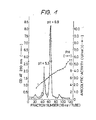
- the enzyme liquid, 10 ml, obtained in Reference Example 1 was charged in a focusing electrophoresis device (inner volume of 150 ml) filled up with Ampholite @ (manufactured by LKB Co., Ltd.) having a pH 3.5 to 10 to subject to isoelectric point fractionation at 4°C for 48 hours at 600 v. After completion of the electrophoresis, fractionation was carried out by 1.6 ml each to measure the amidase activity of the respective fractions. The results as shown in Figure 1 were obtained. As is clear from Figure 5, two peaks of the amidase activity are present. Of these, the latter larger amidase activity peak corresponds to protease I.
- Example 2 After dialyzing the enzyme solution obtained in Example 1 with a 2 mM tris-hydrochloride solution (pH 8.0), condensation was carried out. In order to remove impure proteins present still in a trace amount, electrophoresis was repeated using Ampholine° (pH 4 to 6) under the same conditions as in Example 1 to obtain the results shown in Figure 2. Fractions corresponding to Fraction Numbers 65 to 76 were collected. In order to remove Ampholite® co-present with this enzyme solution, the enzyme solution was passed through a column ( ⁇ 2x50 cm) of Sephadex @ G-50 equilibrated with a 2 mM tris-hydrochloride buffer solution (pH 8.0).
- the thus-purified protease la of the present invention underwent electrophoresis as a single protein by analysis of a disc electrophoresis method.
- the insulin fraction was passed through a column (2x25 cm) of DEAE Sephadex°A25 equilibrated with 7 M urea. After flowing the aforesaid buffer solution down at 4°C in an amount of 800 ml, elution was carried out with a linear concentration slope up to 3 M of the concentration of sodium chloride to obtain successively fraction A having a concentration of about 0.08 to 0. M and fraction B having a concentration of about 0.13 to 0.14 M. The respective fractions were immediately dialyzed to a 0.01 M ammonium acetate solution in the cold for 3 to 4 days. Thereafter, freeze drying was performed to obtain 55 mg of powders from the fraction A and 35 mg of powders from the fraction B. It is confirmed by high speed liquid chromatography and polyacrylamide gel electrophoresis that the former was [Thr-OBu t- B 30 ]-insulin (yield 55%) and the latter was the starting material.
- the product was identified to be human insulin by slab gel electrophoresis and high speed liquid chromatogram. Further, the analytical data of amino acids obtained by subjecting the productto hydrolysis with an acid (6 M hydrochloric acid was used and the reaction was at 110°C for 24 hours) are as follows and well identical with calculated values of human insulin as shown in Table 6.
Landscapes
- Health & Medical Sciences (AREA)
- Chemical & Material Sciences (AREA)
- Life Sciences & Earth Sciences (AREA)
- Organic Chemistry (AREA)
- Genetics & Genomics (AREA)
- Zoology (AREA)
- Engineering & Computer Science (AREA)
- Bioinformatics & Cheminformatics (AREA)
- Wood Science & Technology (AREA)
- Biochemistry (AREA)
- General Health & Medical Sciences (AREA)
- General Engineering & Computer Science (AREA)
- Medicinal Chemistry (AREA)
- Biotechnology (AREA)
- Biomedical Technology (AREA)
- Microbiology (AREA)
- Molecular Biology (AREA)
- Diabetes (AREA)
- Gastroenterology & Hepatology (AREA)
- Biophysics (AREA)
- Toxicology (AREA)
- Endocrinology (AREA)
- Proteomics, Peptides & Aminoacids (AREA)
- Preparation Of Compounds By Using Micro-Organisms (AREA)
- Peptides Or Proteins (AREA)
- Enzymes And Modification Thereof (AREA)
Description
- The present invention relates to a process for semi-synthesis of human insulin. More particularly, the present invention relates to a process for semi-synthesis of human insulin from porcine insulin using as a catalyst Achromobacter protease la or water-soluble cross-linked Achromobacter protease la.
- It is well known that insulin is a hormonal protein which is secreted from pancreas and plays an important role in reducing blood sugar and in sugar metabolism, and is essential for the treatment of diabetes. Animal-produced insulin is used; however such insulin is accompanided by side effects in human diabetes; and easy, economical and industrial production of human insulin has long been desired.
- The different kinds as well as the sequence of amino acids which constitute insulin have already been established and it has long been known that the only difference between human insulin and porcine insulin is that the amino acid at the C-terminal of the B chain is threonine in human insulin and alanine in porcine insulin, and that the B29 amino acid which is directly bound to the alanine or threonine is lysine. Some attempts to semi-synthesize human insulin from porcine insulin have been reported. It is also reported that E. coli producing human insulin was obtained utilizing genetic technology. It is recognized that these processes for preparation are epoch-making, and constitute advanced processes as compared to conventional chemical total synthesis or partial synthesis.
- A process which comprises performing a step of cutting and removing alanine at B30 of porcine insulin to obtain des-B30-alanine insulin, performing as a second step a step of condensing protected threonine as the amino acid at B30 and finally obtaining human insulin is disclosed in Japanese Patent Application (OPI) Nos. 135789/79 and 138391/80 (the term "OPI" as used herein refers to a "published unexaminedJapanese patent application"), Japanese Patent Publication Nos. 18798/82 and 18799/82, etc. Further, a process for substituting protected threonine at B30 in porcine insulin in the presence of trypsin is described in Japanese Patent Application (OPI) No. 135452/81, etc.
- When examining these descriptions in detail, however, the concentration of insulins is high as compared to the amount of reaction solvent and fluidizability of the reaction liquid essential for the reaction is extremely poor; in particular, it is quite impossible to scale up the reaction of industrial production. Further, in these prior art processes in which very high amounts of organic solvents compared to the amount of water must be unavoidably used, dissolution of insulin is improved by the use of organic solvents, but such processes encounter a disadvantage in that the action of enzymes is greatly inhibited. In fact, when the same amount of organic solvents as that of water or higher amounts of organic solvents are mixed with water, the efficiency of enzyme is reduced to 1/10 to 1/100, and one is compelled to use expensive enzyme in a large excess. A further disadvantage is that an enzyme which is not used has to be discarded.
- Further, E. coli producing human insulin is obtained by genetic technology and it is circulated as if such would be commercially available but a question is cast thereon by the informed people (for example, Gendai Kagaku, 1981, November,
page 20, left column, published by Tokyo Kagaku Dojin, Tokyo). It is no exaggeration to say that this technology is not suitable for industrial preparation, i.e. because E. coli obtained by genetic technology does not produce insulin as an exo-enzyme but merely produces the same as an endo-enzyme so that the production yield is extremely small; further mutants are more fragile than mother strains and inferior in the competition for existence. - Synthesis of human insulin from porcine insulin utilizing an enzyme having a specific action to the carboxyl group of L-lysine is described in Japanese Patent Application (OPI) No. 119085/79 by Soejima and Masaki et al., and in Biochemical and Biophysical Research Communication, Vol. 92, page 362 (1980) by Morihara and Oka et al.
- According to these conventional methods the enzyme is reacted with porcine insulin under the condition of pH 8.5, and desalanine insulin (DAI), composed of 29 amino acids in which the bond between lysine at the 29-position and alanine at the 30-position is decomposed and lysine is present on the carboxyl terminal, is obtained.
- Next, when DAI is reacted with threonine-OBu* under the condition of pH 6.5 in the presence of the enzyme, a new peptide bond is synthesized between lysine and threonine and human insulin-OBut is obtained.
- By hydrolysis of human insulin-OBut, human insulin can be synthesized enzymatically and chemically.
- EP-A-0 017 938 describes a process to produce human insulin from animal-insulin which consists in the condensation of a des-B30-insulin with a threonine derivative. The condensation is carried out with the use of A. lyticus protease I, while the deletion of the B30 amino acid is performed with either carboxypeptidase A or with A. lyticus protease I.
- The not-prepublished document WO 83/01074 discloses processes for the semi-synthesis of human insulin involving the use of a protease of Achromobacter.
- The methods applied are all liquid phase reactions using a water-soluble enzyme so that it is necessary to separate the enzyme from human insulin obtained; if the purification of insulin is insufficient, immunological side effects may occur as, for instance, the formation of anti-bodies; the latter represents a serious risk for the patient when insulin is administered over long periods of time.
- It is a primary object of the present invention to provide a process for semi-synthesis of human insulin which is applicable on an industrial scale.
- Further, it is an object of the present invention to provide a process for semi-synthesis of human insulin in which the protease used can be recovered easily and in a stable state. Thus, it is a further object of the present invention to provide a stabilized enzyme useful for the process of semi-synthesizing human insulin.
- Also, it is an object of the present invention to provide a novel alkaline protease which possesses superior properties in the process of semi-synthesizing human insulin.
- As a result of extensive investigations on a process applicable for industrial production, it has been found that human insulin containing at B30 threonine having a protective group can be obtained from porcine insulin in one step, using an enzyme or the water-soluble cross-linked modification thereof which has a synthesis activity larger by two figures than trypsin, and specifically cuts only the acid peptide bond at the carboxyl group site of lysine, as compared to trypsin which cuts all of the acid peptide bonds at the carboxyl group site of the basic amino acids present in the polypeptide chains.
- Another investigation has led to the discovery of a novel alkaline protease which can specifically hydrolyze the ester bond and the amide bond at the carboxyl group of L-lysine, and which is useful for the process of semi-synthesizing human insulin.
- As a result of further investigation, it has been found that Achromobacter protease la can be stabilized without resort to immobilization and with retaining its solubility in water, and this water-soluble enzyme can be separated and purified with ease utilizing the large difference in the molecular weight.
- The present invention is based on the above findings.
- Therefore, the present invention provides a process for semi-synthesis of human insulin by preparing human insulin derivative containing carboxyl group-protected threonine at B30 thereof from porcine insulin by using water as a reaction solvent characterized in that Achromobacter protease la or water-soluble cross-linked Achromobacter protease la is used as a catalyst.
- In yet another embodiment, the present invention provides Achromobacter protease la as a novel alkaline protease capable of catalyzing the process for semi-synthesizing human insulin from porcine insulin.
- Figure 1 represents the first electro-focusing experiment with Ampholine@ (pH 3.5 to 10);
- Figure 2 shows the second electro-focusing with Ampholine@ (
pH 4 to 6); - As a result of further detailed investigations as to a novel protease produced by Achromobacter lyticus, it has been found that a protease obviously different from Achromobacter protease L is obtained by isoelectric point focusing electrophoresis using Ampholite@ having pH 3.5 to 10, and a novel protease has been isolated from the fraction and given the name Achromobacter protease la.
- The present inventors have extensively investigated a method for obtaining the enzyme, its properties as well as a method for its utilization.
- Thus, the present invention provides Achromobacter protease la having the characteristics as described below:
- (i) Molecular weight: 30,000 (determined by a gel filtration method using Sephadex@G-75)
- (ii) Isoeletric point: 5.3
- (iii) pH reactivity: it has an optimum pH at pH 8.5 for the esterase activity and an optimum pH at pH 9.0 for the amidase activity, respectively.
- (iv) Substrate reactivity: it selectively and specifically hydrolyzes the ester bond and the amide bond at the carboxyl group of L-lysine.
- (v) Inhibitor: it is inhibited by diisopropyl phosphofluoride, tosyl-L-lysine chloromethyl ketone and phenylmethylsulfonyl chloride.
- This protease is produced by the genus Achromobacter.
- Achromobacter lyticus M 497-1 is deposited at the Foundation of Fermentation Research Institute, the American Type Culture Collection and the Agency of Industrial Science and Technology, Ministry of International Trade and Industry of Japan und IFO 12725, ATCC 21456 and FERM P-6718, respectively. The production of the enzyme is carried out by cultivating bacteria belonging to the genus Achromobacter in a culture medium. The culture medium may be a solid or liquid. Cultivation may be subjected to settled culture, but it is generally more advantageous that it is carried out under aerobic conditions using a liquid culture, such as shaking culture or aeration spinner culture. To a culture medium composition, any material may be added as long as the growth of the bacteria and the production of Achromobacter protease la are accelerated. That is, as carbon sources, examples include sugars such as glucose, saccharose, dextrin; as nitrogen sources, examples include organic or inorgnic nitrogen-containing compounds such as pepton, meat extract, yeast extract, dry yeast, soybean powders, casein, casamino acid, amino acids, ammonium salts. As inorganic salts, metals such as sodium, potassium, calcium, magnesium, may also be added in the form of phosphates, sulfates, carbonates, chlorides. Vitamins, nucleic acids and compounds related thereto may also be added for the purpose of accelerating the growth of the bacteria and the production of Achromobacter protease la.
- Culture conditions such as liquid property of medium, culture temperature, amount of aeration, culture time, vary depending upon strains used, composition of medium, but, in short, are chosen and controlled appropriately such that an accumulated amount of the desired Achromobacter protease la becomes maximal. In most cases, the liquid property of a medium is about neutral, the culture temperature is between 20 and 35°C, preferably 25 and 30°C, aeration amounts from about 0.5 to 1.5 I/min per 1 liter of the medium, and the culture time is about 1 to 2 days.
- Thus, a bacteria producing Achromobacter protease la is cultured and the same is secreted into and accumulated in the culture liquid.
- To obtain the enzyme, conventional means for separation and purification can suitably be utilized and lead to a standard material having optional purity. That is, the product can be fractionally precipitated by salting out by the addition of salts, such as ammonium sulfate, to the supernatant or the filtrate obtained after removing the cells by a process such as centrifugal separation or filtration; or by adding a hydrophilic organic solvent, such as alcohols, acetone, to the supernatant or the filtrate. Further, the degree of purification can be enhanced by adsorption and desorption using, e.g., alumina, bentonite, calcium phosphate gel, activated charcoal, a chromatographic method using various ion exchange materials, a molecular sieve method using Sephadex@, biogel, singly or in suitable combination thereof. In addition, an isoelectric point precipitation method, a dialysis method, an electrophoresis method, a precipitation method using heavy metal ions, can also be employed. As above, Achromobacter protease la having optional purity can be separated. The method for obtaining the enzyme will be explained in more detail with reference to the examples described hereafter. Titers of amidase activity and esterase activity are determined by the following methods.
- The substrate solution comprises 1.3 ml of a 0.2 M 2-amino-2-methyl-1,3-propandiol buffer solution (pH 9.5) and 0.15 ml of an aqueous 2.5 mM benzoyi-DL-lysine-p-nitroanilide (hereafter referred to as Bz-Lys-p-NA) solution. After preliminarily warming to 30°C, 0.05 ml of an enzyme solution was added to the above solution and the mixture was reacted exactly 25 minutes. After completion of the reaction, 0.5 ml of a 45% (v/v) acetic acid aqueous solution was added to discontinue the reaction. Then, the reaction liquid was colorimetrically measured at 405 nm and its absorbancy was determined. As an enzyme unit, the amount of the enzyme that produced 1 pmole of p-nitroaniline per 1 minute at 30°C was defined as 1 unit (1 p). The method for calculating the enzyme titer corresponds to the following equation.

- After preliminarily warming of 3.0 ml of a 40 mM tris-hydrochloride buffer solution (pH 8.0) containing 1 mM tosyl-L-lysine methyl ester (in the following referred to as TLME) at 30°C, 0.2 ml of an enzyme solution was added thereto and the change of absorbancy (AOD) was measured at 247 nm at 30°C. The amount of the enzyme that hydrolyzed 1 pmole of TLME per 1 minute at 30°C and pH 8.0 was defined as 1 unit. The method for calculating the enzyme titer corresponds to the following equation.

- Enzymatical and chemical characteristics of Achromobacter protease la of the present invention will next be described.
- (i) Molecular weight: 30,000 (as determined by gel filtration method using Sephadex@G-75).
- (ii) Isoelectric point (by an isolelectric fractionation method using Ampholine@;: pH 5.3
- (iii) pH reactivity: it has an optimum pH at pH 9.0 for amidase activity (refer to Figure 1) with Bz-Lys-p-NA, and an optimum pH at pH 8.5 for esterase activity with TLME (refer to Figure 2).
- (iv) pH stability: as shown in Figure 3, the enzyme is stable over a wide pH range from pH 5.0 to 11.0 at low temperature (treated at 4°C for 20 hours).
- (v) Temperature stability: it is stable up to 40°C when heated at pH 9.0 for 15 minutes (refer to Figure 4).
- (vi) Substrate reactivity: Amidase activity was measured with Bz-Lys-p-NA, N-benzoyl-L-arginine-p-nitroanilide (hereafter referred to as Bz-Arg-p-NA), L-lysine-p-nitroanilide (hereafter referred to as Lys-p-NA) and L-arginine-p-nitroanilide (hereafter referred to as Arg-p-NA) and esterase activity was measured with TLME and N-tosyl-L-arginine methyl ester (hereafter referred to as TAME), at pH 8 to 9.5 at 30°C to determine the Michaelis constant (Km) and molecular activity (Kcat) of the enzyme for each of the substrates, and the results shown in Table 1 were obtained. As is clear from this Table 1, this enzyme has an extremely high substrate specificity; the amide bond on the carboxyl group of L-lysine or L-arginine was affected in lysine but was not hydrolyzed in arginine. The enzyme hydrolyzed the ester bond of the carboxyl group in lysine or arginine; the action was strong for lysine but extremely slight for arginine.

- (vii) Influences of inhibitor and various metal salts: Influences of various inhibitors on amidase activity with Bz-Lys-p-NA are shown in Table 2. Further, influences of various metal ions on amidase activity with Bz-Lys-p-NA are shown in Table 3.

- As shown in Table 2, the enzyme is a serine protease which undergoes inhibition by diisopropyl phosphofluoride, phenylmethylsulfonyl fluoride and tosyl-L-lysine chloromethyl ketone.

- As is clear from Table 3, this enzyme is inhibited by zinc ions.
- As described above, this enzyme has a property of specifically hydrolyzing the amide bond and the ester bond of the carboxyl group of L-lysine so that it is applicable in to the fields of food chemistry, pharmaceuticals, clinical chemistry and biochemistry.
- This enzyme can be used in solution as a monomer; a solution of this alternatively, this enzyme is cross-linked with cross-linking agents such as glutaraldehyde, diisocyanate, to convert the same into a water-soluble Achromobacter protease la polymer. It is needless to say that this enzyme is advantageously employed in the modification suitable for each utility or purpose. This novel enzyme has a characteristic substrate specificity that specifically acts on the peptide bond alone at the carboxyl group site of lysine and hydrolyzes the same; for this reason, this enzyme can be utilized concretely in the enzyme decomposition of peptides or proteins for the determination of configuration and order of amino acids, and the decomposition and synthesis of lysyl peptide.
- The characteristic feature of the present invention lies in performing the desired amino acid exchange in one step by choosing water as a reaction solvent.
- It is sufficient that the amount of water or an aqueous medium used as a reaction solvent be employed to an extent that the reaction mixture has fluidizability necessary for proceeding with the reaction. It is unnecessary to adhere to high concentrations incapable of stirring or fluidizing, as in the prior art. The process of the present invention results in a marked progress as to an easy procedure, smooth reaction and improvement in yield.
- As organic solvents used, there is no limit as long as they are miscible with water, and methanol, ethanol, isopropanol, ethylene glycol, methyl cellosolve, acetone, dioxane, dimethylformamide, dimethyl sulfoxide, are exemplified as normal solvents. These organic solvents are employed such that the total volume of a mixture of one or more organic solvents be in the same amount as that of water or in an amount smaller than that of water, or no organic solvent is used, in which the process of the present invention lies.
- The reaction is carried out at 50°C or lower but at 0°C or lower the reaction does not substantially proceed in a practical sense. The pH of the reaction liquid mixture is from 4 to 10, preferably about neutral. When the range of 4 to 10 in pH is not maintained, the reaction is slow and not practical.
- For further improvement attempts have been made to stabilize Achromobacter protease without relying upon immobilization to give an enzyme which is soluble in water and is capable of being separated and purified with ease utilizing the large difference in the molecular weight.
- In general, when enzyme is polymerized in any process, its active site changes and its enzyme activity is decreased; however, the polymer of the present invention showed no decrease in activity and extremely unexpected, useful result has been obtained.
- The water-soluble cross-linked polymer of the present invention is a cross-linked polymer of Achromobacter protease la using a polyfunctional organic compound or the like, likewise a cross-linked polymer using polyamine as a spacer in combination, or a cross-linked polymer likewise using a water-soluble protein in combination; in any case, the resulting water-soluble cross-linked polymer of the present invention has a molecular weight of from about 400,000 to about 700,000, is soluble in water, extremely stable under environmental conditions over wide ranges and exhibits enzyme activity quite equivalent to that of the enzyme prior to polymerization under reaction conditions over wider ranges.
- In cross-linking polymerization of the enzyme, the final concentration thereof in the reaction liquid is adjusted to generally 0.2 to 20 wt%, preferably 1 to 15 wt%. When the enzyme concentration becomes small, the yield of the cross-linked polymer of the present invention is decreased and practical nature is poor; when the concentration exceeds this limit, the product loses its water solubility. The thus-adjusted aqueous enzyme solution is used in combination with any one of the cross-linking agents of the present invention, spacers and water-soluble proteins as shown in Table 4 to allow to be reacted. Thus, the water-soluble cross-linked polymer of the present invention is obtained.

- As the cross-linking agents of the present invention, polyaldehydes such as glutaraldehyde; polyisocyanates such as hexamethylenedithisisocyanate, hexamethylenediisocyanate, toluenediisocyanate; are generally employed, and it is preferred that the cross-linking agent be used in a concentration of about 1 to 5%. When the concentration is too high, the reaction becomes vigorous and insolubilization or the like occurs; when the concentration is too low, the yield is decreased. Examples of the spacers of the present invention incldue polyamines such as spermine, spermidine, and, as water-soluble proteins of the present invention, proteins such as albumin, water-soluble gelatin and the like are preferred since they are supplied particularly inexpensively on an industrial scale. Any of the combinations as described in Table 4 is performed and these mixtures are incubated generally around neutral range of about 30°C for several minutes to 30 hours to cause cross-linking polymerization. Thereafter, raw materials are removed by dialysis, gel filtration is performed, ultra-filtration is performed, ultracentrifugation is performed, electrophoresis using polyacrylamide gel is utilized, or, isoelectric point electrophoresis such as ampholine, is utilized; in any case, the product can easily be isolated. The thus obtained Achromobacter protease la cross-linked polymer of the present invention can be used for enzyme reaction as it is, can be stored in a buffer solution having a suitable pH at 30°C or lower, or, can be stored as a freeze dried product; in any case, the polymer exhibits extremely effective enzyme reaction activity appropriately depending upon necessity.
- The water-soluble cross-linked polymer of Achromobacter protease la in accordance with the present invention shows extremely high activity and specificity; further, pH stability, heat stability and stability in various media are markedly high as compared to the enzyme prior to polymerization.
- The water-soluble cross-linked polymer of Achromobacter protease la in accordance with the present invention strongly acts on the bond of the carboxyl group of lysine but hardly acts on arginine and does not hydrolyze the bond of other amino acids.
- In the case of using the cross-linked polymer in accordance with the present invention, the polymer mixed with its substrate; after reacting the mixture under optimum conditions, the cross-linked polymer of the present invention is recovered by gel filtration or ion exchange materials, etc. Such an easy separation and recovery is one of advantages of the present invention and, at the same time, the cross-linked polymer of the present invention can be repeatedly used because no loss is found in its enzyme activity.
- Due to such a specific activity and stability, it is a matter of course that the polymer can be utilized for enzyme decomposition of peptides in termination of amino acid configuration, decomposition and synthesis and lysyl peptides, etc., and the present inventors have established a process for semi-synthesizing human insulin using the cross-linked polymer of the present invention.
- As methods for converting porcine insulin into human insulin, there are chemical methods as described in Science, Vol. 177 (1972), page 623, authored by Luttenberg, Physiological Chemistry, Vol. 357 (1976), page 759, authored by Geiger, et al., etc., and enzyme methods as described in Japanese Patent Application (OPI) Nos. 135789/79 and 18799/80, etc. The former is complicated, produces many by-products and provides low yields, and the latter is unavoidably expensive from an industrial viewpoint while some improvement was made since difficulties are seen in the amount of enzyme used and recovery of the enzyme or in the use of organic solvents.
- The process of the present invention is an epoch-making process for semi-synthesizing human insulin which solves all of these drawbacks. Due to water solubility of the cross-linked polymer of the enzyme in accordance with the present invention, the reaction can be performed in a homogeneous system; and due to extremely high stability, it is possible to recover and repeatedly use the polymer without losing the activity of the enzyme action; or, the enzyme reaction can be carried out in high yield both in water alone or in the system in which organic solvents miscible with water are used in combination over wide ranges. Further, due to high molecular weight of the cross-linked polymer of the present invention, separation and purification of the product as well as recovery of the cross-linked polymer of the present invention are extremely advantageous since the product can easily be taken out by, for example, a molecular sieve gel filtration method.
- To utilize the cross-linked polymer of the present invention for semi-synthesis of human insulin, there are two reactions. One comprises reacting porcine insulin, L-threonine in which the carboxyl group is protected or unprotected (hereafter represented by Thr-OR, wherein R is hydrogen or substituted or unsubstituted alkyl or aralkyl), and the cross-linked polymer in accordance with the present invention to prepare a human insulin derivative having Thr-OR at B30 and then converting the derivative into human insulin in a conventional manner; the other comprises incubating porcine insulin and the cross-linked polymer of the present invention, cutting 830 from the resulting desalanine insulin (hereafter referred to as DAI), then incubating DAI, Thr-OR and the cross-linked polymer of the present invention to prepare human insulin derivatve having Thr-OR at B30 (hereafter referred to as B30 RO-Thr-I) and then converting the derivative into human insulin in a conventional manner.
- In any case, water alone or one or more organic solvents miscible with water for increasing the solubility of raw materials in combination can be used as reaction solvents. With respect to the amount of the organic solvents used in combination, there is no particular limit. Examples of organic solvents used include methanol, ethanol, isopropanol, ethylene glycol, methyl cellosolve, acetone, dioxane, dimethylformamide, dimethyl sulfoxide. The stability of the water-soluble cross-linked polymer in accordance with the present invention in these solvents is shown in Table 5 in comparison with the enzyme prior to polymerization, wherein there is no fear that the activity is reduced.

- The protected threonine is represented by Thr-OR. That is, the protective group is to protect the carboxyl group of threonine. It is unavoidable to protect other functional groups at the same time but in the case of using threonine having, e.g., the hydroxyl group being simultaneously protected, there is a possibility accompanying a disadvantage that requires an additional step for obtaining the desired human insulin. R in Thr-OR is substituted or unsubstituted alkyl or aralkyl and examples thereof include methyl, ethyl, propyl, isopropyl, tertiary butyl, chloroethyl, pentyl, octyl, 2-(propylsulfonyl)ethyl, benzyl, phenylethyl, p-methylphenethyl, 2,4,6-trimethylbenzyl.
- The reaction temperature is below 50°C but preferably from 20 to 40°C. The pH of the reaction system is from 4 to 10, particularly preferably 5 to 8. It is desired that the molar concentration ratio of Thr-OR to porcine insulin or DAI be large but generally sufficient to be about 1:5 to 1:1000. As buffering agents of the reaction liquid, trishydroxymethylaminomethane, citrate, phosphate buffer solutions, etc., are employed. It is preferred that the concentration of the cross-linked polymer in accordance with the present invention in the reaction liquid be about from 0.1 to 10 mg/ml. The reaction time is generally from 3 to 72 hours, in most cases, 6 to 24 hours.
- The obtained B30RO-Thr-I is converted into human insulin in a conventional manner ordinarily used for peptide synthesis, for example, when R is t-butyl, i.e., B3oBu`O-Thr-I is used, by removing t-butyl through treatment with anisole-trifluoroacetic acid. Also when R in Thr-OR is hydrogen, i.e., threonine is used, it was confirmed by an experiment using labelled threonine that the reaction of peptide exchange proceeded, but it is not easy to separate and purify the product from raw porcine insulin and such is not recommendable.
- Human insulin semi-synthesized by the process of the present invention can be converted into medical preparations in a conventional manner, which are administered to patients, for example, as drugs for treating diabetes. The process of the present invention which provides human insulin extremely efficiently is industrially utilizable without any disturbance and greatly contributes to the art. Hereafter, some examples and reference examples are shown but these examples are not deemed to limit the present invention. In examples showing cross-linking polymerization, the yields are shown in polymerization, but enzyme which was not consumed in the polymerization was again subjected to subsequent cross-linking polymerization so that the enzyme provides the water-soluble cross-linked polymer of the present invention wastelessly without being damaged under mild conditions for polymerization.
- A liquid medium (pH 7.2) containing 1 % of pepton, 0.5% of milk casein, 1.0% of saccharose, 0.01 % of K2HP04 and 0.01 % of MgS04 .
7H 20 was separately charged by 100 ml each in a 500 ml volume Sakaguchi flask. After sterilization, Achromobacter lyticus M497-1 was inoculated and cultivation was performed at 28°C for 24 hours to prepare a seed culture solution. This seed culture solution, 1.5 I, was transplanted to a fermentation tank having charged 30 I of the same medium composition and aeration spinner culture was performed for 4 days while feeding 15 I/min of air at 28°C. After cooling 30 I of the obtained culture solution to about 15°C, bacteria were removed using a centrifuge to obtain about 26 I of the supernatant. To the supernatant, 260 ml of a 4% benzalkonium chloride solution was gradually added dropwise while mildly stirring. After allowing to stand at 4°C for 1 hour, the formed precipitate was removed using a centrifuge to obtain about 25.5 of the supernatant. To the thus-obtained supernatant (4°C), 80 I of acetone cooled to -5°C was gradually added while mildly stirring. After further allowing to stand in the cold overnight, the formed precipitate was collected using a centrifuge and washed with cold acetone to obtain about 40 g of wet precipitate. After drying this wet precipitate with air, the precipitate was dried for 2 days under reduced pressure in a desiccator laid with silica gel to obtain about 14 g of gray white powdery crude enzyme specimen. The amidase activity of the grude enzyme specimen to Bz-Lys-p-NA was 21.6 units/g. In a 10 mM tris-hydrochloride buffer solution (pH 8.0) 10 g of this acetone powder was dissolved and to 500 ml of the resulting crude enzyme solution, 200 g (wet weight) of carboxymethyl cellulose previously equilibrated with a 10 mM tris-hydrochloride buffer solution (pH 8.0) was added. After stirring the mixture mildly for about 1 hour, the mixture was filtered using a glass filter. The ion exchange cellulose on the filter was washed with a suitable amount of the same buffer solution and the washed liquid was combined with the previous filtrate to obtain 725 ml of un enzyme solution. To 725 ml of the obtained enzyme solution, 460 g (wet weight) of diethylaminoethyl cellulose previously equilibrated with the same buffer solution was added. After stirring the mixture at 4°C for 1 hour, filtration and washing were performed in a manner similar described above. The obtained filtrate was condensed using diaflow membrane UM-10. Thereafter, the condensed filtrate was dialyzed thoroughly against a 2 mM tris-hydrochloride buffer solution (pH 8.0) to obtain 492 ml of an enzyme solution. This enzyme solution was added and adsorbed to a column (φ4x21 cm) of AH-Sepharose@48 (manufactured by Pharmacia Co., Ltd.) equilibrated with a 2 mM tris-hydrochloride buffer solution (pH 8.0). After thoroughly washing with the same buffer solution, elution was carried out with 2 I of the same buffer solution in which the concentration of sodium chloride was linearly increased from 0 to 1 M. The amidase activity portions eluted at about 0.3 M to 0.5 M of the sodium chloride concentration were collected. After thoroughly dialyzing this enzyme solution with a 2 mM tris-hydrochloride buffer solution (pH 8.0), the solution was condensed using diaflow membrane UM-10 to obtain 10 ml of a concentrated liquid. This concentrated liquid contained protease I, in addition to protease la. The amidase activity of this liquid was 14.4 units/ml. - The enzyme liquid, 10 ml, obtained in Reference Example 1 was charged in a focusing electrophoresis device (inner volume of 150 ml) filled up with Ampholite@ (manufactured by LKB Co., Ltd.) having a pH 3.5 to 10 to subject to isoelectric point fractionation at 4°C for 48 hours at 600 v. After completion of the electrophoresis, fractionation was carried out by 1.6 ml each to measure the amidase activity of the respective fractions. The results as shown in Figure 1 were obtained. As is clear from Figure 5, two peaks of the amidase activity are present. Of these, the latter larger amidase activity peak corresponds to protease I. It is understood that among the peaks having the maximum amdiase activity at the about 46th of the elution fractions, i.e., two activity peaks, the former peak is not negligible. The desired enzyme is contained in this peak fraction and 12.6 ml of this fraction was pooled. The amidase activity was 18.9 µ, specific activity (µ/OD280) was 12.9 and the yield was 8.7% (from acetone powder).
- After dialyzing the enzyme solution obtained in Example 1 with a 2 mM tris-hydrochloride solution (pH 8.0), condensation was carried out. In order to remove impure proteins present still in a trace amount, electrophoresis was repeated using Ampholine° (
pH 4 to 6) under the same conditions as in Example 1 to obtain the results shown in Figure 2. Fractions corresponding to Fraction Numbers 65 to 76 were collected. In order to remove Ampholite® co-present with this enzyme solution, the enzyme solution was passed through a column (φ2x50 cm) of Sephadex@G-50 equilibrated with a 2 mM tris-hydrochloride buffer solution (pH 8.0). After collecting the amidase activity fractions, the fractions were condensed to obtain 5.4 ml of a purified enzyme solution. The amidase activity was 16.1 units. The specific activity (N/OD280) was 2.24 and the yield was 7.4% (from acetone powder). The thus-purified protease la of the present invention underwent electrophoresis as a single protein by analysis of a disc electrophoresis method. - This bacteria, Achromobacter lyticus M497-1 was deposited in Fermentation Research Institute, Agency of Industrial Science and Technology. The deposition number is the accession number 6718 (FERM P-6718).
- After neutralizing 100 mg (2 mM) of porcine insulin and 3.08 g (2 M) of L-threonine-tertiary butyl ester (Thr-OBut) with 3.5 ml of 5 M acetic acid, 1 M acetate buffer solution is added thereto to dissolve and the total volume was made 8.5 ml (pH 7.0). Thereto, 0.3 ml of a 1 M acetate buffer solution (pH 7.0) containing 1 mg of Achromobacter protease la was added and the mixture was kept at 37°C overnight. It is confirmed by high speed liquid chromatography that the desired compound, insulin having threonine protected with tertiary butyl at B30 thereof [(Thr-OBut-B30)-insulin], was formed in the yield of 65%.
- After rendering the reaction liquid mixture acidic with glacial acetic acid, gel filtration was carried out using a column (40x200 cm) of ultra-finely divided Sephadex@G-50 to fractionate an enzyme fraction, an insulin fraction and a Thr-OBut fraction. The enzyme fraction can be reused after dialysis thereof and the Thr-OBut fraction after condensation thereof.
- After freeze drying, the insulin fraction was passed through a column (2x25 cm) of DEAE Sephadex°A25 equilibrated with 7 M urea. After flowing the aforesaid buffer solution down at 4°C in an amount of 800 ml, elution was carried out with a linear concentration slope up to 3 M of the concentration of sodium chloride to obtain successively fraction A having a concentration of about 0.08 to 0. M and fraction B having a concentration of about 0.13 to 0.14 M. The respective fractions were immediately dialyzed to a 0.01 M ammonium acetate solution in the cold for 3 to 4 days. Thereafter, freeze drying was performed to obtain 55 mg of powders from the fraction A and 35 mg of powders from the fraction B. It is confirmed by high speed liquid chromatography and polyacrylamide gel electrophoresis that the former was [Thr-OBut-B30]-insulin (yield 55%) and the latter was the starting material.
- To 50 mg of the obtained [Thr-OBut-B30]-insulin, 2 ml of trifluoroacetic acid containing 0.2 ml of anisole was added and the mixture was kept at room temperature for 30 minutes. Trifluoroacetic acid was removed in a nitrogen flow and anisole was extracted with 15 ml of ether in the presence of 2 ml of 1 N acetic acid. The acetic acid portion was freeze dried to obtain 43 mg of human insulin.
- The product was identified to be human insulin by slab gel electrophoresis and high speed liquid chromatogram. Further, the analytical data of amino acids obtained by subjecting the productto hydrolysis with an acid (6 M hydrochloric acid was used and the reaction was at 110°C for 24 hours) are as follows and well identical with calculated values of human insulin as shown in Table 6.

- In case that R of Thr-OR being tertiary butyl in the aforesaid example was replaced with methyl, isopropyl, phenethyl and p-methylphenethyl, similar course and results were obtained.
- After neutralizing 250 mg (5 mM) of porcine insulin and 1 g (0.5 M) of Thr-OBut with 1.5 ml of 5 N acetic acid, 6 ml of a 2 M acetate buffer solution and dimethylformamide liquid mixture in 6:4 (volume) was added thereto and pH was adjusted to 6.5. Thereto, 1.5 ml of a 0.2 M acetate buffer solution (pH 6.5) containing 1 mg of Achromobacter protease la was added and the mixture was kept at 37°C overnight. It can be confirmed by high speed liquid chromatography that [Thr-OBut-B30]-insulin was formed in the yield of 75%. Then, the product was treated and purified in a manner similar to Example 3 to obtain 150 mg of human insulin. The yield was 60%.
- In case that R of Thr-OR was replaced with ethyl, 2-(ethylsulfonyl)ethyl and 2,4,6-trimethylbenzyl, in place of the aforesaid example in which tertiary butyl was used, similar course and results were obtained even when the volume ratio of 2 M acetate buffer solution and dimethylformamide was changed to 5:5 and 8:2 and further the organic solvents were changed to alcohol, glycerol and dioxane.
Claims (13)
Priority Applications (1)
| Application Number | Priority Date | Filing Date | Title |
|---|---|---|---|
| AT83104036T ATE58174T1 (en) | 1982-04-23 | 1983-04-25 | METHOD OF SEMI-SYNTHESIS OF HUMAN INSULIN AND ALKALINE PROTEASE TO BE USED THEREFORE. |
Applications Claiming Priority (8)
| Application Number | Priority Date | Filing Date | Title |
|---|---|---|---|
| JP68238/82 | 1982-04-23 | ||
| JP6823882A JPS58187186A (en) | 1982-04-23 | 1982-04-23 | Immobilized enzyme |
| JP123917/82 | 1982-07-16 | ||
| JP12391782A JPS5914798A (en) | 1982-07-16 | 1982-07-16 | Process for semisynthesis of human insulin |
| JP57162976A JPS5951789A (en) | 1982-09-18 | 1982-09-18 | Stabilized enzyme |
| JP162976/82 | 1982-09-18 | ||
| JP169428/82 | 1982-09-28 | ||
| JP57169428A JPS5959189A (en) | 1982-09-28 | 1982-09-28 | Novel alkali protease |
Related Child Applications (3)
| Application Number | Title | Priority Date | Filing Date |
|---|---|---|---|
| EP19890123550 Division-Into EP0367302A3 (en) | 1982-04-23 | 1983-04-25 | Process for semi-synthesis of human insulin, water-soluble cross-linked achromobacter protease i for use therein and a process for preparing the same |
| EP19890123550 Division EP0367302A3 (en) | 1982-04-23 | 1983-04-25 | Process for semi-synthesis of human insulin, water-soluble cross-linked achromobacter protease i for use therein and a process for preparing the same |
| EP89123550.9 Division-Into | 1983-04-25 |
Publications (3)
| Publication Number | Publication Date |
|---|---|
| EP0092829A2 EP0092829A2 (en) | 1983-11-02 |
| EP0092829A3 EP0092829A3 (en) | 1985-08-21 |
| EP0092829B1 true EP0092829B1 (en) | 1990-11-07 |
Family
ID=27464963
Family Applications (2)
| Application Number | Title | Priority Date | Filing Date |
|---|---|---|---|
| EP19890123550 Withdrawn EP0367302A3 (en) | 1982-04-23 | 1983-04-25 | Process for semi-synthesis of human insulin, water-soluble cross-linked achromobacter protease i for use therein and a process for preparing the same |
| EP19830104036 Expired EP0092829B1 (en) | 1982-04-23 | 1983-04-25 | Process for semi-synthesis of human insulin and alkaline protease for use therein |
Family Applications Before (1)
| Application Number | Title | Priority Date | Filing Date |
|---|---|---|---|
| EP19890123550 Withdrawn EP0367302A3 (en) | 1982-04-23 | 1983-04-25 | Process for semi-synthesis of human insulin, water-soluble cross-linked achromobacter protease i for use therein and a process for preparing the same |
Country Status (3)
| Country | Link |
|---|---|
| EP (2) | EP0367302A3 (en) |
| DE (1) | DE3381980D1 (en) |
| DK (2) | DK182483A (en) |
Families Citing this family (5)
| Publication number | Priority date | Publication date | Assignee | Title |
|---|---|---|---|---|
| US5618710A (en) * | 1990-08-03 | 1997-04-08 | Vertex Pharmaceuticals, Inc. | Crosslinked enzyme crystals |
| US5801022A (en) * | 1990-08-03 | 1998-09-01 | Vertex Pharmaceuticals, Incorporated | Method of producing a product with crosslinked crystals of thermolysin |
| AU662104B2 (en) * | 1990-08-03 | 1995-08-24 | Vertex Pharmaceuticals Incorporated | Use of crosslinked crystals as a novel form of enzyme immobilization |
| WO1997033984A1 (en) * | 1996-03-12 | 1997-09-18 | Novo Nordisk A/S | Novel achromobacter lyticus protease variants |
| US7396903B2 (en) * | 2001-11-19 | 2008-07-08 | Novo Nordisk A/S | Process for preparing insulin compounds |
Family Cites Families (8)
| Publication number | Priority date | Publication date | Assignee | Title |
|---|---|---|---|---|
| CH564031A5 (en) * | 1968-03-29 | 1975-07-15 | Anvar | |
| US4251631A (en) * | 1978-02-23 | 1981-02-17 | Research Products Rehovot Ltd. | Cross-linked enzyme membrane |
| NO153061C (en) * | 1979-04-13 | 1986-01-08 | Shionogi & Co | PROCEDURE FOR THE PREPARATION OF A B30 THREON INSULIN |
| DK147437A (en) * | 1980-02-11 | 1900-01-01 | Process for preparing human insulin or threonine B30 esters of human insulin, or a salt or complex thereof | |
| DE3101382A1 (en) * | 1981-01-17 | 1982-09-02 | Hoechst Ag, 6000 Frankfurt | "METHOD FOR PRODUCING HUMANISULIN OR ITS DERIVATIVES FROM PIG INSULIN OR ITS DERIVATIVES" |
| JPS58500739A (en) * | 1981-05-20 | 1983-05-12 | ノルデイスク インシユリンラボラトリユ−ム | Method for producing insulin derivatives |
| JPS58501208A (en) * | 1981-08-10 | 1983-07-28 | ノルデイスク インシユリンラボラトリユ−ム | Method for producing insulin derivatives |
| AU551174B2 (en) * | 1981-09-15 | 1986-04-17 | Nordisk Insulinlaboratorium | Enzymatic preparation of human insulin or b-30 esters thereof |
-
1983
- 1983-04-25 DK DK182483A patent/DK182483A/en not_active Application Discontinuation
- 1983-04-25 EP EP19890123550 patent/EP0367302A3/en not_active Withdrawn
- 1983-04-25 EP EP19830104036 patent/EP0092829B1/en not_active Expired
- 1983-04-25 DE DE8383104036T patent/DE3381980D1/en not_active Expired - Fee Related
-
1991
- 1991-08-29 DK DK152791A patent/DK152791A/en not_active Application Discontinuation
Also Published As
| Publication number | Publication date |
|---|---|
| DK152791D0 (en) | 1991-08-29 |
| DK182483A (en) | 1983-10-24 |
| DE3381980D1 (en) | 1990-12-13 |
| EP0092829A3 (en) | 1985-08-21 |
| EP0092829A2 (en) | 1983-11-02 |
| EP0367302A2 (en) | 1990-05-09 |
| DK152791A (en) | 1991-08-29 |
| DK182483D0 (en) | 1983-04-25 |
| EP0367302A3 (en) | 1991-06-19 |
Similar Documents
| Publication | Publication Date | Title |
|---|---|---|
| EP0610320B1 (en) | Purified chitin deacetylase | |
| JPH11504217A (en) | Method for producing anti-obesity protein | |
| EP0017938B1 (en) | Process for preparing a b30-threonine insulin | |
| JPS62171699A (en) | Production of protein | |
| AU663991B2 (en) | DNA encoding chitin deacetylase | |
| CN1060212C (en) | Dictyostelium dipeptidylaminopeptidase | |
| Bayer et al. | Preparation of deglycosylated egg white avidin | |
| Sodek et al. | Large-scale preparation and some properties of penicillopepsin, the acid proteinase of Penicillium janthinellum | |
| JP3005335B2 (en) | Method for enzymatic conversion of preproinsulin to insulin | |
| EP0092829A2 (en) | Process for semi-synthesis of human insulin and alkaline protease for use therein | |
| EP0659886B1 (en) | Enzymatic conversion of proteins using immobilized dictyostelium dipeptidylaminopeptidase | |
| CA1204687A (en) | Alkaline protease | |
| US4014860A (en) | Plasminostreptin (enzyme inhibitor) and method for producing it from streptomyces | |
| JPS5928394B2 (en) | Endoproteinase-Lys-C from bacteria, method for obtaining it, and method for determining sequence order of proteins and peptides | |
| US4634671A (en) | Water-soluble cross-linked polymer of lysyl endopeptidase, process for preparing same and use of same | |
| US6297040B1 (en) | Chitin deacetylase preparations | |
| JP3118331B2 (en) | Method for producing cyclohexanecarboxylic acid phenyl ester hydrolase | |
| EP0735143B1 (en) | Process for preparing D-amino acids | |
| EP0269390B1 (en) | Enzymatic l-aspartyl-l-phenylalanine alkyl ester production | |
| Moo-Penn et al. | The purification and physicochemical properties of a lytic enzyme induced by coliphage N20F' | |
| JPH07289256A (en) | Aminopeptidase and method for producing the same | |
| JPH0998779A (en) | Trehalose synthase, method for producing the same, and method for producing trehalose using the same | |
| JP2996149B2 (en) | Method for producing D-amino acid | |
| JP3061329B2 (en) | Cyclohexanecarboxylic acid phenyl ester hydrolase | |
| JP2950865B2 (en) | New aspartate racemase |
Legal Events
| Date | Code | Title | Description |
|---|---|---|---|
| PUAI | Public reference made under article 153(3) epc to a published international application that has entered the european phase |
Free format text: ORIGINAL CODE: 0009012 |
|
| AK | Designated contracting states |
Designated state(s): AT BE CH DE FR GB IT LI LU NL SE |
|
| PUAL | Search report despatched |
Free format text: ORIGINAL CODE: 0009013 |
|
| AK | Designated contracting states |
Designated state(s): AT BE CH DE FR GB IT LI LU NL SE |
|
| 17P | Request for examination filed |
Effective date: 19851028 |
|
| 17Q | First examination report despatched |
Effective date: 19870602 |
|
| GRAA | (expected) grant |
Free format text: ORIGINAL CODE: 0009210 |
|
| AK | Designated contracting states |
Kind code of ref document: B1 Designated state(s): AT BE CH DE FR GB IT LI LU NL SE |
|
| REF | Corresponds to: |
Ref document number: 58174 Country of ref document: AT Date of ref document: 19901115 Kind code of ref document: T |
|
| XX | Miscellaneous (additional remarks) |
Free format text: TEILANMELDUNG 89123550.9 EINGEREICHT AM 25/04/83. |
|
| ET | Fr: translation filed | ||
| REF | Corresponds to: |
Ref document number: 3381980 Country of ref document: DE Date of ref document: 19901213 |
|
| ITF | It: translation for a ep patent filed | ||
| PGFP | Annual fee paid to national office [announced via postgrant information from national office to epo] |
Ref country code: SE Payment date: 19910131 Year of fee payment: 9 |
|
| PGFP | Annual fee paid to national office [announced via postgrant information from national office to epo] |
Ref country code: BE Payment date: 19910228 Year of fee payment: 9 |
|
| PGFP | Annual fee paid to national office [announced via postgrant information from national office to epo] |
Ref country code: CH Payment date: 19910307 Year of fee payment: 9 |
|
| PGFP | Annual fee paid to national office [announced via postgrant information from national office to epo] |
Ref country code: LU Payment date: 19910328 Year of fee payment: 9 |
|
| PGFP | Annual fee paid to national office [announced via postgrant information from national office to epo] |
Ref country code: AT Payment date: 19910412 Year of fee payment: 9 |
|
| PGFP | Annual fee paid to national office [announced via postgrant information from national office to epo] |
Ref country code: GB Payment date: 19910415 Year of fee payment: 9 |
|
| PGFP | Annual fee paid to national office [announced via postgrant information from national office to epo] |
Ref country code: FR Payment date: 19910429 Year of fee payment: 9 |
|
| ITTA | It: last paid annual fee | ||
| PGFP | Annual fee paid to national office [announced via postgrant information from national office to epo] |
Ref country code: NL Payment date: 19910430 Year of fee payment: 9 Ref country code: DE Payment date: 19910430 Year of fee payment: 9 |
|
| EPTA | Lu: last paid annual fee | ||
| PLBE | No opposition filed within time limit |
Free format text: ORIGINAL CODE: 0009261 |
|
| STAA | Information on the status of an ep patent application or granted ep patent |
Free format text: STATUS: NO OPPOSITION FILED WITHIN TIME LIMIT |
|
| 26N | No opposition filed | ||
| PG25 | Lapsed in a contracting state [announced via postgrant information from national office to epo] |
Ref country code: LU Free format text: LAPSE BECAUSE OF NON-PAYMENT OF DUE FEES Effective date: 19920425 Ref country code: GB Effective date: 19920425 Ref country code: AT Effective date: 19920425 |
|
| PG25 | Lapsed in a contracting state [announced via postgrant information from national office to epo] |
Ref country code: SE Effective date: 19920426 |
|
| PG25 | Lapsed in a contracting state [announced via postgrant information from national office to epo] |
Ref country code: LI Effective date: 19920430 Ref country code: CH Effective date: 19920430 Ref country code: BE Effective date: 19920430 |
|
| BERE | Be: lapsed |
Owner name: WAKO PURE CHEMICAL INDUSTRIES LTD Effective date: 19920430 |
|
| PG25 | Lapsed in a contracting state [announced via postgrant information from national office to epo] |
Ref country code: NL Effective date: 19921101 |
|
| NLV4 | Nl: lapsed or anulled due to non-payment of the annual fee | ||
| GBPC | Gb: european patent ceased through non-payment of renewal fee | ||
| PG25 | Lapsed in a contracting state [announced via postgrant information from national office to epo] |
Ref country code: FR Effective date: 19921230 |
|
| REG | Reference to a national code |
Ref country code: CH Ref legal event code: PL |
|
| PG25 | Lapsed in a contracting state [announced via postgrant information from national office to epo] |
Ref country code: DE Effective date: 19930101 |
|
| REG | Reference to a national code |
Ref country code: FR Ref legal event code: ST |
|
| EUG | Se: european patent has lapsed |
Ref document number: 83104036.5 Effective date: 19921108 |