EP0090681B1 - Novel 1,2-dihydropyrido-(3,4-b)pyrazines - Google Patents
Novel 1,2-dihydropyrido-(3,4-b)pyrazines Download PDFInfo
- Publication number
- EP0090681B1 EP0090681B1 EP83400377A EP83400377A EP0090681B1 EP 0090681 B1 EP0090681 B1 EP 0090681B1 EP 83400377 A EP83400377 A EP 83400377A EP 83400377 A EP83400377 A EP 83400377A EP 0090681 B1 EP0090681 B1 EP 0090681B1
- Authority
- EP
- European Patent Office
- Prior art keywords
- carbon atoms
- amino
- compound
- group
- hydrogen
- Prior art date
- Legal status (The legal status is an assumption and is not a legal conclusion. Google has not performed a legal analysis and makes no representation as to the accuracy of the status listed.)
- Expired
Links
- ILZWGWOJNKERQN-UHFFFAOYSA-N 1,2-dihydropyrido[3,4-b]pyrazine Chemical class C1=NC=C2N=CCNC2=C1 ILZWGWOJNKERQN-UHFFFAOYSA-N 0.000 title claims abstract description 13
- 150000001875 compounds Chemical class 0.000 claims abstract description 73
- 125000004432 carbon atom Chemical group C* 0.000 claims abstract description 34
- 125000001495 ethyl group Chemical group [H]C([H])([H])C([H])([H])* 0.000 claims abstract description 25
- 229910052739 hydrogen Inorganic materials 0.000 claims abstract description 23
- 239000001257 hydrogen Substances 0.000 claims abstract description 22
- 125000002496 methyl group Chemical group [H]C([H])([H])* 0.000 claims abstract description 17
- 125000000217 alkyl group Chemical group 0.000 claims abstract description 11
- 125000004435 hydrogen atom Chemical group [H]* 0.000 claims abstract description 11
- UFHFLCQGNIYNRP-UHFFFAOYSA-N Hydrogen Chemical compound [H][H] UFHFLCQGNIYNRP-UHFFFAOYSA-N 0.000 claims abstract description 8
- 150000002923 oximes Chemical class 0.000 claims description 15
- 125000005907 alkyl ester group Chemical group 0.000 claims description 9
- 238000009903 catalytic hydrogenation reaction Methods 0.000 claims description 7
- 150000002576 ketones Chemical class 0.000 claims description 7
- 125000004202 aminomethyl group Chemical group [H]N([H])C([H])([H])* 0.000 claims description 4
- 239000003937 drug carrier Substances 0.000 claims description 4
- 238000004519 manufacturing process Methods 0.000 claims description 4
- YUGXUWKAJCUFGZ-UHFFFAOYSA-N (4-amino-6-chloro-5-nitropyrimidin-2-yl)carbamic acid Chemical compound NC1=NC(NC(O)=O)=NC(Cl)=C1[N+]([O-])=O YUGXUWKAJCUFGZ-UHFFFAOYSA-N 0.000 claims description 3
- AGUQAJLJNCPEHS-UHFFFAOYSA-N (6-amino-4-chloro-5-nitropyridin-2-yl)carbamic acid Chemical compound NC1=NC(NC(O)=O)=CC(Cl)=C1[N+]([O-])=O AGUQAJLJNCPEHS-UHFFFAOYSA-N 0.000 claims description 3
- YJDBOVDOFBNOBT-UHFFFAOYSA-N 1-[6-amino-5-nitro-4-(2-oxoethylamino)pyridin-2-yl]-3-hydroxyurea Chemical compound NC1=NC(NC(=O)NO)=CC(NCC=O)=C1[N+]([O-])=O YJDBOVDOFBNOBT-UHFFFAOYSA-N 0.000 claims description 3
- 125000000956 methoxy group Chemical group [H]C([H])([H])O* 0.000 claims 4
- 230000003301 hydrolyzing effect Effects 0.000 claims 1
- 230000001590 oxidative effect Effects 0.000 claims 1
- 239000008194 pharmaceutical composition Substances 0.000 claims 1
- XWQXKHFCOBEDKZ-UHFFFAOYSA-N pyrido[3,4-b]pyrazin-7-ylcarbamic acid Chemical compound C1=CN=C2C=NC(=CC2=N1)NC(=O)O XWQXKHFCOBEDKZ-UHFFFAOYSA-N 0.000 claims 1
- 125000002924 primary amino group Chemical group [H]N([H])* 0.000 abstract description 11
- 150000002431 hydrogen Chemical class 0.000 abstract description 3
- 230000001093 anti-cancer Effects 0.000 abstract description 2
- 125000000484 butyl group Chemical group [H]C([*])([H])C([H])([H])C([H])([H])C([H])([H])[H] 0.000 abstract description 2
- 125000001436 propyl group Chemical group [H]C([*])([H])C([H])([H])C([H])([H])[H] 0.000 abstract description 2
- 125000003545 alkoxy group Chemical group 0.000 abstract 2
- 125000003118 aryl group Chemical group 0.000 abstract 2
- 125000004104 aryloxy group Chemical group 0.000 abstract 2
- 229910052736 halogen Inorganic materials 0.000 abstract 2
- 125000002887 hydroxy group Chemical group [H]O* 0.000 abstract 2
- ZCYVEMRRCGMTRW-UHFFFAOYSA-N 7553-56-2 Chemical compound [I] ZCYVEMRRCGMTRW-UHFFFAOYSA-N 0.000 abstract 1
- WKBOTKDWSSQWDR-UHFFFAOYSA-N Bromine atom Chemical compound [Br] WKBOTKDWSSQWDR-UHFFFAOYSA-N 0.000 abstract 1
- ZAMOUSCENKQFHK-UHFFFAOYSA-N Chlorine atom Chemical compound [Cl] ZAMOUSCENKQFHK-UHFFFAOYSA-N 0.000 abstract 1
- PXGOKWXKJXAPGV-UHFFFAOYSA-N Fluorine Chemical compound FF PXGOKWXKJXAPGV-UHFFFAOYSA-N 0.000 abstract 1
- 125000004644 alkyl sulfinyl group Chemical group 0.000 abstract 1
- 125000004390 alkyl sulfonyl group Chemical group 0.000 abstract 1
- 125000004414 alkyl thio group Chemical group 0.000 abstract 1
- 125000003277 amino group Chemical group 0.000 abstract 1
- 125000003710 aryl alkyl group Chemical group 0.000 abstract 1
- 125000005135 aryl sulfinyl group Chemical group 0.000 abstract 1
- 125000004391 aryl sulfonyl group Chemical group 0.000 abstract 1
- 125000005110 aryl thio group Chemical group 0.000 abstract 1
- GDTBXPJZTBHREO-UHFFFAOYSA-N bromine Substances BrBr GDTBXPJZTBHREO-UHFFFAOYSA-N 0.000 abstract 1
- 229910052794 bromium Inorganic materials 0.000 abstract 1
- 229910052801 chlorine Inorganic materials 0.000 abstract 1
- 239000000460 chlorine Substances 0.000 abstract 1
- 229910052731 fluorine Inorganic materials 0.000 abstract 1
- 239000011737 fluorine Substances 0.000 abstract 1
- 150000002367 halogens Chemical class 0.000 abstract 1
- 125000001183 hydrocarbyl group Chemical group 0.000 abstract 1
- 229910052740 iodine Inorganic materials 0.000 abstract 1
- 239000011630 iodine Substances 0.000 abstract 1
- 125000001624 naphthyl group Chemical group 0.000 abstract 1
- 125000000542 sulfonic acid group Chemical group 0.000 abstract 1
- LFQSCWFLJHTTHZ-UHFFFAOYSA-N Ethanol Chemical compound CCO LFQSCWFLJHTTHZ-UHFFFAOYSA-N 0.000 description 72
- 239000000243 solution Substances 0.000 description 26
- 229910001868 water Inorganic materials 0.000 description 26
- 239000000203 mixture Substances 0.000 description 23
- XLYOFNOQVPJJNP-UHFFFAOYSA-N water Substances O XLYOFNOQVPJJNP-UHFFFAOYSA-N 0.000 description 21
- 238000000034 method Methods 0.000 description 19
- RTZKZFJDLAIYFH-UHFFFAOYSA-N Diethyl ether Chemical compound CCOCC RTZKZFJDLAIYFH-UHFFFAOYSA-N 0.000 description 17
- 210000004027 cell Anatomy 0.000 description 17
- HEMHJVSKTPXQMS-UHFFFAOYSA-M Sodium hydroxide Chemical compound [OH-].[Na+] HEMHJVSKTPXQMS-UHFFFAOYSA-M 0.000 description 12
- ZMANZCXQSJIPKH-UHFFFAOYSA-N Triethylamine Chemical compound CCN(CC)CC ZMANZCXQSJIPKH-UHFFFAOYSA-N 0.000 description 9
- 238000002360 preparation method Methods 0.000 description 9
- 150000003839 salts Chemical class 0.000 description 8
- 239000004480 active ingredient Substances 0.000 description 7
- 239000003795 chemical substances by application Substances 0.000 description 7
- 239000000047 product Substances 0.000 description 7
- 230000001225 therapeutic effect Effects 0.000 description 7
- PEDCQBHIVMGVHV-UHFFFAOYSA-N Glycerine Chemical compound OCC(O)CO PEDCQBHIVMGVHV-UHFFFAOYSA-N 0.000 description 6
- WTDHULULXKLSOZ-UHFFFAOYSA-N Hydroxylamine hydrochloride Chemical compound Cl.ON WTDHULULXKLSOZ-UHFFFAOYSA-N 0.000 description 6
- 238000001914 filtration Methods 0.000 description 6
- 239000007787 solid Substances 0.000 description 6
- 239000006185 dispersion Substances 0.000 description 5
- 239000000706 filtrate Substances 0.000 description 5
- 239000012458 free base Substances 0.000 description 5
- 238000001819 mass spectrum Methods 0.000 description 5
- 239000000843 powder Substances 0.000 description 5
- -1 troches Substances 0.000 description 5
- IAKHMKGGTNLKSZ-INIZCTEOSA-N (S)-colchicine Chemical compound C1([C@@H](NC(C)=O)CC2)=CC(=O)C(OC)=CC=C1C1=C2C=C(OC)C(OC)=C1OC IAKHMKGGTNLKSZ-INIZCTEOSA-N 0.000 description 4
- VEXZGXHMUGYJMC-UHFFFAOYSA-N Hydrochloric acid Chemical compound Cl VEXZGXHMUGYJMC-UHFFFAOYSA-N 0.000 description 4
- KFZMGEQAYNKOFK-UHFFFAOYSA-N Isopropanol Chemical compound CC(C)O KFZMGEQAYNKOFK-UHFFFAOYSA-N 0.000 description 4
- 241000699670 Mus sp. Species 0.000 description 4
- JUJWROOIHBZHMG-UHFFFAOYSA-N Pyridine Chemical compound C1=CC=NC=C1 JUJWROOIHBZHMG-UHFFFAOYSA-N 0.000 description 4
- 239000007868 Raney catalyst Substances 0.000 description 4
- NPXOKRUENSOPAO-UHFFFAOYSA-N Raney nickel Chemical compound [Al].[Ni] NPXOKRUENSOPAO-UHFFFAOYSA-N 0.000 description 4
- 229910000564 Raney nickel Inorganic materials 0.000 description 4
- 239000002253 acid Substances 0.000 description 4
- 230000015572 biosynthetic process Effects 0.000 description 4
- 239000002775 capsule Substances 0.000 description 4
- 230000000694 effects Effects 0.000 description 4
- 239000000284 extract Substances 0.000 description 4
- 239000004615 ingredient Substances 0.000 description 4
- 239000007788 liquid Substances 0.000 description 4
- 239000002244 precipitate Substances 0.000 description 4
- 239000003826 tablet Substances 0.000 description 4
- OGWKCGZFUXNPDA-XQKSVPLYSA-N vincristine Chemical compound C([N@]1C[C@@H](C[C@]2(C(=O)OC)C=3C(=CC4=C([C@]56[C@H]([C@@]([C@H](OC(C)=O)[C@]7(CC)C=CCN([C@H]67)CC5)(O)C(=O)OC)N4C=O)C=3)OC)C[C@@](C1)(O)CC)CC1=C2NC2=CC=CC=C12 OGWKCGZFUXNPDA-XQKSVPLYSA-N 0.000 description 4
- 229960004528 vincristine Drugs 0.000 description 4
- OGWKCGZFUXNPDA-UHFFFAOYSA-N vincristine Natural products C1C(CC)(O)CC(CC2(C(=O)OC)C=3C(=CC4=C(C56C(C(C(OC(C)=O)C7(CC)C=CCN(C67)CC5)(O)C(=O)OC)N4C=O)C=3)OC)CN1CCC1=C2NC2=CC=CC=C12 OGWKCGZFUXNPDA-UHFFFAOYSA-N 0.000 description 4
- WFDIJRYMOXRFFG-UHFFFAOYSA-N Acetic anhydride Chemical compound CC(=O)OC(C)=O WFDIJRYMOXRFFG-UHFFFAOYSA-N 0.000 description 3
- QGZKDVFQNNGYKY-UHFFFAOYSA-N Ammonia Chemical compound N QGZKDVFQNNGYKY-UHFFFAOYSA-N 0.000 description 3
- 0 CC(CN)=Nc1c(*)nc(C)cc1C Chemical compound CC(CN)=Nc1c(*)nc(C)cc1C 0.000 description 3
- OKKJLVBELUTLKV-UHFFFAOYSA-N Methanol Chemical compound OC OKKJLVBELUTLKV-UHFFFAOYSA-N 0.000 description 3
- 206010028980 Neoplasm Diseases 0.000 description 3
- 230000009471 action Effects 0.000 description 3
- 239000011149 active material Substances 0.000 description 3
- 230000037396 body weight Effects 0.000 description 3
- 238000000576 coating method Methods 0.000 description 3
- 239000002612 dispersion medium Substances 0.000 description 3
- IDGUHHHQCWSQLU-UHFFFAOYSA-N ethanol;hydrate Chemical compound O.CCO IDGUHHHQCWSQLU-UHFFFAOYSA-N 0.000 description 3
- OLYIBLPNSTVJTR-UHFFFAOYSA-N ethyl n-(6-amino-4-chloro-5-nitropyridin-2-yl)carbamate Chemical compound CCOC(=O)NC1=CC(Cl)=C([N+]([O-])=O)C(N)=N1 OLYIBLPNSTVJTR-UHFFFAOYSA-N 0.000 description 3
- 230000005764 inhibitory process Effects 0.000 description 3
- 239000000463 material Substances 0.000 description 3
- 230000031864 metaphase Effects 0.000 description 3
- 244000005700 microbiome Species 0.000 description 3
- VLKZOEOYAKHREP-UHFFFAOYSA-N n-Hexane Chemical compound CCCCCC VLKZOEOYAKHREP-UHFFFAOYSA-N 0.000 description 3
- 229940075930 picrate Drugs 0.000 description 3
- OXNIZHLAWKMVMX-UHFFFAOYSA-M picrate anion Chemical compound [O-]C1=C([N+]([O-])=O)C=C([N+]([O-])=O)C=C1[N+]([O-])=O OXNIZHLAWKMVMX-UHFFFAOYSA-M 0.000 description 3
- 238000010992 reflux Methods 0.000 description 3
- 239000002904 solvent Substances 0.000 description 3
- 239000006188 syrup Substances 0.000 description 3
- 235000020357 syrup Nutrition 0.000 description 3
- LMBFAGIMSUYTBN-MPZNNTNKSA-N teixobactin Chemical compound C([C@H](C(=O)N[C@@H]([C@@H](C)CC)C(=O)N[C@@H](CO)C(=O)N[C@H](CCC(N)=O)C(=O)N[C@H]([C@@H](C)CC)C(=O)N[C@@H]([C@@H](C)CC)C(=O)N[C@@H](CO)C(=O)N[C@H]1C(N[C@@H](C)C(=O)N[C@@H](C[C@@H]2NC(=N)NC2)C(=O)N[C@H](C(=O)O[C@H]1C)[C@@H](C)CC)=O)NC)C1=CC=CC=C1 LMBFAGIMSUYTBN-MPZNNTNKSA-N 0.000 description 3
- RYHBNJHYFVUHQT-UHFFFAOYSA-N 1,4-Dioxane Chemical compound C1COCCO1 RYHBNJHYFVUHQT-UHFFFAOYSA-N 0.000 description 2
- IJGRMHOSHXDMSA-UHFFFAOYSA-N Atomic nitrogen Chemical compound N#N IJGRMHOSHXDMSA-UHFFFAOYSA-N 0.000 description 2
- 241000167854 Bourreria succulenta Species 0.000 description 2
- 229920002261 Corn starch Polymers 0.000 description 2
- IAZDPXIOMUYVGZ-UHFFFAOYSA-N Dimethylsulphoxide Chemical compound CS(C)=O IAZDPXIOMUYVGZ-UHFFFAOYSA-N 0.000 description 2
- LYCAIKOWRPUZTN-UHFFFAOYSA-N Ethylene glycol Chemical compound OCCO LYCAIKOWRPUZTN-UHFFFAOYSA-N 0.000 description 2
- 108010010803 Gelatin Proteins 0.000 description 2
- DHMQDGOQFOQNFH-UHFFFAOYSA-N Glycine Chemical compound NCC(O)=O DHMQDGOQFOQNFH-UHFFFAOYSA-N 0.000 description 2
- OAKJQQAXSVQMHS-UHFFFAOYSA-N Hydrazine Chemical compound NN OAKJQQAXSVQMHS-UHFFFAOYSA-N 0.000 description 2
- 208000007093 Leukemia L1210 Diseases 0.000 description 2
- 208000028018 Lymphocytic leukaemia Diseases 0.000 description 2
- 102000029749 Microtubule Human genes 0.000 description 2
- 108091022875 Microtubule Proteins 0.000 description 2
- MHABMANUFPZXEB-UHFFFAOYSA-N O-demethyl-aloesaponarin I Natural products O=C1C2=CC=CC(O)=C2C(=O)C2=C1C=C(O)C(C(O)=O)=C2C MHABMANUFPZXEB-UHFFFAOYSA-N 0.000 description 2
- ISWSIDIOOBJBQZ-UHFFFAOYSA-N Phenol Chemical compound OC1=CC=CC=C1 ISWSIDIOOBJBQZ-UHFFFAOYSA-N 0.000 description 2
- UIIMBOGNXHQVGW-UHFFFAOYSA-M Sodium bicarbonate Chemical compound [Na+].OC([O-])=O UIIMBOGNXHQVGW-UHFFFAOYSA-M 0.000 description 2
- FAPWRFPIFSIZLT-UHFFFAOYSA-M Sodium chloride Chemical compound [Na+].[Cl-] FAPWRFPIFSIZLT-UHFFFAOYSA-M 0.000 description 2
- CZMRCDWAGMRECN-UGDNZRGBSA-N Sucrose Chemical compound O[C@H]1[C@H](O)[C@@H](CO)O[C@@]1(CO)O[C@@H]1[C@H](O)[C@@H](O)[C@H](O)[C@@H](CO)O1 CZMRCDWAGMRECN-UGDNZRGBSA-N 0.000 description 2
- 229930006000 Sucrose Natural products 0.000 description 2
- IQFYYKKMVGJFEH-XLPZGREQSA-N Thymidine Chemical compound O=C1NC(=O)C(C)=CN1[C@@H]1O[C@H](CO)[C@@H](O)C1 IQFYYKKMVGJFEH-XLPZGREQSA-N 0.000 description 2
- JXLYSJRDGCGARV-WWYNWVTFSA-N Vinblastine Natural products O=C(O[C@H]1[C@](O)(C(=O)OC)[C@@H]2N(C)c3c(cc(c(OC)c3)[C@]3(C(=O)OC)c4[nH]c5c(c4CCN4C[C@](O)(CC)C[C@H](C3)C4)cccc5)[C@@]32[C@H]2[C@@]1(CC)C=CCN2CC3)C JXLYSJRDGCGARV-WWYNWVTFSA-N 0.000 description 2
- 238000010521 absorption reaction Methods 0.000 description 2
- 238000009825 accumulation Methods 0.000 description 2
- 239000003242 anti bacterial agent Substances 0.000 description 2
- 230000000844 anti-bacterial effect Effects 0.000 description 2
- 239000003429 antifungal agent Substances 0.000 description 2
- 229940121375 antifungal agent Drugs 0.000 description 2
- 239000002585 base Substances 0.000 description 2
- 230000032823 cell division Effects 0.000 description 2
- 238000006243 chemical reaction Methods 0.000 description 2
- 235000019693 cherries Nutrition 0.000 description 2
- OSASVXMJTNOKOY-UHFFFAOYSA-N chlorobutanol Chemical compound CC(C)(O)C(Cl)(Cl)Cl OSASVXMJTNOKOY-UHFFFAOYSA-N 0.000 description 2
- 229960001338 colchicine Drugs 0.000 description 2
- 208000029742 colonic neoplasm Diseases 0.000 description 2
- 239000008120 corn starch Substances 0.000 description 2
- 231100000135 cytotoxicity Toxicity 0.000 description 2
- 230000003013 cytotoxicity Effects 0.000 description 2
- 208000037265 diseases, disorders, signs and symptoms Diseases 0.000 description 2
- KNHPZFQUZAMWBV-UHFFFAOYSA-N ethyl n-[5-amino-3-[(n-methylanilino)methyl]-1,2-dihydropyrido[3,4-b]pyrazin-7-yl]carbamate Chemical compound N=1C=2C(N)=NC(NC(=O)OCC)=CC=2NCC=1CN(C)C1=CC=CC=C1 KNHPZFQUZAMWBV-UHFFFAOYSA-N 0.000 description 2
- 239000012467 final product Substances 0.000 description 2
- 235000003599 food sweetener Nutrition 0.000 description 2
- 229920000159 gelatin Polymers 0.000 description 2
- 239000008273 gelatin Substances 0.000 description 2
- 235000019322 gelatine Nutrition 0.000 description 2
- 235000011852 gelatine desserts Nutrition 0.000 description 2
- 238000005984 hydrogenation reaction Methods 0.000 description 2
- 239000000543 intermediate Substances 0.000 description 2
- 208000003747 lymphoid leukemia Diseases 0.000 description 2
- HQKMJHAJHXVSDF-UHFFFAOYSA-L magnesium stearate Chemical compound [Mg+2].CCCCCCCCCCCCCCCCCC([O-])=O.CCCCCCCCCCCCCCCCCC([O-])=O HQKMJHAJHXVSDF-UHFFFAOYSA-L 0.000 description 2
- 210000004688 microtubule Anatomy 0.000 description 2
- 230000011278 mitosis Effects 0.000 description 2
- 229910052757 nitrogen Inorganic materials 0.000 description 2
- 239000000546 pharmaceutical excipient Substances 0.000 description 2
- 239000006187 pill Substances 0.000 description 2
- 229920001223 polyethylene glycol Polymers 0.000 description 2
- BWHMMNNQKKPAPP-UHFFFAOYSA-L potassium carbonate Chemical compound [K+].[K+].[O-]C([O-])=O BWHMMNNQKKPAPP-UHFFFAOYSA-L 0.000 description 2
- 239000003755 preservative agent Substances 0.000 description 2
- 230000008569 process Effects 0.000 description 2
- 230000035755 proliferation Effects 0.000 description 2
- UMJSCPRVCHMLSP-UHFFFAOYSA-N pyridine Natural products COC1=CC=CN=C1 UMJSCPRVCHMLSP-UHFFFAOYSA-N 0.000 description 2
- 239000011347 resin Substances 0.000 description 2
- 229920005989 resin Polymers 0.000 description 2
- 229910000030 sodium bicarbonate Inorganic materials 0.000 description 2
- 238000003860 storage Methods 0.000 description 2
- 239000005720 sucrose Substances 0.000 description 2
- 235000000346 sugar Nutrition 0.000 description 2
- 239000004094 surface-active agent Substances 0.000 description 2
- 239000000725 suspension Substances 0.000 description 2
- 239000003765 sweetening agent Substances 0.000 description 2
- 238000003786 synthesis reaction Methods 0.000 description 2
- 229960003048 vinblastine Drugs 0.000 description 2
- JXLYSJRDGCGARV-XQKSVPLYSA-N vincaleukoblastine Chemical compound C([C@@H](C[C@]1(C(=O)OC)C=2C(=CC3=C([C@]45[C@H]([C@@]([C@H](OC(C)=O)[C@]6(CC)C=CCN([C@H]56)CC4)(O)C(=O)OC)N3C)C=2)OC)C[C@@](C2)(O)CC)N2CCC2=C1NC1=CC=CC=C21 JXLYSJRDGCGARV-XQKSVPLYSA-N 0.000 description 2
- FJRKUZWBJSBJNI-AWEZNQCLSA-N (2s)-2-[[4-[(5,7-diaminopyrido[3,4-b]pyrazin-3-yl)methyl-methylamino]benzoyl]amino]pentanedioic acid Chemical compound C=1N=C2C=C(N)N=C(N)C2=NC=1CN(C)C1=CC=C(C(=O)N[C@@H](CCC(O)=O)C(O)=O)C=C1 FJRKUZWBJSBJNI-AWEZNQCLSA-N 0.000 description 1
- HTVWFMUWWPKVJJ-UHFFFAOYSA-N 1,1-diaminopropan-2-one Chemical compound CC(=O)C(N)N HTVWFMUWWPKVJJ-UHFFFAOYSA-N 0.000 description 1
- NWUYHJFMYQTDRP-UHFFFAOYSA-N 1,2-bis(ethenyl)benzene;1-ethenyl-2-ethylbenzene;styrene Chemical compound C=CC1=CC=CC=C1.CCC1=CC=CC=C1C=C.C=CC1=CC=CC=C1C=C NWUYHJFMYQTDRP-UHFFFAOYSA-N 0.000 description 1
- OHKDDAKDIQTBBJ-UHFFFAOYSA-N 1-amino-4-phenylbutan-2-one;hydrochloride Chemical compound Cl.NCC(=O)CCC1=CC=CC=C1 OHKDDAKDIQTBBJ-UHFFFAOYSA-N 0.000 description 1
- IIZPXYDJLKNOIY-JXPKJXOSSA-N 1-palmitoyl-2-arachidonoyl-sn-glycero-3-phosphocholine Chemical compound CCCCCCCCCCCCCCCC(=O)OC[C@H](COP([O-])(=O)OCC[N+](C)(C)C)OC(=O)CCC\C=C/C\C=C/C\C=C/C\C=C/CCCCC IIZPXYDJLKNOIY-JXPKJXOSSA-N 0.000 description 1
- KEBUEWXZQBMCNB-UHFFFAOYSA-N 1h-benzimidazol-2-yl carbamate Chemical class C1=CC=C2NC(OC(=O)N)=NC2=C1 KEBUEWXZQBMCNB-UHFFFAOYSA-N 0.000 description 1
- KGLPWQKSKUVKMJ-UHFFFAOYSA-N 2,3-dihydrophthalazine-1,4-dione Chemical compound C1=CC=C2C(=O)NNC(=O)C2=C1 KGLPWQKSKUVKMJ-UHFFFAOYSA-N 0.000 description 1
- AZJGOLHFNVIVMO-UHFFFAOYSA-N 2-(3-bromo-2-oxopropyl)isoindole-1,3-dione Chemical compound C1=CC=C2C(=O)N(CC(=O)CBr)C(=O)C2=C1 AZJGOLHFNVIVMO-UHFFFAOYSA-N 0.000 description 1
- XCEYKKJMLOFDSS-UHFFFAOYSA-N 4-chloro-n-methylaniline Chemical compound CNC1=CC=C(Cl)C=C1 XCEYKKJMLOFDSS-UHFFFAOYSA-N 0.000 description 1
- JFXDIXYFXDOZIT-UHFFFAOYSA-N 4-methoxy-n-methylaniline Chemical compound CNC1=CC=C(OC)C=C1 JFXDIXYFXDOZIT-UHFFFAOYSA-N 0.000 description 1
- GUBGYTABKSRVRQ-XLOQQCSPSA-N Alpha-Lactose Chemical compound O[C@@H]1[C@@H](O)[C@@H](O)[C@@H](CO)O[C@H]1O[C@@H]1[C@@H](CO)O[C@H](O)[C@H](O)[C@H]1O GUBGYTABKSRVRQ-XLOQQCSPSA-N 0.000 description 1
- 241000416162 Astragalus gummifer Species 0.000 description 1
- 241000894006 Bacteria Species 0.000 description 1
- DWRXFEITVBNRMK-UHFFFAOYSA-N Beta-D-1-Arabinofuranosylthymine Natural products O=C1NC(=O)C(C)=CN1C1C(O)C(O)C(CO)O1 DWRXFEITVBNRMK-UHFFFAOYSA-N 0.000 description 1
- COVZYZSDYWQREU-UHFFFAOYSA-N Busulfan Chemical compound CS(=O)(=O)OCCCCOS(C)(=O)=O COVZYZSDYWQREU-UHFFFAOYSA-N 0.000 description 1
- USDIRSJFHPHMAS-UHFFFAOYSA-N ClC1=NC=C(C=2C1=NC=CN=2)F Chemical class ClC1=NC=C(C=2C1=NC=CN=2)F USDIRSJFHPHMAS-UHFFFAOYSA-N 0.000 description 1
- 235000019739 Dicalciumphosphate Nutrition 0.000 description 1
- 241000196324 Embryophyta Species 0.000 description 1
- BRLQWZUYTZBJKN-UHFFFAOYSA-N Epichlorohydrin Chemical compound ClCC1CO1 BRLQWZUYTZBJKN-UHFFFAOYSA-N 0.000 description 1
- 241000233866 Fungi Species 0.000 description 1
- 239000004471 Glycine Substances 0.000 description 1
- 229920002153 Hydroxypropyl cellulose Polymers 0.000 description 1
- UGQMRVRMYYASKQ-KQYNXXCUSA-N Inosine Chemical compound O[C@@H]1[C@H](O)[C@@H](CO)O[C@H]1N1C2=NC=NC(O)=C2N=C1 UGQMRVRMYYASKQ-KQYNXXCUSA-N 0.000 description 1
- 229930010555 Inosine Natural products 0.000 description 1
- GUBGYTABKSRVRQ-QKKXKWKRSA-N Lactose Natural products OC[C@H]1O[C@@H](O[C@H]2[C@H](O)[C@@H](O)C(O)O[C@@H]2CO)[C@H](O)[C@@H](O)[C@H]1O GUBGYTABKSRVRQ-QKKXKWKRSA-N 0.000 description 1
- 235000010643 Leucaena leucocephala Nutrition 0.000 description 1
- 240000007472 Leucaena leucocephala Species 0.000 description 1
- 241001263323 Maclura tinctoria Species 0.000 description 1
- 241000124008 Mammalia Species 0.000 description 1
- 244000246386 Mentha pulegium Species 0.000 description 1
- 235000016257 Mentha pulegium Nutrition 0.000 description 1
- 235000004357 Mentha x piperita Nutrition 0.000 description 1
- 241001465754 Metazoa Species 0.000 description 1
- 241000699666 Mus <mouse, genus> Species 0.000 description 1
- 241000238367 Mya arenaria Species 0.000 description 1
- FXHOOIRPVKKKFG-UHFFFAOYSA-N N,N-Dimethylacetamide Chemical compound CN(C)C(C)=O FXHOOIRPVKKKFG-UHFFFAOYSA-N 0.000 description 1
- 229910017974 NH40H Inorganic materials 0.000 description 1
- 239000002202 Polyethylene glycol Substances 0.000 description 1
- 229920001800 Shellac Polymers 0.000 description 1
- VMHLLURERBWHNL-UHFFFAOYSA-M Sodium acetate Chemical compound [Na+].CC([O-])=O VMHLLURERBWHNL-UHFFFAOYSA-M 0.000 description 1
- 231100000632 Spindle poison Toxicity 0.000 description 1
- 229920001615 Tragacanth Polymers 0.000 description 1
- 229940122803 Vinca alkaloid Drugs 0.000 description 1
- 239000003070 absorption delaying agent Substances 0.000 description 1
- PXAJQJMDEXJWFB-UHFFFAOYSA-N acetone oxime Chemical compound CC(C)=NO PXAJQJMDEXJWFB-UHFFFAOYSA-N 0.000 description 1
- 238000005903 acid hydrolysis reaction Methods 0.000 description 1
- 150000007513 acids Chemical class 0.000 description 1
- 239000013543 active substance Substances 0.000 description 1
- 239000000783 alginic acid Substances 0.000 description 1
- 235000010443 alginic acid Nutrition 0.000 description 1
- 229920000615 alginic acid Polymers 0.000 description 1
- 229960001126 alginic acid Drugs 0.000 description 1
- 150000004781 alginic acids Chemical class 0.000 description 1
- 238000005576 amination reaction Methods 0.000 description 1
- 150000001413 amino acids Chemical class 0.000 description 1
- 229910021529 ammonia Inorganic materials 0.000 description 1
- 238000010171 animal model Methods 0.000 description 1
- 230000000507 anthelmentic effect Effects 0.000 description 1
- 239000000921 anthelmintic agent Substances 0.000 description 1
- 229940124339 anthelmintic agent Drugs 0.000 description 1
- 230000002927 anti-mitotic effect Effects 0.000 description 1
- 230000000259 anti-tumor effect Effects 0.000 description 1
- 239000007864 aqueous solution Substances 0.000 description 1
- 230000008901 benefit Effects 0.000 description 1
- IQFYYKKMVGJFEH-UHFFFAOYSA-N beta-L-thymidine Natural products O=C1NC(=O)C(C)=CN1C1OC(CO)C(O)C1 IQFYYKKMVGJFEH-UHFFFAOYSA-N 0.000 description 1
- 239000011230 binding agent Substances 0.000 description 1
- 230000004071 biological effect Effects 0.000 description 1
- 238000009835 boiling Methods 0.000 description 1
- 239000006189 buccal tablet Substances 0.000 description 1
- 239000001506 calcium phosphate Substances 0.000 description 1
- 201000011510 cancer Diseases 0.000 description 1
- 239000003054 catalyst Substances 0.000 description 1
- 238000004113 cell culture Methods 0.000 description 1
- 239000013043 chemical agent Substances 0.000 description 1
- 239000007958 cherry flavor Substances 0.000 description 1
- 229960004926 chlorobutanol Drugs 0.000 description 1
- 239000011248 coating agent Substances 0.000 description 1
- 238000013329 compounding Methods 0.000 description 1
- 239000012043 crude product Substances 0.000 description 1
- 239000003405 delayed action preparation Substances 0.000 description 1
- 230000001419 dependent effect Effects 0.000 description 1
- 238000011161 development Methods 0.000 description 1
- NEFBYIFKOOEVPA-UHFFFAOYSA-K dicalcium phosphate Chemical compound [Ca+2].[Ca+2].[O-]P([O-])([O-])=O NEFBYIFKOOEVPA-UHFFFAOYSA-K 0.000 description 1
- 229940038472 dicalcium phosphate Drugs 0.000 description 1
- 229910000390 dicalcium phosphate Inorganic materials 0.000 description 1
- 235000005911 diet Nutrition 0.000 description 1
- 230000037213 diet Effects 0.000 description 1
- UGMCXQCYOVCMTB-UHFFFAOYSA-K dihydroxy(stearato)aluminium Chemical compound CCCCCCCCCCCCCCCCCC(=O)O[Al](O)O UGMCXQCYOVCMTB-UHFFFAOYSA-K 0.000 description 1
- 238000010790 dilution Methods 0.000 description 1
- 239000012895 dilution Substances 0.000 description 1
- 229940113088 dimethylacetamide Drugs 0.000 description 1
- ATUOYWHBWRKTHZ-UHFFFAOYSA-N dimethylmethane Natural products CCC ATUOYWHBWRKTHZ-UHFFFAOYSA-N 0.000 description 1
- 201000010099 disease Diseases 0.000 description 1
- 239000002552 dosage form Substances 0.000 description 1
- 230000008030 elimination Effects 0.000 description 1
- 238000003379 elimination reaction Methods 0.000 description 1
- YJGVMLPVUAXIQN-UHFFFAOYSA-N epipodophyllotoxin Natural products COC1=C(OC)C(OC)=CC(C2C3=CC=4OCOC=4C=C3C(O)C3C2C(OC3)=O)=C1 YJGVMLPVUAXIQN-UHFFFAOYSA-N 0.000 description 1
- BEFDCLMNVWHSGT-UHFFFAOYSA-N ethenylcyclopentane Chemical compound C=CC1CCCC1 BEFDCLMNVWHSGT-UHFFFAOYSA-N 0.000 description 1
- 125000004494 ethyl ester group Chemical group 0.000 description 1
- VIHLFVOGHVVYKC-UHFFFAOYSA-N ethyl n-[5-amino-3-(2-phenylethyl)-1,2-dihydropyrido[3,4-b]pyrazin-7-yl]carbamate Chemical compound N=1C=2C(N)=NC(NC(=O)OCC)=CC=2NCC=1CCC1=CC=CC=C1 VIHLFVOGHVVYKC-UHFFFAOYSA-N 0.000 description 1
- 238000001704 evaporation Methods 0.000 description 1
- 230000008020 evaporation Effects 0.000 description 1
- 238000002474 experimental method Methods 0.000 description 1
- 239000000796 flavoring agent Substances 0.000 description 1
- 239000012530 fluid Substances 0.000 description 1
- VVIAGPKUTFNRDU-ABLWVSNPSA-N folinic acid Chemical compound C1NC=2NC(N)=NC(=O)C=2N(C=O)C1CNC1=CC=C(C(=O)N[C@@H](CCC(O)=O)C(O)=O)C=C1 VVIAGPKUTFNRDU-ABLWVSNPSA-N 0.000 description 1
- 235000008191 folinic acid Nutrition 0.000 description 1
- 239000011672 folinic acid Substances 0.000 description 1
- 235000013305 food Nutrition 0.000 description 1
- 235000013355 food flavoring agent Nutrition 0.000 description 1
- 238000009472 formulation Methods 0.000 description 1
- 238000004108 freeze drying Methods 0.000 description 1
- 239000000417 fungicide Substances 0.000 description 1
- 239000007903 gelatin capsule Substances 0.000 description 1
- 229960002449 glycine Drugs 0.000 description 1
- 230000012010 growth Effects 0.000 description 1
- 230000036541 health Effects 0.000 description 1
- 125000000623 heterocyclic group Chemical group 0.000 description 1
- 235000001050 hortel pimenta Nutrition 0.000 description 1
- WGCNASOHLSPBMP-UHFFFAOYSA-N hydroxyacetaldehyde Natural products OCC=O WGCNASOHLSPBMP-UHFFFAOYSA-N 0.000 description 1
- 239000001863 hydroxypropyl cellulose Substances 0.000 description 1
- 235000010977 hydroxypropyl cellulose Nutrition 0.000 description 1
- 230000001771 impaired effect Effects 0.000 description 1
- 239000003701 inert diluent Substances 0.000 description 1
- 239000003112 inhibitor Substances 0.000 description 1
- 239000007972 injectable composition Substances 0.000 description 1
- 229960003786 inosine Drugs 0.000 description 1
- 230000002452 interceptive effect Effects 0.000 description 1
- 239000013067 intermediate product Substances 0.000 description 1
- 238000007918 intramuscular administration Methods 0.000 description 1
- 238000001990 intravenous administration Methods 0.000 description 1
- 239000003456 ion exchange resin Substances 0.000 description 1
- 229920003303 ion-exchange polymer Polymers 0.000 description 1
- 239000007951 isotonicity adjuster Substances 0.000 description 1
- 239000008101 lactose Substances 0.000 description 1
- 235000010445 lecithin Nutrition 0.000 description 1
- 239000000787 lecithin Substances 0.000 description 1
- 229940067606 lecithin Drugs 0.000 description 1
- 208000032839 leukemia Diseases 0.000 description 1
- XMGQYMWWDOXHJM-UHFFFAOYSA-N limonene Chemical compound CC(=C)C1CCC(C)=CC1 XMGQYMWWDOXHJM-UHFFFAOYSA-N 0.000 description 1
- 239000000314 lubricant Substances 0.000 description 1
- 235000019359 magnesium stearate Nutrition 0.000 description 1
- 229910052943 magnesium sulfate Inorganic materials 0.000 description 1
- 238000012423 maintenance Methods 0.000 description 1
- 239000002609 medium Substances 0.000 description 1
- 235000010270 methyl p-hydroxybenzoate Nutrition 0.000 description 1
- OSWPMRLSEDHDFF-UHFFFAOYSA-N methyl salicylate Chemical compound COC(=O)C1=CC=CC=C1O OSWPMRLSEDHDFF-UHFFFAOYSA-N 0.000 description 1
- 150000007522 mineralic acids Chemical class 0.000 description 1
- 230000000394 mitotic effect Effects 0.000 description 1
- HUEXZIVNJYQCFP-UHFFFAOYSA-N n-(1-amino-4-phenylbutan-2-ylidene)hydroxylamine Chemical compound NCC(=NO)CCC1=CC=CC=C1 HUEXZIVNJYQCFP-UHFFFAOYSA-N 0.000 description 1
- DUUBUZSEBKJTJH-UHFFFAOYSA-N n-(2-amino-1-phenylethylidene)hydroxylamine Chemical compound NCC(=NO)C1=CC=CC=C1 DUUBUZSEBKJTJH-UHFFFAOYSA-N 0.000 description 1
- 229910000069 nitrogen hydride Inorganic materials 0.000 description 1
- 231100000252 nontoxic Toxicity 0.000 description 1
- 230000003000 nontoxic effect Effects 0.000 description 1
- 239000003921 oil Substances 0.000 description 1
- 235000019198 oils Nutrition 0.000 description 1
- 239000007968 orange flavor Substances 0.000 description 1
- 150000007524 organic acids Chemical class 0.000 description 1
- 230000003647 oxidation Effects 0.000 description 1
- 238000007254 oxidation reaction Methods 0.000 description 1
- 239000002245 particle Substances 0.000 description 1
- 229960003742 phenol Drugs 0.000 description 1
- 125000001997 phenyl group Chemical group [H]C1=C([H])C([H])=C(*)C([H])=C1[H] 0.000 description 1
- 230000000704 physical effect Effects 0.000 description 1
- OXNIZHLAWKMVMX-UHFFFAOYSA-N picric acid Chemical compound OC1=C([N+]([O-])=O)C=C([N+]([O-])=O)C=C1[N+]([O-])=O OXNIZHLAWKMVMX-UHFFFAOYSA-N 0.000 description 1
- 239000004033 plastic Substances 0.000 description 1
- 229920003023 plastic Polymers 0.000 description 1
- YJGVMLPVUAXIQN-XVVDYKMHSA-N podophyllotoxin Chemical compound COC1=C(OC)C(OC)=CC([C@@H]2C3=CC=4OCOC=4C=C3[C@H](O)[C@@H]3[C@@H]2C(OC3)=O)=C1 YJGVMLPVUAXIQN-XVVDYKMHSA-N 0.000 description 1
- 229960001237 podophyllotoxin Drugs 0.000 description 1
- YVCVYCSAAZQOJI-UHFFFAOYSA-N podophyllotoxin Natural products COC1=C(O)C(OC)=CC(C2C3=CC=4OCOC=4C=C3C(O)C3C2C(OC3)=O)=C1 YVCVYCSAAZQOJI-UHFFFAOYSA-N 0.000 description 1
- 239000002798 polar solvent Substances 0.000 description 1
- 229920005862 polyol Polymers 0.000 description 1
- 150000003077 polyols Chemical class 0.000 description 1
- 229910000027 potassium carbonate Inorganic materials 0.000 description 1
- 229920001592 potato starch Polymers 0.000 description 1
- 239000002243 precursor Substances 0.000 description 1
- 230000002335 preservative effect Effects 0.000 description 1
- 230000002265 prevention Effects 0.000 description 1
- 230000009290 primary effect Effects 0.000 description 1
- 230000002035 prolonged effect Effects 0.000 description 1
- 239000001294 propane Substances 0.000 description 1
- 235000010232 propyl p-hydroxybenzoate Nutrition 0.000 description 1
- QQONPFPTGQHPMA-UHFFFAOYSA-N propylene Natural products CC=C QQONPFPTGQHPMA-UHFFFAOYSA-N 0.000 description 1
- 125000004805 propylene group Chemical group [H]C([H])([H])C([H])([*:1])C([H])([H])[*:2] 0.000 description 1
- 108090000623 proteins and genes Proteins 0.000 description 1
- 102000004169 proteins and genes Human genes 0.000 description 1
- 239000011541 reaction mixture Substances 0.000 description 1
- 238000001953 recrystallisation Methods 0.000 description 1
- CVHZOJJKTDOEJC-UHFFFAOYSA-N saccharin Chemical compound C1=CC=C2C(=O)NS(=O)(=O)C2=C1 CVHZOJJKTDOEJC-UHFFFAOYSA-N 0.000 description 1
- 229940081974 saccharin Drugs 0.000 description 1
- 235000019204 saccharin Nutrition 0.000 description 1
- 239000000901 saccharin and its Na,K and Ca salt Substances 0.000 description 1
- 239000004208 shellac Substances 0.000 description 1
- ZLGIYFNHBLSMPS-ATJNOEHPSA-N shellac Chemical compound OCCCCCC(O)C(O)CCCCCCCC(O)=O.C1C23[C@H](C(O)=O)CCC2[C@](C)(CO)[C@@H]1C(C(O)=O)=C[C@@H]3O ZLGIYFNHBLSMPS-ATJNOEHPSA-N 0.000 description 1
- 229940113147 shellac Drugs 0.000 description 1
- 235000013874 shellac Nutrition 0.000 description 1
- 239000001632 sodium acetate Substances 0.000 description 1
- 235000017281 sodium acetate Nutrition 0.000 description 1
- 235000017557 sodium bicarbonate Nutrition 0.000 description 1
- 239000011780 sodium chloride Substances 0.000 description 1
- 235000010199 sorbic acid Nutrition 0.000 description 1
- 239000004334 sorbic acid Substances 0.000 description 1
- 229940075582 sorbic acid Drugs 0.000 description 1
- 206010041823 squamous cell carcinoma Diseases 0.000 description 1
- 229910001220 stainless steel Inorganic materials 0.000 description 1
- 239000010935 stainless steel Substances 0.000 description 1
- 239000007858 starting material Substances 0.000 description 1
- 230000001954 sterilising effect Effects 0.000 description 1
- 238000004659 sterilization and disinfection Methods 0.000 description 1
- 238000003756 stirring Methods 0.000 description 1
- 238000007920 subcutaneous administration Methods 0.000 description 1
- 239000000126 substance Substances 0.000 description 1
- 150000008163 sugars Chemical class 0.000 description 1
- 238000004114 suspension culture Methods 0.000 description 1
- 238000012360 testing method Methods 0.000 description 1
- 230000004797 therapeutic response Effects 0.000 description 1
- RTKIYNMVFMVABJ-UHFFFAOYSA-L thimerosal Chemical compound [Na+].CC[Hg]SC1=CC=CC=C1C([O-])=O RTKIYNMVFMVABJ-UHFFFAOYSA-L 0.000 description 1
- 229940033663 thimerosal Drugs 0.000 description 1
- 229940104230 thymidine Drugs 0.000 description 1
- 238000001665 trituration Methods 0.000 description 1
- 230000004614 tumor growth Effects 0.000 description 1
- 238000001291 vacuum drying Methods 0.000 description 1
- 235000015112 vegetable and seed oil Nutrition 0.000 description 1
- 239000008158 vegetable oil Substances 0.000 description 1
- 239000003981 vehicle Substances 0.000 description 1
- 239000011782 vitamin Substances 0.000 description 1
- 235000013343 vitamin Nutrition 0.000 description 1
- 229940088594 vitamin Drugs 0.000 description 1
- 229930003231 vitamin Natural products 0.000 description 1
- 235000012431 wafers Nutrition 0.000 description 1
- 238000010792 warming Methods 0.000 description 1
- 239000009637 wintergreen oil Substances 0.000 description 1
Classifications
-
- C—CHEMISTRY; METALLURGY
- C07—ORGANIC CHEMISTRY
- C07D—HETEROCYCLIC COMPOUNDS
- C07D213/00—Heterocyclic compounds containing six-membered rings, not condensed with other rings, with one nitrogen atom as the only ring hetero atom and three or more double bonds between ring members or between ring members and non-ring members
- C07D213/02—Heterocyclic compounds containing six-membered rings, not condensed with other rings, with one nitrogen atom as the only ring hetero atom and three or more double bonds between ring members or between ring members and non-ring members having three double bonds between ring members or between ring members and non-ring members
- C07D213/04—Heterocyclic compounds containing six-membered rings, not condensed with other rings, with one nitrogen atom as the only ring hetero atom and three or more double bonds between ring members or between ring members and non-ring members having three double bonds between ring members or between ring members and non-ring members having no bond between the ring nitrogen atom and a non-ring member or having only hydrogen or carbon atoms directly attached to the ring nitrogen atom
- C07D213/60—Heterocyclic compounds containing six-membered rings, not condensed with other rings, with one nitrogen atom as the only ring hetero atom and three or more double bonds between ring members or between ring members and non-ring members having three double bonds between ring members or between ring members and non-ring members having no bond between the ring nitrogen atom and a non-ring member or having only hydrogen or carbon atoms directly attached to the ring nitrogen atom with hetero atoms or with carbon atoms having three bonds to hetero atoms with at the most one bond to halogen, e.g. ester or nitrile radicals, directly attached to ring carbon atoms
- C07D213/72—Nitrogen atoms
- C07D213/75—Amino or imino radicals, acylated by carboxylic or carbonic acids, or by sulfur or nitrogen analogues thereof, e.g. carbamates
-
- A—HUMAN NECESSITIES
- A61—MEDICAL OR VETERINARY SCIENCE; HYGIENE
- A61P—SPECIFIC THERAPEUTIC ACTIVITY OF CHEMICAL COMPOUNDS OR MEDICINAL PREPARATIONS
- A61P35/00—Antineoplastic agents
-
- A—HUMAN NECESSITIES
- A61—MEDICAL OR VETERINARY SCIENCE; HYGIENE
- A61P—SPECIFIC THERAPEUTIC ACTIVITY OF CHEMICAL COMPOUNDS OR MEDICINAL PREPARATIONS
- A61P35/00—Antineoplastic agents
- A61P35/02—Antineoplastic agents specific for leukemia
-
- C—CHEMISTRY; METALLURGY
- C07—ORGANIC CHEMISTRY
- C07D—HETEROCYCLIC COMPOUNDS
- C07D471/00—Heterocyclic compounds containing nitrogen atoms as the only ring hetero atoms in the condensed system, at least one ring being a six-membered ring with one nitrogen atom, not provided for by groups C07D451/00 - C07D463/00
- C07D471/02—Heterocyclic compounds containing nitrogen atoms as the only ring hetero atoms in the condensed system, at least one ring being a six-membered ring with one nitrogen atom, not provided for by groups C07D451/00 - C07D463/00 in which the condensed system contains two hetero rings
- C07D471/04—Ortho-condensed systems
Definitions
- This invention relates to novel 1,2-dihydropyrido[3,4-b]pyrazines, also known as 1-deaza-7,8-dihydropteridines. This invention also relates to a process for making such compounds and to novel intermediates obtained in said process.
- the antimitotic chemical agents commonly known as spindle poisons are plant products of which the best known are colchicine, podophyllotoxin, and the vinca alkaloids. [L. Wilson, J. R. Bamburg, S. B. Mizel, L. M. Grisham and K. M. Creswell, Federation Proceedings, 33, 158 (1974)]. Two members of the latter, vincristine and vinblastine, are currently used clinically in the treatment of neoplasms. Although these agents produce a number of biochemical actions such as the inhibition of macromolecular synthesis, their primary effect is to prevent mitosis by interfering with the function of microtubules, which results in the accumulation of cells in metaphase.
- the J. Med. Chem. reference discloses that a dihydro-1-deazapteridine precursor of 1- deazamethotrexate showed activity against leukemia L1210 in mice.
- An abstract presented at the 28th Southeast Regional Meeting of the American Chemical Society in Gatlinburg, Tennessee, October 27-29, 1976 discloses that the compound showed cytotoxicity in the KB cell culture screen and activity against leukemia L1210 in mice.
- NSC-181928 is the designation for the compound
- the compounds of this invention have the structure: wherein the pair [Y 1 R 2] is [N(CH 3 ), 4-OCHg], [N(CH 3 , 4-CI] or [CH 2 , H]; and R 3 and R 4 are either both hydrogen or one is hydrogen and the other is a alkyl group containing up to 6 carbon atoms such as methyl, ethyl, propyl, butyl, etc. and R 3 and R 4 are either both hydrogen or one is hydrogen and the other is an alkyl group containing up to 6 carbon atoms.
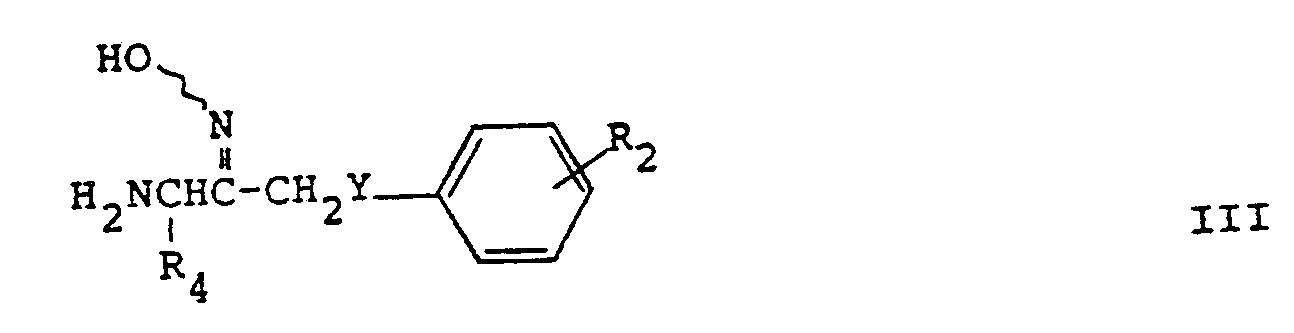
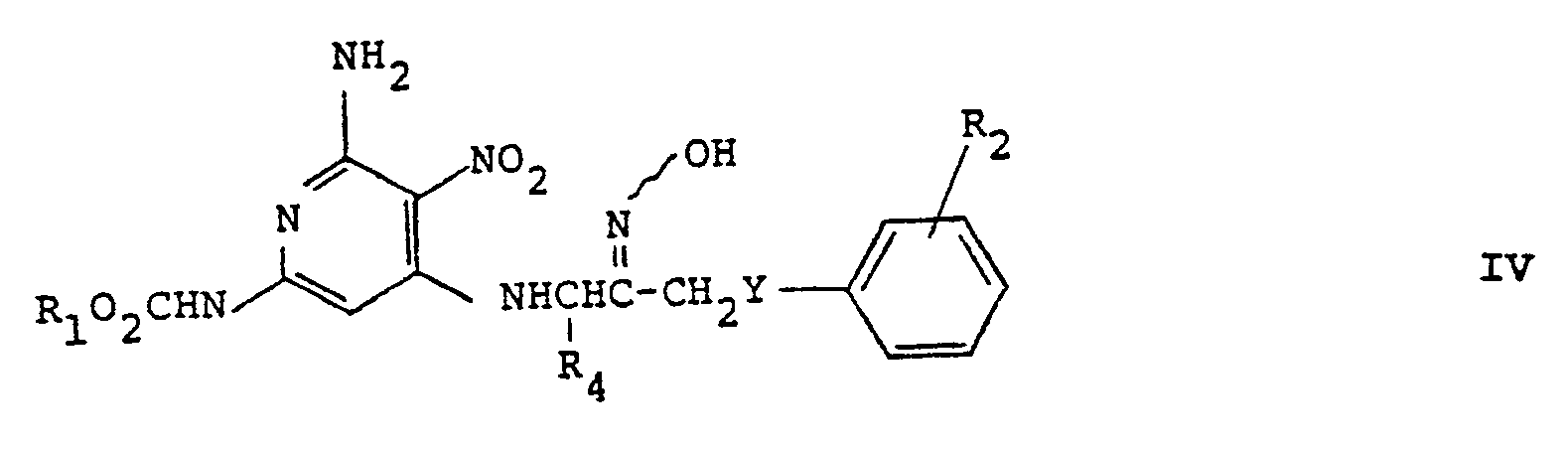
- Compounds of Formula I wherein R 3 is hydrogen may be prepared by aminating up to 6 carbon atoms, 3 containing alkyl ester of 6-amino-4-chloro-5-nitropyridin-2-ylcarbamate having the structure: with the oxime of an alpha-amino ketone having the structure: to give a compound having the structure: wherein R i , R 2 , R 4 and Y are the same as previously defined.
- the compound of Formula IV is hydrolyzed, e.g., by acid hydrolysis to give the corresponding ketone having the formula: wherein R 1 , R 2 , R 4 and Y are the same as previously defined.
- the compound of Formula V is converted to the compound of Formula I by catalytic hydrogenation.
- An intermediate product formed during hydrogenation has the formula: wherein R 1 , R 2 , R 4 and Y are the same as previously defined.
- Compounds of formula I wherein R 3 is hydrogen may be prepared by aminating an up to 6 carbon atoms containing alkyl ester of 6-amino-4-chlor-5-nitropyrimidin-2-ylcarbamate with the oxime of an alpha-amino ketone having the structure: to obtain an up to 6 carbon atoms containing alkyl ester of a 6-amino-5-nitro-4[(2-oxoethyl)amino]pyridin-2-ylcarbamate oxime having the structure: and subjecting said compound to catalytic hydrogenation, R i , R 2 , R 4 and Y being the same as previously defined.
- Compounds of Formula I wherein R 4 is hydrogen may be prepared by aminating the compound of Formula II with an alpha-amino alcohol having the structure: . to give a compound having the structure: which is oxidized to give a ketone having the structure: wherein R 1 , R 2 , R 3 and Y are the same as previously defined.
- the compound of Formula VA is converted to a compound of Formula I by catalytic hydrogenation.
- the compounds of the invention form pharmaceutically acceptable salts with both organic and inorganic acids.
- suitable acids for salt formation are hydrochloric, sulfuric, phosphoric, acetic, citric, oxalic, malonic, salicyclic, malic, fumaric, succinic, ascorbic, maleic, methanesulfonic, and the like.
- the salts are prepared by contacting the free base form with an equivalent amount of the desired acid in the conventional manner.
- the free base forms may be regenerated by treating the salt form with a base.
- dilute aqueous base solution may be utilized.
- Dilute aqueous sodium hydroxide, potassium carbonate, ammonia, and sodium bicarbonate solutions are suitable for this purpose.
- the free base forms differ from their respective salt forms somewhat in certain physical properties such as solubility in polar solvents, but the salts are otherwise equivalent to their respective free base forms for purposes of the invention.
- compositions of matter useful for ameliorating cancer diseases in mammals and containing the 1-deaza-7,8-dihydropteridines of this invention or pharmaceutically acceptable salts thereof.
- the active ingredients of the therapeutic compositions and the novel compounds of the present invention inhibit transplanted mouse tumor growth when administered in amounts ranging from about 5 mg to about 200 mg per kilogram of body weight per day.
- a preferred dosage regimen for optimum results would be from about 5 mg to about 50 mg per kilogram of body weight per day, and such dosage units are employed that a total of from about 350 mg to about 3.5 grams of the active compound for a subject of about 70 kg of body weight are administered in a 24-hour period.
- This dosage regimen may be adjusted to provide the optimum therapeutic response. For example, several divided doses may be administered daily or the dose may be proportionally reduced as indicated by the exigencies of the therapeutic situation.
- a decided practical advantage is that the active compound may be administered in any convenient manner such as by the oral, intravenous, intramuscular or subcutaneous routes.
- the active compounds may be orally administered, for example, with an inert diluent or with an assimilable edible carrier, or they may be enclosed in hard or soft shell gelatin capsules, or they may be compressed into tablets, or they may be incorporated directly with food of the diet.
- the active compounds may be incorporated with excipients and used in the form of ingestible tablets, buccal tablets, troches, capsules, elixirs, suspensions, syrups, wafers and the like.
- Such compositions and preparations should contain at least 0.1% of active compound.
- the percentage of the compositions and preparations may, of course, be varied and may conveniently be between about 2 and about 60% of the weight of the unit.
- the amount of active compound in such therapeutically useful compositions is such that a suitable dosage will be obtained.
- Preferred compositions or preparations according to the present invention are prepared so that an oral dosage unit form contains between 5 and about 200 milligrams of active compound.
- the tablets, troches, pills, capsules and the like may also contain the following: a binder such as gum tragacanth, acacia, corn starch or gelatin; excipients such as dicalcium phosphate; a disintegrating agent such as corn starch, potato starch, alginic acid and the like; a lubricant such as magnesium stearate; and a sweetening agent such as sucrose, lactose or saccharin may be added or flavoring agent such as peppermint, oil of wintergreen or cherry flavoring.
- a binder such as gum tragacanth, acacia, corn starch or gelatin
- excipients such as dicalcium phosphate
- a disintegrating agent such as corn starch, potato starch, alginic acid and the like
- a lubricant such as magnesium stearate
- a sweetening agent such as sucrose, lactose or saccharin may be added or flavoring agent such as peppermint, oil of winter
- tablets, pills or capsules may be coated with shellac, sugar or both.
- a syrup or elixir may contain the active compound, sucrose as a sweetening agent, methyl and propylparabens as preservatives, a dye and flavoring such as cherry or orange flavor.
- any material used in preparing any dosage unit form should be pharmaceutically pure and substantially non-toxic in the amounts employed.
- the active compounds may be incorporated into sustained-release preparations and formulations.
- the active compounds may also be administered parenterally or intraperitoneally.
- Solutions of the active compound as a free base or pharmaceutically acceptable salt can be prepared in water suitably mixed with a surfactant such as hydroxypropylcellulose.
- Dispersions can also be prepared in glycerol, liquid polyethylene glycols, and mixtures thereof and in oils. Under ordinary conditions of storage and use, these preparations contain a preservative to prevent the growth of microorganisms.
- the pharmaceutical forms suitable for injectable use include sterile aqueous solutions or dispersions and sterile powders for the extemporaneous preparation of sterile injectable solutions or dispersions.
- the form must be sterile and must be fluid to the extent that easy syringability exists. It must be stable under the conditions of manufacture and storage and must be preserved against the contaminating action of microorganisms such as bacteria and fungi.
- the carrier can be a solvent or dispersion medium containing, for example, water, ethanol, polyol (for example, glycerol, propylene, glycol, and liquid polyethylene glycol, and the like), suitable mixtures thereof and vegetable oils.
- the proper fluidity can be maintained, for example, by the use of a coating such as lecithin, by the maintenance of the required particle size in the case of dispersion and by the use of surfactants.
- the prevention of the action of microorganisms can be brought about by various antibacterial and antifungal agents, for example, parabens, chlorobutanol, phenol, sorbic acid, thimerosal, and the like. In many cases, it will be preferable to include isotonic agents, for example, sugars or sodium chloride.
- Prolonged absorption of the injectable compositions can be brought about by the use in the compositions of agents delaying absorption, for example, aluminum monostearate and gelatin.
- Sterile injectable solutions are prepared by incorporating the active compound in the required amount in the appropriate solvent with various of the other ingredients enumerated above, as required, followed by filtered sterilization.
- dispersions are prepared by incorporating the various sterilized active ingredient into a sterile vehicle which contains the basic dispersion medium and the required other ingredients from those enumerated above.
- the preferred methods of preparation are vacuum drying and the freeze-drying technique which yield a powder of the active ingredient plus any additional desired ingredient from a previously sterile-filtered solution thereof.
- pharmaceutically acceptable carrier includes any and all solvents, dispersion media, coatings, antibacterial and antifungal agents, isotonic and and absorption delaying agents and the like.
- the use of such media and agents for pharmaceutically active substances is well known in the art. Except insofar as any conventional media or agent is incompatible with the active ingredient, its use in the therapeutic compositions is contemplated. Supplementary active ingredients can also be incorporated into the compositions.
- Dosage unit form refers to physically discrete units suitable as unitary dosages for the mammalian subjects to be treated; each unit containing a predetermined quantity of active material calculated to produce the desired therapeutic effect in association with the required pharmaceutical carrier.
- the specification for the novel dosage unit forms of the invention are dictated by and directly dependent on (a) the unique characteristics of the active material and the particular therapeutic effect to be achieved, and (b) the limitations inherent in the art of compounding such an active material for the treatment of disease in living subjects having a diseased condition in which bodily health is impaired as herein disclosed in detail.
- the principal active ingredient is compounded for convenient and effective administration in effective amounts with a suitable pharmaceutically-acceptable carrier in dosage unit form as hereinbefore disclosed.
- a unit dosage form can, for example, contain the principal active compound in amounts ranging from about 0.1 to 400 mg, with from about one to about 30 mg being preferred. Expressed in proportions, the active compound is generally present in from about 0.1 to about 400 mg/ml of carrier. In the case of compositions containing supplementary active ingredients, the dosage are determined by reference to the usual dose and manner of administration of the said ingredients.
- a preferred up to 6 carbon atoms containing alkyl ester of 6-amino-4-chloro-5-nitropyridin-2- ylcarbamate is the ethyl ester, i.e., ethyl 6-amino-4-chloro-5-nitropyridin-2-ylcarbamate.
- This compound is prepared according to the procedure described by R. D. Elliott, C. Temple, Jr. and J. A. Montgomery, J. Org. Chem., 31, 1890 (1966).
- Oximes of alpha-amino ketones i.e., compounds of Formula III, may be prepared by known prior art procedures. Thus, they can be prepared by condensing the corresponding alpha-amino ketones with hydroxylamine hydrochloride in a refluxing mixture of pyridine and ethanol to give the oxime derivatives [R. D. Elliott, C. Temple, Jr. and J. A. Montgomery, J. Org. Chem., 35, 1674 (1970)].
- the compounds of Formula III can also be prepared by alkylation of phthalimide with the corresponding alpha-bromo-ketone, treatment of the alpha-(phthalimido)-ketone product with hydroxylamine, and removal of the phthaloyl protecting group from the resulting oxime with hydrazine [R. D. Elliott, C. Temple, Jr. and J. A. Montgomery, J. Org. Chem., 35, 1676 (1970)].
- the mothe liquor was evaporated to drynes in vacuo, and the residue was crystallized from hot water (500 ml) to give an additional amount of the picrate: yield 3.62 g, mp 151°C.
- a solution of the picrate in 3:1 ethanol-water (400 ml) was treated with washed BioRad AGI-X8 (Cl-) ion exchange resin (100 g) and stirred for 18 hours.
- the solution was filtered and the resin was washed with 3:1 ethanol-water.
- the filtrate and wash were treated with additional resin (40 g), stirred for 2 hours and filtered.
- the almost colorlesssolution was evaporated with ethanol (3 x 200 ml).
- Alpha-amino alchohols of Formula (lllA are prepared by the following procedure:
- the oximes and alpha-amino alcohols set forth in Table I were prepared by Method I, Method II or Method III, as indicated in Table I.
- the first column of Table I sets forth the structure of the group in Formula III for the oximes prepared by Methods I and II and in Formula lllA for the alpha-amino alcohol prepared by Method III.
- a compound of Formula II is aminated with a compound of Formula III under nitrogen in refluxing ethanol containing triethylamine as an acid acceptor to give a compound of Formula IV.
- An example of this procedure follows:
- Table III The compounds set forth in Table III were prepared by the procedure of Example 5 and Example 6, as indicated in Table III. The properties of these compounds are set forth in Table lll.
- the first column of Table III sets forth the structure of the group: in the starting material, see Formula IV, V and VA wherein R 2 is C 2 H s and R 3 and R 4 are hydrogen, and in the final product, see Formula I wherein R 1 is C 2 H 5 and R 3 and R 4 are hydrogen.
- the 1,2-dihydropyrido[3,4-b]pyrazines of this invention are powerful inhibitors of the proliferation of cultured lymphoid leukemia L1210 cells shown in Table IV.
- the concentration causing a 50% inhibition of proliferation of the cells during 24 hours is similar to that observed for vincristine, vinblastine, and colchicine.
- the addition to the test medium of inosine, thymidine, glycine, citrovorum factor, individually and in combinations, and elevated concentration of amino acids and vitamins did not overcome the inhibitions.
- 1,2-dihydropyrido[3,4-b]pyrazines showed activityu against lymphocytic leukemia P388 cells (10 6 ) implanted intraperitoneally in mice.
- Ethyl 5-amino-1,2-dihydro-3-[(Nmethyl-N-phenyl)aminomethyl]pyrido[3,4-b]pyrazine-7-carbamate and ethyl 5-amino-1,2-dihydro-3-[[3,4-b]pyrazine-7-carbamate are also active in mice against P388 cells that were resistant to vincristine.
- MI mitotic index
- Table IV sets forth biological data for 1-deaza-7,8-dihydropteridines of this invention and for three prior art compounds.
- the first column of Table IV set forth the structure of the group R in the formula in the heading of the table for the 1-deaza-7,8-dihydropteridines tested.
- Table IV shows that the 1-deaza-7,8-dihydropteridines of this invention are active against leukemia in laboratory animals.
Landscapes
- Organic Chemistry (AREA)
- Chemical & Material Sciences (AREA)
- Health & Medical Sciences (AREA)
- Life Sciences & Earth Sciences (AREA)
- General Health & Medical Sciences (AREA)
- Nuclear Medicine, Radiotherapy & Molecular Imaging (AREA)
- General Chemical & Material Sciences (AREA)
- Pharmacology & Pharmacy (AREA)
- Chemical Kinetics & Catalysis (AREA)
- Animal Behavior & Ethology (AREA)
- Medicinal Chemistry (AREA)
- Public Health (AREA)
- Veterinary Medicine (AREA)
- Hematology (AREA)
- Oncology (AREA)
- Pharmaceuticals Containing Other Organic And Inorganic Compounds (AREA)
- Nitrogen Condensed Heterocyclic Rings (AREA)
- Pyridine Compounds (AREA)
- Organic Low-Molecular-Weight Compounds And Preparation Thereof (AREA)
Abstract
Description
- This invention relates to novel 1,2-dihydropyrido[3,4-b]pyrazines, also known as 1-deaza-7,8-dihydropteridines. This invention also relates to a process for making such compounds and to novel intermediates obtained in said process.
- The antimitotic chemical agents commonly known as spindle poisons are plant products of which the best known are colchicine, podophyllotoxin, and the vinca alkaloids. [L. Wilson, J. R. Bamburg, S. B. Mizel, L. M. Grisham and K. M. Creswell, Federation Proceedings, 33, 158 (1974)]. Two members of the latter, vincristine and vinblastine, are currently used clinically in the treatment of neoplasms. Although these agents produce a number of biochemical actions such as the inhibition of macromolecular synthesis, their primary effect is to prevent mitosis by interfering with the function of microtubules, which results in the accumulation of cells in metaphase. In addition, several benzimidazol-2-yl carbamates have been introduced as fungicides, anthelmintics and antitumoral agents. [L. C. Davidse and W. Flach J. Cell Biol., 72, 174 (1977)]. Those compounds also prevent mitosis and their biological activity can probably be attributed to interference with the formation or functioning of microtubules.
- The development of procedures for the preparation of 1-deazapteridines is reported by J. A. Montgomery and N. F. Wood, J. Org. Chem., 29, 734 (1964); R. D. Elliot, C. Temple, Jr and J. A. Montgomery, J. Org. Chem., 33, 533 (1968); R. D. Elliot, C. Temple, Jr., J. L. Frye and J. A. Montgomery, J. Org. Chem., 36 2818 (1971); and R. D. Elliot, C. Temple, Jr. and J. A. Montgomery, J. Med. Chem., 17, 553 (1974). These references disclose the preparation and use of various 1,2-dihydro[3,4-b]pyrazine derivatives. Thus, the 1964 J. Org. Chem. reference discloses the compounds:
-


- The J. Med. Chem. reference discloses that a dihydro-1-deazapteridine precursor of 1- deazamethotrexate showed activity against leukemia L1210 in mice. An abstract presented at the 28th Southeast Regional Meeting of the American Chemical Society in Gatlinburg, Tennessee, October 27-29, 1976 discloses that the compound

- An abstract of a paper by B. J. Bowdon, G. P. Wheeler, C. G. Temple and J. A. Montgomery in AACR Abstracts, Vol. 22, March 1981 (page 25) discloses that a compound designated as "NSC-181928" was active against several neoplasms. NSC-181928 is the designation for the compound

- It has now been found that certain 1,2-dihydropyrido[3,4-b]pyrazines which are not disclosed in any of the references discussed in the preceding section possess anticancer activity. The compounds of this invention have the structure:

- Compounds of Formula I wherein R3 is hydrogen may be prepared by aminating up to 6 carbon atoms, 3 containing alkyl ester of 6-amino-4-chloro-5-nitropyridin-2-ylcarbamate having the structure:



- Compounds of formula I wherein R3 is hydrogen may be prepared by aminating an up to 6 carbon atoms containing alkyl ester of 6-amino-4-chlor-5-nitropyrimidin-2-ylcarbamate with the oxime of an alpha-amino ketone having the structure:


- Compounds of Formula I wherein R4 is hydrogen may be prepared by aminating the compound of Formula II with an alpha-amino alcohol having the structure:


- The compounds of the invention form pharmaceutically acceptable salts with both organic and inorganic acids. Examples of suitable acids for salt formation are hydrochloric, sulfuric, phosphoric, acetic, citric, oxalic, malonic, salicyclic, malic, fumaric, succinic, ascorbic, maleic, methanesulfonic, and the like. The salts are prepared by contacting the free base form with an equivalent amount of the desired acid in the conventional manner. The free base forms may be regenerated by treating the salt form with a base. For example, dilute aqueous base solution may be utilized. Dilute aqueous sodium hydroxide, potassium carbonate, ammonia, and sodium bicarbonate solutions are suitable for this purpose. The free base forms differ from their respective salt forms somewhat in certain physical properties such as solubility in polar solvents, but the salts are otherwise equivalent to their respective free base forms for purposes of the invention.
- Also embraced within the purview of the present invention are therapeutic compositions of matter useful for ameliorating cancer diseases in mammals and containing the 1-deaza-7,8-dihydropteridines of this invention or pharmaceutically acceptable salts thereof.
- The active ingredients of the therapeutic compositions and the novel compounds of the present invention inhibit transplanted mouse tumor growth when administered in amounts ranging from about 5 mg to about 200 mg per kilogram of body weight per day. A preferred dosage regimen for optimum results would be from about 5 mg to about 50 mg per kilogram of body weight per day, and such dosage units are employed that a total of from about 350 mg to about 3.5 grams of the active compound for a subject of about 70 kg of body weight are administered in a 24-hour period. This dosage regimen may be adjusted to provide the optimum therapeutic response. For example, several divided doses may be administered daily or the dose may be proportionally reduced as indicated by the exigencies of the therapeutic situation. A decided practical advantage is that the active compound may be administered in any convenient manner such as by the oral, intravenous, intramuscular or subcutaneous routes.
- The active compounds may be orally administered, for example, with an inert diluent or with an assimilable edible carrier, or they may be enclosed in hard or soft shell gelatin capsules, or they may be compressed into tablets, or they may be incorporated directly with food of the diet. For oral therapeutic administration, the active compounds may be incorporated with excipients and used in the form of ingestible tablets, buccal tablets, troches, capsules, elixirs, suspensions, syrups, wafers and the like. Such compositions and preparations should contain at least 0.1% of active compound. The percentage of the compositions and preparations may, of course, be varied and may conveniently be between about 2 and about 60% of the weight of the unit. The amount of active compound in such therapeutically useful compositions is such that a suitable dosage will be obtained. Preferred compositions or preparations according to the present invention are prepared so that an oral dosage unit form contains between 5 and about 200 milligrams of active compound.
- The tablets, troches, pills, capsules and the like may also contain the following: a binder such as gum tragacanth, acacia, corn starch or gelatin; excipients such as dicalcium phosphate; a disintegrating agent such as corn starch, potato starch, alginic acid and the like; a lubricant such as magnesium stearate; and a sweetening agent such as sucrose, lactose or saccharin may be added or flavoring agent such as peppermint, oil of wintergreen or cherry flavoring. When the dosage unit form is a capsule, it may contain, in addition to materials of the above type, a liquid carrier. Various other materials may be present as coatings or to otherwise modify the physical form of the dosage unit. For instance, tablets, pills or capsules may be coated with shellac, sugar or both. A syrup or elixir may contain the active compound, sucrose as a sweetening agent, methyl and propylparabens as preservatives, a dye and flavoring such as cherry or orange flavor. Of course, any material used in preparing any dosage unit form should be pharmaceutically pure and substantially non-toxic in the amounts employed. In addition, the active compounds may be incorporated into sustained-release preparations and formulations.
- The active compounds may also be administered parenterally or intraperitoneally. Solutions of the active compound as a free base or pharmaceutically acceptable salt can be prepared in water suitably mixed with a surfactant such as hydroxypropylcellulose. Dispersions can also be prepared in glycerol, liquid polyethylene glycols, and mixtures thereof and in oils. Under ordinary conditions of storage and use, these preparations contain a preservative to prevent the growth of microorganisms.
- The pharmaceutical forms suitable for injectable use include sterile aqueous solutions or dispersions and sterile powders for the extemporaneous preparation of sterile injectable solutions or dispersions. In all cases the form must be sterile and must be fluid to the extent that easy syringability exists. It must be stable under the conditions of manufacture and storage and must be preserved against the contaminating action of microorganisms such as bacteria and fungi. The carrier can be a solvent or dispersion medium containing, for example, water, ethanol, polyol (for example, glycerol, propylene, glycol, and liquid polyethylene glycol, and the like), suitable mixtures thereof and vegetable oils. The proper fluidity can be maintained, for example, by the use of a coating such as lecithin, by the maintenance of the required particle size in the case of dispersion and by the use of surfactants. The prevention of the action of microorganisms can be brought about by various antibacterial and antifungal agents, for example, parabens, chlorobutanol, phenol, sorbic acid, thimerosal, and the like. In many cases, it will be preferable to include isotonic agents, for example, sugars or sodium chloride. Prolonged absorption of the injectable compositions can be brought about by the use in the compositions of agents delaying absorption, for example, aluminum monostearate and gelatin.
- Sterile injectable solutions are prepared by incorporating the active compound in the required amount in the appropriate solvent with various of the other ingredients enumerated above, as required, followed by filtered sterilization. Generally, dispersions are prepared by incorporating the various sterilized active ingredient into a sterile vehicle which contains the basic dispersion medium and the required other ingredients from those enumerated above. In the case of the sterile powders for the preparations of sterile injectable solutions, the preferred methods of preparation are vacuum drying and the freeze-drying technique which yield a powder of the active ingredient plus any additional desired ingredient from a previously sterile-filtered solution thereof.
- As used herein, "pharmaceutically acceptable carrier" includes any and all solvents, dispersion media, coatings, antibacterial and antifungal agents, isotonic and and absorption delaying agents and the like. The use of such media and agents for pharmaceutically active substances is well known in the art. Except insofar as any conventional media or agent is incompatible with the active ingredient, its use in the therapeutic compositions is contemplated. Supplementary active ingredients can also be incorporated into the compositions.
- It is especially advantageous to formulate parenteral compositions indosage unit form for ease of administration and uniformity of dosage. Dosage unit form as used herein refers to physically discrete units suitable as unitary dosages for the mammalian subjects to be treated; each unit containing a predetermined quantity of active material calculated to produce the desired therapeutic effect in association with the required pharmaceutical carrier. The specification for the novel dosage unit forms of the invention are dictated by and directly dependent on (a) the unique characteristics of the active material and the particular therapeutic effect to be achieved, and (b) the limitations inherent in the art of compounding such an active material for the treatment of disease in living subjects having a diseased condition in which bodily health is impaired as herein disclosed in detail.
- The principal active ingredient is compounded for convenient and effective administration in effective amounts with a suitable pharmaceutically-acceptable carrier in dosage unit form as hereinbefore disclosed. A unit dosage form can, for example, contain the principal active compound in amounts ranging from about 0.1 to 400 mg, with from about one to about 30 mg being preferred. Expressed in proportions, the active compound is generally present in from about 0.1 to about 400 mg/ml of carrier. In the case of compositions containing supplementary active ingredients, the dosage are determined by reference to the usual dose and manner of administration of the said ingredients.
- A preferred up to 6 carbon atoms containing alkyl ester of 6-amino-4-chloro-5-nitropyridin-2- ylcarbamate is the ethyl ester, i.e., ethyl 6-amino-4-chloro-5-nitropyridin-2-ylcarbamate. This compound is prepared according to the procedure described by R. D. Elliott, C. Temple, Jr. and J. A. Montgomery, J. Org. Chem., 31, 1890 (1966).
- Oximes of alpha-amino ketones i.e., compounds of Formula III, may be prepared by known prior art procedures. Thus, they can be prepared by condensing the corresponding alpha-amino ketones with hydroxylamine hydrochloride in a refluxing mixture of pyridine and ethanol to give the oxime derivatives [R. D. Elliott, C. Temple, Jr. and J. A. Montgomery, J. Org. Chem., 35, 1674 (1970)].
- The compounds of Formula III can also be prepared by alkylation of phthalimide with the corresponding alpha-bromo-ketone, treatment of the alpha-(phthalimido)-ketone product with hydroxylamine, and removal of the phthaloyl protecting group from the resulting oxime with hydrazine [R. D. Elliott, C. Temple, Jr. and J. A. Montgomery, J. Org. Chem., 35, 1676 (1970)].
- Examples of these two procedures for the preparation of compounds of Formula III follow:
- A mixture of 1-bromo-3-(phthalimido)propanone (1.00 g., 3.54 mmol), N-methyl-p-anisidine (487 mg, 3.54 mmol), and NaHC03 (298 mg, 3.54 mmol) in DMAC (N,N-dimethyl acetamide) (10 ml) was stirred at room temperature for 20 hours, slowly diluted with H20 (3 ml) and stirred for 30 minutes. The yellow precipitate was collected by filtration, washed with DMAC-H20 (10:3) then H20 and dried in vacuo over P205: yield 927 mg. Dilution ofthe filtrate with additional H20 gave a second crop of product: yield 131 mg. Recrystallization of the combined crops from ethanol gave the diaminopropanone: yield 834 mg. Mass spectrum: m/e 338 (M)+.
- A solution of this product (600 mg, 1.77 mmol), hydroxylamine hydrochloride (184 mg, 2.65 mmol) and pyridine (2 ml) in ethanol (8 ml) was refluxed for 2 hours and evaporated to dryness in vacuo. The residue was washed with H20 (2 x 5 ml), then triturated with ethanol (2.5 ml) until a homogeneous yellow powder formed. The mixture was cooled in an ice bath and the oxime was collected by filtration, washed with cold ethanol and dried in vacuo over P205: yield 516 mg. Mass spectrum: m/e 353 (M)+.
- A solution of the oxime (400 mg, 1.13 mmol) in ethanol (15 ml) at 70°C was treated dropwise with a solution of 95% hydrazine (39.2 µl, 1.16 mmol) in ethanol (2 ml). The resulting solution was heated at 40°C for 17 hours, cooled to 25°C, treated with 1 N HCI (1.13 ml), stirred for 1 hour, cooled to 0°C and filtered to remove phthalhydrazide. The filtrate was evaporated to dryness in vacuo (< 40°C) and the residue was stirred with H20 (2 ml) and again evaporated to dryness in vacuo. An extract of the residue in H20 (5 ml) at 60°C was cooled to 25°C, filtered, cooled in an ice bath, treated with concentrated NH40H (76 µl) and stirred at 0°C until a homogeneous tan solid formed. The alpha-aminoketone oxime was collected by filtration, washed with cold H20 and dried in vacuo over P205: yield 124 mg. Mass spectrum: m/e 223 (M)+.
- A solution of crude 1-amino-4-phenyl-2-butanone hydrochloride (9.84 g, 49.2 mmol) (Degraw, J., Isakotellis, P., Kisliuk, R., and Gaumont, Y., J. Heterocyclic Chem., 1971, 8, 105), hydroxylamine hydrochloride (6.84 g, 98.4 mmol) and sodium acetate 3H20 (13.4 g, 98.4 mmol) in 50% ethanol (250 ml) was heated at 75-80°C for 30 minutes, filtered, treated with a hot solution of picric acid (11.7 g, 51.1 mmol), cooled to 25°C, filtered and allowed to stand for 2 days. The crystalline picrate was collected, washed with 2:1 water-ethanol and dried in vacuo: yield 9.62 g, mp, 151°C (Kofler Heizbank). The mothe liquor was evaporated to drynes in vacuo, and the residue was crystallized from hot water (500 ml) to give an additional amount of the picrate: yield 3.62 g, mp 151°C. A solution of the picrate in 3:1 ethanol-water (400 ml) was treated with washed BioRad AGI-X8 (Cl-) ion exchange resin (100 g) and stirred for 18 hours. The solution was filtered and the resin was washed with 3:1 ethanol-water. The filtrate and wash were treated with additional resin (40 g), stirred for 2 hours and filtered. The almost colorlesssolution was evaporated with ethanol (3 x 200 ml). The residue was stirred with ethanol (100 ml), filtered and the precipitate was rinsed with additional ethanol (40 ml). The filtrate and wash were diluted with diethyl ether (600 ml) to give a crystalline hydrochloride which was collected, washed with diethyl ether and dried in vacuo (P205): yield, 5.36 g.
- Alpha-amino alchohols of Formula (lllA are prepared by the following procedure:
- A solution of epichlorohydrin (11 ml) and 4-chloro-N-methylaniline (11 g, 78 mmol) in a mixture of ethanol (10 ml) and water (7 ml) was refluxed for 2 hours, diluted with water (20 ml), and extracted with diethyl ether (3 x 50 mi). The combined extracts were evaporated to dryness, the residue was treated with a solution of NaOH (5 g) in water (10 ml) for 1 hour, and the resulting mixture was extracted with diethyl ether (4 x 25 ml). The combined extracts were dried (MgS04) and evaporated to dryness in vacuo to give 1-[[N-(4-chlorophenyl)-N-methyl]amino]-2,3-epoxypropane: yield, 11 g (72%). A solution of this sample in a mixture of ethanol (50 ml) and liquid NH3 (20 ml) was heated in a glass-lined stainless steel bomb at 100°C for 3 hours. The resulting reaction solution was evaporated to dryness, and the dried residue was recrystallized from C6H5: yield, 5.3 g (44%).
- The oximes and alpha-amino alcohols set forth in Table I were prepared by Method I, Method II or Method III, as indicated in Table I. The first column of Table I sets forth the structure of the group


- A compound of Formula II is aminated with a compound of Formula III under nitrogen in refluxing ethanol containing triethylamine as an acid acceptor to give a compound of Formula IV. An example of this procedure follows:
- A solution of ethyl 6-amino-4-chloro-5-nitro-2-pyridinecarbamate (5.00 g, 19.2 mmol), 1-amino-3-[[N-(4-methoxyphenyl)-N-methyl]amino]propanone oxime (4.29 g, 19.2 mmol) and triethylamino (1.94 g, 19.2 mmol) in CH30H (75 ml) was refluxed under N2 for 15 hours and cooled to 25°C. The yellow crystalline precipitate was collected by filtration, washed with ethanol and dried in vacuo. A solution of the crude product (6.46 g) in DMAC (260 ml) was diluted with H2O (430 ml) to give a precipitate which was collected by filtration, washed with H20 and dried in vacuo over P205: yield 6.03 g. Mass spectrum: m/e 447 (M)+.
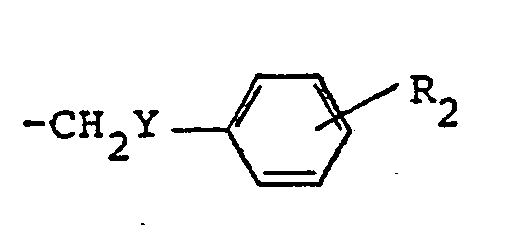
- Additional compounds were prepared similarly wherein the oxime of Example I was replaced with other oximes. The properties of these compounds are set forth in Table II. The first column of Table II sets forth the structure of the group:

- Treatment of a compound of Formula IV with a 1:1 mixture of 1 N hydrochloric acid and dioxane at 60°C hydrolyzes the oxime function to give a compound of Formula V. An example of this procedure follows:
- A solution of the oxime of the title compound (6.17 g, 15.4 mmol) in warm dioxane (60 ml) was treated with 1 N HCI (120 ml), stirred at 55°C for 1 hour and cooled in an ice bath. The precipitated hydrochloride was collected, washed with cold water, then suspended in water (300 ml) and neutralized with 1 N NaOH. The yellow product was collected, washed with water and dried in vacuo (P205): yield, 5.08 g (83%); m.p. 155°C. Anal. Calcd. for C18H22N505: C, 55.80; H, 5.46; N, 18.08. Found: C, 55.42; H 5.49; N, 18.12.
- Amination of the compound of Formula II with the compound of Formula IIIA in refluxing ethanol containing triethylamine as an acid acceptor gives a compound of Formula VII. Oxidation of a compound of formula VII gives a ketone of Formula VA. Two examples of this procedure follow:
- A solution of ethyl 6-amino-4-chloro-5-nitro-2-pyridinecarbamate (10.0 g), 1-amino-3-[[N-(4-chlorophenyl)-N-methyl]amino]-2-propanol (8.25 g), and triethylamine (10.7 ml) in methanol (120 ml) was heated 60°C for 18 hours and evaporated to dryness in vacuo. The dark residue was washed with diethyl ether (1.5 I) to give a yellow solid. This solid was washed with water (50 ml) and recrystallized twice from a mixture of ethanol and hexane: yield, 4.92 g. Similar treatment of the residue obtained from the ether wash from above gave a slightly impure sample of product: yield, 5.89 g. Total yield, 10.81 g (64%); m.p., 181°C. Anal. Calcd. for C18H23CIN6O5: C, 49.26; H, 5.28; N, 19.15. Found: C, 49.16; H, 5.46; N, 19.22.
- A solution of ethyl 6-amino-4-[3-[[N-(4-chlorophenyl)-N-methyl]amino]-2-hydroxypropylamino]-5-nitro-6-pyridinecarbamate (1.76 g), and acetic anhydride (8 ml) in dimethyl sulfoxide (40 ml) was stirred at room temperature for 20 hours diluted with water (200 ml), and neutralized to pH 5.2 with 1 N NaOH. The solid that deposited was collected by filtration and dissolved in CHCI3. Evaporation of this solution to dryness and trituration of the resulting solid successively with water and ethanol gave the product yield, 0.36 g (20%); m.p. 123-5°C. Anal. Cald. for C18H21CIN6O: C, 48.49; H, 4.97; N, 18.85. Found: C, 48.74; H, 4.65; N, 18.89.
- The catalytic hydrogenation of a compound of Formula V or VA with a three-fold amount of Raney nickel in a large volume of ethanol (i.e., more than one liter per gram) at atmospheric pressure at room temperature or with intermittent warming (e.g., to no higher than 60°C.) with a water bath gives the intermediate compound of Formula VI which is cyclized in vacuo with the elimination of water to give a compound of Formula I. Such reaction is shown in Example 4. The compounds of Formula I can also be prepared directly by hydrogenation of a compound of Formula IV in the presence of Raney nickel as shown in Example 5.
- A solution of ethyl 6-amino-4-[2-oxo-4-(phenylbutuyl)amino]-5-nitro-2-pyridinecarbamate (300 mg, 0.775 mmol) in N,N'-dimethyl acetamide (7 ml) was hydrogenated in the presence of Raney nickel (890 mg, weighed wet, washed with ethanol) for 20 hours to give an H2 uptake of 58 ml (3.07 mmol). The reaction mixture was filtered under N2 and evaporated in vacuo at 25°C. The residual syrup was stirred with water (10 ml) to give a white powder which was collected, washed with water and dried in vacuo (P205): yield, 230 mg. The properties are set forth in Table III.
- A suspension of the oxime of ethyl 6-amino-4-[3-[[4-(N-(4-methoxyphenyl)-N-methyl]amino]-2- oxopropylamino]-5-nitro-2-pyridinecarbamate (672 mg, 1.50 mmol) and Raney nickel (2 g, weighed wet, washed with ethanol) in ethanol (90 ml) was hydrogenated at room temperature and atmospheric pressure with vigorous stirring. The hydrogen uptake (124 ml, 5.66 mmol) was complete in 2.75 hours. The mixture was filtered under N2 and the catalyst extracted with boiling ethanol (3 x 30 ml). The combined filtrate and extract were concentrated in vacuo to about 7 ml and cooled in an ice bath to deposit the product as a pale yellow crystalline solid: yield 421 mg. Mass spectrum: m/e 384 (M)+. The properties are set forth in Table III.
- The compounds set forth in Table III were prepared by the procedure of Example 5 and Example 6, as indicated in Table III. The properties of these compounds are set forth in Table lll. The first column of Table III sets forth the structure of the group:
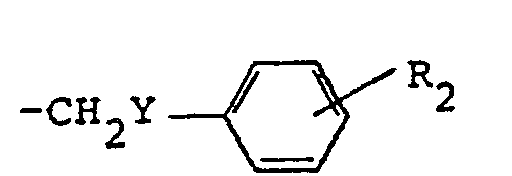

- The 1,2-dihydropyrido[3,4-b]pyrazines of this invention are powerful inhibitors of the proliferation of cultured lymphoid leukemia L1210 cells shown in Table IV. The concentration causing a 50% inhibition of proliferation of the cells during 24 hours is similar to that observed for vincristine, vinblastine, and colchicine. Also, the addition to the test medium of inosine, thymidine, glycine, citrovorum factor, individually and in combinations, and elevated concentration of amino acids and vitamins did not overcome the inhibitions.
- In addition to cell cytotoxicity, the 1,2-dihydropyrido[3,4-b]pyrazines showed activityu against lymphocytic leukemia P388 cells (106) implanted intraperitoneally in mice. Ethyl 5-amino-1,2-dihydro-3-[(Nmethyl-N-phenyl)aminomethyl]pyrido[3,4-b]pyrazine-7-carbamate and ethyl 5-amino-1,2-dihydro-3-[[3,4-b]pyrazine-7-carbamate are also active in mice against P388 cells that were resistant to vincristine.
- The 1,2-dihydropyrido[3,4-b]pyrazines of this invention at concentrations that prevented any increase in the cell number during a 24 hour period had little effect upon the synthesis of DNA, RNA, and protein by cultured L1210 cells during exposure for four hours. This result and those described above led to the determination of the effect of the 1,2-dihydropyrido[3,4-b]-pyrazines upon cell division. Exposure of cultured L1210 cells to the 1,2-dihydropyrido[3,4-b]pyrazines inhibited cell division as measured by the mitotic index (MI) (Table IV), which is the fraction of the cell population that is made up of metaphase cells. Sunbsequent experiments showed that these agents caused the accumulation in metaphase of human epidermoid carcinoma #2 cells, P388 cells, and P388 cells resistant to vincristine grown in suspension culture and of colon tumor #26n cells and colon tumor #38 cells grown on plastic surfaces.
- Table IV sets forth biological data for 1-deaza-7,8-dihydropteridines of this invention and for three prior art compounds. The first column of Table IV set forth the structure of the group R in the formula in the heading of the table for the 1-deaza-7,8-dihydropteridines tested.
- The data in Table IV shows that the 1-deaza-7,8-dihydropteridines of this invention are active against leukemia in laboratory animals.
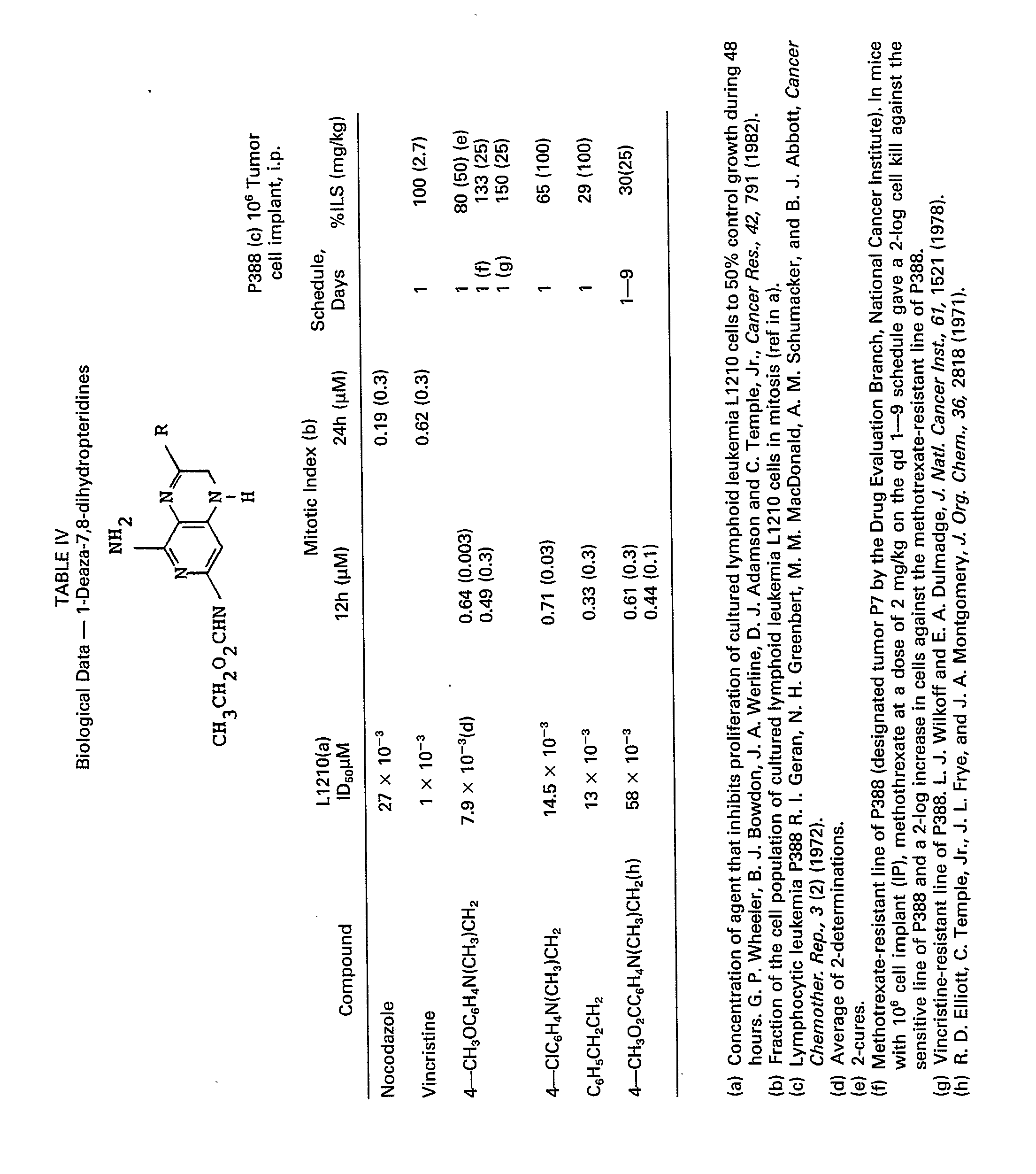
Claims (19)
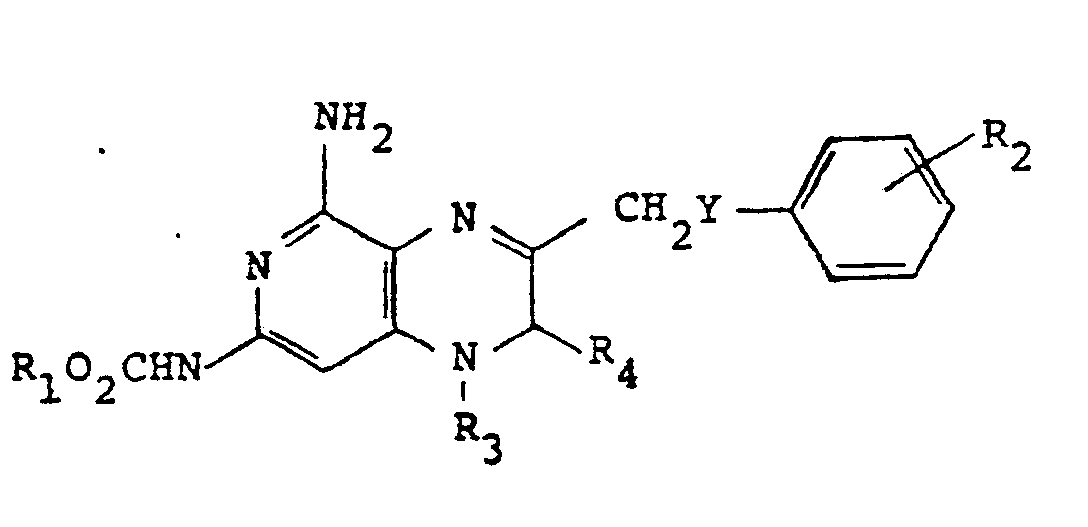


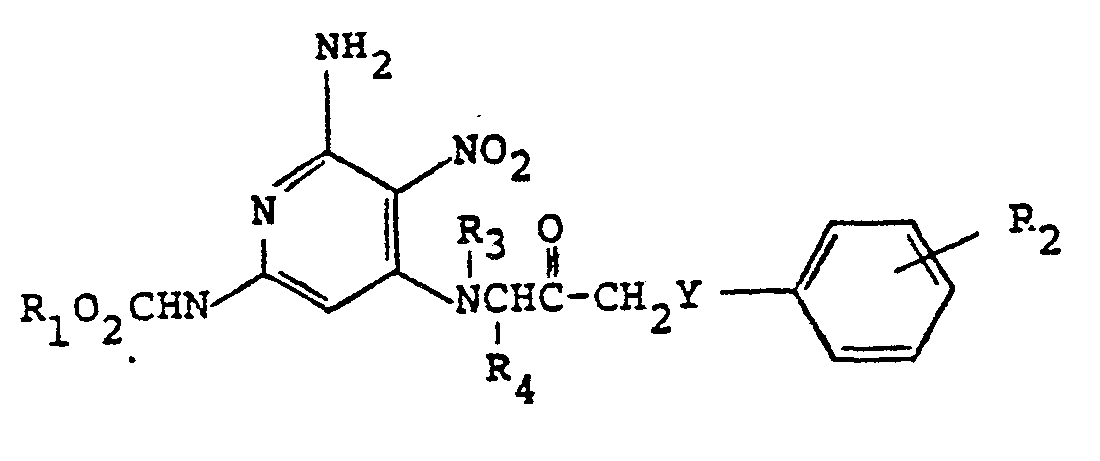


Priority Applications (1)
| Application Number | Priority Date | Filing Date | Title |
|---|---|---|---|
| AT83400377T ATE24508T1 (en) | 1982-03-26 | 1983-02-23 | 1,2-DIHYDROPYRIDO(3,4-B)PYRAZINE. |
Applications Claiming Priority (2)
| Application Number | Priority Date | Filing Date | Title |
|---|---|---|---|
| US36248082A | 1982-03-26 | 1982-03-26 | |
| US362480 | 1982-03-26 |
Publications (3)
| Publication Number | Publication Date |
|---|---|
| EP0090681A2 EP0090681A2 (en) | 1983-10-05 |
| EP0090681A3 EP0090681A3 (en) | 1984-05-02 |
| EP0090681B1 true EP0090681B1 (en) | 1986-12-30 |
Family
ID=23426276
Family Applications (1)
| Application Number | Title | Priority Date | Filing Date |
|---|---|---|---|
| EP83400377A Expired EP0090681B1 (en) | 1982-03-26 | 1983-02-23 | Novel 1,2-dihydropyrido-(3,4-b)pyrazines |
Country Status (4)
| Country | Link |
|---|---|
| EP (1) | EP0090681B1 (en) |
| JP (2) | JPS6031834B2 (en) |
| AT (1) | ATE24508T1 (en) |
| DE (1) | DE3368633D1 (en) |
Families Citing this family (3)
| Publication number | Priority date | Publication date | Assignee | Title |
|---|---|---|---|---|
| US4600716A (en) * | 1982-03-26 | 1986-07-15 | Southern Research Institute | 1,2-dihydropyrido[3,4-b]pyrazines |
| JPS61153530U (en) * | 1985-03-15 | 1986-09-24 | ||
| JPS62281878A (en) * | 1986-02-26 | 1987-12-07 | Taisho Pharmaceut Co Ltd | Azaanthracene compound |
-
1983
- 1983-02-23 EP EP83400377A patent/EP0090681B1/en not_active Expired
- 1983-02-23 AT AT83400377T patent/ATE24508T1/en not_active IP Right Cessation
- 1983-02-23 DE DE8383400377T patent/DE3368633D1/en not_active Expired
- 1983-03-24 JP JP58049670A patent/JPS6031834B2/en not_active Expired
-
1984
- 1984-06-26 JP JP59131819A patent/JPS6034948A/en active Granted
Non-Patent Citations (1)
| Title |
|---|
| J.A.C.S. 89(10), 1967, 2416-2423 * |
Also Published As
| Publication number | Publication date |
|---|---|
| EP0090681A3 (en) | 1984-05-02 |
| ATE24508T1 (en) | 1987-01-15 |
| JPS6031834B2 (en) | 1985-07-24 |
| DE3368633D1 (en) | 1987-02-05 |
| JPS58174381A (en) | 1983-10-13 |
| JPS6121948B2 (en) | 1986-05-29 |
| EP0090681A2 (en) | 1983-10-05 |
| JPS6034948A (en) | 1985-02-22 |
Similar Documents
| Publication | Publication Date | Title |
|---|---|---|
| US4450160A (en) | 1,2-Dihydropyrido[3,4-b]-pyrazines and method and intermediates for preparing same | |
| US4526964A (en) | 2,4-Diamino-6-(hydroxymethyl)pyrido[2,3-d]pyrimidine | |
| EP0061178B1 (en) | Novel 1,2-dihydropyrido(3,4-b)-pyrazines and method for preparing same | |
| EP0252682A2 (en) | Tetrazines | |
| EP0090681A2 (en) | Novel 1,2-dihydropyrido-(3,4-b)pyrazines | |
| US4511721A (en) | Intermediate for preparing antifungal 1,2-dihydropyrido[3,4-b]-pyrazines | |
| US4600716A (en) | 1,2-dihydropyrido[3,4-b]pyrazines | |
| US4645840A (en) | Intermediates for preparing 1,2-dihydropyrido[3,4-b]-pyrazines | |
| HUP9900088A2 (en) | Pyrimidine derivatives, pharmaceutical compositions containing them and process for producing them | |
| US3953457A (en) | Agent for the control of plant-pathogenic organisms | |
| US5095017A (en) | 1,2-dihydropyrido(3,4,-b)pyrazines as fungicides | |
| EP0073155B1 (en) | Compounds having antitumour activity | |
| EP0402227A1 (en) | 1-Phenyl-1,4-dihydro-3-amino-4-oxo-pyridazin derivatives, their preparation and their therapeutical application | |
| US4421768A (en) | Fluorinated diamino-heptene and-heptyne derivatives | |
| US4628089A (en) | Pyrido(2,3-D)pyrimidines | |
| CS241014B2 (en) | Method of 9-aminopyrido-(1,2-a)pyrimidine derivatives production | |
| EP0087951B1 (en) | Phenanthroline derivatives | |
| CA1216587A (en) | 1,2-dihydropyrido [3,4-b]-pyrazines and method and intermediates for preparing same | |
| JPH0355473B2 (en) | ||
| IE43551B1 (en) | Naphthyridine derivatives | |
| FR2670208A1 (en) | DERIVATIVES OF PHENYL-1 DIHYDRO 1-4-ARYLALCOYLAMINO-3-OXO-4-PYRIDAZINES, THEIR PREPARATION AND THEIR USE IN THERAPEUTICS. | |
| CS255874B2 (en) | Process for preparing substituted 3-phenyliminothiazolidine derivatives | |
| EP0107130A1 (en) | Pyrido(4,3-b)(1,4) oxazines and pyrido(4,3-b) (1,4)thiazines |
Legal Events
| Date | Code | Title | Description |
|---|---|---|---|
| PUAI | Public reference made under article 153(3) epc to a published international application that has entered the european phase |
Free format text: ORIGINAL CODE: 0009012 |
|
| 17P | Request for examination filed |
Effective date: 19830228 |
|
| AK | Designated contracting states |
Kind code of ref document: A2 Designated state(s): AT BE CH DE FR GB IT LI LU NL SE Designated state(s): AT BE CH DE FR GB IT LI LU NL SE |
|
| PUAL | Search report despatched |
Free format text: ORIGINAL CODE: 0009013 |
|
| AK | Designated contracting states |
Kind code of ref document: A3 Designated state(s): AT BE CH DE FR GB IT LI LU NL SE Designated state(s): AT BE CH DE FR GB IT LI LU NL SE |
|
| GRAA | (expected) grant |
Free format text: ORIGINAL CODE: 0009210 |
|
| AK | Designated contracting states |
Kind code of ref document: B1 Designated state(s): AT BE CH DE FR GB IT LI LU NL SE |
|
| REF | Corresponds to: |
Ref document number: 24508 Country of ref document: AT Date of ref document: 19870115 Kind code of ref document: T |
|
| ITF | It: translation for a ep patent filed | ||
| REF | Corresponds to: |
Ref document number: 3368633 Country of ref document: DE Date of ref document: 19870205 |
|
| ET | Fr: translation filed | ||
| PLBE | No opposition filed within time limit |
Free format text: ORIGINAL CODE: 0009261 |
|
| STAA | Information on the status of an ep patent application or granted ep patent |
Free format text: STATUS: NO OPPOSITION FILED WITHIN TIME LIMIT |
|
| 26N | No opposition filed | ||
| PGFP | Annual fee paid to national office [announced via postgrant information from national office to epo] |
Ref country code: FR Payment date: 19910125 Year of fee payment: 9 |
|
| PGFP | Annual fee paid to national office [announced via postgrant information from national office to epo] |
Ref country code: SE Payment date: 19910221 Year of fee payment: 9 Ref country code: GB Payment date: 19910221 Year of fee payment: 9 |
|
| PGFP | Annual fee paid to national office [announced via postgrant information from national office to epo] |
Ref country code: AT Payment date: 19910227 Year of fee payment: 9 |
|
| ITTA | It: last paid annual fee | ||
| PGFP | Annual fee paid to national office [announced via postgrant information from national office to epo] |
Ref country code: NL Payment date: 19910228 Year of fee payment: 9 |
|
| PGFP | Annual fee paid to national office [announced via postgrant information from national office to epo] |
Ref country code: DE Payment date: 19910328 Year of fee payment: 9 |
|
| PGFP | Annual fee paid to national office [announced via postgrant information from national office to epo] |
Ref country code: LU Payment date: 19910419 Year of fee payment: 9 |
|
| PGFP | Annual fee paid to national office [announced via postgrant information from national office to epo] |
Ref country code: CH Payment date: 19910422 Year of fee payment: 9 |
|
| PGFP | Annual fee paid to national office [announced via postgrant information from national office to epo] |
Ref country code: BE Payment date: 19910618 Year of fee payment: 9 |
|
| EPTA | Lu: last paid annual fee | ||
| PG25 | Lapsed in a contracting state [announced via postgrant information from national office to epo] |
Ref country code: LU Free format text: LAPSE BECAUSE OF NON-PAYMENT OF DUE FEES Effective date: 19920223 Ref country code: GB Effective date: 19920223 Ref country code: AT Effective date: 19920223 |
|
| PG25 | Lapsed in a contracting state [announced via postgrant information from national office to epo] |
Ref country code: SE Effective date: 19920224 |
|
| PG25 | Lapsed in a contracting state [announced via postgrant information from national office to epo] |
Ref country code: BE Effective date: 19920228 |
|
| PG25 | Lapsed in a contracting state [announced via postgrant information from national office to epo] |
Ref country code: LI Effective date: 19920229 Ref country code: CH Effective date: 19920229 |
|
| BERE | Be: lapsed |
Owner name: SOUTHERN RESEARCH INSTITUTE Effective date: 19920228 |
|
| PG25 | Lapsed in a contracting state [announced via postgrant information from national office to epo] |
Ref country code: NL Effective date: 19920901 |
|
| NLV4 | Nl: lapsed or anulled due to non-payment of the annual fee | ||
| GBPC | Gb: european patent ceased through non-payment of renewal fee | ||
| PG25 | Lapsed in a contracting state [announced via postgrant information from national office to epo] |
Ref country code: FR Effective date: 19921030 |
|
| REG | Reference to a national code |
Ref country code: CH Ref legal event code: PL |
|
| PG25 | Lapsed in a contracting state [announced via postgrant information from national office to epo] |
Ref country code: DE Effective date: 19921103 |
|
| REG | Reference to a national code |
Ref country code: FR Ref legal event code: ST |
|
| EUG | Se: european patent has lapsed |
Ref document number: 83400377.4 Effective date: 19920904 |