EP0079083B1 - New imidazo[4,5-c]pyridine derivatives, processes for their preparation and pharmaceutical formulations containing such compounds - Google Patents
New imidazo[4,5-c]pyridine derivatives, processes for their preparation and pharmaceutical formulations containing such compounds Download PDFInfo
- Publication number
- EP0079083B1 EP0079083B1 EP82110328A EP82110328A EP0079083B1 EP 0079083 B1 EP0079083 B1 EP 0079083B1 EP 82110328 A EP82110328 A EP 82110328A EP 82110328 A EP82110328 A EP 82110328A EP 0079083 B1 EP0079083 B1 EP 0079083B1
- Authority
- EP
- European Patent Office
- Prior art keywords
- formula
- compound
- compounds
- acid addition
- addition salts
- Prior art date
- Legal status (The legal status is an assumption and is not a legal conclusion. Google has not performed a legal analysis and makes no representation as to the accuracy of the status listed.)
- Expired - Lifetime
Links
- 150000001875 compounds Chemical class 0.000 title claims description 84
- 238000000034 method Methods 0.000 title claims description 13
- 230000008569 process Effects 0.000 title claims description 8
- 238000002360 preparation method Methods 0.000 title claims description 6
- 239000008194 pharmaceutical composition Substances 0.000 title claims description 5
- UBOOKRVGOBKDMM-UHFFFAOYSA-N 3h-imidazo[4,5-c]pyridine Chemical class C1=NC=C2NC=NC2=C1 UBOOKRVGOBKDMM-UHFFFAOYSA-N 0.000 title description 3
- 239000002253 acid Substances 0.000 claims description 27
- 150000003839 salts Chemical class 0.000 claims description 26
- 238000011282 treatment Methods 0.000 claims description 13
- 238000006243 chemical reaction Methods 0.000 claims description 8
- 230000002107 myocardial effect Effects 0.000 claims description 8
- 206010019280 Heart failures Diseases 0.000 claims description 7
- 239000004480 active ingredient Substances 0.000 claims description 7
- 230000000694 effects Effects 0.000 claims description 7
- 125000003277 amino group Chemical group 0.000 claims description 5
- 230000015572 biosynthetic process Effects 0.000 claims description 4
- 239000004615 ingredient Substances 0.000 claims description 4
- 230000001225 therapeutic effect Effects 0.000 claims description 4
- 239000003795 chemical substances by application Substances 0.000 claims description 3
- 239000003937 drug carrier Substances 0.000 claims description 2
- 241000124008 Mammalia Species 0.000 claims 4
- 238000011321 prophylaxis Methods 0.000 claims 2
- UGOFMSKXKFBLEZ-UHFFFAOYSA-N 1-(2-methoxy-4-methylsulfinylphenyl)imidazo[4,5-c]pyridine Chemical compound COC1=C(C=CC(=C1)S(=O)C)N1C=NC=2C=NC=CC=21 UGOFMSKXKFBLEZ-UHFFFAOYSA-N 0.000 claims 1
- 239000000203 mixture Substances 0.000 description 26
- 238000007792 addition Methods 0.000 description 18
- 229940126062 Compound A Drugs 0.000 description 14
- NLDMNSXOCDLTTB-UHFFFAOYSA-N Heterophylliin A Natural products O1C2COC(=O)C3=CC(O)=C(O)C(O)=C3C3=C(O)C(O)=C(O)C=C3C(=O)OC2C(OC(=O)C=2C=C(O)C(O)=C(O)C=2)C(O)C1OC(=O)C1=CC(O)=C(O)C(O)=C1 NLDMNSXOCDLTTB-UHFFFAOYSA-N 0.000 description 14
- XLYOFNOQVPJJNP-UHFFFAOYSA-N water Substances O XLYOFNOQVPJJNP-UHFFFAOYSA-N 0.000 description 13
- 238000009472 formulation Methods 0.000 description 11
- 239000000243 solution Substances 0.000 description 9
- 102000004861 Phosphoric Diester Hydrolases Human genes 0.000 description 8
- 108090001050 Phosphoric Diester Hydrolases Proteins 0.000 description 8
- 230000005764 inhibitory process Effects 0.000 description 8
- 230000000638 stimulation Effects 0.000 description 8
- QTBSBXVTEAMEQO-UHFFFAOYSA-N Acetic acid Chemical compound CC(O)=O QTBSBXVTEAMEQO-UHFFFAOYSA-N 0.000 description 7
- 210000002216 heart Anatomy 0.000 description 7
- 230000000297 inotrophic effect Effects 0.000 description 7
- 239000007788 liquid Substances 0.000 description 7
- 239000007787 solid Substances 0.000 description 7
- 210000004369 blood Anatomy 0.000 description 6
- 239000008280 blood Substances 0.000 description 6
- 239000008187 granular material Substances 0.000 description 6
- 239000003826 tablet Substances 0.000 description 6
- 230000002776 aggregation Effects 0.000 description 5
- 238000004220 aggregation Methods 0.000 description 5
- 229940079593 drug Drugs 0.000 description 5
- 239000003814 drug Substances 0.000 description 5
- 238000001727 in vivo Methods 0.000 description 5
- -1 methylsulphinyl Chemical group 0.000 description 5
- 230000009090 positive inotropic effect Effects 0.000 description 5
- 239000000843 powder Substances 0.000 description 5
- XMFCOYRWYYXZMY-UHFFFAOYSA-N sulmazole Chemical compound COC1=CC(S(C)=O)=CC=C1C1=NC2=NC=CC=C2N1 XMFCOYRWYYXZMY-UHFFFAOYSA-N 0.000 description 5
- 229950006153 sulmazole Drugs 0.000 description 5
- 239000000725 suspension Substances 0.000 description 5
- 239000008215 water for injection Substances 0.000 description 5
- QGZKDVFQNNGYKY-UHFFFAOYSA-N Ammonia Chemical compound N QGZKDVFQNNGYKY-UHFFFAOYSA-N 0.000 description 4
- HEDRZPFGACZZDS-UHFFFAOYSA-N Chloroform Chemical compound ClC(Cl)Cl HEDRZPFGACZZDS-UHFFFAOYSA-N 0.000 description 4
- RTZKZFJDLAIYFH-UHFFFAOYSA-N Diethyl ether Chemical compound CCOCC RTZKZFJDLAIYFH-UHFFFAOYSA-N 0.000 description 4
- LFQSCWFLJHTTHZ-UHFFFAOYSA-N Ethanol Chemical compound CCO LFQSCWFLJHTTHZ-UHFFFAOYSA-N 0.000 description 4
- MHAJPDPJQMAIIY-UHFFFAOYSA-N Hydrogen peroxide Chemical compound OO MHAJPDPJQMAIIY-UHFFFAOYSA-N 0.000 description 4
- 241001465754 Metazoa Species 0.000 description 4
- OIRDTQYFTABQOQ-KQYNXXCUSA-N adenosine Chemical compound C1=NC=2C(N)=NC=NC=2N1[C@@H]1O[C@H](CO)[C@@H](O)[C@H]1O OIRDTQYFTABQOQ-KQYNXXCUSA-N 0.000 description 4
- 239000000872 buffer Substances 0.000 description 4
- 238000002474 experimental method Methods 0.000 description 4
- 239000011521 glass Substances 0.000 description 4
- 238000000338 in vitro Methods 0.000 description 4
- 230000002401 inhibitory effect Effects 0.000 description 4
- 238000001990 intravenous administration Methods 0.000 description 4
- XHXFXVLFKHQFAL-UHFFFAOYSA-N phosphoryl trichloride Chemical compound ClP(Cl)(Cl)=O XHXFXVLFKHQFAL-UHFFFAOYSA-N 0.000 description 4
- 210000004623 platelet-rich plasma Anatomy 0.000 description 4
- XTWYTFMLZFPYCI-KQYNXXCUSA-N 5'-adenylphosphoric acid Chemical compound C1=NC=2C(N)=NC=NC=2N1[C@@H]1O[C@H](COP(O)(=O)OP(O)(O)=O)[C@@H](O)[C@H]1O XTWYTFMLZFPYCI-KQYNXXCUSA-N 0.000 description 3
- CSCPPACGZOOCGX-UHFFFAOYSA-N Acetone Chemical compound CC(C)=O CSCPPACGZOOCGX-UHFFFAOYSA-N 0.000 description 3
- XTWYTFMLZFPYCI-UHFFFAOYSA-N Adenosine diphosphate Natural products C1=NC=2C(N)=NC=NC=2N1C1OC(COP(O)(=O)OP(O)(O)=O)C(O)C1O XTWYTFMLZFPYCI-UHFFFAOYSA-N 0.000 description 3
- WVDDGKGOMKODPV-UHFFFAOYSA-N Benzyl alcohol Chemical compound OCC1=CC=CC=C1 WVDDGKGOMKODPV-UHFFFAOYSA-N 0.000 description 3
- XEKOWRVHYACXOJ-UHFFFAOYSA-N Ethyl acetate Chemical compound CCOC(C)=O XEKOWRVHYACXOJ-UHFFFAOYSA-N 0.000 description 3
- LYCAIKOWRPUZTN-UHFFFAOYSA-N Ethylene glycol Chemical compound OCCO LYCAIKOWRPUZTN-UHFFFAOYSA-N 0.000 description 3
- FAPWRFPIFSIZLT-UHFFFAOYSA-M Sodium chloride Chemical compound [Na+].[Cl-] FAPWRFPIFSIZLT-UHFFFAOYSA-M 0.000 description 3
- ZMANZCXQSJIPKH-UHFFFAOYSA-N Triethylamine Chemical compound CCN(CC)CC ZMANZCXQSJIPKH-UHFFFAOYSA-N 0.000 description 3
- 229960000583 acetic acid Drugs 0.000 description 3
- 239000000969 carrier Substances 0.000 description 3
- 238000001802 infusion Methods 0.000 description 3
- 238000002347 injection Methods 0.000 description 3
- 239000007924 injection Substances 0.000 description 3
- 210000004165 myocardium Anatomy 0.000 description 3
- 239000000047 product Substances 0.000 description 3
- 208000010110 spontaneous platelet aggregation Diseases 0.000 description 3
- GPVDHNVGGIAOQT-UHFFFAOYSA-N 2,4-dimethoxybenzoic acid Chemical compound COC1=CC=C(C(O)=O)C(OC)=C1 GPVDHNVGGIAOQT-UHFFFAOYSA-N 0.000 description 2
- JQUKCPUPFALELS-UHFFFAOYSA-N 2-(2-methoxy-4-methylsulfinylphenyl)-3H-imidazo[4,5-c]pyridine Chemical compound COC1=CC(S(C)=O)=CC=C1C1=NC2=CC=NC=C2N1 JQUKCPUPFALELS-UHFFFAOYSA-N 0.000 description 2
- WKBOTKDWSSQWDR-UHFFFAOYSA-N Bromine atom Chemical compound [Br] WKBOTKDWSSQWDR-UHFFFAOYSA-N 0.000 description 2
- 244000025254 Cannabis sativa Species 0.000 description 2
- 102100037355 Chromosome alignment-maintaining phosphoprotein 1 Human genes 0.000 description 2
- 101000741320 Homo sapiens Cathelicidin antimicrobial peptide Proteins 0.000 description 2
- 101000880066 Homo sapiens Chromosome alignment-maintaining phosphoprotein 1 Proteins 0.000 description 2
- VEXZGXHMUGYJMC-UHFFFAOYSA-N Hydrochloric acid Chemical compound Cl VEXZGXHMUGYJMC-UHFFFAOYSA-N 0.000 description 2
- GUBGYTABKSRVRQ-QKKXKWKRSA-N Lactose Natural products OC[C@H]1O[C@@H](O[C@H]2[C@H](O)[C@@H](O)C(O)O[C@@H]2CO)[C@H](O)[C@@H](O)[C@H]1O GUBGYTABKSRVRQ-QKKXKWKRSA-N 0.000 description 2
- 241000282560 Macaca mulatta Species 0.000 description 2
- NBIIXXVUZAFLBC-UHFFFAOYSA-N Phosphoric acid Chemical compound OP(O)(O)=O NBIIXXVUZAFLBC-UHFFFAOYSA-N 0.000 description 2
- 239000004411 aluminium Substances 0.000 description 2
- 229910052782 aluminium Inorganic materials 0.000 description 2
- XAGFODPZIPBFFR-UHFFFAOYSA-N aluminium Chemical compound [Al] XAGFODPZIPBFFR-UHFFFAOYSA-N 0.000 description 2
- 229910021529 ammonia Inorganic materials 0.000 description 2
- RNLQIBCLLYYYFJ-UHFFFAOYSA-N amrinone Chemical group N1C(=O)C(N)=CC(C=2C=CN=CC=2)=C1 RNLQIBCLLYYYFJ-UHFFFAOYSA-N 0.000 description 2
- 229960002105 amrinone Drugs 0.000 description 2
- 206010003119 arrhythmia Diseases 0.000 description 2
- 230000006793 arrhythmia Effects 0.000 description 2
- 239000002585 base Substances 0.000 description 2
- 230000008901 benefit Effects 0.000 description 2
- 239000011230 binding agent Substances 0.000 description 2
- 230000036772 blood pressure Effects 0.000 description 2
- GDTBXPJZTBHREO-UHFFFAOYSA-N bromine Substances BrBr GDTBXPJZTBHREO-UHFFFAOYSA-N 0.000 description 2
- 229910052794 bromium Inorganic materials 0.000 description 2
- 125000003178 carboxy group Chemical group [H]OC(*)=O 0.000 description 2
- 239000003085 diluting agent Substances 0.000 description 2
- 238000002224 dissection Methods 0.000 description 2
- 230000002526 effect on cardiovascular system Effects 0.000 description 2
- 239000000839 emulsion Substances 0.000 description 2
- AEOCXXJPGCBFJA-UHFFFAOYSA-N ethionamide Chemical compound CCC1=CC(C(N)=S)=CC=N1 AEOCXXJPGCBFJA-UHFFFAOYSA-N 0.000 description 2
- 210000001105 femoral artery Anatomy 0.000 description 2
- 239000000706 filtrate Substances 0.000 description 2
- 239000012362 glacial acetic acid Substances 0.000 description 2
- 150000004820 halides Chemical class 0.000 description 2
- 238000011534 incubation Methods 0.000 description 2
- 239000003112 inhibitor Substances 0.000 description 2
- JVTAAEKCZFNVCJ-UHFFFAOYSA-N lactic acid Chemical compound CC(O)C(O)=O JVTAAEKCZFNVCJ-UHFFFAOYSA-N 0.000 description 2
- 239000008101 lactose Substances 0.000 description 2
- 239000000314 lubricant Substances 0.000 description 2
- 230000007246 mechanism Effects 0.000 description 2
- 239000012528 membrane Substances 0.000 description 2
- 238000000465 moulding Methods 0.000 description 2
- 150000002825 nitriles Chemical class 0.000 description 2
- QIQXTHQIDYTFRH-UHFFFAOYSA-N octadecanoic acid Chemical compound CCCCCCCCCCCCCCCCCC(O)=O QIQXTHQIDYTFRH-UHFFFAOYSA-N 0.000 description 2
- 239000004033 plastic Substances 0.000 description 2
- 229920003023 plastic Polymers 0.000 description 2
- BASFCYQUMIYNBI-UHFFFAOYSA-N platinum Chemical compound [Pt] BASFCYQUMIYNBI-UHFFFAOYSA-N 0.000 description 2
- 229920000137 polyphosphoric acid Polymers 0.000 description 2
- 239000011148 porous material Substances 0.000 description 2
- 150000003254 radicals Chemical class 0.000 description 2
- 239000011541 reaction mixture Substances 0.000 description 2
- 238000010992 reflux Methods 0.000 description 2
- 239000001509 sodium citrate Substances 0.000 description 2
- 229910001220 stainless steel Inorganic materials 0.000 description 2
- 239000010935 stainless steel Substances 0.000 description 2
- 238000003756 stirring Methods 0.000 description 2
- 239000006228 supernatant Substances 0.000 description 2
- 239000000829 suppository Substances 0.000 description 2
- 210000001519 tissue Anatomy 0.000 description 2
- 231100000041 toxicology testing Toxicity 0.000 description 2
- HRXKRNGNAMMEHJ-UHFFFAOYSA-K trisodium citrate Chemical compound [Na+].[Na+].[Na+].[O-]C(=O)CC(O)(CC([O-])=O)C([O-])=O HRXKRNGNAMMEHJ-UHFFFAOYSA-K 0.000 description 2
- 229940038773 trisodium citrate Drugs 0.000 description 2
- 230000000304 vasodilatating effect Effects 0.000 description 2
- LNAZSHAWQACDHT-XIYTZBAFSA-N (2r,3r,4s,5r,6s)-4,5-dimethoxy-2-(methoxymethyl)-3-[(2s,3r,4s,5r,6r)-3,4,5-trimethoxy-6-(methoxymethyl)oxan-2-yl]oxy-6-[(2r,3r,4s,5r,6r)-4,5,6-trimethoxy-2-(methoxymethyl)oxan-3-yl]oxyoxane Chemical compound CO[C@@H]1[C@@H](OC)[C@H](OC)[C@@H](COC)O[C@H]1O[C@H]1[C@H](OC)[C@@H](OC)[C@H](O[C@H]2[C@@H]([C@@H](OC)[C@H](OC)O[C@@H]2COC)OC)O[C@@H]1COC LNAZSHAWQACDHT-XIYTZBAFSA-N 0.000 description 1
- BHMLFPOTZYRDKA-IRXDYDNUSA-N (2s)-2-[(s)-(2-iodophenoxy)-phenylmethyl]morpholine Chemical compound IC1=CC=CC=C1O[C@@H](C=1C=CC=CC=1)[C@H]1OCCNC1 BHMLFPOTZYRDKA-IRXDYDNUSA-N 0.000 description 1
- BJEPYKJPYRNKOW-REOHCLBHSA-N (S)-malic acid Chemical compound OC(=O)[C@@H](O)CC(O)=O BJEPYKJPYRNKOW-REOHCLBHSA-N 0.000 description 1
- NWUYHJFMYQTDRP-UHFFFAOYSA-N 1,2-bis(ethenyl)benzene;1-ethenyl-2-ethylbenzene;styrene Chemical compound C=CC1=CC=CC=C1.CCC1=CC=CC=C1C=C.C=CC1=CC=CC=C1C=C NWUYHJFMYQTDRP-UHFFFAOYSA-N 0.000 description 1
- BHKKSKOHRFHHIN-MRVPVSSYSA-N 1-[[2-[(1R)-1-aminoethyl]-4-chlorophenyl]methyl]-2-sulfanylidene-5H-pyrrolo[3,2-d]pyrimidin-4-one Chemical compound N[C@H](C)C1=C(CN2C(NC(C3=C2C=CN3)=O)=S)C=CC(=C1)Cl BHKKSKOHRFHHIN-MRVPVSSYSA-N 0.000 description 1
- JZRYRVREPVLNEP-UHFFFAOYSA-N 2-(2,4-dimethoxyphenyl)-3h-imidazo[4,5-c]pyridine Chemical compound COC1=CC(OC)=CC=C1C1=NC2=CC=NC=C2N1 JZRYRVREPVLNEP-UHFFFAOYSA-N 0.000 description 1
- BJLXRYMRGVARLF-UHFFFAOYSA-N 2-(2-methoxy-4-methylsulfanylphenyl)-3h-imidazo[4,5-c]pyridine;dihydrochloride Chemical compound Cl.Cl.COC1=CC(SC)=CC=C1C1=NC2=CC=NC=C2N1 BJLXRYMRGVARLF-UHFFFAOYSA-N 0.000 description 1
- JWOSGZULICUPLU-UHFFFAOYSA-N 2-(3h-imidazo[4,5-c]pyridin-2-yl)aniline Chemical compound NC1=CC=CC=C1C1=NC2=CC=NC=C2N1 JWOSGZULICUPLU-UHFFFAOYSA-N 0.000 description 1
- BMYNFMYTOJXKLE-UHFFFAOYSA-N 3-azaniumyl-2-hydroxypropanoate Chemical compound NCC(O)C(O)=O BMYNFMYTOJXKLE-UHFFFAOYSA-N 0.000 description 1
- QRSRSIXHIADPJG-UHFFFAOYSA-N 4-(3h-imidazo[4,5-c]pyridin-2-yl)-n,n-dimethylaniline Chemical class C1=CC(N(C)C)=CC=C1C1=NC2=CN=CC=C2N1 QRSRSIXHIADPJG-UHFFFAOYSA-N 0.000 description 1
- UOLIKXCOOAWSDS-UHFFFAOYSA-N 4-(3h-imidazo[4,5-c]pyridin-2-yl)aniline Chemical class C1=CC(N)=CC=C1C1=NC2=CC=NC=C2N1 UOLIKXCOOAWSDS-UHFFFAOYSA-N 0.000 description 1
- GAMYYCRTACQSBR-UHFFFAOYSA-N 4-azabenzimidazole Chemical class C1=CC=C2NC=NC2=N1 GAMYYCRTACQSBR-UHFFFAOYSA-N 0.000 description 1
- QISOBCMNUJQOJU-UHFFFAOYSA-N 4-bromo-1h-pyrazole-5-carboxylic acid Chemical compound OC(=O)C=1NN=CC=1Br QISOBCMNUJQOJU-UHFFFAOYSA-N 0.000 description 1
- 102100022464 5'-nucleotidase Human genes 0.000 description 1
- PXRKCOCTEMYUEG-UHFFFAOYSA-N 5-aminoisoindole-1,3-dione Chemical compound NC1=CC=C2C(=O)NC(=O)C2=C1 PXRKCOCTEMYUEG-UHFFFAOYSA-N 0.000 description 1
- RZVAJINKPMORJF-UHFFFAOYSA-N Acetaminophen Chemical compound CC(=O)NC1=CC=C(O)C=C1 RZVAJINKPMORJF-UHFFFAOYSA-N 0.000 description 1
- VHUUQVKOLVNVRT-UHFFFAOYSA-N Ammonium hydroxide Chemical compound [NH4+].[OH-] VHUUQVKOLVNVRT-UHFFFAOYSA-N 0.000 description 1
- 239000002126 C01EB10 - Adenosine Substances 0.000 description 1
- 206010007559 Cardiac failure congestive Diseases 0.000 description 1
- 208000024172 Cardiovascular disease Diseases 0.000 description 1
- 241000700198 Cavia Species 0.000 description 1
- 241000700199 Cavia porcellus Species 0.000 description 1
- 241000282693 Cercopithecidae Species 0.000 description 1
- FEWJPZIEWOKRBE-JCYAYHJZSA-N Dextrotartaric acid Chemical compound OC(=O)[C@H](O)[C@@H](O)C(O)=O FEWJPZIEWOKRBE-JCYAYHJZSA-N 0.000 description 1
- LTMHDMANZUZIPE-AMTYYWEZSA-N Digoxin Natural products O([C@H]1[C@H](C)O[C@H](O[C@@H]2C[C@@H]3[C@@](C)([C@@H]4[C@H]([C@]5(O)[C@](C)([C@H](O)C4)[C@H](C4=CC(=O)OC4)CC5)CC3)CC2)C[C@@H]1O)[C@H]1O[C@H](C)[C@@H](O[C@H]2O[C@@H](C)[C@H](O)[C@@H](O)C2)[C@@H](O)C1 LTMHDMANZUZIPE-AMTYYWEZSA-N 0.000 description 1
- 206010061216 Infarction Diseases 0.000 description 1
- QGMRQYFBGABWDR-UHFFFAOYSA-M Pentobarbital sodium Chemical compound [Na+].CCCC(C)C1(CC)C(=O)NC(=O)[N-]C1=O QGMRQYFBGABWDR-UHFFFAOYSA-M 0.000 description 1
- 229920005439 Perspex® Polymers 0.000 description 1
- 241000700157 Rattus norvegicus Species 0.000 description 1
- VMHLLURERBWHNL-UHFFFAOYSA-M Sodium acetate Chemical compound [Na+].CC([O-])=O VMHLLURERBWHNL-UHFFFAOYSA-M 0.000 description 1
- 229920002472 Starch Polymers 0.000 description 1
- 235000021355 Stearic acid Nutrition 0.000 description 1
- NINIDFKCEFEMDL-UHFFFAOYSA-N Sulfur Chemical compound [S] NINIDFKCEFEMDL-UHFFFAOYSA-N 0.000 description 1
- QAOWNCQODCNURD-UHFFFAOYSA-N Sulfuric acid Chemical compound OS(O)(=O)=O QAOWNCQODCNURD-UHFFFAOYSA-N 0.000 description 1
- 239000005864 Sulphur Substances 0.000 description 1
- 239000000150 Sympathomimetic Substances 0.000 description 1
- FEWJPZIEWOKRBE-UHFFFAOYSA-N Tartaric acid Natural products [H+].[H+].[O-]C(=O)C(O)C(O)C([O-])=O FEWJPZIEWOKRBE-UHFFFAOYSA-N 0.000 description 1
- IUJDSEJGGMCXSG-UHFFFAOYSA-N Thiopental Chemical compound CCCC(C)C1(CC)C(=O)NC(=S)NC1=O IUJDSEJGGMCXSG-UHFFFAOYSA-N 0.000 description 1
- 239000007983 Tris buffer Substances 0.000 description 1
- 206010047139 Vasoconstriction Diseases 0.000 description 1
- 208000027418 Wounds and injury Diseases 0.000 description 1
- 150000008065 acid anhydrides Chemical class 0.000 description 1
- 229960005305 adenosine Drugs 0.000 description 1
- 125000003172 aldehyde group Chemical group 0.000 description 1
- 229910052783 alkali metal Inorganic materials 0.000 description 1
- 150000001408 amides Chemical class 0.000 description 1
- OYTKINVCDFNREN-UHFFFAOYSA-N amifampridine Chemical compound NC1=CC=NC=C1N OYTKINVCDFNREN-UHFFFAOYSA-N 0.000 description 1
- 229960004012 amifampridine Drugs 0.000 description 1
- 239000000908 ammonium hydroxide Substances 0.000 description 1
- 230000002744 anti-aggregatory effect Effects 0.000 description 1
- 239000003963 antioxidant agent Substances 0.000 description 1
- 235000006708 antioxidants Nutrition 0.000 description 1
- QVGXLLKOCUKJST-UHFFFAOYSA-N atomic oxygen Chemical compound [O] QVGXLLKOCUKJST-UHFFFAOYSA-N 0.000 description 1
- 235000019445 benzyl alcohol Nutrition 0.000 description 1
- 239000002876 beta blocker Substances 0.000 description 1
- 230000004071 biological effect Effects 0.000 description 1
- 230000017531 blood circulation Effects 0.000 description 1
- 230000037396 body weight Effects 0.000 description 1
- 239000002775 capsule Substances 0.000 description 1
- 239000007963 capsule composition Substances 0.000 description 1
- BQXQGZPYHWWCEB-UHFFFAOYSA-N carazolol Chemical compound N1C2=CC=CC=C2C2=C1C=CC=C2OCC(O)CNC(C)C BQXQGZPYHWWCEB-UHFFFAOYSA-N 0.000 description 1
- 229960004634 carazolol Drugs 0.000 description 1
- 125000002843 carboxylic acid group Chemical group 0.000 description 1
- 239000002368 cardiac glycoside Substances 0.000 description 1
- 229940097217 cardiac glycoside Drugs 0.000 description 1
- 239000000496 cardiotonic agent Substances 0.000 description 1
- 210000001715 carotid artery Anatomy 0.000 description 1
- 230000008859 change Effects 0.000 description 1
- 239000003610 charcoal Substances 0.000 description 1
- 239000002026 chloroform extract Substances 0.000 description 1
- 230000002057 chronotropic effect Effects 0.000 description 1
- KRKNYBCHXYNGOX-UHFFFAOYSA-N citric acid Substances OC(=O)CC(O)(C(O)=O)CC(O)=O KRKNYBCHXYNGOX-UHFFFAOYSA-N 0.000 description 1
- 229940110456 cocoa butter Drugs 0.000 description 1
- 235000019868 cocoa butter Nutrition 0.000 description 1
- 239000007891 compressed tablet Substances 0.000 description 1
- 238000007906 compression Methods 0.000 description 1
- 230000006835 compression Effects 0.000 description 1
- 230000008602 contraction Effects 0.000 description 1
- 238000013270 controlled release Methods 0.000 description 1
- 210000004351 coronary vessel Anatomy 0.000 description 1
- 239000006071 cream Substances 0.000 description 1
- 230000001186 cumulative effect Effects 0.000 description 1
- 230000006378 damage Effects 0.000 description 1
- 239000012024 dehydrating agents Substances 0.000 description 1
- 230000035487 diastolic blood pressure Effects 0.000 description 1
- RCJVRSBWZCNNQT-UHFFFAOYSA-N dichloridooxygen Chemical compound ClOCl RCJVRSBWZCNNQT-UHFFFAOYSA-N 0.000 description 1
- 229960005156 digoxin Drugs 0.000 description 1
- LTMHDMANZUZIPE-PUGKRICDSA-N digoxin Chemical compound C1[C@H](O)[C@H](O)[C@@H](C)O[C@H]1O[C@@H]1[C@@H](C)O[C@@H](O[C@@H]2[C@H](O[C@@H](O[C@@H]3C[C@@H]4[C@]([C@@H]5[C@H]([C@]6(CC[C@@H]([C@@]6(C)[C@H](O)C5)C=5COC(=O)C=5)O)CC4)(C)CC3)C[C@@H]2O)C)C[C@@H]1O LTMHDMANZUZIPE-PUGKRICDSA-N 0.000 description 1
- LTMHDMANZUZIPE-UHFFFAOYSA-N digoxine Natural products C1C(O)C(O)C(C)OC1OC1C(C)OC(OC2C(OC(OC3CC4C(C5C(C6(CCC(C6(C)C(O)C5)C=5COC(=O)C=5)O)CC4)(C)CC3)CC2O)C)CC1O LTMHDMANZUZIPE-UHFFFAOYSA-N 0.000 description 1
- 239000002270 dispersing agent Substances 0.000 description 1
- 239000002552 dosage form Substances 0.000 description 1
- 238000001647 drug administration Methods 0.000 description 1
- 229920001971 elastomer Polymers 0.000 description 1
- 150000002148 esters Chemical class 0.000 description 1
- CEIPQQODRKXDSB-UHFFFAOYSA-N ethyl 3-(6-hydroxynaphthalen-2-yl)-1H-indazole-5-carboximidate dihydrochloride Chemical compound Cl.Cl.C1=C(O)C=CC2=CC(C3=NNC4=CC=C(C=C43)C(=N)OCC)=CC=C21 CEIPQQODRKXDSB-UHFFFAOYSA-N 0.000 description 1
- 239000000284 extract Substances 0.000 description 1
- 210000003191 femoral vein Anatomy 0.000 description 1
- 239000000796 flavoring agent Substances 0.000 description 1
- 239000006260 foam Substances 0.000 description 1
- 235000013305 food Nutrition 0.000 description 1
- 235000013355 food flavoring agent Nutrition 0.000 description 1
- 125000002485 formyl group Chemical class [H]C(*)=O 0.000 description 1
- 239000012458 free base Substances 0.000 description 1
- 239000001530 fumaric acid Substances 0.000 description 1
- 239000007789 gas Substances 0.000 description 1
- 239000007903 gelatin capsule Substances 0.000 description 1
- 125000005843 halogen group Chemical group 0.000 description 1
- 125000000623 heterocyclic group Chemical group 0.000 description 1
- IXCSERBJSXMMFS-UHFFFAOYSA-N hydrogen chloride Substances Cl.Cl IXCSERBJSXMMFS-UHFFFAOYSA-N 0.000 description 1
- 229910000041 hydrogen chloride Inorganic materials 0.000 description 1
- XMBWDFGMSWQBCA-UHFFFAOYSA-N hydrogen iodide Chemical compound I XMBWDFGMSWQBCA-UHFFFAOYSA-N 0.000 description 1
- 230000007062 hydrolysis Effects 0.000 description 1
- 238000006460 hydrolysis reaction Methods 0.000 description 1
- OJDNVOWLGHYRPR-UHFFFAOYSA-N hydron;2-(2-methoxy-4-methylsulfinylphenyl)-3h-imidazo[4,5-c]pyridine;chloride Chemical compound Cl.COC1=CC(S(C)=O)=CC=C1C1=NC2=CC=NC=C2N1 OJDNVOWLGHYRPR-UHFFFAOYSA-N 0.000 description 1
- JGJLWPGRMCADHB-UHFFFAOYSA-N hypobromite Inorganic materials Br[O-] JGJLWPGRMCADHB-UHFFFAOYSA-N 0.000 description 1
- 230000007574 infarction Effects 0.000 description 1
- 208000014674 injury Diseases 0.000 description 1
- 239000004041 inotropic agent Substances 0.000 description 1
- 230000003993 interaction Effects 0.000 description 1
- 230000003834 intracellular effect Effects 0.000 description 1
- 238000010253 intravenous injection Methods 0.000 description 1
- 239000003456 ion exchange resin Substances 0.000 description 1
- 229920003303 ion-exchange polymer Polymers 0.000 description 1
- 230000000302 ischemic effect Effects 0.000 description 1
- 239000004310 lactic acid Substances 0.000 description 1
- 235000014655 lactic acid Nutrition 0.000 description 1
- ACKFDYCQCBEDNU-UHFFFAOYSA-J lead(2+);tetraacetate Chemical compound [Pb+2].CC([O-])=O.CC([O-])=O.CC([O-])=O.CC([O-])=O ACKFDYCQCBEDNU-UHFFFAOYSA-J 0.000 description 1
- 238000005567 liquid scintillation counting Methods 0.000 description 1
- 230000005923 long-lasting effect Effects 0.000 description 1
- 230000001050 lubricating effect Effects 0.000 description 1
- 239000011976 maleic acid Substances 0.000 description 1
- VZCYOOQTPOCHFL-UPHRSURJSA-N maleic acid Chemical compound OC(=O)\C=C/C(O)=O VZCYOOQTPOCHFL-UPHRSURJSA-N 0.000 description 1
- 239000001630 malic acid Substances 0.000 description 1
- 229920000609 methyl cellulose Polymers 0.000 description 1
- 239000001923 methylcellulose Substances 0.000 description 1
- 235000010981 methylcellulose Nutrition 0.000 description 1
- 229960002900 methylcellulose Drugs 0.000 description 1
- 208000031225 myocardial ischemia Diseases 0.000 description 1
- 125000004433 nitrogen atom Chemical group N* 0.000 description 1
- OQCDKBAXFALNLD-UHFFFAOYSA-N octadecanoic acid Natural products CCCCCCCC(C)CCCCCCCCC(O)=O OQCDKBAXFALNLD-UHFFFAOYSA-N 0.000 description 1
- 210000000056 organ Anatomy 0.000 description 1
- 150000004967 organic peroxy acids Chemical class 0.000 description 1
- 239000003960 organic solvent Substances 0.000 description 1
- 230000003647 oxidation Effects 0.000 description 1
- 238000007254 oxidation reaction Methods 0.000 description 1
- 239000001301 oxygen Substances 0.000 description 1
- 229910052760 oxygen Inorganic materials 0.000 description 1
- 210000003540 papillary muscle Anatomy 0.000 description 1
- 238000007911 parenteral administration Methods 0.000 description 1
- 239000000546 pharmaceutical excipient Substances 0.000 description 1
- 230000000144 pharmacologic effect Effects 0.000 description 1
- 238000011458 pharmacological treatment Methods 0.000 description 1
- JTJMJGYZQZDUJJ-UHFFFAOYSA-N phencyclidine Chemical compound C1CCCCN1C1(C=2C=CC=CC=2)CCCCC1 JTJMJGYZQZDUJJ-UHFFFAOYSA-N 0.000 description 1
- 125000001997 phenyl group Chemical group [H]C1=C([H])C([H])=C(*)C([H])=C1[H] 0.000 description 1
- 229910052697 platinum Inorganic materials 0.000 description 1
- 239000004926 polymethyl methacrylate Substances 0.000 description 1
- 239000001267 polyvinylpyrrolidone Substances 0.000 description 1
- 229920000036 polyvinylpyrrolidone Polymers 0.000 description 1
- 235000013855 polyvinylpyrrolidone Nutrition 0.000 description 1
- 125000002924 primary amino group Chemical group [H]N([H])* 0.000 description 1
- 108010043671 prostatic acid phosphatase Proteins 0.000 description 1
- 230000005588 protonation Effects 0.000 description 1
- 239000005297 pyrex Substances 0.000 description 1
- 229920006395 saturated elastomer Polymers 0.000 description 1
- 238000007493 shaping process Methods 0.000 description 1
- 239000001632 sodium acetate Substances 0.000 description 1
- 235000017281 sodium acetate Nutrition 0.000 description 1
- 239000011780 sodium chloride Substances 0.000 description 1
- 229940080313 sodium starch Drugs 0.000 description 1
- 239000002904 solvent Substances 0.000 description 1
- 229940032147 starch Drugs 0.000 description 1
- 239000008107 starch Substances 0.000 description 1
- 235000019698 starch Nutrition 0.000 description 1
- 239000008117 stearic acid Substances 0.000 description 1
- 229930002534 steroid glycoside Natural products 0.000 description 1
- 150000008143 steroidal glycosides Chemical class 0.000 description 1
- 239000001117 sulphuric acid Substances 0.000 description 1
- 235000011149 sulphuric acid Nutrition 0.000 description 1
- 239000002511 suppository base Substances 0.000 description 1
- 239000004094 surface-active agent Substances 0.000 description 1
- 239000000375 suspending agent Substances 0.000 description 1
- 230000001975 sympathomimetic effect Effects 0.000 description 1
- 229940064707 sympathomimetics Drugs 0.000 description 1
- 230000009885 systemic effect Effects 0.000 description 1
- 239000007916 tablet composition Substances 0.000 description 1
- 239000011975 tartaric acid Substances 0.000 description 1
- 235000002906 tartaric acid Nutrition 0.000 description 1
- 239000002562 thickening agent Substances 0.000 description 1
- JOXIMZWYDAKGHI-UHFFFAOYSA-N toluene-4-sulfonic acid Chemical compound CC1=CC=C(S(O)(=O)=O)C=C1 JOXIMZWYDAKGHI-UHFFFAOYSA-N 0.000 description 1
- LENZDBCJOHFCAS-UHFFFAOYSA-N tris Chemical compound OCC(N)(CO)CO LENZDBCJOHFCAS-UHFFFAOYSA-N 0.000 description 1
- 238000001665 trituration Methods 0.000 description 1
- 230000025033 vasoconstriction Effects 0.000 description 1
- 239000003981 vehicle Substances 0.000 description 1
- 230000002861 ventricular Effects 0.000 description 1
- 238000005406 washing Methods 0.000 description 1
Classifications
-
- C—CHEMISTRY; METALLURGY
- C07—ORGANIC CHEMISTRY
- C07D—HETEROCYCLIC COMPOUNDS
- C07D295/00—Heterocyclic compounds containing polymethylene-imine rings with at least five ring members, 3-azabicyclo [3.2.2] nonane, piperazine, morpholine or thiomorpholine rings, having only hydrogen atoms directly attached to the ring carbon atoms
- C07D295/16—Heterocyclic compounds containing polymethylene-imine rings with at least five ring members, 3-azabicyclo [3.2.2] nonane, piperazine, morpholine or thiomorpholine rings, having only hydrogen atoms directly attached to the ring carbon atoms acylated on ring nitrogen atoms
- C07D295/18—Heterocyclic compounds containing polymethylene-imine rings with at least five ring members, 3-azabicyclo [3.2.2] nonane, piperazine, morpholine or thiomorpholine rings, having only hydrogen atoms directly attached to the ring carbon atoms acylated on ring nitrogen atoms by radicals derived from carboxylic acids, or sulfur or nitrogen analogues thereof
- C07D295/182—Radicals derived from carboxylic acids
- C07D295/192—Radicals derived from carboxylic acids from aromatic carboxylic acids
-
- C—CHEMISTRY; METALLURGY
- C07—ORGANIC CHEMISTRY
- C07D—HETEROCYCLIC COMPOUNDS
- C07D471/00—Heterocyclic compounds containing nitrogen atoms as the only ring hetero atoms in the condensed system, at least one ring being a six-membered ring with one nitrogen atom, not provided for by groups C07D451/00 - C07D463/00
- C07D471/02—Heterocyclic compounds containing nitrogen atoms as the only ring hetero atoms in the condensed system, at least one ring being a six-membered ring with one nitrogen atom, not provided for by groups C07D451/00 - C07D463/00 in which the condensed system contains two hetero rings
- C07D471/04—Ortho-condensed systems
Definitions
- the present invention relates to novel imidazo[4,5-c]pyridine derivatives having positive inotropic activity.
- Cardiac glycosides such as digoxin and sympathomimetics have been widely used for many years for the treatment of heart failure. It is, however, well known that these compounds suffer from a number of disadvantages which limit their use in practice as described, for example, by Opie L.H., Drugs and the Heart V and VII, Lancet 1980, i, 912 and 1011; Editorial, Treatments for heart failure: Stimulation or unloading, Lancet 1979, ii, 777; and Braunwald E., Pharmacological treatment of cardiovascular disorders in Harrison's Principles of Internal Medicine, p. 1064, ed. Isselbacher et al. McGraw-Hill, New York.
- imidazo[4,5-c]pyridine derivatives of formula (I) below possess advantageous inotropic properties which render the compounds useful for the treatment of heart failure while avoiding or obviating problems associated with the use of previously proposed inotropic agents.
- the present invention thus provides compounds of the general formula wherein x is 0 or 1: and acid addition salts thereof.
- the present invention also includes the acid addition salts of the compounds of formula (I). These salts may be formed by protonation of one or more of the basic nitrogen atoms in formula (I) . It will be appreciated that for therapeutic use a physiologically acceptive acid addition salt will be required, for example, a salt derived from hydrochloric, hydrobromic, phosphoric, malic, maleic, fumaric, citric, sulphuric, lactic or tartaric acid.
- a preferred -S(O) x CH 3 group is methylsulphinyl (wherein x is 1).
- the compounds according to the invention are useful as cardiotonic agents since they have been found in both in vitro and in vivo experiments to produce a positive inotropic effect at low concentrations, as demonstrated in the tests described hereinafter. Experiments in vivo have also indicated that these effects are long-lasting, and accompanied by a vasodilatory effect. The latter may be of additional benefit in th treatment of heart failure to counteract the marked vasoconstriction which is frequently associated with thi condition.
- a further advantage of the compounds according to the invention is that they do not demonstrate an significant myocardial phosphodiesterase inhibitory activity. This contrasts with reports for sulmazole whicl find this compound to be an effective inhibitor of myocardial phosphodiesterase (Diederan and Wiesenber ger, 1981, Drug Res. 31 (1), 177-82).
- Phosphodiesterase enzymes are widely distributed throughout the tissues of the body and the administration of an inhibitor, which is inherently non-specific, may result i phosphodiesterase inhibition at sites other than the myocardium, which may be undesirable from the clinica point of view.
- myocardial ⁇ -adrenoceptors results in an increase in the level of intracellular cAMP as does the inhibition of myocardial phosphodiesterase.
- the resultant positive inotropic effects of these interventions are directly linked to the increased levels of CAMP and thus an inotropic stimulation based or either mechanism may be criticised for the same reasons. Both mechanisms are likely to promote myocardial ischaemia through increasing myocardial oxygen demand by their positive chronotropic effects and in addition evoke arrhythmias.
- A 2-(2-methoxy-4 methylsulphinyl phenyl)-1 H-imidazo[4,5-c]pyridine
- the compounds according to the invention also possess an inhibitory effect on blood platele aggregation which could facilitate the treatment of heart failure by providing some protection against the effects of platelet interaction in the myocardium, particularly after infarctions.
- a particularly preferred compound by virtue of its advantageous pharmacological properties is A and it: physiologically acceptable acid addition salts.
- the compounds of formula (I) and their salts may be administered by the oral, rectal or parentera route.
- these compounds may be administered at a dosage in the range of 1 to 1200 mg per day although the precise dosage will naturally depend on a number of clinical factors, for example, the type (i.e human or animal), age. and weight of the subject, the condition under treatment and its severity, and the particular compound employed.
- a dosage regime o 100 to 400 mg, e.g. about 200 mg per day may be used, while for administration by the parenteral route especially intravenously, a dosage regime of 20 to 300 mg, advantageously 35 to 70 mg, e.g. about 50 mg per day is generally preferred.
- the compounds may be administered intravenously by infusion, if desired in which case, a dosage rate of, for example, 1-4 mg/min may be employed.
- the compounds of formula (I) and their physiologically acceptable acid addition salts are preferable administered in the form of pharmaceutical formulations.
- the present invention thus further provides pharmaceutically acceptable formulations comprising a least one compound of formula (I) (as defined above) or a physiologically acceptable acid addition salt, ir association with at least one pharmaceutical carrier or excipient.
- the pharmaceutical formulations may be adapted for oral, parenteral (particularly intravenous) or rectal administration.
- the formulations may conveniently be presented in unit dosage form and may be prepared by any o the methods well known in the art of pharmacy. Such methods include the step of bringing into associatior the active ingredient with the carrier which may comprise one or more accessory ingredients. In general the formulations are prepared by uniformly and intimately bringing into association the active ingredient witt liquid carriers or finely divided solid carriers or both, and then, if necessary, shaping the product.
- Formulations of the present invention suitable for oral administration may be presented as discrete units such as capsules, cachets or tablets each containing a predetermined amount of the active ingredient: as powder or granules; as a solution or a suspension in an aqueous liquid or a non-aqueous liquid; or as an oil. in-water liquid emulsion or a water-in-oil liquid emulsion.
- a tablet may be made by compression or moulding, optionally with one ore more accessory ingredients.
- Compressed tablets may be prepared by compressing in a suitable machine the active ingredient in a free-flowing form such as powder or granules, optionally mixed with a binder, lubricant, iner diluent, lubricating, surface active or dispersing agent.
- Moulded tablets may be made by moulding in a suitable machine a mixture of the powdered compound moistened with an inert liquid diluent.
- Formulations for rectal administration may be presented as a suppository with the usual carriers such as cocoa butter.
- Formulations suitable for parenteral administration include aqueous sterile injection solutions which may contain anti-oxidants, buffers, bacteriostats and solutes which render the formulation isotonic with the blood of the intended recipient; and aqueous and non-aqueous sterile suspensions which may include suspending agents and thickening agent.
- the formulations may be presented in unit-dose or multi-dose containers, for example sealed ampoules and vials, and may be stored in a freeze-dried (lyophilized) condition requiring only the addition of the sterile liquid carrier, for example water for injections, immediately prior to use.
- Extemporaneous injection solutions and suspensions may be prepared from sterile powder, granules and tablets of the kind previously described.
- Preferred unit dosage formulations are those containing a daily dose or unit daily sub-dose, as hereinabove recited, or an appropriate fraction thereof, of an active ingredient.
- formulations of this invention may include other agents conventional in the art having regard to the type of formulation in question, for example those suitable for oral administration may include flavouring agents.
- the compounds of formula (I) and their acid addition salts may be prepared by any convenient process, e.g. using procedures described in the above-mentioned references.
- the reaction in process a) may optionally be carried out in a solvent, e.g. an organic solvent fo example, ethylene glycol, conveniently at a elevated temperature, e.g. up to the reflux temperature of th l reaction mixture.
- a solvent e.g. an organic solvent fo example, ethylene glycol
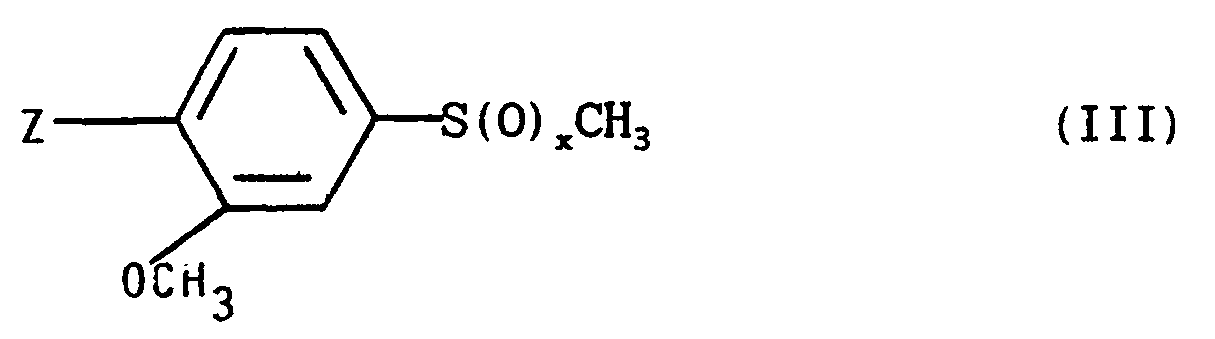
- a compound o formula (II) (wherein either X and Y both represent amino groups) is reacted with a compound of formula (III) (wherein X is as hereinbefore defined and Z is a carboxyl, thiocarboxyl or dithiocarboxyl group) or functional equivalent thereof (e.g. an acid halide, acid anhydride, amide, thioamide, imidate, thioimidate o ester thereof) or an aldehyde or nitrile thereof.
- reaction is advantageously effected in the presence of a dehydrating agent such as phoshorous oxych loride.
- a dehydrating agent such as phoshorous oxych loride.
- the reaction may be effected in the presence of polyphosphoric acid.
- the reaction i; advantageously effected in the presence of an acid binding agent, e.g. a tertiary base such as triethylamine
- an acid e.g. p-toluene-sulphonic acid or polyphosphoric acid.
- a compound of formula (III) (wherein Z represents an aldehyde group) may be effected for example, as described by R. Weidenhagen et al., Chem, Ber. 1942 75, 1936 or in USSR Paten Specification No. 5666842.
- a compound of formula (II) (wherein X and Y both represent amino groups) may be reacted with an aldehyde compound of formula (III) in the presence of sulphur.
- the compound of formula (II) may be reacted with a thioamide of a compound of formula (III), e.g. a thiomorpholide which is advantageously employed in the form of a quaternised product thereof, e.g. the appropriate S-methyl-thiobenzyl morpholide iodide.
- a thioamide of a compound of formula (III) e.g. a thiomorpholide which is advantageously employed in the form of a quaternised product thereof, e.g. the appropriate S-methyl-thiobenzyl morpholide iodide.
- the compound of formula (III) may be employed in the form of a morpholide
- a further preferred embodiment of process a) according to the present invention comprises reacting a compound of formula (II) (wherein one of X and Y represents a halogen atom and the other represents ar amino group) with a com-pound of formula (III) (wherein X is as hereinbefore defined and Z represents an amino-containing group derived from a carboxyl group, e.g. a H 2 NCO -group).
- the Z group in the compound of formula (III) may react sequentially with groups X and Y in the compound of formula (11), e.g. with the initial formation of a compound of formula (wherein x is as hereinbefore defined) which may subsequently be cyclised. e.g. by treatment with lead tetraacetate to form a compound of formula (I).
- Compound A may be prepared for example by oxidation, e.g. using hydrogen peroxide, organic peracids, or bromine or one of its addition compounds, e.g. an alkali metal hypobromite, as described in German Offenlegungsschrift DE 3044 497 of the corresponding methylthio compound.
- the acid addition salts of the compounds of formula (I) may be prepared in conventional manner, e.g. by treatment of the free base with an appropriate acid.
- Dissolve the active compound in the Water for Injections Sterilize the solution by passage through 'a membrane filter, 0.2 ⁇ pore size, collecting the filtrate in a sterile glass receiver. Fill into sterile glass 2-ml vials under aseptic conditions and secure with aluminium seals.
- the injection is reconstituted before administration by the addition of a convenient volume of Water for Injection or sterile saline solution when a large volume infusion is required.
- Dissolve the benzyl alcohol in Water for Injection Add and dissolve the active compound. Make up to volume with Water for Injection. Pass through a membrane filter, 0.2 ⁇ pore size, collecting the filtrate in a sterile glass receiver. Fill into sterile glass vials. Close the vials with sterile rubber closures and secure with aluminium seals.
- a single right ventricular papillary muscle was employed from each heart; the tendinous end ligated to a stainless steel hook and the lower end ligated and cut away from the ventricle wall and attached to a perspex clamp such that the tissue was in contact with a platinum punctate electrode.
- the stainless steel hook was suspended from a Grass FT.03 transducer which recorded isometric tension.
- the preparation was placed in a 20-ml pyrex organ bath containing buffer gassed with 95 % O 2 : 5 % CO 2 and maintained at 34 C. 500 mg leading tension was applied to the preparation. Stimulation was effected by rectangular pulses of 1 msec duration at 1.5 Hz at 30 % above the threshold voltage (1-5 volts) by a SRI stimulator.
- the transducer inputs were coupled to a potentiometric recording device by a 6-channel Grass transducer coupler. After 90 minutes, preparations unable to sustain uniform contractions beyond this period were rejected. After observing both a stable baseline and contractile force (usually 15 minutes) additions of test compounds were made in a cumulative fashion in 0.5 log, unit intervals over the range of 10 -9 M to > 10 -3 M (final bath concentration) or the limit of solubility whichever is the greater.
- Compound A was tested and found, in the concentration range 10 -4 M to 10 -3 M, to have positive inotropic activity and to be capable of eliciting at least 75 % increase in the basal contractile force (F c ).
- Compound A was tested in comparison with amrinone and sulmazole.
- bolus intravenous injections of the test compound produce a dose-related positive inotropic stimulation (as measured by the increase in the rate of change of the left-ventricular pressure - dp/dt) over the dose range of 0.003-3.0 mg/kg. This is accompanied by a dose-related increase in aortic blood flow, and a fall in systemic blood pressure (see Table below).
- EDsoINO dP dt
- ED 30 VASO diastolic blood pressure
- Phosphodiesterase enzyme in the homogenate hydrolyses 3 H-cAMP to 3 H-5'-AMP which is further converted to 3 H-adenosine by a 5'-nucleotidase added to the incubation mixture. After a period of incubation unchanged 3 H-cAMP is removed by adding ion exchange resin to the mixture and centrifuging. The 3 H in the supernatant is essayed by liquid scintillation counting and gives a quantitative measure of adenosine formation (i.e. CAMP hydrolysis). Comparison of the 3 H-adenosine formed in the presence and absence of test compound gives a measure of the PDE-inhibitory activity of the compound. At 100 ⁇ M, 1 mM and 10 mM, Compound A exhibited no PDE-inhibitory activity.
- Rhesus monkeys of both sexes were sedated with phenylcyclidine, subsequently anaesthetised with thiopentone and maintained with sodium pentobarbitone.
- Catheters were placed in the left femoral artery to record blood pressure and in the left femoral vein for administration of drugs.
- a further catheter was placed in the contralateral femoral artery for the removal of blood samples.
- Heart rate was recorded from ECG (standard lead II).
- a left-ventricular catheter was introduced via the left carotid artery to measure left-ventricular pressure. All cardiovascular parameters were displayed on a polygraph (Grass, model 7D). Rectal temperature of the anaesthetised monkey was maintained at 37-38 °C via a heated table-pad.
- Dose-inhibition curves were constructed for each compound and the IDso (dose causing 50 % inhibition) was calculated as the dose required to reduce the aggregation to 50 % of its control amplitude.
- the ID so for Compound A is 1 mg/ml (approximately).
Landscapes
- Chemical & Material Sciences (AREA)
- Organic Chemistry (AREA)
- Pharmaceuticals Containing Other Organic And Inorganic Compounds (AREA)
- Nitrogen Condensed Heterocyclic Rings (AREA)
Description
- The present invention relates to novel imidazo[4,5-c]pyridine derivatives having positive inotropic activity.
- Cardiac glycosides such as digoxin and sympathomimetics have been widely used for many years for the treatment of heart failure. It is, however, well known that these compounds suffer from a number of disadvantages which limit their use in practice as described, for example, by Opie L.H., Drugs and the Heart V and VII, Lancet 1980, i, 912 and 1011; Editorial, Treatments for heart failure: Stimulation or unloading, Lancet 1979, ii, 777; and Braunwald E., Pharmacological treatment of cardiovascular disorders in Harrison's Principles of Internal Medicine, p. 1064, ed. Isselbacher et al. McGraw-Hill, New York. Another compound which has more recently been proposed for use in the treatment of congestive heart failure is amrinone. Furthermore, U.K. Patent Specification No. 1,445,824 describes certain imidazo[4,5-b]pyridine derivatives which are said in the specification to have positive inotropic activity. Of these compounds, 2-[(2-methoxy-4-methylsulphinyl)phenyl]-1 H-imidazo[4,5-b]pyridine, specifically described in the specification, and otherwise known as AR-L 115 BS or sulmazole, has been the subject of reports in the literature.
- We have now discovered that imidazo[4,5-c]pyridine derivatives of formula (I) below possess advantageous inotropic properties which render the compounds useful for the treatment of heart failure while avoiding or obviating problems associated with the use of previously proposed inotropic agents.
- The present invention thus provides compounds of the general formula

- It will be appreciated that formula (I) may be depicted in the alternative tautomeric form:

- Compounds similar to those of formula (I), namely 2-(4-methoxyphenyl)-and 2-(4-dimethylaminophenyl)-imidazo[4,5-c]pyridines, are disclosed in USSR Patent Specification 566842. 2-(3-Chlorophenyl)- , 2-(4-chlorophenyl)-, 2-(2-hydroxyphenyl)-and 2-(4-aminophenyl)-imidazo[4,5-c]pyridines are described by R.W. Middleton and D.G. Wibberly, J. Heterocyclic Chem. 17, 1957 (1980). 2-(2-Aminophenyl)-imidazo[4,5-c]-pyridine is disclosed by Haskell et al. in J. Med. Chem., 1970, 13 (4), 697. These references do not, however, disclose or suggest the use of the compounds for the therapeutic treatment of the human or animal body. Furthermore, similar compounds are described in U.S. patents No. 4,281,005 and 3,891,660.
- The present invention also includes the acid addition salts of the compounds of formula (I). These salts may be formed by protonation of one or more of the basic nitrogen atoms in formula (I) . It will be appreciated that for therapeutic use a physiologically acceptive acid addition salt will be required, for example, a salt derived from hydrochloric, hydrobromic, phosphoric, malic, maleic, fumaric, citric, sulphuric, lactic or tartaric acid.
- A preferred -S(O)xCH3 group is methylsulphinyl (wherein x is 1).
- The compounds according to the invention are useful as cardiotonic agents since they have been found in both in vitro and in vivo experiments to produce a positive inotropic effect at low concentrations, as demonstrated in the tests described hereinafter. Experiments in vivo have also indicated that these effects are long-lasting, and accompanied by a vasodilatory effect. The latter may be of additional benefit in th treatment of heart failure to counteract the marked vasoconstriction which is frequently associated with thi condition.
- From in vitro and in vivo experiments it is evident that the positive inotropic stimulation caused by thes compounds is independent of the myocardial β-adrenoceptors whereas, it has been suggested that at leas part of the positive inotropic stimulation caused by the above-mentioned compound sulmazole is attrit utable to stimulation of myocardial β-adrenoceptors (Brutsaert et al., 1982 J. cardiovasc. Pharmacol. 4 333 43; Pouleur et al., 1982 J. cardiovasc. Pharmacol. 4, 409-18).
- A further advantage of the compounds according to the invention is that they do not demonstrate an significant myocardial phosphodiesterase inhibitory activity. This contrasts with reports for sulmazole whicl find this compound to be an effective inhibitor of myocardial phosphodiesterase (Diederan and Wiesenber ger, 1981, Drug Res. 31 (1), 177-82). Phosphodiesterase enzymes are widely distributed throughout the tissues of the body and the administration of an inhibitor, which is inherently non-specific, may result i phosphodiesterase inhibition at sites other than the myocardium, which may be undesirable from the clinica point of view.
- The stimulation of myocardial β-adrenoceptors results in an increase in the level of intracellular cAMP as does the inhibition of myocardial phosphodiesterase. The resultant positive inotropic effects of these interventions are directly linked to the increased levels of CAMP and thus an inotropic stimulation based or either mechanism may be criticised for the same reasons. Both mechanisms are likely to promote myocardial ischaemia through increasing myocardial oxygen demand by their positive chronotropic effects and in addition evoke arrhythmias. In experimental studies it has been found that 2-(2-methoxy-4 methylsulphinyl phenyl)-1 H-imidazo[4,5-c]pyridine (hereinafter named "A") does not exacerbate myocardia injury following selective ligation of the coronary artery in vivo. Furthermore, A does not increase ventricula vulnerability to arrhythmias in the ischaemic heart.
- The compounds according to the invention also possess an inhibitory effect on blood platele aggregation which could facilitate the treatment of heart failure by providing some protection against the effects of platelet interaction in the myocardium, particularly after infarctions.
- A particularly preferred compound by virtue of its advantageous pharmacological properties is A and it: physiologically acceptable acid addition salts.
- The compounds of formula (I) and their salts may be administered by the oral, rectal or parentera route. In general, these compounds may be administered at a dosage in the range of 1 to 1200 mg per day although the precise dosage will naturally depend on a number of clinical factors, for example, the type (i.e human or animal), age. and weight of the subject, the condition under treatment and its severity, and the particular compound employed. For administration of the compounds by the oral route, a dosage regime o 100 to 400 mg, e.g. about 200 mg per day may be used, while for administration by the parenteral route especially intravenously, a dosage regime of 20 to 300 mg, advantageously 35 to 70 mg, e.g. about 50 mg per day is generally preferred. The compounds may be administered intravenously by infusion, if desired in which case, a dosage rate of, for example, 1-4 mg/min may be employed.
- The compounds of formula (I) and their physiologically acceptable acid addition salts are preferable administered in the form of pharmaceutical formulations.
- The present invention thus further provides pharmaceutically acceptable formulations comprising a least one compound of formula (I) (as defined above) or a physiologically acceptable acid addition salt, ir association with at least one pharmaceutical carrier or excipient. The pharmaceutical formulations may be adapted for oral, parenteral (particularly intravenous) or rectal administration.
- The formulations may conveniently be presented in unit dosage form and may be prepared by any o the methods well known in the art of pharmacy. Such methods include the step of bringing into associatior the active ingredient with the carrier which may comprise one or more accessory ingredients. In general the formulations are prepared by uniformly and intimately bringing into association the active ingredient witt liquid carriers or finely divided solid carriers or both, and then, if necessary, shaping the product.
- Formulations of the present invention suitable for oral administration may be presented as discrete units such as capsules, cachets or tablets each containing a predetermined amount of the active ingredient: as powder or granules; as a solution or a suspension in an aqueous liquid or a non-aqueous liquid; or as an oil. in-water liquid emulsion or a water-in-oil liquid emulsion.
- A tablet may be made by compression or moulding, optionally with one ore more accessory ingredients. Compressed tablets may be prepared by compressing in a suitable machine the active ingredient in a free-flowing form such as powder or granules, optionally mixed with a binder, lubricant, iner diluent, lubricating, surface active or dispersing agent. Moulded tablets may be made by moulding in a suitable machine a mixture of the powdered compound moistened with an inert liquid diluent. The tablet:
- may optionally be coated or scored and may be formulated so as to provide slow or controlled release of the active ingredient therein.
- Formulations for rectal administration may be presented as a suppository with the usual carriers such as cocoa butter.
- Formulations suitable for parenteral administration include aqueous sterile injection solutions which may contain anti-oxidants, buffers, bacteriostats and solutes which render the formulation isotonic with the blood of the intended recipient; and aqueous and non-aqueous sterile suspensions which may include suspending agents and thickening agent. The formulations may be presented in unit-dose or multi-dose containers, for example sealed ampoules and vials, and may be stored in a freeze-dried (lyophilized) condition requiring only the addition of the sterile liquid carrier, for example water for injections, immediately prior to use. Extemporaneous injection solutions and suspensions may be prepared from sterile powder, granules and tablets of the kind previously described.
- Preferred unit dosage formulations are those containing a daily dose or unit daily sub-dose, as hereinabove recited, or an appropriate fraction thereof, of an active ingredient.
- It should be understood that in addition to the ingredients particularly mentioned above the formulations of this invention may include other agents conventional in the art having regard to the type of formulation in question, for example those suitable for oral administration may include flavouring agents.
- The compounds of formula (I) and their acid addition salts may be prepared by any convenient process, e.g. using procedures described in the above-mentioned references.
- Thus, for example, according to a further feature of the present invention, we provide a process for the preparation of compounds of formula (I) (as defined in claim 1) or an acid addition salt thereof, which comprises
- a) reacting a compound of formula


- b) reacting a compound of formula

- and where a compound of formula (I) is formed, optionally converting the said compound into an acid addition salt thereof.
- The reaction in process a) may optionally be carried out in a solvent, e.g. an organic solvent fo example, ethylene glycol, conveniently at a elevated temperature, e.g. up to the reflux temperature of thl reaction mixture.
- According to a preferred embodiment of process a) above according to the invention, a compound o formula (II) (wherein either X and Y both represent amino groups) is reacted with a compound of formula (III) (wherein X is as hereinbefore defined and Z is a carboxyl, thiocarboxyl or dithiocarboxyl group) or functional equivalent thereof (e.g. an acid halide, acid anhydride, amide, thioamide, imidate, thioimidate o ester thereof) or an aldehyde or nitrile thereof.
- When a compound of formula (III) is employed, wherein Z represents a free carboxylic acid group, the reaction is advantageously effected in the presence of a dehydrating agent such as phoshorous oxych loride. Alternatively, the reaction may be effected in the presence of polyphosphoric acid.
- When a compound of formula (III) is employed, wherein Z represents an acid halide, the reaction i; advantageously effected in the presence of an acid binding agent, e.g. a tertiary base such as triethylamine Where a nitrile of a compound of formula (III) is employed, the reaction is advantageously effected in the presence of an acid, e.g. p-toluene-sulphonic acid or polyphosphoric acid.
- Alternatively, a compound of formula (III) (wherein Z represents an aldehyde group) may be effected for example, as described by R. Weidenhagen et al., Chem, Ber. 1942 75, 1936 or in USSR Paten Specification No. 5666842. Thus, for example following the procedure described in the last-mentionec Patent Specification, a compound of formula (II) (wherein X and Y both represent amino groups) may be reacted with an aldehyde compound of formula (III) in the presence of sulphur.
- In one example of the preferred embodiment above, the compound of formula (II) may be reacted with a thioamide of a compound of formula (III), e.g. a thiomorpholide which is advantageously employed in the form of a quaternised product thereof, e.g. the appropriate S-methyl-thiobenzyl morpholide iodide. Alter. natively, the compound of formula (III) may be employed in the form of a morpholide
- A further preferred embodiment of process a) according to the present invention comprises reacting a compound of formula (II) (wherein one of X and Y represents a halogen atom and the other represents ar amino group) with a com-pound of formula (III) (wherein X is as hereinbefore defined and Z represents an amino-containing group derived from a carboxyl group, e.g. a H2 NCO -group).
- In process a), the Z group in the compound of formula (III) may react sequentially with groups X and Y in the compound of formula (11), e.g. with the initial formation of a compound of formula

- Compound A may be prepared for example by oxidation, e.g. using hydrogen peroxide, organic peracids, or bromine or one of its addition compounds, e.g. an alkali metal hypobromite, as described in German Offenlegungsschrift DE 3044 497 of the corresponding methylthio compound.
- The acid addition salts of the compounds of formula (I) may be prepared in conventional manner, e.g. by treatment of the free base with an appropriate acid.
- The following Examples illustrate the present invention.
- A mixture of 2,4 dimethoxybenzoic acid (2.5 g) and 3,4-diaminopyridine (1.5 g) was ground to a fine powder and added portionwise to phosphorus oxychloride (50 ml) with stirring. The mixture was stirred and heated under reflux for 2.5 hours before excess phosphorus oxychloride was removed in vacuo. The residue was cooled, water (20 ml) added and the pH adjusted to 7 with ammonium hydroxide to yield a pale yellow solid which was collected, washed with water and dried. The solid was recrystallised twice from aqueous ethanol to yield a cream coloured crystalline solid m.p. 195-198° (this compound is not claimed).
- In an analogous manner to that described in Example 1, the following compound was prepared: 2-(2-methoxy-4-methylthiophenyl)-1 H-imidazo[4,5-c]pyridine dihydrochloride, m.p. 205-205 C.
- To a mixture of acetic acid (20 ml), water (6 ml) and hydrogen peroxide (30 % solution) (2.5 eq), while stirring at room temperature, was added, in portions, the compound of Example 2 (1.5 g). The reaction mixture was stirred at room temperature for 2 hours and allowed to stand overnight at 4 ° C. Tlc indicated that the reaction was complete. The resulting mixture was poured into water (25 ml), basified with 0.88 ammonia and extracted with chloroform. The organic extract was dried, decolourised and evaporated in vacuo to a foam which was crystallised from ethyl acetate/acetone to give the title compound, m.p. 202-204 C.
- In an alternative preparation, the title compound was prepared as follows:
- To a stirred and cooled suspension of the compound of Example 2 (18 g) and sodium acetate (1 eq) in glacial acetic acid was added bromine (3.2 ml) in glacial acetic acid at such a rate that the temperature was held below about 5 ° C. The mixture was poured into 100 g crushed ice and the pH adjusted to 9 with 0.88 ammonia. The resulting solution (containing some brown solid) was saturated with sodium chloride and extracted with chloroform (4 x 300 ml). The combined chloroform extracts were dried, decolourised with animal charcoal and evaporated in vacuo to a froth which on trituration with ether gave the title product.
- Compound A was suspended in ether and dry hydrogen chloride gas was bubbled through the suspension for about 2 minutes. The insoluble solid was filtered off and dried to give the title compound as a white solid, m.p. 153-155 C.
- The following Examples illustrate pharmaceutical formulations according to the present invention wherein the active compound may be any compound of formula (I) defined above, for example, Compound A.
-

- Mix the active compound with the lactose and the sodium starch glycollate. Granulate the mixture with solution of polyvinylpyrrolidone in 50 % aqueous alcohol. Dry the granulate and mix in the magnesiun stearate. Compress to tablets of average weight 226 mg.
-

- Mix the active compound with the lactose and the starch. Granulate with a solution of the methylcel lulose in water. Dry and mix in the stearic acid.
- Fill 238 mg into a hard gelatin capsule.
-

- Dissolve the active compound in the Water for Injections. Sterilize the solution by passage through 'a membrane filter, 0.2 µ pore size, collecting the filtrate in a sterile glass receiver. Fill into sterile glass 2-ml vials under aseptic conditions and secure with aluminium seals.
- The injection is reconstituted before administration by the addition of a convenient volume of Water for Injection or sterile saline solution when a large volume infusion is required.
-

- Dissolve the benzyl alcohol in Water for Injection. Add and dissolve the active compound. Make up to volume with Water for Injection. Pass through a membrane filter, 0.2 µ pore size, collecting the filtrate in a sterile glass receiver. Fill into sterile glass vials. Close the vials with sterile rubber closures and secure with aluminium seals.
-

- Melt the suppository base at 40 C. Incorporate the active compound in fine powder form in the molten base and mix until homogeneous. Pour the mixture into suitable moulds, 2 g per mould and allow to set.
- Male guinea-pigs (Halls 275-350 g) having been allowed free access to food and water were killed by a blow to the head. The heart was rapidly excised and washed with Krebs-Henseleit solution containing the β-adrenoceptor antagonist carazolol (5 x 10⁻⁸ M) and gassed with 95 % 02: 5 % C02 at 34 C. The heart was transferred to a petri dish containing the same buffer kept at a constant temperature (34 C) throughout the dissection. Fresh buffer was used for each dissection and washings were discarded after use. A single right ventricular papillary muscle was employed from each heart; the tendinous end ligated to a stainless steel hook and the lower end ligated and cut away from the ventricle wall and attached to a perspex clamp such that the tissue was in contact with a platinum punctate electrode. The stainless steel hook was suspended from a Grass FT.03 transducer which recorded isometric tension. The preparation was placed in a 20-ml pyrex organ bath containing buffer gassed with 95 % O2: 5 % CO2 and maintained at 34 C. 500 mg leading tension was applied to the preparation. Stimulation was effected by rectangular pulses of 1 msec duration at 1.5 Hz at 30 % above the threshold voltage (1-5 volts) by a SRI stimulator. The transducer inputs were coupled to a potentiometric recording device by a 6-channel Grass transducer coupler. After 90 minutes, preparations unable to sustain uniform contractions beyond this period were rejected. After observing both a stable baseline and contractile force (usually 15 minutes) additions of test compounds were made in a cumulative fashion in 0.5 log, unit intervals over the range of 10-9 M to > 10-3 M (final bath concentration) or the limit of solubility whichever is the greater.
- Compound A was tested and found, in the concentration range 10-4 M to 10-3 M, to have positive inotropic activity and to be capable of eliciting at least 75 % increase in the basal contractile force (Fc).
- Compound A was tested in comparison with amrinone and sulmazole. In anaesthetised, open-chest beagles, bolus intravenous injections of the test compound (see Table below) produce a dose-related positive inotropic stimulation (as measured by the increase in the rate of change of the left-ventricular pressure - dp/dt) over the dose range of 0.003-3.0 mg/kg. This is accompanied by a dose-related increase in aortic blood flow, and a fall in systemic blood pressure (see Table below).
- The effective intravenous dose of compounds to produce a 50 % increase in dP dt (EDsoINO) and a 30 % decrease in diastolic blood pressure (ED30VASO) in anaesthetised open-chest beagles.

- The determination of phosphodiesterase inhibitory activity was effected by a procedure based on that of Thompson and Appleman (Biochem., 10, 311 (1971)). 3H-cAMP (5 µM) is incubated at 37 °C for 30 minutes with the 1000Xg supernatant of
a 10 % (w/v) homogenate of guinea pig heart in 50 mM-TrisiHCI pH 7 + 5 mM MgC12 in either the presence or the absence of Compound A which, in the former case, is dissolved in Tris buffer to give final concentrations of 100 µM, 1 mM and 10 mM. Phosphodiesterase enzyme in the homogenate hydrolyses 3H-cAMP to 3H-5'-AMP which is further converted to 3H-adenosine by a 5'-nucleotidase added to the incubation mixture. After a period of incubation unchanged 3H-cAMP is removed by adding ion exchange resin to the mixture and centrifuging. The 3H in the supernatant is essayed by liquid scintillation counting and gives a quantitative measure of adenosine formation (i.e. CAMP hydrolysis). Comparison of the 3H-adenosine formed in the presence and absence of test compound gives a measure of the PDE-inhibitory activity of the compound. At 100 µM, 1 mM and 10 mM, Compound A exhibited no PDE-inhibitory activity. - Rhesus monkeys of both sexes (7.3-9 kg, body weight) were sedated with phenylcyclidine, subsequently anaesthetised with thiopentone and maintained with sodium pentobarbitone. Catheters were placed in the left femoral artery to record blood pressure and in the left femoral vein for administration of drugs. A further catheter was placed in the contralateral femoral artery for the removal of blood samples. Heart rate was recorded from ECG (standard lead II). A left-ventricular catheter was introduced via the left carotid artery to measure left-ventricular pressure. All cardiovascular parameters were displayed on a polygraph (Grass, model 7D). Rectal temperature of the anaesthetised monkey was maintained at 37-38 °C via a heated table-pad.
- Blood samples (3 ml) were withdrawn into syringes containing trisodium citrate (0.315 % w/v final concentration), and spun for 2 seconds. The platelet-rich plasma was transferred to a Born-type aggregometer and incubated for 1 min (at 37 ° C) prior to the addition of sufficient ADP to induce sub- maximal (1.5-3 µM) or near maximal (8-12 uM) aggregation. Inhibition of aggregation was calculated with reference to at least 2 control samples prior to intravenous infusion of compound A. The sequence of administration of Compound A was randomized between experiments. The effective dose of Compound A which caused 50 % inhibition of aggregation is 1.0 mg/kg i.v. (approximately).
- Blood was freshly collected into siliconized (Siloclad; Clay Adams) plastic (Sterlin Ltd.) tubes containing trisodium citrate (3.15 %; 0.1 volume with 0.9 volume blood) and centrifuged (200 g for 15 min) at room temperature. The platelet-rich plasma (PRP) was withdrawn into plastic containers and kept at room temperature. Inhibition of platelet aggregation was determined in a Born-type aggregometer by incubating aliquots (0.5 ml) of the PRP for 1 min at 37 ° C with or without Compound A prior to addition of sufficient adenosine diphosphate (ADP). Dose-inhibition curves were constructed for each compound and the IDso (dose causing 50 % inhibition) was calculated as the dose required to reduce the aggregation to 50 % of its control amplitude. The IDso for Compound A is 1 mg/ml (approximately).
- In preliminary toxicity studies, the effects of intravenous administration of Compound A (see above) to female Wistar rats has been determined. Animals were randomly distributed into groups of five, each group receiving a single administration of drug. One group served as a control and received the vehicle only. Observations on behaviour were made at 5 minutes and 20 minutes, at 1, 3, 4 1 '2 hours and at 2, 4, and 6 days following drug administration.
- The findings of these studies are tabulated below.

Claims (8)



Applications Claiming Priority (6)
| Application Number | Priority Date | Filing Date | Title |
|---|---|---|---|
| GB8133942 | 1981-11-10 | ||
| GB8133930 | 1981-11-10 | ||
| GB8133930 | 1981-11-10 | ||
| GB8133942 | 1981-11-10 | ||
| GB8213846 | 1982-05-12 | ||
| GB8213846 | 1982-05-12 |
Publications (2)
| Publication Number | Publication Date |
|---|---|
| EP0079083A1 EP0079083A1 (en) | 1983-05-18 |
| EP0079083B1 true EP0079083B1 (en) | 1991-02-27 |
Family
ID=27261362
Family Applications (1)
| Application Number | Title | Priority Date | Filing Date |
|---|---|---|---|
| EP82110328A Expired - Lifetime EP0079083B1 (en) | 1981-11-10 | 1982-11-09 | New imidazo[4,5-c]pyridine derivatives, processes for their preparation and pharmaceutical formulations containing such compounds |
Country Status (17)
| Country | Link |
|---|---|
| US (1) | US4603139A (en) |
| EP (1) | EP0079083B1 (en) |
| KR (1) | KR890000022B1 (en) |
| AR (1) | AR241247A1 (en) |
| AU (1) | AU9030682A (en) |
| DD (1) | DD205904A5 (en) |
| DK (1) | DK161325C (en) |
| ES (2) | ES517193A0 (en) |
| FI (1) | FI79312C (en) |
| GB (1) | GB2113675B (en) |
| GR (1) | GR76746B (en) |
| IE (1) | IE56478B1 (en) |
| IL (1) | IL67206A0 (en) |
| MC (1) | MC1491A1 (en) |
| NO (1) | NO158100C (en) |
| PH (1) | PH22764A (en) |
| PT (1) | PT75820B (en) |
Families Citing this family (78)
| Publication number | Priority date | Publication date | Assignee | Title |
|---|---|---|---|---|
| EP0072926B1 (en) * | 1981-08-19 | 1986-09-24 | MERCK PATENT GmbH | 2-arylimidazopyridines |
| US4758574A (en) * | 1982-05-03 | 1988-07-19 | Eli Lilly And Company | 2-phenylimidazio (4,5-c) pyridines |
| ZA832938B (en) * | 1982-05-03 | 1984-12-24 | Lilly Co Eli | 2-phenylimidazo(4,5-c)pyridines |
| US4904785A (en) * | 1982-05-03 | 1990-02-27 | Eli Lilly And Company | 2-phenylimidazo[4,5-c]pyridines |
| DE3224512A1 (en) * | 1982-07-01 | 1984-01-05 | Dr. Karl Thomae Gmbh, 7950 Biberach | NEW IMIDAZOLE DERIVATIVES, THEIR PRODUCTION AND MEDICINAL PRODUCTS CONTAINING THESE COMPOUNDS |
| DE3324115A1 (en) * | 1983-07-05 | 1985-01-17 | Dr. Karl Thomae Gmbh, 7950 Biberach | NEW IMIDAZOLES, THEIR PRODUCTION AND MEDICINAL PRODUCTS CONTAINING THESE COMPOUNDS |
| US4515796A (en) * | 1983-09-08 | 1985-05-07 | Eli Lilly And Company | Certain naphthalenyl imidazo compounds and their pharmaceutical use |
| US4533734A (en) * | 1983-11-10 | 1985-08-06 | Eli Lilly And Company | Inotropic agents |
| DE3346602A1 (en) * | 1983-12-23 | 1985-07-11 | Dr. Karl Thomae Gmbh, 7950 Biberach | NEW IMIDAZO (4,5-C) PYRIDIN-ONE, THEIR PRODUCTION AND MEDICINAL PRODUCTS CONTAINING THESE COMPOUNDS |
| DE3347290A1 (en) * | 1983-12-28 | 1985-07-11 | Dr. Karl Thomae Gmbh, 7950 Biberach | NEW 2-PHENYL IMIDAZOLES, THEIR PRODUCTION AND MEDICINES CONTAINING THESE COMPOUNDS |
| GR850426B (en) * | 1984-02-24 | 1985-06-18 | Lilly Co Eli | |
| US4578387A (en) * | 1984-03-05 | 1986-03-25 | Eli Lilly And Company | Inotropic agents |
| DE3445299A1 (en) * | 1984-12-12 | 1986-06-19 | Dr. Karl Thomae Gmbh, 7950 Biberach | NEW IMIDAZO DERIVATIVES, MEDICINAL PRODUCTS CONTAINING THESE COMPOUNDS AND METHOD FOR THE PRODUCTION THEREOF |
| IL78241A0 (en) * | 1985-03-29 | 1986-07-31 | Lilly Co Eli | Synthesis of inotropic imidazo(4,5-c)pyridine |
| DE3522230A1 (en) * | 1985-06-21 | 1987-01-02 | Thomae Gmbh Dr K | NEW 2-ARYLIMIDAZOLES, MEDICINAL PRODUCTS CONTAINING THESE COMPOUNDS, AND METHOD FOR THE PRODUCTION THEREOF |
| US4740599A (en) * | 1986-10-03 | 1988-04-26 | Eli Lilly And Company | Synthesis of alkylsulfinyl substituted 2-phenylimidazo(4,5-c)pyridines |
| EP0322149A2 (en) * | 1987-12-22 | 1989-06-28 | Eli Lilly And Company | Hydrates of an inotropic agent |
| GB8822170D0 (en) * | 1988-09-21 | 1988-10-26 | Pfizer Ltd | Therapeutic agents |
| BR9106433A (en) * | 1990-05-09 | 1993-05-04 | Pfizer | IMIDAZO (4,5-C) PYRIDINES WITH ANTAGONIST ACTIVITY TO PAF |
| DE4324580A1 (en) * | 1993-07-22 | 1995-01-26 | Thomae Gmbh Dr K | Bicyclic heterocycles, pharmaceutical compositions containing them and methods for their preparation |
| US6020340A (en) * | 1996-05-15 | 2000-02-01 | Byk Gulden Lomberg Chemische Fabrik Gmbh | Imidazopyridines |
| DE59711147D1 (en) * | 1996-11-11 | 2004-01-29 | Altana Pharma Ag | New imidazo- and oxazolopyridines as phosphodiesterase inhibitors. |
| CA2412462A1 (en) | 2000-06-14 | 2001-12-20 | Warner-Lambert Company | 6,5-fused bicyclic heterocycles |
| EP1599473B1 (en) * | 2003-02-25 | 2006-09-20 | ALTANA Pharma AG | Imidazo 4,5-b quinoline-derivatives and their use as no-synthase inhibitors |
| KR20060087386A (en) * | 2005-01-28 | 2006-08-02 | 주식회사 대웅제약 | Novel benzoimidazole derivatives and pharmaceutical compositions containing them |
| WO2007034277A1 (en) * | 2005-09-19 | 2007-03-29 | Pfizer Products Inc. | Aryl substituted imidazo [4,5-c] pyridine compounds as c3a receptor antagonists |
| CN102271515B (en) | 2008-10-31 | 2014-07-02 | 健泰科生物技术公司 | Pyrazolopyrimidine jak inhibitor compounds and methods |
| UA110324C2 (en) | 2009-07-02 | 2015-12-25 | Genentech Inc | Jak inhibitory compounds based on pyrazolo pyrimidine |
| EP2464232B1 (en) * | 2009-08-10 | 2015-10-07 | Samumed, LLC | Indazole inhibitors of the wnt signal pathway and therapeutic uses thereof |
| SMT201700581T1 (en) | 2009-12-21 | 2018-01-11 | Samumed Llc | 1h-pyrazolo[3,4-b]pyridines and therapeutic uses thereof |
| JP2013522267A (en) * | 2010-03-17 | 2013-06-13 | エフ.ホフマン−ラ ロシュ アーゲー | Imidazopyridine compounds, compositions, and methods of use |
| KR20130051507A (en) | 2010-09-15 | 2013-05-20 | 에프. 호프만-라 로슈 아게 | Azabenzothiazole compounds, compositions and methods of use |
| EP2640722B1 (en) | 2010-11-19 | 2015-11-04 | F.Hoffmann-La Roche Ag | Pyrazolopyridines and their use as tyk2 inhibitors |
| AU2012308570B2 (en) | 2011-09-14 | 2016-11-10 | Samumed, Llc | Indazole-3-carboxamides and their use as Wnt/b-catenin signaling pathway inhibitors |
| PH12017500997A1 (en) | 2012-04-04 | 2018-02-19 | Samumed Llc | Indazole inhibitors of the wnt signal pathway and therapeutic uses thereof |
| ME03573B (en) | 2012-05-04 | 2020-07-20 | Samumed Llc | 1H-PYRAZOLO [3,4-B] PYRIDINES AND THEIR THERAPEUTIC USES |
| CN105120862A (en) | 2013-01-08 | 2015-12-02 | 萨穆梅德有限公司 | 3-(benzoimidazol-2-yl)-indazole inhibitors of the wnt signaling pathway and therapeutic uses thereof |
| EP2818472A1 (en) * | 2013-06-27 | 2014-12-31 | Max-Planck-Gesellschaft zur Förderung der Wissenschaften e.V. | Imidazo[4,5-c]pyridine and pyrrolo[3,2-c]pyridine compounds as G-protein-coupled receptor kinase 5 (GRK5) modulators |
| US11229208B2 (en) | 2013-07-02 | 2022-01-25 | Syngenta Participations Ag | Pesticidally active bi- or tricyclic heterocycles with sulfur containing substituents |
| CN107652292B (en) * | 2013-07-02 | 2020-11-17 | 先正达参股股份有限公司 | Pesticidally active bicyclic or tricyclic heterocycles with sulfur-containing substituents |
| US10939682B2 (en) * | 2013-07-02 | 2021-03-09 | Syngenta Participations Ag | Pesticidally active bi- or tricyclic heterocycles with sulfur containing substituents |
| ES2987367T3 (en) | 2014-02-17 | 2024-11-14 | Bayer Cropscience Ag | 2-(het)aryl substituted fused bicyclic heterocycle derivatives as antiparasitic agents |
| EA032488B1 (en) | 2014-05-23 | 2019-06-28 | Ф. Хоффманн-Ля Рош Аг | COMPOUNDS 5-CHLOR-DIFTLOROMETOXYPHENYL-PYRAZOLOPIRIMIDINE, PRESENTING JANUS KINASE INHIBITORS |
| JP6695326B2 (en) | 2014-08-21 | 2020-05-20 | シンジェンタ パーティシペーションズ アーゲー | Pesticidally Active Heterocyclic Derivatives Bearing Sulfur-Containing Substituents |
| WO2016040180A1 (en) | 2014-09-08 | 2016-03-17 | Samumed, Llc | 3-(1h-benzo[d]imidazol-2-yl)-1h-pyrazolo[3,4-c]pyridine and therapeutic uses thereof |
| WO2016040182A1 (en) | 2014-09-08 | 2016-03-17 | Samumed, Llc | 2-(1h-indazol-3-yl)-1h-imidazo[4,5-c]pyridine and therapeutic uses thereof |
| WO2016040193A1 (en) | 2014-09-08 | 2016-03-17 | Samumed, Llc | 3-(1h-imidazo[4,5-c]pyridin-2-yl)-1h-pyrazolo[3,4-b]pyridine and therapeutic uses thereof |
| WO2016040190A1 (en) | 2014-09-08 | 2016-03-17 | Samumed, Llc | 3-(3h-imidazo[4,5-b]pyridin-2-yl)-1h-pyrazolo[3,4-b]pyridine and therapeutic uses thereof |
| WO2016040188A1 (en) | 2014-09-08 | 2016-03-17 | Samumed, Llc | 3-(3h-imidazo[4,5-c]pyridin-2-yl)-1h-pyrazolo[3,4-c]pyridine and therapeutic uses thereof |
| WO2016040181A1 (en) | 2014-09-08 | 2016-03-17 | Samumed, Llc | 3-(1h-imidazo[4,5-c]pyridin-2-yl)-1h-pyrazolo[3,4-c]pyridine and therapeutic uses thereof |
| WO2016040185A1 (en) | 2014-09-08 | 2016-03-17 | Samumed, Llc | 2-(1h-indazol-3-yl)-3h-imidazo[4,5-b]pyridine and therapeutic uses thereof |
| WO2016040184A1 (en) | 2014-09-08 | 2016-03-17 | Samumed, Llc | 3-(3h-imidazo[4,5-b]pyridin-2-yl)-1h-pyrazolo[3,4-c]pyridine and therapeutic uses thereof |
| WO2016058928A1 (en) * | 2014-10-14 | 2016-04-21 | Syngenta Participations Ag | Pesticidally active heterocyclic derivatives with sulphur containing substituents |
| UA122781C2 (en) * | 2014-12-17 | 2021-01-06 | Сінгента Партісіпейшнс Аг | PESTICIDELY ACTIVE HETEROCYCLIC DERIVATIVES WITH SULFUR-CONTAINING SUBSTITUENTS |
| JP6704397B2 (en) * | 2014-12-31 | 2020-06-03 | シンジェンタ パーティシペーションズ アーゲー | Pesticidal active polycyclic derivatives with sulfur-containing substituents |
| UY36547A (en) * | 2015-02-05 | 2016-06-01 | Bayer Cropscience Ag | BICYCLIC CONDENSED HETEROCYCLIC DERIVATIVES REPLACED BY 2- (HET) ARILO AS PESTICIDES |
| WO2017024004A1 (en) | 2015-08-03 | 2017-02-09 | Samumed, Llc. | 3-(1h-pyrrolo[2,3-b]pyridin-2-yl)-1h-pyrazolo[4,3-b]pyridines and therapeutic uses thereof |
| US10604512B2 (en) | 2015-08-03 | 2020-03-31 | Samumed, Llc | 3-(1H-indol-2-yl)-1H-indazoles and therapeutic uses thereof |
| US10463651B2 (en) | 2015-08-03 | 2019-11-05 | Samumed, Llc | 3-(1H-pyrrolo[3,2-C]pyridin-2-YL)-1H-indazoles and therapeutic uses thereof |
| US10206908B2 (en) | 2015-08-03 | 2019-02-19 | Samumed, Llc | 3-(1H-pyrrolo[3,2-C]pyridin-2-YL)-1H-pyrazolo[3,4-C]pyridines and therapeutic uses thereof |
| US10519169B2 (en) | 2015-08-03 | 2019-12-31 | Samumed, Llc | 3-(1H-pyrrolo[2,3-C]pyridin-2-yl)-1 H-pyrazolo[4,3-B]pyridines and therapeutic uses thereof |
| WO2017024015A1 (en) | 2015-08-03 | 2017-02-09 | Samumed, Llc. | 3-(3h-imidazo[4,5-b]pyridin-2-yl)-1h-pyrazolo[4,3-b]pyridines and therapeutic uses thereof |
| US10383861B2 (en) | 2015-08-03 | 2019-08-20 | Sammumed, LLC | 3-(1H-pyrrolo[2,3-C]pyridin-2-yl)-1H-pyrazolo[3,4-C]pyridines and therapeutic uses thereof |
| US10285983B2 (en) | 2015-08-03 | 2019-05-14 | Samumed, Llc | 3-(1H-pyrrolo[2,3-B]pyridin-2-yl)-1H-pyrazolo[3,4-B] pyridines and therapeutic uses thereof |
| WO2017024026A1 (en) | 2015-08-03 | 2017-02-09 | Samumed, Llc | 3-(1h-indol-2-yl)-1h-pyrazolo[3,4-c]pyridines and therapeutic uses thereof |
| US10195185B2 (en) | 2015-08-03 | 2019-02-05 | Samumed, Llc | 3-(1H-imidazo[4,5-C]pyridin-2-yl)-1H-pyrazolo[4,3-B]pyridines and therapeutic uses thereof |
| US10226448B2 (en) | 2015-08-03 | 2019-03-12 | Samumed, Llc | 3-(1H-pyrrolo[3,2-C]pyridin-2-yl)-1H-pyrazolo[3,4-B]pyridines and therapeutic uses thereof |
| WO2017023993A1 (en) | 2015-08-03 | 2017-02-09 | Samumed, Llc. | 3-(1h-indol-2-yl)-1h-pyrazolo[4,3-b]pyridines and therapeutic uses thereof |
| US10350199B2 (en) | 2015-08-03 | 2019-07-16 | Samumed, Llc | 3-(1h-pyrrolo[2,3-b]pyridin-2-yl)-1h-indazoles and therapeutic uses thereof |
| WO2017023980A1 (en) | 2015-08-03 | 2017-02-09 | Samumed, Llc. | 3-(1h-pyrrolo[2,3-b]pyridin-2-yl)-1h-pyrazolo[3,4-c]pyridines and therapeutic uses thereof |
| WO2017023989A1 (en) | 2015-08-03 | 2017-02-09 | Samumed, Llc. | 3-(1h-benzo[d]imidazol-2-yl)-1h-pyrazolo[4,3-b]pyridines and therapeutic uses thereof |
| WO2017023988A1 (en) | 2015-08-03 | 2017-02-09 | Samumed, Llc. | 3-(3h-imidazo[4,5-c]pyridin-2-yl)-1h-pyrazolo[4,3-b]pyridines and therapeutic uses thereof |
| WO2017024003A1 (en) | 2015-08-03 | 2017-02-09 | Samumed, Llc | 3-(1h-pyrrolo[3,2-c]pyridin-2-yl)-1h-pyrazolo[4,3-b]pyridines and therapeutic uses thereof |
| CN108473491A (en) | 2015-11-06 | 2018-08-31 | 萨穆梅德有限公司 | 2- (1H- indazole -3- bases) -3H- imidazos [4,5-C] pyridines and its antiphlogistic use |
| DK3464285T3 (en) | 2016-06-01 | 2022-12-19 | Biosplice Therapeutics Inc | PROCEDURE FOR THE PREPARATION OF N-(5-(3-(7-(3-FLUORPHENYL)-3H-IMIDAZO[4,5-C]PYRIDIN-2-YL)-1H-INDAZOL-5-YL)PYRIDIN-3- YL)-3-METHYLBUTANAMIDE |
| EP3528808B1 (en) | 2016-10-21 | 2021-10-06 | BioSplice Therapeutics, Inc. | Methods of using indazole-3-carboxamides and their use as wnt/b-catenin signaling pathway inhibitors |
| MA46696A (en) | 2016-11-07 | 2019-09-11 | Samumed Llc | READY-TO-USE SINGLE-DOSE INJECTABLE FORMULATIONS |
| WO2018215389A1 (en) | 2017-05-22 | 2018-11-29 | F. Hoffmann-La Roche Ag | Therapeutic compounds and compositions, and methods of use thereof |
Citations (3)
| Publication number | Priority date | Publication date | Assignee | Title |
|---|---|---|---|---|
| EP0072926A1 (en) * | 1981-08-19 | 1983-03-02 | MERCK PATENT GmbH | 2-Arylimidazopyridines |
| EP0093593A2 (en) * | 1982-05-03 | 1983-11-09 | Eli Lilly And Company | Pyridine compounds |
| EP0098448A2 (en) * | 1982-07-01 | 1984-01-18 | Dr. Karl Thomae GmbH | Imidazole derivatives, their preparation and medicines containing these compounds |
Family Cites Families (8)
| Publication number | Priority date | Publication date | Assignee | Title |
|---|---|---|---|---|
| CA820316A (en) * | 1969-08-12 | Fisons Pest Control Limited | Substituted heterocyclic compounds | |
| US3985891A (en) * | 1973-02-03 | 1976-10-12 | Boehringer Ingelheim Gmbh | 2-Phenyl-imidazo (4,5-b)pyridines and salts thereof |
| FI58126C (en) * | 1973-02-03 | 1980-12-10 | Thomae Gmbh Dr K | FOERFARANDE FOER FRAMSTAELLNING AV KARDIOTONA OCH BLODTRYCKSSAENKANDE 2-PHENYL-1H-IMIDATSO (4,5-B) PYRIDINER |
| US3891660A (en) * | 1974-02-07 | 1975-06-24 | Squibb & Sons Inc | Derivatives of 1H-imidazo{8 4,5-c{9 pyridine-7-carboxylic acids and esters |
| SU566842A1 (en) * | 1976-01-06 | 1977-07-30 | Донецкое Отделение Физико-Органической Химии Института Физической Химии Им.Л.В.Писаржевского Ан Украинской Сср | Method of preparing substituted imidazopyridines |
| US4281005A (en) * | 1979-03-05 | 1981-07-28 | Merck & Co., Inc. | Novel 2-pyridylimidazole compounds |
| DE2927987A1 (en) * | 1979-07-11 | 1981-02-05 | Thomae Gmbh Dr K | NEW 2-ALKOXYPHENYL-IMIDAZO ANGLE CLAMP ON 4.5-B ANGLE CLAMP ON PYRIDINE, THEIR PRODUCTION AND THE USE THEREOF AS MEDICINAL PRODUCTS |
| DE3037464A1 (en) * | 1980-10-03 | 1982-05-19 | Dr. Karl Thomae Gmbh, 7950 Biberach | 6-HYDROXY-2-PHENYL-IMIDAZO 4,5-B TO PYRIDINE, THEIR PRODUCTION AND THIS MEDICINAL PRODUCT CONTAINING IT |
-
1982
- 1982-11-08 ES ES517193A patent/ES517193A0/en active Granted
- 1982-11-09 AU AU90306/82A patent/AU9030682A/en not_active Abandoned
- 1982-11-09 IE IE2667/82A patent/IE56478B1/en not_active IP Right Cessation
- 1982-11-09 IL IL67206A patent/IL67206A0/en unknown
- 1982-11-09 NO NO823732A patent/NO158100C/en unknown
- 1982-11-09 EP EP82110328A patent/EP0079083B1/en not_active Expired - Lifetime
- 1982-11-09 PT PT75820A patent/PT75820B/en unknown
- 1982-11-09 MC MC821611A patent/MC1491A1/en unknown
- 1982-11-09 AR AR82291240A patent/AR241247A1/en active
- 1982-11-09 FI FI823846A patent/FI79312C/en not_active IP Right Cessation
- 1982-11-09 GB GB08231984A patent/GB2113675B/en not_active Expired
- 1982-11-09 PH PH28109A patent/PH22764A/en unknown
- 1982-11-09 DK DK499582A patent/DK161325C/en not_active IP Right Cessation
- 1982-11-09 GR GR69767A patent/GR76746B/el unknown
- 1982-11-09 KR KR8205055A patent/KR890000022B1/en not_active Expired
- 1982-11-09 DD DD82244689A patent/DD205904A5/en not_active IP Right Cessation
-
1983
- 1983-06-08 ES ES523083A patent/ES8503351A1/en not_active Expired
-
1985
- 1985-01-11 US US06/690,815 patent/US4603139A/en not_active Expired - Fee Related
Patent Citations (3)
| Publication number | Priority date | Publication date | Assignee | Title |
|---|---|---|---|---|
| EP0072926A1 (en) * | 1981-08-19 | 1983-03-02 | MERCK PATENT GmbH | 2-Arylimidazopyridines |
| EP0093593A2 (en) * | 1982-05-03 | 1983-11-09 | Eli Lilly And Company | Pyridine compounds |
| EP0098448A2 (en) * | 1982-07-01 | 1984-01-18 | Dr. Karl Thomae GmbH | Imidazole derivatives, their preparation and medicines containing these compounds |
Non-Patent Citations (1)
| Title |
|---|
| JOURNAL OF HETEROCYCLIC CHEMISTRY, vol. 17, December 1980, pages 1757-60, Provo., Utah (USA); R.W. MIDDLETON et al.: "Synthesis of imidazo (4,5-b)- and (4,5-c)pyridines" * |
Also Published As
| Publication number | Publication date |
|---|---|
| NO158100B (en) | 1988-04-05 |
| IL67206A0 (en) | 1983-03-31 |
| AR241247A1 (en) | 1992-03-31 |
| IE822667L (en) | 1983-05-10 |
| DK499582A (en) | 1983-05-11 |
| DD205904A5 (en) | 1984-01-11 |
| FI79312C (en) | 1989-12-11 |
| ES8401486A1 (en) | 1983-12-01 |
| KR890000022B1 (en) | 1989-03-06 |
| FI79312B (en) | 1989-08-31 |
| ES523083A0 (en) | 1985-02-16 |
| US4603139A (en) | 1986-07-29 |
| MC1491A1 (en) | 1983-09-12 |
| NO823732L (en) | 1983-05-11 |
| FI823846A0 (en) | 1982-11-09 |
| PT75820A (en) | 1982-12-01 |
| ES8503351A1 (en) | 1985-02-16 |
| GR76746B (en) | 1984-08-30 |
| PH22764A (en) | 1988-12-12 |
| ES517193A0 (en) | 1983-12-01 |
| NO158100C (en) | 1988-07-13 |
| GB2113675A (en) | 1983-08-10 |
| DK161325C (en) | 1991-12-02 |
| AU9030682A (en) | 1983-05-19 |
| FI823846L (en) | 1983-05-11 |
| IE56478B1 (en) | 1991-08-14 |
| PT75820B (en) | 1986-06-11 |
| DK161325B (en) | 1991-06-24 |
| EP0079083A1 (en) | 1983-05-18 |
| GB2113675B (en) | 1985-10-30 |
| KR840002398A (en) | 1984-07-02 |
Similar Documents
| Publication | Publication Date | Title |
|---|---|---|
| US4603139A (en) | Bicycle compounds, processes for their preparation and pharmaceutical formulations containing compounds | |
| RU2041210C1 (en) | Method of synthesis of imidazo-(4,5-b)-quinolinylhydroxyalkanoic acid amides or their pharmaceutically used salts | |
| US4666913A (en) | Hydroxy and aminothiazolyl-benzodiazinone compounds, cardiotonic compositions including the same, and their uses | |
| EP0281254B1 (en) | Antiarrythmic agents | |
| JPS62501417A (en) | Bicyclic heteroarylthiazole compounds, cardiotonic compositions containing the same, and uses thereof | |
| EP0286278B1 (en) | Indanamine derivatives useful as antiarrhythmic agents | |
| US4990509A (en) | Sulfonamide anti-arrhythmic agents | |
| RU2130019C1 (en) | Derivatives of 3(2)-pyridazinone, a pharmaceutical composition, a method of treatment | |
| EP0307121B1 (en) | Sulphonamide antiarrhythmic agents | |
| US4891372A (en) | Antiarrhythmic agents, compositions and method of use thereas | |
| EP0228959A2 (en) | Aminostyryl compound, leukotriene antagonistic composition containing the same as effective ingredients and method of antagonizing SRS by employing the same | |
| EP0291210A1 (en) | Antiarrhythmic agents | |
| EP0285284B1 (en) | N-phenethylaminoalkyl-benzamide anti-arrhythmia agents | |
| US4822793A (en) | Benzazepine antiarrhythmic agents | |
| HU194228B (en) | Process for production of new, in 11-position substituated 5,11-dihydro-6h-pirido /2,3-b//1,4/-benzodiozepin-6-on and medical compounds containing thereof | |
| EP0286277A1 (en) | Antiarrythmic agents | |
| US4743608A (en) | Pyridone-pyridyl-imidazolyl and triazolyl compounds and their use as cardiotonic agents | |
| US4806535A (en) | Imidazolylphenyl and 1,2,4-triazolylphenyl benzopyridazinone and pyridopyridazinone compounds and their use for increasing cardiatonic contractility | |
| US5945428A (en) | Substituted oximes, hydrazones and olefins as neurokinin antagonists | |
| JPH02501302A (en) | Benzodiazinone-pyridone compound, cardiotonic composition containing the compound, and method for using the same | |
| JPS5890586A (en) | Novel bicyclic compound | |
| EP0324543A2 (en) | Antiarrhythmic agents | |
| SU1241993A3 (en) | Method of producing bicyclic compounds or hydrochlorides thereof | |
| Barraclough et al. | Inotropic activities of imidazopyridines | |
| JPH06157483A (en) | 1,3,4-benzotriazepin-5 (4H) -one derivative and method for producing the same |
Legal Events
| Date | Code | Title | Description |
|---|---|---|---|
| PUAI | Public reference made under article 153(3) epc to a published international application that has entered the european phase |
Free format text: ORIGINAL CODE: 0009012 |
|
| AK | Designated contracting states |
Designated state(s): AT BE CH DE FR GB IT LI LU NL SE |
|
| 17P | Request for examination filed |
Effective date: 19831005 |
|
| RAP1 | Party data changed (applicant data changed or rights of an application transferred) |
Owner name: MERCK PATENT GESELLSCHAFT MIT BESCHRAENKTER HAFTUN |
|
| GRAA | (expected) grant |
Free format text: ORIGINAL CODE: 0009210 |
|
| AK | Designated contracting states |
Kind code of ref document: B1 Designated state(s): LU |
|
| EN | Fr: translation not filed | ||
| K2C3 | Correction of patent specification (complete document) published |
Effective date: 19910227 |
|
| PLBE | No opposition filed within time limit |
Free format text: ORIGINAL CODE: 0009261 |
|
| STAA | Information on the status of an ep patent application or granted ep patent |
Free format text: STATUS: NO OPPOSITION FILED WITHIN TIME LIMIT |
|
| 26N | No opposition filed | ||
| EPTA | Lu: last paid annual fee | ||
| PGFP | Annual fee paid to national office [announced via postgrant information from national office to epo] |
Ref country code: LU Payment date: 19941201 Year of fee payment: 13 |
|
| PG25 | Lapsed in a contracting state [announced via postgrant information from national office to epo] |
Ref country code: LU Free format text: LAPSE BECAUSE OF NON-PAYMENT OF DUE FEES Effective date: 19951109 |