EP0078167B1 - New n-nitroso-n-(beta-chloro-ethyl)-carbamoyl peptides - Google Patents
New n-nitroso-n-(beta-chloro-ethyl)-carbamoyl peptides Download PDFInfo
- Publication number
- EP0078167B1 EP0078167B1 EP82305633A EP82305633A EP0078167B1 EP 0078167 B1 EP0078167 B1 EP 0078167B1 EP 82305633 A EP82305633 A EP 82305633A EP 82305633 A EP82305633 A EP 82305633A EP 0078167 B1 EP0078167 B1 EP 0078167B1
- Authority
- EP
- European Patent Office
- Prior art keywords
- nitroso
- ethyl
- chloro
- carbamoyl
- group
- Prior art date
- Legal status (The legal status is an assumption and is not a legal conclusion. Google has not performed a legal analysis and makes no representation as to the accuracy of the status listed.)
- Expired
Links
- 108090000765 processed proteins & peptides Proteins 0.000 title claims description 16
- 102000004196 processed proteins & peptides Human genes 0.000 title description 4
- 150000001875 compounds Chemical class 0.000 claims abstract description 35
- 238000000034 method Methods 0.000 claims abstract description 29
- 239000002253 acid Substances 0.000 claims abstract description 13
- 150000003839 salts Chemical class 0.000 claims abstract description 11
- 125000003277 amino group Chemical group 0.000 claims abstract description 10
- 102000015636 Oligopeptides Human genes 0.000 claims abstract description 8
- 108010038807 Oligopeptides Proteins 0.000 claims abstract description 8
- 238000002360 preparation method Methods 0.000 claims abstract description 5
- 230000000259 anti-tumor effect Effects 0.000 claims abstract description 4
- IVHKZGYFKJRXBD-UHFFFAOYSA-N amino carbamate Chemical compound NOC(N)=O IVHKZGYFKJRXBD-UHFFFAOYSA-N 0.000 claims abstract 2
- VEXZGXHMUGYJMC-UHFFFAOYSA-N Hydrochloric acid Chemical compound Cl VEXZGXHMUGYJMC-UHFFFAOYSA-N 0.000 claims description 10
- 125000006239 protecting group Chemical group 0.000 claims description 8
- ASOKPJOREAFHNY-UHFFFAOYSA-N 1-Hydroxybenzotriazole Chemical compound C1=CC=C2N(O)N=NC2=C1 ASOKPJOREAFHNY-UHFFFAOYSA-N 0.000 claims description 7
- 230000004071 biological effect Effects 0.000 claims description 7
- 239000012634 fragment Substances 0.000 claims description 7
- -1 nitric acid nitrosyl chloride Chemical compound 0.000 claims description 7
- 230000000694 effects Effects 0.000 claims description 6
- 239000007858 starting material Substances 0.000 claims description 6
- 239000008194 pharmaceutical composition Substances 0.000 claims description 5
- 239000004480 active ingredient Substances 0.000 claims description 4
- 239000003937 drug carrier Substances 0.000 claims description 4
- 150000002148 esters Chemical class 0.000 claims description 4
- 229940088597 hormone Drugs 0.000 claims description 4
- 239000005556 hormone Substances 0.000 claims description 4
- NIKPSMISYOPYIX-XITGISAOSA-N (2s)-n-[(2s)-1-amino-3-methyl-1-oxobutan-2-yl]-1-[(2s)-2,6-diamino-2-[2-chloroethyl(nitroso)carbamoyl]hexanoyl]pyrrolidine-2-carboxamide;hydrochloride Chemical compound Cl.CC(C)[C@@H](C(N)=O)NC(=O)[C@@H]1CCCN1C(=O)[C@@](N)(CCCCN)C(=O)N(CCCl)N=O NIKPSMISYOPYIX-XITGISAOSA-N 0.000 claims description 3
- YDJIFRYZDHLZDX-DXCNDIKUSA-N N(=O)N([C@@](CC1=CNC2=CC=CC=C12)(C(=O)N[C@@H](CC(C)C)C(=O)N[C@@H](CC(=O)N[C@@H](CC1=CC=CC=C1)C(=O)N)C(N)=O)C(N)=O)CCCl Chemical compound N(=O)N([C@@](CC1=CNC2=CC=CC=C12)(C(=O)N[C@@H](CC(C)C)C(=O)N[C@@H](CC(=O)N[C@@H](CC1=CC=CC=C1)C(=O)N)C(N)=O)C(N)=O)CCCl YDJIFRYZDHLZDX-DXCNDIKUSA-N 0.000 claims description 3
- LZDSILRDTDCIQT-UHFFFAOYSA-N dinitrogen trioxide Chemical compound [O-][N+](=O)N=O LZDSILRDTDCIQT-UHFFFAOYSA-N 0.000 claims description 3
- QCVVIPRMLOLIMY-DXCNDIKUSA-N (2R)-N'-[(2S)-1-[[(2S)-1-amino-4-[[(2S)-1-amino-1-oxo-3-phenylpropan-2-yl]amino]-1,4-dioxobutan-2-yl]amino]-1-oxohexan-2-yl]-2-[2-chloroethyl(nitroso)amino]-2-(1H-indol-3-ylmethyl)propanediamide Chemical compound N(=O)N([C@@](CC1=CNC2=CC=CC=C12)(C(=O)N[C@@H](CCCC)C(=O)N[C@@H](CC(=O)N[C@@H](CC1=CC=CC=C1)C(=O)N)C(N)=O)C(N)=O)CCCl QCVVIPRMLOLIMY-DXCNDIKUSA-N 0.000 claims description 2
- 125000004201 2,4-dichlorophenyl group Chemical group [H]C1=C([H])C(*)=C(Cl)C([H])=C1Cl 0.000 claims description 2
- 239000004215 Carbon black (E152) Substances 0.000 claims description 2
- 125000003917 carbamoyl group Chemical group [H]N([H])C(*)=O 0.000 claims description 2
- 125000004185 ester group Chemical group 0.000 claims description 2
- 229930195733 hydrocarbon Natural products 0.000 claims description 2
- 150000002430 hydrocarbons Chemical class 0.000 claims description 2
- 239000012948 isocyanate Substances 0.000 claims description 2
- 150000002513 isocyanates Chemical class 0.000 claims description 2
- 230000009935 nitrosation Effects 0.000 claims description 2
- 238000007034 nitrosation reaction Methods 0.000 claims description 2
- 125000000636 p-nitrophenyl group Chemical group [H]C1=C([H])C(=C([H])C([H])=C1*)[N+]([O-])=O 0.000 claims description 2
- 125000001997 phenyl group Chemical group [H]C1=C([H])C([H])=C(*)C([H])=C1[H] 0.000 claims description 2
- 239000004471 Glycine Substances 0.000 claims 1
- 230000010933 acylation Effects 0.000 claims 1
- 238000005917 acylation reaction Methods 0.000 claims 1
- XEKOWRVHYACXOJ-UHFFFAOYSA-N Ethyl acetate Chemical compound CCOC(C)=O XEKOWRVHYACXOJ-UHFFFAOYSA-N 0.000 description 30
- ZMXDDKWLCZADIW-UHFFFAOYSA-N N,N-Dimethylformamide Chemical compound CN(C)C=O ZMXDDKWLCZADIW-UHFFFAOYSA-N 0.000 description 24
- ZMANZCXQSJIPKH-UHFFFAOYSA-N Triethylamine Chemical compound CCN(CC)CC ZMANZCXQSJIPKH-UHFFFAOYSA-N 0.000 description 18
- XLYOFNOQVPJJNP-UHFFFAOYSA-N water Substances O XLYOFNOQVPJJNP-UHFFFAOYSA-N 0.000 description 17
- VYPSYNLAJGMNEJ-UHFFFAOYSA-N Silicium dioxide Chemical compound O=[Si]=O VYPSYNLAJGMNEJ-UHFFFAOYSA-N 0.000 description 14
- 239000000203 mixture Substances 0.000 description 14
- QTBSBXVTEAMEQO-UHFFFAOYSA-N Acetic acid Chemical compound CC(O)=O QTBSBXVTEAMEQO-UHFFFAOYSA-N 0.000 description 12
- OKKJLVBELUTLKV-UHFFFAOYSA-N Methanol Chemical compound OC OKKJLVBELUTLKV-UHFFFAOYSA-N 0.000 description 12
- LRHPLDYGYMQRHN-UHFFFAOYSA-N N-Butanol Chemical compound CCCCO LRHPLDYGYMQRHN-UHFFFAOYSA-N 0.000 description 11
- 229940093499 ethyl acetate Drugs 0.000 description 10
- 235000019439 ethyl acetate Nutrition 0.000 description 10
- BDAGIHXWWSANSR-UHFFFAOYSA-N methanoic acid Natural products OC=O BDAGIHXWWSANSR-UHFFFAOYSA-N 0.000 description 8
- RTZKZFJDLAIYFH-UHFFFAOYSA-N Diethyl ether Chemical compound CCOCC RTZKZFJDLAIYFH-UHFFFAOYSA-N 0.000 description 7
- 239000003708 ampul Substances 0.000 description 7
- 210000004899 c-terminal region Anatomy 0.000 description 7
- 229960000583 acetic acid Drugs 0.000 description 6
- 239000002775 capsule Substances 0.000 description 6
- 239000012362 glacial acetic acid Substances 0.000 description 6
- LPXPTNMVRIOKMN-UHFFFAOYSA-M sodium nitrite Chemical compound [Na+].[O-]N=O LPXPTNMVRIOKMN-UHFFFAOYSA-M 0.000 description 6
- 229940086542 triethylamine Drugs 0.000 description 6
- 239000000843 powder Substances 0.000 description 5
- OSWFIVFLDKOXQC-UHFFFAOYSA-N 4-(3-methoxyphenyl)aniline Chemical compound COC1=CC=CC(C=2C=CC(N)=CC=2)=C1 OSWFIVFLDKOXQC-UHFFFAOYSA-N 0.000 description 4
- DLGOEMSEDOSKAD-UHFFFAOYSA-N Carmustine Chemical compound ClCCNC(=O)N(N=O)CCCl DLGOEMSEDOSKAD-UHFFFAOYSA-N 0.000 description 4
- JUJWROOIHBZHMG-UHFFFAOYSA-N Pyridine Chemical compound C1=CC=NC=C1 JUJWROOIHBZHMG-UHFFFAOYSA-N 0.000 description 4
- 238000006243 chemical reaction Methods 0.000 description 4
- 235000019253 formic acid Nutrition 0.000 description 4
- 125000000018 nitroso group Chemical group N(=O)* 0.000 description 4
- 102000015731 Peptide Hormones Human genes 0.000 description 3
- 108010038988 Peptide Hormones Proteins 0.000 description 3
- 229940024606 amino acid Drugs 0.000 description 3
- 239000000813 peptide hormone Substances 0.000 description 3
- 235000010288 sodium nitrite Nutrition 0.000 description 3
- 239000002904 solvent Substances 0.000 description 3
- BCMYXYHEMGPZJN-UHFFFAOYSA-N 1-chloro-2-isocyanatoethane Chemical compound ClCCN=C=O BCMYXYHEMGPZJN-UHFFFAOYSA-N 0.000 description 2
- CSCPPACGZOOCGX-UHFFFAOYSA-N Acetone Chemical compound CC(C)=O CSCPPACGZOOCGX-UHFFFAOYSA-N 0.000 description 2
- KNFAZNNQNOOZQN-MYEVDJMJSA-N C([C@H](NC(=O)[C@@H](NC(=O)[C@H](C(Cl)C=1C2=CC=CC=C2NC=1)N(CC)C(N)=O)CCCC)C(N)=O)C(=O)N([C@@H](C)C(N)=O)C1=CC=CC=C1 Chemical compound C([C@H](NC(=O)[C@@H](NC(=O)[C@H](C(Cl)C=1C2=CC=CC=C2NC=1)N(CC)C(N)=O)CCCC)C(N)=O)C(=O)N([C@@H](C)C(N)=O)C1=CC=CC=C1 KNFAZNNQNOOZQN-MYEVDJMJSA-N 0.000 description 2
- 0 CC(C)C(*N)N*C1N(*C(C*)N)CCC1 Chemical compound CC(C)C(*N)N*C1N(*C(C*)N)CCC1 0.000 description 2
- HEDRZPFGACZZDS-UHFFFAOYSA-N Chloroform Chemical compound ClC(Cl)Cl HEDRZPFGACZZDS-UHFFFAOYSA-N 0.000 description 2
- FBPFZTCFMRRESA-FSIIMWSLSA-N D-Glucitol Natural products OC[C@H](O)[C@H](O)[C@@H](O)[C@H](O)CO FBPFZTCFMRRESA-FSIIMWSLSA-N 0.000 description 2
- GQYIWUVLTXOXAJ-UHFFFAOYSA-N Lomustine Chemical compound ClCCN(N=O)C(=O)NC1CCCCC1 GQYIWUVLTXOXAJ-UHFFFAOYSA-N 0.000 description 2
- 239000004157 Nitrosyl chloride Substances 0.000 description 2
- 238000010521 absorption reaction Methods 0.000 description 2
- PQLVXDKIJBQVDF-UHFFFAOYSA-N acetic acid;hydrate Chemical compound O.CC(O)=O PQLVXDKIJBQVDF-UHFFFAOYSA-N 0.000 description 2
- 150000001413 amino acids Chemical class 0.000 description 2
- VPCDQGACGWYTMC-UHFFFAOYSA-N nitrosyl chloride Chemical compound ClN=O VPCDQGACGWYTMC-UHFFFAOYSA-N 0.000 description 2
- 235000019392 nitrosyl chloride Nutrition 0.000 description 2
- 230000000144 pharmacologic effect Effects 0.000 description 2
- UMJSCPRVCHMLSP-UHFFFAOYSA-N pyridine Natural products COC1=CC=CN=C1 UMJSCPRVCHMLSP-UHFFFAOYSA-N 0.000 description 2
- 239000011541 reaction mixture Substances 0.000 description 2
- 239000000600 sorbitol Substances 0.000 description 2
- 238000003756 stirring Methods 0.000 description 2
- 231100000419 toxicity Toxicity 0.000 description 2
- 230000001988 toxicity Effects 0.000 description 2
- GETQZCLCWQTVFV-UHFFFAOYSA-N trimethylamine Chemical compound CN(C)C GETQZCLCWQTVFV-UHFFFAOYSA-N 0.000 description 2
- CTOZSPMSMKVDHE-KYLFUZKPSA-N (2S)-2-amino-2-(4-aminobutyl)-N-[(2S)-1-amino-3-methyl-1-oxobutan-2-yl]-N'-(2-chloroethyl)-N'-nitroso-N-propylpropanediamide hydrochloride Chemical compound CCCN([C@@H](C(C)C)C(=O)N)C(=O)[C@@](CCCCN)(C(=O)N(CCCl)N=O)N.Cl CTOZSPMSMKVDHE-KYLFUZKPSA-N 0.000 description 1
- XIQLNLAKNRHWJZ-NJSLBKSFSA-N (2s)-n-[(2s)-1-amino-3-methyl-1-oxobutan-2-yl]-1-[(2s)-2,6-diamino-2-[2-chloroethyl(nitroso)carbamoyl]hexanoyl]pyrrolidine-2-carboxamide Chemical compound CC(C)[C@@H](C(N)=O)NC(=O)[C@@H]1CCCN1C(=O)[C@@](N)(CCCCN)C(=O)N(CCCl)N=O XIQLNLAKNRHWJZ-NJSLBKSFSA-N 0.000 description 1
- JBGQEJUAADNHSW-POCFOTEZSA-N (4R)-4-carbamoyl-5-[[(2S)-1-(N-[(2S)-1-[[(2S)-1-[[(2S)-1-(carboxymethylamino)-3-(1H-indol-3-yl)-1-oxopropan-2-yl]amino]-5-(diaminomethylideneamino)-1-oxopentan-2-yl]amino]-1-oxopropan-2-yl]anilino)-3-(1H-imidazol-5-yl)-1-oxopropan-2-yl]amino]-4-[2-chloroethyl(nitroso)amino]-5-oxopentanoic acid Chemical compound N(=O)N([C@@](CCC(O)=O)(C(=O)N[C@@H](CC1=CNC=N1)C(=O)N([C@@H](C)C(=O)N[C@@H](CCCNC(N)=N)C(=O)N[C@@H](CC1=CNC2=CC=CC=C12)C(=O)NCC(=O)O)C1=CC=CC=C1)C(N)=O)CCCl JBGQEJUAADNHSW-POCFOTEZSA-N 0.000 description 1
- XLGPUAJQJQLJGW-UHFFFAOYSA-N 1-chloro-1-ethyl-3-nitrosourea Chemical class CCN(Cl)C(=O)NN=O XLGPUAJQJQLJGW-UHFFFAOYSA-N 0.000 description 1
- NGNBDVOYPDDBFK-UHFFFAOYSA-N 2-[2,4-di(pentan-2-yl)phenoxy]acetyl chloride Chemical class CCCC(C)C1=CC=C(OCC(Cl)=O)C(C(C)CCC)=C1 NGNBDVOYPDDBFK-UHFFFAOYSA-N 0.000 description 1
- WNKDMSWMBKGXNK-UHFFFAOYSA-N 2-chloroethyl(nitroso)carbamic acid Chemical compound OC(=O)N(N=O)CCCl WNKDMSWMBKGXNK-UHFFFAOYSA-N 0.000 description 1
- FCSKOFQQCWLGMV-UHFFFAOYSA-N 5-{5-[2-chloro-4-(4,5-dihydro-1,3-oxazol-2-yl)phenoxy]pentyl}-3-methylisoxazole Chemical compound O1N=C(C)C=C1CCCCCOC1=CC=C(C=2OCCN=2)C=C1Cl FCSKOFQQCWLGMV-UHFFFAOYSA-N 0.000 description 1
- 102100021906 Cyclin-O Human genes 0.000 description 1
- 239000001828 Gelatine Substances 0.000 description 1
- 101000897441 Homo sapiens Cyclin-O Proteins 0.000 description 1
- LRQKBLKVPFOOQJ-YFKPBYRVSA-N L-norleucine Chemical class CCCC[C@H]([NH3+])C([O-])=O LRQKBLKVPFOOQJ-YFKPBYRVSA-N 0.000 description 1
- 241000699670 Mus sp. Species 0.000 description 1
- 206010028980 Neoplasm Diseases 0.000 description 1
- GRYLNZFGIOXLOG-UHFFFAOYSA-N Nitric acid Chemical compound O[N+]([O-])=O GRYLNZFGIOXLOG-UHFFFAOYSA-N 0.000 description 1
- PZFKRSRMVWJOLN-UHFFFAOYSA-N O.CCOC(C)=O.OC(=O)C1=CC=CC=N1 Chemical compound O.CCOC(C)=O.OC(=O)C1=CC=CC=N1 PZFKRSRMVWJOLN-UHFFFAOYSA-N 0.000 description 1
- 239000012752 auxiliary agent Substances 0.000 description 1
- 230000015572 biosynthetic process Effects 0.000 description 1
- 210000004027 cell Anatomy 0.000 description 1
- 239000003795 chemical substances by application Substances 0.000 description 1
- WORJEOGGNQDSOE-UHFFFAOYSA-N chloroform;methanol Chemical compound OC.ClC(Cl)Cl WORJEOGGNQDSOE-UHFFFAOYSA-N 0.000 description 1
- 239000000824 cytostatic agent Substances 0.000 description 1
- 230000001085 cytostatic effect Effects 0.000 description 1
- 230000007423 decrease Effects 0.000 description 1
- 125000001495 ethyl group Chemical group [H]C([H])([H])C([H])([H])* 0.000 description 1
- 238000001914 filtration Methods 0.000 description 1
- 229920000159 gelatin Polymers 0.000 description 1
- 235000019322 gelatine Nutrition 0.000 description 1
- 239000008187 granular material Substances 0.000 description 1
- 229940093915 gynecological organic acid Drugs 0.000 description 1
- 231100001231 less toxic Toxicity 0.000 description 1
- 208000032839 leukemia Diseases 0.000 description 1
- 239000007788 liquid Substances 0.000 description 1
- 239000008176 lyophilized powder Substances 0.000 description 1
- 229910052751 metal Inorganic materials 0.000 description 1
- 239000002184 metal Substances 0.000 description 1
- 150000007522 mineralic acids Chemical class 0.000 description 1
- 229910017604 nitric acid Inorganic materials 0.000 description 1
- 210000000056 organ Anatomy 0.000 description 1
- 150000007524 organic acids Chemical class 0.000 description 1
- 235000005985 organic acids Nutrition 0.000 description 1
- 229920001223 polyethylene glycol Polymers 0.000 description 1
- 230000001376 precipitating effect Effects 0.000 description 1
- 125000002924 primary amino group Chemical group [H]N([H])* 0.000 description 1
- 239000000741 silica gel Substances 0.000 description 1
- 229910002027 silica gel Inorganic materials 0.000 description 1
- 239000007787 solid Substances 0.000 description 1
- 239000008259 solid foam Substances 0.000 description 1
- 238000006467 substitution reaction Methods 0.000 description 1
- 239000000454 talc Substances 0.000 description 1
- 229910052623 talc Inorganic materials 0.000 description 1
- 238000002560 therapeutic procedure Methods 0.000 description 1
- 231100000331 toxic Toxicity 0.000 description 1
- 230000002588 toxic effect Effects 0.000 description 1
- ODHXBMXNKOYIBV-UHFFFAOYSA-N triphenylamine Chemical compound C1=CC=CC=C1N(C=1C=CC=CC=1)C1=CC=CC=C1 ODHXBMXNKOYIBV-UHFFFAOYSA-N 0.000 description 1
Classifications
-
- C—CHEMISTRY; METALLURGY
- C07—ORGANIC CHEMISTRY
- C07K—PEPTIDES
- C07K5/00—Peptides containing up to four amino acids in a fully defined sequence; Derivatives thereof
- C07K5/04—Peptides containing up to four amino acids in a fully defined sequence; Derivatives thereof containing only normal peptide links
- C07K5/08—Tripeptides
- C07K5/0815—Tripeptides with the first amino acid being basic
-
- A—HUMAN NECESSITIES
- A61—MEDICAL OR VETERINARY SCIENCE; HYGIENE
- A61P—SPECIFIC THERAPEUTIC ACTIVITY OF CHEMICAL COMPOUNDS OR MEDICINAL PREPARATIONS
- A61P35/00—Antineoplastic agents
-
- A—HUMAN NECESSITIES
- A61—MEDICAL OR VETERINARY SCIENCE; HYGIENE
- A61P—SPECIFIC THERAPEUTIC ACTIVITY OF CHEMICAL COMPOUNDS OR MEDICINAL PREPARATIONS
- A61P35/00—Antineoplastic agents
- A61P35/02—Antineoplastic agents specific for leukemia
-
- C—CHEMISTRY; METALLURGY
- C07—ORGANIC CHEMISTRY
- C07K—PEPTIDES
- C07K14/00—Peptides having more than 20 amino acids; Gastrins; Somatostatins; Melanotropins; Derivatives thereof
- C07K14/435—Peptides having more than 20 amino acids; Gastrins; Somatostatins; Melanotropins; Derivatives thereof from animals; from humans
- C07K14/575—Hormones
- C07K14/595—Gastrins; Cholecystokinins [CCK]
-
- C—CHEMISTRY; METALLURGY
- C07—ORGANIC CHEMISTRY
- C07K—PEPTIDES
- C07K14/00—Peptides having more than 20 amino acids; Gastrins; Somatostatins; Melanotropins; Derivatives thereof
- C07K14/435—Peptides having more than 20 amino acids; Gastrins; Somatostatins; Melanotropins; Derivatives thereof from animals; from humans
- C07K14/665—Peptides having more than 20 amino acids; Gastrins; Somatostatins; Melanotropins; Derivatives thereof from animals; from humans derived from pro-opiomelanocortin, pro-enkephalin or pro-dynorphin
- C07K14/68—Melanocyte-stimulating hormone [MSH]
- C07K14/685—Alpha-melanotropin
-
- C—CHEMISTRY; METALLURGY
- C07—ORGANIC CHEMISTRY
- C07K—PEPTIDES
- C07K14/00—Peptides having more than 20 amino acids; Gastrins; Somatostatins; Melanotropins; Derivatives thereof
- C07K14/435—Peptides having more than 20 amino acids; Gastrins; Somatostatins; Melanotropins; Derivatives thereof from animals; from humans
- C07K14/665—Peptides having more than 20 amino acids; Gastrins; Somatostatins; Melanotropins; Derivatives thereof from animals; from humans derived from pro-opiomelanocortin, pro-enkephalin or pro-dynorphin
- C07K14/695—Corticotropin [ACTH]
-
- A—HUMAN NECESSITIES
- A61—MEDICAL OR VETERINARY SCIENCE; HYGIENE
- A61K—PREPARATIONS FOR MEDICAL, DENTAL OR TOILETRY PURPOSES
- A61K38/00—Medicinal preparations containing peptides
Definitions
- This invention relates to new N-nitroso-N-((3-chloro-ethyl)-carbamoyl peptides, a process for the preparation thereof and pharmaceutical compositions comprising the same.
- the acid addition salts of the compounds of the general Formula (I) can be acid addition salts formed with therapeutically acceptable inorganic or organic acids.
- the activity can be increased by preparing compounds which contain in addition to the cytostatic group also a molecule fragment which ensures that the molecule is bound to the cells of the tumour tissue with great affinity.
- a specific effect takes place and a lower dose can be used which decreases the general toxicity of the compound.
- Natural peptides - particularly polypeptide hormones - are bound to the receptors of the desired organ with a very large affinity. For this reason it can be expected that the affinity of the N-nitroso-N-([3-chloro-ethyl)-carbamoyl derivatives of the said natural peptides will also be significant but only and exclusively on the site capable of the recognition and identification of the structure of the peptide part. From this respect the complete peptide molecule is not needed and it is sufficient to derivatize the fragment (active centre) thereof bearing the characteristic biological effect. The only precondition of principle importance is that the substitution should not negatively influence the characteristic biological effect, i.e. the amino group to be substituted should not be necessary for the biological effect to be exerted.
- the fragments of a-melanotropine and the C-terminal tetrapeptide of gastrine possess - among others - the above property.
- the protective group suitable for the process of the present invention can preferably be the tert.- butoxycarbonyl group.
- Q stands preferably for a phenyl group substituted by one or more electron attracting groups (e.g. a p-nitrophenyl or 2,4-dichlorophenyl group).
- Reaction (b) may for example be carried out at room temperature in the presence of 1-hydroxybenzotriazole.
- the nitrosating step of process (a) may be carried out with nitric acid, nitrosyl chloride or nitrogen trioxide.
- the a-melanotropine is a polypeptide hormone formed from 13 amino acids. Smaller fragments thereof - among others the C-terminal tripeptide - maintain the characteristic biological effects of the hormone [Helv. 58, 1528, (1975); FEBS Letters 67, 45 (1976)].
- the structure of the C-terminal tripeptide is . shown in Formula VI.
- the tripeptide of the Formula VI contains two primary amino groups which can be converted into the corresponding N-nitroso-N-( ⁇ -chloro-ethyl)-carbamoyl derivatives by the methods described above.
- the known tripeptide of the Formula VI is reacted with ⁇ -chloro-ethyl isocyanate and the a,e-bis-( ⁇ -chlor-ethyl-carbamoyl)-tripeptide thus obtained is nitrosated with a nitrosating agent, preferably with sodium nitrite in the presence of an acid, or nitrosyl chloride or nitrogen trioxide etc. After nitrosation the bis-nitroso derivative of Formula VII is obtained.
- the bis-nitroso derivative of the Formula VII can also be prepared by reaction method in a single step.
- the C-terminal tripeptide of the Formula Vl is acylated with an active ester of N-nitroso-N-( ⁇ -chloro ethyl)-carbamic acid - preferably with the p-nitro-phenyl ester - in the presence of 1-hydroxybenzotriazole.
- the monocarbamoyl derivatives of the C-terminal tripeptide of the Formula VI can naturally be prepared by both methods; in this case one amino group of the tripeptide starting material bears a protecting group, preferably a tert.-butoxycarbonyl group. After the formation of the substituted carbamoyl group, the protecting group can be selectively removed by known methods (e.g. by treatment with hydrochloric acid and formic acid).
- Gastrine is a polypeptide hormone formed from 17 amino acids.
- the C-terminal tetrapeptide thereof- i.e. the norleucine analogue of same - possesses the characteristic biological effects of the hormone.
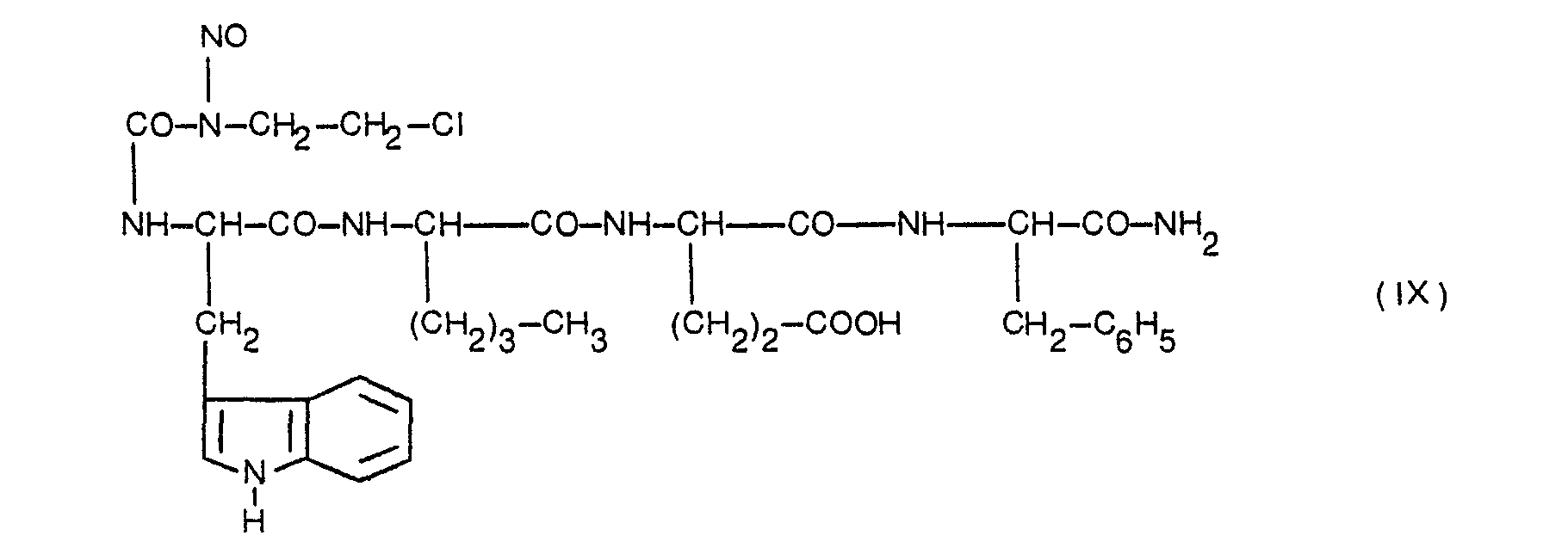
- the structure of the C-terminal tetrapeptide is shown by the Formula VIII.
- the said known tetrapeptide [Nature 207,1356, (1956)] can be converted into the corresponding N-nitroso-N-( ⁇ -chloro-ethyl)-carbamoyl derivative of the Formula IX by the method described in connection with the fragment of melanotropine.
- the pharmacological activity of the new compounds of the present invention are shown by test results, using ⁇ , ⁇ -bis-[N-nitroso-N-( ⁇ -chloro-ethyl)-carbamoyl]-lysyl-proplyl-valine amide (referred to hereinafter as Compound VII) and ⁇ -[N-nitroso-N-( ⁇ -chloro-ethyl)-carbamoyl]-lysyl-prolyl-valine amide hydrochloride (referred to hereinafter as Compound X) as test compounds.
- Compound VII ⁇ , ⁇ -bis-[N-nitroso-N-( ⁇ -chloro-ethyl)-carbamoyl]-lysyl-proplyl-valine amide
- Compound X ⁇ -[N-nitroso-N-( ⁇ -chloro-ethyl)-carbamoyl]-lysyl-prolyl-valine
- mice were treated with 1,3-bis-( ⁇ -chloro-ethyl)-1-nitroso-urea (referred to hereinafter as BCNU) and 2-[3-(2-chloro-ethyl)-3-nitroso-ureido]-2-deoxy-O-glycopyranose (referred to hereinafter as Chlorosoticine) used as reference compounds.
- BCNU 1,3-bis-( ⁇ -chloro-ethyl)-1-nitroso-urea
- Chlorosoticine 2-[3-(2-chloro-ethyl)-3-nitroso-ureido]-2-deoxy-O-glycopyranose
- compositions comprising as active ingredient at least one compound of the genenral Formula I or an acid addition salt thereof and inert solid or liquid pharmaceutical carriers.
- the said pharmaceutical compositions contain usual pharmaceutical carriers and auxiliary agents and can be prepared by methods of pharmaceutical industry known per se.
- the compositions may be finished e.g. in the form of tablets, capsules, ampoules etc.
- the ethyl acetate phase is dried and evaporated.
- the residue is treated with anhydrous ether, the ether is decanted off and the oil is dried.
- the solid foam thus formed is purified on a column filled with silica gel. The fractions are collected and the solvent is distilled off in vacuo. The residue is powdered in the presence of anhyrous petrolether and filtered. Thus 312 mg of the title compound are obtained, yield 51 %.
- R F 0,10 (a 4:1:1 mixture of n-butanol, glacial acetic acid and water, Kieselgel G, Merck)
- the nitroso group is determined by the method referred to in Example 6.
- the nitroso group is determined by the method referred to in Example 6.
- the powder ampoule comprises 10 mg of ⁇ -[N-nitroso-N-( ⁇ -chloro-ethyl)-carbamoyl]-lysyl-prolyl-valinamide hydrochloric (pro powder ampoule).
- the solvent ampoule comprises 300 mg of sorbitol and ad 2 ml of aqua des. pro. inj. (pro ampoule).
- a solution having a concentration of 5 g of active ingredient pro liter is prepared.
- the said solution is sterilized by filtration, filled into ampoules and cryodehydrated in a known manner.
- the powder ampoules are sealed with a rubber cap and a metal seal under sterile conditions and signed.
- the powder ampoule is packed together with a solvent ampoule containing 15 g of a 1% aqueous sorbitol solution.
- Capsules comprising 100 mg of ⁇ , ⁇ -bis-[N-nitroso-N-( ⁇ -chloro-ethyl)-carbamoyl]-lysyl-prolyl-valinamide
- the composition of a capsules is as follows:
- the crystalline active ingredient is admixed with a mixture of Carbowax and talc previously homogenized into a fine powder.
- the granules thus obtained are filled into hard gelatine capsules (total weight 110 mg) by using a suitable apparatus.
- the capsules prepared according to Example 10 are coated with an intestinosolvent layer by methods known per se.
Landscapes
- Health & Medical Sciences (AREA)
- Chemical & Material Sciences (AREA)
- Organic Chemistry (AREA)
- Life Sciences & Earth Sciences (AREA)
- Medicinal Chemistry (AREA)
- General Health & Medical Sciences (AREA)
- Molecular Biology (AREA)
- Gastroenterology & Hepatology (AREA)
- Biochemistry (AREA)
- Biophysics (AREA)
- Genetics & Genomics (AREA)
- Proteomics, Peptides & Aminoacids (AREA)
- Zoology (AREA)
- Toxicology (AREA)
- Endocrinology (AREA)
- Pharmacology & Pharmacy (AREA)
- Veterinary Medicine (AREA)
- Public Health (AREA)
- Animal Behavior & Ethology (AREA)
- Nuclear Medicine, Radiotherapy & Molecular Imaging (AREA)
- General Chemical & Material Sciences (AREA)
- Chemical Kinetics & Catalysis (AREA)
- Oncology (AREA)
- Hematology (AREA)
- Medicines That Contain Protein Lipid Enzymes And Other Medicines (AREA)
- Peptides Or Proteins (AREA)
- Organic Low-Molecular-Weight Compounds And Preparation Thereof (AREA)
- Acyclic And Carbocyclic Compounds In Medicinal Compositions (AREA)
Abstract
Description
- This invention relates to new N-nitroso-N-((3-chloro-ethyl)-carbamoyl peptides, a process for the preparation thereof and pharmaceutical compositions comprising the same.
- According to a feature of the present invention there are provided new peptide derivatives of the general Formula I

- R is a group derived from an oligopeptide by removing a terminal amino group, or - if the oligopeptide comprises a diamino carboxylic acid―the amino group in the w-position, or the terminal and w-amino groups; said oligopeptide being a gastrine or a-melanotropine fragment or analogue thereof which possesses the characteristic biological effect of these hormones; and
- n is 1 or 2
- The acid addition salts of the compounds of the general Formula (I) can be acid addition salts formed with therapeutically acceptable inorganic or organic acids.
- It has been reported (C. A. 85, 6050t) that certain N-nitrosocarbamoyl amino acids have antitumour properties but no data has been published to support this.
- It is known that the β-chloro-ethyl derivatives of N-nitroso-urea - e.g. 1,3-bis-((3-chloro-ethyl)-1-nitroso-urea, BCNU [T. P. Johnston, G. S. McCaleb, J. A. Montgomery, J. Med. Chem. 6, 669 (1963)] and 1-(β-chloro-ethyl)-1-nitroso-3-cyclohexyl-urea, CCNU [T. P. Johnston, G. S. McCaleb, P. S. Opliger, J. A. Montgomery, J. Med. Chem. 9 892 (1966)] - exhibit significant antitumour activity which enables the use of the said compounds in human therapy.
- A common disadvantage of such nitroso-chloro-ethyl urea derivatives is the fact that their effective dose is extremely near to the toxic value. It would be highly important to diminish the toxicity or increase the activity of the said compounds.
- In principle the activity can be increased by preparing compounds which contain in addition to the cytostatic group also a molecule fragment which ensures that the molecule is bound to the cells of the tumour tissue with great affinity. Thus in a certain sense a specific effect takes place and a lower dose can be used which decreases the general toxicity of the compound.
- Natural peptides - particularly polypeptide hormones - are bound to the receptors of the desired organ with a very large affinity. For this reason it can be expected that the affinity of the N-nitroso-N-([3-chloro-ethyl)-carbamoyl derivatives of the said natural peptides will also be significant but only and exclusively on the site capable of the recognition and identification of the structure of the peptide part. From this respect the complete peptide molecule is not needed and it is sufficient to derivatize the fragment (active centre) thereof bearing the characteristic biological effect. The only precondition of principle importance is that the substitution should not negatively influence the characteristic biological effect, i.e. the amino group to be substituted should not be necessary for the biological effect to be exerted. The fragments of a-melanotropine and the C-terminal tetrapeptide of gastrine possess - among others - the above property.
- According to a further feature of the present invention there is provided a process for the preparation of the N-nitroso-N-(β-chloro-ethyl)-carbamoyl peptide derivatives of the general Formula I and acid addition salts thereof which comprises
- a) reacting a peptide of the general Formula II


- b) reacting a peptide of the general Formula (II)


- The protective group suitable for the process of the present invention can preferably be the tert.- butoxycarbonyl group. In the starting materials of the general Formula V used in method b) Q stands preferably for a phenyl group substituted by one or more electron attracting groups (e.g. a p-nitrophenyl or 2,4-dichlorophenyl group).
- Reaction (b) may for example be carried out at room temperature in the presence of 1-hydroxybenzotriazole.
- The nitrosating step of process (a) may be carried out with nitric acid, nitrosyl chloride or nitrogen trioxide.
- According to a preferred embodiment of the process of the present invention one may proceed as follows:
- The a-melanotropine is a polypeptide hormone formed from 13 amino acids. Smaller fragments thereof - among others the C-terminal tripeptide - maintain the characteristic biological effects of the hormone [Helv. 58, 1528, (1975); FEBS Letters 67, 45 (1976)]. The structure of the C-terminal tripeptide is . shown in Formula VI.

- The tripeptide of the Formula VI contains two primary amino groups which can be converted into the corresponding N-nitroso-N-(β-chloro-ethyl)-carbamoyl derivatives by the methods described above. For this purpose the known tripeptide of the Formula VI is reacted with β-chloro-ethyl isocyanate and the a,e-bis-(β-chlor-ethyl-carbamoyl)-tripeptide thus obtained is nitrosated with a nitrosating agent, preferably with sodium nitrite in the presence of an acid, or nitrosyl chloride or nitrogen trioxide etc. After nitrosation the bis-nitroso derivative of Formula VII is obtained.

- The bis-nitroso derivative of the Formula VII can also be prepared by reaction method in a single step. The C-terminal tripeptide of the Formula Vl is acylated with an active ester of N-nitroso-N-(β-chloro ethyl)-carbamic acid - preferably with the p-nitro-phenyl ester - in the presence of 1-hydroxybenzotriazole.
- The monocarbamoyl derivatives of the C-terminal tripeptide of the Formula VI can naturally be prepared by both methods; in this case one amino group of the tripeptide starting material bears a protecting group, preferably a tert.-butoxycarbonyl group. After the formation of the substituted carbamoyl group, the protecting group can be selectively removed by known methods (e.g. by treatment with hydrochloric acid and formic acid).
- Gastrine is a polypeptide hormone formed from 17 amino acids. The C-terminal tetrapeptide thereof- i.e. the norleucine analogue of same - possesses the characteristic biological effects of the hormone. The structure of the C-terminal tetrapeptide is shown by the Formula VIII.

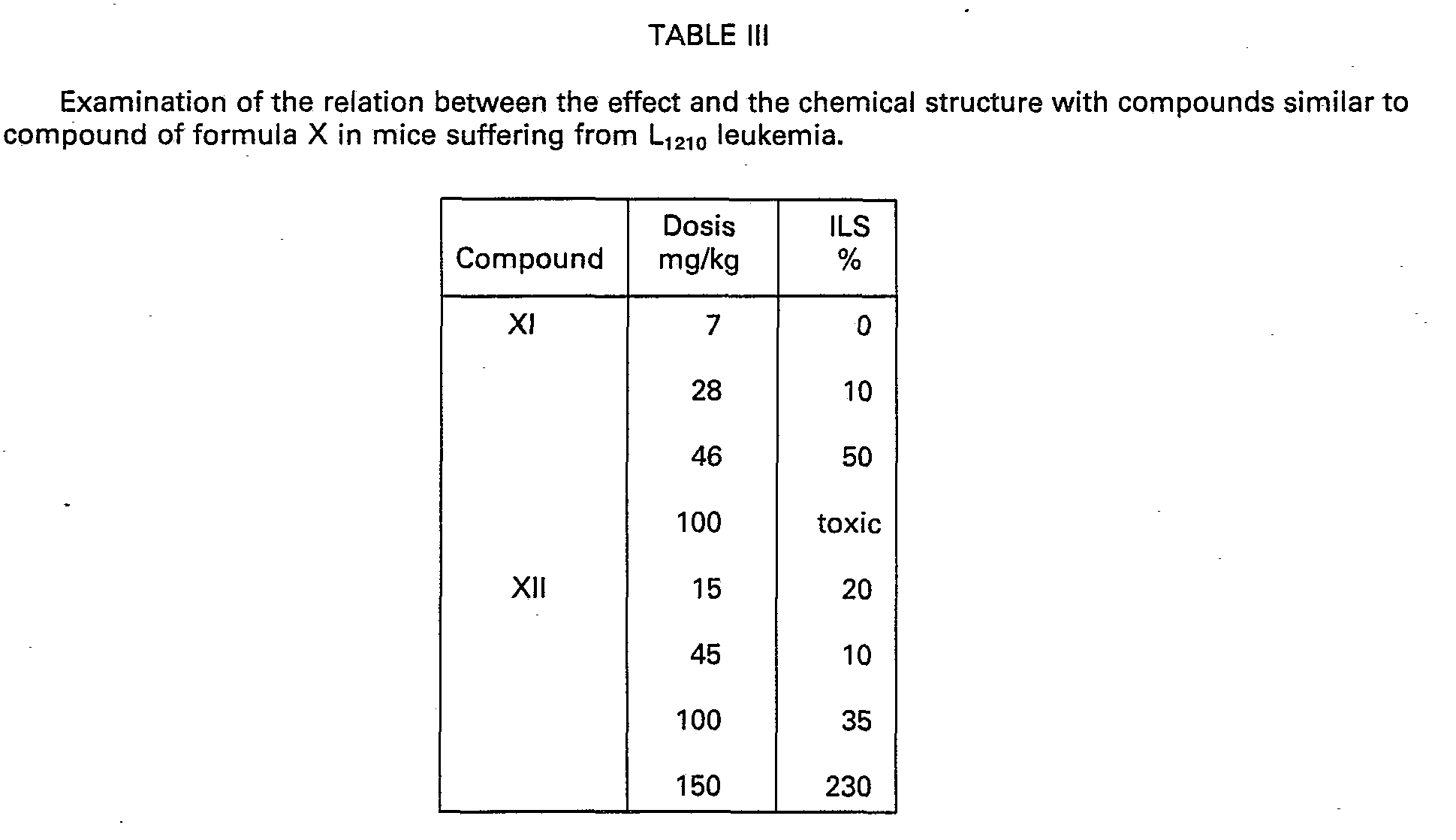
- The pharmacological activity of the new compounds of the present invention are shown by test results, using α,ε-bis-[N-nitroso-N-(β-chloro-ethyl)-carbamoyl]-lysyl-proplyl-valine amide (referred to hereinafter as Compound VII) and α-[N-nitroso-N-(β-chloro-ethyl)-carbamoyl]-lysyl-prolyl-valine amide hydrochloride (referred to hereinafter as Compound X) as test compounds. The results obtained are summarised in the following Tables I and II.
- In Table I the effects of Compounds X


- In Table II the pharmacological properties of Compound X are summarised:

- The above data prove that the new peptide derivatives of the general Formula X and VII are significantly more active and less toxic than the BCNU and Chlorosoticine used as control.




- According to a still further feature of the present invention there are provided pharmaceutical compositions comprising as active ingredient at least one compound of the genenral Formula I or an acid addition salt thereof and inert solid or liquid pharmaceutical carriers. The said pharmaceutical compositions contain usual pharmaceutical carriers and auxiliary agents and can be prepared by methods of pharmaceutical industry known per se. The compositions may be finished e.g. in the form of tablets, capsules, ampoules etc.
- Further details of the present invention are to be found in the following Examples, without limiting the scope of protection to the Examples.
- 736 mg of (1.6 millimoles) of lysyl-propyl-valine amide diacetate [Helv. 58, 2106 (1978)] are dissolved in 8 ml of dimethyl formamide and cooled to 0°C. 0.46 g ml (3,2 millimoles) of triethyl amine and 0.34 ml (4 millimoles) of (3-chloro-ethyl isocyanate are added dropwise. The reaction mixture is stirred at 0°C for 4 hours, thereafter allowed to stand and distilled off in vacuo. The residue is admixed with water, the precipitated product is filtered off and dried. Thus 480 mg of the title compound are obtained, yield 54%. Mp.: 183-185°C; RF = 0.75 (a 4:1:1:1 mixture of n-butanol, pyridine, glacial acetic acid and water; TLC Kieselgel G, Merck).

- 460 mg (1 millimole) of lysyl-prolyl-valinamide diacetate [Helv. 58, 2106,1978)] are dissolved in 6 ml of dimethyl formamide, whereupon 0.28 ml (2 millimoles) of triethyl amine and 548 mg (2 millimoles) of N-nitroso-β-chloro-ethyl carbamoyl-p-nitro-phenol and therefore 270 mg (2 millimoles) of 1-hydroxy-benzotriazole are added. After 2 hours the dimethyl formamide is distilled off in vacuo, the residue is dissolved in 30 ml of ethyl acetate and extracted with water. The ethyl acetate phase is dried and evaporated. The residue is treated with anhydrous ether, the ether is decanted off and the oil is dried. The solid foam thus formed is purified on a column filled with silica gel. The fractions are collected and the solvent is distilled off in vacuo. The residue is powdered in the presence of anhyrous petrolether and filtered. Thus 312 mg of the title compound are obtained, yield 51 %.
- Title compound: RF = 0.80 (a 1:3 mixture of methanol and ethyl acetate, TLC Kieselgel G Merck);
- Starting material: RF 0.80 (a 240:20:6:11 mixture of ethyl acetate, pyridine, glacial acetic acid and water, TLC Kieselgel G, Merck).
- s = 185 (N-nitroso qroup, 397 nm)
-

- To 552 mg (1 millimole) of α,ε-bis-(β-chloro-ethyl-carbamoyl)-lysyl-propyl-valine amide 10 ml of 99% formic acid are added whereupon a solution of 500 mg sodium nitrite and 3 ml of a water is added dropwise within an hour. Next day the reacting of mixture is evaporated in vacuo. The residue is treated with water, filtered and washed with water. Thus 460 mg of the title compound are obtained, yield 75%.
- RF = 0.80 (a 1.:3 mixture of methanol and ethylacetate, TLC, Kieselgel Merck)
- e = 184 (N-nitroso group, 395 nm)
-

- 614 mg (1 millimole of e-tert.-butoxy carbonyl-lysyl-prolyl-valine amide tosylate [Helv. 46, 870 (1963)] are dissolved in 10 ml of anhydrous dimethyl formamide, whereupon 0.14 ml (1 millimole) of trimethyl amine, 274 mg (1 millimole) of N-nitroso-β-chloro-ethyl-carbamoyl-p-nitro-phenol and 136 mg (1 millimole) of 1-hydroxy-benzotriazole are added and the reaction is carried out in an analogous manner to Example 2. Thus 250 mg of the title compound are obtained, yield 43%.
- Title compound RF = 0.90 (a 9:1 mixture of chloroform and methanol, TLC Kieselgel G, Merck).
- Starting material: RF = 0.80 (a 4:1:1 mixture of n-butanol, glacial acetic acid and water, Kieselgel G, Merck)
- e = 90 (N-nitroso-group, 397 nm).
-

- 200 mg of α-[N-nitroso-N-(β-chloro-ethyl)-carbamoyl]- s-tert.butoxycarbonyl-lysyl-proplyl-valine amide are admixed with 6 ml of 0,17 N formic acid in hydrocholoric acid, the solution is allowed to stand for 5 minutes and thereafter evaporated. The residue is dissolved in water, and extracted with ethyl acetate. The aqueous layer is lyophilized. THus 140 mg of the title compound are obtained.
- RF = 0,10 (a 4:1:1 mixture of n-butanol, glacial acetic acid and water, Kieselgel G, Merck)

- e: 88 (N-nitroso-group, 397 nm)
- 615 mg (1 millimole) of tryptophyl-norleucyl-a-aspargyl-phenylalanine amide hydrochloride [Nature 207,1356 (1956)] are dissolved in 6 ml of anhydrous dimethyl formamide, whereupon 0.14 ml (1 millimole) of triethyl amine and 0.1 ml (1,2 millimole) of β-chloro-ethyl isocyanate are added and the reaction is carried out in analoguous manner to Example 1. Thus 600 mg of the title compound are obtained, yield 88%.
- Mp.: 201-202°C.

- 684 mg (1 millimole) of β-chloro-ethyl-carbamoyl-tryptophyl-norleucyl-α-asparagyl-phenyl-alanine-amide are reacted with a solution of 300 mg of sodium nitrite and 2 ml of ester in an analogous manner to Example 3. Thus 605 mg of the title compound are obtained, yield 85%
- RF = 0.80 (a 4:1:1 mixture of n-butanol, glacial acetic acid and water, Kieselgel G, Merk)
-

- Since in the absorption interval of the nitroso group there is an absorption of the peptide, per se, in this I Example the nitroso group is determined by the method of Loo and Dion [J. Pharm Sci. 54, 809 (1965)].
- 921 mg (1.5 millimoles) of tryptophyl-norleucyl-a-asparagyl-phenyl-alanine-amide-hydrochloride [Nature 207, 1356 (1956)), 0.21 ml (1.5 millimoles) of triphenyl amine, 420 mg (1.5 millimoles) of N-nitroso- a-(chloro-ethyl-carbamoyl)-p-nitrophenol and 200 mg (1.5 millimoles) of 1-hydroxy-benzotriazole are reacted in an analoguous mannerto Example 2. Thus 800 mg of the title compound are obtained, yield 75%
- RF = 0.80 (a 4:1:1 mixture of n-butanol, glacial acetic acid and water, Kieselgel Merck).

- The nitroso group is determined by the method referred to in Example 6.
- 332 mg (0,4 millimoles) of glutamyl-histidyl-phenylalanyl-arginyl-tryptophyl-glycine [Helv. Chim. Acta 44,1991 (1961)], 0.056 ml of triethyl amine, 120 mg (0.44 millimole) of N-nitroso-(3-chloro-ethyl-carbamoyl-p-nitro-phenol and 56 mg (0.4 millimole) of 1-hydroxy-benzotriazole are reacted in an analogous manner to Example 2. Thus 133 mg of the title compound are obtained.
- RF = 0.55 (a 70:5:25 mixture of methanol, acetone and water).

- The nitroso group is determined by the method referred to in Example 6.
- The powder ampoule comprises 10 mg of α-[N-nitroso-N-(β-chloro-ethyl)-carbamoyl]-lysyl-prolyl-valinamide hydrochloric (pro powder ampoule).
- The solvent ampoule comprises 300 mg of sorbitol and ad 2 ml of aqua des. pro. inj. (pro ampoule).
- A solution having a concentration of 5 g of active ingredient pro liter is prepared. the said solution is sterilized by filtration, filled into ampoules and cryodehydrated in a known manner. The powder ampoules are sealed with a rubber cap and a metal seal under sterile conditions and signed. The powder ampoule is packed together with a solvent ampoule containing 15 g of a 1% aqueous sorbitol solution.
- Capsules comprising 100 mg of α,ε-bis-[N-nitroso-N-(β-chloro-ethyl)-carbamoyl]-lysyl-prolyl-valinamide The composition of a capsules is as follows:

- The crystalline active ingredient is admixed with a mixture of Carbowax and talc previously homogenized into a fine powder. The granules thus obtained are filled into hard gelatine capsules (total weight 110 mg) by using a suitable apparatus.
- The capsules prepared according to Example 10 are coated with an intestinosolvent layer by methods known per se.
-
- a) 633 mg (1 mmole) of tryptophyl-leucyl-α-asparagyl-(β-tert-butyl-ester)-phenylalanine amide (Z. Physiol-Chem. 353 1246 (1972)] are allowed to stand in 6 ml of 2n ethyl acetate in hydrochloric acid then ether is added, the crystalls precipitating are filtered off and washed with ether. 590 mg (93%) of the title product are obtained.
- RF = 0.74 (butanol-pyridine-glacial acetic acid-water = 30:20:6:24, Kieselgel G, Merck)
- b) 921 mg (1,5 mmoles) of tryptophyl-leucyl-a-asparagyl-phenylalaninamidee hydrochloride are dissolved in 10 ml of abs. dimethyl formamide, then 373 mg (1.5 mmoles) of N-nitroso-β-chloro-ethylcarbamoyl-N-hydroxy-succinimide and 0.42 ml (3 mmoles) of triethyl amine are added. After stirring for 15 minutes the dimethyl formamide is distilled off in vacuo. The residue is scuffed with water, filtered off and washed with water. 980 mg (92%) of the title product are obtained.
- RF = 0.69 (ethyl acetate-pyridine-glacial acetic acid-water = 30:20:6:11, Kieselgel G, Merck)
- 1.30 g (2.6 mmoles of e-tert-butyloxycarbonyl-glycyl-lysyl-prolyl-valine amide [Clin. Endrocrinol 5 41s (1976)] are dissolved in 13 ml of abs dimethyl formamide then 650 mg (2.6 mmoles) of-N-nitroso-β-chloro-ethyl-carbamoyl-N-hydroxy-succinimide and 0.36 ml (2.6 mmoles) of triethyl amine are added. After stirring for 15 minutes the reaction mixture is evaporated in vacuo. The residue is dissolved in ethyl acetate and extracted with water. The ethyl acetate phase is dried and evaporated. 1.29 g (80%) of the title product are obtained.
- RF = 0.82 (chloroform-methanol = 8:2, Kieselgel G, Merck)

- e: 91 (N-nitroso group, 397 nm)
- 633 mg (1 mmole) of α-N-nitroso-N-(β-chloro-ethyl)-carbamoyl-ε-tert-butyloxycarbonyl-glycyl-lysyl-prolyl-valine amide are allowed to stand for 5 minutes in 10 ml of 0.14 n formic acid in hydrochloric acid then a solution is evaporated. The residue is dissolved in water, extracted with ethyl acetate. The aqeuous phase is lyophylized. 540 mg (95%) of the title product are obtained.
- RF = 0.65 (ethyl acetate-pyridine-formic acid-water = 60:20:6:5,5, Kieselgel G, Merck)

- e = 84 (N-nitroso group, 396 nm)
and acid addition salts thereof.
and if desired removing the protecting groups present and if desired converting the compound thus obtained into its acid addition salts.

Claims (11)

and the acid addition salts thereof.


Priority Applications (1)
| Application Number | Priority Date | Filing Date | Title |
|---|---|---|---|
| AT82305633T ATE32342T1 (en) | 1981-10-22 | 1982-10-22 | N-NITROSO-N-(BETA-CHLORO-AETHYL)-CARBOROYLPEPTIDES. |
Applications Claiming Priority (2)
| Application Number | Priority Date | Filing Date | Title |
|---|---|---|---|
| HU813073A HU187461B (en) | 1981-10-22 | 1981-10-22 | Process for producing n-nitrozo-n-bracket-beta-chloroethyl-bracket closed-carbamoyl-peptides of citostatic activity |
| HU307381 | 1981-10-22 |
Publications (2)
| Publication Number | Publication Date |
|---|---|
| EP0078167A1 EP0078167A1 (en) | 1983-05-04 |
| EP0078167B1 true EP0078167B1 (en) | 1988-02-03 |
Family
ID=10962415
Family Applications (1)
| Application Number | Title | Priority Date | Filing Date |
|---|---|---|---|
| EP82305633A Expired EP0078167B1 (en) | 1981-10-22 | 1982-10-22 | New n-nitroso-n-(beta-chloro-ethyl)-carbamoyl peptides |
Country Status (11)
| Country | Link |
|---|---|
| US (1) | US4950651A (en) |
| EP (1) | EP0078167B1 (en) |
| JP (1) | JPS5888349A (en) |
| AT (1) | ATE32342T1 (en) |
| DE (1) | DE3278075D1 (en) |
| DK (1) | DK468482A (en) |
| FI (1) | FI77672C (en) |
| GR (1) | GR76768B (en) |
| HU (1) | HU187461B (en) |
| IL (1) | IL67040A (en) |
| SU (3) | SU1424739A3 (en) |
Families Citing this family (3)
| Publication number | Priority date | Publication date | Assignee | Title |
|---|---|---|---|---|
| US6057367A (en) * | 1996-08-30 | 2000-05-02 | Duke University | Manipulating nitrosative stress to kill pathologic microbes, pathologic helminths and pathologically proliferating cells or to upregulate nitrosative stress defenses |
| RU2268070C2 (en) * | 2004-04-01 | 2006-01-20 | Юрий Сергеевич Сидоренко | Method for making tumor disease prophylaxis under experimental conditions |
| GB0918579D0 (en) * | 2009-10-22 | 2009-12-09 | Imp Innovations Ltd | Gadd45beta targeting agents |
Family Cites Families (1)
| Publication number | Priority date | Publication date | Assignee | Title |
|---|---|---|---|---|
| US3814746A (en) * | 1970-08-05 | 1974-06-04 | Inst Sieroterapico Milanese Se | Mannich base of tetracycline and polypeptides |
-
1981
- 1981-10-22 HU HU813073A patent/HU187461B/en not_active IP Right Cessation
-
1982
- 1982-10-20 FI FI823591A patent/FI77672C/en not_active IP Right Cessation
- 1982-10-21 GR GR69590A patent/GR76768B/el unknown
- 1982-10-21 IL IL67040A patent/IL67040A/en unknown
- 1982-10-21 DK DK468482A patent/DK468482A/en not_active Application Discontinuation
- 1982-10-22 DE DE8282305633T patent/DE3278075D1/en not_active Expired
- 1982-10-22 JP JP57184802A patent/JPS5888349A/en active Pending
- 1982-10-22 AT AT82305633T patent/ATE32342T1/en not_active IP Right Cessation
- 1982-10-22 SU SU823506053A patent/SU1424739A3/en active
- 1982-10-22 EP EP82305633A patent/EP0078167B1/en not_active Expired
-
1983
- 1983-06-20 SU SU833605466A patent/SU1414851A1/en active
-
1984
- 1984-01-31 SU SU843697502A patent/SU1586520A3/en active
-
1985
- 1985-04-19 US US06/725,146 patent/US4950651A/en not_active Expired - Fee Related
Also Published As
| Publication number | Publication date |
|---|---|
| JPS5888349A (en) | 1983-05-26 |
| US4950651A (en) | 1990-08-21 |
| HU187461B (en) | 1986-01-28 |
| FI77672B (en) | 1988-12-30 |
| DK468482A (en) | 1983-04-23 |
| FI77672C (en) | 1989-04-10 |
| DE3278075D1 (en) | 1988-03-10 |
| SU1424739A3 (en) | 1988-09-15 |
| GR76768B (en) | 1984-09-03 |
| FI823591A0 (en) | 1982-10-20 |
| FI823591L (en) | 1983-04-23 |
| EP0078167A1 (en) | 1983-05-04 |
| IL67040A (en) | 1985-11-29 |
| SU1414851A1 (en) | 1988-08-07 |
| ATE32342T1 (en) | 1988-02-15 |
| IL67040A0 (en) | 1983-02-23 |
| SU1586520A3 (en) | 1990-08-15 |
Similar Documents
| Publication | Publication Date | Title |
|---|---|---|
| CS199673B2 (en) | Method of producing polypeptides | |
| US4927809A (en) | Oligopeptidyl nitrile derivatives, agents containing them and their use | |
| EP0529568A1 (en) | Novel orally-active elastase inhibitors | |
| DD217807A5 (en) | PROCESS FOR PREPARING NEW SUBSTITUTED TETRAPEPTIDES | |
| FI73224C (en) | Procedure for the preparation of novel, on the central nervous system, invented tripeptides. | |
| DE2514381B2 (en) | Tripeptides, processes for their preparation and pharmaceuticals containing these compounds | |
| US4623639A (en) | Peptide derivatives | |
| US4314999A (en) | N-Acyl derivatives of glucosamine having antitumor chemotherapeutic acitivity | |
| JPS6317839B2 (en) | ||
| JPS61197595A (en) | Gastric juice secretion inhibitive esters of tripeptide and tetrapeptide and manufacture of drug composition containing same as active components | |
| EP0295316B1 (en) | Antitumor amino acid and peptide derivatives of 1,4-bis[ (aminoalkyl and hydroxyaminoalkyl)- amino]-5,8 dihydroxyanthraquinones | |
| EP0078167A1 (en) | New N-nitroso-N-(beta-chloro-ethyl)-carbamoyl peptides | |
| Nichifor et al. | Synthesis of peptide derivatives of 5-fluorouracil | |
| EP0124420B1 (en) | Gastric secretion inhibiting peptide derivatives, process for their preparation and medicines containing them | |
| SE461042B (en) | PEPTIDES WITH GROWTH PROMOTIONAL ACTIVITY BASED VETERINARY COMPOSITIONS CONTAINING THESE PEPTIDES | |
| GB2130590A (en) | Peptides | |
| Azab et al. | Synthesis of chiral macrocyclic candidates: IV. Synthesis and antimicrobial activity of some tricyclooctacosa (triaconta) hexaene bis-Schiff base derivatives | |
| US3749704A (en) | N-(omega-amino lower alkyl)-amides of 1,17-modified acth peptides | |
| JPS6038400A (en) | Biologically active heptapeptides | |
| EP0055846B1 (en) | New peptide, process for preparation thereof and pharmaceutical composition containing it | |
| EP0252030B1 (en) | Derivatives of l-amino acyl l-carnitine, process for their preparation and pharmaceutical compositions having hepatoprotecting activity containing same | |
| IL42973A (en) | Polypeptides with acth activity containing an alpha-aminooxy carboxylic acid group on the n-terminal moiety | |
| EP0053388B1 (en) | New peptide, process for preparation thereof and use thereof | |
| SE441752B (en) | SET TO MAKE PEPTIDES CONTAINING ALFA AMINOXY ACIDS AND HAVING STEERING EFFECTS | |
| EP3114132A1 (en) | Process for the liquid phase synthesis of h-inp-(d)bal-(d)trp-phe-apc-nh2, and pharmaceutically acceptable salts thereof |
Legal Events
| Date | Code | Title | Description |
|---|---|---|---|
| PUAI | Public reference made under article 153(3) epc to a published international application that has entered the european phase |
Free format text: ORIGINAL CODE: 0009012 |
|
| 17P | Request for examination filed |
Effective date: 19830125 |
|
| AK | Designated contracting states |
Designated state(s): AT BE CH DE FR GB IT LI NL SE |
|
| RAP1 | Party data changed (applicant data changed or rights of an application transferred) |
Owner name: CHINOIN GYOGYSZER ES VEGYESZETI TERMEKEK GYARA RT. |
|
| RAP1 | Party data changed (applicant data changed or rights of an application transferred) |
Owner name: CHINOIN GYOGYSZER ES VEGYESZETI TERMEKEK GYARA RT. |
|
| GRAA | (expected) grant |
Free format text: ORIGINAL CODE: 0009210 |
|
| AK | Designated contracting states |
Kind code of ref document: B1 Designated state(s): AT BE CH DE FR GB IT LI NL SE |
|
| REF | Corresponds to: |
Ref document number: 32342 Country of ref document: AT Date of ref document: 19880215 Kind code of ref document: T |
|
| REF | Corresponds to: |
Ref document number: 3278075 Country of ref document: DE Date of ref document: 19880310 |
|
| ET | Fr: translation filed | ||
| ITF | It: translation for a ep patent filed | ||
| R20 | Corrections of a patent specification |
Effective date: 19880824 |
|
| PLBE | No opposition filed within time limit |
Free format text: ORIGINAL CODE: 0009261 |
|
| STAA | Information on the status of an ep patent application or granted ep patent |
Free format text: STATUS: NO OPPOSITION FILED WITHIN TIME LIMIT |
|
| 26N | No opposition filed | ||
| ET1 | Fr: translation filed ** revision of the translation of the patent or the claims | ||
| PGFP | Annual fee paid to national office [announced via postgrant information from national office to epo] |
Ref country code: AT Payment date: 19910918 Year of fee payment: 10 |
|
| PGFP | Annual fee paid to national office [announced via postgrant information from national office to epo] |
Ref country code: SE Payment date: 19910924 Year of fee payment: 10 |
|
| PGFP | Annual fee paid to national office [announced via postgrant information from national office to epo] |
Ref country code: FR Payment date: 19910927 Year of fee payment: 10 |
|
| PGFP | Annual fee paid to national office [announced via postgrant information from national office to epo] |
Ref country code: GB Payment date: 19911021 Year of fee payment: 10 |
|
| PGFP | Annual fee paid to national office [announced via postgrant information from national office to epo] |
Ref country code: BE Payment date: 19911023 Year of fee payment: 10 |
|
| PGFP | Annual fee paid to national office [announced via postgrant information from national office to epo] |
Ref country code: CH Payment date: 19911028 Year of fee payment: 10 |
|
| PGFP | Annual fee paid to national office [announced via postgrant information from national office to epo] |
Ref country code: DE Payment date: 19911029 Year of fee payment: 10 |
|
| ITTA | It: last paid annual fee | ||
| PGFP | Annual fee paid to national office [announced via postgrant information from national office to epo] |
Ref country code: NL Payment date: 19911031 Year of fee payment: 10 |
|
| PG25 | Lapsed in a contracting state [announced via postgrant information from national office to epo] |
Ref country code: GB Effective date: 19921022 Ref country code: AT Effective date: 19921022 |
|
| PG25 | Lapsed in a contracting state [announced via postgrant information from national office to epo] |
Ref country code: SE Effective date: 19921023 |
|
| PG25 | Lapsed in a contracting state [announced via postgrant information from national office to epo] |
Ref country code: LI Effective date: 19921031 Ref country code: CH Effective date: 19921031 Ref country code: BE Effective date: 19921031 |
|
| BERE | Be: lapsed |
Owner name: CHINOIN GYOGYSZER ES VEGYESZETI TERMEKEK GYARA RT Effective date: 19921031 |
|
| PG25 | Lapsed in a contracting state [announced via postgrant information from national office to epo] |
Ref country code: NL Effective date: 19930501 |
|
| GBPC | Gb: european patent ceased through non-payment of renewal fee |
Effective date: 19921022 |
|
| NLV4 | Nl: lapsed or anulled due to non-payment of the annual fee | ||
| PG25 | Lapsed in a contracting state [announced via postgrant information from national office to epo] |
Ref country code: FR Effective date: 19930630 |
|
| REG | Reference to a national code |
Ref country code: CH Ref legal event code: PL |
|
| PG25 | Lapsed in a contracting state [announced via postgrant information from national office to epo] |
Ref country code: DE Effective date: 19930701 |
|
| REG | Reference to a national code |
Ref country code: FR Ref legal event code: ST |
|
| EUG | Se: european patent has lapsed |
Ref document number: 82305633.8 Effective date: 19930510 |