EP0066125B1 - Foams based on low formaldehyde-emission urea-formaldehyde resin and process for their preparation - Google Patents
Foams based on low formaldehyde-emission urea-formaldehyde resin and process for their preparation Download PDFInfo
- Publication number
- EP0066125B1 EP0066125B1 EP82104052A EP82104052A EP0066125B1 EP 0066125 B1 EP0066125 B1 EP 0066125B1 EP 82104052 A EP82104052 A EP 82104052A EP 82104052 A EP82104052 A EP 82104052A EP 0066125 B1 EP0066125 B1 EP 0066125B1
- Authority
- EP
- European Patent Office
- Prior art keywords
- urea
- formaldehyde
- foams
- aqueous solution
- foam
- Prior art date
- Legal status (The legal status is an assumption and is not a legal conclusion. Google has not performed a legal analysis and makes no representation as to the accuracy of the status listed.)
- Expired
Links
Images

Classifications
-
- C—CHEMISTRY; METALLURGY
- C08—ORGANIC MACROMOLECULAR COMPOUNDS; THEIR PREPARATION OR CHEMICAL WORKING-UP; COMPOSITIONS BASED THEREON
- C08J—WORKING-UP; GENERAL PROCESSES OF COMPOUNDING; AFTER-TREATMENT NOT COVERED BY SUBCLASSES C08B, C08C, C08F, C08G or C08H
- C08J9/00—Working-up of macromolecular substances to porous or cellular articles or materials; After-treatment thereof
- C08J9/30—Working-up of macromolecular substances to porous or cellular articles or materials; After-treatment thereof by mixing gases into liquid compositions or plastisols, e.g. frothing with air
-
- C—CHEMISTRY; METALLURGY
- C08—ORGANIC MACROMOLECULAR COMPOUNDS; THEIR PREPARATION OR CHEMICAL WORKING-UP; COMPOSITIONS BASED THEREON
- C08G—MACROMOLECULAR COMPOUNDS OBTAINED OTHERWISE THAN BY REACTIONS ONLY INVOLVING UNSATURATED CARBON-TO-CARBON BONDS
- C08G12/00—Condensation polymers of aldehydes or ketones with only compounds containing hydrogen attached to nitrogen
-
- C—CHEMISTRY; METALLURGY
- C08—ORGANIC MACROMOLECULAR COMPOUNDS; THEIR PREPARATION OR CHEMICAL WORKING-UP; COMPOSITIONS BASED THEREON
- C08G—MACROMOLECULAR COMPOUNDS OBTAINED OTHERWISE THAN BY REACTIONS ONLY INVOLVING UNSATURATED CARBON-TO-CARBON BONDS
- C08G12/00—Condensation polymers of aldehydes or ketones with only compounds containing hydrogen attached to nitrogen
- C08G12/02—Condensation polymers of aldehydes or ketones with only compounds containing hydrogen attached to nitrogen of aldehydes
- C08G12/04—Condensation polymers of aldehydes or ketones with only compounds containing hydrogen attached to nitrogen of aldehydes with acyclic or carbocyclic compounds
- C08G12/10—Condensation polymers of aldehydes or ketones with only compounds containing hydrogen attached to nitrogen of aldehydes with acyclic or carbocyclic compounds with acyclic compounds having the moiety X=C(—N<)2 in which X is O, S or —N
- C08G12/12—Ureas; Thioureas
-
- C—CHEMISTRY; METALLURGY
- C08—ORGANIC MACROMOLECULAR COMPOUNDS; THEIR PREPARATION OR CHEMICAL WORKING-UP; COMPOSITIONS BASED THEREON
- C08J—WORKING-UP; GENERAL PROCESSES OF COMPOUNDING; AFTER-TREATMENT NOT COVERED BY SUBCLASSES C08B, C08C, C08F, C08G or C08H
- C08J2361/00—Characterised by the use of condensation polymers of aldehydes or ketones; Derivatives of such polymers
- C08J2361/20—Condensation polymers of aldehydes or ketones with only compounds containing hydrogen attached to nitrogen
- C08J2361/22—Condensation polymers of aldehydes or ketones with only compounds containing hydrogen attached to nitrogen of aldehydes with acyclic or carbocyclic compounds
- C08J2361/24—Condensation polymers of aldehydes or ketones with only compounds containing hydrogen attached to nitrogen of aldehydes with acyclic or carbocyclic compounds with urea or thiourea
Definitions
- Urea resins based on urea-formaldehyde condensates in the form of foams to be used as thermal insulation are known since quite some time and have been used for filling the hollow space of cavity walls, for the shaping into blocks and panels.
- foams are prepared by means of continuously or intermittently operating apparatuses consisting of:
- the apparatus works in such a way whereby the solution of container (A) will give place to a foam by blowing in air: this foam, which will act as a support or carrier, is mixed with the ureic resin solution, this latter, in the presence of the hardener, will harden giving place to a stable solid foam.
- foams which in the humid state will have a density of 50-120 kg/m 3 and in the dry state will have a density of 10-30 kg/m 3 .
- the full hardening and drying occurs in 20-30 days, depending on the temperature conditions, ventilation, permeability of the walls.
- the liquid resins offer the advantage of a lesser emission of formaldehyde by the foams obtained from them, but on the other side there is the drawback that they are less stable through time (see Table 2) and that they give foams less resistant to hydrolysis and having a lower mechanical resistance.
- the solid resins may be stored for a longer period before their use in the preparation of foams, they yield foams that are more stable through time and more resistant, but have a higher emission of formaldehyde.
- urea involves, however, a considerable complication in the preparatory step, in as much as the urea has to be dissolved in the resin dispersion immediately before use; the dispersion itself must be heated in order to avoid precipitation due to the cooling caused by the urea dissolution and furthermore because there must be provided a control and correction of the pH which may turn out to have changed because of the addition of urea or other blocking agents.
- urea-formaldehyde resins suitably modified which, while preserving the advantages of the known resins (stability, low cost, simplicity of the processing equipment, high insulating power) yield foams possessing formaldehyde emission values much lower than those of the best foams known so far, and without involving the burdensome operations connected with the addition of urea immediately before the preparation of the foams.
- the resin In order to obtain the foams of the present invention, the resin must be prepared following the following procedures:
- Formurea 80 pre-condensate containing 57% of formaldehyde and 23% of urea was mixed together with urea and water in such a ratio as to obtain a mixture showing a molar ratio formaldehyde-urea of 1.9 at a pH of 6.5 and with a content of dry substance equal to 60%.
- To this mixture were then admixed 7.2% by weight (referred to the dry end product) of hexamine at a temperature of 60°C and to a pH of 9.0.
- the whole was then heated up to 94°C and it was then additioned with the acid catalyst (formic acid); the pH was equal to 4.5.
- the mixture was then condensed at 95°C until reaching a viscosity of 100 mPas (measured at 20°C).
- the whole was then partially neutralized with sodium hydroxide until attaining a pH equal to 6.0 and was then additioned with an aqueous urea solution at 71% concentration, until obtaining a molar ratio formaldehyde-urea of 1.30.
- the whole was then condensed at 90°C up to a viscosity of 95 mPas (measured at 20°C).
- Aqueous solutions of formaldehyde, of urea and of water were mixed together in a molar ratio formaldehyde-urea equal to 1.8 and for a pH equal to 6.5 (dry product 58%).
- To this mixture were then admixed 13% of hexamine (referred to the dry end product) at a temperature of 50°C and a pH of 9.0.
- the mixture was then heated up to 94°C and was then additioned with formic acid as a catalyst at a pH of 5.0.
- the whole was then condensed at 100°C to a viscosity of 50 mPas (measured at 20°C).
- the mixture was then partially neutralized with sodium hydroxide to a pH of 6.2 and was then additioned with an aqueous solution of urea at a 71% concentration up to reaching a molar ratio formaldehyde-urea of 1.30.
- the mixture was then condensed at 90°C up to a viscosity of 120 mPas (measured at 20°C).
Landscapes
- Chemical & Material Sciences (AREA)
- Health & Medical Sciences (AREA)
- Chemical Kinetics & Catalysis (AREA)
- Medicinal Chemistry (AREA)
- Polymers & Plastics (AREA)
- Organic Chemistry (AREA)
- Engineering & Computer Science (AREA)
- Materials Engineering (AREA)
- Manufacture Of Porous Articles, And Recovery And Treatment Of Waste Products (AREA)
- Phenolic Resins Or Amino Resins (AREA)
- Organic Low-Molecular-Weight Compounds And Preparation Thereof (AREA)
Description
- Urea resins based on urea-formaldehyde condensates in the form of foams to be used as thermal insulation, are known since quite some time and have been used for filling the hollow space of cavity walls, for the shaping into blocks and panels.
- These foams are prepared by means of continuously or intermittently operating apparatuses consisting of:
- - a container (A) for the aqueous surfactant solution additioned with a hardener of the resin;
- - a container (B) for the urea-formaldehyde resin (suitably dissolved or diluted and filtered);
- - a pump, a compressor and a foaming-gun.
- The apparatus works in such a way whereby the solution of container (A) will give place to a foam by blowing in air: this foam, which will act as a support or carrier, is mixed with the ureic resin solution, this latter, in the presence of the hardener, will harden giving place to a stable solid foam.
- In this way there will be obtained foams which in the humid state will have a density of 50-120 kg/m3 and in the dry state will have a density of 10-30 kg/m3. The full hardening and drying occurs in 20-30 days, depending on the temperature conditions, ventilation, permeability of the walls.
- These foams have, however, the drawback to expel considerable quantities of formaldehyde (1-6% by weight with respect to the dry foam) thus causing discomforts and ecological problems both in the application step as well as during the drying.
- This latter drawback is particularly felt when the foam is applied, as is often the case, to the hollow cavity space of already inhabited buildings.
- In the preparation of insulating foams based on urea-formaldehyde resins there may be used as starting material liquid resins (in solution) or solid resins which have to be dispersed in water shortly before use. The characteristics of the foams thus obtained have been recorded on Table 1.
- The liquid resins offer the advantage of a lesser emission of formaldehyde by the foams obtained from them, but on the other side there is the drawback that they are less stable through time (see Table 2) and that they give foams less resistant to hydrolysis and having a lower mechanical resistance.
- The solid resins may be stored for a longer period before their use in the preparation of foams, they yield foams that are more stable through time and more resistant, but have a higher emission of formaldehyde.
- The higher emission of formaldehyde by the foams obtained starting from solid resins is due to their higher molar ratio formaldehyde-urea (see Table 2).
- A lower molar ratio would reduce considerably the drawback of the expulsion of formaldehyde by the foam through time, but this cannot be achieved because said resins would not have the necessary stability in water.
- This drawback was partly overcome by adding urea (15% to 25% by weight on the dry substance) or other formaldehyde-blocking agents to the aqueous resin dispersion shortly before use. The formaldehyde expelled during the drying phase may be thus reduced to 0.3%-0.9% by weight with respect to the dry foam.
- The addition of urea involves, however, a considerable complication in the preparatory step, in as much as the urea has to be dissolved in the resin dispersion immediately before use; the dispersion itself must be heated in order to avoid precipitation due to the cooling caused by the urea dissolution and furthermore because there must be provided a control and correction of the pH which may turn out to have changed because of the addition of urea or other blocking agents.
- Object of this invention are thus, urea-formaldehyde resins suitably modified which, while preserving the advantages of the known resins (stability, low cost, simplicity of the processing equipment, high insulating power) yield foams possessing formaldehyde emission values much lower than those of the best foams known so far, and without involving the burdensome operations connected with the addition of urea immediately before the preparation of the foams.
- Through the process object of this invention it is, moreover, possible to prepare ureic resins in the solid state, which once dispersed in water may give place to foams that together with the advantages already known from foams obtained starting from solid resins (good mechanical resistance, good stability through time), have the advantage of expelling very little formaldehyde during the drying phase.
- It has now been surprisingly ascertained that, by suitably modifying the formulation of the resin and possibly that of the aqueous solution of surfactant, one obtains a foam that is absolutely comparable with the foams commonly known, for its properties, but with a considerably lower formaldehyde emission value.
- In order to obtain the foams of the present invention, the resin must be prepared following the following procedures:
- a) mixing together the formaldehyde with water and urea in such a ratio as to obtain a molar ratio formaldehyde-urea equal to 2.2-1.7 at a pH = 6.3-6.8;
- b) then admixing hexamethylenetetramine ("hexamine") in quantities comprised between 2 and 15% by weight of the dry end product, at a temperature of 4080°C and a pH equal to 8.5-10.0;
- c) then heating up to 90°-95°C, adding an acid catalyst and by then condensing at 90°-100°C at a pH of from 4.0 to 6.0, until attaining a viscosity of 50-120 mPas (at 20°C);
- d) neutralizing with sodium hydroxide up to a pH = 6.0-7.0 and by then admixing urea up to a molar ratio formaldehyde-urea of 1.2-1.4; then condensing at 85-95°C until attaining a viscosity of 80-120 mPas (measured at 20°C);
- e) neutralizing with sodium hydroxide until reaching a pH of 7.5-9.0 and then cooling down to 25°-30°C;
- f) optionally drying the mixture in order to obtain a powdery product.
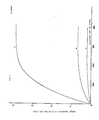
- The graphs reported in figures 1 and 2, evidence that the resin modified with hexamine shows a much lower formaldehyde emission, not only with respect to the non modified resin as such, but also with respect to the resin additioned with urea before the preparation of the foam.
- Figure 1: Total emission of formaldehyde by foams just prepared (the diluting air was fed in at a flow rate of 1.5 It/minute, at 230°C).
- Figure 2: release of formaldehyde due to prolonged immersion in water at 70°C, owing to a hydrolytic effect.
- A = standard resin of the solid type.
- B = standard resin of the solid type additioned with urea.
- C = resin according to the present invention.
- D = standard resin of the liquid type.
- "Formurea 80" (pre-condensate containing 57% of formaldehyde and 23% of urea) was mixed together with urea and water in such a ratio as to obtain a mixture showing a molar ratio formaldehyde-urea of 1.9 at a pH of 6.5 and with a content of dry substance equal to 60%. To this mixture were then admixed 7.2% by weight (referred to the dry end product) of hexamine at a temperature of 60°C and to a pH of 9.0. The whole was then heated up to 94°C and it was then additioned with the acid catalyst (formic acid); the pH was equal to 4.5. The mixture was then condensed at 95°C until reaching a viscosity of 100 mPas (measured at 20°C).
- The whole was then partially neutralized with sodium hydroxide until attaining a pH equal to 6.0 and was then additioned with an aqueous urea solution at 71% concentration, until obtaining a molar ratio formaldehyde-urea of 1.30. The whole was then condensed at 90°C up to a viscosity of 95 mPas (measured at 20°C).
- It was then neutralized with sodium hydroxide (pH = 7.5-8.2) and then cooled down to 25-30°C. The syrup thus obtained was dried by means of a "Lurgi-atomizer".
- 33 parts of the resin thus obtained were dissolved in 67 parts of water. Thereupon there were prepared 96 parts by weight of an aqueous mixture containing 0.5% of sodium dodecylbenzene sulphonate (surfactant) and 1.6% of phosphoric acid (catalyst).
- Into a suitable apparatus there were then fed in the resin solution and the aqueous solution prepared as herein above indicated, by simultaneously blowing in air so as to obtain a moist foam showing a density of 70 kg/m3.
- The characteristics of the thus obtained foam have been recorded in Table 1 in a comparison with the foams prepared from conventional resins.
- Aqueous solutions of formaldehyde, of urea and of water were mixed together in a molar ratio formaldehyde-urea equal to 1.8 and for a pH equal to 6.5 (dry product 58%). To this mixture were then admixed 13% of hexamine (referred to the dry end product) at a temperature of 50°C and a pH of 9.0. The mixture was then heated up to 94°C and was then additioned with formic acid as a catalyst at a pH of 5.0. The whole was then condensed at 100°C to a viscosity of 50 mPas (measured at 20°C).
- The mixture was then partially neutralized with sodium hydroxide to a pH of 6.2 and was then additioned with an aqueous solution of urea at a 71% concentration up to reaching a molar ratio formaldehyde-urea of 1.30. The mixture was then condensed at 90°C up to a viscosity of 120 mPas (measured at 20°C).
- It was then neutralized with sodium hydroxide up to a pH of 7.5-8.5 and then cooled down to 25°C. The final content of dry substance amounted to 50%.
- 66 parts of the resin thus obtained were dissolved in 33 parts of water.
- Separately there was prepared an aqueous solution containing a surfactant (sodium dodecylbenzenesulphonate 0.5%) and a catalyst (phosphoric acid 1.6%).
- The two above cited solutions were fed into a suitable apparatus in a 1:1 radio by weight together with air so as to obtain a moist foam showing a density of 65 kg/m3.
- The characteristics of the foam thus obtained have been recorded in Table 1 in comparison with the foams prepared from resins of the prior art.

Claims (2)
Applications Claiming Priority (2)
| Application Number | Priority Date | Filing Date | Title |
|---|---|---|---|
| IT21725/81A IT1136596B (en) | 1981-05-15 | 1981-05-15 | UREA-FORMALDEHYDE RESIN BASED FOAM WITH LOW FORMALDEHYDE EMISSION AND PROCEDURE FOR THEIR APPLICATION |
| IT2172581 | 1981-05-15 |
Publications (2)
| Publication Number | Publication Date |
|---|---|
| EP0066125A1 EP0066125A1 (en) | 1982-12-08 |
| EP0066125B1 true EP0066125B1 (en) | 1985-07-31 |
Family
ID=11185973
Family Applications (1)
| Application Number | Title | Priority Date | Filing Date |
|---|---|---|---|
| EP82104052A Expired EP0066125B1 (en) | 1981-05-15 | 1982-05-10 | Foams based on low formaldehyde-emission urea-formaldehyde resin and process for their preparation |
Country Status (11)
| Country | Link |
|---|---|
| US (1) | US4467054A (en) |
| EP (1) | EP0066125B1 (en) |
| CA (1) | CA1178750A (en) |
| DE (1) | DE3265047D1 (en) |
| ES (1) | ES512239A0 (en) |
| HR (1) | HRP940799B1 (en) |
| IT (1) | IT1136596B (en) |
| PT (1) | PT74900B (en) |
| RO (1) | RO86120B (en) |
| SI (1) | SI8211010A8 (en) |
| YU (1) | YU42765B (en) |
Families Citing this family (1)
| Publication number | Priority date | Publication date | Assignee | Title |
|---|---|---|---|---|
| CN108625183A (en) * | 2018-06-04 | 2018-10-09 | 安徽恒益纺织科技有限公司 | A kind of preparation method for chemical fiber plus material wash and wear finisher |
Family Cites Families (10)
| Publication number | Priority date | Publication date | Assignee | Title |
|---|---|---|---|---|
| US2168981A (en) * | 1936-08-06 | 1939-08-08 | Catalin Corp Of America | Phenolic resin molding composition |
| US2323831A (en) * | 1938-01-21 | 1943-07-06 | Menger Adolf | Process of adhesion |
| US2625524A (en) * | 1951-12-26 | 1953-01-13 | Du Pont | Viscous urea-formaldehyde compositions and method for preparing the same |
| US2789095A (en) * | 1952-11-22 | 1957-04-16 | Du Pont | Process for preparing urea-formaldehyde solid foam |
| FR1106171A (en) * | 1953-08-19 | 1955-12-13 | Degussa | Process for preparing condensation products of urea and aldehydes |
| GB1470953A (en) * | 1973-01-26 | 1977-04-21 | Ici Ltd | Thermal insulation in wall cavities |
| US3979341A (en) * | 1974-05-28 | 1976-09-07 | Borden Products Limited | Urea formaldehyde foam |
| US3996190A (en) * | 1975-09-15 | 1976-12-07 | Allied Chemical Corporation | Formaldehyde fume abatement in the production of urea/formaldehyde molding resins |
| US4092277A (en) * | 1977-01-21 | 1978-05-30 | Waverly Chemical Co. | Method for producing chemically stable urea-formaldehyde foams |
| US4225680A (en) * | 1979-08-06 | 1980-09-30 | Borden, Inc. | Urea formaldehyde foam with low shrinkage |
-
1981
- 1981-05-15 IT IT21725/81A patent/IT1136596B/en active
-
1982
- 1982-05-10 DE DE8282104052T patent/DE3265047D1/en not_active Expired
- 1982-05-10 EP EP82104052A patent/EP0066125B1/en not_active Expired
- 1982-05-11 RO RO107489A patent/RO86120B/en unknown
- 1982-05-12 PT PT74900A patent/PT74900B/en unknown
- 1982-05-12 SI SI8211010A patent/SI8211010A8/en unknown
- 1982-05-12 YU YU1010/82A patent/YU42765B/en unknown
- 1982-05-14 ES ES512239A patent/ES512239A0/en active Granted
- 1982-05-14 US US06/378,182 patent/US4467054A/en not_active Expired - Lifetime
- 1982-05-14 CA CA000402968A patent/CA1178750A/en not_active Expired
-
1994
- 1994-10-26 HR HRP-1010/82A patent/HRP940799B1/en not_active IP Right Cessation
Also Published As
| Publication number | Publication date |
|---|---|
| SI8211010A8 (en) | 1995-04-30 |
| IT8121725A0 (en) | 1981-05-15 |
| ES8305798A1 (en) | 1983-05-01 |
| RO86120B (en) | 1985-05-04 |
| RO86120A (en) | 1985-04-17 |
| YU101082A (en) | 1985-04-30 |
| DE3265047D1 (en) | 1985-09-05 |
| PT74900A (en) | 1982-06-01 |
| HRP940799B1 (en) | 1996-04-30 |
| CA1178750A (en) | 1984-11-27 |
| ES512239A0 (en) | 1983-05-01 |
| EP0066125A1 (en) | 1982-12-08 |
| YU42765B (en) | 1988-12-31 |
| PT74900B (en) | 1983-12-07 |
| US4467054A (en) | 1984-08-21 |
| IT1136596B (en) | 1986-09-03 |
Similar Documents
| Publication | Publication Date | Title |
|---|---|---|
| KR100248691B1 (en) | Method of producing a phenolic binder and its product | |
| AU612443B2 (en) | New process for the preparation of aminoplastic resins having very low formaldehyde emission rates | |
| US20030153721A1 (en) | Stable liquid melamine urea formaldehyde resins, hardeners, adhesive compositions, and methods for making same | |
| US4603191A (en) | Process for preparing a urea-formaldehyde resin having a very low mole ratio of formaldehyde to urea | |
| US2567238A (en) | Dicyandiamide and formaldehyde product and method of making | |
| US3947425A (en) | Rapid curing, hydrophilic resin compositions | |
| EP0066125A1 (en) | Foams based on low formaldehyde-emission urea-formaldehyde resin and process for their preparation | |
| US4537913A (en) | Method of preparing a urea-formaldehyde combination foam that is low in formaldehyde | |
| US6458870B1 (en) | Process for preparing an aqueous solution of sulfanilic acid modified melamine-formaldehyde resin and a cement composition | |
| US4684690A (en) | Aminoplast adhesive resin powder for wood-based materials or as a paper adhesive, which eliminates little formaldehyde, its preparation, and a formulated aminoplast adhesive resin powder | |
| US3470115A (en) | Process for making non-shrinking urea-formaldehyde foams | |
| US6864344B1 (en) | Sulfonated condensation products which are stabile in storage, method for the production thereof, and their use | |
| US4489175A (en) | Method of producing a urea formaldehyde combination foam with a low content of formaldehyde | |
| US3306861A (en) | Process for producing ureaformaldehyde foams | |
| JPS623175B2 (en) | ||
| US3096226A (en) | Aqueous composition of phenol-aldehyde condensate and method of bonding materials with same | |
| JP2000117708A (en) | Wood board manufacturing method | |
| JPS6221372B2 (en) | ||
| US2834755A (en) | Phenolic liquid resins | |
| JP2654958B2 (en) | Phenol-modified melamine resin adhesive | |
| JP2001026649A (en) | Preparation of phenol resin for water-absorbing foam and foam | |
| KR840000123B1 (en) | Method for manufacturing urea foam insulation | |
| PL193343B1 (en) | method of producing urea-formaldehyde polycondensate | |
| JPS5844714B2 (en) | Doshitsu Antei Kahou | |
| CS241411B1 (en) | Urea-formaldehyde resin with low release of formaldehyde |
Legal Events
| Date | Code | Title | Description |
|---|---|---|---|
| PUAI | Public reference made under article 153(3) epc to a published international application that has entered the european phase |
Free format text: ORIGINAL CODE: 0009012 |
|
| AK | Designated contracting states |
Designated state(s): BE DE FR GB NL |
|
| 17P | Request for examination filed |
Effective date: 19830520 |
|
| GRAA | (expected) grant |
Free format text: ORIGINAL CODE: 0009210 |
|
| AK | Designated contracting states |
Designated state(s): BE DE FR GB NL |
|
| REF | Corresponds to: |
Ref document number: 3265047 Country of ref document: DE Date of ref document: 19850905 |
|
| ET | Fr: translation filed | ||
| PLBE | No opposition filed within time limit |
Free format text: ORIGINAL CODE: 0009261 |
|
| STAA | Information on the status of an ep patent application or granted ep patent |
Free format text: STATUS: NO OPPOSITION FILED WITHIN TIME LIMIT |
|
| 26N | No opposition filed | ||
| PGFP | Annual fee paid to national office [announced via postgrant information from national office to epo] |
Ref country code: GB Payment date: 20010412 Year of fee payment: 20 |
|
| PGFP | Annual fee paid to national office [announced via postgrant information from national office to epo] |
Ref country code: FR Payment date: 20010507 Year of fee payment: 20 |
|
| PGFP | Annual fee paid to national office [announced via postgrant information from national office to epo] |
Ref country code: NL Payment date: 20010509 Year of fee payment: 20 Ref country code: DE Payment date: 20010509 Year of fee payment: 20 |
|
| PGFP | Annual fee paid to national office [announced via postgrant information from national office to epo] |
Ref country code: BE Payment date: 20010514 Year of fee payment: 20 |
|
| BE20 | Be: patent expired |
Free format text: 20020510 *MONTEDISON S.P.A. |
|
| REG | Reference to a national code |
Ref country code: GB Ref legal event code: IF02 |
|
| PG25 | Lapsed in a contracting state [announced via postgrant information from national office to epo] |
Ref country code: GB Free format text: LAPSE BECAUSE OF EXPIRATION OF PROTECTION Effective date: 20020509 |
|
| PG25 | Lapsed in a contracting state [announced via postgrant information from national office to epo] |
Ref country code: NL Free format text: LAPSE BECAUSE OF EXPIRATION OF PROTECTION Effective date: 20020510 |
|
| REG | Reference to a national code |
Ref country code: GB Ref legal event code: PE20 Effective date: 20020509 |
|
| NLV7 | Nl: ceased due to reaching the maximum lifetime of a patent |
Effective date: 20020510 |