EP0051303B1 - Nitrosourea derivatives of sucrose, a method for their preparation, and pharmaceutical compositions containing them - Google Patents
Nitrosourea derivatives of sucrose, a method for their preparation, and pharmaceutical compositions containing them Download PDFInfo
- Publication number
- EP0051303B1 EP0051303B1 EP81109392A EP81109392A EP0051303B1 EP 0051303 B1 EP0051303 B1 EP 0051303B1 EP 81109392 A EP81109392 A EP 81109392A EP 81109392 A EP81109392 A EP 81109392A EP 0051303 B1 EP0051303 B1 EP 0051303B1
- Authority
- EP
- European Patent Office
- Prior art keywords
- amino
- deoxysucrose
- chloroethyl
- general formula
- derivatives
- Prior art date
- Legal status (The legal status is an assumption and is not a legal conclusion. Google has not performed a legal analysis and makes no representation as to the accuracy of the status listed.)
- Expired
Links
- 229930006000 Sucrose Natural products 0.000 title claims description 13
- 239000005720 sucrose Substances 0.000 title claims description 13
- OSTGTTZJOCZWJG-UHFFFAOYSA-N nitrosourea Chemical class NC(=O)N=NO OSTGTTZJOCZWJG-UHFFFAOYSA-N 0.000 title claims description 11
- 239000008194 pharmaceutical composition Substances 0.000 title claims description 4
- 238000002360 preparation method Methods 0.000 title description 23
- 238000000034 method Methods 0.000 title description 11
- 125000001951 carbamoylamino group Chemical group C(N)(=O)N* 0.000 claims description 21
- 150000001875 compounds Chemical class 0.000 claims description 20
- 125000004435 hydrogen atom Chemical group [H]* 0.000 claims description 19
- 125000002777 acetyl group Chemical group [H]C([H])([H])C(*)=O 0.000 claims description 17
- 125000002252 acyl group Chemical group 0.000 claims description 8
- 238000006243 chemical reaction Methods 0.000 claims description 8
- 125000000018 nitroso group Chemical group N(=O)* 0.000 claims description 7
- 150000001412 amines Chemical class 0.000 claims description 4
- 150000003839 salts Chemical class 0.000 claims description 2
- 238000004519 manufacturing process Methods 0.000 claims 2
- 239000004480 active ingredient Substances 0.000 claims 1
- 239000002246 antineoplastic agent Substances 0.000 claims 1
- 125000004093 cyano group Chemical group *C#N 0.000 claims 1
- 239000003085 diluting agent Substances 0.000 claims 1
- 239000003937 drug carrier Substances 0.000 claims 1
- 125000000449 nitro group Chemical group [O-][N+](*)=O 0.000 claims 1
- 125000002924 primary amino group Chemical group [H]N([H])* 0.000 description 51
- OKKJLVBELUTLKV-UHFFFAOYSA-N Methanol Chemical compound OC OKKJLVBELUTLKV-UHFFFAOYSA-N 0.000 description 48
- 125000001340 2-chloroethyl group Chemical group [H]C([H])(Cl)C([H])([H])* 0.000 description 40
- 125000002915 carbonyl group Chemical group [*:2]C([*:1])=O 0.000 description 40
- LFQSCWFLJHTTHZ-UHFFFAOYSA-N Ethanol Chemical compound CCO LFQSCWFLJHTTHZ-UHFFFAOYSA-N 0.000 description 36
- CSCPPACGZOOCGX-UHFFFAOYSA-N Acetone Chemical compound CC(C)=O CSCPPACGZOOCGX-UHFFFAOYSA-N 0.000 description 33
- UHOVQNZJYSORNB-UHFFFAOYSA-N Benzene Chemical group C1=CC=CC=C1 UHOVQNZJYSORNB-UHFFFAOYSA-N 0.000 description 33
- HEDRZPFGACZZDS-UHFFFAOYSA-N Chloroform Chemical compound ClC(Cl)Cl HEDRZPFGACZZDS-UHFFFAOYSA-N 0.000 description 32
- 239000000243 solution Substances 0.000 description 24
- RTZKZFJDLAIYFH-UHFFFAOYSA-N ether Substances CCOCC RTZKZFJDLAIYFH-UHFFFAOYSA-N 0.000 description 18
- 238000000921 elemental analysis Methods 0.000 description 17
- 239000000203 mixture Substances 0.000 description 16
- XLYOFNOQVPJJNP-UHFFFAOYSA-N water Substances O XLYOFNOQVPJJNP-UHFFFAOYSA-N 0.000 description 16
- WFDIJRYMOXRFFG-UHFFFAOYSA-N Acetic anhydride Chemical compound CC(=O)OC(C)=O WFDIJRYMOXRFFG-UHFFFAOYSA-N 0.000 description 15
- 238000002844 melting Methods 0.000 description 14
- 230000008018 melting Effects 0.000 description 14
- 239000002904 solvent Substances 0.000 description 14
- 238000002329 infrared spectrum Methods 0.000 description 13
- 238000010898 silica gel chromatography Methods 0.000 description 13
- XEKOWRVHYACXOJ-UHFFFAOYSA-N Ethyl acetate Chemical compound CCOC(C)=O XEKOWRVHYACXOJ-UHFFFAOYSA-N 0.000 description 12
- JUJWROOIHBZHMG-UHFFFAOYSA-N Pyridine Chemical compound C1=CC=NC=C1 JUJWROOIHBZHMG-UHFFFAOYSA-N 0.000 description 12
- HEDRZPFGACZZDS-MICDWDOJSA-N Trichloro(2H)methane Chemical compound [2H]C(Cl)(Cl)Cl HEDRZPFGACZZDS-MICDWDOJSA-N 0.000 description 10
- BDAGIHXWWSANSR-UHFFFAOYSA-N methanoic acid Natural products OC=O BDAGIHXWWSANSR-UHFFFAOYSA-N 0.000 description 10
- LPXPTNMVRIOKMN-UHFFFAOYSA-M sodium nitrite Chemical compound [Na+].[O-]N=O LPXPTNMVRIOKMN-UHFFFAOYSA-M 0.000 description 10
- 238000001816 cooling Methods 0.000 description 9
- WYURNTSHIVDZCO-UHFFFAOYSA-N Tetrahydrofuran Chemical compound C1CCOC1 WYURNTSHIVDZCO-UHFFFAOYSA-N 0.000 description 8
- 229940125904 compound 1 Drugs 0.000 description 8
- 229940126214 compound 3 Drugs 0.000 description 8
- 239000000843 powder Substances 0.000 description 8
- 238000000655 nuclear magnetic resonance spectrum Methods 0.000 description 7
- 239000011541 reaction mixture Substances 0.000 description 7
- 238000003756 stirring Methods 0.000 description 7
- NWUYHJFMYQTDRP-UHFFFAOYSA-N 1,2-bis(ethenyl)benzene;1-ethenyl-2-ethylbenzene;styrene Chemical compound C=CC1=CC=CC=C1.CCC1=CC=CC=C1C=C.C=CC1=CC=CC=C1C=C NWUYHJFMYQTDRP-UHFFFAOYSA-N 0.000 description 6
- 241000699670 Mus sp. Species 0.000 description 6
- ZMANZCXQSJIPKH-UHFFFAOYSA-N Triethylamine Chemical compound CCN(CC)CC ZMANZCXQSJIPKH-UHFFFAOYSA-N 0.000 description 6
- 239000000706 filtrate Substances 0.000 description 6
- 239000011521 glass Substances 0.000 description 6
- 239000003456 ion exchange resin Substances 0.000 description 6
- 229920003303 ion-exchange polymer Polymers 0.000 description 6
- UMJSCPRVCHMLSP-UHFFFAOYSA-N pyridine Natural products COC1=CC=CN=C1 UMJSCPRVCHMLSP-UHFFFAOYSA-N 0.000 description 6
- ZRNHJQFHWJBXIZ-UGDNZRGBSA-N (2R,3S,4S,5R,6R)-2-(aminomethyl)-6-[(2S,3S,4S,5R)-3,4-dihydroxy-2,5-bis(hydroxymethyl)oxolan-2-yl]oxyoxane-3,4,5-triol Chemical compound O[C@@H]1[C@@H](O)[C@H](O)[C@@H](CN)O[C@@H]1O[C@@]1(CO)[C@@H](O)[C@H](O)[C@@H](CO)O1 ZRNHJQFHWJBXIZ-UGDNZRGBSA-N 0.000 description 5
- OSWFIVFLDKOXQC-UHFFFAOYSA-N 4-(3-methoxyphenyl)aniline Chemical compound COC1=CC=CC(C=2C=CC(N)=CC=2)=C1 OSWFIVFLDKOXQC-UHFFFAOYSA-N 0.000 description 5
- 238000013019 agitation Methods 0.000 description 5
- 229940125782 compound 2 Drugs 0.000 description 5
- 235000019253 formic acid Nutrition 0.000 description 5
- 239000000047 product Substances 0.000 description 5
- 235000010288 sodium nitrite Nutrition 0.000 description 5
- PMZURENOXWZQFD-UHFFFAOYSA-L Sodium Sulfate Chemical compound [Na+].[Na+].[O-]S([O-])(=O)=O PMZURENOXWZQFD-UHFFFAOYSA-L 0.000 description 4
- 239000002253 acid Substances 0.000 description 4
- -1 alkali metal nitrite Chemical class 0.000 description 4
- 238000002474 experimental method Methods 0.000 description 4
- 238000000605 extraction Methods 0.000 description 4
- 238000005187 foaming Methods 0.000 description 4
- 239000000126 substance Substances 0.000 description 4
- YLQBMQCUIZJEEH-UHFFFAOYSA-N tetrahydrofuran Natural products C=1C=COC=1 YLQBMQCUIZJEEH-UHFFFAOYSA-N 0.000 description 4
- DAJARBUJEJVGDQ-UHFFFAOYSA-N (4-nitrophenyl) n-(2-chloroethyl)-n-nitrosocarbamate Chemical compound [O-][N+](=O)C1=CC=C(OC(=O)N(CCCl)N=O)C=C1 DAJARBUJEJVGDQ-UHFFFAOYSA-N 0.000 description 3
- BCMYXYHEMGPZJN-UHFFFAOYSA-N 1-chloro-2-isocyanatoethane Chemical compound ClCCN=C=O BCMYXYHEMGPZJN-UHFFFAOYSA-N 0.000 description 3
- ZWEHNKRNPOVVGH-UHFFFAOYSA-N 2-Butanone Chemical group CCC(C)=O ZWEHNKRNPOVVGH-UHFFFAOYSA-N 0.000 description 3
- QTBSBXVTEAMEQO-UHFFFAOYSA-N Acetic acid Chemical compound CC(O)=O QTBSBXVTEAMEQO-UHFFFAOYSA-N 0.000 description 3
- 241001465754 Metazoa Species 0.000 description 3
- FKNQFGJONOIPTF-UHFFFAOYSA-N Sodium cation Chemical compound [Na+] FKNQFGJONOIPTF-UHFFFAOYSA-N 0.000 description 3
- 229920001429 chelating resin Polymers 0.000 description 3
- LZDSILRDTDCIQT-UHFFFAOYSA-N dinitrogen trioxide Chemical compound [O-][N+](=O)N=O LZDSILRDTDCIQT-UHFFFAOYSA-N 0.000 description 3
- 229910001415 sodium ion Inorganic materials 0.000 description 3
- 238000001228 spectrum Methods 0.000 description 3
- 239000007858 starting material Substances 0.000 description 3
- 239000000725 suspension Substances 0.000 description 3
- 0 *C(C(C1O*)O*)OC1(*)OC[C@@](C1O*)OC(*)C(*)C1O* Chemical compound *C(C(C1O*)O*)OC1(*)OC[C@@](C1O*)OC(*)C(*)C1O* 0.000 description 2
- RYHBNJHYFVUHQT-UHFFFAOYSA-N 1,4-Dioxane Chemical compound C1COCCO1 RYHBNJHYFVUHQT-UHFFFAOYSA-N 0.000 description 2
- HIXDQWDOVZUNNA-UHFFFAOYSA-N 2-(3,4-dimethoxyphenyl)-5-hydroxy-7-methoxychromen-4-one Chemical compound C=1C(OC)=CC(O)=C(C(C=2)=O)C=1OC=2C1=CC=C(OC)C(OC)=C1 HIXDQWDOVZUNNA-UHFFFAOYSA-N 0.000 description 2
- TVZRAEYQIKYCPH-UHFFFAOYSA-N 3-(trimethylsilyl)propane-1-sulfonic acid Chemical compound C[Si](C)(C)CCCS(O)(=O)=O TVZRAEYQIKYCPH-UHFFFAOYSA-N 0.000 description 2
- 208000007093 Leukemia L1210 Diseases 0.000 description 2
- WQDUMFSSJAZKTM-UHFFFAOYSA-N Sodium methoxide Chemical compound [Na+].[O-]C WQDUMFSSJAZKTM-UHFFFAOYSA-N 0.000 description 2
- QAOWNCQODCNURD-UHFFFAOYSA-N Sulfuric acid Chemical compound OS(O)(=O)=O QAOWNCQODCNURD-UHFFFAOYSA-N 0.000 description 2
- YXFVVABEGXRONW-UHFFFAOYSA-N Toluene Chemical group CC1=CC=CC=C1 YXFVVABEGXRONW-UHFFFAOYSA-N 0.000 description 2
- 125000001931 aliphatic group Chemical group 0.000 description 2
- 229910052783 alkali metal Inorganic materials 0.000 description 2
- 230000000719 anti-leukaemic effect Effects 0.000 description 2
- 230000000259 anti-tumor effect Effects 0.000 description 2
- 239000007864 aqueous solution Substances 0.000 description 2
- 239000007810 chemical reaction solvent Substances 0.000 description 2
- 239000007789 gas Substances 0.000 description 2
- 239000003960 organic solvent Substances 0.000 description 2
- 230000004083 survival effect Effects 0.000 description 2
- PVJZBZSCGJAWNG-UHFFFAOYSA-N 2,4,6-trimethylbenzenesulfonyl chloride Chemical compound CC1=CC(C)=C(S(Cl)(=O)=O)C(C)=C1 PVJZBZSCGJAWNG-UHFFFAOYSA-N 0.000 description 1
- XNWFRZJHXBZDAG-UHFFFAOYSA-N 2-METHOXYETHANOL Chemical compound COCCO XNWFRZJHXBZDAG-UHFFFAOYSA-N 0.000 description 1
- 206010003694 Atrophy Diseases 0.000 description 1
- ZAFNJMIOTHYJRJ-UHFFFAOYSA-N Diisopropyl ether Chemical compound CC(C)OC(C)C ZAFNJMIOTHYJRJ-UHFFFAOYSA-N 0.000 description 1
- UFHFLCQGNIYNRP-UHFFFAOYSA-N Hydrogen Chemical compound [H][H] UFHFLCQGNIYNRP-UHFFFAOYSA-N 0.000 description 1
- 239000004157 Nitrosyl chloride Substances 0.000 description 1
- VYPSYNLAJGMNEJ-UHFFFAOYSA-N Silicium dioxide Chemical compound O=[Si]=O VYPSYNLAJGMNEJ-UHFFFAOYSA-N 0.000 description 1
- AZFNGPAYDKGCRB-XCPIVNJJSA-M [(1s,2s)-2-amino-1,2-diphenylethyl]-(4-methylphenyl)sulfonylazanide;chlororuthenium(1+);1-methyl-4-propan-2-ylbenzene Chemical compound [Ru+]Cl.CC(C)C1=CC=C(C)C=C1.C1=CC(C)=CC=C1S(=O)(=O)[N-][C@@H](C=1C=CC=CC=1)[C@@H](N)C1=CC=CC=C1 AZFNGPAYDKGCRB-XCPIVNJJSA-M 0.000 description 1
- 210000000683 abdominal cavity Anatomy 0.000 description 1
- 150000007513 acids Chemical class 0.000 description 1
- 125000000217 alkyl group Chemical group 0.000 description 1
- 125000003118 aryl group Chemical group 0.000 description 1
- 230000037444 atrophy Effects 0.000 description 1
- 239000003054 catalyst Substances 0.000 description 1
- 239000003153 chemical reaction reagent Substances 0.000 description 1
- 238000004440 column chromatography Methods 0.000 description 1
- 238000002425 crystallisation Methods 0.000 description 1
- 230000008025 crystallization Effects 0.000 description 1
- 239000002274 desiccant Substances 0.000 description 1
- WFPZPJSADLPSON-UHFFFAOYSA-N dinitrogen tetraoxide Chemical compound [O-][N+](=O)[N+]([O-])=O WFPZPJSADLPSON-UHFFFAOYSA-N 0.000 description 1
- 239000003814 drug Substances 0.000 description 1
- 230000000694 effects Effects 0.000 description 1
- 150000002148 esters Chemical class 0.000 description 1
- 150000004820 halides Chemical class 0.000 description 1
- 239000001257 hydrogen Substances 0.000 description 1
- 229910052739 hydrogen Inorganic materials 0.000 description 1
- 229910052500 inorganic mineral Inorganic materials 0.000 description 1
- 239000007788 liquid Substances 0.000 description 1
- 239000011707 mineral Substances 0.000 description 1
- 239000011259 mixed solution Substances 0.000 description 1
- FEMOMIGRRWSMCU-UHFFFAOYSA-N ninhydrin Chemical compound C1=CC=C2C(=O)C(O)(O)C(=O)C2=C1 FEMOMIGRRWSMCU-UHFFFAOYSA-N 0.000 description 1
- 230000009935 nitrosation Effects 0.000 description 1
- 238000007034 nitrosation reaction Methods 0.000 description 1
- VPCDQGACGWYTMC-UHFFFAOYSA-N nitrosyl chloride Chemical compound ClN=O VPCDQGACGWYTMC-UHFFFAOYSA-N 0.000 description 1
- 235000019392 nitrosyl chloride Nutrition 0.000 description 1
- 150000007524 organic acids Chemical class 0.000 description 1
- 235000005985 organic acids Nutrition 0.000 description 1
- MUMZUERVLWJKNR-UHFFFAOYSA-N oxoplatinum Chemical compound [Pt]=O MUMZUERVLWJKNR-UHFFFAOYSA-N 0.000 description 1
- 229910003446 platinum oxide Inorganic materials 0.000 description 1
- 239000004304 potassium nitrite Substances 0.000 description 1
- 235000010289 potassium nitrite Nutrition 0.000 description 1
- 238000000746 purification Methods 0.000 description 1
- 238000010992 reflux Methods 0.000 description 1
- 239000000741 silica gel Substances 0.000 description 1
- 229910002027 silica gel Inorganic materials 0.000 description 1
- 229910052708 sodium Inorganic materials 0.000 description 1
- 239000011734 sodium Substances 0.000 description 1
- 239000007787 solid Substances 0.000 description 1
- 210000000952 spleen Anatomy 0.000 description 1
- 125000003944 tolyl group Chemical group 0.000 description 1
- 238000005303 weighing Methods 0.000 description 1
Classifications
-
- C—CHEMISTRY; METALLURGY
- C07—ORGANIC CHEMISTRY
- C07H—SUGARS; DERIVATIVES THEREOF; NUCLEOSIDES; NUCLEOTIDES; NUCLEIC ACIDS
- C07H5/00—Compounds containing saccharide radicals in which the hetero bonds to oxygen have been replaced by the same number of hetero bonds to halogen, nitrogen, sulfur, selenium, or tellurium
- C07H5/04—Compounds containing saccharide radicals in which the hetero bonds to oxygen have been replaced by the same number of hetero bonds to halogen, nitrogen, sulfur, selenium, or tellurium to nitrogen
- C07H5/06—Aminosugars
-
- C—CHEMISTRY; METALLURGY
- C07—ORGANIC CHEMISTRY
- C07H—SUGARS; DERIVATIVES THEREOF; NUCLEOSIDES; NUCLEOTIDES; NUCLEIC ACIDS
- C07H13/00—Compounds containing saccharide radicals esterified by carbonic acid or derivatives thereof, or by organic acids, e.g. phosphonic acids
- C07H13/12—Compounds containing saccharide radicals esterified by carbonic acid or derivatives thereof, or by organic acids, e.g. phosphonic acids by acids having the group -X-C(=X)-X-, or halides thereof, in which each X means nitrogen, oxygen, sulfur, selenium or tellurium, e.g. carbonic acid, carbamic acid
Definitions
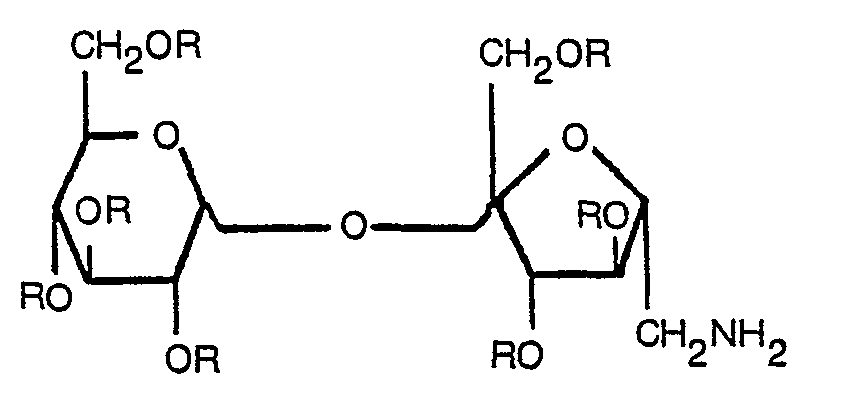
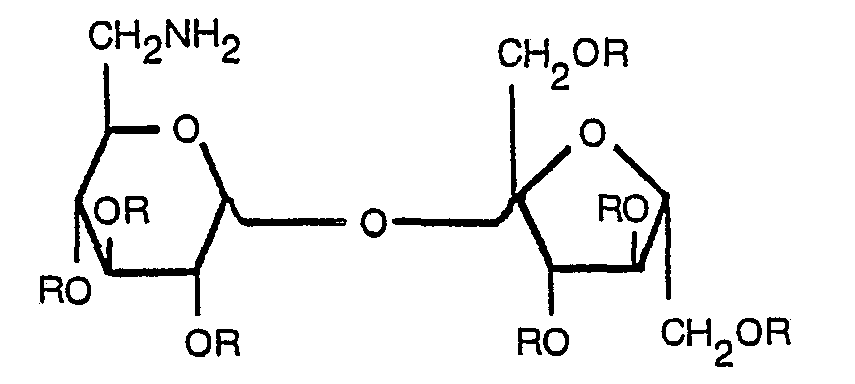
- This invention relates to novel nitrosourea derivatives of sucrose expressed by the general formula: wherein one of A and A 2 is and the other is OR, and R is a hydrogen atom or an acyl group, a method for their preparation and pharmaceutical compositions containing them.
- a compound embodying this invention has a significant antitumor activity and yet an extremely small side effect giving rise to, for example, spleen atrophy, and consequently can be applied very effectively as a medicine.
- a compound embodying this invention can be prepared as the nitroso form from ureido derivatives of sucrose having a structure expressed by the general formula: or where R has the same meaning as in the above-mentioned general formula (I).
- a nitrosation reagent used in the invention includes, for example, the known alkali metal nitrite, nitrogen trioxide, nitrogen tetraoxide and nitrosyl chloride.
- Preferred alkali metal nitrites include sodium nitrite and potassium nitrite.
- a reaction solvent includes, for example, organic solvents such as acetone, methanol, ethyl acetate, ether, dioxane and tetrahydrofuran, organic acids such as formic acid, and acetic acid and aqueous solutions thereof and aqueous solutions of mineral acids such as sulfuric acid.
- organic solvents such as acetone, methanol, ethyl acetate, ether, dioxane and tetrahydrofuran
- organic acids such as formic acid
- acetic acid and aqueous solutions thereof aqueous solutions of mineral acids such as sulfuric acid.
- reaction is generally carried out at a temperature ranging between -10°C and 30°C.
- the product is purified, if necessary, by an ion exchange resin or silica gel.
- a product embodying this invention can be prepared from amino derivatives of sucrose having a structure expressed by the general formula (Illa) or (lllb): or (where R has the same meaning as in the preceding general formulas) or the acid salts of said amino derivatives with N-(2-chloroethyl)-N-nitrosocarbamate phenyl derivatives having a structure expressed by the general formula:
- the reaction is generally carried out at a temperature ranging from -20°C to 60°C.
- a reaction solvent includes organic solvents such as methanol, ethanol, acetone, ethyl acetate, ether, dioxane and tetrahydrofuran.
- the intended product whose structure is expressed by the general formula (1) is obtained by applying the known purification process such as the removal of a solvent, crystallization, or column chromatography.
- the compound of the invention whose structure is expressed by the general formula (I) in which at least one R denotes an acyl group and the other "R"s represent a hydrogen atom can also be prepared by acylating a compound whose structure is expressed by the general formula (I) in which all the "R”s denote a hydrogen atom by the employment of, for example, aliphatic acid anhydride, aliphatic acid halide or aliphatic acid ester.
- the following table indicates the average survival days of the tested mice, their ILS (increase in lifespan) and the number of mice which survived for over 60 days.
- the results of the above-mentioned experiments prove that the compounds of this invention have a high survival effect on the mice suffering from leukemia L1210, namely, displayed a prominent antileukemic activity. If R of the general structural formula denoted an acyl group other than the acetyl group, substantially the same effect would be expected.
- 6-amino-6-deoxysucrose A 300 mg portion of 6-amino-6-deoxysucrose was dissolved in 5 ml methanol containing 50% of water. 200 microliters of 2-chloroethyl isocyanate was dropped into said solution under ice cooling and agitation. After 1 hour, the solution was washed with ethyl acetate. The resultant aqueous layer was concentrated in vacuo to give a colorless glass-like residue. When treated with ethanol and ether, the residue was solidified to give 6-[[[(2-chloroethyl amino]carbonyl]amino-6-deoxysucrose as powder.
- the resultant residue was purified by the silica gel column chromatography (solvent: a mixture of benzene and acetone bearing a ratio of 7:1) 6' - [[[(2 - chloroethyl)nitrosoamino]carbonyl]amino] - 6' - deoxysucrose heptaacetate (compound 2) as glass.
Landscapes
- Chemical & Material Sciences (AREA)
- Organic Chemistry (AREA)
- Health & Medical Sciences (AREA)
- Life Sciences & Earth Sciences (AREA)
- Engineering & Computer Science (AREA)
- Biochemistry (AREA)
- Biotechnology (AREA)
- General Health & Medical Sciences (AREA)
- Genetics & Genomics (AREA)
- Molecular Biology (AREA)
- Pharmaceuticals Containing Other Organic And Inorganic Compounds (AREA)
Description
- This invention relates to novel nitrosourea derivatives of sucrose expressed by the general formula: wherein one of A and A2 is

- A compound embodying this invention has a significant antitumor activity and yet an extremely small side effect giving rise to, for example, spleen atrophy, and consequently can be applied very effectively as a medicine.
- The Japanese patent publication 32,768 (1979) (or Chemical Abstracts, Vol. 90, 1979, page 518, No. 39195a) sets forth a compound having a structure expressed by the general formula


- The Japanese patent disclosure 19,944 (1979) indicates a compound having a structure expressed by the general formula:


- The above-listed disclosed compounds are all known to have an antitumor activity.
- It is accordingly the object of this invention to provide novel nitrosourea derivatives of sucrose having a structure expressed by the general formula:


- A compound embodying this invention can be prepared as the nitroso form from ureido derivatives of sucrose having a structure expressed by the general formula:


- A product embodying this invention can be prepared from amino derivatives of sucrose having a structure expressed by the general formula (Illa) or (lllb):


- Description is now given of the results of experiments made with animals to prove the antileukemic activity of a compound prepared by the method of this invention.
- 6'-[[[(2-chloroethyl)nitrosoamino]carbonyl]amino]-6'-deoxysucrose
- 6'-[[[(2-chloroethyl)nitrosoamino]carbonyl]amino]-6'-deoxysucrose heptaacetate
- 6-[[[(2-chloroethyl)nitrosoamino]carbonyl]amino]-6-deoxysucrose
- 6-[[[(2-chloroethyl)nitrosoamino]carbonyl]amino]-6-deoxysucrose heptaacetate
- 1 × 10⁵ of lymphoid·Leukemia L1210 cells were transplanted into the abdominal cavity of mice. After 24 hours, the compounds 1 to 4 were respectively administered to the above-mentioned group each consisting of five male mice. Observation was continued for 60 days.
- The following table indicates the average survival days of the tested mice, their ILS (increase in lifespan) and the number of mice which survived for over 60 days.


- Description is now given in the following "references" of a method of preparation of an ureido derivative of sucrose which has a structure expressed by the general formula (Ila) and is used as the starting material of the compound embodying this invention.
- A 500 mg portion of 6'-amino-6'-deoxysucrose prepared by Suami's process (refer to Bulletin of the Chemical Society of Japan, 48, 1953 (1975)) was dissolved in 4 ml of water-containing methanol. 0.3 ml of 2-chloroethyl isocyanate was added with ice cooling and agitation. After 3 hours, the reaction solution was concentrated in vacuo. The residue was treated with 5 ml of acetic anhydride and 5 ml of pyridine. The mixture was allowed to stand overnight at room temperature, and then concentrated in vacuo. The residue was purified by silica gel column chromatography (solvent: a mixed solution of benzene and acetone bearing the ratio of 5:1) to give 6'-[[[(2-chloroethyl)amino]carbonyl]amino]-6'-deoxysucrose heptaacetate as a colorless glass-like mass.
- Yield: 756 mg (76%)
- Melting point: 61 to 63°C
-

- Infrared Spectrum; 1560, 1650 cm-1 (ureido) 1750 (acetyl)
-

- A 200 mg portion of 6'-amino-6'-deoxysucrose was dissolved in 4 ml of water-containing methanol, 0.2 ml of 2-chloroethyl isocyanate was added under ice cooling and agitation. After 1 hour, the solution was washed with ethyl acetate. The aqueous layer was concentrated in vacuo. The resultant glass-like residue was treated with ethanol and ether to give 6'-[[[(2-chloroethyl)amino]-carbonyl]amino]-6'-deoxysucrose as powder.
- Yield: 181 mg (71 %)
- Melting point: 120 to 125°C
-

- Infrared Spectrum: 1570, 1640 cm-1 (ureido)
-

- Description is now given in the following "references" of a method of preparation of a ureido derivative of sucrose which has a structure expressed by the general formula (IIb) and is used as the starting material of the compound embodying this invention.
- A 300 mg portion of 6-amino-6-deoxysucrose was dissolved in 5 ml methanol containing 50% of water. 200 microliters of 2-chloroethyl isocyanate was dropped into said solution under ice cooling and agitation. After 1 hour, the solution was washed with ethyl acetate. The resultant aqueous layer was concentrated in vacuo to give a colorless glass-like residue. When treated with ethanol and ether, the residue was solidified to give 6-[[[(2-chloroethyl amino]carbonyl]amino-6-deoxysucrose as powder.
- Yield: 349 mg (89%)
-

- Melting point: 103°C
- Beilstein test: Positive (CI)
- Infrared spectrum: 1560 cm-1 (ureido, NH) 1640 cm-1 (ureido, C=O)
-

- A 200 mg portion of 6-[[[(2-chloroethyl]amino]carbonyl]amino]-6-deoxysucrose was treated with 1 ml of acetic anhydride and 1 ml of pyridine. The mixture was allowed to stand overnight at room temperature. The solution was concentrated in vacuo. The concentrated residue was purified by the silica gel column chromatography (solvent: a mixture of benzene and acetone bearing the ratio of 5:1) to give 6-[[[(2-chloroethyl)amino]carbonyl]amino]-6-deoxysucrose heptaacetate.
- Yield: 239 mg (72%)
-

- Melting point: 57°C
- Beilstein test: Positive (CI)
- Infrared spectrum: 1560 cm-1 (ureido, NH) 1650 cm-1 (ureido, C=0) 1750 cm-1 (acetyl, C=0)
-
- δ 2.00 (s, 3H, OAc), 2.07 (s, 6H, OAcx2),
- 2.14 (s, 12H), OAcx4),
- 4.80 (dd, 1H, J2.3=3.61 Hz, J2.3=9.42 Hz, H-2),
- 4.85 (t, 1 H, J2.3=J3.4=9.42 Hz, H-3),
- 5.77 (d, 1H, J1.2=3.61 Hz, H-1)
-

- Description now given in the following "reference" of a method of preparation of an amino derivative of sucrose which has a structure expressed by the general formula (IIIb) and is used as the starting material of the compound embodying this invention.
- 5.73 g of 1', 2, 3, 3', 4, 4', 6'-hepta-0-acetyl sucrose prepared by the process proposed by Otake (Bulletin of Chemical Society of Japan, 43, 3199 (1970)) was dissolved in 100 ml of dry pyridine. 5.7 g of mesitylenesulfonyl chloride was added to the solution. Reaction was carried out 42 hours at room temperature. The solution was poured into 1 I of ice cold water, and then chloroform extraction was carried out. The chloroform layer was washed with water, dried over anhydrous sodium sulfate, and concentrated in vacuo to give a glass-like residue. The residue was purified by silica gel column chromatography (solvent: a mixture of methyl ethyl ketone and toluene bearing a ratio of 1:3). As a result, the intended 6-O-mesitylenesulfonylsucrose heptaacetate was obtained as glass.
- Yield: 5.36 g (73%)
- Melting point: 42°C
-

- Infrared spectrum: 1180 cm-1 (SO2) 1600 cm-1

-
- 8 2.01 (s, 6H, OAcx2), 2.08 (s, 3H, OAc),
- 2.11 (s, 9H, OAcx3), 2.16 (s, 3H, OAc),
- 2.32 (s, 3H,


- 4.74 (dd, 1 H, J1.2=3.61 Hz, J2.3=9.22 Hz, H-2),
- 5.05 (t, 1 H, J2.3=J3.4=9.22 Hz, H-3),
- 5.64 (d, 1H, J1.2=3.61 Hz, H-1),
- 7.03 (S, 2H,

-

- 4.97 g of 6-0-meistylenesulfonylsucrose heptaacetate was dissolved in 100 ml of 90% aqueous 2-methoxyethanol. The solution was heated under reflux with 2.5 g of sodium azido for 17 hours. A residue obtained after the concentrated solution was treated with 25 ml of acetic anhydride, and 25 ml of dry pyridine. The mixture was allowed to stand overnight at room temperature. Insoluble matter were filtered off. The filtrate was concentrated in vacuo. The resultant syrup-like residue was purified by silica gel column chromatography (solvent: a mixture of benzene and acetone bearing a ratio of 9:1) to give 6-azido-6-deoxysucrose heptaacetate.
- Yield: 3.28 g (82%)
-

- Infrared spectrum: 1750 cm-1 (acetyl, C=0) 2100 cm-1 (N3)
-
- δ 2.01 (s, 3H, OAc), 2.03 (s, 3H, OAc),
- 2.07 (s, 3H, OAc), 2.09 (s, 9H, OAcx3),
- 2.16 (s, 3H, OAc), 3.40 (m, 2H, 6―CH2),
- 4.82 (dd, 1H, J1.2=3.41 Hz, J2.3=9.42 Hz, H―2),
- 5.05 (t, 1H, J1.2=3.41 Hz, H―1)
-

- A 3.28 g portion of 6-azido-6-deoxysucrose heptaacetate was dissolved in 30 ml of 0.1 M sodium methoxide/methanol. The solution was allowed to stand overnight at room temperature. Sodium ion was removed from the solution with an ion exchange resin Amberlite@ IR-120B (H+). The solution thus treated was concentrated in vacuo to give a colorless acethyl-free product as a glass. The glassy mass was dissolved in 100 ml of 50% aqueous ethanol. Reduction was continued with stirring for 5 hours at 40°C in the presence of 200 mg of platinum oxide with the initial hydrogen pressure set at 3.4 kg/cm2. The catalyst was filtered off. The filtrate was concentrated in vacuo to give glass-like residue. This residue was solidified with ethanol to give 6-amino-6-deoxysucrose as amorphous powder.
- Yield: 1.44 g (78%)
-

- Melting point: 65°C
- Ninhydrin reaction: Positive (purple)
- δ 5.06 (d, 1 H, J1.2=3.21 Hz, H-1)
- Elemental analysis of C12H23NO10(having a molecular weight of 349.06):


- This invention is further detailed with reference to the example in which R given in the aforementioned general structural formula denotes a hydrogen atom and an acetyl group. Obviously, the product of this invention can be prepared substantially by the same process as applied in the examples, even where R represents another acyl group, for example, an acetyl group.
- Preparation of 6'-[[[(2-chloroethyl)nitrosoamino]carbonyl]amino-6-deoxysucrose (compound 1) (in the case where all the "R"s given in the general structural formula (I) denote a hydrogen atom, A1 represents a group of

- A 105 mg portion of 6'-amino-6'-deoxysucrose prepared by a process proposed by Suami (Bulletin of Chemical Society of Japan, 48, 1953 (1975)) was dissolved in 2 ml of water, 37 mg of triethylamine was added to the solution. The resultant liquid was concentrated in vacuo to give a white crystalline residue. The residue was washed with several milliliters of ether. The washed mass was then suspended in 6 ml of methanol. A solution prepared by dissolving 230 mg of p-nitrophenyl-N-(2-chloroethyl)-N-nitrosocarbamate in 6 ml of tetrahydrofuran was dropped into the above-mentioned suspension at room temperature under stirring. After 12 hours, the reaction mixture was concentrated in vacuo, causing excess p-nitrophenyl-N-(2-chloroethyl)-N-nitrosocarbamate to crystallize out. The crystallized mass was filtered off. The filtrate was concentrated in vacuo to give a yellow oil residue. The residue was washed with isopropyl ether, and then fully dried to give 6'-[[[(2-chloroethyl)nitroso- amino]carbonyl]amino]-6'-deoxysucrose (compound 1) as an amorphous solid.
- Yield: 130 mg (97%)
- Melting point: 61 °C (accompanied with foaming)
-

- Infrared spectrum: 1495 cm-1 (nitroso) 1530, 1725 cm-1 (ureido)
-

- Preparation of 6'-[[[(2-chloroethyl)nitrosoamino]carbonyl]amino]-6'-deoxysucrose heptaacetate (compound 2) (in the case where all the "R"s given in the general structural formula (I) denote an acetyl group, A1 indicates a group of

- 457 mg of 6'-[[[(2-chloroethyl)amino]carbonyl]amino]-6'-deoxysucrose heptaacetate was dissolved in 6 ml of formic acid. 64 mg of sodium nitrite was added to the solution under ice cooling and stirring. After 1 hour, the reaction mixture was poured into ice cold water. Extraction was carried out with chloroform. The chloroform layer was washed with water, dried over anhydrous sodium sulfate. The dried solution was concentrated in vacuo to give a pale yellow glass-like residue. The residue was purified by the silica gel column chromatography (solvent: a mixture of benzene and acetone bearing a ratio of 10:1) to give 6'-[[[(2-chloroethyl)nitrosoamino]carbonyl]amino]-6'-deoxysucrose heptaacetate (compound 2) as pale yellow glass.
- Yield: 374 mg (79%)
- Melting point: 50 to 52°C
-

- Infrared spectrum: 1500 cm-1 (nitroso) 1540 cm-1 (NH) 1750 cm-1 (acetyl)
-
- 8 1.99 (s, 3H, Ac), 2.02 (s, 3H, Ac),
- 2.04 (s, 3H, Ac), 2.06 (s, 3H, Ac),
- 2.08 (s, 3H, Ac), 2.10 (s, 3H, Ac),
- 2.13 (s, 3H, Ac),
- 3.45 (t, 2H, J=5.97 Hz, NCH2CH2Cl),
- 4.79 (dd, 1H, J1.2=4.18 Hz, J2.3=9.95 Hz, H-2),
- 7.42 (broad, 1H, NH)
-

- Preparation of 6'-[[[(2-chloroethyl)nitrosoamino]carbonyl]amino]-6'-deoxysucrose (compound 1) (in the case where all the "R"s given in the general structural formula (I) denote a hydrogen atom, A1 indicates a qroup of

- A 170 mg of 6'-[[[(2-chloroethyl)amino]carbonyl]amino]-6'-deoxysucrose was dissolved in 2 ml of formic acid. 50 mg of sodium nitrite was added to the solution in small portion under ice cooling and stirring. After 1 hour, the sodium ion was removed by the ion exchange resin Amberlite® IR-120B (H+). The ion exchange resin was filtered off. The filtrate was concentrated in vacuo to give a yellow glass-like residue. The residue was purified by the silica gel column chromatography (solvent: a mixture of benzene and methanol bearing a ratio of 5:2). The purified matter was solidified with ethanol and ether to give 6'-[[[(2-chloroethyl)nitrosoamino]carbonyl]amino]-6'-deoxysucrose (compound 1) as powder.
- Yield: 75 mg (40%)
- Melting point: 60°C (accompanied with foaming)
-

- Infrared spectrum: 1495 cm-1 (nitroso) 1530 cm-1, 1725 cm-1 (ureido)
-

- Preparation of 6'-[[[(2-chloroethyl)nitrosoamino]carbonyl]amino]-6'-deoxysucrose (compound 1) (in the case where all the "R"s given in the general structural formula denote a hydrogen atom, A1 indicates a group of

- A 200 mg portion of 6'-[[[(2-chloroethyl)amino]carbonyl]amino]-6'-deoxysucrose was dissolved in 2 ml of acetone. Nitrogen trioxide gas was bubbled into the solution for 2 minutes under ice cooling and agitation. A residue obtained after concentrating the solution was purified by the silica gel column chromatography (solvent: a mixture of benzene and methanol bearing a ratio of 5:2). A glass-like purified mass was solidified with ethanol and ether to give 6'-[[[(2-chloroethyl)nitrosoamino]carbonyl]amino]-6'-deoxysucrose (compound 1) as powder.
- Yield: 98 mg (46%)
- Melting point: 62°C (accompanied with foaming)
-

- Infrared spectrum: 1495 cm-1 (nitroso) 1530, 1725 cm-1 (ureido)
-

- Preparation of 6'-[[[(2-chloroethyl)nitrosoamino]carbonyl]amino]-6'-deoxysucrose heptaacetate (compound 2) (in the case where all the "R"s given in the general structural formula denote an acetyl group, A1 represents a radical of

- A 51 mg portion of 6' - [[[(2 - chloroethyl)nitrosoamino]carbonyl]amino] - 6' - deoxysucrose (compound 1) was acetylated overnight at room temperature with 1 ml of pyridine and 1 ml of acetic anhydride. The reaction mixture was poured into ice cold water. Extraction was carried out with chloroform. The chloroform layer was washed with water and, dried over anhydrous sodium sulfate. The drying agent was filtered off, and the filtrate was concentrated in vacuo. The resultant residue was purified by the silica gel column chromatography (solvent: a mixture of benzene and acetone bearing a ratio of 7:1) 6' - [[[(2 - chloroethyl)nitrosoamino]carbonyl]amino] - 6' - deoxysucrose heptaacetate (compound 2) as glass.
- Yield: 47 mg (56.9%)
- Melting point: 49°C to 53°C
-

- lnfrared spectrum: 1500 cm-1 (nitroso) 1540 cm-1 (NH) 1750 cm-1 (acetyl)
-

- Preparation of 6-[[[(2-chloroethyl)nitrosoamino]carbonyl]amino]-6-deoxysucrose (compound 3) (in the case where all the "R"s given in the general structural formula denote a hydrogen atom, A1 shows a group of OR, and A2 represents a group of
-

- A 173 mg portion of 6-[[[(2-chloroethyl)amino]carbonyl]amino]-6-deoxysucrose was dissolved in 2 ml of formic acid. 45 mg of sodium nitrite was added into the solution in small portion under ice cooling and stirring. After 30 minutes, the sodium ion was removed by the ion exchange resin Amberlite@ IR-120B (H+). The ion exchange resin was filtered off, and the filtrate was concentrated in vacuo to give a yellow glass-like residue. The residue was purified by the silica gel column chromatography (solvent: a mixture of benzene and methanol bearing a ratio of 5:2). The purified matter was solidified with ethanol and ether to give 6-[[[(2-chloroethyl)nitrosoamino]carbonyl]amino]-6-deoxysucrose (compound 3) as powder.
- Yield: 76 mg (41%)
-

- Melting point: 85° (accompanied with foaming)
- Beilstein test: Positive (CI)
- lnfrared spectrum: 1495 cm-1 (NO) 1540 cm-1 (ureido, NH) 1720 cm-1 (ureido, C=O)
-
- δ 5.31 (d, 1 H, J1,2=3.21 Hz, H-1)
-

- Preparation of 6-[[[(2-chloroethyl)nitrosoamino]carbonyl]amino]-6-deoxysucrose (compound 3) (in the case where all the "R"s given in the general structural formula denote a hydrogen atom, A1 represents a group of OR, and A2 shows a group of
-

- A 200 mg portion of 6-[[[(2-chloroethyl)amino]carbonyl]amino]-6-deoxysucrose was dissolved in 2 ml of acetone. Nitrogen trioxide gas was bubbled into the solution under ice cooling and stirring. A residue obtained by concentrating the reaction mixture was purified by the silica gel column chromatography (solvent: a mixture of benzens and methanol bearing a ratio of 5:2). The purified glass-like mass was solidified with ethanol and ether to give 6-[[[(2-chloroethyl)nitrosoamino]carbonyl]-amino]-6-deoxysucrose (compound 3) as a powder.
- Yield: 98 mg (46%)
-

- lnfrared spectrum: 1495 cm-1 (NO), 1540 cm-1 (ureido, NH) 1720 cm-1 (ureido, C=O)
-

- Preparation of 6-[[[(2-chloroethyl)nitrosoamino]carbonyl]amino]-6-deoxysucrose (compound 3) (in the case where all the "R"s given in the general structural formula (I) denote a hydrogen atom, A1 shows a group of OR, and A2 represents a group of
-

- A 2.0 g portion of 6-amino-6-deoxysucrose was suspended in 150 ml of methanol, and 4 ml of triethylamine was added to the suspension at room temperature with stirring. Added to this suspension was a tetrahydrofuran solution of p-nitrophenyl-N-(2-chloroethyl)-N-nitrosocarbamate (4.4 g/100 ml). After 3 hours, the reaction mixture was concentrated in vacuo. The concentrated residue was purified by silica gel column chromatography (a solvent: a mixture of benzene and methanol bearing a ratio of 5:2). The purified glass-like mass was solidified with ethanol and ether to give 6-[[[(2-chloroethyl)nitroso- amino]carbonyl]amino]-6-deoxysucrose (compound 3) as powder.
- Yield: 1.52 g (55%)
-
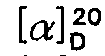
- Infrared spectrum: 1495 cm-1 (NO) 1540 cm-1 (ureido, NH) 1720 cm-1 (ureido, C=0)
-

- Preparation of 6-[[[(2-chloroethyl)nitrosoamino]carbonyl]amino]-6-deoxysucrose heptaacetate (compound 4) (in the case where all the "R"s given in the general structural formula (I) denote an acetyl group, A1 represents a group of OR, and A2 shows a group of
-
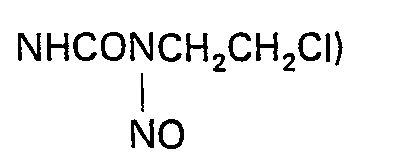
- A 314 mg portion of 6-[[[(2-chloroethyl)nitrosoamino]carbonyl]amino]-6-deoxysucrose (compound 3) was treated with 3 ml of acetic anhydride and 3 ml of pyridine. The mixture was allowed to stand overnight at room temperature. A residue obtained by concentrating the reaction mixture in vacuo was purified by silica gel column chromatography (a solvent: a mixture of benzene and acetone bearing a ratio of 9:1) to give 6-[[[(2-chloroethyl)nitrosoamino]carbonyl]amino]-6-deoxysucrose heptaacetate (compound 4) as glass.
- Yield: 287 mg (57%)
-

- Melting point: 46°C
- Beilstein test: Positive (CI)
- Infrared spectrum: 1490 cm-1 (NO) 1530 cm-1 (ureido, NH) 1740 cm-1 (acetyl, C=0)
-
- 8 2.02 (s, 3H, OAc), 2.08 (s, 15H, OAcx5),
- 2.16 (s, 3H, OAc),
- 3.44 (t, 2H, J=6.01 Hz, CH2CH2Cl),
- 3.64 (t, 2H, J=6.01 Hz, CH2CH2CI),
- 4.73 (dd, 1H, J1.2=4.01 Hz, J2.3=9.62 Hz, H-2),
- 4.91 (t, 1H, J2.3=J3.4=9,62 Hz, H-3),
- 5.61 (d, 1H, J1.2=4.01 Hz, H-1)
-

- Preparation of 6-[[[(2-chloroethyl)nitrosoamino]carbonyl]amino]-6-deoxysucrose heptaacetate (compound 4) (in the case where all the "R"s given in the general structural formula (I) denote an acetyl group, A1 shows a group of OR, and A2 represents a group of
-

- A 228 mg portion of 6-[[[(2-chloroethyl)amino]carbonyl]amino]-6-deoxysucrose heptaacetate was dissolved in 3 ml of formic acid, and 32 mg of sodium nitrite was added to the solution under ice cooling and agitation. After 1 hour, the reaction mixture was poured into ice cold water. Extraction was carried out with chloroform. The chloroform layer was washed with water, dried with anhydrous sodium sulfate. The dried solution was concentrated in vacuo to give a pale yellow glass-like residue. This residue was purified by the silica gel column chromatography (a solvent: a mixture of benzene and acetone bearing the ratio of 9:1) to give 6-[[[(2-chloroethyl)nitrosoamino]carbonyl]amino]-6-deoxysucrose heptaacetate (compound 4) as pale yellow glass.
- Yield: 187 mg (79%)
-

- Melting point: 48°C
- Beilstein test: Positive (CI)
- Infrared spectrum: 1490 cm-1 (NO) 1530 cm-1 (ureido, NH) 1740 cm-1 (acetyl, C=0)
-

Claims (9)



Applications Claiming Priority (4)
| Application Number | Priority Date | Filing Date | Title |
|---|---|---|---|
| JP155443/80 | 1980-11-05 | ||
| JP15544380A JPS5780395A (en) | 1980-11-05 | 1980-11-05 | Nitrosourea derivative of sucrose |
| JP96863/81 | 1981-06-23 | ||
| JP9686381A JPS57212195A (en) | 1981-06-23 | 1981-06-23 | Nitrosourea derivative of sucrose |
Publications (2)
| Publication Number | Publication Date |
|---|---|
| EP0051303A1 EP0051303A1 (en) | 1982-05-12 |
| EP0051303B1 true EP0051303B1 (en) | 1984-04-25 |
Family
ID=26438025
Family Applications (1)
| Application Number | Title | Priority Date | Filing Date |
|---|---|---|---|
| EP81109392A Expired EP0051303B1 (en) | 1980-11-05 | 1981-10-30 | Nitrosourea derivatives of sucrose, a method for their preparation, and pharmaceutical compositions containing them |
Country Status (3)
| Country | Link |
|---|---|
| US (1) | US4387220A (en) |
| EP (1) | EP0051303B1 (en) |
| DE (1) | DE3163319D1 (en) |
Family Cites Families (3)
| Publication number | Priority date | Publication date | Assignee | Title |
|---|---|---|---|---|
| US4180655A (en) * | 1974-08-08 | 1979-12-25 | Tetsuo Suami | Nitrosourea derivatives |
| DE2961524D1 (en) * | 1978-02-21 | 1982-02-04 | Ciba Geigy Ag | Glycofuranosyl-nitrosourea derivatives, process for their manufacture and their pharmaceutical preparations |
| JPS54151918A (en) * | 1978-04-15 | 1979-11-29 | Suami T | Novel nitroso urea derivative and its manufacture |
-
1981
- 1981-10-20 US US06/313,360 patent/US4387220A/en not_active Expired - Fee Related
- 1981-10-30 DE DE8181109392T patent/DE3163319D1/en not_active Expired
- 1981-10-30 EP EP81109392A patent/EP0051303B1/en not_active Expired
Also Published As
| Publication number | Publication date |
|---|---|
| EP0051303A1 (en) | 1982-05-12 |
| US4387220A (en) | 1983-06-07 |
| DE3163319D1 (en) | 1984-05-30 |
Similar Documents
| Publication | Publication Date | Title |
|---|---|---|
| EP0228612B1 (en) | A derivative of alpha, alpha-trehalose and a process for preparing the same | |
| US3725385A (en) | Process for the demethylation of 3-amino macrolides | |
| US4086415A (en) | Nitrosourea derivatives of glycosides | |
| EP1181301A1 (en) | Oligonucleotide synthesis with lewis acids as activators | |
| DE68920648T2 (en) | Process for the preparation of O2,2'-anhydro-1- (beta-D-arabinofuranosyl) thymine. | |
| KR100206357B1 (en) | A process for the glycosylation of colchicine derivatives and product thereof | |
| US3860628A (en) | Cyanomethyl(3-trifluoromethylphenoxy)(4-chlorophenyl)acetate | |
| US3317583A (en) | Alkylcarbamates of cyanosalicylanilides | |
| US4180655A (en) | Nitrosourea derivatives | |
| US4387220A (en) | Nitrosourea derivatives of sucrose | |
| US4774327A (en) | N-glycolylneuraminic acid derivative | |
| US3868418A (en) | Novel N-(ortho- and para-nitrobenzoyl)-sulfoximine intermediates and process for their production | |
| US3694428A (en) | Streptozotocin and derivatives | |
| EP0389110A2 (en) | Process for the preparation of 2'-deoxy-5-trifluoromethyl-beta-uridine | |
| US3998999A (en) | Process for preparing pyrazomycin and pyrazomycin B | |
| Augé et al. | Glycosylhydrazides, a new class of sugar surfactant. preparation and amphiphilic properties of 1-glycosyl-2-acylhydrazines | |
| CA1269660A (en) | Process for the preparation of glycosyl fluorides protected on the oxygen | |
| US3919310A (en) | Preparation of free sulfoximines by hydrolysis of N-(ortho- and para-nitrobenzoyl)-sulfoximines | |
| US4220643A (en) | Nitrosourea pentose compounds | |
| SU1435153A3 (en) | Method of producing ethyl ester of apotartaric acid | |
| EP0062068B1 (en) | N-phthalidyl-5-fluorouracil derivatives | |
| US3317509A (en) | Process for the production of methyl nacyl-2, 3, 4, 7-tetra-o-acyl-beta-thiolincosaminides | |
| EP0018732B1 (en) | An alpha-methyl-4(2'-thienyl-carbonyl)phenyl acetic acid derivative, process for its preparation and its pharmaceutical use | |
| US4251515A (en) | Novel nitrosourea derivatives | |
| US3574187A (en) | Process for making alkyl 7-o-alkyl-1-thio-alpha-lincosaminides and products thereof |
Legal Events
| Date | Code | Title | Description |
|---|---|---|---|
| PUAI | Public reference made under article 153(3) epc to a published international application that has entered the european phase |
Free format text: ORIGINAL CODE: 0009012 |
|
| 17P | Request for examination filed |
Effective date: 19811030 |
|
| AK | Designated contracting states |
Designated state(s): BE CH DE FR GB IT |
|
| GRAA | (expected) grant |
Free format text: ORIGINAL CODE: 0009210 |
|
| AK | Designated contracting states |
Designated state(s): BE CH DE FR GB IT LI |
|
| PG25 | Lapsed in a contracting state [announced via postgrant information from national office to epo] |
Ref country code: IT Free format text: LAPSE BECAUSE OF FAILURE TO SUBMIT A TRANSLATION OF THE DESCRIPTION OR TO PAY THE FEE WITHIN THE PRESCRIBED TIME-LIMIT;WARNING: LAPSES OF ITALIAN PATENTS WITH EFFECTIVE DATE BEFORE 2007 MAY HAVE OCCURRED AT ANY TIME BEFORE 2007. THE CORRECT EFFECTIVE DATE MAY BE DIFFERENT FROM THE ONE RECORDED. Effective date: 19840425 Ref country code: BE Effective date: 19840425 |
|
| REF | Corresponds to: |
Ref document number: 3163319 Country of ref document: DE Date of ref document: 19840530 |
|
| ET | Fr: translation filed | ||
| PLBE | No opposition filed within time limit |
Free format text: ORIGINAL CODE: 0009261 |
|
| STAA | Information on the status of an ep patent application or granted ep patent |
Free format text: STATUS: NO OPPOSITION FILED WITHIN TIME LIMIT |
|
| 26N | No opposition filed | ||
| PGFP | Annual fee paid to national office [announced via postgrant information from national office to epo] |
Ref country code: CH Payment date: 19900921 Year of fee payment: 10 |
|
| PGFP | Annual fee paid to national office [announced via postgrant information from national office to epo] |
Ref country code: GB Payment date: 19901019 Year of fee payment: 10 |
|
| PGFP | Annual fee paid to national office [announced via postgrant information from national office to epo] |
Ref country code: FR Payment date: 19901023 Year of fee payment: 10 |
|
| PGFP | Annual fee paid to national office [announced via postgrant information from national office to epo] |
Ref country code: DE Payment date: 19901122 Year of fee payment: 10 |
|
| PG25 | Lapsed in a contracting state [announced via postgrant information from national office to epo] |
Ref country code: GB Effective date: 19911030 |
|
| PG25 | Lapsed in a contracting state [announced via postgrant information from national office to epo] |
Ref country code: LI Effective date: 19911031 Ref country code: CH Effective date: 19911031 |
|
| GBPC | Gb: european patent ceased through non-payment of renewal fee | ||
| PG25 | Lapsed in a contracting state [announced via postgrant information from national office to epo] |
Ref country code: FR Effective date: 19920630 |
|
| REG | Reference to a national code |
Ref country code: CH Ref legal event code: PL |
|
| PG25 | Lapsed in a contracting state [announced via postgrant information from national office to epo] |
Ref country code: DE Effective date: 19920701 |
|
| REG | Reference to a national code |
Ref country code: FR Ref legal event code: ST |